WBCHSE Class 11 Physics Thermometry Multiple Choice Questions

Chapter 4 Thermometry Multiple Choice Questions

Question 1. At the triple point of water the magnitude of pressure is

  1. 4.58 mm of Hg
  2. 4.57 mm of Hg
  3. 4.59 mm of Hg
  4. 4.56 mm of Hg

Answer: 1. 4.58 mm of Hg

Question 2. The temperature at the triple point of water is

  1. 273.16 K
  2. 273.16 °F
  3. 273.16 °C
  4. 273 K

Answer: 1. 273.16 K

Question 3. The universally accepted primary thermometer is

  1. Liquid thermometer
  2. Platinum resistance thermometer
  3. Ideal gas thermometer
  4. Alcohol thermometer

Answer: 3. Ideal gas thermometer

Step-by-Step Solutions to Thermometry MCQs

Question 4. If the difference between two temperatures in the Kelvin scale is ΔT and that in the Celsius scale is Δt, then—

  1. ΔT = Δt
  2. ΔT = At+ 273
  3. ΔT = At-273
  4. None of the above

Answer: 1. AT = At

Question 5. A centigrade and a Fahrenheit thermometer are dipped in boiling water. Now this water is cooled and the reading on the Fahrenheit scale is 140 °F. The decrease in temperature on the Centigrade thermometer is

  1. 30 °C
  2. 40 °C
  3. 60 °C
  4. 80 °C

Answer: 2. 40 °C

WBCHSE Class 11 Physics Thermometry Multiple Choice Questions

WBBSE Class 11 Thermometry MCQs

Question 6. A gas thermometer is more sensitive than a liquid thermometer because

  1. The expansibility of gas is more than that of a liquid
  2. Gas is easily available
  3. Gas is comparatively lighter
  4. Gas thermometer is the primary thermometer

Answer: 1. Expansibility of gas is more than that of a liquid

Class 11 Physics Class 12 Maths Class 11 Chemistry
NEET Foundation Class 12 Physics NEET Physics

Question 7. A constant volume gas thermometer shows pressure readings of 50cm of Hg and 90cm of Hg at 0°C and 100° C respectively. When the pressure reading is 60cm of Hg, the temperature is

  1. 25°C
  2. 40°C
  3. 15°C
  4. 12.5°C

Answer: 1. 25°C

Question 8. On which of the following scales of temperature, the temperature is never negative

  1. Celsius
  2. Fahrenheit
  3. Reaumur
  4. Kelvin

Answer: 4. Kelvin

Short Notes on Temperature Scales with MCQs

Question 9. ‘Stem correction’ in platinum resistance thermometers are eliminated by the use of

  1. Cells
  2. Electrodes
  3. Compensating leads
  4. None of the above

Answer: 3. Compensating leads

Question 10. The temperature of the sun is measured with

  1. Platinum thermometer
  2. Gas thermometer
  3. Pyrometer
  4. Vapour pressure thermometer

Answer: 3. Pyrometer

In these type of questions, more than one options are correct.

Question 11. To measure the temperature say around 400°C. Which of the following thermometers can be used most conveniently?

  1. Gas thermometer
  2. Mercury thermometer
  3. Platinum resistance thermometer
  4. Thermocouple thermometer

Answer:

1. Gas thermometer

3. Platinum resistance thermometer

4. Thermocouple thermometer

Thermal Expansion and Temperature Measurement MCQs

Question 12. Reading of temperature may be same on

  1. Celsius and Kelvin scale
  2. Fahrenheit and Kelvin scale
  3. Celsius and Fahrenheit scale
  4. All the three scales

Answer:

2. Fahrenheit and Kelvin scale

3. Celsius and Fahrenheit scale

Question 13. Which of the following statements are not true?

  1. Size of degree is the smallest on celsius scale
  2. Size of degree is smallest on Fahrenheit scale
  3. Size of degree is equal on Fahrenheit and kelvin scale
  4. Size of degree is equal on celsius and kelvin scale

Answer:

1. Size of degree is the smallest on celsius scale

3. Size of degree is equal on Fahrenheit and kelvin scale

WBCHSE Class 11 Physics Thermometry Question and Answers

Chapter 4 Thermometry Long Answer Type Questions

Question 1. If a person enters a room at 25 °C, will thermal equilibrium be established?
Answer:

A person enters a room at 25 °C:

Normal body temperature of a human being is 37 °C. The human body maintains this temperature, generating energy through food intake. Hence, thermal equilibrium will not be established unless the temperature of the room rises to 37 °C due to some external reasons.

Read And Learn More WBCHSE Solutions for Class 11 Physics

Question 2. In inter blankets and quilts warm up after being wrapped around a body. Why?
Answer:

In inter blankets and quilts warm up after being wrapped around a body

The normal temperature of the body is 37 °C. Blankets, quilts etc. are at a lower temperature in winter. After being wrapped, they warm up by taking heat from the body, and after some time thermal equilibrium is established. This means that their temperature also increases to 37 °C.

Question 3. When would two chairs, one made of wood and the other of iron, feel equally hot or cold?
Answer:

When the temperature of the chairs are equal to our body temperature, thermal equilibrium will exist between the body and the two chairs, preventing any heat flow. Then they will appear equally hot or cold on touch.

WBCHSE Class 11 Physics Thermometry Question And Answers

Question 4. How can a thermometer be used to find out whether the atmospheric pressure is above or below its normal value?
Answer:

Pure water boils at 100 °C when its superincumbent pressure is equal to the normal atmospheric pressure. With the decrease or increase in the superincumbent pressure, its boiling point decreases or increases.

A thermometer determines the boiling point. Boiling point, higher or lower than 100 °C, indicates atmospheric pressure as above or below the normal value (water surface should be open to the atmosphere).

WBBSE Class 11 Thermometry Q&A

Question 5. Is there any thermal equilibrium in the solar system?
Answer:

As the temperatures of the sun, the planets and their satellites are not the same, there is no thermal equilibrium in the solar system.

Class 11 Physics Class 12 Maths Class 11 Chemistry
NEET Foundation Class 12 Physics NEET Physics

Question 6. What happens when water at 80 °C is mixed with water at 20 °C?
Answer:

Heat will be transferred from water at 80 °C to that at 20 °C till thermal equilibrium is achieved. Then both samples would attain an equal temperature somewhere between 20 °C and 80 °C.

Question 7. There are two thermometers in a room. One reads the temperature as 25 degrees and the other as 77 degree. Why is a difference?
Answer:

There are two thermometers in a room. One reads the temperature as 25 degrees and the other as 77 degree

The two thermometers must be measuring the temperatures on two different scales.

As 25 °C = 77 °F, the reading of 25 degree should be in a Celsius thermometer and 77 degrees in a Fahrenheit thermometer.

Chapter 4 Thermometry Very Short Answer Type Questions

Question 1. What is the value of -273°C in Kelvin scale?
Answer: [0 K]

Question 2. What is the value of absolute zero temperature on Fahrenheit scale?
Answer: – 459.4 ° F

Question 3. Write down the physical property of a substance that is defined from the zeroth law of thermodynamics.
Answer: Temperature

Question 4. If two bodies are in thermal equilibrium, then their temperature must be equal’. State whether the statement is true or false.
Answer: True

Question 5. What is the name of the temperature-measuring instrument?
Answer: Thermometer

Question 6. Due to temperature difference only, the energy transferred from one body to another is called _______
Answer: Heat

Thermal Expansion and Temperature Measurement Questions

Chapter 4 Thermometry Assertion Reason Type Question And Answers

Direction: These questions have statement 1 and statement 2 of the four choices given below, choose the one that best describes the two statements.

  1. Statement 1 is true, statement 2 is true; statement 2 is a correct explanation for statement 1.
  2. Statement 1 is true, and statement 2 is true; statement 2 is not a correct explanation for statement 1.
  3. Statement 1 is true, statement n is false.
  4. Statement 1 is false, and statement 2 is true.

Question 1.

Statement 1: Fahrenheit is the smallest unit of measuring temperature.

Statement 2: Fahrenheit was the first temperature scale used for measuring temperature.

Answer: 3. Statement 1 is true, statement 2 is false.

Question 2.

Statement 1: The temperature at which Centigrade and Fahrenheit thermometers read the same is -40°.

Statement 2: There is no relation between Fahrenheit and Centigrade temperature.

Answer: 3. Statement 1 is true, statement 2 is false.

Long Answers on Temperature Scales with Q&A

Question 3.

Statement 1: Degree Fahrenheit is the smallest unit for measuring temperature.

Statement 2: Fahrenheit was the first temperature scale used for measuring temperature.

Answer: 3. Statement 1 is true, statement 2 is false

Question 4.

Statement 1: Two bodies at different temperatures, if brought in contact do not necessary settle to the mean temperature.

Statement 2: The two bodies may have different thermal capacities.

Answer: 1. Statement 1 is true, statement 2 is true; statement n is a correct explanation for statement 1.

Question 5.

Statement 1: Water is considered unsuitable for use in thermometers.

Statement 2: This is due to small specific heat and high thermal conductivity.

Answer: 3. Statement 1 is true, statement 2 is false

WBCHSE Solutions for Class 11 Physics

Unit 1 Physical World And Measurement

  • Chapter 1 Measurement and Dimensions Of Physical Quantity

Unit 2 Kinematics

  • Chapter 1 One Dimensional Motion
  • Chapter 2 Vector

Unit 3 Laws of Motion

  • Newton’s Laws of Motion
  • Friction
  • Circular Motion

WBCHSE Solutions For Class 11 Physics

Unit 4 Work, Energy and Power

  • Chapter 1 Work and Energy

Unit 5 Motion of System of Particles And Rigid Body

  • Chapter 1 Statics
  • Chapter 2 Rotation of Rigid Bodies

Unit 6 Gravitation

  • Newtonian Gravitation and Planetary Motion

Unit 7 Properties of Bulk Matter

Unit 8 Thermodynamics

  • Chapter 1 First and Second Law of Thermodynamics

Unit 9 Behaviour of Perfect Gas and Kinetic Theory

  • Chapter 1 Kinetic Theory of Gases

Unit 10 Oscillation and Waves

  • Chapter 1 Simple Harmonic Motion
  • Chapter 2 Nature of Vibration
  • Chapter 3 Wave Motion
  • Chapter 4 Superposition of Waves
  • Chapter 5 Doppler Effect in Sound

WBCHSE Solutions For Class 12 Physics

  • Electrostatics
  • Current Electricity
    • Electric Current and OHM’s Law Question and Answers
    • Kirchhoff’s Laws and Electrical Measurement Question and Answers
    • Electric Energy and Power Question and Answers
  • Magnetic Effect of Current and Magnetism
    • Electromagnetism Question and Answers
    • Magnetic Properties of Materials Question and Answers
    • Alternating Current Question and Answers
  • Eletromagnetic Wave
  • Electromagnetic Waves
  • Optics
    • Reflection of Light Question and Answers
    • Refraction of Light Question and Answers
    • Refraction of Light At Spherical Surface: Lens Question and Answers
    • Dispersion and Scattering of Light Question and Answers
    • Optical Instruments Question and Answers
    • Light Wave and Interference of Light Question and Answers
    • Diffraction and Polarisation of Light Question and Answers
  • Dual Nature of Matter and Radiation
    • Quantum Theory Question and Answers
  • Atoms And Nucel
    • Atom Question and Answers
    • Atomic Nucleus Question and Answers
  • Electronic Devices
    • Semiconductors and Electronics Question and Answers
    • Digital Circuits Question and Answers
  • Communication Systems
    • Communication System Question and Answers

WBBSE Class 8 History Chapter 2 Hyderbad Ayodhya And Bengal And The Battle Of Plassey Long Answer Questions

Chapter 2 Rise Of Regional Powers Topic A Rise Of Regional Powers Hyderbad Ayodhya And Bengal And The Battle Of Plassey Long Answer Questions

Question 1. Discuss in detail the causes of the decline of the Mughal Empire.
Answer:

Mughal Empire Introduction:

The decline of the Mughal empire began with Aurangzeb’s death in 1707. After going through continuous wear and tear in the next fifty years the empire now became confined to Delhi, Agra, and their neighboring areas.

Then for a long time, it continued to exist in name only and the emperors were merely nominal heads.

Causes for the downfall of the Mughal Empire-

1. Jagirdari crisis:

Towards the end of the Mughal rule, the number of Mansabdars increased but the amount of land did not. Since the Jagirdars were unable to obtain

a product that was equivalent to their remuneration, they did not maintain the required number of soldiers and horses. So an administrative crisis arose which hastened the fall of the empire.

WBBSE Class 8 History Chapter 2 Long Answer Questions

2. Conflict among courtiers:

The Mughal aristocrats were divided into three groupsIrani, Turani, and Hindustani. The conflict among them became so acute during the rule of the weak later Mughals that it shook the foundation of the government.

3. Erroneous policy of Aurangzeb:

Aurangzeb kept himself engaged in wars during a major period of his reign and thus drained the wealth, power, and energy of the kingdom.

His erroneous Rajput policy, Deccan policy, and orthodox religious policy brought about the downfall of the Mughal empire.

4. Peasant unrest:

The immense pressure created on the peasants as a result of the economic crisis made them desperate and they rose in rebellion. The Jat rebellion (1669),

the Satnami revolt (1672), and other Sikh revolts were the results of the financial crisis and Aurangzeb’s religious policies. Continuous peasant rebellions led to the decline of the Mughal empire.

5 Rise ofregional powers:

Many independent kingdoms arose taking advantage of the internal weakness of the Mughal empire.

Some of these kingdoms were Hyderabad under Nizam ulmulk, Ayodhya under Sadat Khan, and Bengal under Murshid Quli Khan.

Though they verbally owed loyalty to the emperor, their attitude and behavior helped in the rise of separatist tendencies.

6. Foreign invasions:

The invasion of Nadir Shah gave a death blow to the Mughal empire which was already weakened by an internal crisis. Nadir Shah invaded India in 1739 created a massacre and plundered enormous wealth.

Question 2. Discuss briefly the tribal revolts that took place in the frontier during Aurangzeb’s reign.
Answer:

Aurangzeb’s Reign Introduction:

During the reign of Aurangzeb, the tribals living on the Northwest frontier became rebellious and created chaos. Aurangzeb tried to subjugate them by using money and power.

Hyderabad Ayodhya Bengal History Class 8 Notes

Tribal Revolts In The Frontier During Aurganzeb’s Reign-

1. Bhagu revolt:

The people of the Yusufjai tribe attacked the Mughal officers under the leadership of Bhagu in 1667. They were cruelly suppressed by the Mughal general Amin Khan.

2. Revolt of Akmal Khan:

The Afridi tribe created much disturbance under the leadership of Akmal Khan in 1672. It is said that they killed 10,000 Mughal soldiers, imprisoned 20,000, and plundered wealth of about rupees 2 crore.

3. Revolt of Kushhal Khan:

The Khatak tribes joined the revolt of the Afridis under the leadership of Kushhal Khan. Many people who were attracted by the brilliant and charismatic personality of Kushhal Khan, joined the revolt.

However, the Mughal general Aghar Khan bribed the poor people and created dissension among them. This weakened the revolt.

Aurangzeb’s reign Results:

  1. Aurangzeb failed to get the supply of forces from the Afghan tribes during his war with the Rajputs.
  2. Besides, much of the wealth of the Mughal treasury was drained due to these frontier wars.
  3. Since Aurangzeb was busy with these frontier revolts the separatists in different areas increased their power.

Aurangzeb’s reign Significance: Aurangzeb had to send his army to suppress the frontier revolts and this brought much relief to Shivaji while carrying out his campaigns against the Mughals.

Question 3. Discuss the rise of Bengal as a provincial power.
Answer:

The Rise Of Bengal As A Provincial Power:-

Introduction:

After the death of rapidly Aurangzeb the Mughal Empire proceeded toward its downfall. The weak and inefficient rulers failed to keep the empire integrated and conduct the administration smoothly.

So chaos reigned everywhere and a number of regional powers arose.

Rise Of Independent KinG doms-

1. Subah of Bengal:

The Mughals had established their power in Bengal after defeating Daud Khan (the last Karrani Sultan) during the reign of Akbar. Since then Bengal was ruled by the Subedars appointed by the Mughal emperor.

2. Murshid Quli Khan as the Diwan of Bengal:

Aurangzeb sent Murshid Quli Khan, who had already attained much reputation as the Diwan of Berar in the Deccan, as the Diwan of Hyderabad, and then the Diwan of Bengal.

He was given the title of Murshid Quli for his achievements as the Diwan of Bengal.

During this time Azim-us-Shaan, Aurangzeb’s grandson, was the subedar of Bengal. However, the weakness of the Subedar helped Murshid Quli Khan to show his genius.

3 Murshid Quli Khan as the Subedar of Bengal:

After Aurangzeb’s death, the Mughal emperor Bahadur Shah first transferred Murshid Quli Khan to Deccan but after two years he appointed him again as the Diwan of Bengal.

Afterward, emperor Faruksiyar appointed him as the Subedar of Bengal.

Murshid Quli Khan showed ceremonious loyalty to the Mughal emperor and sent him regular taxes. However, in practice, he ruled over Bengal independently.

He founded an independent kingdom of Bengal taking advantage of the chaos prevailing in the Mughal empire.

Battle of Plassey Long Answer Questions Class 8

Question 4. Discuss the emergence of Hyderabad as a regional power.
Answer:

The Emergence Of Hyderabad As A Regional Power:-

Introduction:

The decay of the Mughal empire began with the death of Aurangzeb. As a result, a number of regional or provincial powers arose in different parts of India.

Though they owed allegiance to the Mughal emperor they were practically independent. One such independent kingdom was Hyderabad.

Emergence Of Independent Hyderabad-

1. Rise of the Nizam:

The Turanis were an important elite group in the Mughal court. Mir Qamaruddin Khan Siddiqui was a member of this group during Aurangzeb’s time and was conferred the title of Chin Qilich Khan by the emperor.

He was also given the titles of Nizam-ul-Mulk and Asaf Jha by Emperor Faruksiyar and Emperor Muhammad Shah respectively.

He maintained a cordial relationship with all these emperors and started ruling over Hyderabad independently.
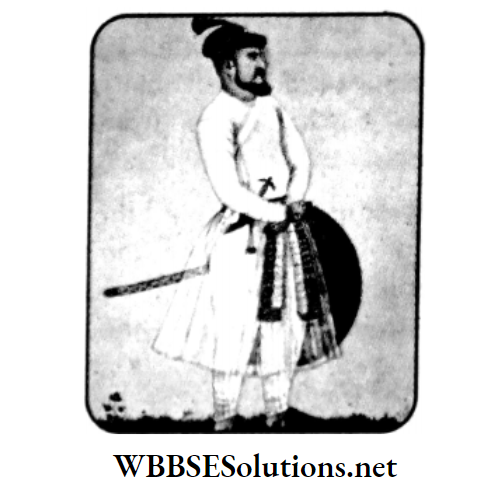
 

Wbbse Solutions For Class 8 History Chapter 2 Rise Of Regional Powers Chin Qilich Khan


2. Defeat of Mubariz Khan:

The provincial Mughal ruler Mubariz Khan was appointed in Hyderabad almost as an independent ruler. He proceeded against the Nizam in 1724 by the order of emperor Muhammad Shah.

Mubariz Khan was killed and the Mughal army was routed out in the battle of Shakar-kheda. So Muhammad Shah accepted the Nizam as the ruler of the Deccan by a treaty.

3. Foundation of the Kingdom of Hyderabad:

Though the foundation of the independent kingdom of Hyderabad was laid under Nizam he never declared his independence officially.

The coins were circulated in the name of the Mughal emperor and the Khutba was also read in his name. So the Mughal emperor was never disturbed by the existence of Hyderabad.

In the meantime, the Nizam got an opportunity to lay the foundation of an independent kingdom.

WBBSE Class 8 History Important Long Answer Questions

4. Emergence of independent Hyderabad:

The administration of Hyderabad was formally based on the Mughal structure but the substantial modification was done internally.

These changes included making the Jagirs hereditary, appointing new officials, decentralization of administrative power, and so on.

In this way, Hyderabad began to emerge as an independent kingdom under Nizam.

Question 5. Discuss the emergence of Ayodhya as a regional power.
Answer:

The Emergence Of Ayodhya As A Regional Power:-

Introduction:

After Aurangzeb’s death, the Mughal empire began to disintegrate. As a result, the central administration became slack. A number of independent kingdoms arose in different parts of the country taking advantage of the situation.

Ayodhya was one such kingdom to assert its independence.
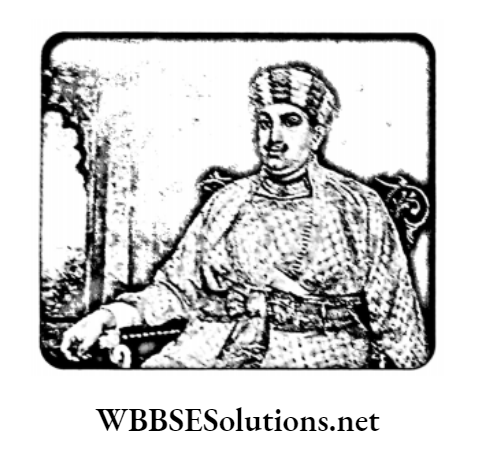
 

D:\wbbse solutions net\chhaya publishions\class 8 history\chapter 2\ch 2 images\Wbbse Solutions For Class 8 History Chapter 2 Rise Of Regional Powers Sadat Khan.png


Rise Of Independent Ayodhya

1. Role of Sadat Khan:

Sadat Khan was appointed the Subedar of Ayodhya by the Mughal emperor.

Sadat Khan first suppressed the revolts of the local rulers and clan chiefs of Ayodhya ruthlessly and introduced a benevolent system of administration.

He treated the Hindus, who formed the majority, genially and appointed them to high posts. He also made the post of the Nawab hereditary. Moreover, he expanded his kingdom by adding Varanasi and Allahabad to it.

So he turned Ayodhya into almost an independent kingdom before his death.

2. Role of SafdarJung:

Sadat Khan maintained a cordial relationship with the Mughal emperor by virtue of which he placed his son-in-law Safdar Jung as the administrator of Ayodhya. Safdar Jung became the ruler after the death of Sadat Khan.

He suppressed the rebellious Ruphela Zamindar and the Pathans and established peace in his kingdom. He also introduced a secular type of administration in Ayodhya.

Though he owed allegiance to the Mughal ruler, he ruled over Ayodhya independently. Like Sadat Khan he also remained involved in court politics but, at the same time, established Ayodhya as an independent kingdom.

Question 6. Give an account of the background and outcome of granting data to the British East India Company.
Answer:

Background And Outcome Of Granting Data To The British East India Company:-

Introduction:

The Mughal emperor Faruksiyar gave the British East India Company the right to free trade in Bengal, Bihar, and Orissa in lieu of an annual payment of rupees three thousand. This was called dastak.Background of receiving data

Background Of Receiving Dastak

The British East India Company also made its chief trading center in Bengal in 1651 like other
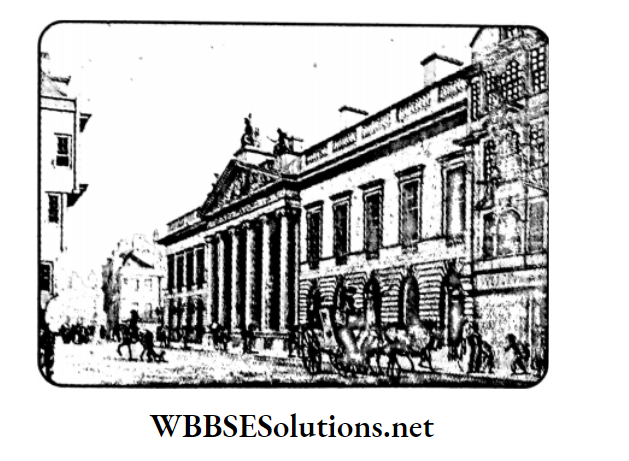
 

D:\wbbse solutions net\chhaya publishions\class 8 history\chapter 2\ch 2 images\Wbbse Solutions For Class 8 History Chapter 2 Rise Of Regional Powers Sadat Khan.png


European trading companies. They received zamindari rights over the three villages of Kolkata, Sutanuti, and Gobindapur after prospering in their trade.

In order to gain more facilities they sent a delegation to emperor Faruksiyar in 1715 under the leadership of John Surman. Consequently, Faruksiyar issued his Firman (a royal decree) by which

the company received data on the right to free trade in Bengal in lieu of an annual payment of rupees three thousand in 1717.

Results Of Receiving Dastak-

1. Government recognition:

The facilities which the Company had so long been enjoying in the trade now came to be recognized by the government.

2. Enjoying additional facilities: The Company now began to enjoy some additional facilities. One such facility was that the chairman of

the English trading center could grant permission or data for free trade to his nominated business representative. On presenting this document no English ship would be checked by the officers of the Nawab.

3. Advancement of commercial competition:

In comparison to other European trading companies, the English Company progressed greatly in trade by virtue of the data.

Again, the native traders were unable to compete with the English Company since they could not carry on tax-free trade.

So they were adversely affected while the English Company made much headway.

WBBSE Chapter 2 Historical Events Discussion Questions

Question 7. What do you know, about Clive’s conspiracy over the throne of Bengal?
Answer:

CIives’s Conspiracy

The first party to conspiracy-The British: The relationship between the British Company and Nawab Siraj Abdullah was never very cordial. The Company realized that Siraj aimed at uprooting the British power in India.

So, under the leadership of Clive, they targeted Siraj as their chief enemy and regarded it as their foremost duty to overthrow him.
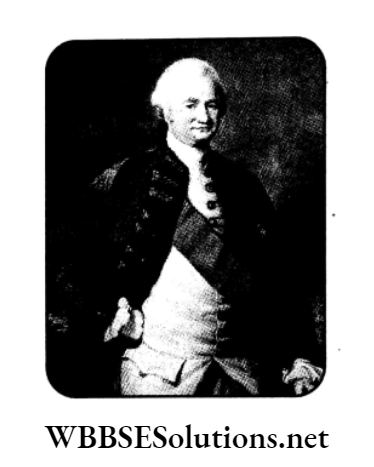
 

Wbbse Solutions For Class 8 History Chapter 2 Rise Of Regional Powers Robert Clive


The second party to the conspiracy-Relatives and officers of the Nawab:

The conspiracy of Plassey was mainly a creation of the nobles of Murshidabad.

When Siraj asked Jagat Seth to help him to suppress Shaukat Jung, the ruler of Purnia he refused and threatened Jagat Seth that he would convert him.

Again, Rai Durlabh and Mir Jafar were removed from the posts of Diwan and Bakshi respectively and they were offended by Siraj. Moreover, Siraj was young and not farsighted.

His rudeness offended his relatives who joined hands with the royal officials and the Seths to depose him and place Mir Jafar on the throne.

Clive took the opportunity and tried to remove the mortal enemy of the Company through a plot.

Secret agreement:

Clive made a secret agreement with Mir Jafar, Manikchand, Jagat Seth, Yar Latif, Rai Durlabh, Umichand, and other influential persons. The agreement contained that

After deposing Siraj Mir Jafar would become the Nawab

In lieu of the favor, the English Company would get sole power and maximum commercial facilities in Bengal and adjoining areas.

Question 8. Discuss the causes of the Battle of Plassey.
Answer:

Introduction:

The relationship Reasons for conflict between Siraj and the company deteriorated considerably and this culminated in the battle of Plassey.

Reasons For Conflict Between Siraj And The Company-

1. Defiance of the Nawab:

When Siraj became the Nawab, the Dutch, the French, and the Zamindars of Bengal showed their respect by sending him gifts but the British Company did not show any such respect and this offended Siraj.

2. Misuse of data:

The British East India Company got data on the right to free trade by virtue of Faruksiyar’s Firman. The company officials used data for personal business defying Nawab’s orders and depriving him of his due taxes.

3. Assisting the conspiracy:

Many royal officers and relatives could not accept Siraj as the Nawab and entered into a competition to usurp power. Clive utilized this internal conflict to build up a conspiracy against Siraj.

 

Wbbse Solutions For Class 8 History Chapter 2 Rise Of Regional Powers Siraj ud-daullah


4. Insulting Siraj’s messenger:

Krishnadas amassed 53 lakh rupees of the dead Nawab of Dhaka and sought shelter at the English headquarters in Kolkata. When Siraj learned about it he sent his messenger Narayan Das asking

the British Company to hand over Krishna Das to him but Governor Drek insulted Narayan Das and drove him away.

5. Fortification of Kolkata:

During Siraj’s reign, the French and the English began to build forts in Chandannagar and Calcutta respectively. Siraj ordered them to stop the fortification. The French obeyed but the English did not.

WBBSE Social Science Long Answer Practice Class 8

Question 9. Discuss the Black Hole Tragedy briefly.
Answer:

Black Hole Tragedy

Background:

Siraj was highly enraged when the English neither handed over Krishna Das, the son of Rajballav, the Diwan of Dhaka nor stopped the construction of Fort William. Therefore, Siraj occupied Fort William on 20th June 1756.

Governor Drek, the English general, and other English lords managed to escape but many of them were captured by Siraj.

Account of Holwell:

According to Holwell, a British official, Siraj occupied Fort William and imprisoned 146 English people in a room, 18 ft long and 14ft and 10 inches wide, for an entire night. About 123 of them died of suffocation.
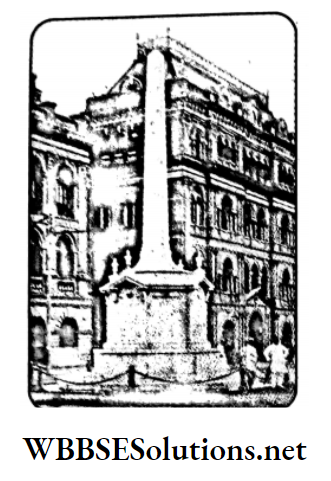
 

Wbbse Solutions For Class 8 History Chapter 2 Rise Of Regional Powers Holwell Monument


Imaginary tale:

Subsequently, it proved that the event was a piece of Holwell’s imagination. There was no possibility of 146 British people staying at the fort then, and it was also not possible to accommodate

So many people in such a small room. Maybe a few people were imprisoned there.

Dispute:

There is much controversy among historians and scholars regarding this incident. Jadunath Sarkar thinks that there were about 60-70 English people rather than 146. Again, the Nawab had nothing to do with the incident.

If happened due to the negligence of the officials. According to Akshay Kumar Maitra, the list of names of dead Englishmen given by Holwell was not true because most of them had either died earlier or lived on after the incident.

Anne Besant made an interesting comment on this incident “Geometry has proved that the arithmetical sum was wrong”.

Class 8 History Extra Questions on Plassey and Bengal

Question 10. What was the significance of the Battle of Plassey?
Answer:

Introduction:

The Battle of Plassey which took place between Siraj ud-daullah, the last independent Nawab of Bengal, and the British forces under Robert Clive had far-reaching effects.

According to historian Maleson, “No other battle had a such widespread, conspicuous, and permanent effect as the Battle of Plassey”.

Significance Of The Battle Of Plassey-

1. Establishment of Company’s authority over Bengal:

After gaining victory in the Battle of Plassey the British East India Company established its political authority over Bengal. Now they aimed at establishing their superiority all over India.

2. Establishment of authority over India:

Through the consolidation of power over Bengal the British government tried to establish its superiority over the whole of India. They utilized the resources of Bengal to bring other regions of India under colonial rule.

3. Authority over trade:

After winning the Battle of Plassey the Company started using data, i.e., the right to free trade. In this way, they established a monopoly over the trade and commerce of Bengal.

4. Drain of resources:

After the Battle of Massey the Company and its officials sent huge amounts of wealth and resources to England both legally and illegally. The historian Brooke Adams referred to this as the ‘Plassey plunder’.

5. Kingmakers:

The British now virtually became the kingmakers and appointed Mir Jafar, Mir Qasim, and Najm ud-daulah as Nawabs in exchange for a huge amount of money. The Nawabs now became mere puppets in the hands of the British.

6. Initiation of a new era:

The Indian society and civilization under British rule experienced a renaissance under the influence of Western education and a trend of thought. So the medieval period ended and the modern period set in.
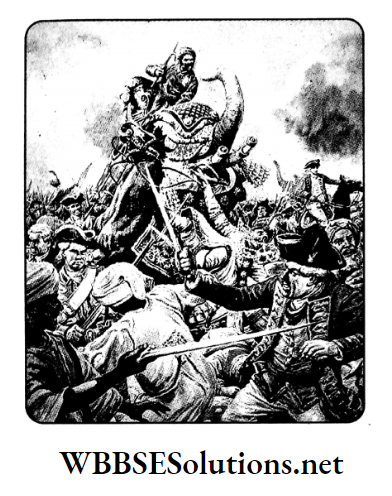
 

Wbbse Solutions For Class 8 History Chapter 2 Rise Of Regional Powers Battle of Plassey


Conclusion:

The Company crossed the first step towards colonial rule through the Battle of Plassey. According to Tarachand, ‘The defeat of Plassey has made the weakness of India conspicuous.

Long Answer Format for Class 8 History Questions

Question 11. Focus on the dispute over Plassey’s plunder.
Answer:

Introduction:

The British East India Company sent huge wealth and resources from India to England after winning the Battle of Plassey.

They did not send these things in lieu of old, silver, or other commodities and so it was termed as ‘plunder’ by several scholars.

The historian Brooke Adams called this incident the ‘Plassey plunder’ or ‘Plassey loot’.

Dispute Over Plassey Plunder

Methods of Plassey Plunder: The Plassey Plunder took place in two ways. The first one was through Company officials and the second one was through the commercial, economic, and revenue policies of the Company.

Description of the plunder:

At this time the Company authority and the officials had dispatched rupees 50 crores to England. As a prior agreement, they got rupees one and a half crore by placing Mir Jafar on the throne of Bengal.

The chief hands behind the plunder, i.e., Robert Clive, Johnston Senior, and Sykes returned to England laden with wealth.

Difference of opinion:

There is a difference of opinion among historians regarding the exact amount of wealth and resources dispatched to England.

According to Holden Ferber, it was pounds 18 lacks between 1757-90, according to professor P. J. Marshal it was 5 lakh pounds annually and according to Dr. Amalesh Tripathi, it was 25-30 lakh rupees annually.

Result:

The Company met its administrative expenses from the wealth plundered from India.

They also built up a vast empire with the help of this wealth. Again, this wealth was used in fostering the Industrial Revolution and for the construction of modern England.

WBBSE History Chapter 2 Summary and Long Answers

Question 12. Suppose you are a resident of Bengal during the reign of Siraj ud-daullah. Write a diary entry on your reaction to the defeat of Siraj in the Battle of Plassey.
Answer:

July 3, 1757, The English East India Company came to India for trade purposes but their activities are no more confined to trade and commerce. They are eager to interfere in the politics of Bengal.

Siraj ud-daullah has succeeded Alivardi Khan as the Nawab. Now the members of the royal family are conspiring against Siraj.

Jagat Seth, Raj Ballabh, Rai Durlabh, Umichand, Mir Jafar, and Miran have joined hands with Robert Clive, the chief official of the Company.

I have heard that they want to place Mir Jafar on the throne of the Nawab. Most probably Siraj is aware of the plot but I do not understand why he is not taking any action to crush his opponents.

This passivity on his part has now led to the Battle of Plassey. Now Nawab’s 70,000 soldiers faced the 3,000 soldiers of the Company on 23rd June 1757.

Astonishingly Nawab’s chiefs like Mir Jafar, Rai Durlabh, and Yar Latif remained absolutely inactive in the war and gave no instructions to The army.

Only two of the chiefs Mir Madan and Mohanlal fought bravely and died in the battle.

The entire army disintegrated due to betrayal on the part of Mir Jafar. Siraj was defeated in the battle. Now the rule of the British has started in Bengal.

I have heard that Miran, the son of Mir Jafar, has killed Siraj. Mir Jafar’s greed for Nawab’s throne brought about the sunset of Bengal’s independence.

I think it will no more be possible to stop the advancement of British power in India in the forthcoming days.

WBBSE Class 8 History Chapter 2 Rise Of Regional Powers MCQs

WBBSE Class 8 History Chapter 2 Rise Of Regional Powers Multiple Choice Questions

Question 1. When did the Persians under the leadership of Nadir Shah attack Delhi?

  1. 1707-08
  2. 1738-39
  3. 1765-66
  4. 1757-58

Answer: 3. 1738-39

Question 2. Under whose leadership the Afghans attacked and destroyed the city of Delhi?

  1. Ahmed Shah Abdali
  2. Nadir Shah
  3. Mir Qasim
  4. Alauddin Khilji
  5. Sadat Khan

Answer: 1. Nadir Shah

Read and Learn More WBBSE Class 8 History MCQs

Question 3. Who took the title of Asaf Jah?

  1. Alivardi Khan
  2. Sadat Khan
  3. Mir Qamar ud din Khan Siddiqi
  4. Mir Jafar

Answer: 3. Mir Qamar ud din Khan Siddiqi

Question 4. After capturing Kolkata, Siraj renamed it

  1. Sirajnagar
  2. Alipore
  3. Alinagar
  4. Sirajabad

Answer: 3. Alinagar

WBBSE Class 8 History Chapter 2 MCQs

Question 5. Aurangzeb appointed Murshid Quli Khan as Bengal’s

  1. Nazim
  2. Faujdar
  3. Diwan
  4. Ulema

Answer: 1. Nazim

WBBSE Class 8 History Chapter 2 Rise Of Regional Powers MCQs

Question 6. Who led the British army to reoccupy

  1. Lord Wellesley
  2. Lord Cornwallis
  3. Lord Clive
  4. Lord Dalhousie

Answer: 3. Lord Clive

Question 7. Who propagated the story of the ‘Black Hole tragedy’?

  1. Roger Drake
  2. Akshay Kumar Maitra
  3. Holwell
  4. Robert Clive

Answer: 3. Holwell

WBBSE Class 8 History Chapter 2 Rise Of Regional Powers MCQs With Answers

Question 8. Mir Qasim was the son-in-law of

  1. Alivardi Khan
  2. Mir Jafar
  3. Mir Qamar ud-din Khan Siddiqi
  4. Miran

Answer: 2. Mir Jafar

Question 9. Who was the Nawab when the Maratha Cavalry attacked Bengal?

  1. Murshid Quli Khan
  2. Alivardi Khan
  3. Siraj ud Abdallah
  4. Shuja ud din

Answer: 2. Alivardi Khan

Question 10. The last independent Nawab of Bengal was

  1. Siraj ud-Abdallah
  2. Mir Jafar
  3. Mir Qasim
  4. Alivardi Khan

Answer: 1. Siraj ud-Abdallah

Chapter 2 From Trade to Territory MCQs

Question 11. The Mughal rulers who succeeded Aurangzeb could not retain the empire.

  1. The economic basis of the empire collapsed.
  2. The strength of the empire rapidly declined after the death of Aurangzeb.
  3.  The administrative crisis could be noticed in the empire.

Answer:  2. The strength of the empire rapidly declined after the death of Aurangzeb.

WBBSE Solutions For Class 8 School Science Long Answer Type Questions WBBSE Solutions For Class 8 School Science Short Answer Type Questions
WBBSE Solutions For Class 8 School Science Very Short Answer Type Questions WBBSE Solutions For Class 8 School Science Review Questions
WBBSE Solutions For Class 8 School Science Solved Numerical Problems WBBSE Solutions For Class 8 School Science Experiments Questions
WBBSE Solutions For Class 8 Maths WBBSE Class 8 History Notes
WBBSE Class 8 History Multiple Choice Questions WBBSE Solutions For Class 8 History
WBBSE Solutions For Class 8 Geography


Question 12. Internal revolts and external aggressions created a rift in the empire towards the end.

  1. The military power of the Mughals weakened.
  2. The aristocrats were involved in mutual rivalries.
  3.  The war for succession had reached its climax.

Answer: 1 The military power of the Mughals weakened.

Question 13. The administrative structure of the Mughals collapsed after the reign of emperor Aurangzeb.

  1. The rate of revenue was considerably reduced.
  2.  There were conflicts over the capturing of high administrative posts.
  3. There was much crisis in the Jaigirdari and Mansabdari systems.

Answer: 3. There was much crisis in the Jaigirdari and Mansabdari systems.

Question 14. Many regional powers arose by the middle of the 18th century. Explanation

  1.  The authority and administrative structure of the vast Mughal empire weakened.
  2.  Efficient provincial leaders emerged in different regions.
  3.  The residents of different regions tried their best to have their demands fulfilled.
  4. Answer: 1. The authority and administrative structure of the vast Mughal empire weakened.

Question 15. The British East India Company involved the Jagat Seths in the conspiracy against Siraj.

  1. The Jagat Seths had great financial capacity.
  2. The Jagat Seths had much influence over the court of the Nawab of Bengal in Murshidabad.
  3. The Jagat Seths were all experienced and judicious.

Answer: 2. The Jagat Seths had much influence over the court of the Nawab of Bengal in Murshidabad.

WBBSE Class 8 Chapter 2 Rise Of Regional Powers Questions And Answers

Question 16. The Mughals lost their control over the subah of Bengal during the regime of Alivardi Khan.

  1. The Mughal emperor granted independence to the subah of Bengal.
  2.  Alivardi Khan won the strife against the Mughals.
  3.  The Mughal ruler was not provided with any administrative information.
    Answer: 3. The Mughal ruler was not provided with any administrative information.

Question 17. Faruksiyar’s Firman created a conflict between the British and the Nawab of Bengal.

  1. Faruksiyar’s Firman declared that a specific financial grant was to be given to the British Company.
  2. The Company began to carry on unlimited trade in Bengal taking advantage of the exemption of taxes as granted by Faruksiyar’s firman.
  3. Faruksiyar’s firman had inhibited the trading rights of European countries other than the British.

Answer: 2. The Company began to carry on unlimited trade in Bengal taking advantage of the exemption of taxes as granted by Faruksiyar’s firman.

Class 8 History Key Concepts MCQs WBBSE

Question 18. The relationship between the English company and Murshid Quli Khan the Nawab of Bengal had deteriorated.

  1. The English traders misused the data for personal trade and evaded the taxes that were due to the Nawab. Explanation
  2.  The English traders built forts disobeying the instructions of the Nawab. Explanation
  3.  The English traders got involved in a conflict with the officials of the Nawab.

Answer: 1. The English traders misused the data for personal trade and evaded the taxes that were due to the Nawab. Explanation

Question 19. Statement The relationship between the British company and Alivardi Khan, the Nawab Bengal, deteriorated.

  1. Alivardi Khan killed some clerks of the British company.
  2. Alivardi Khan ordered the British traders to leave Bengal.
  3.  Alivardi Khan demanded rupees thirty lacks from the British company which refused to pay it.

Answer: 3. Alivardi Khan demanded rupees thirty lacks from the British company which refused to pay it.

Question 20. Statement The relationship between the British East India Company and Siraj ud- Abdallah, the Nawab of Bengal, deteriorated. Explanation

  1. Siraj demanded a lot of money from the British trading company for the development of trade.
    Explanation
  2.  The British company fortified Calcutta defying Siraj’s orders. Explanation
  3. There was a conflict between Nawab’s officials and British officials.

Answer: 2. The British company fortified Calcutta defying Siraj’s orders. Explanation

Question 21. Statement The political powers in the Indian subcontinent were in continuous conflict during the 18th century.

  1.  They were all war-mongers. Explanation
  2. They wanted to display their military powers before each other. Explanation
  3. Each of them endeavored to increase their jurisdiction and resources.

Answer: 3. Each of them endeavored to increase their jurisdiction and resources.

Question 22. The Company abolished the dual system of administration in

  1. 1757
  2. 1772
  3. 1780
  4. 1792

Answer: 2.1772

WBBSE Social Science MCQs for Class 8

Question 23. The policy of Subsidiary Alliance was introduced by

  1. Lord Wellesley
  2. Lord Dalhousie
  3. Lord Clive
  4. Lord Verelst

Answer: 1. Lord Wellesley

Question 24. The Treaty of Salbai was signed in

  1. 1770
  2. 1782
  3. 1792
  4. 1799

Answer: 2. 1782

Question 25. The French governor of Pondicherry was

  1. Robert Clive
  2. Dupleix
  3. Vasco da Gama
  4. Magallen

Answer: 2. Dupleix

Question 26. To become Nawab with British support, MirQasim had to pay almost

  1. 25 lakhs
  2. 27 lakhs
  3. 29 lakhs
  4. 31 lakhs

Answer: 3. 1.29 lakhs

Question 27. The Governor of Kolkata at the time of the grant of Diwani was

  1. Robert Clive
  2. Henry Drek
  3. Cartier
  4. Verelst

Answer: 1. Robert Clive

Question 28. The year 1770 is famous in history for

  1. famine
  2. Diwani
  3. dual government
  4. war

Answer: 1. famine

Question 29. Who became the Nawab of Bengal after Mir Jafar?

  1. Najm ud-Abdallah
  2. Mir Qasim
  3. Alivardi Khan
  4. Siraj ud-Abdallah

Answer: 2. Mir Qasim

MCQ Questions on Battle of Plassey and Regional Powers

Question 30. The British company came into a direct conflict with Mir Qasim, the then Nawab of Bengal.

  1. The British traders misused the data for personal interest and to evade Nawab’s taxes.
  2.  Mir Qasim ordered the British traders to leave Bengal.
  3. Mir Qasim demanded rupees fifty lakhs from the company which they refused to pay.

Answer: 1. The British traders misused the data for personal interest and evaded Nawab’s taxes.

WBBSE Class 9 History Multiple Choice Questions

WBBSE Class 9 History Multiple Choice Questions

WBBSE Class 9 History Very Short Answer Questions

WBBSE Class 9 History Very Short Answer Questions

WBBSE Class 9 History Short Answer Questions

WBBSE Class 9 History Short Answer Questions