WBBSE Solutions For Class 9 Life Science And Environment Chapter 3 Physiological Processes Of Life Excretion

Chapter 3 Physiological Processes Of Life Summary

  1. Excretion is the physiological process of separation and removal of water-soluble waste products produced due to cellular metabolism and the organs responsible for producing, collecting, and removing metabolic wastes from the body are called excretory products.
  2. Removal of metabolic wastes takes place either by eliminating them from the body or by storing them in the form of suspension and crystals (in the case of plants).
  3. There is no excretory organs or system in plants.
  4. Excretory products of plants are not so harmful and more simple than animals.
  5. Mechanisms of excretion in plants are-shedding of leaves (hog palm, silk cotton) shedding of barks (guava, Arjun), shedding of fruits (lemon, apple, tamarind), etc.)
  6. Other organisms have different types of excretory organs to eliminate waste materials from their body.
  7. Such as contractile vacuoles (Amoeba, Euglena), flame cells (flatworms), nephridia (earthworm, leech), amphibian tubules (insects), kidneys (vertebrates).
  8. The human excretory system consists of a pair of kidneys, a pair of ureters, one urinary bladder, and one urethra.
  9. Nephron is the structural and functional unit of the kidney.
  10. It has two parts-Malpighian corpuscles and renal tubule.
  11. Malpighian corpuscles consist of a glomerulus and Bowman’s capsule.
  12. The renal tubule has three parts-proximal convoluted tubules, a loop of Henle, and a distal convoluted tubule.
  13. Urea is the main excretory material of our body which is eliminated through urine.
  14. Ammonia is converted into urea in the liver.
  15. Nephrons play a very important role in the process of urine formation.
  16. The different steps of urine formation, i.e. ultrafiltration, selective reabsorption, and tubular secretion, take place within the different parts of the nephron.
  17. The accessory excretory organs in humans are the skin, lungs, liver, etc.

Read and Learn More WBBSE Solutions for Class 9 Life Science and Environment

WBBSE Solutions For Class 9 Life Science And Environment Chapter 3 Physiological Processes Of Life Excretion

Chapter 3 Physiological Processes Of Life Excretion Short Answer Type Questions

Question 1. What is meant by excretion?

Answer:

Excretion:-

Excretion is the process by which harmful metabolic waste products are eliminated from the body of an organism in order to keep it fit and healthy.

Question 2 What are excretory products? Give example.

Answer:

Excretory products: The metabolic wastes. which are eliminated from the body and cannot be stored inside are called excretory products.

Examples: Latex, alkaloid (plant); urea, ammonia (animal).

WBBSE Class 9 Excretion Solutions

Question 3 Why feces is not an excretory product?

Answer:

Feces Is Not An Excretory Product:-

Feces is not directly formed from the major organs responsible for excretion (liver, kidneys, lungs, and skin) and hence is not a result of metabolic reactions. That is why, feces is not an excretory product.

WBBSE Life Science And Environment Class 9 Solutions

Question 4 How does excretion help in maintaining water balance in a living body?

Answer:

Excretion Helps In Maintaining Water Balance In A Living Body As Follows:-

Due to the deposition of waste matter, osmotic pressure in cells changes. As a result, more water enters the cells, which hampers their normal biological processes. By excretion, waste matter is eliminated from the cells along with water. Thus, excretion helps to maintain water balance and osmotic pressure within the cells and tissues of a living body.

NEET Biology Class 9 Question And Answers WBBSE Class 9 History Notes WBBSE Solutions for Class 9 Life Science and Environment
WBBSE Class 9 Geography And Environment Notes WBBSE Class 9 History Multiple Choice Questions WBBSE Class 9 Life Science Long Answer Questions
WBBSE Solutions for Class 9 Geography And Environment WBBSE Class 9 History Long Answer Questions WBBSE Class 9 Life Science Multiple Choice Questions
WBBSE Class 9 Geography And Environment Multiple Choice Questions WBBSE Class 9 History Short Answer Questions WBBSE Solutions For Class 9 Maths
WBBSE Solutions for Class 9 History WBBSE Class 9 History Very Short Answer Questions WBBSE Solutions for Class 9 Physical Science and Environment


Question 5 How are the metabolic wastes of plants eliminated?

Answer:

Metabolic Wastes Of Plants Eliminated As Follows:-

In plants, some metabolic wastes are stored in specialized cells or tissues, that are eliminated during any physical injury. Some other excretory matters are deposited in organs like leaves, fruits, bark, which plants shed naturally.

Key Questions on Excretion for Class 9

Question 6 Name some nitrogenous and non-nitrogenous excretory products of plants.

Answer:

Excretory products of plants are:

1. Nitrogenous or alkaloids:

  1. Nicotine
  2. Daturine
  3. Quinine
  4. Reserpine
  5. Caffeine.

2. Non-nitrogenous:

  1. Gum
  2. Resin
  3. Latex
  4. Tannin.

WBBSE Class 9 Life Science Solutions

Question 7. Plants have no definite excretory organs, so the plant cannot excrete directly. Mention how plants eliminate their accumulated wastes.

Answer:

Plants usually store their metabolic wastes in different organs as suspension or as crystalline forms. They eliminate these wastes in different ways like leaf fall, shedding of bark, fruit fall, shedding of flower, diffusion, storage, leaching, etc.

Question 8. Why is excretion treated as a catabolic reaction?

Answer:

Excretion Treated As A Catabolic Reaction:-

By the process of excretion, different metabolic waste matters are eliminated from the body of an organism. This process reduces the dry weight of the organism. Therefore, excretion is treated as a catabolic process.

Question 9. What is gum?

Answer:

Gum:-

The highly viscous, non-nitrogenous, water-soluble, carbohy-drate-rich plant excretory mate- rial, produced within the plant body by conver- sion of cellulose, is called gum.

WBBSE Solutions For Class 9 Life Science And Environment Chapter 3 Physiological Processes Of Life Excretion gum

Practice Questions for Chapter 3 Excretion

Question 10 What are resins?

Answer:

Resins:-

Resins are solid, amorphous or semi-solid, inflammable plant excretory material, which are usually transparent or translucent and yellowish to brown in colour and are soluble in organic solvents (as ether) but not in water. Resins are secreted from injured parts of plants like sal.

WBBSE Class 9 Life Science Solutions

Question 11 What are volatile oils or essential oils?

Answer:

Volatile Oils:-

Volatile oils or essential oils are quickly evaporating plant excretory materials having a typical odour. Volatile oils are stored in the leaves of lemon, eucalyptus, citronella, etc. and fruits of lemon, orange, etc.

Question 12 What are alkaloids?

Answer:

Alkaloids:-

Alkaloids are generally colourless, complex nitrogenous organic bases with bitter taste, occuring especially in flowering plants. Example Morphine, quinine, reserpine etc.

Question 13 Mention the source and medicinal importance of reserpine.

Answer:

Source And Medicinal Importance Of Reserpine:-

Source: Root extract of Rauvolfia serpentina or ‘sarpagandha’ plant.

Medicinal Importance:

1. It is used to control hypertension.
2. Reserpine is a good nerve soother.
3. It is good medicine for insomnia.

WBBSE Solutions For Class 9 Life Science And Environment Chapter 3 Physiological Processes Of Life Excretion rauvolfia serpentina

Important Concepts in Human Excretion for Class 9

Question 14 What is latex?

Answer:

Latex:-

A thick, milky white fluid, excreted by many flowering plants (angiosperms), composed of a complex emulsion of proteins, alkaloids, starches, sugars, oils, tannins, resins, and gums which coagulate on exposure to air, is called latex. Example-Para-rubber (Hevea brasiliensis), rubber (Ficus elastica), banyan (Ficus benghalensis), different cacti, etc.

WBBSE Solutions For Class 9 Life Science And Environment Chapter 3 Physiological Processes Of Life Excretion latex

WBBSE Class 9 Life Science Solutions

Question 15 Mention the source and medicinal importance of morphine.

Answer:

Source And Medicinal Importance Of Morphine:-

Source: Fruit coat of Papaver somniferum or poppy plant.

Medicinal importance:

1. Morphine is used to treat severe pain.
2. It is a strong sedative.

Understanding the Human Excretory System for Solutions

Question 16 Mention the source and medicinal importance of quinine.

Answer:

Source And Medicinal Importance Of Quinine:-

Source: Bark of cinchona plant.

Medicinal importance:

1. It is used to treat malaria.
2. It is good medicine for intestinal disorders.

Question 17 Mention the source and medicinal importance of caffeine.

Answer:

Source And Medicinal Importance Of Caffeine:-

Source: Seeds of Coffea arabica or coffee plant.

Medicinal importance:

1. It is a good nerve stimulant.
2. It is a moderate pain killer.

WBBSE Class 9 Life Science Solutions

Question 18 Mention the source and medicinal importance of daturine.

Answer:

Source And Medicinal Importance Of Daturine:-

Source: Seeds of Datura stramonium or ‘dhutura’ plant.

Medicinal importance:

1. It is used as a medicine for asthma.
2. It is used to prepare narcotic drugs.

WBBSE Solutions For Class 9 Life Science And Environment Chapter 3 Physiological Processes Of Life Excretion datura stramonium

Question 19 Mention the source and medicinal importance of atropine.

Answer:

Source And Medicinal Importance Of Atropine:-

Source: Leaves and roots of Atropa belladonna.

Medicinal importance:

1. It is used to dilate the pupil before ophthalmological investigation.
2. It is also used to treat certain inflammatory conditions of the eye.

Question 20 Mention the source and medicinal importance of theine.

Answer:

Source And Medicinal Importance Of Theine

Source: Leaves of the tea plant.

Medicinal importance: It is consumed as a mild nerve stimulant.

WBBSE Class 9 Life Science Solutions

Question 21 What is tannin? What are its sources?

Answer:

Tannin: Tannin is a bitter-tasting carbon-rich material excreted by plants.

Sources of tannin:
Tea leaves, haritaki, Behera fruits, stems of Acacia catechu, etc.

Question 22 Mention the source and medicinal importance of azadirachtin.

Answer:

Source: Leaves, stems, and fruits of Azadirachta indica or neem plant.

Medicinal importance:

1. It is used as a good medicine to treat various skin problems.
2. It is also used as an effective pesticide.

Question 23 Mention the source and medicinal importance of strychnine.

Answer:

Source: Seeds of Strychnos nux-vomica.

Medicinal importance: It is used as a homeopathic medicine to treat digestive enzymes.

Question 24 Mention the economic importance of gum.

Answer:

The economic importance of gum is as follows:

1. Gum is used as glue in the book-binding industry.
2. It is used as a fixative of lime-based paints, inks, and water-based paints.
3. Gums of some plants are used to prepare chocolates.

WBBSE Class 9 Life Science Question And Answer

Question 25 Mention the economic importance of latex.

Answer:

The economic importance of latex is as follows:

1. Latex of rubber plants is the raw material used in industrial rubber, which is used to prepare all rubber materials starting from vehicle tires to pencil erasers.
2. The latex of the papaya plant is a source of the protein-digesting enzyme-papain.
3. Latex of Brosimum galactodendron is consumed as a supplement to milk.

Question 26 Mention the economic importance of resin.

Answer:

The economic importance of resin is as follows:

1. Hard resin is used as a sealing material.
2. Liquid resin is used to prepare turpentine oil.
3. Asafoetida is used as an essence for cuisines.
4. Resin of sal is used as ‘dhuna’.

WBBSE Solutions For Class 9 Life Science And Environment Chapter 3 Physiological Processes Of Life Excretion resin

Question 27 Mention the economic importance of tannin.

Answer:

The economic importance of tannin is as follows:

1. It is used in tannery to tan leather.
2. Tannin is used to prepare certain types of ink.
3. It is used as ‘kattha’ or ‘khair’ in betel leaf.

WBBSE Class 9 Life Science Question And Answer

Question 28 Mention the economic importance of essential oil or volatile oil.

Answer:

The economic importance of essential oil is as follows:

1. It is used to prepare essence for soap, body or hair oil, and several other cosmetic items.
2. Essential oil is used to add flavor to different preparations of sweets.
3. The essential oil obtained from eucalyptus is used in pain balms.

Question 29 What are raphides?

Answer:

Raphides:-

Raphides are sharp needle-shaped crystals of calcium oxalate found in various tissues including leaves, roots, shoots, fruits etc. of wide varieties of plant species and are typically kept in highly specialized cell called idioblast.

Question 30 What is cystolith?

Answer:

Cystolith:-

Cystolith is a botanical term for outgrowths of the epidermal cell wall, usually of calcium carbonate, formed in a cellulose matrix in special cells called lithocysts, generally in the leaf of plants.

Question 31 Distinguish between latex and alkaloid.

Answer:

Differences between latex and alkaloid are:

WBBSE Class 9 Life Science Question And Answer

Question 32 How do animals dispose of excretory matter?

Answer:

In animals, toxic excretory products are transported from tissues to specific excretory organs by the circulatory system. From these organs, metabolic wastes are eliminated from the body.

Question 33 Write about ammonotelic animals with examples.

Answer:

Ammonotelic animals eliminate ammonia as an excretory product. These animals are aquatic in nature. Sponges, jellyfish, echinoderms, freshwater bony fishes; larvae of amphibians are amphoteric animals.

Question 34 Write about uricotelic animals with examples.

Answer:

Uricotelic animals excrete uric acid. Uric acid is the least toxic and can be stored within cell. Insects, lizards, snakes, birds are uricotelic animals.

Question 35 Write about ureotelic animals with examples.

Answer:

Animals excreting urea are called ureotelic. A large among of water is required to excrete urea as it is more toxic than uric acid. It is found in cartilaginous fish, some bony fish, adult amphibians, and mammals.

WBBSE Class 9 Life Science Question And Answer

Question 36 What is a contractile vacuole? Mention its function.

Answer:

Contractile vacuoles: Contractile vacuoles are the organ of protozoans (Amoeba, excretory Paramoecium etc). by simple diffusion through body surface i.e. plasma membrane.

Function:

1. The waste products accumulate in the contractile vacuoles.
2. Excretion is effected

Question 37 How do unicellular organisms perform excretion?

Answer:

Unicellular organisms like Amoeba, americium, Euglena, etc. carry out excretion with the help of contractile vacuoles. In this process, the Contractile vacuole of Amoeb excess water from the cytoplasm enters into a small vacuole. Gradually, it swells and moves towards the periphery. Finally, it bursts and expels water and dissolved waste materials outside the body.

WBBSE Solutions For Class 9 Life Science And Environment Chapter 3 Physiological Processes Of Life Excretion contrctile vacuole of amoeba

Sample Solutions from WBBSE Class 9 Life Science Chapter 3

Question 38 How do flame cells work as excretory organs?

Answer:

In animals like tapeworms, liver fluke, etc. the main excretory tube spreads fine branches inside the body, called excretory tubule. The free end of each excretory tubule bears a flame cell, with a tuft of long cilia. These cells collect metabolic wastes and release those matters in the excretory tubule. The entire excretory matter, from all those tubules, reach the main excretory duct and are disposed of finally through the excretory pore.

WBBSE Solutions For Class 9 Life Science And Environment Chapter 3 Physiological Processes Of Life Excretion flame cell


Question 39 How do malpighian tubules work as an excretory organ of insects?

Answer:

Malpighian tubules are present as a tuft of very fine tubules, at the junction of mid gut and hind gut of insects. These tubules absorb nitrogenous waste matter from hemolymph (insect blood) and dis-pose it inside the alimentary canal. Finally, the excretory products are eliminated along with feces of insects.

WBBSE Solutions For Class 9 Life Science And Environment Chapter 3 Physiological Processes Of Life Excretion malpighian tubule in cockroach

WBBSE Class 9 Life Science Question And Answer

Question 40 Mention the role of nephridium in excretion.

Answer:

Nephridium is the excretory organ of annelids, such as earthworms, leeches, etc. Each nephridium (plural nephridia) has three portions-nephritides, tubule, and nephridiopore. Nephrostome is a ciliated funnel-shaped end of nephridium, which collects metabolic wastes from the coelomic fluid. The coiled tubule collects excretory substances from surrounding blood capillaries. All these materials are then released outside through the nephridiopore, present on the skin.

Question 41 Name nitrogenous and non-nitrogenous excretory products of man.

Answer:

1. Nitrogenous: Urea, uric acid, ammonia, etc.

2. Non-nitrogenous: CO2 ketone, etc.

Question 42 Write the functions of the kidney.

Answer:

1. Helps excretion of nitrogenous wastes.
2. It helps in osmoregulation of the body fluid by excreting hypotonic urine when blood volume increases and hypertonic urine at the time of decreased blood volume.
3. The kidney helps to keep acid-base balance i.e. pH 7.4 of blood by controlling the tubular secretion of H+.
4. It regulates the ionic balance of blood by secreting or conserving Na+ and K+.
5. It removes unwanted substances like pigments, poisons, vitamins, and antibiotics.

Question 43 Name the different parts of the nephron.

Answer:

Each nephron is made up of two main parts; the Malpighian body (renal corpuscle) and the renal tubule. Malpighian body comprises a cup-shaped Bowman’s capsule and a mesh-work of blood capillaries, the glomerulus.

WBBSE Class 9 Life Science Question And Answer

Question 44 What do you mean by glomerulus? State its functions. 

Answer:

Glomerulus: Glomerulus is a tuft of blood capillaries surrounded by Bowman’s capsule.

Functions: The glomerulus acts as an ultrafilter and filters the non-colloidal part of the plasma. This is known as glomerular filtrate.

Question 45 Mention the location of the brush border. State its function.

Answer:

Brush border: Proximal convoluted tubule (PCT) is made of a single layer of cubical epithelial cells with brush-bordered microvilli.

Function: It reabsorbs glucose, and amino acids from the glomerular filtrate.

46 Mention the location and function of Henle’s loop.

Answer:

Henle’s loop: The second part of the renal tubule takes a straight course down the medulla, where it doubles round and comes up again to the cortex in the form of an ‘U’-shaped loop which consists of ascending and descending loop.

Functions:

1. It reabsorbs a nest of glucose and bicarbonate.
2. It also reabsorbs water in descending segment and Na+ in ascending segment.

47 What is collecting tubule? Mention its functions.

Answer:

Collecting tubule:

It is a broad tubule in which the distal part of the distal convoluted tubule opens. It measures 20-22 mm in length and is made of cubical epithelial cells. In the collecting tubule, P-cell (Principle cell) and I-cell (Intercalated cells) are seen. A number of collecting tubules unite to form the Duct of Bellini which joins the ureters in the pelvis of the kidney.

Functions:

1. It reabsorbs water and. concentrates urine.
2. It collects urine and sends it to the Duct of Bellini

WBBSE Class 9 Life Science Question And Answer

Question 48. Mention the functions of nephron.

Answer:

1. Filtration of non-colloidal parts of plasma.
2. Reabsorption of different useful substances like glucose, water, salt, amino acids, etc.
3. Tubular secretion of some unwanted substances like sulfur compounds, organic acids, creatinine etc
4. Synthesis of new substances like benzoic acid, H+ ions, hippuric acid, inorganic phosphate, ammonia, etc.

Question 49. What do you mean by urine?

Answer:

Urine is a straw-yellow or amber-colored, weakly acidic watery solution of excretory products with an aromatic odor formed in the nephron of the kidney.

Question 50. Write the stages of urine formation in the nephron.

Answer:

1. Glomerular filtration
2. Tubular reabsorption
3. Formation of new substances
4. Tubular secretion.

Question 51 What do you mean by glomerular filtrate?

Answer:

A protein-free filtrate produced in Bowman’s capsule is called glomerular filtrate. It is filtered from into the lumen of the Bowman’s capsule. blood flowing through the glomerular capillaries Glomerular filtrate = Blood – (Blood cells + plasma protein)

Question 52 Name the normal and abnormal constituents of urine.

Answer:

Normal constituents of urine: Urea, creatinine ammonia, uric acid, amino acids, etc. Abnormal constituents of urine: Glucose, protein/ albumin, bilirubin, ketone bodies, blood, fat, hemoglobin, myoglobin, etc.

WBBSE Class Nine Life Science

Question 53 Distinguish between the malpighian corpuscle and the malpighian tubule.

Answer:

Differences between the Malpighian corpuscle and Malpighian tubule are:

WBBSE Solutions For Class 9 Life Science And Environment Chapter 3 Physiological Processes Of Life Excretion malpighian corpuscle and malpighian tubule differences

Chapter 3 Physiological Processes Of Life Excretion Match The Columns

Question 1. One objective of excretion is —

  1. Disposal of metabolic waste matters
  2. Disposal of excess water
  3. Disposal of unwanted salts
  4. All of these.

Answer: 4. All of these.

Question 2. Plants dispose of their excretory matters by —

  1. Shedding leaves
  2. Shedding fruits
  3. Exfoliation of bark
  4. All of these

Answer: 4. All of these

Question 3. A non-nitrogenous plant excretory matter is —

  1. Reserpine
  2. Caffeine
  3. Daturine
  4. Tannin

Answer: 2. Caffeine

WBBSE Class Nine Life Science

Question 4. A nitrogenous plant excretory product is—

  1. Latex
  2. Tannin
  3. Resin
  4. Theine

Answer: 1. Latex

Question 5. ‘Dhuna’ is, secreted from a sal tree.

  1. Gum
  2. Resin
  3. Alkaloid
  4. Olio resin

Answer: 4. Olio resin

Question 6. Camphor is a —

  1. Gum
  2. Resin
  3. Alkaloid
  4. Olio resin

Answer: 2. Resin

Question 7. A latex-producing plant is —

  1. PiRe
  2. Calotropis
  3. Mango
  4. Both 2 and 3

Answer: 2. Calotropis

Question 8. Papain is secreted from —

  1. Pea
  2. Papaya
  3. Pumpkin
  4. Potato

Answer: 4. Potato

Question 9. Rauvolfia is the source of—

  1. Quinine
  2. Reserpine
  3. Morphine
  4. Tannin

Answer: 4. Tannin

WBBSE Class Nine Life Science

Question 10. Which is used as a strong pain killer?

  1. Daturine
  2. Quinine
  3. Tannin
  4. Morphine

Answer: 4. Morphine

Question 11. Which of the following is used as a nerve soother and blood pressure regulator?

  1. Reserpine
  2. Morphine
  3. Caffeine
  4. Tannin

Answer: 1. Reserpine

Question 12. The excretory organ of unicellular organisms is—

  1. Lysosome
  2. Contractile vacuole
  3. Endoplasmic reticulum
  4. Golgi body

Answer: 2. Contractile vacuole

Question 13. Flame cells are seen in—

  1. Tapeworm
  2. Earthworm
  3. Roundworm
  4. Caterpillar

Answer: 1. Tapeworm

Question 14. Nephridia open outside the body through—

  1. Nephrostome
  2. Nephridiopore
  3. Excretory pore
  4. Anus

Answer: 2. Nephridiopore

Question 15. The malpighian tubule is associated with the excretory system of—

  1. Tapeworms
  2. Earthworms
  3. Insects
  4. Starfishes

Answer: 3. Insects

Question 16. The outer covering of the human kidney is popularly known as —

  1. Pericardium
  2. Pleura
  3. Renal cortex
  4. Capsule

Answer: 4. Capsule

WBBSE Class Nine Life Science

Question 17. Ureter comes out from—

  1. Pelvis
  2. Renal cortex
  3. Renal medulla
  4. Major calyxes

Answer: 1. Pelvis

Question 18. An example of a uricotelic organism is—

  1. Human
  2. Monkey
  3. Bird
  4. Amoeba

Answer: 3. Bird

Question 19. Malpighian corpuscle is composed of—

  1. Afferent and efferent arteriole
  2. Bowman’s capsule and efferent arteriole
  3. Glomerular filtrate
  4. None of these

Answer: 4. None of these

Question 20. Transfer of excretory matters from blood to the nephron occurs at—

  1. Bowman’s capsule
  2. Glomerulus
  3. Malpighian corpuscle
  4. Malpighian tubule

Answer: 3. Malpighian corpuscle

Question 21. The major site for water absorption in the nephron is—

  1. Malpighian corpuscle
  2. Proximal convoluted tubule
  3. LoopofHenle
  4. Distal convoluted tubule

Answer: 3. LoopofHenle

Question 22._____is excreted through the lungs.

  1. Amino acids
  2. CO2
  3. Acetone
  4. Uric acid

Answer: 2. CO2

Question 23. The component present in glomerular filtrate but absent in normal urine is—

  1. Blood
  2. Protein
  3. Ammonia
  4. Creatinine

Answer: 2. Protein

Question 24. The Ketone body is an excretory product produced during the metabolism of—

  1. Amino acid
  2. Monosaccharide
  3. Fat
  4. Proteins

Answer: 3. Fat

WBBSE Class Nine Life Science

Chapter 3 Physiological Processes Of Life Excretion Answer In A Single Word Or Sentence

Question 1 Name a tree, which removes excretory materials by exfoliation of bark.
Answer: Guava tree removes excretory materials by exfoliation of bark.

Question 2 Name a plant, which stores most of its excretory matters in leaves.
Answer: The tea plant stores most of its excretory matters (tannin, theine) in leaves.

Question 3 Name a medicinally important plant, which disposes of its excretory matters through bark.
Answer: Arjun (Terminalia arjuna) tree disposes of its excretory matters through the bark.

Question 4. Which economically important material is excreted from Hevea brasiliensis?
Answer: The latex of Hevea brasiliensis is the economically important excretory material used to prepare commercial rubber.

Question 5. Name a water-soluble non-nitrogenous excretory material of the plant.
Answer: Gum is a water-soluble non-nitrogenous excretory material of the plant.

Question 6. Which part of the Rauvolfia plant is the source of reserpine?
Answer: The root of the Rauvolfia plant is the source of reserpine.

Concepts Related to Plant and Animal Excretion for Class 9 Solutions

Question 7. From which part of the cinchona plant is quinine extracted?
Answer: Quinine is extracted from the bark of the cinchona plant.

Question 8. What is the source of atropine?
Answer: Leaves and roots of Atropa belladonna are the sources of atropine.

Question 9. Which type of plant excretory matter is insoluble in water but most have great medicinal importance?
Answer: Alkaloids are insoluble in water but most have great medicinal importance.

Question 10. Name the plant whose excretory material is used for preparing varnish.
Answer: Excretory material of pine trees is used for preparing varnish.

WBBSE Class Nine Life Science

Question 11. Name an edible plant excretory matter.
Answer: Camphor is an edible plant excretory matter.

Question 12. Name a plant excretory matter used as a common nerve stimulant.
Answer: Caffeine is used as a common nerve stimulant.

Question 13. Which alkaloid is used to control hypertension?
Answer: Reserpine is used to control hypertension.

Question 14. Name the excretory organ of Amoeba.
Answer: Contractile vacuole is the excretory organ of Amoeba.

Question 15. Which is the excretory organ of annelids?
Answer: Nephridia is the excretory organ of annelids.

Question 16. From where do malpighian tubules collect excretory materials?
Answer: Malpighian tubules collect excretory materials from the hemolymph.

Question 17. What is the excretory organ of a prawn called?
Answer: The excretory organ of prawns is called the green gland or antennary gland.

Question 18. What is the structural and functional unit of the kidney called?
Answer: The structural and functional unit of the kidney is called the nephron.

Question 19. Which is the site of ultrafiltration in a nephron?
Answer: Malpighian corpuscle is the site of ultrafiltration in a nephron.

WBBSE Class Nine Life Science

Question 20. Which portion of the human excretory system stores urine for some time inside the body?
Answer: Urinary bladder stores urine for some time inside the body.

Question 21. In which organ of vertebrate animals is urine produced?
Answer: Urine is produced in the kidneys of vertebrates.

Question 22. Which branch of the artery forms the glomerulus?
Answer: Afferent renal arteriole forms the glomerulus.

Question 23. Which arteriole comes out from the glomerulus of the nephron?
Answer: Efferent renal arteriole comes out from the glomerulus of the nephron.

Question 24. Which region of the kidney possesses more nephrons?
Answer: Cortical region of kidney possesses more nephrons.

Question 25. Name two materials which are reabsorbed in blood from renal tubule.
Answer: Amino acids and glucose are two materials reabsorbed in blood from renal tubule.

Question 26. Name a vitamin that is reabsorbed from the glomerular filtrate to blood.
Answer: Vitamin C is reabsorbed from glomerular filtrate to blood.

Question 27 Name a hormone, which controls the reabsorption of water from the renal tubule.
Answer: Antidiuretic hormone or ADH controls the reabsorption of water from the renal tubule.

Question 28. Name an excretory material, which is disposed through feces.
Answer: Bilirubin is excreted through feces.

Study Guide for Class 9 Life Science Excretion Questions

Question 29. Which main excretory material is eliminated through the lungs?
Answer: Carbon dioxide is the main excretory material, eliminated through the lungs.

Question 30. Through which glands are the fatty excretory materials eliminated from the human body?
Answer: The fatty excretory materials of the human body are eliminated through the sebaceous glands of the skin.

Question 31. How much glomerular filtrate is produced in the two kidneys of a healthy adult individual in 24 hours?
Answer: In 24 hours, about 170 L of glomerular filtrate is produced in the two kidneys of a healthy adult individual.

Question 32. How much urine is excreted by a healthy adult individual in 24 hours?
Answer: In 24 hours, a healthy adult individual excretes about 1.5 L of urine.

Chapter 3 Physiological Processes Of Life Excretion Fill In The Blanks

1 A flavor-adding plant product, asafoetida is a Resin

2 Malic Acid is the plant excretory product present in apples.

3 A latex, named Papain is used as a digestive enzyme.

4 Source of nicotine is the Leaf of tobacco.

5 Plants released organic acids through the Shedding of fruits

6 Daturine is used for the production of medicine for asthma.

7 Reserpine is obtained from the root of Rauwolfia plants

8 The excretory organ of Planaria is the Flame cell

9 Ammonia is the chief nitrogenous excretory material in Freshwater fishes

10 Kidney is the primary excretory organ of the human body.

11 The base of the urethra is equipped with Sphincter muscles, which help to hold the urine inside the urinary bladder.

12 Minor Calyx is located at Kidney

13 Ureter entering through the hilum expands forming a wide funnel-shaped structure called Pelvis

14 Urine is passed out from the bladder through Urethra

15 Nephron is the structural and functional unit of the kidneys.

16 The proximal end of the nephron consists of Bowman’s capsule

17 Creatine and Creatinine are secreted in the distal convoluted tubule.

18 Henle’s loop is located at the Medulla of the kidney.

19 The daily rate of formation of glomerular filtrate is 170 liters.

20 Amino acids are reabsorbed in the Proximal convoluted tubule of the nephron.

21 The yellow color of urine is due to Urochrome

22 The hormone ADH increases the absorption of Water from the collecting duct.

23 Urea is formed from ammonia and CO2 in the Liver

24 Abnormal rise of urea level in blood is called Uremia

25 Glycosuria is a condition that involves the excretion of large amounts of Glucose.

Chapter 3 Physiological Processes Of Life Excretion State True Or False

Question 1. The resin of pine is used as a fixative of lime-based paints.

Answer: False

Question 2. Alkaloids are soluble in water but insoluble in ethyl alcohol.

Answer: False

Question 3. Coffee is obtained from seeds of the Coffea arabica plant.

Answer: True

Question 4. Paramoecium carries out excretion by forming contractile vacuoles.

Answer: True

Question 5. The concave face of the kidney is called the pelvis.

Answer: True

Question 6. The afferent renal arteriole comes out of the Bowman’s capsule.

Answer: False

Question 7. Creatine and creatinine are secreted from the proximal convoluted tubule.

Answer: False

Question 8. A nephron has 2 parts-malpighian tubules and a renal tubule.

Answer: True

Question 9. In cockroaches, malpighian tubules absorb -nitrogenous waste matter from the hemolymph.

Answer: True

Question 10. In a liver fluke, the entire excretory matter is disposed of finally through the excretory pore.

Answer: True

Question 11. Nephridium is the excretory organ of annelids.

Answer: True

Question 12. Human skin has no function in excretion.

Answer: False

Chapter 3 Physiological Processes Of Life Excretion Match The Columns

WBBSE Solutions For Class 9 Life Science And Environment Chapter 3 Physiological Processes Of Life Excretion match the columns 1

Answer: 1-B; 2-D; 3-E; 4-C

WBBSE Solutions For Class 9 Life Science And Environment Chapter 3 Physiological Processes Of Life Excretion match the columns 2

Answer: 1-B; 2-D; 3-A; 4-E

Chapter 3 Physiological Processes Of Life Excretion Find The Odd One Out

Question 1. Quinine, Reserpine, Daturine, Resin

Answer: Resin

Question 2. Daturine, Reserpine, Tannin, Atropine

Answer: Tannin

Question 3. Resin, Latex, Alkaloid, Gum

Answer: Alkaloid

Question 4. Minor calyx, Pelvis, Hilum, Fundus

Answer: Fundus

Question 5. Flame cells, Malpighian tubules, Nephridia, Malpighian corpuscles

Answer: Malpighian tubules

Question 6. Urea, Uric acid, Creatinine, Bilirubin

Answer: Urea

Question 7. Ultrafiltration, Blood circulation, Reabsorp- tion, Secretion

Answer: Blood circulation

Chapter 3 Physiological Processes Of Life Excretion Fill In The Blanks By Looking At The First Pair

1 Nutrition: Catabolism:: Excretion: Anabolism

2 Guava: Shedding of bark:: Lemon: Shedding of fruits

3 Tea: Tannin:: Eucalyptus: Volatile oils

4 Gum: Siris (Albizia) :: Papain : Papaya

5 Nicotine: Tobacco:: Daturine: Datura

6 Urinary bladder: Storage of urine:: Kidney: Formation of urine

7 Flatworm: Flame cells:: Cockroach: Malpighian tubules

8 Nephron: Kidney:: Glomerulus: Malpighian corpuscles

9 Outer surface of the kidney: Cortex:: Inner Surface of the kidney: Medulla

10 Urea production: Liver:: Excretion of urea: Kidney

11 180 litre Glomerular filtrate:: 1.5 litre : Urine

Chapter 3 Physiological Processes Of Life Excretion Among The Four Concepts Given, Three Of Them Belong To One. Find That

Question 1. Alkaloids, Daturine, Reserpine, Quinine

Answer: Alkaloids

Question 2. Papain, Caffeine, Resins, Excretory product

Answer: Excretory product

Question 3. Capsule, Kidney, Medulla, Cortex

Answer: Kidney

Question 4. Formation of urine, Release of urine, Excretion, Water balance

Answer: Excretion

Question 5. Kidney, Ureter, Urethra, Human excretory system

Answer: Human excretory system

Question 6. Glomerulus, Nephron, Malpighian corpuscles, Renal tubule

Answer: Nephron

Question 7. Liver, Accessory excretory organs, Skin, Lung

Answer: Accessory excretory organs


WBBSE Solutions For Class 9 Life Science And Environment Chapter 3 Physiological Processes Of Life Circulation

Chapter 3 Physiological Processes Of Life Summary

1. The circulatory system constitutes the transportation of nutrients, excretory products, metabolites/hormones, water etc., to and from the tissues and organs all over the body.
2. The human circulatory system is made up of heart, blood vessels and blood.
3. The blood vessels are of three types—arteries, veins, and capillaries.
4. The heart contracts and relaxes rhythmically and pumps blood.
5. Circulatory systems are of two types:

  1. Open circulatory system
  2. Closed circulatory system.

6. In an open circulatory system, the blood is not confined to blood vessels and flows freely in the body cavity and channels known as lacunae and sinuses in the tissues.
7. In a closed circulatory system, the blood flows through blood vessels only.
8. Body fluids are of two types:

  1. Extracellular (Blood, lymph, etc)
  2. Intracellular.

WBBSE Solutions For Class 9 Life Science And Environment Chapter 3 Physiological Processes Of Life Circulation

9. Blood is comprised of plasma and blood corpuscles.
10. Landsteiner discovered the four blood groups—A, B, AB, and 0.
11. There is another system of blood grouping based on the Rh factor.
12. The process by which blood is coagulated in the hemorrhage site, is called blood coagulation.

Read and Learn More WBBSE Solutions for Class 9 Life Science and Environment


Chapter 3 Physiological Processes Of Life Circulation Short Answer Type Questions

Question 1 What is meant by circulation?

Answer:

Circulation:-

Circulation is the physiological process by which nutrients, respiratory gases, hormones, minerals, etc., are supplied to all the tissues of the body and the metabolic waste matters, produced inside the cells are transported to the respective excretory organs through fluid medium.

Question 2 What is the heart?

Answer:

Heart:-

The heart is a muscular, multi-chambered (2 in fishes, 3 in amphibians and reptiles, 4 in birds and mammals and 13 in insects) sac-like structure, which continuously pumps blood in a rhythmic manner into arteries and receives blood from the veins and in this process, helps the blood to flow through the network of vessels to every part of the human body.

Question 3 What are arteries?

Answer:

Arteries:-

Arteries are thick-walled blood vessels with roundish lumens, which carry oxygenated blood (exception: pulmonary arteries) from the heart to the tissues with continuous rhythmic pulsation.

Question 4 What are veins?

Answer:

Veins:-

Veins are the blood vessels with thinner walls and flattish lumens, which carry deoxygenated blood (except pulmonary vein) from the tissues to the heart and possess valves to maintain unidirectional blood flow.

WBBSE Solutions For Class 9 Life Science And Environment Chapter 3 Physiological Processes Of Life Circulation T.S. of vein

Question 5 What are capillaries?

Answer:

Capillaries:-

Capillaries are the finest of blood vessels with very thin walls, present in between arteries and veins. These fine vessels reach deep in the tissues to supply nutrients, oxygen, etc., to the tissue fluid through diffusion and to collect the excretory materials and hormones from the tissues and the glands respectively.

NEET Biology Class 9 Question And Answers WBBSE Class 9 History Notes WBBSE Solutions for Class 9 Life Science and Environment
WBBSE Class 9 Geography And Environment Notes WBBSE Class 9 History Multiple Choice Questions WBBSE Class 9 Life Science Long Answer Questions
WBBSE Solutions for Class 9 Geography And Environment WBBSE Class 9 History Long Answer Questions WBBSE Class 9 Life Science Multiple Choice Questions
WBBSE Class 9 Geography And Environment Multiple Choice Questions WBBSE Class 9 History Short Answer Questions WBBSE Solutions For Class 9 Maths
WBBSE Solutions for Class 9 History WBBSE Class 9 History Very Short Answer Questions WBBSE Solutions for Class 9 Physical Science and Environment


Question 6 What is meant by the circulatory system?

Answer:

Circulatory System:-

The system of organs, involved in supplying nutrients, respiratory gases, and hormones to different tissues of the body and removing metabolic wastes from the body, is known as the circulatory system.

WBBSE Solutions For Class 9 Life Science And Environment Chapter 3 Physiological Processes Of Life Circulation circulatory system of human

Question 7 What is meant by open circulation?

Answer:

Open Circulation:-

The type of circulation, where body fluid does not remain confined within vessels, but is pumped by the heart into an open body cavity (hemocoel) to come in direct contact with the tissues, is called open circulation. This type of circulation is seen in mollusks, arthropods, etc.

Question 8 What is meant by closed circulation?

Answer:

Closed Circulation:-

The type of circulation, where blood flows through the heart and network of blood vessels and never opens in the body cavity, is called closed circulation. This type of circulation is noticed in all vertebrates and a few invertebrates like earthworms, leeches, etc.

WBBSE Class 9 Life Science Solutions

Question 9 What is blood?

Answer:

Blood:-

Blood is a red-colored, thick, faintly salty and alkaline, opaque, vascular connective tissue, composed of different types of cells suspended in a liquid matrix (plasma), which is pumped by the heart to flow through vessels for the transport of nutrients, respiratory gases, hormones, excretory substances, and several other materials to all parts of the body.

Question 10 What is hemolymph?

Answer:

Hemolymph:-

Haemolymph is a colorless fluid, composed of a watery matrix and a few cells, flowing through the body cavity (hemocoel) of insects and other arthropods.

Question 11 What is lymph?

Answer:

Lymph:-

Lymph is a yellowish, transparent, modified tissue fluid, involved in the absorption and transportation of nutrients, dissolved gases, immunologically important materials, and different secretory and excretory substances into the tissues of higher ani-
mals.

Key Questions on Circulation for Class 9

Question 12 Where do you find lymph in the human body?

Answer:

Location Of Lymph In The Human Body:-

Lymph is present in lymph vessels and lymph glands. Lymph glands are localized in certain regions of the human body viz., around the neck, breasts, armpits, groin, etc.

WBBSE Solutions For Class 9 Life Science And Environment Chapter 3 Physiological Processes Of Life Circulation lymph gland

WBBSE Class 9 Life Science Question And Answer

Question 13 What is CSF? Where is it found?

Answer:

CSF: CSF or cerebrospinal fluid is a typical fluid, present in the central nervous system (CNS) of vertebrates.

Occurrence of CSF:
CSF is present in the ventricles of the brain and in the central canal of the spinal cord. This fluid is also present in the subarachnoid space (between the second and third covering layers of the brain or meninges).

Question 14 What is synovial fluid? What does it do?

Answer:

Synovial Fluid:-

Synovial fluid: Synovial fluid is a slightly viscous, colorless body fluid typically present in the membrane-bound synovial cavities in between movable bone joints.
Function: Synovial fluid protects the bone ends against frictional damage and supplies nutrients.

Question 15 What is tissue fluid? What is its function in the animal body?

Answer:

Tissue Fluid And Its Function In The Animal Body:-

Tissue fluid: Tissue fluid is the extracellular fluid present in the tissues of multicellular animals.

Function: Tissue fluid helps in the transportation of nutrients, respiratory gases, hormones and metabolic waste materials.

Question 16 What is meant by cytosol?

Answer:

Cytosol:-

Cytosol is a bulk of intracellular fluid present in the cytoplasm. Different types of intracellular fluids are present in different cell organelles like mitochondria, Golgi body, plastid, endoplasmic reticulum, lysosome, vacuoles, etc., performing their respective functions.

WBBSE Class 9 Life Science Question And Answer

Question 17 How is water utilized in the human body?

Answer:

Water is utilized in the human body in different ways as follows:

1. It acts as the main component of the protoplasm
2. Helps in the hydrolysis of food matters during digestion
3. Acts as the medium of diffusion and osmosis for nutrients, respiratory gases, metabolic wastes, and hormones.

Question 18 Mention the characteristic features of matured human RBC.

Answer:

Characteristic Features Of Matured Human RBC:-

Matured human RBC is a round-shaped anucleated biconcave, membrane-bound cell. It contains hemoglobin within the cytoplasm but is devoid of mitochondria and nuclei. The cell is 7.2μm in diameter and 2.6μm in thickness. The number of RBCs in the blood is 5 million/ml in males and 4.5 million/ ml in females. Its average life span is 120 days.

WBBSE Solutions For Class 9 Life Science And Environment Chapter 3 Physiological Processes Of Life Circulation a matured RBC

Practice Questions for Chapter 3 Circulation

Question 19 Mention the functions of RBC.

Answer:

The functions of RBCs are as follows:

[1] RBCs transport respiratory gases.
[2] They help to maintain acid-base balance in the plasma.
[3] They are involved in the maintenance of ionic equilibrium.
[4] They also help in colouration of faeces.

Question 20 From where do RBCs originate in human body?

Answer:

RBCs originate from:

[1] Vasculosa region of early embryo.
[2] Spleen and liver of matured foetus, about one month before birth
[3] Red bone marrow after birth.

WBBSE Class 9 Life Science Question And Answer

Question 21 Mention the structural features and function of neutrophils.

Answer:

Structural features: Neutrophils are amoeboid WBC with a diameter of 10-12 μm. Its cytoplasm is granular and the nucleus has 2-7 lobes.

Function: Neutrophils kill germs by the process of phagocytosis.

Question 22 Mention the structural features and function of eosinophils.

Answer:

Structural features: Eosinophils are amoeboid WBC with a diameter of 10-12μm. Its cytoplasm is granular and the nucleus has 2-3 lobes.
Function: Eosinophils play an important role in preventing allergies.

Question 23 Mention the structural features and function of basophil.

Answer:

Structural features: Basophil is a granulocytic WBC with a diameter of 8-10μm. The nucleus of basophil is bean-shaped.

Function: Basophils secrete an anti-coagulant to prevent coagulation of blood within blood vessels.

Question 24 Mention the structural features and function of monocytes.

Answer:

Structural features: Monocytes are agranulocytic WBC with a diameter of 7.5-12μm. It contains a round or kidney-shaped nucleus and homogenous cytoplasm.

Function: Monocytes kill germs through the process of phagocytosis.
WBBSE Solutions For Class 9 Life Science And Environment Chapter 3 Physiological Processes Of Life Circulation monocyte

Important Concepts in Human Circulation for Class 9

Question 25 Mention the structural features and function of lymphocytes.

Answer:

Structural features: Lymphocytes agranulocytic WBC with a diameter of 14-18μm. It contains a horse-shoe-shaped nucleus and homogenous cytoplasm.

Function: Lymphocytes prepare antibodies to maintain immunity.

WBBSE Class 9 Life Science Question And Answer

Question 26 Mention the structural features and function of platelets or thrombocytes.

Answer:

Structural features: Platelets or thrombo- cytes have oval or water droplet-like cell without nuclei. This blood cell is only 2.5μm in diameter, treated as the smallest cell in the human body.

Functions: When platelets are broken, thromboplastin is released from them to initiate the reactions of blood coagulation.

WBBSE Solutions For Class 9 Life Science And Environment Chapter 3 Physiological Processes Of Life Circulation thrombocyte

Understanding Blood Circulation for Solutions

Question 27 What is meant by ABO blood group?

Answer:

ABO Blood Group:-

In 1901, Karl Landsteiner classified humans. blood into four groups, on the basis of the distribution of agglutinogens (antigens) on RBC & agglutinins (antibodies) in plasma. There are two types of agglutinogens (A and B) & two types of agglutinins (a and B) found in blood. Based on this distribution human blood is classified into A, B, AB, and O groups. This system of classification of blood is called the ABO blood group.

Question 28 What is meant by universal donor?

Answer:

Universal Donor:-

Due to the absence of agglutinogen in RBC, a person having blood group, ‘O’ can donate blood to any group. In this case, the chance of haemagglutination does not arise. Therefore, an individual having blood group ‘O’ is called a universal donor.

WBBSE Class 9 Life Science Question And Answer

Question 29 What is meant by the universal recipient?

Answer:

Universal Recipient:-

Due to the absence of any agglutinin in plasma, people having blood group ‘AB’ can receive blood from any blood group. In this case, chance of haemagglutination does not arise. Therefore, an individual having blood group ‘AB’ is called a universal recipient.

Question 30 What is the Rh factor?

Answer:

Rh Factor:-

Rh factor is an antigenic protein present in the RBC of most of the world’s population, which has close similarity with a factor present in RBC of the monkey Rhesus macaques. The people having this factor are treated as Rh+ whereas those not having it are regarded as Rh.

Question 31 Mention the importance of the Rh factor in blood transfusion.

Answer:

Importance Of The Rh Factor In Blood Transfusion:-

If a person without Rh factor (Rh) is transfused with blood from a person carrying Rh factor (Rh+), then after 12 days, an antibody, called anti-Rh factor, develops in the recipient’s blood. If the same person gets a second transfusion with Rh+ blood, then a reaction will take place between Rh factor (antigen) and anti-Rh factors (antibody) in his or her blood. This will lead to a fatal consequence due to agglutination and hemolysis of RBC.

Question 32 What is erythroblastosis fetal?

Answer:

Erythroblastosis Fetal:-

If an Rh mother carries an Rh fetus, the Rh antigen enters into the mother’s blood from the fetus. In this situation, an anti-Rh factor (antibody) develops in the mother’s blood, which comes back to the Rh+ fetus and destroys the fetal RBC. As a result, the baby is born with serious anemia. This is called erythroblastosis fetal.

WBBSE Class 9 Life Science Question And Answer

Question 33 What is meant by blood transfusion? Mention its importance.

Answer:

Blood transfusion: Blood transfusion is a technique of intravenous infusion of blood to a person who is deficient of blood or blood components.

Importance: Blood is something, which cannot be prepared by any means. Therefore, a patient, suffering from severe anaemia or excessive blood loss has to be transfused with blood to replenish the need.

Question 34 What is meant by blood clotting? Mention its importance.

Answer:

Blood clotting: Blood clotting is a physio-chemical process by which blood turns into a semisolid jelly-like mass or clot.

Importance: Blood clots at the opening of a wound within a few minutes, thereby, stops bleeding and prevents excessive blood loss.

Question 35 Mention different layers of the wall of the human heart.

Answer:

The wall of the heart has three layers.

These are:

1. Epicardium (outermost layer)
2. The myocardium (middle layer)
3. Endocardium (innermost layer).

Question 36 What is a mitral valve? What does the mitral valve do?

Answer:

Mitral valve: Mitral valve or bicuspid valve is the double-cusped valve present at the left atrioventricular opening of the human heart.

Function: Mitral valve allows blood to flow from the left atrium to the left ventricle but prevents its backflow. 37

WBBSE Class 9 Life Science Question And Answer

Question 37 What is the tricuspid valve? What does it do?

Answer:

Tricuspid valve: Tricuspid valve is the triple-cusped valve present at the right atrioventricular opening of the human heart.

Function: Tricuspid valve allows blood to flow from the right atrium to the right ventricle but prevents backflow.

Question 38 What do semilunar valves do?

Answer:

Semilunar Valves:-

In the heart, the aortic semilunar valve allows the through the aorta and prevents the backflow of blood. The flow of oxygenated blood from the left ventricle The pulmonary semilunar valve allows deoxygenated pulmonary artery and prevents the backflow. blood from the right ventricle to flow through the

Question 39 What are papillary muscles?

Answer:

Papillary Muscles:-

The inner surface of the ventricular wall of the heart gives off many inwardly directed columnar muscular projections. These projections are called papillary muscles.

Question 40 What are chordae tendineae?

Answer:

Chordae Tendineae:-

From the tip of the papillary muscles, inside the ventricle, some strong cord-like tendons arise, these are called chordae tendineae.

Question 41 Mention the role of chordae tendineae.

Answer:

Role Of Chordae Tendineae:-

The chordae tendineae are attached to the ventricular face of the cusps of the right and left atrioventricular valves. When the ventricles contract, these strong cords prevent the valves from opening toward the atria.

Question 42. Distinguish between open and closed circulation.

Answer:

Distinguishing features of open and closed circulation are:

WBBSE Solutions For Class 9 Life Science And Environment Chapter 3 Physiological Processes Of Life Circulation features of open and closed circulation

WBBSE Class Nine Life Science

Question 43. Distinguish between human blood and lymph.

Answer:

Distinguishing features of human blood and lymph are:

WBBSE Solutions For Class 9 Life Science And Environment Chapter 3 Physiological Processes Of Life Circulation features of human blood and lymph

Question 44. Distinguish between plasma and serum.

Answer:

Distinguishing features of plasma and serum are:

WBBSE Solutions For Class 9 Life Science And Environment Chapter 3 Physiological Processes Of Life Circulation features of plasma and serum

Sample Solutions from WBBSE Class 9 Life Science Chapter 3

Question 45. Distinguish between hemoglobin and hemocyanin.

Answer:

Distinguishing features of hemoglobin and hemocyanin are:

WBBSE Solutions For Class 9 Life Science And Environment Chapter 3 Physiological Processes Of Life Circulation features of haemoblobin and heamocyanin

WBBSE Class Nine Life Science

Question 46. Distinguish between universal donor and universal recipient.

Answer:

Distinguishing features of universal donor and universal recipient are:

WBBSE Solutions For Class 9 Life Science And Environment Chapter 3 Physiological Processes Of Life Circulation features of universal donor and universal recipient

Question 47. Distinguish between artery and vein.

Answer:

Distinguishing features of artery and vein are:

WBBSE Solutions For Class 9 Life Science And Environment Chapter 3 Physiological Processes Of Life Circulation features of artery and vein

WBBSE Class Nine Life Science

Question 48. Distinguish between the auricle and the ventricle.

Answer:

Distinguishing features of the auricle and ventricle are:

WBBSE Solutions For Class 9 Life Science And Environment Chapter 3 Physiological Processes Of Life Circulation features of auricle and ventricle

Question 49. Distinguish between systemic circulation and pulmonary circulation.

Answer:

Distinguishing features of the systemic circulation and pulmonary circulation are:

WBBSE Solutions For Class 9 Life Science And Environment Chapter 3 Physiological Processes Of Life Circulation features of systemic circulation and pulmonary circulation

Question 50. Distinguish between tissue fluid and intercellular fluid.

Answer:

Distinguishing features of tissue fluid and intercellular fluid are:

WBBSE Solutions For Class 9 Life Science And Environment Chapter 3 Physiological Processes Of Life Circulation features of tissue fluid and intercellular fluid

Chapter 3 Physiological Processes Of Life Circulation Match The Columns

Question 1. Which of the following statements is incorrect?

  1. By circulation metabolic wastes are carried to the excretory organs
  2. By circulation metabolic wastes are expelled from the body
  3. Blood carries oxygen as a compound
  4. Blood keeps our bodies warm

Answer: 2. By circulation metabolic wastes are expelled from the body

Question 2. The components of the circulatory system are—

  1. Lungs, heart, kidney
  2. Blood vessels and blood
  3. Blood and lymph
  4. Heart, blood vessels, blood, and lymph

Answer: 4. Heart, blood vessels, blood, and lymph

Question 3. Blood vessels include—

  1. Arteries.
  2. Veins
  3. Arteries and veins
  4. Veins, arteries, and capillaries

Answer: 4. Veins, arteries, and capillaries

WBBSE Class Nine Life Science

Question 4. Normal human heartbeats—

  1. 5720 times/hr.
  2. 4320 times/hr.
  3. 6720 times/hr.
  4. 72 times/hr.

Answer: 2. 4320 times/hr.

Question 5. Heartbeat is controlled by the—

  1. The activity of cardiac muscle
  2. The activity of cardiac muscles and special connective tissues
  3. The activity of cardiac muscles, special connective tissues, and central nervous system
  4. The activity of cardiac muscles and central nervous system

Answer: 3. The activity of cardiac muscles, special connective tissues, and central nervous system

Question 6. Human blood is red due to—

  1. A respiratory pigment.
  2. An excretory material
  3. A photosynthetic pigment
  4. None of these

Answer: 1. A respiratory pigment.

Question 7. Haemoglobin and hemocyanin are similar, because both—

  1. Are non-protein pigments
  2. Are metalloproteins
  3. Carry iron
  4. Carry copper

Answer: 2. Are metalloproteins

Question 8. An artery carries blood from—

  1. Heart-to-body parts
  2. Body parts to the heart
  3. Lungs to heart
  4. None of these

Answer: 1. Heart-to-body parts

Question 9. Haemolymph and hemocoel are the components of the circulatory system of

  1. Crab
  2. Earthworm
  3. Cockroach
  4. Starfish

Answer: 3. Cockroach

Question 10. Haemocoel is a—

  1. Chamber of insect heart
  2. Chamber of earthworm heart
  3. Body cavity filled with hemolymph
  4. None of these

Answer: 3. Body cavity filled with hemolymph

WBBSE Class Nine Life Science

Question 11. Pericardial sinus is present in cockroaches—

  1. Around the heart
  2. Around the gut
  3. Around the nerve cord
  4. Inside head

Answer: 1. Around the heart

Question 12. The largest sinus of insect hemocoel is—

  1. Pericardial sinus
  2. Perivisceral sinus
  3. Perineural sinus
  4. Cephalic sinus

Answer: 2. Perivisceral sinus

Question 13. Cockroach heart has—

  1. 13 chambers
  2. 25 openings
  3. 24 Ostia
  4. All of these

Answer: 4. All of these

Question 14. Blood from a cockroach’s heart first reaches the—

  1. Pericardial sinus
  2. Perivisceral sinus
  3. Perineural sinus
  4. Cephalic sinus

Answer: 3. Perineural sinus

Question 15. The closed circulatory system does not possess—

  1. Artery
  2. Vein
  3. Haemocoel
  4. Heart

Answer: 3. Haemocoel

Question 16. Blood from the heart to the lungs passes through—

  1. Pulmonary vein
  2. Pulmonary artery
  3. Systemic artery
  4. Carotid artery

Answer: 2. Pulmonary artery

WBBSE Class Nine Life Science

Question 17. Body fluid includes—

  1. Blood and lymph
  2. Blood, lymph, and cerebrospinal fluid
  3. Urine, blood, and lymph
  4. All of these

Answer: 2. Blood, lymph, and cerebrospinal fluid

Question 18. Select the wrong statement.

  1. Intracellular fluid is called cytosol
  2. Blood is an intracellular fluid
  3. Urine is an extracellular fluid
  4. Cerebrospinal fluid is an extracellular fluid

Answer: 2. Blood is an intracellular fluid

Question 19. The material, synthesized in the transported through the blood is—

  1. Enzyme
  2. Starch
  3. Hormones
  4. Fat

Answer: 3. Hormones

Question 20. Transportation of lipid is the main function of—

  1. Blood
  2. Lymph
  3. Synovial fluid
  4. Cerebrospinal fluid

Answer: 2. Lymph

Question 21. Prawn blood is bluish in color due to the presence of—

  1. Iron
  2. Copper
  3. Haemocyanin
  4. Hemoglobin

Answer: 3. Haemocyanin

Question 22. Blood sugar is—

  1. Glucose
  2. Fructose
  3. Glycogen
  4. Starch

Answer: 1. Glucose

WBBSE Class Nine Life Science

Question 23. Which is serum protein?

  1. Albumin and globulin
  2. Fibrinogen and prothrombin
  3. Only globulin
  4. All of these

Answer: 4. All of these

Question 24. A non-protein nitrogen present in plasma is

  1. Urea
  2. Albumin
  3. Haemoglobin
  4. None of these

Answer: 1. Urea

Question 25. Which one does not have any granules of cytoplasm?

  1. Eosinophil
  2. Basophil
  3. Neutrophil
  4. Lymphocyte

Answer: 4. Lymphocyte

Question 26. Agranulocytes have—

  1. Non-granular cytoplasm
  2. Unlobbed nucleus
  3. Homogeneous cytoplasm.
  4. All of these

Answer: 4. All of these

Question 27. _____ destroy germs by phagocytosis.

  1. Monocyte
  2. Neutrophil
  3. Both 1 and 2
  4. None of these

Answer: 3. Both 1 and 2

Question 28. RBC of blood group AB contains—

  1. Agglutinogen A
  2. Agglutinogen B
  3. Agglutinin A and B
  4. Agglutinogens A and B

Answer: 4. Agglutinogens A and B

Question 29. Blood group O contains—

  1. Agglutinogen A & B on RBC
  2. Agglutinin an α and β in plasma
  3. Agglutinogen a α and β in plasma
  4. Agglutinin A & B on RBC

Answer: 2. Agglutinin an α and β in plasma

Question 30. Blood coagulation needs—

  1. Ca2+ions
  2. Thromboplastin
  3. Fibrinogen
  4. All of these

Answer: 4. All of these

WBBSE Class Nine Life Science

Question 31. Transfusion of unmatched blood may lead to—

  1. Increase in blood pressure
  2. Heart failure
  3. Haemolysis
  4. Blood coagulation

Answer: 3. Haemolysis

Question 32. Anti-coagulant of blood inside blood vessels is—

  1. Sodium citrate
  2. Calcium Citrate
  3. Heparin
  4. All of these

Answer: 3. Heparin

Question 33. Which valve of the human heart remains closed during the diastole of the ventricle?

  1. Mitral valve
  2. Right atrioventricular valve
  3. Semi-lunar valve
  4. Eustachian valve

Answer: 3. Semi-lunar valve

Question 34. Which valves remain closed during the systole of the ventricle?

  1. Mitral valve
  2. Right atrioventricular valve
  3. Both 1 and 2
  4. None of these

Answer: 3. Both 1 and 2

Question 35. In pulmonary circulation, blood moves—

  1. From heart to lungs
  2. From lungs to the heart and back to lungs
  3. From heart to lungs and lungs to other parts of the body
  4. From different parts of the body to the lungs

Answer: 2. From lungs to the heart and back to lungs

Question 36. The venous heart is found in—

  1. Frog
  2. Human
  3. Fish
  4. Birds

Answer: 3. Fish

Question 37. Vitamin ______ helps in the production of prothrombin in the liver.

  1. A
  2. K
  3. E
  4. C

Answer: 2. K

Question 38. The instrument used to measure blood pressure is—

  1. Haemometer
  2. Sphygmomanometer
  3. Haemocytometer
  4. Sphygmograph

Answer: 2. Sphygmomanometer

Chapter 3 Physiological Processes Of Life Circulation Answer In A Single Word Or Sentence

Question 1. Which components of human circulatory system do act as vehicle?
Answer: Blood and lymph

Question 2. Which gases are transported through blood?
Answer: Oxygen and carbon dioxide

Question 3. Which type of secretory products are transported through blood.
Answer: Hormones are the main secretory products, transported through blood.

Question 4. What does pulse rate indicate?
Answer: Pulse rate indicates the rate at which the heart beats.

Question 5. In which type of circulation different organs bathe in blood?
Answer: In open circulatory system different organs bathe in blood.

WBBSE Class Nine Life Science

Question 6. From which body cavity does blood enter into the heart of a cockroach?
Answer: Blood enters into the heart of a cockroach from the pericardial sinus.

Question 7. Why does blood of earthworm appear red?
Answer: Blood plasma of earthworm contains haemoglobin, so it appears red.

Question 8. Which is the largest sinus of insect body?
Answer: Visceral sinus

Question 9. How many ventricles does insect heart possess?
Answer: Insect heart possesses thirteen ventricles.

Question 10. Name an invertebrate animal, which possesses closed circulatory system.
Answer: Earthworm

Question 11. Name an animal, in which blood does not take part in the transportation of the respiratory gases.
Answer: Cockroach

Question 12. Name a nutritionally important plasma protein.
Answer: Albumin

Concepts Related to Blood and Circulation for Class 9 Solutions

Question 13. Name an immunologically important plasma protein.
Answer: Globulin

Question 14. Which disease is caused due to deficiency of red blood cells?
Answer: Anaemia

Question 15 Which part of human circulatory system has the highest immunological importance?
Answer: Lymph glands

Question 16 Which type/types of blood can be transfused to a person carrying ‘O’ blood group?
Answer: A person with ‘O’ blood group can receive the ‘O’ group of blood only.

Question 17 Which is the largest cell in the human blood?
Answer: Monocyte (Diameter. 12-18 μm)

Question 18. Which is the smallest cell in human blood?
Answer: Platelet (Diameter. 2.5 μm)

Question 19. Which blood cells of human blood prevent blood coagulation inside blood vessels?
Answer: Basophils

Question 20. Which are the non-nucleated cells of the human blood?
Answer: Platelets and matured red blood cells

Question 21. Which blood cells of human blood take part in antibody formation?
Answer: Lymphocytes

WBBSE Class Nine Life Science

Question 22. Increase of which blood cell indicates blood cancer?
Answer: Excessive and uncontrolled increase of WBC indicates blood cancer.

Question 23. Who discovered the ABO blood grouping technique?
Answer: Dr. Karl Landsteiner

Question 24. A baby is suffering from erythroblastosis foetalis. His father carries Rh+ blood. Which type of blood is expected in his mother?
Answer: Mother of the baby is expected to carry Rh- blood.

Question 25. Which blood cell prevents allergy?
Answer: Eosinophils prevent allergy.

Question 26. Which blood cells are involved in transportation of respiratory gases?
Answer: Erythrocytes (RBC)

Question 27. Which blood cell is the most abundant in human blood?
Answer: RBC is the most abundant in human blood.

Question 28. Which blood coagulating factor is possessed by platelets?
Answer: Thromboplastin

Question 29. Which element is essential for activating thromboplastin?
Answer: Calcium

Question 30. Which two valves are commonly called semilunar valves?
Answer: Aortic valve and pulmonary arterial valves

Question 31. How many heartbeats are generated by a healthy sinoatrial node?
Answer: 70-80 heartbeats per minute.

Question 32. Which junctional tissue supplements the function of a defective SA node?
Answer: AV node or atrioventricular node

Question 33. How long does RBC survive?
Answer: Normal life span of RBC is 120 days.

Question 34. Which part of special cardiac junctional tissue send impulse to ventricular wall?
Answer: Purkinje fibres

Question 35. Which blood vessels carry oxygenated blood towards heart?
Answer: Pulmonary veins

Question 36. Which chamber of human heart receives deoxygenated blood?
Answer: Right atrium

Question 37. What is pericardium?
Answer: Pericardium is the membranous outer covering of the heart.

Question 38. What are systole and diastole?
Answer: Contraction of the heart is called systole and relaxation of the heart is called diastole.

Question 39. Which instrument is used to measure haemoglobin in blood?
Answer: Haemoglobinometer

Study Guide for Class 9 Life Science Circulation Questions

Question 40. What is haemoglobin made up of?
Answer: Haemoglobin is made up of an iron part, called haem, and a protein part, called globin.

Question 41. What are anticoagulants?
Answer: Anticoagulants are chemical substances that prevent or reduce coagulation of blood.

Example: Hepanin, Warfarin, etc.

Chapter 3 Physiological Processes Of Life Circulation Fill In The Blanks

1 By means of Circulatory fluid, excretory matters from tissues are transported to the excretory organs.

2 Other than cholesterol, lecithin which is a Fat is also present in plasma.

3 Only Deoxygenated blood passes through the venous heart of fish.

4. The matrix of blood is known as Plasma

5 The outer layer of blood vessels is known as Tunica

6 Tricuspid valve is present at the right atrioventricular opening of human heart.

7 The unit by which human blood pressure is measured, is mm of Hg

8 An adult human body contains 5 litres blood.

9 Capillary is present between artery and vein.

10 Artery possesses no Valve

11 Body cavity of insects containing blood is called Haemocoel

12 CSF is present inside the ventricles of the brain.

13 Synovial fluid is present in joints.

14 Protective cell of lymph is Lymphocytes.

15 The life span of RBC is 120 days.

16 Haemoglobin is Chromoprotein 

17 Largest WBC is Monocyte

18 Serum is the fluid part of blood after clotting.

19 Increase in number of RBC is called Polycythaemia

20 In mammlian heart, the thickest wall is present in Left ventricle

21 Lymph supplies nutrition and oxygen to those parts where blood cannot reach, and it also helps to return proteins to the blood from the Tissue spaces

22 Pulmonary artery originates from the Right ventricle

23 An anticoagulant substance present in Leech is Hirudin

24. Blood without fibrinogen is called Serum

Chapter 3 Physiological Processes Of Life Circulation State True Or False

Question 1. Lymph is a special tissue fluid.
Answer: True

Question 2. Haemocyanin is present in the body of prawn.
Answer: True

Question 3. Bicuspid valve is present at right atrioventricular opening.
Answer: False

Question 4. Some invertebrates contain haemoglobin in RBC.
Answer: False

Question 5. Veins carry blood towards the heart.
Answer: True

Question 6. Thrombocytes contain bilobed nucleus.
Answer: False

Question 7. Due to blood donation donor becomes sick.
Answer: False

Question 8. Karl Landsteiner was the person who discovered Rh factor.
Answer: True

Question 9. Blood can be created artificially.
Answer: False

Chapter 3 Physiological Processes Of Life Circulation Match The Columns

WBBSE Solutions For Class 9 Life Science And Environment Chapter 3 Physiological Processes Of Life Circulation match the columns 1

Answer: 1-E; 2-D; 3-A; 4-B

WBBSE Solutions For Class 9 Life Science And Environment Chapter 3 Physiological Processes Of Life Circulation match the columns 2

Answer: 1-B; 2-A; 3-D; 4-C

WBBSE Solutions For Class 9 Life Science And Environment Chapter 3 Physiological Processes Of Life Circulation match the columns 3

Answer: 1-D; 2-E; 3-B; 4-A

WBBSE Solutions For Class 9 Life Science And Environment Chapter 3 Physiological Processes Of Life Circulation match the columns 4

Answer: 1-E; 2-A; 3-D; 4-B

Chapter 3 Physiological Processes Of Life Circulation Find The Odd One Out

Question 1 Haemocoel, Haemolymph, Capillary, Heart
Answer: Capillary

Question 2 Lymph, Sweat, Urine, Intracellular fluid
Answer: Intracellular fluid

Question 3 Serum, Platelets, Fibrinogen, Lymph
Answer: Lymph

Question 4 Albumin, Globulin, Prothrombin, Creatinine
Answer: Creatinine

Question 5 Eosinophil, Basophil, Thrombocyte, Lymphocyte
Answer: Thrombocyte

Question 6 Neutrophil, Monocyte, Eosinophil, Basophil
Answer: Monocyte

Question 7 Secretion of thromboplastin, Blood coagulation, Platelets, Phagocytosis
Answer: Phagocytosis

Question 8 AV node, Tricuspid valve, Alveoli, Left ventricle
Answer: Alveoli

Question 9 SA Node, Bundle of His, Valves of Heart, Rhythmicity of heart
Answer: Valves of Heart

Question 10 Carry oxygenated blood, Pulmonary artery, Pulmonary vein, Aorta
Answer: Pulmonary artery

Chapter 3 Physiological Processes Of Life Circulation Fill In The Blanks By Looking At The First Pair

1. Man: Blood:: Cockroach: Haemolymph

2. Cellular fluid: ICF:: Blood and lymph: ECF

3. Blood: Liquid connective tissue:: Lymph: Modified tissue

4. CSF: Ventricles of brain:: Joint: Synovial fluid

5. Human: Double circulation:: Fish: Single circulation

6. Cardiac pacemaker: SA node:: Reserve pacemaker: AV node

7 Bicuspid valve: Left auricle and ventricle:: Tricuspid valve: Right auricle and ventricle

8 Right auricle superior vena cava :: Left auricle: Pulmonary vein

9 Polycythemia: RBC:: WBC: Leucocytosis

10 Eosinophil: Histamine secretion:: Basophil: Heparin secretion

11 Transport of O2: RBC :: Protective property: WBC

Chapter 3 Physiological Processes Of Life Circulation Among The Four Concepts Given, Three Of Them Belong To One. Find That

Question 1 Fibrinogen, Blood coagulation factors, Thromboplastin, Calcium
Answer: Blood coagulation factors

Question 2 Blood group, +ve, A, AB
Answer: Blood group

Question 3 Platelets, Blood corpuscles, RBC, WBC
Answer: Blood corpuscles

Question 4 Epicardium, Myocardium, Endocardium, Layers of the heart wall
Answer: Layers of the heart wall

WBBSE Solutions For Class 9 Life Science And Environment Chapter 3 Physiological Processes Of Life Nutrition

Chapter 3 Physiological Processes Of Life Summary

Nutrition is a combination of processes, by which living organisms obtain the substances necessary for growth, developing resistance against diseases and acquiring potential energy for life by intake of food, digestion, absorption, assimilation and egestion (in animals) or by synthesis and assimilation (in plants).

1. The two important modes of nutrition include:

  1. Autotrophic nutrition.
  2. Heterotrophic nutrition.

2. In Autotrophic nutrition, plants and other photosynthetic organisms prepare their own food with the help of sunlight, water and carbon dioxide.
3. The animals cannot prepare their own food.
4. Therefore they have to rely on other animals or plants for nutrition.
5. This is known as heterotrophic nutrition.
6. The different modes of heterotrophic nutrition include Parasitic, Saprophytic, Symbiosis, Holozoic, etc.
7. Holozoic nutrition is the mode of heterotrophic nutrition that involves ingestion, digestion, absorption, assimilation and egestion of food material.
8. Example: Humans, animals and insectivorous plants. In some cases, two different plants live in close association and are mutually benefited by that association. This mode of nutrition is called symbiotic nutrition.
9. The saprophytic type of nutrition depends on non-living substances. Food and decaying organic material are absorbed through the body wall of the organism.
10. Example: Bacteria, Fungi.
11. The parasitic mode of nutrition depends on another living organism (Host).
12. It has a close association with the host and obtains food from it. The host is not benefited but harmed.
13. Examples: Bacteria, fungi, plants like Cuscuta and animals like tapeworms.
14. The human digestive system or alimentary system is mainly made up of three parts:

  1. Alimentary canal
  2. Accessory organs
  3. Digestive glands

WBBSE Solutions For Class 9 Life Science And Environment Chapter 3 Physiological Processes Of Life Nutrition

15. The Alimentary canal consists of the mouth, vestibule, oral cavity, pharynx, oesophagus, stomach, small intestine and large intestine.
16. Teeth and tongue are the accessory organs related to digestion. In the adult human body, the number of teeth in both jaws is 32.

The dental formula of man is: \(I=\frac{2}{2} ; C=\frac{1}{1} ; P M=\frac{2}{2} ; M=\frac{3}{3}\)

Read and Learn More WBBSE Solutions for Class 9 Life Science and Environment

17. The tongue acts as a taste organ which helps in the mixing of food with saliva.
18. Digestive glands are glands which secret juices with enzymes for the digestion of foods.
19. They are salivary glands, pancreas, liver, gastric glands, and intestinal glands.
20. Saliva is a turbid, viscous, slightly acidic digestive juice secreted from the salivary glands.
21. Gastric juice is the slightly yellowish-strongly acidic digestive juice secreted from peptic, oxyntic and mucous cells in the mucous layer of the stomach.
22. Pancreatic juice is slightly transparent, colourless, odourless, salty in taste and strongly alkaline fluid containing proteolytic, lipolytic and amylolytic enzymes and secreted from the pancreatic acini.
23. Intestinal juice is the alkaline, light yellow-coloured digestive juice secreted from the glands in the mucous layer of the small intestine.

NEET Biology Class 9 Question And Answers WBBSE Class 9 History Notes WBBSE Solutions for Class 9 Life Science and Environment
WBBSE Class 9 Geography And Environment Notes WBBSE Class 9 History Multiple Choice Questions WBBSE Class 9 Life Science Long Answer Questions
WBBSE Solutions for Class 9 Geography And Environment WBBSE Class 9 History Long Answer Questions WBBSE Class 9 Life Science Multiple Choice Questions
WBBSE Class 9 Geography And Environment Multiple Choice Questions WBBSE Class 9 History Short Answer Questions WBBSE Solutions For Class 9 Maths
WBBSE Solutions for Class 9 History WBBSE Class 9 History Very Short Answer Questions WBBSE Solutions for Class 9 Physical Science and Environment


Digestive enzymes are of three types:

  1. Amylolytic enzyme
  2. Proteolytic enzyme
  3. Lipolytic enzyme.

Assimilation is the process by which the absorbed food is incorporated into the substances forming protoplasm as well as extracellular materials. Egestion is the process by which the unabsorbed food remnants, along with the remains of digestive juices mixed with them are expelled from the body.

A balanced diet is defined as a diet consisting of different food items including carbohydrates, proteins, lipids, vitamins, minerals and water in perfect quantities and proportions in order to meet the requirement of the body.


Chapter 3 Physiological Processes Of Life Nutrition Short Answer Type Questions

Question 1 What is nutrition?

Answer:

Nutrition:-

Nutrition is a combination of processes, by which living organisms obtain the substances necessary for growth, developing resistance against diseases and acquiring potential energy for life by intake of food, digestion, absorption, assimilation and egestion (in animals) or by synthesis and assimilation (in plants).

Question 2 Write the relationship between respiration and nutrition.

Answer:

Relationship Between Respiration And Nutrition:-

Nutrition is the process of obtaining food by the organism and digesting the complex nutrients in the food. In respiration, the energy present in the food (taken in through nutrition) is released and used to carry out different metabolic processes.

Question 3 What do you mean by nutrients?

Answer:

Nutrients:-

The components of food that provide nourishment to the body is called nutrients. Example-Carbohydrate, proteins, vitamins etc.

WBBSE Class 9 Nutrition Solutions

Question 4. What is food?

Answer:

Food:-

The edible matter, which a living organism consumes for growth, replenishing physical loss, developing resistance against diseases and acquiring energy for performing all life activities, are called food.

Question 5 All foods are nutrients but all nutrients are not food-Explain.

Answer:

All Foods Are Nutrients But All Nutrients Are Not Food:-

All substances required for the overall nutrition and metabolism of the body, either directly or indirectly, are known as nutrients. Among them, only energy-yielding nutrients such as carbohydrates, proteins and fats are generally considered food.

The others such as vitamins, mineral salts and water are incapable of yielding energy but are essential for growth, developing resistance against diseases, and replenishing physical loss and thus, are called protective nutrients. Therefore, we can say that all. foods are nutrients but all nutrients are not food

Question 6 What is meant by autotrophic nutrition?

Answer:

Autotrophic Nutrition:-

The nutrition in which green plants and other phototrophic or chemoautotrophic organisms synthesise their own organic food from inorganic matter within their body cells is called autotrophic nutrition.

Question 7 What is meant by heterotrophic nutrition?

Answer:

Heterotrophic Nutrition:-

The nutrition in which organisms take in complex organic or inorganic matter as food, digest it before absorption and assimilation or absorb organic matter from dead and decaying plant and animal products is called heterotrophic nutrition.

Example: All animals and non-photosynthetic plants perform heterotrophic nutrition.

WBBSE Class 9 Life Science Question And Answer

Question 8 What is meant by holophytic nutrition?

Answer:

Holophytic Nutrition:-

The physiological process in which autotrophic organisms perform nutrition by synthesising their own food and assimilating it within the body is called holophytic nutrition.

Example: All green plants and photosynthetic organisms perform this type of nutrition.

Question 9 What is meant by holozoic nutrition?

Answer:

Holozoic Nutrition:-

The physiological process, which involves the intake of complex organic or inorganic matter as food, followed by their digestion, absorption of end-products of digestion, assimilation of essential nutrients within the protoplasm and finally egestion of undigested matters, is called holozoic nutrition.

Example: All animals perform holozoic nutrition.

Key Questions on Nutrition for Class 9

Question 10 What is meant by saprophytic nutrition?

Answer:

Saprophytic Nutrition:-

The nutrition in which organisms absorb organic matter from dead and decaying plant and animal products is called saprophytic nutrition.

Example:
Different fungi like Agaricus, Mucor, Penicillium, Saccharomyces etc. perform saprophytic nutrition.

WBBSE Solutions For Class 9 Life Science And Environment Chapter 3 Physiological Processes Of Life Nutrition Saccharomyces sp

Question 11 What is meant by parasitic nutrition?

Answer:

Parasitic Nutrition:-

The nutrition in which an organism (parasite) collects food from the body of another organism (host) for its growth and nourishment is known as parasitic nutrition. In this process, the parasite is benefited at the expense of the host.

Example: Among plants, Cuscuta, and Rafflesia perform parasitic nutrition. In animals, louse, tapeworm, and roundworms show this type of nutrition.

WBBSE Solutions For Class 9 Life Science And Environment Chapter 3 Physiological Processes Of Life Nutrition rafflesia sp.

WBBSE Class 9 Life Science Question And Answer

Question 12 What is meant by symbiotic nutrition?

Answer:

Symbiotic Nutrition:-

The nutritional process where two different organisms depend upon each other to get nutrition and in this process both are benefit, is called symbiotic nutrition.

Example: Rhizobium forms a symbiotic relationship with the roots of legumes.

Question 13 Explain the mutually beneficial association (symbiosis) of lichen.

Answer:

Mutually Beneficial Association (Symbiosis) Of Lichen:-

The most famous example of a symbiotic mode of nutrition is of a lichen, an organism which has a chlorophyll-containing partner alga and a fungus. The fungus helps in providing minerals, water and shelter to the alga. The alga uses the things provided by fungus and has chlorophyll in itself which helps in the process of photosynthesis.

Practice Questions for Chapter 3 Nutrition

Question 14 What is meant by insectivorous nutrition?

Answer:

Insectivorous Nutrition:-

Certain plants capture insects with their specialised organs, dissolve it enzymatically and then absorb the nitrogen-rich sap to fulfil the need for extra nitrogen. This Pitcher plant type of nutrition is called insectivorous nutrition.

Example:
Venus-flytrap, sundew, pitcher plant etc.

WBBSE Solutions For Class 9 Life Science And Environment Chapter 3 Physiological Processes Of Life Nutrition pitcher plant

Question 15 What is meant by coprophagy?

Answer:

Coprophagy:-

The faeces of animals contain a number of nutrients. Certain animals get these nutrients by consuming its own faeces or of other animals. This type of nutrition is called coprophagy.

Example: Guinea pigs and rabbits consume their own faeces whereas pigs and dung beetle consume the faeces of others to perform this type of nutrition.

Question 16 What is caecotrophy?

Answer:

Caecotrophy:-

Certain mammals like rabbits, guinea pigs, etc. eject the semi-digested food of the caecum in the form of faeces or pellets and engulf it again for complete digestion. This type of nutritional process is called caecotrophy.

WBBSE Class 9 Life Science Question And Answer

Question 17. What is sanguinary?

Answer:

Sanguinary:-

Certain animals perform nutrition by sucking blood from warm-blooded animals, this type of nutrition is called sanguinary.

Example: Mosquitoes, leeches, bedbugs, and vampire bats perform this type of nutrition.

Question 18 Mention the function of the human tongue.

Answer:

Human Tongue:-

Human tongue has many taste buds on it to taste different food. The taste buds at the tip are for tasting sweet food. The lateral buds are for tasting salty and sour food. The buds at the posterior region of the tongue are for tasting bitter food. Besides tasting food, the tongue helps in the movement of food inside the mouth to mix it with saliva. The tongue also helps in swallowing the bolus. It also takes part in the articulation of speech.

Question 19 What is saliva? What is its source?

Answer:

Saliva: Saliva is colourless, tasteless, viscid digestive juice secreted from the salivary glands in the mouth cavity.
Source: Its sources are parotid, submaxillary and sublingual salivary glands.

Important Concepts in Nutrition for Class 9

Question 20 How many types of salivary glands are found in the human body? Mention their location.

Answer:

There are three pairs of salivary glands in the human mouth:

1. The Parotid gland-Located at the base of the ears.
2. Sub-maxillary or submandibular gland-Located on two sides of the lower jaw.
3. Sublingual gland-Located below the floor of the mouth.

WBBSE Solutions For Class 9 Life Science And Environment Chapter 3 Physiological Processes Of Life Nutrition salivary glands in human

WBBSE Class 9 Life Science Question And Answer

Question 21 Write the functions of saliva.

Answer:

Functions Of Saliva:-

1. Saliva helps in chewing and swallowing food.
2. Saliva contains salivary amylase or ptyline enzyme which breaks down starch into sugar like maltose.
3. Saliva excretes some heavy metals like Hg, Pb, etc.
4. Lysozyme of saliva destroys microbes.
5. Saliva also helps gustation (taste sensation), and speech production and also helps in the maintenance of oral hygiene.

Question 22 Mention the dental formula of an adult person and a three-year-old baby.

Answer:

The dental formula of an adult individual:

\(\mathrm{I} \frac{2}{2}, \mathrm{C} \frac{1}{1}, \mathrm{PM} \frac{2}{2}, \mathrm{M} \frac{3}{3}\)

The dental formula of a three-year-old child:

\(\mathrm{I} \frac{2}{2}, \mathrm{C} \frac{1}{1}, \mathrm{M} \frac{2}{2}\)

Question 23 What is the pharynx? Mention its function.

Answer:

Pharynx And Its Functions:-

Pharynx: The posterior portion of the buccal cavity from where the larynx and oesophagus start, is called the pharynx.
Function: Pharynx helps in the flow of bolus into the oesophagus and the passage of inspired and expired air through the larynx.

Question 24 What is the oesophagus? What does it do? 

Answer:

Oesophagus: Oesophagus is a 10-12 cm long tube, which comes down vertically from the base of the pharynx to the stomach along the mid-chest line.
Function: Oesophagus carries food bolus to the stomach from the mouth.

Question 25 Briefly mention the structure of the stomach.

Answer:

Structure Of The Stomach:-

The human stomach is a ‘J’ shaped highly extensible muscular sac. The upper portion of it, approaching the heart, is called the cardiac end. The body of the stomach is known as the fundus. The posterior end, approaching the duodenum is called the pyloric end. The inner wall of the stomach has many longitudinal ridges, called rugae.

WBBSE Solutions For Class 9 Life Science And Environment Chapter 3 Physiological Processes Of Life Nutrition stomach

WBBSE Class Nine Life Science

Question 26 Mention the role of HCI in the stomach.

Answer:

Role of HCl in the stomach are as follows:

1. HCI, secreted from oxyntic cells of the stomach wall, activates pepsinogen to active pepsin which helps in protein digestion.
2. HCl helps in the hydrolysis of sucrose inside the stomach.
3. HCl kills many germs, which enter the stomach with the food.

Question 27 Mention the functions of the stomach.

Answer:

The functions of the stomach are as follows:

1. The stomach holds the food for some time.
2. HCl secreted from the stomach acidifies the food to kill germs, which enter along with it.
3. HCl activates inactive proenzymes to active enzymes.

Question 28 What is peristalsis?

Answer:

Peristalsis:-

A wave of contraction and relaxation movement proceeds all along the alimentary tract from the oesophagus to the rectum. This typical movement is called peristalsis. Peristalsis pushes the contents of the GI tract downwards.

Question 29 Write a brief description of the human colon.

Answer:

Brief Description Of The Human Colon:-

The colon is the wider tube situated at the posterior portion of the human GI tract. It has four portions ascending colon, transverse colon, and descending. colon and sigmoid colon.

The ascending arm emerges from the base of the caecum and the sigmoid colon ends at the rectum. The colon is the site of water absorption and the formation of faeces from undigested food.

WBBSE Solutions For Class 9 Life Science And Environment Chapter 3 Physiological Processes Of Life Nutrition large intestine

WBBSE Class Nine Life Science

Question 30 Give a brief structural account of the human liver.

Answer:

Structural Account Of The Human Liver:-

The liver is the largest gland of the human body. It is a dark reddish-brown coloured triangular gland with two distinct lobes. The liver is lodged at the right side of the abdominal cavity just below the diaphragm. A club-shaped, thin-walled gall bladder is present on the lower side of the right hepatic lobe.

WBBSE Solutions For Class 9 Life Science And Environment Chapter 3 Physiological Processes Of Life Nutrition liver

Understanding Types of Nutrition for Solutions

Question 31 Mention the functions of the human liver.

Answer:

The functions of the human liver are as follows:

1. Alkaline bile, secreted from the liver, neutralizes acidic chyme from the stomach.
2. Bile salts emulsify fat to facilitate its digestion.
3. Bile helps in the absorption of fat.
4. Kupffer cells of the liver kill germs by phagocytosis.

Question 32 Name the location and function of
1. Kupffer cells,
2. Crypts of Lieberkuhn

Answer:

The following table shows the location and function of Kupffer cells and crypts of Lieberkuhn.

Name Location Functions:

1. Kupffer cells Liver
2. Crypts of Small Lieberkuhn intestine

WBBSE Class Nine Life Science

Question 33 What is a common bile duct?

Answer:

Common Bile Duct:-

Hepatic ducts from the right and left lobes of the liver join to form a common hepatic duct. The cystic duct from the gall bladder comes to unite with the common hepatic duct to form a wider descending bile duct, called the common bile duct.

Question 34 Mention the functions of the pancreas.

Answer:

The functions of the pancreas are as follows:

1. Pancreas secretes both enzymes and hormones. Pancreatic juice contains amylolytic, lipolytic and proteolytic enzymes, which help in the hydrolysis of carbohydrates, fat and proteins respectively.
2. From a and ẞ cells of islets of Langerhans two important hormones are secreted, which are glucagon and insulin respectively. These two hormones jointly regulate the sugar level of blood.

Question 35 State the location and function of the gall bladder.

Answer:

Location: The gall bladder is located on the right side of the abdomen just beneath the right lobe of the liver.

Function: Its function is to store, concentrate and release bile which is produced by the liver.

Sample Solutions from WBBSE Class 9 Life Science Chapter 3

Question 36 What is bile? Name of constituents of bile.

Answer:

Bile: Bile is a secretory as well as excretory product of the liver which is temporarily stored and modified in the gall bladder.

Constituents of bile:

1. Bile Salts Sodium taurochlolate, sodium glycholate.
2. Bile pigments → Bilirubin, biliverdin
3. Others → Water, mucin, bicarbonate.

WBBSE Class Nine Life Science

Question 37 Write the functions of bile.

Answer:

Functions Of Bile:-

1. Bile neutralises the acidity of chyme entered into the duodenum.
2. Bile salts emulsify fats into smaller particles.
3. Bile also helps in the absorption of digested fat and fat-soluble vitamins (A, D, E, K).

Question 38 Why should one chew food for some time before swallowing?

Answer:

One should chew food for some time before swallowing, because:

1. Chewing helps in the grinding of food materials. Enzymes can act better or finely ground food particles.
2. In the course of chewing, profuse salivary secretion occurs, which makes the bolus softer to ease swallowing.
3. Chewing causes excess salivation, which helps in killing different bacteria by the action of lysozyme present in it.

Question 39 Name three proteolytic enzymes, their sources, substrates and the end products of hydrolysis.

Answer:

The following table shows the sources, substrates and end products of three proteolytic enzymes.

WBBSE Solutions For Class 9 Life Science And Environment Chapter 3 Physiological Processes Of Life Nutrition sources substrates and end products of three proteolytic enzymes

Question 40 Name three amylolytic enzymes, their sources, substrates and the end products of hydrolysis.

Answer:

The following table shows the sources, substrates and end products of three amylolytic enzymes.


WBBSE Solutions For Class 9 Life Science And Environment Chapter 3 Physiological Processes Of Life Nutrition sources substrate and end products

WBBSE Class Nine Life Science

Question 41 What is meant by absorption? Where does it occur?

Answer:

Absorption: The process by which end products of digestion are taken into blood and lymph from the intestine is called absorption.

Site: Though absorption mainly occurs in the ileum of the small intestine, certain matters like some drugs, alcohol, salts etc., are also absorbed in the stomach and large intestine.

Question 42 What are villi? What do they do?

Answer:

Villi: Villi are numerous tiny cylindrical finger-like projections emerging from the inner wall of the small intestine.

Function: The blood vessels inside the villi absorb amino acids, simple sugars and glycerols from the small intestine. The lymph ducts or lacteals absorb all other end products of fat digestion.

Question 43 Mention the most important function of microvilli.

Answer:

Microvilli are small processes on the free surface of the intestinal cells. It increases the surface area for the absorption of food.

Question 44 What is meant by assimilation? Mention its significance.

Answer:

Assimilation: Assimilation is the process by which all essential ingredients of food are integrated into the protoplasm of living cells.

Significance: By assimilation, cells get necessary raw materials from which they synthesise essential cellular macromolecules as well as get necessary fuel, in the form of glucose and fats, to generate metabolic energy.

Concepts Related to Nutritional Metabolism for Class 9 Solutions

Question 45 What is meant by egestion? What is its importance?

Answer:

Egestion: Egestion is the disposal of undigested food matter from the rectum in the form of faeces.

Importance: By egestion, the post-digestive waste matter is removed from the GI tract to make it clear for normal functioning.

Question 46 What is meant by metabolism?

Answer:

Metabolism:-

A series of constructive and destructive biochemical reactions continue in the protoplasm of all living cells to run the life activities, which are collectively called metabolism. The constructive reactions of metabolism are called anabolism and the destructive ones are known as catabolism.

WBBSE Class Nine Life Science

Question 47 What is anabolism?

Answer:

Anabolism:-

Anabolism is a metabolic process, by which some new molecules are synthesised or integrated within the protoplasm to increase the dry weight of an organism.

Example: Photosynthesis and nutrition.

Question 48 Mention the significance of anabolism in a living organism.

Answer:

Significance of anabolism are as follows:

1. Building up of organs and tissues.
2. Growth and differentiation of cells.
3. Synthesis and storage of complex molecules within the protoplasm.

Question 49 What is catabolism?

Answer:

Catabolism:-

Catabolism is a metabolic process by which certain materials from protoplasm are utilized or broken down and as a result, the dry weight of an organism decreases.

Example: Respiration and excretion.

Question 50 Mention the significance of catabolism.

Answer:

The significance of catabolism is as follows:

1. Providing kinetic energy for life activities.
2. Releasing chemical energy for the synthesis of adenosine triphosphate (ATP).
3. Disposal of harmful waste materials, produced in the body from different physiological reactions.

WBBSE Class Nine Life Science

Question 51 Distinguish between anabolism and catabolism.

Answer:

Differences between anabolism and catabolism are described below:

WBBSE Solutions For Class 9 Life Science And Environment Chapter 3 Physiological Processes Of Life Nutrition anaboliam and catabolism differences

Question 52 What is meant by a balanced diet?

Answer:

Balanced Diet:-

The diet consists of different food items including carbohydrates, proteins, lipids, vitamins, minerals and water in perfect quantities and proportions, in order to meet the requirement of the body for normal growth, replenishing physical loss, developing resistance against diseases and collecting potential energy necessary to perform all life activities, is called a balanced diet.

Question 53 What is meant by basal metabolic rate? Mention the normal BMR of a healthy adult male and female individual.

Answer:

Basal metabolic rate: Basal metabolic rate is defined as per hour energy output of an individual, who is at complete physical and mental rest in a comfortable environment, 12 to 18 hours after taking a light meal.

Normal BMR values: BMR of a healthy adult male is 40 kcal/hour/sq.metre body surface. The BMR of a healthy adult female is 37 kcal/hour/ sq.metre body surface.

Question 54 Mention the calorific demand of a healthy adult man and a woman, performing normal jobs.

Answer:

The following table shows the calorific demand of a healthy adult man and a woman, performing normal jobs.

WBBSE Solutions For Class 9 Life Science And Environment Chapter 3 Physiological Processes Of Life Nutrition male and female body weight and calorific demand

Study Guide for Class 9 Life Science Nutrition Questions

Question 55 Mention the diet of an adult individual according to daily energy requirements.

Answer:

The following table shows the diet of an adult individual according to daily energy requirements. Type of food Calorific Require-Calorie

WBBSE Solutions For Class 9 Life Science And Environment Chapter 3 Physiological Processes Of Life Nutrition types of food

WBBSE Class Nine Life Science

Question 56 What is meant by metabolic disorder?

Answer:

Metabolic Disorder:-

Within all the living cells several metabolic reactions go on continuously day and night. If any of these reactions go out of order due to insufficiency of any reactant (nutrients or substrates), enzyme or any physical factor, the effect is seen as abnormal life activity in an organism. This abnormality is known as a metabolic disorder.

Example: Diabetes mellitus, obesity, and arthritis are some common metabolic disorders.

Question 57 Why milk cannot be considered as a balanced diet?

Answer:

Milk Cannot Be Considered As A Balanced Diet:-

Milk is generally deficient in vitamin C and iron (Fe) and therefore, an adult individual cannot obtain his/her required nutrients from milk. Thus, milk is not considered as a balanced diet in adults.

Question 58 What is meant by hyperthyroidism? Mention its symptoms.

Answer:

Hyperthyroidism: The disorder related to increased secretion of thyroxine hormone from the thyroid gland, is known as hyperthyroidism.

Symptoms:

Symptoms of hyperthyroidism are:

1. Irregular heart rate
2. Hypertension
3. Increased BMR
4. Exophthalmic goitre.

Question 59 What is diabetes mellitus? Mention its symptoms.

Answer:

Diabetes mellitus:

The metabolic disorder in which blood sugar level is elevated above normal (140 mg/100 ml blood) after two hours of taking full meal, due to insulin deficiency, is called diabetes mellitus.

Symptoms:

Symptoms of diabetes mellitus are:

1. Frequent urination
2. Fatigue
3. The excessive urge for sweet food
4. Weight loss
5. Delayed healing of wounds
6. Boils and sores.

Question 60 What is meant by obesity? Mention the problems related to obesity.

Answer:

Obesity:

The metabolic disorder noticed as a very high body mass index (above 30), caused mainly due to intake of high-calorie food beyond the normal requirement of the body, is known as obesity.

Problems:

Problems of obesity:

1. Loss of normal agility
2. Fatigue
3. Breathlessness
4. Hypertension
5. Cardiac disorder.

Question 61 What is meant by atherosclerosis?

Answer:

Atherosclerosis:-

The metabolic disorder in which cholesterol and WBC accumulate on the inner wall of arteries to make it rough, non-elastic and reduce the diameter of arterial lumen, is known as atherosclerosis.

Question 62 What is meant by liver cirrhosis?

Answer:

Liver Cirrhosis:-

The metabolic disorder in which normal hepatic cells are transformed into fibrous scar tissues hindering normal secretory activities of the liver and finally inactivating the liver function as a whole is known as liver cirrhosis.

Question 63 What is meant by arthritis?

Answer:

Arthritis:

Arthritis is a metabolic disorder that involves bone joints due to the deposition of metabolic wastes painful inflammation and impaired movement or degradation of bones and cartilage.


Chapter 3 Physiological Processes Of Life Nutrition Answer In A Single Word Or Sentence

Question 1. Which physiological process provides potential energy to living organisms?
Answer: Nutrition provides potential energy to living organisms.

Question 2. Which two steps are involved in the nutrition of green plants?
Answer: Photosynthesis and assimilation are involved in the nutrition of green plants.

Question 3. What is the similarity between Rafflesia and Louse?
Answer: Both Rafflesia and louse are parasitic in nature.

Question 4. In which type of nutrition is one member benefited at the expense of another?
Answer: In parasitic nutrition, one member is benefited at the expense of the other.

Question 5. What is the similarity between a dung beetle and a pig?
Answer: Both dung beetle and pig show coprophagy.

Question 6 What is the nutritional dissimilarity between louse and tapeworm?
Answer: Louse is an ectoparasite but tapeworm is an endoparasite.

Question 7 In which nutritional association both associates are benefited?
Answer: In symbiotic nutrition, both associates are benefited.

Question 8 Why do some plants capture insects for nutrition?
Answer: Some plants capture insects to fulfil the nutritional needs of nitrogen.

Question 9 By which process does food bolus reach the stomach through the oesophagus?
Answer: Food bolus reaches the stomach through the oesophagus by peristalsis.

Question 10 Which acid makes the chyme acidic inside stomach?
Answer: HCl makes the chyme acidic inside stomach.

Question 11 From which cells HCI is secreted in the stomach?
Answer: HCI is secreted from oxyntic cells of the inner lining of the stomach.

Question 12 Which is the widest portion of the human GI tract?
Answer: Large intestine or colon is the widest portion of the human GI tract.

Question 13 Which cells secrete digestive enzymes in the small intestine?
Answer: Digestive enzymes are secreted from Brunner’s gland cells inside the small intestine.

Question 14 Which portion of the human GI tract is responsible for the absorption of excess water from the residue of digestion?
Answer: The colon is responsible for the absorption of excess water from the residue of digestion.

Question 15 From which gland is ptyaline secreted?
Answer: Ptyaline is secreted from the salivary glands.

Question 16 On which substrate does ptyaline act?
Answer: Ptyaline acts upon boiled starch.

Question 17 Which digestive enzymes prefer lower pH to act properly?
Answer: Pepsin and gastric lipase prefer lower pH to act properly.

Question 18 Which proteolytic enzyme is secreted from the pancreas?
Answer: Trypsin is a proteolytic enzyme, secreted from the pancreas.

Question 19 Which is the primary centre for protein digestion?
Answer: The stomach is the primary centre for protein digestion.

Question 20 Which, other than digestive enzymes, are secreted from the pancreas?
Answer: Other than digestive enzymes, hormones like insulin and glucagon are secreted from the pancreas.

Question 21 Which cells in the stomach secrete digestive enzymes?
Answer: The peptic cells or chief cells in the stomach, secrete digestive enzymes.

Question 22 Name an enzyme, which prefers neutral or slightly alkaline pH for better action.
Answer: Trypsin prefers neutral or slightly alkaline pH for better action.

Question 23 Which type of food is not digested in the stomach?
Answer: Starch is not digested in the stomach.

Question 24 Which type of carbohydrate is hydrolysed in the stomach?
Answer: Sucrose is hydrolysed in the stomach.

Question 25 Which enzyme hydrolyses protein into peptone?
Answer: Pepsin hydrolyses protein into peptone.

Question 26 Which enzyme hydrolyses fats into fatty acids and glycerol?
Answer: Lipases hydrolyse fat into fatty acids and glycerol.

Question 27 Which intestinal enzyme hydrolyses lower peptides into amino acids?
Answer: Erepsin hydrolyses lower peptides into amino acids.

Question 28 What is the function of lipids in blood?
Answer: Lipids help to dissolve and transport vitamins A, D, E and K in the blood.

Question 29 Which digestive juice is alkaline in nature?
Answer: Bile is alkaline in nature.

Question 30 What is bile comprised of?
Answer: Bile is comprised of water, various inorganic salts, bile salts, bile pigments, fatty acids, cholesterol etc.

Question 31 Name the bile salts.
Answer: Sodium taurocholate and sodium glycol-cholate are bile salts.

Question 32 What do bile salts do in digestion?
Answer: Bile salts emulsify fat to help its enzymatic hydrolysis.

Question 33 Name the two bile pigments.
Answer: The two bile pigments are bilirubin and biliverdin.

Question 34 Name the hormone secreted by the stomach.
Answer: The hormone secreted by the stomach is gastrin.

Question 35 Name two lipolytic enzymes present in the human body.
Answer: Two lipolytic enzymes present in the human body are pancreatic lipase and gastric lipase.

Question 36 Give two examples of pro-enzymes.
Answer: Pepsinogen and trypsinogen are two examples of pro-enzymes.

Question 37 Define apoenzyme.
Answer: The protein part of a holoenzyme is known as an apoenzyme.

Question 38 What is a coenzyme?
Answer: The organic non-protein part, which combines with the apoenzyme, thus forming a holoenzyme, is called a coenzyme.

Question 39. Name two coenzymes.
Answer: NADP and NAD are two coenzymes.

Question 40 Which type of food does one need the most to fulfil the daily requirement of energy?
Answer: Carbohydrate is needed the most to fulfil the daily requirement of energy.

Question 41 How much energy is necessary for a healthy adult to perform daily life activities?
Answer: To perform all life activities, a healthy adult requires 2500-3000 kcal energy.

Question 42 Which nutritional insufficiency is the cause of hypothyroidism?
Answer: Nutritional insufficiency of iodine is the cause of hypothyroidism.

Question 43 Insufficiency of which hormone causes diabetes mellitus?
Answer: Insufficient secretion of insulin from the beta-cells of the Islets of Langerhans of the pancreas causes diabetes mellitus.

Question 44 Which disease is caused due to impaired carbohydrate metabolism?
Answer: Diabetes mellitus is caused by impaired carbohydrate metabolism.

Question 45 Which disease is caused due to abnormal intake of a high-calorie diet?
Answer: Obesity is caused due to abnormal intake of a high-calorie diet.

Question 46 Which disease results in the thickening of walls of arteries due to the deposition of fat?
Answer: In atherosclerosis, the walls of arteries become thick and rigid due to the deposition of fat.

Question 47 Which disease results in the transformation of liver cells into fibrous tissue?
Answer: In liver cirrhosis, cells of the liver are transformed into fibrous tissue.

Chapter 3 Physiological Processes Of Life Nutrition Fill In The Blanks

1 Growth and Nutrition are two anabolic processes.

2 Autotrophic nutrition is a type of Holophytic nutrition.

3 Heterotrophic nutrition involves Five steps.

4 Sundew (Drosera) is an Insectivorous plant.

5 Haustoria is a Sucking root

6 Agaricus performs a Saprophytic type of nutrition.

7 Mycorrhiza is located in the root of Pine.

8 Amoeba engulfs food with the help of pseudopodia.

9 Hydra engulfs food with the help of Tentacles

10 We can taste sweet with the taste buds placed at the Tip of our tongues.

11 Teeth appear twice in a lifetime of man. Such type of dentition is called Diphyodont

12 There are Six salivary glands in the human mouth.

13 The part of the alimentary canal to which the appendix is attached, is the Caecum

14 HCl is produced in the Stomach

15 Gall bladder is located beneath the Right lobe of the liver.

16 Bile is synthesised in the Liver, gall bladder

17 Small intestine in an adult person is 6.5 meters long and 2.5 cm in diameter.

19 The protein part of the enzyme is called Apoenzyme.

20 Digestion Starch begins in the mouth.

21 Ptyaline is an Amylolytic enzyme.

22 The substrate of Ptyaline is Starch

23 Boiled Starch Ptyaline Maltose, Maltase glucose.

24 The major enzyme for the digestion of proteins present in the stomach is Pepsin

25 Trypsin is a Proteolytic enzyme.

26 Inactive pepsinogen is converted to active pepsin by the influence of HCI

27 The nutrients after absorption go directly to the Liver via blood.

28 The Pancreatic juice contains sodium bicarbonate that neutralises HCl in the duodenum.

29 By the breakdown of sucrose, glucose Fructose is produced.

30 Unabsorbed food is expelled from the body by the process of Egestion/ Defecation

31 Milk is a balanced diet for children.

Chapter 3 Physiological Processes Of Life Nutrition State True Or False

Question 1 During photosynthesis anabolism occurs.

Answer:  True

Question 2 Lichen is an example of a symbiotic association between algae and fungi.

Answer: True

Question 3 Blue-green algae are capable of synthesising their own food by photosynthesis.

Answer: True

Question 4 A symbiotic bacterium Rhizobium sp. synthesises vitamin B12 in the human intestine.

Answer: False

Question 5 There are three pairs of salivary glands, namely parotid, sub-maxillary and sublingual glands.

Answer: True

Question 6 Oesophagus is a 10-12 cm long tube, which comes down vertically from the base of the pharynx to the stomach along the mid-chest line.

Answer: True

Question 7 One of the functions of the liver is to kill germs by phagocytosis.

Answer: True

Question 8 Bile acts in the acidic pH of the stomach.

Answer: False

Question 9 Bile juice contains different enzymes that help in the emulsification of fats.

Answer: False

Question 10 Ptyaline acts on boiled proteins.

Answer: False

Question 11 For the perfect distribution of calories in a diet, the ratio of carbohydrates, protein and fat should be 2:1:1.

Answer: True

Question 12 About 9.3 kcal energy is generated by the complete oxidation of one gram of protein.

Answer: False

Question 13 Prolonged fasting leads to excessive protein breakdown and the discharge of ketone through urine.

Answer: True

Question 14 In atherosclerosis, hypertension occurs due to a reduction in the diameter of the arterial lumen.

Answer: False

Question 15 Hyperthyroidism is a metabolic disorder.

Answer: False

Chapter 3 Physiological Processes Of Life Nutrition Match The Columns

WBBSE Solutions For Class 9 Life Science And Environment Chapter 3 Physiological Processes Of Life Nutrition match the columns 1

Answer: 1-C; 2-A; 3-D; 4-E

WBBSE Solutions For Class 9 Life Science And Environment Chapter 3 Physiological Processes Of Life Nutrition match the colums 2

Answer: 1-D; 2-C; 3-E; 4-A

WBBSE Solutions For Class 9 Life Science And Environment Chapter 3 Physiological Processes Of Life Nutrition match the columns 3

Answer: 1-B; 2-C; 3-D; 4-A

WBBSE Solutions For Class 9 Life Science And Environment Chapter 3 Physiological Processes Of Life Nutrition match the columns 4

Answer: 1-B; 2-C; 3-A; 4-E

Chapter 3 Physiological Processes Of Life Nutrition Find The Odd One Out

Question 1 Duodenum, Jejunum, Colon, Ileum
Answer: Ptyaline

Question 2 Pepsin, Trypsin, Rennin, Ptyaline
Answer: Colon

Question 3 Parasite, Heterotrophic, Saprophytic, Insecti-vigorous plant
Answer: Insectivorous plant

Question 4 Maltase, Lipase, Amylase, Sucrase
Answer: Lipase

Question 5 Saccus Entericus, Villi, Absorption, Egestion
Answer: Egestion

Question 6 Bile, Bile salts, Protein, Emulsification
Answer: Protein

Question 7 Trypsin, Pepsin, Erepsin, Maltose
Answer: Maltose

Question 8 Monosaccharide, Fatty acids, Amino acid, Protein
Answer: Protein

Question 9 Diabetes, Goitre, Arthritis, Polio
Answer: Polio

Chapter 3 Physiological Processes Of Life Nutrition Fill In The Blanks By Looking At The First Pair

1 Sundew: Insectivory:: Leech: Sanguinivory

2 Bile salts: Liver:: Ptyaline: Salivary glands

3 Jejunum: Small intestine:: Caecum: Large intestine

4 Ingestion: Mouth cavity:: Absorption: Small Intestine

5 Stomata: Transpiration:: Lacteal: Absorption of food juice

6 Lipase: Fat:: Amylase:: Starch

7 Stomach: Chyme:: Intestine: Chyle

8 Tooth: Mechanical digestion:: Enzyme: Enzymatic/Chemical digestion

Chapter 3 Physiological Processes Of Life Nutrition Among The Four Concepts Given, Three Of Them Belong To One. Find That

Question 1 Sundew, Pitcher plants, Venus fly trap, Insectivorous plant
Answer: Insectivorous plant

Question 2 Absorption of fat, Villi, Micelles, Lacteal
Answer: Absorption of fat

Question 3 Intestinal secretion, Sucrase, Succus entericus, Erepsin
Answer: Intestinal secretion

Question 4 Colon, Caecum, Large intestine, Appendix
Answer: Large intestine

Question 5 Pepsin, Trypsin, Proteolytic enzymes, Erepsin
Answer: Proteolytic enzymes

Question 6 Vitamin, Minerals, Balanced diet, Calorie producing food
Answer: Balanced diet

Question 7 Obesity, Atherosclerosis, Liver cirrhosis, Metabolic disorder
Answer: Metabolic disorder


WBBSE Solutions For Class 9 Life Science And Environment Chapter 3 Physiological Processes Of Life Photosynthesis

Chapter 3 Physiological Processes Of Life Photosynthesis Summary

  1. Plant physiology is a field of botany, that deals with the physiological functioning of plants.
  2. Several fundamental processes such as photosynthesis, mineral nutrition, transpiration, transportation, etc. are included within plant physiology.
  3. The mode of nutrition in higher green plants is autotrophic and plants meet this need of nutrition through the process of photosynthesis.
  4. Photosynthesis is the most important biological phenomenon.
  5. It is a biochemical process in which light energy is converted into chemical energy and stored in organic compounds.
  6. The general simplified chemical equation of photosynthesis is\(6 \mathrm{CO}_2+12 \mathrm{H}_2 \mathrm{O} \frac{\text { Sunlight }}{\text { Chlorophyll }} \longrightarrow \mathrm{C}_6 \mathrm{H}_{12} \mathrm{O}_6+6 \mathrm{H}_2 \mathrm{O}+6 \mathrm{O}_2 \uparrow\)
  7. The term photosynthesis was introduced by Charles Barnes in the year 1893.
  8. The word ‘photosynthesis’ is derived from the Greek word ‘photos’ means light and ‘synthesis’ means building up.
  9. Mesophyll tissue in the leaf is the site for photosynthesis.
  10. Other green parts of plants that contain chlorophyll are also capable of performing photosynthesis.
  11. The basic components necessary for photosynthesis are CO2, water, sunlight, and photosynthetic pigments.
  12. Chlorophyll molecules and the other accessory pigments, like carotenes and xanthophylls, absorb light energy and then transfer it to the reaction center.
  13. ADP, NADP, and RuBP are some organic substances that play important role in photosynthesis.
  14. The whole process of photosynthesis involves two distinct phases, viz., light-dependent reaction or simply light reaction (photochemical phase) and light independent reaction or simply dark reaction (biosynthetic phase).
  15. Chlorophyll gets energized after getting hit by photon particles of sunlight.
  16. This chlorophyll now helps in the dissociation of water.
  17. Carbon atom of CO2 is assimilated within the cell as organic compounds.
  18. Glucose is the end product of photosynthesis.
  19. It is synthesized in the cytosol of mesophyll cells.
  20. Trapping and transformation of solar energy, synthesis of food for the entire living world, and maintaining a balance between O2 and CO2 in the environment are the significances of photosynthesis.

Read and Learn More WBBSE Solutions for Class 9 Life Science and Environment


Chapter 3 Physiological Processes Of Life Photosynthesis Short Answer Type Questions

Question 1. Mention the components, necessary for photosynthesis.

Answer:

The materials required for photosynthesis are as follows:

1. Raw material and carbon dioxide
2. Pigments-Chlorophyll and carotenoids (carotene and xanthophyll)
3. Energy-Light (sunlight or bright artificial light).

WBBSE Solutions For Class 9 Life Science And Environment Chapter 3 Physiological Processes Of Life Photosynthesis

WBBSE Class 9 Life Science Solutions

Question 2 Where does photosynthesis occur?

Answer:

Photosynthesis Occur:-

Photosynthesis occurs in the chloroplast-containing parenchyma (chlorenchyma) tissues known as mesophyll tissue of higher green plants. These tissues are distributed in leaves and all other tenders, green parts of the plants, like stems (in herbs), sepals of flowers, petals (water lily and custard apple flower), bracts (Adhatoda sp.), stipule (pea plant), root (orchid, Tinospora), etc.

WBBSE Class 9 Photosynthesis Solutions

Question 3. How do plants absorb water for photosynthesis?

Answer:

Plants Absorb Water For Photosynthesis:-

Terrestrial plants absorb water from the soil with the help of their roothairs. Aquatic plants absorb water from the surrounding water medium through their body surface by the process of simple diffusion. Epiphytes (plants growing on other plants) like orchids, have special spongy tissue called velamen, in their aerial roots. These roots with a thick hygroscopic outer coating of velamen absorb rainwater and moisture from the air to fulfill the need for water.

Question 4 Define photosynthesis.

Answer:

Photosynthesis:-

Photosynthesis is a photochemical process in which green plants and certain chlorophyll-containing organisms utilize water and carbon dioxide as raw materials to synthesize monosaccharide (glucose) in their body by entrapped-ing light energy (especially sunlight) within it and releasing oxygen in the environment as a byproduct.

WBBSE Solutions For Class 9 Life Science And Environment Chapter 3 Physiological Processes Of Life Photosynthesis the phenomenon of photosynthesis

Key Questions on Photosynthesis for Class 9

Question 5. How do plants absorb CO2 for photosynthesis?

Answer:

Plants Absorb CO2 For Photosynthesis:-

All terrestrial plants absorb CO2 from the atmosphere through stomata on the leaves. Aquatic plants absorb dissolved CO2 from surrounding water by simple diffusion through the body surface.

Partially submerged plants absorb CO2 through stomata on their aerial portion of the body and the submerged portion get CO2 by diffusion from the surrounding water medium.

WBBSE Class 9 Life Science Solutions

Question 6. What do photosynthetic pigments in plants do?

Answer:

Photosynthetic Pigments In Plants Do:-

In plants, there are two types of photosynthetic pigments, namely, chlorophyll and carotenoids. Chlorophyll helps in the dissociation of water and the formation of energy-packed ATP molecules. Carotenoids (carotene and xanthophyll) entrap light energy and transfer it to the reaction center of chlorophylls for further proceedings.

Question 7. Why photosynthesis is known as an anabolic process?

Answer:

Photosynthesis Is Known As An Anabolic Process:-

In photosynthesis, a new substance (glucose) is produced from raw materials (CO2, H2O, light). and due to this dry weight of the plant cell’s protoplasm is increased and energy is also stored as potential energy. For all these reasons, photosynthesis is termed as an anabolic process.

NEET Biology Class 9 Question And Answers WBBSE Class 9 History Notes WBBSE Solutions for Class 9 Life Science and Environment
WBBSE Class 9 Geography And Environment Notes WBBSE Class 9 History Multiple Choice Questions WBBSE Class 9 Life Science Long Answer Questions
WBBSE Solutions for Class 9 Geography And Environment WBBSE Class 9 History Long Answer Questions WBBSE Class 9 Life Science Multiple Choice Questions
WBBSE Class 9 Geography And Environment Multiple Choice Questions WBBSE Class 9 History Short Answer Questions WBBSE Solutions For Class 9 Maths
WBBSE Solutions for Class 9 History WBBSE Class 9 History Very Short Answer Questions WBBSE Solutions for Class 9 Physical Science and Environment


Question 8 Why photosynthesis is called an oxidation-reduction reaction?

Answer:

Photosynthesis Is Called An Oxidation-Reduction Reaction:-

Photosynthesis involves the reduction of carbon dioxide into sugars and the oxidation of water into molecular oxygen. That is why photosynthesis is also called an oxidation-reduction reaction.

WBBSE Solutions For Class 9 Life Science And Environment Chapter 3 Physiological Processes Of Life Photosynthesis oxidation reduction reation

Practice Questions for Chapter 3 Photosynthesis

Question 9. Why photosynthesis does not occur in plant roots? Name one exceptional plant.

Answer:

Reason For Photosynthesis Does Not Occur In Plant Roots :

Photosynthesis occurs in chloroplasts which are absent in roots. Moreover, the light can’t reach the root because of its underground position. For all these reasons, most plant roots can’t do photosynthesis.

Exception: Roots of Gulancha, Tinospora and Trapa.

Question 10 What is meant by mesophyll tissue? Write its significance.

Answer:

Mesophyll tissue:

Mesophyll is the internal ground tissue located between the two epidermal cell layers of the leaf and is mostly composed of two kinds of chloroplast-containing tissues that are responsible for performing photosynthesis.

These tissues are the palisade parenchyma which is present on the upper side of the leaf, is made up of elongated chlorenchyma cells and the spongy parenchyma which is found on the lower side of the leaf, which is made up of spherical or ovoid cells.

Significance:

The most important role of the mesophyll cells is to perform photosynthesis. Mesophyll cells provide large intercellular spaces which allow carbon dioxide to move freely within the leaf.

WBBSE Class 9 Life Science Solutions

Question 11. Name the different factors influencing photosynthesis.

Answer:

Photosynthesis is influenced by a number of factors, which can be classified in the following two groups:

1. External or Environmental factors:

1. Light,
2. Carbon dioxide,
3. Temperature,
4. Water,
5. Oxygen.

2. Internal Factors:

1. Chlorophyll contents of leaves,
2. Protoplasmic factors,
3. Accumulation of stored food,
4. Anatomy of leaf,
5. Enzymes.

Question 12 Mention the role of water and carbon dioxide in photosynthesis.

Answer:

Role of water in photosynthesis:

1. Water molecule is broken up (photolysis) into H+ and OH ions by means of activated chlorophyll. From the OH ion, oxygen is formed and later it is liberated.
2. During the light-independent reactions of photosynthesis, hydrogen of water is used to reduce CO2 to synthesize glucose.

Role of carbon dioxide in photosynthesis:

The carbon of CO2 in the atmosphere is utilized in the preparation of glucose (C6H12O6) during photosynthesis. Due to the inclusion of carbon in the cell component (glucose), photosynthesis is called carbon assimilation.

Important Concepts in Photosynthesis for Class 9

Question 13 Why photosynthesis occurs in the daytime, not at night?

Answer:

Photosynthesis Occurs In The Daytime, Not At Night:-

Being a light-dependent process, photosynthesis takes place mainly during the daytime

Because:

1. Sunlight is available during the daytime in nature. Thus, activation of chlorophyll takes place during day time only.
2. Moreover, the stomata of some plants, like grapes, apples, etc., never open during the night. So, CO2 can’t be absorbed.

Question 14 What do you mean by grana and thylakoids? Write its significance.

Answer:

Grana:

The stacked structures found within the matrix that help to trap the light energy to carry light-dependent reactions of photosynthesis are called grana (singular: Granum).

Thylakoids: Each stack of granum is composed of membrane-bound, disc-like structures, which are called thylakoids.

Significance: The light-dependent phase of photosynthesis occurs at the thylakoid membrane of grana.

WBBSE Class 9 Life Science Solutions

Question 15 What is stroma? State its significance.

Answer:

Stroma: The matrix present within the inner membrane of chloroplast and is made up of protein is called the stroma.

Significance: Light-independent phase of photosynthesis takes place in the stroma.

Question 16 ‘Green plants entrap solar energy and convert it into potential energy’ Explain the sentence along with a diagram.

Answer:

The source of all the different forms of energy found on Earth is sunlight. The chlorophyll present in mesophyll cells of green plants absorbs the photon particles of the sunlight and stores it in the form of chemical energy in ATP molecules through various biochemical reactions.

This is known as the ‘entrapping of solar energy’. Later, the chemical energy of ATP is converted into the potential energy which remains stored within the glucose which is synthesized by the reduction of CO2. This is known as the ‘conversion of solar energy into potential energy!

Question 17 Write the differences between photosynthesis and carbon assimilation.

Answer:

Differences between photosynthesis and carbon assimilation are:

WBBSE Solutions For Class 9 Life Science And Environment Chapter 3 Physiological Processes Of Life Photosynthesis photosynthesis and carbon assimilation differences

Question 18 Write the differences between cyclic photophosphorylation and non-cyclic photophosphorylation.

Answer:

Differences between cyclic photophosphorylation and non-cyclic photophosphorylation are:

WBBSE Solutions For Class 9 Life Science And Environment Chapter 3 Physiological Processes Of Life Photosynthesis cyclic non-cyclic photophosphoshorylation

Understanding Light Reactions and Dark Reactions for Solutions

Question 19 What is meant by the absorption spectrum of photosynthesis?

Answer:

Absorption Spectrum Of Photosynthesis:-

The specific wavelength of the visual spectrum, which is absorbed by certain plant pigments and used in photosynthesis, is called the absorption spectrum of that particular pigment.

Question 20 What is meant by the action spectrum of chlorophyll?

Answer:

Action Spectrum Of Chlorophyll:-

Out of the seven colors of the visible spectrum of light, chlorophyll molecules strongly absorb red (650-760 nm) and blue (430-470 nm) light which is most effective for photosynthesis. Therefore, this region of the visible spectrum denotes the action spectrum of chlorophyll.

Question 21 Why does Calvin’s cycle named C, Cycle?

Answer:

The first stable carbon compound of the Calvin Cycle is 3-phosphoglyceric acid (3 PGA) which is a 3-carbon compound. That’s why the Calvin cycle is also known as the C3 cycle.

Question 22 What is meant by photolysis or ionization of water?

Answer:

Ionization Of Water:-

Being hit by photons, chlorophyll molecules get excited and dissociate water molecules into protons (H+) and hydroxyl ions (OH). This light-dependent dissociation of water molecules is called photolysis of water. This reaction is popularly known as the ‘Hill reaction’ as scientist Robin Hill’s first observation process in the plant.

WBBSE Solutions For Class 9 Life Science And Environment Chapter 3 Physiological Processes Of Life Photosynthesis of water

Question 23 What is meant by the reduction of NADP+?

Answer:

Reduction Of NADP+

NADP+ is a proton acceptor, which is present in chloroplast. During the light-dependent phase of photosynthesis, a proton (H+) is produced during the photolysis of water, and an electron (e) is released from an excited chlorophyll molecule. NADP+, present in the photosynthetic cells, reduces to form NADPH+H+. This reaction step is known as the reduction of NADP+.

⇒ \(\mathrm{NADP}^{+}+2 \mathrm{H}^{+}+2 \mathrm{e}^{-} \longrightarrow \mathrm{NADPH}+\mathrm{H}^{+}\)

Question 24 How is O2 produced during photosynthesis?

Answer:

O2 Produced During Photosynthesis:-

During the photolysis of water, protons (H+) and hydroxyl ions (OH) are produced. These hydroxyl ions then release one electron each and are transformed into hydroxyl radicals [OH].

Four such radicals combine to form two molecules of water (H2O) and one oxygen (O2) molecule. Thus, O2 is produced during the light-dependent phase of photosynthesis, which is a byproduct.

⇒ \(4 \mathrm{OH}^{-} \rightarrow 4[\mathrm{OH}]+4 \mathrm{e}^{-} \rightarrow 2 \mathrm{H}_2 \mathrm{O}_2 \rightarrow 2 \mathrm{H}_2 \mathrm{O}+\mathrm{O}_2 \uparrow\)

WBBSE Class 9 Life Science Solutions

Question 25 What is meant by photophosphorylation? 

Answer:

Photophosphorylation:-

During the light-dependent phase of photosynthesis, the energized electrons released from photons hit chlorophylls, helping to combine adenosine diphosphate (ADP) and inorganic phosphate (iP) to produce an energy-rich compound, adenosine triphosphate (ATP). This reaction is known as photosynthetic phosphorylation or photophosphorylation.

WBBSE Solutions For Class 9 Life Science And Environment Chapter 3 Physiological Processes Of Life Photosynthesis photophoshphorylation

Question 26 Why is it better to designate the second phase of photosynthesis as a light-independent phase rather than a dark phase?

Answer:

The term dark phase apparently indicates events occurring in the dark, but reactions of photosynthesis never occur in the absence of light. The second phase of photosynthesis does not need direct light but some byproducts of the light phase like ATP and NADPH + H+, come to act here. Therefore, it is better to designate this phase as a light-independent phase rather than a dark phase.

Question 27 What is meant by carbon assimilation? Cite an example.

Answer:

Carbon assimilation:

The physiological process in which inorganic carbon from the environment gets assimilated in the cell as an organic carbon compound in the presence or absence of light is called carbon assimilation.

Example:

CO2, absorbed from the atmosphere by photosynthetic plants, reacts with RuBP, a five-carbon compound, present in the stroma of chloroplast, to produce phosphoglyceric acid (PGA) in the presence of an enzyme, called RuBisCO2. In this reaction, the carbon atom of CO2 is assimilated within the cellular organic compounds. This reaction is known as carbon assimilation.

WBBSE Solutions For Class 9 Life Science And Environment Chapter 3 Physiological Processes Of Life Photosynthesis carbon assimilation.

Question 28 What are the sources of the components of carbon assimilation?

Answer:

Sources Of The Components Of Carbon Assimilation:-

The sources of the components of carbon assimilation are:

1. CO2 – The source of CO2 is air
2. RuBP-Source of RuBP is the mesophyll tissue of the leaf
3. NADPH + H+Source of NADPH + H+ is NADP+, present in the chlorophyll of the leaf.  NADP+ reacts with the H+ ion produced by the photolysis of water to form NADPH + H+
4. ATP-ATP is formed by the combination of ADP and inorganic phosphate in the leaf during photophosphorylation.

Question 29 How does the reduction of PGA occur in the light-independent phase of photosynthesis?

Answer:

Reduction Of PGA Occur In The Light-Independent Phase Of Photosynthesis:-

After the production of PGA during the assimilation of carbon, two products of the light-dependent phase, namely NADPH+H+ and ATP come into action. NADPH+H+ reacts with PGA and reduces it to produce phosphoglyceraldehyde (PGAld). ATP supplies the necessary chemical energy for this reaction.

⇒ \(\mathrm{PGA}+\mathrm{NADPH}+\mathrm{H}^{+}+\mathrm{ATP} \underset{\text { PGAld }+\mathrm{NADP}^{+}+\mathrm{ADP}}{\longrightarrow}\)

WBBSE Class 9 Life Science Solutions

Question 30 How is glucose synthesized in the light-independent phase of photosynthesis?

Answer:

Glucose Synthesized In The Light-Independent Phase Of Photosynthesis As Follows:-

During the light-independent phase of photosynthesis, RuBP is carboxylated to form PGA, which is reduced to phosphoglyceraldehyde (PGAld) with the help of NADPH + H+ and ATP. Out of the total 12 molecules of PGAld, 10 molecules undergo a cycle of reactions and resynthesize RuBP and the rest 2 molecule PGAld then undergo a series of reactions to produce 1 molecule of glucose.

Question 31 Why are green plants considered the food producers of the ecosystem?

Answer:

Green Plants Considered The Food Producers Of The Ecosystem:-

By the process of photosynthesis, inorganic materials like water and carbon dioxide combine to produce a monosaccharide, called glucose. It is the basic component of all food matters on earth.

From this glucose, all other carbohydrates, proteins, and lipids are produced through various metabolic processes within the plant body, which is consumed by the other organisms. This is why, green plants are considered food producers of the ecosystem.

Question 32. How does solar energy enter living organisms?

Answer:

Solar Energy Enter Living Organisms As Follows:-

During photosynthesis, light energy from the sun is trapped by the chlorophyll molecules. This energy is then transformed into chemical potential energy by the formation of glucose. In the end, this energy is transferred to different consumers or heterotrophic organisms and decomposers through food chain. This is how solar energy enters living organisms.

Question 33 Write the differences between the light-dependent and light-independent phases of photosynthesis.

Answer:

The differences between light-dependent and light-independent phases of photosynthesis are:

WBBSE Solutions For Class 9 Life Science And Environment Chapter 3 Physiological Processes Of Life Photosynthesis light dependent and light independent phases


Chapter 3 Physiological Processes Of Life Photosynthesis Answer In A Single Word Or Sentence

Question 1. Name the scientist who coined the term ‘photosynthesis’.
Answer: Barnes coined the term ‘photosynthesis’.

Question 2. Name a vascular land plant, which photosynthesizes through its roots.
Answer: Stylites andicola is a vascular land plant, which photosynthesizes through its roots.

Question 3 What does NADP stand for?
Answer: NADP stands for Nicotinamide Adenine Dinucleotide Phosphate.

Question 4. From which of the raw materials does glucose get its oxygen during photosynthesis?
Answer: Glucose, the end product of photosynthesis, gets its oxygen from CO2.

Question 5. Which element is taken up by green plants from the environment in the form of an oxide?
Answer: Carbon is absorbed by green plants from the environment in the form of an oxide, viz. carbon dioxide.

WBBSE Class Nine Life Science

Question 6 Which biocatalyst is essential for photosynthesis?
Answer: Chlorophyll is a biocatalyst, which is essential for photosynthesis.

Question 7 Which pigments are necessary for photosynthesis, other than chlorophyll?
Answer: Other than chlorophyll, carotenoids are the pigments that are necessary for photosynthesis.

Question 8 Name two members under kingdom Protista, which are capable of synthesizing their own food by photosynthesis.
Answer: Euglena sp. and Chrysamoeba sp. are the two members of the kingdom Protista, which are capable of synthesizing their own food by photosynthesis.

Question 9 Name an enzyme, necessary for the assimilation of carbon during the light-independent phase of photosynthesis.
Answer: The enzyme RuBisCO is necessary for the assimilation of carbon during the light-independent phase of photosynthesis.

Question 10 What is the full form of the enzyme RuBisCO?
Answer: The full form of RuBisCO is Ribulose Bisphosphate Carboxylase Oxygenase.

Question 11 Which of the raw materials of photosynthesis is oxidized during the process?
Answer: Water molecule is oxidized during the process of photosynthesis.

Question 12 Which of the raw materials of photosynthesis is reduced during the process?
Answer: Carbon dioxide reduced photosynthesis.

Question 13 In the case of terrestrial plants, which process reduces the content of CO2 and increases the content of O2 in the atmosphere?
Answer: In the case of terrestrial plants, the process of photosynthesis reduces the content of CO2 and increases the content of O2 in the atmosphere.

Question 14 Where do plants generally store their food?
Answer: Plants generally store their food in roots, stems, and fruits.

Question 15 What are the end products of photosynthesis?
Answer: Glucose, oxygen, and water are the end products of photosynthesis.

Question 16 Name the following reaction:
WBBSE Solutions For Class 9 Life Science And Environment Chapter 3 Physiological Processes Of Life Photosynthesis name of reaction

Answer: This reaction is named photolysis or ionization of water.

WBBSE Class Nine Life Science

Question 17 Name the following reaction:
WBBSE Solutions For Class 9 Life Science And Environment Chapter 3 Physiological Processes Of Life Photosynthesis name of the reactiion
Answer: This reaction is called photophosphorylation.

Question 18 Who discovered that oxygen, which evolved during photosynthesis, comes from water?
Answer: British scientist Robin Hill discovered that oxygen, which evolved during photosynthesis, comes from water.

Question 19 Who discovered the reaction path of carbon assimilation?
Answer: Scientist Blackmannn discovered the reaction path of carbon assimilation.

Question 20 Who discovered the reaction path of glucose synthesis and regeneration of RuBP from PGA?
Answer: Scientist Melvin Calvin and his co-workers discovered the cyclic reaction path of glucose synthesis and regeneration of RuBP from PGA.

Question 21 How many phosphoglyceraldehydes (PGAId) molecules are required to produce a glucose molecule?
Answer: phosphoglyceraldehyde (PGAld) molecules are required to produce one molecule of glucose.

Question 22 Which co-enzyme carries hydrogen for the reduction of PGA?
Answer: NADP carries hydrogen for the reduction of PGA.

Question 23 Which compound supplies chemical energy for the reduction of PGA?
Answer: Adenosine triphosphate (ATP) supplies chemical energy for the reduction of PGA.

Question 24 Out of 12 PGAId molecules, how many take part in the synthesis of RuBP in the Calvin cycle?
Answer: Out of 12 PGAld molecules, 10 molecules take part in the synthesis of RuBP in the Calvin cycle.

WBBSE Class Nine Life Science

Question 25 What are the end products of the light-dependent phase of photosynthesis?
Answer: Oxygen, ATP, and NADPH + H+ are the end products of the light-dependent phase of photosynthesis.

Question 26 Which of the end products of the light-dependent phase take part in the reactions of the light-independent phase of photosynthesis?
Answer: ATP and NADPH + H+ are the end products of the light-dependent phase, which take part in the reactions of the light-independent phase of photosynthesis.

Question 27 Which reactant of the light-independent phase of photosynthesis is received from the environment?
Answer: CO2 is the only reactant of the light-independent phase of photosynthesis which is received from the environment.

Question 28 What are the essential components, necessary for light-independent reactions of photosynthesis?
Answer: CO2, ATP, NADPH, and RuBP are the essential components, which are necessary for the light-independent reactions of photosynthesis.

Question 29 Which instrument is used to measure the absorption spectrum of chlorophyll?
Answer: The absorption spectrum of chlorophyll is measured with the help of a spectrophotometer.

Concepts Related to Chlorophyll and Pigments for Class 9 Solutions

Question 30 Due to excessive heat from the sun, the process of photosynthesis stops. What is this condition called?
Answer: The condition, in which the process of photosynthesis stops due to excessive heat from the sun, is called solarisation.

Question 31 Under what temperature does photosynthesis occur at its best?
Answer: Photosynthesis occurs at its best at an optimum temperature ranging between 25°C-35°C.

Question 32 Name a bacteria which can prepare its own food without performing photosynthesis.
Answer: Thiobacillus sp. is a bacteria that can prepare its own food without performing photosynthesis.

Question 33 In green plants, what percentage of the total stored water is used during photosynthesis?
Answer: During photosynthesis, only 1% of the total stored water is used up by green plants.

Question 34 Name the pigment present in green plants which helps in photosynthesis.
Answer: In green plants, carotenoids act as a pigment, which helps in photosynthesis.

WBBSE Class Nine Life Science

Question 35 What is the absorption spectrum of carotenoids?
Answer: The absorption spectrum of carotenoids is blue-green.

Question 36 Why photosynthesis does not occur in animal cells?
Answer: Photosynthesis does not occur in animal cells because they lack chloroplast and hence the photosynthetic pigment chlorophyll.

Question 37 Which compound is both a raw material and a byproduct, in the process of photosynthesis?
Answer: Water is both a raw material as well as a byproduct, in the process of photosynthesis.

Question 38 How do completely submerged aquatic plants absorb necessary CO2 for photosynthesis?
Answer: Completely submerged aquatic plants absorb necessary CO2 through their entire body surface by the process of diffusion.

Question 39 Give an example of a natural and an artificial Hill reagent.
Answer: An example of a natural Hill reagent is NADP, and an example of an artificial Hill reagent is potassium ferric oxalate.

Question 40 What are the two types of photophosphorylation?
Answer:

The two types of photophosphorylation are:

1. Cyclic photophosphorylation
2. Non-cyclic photophosphorylation.

WBBSE Class Nine Life Science

Chapter 3 Physiological Processes Of Life Photosynthesis Fill In The Blanks

1 Chlorenchyma/ Mesophyll is the photosynthetic tissue of green plants.

2 Reactions of the light-independent phase occur in Stroma the chloroplast.

3 Scientists Blackman proved that photosynthetic reactions occur in two phases.

4 ATP is considered the energy currency of the cells.

5 In plant cells, starch is stored in Leucoplast.

6 Green plants absorb Carbon dioxide gas to synthesize glucose during photosynthesis.

7 RuBP is a cellular compound that reacts with atmospheric CO2 to produce phospho- glyceric acid.

8 RuBisCO is the enzyme that is necessary for the synthesis of PGA in the light-independent phase.

9 Photosynthesis is an Anabolic process.

10 In photosynthesis, water is oxidized and CO2 is reduced to carbohydrates.

11 Photosynthesis occurs in the Mesophyll tissue of leaves.

12 All the pigments are located in Thylakoid the membrane of the chloroplast.

13 The distinct photosynthetic unit is called Quantasome

WBBSE Class Nine Life Science

14 Synthesis of ATP using light energy in photosynthesis is Photophosphorylation

15 In the Calvin cycle, the primary acceptor of CO2 is RuBP

16 Bacteriochlorophyll present in Photosynthetic bacteria

17 Chlorophyll molecule captures Photon particles of sunlight.

18 Emerson defined red drop as a decline in the quantum yield of photosynthesis at wavelength 680 mm.

19 Red and blue colors are absorbed chiefly, measured by Spectrophotometer

20 Orange colors containing photosynthetic pigments are Carotene

Chapter 3 Physiological Processes Of Life Photosynthesis True Or False

Question 1 Aquatic plants absorb CO2 from water through root hair.

Answer: False

Question 2 ATP stands for Adenosine Tri Phenol.

Answer: False

Question 3 Blue-green algae like Nostoc, Anabaena, etc. can synthesize their own food.

Answer: True

Question 4 Ionisation of water is known as Blackmann’s reaction.

Answer: False

Question 5 NADP is an artificial Hill reagent.

Answer: False

Question 6 Out of 12 PGAld molecules, only 2 take part in glucose synthesis.

Answer: True

WBBSE Class Nine Life Science

Question 7 RuBisCO is used in the light-dependent phase of photosynthesis.

Answer: False

Question 8 Photosynthesis stops due to excessive heat from the sun.

Answer: True

Question 9 Light-independent phase of photosynthesis is also known as Blackmann’s reaction.

Answer: True

Chapter 3 Physiological Processes Of Life Photosynthesis Match The Columns

WBBSE Solutions For Class 9 Life Science And Environment Chapter 3 Physiological Processes Of Life Photosynthesis match the columns 1

Answer: 1-D; 2-E; 3-A; 4-C; 5-G; 6-F

WBBSE Solutions For Class 9 Life Science And Environment Chapter 3 Physiological Processes Of Life Photosynthesis match the columns 2

Answer: 1-C; 2-F; 3-E; 4-A; 5-B; 6-G

WBBSE Solutions For Class 9 Life Science And Environment Chapter 3 Physiological Processes Of Life Photosynthesis match the columns 3

Answer: 1-B; 2-D; 3-E; 4-A; 5-F; 6-C

Chapter 3 Physiological Processes Of Life Photosynthesis Find The Odd One Out

Question 1 Chlorella, Euglena, Rhodospirillum, Mono-tropa
Answer: Monotropa

Question 2 Photosynthesis, Chlorophyll, Mitochondria, Starch
Answer: Mitochondria

Question 3 Thylakoid, Gulancha, Chrysamoeba, Amoeba
Answer: Amoeba

WBBSE Class Nine Life Science

Question 4 Chlorophyll, Carotene, Haemoglobin, Xanthophyll
Answer: Haemoglobin

Question 5 Light phase, Calvin cycle, Krebs’ cycle, Carbohydrate synthesis
Answer: Krebs’ cycle

Question 6 Feredoxin, Reduction of NADP+, Photolysis, Blackmann’s reaction
Answer: Blackmannn’s reaction

Chapter 3 Physiological Processes Of Life Photosynthesis Fill In The Blanks By Looking At The First Pair

1 Plant root: H2O:: Stomata: CO2

2 Chloroplast: Chlorophyll:: Sunlight: Photon

3 Protein: Nitrogen:: Chlorophyll: Magnesium

4 Photolysis:: Light phase of photosynthesis:: Dark phase of photosynthesis: Calvin cycle

5 Respiration: Catabolic:: Photosynthesis: Anabolic

6 Supplies of O2 in photosynthesis: H2O Supplies of carbon in glucose: CO2

Chapter 3 Physiological Processes Of Life Photosynthesis Among The Four Concepts Given, Three Of Them Belong To One. Find That

Question 1 Water, CO2, Mesophyll tissue, Photosynthesis
Answer: Photosynthesis

Question 2 Chlorophyll, Photosynthetic pigments, Carotene, Xanthophyll
Answer: Photosynthetic pigments

Question 3 Photophosphorylation, Photolysis, Light-dependent phase, O, evolution
Answer: Light-dependent reaction

Question 4 Grana, Thylakoid, Chloroplast, Light reaction
Answer: Chloroplast

WBBSE Class Nine Life Science

Question 5 Carbon assimilation, Redox reaction, Photosynthesis, Autotrophic nutrition
Answer: Photosynthesis

Question 6 Resynthesis of RuBP, Glucose synthesis, Reduction of PGA, Light-independent phase
Answer: Light-independent phase

Chapter 3 Physiological Processes Of Life Photosynthesis Mineral Nutrition

1. The inorganic materials obtained mainly from soil that are used as raw materials by plants are called mineral nutrients.
2. Plants collect a large quantity of mineral nutrients from three different sources, viz., soil, water, and atmosphere.
3. However, only 20 elements are essential for normal plant growth and metabolism.
4. The process of nutrition by which mineral nutrients are absorbed from the environment, distributed, and used in the metabolic activities of the plant, is called mineral nutrition.
5. The mineral elements those act as important structural and physical components are known as essential elements, e.g.-N, P, K, Ca, Mg, S, etc.
6. Macroelements are required in large quantities, whereas, microelements are required in fewer amounts for proper growth, development, structure, and metabolic activities of the plant.
7. Inadequate supply of any one of the essential elements leads to deficiency symptoms in plant bodies which may even lead to plant death.
8. Mineral nutrients help in the synthesis of enzymes (as cofactors), and act as electron carriers for redox reactions.
9. Moreover, these elements maintain water balance in plants, help in chlorophyll synthesis, and control buffer action.

Chapter 3 Physiological Processes Of Life Photosynthesis Long Answer Type Questions

Question 1 Write the characteristic features of macronutrients and micronutrients.

Answer:

Characteristic features of macronutrients:

1. These elements are present in larger quantities (1-10 mg per g dry weight of plants, or more).
2. They are mainly involved in the synthesis of structural components of plant cells.
3. They also participate in maintaining the osmotic potential of the plants.

Characteristic features of micronutrients:

1. The elements are present in minute quantities (0.1 mg per g dry weight of plant or less).
2. High concentrations of micronutrients may prove to be toxic for the plants.
3. They mainly participate in electron transport mechanisms and act as cofactors for various enzymes.

Question 2. Mention the general functions of different nutrients in plants.

Answer:

Functions of different nutrients in plants:

The general functions of different nutrients in plants are as follows:

1 Formation of protoplast: Various nutrients, such as C, H, O, S, N, P, Mg and Fe play a prominent role in the formation of chemical constituents of protoplasm.

2 Structure of enzyme: Nutrients, such as Ca, Mg, K, Zn, Cl, Cu, Ni, etc. are involved in the formation of various enzymes or act as cofactors.

3 Oxidation-reduction reaction: Elements such as Fe and Cu, take part in electron transfer and thus, bring about an oxidation-reduction reaction.

4 Osmotic balance: The presence of inorganic salts (such as CI, PO, SO, etc.) in the cell sap is involved in maintaining the osmotic balance of the cell.

5 Formation of chlorophyll: Elements, such as O, N, H, C, and Mg play a prominent role in the formation of chlorophyll. Iron (Fe) helps in this process.

6 Buffer effect: Certain salts, like phosphates, bicarbonates, and carbonates may act as buffers and thus, resist marked changes in pH.

7 Growth: Mineral elements, such as Zn, Mn, B, etc. maintain normal growth of stem and root.

Question 4. Mention the importance of any macronutrients in plants.

Answer:

Importance of any five macronutrients in plants:

1 Carbon (C):

1. It is the basic constituent of protoplasm.
2. It plays the role of chief component for the synthesis of carbohydrates, protein, fat, enzymes, vitamins, etc.

2 Hydrogen (H):

1. It is the basic constituent of protoplasm.
2. It is needed for the synthesis of carbohydrates, protein and fat.

3 Oxygen (O):

1. It helps in the synthesis and oxidation of food.
2. It is needed for normal functioning metabolic activities.
3. It is needed for the synthesis of carbohydrates, protein, and fat.

4 Nitrogen (N):

1. It is the chief ingredient of protein.
2. It helps in building cellular structure, proper growth, and development of the body.
3. It is needed for the synthesis of chlorophyll.

5 Phosphorus (P):

1. It plays an important role in protein synthesis.
2. It acts as a component of ATP, NADP, and the membrane of cells and other organelles.
3. It prevents premature shedding of leaves and blackening of fruits and leaves.

6 Sulphur (S):

1. It is the major constituent of certain amino acids, vitamins, and co-enzyme A.
2. It helps in the formation of chlorophyll and the development of roots.
3. It also prevents the hardening of stems and plays an important role in growth and metabolism.

7 Potassium (K):

1. It takes part in protein and carbohydrate synthesis.
2. It acts as a co-enzyme and helps in the stomatal movement.
3. Potassium maintains normal growth and color of leaves.

8 Calcium (Ca):

1. It helps in cell division by spindle formation.
2. It helps in nitrogen and carbohydrate metabolism.
3. It helps in the formation of the cell membrane and the middle lamella of the cell wall in plants.
4. It maintains the normal blooming of flowers.

9 Magnesium (Mg):

1. It acts as the primary metallic constituent of chlorophyll.
2. It helps in enzyme activation.
3. It prevents scorching and discoloration of leaves.
4. It helps in nucleic acid synthesis and controls fat and carbohydrate metabolism.

Question 4 Mention the deficiency symptoms of the macronutrients phosphorus, sulfur, and magnesium in plants. Mention the deficiency symptoms of the micronutrients copper, manganese, and boron in plants.

Answer:

Symptoms due to deficiency of P, S, and Mg:

Phosphorus (P):

1. Leaves and stems turn bluish-green in color.
2. Necrosis occurs in leaves.
3. Plants become weak and stunted.

2 Sulphur (S):

1. Curling of leaves occurs followed by necrosis.
2. Nodule formation in leguminous plants is hampered.
3. Overall growth of plants is hampered.

3 Magnesium (Mg):

1. Chlorosis of matured leaves occurs.
2. Retarded growth of plants is seen.
3. Carbohydrate formation is hampered.


WBBSE Solutions For Class 9 Life Science And Environment Chapter 3 Physiological Processes Of Life Photosynthesis deficiency symptom of sulphur

Symptoms due to deficiency of Cu, Mn, and B:

1 Copper (Cu):

1. Necrosis occurs in tender leaves.
2. Nitrogen metabolism is hampered.
3. Dieback disease (rotting) occurs in the tender portions of stems.

2 Manganese (Mn):

1. Necrosis of leaves occurs.
2. Leaves become yellowish and intervenous chlorosis takes place.

WBBSE Solutions For Class 9 Life Science And Environment Chapter 3 Physiological Processes Of Life Photosynthesis deficiency symptom of boron

3 Boron (B):

1. Rotting of apical portions of stems and roots, followed by necrosis.
2. Margins of leaves dry up and as a result, the leaves curl up.
3. Drought spot disease occurs in apples.

Question 5 Mention the importance of different micronutrients in plants.

Answer:

Importance of different micronutrients in plants:

Iron (Fe):

1. It helps in the formation of chlorophyll and chromatin reticulum.
2. It acts as a structural element of electron carriers and helps in ion absorption.

2 Copper (Cu):

1. It acts as a structural component of some enzymes and helps in the reduction of nitrates.
2. It takes part in electron transportation in photosynthesis.
3. It prevents necrosis of leaves in cereals and pulses.

3 Molybdenum (Mo):

1. It helps in the fixation and assimilation of nitrogen.
2. It acts as a cofactor for enzymes involved in nitrogen fixation.
3. It helps in normal flowering and coloration of leaves.
4. It also helps in protein synthesis.

4 Zinc (Zn):

1. It helps in the synthesis of auxins and certain proteins,
2. It activates various enzymes by acting as a cofactor.
3. It also maintains normal growth of the stems and roots.

5 Manganese (Mn):

1. It acts as an enzyme activator.
2. It takes part in chlorophyll and protein synthesis.
3. It helps in the normal growth of shoots and prevents necrosis of leaves.

6 Boron (B):

1. It helps in the formation and growth of flowers and leaves.
2. It takes part in protein synthesis.
3. Boron helps in the metabolism of calcium and potassium.
4. It also helps in the elongation of the pollen tube.

7 Chlorine (CI):

1. Chloride ions, in the cell sap, help in maintaining the osmotic balance of the cell.
2. It helps in the opening and closing of the stomata.
3. It plays a passive role in photosynthesis.

8 Nickel (Ni):

1. Nickel is a component of some plant enzymes, most notably urease, which metabolizes urea into ammonia.
2. It also acts as a catalyst of enzymes, that help legumes to fix nitrogen.

Question 6 Distinguish between macronutrients and micronutrients.

Answer:

Differences between macronutrients and micronutrients:

WBBSE Solutions For Class 9 Life Science And Environment Chapter 3 Physiological Processes Of Life Photosynthesis macronutrients and micronutrients differences

Chapter 3 Physiological Processes Of Life Photosynthesis Short Answer Type Questions

Question 1. What is meant by macronutrients?

Answer:

Macronutrients:-

The elements, that are required in larger quantities for growth, development, and normal physiological activities of plants, are called macronutrients, Example-Carbon (C), Nitrogen (N), Phosphorus (P), etc.

Question 2 What is meant by micronutrients?

Answer:

Micronutrients:-

The elements, that are required in minute quantities for normal physiological activities of plants, are called micronutrients. Example Molybdenum (Mo), Boron (B), Zinc (Zn), etc.

Question 3 How are mineral nutrients associated with the survival of plants?

Answer:

Mineral Nutrients Associated With The Survival Of Plants As Follows:-

For normal growth, proper formation of cells and tissues, and proper operation of all physiological functions, plants need different minerals. Minerals act as structural components of protoplasm, cofactors of various enzymes controlling several biochemical reactions within the cells, etc. That is how mineral nutrients are associated with the survival of plants.

Question 4. How do different elements take part in the formation of a plant cell?

Answer:

Different Elements Take Part In The Formation Of A Plant Cell As Follows:-

Various elements, such as C, H, O, S, Mg, P, N, and Fe, play a prominent role in the formation of protoplasmic chemical constituents of a cell. All cellular matter is basically composed of carbon (C), hydrogen (H), oxygen (O), and nitrogen (N).

Proteins need sulfur (S), nucleic acids need phosphorus (P), chlorophylls need magnesium (Mg) and the middle lamella of cell needs calcium (Ca) other than C, H, O, and N.

Question 5. Which elements play a role in maintaining osmotic balance in plant cells?

Answer:

Different inorganic salts of potassium (K) and sodium (Na) play an important role in maintaining the osmotic balance of the cells in plants. The elements remain as chloride (CI), phosphate \(\left(\mathrm{PO}_4^{3-}\right)\), sulfate \(\left(\mathrm{SO}_4^{2-}\right)\), etc. which help to maintain the osmotic concentration within the plant cells.

Study Guide for Class 9 Life Science Photosynthesis Questions

Question 6 How do salts play a role in maintaining the pH of a cellular fluid?

Answer:

Salts Play A Role In Maintaining The PH Of A Cellular Fluid:-

Certain ions, like phosphate \(\left(\mathrm{PO}_4^{3-}\right)\), bicar- donate \(\left(\mathrm{HCO}_3^{-}\right)\) and carbonate

\(\left(\mathrm{CO}_3^{2-}\right)\) may act as buffers and thus resist marked change in pH. Thus, inorganic salts help to regulate pH of any cellular fluid.

Question 7 What are the symptoms that occur due to the deficiency of potassium?

Answer:

The distinct symptoms that occur due to the deficiency of potassium are:

1. Discoloration of leaves
2. The slow growth of roots and seeds
3. Curling of older leaves.

WBBSE Solutions For Class 9 Life Science And Environment Chapter 3 Physiological Processes Of Life Photosynthesis deficiency symptom of potassium

Question 8 What are the symptoms that occur due to oms that occur due to deficiency of zinc?

Answer:

The distinct symptoms that occur due to a deficiency of zinc are:

1. Retarded growth of roots, stems, and leaves
2. Delayed seed formation
3. Discoloration of leaves.

WBBSE Solutions For Class 9 Life Science And Environment Chapter 3 Physiological Processes Of Life Photosynthesis deficiency of zinc

Question 9 What is necrosis?

Answer:

Necrosis:-

When specific zones, like-tips, margins, and areas between the veins become discolored due to deficiency of any particular mineral nutrient (viz.-Cl, Mn, Cu) resulting in drying up and cell death, then the situation is called necrosis.

Question 10 Name the metallic elements which are essential for plants. which are

Answer:

The metallic elements which are essential for plants are-Magnesium (Mg), Potassium (K), Calcium (Ca), Manganese (Mn), Iron (Fe), Zinc (Zn), Copper (Cu), Molybdenum (Mo), Cobalt (Co), Nickel (Ni), Sodium (Na), etc.

Question 11 Write the source of carbon (C), oxygen (O), and hydrogen (H) in plants.

Answer:

Source Of Carbon (C), Oxygen (O), And Hydrogen (H) In Plants:-

In the plant body, the source of carbon is the CO2 gas, present in the atmosphere. Hydrogen is obtained from the water vapor present in the atmosphere and also from the water present in the soil. Oxygen is taken up by plants directly from the air.

Question 12 What is chlorosis?

Answer:

Chlorosis:-

The yellowing of leaf tissue due to deformed chlorophyll or destruction of chlorophyll caused by high alkalinity or nutrient deficiency is called chlorosis. This deficiency syndrome occurs due to a lack of N, K, Mg, S, Fe, Mn, Zn, and Mo.

Question 13 Define mottling and wilting.

Answer:

Mottling:

Different patterns of irregular marks, spots, streaks, blotches, or patches of different. shades of color because of anthocyanin pigmentation when appearing on leaves due to nutrient deficiency, is called mottling.

Wilting:

Wilting is the loss of turgor pressure of non-lignified plant cells causing drooping of plant parts, like leaves, and branches, due to nutrient deficiency.


Chapter 3 Physiological Processes Of Life Photosynthesis Answer In A Single Word Or Sentence

Question 1. Which type of nutrients mainly take part in the structural formation of protoplasm?
Answer: Macronutrients take part mainly in the structural formation of protoplasm.

Question 2 Which type of elements act mainly as cofactors of enzymes?
Answer: Microelements mainly act as cofactors of enzymes.

Question 3 What is the functional similarity between Fe and Cu in the life process of an organism?
Answer: Both Fe and Cu take part in the oxidation-reduction process of photosynthesis and respiration.

Question 4. What is the functional similarity between Zn and Mg in biochemical activities?
Answer: Both Zn and Mg act as cofactors of enzymes.

Question 5 Which metallic element is actively present in electron carriers like cytochrome and ferredoxin?
Answer: Iron (Fe) is actively present in electron carriers like cytochrome and ferredoxin.

Question 6 Mention a deficiency symptom of sulphur in plants.
Answer: In case of sulphur deficiency, young twigs become weak.

Question 7 Mention one metallic macronutrient and one micronutrient, essential for plants.
Answer: Magnesium is a metallic macronutrient and iron is a metallic micronutrient, essential for plants.

Question 8 Name any two gaseous macroelements essential for all living organisms.
Answer: Oxygen and nitrogen are two gaseous macro-elements essential for all living organisms.

Question 9. Which macroelements take part in the structural formation of protoplasm?
Answer: The macroelements which take part in the structural formation of protoplasm are C, H, O, N, P, Mg, and S.

Question 10 Which macronutrient is essential for the formation of the plasma membrane?
Answer: Calcium is an essential macronutrient that helps in the formation of plasma membranes.

Chapter 3 Physiological Processes Of Life Photosynthesis Fill In The Blanks

1 Fruit cracking appears mainly due to the deficiency of Calcium.

2 Most plants receive nitrogen from the soil, in the form of Nitrates.

3. Macronutrients are essential in larger quantities for the proper health of plants.

4 Micronutrients show indistinct deficiency symptoms.

5 Presence of inorganic salts in the cell sap is involved in maintaining the Micronutrient balance of the cell.

6 Nickel is an example of Osmotic.

7 Phosphates and carbonates act as Buffers and thus resist marked changes in pH.

8 High concentrations of micronutrients may prove to be toxic.

9 Dead spots are observed due to a deficiency of Zinc

10 Drought spot of apples is caused by the deficiency of Boron

Chapter 3 Physiological Processes Of Life Photosynthesis State True Or False

Question 1 Due to the deficiency of phosphorus, leaves and stems turn bluish-green in color.

Answer: True

Question 2 The metallic component of chlorophyll is zinc.

Answer: False

Question 3 Iron is an enzyme activator.

Answer: True

Question 4 There are 9 macronutrients, which are essential for plants.

Answer: True

Question 5 Magnesium is the metallic component of anthocyanin.

Answer: False

Question 6 Sulphur is an important constituent of co-enzyme A.

Answer: True

Question 7 Chlorosis develops due to nitrogen and sulphur deficiency.

Answer: True

Question 8 Whiptail disease of cauliflower is caused by the deficiency of molybdenum.

Answer: True

Question 9 K+ ions involve in stomatal regulation.

Answer: True

Question 10 The main component of chlorophyll is C, H, O, N, and Mg.

Answer: True

Chapter 3 Physiological Processes Of Life Photosynthesis Match The Columns

WBBSE Solutions For Class 9 Life Science And Environment Chapter 3 Physiological Processes Of Life Photosynthesis match the column1

Answer: 1-D; 2-E; 3-A; 4-B; 5-G; 6-F

WBBSE Solutions For Class 9 Life Science And Environment Chapter 3 Physiological Processes Of Life Photosynthesis match the column2

Answer: 1-B; 2-G; 3-F; 4-A; 5-D; 6-C

Chapter 3 Physiological Processes Of Life Photosynthesis Find The Odd One Out

Question 1 Chlorosis, Mottling, Whiptail, Transpiration
Answer: Transpiration

Question 2 Hydrogen, Nitrogen, Magnesium, Molybdenum
Answer: Molybdenum

Question 3 Manganese, Copper, Zinc, Carbon
Answer: Carbon

Question 4 Boron, Calcium, Manganese, Zinc
Answer: Calcium

Question 5 Nitrogen, Chlorosis, Magnesium, Necrosis
Answer: Necrosis

Chapter 3 Physiological Processes Of Life Photosynthesis Fill In The Blanks By Looking At The First Pair

1 Nitrogen: Macronutrient:: Copper: Micronutrient

2 Chlorosis: Magnesium:: Whiptail: Molybdenum

3 Necrosis: Phosphorus:: Heart rot: Boron

4 Chlorophyll Magnesium:: Cytochrome: Iron

5 Opening and closing of stomata: Potassium:: Synthesis of chlorophyll: Magnesium

Chapter 3 Physiological Processes Of Life Photosynthesis Among The Four Concepts Given, Three Of Them Belong To One. Find That

Question 1 Magnesium, Calcium, Phosphorus, Macronutrients
Answer: Macronutrients

Question 2 Zinc, Copper, Iron, Trace element
Answer: Trace element

Question 3 Potassium, Water balance, Sodium, Calcium
Answer: Water balance

Question 4 Nitrogen, Phosphorus, Non-metallic macronutrients, Sulphur
Answer: Non-metallic macronutrients

Question 5 Mn, Mo, Metallic micronutrients, Zn
Answer: Metallic micronutrients

Question 6 Scald disease of beans, Molybdenum, Whiptail disease of cauliflower, Nitrite production
Answer: Molybdenum

Chapter 3 Physiological Processes Of Life Photosynthesis Transpiration

1. Transpiration is a physiological process by which the excess water drawn by the roots of plants is eliminated in the form of water vapor through the aerial parts of plants, especially leaves.

2. In both the process of evaporation and transpiration, water is evaporated from the surface to the atmosphere in the form of water vapor.

3. But both processes are different from each other.

4. Evaporation is a physical process whereas transpiration is a biological process.

5. Stomata are the primary site of transpiration.

6. Though cuticles and lenticels, present on stems, also take part in transpiration.

7. Stomata are small openings, present on leaf surfaces, that are bordered with guard cells.

8. Stomata take an active part in transpiration and gaseous exchange in the plant body.

9. Transpiration is affected by several internal and external factors.

10. The external factors are temperature, humidity, wind speed, light intensity, etc. and the internal factors are leaf area, structural peculiarities of leaf, stomatal density, etc.

11. Transpiration provides the plant with evaporative cooling, nutrient flow, carbon dioxide entry, and pulling of water from root to tip.

12. Though transpiration is an inevitable process, an excess rate of transpiration leads to wilting, serious desiccation, and a shortage of water.

13. Because of this reason, transpiration is called ‘necessary evil.

14. The transpiration rate of plants can be measured by a number of devices like a lysimeter, pyrometer, heat balance sap flow gauge, etc.

Chapter 3 Physiological Processes Of Life Photosynthesis Long Answer Type Questions

Question 1. What is transpiration? Mention the differences between transpiration and evaporation.

Answer:

Transpiration:

Transpiration is a physiological process by which the excess water, drawn by the roots of plants is eliminated in the atmosphere in the form of water vapor through the aerial parts of plants, especially leaves.

Differences between transpiration and evaporation:

WBBSE Solutions For Class 9 Life Science And Environment Chapter 3 Physiological Processes Of Life Photosynthesis defference between transpiration and evaporation

Question 2. How do plants eliminate excess water from their body? Write down the differences between transpiration and guttation.

Answer:

Elimination of excess water from plant body:

Plants eliminate the maximum amount of excess water from their body in the form of water vapor by the process of transpiration. This occurs through the stomata, cuticular pores, and lenticels. Some herbs release excess water as droplets through small pores, present at the edges of their leaves, called hydathodes. This process of disposal of water by plants is known as guttation.

Differences between transpiration and guttation:

WBBSE Solutions For Class 9 Life Science And Environment Chapter 3 Physiological Processes Of Life Photosynthesis differences between transpiration and guttation

Sample Solutions from WBBSE Class 9 Life Science Chapter 3

Question 3 Mention one difference between stomata and hydathodes. Give a brief account of different types of transpiration of plants, stomata

Answer:

Difference between stomata and hydathodes:

One difference between stomata and hydathodes is that stomata usually open during the day and remain closed during the night (in some desert plants, like Aloe vera, it remains closed during the day, and open during the night), whereas, hydathodes remain open all the time. This opening and closing of stomata can be controlled by the guard cells, but there is no such mechanism to close hydathodes.

1. Different types of transpiration:

Transpiration occurs through three different parts of the plant body stomata, lenticels and cuticle. Based on this, the process is divided into the following types.
Stomatal transpiration: Stomata are small pores, present mainly on leaves and a few other parts of plants. Each of these pores is surrounded by two guard cells, that help to open and close the stomatal pores subsequently during the day and at night. The maximum amount of excess water (about 90-97%) is eliminated from the plant body through the stomata.

2 Cuticular transpiration:

Cuticle is a layer of waxy coating present on the epidermis of leaves. Very Site of transpiration-[A] Stomata, [B] Lenticel little amout of water (about 3-10%) is eliminated through the minute pores of the cuticle.

3 Lenticular transpiration:

Lenticels are permanent, lens-shaped, minute pores, found on the cracked bark of the trees. Negligible amount of water (about 0.1%) is transpired through these pores.


WBBSE Solutions For Class 9 Life Science And Environment Chapter 3 Physiological Processes Of Life Photosynthesis site of transpiration stomata and lenticel

Question 4 Mention the roles of different external factors regulating the rate of transpiration.

Answer:

External factors regulating transpiration:

Various external factors control the rate of transpiration.

These are discussed below:

1 Intensity of light:

The most important external factor which regulates the rate of transpiration is the intensity of light. In nature, stomata open during the daytime in the presence of sunlight and close at night. Thus, light controls transpiration by regulating the opening and closing of stomata. An increase in the intensity of light, increases the rate of transpiration, and a decrease in light intensity decreases the rate of transpiration..

2 Temperature:

The rate of transpiration increases with the rise in temperature. But when the temperature rises above 35°C, the stomata start to close, in order to prevent excess water loss.

3 Humidity:

An increase in relative humidity decreases the rate of transpiration and vice versa. That means transpiration is inversely proportional to the relative humidity.

4 Flow of wind:

In an airy environment, transpiration occurs at a faster rate. Therefore, the flow of wind is directly proportional to the rate of transpiration.

5 Density of carbon dioxide:

The rate of transpiration also depends on the density of CO2 in the atmosphere. When the density of CO2 increases in the atmosphere to a certain extent, as well as, more CO2 accumulates in leaves, stomatal pores close, and the rate of transpiration decreases. Similarly, when the density of CO2 is less, the rate of transpiration increases. Thus, the density of CO2 in the atmosphere is inversely proportional to the rate of transpiration.

Question 5 Mention the roles of different internal factors regulating the rate of transpiration.

Answer:

Internal factors regulating transpiration:

Various internal factors control the process of transpiration.

These are discussed below:

1 Surface area and number of stomata in the leaves:

Leaves with larger surface area possess more number of stomata. Therefore, the transpiration rate is higher in plants with broader and larger leaves.

2 Size of stomata:

The size of stomata is directly proportional to the rate of transpiration of a plant.

3 Position of stomata:

Stomata, present on the surface of leaves, facilitate transpiration, but in some plants, stomata is slightly sunken below the surface of leaves. This type of stomata helps to reduce the rate of transpiration.

4 Cuticle:

A plant with a thick and waxy cuticle reduces cuticular transpiration. On the other hand, a thin and porous cuticle enhances the transpiration rate.

5 Age of leaves:

As the leaves grow older stomata get clogged which lessens the rate of transpiration. So the age of leaves is inversely proportional to the rate of transpiration.

6 Protoplasm:

Increased density of cellular protoplasm results in an increase in the rate of transpiration and vice versa. Thus, the density of protoplasm in the cell is directly proportional to the rate of transpiration.

7 Presence of hormones:

Hormones, such as abscisic acid, control the rate of transpiration by regulating the opening and closing of stomata.

Question 6 Explain the beneficial effects of transpiration. Mention its harmful effects.

Answer:

Beneficial effects of transpiration:

The beneficial effects of transpiration are as follows:

1 Ascent of sap:

Transpiration results in transpiration pull, by which water and minerals reach the top leaves of the trees.

2 Elimination of excess water:

By transpiration, excess water from the plant body is removed. It eases the physiological activities within the cells.

3 Cooling plant body:

Through this process, latent heat of evaporation is lost from the plant body, which cools the plant.

4 Maintaining water balance:

Due to the removal of excess water from the plant body, water balance is maintained within it.


WBBSE Solutions For Class 9 Life Science And Environment Chapter 3 Physiological Processes Of Life Photosynthesis ascent of sap

Harmful effects of transpiration:

The harmful effects of transpiration are as follows:

1 Drying of leaves and twigs:

Excess transpiration reduces water content in plant cells. As a result, leaves and other softer parts of plants become dry.

2 Wilting:

In case of excess transpiration, the cells lose turgidity and shrink. Hence, leaves and tender branches droop. This is called wilting. If the whole plant wilts and remains in that state for several hours, it may die.

3 Wastage of energy:

The plant utilizes only about 5% of the total absorbed water for various functions of its body. The rest (about 95% ) is given out by transpiration. Thus, there is a waste of energy.

4 Inhibition of gaseous exchange:

Due to excess stomatal transpiration, gaseous exchange during photosynthesis and respiration through stomata is inhibited.

Chapter 3 Physiological Processes Of Life Photosynthesis Short Answer Type Questions

Question 1 What are stomata?
Answer: The tiny openings, present generally on the epidermis of leaves and surrounded by the guard cells, are called stomata. They help plants in gaseous exchange and transpiration.

Question 2 What is meant by stomatal apparatus?
Answer: The tiny openings on the epidermis of leaves are known as stomata. Stomata, two bean-shaped guard cells) and subsidiary cells (ie., the specialized epidermal cells surrounding guard cells) together form the stomatal apparatus.

WBBSE Solutions For Class 9 Life Science And Environment Chapter 3 Physiological Processes Of Life Photosynthesis stomatal apparatus

Question 3 How do guard cells control the opening and closing of stomata?
Answer: In the presence of light, hygroscopic pressure increases inside the guard cells. Due to the unequal thickness and elasticity of cell walls of the two opposite sides of each guard cell, the cells bend like beans. As a result, the space between the two guard cells widens and the stomata open. In the absence of light, hygroscopic pressure decreases inside the guard cells and the stomata close.

Question 4 Why are the stomata of the lotus plant present on the dorsal surface of the leaves?
Answer: The lotus leaves float on the water surface and the stomata are present on the dorsal surface to keep direct contact with air. This typical placement of stomata helps lotus leaves to maintain gaseous exchange with the atmosphere and thus, perform transpiration.

Question 5 Why do plants with wider leaves wilt in summer but a pine tree remains unaffected?
Answer: Plants with wider leaves have more stomata, through which they lose excess water in the form of vapor due to transpiration on summer days. This loss of water makes the cells flaccid and the protoplasm shrinks. This results in wilting of these plants. Whereas, a pine tree possesses needle-like leaves with very little number of sunken stomata. Therefore, pine trees lose much less water by transpiration and remain unaffected even on a summer day.

Question 6 Why is transpiration called a necessary evil?
Answer: Transpiration helps plants in the ascent of sap, removal of excess water, cools the plant body, and maintains the water balance. On the other hand, excessive transpiration causes a decrease in protoplasmic water content and thus, results in shrinkage of cells followed by wilting of leaves and tender branches. This is why, transpiration is called a necessary evil.

Question 7 If all the leaves of a plant are applied with a layer of vaseline, what will happen to it?
Answer: If all the leaves of a plant are applied with a layer of vaseline, the stomatal openings will be sealed completely. In this situation, gaseous exchange for photosynthesis and respiration will be ceased. The excess water in the plant body will not be released into the atmosphere. This will affect many necessary physiological activities of the cells and the cells will die and eventually will the whole plant.

Question 8 How does transpiration control environmental conditions?
Answer: By transpiration, water vapor is released into the atmosphere. This increases the relative humidity, which in turn helps in the formation of clouds. Therefore, transpiration initiates rainfall in an area and thus, regulates atmospheric temperature and soil water content of that environment.

Question 9 What are hydathodes? What is the function of hydathodes?
Answer: Hydathodes: Several plants, especially herbs, possess small pores on the apices and edges of their leaves. These small pores are known as hydathodes.

WBBSE Solutions For Class 9 Life Science And Environment Chapter 3 Physiological Processes Of Life Photosynthesis guttation through hydathodes

Function: Hydath- odes help the plants to dispose of excess water Guttation through hydathodes from the body in the form of droplets, by a process called guttation but they do not take part in tran- spiration.

Question 10 What is wilting?
Answer: In case of excess transpiration during the daytime in summer, the plants lose large amounts of water. As a result, the protoplasm of cells loses turgidity and shrinks. Hence, leaves and tender branches droop. This is called wilting. If the whole plant wilts and remains in that state for several hours, it may die.

WBBSE Solutions For Class 9 Life Science And Environment Chapter 3 Physiological Processes Of Life Photosynthesis wilting due to excess transpiration

Question 11 State the relationship between transpiration and root-shoot ratio.
Answer: The rate of transpiration is reduced if the root-shoot ratio is low, i.e., the root system is less branched and less deep or the shoot is larger in size.

Chapter 3 Physiological Processes Of Life Photosynthesis Answer In A Single Word Or Sentence

Question 1. Which cells control the opening and closing of stomata?
Answer: Guard cells

Question 2. Name the small lens-shaped pores present on the stems of plants, which serve as sites of transpiration.
Answer: Lenticels

Question 3. Which layer on the leaf surface prevents transpiration in desert plants?
Answer: Cuticle layer

Question 4. Why does transpiration occur mainly during the daytime?
Answer: Light helps in opening of the stomata, therefore, transpiration occurs mainly during the daytime.

Question 5 Why do the stomata of some desert plants open at night?
Answer: To prevent excess water loss during the daytime, the stomata of some desert plants open at night.

Question 6 In which season of the year does transpiration in terrestrial plants reach the peak?
Answer: In dry summer season, transpiration in terrestrial plants reaches the peak.

Question 7 Why are the leaves of many desert plants modified into spines?
Answer: The leaves of many desert plants are modified into spines in order to prevent water loss by transpiration.

Question 8 Why do many desert plants possess dense hairs on the body surface?
Answer: Dense hairs prevent direct air contact on the leaf surface and thus, reduce the rate of transpiration. Therefore, many desert plants possess dense hairs on the body surface.

Question 9 Why is the rate of transpiration high on the ventral surface of the leaves of dicotyledonous plants?
Answer: Leaves of dicotyledonous plants possess more stomata on the ventral surface. Therefore, the rate of transpiration is higher on that side.

Question 10 Which instrument is used to measure the rate of transpiration?
Answer: Ganong’s Potometer

Question 11 Mention the phenomenon through which plants give out excess water in the form of droplets.
Answer: Guttation

Question 12 How is the rate of transpiration affected on a rainy day?
Answer: Since the percentage of water vapor is high in the atmosphere on a rainy day, the rate of transpiration decreases.

Question 13 On which side of an isobilateral leaf, do we find more stomata?
Answer: In an isobilateral leaf, stomata are distributed equally on both sides of the leaf.

Question 14 What are the subsidiary cells?
Answer: Plant epidermal cells, surrounding the guard cells, are called subsidiary cells.

Question 15 Give an example of a plant where sunken stomata are present.
Answer: Nerium sp.

Question 16 Who described the mechanism of active K+ exchange of opening and closing of stomata?
Answer: Levitt

Chapter 3 Physiological Processes Of Life Photosynthesis Fill In The Blanks

1 Minimum rate of transpiration occurs through Lenticels.

2 Potassium ions help in the opening of stomata.

3 Xerophytic plants possess Sunken stomata.

4 In dorsiventral leaves, a maximum number of stomata is seen on the Ventral side.

5 Abscisic acid is an example of anti-transpirant.

6 In the airy environment, the rate of transpiration Increases.

7 A thin and porous cuticle Enhances transpiration rate.

8 Transpiration is a slow and controlled process in plants.

9 Drooping of plant, due to excess transpiration is called Wilting.

10 Turgor pressure of the guard cell is responsible for the opening of the stomata.

Chapter 3 Physiological Processes Of Life Photosynthesis State True Or False

Question 1 Ganong’s photometer is used to measure the rate of respiration.

Answer: False

Question 2 Plants give out excess water as vapors by a process called evaporation.

Answer: False

3 Transpiration is a physiological process.

Answer: True

4 Maximum rate of transpiration occurs through the cuticle.

Answer: False

5 Relative humidity is one of the main controlling factors of evaporation.

Answer: True

6 Excess transpiration causes wilting of plants.

Answer: True

7 High CO2 concentration causes the opening of stomata.

Answer: False

8 Stomata is the chief site of the transpiration of plants.

Answer: True

Chapter 3 Physiological Processes Of Life Photosynthesis Match The Columns

WBBSE Solutions For Class 9 Life Science And Environment Chapter 3 Physiological Processes Of Life Photosynthesis match the columns 1.

Answer: 1-C; 2-A; 3-E; 4-B

WBBSE Solutions For Class 9 Life Science And Environment Chapter 3 Physiological Processes Of Life Photosynthesis match the columns 2.

Answer: 1-G; 2-F; 3-B; 4-A; 5-C; 6-D .

WBBSE Solutions For Class 9 Life Science And Environment Chapter 3 Physiological Processes Of Life Photosynthesis match the columns 3.

Answer: 1-B; 2-D; 3-E; 4-C; 5-A; 6-G

Chapter 3 Physiological Processes Of Life Photosynthesis Find The Odd One Out

Question 1 Lenticel, Stomata, Cuticle, Hydathode
Answer: Hydathode

Question 2 Humidity of air, Temperature, Number of stomata, Velocity of air
Answer: The Number of stomata

Question 3 Wax, Water, Silicon, oil
Answer: Water

Question 4 Wilting, Reduction of Water content, Loss of energy, Photosynthesis
Answer: Photosynthesis

Chapter 3 Physiological Processes Of Life Photosynthesis Fill In The Blanks By Looking At The First Pair

1 Transpiration Physiological process:: Evaporation: Physical process
2 Stomata transpiration: 80-90%:: Lenticular transpiration: 1%
3 Presence of stomata on both surfaces of leaves: Isobilateral leaves: Stomata on the lower surface of leaves: Dorsiventral leaves
4 Larger surface area: Higher transpiration rate:: A plant with thick cuticle: Reduced transpiration rate

Chapter 3 Physiological Processes Of Life Photosynthesis Among The Four Concepts Given, Three Of Them Belong To One. Find That

Question 1 Wind velocity, Factors affecting transpiration, Humidity of air, Temperature
Answer: Factors affecting transpiration

Question 2 Structure of leaf, Factors affecting transpiration, Light intensity, the humidity of the air
Answer: Factors affecting transpiration

Question 3 Stomata, Lenticel, Site of transpiration, Cuticle
Answer: Site of transpiration


Chapter 3 Physiological Processes Of Life Photosynthesis Movement Of Water Minerals Food And Gases

1. Movement of substances like water, gases, minerals, hormones, organic solutes, etc. within the plant body, occurs not only from one cell to another or from one tissue to another (short distances) but also from roots to the top of plants or from leaves to the tip of roots (long distances).

2. The movement of materials (transport) within a plant body, over long distances, through the vascular system i.e., xylem and phloem, is called transportation.

3. Transport of substances over short distances occurs via the process of diffusion, cytoplasmic streaming, and active transport.

4. Water is absorbed by root hairs and it moves through the xylem via two pathways-apoplastic and symplastic pathways.

5. A hydrostatic pressure, existing in roots pushes the water up through xylem vessels.

6. This pressure is called root pressure.

7. The excess water absorbed by plant roots is lost in the atmosphere through leaves by the process of transpiration.

8. It helps in the ascent of sap.

9. As a result, it also increases the absorption of mineral nutrients from the soil.

10. Transpiration-driven ascent of sap through the xylem depends on physical forces like cohesion, adhesion, and surface tension.

11. Transpiration creates a transpirational pull for the absorption and transport of water in plants.

12. Active and passive transport helps in ion absorption through plant roots.

13. The active uptake of ions requires ATP energy.

Chapter 3 Physiological Processes Of Life Photosynthesis Long Answer Type Questions

Question 1 Mention the role of different factors in controlling diffusion.

Answer:

Role of different factors in controlling diffusion:

Various factors play an important role in controlling the rate of diffusion.

These are mentioned below:

1 Temperature:

With the increase in temperature of the medium, the movement of diffusible molecules increases. Therefore, an increase in temperature enhances the rate of diffusion.

2 Size of diffusible molecules:

The larger size of the diffusible molecules restricts their movement. Therefore, larger molecules show a slower diffusion rate.

3 Extent of concentration gradient:

The rate of diffusion also depends upon the concentration gradient of molecules of both media. The greater the difference in concentration, the more rapid the diffusion. The closer the distribution of both molecules gets to equilibrium, the slower the rate of diffusion becomes.

4 Solubility:

A molecule with a higher rate of solubility diffuses quickly in a given medium.

5 Viscosity of the medium:

The rate of diffusion is inversely proportional to the viscosity of the medium. That is, if the viscosity of the medium is high, then the rate of diffusion will be lower and vice versa.

Question 2 Mention the salient features of diffusion. Give two examples of diffusion in plants.

Answer:

The salient features of diffusion:

The salient features of diffusion are as follows:

1. Diffusible molecules of solid, liquid, or gaseous substances can diffuse within either liquid or in gaseous. medium.
2. Diffusible molecules move from a region of higher concentration to a region of lower concentration.
3. Diffusion of molecules continues until homogeneity is attained, i.e. the concentration of molecules in both directions becomes the same.
4. It is a passive process, i.e. does not require any metabolic energy.
WBBSE Solutions For Class 9 Life Science And Environment Chapter 3 Physiological Processes Of Life Photosynthesis diffusion

Example of diffusion in plants:

Two examples of diffusion in plants are:

1. Passive absorption of ions
2. Absorption of O2 a CO2 in cells.

Question 3 What is meant by plasmolysis and deplasmolysis? What happens when a living cell is placed in a solution with a concentration identical to its protoplasm?

Answer:

Plasmolysis:

If a cell with an intact cell membrane is placed in a hypertonic solution, i.e. a solution with a concentration higher than the concentration of the protoplasm of the cell, water from the protoplasm will gradually move out from the cell through its cell membrane by exosmosis.

In this case, the protoplasm of the cell will shrink and the cell will appear wrinkled. This phenomenon is called plasmolysis.

Deplasmolysis:

If a plasmolyzed cell is placed in a hypotonic solution, i.e., a solution with a concentration lower than the concentration of the protoplasm of the cell, water from the outer medium will enter into the protoplasm through the cell membrane by endosmosis.

In this case, the protoplasm will get more water and the cell will be distended. This phenomenon is called deplasmolysis.

WBBSE Solutions For Class 9 Life Science And Environment Chapter 3 Physiological Processes Of Life Photosynthesis plasmolysed and normal and deplamolysed cells

The fate of living cells in isotonic solution:

If a living cell is placed in a solution with a concentration identical to its protoplasm, i.e., isotonic solution, water from the outer medium and from the protoplasm will move through the cell membrane at the same rate against each other. Therefore, no change will appear in the cell.

Question 4. Mention the salient features of osmosis. Mention three roles of osmosis in the plant body.

The salient features of osmosis:

The salient features of osmosis have been mentioned below:

1. Osmosis occurs only in a liquid medium.
2. This process of the Solute molecule involves the presence of a semi-permeable membrane.
3. Solvent molecules move from a region of its higher concentration to a region of lower concentration across the semi-permeable membrane. The movement of solutes does not occur in osmosis.
4. The movement of solvent molecules continues until homogeneity is attained. In osmosis, the rate of movement of solvent molecules on either side of the semi-permeable membrane becomes the same.
5. It is a passive process, i.e. does not require any metabolic energy.

WBBSE Solutions For Class 9 Life Science And Environment Chapter 3 Physiological Processes Of Life Photosynthesis osmosis

Role of osmosis in plant body:

In plants, osmosis helps in:

1. Absorption of water
2. Opening and closing of the stomata
3. Maintaining turgidity of the cell.

Question 5 Briefly describe the characteristic features of active transport. Mention the importance of cell-to-cell transport.

Answer:

The characteristic features of active transport:

The characteristic features of active transport have been briefly described below:

1. In this process, the movement of substances occurs from a region of lower concentration to a region of higher concentration.
2. The cell membrane has different carrier proteins that remain suspended in its lipid bilayer. The substances to be transported, first bind to a specific carrier protein and then pass from one side of the membrane to another.
3. The movement of substances against the concentration gradient requires the involvement of energy, which is supplied by ATP. In plants, active transport occurs during the absorption of mineral ions by plant roots, loading of sugar into the phloem, etc.
4. Active transport requires a semi-permeable membrane.

Importance of cell-to-cell transport:

The importance of cell-to-cell transport is as follows:

1. Diffusible materials like O2, CO2, etc., move from one cell to the next, by cell-to-cell diffusion.
2. Water passes from one cell to another, by cell-to-cell osmosis.
3. Sugar is loaded into the phloem cells from the leaf cells by means of cell-to-cell active transport.

WBBSE Solutions For Class 9 Life Science And Environment Chapter 3 Physiological Processes Of Life Photosynthesis cell to cell osmosis

Question 6 How does the ascent of sap occur in a plant?

Answer:

Ascent of sap:

Transpiration is the process that acts as a driving force for the ascent of sap, from roots to the top of a tree, via xylem vessels.

The sequence of events during the ascent of sap occurs in the following order:

1. Release of water through stomata by transpiration.
2. Lowering of turgor pressure of leaf cells due to loss of water.
3. The uptake of water by leaf cells from the xylem elements causes a vacuum in the xylem vessels.
4. Generation of a vertically upward suction force on the water column in the xylem vessel, called transpiration pull.
5. Cohesive and adhesive forces of water molecules maintain the uninterrupted water column within the xylem vessels.
6. Roots absorb water and minerals from the soil by imbibition and endosmosis, which moves through the endodermis and pressure in the cells surrounding the xylem vessels.
7. The mounting root pressure pushes sap into xylem vessels and starts to drive it against gravity towards the leaves upwards.

Question 7 How is food transported in different parts of the plant body?

Answer:

Transportation of food in plant body:

Transportation of food in plants occurs through sieve tubes of phloem. The cells of the sieve tube are arranged one after the other forming a continuous structure.

Regarding the mechanism of this process, the ‘pressure flow hypothesis’ by Ernst Munch, is the most accepted one. According to this hypothesis, the following events occur during food transport in plants.

WBBSE Solutions For Class 9 Life Science And Environment Chapter 3 Physiological Processes Of Life Photosynthesis ascent of sap.

1 Transfer of food from mesophyll tissue to sieve tube:

In mesophyll tissues, glucose produced by photosynthesis is soon converted into a larger sugar (sucrose). The sucrose solution is then transferred to the sieve tube via bundle sheath cells, phloem parenchyma and companion cells by cell to cell transport.

2 Creation of pressure within sieve tube:

With the entry of sucrose, the cytoplasm of the sieve tube becomes denser. As a result, a concentration gradient develops between the sieve tube & neighboring xylem vessels. Due to this, water moves into the sieve tube from xylem vessels by osmosis, thereby, creating additional pressure within the sieve tubes.

3 Flow of food:

This mounting pressure produced within the sieve tube pushes the food solution to different parts of the plant body. Finally, the sucrose solution enters into the tissue cells from the sieve tube.

Question 8 Write the importance of diffusion and osmosis in the living body.

Answer:

Importance of diffusion in the living body:

1. All physiological processes in living bodies are directly or indirectly dependent on diffusion.
2. Intake of different gases like CO2, and O2, from the atmosphere and movement of gases in inter-cellular spaces take place by this process.
3. Loss of molecules like CO2, O2, water vapor, etc., from the plant body during respiration, photosynthesis, and transpiration respectively take place by the process of diffusion.
4. Oxygen and carbon dioxide, dissolved in water, are exchanged by diffusion in the lungs of animals.

Importance of osmosis in the living body:

1. Plants absorb water by root hairs from the soil by osmosis.
2. Osmosis maintains turgidity in meristematic cells that are required for cell division and growth.
3. Osmosis controls the movement of guard cells and helps in the opening and closing of stomata.
4. Osmosis controls the entry of water into animal cells and its movement in intercellular space.


Chapter 3 Physiological Processes Of Life Photosynthesis Short Answer Type Questions

Question 1 What is meant by transport?

Answer:

The process by which food materials, mineral salts, hormones, and various gases reach the cells of living organisms and different harmful metabolic waste matters are sent from tissues to
respective excretory organs through a liquid medium are called transport.

Question 2 How is facilitated diffusion different from simple diffusion?

Answer:

In facilitated diffusion, a carrier molecule or a channel protein in the membrane helps the entry of the diffusible molecules through it, but in simple diffusion, the carrier protein is not required.

Question 3 What is meant by passive transport?

Answer:

Passive transport is a process by which any molecule or ion of a substance passes through the cell membrane along a concentration gradient without consuming any metabolic energy.
Example: Diffusion and osmosis.

Question 4 What is meant by active transport?

Answer:

Active transport is a process in which any molecule or ion, with the help of some metabolic energy, passes through a cell membrane with the help of carrier protein, against a concentration gradient.

Example:
Intake of glucose molecules by a cell.

Question 5 What is diffusion?

Answer:

The physical process by which molecules or ions of any substance, move from a region of higher with the help of their own kinetic energy, is called concentration to a region of lower concentration, diffusion.

Example: The aroma of incense sticks spreads to all corners of the room by diffusion.

Question 6 What is meant by osmosis?

Answer:

Osmosis:-

If two solutions of different concentrations, prepared from the same liquid solvent, are separated by a semi-permeable membrane, the solvent molecules move from the region of higher solvent concentration towards the region of lower solvent concentration, until equilibrium is attained. This physical phenomenon is known as osmosis. Example-Raisins swell in water due to osmosis.

Question 7 What is meant by facilitated diffusion?

Answer:

Facilitated diffusion is a type of diffusion, where diffusible molecules pass through a cell membrane with the help of some channel proteins present in it. In this process, no metabolic energy is needed.

WBBSE Solutions For Class 9 Life Science And Environment Chapter 3 Physiological Processes Of Life Photosynthesis facilitated diffusion

Question 8 What is meant by root pressure? Mention the importance of root pressure.

Answer:

Root pressure: The cumulative turgor pressure created in the cells, surrounding the xylem vessels of the root, due to absorption of sap is known as root pressure.

Importance: Root pressure pushes the sap into the xylem vessels through their thick cell wall and drives the sap upward.

Question 9 What is cohesive force? What is meant by adhesive force?

Answer:

Cohesive force: The force of attraction between two particles or molecules of the same substance, is called cohesion force. Inside the xylem vessels, water droplets remain attached to each other by cohesive force.

Adhesive force:
The force of attraction between the particles of different substances, is called the adhesive force. The water droplets remain attached to the wall of the xylem vessel by adhesive force.

Question 10 What is transpiration pull?

Answer:

In xylem vessels, uninterrupted water column. is formed by cohesive-adhesive force. These columns extend from the roots to the stomata of the leaves. During transpiration, when a molecule of water leaves the stomatal opening, it applies an upward pulling force on the receding water column, which is known as transpiration pull.

Question 11 What is meant by the ascent of sap?

Answer:

Ascent Of Sap:-

The transport of water and minerals, known as sap, from root to the leaves through xylem vessels against the force of gravity, is known as the ascent of sap.

Question 12 The fragrance of a perfume, sprayed at one corner of a room, can be felt in the entire. room after some time. Which phenomenon is responsible for this?

Answer:

The fragrance of a perfume, sprayed at one corner of a room, can be felt in the entire room after some time due to a phenomenon called diffusion.

Question 13 Name the forces which control the ascent of sap in plants.

Answer:

The forces which control the ascent of sap in plants are:

1. Root pressure
2. Transpiration pull
3. Adhesive force
4. Cohesive force.

Question 14 Give two examples of liquid-liquid diffusion.

Answer:

Two examples of liquid-liquid diffusion are:

1. Diffusion between water and ink
2. Diffusion between water and sugar syrup.

WBBSE Solutions For Class 9 Life Science And Environment Chapter 3 Physiological Processes Of Life Photosynthesis liquid-liquid diffusion


Question 15 Give two examples of liquid-solid diffusion.

Answer:

Two examples of liquid-solid diffusion are:

1. Diffusion between water and sugar crystal
2. Diffusion between water and copper sulfate (CuSO4) crystals.

WBBSE Solutions For Class 9 Life Science And Environment Chapter 3 Physiological Processes Of Life Photosynthesis liauid solid diffusion

Question 16 Give two examples of solid-gas diffusion.

Answer:

Two examples of solid-gas diffusion are:

1. Diffusion between asafoetida and air
2. Diffusion between camphor and air.

Question 17 Give two examples of gas-gas diffusion.

Answer:

Two examples of gas-gas diffusion are:

1. Diffusion between air and ammonia gas and
2. Diffusion between air and smoke of incense stick.

WBBSE Solutions For Class 9 Life Science And Environment Chapter 3 Physiological Processes Of Life Photosynthesis gas-gas diffusion

Question 18 Mention two examples of carrier proteins that help in active transport.

Answer:

Two examples of carrier proteins that help in active transport are:

1. Sodium-Potassium pump (Na+K+-ATPase pump)
2. Proton pump (H+- ATPase pump).

Question 19 Define hypertonic solution.

Answer:

Hypertonic Solution:-

A solution that has a higher concentration of solutes on the outer side of a cell in Cell- comparison to the inner side of it, is known as a hypertonic solution.
WBBSE Solutions For Class 9 Life Science And Environment Chapter 3 Physiological Processes Of Life Photosynthesis cell in hypertonic solution

Question 20 What is an isotonic solution?

Answer:

Isotonic Solution:-

A solution that has an identical concentration of solutes on both the outer and inner sides of a cell, is Cell-known as an isotonic solution. If a cell is placed in this solution there will be no net flow of water into or out of the cell.
WBBSE Solutions For Class 9 Life Science And Environment Chapter 3 Physiological Processes Of Life Photosynthesis cell in isotonic solution

Question 21 Define a hypotonic solution.

Answer:

Hypotonic Solution:-

A solution that has a lower concentration of solutes on the outer side of a cell in comparison to Cell- the inner side of it, is known as a hypotonic solution.
WBBSE Solutions For Class 9 Life Science And Environment Chapter 3 Physiological Processes Of Life Photosynthesis cell in hypotonic solution

Question 22 What is absorption in plants?

Answer:

Absorption In Plants:-

The physical process by which water and mineral salts enter the plant body through root hair by the process of endosmosis is called absorption.

Question 23 Why the water potential of any solution is always negative?

Answer:

Water Potential Of Any Solution Is Always Negative:-

The water potential of pure water is zero. Thus, solute mixed with any solution always has negative water potential.

Question 24 What are the major components of phloem sap?

Answer:

Major Components Of Phloem Sap:-

The major components of phloem sap are- carbohydrates, amino acids, minerals, organic acids, and water.

Question 25 Mention the differences between active transport and passive transport.

Answer:

The differences between active transport and passive transport are:

WBBSE Solutions For Class 9 Life Science And Environment Chapter 3 Physiological Processes Of Life Photosynthesis active and passive transport differences

Question 26 Mention the differences between diffusion and osmosis.

Answer:

The differences between diffusion and osmosis are:

WBBSE Solutions For Class 9 Life Science And Environment Chapter 3 Physiological Processes Of Life Photosynthesis differences between diffusion and osmosi
Question 27 Write the differences between plasmolysis and deplasmolysis.

Answer:

The differences between plasmolysis and deplasmolysis are:

WBBSE Solutions For Class 9 Life Science And Environment Chapter 3 Physiological Processes Of Life Photosynthesis differences between plasmolysis and deplasmolysis

Question 28 Write the differences between endosmosis and exosmosis.

Answer:

The differences between endosmosis and exosmosis are:

WBBSE Solutions For Class 9 Life Science And Environment Chapter 3 Physiological Processes Of Life Photosynthesis endosmosis and exosmosis diferences

Question 29 Define impermeable membrane, permeable membrane, semipermeable membrane, and selectively permeable membrane.

Answer:

Impermeable membrane:

The membrane through which both solute and solvent molecules cannot pass is called an impermeable membrane. e.g. suberised walls of plant cells, sheets of rubber, etc.

Permeable membrane:

The membrane through which both solute and solvent molecules can pass is called a permeable membrane, e.g. plant cell wall, filter paper, etc.

Semipermeable membrane: The membrane through which only solvent molecules can pass through but not solute molecules is called a semi-permeable membrane, e.g. parchment paper.

Selectively permeable membrane: The membrane through which both solute and solvent molecules can pass through but in a selective manner is called a selectively permeable membrane, e.g. cell membrane. 30

Question 30. Define turgor pressure.

Answer:

Turgor Pressure:-

As a result of the entry of water into a cell (endosmosis) pressure is developed in the protoplasm which presses the cell membrane against the cell wall. This pressure is called turgor pressure (TP).

Question 31 Write the features which are influencing the Dixon and Jolly theory.

Answer:

Cohesion-Tension was originally proposed by Dixon and Jolly in 1894.

The theory is based on the following features:

1. Cohesive and adhesive properties of water molecules form a continuous water column in the xylem.
2. Transpiration pull is exerted on this water column.
3. The continuity of the water column in the xylem vessels is maintained.

Question 32 Mention the role of root pressure in the ascent of sap in herbaceous plants. Or, Why root pressure is largely responsible for ascent of sap in herbaceous plants?

Answer:

Root pressure is defined as pressure developing in the tracheary elements of the xylem due to the metabolic activities of the root. The pressure is caused due to diffusion pressure gradient and is maintained by the activity of living cells.

This is why, if the stem of a plant is cut near its base, xylem sap is seen to flow out through the cut end. This root pressure is an osmotic phenomenon. So, the living cells of roots are involved in the phenomenon of the ascent of sap.

Question 33 Mention the cohesion-adhesion force in the force in the ascent of sap mechanism.

Answer:

Water molecules make a continuous column in the xylem because of forces of adhesion and cohesion among the molecules. Cohesion is the force of attraction between molecules of the same substance and adhesion is the force of attraction between molecules of different substances.

Water molecules stick together because of the force of cohesion. Water molecules stick to a surface because of the force of adhesion.

Question 34 Write the role of transpiration pulls in the ascent of sap.

Answer:

Role Of Transpiration Pulls In The Ascent Of Sap:-

Evaporation of water molecules through the stomata of a leaf creates a suction that pulls water from the xylem cells of roots. Thus, transpiration helps in the absorption and upward movement of water and minerals dissolved in it from roots to the leaves.

Question 35 State the path of the ascent of sap in plants.

Answer:

The path of the ascent of sap in plants is as follows:

WBBSE Solutions For Class 9 Life Science And Environment Chapter 3 Physiological Processes Of Life Photosynthesis path of ascent of sap in plant

Question 36 What do you mean by source and sink?

Answer:

Source And Sink:-

In plants, food is mainly synthesized in the leaves and also in young stems. The leaves, therefore, serve as the source. The synthesized food is translocated to the growing regions and also to the storage organs of the plants. So, these regions serve as sinks.

Question 37 Write the direction of translocation of organic solutes.

Answer:

Translocation of organic solutes can occur in the following directions:

1. Downward translocation
2. Upward translocation
3. Lateral translocation
4. Bidirectional translocation.

Question 38 What do you mean by sodium-potassium pump?

Answer:

Sodium-Potassium Pump

The sodium-potassium pump system moves sodium and potassium ions against large concentration gradients. It transfers two potassium ions into the cell where potassium levels are high and pump three sodium ions out of the cell and into the extracellular fluid.

Question 39 What do you mean by imbibition?

Answer:

Imbibition

Imbibition is the absorption of water by the particles of a solid, without forming a solution. It only occurs in the presence of imbibing. Heat is released.

Question 40 What do you mean by hygroscopic water and capillary water?

Answer:

Hygroscopic Water And Capillary Water:-

Hygroscopic water is found in close association with colloidal soil particles and is not available to plants. Capillary water is present in small spaces of soil particles and is easily absorbed by the root.

Chapter 3 Physiological Processes Of Life Photosynthesis True Or False

Question 1. The rate of diffusion increases with the

  1. Increase in temperature of the medium
  2. Increase in viscosity of the medium
  3. Decrease in relative difference in concentration of two media
  4. All of these

Answer: 1. Increase in temperature of the medium

Question 2. Which type of transport never needs any carrier?

  1. Simple diffusion
  2. Osmosis
  3. Both 1 and 2
  4. Ion absorption

Answer: 3. Both 1 and 2

Question 3. In the diffusion of molecules, the main driving force is the

  1. Electrical gradient
  2. Concentration gradient
  3. Both 1 and 2
  4. None of these

Answer: 3. Both 1 and 2

Question 4. O2is absorbed in the living cells by

  1. Diffusion
  2. Osmosis
  3. Active absorption
  4. None of these

Answer: 1. Diffusion

Question 5. The main cause of diffusion pressure is

  1. Size of diffusible molecules
  2. The velocity of the diffusible molecules
  3. Weight of the diffusible molecules
  4. The viscosity of the medium

Answer: 2. The velocity of the diffusible molecules

Question 6. The phloem element which helps in the transport of food material, is

  1. Sieve tube
  2. Companion cells
  3. Both 1 and 2
  4. None of these

Answer: 3. Both 1 and 2

Question 7. An increase in the size of diffusible molecules results into

  1. The slower rate of diffusion
  2. The faster rate of diffusion
  3. No change in diffusion rate
  4. Stoppage of diffusion

Answer: 1. The slower rate of diffusion

Question 8. Increase in viscosity of the medium

  1. Has no role in the diffusion
  2. Has a negative role in the diffusion rate
  3. Has a positive role in the diffusion rate
  4. Stops diffusion completely

Answer: 2. Has a negative role in the diffusion rate

Question 9. If a living cell is placed in a hypertonic solution, the protoplasm

  1. Shrinks
  2. Swells
  3. Remains as it is
  4. Gets dissolved in the solution

Answer: 1. Shrinks

Question 10. In active transport, sodium, and potassium ions

  1. Joined enter into a cell through the cell membrane
  2. Move against each other through the cell membrane
  3. Never enter a cell through the cell membrane
  4. Sodium ion enters but potassium ion does not enter in a cell

Answer: 2. Move against each other through the cell membrane

Question 11. During deplasmolysis

  1. A cell with shrunken protoplasm swells
  2. Protoplasm shrinks
  3. Cell membrane swells
  4. Cell membrane shrinks

Answer: 1. Protoplasm shrinks

Question 12. Select the correct statement.

  1. Diffusion is possible only in liquid medium
  2. Osmosis occurs through a permeable membrane.
  3. The semipermeable membrane allows solvent molecules to pass through it
  4. All cell membranes are semi-permeable in nature

Answer: 3. The semipermeable membrane allows solvent molecules to pass through it

Question 13. In active transport, ATP

  1. Carries the ions with it
  2. Pushes the ions through the membrane
  3. Binds to the carrier protein
  4. Provides physical energy

Answer: 3. Binds to the carrier protein

Question 14. The transport of molecules with the help of a carrier protein but without any role of ATP through a cell membrane is called

  1. Facilitated diffusion
  2. Diffusion
  3. Passive transport
  4. Active transport

Answer: 1. Facilitated diffusion

Question 15. If a flower is cut and immersed in dilute Nacl solution, then

  1. Exosmosis occurs
  2. Endosmosis occurs
  3. Absorption of solutes inside the cells of the flower occurs
  4. None of diese

Answer: 2. Endosmosis occurs

Chapter 3 Physiological Processes Of Life Photosynthesis Answer In A Single Word Or Sentence

Question 1. By which process do water molecules enter through the cell membrane of root hair cells?
Answer: Endosmosis

Question 2. How do cells of aquatic plants absorb dissolved CO2 from water?
Answer: By diffusion

Question 3. How is facilitated diffusion different from active transport?
Answer: In active transport, chemical energy is needed in the form of ATP but facilitated diffusion does not need energy.

Question 4. In which type of active transport, do two different diffusible molecules or ions move against each other at the same time?
Answer: Antiport

Question 5. In which type of active transport, a single type of ion or molecule moves through the cell membrane?
Answer: Uniport

Question 6 In which type of active transport, do two different ions or molecules move together in the same direction through a cell membrane?
Answer: Symport

Question 7. Name two biomolecules, which pass through the cell membrane by active transport.
Answer: Glucose and amino acids

Question 8. Mention two matters, which are taken into a cell by passive transport.
Answer: Oxygen and water

Question 9 Diffusion pressure deficit increases in leaves during daytime due to which phenomenon?
Answer: Transpiration

Question 10. How does sap pass through the cells of the cortex of the root?
Answer: By cell-to-cell osmosis

Question 11. Which pressure is created within the xylem vessels by the inflow of sap from the root?
Answer: Root pressure

Question 12. Which force pulls the sap up from the roots to the leaves of tall plants?
Answer: Transpiration pull

Question 13. How much pulling force may transpiration pull create in a xylem vessel?
Answer: About 20 atmospheric pressure

Question 14. How does the size of diffusible molecules affect the rate of diffusion?
Answer: The larger size of diffusible molecules reduces the rate of diffusion and vice versa.

Question 15. How does the density of diffusible molecules affect the rate of diffusion?
Answer: Higher density of diffusible molecules increases the rate of diffusion.

Question 16. Due to which pressure do young meristematic cells grow in size?
Answer: Turgor pressure

Question 17. Name the scientist who proposed the ‘Root Pressure Theory’.
Answer: British scientist Stephen Hales

Question 18. Who proposed the ‘Transpiration pull and Cohesion Tension Theory’ to explain the ascent of sap?
Answer: Scientists Dixon and Joly

Question 19. Give an example of an impermeable membrane.
Answer: Plastic sheet

Question 20. Give an example of a permeable membrane.
Answer: Cell wall

Question 21. By which type of active transport, two different diffusible molecules are carried by a single carrier protein?
Answer: Coupled transport

Question 22 Give an example of a semi-permeable membrane.
Answer: Parchment paper

Question 23 Name the components of the xylem, which play a major role in the transport of water.
Answer: Tracheid and trachea

Question 24 What is osmotic pressure?
Answer: Osmotic pressure is the minimum pressure that needs to be applied to a solution to prevent the inward flow of its pure solvent across a semi-permeable membrane.

Chapter 3 Physiological Processes Of Life Photosynthesis Fill In The Blanks

1 Water does not need any metabolic energy for transportation.

2 In osmosis, the molecules of Solvent move from a region of low concentration to a region of high concentration.

3 Diffusion occurs due to differences in the Density of the two media.

4 The physiological process for which a semi-permeable membrane is required, is called Osmosis

5 The process which helps herbs to stand erect on the ground, is Osmosis

6 The pressure flow hypothesis was given by scientist Munch

7 The cell membrane of a living cell is usually a kind of Selectively permeable membrane.

8 The passage of water from one cell to the next is called Intercellular osmosis.

9 When a cell is placed in a hypotonic solution, water moves into the cell, this flow is called Endosmosis

10 The most acceptable theory of the ascent of sap is Cohesion-tension

Chapter 3 Physiological Processes Of Life Photosynthesis State True Or False

Question 1 ‘Root Pressure Theory’ was proposed by Curtis.

Answer: False

Question 2 Transpiration pull helps in the ascent of sap.

Answer: True

Question 3 Acell shrinks when placed in a hypotonic solution.

Answer: False

Question 4 Air bladder of fish is an example of a semi-permeable membrane.

Answer: True

Question 5 Symport and antiport are types of coupled transport.

Answer: True

Question 6 Only the downward transport of food materials takes place in the phloem.

Answer: False

Question 7 Swelling of the protoplasm of a flaccid cell by endosmosis is called deplasmolysis.

Answer: True

Question 8 Call wall is a selectively permeable membrane.

Answer: False

Question 9 Diffusion is a random movement of individual molecules from a region of lower concentration to a region of higher concentration.

Answer: False

Question 10 Grapes, placed in concentrated sugar solution shrink due to exosmosis.

Answer: True

Question 11 Transporter proteins are called channel proteins.

Answer: True

Chapter 3 Physiological Processes Of Life Photosynthesis Match The Columns


Answer: 1-D; 2-C; 3-A; 4-B

WBBSE Solutions For Class 9 Life Science And Environment Chapter 3 Physiological Processes Of Life Photosynthesis match the columns2

Answer: 1-B; 2-C; 3-A; 4-E

Chapter 3 Physiological Processes Of Life Photosynthesis Find The Odd One Out

Question 1 Parchment membrane, Inner membrane of eggshell, Filter paper, Cell membrane
Answer: Cell membrane

Question 2 Endosmosis, Exosmosis, Plasmolysis, Diffusion
Answer: Diffusion

Chapter 3 Physiological Processes Of Life Photosynthesis Fill In The Blanks By Looking At The First Pair

1 Endosmosis:Deplasmolysis::Exosmosis: Plasmolysis
2 Osmosis: Passive transport:: Na-K pump: Active transport
3 Transport of solute particles with density: Diffusion: Transport of solvent molecules with density: Osmosis

Chapter 3 Physiological Processes Of Life Photosynthesis Among The Four Concepts Given, Three Of Them Belong To One. Find That

Question 1 Diffusion, Osmosis, Facilitated diffusion, Passive transport
Answer: Passive transport

Question 2 Rate of diffusion, Temperature, Size of molecules, Medium
Answer: Rate of diffusion

Question 3 Plasmolysis, Cell to cell water transport, Osmosis, Deplasmolysis
Answer: Osmosis

Question 4 Osmosis, Semipermeable membrane, Solvent diffusion, Difference in density (concentration)
Answer: Osmosis

Question 5 Uses of ATP, Carrier molecule, Against concentration gradient, Active transport
Answer: Active transport



WBBSE Solutions For Class 9 Life Science And Environment Chapter 3 Physiological Processes Of Life Respiration

Chapter 3 Physiological Processes Of Life Summary

  1. The process by which foodstuffs are oxidized in cells to release their energy for utilization in the body is known as respiration. In respiration, O2 is used up and CO2 is released.
  2. Respiratory organs are semipermeable, most well-developed gas exchange surfaces, and also present a profuse network of blood vessels.
  3. The chief respiratory sites of plants are stomata, lenticels, pneumatophores, and pneumatophores.
  4. The different respiratory organs of different animals are seen like body surface, trachea, gill, lungs, etc.
  5. The accessory respiratory organ of Koi (Anabas), Magur (Clarias), and Singhi (Heteropneustes) are also used where oxygen supply is scanty, so respiration occurs by gills.
  6. In the case of a human being respiration is associated with the lungs, trachea, bronchi, bronchioles, diaphragm, and respiratory muscles.

Read and Learn More WBBSE Solutions for Class 9 Life Science and Environment


Chapter 3 Physiological Processes Of Life Respiration Short Answer Type Questions

Question 1 What is meant by organ-level respiration?

Answer:

Organ-Level Respiration:-

The physical process involving the intake of oxygen in the body and the release of carbon dioxide from the body, with the help of typical respiratory organs, is known as organ-level respiration.

WBBSE Solutions For Class 9 Life Science And Environment Chapter 3 Physiological Processes Of Life Respiration

WBBSE Class 9 Respiration Solutions

Question 2 How do unicellular organisms perform organ-level respiration?

Answer:

Unicellular Organisms Perform Organ-Level Respiration As Follows:-

Unicellular organisms do not possess organs, therefore they do not perform organ-level respiration, but perform gaseous exchange of O2 and CO, by diffusion through the cell membrane.

WBBSE Life Science And Environment Class 9 Solutions

Question 3 How do sponges and jellyfishes perform organ-level respiration without a respiratory organ?

Answer:

Sponges and jellyfish do not have any respiratory organs. Their body cells perform gaseous exchange by diffusion through respective cell membranes. This is how they perform organ-level respiration.

Question 4 How does the skin of an earthworm act as a respiratory organ?

Answer:

Skin Of An Earthworm Act As A Respiratory Organ As Follows:-

The skin of earthworms always remains moist. Atmospheric oxygen is dissolved in the film of fluid over the skin’s surface. By diffusion, this gas gets mixed in the blood of the capillaries below the skin. The blood plasma of earthworms contains hemoglobin, which receives oxygen and carries it to different parts of the body. This is how the skin of an earthworm acts as a respiratory organ.

Key Questions on Respiration for Class 9

Question 5 Mention the role of spiracles and trachea in the respiration of cockroaches.

Answer:

In cockroaches, 10 pairs of spiracles are present at the two lateral sides of the body. Through these pores, air enters into the trachea. The trachea forms an intricate network inside the body of a cockroach, which ramifies into several branches that help in gaseous exchange.

NEET Biology Class 9 Question And Answers WBBSE Class 9 History Notes WBBSE Solutions for Class 9 Life Science and Environment
WBBSE Class 9 Geography And Environment Notes WBBSE Class 9 History Multiple Choice Questions WBBSE Class 9 Life Science Long Answer Questions
WBBSE Solutions for Class 9 Geography And Environment WBBSE Class 9 History Long Answer Questions WBBSE Class 9 Life Science Multiple Choice Questions
WBBSE Class 9 Geography And Environment Multiple Choice Questions WBBSE Class 9 History Short Answer Questions WBBSE Solutions For Class 9 Maths
WBBSE Solutions for Class 9 History WBBSE Class 9 History Very Short Answer Questions WBBSE Solutions for Class 9 Physical Science and Environment


Question 6 When and how do toads and frogs perform organ-level respiration by skin?

Answer:

Frogs and toads perform organ-level respiration by the skin during hibernation. They have moist, naked glandular skin. This is well permeable to gases. The cutaneous capillaries below the skin can absorb oxygen from the atmosphere by diffusion, which may fulfill their need for oxygen during hibernation.

WBBSE Solutions For Class 9 Life Science And Environment Chapter 3 Physiological Processes Of Life Respiration toad

WBBSE Class 9 Life Science Solutions

Question 7 How does smoking affect the lungs?

Answer:

Smoking Affect The Lungs:-

The smoke of cigarettes and bidis contains different harmful compounds. This smoke enters the human lungs and forms a sticky tar which accumulates in the walls of the alveoli. Due to continuous smoking gradually the lungs lose the ability to gaseous exchange. The harmful compounds cause several diseases emphysema, COPD, and even lung cancer.

Question 8 How many types of intercostal muscles are there? Name them.

Answer:

Types Of Intercostal Muscles:-

There are two types of intercostal muscles external intercostal muscles and internal intercostal muscles. These muscles are present in between 12 pairs of rib bones.

Question 9 How do plants respire?

Answer:

Plants respire with the help of openings or tiny holes called stomata that are present on the underside of leaves. Stomata are able to trap air containing oxygen and carbon dioxide and the exchange of gases occurs within the plant cells. Other respiration sites of plants are lenticels and cuticles.

Practice Questions for Chapter 3 Respiration

Question 10 How does the diaphragm help in breathing?

Answer:

The diaphragm is a dome-shaped muscle underneath the lungs. When it contracts, oxygen-rich air is pulled inside the lungs and when it relaxes, CO2 is pumped out from the lungs.

Question 11 What is operculum?

Answer:

Operculum:-

It is a plate-like cover made up of muscles and a bony layer present on the outer side of the gills.

WBBSE Class 9 Life Science Solutions

Question 12 Distinguish between the trachea of a cockroach and the trachea of humans.

Answer:

The differences between the trachea of cockroaches and the trachea of humans are:

WBBSE Solutions For Class 9 Life Science And Environment Chapter 3 Physiological Processes Of Life Respiration trachea of cockroach and trachea of human

Question 13 Differentiate between breathing and respiration.

Answer:

The differences between breathing and respiration are:

WBBSE Solutions For Class 9 Life Science And Environment Chapter 3 Physiological Processes Of Life Respiration differences between breathing and respiration

Question 14 Write the differences between external respiration and internal respiration.

Answer:

The differences between external respiration and internal respiration are:

WBBSE Solutions For Class 9 Life Science And Environment Chapter 3 Physiological Processes Of Life Respiration external and internal respiration

Important Concepts in Human Respiration for Class 9

Question 15 Write the differences between the right lung and the left lung.

Answer:

The differences between the right lung and left lung are:

Table

WBBSE Class 9 Life Science Solutions

Question 16 Write the differences between inspiration and expiration.

Answer:

The differences between inspiration and expiration are:

Image

Question 17 What is mountain sickness? What are its symptoms?

Answer:

When a person climbs a mountain at 12000- 18000 ft. height, some symptoms of physical sickness are seen due to lack of O, in the body cells. This sickness at high altitudes in mountains is called Mountain sickness.

The symptoms are:

1. Headache
2. Dyspnoea
3. Nausea
4. Pain in the chest
5. Tachycardia
6. Rapid pulse rate
7. Loss of appetite
8. sleeplessness
9. senselessness etc.

Question 18 What are alveoli?

Answer:

Each lung consists of numerous sac-like structures called alveoli. The total number of alveoli in human lungs is 30 x 107 in 70 m2 area of both lungs. Each alveolus is surrounded by a network of capillaries that help the ‘gaseous exchange between blood and respiratory air.

Question 19 What is pleura?

Answer:

Both lungs are covered by a thin elastic membrane called a pleural membrane. It is two layered membranes. The outer layer is called the visceral layer and the inner one is called the parietal layer.

WBBSE Class 9 Life Science Solutions

Question 20 Write about Adam’s apple.

Answer:

With increasing age at puberty, the thyroid This protrusion of the larynx in front of the neck is cartilage is increased angularly in front of the neck. called ‘Adam’s apple’ which is prominent in males.

Understanding Breathing Mechanisms for Solutions

Question 21 What do you mean by total lung capacity?

Answer:

Total Lung Capacity:-

It is the volume of air that the lungs can hold after maximal inspiration. It varies from 5000-6000 ml in adult males.

Question 22 What is tidal volume?

Answer:

Tidal Volume:-

The volume of air inhaled or exhaled during quiet breathing is called tidal volume.


Chapter 3 Physiological Processes Of Life Respiration Answer In A Single Word Or Sentence

Question 1 Which physiological process provides energy to perform life activities?
Answer: Respiration

Question 2 Name two organisms, which exchange respiratory gases through the body surface.
Answer: Amoeba and Hydra

Question 3 Which typical respiratory organ is seen in halophytic plants?
Answer: The pneumatophore or breathing root is the typical respiratory organ of halophytic plants.

Question 4 Name two invertebrates, which perform organ-level respiration by the skin.
Answer: Earthworms and leeches

WBBSE Class 9 Life Science Question And Answer

Question 5 Name two invertebrates, which perform organ-level respiration by gills.
Answer: Crabs and prawns

Question 6 Name a vertebrate, which is capable of performing organ-level respiration by skin.
Answer: Frogs are capable of performing organ-level respiration through the skin.

Question 7 Which parts of the gills act as the site of gaseous exchange?
Answer: Gill lamellae

Question 8 Which part of the lungs acts as the site of gaseous exchange?
Answer: Alveoli of the lungs act as the site of gaseous exchange.

Question 9 Mention a common feature of gill lamellae and alveoli of the lungs.
Answer: Both the gill lamellae and alveoli of the lungs are well vascularised.

Question 10 Name two parts of the human respiratory system, which do not take part in gaseous exchange.
Answer: Trachea and bronchioles

Question 11 Name the opening through which, air enters into the trachea from the pharynx.
Answer: Glottis

Question 12 Where is the larynx located?
Answer: Larynx is located at the upper end of the trachea.

Question 13 Where is the bronchus located?
Answer: Bronchus is located at the lower end of the trachea.

Question 14 Which bony structure holds the gill lamellae in fishes?
Answer: In fishes, the gill lamellae are held by a bony gill arch.

Question 15 Which bony plate covers the gill chamber of bony fishes?
Answer: Operculum

WBBSE Class Nine Life Science

Question 16 Which fine tubular structures supply air directly to the cells in the body of insects?
Answer: Tracheoles supply air directly to the cells in the body of insects.

Question 17 How much air does a healthy adult human inhale or exhale during normal breathing?
Answer: A healthy adult human inhales or exhales 500 ml of air during normal breathing.

Question 18 What is the maximum volume of air, that a healthy adult human can hold in the lungs?
Answer: A healthy adult human can hold a maximum of 4500-5000 ml of air in the lungs.

Question 19 Name the flattened sheet of respiratory muscle, which separates the thoracic cavity from the abdominal cavity.
Answer: The flattened sheet of respiratory muscle which separates the thoracic cavity from the abdominal cavity, is called the diaphragm.

Question 20 How can a person increase the vital capacity of the lungs?
Answer: A person can increase the vital capacity of the lungs by performing breathing exercises or ‘pranayam’

Question 21 Mention two very common diseases caused due to smoking.
Answer: Emphysema and COPD (Chronic Obstructive Pulmonary Disease)

Question 22 Which typical structure prevents the entry of food particles into the larynx?
Answer: A cartilaginous valve, called the epiglottis, prevents the entry of food particles into the larynx.

Question 23 What is the accessory respiratory organ of Koi fish?
Answer: Labyrinth organ

WBBSE Class Nine Life Science

Question 24 Name two muscles of the human body, which help in breathing.
Answer: Intercostal muscles and the muscular diaphragm of the human body help in breathing.

Sample Solutions from WBBSE Class 9 Life Science Chapter 3

Question 25 Which structures prevent flattening of the trachea during exhalation?
Answer: There are 16 to 20 half ring-like cartilaginous structures, fitted anteriorly to the trachea, which prevent its flattening during exhalation.

Question 26 Name the two parts of the pleura.
Answer: The outer part of the pleura is called the parietal pleura, and the inner part of the pleura is called the visceral pleura.

Question 27 Name a respiratory pigment of vertebrates.
Answer: A respiratory pigment of vertebrates is hemoglobin.

Question 28 Name a respiratory pigment of invertebrates.
Answer: A respiratory pigment of invertebrates is hemocyanin.

Question 29 When do frogs respire through their skin?
Answer: Frogs respire through their skin during hibernation (i.e. winter sleep).

Chapter 3 Physiological Processes Of Life Respiration Fill In The Blanks

1 Respiration is an Anabolic process.

2 Limulus respire through Bookgills

3 The respiratory organ of cockroaches is Trachea

4 Spiders respire through Booklung

5 Todpoles breathe through external Gills

WBBSE Class Nine Life Science

6 During hibernation, animals respire through Skin

7 Accessory respiratory organs found in Somebony fishes

8 Whales respire through Lungs.

9 In blood, oxygen is transported as Oxyhaemoglo

10 Epiglottis is the cartilaginous covering present at the entrance of the larynx.

11 The Larynx is known as Adam’s apple.

12 Vocal cords are located at the Larynx bin.

13 During respiration ATP 10 is stored in the food.

14 The internal intercostal muscles contract during Inspiration

15 Lungs are covered with the covering Pleuralmem-brane

16 Pulmonary respiration takes place through the Lungs

17 The larynx opens into the pharynx through a slit-like opening called the Glottis

18 Diaphragm contracts to help while the contraction of abdominal muscles helps in Inspiration

19 In the lungs the simple squamous non-ciliated epithelium is found in Alveoli

20 Lungs lie in the thoracic cavity separating Diaphragm from the abdominal cavity.

Chapter 3 Physiological Processes Of Life Respiration State True Or False

Question 1 A typical respiratory organ should not be moist.
Answer: False

Question 2 Pneumatophores are called ‘breathing roots, which grow against gravity.
Answer: True

Question 3 Frogs show cutaneous respiration.
Answer: True

Question 4 Gills are covered with bony plates, called cranium.
Answer: False

Question 5 Each bronchus of the lung ramifies several times, from finer to finest air tubules, called bronchioles.
Answer: True

Question 6 Breathing involves two phases-inspiration and expiration.
Answer: True

Question 7 During expiration diaphragm expands.
Answer: True

WBBSE Class Nine Life Science

Question 8 Smokers develop a chronic lung disease, called emphysema.
Answer: True

Question 9 During inspiration, intercostal muscles relax to push the ribs downwards.
Answer: False

Question 10 Tuberculosis is caused by Mycobacterium tuberculosis.
Answer: True

Chapter 3 Physiological Processes Of Life Respiration Match The Columns

WBBSE Solutions For Class 9 Life Science And Environment Chapter 3 Physiological Processes Of Life Respiration match the columns 1

Answer: 1-D; 2-B; 3-A; 4-C

WBBSE Solutions For Class 9 Life Science And Environment Chapter 3 Physiological Processes Of Life Respiration match the columns 2

Answer: 1-B; 2-D; 3-A; 4-E

WBBSE Solutions For Class 9 Life Science And Environment Chapter 3 Physiological Processes Of Life Respiration match the columns 3

Answer: 1-C; 2-D; 3-A; 4-B

WBBSE Solutions For Class 9 Life Science And Environment Chapter 3 Physiological Processes Of Life Respiration match the columns 4

Answer: 1-H; 2-D; 3-B: 4-A

Chapter 3 Physiological Processes Of Life Respiration Find The Odd One Out

Question 1 Lenticel, Pneumatophore, Gill, Stomata
Answer: Gill

Question 2 Trachea, Ctenidia; Gill, Hosteria
Answer: Hosteria

Question 3 Lungs, Trachea, Book gill, Green gland
Answer: Green gland

WBBSE Class Nine Life Science

Question 4 Larynx, Spiracles, Pharynx, Bronchiole
Answer: Spiracles

Question 5 Koi, Rohu, Singhi, Magur
Answer: Rohu

Question 6 Arborescent organ, Tubular air sac, Labyrinthene organ, Gill
Answer: Gill

Chapter 3 Physiological Processes Of Life Respiration Fill In The Blanks By Looking At The First Pair

1 Respiratory site of plant:: Lenticel:: Respiratory organ of the human body: Lung

2 Trachea: Cockroach:: Spider: Booklung

3 Cockroach: Trachea:: Prawn: Bookgill

4 Fish: Gill:: Human: Lung

Chapter 3 Physiological Processes Of Life Respiration Among The Four Concepts Given, Three Of Them Belong To One. Find That

Question 1 Moist surface, Large surface, Rich distribution of blood capillaries, Salient features of respiratory organs
Answer: Salient features of respiratory organs

Question 2 Stomata, Respiratory sites of plant, Pneumatophore, Lenticel
Answer: Respiratory sites of plant

Question 3 Cockroach, Butterfly, Kites, Trachea
Answer: Trachea

Question 4 Arborescent organ, Accessory respiratory organ, Magur fish, Changes of locater (water bodies)
Answer: Accessory respiratory organ

Chapter 3 Physiological Processes Of Life Respiration Cellular Level Respiration

1. All living organisms require a continuous supply of energy for carrying out various life processes.

2. The biochemical process which involves the degradation of food in stepwise oxidation with the release of energy inside the living cells is called respiration.

3. Cellular respiration is an enzyme-regulated biological oxidation of organic substances inside living cells that releases energy.

4. The steps of cellular respiration are glycolysis, the Krebs cycle, and terminal respiration or electron transport system (ETS).

5 Cellular respiration is of three types:

1. Aerobic respiration
2. Anaerobic respiration
3. Fermentation.

6 Fermentation occurs in the absence of oxygen and releases a small amount of energy.

7 Mainly two types of fermentation are there, lactic acid fermentation and alcoholic fermentation.

8 Alcoholic fermentation is a process in which yeast converts sugar into alcohol, whereas lactic acid fermentation only occurs in animal cells.

9 The significance of respiration is the release of energy and maintenance of O2-CO2 balance.

Long Answer Type Questions

Question 1 Briefly describe the process of glycolysis with the help of a schematic diagram.

Answer:

Glycolysis:

Glycolysis is the primary step of cellular respiration occurring in the cytoplasm of all living cells. By this process, glucose is enzymatically broken into two pyruvic acids (3C) through a straight chain reaction path.

Each step requires a specific enzyme that acts as a biocatalyst. In this metabolic process, glucose is converted into glucose 6-phosphate and then to fructose 1, 6- bisphosphate.

In this phase, two ATP molecules are consumed. In the next step, this fructose 1, 6- bisphosphate is broken into two 3C compounds- glyceraldehyde 3-phosphate and dihydroxyacetone phosphate.

Enzymatically, this dihydroxyacetone phosphate is transformed into glyceraldehyde 3- phosphate. At this phase, two molecules of glyceraldehyde 3-phosphate transform into 2- 3-Phosphoglycerate(3C) phosphoenol pyruvate via 3 phosphoglycerates and 2 phosphoglycerate in a stepwise manner and finally 2-phosphoenol pyruvate transformed into 2 molecules of pyruvic acid.

By glycolytic breakdown of one molecule of glucose, four ATP molecules are 2-Phosphoenolpyruvate(3C) Pyruvate(3C) produced and two are consumed, therefore, two ATP molecules are not gained. In this reaction, two molecules of NADH+H+ are also produced.

WBBSE Solutions For Class 9 Life Science And Environment Chapter 3 Physiological Processes Of Life Respiration glycolysis

Question 2 Name the enzyme present in the exosomes of mitochondria. How does terminal respiration occur in a cell of any aerobic organism?

Answer:

An enzyme in oxysome:

ATP synthetase enzyme is present in the exosomes of mitochondria.

Terminal respiration:

Terminal respiration is the final phase of the aerobic reaction, which involves the production of ATP and H2O. This is the energy generating, i.e., ATP-producing final phase of cellular respiration.

NADH+H+ and FADH2, (reduced hydrogen carriers) which are produced during glycolysis, decarboxylation of pyruvic acid & Krebs cycle, are oxidized in this reaction path.

At first, hydrogen atoms are released from NADH+H+ and FADH2. Then each hydrogen atom releases one electron, which is then transported by iron-containing electron carriers cytochrome. This process generates huge chemical energy, which finally produces energy-rich ATP molecules.

So, this reaction pathway is also known as the electron transport system or ETS. The hydrogen atoms, released from NADH+H+ and FADH, finally react with O2 present in the atmosphere to produce H2O.

Concepts Related to Cellular Respiration for Class 9 Solutions

Question 3 Briefly describe the reaction process of the Krebs cycle with the help of a schematic diagram.

Answer:

Krebs cycle:

Krebs cycle is the second major phase of aerobic respiration. This reaction occurs in the mitochondria in a cyclic reaction path, where a 6-carbon substrate, citric converted step-by-step into 5C and 4C substrates.

The substrate of the Krebs cycle is acetyl Co-A, which is produced from pyruvic acid, the end product of glycolysis. In the Krebs cycle, acetyl Co-A and oxaloacetic acid combine to form citric acid. This is the initial product of this cycle.

In this process, CO2 is released in steps. The other products are NADH+H+, FADH2, and GTP. This GTP is transformed into ATP directly. The other two products NADH+H+ and FADH2 are oxidized by the dissociation of hydrogen through the electron transport system.

WBBSE Solutions For Class 9 Life Science And Environment Chapter 3 Physiological Processes Of Life Respiration krebs cycle

Question 4 Mention the significance of respiration.

Answer:

Significance of respiration:

1 Conversion of energy and ATP production:

The potential energy stored in food is converted into kinetic energy by respiration. This energy is dissipated as heat and some portion of it is stored in ATP within the cells, as chemical energy for future use.

2 Maintenance of O2-CO2 balance:

During respiration, atmospheric oxygen is consumed and carbon dioxide is released. Whereas, photosynthesis does the opposite. Thus, photosynthesis and respiration jointly maintain the balance of oxygen and carbon dioxide in the environment.

3 Economic importance:

Fermentation of flour (starch) by yeast makes cakes and bread puffy. Ethyl alcohol is a fermentation product, which has great economic importance for medicinal purposes and to prepare alcoholic beverages. Cheese, butter, and curds are prepared by fermentation of milk. Some vitamins like vitamin B1, vitamin B12, vitamin C, etc. are also produced in the body by bacterial fermentation.

4 Excretion:

Various excretory products like ammonia, a ketone body, alcohol, water vapor, volatile fatty acids, etc., are given out of the body through respiration.

5 Maintenance of Acid-Base Balance:

Since CO2 is liberated during respiration, it helps to maintain acid-base balance in the body.

6 Regulation of temperature:

When animals exhale, a certain amount of heat is liberated from their bodies, thus regulating the temperature of the body.

7 Light generation:

Certain deep-sea animals, like Ctenophorans, and insects, like fireflies, can generate light. This phenomenon is called bioluminescence. This light is generated from the chemical energy, gained by respiration.

8 Electrical power generation:

Some fish like torpedoes and electric eels can generate huge electrical power within their electric organs to kill prey. Respiration produces this power from chemical energy.

Question 5 Compare aerobic respiration, anaerobic respiration, and fermentation.

Answer:

Comparison among aerobic respiration, anaerobic respiration, and fermentation:

WBBSE Solutions For Class 9 Life Science And Environment Chapter 3 Physiological Processes Of Life Respiration comparison among aerobic respiration anaerobic respiration and fermentation

Question 6 Distinguish between photosynthesis and respiration

Answer:

Differences between photosynthesis and respiration:

WBBSE Solutions For Class 9 Life Science And Environment Chapter 3 Physiological Processes Of Life Respiration differences between photosynthesis and respiration

Question 7 Write the difference between phosphorylation and oxidative phosphorylation.

Answer:

Difference between phosphorylation and oxidative phosphorylation:

WBBSE Solutions For Class 9 Life Science And Environment Chapter 3 Physiological Processes Of Life Respiration differences between phoshorylation and oxidative phoshorylation

Chapter 3 Physiological Processes Of Life Respiration Short Answer Type Questions

Question 1 What is respiration?

Answer:

Respiration:-

Respiration is a catabolic process, which involves the intake of oxygen within cells and the liberation of kinetic energy by oxidation of food or respiratory substrates, for performing different life activities.

Question 2 What is meant by cellular respiration?

Answer:

Cellular Respiration:-

The biochemical process by which food or respiratory substrates are oxidized within the cells to liberate kinetic energy in the form of ATP is known as cellular respiration.

Question 3 What is meant by aerobic respiration?

Answer:

Aerobic Respiration:-

Aerobic respiration is a type of cellular respiration, where the respiratory substrate is oxidized completely in the presence of free oxygen to discharge carbon dioxide and water as by-products and to liberate the total energy from the substrate.

Study Guide for Class 9 Life Science Respiration Questions

Question 4 Write down the chemical equation of aerobic respiration.

Answer:

The chemical equation of aerobic respiration is mentioned below:

WBBSE Solutions For Class 9 Life Science And Environment Chapter 3 Physiological Processes Of Life Respiration chemical equation

Question 5 What is meant by anaerobic respiration?

Answer:

Anaerobic Respiration:-

Anaerobic respiration is a type of cellular respiration, where the respiratory substrate incompletely oxi- died in the absence of free molecular oxygen but with the help of the oxygen of inorganic compounds like NO, SO, CO, etc. to release carbon dioxide as by-products and a little amount of energy from the substrate, along with organic compounds.

Question 6 In which organisms anaerobic respiration occurs?

Answer:

Anaerobic Respiration Occurs In Following Organisms:-

Anaerobic respiration occurs in some bacteria such as Paracoccus denitrificans, Methanobacterium autotrophicum, Bacillus licheniformis, etc., few fungi such as yeast, protozoa, all endoparasitic worms (Taenia, Ascaris, Echinococcus, etc.). It also occurs in the seeds and a few other cells of plants and voluntary muscle cells of animals.

WBBSE Solutions For Class 9 Life Science And Environment Chapter 3 Physiological Processes Of Life Respiration yeast

Question 7 What is meant by fermentation?

Answer:

Fermentation:-

Fermentation is a typical anaerobic, enzyme-dependent process of incomplete oxidation of sugar, which produces different organic compounds (ethyl alcohol, lactic acid, butyric acid, etc.) with partial liberation of energy from the respiratory substrate.

WBBSE Solutions For Class 9 Life Science And Environment Chapter 3 Physiological Processes Of Life Respiration products obtained from fermentation

Question 8 Write down the chemical equation of ethyl alcohol fermentation.

Answer:

The chemical equation of ethyl alcohol fermentation is mentioned below:

WBBSE Solutions For Class 9 Life Science And Environment Chapter 3 Physiological Processes Of Life Respiration equation of ethyl

Question 9 Write down the chemical equation of lactic acid fermentation.

Answer:

The chemical equation of lactic acid fermentation is as follows:

Image

Question 10 What is meant by alcoholic fermentation?

Answer:

Alcoholic Fermentation:-

Alcoholic fermentation is a special type of fermentation, where yeast (Saccharomyces) ferments sugar (glucose, fructose, sucrose, etc.) solutions to produce ethyl alcohol with the help of a typical enzyme, zymase. In this process, CO2 and a little energy are also released.

Question 11 What is meant by lactic acid fermentation?

Answer:

Lactic Acid Fermentation:-

The fermentation process, where certain bacteria (Lactobacillus) ferment milk sugar (lactose), to produce lactic acid in the absence of O2, liberating a little amount of energy (36 kcal), is called lactic acid fermentation.

WBBSE Solutions For Class 9 Life Science And Environment Chapter 3 Physiological Processes Of Life Respiration alcohol distillery

Question 12 What is glycolysis?

Answer:

Glycolysis:-

Glycolysis is an oxygen-independent reaction, where glucose, within the cytoplasm of living cells, is broken into pyruvic acid molecules through a series of enzyme-mediated reactions and in this process produces NADH+H+, H2O, and ATP as by-products.

Question 13 Why is glycolysis called EMP path?

Answer:

Glycolysis Called EMP Path:-

Scientists Embden, Meyerhof, and Parnas discovered the reaction pathway of glycolysis. Therefore, after the first letter of the names of these three scientists, glycolysis is known as EMP path.

Question 14 What is the Krebs cycle?

Answer:

Krebs Cycle:-

Krebs cycle is a cyclic reaction pathway, through which, acetyl Co-A, the decarboxylated end product of pyruvate (produced in glycolysis), is oxidized in steps to produce CO2 and H2O and in this process, NAD and FAD are reduced to form NADH+H+ and FADH2 respectively. It is named after scientist Hans Krebs.
WBBSE Solutions For Class 9 Life Science And Environment Chapter 3 Physiological Processes Of Life Respiration hans kerbs

Question 15 Why is the Krebs cycle known as the TCA cycle and citric acid cycle?

Answer:

Krebs Cycle Known As The TCA Cycle And Citric Acid Cycle:-

Citric acid is produced in the first step of the Krebs cycle, therefore it is called the Citric acid cycle. Citric acid contains three carboxylic groups, therefore, this cycle is also known as tricarboxylic acid cycle or TCA cycle.

Question 16 What is meant by terminal respiration?

Answer:

Terminal Respiration:-

Terminal respiration is the last step of aerobic respiration, where NADH+H+ and FADH2, produced in glycolysis and Krebs cycle, are oxidized by electron carriers, situated in the inner membrane of mitochondria, and hydrogen is oxidized by the atmospheric oxygen to form water and produce ATP.

Question 17 Mention the four phases involved in aerobic respiration.

Answer:

The four phases involved in aerobic respiration are:

1. glycolysis
2. oxidation of pyruvate
3. Krebs cycle
4. terminal respiration.

Question 18 What are ATP synthases?

Answer:

ATP Synthases:-

ATP synthase is a enzyme, present on the inner membrane of mitochondria and helps in the synthesis of ATP.

Question 19 How does organ-level respiration differ from cellular respiration?

Answer:

The differences between organ-level respiration and cellular respiration are:

WBBSE Solutions For Class 9 Life Science And Environment Chapter 3 Physiological Processes Of Life Respiration organ level and cellular respiration differences

Question 20. Distinguish between glycolysis and the Krebs cycle.

Answer:

The differences between glycolysis and the Krebs cycle are:

WBBSE Solutions For Class 9 Life Science And Environment Chapter 3 Physiological Processes Of Life Respiration differences between combustion and respiration

Question 21 Distinguish between combustion and respiration.

Answer:

The differences between combustion and respiration are:

WBBSE Solutions For Class 9 Life Science And Environment Chapter 3 Physiological Processes Of Life Respiration combustion and respiration differences

Question 22 Distinguish between alcoholic fermentation and lactic acid fermentation.

Answer:

The differences between alcoholic fermentation and lactic acid fermentation are:

WBBSE Solutions For Class 9 Life Science And Environment Chapter 3 Physiological Processes Of Life Respiration alcoholic and lactic acid fermentation

Question 23. Why respiration is called catabolic metabolism?

Answer:

Respiration Is Called Catabolic Metabolism:-

During respiration, an organic substance present in a cell is oxidized to form energy, carbon dioxide, and water, as a result, the dry weight of an organism is reduced, therefore respiration is called catabolic metabolism.

Question 24 What is muscle fatigue?

Answer:

Muscle Fatigue:-

The process by which lactic acid is accumulated in muscles due to excessive contraction for which muscles lose their ability to contract. This phenomenon is called fatigue.

Question 25 What is combustion?

Answer:

Combustion:-

Combustion is a Physicochemical process in which the oxidation of organic or inorganic substances takes place in the presence of free oxygen with the release of large amounts of heat, light, and carbon dioxide. This process is not controlled by protoplasm and enzymes.

Question 26 What is RQ?

Answer:

RQ:-

The ratio of the volume of CO2 given out during respiration is called RQ (Respiratory quotient).

Question 27 What is a surfactant?

Answer:

Surfactant:-

Surfactant is a chemical substance present within the lung alveoli which helps to maintain reduced alveolar surface tension when the thoracic cavity enlarges during the inspiratory phase and prevents the collapsing of alveoli during expiration.

Question 28 What is oxidative phosphorylation?

Answer:

Oxidative Phosphorylation:-

During mitochondrial electron transport in the inner membrane, protons (H+) accumulate in the outer chamber and constitute a proton gradient. Due to this gradient, protons forcefully pass through Fo-F, a particle of the matrix, and synthesize ATP molecules. This process is called oxidative phosphorylation.

Question 29 What is substrate-level phosphorylation?

Answer:

Substrate-Level Phosphorylation:- Synthesis of ATP with the help of energy released directly during oxidation of a substrate of enzymatic reaction is called substrate-level phosphorylation.

Question 30 What is protoplasmic respiration?

Answer:

Protoplasmic Respiration:-

The respiration in which protein or fat is used as a respiratory substrate is termed protoplasmic respiration.

Question 31 What is the compensation point?

Answer:

Compensation Point:-

The release of the volume of CO2 during respiration is exactly equal to the volume utilized during photosynthesis.

Question 32 Write the value of RQ in the case of glucose, protein, and fat.

Answer:

Value Of RQ In The Case Of Glucose, Protein, And Fat:-

Value of RQ (glucose) – 1
Value of RQ (fat)-0.7
Value of RQ (protein) – 0.8
Value of RQ (mixed substrate) – 0.85

Question 33 Write the difference between oxysome and quant some.

Answer:

The differences between oxysome and quant are:

Question 34 What do you mean by Electron Transport System?

Answer:

Electron Transport System:-

In this metabolic process where electrons transform from one carrier to another carrier. The pair of hydrogen atoms removed in the oxidation steps of the Krebs cycle are transported through the electron transport chain.

Question 35 Why Krebs cycle is known as an amphibolic e known as a pathway?

Answer:

The amphibolic pathway is one which is used for both breakdowns (catabolism) and build-up (anabolism) reactions. The respiratory pathway is mainly a catabolic process that serves to run the living system by providing energy. The pathway produces a number of intermediates. Many of them are raw materials for building up both primary and secondary metabolites. Krebs cycle, therefore, acts both as a catabolic and anabolic pathway. Thus, the cycle is called the amphibolic pathway.

Question 36 Mention the relation between aerobic and anaerobic respiration.

Answer:

The relation between aerobic and anaerobic respiration is:

Question 37 Name two anaerobic bacteria.

Answer:

Thiobacillus and Desulfovibrio.

Question 38 Mention two applications of fermentation.

Answer:

1 Baking Industry:

Various kinds of bread, such as bun, cakes, pastries, etc. are prepared using Saccharomyces cerevisiae.

2 Alcohol and Brewing Industry:

It is one of the highest revenue-generating industries in India. Products are alcohol, beers, wines, whisky, rum, brandy, gin, vodka, etc.

Question 39 What is ATP? State its function.

Answer:

ATP:

ATP (Adenosine Triphosphate) is the energy currency of the living system because it is built up from ADP with a small gain of energy and is hydrolysed to release the same amount of energy where ever it is required in the cell. ATP was discovered by Karl Lohmann in 1929.

Function:

1. It is capable of receiving energy from one reaction and transferring it to drive another reaction.
2. It provides energy for the synthesis of a number of cellular materials.

Question 40 Define floating respiration and protoplasmic respiration.

Answer:

Floating respiration:

The respiration in which carbohydrate or fat is used as a respiratory substrate is termed as floating respiration.

Protoplasmic respiration:

The respiration is termed as protoplasmic respiration. which protein or fat is used as a respiratory substrate

Question 41 How does yeast react with glucose solution?

Answer:

Fermentation of glucose using yeast: Yeast (zymase) that catalyzes the breakdown of glucose to (Saccharomyces cerevisiae) contains enzymes ethanol, carbon dioxide, and 50 kcal of energy per mole of glucose.

image

Question 42 Write the importance of Lactobacillus bacteria in fermentation.

Answer:

Lactobacillus bacteria are used in the preparation of several dairy products. These microbes are added to the milk, which converts acid and causes coagulation of milk protein casein. lactose sugar of milk into lactic acid. The lactic milk is converted into products like curd, yogurt and cheese.

Chapter 3 Physiological Processes Of Life Respiration Multiple Choice Questions

Question 1. An example of an anaerobic fungus is—

  1. Chlorella
  2. Yeast
  3. Agaricus
  4. None of these

Answer: 2. Yeast

Question 2. Which phase of respiration directly involves atmospheric 02?

  1. Glycolysis
  2. Krebs cycle
  3. Terminal respiration
  4. Krebs cycle and terminal respiration

Answer: 3. Terminal respiration

Question 3. Which of the following is involved in anaerobic respiration?

  1. HNO2
  2. N2O
  3. NH3
  4. NO3

Answer: 4. NO3

Question 4. One molecule of glucose breaks into ______ molecule of pyruvic acid in glycolysis.

  1. 1
  2. 2
  3. 3
  4. More than 3

Answer: 2. 2

Question 5. Production of C02 occurs during—

  1. Glycolysis and Krebs cycle
  2. Terminal respiration
  3. Krebs cycle
  4. All of these

Answer: 3. Krebs cycle

Question 6. In anaerobic respiration, the terminal respiration path is

  1. Present
  2. Absent
  3. Long
  4. Short

Answer: 2. Absent

Question 7. EMP pathway is biochemically known as—

  1. Glycolysis
  2. Krebs cycle
  3. Terminal respiration
  4. Electromotive pressure

Answer: 1. Glycolysis

Question 8. The other name of terminal respiration is—

  1. EMP pathway
  2. ETS
  3. TCA cycle
  4. ATP

Answer: 2. ETS

Question 9. Terminal respiration occurs In the

  1. The inner membrane of mitochondria
  2. Cytoplasm
  3. The outer membrane of mitochondria
  4. Endoplasmic reticulum

Answer: 1. The inner membrane of mitochondria

Question 10. Which statement is incorrect?

  1. Krebs cycle is TCA cycle
  2. Glycolysis is known as ETS
  3. EMP path is the Glycolysis path
  4. ETS is terminal respiration

Answer: 2. Glycolysis is known as ETS

Question 11. Which of the following is incorrect regarding respiration?

  1. The enzyme is not required during respiration
  2. Respiration occurs in living cells only
  3. Respiration occurs in the presence or absence of free oxygen
  4. None of these

Answer: 1. The enzyme is not required during respiration

Question 12. 1 gram mole of glucose is equal to ______ of glucose.

  1. 80 gm
  2. 280 gm
  3. 360 gm
  4. 180 gm

Answer: 4. 180 gm

Question 13. Which of the following is not a respiratory substrate?

  1. Protein
  2. Vitamin
  3. Carbohydrate
  4. Fat

Answer: 2. Vitamin

Question 14. The cell organelle in bacteria, where respiration occurs is

  1. Mitochondrion
  2. Chromatophore
  3. Mesosome
  4. Genophore

Answer: 3. Mesosome

Chapter 3 Physiological Processes Of Life Respiration Answer In A Single Word Or Sentence

Question 1 Which type of respiratory process generates energy inside the living cell?
Answer: Internal or cellular respiration

Question 2 What is meant by respiratory substrate?
Answer: The compounds, which are oxidized during cellular respiration to release energy, are known as respiratory substrates.

Question 3 In which form does the respiratory substrate liberate energy during cellular respiration?
Answer: During cellular respiration, energy is liberated from the respiratory substrate in the form of ATP.

Question 4. Where do reactions of glycolysis take place during cellular respiration?
Answer: In the cytoplasm

Question 5 What is meant by glycolysis?
Answer: The breakdown of glucose by enzymes, releasing energy and pyruvic acid, is called glycolysis.

Question 6 How many pyruvic acid molecules are formed at the end of glycolysis?
Answer: Two molecules of pyruvic acid are formed

Question 7 Where do the reactions of the Krebs cycle take place?
Answer: In mitochondria

Question 8 Mention the by-products of the Krebs cycle.
Answer: CO2, reduced NAD, and FAD (i.e. NADH+H+. and FADH2, respectively).

Question 9 Which reactions of respiration occur in the inner membrane of mitochondria?
Answer: Electron transport system or terminal respiration occurs in the inner membrane of mitochondria.

Question 10 In which phase of aerobic respiration is ATP produced?
Answer: ATP is produced by the ETS (electron transport system) of aerobic respiration.

Question 11 Mention two organic end-products of anaerobic respiration.
Answer: Lactic acid and ethyl alcohol

Question 12 Name a type of animal tissue, where anaerobic respiration takes place.
Answer: Voluntary muscles of animals

Question 13 Which organic compound is formed in muscle cells due to anaerobic respiration?
Answer: Lactic acid is formed in muscle cells due to anaerobic respiration.

Question 14 Which organic compound is produced in plant cells due to anaerobic respiration?
Answer: Ethyl alcohol

Question 15 Which organic compound is produced by the fermentation of milk?
Answer: Lactic acid

Question 16 Which organic compound is produced by fermentation of glucose or sucrose in oxygen-free conditions?
Answer: Ethyl alcohol is produced by fermentation of glucose or sucrose in oxygen-free conditions.

Question 17 Name an enzyme present in yeast, which helps in alcoholic fermentation of sugar solution. 
Answer: Enzyme zymase is present in yeast, which helps in the alcoholic fermentation of sugar solution.

Question 18 Which enzyme, present in Lactobacillus, helps in the fermentation of milk sugar?
Answer: Lactate dehydrogenase is the enzyme, present in Lactobacillus, which helps in the fermentation of milk sugar.
In respiration, about

Question 19 Where does aerobic respiration take place?
Answer: Aerobic respiration takes place in all organisms living in air, water, and soil in contact with free molecular oxygen.

Question 20 How many high-energy bonds are present in ATP?
Answer: Two high-energy bonds are present in ATP.

Question 21 How much energy is released during the hydrolysis of 1 molecule of ATP?
Answer: 7.3 kcal energy

Question 22 Which cell organelles are called ‘energy transducers’?
Answer: Those cell organelles which convert one form of energy into another, are called ‘energy transducers’.

Question 23 Name two organelles that act as energy transducers.
Answer: Two organelles that act as energy transducers are chloroplast and mitochondrion.

Question 24 Name the scientist who first observed the difference between respiration and combustion.
Answer: Antoine Lavoisier first observed the difference between respiration and combustion.

Chapter 3 Physiological Processes Of Life Respiration Fill In The Blanks

1 In respiration, about 40% of the free energy is entrapped in ATP as kinetic energy.

2 In aerobic respiration, 1 gram mole of glucose is oxidized to liberate 686 kcal of energy.

3 Anaerobic respiration results in muscle fatigue.

4 The source of heat energy, which is released during the combustion of coal, is Solar energy.

5 Respiration is also called controlled combustion.

6.  Citrate is the first compound of the Krebs cycle.

7 The enzyme ATP-ase is present in the Oxysome of mitochondria.

8 Respiration is an Exothermic reaction.

9 Combustion is a fast and uncontrolled process.

10 Pyruvate is the end product of glycolysis which gets converted into Acetyl Co-A

11 Fermentation is the process of respiration that occurs in the absence of oxygen.

12 During glycolysis Two molecules of NADH2, are formed.

13 During respiration pyruvic acid is formed by the process of Glycolysis

14 The universal hydrogen acceptor is NAD

15 RQ for glucose is One

16 Tricarboxylic acid cycle is another name for the Krebs cycle

17 Acetyl Co-A is formed from Pyruvic acid coenzyme A.

18 Potential energy of food substance is converted into kinetic energy in Respiration.

Chapter 3 Physiological Processes Of Life Respiration State True Or False

Question 1 Respiration is a physicochemical reaction.

Answer: False

Question  2 Aerobic respiration occurs in the presence of free molecular oxygen.

Answer: True

Question  3 Methanobacterium sp. is an anaerobic bacterium.

Answer: True

Question  4 Fermentation occurs in yeast.

Answer: True

Question  5 Bacteria named Lactobacillus lactis produce ethanol by the process of fermentation.

Answer: False

Question  6 2 ATP is gained directly from glycolysis.

Answer: True

Question  7 By complete oxidation, one mole of glucose generates 586 kcal heat.

Answer: False

Question  8 Krebs cycle occurs both in cytoplasm and mitochondria.

Answer: False

Question  9 ADP is popularly known as ‘the energy currency.

Answer: False

Question  10 The reaction path of terminal transpiration is known as ETS.

Answer: True

Chapter 3 Physiological Processes Of Life Respiration Match The Columns

WBBSE Solutions For Class 9 Life Science And Environment Chapter 3 Physiological Processes Of Life Respiration match the columns1

Answer: 1-D; 2-C; 3-A; 4-E

WBBSE Solutions For Class 9 Life Science And Environment Chapter 3 Physiological Processes Of Life Respiration match the columns2

Answer: 1-B; 2-C; 3-D; 4-A

WBBSE Solutions For Class 9 Life Science And Environment Chapter 3 Physiological Processes Of Life Respiration match the columns3

Answer: 1-C; 2-A; 3-E; 4-B

WBBSE Solutions For Class 9 Life Science And Environment Chapter 3 Physiological Processes Of Life Respiration match the columns4

Answer: 1-E; 2-D; 3-A; 4-B

Chapter 3 Physiological Processes Of Life Respiration Fill In The Blanks By Looking At The First Pair

1 Photosynthesis: Storage of energy:: Respiration: Release of energy

2 Aerobic respiration: 686 kcal:: Fermentation: 50 kcal

3 Glycolysis: Cytoplasm:: Krebs cycle: Incomplete oxidation of glucose

4 Aerobic respiration: Complete oxidation of glucose:: Anaerobic respiration: Mitochondria

5 Yeast : Alcoholic fermentation:: Lactobacillus :: Lactic acid fermentation

Chapter 3 Physiological Processes Of Life Respiration  Among The Four Concepts Given, Three Of Them Belong To One. Find That

Question 1 Release of energy, O2-CO2 balance, Catabolic process, Respiration
Answer: Respiration

Question 2 Expiration, Aerobic respiration, Release of CO2, Fermentation
Answer: Release of CO2

Question 3 Cytosol, Matrix of mitochondria, Inner membrane of mitochondria, Site of aerobic respiration
Answer: Site of aerobic respiration

Question 4 Cellular respiration, Aerobic respiration, Anaerobic respiration, Fermentation
Answer: Cellular respiration


WBBSE Solutions For Class 9 Life Science And Environment Chapter 2 Levels Of Organization Of Life Cell

Chapter 2 Levels Of Organization Of Life Cell

  1. The cell is the structural and functional unit of life.
  2. The cell body contains cytoplasm, surrounded by a cell membrane.
  3. The cytoplasm carries a nucleus and several other organelles.
  4. A plant cell has a rigid non-living wall outside the cell membrane. It protects the cell from external injury.
  5. Singer and Nicolson first proposed the fluid mosaic model of the cell membrane.
  6. According to this model, several protein molecules remain scattered in a fluid-like lipid bilayer to constitute the cell membrane.
  7. The cell membrane protects the cytoplasm and takes part in the transportation of different cellular materials through it.
  8. Cytoplasm is a viscous, granular, intracellular matrix.
  9. Cytoplasm and nucleus together constitute protoplasm.
  10. It is the site for cellular metabolism.
  11. The nucleus is a eukaryotic cell organelle.
  12. DNA present in its chromatins takes part in the control and transmission of genetic characteristics from parents to offspring.
  13. Mitochondria are double membrane-bound cytoplasmic organelles, which take part in cellular respiration.
  14. Plastids are typical plant cell organelles.

Read and Learn More WBBSE Solutions for Class 9 Life Science and Environment

Based On The Presence Or Absence Of Pigments In It, Plastids Are Of Three Types:

1. Green-coloured chloroplast or chloroplastid contains green chlorophyll pigment and takes part in photosynthesis,

2. Chromoplast or chromoplastids carry yellow, orange, red or other coloured carotenoid pigments which are responsible for the colour of different parts of plants other than green.

WBBSE Solutions For Class 9 Life Science And Environment Chapter 2 Levels Of Organization Of Life Cell

WBBSE Class 9 Levels of Organization Solutions

3. Leucoplasts are colourless as they carry stored food rather than pigments.

Endoplasmic reticula take part in protein and steroid synthesis. 

Golgi bodies play an important role in cellular secretion.

Lysosome destroys damaged, unwanted cell organelles and also helps in intracellular digestion. 

Vacuoles take part in excretion. 

The ribosome is involved in protein synthesis.

Centrioles play some role in cell division and microtubules maintain the shape of a cell intact. 

Prokaryotic cells do not possess well-organised, membrane-bound nuclei and other cell organelles, whereas, the cells with well-organised nuclei and membrane-bound cell organelles, are called eukaryotic cells.

The difference between plant and animal cells is very distinct. 

Plant cells have cell walls and plastids but centrosomes are absent in them.

NEET Biology Class 9 Question And Answers WBBSE Class 9 History Notes WBBSE Solutions for Class 9 Life Science and Environment
WBBSE Class 9 Geography And Environment Notes WBBSE Class 9 History Multiple Choice Questions WBBSE Class 9 Life Science Long Answer Questions
WBBSE Solutions for Class 9 Geography And Environment WBBSE Class 9 History Long Answer Questions WBBSE Class 9 Life Science Multiple Choice Questions
WBBSE Class 9 Geography And Environment Multiple Choice Questions WBBSE Class 9 History Short Answer Questions WBBSE Solutions For Class 9 Maths
WBBSE Solutions for Class 9 History WBBSE Class 9 History Very Short Answer Questions WBBSE Solutions for Class 9 Physical Science and Environment


Chapter 2 Levels Of Organization Of Life Cell Long Answer Type Questions

WBBSE Life Science And Environment Class 9 Solutions

Question 1. Define cell membrane and discuss its occurrence, structure and function. 

Part question: Briefly describe the fluid mosaic model of the cell membrane with a diagram. 

Part question: Mention two functions of the cell membrane.

Answer:

Definition:

The cell membrane is the thin, transparent, delicate, elastic, living and selectively permeable sheath that delimits the protoplasm from the external medium or objects.

Occurrence:

Cell membrane occurs outside the cytoplasm of all living cells.

Fluid Mosaic Model Of Cell Membrane

1. The plasma membrane is a thin, delicate, flexible, living and selectively permeable membrane. It separates the cytoplasm from the external environment.

2. Singer and Nicolson (1972) proposed the most acceptable model for the structure of cell membranes. According to this model, the plasma membrane is composed of two very closely placed lipid layers, in which various globular protein molecules float in a mosaic pattern.

Phospholipid Being fluid, lipid molecules also can change their place. For this reason, this model is popularly known as ‘the fluid mosaic model.

3. The protein molecules are of two types-extrinsic proteins (remain attached to the membrane surface) and intrinsic proteins (remain submerged wholly or partially in the lipid bilayer to form transmembrane protein channels). 

4. As the lipid layer Labelled diagram of the plasma membrane is fluid in nature, the protein molecules are free to move. Sometimes, extrinsic proteins are attached to antenna-like carbohydrates, proteins or lipid molecules.

WBBSE Solutions For Class 9 Life Science And Environment Chapter 2 Levels Of Organization Of Life Cell Labelled diagram of plasma membrane

Functions Of The Cell Membrane:

1. It protects the cell against any external injury and repairs damages sustained by it. 

2. Transportation of all solvents and some selected solutes in and out of the cell, hence, it is called a selectively permeable membrane. 

3. It helps to engulf tiny food particles and liquid droplets through the process of endocytosis. Waste matter of the cells is discharged by exocytosis. 

4. The plasma membrane also plays a pivotal role in protecting and maintaining the integrity of the cell by allowing specific substances to enter, while keeping the others out. 

5. It also helps in the formation of several cell organelles, like vesicles, cilia, flagella, microvilli, etc.

WBBSE Life Science And Environment Class 9 Solutions

Question 2. Define the cell wall and discuss its origin, occurrence and structure.

Answer:

Definition:

The rigid, thick and non-living protective layer present outside the plasma membrane of bacterial and plant cells is known as the cell wall.

Origin:

In the cytokinesis phase of cell division, vesicles from the endoplasmic reticulum and dictyosomes are gathered and arranged at the equatorial zone of a plant cell. Later vesicles get attached to each other to form cell plates.

This cell plate eventually gives rise to the cell wall by depositing pectin. Present just outside the cell membrane of bacterial and plant cells.

WBBSE Solutions For Class 9 Life Science And Environment Chapter 2 Levels Of Organization Of Life Cell wall

Structure:

The cell wall occurs only in plant and bacterial cells. It is a rigid, thick and non-living protective layer present outside the cell membrane. Cell wall has three layers which are as follows-

1. Middle Lamella:

It is a jelly-like intercellular matrix, present in between the primary cell wall of the two adjacent cells. It is composed of calcium and magnesium pectate.

2. Primary Cell Wall:

The primary cell wall is the outermost layer of the cell wall. It is comparatively thin, permeable and elastic. Mainly it is composed of cellulose and hemicellulose.

3. Secondary Cell Wall:

This layer is situated between the primary cell wall and cell membrane. This layer is mainly built by the deposition of lignin, suberin, hemicellulose, etc. from the cell. Therefore, its thickness increases with the age of the cell.

Question 3. Distinguish between the cell membrane and cell wall.

Answer:

Distinguishing Features Between The Cell Membrane And Cell Wall

WBBSE Solutions For Class 9 Life Science And Environment Chapter 2 Levels Of Organization Of Life Cell membrane and cell wall

Key Questions on Levels of Organization for Class 9

Question 4. Define cytoplasm and discuss its occurrence, structure and function.

Answer:

Cytoplasm Its Occurrence,Structure And Function

Definition

The colourless, translucent, homogeneous, viscous, amorphous matrix of a living cell is known as cytoplasm.

Occurrence

In eukaryotic cells, cytoplasm fills the space between the nuclear membrane and the plasma membrane. In prokaryotic cells, it fills the whole space inside the cell membrane. The cytoplasm is absent in dead cells.

Structure:

Cytoplasm has two main structural components.

1. Cytoplasmic Matrix Or Cytosol Or Hyaloplasm: 

The semi-transparent, homogeneous, colloidal portion of cytoplasm excluding all its organelles is called hyaloplasm or cytoplasmic matrix.  It has two portions:

Ectoplasm:

The transparent, non-granular, elastic, highly viscous, outermost portion of cytoplasm, is present in the vicinity of the cell membrane.

Endoplasm:

The semi-transparent, granular, less viscous, innermost portion of the cytoplasm remains close to the nuclear membrane. 

2. The portion of the hyaloplasm that encircles the vacuoles is called tonoplasm. 

3. 75% of cytoplasm is composed of water and the remaining 25% comprises different organic and inorganic substances as nutrients, different enzymes, mineral salts, etc. 

4. The network of proteinaceous microtubules in the cell is called the cytoskeleton.

2. Cell Organelles: Membrane-bound or non-membranous structures which remain suspended in the hyaloplasm to perform specific functions inside living cells are known as cell organelles. 

Functions:

1. Helps in maintaining the normal shape of the cell. 

2. Acts as the matrix for holding all cell organelles. 

3. Acts as the site for cellular metabolic processes. 

4. By means of cytoplasmic rotation and circulation, different hormones, food, enzymes and other intracellular substances are transferred within the cell.

WBBSE Life Science And Environment Class 9 Solutions 

Question 5. Define the nucleus and discuss its occurrence, structure and function. or, Describe the structure and function of the eukaryotic nucleus. or, Discuss the structure of the eukaryotic nucleus.

Answer:

Definition:

The densest, round, double membrane-bound organelle of cellular protoplasm that carries genetic material and controls all cellular activities is called the nucleus.

Occurrence:

All eukaryotic cells contain a nucleus. The well-developed nucleus is absent in prokaryotic cells. Structure

The shape of a nucleus is generally spherical or oval. It has four components, which are- 

1 Nuclear Membrane:

This is a bilayered lipoprotein membrane, structurally similar to the plasma membrane. The layer of a nuclear membrane that approaches the cytoplasm is called the outer membrane and that one, touching the nucleoplasm, is called the inner membrane.

The space in between these two layers is called perinuclear cisterna or perinuclear cisternal space. The nuclear membrane separates nucleoplasm from cytoplasm. However, it has several pores, called nuclear pores, to exchange substances with the cytoplasm.

2 Nucleoplasm Or Karyolymph:

It is a dense semi-transparent sap, almost similar to that of hyaloplasm. A thin reticulum of protein fibres remains arranged below the nuclear membrane to keep it intact. This is called nuclear lamina. Nucleoplasm acts as the site for the synthesis of DNA and RNA.

3 Nuclear reticulum: This is a very fine and almost

invisible network of fine chromatin fibres, composed of DNA and proteins. During cell division, these fibres become visible and countable as rod-shaped structures by the process of dehydration and condensation. These are called chromosomes.

4 Nucleolus: It is a dense granular structure that remains attached to chromatin fibres at a specific region, called nucleolar organiser. Nucleolus is made up of RNA (ribonucleic acid). 

WBBSE Solutions For Class 9 Life Science And Environment Chapter 2 Levels Of Organization Of Life Cell labelled diagram of nucleus

Functions Of The Eukaryotic Nucleus:

1. Nucleus controls the overall activity of a living cell. It is therefore called the ‘brain of a cell

2. Structural and functional unit of heredity, i.e., genes are located on chromosomes.

3. Hence, it plays an important role in cell division.

4. Chromosomes present in the nucleus are the sites for DNA synthesis.

5. Nucleolus helps in protein and RNA synthesis which in turn, gives rise to ribosomes.

WBBSE Life Science And Environment Class 9 Solutions

Question 6. Define mitochondrion and discuss its occurrence, structure and function.

Part question: What is mitochondrion? Give an idea of the structure and function of the mitochondrion.

Answer:

Definition:

The mitochondrion is a double membrane-bound, self-replicating, semi-autonomous cell organelle, which remains scattered in the cytoplasm to play a vital role in cellular respiration and energy generation. Mitochondria are known as the ‘powerhouse’ of all living cells. 

Occurrence:

Except for matured RBCs of mammals and prokaryotic cells, mitochondria occur in the cytoplasm of all living cells. 

Structure:

1. The mitochondrion is a double membrane-bound cell organelle. The space between the outer and the inner membrane is called per mitochondrial space.

2. The inner membrane folds inwardly and irregularly to form several finger-like projections, called cristae. 

3. The inner chamber of mitochondrion remains filled with a jelly-like mass, called the mitochondrial matrix. DNA, RNA, ribosomes and various types of enzymes are present within this matrix. 

4. Inner surface of the inner membrane bears several tennis racket-shaped tiny granular structures, called oxysome of Fernandez-Moran subunits (F, particles). 

5. Several spherical granules, known as ‘the subunit of Parson, remain attached to the outer surface of the outer membrane.

WBBSE Solutions For Class 9 Life Science And Environment Chapter 2 Levels Of Organization Of Life Cell lanelled diagram of mitochondrial


Function:

Labelled Diagram Of A Mitochondrion:

1. Mitochondria act as the site for the reactions of Krebs’ cycle. Energy-packed ATP molecules are produced here.

2. Energy required for different metabolic functions is released here by of sugar molecules. Hence, the mitochondrion is popularly known as the ‘powerhouse of a cell. 

3. It controls the B-oxidation of lipids.

4. It helps in the oxidation of amino acids and storage of calcium in the cytoplasm. 

Wbbse Class 9 Life Science Solutions

Question 7. Define plastid and write about its types and occurrence. Describe the structure of chloroplastid.

Answer:

Types Of Plastid And Its Occurrence:-

Definition:

Double membrane-bound, self-replicating, semi-autonomous cytoplasmic organelles, which take part in the synthesis and storage of food and the formation of colours in different plant parts, are known as plastids. 

Plastids Are Of Three Types:

1. Chloroplast or green plastids,

2. Chromoplast or coloured plastids

3. Leucoplast or colourless plastids.

Occurrence:

Chloroplastids are present in the cells of green leaves, tender branches, petioles and calyces of flowers and immature pericarp (skin of fruit). Chromoplastids are present in the coloured petals, fruits, coloured leaves and roots of carrots, beets, etc. Leucuplastids are present in the roots.

WBBSE Solutions For Class 9 Life Science And Environment Chapter 2 Levels Of Organization Of Life Cell labelled diagram of chloroplastid

Structure Of Chloroplastid

1. These are green-coloured plastids, usually biconvex or planoconvex in shape. 

2. A double-unit, lipoprotein membrane defines its shape. The thin, fluid-filled space in between the outer and the inner membrane is known as periplastidial space. 

3. The inner chamber is wide and full of jelly-like matrix, called stroma. The inner chamber contains membrane-bound, disc-like sacs, called thylakoids which are stacked to form granum. 

4. Grana (plural of granum) remain interlinked by thin membranous strips, called stroma-lamellae. Chlorophyll molecules are stored within thylakoids, which are the sites for photosynthesis.

Concepts Related to Cellular Levels for Class 9 Solutions

Question 8. Based on the nature of pigments, classify plastids. Mention the function of each type.

Answer:

Classification Of Plastids:

On the basis of the presence of pigments or stored food, plastids are classified into three types:

1. Chloroplast:

This type of plastid contains green pigments, like-Chlorophyll a and Chlorophyll b, xanthophyll (yellow pigment) and carotene (orange pigment). This type of plastid has varied sizes and shapes. Each of these plastids has grana and stroma in the inner chamber. 

2 Chromoplast:

These plastids carry several pigments other than green. These are-orange- coloured carotene, yellow-coloured xanthophyll, red-coloured phycoerythrin, blue-coloured phycocyanin, etc. Chromoplasts are spherical, rod-shaped or star-shaped cell organelles. 

3 Leucoplast:

These plastids do not possess any pigment, hence are colourless. These are spherical, oval or rod-shaped structures. 

Based on the content of food stored in it, leucoplasts are of three types:

1. Amyloplast (stores starch), 

2. Proteinoplast or Aluroplast (stores protein)

3. Elaioplast (stores fats).

Functions of different plastids:

1. Chloroplast:

The green pigment chlorophyll present in it absorbs sunlight and directly helps in photosynthesis to produce simple sugar from water and carbon dioxide.

2. Chromoplast:

These types of plastids create the colour of flowers and fruits. These plastids indirectly help in pollination by creating attractive colours of flower petals.

3. Leucoplast:

Different types of leucoplasts store food materials like starch, protein granules and oil droplets.

Wbbse Class 9 Life Science Solutions

Question 9. Compare mitochondria and chloroplast. Or, Mention three similarities and four dissimilarities between mitochondria and plastids. 

Answer:

Similarities between mitochondria and plastids:

1. Both mitochondria and plastids are double membrane-bound structures. 

2. Both of these cell organelles possess DNA and both are self-replicating. 

3. Both the cell organelles contain a 70S (prokaryotic) type of ribosome.

Dissimilarities between mitochondria and plastids:

WBBSE Solutions For Class 9 Life Science And Environment Chapter 2 Levels Of Organization Of Life Cell dissimilarities between mitochondria and plasids

Wbbse Class 9 Life Science Solutions

Question 10. What is the endoplasmic reticulum? Briefly discuss the occurrence, structure and function of endoplasmic reticulum.

Answer:

Endoplasmic reticulum:

Single layered, lipo proteinaceous membrane-bound branched tubules and vesicles spread through the cytoplasm from nuclear membrane to the plasma membrane to divide the intracellular space into some compartments and play an important role in synthesis and transport of proteins, are called the endoplasmic reticulum (ER).

Occurrence:

ER is present in the endoplasm of eukaryotic cells, extended from the nuclear membrane to cell membrane.

Structure:

It is a system of networks made up of membrane-bound flat, sac-like structures called cisternae, small spherical vesicles and narrow tube-like structures known as tubules. Cisternae and vesicles remain interconnected by the tubules. 

ER is Of Two Types:

1. Rough ER has ribosomes on its surface,

2. Smooth ER has no ribosomes on its surface.

Functions:

1. It divides the cell into a number of compartments and helps in the formation of different other cell organelles directly or indirectly like Golgi body, lysosome, etc. 

2. It acts as a cytoplasmic barrier between different biochemical reactions. 

3. Rough ER helps in the synthesis and transportation of protein. 

4. Smooth ER takes part in the synthesis of lipids.

WBBSE Solutions For Class 9 Life Science And Environment Chapter 2 Levels Of Organization Of Life Cell different types of endoplamic reticulumWBBSE Solutions For Class 9 Life Science And Environment Chapter 2 Levels Of Organization Of Life Cell different types of endoplamic reticulum

Wbbse Class 9 Life Science Solutions

Question 11. Define the Golgi body and discuss its occurrence, structure and function of it.

Answer:

Definition Of Golgi Body:

Single membrane-bound, flat sacs or spherical vesicles which collectively take part in cellular secretion, are made up of lipoproteins and cluster near the nucleus are known as Golgi bodies. Occurrence

Golgi bodies are present in the cytoplasm, near the nucleus of all animal and plant cells. In plant cells, Golgi bodies are called dictyosomes.

Structure Of Golgi Body :

1. The Golgi body is a cluster of single membrane-bound cisternae, small vesicles and large vacuoles. 

2. Cisternae are curved, flat tube-like sacs arranged in a parallel manner. Cisternae remain associated with small vesicles by small, branched tubules. These components constitute the Golgi apparatus.

3. The Golgi apparatus is basically made up of compartments consisting of two main networks, the convex face as the Cis Golgi Network (CGN) and the concave face as the Trans Golgi Network (TGN). The convex face of the Golgi apparatus maintains a connection with ER by some tubules. 

4. Lysosomes are formed from the concave face of Golgi apparatus.

Function Of Golgi Body:

1. It participates in the secretion of enzymes, hormones, mucous, etc. 

2. It helps in the transportation of proteins, enzymes, and hormones within and across the cells. 

3. It helps in the production of complex sugar, glycoproteins and glycolipids and acts as ‘storage of food. 

4. It helps in the formation of lysosomes and other cell organelles.

5. It helps in the formation of the acrosome of sperm.

WBBSE Solutions For Class 9 Life Science And Environment Chapter 2 Levels Of Organization Of Life Cell golgi body

Practice Questions for Chapter 2 Life Science

Question 12. Mention three similarities and four dissimilarities between the Golgi body and the endoplasmic reticulum.

Answer:

Similarities between the Golgi body and endoplasmic reticulum:

1. Both the Golgi body and endoplasmic reticulum have single-layered membranes. 

2. Both have flat sac-like cisternae and tiny vesicles. Both of these organelles are involved in intracellular transportation.

3. Both organelles are involved in the biosynthesis of different molecules like hormones and steroids. 

Dissimilarities between the Golgi body and endoplasmic reticulum:

Wbbse Class 9 Life Science Solutions

WBBSE Solutions For Class 9 Life Science And Environment Chapter 2 Levels Of Organization Of Life Cell dissimilarities between golgi and endoplasmic reticulum

Question 13. Define lysosome and discuss its occurrence, structure and function.

Answer:

Definition Of Lysosome:

Single membrane-bound, small, hydrolytic enzyme-filled vesicles, which remain scattered in the cytoplasm of animal cells and take part in intracellular digestion are known as lysosomes.

Occurrence Of Lysosome:

Lysosome occurs in all types of animal cells from protozoa to higher vertebrates. It is also seen in a few plant cells like yeast, root-tip cells of maize, pea seeds, etc.

Structure Of Lysosome:

1. Lysosomes are small spherical vesicle-shaped structures. 

2. Lysosomal vesicles remain surrounded by a membrane made up of a single layer of lipoprotein.

3.  Within these vesicles there remains a homogeneous fluid that contains a number of acids and hydrolytic enzymes like- protease, lipase, nuclease, glycosidase, etc.

Functions Of Lysosome:

1. Damaged cytoplasmic organelles and other cellular fragments are digested by lysosomal enzymes. Digestion of cellular components by lysosome is known as autophagy. If a cell is injured, the lysosomes burst and dissolve the whole cell. This phenomenon is known as autolysis. Due to this feature, the lysosome is called ‘suicidal bag

2. The food vacuole that is formed inside the cell after phagocytosis is called a phagosome. Lysosomal vesicles join with the phagosome to transform it into a hetero phagosome. Within these heterophagosomes the food is then digested by lysosomal enzymes.

3. The acrosomal cap of spermatozoon contains lysosomal enzymes, which help in dissolving the outer membrane of the ovum during fertilisation.

WBBSE Class 9 Life Science Question And Answer

Question 14. What is a vacuole? Briefly describe the occurrence, structure and function of vacuoles. 

Answer:

Vacuole:

Small to large variously shaped fluid-filled cavities, surrounded by thin cytoplasmic lining, which take part in maintaining hydrostatic pressure, intracellular digestion, storage of ergastic substances and removal of cellular wastes, are called vacuoles.

Occurrence Of Vacuole:

Vacuoles of animal cells are small, numerous and are spread all over the cytoplasm. In plant cells, one or two big vacuoles occupy a large space inside the cell.

Structure Of Vacuole:

1. Vacuoles are small to large, variously shaped sac-like structures, surrounded by a thin cytoplasmic lining, called tonoplast. 

2. The cavity of a vacuole remains filled with a liquid, called cell sap. 

3. In older plants one or two very large vacuoles occupy most of the space inside a cell, leaving the protoplasm as a thin layer along the inner side of the cell membrane. This thin layer of protoplasm is called the primordial utricle.

WBBSE Solutions For Class 9 Life Science And Environment Chapter 2 Levels Of Organization Of Life Cell labelled diagram of vacuole

Functions Of Vacuole:

1. Vacuoles maintain an equilibrium of pressure inside the cytoplasm.

2. Hydrostatic pressure (turgor pressure) inside the vacuole keeps the herbaceous plants erect and helps them to grow in size.

3. Contractile vacuoles remove unwanted materials from the cell.

4. Phagocytic vacuole helps in feeding and digestion in some holozoic protists like Amoeba. 

5. Vacuoles store certain pigments, viz anthocyanin, anthoxanthin, etc. which are responsible for the colour of flower petals. 

WBBSE Class 9 Life Science Question And Answer

Question 15. Define ribosome and discuss its occurrence, structure and function.

Answer:

Definition Of Ribosome :

The membranes, spherical granules which are made up of ribonucleoprotein, remain scattered in the cytoplasm, attached to the surface of the nuclear membrane and rough endoplasmic reticula, and play a vital role in protein synthesis, and are called ribosomes.

Occurrence Of Ribosome :

Ribosomes are present in the cytoplasm of prokaryotic cells. In eukaryotic cells, these remain attached to the surface of the nuclear membrane and rough ER. Ribosomes are also seen in chloroplastids and mitochondria.

Structure Of Ribosome :

1. Each ribosome is built with a large spherical and a small oval subunit, held together by magnesium ions.

2. In eukaryotic cells, the two subunits respectively measure 60s and 40s, whereas in prokaryotic cells these are of 50S and 30S. Here, ‘S’ indicates the sedimentation coefficient of Svedverg’s unit.

3. Ribosome contains 50% RNA and 50% histone protein.

4. During protein synthesis many ribosome units are tied in a row by an mRNA chain, like a beaded string. This structure is known as a polyribosome or polysome. 

Functions Of Ribosome :

1. Ribosomes synthesise proteins with the help of mRNA and tRNA. So, it is known as the ‘protein factory of cells.

2. It also helps in the metabolism of lipids.

3. It also helps in the transportation of synthesised proteins.

WBBSE Solutions For Class 9 Life Science And Environment Chapter 2 Levels Of Organization Of Life Cell Ribosome

Study Guide for Class 9 Life Science Levels of Organization

Question 16. Define centrosome and discuss its occurrence, structure and function. 

Answer:

Definition Of Centrosome:

The non-membranous, star-shaped cell organelle containing a pair of centrioles, mostly found near the nucleus of animal cells that takes part in spindle formation during cell division is called a centrosome. 

Occurrence Of Centrosome:

The centrosome is present near the nucleus in animal cells [exception – neurone]. It is absent in plant cells, however, some photosynthetic, flagellated protists, like Chlamydomonas, primitive fungi have centrosomes.

Structure Of Centrosome:

Centrosome consists of two main parts, i.e., centriole and centrosphere, which are described as follows:

1. Centriole: Two closely placed small cylindrical structures called centrioles, are arranged at right angles to each other, and form a centrosome or diplosome. Each centriole is composed of nine very fine, protein triplet tubules, called microtubules, held by a central hub.

2. Centrosphere: Centrioles are surrounded by a transparent non-granular cytoplasmic layer, called centrosphere. Before cell division, microtubules radiate from the centrosphere like sunrays, these are called astral rays.

Functions Of Centrosome:

1. It forms spindle fibres during cell division and helps in chromosomal movement.

2. It helps in the formation of structural components of flagella and cilia of cells. 

3. It also helps in the formation of the tail of sperm.

WBBSE Solutions For Class 9 Life Science And Environment Chapter 2 Levels Of Organization Of Life Cell centrosome

WBBSE Class 9 Life Science Question And Answer

Question 17. What is a microtubule? Describe the structure and function of microtubules.

Answer:

Microtubule:

The proteinaceous cytoskeletal structure, composed of several fine tubular components, which provide shape and strength to a cell and also help in cell division, is called a microtubule.

Structure Of Microtubule

1. Microtubules are the largest of the cytoskeletal components, made up of fine tubules.

2. 13 protofilaments arrange in a cycle along its periphery to form each microtubule. 

3. Protofilaments are composed of tubulin protein. 

4. A few motor proteins remain associated with microtubules.

Functions Of Microtubule:

1. Microtubules provide mechanical strength and specific shape to a cell.

2. It forms the cellular locomotory organs like flagella and cilia. 

3. It helps in spindle fibre formation during cell division.

4. It helps in intracellular transport.

Question 18. Describe the structure of prokaryotic cells.

Answer:

Structure Of A Prokaryotic Cell:

1. Most of the prokaryotic cells are very tiny, microscopic and range from 0.1 to 2.5μ. 

2. An ideal prokaryotic cell has a distinct lipoprotein plasma membrane surrounding its protoplasm. 

3. The nucleus is not well developed. Chromosomes and nuclear membranes are absent. Thus, a nucleus-like structure is called a nucleoid. A naked, circular DNA carries all hereditary and genetic information and controls all the metabolic activities in the cell. 

4. The cytoplasm is devoid of any membrane-bound cell organelle. Food and ergastic materials remain suspended in it. 

5. The cell membrane infolds to form a mesosome, which carries respiratory enzymes. 

6. Few structures carry photosynthetic pigments in the cells of autotrophic form. 

7. Smaller, 70S type (made up of 50S and 30S subunits) of ribosomes remain scattered in the cytoplasm. 

8. A prokaryotic cell may have flagella or cilia as locomotory organs.

WBBSE Solutions For Class 9 Life Science And Environment Chapter 2 Levels Of Organization Of Life Cell prokaryotic cell

Question 19. Mention the salient features of eukaryotic cells.

Answer:

Salient Features Of Eukaryotic Cells:

1. Eukaryotic cells are comparatively larger in size than prokaryotic ones. Generally, these are 10-100 μm in diameter. 

2. In eukaryotic cells, a well-organised nucleus is seen. It has a nuclear membrane, nucleoplasm, chromatin reticular and nucleolus. 

3. Here the genetic material, that is DNA, remains associated with the basic protein to constitute chromosomes. 

4. Membrane-bound cell organelles, like the Golgi body, mitochondria, plastids, and endoplasmic reticulum are found in the cytoplasm. 

5. Mitotic apparatus that is spindle fibres are formed during cell division. 

6.  Ribosomes’ are of 80S type, composed of 60S and 40S subunits, which remain scattered in the cytoplasm, as well as attached on the surface of endoplasmic reticula and nuclear membrane.

WBBSE Class 9 Life Science Question And Answer

Question 20. Mention the differences between prokaryotic and eukaryotic cells.

Answer:

Differences Between Prokaryotic And Eukaryotic Cells:

WBBSE Solutions For Class 9 Life Science And Environment Chapter 2 Levels Of Organization Of Life Cell differences between prokaryotic and eukaryotic cell

Sample Solutions from WBBSE Class 9 Life Science Chapter 2

Question 21. Describe the structure of a plant cell and mention the functions of its different parts. 

Answer:

Different Parts Of A Plant Cell:

The plant cells have two main parts-cell envelope and protoplasm.

Cell Envelope: In plant cells, there are two types of cell envelopes-cell wall and cell membrane. 

1. Cell wall:

It is the outermost, non-living coating of a plant cell. It is thick, hard and permeable in nature. It is composed of three layers-middle lamella, primary cell wall and secondary cell wall.

Function: The cell wall provides strong mechanical protection and provides a shape to the cell. 

2. Cell Membrane:

The cell membrane is a thin, transparent, elastic, living, selectively permeable lipoprotein membrane, situated just beyond the cytoplasm.

Function: It provides a specific shape to the cell. It protects protoplasm and helps in the transportation of various organic and inorganic molecules.

Protoplasm:

Protoplasm is composed of a nucleus and cytoplasm.

1. Nucleus:

Double membrane-bound, the densest portion of protoplasm is the nucleus. It remains surrounded by a double-layered, lipoprotein membrane and contains jelly-like nucleoplasm, reticular chromatin fibres and a single granular nucleolus. 

Function: It controls all metabolic and hereditary activities of a cell.

2. Cytoplasm:

It is a semi-transparent, granular, viscous matrix that fills the space between the nuclear membrane and to plasma membrane within a cell. Cytoplasm carries several cytoplasmic organelles, organic and inorganic molecules.

Function: Cytoplasm acts as the site of all physiological reactions inside the living cell. The main cytoplasmic organelles are-

1. Mitochondrion:

It is a double membrane-bound cell organelle which remains scattered all over the cytoplasm.

Function: Mitochondria play the main role in the production and release of energy inside a cell.

2. Plastid:

Plastids are present in plant cells. Based on the type of pigments they carry, plastids are of three types-chloroplast, chromoplast and leucoplast.

Function: Chloroplasts are responsible for photosynthesis. Chromoplasts give colours in flowers, fruits, etc. Leucoplasts store different types of food materials.

3. Endoplasmic reticulum:

Single membrane-bound, branched tubular cell organelles remain spread from nuclear membrane to cell membrane.

Function: Intracellular compartmentalisation, formation of new organelles and cellular transport are the different functions of endoplasmic reticulum.

4. Golgi bodies:

These are single membrane-bound, thin sac-like or fine vesicular structures that occur in the cytoplasm.

Function: These organelles take part in cellular secretion.

WBBSE Solutions For Class 9 Life Science And Environment Chapter 2 Levels Of Organization Of Life Cell eukaryotic plant cell

5. Vacuole:

Large or small, thin limiting membrane-bound, fluid-filled vesicular structures. In plant cells, one or two vacuoles become very large, which push the cytoplasm back to cell membrane.

Function: The function of vacuoles are to store gases, waste materials and secretory materials.

6. Ribosome:

Tiny, non-membranous, solid, granular cell organelles, remain scattered in the cytoplasm and attached to the surface on rough endoplasmic reticula(RER) and nuclear membrane.

Function: Protein synthesis is the main function of the ribosome.

WBBSE Class 9 Life Science Question And Answer

Question 22. Describe the structure of an animal cell and mention the functions of its different parts.

Answer:

Different parts of an animal cell:

The plant cells have two main parts-cell envelope and protoplasm.

Cell envelope:

Animal cells have only one cell envelope, i.e., cell membrane. It is a thin, transparent, elastic, living, selectively permeable lipoprotein membrane, situated just on the periphery of the cytoplasm.

Function: It provides a specific shape to the cell. It protects protoplasm and helps in the transportation of various organic and inorganic molecules.

Protoplasm: 

In animal cells, protoplasm is composed of a nucleus and cytoplasm.

1. Nucleus:

The double membrane-bound, densest portion of protoplasm is the nucleus. It remains surrounded by a double-layered lipoprotein membrane and consists of jelly-like nucleoplasm, reticular chromatin fibres and a single granular nucleolus.

Function: It controls all the metabolic activity of a cell and the inheritance of characters. 

2. Cytoplasm:

It is a semi-transparent, granular, viscous matrix that fills the space between the nuclear membrane and plasma membrane within a cell. Cytoplasm carries several cytoplasmic organelles, organic and inorganic molecules.

Function: Cytoplasm acts as the site of all physiological reactions inside the living cell.

Class 9 Life Science Question Answer WBBSE

WBBSE Solutions For Class 9 Life Science And Environment Chapter 2 Levels Of Organization Of Life Cell eukaryotic animal cell

1. Mitochondrion:

It is a double membrane-bound cell organelle which remains scattered throughout the cytoplasm.

Function: Mitochondria play the main role in the synthesis and release of energy inside a cell. 

2. Endoplasmic reticulum:

Single membrane-bound, branched, tubular cell organelles remain spread from the nuclear membrane to cell membrane.

Function: ER helps in intracellular compartmentalisation, formation of new organelles and cellular transport.

3. Golgi bodies:

These are single membrane-bound, thin sac-like or fine vesicular structures that occur in the cytoplasm.

Function: These organelles take part in cellular secretion.

4. Lysosome:

Single membrane-bound, hydrolytic enzyme-filled vesicles.

Function: Lysosome helps in intracellular digestion and dissolving of cellular fragments. 

5. Vacuole:

A number of smaller vacuoles are found in animal cells, which remain scattered in the cytoplasm.

Function: Storing food and helping in excretion are the role played by vacuoles.

6. Ribosome:

Tiny, non-membranous, solid, granular cell organelles, remain scattered in the cytoplasm and attached to the surface on rough endoplasmic reticula and nuclear membrane.

Function: Ribosome helps in protein synthesis.

7. Centrosome:

It is a star-shaped, non-membranous organelle located near the nucleus. It is composed of a pair of centrioles with radiating microtubules and a thin layer of cytoplasm surrounding it, called a centrosphere.

Function: It helps in the formation of mitotic apparatus during cell division.

8. Ergastic substances:

A number of non-living matters remain in the cytoplasm as clusters, these are collectively called ergastic substances.

Function: Storage of food in the form of glycogen.

Class 9 Life Science Question Answer WBBSE

Question 23. Distinguish between a plant cell and an animal cell.

Answer:

Distinguishing features between a plant cell and an animal cell:

WBBSE Solutions For Class 9 Life Science And Environment Chapter 2 Levels Of Organization Of Life Cell features between a plant cell and animal cell

Question 24. Show differences between plant cell and animal cell with simple diagram. Or, Draw a diagram of an ideal plant cell and label cell wall, plastid, vacuole. Or, Draw a neat diagram of an animal cell and label 

1. Nucleus

2. Golgi body

3. Mitochondria 

4. Centrosome in it.

Answer:

Diagrammatic representation of differences between plant and animal cells:

WBBSE Solutions For Class 9 Life Science And Environment Chapter 2 Levels Of Organization Of Life Cell plant cell animal cell

Question 25. Show differences between prokaryotic and eukaryotic cells with simple diagram. 

Answer:

Diagrammatic representation of differences between prokaryotic and eukaryotic cells:

WBBSE Solutions For Class 9 Life Science And Environment Chapter 2 Levels Of Organization Of Life Cell porkaryotic cell and eukaryotic cell

Class 9 Life Science Question Answer WBBSE

Question 26. Give an outline of structural organisation of a cell by a flow chart.

Answer:

Outline representation of structural organisation of a cell:

WBBSE Solutions For Class 9 Life Science And Environment Chapter 2 Levels Of Organization Of Life Cell organization of a cell

Question 27. Draw a labelled diagram of nucleus of a eukaryotic cell. Or, Draw a neat diagram of an ideal nucleus and label its various parts.

Answer: 

Labelled diagram of an ideal nucleus

WBBSE Solutions For Class 9 Life Science And Environment Chapter 2 Levels Of Organization Of Life Cell labelled diagram of chloroplastid

Understanding Cell Structure and Function for Solutions

Question 28. Draw a labelled diagram of mitochondria. Or, Draw a neat and labelled diagram of mitochondria.

Answer:

Labelled diagram of mitochondria

WBBSE Solutions For Class 9 Life Science And Environment Chapter 2 Levels Of Organization Of Life Cell different types of endoplamic reticulum

Question 29. Draw a labelled diagram of the plastid.

Answer:

Labelled Diagram Of Plastid

WBBSE Solutions For Class 9 Life Science And Environment Chapter 2 Levels Of Organization Of Life Cell golgi body

Chapter 2 Levels Of Organization Of Life Cell Short Answer Type Questions


Question 1. What is a cell? Name an organism, whose body is made up of a single cell.

Answer:

Cell: A cell is the self-replicating structural and functional unit of life, composed of a mass of protoplasm, bounded by a thin, elastic, lipoprotein membrane.

Unicellular organism: Amoeba is a protozoon whose body is made up of a single cell.

Class 9 Life Science Question Answer WBBSE

WBBSE Solutions For Class 9 Life Science And Environment Chapter 2 Levels Of Organization Of Life Cell amoeba a single organism

Question 2. What are cell organelles? How do cell organelles help a cell to organise its life processes?

Answer:

Cell Organelles:-

All components, either membrane-bound or non-membranous, performing specific and individual functions within a cell, are called cell organelles.

Within a living cell, all different organelles perform their specific functions in a concerted manner. These specific functions of different cell organelles help a cell to organise its life processes.

Question 3. What is meant by unit membrane?

Answer:

Unit Membrane:-

Scientist Robertson, in 1959 proposed a model to describe the structure of cell membrane. According to him, the cell membrane is made up of protein and lipid in which a protein layer remains sandwiched in between two lipid layers. This trilayered model of plasma membrane is popularly known as unit membrane.

Class 9 Life Science Question Answer WBBSE

Question 4. What is phagocytosis? What is phagosome?

Answer:

Phagocytosis And Phagosome:-

Phagocytosis: Phagocytosis is a process of cellular ingestion, in which cell membrane of certain animal cells infolds to produce a cavity to engulf tiny, solid food particle, example In Amoeba food is ingested by phagocytosis.

WBBSE Solutions For Class 9 Life Science And Environment Chapter 2 Levels Of Organization Of Life Cell phagocytosis

Phagosome: The solid, food bearing cavities or vesicles, which are formed by phagocytosis, are called phagosomes.

Question 5. Write the process of phagocytosis in brief.

Answer:

Process Of Phagocytosis:-

In phagocytosis, cell membrane infolds to engulf a food particle. This folding, along with food particles detaches from the cell membrane and enters the cytoplasm as a food vacuole. Digestive enzymes then are secreted within the vacuole and help in digestion of food particles.

Question 6. Why is pinocytosis called ‘cell drinking’? What is pinosome? Or what is known as pinocytosis?

Answer:

Cell drinking: During pinocytosis, the liquid food materials enter the cell through the cell membrane, forming an invagination and then remain suspended within vesicles. That is why, pinocytosis is called ‘cell drinking’

WBBSE Solutions For Class 9 Life Science And Environment Chapter 2 Levels Of Organization Of Life Cell phagocytosis

Pinosome: The vacuole, containing the liquid food material, which is formed by infolding of cell membrane within the cell during pinocytosis, is called pinosome.

Class 9 Life Science Question Answer WBBSE 

Question 7. Distinguish between phagocytosis and pinocytosis.

Answer:

Distinguishing features between phagocytosis and pinocytosis are:

WBBSE Solutions For Class 9 Life Science And Environment Chapter 2 Levels Of Organization Of Life Cell features between phagocytosis and pinocytosis

WBBSE Class Nine Life Science

Question 8. What is glycocalyx?

Answer:

Glycocalyx:-

The thin layer, made up of polysaccharides and glycoproteins, present outside the cell membrane of bacterial cells and animal cells, is called glycocalyx.

Question 9. What are microvilli? Mention their functions.

Answer:

Microvilli And Its Functions:-

Microvilli: The cell membrane of some animal cells projects numerous minute finger-like projections along its periphery, these are called microvilli.

Function: Microvilli increase cell surface area to increase efficient cellular absorption.

WBBSE Solutions For Class 9 Life Science And Environment Chapter 2 Levels Of Organization Of Life Cell microvolli

Question 10 What are desmosomes? Mention its function.

Answer:

Desmosomes:

Desmosomes are protein plaques, developed in the cell membrane at the site of adhesion between two adjacent animal cells. 

Function: Desmosomes are responsible for intercellular transport between the cells.

WBBSE Class Nine Life Science

Question 11 Mention the components of the cell wall and cell membrane.

Answer:

Components Of The Cell Wall And Cell Membrane:-

Components of the cell wall are-Cellulose, hemicellulose, lignin, suberin, etc. Components of the cell membrane are-Lipid, phospholipid, glycolipid, glycoprotein, etc.

Question 12 Explain briefly the formation of cell wall beyond the cell membrane of a plant cell.

Answer:

Formation Of Cell Wall Beyond The Cell Membrane Of A Plant Cell:-

As a plant cell matures, it releases some polysaccharide materials outside the cell. These materials mainly include cellulose and hemicellulose, which slowly accumulate on the outer surface of the cell membrane and become hard to form the cell wall. Here, long cellulose chains form the structural framework and hemicellulose constitute the matrix of the cell wall.

Question 13 Mention the functions of cell wall.

Answer:

Functions Of Cell Wall:-

The functions of the cell wall are as follows-[1] Cell wall provides a definite shape to the cell. [2] It retains the cell structure during turgid conditions and protects the cell from bursting due to osmotic pressure. [3] It protects the cell against internal or external pressure and mechanical injury. [4] Being a freely permeable layer, it allows the entry and exit of various molecules.

Question 14 What are plasmodesmata? Mention its function.

Answer:

Plasmodesmata:

Plasmodesmata are the ultrafine cytoplasmic connection through the fine pits on the cell wall between two adjacent plant cells. 

Function: Intercellular transport is the main function of plasmodesmata.

WBBSE Solutions For Class 9 Life Science And Environment Chapter 2 Levels Of Organization Of Life Cell plasmodesmata

WBBSE Class Nine Life Science

Question 15. What do you mean by the ornamentation of the cell wall?

Answer:

Ornamentation Of The Cell Wall:-

Due to uneven deposition of secondary cell wall components, various patterns [annular, ladder-like, reticular, etc.] appear on the cell wall surface. This is known as the ornamentation of the cell wall.

Question 16 If an animal cell is placed in distilled water it swells and bursts due to endosmosis. However, a plant cell swells but does not burst. Explain why?

Answer:

The plant cell has a rigid, hard, elastic and permeable wall outside its plasma membrane. It resists the water pressure of a turgid cell from inside and restricts more water from coming into the cell as well as prevents the cell from bursting. The animal cell has only a thin plasma membrane, which cannot withstand the turgor pressure and bursts.

WBBSE Class Nine Life Science

Question 17. Mention one structural and one functional difference between cell wall and cell membrane. 

Answer:

Structural and functional differences between the cell wall and cell membrane are-

WBBSE Solutions For Class 9 Life Science And Environment Chapter 2 Levels Of Organization Of Life Cell differences between cell wall and cell membrane

WBBSE Class Nine Life Science

Question 18 Distinguish between cytoplasm and protoplasm.

Answer:

Distinguishing features between cytoplasm and protoplasm are

WBBSE Solutions For Class 9 Life Science And Environment Chapter 2 Levels Of Organization Of Life Cell features between cytoplasm protoplam

Question 19 What is hyaloplasm or cytosol? Mention its function.

Answer:

Hyaloplasm And Its Functions:-

Hyaloplasm: The colourless, viscous matrix of a living cell without the cell organelles, is called hyaloplasm or cytosol.

Function: Hyaloplasm provides space for all cellular functions within it.

WBBSE Class Nine Life Science

Question 20 What is meant by ectoplasm and endoplasm? 

Answer:

Ectoplasm:

The transparent, amorphous, homogeneous portion of cytoplasm with low viscosity, present close to the cell membrane, is called ectoplasm.

Endoplasm:

The denser, granular, non-homogeneous portion of cytoplasm with greater viscosity, present at the inner portion of a cell, is called endoplasm.

Question 21 Mention the constituents of cytoplasm. 

Answer:

Constituents Of Cytoplasm:-

In eukaryotic cells, the cytoplasm contains a matrix and different cell organelles. Matrix also contains 90% water and different types of organic and inorganic matter, such as nutrient molecules, different enzymes, mineral salts, etc. The cytoplasm of prokaryotic cells contains all the above materials except membrane-bound cell organelles.

WB Class 9 Life Science Question Answer

Question 22 name two protists with multiple nuclei.

Answer:

Protists With Multiple Nuclei:

Paramoecium and Opalina are two protists with multiple nuclei.

Question 23 Name a human cell which has multiple nuclei and one which has no nucleus.

Answer:

Voluntary muscle fibres have many nuclei, whereas, matured red blood cells do not have any nuclei in humans.

Important Concepts in Cell Organization for Class 9

Question 24 Name four different parts of a nucleus. Similar question, Which are the components of a nucleus?

Answer:

Four structural components of a nucleus are- the nuclear membrane, nucleoplasm, nuclear reticulum and nucleolus.

Question 25 What is nucleoplasm or karyolymph? Mention its function.

Answer:

Nucleoplasm:

The transparent, viscous and granular matrix of the nucleus that holds chromatin reticula, is called nucleoplasm or karyolymph.

Function: Nucleoplasm acts as a site for the synthesis of DNA and RNA. It also transports essential materials involve in vital metabolism and cell function.

WB Class 9 Life Science Question Answer

Question 26 What is chromatin reticular? Mention its function.

Answer:

Chromatin reticular:

Chromatin reticula are the network of several fine thread-like structures, made up of DNA and histone protein, spread in the nucleoplasm of a eukaryotic cell.

Function: DNA in chromatin material regulate protein synthesis and carry hereditary characteristics from parents to offspring giving rise to chromosomes before cell division.

Question 27 What is a chromosome? Mention its function.

Answer:

Chromosome And Its Function

Chromosome: A chromosome is a fine thread-like, self-replicating nucleoprotein structure, created from chromatin reticulum, inside the nucleus of eukaryotic cells, just before cell division.

Function: Chromosomes contain genetic material DNA which in turn carries hereditary characters from one generation to the next.

WB Class 9 Life Science Question Answer

Question 28 What is meant by euchromatin and heterochromatin?

Answer:

Euchromatin: 

The portions of chromatin faintly stained reticular which are with chromosomal stain are called euchromatin. Heterochromatin: The portions of chromatin reticula which are intensely stained with chromosomal stain, are called heterochromatin.

Question 29 What is a gene? Where does it occur?

Answer:

Gene:

A gene is the specific portion of a DNA that commands a definite protein synthesis or carries a particular hereditary character from one generation to the next.

Occurrence of gene:

The gene occurs in DNA within the chromosomes of eukaryotic cells. In prokaryotic cells, it occurs in their naked DNA.

WB Class 9 Life Science Question Answer

Question 30 Why is the nucleus called the ‘brain of a cell’? Name two animal cells which have multiple nuclei.

Answer:

The brain of a cell: 

The nucleus controls all metabolic and genetic activities of a living cell. The nucleus of a cell is therefore as important for it as the brain of our body. So, nucleus is popularly known as the ‘brain of a cell.

Multinucleated animal cell: 

A protozoan named Opalina and voluntary muscle cells of our body have many nuclei.

Question 31 Mention two differences between the nucleus and nucleolus.

Answer:

The differences between the nucleus and nucleolus are:

WBBSE Solutions For Class 9 Life Science And Environment Chapter 2 Levels Of Organization Of Life Cell difference between nucleus and nucleolus

WB Class 9 Life Science Question Answer

Question 32 Distinguish between true nucleus and nucleoid.

Answer:

Distinguishing features between the true nucleus and nucleoid are:

WBBSE Solutions For Class 9 Life Science And Environment Chapter 2 Levels Of Organization Of Life Cell features between true nucleus and nucleoid

Question 33 Why mitochondrion is called the powerhouse of a cell?

Answer:

The main energy-generating reactions of respiration, i.e. Kreb’s cycle and electron transport occurs in the mitochondrion. Through these reactions, energy is liberated from food by oxidation and is stored in ATP. These ATP molecules are kept in the mitochondrial matrix for future utilisation. Therefore, the mitochondrion is called the power house of cell.

WB Class 9 Life Science Question Answer

Question 34 Apart from energy generation, which other functions does mitochondrion perform in a cell?

Answer:

Different functions of mitochondrion are as follows:

1. Mitochondria can synthesise amino acids to make their own protein as they have their own DNA.

2. They help in the metabolism of fatty acids and synthesise cytochrome and many other biomolecules.

Question 35 What is F, particle?

Answer:

At the inner surface of the inner membrane of mitochondria, there remain attached a number of tiny, tennis racket-shaped protein particles, which take part in ATP synthesis. These are called F particles. These are also known as Fernandez- Moran subunits or oxysome.

Question 36 What are stroma lamellae?

Answer:

Stroma Lamellae:-

Inside the chloroplast, the stacks of grana remain attached to each other by some thin membranous extensions of thylakoids. These are called stroma lamellae.

WB Class 9 Life Science Question Answer

Question 37 What is a quant some?

Answer:

Quant Some:-

On the inner membrane of each thylakoid of granum of a chloroplastid, there remain attached numerous chlorophyll-packed granules. These granules are called quantosomes. These are the site of light reactions. Nowadays, quantosomes are called antenna complexes.

Question 38 What is a pyrenoid?

Answer:

Pyrenoid:-

The tiny cavity inside the chloroplast of algae, which helps in photosynthesis by condensing CO2 is called pyrenoid. These cavities often store starch and protein.

Question 39 Why water turns red when beetroot is boiled in it but remains unchanged when the carrot is boiled in it?

Answer:

The pigment present in beetroot is betacyanin which is water soluble. So when beetroot is boiled in water, the pigment comes out of it and gets dissolved in water. On the other hand, carrot has a yellow pigment called carotene which is water-insoluble. So when it is boiled in water, the colour of the water remains unchanged.

Question 40 What is meant by a semi-autonomous organelle? Give example.

Answer:

Semi-Autonomous Organelle:-

Semi-autonomous organelle: Certain cell organelles have their own DNA and ribosome, by which they can synthesise necessary proteins and can perform self-replication. These organelles are called semi-self-dependent organelles.

Example: Mitochondria and plastiḍs are two self-dependent organelles.

West Bengal Board Class 9 Life Science Book Solution

Question 41 Distinguish between smooth endoplasmic reticulum and rough endoplasmic reticulum. 

Answer:

Distinguishing features between smooth ER and rough ER are:

WBBSE Solutions For Class 9 Life Science And Environment Chapter 2 Levels Of Organization Of Life Cell features between smooth ER and rough ER

Question 42 What is meant by a zone of exclusion?

Answer:

Zone Of Exclusion:-

The portion of the cytoplasm that surrounds the Golgi body does not have any cell organelle or ergastic substances. This region of cytoplasm appears more transparent than the rest. This portion of cytoplasm adjacent to the Golgi body is called the ‘zone of exclusion.

Question 43 What is dictyosome? Mention its function.

Answer:

Dictyosome: Golgi body of a plant cell is known as a dictyosome.

Function: It takes part in the formation of middle lamella during cytokinesis of cell division. It also helps in cellular secretion.

Question 44 What is the GERL system?

Answer:

GERL System:-

Golgi Body (G), Endoplasmic reticulum (ER) and Lysosome (L) unite to maintain a close functional relationship to establish GERL system. This system helps to intake (endocytosis) of materials into the cells for synthesis and recycling and to transport or secrete (exocytosis) different materials from cells.

Question 45 What do you mean by primary lysosome? Define secondary lysosome.

Answer:

Primary lysosome: Newly produced lysosomes are called as primary lysosomes. These lysosomes do not take part in digestion as their enzymes remain in inactive,granular form.

Secondary lysosome: Secondary lysosomes actively take part in digestion in the presence of different hydrolytic enzymes like protease, lipase, nucleosidase and phosphatase.

West Bengal Board Class 9 Life Science Book Solution

Question 46 What is primordial utricle? Where does it occur?

Answer:

Primordial utricle: The central vacuole of plant cells enlarge and pushes the whole of the protoplasm back to the cell membrane as a thin strip. This thin layer of protoplasm is called the primordial utricle.

Occurrence: Primordial utricle is seen in matured plant cells along the inner periphery of the cell membrane.

Question 47 Why is the ribosome called the protein factory? What does ‘S’ indicate in describing ribosome?

Answer:

Ribosome-the protein factory: Ribosome plays a very important role in protein synthesis. It is, therefore, called the protein factory of a cell. >> Significance of ‘S’: While describing the structure of the ribosome, ‘S’ indicates the Svedberg unit. It denotes the sedimentation coefficient of any cellular component.

Question 48 Why are lysosomes called suicidal bags? 

Answer:

Lysosomes Called Suicidal Bags:-

Any cell may show disturbances in cellular metabolism when it sustains an injury or becomes aged. Then the lysosomal vesicles within it bursts to release enzymes in the cytoplasm, which digest the cell within itself. Due to this, lysosomes are called suicidal bags.

WBBSE Solutions For Class 9 Life Science And Environment Chapter 2 Levels Of Organization Of Life Cell protein granules lysosome

West Bengal Board Class 9 Life Science Book Solution

Question 49 Compare the ribosome of prokaryotic and eukaryotic cells.

Answer:

Ribosomes of prokaryotic and eukaryotic cells may be compared as follows:

1. Ribosomes of prokaryotic cells are smaller than that of the eukaryotic cells.

2. The sedimentation coefficient of the prokaryotic ribosomes is 70S, with two subunits of 50S and 30S; whereas, eukaryotic ribosomes are 80S and their two subunits are 60S and 40S.

3. Prokaryotic ribosomes remain scattered in the cytoplasm but eukaryotic ribosomes remain free in the cytoplasm as well as attached on the surface of rough endoplasmic reticula and nuclear membrane.

Question 50 State the difference between mitoribosome and mitoribosome.

Answer:

Difference Between Mitoribosome And Mitoribosome:-

Cytoribosomes are those ribosomes which are present in the cell cytoplasm. It is 70S type in prokaryotic cell and 80S type in eukaryotic cell. Mitoribosomes are the special type of ribosomes present in the mitochondrial matrix. These are 55S type.

West Bengal Board Class 9 Life Science Book Solution

Question 51 What is polysome and monosome?

Answer:

Polysome And Monosome:-

Polysome: In eukaryotic cells, many ribosomes cling to mRNA molecules during protein synthesis. This chain of ribosomes is called a polysome. Another name of it is orgasm.

Monosome: In prokaryotic cells, ribosomes remain freely scattered in cytoplasm as unrelated units. Such single ribosomes are known as monosome. In eukaryotic cytoplasm some monosomes are also found.

Question 52 Mention the differences between ribosome and lysosome.

Answer:

Differences between ribosome and lysosome are:

WBBSE Solutions For Class 9 Life Science And Environment Chapter 2 Levels Of Organization Of Life Cell differences between ribosome and lysosome

Question 53 What is ‘the cartwheel model?

Answer:

Cartwheel Model:-

The transverse section of a centriole appears like a cartwheel. At the centre, there remains a ring. from which radiates nine equidistant triplets of microtubules along the periphery. This structural design of centriole is designated as the ‘Carl wheel’ model.

Question 54 What is the main function of the centrosome? Why neurones are incapable of dividing? 

Answer:

The main function of the centrosome is to prepare spindle fibres during cell division.

Centrosome within a neurone remains in an inactive state and cannot form spindle fibre. Therefore, neurones are incapable of division.

West Bengal Board Class 9 Life Science Book Solution

Question 55 Mention the differences between centriole and centromere. 

Answer:

Differences between centriole and centromere are:

WBBSE Solutions For Class 9 Life Science And Environment Chapter 2 Levels Of Organization Of Life Cell difference between centriole and centromere

Question 56 Mention two differences between centrosome and ribosome.

Answer:

Differences between centriole and centromere are:

WBBSE Solutions For Class 9 Life Science And Environment Chapter 2 Levels Of Organization Of Life Celldifferences between centriole and centromere

Question 57 What is a microtubule? Mention its functions. 

Answer:

Microtubule: The fine, microscopic, tubular protein structures, which remain scattered in the cytoplasm as cytoskeletal elements, are called microtubules.

Function:

1. Formation of the cytoskeleton.

2. Formation of spindle fibres during cell division.

3. Takes part in the formation of cilia and flagella.

West Bengal Board Class 9 Life Science Book Solution

Question 58 What are orgastic materials? Give an example.

Answer:

Ergastic materials: The non-living particles present in the cytoplasm of animal cells are together known as ergastic materials. These are produced during the metabolic activities of cells.

Example: Glycogen is an example of orgastic material.

Question 59 Mention the relation between centriole and microtubule.

Answer:

Relation Between Centriole And Microtubule:-

Each centriole is made up of nine equidistant, triplet microtubules. The spindle fibres, which extend from the centriole during cell division are none other than these microtubules.

Question 60. What is meant by prokaryotic cell?

Answer:

Prokaryotic Cell:-

The primitive cells without a true and organised, nucleus and any of the membrane-bound cytoplasmic organelles are called prokaryotic cells. In these cells, genetic activities are controlled by a naked circular DNA, eg-bacterial cell.

Question 61. What is meant by eukaryotic cells? 

Answer:

Eukaryotic Cells:-

The cells with true and various membrane-bound cell organelles, in which genetic activities are controlled by chromosome-borne DNA, are called eukaryotic cells, e.g-algal cell.

Question 62. Mention similarities between prokaryotic and eukaryotic cells.

Answer:

Similarities between prokaryotic and eukaryotic cells are:

1. Both these cells have cytoplasm.

2. Both cells have their own cellular components for cellular respiration.

3. In a bath the cell’s DNA acts as the genetic material. [4] Both these cells undergo cell division.

Question 63. If there is no cell organelle present, can we treat a eukaryotic cell as prokaryotic? 

Answer:

Only due to the absence of cell organelles, a eukaryotic cell cannot be treated as prokaryotic. 

Because:

1. In prokaryotic cells, mesosomes take part in cellular respiration. The absence of mitochondria in the eukaryotic cells will lead to the death of the cell due to lack of respiratory organelle. 

2. The structure of the cell wall is different in prokaryotic and eukaryotic cells. 

3. The method of cell division is also different in these two types of cells.

Question 64. Mention three basic features of a plant cell. 

Answer:

The basic features of a plant cell are:

1. Plant cells have dead cell walls beyond the cell membrane.

2. These cells possess plastids in the cytoplasm. 

3. The vacuoles are large and lesser in number. 

4. Plant cells do not possess centrosomes.

Question 65. Schematically represents the structure of a plant cell.

Answer:

 Schematic representation of the structure of plant cell is:

WBBSE Solutions For Class 9 Life Science And Environment Chapter 2 Levels Of Organization Of Life Cell plant cell

Question 66. Schematically represents the structure of an animal cell.

Answer:

Schematic representation of the structure of animal cells is:

WBBSE Solutions For Class 9 Life Science And Environment Chapter 2 Levels Of Organization Of Life Cell animal cell

Question 67. Mention the three basic features of an animal cell.

Answer:

The basic features of an animal cell are:

1. The outermost coating of an animal cell is a lipoprotein cell membrane. 

2. These cells possess centrosomes in the cytoplasm. 

3. Animal cells have many small vacuoles. 

4. Animal cells possess centrosomes.

You can download Life Science And Environment Class 9 Pdf

Question 68 Mention the similarities between plant cells and animal cells.

Answer:

Similarities between plant and animal cells are:

1. Both are structural and functional units in plants and animals. 

2. Both cells possess mitochondria for cellular respiration, ribosomes for protein synthesis and Golgi bodies for cellular secretion.

3. Both plant and animal cells possess endoplasmic reticula and vacuoles.


Chapter 2 Levels Of Organization Of Life Cell Answer In A Single Word Or Sentence

Question 1. What do you mean by cell organelles?
Answer: The intracellular components of a cell, which take part in different cellular functions, are called cell organelles.

Question 2 Which is denoted as the structural and functional unit of life?
Answer: The cell is denoted as the structural and functional unit of life.

Question 3 Who proposed the concept of ‘Origin of a cell from another cell’?
Answer: Scientist Rudolf Virchow

Question 4 Which is the largest cell of any of the multicellular plants?
Answer: Bark fibre of Rami plant [55cm long]

Question 5 Name the longest unicellular plant.
Answer: Acetabularia [5-10cm long]

Question 6 Which is the longest cell of the human body?
Answer: Neurone [1m approx.]

Question 7 Which is the smallest cell in the living world?
Answer: Mycoplasma gallisepticum[0.1 micron]

Question 8 Which is the largest cell present on earth?
Answer: Ostrich egg is the largest cell (170mm x 135 mm) present on Earth.

Question 9 What is the outer coating of an animal cell?
Answer: Cell membrane

Question 10 Who named the cell membrane?
Answer: Scientists Nageli and Cramer

Question 11 Who proposed the ‘Fluid mosaic model’ of the cell membrane?
Answer: Scientist Singer and Nicolson

Question 12 Give an example of the cell membrane that is visible under the naked eye.
Answer: The thin membrane that can be seen just below the shell of a boiled egg.

Question 13 Which cell organelle is present in between the cell wall and protoplasm of a plant cell?
Answer: The cell membrane is present in between the cell wall and the protoplasm of a plant cell.

Question 14 Besides cytoplasm and nucleus, which is another basic cellular component, present in all living cells?
Answer: Besides cytoplasm and nucleus, cell membrane is another basic cellular component, present in all living cells.

Question 15 Which component of the cell membrane behaves like a fluid?
Answer: The lipid bilayer of the cell membrane behaves like a fluid.

Question 16 Which type of proteins in the cell membrane are called intrinsic proteins?
Answer: The protein molecules, which remain submerged in the lipid bi-layer of the cell membrane, are called intrinsic proteins.

Question 17 Which type of proteins in the cell membrane are called extrinsic proteins?
Answer: The protein molecules, which remain attached to the surface of the lipid bi-layer of the cell membrane, are called extrinsic proteins.

Question 18 Who proposed the famous ‘Unit membrane model’ of the cell membrane?
Answer: Scientist Robertson

Question 19 Name the rigid, thick and non-living protective layer present outside the plasma membrane of bacterial and plant cells.
Answer: The rigid, thick and non-living protective layer, present outside the plasma membrane of bacterial and plant cell, is known as cell wall.

Question 20 What is the outer coating of a plant cell?
Answer: Cell wall

Question 21 Which cells of higher plants do not possess cell walls?
Answer: Germ cells (male and female gametes) of higher plants do not possess cell walls.

Question 22 Mention the structural components of the primary cell wall of a plant cell.
Answer: Cellulose, hemicellulose, pectin

Question 23 Which type of cell wall creates wood?
Answer: Secondary cell wall

Question 24 Who first proposed that Protoplasm is the basis of life’?
Answer: Scientist Thomas Henry Huxley

Question 25 Who coined the term ‘cytoplasm’?
Answer: First the term ‘cytoplasm’ was coined by Rudolf von Kölliker. It was finally described by Strasburger.

Question 26 Which part of a cell acts as the site of different cellular reactions?
Answer: The protoplasm acts as the site of different cellular reactions.

Question 27 What is a tonoplast?
Answer: The thin cytoplasmic layer surrounding the vacuoles is called the tonoplast.

Question 28 How do different intracellular organelles remain evenly distributed within the cell?
Answer: Continuous flow of cytoplasm distributes different intracellular organelles evenly within the cell.

Question 29 Which portion of protoplasm has the maximum density?
Answer: Within protoplasm, the nucleus has the maximum density.

Question 30 Name one macro and one micro-element present in the cytoplasm.
Answer: Macro-element-Carbon [C] and Micro- element-Copper [Cu]

Question 31 Name the cytoplasm of muscle cell.
Answer: Sarcoplasm

Question 32 How do you denote the nucleus of a prokaryotic cell?
Answer: Nucleoid

Question 33 How do you denote a multinucleate plant cell?
Answer: Coenocyte

Question 34 How do you denote a multinucleate animal cell?
Answer: Cyncytium

Question 35 Name one non-nucleate plant cell and one animal cell.
Answer: Sieve tube cells in plants and matured RBCs of mammals in animals

Question 36 Mention a similarity between matured RBC of human blood and the sieve tube of a mango tree.
Answer: Both matured RBCs of human blood and the sieve tube of a mango tree are devoid of nuclei.

Question 37 What is the name of the densest part of a nucleus?
Answer: The densest part of a nucleus is called nucleolus.

Question 38 Name the matrix, where DNA and RNA are synthesised within an eukaryotic cell.
Answer: DNA and RNA are synthesised within the nucleoplasm of an eukaryotic cell.

Question 39 Which membrane separates cytoplasm and nucleoplasm?
Answer: Nuclear membrane separates cytoplasm and nucleoplasm.

Question 40 Which cell organelles maintain direct contact with the nuclear membrane?
Answer: Endoplasmic reticula and ribosomes maintain direct contact with the nuclear membrane.

Question 41 How do different larger intracellular molecules move in and out through the nuclear membrane?
Answer: Different larger intracellular molecules move in and out through the pores of the nuclear membrane.

Question 42 What is the name of the inward projections of the inner membrane of mitochondria?
Answer: The inward projections of the inner membrane of the mitochondria are called cristae.

Question 43 Which cell organelle is called the ‘power house’ of a cell?
Answer: The mitochondrion is called the ‘ powerhouse of a cell.

Question 44 Which cell organelle is involved in cellular respiration?
Answer: Mitochondrion is involved in cellular respiration.

Question 45 Which cell organelle is also known as a chondriosome?
Answer: Mitochondrion is also known as chondriosome.

Question 46 Which double membrane-bound cell organelles are present exclusively in plant cells?
Answer: Plastids are the double membrane-bound cell organelles, present exclusively in plant cells.

Question 47 Which type of plastid is present in the cells of leaves and tender twigs of green plants?
Answer: Chloroplastid is present in the cells of leaves and tender twigs of green plants.

Question 48 Which type of plastid is present in the cells of carrot root?
Answer: Chromoplastid is present in the cells of carrot root.

Question 49 Which type of plastid is present in the cells of potatoes?
Answer: Leucoplastid is present in the cells of potatoes.

Question 50 Which cell organelle is directly involved in photosynthesis in green plants?
Answer: Chloroplastid is directly involved in photosynthesis in green plants.

Question 51 Which structural elements constitute an endoplasmic reticulum?
Answer: Wide flat, sac-like cisternae, long, branched and tube-like structures and tiny spherical vesicles constitute the endoplasmic reticulum.

Question 52 Which type of endoplasmic reticulum carries ribosomes?
Answer: Rough endoplasmic reticulum carries ribosomes.

Question 53 Name two cell organelles with single-layered membranes.
Answer: Golgi body and lysosome

Question 54 Which structural components constitute a Golgi complex?
Answer: Flat sac-like cisternae, small spherical vesicles, large saccular vacuoles and fine connecting tubules constitute the Golgi complex.

Question 55 Which component of the Golgi apparatus appears like a flat sac?
Answer: Cisterna of the Golgi apparatus appears like a flat sac.

Question 56 What is the full form of the GERL system?
Answer: The full form of the GERL system is the Golgi Endoplasmic Reticulum Lysosome system.

Question 57 Which cell organelle is also known as mitochondrion?
Answer: Golgi body is also known as the mitochondrion.

Question 58 What is the other name of the Golgi body?
Answer: Golgi body in animal cell is also known as the dictyosome in plant cells.

Question 59 Which single membrane-bound cell organelle takes part in intracellular digestion?
Answer: Lysosome is the single membrane-bound cell organelle which takes part in intracellular digestion.

Question 60 Which two cell organelles are involved in the intracellular digestion of food?
Answer: Vacuole and lysosome take part in the intracellular digestion of food.

Question 61 Which cell organelle stores food particles within Amoeba?
Answer: Food vacuoles store food particles within Amoeba.

Question 62 Which cell organelle maintains the turgidity of a plant cell?
Answer: Vacuoles maintain the turgidity of a plant cell.

Question 63 Which membrane-less cell organelle is involved in protein synthesis within the living cell?
Answer: Ribosome is the membrane-less cell organelle, involved in protein synthesis within a living cell.

Question 64 Which macromolecule is involved in the formation of a polyribosome chain?
Answer: RNA molecule is involved in the formation of a polyribosome chain.

Question 65 Which cell organelle acts as the hub of several microtubules?
Answer: Centrosome acts as the hub of several microtubules.

Question 66 What are the structural constituents of a centriole?
Answer: Protein microtubules are the structural constituents of a centriole.

Question 67 Which cell organelle is present only in animal cells?
Answer: Centrosome is present only in animal cells.

Question 68 Name a photosynthetic organism with a centrosome.
Answer: Chlamydomonas is a photosynthetic organism with a centrosome.

Question 69 What constitutes a microtubule?
Answer: Several fine, rod-shaped protein microfilaments constitute a microtubule.

Question 70 Which is the only cell organelle present in a prokaryotic cell?
Answer: The only cell organelle present in a prokaryotic cell is the ribosome.

Question 71 Name a prokaryotic and a eukaryotic organism.
Answer: Bacteria is an example of a prokaryotic and Amoeba is an example of an eukaryotic organism.

Chapter 2 Levels Of Organization Of Life Cell Fill In The Blanks

1. An Egg/ Ovum is the biggest cell in the human body.

2. Middle lamella of the cell wall is formed from the Cell plate during cell division.

3. Trophoplasm is the cytoplasm with yolk and fat as stored material for nutrition.

4. The term Syncytium is used for a multinucleated animal cell.

5. Oxysome is also known as an F0-F1 particle.

6. Mitochondrion and plastid are two semi-autonomous cell organelles as they have their own DNA

7. Discs of thylakoids are stacked into a Granum

8. Colourless, immature plastids are known as Proplastids

9.  Golgi body is the cell organelle that helps in the formation of the acrosome of spermatozoa.

10. Lysosome with undigested food materials is also named as Residual body

11. The 70S type of ribosome is found in a  Prokaryotic type of cell.

12. Total number of microtubule triplets in each centriole is 9/Nine

Chapter 2 Levels Of Organization Of Life Cell True Or False

Question 1. Extrinsic proteins are also called ‘tunnel proteins.

Answer: False

Question 2. We can observe the presence of mucopeptide in plant cell walls.

Answer: False

Question 3. Plasmodesmata are present in animal cells.

Answer: False

Question 4. Both micronucleus and macronucleus can be seen in a Paramoecium cell.

Answer: True

Question 5. Perinuclear space is the space between the two units of the nuclear membrane.

Answer: True

Question 6. Chromosomes are only visible in the dividing cells.

Answer: True

Question 7. The Fernandez-Moran subunit is the other name for oxysome.

Answer: True

Question 8. Aleuroplast is a type of leucoplast which stores proteins.

Answer: True

Question 9. Anthocyanin and betacyanin are two fat-soluble pigments.

Answer: False

Question 10. Spherosome is also known as ‘plant lysosome.

Answer: True

Question 11. 55S type of ribosomes is found in mitochondria.

Answer: True

Question 12. A ribosome has two subunits of Parson.

Answer: False

Question 13. Peridinium is an example of prokaryotic organism.

Answer: True

Chapter 2 Levels Of Organization Of Life Cell Match The Columns

WBBSE Solutions For Class 9 Life Science And Environment Chapter 2 Levels Of Organization Of Life Cell match the column 1

WBBSE Solutions For Class 9 Life Science And Environment Chapter 2 Levels Of Organization Of Life Cell match the column 2

WBBSE Solutions For Class 9 Life Science And Environment Chapter 2 Levels Of Organization Of Life Cell match the column 3

Find The Odd One Out

Question 1. Hyaloplasm, Nucleoplasm, Nucleolus, Chromatin.
Answer: Hyaloplasm

Question 2. Cisternae, Desmosome, Tubule, Vesicle
Answer: Dosmosome

Question 3. Mesosome, Nucleoid, Mitochondria, Ribosome
Answer: Mitochondria

Question 4. Grana, Stroma, Thylakoid, Cristae
Answer: Cristae

Question 5. Egg of ostrich, Neurone, Root hairs, Plastid
Answer: Plastid

Question 6. Cell wall, Plastid, Dictyosome, Lysosome
Answer: Lysosome

Question 7. Plastid, Ribosome, Semiautonomous cell organalles, Mitochondria
Answer: Ribosome

Question 8. Cell wall, Plasmodesmata, Centrosome, Plastid
Answer: Centrosome

Question 9. Naked DNA, Eukauyotes, Nucleoid, Mesosome
Answer: Eukaryote

Question 10. Golgi apparatus, ER, Lysosome, Centrosome
Answer: Centrosome

Question 11. Golgi apparatus, Ribosome, Lysosome, Parenchyma
Answer: Parenchyma

Fill In The Blanks By Looking At The First Pair

1 Unit membrane model: Robertson:: Fluid Mosaic model: Singer and Nicolson

2 Cell wall :: Permeable :: Plasma membrane : Semipermeable

3 Solid food: Phagocytosis:: Liquid food: Pinocytosis

4 Protein factory: Ribosome:: Power house: Mitochondria

5 Food synthesis: chloroplast:: Storage food: Leucoplast

6 Amyloplast: Storage of starchy cellulose:: Elaioplast: Storage of lipids

7 Golgi apparatus: Secretion:: Mitochondria: Respiration

8 Brain of the cell: Nucleus:: Suicidal bag: Lysosome

9 Eukaryotic ribosome: 80S :: Prokaryotic :: ribosome: 70S

Among The Four Concepts Given, Three Of Them Belong To One. Find That

Question 1 Integral membrane protein, Glycoprotein, Cell membrane, Glycolipid
Answer: Cell membrane

Question 2 Ectoplasm, Nucleoplasm, Protoplasm, Cytoplasm
Answer: Protoplasm

Question 3 Ectoplasm, Endoplasm, Tonoplasm, Cytoplasm
Answer: Cytoplasm

Question 4 Nucleolus, Nucleus, Nucleoplasm, Nuclear reticulum
Answer: Nucleus

Question 5 Cristae, Mitochondria, F, particle, DNA
Answer: Mitochondria

Question 6 Plastid, Chloroplast, Chromoplast, Leucoplast
Answer: Plastid

Question 7 ER, Golgi apparatus, GERL, Lysosome
Answer: GERL

Question 8 Protein synthesis, Monosome, Polysome,
Answer: Ribosome

Question 9 Chloroplast, Golgi apparatus, Eukaryotic cell, Mitochondria.
Answer: Eukaryotic cell

WBBSE Solutions For Class 9 Life Science And Environment Chapter 2 Major Organs Of Human Body And Their Function

Chapter 2 Levels Of Organization Of Life Summary

  1. A group of tissues having a common origin and those having the same function is collectively called an organ.
  2. We have many organs like skin, stomach, pancreas, lungs, heart, spleen, kidney, liver, brain, spinal cord, testes, ovary, etc.
  3. Each of these performs different functions.
  4. The stomach is an organ of the digestive system related to the digestion of foodstuffs.
  5. The heart is an organ that deals with the circulation of blood.
  6. The kidney is an organ that helps to excrete waste products from our bodies.

Read and Learn More WBBSE Solutions for Class 9 Life Science and Environment

Chapter 2 Levels Of Organization Of Life Major Organs Of The Human Body And Their Function Long Answer Type Questions

Question 1. What is skin? Mention its distribution in the human body and discuss its functions.

Answer:

Skin:-

The skin is the outer covering of the human body and is considered the largest organ.

The skin consists of two layers:

1. Epidermis and
2. Dermis.

WBBSE Solutions For Class 9 Life Science And Environment Chapter 2 Major Organs Of Human Body And Their Function

WBBSE Class 9 Major Organs Solutions

Distribution of skin:

The skin is spread throughout the body surface and guards the underlying muscles, bones, ligaments and internal organs.

Functions of skin:

The functions of the skin are as follows:

  1. The skin protects our body from mechanical injuries.
  2. Enzymes and salts, secreted through sweat, kill bacteria and other germs.
  3. Sensory cells in the skin help us to feel the heat, touch, pressure, etc.
  4. Skin absorbs sunrays to synthesize vitamin D for the body.

WBBSE Solutions For Class 9 Life Science And Environment Chapter 2 Levels Of Organization Of Life Major Organs Of Human Body And Their Function skin on hand

Question 2 Mention the location of the stomach in the human body. Discuss its functions.

Answer:

WBBSE Life Science And Environment Class 9 Solutions

Location of the human stomach:

The stomach is situated on the left side of the upper abdomen, just below the muscular diaphragm.

Functions of the stomach:

The functions of the human stomach are as follows:

The stomach is a large ‘J’ shaped sac-like structure that receives food from the esophagus, stores it for some time, and acts as a site of digestion of protein and fat.

HCl, secreted from the oxyntic cells of the stomach, helps in activating gastric enzymes.

Activated pepsin, present in gastric juice, acts upon proteins to break it into smaller derivatives, called peptones.

WBBSE Solutions For Class 9 Life Science And Environment Chapter 2 Levels Of Organization Of Life Major Organs Of Human Body And Their Function stomach

Key Questions on Major Organs for Class 9

4. Lipase, present in gastric juice, helps in the hydrolysis of fat.
5. As the pH inside the stomach is acidic, microbes find it difficult to survive within it. Therefore, most microbes of the digestive flora remain within the gut and not in the stomach.

NEET Biology Class 9 Question And Answers WBBSE Class 9 History Notes WBBSE Solutions for Class 9 Life Science and Environment
WBBSE Class 9 Geography And Environment Notes WBBSE Class 9 History Multiple Choice Questions WBBSE Class 9 Life Science Long Answer Questions
WBBSE Solutions for Class 9 Geography And Environment WBBSE Class 9 History Long Answer Questions WBBSE Class 9 Life Science Multiple Choice Questions
WBBSE Class 9 Geography And Environment Multiple Choice Questions WBBSE Class 9 History Short Answer Questions WBBSE Solutions For Class 9 Maths
WBBSE Solutions for Class 9 History WBBSE Class 9 History Very Short Answer Questions WBBSE Solutions for Class 9 Physical Science and Environment


Question 3. Mention the location of the liver in the human body. Discuss its functions.

Answer:

Location of the liver:

The liver is present on the right ventral side of the upper abdomen, just below the diaphragm.

Functions of the liver:

The functions of the human liver are as follows:

  1. The liver secretes bile, which neutralizes the acidic contents of the stomach.
  2. Bile salts emulsify fat and help in its digestion.
  3. Liver primarily absorbs nutrients from the blood before supplying it to different parts of the body.
  4. It acts as the site of several metabolic activities.
  5. Urea is synthesized within the liver.
  6. The liver detoxifies various harmful components of the blood, like urea.
  7. It helps in the synthesis of blood-coagulating components like prothrombin, fibrinogen, etc.

WBBSE Solutions For Class 9 Life Science And Environment Chapter 2 Levels Of Organization Of Life Major Organs Of Human Body And Their Function liver

Question 4. Mention the location of the pancreas in the human body. State its functions.

Answer:

Location of the pancreas:

Pancreas is an irregular, elongated gland situated in the abdominal cavity below the stomach, extending from the duodenum to the spleen.

Functions of the pancreas:

The functions of the pancreas are as follows:

  1. It secretes different digestive enzymes for the digestion of proteins, carbohydrates, and fats. The enzymes are trypsin, amylase, and lipase.
  2. The pancreas produces essential hormones like insulin, glucagon, and somatostatin in the body.

WBBSE Solutions For Class 9 Life Science And Environment Chapter 2 Levels Of Organization Of Life Major Organs Of Human Body And Their Function pancreas

WBBSE Life Science And Environment Class 9 Solutions

Question 5. Mention the location of the heart in the human body. State its functions.

Answer:

Location of heart:

The heart is located in the thoracic cavity between the two lungs. It remains slightly tilted towards the left.

Functions of heart:

The functions of the human heart are as follows:

  1. Pumping of the heart helps the blood to flow through the blood vessels of the body.
  2. It drives oxygenated blood from the left ventricle through systemic circulation to different organs and tissues of the body.
  3. Deoxygenated blood from the right ventricle goes out to the lungs through the pulmonary circulation.
  4. The heart receives deoxygenated and oxygenated blood into its right auricle and left auricle respectively.

WBBSE Solutions For Class 9 Life Science And Environment Chapter 2 Levels Of Organization Of Life Major Organs Of Human Body And Their Function heart

Practice Questions for Chapter 2 Major Organs

Question 6 Mention the location of the kidney in the human body. State its functions.

Answer:

Location of the kidney:

Kidneys are held at the back wall of the abdominal cavity on either side of the vertebral column. The right kidney is positioned slightly lower than the left one.

Functions of kidneys:

The functions of kidneys are as follows:

  1. Formation of urine by filtration of blood.
  2. Maintenance of water and electrolyte balance of our body.
  3. Regulation of blood pressure by secretion of renin.
  4. Control of formation of RBC by secretion of erythropoietin.

WBBSE Solutions For Class 9 Life Science And Environment Chapter 2 Levels Of Organization Of Life Major Organs Of Human Body And Their Function kidney

WBBSE Life Science And Environment Class 9 Solutions

Question 7. Mention the location of the spleen in the human body. Mention the functions of the spleen.

Answer:

Location of the spleen:

The spleen of the human body is located on the upper far left side of the abdomen, below the left side of the stomach.

Functions of the spleen:

The functions of the spleen are as follows:

  1. In the embryonic state, the spleen acts as the site of RBC formation.
  2. In adults, it produces lymphocytes (B-cells and T-cells) to help the proper functioning of the immune system.
  3. The spleen separates out and removes damaged, inactive, and aged RBC from the bloodstream.
  4. It stores large quantities of RBC and leucocytes and releases them into the bloodstream according to the need of the body.

WBBSE Solutions For Class 9 Life Science And Environment Chapter 2 Levels Of Organization Of Life Major Organs Of Human Body And Their Function spleen

Question 8. What is the ovary? Mention the position of the human ovary and state its functions.

Answer:

Ovary:

The primary sex organ or gonad of the female body is called the ovary.

Location of the ovary:

Human ovaries are located at the two sides of the lower abdominal cavity in females. Each ovary is an almond-shaped structure, which is held in the abdominal wall with a thin membranous structure, a fibrous cord, known as the ovarian ligament.

Functions of the ovary:

The functions of the human ovary are as follows:

  1. Several primordial germ cells are present in the ovary, which ultimately mature as ovum or female reproductive cells.
  2. The ovary secretes hormones like estrogen and progesterone. These two female hormones help to maintain the feminine. features and reproductive cycle in females.
  3. The hormone relaxin, secreted from the ovary, facilitates labor during childbirth.

WBBSE Solutions For Class 9 Life Science And Environment Chapter 2 Levels Of Organization Of Life Major Organs Of Human Body And Their Function location of ovary

WBBSE Life Science And Environment Class 9 Solutions

Question 9 What is testis? Mention its location in the human body and state its functions.

Answer:

Testis:

The primary sex organ or gonad of the male body is called the testis.

Location of the testis:

Human testis are paired structures, which are held in a sac-like structure, called the scrotum, outside the lower abdomen in males. These are placed between the penis and anus.

Functions of the testis:

The functions of testis are as follows:

  1. Male gametes (spermatozoa) are formed within the seminiferous tubules of the testis.
  2. Spermatozoa are nourished and stored inside the testis.
  3. Testis secretes a hormone, named testosterone, which controls the development of masculine features like the formation of a beard, muscular body, etc., in adult males. It also controls the maturity of spermatozoa.

WBBSE Solutions For Class 9 Life Science And Environment Chapter 2 Levels Of Organization Of Life Major Organs Of Human Body And Their Function L.S. of testis

Important Concepts in Human Body Organs for Class 9

Question 10. Mention the location of the spinal cord in the human body. Discuss its function.

Answer:

Location of the spinal cord:

The long, hollow, cylindrical structure extending from the posterior part of the medulla oblongata in the brain upto the level of first lumber vertebra in the neural canal of the vertebral column, is known as the spinal cord.

Functions of the spinal cord:

The functions of the spinal cord are as follows:

  1. The spinal cord receives nerve impulses from the brain and conducts it to the muscles and visceral organs.
  2. The spinal cord plays a role in the perception of senses such as touch, pressure, temperature, and pain.
  3. The spinal cord controls different types of unconditioned reflexes.

WBBSE Solutions For Class 9 Life Science And Environment Chapter 2 Levels Of Organization Of Life Major Organs Of Human Body And Their Function brain and spinal cord

Question 11. Mention the location of the brain in the human body. Discuss its function.

Answer:

Location of the brain:

Brain and spinal cord Brain is the swollen anterior part of the central nervous system which is covered by meninges, remains protected inside the skull and has gray matter on the outer side and white matter on the inner side.

Functions of the brain:

The functions of the brain are as follows:

  1. The brain processes all sensory information like vision, smell, hearing, taste, touch, etc., and generates responses accordingly.
  2. The brain acts as the center for memory, intelligence, thinking, and all other mental activities.
  3. Coordination among all organs of our body and their activities are maintained by the brain.

WBBSE Life Science And Environment Class 9 Solutions

Chapter 2 Levels Of Organization Of Life Major Organs Of The Human Body And Their Function Short Answer Type Questions

Question 1 What is meant by organ?

Answer:

Organ:-

An organized group of various specialized tissues that carry out a specific function of the body, is called an organ. Example-Heart, brain, etc.

Question 2 What is a sebaceous gland? What is sweat?

Answer:

Sebaceous gland: The gland present in the dermis layer of the skin, that secretes an oily substance called sebum, which keeps the skin smooth, is called the sebaceous gland.
Sweat: Sweat glands of skin produce aqueous fluid called sweat. It excretes water, NaCl, urea, amino acids, CO2,

WBBSE Solutions For Class 9 Life Science And Environment Chapter 2 Levels Of Organization Of Life Major Organs Of Human Body And Their Function sebaceous gland in skin

Understanding Organ Systems for Class 9 Solutions

Question 3. Name the two layers of skin. Write the function of sweat.

Answer:

The two layers of skin:

1. Epidermis
2. Dermis.

The function of sweat: Excretion and cooling effect.

Question 4. Define Melanocyte. State its function.

Answer:

Melanocyte:

A cell in the skin and eyes that produces and contains the pigment called melanin. They are located in the layer of basal cells at the deepest part of the epidermis.

Functions:
1. Melanocyte produces a pigment called Melanin.
2. Melanin protects against UV-induced DNA damage by absorbing and scattering UV radiation.

Question 5. Why does your skin change color in the sun?

Answer:

Skin Change Color In The Sun Because:-

Exposure to ultraviolet radiation from the sun causes changes to skin color. It occurs not because of increased melanin production but due to the redistribution of melanin stored in keratinocytes in the upper layers of the skin.

WBBSE Life Science And Environment Class 9 Solutions

Question 6 Why bleeding does not occur due to cut or de to cut or scrape on the epidermis of the skin?

Answer:

There are no blood vessels in the epidermis. Due to this reason, bleeding does not occur even if the epidermis is cut or scraped.

Question 7. Mention the location and function of the peptic cell.

Answer:

Location And Function Of The Peptic Cell:-

The peptic cell is located in the mucous layer of the stomach. It is also known as the chief cell.

Function: It secretes a substance called pepsinogen which gives rise to pepsin, an enzyme that helps in the digestion of protein.

Question 8. Mention the location and function of the oxyntic or parietal cell.

Answer:

In the stomach, the mucous layer contains oxyntic or parietal cells that secrete HCl.

Function

  • Parietal cells secrete HCl and Intrinsic factors.
  • HCl helps pepsin to digest protein up to peptone.
  • HCl hydrolyses foods in the stomach.
  • HCl kills bacteria and other germs engulfed with foods.
  • Intrinsic factor helps in the absorption of Vitamin B12.

Wbbse Class 9 Life Science Solutions

Question 9 What do you mean by gastric glands? What is its function?

Answer:

Gastric Glands And Its Functions:-

Gastric glands: microscopic tubular glands, found in the epithelium of the stomach.

There are three types of cells which are as follows:

1. Peptic cells or Chief cells
2. Parietal cells or Oxyntic cells.
3. Mucous cells or Goblet cells.

Function: The gastric juice secreted by the gastric glands of the stomach helps in protein metabolism.

Sample Solutions from WBBSE Class 9 Life Science Chapter 2

Question 10 What is pleura? Write its function.

Answer:

Pleura: The lungs are surrounded by a thin transparent double-layered membrane called pleura.

Function:
1. Pleura protects the lungs from mechanical injury.
2. It helps in the free movement of the lungs.

Question 11 What is alveoli? State its function.

Answer:

Alveoli:

Alveoli are balloon-shaped air sacs present at the very end of the respiratory tree and are arranged in clusters throughout the lungs.

Function: The function of alveoli is to exchange oxygen and carbon dioxide molecules to and from the bloodstream.

Question 12 What is a mixed gland?

Answer:

Mixed Gland:-

They have both an exocrine and an endocrine part. The exocrine part secretes juices with enzymes that come out through the duct. The endocrine part secretes hormones which is carried directly by blood or body fluids.

Examples: Pancreas, and testis.

Wbbse Class 9 Life Science Solutions

Question 13 Name two enzymes and two hormones secreted by the pancreas.

Answer:

Enzymes And Hormones Secreted By The Pancreas:-

Trypsin and chymotrypsin are the enzymes released by the pancreas. Insulin and glucagon are two hormones secreted from the endocrine part of the pancreas.

Question 14 Mention the location and functions of the human lungs.

Answer:

Location: The two lungs are situated at the two sides of the chest cavity within the rib cage.

Functions:
1. Lungs help in the intake of O2-rich air by inspiration and expulsion of CO2-rich air by expiration.
2. Lungs also help in the excretion of a few other toxic materials by expiration.

WBBSE Solutions For Class 9 Life Science And Environment Chapter 2 Levels Of Organization Of Life Major Organs Of Human Body And Their Function lungs

Question 15 Name a hormone and the major enzyme secreted by the stomach.

Answer:

Gastrin is a hormone secreted by the stomach and pepsin is the major enzyme secreted by the stomach.

Question 16 Name the two major blood vessels of the kidney and name the protective layer of the kidney.

Answer:

The two major blood vessels of the kidney are the renal vein and renal artery and the protective layer of the kidney is called a capsule.


Chapter 2 Levels Of Organization Of Life Major Organs Of The Human Body And Their Function Answer In A Single Word Or Sentence

Question 1 Which two layers constitute our skin?
Answer: Epidermis and hypodermis constitute our skin.

Question 2 Which is the largest sense organ of our body?
Answer: Skin is the largest sense organ of our body.

Question 3 Which organ of our body carries the sensory cells for the perception of heat and pressure?
Answer: Skin

Question 4 Mention the two functions of skin.
Answer: Two functions of the skin are:
[1] The skin helps in excretion and water regulation.
[2] It also helps in the regulation of body temperature.

Question 5 Which organ of our body can store the food for some time during digestion?
Answer: Stomach

Question 6 Which organ of the human digestive system acts as the killing field for most of the microbes, taken with food?
Answer: Stomach

Question 7. Besides killing germs within the consumed food, what other function does HCI do inside the stomach?
Answer: Besides killing germs within the consumed food, HCl activates pepsinogen into pepsin inside the stomach.

Question 8 Name a highly extensible sac-like structure located at the left side of the upper abdomen.
Answer: Stomach

WBBSE Class 9 Life Science Question And Answer

Question 9. The lumen of which organ always remains in an acidic state?
Answer: The lumen of the stomach always remains in an acidic state.

Question 10 Name the organ of a human body which helps in neutralising the acidic food mass, coming into duodenum from the stomach.
Answer: Liver secretes bile, which neutralises the acidic food mass, coming into duodenum from the stomach.

Question 11 The proteolytic enzyme, pepsin is secreted by which cell of stomach?
Answer: Peptic or chief cell of stomach secretes pepsin in an inactive form called pepsinogen.

Question 12 Which organ is located just below the stomach at the left side of the abdomen?
Answer: Spleen

Question 13 Name the local hormone secreted by stomach.
Answer: Gastrin

Concepts Related to Organ Functions for Class 9 Solutions

Question 14 Name the enzyme secreted by the stomach.
Answer: Pepsin

Question 15 Name the largest gland of human body which is composed of densely packed tissues.
Answer: Liver

Question 16 Name the largest digestive gland of our body.
Answer: Liver

Question 17 Name one mixed gland.
Answer: Pancreas

Question 18 From which digestive gland trypsin is secreted?
Answer: Pancreas

Question 19 Insulin hormone is secreted from which gland?
Answer: Pancreas

Question 20 Which digestive juice neutralises the HCI secreted by stomach?
Answer: Pancreatic juice

Question 21 Name the largest lymphoid gland of human body.
Answer: Spleen

Question 22 Which organ removes dead RBCs from blood?
Answer: Spleen removes dead RBCs from the blood.

Question 23 Name one gland in human body that secretes digestive enzymes along with hormones.
Answer: Pancreas

Question 24 Which two organs of our body contract and expand continuously throughout our lives?
Answer: Heart and lungs

Question 25 Name the paired organs which are protected by rib bones from all sides.
Answer: The lungs are the paired organs which are protected by rib bones from all sides.

WBBSE Class 9 Life Science Question And Answer

Question 26 Name the outer membrane of lungs.
Answer: Pleura

Question 27 Name the organ of our body, through which blood passes along two different paths.
Answer: Heart is the organ of our body, through which blood passes along two different paths.

Question 28 What do you mean by pericardium?
Answer: The heart remains surrounded by a double layered transparent sac called pericardium.
It protects the heart from mechanical friction with the adjoining structures.

Question 29 Which organ of our body remains protected in a roundish bony case known as cranium?
Answer: Brain

Question 30 Which organ transmits messages in form of impulses?
Answer: Brain

Question 31 This elongated cord-like structure acts as the centre for reflex action of our body. What is it?
Answer: Spinal cord

Question 32 Name the cells from which testosterone is secreted inside the testes of male.
Answer: Leydig cells

Question 33 Name two hormones secreted by the corpus luteum in females.
Answer: Oestrogen and progesterone

Question 34 What is the process of production of ovum called?
Answer: Oogenesis

Question 35 Name two hormones influencing secretion of oestrogen.
Answer: FSH (Follicle Stimulating Hormone) and LH (Luteinizing Hormone)

Study Guide for Class 9 Life Science Major Organs Questions

Question 36 Which paired structures keep our blood clean from metabolic wastes?
Answer: The kidneys keep our blood clean from metabolic wastes.

Question 37 In which organ ammonia is converted to urea?
Answer: Liver

Question 38 Name the chief excretory product of human.
Answer: Urea

Question 39 Renin and erythropoietin are released from which organ?
Answer: Kidney

WBBSE Class 9 Life Science Question And Answer

Chapter 2 Levels Of Organization Of Life Major Organs Of The Human Body And Their Function Fill in the blanks

Peritoneum is the membrane, lining the cavity of the abdomen and covering the abdominal organs.

Stomach helps in the partial digestion of protein, by secreting Pepsin

Contraction of the heart is known as Systole

There are Four chambers in the human heart.

  1. Toxic wastes of the human body are filtered out by Kidney
  2. The main organ of the circulatory system is Heart
  3. Cranium is the protective covering of the human brain.
  4. The process of production of spermatozoa is known as Spermatogenesis
  5. Skin is the outer covering of the human body.
  6. Tears contain lysozyme to destroy bacterial cell walls.
  7. HCl is secreted by the Oxyntic or parietal cell of the stomach.
  8. Lungs are located in the thoracic cavity above the diaphragm.
  9. Structural unit of the lungs is Alveoli
  10. Thoracic cage is made up of 12 pairs of Ribs
  11. Spleen is situated in the left hypochondrium directly beneath the diaphragm.
  12. Spleen engulfs bacteria and foreign particles in the blood.
  13. Kidney is situated below the membrane called the Peritoneum membrane.
  14. Bile is stored in Gall’s bladder
  15. Ovary produces ovum.

Chapter 2 Levels Of Organization Of Life Major Organs Of The Human Body And Their Function State True Or False

Question 1. Sweat helps to kill bacteria.

Answer: True

Question 2. The pigment which gives color to the skin is melatonin.

Answer: False

Question 3 Skin is involved in the synthesis of vitamin D.

Answer: True

Question 4. The liver secretes bile.

Answer: True

WBBSE Class 9 Life Science Question Answer

Question 5 Spleen is an organ, where the formation and destruction of RBC occurs.

Answer: False

Question 6. The spleen controls the metabolism of carbohydrates, proteins, and fats.

Answer: False

Question 7. All emotions are the sensory information in the brain.

Answer: False

Question 8. Only the brain makes the central nervous system.

Answer: False

Question 9. The human heart drives oxygenated blood from the left ventricle to the body, through pulmonary circulation.

Answer: False

Question 10. The heart is an organ of the circulatory system.

Answer: True

Question 11. The kidney is held at the back wall of the abdominal cavity.

Answer: True

WBBSE Class 9 Life Science Question And Answer

Question 12. The kidney is a rod-shaped structure.

Answer: False

Question 13. The functional unit of the kidney is the neuron.

Answer: False

Question 14. Urea is produced in the kidneys.

Answer: False

Question 15. Diaphragm is present between the thoracic and abdominal cavities.

Answer: True

Chapter 2 Levels Of Organization Of Life Major Organs Of The Human Body And Their Function Match The Columns

WBBSE Solutions For Class 9 Life Science And Environment Chapter 2 Levels Of Organization Of Life Major Organs Of Human Body And Their Function match the columns 1

Answer: 1-C; 2-A; 3-D; 4-E

WBBSE Solutions For Class 9 Life Science And Environment Chapter 2 Levels Of Organization Of Life Major Organs Of Human Body And Their Function match the columns 2

Answer: 1-B; 2-A; 3-E; 4-C

WBBSE Solutions For Class 9 Life Science And Environment Chapter 2 Levels Of Organization Of Life Major Organs Of Human Body And Their Function match the columns 3

Answer: 1-D; 2-E; 3-A; 4-B

WBBSE Solutions For Class 9 Life Science And Environment Chapter 2 Levels Of Organization Of Life Major Organs Of Human Body And Their Function match the columns 4

Answer: 1-B; 2-A; 3-D; 4-C

Chapter 2 Levels Of Organization Of Life Major Organs Of The Human Body And Their Function Find The Odd One Out

Question 1. Sweat, Pepsin, Lipase, HCl
Answer: Sweat

Question 2. Nephron, Neurone, Alveoli, Skin
Answer: Skin

Question 3. O2 transport, CO2 release, Pleura, Alveoli
Answer: O2 transport
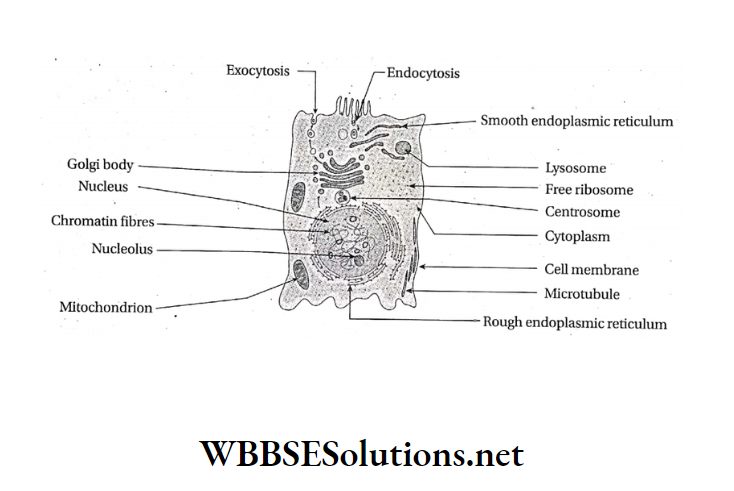
Question 4. Ribosome, Mitochondria, Pancreatic, amylase, Lysosome
Answer: Pancreatic amylase

WBBSE Class 9 Life Science Question And Answer

Question 5. Pancreas, Digestive juice, Testis, Ovary
Answer: Digestive juice

Question 6. Insulin,Testosterone,Progesterone, Oestrogen
Answer: Insulin

Question 7. Interstitial cells of Leydig, Sertoli cells, Islets of Langerhans, Spleen
Answer: Spleen

Question 8. Nerve, Brain, Spinal cord, Spleen
Answer: Spleen

Question 9. Pleura, Myocardium, Diaphragm, Liver
Answer: Liver

Question 10. Urea, Creatinine, Ammonia, Sperm
Answer: Sperm

Chapter 2 Levels Of Organization Of Life Major Organs Of The Human Body And Their Function Fill In The Blanks By Looking At The First Pair

1. O2-CO2, transport: Heart:: O2-CO2, exchange: Lungs

2. Kidney: Nephron:: Lung: Alveoli

3. Contraction and relaxation of Lungs::Diaphragm:: Contraction and relaxation of Heart: Myocardium

4. Carbohydrate metabolism Liver:: RBC storage: Spleen

5. Ionic balance: Kidney:: Immunity: Spleen

6. Circulation: Heart:: Excretion: Kidney

WBBSE Class 9 Life Science Question Answer

7. Memory: Brain:: Reflex action: Spinal cord

8. Body balance maintenance: Cerebellum:: Control reflex action: Testosterone

9. Ovary: Oestrogen:: Testis: Spinal cord

Chapter 2 Levels Of Organization Of Life Major Organs Of The Human Body And Their Function Among The Four Concepts Given, Three Of Them Belong To One. Find That

Question 1 Stomach, Peptic cell, Gastric Juice, HCl
Answer: Stomach

Question 2 Intelligence, Thoughts, Memory, Brain
Answer: Brain

Question 3 HCI secretion by the stomach, Protective power of body, Lysozyme secretion by sweat gland, Engulfing of bacteria by spleen
Answer: Protective power of the body

Question 4 Endocrine function, Testis, Ovary, Pancreas
Answer: Excretion

Question 5 Pancreas, Testis, Mixed gland, Ovary
Answer: Mixed Gland

Question 6 Leydig cells, Testis, Testosterone, Sperm production
Answer: Testis

Question 7 Corpus luteum, Ovary, Progesterone, Relaxin
Answer: Ovary

WBBSE Solutions For Class 9 Life Science And Environment Chapter 2 Levels Of Organization Of Life Plant Tissue And Its Distribution

Chapter 2 Levels Of Organization Of Life Plant Tissue And Its Distribution

  1. In multicellular organisms, tissues can be observed.
  2. Tissue is a cellular organizational level between cells and a complete organ.
  3. A group of cells that possesses a similar structure and perform a specific function, is known as tissue.
  4. On the basis of the kind of cells present, the plant tissues are mainly of two types:
    1. Meristematic tissue: The cells of this tissue divide actively.
    2. Permanent tissue: The cells constituting this tissue, are completely grown and have lost the ability of division.
  5. On the basis of the structure of constituting cells, permanent tissues are of two types:
    1. Simple permanent tissue
    2. Complex permanent tissue.
  6. Simple permanent tissue consists of a group of cells that are similar in origin, structure and function.
  7. Simple permanent tissue can be of three types.
  8. They are-parenchyma, collenchyma and sclerenchyma.
  9. Complex permanent tissue composed of more than one type of cells which work together as a unit.
  10. The complex permanent tissue in plants is xylem and phloem.
  11. Xylem helps in conduction of water and solutes.
  12. The hard, lignified wall of the cells of xylem tissue signifies their mechanical property, leaves to different parts of the plant Phloem carries the food prepared by the leaves to different parts of the plant.

WBBSE Solutions For Class 9 Life Science And Environment Chapter 2 Levels Of Organization Of Life Plant Tissue And Its Distribution

Read and Learn More WBBSE Solutions for Class 9 Life Science and Environment

Chapter 2 Levels Of Organization Of Life Plant Tissue And Its Distribution Answer In A Single Word Or Sentence

Question 1. Which type of meristem occurs along the longitudinal plane of the plant body?
Answer: Lateral meristem

Question 2. Which type of meristem is seen in the leaf- base of pine?
Answer: Intercalary meristem

Question 3. Which meristem helps in increasing the girth of the plant?
Answer: Lateral meristem

Question 4. Which type of tissue is the cork cambium?
Answer: Secondary meristematic tissue

Question 5. What is the other name for cork cambium?
Answer: Phellogen

Question 6. From which type of tissue does permanent tissue develop?
Answer: Permanent tissue develops from meristematic tissue.

Question 7. Which type of parenchyma is involved in holding photosynthesis within it?
Answer: Chlorenchyma

Question 8 How do the large air-filled intercellular spaces of parenchyma tissue in the petioles of the lotus plant help it?
Answer: The large air-filled intercellular spaces of parenchyma tissue in the petioles of the lotus plant help it to maintain its buoyancy and to float on water.

WBBSE Class 9 Plant Tissue Solutions

Question 9. Name the cells of parenchyma tissue in which plants store their excretory matter.
Answer: Idioblast cells of parenchyma tissue

Question 10. Identify the main types of tissue present in the pith of the stem and husk of a coconut,
Answer: In the pith of the stem, parenchyma tissue and in the husk of a coconut, sclerenchyma tissue is present.

Question 11. What is chlorenchyma?
Answer: The parenchyma tissue, carrying chloroplastids and acting as the site of photosynthesis is known as chlorenchyma.

Question 12. Which type of tissue in fruits forms roughage of our food diet?
Answer: Fruits containing sclerenchyma tissue, form roughage of our food diet.

Question 13. Which type of sclerenchyma cells makes the fruits like guava, pear, etc. harder?
Answer: Sclereid cells

Question 14. Which simple permanent tissue is responsible for adding mechanical strength to the plant body?
Answer: Sclerenchyma tissue

Question 15. Which tissue is predominant in a hard woody plant part?
Answer: Sclerenchyma tissue

Question 16. Which plant tissue is involved in the ascent of sap?
Answer: The xylem is involved in the ascent of sap.

Question 17: Which cells of the xylem exclusively provide mechanical support to the plant body?
Answer:  Xylem fibres

Question 18 Which tissue is also known as a leptosome?
Answer:  Phloem tissue

Question 19 Which cell of the phloem takes part in the transportation of food?
Answer: Sieve tubes

NEET Biology Class 9 Question And Answers WBBSE Class 9 History Notes WBBSE Solutions for Class 9 Life Science and Environment
WBBSE Class 9 Geography And Environment Notes WBBSE Class 9 History Multiple Choice Questions WBBSE Class 9 Life Science Long Answer Questions
WBBSE Solutions for Class 9 Geography And Environment WBBSE Class 9 History Long Answer Questions WBBSE Class 9 Life Science Multiple Choice Questions
WBBSE Class 9 Geography And Environment Multiple Choice Questions WBBSE Class 9 History Short Answer Questions WBBSE Solutions For Class 9 Maths
WBBSE Solutions for Class 9 History WBBSE Class 9 History Very Short Answer Questions WBBSE Solutions for Class 9 Physical Science and Environment


Question 20 Which cells do not directly take part in the transportation of food in plants but help in this process?
Answer: Companion cells

Question 21 What do companion cells do?
Answer: Companion cells play a supporting role in the conduction of food through sieve tubes.

Question 22 Which type of cambium is also known as fascicular cambium?
Answer: Vascular cambium

Question 23 What is dendrochronology?
Answer: The science that determines the age of a tree.

Question 24 What is meant by simple permanent tissue?
Answer: Simple permanent tissues consist of a group of similar types of cells performing the same function.

Question 25 What is sclerenchyma fibre?
Answer: Long and fine sclerenchyma cells, with pointed ends and pitted walls, are known as sclerenchyma fibres.

Question 26 Where do sclerenchyma cells occur?
Answer: Sclerenchyma cells occur in the hypodermis and pericycle of the stem. These are seen in a vascular bundle and bundle cap of dicot plants.

Question 27 Define Xylem.
Answer: Xylem is a complex tissue that is a part of the vascular bundle which is responsible for water conduction and the formation of the woody part of the stem.

Question 28 Write down the distribution of the xylem.
Answer: Xylem is present in the roots, stems and leaves of angiosperms, gymnosperms and ferns.

Question 29 What are the trachea or vessels?
Answer: Tracheae or vessels are the non-living, elongated, tubular xylem cells having highly lignified and evenly thick cell walls with bordered pits.

Question 30 What is xylem parenchyma?
Answer: The only living cell of the xylem, having protoplasm and a thin, cellulose-rich cell wall, is known as the xylem parenchyma.

Question 31 What are xylem fibres?
Answer: The dead and thread-like sclerenchyma cells of the xylem are known as xylem fibres.

Question 32 What is a sieve tube?
Answer: Living, elongated, tubular phloem cells with sieve plates at two terminal ends and cytoplasm without nucleus are known as sieve tube.

Question 33 What are companion cells?
Answer: The living, nucleated, lens-shaped cells typically present at two sides of a sieve tube, are known as companion cells.

Question 34 What is phloem parenchyma?
Answer: Thin-walled, living, cylindrical cell of phloem tissue is known as phloem parenchyma.

Question 35 What is phloem fibre?
Answer: Phloem fibre is the only non-living component of phloem with thin, elongated shape and two pointed ends.

Chapter 2 Levels Of Organization Of Life Plant Tissue And Its Distribution Fill In The Blanks

Question 1. The term ’tissue’ was coined by.

Question 2. The phenomenon by which a mass of cells take up definite structure and function is called

Question 3. The organisation of tissue is absent in organisms.

Question 4. The study of tissue is called

Question 5 is about living plant tissue that is devoid of intercellular spaces.

Question 6 The example of secondary meristematic tissue

Question 7 The outer layer of this parenchyma is called Pericycle

Question 8 Pith is composed of Parenchyma.

Question 9 Thickening in collenchyma consists of Cellulose and pectin.

Question 10 Casparian strips have compound Lignin

Question 11 The cell wall of sclerenchyma is made up of Lignin.

Question 12 Tracheae are also known as Vessels

Question 13 Trachea is made up of cells Dead.

Question 14 The main component of the xylem is Tracheid

Question 15 In gymnosperms, the xylem lacks Vessels and the phloem lacks companion

Question 16 You can tell the age of a tree by counting Cork cambium

Question 17 Monocots lack Cambium hence no secondary growth is observed.

Question 18 Cells of phloem do not have perforated cell walls Companion.

Question 19 Jute is an economically important Phloem fibre.

Question 20. A sieve tube of phloem is living in nature but it lacks Nucleus

Chapter 2 Levels Of Organization Of Life Plant Tissue And Its Distribution State True Or False

Question 1. Sieve tubes are unicellular.
Answer: False

Question 2. Intercellular spaces can be found in meristematic tissue.
Answer: False

Question 3. Permanent tissue differentiates into meristematic tissue.
Answer: False

Question 4. All types of sclereids are called stone cells.
Answer: False

Question 5. Gnetum is the only gymnosperm where companion cells are present in the phloem.
Answer: True

Question 6. Phloem parenchyma is absent in monocotyledonous plants.
Answer: True

Question7. Apical meristem is responsible for the growth of plants along the length.
Answer: True

Question 8 Connective tissue is actually one type of parenchyma without intercellular space found in the xylem and phloem.
Answer: True

Question 9. The only dead component of the phloem is the sieve tube.
Answer: False

Question 10. The same or different types of cells aggregate to form a tissue to perform a specific function.
Answer: True

Question 11 Cells of phloem parenchyma store orgastic metabolites in them.
Answer: True

Key Questions on Plant Tissue Organization for Class 9

Question 12 Branches of root arise from endodermis.
Answer: False

Question 13 Collenchyma is dead tissue.
Answer: True

Question 14 Secondary growth in dicots occurs due to the activity of lateral meristem.
Answer: True

Question 15 Meristematic tissues are rapidly dividing tissues.
Answer: True

Question 16 Meristematic tissue is found at the growing tips of a plant.
Answer: True

Question 17 Xylem and phloem are types of dermal tissue.
Answer: True

WBBSE Class 9 Life Science Question And Answer

Question 18 Xylem transports nutrients and carbohydrates in plant tissue.
Answer: False

Question 19 Parenchymatous tissues have intercellular spaces.
Answers: False

Question 20 Collenchymatous tissues are irregularly thickened at corners.
Answers: True

Chapter 2 Levels Of Organization Of Life Plant Tissue And Its Distribution Match The Columns

WBBSE Solutions For Class 9 Life Science And Environment Chapter 2 Levels Of Organization Of Life Plant Tissue And Its Distribution match the column 1

Answer: 1-C; 2-E; 3-A; 4-B

WBBSE Solutions For Class 9 Life Science And Environment Chapter 2 Levels Of Organization Of Life Plant Tissue And Its Distribution match the column 2

Answer: 1-D; 2-C; 3-A; 4-B

WBBSE Solutions For Class 9 Life Science And Environment Chapter 2 Levels Of Organization Of Life Plant Tissue And Its Distribution match the column 3

Answer: 1-A; 2-D; 3-B; 4-C

WBBSE Solutions For Class 9 Life Science And Environment Chapter 2 Levels Of Organization Of Life Plant Tissue And Its Distribution match the column 4

Answer: 1-B; 2-F; 3-E; 4-C; 5-A; 6-G

Chapter 2 Levels Of Organization Of Life Plant Tissue And Its Distribution Find The Odd One Out

Question 1. Idioblast, Aerenchyma, Chlorenchyma, Sclerenchyma
Answer: Sclerenchyma

Question 2. Lignification, Sclerenchyma, Dead cells, Meristematic tissue
Answer: Meristematic tissue

Question 3. Sieve tubes, Trachea, Companion cell, Phloem parenchyma
Answer: Trachea

Question 4. Jute rope, Rugs, Bast fibres, Xylem fibres
Answer: Xylem fibres

Question 5. Tracheids, Trachea, Xylem parenchyma, Xylem fibres.
Answer: Xylem parenchyma

Question 6. Tracheids, Trachea, Xylem fibres, Companion cells
Answer: Companion cells

Question 7. Downward conduction, Plant growth, Food transport, Phloem.
Answer: Plant growth

Chapter 2 Levels Of Organization Of Life Plant Tissue And Its Distribution Fill In The Blanks By Looking At The First Pair

1. Permanent tissue: Intercellular spaces:: Meristematic tissue: Without intercellular spaces

2 Permanent tissue Food transport:: Meristematic tissue: Plant growth

3 Thin cell wall: Parenchyma:: Unevenly thickened-walled cell wall: Collenchyma

4 Parenchyma::Fundamental tissue :: Sclerenchyma: Mechanical tissue

5 Collenchyma: Provide tensile strength:: Parenchyma: Storage of food material

6 Synthesis of food: Simple permanent tissue:: Food transport: Complex permanent tissue

7 Sieve tube: Phloem:: Trachea: Complex permanent tissue:: Xylem

8 Dead element of xylem: Tracheid:: Living element of xylem:: Xylem parenchyma

9 Upward conduction: Xylem:: Downward conduction: Pholem

10 Phloem fibre: Mechanical strength:: Sieve tube: Food transport

Chapter 2 Levels Of Organization Of Life Plant Tissue And Its Distribution Among The Four Concepts Given, Three Of Them Belong To One Find That

Question 1. Organism, Tissue, Organ, Organ system
Answer: Organism

Question 2. Simple permanent tissue, Parenchyma tissue, Collenchyma tissue, Sclerenchyma tissue
Answer: Simple permanent tissue

Question 3 Chlorenchyma, Aerenchyma, Prosenchyma, Parenchyma
Answer:
Prosenchyma

Question 4. Sieve tube, Companion cells, Phloem, Bast fibres
Answer: Phloem

Chapter 2 Levels Of Organization Of Life Plant Tissue And Its Distribution

1. On the basis of structure and function, four different types of tissues are recognised in higher animals and human beings.

They are:

  1. Epithelial tissue,
  2. Connective tissue,
  3. Muscular tissue
  4. Nervous tissue.

2. Epithelial tissue is a layer of cells which covers our all free surfaces either externally or internally.

3. Connective tissue normally connects different tissue systems.

4. Muscular tissue is contractile tissue consisting of large elongated cells or fibres.

5. The cytoplasm of muscle cells contains a large number of longitudinal fibrils called myofibrils.

6. The cytoplasm is called sarcoplasm and the cell membrane is called sarcolemma.

7. Three types of muscular tissues are there:

  1. Striated muscles,
  2. Unstriated muscles,
  3. Cardiac muscles.

8. Nervous tissue is responsible for excitement and conduction of nerve impulses.

9. Nervous tissue is composed of a bunch of neurones.

10. Each neurone consists of three parts:

  1. Cell body,
  2. Dendron,
  3. Axon.

11. Acetylcholine, Noradrenaline, GABA, and dopamine are examples of neurotransmitters.

Chapter 2 Levels Of Organization Of Life Plant Tissue And Its Distribution  Answer In A Single Word Or Sentence

Question 1. Which tissue has a liquid matrix?
Answer: Blood has a liquid matrix.

Question 2 Which tissue has a rigid calcified matrix?
Answer: Bone tissue has a rigid calcified matrix.

Question 3 Where does connective tissue originate from?
Answer: Connective tissue originates from the mesoderm.

Question 4. Where does nervous tissue originate from?
Answer: Nervous tissue originates from the ectoderm.

Question 5 Which tissue is responsible for the absorption of nutrients from the intestinal tract?
Answer: Epithelial tissue of the intestinal lining is responsible for the absorption of nutrients from the intestinal tract.

Question 6. The activity of which tissue or tissues directly controls the batting skill in the game of cricket?
Answer: The activity of muscular and nervous tissues controls the batting skill in the game of cricket.

Practice Questions for Chapter 2 Plant Tissues

Question 7. Name a type of cell that is present in bones. Osteocyte
Answer: Levels of Organisation of Life

Question 8. Which tissue plays the major role in the circulation of blood through blood vessels?
Answer: Muscular tissue, especially the cardiac muscles and muscular layer of blood vessels play major roles in the circulation of blood through blood vessels.

Question 9. Which proteins are responsible for muscular contraction?
Answer: Contractile proteins, viz.-actin and myosin

Question 10 What is the other name of voluntary muscle?
Answer: Skeletal muscle

Question 11. Why voluntary muscles are called striated muscles?
Answer: Under the microscope, alternately dark and light striations are seen across the voluntary muscle fibres. Therefore, these are called striated muscles.

Question 12 Which type of cells is present on the inner lining of the respiratory tract?
Answer: Epithelial cells are seen on the inner lining of the respiratory tract.

Question 13 Which type of muscles never get fatigued?
Answer: Cardiac muscles

Question 14 Which tissue helps us to respond to the changes in the environment?
Answer: Nervous tissue

Question 15 What are the receiving projections of neurones?
Answer: Dendrons are the receiving projections of a neurone.

Question 16 What are muscle fibres?
Answer: The fine elongated contractile components of muscular tissues are called muscle fibres.

Question 17 Which type of muscles are branched?
Answer: Cardiac muscles are branched.

Question 18 What is the short and well-branched projection of a neurone?
Answer: Dendron is the short and well-branched projections of a neuron.

Question 19 Name the longer and less branched projection of a nerve cell.
Answer: Axon is the longer and less branched projection of a nerve cell.

Question 20 Name the lipid-rich insulating coating present on the axon.
Answer: The lipid-rich insulating coating present on the axon is known as the myelin sheath.

Question 21 Name the neurone, which does not have any lipid-rich insulating coating on the axon.
Answer: Non-myelinated neurone

Question 22 Name the specialised nerve cells having a lipid-rich insulating coating on the axon.
Answer: The nerve cells, which have lipid-rich insulating coating on the axon, are called myelinated neurones.

Important Concepts in Plant Tissue Distribution for Class 9

Question 23 Which is the most flexible connective tissue of our body?
Answer: Cartilage is the most flexible connective tissue of our body.

Question 24 Which is the most rigid connective tissue of our body?
Answer: Bone is the most rigid connective tissue of our body.

Question 25 Name the fluid connective tissues of the human body.
Answer: Blood and lymph are the two fluid connective tissues of the human body.

Question 26. What type of tissue is the tendon?
Answer: Tendon is a connective tissue.

Question 27 Which two connective tissues are built for bearing the weight of the body?
Answer: Bones and cartilage

WB Class 9 Life Science Question Answer

Chapter 2 Levels Of Organization Of Life Plant Tissue And Its Distribution Fill In The Blanks

1. Squamous epithelium takes part in gaseous exchange.

2. Epithelial layers receive nourishment from the underlying connective tissue through a Basement membrane.

3. Adipose tissue stores fat for future use.

4. Blood and Lymph act as transporting fluids.

5 Fluid connective tissue is Blood

6 Bone possesses a hard matrix composed of  Calcium and Phosphorus

7 Fibrous connective tissue is Collagen fibre

8. Muscle is anchored to bones by tendons.

9. Bones and Cartilages from the skeleton.

10 Haversian system is a diagnostic feature of Bones

11 Voluntary muscles are attached to Bones

12 Cardiac muscles are responsible for rhythmic contraction and relaxation of the heart.

13 A Sarcomere is the basic unit of striated muscle tissue.

14 A neuron is the basic unit of the nervous system.

15 A neurone receives a nerve impulse Dendron, axon and transmits it through.

16 The Junction of two neurones is called Synapse

17  Tendon joins a muscle to a bone.

18 Nissl granules are found in Neurones

Chapter 2 Levels Of Organization Of Life Plant Tissue And Its Distribution State True or False

Question 1 Epithelial cells have a special role in secretion.
Answer: True

Question 2. Epithelial tissue is also known as the contracting tissue.
Answer: False

Question 3. Epithelial tissues are arranged on the basement membrane.
Answer: True

Question 4. Epithelial tissue helps in the exchange of gaseous and liquid substances.
Answer: True

Question 5. The amount of matrix is high in epithelial tissue.
Answer: False

Question 6. Areolar tissue may not contain white and yellow fibre.
Answer: False

Question 7. Fibrous tissues are a kind of epithelial tissue.
Answer: False

Question 8. A skeletal muscle fibre is surrounded by a plasma membrane called sarcolemma.
Answer: True

Question 9. Connective tissue originates from the mesoderm layer of the embryo.
Answer: True

Question 10 Blood is a fibrous connective tissue.
Answer: False

Question 11. Among all the connective tissue, bone is the hardest one.
Answer: True

Question 12 Adipose tissues are deposited fatty substances for energy in future.
Answer: True

Understanding Types of Plant Tissues for Solutions

Question 13 Pinna is made up of bone.
Answer: False

Question 14 Hormones, mucus, and enzymes are secreted by the connective tissue.
Answer: True

Question 15 Muscle fibres are always uninucleated.
Answer: False

Question 16 Smooth muscles control the movement of visceral organs like the intestine, ovary, urinary bladder etc.
Answer: True

Question 17 The Cardiac muscle is one of the striated muscles.
Answer: True

18 Striations of myofibrils are present in the involuntary muscle.
Answer: False

Question 19 The Cytoplasm of the nervous tissue is called sarcoplasm.
Answer: False

Question 20 Neurones are unable to divide due to a lack of mitochondria.
Answer: False

Question 21 Several neuroglia, surrounded by connective tissue, form a nerve.
Answer: False

Chapter 2 Levels Of Organization Of Life Plant Tissue And Its Distribution Match The Columns

WBBSE Solutions For Class 9 Life Science And Environment Chapter 2 Levels Of Organization Of Life Plant Tissue And Its Distribution match the columns 1

Answer: 1-B; 2-C; 3-D; 4-A

WBBSE Solutions For Class 9 Life Science And Environment Chapter 2 Levels Of Organization Of Life Plant Tissue And Its Distribution match the columns2

Answer: 1-C; 2-A; 3-B; 4-E; 5-D; 6-G

WBBSE Solutions For Class 9 Life Science And Environment Chapter 2 Levels Of Organization Of Life Plant Tissue And Its Distribution match the columns 3

Answer: 1-B; 2-A; 3-C; 4-F; 5-D; 6-G

Chapter 2 Levels Of Organization Of Life Plant Tissue And Its Distribution Find The Odd One Out

Question 1. Epithelial tissue, Connective tissue, Collenchyma, Muscular tissue
Answer: Collenchyma

Question 2. Secretion, Protection, Gamate production, Movement of body parts
Answer: Movement of body parts

Question 3. Areolar tissue, Blood, Adipose tissue, Epithelial tissue
Answer: Epithelial tissue

Question 4. Adipose tissue, Cartilage, Lymph, Striated muscle
Answer: Striated muscle

Sample Solutions from WBBSE Class 9 Life Science Chapter 2

Question 5 Intercalated disc, Continuous contraction and relaxation, Striated muscle, Cardiac muscle
Answer: Striated muscle

Question 6 Neurone, Neurilemma, Sarcolemma, Nissl’s granule
Answer: Sarcolemma

Question 7 Connections with different organs, Blood, Connective tissue, Nerve impulse
Answer: Nerve impulse

Question 8 Neurone, Schwann cell, Myosine, Nerve
Answer: Myosine

Chapter 2 Levels Of Organization Of Life Plant Tissue And Its Distribution Fill In The Blanks By Looking At The First Pair

1 Myofibril fibre: Muscular tissue :: White fibre: Areolar tissue

2 Basement membrane: Epithelial tissue:: Rich in the matrix: Connective tissue

3 Cilia: Epithelial tissue:: yellow fibre: Connective tissue

4. Bone and cartilage: Supportive connective tissue:: Blood and lymph: Liquid connective tissue

5 Impulse conduction: Nervous tissue:: Movement of body parts: Muscular tissue

6 Expansion of blood vessels: Smooth involuntary muscle:: Contraction of heart: Rough involuntary muscle

7 Skeletal muscle: Striated muscle:: Intercostal muscle: Unstriated muscle

8 Long processes: Axon:: Short processes: Dendron

9 Membrane of muscular tissue: Sarcolemma:: Membrane of nervous tissue: Neurilemma

Chapter 2 Levels Of Organization Of Life Plant Tissue And Its Distribution Among The Four Concepts Given, Three Of Them Belong To One. Find That

Question 1 Animal tissue, Muscular tissue, Connective tissue, Epithelial tissue
Answer: Animal tissue

Question 2 Basement membrane, Secretary cells, Epithelial cells, Cilia
Answer: Epithelial cells

Question 3 Connective tissue, Blood, Lymph, Bone
Answer: Connective tissue

Question 4 Sarcoplasm, Actin, Myosin, Striated muscle
Answer: Striated muscle

Concepts Related to Plant Tissue Types for Class 9 Solutions

Question 5 Adipose cells, Blood cells, Osteoblast, Connective tissue
Answer: Connective tissue

Question 6 Contraction and relaxation, Involuntary muscle, Cardiac muscle, Muscular tissue
Answer: Muscular tissue

Question 7 Axon, Schwann cell, Dendron, Neurone
Answer: Neurone

WBBSE Solutions For Class 9 Life Science And Environment Chapter 2 Organic And Inorganic Molecules

Chapter 2 Levels Of Organization Of Life Organic And Inorganic Molecules Summary

  1. It can be understood by studying different levels of organization of life, that the body of a living organism is primarily composed of different organic and inorganic molecules.
  2. The next level of organization of the body of a living organism is the cellular level.
  3. A group of structurally and functionally similar cells and their inter-cellular material constitute to form a tissue.
  4. Several tissues combine to form an organ and some organs unite to form an organ system.
  5. The biological levels of organization of living things arranged from the simplest to most complex form are- biomolecules cells tissues organs organ systems organisms.
  6. The major inorganic compounds, which are essential for living organisms, are water, inorganic acids, bases, salts, and inorganic gases like oxygen, carbon dioxide, and nitric oxide.
  7. Water, being a universal solvent, is essential for controlling all physiological reactions in a living body.
  8. Inorganic acids and bases are required for digestion and to maintain acid-base balance within the body and cells.
  9. Salts take part in the contraction of muscles, the transmission of nerve impulses, and the production of, hormones.
  10. Inorganic gases are required for various processes.
  11. For example, O2 is required for respiration and CO2 for photosynthesis.
  12. Organic molecules are of two types-smaller organic molecules and larger organic molecules.
  13. Smaller organic molecules include simple sugars, (like glucose, ribose, etc.) different amino acids, fatty acids, and nucleotides.
  14. Glucose acts as the main respiratory substrate, ribose molecules form the basic structure of DNA and RNA.
  15. Amino acids take part in the formation of proteins, hormones, enzymes, etc.
  16. Along with fatty acids, they involve in forming different cellular structures.
  17. Nucleotides constitute large nucleic acid molecules, like DNA and RNA.
  18. Complex sugars, proteins, lipids, and nucleic acids are large organic molecules.
  19. Monosaccharides, like glucose, fructose, etc. are held together by glycosidic bonds to form large and complex sugars.
  20. When connected together by a series of peptide bonds, amino acids form proteins.
  21. Simple protein constitutes only amino acids.
  22. When some non-protein molecules combine with simple proteins, ‘conjugate proteins are formed.
  23. The metabolic breakdown of simple and conjugate proteins forms the derived proteins.
  24. Esterification of fatty acids with glycerols or other alcohols forms large lipid molecules. 
  25. Within living cells, food materials are stored in the form of complex carbohydrates, like starch and glycogen.
  26. Within a living organism, proteins take part in building cells and tissues, lipids provide energy and act as reserve food materials, and nucleic acids, like DNA and RNA, act as genetic material.
  27. ATP is a nucleotide that has three phosphate radicals.
  28. It acts as energy currency in living cells and provides necessary energy during different physiological reactions.

Organic And Inorganic Molecules

Read and Learn More WBBSE Solutions for Class 9 Life Science and Environment

Chapter 2 Levels Of Organization Of Life Organic And Inorganic Molecules Summary Answer In A Single Word Sentance

Question 1. What are biomolecules?

Answer:

Biomolecules:-

Biomolecules are organic molecules. produced or involved in various biochemical reactions within the cells or inside the body.

WBBSE Solutions For Class 9 Life Science And Environment Chapter 2 Organic And Inorganic Molecules

WBBSE Class 9 Organic and Inorganic Molecules Solutions

Question 2. Inorganic acid plays a very important role in our digestion process.

Answer:

Hydrochloric acid is an inorganic acid, which plays an important role in our digestion process.

Question 3. Name a weak acid.

Answer:

Weak Acid:-

Carbonic acid (H2CO3)

NEET Biology Class 9 Question And Answers WBBSE Class 9 History Notes WBBSE Solutions for Class 9 Life Science and Environment
WBBSE Class 9 Geography And Environment Notes WBBSE Class 9 History Multiple Choice Questions WBBSE Class 9 Life Science Long Answer Questions
WBBSE Solutions for Class 9 Geography And Environment WBBSE Class 9 History Long Answer Questions WBBSE Class 9 Life Science Multiple Choice Questions
WBBSE Class 9 Geography And Environment Multiple Choice Questions WBBSE Class 9 History Short Answer Questions WBBSE Solutions For Class 9 Maths
WBBSE Solutions for Class 9 History WBBSE Class 9 History Very Short Answer Questions WBBSE Solutions for Class 9 Physical Science and Environment


Question 4. What does carbonic acid do in our bodies?

Answer:

Carbonic acid is involved in the transportation of C02, out of the body, via the respiratory exchange of gases.

Question 5. Which two elements are essential for neural transport?

Answer:

Sodium and potassium

West Bengal Board Class 9 Life Science Book Solution

Question 6. Which gas is involved in energy generation in a living body?

Answer:

Oxygen

Question 7. What is calorific value?

Answer:

The total heat energy liberated by the complete oxidation of the unit mass of a matter is known as its calorific value.

Question 8. Which biomolecule is the primary source of energy in our body?

Answer:

Carbohydrate

Question 9. Which anabolic process needs C02?

Answer:

Photosynthesis

Question 10. Which is the most abundant salt in our body?

Answer:

Sodium chloride (NaCl)

Question 11. Which two elements are essential for our skeletal system?

Answer:

Calcium and phosphorus

Question 12. Which type of biomolecule is commonly consumed by organisms for energy generation?

Answer:

Carbohydrates.

Key Questions on Organic and Inorganic Molecules for Class 9

Question 13. How much heat energy is liberated from one gram of glucose on its complete oxidation?

Answer:

4.1 kcal

Question 14. Name an aldose and a ketose sugar.

Answer:

Glucose is an aldose and fructose is a ketose sugar.

Question15. Name a reducing sugar.

Answer:

Glucose is a reducing sugar.

Question6. Name a nonreducing sugar.

Answer:

Sucrose is a nonreducing sugar.

Question 17. Write down the common formula of carbohydrates.

Answer:

Cn(H2O)n

Question 18. Mention the ratio of hydrogen and oxygen in carbohydrates.

Answer:

2:1

Question 19. Which is the smallest unit of carbohydrate, used as food?

Answer:

Glucose, fructose, etc.

Question 20. Name two triose sugars.

Answer:

Two triose sugars are mannotriose and dihydroxyacetone.

Question 21. Name the sweetest carbohydrate.

Answer:

The sweetest carbohydrate is fructose or fruit sugar.

Practice Questions for Chapter 2 Organic Molecules

Question 22. What is ‘Magic 20’?

Answer:

20 amino acids, which take part in protein formation, are known as ‘Magic 20’

Question 23. Oxidation of which amino acid results in the formation of melanin pigment?

Answer:

Tyrosine

Question 24. Give an example of an essential amino acid.

Answer:

Valine, tyrosine

Question 25. Name some essential fatty acids.

Answer:

Linoleic acid, linolenic acid, arachidonic . acid

Question 26. What is the full form of MUFA?

Answer:

MUFA is Mono Unsaturated Fatty Acid.

WB Class 9 Life Science Question Answer

Question 27. Give two examples of short-chain fatty acids.

Answer:

Caproic acid, butyric acid.

Question 28. Give two examples of long-chain fatty acids.

Answer:

Palmitic acid, stearic acid

Question 29. What is the similarity among monosaccharides, amino acids, and fatty acids?

Answer:

Monosaccharides, amino acids, and fatty acids are all organic macromolecules.

Question 30. How do you denote the sugars composed of 2 to 9 monosaccharide units?

Answer:

The sugars with 2 to 9 monosaccharide units are denoted as oligosaccharides.

Question 31. Which type of sugar is generally insoluble in water and tasteless in nature?

Answer:

Polysaccharides

Important Concepts in Organic Chemistry for Class 9

Question 32. Which form of carbohydrate is stored in muscle and liver?

Answer:

Glycogen

Question 33. Which form of carbohydrate is stored in the plant body?

Answer:

Starch

Question 34. Which type of material in food helps in feces formation and facilitates defecation?

Answer:

A polysaccharide, called cellulose, helps in feces formation and facilitates defecation.

Question 35. What is the minimum number of monosaccharides required to form a polysaccharide?

Answer:

At least 10 monosaccharide molecules are necessary to constitute a polysaccharide.

WB Class 9 Life Science Question Answer

Question 36. Which type of biomolecule is commonly consumed by organisms as body-building materials?

Answer:

Living organisms commonly consume proteins as body-building materials.

Question 37. What is meant by a polypeptide?

Answer:

Large polymers of numerous amino acid molecules, linked together by peptide bonds, are known as polypeptides.

Question 38. Name the structural unit of the protein.

Answer:

Amino acid

Question 39.  Which element, present in protein, is absent in carbohydrates?

Answer:

Nitrogen

Question 40. How much energy is generated by the oxidation of 1 gram of protein?

Answer:

4.1 kcal’

Question 41. Which parts of the animal body contain keratin protein?

Answer:

Skin, hair, nail, hoof, horn, etc.

Question 42. Name two contractile proteins.

Answer:

Actin, myosin

Understanding the Differences Between Organic and Inorganic Compounds

Question 43. Name a basic protein.

Answer:

Histone is a basic protein.

Question 44. Which type of food should a growing baby be fed with?

Answer:

A growing baby should be fed protein-rich food for maximum muscular growth.

WB Class 9 Life Science Question Answer

Question 45. Which type of biomolecule does living organisms commonly store within the body?

Answer:

Living organisms commonly store fat within the body.

Question 46. Which two simplest molecular units form a lipid molecule?

Answer:

Fatty acid and glycerol

Question 47. In the animal body, fat is stored in which tissue?

Answer:

Adipose tissue

Question 48. Which biomolecule has the highest calorific value?

Answer:

Fat or lipid has the highest calorific value.

Question 49. How much energy is generated by the oxidation of 1 gram of lipid?

Answer:

9.3 kcal

Question 50. Which nucleic acid is mainly involved in carrying hereditary features from parents to offspring in humans?

Answer:

Mainly DNA is involved in carrying hereditary features from parents to offspring.

Question 51. How are the two strands of a DNA molecule zipped together?

Answer:

The two strands of a DNA molecule are zipped together by weak hydrogen bonds between the bases.

Question 52. Name the bond by which nucleosides of a nucleic acid strand remain attached one after another.

Answer:

The nucleosides of a nucleic acid strand remain attached one after another by phosphate bonds.

Question 53. Mention the names of different purines.

Answer:

Adenine [A] and guanine [G]

Question 54. Mention the names of different types of pyrimidines.

Answer:

Thymine [T], cytosine [C], and uracil [U]

Question 55. Which type of pyrimidine bases are present in DNA?

Answer:

Thymine and cytosine

WB Class 9 Life Science Question Answer

Question 56. Which type of pyrimidine bases are present in RNA?

Answer:

Uracil and cytosine

Question 57. How many hydrogen bonds join guanine with cytosine?

Answer:

Three

Question 58. How many hydrogen bonds join adenine with thymine?

Answer:

Two

Chapter 2 Topic A Biomolecules And Their Behavior Fill In The Blanks

1. Water acts as the medium of all cellular reactions within protoplasm.

2. NaHS04 is an Acidic salt.

3. Maltotriose is an example of an Oligo saccharide.

4. A glycoside bond binds two glucose molecules while forming disaccharides.

5. The food, synthesized by green plants through the process of photosynthesis, is Glucose.

6. Glucose + fructose = Sucrose

7. Oligosaccharides consist of 2 – 9 molecules of Monosaccharides

8. Leucine is an Essential amino acid

9. Amino acids join one after another by Peptide bonds to form polypeptide molecules.

10. Nucleotides are joined by phosphodiester bonds.

11. Linoleic acid Palmitic acid is an example of a long-chain fatty acid.

12. Nitrogenous base + pentose sugar = Nucleoside

13. The structural unit of protein is the Amino acid

14. The main elementary component of protein is Nitrogen

15. Simple protein, when combined with other non-protein material, Conjugated protein is formed.

16. The name of the protein present in the white part of the egg is Albumin

17. Fat is the Ester of fatty acids and glycerol.

18. In the process of Saponification fats are hydrolyzed in the presence of alkali to produce soap and glycerol.

19. In animals fat is stored in the blood as Cholesterol

20 The largest biomolecule, present in the living body is DNA

WB Class 9 Life Science Question Answer

Chapter 2 Levels Of Organization Of Life Organic And Inorganic Molecules Summary  True Or False

Question 1. Glucose is a pentose sugar.

Answer: False

Question 2. Cn (H20)n-1 is the basic molecular formula of oligosaccharides.

Answer: True

Question 3.  Carbonic acid is involved in the transportation of co2.

Answer: True

Question 4. Roughage mainly consists of cellulose.

Answer: True

Question 5. We may suffer from ketosis due to malnutrition or fat.

Answer: False

Question 6. Disaccharides cannot be hydrolyzed further to their smaller units.

Answer: False

Question 7. Cytosine is a non-nitrogenous base present in DNA.

Answer: False

Question 8. Nonhistone proteins are basic in nature.

Answer: False

Sample Solutions from WBBSE Class 9 Life Science Chapter 2

Question 9. Disaccharide maltose is present in jaggery.

Answer: True

Question 10. In simple sugar, the ratio of carbon, hydrogen, and oxygen is 1:4:1.

Answer: False

Question 11. Linoleic acid is an amino acid.

Answer: False

Question 12. Glycogen is a simple carbohydrate.

Answer: False

Question 13. The calorific value of protein is 5.2 kcal/gm.

Answer: False

Question 14. Nitrogen is a structural unit of protein, but not present in fat and sugars.

Answer: True

Question 15. The main sources of carbohydrates are nuts, ghee, butter, etc.

Answer: False

WB Class 9 Life Science Question Answer

Question 16. The structural unit of DNA and RNA is a nucleotide.

Answer: True

Question 17. The sugar present in DNA has six carbon atoms.

Answer: False

Chapter 2 Levels Of Organization Of Life Organic And Inorganic Molecules Summary Match The Columns

WBBSE Solutions For Class 9 Life Science And Environment Chapter 2 Levels Of Organization Of Life Organic And Inorganic Molecules Summary match the column 1

Answer: 1-C; 2-G; 3-A; 4-F; 5-B; 6-D

WBBSE Solutions For Class 9 Life Science And Environment Chapter 2 Levels Of Organization Of Life Organic And Inorganic Molecules Summary match the column 2

Answer: 1-D; 2-B; 3-A; 4-F; 5-G; 6-E

WBBSE Solutions For Class 9 Life Science And Environment Chapter 2 Levels Of Organization Of Life Organic And Inorganic Molecules Summary match the column 3

Answer: 1-F; 2-E; 3-B; 4-A; 5-C; 6-D

WBBSE Solutions For Class 9 Life Science And Environment Chapter 2 Levels Of Organization Of Life Organic And Inorganic Molecules Summary match the column 4

WB Class 9 Life Science Question Answer

Answer: 1-E; 2-D; 3-B;4-A; 5-C; 6-G

WBBSE Solutions For Class 9 Life Science And Environment Chapter 2 Levels Of Organization Of Life Organic And Inorganic Molecules Summary match the column 5

Answer: 1-D; 2-A; 3-B; 4-F; 5-C; 6-G

WBBSE Solutions For Class 9 Life Science And Environment Chapter 2 Levels Of Organization Of Life Organic And Inorganic Molecules Summary match the column 6

Answer: 1-B; 2-D; 3-F; 4-A; 5-C; 6-E

Chapter 2 Levels Of Organization Of Life Organic And Inorganic Molecules Summary  Find The Odd One Out

Question 1. Simple sugar, Amino acid, Starch, Lactose

Answer: Amino acid

Question 2. Water, Hydrochloric acid, Carbon dioxide Lipid

Answer: Lipid

Question 3. HCL, NaOH, H3P04 H2C03

Answer:  NaOH

Question 4. HCI,H3PO4,KCI,H2SO4

Answer:  KCI

Question 5. Calcium Phosphate, Sodium Chloride, Sodium Hydroxide, Sodium Iodide

Answer:  Sodium Hydroxide

Question 6. Jaggery, Sugar, Egg, Rice

Answer:  EGG

Concepts Related to Molecular Structure for Class 9 Solutions

Question 7. Albumin, Globulin, Glycogen, Haemoglobin

Answer:  Glycogen

Question 8. Butter, Ghee, Fish, Oil

Answer:  Fish

Question 9. Adenine, Thymine, Linoleic acid, Guanine

Answer: Linoleic acid

Question 10. Phosphate, Nitrogenous base, Ribose sugar, Fat

Answer: Fat

Chapter 2 Levels Of Organization Of Life Organic And Inorganic Molecules Summary Fill In The Blanks By Looking At The First Pair

1. Amino acid: Protein:: Monosaccharide: Carbohydrate

2 Albumin: Simple protein:: Arachidonic acid: Essential fatty acid

3. Maltose: Disaccharide:: Glycogen: Polysaccharide

4. Collagen: Protein:: Glucose: Carbohydrate

5. Glycosidic bond : Polysaccharide:: Peptide bond: Protein

6. Ribose sugar : RNA:: Deoxyribose sugar: DNA

7. Adenine: Purine:: Thymine: Pyrimidine

Chapter 2 Levels Of Organization Of Life Organic And Inorganic Molecules Summary Among The Four Concepts Given, Three Of Them Belong To One Find That

Question 1. Water, Inorganic molecules, Base, Mineral element

Answer: Inorganic molecule

Question 2. HC1, Bicarbonate ion, Inorganic molecule, NaCl

Answer: Inorganic molecule

Question 3. Inorganic acid, HC1, H2S04, H3P04

Answer: Inorganic acid

Question 4.  Carbohydrates, Lipid, Nucleic acid, Organic molecule

Answer: Organic molecule

Question 5. Lactose, Starch, Cellulose, Carbohydrate

Answer: Carbohydrates

Question 6. Starch, Protein, Large organic molecule, Nucleic acid

Answer: Large organic molecule

Question 7. Maltose, Disaccharide, Lactose, Sucrose

Answer: Disaccharide

Question 8. Simple sugar, Erythrose, Ribose, Glucose

Answer: Simple sugar

Question 9. Amino acid, Polypeptide, Peptide bond, Protein

Answer: Protein

Study Guide for Class 9 Life Science Molecule Questions

Question 10. Energy production, Rice, fruit juice, Carbohydrate

Answer: Carbohydrate

Question 11. A nitrogenous base, Adenine, guanine, Cytosine

Answer: Nitrogenous base

Question 12. Nucleotide, Pentose sugar, Phosphate, Nitrogenous base

Answer: Nucleotide

Chapter 2 Levels Of Organization Of Life Organic And Inorganic Molecules

1. Vitamins and minérals do not provide energy but these food components protect our body. 

2. The food components, which are required in a very small quantity to protect our body against diseases and to help in normal growth and nutrition, are called vitamins. 

3. Based on solubility vitamins are of two types soluble and water soluble.

4. Fat-soluble vitamins are Vitamins A, D, E, and K.

5. Water soluble vitamins are Vitamin B complex, C, and P.

6. Vitamin A is commonly present in red, orange, or yellow-colored vegetables and fruits. 

7. This vitamin is required to produce Rhodopsin pigment in the eyes. 

8. This pigment helps to see in dim light.

9. Due to its deficiency, occurs night-blindness.

10. Vitamin D helps in calcium and phosphate absorption from the intestine. 

11. It helps in the formation of bones and teeth.

12. The scarcity of this vitamin during infancy causes rickets and osteomalacia in adults.

13. Vitamin E reduces cellular oxidation and prevents sterility in females.

14. Vitamin K prevents bleeding by helping in the blood coagulation process.

15. Vitamin B complex is a combination of eight vitamins. 

16. All these act as coenzymes. 

17. Diseases like beriberi, pernicious anemia, dermatitis, and chilosis may occur due to its deficiency.

18. Vitamin C is adequately present in lemon, amla, orange, etc. It helps in strengthening gums.

19. Its deficiency causes a disease called scurvy.

20. Based on the requirement, in the human body mineral elements can be divided into two types- macro-elements and micro-elements. 

WB Class 9 Life Science Question Answer

21. Macro-elements are required in larger quantities, whereas, micro-elements are required in smaller quantities.

22. Elements like sodium, potassium, calcium, phosphorus, etc., are the macro-elements, and iron, zinc, iodine, etc., belong to the category of micro-elements.

23. Usually, mineral elements act as cofactors of different enzymes. 

24. These also help in various metabolic reactions, hormone synthesis, transportation of nutrients, maintenance of water balance in the body, formation of gums and teeth, etc,

Chapter 2 Levels Of Organization Of Life Organic And Inorganic Molecules Answer In A Single Word Sentence

Question 1. Who discovered vitamins?

Answer: Casimir Funk [1912]

Question  2. Which vitamin did Casimir Funk discover the first?

Answer: Niacin or vitamin B3

Question  3. What is the chemical name of vitamin A? 

Answer: Retinol

Question  4. Deficiency of which vitamin may cause night blindness? Or Which type of vitamin should a person take in for problems with vision after sunset?

Answer: Vitamin A

Question  5. Mention the name of the provitamin of vitamin A. Or,  From which compound is vitamin A synthesized?

Answer: Beta carotene

Question  6. Which vitamin does play an important role in producing rod cells of the retina?

Answer: Vitamin A

Question  7. Name some diseases caused by to deficiency of vitamin A.

Answer: Some diseases caused due to deficiency of vitamin A are tanned skin or phrynoderma, night blindness or nyctalopia, damaged cornea or xerophthalmia, etc.

Question  8. Deficiency of which vitamin does cause phrynoderma? 

Answer: Vitamin A

Question  9. What is phrynoderma?

Answer: Due to a deficiency of vitamin A, human skin may become dry, rough, and scaly. This disease is called phrynoderma.

Question  10. Deficiency of which vitamin does cause rickets in children?

Answer: Vitamin D

Question 11. Deficiency of which nutrient does cause bending of leg bones in children?

Answer: Vitamin D

Question 12. Deficiency of which vitamin does cause osteomalacia in older persons?

Answer: Vitamin D

Question 13. Which vitamin is synthesized within our skin on exposure to the sun? 

Answer: Vitamin D

Question 14. Which type of organisms synthesizes the most vitamins?

Answer: The green plants

Question 15. Name an abnormal condition caused due to deficiency of vitamin E. 

Answer: Sterility

Question 16. What is the chemical name of Vitamin E?

Answer: Phylloquinone

Question 17. Deficiency of which vitamin causes bleeding in the human body? Or Deficiency of which vitamin does hamper blood clotting?

Answer: Vitamin K

Question 18. Name the water-soluble vitamins.

Answer: Water soluble vitamins are Vitamin B complex, Vitamin C, and Vitamin P.

Question 19. What is the chemical name of vitamin B1?

Answer: Thiamine

Question 20. Name the antivitamin of vitamin B,? 

 Answer: Pyrithiamine

Question 21. Where is vitamin B2 synthesized?

Answer: Vitamin B2 is synthesized in the human intestine.

Question 22. Mention the chemical name of vitamin B3.

Answer: Niacin

Question 23. What is the chemical name of vitamin C? 

Answer: Ascorbic acid

Question 24. Which vitamin is adequately present in amla? 

Answer: Vitamin C

Question 25. Deficiency of which vitamin does cause scurvy?

Answer: Vitamin C

Question 26. What is the chemical name of vitamin P? 

Answer: Citrine

Question 27. Name two fat-soluble vitamins, present in eggs. 

Answer: Vitamin A and vitamin D

Question 28. Name two vitamins present in lemon.

Answer: Vitamin C and vitamin P

Question 29. What is the chemical name of vitamin D?

Answer: Calciferol

Question 30. Deficiency of which vitamin does result in deformity of teeth and gum? 

Answer: Vitamin C

Question 31. Name the disease that occurs in children due to a deficiency of iodine. 

Answer: Cretinism

Question 32. Which mineral does play an important role in RNA synthesis?

Answer: Manganese

Question 33. Which mineral is essential for hemoglobin formation?

Answer: Iron [Fe]

Question 34. Which mineral is essential in blood coagulation? 

Answer: Calcium

Question 35. Name the disease of aged women in which calcium dissociation occurs from bone. 

Answer: Osteoporosis

Question 36. Which symptoms appear due to potassium deficiency?

Answer: Nervous and cardiac disorder

Question 37. Which organ of the human body does play an important role in maintaining a balance of sodium and potassium? 

Answer: Kidney

Question 38. Deficiency of which vitamins and minerals cause rickets in children?

Answer: The deficiency of vitamin D and mineral calcium causes rickets in children.

Question 39. Deficiency of which mineral does cause goiter?

Answer: Iodine

Question 40. Synthesis of which vitamin does require cobalt?

Answer: Cyanocobalamin or vitamin B12

Question 41. Which mineral does help in muscle contraction?

Answer: Calcium

Question 42. Which of the ions play an important role in maintaining water balance in the human body?

Answer: Na+ and K+

Question 43. Name an iron-containing enzyme.

Answer: Catalase is an iron-containing enzyme.

Chapter 2 Levels Of Organization Of Life Organic And Inorganic Molecules Fill In The Blanks

1. In 1912 the term ‘Vitamin’ was coined by  Casimir Funk

2. Biotin was previously known as Vitamin H

3. The chemical name of vitamin K is Phylloquinone.

4. We obtain vitamin  B12 from Streptomyces griseus.  

5. Osteoporosis is caused due to the deficiency of Calcium bones.

6. Night blindness is caused by a deficiency of vitamin A or Retinol 

7.  Calciferol is the chemical name of vitamin D.

8. Vitamin D is called an antirachitic factor.

9. Sterility may occur due to the deficiency of E.

10. Haemorrhage is caused due to a deficiency of vitamin K.

11. Dermatitis and cheilosis occur due to the deficiency of vitamin B2

12. Vitamin C is called an antiscorbutic factor.

13. The disease that may develop due to the deficiency of iron in the human body is Anaemia

14. The mineral Sodium balance in the blood.

Chapter 2 Levels Of Organization Of Life Organic And Inorganic Molecules True Or False

Question 1. Avitaminosis refers to a state of lacking vitamins

Answer: True

Question 2. The chemical name of vitamin B12 is cyanocobalamin.

Answer: True

Question 3. Vitamin C can be dissolved in water.

Answer: True

Question 4. In the presence of sunlight vitamin D is synthesized within the human body.

Answer: True

Question 5. Vitamin B12 helps in the formation of rod cells in the retina.

Answer: False

Question 6. Vitamin D plays an important role in blood coagulation.

Answer: False

Question 7. Vitamin D is absorbed directly in the intestine.

Answer: True

Question 8. Vitamin D acts mainly as a cofactor of enzymes.

Answer: False

Question 9. Vitamin D helps in calcium absorption.

Answer: True

Question 10. Night blindness is caused due a deficiency of vitamin K.

Answer: False

Question 11. Cobalt is a mineral that takes part in vitamin B12 synthesis.

Answer: True

Question 12. Micronutrients are known as trace elements.

Answer: True

Question 13.  Iodine in humans is a trace element.

Answer: True

Question 14. The nutritional importance of pseudo-vitamins is like that of the vitamins themselves.

Answer: False

Question15. Organic acids act as cofactors of enzymes.

Answer: False

Question 16. In the deficiency of vitamin K, blood coagulation is hampered.

Answer: True

Question 17. Iron takes part in the formation of the haem portion of a hemoglobin molecule.

Answer: True

Chapter 2 Levels Of Organization Of Life Organic And Inorganic Molecules Match The Columns

WBBSE Solutions For Class 9 Life Science And Environment Chapter 2 Levels Of Organization Of Life Organic And Inorganic Molecules Summary match the column 1

Answer: 1-D; 2-E; 3-B; 4-A; 5-C

WBBSE Solutions For Class 9 Life Science And Environment Chapter 2 Levels Of Organization Of Life Organic And Inorganic Molecules Summary match the columns 2

Answer: 1-F; 2-C; 3-D; 4-G; 5-B; 6-A

WBBSE Solutions For Class 9 Life Science And Environment Chapter 2 Levels Of Organization Of Life Organic And Inorganic Molecules Summary match the columns 3

Answer: 1-G; 2-F; 3-A; 4-E; 5-D

WBBSE Solutions For Class 9 Life Science And Environment Chapter 2 Levels Of Organization Of Life Organic And Inorganic Molecules Summary match the columns 4

Answer: 1-F; 2-G; 3-E; 4-A; 5-B; 6-C

Chapter 2 Levels Of Organization Of Life Organic And Inorganic Molecules Find The Odd One Out

Question 1. Vitamin A, Vitamin C, Vitamin D, Vitamin E 

Answer: Vitamin C

Question 2. Sodium, Calcium, Manganese, Phosphorus 

Answer: Manganese

Question 3. Zinc, Selenium, Molybdenum, Magnesium

Answer: Magnesium

Question 4. Vitamin A, Vitamin B complex, Vitamin E, Vitamin K

Answer: Vit. B complex

Question 5. Magnesium, Calcium, Potassium, Cobalt

Answer: Cobalt

Chapter 2 Levels Of Organization Of Life Organic And Inorganic Molecules Fill In The Blanks By Looking At The First Pair

Question 1. Antisterility factor: Vitamin E Antixerophthalmic Factor: Vitamin A 

Question 2. Vitamin A: Fat-soluble:: Vitamin C: Water-soluble 

Question 3. Night blindness: Vitamin A:: Rickets: Vitamin D 

Question 4. Synthesized in skin: Vitamin D:: Synthesised in the intestine: Vitamin B12

Question 5. Calciferol: Vitamin D :: Ascorbic acid: Vitamin C

Question 6. Phrynoderma: Vitamin A:: Scurvy: Vitamin C

Question 7. Carrot: Vitamin A:: Lemon: Vitamin C

Question 8. Xerophthalmia: Vitamin A :: Pernicious anemia: Vitamin B12

Question 9. Contraction of muscles: Calcium: Contraction of heart muscles: Sodium

Question 10. Deficiency of iodine: Goitre:: Deficiency of iron: Anaemia

Question 11. Antivitamin: Galactoflavin:: Pseudovitamin: Methylcobalamin

Chapter 2 Levels Of Organization Of Life Organic And Inorganic Molecules Among The Four Concepts Given, Three Of Them Belong To One. Find That

Question 1. Iron, Iodine, Copper, Micro-elements

Answer: Micro-elements

Question 2. Macronutrients, Sodium, Calcium, Phosphorus,

Answer: Macronutrient

Question 3. Cobalt, Copper, Manganese, Micronutrients

Answer: Micronutrients

Question 4. Retinol, Fat-soluble vitamin, Calciferol, Phylloquinone

Answer: Fat-soluble vitamin

Question 5. Water-soluble vitamins, Ascorbic acid, Thiamine, Riboflavin

Answer: Water-soluble vitamin

WBBSE Solutions for Class 9 Life Science and Environment

  • Chapter 1 Life and Its Diversity
  • Chapter 2 Levels of Organisation of Life

WBBSE Solutions for Class 9 Life Science and Environment