Motion in a Plane Multiple Choice Question And Answers

Motion in a Plane

Question 1. A particle has an initial velocity of \(3 \hat{i}+4 \hat{j}\) and an acceleration of \(0.4 \hat{i}+0.3 \hat{j}\). Its speed after 10s is

  1. 10 units
  2. 7 units
  3. 7 √2 units
  4. 8.5 units

Answer: 3. 7√2 units

In the vector form,

⇒ \(\vec{v}=\vec{u}+\vec{a} t=(3 \hat{i}+4 \hat{j})+(0.4 \hat{i}+0.3 \hat{j}) t\)

At \(t=10 \mathrm{~s}, \vec{v}=(3 \hat{i}+4 \hat{j})+(4 \hat{i}+3 \hat{j})=7 \hat{i}+7 \hat{j}\)

Hence, speed = magnitude of velocity

⇒ \(v=|7 \hat{i}+7 \hat{j}| \text { units }=\sqrt{7^2+7^2} \text { units }=7 \sqrt{2} \text { units. }\)

Motion in a Plane Multiple Choice Question And Answers

Question 2. A particle has an initial velocity of 9 m s-1 due east and a constant acceleration of 2 m s-2 due west. The distance covered by the particle in the fifth second of its motion is

  1. Zero
  2. 0.5 m
  3. 2m
  4. None of these

Answer: 2. 0.5 m

Since the acceleration is opposite to the direction of the initial velocity, the particle decelerates and comes to rest momentarily at a time t. Hence, applying the equation v = u-at, we have

0 = 9ms-1-(2ms-2)t

or, t = 4.5s.

In the fifth second, the particle covers equal distances in opposite directions.

Hence,

“motion in a plane mcq “

⇒ \(s_1=s_2=\frac{1}{2} a t^2=\frac{1}{2}\left(2 \mathrm{~m} \mathrm{~s}^{-2}\right)\left(\frac{1}{2} \mathrm{~s}\right)^2\)

= 0.25m.

∴ the total distance covered in the fifth second is 0.50 m.

Read And Learn Also NEET Physics Multiple Choice Question and Answers

Question 3. The x- and y-coordinates of a particle at any time t are x = 5t- 2t² and y = 10t, respectively, where x and y are in metres, and f is in seconds. The acceleration of the particle at t = 2 s is

  1. 5ms-2
  2. -4ms-2
  3. -8 ms-2
  4. Zero

Answer: 2. -4ms-2

Given that x = 5t-2t².

So, \(v_x=\frac{d x}{d t}=5-4 t\)

Similarly, y = 10t

⇒ \(v_y=\frac{d y}{d t}=10\)

Differentiating again,

⇒ \(a_x=\frac{d v_x}{d t}=-4 \text { and } a_y=\frac{d y_y}{d t}=0\)

∴ acceleration \(\vec{a}=a_x \hat{i}+a_y \hat{j}=-4 \hat{i}\) = constant.

The acceleration at t = 2 s is -4 m s-2.

Question 4. A particle moves such that its position vector is given by \(\vec{r}=(\cos \omega t) \hat{i}+(\sin \omega t) \hat{j}\), where o is a constant. Which of the following statements is true?

  1. The velocity vector is perpendicular to \(\vec{r}\), and the acceleration vector is directed towards the origin.
  2. The velocity vector is perpendicular to \(\vec{r}\), and the acceleration vector is directed away from the origin.
  3. The velocity and acceleration vectors are both perpendicular to \(\vec{r}\)
  4. The velocity and acceleration vectors are both parallel to \(\vec{r}\).

Answer: 1. The velocity vector is perpendicular to \(\vec{r}\), and the acceleration vector is directed towards the origin.

Given that \(\vec{r}=\cos \omega t \cdot \hat{i}+\sin \omega t \cdot \hat{j}\)

∴ velocity \(\vec{v}=\frac{d \vec{r}}{d t}=-\omega \sin \omega t \cdot \hat{i}+\omega \cos \omega t \cdot \hat{j}\)

and acceleration \(\vec{a}=\frac{d \vec{v}}{d t}=-\omega^2 \cos \omega t \cdot \hat{i}-\omega^2 \sin \omega t \cdot \hat{j}=-\omega^2 \vec{r}\)

The position vector \(\vec{r}\) is directed away from the centre, but the acceleration

⇒ \(\vec{a}=-\omega^2 \vec{r}\)

is directed towards the centre.

Further, \(\vec{r} \cdot \vec{v}=(\cos \omega t \cdot \hat{i}+\sin \omega t \cdot \hat{j})(-\omega \sin \omega t \cdot \hat{i}+\omega \cos \omega t \cdot \hat{j})\)

⇒ \(-\omega \sin \omega t \cos \omega t+\omega \sin \omega t \cos \omega t=0\)

Hence, the angle between \(\vec{v}\) and \(\vec{r}\) is 90°, and thus \(\vec{v}\) is perpendicular to \(\vec{r}\).

Note The given equation represents a uniform circular motion of unit radius.

Question 5. A particle is moving in a plane such that its position coordinates (x, y) are (2 m, 3 m) at t = 0, (6 m, 7 m) at t = 2 s, and (13 m, 14 m) at t = 5 s. The average velocity vector \(\left(\vec{v}_{\text {av }}\right)\) from f = 0 to f = 5 s is

  1. \(\frac{1}{5}(13 \hat{i}+14 \hat{j}) \mathrm{m} \mathrm{s}^{-1}\)
  2. \(\frac{7}{3}(\hat{i}+\hat{j}) \mathrm{ms}^{-1}\)
  3. \(2(\hat{i}+\hat{j}) \mathrm{m} \mathrm{s}^{-1}\)
  4. \(\frac{11}{5}(\hat{i}+\hat{j}) \mathrm{m} \mathrm{s}^{-1}\)

Answer: 4. \(\frac{11}{5}(\hat{i}+\hat{j}) \mathrm{m} \mathrm{s}^{-1}\)

The position vector of the particle at \(t=0 \text { is } \vec{r}_1=2 \hat{i}+3 \hat{j}\) and that at

⇒ \(t=5 \mathrm{~s} \text { is } \vec{r}_2=13 \hat{i}+14 \hat{j} .\)

The displacement \(\Delta \vec{r}=\overrightarrow{r_2}-\overrightarrow{r_1}\) in the time interval At=5 s is \(\Delta \vec{r}=11 \hat{i}+11 \hat{j}\)

∴ The average velocity vector is

⇒ \(\vec{v}_{\mathrm{av}}=\frac{\Delta \vec{r}}{\Delta t}=\frac{11}{5}(\hat{i}+\hat{j}) \mathrm{m} \mathrm{s}^{-1}\)

Question 6. A body is moving with a velocity of 30 m s-1 towards the east. After 10 s, its velocity becomes 40 m s-1 towards the north. The average acceleration of the body is

  1. 1 m s-2
  2. √7 m s-2
  3. 7ms-2
  4. 5 m s-2

Answer: 2. √7 m s-2

The velocity due east is \(\vec{v}_1=\left(30 \mathrm{~m} \mathrm{~s}^{-1}\right) \hat{i}\) and the velocity due north is

⇒ \(\vec{v}_2=\left(40 \mathrm{~m} \mathrm{~s}^{-1}\right) \hat{j}\)

∴ The change in velocity vector is \(\Delta \vec{v}=\vec{v}_2-\vec{v}_1=(40 \hat{j}-30 \hat{i}) \mathrm{m} \mathrm{s}^{-1}\)

∴ The magnitude of the average acceleration is

⇒ \(\left|\vec{a}_{\mathrm{av}}\right|=\frac{|\Delta \vec{v}|}{\Delta t}=\frac{|40 \hat{j}-30 \hat{i}|}{10 \mathrm{~s}}=\frac{1}{10 \mathrm{~s}} \sqrt{40^2+30^2} \mathrm{~m} \mathrm{~s}^{-1}\)

⇒ \(\frac{50 \mathrm{~m} \mathrm{~s}^{-1}}{10 \mathrm{~s}}=5 \mathrm{~m} \mathrm{~s}^{-2}\)

physics motion in a plane class 11

Question 7. A particle moves in the ay-plane in such a way that x = a cos ωt and y = a sin ωt. The particle follows

  1. An elliptical path
  2. A circular path
  3. A parabolic path
  4. A linear path (straight line)

Answer: 2. A circular path

Given that \(x=a \sin \omega t\)

So, \(\sin \omega t=\frac{x}{a}\)

Also, \(y=a \cos \omega t \Rightarrow \cos \omega t=\frac{y}{a}\)

By squaring and adding, we obtain

⇒ \(\sin ^2 \omega t+\cos ^2 \omega t=\frac{x^2}{a^2}+\frac{y^2}{a^2} \Rightarrow x^2+y^2=a^2\)

Question 8. A particle starting from the origin (0, 0) moves in a straight line in the ay-plane. Its coordinates at a later time are (√3,3). The angle made by the path of the particle with the x-axis is

  1. 45°
  2. 30°
  3. 60°

Answer: 3. 60°

The instantaneous position vector of the particle is

⇒ \(\overrightarrow{O P}=\vec{r}=\sqrt{3} \hat{i}+3 \hat{j}\)

Hence,

⇒ \(\tan \theta=\frac{A P}{O A}=\frac{3}{\sqrt{3}}=\sqrt{3} \Rightarrow \theta=60^{\circ}\)
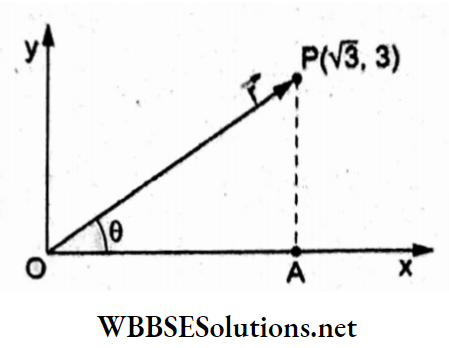
Motion In A Plane Multiple choice question and answers the instantaneous position vector of the particle Q 8

Question 9. A car is moving on a straight road towards the north with a uniform speed of 50 km h-1 Then, it turns left through 90°. If the speed remains unchanged after turning, the increase in the velocity of the car in the turning process is

  1. 70.7 km h-1 in the southwest direction
  2. Zero
  3. 50 km h-1 towards the west
  4. 70.7 km h-1 in the northwest direction

Answer: 1. 70.7 km h-1 in the southwest direction

Initial velocity = \(\vec{v}_1=\left(50 \mathrm{~km} \mathrm{~h}^{-1}\right) \hat{j}\) and

final velocity = \(\vec{v}_2=\left(50 \mathrm{~km} \mathrm{~h}^{-1}\right)(-\hat{i})\)

∴ the change in velocity is

⇒ \(\Delta \vec{v}=\vec{v}_2-\vec{v}_1=-\left(50 \mathrm{~km} \mathrm{~h}^{-1}\right)(\hat{i}+\hat{j})\)

∴ \(|\Delta \vec{v}|=\left(50 \mathrm{~km} \mathrm{~h}^{-1}\right)|\hat{i}+\hat{j}|\)

⇒ \(50 \sqrt{2} \mathrm{~km} \mathrm{~h}^{-1}b\)

= 70.7 km h -1.

“physics class 11 motion in a plane “
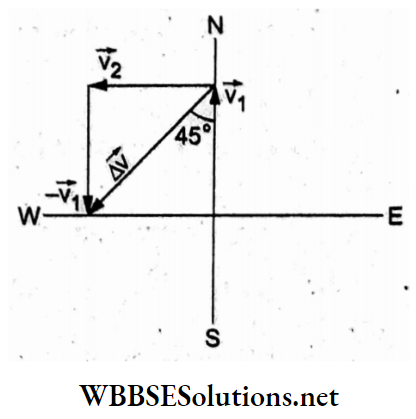
Motion In A Plane Multiple choice question and answers initial velocity Q 9

Question 10. The maximum height attained by a projectile and its horizontal range are equal to each other if the angle of projection is given by

  1. 0 = tan-1(2)
  2. 0 = tan-1(3)
  3. 0 = tan-1(4)
  4. 0 = tan-1(5)

Answer: 3. 0 = tan-1(3)

Horizontal range = \(R=\frac{u^2 \cdot 2 \sin \theta \cos \theta}{g}\)

and maximum height = \(H=\frac{u^2 \sin ^2 \theta}{2 g}\)

Given that R = H

Hence, \(\frac{u^2 \cdot 2 \sin \theta \cdot \cos \theta}{g}=\frac{u^2 \sin ^2 \theta}{2 g} \Rightarrow \tan \theta=4\)

⇒ \(\theta=\tan ^{-1}(4)\)

Question 11. When a projectile is at the highest point of its trajectory, the directions of its velocity and acceleration are

  1. Parallel to each other
  2. Antiparallel to each other
  3. Perpendicular to each other
  4. Inclined to each other at an angle of 60°

Answer: 3. Perpendicular to each other

The direction of the velocity is tangential to the trajectory at every point. At the highest point, the velocity is along the horizontal and the acceleration \(\vec{g}\) is vertical. So, the angle between \(\vec{g}\) and \(\vec{g}\) is 90°, and thus they are perpendicular to each other.

Question 12. A ball is projected horizontally with a velocity of 5 m s-2 from the top of a 19.6-m-high building. How long will the ball take to hit the ground?

  1. √3s
  2. 2s
  3. 3s
  4. √2s

Answer: 2. 2s

Since the ball is projected horizontally, the velocity component uy along the vertical is zero.

So, \(h=\frac{1}{2} g t^2\)

∴ \(t=\sqrt{\frac{2 h}{g}}=\sqrt{\frac{2(19.6 \mathrm{~m})}{9.8 \mathrm{~m} \mathrm{~s}^{-2}}}=2 \mathrm{~s}\)

Question 13. A bomb is dropped from an aeroplane when it is at a height h directly above a target If the aeroplane is moving at a speed v, the distance by which the bomb will miss the target is given by

  1. \(2 v \sqrt{\frac{h}{g}}\)
  2. \(v \sqrt{\frac{h}{2g}}\)
  3. \(v \sqrt{\frac{h}{g}}\)
  4. \(v \sqrt{\frac{2h}{g}}\)

Answer: 4. \(v \sqrt{\frac{2h}{g}}\)

The time when the bomb strikes the ground is \(t=\sqrt{\frac{2 h}{g}}\)

∴ the distance ahead of the target where the bomb strikes the ground is

⇒ \(x=v t=v \sqrt{\frac{2 h}{g}}\)

“physics class 11 motion in a plane “

Question 14. The ceiling of a tunnel is 5 m high. What is the maximum horizontal distance that a ball thrown with a speed of 20 m s-1 can go without hitting the ceiling of the tunnel?

  1. 10√5m
  2. 20√3m
  3. 40 m
  4. 30√3m

Answer: 2. 20√3m

Maximum height, \(H=\frac{u^2 \sin ^2 \theta}{2 g}=5 \mathrm{~m}\)

∴ \(\sin ^2 \theta=\frac{10 g}{u^2}=\frac{100}{20 \times 20}=\frac{1}{4} \Rightarrow \sin \theta=\frac{1}{2}\)

⇒ \(\theta=30^{\circ} \Rightarrow \sin 2 \theta=\sin 60^{\circ}=\frac{\sqrt{3}}{2}\)

∴ The maximum horizontal range is

⇒ \(\theta=30^{\circ} \Rightarrow \sin 2 \theta=\sin 60^{\circ}=\frac{\sqrt{3}}{2}\)

Question 15. A boy aims a gun at a target from a point at a horizontal distance of 100 m. If the gun can impart a horizontal velocity of 500 m s-1 to the bullet, the height at the target where he must aim his gun in order to hit is

  1. 10 cm
  2. 20 cm
  3. 50 cm
  4. 80 cm

Answer: 2. 20 cm

The time taken to cover 100 m by the bullet is

⇒ \(t=\frac{100 \mathrm{~m}}{500 \mathrm{~m} \mathrm{~s}^{-1}}=0.2 \mathrm{~s}\)

The downward distance moved in this time is

⇒ \(y=\frac{1}{2} g t^2=\frac{1}{2} \times 10 \mathrm{~m} \mathrm{~s}^{-2} \times(0.2 \mathrm{~s})^2\)

= 20 cm.

This is the distance above the target where the gun is aimed at.

Question 16. From the top of a tower of height 40 m, a ball is projected upwards with a speed of 20 ms-1 making an angle of 30° with horizontal. After how much time will the ball hit the ground?

  1. 1s
  2. 2s
  3. 3s
  4. 4s

Answer: 4. 4s

Consider the point of projection O as the origin and the equation of kinematics along the vertical line.

h =-40 m,

⇒ \(u_y=u \sin 30^{\circ}=\left(20 \mathrm{~m} \mathrm{~s}^{-1}\right)\left(\frac{1}{2}\right)\)

= 10ms-1

and g = -10 m s-2.

Applying \(h=u_y t+\frac{1}{2} g t^2\), we have

⇒ \(-40=10 t-\frac{1}{2} \times 10 t^2\)

or t²-2t-8=0 or

(t-4)(t+ 2)=0.

Hence, the permissible time is t = 4s,
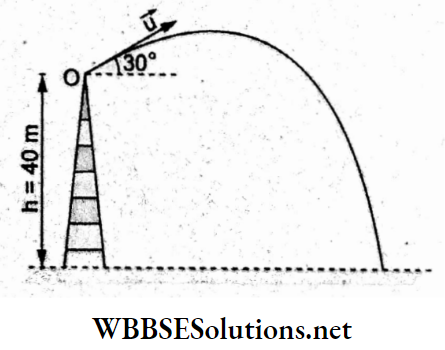
Motion In A Plane Multiple choice question and answers point of projection Q 16

Question 17. A particle is thrown with a speed u at an angle θ to the horizontal. When the particle makes an angle Φ with the horizontal; its speed changes to v given by

  1. \(v=u \cos \theta\)
  2. \(v=u \cos \theta \cos \phi\)
  3. \(v=u \cos \theta \sec \phi\)
  4. \(v=u \sec \theta \cos \phi\)

Answer: 3. \(v=u \cos \theta \sec \phi\)

“physics class 11 motion in a plane “

We know that during a projectile motion, the horizontal component of the velocity remains unchanged. This is due to the component of \(\vec{g}\) along the horizontal being zero.

Thus, \(v \cos \phi=u \cos \theta\)

⇒ \(v=\frac{u \cos \theta}{\cos \phi}=u \cos \theta \sec \phi\)
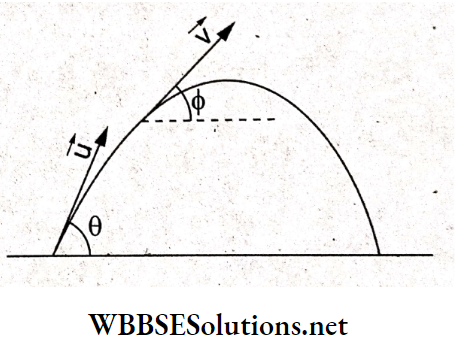
Motion In A Plane Multiple choice question and answers horizontal component of the velocity

Question 18. An aeroplane flying at a constant velocity releases a bomb. As the bomb drops down from the aeroplane,

  1. It will always be vertically below the aeroplane
  2. It will be vertically below the aeroplane only if the aeroplane Is flying horizontally
  3. It will be vertically below the aeroplane only if the aeroplane Is flying at an angle of 45° to the horizontal
  4. It will gradually fall behind the aeroplane if the plane is flying horizontally

Answer: 1. It will always be vertically below the aeroplane

The horizontal component of the velocity of the aeroplane will always be the same as the horizontal component of the velocity Of the bomb. Hence, in all cases, the two will have the same horizontal displacement in die same time interval. So, the bomb will be vertically below the aeroplane in all cases.

Question 19. Two stones are projected simultaneously in the same vertical plane from the same point but with different speeds and at different angles to the horizontal. The path followed by one stone as seen by the other is

  1. A straight vertical line
  2. A straight line making a constant angle (not = 90°) with the horizontal
  3. A parabola
  4. A hyperbola

Answer: 2. A straight line making a constant angle (not = 90°) with the Horizontal

In a projectile motion, the velocity vector at any time is given by

⇒ \(\vec{v}=\vec{u}+\vec{g} t=(u \cos \theta) \hat{i}+(u \sin \theta-g t) \hat{j}\)

for the first stone, \(\vec{v}_1=\left(u_1 \cos \theta_1\right) \hat{i}+\left(u_1 \sin \theta_1-g t\right) \hat{j}\)

and for the second stone, \(\vec{\nabla}_2=\left(u_2 \cos \theta_2\right) \hat{i}+\left(u_2 \sin \theta_2-g t\right) \hat{j}\)

∴ the relative velocity of the first stone relative to the second stone is

⇒ \(\vec{v}_{12}=\vec{v}_1-\vec{v}_2=\left(\vec{v}_{\mathrm{r}}\right)_x-\left({\overrightarrow{v_r}}_{\mathrm{r}}\right)_y\) = constant

Hence, the die path followed by one stone as seen by the other will be a straight line making a constant with the horizontal.

Question 20. A gun kept on a horizontal road is used to hit a car travelling on the same road away from the gun at a uniform speed of 10√2 m s-1. The car is at a distance of 150 m from the gun when it is fired at an angle of 45° to the horizontal. With what speed should the shell be projected so that it hits the car?

  1. 20 ms-1
  2. 30ms-1
  3. 40ms-1
  4. 50ms-1

Answer: 4. 50ms-1

Let the bullet hit the car at B, where the range is

⇒ \(O B=\frac{u^2 \sin 2 \theta}{g}=\frac{u^2 \sin 90^{\circ}}{10}=\frac{u^2}{10}\)
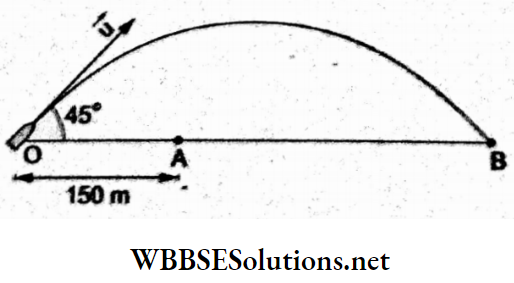
Motion In A Plane Multiple choice question and answers the bullet hit in the car

Time of flight, \(T=\frac{2 u \sin \theta}{g}=\frac{2 u}{\sqrt{2} \times 10}\)

During this time, the car travels a distance of

⇒ \(A B=\text { velocity } \times T=10 \sqrt{2} \times \frac{2 u}{10 \sqrt{2}}\)

Thus, R = OA + AB

or \(\frac{u^2}{10}\) = 150 + 2m

or u²- 20u -1500 = 0

or (u-50)(u + 30) = 0.

Hence, the permissible value of the speed of the shell is 50 m s-1.

Question 21. A projectile has a maximum range of 200 m. What is the maximum height attained by it?

  1. 28 m
  2. 50 m
  3. 75 m
  4. 100 m

Answer: 2. 50 m

For the maximum range, the angle of projection is 0 = 45°. So

⇒ \(R_{\max }=\frac{u^2 \sin \left(2 \times 45^{\circ}\right)}{g}=\frac{u^2}{g}=200\)

Hence, the maximum height is

⇒ \(H=\frac{u^2 \sin ^2 45^{\circ}}{2 g}=\frac{1}{2}\left(\frac{u^2}{g}\right)\left(\frac{1}{\sqrt{2}}\right)^2\)

⇒ \(\frac{1}{2}(200 \mathrm{~m})\left(\frac{1}{2}\right)=50 \mathrm{~m}\)

Class 11 Physics Class 12 Maths Class 11 Chemistry
NEET Foundation Class 12 Physics NEET Physics

Question 22. Which of the following remains constant during the motion of a projectile fired from a planet?

  1. Kinetic energy
  2. Momentum
  3. The vertical component of the velocity
  4. Horizontal component of the velocity

Answer: 4. Horizontal component of the velocity

For any planet, the acceleration due to gravity (\(\vec{g}\)) acts vertically downwards. So, its component along the horizontal is geos 90° = 0. Hence, the horizontal component of the velocity remains constant.

Question 23. A ball is projected at an angle of 60° with the horizontal with a kinetic energy of K. Its kinetic energy at the highest point of the trajectory will be

  1. 2K
  2. K
  3. \(\frac{K}{2}\)
  4. \(\frac{K}{4}\)

Answer: 4. \(\frac{K}{4}\)

The kinetic energy at the point of projection is \(K=\frac{1}{2} m u^2\)

Let the velocity at the maximum height be v. Since the horizontal component of the velocity remains constant, u cos 60° = v.

∴ The kinetic energy at the highest point is

⇒ \(K^{\prime}=\frac{1}{2} m v^2=\frac{1}{2} m\left(u \cos 60^{\circ}\right)^2\)

⇒ \(\frac{1}{4}\left(\frac{1}{2} m u^2\right)=\frac{K}{4}\)

Question 24. Four projectiles are projected with the same speed at the angles 20°, 35°, 60° and 75° with the horizontal. The horizontal range will be maximum for the projectile whose angle of projection is

  1. 20°
  2. 35°
  3. 60°
  4. 75°

Answer: 2. 35°

Range = \(R=\frac{u^2 \sin 2 \theta}{8}\)

For the same value of u, R oc sin 20.

Since sin 20 is maximum for θ = 35°, the range is maximum for the angle of projection θ = 35°

Question 25. The maximum height attained by a projectile is increased by 10% by increasing the speed of projection, without changing the angle of projection. The percentage increase in the horizontal range will be

  1. 5%
  2. 15%
  3. 10%
  4. 20%

Answer: 3. 10%

Maximum height = \(H=\frac{u^2 \sin ^2 \theta}{2 g}\)

Since (sin²θ)/2g is constant,

⇒ \(\frac{d H}{H}=2\left(\frac{d u}{u}\right)\)

⇒ \(2\left(\frac{d u}{u}\right)=10 \%=\frac{1}{10} \Rightarrow \frac{d u}{u}=\frac{1}{20} .\)

Horizontal range = \(R=\frac{u^2 \sin 2 \theta}{g}\)

Since (sin²θ)/g is constant,

⇒ \(\frac{d R}{R}=2\left(\frac{d u}{u}\right)=2\left(\frac{1}{20}\right)=\frac{1}{10}=10 \%\)

Question 26. A projectile has a range R and a time of flight T. If the range is doubled by increasing the speed of projection without changing the angle of projection, the time of flight will become

  1. \(\frac{T}{2}\)
  2. 2T
  3. \(\frac{T}{\sqrt{2}}\)
  4. √2T

Answer: 4. √2T

Initially, \(R=\frac{u_1^2 \sin 2 \theta}{g} \text { and } T=\frac{2 u \sin \theta}{g}\)

When the range is doubled, \(2 R=\frac{u_2^2 \sin 2 \theta}{g}\)

Hence,

⇒ \(u_1^2=\frac{u_2^2}{2} \Rightarrow u_1=\frac{u_2}{\sqrt{2}} \Rightarrow u_2=\sqrt{2} u_1\)

∴ The corresponding value of the time of light is

⇒ \(T^{\prime}=\frac{2 u_2 \sin \theta}{g}=\frac{2 \sqrt{2} u_1 \sin \theta}{g}=\sqrt{2} T .\)

“physics class 11 motion in a plane “

Question 27. For the same range R, the maximum heights attained are h1 and h2. Then, R, h1 and h2 are related as

  1. \(R=\sqrt{h_1 h_2}\)
  2. \(R=2 \sqrt{h_1 h_2}\)
  3. \(R=3 \sqrt{h_1 h_2}\)
  4. \(R=4 \sqrt{h_1 h_2}\)

Answer: 4. \(R=4 \sqrt{h_1 h_2}\)

For the same range, the angles of projection are complementary. Hence,

⇒ \(\theta_1+\theta_2=90^{\circ}\)

For, \(\theta_1, h_1=\frac{u^2 \sin ^2 \theta}{2 g} \text { and } R=\frac{u^2 \sin 2 \theta}{g}\)

For , \(\theta_2=90^{\circ}-\theta_1, h_2=\frac{u^2 \sin ^2\left(90^{\circ}-\theta\right)}{2 g}=\frac{u^2}{2 g} \cos ^2 \theta\)

and , \(R=\frac{u^2}{g} \sin 2\left(90^{\circ}-\theta\right)=\frac{u^2}{g} \sin 2 \theta\)

∴ \(\sqrt{h_1 h_2}=\frac{u^2}{2 g} \sin \theta \cos \theta=\frac{u^2}{4 g} \sin 2 \theta=\frac{R}{4}\)

Hence, \(R=4 \sqrt{h_1 h_2}\)

Question 28. A ball is projected vertically upwards at a certain initial speed. Another ball is projected at an angle of 60° with the vertical at the same initial speed. The ratio of their maximum heights reached is

  1. 4:1
  2. 2:3
  3. 3:2
  4. 2:1

Answer: 3. 3:2

For the projection along the vertical,

⇒ \(v^2=u^2-2 g h=0 \Rightarrow h=\frac{u^2}{2 g}\)

For the projection at the angle

θ = 90°- 60°

= 30°, the maximum height is

⇒ \(H=\frac{u^2 \sin ^2 30^{\circ}}{2 g}=\frac{1}{4} h\)

∴ \(\frac{h}{H}=\frac{h}{\frac{h}{4}}=\frac{4}{1}=4: 1\)

Question 29. Two balls A and B are projected simultaneously from the same point. A is projected vertically upwards and B at 30° to the vertical. They reach the ground simultaneously. The velocities of projection of A and B are in the ratio

  1. 1:√3
  2. √3:1
  3. 2:√3
  4. √3:2

Answer: 4. √3:2

For the motion along the vertical, \(v=u_{\mathrm{A}}-g t_{\mathrm{A}}=0\). So, the time of flight (up and down) is

⇒ \(T_{\mathrm{A}}=\frac{2 u_{\mathrm{A}}}{g}\)

For the projectile motion at the angle 0 = 90°- 30° = 60°, the time of flights

⇒ \(T_{\mathrm{B}}=\frac{2 u_{\mathrm{B}} \sin 60^{\circ}}{g}=\frac{\sqrt{3} u_{\mathrm{B}}}{8} .\)

Since,

⇒ \(T_{\mathrm{A}}=T_{\mathrm{B}}, 2 u_{\mathrm{A}}=\sqrt{3} u_{\mathrm{B}}\)

⇒ \(\frac{u_{\mathrm{A}}}{u_{\mathrm{B}}}=\frac{\sqrt{3}}{2}=\sqrt{3}: 2\)

Question 30. A body is projected with a velocity \(\vec{v}=(3 \hat{i}+4 \hat{j}) \mathrm{m} \mathrm{s}^{-1}\). The maximum height attained by the body is

  1. 0.8 m
  2. 8 m
  3. 80 m
  4. 800 m

Answer: 1. 0.8 m

Given that the velocity of projection is

⇒ \(\vec{v}=(3 \hat{i}+4 \hat{j}) \mathrm{m} \mathrm{s}^{-1}=\left(v_x \hat{i}+v_y \hat{j}\right) \mathrm{m} \mathrm{s}^{-1}\)

The speed of projection is \(v=\sqrt{3^2+4^2} \cdot \mathrm{m} \mathrm{s}^{-1}=5 \mathrm{~m} \mathrm{~s}^{-1}\), and for die angle of projection 0,

⇒ \(\tan \theta=\frac{v_y}{v_x}=\frac{4}{3} \Rightarrow \sin \theta=\frac{4}{5}\)

∴ maximum height \(=H=\frac{u^2 \sin ^2 \theta}{2 g}=\frac{\left(5 \mathrm{~m} \mathrm{~s}^{-1}\right)^2\left(\frac{4}{5}\right)^2}{20 \mathrm{~m} \mathrm{~s}^{-2}}\)

= 0.8m

“physics class 11 motion in a plane “

Question 31. A body is projected at an angle of 0 with the horizontal. The velocity of the body will become perpendicular to the velocity of projection after a time t equal to

  1. \(\frac{2 u \sin \theta}{g}\)
  2. \(\frac{u \sin \theta}{8}\)
  3. \(\frac{2 u}{g \sin \theta}\)
  4. \(\frac{u}{g \sin \theta}\)

Answer: 4. \(\frac{u}{g \sin \theta}\)

At O, the angle of projection is \(\theta\), and at P, the velocity vector \(\vec{v}\) is perpendicular to the direction of the velocity of projection.

In \(\triangle \mathrm{OAB}, \angle P B O=90^{\circ}-\theta\)

The components of v along the horizontal are vx = v cos (90°- 0) = v sin 0 and vy = v cos 0.

Since the horizontal component of the velocity remains constant,

u cos θ = v sin θ …..(1)

For motion along the vertical,

⇒ \(-v \cos \theta=u \sin \theta-g t \Rightarrow t=\frac{1}{g}(u \sin \theta+v \cos \theta)\)

Substituting \(v=\frac{u \cos \theta}{\sin \theta}\) from (i), we get

⇒ \(t=\frac{1}{g}\left(u \sin \theta+\frac{u \cos ^2 \theta}{\sin \theta}\right)=\frac{u}{g \sin \theta}\)
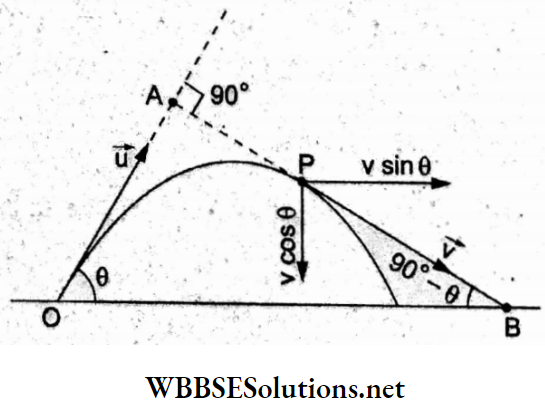
Motion In A Plane Multiple choice question and answers perpendicular to the directiion of the velocity of projection Q 31

Question 32. The equation of the trajectory of a projectile is y- ax- bx², where a and b are constants of motion. The horizontal range of the projectile is

  1. \(\frac{a}{b}\)
  2. \(\frac{\sqrt{a}}{2 b}\)
  3. \(\frac{a^2}{2 b}\)
  4. \(\frac{a^2}{4 b}\)

Answer: 1. \(\frac{a}{b}\)

Given that y-ax- bx².

Comparing this with the equation of trajectory,

⇒ \(y=(\tan \theta) x-\left(\frac{8}{2 u^2 \cos ^2 \theta}\right) x^2\)

we get \(a=\tan \theta \text { and } b=\frac{g}{2 u^2 \cos ^2 \theta}\)

Now, horizontal range = \(R=\frac{u^2 \sin 2 \theta}{g}=\frac{2 u^2 \sin \theta \cos \theta}{g}\)

⇒ \(\frac{2 u^2 \cos ^2 \theta \tan \theta}{g}=\frac{a}{b}\)

Question 33. In the preceding question, the greatest height attained by the projectile is

  1. \(\frac{a}{b}\)
  2. \(\frac{a^2}{4 b}\)
  3. \(\frac{\sqrt{a}}{2 b}\)
  4. \(\frac{a^2}{2 b}\)

Answer: 2. \(\frac{a^2}{4 b}\)

Maximum height = \(H=\frac{u^2 \sin ^2 \theta}{2 g}=\frac{u^2 \cos ^2 \theta \tan ^2 \theta}{2 g}\)

⇒ \(\frac{2 u^2 \cos ^2 \theta \tan ^2 \theta}{4 g}=\frac{a^2}{4 b}\) [from preceding solution].

Question 34. The velocity of a projectile at the initial point A is \((2 \hat{i}+3 \hat{j}) \mathrm{m} \mathrm{s}^{-1}\). Its velocity at the point B is
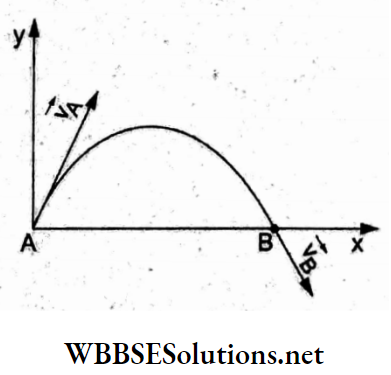
Motion In A Plane Multiple choice question and answers velocity of a projectile at the initial point Q 34

  1. \((2 \hat{i}+3 \hat{j}) \mathrm{m} \mathrm{s}^{-1}\)
  2. \((2 \hat{i}-3 \hat{j}) \mathrm{m} \mathrm{s}^{-1}\)
  3. \((-2 \hat{i}-3 \hat{j}) \mathrm{ms}^{-1}\)
  4. \((-2 \hat{i}+3 \hat{j}) \mathrm{ms}^{-1}\)

Answer: 2. \((2 \hat{i}-3 \hat{j}) \mathrm{m} \mathrm{s}^{-1}\)

Let the velocity at B be \(v_x \hat{i}+v_y \hat{j}\)

The initial velocity of projection is \(\vec{u}=2 \hat{i}+3 \hat{j}\)

So, at B in the same horizontal plane, the x-component will remain
unchanged, while the y-component will reverse its sign.

So, the velocity at B is \(\vec{v}=(2 \hat{i}-3 \hat{j}) \mathrm{ms}^{-1}\) m s-1

“physics class 11 motion in a plane “

Question 35. A projectile is fired at an angle of 45° with the horizontal. The elevation angle of the projectile at its highest point as seen from the point of projection is

  1. 45°
  2. 60°
  3. \(\tan ^{-1}\left(\frac{1}{2}\right)\)
  4. \(\tan ^{-1}\left(\frac{\sqrt{3}}{2}\right)\)

Answer: 3. \(\tan ^{-1}\left(\frac{1}{2}\right)\)

The angle of elevation at the highest point A is ΔAOB = a.

⇒ \(\tan \alpha=\frac{H}{R / 2}\)

Now, \(H=\frac{u^2 \sin ^2 45^{\circ}}{2 g}=\frac{u^2}{4 g}\)

and \(\frac{R}{2}=\frac{u^2 \sin 45^{\circ} \cos 45^{\circ}}{g}=\frac{u^2}{2 g}\)

∴ \(\tan \alpha=\frac{\frac{u^2}{4 g}}{\frac{u^2}{2 g}}=\frac{1}{2} \Rightarrow \alpha=\tan ^{-1}\left(\frac{1}{2}\right)\)
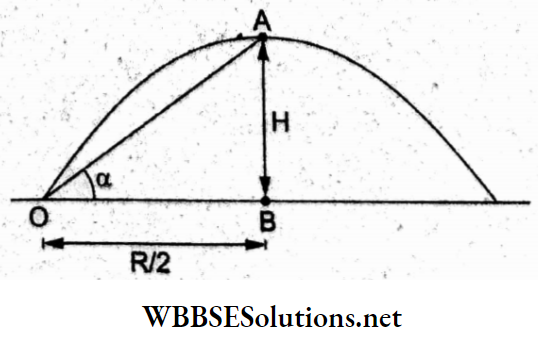
Motion In A Plane Multiple choice question and answers the angle of elevation at the highest point Q 35

Question 36. The speed of a projectile at its maximum height is half its initial speed of projection. The angle of projection is

  1. 15°
  2. 60°
  3. 45°
  4. 30°

Answer: 2. 60°

Let u = speed of projection and v = speed at maximum height.

Since the horizontal component remains the same, \(u \cos \theta=v. \text { But } v=\frac{u}{2}\)

∴ \(u \cos \theta=\frac{u}{2} \Rightarrow \cos \theta=\frac{1}{2} \Rightarrow \theta=60^{\circ}\)

Question 37. During the projection of a projectile at angles 45°- 0 and 45°+ θ, with the horizontal, the ranges described by the projectile are in the ratio

  1. 2:1
  2. 1:2
  3. 1:1
  4. 1:3

Answer: 3. 1:1

The given angles of projection are a = 45°- θ and p = 45° + θ.

a + B = 45°-  θ + 45° + θ = 90°.

So, the angles of projection are complementary.

Hence, the range will be the same in both cases and the ratio R1: R2 will be 1:1.

Question 38. A projectile is given an initial velocity of \((\hat{i}+2 \hat{j}) \mathrm{m} \mathrm{s}^{-1}, \text { where } \hat{i}\), where i is along the ground and is along the upward vertical. If g = 10 m s, the equation of the trajectory is

  1. 2y = 2x- 5x2
  2. 4y = 2x- 5X2
  3. 4y = 2x – 25x2
  4. y = 2x-5x2

Answer: 4. y = 2x-5x2

Given that the velocity of projection is \(\vec{u}=\hat{i}+2 \hat{j}\)

∴ \(u=\sqrt{u_x{ }^2+u_y{ }^2}=\sqrt{1+4}=\sqrt{5}\),

⇒ tanθ = \(\frac{2}{1} \text { and } \cos \theta=\frac{1}{\sqrt{5}}\)

The equation of the trajectory is

⇒ \(y=x \tan \theta-\frac{g x^2}{2 u^2 \cos ^2 \theta}\)

or, \(y=2 x-\frac{10 x^2}{2(5)\left(\frac{1}{5}\right)}\)

or, y = 2x- 5X².

Question 39. A boy can throw a ball up to a maximum height of 10 m. The maximum horizontal distance to which the boy can throw the same ball will be

  1. 20 √2 m
  2. 10 m
  3. 10 √2m m
  4. 20 m

Answer: 4. 20 m

For motion along the vertical,

⇒ \(v^2=u^2-2 g h=0 \Rightarrow u^2=2 g h=2 \times 10 \times 10=200\)

For the maximum horizontal range, 0 = 45°.

So,

⇒ \(R_{\max }=\frac{u^2 \sin 2 \theta}{g}=\frac{u^2 \sin 90^{\circ}}{g}=\frac{200}{10} \mathrm{~m}\)

= 20m.

Question 40. A projectile has the same range R for two angles of projection. It is launched at the same speed in both cases. If T1 and T2 are the times of flight in the two situations then

  1. T1T2 is independent of R
  2. \(T_1 T_2 \propto R^2\)
  3. \(\frac{T_1}{T_2}=\tan \theta\)
  4. \(\frac{T_1}{T_2}=\tan ^2 \theta\)

Answer: 3. \(\frac{T_1}{T_2}=\tan \theta\)

For the same range, the angles of projection must be complementary.

So, θ1 + θ2 = 90°

∴ \(T_1=\frac{2 u \sin \theta}{g} \text { and } T_2=\frac{2 u \sin \left(90^{\circ}-\theta\right)}{g}=\frac{2 u \cos \theta}{g}\)

∴ \(T_1 T_2=\frac{4 u^2 \sin \theta \cos \theta}{g^2}=\frac{2}{g}\left(\frac{u^2 \sin 2 \theta}{g}\right)=\frac{2 R}{g}\)

But \(\frac{T_1}{T_2}=\frac{\frac{2 u}{g} \sin \theta}{\frac{2 u}{g} \cos \theta}=\tan \theta\)

Question 41. A particle moves in a circle of radius 5 cm at a constant speed and has a time period of 0.2π s. The acceleration of the particle is

  1. 25 m s-2
  2. 36 ms-2
  3. 5 ms-2
  4. 15 ms-2

Answer: 4. 15 ms-2

In a uniform circular motion, the acceleration is

⇒ \(a=\frac{v^2}{R}=\omega^2 R\)

Given that R = 5 cm = 5 x 10~2 m and T = 0.2n s

∴ \(a=\left(\frac{2 \pi}{0.2 \pi \mathrm{s}}\right)^2\left(5 \times 10^{-2} \mathrm{~m}\right)=5 \mathrm{~m} \mathrm{~s}^{-2}\)

Question 42. A stone tied to the end of a 1-m-long string is whirled in a horizontal circle at a constant speed. If it makes 22 revolutions in 44 seconds, what is the magnitude and direction of the acceleration of the stone?

  1. \(\pi^2 \mathrm{~m} \mathrm{~s}^{-2}\), directed along the radius towards the centre
  2. \(\pi^2 \mathrm{~m} \mathrm{~s}^{-2}\), directed along the radius away from the centre
  3. \(\pi^2 \mathrm{~m} \mathrm{~s}^{-2}\), directed along the tangent to the circle
  4. \(\frac{\pi^2}{2} \mathrm{~m} \mathrm{~s}^{-2}\), directed along the radius towards the centre

Answer: 1. \(\pi^2 \mathrm{~m} \mathrm{~s}^{-2}\), directed along the radius towards the centre

Given that the radius of the circular path = R = 1.0 m

and angular speed = \(\omega=\frac{2 \pi}{T}=2 \pi \times \text { frequency }=2 \pi \times \frac{22 \mathrm{rev}}{44 \mathrm{~s}}=\pi \mathrm{s}^{-1}\)

∴ radial acceleration = \(a=\omega^2 R=\left(\pi \mathrm{s}^{-1}\right)^2(1.0 \mathrm{~m})=\pi^2 \mathrm{~m} \mathrm{~s}^{-2}\)

In a uniform circular motion, the tangential acceleration is zero, so the net acceleration is radially directed towards the centre.

“physics class 11 motion in a plane “

Question 43. A particle moves along a circle of radius (20/ft) m with a constant tangential acceleration. If the die velocity of the particle is 80 m s at the end of the second revolution after the motion has begun, the magnitude of the tangential acceleration is

  1. 40 ms-2
  2. 64On m s-2
  3. 160ft m s-2
  4. 40tu m s-2

Answer: 1. 40 ms-2

Given that radius = \(=R=\frac{20}{\pi} \mathrm{m}\), velocity = v = 80 m s-1 and angular displacement = 0 = 2 rev =4n rad. For a nonuniform circular motion,

⇒ \(\omega^2=\omega_0^2+2 \alpha \theta \Rightarrow \omega^2=2 \alpha \cdot 4 \pi\) [… \(\omega_0=0\)]

∴ angular acceleration = \(\alpha=\frac{\omega^2}{8 \pi}=\frac{v^2}{8 \pi R^2}\)

Hence, tangential acceleration = \(a=R \alpha=\frac{v^2}{8 \pi R}\)

Substituting the values, \(a=\frac{\left(80 \mathrm{~m} \mathrm{~s}^{-1}\right)^2}{8 \pi\left(\frac{20}{\pi} \mathrm{m}\right)}=40 \mathrm{~m} \mathrm{~s}^{-2}\)

Question 44. Two particles, having masses M and m, are moving in circular paths of radii R and r respectively. If their times of revolution are equal, the ratio of their angular velocities will be equal to

  1. \(\frac{r}{R}\)
  2. \(\frac{R}{r}\)
  3. 1
  4. \(\sqrt{\frac{R}{r}}\)

Answer: 3. 1

Angular velocity = \(\omega=\frac{2 \pi}{T}\)

Since the times of revolution and T2 are equal, the angular velocities

⇒ \(\omega_1 \text { and } \omega_2\) are also equal.

Thus, the ratio is \(\frac{\omega_1}{\omega_2}=1\)

Question 45. A 500-kg car takes a round turn of radius 50 m with a velocity of 36 km h-1. The centripetal force is

  1. 1000 N
  2. 750 N
  3. 250 N
  4. 1200 N

Answer: 1. 1000 N

Centripetal force = \(F=\frac{m v^2}{\dot{R}}\)

Given that \(m=500 \mathrm{~kg}, v=36 \mathrm{~km} \mathrm{~h}^{-1}=10 \mathrm{~m} \mathrm{~s}^{-1}\)

and R = 50m.

∴ \(F=\frac{(500 \mathrm{~kg})\left(10 \mathrm{~m} \mathrm{~s}^{-1}\right)^2}{50 \mathrm{~m}}=1000 \mathrm{~N}\)

Question 46. A ball of mass 0.25 kg attached to the end of a string of length 1.96 m is moving in a horizontal circle. The string breaks if the tension exceeds 25 N. The maximum speed with which the ball can be revolved is

  1. 5 ms-1
  2. 3 m s-1
  3. 14 ms-1
  4. 3.92 ms-1

Answer: 3. 14 ms-1

Maximum tension = 25 N = \(\frac{m v^2}{R}\)

Hence, the maximum speed is

⇒ \(v=\sqrt{\frac{25 R}{m}} \mathrm{~m} \mathrm{~s}^{-1}=\sqrt{\frac{25 \times 1.96}{0.25}} \mathrm{~m} \mathrm{~s}^{-1}=14 \mathrm{~m} \mathrm{~s}^{-1}\)

Question 47. An electric fan has blades each of length 30 cm (measured from the axis of rotation). If the fan is rotating at 120 rpm, the acceleration of a point on the tip of each blade is

  1. 160ms-2
  2. 50.55 ms-2
  3. 47.4 ms-2
  4. 23.7 ms-2

Answer: 3. 47.4 ms-2

Given that radius = R = 30 cm = 30 x 10-2 m

and angular frequency = \(=\omega=120 \mathrm{rpm}=\frac{2 \pi \times 120}{60} \mathrm{rad} \mathrm{s}^{-1}\)

∴ the centripetal acceleration is

⇒ \(a=\omega^2 R=\left(4 \pi \mathrm{rad} \mathrm{s}^{-1}\right)^2(0.3 \mathrm{~m})\)

⇒ \(4.8 \pi^2 \mathrm{~m} \mathrm{~s}^{-2}=47.4 \mathrm{~m} \mathrm{~s}^{-2}\)

“physics class 11 motion in a plane “

Question 48. In the given figure, a = 15 m s-2 represents the total acceleration of a particle moving in the clockwise direction in a circle of radius R = 2.5 m at a given time. The speed of the particle is
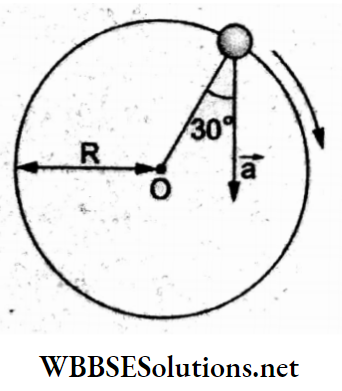
Motion In A Plane Multiple choice question and answers clock wise direction in a circle of radious Q 48

  1. 5.7 ms-1
  2. 4.5 m s-1
  3. 5.0 ms-1
  4. 6.2 m s-1

Answer: 1. 5.7 ms-1

Radial acceleration aT = a cos 30°

⇒ \(\frac{v^2}{R} \Rightarrow\left(15 \mathrm{~m} \mathrm{~s}^{-2}\right)\left(\frac{\sqrt{3}}{2}\right)=\frac{v^2}{2.5 \mathrm{~m}}\)

Hence, the speed of the particle is

⇒ \(v=\sqrt{15 \times \frac{\sqrt{3}}{2} \times 2.5} \mathrm{~m} \mathrm{~s}^{-1}=5.7 \mathrm{~m} \mathrm{~s}^{-1}\)

Question 49. For a particle undergoing uniform circular motion, the acceleration a at a point P(R, 0) on the circle of radius R is (where 9 is measured from die r-axis)

  1. \(\left(\frac{v^2}{R}\right) \hat{i}+\left(\frac{v^2}{R}\right) \hat{j}\)
  2. \(\left(-\frac{v^2}{R} \cos \theta\right) \hat{i}+\left(\frac{v^2}{R} \sin \theta\right) \hat{j}\)
  3. \(\left(-\frac{v^2}{R} \sin \theta\right) \hat{i}-\left(\frac{v^2}{R} \cos \theta\right) \hat{j}\)
  4. \(\left(-\frac{v^2}{R} \cos \theta\right) \hat{i}-\left(\frac{v^2}{R} \sin \theta\right) \hat{j}\)

Answer: 4. \(\left(-\frac{v^2}{R} \cos \theta\right) \hat{i}-\left(\frac{v^2}{R} \sin \theta\right) \hat{j}\)

In a uniform circular motion, the net acceleration (or centripetal acceleration) is directed radially towards the centre. Its x- and y-components relative to the origin O are both negative.

∴ \(|\vec{a}|=\frac{v^2}{R}\)

∴ \(\vec{a}=a_x \hat{i}+a_y \hat{j}=\left(-\frac{v^2}{R} \cos \theta\right) \hat{i}-\left(\frac{v^2}{R} \sin \theta\right) \hat{j}\)
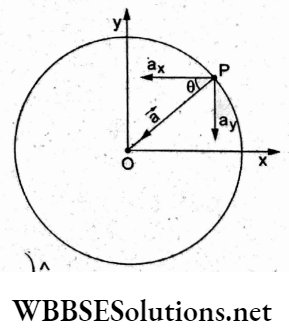
Motion In A Plane Multiple choice question and answers uniform circle motion Q 49

Question 50. A ship A is moving westwards with a speed of 10 km h-1, and another ship B, 100 km south of A, is moving northwards with a speed of 10 km h-1. The time after which the separation between them becomes minimal is

  1. 5h
  2. 10√2 h
  3. 5 √2 h
  4. 2 h

Answer: 1. 5h

The given situation is shown in the figure given on the next page. The velocity of ship A is vA = 10 km h-1 due west and the velocity of ship B is vB = 10 km h-1 due north. Initially,

OB = 100 km and the shortest distance = OP = OB cos 45°

⇒ \(\frac{100}{\sqrt{2}} \mathrm{~km}=50 \sqrt{2} \mathrm{~km}\)

The magnitude of the relative velocity is

⇒ \(v_{\mathrm{AB}}=\sqrt{v_{\mathrm{A}}^2+v_{\mathrm{B}}^2}=10 \sqrt{2} \mathrm{~km} \mathrm{~h}^{-1}\)

The time after which the separation between A and B is equal to

⇒ \(O P=50 \sqrt{2} \mathrm{~km} \text { is }\)

⇒ \(t=\frac{O P}{v_{\mathrm{AB}}}=\frac{50 \sqrt{2} \mathrm{~km}}{10 \sqrt{2} \mathrm{~km} \mathrm{~h}^{-1}}=5h\)
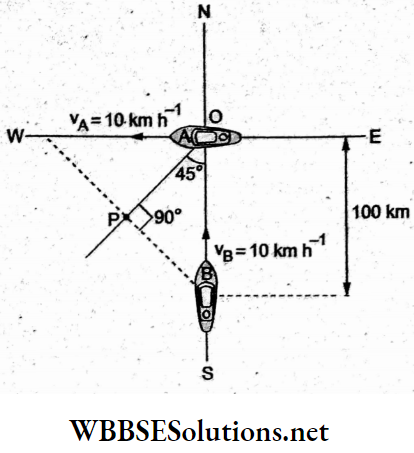
Motion In A Plane Multiple choice question and answers velocity of the ship Q 50

Question 51. Two boys are standing at the ends A and B of the ground, where AB = a. The boy at B starts running in a direction perpendicular to AB with a velocity v The boy at A starts running simultaneously with a velocity v and catches the other in a time t, where t equals

  1. \(\frac{a}{\sqrt{v^2+v_1^2}}\)
  2. \(\frac{a}{v+v_1}\)
  3. \(\frac{a}{v-v_1}\)
  4. \(\frac{a}{\sqrt{v^2-v_1^2}}\)

Answer: 4. \(\frac{a}{\sqrt{v^2-v_1^2}}\)

Let the meeting point of A and B be at C at the same time T.

So, AC = vT and BC = v1T.

Now, AC² = AB² + BC²

⇒ \((v T)^2=a^2+\left(v_1 T\right)^2\)

⇒ \(T^2\left(v^2-v_1{ }^2\right)=a^2\)

⇒ \(T=\frac{a}{\sqrt{v^2-v_1^2}}\)
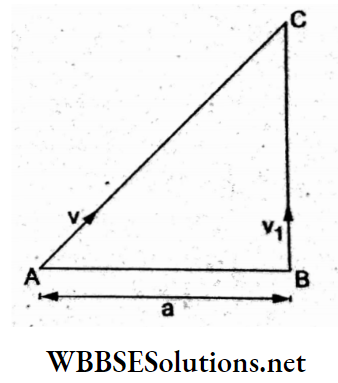
Motion In A Plane Multiple choice question and answers the meeting point of A and B be at C at the same time Q 51

Question 52. The width of a river is 1 km. The velocity of a boat is 5 km h-1. The boat covers the width of the river in the shortest time of 15 min. Then, the velocity of the river stream is

  1. 3 km h-1
  2. 4 km h-1
  3. √29 km h-1
  4. √41 km h-1

Answer: 1. 3 km h-1

The boat moves along AC with velocity \(v_{\text {boat }}=5 \mathrm{~km} \mathrm{~h}^{-1}\).

It drifts due to the river current up to B, where BC = drift.

The actual displacement of the boat is AB = resultant velocity x time.

From the vector triangle of velocities,

⇒ \(v^2=v_{\text {boat }}^2-v_{\text {riv }}^2\)

Now, the resultant velocity is

⇒ \(v=\frac{A B}{T}=\frac{1 \mathrm{~km}}{\frac{1}{4} \mathrm{~h}}=4 \mathrm{~km} \mathrm{~h}^{-1}\)

∴ \(v_{\text {riv }}=\sqrt{v_{\text {boat }}^2-v^2}\)

⇒ \(\sqrt{\left(5 \mathrm{~km} \mathrm{~h}^{-1}\right)^2-\left(4 \mathrm{~km} \mathrm{~h}^{-1}\right)^2}=3 \mathrm{~km} \mathrm{~h}^{-1}\)
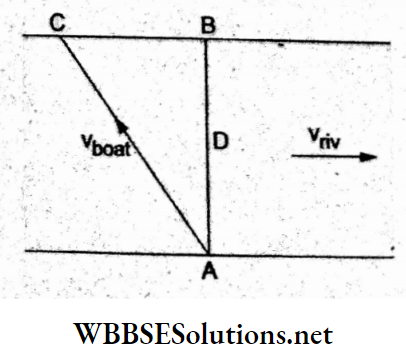
Motion In A Plane Multiple choice question and answers vector triangle of velocities Q 52

Question 53. A person aiming to reach exactly the opposite point on the bank of a river is swimming at a speed of 0.5 m s-1 at an angle of 120° with the direction of the stream flow. The speed of the water in the stream is

  1. 1.0 ms-1
  2. 0.5 m s-1
  3. 0.25 ms-1
  4. 0.433 m s-1

Answer: 3. 0.25 ms-1

Let the speed of the river water be vnv and that of the man be

⇒ \(v_{\mathrm{m}}=0.5 \mathrm{~m} \mathrm{~s}^{-1} \text {. }\)

As shown in the adjoining figure,

⇒ \( \sin 30^{\circ}=\frac{v_{\text {riv }}}{v_{\text {m }}}\)

or, \(v_{\text {riv }}=v_{\mathrm{m}} \sin 30^{\circ}\)

⇒ \(\left(0.5 \mathrm{~m} \mathrm{~s}^{-1}\right)\left(\frac{1}{2}\right)=0.25 \mathrm{~m} \mathrm{~s}^{-1}\)
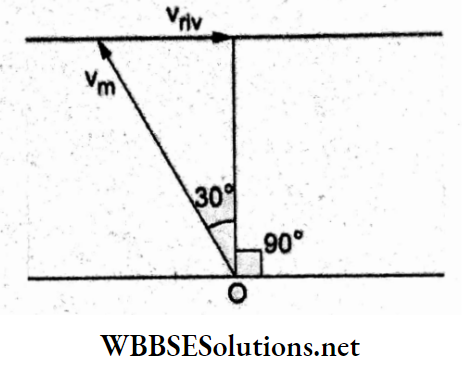
Motion In A Plane Multiple choice question and answers the speed of the river water Q 53

Question 54. A boat is sent across a river with a velocity of 8 km h-1. If the resultant velocity of the boat is 10 km h-1, the velocity of the river water is

  1. 12.8 km h-1
  2. 10 km h-1
  3. 6kmh-1
  4. 8kmh-1

Answer: 3. 6kmh-1

Since the boat is directed across the river, its velocity \(\left(v_{\text {boat }}=8 \mathrm{~km} \mathrm{~h}^{-1}\right)\) makes an angle of 90° with the river current. Thus, for the resultant speed v, we have

⇒ \(v^2=v_{\text {boat }}^2+v_{\text {riv }}^2\)

⇒ \(\left(10 \mathrm{~km} \mathrm{~h}^{-1}\right)^2=\left(8 \mathrm{~km} \mathrm{~h}^{-1}\right)^2+v_{\mathrm{riv}}^2\)

⇒ \(v_{\text {riv }}=\sqrt{\left(10^2-8^2\right) \mathrm{km}^2 \mathrm{~h}^{-2}}=6 \mathrm{~km} \mathrm{~h}^{-1}\)

Question 55. An A150-m-long train is going towards the north at a speed of 10 m s-1. A parrot is flying at 5 m s-1 towards the south, parallel to the railway track. The time taken by the parrot to cross the train is

  1. 8 s
  2. 10 s
  3. 12 s
  4. 15 s

Answer: 2. 10 s

Given that the velocity of the train is

⇒ \(v_{\mathrm{t}}=10 \mathrm{~m} \mathrm{~s}^{-1}\)

and the velocity of the parrot (in the opposite direction) is,

⇒ \(v_{\mathrm{p}}=-5 \mathrm{~m} \mathrm{~s}^{-1}\)

∴ The relative velocity of the parrot with respect to the train is

⇒ \(\vec{v}_{\mathrm{pt}}=\vec{v}_{\mathrm{p}}-\vec{v}_{\mathrm{t}}\)

Substituting the values,\(v_{p t}=-5 \mathrm{~m} \mathrm{~s}^{-1}-10 \mathrm{~m} \mathrm{~s}^{-1}=-15 \mathrm{~m} \mathrm{~s}^{-1}\)

Thus, the parrot will appear to move at 15 m s-1 towards the train.

∴ The time taken by the parrot to cross the train is

⇒ \(t=\frac{\text { length of train }}{\text { relative velocity of the parrot with respect to the train }}\)

⇒ \(\frac{150 \mathrm{~m}}{15 \mathrm{~m} \mathrm{~s}^{-1}}=10 \mathrm{~s}\)

Question 56. A jet aeroplane travelling from east to west at a speed of 500 km h-1 ejects out gases of combustion at a speed of 1500 km h-1 relative to the jet plane. What is the velocity of the gases with respect to an observer standing on the ground?

  1. 1000 km h-1 in the direction from w.est to east
  2. 1000 km h-1 in the direction from east to west
  3. 2000 km h-1 in the direction from west to east
  4. 2000 km h-1 in the direction from east to west

Answer: 1. 1000 km h-1 in the direction from w.est to east

Let us assume the direction from the east to the west as the positive direction of the x-axis. Thus, the velocity of the jet plane is

⇒ \(\left(500 \mathrm{~km} \mathrm{~h}^{-1}\right) \hat{i}\)

Since this is relative to the ground, we can write

⇒ \(\vec{v}_{j, g r}=\left(500 \mathrm{~km} \mathrm{~h}^{-1}\right) \hat{i}\)

The velocity of the ejected gases relative to the jet plane is

⇒ \(\vec{v}_{\text {gas }, j}=\vec{v}_{\text {gas, gr }}-\vec{v}_{j, g r}\)

The velocity of the gases relative to the ground is

⇒ \(\vec{v}_{\text {gas, gr }}=\vec{v}_{\text {gas }, \mathrm{j}}+\vec{v}_{\mathrm{j}, \mathrm{gr}}\)

⇒ \(\left(-1500 \mathrm{~km} \mathrm{~h}^{-1}\right) \hat{i}+\left(500 \mathrm{~km} \mathrm{~h}^{-1}\right) \hat{i}=\left(-1000 \mathrm{~km} \mathrm{~h}^{-1}\right) \hat{i}\)

Here, the negative sign refers to the direction from the west to the east.

Question 57. A swimmer can swim in still water with a speed of 5 m s-1. While crossing a river, his average speed is 3 m s-1. If he crosses the river in the shortest possible time, what is the speed of the water?

  1. 2 ms-1
  2. 4 m s-1
  3. 6 ms-1
  4. 8 m s-1

Answer: 2. 4 m s-1

In order to cross the river in the shortest time, the resultant velocity v of the swimmer must be perpendicular to the velocity uriv of the river current, as shown in the adjoining figure. Thus, from the figure,

⇒ \(v_{\mathrm{sw}}^2=v^2+v_{\mathrm{riv}}^2\)

⇒ \(v_{\mathrm{riv}}^2=v_{\mathrm{sw}}^2-v^2=(25-9)\left(\mathrm{m} \mathrm{s}^{-1}\right)^2=16\left(\mathrm{~m} \mathrm{~s}^{-1}\right)^2\)

velocity of the river = uriv = 4 ms-1.
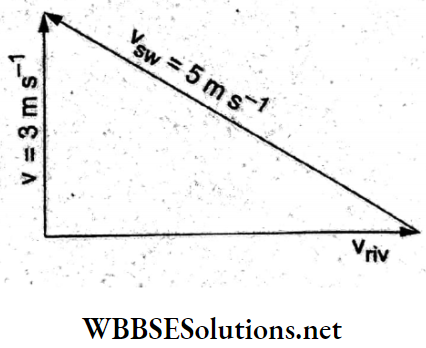
Motion In A Plane Multiple choice question and answers perpendicular to the velocity

Question 58. Raindrops are falling vertically with a speed of 4 m s-1. After some time, the wind starts blowing at a speed of 3 m s-1 in the north-to-south direction. In order to protect himself from the rain, a man standing on the ground should hold his umbrella at an angle given by.

  1. \(\theta=\tan ^{-1}\left(\frac{3}{4}\right)\) with the vertical towards the south
  2. \(\theta=\tan ^{-1}\left(\frac{3}{4}\right)\) with the vertical towards the north
  3. \(\theta=\cot ^{-1}\left(\frac{3}{4}\right)\) with the vertical towards ihe south
  4. \(\theta=\cot ^{-1}\left(\frac{3}{4}\right)\) with the vertical towards the north

Answer: 2. \(\theta=\tan ^{-1}\left(\frac{3}{4}\right)\) with the vertical towards the north

The velocity of the rain = vr = 4 m s-1 (directed vertically downwards) and the velocity of the wind =  vw = 3ms4 (directed from the north to the south).

The motion of the raindrops will be affected simultaneously by gravity (downwards) and the wind (southwards).

Hence, the resultant velocity will be along OB (from the triangle law of vector addition).

In order to protect himself from the rain, the man must hold his umbrella tilted at an angle of 0 with the vertical (towards the north), where

⇒ \(\tan \theta=\frac{v_{\mathrm{W}}}{v_{\mathrm{r}}}=\frac{3 \mathrm{~m} \mathrm{~s}^{-1}}{4 \mathrm{~m} \mathrm{~s}^{-1}}=\frac{3}{4}\)

or, \(\theta=\tan ^{-1}\left(\frac{3}{4}\right)\)
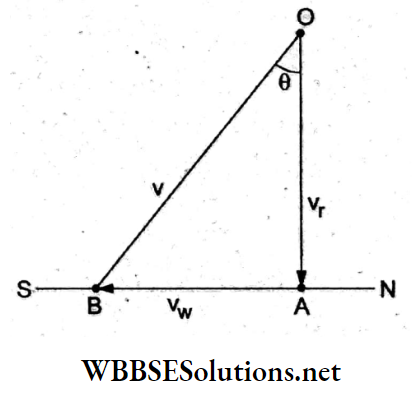
Motion In A Plane Multiple choice question and answers velocity of the rain and velocity of the wind Q 58

Question 59. A swimmer can swim in still water at 4.0 km h-1. If he swims in a river flowing at 3.0 km h-1 and keeps his direction perpendicular to the water flow, what is his velocity relative to the ground?

  1. \(5.0 \mathrm{~km} \mathrm{~h}^{-1}, \theta=\tan ^{-1}\left(\frac{3}{4}\right)\)
  2. \(5.0 \mathrm{~km} \mathrm{~h}^{-1}, \theta=\tan ^{-1}\left(\frac{4}{3}\right)\)
  3. \(4.0 \mathrm{~km} \mathrm{~h}^{-1}, \theta=\tan ^{-1}\left(\frac{3}{4}\right)\)
  4. \(4.0 \mathrm{~km} \mathrm{~h}^{-1}, \theta=\tan ^{-1}\left(\frac{4}{3}\right)\)

Answer: 2. \(5.0 \mathrm{~km} \mathrm{~h}^{-1}, \theta=\tan ^{-1}\left(\frac{4}{3}\right)\)

The velocity of the swimmer relative to the river current is
v_{\mathrm{sr}}=4 \mathrm{~km} \mathrm{~h}^{-1}\(\) perpendicular to the river flow. The velocity of the river
current relative to the ground is \(\)

Thus, the velocity of the swimmer relative to the ground will be

⇒ \(\vec{v}_{\mathrm{sg}}=\vec{v}_{\mathrm{sr}}+\vec{v}_{\mathrm{rg}}\)

These velocity vectors are shown in the adjoining diagram. The magnitude of the velocity of the swimmer relative to the ground is

⇒ \(v_{\mathrm{sg}}=\sqrt{4^2+3^2} \mathrm{~km} \mathrm{~h}^{-1}=5 \mathrm{~km} \mathrm{~h}^{-1}\)

The angle 0 with the direction of the flow is given by

⇒ \(\tan \theta=\frac{4}{3} \Rightarrow \theta=\tan ^{-1}\left(\frac{4}{3}\right)\)
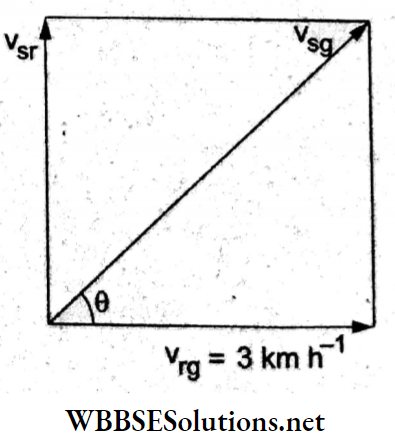
Motion In A Plane Multiple choice question and answers the velocity of the swommer Q 59

Question 60. A man is walking on a level road at 3 km h-1. Raindrops fall Vertically at 4.0 km h-1. What is the velocity of the raindrops relative to the man?

  1. \(5.0 \mathrm{~km} \mathrm{~h}^{-1}, \theta=\tan ^{-1}\left(\frac{3}{4}\right)\) with the vertical
  2. \(5.0 \mathrm{~km} \mathrm{~h}^{-1}, \theta=\tan ^{-1}\left(\frac{4}{3}\right)\) with the vertical
  3. 7.0 km h_1, 0 = 45° with the vertical
  4. 5.0 km h-1, 0 = 60° with the vertical

Answer: 1. \(5.0 \mathrm{~km} \mathrm{~h}^{-1}, \theta=\tan ^{-1}\left(\frac{3}{4}\right)\) with the vertical

The velocities of the raindrops and the man are given relative to the ground. Thus, the velocity of the raindrops relative to the man is

⇒ \(\vec{v}_{\mathrm{rm}}=\vec{v}_{\mathrm{rg}}-\vec{v}_{\mathrm{mg}}\)

The three velocity vectors are shown in the adjoining figure. The velocity of the raindrops relative to the man is

⇒ \(v_{\mathrm{rm}}=\sqrt{4^2+3^2} \mathrm{~km} \mathrm{~h}^{-1}=5 \mathrm{~km} \mathrm{~h}^{-1}\)

The angle with the vertical is

⇒ \(\theta=\tan ^{-1}\left(\frac{3}{4}\right)\)
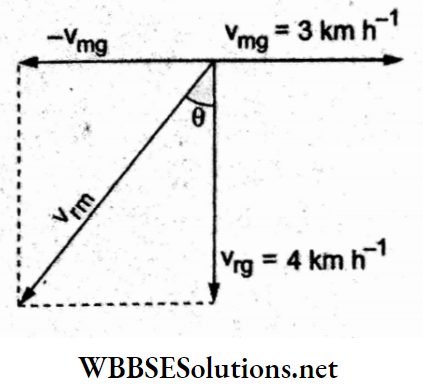
Motion In A Plane Multiple choice question and answers the velocities of raindrops Q 60

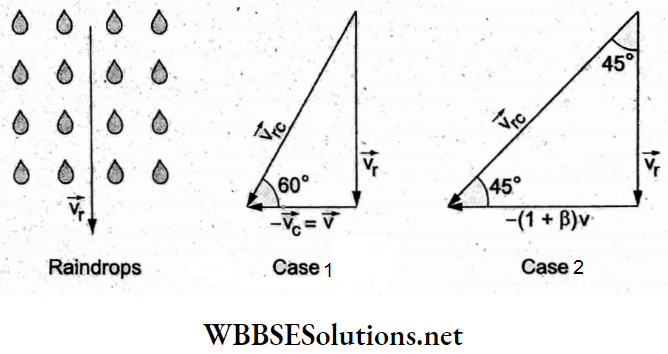
Question 61. Raindrops are falling vertically. When a car moves at a speed of v, the raindrops appear to fall at 60° with the horizontal, and when the speed of the car is (B + 1)v, they appear to make an angle of 45° with the vertical. The value of p is

  1. 0.123
  2. 0.414
  3. 0.732
  4. 0.24

Answer: 3. 0.732

Motion In A Plane Multiple choice question and answers Q 61

In Case 1, tan60° = \(\frac{v_{\mathrm{r}}}{v}=\sqrt{3} .\)

In Case 2, tan 45° = \(\frac{v_x}{(1+\beta) v}=1\)

∴ \(1+\beta=\sqrt{3} \Rightarrow \beta=0.732\)

Question 62. Starting from the origin at the time t = 0, with an initial velocity of \(5 \hat{j} \mathrm{~m} \mathrm{~s}^{-1}\) a particle moves in the xy-plane with a constant acceleration of \((10 \hat{j}+4 \hat{j}) \mathrm{m} \mathrm{s}^{-2}\). At a time t, its coordinates are (20 m, y0). The values of t and y0 are respectively

  1. 5s and 25m
  2. 2s and 4m
  3. 2s and 18m
  4. 4s and 52 m

Answer: 3. 2 s and 18m

For the motion along the x-direction,

⇒ \(u_x=0, a_x=10 \mathrm{~m} \mathrm{~s}^{-2} \text { and } x_2-x_1=x_0=20 \mathrm{~m} \text {. }\)

∴ \(20 \mathrm{~m}=\frac{1}{2}\left(10 \mathrm{~m} \mathrm{~s}^{-2}\right) t^2 \Rightarrow t=2 \mathrm{~s}\)

For the motion along the y-direction,

⇒ \(y_0=\left(5 \mathrm{~m} \mathrm{~s}^{-1}\right)(2 \mathrm{~s})+\frac{1}{2}\left(4 \mathrm{~m} \mathrm{~s}^{-2}\right)(2 \mathrm{~s})^2=18 \mathrm{~m}\)

∴ \(t=2 \mathrm{~s} \text { and } y_0=18 \mathrm{~m}\)

WBBSE Solutions For Class 10 History Chapter 6 Peasant Working Class And Left Movement In 20th Century India Characteristics And Observations

Chapter 6 Peasant Working Class And Left Movement In 20th Century India Characteristics And Observations  Salient Points At A Glance

WBBSE History Chapter 6 Summary

1. During the first half of the 20th century, the peasants were greatly affected by the imperialist attitude of the British. They became to exploitation prey and oppression which forced the poor peasants to take up the path of violence and resistance.

2. Like the peasant movement, a new wave was noticeable among the working class. The economic distress of the workers, the poor working conditions in mills and factories, the retrenchment of workers and several other causes gave birth to the labour movement.

Read and Learn Also WBBSE Solutions for Class 10 History

3. The peasant community did not play any significant role in the Anti-Partition Movement. The swadeshi movement did not advocate land reforms and protection of the peasant from rental demands. In a sense, the anti-partition agitation did not centre around the issues of the peasant community.

WBBSE Solutions For Class 10 History Chapter 6 Peasant Working Class And Left Movement In 20th Century India Characteristics And Observations

4. A large number of peasants joined the non-cooperation movement. They stopped payment of rent and chowkidar tax in different places. The peasants were supported by Indian National Congress leaders like Jawaharlal Nehru, Madan Mohan Malaviya, Vallabhbhai Patel and others.

5. The peasants took part in this movement and raised their voices against the oppressive British rule. They became enthusiastic supporters of the Civil Disobedience movement. The peasants of Gujarat, Uttar Pradesh, United Province, Mymensingh and several other places plunged into the movement wholeheartedly.

6. The participation of the peasants during the Quit India movement was spontaneous, total and widespread. The peasants of Bihar, Orissa, Maharastra, Gujarat, and West Bengal joined the movement. Peasants from all strata were at the heart of the movement and they concentrated their offensive on symbols of authority.

7. The working class played an important role during Anti-Partition Movement. The discontent of the workers was no doubt caused primarily by material grievances like rising prices, condition of work, ill-treatment by white officers. The Anti-Partition Movement produced a large number of industrial strikes, which reflected the growing political consciousness among the working class.

8. The working class took an active part in the Non-Cooperation Movement. The mills, factories and engineering workshops were centres of labour unrest. The government adopted several repressive measures for the suppression of the moment. After 1922 however, the working class movement under the leadership of nationalist leaders. slowed down.

9. The working class joined the Civil Disobedience Movement. They organised strikes in mills and factorial and were vocal with the slogan ‘Poorna Swaraj’. The British government took several repressions measures against the workers.

10. The participation of the workers in the Quit India Movement was spontaneous, total and widespread. Strikes and lockouts occurred in several industrial concerns in different parts of India like Ahmadnagar, Ahmedabad, Poona, Bangalore, Bombay, Mysore, Madras, Coimbatore, Madurai, Nagpur, Calcutta, Central Province, etc.

11. Leftist movements played an important role during the 1930s and 1940s. The Communist Party leaders like MN Roy, and SA Dange, organised industrial workers and peasants. In order to suppress communist influence, the British government started the Meerut Conspiracy Case (1929). In 1934 the communist party of India was banned, but these repressions failed to weaken the communist movement.

12. However the leftist movements could not make any progressive development as the basic themes of ‘class antagonism’ and ‘violence’ were alien to the Indian tradition

Chapter 6 Peasant Movement In India Topic A Peasant Movements And The Leftists Analytical Answer Type Questions

Question 1 What was the role of the peasantry in the Civil Disobedience Movement in the United Provinces?
Answer:

The role of the peasantry in the Civil Disobedience Movement in the United Provinces:

The Civil Disobedience Movement began at the call of Congress in 1930. The peasants participated actively during this movement in the United Provinces.

[1] Mass movement: Areas like Rae Bareilly, Agra, Barabanki, Lucknow, Pratapgarh etc., and several other areas witnessed the participation of the peasantry in the Civil Disobedience Movement. Hence, in a sense, this movement transformed into a mass movement.

[2] Stopped payment of taxes: The peasantry stopped the payment of taxes, as a part of the Civil Disobedience Movement. They not only stopped paying taxes directly to the government but also stopped the payment of taxes to zamindars and landlords.

[3] Leadership: The leadership of the movement was taken up by peasant leaders like Rafi Ahmed Kidwai, Kalika Prasad and others.

[4] An initiative by the Congress: From the very first day, the Congress rendered support to the peasant movement in the United Provinces. In fact, it was the Congress Working Committee that suggested that the peasants stopped paying taxes.

[5] An initiative by Leftist leaders: The communists and the socialists too was linked with the peasant movement. Even though Gandhi had suggested that the peasants should pay at least some amount of taxes, the leftists did not agree with it.

Characteristics of Peasant Movements in India

Question 2 Give an account of the Eka movement.
Answer:

Eka movement:

The Eka (Unity) movement broke out in the districts of Hardoi, Bahraich and Sitapur (UP) towards the end of 1921.

[1] Causes: The main cause of the Eka movement was higher rent, which was about 50% higher than the recorded rents in some areas, oppression of thikadars in charge of revenue collection and the practice of share rents.

[2] Objective: The objective of the movement was to resist the attempt of the landlords and their men to take more than the recorded rent from the tenants. The peasants vowed that they would pay only the recorded rent and would pay it on time. They would not leave when evicted and refused to do forced labour.

[3] Leaders: The movement was led by Madari Pasi and other low-caste leaders and many small zamindars who were unhappy with the British demands for high revenue, though the initial thrust was provided by the Congress and the Khilafat leaders.

[4] Repression: Madari Pasi, the leader of the movement, was arrested, in 1922. Severe repression by the British government brought the movement to an end.

Question 3 State the causes of the peasant movement in Bardoli.
Answer:

The causes of the peasant movement in Bardoli:

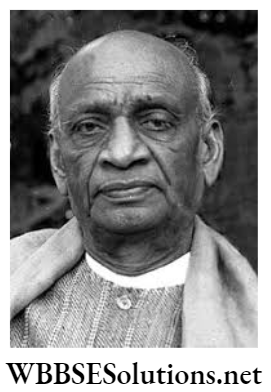
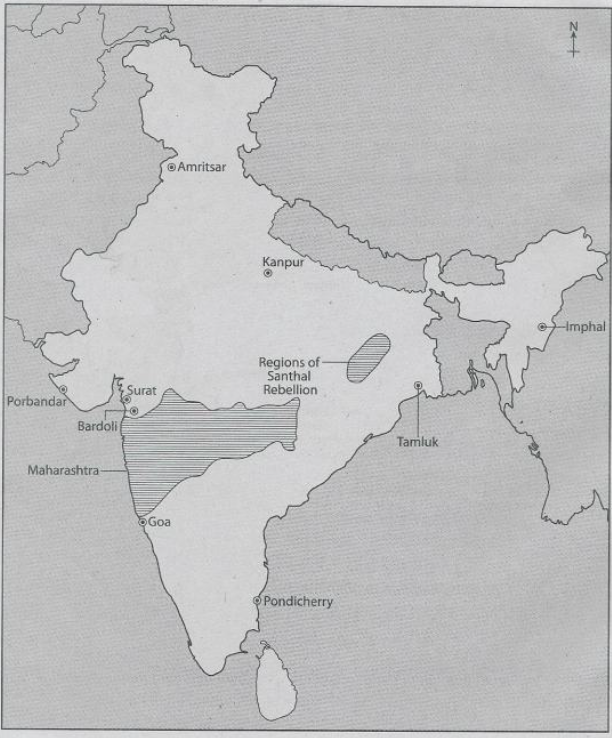
In 1928, the peasants of Bardoli, in the district of Surat, Gujarat, started a no-tax movement under the leadership of Sardar Vallabhbhai Patel.

The causes of the Bardoli peasant movement were-
[1] In 1928, Bardoli faced famine causing crop production to suffer and leaving farmers in great financial trouble.

WBBSE Solutions For Class 10 History Chapter 6 Peasant Working Class Sardar Vallabhbhai Patel

[2] The government of the Bombay Presidency raised the tax rate by 30% that year. The peasants tried to solve the problem and requested the government to repeal their decision. But the government refused to cancel the rise in the face of the calamities.

The situation was grave for the farmers and they barely had enough property or crops to pay off the tax. Consequently, the Bardoli Satyagraha started under the leadership of Sarder Vallabhbhai Patel.

Question 4 What was the nature of the Bardoli Satyagraha movement?
Answer:

The nature of the Bardoli Satyagraha movement was as follows-

[1] The movement proved to be the best example of the practice of the Gandhian principle of non-violence. The farmers were instructed by Vallabhbhai Patel to remain completely non-violent.

[2] The farmers received support from their compatriots in Gujarat.

[3] Women like Bhaktibai, Sharda Mehta, and Mithubai Patel joined the movement.

[4] The Bardoli Satyagraha was a unique example of unity. The process of auction, attachment, confiscation and indiscriminate arrest was made impossible for the government.

[5] Many Indian members of the Legislative Councils of Bombay and across India resigned their officers and expressed open support for the farmers.

[6] The campaigners used economic boycotts by refusing to supply officials and other members of the opposition with non-essential goods and services.

WBBSE Class 10 Leftist Movements Overview

Question 5 What was the reaction of the government to the Bardoli Satyagraha Movement?
Answer:

The reaction of the government to the Bardoli Satyagraha Movement:

In 1928, the peasants of Bardoli in the district of Surat, Gujarat started a no-tax campaign movement. It proved to be the best example of the practice of the Gandhian principle of non-violence. Alarmed at the attitude of the peasants, the government came to an understanding with the struggling peasants and agreed to start a judicial enquiry about the Bardoli incident.

An enquiry was conducted by a judicial officer Broomfield and a revenue officer Maxwell and it came to the conclusion that the increase had been unjustified and reduced the enhancement to 6.03 per cent. The government also returned to the peasants their confiscated agricultural land.

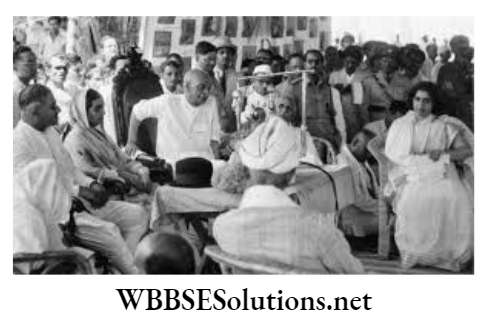
WBBSE Solutions For Class 10 History Chapter 6 Peasant Working Class Bardoli Satyagraha Movement

Question 6 Write a short note on the Bijolia Movement.
Answer:

Bijolia Movement:

The Bijolia Movement was a peasant movement started in the Mewar region of Rajasthan in India against excessive land revenue demands. The peasants during this movement held back the taxes and refused to do ‘begar’.

The movement was based in Bijolia, a town in the Bhilwara district. The movement gradually spread to the neighbouring jagirs. The movement was led by Sitaram Das, later Bhoop Singh and Manikyalal Verma carried the movement further.

The leaders of the movement led a no-tax movement against the Maharaja of Udaipur, a princely state under the British Raj. This movement against the Maharaja of Udaipur, however, was not successful.

Impact of British Policies on Indian Peasantry

Question 7 What were the causes of the Moplah Rebellion?
Answer:

The exploited Muslim peasants of the Malabar coast of south India were known as Moplahs.

The causes of the Moplah Rebellion were as follows-

[1] In 1921 the rebellion began as a reaction against a heavy-handed crackdown on the Khilafat movement by the British authorities.
[2] The root cause of the rebellion was the oppression and exploitation of the ‘Nambudiri’ and Nair Hindu Brahmin landlords.
[3] The land tenure system in Malabar was quite unfavourable to the Moplah tenants, there was complete insecurity of tenure. For the Moplah and they could be ejected from their lands without any appropriate notice.
[4] Another cause of the rebellion was the ever-increasing land rent of the British and the question of tenancy rights.

Chapter 6 Peasant Movement In India Topic A Peasant Movements And The Leftists Mark True Or False

Mark True or False

Question 1. The peasant community of Bengal played a significant role in the Anti-Partition Movement.
Answer: False

Question 2. In the Eka Movement, the peasant activists took vows before a symbolic representation of the river Ganges.
Answer: False

Question 3. Leaders like Bal Gangadhar Tilak and Aurobindo Ghosh took initiative in the foundation of the workers’ and peasnts’ party.
Answer: True

Question 4. The Moplah peasant rebellion started in the Malabar region of Kerala.
Answer: True

Question 5. The Rampa Rebellion was led by Alluri Seeta Rama Raju.
Answer: True

Question 6. Baba Ramchandra organised the peasants in Awadh.
Answer: True

Question 7. The Bijolia Movement started in the Mewar region of Rajasthan.
Answer: True

Question 8. Bhoop Singh was a leader of the Bijolia movement.
Answer: True

Question 9. The leader of the Bijolia movement, Seetarama Raju led a no-tax movement against the Maharaja of Udaipur.
Answer: False

Question 10. The Eka Movement broke out in the Dinajpur district of Bengal.
Answer: False

Role of the Working Class in Indian History

Question 11. The first All-India Kisan Sabha was formed in Calcutta.
Answer: False

Question 12. Bhaktibai and Sharda Mehta were leaders of the Champaran Satyagraha.
Answer: False

Question 13. The root cause of the Moplah rebellion was the oppression and exploitation by the ‘Nambudiri’ and Nair Hindu landlords.
Answer: True

Question 14. The Congress and the Khilafat leaders supported the Eka movement.
Answer: False

Question 15. The All India Kisan Sabha is a peasant organisation for the rights of the farmers and the anti-feudal movement in India.
Answer: True

Question 16. Baba Ramchandra was a leader of Brahmo Samaj.
Answer: False

Chapter 6 Peasant Movement In India Topic A Peasant Movements And The Leftists Fill In The Blanks

Fill in the blanks

1. During the Anti-Partition Movement, the Muslim peasants of Barisal were led by Aswini Kumar Dutta (Aswini Kumar Dutta/Surendranath Banerjee/Liakat Hussain).

2. The Benaras (Calcutta/Benaras/Bombay) Congress made an emphatic protest against the partition of Bengal.

3. The partition of Bengal was made effective on and from October 16, 1905 (October 16, 1905/to October 20, 1905/to July 15, 1911).

4. The first peasant organisation on an all-India basis was the All-India Kisan Sabha (All-India Kisan Sabha/ Workers and Peasant Party/Bihar/Provincial Kisan Sabha).

5. The Bardoli Satyagraha was led by  Vallabhbhai Patel (Lala Lajpat Rai/Vallabhbhai Patel/Bipin Chandra Pal).

6. The Bardoli Satyagraha was formally launched in the year 1928 (1926/1927/1928).

7. The Great Depression of 1929 (1927/1929/1926) adversely affected the Indian peasantry.

Chapter 6 Peasant Movement In India Topic A Peasant Movements And The Leftists Choose The Best Explanation

Question 1 In the context of the Indian freedom struggle, October 16, 1905, is well-known because
1. The formal proclamation of the Swadeshi Movement was made in Calcutta Town Hall.
2. Partition of Bengal took effect.
3. Dadabhai Naoroji declared that the govt of the Indian National Congress was Swaraj.

Answer: 2. Partition of Bengal took effect.

Question 2 Why was Alluri Seeta Rama Raju well known?
1. He led the militant movement of tribal peasants in Andhra Pradesh.
2. He led a peasant movement in Awadh.
3. He led a Satyagraha movement in Bardoli.

Answer: 1. He led the militant movement of tribal peasants in Andhra Pradesh.

Wbbse History And Environment Class 10 Solutions

Question 3 Which of the following was the most important feature of the Satyagraha Movement advocated by Gandhiji?
1. Abolition of untouchability
2. Truth and non-violence
3. Social equality

Answer: 2. Truth and non-violence

Question 4 Gandhiji withdrew the Non-Cooperation Movement.
1. Gandhiji realised that people were losing interest in the movement.
2. Gandhiji felt that the movement was turning violent in many places.
3. Some Congress leaders wanted to participate in election to Provincial Councils.

Answer: 2. Gandhiji felt that the movement was turning violent in many places.

Question 5 Rowlatt Act arouse indignation during the Indian Freedom Struggle.
1. It curtailed the freedom of religion.
2. It suppressed the Indian traditional education.
3. It authorized the government to imprison people without trial.

Answer: 3. It authorized the government to imprison people without trial.

Question 6 The Eka movement was organised in Uttar Pradesh.
1. It was a personal movement.
2. It was a peasant movement.
3. It was a workers’ movement.

Answer: 2. It was a peasant movement.

Question 7 The Anti-Partition Movement in Bengal did not enunciate any programme for the peasants and working class.
1. The peasants and workers were opposed to the movement.
2. The British government issued prohibitory orders on the peasant-working class agitation.
3. Anti-partition movement in Bengal was basically a middle-class movement.

Answer: 3. Anti-partition movement in Bengal was basically a middle-class movement.

Question 8 The Champaran Agrarian Enquiry Committee was appointed in 1917.
1. To enquire into the condition of the indigo cultivators and indigo plantation.
2. To help the indigo planters to grow more indigo.
3. To increase the export of indigo.

Answer: 1. To enquire into the condition of the indigo cultivators and indigo plantation.

Wbbse History And Environment Class 10 Solutions

Question 9 Gandhiji did not support peasant movements against the zamindars.
1. Gandhiji was a representative of the zamindar class.
2. Gandhiji was against violent movements.
3. Gandhiji believed in the synthesis of classes as against class struggle.

Answer: 3. Gandhiji believed in the synthesis of classes as against class struggle.

Question 10 The Bardoli Satyagraha was instituted in 1928 AD.
1. It was a movement of the poor landless agricultural labourers against the exploitation of the rich landed peasantry.
2. It was a movement against the increased revenue demand of the government by the rich landed peasantry.
3. It was a joint movement of both the rich landed peasantry and the landless agricultural labourers against the revenue hike by the government.

Answer: 3. It was a joint movement of both the rich landed peasantry and the landless agricultural labourers against the revenue hike by the government.

Chapter 6 Peasant Movement In India Topic B Working Class Movement And The Leftists Analytical Answer Type Questions

Question 1 How was the Congress Socialist Party formed?
Answer:

The Congress Socialist Party:

Socialist leaders within Congress, like Jawaharlal Nehru and Subhas Chandra Bose, could not accept the ideologies and the methods of activities of Mahatma Gandhi and his followers. They did not believe in Gandhi’s policy of peaceful compromise.

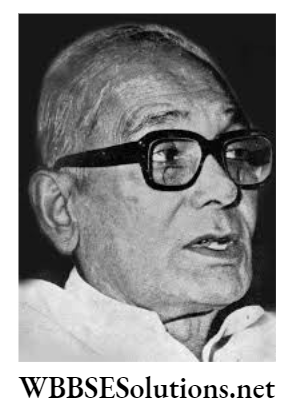
WBBSE Solutions For Class 10 History Chapter 6 Peasant Working Class Jayaprakash Narayan

In 1933, when the Congress leaders like Achhut Patvardhan, Jayaprakash Narayan, Minoo Masani, Narendra Dev were at the Nasik prison, they favoured the idea of a distinct socialist group within the Congress.

In 1934, Sampuranand, the UP Congress leader, drew up a manifesto of the Congress Socialist Party which wanted a reconstruction of the Indian society and economy on the basis of socialism. In 1934, the Congress Socialist Party was formed under the chairmanship of Narendra Dev in Patna.

Question 2 What were the programmes of the Congress Socialist Party?
Answer:

The programmes of the Congress Socialist Party were as follows-

[1] Development of the economic life of the country to be planned by the state,
[2] State control over foreign trade,
[3] Redistribution of land among the peasants,
[4] Liquidation of debts owed by peasants and workers,
[5] The organisation of Cooperative societies for production and distribution,
[6] The organisation of workers and peasants for this economic upliftment,
[7] The socialisation of key industries,
[8] Encouragement of cooperative and collective forming,
[9] Carrying on the movement for the achievement of independence and socialism.

Class 10 History Wbbse

Question 3 With what objective was the Congress Socialist Party formed?
Answer:

Congress Socialist Party:

In 1934 the Congress Socialist Party was formed under the chairmanship of Narendra Dev in Patna. Sampurnanand, the UP Congress leader, drew up a manifesto of the Congress Socialist Party which wanted a reconstruction of the Indian society and economy on the basis of socialism.

The objective of the party was:

[1] Development of the economic life of the country to be planned by the state,
[2] Redistribution of land among the peasants,
[3] The organisation of Cooperative societies for production and distribution,
[4] The organisation of workers and peasants for their economic development,
[5] The socialisation of key industries and
[6] Carrying on the movement for the achievement of independence and socialism.

Question 4 Write a short note on the Workers’ and Peasants’ Party.
Answer:

The Workers’ and Peasants’ Party:

The initiative taken by Congress to include the working class in the national movement was given a great impetus by the Workers’ and Peasants’ Party.

[1] Peasants’ Party, Bengal branch: In 1925, during the Bengal Session of Congress, the Labour Swaraj Party of the Indian National Congress was created within the Congress. The initiative behind the creation of this party was taken by Kazi Nazrul Islam, Hemanta Kumar Sarkar and others. In 1926, this was renamed as Workers’ and Peasants’ Party of Bengal.

[2] All India Peasants’ Party: Drawing inspiration from Bengal, several other states in India began to form their own Workers’ and Peasants’ Party. Ultimately, the All India Workers’ and Peasants’ Party was formed in 1928.

[3] Initiative: The Workers’ and Peasants’ Party spread awareness among the working class and peasantry. They understood that if the working class did not get financial freedom, they would not be able to comprehend the value of freedom.

[4] Mouthpieces: The party had several mouthpieces in the provinces. Among these, a few worth mentioning were ‘Langal’, ‘Ganabani’, ‘Shramik’, ‘Socialist’, etc.

[5] Movements: Under the initiative of the party, several workers’ and peasants’ movements were organised against the oppression of the British on the working class.

[6] Meerut Conspiracy Case: The activities of the Workers’ and Peasants’ Party alarmed the Government and the British Government began the Meerut Conspiracy Case. This was a clear case of an attack on the Communists who were arrested and sent to jail in this case.

The Meerut Conspiracy Case was not enough to stop the communists. The remaining members of the communist party continued the struggle against the British.

Analysis of Left Movements in 20th Century India

Question 5 Write a short note on the Meerut Conspiracy Case.
Answer:

The Meerut Conspiracy Case:

After the formation. of the Communist Party of India, there was a steep rise in communist activities in India.

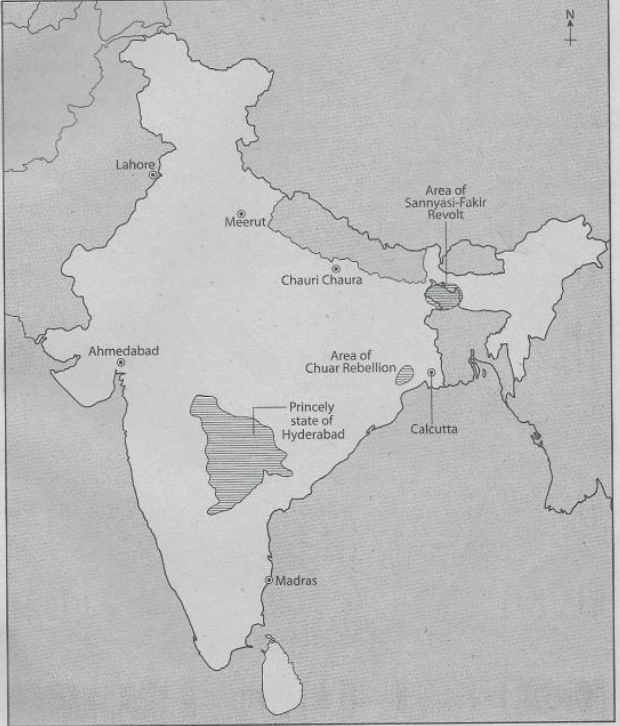
[1] Growth of Communism: From the 1920s, the Communist Party of India began to bring workers and peasants under one roof. In 1929, under the leadership of the Communist Party of India, several thousand workers and peasants joined the Congress session and raised their voices for the call of ‘Purna Swaraj’.

[2] Cause of concern for the government: The activities of the communists became a headache for the colonial government. Under such circumstances, they wanted to stop the further growth of the communists. Hence, the government initiated the Meerut Conspiracy Case and arrested several communist leaders under its trial.

[3] Verdict of the Case: The verdict of the Meerut Conspiracy Case came out in 1933. In it, 33 communist leaders were convicted in the trials. Among them were eminent communist leaders like Muzaffar Ahmed, SA Dange, P C Joshi, Phillip Spratt, Shibnath Bannerjee, etc.

Question 6 Under what circumstance Forward Bloc was established?
Answer:

In the Tripuri session of the Indian National Congress held in 1939 Subhas Chandra Bose was elected the president by defeating his rival leader Pattavi Sitaramayya, a nominee of Gandhiji. Sitaramayya’s defeat shocked Gandhiji and his diehard loyalists decided not to cooperate with Subhas Bose which created a deadlock in Congress politics.

Though victorious, Subhas Bose was forced to resign from the post of president owing to sharp differences of opinion with Gandhiji on different issues. After resigning from the post of presidentship Subhas Bose founded his own party in 1939 known as Forward Bloc.

Chapter 6 Peasant Movement In India Topic B Working Class Movement And The Leftists Mark True Or False

Mark True or False

Question 1. The Madras Labour Union set up by B P Wadia in 1918 was the first proper trade union in India.
Answer: True

Question 2. The General Secretary of the All India Trade Union Congress was Bal Gangadhar Tilak.
Answer: False

Question 3. The Workers’ and Peasants’ Party was founded in 1927.
Answer: True

Question 4. The Meerut Conspiracy Case (1929) gave encouragement to the activities of the Communists.
Answer: False

Question 5. The Communist Party of India stayed aloof from the Quit India Movement.
Answer: True

Question 6. In 1911, the tram drivers and conductors of Calcutta Tramways Company observed a token strike.
Answer: False

Question 7. The Congress Socialist Party was formed under the chairmanship of Narendra Dev.
Answer: True

Question 8. The Trade Dispute Bill was passed in the year 1931.
Answer: False

Question 9. Phillip Spratt was a communist leader.
Answer: True

Question 10. Muzaffar Ahmed and Ben Bradley were brought under trial in the Meerut Conspiracy Case (1929).
Answer: True

Question 11. The real name of Manabendra Nath Roy was Narendranath Bhattacharya.
Answer: True

Question 12. The first Independence Day observed by Congress before Indian independence was on January 26, 1945.
Answer: False

Chapter 6 Peasant Movement In India Topic B Working Class Movement And The Leftists Fill In The Blanks

1. The Home Rule League members were the supporters of Congress (All India Kisan Sabha/ Congress/Peasants and Workers party).
2. The Workers’ and Peasants’ Party came into existence by early 1927 (1919/1927/1929).
3. Narendranath Bhattacharya is better known in history as M N Roy (M N Roy/S A Dange/S Sastri).
4. The Kanpur Conspiracy Case was instituted in the year 1924 (1923/1924/1925).
5. Sampurnanand was the elected chairman of the All India Congress Socialist Party (Hindu Mahasabha/Muslim League/ All India Congress Socialist Party).
6. The Meerut Conspiracy Case was instituted in the year 1929 (1926/1929/1931).
7. The Meerut Conspiracy Case gave a severe blow to the activities of the Communists (Socialists/Communists/Democrats).
8. Muzaffar Ahmed was charged in the Kanpur Conspiracy Case (Meerut Conspiracy Case/Kanpur Conspiracy Case/Alipore Conspiracy Case).
9. The editor of the paper ‘Inquilab’ was Santosh Singh (Santosh Singh/Manabendranath Roy/ Golam Hossain).
10. Manabendranath Roy (Santosh Singh /Manabendranath Roy/ R S Nimbkar) joined the second conference of Communist International held in Moscow.
11. The All India Trade Union Congress was established in 1920 (1915/1926/1920).

Chapter 6 Peasant Movement In India Topic B Working Class Movement And The Leftists Choose The Best Explanation

Question 1 The leftists played an important role in the anti-colonial movement in the 20th century.
1. The leftists were supporters of landowners and industrialists.
2. They were supporters of British imperialism.
3. They were supporters of the united movement of the labourers and peasants against the British.

Answer: 3. They were supporters of the united movement of the labourers and peasants against the British.

Peasant Participation in the Non-Cooperation Movement

Question 2 In 1929 the Government of India instituted the Meerut Conspiracy Case.
1. Its aim was to suppress the revolutionaries.
2. Its aim was to suppress the Civil Disobedience movement.
3. Its aim was to suppress the socialistic activities throughout the whole of India.

Answer: 1. Its aim was to suppress the revolutionaries.

Chapter 6 Peasant Movement In India Miscellaneous

Explanatory Answer Type Questions

Match The Columns

Column 1 Column 2
(1) Alluri Seeta Rama Raju (A) Bardoli Styagraha
(2) Vallabhbhai Patel (B) Rampa Rebellion
(3) Ali Musliyar (C) Congress Socialist Party
(4) Jayaprakash Narayan (D) Moplah Rebellion


Answer: 1-B,2-A,3-D,4-C


Column 1 Column 2
(1) Non-Cooperation Movement (A) Madari Pasi
(2) Bijolia movement (B) Mahatma Gandhi
(3) Swadeshi movement (C) Bhoop Singh
(4) Eka movement (D) Brahmabandhav Upadhyay


Answer: 1-B,2-C,3-D,4-A


Column 1 Column 2
(1) Lahore Indian Association (A) Joseph Baptista, N M Joshi
(2) Andra Provincial Ryots Association (B) M N Roy
(3) All India Trade Union Congress (C) Lajpat Rai
(4) Radical Democratic Party (D) N G Ranga And M B Naidu


Answer: 1-C,2-D,3-A,4-B


Column 1 Column 2
(1) 1922 (A) Foundation of Indian Independence League
(2) 1924 (B) Simon Commission
(3) 1927 (C) Eka Movement
(4) 1928 (D) Communist leaders brought to trial


Answer: 1-C,2-D,3-B,4-A


Column 1 Column 2
(1) Kesari (A) P C Joshi
(2) Young India (B) Bal Gangadhar Tilak
(3) Indian Struggle (C) Gandhiji
(4) National Front (D) Subhas Bose


Answer: 1-B,2-A,3-D,4-C


Column 1 Column 2
(1) 1940 (A) All India Congress Committee Session in Calcutta
(2) 1945 (B) Second World War Started
(3) 1939 (C) Andhra Provincial Ryot’s Association Founded
(4) 1928 (D) M N Roy established Radical Democratic Party


Answer: 1-D,2-A,3-B,4-C


Column 1 Column 2
(1) Thomas Babington (A) Landholders Society
(2) Keshab Chandra (B) Bartaman Bharat
(3) Raja Radhakanta Deb (C) Western Education
(4) Swami Vivekananda (D) Nababidhan


Answer: 1-C,2-D,3-A,4-B


Column 1 Column 2
(1) Bankim Chandra Chattopadhyay (A) Hindu Balika Vidyalaya
(2) Nabagopal Mitra (B) Peasant movement
(3) Birendranath’s small (C) Hindu Mela
(4) Drink Water Bethune (D) Bangadarshan


Answer: 1-D,2-C,3-B,4-A


Column 1 Column 2
(1) 1928 (A) Communist party banned
(2) 1934 (B) Revolutionary socialist party
(3) 1936 (C) Bardoli satyagraha
(4) 1940 (D) All Indian Kisan Congress


Answer: 1-C,2-A,3-D,4-B

Chapter 6 Peasant Movement In India Advanced Questions And Answers

Question 1 What was ‘Satyagraha’ according to Gandhiji?
Answer:

‘Satyagraha’ according to Gandhiji:

‘Satyagraha’, according to Gandhiji, was a ‘religious movement, a process of purification and penance.’ It is a movement based on truth and non-violence against injustice.

According to Gandhiji ‘Satyagraha’ is the ‘soul force’ or ‘love force’. To Gandhiji, a true ‘Satyagrahi’ would never bow to injustice. The suffering of a satyagraha would bring a change in the attitude of the wrongdoer.

Question 2 What were the various reasons that led to the rise of the leftist movement in India?
Answer:

Various reasons led to the rise of the leftist movement in India.

These were:

[1] Price-hike of essential commodities: The prices of essential commodities rose very high on account of the First World War.

[2] Increasing economic disparity: Famine was rampant in the country. The underdeveloped economy of India and the increasing disparity between the rich and the poor have proved useful in the rise of leftism in India.

[3] Failure of Non-Cooperation Movement: The failure of the Non- Cooperation Movement made it clear that it would not be possible to achieve. independence under the guidance of Gandhiji.

Many leaders were dissatisfied with Gandhiji’s feeble policy against the British government. They began to dream of the freedom of India through the revolution of peasants and labourers, following the ideas of the Russian Revolution.

Thus under the initiative of the leaders who wanted revolutionary changes leftist movement played an important part during the 1930s and 1940s. There were two main leftist parties-the Communist Party and the Socialist Party in India.

WBBSE Solutions for Class 10 History


WBBSE Solutions For Class 10 History Chapter 4 Early Stages Of Collective Action Characteristics And Analyses

Chapter 4 Early Stages Of Collective Action Characteristics And Analyses Salient Points At A Glance

Characteristics of Early Collective Action

1. The Revolt of 1857 was the most severe outburst of discontent following the battles of Plassey (1757) and Buxar (1764). The annexationist policy of the British, the long years of economic exploitation by the East India Company, and the grievances of the Indian sepoys combined to create an atmosphere of rebellion.

2. The main centres of the revolt were Delhi, Kanpur, Awadh, Barrackpore, Meerut, Lucknow, Shahjanpur, Muradabad, Bareilly, Bundelkhand, Allahabad, Jhansi, Fatehpur, Benaras, Arrah, Rohilkhand and Gaya.

Read and Learn Also WBBSE Solutions for Class 10 History

3. Most European historians point out that it was a revolt of Indian soldiers. The revolt was not a national war of independence, as it was confined to a small part of India. However the nationalists of India have hailed it as the First War of Indian Independence.

4. The Revolt of 1857 failed because there was no centralised leadership and proper coordination. There were no experienced military generals among the rebel leaders. except Tantia Topi, Laxmi Bai and Nana Saheb. The lack of popular support and the apathy of Indian rulers also contributed to the failure of the mutiny.

WBBSE Solutions For Class 10 History Chapter 4 Early Stages Of Collective Action Characteristics And Analyses

5. The Revolt brought about a shift in British policy towards India. The rule of the English East India Company ended and India was brought under the British Crown by the Government of India Act of 1858.

6. The associates of Rammohan Roy took the task of organising political associations. In 1836, the first such association was formed which was called ‘Bangabhasha Prakashika Sabha’. It sent petitions and memorials to the Government.

7. The ‘Landholders’ Society’, founded in July 1838, marked the beginning of organised political activity. It was established to organise protests against unjust governmental policies.

8. The Indian Association (1876) organised the first all-India agitation in 1877-78, on the issues of Civil Service and the Press Act. It organised two ‘National Conferences’ in Calcutta (Kolkata) in 1883 and 1885.

9. Hindu Mela was organised by Nabagopal Mitra. The newly established theatre was directly anti-British. It exposed the merciless tyranny of indigo planters in ‘Nil Darpan’ by Dinabandhu Mitra, which led directly to Lytton’s Dramatic Performance Act in 1876.

10. The 19th Century Indian literature roused national consciousness among the people. A host of literary men like Bankim Chandra, Vivekananda, and Rabindranath preached nationalism through their writings. Bankim Chandra’s ‘Anandamath’ played an important role in arousing national consciousness. The song ‘Bande Mataram’ which features in his novel ‘Anandamath’ became the national hymn.

With the growth of nationalism, the identity of India came to be associated with the image of Bharat Mata. Rabindranath’s vision of nationalism found expression in his novel Gora. ‘Bartaman Bharat’ by Vivekananda contains deep feelings about the nation. Its closing paragraph is addressed to every Indian, urging them to rise and awake to the national ideal of identity with the Indian heritage.

Chapter 4 Early Stages Of Collective Action Characteristics And Analyses Topic A The Great Revolt Of 1857 Mark True Or False

Question 1. The Revolt of 1857 had its beginning in Meerut.
Answer: True

Question 2. Lord Canning was the Governor-General of India at the time of the Revolt of 1857.
Answer: True

Question 3. The mutineers of the Revolt of 1857 in Kanpur were led by Nana Saheb.
Answer: True

Question 4. Tantia Topi was hanged to death on charges of treason.
Answer: True

Class 10 History Solution Wbbse

Question 5. Amar Singh was the leader of the Revolt of 1857 in Jagadishpur.
Answer: True

Question 6. Awadh was annexed by Dalhousie on the ground of maladministration.
Answer: True

Question 7. The Revolt of 1857 broke out in Southern India.
Answer: False

Question 8. Mangal Pandey was executed on March 29, 1857.
Answer: True

WBBSE Class 10 Collective Action Analysis

Question 9. The combined forces of Laxmi Bai and Tantia Topi were defeated by General Dyer at Gwalior.
Answer: False

Question 10. Considering the nature of the Revolt of 1857, the old school of historians found it difficult to call it the ‘War of Independence’.
Answer: True

Question 11. The administration of India was transferred to the British Crown in 1885.
Answer: False

Chapter 4 Early Stages Of Collective Action Characteristics And Analyses Topic A The Great Revolt Of 1857 Fill In The Blanks

1. Kunwar Singh (Kunwar Singh/Tantia Topi/ Mangal Pandey) was the chief organiser of the Revolt of 1857 in Bihar.
2. 1858 Rani Laxmi Bai died fighting in (1858/ 1857/1859).
3. The sepoys of Dum Dum (Dum Dum/Barrackpore /Meerut) were the first to express their resentment at the use of the greased cartridges.
4. 1856 Awadh was annexed to the company’s dominions in (1856/1858/1865).
5. 1856 General Services Enlistment Act was passed in (1856/1865/1857).
6. Laxmi Bai successfully captured Gwalior with the help of Tantia Topi (Tantia Topi/Nana Saheb/Mangal Pandey).
7. Delhi (Meerut/ Kanpur/Delhi) was the first place to fall after the beginning of the Revolt of 1857.
8. The Revolt in Kanpur was led by Nana Saheb (Laxmi Bai/Nana Saheb/Mangal Pandey).
9. In Bengal, Barrackpore (Nadia/Barrackpore/Barasat) near Calcutta was the centre of the initial spark of the Revolt of 1857.

Chapter 4 Early Stages Of Collective Action Characteristics And Analyses Choose The Best Explanation

Question 1 The Sepoys were discontented against the British because
1. There was a great disparity between the salaries of the Indian and European soldiers.
2. The Christian missionaries openly ridiculed their long-cherished customs and their traditions
3. The English sis does not establish any social relationship traditions.

Answer: 1. There was a great disparity between the salaries of the Indian and European soldiers.

Question 2 The Revolt of 1857 failed because
1. It lacked a common goal, proper coordination, centralised control, popular support and the sympathy of Indian rulers.
2. Some of the Indian Sepoys joined the British side.
3. There was a lack of unity among the Sepoys.

Answer: 1. It lacked a common goal, proper coordination, centralised control, popular support and the sympathy of Indian rulers.

Question 3 The English historians have painted the Revolt of 1857 as
1. A Mutiny of Sepoys.
2. The Great Revolt.
3. A War of Indian Independence.

Answer: 1. A Mutiny of Sepoys.

Historical Examples of Collective Action in India

Question 4 The old school of historians found it difficult to call the Revolt of 1857 a War of Independence because
1. The Bengali intellectuals were apathetic to the Revolt of 1857.
2. There was no definite political ideal, no plan and no coordination among the rebels.
3. Only an influential section of people participated in the revolt.

Answer: 2. There was no definite political ideal, no plan and no coordination among the rebels.

Wbbse History And Environment Class 10 Solutions

Question 5 The Revolt of 1857 is described as the Great Revolt by the nationalist historians of India, because
1. The Revolt of 1857 was successful.
2. The Revolt of 1857 was the first war of Indian independence
3. The Revolt of 1857 spread in large areas and among all classes of people.

Answer: 3. The Revolt of 1857 spread in large areas and among all classes of people.

Chapter 4 Early Stages Of Collective Action Characteristics And Analyses Topic B Age Of Association Mark True Or False

Question 1. The Bangabhasa Prakashika Sabha of 18365 is known to be the first political association! of Bengal.
Answer: True

Question 2. The Landholders’ Society was political. organisation.
Answer: True

Question 3. The joint founders of the Landholders’ Society were Prasanna Kumar Tagore and W C Harry.
Answer: True

Question 4. The Indian Association had many branches in and outside Bengal.
Answer: True

Collective Action Strategies Used in India

Question 5. The Hindu Mela was established in 1876.
Answer: False

Question 6. One of the leading figures of the Hindu Mela was Rajnarayan Basu.
Answer: True

Question 7. Satyendranath Tagore and Dwijendranath Basu composed patriotic songs which used to be sung at the Hindu Mela.
Answer: True

Impact of Early Movements on Indian Society

Question 8. The Indian Association agitated against the Vernacular Press Act and the Arms Act.
Answer: True

Question 9. The Vernacular Press Act was passed under Lord Ripon’s Viceroyalty.
Answer: False

Question 10. Lord Lytton annulled the Vernacular Press Act.
Answer: False

Question 11. The Indian Association protested against the Albert Bill.
Answer: False

Chapter 4 Early Stages Of Collective Action Characteristics And Analyses Topic B Age Of Association Fill In The Blanks

1. Bangabhasha Prakashika Sabha was established in 1836 (1836/1863/1837).
2. Rajendra Lal Mitra was a famous leader of the Landholder’s Society (Landholders’ Society/Indian Association/Indian National Congress).
3. Landholders’ Society was founded by Dwarkanath Tagore (Dwarkanath Tagore/Nabagopal Mitra/ Rajendralal Mitra).
4. The Indian Association was founded by Surendranath Benerjee (Surendranath Benerjee/Nabagopal Mitra/ Dwarkanath Tagore).
5. One of the aims of the Indian Association was to rally the masses in the great political (social/political/economic) movement of the day.
6. Ilbert Bill was passed during the Governor Generalship of Ripon (Ripon/Lynton/ Dalhousie).
7. Dramatic Performance Act was passed in 1876 (1876/1867/1879).
8. Rajnarayan Basu (Abanindranath Tagore/ Rajnarayan Basu/ Surendranath Banerjee) was affectionately called the ‘Grandfather of Indian Nationalism’.

Chapter 4 Early Stages Of Collective Action Characteristics And Analyses  Topic B Age Of Association Choose The Best Explanation

Question 1 The Landholders’ Society was established to uphold
1. The interests of the middle class.
2. The interests of the peasants and the ryots.
3. The interests of the Zamindars.

Answer: 3. The interests of the Zamindars.

Question 2 The main object of the Hindu Mela was
1. To create a spirit of unity among the people.
2. To achieve independence from British rule.
3. To foster a spirit of self-help among the Hindus.

Answer: 3. To foster a spirit of self-help among the Hindus.

Class 10 History Wbbse

Question 3 The contribution of Bharat Sabha is remarkable because
1. Bharat Sabha took steps to spread women’s education.
2. Bharat Sabha tried to protect the interests of the zamindars.
3. Bharat Sabha took steps to create political consciousness among the people.

Answer: 3. Bharat Sabha took steps to create political consciousness among the people.

Chapter 4 Early Stages Of Collective Action Characteristics And Analyses Topic C Expression Of Nationalism In Writings And Paintings Mark True Or False

Question 1. The painter of ‘Cramming Machine’ was Abanindranath Tagore.
Answer: False

Question 2. The painter of ‘Auto Speechola’ was Gaganendranath Tagore.
Answer: True

Question 3. The novel ‘Gora’ reflects the socio-political scenario of Bengal in the pre-independent.
Answer: True

Question 4. It was in the 20th century, with the growth of nationalism, that the identity of India came to be associated with the image of ‘Bharat Mata’.
Answer: True

Question 5. In his novel, ‘Gora’ Rabindranath Tagore supported European society.
Answer: True

Question 6. Rabindranath Tagore’s spiritual call, “Arise, awake and stop not till the goal is reached” inspired the Indian nationalists.
Answer: False

Question 7. Gaganendranath Tagore was a well-known artist and cartoonist of Bengal.
Answer: True

Chapter 4 Early Stages Of Collective Action Characteristics And Analyses Topic C Expression Of Nationalism In Writings And Paintings Fill In The Blanks

1. ‘Courtesy to Countrymen’ was painted by Gaganendranath Tagore (Rabindranath Tagore/Abanindranath Tagore/Gaganendranath Tagore).
2. The author of ‘Bartaman Bharat’ was Swami Vivekananda (Swami Vivekananda/Bankim Chandra/ Nabagopal Mitra).
3. The author of ‘Anandamath’ is Bankim Chandra (Surendranath Banerjee/Bankim Chandra/ Rabindranath)
4. In his cartoon ‘Millstone of Caste’ Gaganendranath Tagore (Rabindranath Tagore/Gaganendranath Tagore/Vivekananda) highlights the caste system and the inequality in the Hindu Society.
5. The ‘father of Bengali cartoon pictures’ is Gaganendranath Tagore (Chandi Lahiri/Gaganendranath Tagore/Abanindranath Tagore).

Chapter 4 Early Stages Of Collective Action Characteristics And Analyses Topic C Expression Of Nationalism In Writings And Paintings Choose The Best Explanation

Question 1 Swami Vivekananda composed the book ‘Bartaman Bharat’.
1. His aim was to compose the history of modern India.
2. His aim was to preach new Hinduism.
3. His aim was to preach swadeshi.

Answer: 3. His aim was to preach swadeshi.

Question 2 Rabindranath Tagore composed the novel, Gora
1. To criticise western education.
2. To criticise the colonial administrators.
3. To criticise narrow nationalism.

Answer: 3. To criticise narrow nationalism.

Chapter 4 Early Stages Of Collective Action Characteristics And Analyses Topic D Miscellaneous

Match The Columns

Column 1 Column 2
(1) Indian Association (A) Rajnarayan Basu
(2) Hindu Mela (B) Kalinath Ray Chowdhury
(3) Landholders Society (C) Surendranath Banerjee
(4) Bangabhasa Prakashika Sabha (D) Dwarkanath Tagore


Answer: 1-C,2-A,3-D,4-B

Column 1 Column 2
(1) IIbert Bill (A) 1878
(2) Vernacular Press Act (B) 1885
(3) Indian National Congress (C) 1875
(4) Indian Association established (D) 1883


Answer: 1-D,2-A,3-B,4-C

Column 1 Column 2
(1) C P IIbert (A) Famous dramatist
(2) Surendranath Banerjee (B) Governor General of India
(3) Manmohan Basu (C) Law member to the government of Lord Ripon
(4) Lord Ripon (D) Founder of the Association


Answer: 1-C,2-D,3-A,4-B

Column 1 Column 2
(1) Swami Vivekananda (A) Anandamath
(2) Rabindranath Tagore (B) Bartaman Bharat
(3) Abanindranath Tagore (C) Gora
(4) Bankim Chandra Chatterjee (D) Picture of Bharat Mata


Answer: 1-B,2-C,3-D,4-A

Column 1 Column 2
(1) Nana Saheb (A) The leader of the revolt in Jhansi
(2) Kunwar Singh (B) Leader of the Revolt in Kanpur
(3) Maulavi Ahmadullah (C) Leader of the revolt in Bihar
(4) Rani Laxmi Bai (D) Leader of the Revoil in Faizabad

Answer: 1-B,2-C,3-D,4-A

Column 1 Column 2
(1) Mangal Pandey (A) Adopted son of Peshwa Baji Rao II
(2) Tantia topi (B) First Viceroy and last Governor General of India
(3) Nana Saheb (C) Helped Laxmi Bai to capture Gwalior
(4) Lord Dalhousie (D) Mughal Emperor


Answer: 1-D,2-C,3-A,4-B

Column 1 Column 2
(1)  Bahadur Shah II (A) First Secretary of Bharat Sabha
(2)  Lord Canning (B) Governor General of India
(3)  Ananda Moha Basu (C) First Viceroy of India
(4)  Lord Dalhousie (D) Mughal Emperor

Answer: 1-D,2-C,3-A,4-B

Column 1 Column 2
(1) Nana Saheb (A) First Secretary of Bharat Sabha
(2) Laxmi Bai (B) Died of a fatal wound in Bihar
(3) Kunwar Singh (C) Captured and sentenced to death
(4) Tantia Topi (D) His end was not known

Answer: 1-D,2-A,3-B,4-C

Column 1 Column 2
(1) Dakshina Ranjan Mukherjee (A) Editor of Jnananneshan
(2) Iswar Chandra Gupta (B) Editor of the Englishman
(3) William Harry (C) Secretary of Hindu Mela
(4) Ganendranath Tagore (D) Editor of Sambad Probhakar


Answer: 1-C,2-D,3-B,4-A

Column 1 Column 2
(1) Anandamath (A) Swami Vivekananda
(2) Bartaman Bharat (B) A novel by Rabindranath Tagore
(3) Gora (C) Abanindranath Tagore
(4) Bharat Mata (D) A novel by Bankim Chandra Chatterjee


Answer: 1-D,2-A,3-B,4-C

Column 1 Column 2
(1) Abanindranath Tagore (A) University Machine
(2) Gaganendranath Tagore (B) Grandfather of Indian nationalism
(3) Rajnarayan Basu (C) Shantiniketan
(4) Ranbindranath Tagore (D) Founder of the Bengal School of painting


Answer: 1-D,2-A,3-B,4-C

Chapter 4 Early Stages Of Collective Action Characteristics And Analyses Advanced Questions And Answers

Question 1 Discuss the causes of the rise of nationalism among the Indians in the 19th Century.
Answer:

The causes of the rise of nationalism among the Indians in the 19th Century:

The second half of the 19th century witnessed the rise of nationalism in India. Various causes were responsible for the rise of nationalism.

These were-

[1] The British followed a policy of racial discrimination. High posts were reserved only for the English. The Arms Act of 1878, the Vernacular Press Act (1878) and the Dramatic Performance Act (1876) excited feelings of dissatisfaction among the Indians towards the government.

[2] The causes of Indian nationalism were largely promoted by the vernacular press. Several newspapers like the ‘Hindoo Patriot’, ‘Indian Mirror’, ‘Amrita Bazar Patrika’, ‘Tattwabodhini Patrika’, ‘Bengalee’, ‘Maratha’, ‘Kesari’ etc. contributed a lot to the awakening of nationalism among the Indians.

[3] 19th-century Indian literature also roused national consciousness among the people. A host of litterateur like Bankim Chandra Chatterjee, Rangalal Bandyopadhyay, Navin Chandra Sen, Dinabandhu Mitra, Michael Madhusudan Dutta and Rabindranath Tagore preached nationalism through their writings. Gujarati nationalist writers Narmada Shakal, Ichharam Desai and the writings of Subramanya Bharati of South India largely promoted the cause of nationalism.

[4] The Spread of Western education roused the Indians from medieval slumber and gave birth to a new awakening in India. As a result, many reform movements like Brahmo Samaj, the Arya Samaj, the Prarthana Samaj etc., started in the 19th century. The Spread of Western education gave rise to the middle class and it was the awakening of the political consciousness of this class that fostered nationality.

[5] The British rulers established a wide network of roads and railways, which helped them to maintain administrative control over India. But as a result of it, people were able to travel freely and mix with one another. Thus the development of roads and railways made it possible to mobilise public opinion on a national scale.

[6] Moreover, the country’s economy was crippled by the establishment of British rule in India. A huge amount of money was taken away from India for the payment of salaries and pensions to British officers. Millions of pounds were taken away by British businessmen out of India through their export-import trade. All these brought about dissatisfaction and resentment against British rule.

WBBSE History Chapter 4 Summary

Question 2 Why did Rani of Jhansi and Nana Saheb join the Great Revolt?
Answer:

Rani of Jhansi and Nana Saheb join the Great Revolt:

The revolt of 1857 was the most severe outburst of anger and discontent following the battles of Plassey (1757) and Buxar (1764). The annexationist policy of the British, the long years of economic exploitation, and the grievances of the Indian sepoys combined to create an atmosphere of rebellion against the British.

The main centres of the revolt were Delhi, Kanpur, Meerut, Jhansi, Awadh, Lucknow, Bundelkhand, Benaras, Rohilkhand, Bareilly and Gaya. Rani Laxmi Bai led the revolt in Jhansi. The rebellion in Kanpur was led by Nana Saheb.

[1] Rani of Jhansi: Jhansi was handed over to the British by the Maratha Peshwa in 1818. When Rao Ram Chandra was put on the throne of Jhansi by Lord Hastings he was authorised to choose his successor. Gangadhar Rao, the ruler of Jhansi had an adopted son Anand Rao.

Dalhousie declared that his adopted son could not be his successor. Queen Laxmi Bai referring to the treaty of 1818 wrote to Dalhousie that an adopted child had the right to succeed. Dalhousie rejected this and Jhansi was annexed by him. Laxmi Bai, in order to get back Jhansi, joined the Great Revolt.

[2] Nana Saheb: Lord Dalhousie took recourse to the principle of withdrawing the pension of the native rulers. Peshwa Baji Rao II who was made the ruler of Bithoor by the English was granted a pension by the English. When Baji Rao Il died, his adopted son Nana Saheb was refused the pension of his father. Dalhousie pleaded that the pension could not be transferred to his adopted son in succession. Aggrieved Nana Saheb joined the Great Revolt.

WBBSE Solutions for Class 10 History

WBBSE Madhyamika Model Question Paper 2023 History Set 3

WBBSE Madhyamika Model Question Paper History Group A

Choose the correct answer

Question 1 Mohan Bagan club won the IFA shield in the year-
1. 1890 AD
2. 1905 AD
3. 1911 AD
4. 1917 AD

Answer: 3. 1911 AD

Question 2 Dadasaheb Phalke was associated with-
1. Films
2. Sports
3. Local History
4. Environmental History

Answer: 1. Films

Question 3 The ‘Grambarta Prakashika’ was published from-
1. Jessore
2. Ranaghat
3. Kusthia
4. Barasat

Answer: 3. Kusthia

WBBSE Madhyamika Model Question Paper 2023 History Set 3

Question 4 The first BA Examination of Calcutta University was held in-
1. 1857 AD
2. 1859 AD
3. 1858 AD
4. 1860 AD

Answer: 3. 1858 AD

Question 5 The first Principal of Calcutta Medical College was-
1. Dr. N Wallich
2. Dr. M J Bramley
3. Dr. H H Goodeve
4. Dr. J Grant

Answer: 2. Dr. M J Bramley

Question 6 Titu Mir’s real name was-
1. Chirag Ali
2. Hyder Ali
3. Mir Nisar Ali
4. Torap Ali

Answer: 3. Mir Nisar Ali

Question 7 One of the leaders of the Sannyasi-Fakir rebellion was-
1. Rani Karnabati
2. Rani Shiromani
3. Debi Chaudhurani
4. Rani Durgavati

Answer: 3. Debi Chaudhurani

Question 8 The song ‘Bande Mataram’ was composed in the year-
1. 1870 AD
2. 1875 AD
3. 1872 AD
4. 1876 AD

Answer: 2. 1875 AD

Question 9 ‘Bartaman Bharat’ was written by-
1. Akshay Kumar Dutta
2. Rajnarayan Bose
3. Swami Vivekananda
4. Ramesh Chandra Majumdar

Answer: 3. Swami Vivekananda

Question 10 Gaganendra Nath Tagore was a-
1. Musician
2. Dramatist
3. Poet
4. Cartoonist

Answer: 4. Cartoonist

Madhyamik History Model Question Paper 2023

Question 11 ‘Barnaparichay’ was published in-
1. 1845 AD
2. 1850 AD
3. 1855 AD
4. 1860 AD

Answer: 3. 1855 AD

Question 12 Bengal Technical Institute was founded in-
1. 1905 AD
2. 1906 AD
3. 1912 AD
4. 1911 AD

Answer: 2. 1906 AD

Question 13 The first President of All India Kisan Sabha was-
1. N G Ranga
2. Swami Sahajananda
3. Baba Ramchandra
4. Lala Lajpat Rai

Answer: 1. N G Ranga

Question 14 The Congress Socialist Party was formed in-
1. Calcutta
2. Delhi
3. Bombay
4. Madras

Answer: 3. Bombay

Question 15 The Workers’ and Peasants’ Party was associated with-
1. The Rowlatt Satyagraha
2. The Non-Cooperation Movement
3. The Bardooli Satyagraha
4. The movement against the Simon Commission

Answer: 2. The Non-Cooperation Movement

WBBSE Class 10 History Practice Questions

Question 16 An attempt to assassinate Stanley Jackson, the Governor of Bengal was made by-
1. Bina Das
2. Kalpana Datta
3. Pritilata Waddedar
4. Suniti Choudhury

Answer: 1. Bina Das

Question 17 The secretary of the Anti-Circular Society was-
1. Sachindra Prasad Bose
2. Krishna Kumar Mitra
3. Chittaranjan Das
4. Anandamohan Bose

Answer: 1. Sachindra Prasad Bose

Question 18 The Vaikom Satyagraha took place in-
1. Malabar
2. Madras
3. Maharashtra
4. Godavari Valley

Answer: 1. Malabar

Question 19 The princely state which joined the Indian Union through plebiscite was-
1. Kashmir
2. Junagadh
3. Hyderabad
4. Jaipur

Answer: 2. Junagadh

Question 20 The linguistic state of Gujarat was formed in-
1. 1953 AD
2. 1956 AD
3. 1960 AD
4. 1965 AD

Answer: 3. 1960 AD

WBBSE Madhyamika Model Question Paper History Group B

Answer any sixteen questions, taking at least one from each sub-group

Answer each of the following questions in one sentence

Question 1 Who wrote the novel ‘Gora’?
Answer:

‘Gora’:

The novel ‘Gora’ was written by Rabindranath Tagore

Question 2 Write the name of the first illustrated book published in Bengali.
Answer:

The first Illustrated book Published in Bengali was Annada Mangal.

Question 3 In which year was the Serampore Mission Press founded?
Answer:

The Serampore Mission Press was founded in the year 1800 AD

Question 4 With which movement was Usha Mehta associated?
Answer:

Usha Mehata was associated with the Quit India movement of 1942

WBBSE Madhyamika Model Question Paper History Identify which of the following is ‘True’ or ‘False’:

Question 1 The editor of ‘Somprakash’ was Dwarka Nath Vidyabhusan.
Answer: True

Question 2 Kadambini Bose (Ganguli) was the first lady to be awarded the MA degree by Calcutta University.
Answer: False

Question 3 One of the leaders of the armed revolutionary movement in Bengal was Basanti Devi.
Answer: False

Question 4 Dipali Sangha was founded by Kalpana Dutta.
Answer: False

WBBSE Madhyamika Model Question Paper History Match Column A with Column B

Column 1 Column 2
(1) Bankim Chandra Chattopadhyay (A) Hindu Balika Vidyalaya
(2) Nabagopal Mitra (B) Peasant movement
(3) Birendranath Sasmal (C) Hindu Mela
(4) Drinkwater Bethune (D) Bangadarshan


Answer: 1-D,2-C,3-B,4-A


Question 1 On the given outline map of India, locate and label the following places:

1 Areas of Santhal Rebellion

Answer:

WBBSE Solutions for Class 10 History outline map of India 3


2 Areas of the Barasat Rebellion

Answer:


WBBSE Solutions for Class 10 History outline map of India 1


3 A center of Indigo Rebellion-Jessore

Answer:


WBBSE Solutions for Class 10 History outline map of India 1


4 Princely state of Hyderabad

Answer:


WBBSE Solutions for Class 10 History outline map of India 2

Select The Correct Interpretation Of The Following Statements

Question 1 Statement: Rammohan Roy wrote a letter to Lord Amherst (1823 AD)

Interpretation 1: Appealing to abolish the practice of Sati.

Interpretation 2: Appealing to spread western education in India.

Interpretation 3: Appealing to develop Sanskritic education in India.

Answer:
Interpretation 2: Appealing to spread western education in India.

Question 2 Statement: Swami Vivekananda wrote the book ‘Bartaman Bharat’.

Interpretation 1: His aim was to write a history of modern India.

Interpretation 2: His aim was to propagate Neo-Hinduism.

Interpretation 3: His aim was to spread patriotism.

Answer:
Interpretation 3: His aim was to spread patriotism.

Question 3 Statement: The anti-partition movement in Bengal did not enunciate any program for the peasants and working-class people.

Interpretation 1: The peasants and the workers were opposed to this movement.

Interpretation 2: The British Government Issued prohibitory orders on the peasant-working class agitations.

Interpretation 3: Anti-partition movement in Bengal was basically a Middle-Class Movement.

Answer:

Interpretation 3: Anti-partition movement in Bengal was basically a Middle-Class Movement.

History Question Paper Solutions WBBSE 2023

Question 4 Statement: Gandhiji did not support peasant movements against zamindars.

Interpretation 1: Gandhiji was a representative of the zamindar class.

Interpretation 2: Gandhiji was against violent movements.

Interpretation 3: Gandhiji believed in the synthesis of classes as against class struggle.

Answer:
Interpretation 3: Gandhiji believed in the synthesis of classes as against class struggle.

WBBSE Madhyamika Model Question Paper History Group C

Answer the following questions in two or three sentences only (any eleven):

Question 1 What is the importance of the study of local history?
Answer:

Importance of the study of local history

Local history is the study of history in a geographically local context. It enables us to know the cultural, social, and economic aspects of a locality and its community.

It helps to study everything pertaining to a certain locality: History, Ethnography, Geography, National History, etc. The study of local history is a source for the reconstruction of National History.

Question 2 What are ‘government documents’?
Answer:

Government documents:

Government documents are the primary sources of information for reconstructing the history of India.

Government documents include:

(1) Records of the British officials,
(2) Police and intelligence reports,
(3) Official letters and correspondence,
(4) History recorded by English officers in the light of their own experiences.

Question 3 What is the difference between newspapers and periodicals?
Answer:

Differences between newspapers and periodicals are given below-

(1) Newspapers are usually published regularly and daily, whereas periodicals are published less frequently than daily newspapers.

(2) Newspapers contain different informative contents of everyday life, whereas periodicals give importance only to specific contents of the contemporary period.

(3) Newspaper articles are written by newspaper staff and do not provide authors’ names, whereas periodicals used subject experts for publication.

Question 4 Who was Madhusudan Gupta?
Answer:

Madhusudan Gupta

Madhusudan Gupta was the first person in modern India to have dissected a human body. He was assisted by Raj Krishba Dey, Umacharan sett, Dwarkanath Gooptu and Nabin Chandra Mitra.

Important Topics for WBBSE Class 10 History

Question 5 Why did the Sannyasi-Fakir rebellion fail?
Answer:

The Sannyasi and Fakir Rebellion (1763- 1800) was unsuccessful due to various reasons, namely:

[1] The rebels failed because the leaders were inexperienced.
[2] Communication prevented them from fighting unitedly against the British.
[3] The rebellion was limited to a small region.
[4] The rebels were not popular among all classes of people.

Question 6 What was the role of the Christian Missionaries in the Indigo rebellion?
Answer:

The role of the Christian Missionaries in the Indigo rebellion:

The Christian missionaries who came from Europe played an important part in the Indigo Rebellion. They supported the cause of indigo cultivators. They expressed their views against the oppression and tyranny of the indigo planters and published these in newspapers.

Question 7 State two differences between the Landholders’ Association and the Indian Association.
Answer:

Two differences between the Zamindari Association and Bharat Sabha are as follows:

[1] The Zamindari Association was an association of landowners, zamindars, and rich businessmen whereas the Bharat Sabha was established with men from different sections of society.

[2] The primary objective of the Zamindari Association was to protect the interests of the landholders and zamindars whereas the primary objective of the Bharat Sabha was the general welfare of the people of India and the protection of their interests.

Question 8 What was the role of the painting ‘Bharatmata’ in the awakening of nationalism in the nineteenth century?
Answer:

The role of the painting ‘Bharatmata’ in the awakening of nationalism in the nineteenth century:

The famous image of ‘Bharat Mata’ was painted by Abanindranath Tagore. In this painting, Bharat Mata is portrayed as a four-armed Hindu Goddess wearing saffron-colored robes holding the Vedas, sheaves of rice, a ‘mala’, and a white cloth. It was an icon to create nationalistic feelings during the anti-partition struggle and Swadeshi Movement in 1905.

WBBSE Solutions For Class 10 History Chapter 4 Early Stages Of Collective Action Characteristics And Analyses Bharat Mata

Question 9 Who was Charles Wilkins?
Answer:

Charles Wilkins:

Charles Wilkins, a British East India Company Official, set up a printing press at Chinsurah in Hooghly in 1778. He designed a Bengali script, a style of letters, for the first time with the purpose of printing. However, those letters were quite simple and of inferior quality.

Question 10 What was the importance of the introduction of linotype printing in Bengali?
Answer:

The importance of the introduction of linotype printing in Bengali:

Suresh Chandra Majumdar devised a set of letters known as ‘linotype’ which was a highly developed design of letters. It became one of the mainstay methods to set type. Nathaniel Brassey Halhed’s ‘A Grammar of the Bengal Language’ was printed using a linotype.

Question 11 What was the role of Baba Ramchandra in the peasant movement?
Answer:

The role of Baba Ramchandra in the peasant movement:

Baba Ramchandra gave leadership to the peasant movement in the United Provinces (present Uttar Pradesh). He became the leader of the Kisan Sabha of the United Provinces and built up a strong movement. Under his leadership, the movement of the Kisan Sabha merged with Gandhiji’s Non-Cooperation movement.

Question 12 Who was Madari Pasi?
Answer:

Madari Pasi:

Though the initial thrust of the Eka Movement was provided by the Congress and the Khilafat leaders, the leadership of this movement soon changed from Congress to Madari Pasi, a low-caste leader. This was because Madari Pasi was not inclined to accept non-violence ideology. Due to the violent nature of the movement, Congress stayed aloof from the movement.

Question 13 Why is Matangini Hazra remembered?
Answer:

Matangini Hazra

Among the women who laid down their lives during the Quit India Movement was Matangini Hazra, a widow of 72 years, endearingly called ‘Gandhi Budi’. She led a crowd to occupy the Tamluk Police Station during the movement.

She became a martyr by carrying the national flag towards the Tamluk Court and embracing bullets till her death, shouting “Bande Mataram”. She is rightly called ‘Laxmi Bai of Midnapore’.

Question 14 Who are known as Dalits?
Answer:

Dalits:

From 1930, non-Brahmins, low caste Hindus, and the untouchables came to be known as ‘Dalits’. Gandhiji termed them as Harijans. They represented the most exploited and poorest section of society.

Question 15 Why was the Dar Commission (1948) formed?
Answer:

Immediately after the independence of India, there was a demand for the reorganization of states on the basis of a long urge. Consequently, the Linguistic Provinces Commission, headed by Justice SK Dar, was appointed in 1948.

Question 16 Who was Potti Sriramulu?
Answer:

Potti Sriramulu:

Potti Sreeramulu was a great freedom fighter. He led the movement in Andhra over the demand for a separate Andhra State. He undertook a fast unto death over this issue and even gave up his life for this cause.

WBBSE Madhyamika Model Question Paper History Group D

Answer the following questions in seven or eight sentences each.

Attempt one question from each Subgroup. Answer six questions in all

Question 1 What reflections of nineteenth-century Bengali society do we get from the drama ‘Nildarpan’?
Answer:

Among the literary works of the 19th century that portrayed the conditions of society, Dinabandhu Mitra’s ‘Nil Darpan’ deserves special mention.

[1] Background: Due to the heavy demand for indigo in the European cloth industry, European merchants and planters forced Indian farmers to plant indigo. This was the reason behind the problems in the lives of the farmers. ‘Nil Darpan’ portrayed the condition of the farmers and the oppression of the farmers and the sharecroppers.

[2] Condition of the farmers and indigo ryots: The European planters forced the farmers to cultivate indigo instead of wheat. This was the prime reason behind the food shortage that was seen in this period. On the other hand the farmers. were not given the right price for the crops cultivated by them. On top of the food shortage, the farmers now faced acute financial crises as well. This condition of the farmers was vividly portrayed in Nil Darpan.

[3] Torture: ‘Nil Darpan’ portrayed the condition of the ryots and the tortures they faced by ryots in the hands of the indigo planters. The planters not only forced the farmers to plant indigo but also evicted them from their lands and took away their properties.

[4] Indigo Revolt: Due to the inhuman torture faced by the Indigo farmers at the hands of the European planters, the farmers rose in revolt against this forceful cultivation of Indigo. This uprising of the farmers was known as Indigo Revolt. This revolt was portrayed by ‘Nil Darpan’.

Question 2 What role did Drinkwater Bethune play in spreading women’s education in the nineteenth century?
Answer:

Role Of Drinkwater Bethune play in spreading women’s education in the nineteenth century

John Elliot Drinkwater Bethune was an eminent poet, educator, and member of the Viceroy’s council. He is known for his contribution to promoting women’s education.

[1] Condition of women: After coming to India for official purposes, Bethune was grieved by the condition of the Indian women and he took initiative to introduce female education in the country.

[2] Establishment of schools: For the upliftment and progress of women’s education, he established the Hindu Mahila Vidyalay in Mirzapur, Calcutta. Vidyasagar was the president of the working committee of the school. He took the support of people such as Dakshinaranjan Mukherjee, Ramgopal Ghosh, and Madan Mohan Tarkalankar and donated all his movable and immovable property to the school.

[3] Establishment of college: To promote higher education among women Bethune established a women’s college which is at present known as Bethune College. The institution was started with the vision of producing successful enlightened generations of women.

Pritilata Waddedar, the famous freedom fighter, was a student at this college. Bethune college holds the singular distinction of being Asia’s first women’s college and has many implications in view of its continuing success in the field of higher education.

Question 3 What were the objectives behind the foundation of the Hindu Mela?
Answer:

The objectives behind the foundation of the Hindu Mela:

In 1867, the Hindu Mela, an annual festival was established in Calcutta-the main plank of which was Swadeshi or manufacture and use of indigenous consumer goods and the increased use of Indian languages.  Big exhibitions of varied products of Indian arts and crafts were organized to encourage Indian producers to educate the general public about their own country.

The most significant objective of the Mela was the fostering of a unitary image of India and establishing institutions for imparting physical education, which involved exercises for building up the discipline and manhood of the nation, with a view to counter British imperialism and colonialism. Thus its main object was to foster a spirit of self-help among the Hindus and to promote all Indian integration through committees and slogans.

Previous Year WBBSE History Question Papers

Question 4 Why is the ‘Bangabhasha Prakashika Sabha’ regarded as the first political organization?
Answer:

The Bangabhasha Prakashika Sabha is known to be the first political association. Its first session started on December 8, 1836. The Sabha regarded the government measured as highly injurious to the country.

The association discussed tropics connected with the policy and administration of the government and sought redressal by sending petitions and memorials to the government. It protested against the tax imposed on rent-free lands.

It decided to summon a public meeting to discuss the proposal of sending a petition to the government signed by five thousand persons. A circular was distributed widely among the people in Calcutta (Kolkata) and its neighborhood.

Thus it may be said that the founder members Dwarkanath Tagore, Kasinath Roy, and Prasanna Kumar Tagore were politically conscious and the Bangabhasa Prakashika Sabha established by them was the first political association.

Question 5 Explain the relationship between printed books and the spread of education.
Answer:

The relationship between printed books and the spread of education:

During the 18th and 19th centuries people of India were largely illiterate. With the introduction of printed books dissemination of knowledge became easy.

[1] Printed books were cheaper than handwritten books and the public could afford to buy printed books which helped in the dissemination of knowledge.

[2] The Bible, the Ramayana, the Mahabharata, and other Indian literary works, as well as various textbooks, were printed and translated into several languages such as Bengali, Hindi, Marathi, and so on. These translated books were made available to the people even in rural areas.

[3] Newspapers were printed and published, which helped in the dissemination of education among students and even among women.

[4] Cheaply printed books were made available to the students which helped in the spread of education among them.

[5] Literacy spread as more people were able to read in their mother tongue.

Question 6 What was the contribution of Dr. Mahendralal Sarkar to the cultivation of science in Bengal?
Answer:

The contribution of Dr. Mahendralal Sarkar to the cultivation of science in Bengal:

The Indian Association for the Cultivation of Science was established in 1867 by Mahendralal Sircar. It is one of the leading scientific institutions in India. It was the first national science association in India. Mahendralal realized that to achieve economic prosperity and hasten social change, it is necessary that Indians must cultivate science.

Basic departments such as Chemistry, Physics, Mathematics, Biology, and Spectroscopy were established. This institute is engaged in fundamental research in various branches of science. Lectures and demonstrations are arranged regularly for the public to popularise science.

Question 7 How did the Government of India tackle the question of integrating the princely states into the Indian Union?
Answer:

After the independence of India, the incorporation of the princely states posed a big problem. At the time of the transfer of power, the British government left these princely states free to join India or Pakistan.

All the states of free India, except Kashmir, Hyderabad, and Junagadh, immediately joined the Indian Union. Sardar Vallabhbhai Patel drafted the Instrument of Accession according to which the states were to be given freedom in their internal affairs and the Union Government was to have control over the defense and foreign policy of these states.

Most of the 562 states signed the Instrument of Accession. However, Junagadh, Hyderabad, and Kashmir did not agree to join India. The Indian troops invaded and occupied Junagadh.

The Nizam of Hyderabad tried to act like an independent ruler, but Indian police took action against him and Hyderabad was merged with India. The state of Jammu and Kashmir too acceded to India, but Pakistan refused to accept this merger. This led to wars with Pakistan.

WBBSE Solutions For Class 10 History Chapter 8 Post Colonial India Second Half Of The 20th Century Paper Cutting with the news of Kashmir's Accession to India

Question 8 How did the Kashmir problem originate?
Answer:

Origin Of Kashmir problem

After India’s independence, when the most important princely state, Answer: Kashmir, declared to remain an independent state, it gave rise to certain problems.

[1] Attempts by Kashmir to maintain its independence: After India attained independence, both India and Pakistan asked Maharaja Hari Singh to accede into their respective nations. The Maharaja refused both offers and declared his wish to remain an independent state.

[2] Entry of the Pakistan army: The Pakistani government anticipated that the Hindu Maharaja might want to join India at some point of time. Consequently, on October 22, 1947, mercenaries supported by the Kashmir government infiltrated Kashmir. The Maharaja became helpless and asked for military help from India. India, in this backdrop, agreed to help him only if he agreed to sign the Instrument of Accession to the Indian Union.

[3] Signing the Instrument of Accession: The forces sent by Pakistan rapidly spread within Kashmir and moved towards Srinagar. This left Maharaja Hari Singh no choice but to sign the Instrument of Accession, and he signed it on October 26.

[4] Setting up of government: With the aid of the Indian army, the leader of the National Conference party in Kashmir, Sheikh Abdullah, took the control of the state. In the meantime, acting against Sheikh Abdullah, the part of Kashmir occupied by Pakistan was named ‘Azad Kashmir’ by the Pakistan government. From here, a number of attacks were launched on the region of Kashmir under Indian control.

[5] Appeal to the United Nations: India took up the Kashmir issue to the United Nations in order to protest against the infiltration by Pakistan.

[6] Ceasefire: In the backdrop of the constant conflicts between India and Pakistan in Kashmir, the United Nations declared a ceasefire on January 01, 1949. Due to this, a part of Kashmir came under the Indian Union, but Azad Kashmir remained a part of Pakistan.

As Pakistan did not get the whole of Kashmir, it has been launching several attacks on the other part of Kashmir ever since. Based on this issue, major wars have taken place between these two nations in 1947, 1965, 1971, and 1999.

WBBSE Madhyamika Model Question Paper History Group E

Answer any one question in fifteen or sixteen sentences:

Question 1 Give a brief account of the Widow Remarriage movement led by Vidyasagar. What was the extent of the success of Vidyasagar in this field?
Answer:

Widow Remarriage movement led by Vidyasagar:

Iswar Chandra Vidyasagar was a great social reformer. He gave a new dimension to the social progress of Bengal. He is remembered for his contribution toward the upliftment of women. He waged a long struggle for widow remarriage and tried to improve the condition of the suffering Hindu widows.

[1] Campaign in favor of widow remarriage: In order to save the widows from their miserable condition Vidyasagar launched campaigns advocating widow remarriage. In order to form public opinion in favor of the widow’s remarriage he wrote different essays in the Tattwabodhini Patrika. He urged the British to pass legislation in favor of widow remarriage and he collected almost 1000 signatures and sent his petition to the government.

[2] Widow Remarriage Act Passed: In 1856 the Hindu Widow Remarriage Act was passed which legalized the remarriage of Hindu widows. Vidyasagar played a pivotal role in passing the act.

[3] Widow remarriage performed: On December 7, 1856, under the supervision of Vidyasagar, the first lawful Hindu widow remarriage was held. In the years between 1856 and 1860, twenty-five widow remarriages were performed under his inspiration.

[4] The extent of success of Vidyasagar: The enactment of the Hindu Widow Remarriage Act, 1856 was one of the major social changes in 19th century India. Widow remarriage brought new life to the lives of the widows. Though the Widow Remarriage Act was opposed by the conservative section of society it was supported by DK Karve of Maharastra, Veersalingam Pantulu of Madras, and the Prarthana Samaj of Bombay.

But the Widow Remarriage Act could not drastically change the situation because many widows themselves in addition to men were opposed to this reform. Ban on widow remarriage was rooted in Hindu beliefs, family system, and social structure.

Question 2 Give a brief description of the development of Technical Education in Bengal.
Answer:

The development of Technical Education in Bengal:

Prior to the establishment of British rule in Bengal, there was no provision for western education that included modern technology. Technical education began to develop in Bengal in the 19th century.

Technical institutes: Along with the progress of science in Bengal, some educational institutions also grew up to impart technical education. Such institutes include Roorkee Engineering College (1847), Calcutta Engineering College (1856), Association for the Advancement of Scientific and Industrial Education, Calcutta (1903), Jadavpur Engineering College (1906), Bengal Technical Institute (1906), etc, Bengal Technical Institute was established by Taraknath Palit in Calcutta when the Swadeshi Movement (1905) started against the partition of Bengal.

Its contributions towards the spread of technical education are as follows-

[1] Initiative for national education: During the Swadeshi Movement, an attempt was made to establish a national system of education as an alternative to the education system of the British government. One of the objectives of national education was the spread of indigenous technical education. So Taraknath Palit, an Indian lawyer, founded the Bengal Technical Institute in Calcutta on July 25, 1906.

[2] Association with other institutes: In order to spread the indigenous system of education, Bengal Technical Institute merged with Bengal National College in 1910 and formed the Bengal National College and Technical School. This joint institution was renamed as College of Engineering and Technology (CET) in 1928.

[3] Activities: After the merging of the institutions, arrangements were made for the cultivation of various subjects like Physics, Chemical Technology, Industrial Technology, etc., besides the disciplines of Humanities. As a result, several educated Bengalee youths could receive technical education and become self-dependent.

Question 3 How did women participate in the anti-partition movement of Bengal? What was the limitation of their movement?
Answer:

Women participate in the anti-partition movement of Bengal:

Bengal was partitioned in 1905 by Lord Curzon. The Indians resisted the plan of partition to pressurize the British government to repeal the partition. In this context, women played an important role in the Anti-Partition agitation.

They were encouraged to come out of seclusion and take rightful steps in the national struggle. Women boycotted British goods and began to use indigenous goods. On the day of partition (October 16, 1905), they observed ‘Arandhan’ day. Sarala Devi Chaudhurani, through her journal ‘Bharati’, encouraged the women’s community to take part in the Anti-Partition Movement.

Sarojini Naidu traveled to various places and involved women participating in the boycott movement. Khairunnisa, through the journal ‘Nabanoor’, promoted the idea of Swadeshi among women as well. Women took part in the ‘Raksha Bandhan Utsav’ (October 16, 1905).

Women even donated money and ornaments to the Swadeshi fund. Among them, mention may be made of Kumudini Mitra, Lilabati Mitra, Nirmala Sarkar, etc. The Maharani of Natore also gave a call to the women to boycott British goods. community Ambujasundari Dasgupta of Jalpaiguri, the widow of Laxman Chandra (the zamindar of Mangalganj, Nadia), Punjalata Gupta of Mymensingh, Hemangini Das of Calcutta also made appeals to reject British-made goods.

Muslim women, however, did not directly participate in the movement, but only cooperated with their male counterparts. Women in large numbers did not participate in the Swadeshi Movement. The participation of women was confined to women of high-caste Hindu families. The movement could not spell its charm to attract low-class Hindu and Muslim women. Women did not have any effective organization or party of their own.

Plans and programs of the Swadeshi Movement were determined by their male counterparts who had no role to play. Though the Swadeshi Movement was a mass movement women’s activities were resented by the conservative section of society which discouraged many of them from taking part in the swadeshi movement.

WBBSE Madhyamika Model Question Paper 2023 History Set 2

WBBSE Madhyamika Model Question Paper History Group A

Choose the correct answer:

Question 1 Jibaner Jharapata’ is-
1. A novel
2. A book of poems
3. A biography
4. An autobiography

Answer: 4. An autobiography

Question 2 ‘Somprakash’ was-
1. A Daily paper
2. A Weekly paper
3. A Fortnightly paper
4. A Monthly paper

Answer: 2. A Weekly paper

Question 3 The publisher of the English translation of ‘Neeldarpan’ was-
1. Kaliprasanna Singha
2. Michael Madhusudan Dutta
3. Harischandra Mukhopadhyaya
4. Rev. James Long

Answer: 4. Rev. James Long

WBBSE Madhyamika Model Question Paper 2023 History Set 2

Question 4 The practice of Sati was prohibited in-
1. 1828 AD
2. 1830 AD
3. 1829 AD
4. 1856 AD

Answer: 3. 1829 AD

Question 5 The ideal of Sarva Dharma Samannwaya was propagated by-
1. Bijoy Krishna Goswami
2. Swami Vivekananda
3. Sri Ramakrishna
4. Keshab Chandra Sen

Answer: 3. Sri Ramakrishna

Question 6 ‘Kol’ rebellion (1831-32) took place in-
1. Medinipore
2. Jhargram
3. Chhotonagpur
4. Ranchi

Answer: 3. Chhotonagpur

Question 7 The First Forest Act was passed in India in-
1. 1859 AD
2. 1865 AD
3. 1860 AD
4. 1878 AD

Answer: 2. 1865 AD

Question 8 The Revolt of 1857 was described as India’s First War of Independence by-
1. Ramesh Chandra Mazumdar
2. Surendranath Sen
3. Binayak Damodar Savarkar
4. Dababhai Naoroji

Answer: 3. Binayak Damodar Savarkar

Question 9 The rule of East India Company in India came to an end in-
1. 1857 AD
2. 1858 AD
3. 1919 AD
4. 1947 AD

Answer: 2. 1858 AD

Question 10 First President of the Indian Association was-
1. Surendranath Bandyopadhyay
2. Anandamohan Bose
3. Rev. Krishnamohan Bandyopadhyay
4. Sibnath Sastri

Answer: 3. Rev. Krishnamohan Bandyopadhyay

Madhyamik History Model Questions 2023

Question 11 The first printed book in the Bengali language was-
1. Barnaparichay
2. Grammar of the Bengal Language
3. Mangal Samachar Matier
4. Annadamangal

Answer: 2. Grammar of the Bengal Language

Question 12 The scientist of the Indian Association for the Cultivation of Science who was awarded the Nobel prize was-
1. Jagadish Chandra Bose
2. CV Raman
3. Prafulla Chandra Roy
4. Satyendranath Bose

Answer: 2. CV Raman

Question 13 The Boycott movement economically affected-
1. Peasants of Bengal
2. Middle Class
3. Zamindars
4. Students

Answer: 2. Middle Class

Question 14 Baba Ramchandra led the Peasants’ movement in-
1. Bihar
2. United Province
3. Rajasthan
4. Maharashtra

Answer: 2. United Province

Question 15 Rampa tribal rebellion was organized in-
1. Malabar region
2. Konkan Coastal area
3. Orissa
4. Godavari Valley

Answer: 4. Godavari Valley

Sample Questions for WBBSE History

Question 16 ‘Nari Karma Mandir’ was established by-
1. Urmila Devi
2. Basanti Devi
3. Kalpana Dutta
4. Leela Roy (Nag)

Answer: 1. Urmila Devi

Question 17 The revolutionary group founded by Surya Sen was known as-
1. Anushilan Samity
2. Gadar Dal
3. Indian Republican Army
4. Bengal Volunteers

Answer: 3. Indian Republican Army

Question 18 Dalits were called ‘Harijan’ by-
1. Jyotiba Phule
2. Gandhiji
3. Narayan Guru
4. Dr. Ambedkar

Answer: 2. Gandhiji

Question 19 Separate linguistic state of Andhra Pradesh was formed in the year-
1. 1947 AD
2. 1950 AD
3. 1955 AD
4. 1953 AD

Answer: 4. 1953 AD

Question 20 Goa became a part of India in-
1. 1947 AD
2. 1961 AD
3. 1956 AD
4. 1971 AD

Answer: 2. 1961 AD

WBBSE Madhyamika Model Question Paper History Group B

Answer the following questions: (Attempt one question from each sub-group; in all answer 16 questions):

Answer each of the following questions in one sentence:

Question 1 In which historical context the ‘Bharatmata’ was painted?
Answer: The ‘Bharatmata’ was painted in the historical context of the Swadeshi Movement in Bengal.

Question 2 Where was founded the All India Trade Union Congress (1920)?
Answer: The All India Trade Union Congress (1920 AD) was founded in Bombay.

Question 3 In which year was the Forward Bloc founded?
Answer: The Leftist Forward Bloc party was founded in 1939 AD.

Question 4 Who is the founder of the Matua Community?
Answer: Harichand Thakur was the founder of the Matua Community.

WBBSE Madhyamika Model Question Paper History Identify which of the following is ‘True’ or ‘False’:

Question 1 Uday Shankar encouraged educated middle-class Bengalis in dance.
Answer: True

Question 2 Indian Association protested against the Ilbert Bill.
Answer: False

Question 3 Faraji is the name of an ancient tribe.
Answer: False

Question 4 Vidyasagar introduced Linotype in Bengali.
Answer: False

WBBSE Madhyamika Model Question Paper History  Match Column ‘A’ with Column ‘B’:


Column 1 Column 2
(1) Jawaharlal Nehru (A) Non-Cooperation Movement
(2) Birendranath Sashmal (B) Poona Pact(1932)
(3) Kaliprasanna Singha (C) Letters From A Father to his Daughter
(4) Dr. Ambedkar (D) Hutom Pyanchar Naksha


Answer: 1-C,2-A,3-D,4-B

Question 1 On the given outline map of India, locate and label the following places:
1 Area of Chuar Rebellion

Answer:
WBBSE Solutions for Class 10 History outline map of India 2

2 Region of Munda Rebellion

Answer:
WBBSE Solutions for Class 10 History outline map of India 1

Important Dates in Indian History for Madhyamik

3 Centre of 1857 Revolt-Jhansi

Answer:
WBBSE Solutions for Class 10 History outline map of India 1

4 Princely State-Junagadh

Answer:

WBBSE Solutions for Class 10 History outline map of India 1

Select the correct interpretation of the following statements:

Question 1 Statement: Nineteenth century Bengal Renaissance was limited in scope.

Interpretation 1: Because only rural Bengal experienced it.

Interpretation 2: Because this renaissance was limited to the field of literature. this renaissance was limited

Interpretation 3: Because of western educated progressive society.

Answer:
Interpretation
3: Because of western educated progressive society.

Question 2 Statement: The British Government passed Act-III in 1872.

Interpretation 1: Its object was to unite the Hindu, Muslim, and Christian Communities.

Interpretation 2: Its object was to develop the economic, social, and cultural development of the people.

Interpretation 3: Its object was to ban child marriage and polygamy and also to legalize widow re-marriage.

Answer:
Interpretation 3: Its object was to ban child marriage and polygamy and also to legalize widow re-marriage.

Question 3 Statement: Rabindranath didn’t like the colonial system of education.

Interpretation 1: Because this system was expensive.

Interpretation 2: Because the medium of instruction Was vernacular.

Interpretation 3: Because this system did not help the mental development of the student.

Answer:
Interpretation 3: Because this system did not help the mental development of the student.

WBBSE History MCQs for Practice

Question 4 Statement: Sarala Devi Choudhurani established Lakshmir Bhandar.

Interpretation 1: To sell foreign goods.

Interpretation 2: To help women who were engaged in movements.

Interpretation 3: To sell indigenous goods.

Answer:
Interpretation 3: To sell indigenous goods.

WBBSE Madhyamika Model Question Paper History Group C

Answer the following questions in two or three sentences only (any eleven).

Question 1 What is the importance of the history of the environment?
Answer:

The importance of the history of the environment is as follows-

[1] It helps to point out how the environment is in direct relation to the development of human civilization and thereby underlining the importance for the need of its conservation.

[2] It acquaints people with the notions of environmental hazards, the implications of environmental disasters, the severity of such calamities, and most importantly highlights the impact of the environment on habitat.
However, the important environmental history, as a discourse is further understood when it is connected to history in its conventional form.

Question 2 How are memoirs or autobiographies used as sources of modern Indian history?
Answer:

Autobiographies used as sources of modern Indian history:

The life history of an individual, written by himself, is called an autobiography. A memoir is an account of an individual’s life and experience. It is a piece of writing based on the writer’s personal knowledge and experiences. and Autobiographies and memoirs are important sources of information in writing history. These are essential elements in the study of history as well.

History is a record of human progress, achievements, and endeavors. Hence, without the contribution of personal accounts, the study and analysis of history would be a one-dimensional representation of facts. History without personal facts would be tedious and unbalanced But autobiographies and memoirs as sources of history have some limitations.

Memory and the passage of time can distort or omit details. Sometimes the narrative can be too elaborate or might be an exaggerated form of an individual’s contribution. Autobiographies can also add personal insight into an event or modify or distort the truth. Due to this, autobiographies are not totally reliable.

Thus, the wisest way to study history through autobiographies and memoirs is to corroborate the accounts of autobiographies and memoirs with other sources of information. Historians have to juxtapose with other sources to arrive at a better understanding of the facts.

Question 3 What is Macaulay’s Minute?
Answer:

Macaulay’s Minute:

In 1835, a law member of the Governor General’s Council, Thomas Babington Macauley published his famous ‘Minute’ to decide upon the course of western education in India. The significance of the ‘Minute’ was that it brought an end to the ensuing ‘Anglicist-Orientalist’ controversy.

Question 4 What was the role of Young Bengal in social reform?
Answer:

The role of Young Bengal in social reform:

[1]In the 20s of the 19th century, some students of the Hindu College started a strong rationalist reform movement under the inspiration of their teacher, Henry Louis Vivian Derozio. The most favorite students of Derozio-Krishna Mohan Banerjee, Rasik Krishna Mallick, Radhanath Sikdar, Ramtanu Lahiri, etc. were collectively known as Young Bengal.

[2]They attacked the evil practices of the society like Sati, untouchability, image worship, casteism, etc. They wanted to apply Western ideas in India to pave her path to progress. Their objective was to emancipate the Indians from ignorance, illiteracy, superstitions, and all social evils and to remake India after the images of the West.

Key Topics in WBBSE Class 10 History

Question 5 Why is Dudu Mian remembered?
Answer:

Dudu Mian

The Farazi Movement holds an important place in the history of peasant rebellion in India. The leader of the Farazi Movement was Haji Shariatullah. After his death, his son Muhammad Muhsin, better known as Dudu Miyan, took up the leadership of the movement.

After he returned from Mecca, he preached that all men were equal and that God was the ultimate owner of the land; so it would be contrary to Divine law to pay rent to anyone.

He united the peasants against the tyranny of the zamindars and the indigo planters and instructed his followers. not to pay taxes to the zamindars. He created a parallel government but was arrested and put in prison.

Question 6 What was the role of Harishchandra Mukhopadhyay in the Indigo Revolt?
Answer:

The role of Harishchandra Mukhopadhyay in the Indigo Revolt:

Harish Chandra Mukhopadhyay was the editor of ‘Hindoo Patriot’. He published the day-to-day news of the tyranny and brutality of the planters and the progress of the rebellion.

He questioned the indigo peasants and vehemently expressed his view against the European indigo planters. Besides his fiery editorials criticizing the administration. he considerably influenced public opinion against the government.

Question 7 What was the main objective of the Queen’s Proclamation (1858)?
Answer:

The main objective of the Queen’s Proclamation (1858)?:

The Great Rebellion of 1857 shook British rule in India to its very foundation. The immediate consequence of this revolt was the end of the East India Company’s rule in India and the Indian administration was taken over by the British Crown. Earl Canning announced this at a ‘Durbar’ held at Allahabad in a proclamation on November 1, 1858, in the name of Queen Victoria. The Queen’s Proclamation announced the policy and principles that the Government of England intended to follow upon the assumption of power.

WBBSE Solutions For Class 10 History Chapter 4 Early Stages Of Collective Action Characteristics And Analyses Queen Victoria

[1] It confirmed the treatise and engagements of the East India Company and the native states and assured that their territories would not be annexed to the British Empire.
[2] Full religious freedom was granted to the Indians by the proclamation.
[3] It promised to pay due regard to the ancient rights, customs, and usages of India and to respect the rights and honor of the native princes.

WBBSE Solutions For Class 10 History Chapter 4 Early Stages Of Collective Action Characteristics And Analyses Queen's Proclamation, 1858

[4] It declared that all Indians, according to their qualifications, will be freely admitted to “offices in our service.”
[5] It also granted a general amnesty to all offenders, of the Revolt of 1857 except those who had been convicted of taking part in the murder of British subjects.
[6] It was also promised that the British Indian Government would try to advance the moral and material progress of the Indians.

Question 8 With what purposes are Cartoons drawn?
Answer:

Purposes Of Drawing Cartoons

In colonial India, like novels, cartoons also became an important instrument to express dissent against British rule. On one hand, it made people aware of the exploitative tools of oppression employed by the British dispensation in India, just to attain their own selfish goals.

On the other hand, these cartoons and caricatures, often satirical in character, depicted the contemporary socio-economic lives of Indians, bringing to the fore, the impact of colonial rule in India.

Question 9 What was the role of Panchanan Karmakar in the development of the printing press in Bengal?
Answer:

Panchanan Karmakar played a very vital role in the development of the printing press in Bengal-

[1] He was one of the pioneers in the field of printing block manufacturing in Bengal. He was devoted to the printing of books in the Bengali language.
[2] He was the first to introduce a movable metallic printing block in Bengal.

Question 10 What is the importance of the Battala publications in the history of the Bengali printing press?
Answer:

The importance of the Battala publications in the history of the Bengali printing press:

Charles Wilkins, a British East India Company Official, set up a printing press at Chinsurah in Hooghly in 1778. He designed a Bengali script, a style of letters, for the first time with the purpose of printing. However, those letters were quite simple and of inferior quality.

Question 11 Why was the ‘Eka’ movement initiated?
Answer:

‘Eka’ Movement:

The Eka (Unity) movement broke out in the districts of Hardoi, Bahraich, and Sitapur (UP) towards the end of 1921.

[1] Causes: The main cause of the Eka movement was higher rent, which was about 50% higher than the recorded rents in some areas, oppression of thikadars in charge of revenue collection, and the practice of share rents.

[2] Objective: The objective of the movement was to resist the attempt of the landlords and their men to take more than the recorded rent from the tenants. The peasants vowed that they would pay only the recorded rent and would pay it on time. They would not leave when evicted and refused to do forced labor.

[3] Leaders: The movement was led by Madari Pasi and other low-caste leaders and many small zamindars who were unhappy with the British demands for high revenue, though the initial thrust was provided by the Congress and the Khilafat leaders.

[4] Repression: Madari Pasi, the leader of the movement, was arrested, in 1922. Severe repression by the British government brought the movement to an end.

Question 12 Why was the Bardoli Satyagraha movement organized?
Answer:

Bardoli Satyagraha movement:

In 1928, Bardoli faced famine causing crop production to suffer and leaving farmers in great financial trouble. The government of the Bombay Presidency raised the tax rate by 30% that year. The government refused to show any leniency in the face of the calamities. In 1928, the peasants of Bardoli in Gujarat started a no-tax campaign under the leadership of Sardar Vallabbhai Patel.

Question 13 With what objective was the Anti-Circular Society founded?
Answer:

The Anti-Partition Movement in 1905 became quite powerful due to the participation of students in large numbers. In order to suppress the movement, the Chief Secretary of Bengal, R W Carlyle, issued a repressive circular which is known as the Carlyle circular.

[1] Background: The Carlyle circular prohibited the students from participating in meetings, processions, and demonstrations, and even chanting the slogan ‘Bande Mataram’ was banned. So the students form the Anti-Circular Society (November 1905) as a protest against such repressive measures.

[2] Foundation: Sachindra Prasad Bose, a student leader of Ripon College (present Surendra Nath College) and a follower of Surendranath Bandyopadhyay, founded the Anti-Circular Society in November 1905 as a protest against Carlyle’s circular. Its president and secretary were Krishna Kumar Mitra and Sachindra Prasad Bose.

[3] Objectives:

The main objectives of the society were-

[1] Unite the students and keep them involved in the movement,
[2] Encourage the students,
[3] Arrange for alternative education for the students who have been expelled from government schools and colleges.

[4] Activeness: The anti-British student movement gained momentum due to the initiative of the Anti-Circular Society. Sachindra Prasad also designed a flag in 1906. He continuously tried to keep the students united and so the enraged government arrested him in 1906 and sent him to Rawalpindi prison.

Question 14 Why was the Dipali Sangha established?
Answer:

In 1923, Lila Nag, a freedom fighter and a crusader for women’s education established the Deepali Sangha, an association for women.

Its main objectives were to-

[1] Enhance women’s education,
[2] Liberate women from the clutches of evil social customs,
[3] Create a feminist consciousness,
[4] Arouse women’s political and social awareness,
[5] Develop women in all fields of life. It became a center for initiating various activities by women and its branches were established in different parts of Dacca. Within a short time, Lila Nag started a high school for girls in Dacca under the auspices of Deepali Sangha.

WBBSE Solutions For Class 10 History Chapter 7 Movements Organized by Women Lila Nag

Its units were opened at almost every place and members were taught drill, parade, sword fighting, and lathi wielding. It instilled revolutionary political ideas in the minds of the members of the Deepali Sangha.

Question 15 Under what circumstances Hari Singh, the ruler of Kashmir signed the Instrument of Accession?
Answer:

After India attained independence both India and Pakistan asked Hari Singh, the Maharaja of the princely state of Kashmir, to accede to their respective nations.

Pakistan Kashmir and proceeded towards its capital Maharaja might want to join India at some government anticipated that the Hindu point of time.In October 1947 mercenaries supported by the Pakistan army infiltrated Kashmir. The Maharaja became helpless. This left Maharaja no choice but to sign the Instrument Accession.

Chapter Summaries for WBBSE Class 10 History

Question 16 Why was the States Reorganisation Commission (1953) formed?
Answer:

Formation Of  States Reorganisation Commission (1953)

The matter of reorganization of states and demarcation of interstate borders became quite important after India got independence in 1947.

[1] Demand for linguistic reorganization: There was no division of state on a linguistic basis, prior to independence. The movement for the reorganization of states on a linguistic basis started in India after independence.

[2] Objection by the government: The Linguistic State Reorganisation Commission opposed the idea of reorganization on a linguistic basis.

[3] Movements: In protest against the government’s stand, movements began in different parts of the country. Potti Sreeramulu went on a fast for 58 days on the demand of a separate state for the Telugu population.

Consequently, in 1953, Andhra Pradesh was formed for the Telugu population, and Madras renamed Tamil Nadu (1963), went to the Tamil population.

[4] State Reorganisation Commission: Jawaharlal Nehru formed the State Reorganisation Commission (1953) to formulate the policy of state reorganization.

[5] State Reorganisation Act: By this Act, 14 states and 6 Union territories were formed on a linguistic basis on November 1, 1956. Since no separate states were formed for the Marathas and Gujaratis by the State Reorganisation Act, a conflict broke out between the two communities in Bombay and a movement began demanding separate states. The separate states of Maharashtra and Gujarat were formed by dividing Bombay in 1960.

WBBSE Madhyamika Model Question Paper History Group D

Answer the following questions in seven or eight sentences each.

Attempt one question from each Subgroup. Answer six questions in all:

Question 1 What picture of 19th-century Bengali society is revealed in the book ‘Hutom Pyanchar Naksha’?
Answer:

‘Hutom Pyanchar Naksha’, first published in 1861, was written by Kaliprasanna Singha. It reflects a vivid picture of contemporary society in its pages in a satirical light. The picture of the society that was reflected through it is as follows

[1] It is a compilation of about 140 pages of satirical prose. Here Kaliprasanna criticized the activities of the then-urban society in a humorous manner under the pseudonym ‘Hutom Pyancha’.

[2] It portrays the picture of the 19th-century ‘babu’ culture in Calcutta.

[3] It consists of descriptions of religious festivals, false saints, babus, sahibs, etc. The traditional Hindu festivals, like Charak, Rathayatra, Snanyatra, and Durgapuja were celebrated along with Christmas. This comical mixture of the Eastern and Western modes of life is the object of ridicule in the book.

The ‘custom plancha, or barn owl, is supposed to have shrewd eyes and a sharp beak. Nobody escapes his shrewd eyes and he harshly criticizes all the social evils. The book is full of character sketches like those of the station master, booking clerk, drunkards, the newly rich zamindars, etc.

Question 2 What role did the Calcutta Medical College play in the field of medical science in this country?
Answer:

Role of the Calcutta Medical College play in the field of medical science in this country

At the beginning of the nineteenth century, age-old medical practices were prevalent in India. It was only after the establishment of the Calcutta Medical College in 1835 during the governor generalship of Lord William Bentinck that modern medical methodologies and procedures were introduced in India.

Role of Medical College in the field of medical science: The Calcutta Medical College played an important role in familiarising and popularising modern medical methods and practices.

[1] Modern Methods of Teaching & Curriculum: In the Calcutta Medical College, for the first time Indian indigenous diagnosis methods were rejected, instead European principles of modern medical science were imparted among students.

At first, an entrance test of 100 students aged between 14 and 20 years was conducted. Out of that 100, only 49 were admitted in the college’s first batch. Theoretical and practical knowledge of anatomy, chemistry, medicine, and pharmaceutics was given to students at the college.

[2] First Batch: The first batch of the medical college produced a number of stalwarts like Umacharan Seth, Ramkrishna De, and Dwarakanath Gupta, who later went on to serve the medical colleges at Dhaka, Chittagong, Murshidabad, and Patna to name a few. Under the initiative of Dr. Bramley students of the medical college were also sent abroad. Bholanath Bose, Surya Kumar Chakraborty, and Gopal Chandra Sil were some of the notable doctors with foreign degrees.

[3] Renowned Doctors: Rahim Khan in 1856 became the first Muslim doctor to pass out from this college. Another alumnus of the college, Madhusudan Gupta went on to become the first person to successfully carry out a post-mortem. This was a revolutionary achievement.

Students passing out from Calcutta Medical College went on to serve as doctors in different parts of the country. This led to the spread of western notions of medical practices which in turn, ushered in a new era in the history of Indian medicine.

Question 3 With what objectives the Colonial Government enacted the Forest Laws?
Answer:

Objectives the Colonial Government enacted the Forest Laws:

In 1864, during colonial rule, the Imperial Forest Department was established in India. In the year 1865, the first Forest Act was and subsequently, in 1878 the second Forest Act was passed. These acts enabled the British Government in India to ensure total control over Indian forestry.

Need for Forest Act: The colonial British government had various reasons for the promulgation of the Forest Act-

[1] The Company, after 1806 needed lots of Oak wood for shipbuilding. Naturally, the British government directed its attention to Indian forestry.

[2] During the second half of the nineteenth century, with the advent of railways in India, there was felt, a growing need for timber for the construction of railway sleepers and many other things. Thus, the colonial dispensation at that time felt the need for forest conservation.

[3] In India, the aboriginals traditionally utilized forest resources for their living and sustenance. The colonial government wanted to put an end to this practice and wished to tap in, on the vast forest resources that India had. The forest acts passed by the British government had widespread ramifications.

Not only was the sanctity of Indian forest life meddled with, the government, by interfering with the tribal ways of life stirred up dissent of the native forest tribes of India, which finally found its way out through a number of tribal revolts that dotted Indian history during the second half of nineteenth century.

Question 4 Can the Great Revolt of 1857 be termed a feudal revolt?
Answer:

The Great Revolt of 1857 be termed a feudal revolt

The Revolt of 1857 dealt a severe blow to the British government, so much so that it shook the basis of colonial rule in India. Historians are divided on their opinions regarding the nature of the Revolt of 1857.

Feudal Uprising: Historians like Rajanipam Dutta, R C Majumdar, Surendranath Sen, and Manabendranath Roy regard the 1857 rebellion as the uprising of the conservative feudal lords.

Furthering their argument, they pointed out, how the plenipotentiaries of the revolt like Nana Saheb, Laxmi Bai, Kunwar Singh, and others were actually of feudal origin. Some also regard this as the last expression of the disaffection of discontented feudal India. Dr. R C Majumdar is also at one with this opinion.

The 1857 revolt has been variously regarded as ‘the first war of independence’, ‘sepoy mutiny’, ‘mass rebellion’, ‘national uprising’, ‘great rebellion’, and so on. Whatever the nature of the rebellion, that it shook the very foundation of British rule in India is a fact accepted by one and all.

Question 5 What was the contribution of Ganga Kishore Bhattacharya to the growth of the Bengali printing press?
Answer:

The contribution of Ganga Kishore Bhattacharya to the growth of the Bengali printing press:

During the later part of the eighteenth century, Bengal saw the advent of the modern printing press under the initiatives of European Christian missionaries. Innumerable printing presses were established over the next one hundred years in various parts of Bengal. In a way, there was a boom in the printing press industry in Bengal during the eighteenth and nineteenth centuries.

Contribution of Gangakishore Bhattacharya: In 1816, Gangakishore Bhattacharya became the first Bengali to own a printing press. He pioneered the field of the Bengali printing press and inspired many Bengalis to venture into this printing business. This led to increased production of books, newspapers, periodicals, etc. during this period.

Gangakishore Bhattacharya was the first Bengali entrepreneur in the ambit of the printing and publication industry. He founded the Bengal Gazette Press as a commercial venture, which in turn resulted in the growth and development of the publishing industry in contemporary India.

Question 6 How did the Serampore Mission Press develop into a front-ranking printing press?
Answer:

The Serampore Mission Press develop into a front-ranking printing press:

Christian missionaries from Denmark, established several printing presses in Serampore, due to various reasons. It added to the pride of the East.

[1] Establishment of the printing press: A Christian missionary, William Carey, established a printing press in Serampore, which was Asia’s largest and one of the best printing presses in the world.

[2] Release of the translation: Different ancient texts like the Bible, the Ramayana, the Mahabharata, etc., were translated and published in several languages such as Bengali, Hindi, Marathi, and so on.

[3] Other works related to printing: Other than translation, academic books for Fort William College, Ramram Bose’s ‘Pratapaditya Charitra’ and several other newspapers were also published from these printing press.

[4] Imparting education: Under the initiative of William Carey, Joshua Marshman, and William Ward, from the Serampore mission, mass education flourished. More than 2 lakh books were published in about 40 languages, in this printing press, between 1801-1832. They played a very important role in spreading education about culture and science.

[5] Privileges to the poor students: Since a large number of books were printed from these printing presses, they were available to the poor students, at a cheaper price or even free of cost. Thus, they were no longer deprived of gaining knowledge and wisdom.

Question 7 Write a short note on the Refugee Problem in India after Partition (1947).
Answer:

Refugee Problem in India after Partition (1947):

According to the Indian Independence Act, the Indian subcontinent was divided into India and Pakistan on August 15, 1947. India, as a newly formed nation faced certain problems,

which are as follows-

[1] Massive exodus: Due to the Partition of India, millions of Hindus and Sikhs from the newly created Pakistan migrated to India in search of safety and shelter.

[2] Refugee problem: Millions of Hindus from East Pakistan, and millions of Hindus and Sikhs from West Pakistan, took shelter in India as refugees. It became very hard for the Indian Government to arrange the basic amenities for these people as well as secure a future for them. States like West Bengal, Assam, Tripura, and Punjab witnessed the refugee problem at its highest level.

[3] Transfer of wealth: As a result of the partition, a large part of the Indian subcontinent went to Pakistan, which resulted in the transfer of wealth and resources to Pakistan. This made India economically weak.

[4] Lack of cultivable land: A large portion of cultivable land went to Pakistan as a result of the partition. This led to a shortage of cultivable land, which, in turn, led to an acute shortage of food.

[5] Lack of raw materials for industries: Jute and cotton-producing areas went to Pakistan as a result of Partition. This led to a shortage of raw materials for industrial purposes in India.

Question 8 How was the princely state of Hyderabad incorporated into India?
Answer:

The princely state of Hyderabad incorporated into India:

Hyderabad was the largest princely state when India attained independence in 1947. The ruler of Hyderabad was known as the Nizam.

[1] Distribution of population: When India gained freedom, the Nizam of Hyderabad was Osman Ali Khan. But though the ruler was a Muslim, about 87 percent of the population of Hyderabad were Hindus.

[2] Anti-India feelings: After the British left India, the Nizam of Hyderabad did not accede either to India or to Pakistan, and tried to maintain his independence. The leader of the Muslims, Qasim Rizvi, led a group known as ‘Razakar’, which carried out acts of terrorism on the Hindus living in the Indian subcontinent at the borders of Hyderabad. These people fled from their homes and took shelter in relief camps in India.

[3] Increasing complexities: The Nizam of Hyderabad instructed the Muslims to declare jihad on the people living in India. He brought in arms and ammunition from Pakistan and further complicated the issue by appealing against India to the United Nations and the International Court of Justice.

[4] Operation ‘Polo’: In this ‘backdrop, India sent an ultimatum to Hyderabad, but even that was ignored by the Nizam. Consequently, General J N Choudhury led the Indian army into Hyderabad in a military operation known as Operation Polo on September 13, 1948.

WBBSE Solutions For Class 10 History Chapter 8 Post Colonial India Second Half Of The 20th Century Surrender of Hydebad to India

[5] The surrender: The Hyderabad army was easily defeated by the Indian army and they surrendered on September 18. Consequently, Hyderabad acceded to the Indian Union.

[6] Signing the Instrument of Accession: A few days later, the Nizam of Hyderabad signed the Instrument of Accession to the Indian Union and Hyderabad officially became a part of the Indian Union on January 26, 1950.

WBBSE Madhyamika Model Question Paper History Group E

Answer any one question in fifteen or sixteen sentences:

Question 1 What was the role of the various Brahma Samajas in the movement for social reform in nineteenth-century Bengal?
Answer:

The role of the various Brahma Samajas in the movement for social reform in nineteenth-century Bengal:

In nineteenth-century colonial India, Brahmo Samaj and its subsequent factions played an important role in the sphere of contemporary socio-religious reform movements. Various streams of Brahmo Samaj included the Adi Brahmo Samaj, the Brahmo Samaj of India, the Sadharan Brahmo Samaj, the Naba Vidhan Brahma Samaj, and the like.

In 1828, Raja Rammohan Roy in Calcutta established the Brahmo Sabha. In 1830, it was renamed the Brahmo Samaj. After the death of Raja Rammohan Roy, the leadership baton of the Brahmo Samaj was taken over by Debendranath Tagore, Keshab Chandra Sen, and others.

[1] Rejection of Superstitions & Imbueding a Rationalistic Fibre: The various activities of the Brahmo Samaj were not only directed against the prevalent superstitions and social malpractices but also aimed at encouraging and inculcating a spirit of rationalism among the common mass.

[2] Protest against Caste System & Religious Orthodoxy: The Brahmo Samaj committed itself to the abolition of the caste system and other religious chauvinism that was prevalent in contemporary Hindu society. Through their activities, they tried to inspire people to follow the lines of rationale.

[3] Concept of National Integration: Through its liberal religious ideology and by way of spreading the ideals of nationalism, the Brahmo movement played an important role in spreading the concept of national integration.

[4] Role in Women’s Emancipation: Brahmo Samaj worked ardently towards women’s emancipation. They protested against the purdah system and polygamy. Besides, they focused on the legitimization of widow remarriage. They also dedicated themselves to the spread of female education.

[5] Social Welfare Activities: The foremost initiatives of the Brahmo Samaj included various social welfare activities and philanthropic works through which they succeeded in spreading the ideas of nationalism. Keshab Chandra along with a group of Bengali youths showed exemplary character during a famine relief program during the famine.

All the streams of the Brahmo Samaj together played a very important role in the socio-religious reform movements of nineteenth-century India. Not only did they work towards a just and egalitarian society, discarding the prevalent religious malpractices but they also put their efforts behind female emancipation.

Their activities had a far-reaching impact, as they inspired socio-religious activities outside Bengal as well. They inspired the mass to tread along the paths of rationalism, rejecting superstitions. In a way, the Brahmo movement successfully instilled the spirit of national consciousness, especially among the youth.

Question 2 Briefly discuss the ideas of Rabindranath Tagore on the synthesis between Nature, Man, and Education.
Answer:

The ideas of Rabindranath Tagore on the synthesis between Nature, Man, and Education:

According to Rabindranath a child is born in a natural environment and he is also born in a social environment. A method that can integrate these two in education should be selected.

He believed that society and nature around would help in educating children better. He believed that in an ideal method of teaching, there must be active communication between man and nature. The pupils of the school should be allowed to enjoy enough freedom. They should be allowed to move about freely on the school campus according to their own will and play as they like.

The teaching-learning should be conducted under the open sky and he himself disliked keeping students confined within the classroom. He believed that the relationship between a teacher and a pupil should be as close as that of the ancient ashram period and based on mutual respect.

Question 3 Discuss the role of the Leftists in the Anti-Colonial Movements of 20th-century India.
Answer:

The role of the Leftists in the Anti-Colonial Movements of 20th-century India:

Leftists played an important role in the anti-colonial movement in 20th-century India.

[1] All India Workers’ and Peasants’ Party: In 1928 formed All India Workers’ and Peasants’ Party was. Under the initiative of the party, several workers and peasant movements were organized against the oppression of the British on the working class.

[2] Meerut Conspiracy Case: The Communist Party leaders like M N Roy, and SA Dange organized industrial workers and peasants. The activities of the Workers’ and Peasants’ Party alarmed the government. In order to suppress communist influence, the British government started the Meerut Conspiracy Case (1929). This was a clear case of an attack on the communists who were arrested and put to jail.

[3] Communist Party banned: However, the remaining members of the Communist Party continued the struggle against the British. There were successful strikes under the communist leaders. Consequently, in 1934, the Communist Party of India was banned. But these repressions failed to weaken the communist movement. However, the leftist movements could not make any progressive development as the basic themes of ‘class antagonism’ and ‘violence’ were alien to the Indian tradition.

WBBSE Solutions For Class 9 Life Science And Environment Chapter 5 Natural Resources And Its Sustainable Use

Chapter 5 Environment And Its Resources Summary

  1. Natural resources are those which are used for the wellbeing of mankind.
  2. They are the Istock of nature such as air, water, soil, coal, minerals, animals and plants that are useful to mankind in many ways.
  3. On the basis of the chances of recovery, natural resources can be categorized as:
    1. Renewable resources (sunlight, air, wind, water etc.)
    2. Non-renewable resources (coal, petroleum etc.).
  4. Some common problems of degradation of resources by improper utilisation are-soil erosion and desertification, water logging and soil salinity, Deforestation etc.
  5. Water is renewable natural resource.
  6. Rain water harvesting is essential because surface water is inadequate to meet our demand and we have to depend on ground water.
  7. But excess use of ground water may decrease the level of it.
  8. Sometimes the lower level of ground water polluted by arsenic contamination.
  9. The one and only way to avoid these hazards is to harvest rain water.
  10. Food is one of the most important natural resource for all living organism.
  11. The different sources of food for human consumptions are plants and domestic animals.
  12. The alternative food resources offer a diverse profile in terms of availability, nutrition and other important uses.
  13. Example: Insects, single cell protein, etc.
  14. The underlying reasons behind the food scarcity around the world are proverty, inequal distribution of crops, corruption, national policies, etc. ound the word are pro Energy resources are of two types-Conventional (coal, petroleum) and Non-conventional (solar energy, wind power, etc).
  15. Excess use of energy from conventional sources may lead towards the scarcity of these resources.
  16. So we have to plan for different resources like non conventional sources to meet the excess demand of energy.


Read and Learn More WBBSE Solutions for Class 9 Life Science and Environment


Chapter 5 Environment And Its Resources Natural Resources And Its Sustainable Use Short Answer Type Questions

Question 1. What do you mean by resources?

Answer:

Resources:-

Resources are anything that available to fulfill human needs. It should be easily accessible, economically feasible, socially and culturally acceptable.

Question 2. What is meant by natural resources?

Answer:

Natural Resources:-

Natural resources are those components, which occur in nature, are invaluable for humans and on which our survival depends.

WBBSE Solutions For Class 9 Life Science And Environment Chapter 5 Natural Resources And Its Sustainable Use

WBBSE Class 9 Natural Resources Solutions

Question 3. What is meant by sustainable development?

Answer:

Sustainable Development:-

Sustainable development is the developmental process that meets the demand of the present, without destroying the scope of the future generation to meet their needs. In this process, industrial, agricultural and other developmental processes are carried out without causing any harm to the environment.

Question 4. Why the sustainable development is necessary?

Answer:

Sustainable Development Is Necessary:-

The natural resources that are present in our environment are continuously being utilized to maintain human lifestyle. With the advancement of human civilization and increase in population, these resources are being misused and wasted, rather than utilized.

As a result, scientists and environmentalists have been trying to adopt measures to conserve these resources and save the environment, and subsequently carrying out all activities necessary for human development. For this reason, sustainable development is necessary.

WBBSE Class 9 Life Science Solutions

Question 5. What do you mean by forest?

Answer:

Forest:-

A forest is defined as a large area of land, that is covered with trees as well as other woody and non-woody vegetation. Forests are the predominant terrestrial ecosystem of earth and are distributed across the globe.

Question 6. What do you mean by sustainable forestry? Give an example.

Answer:

Sustainable Forestry:

The practice of regulating forest resources to meet the needs of society and industry while preserving the forest.

Example:

Sustainable forestry involve the planting of trees to extend forest lands, as well as the creation of protected forests that provide safe habitats for various plant and animal species.

Question 7. Why is forest considered as a resource?

Answer:

Forest Considered As A Resource:-

Forest plays important roles in improving the socio-economic condition of a country.

They are:

1. Forest serves as a source of raw materials for various industries.
2. Forest serves as an important source of timber, which is used for making houses, furniture, boats etc.
3. Forest serves as an important source for honey, latex, resin and other medicinal plants.
4. Forest plays an important role in the conservation of biodiversity, regulation of climate and prevention of soil erosion. For these reasons forest is considered as an important natural resource.

Key Questions on Sustainable Use of Natural Resources for Class 9

Question 8. What is meant by forest conservation?

Answer:

Forest Conservation:-

Forest conservation is the practice of maintaining forested areas for the benefit and sustainability of future generations. By this process, over-utilization and improper use of forest resource is prevented and the biodiversity is conserved as well.

Question 9. What is a water cycle?

Answer:

Water Cycle:-

Surface water from seas, lakes etc. evaporates to form water vapour and rises upwards. Transpiration by plants also contributes to this. This water vapour mixes with dust particles and combine with each other to form clouds.

The clouds precipitate on the earth as rain, which mixes with rivers and streams and ultimately reverts back to sea. This continuous cyclic flow of water is known as water cycle.

WBBSE Solutions For Class 9 Life Science And Environment Chapter 5 Environment And Its Resources natural resorces adn its sustainable uses water cycle

Practice Questions for Chapter 5 Natural Resources

Question 10. Write down two important effects of water cycle?

Answer:

Important Effects Of Water Cycle:-

1. It maintains water balance between landmass and water bodies.
2. It maintains the supply of drinking water and surface water.

Question 11. What is groundwater?

Answer:

Groundwater:-

The water present beneath the surface of the large fractures of rocks, is known as groundwater.

WBBSE Class 9 Life Science Solutions

Question 12. What is drinking water?

Answer:

Drinking Water:-

The water that is safe enough for drinking and food preparation and does not cause any harm to human being, is known as drinking water. Drinking water is also known as potable water.

NEET Biology Class 9 Question And Answers WBBSE Class 9 History Notes WBBSE Solutions for Class 9 Life Science and Environment
WBBSE Class 9 Geography And Environment Notes WBBSE Class 9 History Multiple Choice Questions WBBSE Class 9 Life Science Long Answer Questions
WBBSE Solutions for Class 9 Geography And Environment WBBSE Class 9 History Long Answer Questions WBBSE Class 9 Life Science Multiple Choice Questions
WBBSE Class 9 Geography And Environment Multiple Choice Questions WBBSE Class 9 History Short Answer Questions WBBSE Solutions For Class 9 Maths
WBBSE Solutions for Class 9 History WBBSE Class 9 History Very Short Answer Questions


Question 13. What do you mean by over-utilization of water?

Answer:

Over-Utilization Of Water:-

The water, collected from the surface and indiscriminately. This is known as over-utilization of water.

Question 14. Give examples of over-utilization of water.

Answer:

Examples Of Over-Utilization Of Water:-

Overutilization of water occurs in many ways, such as:

1. While brushing teeth, bathing and washing, leaving the tap running.
2. In urban areas, fresh water is suctioned from underground much more than its normal demands, thereby lowering the underground reserve of fresh water.
3. Agricultural fields are irrigated with underground water.
4. Large amount of water is exploited in various industries.

Question 15. Mention two causes of lowering of ground water level.

Answer:

Causes Of Lowering Of Ground Water Level:-

Two causes of lowering of groundwater level are

1. The groundwater is suctioned in large quantity by means of motor pumps in order to meet human demands.
2. In rural areas, huge quantity of groundwater is being used for irrigation.

Question 16. Why is rain water considered pure as compared to the water of other water bodies?

Answer:

Rain Water Considered Pure As Compared To The Water Of Other Water Bodies:-

Only the water particles present on the surface of water bodies evaporate and accumulate to form clouds, which comes down as rain. The mineral salts or the harmful pollutants present in the water bodies do not evaporate to form clouds.

As a result, these harmful particles do not come down with rain. So, rain water is considered pure as compared to the water of other water bodies.

WBBSE Class 9 Life Science Solutions

Question 17. What is meant by agriculture?

Answer:

Agriculture:-

Scientific practice of farming, including cultivation of soil for growing economically. important crops and rearing of animals for food, wool, silk and other products, is called agriculture.

Question 18 What is meant by horticulture?

Answer:

Horticulture:-

Horticulture is a branch of agriculture that includes the cultivation of fruits, vegetables, seeds medical plants, mushrooms, ornamental plants.

WBBSE Solutions For Class 9 Life Science And Environment Chapter 5 Environment And Its Resources natural resorces adn its sustainable uses horticulture

Question 19. What is aquaculture. Mention the relationship between aquaculture and pisciculture.

Answer:

Aquaculture:-

The farming of freshwater and salt water organisms such as finfish, molluscs, crustaceans and aquatic plants is called aquaculture.

Aquaculture is the farming of economically important aquatic organisms while pisciculture is mainly farming of eadible fishes. So pisciculture is considered as a part of aquaculture.

Important Concepts in Sustainable Resource Use for Class 9

Question 20 What is meant by pisciculture?

Answer:

Pisciculture:-

Pisciculture is a branch of agriculture that deals with the scientific practice of breeding, rearing and marketing of fish, prawn and other economically important aquatic animals.

Question 21 What is poultry farming?

Answer:

Poultry Farming:-

Poultry farming is a branch of agriculture that deals with the scientific practice of breeding and rearing of birds like chicken, duck, quail, turkey etc. for meat and egg.

WBBSE Solutions For Class 9 Life Science And Environment Chapter 5 Environment And Its Resources natural resorces adn its sustainable uses poultry farming

Question 22. What is meant by animal husbandry?

Answer:

Animal Husbandry:-

Animal husbandry is the branch of agriculture that deals with the scientific practice of breeding and rearing of farm animals (cattle, sheep, poultry birds).

WBBSE Class 9 Life Science Solutions

Question 23. What are the main causes of food insecurity in India?

Answer:

Main Causes Of Food Insecurity In India:-

In developing countries like India, the root causes of food insecurity include poverty, corruption, national policies that do not promote equal access to food for all, environmental degradation, barriers to trade, insufficient agricultural development, population growth, low levels of education, social and gender inequality, poor health status, cultural insensitivity, natural disasters etc.

Question 24. What do you understand by energy resources?

Answer:

Energy Resources:-

Energy resources are the main sources of energy from which energy can be extracted and utilized for mankind.

Question 25. What is nuclear energy? What are the advantages of it?

Answer:

Nuclear Energy:-

Nuclear energy: Nuclear energy, also called atomic energy, that is released in significant amount by the process that affect atomic nuclei, the dense core of atom. Nuclear energy has been released explosively by both nuclear fusion and nuclear fission.

Advantages Of Nuclear Energy:-

1. It produces as large amount of useful energy from a very small amount of a nuclear fuel.
2. Once the nuclear fuel is loaded into the reactor, the nuclear power plant can go on producing electricity for 2-3 years at a stretch. There is no need of feeding the fuel again and again.
3. It does not produce gases like CO2 or SO2.

Question 26. What is meant by energy crisis?

Answer:

Energy Crisis:-

With the development of industry and upliftment of lifestyle, the utilization of energy has increased to a great extent. But the generation of energy has not been increased to meet up that demand. This situation has developed a worldwide problem, that is popularly known as energy crisis.

Question 27. Mention two common examples of wastage of electrical energy.

Answer:

Examples Of Wastage Of Electrical Energy:-

1. Leaving the room, office, classrooms etc. with fans and lights switched on.
2. Keeping the street lights switched on during the daytime. These are two common examples of energy wastage.

Question 28. What is CNG and its uses?

Answer:

CNG:

Methane stored at high pressure is commonly known as Compressed Natural Gas (CNG), a fuel that can be used in place of gasoline, diesel and liquefied petroleum gas (LPG).

Uses:

1. It produces less pollutants than LPG.
2. It is cheaper and cleaner than LPG.
3. It mixes very easily with air than the other gaseous fuels.
4. Noise level is much less than diesel.

WBBSE Class 9 Life Science Solutions

Question 29. What is LPG and its uses?

Answer:

LPG:

Liquefied Petroleum Gas is a natural hydrocarbon fuel made up of propane and butane. When stored under pressure it becomes a dense liquid allowing large quantities of gas to be stored in a relatively small space. LPGs have a variety of uses including cooking/heating fuel, refinery feedstock, automotive power, etc.

Uses:

Mainly used for cooking heating, commercial appliances. It is affordable, safe and heating. It is effective source for household cleaner energy sources for cooking and space energy.

Understanding Renewable and Non-Renewable Resources for Solutions

Question 30. What is a renewable natural resource?

Answer:

Renewable Natural Resource:-

The renewable natural resources are those, which may drop quantitatively after being harvested but are replenished naturally after a certain period of time.

Examples: Trees of forest, population of fish, etc.

Question 31. What is a non-renewable natural resource?

Answer:

Non-Renewable Natural Resource:-

The non-renewable natural resources are those, which drop quantitatively after utilization and are never replenished by means. Examples- Coal, petroleum, etc.

Question 32. How are different natural resources intimately connected with our existence on earth?

Answer:

Different Natural Resources Intimately Connected With Our Existence On Earth As Follows:-

Forests, water, food and energy are the basic resources offered by nature. Forest acts as the habitat of life. It provides shelter to thousands of living organisms. Water is the main substance of life. Without water, no organism can survive. Food is the fuel of life, which provides energy that perpetuates life. Thus, natural resources are intimately connected with our survival on earth.

WBBSE Class 9 Life Science Question And Answer

Question 33. What is White revolution?

Answer:

White Revolution:-

To achieve sustainability in milk production, an advanced cattle breeding programme has been undertaken. This programme is called ‘Operation flood. Now this drive has shown it’s success. This is known as white revolution.

Question 34 What is Blue revolution?

Answer:

Blue Revolution:-

To achieve the target of feeding the growing population of India, modern techniques of fish culture have been developed. This programme is popularly known as blue revolution, which has successfully reached its goal.

Question 35 What is Green revolution?

Answer:

Green Revolution:-

In the middle of sixties, in order to achieve sustainability in crop production, intensive agricultural management has been practiced by applying hybrid crops, proper application of fertilisers, agricultural equipments, proper irrigations etc. This is known as green revolution.

Sample Solutions from WBBSE Class 9 Life Science Chapter 5

Question 36. What is meant by food?

Answer:

Food:-

The edible matters, which are taken in by the living organisms for nutrition, growth, generation of heat for physiological processes and to develop immunity against diseases, are collectively called food.
WBBSE Solutions For Class 9 Life Science And Environment Chapter 5 Environment And Its Resources natural resorces adn its sustainable uses food cereals

Question 37. What is SCP?

Answer:

SCP:-

Single cell protein (SCP) refers to the sources of mixed protein that has been extracted from pure or mixed culture of various microorganisms (such as algae, fungi or bacteria) and are used as protein-rich foods for human beings and animals. Example-Spirulina, Chlorella, Aspergillus, Yeast, Rhodobacter, etc.

WBBSE Class 9 Life Science Question And Answer

Question 38. SCP Spirulina tablets Mention different advantages of using SCP.

Answer:

Different Advantages Of Using SCP:-

1. It has high protein and low fat content.
2. It is good source of vitamins particularly for vitamin B complex, e.g., yeast.
3. It can be produced throughout the year.
4. Waste materials are used as substrate for the production of these proteins. It reduces the environmental pollution and helps in recycling of materials.
5. Organisms containing SCP grow faster and produce large quantities of SCP from relatively small area of land and time.
6. It is genetically controlled.
7. It causes less pollution.

WBBSE Solutions For Class 9 Life Science And Environment Chapter 5 Environment And Its Resources natural resorces adn its sustainable uses SCP spirulina tablets


Chapter 5 Environment And Its Resources Natural Resources And Its Sustainable Use Answer In A Single Word Or Sentence

Question 1. Name two natural resources.
Answer: Forest and water

Question 2. What are the types of natural resources?
Answer:

Natural resources are of two types:

1. Re-newable natural resources
2. Non- renewable resources.

Question 3. Name two renewable natural resources.
Answer: Water and wind

Question 4. Name two non-renewable natural resources.
Answer: Coal and petroleum

Question 5. In West Bengal, what percentage of land is under forest cover?
Answer: 16.5% of West Bengal is covered by forest.

Question 6. What percent of the total area of a country should be under forest cover?
Answer: 33% of the total area of a country should be under forest cover.

WB Class 9 Life Science Question Answer

Question 7. Name one economically important forest product.
Answer: Wood

Question 8. Name some products, which we get from the forest.
Answer: Honey, timber, latex, resin, etc.

Question 9. What is the best way to conserve biodiversity?
Answer: Afforestation is the best way to conserve biodiversity.

Concepts Related to Conservation of Natural Resources for Class 9 Solutions

Question 10. What is the medicinal utility of forest?
Answer: Forest comprises several varieties of medicinal herbs like gingko, ginger, garlic ginseng from which medicines are obtained.

Question 11. What is the main cause of deforestation?
Answer: Explosion of human population

Question 12. Write down one natural deforestation.
Answer: Forest fire

Question 13. Write down one man-made cause of deforestation.
Answer: Urbanization

Question 14. Which is the ‘natural buffer’ of an environment?
Answer: Forest is the environment ‘natural buffer’ of an

Question 15. How much water on the earth do we get as freshwater?
Answer: Only 2% of the total water on the earth is utilized as freshwater.

Question 16. In which two states of India, rain water harvesting is necessary.
Answer: In Rajasthan and Gujrat, rain water harvesting is necessary.

Question 17. By which natural process, earth gets freshwater?
Answer: Earth gets freshwater in the form of rain.

WB Class 9 Life Science Question Answer

Question 18. Which branch of economic botany includes the cultivation of medicinally important herbs?
Answer: Cultivation of medicinally important herbs is included under horticulture.

Question 19. In Gangetic plains, which is the main source of dietary protein?
Answer: Fish is the main source of dietary protein in the Gangetic plains.

Question 20. Which decade was famous for green revolution?
Answer: The decade of nineteen sixties was famous for green revolution.

Study Guide for Class 9 Life Science Natural Resources Questions

Question 21. Name of the food products of animal husbandry.
Answer: The food products of animal husbandry are. meat, milk and egg.

Question 22. Name two edible mushrooms.
Answer: Agaricus bisporus and Boletus edulis.

Question 23. Mention one cause of global food crisis.
Answer: Population explosion is an important cause of global food crisis..

Question 24. Give some examples of fossil fuel.
Answer: Coal, petroleum, natural gas, mineral oil, etc

Question 25. Mention one process of energy conservation in daily life.
Answer: Using LED bulbs instead of ordinary bulbs reduces energy consumption at least by \(\frac{2}{3}\)times.

Chapter 5 Environment And Its Resources Natural Resources And Its Sustainable Use Fill In Blanks

1. The litter on the forest floor, is partly decomposed to form sticky Humus

2. Gum arabic is used to prepare chewing gum.

3. Timber is the main economically important product of forest.

4. Rain water has a slightly Acidic pH.

5. Sago is extracted from Palm trees.

6. Coal, petroleum, natural gas are the conventional sources for Thermal power.

7. Transpiration by trees increases humidity of air.

8. Water is the conventional source for Hydel power.

Chapter 5 Environment And Its Resources Natural Resources And Its Sustainable Use State True Or False

Question 1. Forestation along the slope of watershed reduces the deposition silt in riverbed.

Answer: True

Question 2. Ecotourism is a productive aspect of forest, from which government earns huge amount of money.

Answer: True

WB Class 9 Life Science Question Answer

Question 3. Sago is a protein-rich matter.

Answer: False

Question 4. Due to deforestation, concentration of greenhouse gases increases in the atmosphere.

Answer: True

Question 5. Afforestation helps to reduce soil erosion.

Answer: False

Question 6. Rain water is generally free from germs and contaminants.

Answer: True

Question 7. Rain water harvesting is practiced in areas with excessive suspended particulate matters in air.

Answer: False

Question 8. Fossil fuels are renewable sources of energy.

Answer: False

Question 9. Fossil fuels include coal and natural gas only.

Answer: False

Question 10. Coal, natural gas, firewood are examples of non-conventional energy sources.

Answer: False

Chapter 5 Environment And Its Resources Natural Resources And Its Sustainable Use Match The Columns

WBBSE Solutions For Class 9 Life Science And Environment Chapter 5 Environment And Its Resources natural resorces adn its sustainable uses match the columns 1

Answer: 1-C; 2-E; 3-A; 4-B

WBBSE Solutions For Class 9 Life Science And Environment Chapter 5 Environment And Its Resources natural resorces adn its sustainable uses match the columns 2

Answer: 1-E; 2-C; 3-A; 4-B

Chapter 5 Environment And Its Resources Natural Resources And Its Sustainable Use Find The Odd One Out

Question 1. Development of environment, Sustainable use of resources, Destruction of environment, Tree plantation

Answer: Development of environment

Question 2. O2-CO2 balance, Honey collection, Prevent soil erosion, Forest fire

Answer: Forest fire

Question 3. Energy conservation, Deforestation, Soil erosion, Strom

Answer: Energy conservation

WB Class 9 Life Science Question Answer

Question 4. Environmental changes, Ecological destruction, Less rainfall, Arsenic pollution

Answer: Arsenic pollution

Question 5. Overgrazing, Urbanisation, Poaching, Erosion control

Answer: Erosion control

Chapter 5 Environment And Its Resources Natural Resources And Its Sustainable Use Fill In The Blanks By Looking At The First Pair

1. Development and environmental pollution : continuous development::Development without environment pollution: Suatainable development

2. Petroleum : Non-renewable resources : : Forest: Renewable resources

3. Cutting of trees : Deforestation :: Planting of trees: Afforestation

4. Increase in temperature on earth : Deforestation:: Erosion control: Tree plantation

5. Agriculture use maximum amount of water : 70%:: Drinking water: 1%

Chapter 5 Environment And Its Resources Natural Resources And Its Sustainable Use Among The Four Concepts Given Three Of Them Belong To One Find That

Question 1. Forest resources, Natural resources, Coal, Water resources

Answer: Natural Resources

Question 2. Control water level, Significance of forest, Production of honey, Supply of O2

Answer: Significance of forest resources

Question 3. Rain water, Water transport, Filtration, Rain water harvesting

Answer: Rain water harvesting

WBBSE Solutions For Class 9 Life Science And Environment Chapter 5 Ecology And Ecological Organization

Chapter 5 Environment And Its Resources Summary

  1. Ecology is the study of interactions between organisms and their environment including other organisms.
  2. Levels of organization in ecology include organism the population, community, ecosystem and biosphere.
  3. An ecosystem is all the living things in an area interacting with all of the abiotic parts of the environment.
  4. Adaptations allow organisms to live in different types of habitats.
  5. Sun loving plant is called heliophytes and shade tolerant plant is called sciophytes.
  6. Plants of dry areas are called xerophytes.
  7. Some animals resist the effect of cold called freeze tolerant animals, some are drought resistants or drought evaders.
  8. Places with high humidity have greater biodiversity.
  9. Megatherms are the plants adapted to high temperature and microtherms are the plants adapted to cold climate.
  10. Animales undego hibernaion to avoid cold climate and to avoid. high temperature they undergo aestivation.
  11. Members of a species, inhibiting same place, collectively called population. Natality, mortality, migration are some factors that affect population growth.
  12. Interactions amongst different species in a biotic community are-cooperation, competition, predation and parasitism.
  13. Cooperation may be of different types:
    1. Symbiosis
    2. Mutualism
    3. Commensalism.
  14. Functional interrelation between biotic community and their habitat constitutes an ecosystem.
  15. An ecosystem constitutes two types of components or factors:
    1. Abiotic
    2. Biotic.
  16. The functioning of ecosystem depends on the food chain, food web, energy flow, and nutrient cycle.

Read and Learn More WBBSE Solutions for Class 9 Life Science and Environment

WBBSE Solutions For Class 9 Life Science And Environment Chapter 5 Ecology And Ecological Organization

WBBSE Class 9 Ecology Solutions

Chapter 5 Environment And Its Resources Ecology And Ecological Organization Short Answer Type Questions

Question 1. What is meant by environment?

Answer:

Environment:-

All physical, living and non-living components surrounding the living organisms, which show direct or indirect impact on their behaviour, reproduction and lifestyle, are collectively known as environment.

WBBSE Class 9 Life Science Solutions

Question 2. What is ecology?

Answer:

Ecology:-

Ecology is the branch of science, dealing with blooming and leaf abscission in plants and breeding and migration in animals, depend upon the relative length of light and dark periods.

Question 3. What is an ecosystem?

Answer:

Ecosystem:-

An ecosystem is a functional unit of nature, where various living components interact with each other and with the non-living components, in a specific environment.

NEET Biology Class 9 Question And Answers WBBSE Class 9 History Notes WBBSE Solutions for Class 9 Life Science and Environment
WBBSE Class 9 Geography And Environment Notes WBBSE Class 9 History Multiple Choice Questions WBBSE Class 9 Life Science Long Answer Questions
WBBSE Solutions for Class 9 Geography And Environment WBBSE Class 9 History Long Answer Questions WBBSE Class 9 Life Science Multiple Choice Questions
WBBSE Class 9 Geography And Environment Multiple Choice Questions WBBSE Class 9 History Short Answer Questions WBBSE Solutions For Class 9 Maths
WBBSE Solutions for Class 9 History WBBSE Class 9 History Very Short Answer Questions


Question 4. What is autecology?

Answer:

Autecology:-

The branch of ecology dealing with the study of interrelation amongst different members of a single species (population) with each other and with the environment, is called autecology. Ecology of termites is an example of autecology.

Key Questions on Ecology for Class 9

Question 5. What is synecology?

Answer:

Synecology:-

The branch of ecology dealing with the study of interrelation amongst members of different species (community), residing in diverse environment, with each other and with the environment is called synecology. Ecology of a forest is an example of synecology.

WBBSE Class 9 Life Science Question And Answer Question 6

Mention three environmental factors, which have direct impact on organisms at individual level.

Answer:

Environmental Factors, Which Have Direct Impact On Organisms At Individual Level:-

Light, relative humidity and temperature are three main environmental factors, which have direct impact on organisms at individual level.

Question 7. What is photoperiodism?

Answer:

Photoperiodism:-

The physiological activity of various organisms depending upon the length of day or night is known as photoperiodism. For example, light for blooming, are called short-day plants. Example-Rice, cotton, sugarcane, dahlia, etc.

Question 8. What is meant by long day plant?

Answer:

Long Day Plant:-

The plants, that require a longer span of daylight for blooming, are called long-day plants. Example-Mustard, radish, etc.

Practice Questions for Chapter 5 Ecology

Question 9 What is meant by the short-day plant?

Answer:

Short-Day Plant:-

The plants require a shorter span of the day living and living components of an environment.

Question 10 Which physiological activities of plants are affected mainly by relative humidity?

Answer:

The rate of transpiration, water absorption and germination of seeds are some physiological activities of plants, which are directly affected by relative humidity.

WBBSE Solutions For Class 9 Life Science And Environment Chapter 5 Environment And Its Resources Ecology and Ecological Organization short day plant dahlia

Important Concepts in Ecological Organization for Class 9

Question 11 How does environmental temperature affect the biological activities of plants?

Answer:

Environmental Temperature Affect The Biological Activities Of Plants As Follows:-

Distribution of vegetation, rate of metabolism, blooming of flowers, transpiration, etc. are various biological activities of plants, which are directly affected by environmental temperature.

WBBSE Class 9 Life Science Question And Answer

Question 12. Mention a few examples of the impact of environmental temperature on animals.

Answer:

Few Examples Of The Impact Of Environmental Temperature On Animals:-

1. The sex ratio of rat fleas and Daphnia are affected by temperature.
2. Hyla, the tree frog becomes darker in colour in higher temperatures.
3. The body size of birds and Daphnia mammals of the cooler regions becomes larger.
4. At higher temperatures, the metabolic rate becomes higher.

WBBSE Solutions For Class 9 Life Science And Environment Chapter 5 Environment And Its Resources Ecology and Ecological Organization daphnia

Question 13 What is natality? Express natality by an equation.

Answer:

Natality And Equation For Natality:-

Natality: Natality or birth rate can be defined as, the ratio of total live births to total population in a specified community or area, over a specific period of time.

Expression: Natality is expressed as the number of live births per 1000 of the population per year. It is represented by the following nb equation

B = \(\frac{nb}{N}\) x 1000, where, B = birth rate or natality, N = total number of individuals in a population, nb = number of live births.

Question 14 What is mortality? Express mortality by an equation.

Answer:

Mortality And Equation For Mortality:-

Mortality: Mortality or death rate can be defined as, the ratio of total deaths to total population in a specified community or area, over a specific period of time.

Expression: Mortality is expressed as the number of deaths per 1000 of the population per year. It is represented as the following equation-

D = \(\frac{nd}{N}\) × 1000,

where, D= Death rate or mortality, N = Total number of individuals in a population, nd Number of deaths.

Question 15 What is meant by absolute natality?

Answer:

Absolute Natality:-

The theoretical rate of increase of a population size in presence of all favourable factors and complete absence of any negative factor related to birth, is known as absolute natality.

Question 16 What is meant by realized or ecological natality

Answer:

Realized Or Ecological Natality:-

The true rate of increase of a population size, in presence of all controlling factors (environ- mental pressure) acting on the birth of new members, is called realised or ecological natality.

Question 17 Why is absolute natality higher than realized natality?

Answer:

Absolute Natality Higher Than Realized Natality:-

In nature, different controlling factors restrict the reproductive process and increase foetal death. Therefore, the natality value never reaches that level as expected in an ideal setup. That is why, absolute natality becomes higher than realized natality.

Question 18 What is migration?

Answer:

Migration:-

Migration is the movement of animals or human beings, individually or in large group, from one place to another, temporarily or permanently, due to environmental or biological factors.

Question 19 Why do animals migrate from one place to another?

Answer:

Animals Migrate From One Place To Another:-

Animals migrate from one place to another due to seasonal food and water scarcity, temperature change, natural calamities like excessive rainfall or snowfall, population pressure and in search of good breeding place, etc.

Question 20 What is immigration? What is its impact on a population?

Answer:

Immigration And Impact Of Immigration On Population:-

Immigration: Immigration is the permanent inflow of a bulk of animals or human beings, from any other locality into a population.
Impact: Immigration increases the size of a population.

Question 21 What is emigration? What is the impact of emigration on a population?

Answer:

Emigration And Impact Of Emigration On Population:-

Emigration: Emigration is the permanent exit of the bulk of animals or human beings of a population from their habitat to some other place. Impact: Emigration reduces the size of a population.

Question 22 What is meant by population density?

Answer:

Population Density:-

Population density is the number of individuals of a population, residing in a unit area of their natural habitat. It can be expressed by the following equation-

D = \(\frac{N}{A}\)

where, D = Population density, N = Number of individuals of a population, A = Area of the natural habitat.

Question 23 What is the population? What is the population size?

Answer:

Population And The Population Size:-

Population: Population is an aggregate of naturally interbreeding individuals inhabiting in the same geographical area at a certain period of time.

Population size: Population size (usually denoted by N) is the number of individual organisms in a population.

Question 24 What is carrying capacity?

Answer:

Carrying Capacity:-

Carrying capacity of an ecosystem is the maximum population size of a given species that the environment can sustain indefinitely, by providing the necessary resources (food, water, habitat) available in the environment.

Question 25 What is overpopulation?

Answer:

Overpopulation:-

If the population size of a species exceeds the carrying capacity of the environment for that particular kind of species, then this unsustainable condition is known as overpopulation. Various factors like, increased natality, reduced mortality, increased rate of immigration or depletion of resources are responsible for overpopulation.

Question 26 What is biotic community?

Answer:

Biotic Community:-

A biotic community is a natural assemblage of a number of interacting populations that occupy the same geographical area, in a particular time.

Question 27 Which types of interactions are commonly seen in a biotic community?

Answer:

Types Of Interactions Are Commonly Seen In A Biotic Community:-

Members of a biotic community are involved in various interactions. These are competition, predation, parasitism, cooperation, etc.

Question 28 What is meant by competition? Give example.

Answer:

Competition And Example Of Competition:-

Competition: Competition is a negative interaction amongst the members of same or different species in a population to obtain more of the limited natural resources (food, water, shelter) for survival.

Example: Lions compete for food with cheetah and hyena.

WBBSE Solutions For Class 9 Life Science And Environment Chapter 5 Environment And Its Resources Ecology and Ecological Organization compitition
Question 29 What is meant by predal What is meant by predation? Give example.

Answer:

Predation: Predation is an interspecific positive-negative interaction between prey and predators, where the predator survives by feeding on the prey.

Example:
Birds feed on insects, snakes feed on rats and frogs, and lions feed on zebras.

WBBSE Solutions For Class 9 Life Science And Environment Chapter 5 Environment And Its Resources Ecology and Ecological Organization predation

Question 30 What is meant by parasitism? Give example.

Answer:

Parasitism: Parasitism is a non-mutual, symbiotic, positive-negative interaction, where one organism is benefited at the expense of the other.

Example: Tapeworms (Taenia) draw nutrition (Cuscuta). suck nutrients from the phloem of the host from the human (host) intestine. Dodder plants

Question 31 What is meant by cooperation? Mention the types of cooperation.

Answer:

Cooperation: Cooperation is a positive either both are benefited or one is benefited and interaction between two different species, where the other remains unaffected.

Types:

Cooperation is of three types:

1. Commensalism
2. Mutualism
3. Protocooperation.

Question 32 What is symbiosis? Give example.

Answer:

Symbiosis:

Symbiosis is an interspecific cooperation in which two species live in a close physical association and both are benefited in some way or the other. This is also known as obligatory mutualism.

Example:

Trichonympha receives shelter and nutrients in the intestine of termites and in return help in the digestion of cellulose of the wood fragments taken by the termites as food. Rhizobium bacteria trap atmospheric nitrogen and supply it to leguminous plants, and in return, they get shelter in the root nodules of those plants.

Question 33 What is meant by commensalism? Give example.

Answer:

Commensalism:

Commensalism is a positive neutral interspecific interaction, where one member is benefited but the other remains unaffected.

Example:

Orchids (epiphytes) grow on branches of mango trees, thereby getting safe shelter but the mango tree remains unaffected. Sucker fishes fix on the body of sharks and get food from the discards of sharks’ meal, but the shark remains unharmed.

WBBSE Solutions For Class 9 Life Science And Environment Chapter 5 Environment And Its Resources Ecology and Ecological Organization commensalism orchid on mango tree

Question 34 What is meant by mutualism? Give example.

Answer:

Mutualism:

Mutualism is a positive-positive interspecific interaction, where both members are benefited from one another, but close physical association is not evident.

Example:

Insects collect nectar and pollens from flowers. In exchange, they help in spreading pollen grains from one flower to another, thereby helping in reproduction.

Question 35 What is meant by protocooperation? Give example.

Answer:

Protocooperation:

Protocooperation is a positive-positive interspecific interaction, where both members are benefited but obligatory interdependence is not evident.

Example:

Sea-anemone often rides on the shell of a hermit crab. Here, sea anemone intakes discarded food of hermit crab and in return protects it from predators by its stinging cells. This relation is not obligatory because both can survive independently.

Question 36 How do different organisms remain organised in nature?

Answer:

In nature, all living organisms maintain a close interrelation among themselves and with the non-living components of the environment. This interrelationship helps to organize all the biotic components of nature.

Understanding Food Chains and Food Webs for Solutions

Question 37 How many types of ecosystems are there?

Answer:

The ecosystem is normally of two types:

1. Natural ecosystem: The ecosystem that develops naturally in an environment. Example-Pond ecosystem.

2. Artificial ecosystem: The ecosystem which is artificially created by human beings. Example- Ecosystem in a crop field.

Question 38 What is a biome? What is biomass?

Answer:

Biome:

A biome refers to a living community characterized by distinctive plant and animal species and maintained under the climatic conditions of the largest geographical region.

Biomass:

Biomass refers to the mass of various living organisms in a particular area or ecosystem, at a given time.

Question 39 What is an ecological niche? What do you mean by planktons?

Answer:

Ecological niche:

The ecological niche is defined as the role and position of a particular species in its environment.

Planktons:

Planktons are a diverse group of microscopic organisms which can float freely with oceanic currents and in other water bodies. There are two types of planktons- phytoplanktons and zooplanktons.

Question 40 What are phytoplanktons and zooplanktons?

Answer:

Phytoplanktons:

The photosynthesising microscopic organisms drifting on the upper surface of water bodies are known as phytoplanktons.

Example:

Cyanobacteria, Dinoflagellates, etc.

Zooplankton: The heterotrophic, microscopic organisms belonging to the animal community, that drift on the surface of the water body, are called zooplankton.

Examples: Cyclops, Daphnia, etc.

Question 41 Who are called producers of an ecosystem? What are their functions?

Answer:

Producers:

In an ecosystem, those organisms, which are capable of synthesizing their own food, are called producers. Green plants (autotrophs) play the role of producers in an ecosystem.

Function:

Producers utilize solar energy to synthesize their own food. They trap the energy from the sunlight and convert it into chemical energy within their body. The food, so produced, is utilized by other members of the ecosystem.

Question 42 Who are called consumers of an ecosystem? Discuss their types.

Answer:

Consumers:

In an ecosystem, the living organisms, who cannot prepare their own food and depend upon plants or other animals for their nutrition, are called consumers. Animals and human beings (heterotrophs) play the role of consumers in an ecosystem.

Types:

Depending upon their food habits, consumers may be of various types:

1. Primary consumers: Directly depend on plants (producers) for food.
2. Secondary consumers: Feed on primary consumers.
3. Tertiary consumers: Feed on secondary consumers.

Question 43 Who are the decomposers in an ecosystem? What is their role in the ecosystem?

Answer:

Decomposers:

In an ecosystem, the organisms which degrade the complex organic substances of dead bodies of producers and consumers and their organic wastes into simpler substances and obtain food from them are known as decomposers. Microorganisms, such as bacteria, fungi, etc. play the role of decomposers in an ecosystem.

Role:

1. They help in the decomposition of dead plant and animal remains and organic wastes, thereby preventing environmental pollution.
2. They convert large and complex organic matter into small and simple organic matter. As a result, a continuous supply of organic elements on Earth is maintained.

WBBSE Solutions For Class 9 Life Science And Environment Chapter 5 Environment And Its Resources Ecology and Ecological Organization decomposer bacteria

Question 44 Who are the transformers of an ecosystem?

Answer:

Transformers Of An Ecosystem:-

The microorganisms, break simple. organic compounds and release inorganic elements from them are known as transformers. Different denitrifying bacteria, sulphur bacteria, phosphobacteria belong to this group.

Question 45 What is meant by flora and fauna?

Answer:

Flora And Fauna:-

Flora: In an ecosystem, the entire plant community of a particular region is referred to as flora.

Fauna: In an ecosystem, the entire animal community of a particular region is referred to as fauna.

Question 46 What is meant by the nutrient cycle? What is its significance?

Answer:

Nutrient cycle:

The cyclic process by which organic and inorganic matters of the environment are utilized by living organisms and are again returned to the environment, thereby maintaining their balance, is known as the nutrient cycle.

WBBSE Solutions For Class 9 Life Science And Environment Chapter 5 Environment And Its Resources Ecology and Ecological Organization nutrient cycle

Significance:

1. The constancy of nutrient elements within the environment is maintained.
2. In this cycle, producers collect nutrients from the environment and these are returned by decomposers and transformers.

WBBSE Class Nine Life Science Question 47

Nutrient cycle is a type of biogeochemical cycle explained.

Answer:

Nutrient Cycle Is A Type Of Biogeochemical Cycle:-

1. Different living organisms (plants, animals, microbes) participate in the nutrient cycle. Therefore, it is a bicycle.
2. Soil, rock, water, etc. are various geographic elements that are included in the nutrient cycle. Hence, it is a cycle.
3. The nutrient elements participate in various chemical reactions occurring within the body of living organisms. Hence, it is a chemical cycle.
Combining the above three conditions, it can be rightly said that the nutrient cycle is a type of biogeochemical cycle.

Question 48 What is energy flow in an ecosystem? Why it is unidirectional?

Answer:

Energy flow:

In an ecosystem, the flow of energy along a food chain, starting from the producer and gradually reaching the top level consumer through different trophic levels, is known as energy flow in an ecosystem.

WBBSE Solutions For Class 9 Life Science And Environment Chapter 5 Environment And Its Resources Ecology and Ecological Organization energy flow
Unidirectional flow: In any ecosystem, energy flow occurs through different trophic levels, starting from producer decomposer. But this energy never comes back to the producer again. Due to this reason, energy flow in an ecosystem is unidirectional.

Sample Solutions from WBBSE Class 9 Life Science Chapter 5

Question 49 What is meant by trophic level? What is 10% law of energy flow?

Answer:

Trophic level:

The trophic level refers to the position of a particular species in the ecological food chain. On the basis of their feeding habits, the organisms are classified into four types

1. Producer
2. Primary consumer
3. Secondary consumer
4. Tertiary consumer.

10% law of energy flow:

According to this law, each and every trophic level of a food chain in an ecosystem receives 10% energy from its previous trophic level. This law was proposed by
Lindeman.

WBBSE Class Nine Life Science Question 50

What is the food pyramid? What is an energy pyramid?

Answer:

Food pyramid:

The food pyramid is the graphical representation of different trophic levels in a food chain, starting from the producer at the base to the top-level consumer at the peak.

WBBSE Solutions For Class 9 Life Science And Environment Chapter 5 Environment And Its Resources Ecology and Ecological Organization food pyramid

Energy pyramid:

The energy pyramid is the graphical representation of different trophic levels in a food chain, based on the total content of energy trapped in different levels from a producer at the base to the consumers at the peak.

Question 51 What is adaptation? Write two features of the food chain.

Answer:

Adaptation:

Adaptation is an evolutionary process by which an organism undergoes permanent anatomical or physiological or behavioural changes, in order to cope with the changing environment.

Features of the food chain:

1. Energy flow occurs according to the sequential arrangement of various trophic levels in a food chain, i.e., producer primary consumer → secondary consumer→ tertiary consumer.
2. Different food chains in an ecosystem connect together to form a food web.

Question 52 What is the food chain? What is the food web?

Answer:

Food chain: The food chain is a feeding hierarchy of different organisms in an ecological community in which organisms are linked to each other through the transfer of energy via food, starting from producers or detritus and finishing at the topmost level of consumers.

WBBSE Solutions For Class 9 Life Science And Environment Chapter 5 Environment And Its Resources Ecology and Ecological Organization food chain

Food web: Food web is the network of several food chains, interconnected at different trophic levels, so as to develop a distribution system of energy via food amongst every member of the biotic community.

WB Class 9 Life Science Question Answer

Question 53. What is a grazing food chain?

Answer:

Grazing Food Chain:-

The food chain that starts from producers and proceeds through different consumers from lower to higher level, is known as grazing food chain.

WBBSE Solutions For Class 9 Life Science And Environment Chapter 5 Environment And Its Resources Ecology and Ecological Organization grazing food chain

WBBSE Class Nine Life Science

Question 54. What is parasitic food chain?

Answer:

parasitic Food Chain:-

The food chain that starts from producers (such as plants) and ends to any parasite, is called a parasitic food chain.

WBBSE Solutions For Class 9 Life Science And Environment Chapter 5 Environment And Its Resources Ecology and Ecological Organization parasitic food chain

Question 55. What is the detritus food chain?

Answer:

Detritus Food Chain:-

The food chain that starts from dead and decaying organic matter and ends to any large consumer, is called a detritus food chain.

WBBSE Solutions For Class 9 Life Science And Environment Chapter 5 Environment And Its Resources Ecology and Ecological Organization detritus food chain

Question 56. What is diurnal thermoperiodicity?

Answer:

Diurnal Thermoperiodicity:-

Diurnal thermoperiodicity is the response of organisms to daily changes of temperature. Example-Day time temperature is favourable for photosynthesis, transpiration, etc. and low temperature at night is suitable for storage of food, growth, etc. Seed germination is influenced by diurnal changes of temperature.

WB Class 9 Life Science Question Answer

Question 57. What is seasonal thermodynamics?

Answer:

Seasonal Thermodynamics:-

Seasonal thermodynamics is the response of organisms to seasonal changes in temperature along with photoperiodicity. It controls flowering, fruiting, leaf fall, growing of new leaves, etc. Example-Apple tree needs exposure to 7°C for more than 800 hours to set fruit. Wheat needs 10-25°C temperature in early winter for seed germination.

WBBSE Class 9 Life Science Question And Answer

Question 58. What do you mean by vital index?

Answer:

Vital Index:-

The percentage ratio of natality over mortality within a population in a given time, is known as vital index. Vital index determines the normal growth of a population.

Vital index (V) = \(\frac{Natality}{Mortality}\) × 100

In the case of a growing population, V > 100

In case of negative growth, V < 100

In case of zero growth or stable population, V = 100.

Question 59. Distinguish between producers and consumers.

Answer:

Distinguishing features between producers and consumers are:

WBBSE Solutions For Class 9 Life Science And Environment Chapter 5 Environment And Its Resources Ecology and Ecological Organization features between products and consumers

Question 60. Distinguish between producers and decomposes.

Answer:

Distinguishing features between producers and decomposes are:

WBBSE Solutions For Class 9 Life Science And Environment Chapter 5 Environment And Its Resources Ecology and Ecological Organization features between producers and decomposers

WB Class 9 Life Science Question Answer

Question 61. Distinguish between consumers and decomposers.

Answer:

Distinguishing features between consumers and decomposers are:

WBBSE Solutions For Class 9 Life Science And Environment Chapter 5 Environment And Its Resources Ecology and Ecological Organization features between consumers and decomposers

WBBSE Class 9 Life Science Question And Answer

Question 62. Distinguish between macro consumers and micro consumers.

Answer:

Distinguishing features between macro consumers and micro consumers are:

WBBSE Solutions For Class 9 Life Science And Environment Chapter 5 Environment And Its Resources Ecology and Ecological Organization features between macroconsumers and microconsumers

Question 63. Distinguish between mutualism and commensalism.

Answer:

Distinguishing features between mutualism and commensalism are:

WBBSE Solutions For Class 9 Life Science And Environment Chapter 5 Environment And Its Resources Ecology and Ecological Organization features between mutualism and commensalism

Question 64. Distinguish between intraspecific competition and interspecific competition.

Answer:

Distinguishing features between intraspecific competition and interspecific competition are:

WBBSE Solutions For Class 9 Life Science And Environment Chapter 5 Environment And Its Resources Ecology and Ecological Organization features between insraspecific and interspecific

Concepts Related to Biotic and Abiotic Factors for Class 9 Solutions

Question 65. Distinguish between the food chain and the food web.

Answer:

Distinguishing features between the food chain and the food web are:

WBBSE Solutions For Class 9 Life Science And Environment Chapter 5 Environment And Its Resources Ecology and Ecological Organization features between food chain and food web

Question 66. Distinguish between the grazing food chain and the detritus food chain.

Answer:

Distinguishing features between the grazing food chain and the detritus food chain are:

WBBSE Solutions For Class 9 Life Science And Environment Chapter 5 Environment And Its Resources Ecology and Ecological Organization features between grazing food chain and detritus food chain

WB Class 9 Life Science Question Answer

Question 67. Distinguish between population and community.

Answer:

Distinguishing features between population and community are:

WBBSE Solutions For Class 9 Life Science And Environment Chapter 5 Environment And Its Resources Ecology and Ecological Organization features between population and community

Question 68. Distinguish between population and community.

Answer:

Distinguishing features between population and community are:

WBBSE Solutions For Class 9 Life Science And Environment Chapter 5 Environment And Its Resources Ecology and Ecological Organization features between population and mortality

Question 69. Write the difference between habitat and niche.

Answer:

Distinguishing features between habitat and niche are:

WBBSE Solutions For Class 9 Life Science And Environment Chapter 5 Environment And Its Resources Ecology and Ecological Organization features between habitat and niche

WB Class 9 Life Science Question Answer

Question 70 Mention Gause’s hypothesis.

Answer:

Gause’s Hypothesis:-

A population of each species within a community has a separate ecological niche. No two species within a given community can have exactly the same niche and live permanently together.

If two species happen to have the same niche in a community, a direct competition between the two, will eliminate one of them. It is due to competitive exclusion. This is Gause’s hypothesis.

Question 71 What do you mean by ecological equivalents?

Answer:

Ecological Equivalents:-

The organisms which are found in different geographical regions of the world but occupy the same or similar niches are called ecological eBison of Asia, kangaroo of Australia and zebra of Africa are ecological equivalents since all are

Question 72 What are eurythermal and stenothermal organisms?

Answer:

Eurythermal And Stenothermal Organisms:-

Eurythermal organisms: Some organisms can tolerate and thrive in a wide range of temperatures. Such organisms are called eurythermal.

Stenothermal organisms: A vast majority of organisms are restricted to a narrow range of temperatures. Such organisms are called stenothermal.

Question 73 Write Allen’s rule and Bergmann’s rule.

Answer:

Allen’s rule And Bergmann’s rule:-

Temperature affects a number of morphological features in animals. These effects follow two rules. Allen’s rule: The tail, snout, ears and legs of mammals are relatively shorter in colder regions than in warmer regions.

Bergmann’s rule: The birds and mammals of cold regions are large sized than those of warmer region.

WB Class 9 Life Science Question Answer

Question 74 Write Jordan’s rule and Gloger’s rule.

Answer:

Jordan’s rule And Gloger’s rule:-

Jordan’s rule: Fish occurring in cold water tends to have more vertebrae than those found in warmer water.

Gloger’s rule: The mammals, birds and insects of the tropical region (warmer region) are more darker in colour and heavily pigmented than those of arctic regions.

Question 75. Write short notes on adaptations of desert plants and animals. Or, a Short note on adaptations of plants to water scarcity.

Answer:

Adaptations of desert plants:

Desert plants have thick cuticles on their leaf surfaces, sunken stomata present and CAM pathway of photosynthesis. In some desert plants, leaves are reduced to spines and the photosynthetic function is taken over by the flattened stems.

Adaptations of desert animals:

The desert animal like the kangaroo rat, is capable of meeting all its water requirements through its internal fat oxidation. It has the ability to concentrate its urine to minimise the volume of water used to excrete the wastes.

Question 76. Write adaptive features of xerophytes.

Answer:

Features Of Xerophytes:-

The plants of hot deserts are adapted to survive in dry conditions of soil and high temperature. Such plants are called xerophytes. The adaptive features of xerophytes are mentioned here.

Root: Well developed, long and stout taproot without branches, presence of root hairs, roots go deep into the soil in search of water.

Shoot: Hard, woody, covered with hairs, wax and silica. Some of the plants show modified stems in Opuntia, the stem forms a leaf-like structure termed as phylloclade. In some plants, the stem is modified into the leaf-like structure, called a phyllode.

Example: Acacea catechu, Parkinsonia aculeata.

Leaves: They are modified in such a way that water loss due to transpiration reduces to a minimum. Leaf surfaces are shining, stomata are present on the lower surface of the leaf and are sunken. In some plants, like Asparagus racemosus, and Ruscus aculeatus axillary branches are modified into leaf-like structures, called cladode.

Study Guide for Class 9 Life Science Ecology Questions

Question 77. Mention the adaptive features of heliophytes.

Answer:

Heliophytes:-

Plants growing in bright light are called heliophytes or sunplants. Heliophytes are adapted to higher temperatures for photosynthesis.

The important features are:

1. Shorter and thicker internodes.
2. Smaller and thicker leaves.
3. Thick cuticle, often sunken stomata.
4. Leaves are pale green in colour with a shining surface.
5. Palisade parenchyma is well developed.

Question 78 Write some adaptive features as found in camels in the desert to withstand water loss.

Answer:

Some Adaptive Features As Found In Camels In The Desert To Withstand Water Loss:-

1. Synthesis of metabolic water by oxidation of fat present in the hump.
2. Water sacs are present in the stomach.
3. Control of water loss by the kidneys; either by secreting concentrated urine or by reducing the flow of urine.
4. Reduction of glomerular filtration rate.

Question 79. What do you mean by pneumatophores?

Answer:

Pneumatophores:-

The pneumatophores are the respiratory or breathing roots of halophytes which help to take up oxygen from the atmosphere and transport it to the main root.

WB Class 9 Life Science Question Answer

Question 80. Write the difference between hibernation and aestivation.

Answer:

Differences between hibernation and aestivation are:

WBBSE Solutions For Class 9 Life Science And Environment Chapter 5 Environment And Its Resources Ecology and Ecological Organization differences between hibernation and aestivation

Question 81. Differentiate between ectotherms and endotherms.

Answer:

Differences between ectotherms and endotherms are:

WBBSE Solutions For Class 9 Life Science And Environment Chapter 5 Environment And Its Resources Ecology and Ecological Organization differences between ecotherms and endotherms

Question 82. Differentiate between ectoparasites and endoparasites.

Answer:

Differences between ectoparasites and endoparasites are:

WBBSE Solutions For Class 9 Life Science And Environment Chapter 5 Environment And Its Resources Ecology and Ecological Organization differences between ectoparastes and endoparasites

Question 83 Differentiate between primary productivity and secondary productivity.

Answer:

Differences between primary productivity and secondary productivity are:

WBBSE Solutions For Class 9 Life Science And Environment Chapter 5 Environment And Its Resources Ecology and Ecological Organization differences between primary and secondary productivity

Question 84. Differentiate between Net primary productivity (NPP) and Gross primary productivity (GPP).

Answer:

Differences between NPP and GPP are:

WBBSE Solutions For Class 9 Life Science And Environment Chapter 5 Environment And Its Resources Ecology and Ecological Organization differences between NPP and GPP

Question 85. Define trophic levels.

Answer:

Trophic Levels:-

The specific place occupied by different organisms in the food chain in an ecosystem constitutes trophic levels.

Trophic levels in an ecosystem are described below:

WBBSE Solutions For Class 9 Life Science And Environment Chapter 5 Environment And Its Resources Ecology and Ecological Organization differences between levels in an ecosystem

Question 86. Define standing crop, standing state and detritus.

Answer:

Standing crop:

The amount of living material present in different trophic levels at a given time is called a standing crop.

Standing state:

The amount of nutrients present in the soil at a given time is called a standing state.

Detritus:

Dead plant parts and animal remains constitute detritus.


Chapter 5 Environment And Its Resources Ecology And Ecological Organization Answer in a single word or sentence

Question 1. Who first coined the term ‘ecology’?
Answer: Ernst Haeckel (1869)

Question 2. Which level of ecology deals with the interaction of a species with the environment?
Answer: Population

Question 3. Which level of ecology deals with the interaction of two or more species?
Answer: Community

Question 4. Give an example of effect of light on plants.
Answer: Long day plants (such as mustard, radish, etc.) require light for more than 12 hours for flowering.

Question 5. Which type of plants are adapted to survive in bright sunlight?
Answer: Heliophytes

Question 6. Which type of plants are adapted to survive in low sunlight?
Answer: Sciophytes

Question 7. In which physiological event, does the flowering of plants depend upon the span of daylight?
Answer: Photoperiodism

Question 8. Name some long day plants.
Answer: Mustard, radish, tobacco, etc. are long day plants.

Question 9. Name some short day plants.
Answer: Dahlia, cosmos, sugarcane, strawberry, etc. are common short day plants.

Question 10. Name some day neutral plants.
Answer: Cucumber, tomato, cotton, etc. are some day neutral plants.

Question 11. Give an example of effect of humidity on plants.
Answer: Increase in humidity reduces the rate of transpiration in plants.

Question 12. Give an example of effect of temperature on plants.
Answer: Reduction of temperature reduces the rate of flowering in certain plants such as tulip.

Question 13. Give an example of effect of light on animals.
Answer: Zooplanktons move towards the upper surface of the water bodies in presence of sunlight.

Question 14. Give an example of effect of humidity on animals.
Answer: In certain desert animals, like Moloch horridus, the skin possesses numerous hygroscopic spines to keep the body moist as much as possible.

Question 15. Give an example of effect of temperature on animals.
Answer: Due to extremely low temperature in polar regions, the size of polar bears are bigger compared to the bears of warmer region.

Question 16. In which type of animals, very few sweat glands are found?
Answer: Desert animals

Question 17 In which geographical region, plants have less leaves and more spines?
Answer: Desert

Question 18 In which region tall trees with needle-like leaves are found?
Answer: Tall trees with needle-like leaves are seen in regions, where occasional snowfall occurs.

Question 19 Name one component of population.
Answer: Species

Question 20 Name two factors that regulate population size.
Answer: Natality and mortality

Question 21 Name two factors that increase population size.
Answer: High natality and immigration

Question 22 Name two factors that decrease population size.
Answer: High mortality and emigration

Question 23 Members of which age group are predominant in a growing population?
Answer: Lower age group

Question 24 In a community, size of which trophic level increases with decrease in number of predators?
Answer: Primary consumer

Question 25 Name one positive and one negative interspecific interaction.
Answer: Commensalism is a positive and predation is a negative interspecific interaction.

Question 26 Give an example of symbiosis.
Answer: Lichen

Question 27 Name the interspecific relation between orchid and mango tree.
Answer: Commensalism

Question 28 Which type of symbiosis is noticed between Trychonympha and termites?
Answer: Obligatory symbiosis

Question 29 Which type of relation is prevalent amongst various predators in a community?
Answer: Competition

Question 30 What is hyperparasite?
Answer: A parasite, that draws nutrition from another parasite, is called a hyperparasite.

Question 31 What kind of interaction is competition?
Answer: Negative-negative (- -) interaction

Question 32 What kind of interaction is predation?
Answer: Positive-negative interaction

Question 33 Give two examples of positive-positive interaction.
Answer: Mutualism and protocooperation

Question 34 What happens in commensalism?
Answer: In commensalism, one individual is benefited and the other individual is neither benefited nor harmed.

Question 35 Which is the ultimate source of energy in every ecosystem?
Answer: Sun

Question 36 Who acts as producer in any ecosystem?
Answer: Green plants

Question 37 Who acts as consumer in any ecosystem?
Answer: All animals

Question 38 Who acts as decomposer in any ecosystem?
Answer: Microorganisms, such as bacteria, fungi, etc.

Question 39 Give two examples of phytoplanktons.
Answer: Chlamydomonas and Volvox

Question 40 Give two examples of zooplanktons.
Answer: Cyclops and Daphnia

Question 41 Name two pelagic animals.
Answer: Mosquito larvae and jellyfish

Question 42 Give two examples of necton.
Answer: Fishes and whales

Question 43 Give two examples of benthos.
Answer: Corals and sea-anemones

Question 44 What will happen if all the producers of any ecosystem are completely destroyed?
Answer: If all the producers of an ecosystem are completely destroyed, the entire animal population of that ecosystem will be destroyed.

Question 45 Name two plants that act as consumers.
Answer: Dionaea sp. (venus flytrap) and Nepenthes sp. (pitcher plant) are two insectivorous plants that act as consumers.

Question 46 How much energy is transferred from one trophic level to the next in an ecosystem?
Answer: 10%

Question 47 Who proposed the 10% law of energy flow in an ecosystem?
Answer: Raymond Lindeman

Question 48 Give an example of detritus food chain.
Answer: Decaying leaves → Earthworm → Sparrow → Hawk.

Question 49 Who are microconsumers in any ecosystem?
Answer: All fungi and bacteria

Question 50 Give an example of grazing food chain.
Answer: Grass → Grasshopper → Frog → Snake → Hawk.

Question 51 Who are macroconsumers in any ecosystem?
Answer: All herbivores (cow, goat, etc.) and all carnivores (cat, dog, tiger, lion, etc.).

Question 52 Give examples of terrestrial and aquatic ecosystems.
Answer: Example of a terrestrial ecosystem is a forest ecosystem and an example of aquatic ecosystem is pond ecosystem.

Question 53 Name two nutrient cycle.
Answer: Carbon cycle and oxygen cycle

Chapter 5 Environment And Its Resources Ecology And Ecological Organization Fill In The Blanks

1. Group of organisms of same species is known as Population

2. Circadian rhythm is the daily rhythm of activities which is controlled by light.

3 Animals living in desert regions have few Sweat glands.

4 Decomposes show Saprophytic nutrition.

5 Inflow of bulk of animals into a population is called Immigration

6 Interaction between flowers and insects is known as Mutualism

7 In predation, the animal which kills other animal to consume it, is called Predator.

8 The step of food chain is called Trophic levels

9. Birds of temperate region Narrower wings have than that of tropical regions.

10 Organisms that break down organic molecules and return elementary components to nature, are called Transformers

11 There are Three types of food chain in an ecosystem.

12 The sum total of the solar energy trapped by all producers is called primary Gross production.

13 Cyclical pool of carbon cycle involves the atmosphere and the Seawater

14 Immigration/Natality increases the size of the population.

15 The size of the population reduces due to Emigration/Mortality

16 The density of population Increases due to natality.

17 Plasmodium is a Obligatory parasite.

18 The interaction between the parasite and the host is called Parasitism

19 The interaction between sea-anaemone and hermit crab is called Protocooperation

20 Ecosystem in a crop field is an example of Artificial ecosystem.

21 Grasshopper plays an important role in ecosystem as Primary consumer.

22 The organisms which are restricted to a narrow range of salinity is called Stenohaline.

23 In desert plants, stomatas are arranged in Deep pits to minimize water loss.

24 Some frogs are cryptically coloured to avoid Predation

25 Sunken stomata are found in Xerophytes

26 Individuals of the same species inhabiting a particular locality form Population.

27 Carrying capacity of environment is determined by Limiting resources

28 The association between Rhizobium and roots of leguminous plants is Symbiosis

29 Association of animals in which both the partners are benefited is called Mutualism.

30 A tiny free floating animals in surface water constitute Zooplankton

31 Mycorrhiza is an example of Symbiotic relationship.

32 Halophytes are Salt resistant.

33 Human population exhibits S shaped growth.

34 The basic unit of study in ecology is Organism

35 Cuscuta is an example of Ectoparasitism

36 Herbivores are Primary consumers.

37 Every food chain start with a Producer

38 Autotrophic planktons are called Phytoplankton

39 The transitional zones between adjacent biomes are called Ecotones

40 Phosphorus has Sedimentary types of cycle.

41 The pyramid of Energy is always upright.

42 Inverted pyramid is generally found in Tree dominated ecosystem.

43 Elton proposed the concept of ecological pyramid.

44. In aquatic ecosystem, the limiting factor for the productivity is Light.

Chapter 5 Environment And Its Resources Ecology And Ecological Organization State True Or False

Question 1. Population is a bigger unit than community.

Answer: False

Question 2. Light enhances the pigmentation of skin.

Answer: True

Question 3. Poikilotherms can maintain constant body temperature.

Answer: False

Question 4. Population size remains constant if birth rate is lower than death rate.

Answer: True

Question 5. Migration is of two types.

Answer: True

Question 6. Lichen is a type of obligatory mutualism.

Answer: True

Question 7. Predation normally is an intraspecific interaction.

Answer: False

Question 8. Parasitism is a negative-positive association.

Answer: True

Question 9. Tapeworm is an ectoparasite.

Answer: False

Question 10. Organic matters like protein, fat are biotic factors of an ecosystem.

Answer: False

Question 11. Tertiary consumers are considered as decomposers.

Answer: False

Question 12. Different food chains interconnect to form food web.

Answer: True

Question 13. Only 0.02% of the total energy, that comes to the earth from the sun, can be trapped.

Answer: True

Question 14. Carbon bed of the lithosphere acts as a reservoir pool for carbon.

Answer: True

Question 15. Chemo synthetic microorganisms are tropospheres.

Answer: False

Chapter 5 Environment And Its Resources Ecology And Ecological Organization Match The Columns

WBBSE Solutions For Class 9 Life Science And Environment Chapter 5 Ecology And Ecological Organization Environment And Its Resources match the columns 1

Answer: 1-F; 2-A; 3-C; 4-B; 5-D; 6-E

WBBSE Solutions For Class 9 Life Science And Environment Chapter 5 Ecology And Ecological Organization Environment And Its Resources match the columns 2

Answer: 1-B; 2-A; 3-D; 4-C

WBBSE Solutions For Class 9 Life Science And Environment Chapter 5 Ecology And Ecological Organization Environment And Its Resources match the columns 3

Answer: 1-D; 2-C; 3-A; 4-E

WBBSE Solutions For Class 9 Life Science And Environment Chapter 5 Ecology And Ecological Organization Environment And Its Resources match the columns 4

Answer: 1-D; 2-C: 3-B: 4-A; 5-E; 6 -G

Chapter 5 Environment And Its Resources Ecology And Ecological Organization Find The Odd One Out

Question 1. Community, Population, Food web, Species

Answer: Food web

Question 2. Circadian rhythm, Natality, Mortality, Immigration

Answer: Circadian rhythm

Question 3. J-shaped growth curve, Ant, Insect pest, Man

Answer: Man

Question 4. Decomposer, Human, Reducer, Transformer

Answer: Human

Question 5. Transducer, Phytoplankton, Autotroph, Heterotroph

Answer: Heterotroph

Chapter 5 Environment And Its Resources Ecology And Ecological Organization Fill In The Blanks By Looking At The First Pair

1. Producer: Transducer :: Decomposer: Producer

2. Bacteria: Microconsumer:: Tiger: Macroconsumer

3 Floating water ecosystem: Lotic : Stable water ecosystem: Lentic

4. Fish: Necton:: Coral: Benthos

5 Phosphorus cycle: Sedimentary cycle :: O2cycle: Gaseous cycle

Chapter 5 Environment And Its Resources Ecology And Ecological Organization Among The Four Concepts Given, Three Of Them Belong To One. Find That

Question 1. Functional characteristics of ecosystem, Food chain, Food web, Energy flow
Answer: Functional characteristics of ecosystem

Question 2. O2 cycle, Nutritional cycle, Phosphorus cycle, N2 cycle
Answer: Nutritional cycle

Question 3. Commensalism, Mutualism,Protocooperation, Cooperation
Answer: Cooperation

Question 4. Competition, Predation, Parasitism, Interaction in community level
Answer: Interaction in community level

Question 5. Age related structure, Features of population, Size of population, S-shaped growth curve
Answer: Features of population


WBBSE Solutions For Class 9 Life Science And Environment Chapter 4 Microbes In Human Welfare

Chapter 4 Biology And Human Welfare Summary

  1. Microbes or microorganisms are organisms that are not visible to the naked eye but can be seen only under the microscope.
  2. Different viruses, bacteria, protozoa, and insects can reduce the population growth of various insect pests of crops by causing disease, parasitism, and predation.
  3. Integrated Pest Management (IPM) has been developed in view of the sustainable development of agriculture.
  4. Organisms that enrich the nutrient quality of the soil are called biofertilizers.
  5. Like nitrogen-fixing bacteria, many species of cyanobacteria can fix atmospheric nitrogen.
  6. There are some fungi that live in close association with the roots of some plants and live symbiotically.
  7. Such symbiotic association between fungi and plant roots is known as mycorrhiza.
  8. Biofertilizers are eco-friendly and cost-effective

Read and Learn More WBBSE Solutions for Class 9 Life Science and Environment


Chapter 4 Biology And Human Welfare Microbes In Human Welfare Short Answer Type Questions

Question 1. What are microbes? Give example.

Answer:

Microbes:-

Microscopic organisms (less than 0.1 mm in diameter) present in air, water, and soil are commonly known as microbes.

Example: Bacteria, protozoa, etc.

WBBSE Solutions For Class 9 Life Science And Environment Chapter 4 Microbes In Human Welfare

WBBSE Life Science And Environment Class 9 Solutions

Question 2. Which organisms are called bacteria?

Answer:

Organisms Are Called Bacteria Are :

Prokaryotic microbes, have a cellular diameter of less than 3 μm with cell walls typically made up of peptidoglycan and cytoplasm carrying a circular nitrogen or solubilizing phosphorus for enhancing the productivity of the soil. VAM, cyanobacteria, etc. DNA and scattered 70S ribosomes are called bacteria.

Examples: Bacillus, Salmonella, etc.

WBBSE Solutions For Class 9 Life Science And Environment Chapter 4 Biology And Human Welfare Microbes In Human Welfare salmonella

WBBSE Class 9 Microbes in Human Welfare Solutions

Question 3. Which organisms are called protozoa?

Answer:

Organisms Are Called Protozoa:-

Eukaryotic, unicellular microorganisms, carrying well-defined nuclei with chromosomes and membrane-bound cell organelles, are known as protozoa.

Examples: Amoeba, Plasmodium, etc.

NEET Biology Class 9 Question And Answers WBBSE Class 9 History Notes WBBSE Solutions for Class 9 Life Science and Environment
WBBSE Class 9 Geography And Environment Notes WBBSE Class 9 History Multiple Choice Questions WBBSE Class 9 Life Science Long Answer Questions
WBBSE Solutions for Class 9 Geography And Environment WBBSE Class 9 History Long Answer Questions WBBSE Class 9 Life Science Multiple Choice Questions
WBBSE Class 9 Geography And Environment Multiple Choice Questions WBBSE Class 9 History Short Answer Questions WBBSE Solutions For Class 9 Maths
WBBSE Solutions for Class 9 History WBBSE Class 9 History Very Short Answer Questions


Question 4. What is meant by bio-control agents?

Answer:

Bio-Control Agents:-

Different viruses, bacteria, protozoa, and insects can reduce the population growth of various insect pests of crops significantly, by causing disease, parasitism, and predation. These biological agents are commonly called bio-control agents.

Question 5. What is meant by biological control?

Answer:

Biological Control:-

The technique by which the abundance of pests and harmful organisms is controlled by the application of their specific natural enemies is known as biological control.

WBBSE Life Science And Environment Class 9 Solutions

Question 6. Name two bacterial and two cyanobacterial species, commonly used as biofertilisers.

Answer:

Bacterial And Cyanobacterial Species, Commonly Used As Biofertilisers:-

The two bacterial species commonly used as biofertilizers are Rhizobium and Azotobacter. The two cyanobacterial species commonly used as biofertilizers are Anabaena and Nostoc.

WBBSE Solutions For Class 9 Life Science And Environment Chapter 4 Biology And Human Welfare Microbes In Human Welfare anabaena

Key Questions on Microbes for Class 9

Question 7. What is meant by GMO?

Answer:

GMO:-

The full form of a GMO is a Genetically Modified Organism. By application of modern biotechnology, in recent times, plants and animals are produced with tailor-made features. For this purpose, unwanted genes of the organisms are replaced by desired genes, from the outer source. Such organisms show desired features and are popularly called genetically modified organisms.

WBBSE Class 9 Life Science Solutions

Question 8. What are viruses?

Answer:

Viruses:-

Viruses are ultra-microscopic, nucleoproteinated, acellular intermediate entities between living and non-living.

Examples: HIV, Rotavirus, etc.

Question 9. What is biomagnification?

Answer:

Biomagnification:-

Chemical fertilizers, insecticides, and pesticides, which are used in conventional farming, enter into the food chain through producers. As these toxic chemicals pass along the food chain from lower to higher trophic levels, the concentration increases step by step. This biological event is known as biomagnification. Biomagnification results in a number of diseases amongst the members of the higher trophic levels.

Practice Questions for Chapter 4 Microbes

Question 10. What is bioaccumulation?

Answer:

Bioaccumulation:-

Bioaccumulation refers to the accumulation of toxic substances in an organism. It occurs when an organism absorbs a toxic substance at a rate faster than that at which the substance is lost by catabolism or excretion.

WBBSE Class 9 Life Science Solutions

Question 11. How do GMOs help in the bio-control of insect pests?

Answer:

GMOs Help In The Bio-Control Of Insect Pests As Follows:-

Bacillus thuringiensis can produce a toxin, called Bt-toxin, which is fatal for insect pests. Biotechnologists have singled out the toxin-producing gene from the bacterium and placed it in the plant cells. Such GMO or Genetically Modified Crop plants synthesize the Bt-toxin, which potentially kills insect pests feeding on it.

Question 12. Mention the role of any of two viruses as bio- control agents.es as bio-

Answer:

Role Of Any Of Two Viruses As Bio- Control Agents.Es As Bio:-

1. The nuclear Polyhedrosis Virus can potentially kill the larvae of moths and beetles.
2. The granulosis virus destroys larvae of Spodoptera litura, an insect pest.

Question 13. Mention the role of Caudovirales in controlling water pollution.

Answer:

Role Of Caudovirales In Controlling Water Pollution:-

Caudovirales is a group of phage viruses that kill Salmonella (bacteria) from water bodies. This phage virus can be used to eliminate Salmonella from drinking water to protect us from severe
diarrhea.

WBBSE Class 9 Life Science Solutions

Question 14. Mention the roles of any two protozoa as bio-control agents.

Answer:

Roles Of Any Two Protozoa As Bio-Control Agents:-

1. Nosema locustae is a protozoan microbe, which is used to control some insect pests.
2. Mattesia grandis, another protozoan, effectively control cotton ball weevils.

Question 15. Mention the role of a symbiotic bacterium as a biofertilizer.

Answer:

Role Of A Symbiotic Bacterium As A Biofertilizer:-

Rhizobium leguminosarum is a symbiotic bacterium present in the root nodules of leguminous plants. These bacteria trap atmospheric nitrogen and convert it into nitrates. Ultimately this nitrate is transferred to their plant partners as an essential nutrient.

WBBSE Solutions For Class 9 Life Science And Environment Chapter 4 Biology And Human Welfare Microbes In Human Welfare root nodules

WBBSE Class 9 Life Science Solutions

Question 16. What is Azolla? Mention its importance.

Answer:

Azolla And Its Importance:

Azolla: Azolla is an aquatic floating fern that is commonly known as ‘mosquito fern!

Importance of Azolla: Azolla leaves give shelter to nitrogen-fixing cyanobacteria named Anabaena azollae. Azolla is gown in the water of paddy fields, and Anabaena absorbs nitrogen from the air. When water gets absorbed, Azolla decays and nitrogen gets mixed in the soil to increase its fertility.

Question 17. Why Azolla is an effective fertilizer for paddy fields but not effective in wheat and vegetable fields?

Answer:

Azolla Is An Effective Fertilizer For Paddy Fields But Not Effective In Wheat And Vegetable Fields:-

Azolla grows in water. Paddy plants also grow in wet soil. So, Azolla is grown in the water of paddy fields. On the other hand, wheat and vegetables grow in drier soil. Therefore, the application of Azolla as a biofertilizer is not effective for wheat and vegetable cultivation.

Important Concepts in Microbial Benefits for Class 9

Question 18. How do bacteria increase soil fertility?

Answer:

Bacteria Increase Soil Fertility:-

Bacteria can increase soil fertility in two different ways. One type of bacteria increases nitrogen levels in the soil by trapping atmospheric nitrogen. While another type makes soil-borne phosphorus, soluble and absorbable to the root system.

Question 19. How Azotobacter can be applied in a crop field as a biofertilizer?

Answer:

Azotobacter Can Be Applied In A Crop Field As A Biofertilizer:-

Agricultural laboratories prepare a mixture of live Azotobacter cells and charcoal powder. This mixture can be applied in fields during soil preparation in the form of dust. This powder can also be mixed in water to prepare a bacterial solution. The seeds or roots of saplings may be given a dip in them before sowing and plantation.

WBBSE Class 9 Life Science Solutions

Question 20. How do phosphobacteria act as biofertilizers?

Answer:

Phosphobacteria Act As Biofertilizers:-

Soil contains some phosphate salts, which are not absorbable by roots. Phosphobacteria makes these salts soluble and absorbable in the root system of plants. Thus, phosphobacteria act as a fertilizer.

Example: Bacillus megaterium is a phosphobacterium.

WBBSE Solutions For Class 9 Life Science And Environment Chapter 4 Biology And Human Welfare Microbes In Human Welfare phosphobacteria

Understanding Biofertilizers and Their Uses for Solutions

Question 21. How do different bio-fertilizers work?

Answer:

Different Bio-Fertilizers Work As Follows:-

Nitrogen-fixing bacteria and cyanobacteria propagate in soil and absorb atmospheric nitrogen, which ultimately mixes in the soil to make it fertile. Phosphobacteria convert phosphate salts into soluble and absorbable forms. Mycorrhiza removes harmful heavy metals (Pb, Cu, Hg, Cd, etc.) from soil to reduce soil pollution and promotes plant growth. Certain microorganisms remove weeds.

WBBSE Class 9 Life Science Solutions

Question 22. Mention the role of Bacillus thuringiensis as a bio-control agent.

Answer:

Role Of Bacillus Thuringiensis As A Bio-Control Agent:-

Bacillus thuringiensis produces a toxin, called Bt-toxin, which can destroy larvae of many insect pests. In recent days Bt-toxin, popularly known as ‘suicide’ is commercially prepared and applied in cotton and vegetable crop fields to control caterpillars and grub.

WBBSE Solutions For Class 9 Life Science And Environment Chapter 4 Biology And Human Welfare Microbes In Human Welfare thuricide

Question 23. What is the full form of IPM? Mention its objective.

Answer:

Full form of IPM: Integrated Pest Management.

The objective of IPM:

The concept of Integrated Pest Management has been developed in view of the sustainable development of agriculture. Its main objective is to reduce the use of chemical fertilizers, insecticides, herbicides, and fungicides by using bio-control agents or protect the future generation from the harmful effects of these harsh chemicals and to keep the world as pollution free as possible.

Question 24. Mention the advantages of bio-control or biological control of pests.

Answer:

The advantages of biological control of pests are as follows:

1. Bio-control is more eco-friendly because it does not pollute the environment.
2. In bio-control, only the target pests are killed, and the crop plant and other organisms remain unharmed.
3. This method is less expensive, therefore, reduces the production cost of crops.

WBBSE Class 9 Life Science Solutions

Question 25. Define mycorrhiza.

Answer:

Mycorrhiza:-

Mycorrhiza is a symbiotic relationship between fungi and root systems of vascular plants. Mycorrhiza is formed in plants like pine, orchids, etc. Some of the fungi involved in the formation of the mycorrhiza are Glomus, Boletus, etc.

Question 26. Describe the importance of VAM as a bio-fertilizer.

Answer:

Importance Of VAM As A Bio-Fertilizer:-

VAM or Vesicular Arbuscular Mycorrhiza is the most popular bio-fertilizer that enhances phosphorus, sulfur and copper absorption by root systems of plants with which it is associated. VAM helps the roots of a vascular plant to capture nutrients from the soil.

WBBSE Solutions For Class 9 Life Science And Environment Chapter 4 Biology And Human Welfare Microbes In Human Welfare mycorrhiza (marketed form)

Question 27. Mention the disadvantages of bio-control of pests.

Answer:

The disadvantages of bio-control of pests are:

1. Many organisms used as bio-control agents cannot adapt themselves to the new environment and often die.
2. The effectiveness of a bio-control agent in controlling a pest cannot be assumed before its application.

Question 28. Define chemical fertilizer.

Answer:

Chemical Fertilizer:-

A chemical fertilizer is defined as any inorganic material of wholly or partially synthetic origin that is added to the soil to sustain plant growth.

Example: Urea.

WBBSE Class 9 Life Science Solutions

Question 29. Define bio-fertilizer.

Answer:

Gio-Fertilizer:-

A bio-fertilizer is a substance that contains living microorganisms that when applied to the seeds, plant surfaces, or soil promotes growth by increasing the supply or availability of primary nutrients (NP K) to the host plant.

Question 30. Define vermiculture.

Answer:

Vermiculture:-

Vermiculture is the process in which earthworms are reared in a portion of the soil to prepare organic manure to enhance the productivity of the soil.

Sample Solutions from WBBSE Class 9 Life Science Chapter 4

Question 31. Why Azotobacter is called beneficial bacteria?

Answer:

Azotobacter Is Called Beneficial Bacteria:-

Azotobacter (nitrogen-fixing bacteria) converts atmospheric nitrogen into nitrogenous compounds. They are able to pick up free atmospheric nitrogen and fix it in some organic compounds like amino acids. That is why Azotobacter is called beneficial bacteria.

Question 32. Write the role of cyanobacteria as biofertilizers.

Answer:

Role Of Cyanobacteria As Biofertilizers:-

There are several free-living cyanobacteria such as Anabaena, Nostoc, and Aulosira that can fix nitrogen. Aulosira fertilizing is known to be an active nitrogen fixer in the paddy field. Cylin is prosperous. licheniforme grows in the field of maize and sugarcane, fixing nitrogen in the soil.

In some plants, cyanobacteria exhibit symbiotic association and promote nitrogen fixation. The association between Azolla and Anabaena is an example of such an association.

Question 33. Mention the role of mycorrhiza as a bio-fertilizer.

Answer:

The role of mycorrhiza as a bio-fertilizer is as follows:

1. Helps to increase the absorption of nutrients from the soil by the roots of vascular plants.
2. Helps to enhance water uptake by the roots of vascular plants.
3. Increases the resistance of plants against soil-borne pathogens.
4. Decreases transplant shocks to seedlings.

Question 34. Write about Bt-toxin.

Answer:

Bt-toxin

Bacillus thuringiensis (Bt) is a Gram-positive, spore-forming bacterium that synthesizes parasporal crystalline inclusions containing cry and cyt proteins, which are toxic against a wide range of insect orders, and nematodes.

WBBSE Class 9 Life Science Question And Answer

Question 35. Differentiate between ectomycorrhiza and endomycorrhiza.

Answer:

Differences between ectomycorrhiza and endomycorrhiza:

WBBSE Solutions For Class 9 Life Science And Environment Chapter 4 Biology And Human Welfare Microbes In Human Welfare differences between ectomycorrhiza and endomycorrhiza


Chapter 4 Biology And Human Welfare Microbes In Human Welfare Answer in a single word or sentence

Question 1. Who is known as the ‘Father of microbiology’?
Answer: Louis Pasteur is known as the ‘Father of microbiology.

Question 2. Give an example of a species of bacteria that is used for biological control of insect pest.
Answer: Bacillus thuringiensis

Question 3. Name a symbiotic bacterium, which can trap atmospheric nitrogen for its plant partner.
Answer: Rhizobium leguminosarum

WB Class 9 Life Science Question Answer

Question 4. Which soil-living bacterium is applied in crop fields to increase the nitrogen content of the soil?
Answer: Azotobacter

Question 5. Name a common viral bio-control agent against insect pests.
Answer: Nuclear Polyhedrosis Virus

Question 6. Crystalline protein obtained from which bacterium is popularly known as ‘cry protein’?
Answer: Bacillus thuringiensis

Question 7. Which bacterium is used to kill the larvae of the Anopheles mosquito?
Answer: Bacillus sphaericus

Question 8. Name a bacterial species dwelling in the root nodules of leguminous plants.
Answer: Rhizobium leguminosarum

Question 9. Name an endomycorrhiza, used as a bio-fertilizer.
Answer: VAM is an endomycorrhiza used as a bio-fertilizer.

Question 10. Name two fungal associates of mycorrhiza.
Answer: Amanita and Boletus are two common fungal associates of mycorrhiza.

WBBSE Class Nine Life Science

Question 11. How does mycorrhiza help in reducing soil pollution?
Answer: Mycorrhiza helps in reducing soil pollution removing harmful heavy metals like lead, mercury, etc., from soil.

Question 12. What is the full form of VAM?
Answer: Vesicular Arbuscular Mycorrhiza

Question 13. Which types of mycorrhiza are found in nature?
Answer: Three different types of mycorrhiza are found in nature, these are ectomycorrhiza, endomycorrhiza and ectomycorrhiza.

Question 14. Give examples of two fungi, which form ectomycorrhiza.
Answer: Boletus and Amanita

Question 15. Give examples of two fungi, which form VAM or endomycorrhiza.
Answer: Glomus and Acaulospora

Question 16. Give examples of two fungi, which form ectomycorrhiza.
Answer: Clavaria and Endagon

Question 17. Name two plants in which ectomycorrhiza grows on the roots.
Answer: Oak and pine

Concepts Related to Biocontrol Agents for Class 9 Solutions

Question 18. What is the full form of NPV?
Answer: Nuclear Polyhedrosis Virus

Question 19. What is the full form of CPV?
Answer: Cytoplasmic Polyhedrosis Virus

Question 20. Mention of the importance of NPV and CPV as bio-control agents.
Answer: NPV and CPV are used as Bio-control agents to destroy several caterpillar pests of vegetable plants.

Question 21. What is an antibiotic?
Answer: An antibiotic is a chemical substance that kills bacteria, secreted by microorganisms which can kill the pathogens. Examples-Penicillin and streptomycin.

WBBSE Class Nine Life Science

Question 22 Which type of phage virus is used to kill Salmonella bacteria in water bodies?
Answer: Caudovirales is a group of phage viruses used to control Salmonella build-up in water bodies.

Question 23 Name a protozoan microbe, used to control insect pests.
Answer: Nosema locustae

Chapter 4 Biology And Human Welfare Microbes In Human Welfare Fill In The Blanks

Question 1. Bacillus thuringiensis produces a poison called

Answer: Bt-toxin

Question 2. Rhizobium is present in the nodules of leguminous plants.

Answer: Root

Question 3. Mycorrhiza exhibits the phenomenon of.

Answer: Symbiosis

Question 4. Beauveria bassiana is a fungus, which controls. pest population effectively.

Answer: Insect

Question 5. Mycorrhizal absorbs nutrients from soil very efficiently.

Answer: Hyphae

WBBSE Class Nine Life Science

Question 6. is a protozoan microbe that effectively controls cotton ball weevils.

Answer: Mettasia Grandis

Question 7. Anabaena is present in the cavities of Azolla.

Answer: Leaf

Question 8. Agriculture using only biofertilizers is called

Answer: Organic farming

Question 9. Cyanobacteria serve as important biofertilizers in the fields of.

Answer: Paddy

WB Class 9 Life Science Question Answer

Question 10. One of the free-living anaerobic nitrogen fixers is

Answer: Rhodospirillum

Question 11. Bacillus thuringiensis is widely used as

Answer: Insecticide

Question 12. is a pigment that gives a pinkish hue to rhizobium-induced root nodules.

Answer: Leg haemoglobin

Study Guide for Class 9 Life Science Microbial Questions

Question 13. Antibiotics are the most effective on

Answer: Bacteria

Question 14. A nitrogen-fixing microbe associated with the fern Azolla in rice fields is.

Answer: Anabaena

Question 15. Azolla pinata has been found to be an important bio-fertilizer for paddy crops. The quality is due to the presence of

Answer: N2 fixing bacteria

Question 16. Non-symbiotic bio-fertiliser is.

Answer: Azotobacter

Question 17. IPM (Integrated Pest Management) discourages the excessive use of

Answer: Chemical pesticides

Question 18. used as bio-fertilizer in cotton fields.

Answer: Azotobacter chroococcum

Question 19. The symbiotic association between fungi and the roots of higher plants is referred to as

Answer: Mycorrhiza

Question 20. Baculoviruses are excellent pathogens for specific narrow-spectrum insecticidal applications.

Answer: Species

Chapter 4 Biology And Human Welfare Microbes In Human Welfare State True Or False

Question 1. Nosema locustae is a bacterium, which is used to control harmful grasshoppers.

Answer: False

Question 2. Examples of aerobic nitrogen-fixing bacteria are Azomonas and Azospirillum.

Answer: True

Question 3. Scientists have introduced genetic materials of Bacillus thuringiensis bacterium in corn and cotton plants.

Answer: True

Question 4. Caudovirales is a fungus, which can control pests.

Answer: False

WBBSE Class Nine Life Science

Question 5. Except for the paddy field, the cyanobacterial colony is formed in Cycas.

Answer: True

Question 6. Viruses are also used as bio-control agents to kill insect pests.

Answer: True

Chapter 4 Biology And Human Welfare Microbes In Human Welfare Match The Columns

WBBSE Solutions For Class 9 Life Science And Environment Chapter 4 Biology And Human Welfare Microbes In Human Welfare match the columns 1

Answer: 1-E; 2-A; 3-B; 4-C

WBBSE Solutions For Class 9 Life Science And Environment Chapter 4 Biology And Human Welfare Microbes In Human Welfare match the columns 2

Answer: 1-C; 2-D; 3-F; 4-B; 5-A; 6-G

WBBSE Solutions For Class 9 Life Science And Environment Chapter 4 Biology And Human Welfare Microbes In Human Welfare match the columns 3

Answer: 1-C; 2-D; 3-A; 4 B

WBBSE Solutions For Class 9 Life Science And Environment Chapter 4 Biology And Human Welfare Microbes In Human Welfare match the columns 4

Answer: 1-E; 2-A; 3-B; 4-C

WBBSE Solutions For Class 9 Life Science And Environment Chapter 4 Biology And Human Welfare Microbes In Human Welfare match the columns 5

Answer: 1-D; 2-C; 3-B; 4-A; 5-E; 6-G

WBBSE Solutions For Class 9 Life Science And Environment Chapter 4 Biology And Human Welfare Microbes In Human Welfare match the columns 6

Answer: 1-C; 2-B; 3-D; 4-A

Chapter 4 Biology And Human Welfare Microbes In Human Welfare Find The Odd One Out

Question 1. Tetrahymena, Nosema, Trogoderma, Bacillus thuringiensis

Answer: Bacillus thuringiensis

Question 2. Nuclear Polyhedrosis Virus, granulosis virus, Baculovirus; HIV

Answer: HIV

WBBSE Class Nine Life Science

Question 3. Bt-toxin, Thuricide, Cry protein, NPV

Answer: NPV

Question 4. Nostoc, Anabaena, Aulosira, Azotobacter

Answer: Azotobacter

Question 5. Rhizobium, Azotobacter, Clostridium, Azo- spirillum

Answer: Rhizobium

Chapter 4 Biology And Human Welfare Microbes In Human Welfare Fill in the blanks by looking at the first pair

1. Mycorrhiza: Fungi:: Nodules: Bacteria

2. Rhizobium: Bacteria:: Nostoc: Cyanobacteria

3. Anabaena: Azolla:: Rhizobium: Leguminous plant

4. Chemical pesticide: Environment pollutant:: Organic pesticide: Eco-friendly

5. Bacillus thuringiensis: Bio-insecticide:: VAM: Bio-fertiliser

Chapter 4 Biology And Human Welfare Microbes In Human Welfare Among The Four Concepts Given, Three Of Them Belong To One. Find That

Question 1. CPV, NPV, Bacillus thuringiensis, Biological control

Answer: Biological control

Question 2. Insects, Weeds, Biological control, Mite

Answer: Biological control

Question 3. Thuricide, Bacillus thuringiensis, Pest killing, Bt toxin

Answer: Bacillus thuringiensis

Question 4. Bacillus thuringiensis, Biopesticide, Nosema, Baculovirus

Answer: Biopesticide

Question 5. Biofertiliser, Azospirillum, Nostoc, Mycorrhiza

Answer: Biofertiliser

Question 6. N2 fixing microorganisms, Rhizobium, Azotobacter, Nostoc

Answer: N2 fixing microorganisms


WBBSE Solutions For Class 9 Life Science And Environment Chapter 4 Immunity And Human Diseases

Chapter 4 Biology And Human Welfare Summary

  1. The ability of the host to fight and protect against disease-causing organisms conferred by the immune system is called immunity.
  2. Immunity is of two types:
    1. Innate Immunity
    2. Acquired Immunity.
  3. Innate immunity is a non-specific type of immunity in an individual that is present at the time of birth. It works by preventing the entry of pathogens through various barriers.
  4. There are various types of barriers such as physical barriers (skin), and chemical barriers (lysozyme), by which the body prevents the entry of foreign agents into our body.
  5. Acquired immunity is pathogen-specific and is characterized by a memory of the activities of a pathogen in the body of a living organism.
  6. When the pathogen is encountered for the first time a primary response of low intensity is produced.
  7. Subsequent encounters with the same pathogen produce a high-intensity response of high intensity with the help of memory cells.
  8. This is called secondary or anamnestic response.
  9. Primary and secondary responses are carried out with the help of 2 special types of lymphocytes-B lymphocytes and T lymphocytes.
  10. B lymphocytes produce special proteins called antibodies whereas the T lymphocytes help B lymphocytes to produce antibodies.
  11. Each antibody has 2 light chains and 2 heavy chains.
  12. It is represented as H2L2.
  13. Antibodies in our bodies are of different types such as IgG, IgA, IgD, IgE, and IgM.
  14. The antigen is a substance usually protein in nature (sometimes polysaccharide or lipid) that generates a specific immune response and induces the formation of specific antibodies or specially sensitized T cells or both.
  15. There are different types of antigens on the basis of antigen:
    1. Exogenous antigens are the foreign particles that enter the body system from outside, start circulating in body fluids, and are phagocytosed by antigen-processing cells.
    2. Endogenous antigens are the antigenic products, subfragments or any compounds that are produced by the body itself.
  16. An immune response is a reaction that occurs within an organism for the purpose of defending against foreign invaders.
  17. The humoral immune response is a kind of immune response that is involved in the production of antibodies.
  18. These antibodies are present in the blood.
  19. Cell-mediated immunity is an immune response that does not involve antibodies but rather involves the activation of phagocytes, antigen-specific cytotoxic T-lymphocytes, and the release of various cytokines in response to an antigen.
  20. The body is able to differentiate between ‘self and ‘non-self’ and the cell-mediated immune response is responsible for the graft rejection.
  21. When a host is exposed to antigens, which may be in the form of living or dead microbes or other proteins, antibodies are produced in the host body.
  22. This type of immunity is called active immunity.
  23. Examples: vaccines like BCG, and MMR.
  24. When ready-made antibodies are directly given to protect the body against foreign agents, it is called passive immunity. Examples-Anti-tetanus injection, and injections for snake bites.
  25. Vaccination is the introduction of antigenic proteins of pathogens or part or whole of inactivated or weakened pathogens into the host body so as to trigger the host immune system to produce antibodies against the antigens.
  26. Vaccines are products that produce immunity to a specific disease.
  27. There are different types of vaccines i.e:
    1. live attenuated (LAV): BCG, OPV,
    2. Inactivated (killed antigen): IPV,
    3. Subunit (purified antigen): Hepatitis B
    4. Toxoid (inactivated toxins): Tetanus Toxoid.
  28. The disease is the stage when the body or any part of it shows some disturbance in normal functions.
  29. Pathogen refers to any disease-causing organism.
  30. Infection refers to the pathological state resuming from the invasion of the body by pathogenic microorganisms, Incubation period refers to the period bothers exposure to an infection and the appearance of the first symptoms.
  31. Communicable diseases are diseases that are spread by different organisms such as bacteria, viruses, and fungi.
  32. These are transmitted from one person to another.
  33. Examples: Flu, malaria, syphilis.
  34. Non-communicable diseases are not transmitted from one person to another.
  35. These are different types of allergies, nutritional deficiencies, etc.
  36. Diarrhea is caused by protozoa, bacteria or viruses. It is contaminated by food and water.
  37. Malaria is caused by Plasmodium (Protozoa) due to the bite of female Anopheles.
  38. Diphtheria is caused by Corynebacterium diphtheria.
  39. Pneumonia is caused by Streptococcus pneumonia (bacterial).
  40. It is transmitted by cough, sneeze droplets.
  41. Tuberculosis is caused by Mycobacterium tuberculosis transmitted through cough/sneeze droplets.
  42. Tetanus is caused by Clostridium tetani (bacteria).
  43. It mainly affects the muscle and the nervous system.
  44. Dengue is caused by Flavivirus.
  45. The Aedes aegypti mosquito is the vector of this disease.
  46. Hepatitis A is water borne disease.
  47. It is caused by the Hepatitis A virus.
  48. Hepatitis B is transmitted by blood transfusion, sexual contact, mother to baby by pregnancy or nursing.
  49. HIV causes AIDS and interferes with the body’s ability to fight infections.
  50. The virus can be transmitted through contact with infected blood, semen or vaginal fluid.
  51. Washing is a method of cleaning usually with water and often some kind of soap or detergent.
  52. It may be practiced for personal hygiene, religious rituals or therapeutic purposes.Read and Learn More WBBSE Solutions for Class 9 Life Science and Environment


Chapter 4 Biology And Human Welfare Immunity And Human Diseases Short Answer Type Questions

Question 1 What is immunology?

Answer:

Immunology:-

The branch of science, that deals with the study of antigens, antibodies, and the overall immune system of the body, is known as immunology.

WBBSE Solutions For Class 9 Life Science And Environment Chapter 4 Immunity And Human Diseases

WBBSE Class 9 Life Science Solutions

Question 2 What is immunity?

Answer:

Immunity:-

Immunity is defined as the defense mechanism of the body against a specific infection or toxin or any harmful foreign material, entering the body by the action of specific antibodies or specialized cells or agents.

Question 3 What is meant by innate immunity?

Answer:

Innate Immunity:-

Innate immunity refers to non-specific defense mechanisms that come into play immediately or within hours of an antigen’s appearance in the body.

WBBSE Class 9 Immunity Solutions

Question 4 What is meant by acquired immunity?

Answer:

Acquired Immunity:-

The immunity, which develops within the body of an organism by any infection, vaccination, or by the introduction of antibodies artificially, is called acquired immunity.

Question 5 Schematically represent different types of acquired immunity

Answer:

Different Types Of Acquired Immunity Are Given Below:-

A schematic representation of different types of acquired immunity is given below

WBBSE Solutions For Class 9 Life Science And Environment Chapter 4 Biology And Human Welfare acquires immunity

Key Questions on Immunity for Class 9

Question 6 What is meant by active acquired immunity?

Answer:

Active Acquired Immunity:-

The immunity, which is developed in the body of an organism by the introduction of an antigen, naturally or artificially, is called active acquired immunity.

NEET Biology Class 9 Question And Answers WBBSE Class 9 History Notes WBBSE Solutions for Class 9 Life Science and Environment
WBBSE Class 9 Geography And Environment Notes WBBSE Class 9 History Multiple Choice Questions WBBSE Class 9 Life Science Long Answer Questions
WBBSE Solutions for Class 9 Geography And Environment WBBSE Class 9 History Long Answer Questions WBBSE Class 9 Life Science Multiple Choice Questions
WBBSE Class 9 Geography And Environment Multiple Choice Questions WBBSE Class 9 History Short Answer Questions WBBSE Solutions For Class 9 Maths
WBBSE Solutions for Class 9 History WBBSE Class 9 History Very Short Answer Questions


Question 7 What is artificial active immunity?

Answer:

Artificial Active Immunity:-

The active immunity, which develops in an organism after vaccination is called artificial active immunity.

Examples: Vaccines like DPT, OPV, BCG, etc. develop artificial active immunity.

Question 8 What is passive acquired immunity?

Answer:

Passive Acquired Immunity:-

The immunity which is developed in the body of an organism by the introduction of an antibody, naturally or artificially, is called passive acquired immunity.

Question 9 What is natural active immunity?

Answer:

Natural Active Immunity:-

Active immunity, which is developed in an organism after natural infection by any pathogen (virus, bacteria, etc.) is known as natural active immunity.

Example: After infection with chicken pox, a person develops natural active immunity against this disease and is not attacked by the same disease in the future.

WBBSE Solutions For Class 9 Life Science And Environment Chapter 4 Biology And Human Welfare acquires immunity

Practice Questions for Chapter 4 Immunity

Question 10 What is natural passive immunity?

Answer:

Natural Passive Immunity:-

Passive immunity, which is developed by the inflow of antibodies from the mother to the fetus through placental circulation is known as natural passive immunity.

Example: Immunoglobulin A, acquired by a baby through the colostrum of breast milk of the mother, develops natural passive immunity.

Question 11 What is artificial passive immunity?

Answer:

Artificial Passive Immunity:-

Passive immunity, which develops in an animal through the introduction of antibodies from outside by injection, is known as artificial passive immunity.

Example: Antitoxin serum, produced from horse blood, is injected to save the life of a person suffering from a snake bite.

WBBSE Class 9 Life Science Solutions

Question 12. Distinguish between innate and acquired immunity.

Answer:

Differences between innate and acquired immunity:

WBBSE Solutions For Class 9 Life Science And Environment Chapter 4 Biology And Human Welfare differences between innate and acquired immunity

Important Concepts in Human Immunity for Class 9

Question 13. Distinguish between active acquired immunity and passive acquired immunity.

Answer:

Differences between active acquired immunity and passively acquired immunity:

WBBSE Solutions For Class 9 Life Science And Environment Chapter 4 Biology And Human Welfare active and passive acquired immunity

Question 14 What is an antigen?

Answer:

Antigen:-

Antigens are foreign materials that stimulate the immune system of the body by inducing the synthesis of specific antibodies and sensitising immunologically significant white blood cells.

Question 15 Mention the characteristic features of antigens.

Answer:

Characteristic features of antigens are as follows:

[1] Antigens are commonly proteins or polysaccharides in nature,
[2] Antigens are generally of high molecular weight. The minimum molecular weight of an antigen is 10000 Da.
[3] An antigen induces the synthesis of a specific antibody.

Question 16 What are the common sources of antigens?

Answer:

The common sources of antigens are as follows:

1. Surface proteins of bacteria and viral capsids are the common sources of antigens.
2. Different toxins, snake venom, sting poisons of bees, wasps, and scorpions act as antigens.
3. Secretory or excretory materials of bacteria or parasites contain antigens.
4. Some chemicals, drugs, pollen grains even food materials contain allergic antigens (allergens).

WBBSE Class 9 Life Science Question And Answer

Question 17 What are exogenous antigens?

Answer:

Exogenous Antigens:-

The antigens, which enter the body from outside, are called exogenous antigens. Exogenous antigens include different disease-causing germs, certain allergic food materials, chemicals, and pollen grains.
Passively acquired immunity Enters into the body from the mother’s body or from another animal source and Acts instantaneously

Question 18 What is an endogenous antigen?

Answer:

Endogenous Antigen:-

The antigenic materials, which are synthesized inside the body and are capable of inducing immune response are called endogenous antigens. Certain proteins present on the surface of RBC, cardiolipin of the mammalian heart, and prostate-specific antigens of the prostate gland are examples of endogenous antigens.

Question 19 What is an antibody?

Answer:

Antibody:-

Antibodies are immunoglobulin molecules, which are produced or remain in blood to counteract and inactivate specific antigens and thereby protect the body against their harmful effects.

WBBSE Class 9 Life Science Question And Answer

Question 20 What are ‘paratope’ and ‘epitope’?

Answer:

‘Paratope’ And ‘Epitope’:-

The part of the antibody that adheres to the antigen is known as ‘the paratope’ and the part of the antigen, attached to the paratope is known as ‘the epitope.

WBBSE Solutions For Class 9 Life Science And Environment Chapter 4 Biology And Human Welfare epitope and paratope

Understanding Types of Immunity for Solutions

Question 21 How do antibodies work?

Answer:

Antibodies work through the following methods:

1. Antibodies or immunoglobulins bind to specific antigens to agglutinate and precipitate them.
2. Some antibodies bind to antigens to let those to be phagocytized by macrophage cells. antibodies
3. Some antibodies immobilize and dissolve antigens.

WBBSE Solutions For Class 9 Life Science And Environment Chapter 4 Biology And Human Welfare antigen antibody interaction

Question 22 How many types of antibodies are found in the human body?

Answer:

Types Of Antibodies Are Found In The Human Body:-

The human body contains five different types of antibodies or immunoglobulins. These are IgA, IgD, IgE, IgG, and IgM.

WBBSE Solutions For Class 9 Life Science And Environment Chapter 4 Biology And Human Welfare types of immunoglobulins

WBBSE Class 9 Life Science Question And Answer

Question 23. What is the primary immune response?

Answer:

Primary Immune Response:-

The reactions in the body in response to an antigen for the first time is called primary immune response. This response takes a little more time (10-17 days) for recognition of the antigen.

Question 24 What is the secondary immune response?

Answer:

Secondary Immune Response:-

The reactions in response to an antigen, already known to the body’s immune system, is known as secondary immune response. This response is very fast (2-7 days) because memory cells, already produced in the body, recognize the antigen and respond instantaneously.

Question 25 What do you mean by the first line of defense and second line of defense?

Answer:

First Line Of Defense And Second Line Of Defense:-

The first line of defense is the various types of physical and chemical barriers that prevent the entry of foreign agents into the body.

The second line of defense is non-specific resistance, which is also considered a function of innate immunity. The phagocytes, interferons, inflammatory reactions, natural killer cells, and the complement system are the components of the second line of defense.

Question 26 What is meant by primary lymphoid organ?

Answer:

Primary Lymphoid Organ:-

The organs, within which T and B lymphocytes attain maturity, are called primary lymphoid organs. Example-Thymus gland, the site of maturity of T cells and red bone marrow, the tissue where B cells mature, are the two primary lymphoid organs.

Question 27 What is a secondary lymphoid organ?

Answer:

Secondary Lymphoid Organ:-

Matured T and B lymphocytes are transferred to some other organs for further proliferation. These organs are known as secondary lymphoid organs. Example-All lymph glands, especially tonsils, and spleen are examples of secondary lymphoid organs.

WBBSE Class 9 Life Science Question And Answer

Question 28 What is meant by cell-mediated immunity?

Answer:

Cell-Mediated Immunity:-

The immune response, which involves the activation of the cytotoxic T lymphocytes and different phagocytic cells in destroying the pathogens or pathogen-infected cells within the body, is called cell-mediated immunity.

Question 29 What is a memory cell? State its role in immunology.

Answer:

Memory cell:

Memory cells are long-lived immune cells capable of recognizing foreign particles they were previously exposed to. These immune cells do not respond immediately when it first encounters an antigen but facilitates a more rapid secondary response when the antigen is encountered on a subsequent occasion. >> Function: Examples of memory cells are memory B cells and memory T cells. Unlike memory B cells, memory T cells do not produce antibodies. Re-exposure to the pathogens cause them to clone themselves immediately and as such respond to the infection more strongly.

Concepts Related to Antibodies and Immune Response for Class 9 Solutions

Question 30 What do you mean by B cell and T cell?

Answer:

B Cell And T Cell:-

The major cells of the immune system are the WBCs called lymphocytes. The lymphocytes are of two types T lymphocytes or T cells and B lymphocytes or B cells. T lymphocytes form a cell-mediated immune system and B lymphocytes form a humoral or antibody-mediated immune system.

Question 31 What is a plasma cell? State its role in immunology.

Answer:

Plasma Cell And Role Of Immunology:-

Plasma cell: Plasma cells are a special type of B lymphocyte capable of secreting immunoglobulins or antibodies. These secrete huge numbers of antibody molecules into the blood, tissue fluid, and lymph. They live for only a few days.
Role: When antigens invade tissue fluid, plasma cells are stimulated to produce antigen-specific antibodies.

Question 32 What is interferon (IFN)?

Answer:

Interferon:-

Interferon is a group of proteins that is formed and released by the host cells in response to pathogens, especially virus. These are highly effective in combating hepatitis, influenza, etc.

WBBSE Class 9 Life Science Question And Answer

Question 33 What is MALT?

Answer:

MALT:-

The full form of MALT is Mucosa Associated Lymphoid Tissue. These types of lymphoid tissues are located within the lining of the respiratory tract, digestive tract, and urogenital tract and it constitutes 50% of the lymphoid tissues in the human body.

Question 34 What is the main objective of vaccination?

Answer:

Objective Of Vaccination:-

Generating memory cells in the blood to recognize a specific antigen for the quick triggering of immunological response in case of infection by the same pathogen in the future is the main objective of vaccination.

Question 35 What is the importance of vaccination?

Answer:

The importance of vaccination is as follows:

Biology and Human Welfare:

1. By means of vaccination specific antibody develops within our body. Memory cells develop in the body, which remain stored in the lymphatic system to counter any chance of infection by the same pathogen in the future.
2. Certain vaccines develop immunity for a lifetime and some others immunize the body for a certain period.

WBBSE Solutions For Class 9 Life Science And Environment Chapter 4 Biology And Human Welfare vaccination

Question 36 What is meant by an attenuated vaccine?

Answer:

Attenuated Vaccine:-

The vaccines, which are prepared by living but inactivated pathogens (bacteria or viruses) are called attenuated vaccines. Examples-Vaccines of tuberculosis, mumps, influenza, and Oral polio vaccine (Sabin vaccine) belong to the attenuated vaccine.

Question 37 What is meant by a killed vaccine?

Answer:

Killed Vaccine:-

The vaccines, which are prepared with dead or inactivated bacteria or viruses, are known as killed vaccines. Examples-Vaccines of typhoid, cholera, whooping cough (pertussis), rabies, hepatitis B and Salk vaccine belong to the killed vaccine category.

WBBSE Class Nine Life Science

Question 38 What is a toxoid?

Answer:

Toxoid:-

Toxins collected from pathogenic micro-organisms are chemically detoxified keeping their antigenic property intact. These preparations are used as vaccines, which are called toxoids.
Examples: Tetanus and diphtheria vaccines are of this type.

Question 39 What is Tetanus toxoid?

Answer:

Tetanus Toxoid:-

It is an inactivated form of tetanus toxin obtained from Clostridium tetani, used to produce an active immunity to the toxin.

Question 40 What is meant by combination vaccines?

Answer:

Combination Vaccines:-

Certain vaccines are prepared with different antigens to immunize individuals against more than one disease by a single inoculation. These vaccines are called combination vaccines. Examples-DPT (Diphtheria, Pertussis, Tetanus) vaccine, and MMR (Mumps, Measles, Rubella) vaccine are of this type.

WBBSE Solutions For Class 9 Life Science And Environment Chapter 4 Biology And Human Welfare DTP vaccine

Study Guide for Class 9 Life Science Immunity Questions

Question 41 What is the booster dose of the vaccine?

Answer:

Booster Dose Of The Vaccine:-

To maintain a steady stock of memory cells in the immune system certain vaccines are applied at regular intervals. These slots of vaccines are known as booster doses. Example-Booster dose of tetanus toxoid must be given after every ten years.

WBBSE Class Nine Life Science

Question 42 Why do you need the DPT vaccine? When should the DPT vaccine be given?

Answer:

DPT vaccine is a combination vaccine used for immunization against Diphtheria, Pertussis, and Tetanus.
The standard schedule is three primary doses at 6, 10, and 14 weeks and two boosters at 15-18 months and 5 years.

Question 43 Why do you need the MMR vaccine? Mention its type.

Answer:

MMR vaccine:

The MMR vaccine is a vaccine against Measles, Mumps, and Rubella (German measles). The first dose is generally given to children around 9-15 months of age, with a second dose at 15 months to 6 years of age, with at least 4 weeks between the doses.

Type: It is a type of live attenuated, combined vaccine.

Question 44 Mention the causative agents of diarrhea. How is the disease transmitted?

Answer:

Causative agents of diarrhea: Diarrhoea is caused by ETEC-Enterotoxigenic E. coli, Salmonella sp. (bacteria), and Rotavirus (virus).

Mode of transmission of diarrhea: This disease is transmitted through contaminated food and water.

Question 45. Write the common symptoms of diarrhea.

Answer:

Common symptoms of diarrhea are:

1. frequent watery stool
2. abdominal pain and cramps
3. disability to hold a bowel movement
4. nausea and fatigue
5. thirst and dehydration.

Question 46 Mention the names of different malaria-causing pathogens. How is malaria transmitted?

Answer:

Causative agents of malaria:

Malaria is caused by different species of Plasmodium, a parasitic protozoan. They are Plasmodium vivax, P. falciparum, P. malariae and P. ovale.

Transmission of malarial parasite:

Female Anopheles mosquito carries Plasmodium from a diseased individual to a healthy person.

WBBSE Solutions For Class 9 Life Science And Environment Chapter 4 Biology And Human Welfare female anopheles mosquito

Question 47 Write down the different symptoms of malaria.

Answer:

The symptoms of malaria are:

1. chilled feeling with severe shivering
2. severe headache
3. very high fever (104°F or more)
4. remission of fever with profuse sweating
5. fatigue
6. nausea.

WBBSE Class Nine Life Science

Question 48 Name the causative agent of diphtheria. How is the disease transmitted?

Answer:

The causative agent of diphtheria:

The causative agent of diphtheria is a bacterium named Corynebacterium

Mode of transmission of diphtheria:

Diphtheria is transmitted mainly through respiratory droplets. This disease is also spread by touching the body of an infected person and from contaminated materials like telephones, utensils, towels, handkerchiefs, etc.

Question 49 Mention the symptoms of diphtheria.

Answer:

The symptoms of diphtheria are:

1. Thick, gray coating over the pharyngeal wall and tonsils
2. Sore throat and hoarseness
3. Swelling of lymph glands near the neck
4. Distressed breathing and swallowing
5. Nasal discharge
6. High fever.

Question 50 Name the causative agent of pneumonia. How is the disease transmitted?

Answer:

Causative agent of pneumonia: Causative agent of pneumonia is a bacterium named Streptococcus pneumoniae.

Mode of transmission of pneumonia: The pathogens of pneumonia are transmitted through respiratory droplets from the nose and mouth of a sick person.

Question 51 Mention the symptoms of pneumonia.

Answer:

The symptoms of pneumonia are:

1. Severe cough
2. Distressed breathing
3. Chest pain, especially with cough
4. Fever
5. Breathless-ness
6. Fatigue.

Question 52 Name the causative agent of tetanus. How is the disease transmitted?

Answer:

Causative agent of tetanus: Causative agent of tetanus is Clostridium tetani.

Mode of transmission of tetanus:

The pathogen of tetanus is transmitted directly from soil through open wounds or injuries. Injuries from contaminated nails, knives, razors, surgical instruments, etc. also transmit this disease.

WBBSE Solutions For Class 9 Life Science And Environment Chapter 4 Biology And Human Welfare clostrisium tetani

WBBSE Class Nine Life Science

Question 53 Mention the symptoms of tetanus.

Answer:

The symptoms of tetanus are:

1. Fever followed by jaw cramping
2. Spasm in stomach
3. Stiffness of muscles with severe pain
4. Trouble in swallowing
5. High blood pressure and fast heart rate.

Sample Solutions from WBBSE Class 9 Life Science Chapter 4

Question 54 How is tuberculosis transmitted?

Answer:

Tuberculosis Transmitted:-

Tuberculosis is transmitted through respiratory droplets from the nose and mouth of a diseased person. Exhaled air of the patient carries pathogens of this disease. Inhaling this air from a distance of a few meters may infect another person with the same disease.

Question 55 Name the causative agent of tuberculosis. Mention the symptoms of tuberculosis.

Answer:

The causative agent of tuberculosis: Causative agent named of tuberculosis is the bacterium Mycobacterium tuberculosis.

Symptoms of tuberculosis:

1. Night fever with sweating
2. Dry cough with blood-tinted sputum
3. Significant weight loss
4. Fatigue.

WBBSE Solutions For Class 9 Life Science And Environment Chapter 4 Biology And Human Welfare mycobacterium tubewculosis

Question 56 Name the causative agent of dengue. How is dengue transmitted?

Answer:

Causative agent of dengue: Causative agent of dengue is Flavivirus.

Mode of transmission of dengue:

Female Aedes aegepti mosquito (which is a blood-sucking ectoparasite) carries the dengue virus from a diseased person to a healthy individual.

WB Class 9 Life Science Question Answer

Question 57 Mention the symptoms of dengue.

Answer:

The symptoms of dengue are:

1. High fever with severe headache
2. Pain behind the eyes
3. Severe body aches and joint pain
4. Rash over the skin
4. Moderate bleeding from gums.

Question 58 Name the causative agent of hepatitis A. How is hepatitis A transmitted?

Answer:

Causative agent of hepatitis A: Causative agent of hepatitis A is HAV or Hepatitis A Virus.

Mode of transmission of hepatitis A:

This virus comes out through the feces of a person, infected with hepatitis A. The pathogen is then transmitted through contaminated food (raw vegetables) or drinks (water) in a healthy person. Therefore, in other words it can be stated that this infection is transmitted through fecal-oral route.

Question 59 Mention the symptoms of hepatitis A.

Answer:

The symptoms of hepatitis A are:

1. Nausea and vomiting
2. Liver pain
3. Loss of appetite
4. Darkish urine
5. Yellowing of skin and eyes.

Question 60 Name the causative agent of hepatitis B. How is hepatitis B transmitted?

Answer:

The causative agent of hepatitis B: Causative agent with soap and disinfecting lotion. of hepatitis B is HBV or Hepatitis B Virus.

Mode of transmission of hepatitis B:

This virus is carried by blood or other body fluids. It is transmitted through transfusion of contaminated blood and sharing the same injection needle with a patient. This virus may pass through the placenta, therefore, infect a fetus of a diseased mother. It may be transmitted by sexual contact also.

Question 61 Mention the symptoms of hepatitis B.

Answer:

The symptoms of hepatitis B are:

1. Nausea and vomiting
2. Liver pain
3. Loss of appetite
4. Darkish urine
5. Yellowing of skin and eyes.
6. Severe fatigue.

Question 62 Name the causative agent of AIDS. How is AIDS transmitted?

Answer:

The causative agent of AIDS: The causative agent of AIDS is HIV or Human Immunodeficiency Virus.

Mode of transmission of AIDS:

The virus of AIDS is transmitted by transfusion of contaminated blood, sharing the same injection needle with a patient, through unsafe sexual contact, from infected mother to fetus through placental circulation.

WB Class 9 Life Science Question Answer

Question 63 Mention the symptoms of AIDS.

Answer:

The symptoms of AIDS are:

1. Recurrent fever
2. Common cold-like symptoms
3. Frequent diarrhea
4. The quick loss of weight
5. Swelling of glands in the groin
6. Fatigue
7. Joint pain
8. Persistent skin rashes.

Question 64 What is meant by washing?

Answer:

Washing:-

The process of disinfecting hands and other body parts, garments, utensils, and raw food matters, like fish, meat, vegetables and fruits with clean water, soap, detergents, or germicidal locations is known as washing.

Question 65 Mention the role of different washing materials.

Answer:

The role of different washing materials is as follows:

1. Water is used to wash all items.
2. Detergents are used to wash garments, bedding, and utensils.
3. Floor cleaners are used to clean floors of rooms and toilets.
4. Soap, shampoo, and shower gels are used in bathing.
5. Hand is washed with soap and disinfecting lotion.

WBBSE Solutions For Class 9 Life Science And Environment Chapter 4 Biology And Human Welfare washing materials

WB Class 9 Life Science Question Answer

Question 66 Briefly describe the importance of brushing your teeth.

Answer:

Importance Of Brushing Your Teeth:-

The unhygienic oral condition leads to different problems like tooth decay, gum disease, bad breath, pyorrhoea, loosening and falling of teeth. Proper brushing with toothpaste helps in reducing plaque and germ buildup in the mouth and reduces the chances of oral problems. For this purpose brushing of teeth is to be done essentially before going to bed.

Question 67 Why is bathing important for good health?

Answer:

Bathing Important For Good Health:-

The population of different bacteria, fungi, and ectoparasites grows fast on unclean body surfaces. Sweat and sebum provide the germs a good medium for nutrition and growth.

An unclean body surface leads to several skin infections. By regular bathing, these germs are washed off. Therefore, bathing is important to maintain good health.

Question 68 What should be the proper bathing technique?

Answer:

Proper Bathing Technique:-

To clean the body surface showering with clean water is necessary. Then soap or bathing gel is to be applied and then rubbed with a scrubber to create rich foam. More attention is to be given to the hidden parts like armpits, and groins, as these regions provide good places for germ build-up. Finally, the foam is to be cleared with adequate water to get clean and hygienic skin.

Question 69. Why are washing and sun drying of garments, bedding, bathing towels, and handkerchiefs essential for maintaining hygiene?

Answer:

Pathogens of scabies, ringworm, eczema, and a number of allergens spread through contaminated garments, beddings, bathing towels and handkerchiefs. Washing can reduce the population of pathogens from these materials. Therefore, washing and sun drying of these items is essential for maintaining good hygiene.

Question 70 Why is washing of hand essential before ing of hands essential before taking food?

Answer:

We commonly take food by hand. A contaminated hand may carry the pathogens of various diseases like diarrhea, dysentery, hepatitis A, cholera, and gastroenteritis. By washing hands before taking food, the occurrence of these diseases can be reduced to a great extent.

Question 71 Why an open wound should be washed with germicidal lotion?

Answer:

Skin acts as a great barrier against the entry of germs into our bodies. However, open wounds become a good entry point for various germs. Therefore, any open wound is to be washed with germicidal lotions to kill the germs in the wound and at its periphery. After washing, the wound must be covered with a sterilized bandage, gauge, or cotton to resist the entry of germs through it.

Question 72 What do you mean by disinfectants?

Answer:

Disinfectants:-

Disinfectants are chemical agents that kill or inhibit the growth of microorganisms on inanimate objects. It is more toxic to humans. e.g. phenyl, methylated spirit.


Chapter 4 Biology And Human Welfare Immunity And Human Answer In A Single Word Or Sentence

Question 1 What is the name of the reaction shown by the body against any pathogen?
Answer: The reaction shown by the body against any pathogen is commonly called the immune response.

Question 2 What are pathogens?
Answer: A pathogen is a disease-causing microorganism.

Question 3 Which type of immunity develops by birth?
Answer: Innate immunity develops by birth.

Question 4. Which type of immunity is provided by neutrophils?
Answer: Neutrophils provide innate immunity to the body.

Question 5. Which characteristic ability of antigen activates the immune system of the body?
Answer: The immunogenicity of antigens activates the immune system of the body.

Question 6. Which characteristic ability of an antigen makes it compatible to the antibody?
Answer: The antigenicity of an antigen makes it compatible to the antibody.

Question 7. Which is the first line of defense in our immune system?
Answer: Skin and mucous membranes provide the first line of defence in our body’s immune system.

Question 8. Which is the second line of defence in our immune system?
Answer: Phagocytic white blood cells like neutrophils and monocytes provide the second line of defence in our body’s immune system.

Question 9. Which is the third line of defence of human immune system?
Answer: Acquired immunity provided by different types of T and B lymphocytes provides the third line of defence to human immune system.

Question 10. What is the name of the chemical, which is produced inside the body to resist a toxin?
Answer: Antitoxin is produced inside the body to resist a toxin.

Question 11. How does an immunoglobulin G molecule appear?
Answer: Immunoglobulin G molecules appears like English letter ‘Y’

Question 12. Which is the most abundant antibody present in human blood?
Answer: Immunoglobulin G is the most abundant antibody present in human blood.

Question 13. Which type of antibody is present in different body fluids and secretory materials in human body?
Answer: Immunoglobulin A is present in different body fluids and secretory materials in the human body.

Question 14. Which is the largest antibody present in our body?
Answer: Immunoglobulin M is the largest antibody present in our body.

Question 15. In which antibody do five molecules stay as a cluster?
Answer: In immunoglobulin M, five molecules stay in a cluster.

Question 16. Where do B lymphocytes mature?
Answer: B lymphocytes or B cells mature in the red bone marrow.

Question 17. How many globulin chains combine to prepare an immunoglobulin G molecule?
Answer: Two heavy and two light globulin chains combine to prepare an immunoglobulin G molecule.

Question 18. How do the globulin chains remain tied together in an immunoglobulin G molecule?
Answer: In an immunoglobulin G molecule the heavy and light chains remain tied together by disulfide bonds.

Question 19. Which type of antibody can penetrate the placental barrier to reach the fetal blood from the mother’s body?
Answer: IgG can penetrate the placental barrier to reach the fetal blood from the mother’s body.

Question 20. Which antibody is present in tears?
Answer: IgA is present in tears.

Question 21. Which antibody is synthesized first in the human fetus?
Answer: The antibody synthesized first in a human fetus is IgM.

Question 22. Which antibody protects our body against allergens?
Answer: IgE protects our body against allergens.

Question 23. What are allergens?
Answer: The substances which trigger allergies are called allergens.

Question 24. What is meant by vaccination?
Answer: Inoculation of the body with vaccines to develop active acquired immunity against specific disease-causing germs or toxins is called vaccination.

Question 25. What is the full form of the DPT vaccine?
Answer: Full form of DPT is Diphtheria, Pertussis (whooping cough), and Tetanus.

Question 26 What is the full form of TT?
Answer: Full form of TT is Tetanus toxoid.

Question 27 Which vaccine did Calmette and Guerin discover?
Answer: Calmette and Guerin discovered the vaccine against tuberculosis.

Question 28 Who discovered the vaccine of polio?
Answer: Jonas Salk discovered the vaccine of polio.

Question 29. Who discovered the Oral Polio Vaccine?
Answer: Albert Sabin discovered the Oral Polio Vaccine.

Question 30. What is the full form of BCG?
Answer: Full form of BCG is Bacillus Calmette-Guerin.

Question 31. What is the full form of MMR?
Answer: Full form of MMR is Mumps-Measles-Rubella.

Question 32. What is the full form of ATS?
Answer: Full form of ATS is Anti-Tetanus Serum.

Question 33. What is the full form of OPV?
Answer: Full form of OPV is Oral Polio Vaccine.

Question 34 Give an example of attenuated viral vaccines.
Answer: Vaccines of mumps, measles, rubella, and chickenpox belong to attenuated viral vaccines.

Question 35. What is the sub-unit vaccine?
Answer: The vaccine which is prepared by a certain molecular part of a pathogen, a viral protein for instance, is called a sub-unit vaccine.

Question 36. Give an example of a sub-unit vaccine.
Answer: The vaccine of Hepatitis B is a sub-unit vaccine.

Question 37. To which kingdom of the living world does the malaria pathogen belong?
Answer: The malaria pathogen belongs to the kingdom Protista.

Question 38. What is the other name of ‘Break Bone fever’?
Answer: The other name of ‘Break Bone fever’ is dengue.

Question 39. Which disease is commonly known as ‘Lock Jaw’ disease?
Answer: Tetanus is commonly known as ‘Lock-Jaw disease’.’

Question 40. Name a viral disease which is transmitted by mosquitoes.
Answer: Dengue is a viral disease that is transmitted by mosquitoes.

Question 41. Which type of hepatitis is transmitted through contaminated food and drink?
Answer: Hepatitis A is transmitted through contaminated food and drink.

Question 42. Name a virus, which causes severe diarrhea.
Answer: Rotavirus causes severe diarrhea.

Question 43. Name a disease caused by a retrovirus.
Answer: AIDS is caused by a retrovirus.

Question 44. What is full form of AIDS?
Answer: Full form of AIDS is Acquired Immune Deficiency Syndrome.

Question 45. Which day is observed as World AIDS Day?
Answer: Every year 1st December is observed as World AIDS Day.

Question 46. Name two common household disinfectants.
Answer: Phenyl and bleaching powder are two common household disinfectants.

Question 47. How can you disinfect your hands without using water?
Answer: Alcohol-based hand sanitizers can disinfect hands without water.

Question 48. Which day is observed as World Health Day?
Answer: Every year 7th April is observed as World Health Day.

Question 49. Mention the full form of the ‘WASH’ program as proposed by UNICEF.
Answer: The full form of the WASH program is-Water and Sanitation Hygiene program.

Chapter 4 Biology And Human Welfare Immunity And Human Fill In The Blanks

1. The ability of the body to resist the harmful effect of pathogens is known as Immunity

2. Immune system is formed for protecting our body from the hands of foreign invaders.

3. Acquired Active immunity develops naturally due to the introduction of antigens.

4. Antibody is produced in the body by the influence of Antigen

5. Thymus gland is a Primary lymphoid organ.

6. There are 5 types of antibodies in our body.

7. Antibody is Y shaped.

8. Antibody is made up of 4 a polypeptide chain.

9. In ‘T’ cells, ‘T’ indicates Thymus

10. Suppressor cells destroy T cells and T cells.

11. Plasma cells produce specific antibodies to inactivate Antigen

12 Two types of B cells are plasma cells and Memory cells.

13 Memory cells stay in Lymph glands.

14 An Allergen is a substance that can cause an allergic reaction by histamine secretion.

15 Edward Jenner is the founder of vaccinology.

16 The first smallpox vaccine was discovered by Edward Jenner

17 BCG vaccine introduced by Calmette Guerin.

18 BCG vaccine is a type of Attenuated vaccine.

19 Smallpox vaccine is a Heterotypic vaccine.

20 Tetanus vaccine is prepared by inactivated Toxin from Clostridium tetani.

21 A triple antigen is DPT

22 DPT vaccine is applied in the prevention of Diptheria, pertussis, and tetanus.

23 Diarrhoea is a Water-borne disease.

24 Mycobacterium tuberculosis is a pathogenic Bacterium

25 Repetitive actions of the muscle cramps, spasms, or tremors are symptoms of Tetany

26 The number of Bilirubin increases in the blood due to jaundice.

27 Methylated spirit and phenyl a type of Disinfectant

28 ‘WASH’ program was developed by UNICEF

Chapter 4 Biology And Human Welfare Immunity And Human State True Or False

Question 1. Antigens mainly include proteins.

Answer: True

Question  2. Toxic chemicals like snake venom can act as antigens.

Answer: True

Question  3. The epitope is part of an antibody.

Answer: False

Question 4. IgM is a pentamer.

Answer: True

Question  5. IgA is present in tears.

Answer: True

Question  6. Vaccination develops artificial active immunity.

Answer: True

Question  7. A vaccine against Hepatitis B is an example of a subunit vaccine.

Answer: True

Question  8. Stiffness of muscles with severe pain is a symptom of diarrhea.

Answer: False

Question  9. Tuberculosis is a virus-borne disease.

Answer: False

Question  10. Yellowing of the skin and eye is a symptom of pneumonia.

Answer: False

Question  11. Female Aedes aegypti mosquito carries Flavivirus from a diseased person to a healthy individual.

Answer: True

Question  12. AIDS is transmitted through drinking water.

Answer: False

Chapter 4 Biology And Human Welfare Immunity And Human Match The Columns

WBBSE Solutions For Class 9 Life Science And Environment Chapter 4 Biology And Human Welfare match the columns 1

Answer: 1-D; 2-A; 3-F 4-B; 5-C; 6-G

WBBSE Solutions For Class 9 Life Science And Environment Chapter 4 Biology And Human Welfare match the columns 2

Answer: 1-E; 2-A; 3-D; 4-B; 5-C; 6-G

WBBSE Solutions For Class 9 Life Science And Environment Chapter 4 Biology And Human Welfare match the columns 3

Answer: 1-B; 2-C; 3-D; 4-A; 5-F; 6-G

Chapter 4 Biology And Human Welfare Immunity And Human Find The Odd One Out

Question 1. Immunity, IgG, B lymphocytes, Bacteria

Answer: Bacteria

Question 2. Innate immunity, Acquired immunity, In born immunity, HCl of stomach

Answer: Acquired immunity

Question 3. Thomas gland, Helper T cell, Cellular immunity

Answer: B cell

Question 4. IgA, IgG, IgM, MMR

Answer: MMR

Question 5. DPT, OPV, BCG, HIV

Answer: HIV

Question 6. ATS, DPT, MMR, Lysozymes

Answer: Lysozymes

Question 7. Diarrhea, Cholera, Night blindness, AIDS

Answer: Night blindness

Question 8. Excessive fever, Joint pain, Skin rash, Pneumonia

Answer: Pneumonia

Question 9. Pain behind eyes, Rash over the skin, Severe headache, Typhoid

Answer: Typhoid

Question 10. Malignant malaria, High fever with shivering, Anaemia, Diarrhoea

Answer: Diarrhoea

Question 11. AIDS, Polio, Hepatitis-B, Tuberculosis

Answer: Tuberculosis

Question 12. Rotavirus, Salmonella, Entamoeba, Corynebacterium

Answer: Corynebacterium

Chapter 4 Biology And Human Welfare Immunity And Human Fill In The Blanks By Looking At The First Pair

1. IgG: Monomer:: IgM: Pentamer

2. Allergy: IgE:: Secretory antibody: IgA

3. B lymphocyte Humoral immunity:: T lymphocyte: Cell-mediated immunity

4. Maturation of T cell Thymus gland:: Maturation of B cell: Bone marrow

5. Vaccine: Active immunity:: ATS injection: Passive immunity

6. Secretion of cytokines: Innate immunity:: Application of vaccine: Acquired Immune response

7. TB: BCG:: Polio: OPV

8. HIV: T lymphocyte:: Plasmodium: RBC

9. Measles: Rubella virus:: AIDS: HIV

Chapter 4 Biology And Human Welfare Immunity And Human Among The Four Concepts Given, Three Of Them Belong To One. Find That

Question 1. Lysozyme, HC1, Mucous membrane, Innate immunity

Answer: Innate immunity

Question 2. Sebum, Saliva, Chemical barrier, Tears

Answer: Chemical barrier

Question 3. Carcinogenicity, Antigen, Allergenic, Anti genicity

Answer: Antigen

Question 4. Agglutination, Antibody, Humoral immunity, B cell

Answer: Humoral immunity

Question 5. γ globulin, Paratope, Disulphide bond, Heavy chain

Answer: γ globulin

Question 6. DPT, Vaccine, ATS, BCG

Answer: Vaccine

Question 7. Pneumonia, Diptheria, Tetanus, Bacterial diseases

Answer: Bacterial diseases

Question 8. Anemia, High temperature, Splenomegaly, Malaria

Answer: Malaria

Question 9. Destruction of T cells, HIV, Unprotected sexual intercourse, AIDS

Answer: AIDS

Question 10. Soap, Components of washing, Detergent, Methylated spirit, Water

Answer: Components of washing


WBBSE Solutions For Class 9 Life Science And Environment Chapter 3 Physiological Processes Of Life Excretion

Chapter 3 Physiological Processes Of Life Summary

  1. Excretion is the physiological process of separation and removal of water-soluble waste products produced due to cellular metabolism and the organs responsible for producing, collecting, and removing metabolic wastes from the body are called excretory products.
  2. Removal of metabolic wastes takes place either by eliminating them from the body or by storing them in the form of suspension and crystals (in the case of plants).
  3. There is no excretory organs or system in plants.
  4. Excretory products of plants are not so harmful and more simple than animals.
  5. Mechanisms of excretion in plants are-shedding of leaves (hog palm, silk cotton) shedding of barks (guava, Arjun), shedding of fruits (lemon, apple, tamarind), etc.)
  6. Other organisms have different types of excretory organs to eliminate waste materials from their body.
  7. Such as contractile vacuoles (Amoeba, Euglena), flame cells (flatworms), nephridia (earthworm, leech), amphibian tubules (insects), kidneys (vertebrates).
  8. The human excretory system consists of a pair of kidneys, a pair of ureters, one urinary bladder, and one urethra.
  9. Nephron is the structural and functional unit of the kidney.
  10. It has two parts-Malpighian corpuscles and renal tubule.
  11. Malpighian corpuscles consist of a glomerulus and Bowman’s capsule.
  12. The renal tubule has three parts-proximal convoluted tubules, a loop of Henle, and a distal convoluted tubule.
  13. Urea is the main excretory material of our body which is eliminated through urine.
  14. Ammonia is converted into urea in the liver.
  15. Nephrons play a very important role in the process of urine formation.
  16. The different steps of urine formation, i.e. ultrafiltration, selective reabsorption, and tubular secretion, take place within the different parts of the nephron.
  17. The accessory excretory organs in humans are the skin, lungs, liver, etc.

Read and Learn More WBBSE Solutions for Class 9 Life Science and Environment

WBBSE Solutions For Class 9 Life Science And Environment Chapter 3 Physiological Processes Of Life Excretion

Chapter 3 Physiological Processes Of Life Excretion Short Answer Type Questions

Question 1. What is meant by excretion?

Answer:

Excretion:-

Excretion is the process by which harmful metabolic waste products are eliminated from the body of an organism in order to keep it fit and healthy.

Question 2 What are excretory products? Give example.

Answer:

Excretory products: The metabolic wastes. which are eliminated from the body and cannot be stored inside are called excretory products.

Examples: Latex, alkaloid (plant); urea, ammonia (animal).

WBBSE Class 9 Excretion Solutions

Question 3 Why feces is not an excretory product?

Answer:

Feces Is Not An Excretory Product:-

Feces is not directly formed from the major organs responsible for excretion (liver, kidneys, lungs, and skin) and hence is not a result of metabolic reactions. That is why, feces is not an excretory product.

WBBSE Life Science And Environment Class 9 Solutions

Question 4 How does excretion help in maintaining water balance in a living body?

Answer:

Excretion Helps In Maintaining Water Balance In A Living Body As Follows:-

Due to the deposition of waste matter, osmotic pressure in cells changes. As a result, more water enters the cells, which hampers their normal biological processes. By excretion, waste matter is eliminated from the cells along with water. Thus, excretion helps to maintain water balance and osmotic pressure within the cells and tissues of a living body.

NEET Biology Class 9 Question And Answers WBBSE Class 9 History Notes WBBSE Solutions for Class 9 Life Science and Environment
WBBSE Class 9 Geography And Environment Notes WBBSE Class 9 History Multiple Choice Questions WBBSE Class 9 Life Science Long Answer Questions
WBBSE Solutions for Class 9 Geography And Environment WBBSE Class 9 History Long Answer Questions WBBSE Class 9 Life Science Multiple Choice Questions
WBBSE Class 9 Geography And Environment Multiple Choice Questions WBBSE Class 9 History Short Answer Questions WBBSE Solutions For Class 9 Maths
WBBSE Solutions for Class 9 History WBBSE Class 9 History Very Short Answer Questions WBBSE Solutions for Class 9 Physical Science and Environment


Question 5 How are the metabolic wastes of plants eliminated?

Answer:

Metabolic Wastes Of Plants Eliminated As Follows:-

In plants, some metabolic wastes are stored in specialized cells or tissues, that are eliminated during any physical injury. Some other excretory matters are deposited in organs like leaves, fruits, bark, which plants shed naturally.

Key Questions on Excretion for Class 9

Question 6 Name some nitrogenous and non-nitrogenous excretory products of plants.

Answer:

Excretory products of plants are:

1. Nitrogenous or alkaloids:

  1. Nicotine
  2. Daturine
  3. Quinine
  4. Reserpine
  5. Caffeine.

2. Non-nitrogenous:

  1. Gum
  2. Resin
  3. Latex
  4. Tannin.

WBBSE Class 9 Life Science Solutions

Question 7. Plants have no definite excretory organs, so the plant cannot excrete directly. Mention how plants eliminate their accumulated wastes.

Answer:

Plants usually store their metabolic wastes in different organs as suspension or as crystalline forms. They eliminate these wastes in different ways like leaf fall, shedding of bark, fruit fall, shedding of flower, diffusion, storage, leaching, etc.

Question 8. Why is excretion treated as a catabolic reaction?

Answer:

Excretion Treated As A Catabolic Reaction:-

By the process of excretion, different metabolic waste matters are eliminated from the body of an organism. This process reduces the dry weight of the organism. Therefore, excretion is treated as a catabolic process.

Question 9. What is gum?

Answer:

Gum:-

The highly viscous, non-nitrogenous, water-soluble, carbohy-drate-rich plant excretory mate- rial, produced within the plant body by conver- sion of cellulose, is called gum.

WBBSE Solutions For Class 9 Life Science And Environment Chapter 3 Physiological Processes Of Life Excretion gum

Practice Questions for Chapter 3 Excretion

Question 10 What are resins?

Answer:

Resins:-

Resins are solid, amorphous or semi-solid, inflammable plant excretory material, which are usually transparent or translucent and yellowish to brown in colour and are soluble in organic solvents (as ether) but not in water. Resins are secreted from injured parts of plants like sal.

WBBSE Class 9 Life Science Solutions

Question 11 What are volatile oils or essential oils?

Answer:

Volatile Oils:-

Volatile oils or essential oils are quickly evaporating plant excretory materials having a typical odour. Volatile oils are stored in the leaves of lemon, eucalyptus, citronella, etc. and fruits of lemon, orange, etc.

Question 12 What are alkaloids?

Answer:

Alkaloids:-

Alkaloids are generally colourless, complex nitrogenous organic bases with bitter taste, occuring especially in flowering plants. Example Morphine, quinine, reserpine etc.

Question 13 Mention the source and medicinal importance of reserpine.

Answer:

Source And Medicinal Importance Of Reserpine:-

Source: Root extract of Rauvolfia serpentina or ‘sarpagandha’ plant.

Medicinal Importance:

1. It is used to control hypertension.
2. Reserpine is a good nerve soother.
3. It is good medicine for insomnia.

WBBSE Solutions For Class 9 Life Science And Environment Chapter 3 Physiological Processes Of Life Excretion rauvolfia serpentina

Important Concepts in Human Excretion for Class 9

Question 14 What is latex?

Answer:

Latex:-

A thick, milky white fluid, excreted by many flowering plants (angiosperms), composed of a complex emulsion of proteins, alkaloids, starches, sugars, oils, tannins, resins, and gums which coagulate on exposure to air, is called latex. Example-Para-rubber (Hevea brasiliensis), rubber (Ficus elastica), banyan (Ficus benghalensis), different cacti, etc.

WBBSE Solutions For Class 9 Life Science And Environment Chapter 3 Physiological Processes Of Life Excretion latex

WBBSE Class 9 Life Science Solutions

Question 15 Mention the source and medicinal importance of morphine.

Answer:

Source And Medicinal Importance Of Morphine:-

Source: Fruit coat of Papaver somniferum or poppy plant.

Medicinal importance:

1. Morphine is used to treat severe pain.
2. It is a strong sedative.

Understanding the Human Excretory System for Solutions

Question 16 Mention the source and medicinal importance of quinine.

Answer:

Source And Medicinal Importance Of Quinine:-

Source: Bark of cinchona plant.

Medicinal importance:

1. It is used to treat malaria.
2. It is good medicine for intestinal disorders.

Question 17 Mention the source and medicinal importance of caffeine.

Answer:

Source And Medicinal Importance Of Caffeine:-

Source: Seeds of Coffea arabica or coffee plant.

Medicinal importance:

1. It is a good nerve stimulant.
2. It is a moderate pain killer.

WBBSE Class 9 Life Science Solutions

Question 18 Mention the source and medicinal importance of daturine.

Answer:

Source And Medicinal Importance Of Daturine:-

Source: Seeds of Datura stramonium or ‘dhutura’ plant.

Medicinal importance:

1. It is used as a medicine for asthma.
2. It is used to prepare narcotic drugs.

WBBSE Solutions For Class 9 Life Science And Environment Chapter 3 Physiological Processes Of Life Excretion datura stramonium

Question 19 Mention the source and medicinal importance of atropine.

Answer:

Source And Medicinal Importance Of Atropine:-

Source: Leaves and roots of Atropa belladonna.

Medicinal importance:

1. It is used to dilate the pupil before ophthalmological investigation.
2. It is also used to treat certain inflammatory conditions of the eye.

Question 20 Mention the source and medicinal importance of theine.

Answer:

Source And Medicinal Importance Of Theine

Source: Leaves of the tea plant.

Medicinal importance: It is consumed as a mild nerve stimulant.

WBBSE Class 9 Life Science Solutions

Question 21 What is tannin? What are its sources?

Answer:

Tannin: Tannin is a bitter-tasting carbon-rich material excreted by plants.

Sources of tannin:
Tea leaves, haritaki, Behera fruits, stems of Acacia catechu, etc.

Question 22 Mention the source and medicinal importance of azadirachtin.

Answer:

Source: Leaves, stems, and fruits of Azadirachta indica or neem plant.

Medicinal importance:

1. It is used as a good medicine to treat various skin problems.
2. It is also used as an effective pesticide.

Question 23 Mention the source and medicinal importance of strychnine.

Answer:

Source: Seeds of Strychnos nux-vomica.

Medicinal importance: It is used as a homeopathic medicine to treat digestive enzymes.

Question 24 Mention the economic importance of gum.

Answer:

The economic importance of gum is as follows:

1. Gum is used as glue in the book-binding industry.
2. It is used as a fixative of lime-based paints, inks, and water-based paints.
3. Gums of some plants are used to prepare chocolates.

WBBSE Class 9 Life Science Question And Answer

Question 25 Mention the economic importance of latex.

Answer:

The economic importance of latex is as follows:

1. Latex of rubber plants is the raw material used in industrial rubber, which is used to prepare all rubber materials starting from vehicle tires to pencil erasers.
2. The latex of the papaya plant is a source of the protein-digesting enzyme-papain.
3. Latex of Brosimum galactodendron is consumed as a supplement to milk.

Question 26 Mention the economic importance of resin.

Answer:

The economic importance of resin is as follows:

1. Hard resin is used as a sealing material.
2. Liquid resin is used to prepare turpentine oil.
3. Asafoetida is used as an essence for cuisines.
4. Resin of sal is used as ‘dhuna’.

WBBSE Solutions For Class 9 Life Science And Environment Chapter 3 Physiological Processes Of Life Excretion resin

Question 27 Mention the economic importance of tannin.

Answer:

The economic importance of tannin is as follows:

1. It is used in tannery to tan leather.
2. Tannin is used to prepare certain types of ink.
3. It is used as ‘kattha’ or ‘khair’ in betel leaf.

WBBSE Class 9 Life Science Question And Answer

Question 28 Mention the economic importance of essential oil or volatile oil.

Answer:

The economic importance of essential oil is as follows:

1. It is used to prepare essence for soap, body or hair oil, and several other cosmetic items.
2. Essential oil is used to add flavor to different preparations of sweets.
3. The essential oil obtained from eucalyptus is used in pain balms.

Question 29 What are raphides?

Answer:

Raphides:-

Raphides are sharp needle-shaped crystals of calcium oxalate found in various tissues including leaves, roots, shoots, fruits etc. of wide varieties of plant species and are typically kept in highly specialized cell called idioblast.

Question 30 What is cystolith?

Answer:

Cystolith:-

Cystolith is a botanical term for outgrowths of the epidermal cell wall, usually of calcium carbonate, formed in a cellulose matrix in special cells called lithocysts, generally in the leaf of plants.

Question 31 Distinguish between latex and alkaloid.

Answer:

Differences between latex and alkaloid are:

WBBSE Class 9 Life Science Question And Answer

Question 32 How do animals dispose of excretory matter?

Answer:

In animals, toxic excretory products are transported from tissues to specific excretory organs by the circulatory system. From these organs, metabolic wastes are eliminated from the body.

Question 33 Write about ammonotelic animals with examples.

Answer:

Ammonotelic animals eliminate ammonia as an excretory product. These animals are aquatic in nature. Sponges, jellyfish, echinoderms, freshwater bony fishes; larvae of amphibians are amphoteric animals.

Question 34 Write about uricotelic animals with examples.

Answer:

Uricotelic animals excrete uric acid. Uric acid is the least toxic and can be stored within cell. Insects, lizards, snakes, birds are uricotelic animals.

Question 35 Write about ureotelic animals with examples.

Answer:

Animals excreting urea are called ureotelic. A large among of water is required to excrete urea as it is more toxic than uric acid. It is found in cartilaginous fish, some bony fish, adult amphibians, and mammals.

WBBSE Class 9 Life Science Question And Answer

Question 36 What is a contractile vacuole? Mention its function.

Answer:

Contractile vacuoles: Contractile vacuoles are the organ of protozoans (Amoeba, excretory Paramoecium etc). by simple diffusion through body surface i.e. plasma membrane.

Function:

1. The waste products accumulate in the contractile vacuoles.
2. Excretion is effected

Question 37 How do unicellular organisms perform excretion?

Answer:

Unicellular organisms like Amoeba, americium, Euglena, etc. carry out excretion with the help of contractile vacuoles. In this process, the Contractile vacuole of Amoeb excess water from the cytoplasm enters into a small vacuole. Gradually, it swells and moves towards the periphery. Finally, it bursts and expels water and dissolved waste materials outside the body.

WBBSE Solutions For Class 9 Life Science And Environment Chapter 3 Physiological Processes Of Life Excretion contrctile vacuole of amoeba

Sample Solutions from WBBSE Class 9 Life Science Chapter 3

Question 38 How do flame cells work as excretory organs?

Answer:

In animals like tapeworms, liver fluke, etc. the main excretory tube spreads fine branches inside the body, called excretory tubule. The free end of each excretory tubule bears a flame cell, with a tuft of long cilia. These cells collect metabolic wastes and release those matters in the excretory tubule. The entire excretory matter, from all those tubules, reach the main excretory duct and are disposed of finally through the excretory pore.

WBBSE Solutions For Class 9 Life Science And Environment Chapter 3 Physiological Processes Of Life Excretion flame cell


Question 39 How do malpighian tubules work as an excretory organ of insects?

Answer:

Malpighian tubules are present as a tuft of very fine tubules, at the junction of mid gut and hind gut of insects. These tubules absorb nitrogenous waste matter from hemolymph (insect blood) and dis-pose it inside the alimentary canal. Finally, the excretory products are eliminated along with feces of insects.

WBBSE Solutions For Class 9 Life Science And Environment Chapter 3 Physiological Processes Of Life Excretion malpighian tubule in cockroach

WBBSE Class 9 Life Science Question And Answer

Question 40 Mention the role of nephridium in excretion.

Answer:

Nephridium is the excretory organ of annelids, such as earthworms, leeches, etc. Each nephridium (plural nephridia) has three portions-nephritides, tubule, and nephridiopore. Nephrostome is a ciliated funnel-shaped end of nephridium, which collects metabolic wastes from the coelomic fluid. The coiled tubule collects excretory substances from surrounding blood capillaries. All these materials are then released outside through the nephridiopore, present on the skin.

Question 41 Name nitrogenous and non-nitrogenous excretory products of man.

Answer:

1. Nitrogenous: Urea, uric acid, ammonia, etc.

2. Non-nitrogenous: CO2 ketone, etc.

Question 42 Write the functions of the kidney.

Answer:

1. Helps excretion of nitrogenous wastes.
2. It helps in osmoregulation of the body fluid by excreting hypotonic urine when blood volume increases and hypertonic urine at the time of decreased blood volume.
3. The kidney helps to keep acid-base balance i.e. pH 7.4 of blood by controlling the tubular secretion of H+.
4. It regulates the ionic balance of blood by secreting or conserving Na+ and K+.
5. It removes unwanted substances like pigments, poisons, vitamins, and antibiotics.

Question 43 Name the different parts of the nephron.

Answer:

Each nephron is made up of two main parts; the Malpighian body (renal corpuscle) and the renal tubule. Malpighian body comprises a cup-shaped Bowman’s capsule and a mesh-work of blood capillaries, the glomerulus.

WBBSE Class 9 Life Science Question And Answer

Question 44 What do you mean by glomerulus? State its functions. 

Answer:

Glomerulus: Glomerulus is a tuft of blood capillaries surrounded by Bowman’s capsule.

Functions: The glomerulus acts as an ultrafilter and filters the non-colloidal part of the plasma. This is known as glomerular filtrate.

Question 45 Mention the location of the brush border. State its function.

Answer:

Brush border: Proximal convoluted tubule (PCT) is made of a single layer of cubical epithelial cells with brush-bordered microvilli.

Function: It reabsorbs glucose, and amino acids from the glomerular filtrate.

46 Mention the location and function of Henle’s loop.

Answer:

Henle’s loop: The second part of the renal tubule takes a straight course down the medulla, where it doubles round and comes up again to the cortex in the form of an ‘U’-shaped loop which consists of ascending and descending loop.

Functions:

1. It reabsorbs a nest of glucose and bicarbonate.
2. It also reabsorbs water in descending segment and Na+ in ascending segment.

47 What is collecting tubule? Mention its functions.

Answer:

Collecting tubule:

It is a broad tubule in which the distal part of the distal convoluted tubule opens. It measures 20-22 mm in length and is made of cubical epithelial cells. In the collecting tubule, P-cell (Principle cell) and I-cell (Intercalated cells) are seen. A number of collecting tubules unite to form the Duct of Bellini which joins the ureters in the pelvis of the kidney.

Functions:

1. It reabsorbs water and. concentrates urine.
2. It collects urine and sends it to the Duct of Bellini

WBBSE Class 9 Life Science Question And Answer

Question 48. Mention the functions of nephron.

Answer:

1. Filtration of non-colloidal parts of plasma.
2. Reabsorption of different useful substances like glucose, water, salt, amino acids, etc.
3. Tubular secretion of some unwanted substances like sulfur compounds, organic acids, creatinine etc
4. Synthesis of new substances like benzoic acid, H+ ions, hippuric acid, inorganic phosphate, ammonia, etc.

Question 49. What do you mean by urine?

Answer:

Urine is a straw-yellow or amber-colored, weakly acidic watery solution of excretory products with an aromatic odor formed in the nephron of the kidney.

Question 50. Write the stages of urine formation in the nephron.

Answer:

1. Glomerular filtration
2. Tubular reabsorption
3. Formation of new substances
4. Tubular secretion.

Question 51 What do you mean by glomerular filtrate?

Answer:

A protein-free filtrate produced in Bowman’s capsule is called glomerular filtrate. It is filtered from into the lumen of the Bowman’s capsule. blood flowing through the glomerular capillaries Glomerular filtrate = Blood – (Blood cells + plasma protein)

Question 52 Name the normal and abnormal constituents of urine.

Answer:

Normal constituents of urine: Urea, creatinine ammonia, uric acid, amino acids, etc. Abnormal constituents of urine: Glucose, protein/ albumin, bilirubin, ketone bodies, blood, fat, hemoglobin, myoglobin, etc.

WBBSE Class Nine Life Science

Question 53 Distinguish between the malpighian corpuscle and the malpighian tubule.

Answer:

Differences between the Malpighian corpuscle and Malpighian tubule are:

WBBSE Solutions For Class 9 Life Science And Environment Chapter 3 Physiological Processes Of Life Excretion malpighian corpuscle and malpighian tubule differences

Chapter 3 Physiological Processes Of Life Excretion Match The Columns

Question 1. One objective of excretion is —

  1. Disposal of metabolic waste matters
  2. Disposal of excess water
  3. Disposal of unwanted salts
  4. All of these.

Answer: 4. All of these.

Question 2. Plants dispose of their excretory matters by —

  1. Shedding leaves
  2. Shedding fruits
  3. Exfoliation of bark
  4. All of these

Answer: 4. All of these

Question 3. A non-nitrogenous plant excretory matter is —

  1. Reserpine
  2. Caffeine
  3. Daturine
  4. Tannin

Answer: 2. Caffeine

WBBSE Class Nine Life Science

Question 4. A nitrogenous plant excretory product is—

  1. Latex
  2. Tannin
  3. Resin
  4. Theine

Answer: 1. Latex

Question 5. ‘Dhuna’ is, secreted from a sal tree.

  1. Gum
  2. Resin
  3. Alkaloid
  4. Olio resin

Answer: 4. Olio resin

Question 6. Camphor is a —

  1. Gum
  2. Resin
  3. Alkaloid
  4. Olio resin

Answer: 2. Resin

Question 7. A latex-producing plant is —

  1. PiRe
  2. Calotropis
  3. Mango
  4. Both 2 and 3

Answer: 2. Calotropis

Question 8. Papain is secreted from —

  1. Pea
  2. Papaya
  3. Pumpkin
  4. Potato

Answer: 4. Potato

Question 9. Rauvolfia is the source of—

  1. Quinine
  2. Reserpine
  3. Morphine
  4. Tannin

Answer: 4. Tannin

WBBSE Class Nine Life Science

Question 10. Which is used as a strong pain killer?

  1. Daturine
  2. Quinine
  3. Tannin
  4. Morphine

Answer: 4. Morphine

Question 11. Which of the following is used as a nerve soother and blood pressure regulator?

  1. Reserpine
  2. Morphine
  3. Caffeine
  4. Tannin

Answer: 1. Reserpine

Question 12. The excretory organ of unicellular organisms is—

  1. Lysosome
  2. Contractile vacuole
  3. Endoplasmic reticulum
  4. Golgi body

Answer: 2. Contractile vacuole

Question 13. Flame cells are seen in—

  1. Tapeworm
  2. Earthworm
  3. Roundworm
  4. Caterpillar

Answer: 1. Tapeworm

Question 14. Nephridia open outside the body through—

  1. Nephrostome
  2. Nephridiopore
  3. Excretory pore
  4. Anus

Answer: 2. Nephridiopore

Question 15. The malpighian tubule is associated with the excretory system of—

  1. Tapeworms
  2. Earthworms
  3. Insects
  4. Starfishes

Answer: 3. Insects

Question 16. The outer covering of the human kidney is popularly known as —

  1. Pericardium
  2. Pleura
  3. Renal cortex
  4. Capsule

Answer: 4. Capsule

WBBSE Class Nine Life Science

Question 17. Ureter comes out from—

  1. Pelvis
  2. Renal cortex
  3. Renal medulla
  4. Major calyxes

Answer: 1. Pelvis

Question 18. An example of a uricotelic organism is—

  1. Human
  2. Monkey
  3. Bird
  4. Amoeba

Answer: 3. Bird

Question 19. Malpighian corpuscle is composed of—

  1. Afferent and efferent arteriole
  2. Bowman’s capsule and efferent arteriole
  3. Glomerular filtrate
  4. None of these

Answer: 4. None of these

Question 20. Transfer of excretory matters from blood to the nephron occurs at—

  1. Bowman’s capsule
  2. Glomerulus
  3. Malpighian corpuscle
  4. Malpighian tubule

Answer: 3. Malpighian corpuscle

Question 21. The major site for water absorption in the nephron is—

  1. Malpighian corpuscle
  2. Proximal convoluted tubule
  3. LoopofHenle
  4. Distal convoluted tubule

Answer: 3. LoopofHenle

Question 22._____is excreted through the lungs.

  1. Amino acids
  2. CO2
  3. Acetone
  4. Uric acid

Answer: 2. CO2

Question 23. The component present in glomerular filtrate but absent in normal urine is—

  1. Blood
  2. Protein
  3. Ammonia
  4. Creatinine

Answer: 2. Protein

Question 24. The Ketone body is an excretory product produced during the metabolism of—

  1. Amino acid
  2. Monosaccharide
  3. Fat
  4. Proteins

Answer: 3. Fat

WBBSE Class Nine Life Science

Chapter 3 Physiological Processes Of Life Excretion Answer In A Single Word Or Sentence

Question 1 Name a tree, which removes excretory materials by exfoliation of bark.
Answer: Guava tree removes excretory materials by exfoliation of bark.

Question 2 Name a plant, which stores most of its excretory matters in leaves.
Answer: The tea plant stores most of its excretory matters (tannin, theine) in leaves.

Question 3 Name a medicinally important plant, which disposes of its excretory matters through bark.
Answer: Arjun (Terminalia arjuna) tree disposes of its excretory matters through the bark.

Question 4. Which economically important material is excreted from Hevea brasiliensis?
Answer: The latex of Hevea brasiliensis is the economically important excretory material used to prepare commercial rubber.

Question 5. Name a water-soluble non-nitrogenous excretory material of the plant.
Answer: Gum is a water-soluble non-nitrogenous excretory material of the plant.

Question 6. Which part of the Rauvolfia plant is the source of reserpine?
Answer: The root of the Rauvolfia plant is the source of reserpine.

Concepts Related to Plant and Animal Excretion for Class 9 Solutions

Question 7. From which part of the cinchona plant is quinine extracted?
Answer: Quinine is extracted from the bark of the cinchona plant.

Question 8. What is the source of atropine?
Answer: Leaves and roots of Atropa belladonna are the sources of atropine.

Question 9. Which type of plant excretory matter is insoluble in water but most have great medicinal importance?
Answer: Alkaloids are insoluble in water but most have great medicinal importance.

Question 10. Name the plant whose excretory material is used for preparing varnish.
Answer: Excretory material of pine trees is used for preparing varnish.

WBBSE Class Nine Life Science

Question 11. Name an edible plant excretory matter.
Answer: Camphor is an edible plant excretory matter.

Question 12. Name a plant excretory matter used as a common nerve stimulant.
Answer: Caffeine is used as a common nerve stimulant.

Question 13. Which alkaloid is used to control hypertension?
Answer: Reserpine is used to control hypertension.

Question 14. Name the excretory organ of Amoeba.
Answer: Contractile vacuole is the excretory organ of Amoeba.

Question 15. Which is the excretory organ of annelids?
Answer: Nephridia is the excretory organ of annelids.

Question 16. From where do malpighian tubules collect excretory materials?
Answer: Malpighian tubules collect excretory materials from the hemolymph.

Question 17. What is the excretory organ of a prawn called?
Answer: The excretory organ of prawns is called the green gland or antennary gland.

Question 18. What is the structural and functional unit of the kidney called?
Answer: The structural and functional unit of the kidney is called the nephron.

Question 19. Which is the site of ultrafiltration in a nephron?
Answer: Malpighian corpuscle is the site of ultrafiltration in a nephron.

WBBSE Class Nine Life Science

Question 20. Which portion of the human excretory system stores urine for some time inside the body?
Answer: Urinary bladder stores urine for some time inside the body.

Question 21. In which organ of vertebrate animals is urine produced?
Answer: Urine is produced in the kidneys of vertebrates.

Question 22. Which branch of the artery forms the glomerulus?
Answer: Afferent renal arteriole forms the glomerulus.

Question 23. Which arteriole comes out from the glomerulus of the nephron?
Answer: Efferent renal arteriole comes out from the glomerulus of the nephron.

Question 24. Which region of the kidney possesses more nephrons?
Answer: Cortical region of kidney possesses more nephrons.

Question 25. Name two materials which are reabsorbed in blood from renal tubule.
Answer: Amino acids and glucose are two materials reabsorbed in blood from renal tubule.

Question 26. Name a vitamin that is reabsorbed from the glomerular filtrate to blood.
Answer: Vitamin C is reabsorbed from glomerular filtrate to blood.

Question 27 Name a hormone, which controls the reabsorption of water from the renal tubule.
Answer: Antidiuretic hormone or ADH controls the reabsorption of water from the renal tubule.

Question 28. Name an excretory material, which is disposed through feces.
Answer: Bilirubin is excreted through feces.

Study Guide for Class 9 Life Science Excretion Questions

Question 29. Which main excretory material is eliminated through the lungs?
Answer: Carbon dioxide is the main excretory material, eliminated through the lungs.

Question 30. Through which glands are the fatty excretory materials eliminated from the human body?
Answer: The fatty excretory materials of the human body are eliminated through the sebaceous glands of the skin.

Question 31. How much glomerular filtrate is produced in the two kidneys of a healthy adult individual in 24 hours?
Answer: In 24 hours, about 170 L of glomerular filtrate is produced in the two kidneys of a healthy adult individual.

Question 32. How much urine is excreted by a healthy adult individual in 24 hours?
Answer: In 24 hours, a healthy adult individual excretes about 1.5 L of urine.

Chapter 3 Physiological Processes Of Life Excretion Fill In The Blanks

1 A flavor-adding plant product, asafoetida is a Resin

2 Malic Acid is the plant excretory product present in apples.

3 A latex, named Papain is used as a digestive enzyme.

4 Source of nicotine is the Leaf of tobacco.

5 Plants released organic acids through the Shedding of fruits

6 Daturine is used for the production of medicine for asthma.

7 Reserpine is obtained from the root of Rauwolfia plants

8 The excretory organ of Planaria is the Flame cell

9 Ammonia is the chief nitrogenous excretory material in Freshwater fishes

10 Kidney is the primary excretory organ of the human body.

11 The base of the urethra is equipped with Sphincter muscles, which help to hold the urine inside the urinary bladder.

12 Minor Calyx is located at Kidney

13 Ureter entering through the hilum expands forming a wide funnel-shaped structure called Pelvis

14 Urine is passed out from the bladder through Urethra

15 Nephron is the structural and functional unit of the kidneys.

16 The proximal end of the nephron consists of Bowman’s capsule

17 Creatine and Creatinine are secreted in the distal convoluted tubule.

18 Henle’s loop is located at the Medulla of the kidney.

19 The daily rate of formation of glomerular filtrate is 170 liters.

20 Amino acids are reabsorbed in the Proximal convoluted tubule of the nephron.

21 The yellow color of urine is due to Urochrome

22 The hormone ADH increases the absorption of Water from the collecting duct.

23 Urea is formed from ammonia and CO2 in the Liver

24 Abnormal rise of urea level in blood is called Uremia

25 Glycosuria is a condition that involves the excretion of large amounts of Glucose.

Chapter 3 Physiological Processes Of Life Excretion State True Or False

Question 1. The resin of pine is used as a fixative of lime-based paints.

Answer: False

Question 2. Alkaloids are soluble in water but insoluble in ethyl alcohol.

Answer: False

Question 3. Coffee is obtained from seeds of the Coffea arabica plant.

Answer: True

Question 4. Paramoecium carries out excretion by forming contractile vacuoles.

Answer: True

Question 5. The concave face of the kidney is called the pelvis.

Answer: True

Question 6. The afferent renal arteriole comes out of the Bowman’s capsule.

Answer: False

Question 7. Creatine and creatinine are secreted from the proximal convoluted tubule.

Answer: False

Question 8. A nephron has 2 parts-malpighian tubules and a renal tubule.

Answer: True

Question 9. In cockroaches, malpighian tubules absorb -nitrogenous waste matter from the hemolymph.

Answer: True

Question 10. In a liver fluke, the entire excretory matter is disposed of finally through the excretory pore.

Answer: True

Question 11. Nephridium is the excretory organ of annelids.

Answer: True

Question 12. Human skin has no function in excretion.

Answer: False

Chapter 3 Physiological Processes Of Life Excretion Match The Columns

WBBSE Solutions For Class 9 Life Science And Environment Chapter 3 Physiological Processes Of Life Excretion match the columns 1

Answer: 1-B; 2-D; 3-E; 4-C

WBBSE Solutions For Class 9 Life Science And Environment Chapter 3 Physiological Processes Of Life Excretion match the columns 2

Answer: 1-B; 2-D; 3-A; 4-E

Chapter 3 Physiological Processes Of Life Excretion Find The Odd One Out

Question 1. Quinine, Reserpine, Daturine, Resin

Answer: Resin

Question 2. Daturine, Reserpine, Tannin, Atropine

Answer: Tannin

Question 3. Resin, Latex, Alkaloid, Gum

Answer: Alkaloid

Question 4. Minor calyx, Pelvis, Hilum, Fundus

Answer: Fundus

Question 5. Flame cells, Malpighian tubules, Nephridia, Malpighian corpuscles

Answer: Malpighian tubules

Question 6. Urea, Uric acid, Creatinine, Bilirubin

Answer: Urea

Question 7. Ultrafiltration, Blood circulation, Reabsorp- tion, Secretion

Answer: Blood circulation

Chapter 3 Physiological Processes Of Life Excretion Fill In The Blanks By Looking At The First Pair

1 Nutrition: Catabolism:: Excretion: Anabolism

2 Guava: Shedding of bark:: Lemon: Shedding of fruits

3 Tea: Tannin:: Eucalyptus: Volatile oils

4 Gum: Siris (Albizia) :: Papain : Papaya

5 Nicotine: Tobacco:: Daturine: Datura

6 Urinary bladder: Storage of urine:: Kidney: Formation of urine

7 Flatworm: Flame cells:: Cockroach: Malpighian tubules

8 Nephron: Kidney:: Glomerulus: Malpighian corpuscles

9 Outer surface of the kidney: Cortex:: Inner Surface of the kidney: Medulla

10 Urea production: Liver:: Excretion of urea: Kidney

11 180 litre Glomerular filtrate:: 1.5 litre : Urine

Chapter 3 Physiological Processes Of Life Excretion Among The Four Concepts Given, Three Of Them Belong To One. Find That

Question 1. Alkaloids, Daturine, Reserpine, Quinine

Answer: Alkaloids

Question 2. Papain, Caffeine, Resins, Excretory product

Answer: Excretory product

Question 3. Capsule, Kidney, Medulla, Cortex

Answer: Kidney

Question 4. Formation of urine, Release of urine, Excretion, Water balance

Answer: Excretion

Question 5. Kidney, Ureter, Urethra, Human excretory system

Answer: Human excretory system

Question 6. Glomerulus, Nephron, Malpighian corpuscles, Renal tubule

Answer: Nephron

Question 7. Liver, Accessory excretory organs, Skin, Lung

Answer: Accessory excretory organs