WBBSE Class 8 History Chapter 2 Rise Of Regional Powers MCQs

WBBSE Class 8 History Chapter 2 Rise Of Regional Powers Multiple Choice Questions

Question 1. When did the Persians under the leadership of Nadir Shah attack Delhi?

  1. 1707-08
  2. 1738-39
  3. 1765-66
  4. 1757-58

Answer: 3. 1738-39

Question 2. Under whose leadership the Afghans attacked and destroyed the city of Delhi?

  1. Ahmed Shah Abdali
  2. Nadir Shah
  3. Mir Qasim
  4. Alauddin Khilji
  5. Sadat Khan

Answer: 1. Nadir Shah

Read and Learn More WBBSE Class 8 History MCQs

Question 3. Who took the title of Asaf Jah?

  1. Alivardi Khan
  2. Sadat Khan
  3. Mir Qamar ud din Khan Siddiqi
  4. Mir Jafar

Answer: 3. Mir Qamar ud din Khan Siddiqi

Question 4. After capturing Kolkata, Siraj renamed it

  1. Sirajnagar
  2. Alipore
  3. Alinagar
  4. Sirajabad

Answer: 3. Alinagar

WBBSE Class 8 History Chapter 2 MCQs

Question 5. Aurangzeb appointed Murshid Quli Khan as Bengal’s

  1. Nazim
  2. Faujdar
  3. Diwan
  4. Ulema

Answer: 1. Nazim

WBBSE Class 8 History Chapter 2 Rise Of Regional Powers MCQs

Question 6. Who led the British army to reoccupy

  1. Lord Wellesley
  2. Lord Cornwallis
  3. Lord Clive
  4. Lord Dalhousie

Answer: 3. Lord Clive

Question 7. Who propagated the story of the ‘Black Hole tragedy’?

  1. Roger Drake
  2. Akshay Kumar Maitra
  3. Holwell
  4. Robert Clive

Answer: 3. Holwell

WBBSE Class 8 History Chapter 2 Rise Of Regional Powers MCQs With Answers

Question 8. Mir Qasim was the son-in-law of

  1. Alivardi Khan
  2. Mir Jafar
  3. Mir Qamar ud-din Khan Siddiqi
  4. Miran

Answer: 2. Mir Jafar

Question 9. Who was the Nawab when the Maratha Cavalry attacked Bengal?

  1. Murshid Quli Khan
  2. Alivardi Khan
  3. Siraj ud Abdallah
  4. Shuja ud din

Answer: 2. Alivardi Khan

Question 10. The last independent Nawab of Bengal was

  1. Siraj ud-Abdallah
  2. Mir Jafar
  3. Mir Qasim
  4. Alivardi Khan

Answer: 1. Siraj ud-Abdallah

Chapter 2 From Trade to Territory MCQs

Question 11. The Mughal rulers who succeeded Aurangzeb could not retain the empire.

  1. The economic basis of the empire collapsed.
  2. The strength of the empire rapidly declined after the death of Aurangzeb.
  3.  The administrative crisis could be noticed in the empire.

Answer:  2. The strength of the empire rapidly declined after the death of Aurangzeb.

WBBSE Solutions For Class 8 School Science Long Answer Type Questions WBBSE Solutions For Class 8 School Science Short Answer Type Questions
WBBSE Solutions For Class 8 School Science Very Short Answer Type Questions WBBSE Solutions For Class 8 School Science Review Questions
WBBSE Solutions For Class 8 School Science Solved Numerical Problems WBBSE Solutions For Class 8 School Science Experiments Questions
WBBSE Solutions For Class 8 Maths WBBSE Class 8 History Notes
WBBSE Class 8 History Multiple Choice Questions WBBSE Solutions For Class 8 History
WBBSE Solutions For Class 8 Geography


Question 12. Internal revolts and external aggressions created a rift in the empire towards the end.

  1. The military power of the Mughals weakened.
  2. The aristocrats were involved in mutual rivalries.
  3.  The war for succession had reached its climax.

Answer: 1 The military power of the Mughals weakened.

Question 13. The administrative structure of the Mughals collapsed after the reign of emperor Aurangzeb.

  1. The rate of revenue was considerably reduced.
  2.  There were conflicts over the capturing of high administrative posts.
  3. There was much crisis in the Jaigirdari and Mansabdari systems.

Answer: 3. There was much crisis in the Jaigirdari and Mansabdari systems.

Question 14. Many regional powers arose by the middle of the 18th century. Explanation

  1.  The authority and administrative structure of the vast Mughal empire weakened.
  2.  Efficient provincial leaders emerged in different regions.
  3.  The residents of different regions tried their best to have their demands fulfilled.
  4. Answer: 1. The authority and administrative structure of the vast Mughal empire weakened.

Question 15. The British East India Company involved the Jagat Seths in the conspiracy against Siraj.

  1. The Jagat Seths had great financial capacity.
  2. The Jagat Seths had much influence over the court of the Nawab of Bengal in Murshidabad.
  3. The Jagat Seths were all experienced and judicious.

Answer: 2. The Jagat Seths had much influence over the court of the Nawab of Bengal in Murshidabad.

WBBSE Class 8 Chapter 2 Rise Of Regional Powers Questions And Answers

Question 16. The Mughals lost their control over the subah of Bengal during the regime of Alivardi Khan.

  1. The Mughal emperor granted independence to the subah of Bengal.
  2.  Alivardi Khan won the strife against the Mughals.
  3.  The Mughal ruler was not provided with any administrative information.
    Answer: 3. The Mughal ruler was not provided with any administrative information.

Question 17. Faruksiyar’s Firman created a conflict between the British and the Nawab of Bengal.

  1. Faruksiyar’s Firman declared that a specific financial grant was to be given to the British Company.
  2. The Company began to carry on unlimited trade in Bengal taking advantage of the exemption of taxes as granted by Faruksiyar’s firman.
  3. Faruksiyar’s firman had inhibited the trading rights of European countries other than the British.

Answer: 2. The Company began to carry on unlimited trade in Bengal taking advantage of the exemption of taxes as granted by Faruksiyar’s firman.

Class 8 History Key Concepts MCQs WBBSE

Question 18. The relationship between the English company and Murshid Quli Khan the Nawab of Bengal had deteriorated.

  1. The English traders misused the data for personal trade and evaded the taxes that were due to the Nawab. Explanation
  2.  The English traders built forts disobeying the instructions of the Nawab. Explanation
  3.  The English traders got involved in a conflict with the officials of the Nawab.

Answer: 1. The English traders misused the data for personal trade and evaded the taxes that were due to the Nawab. Explanation

Question 19. Statement The relationship between the British company and Alivardi Khan, the Nawab Bengal, deteriorated.

  1. Alivardi Khan killed some clerks of the British company.
  2. Alivardi Khan ordered the British traders to leave Bengal.
  3.  Alivardi Khan demanded rupees thirty lacks from the British company which refused to pay it.

Answer: 3. Alivardi Khan demanded rupees thirty lacks from the British company which refused to pay it.

Question 20. Statement The relationship between the British East India Company and Siraj ud- Abdallah, the Nawab of Bengal, deteriorated. Explanation

  1. Siraj demanded a lot of money from the British trading company for the development of trade.
    Explanation
  2.  The British company fortified Calcutta defying Siraj’s orders. Explanation
  3. There was a conflict between Nawab’s officials and British officials.

Answer: 2. The British company fortified Calcutta defying Siraj’s orders. Explanation

Question 21. Statement The political powers in the Indian subcontinent were in continuous conflict during the 18th century.

  1.  They were all war-mongers. Explanation
  2. They wanted to display their military powers before each other. Explanation
  3. Each of them endeavored to increase their jurisdiction and resources.

Answer: 3. Each of them endeavored to increase their jurisdiction and resources.

Question 22. The Company abolished the dual system of administration in

  1. 1757
  2. 1772
  3. 1780
  4. 1792

Answer: 2.1772

WBBSE Social Science MCQs for Class 8

Question 23. The policy of Subsidiary Alliance was introduced by

  1. Lord Wellesley
  2. Lord Dalhousie
  3. Lord Clive
  4. Lord Verelst

Answer: 1. Lord Wellesley

Question 24. The Treaty of Salbai was signed in

  1. 1770
  2. 1782
  3. 1792
  4. 1799

Answer: 2. 1782

Question 25. The French governor of Pondicherry was

  1. Robert Clive
  2. Dupleix
  3. Vasco da Gama
  4. Magallen

Answer: 2. Dupleix

Question 26. To become Nawab with British support, MirQasim had to pay almost

  1. 25 lakhs
  2. 27 lakhs
  3. 29 lakhs
  4. 31 lakhs

Answer: 3. 1.29 lakhs

Question 27. The Governor of Kolkata at the time of the grant of Diwani was

  1. Robert Clive
  2. Henry Drek
  3. Cartier
  4. Verelst

Answer: 1. Robert Clive

Question 28. The year 1770 is famous in history for

  1. famine
  2. Diwani
  3. dual government
  4. war

Answer: 1. famine

Question 29. Who became the Nawab of Bengal after Mir Jafar?

  1. Najm ud-Abdallah
  2. Mir Qasim
  3. Alivardi Khan
  4. Siraj ud-Abdallah

Answer: 2. Mir Qasim

MCQ Questions on Battle of Plassey and Regional Powers

Question 30. The British company came into a direct conflict with Mir Qasim, the then Nawab of Bengal.

  1. The British traders misused the data for personal interest and to evade Nawab’s taxes.
  2.  Mir Qasim ordered the British traders to leave Bengal.
  3. Mir Qasim demanded rupees fifty lakhs from the company which they refused to pay.

Answer: 1. The British traders misused the data for personal interest and evaded Nawab’s taxes.

WBBSE Solutions For Class 8 History Chapter 7 Nationalist Ideals And Their Evolution Topic A Indian National Movement Non Violent Movement Of Gandhiji Armed Revolution

WBBSE Chapter 7 Nationalist Ideas And Their Evolution Topic A Indian National Movement: Non-Violent Movement Of Gandhiji And Armed Revolution Long Answer Questions 

Question 1. Give an idea of the political life of Gandhiji in South Africa.
Answer: Introduction:

The ‘Father of the Nation Mohandas Karamchand Gandhi’s political career was divided into two phases. Out of this 21 years of his political life were spent in South Africa. He organised a movement against the white people in South Africa with the help of his non-violent Satyagraha and succeeded.

WBBSE Class 8 Non-Violent Movement Notes

Gandhiji’s Political Career In South Africa

1. First Phase:

The first phase consisted of the political struggle (1894-1906) of the Indians in South Africa under the leadership of Gandhiji.

1. Unifying the non-resident Indians:

Gandhiji first unified the non-resident Indians and tried to put forward their demands before the European government of South Africa.

So he established the Indian Congress and published a journal named ‘Indian Opinion’.

2. Opposition of the European government:

The European government had to submit before the indomitable tenacity of Gandhiji and was compelled to grant equal rights and enfranchisement to the Indians. However, these rights were withdrawn in a few days and heavy taxes were imposed on the Indians. Gandhiji vehemently protested against this.

2. Second Phase:

1. Opposition to registrations:

Gandhiji was not so stern. towards the Pretoria government during the Boer’s War (1898) and the July Rebellion (1906) However, when it was made mandatory that every Indian had to keep a registration certificate with fingerprints, Gandhiji got annoyed with the European Government of South Africa forbidden to enter Transvaal. Gandhiji was imprisoned and compelled to break stones like other prisoners.

2. Opposition to the marriage system:

The marriage method was regarded as illegal unless performed by a Christian. Gandhiji protested against this and organised a satyagraha to inspire the women.

Gandhi’s Satyagraha Techniques Explained

3. Protecting the interest of mine labourers:

Gandhiji organised the mine. labourers of New Castle in South Africa against the South African government and called a strike.

Finally, when the government was impelled to pass the Indian Relief Act (1914) the movement came to an end.
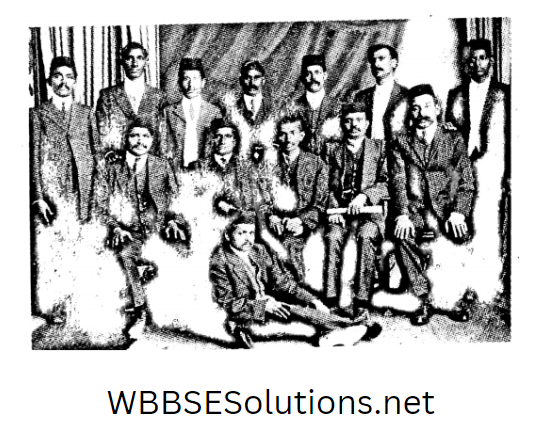
Wbbse Solutions For Class 8 History Chapter 7 Nationalist Ideals And Their Evolution Gandhiji in South Africa

Question 2. Discuss the role of Gandhiji in the Satyagraha movement of Champaran, Kheda and Ahmedabad or How did Gandhiji emerge in nationalist politics.
Answer: Introduction:

Gandhiji entered Indian politics as a national leader by successfully leading the Satyagraha Movements in Champaran, Kheda and Ahmedabad

Rise Of Gandhiji

1. Gandhiji’s role in Champaran Satyagraha Movement:

1. Leadership:

The government, annoyed at Gandhiji’s role, ordered him to leave Champaran. Gandhiji disobeyed the order and collected information from about 8000 peasants. Though he was arrested and taken to trial, the government was compelled to release him.

Class 8 History Solution WBBSE

2. Success:

As an indomitable effort, came to an end, the result of Gandhiji’s

  1. the Tinkathia system
  2. the indigo planters returned 25% of the peasant’s money to them,
  3. the British government passed the Agricultural Bill.

2. Gandhiji’s Role in the Kheda Satyagraha Movement:

1. Leadership:

Gandhiji first adopted the policy of prayer and petition through the Sabha and prayed Gujarat Sabha to the Government for tax exemption. However, the government turned down his request. The unrelenting attitude of the government compelled

Gandhiji adopted the path of Satyagraha along with youths like Ballabh Bhai Patel and Indulal Yagnik.

WBBSE Solutions For Class 8 School Science Long Answer Type Questions WBBSE Solutions For Class 8 School Science Short Answer Type Questions
WBBSE Solutions For Class 8 School Science Very Short Answer Type Questions WBBSE Solutions For Class 8 School Science Review Questions
WBBSE Solutions For Class 8 School Science Solved Numerical Problems WBBSE Solutions For Class 8 School Science Experiments Questions
WBBSE Solutions For Class 8 Maths WBBSE Class 8 History Notes
WBBSE Class 8 History Multiple Choice Questions WBBSE Solutions For Class 8 History
WBBSE Solutions For Class 8 Geography


2. Success:

The Kheda Movement under the leadership of Gandhiji compelled the government to announce that taxes would be collected only from able farmers.

3. Gandiji’s Role in Ahmedabad Satyagraha Movement:

1. Leadership :

Gandhiji decided to stand by the labourers. He demanded an increase in the salary of the labourers in the mills but was turned down. Then he instructed the labourers to go on a strike and himself sat on fast.

2. Significance:

The Movement of the labourers of the textile mills of Ahmedabad is quite significant due to some reasons.

  1. Through this Movement, Gandhiji came into close contact with the pleasures and pains of the Indian labour class.
  2. This Movement provided a personal political base to Gandhiji in the urban areas.
  3. The importance of fast as a weapon of political Movement could be understood. Gandhiji used this weapon successfully in his subsequent struggles.

Class 8 History Solution WBBSE

WBBSE Solutions For Class 8 History Chapter 7 Nationalist Ideals And Their Evolution Topic A Indian National Movement Non Violent Movement Of Gandhiji Armed Revolution

Question 3. Narrate briefly the history of the Khilafat movement.
Answer: Introduction:

The Indian Muslims started the Khilafat Movement to protect the Turkish empire and to reinstate the power and prestige of the Turkish Sultan.

Khilafat Movement

1. Demands:

Some important demands of Khilafat were

  1. To return the whole of Arabia (Jazirat ul Arab) to the Caliph of Turkey,
  2. To prevent any interference in the earthly or religious rights of the Caliph,
  3. To preserve the integrity of all the Muslim states in the world, and
  4. To prevent foreign interference in holy places like Mecca and Madina.

2. Beginning of Movement:

The ‘Khilafat Divas’ or Khilafat Day was called on October 17, 1919. Both Hindus and Muslims celebrated it together.

3. Spread:

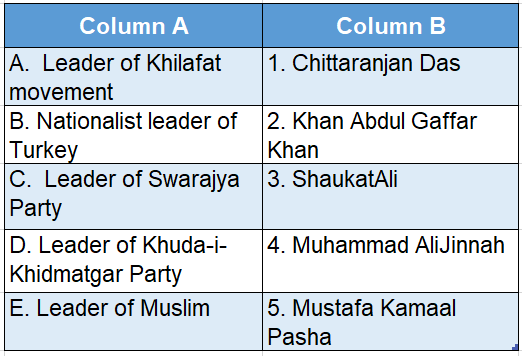
The All India Khilafat conference was organised by the Ali brothers Muhammad Ali and Shaukat Ali. Some businessmen of Mumbai founded the Majlis I Khilafat. When the Khilafat issue was at a special session in Kolkata, this Movement spread.

3. End of the Movement:

When the Sultani Khalifa system was abolished in Turkey under the leadership of Mustafa Kamaal Pasha the Khilafat Movement became irrelevant.

4. Significance:

The Khilafat Movement occupies an important place in the history of the Indian freedom struggle.

  1. The Khilafat Movement disillusioned the Muslim society towards British rule.
  2. This Movement formed the basis of the Non-cooperation Movement.
  3. As Gandhiji attached himself to this Movement he became more acceptable to the Muslims as a national leader.

Question 4 Write down the background of the Non-cooperation Movement.
Answer:

Introduction:

The Indian National Congress participated directly in the anti-British movement after 35 years of abandoning the policy of political beggary. On analysing the background of the movement, the following facts have been disclosed.

1. Failure to achieve self-rule:

The British government had promised to grant self-rule to the Indians at the end of the First World War in exchange for using the wealth and human resources of India in the war.

However, they did not keep their promise after the war. So the aggrieved and disappointed Indians prepared themselves for a mass movement.

Conceptual Questions on Strategies Used in Nationalist Movements

2. Rowlatt Act:

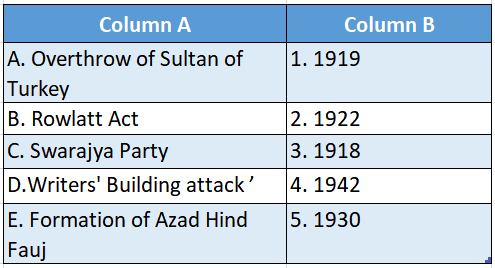
The British Government passed the Rowlatt Act on March 18, 1919, to suppress the Indian nationalist and revolutionary movement. As the personal liberty and right to justice of the Indians were seized by the Rowlatt Act, the Indians organised a mass movement.

3. Khilafat issue:

Gandhiji wanted to merge the anti-British movement, which grew among the Muslims over the Khilafat issue, with the national movement. The Non-cooperation Movement emerged out of that effort.

4. Plight of labourers and peasants:

Though the number of labourers increased in India after the First World War they had no facilities for payment, lodging or security. On the other hand, the government raised the revenue for reasons related to war.

The peasants were unable to pay the additional taxes since the price of agricultural goods did not increase. The misery of the peasants and labourers created the background for the mass movement.

5. Price rise:

The First World War pushed the Indians towards an acute economic crisis. Inflation and price rises frustrated the Indians. The prices of essential items like rice, wheat, sugar, medicine and clothes increased considerably.

6. Contemporary International:

The Russian Revolution, the Sin fin Movement of Ireland, the anti-British Movement in Egypt under the leadership of Juglul Pasha and the mass movement in Turkey under the leadership of Kamaal Pusha inspired the Indians to organise anti-British mass movements all over the country.

Question 5. Give an account of the Non-cooperation Movement.
Answer: Introduction:

The Congress gave up a ‘political beggary’ after a long time and launched the anti-British Non-cooperation Movement. This Movement, aimed at achieving self-rule, was the first all-India mass movement.

Class 8 History Solution WBBSE

Account of the Non-cooperation movement

  1. Background:

1. Failure of achieving self-rule:

After the First World War, the British government gave the Montague Chelmsford Reforms Act to the Indians instead of self-rule.

2. Economic crisis:

The Indian economy faced a crisis due to reasons related to the First World War.

3. Rowlatt Act:

The Jallianwala Bagh massacre was a dire outcome of the Rowlatt Act and this incensed the entire nation.

4. Khilafat issue:

A situation was created for national movement by utilising the Khilafat issue with the active cooperation of the Indian Muslims.

2. Objectives: The main objectives of the Movement were

1. Main objective:

The main objective of the Non-Cooperation Movement was to achieve complete freedom through non-violent means.

2. Other objectives:

  1. A satisfactory solution to the Khilafat issue
  2. Withdrawal of the repressive Rowlatt Act
  3. punishment of the officials responsible for the Jallianwala Bagh massacre.
  4. Putting an end to communalism, untouchability and casteism.

3. Agenda :

There were two facets of the agenda of the Non-cooperation Movement positive and negative.

Class 8 History Solution WBBSE

1 Positive facet:

  1. Collection of a contribution of 1 crore 20 lakhs of rupees by Tilak for
  2. building of Swaraj Fund, Indigenous industrial units,
  3. distribution of 20 lakhs of spinning wheels,
  4. removing untouchability, grouping with
  5. forming a voluntary 1 crore members,
  6. building up Hindu-Muslim unity and Forming an arbitration board.

2. Negative agenda:

  1. Discarding all royal titles,
  2. discarding all governmental posts,
  3.  resigning from self-ruled institutions,
  4. boycott of governmental programmes,
  5.  withdrawal of names from governmental educational institutions by both students and teachers,
  6. boycott of English goods,
  7. boycott of legislature and courts.

4. Beginning of the Movement:

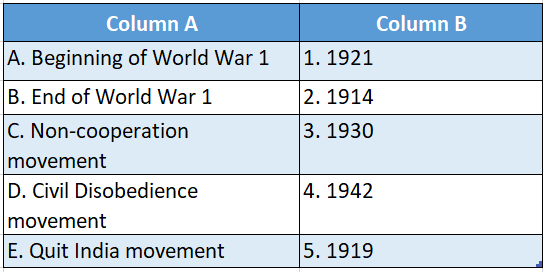
The proposal for the Non-cooperation Movement was passed unanimously at the annual session of the Congress at Nagpur in December 1920.

The Non-Cooperation Movement formally began on August 1, 1920.

5. Spread :

The Non-cooperation Movement spread over the neighbouring areas of U.P., Gujarat, Bihar, Andhra Pradesh, Punjab and Bengal.

Satyagraha started in Bardouli and Ahmedabad in Gujarat. The landless peasants of Andhra started the Vana Satyagraha.

The Akali Movement started in Jalandhar and Amritsar of Punjab. The peasant revolt in Malabar assumed a militant form through the Mopala revolt.

6. End of the Movement:

The agitators at Chaurichaura in U.P. set fire to the police station. As a result, 22 policemen died and Gandhiji decided to withdraw from the Movement.

Examples of Key Leaders in Armed Revolutions

Question 6. Write down the consequences of the Non-cooperation movement.
Answer:

Introduction:

The Non-cooperation. movement led by Gandhiji was the first widespread mass movement of the Indians. The effects of this Movement were quite far-reaching.

1. Revolutionist tendency of the Movement:

The long-drawn Indian freedom movement deviated from its constitutional path and developed a revolutionist tendency.

2. Rise of political awareness:

The Non-Cooperation Movement created political awareness among the Indians. The common people were inspired by anti-British sentiment for the first time.

3. Increase in the prestige and influence of the Congress:

Whether the Non-cooperation Movement was successful or not, it increased the influence and prestige of the National Congress to a large extent.

Many branches of the National Congress grew up even in remote villages.

4. Gandhiji’s emergence as a national leader:

Gandhiji successfully led the Movement and became a national leader. He was widely accepted as a leader by the common people.

5. Inspiration for subsequent movements:

Later on, several small movements grew up in the model of the Non-cooperation Movement like the Akali Movement and Anti taxation Movement of the peasants of Bardauli taluka in Surat.

6. Economic self-dependence:

The country once again became self-reliant as the Khadi textile industry and other native industries developed. The tax collection by the government also decreased a lot.

7. Rise in desire for independence:

This Movement greatly increased the desire of the Indians for independence. The subsequent movements became freedom movements in the true sense of the term.

Question 7. What was the impact of the First World War on India?
Answer:

Introduction:

The First World War began on July 28, 1914, and ended on November 11, 1918. This world war left a deep impact on the economy,

society and politics of India as in other countries of the world.

Class 8 WBBSE History Question Answer

Impact Of First World War On India

1. In Economy: Financial Crisis:

The Indian economy faced a deep crisis after the First World War. The British government used much of the wealth and resources of India in this war.

The Indian economy was greatly harmed while supplying the resources required for the war

2. Ruin of native industries and trade:

The First World War affected the Indian industrialists and traders adversely.

After the world war, the goods produced in England once again captured the Indian markets thereby stagnating native industries and trade.

2. In the Social system:

The First World War affected Indian society in various ways.

  1. The narrow nationalism that had prevailed before the war now became quite liberal and generous.
  2. The nationalism which was so long confined to the urban intellectuals now spread among the illiterate labourers, farmers and artisans who lived in the villages.

3. In politics:

  1. Since the beginning of the First World War, the revolutionists within India and abroad tried to achieve freedom. The revolutionary activities started with the help of external powers
  2. During the war there was a merger between the Moderates and Extremists and the Hindu Muslim unity developed through the Lucknow Pact and the national movement was strengthened.

Question 8. Give an account of the movement of the Indians against the Simon Commission.
Answer:

Introduction:

The Simon Commission was formed to fulfil the demands of the Indians regarding administrative and constitutional reforms.

The Indians were greatly angry at the formation of the Simon Commission for the third time after the Jallianwala Bagh massacre and the Rowlatt Act.

Agitation Of Indians Against The Simon Commission-

1. Backdrop:

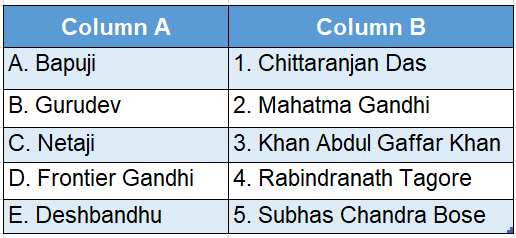
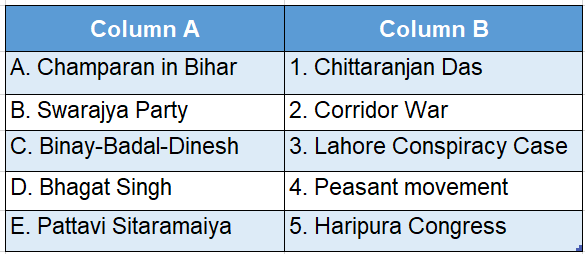
The Swarajya Party raised the demand for the reconsideration of the Montague Chelmsford Reforms Act under the leadership of Chittaranjan Das in 1919.

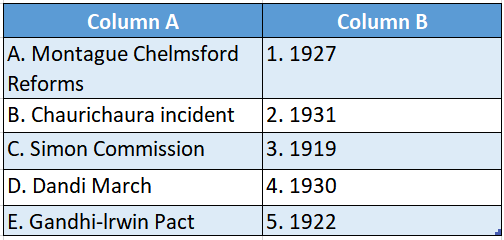
So the British Parliament formed the ‘Indian Statutory Commission’ under the leadership of John Simon in 1927 for constitutional reforms.

Class 8 WBBSE History Question Answer

2. Vow to boycott the Commission:

The Indians were highly aggrieved at being deprived of the right to determine their own good and bad. This grievance added momentum to the national movement.

All the political parties including the Congress, Muslim League and the Leftists unanimously took a vow to boycott

the Simon Commission socially and politically. So a new slogan ‘Go back Simon’ was created.

1. Movement in Mumbai:

When the Simon Commission arrived at Bombay Port on February 3, 1928, the public burst out into agitation.

A strike was observed all over the country on that day. There were processions with black flags and pamphlets with the slogan ‘Go back, Simon’.

2. Movement in Lahore:

On October 30, 1928, an anti-Simon procession was organised in Lahore and the demonstrators were mercilessly beaten up by the police.

The aged leader Lala Lajpat Rai was seriously injured and died on November 17.

3. Movement in Kolkata:

When Simon came to Kolkata the people observed a general strike and abstained from cooking in their houses.

The students and youths assumed an important role by leading the agitation. against the Simon Commission.

4 All-Party conferences in Delhi:

A committee was formed under the chairmanship of Motilal Nehru, an ex-leader of the Swarajya Party, at an all-party conference in Delhi.

This committee was entrusted with the responsibility of drafting the chief policies. of the new constitution of India.

It was decided that the country’s fate would be determined by national leaders only and not by any foreign commission.

In this way, the Simon Commission was ignored and boycotted from all aspects.

Question 9. What do you know about Montague Chelmsford’s reforms?
Answer:

Montague Chelmsford Reforms Act

1. Background:

When the Morley Minto Reforms (1909) failed the British felt the need to formulate another administrative reforms act.

So the Secretary of State for India Andrew Stanley Montague and Viceroy Lord Chelmsford together passed an act which was known as Montague Chelmsford Reforms Act (1919).

Class 8 WBBSE History Question Answer

2. Objectives:

To involve Indians in the judiciary, legislature and executive, to strengthen the self-government institutions, and to entrust more responsibilities to Indians in the provincial governments.

3. Clauses or sections:

The main clauses of this act were as follows

It was proposed that India would remain under British domain, a responsible government would be formed in India gradually, Indians would be allowed to participate in the administration,

  1. a dual government would be introduced in the provinces,
  2. the central legislative assembly would comprise upper and lower houses,
  3. the minority Muslim community would form a separate electorate,
  4. in the elections, seats would be reserved for undeveloped backward communities,
  5. law council with five British members and three Indian members would be formed within the Governor General’s executive committee.

4. Flaws:

  1. By this law, all the powers were concentrated in the hands of the Governor General and his Executive Council;
  2. as the right to vote was confined to a handful of aristocrats, the right to vote of the general public was not acknowledged;
  3. Communal harmony was disrupted because Muslims as well as other religious minorities were given separate electorates.

5. Reaction:

Since the demands of Indians were ignored in the Montague Chelmsford Reforms Act, the Indian leaders protested vehemently.

Tilak asked everybody to reject the Act as it was not fit for consideration. Anne Besant called the Reforms Act an insult to both Britain and India.

Key Events in the Indian National Movement

Question 10 Write a note on the role of the Swarajya Party.
Answer:

Introduction:

The failure and end of the Non-cooperation Movement created a void in the national movement of India.

All eminent leaders including Gandhiji were arrested and the anti-British freedom movement suffered a setback.

So the Swarajya Party arose to keep national politics in motion.

Role Of Swarajya Party

1. Formation:

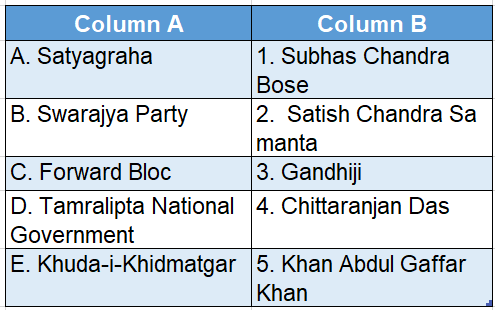
Deshbandhu Chittaranjan Das formed Congress Khilafat Swaraj Dal within the Congress on January 1, 1923, with the help of Motilal Nehru and Subhas Chandra Bose.

It was later named Swarajya Party. The president and secretary were Chittaranjan Das and Motilal Nehru respectively.

2. Objectives:

The chief aim of the Swarajya Party was to attain colonial self-government.

According to Chittaranjan Das, the objectives of the Swarajya Party would be to express faith in Congress policies,

to boycott foreign goods, to boycott courts and schools, to oppose the government by participating in the legislative assembly and if needed, to begin the civil disobedience movement.

Important Definitions Related to Nationalism and Non-Violence

3. Agenda:

The agenda of the Swarajya Party included

  1. to oppose the government in the legislative assembly;
  2. to criticise and reject governmental budget;
  3. to help in the progress of nationalism by raising various bills and proposals;
  4.  to adopt a specific economic policy and stop foreign oppression;
  5.  to embarrass the government and disturb the activities of the legislative council as a protest against depriving the Indians of the right to frame their own constitution.

4. Contribution of the Swarajya Party to the national movement:

1. A demand appropriation:

The Swarajya Party established that it was possible to get the demands fulfilled by staying within the legislature and opposing the government from there.

2. Adoption of constructive schemes:

When the Congress was passing through a crisis the Swarajya Party planned constructive schemes and agendas in conformity with the policies of the Congress.

3. Opposition to faulty budget:

The members of the Swarajya Party participated in the legislative assembly as Indian representatives and opposed the faulty budget of the government.

4. Administrative reforms:

The government was finally compelled to surrender before the vehement opposition of the members of the Swarajya Party.

Therefore, a committee as well as the Simon Commission were formed to investigate the utility of the Montague Chelmsford Reforms Act.

5. Hindrance to administration:

The members of the Swarajya Party boycotted all governmental programmes,

walked out of the assembly to register their protest against repressive measures and thus hindered administrative activities.

Question 11. Discuss the causes of the Civil Disobedience Movement.
Answer:

Introduction:

The Civil Disobedience Movement was the second biggest non-violent mass movement after the Non-cooperation Movement in the history of the Indian liberation movement.

The actions and reactions in the political life of the Indians and their idealistic differences created the background of the Civil Disobedience Movement.

Causes Of the Civil Disobedience Movement

1. Failure of Non-cooperation Movement:

The Indians had joined the Non-cooperation Movement with a lot of expectations. However, their hopes could not be fulfilled.

due to the withdrawal of the Movement. So they were looking forward to another mass movement.

Class 8 WBBSE History Question Answer

2. Failure of Swarajya Party:

The Swarajya Party was formed to bring momentum and liveliness to Indian politics. However, this Party failed to fulfil its objectives.

So the need for a new national movement was felt.

3. Peasant and labour unrest:

As the demand for agricultural products like cotton, jute and oilseeds fell in the international market the peasants became the victims of utter misery.

At the same time, the labourers were aggrieved by the reduction of salary, an increase in working hours, layoffs and lockout.

The grievances of the peasants and labourers created the background for future mass movements.

4. Awakening of the backward classes:

The backward as well as lower classes of the Hindu society were being exploited at the hands of the upper-class Brahmins and Kshatriyas for a long time.

The movement of the milkmen and Yadavas in Bihar and Satyashodhak’ or Purification Movement in Maharashtra helped to awaken the back. ward classes.

5. Simon Commission:

The Simon Commission was formed to discuss the introduction of a new constitutional system but no Indian member was included in it.

This offended all the Indians irrespective of their parties or ideologies. So a general grievance against the British developed.

6. Nehru Report:

Motilal Nehru put forward a draft of the new constitution in the Lucknow session (28-31 August 1928). This was known as Nehru Report.

On Gandhiji’s intervention, it was decided that the proposals of the report would be put into action or the Congress would launch Civil Disobedience Movement to attain complete independence.

Question 12. Give an account of the Civil Disobedience Movement.
Answer:

Introduction:

The next movement after the Non-cooperation Movement was the Civil Disobedience Movement.

Gandhiji sparked this movement by conducting the Dandi march and making salt from the water of the Arabian Sea.

Class 8 History Question Answer WBBSE

First Phase Of Civil Disobedience Movement (1930-31)

1. Agenda:

Gandhiji submitted a demand. a petition containing 11 clauses to Governor General Irwin as a part of his agenda. Some of these clauses were

  1. 50% decrease in land tax,
  2. More than a 50% reduction in the military budget,
  3. the repeal of the salt tax,
  4.  the imposition of tax on foreign goods,
  5. granting Indians the right to keep firearms for self-defence.

2. Dandi March:

On March 12, 1930, Gandhiji marched from his Sabarmati Ashram to Dandi with 78 followers to violate the Salt Act.

He walked 241 miles in 24 days and made salt from the water of the Arabian Sea on the early morning of April 6.

3. Spread of the movement:

The no-taxation movement reached its climax in Gujarat, U.P. and West Bengal. The Forest Protection Act was violated in Madhya Pradesh and Maharashtra.

The Civil Disobedience Movement became quite pervasive in the North-West Frontier Province under the leadership of Khan Abdul Gaffar Khan.

4. End of the first phase:

When Gandhiji planned to capture the salt storage centre at Dharsana he was arrested.

Panicked at the intensity of the Movement, the government called a round table conference but the Congress did not join it.

So the government released Gandhiji and other eminent leaders.

Then Gandhi Irwin pact was signed between Gandhiji and Lord Irwin and the Civil Disobedience Movement was temporarily suspended.

Second Phase Of Civil Disobedience Movement (1931-34)

1. Spread of movement:

When the British government resorted to intense repressive measures, Gandhiji again gave a call for Satyagraha on January 3, 1932.

The second phase of the Civil Disobedience Movement spread over large areas of the United Province, Madhya Pradesh, Punjab and Bengal.

2. Poona Pact:

British Prime Minister Ramsay Macdonald introduced the policy of communal division by granting the Communal Award. Gandhiji sat in a continuous fast in protest.

Finally, Gandhiji signed a pact called the Poona Pact with the leader of the scheduled castes Bhimrao Ramji Ambedkar on September 25, 1932.

Impact of Non-Violent Movements on Indian Independence

3. Withdrawal of Movement:

After signing the Poona Pact, Gandhiji concentrated on the Harijan Movement.

Finally, at the Patnal session of Congress on May 8, 1934, the decision to call off the Civil Disobedience Movement was taken.

Question 13. State the significance of the Civil Disobedience Movement.
Answer:

Introduction:

The Civil Disobedience Movement was the second non-violent mass movement led by Gandhiji. This Movement was quite significant in various aspects.

Significance Of the Civil Disobedience Movement

1. Mass Awakening:

The Civil Disobedience Movement gave the nation an inspiration for mass awakening, an attitude of self-confidence and a mental capacity for relentless struggle.

Journalist H.M. Brelsford said, “this Movement liberated the minds of the Indians. They have attained freedom in their hearts.”

2. Blow to the colonial economy:

This Movement gave a strong blow to the British colonial economy. About one-third of the import of British goods to India decreased.

3. Rise of awareness:

This Movement was able to create political awareness as well as spiritual awakening among the Indians.

They had already lost reverence towards the British and now they conquered fear.

4. Lessening of the prestige of the British:

Through this Movement, Gandhiji inspired the freedom fighters with moral strength. At the same time,

he also lessened the prestige of the British by holding up their inhuman and immoral character in front of the world.

5. Indian issue internationalized:

This Movement stirred the minds of intellectuals in England and America and Indian independence became a global issue.

6. Prosperity of native industries:

In this Movement, British manufactured goods were boycotted and native products were used. This helped the indigenous industries to prosper.

The Indians also realised the importance of economic independence.

Class 8 History Question Answer WBBSE

7. Preparation of the ground for subsequent mass movements:

This Movement took the Indians through an ordeal of self-sacrifice and voluntary suffering and thus prepared the ground for subsequent and more widespread movements.

Question 14 Give an account of the armed revolutionary movement in India in the post-World War I period.
Answer:

Introduction:

When the Non-cooperation Movement was suddenly called off in 1922, the youth lost faith in the Congress movements and became interested in armed struggle.

After the Non-cooperation Movement, attempts were made to organise pervasive armed movements.

Armed Movements In India In Post World War Period

1. Attempt to assassinate Tegart:

The revolutionaries of Bengal began to commit political plunder in 1923 in order to collect wealth.

During this time, the police commissioner of Kolkata Charles Tegart tortured the revolutionaries in various ways.

Gopinath Saha took up the task of assassinating Charles Tegart but, by mistake, he killed somebody else. He was tried and hanged.

2. Kakori Conspiracy Case:

The Indian revolutionists founded a new party named Hindusthan Republican Association.

The members of this party participated in the daring train dacoity at Kakori in 1925 under the leadership of Ram Prasad Bismil.

The police arrested them and filed the Kakori Conspiracy Case. In the trial, some leaders were sentenced to death while others were sent to prison.

3. Establishment of Navjawan Bharat Sabha:

The Navjawan Bharat Sabha was founded in 1925 by Bhagat Singh, Chandrashekhar Azad, Sukhdev and Yashpal.

In 1928 it was renamed as Hindusthan Socialist Republican Association.

4. Corridor Warfare:

Three members of Bengal Volunteers Binoy Bose, Badal Gupta and Dinesh Gupta entered the Writers’ Building in Kolkata in disguise on December 8, 1930, and assassinated Simpson, the Officer in charge of the prison.

When the police cordoned off the Writer’s Building, the revolutionaries fought very bravely. This incident is known as Corridor Warfare.

5. Murder of Sanders:

Lala Lajpat Rai was fatally beaten up by the police during the anti-Simon Movement. He died of his injuries within a few days.

In revenge, Bhagat Singh and Rajguru gunned down the concerned police officer Sanders on December 17, 1928.

6. Lahore Conspiracy Case:

In April 1929 Bhagat Singh and Batukeshwar Dutta threw a bomb into the Parliament.

The police arrested both of them and started the Lahore Conspiracy Case. During the trial, the prisoners went on fast against the ill-treatment of the police.

Class 8 History Question Answer WBBSE

7. Chattagram Armoury Raid:

The ”Indian Republican Army’ was formed during the Civil Disobedience Movement under the leadership of Surya Sen.

On April 18, 1930, Surya Sen’s followers Nirmal Sen, Ambika Chakraborty, Ganesh Ghosh, Ananta Sinha, Preetilata Waddedar and Kalpana Dutta participated in the famous Armoury Raid at Chattagram (Chittagong).

Question 15. Write an essay on the ‘August Movement’ or ‘Quit India movement’.
Answer:

Introduction:

The last and most widespread mass movement in the history of the Indian freedom struggle was the August Movement or Quit India Movement of 1942.

No other movement that followed the Sepoy Mutiny was as widespread as this Movement.

Quit India August Movement

1. Background:

1. Failure of Cripps’ proposal (Mission):

Cripps Mission failed because it did not contain any provision for granting independence to India. So when this Mission failed, the Indians became eager for another mass movement

2. Food scarcity and price rise:

As a consequence of the Second World War, the prices of the items of daily use rose sky-high.

An acute scarcity of food exhausted the faith of the Indians in the British government and they wished for the rule to end.

3. Desire for independence :

The Non-cooperation and Civil Disobedience Movements aroused the political awareness of the city dwellers as well as the villagers.

This created a backdrop for an all-India mass movement.

2. Expansion:

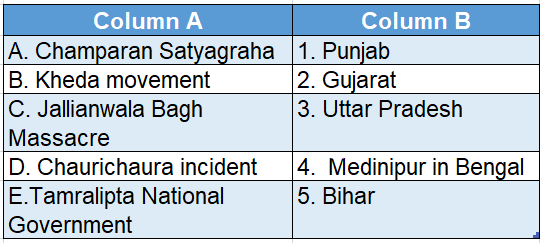
The August Movement began in Bombay, Ahmedabad, Kolkata, Puna, Nagpur and Kanpur. The independent Tamralipta National government was formed at Tamluk in Medinipur.

Again, Munghyr, Bhagalpur, and Purnia in Bihar, Balia and Sultanpur in United Province, and Baleshwar and Cuttack in Orissa became the main centres of the Quit India Movement.

Matangini Hazra from Tamluk, Kanaklata Barua from Assam and Hemu Kalani of Karachi were shot dead by the police.

Class 8 History Question Answer WBBSE

3. Leadership:

Anushilan group, Jugantar group and Congress socialist group also got involved in this Movement.

The pioneer leaders of the Movement were Jay Prakash Narayan, Achyut Patabardhan, Rammanohar Lohia and Aruna Asaf Ali.

4. Causes of failure:

1. Absence of planning and discipline:

From the very beginning, the Quit India Movement was unplanned.

So the lack of discipline in the Movement weakened it.

2. Opposition by other groups:

The opposition by the Communist Party of India, Hindu Mahasabha and some political parties and groups were responsible for the failure of the Movement.

5. Significance:

  1. Increasing desire for independence: The Quit India Movement boosted the desire of the Indians for independence.
  2. Increase in popularity of Congress: The Quit India Movement, in fact, demonstrated that the popularity of Congress among the masses was beyond question.

Question 16. Discuss the importance of the Quit India Movement in India’s struggle for independence.
Answer:

Introduction:

The Quit India Movement was the last step in terminating the centuries-long British rule in India.

This movement doubtlessly speeded up the attainment of freedom for the Indians.

Importance Of the Quit India Movement In India’s Freedom Struggle

1. Indomitable pledge for independence:

The Quit India Movement (1942) was the climax of the Indian freedom struggle.

The determination to become free from British rule was clearly proved by this movement.

2. Maintaining communal harmony:

No communal disturbances took place during this movement. So communal harmony and Hindu-Muslim unity were the greatest wealth of this movement.

3. National revolution:

The movement of 1942 was a revolutionary movement. The Indians joined this movement because they were desperate for freedom.

4. Foundation for attaining independence:

There is no doubt that the movement of 1942 laid the foundation of Indian independence. On the one hand Subhas Chandra’s armed revolutionary zeal and on the other hand,

the intensity of the Quit India Movement within the country rendered the independence of the Indians from British rule inevitable.

5. Realisation of the British:

The intense desire of the Indians for independence which was manifested through the movement made the British realise that it was their time to leave India.

Witnessing the intensity of the movement Lord Wavell, who succeeded Lord Linlithgow, had written.

“Discussions should be opened with the Indian leaders before being compelled to grant them independence after the war.”

Practice Questions on Indian National Movement

6. Re-establishment of the Congress prestige:

Gandhiji’s fasting during the movement re-established the prestige of the Congress in the hearts of the nation.

It was proved beyond doubt through the movement that the popularity of Congress was pervasive and supreme.

Question 17. Assess the role of Gandhiji in the Indian freedom struggle.
Answer:

Introduction:

Gandhiji was the main spirit of the Indian freedom movement. He was the first to make the movement a mass movement.

Jawaharlal Nehru wrote about Gandhiji’s emergence in his book ‘Discovery of India” “He was like a strong current of fresh air. He awoke us, we took a deep breath”.

Gandhiji’s Role In The Indian Freedom Movement

1. Regional Satyagraha:

Gandhiji successfully launched Satyagraha in Champaran in Bihar, Ahmedabad and Kheda in Gujarat. Then he entered all-India politics.

2. Rowlatt Satyagraha:

The British government passed the repressive Rowlatt Act after the First World War and tried to cripple the normal lifestyle of the Indians.

Gandhiji requested the Viceroy to withdraw the Rowlatt Act but his request was turned down. So he called for Satyagraha.

3. Khilafat movement:

Gandhiji extended his support to the Khilafat Movement which began after the First World War. He was elected all India President of the Khilafat conference.

4. Non-cooperation movement:

According to the decision at the Nagpur session of the Congress (1920), the Non-cooperation movement started on August 1, 1920.

The Movement spread rapidly all over the country under the leadership of Gandhiji. However, when the agitators in Chaurachaura in U.P.

set fire to a police station in response to open fire by the police, Gandhiji suddenly suspended the movement as he did not agree with violence.

5. Civil Disobedience Movement:

When the British Government rejected the demand of the Congress for self-government Gandhiji launched the Civil Disobedience Movement.

He conducted the Dandi March on March 12, 1930, with 78 followers and violated the Salt Act and thereby sparking off the Movement.

This Movement received an unprecedented response from all over the country.

6. Quit India Movement:

The Congress launched the Quit India Movement on August 8, 1942, where Gandhiji’s slogan was ‘Karenge ya Marenge’.

It was the most widespread Indian mass movement led by Gandhiji.

Through this Movement, he succeeded in proving that the Indians were ready to sacrifice everything for the sake of independence.

He thus hinted that the attainment of independence for the Indians was inevitable.

Question 18. Suppose you have joined Gandiji’s Civil Disobedience Movement. You have also been a part of the Dandi March. Write a letter to your friend about your experience in the Dandi Campaign.
Answer:

Gujarat
15.4.1930
Dear Vasant,

Today I shall tell you about the best experience of my life. I hope you know that Gandhiji selected salt as the instrument of his Civil Disobedience.

This is because salt is an important ingredient in the food of the Indians and the British government has levied a tax on it.

So Gandhiji decided to march to Dandi with his followers. This historic march began in Sabarmati in Gujarat on March 12, 1930. Thousands of people joined Gandhiji.

I also followed them. Every day, the number of walkers increased. This procession created a stir within the country and abroad.

Foreign exporters also came to witness the march. After 24 days, Gandhiji reached Dandi village on the coast of the Arabian Sea.

In the early morning of April 5, he took a bath in the sea and made some salt from the seawater among cheers and slogans shouted by his followers.

Through this violation of the Salt Act, the Civil Disobedience Movement began throughout India. I have narrated to you my experience of walking with Gandhiji but

I cannot explain the feeling of patriotism that I experienced through a letter. Anyway, hope you will soon send me a reply.

Yours affectionately,
Janak Patel

WBBSE Chapter 7 Nationalist Ideas And Their Evolution Topic A Indian National Movement: Non-Violent Movement Of Gandhiji & Armed Revolution Short Answer Questions

Question 1. How were the political activities of Gandhiji in South Africa?
Answer:

1. Movement:

Gandhiji was greatly stirred by the oppression and torture carried out by the white people over the Asians and Africans.

He organised a mass movement against the South African government which followed a policy of racial discrimination.

He established the Natal Indian Congress (NIC) by uniting the Indians residing there.

2. Result:

The South African government tried to distract Gandhi in different ways.

Attempts were made to assault him physically but he kept on fighting against injustice and discrimination for two decades.

Ultimately the government was compelled to step back and the Indian Relief Act was passed in 1914.

This helped to improve the condition of the Indians. residing in South Africa.

Class 8 History Question Answer WBBSE

Question 2 Write a note on Rowlatt Act.
Answer:

1. Committee Formation:

The British Government formed a five members sedition committee under the leadership of Sir Sydney Rowlatt,

an English judge, to suppress the revolutionary movement and terrorist activities in India.

2. Compilation:

The Rowlatt Act was formulated on this basis. of the recommendation of the Rowlatt Committee which was passed in 1919.

The independence of the Indians was seized by this Act.

3. Provisions:

  1. This Act empowered the government to arrest any person nearly on suspicion.
  2. The government also got the power to detain without trial any person who was arrested without any provocation,
  3. There were also provisions to subdue the press.
  4. Moreover, it included trial in court secretly without a jury and extraction of fines from suspects.

Question 3. Write briefly about what you know about the Jallianwala Bagh Massacre.
Answer:

1. Meeting at Jallianwala Bagh Garden:

A peaceful meeting was organized at Jallianwala Bagh Garden at Amritsar in Punjab on April 13, 1919, defying the order of Michael O’Dyer, the lieutenant governor of Punjab.

2. The Massacre:

Soon after the meeting began Brigadier General Reginald O’Dyer positioned his forces at the single gate and ordered them to open fire.

1600 round shots were fired from 50 rifles and 379 persons were killed while 1200 were wounded.

3. Reaction among Indians :

The Indians all over the country protested strongly against the atrocious massacre at Jallianwala Bagh.

Rabindranath Tagore gave up knighthood with strong disgust. In the Young India journal, Gandhiji

wrote “It is impossible to rectify this devilish government, it has to be destroyed”.

Question 4. What was the role of the common people in the non-cooperation movement?
Answer:

1. Role of peasants:

The peasants of U.P., Gujarat, Bihar, Bengal and Andhra widely participated in the Non-cooperation Movement.

The landless peasants of Andhra launched Vana Satyagraha over a vast area of the state.

2. Role of labourers:

The labourers working in Burn and Jessop companies as well as post-telegraph, railways and ports participated in the strikes.

3. Role of other classes:

Apart from the labourers and farmers the artisans, weavers, shopkeepers, small traders, tribals and lower caste people also participated in the Non-cooperation Movement.

Question 5 What were the reasons for the withdrawal of the Non-cooperation movement?
Answer:

Reasons for withdrawal of Non-cooperation Movement:

1. Chaurichaura Incident:

On February 5, 1922, the police fired at a demonstration at Chaurichaura near Gorakhpur and the angry mob set fire to the police station.

This shocked Gandhiji and he decided to call off the Movement.

2. Repressive measures of the British:

The British government tried to stop the Movement by applying repressive measures.

So the volunteer organisations were split up, public meetings were banned and leaders were arrested.

3. Other reasons:

Gandhiji decided to call off the Movement due to the oppression of farmers by the government, the despair of the middle class and the apathy of the Muslims towards the Movement after the solution of the Khilafat issue.

Question 6. What was the reaction against the withdrawal of the Non-cooperation movement?
Answer:

Reaction against the withdrawal of the Movement:
1. Reaction of leaders:

Netaji Subhas Chandra, who was in prison, referred to the withdrawal of the Movement as a National Disaster. He said,

that the order to withdraw the Movement just at the time when public excitement was as its peak, was nothing less than a national disaster.

According to Lala Lajpat Rai, “We have absolutely disintegrated.” Motilal Nehru said, “Gandhiji has punished

the entire nation for the sin of a handful of people. “Deshbandhu Chittaranjan Das said, “The opportunity has been lost forever.”

2. Reaction of others:

According to Romain Rolland “There is a danger in bestowing all the powers on a single person, but the order to stop a movement when it is at its peak,

is more dangerous” Louis Fischer said, “Gandhiji has sacrificed all the zeal and endeavour of the people for self-sacrifice on the gallows of non-violence”.

Question 7. What was the reason behind the formation of “The Swarajya Party’?
Answer:

Deshbandhu Chittaranjan founded the ‘Swarajya Party’ on January 1, 1923, with the help of Motilal Nehru and Subhas Chandra. There were some reasons behind this

1. Lack of leadership in national Movement:

After the Non-cooperation Movement was called off, all the chief leaders including Gandhiji were arrested.

So a void was created in the leadership of the Movement and the need for a new party arose.

2. Internal conflict:

A conflict arose within the Congress regarding the opposition of the government inside the parliament.

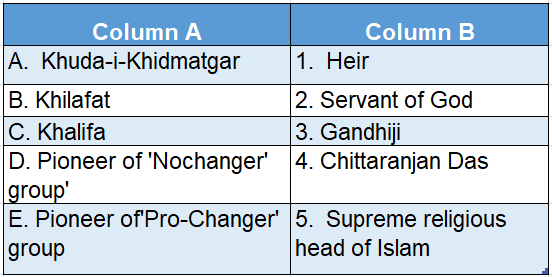
Those who supported this action were called pro changers and those who opposed it were called no changers.

When Chittaranjan Das supported the pro-changers his proposal was rejected. So he founded the Swarajya Party.

Question 8. Write a note on Dandi March. Write a note
Answer:

In March 1930 Gandhiji 12, conducted a procession from Sabarmati ashram to Dandi with 78 followers with the purpose of violating the Salt Act. This is known as ‘Dandi March’.

1. Route:

Gandhiji walked with his followers for about 241 miles from Sabarmati to Dandi in Gujarat.

2. Call for a boycott:

He called upon the public to resign from government jobs and stop paying taxes. This created unprecedented zeal and impetus throughout the country.

3. Violation of Salt Act:

On the morning of April 6, Gandhiji took a bath in the sea on the coast of Dandi and ceremonially violated the Salt Act by making some salt by himself.

As the British had imposed a tax on salt Gandhiji wanted to oppose it and thus initiated the Civil Disobedience Movement.

In fact, the Civil Disobedience Movement started all over the country immediately after Gandhiji violated the Salt Act through the Dandi March.

Question 9. State the reasons for taking up the programme of violating the Salt Act.
Answer:

Gandhiji wanted to begin the Civil Disobedience Movement through a programme which would be universally accepted.

Here Gandhiji had taken up the programme of violating the Salt Act. The reasons were

1. Universal acceptance:

Gandhiji felt that if the Civil Disobedience Movement could be sparked off by the violation of the Salt Act then people of all religions,

castes and sects would unhesitatingly participate in it because salt formed an essential element of most of the food items.

2. High tax rate:

Salt was one of those imported items on which the British. the government had levied a heavy tax. Gandhiji firmly believed that if he started.

the Civil Disobedience Movement by demanding the repeal of a tax on a necessary item like salt then all the sections of Indian society would participate in it.

Question 10. State the reasons for the withdrawal of the Civil disobedience movement.
Answer:

The decision to withdraw the Civil Disobedience Movement was formally declared on May 8, 1934, at the conference of the All India Congress in Patna.

1. Cruel oppressive policy of the British:

Gandhiji decided to withdraw the Civil Disobedience Movement to protect the agitators from the repressive measures of the British government like fines,

imprisonment and confiscation of movable and immovable property.

2. Communal differentiation :

The British Prime Minister Ramsay Macdonald encouraged communal differentiation by introducing Communal Award utilising

the policy of communal division on August 16, 1932. So Gandhiji withdrew the Civil Disobedience Movement to keep national unity intact.

Short Notes on Armed Revolution in India

Question 11. Give a brief description of the Chittagong armoury raid.
Answer:

A plan to plunder the Chittagong armoury on April 18, 1930, at 10 p.m. was made under the leadership of Surya Sen (Masterda) at Chittagong in eastern India.

1. Formation of the Indian Republican Army:

Mastarda formed the Indian Republican Army for carrying out the armoury raid.. Some of the members were Ganesh Ghosh,

Lokenath Bal, Ambika Chakravarty, Upen Bhattacharya, Naresh Roy, Ananta Sinha, Nirmal Sen and Triguna Sen.

2. Revolutionary activities:

The members of the Indian Republican Army raided the Chittagong (Chattagram) armoury on April 18, 1930, under the leadership of Surya Sen.

They also occupied Chittagong and hoisted the national flag there.

3. Establishment of temporary independent government:

The revolutionists paralysed the British administrative machinery and established a temporary independent government at Chittagong with Surya Sen. as its Prime Minister.

4. Conflict:

A conflict took place between the Republican Army and the British forces which were sent to suppress them at the Jalalabad hills.

Thirteen of the revolutionists were killed and Surya Sen managed to escape.

12 Write a note on Binoy Badal Dinesh.
Answer:

Introduction:

The three great revolutionists who are known as B.B.D. in the history of Bengal were Binoy Bose, Badal Gupta and Dinesh Gupta.

These three brave revolutionaries carried on the Writers’ Building attack on December 8, 1930.

1. Corridor War:

Binoy, Badal and Dinesh- three members of the Bengal volunteer group entered the Writers’ Building in disguise. Binoy shot down Colonel Simpson, the Inspector General of Prison.

A corridor war took place between the revolutionists and the police force. The revolutionists decided to commit suicide to avoid capture.

2. Inspiration to youths:

The Writers’ Building expedition plan and the self-sacrifice of Binoy, Badal and Dinesh served as an inspiration for

the youths who were devoted to the cause of freedom in their motherland.

Question 13 Write a note on Bhagat Singh.
Answer:

1. Beginning of revolutionary life:

Bhagat Singh took up membership in the Hindusthan Republican Party and established a youth organisation called Navjawan Bharat Sabha in 1925.

2. Formation of the revolutionist party:

Bhagat Singh also founded the Hindusthan Socialist Republican Association (HSRA) with the help of Chandra Shekhar Azad and others at Firoz Shah Kotla stadium in Delhi.

3. Assassination of Sanders:

Bhagat Singh shot down Sanders, the notorious police officer of Lahore, on December 17, 1928.

4. Self-sacrifice:

Bhagat Singh was hanged on March 23, 1931, by the verdict of the Lahore Conspiracy case on the charge of assassinating Sanders.

This caused great turmoil among the masses all over the country.

5. Inspiration to youths:

Bhagat Singh’s fearless sacrifice created revolutionary awareness among the Indian youths and they became newly inspired to fight for the cause of their country.

Question 14. State the importance of the Quit India movement.
Answer:

1. Awareness of the British Government:

The Quit India Movement made it very clear to the British government that their days in India were numbered.

2. Increase in the prestige of Congress:

After this Movement, the prestige and influence of the Congress increased manifold.

3. Communal harmony:

This Movement reestablished communal harmony.

4 . National awakening:

The Movement of 1942 created national awareness for the first time.

WBBSE Chapter 7 Nationalist Ideas And Their Evolution Topic A Indian National Movement: Non-Violent Movement Of Gandhiji And Armed Revolution state Whether The Following Statements Are True Or False

Question 1. The National Government was established in the Tamluk subdivision of the Medinipur district of West Bengal during the time of the Quit India Movement.
Answer: True

Question 2. Chittranjan Das was the political preceptor of Subhas Chandra Bose.
Answer: True

Question 3. Gandhiji’s Sabarmati ashram was a secret revolutionary society.
Answer: False

Question 4. Subhas Chandra Bose referred to Gandhiji as ‘Mahatma’.
Answer: False

Question 5. The Swarajya Party was formed after the failure of the Non-cooperation Movement.
Answer: True

Question 6. There was only one Indian member in the Simon Commission.
Answer: False

Question 7. The Congress Khilafat Swaraj Party was popularly called the ‘Swarajya’ Party.
Answer: True

Question 8. The Indian Republican Army was formed under the leadership of a Master in Chittagong.
Answer: True

Question 9. Bhagat Singh was a founder member of Bengal Volunteers.
Answer: False

Question 10. Smt. Sarojini Naidu was one of the leaders of the Civil Disobedience Movement.
Answer: True

Question 11. The followers of Frontier Gandhi were called the ‘Red Shirts”.
Answer: True

Question 12. The Jallianwala Bagh massacre was led by General Michael O’Dyer.
Answer: True

Question 13. Motilal Nehru was the leader of Swarajya Party.
Answer: True

Question 14. ‘Home Rule’ means self-government.
Answer: True

Question 15. Lord Irwin was the Viceroy during the Civil Disobedience Movement.
Answer: True

Question 16. The most massive Indian Independence movement launched by Gandhiji was the Quit India Movement.
Answer: True

Question 17. ‘Karenge ya marenge’ was the slogan of Jawaharlal Nehru.
Answer: False

Question 18. The Chittagong armoury plunder was led by Masterda Surya Sen.
Answer: True

Question 19. The Gandhi-Irwin pact signed on March 4, 1931, was also known as the Delhi Pact.
Answer: True

Question 20. Lala Lajpat Rai was fatally beaten up by the police and died later on while leading the movement against the Simon Commission.
Answer: True

Question 21. Bhagat Singh, Batukeshwar Dutta, Sukhdev and Rajguru were hanged by the verdict of the Lahore Conspiracy case.
Answer: True

Chapter 7 Nationalist Ideas And Their Evolution Topic A Indian National Movement: Non-Violent Movement Of Gandhiji And Armed Revolution Fill in The Blanks By Selecting The Appropriate Expressions From The Brackets

Question 1. While leading an anti-Simon procession. _________ (Lala Lajpat Rai/Bal Gangadhar Tilak/Bipin Chandra Pal) was fatally wounded and died later on.
Answer: Lala Lajpat Rai

Question 2. _________ (Jawaharlal Nehru /Subhas Chandra Bose/Chittaranjan Das) established the Swarajya Party.
Answer: Chittaranjan Das

Question 3. Chauri Chaura incident took place during the _________ (Non-co-operation/Civil Disobedience/Quit India Movement).
Answer: Non-co-operation

Question 4. _________ (Aurobindo Ghosh/Subhas Chandra Bose/Surendranath Banerjee) became the Principal of Bengal National College.
Answer: Subhas Chandra Bose

Question 5. _________ (Irwin/Amherst/Allenborough) was the Viceroy of India during the Civil Disobedience Movement.
Answer: Irwin

Question 6. The attack on Writer’s Building and the fatal war by Binoy Badal Dinesh were named ‘Corridar Warfare’ by _________ (Jugantar/Dainik Basmati/Anandabazar).
Answer: Anandabazar

Question 7. _________ (Rabindranath Tagore/Sarat Chandra Chatterjee/Bankim Chandra Chatterjee) gave up the title of ‘Sir’ in protest against the Jallianwala Bagh massacre.
Answer: Rabindranath Tagore

Question 8. Navjawan Bharat Sabha or Youth India Association was founded by _________ (Bhagat Singh/Sukhdev/Rajguru).
Answer: Bhagat Singh

Question 9. Gandhiji had joined the _________ (first/ second/third) Round Table Conference.
Answer: second

Question 10. _________ (Preetilata Waddedar / Bina Das/ Matangini Hazra) was shot dead by the police while leading the Quit India Movement in Tamluk of Medinipur.
Answer: Matangini Hazra

Chapter 7 Nationalist Ideas And Their Evolution Topic A Indian National Movement: Non-Violent Movement Of Gandhiji And Armed Revolution Very Short Answer Questions

Question 1. In protest of which incident Rabindranath Tagore gave up his knighthood?
Answer: Rabindranath Tagore gave up his knighthood in protest of the inhuman Jallianwalabagh massacre.

Question 2. When was the Khilafat Committee formed?
Answer: The Khilafat Committee was formed in March 1919.

Question 3. What is the Kakori Conspiracy Case?
Answer: The British government made a conspiracy case (1925) related to Kakori railway station dacoity against Bhagat Singh and his associates, which is known as the Kakori Conspiracy Case.

Question 4. How many round table conferences were organised?
Answer: A total of 3 round table conferences. were organised.

Question 5. Chauri Chaura village is in which state?
Answer: Chauri Chaura village is in Gorakhpur, Uttar Pradesh.

Question 6. Name the organisation founded by Bhagat Singh.
Answer: The organisation founded by Bhagat Singh is Naujawan Bharat Sabha.

Question 7. Who founded Khuda e Khidmatgar?
Answer: Khan Abdul Gaffar Khan founded Khuda e Khidmatgar.

Question 8. Who was known as ‘Frontier Gandhi’?
Answer: Khan Abdul Gaffar Khan was popularly known as ‘Frontier Gandhi’.

Question 9. Why was Matangini Hazra famous?
Answer: An elderly woman and revolutionary of Tamluk, Matangini Hazra actively took part in the Quit India movement and died in police firing while leading the agitation.

Question 10. Who led the Chittagong uprising?
Answer: The Chittagong uprising was led by Surya Sen.

WBBSE Solutions For Class 8 History Chapter 8 From Communalism To The Partition Topic A The Rise Of Communalism In Colonial India

Chapter 8 From Communalism To The Partition Topic A The Rise Of Communalism In Colonial India

Question 1. Discuss the background of the establishment of the Muslim League.
Answer: The Background Of The Establishment Of The Muslim League:-

Introduction:

The success of the Simla Deputation (1906) encouraged Muslim leaders to establish an all-Indian Muslim political institution to protect the interests of their community.

Therefore, the Muslim League was established on December 30, 1906, under the initiative of Nawab Salimullah of Dhaka.

Background Of The Founding Of the Muslim League-

1. Primary initiative:

Muslim leaders like Vikar ul Mulk, Mohsin ul Mulk, and others thought of forming a separate political organization to protect the interests of the Muslims.

For this purpose, they called a meeting at Lucknow in October 1901 but their attempt failed.

Read and Learn More WBBSE Solutions For Class 8 History

WBBSE Solutions For Class 8 History Chapter 8 From Communalism To The Partition Topic A The Rise Of Communalism In Colonial India

Important Definitions Related to Communalism

2. Letter of Vikar ul mulk:

Vikar ul Mulk wrote a letter to the editor of the Pioneer in October 1903.

He wrote that the personal demands of the Indian Muslims, who were a minority, had to be placed in front of the government.

This letter helped form public opinion in favor of establishing a separate political organization for Muslims.

3. Demand For Forming A Political Party:

On the eve of the Simla Deputation, the Muslim leaders met at a private conference in Lucknow on September 16, 1906, and had a serious discussion about The establishment of an all-India political party for their own community.

Then they placed the proposal before Lord Minto on October 1. Aga Khan has written in his autobiography.

“The Muslim leaders who participated in the Simla conference have unanimously agreed that their future depended on an independent organization and a fixed strategy.

4. Formation of Muslim League:

Finally, on December 30, 1906, the All India Muslim League was founded at the Mohammedan Education Conference in the presence of 8000 representatives under The presidency of Vikar ul Mulk.

Aga Khan became the first President and Vikar ul Mulk and Mohsin ul Mulk became the Joint Secretaries of the League.

Significance:

The Two Nation theory propounded by the Muslim League later on partitioned India permanently.

The Muslim League said that social alliance between the Hindus and the Muslims was possible but political alliance was absolutely impossible.

A. B. Rajput said, “This proves beyond doubt that India is no more a single nation, it can no more be made so.”

WBBSE Class 8 Rise of Communalism Notes

Question 2 Give an account of the Khilafat Movement.
Answer: Khilafat Movement:-

Introduction:

The Khilafat Movement was an important phase of the Indian freedom movement. It created a golden opportunity for Hindu Muslim alliance. Gandhiji said that such an opportunity would not come again even if one waited for a hundred years.

Class 8 History WBBSE

Description Of the Khilafat Movement

1. Beginning:

It was decided to celebrate the Khilafat Day on October 17, 1919. Both Hindus and Muslims celebrated the day jointly.

When Muhammad Ali, Shaukat Ali, and Maulana Abul Kalam Azad were released from prison in 1920 the Khilafat Movement gained momentum.

2. Causes:

In the First World War, Turkey joined Germany against England. So after the war ended the Allies split up the Turkish empire.

The Turkish Sultan was revered by the Muslims as a Caliph or religious head. The action of the Allies aggrieved all the Muslim societies of the world.

The Indian Muslims then started the anti-British Khilafat Movement.

Examples of Communal Riots in Colonial India

3. Demands:

The Khilafat Movement had three chief demands

  1. Keep the Caliphate intact,
  2. Keep the Caliph’s control over Arabia, Syria, and Palestine undisturbed and maintain the sovereignty,
  3. Stop foreign interference over Mecca and Madina.

4. Agenda:

In June 1920 the central Khilafat committee announced their program of the Non-cooperation Movement. Their agenda. included

  1. boycott of governmental titles and unpaid posts,
  2.  resignation from government and military services,
  3.  Stop paying revenue.
WBBSE Solutions For Class 8 School Science Long Answer Type Questions WBBSE Solutions For Class 8 School Science Short Answer Type Questions
WBBSE Solutions For Class 8 School Science Very Short Answer Type Questions WBBSE Solutions For Class 8 School Science Review Questions
WBBSE Solutions For Class 8 School Science Solved Numerical Problems WBBSE Solutions For Class 8 School Science Experiments Questions
WBBSE Solutions For Class 8 Maths WBBSE Class 8 History Notes
WBBSE Class 8 History Multiple Choice Questions WBBSE Solutions For Class 8 History
WBBSE Solutions For Class 8 Geography


5. Khilafat Conference:

The All India Khilafat Conference was held in 1919 by the initiative of Shaukat Ali, Muhammad Ali, Maulana Abul Kalam Azad, and Azmal Khan.

Gandhiji was elected the President of the session.

In this session, it was decided that a non-cooperation policy would be adopted against The government if the Khilafat issue was not sorted out soon.

Causes of Communalism in Colonial India

6. Gandhiji’s support:

Gandhiji regarded the Khilafat Movement as a golden opportunity for Hindu-Muslim unity.

In Young India, he wrote, “If I regard the Muslims as my brothers then I have to help them at the utmost when they are in trouble and are working towards keeping justice.

” These words of Gandhiji overwhelmed the Khilafat Committee.

7. End of Movement:

Gandhiji refused the Kaizer I Hind medal given by the British government and thus initiated the Movement.

In 1922 Mustafa Kamaal Pasha came to power in Turkey. He abolished the Caliph’s post and declared Turkey a secular state. So the Khilafat Movement lost its importance.

Chapter 8 From Communalism To The Partition Topic A The Rise Of Communalism In Colonial India Short Analytical Type Questions

Question 1. State the significance of the Aligarh Movement.
Answer: Significance Of The Aligarh Movement:-

1. Initiation of Two Nation Theory:

The Aligarh Movement initiated the Two Nation Theory in national politics. This movement initiated the concept that the Hindus and Muslims were two different nations.

2. Emergence of separatist tendency:

The Aligarh Movement sowed the seeds of separation among the Indians. The effect of such separation was the collapse of communal unity between the Hindus and the Muslims.

3. Partition of India:

A far-reaching effect of the Aligarh Movement was that it paved the way for the partition of India. Later on, the leaders of the Muslim League demanded a separate Muslim territory under the leadership of Jinnah.

Question 2. State the importance of the Khilafat Movement.
Answer: Importance Of The Khilafat Movement:-

The Khilafat Movement was a very important part of the Indian national struggle.

1. Increase in Gandhiji’s acceptability:

The Khilafat Movement increased Gandhiji’s prestige.

Key Events Leading to Communal Tensions

He became more popular among the Muslims as a national leader through this movement.

2. Disillusion against the British rule:

This movement succeeded in disillusioning the Muslims towards British rule to a large extent. Research scholar Aziz has written,

“The Khilafat movement put an end to Muslim loyalty like a folktale.”

3. Foundation for Non-Cooperation Movement:

The Khilafat Movement served as the foundation or stepping stone for the Non-cooperation Movement.

Question 3. State the features of the Aligarh Movement.
Answer: Features of the Aligarh Movement:

  1. The Movement lacked the support of the poor and backward classes of society.
  2. The chief aim of the Movement was to bring about an overall development of Muslim society through reformation programs with the help of the British.
  3. This Movement was opposed by the orthodox Maulavis and Mollahs who were against reforms.
  4. The root of this Movement was the fact that students from all classes were not allowed to enter. So people from all sections of society did not participate in it.
  5. This Movement had two streams one was orthodox and anti-British, and the other was progressive and loyal to the British.

Question 4. What was the role of Theodor Beck in the Aligarh Movement?
Answer:

Role Of Theodor Beck In The Aligarh Movement:-

Theodor Beck was the Vice Chancellor of Aligarh University. He edited a literary journal named Institute Gazette through which he began to spread Communalism.

However, it was the British government that encouraged Beck’s activities because Beck was made the Vice Chancellor to put the divide-and-rule policy into action while maintaining political faithlessness.

Beck himself acknowledged in Rajendra Prasad’s ‘Divided India’ that he had played an important role in opposing the National Congress and had formed an association named the United Patriotic Association.

Question 5. Mention the background of the Aligarh Movement.
Answer:

Background Of The Aligarh Movement:

1. Deprivation In Securing High Posts:

The Hindus availed themselves of Western education and secured high governmental posts and thus improved their position. The Muslims remained aloof and backward.

Impact of British Policies on Communal Relations

So leaders like Syed Ahmed and Theodor Beck tried to take them forward.

2. Compromise With The British:

The Muslim leaders could make the people understand that their community would benefit if they would compromise with the British and avail themselves of the privileges offered by the British.

Question 6. What were the limitations of the Aligarh Movement?
Answer:

Limitations Of The Aligarh Movement:-

Limitations: The Aligarh Movement had some limitations which were as follows

1. Communal:

The Aligarh Movement was based on religious bigots from the very beginning and went on to assume an ugly communal form.

2. Urban-centered:

This Movement was confined to the educated upper classes of the cities. So it failed to influence the whole country.

3. Lacked mass character:

The agenda of the Movement had nothing to do with the majority of the Muslim society. So it could never assume the character of a mass movement.

WBBSE Chapter 8 From Communalism To The Partition Topic A The Rise Of Communalism In Colonial India Very Short Answer Questions

Question 1. Who was the founder of the Aligarh movement?
Answer: Sir Syed Ahmad Khan was the founder of the Aligarh movement.

Question 2. When did Sir Syed Ahmad die?
Answer: Sir Syed Ahmad died in 1898.

Question 3. What did Sir Syed Ahmad think about the Congress?
Answer: Sir Syed Ahmad considered Congress as a representative organization of the Hindu community and instructed the Muslims not to join it.

Short Notes on Two-Nation Theory

Question 4. Which movement initiated the modernization of Muslim society?
Answer: Sir Syed Ahmad Khan’s Aligarh movement initiated the modernization of Muslim Society.

Question 5. Name two young Muslim leaders who were deeply influenced by the Ulema at the beginning of the twentieth century.
Answer: Muhammed Ali and Shaukat Ali were two young Muslim leaders who were deeply influenced by the Ulema at the beginning of the twentieth century.

Question 6. Name a person who opposed Sir Syed’s idea of Westernisation.
Answer: Jamaluddin Al-Afghani opposed Sir Syed’s idea of Westernization.

WBBSE Chapter 8 From Communalism To The Partition Topic A The Rise Of Communalism In Colonial India State Whether The Following Statements Are True True Or False

Question 1. Syed Ahmed Khan was called the Father of the Two Nation Theory in India.
Answer: True

Question 2. Nawab Salimullah was the Nawab of Dhaka and the architect of the Muslim League.
Answer: True

Question 3. Aga Khan preached the Two-Nation theory.
Answer: False

Question 4. Salimullah was the Nawab of Murshidabad.
Answer: False

Question 5. The All India Muslim League was founded at the Mohammedan Educational Conference in Dhaka under the leadership of Nawab Vikar ul Mulk.
Answer: True

Practice Questions on Rise of Communalism

Question 6. The British government introduced Persian instead of Urdu as the medium of education and as an official language in governmental jobs in Ayodhya and the northwestern province.
Answer: True

Question 7. The British government gave many privileges to the Muslims through the Morley-Minto Reforms Act.
Answer: True

WBBSE Chapter 8 From Communalism To The Partition Topic A The Rise Of Communalism In Colonial India Fill In The Blanks By Selecting The Appropriate Expressions From The Brackets

Question 1. Muslim League was established in _________ (1905/1906/1907).
Answer: 1906

Question 2. _________ (Syed Ahmed Khan/Theodor Beck/ Archbold) was the first Principal of Aligarh College.
Answer: Theodor Beck

Question 3. _________ (Syed Ahmed Khan/A.K.Fazlul Huq/ Jinnah) was the first to introduce the Two Nation Theory in Indian politics.
Answer: Syed Ahmed Khan

Question 4. (Urdu/English/Hindi) recognized as an official language instead. of Persian in 1837.
Answer: English

Question 5. The All India Muslim League was founded at the Mohammedan education conference held in _________ (Dhaka/Kolkata/ Lahore) in 1906.
Answer: Dhaka

Question 6. The post of the Caliph of Turkey was abolished in _________ (1920/1924/1928).
Answer: 1924

Question 7. The election for the provincial legislature was held according to _________ (Montague Chelmsford/India Government/Morley Minto) Act.
Answer: Indian Government

WBBSE Solutions For Class 8 History Chapter 7 Nationalist Ideals And Their Evolution Topic B Indian National Movement Netaji And Azad Hind Fauj And Naval Revolt

WBBSE Chapter 7 Nationalist Ideas And Their Evolution Topic B Indian National Movement: Netaji And Azad Hind Fauj And Naval Revolt Long Answer Questions

Question 1. Describe the India campaign of the Azad Hind Fauj.
Answer: India Campaign Of The Azad Hind Fauj:-

Introduction:

The India campaign of the Azad Hind Fauj under the leadership of Netaji Subhas Chandra Bose is a memorable incident in the history of India.

Netaji wanted his army to enter India through the northeast frontier and capture the Red Fort.

Important Definitions Related to Azad Hind Fauj

Campaign Of Azad Hind Fauj

1. Beginning:

The Azad Hind Fauj had several brigades among which the first section of the Subhas Brigade began

their journey from Taipung on November 9, 1943. The force consisted of 20,000 soldiers divided into two divisions.

These divisions were commanded by Major General Jaman Kiyani and Colonel Shahnawaz respectively.

Read and Learn More WBBSE Solutions For Class 8 History

The army reached Rangoon in January 1944. Then they walked towards the Indian border.

2. Frontier campaign:

The army walked 25 miles on average carrying a load weighing 80 pounds to reach their goal.

In order to reach the border quickly they proceeded at a much faster rate than that of the Japanese army.

It was here that Netaji spread his arms towards his motherland and said, “The way to Delhi is the way to independence. Proceed to Delhi.”

3. Entry into the frontier:

The Azad Hind army attacked a British outpost at Moudak, about 50 miles from Cox’s Bazar. This sudden attack created panic among the British soldiers and they fled.

The Azad Hind soldiers took possession of the provisions, arms, and ammunition.

When they set foot on Indian soil they became overwhelmed with pleasure and began to rejoice.

WBBSE Class 8 Azad Hind Fauj Notes

4. Hoisting the national flag at Mairung:

The Azad Hind Fauj captured the Kohima Fort and a cantonment on Dimapur Kohima road on April 14, 1944.

They also captured Kohima and then hoisted the national flag at Mairung in Manipur. Then they tried to occupy Imphal, the capital of Manipur, in their march to Delhi.

5. Surrender:

The Japanese soldiers withdrew when Japan began to lose in the Second World War.

So the supply of food and arms stopped.

Again, the heavy rains compelled the Azad Hind soldiers to retreat.

Finally, Japan surrendered before the Allied Forces in August 1945 and the Azad Hind soldiers were also compelled to lay down their arms.

Question 2 Discuss Netaji’s contribution to the Indian liberation movement.
Answer:

Netaji’s Contribution To The Indian Liberation Movement:-

Introduction:

Subhas Chandra made a bold attempt to win independence inside India as well as from abroad.

His bold steps as the Congress president and his revolutionary efforts as the supreme commander of the Azad Hind Fauj cannot be ignored.

Netaji’s Contribution To Freedom Movement

1. Within India:

1. Joining the national movement:

In spite of standing fourth in the I.C.S. examination, Subhas Chandra did not join the service.

He joined the national movement and tried to liberate his motherland under the leadership of Deshbandhu.

He also tried to protect the interest of the laborers and peasants. He was appointed Principal of National College in Kolkata and he unified the students and youths.

WBBSE Solutions For Class 8 School Science Long Answer Type Questions WBBSE Solutions For Class 8 School Science Short Answer Type Questions
WBBSE Solutions For Class 8 School Science Very Short Answer Type Questions WBBSE Solutions For Class 8 School Science Review Questions
WBBSE Solutions For Class 8 School Science Solved Numerical Problems WBBSE Solutions For Class 8 School Science Experiments Questions
WBBSE Solutions For Class 8 Maths WBBSE Class 8 History Notes
WBBSE Class 8 History Multiple Choice Questions WBBSE Solutions For Class 8 History
WBBSE Solutions For Class 8 Geography


2. President of National

Congress: Subhas Chandra, along with Jawaharlal, created the Left Wing within. the Congress.

He was elected President of the National Congress in the Haripura session Session (1938) and Tripuri (1939).

Netaji Subhas Chandra Bose Contributions

3. Forward Bloc foundation:

Subhas Chandra was compelled to resign from the post of President when he was elected for the second time because all the members of the working committee resigned from their posts on Gandhiji’s instructions.

He established the Forward Bloc on May 3, 1939, to make the national movement more progressive and revolution-oriented.

He became its president and Sardar Shardul Singh Cavisher and Lala Shankarlal became the vice president.

2. From abroad:

1. Leaving India:

Taking advantage of the primary helplessness of England in the Second World War, Subhas Chandra began to make preparations for a direct clash with the British.

When the government came to know this, Subhas was arrested for violation of the India Protection Act.

After some time he was interned in his own house on account of ill health.

At that time he left India on January 17, 1941. Dr.Amalesh Tripathi wrote”The person whom Rabindranath had greeted as the national hero, had to leave his country by the mockery of fate

2. ” Subhas Chandra in Germany:

Subhas Chandra stayed in Russia for some time while going from Kabul too. Berlin. However, he failed to get any assistance in Russia and went to Germany.

There he formed a party named Indian Legion with Indian prisoners of war. Here the non-resident Indians addressed him as ‘Netaji’.

3. Subhas Chandra in Japan:

Subhas Chandra went to Japan by submarine. He became the supreme commander of the Azad Hind Fauj.

The soldiers started the Indian campaign under the leadership of Subhas Chandra. Finally, he failed to occupy Delhi.

However, this revolutionary attempt sped up the chance of attaining independence.

Practice Questions on Indian National Movement

WBBSE Chapter 7 Nationalist Ideas And Their Evolution Topic B Indian National Movement: Netaji And Azad Hind Fauj And Naval Revolt Short Answer Questions

Question 1 What was the motive behind the merger of the Non-cooperation and Khilafat movements?
Answer:

Motive Behind The Merger Of The Non-Cooperation And Khilafat Movements:-

Gandhiji found a golden opportunity to establish a Hindu-Muslim alliance through the Khilafat Movement.

He wanted to add momentum to the national movement by utilizing Hindu-Muslim unity. So he took up

the post of president at a special session of the All India Khilafat conference and supported the cause of the movement.

He said, “Such opportunity of Hindu Muslim Unity will not come even in a hundred years.”

Question 2 State the significance of the Tripuri session of the Indian National Congress.
Answer:

Significance Of The Tripuri Session Of The Indian National Congress:-

1. Resignation from President’s post:

All the members of the Congress working committee resigned obeying an unwritten order of Gandhiji.

So Subhas Chandra was compelled to resign from the post of president. He formed a new party named Forward Bloc.

2. Reduction in the power of Leftists:

As a result of Subhas Chandra’s resignation the Rightists in the Congress Party gradually became more powerful and the Leftists became weak.

Key Events of Azad Hind Fauj

3. Loss of momentum:

The national movement virtually became weak as a result of the conflict between Subhas Chandra and Gandhiji, the two top leaders of the country.

Question 3 Write a note on Forward Bloc.
Answer:

Forward Bloc:-

1. Formation of Forward Bloc:

Subhas Chandra established the Forward Bloc with the help of the Leftists within Congress.

Subhas Chandra himself became the President and Shardul Singh Karvishar of Punjab became the vice president.

2. Reasons for formation:

  1. Leftist unity: Subhas wanted to consolidate the Leftist power by forming a separate party.
  2.  Chief propelling force: Subhas Chandra wanted to make the Leftist power the chief propelling force of the national movement by organizing a new party.

3. Motive:

  1.  To attain complete independence by organizing an anti-imperialism movement.
  2. To establish equal rights for all as well as social justice.

Question 4. Who played the major roles in building up the Azad Hind Fauj?
Answer:

Major Roles In Building Up The Azad Hind Fauj:-

1. Role of Rashbehari Bose:

Rashbehari Bose founded the ‘Indian Independence League’ at a conference Tokyo in Japan, on March 28,

1942 with the nonresident Indians of southeast Asia and Indian prisoners of war.

2. Role of Preetam Singh:

Preetam Singh formed the ‘Indian Independence League’ in Malaya which was later renamed the ‘Indian National Army’.

3. Role of Mohan Singh:

Captain Mohan Singh of the Indian army, who was held a prisoner in Japan in the Second World War, also played an important role in forming the Azad Hind Fauj.

4. Role of Subhas Chandra:

Rashbehari Bose conferred the leadership of the Indian Independence League on Subhas Chandra at a mass assembly in Singapore on July 4, 1943.

Subhas Chandra formally took up the leadership and renamed it the Indian National Army (INA) or Azad Hind Fauj.

Impact of Azad Hind Fauj on Indian Independence

WBBSE Solutions For Class 8 History Chapter 7 Nationalist Ideals And Their Evolution Topic B Indian National Movement Netaji And Azad Hind Fauj And Naval Revolt

Question 5. State the contribution of Azad Hind Fauj to the Indian National movement.
Answer:

Contribution Of Azad Hind Fauj To The Indian National Movement:-

1. Establishment of the ideal of national integration:

The Azad Hind Fauj established the ideals of unity and national integration by combining people of different religions and races.

2 Specimen of self-sacrifice and valor:

The valiant struggle and self-sacrifice of this army inspired the Indians to struggle.

3 Inspirations to the Navy:

The self-sacrifice of the Azad Hind Fauj inspired the Navy to revolt in Bombay in 1946.

Short Notes on Naval Revolt of 1946

Question 6. How were the Indians affected by the trials of the soldiers of Azad Hind Fauj?
Answer:

Indians Affected By The Trials Of The Soldiers Of Azad Hind Fauj:-

1. Effect on the armed forces:

The great sacrifice and valiant struggle of the members of Azad Hind Fauj made the Indian Navy rebellious. Even the Air Force and other departments were quite hurt.

2. Arousing patriotism:

While the trial of the Azad Hind prisoners was going on at the Red Fort, the tale of their valiant struggle enlivened the Indians with so much patriotism for the first time.

3. Raising the question of independence at the international level:

The indomitable and unrelenting struggle of the Azad Hind Fauj brought the question of Indian independence up to the international level.

Examples of Women in Azad Hind Fauj

WBBSE Chapter 7 Nationalist Ideas And Their Evolution Topic B Indian National Movement: Netaji And Azad Hind Fauj And Naval Revolt state Whether The Following Statements Are True Or False

Question 1. Mahatma Gandhi called Subhas Chandra a ‘patriot of the patriots’.
Answer: True

Question 2. Revolutionist Bina Das was the youngest daughter of Benimadhav Das, the teacher of Subhas Chandra Bose.
Answer: True

Question 3. Subhas Chandra launched a movement to remove the Holwell monument of Bengal.
Answer: True

WBBSE Chapter 7 Nationalist Ideas And Their Evolution Topic B Indian National Movement: Netaji And Azad Hind Fauj And Naval Revolt Fill In The Blanks By Selecting The Appropriate Expressions From The Brackets

Question 1. Forward Block was founded by __________ (Jawaharlal Nehru/Subhas Chandra Bose/ Chittaranjan Das).
Answer: Subhas Chandra Bose

Question 2. Subhas Chandra Bose became the president of the Indian National Congress in the __________ (Tripuri/Haripura/Kolkata) session by defeating Gandhiji’s candidate Pattavi Sitaramaiya.
Answer: Haripura

Question 3. The supreme commander of Azad Hind Fauj was __________ (Subhas Chandra Bose/ Rashbehari Bose/Lala Hardayal).
Answer: Subhas Chandra Bose

Question 4. The Naval Revolt occurred on the ship named __________ (Talwar/Moverik/Henry S).
Answer: Talwar

WBBSE Chapter 7 Nationalist Ideas And Their Evolution Topic B Indian National Movement: Netaji And Azad Hind Fauj And Naval Revolt Very Short Answer Questions

Question 1. Which Party won the Calcutta Corporation election in 1924?
Answer: The Swarajya party won the Calcutta Corporation election in 1924.

Question 2. Who organized a movement to remove the Holwell monument?
Answer: Subhas Chandra Bose organized a movement to remove the Holwell monument.

Question 3. At whose request Subhas Chandra Bose went to Japan to take charge of Azad Hind Fauj?
Answer: At Rashbehari Basu’s request Subhas Bose went to Japan to take charge of Azad Hind Fauj.

Question 4. Which party was formed by Subhas Bose after leaving Congress?
Answer: Subhas Bose formed the Forward Bloc after leaving Congress.

Question 5. When did the Naval Revolt break out?
Answer: The Naval Revolt broke out in 1946.

Conceptual Questions on Revolutionary Movements in India

Question 6. Write the name of the women’s regiment formed in Azad Hind Fauj.
Answer: The Women’s Regiment Formed In Azad Hind Fauj Jhansi Regiment

Question 7. Who was the captain of the Rani Jhansi regiment?
Answer: The captain of the Rani Jhansi regiment was Lakshmi Sahgal.

WBBSE Solutions For Class 8 History Chapter 7 Nationalist Ideals And Their Evolution Topic C Miscellaneous

WBBSE Chapter 7 Nationalist Ideas And Their Evolution Topic C Miscellaneous Strike The Odd One Out

Question 1. Non-cooperation Movement, Disobedience Movement, Quit India Movement, and Chartist Movement.
Answer: Chartist Movement

Question 2. Gujarat, Punjab, Uttar Pradesh, Turkey.
Answer: Turkey

Question 3. Mahatma Gandhi, Chittaranjan Das, Motilal Nehru, Nelson Mandela.
Answer: Nelson Mandela

Question 4. Champaran, Kheda, Ahmedabad, Chaurichaura.
Answer: Chaurichaura

WBBSE Class 8 Miscellaneous Notes on Nationalism

Question 5. Khan Abdul Gaffar Khan, Matangini Hazra, Jayprakash Narayan.
Answer: Matangini Hazra

Read and Learn More WBBSE Solutions For Class 8 History

Question 6. Binoy Bose, Badal Gupta, Dinesh Gupta, Chittaranjan Das.
Answer: Chittaranjan Das

Question 7. Surya Sen, Ganesh Ghosh, Lokenath Bal, Matangini Hazra,Rashbehari Bose.
Answer: Rashbehari Bose

Question 8. Bhagat Singh, Batukeshwar Dutta, Rajguru, Khan Abdul Gaffar Khan.
Answer: Khan Abdul Gaffar Khan

Question 9. Montague Chelmsford reforms, Rowlatt Act, India Government Act, Lahore Conspiracy Case.
Answer: Lahore Conspiracy Case

Question 10. Smt. Laxmi Swaminathan, S.A.Ayer, Lieutenant Colonel A.C. Chatterjee, Bagha Jatin.
Answer: Bagha Jatin

Question 11. P.K. Sehgal, Laxmi Swaminathan, G.S. Dhillion, Shahnawaz Khan.
Answer: Laxmi Swaminathan

Question 12. Balai Dutta, M.S. Khan, Madan Singh, Bhagat Singh.
Answer: Bhagat Singh

WBBSE Chapter 7 Nationalist Ideas And Their Evolution Topic C Miscellaneous Match The Columns

Wbbse Solutions For Class 8 History Chapter 7 Nationalist Ideals And Their Evolution Math the Colunmns table 1
Answer: A-2,B-4,C-5,D-3,E-1

Wbbse Solutions For Class 8 History Chapter 7 Nationalist Ideals And Their Evolution Math the Colunmns table 2
Answer: A-3,B-4,C-1,D-2,E-5

Wbbse Solutions For Class 8 History Chapter 7 Nationalist Ideals And Their Evolution Math the Colunmns table 3
Answer: A-2,B-4,C-1,D-3,E-4

Wbbse Solutions For Class 8 History Chapter 7 Nationalist Ideals And Their Evolution Math the Colunmns table 4
Answer: A-5,B-2,C-1,D-3,E-4

Wbbse Solutions For Class 8 History Chapter 7 Nationalist Ideals And Their Evolution Math the Colunmns table 5
Answer: A-3,B-5,C-1,D-2,E-4

Wbbse Solutions For Class 8 History Chapter 7 Nationalist Ideals And Their Evolution Math the Colunmns table 6
Answer: A-3,B-5,C-1,D-3,E-2

Wbbse Solutions For Class 8 History Chapter 7 Nationalist Ideals And Their Evolution Math the Colunmns table 7
Answer: A-3,B-1,C-2,D-5,E-4


Answer: A-2,B-1,C-5,D-3,E-4

WBBSE Chapter 7 Nationalist Ideas And Their Evolution Topic C Miscellaneous Match column A with column B

Wbbse Solutions For Class 8 History Chapter 7 Nationalist Ideals And Their Evolution Math the Colunmns table 9
Answer: A-4,B-1,C-2,D-3,E-5

Answer Briefly

Question 1. What effect did the movement in South Africa have on Gandhi’s political life?
Answer:

Effect Of The Movement In South Africa Have On Gandhi’s Political Life:-

  1. Gandhiji organised quite a number of movements in Indian politics by utilising his political experience acquired in South Africa.
  2. Gandhiji used the same policy in Indian politics that he had used to establish communal harmony in South Africa and strengthen the movement there.
  3. Gandhiji felt that the movement organised through non-violent and peaceful means was bound to be successful.

Question 2. What was the idea behind Gandhi’s ideal of Satyagraha?
Answer:

Idea Behind Gandhi’s Ideal Of Satyagraha:-

The term ‘Satyagraha’ consists of two terms Satya’ and ‘Agraha. This ideal based on truth and non-violence was a strategy introduced by Gandhiji in Indian politics.

According to him, Satyagraha implies ‘the power of spirit’ or ‘the power of love’. It was a peaceful and unarmed struggle against injustice.

Understanding Nationalist Movements in India

Its main principle was to conquer fear and constantly try to win the confidence of the opponent.

WBBSE Solutions For Class 8 School Science Long Answer Type Questions WBBSE Solutions For Class 8 School Science Short Answer Type Questions
WBBSE Solutions For Class 8 School Science Very Short Answer Type Questions WBBSE Solutions For Class 8 School Science Review Questions
WBBSE Solutions For Class 8 School Science Solved Numerical Problems WBBSE Solutions For Class 8 School Science Experiments Questions
WBBSE Solutions For Class 8 Maths WBBSE Class 8 History Notes
WBBSE Class 8 History Multiple Choice Questions WBBSE Solutions For Class 8 History
WBBSE Solutions For Class 8 Geography


Question 3. What were the main demands of the Swarajists?
Answer:

Main Demands Of The Swarajists:-

The chief demands of the Swarajya Party were as follows:

1. Political:

To oppose governmental actions within the legislature, to bring forward bills and proposals satisfying national interest and thus help in the progress of nationalism, and to disturb the proceedings of the legislature of the Indians.

were deprived of the right to frame their own constitution.

2. Economic:

Refuse to accept the governmental budget and to stop economic exploitation by the government.

Question 4. Who was called ‘Frontier Gandhi’ and why?
Answer:

Reasons

‘Frontier Gandhi’:-

1. Conducting of Civil Disobedience:

The Civil Disobedience Movement was conducted in the Frontier Province under the efficient leadership of Abdul Gaffar Khan who followed the guidelines of Gandhiji.

It was due to Abdul Gaffar Khan’s efforts that the movement spread up to Peshawar in the North West Frontier Province.

2. Establishment of Non-violent ideals:

Abdul Gaffar Khan established the Khuda I Khidmatgar (Servants of God) or Lal Kurta (Red Shirts) Party.

This party led processions in the North West frontier regions.

The British police and army killed 300 members out of 600 but Abdul Gaffar Khan never allowed violence to enter the movement.

Key Events in Indian Nationalism

Question 5. What role did Matangini Hazra play in the Quit India movement?
Answer:

Role Of Matangini Hazra Play In The Quit India Movement:-

A big procession was organised at Tamluk in Midnapore in 1942 under the leadership of Matangini Hazra in support of the Quit India Movement.

About 20,000 people Khan is referred to as Frontier Gandhi in history. joined the procession and tried to occupy the Tamluk Police Station and courthouse.

The police opened fire on the unarmed procession and Matangini was shot dead.

Her martyrdom inspired the women of the later generations to participate in the freedom struggle.

WBBSE Chapter 7 Nationalist Ideas And Their Evolution Topic C Miscellaneous Write In Your Own Words

Question 1. Explain Gandhi’s ideal of non-violent satyagraha. Compare the ideal of Moderate leaders. with Gandhi’s position.
Answer:

Gandhi’s Ideal Of Non-Violent Satyagraha:-

Ideal Of Satyagraha

1. Main basis:

The term ‘Satyagraha’ consisted of two words ‘Satya’ and ‘agrapha’. It was based on truth and non-violence.

2. Nature :

According to Gandhiji, Satyagraha meant the soul force or love force. There was no limit to the power of endurance of a satyagraha. So there was no question of defeat also.

3. Motive:

Satyagraha aimed to win the rival through non-violence and self-suffering.

4. Method:

The main method of satyagraha was to conquer fear and constantly try to win the confidence of the opponent.

WBBSE Solutions For Class 8 History Chapter 7 Nationalist Ideals And Their Evolution Topic C Miscellaneous

Impact of Non-Cooperation Movement on Society

Comparison Between Satyagraha And Moderate Ideology

Wbbse Solutions For Class 7 Nationallist Ideals And Their Evolution Satyagraha And Moderate Ideology

Question 2. What were the features of the non-violent Non-cooperation Movement? Do you agree with Gandhi’s decision to halt the movement? Give reasons for your answer.
Answer:

Features Of Non-Cooperation Movement

  1. It was the first time that millions of illiterate villagers participated in the national movement.
  2. People of all classes irrespective of race, religion or caste participated in it and granted it a mass character.
  3. The majority of women came out of their houses, for the first time and joined meetings, processions and picketing.

Decision To Call Off The Movement

The Non-cooperation Movement was called off on February 25, 1922, as a result of the Chaurichaura incident.

Short Notes on Important Nationalist Leaders

Gandhiji’s Reasons:

1. Entry of violence:

After the Chaurichaura incident, Gandhiji understood clearly that the non-violent movement was gradually turning violent.

Though there were sporadic instances of violence in Bombay (November 17, 1921) and Madras (January 13, 1922), Gandhiji could not control himself after the Chaurichaura incident.

2. Apprehension of armed assault:

The participants of this non-violent agitation were completely unarmed. Gandhi feared that there would be a lot of bloodsheds if the British attacked them with firearms.

3. Apprehension of confiscation of the lands of peasants:

The peasants played an important role in this movement.

Gandhiji thought that if the British government confiscated the lands of the peasants then they would detach themselves from all mass movements in future.

4. Hindrance to studies:

As the students boycotted the schools and colleges during the movement, these institutions remained closed for a long time.

The continuity of studies was hampered. The entire education system collapsed and this aggrieved the guardians.

So Gandhiji decided to call off the movement before the educated class became disgusted with it.

5. Intensity of repressive measures:

The repressive measures of the British became more intense. Under these circumstances it
was impossible to surrender or withdraw.

However, the opportunity was raised by the Chaurichaura incident.

My Opinion

In my opinion, Gandhiji’s decision was disappointing but it was justified if examined from the point of view of satyagraha ideals of non-violence.

The Non-cooperation Movement could become more violent after the Chaurichaura incident and prove fatal to many.

Question 3. What was the nature of mass participation in the Civil Disobedience Movement? Did Bhagat Singh and Surya Sen share Gandhian ideals?
Answer:

Nature Of Public Participation In the Civil Disobedience Movement

1. Role of the people of Bengal:

1. Violation of Salt Act:

The Salt Act was widely violated in Mahisbathan, Kalikapur and Diamond Harbour in the 24 Parganas and Kanthi sub-division of Midnapur.

In the coastal region of Kanthi volunteer camps were also established to violate the Salt Act and the Salt Satyagraha continued

Important Definitions Related to Nationalism

2. Violation of other acts:

Programmes were taken up to violate other laws in the interior regions.

movements against the Union Board also began in Jessore, Bankura and 24 Parganas. Movements to boycott taxes began in Kathi, Arambagh and Balurghat areas.

2. Role of people of other regions:

  1. In Madhya Pradesh and Bombay regions, the satyagrahis collectively violated the Forest Preservation Act by collecting grass and dry wood. Picketing also continued in Bombay
  2. In Bihar picketing was carried on in Champaran, Saron, Munghyr, Patna and Sahabad against the selling of foreign manufactured goods and intoxicants.
  3.  In Gujarat and U.P. movements started to stop paying taxes and revenue.
  4. The Civil Disobedience Movement under C. Rajagopalachari and Gopabandhu Chowdhuri in Madras and Orissal respectively turned into real mass movements.
  5.  In the North-West Frontier province, the Pathans participated in the Civil Disobedience Movement under the able leadership of Khan Abdul Gaffar Khan.

Struggles of Surya Sen and Bhagat Singh and Gandhian Ideals:

The struggles of Surya Sen and Bhagat Singh had the same objective as that of Gandhiji but the paths differed.

Wbbse Solutions For Class 7 Nationallist Ideals And Their Evolution Bhagat Singh and Gandhian Ideals

Practice Questions on Nationalist Ideals

Question 4. Discuss Subhas Chandra Bose’s rise in national politics. Which ideas Influenced Subhas Chandra’s political thought?
Answer:

Background Of The Rise Of Subhas Chandra

1. Entry into politics:

Subhas Chandra was completely anti-British since his a student. life. Though he secured the fourth position in the tough I.C.S.

examination, he did not join the service. On Gandhiji’s advice, he met Chittaranjan Das and joined national politics instead.

Class 8 History WBBSE

2. Leadership in youth movement:

Subhas Chandra was appointed the Principal of the National College in Kolkata during the Non- cooperation Movement.

Then he was appointed the Secretary of the Propaganda Committee of the Bengal Congress. He organised the young students and came to the forefront of the national movement.

3. Leadership of labour and peasant movements:

Subhas Chandra tried to build up separate organisations of the labourers and peasants to strengthen

the national movement. He got intimately involved with the All India Peasant Council.

4. President of Haripura of Haripura and Tripuri Congress:

Subhas Chandra became the Congress President consecutively at sessions of the National Congress at Haripur and Tripura.

As the Congress President, he received recognition in both national and international politics.

Factors Affecting Subhas Chandra’s Political Thinking

1. Influence of Benimadhav Das:

Subhas Chandra received his primary education at Ravenshaw Collegiate School in Cuttack.

He was influenced by the intimate association of Principal Benimadhav Das who was a
Brahmo leader.

Benimadhav Das infused patriotism, nationalist feelings and moral values in his young mind.

2. Influence of Vivekananda’s ideals:

Swami Vivekananda’s ideals of socialism and patriotism deeply influenced young Subhas Chandra.

Since his student life, he engaged. himself in the services of the poor, cholera and pox patients, cremations and other social services.

He followed Swamiji’s ideals all his life. He expressed his deep reverence for Swamiji in his unfinished autobiography ‘Bharat Pathik’.

He wrote, “Swamiji’s speeches and works had transformed my stream of thought”.

History Class 8 WBBSE

3. Influence of Chittaranjan Das :

After securing the fourth position in the ICS examination Subhas Chandra did not join the government service but decided to dedicate himself to the service of the nation.

He went to meet Gandhiji in Bombay to join the national liberation movement. On Gandhiji’s advice, he met Deshbandhu Chittaranjan Das.

He was highly impressed by the patriotism of the rich and luxurious barrister.

He was initiated into politics by Chittaranjan Das and plunged into the cause of liberating his motherland.

Conceptual Questions on Evolution of Nationalist Thought

Question 5. Was the Gandhian ideal of Satyagraha followed in the Quit India Movement? How will you explain the Naval Revolt as a part of the national freedom struggle?
Answer:

Introduction:

The Naval Revolt (1946) was an important event in the last phase of the Indian freedom movement.

It was the last platform on the way of the long freedom struggle, crossing which India savoured freedom.

Quit India Movement And Ideal Of Non-Violent Satyagraha

1 Arrest of leaders :

The Quit India Movement was the last mass movement led by Gandhiji. The British government arrested all the national leaders like Gandhiji,

Jawaharlal Nehru, Ballavbhai Patel, Kripalani and Maulana Azad. All Congress leaders from

the national to the district level were arrested under the India Protection Act. Several

other repressive measures were brought into force at the very inception of the movement.

2. Terrorist activities:

As direct movements were suppressed by the repressive policy of the government, secret, underground movements began to take shape.

Leaders like Jayprakash Narayan, Aruna Asaf Ali, Rammanohar Lohia and Sucheta Kripalani made attempts to carry on secret movements all over the country.

They collected money, arms, bombs and dynamite and distributed them secretly to different regions.

So the movements now took the form of terrorism. So we can say that the Quit India movement moved away from Gandhiji’s non-violent Satyagraha ideals in the last stage.

History Class 8 WBBSE

Naval Revolt

Background:

1. Trial of Azad Hind soldiers:

The trial of three Azad Hind commanders Gurudayal Singh Dhillon, Prem Saigal and Shah Nawaz Khan began in the Red Fort.

The tales of bravery and sacrifice of the Azad Hind soldiers inspired the navy soldiers while the trial was in progress.

2. III Treatment of Indian sailors:

The Indian sailors in the navy were insulted and ill-treated by the officers just on racial grounds.

This created many grievances in the minds of the Indian soldiers in the Navy.

3. Discriminatory behaviour:

Despite possessing the same qualifications, the Indian officials were paid fewer wages than their European counterparts.

Moreover, the Indian sailors were given inferior-quality food and clothes.

4. Lack of promotion or rehabilitation:

No promotion was ever granted to Indian helmsmen, boatmen and officials. So an anti-British feeling gradually began to develop among the Indian employees of the navy.

1. Beginning of the revolt:

Balai Dutta, the radio operator of the ‘Talwaar’, a ship of the Royal Indian Navy was sacked for writing slogans like ‘Vande Mataram’, ‘Jai Hind and Inqilab Zindabad’.

In protest to this 1500 Indian sailors declared revolt on February 18, 1946, under the leadership of commander M.S. Khan.

2. Spread:

On the second day, the revolt spread in Bombay in the Naval-training ship, Cassle and Court Barrack.

The fire of the rebellion also spread in sixty ships floating on the sea coast of Bombay.

The agitators removed the Union Jack from the mast and hoisted the flags of the National Congress, Communist Party and Muslim League.

It also spread to the ports of Madras, Kolkata, Cochin and Karachi.

History Class 8 WBBSE

3. Strike Committee formation:

The Naval Central Strike Committee was formed to conduct the Navy Revolt and to maintain coordination among the different centres of the revolt.

This committee put forward some demands before the British authority. Some of them were

  1. release of Azad Hind soldiers and other political prisoners;
  2. punitive measures against the commander of Talwar F.W. King;
  3. equal wages for the Indian helmsmen and boatmen;
  4. rehabilitation of Indian soldiers of the navy after their retirement.

4. End of revolt:

The British army came into direct clash with the rebels to end the revolt but this attempt of the government failed.

Finally, the rebels surrendered on Feb 23, 1946, following the instructions of Sardar Ballabhai Patel.

WBBSE Chapter 7 Nationalist Ideas And Their Evolution Topic C Miscellaneous Imagine and write

Question 1. Suppose you are a common man participating in the Non-Cooperation Movement. Write a letter to your friend describing your experience and the enthusiastic participation of various people in the movement.
Answer:

A Letter To My Friend Describing My Experience And The Enthusiastic Participation Of Various People In The Non-Cooperation Movement:-

Dear Srish,

I am writing this letter to give you some important information. I joined the Non-cooperation Movement inspired by Gandhiji’s call.

I am feeling highly inspired and enthusiastic. An unprecedented zeal can be noticed among the Hindus, Muslims, men, women, rich, poor, labourers and peasants.

Thousand of students, teachers, lawyers, labourers, farmers and common people have boycotted schools, colleges, courts and factories.

At the same time, boycotts of foreign goods and alcoholic items as well as picketing, burning foreign goods and use of native goods are going on with great fervour.

We are singing the patriotic songs of Rabindranath everywhere. The leaders as well as the common people have got involved in it.

I have heard of leaders like Jawaharlal Nehru, Subhas Chandra Bose, Rajendra Prasad, Moulana Muhammad Ali and Shaukat Ali.

The common people are playing a very important role in the movements. Peasant revolts have broken out widely in Faujabad, Pratapgarh, Rai Barelli and Ayodhya in U.P.

The peasants are using weapons to plunder the granaries of their landlords.

The landless peasants have started satyagraha over wide areas of Andhra Pradesh and the movement has reached all parts of the country.

Examples of Cultural Contributions to Nationalism

The labourers are also participating in the movement in large numbers.

Strikes are being observed in the post and telegraph, ports, jute mills, and all other industries.

The movement has spread to all levels of society irrespective of race, religion or caste.

Even the women have given up their veils and are participating in large numbers and even courting arrests.

In your next letter give me some information about the movement in your area. Keep well.

Yours affectionately,
Shivaji

Question 2. Suppose you are a journalist. Subhas Chandra Bose had left his home deep in the middle of the night. A map of the path he took is given below. Write a newspaper article from the map, on the route he had taken.
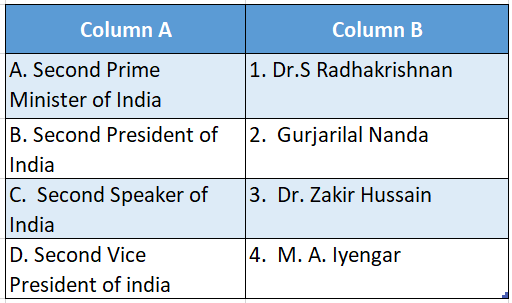
Answer:

A Newspaper Article From Given The Map:-

Sayak Chakraborty: Kolkata:

January 20, 1941: The brave son of India Subhas Chandra Bose left India on the night of January 17 befooling the British detectives.

This is the most exciting news of the past few days. Subhas Bose was interned in his own house but on 17th January at around 1.35 a.m..

he kept Sarat Chandra Bose in his place and managed to escape in the disguise of Muhammed Ziauddin.
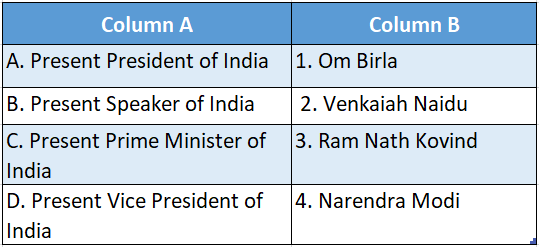
According to secret sources, he was accompanied by his nephew Sisir Bose. At first, he passed along Allenby Road, Lansdowne Road and Lower Circular Road.
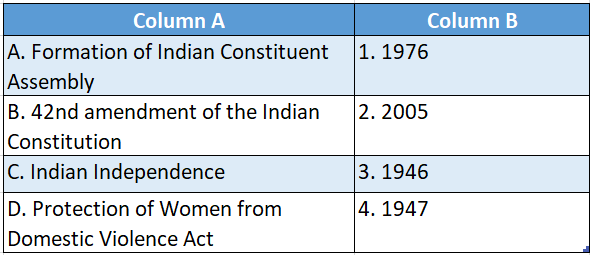
Then after passing through Sealdah, Harrison Road and Howrah Bridge, he left the borders of the city.

Then he went to Chandannagar, Burdwan. Durgapur and Asansol. He entered Bihar through Dhanbad and finally boarded the Delhi Kolkata Mail from Gomo station.

After reaching. Delhi and Punjab he finally left this country. This action of Subhas Chandra has created much stir in the political realm.

Wbbse Solutions For Class 8 History Chapter 7 Nationalist Ideals And Their Evolution Harrison Road

WBBSE Solutions For Class 8 History Chapter 8 From Communalism To The Partition Topic B The Communal Divide And The Decision Of Partition Of India

Chapter 8 From Communalism To The Partition Topic B The Communal Divide And The Decision Of Partition Of India

Question 1 Write the causes of the development of communalism in India.
Answer:

Causes Of The Development Of Communalism In India:-

Introduction:

According to historians, the divide-and-rule policy of the British and the separate self-interest of the Hindus and Muslims were the chief causes of communalism in India.

1. Discriminatory:

The British tried to maintain their existence in India by following a discriminatory policy.

After the sepoy revolt, they alternately developed intimacy and repulsion with the Hindus and the Muslims and thus tried to maintain their imperial interests.

2. Religious differences:

The Hindus and Muslims could never remain united for a long time due to their religious differences.

Though there were similarities between their ways and manners, celebrations,
behavior, etiquette, language and literature, food and dress, their religion always kept them apart.

According to Rabindranath, the Hindus regard the Muslims as impure and the Muslims regard the Hindus as Kafer or nonbelievers. This attitude never allowed them to unite.

Read and Learn More WBBSE Solutions For Class 8 History

3. Pan-Islam ideals of the Muslims:

The progressive middle-class Indian Muslims were inspired by the ideals of Pan Islam or global Islam.

Though many Muslims lived in India they could not accept India as their homeland.

They were more concerned about the prestige of the Caliph of Turkey rather than Indian independence.

This attitude of the Muslims had spread a toxic air of communalism in India.

Aga Khan wrote in his autobiography, “The government must be made to admit that we are a nation within a nation.”

4. Hindu nationalism:

Since the second half of the 19th century, Hindu nationalism centered around the culture and literature of ancient India, began Saraswati’s Arya Samaj (1975) and Purification Movement.

Some literary works of Bankim Chandra concerning Hinduism, ilak’s Ganapati, and Shivaji festivals (1894- 95) created suspicion among the Muslims.

WBBSE Solutions For Class 8 History Chapter 8 From Communalism To The Partition

WBBSE Class 8 Communal Divide Notes

5. Establishment of Muslim League and Hindu Mahasabha:

The Muslim League was formed to protect the political interests of the Muslims and to convey their hopes, aspirations, and needs to the government.

n retaliation, the Hindu Mahasabha was formed to oppose the demands of the Muslim League.

The programs of Hindu Mahasabha and the Muslim League’s attempts to develop the Muslims.

Question 2 Discuss the influence or significance of the Muslim League.
Answer:

Influence Or Significance Of The Muslim League:-

Introduction:

The Muslim League was formed to bring progress to Muslim society but unfortunately, it paved the way for feelings of communal discrimination and separatism in India.

The birth of the Muslim League on December 30, 1906, was one of the contributing factors to the partition of India in 1947.

Significance Of the Muslim League

1. Hindrance to communal unity:

The Muslim League’s primary focus was the socioeconomic development of Muslims.

To this end, an important objective of the League was to restrain young Muslim intellectuals from joining the National Congress.

This, to an extent, hindered the unified struggle of the Hindus and Muslims against British imperialism.

2. Separate political ways:

the Muslim League removed the Indian Muslims from the mainstream of national politics.

The League rejected the Congress’s proposal of universal representation, irrespective of religion.

A sense of separate communal identity defined the policies and politics of the Muslim League.

WBBSE Solutions For Class 8 School Science Long Answer Type Questions WBBSE Solutions For Class 8 School Science Short Answer Type Questions
WBBSE Solutions For Class 8 School Science Very Short Answer Type Questions WBBSE Solutions For Class 8 School Science Review Questions
WBBSE Solutions For Class 8 School Science Solved Numerical Problems WBBSE Solutions For Class 8 School Science Experiments Questions
WBBSE Solutions For Class 8 Maths WBBSE Class 8 History Notes
WBBSE Class 8 History Multiple Choice Questions WBBSE Solutions For Class 8 History
WBBSE Solutions For Class 8 Geography


3. Rise of separatist factors:

The League leaders felt that Hindus and Muslims had separate existences with no scope for unity. This supported separation in Indian politics.

Different circulars, pamphlets, and handbills began to be distributed among Muslims to spread feelings of separateness.

These circulars and pamphlets opposed Hinduism in strong language and so communal fervor increased.

4. Dominance of aristocrats:

Though the League was formed by the initiative of Bengali Muslims, the League had no intimacy with Bengal.

The educated Muslims of the Bombay Presidency did not support them. So the League was mainly dominated by the aristocrats of north India.

Causes of Partition of India

5. Protection of landlords’ interests:

The League worked towards protecting the interests of Muslim Zamindars and rich farmers.

The objectives and activities of the League did not really reflect the hopes and aspirations of the entire Muslim community.

Question 3. Write a note on All India Hindu Mahasabha.
Answer:

All India Hindu Mahasabha:-

Introduction:

The Morley Minto Reforms Act was passed in 1909 accepting the demand of the Muslims for a separate electorate.

As a reaction to this, an orthodox group of Hindus took the initiative of forming the Hindu Mahasabha.

All India Hindu Mahasabha

1. Structure:

The All-India Hindu Mahasabha was founded by Madan Mohan Malviya in Haridwar at the time of the Kumbha Mela on April 9, 1915.

He was assisted by Bhai Paramananda Munje, Tej Bahadur Sapru, Ashutosh Mukherjee, Motilal Ghosh, Lala Hansraj, Munshiram (Swami Shraddhananda), Rambhuj Dutta and Bhagwan Dutta.

Upper-class people from different parts of India including rich Hindus, landlords, businessmen, and lawyers were associated with this organization.

2. Objectives:

  1. To oppose the Muslim League’s demand for a separate electorate in the legislature.
  2. More recruitment of Hindus in the legislature as well as administrative posts.
  3. To develop good relationships among different sects of Hindus and support the helpless Hindus.
  4. To bring about the overall progress of the Hindus, particularly in the educational and social fields.
  5. To oppose the National Congres’s ideal of communal unity.
  6. To unite the Hindus into a single communal group.

Wbbse Solutions For Class 8 History Chapter 8 From Communalism To The Partition Pandit Madan Mohan Malviya

Key Events Leading to the Partition of India

3. Activities:

  1. Hindu Mahasabha’s slogan was Hindi Hinduism that is, to develop a linguistic bond between Hindus through Hindi. So the spread of the Hindi language was an important part of their agenda.
  2. Their activities also included the protection of cows and the purification movement of Arya Samaj.
  3. Some programs were also included for the development of lower-caste Hindus.

4. Limitations:

  1. Since the upper-class Hindus dominated the association, it failed to win the support of the educated middle class.
  2. Hindu leaders failed to make people understand the discriminatory policies of the British.

Impact of Communalism on Indian Society

Question 4. What was the role of the discriminatory policy or the Divide and Rule policy of the British government in the rise of Communalism in Indian politics?
Answer:

Role Of The Discriminatory Policy Or The Divide And Rule Policy Of The British Government In The Rise Of Communalism In Indian Politics:-

Introduction:

The discriminatory policy of the British government was largely responsible for the rise of communalism in Indian politics.

The shrewd British rulers wanted to continue their rule by using the Divide and Rule policy.

Role Of Divide And Rule Policy In the Rise Of Communalism

1. First phase Rise of Hindu communalism:

British scholars and historians have referred to the ancient and medieval ages as the Hindu age and the Muslim age respectively.

This gave rise to communal feelings. After the Sepoy Mutiny, the British took up a policy of gratifying the Hindus.

At first, the divide-and-rule policy was used to safeguard Hindu interests and to undermine the Muslims.

2. Second phase Rise of Muslim communalism:

After 1870 the British took up the policy of gratifying the Muslims.

  1. Lord Mayo tried to make a section of the Muslims interested in the Divide and Rule policy. So he tried to make them refer to India as Dar ul haram (enemy country) instead of Dar ul Islam.
  2. Ripon introduced a Reform Act (1882) granting Muslims the right to hold a separate election. He also tried to include more Muslims in the local self-governments.

3. Third phase Direct help to Muslims:

1. Proposal of Partition of Bengal:

Lord Curzon declared a policy of granting some privileges to the Muslims through the proposal of partition of Bengal.

So the Muslims supported the British during the anti-partition movements.

2. Morley Minto Reforms:

The British government arranged for separate representation of the Muslims bypassing
the Morley Minto Reforms.

It is determined that in the seats reserved for Muslims, the Muslim voters would elect their own Muslim representative.

3. Communal Award:

The British Prime Minister Ramsay Macdonald introduced the Communal Award on August 16, 1932.

Through this policy, the demand for separate representation of Muslims and other minorities was accepted.

Short Notes on Two-Nation Theory

Question 5. Describe the nature of Muslim politics.
Answer:

Nature Of Muslim Politics:-

Introduction:

Muslim politics began with the Aligarh Movement led by Syed Ahmed Khan. It ended with Jinnah’s demand to form a new independent state Pakistan.

Nature Of Muslim Politics

1. First phase (1875-1928):

1. Aligarh Movement:

Syed Ahmed first demarcated the Hindus and Muslims as two separate nations. His Two Nation theory kept a section of Muslims away from the national movement.

The Aligarh Movement led by him indirectly encouraged communalism and separation in the guise of the overall development of Muslim society.

2. Simla Deputation:

A Muslim deputation led by Aga Khan met Lord Minto to secure some privileges for the Muslims.

They submitted a memorandum written by Archbold, the Principal of Aligarh College (October 1, 1906). This was referred to as Simla Deputation.

3. Muslim League formation:

The Muslim League was founded in Dhaka under the initiative of Nawab Salimullah on December 30, 1906.

The League declared that a political alliance between the Hindus and Muslims in India was impossible.

2. Second phase (1919-1929):

1. Khilafat Movement:

In the First World War, the Turkey Germany group joined the Axis Powers. So after the War, the Allied powers split up Turkey and abolished the post of the Caliph.

A protest movement called the Khilafat movement started in India in 1919 under the leadership of Muhammad Ali and Shaukat Ali,

2. National Deed of Agreement and Bengal Deed of Agreement:

The relationship between the Hindus and Muslim Muslims deteriorated after the Noncooperation Movement.

In order to solve the dispute the drafts for the National Deed of Agreement and the Bengal Deed of Agreement were prepared under the initiative of Ansari Lajpat Rai and Chittaranjan Das respectively.

Practice Questions on Communal Tensions

3. Jinnah’s Fourteen Points:

Jinnah submitted a Fourteen Point demand at the Delhi session of the League on March 28, 1929.

The British government tried to increase the distance and animosity between the Hindus and Muslims on the basis of these demands.

3. Third phase (1930-1947):

1. Lahore Proposal:

When the Congress Cabinet under Jawaharlal Nehru resigned, Jinnah gave a call to celebrate Deliverance Day on December 22, 1939, and received a huge response.

This encouraged him to take up the initiative of forming an independent Muslim state on the basis of the Two Nation theory.

At the annual session of the League in Lahore on March 20, 1940, the demand for an independent Muslim state arose.

The Lahore Proposal was raised by the Prime Minister of Bengal A. K. Fazlul Huq.

2. Formation of Pakistan:

According to Wavell’s plan, the Cabinet Mission was sent to India in 1946.

Though this mission did not recommend a separate state for the Muslims, it put forward a plan for dividing the provinces on a communal basis.

Finally, according to the Mountbatten plan India was divided and Pakistan was created.

Question 6 Assess the role of Muhammad Ali Jin nah in Indian politics.
Answer:

Role Of Muhammad Ali Jin Nah In Indian Politics:-

Introduction:

Muhammad Ali Jinnah’s freedom movement.

He played important was an important leader of the national role in liberating India from British rule and in building up a separate Muslim state Pakistan.

Important Definitions Related to Partition

Rule Of Muhammad Ali Jinnah In Indian Politics

1. First Phase: Messenger of Hindu-Muslim unity:

In the first phase of his political career, he was absolutely devoted to nationalism. Sarojini Naidu praised his liberal and noncommunal attitude by calling him

the Messenger of Hindu-Muslim Unity. He tried to establish unity between the Congress and the League through the Lucknow Pact (1916).

2. Second Phase:

1. Supporter of Muslim extremism:

Jinnah gradually moved towards the extremist Muslim group due to narrow communal opposition by Hindu Mahasabha.

In March 1929 1929, Jinnah submitted his famous Fourteen Points demand for the Muslims.

Here, demands were made for the reservation of one-third of seats in the legislature and the reservation of government jobs.

2. President of Muslim League:

Jinnah was elected President of the Muslim League in 1934. Under his efficient leadership, the members of the League increased manifold. Father

3. Father of a separate state:

At the Lahore session in 1940, Jinnah said that the Muslims were a separate nation and should have their own dwellings, area, and state.

In this session, a demand was raised for a separate state. This is called the Pakistan Proposal. The act of partitioning India began with Jinnah’s presence and initiative.

4. Call for direct struggle:

Jinnah was offended when Jawaharlal Nehru formed the interim. government in 1946 and called for Direct Action on 16th August.

Internal riots began in Kolkata and various places in East Bengal.

5. Partition of India:

The British government had declared that by June 1948, the transfer of power to India would be finalized.

The League was adamant about the demand for a separate state which was finally accepted by Congress.

Pakistan gained independence on August 14, 1947, and thus Jinnah’s dream came true.

Question 7 State the background of Hindu communalism.
Answer:

Background Of Hindu Communalism:-

Introduction:

Towards the end of the 19th century, Hindu communalism arose as a complement to Muslim communalism. It found its climax through the foundation of Hindu Mahasabha in 1915.

Class 8 History WBBSE

Background Of The Rise Of Hindu Communalism

1. Movement against cow slaughter:

Though the Mughal emperor Bahadur Shah II prohibited cow slaughter for the sake of Hindu-Muslim unity during the Great Revolt, the British did not adopt any specific policy about it.

Therefore, since 1890 the Hindus began to campaign against cow slaughter all over the country.

This helped in the rise of Hindu communalism.

2. Hindi Urdu dispute:

Hindi was accepted as a native language by the Hindus of the north. India and Bihar while Urdu was accepted by the Muslims.

This language conflict embittered the relationship between the two communities.

When the British government gave recognition to Urdu as the official language the Hindus rose in protest. This movement also contributed to the rise of communalism.

3. Purification Movement of Arya Samaj:

The purification movement of Arya Samaj created an atmosphere of communalism.

Millions of Malkana Rajputs, Gurjaras, and Baniyas who had converted to Islam returned to the fold of Hinduism.

4. Extreme nationalism:

The extremist leaders Bal Gangadhar Tilak, Lala Lajpat Rai, and Aurobindo Ghosh were not communalists in any way but their thoughts and preaching reflected Hindu ideals.

This indirectly encouraged the growth of Hindu communalism.

5. Preaching for Hindu glory through literature:

The glory of Hinduism was spread through the writings of Gopal Ganesh Agarkar, Maithili Sharan Gupta, Bankim Chandra Chatterjee, Navin Chandra Sen, Bhudev Mukherjee, Rangalal Banerjee, and others.

Bal Gangadhar Tilak, Lala Lajpat Rai, Aurobindo Ghosh, Mahadev Govind Ranade, and Dayanand Saraswati used Hindu symbols, comparisons, and heroic tales in their writings.

Though their aim was to arouse patriotism, it indirectly paved the way to Hindu communalism.

6. Responsibility of the Muslim League:

When the Muslim League was founded, the Muslims thought that the Hindus and Muslims were two different nations and their interests were different.

From the beginning, the Muslim League focussed on the socio-economic development of the Muslims. This worried the Hindus and this led to Hindu communalism.

Class 8 History WBBSE

Question 8. Discuss the nature of forming a separate Pakistan after the Second World War.
Answer:

Nature Of Forming A Separate Pakistan After The Second World War:-

Introduction:

As declared by Prime Minister Attlee, a deputation of the British Cabinet (Cabinet Mission) came to India in March 1946 to survey the Indian issue.

Nature Of Forming Independent Pakistan After World War Il

1. Attempt of Cabinet Mission:

The members of the Cabinet Mission held long discussions with different political parties about the drafting of the future constitution of India.

The Muslim League held on to their demand for a separate Pakistan.

Though the Mission did not speak about the partition of India on the basis of the difference between the Congress and the League in their recommendation, they kept provisions for an independent Muslim state in the future.

2. Communal riots:

The Congress won the election of the Constituent Assembly in 1946 and agreed to form the interim. the government at the request of Lord Wavell.

This annoyed the Muslim League and Jinnah called for direct action.

It was decided that on August 16, 1946, would be observed as Direct Action Day to demand the establishment of an independent Pakistan. That day, violent riots broke out in Kolkata.

3. League Congress conflict:

Finally, the League joined the interim government. However, the Congress and the League could not work unitedly even in the Cabinet.

Communal conflicts can be seen in various places.

4. Possibility of forming Pakistan:

The League declared that they would not join the coming session of the Constituent Assembly.

At that time the British government announced that the session of the Assembly would be held without the League.

However, if any constitution was framed in the absence of the League then it would not be applicable for a province with a Muslim majority.

This declaration of the government indirectly admitted the formation of an independent Pakistan.

5. Independence and partition:

The demand for Pakistan gained in fervor which changed to fury. Communal riots reached a climactic point.

point. Finally, Finally, India was partitioned and India and Pakistan emerged as two free and independent states on August 14, 1947.

Question 9. Analyze the effect of the Two Nation theory in the last phase of the independence movement.
Answer:

The Effect Of The Two-Nation Theory In The Last Phase Of The Independence Movement:-

Introduction:

At the Lahore session of the Muslim League in 1940, an attempt was made to form a separate state which created a communally toxic situation towards the end of the freedom struggle.

Effect Of Two Nation Theory On The Last Phase Of Freedom Struggle

1. 1946:

1. Proposal of League Council and Direct Action:

The League Action Committee took up the Direct Action program at the Bombay session on July 27, 1946.

Direct Action against the Hindus began on August 16 under the leadership of the League.

2. Beginning and spread of horrifying riots:

The Muslim League carried on a violent riot and massacre for four consecutive days from August 16.

The riot spread from Kolkata to Bombay (October 1), Noakhali (October 10), Bihar (October, 25), and Garmukteshwar and Punjab.

3. Joining the interim government:

he interim government was formed on September 2, 1946, under the leadership of Jawaharlal Nehru.

Though the Muslim League did not join the government initially, five members joined later. However, they Did not flinch from their demand for a separate Pakistan.

4. Boycott of constituent assembly:

The Muslim League did not join the session of the Constituent Assembly led by Rajendra Prasad.

So Indian politics became more complicated.

2. 1947:

1. Reaction against the declaration made by the British Prime Minister:

The British Prime Minister Clement Atlee. declared that by June 1948, the British government would transfer the power to the Indian leaders.

In reaction to this declaration, the League again got involved in communal riots.

2. Mount batten plan:

Lord Mountbatten declared his famous Mountbatten plan (award) of partitioning India on June 3, 1947.

3. Creation of a separate Pakistan:

According to Mountbatten’s declaration for the Indian Independence Act, India was partitioned on August 14, 1947, and two different states India and Pakistan emerged.

Muhammad Ali Jinnah and Liaquat Ali Khan became the Governor and Prime Minister respectively.

Question 10. Which events helped in the development of communalism during the anti-partition movement? Make a list of the events.
Answer:

List Of The Events Helped In The Development Of Communalism During The Anti-Partition Movement:-

During the anti-partition movement, some incidents helped in the development of communalism. The events are listed below

1. Worship and oaths of Hindus:

The mass worship of the Hindus at Kalighat temple and the vows taken by them on the day of partition hurt the sentiments of the Muslims.

Class 8 History WBBSE

So many of them regarded the anti-partition movement as the Hindu nationalist movement.

2. Instigation of the British:

During the partition most of the landlords of East Bengal were Hindus and most farmers were poor Muslims.

The British tried to fan the flames of communalism by exaggerating the oppression meted out to the farmers by the landlords.

They tried to add a communal color to this treatment.

3. Differences regarding equal prestige:

The newly educated Hindus of East Bengal were not ready to give the same respect to the Muslims.

On the other hand, educated Muslims claimed equal respect in economic, political, and other spheres.

They felt neglected in society and the distance. was created between the two communities over this issue.

4. Hindu majority in Congress:

The Muslims became suspicious of the foundation and activities of the Congress. From the beginning most of the leaders were Hindus.

The Muslims believed that the National Congress was a national political organization conducted by the Hindus who were the majority.

5. False propaganda:

The British carried on propaganda among the Muslims of East Bengal.

They said that the partition would benefit the Muslims and so the Hindus were protesting against it. This propaganda helped to spread communalism.

6. Economic disaster:

The Indian agitators compelled the poor Muslims to buy expensive Swadeshi items.

This brought about a financial crisis among them. So their list of grievances grew.

Chapter 8 From Communalism To The Partition Topic B The Communal Divide And The Decision Of Partition Of India Short Analytical Type Questions

Question 1. Write the meaning of communalism.
Answer:

Meaning Of Communalism:-

Meaning:

The word communalism has different meanings. In Bengali, it means hatred among people belonging to different religions.

In the mid-19th century, communalism referred to the strong grudge that one religious community bore toward other communities.

1. In a wider sense:

When one community harms another to satisfy its own socio-economic or political interest the meaning of communalism becomes clear.

Class 8 History Solution WBBSE

2. In the sense of communal differences:

The colonial government tried to create. differences among different communities and spread communalism in order to keep their domination intact.

Question 2. What is the nature of communalism?
Answer:

Nature of communalism:

1. Narrow religious interest:

People with a communal bent of mind think of their own religious interests only. So the minor interest of a particular religious community assumes much importance.

2. Contradictory interests:

Those who believe in communalism try to show that the interests of different religious communities always differ from each other.

3. Violence:

Communalism begins with a clash of religious interests but culminates in outbursts of violence.

Question 3. Write a note on Lucknow Pact.
Answer:

Lucknow Pact:-

1. Background:

The Moderates and Extremists merged together when the Home Rule Movement was launched by Tilak and Annie Besant.

On the other hand, Jinnah, who was offended by the role of the British government against the Caliph of Turkey, decided to make a compromise with Congress.

So the Congress and Muslim League together signed the Lucknow Pact (1916).

2. Conditions:

1. The Congress and Muslim League would unitedly demand administrative reforms from the British government.

2. The Muslim League would accept the Congress ideal of Swarajya and the Congress would accept the League’s demand for a separate electorate.

3. One-third of the members of Central and Provincial legislatures would be Muslims.

Examples of Communal Riots Before Partition

3. Significance:

1. Lucknow strengthened the Hindu-Muslim relationship.

2. The acceptance of the League’s demand for a separate electorate by Congress proved that the Hindus and Muslims were two separate nations.

3. However, the Pact also proved that the two communities could forget their religious differences and unite for national needs.

Question 4. What do you mean by Two Nation theory?
Answer:

Two Nation Theory:-

1. Main Idea:

The nation theory meant two separate theories for two different nations.

This implied that the Hindus and the Muslims were two separate communities and their social polarities, objectives, and interests were different.

2. Explanation:

The Hindus were very particular about their social polarity, prestige interests, and protection of their, unfortunately, the Muslims were not so.

The Hindus availed themselves of Western education representatives in every legislature of law and occupied.

the government posts and thus brought about their own progress which the Muslims could not.

So discrimination automatically came up between the two communities.

In these circumstances, the British government used the divide-and-rule policy for imperial interest and Muslim communities were different.

Question 5. Describe the objectives and results of the Two Nation theory.
Answer:

1. Objectives of TwoNation theory:

1. Protection of Muslim interest progress:

The chief motive of the Two Nation theory propounded by Syed Ahmed was to protect the interest and overall development of the Muslims.

2. Formation of an independent Muslim State:

Subsequently, the famous Urdu poets Muhammad Iqbal and Jinnah preached that Hindus and Muslims were two different communities.

So the Muslims should form their own state.

2. Result of Two Nation Theory:

1. Emergence of Pakistan:

Muhammad Ali Jinnah used the Two Nation theory to form an independent Muslim state named Pakistan (which means holy land).

Class 8 History Solution WBBSE

2. Division of India:

As a far-reaching consequence of the Two Nation theory, unified India split up into two separate countries named India and Pakistan.

Question 6 Write a note on Fourteen Points.
Answer:

Fourteen Points:-

Jinnah submitted his famous Fourteen Points at the Delhi session of the Muslim League.

Demands: Jinnah’s fourteen demands were

  1. Inclusion of one-third of Muslim members in Central and Provincial cabinets.
  2. Introduction of a federal system of government.
  3. Application of Communal Award.
  4. The opportunity of electing Muslim
  5. Equal rights in the federal provinces.
  6. Reorganization of the Indian provinces.
  7. Every community should be allowed to carry on their own religious activities.
  8. Reservation of one-third of seats for the Muslims in the central legislature.
  9. Sindh is to be recognized as a separate province.
  10. To annul a bill if one-fourth of any community spoke against it.
  11. Not to amend the Constitution without the permission of the provincial legislatures.
  12. Proper reservation of posts for Muslims in the provincial and local institutions.
  13. Constitutional reforms in Baluchistan and North West Frontier Province.
  14. Preservation of Islamic literature, education, and culture.

Question 7 Write a note on the Communal Award.
Answer:

Communal Award:-

Initiation:

British Prime Minister Ramsay Macdonald made a declaration on August 16, 1932, as a solution for the minority problem. This declaration is known as the Communal Award.

1. Separate electorate:

The Muslims, Sikhs, Indian Christians, Anglo Indians, and other minority groups were given the right to separate the electorate.

2. Separation within Hindus:

An attempt was made to create separatist tendencies among the Hindus by declaring the backward Hindu classes as a separate category.

Class 8 History Solution WBBSE

3. Special rights to Scheduled Castes:

The Scheduled Castes, who were a backward Hindu class, were given special rights to participate in the elections independently.

Question 8. State the importance of the Lucknow Pact.
Answer:

Importance Of The Lucknow Pact:-

1. Hindu-Muslim unity:

The Lucknow Pact was a severe blow to the separatist policies and communal conspiracy of the British.

According to Surendranath Banerjee, this pact is an example of increasing emotional unity between the Hindus and Muslims.

2. Increase in the prestige of Tilak and Jinnah:

The images of Bal Gangadhar Tilak and Muhammad Ali Jinnah became more glorious as architects of the Pact and national leaders respectively.

3. Communal stability:

This Pact indirectly acknowledged the separate interests of both the Hindus and the Muslims.

9. What was the Pakistan proposal?

1. First mention:

In January 1933 Choudhuri Rahmat Ali, a Punjabi Muslim student at Cambridge University, first raised the proposal of a separate state Pakistan in his pamphlet ‘Now or Never’.

2. Areas:

Choudhury Rahmat Ali proposed to include Punjab, Afghan province, Kashmir, Sindh, and Baluchistan in Pakistan state.

Question 10. Which proposals did Muhammad Iqbal and Rahmat Ali give for forming a separate Muslim state?
Answer:

Proposals Of Muhammad Iqbal And Rahmat Ali Given For the Formation of A Separate Muslim State:-

Proposals:

1. Muhammad Iqbal:

Iqbal proposed to build a separate territory for the Muslims including Punjab, North West Frontier province,

Sindh and Baluchistan. solve the thought that this would solve the communal issues.

Conceptual Questions on the Role of Political Leaders in Partition

2. Rahmat Ali:

In 1933 some Muslim students of Cambridge University published a pamphlet ‘Now or Never’under.

The leadership of Rahmat Ali in which a proposal for a separate Pakistan state consisting of Muslim-inhabited areas.

These areas included Punjab, North West Frontier Province, Sindh, and Kashmir.

The Muslim League did not accept the proposal then. Even the British government did not support it.

Question 11 Write a note on the Poona Pact
Answer:

Poona Pact:-

Background:

The British Prime Minster Macdonald declared the Communal Award in which the backward Hindu

classes were provided a separate electorate in the legislature. Gandhiji was highly grieved at this and began a fast till death at Jarbeda prison in Poona.

1. Signing of the treaty:

The national leaders became worried at Gandhiji’s decision to fast till death.

So a pact was signed between B. R. Ambedkar (representing the backward Hindu classes) and Rajendra Prasad (representing the Varna Hindus).

This was called the Poona Pact and Gandhiji withdrew the fast expressing his approval for the Pact.

2. Importance:

Through the Poona Pact, an attempt was made to prevent the rift among the Hindus. The British failed to divide Hindu society on a communal basis.

However, the upper-class Hindus could not accept Gandhiji’s compromise with the backward Hindu classes.

Question 12. State the significance of Simla Deputation.
Answer:

Significance of Simla Deputation:

1. Improvement of British Muslim relationship:

The sympathy shown by Lord Minto to the Simla Deputation improved the relationship of the British with the Muslims.

2. Decrease in preference for Hindus:

The preference that the Hindus had been getting from the British authorities in London was greatly reduced as a result of this deputation.

3. Prestige of Muslims as an independent community:

Though the Muslims were a minority in India, the privileges that were assured to them raised their prestige as an independent community.

Question 13. Write a note on Simla’s Deputation.
Answer:

Simla’s Deputation:-

1. Introduction:

A Muslim delegation of 35 members met the then Viceroy Lord Minto under the leadership of Aga Khan.

They brought a memorandum written by Archbold, the Principal of Aligarh College, and submitted a deputation demanding some privileges for the Muslims.

This is referred to as Simla Deputation.

2. Demands of the deputation:

  1. Recruitment of Muslims at high posts in civil, military, and judicial fields without any competitive examinations.
  2. Appointment of Muslims in greater numbers in civil and military jobs.
  3. Fixed reservation of seats for the Muslims in the Municipality, Zilla Parishad, and Senate as well as a syndicate of the Universities.
  4. The separate electorate for the Muslims in the Central and State legislatures.

Chapter 8 From Communalism To The Partition Topic B The Communal Divide And The Decision Of Partition Of India State Whether The Following Statements Are True Or False

Question 1. The word ‘Pakistan’ means holy land.
Answer: True

Question 2. The word Pakistan was first proposed by Chaudhuri Rahmat Ali.
Answer: True

Question 3. Jinnah called for Direct Action on August 16, 1946.
Answer: True

Question 4. The book ‘The Indian Mussalmans’ was written by William Hunter.
Answer: True

Question 5. Muhammad Iqbal was a famous Urdu poet and a spokesman for Pakistan.
Answer: True

Question 6. Liberation Day was observed on December 22, 1939
Answer: True

Question 7. The Simla Deputation (1906) was led by Aga Khan.
Answer: True

Question 8. The Hindu Mahasabha was founded by Madan Mohan Malviya.
Answer: True

Question 9. Muhammad Ali Jinnah was the first President of the Muslim League.
Answer: False

Question 10. The memorandum of the Simla Deputation was written by Archbold.
Answer: True

Question 11. The Simla Deputation was led by Salimullah, the Nawab of Dhaka
Answer: False

Question 12. The National Voluntary Organisation was formed in 1925 by Hedgewar and Mutrez who left Hindu Mahasabha.
Answer: True

Question 13. The Punjab Hindu Sabha was founded by U. N. Mukherjee and Lalchand in 1909.
Answer: True

Question 14. The Lucknow Pact was signed between Congress and Muhammad Ali Jinnah under the initiative of the extremist leader Tilak.
Answer: True

Question 15. The Purification movement of the Arya Samaj against the Tanzim and Tabligh of the Muslims created an environment of communalism.
Answer: True

Question 16. The British Prime Minister Mountbatten announced the Communal Award scheme.
Answer: False

Question 17. The Muslim League called for Direct Action under the leadership of Jinnah.
Answer: True

Question 18. The Statesman called the riot which occurred in Kolkata as a result of Direct Action, The Great Calcutta Killing.
Answer: True

Question 19. Fazlul Huq, the Prime Minister of Bengal raised the proposal of an independent Muslim province at the Lahore session of the Muslim League.
Answer: True

Chapter 8 From Communalism To The Partition Topic B The Communal Divide And The Decision Of Partition Of India Fill In The Blanks By Selecting The Appropriate Expressions From The Brackets

Question 1. The Poona Pact was signed between _________________ (Gandhi and Irwin/Gandhi and Jinnah/Gandhi and Dr. Ambedkar).

Answer: Gandhi and Dr. Ambedkar

Question 2. __________________ (Gandhiji/Jinnah/Subhas Chandra) had instructed to observe Liberation Day.

Answer: Jinnah

Question 3. Hindu Mahasabha was founded in __________________ (1914/1915/1916).

Answer: 1915

Question 4. The Simla Deputation was sent in __________________ (1904/1905/1906).

Answer: 1906

Question 5. The __________________ (Delhi Proposal/Karachi Proposal/Lahore Proposal) of the Muslim League was called Pakistan Proposal though it did not contain the word Pakistan.

Answer: Lahore Proposal

Question 6. In 1940 the draft of the Lahore Proposal of the Muslim League was made by __________________ (Muhammad Iqbal/Sikandar Hayat Khan/ Liyaqat Ali).

Answer: Sikandar Hayat Khan

Question 7. The Prime Minister of Bengal __________________ (Abul Kasim Fazlul Huq/Salimullah/Aga Khan) raised the Lahore Proposal at the conference of the Muslim League in 1940.

Answer: Abul Kasim Fazlul Huq

Question 8. Muhammad Ali Jinnah submitted his Four Teen Points in __________________ (1927/1928/1929).

Answer: 1929

Question 9. The draft for Pakistan’s proposal of the Muslim League at the Lahore session was made by __________________ (Sikander Hayat Khan/ Choudhuri Rahmat Ali/Muhammad Iqbal).

Answer: Sikander Hayat Khan

Question 10. The British government approved the Indian Independence Act in __________________ (1943/1945/1947).

Answer: 1947

Question 11. The National Congress and the Muslim League accepted the India partition plan of  __________________ (Mountbatten/Wavell/Cripps) in
1947.

Answer: Mountbatten

Question 12. Mountbatten’s declaration of Pakistan was criticized as handicapped and worm-eaten by __________________ (Jinnah/Liaquat Ali Khan/Syed Surahwardi).

Answer: Jinnah

Question 13. The first Governor General of Pakistan was __________________ (Muhammad Ali Jinnah/Liaquat Ali
Khan/Syed Surahwardi).

Answer: Muhammad Ali Jinnah

Question 14. The first Prime Minister of Pakistan was  __________________ (Liaquat Ali Khan/Jinnah/Maulana
Abul Kalam Azad).

Answer: Liaquat Ali Khan

Chapter 8 From Communalism To The Partition Topic B The Communal Divide And The Decision Of Partition Of India Answer In A Complete Sentence

Question 1. Name a Swarajist leader.
Answer: Motilal Nehru was a Swarajist leader.

Question 2. When were the provincial assembly elections held by the Government of India Act (1935)?
Answer: The elections to the provincial assembly were held in 1937 by the Government of India Act (1935).

Question 3. When did the Calcutta riot happen?
Answer: The Calcutta riot happened on 16th August 1946.

Question 4. Name an extremist Hindu nationalist organization.
Answer: Hindu Mahasabha is an extremist Hindu nationalist organization.

Question 5. Who founded the Krishak Praja Party?
Answer: A. K. Fazlul Huq founded the Krishak Praja Party.

WBBSE Solutions For Class 8 History Chapter 8 From Communalism To The Partition Topic C Miscellaneous

WBBSE Class 8 History Chapter 8 Topic C Miscellaneous Topic C Miscellaneous Strike The Odd One Out

Question 1. Aligarh Movement, Farazi Movement, Wahabi Movement, Santhal Kherwa Movement.
Answer: Aligarh Movement

Question 2. Syed Ahmed Khan, Sidhu, Titu Mir, Dudu Mian.
Answer: Syed Ahmed Khan

Question 3. Muslim League, Anushilan Samity, Jugantar Dal, Indian Association
Answer: Muslim League

Question 4. Treaty of Munich, Treaty of Locarno, Treaty of Versailles, Poona Pact.
Answer: Poona Pact

Question 5. Aga Khan, Shaukat Ali, Badruddin Tyabji, Muhammad Ali
Answer: Badruddin Tyabji

Question 6. Discovery of India, Now or Never, The Indian Struggle, India Wins Freedom.
Answer: Now or never

Read and Learn More WBBSE Solutions For Class 8 History

Question 7. Rabindranath Tagore, Nazrul Islam, Jivananda Das, Muhammad Iqbal.
Answer: Muhammad Iqbal

Question 8. Chaudhuri Rahmat Ali, Fazlul Huq, Maulana Abul Kalam Azad, Sikander Hayat
Answer: Maulana Abul Kalam Azad

Question 9. Radcliff Line, Macmohan Line, Durand Line, Line of Control.
Answer: Radcliff Line

WBBSE Class 8 Miscellaneous Notes on Communalism

Question 10. Gandhiji, Netaji, Madan Mohan Malviya, Jawaharlal Nehru.
Answer: Madan Mohan Malviya

Question 11. Noakhali, Mysore, Hyderabad, Kashmir.
Answer: Noakhali

Question 12. Khilafat Movement, Non-cooperation Movement, Civil Disobedience Movement, Quit India Movement.
Answer: Khilafat Movement

WBBSE Solutions For Class 8 School Science Long Answer Type Questions WBBSE Solutions For Class 8 School Science Short Answer Type Questions
WBBSE Solutions For Class 8 School Science Very Short Answer Type Questions WBBSE Solutions For Class 8 School Science Review Questions
WBBSE Solutions For Class 8 School Science Solved Numerical Problems WBBSE Solutions For Class 8 School Science Experiments Questions
WBBSE Solutions For Class 8 Maths WBBSE Class 8 History Notes
WBBSE Class 8 History Multiple Choice Questions WBBSE Solutions For Class 8 History
WBBSE Solutions For Class 8 Geography


WBBSE History Chapter 8 Miscellaneous key Points And Answers Topic C Miscellaneous Match The Columns

Wbbse Solutions For Class 8 History Chapter 8 From Communalism To The Partition Match The Colunmns table 1 - Copy
Answer: A-3,B-1,C-4,D-2

Wbbse Solutions For Class 8 History Chapter 8 From Communalism To The Partition Match The Colunmns table 2 - Copy
Answer: A-1,B-4,C-2,D-3

Wbbse Solutions For Class 8 History Chapter 8 From Communalism To The Partition Match The Colunmns table 1 - Copy
Answer: A-2,B-4,C-1,D-3

Wbbse Solutions For Class 8 History Chapter 8 From Communalism To The Partition Match The Colunmns table 4 - Copy
Answer: A-1,B-4,C-3,D-2

Wbbse Solutions For Class 8 History Chapter 8 From Communalism To The Partition Match The Colunmns table 5 - Copy
Answer: A-4,B-3,C-2,D-1

Wbbse Solutions For Class 8 History Chapter 8 From Communalism To The Partition Match The Colunmns table 6 - Copy
Answer: A-2,B-4,C-1,D-3

Wbbse Solutions For Class 8 History Chapter 8 From Communalism To The Partition Match The Colunmns table 7 - Copy
Answer: A-4,B-3,C-1,D-2

Wbbse Solutions For Class 8 History Chapter 8 From Communalism To The Partition Match The Colunmns table 9 - Copy
Answer: A-4,B-3,C-2,D-4

Wbbse Solutions For Class 8 History Chapter 8 From Communalism To The Partition Match The Colunmns table 8 - Copy
Answer: A-4,B-3,C-1,D-2

Wbbse Solutions For Class 8 History Chapter 8 From Communalism To The Partition Match The Colunmns table 10 - Copy
Answer: A-4,B-3,C-2,D-1

Chapter 8 From Communalism To The Partition Topic C Miscellaneous Fill In The Blanks With The Correct Alternative

Question 1. English became the official language in colonial India, replacing Persian in ________________ (1847/1837/1850).|
Answer: 1837

Question 2. The modernization attempt of Indian Muslim Society was started by ________________ (Muhammad Ali Jinnah/Sir Syed Ahmed Khan/Moulana Abul Kalam Azad).
Answer: Sir Syed Ahmed Khan

Class 8 History Solution WBBSE

Question 3. The leader of the Peasant People’s Party was ________________ (A.K. Fazlul Huq/Muhammad Ali Jinnah/Jawaharlal Nehru).
Answer: A.K. Fazlul Huq

Question 4. The sovereign state of Pakistan was born on ________________ (15th August 1947/ 14th August 1947/26th January 1947).
Answer: 14th August 1947

Chapter 8 From Communalism To The Partition Topic C Miscellaneous Identify The Wrong Statement

Question 1. Compared to the Muslims, the Hindus were back in the nineteenth century about education, jobs, etc.
Answer: Wrong

Question 2. The Hindu revivalist movement influenced Hindu-Muslim relations.
Answer: Right

Question 3. Mahatma Gandhi did not support Khilafat. Movement.
Answer: Wrong

Question 4. The Pakistan proposal came up in the Lahore session (1940).
Answer: Right

Miscellaneous Events And Impacts Of Partition WBBSE History Chapter 8

Question 1 What was the objective of the Aligarh Movement?
Answer:

Objectives Of The Aligarh Movement:-

The Aligarh Movement began for the overall development of the Muslims.

1. Modernisation of Muslim society:

Through the Aligarh Movement, an attempt was made to modernize the Muslim society.

2. Spread of education among the Muslims:

In colonial India, a need was felt to educate the Muslims and provide them with Western education to bring them to par with the Hindus.

So the Aligarh Movement was launched to spread education among them.

Understanding the Aligarh Movement

3. Building up a scientific attitude:

The Aligarh Movement tried to inculcate scientific thoughts in the minds of the Muslims in order to help them develop a scientific attitude.

Therefore, the Scientific Society was established to fulfill this objective of changing the mindset.

Question 2. To what extent was the Hindu-Muslim relationship influenced by the Swadeshi movement?
Answer:

The Hindu-Muslim Relationship Influenced By The Swadeshi Movement:-

1. Condemnation of partition:

Many members of Muslim society condemned the decision of Lord Curzon to partition Bengal.

The Central Mohammedan Association passed a censure motion against the partition.

2. Meetings and associations:

The Muslims protested against the partition at a public meeting in Kolkata under the leadership of Barrister Abdul Rasul.

3. Prayers:

Namaz was read in Barishal, Mymensingh, and Sreerampore opposing the partition.

4. Leadership:

The anti-partition movement was led by Khwaja Atikulla of Dhaka Abdul Shavan Chaudhuri of Bagura and Maulvi Ismail Siraji of Sirajganj.

WBBSE Solutions For Class 8 History Chapter 8 From Communalism To The Partition Topic C Miscellaneous

Impact of Education on Muslim Society

Question 3 Why did the Indian Muslims start the Khila Fat Movement?
Answer:

Indian Muslims Started By The Khila Fat Movement:-

1. Dissection of Turkey:

During the First World War Turkey supported Germany and opposed England. When Germany was defeated, the Allies dissected Turkey and abolished the Caliphate.

So the Indian Muslims were offended.

2. British Imperialism:

After the end of the First World War, the British Government dissected Turkey.

So the Indian Muslims launched the Khilafat Movement under the leadership of Shaukat Ali and Muhammad Ali to fight for the prestige of the Caliph.

Question 4. Why is the year 1930 important concerning Hindu-Muslim relations?
Answer:

The Year 1930 Important Concerning Hindu-Muslim Relations:-

The National Congress launched the Civil Disobedience Movement in 1930 under the leadership of Gandhiji.

However, the Muslim League did not participate in it. In the same year, Muhammad Iqbal the President of the Muslim League demanded a separate territory for the Muslims.

Later on Chaudhuri Rahmat Ali, a student of Cambridge University, also put forward a proposal for forming a separate Muslim land including Punjab, North-West Frontier Province, Baluchistan, and Kashmir.

Key Figures in the Aligarh Movement

As a result of this proposal, Ramsay Macdonald, the British Prime Minister introduced the Communal Division Policy known as the Communal Award.

Comprehensive Guide For Miscellaneous Aspects Of Partition WBBSE History

1. Discuss Sir Syed Ahmed Khan’s achievements in taking Muslim society to the path of modernization.
Answer:

Achievements Of Sir Syed Ahmed Khan In Taking Muslim Society To The Path Of Modernization:-

Introduction:

From the very beginning of British rule, the Muslims remained more backward in society in comparison to the Hindus.

Sir Syed Ahmed realized that they would remain so until they became logical and possessed liberal thinking under the influence of Western education.

So he dedicated himself to the task of the overall progress of the Muslims.

Role Of Syed Ahmed Khan

1. Education plan:

  1. Sri Syed Ahmed tried to modernize Muslim society by spreading Western education among them.
  2. He founded an English medium school in Gazipur in 1864 to spread English education.
  3. He also established the Scientific Society in 1865 to create scientific awareness among Muslims.
  4. He established the committee for the advancement of learning among the Mohammedans of India for the overall development of the Muslims.
  5. In order to spread higher education among the Muslims he founded the Mohammedan. Anglo-Oriental College (present Aligarh University) in 1875.

2. Attempt at social reformation:

Sir Syed Ahmed took up the task of making Muslim society modern and rational by removing religious bigotry and superstitions.

He vehemently opposed conservatism as well as divorce, child marriage, and polygamy.

3. Attempt at religious reformation:

Sri Syed Ahmed told the Muslims to interpret the Quran from scientific and rationalistic points of view.

He tried to harmonize Islamic principles with modern scientific thinking. He condemned bigots and narrow-mindedness.

He tried to use religion as an instrument for the overall development of Muslim society.

Short Notes on Communal Harmony Efforts

4. Other reforms:

Syed Ahmed also tried to bring about reforms in other aspects of society

  1. He advised the Muslims to become modern. by giving up medieval thoughts and behavior.
  2. He condemned the purdah system.
  3. He also talked about the necessity of women’s education.

5. Opposition of the Congress:

Syed Ahmed began to oppose Congress under the influence of Theodor Beck, the Principal of Aligarh Mohammedan Anglo-Oriental College.

He thought that the National Congress was harmful not only to the Muslims but also to the country.

In order to oppose the Congress directly he established the Educational Congress, United Indian Patriotic Association, and Mohammedan Anglo-Oriental Defence Association.

Question 2. How was the Hindu revivalist movement born in the nineteenth century? What was the effect of such movements in creating a communal mentality?
Answer:

Hindu Revivalist Movement Born In The Nineteenth Century And The Effect Of Such Movements In Creating A Communal Mentality:-

Introduction:

Towards the end of the 19th century, Hindu communalism developed as an opposition to Muslim communalism.

Just as the Muslim League was formed to safeguard the interest of the Muslims, the Hindu Mahasabha also grew up to protect the interests of the Hindus.

Background Of Foundation Of Hindu Mahasabha

1. Movement against cow slaughter:

During the time of the Great Revolt, the Mughal emperor Bahadur Shah II banned the slaughter of cows for the sake of Hindu-Muslim unity.

Later on, the British did not adopt any clear policy against this and so the grievance remained in the minds of the Hindus which inflamed their interest in establishing the Hindu Mahasabha.

Practice Questions on Communalism and Partition

2. Hindi Urdu dispute:

The Hindus favored Hindi while the Muslims favored Urdu. This language rivalry further embittered the relationship between the two communities.

The British government introduced Urdu instead of Persian in Ayodhya and Northwest provinces.

As a reaction to this, a movement arose for the introduction of Hindi in the North-west province, Madhya. Pradesh and Bihar.

This movement helped in the formation of the Hindu Mahasabha.

3. Purification Movement of Arya Samaj:

The Purification Movement of the Arya Samaj began as a reaction against the conversion of Malabar Hindus and the Tanzim and Tabligh introduced in Muslim society.

Several Malkana Rajputs, Gurjars, and Baniyas who had been converted to Islam returned to the fold of Hinduism through the Purification Movement.

This incident encouraged the formation of Hindu Mahasabha.

4. Instigation by the British government:

Communal instigation by the British was also greatly responsible for the rise of Hindu communalism.

The ground of Muslim communalism created by the British government led to the birth of Hindu communalism.

5. Responsibility of the Muslim League:

The Muslim League was dedicated to the overall growth of the Muslims and protecting the interests of their own community.

This worried the Hindus and led to the rise of Hindu communalism which culminated in the formation of Hindu Mahasabha.

Role In Creating Communal Feelings

The Hindu Revival Movement played an important role in creating a communal attitude. It aimed at protecting the interests of the Hindus.

Naturally, the communal atmosphere that grew up under the leadership of the Muslim League was further fuelled by the Hindu Revival Movement.

The slogan of the movement was ‘Hind Hindi Hinduism’.

Important Definitions Related to Communalism

Question 3. How were the Muslim leaders alienated from Congress after the non-violent non-cooperation movement?
Answer:

The Muslim Leaders Alienated From Congress After The Non-Violent Non-Cooperation Movement:-

Introduction:

After the Cooperation movement, many Muslim leaders deserted the Congress.

The selfish motives of the Muslim leaders as well as the indifference of the Congress leaders were responsible for this.

Distance Between Muslim Leaders And Congress

1. Responsibility of Muslim leaders:

Helping separatism: After the Noncooperation Movement some Muslim leaders tried to spread separatist ideas.

So the atmosphere of communal harmony was lost and a distance from the Congress was created.

2. Communal self-interest:

The Orthodox Muslims entered national politics through the Khilafat Movement. They preached narrow communal selfish thoughts.

In the agenda of Jamiyat al Ulema I Hind, emphasis was placed on the protection of Muslim interests. So a distance was created with the Congress.

3. Spread of communalism:

In the later phase of the Khilafat Movement, both Hindu and Muslim communalism spread. Tabligh (preaching) and Tanzin (organization) gained momentum in 1923.

The anti-Hindu uprising in Kohat helped in the spread of Muslim communalism.

4. Negligence of the Congress towards the League:

The Khilafat leader Hasrat Mahani proposed that the Congress and the League ought to plunge into the cause of attaining Swaraj jointly.

If the British government passed Emergency Acts then they should combat it together. However,

Gandhiji and other leaders did not respond to it and so, many Muslim leaders deserted the Congress.

History Class 8 WBBSE

2. Responsibility of National Congress:

1. Combining Noncooperation and Khilafat Movements:

The decision to combine Khilafat and Non-cooperation movements was a blunder on the part of Gandhiji as well as the Congress.

This is because the Khilafat Movement stopped when Kamaal Pasha came to power in Turkey and abolished the post of Caliph.

So the Muslims who had joined the Non-cooperation Movement through the Khilafat Movement detached themselves.

2. Question of leadership:

The Non-Co-operation Movement was solely led by Congress.

Muslim leaders like Maulana Shaukat Ali, Maulana Muhammad Ali, and Maulana Hasrat Mohani were not given the same importance as Gandhiji or Jawaharlal Nehru.

Before that when the Ali brothers were arrested in 1921 the Congress leaders showed no response and this hurt the sentiments of the Muslims.

3. Vagueness of the Swaraj ideal:

Before the Noncooperation Movement Gandhiji had promised to attain Swaraj in a year but this did not happen.

Again, many Muslims were not inspired by Gandhiji’s Charka Satyagraha.

Gandhiji’s idea of the so-called perfect kingdom seemed meaningless to the Muslims.

4. Indifference of the Congress:

The National Congress did not give much priority to the protection of Muslim interests after the Non-cooperation Movement.

Apart from the solution to the Khilafat problem, no other issue concerning Muslim interest found a place in the non-cooperation agenda.

So most of the Muslim leaders became disgusted.

Question 4. How did the partition of India become imminent between 1940-1947? Do you think the partition of India was unavoidable? Give reasons for your answer.
Answer:

Partition Of India Become Imminent Between 1940-1947:-

Introduction:

Different incidents that took place between 1940 and 1947 created the background for the partition of India.

Background Of Partition Of India

1. Lahore session of Muslim League:

At the Lahore session of the Muslim League (1942), Jinnah declared that the Hindus and Muslims were two separate communities.

Fazlul Huq, the Prime Minister of Bengal, made a proposal of creating a new state by combining the Muslim-inhabited areas of north-western and eastern India.

History Class 8 WBBSE

2. Rajaji Sutra or C. R. Formula:

Chakravorty Rajagopalachari initiated a formula in 1944 to prevent the splitting of India according to Jinnah’s proposal. This is called Rajaji Sutra or C. R. Formula.

3. Wavell Plan:

Viceroy Wavell summoned a meeting with the Indian leaders at Simla on June 25, 1945, to remove the political stagnation in India.

Maulana Azad and Jinnah attended the meeting on behalf of the Congress and Muslim League respectively.

Jinnah demanded that all Muslim representatives in the Parliament should be from the Muslim League but the Congress did not agree to this.

4. Failure of Cabinet Mission:

The Cabinet Mission proposed to divide the country on a communal basis in order to grant freedom to India and frame the future constitution.

The failure of the Cabinet Mission paved the way for partition.

5. Mountbatten Plan:

The British government now regarded the partition of the country to be inevitable in order to stop the communal riots.

Mountbatten’s advisor sent the partition plan to the British Parliament on July 18, 1947.

Partition of the country became assured as the final outcome of Mountbatten’s Plan.

6. Partition of India:

The British government declared the determined agenda of granting independence to India.

The League remained adamant in its demand for a separate state. Mountbatten explained to the Congress leaders

that it was impossible to re-establish peace without partition. The Congress finally agreed under the pressure of circumstances.

Whether Partition Was Inevitable

The undivided Indian State was divided into two separate states-India and Pakistan. There is a controversy regarding the inevitability of the partition.

Some people think that there was no alternative to it. Others think that it could have been avoided.

Probably, the contemporary political situation had made such a heart-rending decision like the partition of India inevitable.

Even Congress leaders like Nehru and Patel were compelled to accept Jinnah’s demand of forming a separate Pakistan.

Conceptual Questions on Social Dynamics Before Partition

Imagine and write

Question5. Suppose you learned of the partition of India on 14th August 1947. Now you have to leave your home and go elsewhere. Write in your own words what would be your reaction in such a situation.
Answer:

My Reaction Towards The Partition Of India On 14th August 1947:-

The most heart-rending event in Indian history was the partition of India. I came to know about it on August 14, 1947.

I learned that the border of the two countries was decided on the basis of the map drawn by the British lawyer Cyril Radcliffe.

Bengal and Punjab were dissected according to this map. Pakistan was made up of East Bengal and West Punjab. West Bengal and East Punjab remained in India.

Before the joy of independence faded, I felt the pangs of partition like other Indians.

This agony has been expressed in books like Buddhadev Basu’s ‘Ekti Jiban’, Bhisma Sahani’s ‘Tamas, Tarashankar Banerjee’s ‘Bipasha’, and Sushanta.

Singh’s ‘A Train to Pakistan’, Prafulla Roy’s ‘Keya Patar Nauka, and in films like Rittik Ghatak’s ‘Meghe Dhaka Tara’, ‘Subarnarekha’, ‘Komal Gandhar’ and Nimai Ghosh’s ‘Chinnamool’.

A great disaster came upon us as a result of this heinous decision of partition.

Examples of Cultural Movements During Colonial Rule

Fratricidal riots, plunder, molestation of women, and forcible conversion started everywhere. We became utterly helpless.

We lost our homes and other properties and became rootless refugees. Many Muslim refugees of East Punjab went to West Punjab.

Similarly, many Hindus and Sikhs were forced to come from West to East Punjab.

No value was given to the opinion of millions of refugees whether they desired the partition or not.

Indian and Pakistani governments decided to exchange population. Both gave assurances of security and rehabilitation of the refugees.

However, the assurances turned out to be in vain. The future of millions of rootless persons was plunged into the pit of darkness.

WBBSE Solutions For Class 8 History Chapter 9 Constitution Of India Democratic Structure And Citizen’s Rights Topic A Constitution Of India Democreatic Structure

Chapter 9 Constitution Of India: Democratic Structure And Citizen’s Rights Topic A Constitution Of India: Democratic Structure

1. How was the Constituent Assembly formed?
Answer:

Formation Of Constituent Assembly:-

Introduction:

Long before getting independence, the e Indians wanted to form a Constituent or Constitutional Assembly and formulate thein constitution.

Though it was not possible in pre-independent India, the Constituent Assembly was formed in independent India following the recommendation of the Cabinet Mission.

Accepting Demands Of The Conferences

1. The Lucknow session of the Congress:

In the Lucknow session of the Congress in 1936 a decision was taken to form the Constituent Assembly.

After three years, in the Ramgarh session in 1939, the Working Committee spoke strongly in favor of forming a Constituent Assembly.

Finally, in 1940 the British accepted the demand of formulating the Constitution through the formation of the Constituent Assembly.

2. As an alternative to the Coopland plan:

When the Cripps Mission failed the government sent Coopland to India. He tried to form a small Constituent Assembly.

In his proposal, there was the provision of a Constituent Assembly based on a unanimous decision rather than a majority.

So the Coopland plan also failed.

WBBSE Class 8 Constitution of India Notes

3. Following proposal of Cabinet Mission:

According to the Cabinet Mission’s plan, the Constituent Assembly was based on four principles. These were

  1.  The British provinces and native provinces would have representation in the Constituent Assembly in proportion to their total population.
  2. Each province could send one representative per ten lakh population.
  3. All the seats would be divided proportionately among general classes (non-Sikhs and non-Muslims), the Sikhs and the Muslims.
  4. In the provincial legislatures, the members of each category could choose their representatives through election.
  5. 43 members could be sent from the native states.

4. Through election:

An election was held in July 1946 to form the Constituent Assembly. The Congress got a clean majority with 69 percent seats, i.e., 208 seats out of 292.

WBBSE Solutions For Class 8 School Science Long Answer Type Questions WBBSE Solutions For Class 8 School Science Short Answer Type Questions
WBBSE Solutions For Class 8 School Science Very Short Answer Type Questions WBBSE Solutions For Class 8 School Science Review Questions
WBBSE Solutions For Class 8 School Science Solved Numerical Problems WBBSE Solutions For Class 8 School Science Experiments Questions
WBBSE Solutions For Class 8 Maths WBBSE Class 8 History Notes
WBBSE Class 8 History Multiple Choice Questions WBBSE Solutions For Class 8 History
WBBSE Solutions For Class 8 Geography


Questions 2. Describe the structure and functions of the Constituent Assembly.
Answer:

Structure And Functions Of The Constituent Assembly:-

Introduction:

The Constituent Assembly was a representative constitution-making body. An attempt was made to make India a democratic state through the formation of the Constituent Assembly.

Indian Constituent Assembly

1. Structure:

According to the Cabinet Mission’s plan, the Constituent Assembly was formed based of four basic principles.

  1. The British provinces and the native provinces could elect representatives in proportion to their total population.
  2. All the seats would be proportionately divided among the General, Sikh, and Muslim Communities.
  3. The members of provincial legislatures could send their representatives.
  4. The native states could send 93 members. Out of these 50% of members would be elected and 50% would be nominated.

2. Activities:

1. Election of President:

The first session of the Constituent Assembly was organized on December 9, 1946. Dr. Rajendra Prasad was the first President of the Constituent Assembly.

2. Formation of different committees:

The second session of the constituent assembly was held in January 1947 where some powerful committees

were formed these included the executive committee, the committee concerning fundamental rights, and the committee for backward classes.

3. Introduction of the constitutional draft:

In the fifth session of the assembly help in 1947 Lord Mountbatten was appointed as the first Governor General of independent India.

G.V Mavalankar was elected as the first Speaker of the central legislature The Constituent Assembly itself functioned as the first legislature.

Dr. B. R. Ambedkar was elected as the President of the drafting committee. The drafting of the constitution was completed in 11 sessions continuing over 165 days.

After discussing the different amendment provisions the Constitution was accepted in the Constituent Assembly on November 26, 1949.

Key Features of Indian Democracy

4. Implementation of the new Constitution:

The last session of the Constituent Assembly was held on January 26, 1950. In this session, the Constitution came into force. Dr. Rajendra Prasad was elected as the first President of India.

Questions 3. Discuss the nature of the Constituent Assembly.
Answer:

Nature Of The Constituent Assembly:-

Introduction:

The Indian Constituent Assembly drafted the Constitution of the country.

The provincial legislative councils formed by a 14% majority of Indian citizens elected the members of the Constituent Assembly.

Nature Of Indian Constituent Assembly

1. Lack of public representation:

The members of the Constituent Assembly were not elected directly by the Indians through a universal adult franchise.

So it was a council that lacked popular representation.

2. Domination of lawyers:

The Constituent Assembly was primarily a council of lawyers. In fact, among the twenty-one members who played an important role in drafting the Constitution, eleven were. Eminent lawyers.

These lawyers analyzed the articles and sub-articles from the legal point of view while drafting the Constitution of the country.

3. Single Party Council:

The Constituent Assembly could not assume a universal character since it was not represented by the members of all political parties.

As a result of the partition, the Muslim League members went to Pakistan. So the Assembly turned into a single-party organization.

4. Compromising:

The Indian Constitution was the result of a compromise between the British and the Congress.

As a result, the interests of the Indian upper classes were safeguarded. Eg. the allowances of the aristocrats and their awards and titles is an example of such compromise.

Understanding Federalism in India

5. Non-democratic:

As the native rulers and aristocrats were given 93 sets, i.e., they could elect members in 93 seats, the Constituent Assembly lost its democratic nature.

They were elected indirectly by 14% of the citizens.

WBBSE Solutions For Class 8 History Chapter 9 Constitution Of India Democratic Structure And Citizen’s Rights Topic A Constitution Of India Democreatic Structure

Read and Learn More WBBSE Solutions For Class 8 History

Question 4. Discuss the features of the Indian. Constitution.
Answer:

Features Of The Indian Constitution:-

Introduction:

The Indian Constitution came into force on January 26, 1950. Like other countries in the world, the Indian Constitution also has its features.

It is from these features that the actual nature of the Constitution can be known.

Features Of The Indian Constitution

1. Main Characteristics:

1. Preamble:

The main feature of the Indian Constitution is its Preamble. Through this Preamble, the fathers of the Constitution have described its source, motive, and polities 1 cal structure.

Through the 42nd Amendment of the Constitution in 1976 the words ‘secular’ and ‘socialist’ were added to it.

2. Fundamental Rights:

At present, there are six fundamental rights in the Indian Constitution. These are

  1. Right to equality,
  2. Right to freedom,
  3. Right against exploitation,
  4. Right to freedom of religion,
  5. Cultural and educational rights and
  6. Right to Constitutional remedies.

3. Directive principles of State policy:

Articles 36 to 51 describe the Directive Principles of state policy. These are social, economic, legal, and administrative principles.

4. Fundamental Duties:

Some fundamental duties have been mentioned to keep a harmony between rights and duties.

For example obeying the Constitution and its ideals, showing respect to the National Flag and National Anthem, and protecting India’s sovereignty, unity, and integrity.

Separation of Powers in Indian Government

5. Secularism:

An important feature of the Indian Constitution is secularism. India has been declared a secular country by the 42nd Amendment Act in 1976.

2. Other features:

  1. The Indian Constitution is the largest written and complex Constitution in the world.
  2. The Indian Constitution is both flexible and rigid.
  3. It contains both federal and unitary features.
  4. The Indian Constitution provides for single citizenship.
  5. There is an independent judiciary for impartial justice.
  6. Articles 300 to 400 in Part XVI contain provisions for reservations for Scheduled Castes, Scheduled Tribes, and other backward classes.

Question 5. Describe the federal administrative structure of India.
Answer:

Federal Administrative Structure Of India:-

Introduction:

A federal system of administration exists in India. This system is made up of central and state executive and judiciary.

Federal Administrative System

1. Central and State legislature:

In India, the parliamentary system of administration is in effect. The Parliament is bicameral and is made up of Rajya Sabha and Lok Sabha.

The central legislature makes laws, amends the Constitution, and determines taxes and their appropriation.

All the provinces also have their legislature. Some provinces have two houses the upper house is called Bidhan Parishad and the lower house is called Bidhan Sabha.

2. President and Vice President:

The President is the head of administration in India. He is indirectly elected by the people. He possesses supreme power during emergencies.

The Vice President is elected by the members of the two houses. The tenure of the President and Vice President is five years each.

The Vice Principal is the Chairman of the Rajya Sabha. If the President’s post remains vacant the Vice President carries out the functions temporarily.

Importance of Fundamental Rights in India

3. Central Cabinet:

The administration of the country is carried out by a Cabinet of Ministers headed by the Prime Minister.

The leader of the majority party in the Lok Sabha is appointed as the Prime Minister by the President.

The other members of the Cabinet are appointed by the President on the advice of the Prime Minister. The tenure of the Cabinet is generally five years.

4. Supreme Court and High Court:

The Supreme Court is the highest court of justice in India. There is one Chief Justice and 25 other judges. The Supreme Court acts as the protector of the Constitution.

The High Court is the highest in a province. The High Court safeguards the fundamental rights of the citizens, solves different disputes, and supervises the work of the lower courts.

5. Governor:

According to the Constitution, the Governor is the head of the state administration. He acts as the representative of the President and the central government.

6. State Ministry and Chief Minister:

The leader of the majority party in a province is generally appointed as the Chief Minister by the Governor.

The State Ministry functions under the leadership of the Chief Minister. Other members of the ministry are appointed by the Governor on the advice of the Chief Minister.

Practice Questions on Democratic Structure

Question 6. Discuss the power and functions of the President of India.
Answer:

Power And Functions Of The President Of India:-

Introduction:

The President of India is the formal head of the executive. All powers relating to the federal administration are concentrated in his hands.

Powers And Functions Of the President

1. Executive Power:

The President has the power to appoint or dismiss the Prime Minister and his council of ministers, Governors, Election Commissioner, and the judges of the High Court and Supreme Court.

He appoints the supreme commanders of the navy, army, and air force and also declares war and peace.

2. Legislative Powers:

The President can call or postpone the sessions of either house of the Parliament and can also dissolve the Lok Sabha in times of emergency.

His signature is required if a Bill has to be turned into a law. He can also nullify a Bill by using his power of veto.

3. Financial powers:

Every financial year the Finance Minister announces and introduces the budget on behalf of the President.

He can form a commission to look into the proper distribution of revenue between the center and the state. His approval is necessary before passing of money Bill.

4. Judicial powers:

The President appoints the judges of the High Courts and Supreme Court. He can also postpone, reduce, or condone the punishment of a person accused in a criminal case.

His approval is needed toexecutef a person condemned to death and he can. Also, reconsider the death sentence.

5. Emergency powers:

The President can declare an emergency in three situations

1. National emergency:

It is declared in cases of war, external aggression, or internal armed revolt.

2. The collapse of administrative machinery:

It is declared if the administration in any province is not being conducted according to the constitution.

3. Financial emergency:

It is declared if there is a financial crisis in any part of the country.

6. Other powers:

If the President’s prior approval is needed in any Bill of any province then he can issue ordinances to the Governor.

He can form a finance commission and an official language commission.

He can announce any area of the country as a scheduled or non-scheduled area and can also change the frontier of a scheduled area.

Important Definitions Related to Indian Democracy

Question 7. Give an account of the power and functions of the Supreme Court.
Answer:

Introduction:

Supreme Court is the highest court of justice in India. As the apex court, it enjoys some more powers.

Powers And Functions Of the Supreme Court

1. Actual Jurisdiction:

Article 131 of the Indian Constitution contains a description of the powers and functions of the Supreme Court.

If there is any legal conflict between the center and the state or one or more states or if there is any confusion regarding.

The interpretation of the Constitution, then these are resolved under the actual jurisdiction of the Supreme Court.

2. Appellate Jurisdiction:

If any constitutional confusion occurs in case of any proceedings going on in a High Court whose verdict has just been given, then those are solved in the appellate jurisdiction.

Civil and criminal cases are also solved in the appellate jurisdiction of the Supreme Court.

3. Advisory Jurisdiction:

The Supreme Court advises the President if any confusion arises regarding any law or information concerned with the public welfare.

4. Decrees, instructions, and writ issue jurisdiction:

The Supreme Court might issue some decrees, instructions, and writs to strengthen and implement the fundamental rights of the citizens.

Thus the Supreme Court acts as a guardian of fundamental rights.

5. Other Powers:

Some of the other significant powers of the Supreme Court are the reconsideration of its verdicts and orders, punishment for contempt of court, and issuing decrees to establish true justice.

Question 8. Describe the different fundamental rights as mentioned in the Constitution.
Answer:

The Different Fundamental Rights Are Mentioned In The Constitution:-

Introduction:

The citizens of our country have been granted some fundamental rights by the Indian Constitution. These are included in Article 12 to Article 35.

Fundamental Rights

1. Right to Equality:

Right to Equality means the end of discrimination in economic, social, and political spheres and the establishment of equal rights for all.

However backward classes, scheduled castes and tribes, and children can be given special privileges.

2. Right to freedom:

In the original Constitution, there were seven rights to freedom but the property right has been omitted from the list by the 44th Amendment of the Constitution.

Class 8 History Solution WBBSE

Now, there are six freedoms

  1. freedom of speech and expression,
  2. freedom of peaceful gathering,
  3. freedom of building associations and organizations,
  4. freedom of movement anywhere in the country,
  5. freedom of practicing any profession or trade,
  6. freedom of residing in any part of the country.

3. Right against exploitation:

Through this right, an attempt has been made to protect the citizens from the oppression of any person or association.

  1. This right prohibits human trafficking, slavery, and bonded labor.
  2. According to article 24, no children. Below 14 years can be employed in mines, factories, and other risky jobs.

4. Right to freedom of religion:

The ideal of secularism has been established through this right. Through this, the following rights are upheld

  1. every individual can conscientiously practice and preach any religion,
  2. no religious subjects can be taught in government educational institutions,
  3. no person can be compelled to pay taxes for the expansion and protection of any particular religion or sect.

5. Cultural and educational rights:

Through this right Every citizen can use his language, culture, and script, nobody can be denied admission to any educational institution on the grounds of religion, caste, or language.

Through this right, minorities got the right to establish and maintain their educational institutions.

6. Right to Constitutional Remedies:

Indian citizens can appeal to the Supreme Court to enforce their fundamental rights in case of any hindrance. The Supreme.

The court can issue writs to enforce the rights. In the same way, the High Courts can also issue orders to preserve fundamental rights (Article 226).

Question 9. Differentiate between the ‘Fundamental Rights’ and Directive Principles of State Policy in the Indian Constitution.
Answer:

The Differentiate Between The ‘Fundamental Rights’ And Directive Principles Of State Policy In The Indian Constitution:-

Introduction:

The third and fourth parts of the Constitution contain the Fundamental Rights and Directive Principles respectively.

Both appear to be the same but there are some differences between them.

Wbbse Solutions For Class 8 History Chapter 9 Constitution Of India Democratic Structure And Citizen's Rights Q9 Fundamental and Directive Principles

Question 10 Discuss the fundamental duties as laid down by the Indian Constitution.
Answer:

Fundamental Duties Was Laid Down By The Indian Constitution:-

Introduction:

The original Indian Constitution did not contain the Fundamental Duties of the citizens. Afterward, these were incorporated into the 42nd Amendment in 1976.

Class 8 History Solution WBBSE

Fundamental Duties Of The Indian Constitution

The 11 Fundamental Duties mentioned in the present Constitution are

  1.  To obey the Constitution and respect its ideals, constitutional institutions, National Flag, and National Anthem.
  2. Preservation and initiation of the noble ideals that had inspired the freedom struggle.
  3. To support and preserve the sovereignty, unity, and integrity of India.
  4.  Come forward for the protection of the country and national service.
  5.  To rise above religion, language, region, and class spread unity and fraternity among all Indians, and avoid everything that would harm the prestige of women.
  6.  To value and preserve the glorious tradition of the composite Indian culture.
  7. To preserve and develop the forests, lakes, rivers, and wildlife and show kindness to animals
  8. To develop a scientific attitude, humanity, inquisitive venèss, and reformative attitude.
  9. To protect national property and abandon the path of violence.
  10. To endeavor to develop all sorts of personal and joint enterprises
  11. To provide education to all children between the aagesof 6 and 14 years by their parents and guardians.

Comment:

The Fundamental Duties mentioned in the Indian Constitution are not enforceable in a court of law. This means that the state cannot compel the people to obey these duties.

Chapter 9 Constitution Of India: Democratic Structure And Citizen’s Rights Topic A Constitution Of India: Democratic Structure Short Analytical Type Questions

Question 1. What are the main objectives of the Indian Constitution?
Answer:

Objectives Of The Indian Constitution:-

1. Main objectives of the Constitution:

The main objectives of the Constitution are as follows

1. Socio-economic development:

The foremost objective of the Constitution was to bring about the socio-economic development of independent India. Jawaharlal Nehru said,

“The newly framed Constitution would safeguard the independent Indians, provide food to the hungry, clothes to the unclad, and will arrange for everybody’s self-development.

” Dr. Sarbapalli Radhakrishnan said, “The main aim of the Constitution will be the socio-economic revolution in India”.

2. Building up a sovereign, democratic state:

The fathers of the Indian Constitution had described the political aim of the Constitution saying that “India will evolve as an independent sovereign secular democratic republic.

In India, there will be independence of the judiciary, impartiality, and the existence of parliamentary democracy.

3. Social aim:

Class 8 History Solution WBBSE

Besides the establishment of justice, the Constitution also assigns importance to

  1. special reservation for the Scheduled Caste, Scheduled Tribes, and other backward classes,
  2. women and child welfare and
  3. elimination of untouchability.

Question 2. Why is Ambedkar famous in history?
Answer:

Ambedkar Famous In History:-

1. Leader of the Hindu backward class:

Ambedkar had taken the initiative of obtaining some privileges for the backward and undeveloped Hindu class and represented them himself.

At the Round Table Conference in 1930-32, he demanded separate seats for the backward classes in the legislature. Later on, this demand was accepted in the Constitution.

2. As a maker of the Constitution:

1. In protecting fundamental rights:

Ambedkar played an important role as the president of the Drafting Committee of the Constitution.

As a result of his efforts the undeveloped sections of society were given some special fundamental rights and powers in the Constitution.

2. special priority in jobs:

The Scheduled Castes and Tribes were given some special privileges in the Indian Constitution due to the initiative of Ambedkar.

This includes giving priority to the undeveloped classes for jobs.

Wbbse Solutions For Class 8 History Chapter 9 Constitution Of India Democratic Structure And Citizen's Rights Dr B.R.Ambedkar

Conceptual Questions on Governance and Rights

Question 3. Explain the gist of the Preamble of the Indian Constitution.
Answer:

Gist of the Preamble:

The Preamble says that all the Indians truthfully took a vow to make India a sovereign socialist secular democratic republic.

They would ensure that every citizen got social, economic, and political justice, liberty of expressing thought, opinion, faith, religion, and worship, and equality of prestige and privileges.

They would give priority to self-respect unity and integrity of the nation and spread the ideals of fraternity.

So that day on November 26, 1949, they accepted the Constitution framed by the Constituent Assembly, enacted it, and gave it to themselves.

Question 4. Explain the Preamble of the Constitution.
Answer:

Preamble Of The Constitution:-

Explanation of the Preamble:

 Sovereign: ‘Sovereign’ means India is completely free from foreign control, both internally and externally, and possesses supreme power.

Socialist: Although the Preamble describes India as a socialist state socialism has not been established in the real sense of the term. Here mixed economy is discernible.

Secular: As a secular country India neither supports nor opposes any religion.

All religions get equal recognition here. Democratic means the Indian administration is based on public opinion.

Republic: Republic means that the post of the head of the state is not hereditary and is elected by the public directly or indirectly.

Class 8 History Solution WBBSE

Question 5. What is the significance of calling India a democratic republic?
Answer:

Significance Of Calling India A Democratic Republic:-

1 Democracy: India is a democratic country.

  1. In Indian society, everybody is entitled to equal prestige, rights, and privileges. Here no discrimination is made based on birth or wealth.
  2. Every person can participate in the administration after winning the election.
  3. In India, every adult citizen has the right to vote.

Republic: India is a republic. According to the features of the republic

  1. The head of the state does not get his power hereditarily. He has to be elected by the people directly or indirectly.
  2. There is no place for a king or kingship here.

Question 6. State the significance of the National Flag.
Answer:

Significance Of The National Flag:-

1. Symbol of the country and nation:

The national flag of India is the symbol of India as well as of the self-respect, prestige, and freedom of the Indians.

2. Meaning of colors:

The three colors of our national flag have different meanings. The flag hasa saffron color at the top which symbolizes sacrifice and courage.

In the middle lies white color which indicates peace and truth. The bottom portion is. Green is a color of faith and valor as well as prosperity.

There is a blue wheel at the center which resembles the Ashokan Wheel. It symbolizes justice, religion, and progress. The ratio of the length and breadth of the flag is 3:2.

Question 7. State the significance of January 26, 1950.
Answer:

Significance Of January 26, 1950:-

1. Historical viewpoint:

The Congress accepted a historic proposal at its Lahore session under the leadership of Jawaharlal Nehru.

It was proposed that January 26, 1930, would be celebrated as Independence Day all over the country.

This created an air of mirth among the people. On midnight of 31st December, thousands of people hoisted the tri-color national flag on the bank of river Ravi.

So every year this day is celebrated in India as our Independence Day.

Examples of Rights Guaranteed by the Constitution

2. As the Republic Day:

Although January 26 was celebrated as Independence Day during the freedom struggle, India became independent on August 15, 1947.

However, the national leaders decided to observe this day as Republic Day to keep its memory alive. So January 26 is celebrated as Republic Day since 1950.

Question 8. Why is the President called a formal head?
Answer:

President Called A Formal Head:-

According to the Parliamentary system of administration, the President is the formal or nominal head of the nation.

1. Titular Head:

Though the President is the head of the state he is not the administrative head. He neither represents the nation nor governs it,

2. Receiver of Cabinet’s counsel:

According to the provisions of the Constitution, the President is bound to abide by the decisions of the Cabinet in almost all cases.

3. Lack of autocratic power:

Unlike the Governor, the President does not have any autocratic power. So he is a formal or nominal head.

Question 9. Mention the tenure of the President.
Answer:

1. Tenure of President:

Theoretically, the President of India is an executive head but he is also regarded as an inalienable part of the legislature.

He is indirectly elected by the people and his tenure is for five years. However, he may resign before the completion of five years.

He can also be removed by the Parliament through impeachment. If the President’s post remains vacant then the Vice.

The president performs his functions for some time, but a new President has to be elected within six months.

Question 10. What is the structure of the Supreme Court?
Answer:

Structure Of The Supreme Court:-

The Supreme Court occupies the highest post in the Indian judiciary. Article 124(1) says that until the Parliament passes an Act fixing the number of judges in the Supreme Court,

there will be one Chief Justice and a maximum of seven judges. However, the Parliament may increase the number of judges by enacting a law.

The judges are appointed by the President. According to the law passed in 1986 the Supreme Court consists of one Chief Justice and 25 assistant judges.

Question 11. Write a note on Directive Principles.
Answer:

Directive Principles:-

1. Source:

The French ‘Declaration of Human and Citizens’ Rights’ and ‘The Declaration of American Independence’ are said to be the sources of the Directive Principles.

These principles are enlisted in Articles 36 to 51 of the Indian Constitution.

2. Divisions:

Directives are divided into Directives regarding the establishment of social rights and removal of economic discrimination,

Directives regarding the development of administrative structure, Directives concerning the building of a progressive state, and Directives regarding the development of international relations.

3. Features:

These Directive Principles cannot be enforced in a court of law. 2 India is a welfare state.

It is necessary to add these principles to implement public welfare ideals and schemes properly.

4. Addition:

Initially, there were 13 principles. After the 42nd Amendment in 1976, 4 more principles were added.

Question 12. Does the Constitution mention the establishment of social justice?
Answer:

Establishment Of Social Justice:-

In the Indian Constitution, any discrimination regarding caste, religion, or gender has been overruled.

  1. Reservation is done about education, employment, and election for the security, development, and prestige of the neglected, backward, and oppressed Scheduled Cast and Scheduled Tribes.
  2. The Zamindari system has been abolished and surplus land has been distributed among the landless.
  3. Untouchability has been legally banned.
  4. More measures have been taken to foster secularism.
  5. No titles or appendages can be used in front of names except educational degrees.

Chapter 9 Constitution Of India: Democratic Structure And Citizen’s Rights Topic A Constitution Of India: Democratic Structure State Whether The Following Statements Are True Or False.

Question 1. Dr. Rajendra Prasad was the first President of the Constituent Assembly.
Answer: True

Question 2. Dr. B. R Ambedkar was the President of the drafting committee of the Constitution.
Answer: True

Question 3. Dr. Rajendra Prasad was the second President of the Indian Republic.
Answer: False.

Question 4. Jawaharlal Nehru was the first Prime Minister of independent India.
Answer: True

Question 5. Rajya Sabha is the lower house of the Parliament.
Answer: False.

Question 6. The President is the formal head of India.
Answer: True

Question 7. Lok Sabha is the upper house of the Parliament.
Answer: False.

Question 8. The upper house of the Parliament is presided over by the Vice President.
Answer: True

Question 9. The lower house of the Parliament is presided over by the Speaker.
Answer: True

Question 10. The Supreme Court is the highest in India.
Answer: True

Question 11. The lower house of a state is called Bidhan Sabha.
Answer: True

Question 12. The upper house of a state is called Bidhan Parishad.
Answer: True

Question 13. The highest court in a state is the High Court.
Answer: True

Question 14. The Chief Election Commissioner is appointed by the Prime Minister.
Answer: False.

Question 15. The Indian citizens get the right to vote at the age of 18.
Answer: True

Question 16. The tenure of Lok Sabha members is five years.
Answer: True

Question 17. The national anthem of India is ‘Jana Gana Mana’.
Answer: True

Chapter 9 Constitution Of India: Democratic Structure And Citizen’s Rights Topic A Constitution Of India: Democratic Structure Fill In The Blanks By Selecting The Appropriate Expressions From The Brackets

Question 1. _________ (Dr. B. R. Ambedkar/Babu Rajendra Prasad/Jawaharlal Nehru) was the permanent President of the Constituent Assembly.

Answer: Babu Rajendra Prasad

Question 2. The Indian Constitution came into force on _________ (August 15, 1947/ August 15, 1931/January 26, 1950).

Answer: January 26, 1950

Question 3. The number of states in the Indian Federation is _________ (26/27/28).

Answer: 28

Question 4. _________ (China/India/Russia) is the largest democracy in the world.

Answer: India

Question 5. The _________ (President/Vice President/Prime Minister) presides over the Rajya Sabha.

Answer: Vice President

Question 6. _________ (Nehru/Patel/Rajendra Prasad) was the Prime Minister of the interim government.

Answer: Nehru

Question 7. At present the Indian Constitution contains _________ (448/407/414) articles.

Answer: 448

Question 8. The first speaker of the Parliament in independent India was _________ (Rajendra Prasad/Sukumar Sen/G. V. Mavalankar).

Answer: G. V. Mavalankar

Question 9. The election of the Constituent Assembly was held in July _________ (1944/1946/1948).

Answer: 1946

Question 10. The drafting committee of the Indian Constitution submitted their draft before _________ (Bidhan Sabha/Lok Sabha/Constituent Assembly).

Answer: Constituent Assembly

Question 11. The first session of the Constituent Assembly was held in _________ (1946/1948/1950).

Answer: 1946

Question 12. The _________ (President/Vice President/Speaker) presides over the Lok Sabha.

Answer: Speaker

Question 13. The Chief Justice of the Supreme Court is appointed by the _________ President/VicePresident/Prime minister).

Answer: President

Question 14. The Governor is appointed by the _________ (Prime Minister/President/Speaker).

Answer: President

Question 15. _________ (Dr. Sarbapalli Radhakrishnan/Dr. Rajendra Prasad/V. V. Giri) was the first Vice President of India.

Answer: Dr. Sarbapalli Radhakrishnan

Question 16. The Right to freedom of religion of the citizens was added to the Constitution by the _________ (42nd/44th/46th) amendment.

Answer: 44th

Question 17. The federal principles have been adopted in the Indian Constitution from _________ (USA/England/Soviet Russia).

Answer: USA

Question 18. The Cabinet system of government has. Been adopted in the Indian Constitution from the Constitutions of(Ireland/England/Soviet Russia).

Answer: England

Question 19. The Directive Principles of State Policy have been adopted in the Indian Constitution from the Constitution of _________ (Ireland/China/Soviet Rusia).

Answer: Ireland

Question 20. The main page of the Preamble of the Indian Constitution was decorated by _________ (Ramkinkar Vez/Nandalal Basu/Abanindranath Tagore).

Answer: Nandalal Basu

Question 21. The head of the state of India is _________ (President/Prime Minister/Chief Justice of Supreme Court).

Answer: President

Question 22. The _________ (Prime Minister/Vice President/Speaker) enjoys the second position after the President.

Answer: Vice President

Question 23. _________ (Bidhan Sabha/Parliament/Supreme Court) consists of the President and two houses.

Answer: Parliament

Question 24. In the parliamentary system of India, the _________ (President/Vice President/Prime Minister) enjoys the highest post.

Answer: Prime Minister

Question 25. _________ (President/Prime Minister/Speaker) is the functional head of the Government of India.

Answer: Prime Minister

Question 26. Each Indian state has _________ (one/two/three) legislatures.

Answer: one

Question 27. In the state, the _________ (Chief Minister/Governor/Finance Minister) is the highest authority.

Answer: Governor

Question 28 _________ (Speaker of Bidhan Sabha/ governor/Chief Minister) is the head of the State Government.

Answer: Chief Minister

Question 29. _________ (Prafulla Ghosh/Jyoti Basu/Mamata Banerjee) was the first Chief Minister of W.B.

Answer: Prafulla Ghosh

Chapter 9 Constitution Of India: Democratic Structure And Citizen’s Rights Topic A Constitution Of India: Democratic Structure Answer In A Complete Sentence

Question 1. What does the term ‘secular’ in the Indian Constitution mean?
Answer: The term ‘secular’ in the Indian Constitution is intended to emphasize that India has no state religion and the state will neither encourage nor oppose any particular religion.

Question 2. What does the word ‘socialist’ in Indian Constitution mean?
Answer: The word ‘socialist’ in the Indian Constitution conveys the vision of developing a social system based on a mixed economy, that is, an economy based on state as well as private ownership

Question 3. Who are the sources and custodians of the Constitution of India?
Answer: The  Constitution of India is the source and audio of the Constitution of India.

Question 4. Who holds the most important post in the parliamentary democratic system of India?
Answer: The Prime Minister holds the most important post in the parliamentary democratic system of India.

Question 5. What should be the minimum age to become a member of the Lok Sabha?
Answer: To become a member of Lok Sabha one should be at least 25 years old.

WBBSE Solutions For Class 8 History Chapter 9 Constitution Of India Democratic Structure And Citizen’s Rights Topic B Right Of Life And Occupation And Mass Movements

Chapter 9 Constitution Of India: Democratic Structure And Citizen’s Rights Topic B Right Of Life And Occupation And Mass Movements

Question 1 Discuss the causes of the Tebhaga movement. Analyse the role of this movement in ensuring the peasants’ rights.
Answer:

Causes Of The Tebhaga And The Role Of This Movement In Ensuring The Peasants’ Rights:-

In 1946, the peasants of Bengal organized a movement to ensure their rights to have two-thirds of the produce of the land leased by the tears, following the recommendation of the Floud Commission.

This movement is known as the Tebhaga movement which is, undoubtedly, one of the most important peasants’ movements in the country during the post-independence period.

1. Causes: The causes behind the Tebhaga movement are not a few. However, the three most important reasons that turned the smouldering into a flare-up are given below:

1. The Economic slump in the 1940s:

Because of the depression in the economy in the 1940s, many peasants lost their land property and became sharecroppers. Their penury sowed the seeds of agitation in their hearts.

Read and Learn More WBBSE Solutions For Class 8 History

2. Resentment among sharecroppers:

The sharecroppers used to provide the cost of farming by themselves but they were devoid of their due share in the produce. It aggravated the situation.

3. Recommendation of the Floud Commission:

The brewing agitation erupted when the Floud Commission published its report containing the recommendation of dividing crops into three shares the two-thirds of which would be enjoyed by the sharecroppers and the rest by the tears.

2. Initiation of the movement:

The Tebhaga movement was organized mainly by the Bengal Provincial Krishak Sabha, which launched the movement in September 1946 for the implementation of the recommendation of the Floud Commission.

The movement was most intensely felt in the districts of Dinajpur, Rangpur, Jalpaiguri, Khulna, Mymensingh, Jessore and the 24-Parganas.

WBBSE Class 8 Right to Life Notes

No less than 19 districts across Bengal felt the fire of the movement.

3. Demands made by the peasants:

On at least two counts the action was indeed an insurrection.

First, the peasants demanded that they should get two-thirds of the crop since the landlords had virtually no participation in the production process in terms of capital input, labour and infrastructure.

Second, the tenants demanded that the harvest should be stacked on the tenant’s thrashing floor and the landlord would not get any share from the by-products like the straw.

WBBSE Solutions For Class 8 School Science Long Answer Type Questions WBBSE Solutions For Class 8 School Science Short Answer Type Questions
WBBSE Solutions For Class 8 School Science Very Short Answer Type Questions WBBSE Solutions For Class 8 School Science Review Questions
WBBSE Solutions For Class 8 School Science Solved Numerical Problems WBBSE Solutions For Class 8 School Science Experiments Questions
WBBSE Solutions For Class 8 Maths WBBSE Class 8 History Notes
WBBSE Class 8 History Multiple Choice Questions WBBSE Solutions For Class 8 History
WBBSE Solutions For Class 8 Geography


4. Nature of agitation:

In some places, the peasants declared their zone as the Tebhaga area and Tebhaga committees were formed for the governance of the area locally.

Many landlords were compelled to withdraw their litigation filed against the Tebhaga activists and came to terms with them.

The movement was most successful in the districts of Jessore, Dinajpur and Jalpaiguri. The movement grew stronger wherever there was a concentration of burglars or sharecroppers.

5. Leaders:

No less than seven million peasants and agricultural labourers actively took part in the Tebhaga movement. Among its prominent leaders were Kansari Halder, Gajen Malik, Manik Hazra, Bijoy Mondal, etc.

6. Significance of the movement:

The Tebhaga Movement is probably the greatest peasant movement in the history of India. Initially, it was a movement of sharecroppers. Later the small peasants also joined the hand with them as the gambit of the demands increased.

Gradually with the intensification of the movement the charter of demands even touched the revolutionary idea of land to tiller concept.

Before the Tebhaga many agrarian movements movement, developed within.

The framework of the Indian national movement but barring a few exceptions, their dominant ethos was Gandhian, as they adopted the methods of ‘passive resistance’ and ‘non-violence’.

But the Tebhaga movement was a sharp departure from this pattern.

Understanding Article 21 of the Indian Constitution

It was the first consciously attempted revolt by a politicized peasantry in Indian history.

Question 2. Discuss the causes and the result of the Singur mass movement.
Answer:

Causes And The Result Of The Singur Mass Movement:-

Introduction:

Singur in Hooghly, West Bengal became a household name across India when in May 2006 the then-West Bengal Government announced that it would be the future location for a small car project.

The project promised to make cars, an increasingly important symbol of progress and modernity among the middle class, significantly more affordable. Yet in Singur, the acquisition plan provoked an angry response, especially from the local peasants.

They formed a local committee, the Singur Krishi Jomi Raksha Committee, to oppose it. In Kolkata also, activists sharply criticized the state government for dispossessing Singur’s small and marginal farmers.

To make way for a private industrial capital venture which would be heavily subsidised by public funds.

1. Causes:

The causes of the Singur Mass Movement may, therefore, be enumerated as follows:

1. Economic and social injustice:

The main crops of the fertile loamy soil of Singur were paddy, jute, potato, oil seeds and vegetables. Besides, the place was quiet. advanced in horticulture. Almost 70 per cent of its agricultural lands produced three or four types of crops.

But when the state government decided to acquire land for building up industry, people like peasants, land owners, burglars and land owners dependent on agricultural land for subsistence, declared the struggle against such land acquisition.

The illegality of the acquisition has been substantially conceded by the Kolkata High Court.

2. Forcible Acquisition and Violence:

Ignoring the people’s voice, the then state voice, the then state government issued 13 notices under section 9(1) of the Land Acquisition Act, 1984 to the affected farmers.

It seemed that the state government would go to any extent to evict the people and hand over the land to the car manufacturing company as over 400 people including several women and children were arrested or brutally assaulted by the police.

Key Features of the Right to Occupation

To restore peace the imposition of Section 144 in the area has been declared illegal by the Kolkata High Court.

3. Questions of compensation and rehabilitation:

The people staying in the proposed land were forced to evacuate by the then-state government compensation given was considered inadequate and new housing facilities offered were delayed.

Moreover, the number of direct jobs to be created by the development of industry was no more than about one thousand and many of those jobs were expected to go to the outsiders.

As a result, the local populace felt threatened for their livelihood. Besides, the environment of the locality is feared to be degraded. Hence, the Singur mass movement leapt mainly out of two issues procedural inadequacies in the acquisition attempt.

Where the questions of hurried acquisition and limited compensation were involved; and development model-centric debates about whether the state should act as a facilitator for private projects.

The latter has gained momentum especially because the Singur farmers were erased from local policy decisions that supported fertile land acquisition for a car factory.

Examples of Mass Movements for Rights in India

2. Consequences:

The subaltern farmers of Singur against forcible acquisition of their agricultural land by the then state government for promoting the corporate interests of an Indian MNC triggered national and international interest. In the face of severe criticism and frequent protests, the Singur project was eventually abandoned.

It has attained cult status among mass movements ever since because the movement was a rare instance of a state government capitulating in the face of peasantry-led protests.

While neoliberalism has proven to be a challenge for the intellectuals who to date have not been able to address the issues with clarity the farmers of Singur were fully mobilized because they lived in their flesh the effects of these politics.

However, in the development displacement narrative of India, Singur was neither the first nor the last one.

WBBSE Chapter 9 Constitution Of India: Democratic Structure And Citizen’s Rights Topic B Right Of Life And Occupation And Mass Movements Short Analytical Type Questions

Question 1. Write a short note on the Telengana movement.
Answer:

Telangana Movement:-

The Telangana movement (1948-51) was an armed revolt of peasants under the leadership of the Communist Party of India against oppressive landlordism patronized by the autocratic rule of the Nizam of Hyderabad.

The sufferings of the peasants intensified with the onset of the Second World War, as they were subjected to increasing numbers of exploitative taxes and levies and forced to perform ‘betties’ (free labour).

Impact of Mass Movements on Citizen Rights

Men, women and children from different villagers were organized by the Communists into armed guerilla squads to fight exploitative landlords and armed battalions of the Nizam called ‘razakars’.

So far the demands of the poor agricultural classes were concerned the Telangana movement was a failure.

Like all other peasant resistance movements in India, though, the Telangana peasant resistance has become the source of legends and inspiration for the radical left in India.

Question 2. Write the causes of the Telangana movement.
Answer: Causes Of The Telangana Movement:-

The following were the main causes of the Telangana peasant movement.

1. Feudal structure of administration:

In both the systems of administrations, i.e., jagir and khalsa the peasants of Hyderabad were exploited by the intermediaries appointed by Nizam.

High taxes, fraud with records and exploitation resulted in creating discontent among the poor peasants.

2. The exploitation of big peasants:

The exploitation of small peasants and agricultural labourers was legitimised by the big farmers. It was considered to be the privilege of the ‘Dora’ to exploit the masses of peasants.

3. The state of slavery:

Systems like ‘bagels’ and ‘betties’ were prevalent in the state of Nizam. Poor peasants, particularly the tribals, were the victims of such systems.

Short Notes on Fundamental Rights in India

WBBSE Solutions For Class 8 History Chapter 9 Constitution Of India Democratic Structure And Citizen’s Rights Topic B Right Of Life And Occupation And Mass Movements

4. Role of Reddis and Kammars:

The Reddis and Kammars were notable castes who traditionally worked as traders and moneylenders.

They wanted to pull down the dominance of Brahmins as agriculturists in the state.

5. Land alienation:

Between 1910 and 1940, the frequency of land dispossession increased. Eventually, the land was possessed by the non-cultivating urban people mostly Brahmins.

Marwaris and Muslims increased and on the other hand, the tribal peasants were reduced to the status of marginal farmers and landless labourers.

As a result of all these, the peasants of Telangana were only waiting for some opportunity to engineer some insurrection.

Question 3. Give two positive results of the Telengana movement.
Answer:

Two Positive Results Of The Telangana Movement:-

The Telangana movement yielded at least two positive results.

First, in this movement, the struggle of the peasantry became a mass movement that successfully toppled the biggest autocratic and feudalistic rule of India, i.e. the rule of Nizam.

Second, the ‘betties’ system came to be abolished due to this movement. Again in 1949, jagirdarism was abolished too.

Question 4. What was the Chipko movement?
Answer:

Chipko Movement:-

Chipko movement, a non-violent, social and ecological movement by rural people, particularly women, in India in the 1970s, aimed at protecting trees and forests slated for government-backed logging.

The movement originated in the Himalayan region in 1973. The Hindu word ‘Chipko’ means to ‘hug’ or ‘to cling’ and reflects the demonstrators’ primary tactic of embracing trees to impede the loggers.

Practice Questions on Article 21 and Mass Movements

Question 5. What was the Appiko movement?
Answer:

Appiko Movement:-

The Appiko movement, one of the forest-based environmental movements of India, took place in the Uttara Kannada district of Karnataka in the Western Ghats in 1950.

The movement had a threefold objective

  1. To protect existing forest cover,
  2. To regenerate trees in denuded land and
  3. The utilization of forest wealth with proper consideration of the conservation of natural resources.

The activists with the help of a local popular organization called the Parisara Samrakshana Kendra embraced the trees which were to be felled by contractors of the forest department

Important Definitions Related to Citizen Rights

Question 6. What was the Silent Valley movement?
Answer: Silent Valley Movement:-

In 1976, a dam was to be constructed at Silent Valley, Kerala, from where the river Kunthipuzha originates.

The people’s movement to prevent the Silent Valley project was the first significant milestone in Indian environmental history that brought national and international attention to the forests and intervention from the Prime Minister.

On September 7, 1985, the area was notified as a National Park and since then a long-term conservation effort has been undertaken to preserve the Silent Valley ecosystem.

Question 7 What was the Save Narmada movement?
Answer: Save Narmada Movement:-

The Save Narmada Movement was the most powerful mass movement started in 1985, against the construction of a huge dam on the Narmada River.

The proposed Sardar SarovarDam and Narmada Sagar were apprehended to displace more than two and a half lac people and so, the fight was over the resettlement or the rehabilitation of those people.

The movement has succeeded in generating a debate across the subcontinent which has encapsulated the conflict between two opposing styles of development.

One is massively destructive of people and the environment in the quest for large-scale industrialisation the other consists of replicable small-scale decentralised, democratic and ecologically sustainable options. The activists of the movement harmoniously integrated with both local communities and nature.

Chapter 9 Constitution Of India: Democratic Structure And Citizen’s Rights Topic B Right Of Life And Occupation And Mass Movements State Whether The Following Statements Are True Or False

Question 1. The Tebhaga movement spread in many parts of the Hyderabad region.
Answer: False

Question 2. Agricultural labour is the peasants who work on another’s land as a daily wage earner.
Answer: True

Question 3. Chipko movement is a tribal movement.
Answer: False

Class 8 History WBBSE

Question 4. The Silent Valley movement took place in Tamil Nadu.
Answer: False

Question 5. Singur is a group development block in the Hooghly district.
Answer: True

Question 6. In Telangana, political and civic rights used to be curbed in several ways.
Answer: True

Question 7. 16th September 2016 was observed as ‘Singur Day’.
Answer: False

WBBSE Chapter 9 Topic B Right Of Life And Occupation And Mass Movements Fill In The Blanks

Question 1. The ________ (Floud/Simon/Rayleigh) Commission recommended the division of crops into three shares.
Answer: Flood

Question 2. Chipko means ________ (fight/ attack/hug).
Answer: hug

Question 3. Singur was quite advanced in ________ (aquaculture/horticulture/animal husbandry).
Answer: horticulture

Question 4. The car manufacturing company decided to leave Singur on ________ (3rd October/2nd June/5th May) 2008.
Answer: 3rd October

Question 5. For building the car manufacturing factory in Singur ________ (5/6/7) mouzas were identified.
Answer: 5

Chapter 9 Constitution Of India: Democratic Structure And Citizen’s Rights Topic B Right Of Life And Occupation And Mass Movements Very Short Answer Questions

Question 1. “Stock rice in your farms”–was the rallying cry of which movement?
Answer: The above-mentioned rallying cry was of the Tebhaga movement.

Question 2. Who is known as ‘patta dar’?
Answer: A patta dar is a peasant who has. received the ‘patta’ or deed over land only temporarily.

Question 3. Who is known as ‘baradari’?
Answer: A baradari is a peasant who tills another’s land in exchange for shares of crops produced in the land.

Question 4. State the reason for the Appiko movement.
Answer: The Appiko movement was organised to address the issue of the conservation of the dense woodlands in the western ghat ranges in Karnataka in South India.

Conceptual Questions on Rights and Responsibilities

Question 5. Who was at the forefront of the Singur movement?
Answer: Mamata Bandyopadhyay was at the forefront of the Singur movement.

Question 6. “Singur will be a world model for agricultural lands.”–who said this?
Answer: Mamata Bandyopadhyay said this.

Question 7. Which day was observed as ‘Singur Day’?
Answer: 14th September 2016 was observed as the ‘Singur Day’.

WBBSE Solutions For Class 8 History Chapter 9 Constitution Of India Democratic Structure And Citizen’s Rights Topic C Miscellaneous

Chapter 9 Constitution Of India: Democratic Structure And Citizen’s Rights Topic C Miscellaneous Strike The Odd One Out

Question 1. Chief Minister, Professor, Doctor, Barrister.
Answer: Chief Minister

Question 2. Panchayat, Municipal Corporation, Zilla Parishad, Club.
Answer: Club

Question 3. High Court, District Court, Zilla Parishad, Supreme Court.
Answer: Zilla Parishad

Question 4. Vice President, Speaker, Election Commission, Governor.
Answer: Election Commission

Question 5. Chairman of Zilla Parishad, Block Chairman, Gram Pradhan, Councillor.
Answer: Councillor

Question 6. Scheduled Caste, Harijans, Dalit, Brahmin.
Answer: Brahmin

Read and Learn More WBBSE Solutions For Class 8 History

Question 7. Zilla Parishad, Panchayat Samiti, Bidhan Sabha, Gram Panchayat.
Answer: Bidhan Sabha

Question 8. Right to equality, Right to work, Right to freedom, Right to Religion
Answer: Right to work

Question 9. Pranab Mukherjee, Pratibha Patil, APJ Abdul Kalam, Dr. Manmohan Singh.
Answer: Dr. Manmohan Singh

Chapter 9 Constitution Of India: Democratic Structure And Citizen’s Rights Topic C Miscellaneous Match The Columns

Wbbse Solutions For Class 8 History Chapter 9 Constitution Of India Democratic Structure And Citizen's Rights Match The Colunmns Tables 1
Answer: A-2,B-4,C-1,D-3

Wbbse Solutions For Class 8 History Chapter 9 Constitution Of India Democratic Structure And Citizen's Rights Match The Colunmns Tables 2
Answer: A-4,B-1,C-3,D-2

Wbbse Solutions For Class 8 History Chapter 9 Constitution Of India Democratic Structure And Citizen's Rights Match The Colunmns Tables 3
Answer: A-2,B-1,C-4,D-3

Wbbse Solutions For Class 8 History Chapter 9 Constitution Of India Democratic Structure And Citizen's Rights Match The Colunmns Tables 4
Answer: A-3,B-1,C-4,D-2

Wbbse Solutions For Class 8 History Chapter 9 Constitution Of India Democratic Structure And Citizen's Rights Match The Colunmns Tables 5
Answer: A-3,B-1,C-4,D-2

Wbbse Solutions For Class 8 History Chapter 9 Constitution Of India Democratic Structure And Citizen's Rights Match The Colunmns Tables 6
Answer: A-2,B-3,C-4,D-1

Wbbse Solutions For Class 8 History Chapter 9 Constitution Of India Democratic Structure And Citizen's Rights Match The Colunmns Tables 7
Answer: A-2,B-1,C-4,D-3

Chapter 9 Constitution Of India: Democratic Structure And Citizen’s Rights Topic C Miscellaneous Find The Odd One Out

Question 1. Secular, sovereign, Capitalist democratic
Answer: Capitalist

Question 2. President, Vice President, Prime Minister, Governor.
Answer: Governor

Question 3. Municipality, Lok Sabha, Rajya Sabha, Bidhan Sabha.
Answer: Rajya Sabha

Question 4. Dr. Rajendra Prasad, Dr. Sarvapalli Radhakrishnan, Jawaharlal Nehru, B.R. Ambedkar.
Answer: B.R. Ambedkar

Question 5. 15th August 26th January, 26th November, and 20th March (based on independent India).
capitalistic,
Answer: 20th March

WBBSE Class 8 Miscellaneous Notes on Constitution

WBBSE Solutions For Class 8 School Science Long Answer Type Questions WBBSE Solutions For Class 8 School Science Short Answer Type Questions
WBBSE Solutions For Class 8 School Science Very Short Answer Type Questions WBBSE Solutions For Class 8 School Science Review Questions
WBBSE Solutions For Class 8 School Science Solved Numerical Problems WBBSE Solutions For Class 8 School Science Experiments Questions
WBBSE Solutions For Class 8 Maths WBBSE Class 8 History Notes
WBBSE Class 8 History Multiple Choice Questions WBBSE Solutions For Class 8 History
WBBSE Solutions For Class 8 Geography


Chapter 9 Constitution Of India: Democratic Structure And Citizen’s Rights Topic C Miscellaneous Choose Which Statement Is Right And Which Wrong

Question 1. The constitution is a collection of laws of the judiciary.
Answer: False

Question 2. The chief architect of the Indian Constitution is B.R. Ambedkar.
Answer: True

Question 3. The President is the actual administrator of India.
Answer: False

Question 4 The Chief Minister presides over the Rajya Sabha.
Answer: False

Question 5 West Bengal has a three-tier Panchayat system.
Answer: True

Answer briefly

Question 1. Why was a need felt for drawing up the Constitution of India at the time of achieving freedom?
Answer:

A Need Felt For Drawing Up The Constitution Of India At The Time Of Achieving Freedom:-

1 Ruling the state of India:

India became independent on August 15, 1947. Since the newborn state was an institution, its affairs had to be conducted legally.

So it was necessary to frame a constitution.

In the context of the state, the constitution is a set of laws by which the powers and functions of government, the rights of citizens, and the relationship between the state and citizens are conducted.

Understanding the Preamble of the Indian Constitution

2. Fulfilment of the demands of Indians and solution of problems:

In British India, the demands of the Indians were not satisfied. Again, several problems had to be. Faced with the newly independent state.

So the Indian Constitution was framed to fulfill the demands of the Indians and to solve all their problems.

Question 2. Explain the significance of the word ‘democratic in the Constitution of India.
Answer:

Significance Of The Word Democratic In The Constitution Of India:-

1 Wider meaning:

In a wider sense, the word ‘democratic’ in the Indian Constitution means the establishment of equality in social, economic, and political fields.

2. Real meaning:

In the real sense, the word democratic means the selection of rulers through an adult franchise.

In India, the administration is conducted by representatives elected through a universal adult franchise.

From this point of view, it can be said that the Indian administrative system is democratic.

Question 3. Why is India called a secular state?
Answer:

Secular State:-

The Constitution describes India as a secular country.

1. Secularism:

India maintains a neutral role in the matter of religion. Every person, irrespective of race, religion, caste, and gender, can practice, preach, and propagate his religion.

2. Impartiality:

India is not biased toward any religion. This means that India neither supports nor opposes any religion.

However, for the wider interest of all Indians, the state may at times impose some reasonable restrictions on the right to religion.

Key Features of the Indian Constitution Explained

Question 4. What initiatives were taken up by Mahatma Gandhi to establish the rights of the Dalits?
Answer:

Initiatives Were Taken Up By Mahatma Gandhi To Establish The Rights Of The Dalits:-

Gandhiji took several initiatives to establish the rights of the Dalits.

Class 8 WBBSE History Question Answer

1. Foundation of All India Harijan Sangh:

Gandhiji founded the All India Harijan Sangh for the overall welfare of the Dalits and Harijans.

This organization organized and directed movements to establish the rights of the Dalits and to oppose untouchability.

2. Attempt to grant the right to education:

Gandhiji set up several educational institutions to grant the right to education to the Dalits under the initiative of Harijan Sevak Sangh.

Here are the Dalits. Were given free education.

3. Grant right to enter temples:

Inspired by Gandhiji’s ideals the Bombay Congress passed a law to allow the Dalits and the Harijans to enter temples.

4 Grant other rights:

Sweepers’ Union, Abasan Samiti, and Samavaya Hrin Samiti grew up with Gandhiji’s active help. Their personalities are called Fundamental Rights.

Impact of the Constitution on Indian Society

Question 5. What Fundamental Rights have been mentioned in the Constitution of India?
Answer:

Fundamental Rights Have Been Mentioned In The Constitution Of India:-

1. Definition:

The rights of the citizens are unavoidable for the development

2. Different forms:

The Indian Constitution mentions six Fundamental Rights. These are

  1. Right to Equality,
  2. Right to Freedom,
  3. Right against Exploitation,
  4. Right to Freedom of Religion,
  5. Cultural and Educational
  6. Rights and Right to Constitutional Remedies.

3. Rectification:

Initially Right to Property was included in the Fundamental Rights but this right was removed from the category of Fundamental Rights by the 44th Amendment carried out in 1978.

Write In Your Own Words

Question 1. Explain the Preamble to the Constitution of India. How do you think the word ‘Republic’ mentioned in the Preamble has been realized?
Answer:

Explanation Of The Preamble

1. Explanation of the Preamble:

1. Sovereign:

‘Sovereign’ means India is completely free from foreign control, both internally and externally, and possesses supreme power.

2. Socialist:

Although the Preamble describes India as a socialist state, socialism has not been established in the real sense of the term. Here mixed economy is discernible.

Short Notes on Fundamental Duties

3. Secular:

As a secular country India neither supports nor opposes any religion. All religions get equal recognition here.

4. Democratic:

Democratic means the Indian administration is based on public opinion.

5. Republic:

Republic means that the post of the head of the state is not hereditary and is elected by the public directly or indirectly.

Dispute Over Achievement Of ‘Republic’-

WBBSE Solutions For Class 8 History Chapter 9 Constitution Of India Democratic Structure And Citizen’s Rights Topic C

1. Meaning of ‘Republic’:

The word ‘republic’ means the rule of the people or the subjects. It implies that the head of the state does not hold his post hereditarily.

He is indirectly elected by the public. Here there is no place for a king or monarchy.

According to the Constitution of India, the source and guardian of the Indian administration are the people.

So the Indian constitution contains the word ‘republic’.

2. Realisation or achievement of the republic:

In India republic exists according to the Constitution. This is because it is through the vote of the public that the party winning the majority of votes comes to power.

The leader of the party becomes the Prime Minister. Apart from this, the Indian administration has the President at its head.

He is also indirectly elected by the people through their elected representatives. So it can be said that in India the supremacy of the public has been recognised.

So the word ‘republic’ mentioned in the Constitution has been achieved.

Question 2. Discuss the activities of the Prime Minister of India and the Chief Minister of a state: What are their respective roles in the governance of the century and the state?
Answer:

The Activities Of The Prime Minister Of India And The Chief Minister Of A State Respective Roles In The Governance Of The Century And The State:-

Introduction:

The Constitution does not give a detailed explanation of the powers and functions of the Prime Minister.

The powers and functions have been determined on the model of the Prime Minister of England and also on the basis of the prevalent rituals and practices.

Practice Questions on Constitutional Rights

Powers And Functions Of Prime Minister-

1. Chief Advisor to the President:

According to Article 74. cl.1. the Prime Minister is the Chief Advisor to the President.

According to the 42nd Amendment the President is bound to obey the Prime Minister’s advice.

2. Link between the President and the Cabinet:

The Prime Minister acts as a connecting link between the President and the Cabinet ministers.

He informs the President about the proceedings of the administration and legal proposals or bills.

3. Leader of Cabinet:

The Prime Minister is the leader and chief director of the Cabinet. All the other Cabinet ministers are appointed by the President on his advice.

He also has the power to distribute departments and assign tasks to the ministers of the Cabinet.

4. Authority over the Cabinet:

The Prime Minister has full authority over his Cabinet.

He has the power to determine the agenda of the Cabinet, to advise the ministers, and to maintain coordination among the various departments. According to Dr. V. D. Mahajan,

“The Prime Minister is like a moon among the stars.” Again, others have described him as ‘the foremost among people of the same status.’

Class 8 History WBBSE

5. Leader of Parliament:

The Prime Minister is appointed as the leader of the majority party in the Lok Sabha. So he is the leader of the house also.

He can be present in either house (Lok Sabha and Rajya Sabha) of the parliament.

He possesses the power to fix the date for meetings, determine the duration of sessions, and prepare the agenda.

6. Determining foreign policy:

The Prime Minister plays an important role in determining Foreign policy. The Prime Minister’s opinion is final in the matter of employing ambassadors.

7. Popular leader:

The Prime Minister is directly elected by the people.

So he acts as a link between the government and the public.

He conveys the aims, objectives, and agenda of the government to the public at a scheduled time.

The Chief Minister is the real administrator of the state and plays a vital role in the state administration.

1. Conducting administration:

A Cabinet of ministers conducts the state administration under the leadership of the Chief Minister.

The governor appoints the members of the Cabinet on the recommendation of the Chief Minister.

2. As the Governor’s advisor:

The Chief Minister is the Chief Advisor to the Governor. The Governor transacts all activities according to the Chief Minister’s advice.

3 Public Relations:

An important task of the Chief Minister is to maintain public relations.

The Chief Minister has to determine the government policies and carry on the activities according to public opinion.

4. Leader of Bidhan Sabha:

As a leader of the Bidhan Sabha, the Chief Minister calls sessions, postpones them, and dissolves the Bidhan Sabha if necessary.

Question 3. How is the idea of democracy emphasized through local self-government in West Bengal? Discussconcerningo your local experience.
Answer:

 The Idea Of Democracy Emphasized Through Local Self-Government In West Bengal Concerning Your Local Experience:-

Introduction:

There is a local self-government system in West Bengal. It includes the three-tier system of the Gram Panchayat and the Municipal Corporation of the cities.

The rural system includes Gram Panchayat, Panchayat Samity, and Zilla Parishad. Through this system of five years, the democratic system is implemented.

Local Self Government System And Democracy.

The three-tier system in the village:

1. Public participation:

An important feature of a democratic administrative system is the introduction of the local self-government system.

The common people can easily participate in this administrative system.

Class 8 History WBBSE

Anybody can participate as a public representative by winning a municipal or panchayat election. These representatives conduct the local self-government system.

2. Representation through election:

The members of the local self-government system are elected by universal adult franchise.

One person represents 700 voters in a gram panchayat, one represents 4,500 in Panchayat Samiti and one represents 60,000 in Zilla Parishad.

3. Conduction of administration:

The local self-government is conducted democratically. The members of Panchayat Samity and Zilla Parishad democratically conduct public welfare work.

Important Definitions Related to Indian Democracy

Question 4. How does the Indian Constitution secure the rights of women? How important do you think economic Independence is necessary for the social empowerment of women?
Answer:

The Indian Constitution Secure The Rights Of Women And The Importance That I Think Economic Independence Is Necessary For The Social Empowerment Of Women:

Introduction:

In the Constitution of independent India, some rights have been granted to women.

They have been granted the right to participate in politics, the right to freedom, right to legal security.

Women’s Constitutional Rights

1. Right to participate in politics:

According to the 73rd and 74th amendments, one-third (33%) of seats have been reserved for women in Gram Panchayat and Municipal Corporation.

Therefore, the power and prestige of women, as people’s representatives in the local self-governed institutions, have increased.

2. Education System:

The Constitution also provides for equal educational opportunities for men and women.

According to articles 29 and 30 which deal with the rights to culture and education, attempts have been made to raise the social prestige of women by providing them with proper education.

3. Marriage system:

Some matrimonial laws were passed to improve the condition of women like the Widow Remarriage Act (1856), the Special Marriage Act (1954),

Hindu Marriage Act (1955) and Hindu Adoption and Maintenance Act (1956).

The main issues were the age of marriage, polygamy, divorce, alimony, widow remarriage, dowry, and adoption.

Class 8 History WBBSE

4. Right to property:

The right of women to the property has been recognized. A wife, mother, unmarried daughter, and widow can inherit property.

According to the Hindu Inheritance Act (1956), brothers and sisters have equal rights on the father’s property.

A deceased person’s widow, son, and daughter will have equal claim on his property.

5. Fundamental Rights:

Articles 12 to 35 in Part III of the Indian Constitution deal with Fundamental Rights.

The Right to Equality reduces the discrimination between men and women and the Right to Freedom grants women the right to express their opinions freely and live independent lives.

The other Fundamental Rights also protect the interests of women.

The state is also empowered to take necessary measures for the protection of the interests of women.

Need For Economic Independence To Establish Social Status Of Women

To consolidate women’s empowerment it is necessary to grant them more economic independence.

Like men, the social status of women is also dependent on economic freedom.

Economic independence not only grants social status and prestige to women but also reduces oppression and exploitation.

Moreover, economic freedom increases their self-confidence. Consequently, they can combat or resist all the problems in the path of life.

Question 5. What role has been played by the Indian Constitution in the development of Scheduled Castes, Scheduled Tribes, and Other Backward Classes?
Answer:

Role Has Been Played By The Indian Constitution In The Development Of Scheduled Castes, Scheduled Tribes, And Other Backward Classes:-

Introduction:

The Constitution contains some provisions for the development of citizens belonging to Scheduled Castes, Scheduled Tribes, and Other Backward Classes.

Part XVI of the Constitution contains some special measures for the Scheduled Casts and Tribes.

Role Of the Constitution In the Development Of Other Backward Classes

1. Right to Equality:

Article 15 of the Constitution mentions equal social prestige for all citizens.

Article 16 states that all Indian citizens will be given equal opportunities for appointment government jobs and high posts.

Class 8 History WBBSE

2. Elimination of untouchability:

Article 17 of the Constitution advocates, the abolition of untouchability.

No person can be deprived of his due privileges and rights or insulted simply on the grounds of caste or untouchability.

Such actions will be regarded as legally punishable offenses.

The parliament passed the Offence of Untouchability Act in 1955 to put an end to untouchability.

3. Reservation in government jobs and education:

In government jobs, 15% of seats for Scheduled Castes and 7.5% for Scheduled Tribes have been reserved.

27% of seats have been reserved for the backward classes on the recommendation of the Mandal Commission.

The same provisions apply in the educational sphere also. However, some changes have been made in the reservation procedure from primary school to the university

through a circular issued by the Government of West Bengal in 1944. According to this circular 22% and 6% seats have been reserved for

the Scheduled Castes and Scheduled Tribes. Respectively in government-recognized educational institutions.

4. Appointment of officers:

The President can appoint a special executive officer for the overall welfare of the Scheduled Castes, Scheduled Tribe, and other backward classes.

Article 338 of the Constitution mentions such a provision.

The task of such an officer is to research the facilities or provisions meant for the Scheduled Castes Tribes and Other Backward Classes.

The officer submits his report to the President who then places it before the parliament.

5. Other arrangements:

  1. The Central Government provides special grants to the state governments. For the welfare of the Scheduled Castes, Scheduled Tribes, and Other Backward Classes.
  2. The Parliament has a stable committee to see that the welfare measures are being carried out according to the terms of the Constitution.

Apart from this, Article 15. cl.4, Article 16. cl.4 and Article 5 contain different measures for their welfare.

Class 8 History WBBSE

Imagine and write

Question 1. Suppose the residents of your area have elected you as their representative to your Gram Panchayat or Municipality. What steps would you take for the development of your area?
Answer:

Steps I Would Like You Take For The Development Of My Area:-

Introduction:

If I am elected to the Gram Panchayat or the Municipal Corporation then I shall work hard for the overall development of my locality.

Programs For the Development Of Locality

1. Water supply:

I shall see to it that water is adequately supplied to all parts of my locality. I shall also take the initiative to clean the sources of water and keep them germ-free.

2. Adoption of self-reliant strategies:

I shall arrange exhibitions to create markets for local agricultural and handicraft commodities.

Apart from this, I shall set up and control markets, fairs, and haats to help the villagers become self-dependent.

3 Public welfare:

I shall dig public ponds, maintain crematoriums and graveyards, build inns, rest houses, and guest houses, and supervise them.

I shall also initiate the ambulance service to carry patients.

4. Public health preservation:

I shall take preventive measures for cholera, smallpox, malaria, and other epidemics. At the same time, I shall set up health centers, child delivery centers, and child welfare centers.

I shall also build some public toilets and maintain them.

5. Electrification:

I shall take up the initiative of supplying electricity to every house and arrange for street lights on either side of the road.

I shall campaign for wider use of biogas and other unconventional sources of energy.

6. Environment protection:

I shall take some initiatives to protect the environment.

I shall arrange for proper garbage disposal, proper sewage, and tree plantation and care. I will also work to generate awareness.

7. Road building and maintenance:

Conceptual Questions on Rights and Responsibilities in India

I shall build roads for public use and maintain them. I shall also protect public roads and places from illegal occupation.

8. Service of the destitute:

I shall look after the sick and the orphans. I shall try to rehabilitate the homeless. I shall help to build houses for the disabled, orphans, and homeless people.

I shall help the poor and backward classes to earn their livelihood.

9. Others:

I shall reclaim inferior lands and make them usable. I shall also take up home-building programs and build agricultural cooperatives.

I shall set up statues of great personalities. I shall try to elevate the standards of adult education, physical education, games and sports, music, theatre, and other cultural activities.

Question 2. Suppose you are a teacher. What program would you take up along with the students of your school to carry out together the fundamental duties mentioned in the constitution? Prepare a draft of the program.
Answer:

I Would Like To Take Up Along With The Students Of Our School To Carry Out Together The Fundamental Duties Mentioned In The ConstitutionA Draft Of The Program:-

Introduction: As a school teacher, I shall first give an idea of Fundamental Duties to my students. I shall arrange various programs with them to inculcate a sense of these duties.

Draft For Performing Fundamental Duties

1. Literacy Campaign:

It is mentioned in the Fundamental Duties that parents and guardians should provide education to all children between 6 and 14 years.

I shall campaign in the villages around the school to provide education. I shall involve my students to fulfill this fundamental duty.

2. Youth’s Day Celebration:

Swami Vivekananda’s birthday on January 12 is celebrated as National Youth’s Day. On this day we, teachers and students, will organize a program.

Here we will take up the ideals of patriotism and public service in conformity with the Fundamental Duties in the Constitution.

3. Celebration of Netaji’s Birthday:

We shall organize a program for Netaji’s birthday on January 23. On this day we shall take oaths of patriotism and defense of the country as a part of our Fundamental Duties.

There will be recitations of patriotic poems and literature and a procession with festoons and placards bearing Netaji’s photograph and speeches.

4. Celebration of Republic Day:

We shall take up some programs on January 26 to celebrate Republic Day as a part of our
‘Fundamental Duty’.

We, the teachers, shall put up the Constitution of India and its ideals before our students. We shall organize a morning musical procession. (Prabhat Pheri) from our school.

5. Science Day celebration:

February 2 is celebrated as Science Day in India. The Fundamental Duties mention ‘building up scientific mentality, inquisitiveness, and reformative attitude’.

According to this idea, we shall arrange a seminar on scientific topics in our school.

6. Celebration of Independence Day:

On August 15 we shall arrange for a discussion on the ideas of sovereignty, unity, and integrity as stated in Fundamental Duties.

We shall also organize a procession on behalf of our school to honor the national heroes and patriotic songs will also be sung.

7. Celebration of National Unity Day:

National Unit Day is observed on November 19. On this day we, along with the students, will take an oath of unity and brotherhood by Fundamental Duties.

We shall organize a debate in school on the need to establish fraternity rising above the difference of religion and caste.

8. Celebration of Flag Day:

The Flag Day is celebrated on December 7.

On this day, along with hoisting the National Flag, the children are also reminded that it is the duty of all of us to maintain and uphold the prestige of our national flag.

Additional Information

National Flag

1. Acceptance:

On July 22, 1947, the National Flag was approved by the Constitutional Committee.

The flag was hoisted at the Parliament House on the midnight of the 14th of August and it was dedicated in the name of the nation by the Women’s Society of India.

Class 8 History Solution WBBSE

2. Background of the present National Flag:

The All India Congress Committee met at Bejubara in 1916. In this meeting, a youth from Andhra Pradesh Pingali Venkaiya showed a model of the national flag.

Gandhiji added the white color and the wheel to it and gave it its present form.

3. Measurement:

The ratio of the length and breadth of the flag is 3:2. The three color bands have equal width.

4. Significance of the colors used:

The upper part contains saffron color which symbolizes | the Kolkata session of the National Congress.

The sacrifice and courage, the middle portion is white which symbolizes peace and truth, and the green color at the lower portion symbolizes faith and valor.

5. Chakra:

A wheel of Ashoka is drawn in blue on the white portion. It has been derived from the top of the lion pillar at Sarnath.

There are twenty-four spokes in it. It symbolizes our ancient culture as well as progressive and peaceful transformation.

National Emblem

1. Acceptance:

The Indian government accepted the Ashokan pillar as the national emblem on January 26, 1950. It was a model of the Ashokan Pillar at Sarnath.

2. Description:

The main pillar contains the model of four lions standing side by side and back to back. However, only three of them are visible on the emblem.

The pillar is placed on an altar and there is a wheel in the middle. There is an ox and a horse on the right and left sides respectively.

Below it, there is a transcription in Devanagari script and it is derived from Mundak Upanishad.

The inscription contains the words ‘Satyameva jayate’ meaning ‘truth always wins’.

3. Source:

This pillar, which is now used as the National Emblem, was built by emperor Ashoka in 242-232 BC.

It was built at the place where Buddha had given his first sermon to his disciples on ‘Ashtanga Marga’.

National Anthem

1. Background:

The song ‘Jana Gana Mana was first sung on December 27, 1911, in the first stanza of this song which was published.

The title of ‘Bharat Vidhata’ in ‘Tatavabodhini’ (a journal edited by Rabindranath) in January 1912 became our national anthem later on.

2. Period:

It takes 52 seconds to sing the song but in some cases, the first and last stanza (the brief edition) takes 20 seconds to sing.

National Anthem: Jana Gana Mana

Composer: Rabindranath Tagore.

Examples of Landmark Supreme Court Cases

2. Acceptance as national anthem: The Indian Parliamentary Committee accepted it as the national anthem on January 24, 1950.

3. English Translation: Rabindranath Tagore himself translated it into English in 1919 and named it ‘Morning Song of India’.

National Song Or Hymn

1. Background:

‘Vandemataram’ is a song that was included in the novel ‘Anandamath’ written by Bankim Chandra Chatterjee in 1882.

Rabindranath first presented the song in 1896 at the conference of the Indian National Congress. Later on, this song was included in the Indian Republic as the National Hymn.

2. Source: Anandamath

3. Composer: Bankim Chandra Chatterjee

4. Acceptance as National Song:

On January 24, 1950, the Indian Parliamentary Committee accepted it as the National Song.

5. English translation:

Aurobindo translated it into English in 1909 saying, ‘Mother, I bow to thee’.

Prime Ministers of India

Wbbse Solutions For Class 8 History Chapter 9 Constitution Of India Democratic Structure And Citizen's Rights Prime Ministers of India 1

Presidents Of India

Vice Presidents Of India

Wbbse Solutions For Class 8 History Chapter 9 Constitution Of India Democratic Structure And Citizen's Rights Prime Ministers of India 5

Speakers Of Lok Sabha

Wbbse Solutions For Class 8 History Chapter 9 Constitution Of India Democratic Structure And Citizen's Rights Prime Ministers of India 9 table

Governors Of West Bengal

Wbbse Solutions For Class 8 History Chapter 9 Constitution Of India Democratic Structure And Citizen's Rights Prime Ministers of India 3Wbbse Solutions For Class 8 History Chapter 9 Constitution Of India Democratic Structure And Citizen's Rights Prime Ministers of India 3 continution

Chief Ministers Bangal

Wbbse Solutions For Class 8 History Chapter 9 Constitution Of India Democratic Structure And Citizen's Rights Prime Ministers of India 7

National Event

Wbbse Solutions For Class 8 History Chapter 9 Constitution Of India Democratic Structure And Citizen's Rights Prime Ministers of India 8

Structure Of Constituent Assembly (1946)

Wbbse Solutions For Class 8 History Chapter 9 Constitution Of India Democratic Structure And Citizen's Rights Prime Ministers of India 6