WBBSE Class 10 History Chapter 2 Reform Characteristics And Observations Short Question And Answers

Chapter 2 Reform Characteristics And Observations Short Answer Type Questions

Question 1: In which year was the ‘Grambarta Prakashika’ paper first published? Who was its first editor?
Answer:

In 1863 the ‘Grambarta Prakashika’ paper was first published. Its first editor was Harinath Majumdar who was popularly known as Kangal Harinath.

Read and Learn More WBBSE Class 10 History Short Answer Questions

Question 2: When was the Bengal Gazette published and by whom?
Answer:

Bengal Gazette was published on 29 January 1780 by James Augustus Hickey.

WBBSE Class 10 History Chapter 2 Reform Characteristics And Observations Short Question And Answers

Question 3: How significant was Harinath Majumdar as a journalist of rural society?
Answer:

Harinath Majumdar was the editor of ‘Grambarta Prakashika’, the aim of which was to bring out the conditions of rural Bengal in front of everyone. The condition of the rural society and its people due to the social and economic oppression of the British Raj was portrayed by ‘Grambarta Prakashika’.

Question 4: What was the reaction on the part of the English when ‘Nil Darpan’ was published in English?
Answer:

When ‘Nil Darpan’ was published in English under the pseudonym of James Long, the government became furious with James Long and he was sentenced to one month’s imprisonment and a fine of Rs. 1000/-.

Question 5: How was the Babu culture of Calcutta exposed by ‘Hutom Pyanchar Naksha’?
Answer:

Kaliprasanna Singha in his famous work ‘Hutom Pyanchar Naksha’ gave a vivid picture of the mental downfall of the Bengali middle class ‘Babu’. He was very much critical of the culture of the ‘Babus’ who were English-educated and were blind followers of Western culture. The comical mixture of the Eastern and Western modes of life of the ‘Babus’ is the object of ridicule in the book.

Question 6: What were the main features of the weekly paper ‘Hindoo Patriot’?
Answer:

The main features of the paper ‘Hindoo Patriot’ was

  1. It exposed the oppression by the indigo planters in Bengal.
  2. It protested against the Vernacular Press Act and the Immigration Bill.
  3. It protested against polygamy.
  4. It created public opinion in favor of women’s education.
WBBSE Solutions for Class 10 History WBBSE Solutions for Class 10 Geography and Environment
WBBSE Class 10 History Long Answer Questions WBBSE Solutions for Class 10 Life Science And Environment
WBBSE Class 10 History Short Answer Questions WBBSE Solutions for Class 10 Maths
WBBSE Class 10 History Very Short Answer Questions WBBSE Solutions for Class 10 Physical Science and Environment
WBBSE Class 10 History Multiple Choice Questions


Question 7: What was discussed in ‘Grambarta Prakashika’?
Answer:

Grambarta Prakashika: In ‘Grambarta Prakashika’, there were discussions on contemporary social conditions, literature, philosophy, science, etc. It also published news about the oppression of the zamindars on the farmers, the indigo planters on the ryots, the torture faced by the farmers in the hands of the moneylenders, etc.

Question 8: In which year and by whom was Fort William College founded?
Answer:

In 1800, Lord Wellesley founded Fort William College.

Question 9: Why was Fort William College founded?
Answer:

Fort William College was founded in 1800 by Lord Wellesley to provide training to the newly recruited young civilians in India, who were generally ignorant of Indian affairs. The Company’s government felt the need to train these administrators in Indian languages and law as well as European literature and philosophy to work efficiently.

Wbbse History And Environment Class 10 Solutions

Question 10: Mention two recommendations of Charles Wood for the expansion of the modern educational system in India.
Answer:

The famous Education Despatch of Sir Charles Wood (1854) recommended certain measures to be adopted for the expansion of the modern educational system in India.

Two of its recommendations were:

  1. Three universities were to be opened in the three presidential towns of Calcutta, Bombay, and Madras.
  2. In each of the five provinces- Bengal, Bombay, Madras, the North West Frontier Province, and the Punjab director of public instruction was to be appointed for systematic supervision of the education system. The Directors were to be assisted by a number of inspectors.

“WBBSE Class 10 History Chapter 2 short question answers”

Question 11: Why is Thomas Babington Macaulay famous?
Answer:

Thomas Babington Macaulay was the first Law Member of the Governor-General’s Council. He was the President of the General Committee of Public Instruction. During the Anglicist-Orientalist controversy, he led the Anglicist group. In 1835, he submitted his famous Minute to Bentinck for introducing English as the medium of instruction which was approved by the Governor-General’s Council.

Question 12: When and why was Calcutta Medical College established?
Answer:

The Calcutta Medical College was established in 1835.

Its stated purpose was to train native youths aged between 14 and 20, irrespective of caste and creed, in the principles and practices of medical science in accordance with the mode adopted in Europe.

Question 13: Why is the year 1836 a landmark in the history of medical education?
Answer:

The year 1836 was a landmark in the history of medical education because this year first witnessed the dissection of a human corpse by Indian students. Madhusudan Gupta was the first person in modern India to have dissected a human body. He was assisted by Raj Krishna Dey, Umacharan Sett, Dwarkanath Gooptu, and Nabin Chandra Mitra.

Question 14: What was the contribution of John Elliot Drinkwater Bethune to the cause of women’s education?
Answer:

The contribution of John Elliot Drinkwater Bethune to the cause of women’s education

John Elliot Drinkwater Bethune, a Law Member of the Governor-General’s Council, was a pioneer in promoting women’s education in the 19th century. In 1849, he founded. an institution for women’s education in Calcutta with the support of people like Dakshinaranjan Mukherjee, Ramgopal Ghosh, Iswar Chandra Vidyasagar, and Madan Mohon Tarkalankar. The institute later bore his name and became famous as Bethune College.

Question 15: What is the ‘Downward Filtration Theory’?
Answer:

Downward Filtration Theory:

The ‘Downward Filtration Theory’ was devised by the British to wash their hands off primary education. The British agreed that since it was impossible to educate everybody, they would educate a few Indians from the upper and middle classes, who in turn, would educate the common masses.

Question 16: Who founded the Asiatic Society and why?
Answer:

The Asiatic Society was founded by William Jones in 1784 to encourage oriental studies, and to enhance and further the cause of oriental research.

“Short Q&A for WBBSE History Chapter 2”

Question 17: What is the educational importance of the Charter Act of 1813?
Answer:

The educational importance of the Charter Act of 1813

The Charter Act of 1813 set aside a sum of one lakh rupees for the spread of education among the Indians and for the introduction and promotion of knowledge of the sciences among the people of the British Indian territories.

Question 18: What led to the socio-religious reform movements in the 19th Century?
Answer:

The introduction of Western education made a section of Indians well acquainted with the progressive and liberal ideas of the West. Their faiths and beliefs were replaced by reason and judgment. This change in ideas and beliefs led to the rise of socio-religious reform movements in the 19th century.

Question 19: Who was known as Young Bengal? What were the objectives of Young Bengal?
Answer:

  1. In the 20s of the 19th century, some students of the Hindu College started a strong rationalist reform movement under the inspiration of their teacher, Henry Louis Vivian Derozio. The most favorite students of Derozio-Krishna Mohan Banerjee, Rasik Krishna Mallick, Radhanath Sikdar, Ramtanu Lahiri, etc. were collectively known as Young Bengal.
  2. They attacked the evil practices of the society like sati, untouchability, image worship, casteism, etc. They wanted to apply Western ideas in India to pave her path to progress. Their objective was to emancipate the Indians from ignorance, illiteracy, superstitions, and all social evils and to remake India after the images of the West.

Question 20: By what name were Derozio’s followers known? What was the ideal followed by this group?
Answer:

Derozio’s followers were collectively known as Young Bengal. The members of this group took a keen interest in social reforms and were against conservatism, old traditions, and superstitious practices of society. They wanted the emancipation of India from ignorance, and illiteracy and followed the ideals of liberty and democracy.

Question 21: In which year and by whom was the Academic Association established? Why was it established?
Answer:

The Academic Association was established in 1827 by Henry Louis Vivian Derozio. Derozio protested against the existing evils of the society like untouchability, caste system, sati system, and idol worship, and established the Academic Association.

Question 22: Mention one social reform movement of the 19th century and its founder.
Answer:

The Brahmo movement was one of the social reform movements of the 19th century. Its founder was Raja Rammohan Roy.

“WBBSE Class 10 Reform Characteristics short answers”

Question 23: Who founded the Brahmo Samaj? What goals of social reforms did it pursue?
Answer:

The Brahmo Samaj was founded by Raja Rammohan Roy. The goals of social reform pursued by the Brahmo Samaj were to promote among the people of different religions, a faith in the unity of the divine and of man and also a spirit of tolerance.

Question 24: Name some famous leaders of the Brahmo Samaj.
Answer:

Some famous leaders of the Brahmo Samaj were Debendranath Tagore, Sivnath Sastri, Keshab Chandra Sen, Rammohan Roy, Ananda Mohon Basu, Bijoy Krishna Goswami, etc.

Question 25: What is meant by ‘Nababidhan’?
Answer:

Nababidhan: Keshab Chandra Sen was a great social reformer of 19th-century Bengal. He came under the influence of Ramakrishna Paramhansa. He established a syncretic school of spiritualism called the ‘Nababidhan’ or New Dispensation which attempted to incorporate the best principles of Christianity within the framework of Hindu thought.

This syncretic religious philosophy promoted fraternity and love and also chastised the evils that persisted in society. It enunciated the ideology that ‘God is conscience’.

Question 26: Give some examples of social movements of the Brahmo Samaj under the initiative of Keshab Chandra Sen.
Answer:

Under the initiative of Keshab Chandra Sen the Brahmo Samaj carried a movement in favor of widow remarriage, women’s education, and against untouchability, caste system, purdah system, etc.

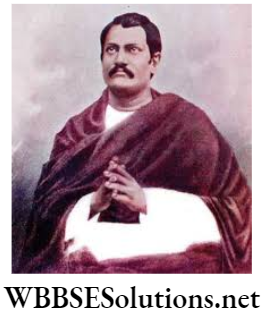
WBBSE Solutions For Class 10 History Chapter 2 Reform Characteristics And Observations Keshab Chandra Sen

“Important short questions WBBSE History Chapter 2”

Question 27: Write about two social reform movements of the Brahmo Samaj.?
Answer:

Two social reform movements of the Brahmo Samaj are as follows:

  1. The Brahmo Samaj compelled the government to enact Regulation III prohibiting child marriage and polygamy and sanctioning widow remarriage and intercaste marriage.
  2. The Brahmo Samaj created public opinion in favor of women’s education and anticipation of women.

Question 28: Why was the Atmiya Sabha established?
Answer:

The Atmiya Sabha was established in 1815 by Raja Rammohan Roy to discuss the religious and social problems of society, challenge and denounce orthodox religious views, and promote free and collective thinking.

Question 29: When and by whom was the Widow Remarriage Act passed?
Answer:

The Widow Remarriage Act was passed by Lord Dalhousie in 1856 with the help of the Bengali social reformer Iswar Chandra Vidyasagar.

Question 30: What doctrine did Swami Vivekananda expound on at the Parliament of Religions in Chicago?
Answer:

Swami Vivekananda, at the Parliament of Religions (1893) in Chicago, propounded the true meaning of Hinduism. He proclaimed Vedanta as a great universal religion of the world. He expounded the universalism of Indian culture, and its capacity to embrace friends and foes as brothers. He said, “As different streams mingle their waters in the ocean, so different paths which men take lead to the lord.”

Question 31: What was the contribution of Swami Vivekananda to the social movement of the 19th century?
Answer:

Swami Vivekananda was a great social reformer. He gave a call for building up a new India by struggling against untouchability, poverty, social evils, and injustices. He condemned the caste system, rituals, ceremonies, and superstitions. He urged the people to imbibe the spirit of liberty, equality, and free thinking. He remarked, “I do not believe in a religion that cannot wipe out a widow’s tears or bring a piece of bread to an orphan’s mouth.”

Question 32: Who was Haji Muhammad Mohsin?
Answer:

Haji Muhammad Mohsin was a prominent philanthropist in Bengal. He made a pilgrimage to Mecca and visited Medina, Kufa, Karbala, and other holy places. After he performed the Hajj, he was given the title ‘Haji’. He spent much to spread education among the Mohammedans. He also spent his money on helping poor people.

Question 33: Where is Hooghly Mohsin College located? When and under whose initiative was it established?
Answer:

The Hooghly Mohsin College is located in Chinsura in the district of Hooghly. Muhammad Mohsin made a remarkable contribution to the cause of education. He deposited a large sum with the government and the Hooghly Mohsin College was established in 1836 under the initiative of Metcalfe.

Question 34: Who was Lalon Fakir?
Answer:

Lalon Fakir: Lalon Fakir was a Bengali Baul saint, mystic, songwriter, thinker, and social reformer. He is considered to be an icon of religious tolerance whose songs inspired and influenced many poets, and social and religious thinkers like Rabindranath Tagore, Nazrul Islam, etc. He rejected all distinctions of caste and creed and his songs spoke of day-to-day problems in a simple yet moving language.

“WBBSE Class 10 History Chapter 2 key questions and answers”

Question 35: What were the major expressions of the renaissance in Bengal?
Answer:

The major expressions of a renaissance in Bengal were the appearance of a large number of newspapers, periodicals, and literary works, the growth of numerous associations and societies, and the spread of Western education and ideas.

Question 36: Name some scientists and literary personalities of the Renaissance period in Bengal.
Answer:

In the Renaissance period the annals of Bengali literature were crowded with bright names such as those of Rammohon Roy, Akshay Kumar Dutta, Iswar Chandra Vidyasagar, Madhusudan Dutta, Bankim Chandra Chatterjee, Dinabandhu Mitra, etc, Science also flourished under the initiative of scientists like Satyendranath Bose, Prasanta Chandra Mahalanobis, and Jagadish Chandra Bose.

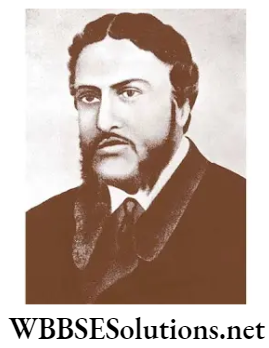
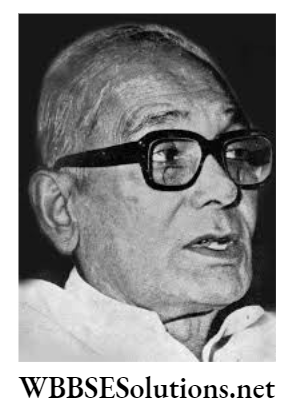
WBBSE Solutions For Class 10 History Chapter 2 Reform Characteristics And Observations Madhusudan Dutta


WBBSE Class 10 History Chapter 2 Reform Characteristics And Observations Very Short Answer Questions

Chapter 2 Reform Characteristics And Observations Very Short Answer Type Questions

Question 1: Who was the editor of ‘The Bengal Gazette’?
Answer:

James Augustus Hicky was the editor of ‘The Bengal Gazette’.

Question 2: Name one satirical prose written by Kaliprasanna Singha.?
Answer:

One satirical prose by Kaliprasanna Singha was ‘Hutom Pyanchar Naksha’.

WBBSE Class 10 History Chapter 2 Reform Characteristics And Observations Very Short Answer Questions

Question 3: Who composed ‘Hutom Pyanchar Naksha’?
Answer:

Kaliprasanna Singha composed ‘Hutom Pyanchar Naksha’.

Read and Learn  More WBBSE Class 10 History Very Short Answer Questions

Wbbse History And Environment Class 10 Solutions

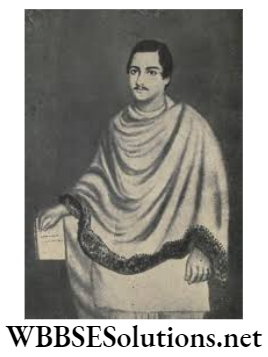
WBBSE Solutions For Class 10 History Chapter 2 Reform Characteristics And Observations Kaliprasanna Singha

“WBBSE Class 10 History Chapter 2 very short answer questions”

Question 4: Name one English week that exposed the oppression of indigo planters.?
Answer:

One English week which exposed the oppression of indigo planters was the ‘Hindoo Patriot’.

WBBSE Solutions for Class 10 History WBBSE Solutions for Class 10 Geography and Environment
WBBSE Class 10 History Long Answer Questions WBBSE Solutions for Class 10 Life Science And Environment
WBBSE Class 10 History Short Answer Questions WBBSE Solutions for Class 10 Maths
WBBSE Class 10 History Very Short Answer Questions WBBSE Solutions for Class 10 Physical Science and Environment
WBBSE Class 10 History Multiple Choice Questions


Question 5: Name one Bengali periodical of colonial Bengal with a strong emphasis on women’s issues.?
Answer:

One Bengali periodical of colonial Bengal with a strong emphasis on women’s issues was ‘Bamabodhini Patrika’.

Question 6: In which year was ‘Bamabodhini Patrika’ first published?
Answer:

‘Bamabodhini Patrika’ was first published in 1863.

Read more

WBBSE Class 10 History Chapter 2 Reform Characteristics And Observations Multiple Choice Questions

Chapter 2 Reform Characteristics And Observations Multiple Choice Questions

Question 1: David Hare was a subscriber to the-

1. Ladies Society for Native Female Education
2. Sanskrit College
3. Hooghly Mohsin College
4. Medical College

Answer: 1. Ladies Society for Native Female Education

Question 2: “A single shelf of a good European library was worth the whole native literature of India and Arabia.”-Who wrote it?

1. A Lord Cornwallis
2. Lord Bentinck
3. Thomas Macaulay
4. Lord Minto

Answer: 2. Lord Bentinck

WBBSE Class 10 History Chapter 2 Reform Characteristics And Observations Multiple Choice Questions

Question 3: Sir Charles Wood’s Despatch of 1854 dealt primarily with-

1. Administrative reform
2. Educational reform
3. Economic reform
4. Social reform

Answer: 2. Educational reform

Class 10 History Wbbse

Read and Learn  More WBBSE Class 10 History Multiple Choice Questions

Question 4: The first Chancellor of Calcutta University was-

1. Lord Dalhousie
2. Lord William Bentinck
3. Lord Hastings
4. Lord Canning

Answer: 2. Lord William Bentinck

WBBSE Solutions for Class 10 History WBBSE Solutions for Class 10 Geography and Environment
WBBSE Class 10 History Long Answer Questions WBBSE Solutions for Class 10 Life Science And Environment
WBBSE Class 10 History Short Answer Questions WBBSE Solutions for Class 10 Maths
WBBSE Class 10 History Very Short Answer Questions WBBSE Solutions for Class 10 Physical Science and Environment
WBBSE Class 10 History Multiple Choice Questions


Question 5: The first lady graduates of Calcutta University were-

1. Kadambini Ganguly and Abala Basu
2. Sarala Devi and Bina Das
3. Kadambini Ganguly and Chandramukhi Basu
4. Chandramukhi Basu and Bina Das

Answer: 3. Kadambini Ganguly and Chandramukhi Basu

Question 6: Asiatic society was established in-

1. 1774
2. 1784
3. 1792
4. 1874

Answer: 2. 1784

Read more

WBBSE Class 10 History Chapter 1 Ideas Of History Multiple Choice Questions

Chapter 1 Ideas Of History Multiple Choice Questions (MCQ)

Question 1 The word ‘historical’ means—

1. Inquiry
2. History of the past
3. Historian
4. Past

Answer: 1. Inquiry

Question 2 The national game of England is—

1. Cricket
2. Football
3. Kabaddi
4. Volley Ball

Answer: 1. Cricket

Question 3 The spokesman of the history of Subaltern groups is—

1. Marc Bloch
2. Dr. Ranajit Guha
3. Herodotus
4. Edward Thompson

Answer: 2. Dr. Ranajit Guha

Read and Learn  More WBBSE Class 10 History Multiple Choice Questions

Question 4 Concepts of style and movements in dance were introduced by—

1. Nandalal Bose
2. Ramkinkar Beij
3. Mani Madhava Chakyar
4. Sharangadeva

Answer: 4. Sharangadeva

Question 5 Calcutta was originally inhabited by the people of three villages—

1. Koiikata, North 24 Parganas, Sutanuti
2. Koiikata, 24 Parganas, Govindapur
3. Koiikata, Sutanuti, 24 Parganas
4. Koiikata, Sutanuti, Govindapur

Answer: 4. Koiikata, Sutanuti, Govindapur

WBBSE Class 10 History Chapter 1 Ideas Of History Multiple Choice Questions

Question 6 The Civil Engineering Department was opened in 1843 in—

1. Surendranath College
2. Hindu College
3. Rajabazar Science College
4. Ballygunge Science College

Answer: 2. Hindu College

Question 7 ‘British Society of Sports History* was a research on the history of Sports of—

1. England
2. Canada
3. Bengal
4. Melbourne

Answer: 1. England

“WBBSE Class 10 Ideas of History MCQs”

WBBSE Solutions for Class 10 History WBBSE Solutions for Class 10 Geography and Environment
WBBSE Class 10 History Long Answer Questions WBBSE Solutions for Class 10 Life Science And Environment
WBBSE Class 10 History Short Answer Questions WBBSE Solutions for Class 10 Maths
WBBSE Class 10 History Very Short Answer Questions WBBSE Solutions for Class 10 Physical Science and Environment
WBBSE Class 10 History Multiple Choice Questions


Question 8 Who is the author of the essay ‘History from Below’?

1. Arnold Toynbee
2. EP Thompson
3. EH Carr
4. Eric Hobsbawm

Answer: 2. EP Thompson

Question 9 The Annales school deals with—

1. Local History
2. Social History
3. Military history
4. Medical history

Answer: 2. social history

Question 10 The studies of new social history started in—

1.1960’s
2.1970’s
3.1980’s
4.1990’s

Answer: 1. 1960’s

Question 11 What is the main subject of new social history?

1. Kings
2. Common people
3. Political leaders
4. Feudal lords

Answer: 2. Common people

Question 12 A well-known historian of the Subaltern group is—

1. Marc Bloch
2. Ranajit Guha
3. Ramesh Chandra Majumder
4. E P Thompson

Answer: 2. Ranajit Guha

Question 13 The Social Science History Association was formed in—

1.1974
2.1975
3.1976
4.1977

Answer: 3. 1976

Question 14 Calcutta Cricket Club was established in—

1.1791
2.1792
3.1793
4.1798

Answer: 2. 1792

Question 15 The game of football was introduced in India by the—

1. English
2. Dutch
3. French
4. Portuguese

Answer: 1. English

Question 16 The ‘Father of Indian football’ is—

1. Gostha Gopal
2. Chuni Goswami
3. Nagendra Prasad Sarbadhikary
4. P K Banerjee

Answer: 3. Nagendra Prasad Sarbadhikary

Question 17 Mohun Bagan won the IFA Shield in—

1.1890
2.1905
3.1911
4.1917

Answer: 3. 1911

Question 18 The folk song of camel drivers in the Punjab region is called—

1. Toppa
2. Gazal
3. Thumri
4. Baul

Answer: 1. Toppa

Question 19 Bageswari Shilpa Prabandhabali was written by—

1. Ashok Mitra
2. Gita Kapoor
3. Abanindranath Tagore
4. Jahid Chowdhuri

Answer: 3. Abanindranath Tagore

Question 20 The book ‘Ekei Bole Shooting’ was written by

1. Ritwik Kumar Ghatak
2. Tapan Sinha
3. Satyajit Ray
4. Mrinal Sen

Answer: 3. Satyajit Ray

Question 21 The director of the film ‘Aranyer Din Ratri’ is—

1. Mrinal Sen
2. Bijan Bhattacharya
3. Satyajit Ray
4. Ritwik Ghatak

Answer: 3. Satyajit Ray

Question 22 ‘Dadasaheb Phalke’ was associated with—

1. Film industry
2. Sports World
3. Studies in local history
4. Environmental studies

Answer: 1. film industry

Question 23 In 1853 the first Indian Railway was established between Bombay and—

1. Kolkata
2. Delhi
3. Thane
4. Goa

Answer: 3. Thane

Question 24 The author of the book ‘Bangalir Itihas’ is—

1. Dinesh Chandra Sarkar
2. Rakhaldas Bandyopadhyay
3. Dinesh Chandra Sen
4. Niharranjan Ray

Answer: 4. Niharranjan Ray

Question 25 Which city in India is known as the ‘City of Culture’?

1. Mumbai
2. Chennai
3. Kolkata
4. Bhubaneswar

Answer: 3. Kolkata

Wbbse History And Environment Class 10 Solutions

Question 26 Which country started the study of military history?

1. France
2. Germany
3. England
4. Holland

Answer: 3. England

Question 27 The author of the book ‘Silent Spring’ is—

1. Charles Tilly
2. Richard Grove
3. Clarence Slacker
4. Rachel Carson

Answer: 4. Rachel Carson

Question 28 The leader of ‘Narmada Bachao Andolan’ is—

1. Arundhuti Roy
2. Medha Patkar
3. Mahasweta Devi
4. Ashapurna Devi

Answer: 2. Medha Patkar

Question 29 ‘Green imperialism’ was written by—

1. Ramchandra Guha
2. Madhav Gadgil
3. Richard Grove
4. Rachel Carson

Answer: 3. Richard Grove

Question 30 The author of the book ‘Man and Environment’ is—

1. Irfan Habib
2. Rachel Carson
3. Ramchandra Guha
4. Mahesh Rangarajan

Answer: 1. Irfan Habib

Question 31 The author of the book ‘Science and the Raj’ is—

1. Prafulla Chandra Roy
2. Deepak Kumar
3. J D Bernal
4. Thomas Kuhn

Answer: 2. Deepak Kumar

Question 32 The author of the book ‘Women in English Social History’ is—

1. Barbara Kanner
2. Steven Mintz
3. Susan Kellogg
4. Rachel Carson

Answer: 1. Barbara Kanner

Question 33 The history of Calcutta Science College will be incorporated in—

1. History of photography
2. History of sports
3. history of science and technology
4. Environmental History

Answer: 3. History of science and technology

Question 34: Bharat Stree Mondal was initiated by

1. Kalpana Dutta
2. Basanti Debi
3. Sarala Devi Chaudhurani
4. Swarna Kumari Devi

Answer: 3. Sarala Devi Chaudhurani

Question 35: ‘Letters from a Father to His Daughter’ is a collection of

1. 30 letters
2. 35 letters
3. 32 letters
4. 20 letters

Answer: 1. 30 letters

“WBBSE Class 10 History Chapter 1 test questions”

Question 36: hacky’s ‘Bengal Gazette was published in

1. January 1780
2. January 1870
3. January 1817
4. January 1785

Answer: 1. January 1780

Question 37: ‘Bangadarshan’ was published in

1. April 12, 1872
2. May 12, 1872
3. April 12, 1827
4. April 20, 1872

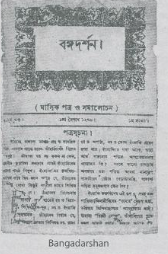
Answer: 1. April 12, 1872

Question 38: Jiban Smriti’ was first published in

1. Bangadarshan Patrika
2. Prabasi Patrika
3. Somprakash Patrika
4. Viswabharati Patrika

Answer: 2. Prabasi Patrika

Question 39: The book Jibaner Jharapata’ is a

1. Novel
2. Biography
3. Book of verses
4. Autobiography

Answer: 4. Autobiography

Question 40: ‘The Story of My Experiments with Truth is a

1. Autobiography
2. Essay
3. Novel
4. Travelogue

Answer: 1. Autobiography

Question 41: The information about the torture of indigo cultivators is found in

1. Bangadarshan Patrika
2. Tattwabodhini Patrika
3. Sanjibani Patrika
4. Somprakash Patrika

Answer: 4. Somprakash Patrika

Class 10 History Wbbse

Question 42 : ‘Hicky’s Bengal Gazette was a

1. Daily paper
2. Monthly paper
3. Weekly paper
4. Fortnightly paper

Answer: 2. Monthly paper

Question 43: The first editor of ‘Bangadarshan’ was

1. Umesh Chandra Dutta
2. Bankim Chandra Chattopadhyay
3. Akshay Kumar Datta
4. Dwarakanath Vidyabhusan

Answer: 2. Bankim Chandra Chattopadhyay

Question 44: ‘Somprakash’ was a

1. Daily paper
2. Weekly paper
3. Fortnightly paper
4. Monthly paper

Answer: 2. Weekly paper

Question 45: The editor of ‘Digdarshan’ was

1. Prafulla Chandra Roy
2. Marshman
3. Iswar Gupta
4. William Carey

Answer: 2. Marshman

Question 46: Somprakash was published in the year

1. 1858
2. 1872
3. 1862
4. 1848

Answer: 1. 1858

WBBSE Class 10 History Chapter 1 Ideas Of History Very Short Answer Questions

Chapter 1 Ideas Of History Topic A Very Short Answer Type Questions

Question 1: Who is known as the ‘Father of History’?

Answer:

Herodotus is known as the ‘Father of History’.

Question 2: Name two works in Sanskrit on Indian classical dance.

Answer:

Two works in Sanskrit on Indian classical dance are ‘Natyasashtra’ and ‘Abhinaya Darpan’.

Question 3: Who is the author of ‘Griho Laxmi’ (1909)?

Answer:

The author of ‘Griho Laxmi’ is Girishchandra Ghosh.

Question 4: In which year was ‘The British Society of Sports History’ established?

Answer:

‘British Society of Sports History’ was established in 1982.

Read and Learn  More WBBSE Class 10 History Very Short Answer Questions

Question 5: Name some of the French historians of the Annales Group.

Answer:

Some of the French historians of the Annales Group are Lucien Febvre, Marc Bloch, Ferdinand Braudel, and Roy Lauri.

Question 6: In which year was the Dramatic Performance Act passed?

Answer:

The Dramatic Performance Act was passed in 1876.

WBBSE Class 10 History Chapter 1 Ideas Of History vsqs

“WBBSE Class 10 Ideas of History very short answer questions”

Question 7: Name two illuminated Buddhist manuscripts.

Answer:

Two illuminated Buddhist manuscripts were ‘Astasahasrika Prajnaparamita’ and ‘Dharani’.

Question 8: Who was Ernest Binfield Havell?

Answer:

Ernest Binfield Havell, who showed the world the way to view Indian art, was an English arts administrator, art\ historian, and author of books on art.

Wbbse History And Environment Class 10 Solutions

WBBSE Solutions for Class 10 History WBBSE Solutions for Class 10 Geography and Environment
WBBSE Class 10 History Long Answer Questions WBBSE Solutions for Class 10 Life Science And Environment
WBBSE Class 10 History Short Answer Questions WBBSE Solutions for Class 10 Maths
WBBSE Class 10 History Very Short Answer Questions WBBSE Solutions for Class 10 Physical Science and Environment
WBBSE Class 10 History Multiple Choice Questions


Question 9: In which year was the Indian Academy of Fine Arts established?

Answer:

The Indian Academy of Fine Arts was established in 1919.

Question 10: Name two women photographers.?

Answer:

Two women photographers were Jnanadanandini Debi and Annapurna Datta.

Question 11: Name the school which later grew into Government Art College.

Answer:

Calcutta School of Industrial Arts later grew into the Government Art College.

“WBBSE Class 10 History Chapter 1 quick answers”

Question 12: Name the earliest photographic institution in India.

Answer:

The earliest photographic institution in India was Messrs. Bourne & Shepherd of Calcutta.

Question 13: In which year was the Hindu College founded?

Answer:

The Hindu College was founded in 1817.

Question 14: Name the first book published by Jagadish Chandra Bose from London.

Answer:

The first book published by Jagadish Chandra Bose from London was ‘Response in Living and Non-Living’.

Question 15: Name a book written by Aswaghosa.

Answer:

‘Buddha Charita’ was written by Aswaghosa.

Question 16: What do you mean by Panchali Gan?

Answer:

Panchali Gan:

During the 19th century Bengali ballad songs were collectively called Panchali Gan.

Question 17: Under whose tutelage the Subaltern Studies group was formed?

Answer:

The Subaltern Studies group was formed under the tutelage of Dr. Ranajit Guha.

Question 18: Who wrote the book ‘Subaltern Studies Reader: 1986-1995’?

Answer:

The book ‘Subaltern Studies Reader: 1986-1995’ is written by Dr. Ranajit Guha.

Question 19: Name two US historians who worked on new social history.

Answer:

Two US historians who worked on new social history are Herbert Gutmann and Eugene Genovese.

Question 20: Why is the year 1911 important in the history of Indian sports?

Answer:

Mohun Bagan Athletic Club became the first Indian team to win the IFA shield by defeating East Yorkshire Regiment in 1911.

Question 21: Who is the author of the book India: Food 8s Cooking: The Ultimate Book on Indian Cuisine’?

Answer:

The author of the book ‘India: Food & Cooking: The Ultimate Book on Indian Cuisine’ is Pat Chapman.

Question 22: Who was the creator of the iconic Bengali sweetmeat ‘Rosogolla’?

Answer:

Nobin Chandra Das of Baghbazar, Kolkata was the creator of the iconic Bengali sweetmeat ‘Rosogolla’.

Question 23: Who is the author of the book ‘A Social History of Eating in Modern America’?

Answer:

The author of the book ‘A Social History of Eating in Modern America’ is Harvey Levenstein.

Question 24: Which is the first sound film in Bengali?

Answer:

The first sound film in Bengali is ‘Dena Paona’.

Question 25: Who is the author of ‘Bangla Natya Sahityer Itihas’?

Answer:

The author of ‘Bangla Natya Sahityer Itihas’ is Ashutosh Bhattachary.

Question 26: In which year was the Calcutta National Theatre established?

Answer:

The Calcutta National Theatre was established in 1872.

Question 27: During whose Governor-Generalship Indian Railway was expanded?

Answer:

Indian Railway was expanded during the Governor-Generalship of Lord Dalhousie.

Question 28: When and where was the first Indian railway established?

Answer:

The first Indian railway was established between Bombay and Thane in 1853.

Question 29: Who is the author of the book The Engines of Change: The Railroads That Made India’?

Answer:

The author of the book ‘The Engines of Change: The Railroads That Made India’ is Ian Kerr.

Question 30: Which is the first historical book in India?

Answers:

The first historical book in India is Kalhan’s ‘Rajatarangini’.

Question 31: Who is the author of the book ‘American Military Leaders’?

Answers:

The author of the book ‘American Military Leaders is Roger J Spiller.

Question 32: Who is Medha Patkar?

Answers:

Medha Patkar

Medha Patkar is an Indian social activist and a leader of the people’s movement ‘Narmada Bachao Andolan’.

Question 33: Who are the author of the book ‘Ecology and Equity’?

Answers:

The authors of the book ‘Ecology and Equity’ are Madhav Gadgil and Ramchandra Guha.

Question 34: How were the Indian Forests divided according to the Indian Forest Act of 1878?

Answer:

The Indian Forest Act, of 1878 divided Indian forests into reserved forests (under Government control) protected forests (partly under Government control), and village forests (controlled by villages).

“WBBSE Class 10 History Chapter 1 important very short questions”

Question 35: Who is the author of the book Structure of Scientific Revolutions?

Answers:

The author of the book ‘The Structure of Scientific Revolutions’ is Thomas Kuhn.

Question 36: Who was the first Indian doctor to dissect a human corpse?

Answers:

The first Indian doctor to dissect a human corpse was Madhusudan Gupta.

Question 37: When was the first International Women’s Day celebrated?

Answers:

The first International Women’s Day was celebrated on 8 March 1975.

Question 38: Who wrote the book ‘A History of Hindu Chemistry’?

Answer:

The author of the book ‘A History of Hindu Chemistry’ is Acharya Prafulla Chandra Roy

Chapter 1 Ideas Of History Topic B Very Short Answers Type Questions

Question 1: Who was the editor of ‘Bhandar’?

Answer:

Editor of ‘Bhandar’

The editor of ‘Bhandar’ was Rabindranath Tagore.

Question 2: Who is known as the ‘Father of Revolutionary Thoughts’?

Answer:

Bipin Chandra Pal is known as the ‘Father of Revolutionary Thoughts’.

Question 3: Who is called ‘Punjab Kesari’?

Answer:

‘Punjab Kesari’

Lala Lajpat Rai is called ‘Punjab Kesari’.

Class 10 History Wbbse

Question 4: Name a newspaper edited by Bal Gangadhar Tilak.

Answer:

The newspaper edited by Bal Gangadhar Tilak was ‘Maratha’.

Question 5: Write the name of an autobiographical work by Jawaharlal Nehru.

Answer:

The Autobiography of Jawaharlal Nehru is ‘Toward Freedom’.

Question 6: Who referred to Nabagopal Mitra and Rajnarayan Basu as the first Purohit of Swadeshi?

Answer:

Bipin Chandra Pal, in his autobiography, referred to Nabagopal Mitra and Rajnarayan Basu as the first Purohit of Swadeshi.

Question 7: Where are government documents preserved?

Answer:

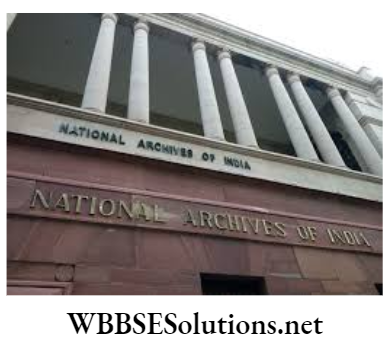
Government documents are preserved in archives.

Question 8: Who was the editor of ‘Somprakash’? ‘Somprakash’ was

Answer:

The editor of Dwarakanath Vidyabhusan.

Question 9: What is an archive?

Answer:

Archive:

An archive is a place where people can go to gather first-hand facts, data, and evidence from letters, reports, notes, memos, photographs, and other primary sources.

WBBSE Solutions For Class 10 History Chapter 1 Ideas Of History National Archives of India, New Delhi


Question 10: What is the name of Sarala Devi’s autobiography?

Answer:

The name of Sarala Devi’s autobiography is ‘Jibaner Jharapata’.

Question 11: Who first introduced the literary magazine ‘Bangadarshan’?

Answer:

Bankim Chandra introduced the ‘Bangadarshan’. Chattopadhyay’s first literary magazine

Question 12: What is the name of the collection of letters written by Jawaharlal Nehru to his daughter?

Answer:

The name of the collection of letters written by Jawaharlal Nehru to her daughter is ‘Letters from a Father to His Daughter’.

Question 13: Which government report reveals the story of the torture of the indigo cultivators?

Answer:

The Indigo Commission Report reveals the story of the torture of the indigo cultivators.

Class 10 History Wbbse

Question 14: Who translated Jawaharlal Nehru’s ‘Letters from a Father to His Daughter’ in Hindi?

Answer:

Munshi Premchand translated Jawaharlal Nehru’s ‘Letters from a Father to His Daughter’ into Hindi.

Question 15: What advice did Jawaharlal Nehru give to his daughter Indira in his letter?

Answer:

Jawaharlal Nehru in his letter to Indira asks her to be brave as an Indian soldier who respects and honors the country and not to do anything in secret.

Question 16: Name some government documents which give information about the British period in India.

Answer:

Some government documents which give information about the British period in India are the reports of the Indigo Commission (1860), Hunter Commission (1882), Sedition Committee (1918), etc

WBBSE Class 10 History Chapter 1 Ideas Of History Short Answer Questions

Chapter 1 Ideas Of History Short Answer Type Questions

Question 1: What do you mean by social history?
Answer:

Social history: Social history is a branch of history that studies the experiences of the daily life of people and their social and economic relationships. It also includes religious and cultural affairs such as literature, education, music, etc., and fine arts. It was written between 200 BC and 200 A4. It contains 6000 hymns. It is attributed to Bhasa Muni.

Question 2: Write a short note on ‘Natyasastra’.
Answer:

‘Natyasastra’: Natyasastra is one of the most important Sanskrit works on Indian classical dance, dramavarious ancient sites are also the source of knowledge for the clothing used by people. The writings of Herodotus also give us some j knowledge about clothing in ancient India. In which year was the Photographic Society of Bengal established? Name some of its distinguished members.

The Photographic Society of Bengal was established in 1856. Some of its distinguished members were Rajendra Lal Mitra, Kanailal Dey, and Priyanath Seth. Name some of the books on environmental history and their authors. Some of the books on environmental history are ‘Man and the Natural World’ by Keith Thomas, ‘Silent Spring’ by Rachel Carson, ‘Green Imperialism’ by Richard Grove, ‘Nature Culture Imperialism’ and ‘Hunting and Shooting’ by Mahesh Rangarajan, etc.

WBBSE Class 10 History Chapter 1 Ideas Of History Short Answer Questions

Question 3: What are the sources of knowledge for clothing in ancient India?
Answer:

The sources of knowledge for clothing in ancient India: The sources for reconstructing modern Indian history are divided into two parts primary and secondary sources. Government documents such as reports, narratives, diary entries of police, and intelligence reports are regarded as the primary sources.

Besides, periodicals and newspapers are also important sources of information. The secondary sources are autobiographies and memoirs such as ‘Jiban Smriti’ by Rabindranath, ‘Sattar Batsar’ by Bipin Chandra Pal, etc.

Read and Learn More WBBSE Class 10 History Short Answer Questions

Question 4: In which year was the Photographic | Society of Bengal established? Name some of its distinguished members.
Answer: The Photographic Society of Bengal was; established in 1856. Some of its distinguished members were; Rajendra Lal Mitra, Kanailal Dey, and Priyanath Seth

Question 5: Name some of the books on | environmental history and their authors.
Answer: Some of the books on environmental history are ‘Man and the Natural World’ by Keith Thomas, ‘Silent Spring’ by Rachel Carson, ‘Green Imperialism’ by Richard Grove, ‘Nature Culture Imperialism’ and ‘Hunting and Shooting’ by Mahesh Raiganjan, etc.

WBBSE Solutions for Class 10 History WBBSE Solutions for Class 10 Geography and Environment
WBBSE Class 10 History Long Answer Questions WBBSE Solutions for Class 10 Life Science And Environment
WBBSE Class 10 History Short Answer Questions WBBSE Solutions for Class 10 Maths
WBBSE Class 10 History Very Short Answer Questions WBBSE Solutions for Class 10 Physical Science and Environment
WBBSE Class 10 History Multiple Choice Questions


Question 6: What are the sources of modern Indian history?
Answer:

The sources of modern Indian history: The sources for reconstructing modern Indian history are divided into two parts— primary and secondary sources. Government documents such as reports, narratives, diary entries of police, and intelligence reports are regarded as the primary sources.

Besides, periodicals and newspapers are also important 1 sources of information. The secondary sources are autobiographies and memoirs such as ‘Jiban Smriti’ by Rabindranath, ‘Sattar Batsar’ by Bipin Chandra Pal, etc.

Question 7: What does the historiography of architecture reveal?
Answer:

The historiography of architecture reveals: The historiography of architecture reveals the evolution of art and architecture, the development of religion, the economic and social conditions and lifestyle of the people, and the blending of culture. It also reveals the underlying identity including the character of a community, and the values prevalent among its people.

“Short answer questions for WBBSE History Chapter 1”

Question 8: What is local history?
Answer:

Local history: Local history is an important subject of historical study. It is the study of history in a geographically local context and incorporates the cultural, social, and economic aspects of the locality and its community.

Question 9: Why is the study of local history | important?
Answer:

Local history is the study of history in a geographically local context. It enables us to know the cultural, social, and economic aspects of a locality and its community. It helps to study everything pertaining to a certain locality: history, ethnography, geography, national history, etc. The study of local history is a source for the reconstruction of national history.

Question 10: What is the importance of | environmental history?
Answer:

The importance of environmental history: Environmental history helps us to know how nature influences humans, how humans intervene in nature, and how nature and humans interact. It also investigates changes in nature not caused by human action. It opens our eyes to the scarcity of resources and their conservation in the future.

Question 11: What is historiography?
Answer:

Historiography: History is the study of past events and transformations by historians. Historiography is the study of the methodology of historians in developing history. The historiography of a specific theme covers how historians have studied that topic using particular approaches, sources, and techniques.

Wbbse History And Environment Class 10 Solutions

Question 12: What is ‘Annales School’?
Answer:

Annales School: At the beginning of the 20th century, a new school of historiography arose which is known as Annales School. It was started by the French historians Marc Bloch and Lucien Febvre. According to this school, history is not only about political events, kings, great leaders, politics, and diplomacy but also about local people, climate, trade, agriculture, technology, means of communication, social division, etc.

Question 13: Name some books related to ‘new social history’.
Answer:

Some books related to ‘new social history’: Some books related to new social history are Ranajit Guha’s ‘Selective Subaltern Studies’, Partha Chatterjee’s ‘Subaltern Studies’ Gyanendra Pandey’s, ‘A History of Prejudice’ Shahid Amin’s ‘Event, Metaphor, Memory— Chauri Chaura 1922-1992.

Question 14: What do you mean by Subaltern Studies?
Answer:

Subaltern Studies: Subaltern Studies is the study of social groups who constitute the mass population rather than the elites in the society by a group of south Asian scholars. The Subaltern historiography brings to light the lower section of the Indian people, their aspirations, and frustration hitherto neglected by the traditional method of writing history.

“WBBSE Class 10 Ideas of History short answer questions”

Question 15: What is the ‘Brahmika’ style?
Answer:

Brahmika’s style: Brahmika saree was originally popularised by Jnanadanandini Devi, wife of Satyendranath Tagore. She adopted the Parsi style of wearing a saree, pinned to the left shoulder with a brooch and worn with a blouse and shoes. This style of wearing a saree was quickly adopted by the Brahmo Samaj Women. So it came to be known as the Brahma style.

Question 16: What are the different variety of themes | in modern historiography?
Answer:

The different variety of themes covered in modern historiography is the history of sports, food habits, clothing, communication, architecture, visual art, environment, science, and technology cities. It also covers military history, the history of women’s development, local history, medical history, etc.

Wbbse History And Environment Class 10 Solutions

Question 17: Name some famous dramatists of Bengal who have valuable contributions to the field of drama in modern times.
Answer:

Some famous dramatists who have made valuable contributions to the field of drama in modern times are Madhusudan Dutta, Dinabandhu Mitra, Rabindranath Tagore, Sambhu Mitra, Sishir Bhaduri, etc.

Question 18: Which is the first Indian silent film? Who | were its director and producer?
Answer:

The first Indian silent film was Raja Harishchandra. Its director and producer were Dadasaheb Phalke.

Question 19: What were the steps taken by the British to develop the communication system in India?
Answer:

The steps taken by the British to develop the communication system in India were

  1. Establishment of railways
  2. Improvement of the postal system and
  3. Introduction of the telegraph system.

Question 20: Who is the author of the treatise ‘Sangitaratnakara’? What is its subject matter?
Answer:

‘Sangitaratnakara’ was written by Sharangadeva. It is a treatise on music. The development of dance in different parts of the country is dealt with in this treatise. Several new concepts of style and movements in dance are also mentioned here.

Question 21: Name two autobiographical works by Indian authors.
Answer: Two autobiographical works by Indian authors are Bipin Chandra Pal’s ‘Sattar Batsar’ and Rabindranath Tagore’s ‘Jiban Smriti’.

Question 22: Name two autobiographical works of the Mughal period.
Answer: Two autobiographical works of the Mughal period are Tuzuk-i-Baburi by Babur and Tuzuki-Jahangiri by Jahangir.

Question 23: Who opened the institution ‘Lakshmi Bhandar’ and why?
Answer: Sarala Devi Chaudhurani opened the ‘Lakshmi Bhandar’ for the production and use of Swadeshi goods.

Question 24: Who was Dwarakanath Bidyabhusan? Name the paper edited by him.
Answer: Dwarkanath Bidyabhusan was a professor at Sanskrit College. He was the editor of ‘Omprakash’.

“WBBSE Class 10 History Chapter 1 key points”

Question 25: In which year and from where was ‘Somprakash published? Who was its editor?
Answer: ‘Somprakash’ was published on November 15, 1858, from Calcutta. Dwarkanath Bidyabhushan, a professor at the Sanskrit College was its editor.

Question 26: Why did the British ban the Bengali weekly ‘Somprakash’?
Answer: Many writings were published against the Indigo planters. ‘Somprakash’ and articles were also published in favor of widow remarriage and the spread of women’s education. For criticizing the policy of the British in Kabul, its editor, Dwarkanath Bidyabhushan, was compelled to sign a bond and was fined, as per the Vernacular Press Act. The editor refused to pay this and so the paper was banned.

Question 27: What are the main sources for the study of modern Indian history?
Answer:

The main sources for the study of modern Indian history are

  1. Government documents
  2. Autobiography and memoirs
  3. Personal letters
  4. Newspaper and journals.

Question 28: What do you mean by autobiography towards the English language and customs and memoir?
Answer:

Autobiography towards the English language and customs and memoir: The life history of an individual, is written by writing the history of modern India. himself is called an autobiography. A memoir is an account of an individual’s life and experience. It is a piece of writing based on the writer’s personal knowledge and experiences.

Question 29: Give some examples of important auto-biographies and memoirs of the modern Indian period.
Answer:

Some examples of important autobiographies and memoirs of the modern Indian period are

  1. Rabindranath Tagore’s ‘Jiban Smriti’
  2. Sarala Devi Chaudhurani’s ‘Jibaner Jharapata’
  3. Mahatma Gandhi’s ‘The Story of My Experiments with Truth’
  4. Subhas Chandra Bose’s ‘An Indian Pilgrim’ (incomplete)
  5. Jawaharlal Nehru’s ‘An Autobiography’ etc.

Question 30: What do you mean by government documents? Or, What are the primary sources of information for reconstructing the history of India?
Answer:

Government documents are the primary sources of information for reconstructing the history of India. Government documents include

  1. Records of the British officials,
  2. Police and intelligence reports,
  3. Official letters and correspondence,
  4. History recorded by English officers in the light of their own experiences.

Class 10 History Wbbse

Question 31: What information do we get from Rabindranath’s ‘Jiban Smriti’?
Answer:

Rabindranath’s autobiography ‘Jiban Smriti’ reflects the society of the 1860s and 1870s. It gives information about the rigid customs and norms of the society, about Hindu Mela and Swadeshi. The attitude of the Bengali society, about Hindu Mela and Swadeshi. The attitude of the Bengali society towards the English language and customs are important sources of information for writing the history of modern India.

“Important short answers Ideas of History WBBSE”

Question 32: When and by whom was Bengal Gazette published?
Answer:

Bengal Gazette, a weekly English newspaper, was published by James Augustus Hicky in 1780.

Question 33: What are the abuses of the internet in collecting historical information?
Answer:

The abuses of the internet in collecting historical information: Some websites abuse the internet. Sometimes incomplete information and wrong information are given which may lead to wrong concepts. Unreliable information cannot be used for reconstructing history which reduces the quality of research work.

Question 34: What is the difference between newspapers and periodicals?
Answer:

Differences between newspapers and periodicals are given below-

  1. Newspapers are usually published regularly and daily, whereas periodicals are published less frequently than daily newspapers.
  2. Newspapers contain different informative contents of everyday life, whereas periodicals give importance only to specific contents of the contemporary period.
  3. Newspaper articles are written by newspaper staff and do not provide authors’ names, whereas periodicals use subject experts for publication.

Question 35: What is the importance of newspapers as a source of history?
Answer:

The importance of newspapers as a source of history: Newspapers are known as the eyes and ears of the world. Newspapers are important sources of information for writing the history of the contemporary period4. It provides news about a country’s economic situation, sports, games, entertainment, trade, and commerce which are essential for writing the history of a country.


WBBSE Class 10 History Chapter 1 Ideas Of History Long Answer Questions

Chapter 1 Ideas Of History Topic A Analytical Answer Type Questions

Diverse Aspects of the Study of Modern Historiography

Question 1: Discuss the ramifications of historical discussions in recent times.’ Or, Mention the diverse aspects of historical discussions in modem times.
Answer:

The ramifications of historical discussions in recent times:

Earlier the discussion of history included only the tales of royal families, the rise and fall of dynasties, the exploits of heroes and generals, the lifestyle of the upper classes, and so on. However, in recent times the study of history has become more interesting and diversified due to the inclusion of several new topics. These are as follows—

(1)Activities of kings: History still continues. to discuss wars, conquests, the establishment of peace, treaties, the rise and fall of dynasties, etc.

(2)Discussion about the elite class: The discussion about the aristocrats, landlords, feudal lords, etc., still constitutes an important part of historical discussion.

(3)Discussion about the common people: Though the lifestyle, food habits, dress, art and culture, sports, environment, etc-., of the common people were neglected in earlier times, nowadays these aspects of common life have found much importance.

(4)Local History: Nowadays much importance is being given to the study of local and regional history. So the people of all continents, countries, cities, and villages have now been included in the purview of history.

(5)History of science: The study of history also includes the continuous development of science, technology, and medical science since ancient times.

Question .: What do you understand by history? What were the topics discussed In the previous century?
Answer:

History:

The term ‘history’ refers to the ‘tales of the past’. So history includes the study of the society, politics, economics, and religion of the prehistoric as well as the historic ages. Earlier the study of history was confined to the upper classes of society and the most significant social, political, and religious events. These included—

Read and Learn More WBBSE Class 10 History Long Answer Questions

  1. Stories of kings and princes: In earlier times one of the most important topics of discussion was the rise and fall of various dynasties, wars, conquests, successes and failures of brave generals and heroes, and so on.
  2. Story of classes: In the last century matters concerning the lifestyle of the nobles, aristocrats, local lords landlords, and ruling classes constituted the main subject of discussion.
  3. Religious matters: In the earlier century one of the main topics of discussion was the different religious activities of the people.
  4. Political events: The various significant political events of the past found a place in, the historical discussion in earlier times. Imperialism, colonialism, and the spread of western ideas easily became the topics of discussion.
  5. Disasters: The various disasters of the past including floods, droughts, earthquakes, epidemics, and massive loss of lives also came up for historical discussions.
WBBSE Solutions for Class 10 History WBBSE Solutions for Class 10 Geography and Environment
WBBSE Class 10 History Long Answer Questions WBBSE Solutions for Class 10 Life Science And Environment
WBBSE Class 10 History Short Answer Questions WBBSE Solutions for Class 10 Maths
WBBSE Class 10 History Very Short Answer Questions WBBSE Solutions for Class 10 Physical Science and Environment
WBBSE Class 10 History Multiple Choice Questions


Question: 2 What do you understand by the term history? What were the topics of the historical discussion in the previous century?
Answer:

History

The term ‘history’ refers to the ‘tales of the past’. So history includes the study of the society, politics, economics, and religion of the prehistoric as well as the historic ages. Earlier the study of history was confined to the upper classes of society and the most significant social, political, and religious events. These included—

  1. Stories of kings and princes: In earlier times one of the most important topics of discussion was the rise and fall of various dynasties, wars, conquests, successes and failures of brave generals and heroes, and so on.
  2. Story of elite classes: In the last century matters concerning the lifestyle of the nobles, aristocrats, local lords landlords, and ruling classes constituted the main subject of discussion.
  3. Religious matters: In the earlier century one of the main topics of discussion was the different religious activities of the people. political events of the past found a place in the historical discussion in earlier times. Imperialism, colonialism, and the spread of western ideas easily became the topics of discussion.
  4. Disasters: The various disasters of the past including floods, droughts, earthquakes, epidemics, and massive loss of lives also came up for historical discussions. rather than from the viewpoint of the upper classes.

Class 10 History Solution Wbbse

Question 3: what do you mean by new social history? From which point of view is this subject discussed?
Answer:

New social history: Social history forms a significant part of historical discussion. Previously, social history was confined to the discussion about, the royal families, the aristocrats, and the upper classes but now the scope of the discussion has widened and the discussion about the people belonging to the middle, lower and marginal classes has assumed much importance. Therefore, social history is now termed as ’new social history.

New social history had its origin in 1960-70. At this time, history began to be discussed from the point of view of the lower classes.

  1. View from bottom to top: In new social history, an attempt is being made to view things from bottom to top instead of the other way around. This means, that society is now viewed more widely on the basis of the role of the lower classes rather than from the viewpoint of the upper classes.
  2. The predominance of the larger community: New social history assigns more importance to the wider, common, or lower and marginal classes rather than to the handful Of aristocrats. The contribution of the larger community to society and culture is more seriously discussed.

Question: 4 Whose discussion finds an eminence hi new social history? Who has popularised the new social history in modern times?
Answer:

The discussion of the. a larger community consisting of the lower, poor, marginal, and ordinary people have found a place of eminence in the discussion of new social history in the 20th century. New social history originated in 1960-1970. Since then, different historians have made their contributions to popularise this subject. They are as follows.

  1. Role of Annal group: Marc Bloch and Lucien Febvre published a journal named ‘Annals of Economic and Social History’ in 1921. This French Annal group played an important role in popularising the study of new social history. Fernand Braudel and Laduree have illuminated on statistics, family, psychology, society, culture, and economy of the common people.
  2. Role of American historians: Eugene Genovese and Herbert Gutman. have discussed the lifestyle of the laborers, the system of slavery, and slave society. There is also evidence of such discussion in the journal Past and Present.
  3. Subaltern studies: This involves the study of lower classes. It has become popular in India and other South Asian countries since the 1980s. Historians like Ranajit Guha, Partha Chattopadhyay, Gyanendra Pandey, Shahid Amin, Sumit Sarkar, Dipesh Chakrabarty, Gautam Bhadra, and others have elaborately discussed the lower class society irrespective of caste and religion.

WBBSE Class 10 History Chapter 1 Ideas Of History laqs

“WBBSE Class 10 Ideas of History notes”

Question 5: the factors that determine the habits of people.
Answer:

Habits of people: The most important thing related to human life is the food habits of people. So attention is now paid to people’s food habits in the study of new social history.

Factors that determine the habits of people

  1. The food habits of the people of different < regions vary according to the differences in the climate.
  2. Geographical factors of an area are also responsible for determining the food habits of the people.
  3. The easy availability of food items in different regions is also responsible for determining food habits. For example, in Bengal, owing to the presence of rivers, fish is one of the important items of food.
  4. Different types of inventions like the invention of fire have also changed the food habits of people of ancient times.
  5. Food patterns are influenced by religious beliefs. The food people eat is also dictated by their religious beliefs at times.

Question 6: Describe the history of transportation and communication in India from the ancient to the modern period.
Answer:

The history of transportation and communication in India from the ancient to the modern period:

The transport and communication system helped in the growth of civilization. As India is a land of rivers, many civilizations grew up on the banks of these rivers. The natural means of transport here were boats. The best means of land transport was bullock carts. Even today bullock carts are used in transporting goods, especially in rural areas. Elephants and horses were also used as means of transportation.

Horse-driven carriages were used for carrying people and elephants were used for carrying heavy loads. In the mid-twentieth century, there has been a development in the history of the transport system. Nowadays, trains, buses, airplanes, and metro rails have replaced the earlier slow-moving means of transport. Before the establishment of railways and telegraphs, the most important means of communication was Dak Chowki. Nowadays, with scientific innovations like the internet, one can be acquainted with the world within a few minutes.

Question 7: Write a note on the history of visual arts.

Answer:

The history of visual arts: Visual arts primarily includes photography and painting. Photographs assist in our understanding of historical events. It is proof of past occurrences. Historical photos are important as sources of cultural data, stimuli in the recording of oral history, and catalysts for promoting awareness of cultural history.

Photographs serve to present a scene with authenticity. Paintings from the past hold clues to life in the past as well. By looking at a painting, its color, and its material, we can learn about the culture that produced it.

Painting gives us a well-rounded view of events, situations, and people. By analyzing paintings from the past and looking at their details, we can find out how different were the paintings of the bygone days. Some important works on visual art are- Abanindranath Tagore’s ‘Bageswari Shilpa Prabandhabali’, Gita Kapoor’s ‘Contemporary Indian Painters’, Ratnabali Chatterjee’s ‘From the Karkhana to the Studio’,

Binod Beharl Mukhopadhyay’s ‘Chitra Katha’, Sofi Gordon’s ‘Nineteenth Century Indian Photography’, Jahid Choudhuri’s ‘Afterimage of Empire: Photography in Nineteenth-Century India’. In these books, India’s national movement and partition of India are represented through photographs.

WBBSE Solutions For Class 10 History Chapter 1 Ideas Of History Photograph Showing Refugees During Partition Of India

Class 10 History Solution Wbbse

Question 8: What do you mean by military What do we come to know from it?

Answer:

Military

Military history is the historical record of armed conflict in the history of humanity, and its effect on society, economy, culture, and international relations. Historians record the details of battles, equipment, arms and ammunition, the uniforms used, and the aftermath of wars.

  • The essential subjects of military history are the causes of the war, military doctrines of the two opposite sides, the policies of the governments in going to war, the technology, strategy, leadership, and tactics used, and how these gradually changed over time.
  • From the ancient past till the 20th century, many books have been written on the military history of India, among which, mention may be made of ‘Military History of India’ by Jadunath Sarkar, ‘A Military History of India and South Asia From East India Company to the Nuclear Era’ by Daniel! Martson and Chhandar S Sundaram (edited). The works of Marc Ferro and Keith Windsehuttie also deserve mention in this respect.

Question 9: What aspect of the common people has found an important place m contemporary historical discussion?

Answer: In the previous century, the chief topics of historical discussion included various events concerning the royal family, the elite, feudal lords, and landlords. However, in recent times, the various aspects concerning the common people have found a place in the discussions of history. Such as

  1. Man’s urge to live: The struggle of the common people to live in the background of wars and political events is now an important subject of discussion.
  2. Picture of common life: Along with the various events concerning the upper classes, the events concerning the lower classes are also being discussed. The role of the common people in the state, society, religion, politics, economy, etc., has become increasingly important.
  3. Art and culture: Nowadays, the cultivation of art and culture by the common people is also being simultaneously discussed with the tales of wars carried out by kings and princes. An increasing interest in society, sports, dress, food habits, visual arts, painting, etc., of the common classes is being noticed.
  4. Struggle: History also deals with the transformation of the state and society which is the result of the struggle of the common people.
  5. Evolution: The various developments in science, technology, religion, etc. have been possible due to the efforts of the common people since ages. These topics have also found a significant place in history.

“History Chapter 1 WBBSE long answer questions”

Question 10: Which topics have become significant in the recent study of the cultivation of art? What is the significance of music in the study of the cultivation of art?
Answer: We can form an idea about the cultural progress of a community from the study of its cultivation of art. The different branches of art include music, dance, drama, and cinema. Man has been cultivating different types of art since time immemorial. Music forms an important branch of art and the study of the history of music is gradually becoming popular.

  1. Cultivation of music by aristocrats: In ancient times, the cultivation of music in the royal courts was chiefly associated with the upper classes, and the common people were almost detached from it. So, a clear idea can be formed about the caste distinction in a society from the study of the cultivation of music.
  2. External influence: The history of music helps us to understand whether the music of a particular community was influenced by that of some other society or community and if so, then what was the extent of such influence. The influence of music also indicates the cultural prosperity of a society or community.
  3. Evolution of Indian music: In the earlier ages Indian society was dominated by devotional music but later on due to continuous evolution, massive changes came about in Indian music in the 20th century. In this course of evolution, Rabindrasangeet, Nazrulgeeti, etc., became popular in Bengal.
  4. Diversity: Different types of music filled the treasure house of the music of the different communities as a result of continuous evolution and transformation. Nowadays, along with devotional music, folksongs, Rabindrasangeet, Nazrulgeeti as well as film songs, band music, etc., have harmoniously lent diversity to the storehouse of Bengali music.
  5. Study of the history of music: Recently, researchers and experts have engaged in a detailed study of the history of the music of different countries. Umesh Joshi, Raj Kumar, Karunamoy Goswami, Sudhir Chakrabarty, Mridulkanti Chakrabarty, and others have made considerable contributions to the field of study of the history of Indian music.

Class 10 History Solution Wbbse

Question 11: How has the historical study of drama become important in the modern age ‘as a part of visual arts?
Answer: The cultivation of drama has its origin in the civilizations of ancient times. The ancient Greek dramas still impress the audience in different countries.

  1. Cultivation of drama in Europe: Though dramatic performances were prevalent in ancient Europe, cultivation of dramatic art in the modern sense began in the 16th-17th centuries and became popular in the 18th-19th centuries. The plays written by Shakespeare, Christopher Marlow, Ben Jonson, John Galsworthy, Bernard Shaw etc., attained immense popularity.
  2. Cultivation of drama in Bengal: Modern dramatic art developed in Bengal in the 18th-19th century. This art which began in the 18th century developed profusely in the 19th century and is still continuing. Significant contributions were made by Michael Madhusudan Dutta, Dinabandhu Mitra, Girish Chandra Ghosh, Rabindranath Tagore, Dwijendralal Roy, Sisir Bhaduri, Sambhu Mitra, Utpal Dutta, and others.
  3. Reflection of society: The plays belonging to different countries and societies reflect contemporary events, oppression, tyranny, social discrimination, imperialism, nationalism, etc. This drama can become a mirror to society and also act as a social media.
  4. History of drama: In recent times, researchers have seriously engaged in the study of the history of drama. Some important works are, ‘Bangiya Natyashalar Itihasa by Brajendranath Bandopadhyay, ‘Drishya Kavya Parichay’ by Satyajiban Mukhopadhyay, ‘Bangla Natya Sahityer Itihas’ by Asutosh Bhattacharya, ‘Madhyajuger Bangla Natya’ by Selim Al Deen, ‘Bangladesher Lok Natak: Bishoy O Angik Boichitro’ by Simon Zakaria, ‘National theatre for India’ by Baldoon Dhingra, etc.

Question 12: Discuss the study of the history of architecture in the modern age.
Answer:

The study of the history of architecture in the modern age: The art of architecture originated at the time when ancient cavemen’ learned to build houses. The art of architecture forms a significant component in the study of history.

  1. Architectural construction: In the past, it was the kings and wealthy people who showed interest in building structures. In the modern age, apart from the ruling class, common people are also associated with various architectural constructions.
  2. Study of the history of architecture: The backdrop, style, and patronage of various forms of architecture have become important subjects for historical discussions. Recently, the architecture of Europe, India, and Bengal has found a prominent place in the study of history.
  3. Beginning of historical study of architecture: The study of the history of architecture began in India in the 19th and 20th centuries. Some of the pioneers of this field were Alexander Cunningham, Percy Brown, J Fergusson, Catherine Asher, etc.
  4. Study of the history of architecture in Bengal: Different researchers have studied the development of the art of architecture in Bengal at different ages. Notable ones among them are George Michell, Amiya Kumar Bandopadhyay, Shamsunnahar Lovely, Dr. Nazimuddin Ahmed, etc.

Question 13: Write a note on the historiography of sports.
Answer:

The historiography of sports: History is not just about the dramatic events of the world. It is equally about the small things in our lives. Everything around us has a history—including sports. Historiography of sports started in the 1970s. In the 1980s, Tony Mason, Richard Holt, and others enriched sports historiography. The ‘International Journal of the History of Sports’, published in England, became very popular in Europe.

  • Sports historiography took a definite shape when the British Society of Sports History was established in 1982. In India, the first research work on sports historiography was done by Soumen Mitra in ‘A Study of Football in Bengal: Nationalism, Communalism and SubRegionalism’ (1880-1950).
  • Other researchers on sports historiography are Ramchandra Guha, Boria Majumdar, Ashis Nandy, Arjun Appadurai, Mihir Bose, and others. Historiography of sports reveals that there are close links between sports and politics, and in particular between sports and national consciousness.
  • Historiography of sports can reflect and shape national consciousness. The Olympic Games and the Football, Rugby, and Cricket World Cup have often been used as platforms for the expansion of nationalistic sentiments.

Question 14: What is the importance of the study of clothing in modem India?
Answer:

The importance of the study of clothing in modem India: The history of clothing constitutes an important field of academic research. The reasons why the history of clothing is to be studied are as follows

  1. The dresses of women and men during a particular period represent the social, economic, and cultural conditions of the society.
  2. The use of special materials in clothing reflects the economics of a region or group.
  3. The style of dressing of an individual indicates the overall position in the state or the community to which he or she belongs.
  4. When two communities or societies come in contact with each other, they are often influenced by the other’s dress. So clothing is an important yardstick to measure the degree of acculturation and assimilation.
  5. Dressing up in a certain way could be symbolic of protest. Protesting groups sometimes wear similar clothes to reflect their unity and solidarity. For example, during the freedom movement in India, wearing Khadi clothes became a symbol of protest against British rule.
  6. Clothing can also be used to show uniformity and solidarity. For example, soldiers and students are required to wear similar uniforms.
  7. The color of clothes is treated as the symbol of a particular group. For example, while the red color is associated with the left wing, the saffron color is associated with the right wing.

Chapter 1 Ideas Of History Topic B Methods Of Using Sources Of Morden Indian History

 Analytical Answer Type Questions

Question 1: What is the importance of government documents as source material for the reconstruction of the history of India?
Answer:

The importance of government documents as source material for the reconstruction of the history of India: Government documents are the primary sources of information for reconstructing the history of India. Government documents include

  1. Records of the British officials,
  2. Police and intelligence reports,
  3. Official letters and correspondence,
  4. History Marks 4 recorded by English officers in the light of their own experiences.

India, with its diverse culture and many dialects, posed an administrative challenge for the British. Thus, to ensure smooth administration, the British recorded every aspect of their administration in Indi1. Every administrative decision was recorded and carefully preserved.

Every executive, legislative, and judicial body had record rooms in which even the smallest records were kept well catalogue4. Many of these official documents are now preserved in the National Archives of India at the National Museum, New Delhi. Government museums in Chennai, Mumbai, and Kolkata also possess original documents of the past like letters written by Jawaharlal Nehru and Mahatma Gandhi.

By reading these materials, researchers can trace every important development stage by stage. It will perhaps not be correct for scholars to assume that the documents and reports contain all relevant information on the subject. Nor will it be proper to accept the facts mentioned in the reports as accurate in all respects.

These sources should be checked. There might be biased or exaggerated views. This becomes particularly true when dealing with modern Indian history where the British account is very often vastly different from how Indians of the time have written about it. Thus, all the facts narrated in these documents are not to be accepted at face value but are to be corroborated by other independent sources.

Question 2: How far are autobiographies and memoirs reliable sources of information?
Answer:

Autobiographies and memoirs are reliable sources of information: The life history of an individual, written by himself, is called an autobiography. A memoir is an account of an individual’s life and experience. It is a piece of writing based on the writer’s personal knowledge and experiences. and Autobiographies and memoirs are important sources of information in writing history.

  • These are essential elements in the study of history as well. History is a record of human progress, achievements, and endeavors. Hence, without the contribution of personal accounts, the study and analysis of history would be a one-dimensional representation of facts.
  • History without personal facts would be tedious and unbalanced But autobiographies and memoirs as sources of history have some limitations. Memory and the passage of time can distort or omit details. Sometimes the narrative can be too elaborate or might be an exaggerated form of an individual’s contribution. Autobiographies can also add personal insight into an event or modify or distort the truth.
  • Due to this, autobiographies are not totally reliable. Thus, the wisest way to study history through autobiographies and memoirs is to corroborate the accounts of autobiographies and memoirs with other sources of information. Historians have to juxtapose with other sources to arrive at a better understanding of the facts.

“Ideas of History WBBSE Class 10 summary”

Question 3: Write a note on the autobiography of Bipin Chandra Pal.
Answer:

The autobiography of Bipin Chandra Pal:

The extremist leader Bipin Chandra Pal (1858-1932) is called the ‘Father of Revolutionary Thoughts’ in India.

WBBSE Class 10 History Chapter 1 Ideas Of History The Autobiography Of Bipin Chandra Pal

His autobiography ‘Sattar Batsar’, covering the period of 1858 to 1880, is an unfinished work. His work was published serially in ‘Prabasi Patrika’. He has given an account of his childhood days and school life, his education, his journey to Calcutta, his joining of the Brahmo Samaj, his plunging with the independence and Swadeshi movement, his association with the Hindu Mela and Nabagopal Mitra, etc.

His autobiography furnishes lively pictures of Orissa during 1879. It reflects all spheres of activities of the Orissa and Bengal societies, i.e., art, culture, literature, religion and religious activities, social rights, and festivals.

His writings reflect the impressions of a young perceptive mind in a transitional period-tremendous political upheaval and unprecedented wide turmoil-that led to a total transformation of Indian life and thought. His autobiography is no doubt a unique composition and evidence of many untraceable occurrences of the country.

Wbbse History And Environment Class 10 Solutions

Question 4: Write a note on the autobiography of Sarala Devi Chaudhurani.
Answer:

The autobiography of Sarala Devi Chaudhurani: Sarala Devi Chaudhurani was an educationist and a feminist. She was the daughter of Rabindranath’s elder sister Swarna Kumari Devi. We come to know a great deal about her life and contemporary events from her autobiography ‘Jibaner Jharapata’.

She was involved with the Indian National Congress from her college days. The nationalistic Urdu paper, ‘Hindustan’, was edited by her and was thus under the watchful eyes of the British government. She worked for women’s upliftment and proposed a scheme for the education of women. She also believed in physical prowess and therefore instituted a sports and athletics festival, the ‘Birastami Utsav’.

Her Birastami Festival in Calcutta included the worship of the sword as a symbol of bygone heroes. In 1904 she opened a swadeshi shop called ‘Lakshmi Bhandara. The Indian National Congress gave her a gold medal for her efforts in promoting the swadeshi trade. In 1910, she convened the first meeting of the Bharat Stree Mahamandal, the first major Indian Women’s organization set up by women.

In 1930 she opened a school-the Bharat Stree Shiksha Sadan. Sarala Devi Chaudhurani’s memoir of her early life was serialized in the weekly magazine ‘Desh’. Thirty years later, they were put together as ‘Jibaner Jharapata’ (Life’s Fallen Leaves).

“WBBSE Class 10 Ideas of History study guide”

Question 5: Write a note on Rabindranath Tagore’s autobiography ‘Jiban Smriti’.
Answer:

Rabindranath Tagore’s autobiography ‘Jiban Smriti’: Rabindranath Tagore’s ‘Jiban Smriti’ or ‘Remembrance of Life’ was published in 1912. In this narrative, Rabindranath painted an accurate portrait of the society of the 1860s and 1870s. Jiban Smriti’ reflects the society in which he was brought up.

He writes that he was brought up under the supervision of the servants. In his memoir, he recalled the rigid customs and norms of the society which was plagued by orthodoxy. He did not write about contemporary politics, but his writing about ‘Swadeshi’ in the pages of his books is really very interesting.

WBBSE Solutions For Class 10 History Chapter 1 Ideas Of History Jiban Smriti

Question 6: How far are letters important in reconstructing the history of India? Write about Jawaharlal Nehru’s letter to his daughter Indira Gandhi.
Answer:

Letters are primary sources of information for reconstructing the history of India. Letters are among the most democratic of historical sources. These are valuable windows for looking into the past. Letters exchanged among different political leaders serve as an important source for writing history.

More than any other kind of historical text, letters reveal how people both embraced and resisted the time and place in which they lived. But they have to be always read with care and juxtaposed with evidence taken from other resources.

‘Letters from a Father to His Daughter’ is a collection of 30 letters written by the first Prime Minister of India Jawaharlal Nehru in 1928 to his daughter Indira Gandhi, when she was 10 years old, teaching her about natural history and the story of civilization. Nehru, as a loving father, tries to answer the queries of his 10-year-old daughter in a series of letters.

WBBSE Solutions For Class 10 History Chapter 1 Ideas Of History Letters From A Father To His Daughter

In this e series of letters, Nehru tries to make Indira aware of the evolution of the earth, its species, and the evolution of human civilization and societies. Nehru starts with the very beginning-he talks about how the universe was created and then he slowly moves on to tell the story of evolution and the birth of human beings.

Question 7: What part did the Bengali weekly newspaper ‘Somprakash’ play in the rousing national consciousness?
Answer:

‘Somprakash’, a Bengali weekly newspaper, was founded in 1858 under the joint efforts of Iswar Chandra Vidyasagar and Dwarakanath Bidyabhusan. With its lucid language and fearless criticism ‘Somprakash’ occupies a very important position among Bengali newspapers. It played an important role as the mouthpiece of the Indian public. It reached out to the common people in distant villages with the clarion call to fight against the British.

WBBSE Solutions For Class 10 History Chapter 1 Ideas Of History Somprakash

  1. It was the first Bengali newspaper to indulge in political discussion. Political issues are regularly featured in it. It raised its voice against the Vernacular Press Act. It supported the Ilbert Bill and the Factories Act of 1881.
  2. It supported the oppressed workers of the indigo plantation as well as the peasants. It strongly criticized the indigo planters and landlords.
  3. It also indulged in matters of social issues. It opposed child marriage and Kulinism. Though not clearly in favor of women’s freedom, it supported women’s education and widow remarriage.
  4. It was a terror to the British administration and all the drastic press laws were particularly aimed against it. In 1878, when the Viceroy Lord Lytton introduced the Vernacular Press Act, especially targeting the Bengali press, Vidyasagar closed down ‘Somprakash’ rather than sign an undertaking about it, agreeing to follow the dictates of the British authorities. Later, when the Act was withdrawn, he resumed the publication of ‘Omprakash’.

“WBBSE Class 10 History important questions”

Question 8: What is the importance of Bankim Chandra Chatterjee’s ‘Bangadarshan’?
Answer:

The importance of Bankim Chandra Chatterjee’s ‘Bangadarshan’: ‘Bangadarshan’ was a Bengali literary monthly journal founded by Bankim Chandra Chatterjee in 1872. The importance of this journal may be summed up as follows-

  1. ‘Bangadarshan’ brought about a cultural revival in Bengal by stimulating the intellect of the Bengalees. Many of Bankim Chandra’s novels were serialized in this journal. Besides Bankim Chandra, a galaxy of Bengali literary talents like Akshay Chandra Sarkar, Hem Chandra Banerjee, Krishna Kamal Bhattacharjee, Ramdas Sen, Chandranath Sen, and others used to contribute articles as they were inspired by the ideals of ‘Bangadarshan’.
  2. ‘Bangadarshan’ was a dispenser of knowledge. It published articles on the Puranas, the Vedas, and the Vedant1. It also covered topics on science, philosophy, literature, social science, linguistics, criticisms, etc. When Bankim Chandra started the journal, he wrote a series of Bengali articles on solar eruption, stars, the universe in motion, and the moon, as well as on dust, quantity, measures, protoplasm, and the antiquity of man.

WBBSE Solutions For Class 10 History 1 Ideas Of History Bangadarshan

(3) Besides the readership among Bengali intelligentsia the journal influenced Bengali women too. It became popular and was widely read among Bengali literate women.

(4) ‘Bangadarshan’ was the genesis of nationalism in Bengal. ‘Anandamath’, the political novel, first appeared in a serial form in ‘Bangadarshan’. The book depicts a sannyasi Hindu ascetic army fighting the British soldiers. The book calls for the rise of Hindu nationalism to uproot foreign British rule and attain self-rule. The famous song ‘Bande Mataram’, which features in this novel, became the national hymn and it inspired Indians to sacrifice their lives for the emancipation of their motherland

“Key concepts in Ideas of History WBBSE”

Question 9: What are the uses and abuses of the internet in collecting historical information?
Answer:

The uses and abuses of the internet in collecting historical information: The internet is the world wide web exchanging information and data through telecommunication satellites. It is no doubt indispensable in modern civilization.

  • Nowadays, every person has easy access to it and one can be acquainted with the world by clicking a button on the computer that connects to the internet. It is so informative that one can avail oneself of the scope of collecting important data for different disciplines and can avail any kind of books that can be found in other parts of the globe.
  • Research students cannot but use the internet for knowledge and various facts. So most people use the internet which has now become an essential part of our life.
  • At present, we do not have to travel from country to country, from one place to another, or spend hours together in libraries searching for useful documents or books, as everything can be exchanged through the internet. But some websites are also abusing the internet.
  • As there is no censorship, the facts we get from the internet are not always reliable. Sometimes wrong information is given which may lead to wrong concepts. The correct information is always essential for reconstructing history. We must corroborate the information available on the internet with other authentic sources of information.


WBBSE Solutions For Class 10 History Chapter 6 Peasant Working Class And Left Movement In 20th Century India Characteristics And Observations

Chapter 6 Peasant Working Class And Left Movement In 20th Century India Characteristics And Observations  Salient Points At A Glance

WBBSE History Chapter 6 Summary

1. During the first half of the 20th century, the peasants were greatly affected by the imperialist attitude of the British. They became to exploitation prey and oppression which forced the poor peasants to take up the path of violence and resistance.

2. Like the peasant movement, a new wave was noticeable among the working class. The economic distress of the workers, the poor working conditions in mills and factories, the retrenchment of workers and several other causes gave birth to the labour movement.

Read and Learn Also WBBSE Solutions for Class 10 History

3. The peasant community did not play any significant role in the Anti-Partition Movement. The swadeshi movement did not advocate land reforms and protection of the peasant from rental demands. In a sense, the anti-partition agitation did not centre around the issues of the peasant community.

WBBSE Solutions For Class 10 History Chapter 6 Peasant Working Class And Left Movement In 20th Century India Characteristics And Observations

4. A large number of peasants joined the non-cooperation movement. They stopped payment of rent and chowkidar tax in different places. The peasants were supported by Indian National Congress leaders like Jawaharlal Nehru, Madan Mohan Malaviya, Vallabhbhai Patel and others.

5. The peasants took part in this movement and raised their voices against the oppressive British rule. They became enthusiastic supporters of the Civil Disobedience movement. The peasants of Gujarat, Uttar Pradesh, United Province, Mymensingh and several other places plunged into the movement wholeheartedly.

6. The participation of the peasants during the Quit India movement was spontaneous, total and widespread. The peasants of Bihar, Orissa, Maharastra, Gujarat, and West Bengal joined the movement. Peasants from all strata were at the heart of the movement and they concentrated their offensive on symbols of authority.

7. The working class played an important role during Anti-Partition Movement. The discontent of the workers was no doubt caused primarily by material grievances like rising prices, condition of work, ill-treatment by white officers. The Anti-Partition Movement produced a large number of industrial strikes, which reflected the growing political consciousness among the working class.

8. The working class took an active part in the Non-Cooperation Movement. The mills, factories and engineering workshops were centres of labour unrest. The government adopted several repressive measures for the suppression of the moment. After 1922 however, the working class movement under the leadership of nationalist leaders. slowed down.

9. The working class joined the Civil Disobedience Movement. They organised strikes in mills and factorial and were vocal with the slogan ‘Poorna Swaraj’. The British government took several repressions measures against the workers.

10. The participation of the workers in the Quit India Movement was spontaneous, total and widespread. Strikes and lockouts occurred in several industrial concerns in different parts of India like Ahmadnagar, Ahmedabad, Poona, Bangalore, Bombay, Mysore, Madras, Coimbatore, Madurai, Nagpur, Calcutta, Central Province, etc.

11. Leftist movements played an important role during the 1930s and 1940s. The Communist Party leaders like MN Roy, and SA Dange, organised industrial workers and peasants. In order to suppress communist influence, the British government started the Meerut Conspiracy Case (1929). In 1934 the communist party of India was banned, but these repressions failed to weaken the communist movement.

12. However the leftist movements could not make any progressive development as the basic themes of ‘class antagonism’ and ‘violence’ were alien to the Indian tradition

Chapter 6 Peasant Movement In India Topic A Peasant Movements And The Leftists Analytical Answer Type Questions

Question 1 What was the role of the peasantry in the Civil Disobedience Movement in the United Provinces?
Answer:

The role of the peasantry in the Civil Disobedience Movement in the United Provinces:

The Civil Disobedience Movement began at the call of Congress in 1930. The peasants participated actively during this movement in the United Provinces.

[1] Mass movement: Areas like Rae Bareilly, Agra, Barabanki, Lucknow, Pratapgarh etc., and several other areas witnessed the participation of the peasantry in the Civil Disobedience Movement. Hence, in a sense, this movement transformed into a mass movement.

[2] Stopped payment of taxes: The peasantry stopped the payment of taxes, as a part of the Civil Disobedience Movement. They not only stopped paying taxes directly to the government but also stopped the payment of taxes to zamindars and landlords.

[3] Leadership: The leadership of the movement was taken up by peasant leaders like Rafi Ahmed Kidwai, Kalika Prasad and others.

[4] An initiative by the Congress: From the very first day, the Congress rendered support to the peasant movement in the United Provinces. In fact, it was the Congress Working Committee that suggested that the peasants stopped paying taxes.

[5] An initiative by Leftist leaders: The communists and the socialists too was linked with the peasant movement. Even though Gandhi had suggested that the peasants should pay at least some amount of taxes, the leftists did not agree with it.

Characteristics of Peasant Movements in India

Question 2 Give an account of the Eka movement.
Answer:

Eka movement:

The Eka (Unity) movement broke out in the districts of Hardoi, Bahraich and Sitapur (UP) towards the end of 1921.

[1] Causes: The main cause of the Eka movement was higher rent, which was about 50% higher than the recorded rents in some areas, oppression of thikadars in charge of revenue collection and the practice of share rents.

[2] Objective: The objective of the movement was to resist the attempt of the landlords and their men to take more than the recorded rent from the tenants. The peasants vowed that they would pay only the recorded rent and would pay it on time. They would not leave when evicted and refused to do forced labour.

[3] Leaders: The movement was led by Madari Pasi and other low-caste leaders and many small zamindars who were unhappy with the British demands for high revenue, though the initial thrust was provided by the Congress and the Khilafat leaders.

[4] Repression: Madari Pasi, the leader of the movement, was arrested, in 1922. Severe repression by the British government brought the movement to an end.

Question 3 State the causes of the peasant movement in Bardoli.
Answer:

The causes of the peasant movement in Bardoli:

In 1928, the peasants of Bardoli, in the district of Surat, Gujarat, started a no-tax movement under the leadership of Sardar Vallabhbhai Patel.

The causes of the Bardoli peasant movement were-
[1] In 1928, Bardoli faced famine causing crop production to suffer and leaving farmers in great financial trouble.

WBBSE Solutions For Class 10 History Chapter 6 Peasant Working Class Sardar Vallabhbhai Patel

[2] The government of the Bombay Presidency raised the tax rate by 30% that year. The peasants tried to solve the problem and requested the government to repeal their decision. But the government refused to cancel the rise in the face of the calamities.

The situation was grave for the farmers and they barely had enough property or crops to pay off the tax. Consequently, the Bardoli Satyagraha started under the leadership of Sarder Vallabhbhai Patel.

Question 4 What was the nature of the Bardoli Satyagraha movement?
Answer:

The nature of the Bardoli Satyagraha movement was as follows-

[1] The movement proved to be the best example of the practice of the Gandhian principle of non-violence. The farmers were instructed by Vallabhbhai Patel to remain completely non-violent.

[2] The farmers received support from their compatriots in Gujarat.

[3] Women like Bhaktibai, Sharda Mehta, and Mithubai Patel joined the movement.

[4] The Bardoli Satyagraha was a unique example of unity. The process of auction, attachment, confiscation and indiscriminate arrest was made impossible for the government.

[5] Many Indian members of the Legislative Councils of Bombay and across India resigned their officers and expressed open support for the farmers.

[6] The campaigners used economic boycotts by refusing to supply officials and other members of the opposition with non-essential goods and services.

WBBSE Class 10 Leftist Movements Overview

Question 5 What was the reaction of the government to the Bardoli Satyagraha Movement?
Answer:

The reaction of the government to the Bardoli Satyagraha Movement:

In 1928, the peasants of Bardoli in the district of Surat, Gujarat started a no-tax campaign movement. It proved to be the best example of the practice of the Gandhian principle of non-violence. Alarmed at the attitude of the peasants, the government came to an understanding with the struggling peasants and agreed to start a judicial enquiry about the Bardoli incident.

An enquiry was conducted by a judicial officer Broomfield and a revenue officer Maxwell and it came to the conclusion that the increase had been unjustified and reduced the enhancement to 6.03 per cent. The government also returned to the peasants their confiscated agricultural land.

WBBSE Solutions For Class 10 History Chapter 6 Peasant Working Class Bardoli Satyagraha Movement

Question 6 Write a short note on the Bijolia Movement.
Answer:

Bijolia Movement:

The Bijolia Movement was a peasant movement started in the Mewar region of Rajasthan in India against excessive land revenue demands. The peasants during this movement held back the taxes and refused to do ‘begar’.

The movement was based in Bijolia, a town in the Bhilwara district. The movement gradually spread to the neighbouring jagirs. The movement was led by Sitaram Das, later Bhoop Singh and Manikyalal Verma carried the movement further.

The leaders of the movement led a no-tax movement against the Maharaja of Udaipur, a princely state under the British Raj. This movement against the Maharaja of Udaipur, however, was not successful.

Impact of British Policies on Indian Peasantry

Question 7 What were the causes of the Moplah Rebellion?
Answer:

The exploited Muslim peasants of the Malabar coast of south India were known as Moplahs.

The causes of the Moplah Rebellion were as follows-

[1] In 1921 the rebellion began as a reaction against a heavy-handed crackdown on the Khilafat movement by the British authorities.
[2] The root cause of the rebellion was the oppression and exploitation of the ‘Nambudiri’ and Nair Hindu Brahmin landlords.
[3] The land tenure system in Malabar was quite unfavourable to the Moplah tenants, there was complete insecurity of tenure. For the Moplah and they could be ejected from their lands without any appropriate notice.
[4] Another cause of the rebellion was the ever-increasing land rent of the British and the question of tenancy rights.

Chapter 6 Peasant Movement In India Topic A Peasant Movements And The Leftists Mark True Or False

Mark True or False

Question 1. The peasant community of Bengal played a significant role in the Anti-Partition Movement.
Answer: False

Question 2. In the Eka Movement, the peasant activists took vows before a symbolic representation of the river Ganges.
Answer: False

Question 3. Leaders like Bal Gangadhar Tilak and Aurobindo Ghosh took initiative in the foundation of the workers’ and peasnts’ party.
Answer: True

Question 4. The Moplah peasant rebellion started in the Malabar region of Kerala.
Answer: True

Question 5. The Rampa Rebellion was led by Alluri Seeta Rama Raju.
Answer: True

Question 6. Baba Ramchandra organised the peasants in Awadh.
Answer: True

Question 7. The Bijolia Movement started in the Mewar region of Rajasthan.
Answer: True

Question 8. Bhoop Singh was a leader of the Bijolia movement.
Answer: True

Question 9. The leader of the Bijolia movement, Seetarama Raju led a no-tax movement against the Maharaja of Udaipur.
Answer: False

Question 10. The Eka Movement broke out in the Dinajpur district of Bengal.
Answer: False

Role of the Working Class in Indian History

Question 11. The first All-India Kisan Sabha was formed in Calcutta.
Answer: False

Question 12. Bhaktibai and Sharda Mehta were leaders of the Champaran Satyagraha.
Answer: False

Question 13. The root cause of the Moplah rebellion was the oppression and exploitation by the ‘Nambudiri’ and Nair Hindu landlords.
Answer: True

Question 14. The Congress and the Khilafat leaders supported the Eka movement.
Answer: False

Question 15. The All India Kisan Sabha is a peasant organisation for the rights of the farmers and the anti-feudal movement in India.
Answer: True

Question 16. Baba Ramchandra was a leader of Brahmo Samaj.
Answer: False

Chapter 6 Peasant Movement In India Topic A Peasant Movements And The Leftists Fill In The Blanks

Fill in the blanks

1. During the Anti-Partition Movement, the Muslim peasants of Barisal were led by Aswini Kumar Dutta (Aswini Kumar Dutta/Surendranath Banerjee/Liakat Hussain).

2. The Benaras (Calcutta/Benaras/Bombay) Congress made an emphatic protest against the partition of Bengal.

3. The partition of Bengal was made effective on and from October 16, 1905 (October 16, 1905/to October 20, 1905/to July 15, 1911).

4. The first peasant organisation on an all-India basis was the All-India Kisan Sabha (All-India Kisan Sabha/ Workers and Peasant Party/Bihar/Provincial Kisan Sabha).

5. The Bardoli Satyagraha was led by  Vallabhbhai Patel (Lala Lajpat Rai/Vallabhbhai Patel/Bipin Chandra Pal).

6. The Bardoli Satyagraha was formally launched in the year 1928 (1926/1927/1928).

7. The Great Depression of 1929 (1927/1929/1926) adversely affected the Indian peasantry.

Chapter 6 Peasant Movement In India Topic A Peasant Movements And The Leftists Choose The Best Explanation

Question 1 In the context of the Indian freedom struggle, October 16, 1905, is well-known because
1. The formal proclamation of the Swadeshi Movement was made in Calcutta Town Hall.
2. Partition of Bengal took effect.
3. Dadabhai Naoroji declared that the govt of the Indian National Congress was Swaraj.

Answer: 2. Partition of Bengal took effect.

Question 2 Why was Alluri Seeta Rama Raju well known?
1. He led the militant movement of tribal peasants in Andhra Pradesh.
2. He led a peasant movement in Awadh.
3. He led a Satyagraha movement in Bardoli.

Answer: 1. He led the militant movement of tribal peasants in Andhra Pradesh.

Wbbse History And Environment Class 10 Solutions

Question 3 Which of the following was the most important feature of the Satyagraha Movement advocated by Gandhiji?
1. Abolition of untouchability
2. Truth and non-violence
3. Social equality

Answer: 2. Truth and non-violence

Question 4 Gandhiji withdrew the Non-Cooperation Movement.
1. Gandhiji realised that people were losing interest in the movement.
2. Gandhiji felt that the movement was turning violent in many places.
3. Some Congress leaders wanted to participate in election to Provincial Councils.

Answer: 2. Gandhiji felt that the movement was turning violent in many places.

Question 5 Rowlatt Act arouse indignation during the Indian Freedom Struggle.
1. It curtailed the freedom of religion.
2. It suppressed the Indian traditional education.
3. It authorized the government to imprison people without trial.

Answer: 3. It authorized the government to imprison people without trial.

Question 6 The Eka movement was organised in Uttar Pradesh.
1. It was a personal movement.
2. It was a peasant movement.
3. It was a workers’ movement.

Answer: 2. It was a peasant movement.

Question 7 The Anti-Partition Movement in Bengal did not enunciate any programme for the peasants and working class.
1. The peasants and workers were opposed to the movement.
2. The British government issued prohibitory orders on the peasant-working class agitation.
3. Anti-partition movement in Bengal was basically a middle-class movement.

Answer: 3. Anti-partition movement in Bengal was basically a middle-class movement.

Question 8 The Champaran Agrarian Enquiry Committee was appointed in 1917.
1. To enquire into the condition of the indigo cultivators and indigo plantation.
2. To help the indigo planters to grow more indigo.
3. To increase the export of indigo.

Answer: 1. To enquire into the condition of the indigo cultivators and indigo plantation.

Wbbse History And Environment Class 10 Solutions

Question 9 Gandhiji did not support peasant movements against the zamindars.
1. Gandhiji was a representative of the zamindar class.
2. Gandhiji was against violent movements.
3. Gandhiji believed in the synthesis of classes as against class struggle.

Answer: 3. Gandhiji believed in the synthesis of classes as against class struggle.

Question 10 The Bardoli Satyagraha was instituted in 1928 AD.
1. It was a movement of the poor landless agricultural labourers against the exploitation of the rich landed peasantry.
2. It was a movement against the increased revenue demand of the government by the rich landed peasantry.
3. It was a joint movement of both the rich landed peasantry and the landless agricultural labourers against the revenue hike by the government.

Answer: 3. It was a joint movement of both the rich landed peasantry and the landless agricultural labourers against the revenue hike by the government.

Chapter 6 Peasant Movement In India Topic B Working Class Movement And The Leftists Analytical Answer Type Questions

Question 1 How was the Congress Socialist Party formed?
Answer:

The Congress Socialist Party:

Socialist leaders within Congress, like Jawaharlal Nehru and Subhas Chandra Bose, could not accept the ideologies and the methods of activities of Mahatma Gandhi and his followers. They did not believe in Gandhi’s policy of peaceful compromise.

WBBSE Solutions For Class 10 History Chapter 6 Peasant Working Class Jayaprakash Narayan

In 1933, when the Congress leaders like Achhut Patvardhan, Jayaprakash Narayan, Minoo Masani, Narendra Dev were at the Nasik prison, they favoured the idea of a distinct socialist group within the Congress.

In 1934, Sampuranand, the UP Congress leader, drew up a manifesto of the Congress Socialist Party which wanted a reconstruction of the Indian society and economy on the basis of socialism. In 1934, the Congress Socialist Party was formed under the chairmanship of Narendra Dev in Patna.

Question 2 What were the programmes of the Congress Socialist Party?
Answer:

The programmes of the Congress Socialist Party were as follows-

[1] Development of the economic life of the country to be planned by the state,
[2] State control over foreign trade,
[3] Redistribution of land among the peasants,
[4] Liquidation of debts owed by peasants and workers,
[5] The organisation of Cooperative societies for production and distribution,
[6] The organisation of workers and peasants for this economic upliftment,
[7] The socialisation of key industries,
[8] Encouragement of cooperative and collective forming,
[9] Carrying on the movement for the achievement of independence and socialism.

Class 10 History Wbbse

Question 3 With what objective was the Congress Socialist Party formed?
Answer:

Congress Socialist Party:

In 1934 the Congress Socialist Party was formed under the chairmanship of Narendra Dev in Patna. Sampurnanand, the UP Congress leader, drew up a manifesto of the Congress Socialist Party which wanted a reconstruction of the Indian society and economy on the basis of socialism.

The objective of the party was:

[1] Development of the economic life of the country to be planned by the state,
[2] Redistribution of land among the peasants,
[3] The organisation of Cooperative societies for production and distribution,
[4] The organisation of workers and peasants for their economic development,
[5] The socialisation of key industries and
[6] Carrying on the movement for the achievement of independence and socialism.

Question 4 Write a short note on the Workers’ and Peasants’ Party.
Answer:

The Workers’ and Peasants’ Party:

The initiative taken by Congress to include the working class in the national movement was given a great impetus by the Workers’ and Peasants’ Party.

[1] Peasants’ Party, Bengal branch: In 1925, during the Bengal Session of Congress, the Labour Swaraj Party of the Indian National Congress was created within the Congress. The initiative behind the creation of this party was taken by Kazi Nazrul Islam, Hemanta Kumar Sarkar and others. In 1926, this was renamed as Workers’ and Peasants’ Party of Bengal.

[2] All India Peasants’ Party: Drawing inspiration from Bengal, several other states in India began to form their own Workers’ and Peasants’ Party. Ultimately, the All India Workers’ and Peasants’ Party was formed in 1928.

[3] Initiative: The Workers’ and Peasants’ Party spread awareness among the working class and peasantry. They understood that if the working class did not get financial freedom, they would not be able to comprehend the value of freedom.

[4] Mouthpieces: The party had several mouthpieces in the provinces. Among these, a few worth mentioning were ‘Langal’, ‘Ganabani’, ‘Shramik’, ‘Socialist’, etc.

[5] Movements: Under the initiative of the party, several workers’ and peasants’ movements were organised against the oppression of the British on the working class.

[6] Meerut Conspiracy Case: The activities of the Workers’ and Peasants’ Party alarmed the Government and the British Government began the Meerut Conspiracy Case. This was a clear case of an attack on the Communists who were arrested and sent to jail in this case.

The Meerut Conspiracy Case was not enough to stop the communists. The remaining members of the communist party continued the struggle against the British.

Analysis of Left Movements in 20th Century India

Question 5 Write a short note on the Meerut Conspiracy Case.
Answer:

The Meerut Conspiracy Case:

After the formation. of the Communist Party of India, there was a steep rise in communist activities in India.

[1] Growth of Communism: From the 1920s, the Communist Party of India began to bring workers and peasants under one roof. In 1929, under the leadership of the Communist Party of India, several thousand workers and peasants joined the Congress session and raised their voices for the call of ‘Purna Swaraj’.

[2] Cause of concern for the government: The activities of the communists became a headache for the colonial government. Under such circumstances, they wanted to stop the further growth of the communists. Hence, the government initiated the Meerut Conspiracy Case and arrested several communist leaders under its trial.

[3] Verdict of the Case: The verdict of the Meerut Conspiracy Case came out in 1933. In it, 33 communist leaders were convicted in the trials. Among them were eminent communist leaders like Muzaffar Ahmed, SA Dange, P C Joshi, Phillip Spratt, Shibnath Bannerjee, etc.

Question 6 Under what circumstance Forward Bloc was established?
Answer:

In the Tripuri session of the Indian National Congress held in 1939 Subhas Chandra Bose was elected the president by defeating his rival leader Pattavi Sitaramayya, a nominee of Gandhiji. Sitaramayya’s defeat shocked Gandhiji and his diehard loyalists decided not to cooperate with Subhas Bose which created a deadlock in Congress politics.

Though victorious, Subhas Bose was forced to resign from the post of president owing to sharp differences of opinion with Gandhiji on different issues. After resigning from the post of presidentship Subhas Bose founded his own party in 1939 known as Forward Bloc.

Chapter 6 Peasant Movement In India Topic B Working Class Movement And The Leftists Mark True Or False

Mark True or False

Question 1. The Madras Labour Union set up by B P Wadia in 1918 was the first proper trade union in India.
Answer: True

Question 2. The General Secretary of the All India Trade Union Congress was Bal Gangadhar Tilak.
Answer: False

Question 3. The Workers’ and Peasants’ Party was founded in 1927.
Answer: True

Question 4. The Meerut Conspiracy Case (1929) gave encouragement to the activities of the Communists.
Answer: False

Question 5. The Communist Party of India stayed aloof from the Quit India Movement.
Answer: True

Question 6. In 1911, the tram drivers and conductors of Calcutta Tramways Company observed a token strike.
Answer: False

Question 7. The Congress Socialist Party was formed under the chairmanship of Narendra Dev.
Answer: True

Question 8. The Trade Dispute Bill was passed in the year 1931.
Answer: False

Question 9. Phillip Spratt was a communist leader.
Answer: True

Question 10. Muzaffar Ahmed and Ben Bradley were brought under trial in the Meerut Conspiracy Case (1929).
Answer: True

Question 11. The real name of Manabendra Nath Roy was Narendranath Bhattacharya.
Answer: True

Question 12. The first Independence Day observed by Congress before Indian independence was on January 26, 1945.
Answer: False

Chapter 6 Peasant Movement In India Topic B Working Class Movement And The Leftists Fill In The Blanks

1. The Home Rule League members were the supporters of Congress (All India Kisan Sabha/ Congress/Peasants and Workers party).
2. The Workers’ and Peasants’ Party came into existence by early 1927 (1919/1927/1929).
3. Narendranath Bhattacharya is better known in history as M N Roy (M N Roy/S A Dange/S Sastri).
4. The Kanpur Conspiracy Case was instituted in the year 1924 (1923/1924/1925).
5. Sampurnanand was the elected chairman of the All India Congress Socialist Party (Hindu Mahasabha/Muslim League/ All India Congress Socialist Party).
6. The Meerut Conspiracy Case was instituted in the year 1929 (1926/1929/1931).
7. The Meerut Conspiracy Case gave a severe blow to the activities of the Communists (Socialists/Communists/Democrats).
8. Muzaffar Ahmed was charged in the Kanpur Conspiracy Case (Meerut Conspiracy Case/Kanpur Conspiracy Case/Alipore Conspiracy Case).
9. The editor of the paper ‘Inquilab’ was Santosh Singh (Santosh Singh/Manabendranath Roy/ Golam Hossain).
10. Manabendranath Roy (Santosh Singh /Manabendranath Roy/ R S Nimbkar) joined the second conference of Communist International held in Moscow.
11. The All India Trade Union Congress was established in 1920 (1915/1926/1920).

Chapter 6 Peasant Movement In India Topic B Working Class Movement And The Leftists Choose The Best Explanation

Question 1 The leftists played an important role in the anti-colonial movement in the 20th century.
1. The leftists were supporters of landowners and industrialists.
2. They were supporters of British imperialism.
3. They were supporters of the united movement of the labourers and peasants against the British.

Answer: 3. They were supporters of the united movement of the labourers and peasants against the British.

Peasant Participation in the Non-Cooperation Movement

Question 2 In 1929 the Government of India instituted the Meerut Conspiracy Case.
1. Its aim was to suppress the revolutionaries.
2. Its aim was to suppress the Civil Disobedience movement.
3. Its aim was to suppress the socialistic activities throughout the whole of India.

Answer: 1. Its aim was to suppress the revolutionaries.

Chapter 6 Peasant Movement In India Miscellaneous

Explanatory Answer Type Questions

Match The Columns

Column 1 Column 2
(1) Alluri Seeta Rama Raju (A) Bardoli Styagraha
(2) Vallabhbhai Patel (B) Rampa Rebellion
(3) Ali Musliyar (C) Congress Socialist Party
(4) Jayaprakash Narayan (D) Moplah Rebellion


Answer: 1-B,2-A,3-D,4-C


Column 1 Column 2
(1) Non-Cooperation Movement (A) Madari Pasi
(2) Bijolia movement (B) Mahatma Gandhi
(3) Swadeshi movement (C) Bhoop Singh
(4) Eka movement (D) Brahmabandhav Upadhyay


Answer: 1-B,2-C,3-D,4-A


Column 1 Column 2
(1) Lahore Indian Association (A) Joseph Baptista, N M Joshi
(2) Andra Provincial Ryots Association (B) M N Roy
(3) All India Trade Union Congress (C) Lajpat Rai
(4) Radical Democratic Party (D) N G Ranga And M B Naidu


Answer: 1-C,2-D,3-A,4-B


Column 1 Column 2
(1) 1922 (A) Foundation of Indian Independence League
(2) 1924 (B) Simon Commission
(3) 1927 (C) Eka Movement
(4) 1928 (D) Communist leaders brought to trial


Answer: 1-C,2-D,3-B,4-A


Column 1 Column 2
(1) Kesari (A) P C Joshi
(2) Young India (B) Bal Gangadhar Tilak
(3) Indian Struggle (C) Gandhiji
(4) National Front (D) Subhas Bose


Answer: 1-B,2-A,3-D,4-C


Column 1 Column 2
(1) 1940 (A) All India Congress Committee Session in Calcutta
(2) 1945 (B) Second World War Started
(3) 1939 (C) Andhra Provincial Ryot’s Association Founded
(4) 1928 (D) M N Roy established Radical Democratic Party


Answer: 1-D,2-A,3-B,4-C


Column 1 Column 2
(1) Thomas Babington (A) Landholders Society
(2) Keshab Chandra (B) Bartaman Bharat
(3) Raja Radhakanta Deb (C) Western Education
(4) Swami Vivekananda (D) Nababidhan


Answer: 1-C,2-D,3-A,4-B


Column 1 Column 2
(1) Bankim Chandra Chattopadhyay (A) Hindu Balika Vidyalaya
(2) Nabagopal Mitra (B) Peasant movement
(3) Birendranath’s small (C) Hindu Mela
(4) Drink Water Bethune (D) Bangadarshan


Answer: 1-D,2-C,3-B,4-A


Column 1 Column 2
(1) 1928 (A) Communist party banned
(2) 1934 (B) Revolutionary socialist party
(3) 1936 (C) Bardoli satyagraha
(4) 1940 (D) All Indian Kisan Congress


Answer: 1-C,2-A,3-D,4-B

Chapter 6 Peasant Movement In India Advanced Questions And Answers

Question 1 What was ‘Satyagraha’ according to Gandhiji?
Answer:

‘Satyagraha’ according to Gandhiji:

‘Satyagraha’, according to Gandhiji, was a ‘religious movement, a process of purification and penance.’ It is a movement based on truth and non-violence against injustice.

According to Gandhiji ‘Satyagraha’ is the ‘soul force’ or ‘love force’. To Gandhiji, a true ‘Satyagrahi’ would never bow to injustice. The suffering of a satyagraha would bring a change in the attitude of the wrongdoer.

Question 2 What were the various reasons that led to the rise of the leftist movement in India?
Answer:

Various reasons led to the rise of the leftist movement in India.

These were:

[1] Price-hike of essential commodities: The prices of essential commodities rose very high on account of the First World War.

[2] Increasing economic disparity: Famine was rampant in the country. The underdeveloped economy of India and the increasing disparity between the rich and the poor have proved useful in the rise of leftism in India.

[3] Failure of Non-Cooperation Movement: The failure of the Non- Cooperation Movement made it clear that it would not be possible to achieve. independence under the guidance of Gandhiji.

Many leaders were dissatisfied with Gandhiji’s feeble policy against the British government. They began to dream of the freedom of India through the revolution of peasants and labourers, following the ideas of the Russian Revolution.

Thus under the initiative of the leaders who wanted revolutionary changes leftist movement played an important part during the 1930s and 1940s. There were two main leftist parties-the Communist Party and the Socialist Party in India.

WBBSE Solutions for Class 10 History


WBBSE Solutions For Class 10 History Chapter 4 Early Stages Of Collective Action Characteristics And Analyses

Chapter 4 Early Stages Of Collective Action Characteristics And Analyses Salient Points At A Glance

Characteristics of Early Collective Action

1. The Revolt of 1857 was the most severe outburst of discontent following the battles of Plassey (1757) and Buxar (1764). The annexationist policy of the British, the long years of economic exploitation by the East India Company, and the grievances of the Indian sepoys combined to create an atmosphere of rebellion.

2. The main centres of the revolt were Delhi, Kanpur, Awadh, Barrackpore, Meerut, Lucknow, Shahjanpur, Muradabad, Bareilly, Bundelkhand, Allahabad, Jhansi, Fatehpur, Benaras, Arrah, Rohilkhand and Gaya.

Read and Learn Also WBBSE Solutions for Class 10 History

3. Most European historians point out that it was a revolt of Indian soldiers. The revolt was not a national war of independence, as it was confined to a small part of India. However the nationalists of India have hailed it as the First War of Indian Independence.

4. The Revolt of 1857 failed because there was no centralised leadership and proper coordination. There were no experienced military generals among the rebel leaders. except Tantia Topi, Laxmi Bai and Nana Saheb. The lack of popular support and the apathy of Indian rulers also contributed to the failure of the mutiny.

WBBSE Solutions For Class 10 History Chapter 4 Early Stages Of Collective Action Characteristics And Analyses

5. The Revolt brought about a shift in British policy towards India. The rule of the English East India Company ended and India was brought under the British Crown by the Government of India Act of 1858.

6. The associates of Rammohan Roy took the task of organising political associations. In 1836, the first such association was formed which was called ‘Bangabhasha Prakashika Sabha’. It sent petitions and memorials to the Government.

7. The ‘Landholders’ Society’, founded in July 1838, marked the beginning of organised political activity. It was established to organise protests against unjust governmental policies.

8. The Indian Association (1876) organised the first all-India agitation in 1877-78, on the issues of Civil Service and the Press Act. It organised two ‘National Conferences’ in Calcutta (Kolkata) in 1883 and 1885.

9. Hindu Mela was organised by Nabagopal Mitra. The newly established theatre was directly anti-British. It exposed the merciless tyranny of indigo planters in ‘Nil Darpan’ by Dinabandhu Mitra, which led directly to Lytton’s Dramatic Performance Act in 1876.

10. The 19th Century Indian literature roused national consciousness among the people. A host of literary men like Bankim Chandra, Vivekananda, and Rabindranath preached nationalism through their writings. Bankim Chandra’s ‘Anandamath’ played an important role in arousing national consciousness. The song ‘Bande Mataram’ which features in his novel ‘Anandamath’ became the national hymn.

With the growth of nationalism, the identity of India came to be associated with the image of Bharat Mata. Rabindranath’s vision of nationalism found expression in his novel Gora. ‘Bartaman Bharat’ by Vivekananda contains deep feelings about the nation. Its closing paragraph is addressed to every Indian, urging them to rise and awake to the national ideal of identity with the Indian heritage.

Chapter 4 Early Stages Of Collective Action Characteristics And Analyses Topic A The Great Revolt Of 1857 Mark True Or False

Question 1. The Revolt of 1857 had its beginning in Meerut.
Answer: True

Question 2. Lord Canning was the Governor-General of India at the time of the Revolt of 1857.
Answer: True

Question 3. The mutineers of the Revolt of 1857 in Kanpur were led by Nana Saheb.
Answer: True

Question 4. Tantia Topi was hanged to death on charges of treason.
Answer: True

Class 10 History Solution Wbbse

Question 5. Amar Singh was the leader of the Revolt of 1857 in Jagadishpur.
Answer: True

Question 6. Awadh was annexed by Dalhousie on the ground of maladministration.
Answer: True

Question 7. The Revolt of 1857 broke out in Southern India.
Answer: False

Question 8. Mangal Pandey was executed on March 29, 1857.
Answer: True

WBBSE Class 10 Collective Action Analysis

Question 9. The combined forces of Laxmi Bai and Tantia Topi were defeated by General Dyer at Gwalior.
Answer: False

Question 10. Considering the nature of the Revolt of 1857, the old school of historians found it difficult to call it the ‘War of Independence’.
Answer: True

Question 11. The administration of India was transferred to the British Crown in 1885.
Answer: False

Chapter 4 Early Stages Of Collective Action Characteristics And Analyses Topic A The Great Revolt Of 1857 Fill In The Blanks

1. Kunwar Singh (Kunwar Singh/Tantia Topi/ Mangal Pandey) was the chief organiser of the Revolt of 1857 in Bihar.
2. 1858 Rani Laxmi Bai died fighting in (1858/ 1857/1859).
3. The sepoys of Dum Dum (Dum Dum/Barrackpore /Meerut) were the first to express their resentment at the use of the greased cartridges.
4. 1856 Awadh was annexed to the company’s dominions in (1856/1858/1865).
5. 1856 General Services Enlistment Act was passed in (1856/1865/1857).
6. Laxmi Bai successfully captured Gwalior with the help of Tantia Topi (Tantia Topi/Nana Saheb/Mangal Pandey).
7. Delhi (Meerut/ Kanpur/Delhi) was the first place to fall after the beginning of the Revolt of 1857.
8. The Revolt in Kanpur was led by Nana Saheb (Laxmi Bai/Nana Saheb/Mangal Pandey).
9. In Bengal, Barrackpore (Nadia/Barrackpore/Barasat) near Calcutta was the centre of the initial spark of the Revolt of 1857.

Chapter 4 Early Stages Of Collective Action Characteristics And Analyses Choose The Best Explanation

Question 1 The Sepoys were discontented against the British because
1. There was a great disparity between the salaries of the Indian and European soldiers.
2. The Christian missionaries openly ridiculed their long-cherished customs and their traditions
3. The English sis does not establish any social relationship traditions.

Answer: 1. There was a great disparity between the salaries of the Indian and European soldiers.

Question 2 The Revolt of 1857 failed because
1. It lacked a common goal, proper coordination, centralised control, popular support and the sympathy of Indian rulers.
2. Some of the Indian Sepoys joined the British side.
3. There was a lack of unity among the Sepoys.

Answer: 1. It lacked a common goal, proper coordination, centralised control, popular support and the sympathy of Indian rulers.

Question 3 The English historians have painted the Revolt of 1857 as
1. A Mutiny of Sepoys.
2. The Great Revolt.
3. A War of Indian Independence.

Answer: 1. A Mutiny of Sepoys.

Historical Examples of Collective Action in India

Question 4 The old school of historians found it difficult to call the Revolt of 1857 a War of Independence because
1. The Bengali intellectuals were apathetic to the Revolt of 1857.
2. There was no definite political ideal, no plan and no coordination among the rebels.
3. Only an influential section of people participated in the revolt.

Answer: 2. There was no definite political ideal, no plan and no coordination among the rebels.

Wbbse History And Environment Class 10 Solutions

Question 5 The Revolt of 1857 is described as the Great Revolt by the nationalist historians of India, because
1. The Revolt of 1857 was successful.
2. The Revolt of 1857 was the first war of Indian independence
3. The Revolt of 1857 spread in large areas and among all classes of people.

Answer: 3. The Revolt of 1857 spread in large areas and among all classes of people.

Chapter 4 Early Stages Of Collective Action Characteristics And Analyses Topic B Age Of Association Mark True Or False

Question 1. The Bangabhasa Prakashika Sabha of 18365 is known to be the first political association! of Bengal.
Answer: True

Question 2. The Landholders’ Society was political. organisation.
Answer: True

Question 3. The joint founders of the Landholders’ Society were Prasanna Kumar Tagore and W C Harry.
Answer: True

Question 4. The Indian Association had many branches in and outside Bengal.
Answer: True

Collective Action Strategies Used in India

Question 5. The Hindu Mela was established in 1876.
Answer: False

Question 6. One of the leading figures of the Hindu Mela was Rajnarayan Basu.
Answer: True

Question 7. Satyendranath Tagore and Dwijendranath Basu composed patriotic songs which used to be sung at the Hindu Mela.
Answer: True

Impact of Early Movements on Indian Society

Question 8. The Indian Association agitated against the Vernacular Press Act and the Arms Act.
Answer: True

Question 9. The Vernacular Press Act was passed under Lord Ripon’s Viceroyalty.
Answer: False

Question 10. Lord Lytton annulled the Vernacular Press Act.
Answer: False

Question 11. The Indian Association protested against the Albert Bill.
Answer: False

Chapter 4 Early Stages Of Collective Action Characteristics And Analyses Topic B Age Of Association Fill In The Blanks

1. Bangabhasha Prakashika Sabha was established in 1836 (1836/1863/1837).
2. Rajendra Lal Mitra was a famous leader of the Landholder’s Society (Landholders’ Society/Indian Association/Indian National Congress).
3. Landholders’ Society was founded by Dwarkanath Tagore (Dwarkanath Tagore/Nabagopal Mitra/ Rajendralal Mitra).
4. The Indian Association was founded by Surendranath Benerjee (Surendranath Benerjee/Nabagopal Mitra/ Dwarkanath Tagore).
5. One of the aims of the Indian Association was to rally the masses in the great political (social/political/economic) movement of the day.
6. Ilbert Bill was passed during the Governor Generalship of Ripon (Ripon/Lynton/ Dalhousie).
7. Dramatic Performance Act was passed in 1876 (1876/1867/1879).
8. Rajnarayan Basu (Abanindranath Tagore/ Rajnarayan Basu/ Surendranath Banerjee) was affectionately called the ‘Grandfather of Indian Nationalism’.

Chapter 4 Early Stages Of Collective Action Characteristics And Analyses  Topic B Age Of Association Choose The Best Explanation

Question 1 The Landholders’ Society was established to uphold
1. The interests of the middle class.
2. The interests of the peasants and the ryots.
3. The interests of the Zamindars.

Answer: 3. The interests of the Zamindars.

Question 2 The main object of the Hindu Mela was
1. To create a spirit of unity among the people.
2. To achieve independence from British rule.
3. To foster a spirit of self-help among the Hindus.

Answer: 3. To foster a spirit of self-help among the Hindus.

Class 10 History Wbbse

Question 3 The contribution of Bharat Sabha is remarkable because
1. Bharat Sabha took steps to spread women’s education.
2. Bharat Sabha tried to protect the interests of the zamindars.
3. Bharat Sabha took steps to create political consciousness among the people.

Answer: 3. Bharat Sabha took steps to create political consciousness among the people.

Chapter 4 Early Stages Of Collective Action Characteristics And Analyses Topic C Expression Of Nationalism In Writings And Paintings Mark True Or False

Question 1. The painter of ‘Cramming Machine’ was Abanindranath Tagore.
Answer: False

Question 2. The painter of ‘Auto Speechola’ was Gaganendranath Tagore.
Answer: True

Question 3. The novel ‘Gora’ reflects the socio-political scenario of Bengal in the pre-independent.
Answer: True

Question 4. It was in the 20th century, with the growth of nationalism, that the identity of India came to be associated with the image of ‘Bharat Mata’.
Answer: True

Question 5. In his novel, ‘Gora’ Rabindranath Tagore supported European society.
Answer: True

Question 6. Rabindranath Tagore’s spiritual call, “Arise, awake and stop not till the goal is reached” inspired the Indian nationalists.
Answer: False

Question 7. Gaganendranath Tagore was a well-known artist and cartoonist of Bengal.
Answer: True

Chapter 4 Early Stages Of Collective Action Characteristics And Analyses Topic C Expression Of Nationalism In Writings And Paintings Fill In The Blanks

1. ‘Courtesy to Countrymen’ was painted by Gaganendranath Tagore (Rabindranath Tagore/Abanindranath Tagore/Gaganendranath Tagore).
2. The author of ‘Bartaman Bharat’ was Swami Vivekananda (Swami Vivekananda/Bankim Chandra/ Nabagopal Mitra).
3. The author of ‘Anandamath’ is Bankim Chandra (Surendranath Banerjee/Bankim Chandra/ Rabindranath)
4. In his cartoon ‘Millstone of Caste’ Gaganendranath Tagore (Rabindranath Tagore/Gaganendranath Tagore/Vivekananda) highlights the caste system and the inequality in the Hindu Society.
5. The ‘father of Bengali cartoon pictures’ is Gaganendranath Tagore (Chandi Lahiri/Gaganendranath Tagore/Abanindranath Tagore).

Chapter 4 Early Stages Of Collective Action Characteristics And Analyses Topic C Expression Of Nationalism In Writings And Paintings Choose The Best Explanation

Question 1 Swami Vivekananda composed the book ‘Bartaman Bharat’.
1. His aim was to compose the history of modern India.
2. His aim was to preach new Hinduism.
3. His aim was to preach swadeshi.

Answer: 3. His aim was to preach swadeshi.

Question 2 Rabindranath Tagore composed the novel, Gora
1. To criticise western education.
2. To criticise the colonial administrators.
3. To criticise narrow nationalism.

Answer: 3. To criticise narrow nationalism.

Chapter 4 Early Stages Of Collective Action Characteristics And Analyses Topic D Miscellaneous

Match The Columns

Column 1 Column 2
(1) Indian Association (A) Rajnarayan Basu
(2) Hindu Mela (B) Kalinath Ray Chowdhury
(3) Landholders Society (C) Surendranath Banerjee
(4) Bangabhasa Prakashika Sabha (D) Dwarkanath Tagore


Answer: 1-C,2-A,3-D,4-B

Column 1 Column 2
(1) IIbert Bill (A) 1878
(2) Vernacular Press Act (B) 1885
(3) Indian National Congress (C) 1875
(4) Indian Association established (D) 1883


Answer: 1-D,2-A,3-B,4-C

Column 1 Column 2
(1) C P IIbert (A) Famous dramatist
(2) Surendranath Banerjee (B) Governor General of India
(3) Manmohan Basu (C) Law member to the government of Lord Ripon
(4) Lord Ripon (D) Founder of the Association


Answer: 1-C,2-D,3-A,4-B

Column 1 Column 2
(1) Swami Vivekananda (A) Anandamath
(2) Rabindranath Tagore (B) Bartaman Bharat
(3) Abanindranath Tagore (C) Gora
(4) Bankim Chandra Chatterjee (D) Picture of Bharat Mata


Answer: 1-B,2-C,3-D,4-A

Column 1 Column 2
(1) Nana Saheb (A) The leader of the revolt in Jhansi
(2) Kunwar Singh (B) Leader of the Revolt in Kanpur
(3) Maulavi Ahmadullah (C) Leader of the revolt in Bihar
(4) Rani Laxmi Bai (D) Leader of the Revoil in Faizabad

Answer: 1-B,2-C,3-D,4-A

Column 1 Column 2
(1) Mangal Pandey (A) Adopted son of Peshwa Baji Rao II
(2) Tantia topi (B) First Viceroy and last Governor General of India
(3) Nana Saheb (C) Helped Laxmi Bai to capture Gwalior
(4) Lord Dalhousie (D) Mughal Emperor


Answer: 1-D,2-C,3-A,4-B

Column 1 Column 2
(1)  Bahadur Shah II (A) First Secretary of Bharat Sabha
(2)  Lord Canning (B) Governor General of India
(3)  Ananda Moha Basu (C) First Viceroy of India
(4)  Lord Dalhousie (D) Mughal Emperor

Answer: 1-D,2-C,3-A,4-B

Column 1 Column 2
(1) Nana Saheb (A) First Secretary of Bharat Sabha
(2) Laxmi Bai (B) Died of a fatal wound in Bihar
(3) Kunwar Singh (C) Captured and sentenced to death
(4) Tantia Topi (D) His end was not known

Answer: 1-D,2-A,3-B,4-C

Column 1 Column 2
(1) Dakshina Ranjan Mukherjee (A) Editor of Jnananneshan
(2) Iswar Chandra Gupta (B) Editor of the Englishman
(3) William Harry (C) Secretary of Hindu Mela
(4) Ganendranath Tagore (D) Editor of Sambad Probhakar


Answer: 1-C,2-D,3-B,4-A

Column 1 Column 2
(1) Anandamath (A) Swami Vivekananda
(2) Bartaman Bharat (B) A novel by Rabindranath Tagore
(3) Gora (C) Abanindranath Tagore
(4) Bharat Mata (D) A novel by Bankim Chandra Chatterjee


Answer: 1-D,2-A,3-B,4-C

Column 1 Column 2
(1) Abanindranath Tagore (A) University Machine
(2) Gaganendranath Tagore (B) Grandfather of Indian nationalism
(3) Rajnarayan Basu (C) Shantiniketan
(4) Ranbindranath Tagore (D) Founder of the Bengal School of painting


Answer: 1-D,2-A,3-B,4-C

Chapter 4 Early Stages Of Collective Action Characteristics And Analyses Advanced Questions And Answers

Question 1 Discuss the causes of the rise of nationalism among the Indians in the 19th Century.
Answer:

The causes of the rise of nationalism among the Indians in the 19th Century:

The second half of the 19th century witnessed the rise of nationalism in India. Various causes were responsible for the rise of nationalism.

These were-

[1] The British followed a policy of racial discrimination. High posts were reserved only for the English. The Arms Act of 1878, the Vernacular Press Act (1878) and the Dramatic Performance Act (1876) excited feelings of dissatisfaction among the Indians towards the government.

[2] The causes of Indian nationalism were largely promoted by the vernacular press. Several newspapers like the ‘Hindoo Patriot’, ‘Indian Mirror’, ‘Amrita Bazar Patrika’, ‘Tattwabodhini Patrika’, ‘Bengalee’, ‘Maratha’, ‘Kesari’ etc. contributed a lot to the awakening of nationalism among the Indians.

[3] 19th-century Indian literature also roused national consciousness among the people. A host of litterateur like Bankim Chandra Chatterjee, Rangalal Bandyopadhyay, Navin Chandra Sen, Dinabandhu Mitra, Michael Madhusudan Dutta and Rabindranath Tagore preached nationalism through their writings. Gujarati nationalist writers Narmada Shakal, Ichharam Desai and the writings of Subramanya Bharati of South India largely promoted the cause of nationalism.

[4] The Spread of Western education roused the Indians from medieval slumber and gave birth to a new awakening in India. As a result, many reform movements like Brahmo Samaj, the Arya Samaj, the Prarthana Samaj etc., started in the 19th century. The Spread of Western education gave rise to the middle class and it was the awakening of the political consciousness of this class that fostered nationality.

[5] The British rulers established a wide network of roads and railways, which helped them to maintain administrative control over India. But as a result of it, people were able to travel freely and mix with one another. Thus the development of roads and railways made it possible to mobilise public opinion on a national scale.

[6] Moreover, the country’s economy was crippled by the establishment of British rule in India. A huge amount of money was taken away from India for the payment of salaries and pensions to British officers. Millions of pounds were taken away by British businessmen out of India through their export-import trade. All these brought about dissatisfaction and resentment against British rule.

WBBSE History Chapter 4 Summary

Question 2 Why did Rani of Jhansi and Nana Saheb join the Great Revolt?
Answer:

Rani of Jhansi and Nana Saheb join the Great Revolt:

The revolt of 1857 was the most severe outburst of anger and discontent following the battles of Plassey (1757) and Buxar (1764). The annexationist policy of the British, the long years of economic exploitation, and the grievances of the Indian sepoys combined to create an atmosphere of rebellion against the British.

The main centres of the revolt were Delhi, Kanpur, Meerut, Jhansi, Awadh, Lucknow, Bundelkhand, Benaras, Rohilkhand, Bareilly and Gaya. Rani Laxmi Bai led the revolt in Jhansi. The rebellion in Kanpur was led by Nana Saheb.

[1] Rani of Jhansi: Jhansi was handed over to the British by the Maratha Peshwa in 1818. When Rao Ram Chandra was put on the throne of Jhansi by Lord Hastings he was authorised to choose his successor. Gangadhar Rao, the ruler of Jhansi had an adopted son Anand Rao.

Dalhousie declared that his adopted son could not be his successor. Queen Laxmi Bai referring to the treaty of 1818 wrote to Dalhousie that an adopted child had the right to succeed. Dalhousie rejected this and Jhansi was annexed by him. Laxmi Bai, in order to get back Jhansi, joined the Great Revolt.

[2] Nana Saheb: Lord Dalhousie took recourse to the principle of withdrawing the pension of the native rulers. Peshwa Baji Rao II who was made the ruler of Bithoor by the English was granted a pension by the English. When Baji Rao Il died, his adopted son Nana Saheb was refused the pension of his father. Dalhousie pleaded that the pension could not be transferred to his adopted son in succession. Aggrieved Nana Saheb joined the Great Revolt.

WBBSE Solutions for Class 10 History

WBBSE Madhyamika Model Question Paper 2023 History Set 3

WBBSE Madhyamika Model Question Paper History Group A

Choose the correct answer

Question 1 Mohan Bagan club won the IFA shield in the year-
1. 1890 AD
2. 1905 AD
3. 1911 AD
4. 1917 AD

Answer: 3. 1911 AD

Question 2 Dadasaheb Phalke was associated with-
1. Films
2. Sports
3. Local History
4. Environmental History

Answer: 1. Films

Question 3 The ‘Grambarta Prakashika’ was published from-
1. Jessore
2. Ranaghat
3. Kusthia
4. Barasat

Answer: 3. Kusthia

WBBSE Madhyamika Model Question Paper 2023 History Set 3

Question 4 The first BA Examination of Calcutta University was held in-
1. 1857 AD
2. 1859 AD
3. 1858 AD
4. 1860 AD

Answer: 3. 1858 AD

Question 5 The first Principal of Calcutta Medical College was-
1. Dr. N Wallich
2. Dr. M J Bramley
3. Dr. H H Goodeve
4. Dr. J Grant

Answer: 2. Dr. M J Bramley

Question 6 Titu Mir’s real name was-
1. Chirag Ali
2. Hyder Ali
3. Mir Nisar Ali
4. Torap Ali

Answer: 3. Mir Nisar Ali

Question 7 One of the leaders of the Sannyasi-Fakir rebellion was-
1. Rani Karnabati
2. Rani Shiromani
3. Debi Chaudhurani
4. Rani Durgavati

Answer: 3. Debi Chaudhurani

Question 8 The song ‘Bande Mataram’ was composed in the year-
1. 1870 AD
2. 1875 AD
3. 1872 AD
4. 1876 AD

Answer: 2. 1875 AD

Question 9 ‘Bartaman Bharat’ was written by-
1. Akshay Kumar Dutta
2. Rajnarayan Bose
3. Swami Vivekananda
4. Ramesh Chandra Majumdar

Answer: 3. Swami Vivekananda

Question 10 Gaganendra Nath Tagore was a-
1. Musician
2. Dramatist
3. Poet
4. Cartoonist

Answer: 4. Cartoonist

Madhyamik History Model Question Paper 2023

Question 11 ‘Barnaparichay’ was published in-
1. 1845 AD
2. 1850 AD
3. 1855 AD
4. 1860 AD

Answer: 3. 1855 AD

Question 12 Bengal Technical Institute was founded in-
1. 1905 AD
2. 1906 AD
3. 1912 AD
4. 1911 AD

Answer: 2. 1906 AD

Question 13 The first President of All India Kisan Sabha was-
1. N G Ranga
2. Swami Sahajananda
3. Baba Ramchandra
4. Lala Lajpat Rai

Answer: 1. N G Ranga

Question 14 The Congress Socialist Party was formed in-
1. Calcutta
2. Delhi
3. Bombay
4. Madras

Answer: 3. Bombay

Question 15 The Workers’ and Peasants’ Party was associated with-
1. The Rowlatt Satyagraha
2. The Non-Cooperation Movement
3. The Bardooli Satyagraha
4. The movement against the Simon Commission

Answer: 2. The Non-Cooperation Movement

WBBSE Class 10 History Practice Questions

Question 16 An attempt to assassinate Stanley Jackson, the Governor of Bengal was made by-
1. Bina Das
2. Kalpana Datta
3. Pritilata Waddedar
4. Suniti Choudhury

Answer: 1. Bina Das

Question 17 The secretary of the Anti-Circular Society was-
1. Sachindra Prasad Bose
2. Krishna Kumar Mitra
3. Chittaranjan Das
4. Anandamohan Bose

Answer: 1. Sachindra Prasad Bose

Question 18 The Vaikom Satyagraha took place in-
1. Malabar
2. Madras
3. Maharashtra
4. Godavari Valley

Answer: 1. Malabar

Question 19 The princely state which joined the Indian Union through plebiscite was-
1. Kashmir
2. Junagadh
3. Hyderabad
4. Jaipur

Answer: 2. Junagadh

Question 20 The linguistic state of Gujarat was formed in-
1. 1953 AD
2. 1956 AD
3. 1960 AD
4. 1965 AD

Answer: 3. 1960 AD

WBBSE Madhyamika Model Question Paper History Group B

Answer any sixteen questions, taking at least one from each sub-group

Answer each of the following questions in one sentence

Question 1 Who wrote the novel ‘Gora’?
Answer:

‘Gora’:

The novel ‘Gora’ was written by Rabindranath Tagore

Question 2 Write the name of the first illustrated book published in Bengali.
Answer:

The first Illustrated book Published in Bengali was Annada Mangal.

Question 3 In which year was the Serampore Mission Press founded?
Answer:

The Serampore Mission Press was founded in the year 1800 AD

Question 4 With which movement was Usha Mehta associated?
Answer:

Usha Mehata was associated with the Quit India movement of 1942

WBBSE Madhyamika Model Question Paper History Identify which of the following is ‘True’ or ‘False’:

Question 1 The editor of ‘Somprakash’ was Dwarka Nath Vidyabhusan.
Answer: True

Question 2 Kadambini Bose (Ganguli) was the first lady to be awarded the MA degree by Calcutta University.
Answer: False

Question 3 One of the leaders of the armed revolutionary movement in Bengal was Basanti Devi.
Answer: False

Question 4 Dipali Sangha was founded by Kalpana Dutta.
Answer: False

WBBSE Madhyamika Model Question Paper History Match Column A with Column B

Column 1 Column 2
(1) Bankim Chandra Chattopadhyay (A) Hindu Balika Vidyalaya
(2) Nabagopal Mitra (B) Peasant movement
(3) Birendranath Sasmal (C) Hindu Mela
(4) Drinkwater Bethune (D) Bangadarshan


Answer: 1-D,2-C,3-B,4-A


Question 1 On the given outline map of India, locate and label the following places:

1 Areas of Santhal Rebellion

Answer:
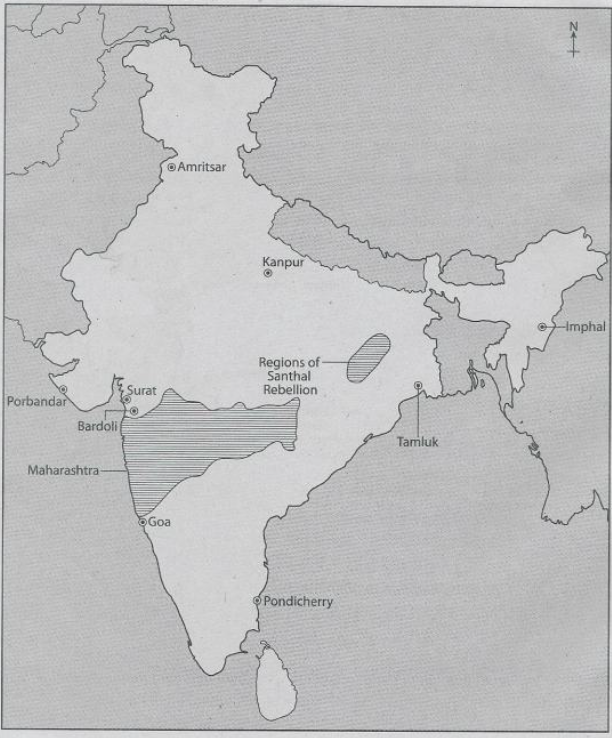
WBBSE Solutions for Class 10 History outline map of India 3


2 Areas of the Barasat Rebellion

Answer:
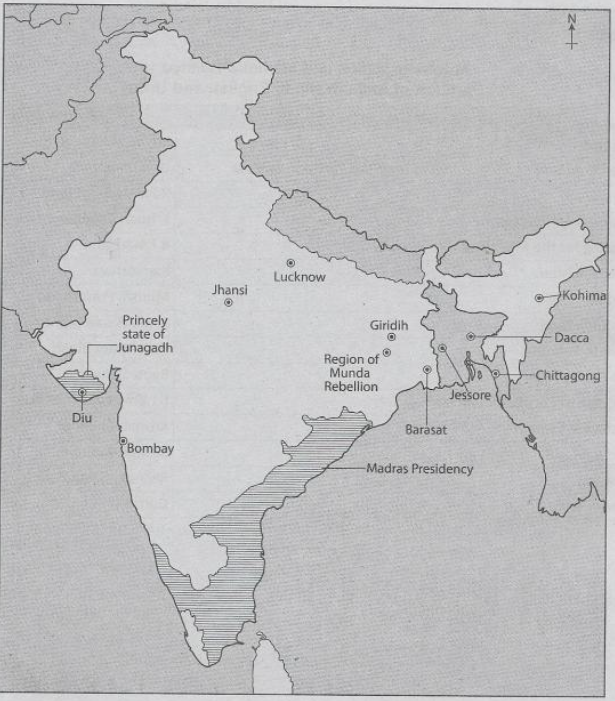
 

WBBSE Solutions for Class 10 History outline map of India 1


3 A center of Indigo Rebellion-Jessore

Answer:


WBBSE Solutions for Class 10 History outline map of India 1


4 Princely state of Hyderabad

Answer:


WBBSE Solutions for Class 10 History outline map of India 2

Select The Correct Interpretation Of The Following Statements

Question 1 Statement: Rammohan Roy wrote a letter to Lord Amherst (1823 AD)

Interpretation 1: Appealing to abolish the practice of Sati.

Interpretation 2: Appealing to spread western education in India.

Interpretation 3: Appealing to develop Sanskritic education in India.

Answer:
Interpretation 2: Appealing to spread western education in India.

Question 2 Statement: Swami Vivekananda wrote the book ‘Bartaman Bharat’.

Interpretation 1: His aim was to write a history of modern India.

Interpretation 2: His aim was to propagate Neo-Hinduism.

Interpretation 3: His aim was to spread patriotism.

Answer:
Interpretation 3: His aim was to spread patriotism.

Question 3 Statement: The anti-partition movement in Bengal did not enunciate any program for the peasants and working-class people.

Interpretation 1: The peasants and the workers were opposed to this movement.

Interpretation 2: The British Government Issued prohibitory orders on the peasant-working class agitations.

Interpretation 3: Anti-partition movement in Bengal was basically a Middle-Class Movement.

Answer:

Interpretation 3: Anti-partition movement in Bengal was basically a Middle-Class Movement.

History Question Paper Solutions WBBSE 2023

Question 4 Statement: Gandhiji did not support peasant movements against zamindars.

Interpretation 1: Gandhiji was a representative of the zamindar class.

Interpretation 2: Gandhiji was against violent movements.

Interpretation 3: Gandhiji believed in the synthesis of classes as against class struggle.

Answer:
Interpretation 3: Gandhiji believed in the synthesis of classes as against class struggle.

WBBSE Madhyamika Model Question Paper History Group C

Answer the following questions in two or three sentences only (any eleven):

Question 1 What is the importance of the study of local history?
Answer:

Importance of the study of local history

Local history is the study of history in a geographically local context. It enables us to know the cultural, social, and economic aspects of a locality and its community.

It helps to study everything pertaining to a certain locality: History, Ethnography, Geography, National History, etc. The study of local history is a source for the reconstruction of National History.

Question 2 What are ‘government documents’?
Answer:

Government documents:

Government documents are the primary sources of information for reconstructing the history of India.

Government documents include:

(1) Records of the British officials,
(2) Police and intelligence reports,
(3) Official letters and correspondence,
(4) History recorded by English officers in the light of their own experiences.

Question 3 What is the difference between newspapers and periodicals?
Answer:

Differences between newspapers and periodicals are given below-

(1) Newspapers are usually published regularly and daily, whereas periodicals are published less frequently than daily newspapers.

(2) Newspapers contain different informative contents of everyday life, whereas periodicals give importance only to specific contents of the contemporary period.

(3) Newspaper articles are written by newspaper staff and do not provide authors’ names, whereas periodicals used subject experts for publication.

Question 4 Who was Madhusudan Gupta?
Answer:

Madhusudan Gupta

Madhusudan Gupta was the first person in modern India to have dissected a human body. He was assisted by Raj Krishba Dey, Umacharan sett, Dwarkanath Gooptu and Nabin Chandra Mitra.

Important Topics for WBBSE Class 10 History

Question 5 Why did the Sannyasi-Fakir rebellion fail?
Answer:

The Sannyasi and Fakir Rebellion (1763- 1800) was unsuccessful due to various reasons, namely:

[1] The rebels failed because the leaders were inexperienced.
[2] Communication prevented them from fighting unitedly against the British.
[3] The rebellion was limited to a small region.
[4] The rebels were not popular among all classes of people.

Question 6 What was the role of the Christian Missionaries in the Indigo rebellion?
Answer:

The role of the Christian Missionaries in the Indigo rebellion:

The Christian missionaries who came from Europe played an important part in the Indigo Rebellion. They supported the cause of indigo cultivators. They expressed their views against the oppression and tyranny of the indigo planters and published these in newspapers.

Question 7 State two differences between the Landholders’ Association and the Indian Association.
Answer:

Two differences between the Zamindari Association and Bharat Sabha are as follows:

[1] The Zamindari Association was an association of landowners, zamindars, and rich businessmen whereas the Bharat Sabha was established with men from different sections of society.

[2] The primary objective of the Zamindari Association was to protect the interests of the landholders and zamindars whereas the primary objective of the Bharat Sabha was the general welfare of the people of India and the protection of their interests.

Question 8 What was the role of the painting ‘Bharatmata’ in the awakening of nationalism in the nineteenth century?
Answer:

The role of the painting ‘Bharatmata’ in the awakening of nationalism in the nineteenth century:

The famous image of ‘Bharat Mata’ was painted by Abanindranath Tagore. In this painting, Bharat Mata is portrayed as a four-armed Hindu Goddess wearing saffron-colored robes holding the Vedas, sheaves of rice, a ‘mala’, and a white cloth. It was an icon to create nationalistic feelings during the anti-partition struggle and Swadeshi Movement in 1905.
WBBSE Solutions For Class 10 History Chapter 4 Early Stages Of Collective Action Characteristics And Analyses Bharat Mata

Question 9 Who was Charles Wilkins?
Answer:

Charles Wilkins:

Charles Wilkins, a British East India Company Official, set up a printing press at Chinsurah in Hooghly in 1778. He designed a Bengali script, a style of letters, for the first time with the purpose of printing. However, those letters were quite simple and of inferior quality.

Question 10 What was the importance of the introduction of linotype printing in Bengali?
Answer:

The importance of the introduction of linotype printing in Bengali:

Suresh Chandra Majumdar devised a set of letters known as ‘linotype’ which was a highly developed design of letters. It became one of the mainstay methods to set type. Nathaniel Brassey Halhed’s ‘A Grammar of the Bengal Language’ was printed using a linotype.

Question 11 What was the role of Baba Ramchandra in the peasant movement?
Answer:

The role of Baba Ramchandra in the peasant movement:

Baba Ramchandra gave leadership to the peasant movement in the United Provinces (present Uttar Pradesh). He became the leader of the Kisan Sabha of the United Provinces and built up a strong movement. Under his leadership, the movement of the Kisan Sabha merged with Gandhiji’s Non-Cooperation movement.

Question 12 Who was Madari Pasi?
Answer:

Madari Pasi:

Though the initial thrust of the Eka Movement was provided by the Congress and the Khilafat leaders, the leadership of this movement soon changed from Congress to Madari Pasi, a low-caste leader. This was because Madari Pasi was not inclined to accept non-violence ideology. Due to the violent nature of the movement, Congress stayed aloof from the movement.

Question 13 Why is Matangini Hazra remembered?
Answer:

Matangini Hazra

Among the women who laid down their lives during the Quit India Movement was Matangini Hazra, a widow of 72 years, endearingly called ‘Gandhi Budi’. She led a crowd to occupy the Tamluk Police Station during the movement.

She became a martyr by carrying the national flag towards the Tamluk Court and embracing bullets till her death, shouting “Bande Mataram”. She is rightly called ‘Laxmi Bai of Midnapore’.

Question 14 Who are known as Dalits?
Answer:

Dalits:

From 1930, non-Brahmins, low caste Hindus, and the untouchables came to be known as ‘Dalits’. Gandhiji termed them as Harijans. They represented the most exploited and poorest section of society.

Question 15 Why was the Dar Commission (1948) formed?
Answer:

Immediately after the independence of India, there was a demand for the reorganization of states on the basis of a long urge. Consequently, the Linguistic Provinces Commission, headed by Justice SK Dar, was appointed in 1948.

Question 16 Who was Potti Sriramulu?
Answer:

Potti Sriramulu:

Potti Sreeramulu was a great freedom fighter. He led the movement in Andhra over the demand for a separate Andhra State. He undertook a fast unto death over this issue and even gave up his life for this cause.

WBBSE Madhyamika Model Question Paper History Group D

Answer the following questions in seven or eight sentences each.

Attempt one question from each Subgroup. Answer six questions in all

Question 1 What reflections of nineteenth-century Bengali society do we get from the drama ‘Nildarpan’?
Answer:

Among the literary works of the 19th century that portrayed the conditions of society, Dinabandhu Mitra’s ‘Nil Darpan’ deserves special mention.

[1] Background: Due to the heavy demand for indigo in the European cloth industry, European merchants and planters forced Indian farmers to plant indigo. This was the reason behind the problems in the lives of the farmers. ‘Nil Darpan’ portrayed the condition of the farmers and the oppression of the farmers and the sharecroppers.

[2] Condition of the farmers and indigo ryots: The European planters forced the farmers to cultivate indigo instead of wheat. This was the prime reason behind the food shortage that was seen in this period. On the other hand the farmers. were not given the right price for the crops cultivated by them. On top of the food shortage, the farmers now faced acute financial crises as well. This condition of the farmers was vividly portrayed in Nil Darpan.

[3] Torture: ‘Nil Darpan’ portrayed the condition of the ryots and the tortures they faced by ryots in the hands of the indigo planters. The planters not only forced the farmers to plant indigo but also evicted them from their lands and took away their properties.

[4] Indigo Revolt: Due to the inhuman torture faced by the Indigo farmers at the hands of the European planters, the farmers rose in revolt against this forceful cultivation of Indigo. This uprising of the farmers was known as Indigo Revolt. This revolt was portrayed by ‘Nil Darpan’.

Question 2 What role did Drinkwater Bethune play in spreading women’s education in the nineteenth century?
Answer:

Role Of Drinkwater Bethune play in spreading women’s education in the nineteenth century

John Elliot Drinkwater Bethune was an eminent poet, educator, and member of the Viceroy’s council. He is known for his contribution to promoting women’s education.

[1] Condition of women: After coming to India for official purposes, Bethune was grieved by the condition of the Indian women and he took initiative to introduce female education in the country.

[2] Establishment of schools: For the upliftment and progress of women’s education, he established the Hindu Mahila Vidyalay in Mirzapur, Calcutta. Vidyasagar was the president of the working committee of the school. He took the support of people such as Dakshinaranjan Mukherjee, Ramgopal Ghosh, and Madan Mohan Tarkalankar and donated all his movable and immovable property to the school.

[3] Establishment of college: To promote higher education among women Bethune established a women’s college which is at present known as Bethune College. The institution was started with the vision of producing successful enlightened generations of women.

Pritilata Waddedar, the famous freedom fighter, was a student at this college. Bethune college holds the singular distinction of being Asia’s first women’s college and has many implications in view of its continuing success in the field of higher education.

Question 3 What were the objectives behind the foundation of the Hindu Mela?
Answer:

The objectives behind the foundation of the Hindu Mela:

In 1867, the Hindu Mela, an annual festival was established in Calcutta-the main plank of which was Swadeshi or manufacture and use of indigenous consumer goods and the increased use of Indian languages.  Big exhibitions of varied products of Indian arts and crafts were organized to encourage Indian producers to educate the general public about their own country.

The most significant objective of the Mela was the fostering of a unitary image of India and establishing institutions for imparting physical education, which involved exercises for building up the discipline and manhood of the nation, with a view to counter British imperialism and colonialism. Thus its main object was to foster a spirit of self-help among the Hindus and to promote all Indian integration through committees and slogans.

Previous Year WBBSE History Question Papers

Question 4 Why is the ‘Bangabhasha Prakashika Sabha’ regarded as the first political organization?
Answer:

The Bangabhasha Prakashika Sabha is known to be the first political association. Its first session started on December 8, 1836. The Sabha regarded the government measured as highly injurious to the country.

The association discussed tropics connected with the policy and administration of the government and sought redressal by sending petitions and memorials to the government. It protested against the tax imposed on rent-free lands.

It decided to summon a public meeting to discuss the proposal of sending a petition to the government signed by five thousand persons. A circular was distributed widely among the people in Calcutta (Kolkata) and its neighborhood.

Thus it may be said that the founder members Dwarkanath Tagore, Kasinath Roy, and Prasanna Kumar Tagore were politically conscious and the Bangabhasa Prakashika Sabha established by them was the first political association.

Question 5 Explain the relationship between printed books and the spread of education.
Answer:

The relationship between printed books and the spread of education:

During the 18th and 19th centuries people of India were largely illiterate. With the introduction of printed books dissemination of knowledge became easy.

[1] Printed books were cheaper than handwritten books and the public could afford to buy printed books which helped in the dissemination of knowledge.

[2] The Bible, the Ramayana, the Mahabharata, and other Indian literary works, as well as various textbooks, were printed and translated into several languages such as Bengali, Hindi, Marathi, and so on. These translated books were made available to the people even in rural areas.

[3] Newspapers were printed and published, which helped in the dissemination of education among students and even among women.

[4] Cheaply printed books were made available to the students which helped in the spread of education among them.

[5] Literacy spread as more people were able to read in their mother tongue.

Question 6 What was the contribution of Dr. Mahendralal Sarkar to the cultivation of science in Bengal?
Answer:

The contribution of Dr. Mahendralal Sarkar to the cultivation of science in Bengal:

The Indian Association for the Cultivation of Science was established in 1867 by Mahendralal Sircar. It is one of the leading scientific institutions in India. It was the first national science association in India. Mahendralal realized that to achieve economic prosperity and hasten social change, it is necessary that Indians must cultivate science.

Basic departments such as Chemistry, Physics, Mathematics, Biology, and Spectroscopy were established. This institute is engaged in fundamental research in various branches of science. Lectures and demonstrations are arranged regularly for the public to popularise science.

Question 7 How did the Government of India tackle the question of integrating the princely states into the Indian Union?
Answer:

After the independence of India, the incorporation of the princely states posed a big problem. At the time of the transfer of power, the British government left these princely states free to join India or Pakistan.

All the states of free India, except Kashmir, Hyderabad, and Junagadh, immediately joined the Indian Union. Sardar Vallabhbhai Patel drafted the Instrument of Accession according to which the states were to be given freedom in their internal affairs and the Union Government was to have control over the defense and foreign policy of these states.

Most of the 562 states signed the Instrument of Accession. However, Junagadh, Hyderabad, and Kashmir did not agree to join India. The Indian troops invaded and occupied Junagadh.

The Nizam of Hyderabad tried to act like an independent ruler, but Indian police took action against him and Hyderabad was merged with India. The state of Jammu and Kashmir too acceded to India, but Pakistan refused to accept this merger. This led to wars with Pakistan.
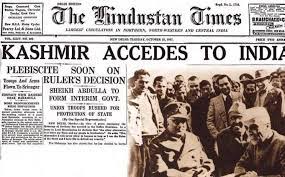
WBBSE Solutions For Class 10 History Chapter 8 Post Colonial India Second Half Of The 20th Century Paper Cutting with the news of Kashmir's Accession to India

Question 8 How did the Kashmir problem originate?
Answer:

Origin Of Kashmir problem

After India’s independence, when the most important princely state, Answer: Kashmir, declared to remain an independent state, it gave rise to certain problems.

[1] Attempts by Kashmir to maintain its independence: After India attained independence, both India and Pakistan asked Maharaja Hari Singh to accede into their respective nations. The Maharaja refused both offers and declared his wish to remain an independent state.

[2] Entry of the Pakistan army: The Pakistani government anticipated that the Hindu Maharaja might want to join India at some point of time. Consequently, on October 22, 1947, mercenaries supported by the Kashmir government infiltrated Kashmir. The Maharaja became helpless and asked for military help from India. India, in this backdrop, agreed to help him only if he agreed to sign the Instrument of Accession to the Indian Union.

[3] Signing the Instrument of Accession: The forces sent by Pakistan rapidly spread within Kashmir and moved towards Srinagar. This left Maharaja Hari Singh no choice but to sign the Instrument of Accession, and he signed it on October 26.

[4] Setting up of government: With the aid of the Indian army, the leader of the National Conference party in Kashmir, Sheikh Abdullah, took the control of the state. In the meantime, acting against Sheikh Abdullah, the part of Kashmir occupied by Pakistan was named ‘Azad Kashmir’ by the Pakistan government. From here, a number of attacks were launched on the region of Kashmir under Indian control.

[5] Appeal to the United Nations: India took up the Kashmir issue to the United Nations in order to protest against the infiltration by Pakistan.

[6] Ceasefire: In the backdrop of the constant conflicts between India and Pakistan in Kashmir, the United Nations declared a ceasefire on January 01, 1949. Due to this, a part of Kashmir came under the Indian Union, but Azad Kashmir remained a part of Pakistan.

As Pakistan did not get the whole of Kashmir, it has been launching several attacks on the other part of Kashmir ever since. Based on this issue, major wars have taken place between these two nations in 1947, 1965, 1971, and 1999.

WBBSE Madhyamika Model Question Paper History Group E

Answer any one question in fifteen or sixteen sentences:

Question 1 Give a brief account of the Widow Remarriage movement led by Vidyasagar. What was the extent of the success of Vidyasagar in this field?
Answer:

Widow Remarriage movement led by Vidyasagar:

Iswar Chandra Vidyasagar was a great social reformer. He gave a new dimension to the social progress of Bengal. He is remembered for his contribution toward the upliftment of women. He waged a long struggle for widow remarriage and tried to improve the condition of the suffering Hindu widows.

[1] Campaign in favor of widow remarriage: In order to save the widows from their miserable condition Vidyasagar launched campaigns advocating widow remarriage. In order to form public opinion in favor of the widow’s remarriage he wrote different essays in the Tattwabodhini Patrika. He urged the British to pass legislation in favor of widow remarriage and he collected almost 1000 signatures and sent his petition to the government.

[2] Widow Remarriage Act Passed: In 1856 the Hindu Widow Remarriage Act was passed which legalized the remarriage of Hindu widows. Vidyasagar played a pivotal role in passing the act.

[3] Widow remarriage performed: On December 7, 1856, under the supervision of Vidyasagar, the first lawful Hindu widow remarriage was held. In the years between 1856 and 1860, twenty-five widow remarriages were performed under his inspiration.

[4] The extent of success of Vidyasagar: The enactment of the Hindu Widow Remarriage Act, 1856 was one of the major social changes in 19th century India. Widow remarriage brought new life to the lives of the widows. Though the Widow Remarriage Act was opposed by the conservative section of society it was supported by DK Karve of Maharastra, Veersalingam Pantulu of Madras, and the Prarthana Samaj of Bombay.

But the Widow Remarriage Act could not drastically change the situation because many widows themselves in addition to men were opposed to this reform. Ban on widow remarriage was rooted in Hindu beliefs, family system, and social structure.

Question 2 Give a brief description of the development of Technical Education in Bengal.
Answer:

The development of Technical Education in Bengal:

Prior to the establishment of British rule in Bengal, there was no provision for western education that included modern technology. Technical education began to develop in Bengal in the 19th century.

Technical institutes: Along with the progress of science in Bengal, some educational institutions also grew up to impart technical education. Such institutes include Roorkee Engineering College (1847), Calcutta Engineering College (1856), Association for the Advancement of Scientific and Industrial Education, Calcutta (1903), Jadavpur Engineering College (1906), Bengal Technical Institute (1906), etc, Bengal Technical Institute was established by Taraknath Palit in Calcutta when the Swadeshi Movement (1905) started against the partition of Bengal.

Its contributions towards the spread of technical education are as follows-

[1] Initiative for national education: During the Swadeshi Movement, an attempt was made to establish a national system of education as an alternative to the education system of the British government. One of the objectives of national education was the spread of indigenous technical education. So Taraknath Palit, an Indian lawyer, founded the Bengal Technical Institute in Calcutta on July 25, 1906.

[2] Association with other institutes: In order to spread the indigenous system of education, Bengal Technical Institute merged with Bengal National College in 1910 and formed the Bengal National College and Technical School. This joint institution was renamed as College of Engineering and Technology (CET) in 1928.

[3] Activities: After the merging of the institutions, arrangements were made for the cultivation of various subjects like Physics, Chemical Technology, Industrial Technology, etc., besides the disciplines of Humanities. As a result, several educated Bengalee youths could receive technical education and become self-dependent.

Question 3 How did women participate in the anti-partition movement of Bengal? What was the limitation of their movement?
Answer:

Women participate in the anti-partition movement of Bengal:

Bengal was partitioned in 1905 by Lord Curzon. The Indians resisted the plan of partition to pressurize the British government to repeal the partition. In this context, women played an important role in the Anti-Partition agitation.

They were encouraged to come out of seclusion and take rightful steps in the national struggle. Women boycotted British goods and began to use indigenous goods. On the day of partition (October 16, 1905), they observed ‘Arandhan’ day. Sarala Devi Chaudhurani, through her journal ‘Bharati’, encouraged the women’s community to take part in the Anti-Partition Movement.

Sarojini Naidu traveled to various places and involved women participating in the boycott movement. Khairunnisa, through the journal ‘Nabanoor’, promoted the idea of Swadeshi among women as well. Women took part in the ‘Raksha Bandhan Utsav’ (October 16, 1905).

Women even donated money and ornaments to the Swadeshi fund. Among them, mention may be made of Kumudini Mitra, Lilabati Mitra, Nirmala Sarkar, etc. The Maharani of Natore also gave a call to the women to boycott British goods. community Ambujasundari Dasgupta of Jalpaiguri, the widow of Laxman Chandra (the zamindar of Mangalganj, Nadia), Punjalata Gupta of Mymensingh, Hemangini Das of Calcutta also made appeals to reject British-made goods.

Muslim women, however, did not directly participate in the movement, but only cooperated with their male counterparts. Women in large numbers did not participate in the Swadeshi Movement. The participation of women was confined to women of high-caste Hindu families. The movement could not spell its charm to attract low-class Hindu and Muslim women. Women did not have any effective organization or party of their own.

Plans and programs of the Swadeshi Movement were determined by their male counterparts who had no role to play. Though the Swadeshi Movement was a mass movement women’s activities were resented by the conservative section of society which discouraged many of them from taking part in the swadeshi movement.