WBBSE Solutions For Class 10 Geography And Environment Chapter 6 India- Economic Environment Topic 2

Chapter 6 India- Economic Environment Topic 2 Industries In India Long Answer Type Questions

Question 1. Discuss the factors which influence the location of industries. OR, Which factors should be considered before choosing a location for setting up an industry?
Answer:

Industries cannot be established anywhere and everywhere on the earth.

The factors which must be considered before setting up an industry are discussed below—

1. Raw materials: The location of the industry primarily depends upon the type of raw materials that are being used in that particular industry. Raw materials are of two types—

2. Pure raw materials: The raw materials which do not lose weight during their processing into finished products are called pure raw materials.

Examples—Cotton and jute. One tonne of cotton or jute will produce one tonne of cotton fabric or jute goods. Thus, industries dependent on pure raw materials can be established anywhere between the source of raw materials and the market, as the transportation cost remains the same.

3. Impure raw materials: The raw materials which lose weight during their processing into finished products are called impure raw materials. For example, Sugar manufactured from sugarcane has less weight than the raw material. So, to reduce transportation costs, industries dependent on impure raw materials are established in the vicinity of the source of the raw material.

2. Water: Availability of water is essential for all industries for the industrial processes as well as for the workers. So, industries are usually set up near waterbodies like rivers and lakes. Example—The iron and steel plant at Durgapur has been established near the Damodar River in West Bengal.

3. Power: Power is extremely important for the proper functioning of industry, especially thermal and hydroelectric power resources. For this reason, many industries in Europe and America have grown up centring the coalfields. In India, there are many industries which have been built close to thermal and hydropower plants.

4. Transport: A well-connected transport system is required for sourcing the raw materials, taking the finished products to the nearby market or port (for importing and exporting purposes) and movement of labourers and other people associated with the industry. It is best to set up an industry at a location where the cost of transportation is minimal.

5. Availability of labour: The establishment of an industry requires an abundant supply of skilled and cheap labour. Availability of labour is such an important factor that Bangladesh has progressed in the cotton textile industry only due to the presence of abundant labour although an adequate amount of cotton is not grown in this country.

6. Market: An industry develops depending on the market demand for a certain product. Wherever there is a demand for a particular product, industries based on that product are generally set up.

Example—Although cotton is not cultivated in West Bengal, the cotton textile industry has flourished in the Hooghly region because of the large population which led to the high demand for cotton clothes.

7. Capital: Huge capital investments are essential for setting up an industry. An adequate amount of capital is required to buy the plot, set up the industry, buy equipment and raw materials, establish factory shade, pay the wages of labourers and provide a continuous power supply

For example, The cotton textile industry has flourished to a great extent in western India due to huge capital investment by Gujarati and Parsi businessmen.

India Economic Environment Class 10 Topic 2 notes

Question 2. Explain briefly the factors responsible for the development of the cotton textile industry in Western India. OR, Discuss the causes of the concentration and cotton textile industries in the Mumbai-Ahmedabad region. OR, Justify the concentration of cotton in the textile industry in the black soil region of Western India.

Answer:

At present, there are many cotton textile mills concentrated in the western region of India (in the black soil region of western India), mainly in Maharashtra, including the districts of Mumbai, Pune, Nagpur, Sholapur, Akola and Jalgaon and Gujarat, including the districts of Ahmedabad, Surat, Bharuch, Vadodara and Rajkot.

The causes behind the concentration of cotton textile industries in Western India are discussed below—

1. Best cotton-producing region: The black soil region of Maharashtra and Gujarat is extremely suitable for cotton cultivation. Hence, the raw materials (i.e., cotton) for the cotton textile industry are readily available in this region.

2. Humid climate: Hot and humid climate of this region due to its proximity to the Arabian Sea is favourable for cutting the yarn.

3. Power resources: Hydroelectric power plants in Ukai, Kadana (Gujarat) and Bhivpuri, Khopoli, Koyna (Maharashtra); thermal power plants in Trombay and Nasik (Maharashtra) provide the necessary power to the cotton textile mills.

4. Nearness to ports: Three important ports of India-Mumbai, Kandla and NhavaSheva (Jawaharlal Nehru port) and other smaller ports namely Surat and Porbander are located in this region. These ports help in the export of cotton fabric and the import of raw materials and necessary equipment.

5. Well-connected transportation system: The Western, Central and Konkan railways as well as the National Highways 3, 4, 6, 7 and 8 pass over this region thereby forming a well-connected transportation system. This transport network helps in acquiring f raw materials and sending the finished products to different parts of the country.

6. Capital: Wealthy Gujarati, Parsi and Bhatia businessmen have invested huge capital in the cotton textile industry. Apart from this, Mumbai being the ‘financial capital’ of India is advantageous in terms of acquiring capital for the cotton textile industry.


WBBSE Solutions Class 10 geography and environment chapter Chapter 6 India Economic Environment Cotton textile industry in western india


7. Easy availability of labour: Abundant supply of skilled and cheap labour is found in the Mumbai-Ahmedabad region as this region is densely populated.

8. Infrastructure: Suitable infrastructure required for the development of the cotton textile industry is available here which has helped the industry flourish.

9. High demand: There is a huge demand for cotton clothes in our country because of the large population. Also, the high demand for cotton fabric in foreign markets has helped this industry grow.

Question 3. Discuss the problems of the cotton textile industry in India and their remedial solutions.
Answer:

The problems of the cotton textile industry are discussed below—

1. Lack of raw materials: Long staple cotton (suitable for making the best quality cotton fabric) is not available in adequate quantities in India.

2. High cost of production: Long staple cotton is imported from different countries which have led to an increase in the production cost.

3. Old machinery: Most of the cotton textile industries have old and outdated machinery which produces low-quality fabric. This has ultimately led to a high cost of production.

4. Stiff competition in the global market: The sale of cotton fabrics from India is limited in European countries. India also faces stiff competition from other countries in selling cotton fabric to the global market.

5. Competition with synthetic fibres: Synthetic fibres such as rayon, nylon, polyester, and acrylic are popularly used nowadays to make different fabrics. This has, to some extent, decreased the demand for cotton fabric.

6. Irregular power supply: Sometimes inadequate power supply to the cotton textile mills hampers production.
The remedial solutions to the problems faced by the cotton textile industry in India are as follows—

1. Modernisation of the industry: The Government of India has set up the Textile Modernisation Fund which will help in replacing old and outdated machinery with advanced ones and implement modern technologies in the production process.

2. Cultivation of long-staple cotton: To reduce the import of long-staple cotton from other countries, it is being cultivated in the northwestern region of India with the help of irrigation.

3. Reduction in excise duty: As per the recommendation of the Joshi Committee, the government has reduced the excise duty on cotton-based commodities.


WBBSE Solutions Class 10 geography and environment chapter Chapter 6 India Economic Environment Cotton textile industry


4. Use of automated power looms: Fully automated power looms are being nowadays in order to increase the rate of production and reduce the price of the finished product.

5. Establishment of the cotton textile export promotion council: The cotton Textile export promotion council has been established in order to facilitate the export of cotton-based commodities.

6. Establishment of research institutes: Many research institutes like Ahmedabad Textile Research Association, Mumbai Textile Research Association and South India Textile Research Association have been set up to focus on the betterment of cotton fabrics.

7. Establishment of the National Textile Corporation: The National Textile Corporation (NTC) has been established to revive the sick cotton industries by introducing new machinery and advanced technology.

Question 4. Briefly discuss the causes that have influenced the development of the cotton textile industry in India.
Answer:

The cotton textile industry in India is a flourishing industry and there are at present, many cotton textile mills distributed all over the country.

Cotton textile industries in India can be divided into four categories on the basis of their location—

1. Western region,
2. Southern region,
3. Northern region and
4. Eastern region.

The causes that have influenced the development of cotton textile industries in these regions are discussed below—

1. Availability of raw materials: Adequate amount of cotton is grown in the black soil region of India which is used as the raw material in the cotton textile industry. Apart from this, the southern states of India have taken initiative to start the cultivation of long and very long staple cotton.

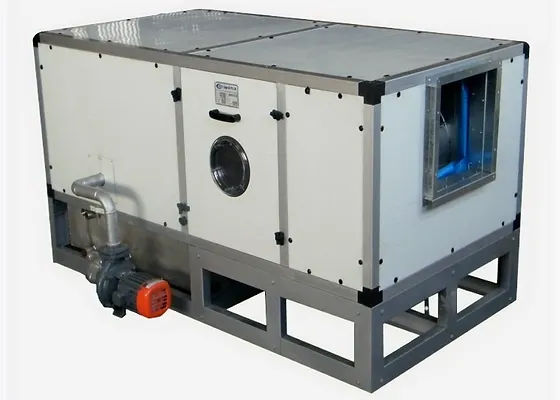
2. Humid climate: Hot and humid climate prevails in the states of peninsular India, especially the southern states which are highly favourable for cotton cultivation. This type of climate also helps in cutting the yarns. Nowadays, a humid atmosphere is artificially created in factories using humidifiers.

3. Easy power supply: A number of thermal power plants and hydel power plants have been established in this region in post-independent India.

These power plants supply the requisite power to the cotton and textile industries. Examples—Ukai, Koyna in western India; Hirakud, Talcher, Bandel in eastern India; Bhakra-Nangal, Rihand, Bhatinda in northern India; Mettur, Sivasamudram, Nagarjunasagar in southern India.

4. Proximity to ports: The raw materials are imported and the finished products are exported through the various ports situated close to the cotton textile mills. Example— Mumbai, Kandla (west coast of India); New Mangalore, Kochi, Chennai (south coast of India); Visakhapatnam, Kolkata, Haldia (east coast of India).

5. Well-connected transport system: Numerous railway lines, national highways and other important roads have been linked in such a way that a well-connected transport system has developed in India. Thus, it has become easy to collect raw materials from different parts of the country and distribute the finished products all over the country.

6. Capital: Wealthy businessmen from the Parsi, Bhatia and Gujarati communities as well as several government and non-governmental organisations have invested huge capital in the cotton textile industries of India.

7. Cheap labour: India is a highly populated country. Thus the availability of cheap and skilled labour is a favourable factor that promotes the development of cotton textile industries in India.

8. High demand: There is a huge demand for cotton fabrics in both national and international markets. This has helped in the development of the cotton textile industry in India.

Question 5. Discuss the locational advantages of any two large-scale iron and steel plants in India.
Answer:

Two large-scale iron and steel plants in India are the Indian Iron and Steel Company (Kulti-Burnpur) and Durgapur Steel Plant (Durgapur).

The locational advantages of these two large-scale iron and steel plants in India are discussed below—

1. Indian Iron and Steel Company (IISCO), Kulti’Burnpur

Location: This iron and steel plant is located on the banks of the river Damodar in Paschim Bardhaman district of West Bengal and is connected by the Eastern Railway. The steel plant partially lies in both Kulti and Burnpur.

Establishment: The iron and steel plant at Kulti was established in 1870 and that at Burnpur was established in 1919 under private enterprise. In 1973, these two plants were brought under the control of the government of India.

Locational advantages behind the establishment of IISCO

1. Raw materials: The raw materials needed for this iron and steel plant and the places from where they are acquired are given in the following table—


Raw material Place
Coal Raniganj (West Bengal) and Jharia (Jharkhand).
Iron ore Gua; Noamundi (Jharkhand); Bolani, Gorumahisani, Badampahar (Odisha).
Limestone Gangpur and Birmitrapur (Odisha).
Dolomite Gangpur (Odisha).
Manganese Gangpur (Odisha).


2. Availability of water: The nearby rivers, Damodar and Barakar meet the demand for water required for this iron and steel plant.

3. Refractory bricks: Refractory bricks sourced from coal mines at Raniganj are used in this plant.

4. Location of power plants: Power supply from the nearby thermal power plants at Durgapur, Dishergarh and Mejia provides the necessary power to the iron and steel plant.

5. Cheap labour: Cheap and skilled labourers from the nearby densely populated regions of Bihar, Jharkhand and West Bengal meet the demand of labourers required for this plant.

6. Well-connected transport system: National Highway 2 and the Eastern Railway help in transporting raw materials and finished products.

7. Proximity to ports: The ports at Haldia and Kolkata are within 230km of this plant. This helps in the export and import of goods necessary for this plant.

8. Demand: The rise in the demand for iron and steel in India as well as in other countries has created a good market for iron and steel-based products both in national and international markets.

2. Durgapur Steel Plant, Durgapur:

Location: This iron and steel plant is located on the eastern side of the Raniganj coal mines, beside the Eastern railway track on the banks of the Damodar river. Establishment: Established by government enterprise in 1956, but production started in 1962.

Locational advantages behind the establishment of the Durgapur Steel Plant:

1. Raw materials: The raw materials needed for this iron and steel plant and the places from where they are acquired are given in the following table—


Raw material  Place
Coal  Raniganj (West Bengal) and Jharia (Jharkhand).
Iron ore Gua, Noamundi (Jharkhand); Gorumahisani, Badampahar (Odisha).
Limestone Gangpur and Birmitrapur (Odisha).
Manganese Gangpur (Odisha).


Location of power plants: Durgapur thermal power plant provides the power necessary for the functioning of the plant and provides the water required for this plant

1. Cheap labour: Cheap and skilled labourers from Bihar, Jharkhand and West Bengal meet the demand of labour required for this plant.

2. Well-connected transport system: National Highway 2 and the Eastern Railway help in transporting raw materials and the finished products

3. Proximity to ports: Nearness of this plant to the Kolkata port (160km away) and the Haldia port (250 km away) provides opportunities for the import and export of goods.

4. Cheap labour: Cheap and skilled labourers from Bihar, Jharkhand and West Bengal meet the demand of labour required for this plant.

5. Well-connected transport system: National Highway 2 and the Eastern Railway help in transporting raw materials and the finished products

6. Proximity to ports: Nearness of this plant to the Kolkata port (160km away) and the Haldia port (250 km away) provides opportunities for the import and export of goods.

7. Demand: The establishment of heavy engineering industries in the eastern region of India as well as the high demand for iron and steel all over the world have created a good market for the finished products.


WBBSE Solutions Class 10 geography and environment chapter Chapter 6 India Economic Environment 3

WBBSE Class 10 Geography Topic 2 summary

Question 6. Discuss the locational advantages of two iron and steel plants in India—one under the public sector and the other under the private sector.
Answer:

The locational advantages of two iron and steel plants in India

Two iron and steel plants in India, one under the public sector and the other under the private sector are—Bhilai Steel Plant at Bhilai and Tata Iron and Steel Company at Jamshedpur.

1. An iron and steel plant under the public sector—Bhilai Steel Plant

Location: The Bhilai Steel Plant is the largest iron and steel plant in India and is located at Bhilai in the Durg district of Chhattisgarh.

Establishment: This iron and steel plant was a government of India initiative and had a collaboration with erstwhile Soviet Russia. It was established in the year 1956. However, the plant became fully operational in 1959.


WBBSE Solutions Class 10 geography and environment chapter Chapter 6 India Economic Environment location of iron and steel plant at bhilai


Locational advantages behind the establishment of Bhilai Steel Plant:

1. Raw materials: The raw materials needed for this iron and steel plant and the places from where they are acquired are given in the following table—


Raw material Place 
Coal Korba (Chhattisgarh); Jharia (Jharkhand).
Iron ore Dalli-Rajhara (Chhattisgarh).
Limestone Nandini and Bilaspur (Chhattisgarh).
Dolomite Hirri, Baradwar (Chhattisgarh).
Manganese Balaghat (Madhya Pradesh); Bhandara (Maharashtra).


2. Availability of water: The Tendula reservoir situated close by supplies water to this plant.

3. Power resources: Bhilai Power Plant and Korba Thermal Power Station supply power to this plant.

4. Cheap labour: Cheap and skilled labourers from the nearby region are easily available. This is because the industry provides employment as there is a minimum scope of employment in the agricultural sector.

5. Well-connected transport system: The South-Eastern railway connects the steel plant to Mumbai and Kolkata whereas National Highway 6 connects the plant to other parts of the country.

6. Proximity to the port: The Visakhapatnam port is only 570km away from this plant. This facilitates the import of raw materials and the export of finished products.

7. Demand: High demand for iron and steel in central and western India, especially for the development of heavy engineering industries in western India has helped in the growth of this iron and steel plant.

2. An iron and steel plant under the private sector—Tata Iron and Steel Company (TISCO)

Location: The Tata Iron and Steel Company is located at Jamshedpur in the East Singbhum district of Jharkhand at the confluence of the Subarnarekha and Kharkai rivers. This is the largest of all the iron and steel plants in the private sector in India.

WBBSE Solutions Class 10 geography and environment chapter Chapter 6 India Economic Environment location of iron and steel plant at jamshedpur


Establishment: TISCO was founded by pioneer industrialist Jamsetji Tata in the year 1907 at Jamshedpur.

Locational advantages behind the establishment of Tata Iron and Steel Company:

1. Raw materials: The raw materials needed for this iron and steel plant and the places from where they are acquired are given in the following table—


Raw material Place 
 Coal Jharia, Bokaro (Jharkhand); Raniganj (West Bengal).
Iron ore Bolani, Barsua (Odisha); Gua, Meghahatuburu, Kiriburu (Jharkhand).
Limestone Gangpur, Birmitrapur (Odisha); Purnapani (Chhattisgarh).
Dolomite Sambalpur (Odisha); Baradwar (Chhattisgarh).
Manganese Gangpur, Kalahandi (Odisha).


2. Availability of water: Ample supply of water is available from the river Subarnarekha and its tributary Kharkai.

3. Power resources: This steel plant has its own thermal power station which provides the necessary power resource.

4. Cheap labour: The highly populated regions of Jharkhand and Odisha are a source of cheap and skilled labour. As agricultural practices are not prevalent here, many people look for employment in the iron and steel industry.

5. Well-connected transport system: The industry is well-connected to the rest of the country by the South-Eastern Railway, and the National Highways 2, 23, 31, 33.

6. Proximity to port: The Kolkata port which is about 280 km away from this plant helps in the import of raw materials and export of finished products.

Establishment: The Bokaro Steel Plant was a government of India initiative and had a collaboration with erstwhile Soviet Russia. The plant was established in the year 1964 but it became fully operational in 1972.


Question 7. Discuss the geographical factors that have influenced the development of the Bokaro Steel Plant.
Answer:

Location: The Bokaro Steel Plant is located near the Bokaro coal mines in the Bokaro district of Jharkhand.


WBBSE Solutions Class 10 geography and environment chapter Chapter 6 India Economic Environment location of iron and steel plant at steel plant


Establishment: The Bokaro Steel Plant was a government of India initiative and had a collaboration with erstwhile Soviet Russia. The plant was established in the year 1964 but it became fully operational in 1972. The geographical factors that have influenced the development of the Bokaro Steel Plant are discussed below—

1. Raw materials: The raw materials needed for this iron and steel plant and the places from where they are acquired are given in the following table—

Raw Material  Place
Coal  Bokaro, Jharia (Jharkhand).
Iron ore Chiria, Gua, Meghahatuburu, Kiriburu (Jharkhand).
Limestone Bhawanathpur, Daltonganj (Jharkhand); Birmitrapur (Odisha).
Dolomite Bilaspur (Chhattisgarh)
Manganese Ganpur (Odisha)


2. Availability of water: Adequate amount 3 of water is collected from the Tenughat reservoir constructed over the Damodar river.

3. Power resources: The power required for this plant is sourced from the Bokaro and Patratu thermal power stations.

4. Cheap labour: Cheap and skilled labourers from Jharkhand form the majority of the workforce in this plant. As agricultural practices are not prevalent here, many people look for employment in the iron and steel industry.

5. Well-connected transport system: This iron and steel plant is connected to the rest of the country by the South-Eastern Railways and National Highways 2, 23, 31, and 33.

6. Proximity to port: The Kolkata port, located 320km away from this plant facilitates the import of raw materials and export of finished products.

7. Demand: The establishment of heavy engineering industries in Jamshedpur, Ranchi and adjacent areas has created a huge demand for the finished goods of this plant.


Question 8. Discuss the factors behind the development of iron and steel plants at Rourkela and Visakhapatnam.
Answer:

Rourkela Steel Plant

Location: The Rourkela Steel Plant is located on the banks of the Brahmani river in the Sundargarh district of Odisha, along the SouthEastern Railway track.

Establishment: The Rourkela Steel Plant was established in the year 1956. It was a government of India initiative in collaboration with the German company Krupps and Demag. The steel plant became fully functional in the year 1959.


WBBSE Solutions Class 10 geography and environment chapter Chapter 6 India Economic Environment location of Rourkela and steel plant


The factors that have influenced the development of the iron and steel plant at Rourkela are discussed below—

1. Raw materials: The raw materials needed for this iron and steel plant and the places from where they are acquired are given in the following table—


Raw material Place
Coal Jharia, Bokaro (Jharkhand); Raniganj (West Bengal).
Iron ore Bolani, Barsua (Odisha); Gua, Meghahatuburu, Kiriburu (Jharkhand).
Limestone Gangpur, Birmitrapur (Odisha); Purnapani (Chhattisgarh).
Dolomite Sambalpur (Odisha); Baradwar (Chhattisgarh).
Manganese Gangpur, Kalahandi (Odisha).


2. Availability of water: Adequate amount of water for the steel plant is available from the Brahmani and Sankha rivers as well as from the reservoirs of south Koyel and Mandira.

3. Power resources: The power required for this plant is sourced from the Hirakud hydel power station.

4. Cheap labour: Cheap and skilled labourers from the nearby region are easily available because there is very less scope for employment in the agricultural sector.

5. Well-connected transport system: The South-Eastern Railways; East Coast Railways and several National Highways connect this steel plant to metropolitan cities like Kolkata, Mumbai and other parts of the county.

6. Proximity to port: The Paradeep port located 400 km away and the Kolkata port located 510 km away help in the import of raw materials and export of finished products.

7. Demand: The development of heavy engineering industries in eastern India has created a high demand for the iron and steel industry.

Visakhapatnam Steel Plant Location: This steel plant is located on the eastern coast of India in Visakhapatnam in the state of Andhra Pradesh.

Establishment: The Visakhapatnam Steel Plant was established in 1982 and became fully functional in 1990. This is the largest iron and steel plant in the southern region of India.

The factors that have influenced the development of the iron and steel plant at Visakhapatnam are discussed below—

1. Raw materials: The raw materials needed for this iron and steel plant and the places from where they are acquired are given in the following table—


Raw material Place
 Coal  Singareni (Telangana); Talcher (Odisha).
Iron ore Kadapa, Nellore, Kurnool (Andhra Pradesh); Bailadila (Chhattisgarh).
Limestone Jaggayyapeta (Andhra Pradesh); Badnapur, Katni (Madhya Pradesh).


2. Availability of water: India-Economic Environment water is available from the reservoir situated over river Yeleru in the East Godavari district of Andhra Pradesh.

3. Power resources: The power required for this plant is sourced from the Ramagundam thermal power station.

4. Cheap labour: Cheap and skilled labour is easily available from nearby areas.

5. Well-connected transport system: The East Coast Railways and different roadways connect this steel plant with the rest of the country.

6. Proximity to port: The Visakhapatnam port is situated very close to this steel plant and even the Paradeep port is just 550km away from here. This helps in the import of raw materials and the export of finished products.

7. Demand: The development of heavy engineering industries in Andhra Pradesh and Odisha has created a good market for the finished products of this industry.

Question 9. Discuss the locational advantages of the Visvesvaraya Iron and Steel Limited (Bhadravati Iron and Steel Plant).
Answer:

Visvesvaraya Iron and Steel Limited (Bhadravati Iron and Steel Plant)

Location of the Visvesvaraya Iron and Steel Limited: The Visvesvaraya Iron and Steel Plant is located in Bhadravati on the banks of river Bhadra in northern Karnataka.


WBBSE Solutions Class 10 geography and environment chapter Chapter 6 India Economic Environment location of Visvesvaraya Steel plant


Establishment: This plant was established in the year 1918, but it became fully operational in 1923. In 1962, the Government of India and the state government of Karnataka took charge (400km away) to help in the import of raw materials and export of finished products.

Locational advantages behind the establishment of Visvesvaraya Iron and Steel Limited:

1. Raw materials: The raw materials needed for this iron and steel plant and the places from where they are acquired are given in the following table—


Raw material Place 
 Iron ore  Kemmanugundi, Bababudan hills (Karnataka).
Dolomite Bhundiguda (Karnataka).
Limestone Bhundiguda (Karnataka).
Manganese Shimoga, Chitradurga (Karnataka).


2. Availability of water: The river Bhadra is the main source of water for this plant.

3. Power resources: The Mahatma Gandhi and Sharavati Valley hydroelectric power plants over the Jog waterfalls supply the required power to this plant.

4. Cheap labour: Skilled and cheap labour is easily available from the nearby densely populated regions of Karnataka.

5. Proximity to port: The New Mangalore port (210km away) and the Mormugao port

6. Well-connected transport system: The Southern and South-Central Railway and well-developed roadways help this plant to connect with the rest of the country.

7. Demand: The development of heavy engineering industries in western southern India has led to high demand for the finished products of this industry.

Understanding India’s Economic Environment Class 10

Question 10. What are the geographical factors behind the development of the iron and steel industry in West Bengal?
Answer:

The geographical factors behind the development of the iron and steel industry in West Bengal

There are two large-scale iron and steel plants in West Bengal—Durgapur Steel Plant in Durgapur and Indian Iron and Steel Company in Kulti-Burnpur. Apart from these, there is the Alloy Steel Plant in Durgapur which focuses on the production of special steels.

The geographical causes behind the development of the iron and steel industry in West Bengal are discussed below—

1. Raw materials: The raw materials needed for the iron and steel industry located in West Bengal and the places from where they are acquired are given in the following table—


Raw material Place
 Coal  Raniganj, Andal, Mejia, Dishergarh (West Bengal); Jharia (Jharkhand).
Iron ore Gua, Noamundi (Jharkhand); Gorumahisani, Badampahar, Bolani (Odisha).
Limestone Birmitrapur (Odisha).
Dolomite Gangpur (Odisha).
Manganese Gangpur (Odisha).


2. Availability of water: Adequate amount of water is available from the nearby Damodar and Barakar rivers.

3. Power resources: Thermal power stations at Durgapur, Mejia and Dishergarh provide power to the iron and steel plants.

4. Well-connected transport system: The Eastern Railways, the Grand Trunk Road and the navigable canals constructed under the supervision of Damodar Valley Corporation connect the plants with the Hooghly industrial belt and the Kolkata port. This helps in importing raw materials and exporting and selling the finished products.

5. Proximity to ports: The ports at Haldia and Kolkata help in importing raw materials needed for the iron and steel industry and in exporting the finished products.

6. Cheap labour: Cheap and skilled labourers from the densely populated regions of Jharkhand and West Bengal are easily available.


Question 11. Explain the major factors responsible for the development of the Iron and Steel industry in Eastern and Central India
Answer:

There is a concentration of iron and steel plants in east and central India namely at Durgapur, Kulti-Burnpur, Jamshedpur, Rourkela and Bokaro (in the eastern region) and at Bhilai in central India). Apart from these, approval has been granted for a few more iron and steel plants in this region.


WBBSE Solutions Class 10 geography and environment chapter Chapter 6 India Economic Environment Location of iron and steel plants of eastern and centeral india


The factors responsible for the concentration of iron and steel industry in east and central India are plants in this region discussed below—

1. Raw materials: The raw materials needed for the iron and steel plants in east and central India and the places from where they are acquired are given in the following table—


Raw materials  place 
Coal East India: Raniganj (West Bengal); Jharia, Bokaro, Giridih, Karanpura (Jharkhand); Talcher (Odisha)

Central India: Korba, Sonhat (Chhattisgarh), Singrauli, Umaria (Madhya Pradesh).

Iron ore East India: Gua, Noamundi, Chiria, Kiriburu (Jharkhand); Bonai; Gorumahisani, Badampahar, Sulaipat, Bolani (Odisha)

Central India: Bailadila, Dalli Rajhara (Chattisgarh).

Limestone East India: Birmitrapur, (Odisha); Bhawanathpur, Daltonganj (Jharkhand); Purnapani (Chhattisgarh)

Central India: Satna, Kuteshwar, Katni (Madhya Pradesh).

Dolomite East India: Sambalpur, Gangpur, Sundargarh (Odisha), Hirri (Chhattisgarh).

Central India: Katni (Madhya Pradesh).

Manganese East India: Gangpur, Bonai (Odisha).


2. Availability of water: Water required for this industry is available from the rivers Damodar, Barakar, Subarnarekha, Kharkai, Shankha and Brahmani. The Tendula water reservoir is also a major source of water.

3. Power resources: There are many large-scale coal-based thermal power plants in east and central India which supply the power necessary for the functioning of these iron and steel plants such as power stations at Durgapur, Mejia, Dishergarh, Wariya (West Bengal); Patratu, Bokaro (Jharkhand), Talcher (Odisha) in east India and Korba (Chhattisgarh) and Vindhyachal (Madhya Pradesh) in central India. Apart from these the Hirakud and Sileru hydel power plants also provide power resources to this industry.

4. Well-connected transport system: The presence of eastern and south-eastern railways and roadways like NH-2, 6, 23, 31, and 33 have allowed the iron and steel industry in this region to have good connections with the rest of the country. Thus, the transport of goods has become easier.

5. Proximity to ports: The Kolkata, Haldia, Visakhapatnam and Paradeep ports which are quite close to the iron and steel plants, have helped in the export and import of goods.

6. Abundance of cheap labour: Abundant cheap and skilled labourers are available from the eastern states of Bihar, West Bengal, Jharkhand, and Odisha as well as from the states of central India namely Madhya Pradesh and Chhattisgarh.

7. Demand: The development of heavy engineering industries in east and central India has generated a huge demand and hence, a good market for the finished products of these industries.

Questions 12. Discuss the problems faced by the iron and steel industry in India.
Answer:

The problems faced by the iron and steel industry in India are as follows—

1. Lack of high-quality coking coal: Although India has good reserves of iron ore, there is a lack of high-quality coking coal, which is one of the most important raw materials required for the iron and steel industries.

2. Lack of capital: There is a serious lack of capital investment which is required for setting up new iron and steel plants and modernising and expanding the existing ones.

3. Problem of acquiring land: There is a dearth of land required for constructing new steel plants. There are also various problems relating to the acquisition of land.

4. Lack of advanced machinery: New and improved machinery have not been implemented yet in the existing iron and steel plants. This has led to an increase in the cost of production.

5. Lack of skilled labourers: Although cheap labourers are available, skilled labourers are not abundantly available. So the production rate per labourer is quite low

6. Problems of transportation: Lack of roads at par with international standards have posed problems in transporting raw materials and finished products.

7. Reduced demand in the national market: Demand for iron and steel is not always high in the national market. Hence, the iron and steel industries have to depend on the international market.

8. Dumping of iron and steel products: Many foreign countries dump iron and steel goods manufactured by them in India at cheap rates. Thus, companies in India are forced to sell their products at low rates, thereby incurring severe losses. This ultimately creates a financial loss.

9. Lack of refractory bricks: Availability of refractory bricks is not so easy and this has led to problems in establishing and maintaining furnaces and walls of the production units.

Question 13. Give a short account of the petrochemical industry in India.
Answer:

Petrochemical industry in India

The petrochemical industry nowadays is popularly called the ‘giant industry of the modern world’. Each and every product and by-product produced in this industry is useful for mankind either directly or indirectly. Many allied industries have grown up centring the petrochemical industry which is known as ‘downstream industries’.

Commencement: The petrochemical industry in India was initially started by Union Carbide (India) Limited in the year 1966 in Trombay. In 1977 a petrochemical industry was established at Hazira in Surat, Gujarat and in 2001 the Haldia petrochemical industry (at Haldia, West Bengal) first started its commercial production.

Raw materials: The by-products obtained while refining crude oil and natural gas are primarily the raw materials of the petrochemical industry, i.e., naphtha, methane, ethane, propane, butane, hexane, benzol, butadiene, ethanol, propylene, etc.


Finished products:

  1. Chemicals— benzene, ethylene, propylene, carbon black etc.;
  2. Different kinds of solvents;
  3. Synthetic fibres— acrylic fibre, nylon filament yarn, polyester filament yarn etc.;
  4. Polymers-Polyethylene, Polypropylene, polyvinyl chloride etc.;
  5. Plastic; fibre intermediates—acrylonitrile, mono ethylene glycol etc.;
  6. Synthetic rubber.


Question 14. Discuss the factors that favour the growth of the petrochemical industry at a particular location.
Answer:

The factors that favour the growth of the petrochemical industry at a particular location

The petrochemical industry nowadays is known as the ‘giant industry of the modern world’. It produces numerous products that are used as raw materials in other industries.

Thus, it helps in the development of the subsidiary industries. Petrochemical industries are largely concentrated in the western and eastern regions of India. The finished products manufactured by this industry are—synthetic rubber, synthetic fibres, plastic, polythene, paints, life-saving drugs, pesticides, fertilisers, cosmetics and many more.

The factors favouring the growth of petrochemical industries at a particular location are discussed below—

1. Location of oil refineries: Petrochemical industries acquire their raw materials from the by-products obtained while refining crude oil and natural gas. Thus, the petrochemical industries develop in the vicinity of the oil refineries. The chief raw material of this industry is naphtha, based on which the downstream industries grow close to the oil refineries.

2. Availability of power resources: Easy availability of power facilitates the growth of the petrochemical industry.

3. Capital: A huge capital is required for the growth of the petrochemical industry. So huge capital investments are being made by the state and central governments as well as by rich industrial groups.

4. Advanced technology and technical skills: Advanced technology and proper technical skills help in the development o the petrochemical industry and increase the product output.

5. Demand: High demand for petrochemical products in the internal as well as international markets have boosted the development of this industry.

6. Skilled labourers: Skilled labour is essential for this industry for executing the production process.

7. Efficient transport system: Close proximity to the ports, well-developed roadways and railways help in the development of the petrochemical industry as import, export and distribution of goods become easier.

For all the above-mentioned reasons, the petrochemical industry has developed to a great extent in the western region (Trombay, Koyali and Vadodara) as well as in the eastern region (Haldia) of India.

Question 15. Briefly discuss the regional distribution of the petrochemical industry in India.
Answer:

The petrochemical industry in India is concentrated in four regions surrounding the oil The regional distribution of the petrochemical industry in India is discussed below—


Region      Place     Important facts
 Western Nagothana (Maharashtra); Vadodara, Koyali, Hazira in Surat, Dahej, Jamnagar (Gujarat). Crude oil from the Cambay and Ankleshwar region, Mumbai High region and imported from the countries of the Middle East are sent to the refineries.

These refineries, in turn, supply the requisite raw materials to the petrochemical industries.

Eastern Bongaigaon (Assam); Haldia (West Bengal). Naphtha obtained from the oil refineries in Bangaigaon, Noonmati, Digboi and Numaligarh in Assam is used as raw material in the petrochemical industry at Bongaigan.

Naphtha from the Haldia oil refinery is used as a raw material in the petrochemical industry at Haldia. Naphtha is also imported from other countries as well.

The petrochemical industry in Haldia has developed due to the joint initiatives taken by the government and private enterprises.

Southern Tuticorin, Manali (Tamil Nadu); Mangalore (Karnataka). The petrochemical industry in Manali was established in 1986. It mainly manufactures and exports propylene glycol and polyols.

The petrochemical industry at Mangalore was established in 1988.

Northern Payal, Panipath (Haryana); Auraiya (Uttar Pradesh). These petrochemical industries have been established separately over about 5000 acres of land with the assistance of the India Oil Corporation Limited (IOCL).


WBBSE Class 10 Geography Topic 2 questions and answers

Question 16. Discuss the problems and prospects of the automobile industry in India.
Answer:

The problems of the automobile industry in India are discussed below—

1. High production cost: The production cost of automobiles are quite high due to the use of old technologies and outdated machinery.

2. Increase in the cost of fuel: The poor quality of the roads in India as well as not-so-advanced automobile engines had led to an increase in fuel costs. This poses a major problem for the automobile industry. Apart from this, recent diesel and petrol price hike has led to a decrease in the demand for automobiles.

3. Changing government policies: The frequent changes in the different policies implemented by the government cause a major hindrance in the production process and expansion of the automobile industries.

4. Labour disputes: Production is often disrupted due to labour disputes and lockouts of the factories.

The prospects of the automobile industry in India are discussed below-

1. Open economy and license system: The introduction of an open economy in 1991, abolition of the Industrial Licensing, and the scope of 100% investment by foreign investors have facilitated the growth and development of the automobile industry.

2. Economic benefits: According to the Automotive Mission Plan (AMP) implemented by the government of India, tax is exempted for investments which are more than 225000 dollars. Rapid approval and processing of investment procedures and other economic benefits have positively impacted the growth of the automobile industry.

3. Low production cost: Investment by different foreign investors has facilitated the use of advanced and modern technologies in the production process. This has considerably reduced production costs which have led to a decrease in the price of automobiles. Different models of automobiles are being also manufactured.

4. Increase in the purchasing power of the people: The income levels of people in India (especially in urban areas) have considerably increased over the past few years. Thus, it is predicted that people will now invest their money in buying automobiles as their purchasing power has increased.

5. Development of industries manufacturing spare parts of automobiles: The development of ancillary industries manufacturing spare parts of automobiles like engines, suspensions, clutch etc., has helped in the development and expansion of the automobile industry.

Question 17. List the automobile and rail coach manufacturing units of India.
Answer:

The different automobile manufacturing units of India are listed in the following table—


Company  Manufacturing
Tata Motors Limited  units Sanand (Gujarat); Jamshedpur (Jharkhand); Pantnagar (Uttarakhand); Pune (Maharashtra); Dharwad (Karnataka); Lucknow (Uttar Pradesh).
Mahindra and Mahindra India Limited Nasik, Kandivali [near Mumbai] (Maharashtra); Haridwar (Uttarakhand); Bengaluru (Karnataka); Zaheerabad (Telangana).
Maruti Suzuki India Limited Manesar, Gurgaon (Haryana).
Ford India Private Limited Maraimalai Nagar near Chennai (Tamil Nadu).
Bajaj Auto Limited Chakan near Pune, Waluj (Maharashtra); Pantnagar (Uttarakhand).
Ashok Leyland Ennore, Hosur (Tamil Nadu); Pantnagar (Uttarakhand); Alwar (Rajasthan).


  1. The difference rail coach manufacturing units of inia are
  2. Perambur near Chennai, Tamil Nadu(Integral coach factory);
  3. Mangalore in Karnataka ( Bharat Earth Movers limited);
  4. Dumdum near Kolkata, West Bengal ( Jessop and company limited) and
  5. Kapurthala, Punjab (Integral coach factory).


WBBSE Solutions Class 10 geography and environment chapter Chapter 6 India Economic Environment Auto mobile manufacturing units of india

Class 10 Geography Economic Environment important points

Question 18. Account for the concentration of engineering industries in the Hooghly industrial belt?
Answer:

The causes for the concentration of engineering industries in the Hooghly industrial belt are discussed below—

1. Initiative was taken by the British: During British rule, Kolkata was the capital of India till the year 1911. Hence, the British were concerned with the industrial growth in and around Kolkata for their own interests. Thus, different engineering industries started developing in the Hooghly industrial belt due to the introduction of modern technology from the west.

2. Capital: Kolkata emerged as a prominent banking and trading centre in eastern India. Thus, the requisite capital could be easily acquired from different financial organisations which led to the development of the engineering industry.

3. Cheap labour: Cheap labour is easily available from the densely populated regions along the banks of river Hooghly.

4. Availability of raw materials: The chief raw materials required for engineering industries are iron, steel and coal. These raw materials are acquired from the following locations—


Raw materials Location of the industry
 Iron and steel  Iron and steel plants in Kulti-Burnpur and Durgapur (West Bengal) and in Jamshedpur (Jharkhand).
Coal Raniganj, Asansol (West Bengal).


5. Availability of water: The river Hooghly provides an adequate amount of water required for the engineering industries.

6. Availability of power: Sufficient power is supplied from power stations at Cossipore, Budgebudge, and Titagarh which are under the Calcutta Electric Supply Corporation Limited.

7. Efficient transport system: The Eastern and South-Eastern Railway and National Highways 2, 6, 34, and 35 connect this industrial belt to the rest of the country. The Hooghly river also is a major waterway in this region.

8. Proximity to the port: This industrial belt has developed quite close to the Kolkata port which has helped in importing raw materials and exporting finished goods.

Question 19. What are the causes behind the development of the information and technology (IT) industry In India?
Answer:

The industry which is involved in the collection, recovery, modification, improvement, analysis and storage of data for commercial purposes with the help of computer and telecommunication services is called the information and technology or the IT industry. Gradual advancement of the IT industry commenced in the 1970s and continued till the middle of the 1980s. However, the rate of advancement in this industry picked up speed in the 1990s in India.

The causes behind the development of the IT industry in India are as follows—

1. Skilled and talented workers: Indians are quite advanced where science and technology are concerned. There are several institutes for imparting technical education in India including computer training centres. Students from these institutions are easily hired by IT companies.

2. Global market: Countries in Europe and the United States of America outsource people from IT. Apart from this, information technology is nowadays widely used in the spheres of banking, railway and air ticket booking, telecommunication and many other sectors. Thus, the demand for the IT industry is increasing by leaps and bounds all over the world.

3. No land problem: Like other industries, ’ it industry does not need large plots of land to develop. A number of IT companies can operate from different storeys of the same building.

4. Infrastructure: The IT industry is an urban industry. The efficient transport system, ample supply of electricity, availability of internet and WiFi services and other facilities help in the rapid development of the industry in metropolitan cities like Bengaluru, Hyderabad, Chennai, Mumbai and Kolkata.

5. Government initiative: The state governments of India have provided extensive support to the IT industry by helping in setting up IT complexes, Special Economic Zones (SEZs) offering tax subsidies and providing financial benefits.

6. Capital investments: Multinational companies like TCS, INFOSYS, IBM, and WIPRO, have made huge investments in the development of the IT industry in India.

Question 20. Why no heavy engineering industries have developed in the Himalayan region?
Answer:

The reasons for why no heavy engineering industries have developed in the Himalayan region are discussed below—

1. Topography: The rugged and hilly terrain of the Himalayan region is not suitable for the construction of factory sheds. Hence, the development of the heavy engineering industry is difficult.

2. Lack of raw materials: Heavy engineering industries require huge amounts of coal and mineral-based raw materials. The lack of mineral resources in the Himalayan region hinders the growth of such industries.

3. Lack of water and power resources: The Himalayan region lacks a sufficient amount of water and power resources required for the development of heavy engineering industries.

4. Lack of skilled labourers: The Himalayan region is sparsely populated and most of the people in this region do not have adequate technical knowledge. Hence, there is a lack of skilled and technically sound labourers.

5. Inefficient transport system: The rugged terrain prevents the development of roadways and railways in the Himalayan region. Frequent occurrences of landslides often block the roads and isolate this region from the rest of the country.

6. Less demand: As the Himalayan region is sparsely populated, there is less demand for the finished goods of this type of industry in this region.

7. Lack of capital: The geographical conditions are not favourable for the development of industries in this region. Hence, entrepreneurs show little interest in investing in industries of this region.

8. Political disturbances and terrorism: Political disturbances in the hilly regions of north-east India and terrorist activities in Jammu and Kashmir have created a politically unstable environment unfavourable for setting up industries.

Question 21. Discuss the locational advantages behind the development of the petrochemical industry at Haldia.
Answer:

The petrochemical industry at Haldia is one of the most important petrochemical complexes in West Bengal as well as in eastern India. It is located in the East Midnapore district of West Bengal at the confluence of the Hooghly and Haldi rivers.

The locational advantages behind the development of the petrochemical industry at Haldia are discussed below—

1. Close proximity to the oil refinery: The petrochemical complex at Haldia acquires its raw materials from the nearby Haldia oil refinery.

2. Nearness to the Haldia port: The Haldia port plays a vital role in importing raw materials, crude oil and machinery and exporting the finished products.

3. Capital investment: The petrochemical industry at a particular location favours the development of ancillary industries in its surrounding region. Thus, capital is easily available from government and non-government organisations.

4. Cheap labour: The densely populated regions of West Bengal and its neighbouring states supply abundant cheap labour required in this industry.

5. Advanced technology: Highly advanced and modern technologies have been implemented in the production process. This has led to the production of high-quality goods which are in high demand in the market.

6. Other factors: Availability of land at cheap rates, adequate power supply, high demand for the finished products and a huge market both within the country and in foreign countries have helped in the development of the petrochemical industry at Haldia.

Question 22. Discuss the problems and prospects of the petrochemical industry in India.
Answer:

The problems of the petrochemical industry in India are discussed below—

1. The initial cost of setting up this industry is quite high for which large capital investments are essential. This hinders the growth and expansion of the petrochemical industry.

2. The industry requires continuous implementation of advanced and modern technologies. In most cases, these technologies are bought from other countries which are quite expensive.

3. The customs duty on petrochemical products is higher in India compared to other countries.

4. Sharp rise in the price of crude oil in the global market has increased the cost of production of petrochemical products.

5. petrochemical products are not biodegradable. Hence, wastes generated by this industry are causing environmental pollution.

The prospects of the petrochemical industry in India are discussed below—

1. About 600 different products are manufactured in the petrochemical industry, which is of high commercial value in the Indian market. Thus, there is a huge scope for selling these products.

2. The, problem of huge capital is being solved by collaborating with NRI investors and foreign organisations.

3. The petrochemical industry leads to the growth of many ancillary industries, which in turn, have created job opportunities for a large section of the Indian population.


Chapter 6 India- Economic Environment Short Answer Explanatory Type Questions


Question 1. Classify industries according to the sources of raw materials used.
Answer:

According to the source of raw materials used, industries can be classified into four categories which are as follows—

1. Agro-based industries: These industries use agricultural products as raw materials. Example—A cotton textile industry uses cotton as the raw material, the jute textile industry uses jute as the raw material and the sugar industry uses sugarcane as the raw material.

2. Animal-based industries: These industries use animal products as raw materials. Examples are—Dairy industry, leather industry, meat and fish processing industries and fur industry.

3. Forest-based industries: These industries use products obtained from forests as raw materials. Examples are—Paper industry, furniture industry and silk industry.

4. Mineral-based industries: These industries use minerals as raw materials. Examples—are the iron and steel industry, the cement industry, aluminium industry.

Question 2. Mention briefly three problems associated with the cotton textile industry of India.
Answer:

The three problems associated with the cotton textile industry of India are as discussed below—

1. Lack of long-staple cotton: India does not grow an adequate amount of long-staple cotton, which is required for making the best quality cotton cloth. Hence, long-staple cotton is imported from other countries, which increases the overall cost of production.

2. Old and outdated machinery: The machinery used in most cotton textile industries in India are old and outdated. Thus, both the quality and quantity of fabric manufactured are low, which in turn, increases the cost of production.

3. Faulty management and labour disputes: Faulty management rules and labour disputes often lead to lockouts and strikes in the cotton textile mills. This hampers the process of production.

Question 3. What are the prospects for the cotton textile Industry in India?
Answer:

The cotton textile industry has a very bright prospect in India. The prospects are as follows—

1. India is a highly populated country located in a hot tropical region. So the demand for cotton clothes will always be high.

2. The neighbouring countries of India do not excel in the cotton textile industry. Thus, they import cotton from India.

3. The use of modern machinery and improved technology will help in producing better quality cotton fibre in a short span of time. This may ultimately help in reducing the cost of production and finally the price of the finished goods.

Question 4. Why is Mumbai called the ‘Cottonopolis of India’?
Answer:

The cotton textile industry was initiated in India in the year 1851, by the establishment of the Bombay Spinning and Weaving Company Limited.

Raw cotton cultivated in the black soil of the Deccan trap region, export-import of cotton through the Mumbai port, the Mumbai-Thane railway line providing a good transport network, high global demand for cotton, and cheap skilled labourers are some important factors which have facilitated the growth of cotton textile mills in and around Mumbai.

About 92 cotton textile mills were established by 1914. Presently, there are 57 running cotton textile mills in Mumbai. 30% of the total handlooms and 20% of the total spindles of the country are found here. So for all the above-mentioned reasons, Mumbai is called the ‘Cottonopolis of India’.

Question 5. Why Is the iron and steel industry Important for India’s economy?
Answer:

The iron and steel industry is known as the ‘backbone of all industries’. It is important for India’s economy due to the following reasons—

1. India is a highly populated country, there is a great demand for iron and steel for the construction of houses, railway tracks, bridges, motor vehicles, agricultural equipment, household goods and machinery for other industries. This huge demand for iron and steel makes it very important for India’s economy.

2. Being a large-scale industry, the iron and steel industry provides direct as well as indirect employment to a huge section of the population.

3. The finished products of the iron and steel industry help in earning a substantial amount of foreign currency which in turn, is beneficial for the country’s economy.

Question 6. Name the important iron and steel plants in India.
Answer:

The iron and steel plants of India are mainly controlled by four organisations namely—the Steel Authority of India Limited (SAIL), Rashtriya Ispat Nigam Limited (RINL), Tata Steel Limited and Jindal Power and Steel Limited.

The main iron and steel plants under these organisations are enlisted below


Question 7. Mention the favourable conditions required for the development of the iron and steel industry.
Answer:

The favourable conditions required for the development of the iron and steel industry are as follows—

  1. Availability of raw materials like iron ore, coal and minerals such as limestone, dolomite, manganese etc. So iron and steel plants usually grow in the vicinity of mineral mines.
  2. Availability of huge amounts of water. A site located near a water body which is also close to a mine is ideal for an iron and steel plant.
  3. A continuous supply of power from a nearby power station is favourable for iron and steel plants.
  4. Availability of abundant cheap and skilled labourers from local regions is also required.
  5. A well-built transport system for the easy import and export of goods also help in the development of the iron and steel industry.

Question 8. Why is Durgapur called the ‘Ruhr of India’?
Answer:

Ruhr is a small tributary of the famous Rhine river in Germany. The Ruhr river valley has a huge coal reserve which led to the development of large-scale iron and steel industries, heavy engineering industries and chemical industries in this region. This region is called the Ruhr industrial region.

Similarly, in India, the Damodar river valley has huge deposits of coal which has led to the development of iron and steel industries, heavy engineering industries, and chemical fertilizer industries centring around the coal mines in Durgapur, Raniganj and Andal. Thus, Durgapur is called the ‘Ruhr of India’.

Question 9. Name three automobile manufacturing centres one each from three states of India.
Answer:

Three automobile manufacturing centres one each from three states of India are given below—


Question 10. What are the factors responsible for the growth of heavy engineering industries?
Answer:

The factors responsible for the growth of heavy engineering industries are as follows—

  1. iron and steel are an important raw materials required for most heavy engineering industries. Thus, these industries grow near the iron and steel plants.
  2. Heavy engineering industries can also grow in regions with cheap and efficient transport systems. This facilitates the acquisition of raw materials and distribution of the finished products to different parts of the country.
  3. These types of industries grow in regions where power resources are easily available
  4. The heavy engineering industries also grow in regions where advanced technologies can be easily implemented.
  5. The growth of heavy engineering industries also depends on the presence of a suitable market for finished goods.

Question 11. What do you mean by the petrochemical industry?
Answer:

Petrochemical industry

The type of industry which uses the by-products obtained during refining crude petroleum and natural gas to manufacture different compounds is called the petrochemical industry.

The important raw materials of this industry are—naphtha, propane, butane, ethane, methane, hexane, pentane, benzol, butadiene, ethanol, propylene etc. The finished products of this industry are—synthetic fibres (polyester, nylon), plastics, paints, synthetic rubber, pesticides, gums, medicines, perfumes etc.

Several subsidiary or downstream industries have developed depending on the products and by-products of the petrochemical industry. Thus, the petrochemical industry nowadays is also called the ‘giant industry of the modern world’.

Question 12. Explain briefly three reasons for the development of the petrochemical industry in western India
Answer:

Three reasons behind the development of petrochemical industries in India are as follows—

1. Availability of raw materials: Crude oil is extracted from oilfields at Mumbai High in Maharashtra and the Cambay-Ahmedabad region in Gujarat. This crude oil is then sent to the refineries located at Trombay, Koyali and Jamnagar. The primary and secondary by-products obtained during the refining process form the major raw materials of the petrochemical industry.

2. Proximity to ports: The presence of large ports with modern amenities (like Mumbai port, Kandla port, and Jawaharlal Nehru Port) in this region help in importing raw materials and machinery required for this industry and also exporting the finished products.

3. High demand: Many ancillary industries have sprung up in this region which has led to high demand for the finished goods of the petrochemical industry.

Question 13. Briefly discuss the role of transport in the development of an industry.
Answer:

The role of transport in the development of an industry

Transport is an important factor behind the development of an industry. A cheap and efficient transport system is essential for bringing in raw materials, types of machinery, instruments, power resources and labourers.

Well-connected transport is also needed for the distribution and sale of finished products throughout the country.

A well-developed transport system helps industries to grow at locations that result in minimum cost of production such as near the source of raw materials, near the market or at a location intermediate between the source of raw materials and market


Question 14. List the regions where railway locomotive manufacturing units have grown in India.
Answer:

The regions where railway locomotives manufacturing units have grown in India are given in the following table—


WBBSE Solutions Class 10 geography and environment chapter Chapter 6 India Economic Environment 18


Region  Place and important facts 
Eastern 1.  Chittaranjan Locomotive Works [CLW] (Chittaranjan, West Bengal): Diesel and electric locomotives;

2. Jessop and Company (Dumdum, West Bengal): Manufacturer of Electric Multiple Units (EMU);

3.  Tata Engineering and Locomotive Company (Jamshedpur, Jharkhand): Manufacturer of meter gauge electric locomotives.

Northern 1.  Diesel Locomotive Works [DLW] (Varanasi, Uttar Pradesh): Manufacturer of diesel rail engines;

2. Diesel Loco Modernisation Works (Patiala, Punjab): Modernisation of diesel-electric locomotives;

3. Rail coach factory (Kapurthala, Punjab): Manufacturer of rail coach, DMU, EMU.

Central 1.  Bharat Heavy Electricals Limited [BHEL] (Bhopal, Madhya Pradesh): Manufacturer of high-capacity electric and battery-operated locomotives;

2. Rail Spring Factory (Gwalior, Madhya Pradesh): Manufacturer of different types of springs.


Chapter 6 India- Economic Environment Short Answer Type Questions


Question 1. What do you mean by industry?
Answer:

Industry

‘Industry’ is the collective term for the activities involved in the conversion of forest-based agro-based and mineral-based raw materials into consumable commodities. For example—The cotton textile industry manufactures cotton fabric from raw cotton, iron and steel industry produces iron and steel goods from iron ore.

Question 2. What are pure raw materials?
Answer:

Pure raw materials

The raw materials which do not lose weight during their processing into finished products are called pure raw materials.

Example—1 metric tonne of raw cotton produces 1 metric tonne of cotton thread, which in turn, produces 1 metric tonne of fabric.

Question 3. What are impure raw materials?
Answer:

Impure raw materials

The raw materials which lose weight during their processing into finished products are called impure raw materials. Iron ore, bauxite, copper ore, and sugarcane are some examples of impure raw materials. Example—In order to produce 1 tonne of pig iron, the number of materials required are, 1.7 tonnes of iron ore, 1 tonne of coal, 0.5 tonnes of limestone and dolomite and other materials totalling an amount of 5 tonnes of raw materials.

Question 4. What do you mean by basic industry?
Answer:

Basic industry:

The industries on which the development of other industries depends or those industries whose output is used by other industries are called basic industries. Example—Finished products from the iron and steel industries are used in engineering industries. So the iron and steel industry is an example of a basic industry.

Question 5. What are ancillary industries?
Answer:

Ancillary industries:

When the finished product of one industry is used as a raw material for some other industries, the first one is known as the basic industry and the industries dependent on the basic industry are called ancillary industries. Example—The petrochemical industry at Haldia is a basic industry and the industries which are dependent on this petrochemical industry for the raw materials are the ancillary industries.

Question 6. Why is the cotton textile industry known as a ‘footloose industry’?
Answer:

The main raw material of the cotton textile industry is raw cotton which is a pure raw material. It means that an equal amount of (1 tonne) raw cotton produces an equal amount of (1 tonne) cotton thread which in turn, produces an equal amount of (1 tonne) cotton fabric.

Thus, cotton textile industries can be established either close to the source of the raw material, near to the market or in any intermediate region. It means that cotton textile industries do not show any particular affinity for growing up in a certain location. Thus, the cotton textile industry is called a ‘footloose industry’.

Question 7. State any two cotton textile industrial centres of West Bengal.
Answer:

Two cotton textile industrial centres of West Bengal are—

  1. Serampore and
  2. Shyamnagar.

Question 8. Name two agro-based and two mineral-based industries of India.
Answer:

  1. Agro-based industries: Sugar industry and cotton textile industry.
  2. Mineral-based industries: Iron-steel industry and cement industry.

Question 9. Name the raw materials which are required in the iron and steel industry.
Answer:

The important raw materials required in the iron and steel industry are iron ore, scrap iron, sponge iron, coal, oxygen and limestone. Apart from these, dolomite, manganese, chromium, nickel, tungsten and vanadium are also needed along with an ample supply of clean water.

Question 10. Why is manganese required as a raw material in the iron and steel industry?
Answer:

Manganese is required as a raw material in the iron and steel industry to produce better quality steel called ferromanganese. This type of steel is very hard, durable and resistant towards rusting and corrosion. Ferro-manganese steel can also withstand very high temperatures.

Question 11. Name two large-scale iron and steel plants in India.
Answer:

Two large-scale iron and steel plants in India are—

  1. Bhilai Steel Plant in Chhattisgarh and
  2. Bokaro Steel Plant, Jharkhand.

Question 12. In which places of India did iron and steel plants develop under the Five-Year Plan?
Answer:

The iron and steel plants which have grown in India under the Five-Year Plan are—

  1. Durgapur, West Bengal;
  2. Rourkela, Odisha;
  3. Bhilai, Chhattisgarh;
  4. Bokaro, Jharkhand;
  5. Vijaynagar, Karnataka;
  6. Salem, Tamil Nadu;
  7. Visakhapatnam, Andhra Pradesh.

Question 13. Name four important iron and steel plants of India.
Answer:

The four important iron and steel plants of India are—

  1. Bhilai, Chhattisgarh,
  2. Bokaro, Jharkhand,
  3. Durgapur, West Bengal and
  4. Jamshedpur, Jharkhand.

Question 14. Write a short note on TISCO.
Answer:

TISCO

TISCO stands for Tata Iron and Steel Company. It was founded by eminent industrialist Jamsetji Tata in the year 1907. This iron and steel plant is located in the Singhbhum district of Jharkhand at the confluence of two rivers—Subarnarekha and Kharkai. This is the largest private iron and steel plant in India.

Question 15. Why is the iron and steel industry called the ‘backbone of all industries’?
Answer:

Almost all industries are either directly or indirectly dependent on iron and steel plants. Iron and steel are required to manufacture instruments, equipment and machinery which are used in other industries. It is also required to set up the basic framework of different industries.

So progress in the iron and steel industry will have a positive impact on other industries as well. Thus, the iron and steel industry is called the ‘backbone of all industries’.

Question 16. Name two iron and steel plants, one of which has developed centring a coal mine and the other near a seaport.
Answer:

An iron and steel plant which has developed centring around a coal mine is the Indian Iron and Steel Company (IISCO), Burnpur. An iron and steel industry which has developed near a seaport is Rashtriya Ispat Nigam Limited or Vizag Steel, Visakhapatnam.

Question 17. Write a short note on the alloy steel industry.
Answer:

Alloy steel industry

The industry which is involved in the manufacture of different types of steel by forming iron alloys using one or more than one kind of metal is called the alloy steel industry.

Steel produced in such a way is strong, hard, durable, resistant towards rust and corrosion and can withstand high temperatures and pressure. There are three large-scale alloy steel plants in India —

  1. Visvesvaraya Iron and Steel Plant, Karnataka.
  2. Durgapur Alloy Steel Plant, West Bengal,
  3. Salem Iron and Steel Plant, Tamil Nadu.

Question 18. Name two iron and steel industrial centres of India—one under the public sector and one under the private sector.
Answer:

An iron and steel industrial centre of India under the public sector is the Bhilai Steel Plant in Bhilai, Chhattisgarh under the Steel Authority of India Limited (SAIL).

An iron and steel industrial centre of India under the private sector is Tata Iron and Steel Company (TISCO) at Jamshedpur, Jharkhand.

Question 19. What is SAIL?
Answer:

SAIL

SAIL stands for Steel Authority of India Limited. It is a government enterprise that coordinates and controls the different iron and steel plants established by the initiative of the Indian government.

The large-scale iron and steel plants under this organisation are—Bhilai, Durgapur, Burnpur-Kulti, Rourkela and Bokaro. The alloy steel plants under this organisation are—Durgapur, Bhadravati and Salem. The headquarters of SAIL is in New Delhi.

Question 20. What do you mean by an industrial region?
Answer:

Industrial region

An industrial region is such a geographical region where several industries have developed simultaneously due to favourable physical, economic and cultural factors.

Availability of raw materials, market, demand, and cheap labour supply are some factors due to which there is an aggregation of industries in a particular location. Agricultural activities are seldom observed in such regions. Example— Hooghly industrial region in West Bengal.

Question 21. What do you mean by mini steel plants?
Answer:

Mini steel plants

Steel plants are usually of two types— integrated steel plants and mini steel plants. The steel plants that have a manufacturing capacity of less than 10 lakh tonnes annually and manufacture steel from scrap and sponge iron with the help of electric furnaces are known as mini steel plants. Presently, there are about 650 mini steel plants in India. Some of them are—

  1. National Iron and Steel Company, West Bengal;
  2. Andhra Steel Corporation Limited, Andhra Pradesh and
  3. Mukand Limited, Maharashtra.

Question 22. Name two railway engines and one automobile manufacturing industry in India.
Answer:

The railway engine manufacturing industry in India is at Chittaranjan in West Bengal and Varanasi in Uttar Pradesh.
The automobile manufacturing industry in India is at Gurgaon in Haryana. fibres (such as polyester, and nylon), plastic, artificial rubber, gum, paints, pesticides and perfumes.

Question 24. Name one petrochemical industry in eastern and western India.
Answer:

One petrochemical industry in eastern India is at Haldia, West Bengal (Haldia Petrochemicals Limited) and one in western India is at Vadodara, Gujarat (Indian Petrochemicals Corporation Limited).

Question 25. Write a short note on the light engineering industry.
Answer:

Light engineering industry

The engineering industries which manufacture small machine parts for other industries and also manufacture small electronic devices are called light engineering industries. Cameras, radio, television, watch, typewriter, calculator, fans are the finished products of this type of industry.

Question 26. Name one petrochemical industry in northern and southern India.
Answer:

One petrochemical industry in northern India is at Panipat, Haryana (Panipat Petrochemical Plant) and one in southern India is at Mangalore, Karnataka (Mangalore Refinery and Petrochemicals Limited).

Question 27. Name one automobile industry in northern and southern India.
Answer:

One automobile industry in northern India is at Gurgaon, Haryana (Maruti Suzuki India Limited) and one in southern India is at Chennai, Tamil Nadu (Ford India Private Limited).

Question 28. Write a short note on the petrochemical industrial complex.
Answer:

Petrochemical industrial complex

During the process of refining petroleum, a number of by-products are obtained such as propane, butane, ethane, methane, benzol, ethanol, propylene, butadiene etc. Many industries, therefore, grow in the vicinity of the petroleum refinery which uses these by-products as their raw materials. Thus this conglomerate of industries collectively forms the petrochemical industrial complex.

Question 29. Why is the petrochemical industry regarded as the ‘giant industry of the modern world’?
Answer:

A number of by-products are obtained when crude petroleum is refined. This has led to the development of many ancillary industries near these refineries that are dependent on the by-products.

These ancillary industries use these by-products as raw materials. So the petrochemical industry is responsible for the functioning of many other allied industries. Thus, it is regarded as the ‘giant industry of the modern world’.

Question 30. What do you mean by the information and technology industry?
Answer:

Information and technology industry

The industry which is involved in the collection, recovery, modification, improvement, analysis and storage of data for commercial purposes with the help of computer and telecommunication services is called the information and technology industry.

This industry deals with the exchange of data digitally through electronic media. Proper infrastructure and production units are required for this type of industry such as computer hardware, software, semiconductor, internet, telecommunication devices, e-commerce etc.

Question 31. Write a short note on the heavy engineering industry.
Answer:

Heavy engineering industry

The industries which manufacture heavy types of machinery, bulky instruments and types of equipment needed for agriculture, mining, dredging, lifting etc. and automobiles, locomotive coaches and such other large appliances are called heavy engineering industries. Example- Chittaranjan Locomotive Works, West Bengal.

Question 32. Why do most of the petrochemical industrial centres grow in proximity to ports in India?
Answer:

India is not fully capable of extracting crude oil in such a quantity that it meets the demand of the huge population of India. Every year, about 83% of the total amount of petroleum required is imported from other countries.

The petrochemical industrial centres including the refineries have grown in proximity to the ports in order to save the cost in transporting crude petroleum to the refineries (from oil tankers that bring petroleum to our country from foreign lands) and sending the finished products to the port for export.

Question 33. What is meant by the engineering industry?
Answer:

Engineering industry

The industries which mainly use different metals as raw materials, especially iron and steel to manufacture various instruments, machinery and appliances are called engineering industries.

Engineering industries can be of two types—

  1. Heavy engineering industries (like the automobile industry) and
  2. Light engineering industries (like wrist watch industry).

Question 34. Why is the petrochemical industry known as the ‘sunrise industry’?
Answer:

The importance of the petrochemical industry is growing day by day as both refined petroleum (the major finished product) and other by-products of this industry have immense use in our lives.

The by-products are extensively used as raw materials in other industries. So, the petrochemical industry helps in the development of several other industries and is emerging as a fast-progressing industry.


Chapter 6 India- Economic Environment MCQs


Write The Correct Answer The Given Alternatives

Question 1. The largest cotton textile industry in south India is located in—

  1. Madurai
  2. Chennai
  3. Coimbatore
  4. Bengaluru

Answer: 3. Coimbatore

Question 2. Which of the following cities is famous for its cotton textile industries?

  1. Jamshedpur
  2. Visakhapatnam
  3. Ahmedabad
  4. Kolkata

Answer: 3. Ahmedabad

Question 3. The first cotton mill in India was

  1. Maharastra
  2. West Bengal
  3. Gujarat
  4. Tamil Nadu

Answer: 2. West Bengal

Question 4. The first cotton mill in West Bengal was established at—

  1. Serampore
  2. Dumdum
  3. Ghusuri
  4. Chandannagar

Answer: 3. Ghusuri

Question5. In which region of India do we find the maximum number of cotton textile industries?

  1. Northern region
  2. Southern region
  3. Eastern Region
  4. Western Region

Answer: 4. Western region

Question 6. Which of the following cities in India is known as the ‘Manchester of India’?

  1. Mumbai
  2. Bhavnagar
  3. Ahmedabad
  4. Pune

Answer: 3. Ahmedabad

Question 7. The city which is known as the ‘Manchester of South India’ is—

  1. Chennai
  2. Bengaluru
  3. Coimbatore
  4. Kochi

Answer: 3. Coimbatore

Question 8. Which of the following is an alloy?

  1. Iron
  2. Manganese
  3. Steel
  4. Aluminium

Answer: 3. Steel

Question 9. A large-scale iron and steel plant is located at

  1. Ranchi
  2. Bhilai
  3. Bastar
  4. Mysore

Answer: 2. Bhilai

Question 10. An important raw material of the iron and steel industry is—

  1. Hematite
  2. Limonite
  3. Bauxite
  4. Chalcopyrite

Answer: 1. Hematite

Question 11. Which steel plant was established after India attained independence?

  1. Durgapur
  2. Jamshedpur
  3. Bhadravati
  4. Burnpur

Answer: 1. Durgapur

Question 12. The iron and steel plant of Jamshedpur was established in the year—

  1. 1905
  2. 1907
  3. 1912
  4. 1915

Answer: 2. 1912

Question 13. The government-sponsored sponge iron plant is located at—

  1. Kothagudem, Telangana
  2. Durgapur, West Bengal
  3. Bokaro, Jharkhand
  4. Daitari, Odisha

Answer: 1. Kothagudem, Telangana

Question 14. TISCO is located at—

  1. Bhilai
  2. Rourkela
  3. Burnpur
  4. Jamshedpur

Answer: 4. Jamshedpur

Question 15. In which of the following places has the iron and steel plant developed near a coal mine?

  1. Rourkela
  2. Bhilai
  3. Durgapur
  4. Bhadravati

Answer: 3. Durgapur

Question 16. In India, the maximum amount of iron and steel is manufactured in —

  1. Jamshedpur
  2. Bhilai
  3. Rourkela
  4. Visakhapatnam

Answer: 2. Bhilai

Question 17. Which of the following is called the ‘Ruhr of India’?

  1. Durgapur
  2. Jamshedpur
  3. Raniganj
  4. Bokaro

Answer: 1. Durgapur

Question 18. SAIL is important—

  1. Coal mine
  2. Petroleum refinery
  3. Iron and steel plant
  4. Cotton textile mill

Answer: 3. Iron and steel plant

Question 19. Asia’s third-largest steel plant is located at—

  1. Jamshedpur
  2. Durgapur
  3. Bhilai
  4. Rourkela

Answer: 3. Bhilai

Question 20. The first iron and steel plant which was founded in the coastal region of India is located at—

  1. Paradeep
  2. Visakhapatnam
  3. Chennai
  4. Kochi

Answer: 2. Visakhapatnam

Question 21. The largest steel plant in India is located at—

  1. Salem
  2. Jamshedpur
  3. Durgapur
  4. Bhilai

Answer: 1. Salem

Question 22. The diesel rail engine factory of Uttar Pradesh is located in—

  1. Kanpur
  2. Allahabad
  3. Varanasi
  4. Lucknow

Answer: 3. Varanasi

Question 23. A petrochemical industry situated in northeastern India is—

  1. Bongaigaon
  2. Digboi
  3. Naharkatiya
  4. Haldia

Answer: 1. Bongaigaon

Question 24. The petrochemical industry has developed at—

  1. Tarapur
  2. Thane
  3. Trombay

Answer: 3. Trombay

Question 25. Which of the following is famous for its petrochemical industry?

  1. Kolkata
  2. Haldia
  3. Durgapur
  4. Siliguri

Answer: 2. Haldia

Question 26. Which of the following industry is called a ‘sunrise industry’?

  1. Information and technology
  2. Petrochemical
  3. Jute
  4. Iron and steel

Answer: 2. Petrochemical

Question 27. Which of the following industry is considered the ‘giant industry of the modern world’?

  1. Information and technology
  2. Cotton textile
  3. Iron and steel
  4. Petrochemical

Answer: 4. Petrochemical

Question 28. The first petrochemical industry in India was established at—

  1. Koyali
  2. Vadodara
  3. Trombay
  4. Haldia

Answer: 3. Trombay

Question 29. The only shipyard located in West Bengal is—

  1. Hindustan Shipyard
  2. Kolkata Shipyard
  3. Garden Reach Shipbuilders
  4. BCC Shipbuilders

Answer: 3. Garden Reach Shipbuilders

Question 30. The National Instruments Limited is located at—

  1. Burdwan
  2. Kolkata
  3. Krishnanagar
  4. Serampore

Answer: 2. Kolkata

Question 31. The largest automobile manufacturing company in India is—

  1. Ashok Leyland, Chennai
  2. Maruti Suzuki India Limited, Gurgaon
  3. Hindustan Motors, Kolkata
  4. Tata Motors, Jamshedpur

Answer: 2. Maruti Suzuki India Limited, Gurgaon

Question 32. The chief raw material required for the information and technology industry is

  1. Iron and steel
  2. Coal
  3. Man’s intellect
  4. Power resources

Answer: 3. Man’s intellect

Question 33. Which of the following cities is called the ‘Silicon Valley of India’?

  1. Kolkata
  2. Bengaluru
  3. Pune
  4. Chennai

Answer: 2. Bengaluru

Question 34. Which city is known as the ‘Detroit of

  1. Jamshedpur
  2. Chennai
  3. Mumbai
  4. Gurgaon

Answer: 2. Mumbai

Question 35. Railway coaches are manufactured in —

  1. Varanasi
  2. Kolkata
  3. Perambur
  4. Bengaluru

Answer: 3. Perambur


Chapter 5 India-Economic Environment If The Statement Is True, Write True And If False Write False Against The Following


Question 1. Cotton textile is an important industry in Gujarat.
Answer: True

Question 2. The cotton textile industry is a type of agro-based industry.
Answer: True

Question 3. Tamil Nadu contains the maximum number of cotton textile mills.
Answer: True

Question 4. Bengaluru is known as the ‘Manchester of South India’.
Answer: False

Question 5. There are many cotton textile mills along both the banks of river Hooghly.
Answer: False

Question 6. In India, the cotton textile industry is known as the ‘Backbone of all Industries’.
Answer: False

Question 7. The iron and steel plant at Jamshedpur lies on the banks of the Damodar river.
Answer: False

Question 8. Weber’s theory regarding the location of industries and the effect of transportation cost is very important.
Answer: True

Question 9. The Durgapur Steel Plant is located along the banks of river Subarnarekha.
Answer: False

Question 10. The iron and steel plant at Jamshedpur has been built in collaboration with the government.
Answer: False

Question 11. The iron and steel plants at the Burnpur-Kulti region are dependent on the water of the Damodar river.
Answer: True

Question 12. Bhilai is known as the ‘Ruhr of India’.
Answer: False

Question 13. The only steel plant in India is in Salem.
Answer: False

Question 14. The chief raw material of the petrochemical industry is naphtha.
Answer: False

Question 15. Rail engines are manufactured in West Bengal at Chittaranjan in the Burdwan district.
Answer: True

Question 16. Diesel rail engines are manufactured in Varanasi, Uttar Pradesh.
Answer: True

Question 17. The automobile manufacturing industry is an example of an ancillary industry.
Answer: True

Question 18. A petrochemical plant has been set up in Assam at Digboi.
Answer: True


Chapter 5 India-Economic Environment Fill In The Blanks With Suitable Words


Question 1. Cotton is best cultivated in________ climate.
Answer: Humid

Question 2. ________ is a leading state in the case of the cotton textile industry in India.
Answer: Gujarat

Question 3. ________ is known as the ‘Manchester of North India’.
Answer: Kanpur

Question 4. ________ is an example of pure raw material.
Answer: Cotton

Question 5. Dairy industry is________ an industry.
Answer: Animal-based

Question 6. The paper industry and furniture industry are________ examples of industries.
Answer: Forest-based

Question 7. A steel plant is located at________ in Tamil Nadu.
Answer: Salem

Question 8. Visvesvaraya Iron and Steel Plant is located at ________
Answer: Bhadravathi

Question 9. An iron and steel plant in Odisha is located at ________
Answer: Rourkela

Question 10. ________ is used to make steel harder.
Answer: Manganese

Question 11. Dolomite for the iron and steel plants in the Burnpur-Kulti region is sourced from ________
Answer: Gangpur

Question 12. The iron and steel plant of Jamshedpur is ________ located at the confluence of the rivers Subarnarekha and ________
Answer: Kharkai

Question 13. The largest concentration of iron and steel plants is seen in the ________ region of India.
Answer: Eastern

Question 14. The steel plant in Rourkela lies on the________ banks of the river
Answer: Brahmani

Question 15. The iron and steel plant at ________ was built in collaboration with erstwhile Soviet Russia.
Answer: Bokaro

Question 16. An important raw material of the petrochemical industry is________
Answer: Naphtha

Question 17. Maruti Suzuki India is an automobile manufacturing company located at in ________India.
Answer: Gurgaon


Chapter 5 India-Economic Environment Answer In One Or Two Words


Question 1. Give an example of pure raw material.
Answer: Cotton.

Question 2. Write the names of some important cotton textile mills of India.
Answer: Ahmedabad, Surat (Gujarat); Mumbai, Nagpur (Maharashtra).

Question 3. From which reservoir does the steel plant at Bhilai draw its water?
Answer: Tandula.

Question 4. Which industry is known as the ‘backbone of all industries’?
Answer: Iron and steel industry.

Question 5. What is the full form of SEZ?
Answer: Special Economic Zone.

Question 6. From where is the iron ore sourced for the iron and steel plant at Bhadravati?
Answer: Bababudan Hills in Karnataka.

Question 7. Where is the headquarters of SAIL located?
Answer: New Delhi.

Question 8. Name the oldest iron and steel plant in India.
Answer: Kulti in Burdwan, West Bengal.

Question 9. Give an example of an impure raw material.
Answer: Iron ore

Question 10. Name some of the raw materials of the petrochemical industry.
Answer: Naphtha, propane, ethane.

Question 11. Name a petrochemical plant located in
Answer: Vadodara.

Question 12. Where has the petrochemical industry grown in Haryana?
Answer: Panipat.

Question 13. Where is the real Silicon Valley located?
Answer: Santa Clara Valley in the United States of America.

Question 14. Name two cities in India where the information and technology industry has thrived.
Answer: Bengaluru and Chennai.

Question 15. Name some heavy engineering industries of India.
Answer: Automobiles, railway engines, large machinery, and generators.

Question 16. Name some light engineering industries of India.
Answer: Wristwatch, sewing machine, home appliances manufacturing industry.

Question 17. Name some important raw materials of the automobile manufacturing industry.
Answer: Steel, glass, paints, plastic.

Question 18. Name some electrical engineering industries.
Answer: Refrigerator fan, air conditioner.

Question 19. Where has the major IT industrial park been set up in West Bengal?
Answer: Bidhan Nagar (Salt Lake) in Kolkata.


Chapter 5 India-Economic Environment Match The Left Column With The Right Column


1.

Left column  Right column 
1. Jamnagar A. 1964
2. Bhadravathi B. 1956
3. Bhilai C. 1982
4. Bokaro D. 1918
5. Visakhapatnam E. 1907

Answer: 1-E,2-D,3-B,4-A,5-C

2.

Left column  Right column 
1. Shipbuilding industry A. Jamnagar
2. Cotton Textile Industry B. Vijayanagar
3. Petrochemical Industry C. Gurgaon
4. Auto Nobile Manufacturing D. Ahmedabad
5. iron and steel industry 5. Visakhapatnam

Answer: 1-E,2-D,3-A,4-C,5-B

WBBSE Solutions For Class 10 Geography And Environment Chapter 5 India Physical Environment

Chapter 5 India-Physical Environment Topic 2 Physiography Of India Long Answer Type Questions

Geography Class 10 West Bengal Board

Question 1. Classify the physiographic divisions of India and describe any one of them, OR, Describe the northern mountainous region of India. OR, Describe the physiography of the northern mountains of India.
Answer:

India can be divided into five parts according to the physiography of the land.

They are—

  1. The Northern Mountains,
  2. The Northern Plains,
  3. The Peninsular Plateau,
  4. The coastal plains,
  5. The islands.

The Northern Mountains: The northern mountains are broadly classified into two parts—

  1. The Himalayan Mountainous region and
  2. The Purvanchal or the North-Eastern Mountainous region.

Read and Learn Also WBBSE Solutions for Class 10 Geography and Environment

The Himalayan Mountainous Region: The Himalayas are the highest mountain ranges in the world. They stretch from Nanga Parbat in Kashmir in the west to Namcha Barwa peak in Tibet in the east for about 2414km. According to geographical characteristics, the Himalayas can be divided into three zones from west to east.

  1. Western Himalayas,
  2. Central Himalayas and
  3. Eastern Himalayas.

The Western Himalayas: The stretch of the Himalayas from Nanga Parbat in the west to river Kali in the Indo-Nepal border is known as the Western Himalayas. This region can be classified into four mountain ranges.

  1. The Outer Himalayas or the Siwalik is the southernmost range, whose average height is 600-1500m.
  2. The Himachal Himalayas or the Lesser Himalayas lie north of the Siwalik range. It comprises the Pir Panjal, Dhauladhar, Nag Tibba, and Mussourie ranges. The average height of the region is 1500 – 4500m. The valleys of Doon, Marhi, and Kangra are seen in between the ranges.
  3. North of the Himachal lies the Greater Himalayas or the Himadri. The average altitude of this region is about 6000 m. The famous peaks of Nanga Parbat (8126m), Kamet (7756m), Nanda Devi (7816m), Kedarnath (6940m), Chaukhamba (7138m), etc. lie here. The famous Kashmir Valley lies here between the Pir Panjal and the Greater Himalayas.
  4. The northernmost part of the mountainous region is the Trans or Tethys Himalayas. This comprises mainly the Zanskar, Ladakh, and Karakoram ranges. The average altitude of this region is more than 6000 m.
  5. The Godwin Austen peak (K2) of the Karakoram range is the highest peak in India and the second-highest peak in the world (8611m). Other peaks are Gasherbrum I (8068m), Gasherbrum II (8035m), Broad Peak (8047 m), etc.
  6. The longest glacier in India, Siachen (76km) lies in the Karakoram range. Other glaciers are Biafo, Baltoro, etc.

Geography Class 10 West Bengal Board

WBBSE Solutions for Class 10 History WBBSE Solutions for Class 10 Geography and Environment
WBBSE Class 10 History Long Answer Questions WBBSE Solutions for Class 10 Life Science And Environment
WBBSE Class 10 History Short Answer Questions WBBSE Solutions for Class 10 Maths
WBBSE Class 10 History Very Short Answer Questions WBBSE Solutions for Class 10 Physical Science and Environment
WBBSE Class 10 History Multiple Choice Questions


2. The Central Himalayas: The Central Himalayas totally lie in Nepal, where it is known as the Mahabharat Lekh.

  1. The Siwalik lies at the southern margin along with Churia and Dundua hills as the Outer Himalayas.
  2. The Himadri Himalayas lie in the northernmost part. World-famous peaks like Mt. Everest, Annapurna, Dhaulagiri, etc. are present here.
  3. Other attractions of this region are Kathmandu and Pokhara valleys; Suraj Tal, Phewa Tal, and other lakes, glaciers like Lhotse and Ganesh; mountain passes like Tipta La, Umbak, etc.

3. The Eastern Himalayas: The Eastern Himalayas lies between the eastern border of Nepal in the west and the eastern border of Arunachal Pradesh in the east.

  1.  The southernmost range or part of the Siwalik range comprises the Dafla, Miri, Abor, and Mishmi hills of Arunachal Pradesh.
  2. The Central Himalayas are seen as dissected or broken ranges in this region. The Sandakphu peak (3636m) of the Singalila range is the highest peak in the region.
  3. The Himadri Himalayas form the northernmost range of the Himalayas. The high peaks of the Himadri are visible over here. E.g.—Mt. Kanchenjunga (8598m). Other mountains present here are Namcha Barwa in China border and Kula Kangri in Bhutan.
  4. Other geographical attractions present here are Nathu La pass; Valleys of Chumbi, Paro, Punakha, Haa, etc.; lakes like Tsango; Zemu glacier from where the river Tista originates.

The Purvsnchal or the Morth-eastern Mountainous Region:

  1. In the northeast Indian states of Arunachal Pradesh, Assam, Nagaland, Manipur, Mizoram, and Tripura, several hills and ranges are present. They are 1800-4000m high on average. E.g.—Patkai, Naga, Lushai, Barail, Garo, Khasi, Jaintia, etc. This hilly and mountainous region is known as Purvanchal.
  2. The highest peak of the Purvanchal is the Daphabum of the Mishmi hills in Arunachal Pradesh.


WBBSE Solutions Class 10 geography and environment chapter Chapter 5 India Physical Environment map-1


Question 2. Discuss the causes of the formation of the Himalayan mountains with diagrams.
Answer:

The formation of the Himalayan mountains can be explained with the help of two theories—

  1. The Geosyncline theory,
  2. The Plate Tectonic theory.

1. The Geosyndine Theory:

  1. The Tethys Sea (a shallow sea) existed in the region where the Himalayas have been formed today about 6.5-7 crores years ago.
  2. The Laurasia in the north and the Gondwanaland in the south were two ancient landmasses lying on either side of the Tethys Sea.
  3. The Tethys Sea started getting filled up with huge amounts of silt that was brought down by the numerous rivers flowing through the Laurasia and Gondwanaland.
  4. In the Tertiary Age, due to orogenic movements, the Gondwanaland and Laurasia started moving towards each other. This compressed the sediments accumulated in the Tethys Sea.
  5. The sedimentary rocks formed due to high silt depositions in the sea were folded under high pressure. These folds gradually started rising due to more and more pressure and formed the Himalayan mountains.

WBBSE Solutions Class 10 geography and environment chapter Chapter 5 India Physical Environment mountains of the himalayan mountains


2. The Plate Tectonic Theory:

1. According to the Plate Tectonic Theory, the earth’s crust is made up of 7 major and 20 minor plates. Out of these plates, the Himalayan range has been formed due to the collision of the Indian and the Eurasian plates.

2. The Indian plate and the Eurasian plates are converging plates, i.e., they move towards each other. Out of them, the Indian plate moves with greater speed than the Eurasian plate.

3. This caused a great collision between the two plates. Due to this collision, the comparatively heavier Indian plate subducted below the Eurasian plate near the boundary.

Geography Class 10 West Bengal Board

4. The sediments already compacted into rocks in the Tethys Sea were compressed hard and thrown into folds. This gradually gave rise to the Himalayan mountains. The Eurasian plate, which lies over the Indian plate also rose in height and gave rise to the Tibetan plateau.

5. The movement of the plates is still going on. The Indian plate moves northwards by 5.4cm every year. Thus, the compression of the sedimentary rocks is still going on and the Himalayan mountains are still gaining height. Hence, they are called new or young fold mountains.

WBBSE Solutions Class 10 geography and environment chapter Chapter 5 India Physical Environment formation of the himalayan mountains

Physical Features of India

Question 3. Name the mountain ranges that form the Himalayan mountainous region. Describe the mountain ranges briefly. OR, Describe the parallel ranges that form the Himalayan mountains. OR, Describe the mountain ranges lying from north to south in the Himalayas.

Answer:

The Himalayan mountains can be divided into four parallel ranges from north to south.

They are—

  1. The Trans or Tethys Himalayas,
  2. The Himadri or the Greater Himalayas,
  3. The Himachal or the Lesser Himalayas,
  4. The Siwaliks or the Outer Himalayas.

1. The Trans or Tethys Himalayas:

  1. This is the northernmost range of the Himalayas and it gradually meets the Tibetan plateau.
  2. This range was formed about 70 million years ago after the first earth movements.
  3. This is about 225 km wide in the center and 1000 km long and the average height is about 6000m.
  4. The Karakoram range, Ladakh range, and Zanskar-Deosai range form the main ranges of this region. The highest peak of this region is K2 or Godwin Austen (8611m) in the Karakoram range.
  5. The Trans Himalayas lying in India have been heavily eroded and converted into a huge plateau region.
  6. The Trans or Tethys Himalayas lie only in Jammu and Kashmir state in India.

2. The Himadri or Greater Himalayas:

  1. The Himadri Himalayas have formed about 70 million years ago when the Tethys Himalayas were formed.
  2. This region lies south of the Tethys Himalayas. It is about 50km wide and the average height is about 6000 m. Most of the v time the region remains snow-covered. Hence, it is named Himadri.
  3. The important peaks present here are—Mt. Everest (8848 m, the highest peak of the world), Kanchenjunga (8598 m), Dhaulagiri (8167 m), Nanga Parbat (8126 m), Annapurna (8078 m), Nanda Devi (7816 m), etc. This range is formed of very old sedimentary and metamorphic rocks.

Geography Class 10 West Bengal Board

3. The Himachal or Lesser Himalayas:

  1. The Himachal Himalayas have formed about 20 million years ago due to the second earth’s movements. This lies south of the Himadri and north of the Siwalik ranges.
  2. The range is about 3700-4500 m high and 60-80 km wide. Pir Panjal, Dhauladhar, Nag Tibba, and Mussourie ranges are present here. The famous peaks present here are Kedarnath (7188 m), Chaukhamba (7138 m), and Trishul  (7120 m).
  3. Many valleys are present here such as Kullu Valley, Kangra Valley, Rampur Valley, etc. The river valleys of the Himachal region are deep and with steep walls.

4. The Siwalik or Outer Himalayas:

  1. The Siwalik was formed by the last severe earth movements that occurred about 70 lakh years ago.
  2. The average height of the range is about 600,1500 m and the width is about 10 -50 km.
  3. The hills of Mussourie, Jammu, Dafla, Miri, Abor, and Mishmi are present here.
  4. This range is separated from the Lesser Himalayas or the Himachal by a number of structural valleys or doors and gorges.

Geological Divisions of India

Question 4. Give a brief account of the physiography of the Western Himalayas of India.
Answer:

The Western Himalayas:

Location: The Western Himalayas lie between Nanga Parbat in Jammu and Kashmir in the west and the river Kali on the western border of Nepal in the east.

This can be further subdivided into three regions—

  1. Kashmir Himalayas,
  2. Himachal or Punjab Himalayas and
  3. Kumaon Himalayas.

1. Kashmir Himalayas:

  1. This part lies in Jammu and Kashmir.
  2. The ranges of Pir Panjal, Jammu, and Poonch lie in this region. The mountains are mostly made up of sandstone and shale.
  3. Numerous valleys are present here. For example—Kashmir Valley, Udhampur doon, etc.
  4. The Pir Panjal range separates the Kashmir Valley from the rest of the country. The valley can be reached only through the Banihal and the Pir Panjal passes.
  5. Numerous glacial lakes are present in this region. E.g.—Dal, Wular, Anchar, Nageen, etc.
  6. The Greater Himalayas lie to the east and north of the Kashmir Valley.
  7. The highest peak of India, Godwin Austen or K2 (8611 m) lies in this region in the Karakoram range. Other peaks present are Hidden Peak, Broad Peak, etc.
  8. The longest glacier in India, Siachen (75 km) also lies here.
  9. The Ladakh range lies south of the Karakoram range, east of which lies the Ladakh plateau. The average height of the region is about 4300 m.
  10. The Zanskar range lying south of the Ladakh range is separated from each other by the Indus Valley.
  11. Zoji La and Banihal are important passes of the Kashmir Himalayas.

Class 10 Geography West Bengal Board

2. Himachal or Punjab Himalayas:

  1. The part of the Himalayas lying in Himachal Pradesh is known as the Himachal Himalayas.
  2. The northern part comprises the Himadri Himalayas which are about 5000-6000 m high.
  3. South of the Himadri lies the ranges of Dhauladhar, Pir Panjal, Zanskar, Nag Tibba, and Mussourie. The peaks of the Pir Panjal range remain snow-covered throughout the year. The average height of the region is 1500-4000 m.
  4. The Siwalik range forms the southernmost part of this region. The average height of this region is 600-1500 m.
  5. A number of valleys are present here, e.g. Lahul, Spiti, Kullu, Kangra, etc.

3. Garhwal and Kumaon Himalayas:

  1. The part of the Himalayas lying in the state of Uttarakhand is known as Garhwal and Kumaon Himalayas.
  2. Famous peaks like Nanda Devi (7816 m), Gangotri (6614 m), Kedarnath (7188 m), Kamet (7756 m), Trishul (7120 m), etc., lie in this region. These peaks belong to the Lesser or Middle Himalayas.
  3. The Siwalik lies to the south of this region. Numerous valleys or doors are present here, e.g. Dehradun. Several lakes are present east of Nag Tibba and Mussourie hilly regions. E.g.—Nainital, Bheemtal, Sattal, etc.
  4. The Gangotri and Yamunotri glaciers give rise to the Ganga and Yamuna rivers respectively.

WBBSE Solutions Class 10 geography and environment chapter Chapter 5 India Physical Environment physiography of the western himalayas of the western himalays


Question 5. Describe the physiography of the Eastern Himalayas in brief.
Answer:

The Eastern Himalayas:

Location: The Eastern Himalayas extend from the eastern margin of Nepal near the Singalila range in the west to the eastern margin of Arunachal Pradesh.


WBBSE Solutions Class 10 geography and environment chapter Chapter 5 India Physical Environment physiography map- eastern himalays


This region is further sub-divided into three parts—

  1. Sikkim-Darjeeling Himalayas,
  2. Bhutan Himalayas and
  3. Arunachal Himalayas.

Class 10 Geography West Bengal Board

1. SikkinvDarjeeing Himalayas:

  1. This part of the mountains extends from the Singalila range in the Nepal-Sikkim and West Bengal in the west to the Donkia hills of Sikkim in the east.
  2. The second-highest peak in India and the third-highest peak in the world, Mt. Kanchenjunga lies at the western margin of the Singalila range in the Eastern Himalayas.
  3. The famous passes of Nathu La, Jelep La, Goecha La, and Donghkha La lie in this region.
  4. Other peaks present here are Sandakphu (3636 m), Phalut (3595 m), and Sabangram (3543 m). The famous lakes of Mirik (in Darjeeling) and Chhangu, Gurudongmar, and Khecheopalri (in Sikkim) are also present here.

Bhutan Himalayas:

  1. The part of the Himalayas lying in Bhutan is called the Bhutan Himalayas. Locally, this is known as Masang Kidu.
  2. The Kula Kangri (7553m) and Chomolhari (7326m) peaks lie in this section of the Himalayas.

3. Arunachal Himalayas:

  1. The part of the Himalayas lying in Arunachal Pradesh is called the Arunachal Himalayas.
  2. The three parallel ranges of the Himalayas, i.e., the Siwalik, Himachal, and Himadri are noticed in the Arunachal Himalayas.
  3. The Namcha Barwa peak (7756m) is located to the northeast of Arunachal Pradesh on the Tibet Border.
  4. The Tsang Po gorge lies east of this peak.
  5. The passes like Tulang La, Bum La, Thag La, Yonggyap, etc., connect Arunachal Pradesh with Tibet and Bhutan by Bomdila pass.

Question 6. Describe the mountainous region of the northeastern part of India.
Answer:

The North-eastern Mountains Region of India or the Purvanchal

Location: The low hills of the Eastern Himalayas lying in the north-eastern of India and the different hills that run from this region towards the south (dissected branches of the Eastern Himalayas) are together known as the north-eastern mountainous region of India or the Purvanchal.

This spreads over the southern region of Arunachal Pradesh, Nagaland, Manipur, Mizoram, Tripura, and the Caehar district of Assam. region meets the Meghalaya plateau in the west.

WBBSE Solutions Class 10 geography and environment chapter Chapter 5 India Physical Environment map- western himalyas


Physiographic Features:

1. The Patkai and Mishmi ranges of Arunachal Pradesh run north to south. The Dapha Bum peak of the Mishmi hills is the highest peak in this region.

2. The Patkai range meets the Barail range in Nagaland towards the south. The Barail range runs eastwards and meets the Kohima and Naga hills.

The highest peak of Kohima hills is Japvo (2995 m) and that of Naga hills is Saramati (3826 m). A part of the Barail range passes through the Caehar district of Assam and meets the Meghalaya plateau. Garo, Khasi, and Jaintia are important hills of the Meghalaya plateau.

3. The altitude of the hills decreases in the south of Nagaland. The Imphal Valley has been formed in such low-altitude areas of Manipur, where the beautiful lake called Loktak is present.

Class 10 Geography West Bengal Board

4. The low hills of Manipur meet the Lushai or Mizo hills of Mizoram. Phawngpui (2157 m) is the highest peak of the Lushai hills.

5. In Tripura, six parallel ranges of low hills are seen lying parallel to the Lushai hills. These are locally known as ‘Tang’. Amongst these, the Jampui Tang is the highest, of which, Bething Sib (960 m) is the highest peak. The hills of northeast India run further south through Chittagong of Bangladesh and enter Myanmar as Arakan Yoma.

Question 7. Discuss the role of the Himalayas on human life in India.
Answer:

The Himalayas play a very important role in human life in India.

1. Climate: The Himalayas trap the southwest monsoon winds and force them to shed their moisture in the form of rainfall. They also block the cold Siberian winds from entering the country, thus protecting North India from severe cold.

2. Natural frontier: The Himalayas act as a natural barrier and have been protecting the country from foreign invasions.

3. Source of rivers: The Himalayan ranges have given rise to numerous perennial rivers such as the Ganga, Yamuna, Tista and many others. These rivers provide water for agriculture, industries, and drinking purposes. In this way, the Himalayan rivers form the very basis of life for the whole of North India.

4. Fertile soil: The Himalayan rivers have brought down enormous quantities of fertile alluvium. This is deposited in the Great Plains of North India which forms the basis of the agricultural prosperity of the region.

5. Generation of hydel power: The swift-flowing Himalayan rivers such as the Indus, Ganga, Yamuna, Sutlej, and Tista are harnessed for hydel power generation. The hydel power generated from the Himalayan rivers is utilized in irrigation, agriculture, industries, and transport system thereby facilitating the growth of the Indian economy.

6. Pastoral land and forests: The Himalayas provide rich pastures for grazing animals. The tribal people such as Gujjar and Gaddi rear animals in the Himalayan pastures. The Himalayan forests are rich in biodiversity and provide medicinal plants, fuel woods, and raw materials for forest-based industries.

Class 10 Geography West Bengal Board

7. Agriculture: Tea, and many fruits such as apples, cherries, pears, peaches, and mulberries grow in the Himalayan region. Himachal Pradesh is called the apple state of India because it produces three-fourths of the total national production. Famous Dehradun rice is cultivated in the Himalayas as well.

8. Minerals: The Himalayan mountains are important sources of coal, natural gas, copper, chromite, lead and zinc magnesite, limestone, and many other minerals. Anthracite coal in India is only mined in the Kashmir Himalayas. These minerals provide raw materials for various industries.

9. Tourism: Snow-capped peaks, picturesque lakes, scenic beauty of the natural landscape, healthy environment, and pleasant climate attract large numbers of domestic and foreign tourists to the Himalayas. Tourism provides employment to the large number of people living in this region. Srinagar, Shimla, Kullu, Manali, Nainital, Darjeeling, and Gangtok are some of the notable tourist centers in the Himalayas.

10. Pilgrimage: The Himalayan region is studded with a large number of sacred shrines like the Amarnath, Kedarnath, Badrinath, Vaishno Devi, and many others. These places are visited by a large number of pilgrims to pay their reverence to those shrines.

Question 8. Describe the physiography of the Kashmir Valley and the Himachal
Answer:

1. Kashmir Himalayas:

  1. This part lies in Jammu and Kashmir.
  2. The ranges of Pir Panjal, Jammu, and Poonch lie in this region. The mountains are mostly made up of sandstone and shale.
  3. Numerous valleys are present here. For example—Kashmir Valley, Udhampur doon, etc.
  4. The Pir Panjal range separates the Kashmir Valley from the rest of the country. The valley can be reached only through the Banihal and the Pir Panjal passes.
  5. Numerous glacial lakes are present in this region. E.g.—Dal, Wular, Anchar, Nageen, etc.
  6. The Greater Himalayas lie to the east and north of the Kashmir Valley.
  7. The highest peak of India, Godwin Austen or K2 (8611 m) lies in this region in the Karakoram range. Other peaks present are Hidden Peak, Broad Peak, etc. The longest glacier in India, Siachen (75 km) also lies here.
  8. The Ladakh range lies south of the Karakoram range, east of which lies the Ladakh plateau. The average height of the region is about 4300 m.
  9. The Zanskar range lying south of the Ladakh range is separated from each other by the Indus Valley.
  10. Zoji La and Banihal are important passes of the Kashmir Himalayas.

2. Himachal or Punjab Himalayas:

  1. The part of the Himalayas lying in Himachal Pradesh is known as the Himachal Himalayas.
  2. The northern part comprises the Himadri Himalayas which are about 5000-6000 m high.
  3. South of the Himadri lies the ranges of Dhauladhar, Pir Panjal, Zanskar, Nag Tibba, and Mussourie. The peaks of the Pir Panjal range remain snow-covered throughout the year. The average height of the region is 1500-4000 m.
  4. The Siwalik range forms the southernmost part of this region. The average height of this region is 600-1500 m.
  5. A number of valleys are present here, e.g. Lahul, Spiti, Kullu, Kangra, etc.

Question 9. Represent the physiographic divisions of India on a map of India.

WBBSE Solutions Class 10 geography and environment chapter Chapter 5 India Physical Environment map- Physigraphic divisions of india

Himalayan Mountain Range Characteristics

Question 10. Discuss the importance of the Himadri Himalayas with respect to physiography.
Answer:

The Himalayan range can be divided into four parallel ranges from south to north—

  1. Siwalik range or the Outer Himalayas,
  2. Himachal or the Lesser Himalayas,
  3. Himadri or the Greater Himalayas,
  4. Trans or the Tethys Himalayas.

Class 10 Geography Chapter 5 Question Answer WBBSE

1. Climate: The Himadri Himalayas are about 6000m high and on average 120-190km wide. It stands like a high wall along the northern margin of the country. This prevents the severely cold winds from Central Asia from entering the country. This also prevents the moisture-laden southwest monsoon winds from leaving the country. Thus, it also controls the climate of India.

2. Glaciers and perennial rivers: The high altitude and volume of snow have given rise to numerous glaciers. E.g.—Gangotri, Yamunotri, Zemu, etc. These glaciers give rise to numerous rivers. The rivers remain perennial as they receive snowmelt water as well as rainfall. E.g.—Ganga, Yamuna, and their numerous tributaries. They are useful for hydel power generation, irrigation, etc.

3. Communication: A number of mountain passes are present in the Himadri Himalayas which help in connecting the northern and southern regions of the mountains. E.g.— Barlacha La, Shipki La, Zoji La.

4. Fertile Soil: The rivers rising in the Himadri Himalayas bring down huge amounts of silt and then spread them all over the northern plains. This makes the region very fertile and suitable for agriculture.

5. Tourism: The natural beauty of the Himadri Himalayas attract a large number of tourists and trekkers from India and abroad. This helps to boost the economy.

6. Defense: The Himadri Himalayas stand along the northern border of India like a natural barrier. This protects the land from foreign invasion from the north.

7. Others: The Himadri Himalayas also play an important role in the development of the timber industry, paper industry, handicrafts, cottage industries, etc.

Question 11. Discuss the location and physiography of the Gangetic plains of India.
Answer:

Location of the Gangetic plains of India: The huge Gangetic plains are bounded by the Himalayan mountains in the north, the river Yamuna in the west, the mouth of the river Ganga in the southeast, and the peninsular plateau in the south. The plain spreads over Uttar Pradesh, Bihar, and West Bengal over an area of about 3 lakh 75 thousand sq. km.

Physiography of the Gangetic plains: The Gangetic plains can be subdivided into three parts according to geographical features.

1. Upper Ganga Plain:

  1. The region spreads from the Yamuna river in the v/est to the confluence of rivers Yamuna and Ganga in Allahabad in the east.
  2. The average height of the region is about 220m in the west to 100m in the east.
  3. The land slopes from northwest to southeast. Thin stretches of Babar and terai regions lie in the northern part of this stretch.
  4. The regions composed of old alluvium are called Bangar and that composed of new alluvium are called khadar.

2. Middle Ganga Plain:

  1. The region extends from Allahabad in the west to the Rajmahal hills in the east. Landforms like floodplains, natural levees, oxbow lakes, etc. are seen here.
  2. The height of the region decreases towards the east to about 35m.
  3. The region covers the eastern part of Uttar Pradesh and the western part of Bihar.
  4. The rocky and pebbly region lying at the foothills of the Siwalik is known as Babar.
  5. South of the Babar region lies the terai region made up of pebbles, gravel, sand, silt, and clay particles.

3. Lower Ganga Plains: The region extends from the Rajmahal hills in the v/est to the mouth of the river Bhagirathi-Hooghly in the east.

Class 10 Geography Chapter 5 Question Answer WBBSE

This region is further sub-divided into three parts—

  1. North Bengal plain (formed by the silt deposition of the rivers Ganga-Padma and their tributaries rising in the silt deposition of the tributaries of Ganga the Himalayas),
  2. Rarh region (formed by rising in the Chotanagpur plateau),
  3. Delta

WBBSE Solutions Class 10 geography and environment chapter Chapter 5 India Physical Environment map- Physiography of the gangetic plains


Question 12. Describe the location and physiography of the Rajasthan plain in brief. How can the region be Jibber subdivided?
Answer:

Location of the Rajasthan plain: The southwestern part of the northern plain of India is known as the Rajasthan plain. This region extends between the south of the Punjab plain and west of the Aravalli range. It occupies the western part of Rajasthan and is known as the Thar desert.

Characteristics:

  1. The average height of this totally sand-covered region is 350m in the east near the foothills of the Aravallis and 150m in the west near the Pakistan border.
  2. A number of seif dunes and barkhans are present here.
  3. A number of small saltwater lakes called hands or playas are present here (E.g.—Didwana, Kuchaman, Pachpadra). Large salt lakes are also seen here (E.g.—Sambhar).
  4. Some small residual hills are seen near Jaisalmer.
  5. Many shifting dunes or drains are seen here.
  6. Luni is the main river of this region.
  7. Small springs are seen in some regions which give rise to oases.
  8. Lake Sambhar is the largest lake (salt water) on the Rajasthan plain.

Classification of the Rajasthan Plain: Physiographically, the Rajasthan plain can be classified into five parts—

Physiographic divisions  Location 
Marusthali The westernmost part of the Rajasthan plain composed of sand, rocks, dunes, drains, etc. is called Marusthali.
Bagar The semi-desert region lying east of Marusthali in the basin of river Luni is called Bagar. Several playas are seen here.
Rohi The fertile floodplains formed by the small streams coming from the Aravalli range, east of the Bagar region is called Rohi.
Thali The region north of river Luni composed of fixed sand dunes are called Thali.
Bhangar The old silt region lying south of the Punjab plain along the border of Marusthali is called Bhangar.


Peninsular Plateau Overview

Question 13. Discuss briefly the Punjab plain and the Brahmaputra valley,
Answer:

Punjab Plain:

Extent: The western part of the northern plain of India is known as the Punjab plain. The region extends from west of river Yamuna and includes a big region of Pakistan. Delhi, Punjab, and Haryana lie within this region.

Class 10 Geography Chapter 5 Question Answer WBBSE

Characteristics:

1. The plain has been formed by the silt deposition of the tributaries of the river Indus-namely, Sutlej, Beas, Ravi, and Chenab. The region adjacent to the rivers formed of new alluvium is called ‘bet’ and the region beyond the ‘bet’ formed of old alluvium is called ‘bar’.

2. The average height of the plain is 200-240m.

3. Five doabs are seen in this region.

They are—

  1. Bist-Jalandhar doab,
  2. Bari doab,
  3. Rechna doab,
  4. Chal Jech doab and
  5. Sind-Sagar doab.

4. The high domes formed by silt deposition in Punjab are called ‘haya’ Plains of the Brahmaputra Basin or The Brahmaputra Valley

Extent: The 640km long and 90-100km wide Brahmaputra Valley extends from Sadia in the east to Dhubri in the west. It covers an area of 56 thousand sq. km. The Assam plain lies within the Brahmaputra Valley

WBBSE Solutions Class 10 geography and environment chapter Chapter 5 India Physical Environment maps location of the punjab plain

Characteristics:

  1. The plain is bounded by mountains in the north, east, and south. The land slopes from the east to the west.
  2. The height of the land is about 130m in the east and 30m in the west.
  3. The plain has been formed by the silt deposited by the river Brahmaputra and its tributaries.
  4. The river Brahmaputra gives rise to numerous sand bars in its course of flow through the plains. The largest river bar in India, Majuli lies here. The Majuli island now occupies an area of 614 sq. km.

Question 14. Describe the physiography of the northern plain of India.
Answer:

The physiography of the northern plain of India

The plain lying between the Himalayan mountains in the north, and the peninsular plateau in the south, formed of silt deposited by the rivers Indus, Ganga, and Brahmaputra and their numerous tributaries is called the northern plain of India.

The plain can be broadly subdivided into four parts—

  1. Rajasthan Plain,
  2. Punjab Plain
  3. Ganga Plain and
  4. Assam Plain or the Brahmaputra Valley.

1. Rajasthan Plain:

  1. This region lies west of the Aravalli range in central and western Rajasthan. The region is dry and sandy. This is known as the Thar desert, which extends into Pakistan. The westernmost part of the Thar desert is known as Marusthali.
  2. The rocky region of Marusthali is known as hamada. Several shallow salt lakes have been formed in between parallel seif dunes due to the blowing away of sand and forming of depressions. These are called hands.
  3. The eastern part of the plain is comparatively less sandy and forms small grasslands. This is known as a bar. The river Luni flows through this region.
  4. East of the bar, numerous small streams come down from the Aravalli range and deposit silt on either bank. Floodplains formed this way are called roshi.
  5. Few low residual hills are also seen near Jaisalmer.
  6. A few saltwater lakes are present in the lowland areas of the Thar desert. They are locally known as rann. Lake Sambhar is the largest lake in this region.
  7. Some oases are seen in the desert where dates, palms, and grasses grow.

2. Punjab Plain:

  1. This region stretches the northeast of the Rajasthan plain in the west and the river Yamuna in the east. This includes Punjab, Haryana, and Delhi.
  2. This fertile plain has been formed by the deposits of silt from the river Indus and its tributaries, namely Sutlej, Beas, Ravi, and Chenab.
  3. The average height of the region is 200-240m.
  4. The eroded regions of the Aravalli range surround the plain in the south, north, and northeast.

3. Ganga plain:

  1. This region spreads over Uttar Pradesh, Bihar, and West Bengal, extending from the river Yamuna in the west to the Ganga delta in the east. The region has been formed by silt deposited by the river Ganga and its numerous tributaries.
  2. Floodplains, natural levees, oxbow lakes, etc. are seen in the Ganga plain.
  3. The slope of the land is from the west to the east and southeast.
  4. The region formed of old silt is called bhangra and that formed of new silt is called khadar.
  5. The rocky, pebbly, and gravelly region lying at the foothills of the Himalayas is called baba.
  6. South of the baby lies the densely forested region of Terai, composed of rocks, pebbles, sand, silt, and clay. The Ganga delta has been formed at the mouth of the river near the Bay of Bengal.

Class 10 Geography Chapter 5 Question Answer WBBSE

The Ganga plain can be subdivided into three parts—

  1. Upper Ganga Plain (lying mainly in Uttar Pradesh),
  2. Middle Ganga Plain (lying in the eastern part of Uttar Pradesh and the western part of Bihar),
  3. Lower Ganga Plain (in the whole of West Bengal except Darjeeling mountainous region and the western uplands).

4. Brahmaputra Valley:

  1. This 700 km long and 80 km wide plain has been formed along both banks of the river Brahmaputra in Assam.
  2. The slope of the land is from east to west. The river Brahmaputra flows here in a braided channel.
  3. A number of river bars have been formed in this region. Majuli is the largest river bar formed here, which is also the largest river bar in India.

Question 15. Discuss briefly the mountain ranges of the Deccan plateau region.
Answer:

The mountain ranges situated on the Deccan plateau region are as follows—

1. Satpura-Mahadeo-Maikal ranges:

  1. These mountain ranges lie south of the river Narmada and stretch from west to east. The highest peak of the Satpura range is Dhupgarh (1350 m).
  2. Limestone caves are present in the Mahadeo hills.
  3. The highest peak of the Maikal range is Amarkantak (1057 m).
  4. The Satpura is a horst or a block mountain and the rivers Narmada and Tapti flow through two grabens or rift valleys.

2. Ajanta hills: The Ajanta hills lie south of the Satpura range and stretch from the west to the east. This hilly region has been highly dissected due to erosion.

3.Western Ghats or Sahyadri:

  1. The Western Ghats lie along the western margin of the Deccan plateau. It extends for a length of 1600 km and the average height is 1200 m and runs north-south.
  2. The western slope of the mountains is very steep and the eastern slope comes down step by step and meets the Deccan plateau.
  3. The important peaks are Agasthyakoodam (1868 km), Kalsubai, Mahabaleswar, Salhar, etc.
  4. Two important passes or gaps present in this region are Thalghat near Nashik and Bhorghat near Pune.
  5. Annamalai, Palni hills, Cardamom hills, Elumalai, and Agasthyamalai form the southern portion of the Western Ghats. This southern part of the Western Ghats is made of granite and gneiss rocks. Hence, they form round or dome-shaped hills. The Anamudi peak (2695m) of the Anamalai range is the highest peak in southern India.

4. Nilgiri:

  1. The Nilgiri mountains meet the Western Ghats in the south. The highest peak of the Nilgiri is Doddabetta (2637 m).
  2. The Palghat gap lies to the south of the Nilgiri mountains.
  3. The mountain ranges are covered with dense forests.

5. Eastern Ghats:

  1. These mountains run from north to south along the eastern margin of the Deccan plateau.
  2. The range is highly dissected and the average height is only 600m.
  3. The Eastern Ghats comprise the Kolli Malai, Velikonda, Palkonda, Shevaroy, Pachaimalai, Javadi, etc. hills.
  4. The region lying between the Godavari and Mahanadi rivers is quite high. Here, Kondhan and Khondmal are the two prominent hills. Mahendragiri (1501 m) peak of the Eastern Ghats is situated in this region.
  5. Jindhagada (1690 m) is the highest peak of the Eastern Ghats and is situated in Andhra Pradesh.

Question 16. Compare the Eastern and Western Coastal Plains of India.
Answer:

Comparisons between the Eastern and Western Coastal Plains of India are as follows—

Class 10 Geography Chapter 5 Question Answer WBBSE

Point of companies  Eastern Coastal Plains Western Coastal Plains
Location Lies along the Bay of Bengal. Lies along the Arabian sea.
Height The average height of this coastal plain is low. The average height from the mean sea level is more.
Width Lies along the Bengal. The width of the Western coastal plain varies between 10 and 25 km.
Dunes Sand dunes are present throughout the coast. Sand dunes are present only in the southern part of the coastal plain.
Nature of Coast The coast is continuous. Only the southern portion is broken. Hence, number of ports is less. The coast is broken throughout. Hence, the number of ports is more.
Rivers Rivers Mahanadi, Godavari, Krishna, Kaveri, etc. flow through this plain and have wide mouths. Rivers Netravati, Sharavathi, Periyar, etc. flow through this region. They have small and narrow mouths.
Delta The rivers form large deltas. The rivers do not form deltas except a small delta in the mouth of river Netravati.
Lakes and Lagoons Numerous lakes and lagoons are present along the coast. E.g.—Chilka, Kolleru, Pulicat, etc. Lakes and lagoons are present only in the southern portions like Vembanad, Asthamudi, etc.
Fertility The fertile soil is used for agriculture all along the coastal plain. The soil is less fertile (except in the Konkan and Malabar regions). Hence, agriculture is not much developed.
Rainfall Receives moderate rainfall. Receives heavy rainfall.
Industry The Eastern Coastal Plains are heavily industrialized. Industrial development is seen in only one or two places.
Transport System The flat and wide coastal plains help in the development of the transport system. The coastal plains being narrow don’t have a highly developed transportation system.


Geography Project Class 10 WBBSE

Question 17. Discuss the location and physiography of the Deccan plateau in brief.
Answer:

Location of the Deccan plateau: The Deccan plateau lies over the vast stretches of Peninsular India in the south. It is bounded by the Vindhya range in the north, Kanyakumari in the south, Eastern Ghats in the east (Malayadri), and Western Ghats in the west (Sahyadri). The plateaus of Maharashtra, Karnataka, Andhra Pradesh, Kerala, and Tamil Nadu comprise the Deccan plateau.

Physiography of the Deccan Plateau:

  1. The Deccan plateau is a part of the oldest landmass or the shield region of the world.
  2. The region is formed of old granite, gneiss, and other igneous and metamorphic rocks.
  3.  The region has been eroded for millions of years. Hence, some areas have been lowered to peneplains and some regions have been dissected to form mesas and buttes.
  4. The slope of the land is from west to east. The southern portion is higher than the northern portion.
  5. The northwestern part is known as the Deccan Trap. Trap means steps or staircases. The Maharashtra plateau lying in this region is flat-topped, with steep slopes broken into stairs, thus forming a trap.
  6. The flat, low region of the Karnataka plateau lying south of the Deccan Trap is known as Maidan. The hilly region lying west of the Maidan is known as Malnad.

7. This triangular plateau region is surrounded by—

  1. The Satpura-Mahadeo- Maikal-Ajanta hills in the north,
  2. The Western Ghats (Sahyadri) in the west,
  3. The Eastern Ghats (Malayadri) in the east.

8. The Anaimalai hills lie in the southern part of the Deccan plateau. The Anamudi peak (2695m) of this range is the highest peak in southern India.

WBBSE Solutions Class 10 geography and environment chapter Chapter 5 India Physical Environment map Locationb and physiography of decan plateau

Question 18. Describe the western coastal plain of India.
Answer:

Location Of the western coastal plain of India:

  1. The Western Coastal Plains lie along the western margins of India and spreads from Rann of Kachchh in the north to Kanyakumari in the south.
  2. The Western Ghats lie to the east and the Arabian sea lies to the west of these coastal plains. The coastal plains are 10-25 km in width.
  3. This coast is narrower than the Eastern Coastal plains.
  4. The plains taper from the north to the south.
  5. No deltas are formed, except for a small and narrow delta of river Netravati.

Geography Project Class 10 WBBSE

Physiography: The Western coastal plains can be sub-divided into four parts—

1. Gujarat Coastal Plain:

  1. This is the northernmost part of the Western Coastal plains.
  2. This region extends from the Rann of Kachchh in the north to the borders of Maharashtra in the south.
  3. A large region of shallow salt marshes lies in the Kachchh region, known as the Rann. The western part is known as the Great Rann and the eastern part is known as the Little Rann.
  4. The Kathiawar peninsula is quite wide and the central region is high. There are two mountains found here, namely, Gir and Girnar.
  5. The rivers Sabarmati, Mahi, Narmada, Tapti, etc., deposit a huge amount of silt on the continental shelf of the Kathiawar peninsula.
  6. This is increasing the height of the shelf and extending the coastal plains westwards.

2. Konkan Coastal Plain:

  1. This region extends from the border of Maharashtra with Gujarat in the north to Goa in the south. It is about 500km long.
  2. The plains are narrow and broken. Most of the region is rocky.
  3. The coastal region comprises a variety of landscapes like wetlands, sand beaches, sea bars or banks, low hills made of lava, etc.

3. Karnataka Coastal Plain:

  1. This region extends from the south of Goa in the north to the south of Mangalore in the south.
  2. This coastal line is about 225 km long.
  3. The coastal plain is quite narrow but becomes a little wider beyond Mangalore in the south.
  4.  Sandy beaches are found in some regions, while the Western Ghats directly meet the sea at some places near the coast.
  5. The only delta of the Western.
  6. The coastal plain lies at the mouth of the Netravati river.
  7. Some typical landforms found here are small sand dunes, clayey lowlands, small lagoons, narrow river valleys, and low plateaus of laterite at the foothills of the Western Ghats.

4. Malabar Coastal Plain:

  1. This coastal plain extends from the south of Mangalore in the north to Kanyakumari in the south. It is about 500km long.
  2. This region is wider (about 25 km) as compared to the Konkan and Karnataka coastal plains.
  3. A number of sand dunes, wetlands, lakes, and lagoons are present here. The shallow wetlands are known as ‘backwaters’ in this region. The lagoons are known as ‘kayaks’. E.g.— Vembanad kayal near Kochi, Asthamudi Kayal near Kollam.WBBSE Solutions Class 10 geography and environment chapter Chapter 5 India Physical Environment map Physiography of the western coastal plains

Question 19. Describe the physiography of the old plateau region of India.
Answer:

The old plateau region of India can be divided into two parts—

  1. The main plateau and
  2. The dissected plateau.

1. The Main Plateau: The main plateau is bounded by the Vindhya, Satpura, Mahadeo, and Maikal ranges in the north, the Sahyadri in the west, the Malayadri in the east, and the Nilgiri and Anaimalai hills in the south. This part of the old plateau (known as the Deccan plateau) lies in the peninsular part of India.

Geography Project Class 10 WBBSE

Characteristics:

  1. The Maharashtra plateau lying in the north-western part is a lava plateau that descends on the sides like steps or stairs. This region is also called the Deccan Trap,
  2. The part of the plateau lying in Karnataka, made up of granite and gneiss rocks, is known as the Karnataka plateau. The hilly area adjacent to the Western Ghats in this part is known as the Malnad and the lower plains on the eastern side are known as Maidan.
  3. The northeastern part of the old plateau is known as the Chotanagpur plateau. The highest part of this region is the ‘Pat’ region (average height 1100 m). The Parasnath (highest peak), Dalma and Rajmahal hills lie here. This region is highly rich in mineral resources,
  4. The Malwa, Bundelkhand, and Rewa plateaus are present along the north-western and northern margins of the old plateau region,
  5. Chhattisgarh region, Dandakaranya, and Tamil Nadu plateaus lie to the east and southeast of this region.

The Dissected Plateau: The Meghalaya plateau is a dissected plateau that was once a part of the peninsular plateau of India.

Characteristics:

  1. The Garo, Khasi, Jaintia, and Mikir hills lie in this region. The Shillong peak (1966 m) is the highest peak in this region,
  2. This is a dissected part of the Deccan plateau,
  3. The average height of the region is around 900 m.
  4. The Meghalaya plateau is surrounded by the Shillong peak and hilly region in the north, Mikir hills in the northeast, Khasi and Jaintia hills in the central part, and the Cherrapunji plateau in the south.

Chapter 5 India-Physical Environment Short Explanatory Answer Type Questions


Question 1. Discuss the relationship between the physical environment and human life in India.
Answer:

The relationship between the physical environment and human life in India

India is a land of diverse physical environment and variety, which plays an important role in the life of people. The influence of the physical environment on India and the life of the people are as follows-

1. The Himalayas lying at the northern margin of the country prevents the cold polar winds coming from Siberia from entering the land. It also prevents the southwest monsoon winds from escaping outside the country. Thus, the mountains control the climate of the country to a great extent.

2. The Himalayas in the north and the three seas and oceans in the east, west, and south provide natural boundaries and protect the country from foreign invasions.

3. The passes in the mountain ranges help to conduct trade between India and other countries.

4. The tropical climate of the country makes its economy agro-based.

5. The fertile soils found in most parts of India help to grow crops like rice, wheat, jute, tea, coffee, spices, cotton, etc. Sufficient rainfall, numerous rivers, availability of mineral and forest resources, etc. help in the economic development of the country.

6. The plains are not only suitable for agriculture, but they also favor the growth of industries, railways, roadways, and other economic activities.

Indian River Systems Explained

Question 2. Describe the southernmost range of the Himalayan mountains.
Answer:

The southernmost range of the Himalayan mountains

The southernmost range of the Himalayan mountains is known as the Outer Himalayas or the Siwalik. After the formation of the Tethys, Himadri, and Himachal Himalayas, a severe orogenic movement about 30 lakh years ago gave impetus to the mountain-building process. After this, an ice age started.

The mountains of the Himalayas were severely eroded by the large glaciers in the ice age, and the eroded materials accumulated at the foothills. Another orogenic movement occurred about 1 million years ago when the Tethys, Himadri and

Himachal Himalayas rose in height considerably and the rock debris accumulated and compacted near the foothills rose as the Siwalik range. The Siwalik range is 600-1500m high and 10-50km wide approximately. The southern slope of this range is steep and the northern slope is gentle. The Jammu hills are part of the Siwalik range.

Question 3. Write a short account of the Ladakh range arid the Ladakh plateau.
Answer:

Ladakh Range: The Ladakh range lies to the north of the Greater Himalayas or the Himadri in Kashmir. It is often regarded as a southern extension of the Karakoram range. This is about 370km long and stretches between the Indus and Shyok river valleys.

The Ladakh range has an average height of 6000m. During the rise of the Himalayas, the Ladakh range was also formed from the silt deposited in the Tethys Sea. The range has been severely eroded and lowered by the glaciers and has been highly dissected.

Ladakh Plateau: The Ladakh plateau lies in the northeast of the Ladakh range. The average height of the plateau is 4300m or more. This is the highest plateau in India.

Geography Project Class 10 WBBSE

Question 4. Describe the Karakoram ranged
Answer:

The Karakoram ranged

The Karakoram range is located in the northwestern part of Jammu and Kashmir. It was formed during the same age when the silt depositions of the Tethys Sea were giving rise to the Himalayan and Ladakh ranges.

The Karakoram range is about 500 km long. Some of the famous peaks present in this range are— K2 (King of Karakoram) or Godwin Austen (8611m high; the highest peak of India and the second highest peak of the world), Gasherbrum I or the Hidden Peak, Broad Peak, etc.

A number of glaciers are present in this range. Some of them are Siachen (76km long; the longest glacier of India), Hispar, Baltoro, Rimo, etc. The Karakoram range remains snow-covered throughout the year.

Question 5. Discuss the Importance of the northeastern mountainous region of India;
Answer:

The northeastern mountains of India comprise hills and ranges like Patkai, Naga, Barail, Lushai, Kohima, Mishmi, etc.

The importance of this region is—

Forest Resources: The forest covering this mountainous region is very rich with a lot of economic value.

Defense: The mountains provide defense and security to the northeastern border of the country from foreign invasions.

Hydroelectric Power: The rivers rising from the mountainous region are fast flowing and help in the generation of hydroelectric power.

Agriculture: The crops like tea, rubber, and spices are grown on the slopes of the mountains.

Tourism: The scenic beauty of the region attracts a large number of tourists and results in the economic development of the region.

Question 6. Differentiate between the Eastern and Western Himalayas.
Answer:

The differences between the Eastern and Western Himalayas are—


Point of difference  Eastern Himalayas Western Himalayas
Height and extent  The Eastern Himalayas are generally narrower than the western Himalayas are spread Himalayas and are spread over a a leser extent. The western Himalayas are extremely high and are spread over a greater extent.
Peaks glaciers It has a lesser number of peaks and glaciers. It has a greater number of very high peaks and a lesser number of glaciers.
Slope The Eastern Himalayas are generally narrower. The Western Himalayas are broader from south to north and are generally much wider.


Question 7. How have the northern plains been formed?
Answer:

The northern plains lie between the Himalayan mountains in the north and the peninsular plateau in the south. The causes of the formation of this region are—

A long trough existed in this region between the Himalayan mountains and the Peninsular plateau.
This trough was created during the rise of the Himalayas when the upper margin of the Peninsular plateau got lowered due to great pressure.

Later on, numerous rivers rising from the Himalayas as well as the plateau region brought down huge amounts of silt and deposited them in the trough, gradually forming the vast northern plains.

Question 8. How can the plains of the Ganga river basin be classified?
Answer:

The plains of the Ganga river basin can be classified into three parts with respect to the differences in landform, rainfall and temperature conditions.

They are—

  1. The Upper Ganga Plain,
  2. The Middle Ganga Plain and
  3. The Lower Ganga Plain.
Region Location
Upper Gangs Plain   This stretch extends from the Yamuna river in the west to the confluence of the river Yamuna and Ganga in Allahabad. Most of the plains of Uttar Pradesh lie in this region.
Middle Ganga Plain This stretch extends from Allahabad in the west to Rajmahal hills in the east. The plains on the eastern part of Uttar Pradesh and most of Bihar lay this region.
Lower Ganga Plain This stretch includes the Terai, Duars, and the rest of West Bengal except the northern mountainous region and the western upland region.


Climate Zones of India

Question 9. Describe Marusthali of India.
Answer:

Marusthali of India

The region lying on the western side of the desert in Rajasthan is known as Marusthali. This is almost a rainless region composed of sand, rocks, and dunes.

Geography Project Class 10 WBBSE

Physical Characteristics:

  1. This sand-covered region is about 350m high in the east and 150m high in the west.
  2. Numerous seif and barkhan dunes are present here.
  3. Numerous small saltwater lakes or hands or playas are present here. E.g.- Didwana, Kuchman, Pachpadra, etc. Large saltwater
  4. lakes are also present here. E.g.—Sambhar.
  5. There are many shifting dunes or durians found here.
  6. Some low hills are seen near Jaisalmer.
  7. A few oases are seen in the vast stretches of sand.

Climate: The climate here is extreme, with an average temperature of 40°C and total annual rainfall of only 20cm. The sand radiates back heat very fast during the night and becomes very cold. Both diurnal and annual ranges of

Question 10. Discuss the role of the northern plains
Answer:

The role of the northern plains

The northern plains of India play an important role in the life of the people and in the economy.

1. Agriculture: The northern plains are very fertile except for a small region in Marusthali in the west. This region is extremely suitable for agriculture and crops like rice, jute, sugarcane, wheat, cotton, pulses, oilseeds, etc. grow here in abundance.

2. Industries: The availability of agricultural raw materials, a good transport system, a huge labor force due to the high population and other facilities have led to the development of several industries in this region. E.g.— Sugar, jute textile, cotton textile, engineering, chemical, leather, etc are some of the industries that have developed here.

3. Urbanisation: The plain landform, suitable climate, scope of employment and income, well-developed transport and communication system, etc., attract huge population and lead to the development of numerous towns and cities. The main urban centers of the northern plains are- Chandigarh, Amritsar, Delhi, Agra, Lucknow, Allahabad, Varanasi, Kolkata, Patna, etc.

4. Others: The plains helped in the development of transport and communication system, which in turn helped in the development of trade and commerce. The salt lakes in the western part of the plains help in the production of large amounts of salt.

Question 11. What do you mean by the highlands of east India? Describe the region.
Answer:

Highlands of east India

The Highlands of Eastern India: The highlands of Eastern India include the Chotangapur plateau of Jharkhand, the Baghelkhand plateau, the plains of the Mahanadi basin in Chhattisgarh, and Dandakaranya of Odisha.

WB Class 10 Geography Chapter 5

Physical Characteristics:

1. The highlands have been eroded heavily through the ages and have been lowered considerably. The average height of the highlands is 700m. Many places of the highlands have been lowered to form peneplains.

2. The highest region of the Chotanagpur plateau is the Pat region on the western side (above 1000m high). The Ranchi plateau lies east of the Pat region. The river Damodar flows between the Ranchi and the Hazaribag plateaus. The Rajmahal hills occupy the northeastern corner of the Chotanagpur plateau. Parasnath (1365m) is the highest peak of the Rajmahal hills.

3. The middle part or central part of the Mahanadi basin lying to the south of the Baghelkhand plateau is known as the Chhattisgarh basin.

4. South of the Chhattisgarh basin lies rugged and dissected hilly area of Dandakaranya. The highest place of this region is Koraput.

5. South of the Ranchi plateau lies the hilly region of Odisha, comprising hills of Sundargarh, Garhjat, Bamra, Kandhamal and Kondhan hills.

Natural Resources in India’s Physical Environment

Question 12. Describe the location of the Rann of Kachchh region of India.
Answer:

Rann of Kachchh: The extensive salt marshes located in the Kachchh peninsula in Gujarat is known as the Rann of Kachchh.

Location: The Kachchh peninsula lies north of the Kathiawar peninsula. The northern and eastern side of the Kachchh peninsula is bordered by the Rann of Kachchh.

The larger portion of the Rann lying in the north is known as the Great Rann and the smaller portion in the south is known as the Little Rann. The Great Rann is bordered by the Arabian Sea and the Little Rann is bordered by the Gulf of Kachchh in the west.

WB Class 10 Geography Chapter 5

Question 13. Where Is the Rann of Kachchh S”* located? Describe Its landform.
Answer:

Location of Rann of Kachchh : The Rann of Kachchh lies in the state of Gujarat in western India.

Landform: The Rann of Kachchh is a shallow, salty marshland. The northern part is known as the Great Rann and the southern part is known as the Little Rann. The Rann extends over an area of about 7500 sq km. The Luni river flows along the north of the region.

A few low hills are present in this region. E.g.—Osam, Barda, etc. The region lies between a very hot desert on one side and the Arabian Sea on the other side. Previously, this region was submerged under the sea and it appeared to be a shallow extension of the Arabian Sea.

Presently, the region lies as a salty marshland during the rainy season but remains a dry, arid, treeless region covered in a white sheet of salt and sand during the dry summer season.

Question 14. What led to the formation of the Thar desert region of India?
Answer:

The causes for the formation of the Thar desert region in India are-

1. Location of the Aravalli Range: The Aravalli range lying east of the Thar desert runs along a north-south direction, parallel to the direction of the southwest monsoon winds. Hence, it fails to obstruct the moisture-laden monsoon winds thereby failing to cause rainfall in the Desert region.

2. Absence of water vapor: The heat in the western region of India during the summer makes the southwest monsoon winds hot as well as decreases the amount of water vapor they carry. Hence, whatever little water vapor is left, fails to cause sufficient rainfall.

3. Trade winds: The Thar desert lies in the region over which trade winds blow. Trade winds become warm and lose moisture as they blow from the tropical region to the equatorial region. Thus, they cause very little or no rainfall.
All these causes lead to the origin of the Thar desert region in Rajasthan.

WB Class 10 Geography Chapter 5

Question 15. Explain the Impact that the Thar Desert has on human habitation of that region.
Answer:

The Thar desert influences human life in that region in the following ways-

1. The climate in the desert region is dry, hot, and extreme. Thus, this region is very sparsely populated with very few human settlements.

2. The desert region of Rajasthan produces fireclay, gypsum, kaolin, and mineral oil. This may lead to the development of industries in this region.

3. The bar region of Rajasthan has been irrigated by the Rajasthan canal or the Indira Gandhi canal, which has helped in the development of agriculture in this region. Now the Thar desert region of Rajasthan is producing bajra, jowar, pulses, maize, sesame, and groundnuts.

4. solar energy and wind energy are also utilized in this desert region for producing electricity.

Question 16. List the characteristics of the Gangetic plains.
Answer:

The Gangetic plains have been formed in northern India, south of the Himalayan mountains by the deposition of silt brought down by the river Ganga and its numerous tributaries.

The characteristics of this plain are-

1. Size: The plain is spread over an area of 3,57,000 sq. km.
2. Depth: The depth of the Gangetic plain is about 6000-8000m in the north. The depth of the plain is lesser in the south.
3. Soil: The Gangetic plain is made up of old alluvium in some places and new alluvium in others. The old alluvium region is known as bhangra and the new alluvium region is known as khadar. the region is made up of rocks, stones, pebbles, gravel, and silt.

The rivers which lose their way in the Babar region often emerge once again in the Terai region. Thus, wetlands have been formed in many parts of this region. The rivers of this region are flood-prone in the rainy season. The moist soil of the Terai region supports dense forests.

WB Class 10 Geography Chapter 5

4. Landform: The general landform of the region is monotonously flatland. Oxbow lakes, natural levees, flood plains, etc. dot the region.

Question 17. How did the terai region form?
Answer:

The Terai region lies at the foothills of the Himalayas, just south of the Babar region. This region. Thus, wetlands have been formed in many parts of this region. The rivers of this region are flood-prone in the rainy season. The moist soil of the Terai region supports dense forests.

Question 18. Differentiate between the peninsulas of Kachch and Kathiawar.
Answer:

The differences between the peninsulas of Kachchh and Kathiawar are—

Point of difference Kachchh peninsula Kathiawar peninsula
Location Lies north of the Gulf of Kachchh. Bounded by the Gulf of Kachchh in the north, the Gulf of Khambat in the east and southeast, and the Arabian sea in the west and south.
Formation Formed mostly of sandstone. Formed mostly of lava and igneous rocks.
Marshlands The famous Rann of Kachchh lies in this region. No such marshlands or rann are present in this region.


WB Class 10 Geography Chapter 5

Question 19. Differentiate between bhangra and khadar.
Answer:

The differences between bhangra and khadar are—

Point of difference  Bhangar  Khadar
Nature  Made up of old alluvium.  Made up of new alluvium.
Fertility It is old, hence fertility is less. It is new, hence fertility is more.
Flooding The bhangra region lies above the floodplain. Hence, it does not get flooded every year. The khadar region is a low-lying area next to a river. Hence, it is prone to flood every year during the monsoon season.
Soil Erosion The old alluvium soil is much eroded as the region is older in age. The new alluvium soil is renewed every year by floods.


Question 21. Describe the Meghalaya plateau.
Answer:

Meghalaya plateau

The Meghalaya plateau lies in Meghalaya, south of Assam. This is a very old landform that was originally a part of the Chotanagpur plateau.

Due to the earth’s movements, the land was separated from the Chotanagpur plateau millions of years ago. The lowland thus created in between was later filled up with silt and formed the Ganga delta.

The famous hills present in the Meghalaya plateau are—Mikir hills in the east, Garo hills in the west, and Khasi and Jaintia hills in the central part.

The Shillong- Cherrapunji region lying in the central part is the highest region of the plateau (average height 1500 m). The Shillong peak (1966 m) is the highest peak present here. Several limestone caves are found in this region.

WB Class 10 Geography Chapter 5

Question 22. Describe the Karnataka plateau.
Answer:

Karnataka plateau

The part of the Deccan plateau lying in Karnataka is known as the Karnataka plateau. This region is mainly composed of granite and gneiss rocks.

The average height of this region is about 600-900 m. The Karnataka plateau can be divided into two parts—

1. Malnad: Malnad means a hilly region in the Kannada language. The region lying east of the Western Ghats, stretching from the northwest to the southeast is known as the maenad. This is the highest part of the plateau. The hills present here are dome-shaped. The Bababudan hills are famous over here. The soil present here is generally reddish in color.

2. Maidan: The comparatively lower region lying east of the malnad is known as maidan. This is a gently undulating land, mostly covered with reddish soil.

Impact of Monsoons on Indian Geography

Question 23. What do you mean by Deccan Trap? OR, Write a short note on the lava plateau of the Deccan region
Answer:

Deccan Trap

The north-western part of the Deccan plateau is known as the Deccan trap or the Lava plateau. ‘Trap’ means steps or staircases. The whole plateau region recedes in height step by step from the west to the east.

The Deccan trap was formed about 60-130 million years ago when molten magma came out through the fissures on the land surface and spread like a sheet over the surface layer by layer.

The lava was basic or alkaline, hence remaining hot for a longer time, which helped the molten material to spread for longer distances, rather than forming high peaks. Thus, the small hills formed in the process have flat tops. The Deccan Trap has been heavily eroded and dissected by numerous rivers flowing through the region.

Question 24. Discuss the importance of the coastal plains of India.
Answer:

The importance of the coastal plains of India

India has a long coastline and hence has a long stretch of coastal plains. Although the coastal plains are narrow, they have much importance.

1. Agriculture: The fertile soils of the coastal plains are used for growing rice, sugarcane, coconut, beetle nut, and various spices.

2. Trade: The ports of Mumbai, Chennai, Mormugao, Kochi, Vishakhapatnam, etc. all lie in the coastal regions of India. The coastal plains play an important role in trade and commerce through these ports.

3. Resouces:

  1. The northern part of the western coast is important for the production of salt from the salty waters of the sea.
  2. Mineral oil or petroleum reserves are present on the continental shelves of both the eastern and western coasts. Oil is extracted from these reserves at various points (E.g.— Bombay High).
  3. Minerals like ilmenite, monazite, etc. are mined on the Malabar coast.

4. Others:

  1. The coastal areas are densely populated due to favorable and moderate climatic conditions.
  2. Big metropolitan cities like Mumbai and Chennai have developed on the coastal plains.
  3. The flat topography has helped in the development of the transport system and other facilities in this region.

Question 25. Describe the location and topography of the highlands in Central India.
Answer:

Location of the highlands in Central India: The region lying between the Aravalli range in the west, river Narmada and the Deccan plateau in the south, the eastern highlands of India in the east, and the northern plain in the north, is known as the highlands of Central India. Rajasthan, Madhya Pradesh, Uttar Pradesh, etc. comprise these highlands.

WB Class 10 Geography Chapter 5

Physical or Topographical Characteristics:

  1. The highlands are bounded by the Aravalli range in the west. The Aravallis are the oldest mountains in India and have been lowered by heavy erosion. Guru Shikhar (1722 m) and Mt. Abu (1158 m) are two important peaks of the Aravallis.
  2. The Rajasthan plateau lies to the east of the Aravalli range. This is a peneplain region, which has been formed by heavy erosion. South of this lies the rocky region of the highlands.
  3. The main mountain range of the central highlands is the Vindhya range. It is about 1200 km long and extends in an east-west direction. The average height of the range is 550 m. The highest peak of the Vindhya range is Sadbhawna Shikhar (752 m). The river Chambal rises from this range.
  4. South of the Vindhya range lies the Narmada river, which flows through a rift valley in some places and an open valley in others.
  5. North of the Vindhya range lies the Malwa plateau, and to the northeast lies the Bundelkhand uplands. These plateaus have been heavily dissected by rivers like Mahl, and Narmada, and numerous small streams to form a ‘Mesa’ landform.
  6. The eastern part of the Vindhya range is known as the Rewn plateau.

WBBSE Solutions Class 10 geography and environment chapter Chapter 5 India Physical Environment map- Physigraphic melhalya plaeateau

Question 26. Discuss the impact of the peninsular plateau on human life in India.
Answer:

The impact of the peninsular plateau on human life in India is as follows—

  1. The peninsular plateau region is rich in mineral resources like iron ore, coal, limestone, copper, manganese, etc. Mining of these resources leads to industrial development.
  2. The river valleys and fertile lands of the region produce various crops like rice (river valleys of Krishna, Godavari, Kaveri, and Khandesh plain), groundnuts (Maidan in Karnataka), onions, and sugarcane (plains of Maharashtra), oranges (Nagpur), grapes (Maidan of Karnataka). A huge amount of cotton is produced in the regur soil region.
  3. The mineral and agricultural resources give rise to numerous industries.
  4. The rivers of the plateau region are used for irrigation and the generation of hydroelectric power.
  5. The plateau region is rich in forest resources.
  6. The beautiful landscape and environment have led to the growth of numerous tourist spots, for e.g.—Mt. Abu in the Aravalli range, Netarhat in the Chotanagpur plateau, Panchmari in the Mahadeo hills, Ooty in Tamil Nadu, Munnar in Kerala, etc.

Question 27. Classify the coastal plains of India.
Answer:

The coastal plains of India are classified into two parts—

  1. The Eastern Coastal plains and
  2. The Western Coastal plains.

1. The Eastern Coastal Plains: This region is further sub-divided into two parts—

  1. The Northern Circars coast and
  2. Coromandel coast.

The eastern coastal plains can be classified according to the states into three parts—

  1. Odisha coastal plain,
  2. Andhra coastal plain and
  3. Tamil Nadu coastal plain.

2. The Western Coastal Plains: This is further sub-divided into four parts—

  1. Gujarat coastal plain,
  2. Konkan coastal plain,
  3. Karnataka coastal plain and
  4. Malabar coastal plain.

Question 28. Classify the coastal plains of India and describe the landforms of any one region.
Answer:

WB Class 10 Geography Chapter 5

Classification: The Indian coastal plains can be classified broadly into two parts—

  1. The Eastern coastal plains and
  2. The Western coastal plains.

The Eastern Coastal Plains:

Location: The eastern coastal plains extend from the mouth of the river Subarnarekha in the north to Kanyakumari in the south. It is about 1500 km long and 100 km wide on average.

Characteristic Features:

  1. The eastern coastal plains are wider than the western coastal plains. The deltas of Mahanadi, Godavari, Krishna, and Kaveri rivers form about one-fourth of the whole region.
  2. A number of sand dunes, lagoons, and wetlands are seen here. The dunes are generally 1-4 km long and about 60-65 m high.
  3. The formation of spits in this region leads to the formation of lagoons, which are joined with the sea by a narrow strait of water.
  4. E.g.—Chilka in Odisha, Kolleru and Pulicat in Andhra Pradesh, etc.
  5. Some highlands and low hills are also present in the eastern coastal plains.

Question 29. Discuss briefly the Islands of India.
Answer:

The Islands of India

The Islands of India are divided Into two parts according to their location—

  1. Islands of the Day of Bengal and
  2. Islands of the Arabian sea.

1. Islands of the Bay of Bengal: The Andaman and Nicobar Islands are the main Islands of the Bay of Bengal. These Islands arc basically the risen parts of a submerged mountain range.

Thus some hills and peaks are seen In different parts of the islands. The average height of these hills is 400-500 m. The highest peak of the islands is Saddle peak (732 m). Mt. Harriet of South Andaman island is a famous peak.

There are two active volcanoes present here, namely, Barren and Narcondam. The Barren had erupted several times and the last eruption occurred in 2017.

Apart from the Andaman and Nicobar islands, other islands on the Bay of Bengal are Wheeler and Stork islands near the Odisha coast, Sriharikota in Andhra Pradesh, and Pamban island near the Coromandel coast.

2. Islands of the Arabian sea: The islands of the Arabian sea are Amindivi, Laccadive, Minicoy, etc. They are together known as the Lakshadweep islands.

The islands have been formed by the deposition of the shells of coral polyps. Hence, they are called coral islands. The other islands of the Arabian sea are—Diu (Kathiawar coast), Salsette (Maharashtra), Vypin, and Willingdon (Kerala), etc.

Question 30. Mention the geographical importance of the islands in India.
Answer:

The geographical importance of the islands in India

The islands of India are geographically very important.

1. Timber Industry: The dense forests of the islands help in the development of the timber industry.

2. Cottage Industries: Small and cottage industries like a match sticks, plywood, conch shells, coir items, shell items, etc. develop In the Islands.

3. Fishing: Being located in the seas, fishing is a popular occupation of the island Inhabitants. The fish caught is either sold or consumed by the inhabitants themselves.

4. Tourism: The scenic beauty of the islands and the surrounding sea attract tourists from India as well as from abroad. This helps in the economic development of the islands.

5. Ports: Islands are ideal places for port activity. Several ports have been developed in the islands which favor the export and import of goods.

Question 31. Classify the plains of the Western Coast of India.
Answer:

The coastal plains of western India can be classified into four parts—

1. Gujarat Coastal Plain: This lies between the Kachchh and Kathiawar peninsulas of Gujarat in the north and the northern margins of Maharashtra in the south.

2. Konkan Coastal Plain: This is a narrow and broken coast lying between the northern margin of Maharashtra in the north and Goa in the south.

3. Karnataka Coastal Plain: This is also a narrow and broken coastal plain stretching between southern Goa in the north and the northern border of Kerala in the south.

4. Malabar Coastal Plain: This lies between the northern border of Kerala in the north and Kanyakumari in the south.
Classify the Eastern Coastal plains.

Question 32. Classify the Eastern coastal plains.
Answer:

The Eastern Coastal plains can be classified into two parts—

1. The Northern Circars coast extending from the mouth of the Subarnarekha river in the north to the delta of the Krishna river
in the south.
2. The Coromandel coast extends from the delta of the Krishna river in the north to Kanyakumari in the south.

The Eastern Coast can also be classified according to states—

  1. Odisha coastal plain,
  2. Andhra coastal plain and
  3. Tamil Nadu coastal plain.

Question 33. Describe the Konkan plain.
Answer:

Konkan plain

The Konkan Coastal plain lies in the Western Coastal plains of India. It stretches from the northern margins of Maharashtra in the north to Goa in the south.

The coastal plain is about 500 km long, only 50-80 km wide, and broken, and rocky. Some parts of the plain is sandy and composed of limestone. This coastal plain has sea cliffs, shoals, reefs, and islands in the Arabian Sea.

Question 34. Describe the plains of the Malabar coast.
Answer:

The plains of the Malabar coast

The southern part of the Western Coastal plains along the Arabian Sea in Kerala is known as the Malabar coast. It stretches between the south of Mangalore in the north and Kanyakumari in the south.

It is about 500 km long and 25 km wide. The presence of lagoons, backwaters, spits, etc. is a significant characteristic of the Malabar coast. The famous lagoons and backwaters of this coastal plain are Vembanad, Asthamudi, etc.

Question 35. Which region is known as the Northern Circars coast?
Answer:

The northern part of the Eastern Coastal plains of India lying along the Bay of Bengal is known as the Northern Circars coast.

It stretches from the mouth of the river Subarnarekha in the north to the delta of the river Krishna in the south. It includes the whole of the Odisha coast and the northern part of the Andhra coast.

The famous lagoon Chilka and Kolleru lake are located here. The deltas of the rivers Godavari and Krishna also lie here.

Question 36. Where is the Coromandel coast located?
Answer:

The southern part of the Eastern Coastal plains of India is known as the Coromandel coast. It stretches from the Krishna delta in the north to Kanyakumari in the south. This plain lying along the Bay of Bengal includes the southern part of the Andhra coastal plain and the whole of the Tamil Nadu coastal plain.

Question 37. Why is the western coast more broken as compared to the eastern coast?
Answer:

The western coastal region of India has been formed due to earth movements when the western part of the Western Ghats was raised and submerged several times.

Thus, the coast is narrow and broken. The eastern coast, on the other hand, has been formed by the deposition of materials brought down by rivers. Thus, it is continuous, gentle and gradually meets the sea.

Water Resources Class 10 Map WBBSE

Chapter 5 India-Physical Environment Short Answer Type Questions


Question 1. In how many parts can India be divided according to relief?
Answer:

India can be divided into five parts according to relief—

  1. The Northern Mountains,
  2. The Northern Plains,
  3. The Peninsular Plateau region,
  4. The Coastal Plains and
  5. The Islands.

Question 2. Name three lakes and three passes in the Himalayan range.
Answer:

Lakes:

  1. Nainital in Kumaon Himalayas,
  2. Dal and
  3. Wular in Kashmir valley.

Passes:

  1. Banihal pass in Jammu and Kashmir,
  2. Baralacha La in Himachal Pradesh and
  3. Nathu La pass in Sikkim.

Question 3. When were the Himalayas formed?
Answer:

According to the geological calendar, the formation of the Himalayas started in the Tertiary Age, i.e., about 60-70 million years ago. The Himalayas is still rising. That is why they are called the new fold mountains.

Question 4. Classify the Himalayan mountains.
Answer:

The Himalayas can be classified according to length as well as according to width.

1. Classification according to the length:

  1. Western Himalayas,
  2. Central Himalayas and
  3. Eastern Himalayas.

2. Classification according to width:

  1. Trans or Tethys Himalayas,
  2. Greater Himalayas or Himadri Himalayas,
  3. Lesser Himalayas or Himachal Himalayas and
  4. Outer Himalayas or Siwalik Himalayas.

Question 5. What do you mean by Purvanchal?
Answer:

Purvanchal:

The hilly and mountainous region in the northeastern states of India is called the Purvanchal. These hills and mountain ranges are spread over Arunachal Pradesh, Assam, Nagaland, Manipur, Mizoram, Tripura, etc.

The most notable ranges found here are Patkai hills, Barail range, Naga hills, Lushai hills, Mishmi hills, Garo hills, Khasi hills, Jaintia hills, etc.

Question 6. What is a doon?
Answer:

Doon

In the Western Himalayas, the asymmetrical, longitudinal synclinical valley between the Lesser or Himachal Himalayas and the Outer or Siwalik Himalayas is known as the ‘doon’. It extends over a length of 34 km and the average width is 20 km. It is an almost plain land, E.g.—Dehradun (Uttarakhand), Udhampur (Jammu and Kashmir).

Question 7. Which place is known as the ‘Paradise on Earth’?
Answer:

‘Paradise on Earth’

The Kashmir Valley is known as the ‘Paradise on Earth’ because of the magnificent natural beauty found there.

Question 8. Name the highest plateau and longest glacier in India.
Answer:

  1. Highest plateau: Ladakh plateau is the highest plateau of India.
  2. Longest glacier: Siachen glacier in the Karakoram range.

Question 9. Name the highest mountain peak and the highest waterfall in India.
Answer:

Highest mountain peak: Mt. Godwin Austen or K2 (8611m) of the Karakoram range.
Highest waterfall: Kunchikal waterfalls (455m) on the river Varahi in Karnataka.

Question 10. Name some mountain ranges and hills of the Purvanchal.
Answer:

Some of the mountain ranges of the Purvanchal are Patkai hills, Lushai hills, Garo hills, Khasi hills, Jaintia hills, Mishmi hills, Barail range, Naga hills, etc.

Water Resources Class 10 Map WBBSE

Question 11. Name an old fold mountain and a new fold mountain of India.
Answer:

  1. Old fold mountain: Aravalli range in western India.
  2. New fold mountain: Himalayan range in northern India.

Question 12. Name two passes in the Himalayan mountains.
Answer:

The two passes in the Himalayan mountains are—

  1. Nathu La pass in Sikkim in the Eastern Himalayas,
  2. Banihal passes in Jammu and Kashmir in the Western Himalayas.

Question 13. Name a mountain pass of the Himalayas and the Western Ghats.
Answer:

  1. Himalayas: Nathu La passes in Sikkim in the Eastern Himalayas.
  2. Western Ghats: Thalghat gap near Nashik in Maharashtra.

Question 14. Name two peaks that mark the eastern and western limits of the Himalayan mountain.
Answer:

  1. Eastern limit: Namcha Barwa (7782m).
  2. Western limit: Nanga Parbat (8126 m).

Question 15. What is Aksai Chin’?
Answer:

Aksai Chin

Aksai Chin is the region (area 37,244 km2) located in the north-eastern margin of Jammu and Kashmir at the border of China. This is an intermontane plateau located to the northeast of the Karakoram range.

The average height of the region is 5000 m, but some parts of it are as high as 6000m or more. Aksai Chin is now occupied by China. This is a politically disputed land.

Question 16. What are the Soda plains?
Answer:

Soda plains:

The northeastern corner of Jammu and Kashmir is known as the Soda plains. This region lies to the northeast of the Karakoram range and is a part of Aksai Chin. Physiographically, it is a highland, whose surface is a gently undulating land, lacking surface irregularities.

Question 17. Where are the Siwalik mountains located?
Answer:

Location Of the Siwalik mountains

The southernmost or outer ranges of the Himalayas are known as the Siwalik mountains. They run from the western part of Jammu and Kashmir in the west to Arunachal Pradesh in the east. The Siwalik mountains are the lowermost range of the Himalayas. South of the Siwalik lies the great northern plains of India.

Question 18. Name the different ranges in the Kashmir Himalayas.
Answer:

The Kashmir Himalayas can be divided into eight west-to-east trending ranges from south to north.

They are—

  1. Siwalik,
  2. Pir Panjal,
  3. Himadri Himalayas,
  4. Zanskar,
  5. Deosai,
  6. Masherbrum,
  7. Ladakh and
  8. Karakoram.

Question 19. What is the Trans-Himalayan region?
Answer:

Trans-Himalayan region

The region lying between the northern part of the Himadri Himalayas and the Tibetan plateau is known as the Trans or Tethys Himalayan region.

Water Resources Class 10 Map WBBSE

The mountain ranges of Deosai, Masherbrum, Zanskar, Ladakh, and Karakoram, and the Ladakh plateau and the Indus Valley lie in this region.

Question 20. Name the oldest mountain and the highest peak in India.
Answer:

The oldest mountain in India is the Aravalli range. The highest peak of India is Mt. K2 (8611m) or Godwin Austen in the Karakoram range.

Question 21. What is Karewa?
Answer:

Karewa

It is an intermontane valley fill, comprising unconsolidated gravel and mud of glacial origin. Karewa is found in the form of terraces above the plain of Jhelum and its tributaries at a height of 100-200m and is locally known as ‘Karewa’ or ‘Vudr’. The river Jhelum flows through the Karewa. This soil is good for the cultivation of saffron.

Question 22. Why are the Northern plains of India known as the storehouse of food grains?
Answer:

The Northern plains are very fertile and suitable for agriculture. A large number of crops are grown in this region, for example—rice, jute, sugarcane, wheat, cotton, pulses, oilseeds, etc. Thus, it is known as the storehouse of food grains in India.

Question 23. What are durians?
Answer:

Durians

The moving or shifting sand dunes of the Thar desert are known as durians. In the desert, speedy winds force the sand dunes to move from one place to another along the direction of the wind.

Question 24. What is the Rann of Kachchh?
Answer:

Rann of Kachchh

In Gujarat, in the peninsula of Kachchh, the shallow salty marshes are known as the Rann.

The Rann of Kachchh is subdivided into two parts—

  1. The Great Rann and
  2. The Little Rann.

Question 25. Why is Marusthali called so?
Answer: The name ‘Marusthali’ comes from the words ‘Maru’ meaning dead and ‘thali’ meaning land. Thus, Marusthali means ‘land of the dead’. In Rajasthan, the western part of the Thar desert is almost treeless and lifeless and has no habitation. Thus, it is called Marusthali.

Question 26. What is khadar and bhangar?
Answer:

Khadar and bhangar

The plain created by the new alluvium deposited along the banks of the river Ganga and its tributaries is known as khadar. The plan was created a little away from the khadar region, composed of old alluvium known as a banger. The khadar region is more fertile than the banger region.

Question 27. What is Babar?
Answer:

Babar:

The northern part of the Gangetic plain is known as Babar. This lies at the foothills of the Himalayas. The region is made up of rocks, stones, pebbles, gravels, etc. brought down by the numerous rivers coming from the Himalayas. This region is highly porous where many small streams percolate down and lose their way.

Question 28. What is roshi?
Answer:

Roshi:

Concept: The region lying to the west of the bar region in the desert of Rajasthan is known as roti.

Formation: A number of small rivers or streams rise in the Aravalli range and flow westwards through the desert region. The streams remain dry most of the time in the year but get flooded during the rainy season. The plain thus created by the flooding of these streams is known as roti.

Water Resources Class 10 Map WBBSE

Question 29. What is agar?
Answer:

Agar:

The region lying east of the desert region of Rajasthan at the foothills of the Aravalli range is known as agar. This is a narrow region lying between the desert and the plains composed of little sand. Most of the bar region remains covered with grass. Some parts of the bag are used for agriculture.

Question 30. What is dhand?
Answer:

Dhand:

The salt lakes found in the desert region of Rajasthan between two parallel sand dunes are called hands. They are shallow and have large depositions of salt and remain dry for most of the time in the year.

Question 31. What is hamada?
Answer:

Hamada

The hamada is the rocky region lying west of the roshi region of the Thar desert. It is made up of soft rocks and sand. This region is very infertile and unsuitable for agriculture.

Question 32. What is ‘malnad’?
Answer:

Malnad:

‘Malnad’ means a hilly region in the Kannada language. The hilly region about 100km wide lying west of the Karnataka plateau adjacent to the Western Ghats is known as Malnad.

Question 33. What are backwaters?
Answer:

Backwaters:

The numerous lagoons present on the Malabar coast of Kerala are known as backwaters. They are also known as ‘Kayals’. E.g.—Vembanad, Ashtamudi, etc.

Question 34. What do you mean by the highlands of eastern India?
Answer:

Highlands of eastern India:

The highlands of eastern India comprise the Chotanagpur plateau of Jharkhand, the Odisha Highland and the Dandakaranya plateau of Odisha.

Question 35. Name some hills in India formed of basalt rocks.
Answer:

The hills of Anantagiri, Pavagadh, Dalma, Rajmahal, etc. are formed of basalt rocks.

Class 10 Geography Chapter 5 WBBSE

Question 36. Name a volcanic mountain in India.
Answer:

Volcanic mountain in India

A volcanic mountain in India is Narcondam, found in the Andaman and Nicobar islands.

Question 37. Name a lava plateau and a coral island in India.
Answer:

A lava plateau of India is the Deccan Trap or the Maharashtra plateau. A coral island in India is Lakshadweep.

Question 38. Name two mountain passes in southern India. OR, Naim’s two mountain passes of the Western Ghats.
Answer:

Two mountain passes of southern India are—

  1. Thalghat near Nashik,
  2. Bhorghnt near Pune. Both of them lie in the Western Ghats.

Question 39. Give the location of the Eastern Ghats. Name a river flowing through this region.
Answer:

Location: The Eastern Ghats lie between the Deccan plateau in the west and the eastern coastal plains in the east, parallel to the eastern coastline of India. It stretches from the river basin of the Mahanadi in the northeast to the southernmost part of Tamil Nadu in the south.

River: The river Godavari flows through the Eastern Ghats.

Question 40. What is a Kayal?
Answer:

Kayal:

The lagoons and wetlands found on the Malabar coast of Kerala are locally known as Kayals. Since historic times, the Malabar coast has been raised and submerged several times during the earth’s movements.

This has led to the formation of depressions that have got filled up with seawater and formed lagoons or Kayals. The Kayals play an important role in the inland water transport system. Example— Vembanad, Ashtamudi.

Class 10 Geography Chapter 5 WBBSE

Question 41. What is a ‘Tal’T
Answer:

‘Tal’T

The word ‘Tal’ is derived from the Hindi word talaq (talaq) meaning lake. In the Kumaon range of the Himalayas, numerous depressions have been formed due to the erosional activities of glaciers. These depressions got filled with the snowmelt water of the glaciers and formed lakes or ‘tall’. E.g.—Nainital, Sattal, Bheemtal, etc.

Question 42. What is Chilka? Where is it located?
Answer:

Chilka:

Chilka is a lagoon lying on the eastern coast of India in Odisha. It Is connected to the Bay of Bengal on one side and surrounded by land on all the other sides.

Question 43. Describe the Malnad.
Answer:

Malnad

The western part of the Karnataka plateau is known as the Malnad. It lies to the east of the Western Ghats. The region slopes from the northwest to the southeast. The hills in this region are dome-shaped. The entire region is mostly made up of granite and gneiss rocks.

Question 44. Where is the Meghalaya plateau located? Name the hills found here.
Answer:

The Meghalaya plateau is situated in Meghalaya in the northeastern part of India.

The hills found here are—

  1. Garo,
  2. Khasi and
  3. Jaintia, spreading from west to east.

Question 45. What is this?
Answer:

The western coastal region of India is not covered with too many sand dunes or sandy regions. But some small sand dunes are present on the Malabar coast. These are known are terms.

Question 46. What is the importance of the islands of India?
Answer:

The importance of the islands of India are—

  1. Food crops, spices, etc. are cultivated on the islands.
  2. Tourism has developed on all the islands due to scenic beauty. This helps in economic development.
  3. The islands are the centers of the collection of various resources obtained from the sea.
  4. The islands are also the centers of fishing and related occupations on a large scale.

Question 47. Name two physiographic divisions of the Karnataka Plateau.
Answer:

The two physiographic divisions of Karnataka Plateau are—Malnad and Maidan.

Class 10 Geography Chapter 5 WBBSE

Chapter 5 India-Physical Environment Multiple Choice Type Questions

Write The Correct Answer From the Alternatives

Question 1. The oldest fold mountain of India is the—

  1. Aravalli
  2. Vindhya
  3. Nilgiri
  4. Himalayas

Answer: 1. Aravalli

Question 2. Which of the following is an important pass in the Eastern Himalayas?

  1. Zoji La
  2. Nathu La
  3. Khardung La
  4. Shipki La

Answer: 2. Nathu La

Question 3. Which of the following is known as ‘the Crown of the World’?

  1. Karakoram
  2. Mt. Everest
  3. Pamir Plateau
  4. Kanchenjunga

Answer: 2. Mt. Everest

Question 4. The Siachen glacier lies in the—

  1. Karakoram range
  2. Pir Panjal range
  3. Zanskar range
  4. Ladakh range

Answer: 1. Karakoram range

Class 10 Geography Chapter 5 WBBSE

Question 5. Patkai range lies in—

  1. Jammu and Kashmir
  2. Nagaland
  3. Arunachal Pradesh
  4. Himachal Pradesh

Answer: 2. Nagaland

Question 6. Kula Kangri is the highest peak in the Himalayas.

  1. Darjeeling
  2. Bhutan
  3. Kumaon
  4. Kashmir

Answer: 2. Bhutan

Question 7. The second highest mountain pass in the world is—

  1. Karakoram
  2. LachulungLa
  3. Tanglang La
  4. Nathu La

Answer: 1. Karakoram

Question 8. The hot spring of Manikaran in the Himalayas lies in—

  1. Uttarakhand
  2. Sikkim
  3. Himachal Pradesh
  4. Kashmir

Answer: 3. Himachal Pradesh

Question 9. The Kashmir Valley is situated between the ranges—

  1. Zanskar and Ladakh
  2. Pir Panjal and Greater Himalayas
  3. Karakoram and Ladakh
  4. Dhuladhar and Nag Tibba

Answer: 1. Pir Panjal and Greater Himalayas

Class 10 Geography Chapter 5 WBBSE

Question 10. Two famous lakes in the Kashmir Valley are—

  1. Mirik-Changu
  2. Nainital-Sattal
  3. Dal-Wular
  4. Sambhar-Dhebar

Answer: 3. Dal-Wular

Question 11. The highest peak in India is—

  1. Mt. Everest
  2. Kanchenjunga
  3. K2
  4. Nanda Devi

Answer: 3. K2

Question 12. The highest peak of the Arunachal Himalayas is—

  1. Sandakphu
  2. Gorichen
  3. Nanga Parbat
  4. Annapurna

Answer: 2. Gorichen

Question 13. The river that flows between the Ladakh and Zanskar ranges is—

  1. Ganga
  2. Subtle
  3. Beas
  4. Indus

Answer: 4. Indus

Question 14. The Garo hills of Meghalaya are—

  1. Residual hills
  2. Fold mountains
  3. Block mountains
  4. Volcanic mountains

Answer: 1. Residual hills

Question 15. The river rising from the Kumaon Himalayas is—

  1. Ganga
  2. Indus
  3. Brahmaputra
  4. Krishna

Answer: 1. Ganga

Question 16. The northern margin of India is marked by the—

  1. Zanskar
  2. Ladakh
  3. Aravalli
  4. Karakoram

Answer: 4. Karakoram

Question 17. Mt. Everest is known in Nepal.

  1. Tethys
  2. Chomolungma
  3. Sagarmatha
  4. Akash Sakha

Answer: 3. Sagarmatha

Question 18. The longest tunnel in India is—

  1. Bhutan tunnel
  2. Pir Panjal tunnel
  3. Rohtang tunnel
  4. Jawahar tunnel

Answer: 3. Jawahar tunnel

Question 19. The Valley lies between the Pir Panjal and Dhauladhar ranges.

  1. Kullu
  2. Kangra
  3. Spiti
  4. Dehradun

Answer: 1. Kullu

Question 20. The highest part of Garo hills is—

  1. Saramati
  2. Dapha Bum
  3. Nokrek
  4. Anamudi

Answer: 3. Nokrek

Question 21. ‘La’ means—

  1. River
  2. Glacier
  3. Pass
  4. Lake

Answer: 3. Pass

Question 22. The plains formed at the foothills of the Siwalik by the deposition of pebbles and small boulders are known as—

  1. Khadar
  2. Bhabar
  3. Bhangar
  4. Bet

Answer: 2. Bhabar

Question 23. The Ganga Plain formed of new alluvium is called—

  1. Bhabar
  2. Khadar
  3. Haor
  4. Bet

Answer: 2. Khadar

Question 24. The Imphal Valley is located in—

  1. Assam
  2. Manipur
  3. Meghalaya
  4. Mizoram

Answer: 2. Manipur

Question 25. The lakes surrounded by sand dunes in Rajasthan are called—

  1. Dhand
  2. Dhrian
  3. Rann
  4. Ponds

Answer: 1. Dhand

Question 26. The highest peak of the Aravalli is—

  1. Trimbak
  2. Mt. Abu
  3. Dhupgarh
  4. Guru Shikhar

Answer: 2. Guru Shikhar

Question 27. The rocky part of the desert in Rajasthan is called—

  1. Hamada
  2. Bagar
  3. Rohi
  4. Dhand

Answer: 1. Hamada

Question 28. The inland river of India, Luni flows through—

  1. Gujarat
  2. Maharashtra
  3. Haryana
  4. Rajasthan

Answer: 4. Rajasthan

Question 29. The flood plains lying west of the Aravalli is called—

  1. Rohi
  2. Bagar
  3. Hamada
  4. Dhrian

Answer: 1. Rohi

Question 30. The river flowing through Marusthali is—

  1. Sabarmati
  2. Rohi
  3. Luni
  4. Shatranj

Answer: 3. Luni

Question 31. ‘Marusthali’ means—

  1. Hot Desert
  2. Sandy region
  3. Land of the dead
  4. Desert

Answer: 3. Land of the dead

Question 32. The highest part of the Girnar range is—

  1. Gorakhnath
  2. Saddle Peak
  3. Mt. Thullier
  4. Mt. Harriet

Answer: 1. Gorakhnath

Question 33. The low plateaus lying west of river Yamuna are called the—

  1. Rajasthan highlands
  2. Chotanagpur plateau
  3. Bundelkhand upland
  4. Malwa plateau

Answer: 3. Bundelkhand upland

Question 34. The highest peak of South India is—

  1. Doddabetta
  2. Mullayanagiri
  3. Anamudi
  4. Mukurthi

Answer: 3. Anamudi

Question 35. A mountain pass in the Western ghats is—

  1. Bhorghat
  2. Niti
  3. Malnad
  4. ZojiLa

Answer: 1. Bhorghat

Question 36. is a sweet water lake.

  1. Chilka
  2. Dal
  3. Sambhar
  4. Vembanad

Answer: 2. Dal

Question 37. The highest hill of the Chotanagpur plateau is—

  1. Rajmahal
  2. Parasnath
  3. Biharinath
  4. Ayodhya

Answer: 2. Parasnath

Question 38. The pass lying south of the Nilgiri is—

  1. Palghat
  2. Bhorghat
  3. Thalghat
  4. None of these

Answer: 1. Palghat

Question 39. The Satpura is a mountain.

  1. Residual
  2. Volcanic
  3. Block
  4. Fold

Answer: 3. Block

Question 40. The word ‘Malnad’ means—

  1. Plateau
  2. Hilly region
  3. Plain
  4. Mountain

Answer: 2. Hilly region

Question 41. The lagoons of the western coast of India are known as—

  1. Tals
  2. Dhands
  3. Kayaks
  4. Ponds

Answer: 3. Kayals

Question 42. The highest peak of Andaman island is—

  1. Saddle peak
  2. Mt. Harriet
  3. Mt. Thullier
  4. Mt. Diavolo

Answer: 1. Saddle peak

Question 43. The largest saltwater lagoon in India is—

  1. Chilka
  2. Vembanad
  3. Kolleru
  4. Pulicat

Answer: 1. Chilka

Question 44. Kayals or lagoons are seen on the coast.

  1. Coromandel
  2. Northern Circars
  3. Malabar
  4. Konkan

Answer: 3. Malabar

Question 45. The Maharashtra plateau is made up of—

  1. Basalt
  2. Marble
  3. Granite
  4. Sandstone

Answer: 1. Basalt

Question 46. The Thalghat pass of the Western Ghats is located near—

  1. Mahabaleshwar
  2. Nashik
  3. Mumbai
  4. Pune

Answer: 2. Nashik

Question 47. The Eastern Ghats are also known as—

  1. Sahyadri
  2. Malayadri
  3. Coromandel
  4. Guru Shikhar

Answer: 2. Malayadri

Question 48. The Bababudan hills are located in—

  1. Telangana
  2. Andhra Pradesh
  3. Karnataka
  4. Kerala

Answer: 3. Karnataka

Question 49. The Vindhya range is a mountain.

  1. Volcanic
  2. Fold
  3. Block
  4. Residual

Answer: 3. Block

Question 50. The highest plateau of India is—

  1. Chotanagpur
  2. Deccan
  3. Ladakh
  4. Meghalaya

Answer: 3. Ladakh

Question 51. The plateau is a part of the Deccan plateau.

  1. Ladakh
  2. Meghalaya
  3. Malwa
  4. Vindhya

Answer: 1. Meghalaya

Question 52. The pass lies south of the Nilgiri mountains.

  1. Bhorghat
  2. Palghat
  3. Thalghat
  4. None of these

Answer: 2. Palghat

Question 53. The highest part of the Satpura range is—

  1. Guru Shikhar
  2. Dhupgarh
  3. Agastya Mala
  4. Kalsubai

Answer: 2. Dhupgarh

Question 54. The low plateau lying to the north-east of the Karnataka plateau is called—

  1. Maidan
  2. Malnad
  3. Telangana
  4. Koraput

Answer: 1. Maidan

Question 55. Telangana plateau lies in—

  1. Tamil Nadu
  2. Telangana
  3. Andhra Pradesh
  4. Kerala

Answer: 2. Telangana

Question 56. The pass lying near the Cardamom hills is—

  1. Palghat
  2. Thalghat
  3. Amba Ghat
  4. Bhorghat

Answer: 1. Palghat

Question 57. The sand dunes of the Malabar coast are called—

  1. Barkhan
  2. main
  3. Dhand
  4. Seif dune

Answer: 3. Dhand

Question 58. Which of the following is a broken coast?

  1. Malabar
  2. Coromandel
  3. Northern Circars
  4. Konkan

Answer: 4. Konkan

Question 59. Andaman and Nicobar islands are—

  1. Coral islands
  2. Volcanic islands
  3. Continental islands
  4. Bay islands

Answer: 4. Bay islands

Question 60. The Barren Island is a—

  1. Coral island
  2. Volcanic island
  3. Active volcano
  4. Extinct volcano

Answer: 3. Active volcano

Question 61. The word ‘Malai’ means—

  1. Mountain pass
  2. Lake
  3. River
  4. Hill

Answer: 4. Hill

Question 62. The Lakshadweep is a—

  1. Coral island
  2. Volcanic island
  3. Continental island
  4. Sub-continental island

Answer: 1. Coral island

Question 63. Ria coast has been formed near—

  1. Gujarat coast
  2. Konkan coast
  3. Karnataka coast
  4. Coromandel coast

Answer: 3. Karnataka coast

Question 64. A waterfall in the Chotanagpur plateau is—

  1. Rajrappa
  2. Seven Sisters
  3. Jog
  4. Dhuandhar

Answer: 1. Rajrappa

Question 65. The number of islands in Lakshadweep is—

  1. 10
  2. 30
  3. 36
  4. 100

Answer: 3. 36

Question 66. An island in the Rann of Kachch is known as—

  1. Paccham
  2. Pat
  3. Mesa
  4. Butte

Answer: 1. Paccham

Question 67. The plain, which is formed along the foothills of Siwalik Himalaya by the deposition of small rock fragments is called—

  1. Khadar
  2. Bhangar
  3. Bhavar
  4. Bet

Answer: 3. Bhavar

Question 68. An example of one salt lake in India is—

  1. Pangong Lake
  2. Bhimtal
  3. Dal Lake
  4. Loktak Lake

Answer: 1. Pangong Lake


Chapter 5 Indian-Physical Environment If The Statement Is True, Write True And Answer If False, Write False Against The Following


Question 1. The Himalayas are old-fold mountains.
Answer: False

Question 2. The Himalayas have risen from the Mediterranean Sea.
Answer: False

Question 3. The highest peak of the Himalayan mountain is Godwin Austen.
Answer: False

Question 4. Verinag is a hot spring in Jammu and Kashmir.
Answer: False

Question 5. Phalut is the highest peak of the Singalila range.
Answer: True

Question 6. The Siachen glacier lies in the Karakoram range.
Answer: True

Question 7. The Greater Himalayas are the highest ranges of the Himalayas.
Answer: True

Question 8. The highest mountain range lying in India is the Great Himalayas.
Answer: True

Question 9. The Kashmir Valley lies between the Pir Panjal range in the north and the Himgiri- Zanskar ranges in the south.
Answer: False

Question 10. The rivers Ganga and Yamuna rise from the Kumaon Himalayas.
Answer: True

Question 11. The highest peak of the Patkai range is Sabarmati.
Answer: False

Question 12. The highest peak in India is Mt. Everest.
Answer: False

Question 13. The Banihal pass connects Srinagar and Jammu.
Answer: True

Question 14. The Zoji La pass connects Kashmir and Leh.
Answer: True

Question 15. The Nathu La pass of Sikkim connects the state with Chumbi Valley in Tibet.
Answer: True

Question 16. Mt. Everest is known as the ‘crown of the earth’.
Answer: True

Question 17. The Nanga Parbat lies northwest of Jammu and Kashmir.
Answer: True

Question 18. The Himalayan range is made up of igneous rocks.
Answer: False

Question 19. The Burji La, Jelep La, and Nathu La passes are located in the Himadri Himalayas.
Answer: True

Question 20. The Himalayas are international mountain ranges.
Answer: True

Question 21. The Aravalli is a residual hill.
Answer: True

Question 22. The region formed of old alluvium in the Ganga plains is known as Bhabar.
Answer: False

Question 23. The Terai region lying in the northern part of West Bengal is known as duars.
Answer: True

Question 24. The salt marshes of Rajasthan are known as Rann.
Answer: False

Question 25. The Imphal Valley lying in central Mizoram is surrounded by hills.
Answer: False

Question 26. The grasslands in the river basin of Luni in Rajasthan are known as Rohi.
Answer: False

Question 27. The depth of silt in the Ganga plains increases from south to north.
Answer: True

Question 28. The Rann of Kachchh is the extension of the Bay of Bengal.
Answer: False

Question 29. Sambhar is a sweet water lake.
Answer: False

Question 30. The old silt region of the Ganga plain is known as bhangra.
Answer: True

Question 31. The plain stretching from Rajasthan to the Bay of Bengal is called the Indo-Gangetic plain.
Answer: True

Question 32. The Meghalaya plateau is a part of the Chotanagpur plateau.
Answer: True

Question 33. The highest peak of the Eastern Ghats is Kalsubai.
Answer: False

Question 34. Chilka is a saltwater lake.
Answer: True

Question 35. Narcondam is a volcanic island in India.
Answer: True

Question 36. Ladakh is the highest plateau in India.
Answer: True

Question 37. The highest peak of the Satpura range is Mt. Abu.
Answer: False

Question 38. The highest part of the Ranchi plateau is the Rajmahal hills.
Answer: False

Question 39. Vembanad is the largest Kayal in India.
Answer: True

Question 40. Sand dunes are seen all over the Western Coast.
Answer: False

Question 41. Barren is a volcano in the Andaman Islands.
Answer: True

Question 42. The Tamil Nadu and Andhra coastal regions are together known as the Andhra coast.
Answer: False

Question 43. The western coastal region of India was formed due to severe earth movements.
Answer: True

Question 44. The eastern coastal plains are wider than the western coastal plains.
Answer: True

Question 45. The Deccan plateau is an intermontane plateau.
Answer: False

Question 46. The Vembanad Kayal is the largest lagoon on the Malabar coast.
Answer: True

Question 47. Barren is an extinct volcano.
Answer: False

Question 48. The Shillong plateau lies in a rain shadow area.
Answer: True

Question 49. Vindhya is a block mountain range.
Answer: True

Question 50. The highest peak of the Western Ghats is Vavul Mala.
Answer: False

Question 51. Amarkantak is the highest peak of the Mahadeo hills.
Answer: False

Question 52. The lagoons of the Malabar coast are known as terms.
Answer: False

Question 53. The 10° Channel lies between the Andaman Islands and the Nicobar Islands.
Answer: False

Question 54. The main crop grown in Lakshadweep is coconut.
Answer: True

Question 55. India and Sri Lanka are separated by the Palk Strait.
Answer: True

Chapter 5 Indian-Physical Environment in the blanks with suitable words

Question 1. The region where the Himalayas exist was previously occupied by the_______ sea.
Answer: Tethys

Question 2. The Himalayas were formed during the_______ geological age.
Answer: Tertiary

Question 3. The highest point of the Singalila range is_______
Answer: Sandakphu

Question 4. The highest peak of the Himalayan mountain is_______
Answer: Mt. Everest

Question 5. The_______ range forms the boundary between West Bengal and Nepal.
Answer: Singalila

Question 6. The highest hill of Tripura is_______
Answer: Jampui

Question 7. The southernmost range of the Himalayas is _______
Answer: Siwalik

Question 8. The _______ peak lies in the northwestern part of the Himalayas.
Answer: Nanga Parbat

Question 9. The Karakoram range is also known as the _______
Answer: Krishnagiri

Question 10. The highest point of Kohima Hill is_______
Answer: Japfu

Question 11. The valley formed between the Siwalik and the Himachal Himalayas is known as _______
Answer: Doons

Question 12. The Himalayas extend from the _______ knot.
Answer: Pamir

Question 13. The Indus flows through the _______ Himalayas.
Answer: Kashmir

Question 14. The soil called Karewa found in the Kashmir Valley is famous for _______ cultivation.
Answer: saffron

Question 15. The Kanchenjunga lies in the state of _______ in India.
Answer: Sikkim

Question 16. In the eastern Himalayas, the sharp hair-pin bends are known as_______
Answer: syntaxial bends

Question 17. The only hot desert in India is located in _______
Answer: Rajasthan

Question 18. The western part of the Indian desert is known as _______
Answer: Marusthali

Question 19. The _______ island of river Brahmaputra is the largest river bar of India.
Answer: Majuli

Question 20. The only river of Marusthali is_______
Answer: Luni

Question 21. The land formed of new alluvium in the Punjab plains is called _______
Answer: Bet

Question 22. The central part of the _______river basin is known as the Chhattisgarh plains.
Answer: Mahanadi

Question 23. The salt marshes of Gujarat are locally known as _______
Answer: Rann

Question 24. The moving dunes of the Thar desert are known as _______
Answer: Dhrians

Question 25. The coast of Tamil Nadu is known as _______
Answer: Coromandel

Question 26. The _______ peak lies at the northeastern limit of the Himalayas.
Answer: Namcha Barwa

Question 27. The highest peak of the Maikal hills in central India is _______
Answer: Amarkantak

Question28. The right is a famous pass of the _______ mountains.
Answer: Western ghats

Question 29. The_______ lagoon lies on the Coromandel coast.
Answer: Pulicat

Question 30. The greatest height of the Nilgiris is _______.
Answer: 2637 m

Question 31. The _______ mountains do not run continuously.
Answer: Eastern Ghats

Question 32. The _______range and _______ hills lie in between the Narmada and Tapti rivers.
Answer: Satpura, Mahadeo

Question 33. The Western Ghats is a_______ mountain.
Answer: Block

Question 34. The Maharashtra plateau is known as the_______
Answer: Deccan trap

Question 35. The_______ lake lies in between the deltas of the rivers Krishna and Godavari.
Answer: Kolleru

Question 36. The_______valley lies between Vindhya and Satpura ranges.
Answer: Narmada

Question 37. The Bhorghat is located in the _______ mountains.
Answer: Western ghats

Question 38. The highest part of the Meghalaya plateau is _______
Answer: Shillong

Question 39. The Meghalaya plateau is a part of the _______ plateau.
Answer: Chotanagpur

Question 40. _______ is the highest part of Meghalaya
Answer: Shillong

Chapter 5 Indian-Physical Environment Answer In One Or Two Words

Question 1. Which mountain pass connects Srinagar and Jammu?
Answer: Banihal Pass.

Question 2. What is the valley between Lesser Himalayas and the Siwalik range called?
Answer: Doon.

Question 3. Name two ranges of the Lesser Himalayas.
Answer: Pir Panjal and Mussourie.

Question 4. Which is the highest part of the Himadri Himalayas?
Answer: Mt. Everest.

Question 5. Which is the highest peak of the Himalayas located in India?
Answer: Kanchenjunga.

Question 6. Which mountain pass connects Kashmir Valley with Ladakh?
Answer: Zoji La Pass.

Question 7. From where does the Yamunotri glacier flow?
Answer: Garhwal-Kumaon Himalayas.

Question 8. Which mountain peak lies at the Nepal- Sikkim border?
Answer: Kanchenjunga.

Question 9. Name the highest mountain pass in the world.
Answer: Sia La (5589m).

Question 10. Name a cold desert in India.
Answer: Ladakh.

Question 11. Which is the highest plateau of India?
Answer: Ladakh.

Question 12. Where has been the highest bridge in the world constructed?
Answer: Between the Dras River and Suru River in Ladakh.

Question 13. Name the highest peak of the Purvachal Himalayas.
Answer: Dapha Bum.

Question 14. What was there previously where the Himalayas have formed now?
Answer: Tethys Sea.

Question 15. In which Union territory is Pangong Lake situated?
Answer: Jammu and Kashmir.

Question 16. In which state of India are Gangotri, Yamunotri, Kedarnath, and Badrinath located?
Answer: Uttarakhand.

Question 17. What are the lakes in Kumaon Himalayas called?
Answer: Tal.

Question 18. Where is Karewa soil found in India?
Answer: Kashmir valley.

Question 19. Name the highest lake in India.
Answer: Tso Lhamo lake in Sikkim (5330m).

Question 20. What do you mean by ‘La’?
Answer: Mountain pass.

Question 21. Name the oldest mountain range of India. Aravalli.
Answer: What are the dry lakes of Rajasthan called? Dhands.

Question 23. Name the largest lake of the Thar desert.
Answer: Sambhar lake.

Question 24. Which mineral resource is found in the desert region of India?
Answer: Mineral oil.

Question 25. Name two mountain ranges in Gujarat.
Answer: Gir and Girnar.

Question 26. What do you mean by Rann?
Answer: Salt marshes found in the Kachchh peninsula of Gujarat.

Question 27. Name the highest peak of the Meghalaya plateau.
Answer: Shillong peak (1961 m).

Question 28. Name the highest peak of the Nilgiris.
Answer: Doddabetta (2637m).

Question 29. How far does the Malabar coast stretch?
Answer: From Goa to Kanyakumari.

Question 30. How far does the Coromandel coast extend?
Answer: From the mouth of the Krishna river to Kanyakumari.

Question 31. What does the Kannada word ‘Malnad’ mean?
Answer: Hilly region.

Question 32. Name two volcanic islands of the Andaman Islands.
Answer: Barren and Narcondam.

Question 33. Name the gap between the Nilgiri mountains and the Western Ghats.
Answer: Palghat.

Question 34. What are the lagoons of the Malabar coast called?
Answer: Kayals.

Question 35. Which is the highest peak of the Western Ghats?
Answer: Anamudi (2695m).

Question 36. Which is the highest peak of the Eastern Ghats?
Answer: Jindhagada(1690m) in Andhra Pradesh.

Question37. Name the plateau lying east of the Vindhya mountains.
Answer: Rewa.

Question 38. What are the low plains lying east of the Malnad called?
Answer: Maidan.

Question 39. Where is the Ria coast seen in India?
Answer: Karnataka coast.

Chapter 5 Indian-Physical Environment Match The Column With The Right Column

1.

Left Column Right Column
1. Gangotri A. Arunachal Himalayas
2. Dhauladhar B. Sikkim Himalayas
3. Kanchenjunga C. Kumaon Himalayas
4. Namcha Barwa D. Kashmir Himalayas
5. Pir Panjal E. Himachal Himalayas

Answer: 1-C,2-E,3-B,4-A,5-D

2.

Left Column Right Column
 1.  Zoji La  A.  Between Kullu and Lahul-Spiti
2. Rohtang Pass B.  Between Uttarakhand and Tibet
3.  Nathu La C. Between Srinagar and Leh
4.  Khardung La D.  Between Leh and Nubra Valley
5. Lipu-Lekh Pass E. Between Sikkim and Tibet

Answer: 1-C,2-A,3-E,4-D,5-B

3.

Left Column Right Column
1. Malabar coast A.  Chilka
2. Utkal coast B.  Pulicat
3. Coromandel coast C. Vembanad
4. Konkan coast D.  Koller
5.  Andhra coast E.  Sindhudurg

Answer: 1-C,2-A,3-B,4-E,5-D

4.

Left Column Right Column
1.  Malnad A. Lower region of Karnataka plateau
2.  Maidan B.  Fertile plain created by small rivers
3.  Terai C.  Porous, rocky, pebbly land at the foothills of the Siwaliks
4.  Rohi D. The waterlogged wetlands are a little far away from the foothills of Siwalik
5. Bhabar E. Higher region of Karnataka plateau

Answer: 1-E,2-A,3-D,4-B,5-C

WBBSE Solutions for Class 10 Geography and Environment

WBBSE Solutions For Class 10 Geography And Environment Chapter 6 India- Economic Environment

Chapter 6 India- Economic Environment Topic 1 Agriculture In India Long Answer Type Questions

Question 1. Briefly discuss the imporatant Characterstics of indian agriculuture?
Answer:

The important characteristics of Indian agriculture are discussed below—

1. Subsistence farming: India is a highly populated country, and most of the food grains grown here are mainly consumed by the farmers and their families. Not much agricultural produce is left for the purpose of export and sale.

2. Importance of food crops: In India, priority is given to the cultivation of food crops rather than cash crops to meet the needs of the growing population.

More than 75% of cultivated land in India is used for growing food crops. About 52% of the total income from agricultural products comes only from food crops.

Read and Learn Also WBBSE Solutions for Class 10 Geography and Environment

3. Use of animals: Indian agriculture is not yet developed to an extent that the use of modern machineries such as tractors and harvesters would be popular everywhere.

To date, in many regions, farmers are dependent on animals like bullocks and buffaloes for plowing agricultural plots.

4. Dependence on monsoon winds: Agricultural activities in most places of India are carried out once a year depending on the arrival of monsoons.

However, the advent of monsoon winds may also lead to certain natural calamities such as floods, drought, and excessive heavy rainfall which adversely affect agricultural activities.

5. Irrigation: Most agricultural plots in India have been brought under the scope of irrigation. In these plots, two to three crops are grown per year.

6. Small land holdings: Most agricultural plots in India are small and fragmented mainly due to different laws of succession.

Such small land holdings are not suitable for using modern agricultural equipment. Hence, crop yield per hectare remains low.

7. Uncontrolled use of chemical fertilizers and insecticides: Indiscriminate use of chemical fertilizers and pesticides to increase crop production has led to soil and water pollution.

8. Lack of fodder crops: Although Indian agriculture mainly focuses on the cultivation of food crops, no importance as such has been given to the cultivation of fodder crops.

9. Variety of crops: Different types of crops are extensively cultivated in India such as food crops (rice, wheat, millets, corn), oilseeds (mustard, sunflower, groundnut), cash crops (tea, coffee, jute, rubber), pulses, spices, etc.

WBBSE Solutions for Class 10 History WBBSE Solutions for Class 10 Geography and Environment
WBBSE Class 10 History Long Answer Questions WBBSE Solutions for Class 10 Life Science And Environment
WBBSE Class 10 History Short Answer Questions WBBSE Solutions for Class 10 Maths
WBBSE Class 10 History Very Short Answer Questions WBBSE Solutions for Class 10 Physical Science and Environment
WBBSE Class 10 History Multiple Choice Questions


Question 2. Mention the problem of agriculture along with measures.
Answer:

The problem of agriculture along with measures.

There are numerous problems pertaining to agriculture in India. That problem along with their probable remedial measures are discussed below—

1. Low yield per hectare: The yield of crops per hectare is quite low in India. This is due to the lack of—use of HYV seeds; good quality chemical fertilizers, pesticides, and insecticides; proper irrigation facilities, and modern machinery.

Solution: Post-independence, many policies have been adopted in the Five-Year Plans in order to improve the agriculture sector in India. This has increased crop yield per hectare to some extent.

WBBSE Class 10 Geography Chapter 6 Question Answer

2. Low per capita land ownership: Per capita land ownership in India is only 0.3 hectares which are quite less than other developed countries (where it is 11 hectare per capita). Also, fragmented and small land holdings are not suitable for using modern farming equipment and techniques.

Solution: Small land holdings should be consolidated so that cooperative farming can be practiced to increase crop yield.

3. Soil erosion: Unscientific agricultural methods, uncontrolled grazing by animals and indiscriminately cutting down trees have led to soil erosion and loss of soil fertility.

Solution: Terrace cultivation, contour plowing, and the use of scientific methods of farming are being encouraged to minimize soil erosion.

Also, organic fertilizers and vermicompost are used to maintain soil fertility. Crop rotation is also practiced to maintain the fertility of the soil. The Indian erosion and conserving soil fertility.

4. Lack of knowledge about agriculture and poverty: Farmers do not have adequate knowledge about modern methods of farming and agricultural equipment.

Uncontrolled use of chemical fertilizers and pesticides without assessing the extent of requirement or the nature of the soil leads to both soil and water pollution.

Apart from these, the poor economic conditions of farmers prevent them from investing in agriculture. All these have led to low crop production.

Solution: Proper education regarding agricultural techniques and machinery should be imparted to the farmers. Simultaneously, cooperative farming methods need to be popularised and agricultural loans must be sanctioned as per the needs of the farmers.

5. Faulty land distribution system in India: Faulty land distribution by the government has created many marginal or landless farmers in India.

Solution: Laws have been passed to rectify the land distribution system so that the economic conditions of marginal and landless farmers can improve.

6. Investment based on moneylenders: Most farmers in India are poor and so they often have to take loans from moneylenders. In order to repay the loans, the farmers are forced to sell off their crops at very low prices.

Solution: The government has instructed several nationalized banks and rural banks to sanction agricultural loans at low interest for poor farmers.

Also, necessary arrangements have been made so that farmers can sell their produce directly at reasonable prices. In these ways, the farmers can achieve a good profit.

India Economic Environment Class 10 notes

Question 3. Briefly describe the rice-producing regions of India. OR, Discuss the roles of the different states in India regarding the production and trade of rice.
Answer:

The rice-producing regions of India

Almost all the states in India cultivate rice, either on a small or large scale. However, about 50% of the total rice produced is cultivated in the states of West Bengal, Uttar Pradesh, Punjab, Odisha, and Chattisgarh.

According to the Ministry of Agriculture, India produced 11.01 crore tonnes of rice (in 2016-17) in 4.32 crore hectares of land.

India occupies the second position in global rice production (immediately after China). The yield of rice per hectare in India is 2550kg (2016-17).


WBBSE Solutions Class 10 geography and environment chapter Chapter 6 India Economic Environment Rice producing regions of india


State  Rice producing districts Important facts
West Bengal Paschim Bardhaman, East & West Midnapore, Murshidabad, Birbhum, Bankura, North and South 24 Parganas, Hooghly, Nadia. 1. Largest rice-producing state in India.

2. Rice is cultivated in about Sl.SOIakh hectares of land.

3. Total rice production is about 1.51 crore tonnes (2017).

4.  Per hectare yield is 2933 kg.

Uttar Pradesh Varanasi, Gorakhpur, Faizabad, Pilibhit, Lakhimpur Kheri. 1. The Second largest rice-producing state of India.

2.  Rice is cultivated on about 56.5 lakh hectares of land.

3.  Total rice production is 1.18 crore tonnes (2017).

4.  Per hectare yield is 2295kg.

State Punjab Rice-producing districts Patiala, Jalandhar. 1. The Third largest rice-producing state of India.

2. Rice is cultivated on about 27.6 lakh hectares of land.

3. Total rice production is l.lOcrore tonnes (2017).

4. Per hectare yield is 3998kg (largest in terms of per hectare yield).

Other states 1. Andhra Pradesh: East and WestGodavari, Krishna, Guntur, Nalgonda;

2. Odisha: Sambalpur, Cuttack;

3. Tamil Nadu: North and South Arcot, Thanjavur;

4. Chattisgarh: Raipur, Durg, Bastar;

5. Bihar: Gaya, Darbhanga;

6. Karnataka: Shimoga, Mandya;

7. Haryana: Jind, Hissar.


Source: Directorate of Economics and Statistics, Department of Agriculture and Co-operation.

Trade: Presently, India is the largest rice exporter in the world (2017). It exports Basmati rice to countries like Iran, Saudi Arabia, Iraq, Kuwait, the United Arab Emirates, Yemen, the United States of America, the United Kingdom, Jordan, and Oman.

It also exports other varieties of rice (apart from Basmati rice) to Benin, Bangladesh, Senegal, Sri Lanka, Nepal, and South Africa.

Question 5. Briefly describe the wheat-producing regions of India. OR, Discuss the roles of the different states in India regarding the production and trade of wheat.
Answer:

WBBSE Solutions Class 10 geography and environment chapter Chapter 6 India Economic Environment Wheat Producing regions of india


Wheat is cultivated in India mostly during the winter season on the large fertile plains of north India and the low plateau regions of peninsular India.

About 50% of the total wheat produced in India comes from Uttar Pradesh and Madhya Pradesh. According to the Ministry of Agriculture, India produced about 9.84 crore tonnes of wheat from 3.06 crore hectares of land in 2016-17.

India occupies the second position in global wheat production (just after China). The yield of wheat per hectare is about 3216kg (2016-17) in India.

State Wheat producing districts Important facts
Uttar Pradesh Saharanpur, Muzaffarnagar, Meerut, Moradabad, Etawah. 1. Largest wheat-producing state in India.

2. Wheat is cultivated on about 96.6 lakh hectares of land.

3. Total wheat produced is about 3.06 crore tonnes (2017).

4. Yield per hectare is 3113 kg.

Madhya Pradesh Sagar, Vidisha, Gwalior, Chhatarpur. 1. the Second largest wheat-producing state of India.

2. Wheat is cultivated on about 60.3 lakh hectares of land.

3. Total wheat produced is about 1.79 crore tonnes.

4. Yield per hectare is 2976 kg.

Punjab Firozpur, Ludhiana, Patiala, Bhatinda, Gurdaspur. 1. the Third largest wheat-producing state of India.

2. Wheat is cultivated on about 35.0 lakh hectares of land.

3. Total wheat produced is about 1.64 crore tonnes (2017).

4. Yield per hectare is 4704 kg (largest in terms of per hectare yield).

Others 1. Haryana: Kurukshetra, Karnal, Sonipat;

2. Rajasthan: Ganganagar, Bharatpur, Kota;

3. Bihar: Purnea, Munger, Champaran;

4. Gujarat: Mehsana,    Khera,    Rajkot;

5. Maharashtra: Dhule, Jalgaon, Amaravati;

6. West Bengal: Murshidabad, Nadia, Birbhum.

The yield of wheat per hectare is about 4514 kg in Haryana.


Source: Directorate of Economics and Statistics, Department of Agriculture and Co-operation.

Trade: Wheat is an important export commodity of India. In 2017-18, India exported about 3.24 lakh tonnes of wheat which had a value of INR 669.01 crore.

India exports wheat to countries like Bangladesh, Nepal, United Arab Emirates, Taiwan, the Philippines, Malaysia, Sri Lanka, the United Kingdom, and Jordan.

WBBSE Class 10 Geography Chapter 6 Question Answer

Question 6. Pisarcs the suitable geographical conditions needed for growing millet crops, and also mention the millet-producing states of India.
Answer:

Jowar, Bajra, and Ragi are collectively referred to as millets. These crops are grown in dry tropical climates.


Crop Temperature Rainfall Soil Land Millet producing slates
 Jowar  26-33’C. Below 16°C the crop cannot grow.  30-100cm annually. Prolonged drought is harmful to the crop. Clayey deep black soil and alluvial soil are highly suitable. Also dry sandy loams.  Plain land is best suited for this crop. Also can be cultivated on very gentle hill slopes.  1. Maharashtra (1st): Jalgaon, Buldhana, Akola, Amaravati.

2. Karnataka (2nd): Bijapur, Dharwad, Raichur, Bellary.

3. Tamil    Nadu    (3rd),

4. Rajasthan,

5. Andhra Pradesh,

6. Madhya Pradesh

Bajra 25-30°C. A higher temperature is needed when the crop ripens. 50-100cm annually. Light sandy soil is highly suitable for red soil and even saline soil is suitable. Plain or plateaus.lands gentle 1. Rajasthan (1st): Bikaner, Churu, Barmer

2. Uttar Pradesh (2nd)

3. Gujarat

4. Haryana

5. Madhya Pradesh

Ragi  20-30°C. 50-100cm annually. Porous loamy soil, light red loams, and sandy loams are ideal for this crop. Undulating plateau regions.  1. Karnataka (1st): Harshan, Chitradurga, Tumkur, Mysore.

2. Tamil Nadu (2nd): Nilgiri, North, and South Arcot

3. Uttarakhand:    Kumaon region.

4. Maharashtra

4. Andhra Pradesh

5. Bihar


WBBSE Class 10 Geography Chapter 6 summary

Question 7. Discuss the reasons for the prosperity of agriculture in Punjab and Haryana.
Answer:

The reasons for the prosperity of agriculture in Punjab and Haryana

Punjab and Haryana Are two states in India that have flourished due to agriculture. The reasons for the agricultural prosperity of these two states are discussed below-

1. Soil:

1.The region comprises Soil: The region comprises rich alluvial soil deposited by the Indus river and its five
famous tributaries.

Although in some places the soil is a little sandy, the mineral content of the soil makes it very fertile and highly suitable for agriculture.

2. Irrigation: The largest multi-purpose river valley project, i.e. the Bhakra-Nangal project provides irrigation water to all the agricultural fields of both states. Due to such ready availability of water, three to four crops are grown every year.

3. HYV seeds: High Yielding Variety seeds were first used in this region in India during the Green Revolution. The use of such seeds in the case of rice, wheat, cotton, and other crops has increased crop yield to a large extent.

4. Use of machinery: In Punjab and Haryana, there are many large agricultural tracts. So, different modern agricultural machinery like tractors, harvesters, etc. can be easily used.

WBBSE Class 10 Geography Chapter 6 Question Answer

This helps in higher crop production. Use is used in the states of Punjab and Haryana. This results in high crop yield.

5. Use of chemical fertilizers and insecticides: In India, the maximum amount of chemical fertilizers and
insecticides are used in the states of Punjab and Haryana. This results in high crop yield.

6. Agricultural education: Education regarding different aspects of agriculture such as modern farming techniques, types of fertilizers to be used depending on the nature of soils, irrigation techniques, etc.,

Are imparted to farmers by several governmental and non-governmental organizations. Research works are conducted on regular basis in different universities for the further betterment of agriculture.

7. Others: Facilities like power supply, market, transport, godowns, etc. have helped in improving agriculture in Punjab and Haryana. Also, the government has taken initiative to fix the price of the crops so that the farmers gain profits.

Question 8. Discuss suitable geographical conditions for the cultivation of tea. OR, Discuss the physical factors favorable to the growth of tea plantations in India.
Answer:

Tea is the main beverage crop of India. India occupies the second position in global tea production

1. Physical conditions

1. Climate: Tea grows best in warm and wet, Tropical monsoon climates.

1. Temperature: An average temperature ranging from 16-30°C is suitable for tea cultivation. Although tea can tolerate moderately high and low temperatures, hailstorms in summer and snowfall in winter are harmful to tea.

2. Rainfall: An average annual rainfall of 150-250cm is favorable for tea cultivation.

3. Others: Sultry weather with low rainfall, dense fog, frost, and scorching sunlight adversely affect the growth of tea.

2. Soil: Fertile loamy soil rich in iron is suitable for tea plants. Chernozem soil found in the grassland of hill slopes is also favorable for the cultivation of tea as it is rich in humus.

3. Sloping land: Tea plants cannot tolerate water stagnation near their roots. So hill slopes and rolling plateaus are preferred for cultivating tea.

4. Elevation: High mountain slopes where the climate is cool and have no chances of snowfall are highly preferable for tea cultivation. In India, tea gardens are seen at an altitude varying from 90m in the Terai region to about 1980m in Darjeeling.

2. Economic conditions

1. Labour: Tea being a labor-intensive crop requires a huge number of skilled laborers. Especially women laborers are employed for plucking tea leaves as they are quick and nimble. They also look after the tea plants and tend to the tea gardens.

2. Others: Tea is a plantation crop. Modern machinery, fertilizers, and insecticides as well as adequate capital investment, a good transport network, and national and international demand, are some

Question 9. Discuss the suitable geographical conditions required for the cultivation of coffee.
Answer:

Coffee is the second most important beverage crop in India right after tea.

The suitable geographical conditions required for the cultivation of coffee are discussed below—

1. Physical conditions

1. Climate: Coffee grows best in hot and humid tropical climates. The especially equatorial climate is favorable for coffee cultivation,

1. Temperature: An average temperature ranging from 20-25°C is ideal for coffee,

2. Rainfall: An annual average rainfall of 150-250cm is required for growing coffee,

3. Shade trees: Coffee plants are sensitive to direct sunlight. So trees with broad canopies are planted in between coffee plants so that they can provide shade.

2. Soil: Fertile laterite soil of volcanic origin and red loamy soil is best suited for coffee cultivation.

3. Type of land: Sloping highlands, especially foothills of mountains are ideal for coffee cultivation. Large quantities of coffee are grown in the southern region of Karnataka, the mountainous region of Andhra Pradesh, the hilly regions of north Kerala, and the northern part of Tamil Nadu.

2. Economic conditions

1. Labour: Coffee being a plantation crop require abundant cheap labor for transplanting, plucking coffee berries, drying the coffee beans, etc.

2. Others: Coffee is a plantation crop. The plantations need to have proper infrastructure so that all processes involved in preparing coffee can be carried out in the plantation itself.

This includes the transplantation of seedlings processing the beans and finally packing the coffee powder. For this, adequate capital investment is necessary.

Apart from these, transportation of coffee from the coffee plantations to nearby ports (for exporting) requires a well-built transport network.

WBBSE Class 10 Geography Chapter 6 Question Answer

Question 10. List the regions where tea is grown in India. OR, Discuss the roles of the different states in India regarding the production and trade of tea.
Answer:

The regions where tea is grown in India

Tea is cultivated in the hilly regions of northeast, north, and south India. More than 3/4th of the total tea produced in India can be attributed to the states of Assam and West Bengal.

In 2017-18, India produced about 32.51 crore kg of tea. This has led India to occupy the second position (just after China) in global tea production. India’s contribution to global tea production is almost


WBBSE Solutions Class 10 geography and environment chapter Chapter 6 India Economic Environment Tea producing regions of india


State Districts Important facts
Assam Darrang. Goalpara, Kamrup, lakhimpur, Dibrugarh, Nagaon, Siva sagar, Cachar, Karbi Anglong. 1. Largest tea-producing state in India.

2. Tea is cultivated on almost 3.07 lakh hectares of land.

3. Total yield was 67.63 crore kg in 2017-18.

West Bengal Darjeeling, Kalimpong, Alipurduar, Jalpaiguri, Cooch Behar, North Dinajpur. 1. Second most important tea-producing state of India.

2. Tea is cultivated on almost 1.40 lakh hectares of land.

3. Total yield was 38.79 crore kg in 2017-18

Tamil Nadu ismcrs Kanyakumari,    Tirunelveli, Madurai, Coimbatore, Nilgiri. 1. The Third most important tea-producing state of India.

2. Tea is cultivated on almost 69.62 thousand hectares of land.

3. Total yield was 16.44 crore kg in 2017-18.

Others 1. Kerala: Wayanad, Thrissur, Idukki, Kottayam.

2. Karnataka: Kodagu.

3. Himachal Pradesh: Kangra, Mandi.

4. Uttarakhand: Dehradun, Almora, Tehri Garhwal.

5. Meghalaya

6. Tripura.

1. Tea is cultivated on almost 35.01 thousand hectares of land in Kerala.

2. Total yield was 6.39 crore kg in 2017-18.


Economic Environment of India for Class 10

Source: Tea Board of India.

Trade: India is the second largest tea-exporting country in the world (just after China). In 2018, India exported 24.91 crore kg of tea to countries like Russia, Kazakhstan, the British Isles, United Arab Emirates, Iran, and Poland.

Question 11. Discuss the suitable geographical conditions required for the cultivation of cotton.
Answer:

Cotton is the most important fiber crop in India.

The geographical conditions required for growing cotton are discussed below—

1. Physical conditions

1. Climate: Cotton is a crop native to tropical and subtropical regions.

1. Temperature: An average temperature of 20-26°C is ideal for cultivating cotton.

2. Rainfall: An average annual rainfall of 60-100cm is required for growing cotton. However, in the north-west and southern India, cotton is also cultivated in areas receiving less than 60cm of rainfall with the help of irrigation,

3. Sea winds: Saline winds from the seas are good for cotton cultivation.

2. Soil: Fertile loamy soil rich in lime is good for cotton. Chernozem soil and black soil (regur) of volcanic origin found in the Deccan Plateau region are favorable for cotton cultivation.

WBBSE Class 10 Geography Chapter 6 Question Answer

3. Type of land: Plain lands or gently rolling plains with proper drainage patterns are suitable for growing cotton as cotton cannot withstand water logging.

2. Economic conditions

1. Labour: Abundant skilled laborers are required for sowing the seeds, picking the cotton bolls, and pressing the cotton into bales which are then sent to factories for making threads.

2. Fertilisers: Cotton being a soil-exhausting crop require suitable quantities of chemical and organic fertilizers.

3. Insecticides: Cotton plants are susceptible to pests like boll weevil, pink bollworm, and spotted bollworm. Thus, large quantities of insecticides are required during the cultivation of cotton crops.

4. Others: HYV seeds, proper irrigation facilities, modern agricultural equipment, and huge capital are some factors on which cotton cultivation depends. Apart from these, market demand for cotton and well-connected transport system also influence cotton production.

Question 12. List the coffee-producing regions of India.
Answer:

The coffee-producing regions of India

In India, coffee is mainly grown in the southern states of Karnataka, Kerala, and Tamil Nadu. Karnataka alone accounts for about 75% of the total coffee produced in India.

In 2017-18, India produced about 3.16 lakh metric tonnes of coffee. India occupies the seventh position in global coffee production (2016-17).


WBBSE Solutions Class 10 geography and environment chapter Chapter 6 India Economic Environment Coffee producing regions of india


State District Important facts
 Karnataka  Chikmagalur, Hassan, Kodagu, Mysore, Shimoga.  1. Largest coffee-producing state in India.

2. Total coffee produced in 2017-18 was 2.22 lakh metric tonnes.

Kerala Wayanad, Palakkad, Idukki, Kollam. 1. the Second largest coffee-producing state of India.

2. Total coffee produced in 2017-18 was 65735 metric tonnes.

Tamil Nadu Nilgin, Salem. Madurai. Coimbatore. Tirunelvell. 1. Third largest coffee-producing stole of India.

2.  Total col fee pi produced In 2017-18 was 17440 metric tonnes of coffee.

Others 1. Andhra Pradesh: Aiaku valley of Visas.

2. Orissa: Koraput. Rayagada. Kalahandi and Kandhamal districts,

3. Meghalaya: Ri Rhoi. fast Musi Hills and West Jalntia Hills districts.

3. Assam: Cachar district.

Andhra Piadcslt produced 9600 metric tonnes of coffee in 2017-18.


Question 13. List the regions where cotton is grown in India. OR, Discuss the roles of the different states in India regarding the production and trade of cotton.
Answer:

In India, cotton is mainly grown in the black soil region of the Deccan plateau. More than 50% of the total cotton produced in India comes from this region.

India produced 3.31 crore bales of cotton in 1.09 crore hectares of land in 2016-17. The yield of cotton per hectare was 519 kg (2016-17). India occupies the second position in global cotton production.

Trade: India mainly produces medium and short-staple cotton fiber. Good quality long-staple cotton fiber is imported from countries like Australia, Egypt, the United States of America, Tanzania, and Pakistan. India exports cotton to countries like China, Sri Lanka, the British Isles, Germany, Taiwan, and Bangladesh.

WBBSE Solutions Class 10 geography and environment chapter Chapter 6 India Economic Environment Cotton Producing regions of india


Question 14. Name the main sugarcane-producing India.
Answer:

The main sugarcane-producing regions of India are discussed below—

1. Uttar Pradesh: Uttar Pradesh is the largest sugarcane-producing state in India. Sugarcane is cultivated on about 21.6 lakh hectares of land. The main sugarcane-producing districts of this state are—Muzaffarnagar, Meerut, Moradabad, Saharanpur, Deoria, Ghaziabad, Bareilly, and Sitapur.

2. Maharashtra: Maharashtra is the second-largest sugarcane-producing state in India. Sugarcane is cultivated on about 6.30 lakh hectares of land.

WBBSE Class 10 Geography Chapter 6 Question Answer

The quality of sugarcane produced in this state is better than that produced in Uttar Pradesh due to the presence of black soil and coastal climate. The main sugarcane-producing districts of Maharashtra are Ahmednagar, Kolhapur, Pune, Nasik, Sangli, Satara, and Osmanabad.

3. Karnataka: Karnataka occupies the third position in sugarcane production in India. Sugarcane is cultivated on 3.50 lakh hectares of land, mostly in the districts of Mysore, Vijayapura, Shimoga, and Chitradurga.

4. Others: Apart from these states, sugarcane is also grown in Gujarat, Haryana, Uttarakhand, and Punjab. In 2016-17, India produced 30.67 crore tonnes of sugarcane, out of which, 14.48 crore tonnes were produced by Uttar Pradesh, 5.06 crore tonnes by Maharashtra, and 2.35 crore tonnes by Karnataka.

WBBSE solutions for Chapter 6 Geography

Question 15. Discuss the suitable geographical conditions required for the cultivation of sugarcane. Write a short note on the trade of sugarcane in India.
Answer:

Sugarcane is a very important cash crop in India, as it is the main source for producing sugar.

The suitable geographical conditions required for the cultivation of sugarcane are discussed below—

1. Physical conditions

1. Climate: Sugarcane is a kharif crop and is grown in tropical regions,

1. Temperature: An average temperature of 20-27°C is suitable for growing sugarcane. Higher temperatures may damage the crop.

2. Rainfall: An average annual rainfall of 75-150 cm is required for the cultivation of sugarcane. However, it can also be grown in areas receiving low rainfall with the help of irrigation,

3. Coastal climate: This type of climate with a saline environment influence the sweetness of the sugarcane juice as well as the overall growth of the plants. So sugarcane is widely cultivated in the western region of India,

4. Fog: Sugarcane is highly susceptible to fog, smog, and frost.

2. Soil: Fertile loamy soil rich in lime and black soil is best for growing sugarcane.

3. Type of land: Gently rolling plains with proper drainage facilities are most suitable for growing sugarcane as there is less possibility of water stagnation.

2. Economic conditions

1. Labour: Abundant cheap and skilled laborers are required for sowing the seeds and harvesting the crop. So, sugarcane is usually cultivated in densely populated regions.

2. Transport: A well-connected transport system is extremely essential for sugarcane cultivation as the juice needs to be extracted within 24 hours of cutting the plants and transported to the sugar factories.

If it is not done, both the quantity and sugar content of the juice get affected. For this reason, most sugar factories are established in the vicinity of the sugarcane plantations.

3. Capital: Sugarcane is a soil-exhausting crop. Hence, a substantial amount of fertilizers is required. Also, insecticides, irrigation facilities, and labor supplies needed for cultivating the crop require a huge amount of capital.

4. Market demand: Sugarcane is a crop that cannot be stored in godowns or cold storage. It has to be processed instantly. Hence, the market demand for sugar is a great controlling factor in sugarcane cultivation. In recent times, sugarcane cultivation is expanding keeping in mind the huge population of India.

WBBSE Class 10 Geography Chapter 6 Question Answer

Chapter 6 India- Economic Environment Short Answer Explanatory Type Questions

Question 1. Classify the crops of India according to their sowing season.
Answer:

According to their sowing season, crops of India can be classified into three categories which have been tabulated below

Crop              Sowing   Season Examples
Kharif crops Crops are sown just before the arrival of the monsoons, i.e., in the month of June, and harvested after the autumn season, i.e., in the month of November. Aman rice, jute, cotton, sugarcane, jowar, bajra, ragi, maize.
Rabi crops Crops are sown just before the arrival of the winter season, i.e., in the month of December, and harvested before the arrival of the summer season, i.e., in the month of March. Wheat, barley, oat, mustard, lentils.
Zaid crops Crops are sown before the arrival of the summer season, i.e., in the month of March, and harvested before the arrival of the monsoons, i.e., in the month of June. Watermelon, tomato, brinjal, cucumber, muskmelon.


Question 2. How can you classify rice?
Answer:

Rice can be classified into three categories according to the season in which it is grown. These are—

Type of rice Growing season
Asus This variety of rice is sown during the summer season (April-May) and harvested during the monsoons (August-September). The meaning of the word ‘aus’ is early. This crop matures rapidly.
Aman This variety of rice is sown during the monsoons (June) and harvested during the winter season (December-January). This crop is also known as Aghrani rice’ in West Bengal.
Boro This variety of rice is sown during the winter season (November-December) and harvested during the summer season (April-May).


Class 10 Geography India Economic Environment questions

Question 3. Classify their nature and the crops of uses. of India according to
Answer:

Crops grown in India can be broadly classified into two types according to their nature of uses—

  1. Food crops and
  2. Cash crops.

1. Food crops can be further classified into three categories—

  1. Grain crops: Rice, wheat.
  2. Beverage crops: Tea, coffee.
  3. Other food crops: Sugarcane, spices, lentils, and fruits.

2. Cash crops can be also further classified into three categories—

  1. Oilseeds: Mustard, sesame, groundnut.
  2. Fiber crops: Cotton, jute.
  3. Other crops: Rubber, indigo.

Geography Class 10 West Bengal Board


WBBSE Solutions Class 10 geography and environment chapter Chapter 6 India Economic Environment Some important crops of india


Question 4. How can you classify wheat?
Answer:

Wheat can be classified into two types according to the season in which it is grown. These are—

Type of wheat Growing season
Winter wheat This type of wheat is sown in the autumn season and harvested before the onset of the summer season.
Spring wheat This type of wheat is sown during the spring season and harvested at the end of the summer season.


In India, mostly winter wheat is cultivated. However, spring wheat is also cultivated in some scattered regions of Uttarakhand and Himachal Pradesh.

Question 5. Briefly discuss the problems of rice cultivation in India and also state they’re possible remedial measures.
Answer:

The problems of rice cultivation in India and their possible remedial measures are discussed in the following

Problems Remedial measures
Farmers are losing interest in cultivating rice due to its low market price. Several government organizations are being formed to buy agricultural produce (in this case rice) directly from the farmers, thereby cutting out the middleman.
The yield of rice per hectare is quite low. The production was about 2550kg (2016-17). HYV seeds, insecticides, and fertilizers are being used nowadays to increase the per-hectare yield of rice.
The lack of proper storage facilities is leading to damage to crops. The Government has taken an initiative to build cold storage and warehouses for storing surplus crops.
Modern types of equipment and machinery cannot be used while cultivating crops since the land holdings are fragmented and scattered. Co-operative farming methods have been introduced for fragmented land holdings. Modern types of machinery (such as tractors, and harvesters) are being used to increase crop yield.
Lack of irrigation facilities hinders crop cultivation during the dry season as well as in regions receiving scanty rainfall. A large number of motorized deep tube wells have been installed by the government as well as by private organizations to provide water to crops throughout the year.


Question 6. Briefly discuss the problems of wheat cultivation in India and also state they’re possible remedial measures.
Answer:

The problems of wheat cultivation in India and their possible remedial measures are discussed in the following table—

Problems Remedial measures
The yield of wheat per hectare is quite low. The production was about 3216kg (2016-17). HYV seeds, insecticides, and fertilizers are being used nowadays to increase the per-hectare yield of wheat.
The low price of wheat is leading farmers to lose interest in cultivating crops. Food Corporation of India, a government organization has taken the initiative to directly buy agricultural produce from the farmers thereby avoiding the middleman.
Limited use of modern types of machinery or cultivating crops. Investments have been made by both government and non-government organizations to facilitate the use of modern machinery (like tractors and harvesters) to increase crop yield.
Lack of storage facilities is leading to the damage of crops every year. Warehouses and cold storage are being built by both government and non-government organizations.
Lack of irrigation facilities hinders the cultivation of crops during dry seasons as well as in regions receiving scanty rainfall. A large number of motorized deep tubewells have been installed by the government as well as by private organizations to provide water to crops throughout the year.


Geography Class 10 West Bengal Board

Question 7. Why does wheat dominate the agriculture of north India?
Answer:

The reasons behind the predominance of wheat in the agriculture of north India are discussed below—

  1. The temperature in the Punjab plains as well as in the upper and middle Gangetic plains remains around 14°-20°C during winter, which is ideal for wheat cultivation.
  2. Rainfall caused by western disturbances in the wheat-producing regions of north India during the winter season is highly favorable for wheat cultivation. Also, improved irrigation facilities provide the necessary water required for growing wheat.
  3. The fertile heavy loamy soils and clayey alluvial soils of north India are highly suitable for wheat cultivation.
  4. The gently rolling plains of north India favor wheat cultivation.
  5. The majority of the population in Punjab, Haryana, and Uttar Pradesh is engaged in agriculture. This huge workforce positively helps in wheat cultivation.

Question 8. Name the important plantation crops of India and mention the regions where they are cultivated.
Answer:

Important plantation crops of India: The two most important plantation crops grown in India are—tea and coffee.

Regions of tea and coffee cultivation:

1. Tea: Approximately 80% of the total tea production in India comes from the states of Assam and West Bengal. The southern states of India namely Tamil Nadu, Kerala, and Karnataka account for the remaining 20%.

The sloping plains of the Brahmaputra Valley and the Terai region in Assam which includes the districts of Darrang, Sivasagar, Lakhimpur and Cachar are well known for tea cultivation.

Apart from this, tea is also grown in the mountainous and Terai region of West Bengal which includes the districts of Darjeeling, Kalimpong, Jalpaiguri, Cooch Behar, and North Dinajpur.

2. Coffee: Karnataka (70%), Kerala (21%), and Tamil Nadu (6%) are the leading coffee-producing states of India.
Chikmagalur, Kodagu, Hassan, Shimoga, and Mysore districts of Karnataka; Palakkad, Wayanad, Idukki, and Kollam districts of Kerala; Madurai, Salem, and Coimbatore districts of Tamil Nadu are well known for coffee Cultivation.

Question 9. Why Is coffee cultivation predominant in south India? OR, Mention any two reasons for the growth of coffee cultivation in south India.
Answer:

The hilly regions of Karnataka, Andhra Pradesh, Tamil Nadu, and Kerala are famous for coffee cultivation in India. The reasons behind the predominance of coffee cultivation in these states of south India are as follows—

  1. The weather in this region is favorable for coffee cultivation since the average temperature ranges between 20-30°C and the annual rainfall are approximately 150-250cm.
  2. Fertile laterite soil of volcanic origin is found here which is highly suitable for coffee cultivation.
  3. The hill slopes of this region (elevation ranging from 800-1600 m) are ideal for the growth of coffee as they help in avoiding water stagnation.
  4. Since the cultivation of tea as a beverage crop has not gained popularity in south India, coffee as an alternative beverage crop has taken its place.

Question 10. What do you mean by Green Revolution?
Answer:

Green Revolution:

In post-independent India, during the late ’60s, several measures were adopted to increase agricultural productivity by implementing modern methods.

Using high-yielding variety (HYV) seeds, applying chemical fertilizers and insecticides, using modern farming equipment (such as tractors and harvesters) and implementing irrigation facilities, and improving agricultural techniques were some of the highlights of this revolution.

This led to a sharp increase in crop production. From 1968 to 1978, there was a rapid increase in wheat production mostly in the states of Punjab and Haryana which was famously called the ‘Green Revolution’.

In 1960-61, total wheat production in India was 1 crore 10 lakh tons which tripled to an amount of 3 crores 63 lakh tons in 1980-81.

Question 11. What were the advantages and disadvantages of the Green Revolution in India?
Answer:

The Green Revolution in India had its share of both advantages and disadvantages which are as follows—

1. Advantages:

  1. The sharp increase in the production of food crops.
  2. Improvement in the economic condition of farmers.
  3. Reduction in the frequency of pest attacks on crops due to better quality insecticides and pesticides.
  4.  Increase in the national income of the country.
  5. Importing food grains from other countries reduced considerably since the agricultural produce of the country was sufficient enough for the population.

2. Disadvantages:

  1. Degradation of soil quality and fertility due to indiscriminate use of chemical fertilizers.
  2. Extinction of several species of insects and birds from the ecosystem due to the harmful effects of insecticides and pesticides on the environment.
  3. Contamination of groundwater due to agricultural runoff containing chemical fertilizers and other toxic chemicals.
  4. Loss of primary genes of seeds due to the production of new hybrid seeds by biotechnology thereby adversely affecting seed variety.

Question 12. Why is wheat cultivated in northwest India in spite of being a crop of the temperate region? OR, Why wheat is cultivated during winter in India?
Answer:

Wheat is the second most important food crop in India. In spite of being a crop of the temperate region, wheat is grown in large areas in north-west India during winter because of the following reasons—

Geography Class 10 West Bengal Board

1. Climate: As northwest India lies in subtropical and temperate zones, the climate prevalent here is ideal for wheat cultivation during the winters.

2. Temperature: An average temperature ranging between 14-20°C is favorable for wheat cultivation. Such temperature condition is found in northwest India during winter.

3. Availability of water: Generally, an average annual rainfall of 50-100cm is best suited for wheat cultivation. The northwestern parts of India receive rainfall during winter caused by western disturbances.

However, this rainfall is not sufficient enough for growing wheat. So, the need for extra water is fulfilled by improved irrigation facilities.

4. Sunny and cool weather: In the case of wheat cultivation, moist and cool climatic conditions are necessary while sowing the seeds, dry and warm climate when the panicle comes out, light rainfall when the grains mature, and sunny and cool climate while harvesting. Such kind of climatic conditions prevails in northwest India.

5. Frost-free days: Wheat cultivation requires 110 frost-free days. Although the states of northwest India experience extremely cold weather in winter, there is no occurrence of snowfall in most of these regions. This provides a condition suitable enough for wheat cultivation.

Apart from the above-mentioned reasons, the extensive plainlands and fertile alluvial soil of northwest India are highly favorable for wheat cultivation.

Question 13. Mention three important characteristics of Indian agriculture.
Answer:

Three important characteristics of Indian agriculture are as follows—

1. Subsistence farming: India is a highly populated country, and most of the food grains grown are mainly consumed by the farmers and their families. Not much agricultural produce is left for the purpose of export and sale.

2. Importance of food crops: In India, priority is given to the cultivation of food crops rather than cash crops to meet the needs of the growing population.

More than 75% of cultivated land in India is used for growing food crops. About 52% of the total income from agricultural products comes only from food crops.

3. Use of animals: Indian agriculture is not yet developed to an extent that the use of modern machinery such as tractors and harvesters would be popular everywhere.

To date, in many regions, farmers are dependent on animals like bullocks and buffaloes for plowing agricultural plots.

Question 14. Discuss any three problems of Indian agriculture.
Answer:

Three problems of Indian agriculture are discussed below—

1. Low yield per hectare: In India, the yield per hectare of crops is quite low. In the year 2016-17, the yield of rice was only about 2550 kg per hectare. The causes behind such low yield of crops per hectare are—

  1. limited irrigation facilities,
  2. less use of fertilizers, insecticides, and pesticides,
  3. limited use of modern machinery and
  4. poor knowledge of farmers regarding modern and improved agricultural practices.

2. Ownership of agricultural lands: Most Indian farmers are either marginal farmers or landless farmers. This is because large tracts of land are owned by a few rich farmers. The landless peasants lose interest in cultivating crops as they earn no substantial benefit from it.

3. Dependence on monsoons: Agriculture in India is heavily dependent on the monsoons. Irregularity in the onset and retreat of monsoons along with the occurrence of floods and drought adversely affect crop production in the country.

Question 15. What are the reasons behind the low yield of crops per hectare in India?
Answer:

The different reasons behind the low yield of crops per hectare in India are as follows—

1. Small land holdings: Most of the agricultural plots in India are quite small in size. This restricts the use of modern machinery and the implementation of improved farming techniques. As a result, crop yield per hectare becomes low.

2. Limited use of HYV seeds: In India, high-yielding variety seeds of different crops are still not used extensively. Thus, the yield of crops per hectare remains low.

3. Less use of fertilizers and insecticides: Fertilisers and insecticides are less used while cultivating crops in India. This leads to low crop yield per hectare.

4. Lack of irrigation facilities: Not all agricultural plots in India are benefited from irrigation facilities. So, in that case, the cultivation of crops becomes dependent on rainfall only. This too causes a low yield of crops per hectare.

5. Subsistence farming: Most farmers in India produce crops that are sufficient for their own consumption only. There is an insufficient surplus left for sale or export. This leads to a low yield of crops per hectare.

Question 16. Why is subsistence farming more commonly practiced than commercial farming in India?
Answer:

The reasons why subsistence farming is more commonly practiced in India than commercial farming are as follows—

1. Favourable climate: Tea is a tropical plant. An average temperature of 20-30°C and annual rainfall of 200cm are favorable for tea cultivation. Such weather conditions prevail in this state. Almost every month, rainfall occurs to some extent here.

2. Sloping land: The undulating and sloping landscape of this state is ideal for tea cultivation.

3. Soil: Tea thrives well in the slightly acidic friable loamy soil found here.

4. Other reasons: Investors have invested large sums of money in the tea estates of Assam. Apart from this, Guwahati Tea Auction Centre, its proximity to the Kolkata port, and its modern infrastructure have facilitated tea cultivation in Assam.

Question 17. Discuss the problems of tea cultivation in India and mention their solutions.
Answer:

The problems of tea cultivation in India and their feasible solutions are as follows—

Problems Feasible  resolutions 
 Most tea gardens in India are quite old, (older than 100 years).

Also, there is a lack of space for extending these tea gardens.

 Unused lands near the foothills are being targeted to establish small tea gardens.
Many tea gardens have closed down due to financial crises and disputes. These tea gardens are being re-opened by initiatives taken by the government and also by introducing cooperative farming.
Tea production in India is costlier than in other countries. Maximum utilization of labor and use of solar energy are some ways of reducing the cost of tea production.
Heavy competition in the international market has reduced the sale of Indian tea. Efforts are being made to improve the quality of tea and reduce its price in the world market.


Question 18. Classify cotton according to the size of the fiber.
Answer:

Cotton can be classified into four types according to the size of the fiber. These are—

1. Very long-staple cotton fiber: This type of cotton fiber has a length equal to or more than 35 mm. This is the best quality cotton. It is mixed with polyester to make fine-quality cloth.

2. Long staple cotton fiber: This type of cotton fiber are smooth and is 30-35mm long. These are bright as silk and fine as wool.

3. Medium staple cotton fiber: This type of cotton fiber is 25-30 mm long.

4. Short staple cotton fiber: This type of cotton fiber has a length of less than 25 mm. It is low-quality cotton with rough and coarse fibers.

Geography Class 10 West Bengal Board

Question 19. Discuss the problems of cotton cultivation in India and state their remedial measures.
Answer:

The problems of cotton cultivation in India and their remedial measures are discussed below-

Problems Remedial measures
Mainly medium and short-staple cotton is cultivated in India which is not suitable for making cotton clothes. Seeds of long-staple cotton are being imported and research is being carried out so that long-staple cotton fibers can be grown in India.
The hectare yield of cotton in India is low (519kg per hectare).

The attack of the boll weevil is one of the main causes of such low yield.

Modern equipment, good quality fertilizers, and insecticides as well as better irrigation facilities are being used to increase the production of cotton.
Huge capital is required for buying good quality seeds, fertilizers, insecticides, farming equipment, and also for labor payments.

Capital loans on easy terms and conditions are difficult to arrange in India.

The government has instructed the nationalized banks to sanction loans on easy terms and low-interest rates to the farmers who are involved in cotton cultivation.


Question 20. Differentiate between fiber crops and plantation crops.
Answer:

The differences between fiber crops and plantation crops are as follows—

Point of difference Fiber crops Plantation crops
Use Fibers are obtained from these crops which are used to make fabrics, ropes, paper, etc. These crops are mainly consumed as fruits, beverages, and spices.
Output These crops give output only once. So new saplings have to be sown every year. Example: Jute, cotton The crops give output for many years once they have been planted. Example: Tea, coffee, rubber.
Storage of crops The crops can be stored for a long time. Most of these crops cannot be stored for a long time.


Question 21. Why is subsistence farming more commonly practiced than commercial farming in India?
Answer:

1. Huge population: India is a highly populated country. Thus, lands required for extending agricultural plots and implementing modern farming techniques are not readily available.

2. Small land holdings: In India, small land holdings are commonly seen which are not suitable for the purpose of commercial farming.

3. Land ownership: Most agricultural plots are properties of single owners. So, the practice of cooperative farming is not so popular.

4. Crops preferred: Most farmers prefer the cultivation of food crops rather than cash crops.

5. Lack of capital: Most farmers are either marginal farmers or landless farmers. They do not have the necessary capital they can invest.

So, the farmers cannot opt for better quality seeds, fertilizers, and types of machinery even if they want to due to a lack of capital.

Thus, due to the above-mentioned reasons, subsistence farming is more commonly practiced in India than commercial farming.

Question 22. mention the solutions for the problems of Indian agriculture.
Answer:

The solutions for the problems of Indian agriculture are as follows—

1. Use of HYV seeds: The Indian Council of Agricultural Research (ICAR) has taken initiative to popularise the use of high-yielding variety seeds among farmers to increase crop yield.

The National Seeds Corporation Limited (NSCL), State Farms Corporation of India Limited (SFCI), and numerous other non-governmental organizations are working to increase the use of FIYV seeds all over India.

About 500 FIYV seeds of rice and 250 FIYV seeds of wheat are being currently used in Indian agriculture.

Geography Class 10 West Bengal Board

2. Use of chemical fertilizers: The use of chemical fertilizers such as nitrogenous fertilizers, phosphate-based fertilizers, and potash has been encouraged to increase crop yield.

Many government organizations have set up units that manufacture different chemical fertilizers. However, the product is not sufficient enough to meet the demand for fertilizers in India.

Fluence, huge amounts of fertilizers are imported. The application of fertilizers has led to an increase in crop yield in recent times.

3. Soil conservation: Several steps have been adopted for the conservation of soil in India which includes terrace cultivation, contour farming, and different modern methods of farming.

The Indian Institute of Soil and Water Conservation (IISWC) has been established to look after matters pertaining to soil conservation. Apart from these, the state governments have taken initiatives to bring about soil

Question 23. What is the importance of agriculture in India?
Answer:

The importance of agriculture in India is discussed below-

1. Employment: Agriculture is one of the most important means of employment in India. A majority of the population is either directly or indirectly dependent on agriculture.

2. Source of food: Agriculture caters to the food requirement of the Indian population.

3. Source of National Income: In India, agriculture is one of the main sources of National Income.

4. Source of raw materials: Different raw materials required for agro-based industries such as tea, coffee, cotton textile, jute textile, sugar, edible oil, and food processing are provided by agriculture.

5. Source of foreign currency: Agricultural products like jute, tea, coffee, sugar, cashew nuts, tobacco, and spices are exported to foreign countries. Thus, agriculture is a chief source of foreign currency.

6. Expansion of transport and business: Agriculture has helped in the expansion of trade and commerce as well as transport and communication in India.

Agricultural products are transported to markets and agro-based raw materials are transported to industries across the country through roadways and railways.

7. Market: Different markets and trading centers have come up in different regions of India for the purpose of trading agricultural products. Thus, agriculture in India has great economic importance.


Chapter 6 India- Economic Environment Short Answer Type Questions

Question 1. What do you mean by the term ‘agriculture’?
Answer:

Agriculture:

Agriculture was the very first step towards a settled human civilization and has been a primary economic activity of man.

The word ‘agriculture’ originates from two Latin words—’ager’ meaning field or land and ‘culture’ meaning growing or cultivation.

So, agriculture literally means the cultivation of land. However, in recent times, agriculture is not only limited to growing crops but also includes animal rearing, pisciculture, planting trees, and other related activities.

These are done with the motive to sustain and enhance human life.

Geography Class 10 West Bengal Board

Question 2. Name some high-yielding variety (HYV) seeds of rice. What is the characteristic feature of these seeds?
Answer:

Some high-yielding variety (HYV) seeds of rice:

Some of the commonly used high-yielding variety seeds of rice in India are—IR-8, IR- 20, TN-1, Taichung-65, Jaya, Ratna, Vijaya, Pankaj, Bahadur, Ranjit, and Biplab.

Cultivation of HYV seeds leads to greater crop yield in less time and these seeds require adequate amounts of water, fertilizers, and insecticides.

Question 3. Name the major wheat-producing states of India.
Answer:

The major wheat-producing states of India are—Uttar Pradesh, Punjab, Madhya Pradesh, Haryana, Rajasthan, Bihar, Gujarat, and Maharashtra.

Question 4. Name some HYV seeds of wheat.
Answer:

Some HYV seeds of wheat commonly used in India are—Sonalika, Kalyan Sona, Sona 227, Safed Larma, and Choti Larma.

Question 5. Name the countries to which India exports tea.
Answer:

India exports tea to countries like the United Kingdom, Russia, Iran, Iraq, United Arab Emirates, and Germany.

Question 6. Name the countries to which India exports coffee.
Answer:

India exports coffee to countries like Italy, Russia, Germany, Turkey, and Belgium.

Question 7. Name the countries to which India exports cotton.
Answer:

India exports cotton to countries like China, Sri Lanka, the British Isles, Germany, Taiwan, and Bangladesh.

Question 8. Write a short note on plantation agriculture.
Answer:

Plantation agriculture:

The concept of plantation agriculture was introduced in the tropical and sub-tropical areas of Asia, Africa, and America by the different colonial powers of Europe.

In India, plantation agriculture was introduced by the British during the 19th century. Various cash crops such as rubber, tea, and coffee are grown on plantation farms across many states of India like Karnataka, Tamil Nadu, Kerala, West Bengal, and Assam.

The main objective of plantation agriculture is to grow crops meant for sale using modern machinery, fertilizers, and specialized labor. This results in a greater yield of crops. Monoculture is seen in this form of agriculture.

Question 9. Name some HYV seeds of cotton.
Answer:

Some HYV seeds of cotton commonly used are—Sujata, Bharati, MCU-4, and MCU-5.

Question 10. What do you mean by cash crops?
Answer:

Cash crops:

The crops which are cultivated by farmers for sale and to earn a profit are called cash crops. For example, sugarcane, cotton, and jute are cultivated as cash crops in India.

Question 11. What is crop rotation?
Answer:

Crop rotation:

Crop rotation is the practice of successive cultivation of different crops in a particular sequence over a definite period of time on the same agricultural tract.

For example, if wheat is grown in the first year on a piece of land, then in the next successive year potato, barley, and pulses are grown on that piece of land. In the fifth year, wheat is again grown there. In this way, crop rotation is successively carried out.

Question 12. What are the objectives of crop rotation?
Answer:

The different objectives of crop rotation are—

  1. Maintaining soil fertility,
  2. Protecting crops against pests,
  3. Surplus crop production and
  4. Preserving crop diversity.

Question 13. How can you classify cotton?
Answer:

According to the length of the fiber, cotton can be classified into four categories—

  1. Very long-staple cotton (equal to or more than 35 mm),
  2. Long staple cotton (30-35mm),
  3. Medium staple cotton (25-30mm),
  4. Short staple cotton (less than 25mm). In India, the production of medium staple cotton is more.

Question 14. Name two important coffee-producing states of India.
Answer:

Two important coffee-producing states of India are—Karnataka and Kerala.

Question 15. Name some of the leading rice-producing states of India.
Answer:

Some of the leading rice-producing states of India are—West Bengal, Uttar Pradesh, Andhra Pradesh, Punjab, Odisha, Chattisgarh, Tamil Nadu, Bihar, Assam, and Haryana.

Question 16. Name two high-yielding variety seeds of each rice and wheat which have been developed by hybridization.
Answer:

Two HYV seeds of rice—IR-8 and Jaya. Two HYV seeds of wheat—Sonalika and Kalyan Sona.

Question 17. Name the top three tea-producing states of India.
Answer:

The top three tea-producing states of India are—Assam, West Bengal, and Tamil Nadu.

Question 18. Where are the main rice and wheat research institutes of India located?
Answer:

The main rice research institute of India is located in Cuttack and the main wheat research institute of India is located in Pusa near Delhi.

Question 19. Write a short note on fiber crops.
Answer:

Crops that are grown for their fibers are called fiber crops. The fibers are used to make paper, cloth, and rope.

Fibre crops can be of three types—

Seed fibers: These types of fibers are collected from the seeds, such as cotton.

Leaf fibers: These types of fibers are collected from the leaves, such as sisal.

Question 20. What do you mean by beverage crops? Give two examples.
Answer:

Beverage crops

Beverage crops are those crops that yield drinks suitable for human consumption. The two most common beverage crops that are grown in India are tea and coffee.

Question 21. What are Kharif crops?
Answer:

Kharif crops

In India, crops that are sown with the onset of the southwest monsoons are called Kharif crops. These are rainfed crops and are sown in mid-June and harvested in mid-October. Aman rice, cotton, and sugarcane are some examples of Kharif crops.

Question 22. What are rabi crops?
Answer:

Rabi crops:

In India, crops that are grown during the winter season with the arrival of the northeast monsoon winds are called rabi crops. These crops are sown in October-November and are harvested in March-April. Wheat, barley, and mustard are some examples of rabi crops.

Question 23. What are zaid crops?
Answer:

Zaid crops:

In India, crops that are grown during the short cropping season between the rabi and kharif seasons are called zaid crops. These crops are sown during the spring season (March) and harvested before the arrival of monsoons (June). Watermelon, muskmelon, brinjal, cucumber, and tomato are some examples of zaid crops.

Question 24. What do you mean by winter wheat and spring wheat?
Answer:

Winter wheat and spring wheat:

Winter wheat is wheat that is grown in tropical and sub-tropical regions during the winter season under cool climatic conditions. Spring wheat is the wheat that is grown during the spring season on lands that were covered by snow in the winter season but are now moist due to the melting of the snow.

In India, winter wheat is cultivated in most places. However, in some remote areas in the Himalayas, spring wheat is also cultivated on a small scale.

Question 25. What are Aman rice and Boro rice?
Answer:

Aman rice and Boro rice:

The variety of rice which is cultivated during the monsoon season and is dependent on the amount of rainfall is called Aman rice. The variety of rice which is cultivated during the winter season and is dependent on irrigation is called Boro rice.

Question 26. Why is it better to cultivate tea on hill slopes?
Answer:

Standing water adversely affects tea cultivation as it causes the roots of the plants to rot. So hill slopes are preferable for tea cultivation as there is no chance of rainwater accumulating.

Question 27. What is a boll weevil?
Answer:

Boll weevil:

Boll weevil is a pest that feeds on cotton buds and flowers. It is a beetle that infests the cotton crop and poses a great threat to cotton cultivation. Thus, a substantial amount of insecticide is required for cotton cultivation.

Question 28. Write down the uses of tea.
Answer:

The uses of tea are—

  1. It is a popular beverage consumed by many across the world.
  2. It is used for cleaning wooden
  3. furniture and floors.
  4. Tannin obtained from tea is used in dyeing in the textile industry and is also used for tanning leather.
  5. Tea oil is used as cooking oil.

Question 29. Mention any two problems of Indian agriculture.
Answer:

Two problems of Indian agriculture are—

1. Small land holdings: The average size of agricultural plots in India is only 1.2 hectares. Such small lands are not suitable for using advanced and modern equipment for farming.

2. Outdated farming methods: In most regions of India, HYV seeds, insecticides, pesticides, and modern farming machinery are not used effectively. Instead, outdated farming methods are practiced in different parts of India leading to low crop yield.

Question 30. What do you mean by subsistence agriculture?
Answer:

Subsistence agriculture

The farming practice in which crops are grown with the sole purpose that the agricultural produce will be consumed by the farmers and their family members only is called subsistence agriculture.

This type of agriculture is seen in some parts of Africa and south-east Asia.

Question 31. State the importance of terrace cultivation.
Answer:

The importance of terrace cultivation:

The steep slope of the land in hilly regions increases the speed of soil erosion. In terrace cultivation, the slope is cut into steps or stairs (resembling a terrace).

Thus, the general slope of the land is reduced and flat stretches of land are created along the hills. This helps to reduce the speed of running water, thus reducing soil erosion.

Terrace cultivation is commonly practiced for the cultivation of rice, wheat, soybean, etc. Hence, terrace cultivation is of immense importance in reducing soil erosion and helping in soil conservation in mountainous areas.

Chapter 6 India- Economic Environment MCQs

Write the correct answer From the given alternatives

Question 1. Rabi crops are cultivated in—

  1. Summer
  2. Monsoon
  3. Winter
  4. Autumn

Answer: 3. Winter

Question 2. The Indian Institute of Sugarcane Research is located in—

  1. Cuttack
  2. Lucknow
  3. Pusa
  4. Jorhat

Answer: 2. Lucknow

Question 3. Boro rice is harvested in—

  1. Winter
  2. Monsoon
  3. Summer
  4. Spring

Answer: 3. Summer

Question 4. ‘Sujata’ is a high-yielding variety seed of—

  1. Rice
  2. Wheat
  3. Cotton
  4. Sugarcane

Answer: 3. Cotton

Question 5. Which state in India occupies the leading position in coffee production?

  1. Tamil Nadu
  2. Kerala
  3. Karnataka
  4. Maharashtra

Answer: 3. Karnataka

Question 6. Which of the following is a Kharif crop?

  1. Wheat
  2. Cotton
  3. Mustard
  4. Barley

Answer: 2. Cotton

Question 7. Which of the following is a rabi crop?

  1. Rice
  2. Wheat
  3. Jute
  4. Cotton

Answer: 2. Wheat

Question 8. The minimum number of frost-free days required for the cultivation of wheat is—

  1. 50 days
  2. 60 days
  3. 100 days
  4. 110 days

Answer: 2. 60 days

Question 9. How much rainfall is required for the cultivation of rice?

  1. 50-100cm
  2. 100-200 cm
  3. 300-400 cm
  4. 400-500 cm

Answer: 2. 100-200 cm

Question 10. Which state in India is the leading producer of tea?

  1. West Bengal
  2. Assam
  3. Kerala
  4. Tamil Nadu

Answer: 2. Assam

Question 11. Which states in India have been marked as the ‘wheat growing zone’ by ICAR?

  1. Haryana-Uttar Pradesh
  2. Uttar Pradesh-Bihar
  3. Punjab-Haryana
  4. Bihar-West Bengal

Answer: 2. Uttar Pradesh-Bihar

Question 12. Which is the largest tea-producing state in India in terms of per-hectare yield?

  1. West Bengal
  2. Assam
  3. Kerala
  4. Karnataka

Answer: 4. Karnataka

Question 13. Which of the following is a plantation crop?

  1. Rice
  2. Jute
  3. Tea
  4. Sugarcane

Answer: 3. Tea

Question 14. The hilly region of Karnataka is famous for the cultivation of which crop?

  1. Coffee
  2. Wheat
  3. Tea
  4. Rice

Answer: 1. Coffee

Question 15. Find the odd one out from the following—

  1. Jowar
  2. Bajra
  3. Ragi
  4. Rice

Answer: 4. Rice

Question 16. Which state in India occupies the top position in rice production?

  1. Andhra Pradesh
  2. West Bengal
  3. Uttar Pradesh
  4. Punjab

Answer: 2. West Bengal

Question 17. Which Indian state is the leading producer of rice in terms of per-hectare yield?

  1. West Bengal
  2. Bihar
  3. Punjab
  4. Haryana

Answer: 3. Punjab

Question 18. Which state in India is the largest producer of bajra?

  1. Rajasthan
  2. Uttar Pradesh
  3. Gujarat
  4. Haryana

Answer: 4. Haryana

Question 19. Which district in Karnataka is the leading producer of coffee?

  1. Mysore
  2. Mandya
  3. Kodagu
  4. Hassan

Answer: 3. Kodagu

Question 20. The soil which is best suited for cotton cultivation is—

  1. Laterite soil
  2. Red soil
  3. Black soil
  4. Sandy soil

Answer: 3. Black soil

Question 21. Wheat is a—

  1. Rabi crop
  2. Kharjf crop
  3. Zaid crop
  4. Beverage crop

Answer: Rabi crop

Question 22. The farming system in which the total agricultural production is consumed by farmers and their family members is known as—

  1. Subsistence farming
  2. Commercial farming
  3. Orchard farming
  4. Mixed farming

Answer: 1. Subsistence farming

Question 23. The state which ranks first in jowar production in India is—

  1. Maharashtra
  2. Uttar Pradesh
  3. Bihar
  4. West Bengal

Answer: 1. Maharashtra

Question 24. ‘Kalyan Sona’ is a high-yielding variety seed of—

  1. Rice
  2. Wheat
  3. Tea
  4. Cotton

Answer: 2. Wheat

Question 25. The National Seeds Corporation was established in the year—

  1. 1963
  2. 1965
  3. 1977
  4. 1980

Answer: 1. 1963

Question 26. One of the popular high-yielding variety seed of rice in India is—

  1. Sonalika
  2. Kalyan Sona
  3. IR-8
  4. Safed Larma

Answer: 3. IR-8

Question 27. Aman rice is sown in the months of—

  1. April-May
  2. August-September
  3. June-July
  4. November-December

Answer: 3. June-July

Question 28. The Tea Research Institute in India is located in—

  1. Chikmagalur, Karnataka
  2. Darjeeling, West Bengal
  3. Jorhat, Assam
  4. Lucknow, Uttar Pradesh

Answer: 3. Jorhat, Assam

Question 29. The leading producer of sugarcane in India is—

  1. Uttar Pradesh
  2. Maharashtra
  3. Karnataka
  4. Punjab

Answer: 1. Uttar Pradesh

Question 30. Shifting cultivation in India is known as—

  1. Tamrai
  2. Ladang
  3. Jhum
  4. Roka

Answer: 3. Jhum

Question 31. The term ‘Green Revolution’ was first used by

  1. Dr. Norman Borlaug
  2. William Gaud
  3. Samuel Salmon
  4. Surajit Datta

Answer: 1. Dr. Norman Borlaug

Question 32. The Central Rice Research Institute of India is located in—

  1. Pusa
  2. Cuttack
  3. Chandannagar
  4. Hyderabad

Answer: 2. Cuttack

Question 33. The Green Revolution in India was most effective in the production of—

  1. Oilseeds
  2. Rice
  3. Wheat
  4. Tea

Answer: 3. Wheat

Question 34. Boll weevil feeds on—

  1. Tea
  2. Rice
  3. Wheat
  4. Cotton

Answer: 4. Cotton

Question 35. Cotton is a type of—

  1. Food crop
  2. Beverage crop
  3. Plantation crop
  4. Fibre crop

Answer: 4. Fibre crop

Question 36. An example of Zaid crop is—

  1. Watermelon
  2. Mustard
  3. Rice
  4. Wheat

Answer: 1. Watermelon

Question 37. Which of the following is a characteristic feature of Indian agriculture?

  1. The predominance of food crops
  2. Large agricultural land holdings
  3. Extensive farming methods
  4. Modern agricultural types of equipment

Answer: 1. Predominance of food crops

Question 38. An important oilseed grown in India is—

  1. Potato
  2. Wheat
  3. Mustard
  4. Coffee

Answer: 3. Mustard

Question 39. Which of the following type of soil is best for rice cultivation?

  1. Alluvial soil
  2. Sandy soil
  3. Black soil
  4. Red soil

Answer: 1. Alluvial soil

Question 40. What is the position of India in the global production of sugarcane and cotton?

  1. First
  2. Second
  3. Third
  4. Fourth

Answer: 2. Second

Question 41. The Coffee Board of India is located in—

  1. Kolkata
  2. Bengaluru
  3. Chennai
  4. Ahmedabad

Answer: 2. Bengaluru

Question 42. Wheat is a—

  1. Rabi crop
  2. Kharif crop
  3. Zaid crop
  4. Beverage crop

Answer: 1. Rabi crop


Chapter 6 India-Economic Environment If The Statement Is True, Write True, And If False Write False Against The Following

Question 1. The northern region of India accounts for the maximum amount of wheat production.
Answer: True

Question 2. Barley is a Kharif crop.
Answer: False

Question 3. Coffee grows best on red sandy loamy soil.
Answer: True

Question 4. Jute is a plantation crop.
Answer: False

Question 5. India is the leading producer of tea in the world.
Answer: False

Question 6. India occupies the top position in global rice production.
Answer: False

Question 7. Alluvial soil found in river valleys is ideal for the cultivation of rice.
Answer: True

Question 8. Most of the rice in India is cultivated in winter as a rabi crop.
Answer: False

Question 9. During summer, an average temperature ranging from 16°-30°C is required for the cultivation of tea.
Answer: True

Question 10. Wheat is cultivated during the summer season in India.
Answer: False

Question 11. Saline soil is most suitable for cotton cultivation.
Answer: True

Question 12. In India, the crops grown in the summer season are called Kharif crops.
Answer: False

Question 13. Standing water is good for tea cultivation.
Answer: False

Question 14. India is the leading exporter of tea in the global market.
Answer: False

Question 15. Cash crops are those which are cultivated in order to earn a profit by selling them.
Answer: True

Question 16. Shade trees are planted in coffee plantations in order to protect the crop from direct sunlight.
Answer: True

Question 17. Coffee is a food crop grown in India.
Answer: False

Question 18. Small land holdings are one of the characteristic features of Indian agriculture.
Answer: False

Question 19. Agriculture in India is labor-intensive in nature.
Answer: True

Question 20. Soil erosion and drought adversely affect the agricultural produce in India.
Answer: True

Question 21. The southwest monsoon winds mainly control agricultural activities in India.
Answer: True

Question 22. Irrigated water from the Bhakra-Nangal Project has helped in improving agricultural practices in Punjab and Haryana.
Answer: True

Question 23. India occupies the second position in coffee production in the world.
Answer: False

Question 24. Lands with proper drainage systems are required for cotton cultivation.
Answer: True

Question 25. Black soil is ideal for the cultivation of wheat.
Answer: False


Chapter 6 India-Economic Environment Fill In The Blanks With Suitable Words

Question 1. The main food crop of India is_______
Answer: Rice

Question 2. The main wheat research institute in India is located in_______ near Delhi.
Answer: Pusa

Question 3. Tea grows best on _______
Answer: Hill slopes

Question 4. The state which is the leading producer of cotton in India is_______
Answer: Maharastra

Question 5. The black soil region of the Deccan Trap is famous for the cultivation of _______
Answer: Cotton

Question 6. In Andhra Pradesh, a large quantity of rice is cultivated in the_______ river valley and its deltaic region.
Answer: Godavari

Question 7. West Bengal is famous for the cultivation of_______
Answer: Rice

Question 8. The most important rabi crop in India is_______
Answer: Wheat

Question 9. The leading producer of ragi in India is_______
Answer: Karnataka

Question 10._______ soil is most suitable for the cultivation of ragi.
Answer: Laterite

Question 11. In India, the_______ crops are also called ‘monsoon crops’.
Answer: Kharif

Question 12. The state of_______ ranks first in the production of wheat in India.
Answer: Uttar Pradesh

Question 13._______ is called the ‘Orange City’.
Answer: Nagpur

Question 14. A country that imports coffee from India is_______
Answer: Italy

Question 15. The second leading producer of tea in India is _______
Answer: West Bengal

Question 16. Tea is an important_______ crop.
Answer: Plantation

Question 17. Coffee grows best in_______ climatic conditions.
Answer: Hot And Humid

Question 18. _______ ranks first in the production of Jowar in India.
Answer: Maharashtra

Question 19. The Green Revolution is also called the _______ revolution by many in India.
Answer: Wheat

Question 20. _______ is an example of a beverage crop.
Answer: Tea

Question 21. The _______ soil region of Punjab and Haryana is favorable for extensive agricultural activities.
Answer: Alluvial

Question 22. In India, _______ seeds have been introduced to increase crop production.
Answer: High yielding

Question 23._______ is a millet crop that is cultivated in the sandy soils of India.
Answer: Bajra

Question 24._______ crops are grown in the short duration between kharif and rabi crop seasons.
Answer: Zaid

Question 25._______ is harmful for the cultivation of sugarcane.
Answer: Frost


Chapter 6 India-Economic Environment Answer In One Or Two Words

Question 1. Name two kharif crops grown in India.
Answer: Rice and jute.

Question 2. Name two rabi crops grown in India.
Answer: Mustard and wheat.

Question 3. Mention any one method of increasing agricultural yield in India.
Answer: Using high-yielding variety (HYV) seeds.

Question 4. Name two beverage crops produced in India.
Answer: Tea and coffee.

Question 5. Which is the main fiber crop grown in India?
Answer: Cotton.

Question 6. Which is the most important beverage crop in India?
Answer: Tea.

Question 7. Which state in India is the leading producer of rice?
Answer: West Bengal.

Question 8. What is India’s position in global rice production?
Answer: Second.

Question 9. Which crops are collectively called millets?
Answer: Jowar, bajra, and ragi.

Question 10. What is India’s position in global sugarcane production?
Answer: Second.

Question 11. Name two cash crops of India.
Answer: Sugarcane and cotton.

Question 12. Which crop is attacked by the pest boll weevil?
Answer: Cotton.

Question 13. Name two HYV seeds of rice popular in India.
Answer: Ratna and Jaya.

Question 14. Name two HYV seeds of wheat commonly used in India.
Answer: Sonalika and Kalyan Sona.

Question 15. Which state of India occupies the top position in ragi production?
Answer: Karnataka.

Question 16. Which soil in India is ideal for cotton cultivation?
Answer: Black soil.

Question 17. Name two HYV seeds of cotton commonly used in India.
Answer: Sujata and Bharati.

Question 18. Which type of land is ideal for tea cultivation?
Answer: Slope land.

Question 9. Which types of crops are commonly used as fodder?
Answer: Millets (jowar, bajra, and ragi).

Question 20. Which variety of coffee is mainly grown in India?
Answer: Robusta.

Question 21. Which type of crop is Aaus rice?
Answer: Zaid crop.

Question 22. Which type of wheat is mostly grown in India?
Answer: Winter wheat.

Question 23. According to the length of fiber (staple), which variety of cotton is mostly grown in India?
Answer: Short to medium staple cotton.

Question 24. Give an example of a Zaid crop.
Answer: Pumpkin.

Question 25. Which type of crops are grown on the basis of the onset of southwest monsoon winds in India?
Answer: Kharif crops.

Question 26. Which type of soil is best suited for tea cultivation?
Answer: Iron-rich fertile alluvial soil.

Question 27. Name any one tea-producing state of south India.
Answer: Tamil Nadu.

Question 28. What is a boll weevil?
Answer: Pest of cotton.

Question 29. Where is the main rice research institute located in West Bengal?
Answer: Chinsurah.

Question 30. Write any two problems pertaining to Indian agriculture.
Answer: Low yield per hectare and small land holdings.

Question 31. Mention any two solutions for the problems associated with Indian agriculture.
Answer: Use of advanced machinery and easy availability of agricultural loans.


Chapter 6 India-Economic Environment Match The Left Column With The Right Column

1.

Left column  Right column
1. Uttar Pradesh A. Leading producer of cotton of India
2. Assam B. Leading Producer of wheat in India
3. West Bengal C. Leading producer of coffee in India
4. Maharashtra D. Leading Producer of tea in India
5. Karnataka E. Leading Producer of rice in India

Answer: 1-B,2-D,3-E,4-A,5-C

2.

Left column  Right column 
1. Cuttack A. Sugar cane research institute
2. Pusa B. Tea research institute
3. Jorhat C. Cofee research institute
4. Lucknow D. Wheat research institute
5. Nagpur E. Rice research institute

Answer: 1-E,2-D,3-B,4-A,5-C


Chapter 6 India- Economic Environment Topic 2 Industries In India Long Answer Type Questions

Question 1. Discuss the factors which influence the location of industries. OR, Which factors should be considered before choosing a location for setting up an industry?
Answer:

Industries cannot be established anywhere and everywhere on the earth.

The factors which must be considered before setting up an industry are discussed below—

1. Raw materials: The location of the industry primarily depends upon the type of raw materials that are being used in that particular industry. Raw materials are of two types—

2. Pure raw materials: The raw materials which do not lose weight during their processing into finished products are called pure raw materials.

Examples—Cotton, and jute. One tonne of cotton or jute will produce one tonne of cotton fabric or jute goods. Thus, industries dependent on pure raw materials can be established anywhere between the source of raw materials and the market as the transportation cost remains the same.

3. Impure raw materials: The raw materials which lose weight during their processing into finished products are called impure raw materials.

For example— Sugar manufactured from sugarcane has less weight than that the raw material. So to reduce transportation costs, industries dependent on impure raw materials are established in the vicinity of the source of the raw material.

2. Water: Availability of water is essential for all industries for the industrial processes as well as for the workers. So industries are usually set up near waterbodies like rivers and lakes. Example—The iron and steel plant at Durgapur has been established near the Damodar river in West Bengal.

3. Power: Power is extremely important for the proper functioning of industry, especially thermal and hydroelectric power resources.

For this reason, many industries in Europe and America have grown up centring the coalfields. In India also, there are many industries which have been built close to thermal and hydel power plants.

4. Transport: A well-connected transport system is required for sourcing the raw materials, taking the finished products to the nearby market or port (for importing and exporting purposes) and movement of labourers and other people associated with the industry.

It is best to set up an industry at a location where the cost of transportation is minimum.

5. Availability of labour: The establishment of an industry requires an abundant supply of skilled and cheap labour.

Availability of labour is such an important factor that Bangladesh has progressed in the cotton textile industry only due to the presence of abundant labour although an adequate amount of cotton is not grown in this country.

6. Market: An industry develops depending on the market demand for a certain product. Wherever there is a demand for a particular product, industries based on that product are generally set up.

Example—Although cotton is not cultivated in West Bengal, the cotton textile industry has flourished in the Hooghly region because of the large population which led to the high demand for cotton clothes.

7. Capital: Huge capital investments are essential for setting up an industry. An adequate amount of capital is required to buy the plot, set up the industry, buy equipment and raw materials, establish factory shade, pay the wages of labourers and provide a continuous power supply

For example—The cotton textile industry has flourished to a great extent in western India due to huge capital investment by Gujarati and Parsi businessmen.

Question 2. Explain in brief the factors responsible for the development of the cotton textile industry in Western India.

OR, Discuss the causes of the concentration & of cotton textile industries in the Mumbai-Ahmedabad region. OR, Justify the concentration of cotton; in the textile industry in the black soil region of Western India.

Answer:

At present, there are many cotton textile mills concentrated in the western region of India (in the black soil region of western India) mainly in Maharashtra including the districts of Mumbai, Pune, Nagpur, Sholapur, Akola and Jalgaon and Gujarat including the districts of Ahmedabad, Surat, Bharuch, Vadodara and Rajkot.

The causes behind the concentration of cotton textile industries in Western India are discussed below—

1. Best cotton-producing region: The black soil region of Maharashtra and Gujarat is extremely suitable for cotton cultivation. Hence, the raw materials (i.e., cotton) for the cotton textile industry are readily available in this region.

2. Humid climate: Hot and humid climate of this region due to its proximity to the Arabian Sea is favourable for cutting the yarn.

3. Power resources: Hydroelectric power plants in Ukai, Kadana (Gujarat) and Bhivpuri, Khopoli, Koyna (Maharashtra); thermal power plants in Trombay and Nasik (Maharashtra) provide the necessary power to the cotton textile mills.

4. Nearness to ports: Three important ports of India-Mumbai, Kandla and NhavaSheva (Jawaharlal Nehru port) and other smaller ports namely Surat and Porbander are located in this region. These ports help in the export of cotton fabric and the import of raw materials and necessary equipment.

5. Well-connected transportation system: The Western, Central and Konkan railways as well as the National Highways 3, 4, 6, 7 and 8 pass over this region thereby forming a well-connected transportation system. This transport network helps in acquiring f raw materials and sending the finished products to different parts of the country.

6. Capital: Wealthy Gujarati, Parsi and Bhatia businessmen have invested huge capital in the cotton textile industry. Apart from this, Mumbai being the ‘financial capital’ of India is advantageous in terms of acquiring capital for the cotton textile industry.


WBBSE Solutions Class 10 geography and environment chapter Chapter 6 India Economic Environment Cotton textile industry in western india

7. Easy availability of labour: Abundant supply of skilled and cheap labour is found in the Mumbai-Ahmedabad region as this region is densely populated.

8. Infrastructure: Suitable infrastructure required for the development of the cotton textile industry is available here which has helped the industry flourish.

9. High demand: There is a huge demand for cotton clothes in our country because of the large population. Also, the high demand for cotton fabric in foreign markets has helped this industry grow.

Question 3. Discuss the problems of the cotton textile industry in India and their remedial solutions.
Answer:

The problems of the cotton textile industry are discussed below—

1. Lack of raw materials: Long staple cotton (suitable for making the best quality cotton fabric) is not available in adequate quantities in India.

2. High cost of production: Long staple cotton is imported from different countries which have led to an increase in the production cost.

3. Old machinery: Most of the cotton textile industries have old and outdated machinery which produces low-quality fabric. This has ultimately led to a high cost of production.

4. Stiff competition in the global market: The sale of cotton fabrics from India is limited in European countries. India also faces stiff competition from other countries in selling cotton fabric to the global market.

5. Competition with synthetic fibres: Synthetic fibres such as rayon, nylon, polyester, and acrylic are popularly used nowadays to make different fabrics. This has, to some extent, decreased the demand for cotton fabric.

6. Irregular power supply: Sometimes inadequate power supply to the cotton textile mills hampers production.
The remedial solutions to the problems faced by the cotton textile industry in India are as follows—

1. Modernisation of the industry: The Government of India has set up the Textile Modernisation Fund which will help in replacing old and outdated machinery with advanced ones and implement modern technologies in the production process.

2. Cultivation of long-staple cotton: To reduce the import of long-staple cotton from other countries, it is being cultivated in the northwestern region of India with the help of irrigation.

3. Reduction in excise duty: As per the recommendation of the Joshi Committee, the government has reduced the excise duty on cotton-based commodities.

WBBSE Solutions Class 10 geography and environment chapter Chapter 6 India Economic Environment Cotton textile industry

4. Use of automated power looms: Fully automated power looms are being nowadays in order to increase the rate of production and reduce the price of the finished product.

5. Establishment of the cotton textile export promotion council: The cotton Textile export promotion council has been established in order to facilitate the export of cotton-based commodities.

6. Establishment of research institutes: Many research institutes like Ahmedabad Textile Research Association, Mumbai Textile Research Association and South India Textile Research Association have been set up to focus on the betterment of cotton fabrics.

7. Establishment of the National Textile Corporation: The National Textile Corporation (NTC) has been established to revive the sick cotton industries by introducing new machinery and advanced technology.

Question 4. Briefly discuss the causes that have influenced the development of the cotton textile industry in India.
Answer:

The cotton textile industry in India is a flourishing industry and there are at present, many cotton textile mills distributed all over the country.

Cotton textile industries in India can be divided into four categories on the basis of their location—

1. Western region,
2. Southern region,
3. Northern region and
4. Eastern region.

The causes that have influenced the development of cotton textile industries in these regions are discussed below—

1. Availability of raw materials: Adequate amount of cotton is grown in the black soil region of India which is used as the raw material in the cotton textile industry. Apart from this, the southern states of India have taken initiative to start the cultivation of long and very long staple cotton.

2. Humid climate: Hot and humid climate prevails in the states of peninsular India, especially the southern states which are highly favourable for cotton cultivation. This type of climate also helps in cutting the yarns. Nowadays, a humid atmosphere is artificially created in factories using humidifiers.

3. Easy power supply: A number of thermal power plants and hydel power plants have been established in this region in post-independent India.

These power plants supply the requisite power to the cotton and textile industries. Examples—Ukai, Koyna in western India; Hirakud, Talcher, Bandel in eastern India; Bhakra-Nangal, Rihand, Bhatinda in northern India; Mettur, Sivasamudram, Nagarjunasagar in southern India.

4. Proximity to ports: The raw materials are imported and the finished products are exported through the various ports situated close to the cotton textile mills. Example— Mumbai, Kandla (west coast of India); New Mangalore, Kochi, Chennai (south coast of India); Visakhapatnam, Kolkata, Haldia (east coast of India).

5. Well-connected transport system: Numerous railway lines, national highways and other important roads have been linked in such a way that a well-connected transport system has developed in India.

Thus, it has become easy to collect raw materials from different parts of the country and distribute the finished products all over the country.

6. Capital: Wealthy businessmen from the Parsi, Bhatia, and Gujarati communities as well as several government and non-governmental organizations have invested huge capital in the cotton textile industries of India.

7. Cheap labour: India is a highly populated country. Thus the availability of cheap and skilled labour is a favourable factor that promotes the development of cotton textile industries in India.

8. High demand: There is a huge demand for cotton fabrics in both national and international markets. This has helped in the development of the cotton textile industry in India.

Question 5. Discuss the locational advantages of any two large-scale iron and steel plants in India.
Answer:

Two large-scale iron and steel plants in India are the Indian Iron and Steel Company (Kulti-Burnpur) and Durgapur Steel Plant (Durgapur).

The locational advantages of these two large-scale iron and steel plants in India are discussed below—

1. Indian Iron and Steel Company (IISCO), Kulti’Burnpur

Location: This iron and steel plant is located on the banks of the river Damodar in Paschim Bardhaman district of West Bengal and is connected by the Eastern Railway. The steel plant partially lies in both Kulti and Burnpur.

Establishment: The iron and steel plant at Kulti was established in 1870 and that at Burnpur was established in 1919 under private enterprise. In 1973, these two plants were brought under the control of the government of India.

Locational advantages behind the establishment of IISCO

1. Raw materials: The raw materials needed for this iron and steel plant and the places from where they are acquired are given in the following table—

Raw material Place
Coal Raniganj (West Bengal) and Jharia (Jharkhand).
Iron ore Gua; Noamundi (Jharkhand); Bolani, Gorumahisani, Badampahar (Odisha).
Limestone Gangpur and Birmitrapur (Odisha).
Dolomite Gangpur (Odisha).
Manganese Gangpur (Odisha).


2. Availability of water: The nearby rivers, Damodar and Barakar meet the demand for water required for this iron and steel plant.

3. Refractory bricks: Refractory bricks sourced from coal mines at Raniganj are used in this plant.

4. Location of power plants: Power supply from the nearby thermal power plants at Durgapur, Dishergarh and Mejia provides the necessary power to the iron and steel plant.

5. Cheap labor: Cheap and skilled labourers from the nearby densely populated regions of Bihar, Jharkhand and West Bengal meet the demand of labourers required for this plant.

6. Well-connected transport system: National Highway 2 and the Eastern Railway help in transporting raw materials and finished products.

7. Proximity to ports: The ports at Haldia and Kolkata are within 230km of this plant. This helps in the export and import of goods necessary for this plant.

8. Demand: The rise in the demand for iron and steel in India as well as in other countries has created a good market for iron and steel-based products both in national and international markets.

2. Durgapur Steel Plant, Durgapur:

Location: This iron and steel plant is located on the eastern side of the Raniganj coal mines, beside the Eastern railway track on the banks of the Damodar river. Establishment: Established by government enterprise in 1956, but production started in 1962.

Locational advantages behind the establishment of the Durgapur Steel Plant:

1. Raw materials: The raw materials needed for this iron and steel plant and the places from where they are acquired are given in the following table—

Raw material  Place
Coal  Raniganj (West Bengal) and Jharia (Jharkhand).
Iron ore Gua, Noamundi (Jharkhand); Gorumahisani, Badampahar (Odisha).
Limestone Gangpur and Birmitrapur (Odisha).
Manganese Gangpur (Odisha).


Location of power plants: Durgapur thermal power plant provides the power necessary for the functioning of the plant and provides the water required for this plant

1. Cheap labour: Cheap and skilled labourers from Bihar, Jharkhand and West Bengal meet the demand of labour required for this plant.

2. Well-connected transport system: National Highway 2 and the Eastern Railway help in transporting raw materials and the finished products

3. Proximity to ports: Nearness of this plant to the Kolkata port (160km away) and the Haldia port (250 km away) provides opportunities for the import and export of goods.

4. Cheap labour: Cheap and skilled labourers from Bihar, Jharkhand and West Bengal meet the demand of labour required for this plant.

5. Well-connected transport system: National Highway 2 and the Eastern Railway help in transporting raw materials and the finished products

6. Proximity to ports: Nearness of this plant to the Kolkata port (160km away) and the Haldia port (250 km away) provides opportunities for the import and export of goods.

7. Demand: The establishment of heavy engineering industries in the eastern region of India as well as the high demand for iron and steel all over the world have created a good market for the finished products.

WBBSE Solutions Class 10 geography and environment chapter Chapter 6 India Economic Environment 3

Question 6. Discuss the locational advantages of two iron and steel plants in India—one under the public sector and the other under the private sector.
Answer:

Two iron and steel plants in India, one under the public sector and the other under the private sector are—Bhilai Steel Plant at Bhilai and Tata Iron and Steel Company at Jamshedpur.

1. An iron and steel plant under the public sector—Bhilai Steel Plant

Location: The Bhilai Steel Plant is the largest iron and steel plant in India and is located at Bhilai in the Durg district of Chhattisgarh.

Establishment: This iron and steel plant was a government of India initiative and had a collaboration with erstwhile Soviet Russia. It was established in the year 1956. However, the plant became fully operational in 1959.

WBBSE Solutions Class 10 geography and environment chapter Chapter 6 India Economic Environment location of iron and steel plant at bhilai

Locational advantages behind the establishment of Bhilai Steel Plant:

1. Raw materials: The raw materials needed for this iron and steel plant and the places from where they are acquired are given in the following table—

Raw material Place 
Coal Korba (Chhattisgarh); Jharia (Jharkhand).
Iron ore Dalli-Rajhara (Chhattisgarh).
Limestone Nandini and Bilaspur (Chhattisgarh).
Dolomite Hirri, Baradwar (Chhattisgarh).
Manganese Balaghat (Madhya Pradesh); Bhandara (Maharashtra).


2. Availability of water: The Tendula reservoir situated close by supplies water to this plant.

3. Power resources: Bhilai Power Plant and Korba Thermal Power Station supply power to this plant.

4. Cheap labour: Cheap and skilled labourers from the nearby region are easily available. This is because the industry provides employment as there is a minimum scope of employment in the agricultural sector.

5. Well-connected transport system: The South-Eastern railway connects the steel plant to Mumbai and Kolkata whereas National Highway 6 connects the plant to other parts of the country.

6. Proximity to the port: The Visakhapatnam port is only 570km away from this plant. This facilitates the import of raw materials and the export of finished products.

7. Demand: High demand for iron and steel in central and western India, especially for the development of heavy engineering industries in western India has helped in the growth of this iron and steel plant.

2. An iron and steel plant under the private sector—Tata Iron and Steel Company (TISCO)

Location: The Tata Iron and Steel Company is located at Jamshedpur in the East Singbhum district of Jharkhand at the confluence of the Subarnarekha and Kharkai rivers. This is the largest of all the iron and steel plants in the private sector in India.

WBBSE Solutions Class 10 geography and environment chapter Chapter 6 India Economic Environment location of iron and steel plant at jamshedpur

Establishment: TISCO was founded by pioneer industrialist Jamsetji Tata in the year 1907 at Jamshedpur.

Locational advantages behind the establishment of Tata Iron and Steel Company:

1. Raw materials: The raw materials needed for this iron and steel plant and the places from where they are acquired are given in the following table—

Raw material Place 
 Coal Jharia, Bokaro (Jharkhand); Raniganj (West Bengal).
Iron ore Bolani, Barsua (Odisha); Gua, Meghahatuburu, Kiriburu (Jharkhand).
Limestone Gangpur, Birmitrapur (Odisha); Purnapani (Chhattisgarh).
Dolomite Sambalpur (Odisha); Baradwar (Chhattisgarh).
Manganese Gangpur, Kalahandi (Odisha).


2. Availability of water: Ample supply of water is available from the river Subarnarekha and its tributary Kharkai.

3. Power resources: This steel plant has its own thermal power station which provides the necessary power resource.

4. Cheap labor: The highly populated regions of Jharkhand and Odisha are a source of cheap and skilled labour. As agricultural practices are not prevalent here, many people look for employment in the iron and steel industry.

5. Well-connected transport system: The industry is well-connected to the rest of the country by the South-Eastern Railway, and the National Highways 2, 23, 31, 33.

6. Proximity to port: The Kolkata port which is about 280 km away from this plant helps in the import of raw materials and export of finished products.

Establishment: The Bokaro Steel Plant was a government of India initiative and had a collaboration with erstwhile Soviet Russia. The plant was established in the year 1964 but it became fully operational in 1972.

Question 7. Discuss the geographical factors that have influenced the development of the Bokaro Steel Plant.
Answer:

Location: The Bokaro Steel Plant is located near the Bokaro coal mines in the Bokaro district of Jharkhand.

WBBSE Solutions Class 10 geography and environment chapter Chapter 6 India Economic Environment location of iron and steel plant at steel plant

Establishment: The Bokaro Steel Plant was a government of India initiative and had a collaboration with erstwhile Soviet Russia.

The plant was established in the year 1964 but it became fully operational in 1972. The geographical factors that have influenced the development of the Bokaro Steel Plant are discussed below—

1. Raw materials: The raw materials needed for this iron and steel plant and the places from where they are acquired are given in the following table—

Raw Material  Place
Coal  Bokaro, Jharia (Jharkhand).
Iron ore Chiria, Gua, Meghahatuburu, Kiriburu (Jharkhand).
Limestone Bhawanathpur, Daltonganj (Jharkhand); Birmitrapur (Odisha).
Dolomite Bilaspur (Chhattisgarh)
Manganese Ganpur (Odisha)


2. Availability of water: Adequate amount 3 of water is collected from the Tenughat reservoir constructed over the Damodar river.

3. Power resources: The power required for this plant is sourced from the Bokaro and Patratu thermal power stations.

4. Cheap labour: Cheap and skilled labourers from Jharkhand form the majority of the workforce in this plant. As agricultural practices are not prevalent here, many people look for employment in the iron and steel industry.

5. Well-connected transport system: This iron and steel plant is connected to the rest of the country by the South-Eastern Railways and National Highways 2, 23, 31, and 33.

6. Proximity to port: The Kolkata port, located 320km away from this plant facilitates the import of raw materials and export of finished products.

7. Demand: The establishment of heavy engineering industries in Jamshedpur, Ranchi and adjacent areas has created a huge demand for the finished goods of this plant.

Question 8. Discuss the factors behind the development of iron and steel plants at Rourkela and Visakhapatnam.
Answer:

Rourkela Steel Plant

Location: The Rourkela Steel Plant is located on the banks of the Brahmani river in the Sundargarh district of Odisha, along the SouthEastern Railway track.

Establishment: The Rourkela Steel Plant was established in the year 1956. It was a government of India initiative in collaboration with the German company Krupps and Demag. The steel plant became fully functional in the year 1959.

WBBSE Solutions Class 10 geography and environment chapter Chapter 6 India Economic Environment location of Rourkela and steel plant

The factors that have influenced the development of the iron and steel plant at Rourkela are discussed below—

1. Raw materials: The raw materials needed for this iron and steel plant and the places from where they are acquired are given in the following table—

Raw material Place
Coal Jharia, Bokaro (Jharkhand); Raniganj (West Bengal).
Iron ore Bolani, Barsua (Odisha); Gua, Meghahatuburu, Kiriburu (Jharkhand).
Limestone Gangpur, Birmitrapur (Odisha); Purnapani (Chhattisgarh).
Dolomite Sambalpur (Odisha); Baradwar (Chhattisgarh).
Manganese Gangpur, Kalahandi (Odisha).


2. Availability of water: Adequate amount of water for the steel plant is available from the Brahmani and Sankha rivers as well as from the reservoirs of south Koyel and Mandira.

3. Power resources: The power required for this plant is sourced from the Hirakud hydel power station.

4. Cheap labour: Cheap and skilled labourers from the nearby region are easily available because there is very less scope for employment in the agricultural sector.

5. Well-connected transport system: The South-Eastern Railways; East Coast Railways and several National Highways connect this steel plant to metropolitan cities like Kolkata, Mumbai and other parts of the county.

6. Proximity to port: The Paradeep port located 400 km away and the Kolkata port located 510 km away help in the import of raw materials and export of finished products.

7. Demand: The development of heavy engineering industries in eastern India has created a high demand for the iron and steel industry.

Visakhapatnam Steel Plant Location: This steel plant is located on the eastern coast of India in Visakhapatnam in the state of Andhra Pradesh.

Establishment: The Visakhapatnam Steel Plant was established in 1982 and became fully functional in 1990. This is the largest iron and steel plant in the southern region of India.

The factors that have influenced the development of the iron and steel plant at Visakhapatnam are discussed below—

1. Raw materials: The raw materials needed for this iron and steel plant and the places from where they are acquired are given in the following table—

Raw material Place
 Coal  Singareni (Telangana); Talcher (Odisha).
Iron ore Kadapa, Nellore, Kurnool (Andhra Pradesh); Bailadila (Chhattisgarh).
Limestone Jaggayyapeta (Andhra Pradesh); Badnapur, Katni (Madhya Pradesh).


2. Availability of water: India-Economic Environment water is available from the reservoir situated over river Yeleru in the East Godavari district of Andhra Pradesh.

3. Power resources: The power required for this plant is sourced from the Ramagundam thermal power station.

4. Cheap labour: Cheap and skilled labour is easily available from nearby areas.

5. Well-connected transport system: The East Coast Railways and different roadways connect this steel plant with the rest of the country.

6. Proximity to port: The Visakhapatnam port is situated very close to this steel plant and even the Paradeep port is just 550km away from here. This helps in the import of raw materials and the export of finished products.

7. Demand: The development of heavy engineering industries in Andhra Pradesh and Odisha has created a good market for the finished products of this industry.

Question 9. Discuss the locational advantages of the Visvesvaraya Iron and Steel Limited (Bhadravati Iron and Steel Plant).
Answer:

Visvesvaraya Iron and Steel Limited (Bhadravati Iron and Steel Plant)

Location: The Visvesvaraya Iron and Steel Plant is located in Bhadravati on the banks of river Bhadra in northern Karnataka.

WBBSE Solutions Class 10 geography and environment chapter Chapter 6 India Economic Environment location of Visvesvaraya Steel plant

Establishment: This plant was established in the year 1918, but it became fully operational in 1923. In 1962, the Government of India and the state government of Karnataka took charge (400km away) to help in the import of raw materials and export of finished products.

Locational advantages behind the establishment of Visvesvaraya Iron and Steel Limited:

1. Raw materials: The raw materials needed for this iron and steel plant and the places from where they are acquired are given in the following table—

Raw material Place 
 Iron ore  Kemmanugundi, Bababudan hills (Karnataka).
Dolomite Bhundiguda (Karnataka).
Limestone Bhundiguda (Karnataka).
Manganese Shimoga, Chitradurga (Karnataka).


2. Availability of water: The river Bhadra is the main source of water for this plant.

3. Power resources: The Mahatma Gandhi and Sharavati Valley hydroelectric power plants over the Jog waterfalls supply the required power to this plant.

4. Cheap labour: Skilled and cheap labour is easily available from the nearby densely populated regions of Karnataka.

5. Proximity to port: The New Mangalore port (210km away) and the Mormugao port

6. Well-connected transport system: The Southern and South-Central Railway and well-developed roadways help this plant to connect with the rest of the country.

7. Demand: The development of heavy engineering industries in western southern India has led to high demand for the finished products of this industry.

Question 10. Question What are the geographical factors behind the development of the iron and steel industry in West Bengal?
Answer:

There are two large-scale iron and steel plants in West Bengal—Durgapur Steel Plant in Durgapur and Indian Iron and Steel Company in Kulti-Burnpur.

Apart from these, there is the Alloy Steel Plant in Durgapur which focuses on the production of special steels.

The geographical causes behind the development of the iron and steel industry in West Bengal are discussed below—

1. Raw materials: The raw materials needed for the iron and steel industry located in West Bengal and the places from where they are acquired are given in the following table—

Raw material Place
 Coal  Raniganj, Andal, Mejia, Dishergarh (West Bengal); Jharia (Jharkhand).
Iron ore Gua, Noamundi (Jharkhand); Gorumahisani, Badampahar, Bolani (Odisha).
Limestone Birmitrapur (Odisha).
Dolomite Gangpur (Odisha).
Manganese Gangpur (Odisha).


2. Availability of water: Adequate amount of water is available from the nearby Damodar and Barakar rivers.

3. Power resources: Thermal power stations at Durgapur, Mejia and Dishergarh provide power to the iron and steel plants.

4. Well-connected transport system: The Eastern Railways, the Grand Trunk Road and the navigable canals constructed under the supervision of Damodar Valley Corporation connect the plants with the Hooghly industrial belt and the Kolkata port. This helps in importing raw materials and exporting and selling the finished products.

5. Proximity to ports: The ports at Haldia and Kolkata help in importing raw materials needed for the iron and steel industry and in exporting the finished products.

6. Cheap labour: Cheap and skilled labourers from the densely populated regions of Jharkhand and West Bengal are easily available.

Question 11. Explain the major factors responsible for the development of the Iron and Steel industry in Eastern and Central India
Answer:

There is a concentration of iron and steel plants in east and central India namely at Durgapur, Kulti-Burnpur, Jamshedpur, Rourkela and Bokaro (in the eastern region) and at Bhilai in central India).

Apart from these, approval has been granted for a few more iron and steel plants in this region.


WBBSE Solutions Class 10 geography and environment chapter Chapter 6 India Economic Environment Location of iron and steel plants of eastern and centeral india

The factors responsible for the concentration of iron and steel industry in east and central India are plants in this region discussed below—

1. Raw materials: The raw materials needed for the iron and steel plants in east and central India and the places from where they are acquired are given in the following table—

Raw materials  place 
Coal East India: Raniganj (West Bengal); Jharia, Bokaro, Giridih, Karanpura (Jharkhand); Talcher (Odisha)

Central India: Korba, Sonhat (Chhattisgarh), Singrauli, Umaria (Madhya Pradesh).

Iron ore East India: Gua, Noamundi, Chiria, Kiriburu (Jharkhand); Bonai; Gorumahisani, Badampahar, Sulaipat, Bolani (Odisha)

Central India: Bailadila, Dalli Rajhara (Chattisgarh).

Limestone East India: Birmitrapur, (Odisha); Bhawanathpur, Daltonganj (Jharkhand); Purnapani (Chhattisgarh)

Central India: Satna, Kuteshwar, Katni (Madhya Pradesh).

Dolomite East India: Sambalpur, Gangpur, Sundargarh (Odisha), Hirri (Chhattisgarh).

Central India: Katni (Madhya Pradesh).

Manganese East India: Gangpur, Bonai (Odisha).


2. Availability of water: Water required for this industry is available from the rivers Damodar, Barakar, Subarnarekha, Kharkai, Shankha and Brahmani. The Tendula water reservoir is also a major source of water.

3. Power resources: There are many large-scale coal-based thermal power plants in east and central India which supply the power necessary for the functioning of these iron and steel plants such as power stations at Durgapur, Mejia, Dishergarh, Wariya (West Bengal); Patratu, Bokaro (Jharkhand), Talcher (Odisha)

In east India and Korba (Chhattisgarh) and Vindhyachal (Madhya Pradesh) in central India. Apart from these the Hirakud and Sileru hydel power plants also provide power resources to this industry.

4. Well-connected transport system: The presence of eastern and south-eastern railways and roadways like NH-2, 6, 23, 31, and 33 have allowed the iron and steel industry in this region to have good connections with the rest of the country. Thus, the transport of goods has become easier.

5. Proximity to ports: The Kolkata, Haldia, Visakhapatnam and Paradeep ports which are quite close to the iron and steel plants, have helped in the export and import of goods.

6. Abundance of cheap labour: Abundant cheap and skilled labourers are available from the eastern states of Bihar, West Bengal, Jharkhand, and Odisha as well as from the states of central India namely Madhya Pradesh and Chhattisgarh.

7. Demand: The development of heavy engineering industries in east and central India has generated a huge demand and hence, a good market for the finished products of these industries.

Questions 12. Discuss the problems faced by the iron and steel industry in India.
Answer:

The problems faced by the iron and steel industry in India are as follows—

1. Lack of high-quality coking coal: Although India has good reserves of iron ore, there is a lack of high-quality coking coal, which is one of the most important raw materials required for the iron and steel industries.

2. Lack of capital: There is a serious lack of capital investment which is required for setting up new iron and steel plants and modernising and expanding the existing ones.

3. Problem of acquiring land: There is a dearth of land required for constructing new steel plants. There are also various problems relating to the acquisition of land.

4. Lack of advanced machinery: New and improved machinery have not been implemented yet in the existing iron and steel plants. This has led to an increase in the cost of production.

5. Lack of skilled labourers: Although cheap labourers are available, skilled labourers are not abundantly available. So the production rate per labourer is quite low

6. Problems of transportation: Lack of roads at par with international standards have posed problems in transporting raw materials and finished products.

7. Reduced demand in the national market: Demand for iron and steel is not always high in the national market. Hence, the iron and steel industries have to depend on the international market.

8. Dumping of iron and steel products: Many foreign countries dump iron and steel goods manufactured by them in India at cheap rates. Thus, companies in India are forced to sell their products at low rates, thereby incurring severe losses. This ultimately creates a financial loss.

9. Lack of refractory bricks: Availability of refractory bricks is not so easy and this has led to problems in establishing and maintaining furnaces and walls of the production units.

Question 13. Give a short account of the petrochemical industry in India.
Answer:

A short account of the petrochemical industry in India

The petrochemical industry nowadays is popularly called the ‘giant industry of the modern world’. Each and every product and by-product produced in this industry is useful for mankind either directly or indirectly.

Many allied industries have grown up centring the petrochemical industry which is known as ‘downstream industries’.

Commencement: The petrochemical industry in India was initially started by Union Carbide (India) Limited in the year 1966 in Trombay.

In 1977 a petrochemical industry was established at Hazira in Surat, Gujarat and in 2001 the Haldia petrochemical industry (at Haldia, West Bengal) first started its commercial production.

Raw materials: The by-products obtained while refining crude oil and natural gas are primarily the raw materials of the petrochemical industry, i.e., naphtha, methane, ethane, propane, butane, hexane, benzol, butadiene, ethanol, propylene, etc.

Finished products:

  1. Chemicals— benzene, ethylene, propylene, carbon black etc.;
  2. Different kinds of solvents;
  3. Synthetic fibres— acrylic fibre, nylon filament yarn, polyester filament yarn etc.;
  4. Polymers-Polyethylene, Polypropylene, polyvinyl chloride etc.;
  5. Plastic; fibre intermediates—acrylonitrile, mono ethylene glycol etc.;
  6. Synthetic rubber.

Question 14. Discuss the factors that favour the growth of the petrochemical industry at a particular location.
Answer:

The factors that favour the growth of the petrochemical industry at a particular location

The petrochemical industry nowadays is known as the ‘giant industry of the modern world’. It produces numerous products that are used as raw materials in other industries.

Thus, it helps in the development of the subsidiary industries. Petrochemical industries are largely concentrated in the western and eastern regions of India.

The finished products manufactured by this industry are—synthetic rubber, synthetic fibres, plastic, polythene, paints, life-saving drugs, pesticides, fertilisers, cosmetics and many more.

The factors favouring the growth of petrochemical industries at a particular location are discussed below—

1. Location of oil refineries: Petrochemical industries acquire their raw materials from the by-products obtained while refining crude oil and natural gas.

Thus, the petrochemical industries develop in the vicinity of the oil refineries. The chief raw material of this industry is naphtha, based on which the downstream industries grow close to the oil refineries.

2. Availability of power resources: Easy availability of power facilitates the growth of the petrochemical industry.

3. Capital: A huge capital is required for the growth of the petrochemical industry. So huge capital investments are being made by the state and central governments as well as by rich industrial groups.

4. Advanced technology and technical skills: Advanced technology and proper technical skills help in the development o the petrochemical industry and increase the product output.

5. Demand: High demand for petrochemical products in the internal as well as international markets have boosted the development of this industry.

6. Skilled labourers: Skilled labour is essential for this industry for executing the production process.

7. Efficient transport system: Close proximity to the ports, well-developed roadways and railways help in the development of the petrochemical industry as import, export and distribution of goods become easier.

For all the above-mentioned reasons, the petrochemical industry has developed to a great extent in the western region (Trombay, Koyali and Vadodara) as well as in the eastern region (Haldia) of India.

Question 15. Briefly discuss the regional distribution of the petrochemical industry in India.
Answer:

The petrochemical industry in India is concentrated in four regions surrounding the oil

The regional distribution of the petrochemical industry in India is discussed below—

Region      Place     Important facts
 Western Nagothana (Maharashtra); Vadodara, Koyali, Hazira in Surat, Dahej, Jamnagar (Gujarat). Crude oil from the Cambay and Ankleshwar region, Mumbai High region and imported from the countries of the Middle East are sent to the refineries.

These refineries, in turn, supply the requisite raw materials to the petrochemical industries.

Eastern Bongaigaon (Assam); Haldia (West Bengal). Naphtha obtained from the oil refineries in Bangaigaon, Noonmati, Digboi and Numaligarh in Assam is used as raw material in the petrochemical industry at Bongaigan.

Naphtha from the Haldia oil refinery is used as a raw material in the petrochemical industry at Haldia. Naphtha is also imported from other countries as well.

The petrochemical industry in Haldia has developed due to the joint initiatives taken by the government and private enterprises.

Southern Tuticorin, Manali (Tamil Nadu); Mangalore (Karnataka). The petrochemical industry in Manali was established in 1986. It mainly manufactures and exports propylene glycol and polyols.

The petrochemical industry at Mangalore was established in 1988.

Northern Payal, Panipath (Haryana); Auraiya (Uttar Pradesh). These petrochemical industries have been established separately over about 5000 acres of land with the assistance of the India Oil Corporation Limited (IOCL).


Question 16. Discuss the problems and prospects of the automobile industry in India.
Answer:

The problems of the automobile industry in India are discussed below—

1. High production cost: The production cost of automobiles are quite high due to the use of old technologies and outdated machinery.

2. Increase in the cost of fuel: The poor quality of the roads in India as well as not-so-advanced automobile engines had led to an increase in fuel costs. This poses a major problem for the automobile industry. Apart from this, recent diesel and petrol price hike has led to a decrease in the demand for automobiles.

3. Changing government policies: The frequent changes in the different policies implemented by the government cause a major hindrance in the production process and expansion of the automobile industries.

4. Labour disputes: Production is often disrupted due to labour disputes and lockouts of the factories.

The prospects of the automobile industry in India are discussed below-

1. Open economy and license system: The introduction of an open economy in 1991, abolition of the Industrial Licensing, and the scope of 100% investment by foreign investors have facilitated the growth and development of the automobile industry.

2. Economic benefits: According to the Automotive Mission Plan (AMP) implemented by the government of India, tax is exempted for investments which are more than 225000 dollars. Rapid approval and processing of investment procedures and other economic benefits have positively impacted the growth of the automobile industry.

3. Low production cost: Investment by different foreign investors has facilitated the use of advanced and modern technologies in the production process. This has considerably reduced production costs which have led to a decrease in the price of automobiles. Different models of automobiles are being also manufactured.

4. Increase in the purchasing power of the people: The income levels of people in India (especially in urban areas) have considerably increased over the past few years. Thus, it is predicted that people will now invest their money in buying automobiles as their purchasing power has increased.

5. Development of industries manufacturing spare parts of automobiles: The development of ancillary industries manufacturing spare parts of automobiles like engines, suspensions, clutch etc., has helped in the development and expansion of the automobile industry.

Question 17. List the automobile and rail coach manufacturing units of India.
Answer:

The different automobile manufacturing units of India are listed in the following table—


Company  Manufacturing
Tata Motors Limited  units Sanand (Gujarat); Jamshedpur (Jharkhand); Pantnagar (Uttarakhand); Pune (Maharashtra); Dharwad (Karnataka); Lucknow (Uttar Pradesh).
Mahindra and Mahindra India Limited Nasik, Kandivali [near Mumbai] (Maharashtra); Haridwar (Uttarakhand); Bengaluru (Karnataka); Zaheerabad (Telangana).
Maruti Suzuki India Limited Manesar, Gurgaon (Haryana).
Ford India Private Limited Maraimalai Nagar near Chennai (Tamil Nadu).
Bajaj Auto Limited Chakan near Pune, Waluj (Maharashtra); Pantnagar (Uttarakhand).
Ashok Leyland Ennore, Hosur (Tamil Nadu); Pantnagar (Uttarakhand); Alwar (Rajasthan).


  1. The difference rail coach manufacturing units of inia are
  2. Perambur near Chennai, Tamil Nadu(Integral coach factory);
  3. Mangalore in Karnataka ( Bharat Earth Movers limited);
  4. Dumdum near Kolkata, West Bengal ( Jessop and company limited) and
  5. Kapurthala, Punjab (Integral coach factory).


WBBSE Solutions Class 10 geography and environment chapter Chapter 6 India Economic Environment Auto mobile manufacturing units of india


Question 18. Account for the concentration of engineering industries in the Hooghly industrial belt?
Answer:

The causes for the concentration of engineering industries in the Hooghly industrial belt are discussed below—

1. Initiative was taken by the British: During British rule, Kolkata was the capital of India till the year 1911. Hence, the British were concerned with the industrial growth in and around Kolkata for their own interests. Thus, different engineering industries started developing in the Hooghly industrial belt due to the introduction of modern technology from the west.

2. Capital: Kolkata emerged as a prominent banking and trading centre in eastern India. Thus, the requisite capital could be easily acquired from different financial organisations which led to the development of the engineering industry.

3. Cheap labour: Cheap labour is easily available from the densely populated regions along the banks of river Hooghly.

4. Availability of raw materials: The chief raw materials required for engineering industries are iron, steel and coal. These raw materials are acquired from the following locations—


Raw materials Location of the industry
 Iron and steel  Iron and steel plants in Kulti-Burnpur and Durgapur (West Bengal) and in Jamshedpur (Jharkhand).
Coal Raniganj, Asansol (West Bengal).


5. Availability of water: The river Hooghly provides an adequate amount of water required for the engineering industries.

6. Availability of power: Sufficient power is supplied from power stations at Cossipore, Budgebudge, and Titagarh which are under the Calcutta Electric Supply Corporation Limited.

7. Efficient transport system: The Eastern and South-Eastern Railway and National Highways 2, 6, 34, and 35 connect this industrial belt to the rest of the country. The Hooghly river also is a major waterway in this region.

8. Proximity to the port: This industrial belt has developed quite close to the Kolkata port which has helped in importing raw materials and exporting finished goods.

Question 19. What are the causes behind the development of the information and technology (IT) industry In India?
Answer:

The causes behind the development of the information and technology (IT) industry In India

The industry which is involved in the collection, recovery, modification, improvement, analysis and storage of data for commercial purposes with the help of computer and telecommunication services is called the information and technology or the IT industry.

Gradual advancement of the IT industry commenced in the 1970s and continued till the middle of the 1980s. However, the rate of advancement in this industry picked up speed in the 1990s in India.

The causes behind the development of the IT industry in India are as follows—

1. Skilled and talented workers: Indians are quite advanced where science and technology are concerned. There are several institutes for imparting technical education in India including computer training centres. Students from these institutions are easily hired by IT companies.

2. Global market: Countries in Europe and the United States of America outsource people from IT. Apart from this, information technology is nowadays widely used in the spheres of banking, railway and air ticket booking, telecommunication and many other sectors. Thus, the demand for the IT industry is increasing by leaps and bounds all over the world.

3. No land problem: Like other industries, ’ it industry does not need large plots of land to develop. A number of IT companies can operate from different storeys of the same building.

4. Infrastructure: The IT industry is an urban industry. The efficient transport system, ample supply of electricity, availability of internet and WiFi services and other facilities help in the rapid development of the industry in metropolitan cities like Bengaluru, Hyderabad, Chennai, Mumbai and Kolkata.

5. Government initiative: The state governments of India have provided extensive support to the IT industry by helping in setting up IT complexes, Special Economic Zones (SEZs) offering tax subsidies and providing financial benefits.

6. Capital investments: Multinational companies like TCS, INFOSYS, IBM, and WIPRO, have made huge investments in the development of the IT industry in India.

Question 20. Why no heavy engineering industries have developed in the Himalayan region?
Answer:

The reasons for why no heavy engineering industries have developed in the Himalayan region are discussed below—

1. Topography: The rugged and hilly terrain of the Himalayan region is not suitable for the construction of factory sheds. Hence, the development of the heavy engineering industry is difficult.

2. Lack of raw materials: Heavy engineering industries require huge amounts of coal and mineral-based raw materials. The lack of mineral resources in the Himalayan region hinders the growth of such industries.

3. Lack of water and power resources: The Himalayan region lacks a sufficient amount of water and power resources required for the development of heavy engineering industries.

4. Lack of skilled labourers: The Himalayan region is sparsely populated and most of the people in this region do not have adequate technical knowledge. Hence, there is a lack of skilled and technically sound labourers.

5. Inefficient transport system: The rugged terrain prevents the development of roadways and railways in the Himalayan region. Frequent occurrences of landslides often block the roads and isolate this region from the rest of the country.

6. Less demand: As the Himalayan region is sparsely populated, there is less demand for the finished goods of this type of industry in this region.

7. Lack of capital: The geographical conditions are not favourable for the development of industries in this region. Hence, entrepreneurs show little interest in investing in industries of this region.

8. Political disturbances and terrorism: Political disturbances in the hilly regions of north-east India and terrorist activities in Jammu and Kashmir have created a politically unstable environment unfavourable for setting up industries.

Question 21. Discuss the locational advantages behind the development of the petrochemical industry at Haldia.
Answer:

The petrochemical industry at Haldia is one of the most important petrochemical complexes in West Bengal as well as in eastern India. It is located in the East Midnapore district of West Bengal at the confluence of the Hooghly and Haldi rivers.

The locational advantages behind the development of the petrochemical industry at Haldia are discussed below—

1. Close proximity to the oil refinery: The petrochemical complex at Haldia acquires its raw materials from the nearby Haldia oil refinery.

2. Nearness to the Haldia port: The Haldia port plays a vital role in importing raw materials, crude oil and machinery and exporting the finished products.

3. Capital investment: The petrochemical industry at a particular location favours the development of ancillary industries in its surrounding region. Thus, capital is easily available from government and non-government organisations.

4. Cheap labour: The densely populated regions of West Bengal and its neighbouring states supply abundant cheap labour required in this industry.

5. Advanced technology: Highly advanced and modern technologies have been implemented in the production process. This has led to the production of high-quality goods which are in high demand in the market.

6. Other factors: Availability of land at cheap rates, adequate power supply, high demand for the finished products and a huge market both within the country and in foreign countries have helped in the development of the petrochemical industry at Haldia.

Question 22. Discuss the problems and prospects of the petrochemical industry in India.
Answer:

The problems of the petrochemical industry in India are discussed below—

1. The initial cost of setting up this industry is quite high for which large capital investments are essential. This hinders the growth and expansion of the petrochemical industry.

2. The industry requires continuous implementation of advanced and modern technologies. In most cases, these technologies are bought from other countries which are quite expensive.

3. The customs duty on petrochemical products is higher in India compared to other countries.

4. Sharp rise in the price of crude oil in the global market has increased the cost of production of petrochemical products.

5. petrochemical products are not biodegradable. Hence, wastes generated by this industry are causing environmental pollution.

The prospects of the petrochemical industry in India are discussed below—

1. About 600 different products are manufactured in the petrochemical industry, which is of high commercial value in the Indian market. Thus, there is a huge scope for selling these products.

2. The, problem of huge capital is being solved by collaborating with NRI investors and foreign organisations.

3. The petrochemical industry leads to the growth of many ancillary industries, which in turn, have created job opportunities for a large section of the Indian population.


Chapter 6 India- Economic Environment Short Answer Explanatory Type Questions

Question 1. Classify industries according to the sources of raw materials used.
Answer:

According to the source of raw materials used, industries can be classified into four categories which are as follows—

1. Agro-based industries: These industries use agricultural products as raw materials. Example—A cotton textile industry uses cotton as the raw material, the jute textile industry uses jute as the raw material and the sugar industry uses sugarcane as the raw material.

2. Animal-based industries: These industries use animal products as raw materials. Examples are—Dairy industry, leather industry, meat and fish processing industries and fur industry.

3. Forest-based industries: These industries use products obtained from forests as raw materials. Examples are—Paper industry, furniture industry and silk industry.

4. Mineral-based industries: These industries use minerals as raw materials. Examples—are the iron and steel industry, the cement industry, aluminium industry.

Question 2. Mention briefly three problems associated with the cotton textile industry of India.
Answer:

The three problems associated with the cotton textile industry of India are as discussed below—

1. Lack of long-staple cotton: India does not grow an adequate amount of long-staple cotton, which is required for making the best quality cotton cloth. Hence, long-staple cotton is imported from other countries, which increases the overall cost of production.

2. Old and outdated machinery: The machinery used in most cotton textile industries in India are old and outdated. Thus, both the quality and quantity of fabric manufactured are low, which in turn, increases the cost of production.

3. Faulty management and labour disputes: Faulty management rules and labour disputes often lead to lockouts and strikes in the cotton textile mills. This hampers the process of production.

Question 3. What are the prospects for the cotton textile Industry in India?
Answer:

The cotton textile industry has a very bright prospect in India. The prospects are as follows—

1. India is a highly populated country located in a hot tropical region. So the demand for cotton clothes will always be high.

2. The neighbouring countries of India do not excel in the cotton textile industry. Thus, they import cotton from India.

3. The use of modern machinery and improved technology will help in producing better quality cotton fibre in a short span of time. This may ultimately help in reducing the cost of production and finally the price of the finished goods.

Question 4. Why is Mumbai called the ‘Cottonopolis of India’?
Answer:

The cotton textile industry was initiated in India in the year 1851, by the establishment of the Bombay Spinning and Weaving Company Limited.

Raw cotton cultivated in the black soil of the Deccan trap region, export-import of cotton through the Mumbai port, the Mumbai-Thane railway line providing a good transport network, high global demand for cotton, and cheap skilled labourers are some important factors which have facilitated the growth of cotton textile mills in and around Mumbai.

About 92 cotton textile mills were established by 1914. Presently, there are 57 running cotton textile mills in Mumbai. 30% of the total handlooms and 20% of the total spindles of the country are found here. So for all the above-mentioned reasons, Mumbai is called the ‘Cottonopolis of India’.

Question 5. Why Is the iron and steel industry Important for India’s economy?
Answer:

The iron and steel industry is known as the ‘backbone of all industries’. It is important for India’s economy due to the following reasons—

1. India is a highly populated country, there is a great demand for iron and steel for the construction of houses, railway tracks, bridges, motor vehicles, agricultural equipment, household goods and machinery for other industries. This huge demand for iron and steel makes it very important for India’s economy.

2. Being a large-scale industry, the iron and steel industry provides direct as well as indirect employment to a huge section of the population.

3. The finished products of the iron and steel industry help in earning a substantial amount of foreign currency which in turn, is beneficial for the country’s economy.

WBBSE Class 10 Geography Chapter 6 exercises

Question 6. Name the important iron and steel plants in India.
Answer:

Important iron and steel plants in India

The iron and steel plants of India are mainly controlled by four organisations namely—the Steel Authority of India Limited (SAIL), Rashtriya Ispat Nigam Limited (RINL), Tata Steel Limited and Jindal Power and Steel Limited. The main iron and steel plants under these organisations are enlisted below


Question 7. Mention the favourable conditions required for the development of the iron and steel industry.
Answer:

The favourable conditions required for the development of the iron and steel industry are as follows—

  1. Availability of raw materials like iron ore, coal and minerals such as limestone, dolomite, manganese etc. So iron and steel plants usually grow in the vicinity of mineral mines.
  2. Availability of huge amounts of water. A site located near a water body which is also close to a mine is ideal for an iron and steel plant.
  3. A continuous supply of power from a nearby power station is favourable for iron and steel plants.
  4. Availability of abundant cheap and skilled labourers from local regions is also required.
  5. A well-built transport system for the easy import and export of goods also help in the development of the iron and steel industry.

Question 8. Why is Durgapur called the ‘Ruhr of India’?
Answer:

Ruhr is a small tributary of the famous Rhine river in Germany. The Ruhr river valley has a huge coal reserve which led to the development of large-scale iron and steel industries, heavy engineering industries and chemical industries in this region. This region is called the Ruhr industrial region.

Similarly, in India, the Damodar river valley has huge deposits of coal which has led to the development of iron and steel industries, heavy engineering industries, and chemical fertilizer industries centring around the coal mines in Durgapur, Raniganj and Andal. Thus, Durgapur is called the ‘Ruhr of India’.

Question 9. Name three automobile manufacturing centres one each from three states of India.
Answer:

Three automobile manufacturing centres one each from three states of India are given below—


Question 10. What are the factors responsible for the growth of heavy engineering industries?
Answer:

The factors responsible for the growth of heavy engineering industries are as follows—

  1. iron and steel are an important raw materials required for most heavy engineering industries. Thus, these industries grow near the iron and steel plants.
  2. Heavy engineering industries can also grow in regions with cheap and efficient transport systems. This facilitates the acquisition of raw materials and distribution of the finished products to different parts of the country.
  3. These types of industries grow in regions where power resources are easily available
  4. The heavy engineering industries also grow in regions where advanced technologies can be easily implemented.
  5. The growth of heavy engineering industries also depends on the presence of a suitable market for finished goods.

Question 11. What do you mean by the petrochemical industry?
Answer:

Petrochemical industry

The type of industry which uses the by-products obtained during refining crude petroleum and natural gas to manufacture different compounds is called the petrochemical industry.

The important raw materials of this industry are—naphtha, propane, butane, ethane, methane, hexane, pentane, benzol, butadiene, ethanol, propylene etc. The finished products of this industry are—synthetic fibres (polyester, nylon), plastics, paints, synthetic rubber, pesticides, gums, medicines, perfumes etc.

Several subsidiary or downstream industries have developed depending on the products and by-products of the petrochemical industry. Thus, the petrochemical industry nowadays is also called the ‘giant industry of the modern world’.

Question 12. Explain briefly three reasons for the development of the petrochemical industry in western India
Answer:

Three reasons behind the development of petrochemical industries in India are as follows—

1. Availability of raw materials: Crude oil is extracted from oilfields at Mumbai High in Maharashtra and the Cambay-Ahmedabad region in Gujarat. This crude oil is then sent to the refineries located at Trombay, Koyali and Jamnagar.

The primary and secondary by-products obtained during the refining process form the major raw materials of the petrochemical industry.

2. Proximity to ports: The presence of large ports with modern amenities (like Mumbai port, Kandla port, and Jawaharlal Nehru Port) in this region help in importing raw materials and machinery required for this industry and also exporting the finished products.

3. High demand: Many ancillary industries have sprung up in this region which has led to high demand for the finished goods of the petrochemical industry.

Question 13. Briefly discuss the role of transport in the development of an industry.
Answer:

The role of transport in the development of an industry

Transport is an important factor behind the development of an industry. A cheap and efficient transport system is essential for bringing in raw materials, types of machinery, instruments, power resources and labourers.

Well-connected transport is also needed for the distribution and sale of finished products throughout the country.

A well-developed transport system helps industries to grow at locations that result in minimum cost of production such as near the source of raw materials, near the market or at a location intermediate between the source of raw materials and market

Question 14. List the regions where railway locomotive manufacturing units have grown in India.
Answer:

The regions where railway locomotives manufacturing units have grown in India are given in the following table—


WBBSE Solutions Class 10 geography and environment chapter Chapter 6 India Economic Environment 18

Region  Place and important facts 
Eastern 1.  Chittaranjan Locomotive Works [CLW] (Chittaranjan, West Bengal): Diesel and electric locomotives;

2. Jessop and Company (Dumdum, West Bengal): Manufacturer of Electric Multiple Units (EMU);

3.  Tata Engineering and Locomotive Company (Jamshedpur, Jharkhand): Manufacturer of meter gauge electric locomotives.

Northern 1.  Diesel Locomotive Works [DLW] (Varanasi, Uttar Pradesh): Manufacturer of diesel rail engines;

2. Diesel Loco Modernisation Works (Patiala, Punjab): Modernisation of diesel-electric locomotives;

3. Rail coach factory (Kapurthala, Punjab): Manufacturer of rail coach, DMU, EMU.

Central 1.  Bharat Heavy Electricals Limited [BHEL] (Bhopal, Madhya Pradesh): Manufacturer of high-capacity electric and battery-operated locomotives;

2. Rail Spring Factory (Gwalior, Madhya Pradesh): Manufacturer of different types of springs.

Chapter 6 India- Economic Environment Short Answer Type Questions

Question 1. What do you mean by industry?
Answer:

Industry:

‘Industry’ is the collective term for the activities involved in the conversion of forest-based agro-based and mineral-based raw materials into consumable commodities. For example—The cotton textile industry manufactures cotton fabric from raw cotton, iron and steel industry produces iron and steel goods from iron ore.

Question 2. What are pure raw materials?
Answer:

Pure raw materials

The raw materials which do not lose weight during their processing into finished products are called pure raw materials.

Example—1 metric tonne of raw cotton produces 1 metric tonne of cotton thread, which in turn, produces 1 metric tonne of fabric.

Question 3. What are impure raw materials?
Answer:

Impure raw materials

The raw materials which lose weight during their processing into finished products are called impure raw materials.

Iron ore, bauxite, copper ore, and sugarcane are some examples of impure raw materials. Example—In order to produce 1 tonne of pig iron, the number of materials required are, 1.7 tonnes of iron ore, 1 tonne of coal, 0.5 tonnes of limestone and dolomite and other materials totalling an amount of 5 tonnes of raw materials.

Question 4. What do you mean by basic industry?
Answer:

Basic industry

The industries on which the development of other industries depends or those industries whose output is used by other industries are called basic industries.

Example—Finished products from the iron and steel industries are used in engineering industries. So the iron and steel industry is an example of a basic industry.

Question 5. What are ancillary industries?
Answer:

Ancillary industries

When the finished product of one industry is used as a raw material for some other industries, the first one is known as the basic industry and the industries dependent on the basic industry are called ancillary industries.

Example—The petrochemical industry at Haldia is a basic industry and the industries which are dependent on this petrochemical industry for the raw materials are the ancillary industries.

Question 6. Why is the cotton textile industry known as a ‘footloose industry’?
Answer:

The main raw material of the cotton textile industry is raw cotton which is a pure raw material. It means that an equal amount of (1 tonne) raw cotton produces an equal amount of (1 tonne) cotton thread which in turn, produces an equal amount of (1 tonne) cotton fabric.

Thus, cotton textile industries can be established either close to the source of the raw material, near to the market or in any intermediate region.

It means that cotton textile industries do not show any particular affinity for growing up in a certain location. Thus, the cotton textile industry is called a ‘footloose industry’.

Question 7. State any two cotton textile industrial centres of West Bengal.
Answer:

Two cotton textile industrial centres of West Bengal are—

  1. Serampore and
  2. Shyamnagar.

Question 8. Name two agro-based and two mineral-based industries of India.
Answer:

  1. Agro-based industries: Sugar industry and cotton textile industry.
  2. Mineral-based industries: Iron-steel industry and cement industry.

Question 9. Name the raw materials which are required in the iron and steel industry.
Answer:

The important raw materials required in the iron and steel industry are iron ore, scrap iron, sponge iron, coal, oxygen and limestone.

Apart from these, dolomite, manganese, chromium, nickel, tungsten and vanadium are also needed along with an ample supply of clean water.

Question 10. Why is manganese required as a raw material in the iron and steel industry?
Answer:

Manganese is required as a raw material in the iron and steel industry to produce better quality steel called ferromanganese.

This type of steel is very hard, durable and resistant towards rusting and corrosion. Ferro-manganese steel can also withstand very high temperatures.

Question 11. Name two large-scale iron and steel plants in India.
Answer:

Two large-scale iron and steel plants in India are—

  1. Bhilai Steel Plant in Chhattisgarh and
  2. Bokaro Steel Plant, Jharkhand.

Question 12. In which places of India did iron and steel plants develop under the Five-Year Plan?
Answer:

The iron and steel plants which have grown in India under the Five-Year Plan are—

  1. Durgapur, West Bengal;
  2. Rourkela, Odisha;
  3. Bhilai, Chhattisgarh;
  4. Bokaro, Jharkhand;
  5. Vijaynagar, Karnataka;
  6. Salem, Tamil Nadu;
  7. Visakhapatnam, Andhra Pradesh.

Question 13. Name four important iron and steel plants of India.
Answer:

The four important iron and steel plants of India are—

  1. Bhilai, Chhattisgarh,
  2. Bokaro, Jharkhand,
  3. Durgapur, West Bengal and
  4. Jamshedpur, Jharkhand.

Question 14. Write a short note on TISCO.
Answer:

TISCO

TISCO stands for Tata Iron and Steel Company. It was founded by eminent industrialist Jamsetji Tata in the year 1907.

This iron and steel plant is located in the Singhbhum district of Jharkhand at the confluence of two rivers—Subarnarekha and Kharkai. This is the largest private iron and steel plant in India.

Question 15. Why is the iron and steel industry called the ‘backbone of all industries’?
Answer:

Almost all industries are either directly or indirectly dependent on iron and steel plants. Iron and steel are required to manufacture instruments, equipment and machinery which are used in other industries.

It is also required to set up the basic framework of different industries. So progress in the iron and steel industry will have a positive impact on other industries as well. Thus, the iron and steel industry is called the ‘backbone of all industries’.

Question 16. Name two iron and steel plants, one of which has developed centring a coal mine and the other near a seaport.
Answer:

An iron and steel plant which has developed centring around a coal mine is the Indian Iron and Steel Company (IISCO), Burnpur. An iron and steel industry which has developed near a seaport is Rashtriya Ispat Nigam Limited or Vizag Steel, Visakhapatnam.

Question 17. Write a short note on the alloy steel industry.
Answer:

Alloy steel industry

The industry which is involved in the manufacture of different types of steel by forming iron alloys using one or more than one kind of metal is called the alloy steel industry.

Steel produced in such a way is strong, hard, durable, resistant towards rust and corrosion and can withstand high temperatures and pressure. There are three large-scale alloy steel plants in India —

  1. Visvesvaraya Iron and Steel Plant, Karnataka.
  2. Durgapur Alloy Steel Plant, West Bengal,
  3. Salem Iron and Steel Plant, Tamil Nadu.

Question 18. Name two iron and steel industrial centres of India—one under the public sector and one under the private sector.
Answer:

An iron and steel industrial centre of India under the public sector is the Bhilai Steel Plant in Bhilai, Chhattisgarh under the Steel Authority of India Limited (SAIL).

An iron and steel industrial centre of India under the private sector is Tata Iron and Steel Company (TISCO) at Jamshedpur, Jharkhand.

Question 19. What is SAIL?
Answer:

SAIL:

SAIL stands for Steel Authority of India Limited. It is a government enterprise that coordinates and controls the different iron and steel plants established by the initiative of the Indian government.

The large-scale iron and steel plants under this organisation are—Bhilai, Durgapur, Burnpur-Kulti, Rourkela and Bokaro. The alloy steel plants under this organisation are—Durgapur, Bhadravati and Salem. The headquarters of SAIL is in New Delhi.

Question 20. What do you mean by an industrial region?
Answer:

Industrial region

An industrial region is such a geographical region where several industries have developed simultaneously due to favourable physical, economic and cultural factors.

Availability of raw materials, market, demand, and cheap labour supply are some factors due to which there is an aggregation of industries in a particular location. Agricultural activities are seldom observed in such regions. Example— Hooghly industrial region in West Bengal.

Question 21. What do you mean by mini steel plants?
Answer:

Mini steel plants

Steel plants are usually of two types— integrated steel plants and mini steel plants. The steel plants that have a manufacturing capacity of less than 10 lakh tonnes annually and manufacture steel from scrap and sponge iron with the help of electric furnaces are known as mini steel plants. Presently, there are about 650 mini steel plants in India. Some of them are—

  1. National Iron and Steel Company, West Bengal;
  2. Andhra Steel Corporation Limited, Andhra Pradesh and
  3. Mukand Limited, Maharashtra.

Question 22. Name two railway engines and one automobile manufacturing industry in India.
Answer:

The railway engine manufacturing industry in India is at Chittaranjan in West Bengal and Varanasi in Uttar Pradesh.
The automobile manufacturing industry in India is at Gurgaon in Haryana. fibres (such as polyester, and nylon), plastic, artificial rubber, gum, paints, pesticides and perfumes.

Question 24. Name one petrochemical industry in eastern and western India.
Answer:

One petrochemical industry in eastern India is at Haldia, West Bengal (Haldia Petrochemicals Limited) and one in western India is at Vadodara, Gujarat (Indian Petrochemicals Corporation Limited).

Question 25. Write a short note on the light engineering industry.
Answer:

Light engineering industry

The engineering industries which manufacture small machine parts for other industries and also manufacture small electronic devices are called light engineering industries. Cameras, radio, television, watch, typewriter, calculator, fans are the finished products of this type of industry.

Question 26. Name one petrochemical industry in northern and southern India.
Answer:

One petrochemical industry in northern India is at Panipat, Haryana (Panipat Petrochemical Plant) and one in southern India is at Mangalore, Karnataka (Mangalore Refinery and Petrochemicals Limited).

Question 27. Name one automobile industry in northern and southern India.
Answer:

One automobile industry in northern India is at Gurgaon, Haryana (Maruti Suzuki India Limited) and one in southern India is at Chennai, Tamil Nadu (Ford India Private Limited).

Question 28. Write a short note on the petrochemical industrial complex.
Answer:

During the process of refining petroleum, a number of by-products are obtained such as propane, butane, ethane, methane, benzol, ethanol, propylene, butadiene etc.

Many industries, therefore, grow in the vicinity of the petroleum refinery which uses these by-products as their raw materials. Thus this conglomerate of industries collectively forms the petrochemical industrial complex.

Question 29. Why is the petrochemical industry regarded as the ‘giant industry of the modern world’?
Answer:

A number of by-products are obtained when crude petroleum is refined. This has led to the development of many ancillary industries near these refineries that are dependent on the by-products.

These ancillary industries use these by-products as raw materials. So the petrochemical industry is responsible for the functioning of many other allied industries. Thus, it is regarded as the ‘giant industry of the modern world’.

Question 30. What do you mean by the information and technology industry?
Answer:

Information and technology industry

The industry which is involved in the collection, recovery, modification, improvement, analysis and storage of data for commercial purposes with the help of computer and telecommunication services is called the information and technology industry.

This industry deals with the exchange of data digitally through electronic media. Proper infrastructure and production units are required for this type of industry such as computer hardware, software, semiconductor, internet, telecommunication devices, e-commerce etc.

Question 31. Write a short note on the heavy engineering industry.
Answer:

Heavy engineering industry

The industries which manufacture heavy types of machinery, bulky instruments and types of equipment needed for agriculture, mining, dredging, lifting etc. and automobiles, locomotive coaches and such other large appliances are called heavy engineering industries. Example- Chittaranjan Locomotive Works, West Bengal.

Question 32. Why do most of the petrochemical industrial centres grow in proximity to ports in India?
Answer:

India is not fully capable of extracting crude oil in such a quantity that it meets the demand of the huge population of India. Every year, about 83% of the total amount of petroleum required is imported from other countries.

The petrochemical industrial centres including the refineries have grown in proximity to the ports in order to save the cost in transporting crude petroleum to the refineries (from oil tankers that bring petroleum to our country from foreign lands) and sending the finished products to the port for export.

Question 33. What is meant by the engineering industry?
Answer:

Engineering industry

The industries which mainly use different metals as raw materials, especially iron and steel to manufacture various instruments, machinery and appliances are called engineering industries.

Engineering industries can be of two types—

  1. Heavy engineering industries (like the automobile industry) and
  2. Light engineering industries (like wrist watch industry).

Question 34. Why is the petrochemical industry known as the ‘sunrise industry’?
Answer:

The importance of the petrochemical industry is growing day by day as both refined petroleum (the major finished product) and other by-products of this industry have immense use in our lives.

The by-products are extensively used as raw materials in other industries. So, the petrochemical industry helps in the development of several other industries and is emerging as a fast-progressing industry.


Chapter 6 India- Economic Environment MCQs

Write The Correct Answer The Given Alternatives

Question 1. The largest cotton textile industry in south India is located in—

  1. Madurai
  2. Chennai
  3. Coimbatore
  4. Bengaluru

Answer: 3. Coimbatore

Question 2. Which of the following cities is famous for its cotton textile industries?

  1. Jamshedpur
  2. Visakhapatnam
  3. Ahmedabad
  4. Kolkata

Answer: 3. Ahmedabad

Question 3. The first cotton mill in India was

  1. Maharastra
  2. West Bengal
  3. Gujarat
  4. Tamil Nadu

Answer: 2. West Bengal

Question 4. The first cotton mill in West Bengal was established at—

  1. Serampore
  2. Dumdum
  3. Ghusuri
  4. Chandannagar

Answer: 3. Ghusuri

Question5. In which region of India do we find the maximum number of cotton textile industries?

  1. Northern region
  2. Southern region
  3. Eastern Region
  4. Western Region

Answer: 4. Western region

Question 6. Which of the following cities in India is known as the ‘Manchester of India’?

  1. Mumbai
  2. Bhavnagar
  3. Ahmedabad
  4. Pune

Answer: 3. Ahmedabad

Question 7. The city which is known as the ‘Manchester of South India’ is—

  1. Chennai
  2. Bengaluru
  3. Coimbatore
  4. Kochi

Answer: 3. Coimbatore

Question 8. Which of the following is an alloy?

  1. Iron
  2. Manganese
  3. Steel
  4. Aluminium

Answer: 3. Steel

Question 9. A large-scale iron and steel plant is located at

  1. Ranchi
  2. Bhilai
  3. Bastar
  4. Mysore

Answer: 2. Bhilai

Question 10. An important raw material of the iron and steel industry is—

  1. Hematite
  2. Limonite
  3. Bauxite
  4. Chalcopyrite

Answer: 1. Hematite

Question 11. Which steel plant was established after India attained independence?

  1. Durgapur
  2. Jamshedpur
  3. Bhadravati
  4. Burnpur

Answer: 1. Durgapur

Question 12. The iron and steel plant of Jamshedpur was established in the year—

  1. 1905
  2. 1907
  3. 1912
  4. 1915

Answer: 2. 1912

Question 13. The government-sponsored sponge iron plant is located at—

  1. Kothagudem, Telangana
  2. Durgapur, West Bengal
  3. Bokaro, Jharkhand
  4. Daitari, Odisha

Answer: 1. Kothagudem, Telangana

Question 14. TISCO is located at—

  1. Bhilai
  2. Rourkela
  3. Burnpur
  4. Jamshedpur

Answer: 4. Jamshedpur

Question 15. In which of the following places has the iron and steel plant developed near a coal mine?

  1. Rourkela
  2. Bhilai
  3. Durgapur
  4. Bhadravati

Answer: 3. Durgapur

Question 16. In India, the maximum amount of iron and steel is manufactured in —

  1. Jamshedpur
  2. Bhilai
  3. Rourkela
  4. Visakhapatnam

Answer: 2. Bhilai

Question 17. Which of the following is called the ‘Ruhr of India’?

  1. Durgapur
  2. Jamshedpur
  3. Raniganj
  4. Bokaro

Answer: 1. Durgapur

Question 18. SAIL is important—

  1. Coal mine
  2. Petroleum refinery
  3. Iron and steel plant
  4. Cotton textile mill

Answer: 3. Iron and steel plant

Question 19. Asia’s third-largest steel plant is located at—

  1. Jamshedpur
  2. Durgapur
  3. Bhilai
  4. Rourkela

Answer: 3. Bhilai

Question 20. The first iron and steel plant which was founded in the coastal region of India is located at—

  1. Paradeep
  2. Visakhapatnam
  3. Chennai
  4. Kochi

Answer: 2. Visakhapatnam

Question 21. The largest steel plant in India is located at—

  1. Salem
  2. Jamshedpur
  3. Durgapur
  4. Bhilai

Answer: 1. Salem

Question 22. The diesel rail engine factory of Uttar Pradesh is located in—

  1. Kanpur
  2. Allahabad
  3. Varanasi
  4. Lucknow

Answer: 3. Varanasi

Question 23. A petrochemical industry situated in northeastern India is—

  1. Bongaigaon
  2. Digboi
  3. Naharkatiya
  4. Haldia

Answer: 1. Bongaigaon

Question 24. The petrochemical industry has developed at—

  1. Tarapur
  2. Thane
  3. Trombay

Answer: 3. Trombay

Question 25. Which of the following is famous for its petrochemical industry?

  1. Kolkata
  2. Haldia
  3. Durgapur
  4. Siliguri

Answer: 2. Haldia

Question 26. Which of the following industry is called a ‘sunrise industry’?

  1. Information and technology
  2. Petrochemical
  3. Jute
  4. Iron and steel

Answer: 2. Petrochemical

Question 27. Which of the following industry is considered the ‘giant industry of the modern world’?

  1. Information and technology
  2. Cotton textile
  3. Iron and steel
  4. Petrochemical

Answer: 4. Petrochemical

Question 28. The first petrochemical industry in India was established at—

  1. Koyali
  2. Vadodara
  3. Trombay
  4. Haldia

Answer: 3. Trombay

Question 29. The only shipyard located in West Bengal is—

  1. Hindustan Shipyard
  2. Kolkata Shipyard
  3. Garden Reach Shipbuilders
  4. BCC Shipbuilders

Answer: 3. Garden Reach Shipbuilders

Question 30. The National Instruments Limited is located at—

  1. Burdwan
  2. Kolkata
  3. Krishnanagar
  4. Serampore

Answer: 2. Kolkata

Question 31. The largest automobile manufacturing company in India is—

  1. Ashok Leyland, Chennai
  2. Maruti Suzuki India Limited, Gurgaon
  3. Hindustan Motors, Kolkata
  4. Tata Motors, Jamshedpur

Answer: 2. Maruti Suzuki India Limited, Gurgaon

Question 32. The chief raw material required for the information and technology industry is

  1. Iron and steel
  2. Coal
  3. Man’s intellect
  4. Power resources

Answer: 3. Man’s intellect

Question 33. Which of the following cities is called the ‘Silicon Valley of India’?

  1. Kolkata
  2. Bengaluru
  3. Pune
  4. Chennai

Answer: 2. Bengaluru

Question 34. Which city is known as the ‘Detroit of

  1. Jamshedpur
  2. Chennai
  3. Mumbai
  4. Gurgaon

Answer: 2. Mumbai

Question 35. Railway coaches are manufactured in —

  1. Varanasi
  2. Kolkata
  3. Perambur
  4. Bengaluru

Answer: 3. Perambur


Chapter 6 India-Economic Environment If The Statement Is True, Write True, And If False Write False Against The Following

Question 1. Cotton textile is an important industry in Gujarat.
Answer: True

Question 2. The cotton textile industry is a type of agro-based industry.
Answer: True

Question 3. Tamil Nadu contains the maximum number of cotton textile mills.
Answer: True

Question 4. Bengaluru is known as the ‘Manchester of South India’.
Answer: False

Question 5. There are many cotton textile mills along both the banks of river Hooghly.
Answer: False

Question 6. In India, the cotton textile industry is known as the ‘Backbone of all Industries’.
Answer: False

Question 7. The iron and steel plant at Jamshedpur lies on the banks of the Damodar river.
Answer: False

Question 8. Weber’s theory regarding the location of industries and the effect of transportation cost is very important.
Answer: True

Question 9. The Durgapur Steel Plant is located along the banks of river Subarnarekha.
Answer: False

Question 10. The iron and steel plant at Jamshedpur has been built in collaboration with the government.
Answer: False

Question 11. The iron and steel plants at the Burnpur-Kulti region are dependent on the water of the Damodar river.
Answer: True

Question 12. Bhilai is known as the ‘Ruhr of India’.
Answer: False

Question 13. The only steel plant in India is in Salem.
Answer: False

Question 14. The chief raw material of the petrochemical industry is naphtha.
Answer: False

Question 15. Rail engines are manufactured in West Bengal at Chittaranjan in the Burdwan district.
Answer: True

Question 16. Diesel rail engines are manufactured in Varanasi, Uttar Pradesh.
Answer: True

Question 17. The automobile manufacturing industry is an example of an ancillary industry.
Answer: True

Question 18. A petrochemical plant has been set up in Assam at Digboi.
Answer: True


Chapter 6 India-Economic Environment Fill In The Blanks With Suitable Words

Question 1. Cotton is best cultivated in________ climate.
Answer: Humid

Question 2. ________ is a leading state in the case of the cotton textile industry in India.
Answer: Gujarat

Question 3. ________ is known as the ‘Manchester of North India’.
Answer: Kanpur

Question 4. ________ is an example of pure raw material.
Answer: Cotton

Question 5. Dairy industry is________ an industry.
Answer: Animal-based

Question 6. The paper industry and furniture industry are________ examples of industries.
Answer: Forest-based

Question 7. A steel plant is located at________ in Tamil Nadu.
Answer: Salem

Question 8. Visvesvaraya Iron and Steel Plant is located at ________
Answer: Bhadravathi

Question 9. An iron and steel plant in Odisha is located at ________
Answer: Rourkela

Question 10. ________ is used to make steel harder.
Answer: Manganese

Question 11. Dolomite for the iron and steel plants in the Burnpur-Kulti region is sourced from ________
Answer: Gangpur

Question 12. The iron and steel plant of Jamshedpur is ________ located at the confluence of the rivers Subarnarekha and ________
Answer: Kharkai

Question 13. The largest concentration of iron and steel plants is seen in the ________ region of India.
Answer: Eastern

Question 14. The steel plant in Rourkela lies on the________ banks of the river
Answer: Brahmani

Question 15. The iron and steel plant at ________ was built in collaboration with erstwhile Soviet Russia.
Answer: Bokaro

Question 16. An important raw material of the petrochemical industry is________
Answer: Naphtha

Question 17. Maruti Suzuki India is an automobile manufacturing company located at in ________India.
Answer: Gurgaon


Chapter 6 India-Economic Environment Answer In One Or Two Words

Question 1. Give an example of pure raw material.
Answer: Cotton.

Question 2. Write the names of some important cotton textile mills of India.
Answer: Ahmedabad, Surat (Gujarat); Mumbai, Nagpur (Maharashtra).

Question 3. From which reservoir does the steel plant at Bhilai draw its water?
Answer: Tandula.

Question 4. Which industry is known as the ‘backbone of all industries’?
Answer: Iron and steel industry.

Question 5. What is the full form of SEZ?
Answer: Special Economic Zone.

Question 6. From where is the iron ore sourced for the iron and steel plant at Bhadravati?
Answer: Bababudan Hills in Karnataka.

Question 7. Where is the headquarters of SAIL located?
Answer: New Delhi.

Question 8. Name the oldest iron and steel plant in India.
Answer: Kulti in Burdwan, West Bengal.

Question 9. Give an example of an impure raw material.
Answer: Iron ore

Question 10. Name some of the raw materials of the petrochemical industry.
Answer: Naphtha, propane, ethane.

Question 11. Name a petrochemical plant located in
Answer: Vadodara.

Question 12. Where has the petrochemical industry grown in Haryana?
Answer: Panipat.

Question 13. Where is the real Silicon Valley located?
Answer: Santa Clara Valley in the United States of America.

Question 14. Name two cities in India where the information and technology industry has thrived.
Answer: Bengaluru and Chennai.

Question 15. Name some heavy engineering industries of India.
Answer: Automobiles, railway engines, large machinery, and generators.

Question 16. Name some light engineering industries of India.
Answer: Wristwatch, sewing machine, home appliances manufacturing industry.

Question 17. Name some important raw materials of the automobile manufacturing industry.
Answer: Steel, glass, paints, plastic.

Question 18. Name some electrical engineering industries.
Answer: Refrigerator fan, air conditioner.

Question 19. Where has the major IT industrial park been set up in West Bengal?
Answer: Bidhan Nagar (Salt Lake) in Kolkata.


Chapter 6 India-Economic Environment Match The Left Column With The Right Column

1.

Left column  Right column 
1. Jamnagar A. 1964
2. Bhadravathi B. 1956
3. Bhilai C. 1982
4. Bokaro D. 1918
5. Visakhapatnam E. 1907

Answer: 1-E,2-D,3-B,4-A,5-C

2.

Left column  Right column 
1. Shipbuilding industry A. Jamnagar
2. Cotton Textile Industry B. Vijayanagar
3. Petrochemical Industry C. Gurgaon
4. Auto Nobile Manufacturing D. Ahmedabad
5. iron and steel industry 5. Visakhapatnam

Answer: 1-E,2-D,3-A,4-C,5-B


Chapter 6 India- Economic Environment Topic 3 Population of India Long Answer Type Questions

Question 1. Why distribution of population density not equal all over India? OR, Discuss the reasons for the uneven distribution of the population of different regions in India. OR, Discuss the geographical causes of unequal distribution of population density in India.

Answer: The distribution of population density is not equal throughout India. In some regions, there is a very high concentration of people while in some regions it is sparse. The main causes of this uneven distribution of population density in India are—

1. Physical causes

1. Topography: The mountainous regions of India in the north, northeast and southern states have very rugged and rough topography.

These areas have less population. On the other hand, the Northern Plains and the Coastal Plains have gentle topography that supports agriculture, industrial development, and other economic activities. These areas have a high density of population.

2. Climate: India broadly enjoys a tropical monsoon climate. Climatic conditions over the Northern Plains, coastal regions and the Peninsular Plateau is moderate and suitable for living.

These areas have high population densities. On the other hand, the dry and harsh climate in the Kutch region of Gujarat, the desert region of Rajasthan and the severe cold climate in the Himalayan mountainous region repel population concentration.

3. Rivers: High concentrations of population are found in the river valleys of the Ganga, Indus, and Brahmaputra in the north and the Mahanadi, Godavari, Krishna, Kaveri, etc., in the south.

This is because the rivers provide water for drinking, irrigation, navigation, pisciculture, hydroelectric power generation, etc. They also help to spread fertile alluvial soil for agriculture.

4. Soil: The regions having rich fertile soils densely populated than the infertile regions. E.g. Alluvial soil of the river valleys and the rich black soil of the Deccan plateau region attract huge concentrations of the population for agriculture.

5. Forests: The presence of dense forests in the foothills of the Himalayas and the western slope of the Western Ghats lead to a low density of population in these regions.

6. Mineral resources: The presence of mineral resources lead to the development of industries and provides employment to a huge population. Hence, the presence of huge reserves of mineral resources in the Chota Nagpur region and other adjoining regions have a huge density of population.

2. Economic causes

1. Transport and communication: The plains of northern India are suitable for the construction of roadways, railways and other means of transport. Thus, these regions are highly populated. The transport system has a remarkable impact on population movement and distribution.

2. Industries: The development of industries provides employment to a huge number of people. Hence, industrial areas like Durgapur, Asansol, Jamshedpur, etc., are densely populated.

3. Others: Population may concentrate in some regions for certain special reasons. E.g.

  1. Tourism: Darjeeling, Srinagar
  2. Medical treatment: Vellore, Chennai
  3. Historical places: Lucknow, Agra, Delhi, Mahabalipuram
  4. Education: Shantiniketan, Nalanda, Aligarh
  5. Religious centres: Ajmer, Varanasi, Puri
  6. Military bases: Gwalior
  7. Administrative centres: Delhi, Kolkata
  8. Temporary Migration: Kolkata, Delhi, Joshimath
  9. Communication centres: Nagpur

Question 2. Classify the different states and Union Territories of India according to their density of population.
Answer:

The states and Union Territories of India have different densities of populations depending on their geographical and economic conditions. They can be classified as follows—

Type of region Population density  States and Union Territories Causes
Very densely populated region more than 800 people per sq. km West Bengal, Bihar, Kerala, Uttar Pradesh. U.T—Delhi, Chandigarh, Puducherry, Lakshadweep, Daman and Diu. Industrial and commercial development, business centres, administrative centres, transport, education, etc.
High densely populated region 401-800 people per sq. km Punjab, Tamil Nadu, Haryana, Jharkhand. U.T—Dadra and Nagar Haveli. Agricultural prosperity, industrial development, trade 8t business, transport development, etc.
Medium densely populated region 201-400 people per sq. km Odisha, Maharashtra, Gujarat, Andhra Pradesh, Karnataka, Tripura, Assam, Goa, Madhya Pradesh, Rajasthan. Agricultural and industrial development, mineral resources, job opportunities, etc.
Less densely populated region 101-200 people per sq. km Himachal Pradesh, Uttarakhand, Nagaland, Manipur, Meghalaya, Chattisgarh, Jammu and Kashmir. Hilly and rugged terrain, less fertile soil, harsh climate, lack of agricultural lands, inadequate transport and communication facilities.
Very less densely populated region with less than 100 people per sq. km. Sikkim, Mizoram, Arunachal Pradesh. U.T—Andaman and Nicobar island. Rugged terrain, harsh climate, lack of economic activities.


WBBSE Solutions Class 10 geography and environment chapter Chapter 6 India Economic Environment Different states and union territories

Question 3. Describe the different regions of India according to the distribution of population.
Answer:

The distribution of population in India is influenced by the topography, rivers, soil, climate, etc. of the different parts of the country. According to the distribution of population, India can be classified into four regions—

1. The riverine plains of north India: The Indus-Ganga-Brahmaputra plains of north India are the most populated region of India. The causes of high concentrations of population in this region are—gentle topography, rich fertile alluvial soil, perennial rivers, sufficient rainfall, moderate temperature, etc.

These help in the development of agriculture, and industries, and cause urbanisation. The states of Uttar Pradesh, Bihar and West Bengal lie in this region.

2. The eastern and western coastal plains: The coastal plains along the eastern and western margins of the Indian peninsula are the second most highly populated region of India.

This is due to the presence of fertile soil, agricultural and industrial development, trade and commerce, development of transport facilities, etc. The Eastern Coastal Plains are gentler and wider than the Western Coastal Plains.

The density of the population is higher in the Eastern Coastal Plains than in the Western Coastal Plains. Many ports like Mumbai, Chennai, Visakhapatnam and Kochi have been built in this region.

3. Deccan plateau region: This region is mainly rich in mineral resources. But some ports are highly suitable for agriculture as well due to the presence of fertile black soil.

Medium density of population is found in the states of Maharashtra, Karnataka, Tamil Nadu, and Andhra Pradesh.

4. Mountainous, desert and forest regions: The Himalayan mountainous region, the eastern mountainous region, the Meghalaya plateau, the Marusthali of Rajasthan, and forest regions of Madhya Pradesh, Chattisgarh and Odisha have very less density of populations.

Rugged terrain, infertile soil, very less rainfall, the presence of forest, and the absence of vegetation in these regions make them less densely populated.

Jammu and Kashmir, Himachal Pradesh, Arunachal Pradesh, Sikkim, Uttarakhand and the states of northeast India fall under this category.

Question 4. Discuss the various favourable conditions that lead to the gradual development of towns and cities. Or, Discuss the causes of Urbanisation in India.
Answer:

The favourable conditions that gradually lead to the formation of towns and cities are—

1. Administrative centres: If a place is found suitable for administrative works, several educational, business and trade and other service centres develop around it.

This leads to the development of roads, buildings and the concentration of the population. Thus a town is formed, which may grow into a big city. E.g. Chandigarh, Bhopal, Gandhinagar, etc.

2. Mineral resources: The availability of mineral resources in certain regions attract the population due to the provision of employment in the mines and industries and related sectors.

These centres gradually grow into large towns and cities. E.g. Asansol, Dhanbad, etc.

3. Industrial centres: The regions where industries have developed, attract population due to the availability of employment. E.g. Jamshedpur, Bhilai, etc.

4. Business centres: The places where consumer goods are accumulated for business and trade, develop as business centres.

The buyers and sellers gather in the same place leading to a huge concentration of the population. E.g. Hisar in Haryana, Hapur in Uttar Pradesh, etc.

5. Communication centres: The places where the different modes of transport and communication are available, which help to develop big towns and cities as there is a large accumulation of population. E.g. Siliguri, Kharagpur, etc.

6. Pilgrimage centres: Pilgrimage centres like Haridwar, Varanasi, Gaya, Mathura and Brindavan have gradually developed into large towns and cities.

7. Educational and cultural centres: Places like Shantiniketan, Aligarh, and Varanasi have emerged as educational and cultural centres and have grown into big cities.

8. Historical places: The concentration of high population in the historical places lead to the development of towns and cities in those regions. E.g. Agra, Murshidabad, etc.

9. Tourist spots: The scenic beauty and marvellous landscapes of some regions lead them to develop into attractive tourist spots. Thus they grow into towns and cities. E.g. Darjeeling, Digha, etc.

10. Military centres: Some military centres have grown into towns and cities. E.g. Meerut, Barrackpore, etc.

11. Ports: Towns and cities have developed around important ports. E.g. Paradweep, Haldia, etc.

12. Junction of mountainous and plain lands: Places like Haridwar has developed as a town due to their physical location at the junction of the mountainous and plain lands.

In a nutshell, it can be said that in the long run, a combination of numerous factors leads to the formation of a town or a city.

Question 5. What are the problems of urbanisation in India?
Answer:

Urbanisation in India

Urbanisation is the process of conversion of rural regions into urban regions like towns and cities. The various problems of urbanisation in India are—

1. Unplanned urbanisation: The rapid increase in the population of India has led to rapid and unplanned urbanisation.

Agricultural fields, forest lands and fallow lands have been quickly converted into urban regions. Unplanned growth of towns leads to the construction of narrow streets, poor drainage systems, scarcity of drinking water and unhealthy conditions of living.

2. Preference of people to move from rural to urban centres: The smooth and luxurious lifestyle of towns and cities attracts a huge population from rural areas to come and settle in urban areas.

A huge number of rural people flow towards urban centres due to the attraction of employment, high standards of living and a fascinating lifestyle. Thus towns and cities develop.

3. Lack of space: The inflow of population in urban centres results in a lack of space for proper accommodation. Thus slums develop adjacent to railway lines, canal sides and along busy roads. E.g. Problems of slums are predominant in cities like Mumbai and Kolkata.

4. Traffic problems: Unplanned growth of towns leads to the formation of narrow streets and a shortage of footpaths. This leads to traffic congestion and frequent jams on the roads of towns and cities.

5. Degradation of the environment: The development of towns and cities leads to industrialisation and excessive use of motor vehicles. This leads to high levels of pollution and the spread of diseases due to the disposal of wastes in canals, fields and in street corners.

6. Lack of proper education medical and other facilities: Due to urbanisation there is overcrowding occurring in the educational institution and hospitals, which affects the quality of education and health together.

7. Power supply: Unplanned development of towns lead to unplanned use of power resources, which leads to a disbalance between production and demand for power supply in a town or city.

8. Drainage problems: Unplanned urbanisation leads to drainage problems in towns and cities. Disposal of wastes and plastics in drainage canals leads to blockages and water logging in towns and cities even after a little rain. Also, the rapid growth of insects and pests in the drainage lines results in the occurrence of diseases and health hazards.

WBBSE Solutions Class 10 geography and environment chapter Chapter 6 India Economic Environment Expansion of slums

Question 6. Why the density of the population is so high in West Bengal?
Answer:

The population density in West Bengal is 1029 persons per sq. km according to the census 2011. The causes of the such density of the population in West Bengal are as follows—

1. Plain lands: A large portion of West Bengal came under the lower Ganga plains and the Gangetic delta regions. This area supports agriculture, industrial growth and development of transport and communication, and thus attract
population.

2. Climate: West Bengal lies under the influence of a tropical monsoon climate. This is suitable for agricultural prosperity, and thus attracts people.

3. Soil: Most of the land in West Bengal is covered with fertile alluvial soil brought down by the river Ganga and its numerous tributaries. This soil is highly suitable for agriculture and hence attracts the population.

4. Transport system: The gentle slope of West Bengal supports the development of transport and communication system, which in turn supports population concentration.

5. Ports: Kolkata and Haldia ports help in the economic development of the region, and hence attract the population.

6. Mineral resources: The availability of coal in Raniganj, China clay in Bankura, and Limestone in Jhalda, make West Bengal attractive for people to come and settle down.

7. Power resources: West Bengal is quite rich in power resources. The thermal power centres at Durgapur, Bandel and Kolaghat, and the Hydel power stations at Jaldhaka help in the development of industries and the betterment of livelihood. Recently, solar cells have been installed in the Sundarban region to generate electricity.

8. Industrialisation: The gentle terrain, the developed transport system, availability of mineral and power resources help in the process of industrialisation in West Bengal.

9. Migration: In-migration from the neighbouring country Bangladesh and other neighbouring states caused a great increase in the density of the population of West Bengal.

Rank State and Union Territory Population The density of the population (per sq. km) Sex ratio
1 Uttar Pradesh 199581477 828 908
2 Maharashtra 112372972 365 925
B. Bihar 103804637 1102 916
4 West Bengal 91.347.736 1029 947
5 Andhra Pradesh 84665533 308 992
6 Madhya Pradesh 72597565 236 930
7 Tamil Nadu 72138958 555 995
8 Rajasthan 68621012 201 926
9 Karnataka 61130704 319 968
10 Gujarat 60383628 308 918
11 Odisha 41947358 269 978
12 Kerala 33387677 859 1084
13 Jharkhand 32966238 414 947
14 Assam 31169272 397 954
15 Punjab 27704236 550 893
16 Haryana 25353081 573 877
17 Chhattisgarh 25540196 189 991
18 Jammu and Kashmir 12548926 124 883
19 Uttarakhand 10116752 189 963
20 Himachal Pradesh 6856509 123 974
21 Tripura 3671032 350 961
22 Meghalaya 2964007 132 986
23 Manipur 2721756 122 987
24 Nagaland 1980602 119 931
25 Goa 1457723 394 968
26 Arunachal Pradesh 1382611 17 920
27 Mizoram 1091014 52 975
28 Sikkim 607688 86 889
UT1 Delhi 16753235 11297 866
UT2 Puducherry 1244464 2598 1038
UT3 Chandigarh 1054686 9252 818
UT4 Andaman and Nicobar Islands 3,79,944 46 878
UT5 Dadra and Nagar Haveli 3,42,853 698 775
UT6 Daman and Diu 242911 2169 618
UT7 Lakshwadeep 64429 2013 946
Total India 1,210,193,422 382 940


Chapter 6 India- Economic Environment Short Answer Explanatory Type Questions

Question 1. What are the causes of the increase in the population of India? OR, Discuss the causes leading to the rapid increase of population in India.
Answer:

The population of India has increased rapidly over the last few decades.

The causes for this increase in population are—

1. High birth rate: The birth rate in India is very high. In 2011, the birth rate in India was 21.8 people per 1000 persons. Lack of education and consciousness, poverty, superstitions, religious beliefs, child marriage, etc., are responsible for this.

2. Low death rate: In the last few decades, death rates have minimised considerably due to major development in medical facilities and the general health of people.

Also, the development of transport and communication systems played a crucial role in this context. These facilitate in reaching the places affected by flood, drought or natural disasters as well as help in providing relief and rescuing the casualties. In 2011, the death rate in India was only 7.1 persons per 1000 persons.

3. Immigration: The rapid migration of refugees from neighbouring countries, especially after the partition of the country, has increased the total population of India rapidly all of a sudden.

4. Economic development: The increase in the production of agricultural and industrial goods over the last few decades helped to improve the economic conditions of the people. Thus total population has increased considerably.

5. Science and technology: Advancement in science and technology has made an overall improvement in the conditions of living. Moreover, forecast disasters and climatic hazards beforehand have made it possible to become alert and take necessary steps to save life and property. These also contribute to increasing the total population.

Question 2. Why does Himachal Pradesh lie in the category of a low population density zone?
Answer:

Himachal Pradesh is a state in India with a low population density. According to the 2011 Census, the total population of the state was only 68,56,509 people and the population density was only 123 persons per sq. km. The causes for the low density of the population in this state are listed below—

1. Rugged topography: The topography or landform of Himachal Pradesh is mostly rugged and hilly. This indicates a lack of availability of agricultural land and also a difficulty for people to build houses in the region.

2. Infertile soil: The land is rugged and hilly, and the soil is immature and not so fertile. This soil is not suitable for good agriculture.

3. Climate: The climate of Himachal Pradesh is generally cold, with chilling and harsh winters. This is not a suitable climate for the settlement of a large population.

4. Lack of raw materials for industries: Lack of mineral resources as raw materials for industries has left the place with very low growth of industries.

5. Lack of power resources: Lack of power resources has hindered the growth of mineral as well as agro-based industries.

6. Poor transport and communication system: Poor transport and communication system also keep the state devoid of high population concentrations.

Question 3. Discuss the population in India.
Answer:

The population in India

India is the second most populated country in the world. The rate of increase in the population of India was quite low in the pre-independence period, but it started rising rapidly in the post-independence period.

The total population increased from 23.84 crores in 1901 to about 36.11 crores in 1951. That means the total increase in the population of India in the first half of the 20th century was 12.27 crore.

The rate of increase in population or the growth rate of population was quite low during this time, the lowest being —0.31% (1911-1921) and the highest being 14.22% (1931-1941).

In the second half of the 20th century, the population increased from 36.11 crores in 1951 to 102.9 crores in 2001. The total increase in population was 66.79 crore. The growth rate of the population was also very high during this period, the lowest being 21.64% (1951-1961) and the highest being 24.79% (1961-1971).

Between 2001-2011, the population of India increased by 18.15 crore and counted to 121.02 crores in total. The rate of increase in population was 17.64%.

As a matter of fact, the increase in the population of India between 1991 and 2001, is higher than the total population of the neighbouring country of Pakistan (the world’s 7th largest populated country).

This shows very clearly that the total population of India is increasing very rapidly decade by decade.

WBBSE Solutions Class 10 geography and environment chapter Chapter 6 India Economic Environment Trend in increases in population in india

Question 4. Discuss five reasons, responsible for the uneven distribution of population in India.
Answer:

The distribution of population density is not equal throughout India. In some regions, there is a very high concentration of people while in some regions it is sparse. The main causes of this uneven distribution of population density in India are—

1. Physical causes

1. Topography: The mountainous regions of India in the north, northeast and southern states have very rugged and rough topography.

These areas have less population. On the other hand, the Northern Plains and the Coastal Plains have gentle topography that supports agriculture, industrial development, and other economic activities. These areas have a high-density of population.

2. Climate: India broadly enjoys a tropical monsoon climate. Climatic conditions over the Northern Plains, coastal regions and the Peninsular Plateau are moderate and suitable for living.

These areas have high population densities. On the other hand, the dry and harsh climate in the Kutch region of Gujarat, the desert region of Rajasthan and the severe cold climate in the Himalayan mountainous region repel population concentration.

3. Rivers: High concentrations of population are found in the river valleys of the Ganga, Indus, and Brahmaputra in the north and the Mahanadi, Godavari, Krishna, Kaveri, etc., in the south.

This is because the rivers provide water for drinking, irrigation, navigation, pisciculture, hydroelectric power generation, etc. They also help to spread fertile alluvial soil for agriculture.

4. Soil: The regions having rich fertile soils densely populated than the infertile regions. E.g. Alluvial soil of the river valleys and the rich black soil of the Deccan plateau region attract huge concentrations of the population for agriculture.

5. Forests: The presence of dense forests in the foothills of the Himalayas and the western slope of the Western Ghats lead to a low density of population in these regions.

6. Mineral resources: The presence of mineral resources lead to the development of industries and provides employment to a huge population.

Hence, the presence of huge reserves of mineral resources in the Chota Nagpur region and other adjoining regions have a huge density of population.

2. Economic causes

1. Transport and communication: The plains of northern India are suitable for the construction of roadways, railways and other means of transport.

Thus, these regions are highly populated. The transport system has a remarkable impact on population movement and distribution.

2. Industries: The development of industries provides employment to a huge number of people. Hence, industrial areas like Durgapur, Asansol, Jamshedpur, etc., are densely populated.

3. Others: Population may concentrate in some regions for certain special reasons. E.g.

  1. Tourism: Darjeeling, Srinagar
  2. Medical treatment: Vellore, Chennai
  3. Historical places: Lucknow, Agra, Delhi, Mahabalipuram
  4. Education: Shantiniketan, Nalanda, Aligarh
  5. Religious centres: Ajmer, Varanasi, Puri
  6. Military bases: Gwalior
  7. Administrative centres: Delhi, Kolkata
  8. Temporary Migration: Kolkata, Delhi, Joshimath
  9. Communication centres: Nagpur

Question 5. What are the causes of the high density of population in India?
Answer:

India is the second most populated country in the world (after China). According to the census of 2011, the total population of India is about 121 crore 2 lacks. Population density is 382 people per sq. km.

The causes of the high density of population in India are—

1. Presence of plain lands: The northern plains and coastal plains of India are suitable for agriculture, transport, industrialisation, etc. Hence, these areas encourage a high density of population as compared to the mountain region.

2. Climate: Most of the regions of India are influenced by tropical monsoon climates. The hot and humid weather over the plains is suitable for agriculture, industrialisation and other economic activities. Hence, the high density of the population are seen here.

3. Fertile soil: The plain lands of India are mostly formed by the deposition of fertile alluvial soil brought down by numerous rivers. It helps in the development of agriculture and supports higher population density.

4. Availability of water: The rivers of India supply water for irrigation, hydroelectric power generation, pisciculture, water transport, etc. Hence, the river valleys are densely populated.

5. Economic causes: The regions which are rich in mineral resources promote the growth of industries and provide employment to a huge number of people. Hence, these areas also are highly populated.

Question 6. Discuss the main characteristics of population distribution in India according to the Census of 2011.
Answer:

The main characteristics of population distribution in India according to the 2011 Census are—

  1. Uttar Pradesh is the most populated state in the country. (19 crores 96 lakh people)
  2. Sikkim is the least populated state in the country. (6 lakh 8 thousand people)
  3. The population of the national capital of Delhi is 1 crore 68 lacks and that of the Union Territory of Puducherry is 12 lakh 44 thousand.
  4. West Bengal is the fourth most populated state. (9 crores 13 lakh people)
  5. About l/3rd of the Indian population lived in the fertile Northern Plains or the Gangetic Plains. This area is about l/9th of the total area of the country.
  6. 31.2% of the total population of India resides in urban areas while about 68.8% reside in rural areas.

Question 7. Discuss the main characteristics of the density of the population of India according to the census 2011.
Answer:

The main characteristics of the density of the population of India according to the Census of 2011 are—

The population density of India in the year 2011 was 382 people per sq. km.

Bihar is the most densely populated state of India (1,102 persons per sq. km).

Arunachal Pradesh has the lowest density of population (17 people per sq. km)

Amongst the Union Territories, the highest density of population is noticed in Delhi

(11,297 persons per sq. km). Chandigarh has a population density of 9,252 persons per sq. km. The lowest density of population is noticed in Andaman and Nicobar Islands (46 persons per sq. km).

Question 8. Why does Arunachal Pradesh have the lowest-density population in India?
Answer:

Arunachal Pradesh has the lowest density of population amongst all the states and Union Territories of India. The reasons for this low density of population in this region are—

1. Topography: The general topography of Arunachal Pradesh is rugged and mountainous. It is difficult to carry out any economic activity over here.

2. Infertile soil: The mountainous and sloping land has immature and less fertile soil, which is not suitable for agriculture.

3. Climate: Climate here is both cold in the higher altitudes and humid in the lower altitudes with very cold winters. Such conditions are not suitable for economic activities and living.

4. Dense forests: The hill slopes of this region are covered with dense forests, which are filled with wild animals. This is not a suitable condition for dense populations.

5. Raw materials for industries: Industries have not developed here due to a lack of both minerals and agricultural raw materials. Few small-scale and cottage industries can be seen here.

6. Power resources: Non-availability of power resources has also hindered the growth of large industries in this region.

7. Transport and communication: The transport and communication system is not developed in this region due to the rugged terrain. Hence, the development of economic activities is hindered, which in turn fails to attract a large population.

Question 9. What do you mean by ‘density of population’?
Answer:

‘Density of population’

The ratio of the total population of a region and the total area of land is known as the density of the population of that region. It can be expressed as—

Population density= Total population/Total area of the region

E.g. In 2011, the total population of India was 121.02 crore. The total area of India is 32.87 lakh sq. km. Thus the density of the population of India is 121.02 crores/32.87 lacks sq. km. = 382 people per sq. km.

Question 10. ‘The Himalayan mountainous region of India is sparsely populated’—State the geographical reasons for this.
Answer:

‘The Himalayan mountainous region of India is sparsely populated’

The Himalayan mountainous region has a very low or sparse population. Here the average density of the population is around 100 people per sq. km. The causes of the such sparse population in the region are—

1. Rugged topography: The whole region is mountainous and has rugged topography. It is difficult to carry out any economic activity over here.

2. Infertile soil: The region has mountain soil which is less fertile and not quite suitable for agriculture.

3. Harsh climate: The Himalayan region experiences cold weather all through the year and very harsh winters. Such a climate is not suitable for the settlement of the population.

4. Dense forests: About 90% of the Himalayan region, especially the sloping lands are covered with dense forests, which have influenced the population densities in these areas.

5. Transport and communication systems: The rugged terrain and harsh cold climate prevented the development of good transport and communication system. Most of the forest regions are inaccessible. Hence, the density of the population has remained low.

6. Lack of raw materials: The Himalayan region lacks mineral resources that can be used as raw materials in industries. Whatever minerals are found here, are difficult to be excavated due to the rugged terrain. Lack of agriculture results in a lack of agro-based industries.

The forest-based raw materials are also difficult to be utilised. Hence, there is a lack of industrial development in this region.

7. Lack of power resources: Lack of power resources also hinders the development of industries. All these together hinder the settlement of a huge population in this region.

Question 11. Why Are the Gangetic Plains of India
Answer:

Gangetic Plains of India

The Gangetic Plains or the Northern Plains of India is the highest populated region of the country. The average population density here is more than 500 people per sq. km.

The causes for the high concentration of population in this region are—

1. Plain land: The topography of the region is plain land with almost no ruggedness. This is suitable for agriculture, industrialisation, development of transport and communication and other economic activities.

2. Climate: The moderate temperature and rainfall of the Gangetic Plains are highly suitable for agriculture in the region. This also provides suitable conditions for living.

3. Soil: The Northern Plains is covered with rich fertile alluvial soil brought down by the Ganga and its tributaries. This soil is highly suitable for the cultivation of crops, especially rice, wheat, jute, sugarcane and oilseeds.

4. Transport and communication: The plain nature of the land helps in the development of roadways, railways and other means of transport and communication. This results in high population density in the region.

5. Power resources: A number of thermal power and hydel power stations have been established here which provide the necessary power supply for industrialization, agriculture as well as livelihood.

All these factors together help to result in a high concentration of population in the Gangetic Plains.

Question 12. ‘Social and political stability of a region influence
Answer:

Social and political stability of a region are two important factors that influence the population density of a region.

1. Social conditions: The social conditions can be categorically viewed as religious and cultural conditions. Religious causes may lead to in-migration or out-migration of the population that influence the population density of the region.

Cultural developments like the spread of education, vocational training, scientific outlook and technological development help to discover new resources and hence attract the population.

2. Political conditions: People prefer to settle in places where there is political stability. E.g. during 1947, after India’s independence and partition of Bengal, a severe political disturbance was seen in the eastern part of Bengal, which later came to be known as Bangladesh.

On the other hand, political conditions were better in the western part of Bengal. Hence, a huge influx of refugees resulted in Bengal, Tripura and the nearby states. This resulted in a high density of population in the region.

Question 13. What are the causes of the reduction of death rates in India in the post-independence period?
Answer:

The average death rate in India in the pre-independence period was about 30 per 1000 persons, which reduced to about 7.1 per 1000 persons in 2011. The causes of the reduction in death rates are—

1. Medical facilities: The development of medical facilities in the post-independence period led to improve health conditions of people. Thus it influenced to the reduction of the death rates.

2. Standard of living: Availability of nutritious food and proper medical treatments helped to reduce death rates.

3. Education and health consciousness: Increase in the education of the people increased consciousness about health, which helped to control diseases and the rate of death.

4. Superstitions: Previously people used to take diseased people to witch doctors and other places for treatment due to superstitions and lack of knowledge. But nowadays, they became aware of the latest medical facilities and take diseased people to doctors and hospitals.

Question 14. Discuss the influence of rivers on the disparity in the distribution of population in India.
Answer:

Water is a basic requirement of living. It is noticed that all major civilizations of the world came up along the banks of large rivers. In India, large populations are seen in the valleys of the major rivers like Ganga, Indus, Brahmaputra, Mahanadi, Godavari, Krishna, and Kaveri.

The causes of the high density of population in the river valleys are—

  1. Rivers provide the water necessary for drinking, bathing, washing, cooking, etc.
  2. Rivers provide water for irrigation.
  3. Rivers carry and spread alluvial soil on the adjacent lands and make them fertile and highly suitable for agriculture.
  4. Rivers are used for water transport.
  5. Rivers help in the production of hydroelectric power.
  6. Fish cultivation or pisciculture can be done in rivers.

Rivers design the drainage system of an area and ensure the availability of water for various purposes.

Question 15. What are the causes of the high birth rate in India?
Answer:

The causes of the high birth rate in India

The birth rate in India is quite high compared to the other countries of the world. In 2011, the birth rate was high as 21.8 persons per 1000 persons. The causes of the high birth rate in India are—

1. Low literacy rate: In India, about 26% of the population is still illiterate. They have not understood the pros and cons of the increasing population of the country.

2. Child marriage: Early marriage is one of the major causes of the high birth rate. This generally leads to a larger number of children being born. Thus, resulting in a high birth rate.

3. Religious causes: Religious beliefs and superstitions stop people from using preventive measures of birth control. Also, many people believe that more children mean more blessings from God.

4. Social status of women: In a country like India, where patriarchy prevails, women have a low social status. Often they cannot even voice their wish for birth control due to pressures from family and society.

5. Lack of social awareness: There is a lack of consciousness and awareness among the people of India regarding the consequences of the huge increase in population and the need for birth control.

6. Lack of government policies: The government has not yet taken up enough initiatives to spread the consequences of the rapidly increasing population. Whatever policies have been taken up to date have not given satisfactory results due to lack of execution.

7. High death rates: In some cases, high death rates in some regions of the country indirectly initiate high birth rates.

8. Demand for a male child: Even in the 21st century, a male child in the family is seen as a boon.

Question 16. Is India a highly populated country? OR, Why is India designated as a highly populated country?
Answer:

India ranks second in the world with respect to the total population of the country (after China). By the census of 2011, the total population of India was 121 crore 1 lakh 93 thousand 422 people.

About 17.5% of the total population of the world resides in India. That means, there is an Indian in every 6 people in the world. But India occupies only 2.42% of the total land surface of the world.

This indicates that there is a high pressure of population on land in India. It can be mentioned that, although the population of China in 2011 was about 134 crores, i.e., 13 crore people more than that of India, it does not suffer from tremendous population pressure like India as the total area of China is about three times that of India.

Not only the total population, but the rate of increase in population in India per year is also very high. The rate of increase in population in India in 2011 was 17.64%, whereas in the case of China was only 5.6%.

During 2001-2011, the population of India increased by more than 18 crores, i.e., more than 1.80 crores per year. All these facts help to prove that India is definitely a highly populated country with tremendous pressure of population on land.

Question 17. What are the problems of the rapidly increasing population in India?
Answer:

The problems caused by the rapidly increasing population in India are—

1. High price of food crops: The rate of increase in population in India is much higher than the rate of increase in food crop production. Hence, due to excessive demand for food crops, the price of food crops goes up at a high rate.

2. Problems of settlement: The rate of increase in population in India gives rise to space problems. There is huge demand for space available for the construction of buildings, houses, etc. In fact, accommodations in large towns and cities have become too much costly.

3. Unemployment: An increase in population leads to an increase in the number of unskilled and uneducated people. This further leads to problems of unemployment.

4. Medical facilities: Medical facilities are inadequate for this rapidly increasing population. Many people die due to a lack of hospitals and health centers, lack of doctors, and medicines.

Question 18. What is the relation of sustainable development with an increase in population?
Answer:

The relation of sustainable development with an increase in population

Sustainable development refers to that kind of development where the basic needs of the population can be met and their welfare can be continued in the long run by the judicious use of available resources. The major factors of sustainable development are—

  1. Social welfare,
  2. Economic upliftment,
  3. Cultural prosperity,
  4. Ecological balance,

Improvement of geographical conditions. In a country like India, where the population is increasing in leaps and bounds, a persistent condition of poverty and distress will follow, if sustainable development is not given enough importance.

The rapid growth of the population exerts pressure on sustainable development. For example, an increase in population influences the quality and quantity of components like water, air, power resources, ecosystem, food crops, nutrition levels, mineral resources, etc.

The levels of pollution and waste are also high. In fact, it is estimated that if the population goes on increasing at this alarming rate, the mass of the whole population of the world will be equal to the mass of the earth itself by the next 5000 years.

Chapter 6 India- Economic Environment Short Answer Type Questions

Question 1. What do you mean by Census?
Answer:

Census:

Official Counting of the population and systematic data collection of various attributes of the population and its compiling and analyzing is known as Census.

In India, censuses are conducted every 10 years. The first census survey in India was conducted in 1872. After that, from 1881, regular surveys have been organised after 10 years interval. The very was conducted in 2011, and the next one will be held in 2021.

Question 2. Name the four most populated states of India.
Answer:

The four most populated states of India according to the 2011 census are— 1st — Uttar Pradesh (19 crores 96 lacks) 2nd — Maharashtra (11 crore 24 lacks) 3rd — Bihar (10 crores 38 lacks) 4th — West Bengal (9 crores 13 lahks)

Question 3. Name the four most densely populated states of India.
Answer:

The four most densely populated states of India according to the 2011 census are—

  1. 1st — Bihar (1,102 people per sq. km)
  2. 2nd—West Bengal (1,029 people per sq. km)
  3. 3rd —Kerala (859 people per sq. km)
  4. 4th — Uttar Pradesh (828 people per sq. km)

Question 4. Mention the reasons for the population explosion in India.
Answer:

The population explosion. In India, the various causes of population explosion are—

  1. High birth rate due to lack of education, poverty, superstitions, religious beliefs, child marriage, etc.
  2. Lowered death rates due to improvements in medical facilities, transport and .communication system, etc.
  3. In-migration from the neighboring countries in huge numbers.
  4. Increase in food production and industrial development due to the advancement of science and technology.
  5. Control of hazards and natural calamities.
  6. Improved conditions of life and improved standards of living.

Question 5. According to the latest Census, which state of India has the least density of population and why?
Answer:

According to the census 2011, amongst all the states of India, Arunachal Pradesh has the least density of population (only 17 people per sq. km). The reasons for this low density of population are—

  1. Highly mountainous and rough terrain.
  2. Harsh climatic conditions.
  3. Dense forests on the hill slopes and foothills.
  4. Poor transport and communication systems.
  5. Lack of economic development, etc.

Question 6. After how many years a census is carried out? What is the population density of India according to the 2011 census?
Answer:

Census are conducted every 10 years. According to the 2011 census, the population density of India is 382 people per sq. km.

Question 7. What do you mean by population growth?
Answer:

Population growth

The positive rate of change in the population of a place over a span of time is known as population growth. E.g.

Total population of India according to the 2011 Census shows a remarkable increase of population over the population reported in the 2001 census.

Question 8. What do you mean by sustainable development? Or, What is sustainable development?
Answer:

Sustainable development

The concept of betterment and development of the increasing population, management of resources to meet their demands and conservation of resources for the next generations, together is known as sustainable development.

The concept of sustainable development is related to the betterment and development of human resources all over the world over a long period of time.

The main idea is to make the present resources adequately and abundantly available to the whole population and future generations.

Question 9. How does an urban centre develop as an ‘administrative centre’?
Answer:

Some urban centres may be found to be at such a location that they help in carrying out administrative work. These centres grow into administrative centres by the virtue of their location.

These centres gradually attract people and grow into small towns. These small towns grow into large towns and then into big cities gradually. E.g. Delhi and Kolkata have grown as administrative centres for their locations.

Question 10. How do transport and communication help in developing an urban centre?
Answer:

The places with well-developed transport and communication systems are easily accessible and hence people are attracted to work and live there.

Thus large urban centres may develop. E.g. Siliguri has grown as a big town due to the good network of roadways and railways. It is the doorway to the north-eastern states of India as well as to Nepal, Bhutan and Bangladesh.

Question 11. How does the growth of industries help in the development of towns?
Answer:

The development of industries provides employment to a huge population. This leads to the dense collection of a population in the surrounding areas.

This helps in the development of large towns in the industrial areas. E.g. Jamshedpur, Durgapur, Ahmedabad, etc.

Question 12. Mention two problems of urbanisation in India.
Answer:

Two problems of urbanisation in India are—

Health hazards: The pollution caused by industries, motor vehicles, etc., creates unhealthy conditions in urban areas which may cause health hazards in the long run.

Traffic jams: The huge number of vehicles plying in the cities, the encroaching of footpaths by shops and stalls, etc., all together lead to very slow traffic movement. This creates frequent traffic jams.

Question 13. What do you mean by the rapid increase in population?
Answer:

Rapid increase in population:

The positive increase of population in leaps and bounds over a small period of time is known as a rapid increase in population. This is also known as the ‘Population explosion’.

In India, a huge increase in the size of the population was noticed between 1951 and 1981 (2.16% to 2.47% every year).

This rapid increase led to the condition of population explosion. Development of education, medical facilities, agriculture, industries and standard of living, etc., are responsible for this condition.

Question 14. What do you mean by the ‘stagnation or stationary phase of population growth’?
Answer:

‘Stagnation or stationary phase of population growth’:

When the population of a region does not change but remains constant over a period of time, it is known as ‘stagnation of population growth’.

This may happen when the positive increase in population is balanced by the negative increase in population. E.g. Stagnation of population= Birth rate + In migration = Death rate + Out-migration. The stagnation of population can be seen in Sweden and Switzerland.

Chapter 6 India- Economic Environment MCQs

Write The Correct Answer The Given Alternatives

Question 1. The population density in India is highest in the state of—

  1. Bihar
  2. Kerala
  3. West Bengal
  4. Tamil Nadu

Answer: 1. Bihar

Question 2. Highest— population in India lies in the state

  1. Uttar Pradesh
  2. Maharashtra
  3. West Bengal
  4. Biha

Answer: 1. Uttar Pradesh

Question 3. Population Survey or ‘Census’ in India is done every—

  1. 9 years
  2. 10 years
  3. 11 years
  4. 12 years

Answer: 2. 10 years

Question 4. Which Union Territory of India is having the lowest total population?

  1. Delhi
  2. Lakshadweep
  3. Andaman and Nicobar islands
  4. Puducherry

Answer: 2. Lakshadweep

Question 5. The population density of West Bengal per sq. km is—

  1. 1010 people
  2. 1025 people
  3. 1029 people
  4. 1050 people

Answer: 3. 1029 people

Question 6. The rank of Kerala according to population density is—

  1. 1st
  2. 2nd
  3. 3rd
  4. 4th

Answer: 3. 3rd

Question 7. The rank of Rajasthan according to total population is—

  1. 6th
  2. 7th
  3. 8th
  4. 9th

Answer: 3. 8th

Question 8. The last census in India was done in the year—

  1. 2005
  2. 2010
  3. 2011
  4. 2014

Answer: 3. 2011

Question 9. The next census of India will be held in—

  1. 2010
  2. 2011
  3. 2021
  4. 2024

Answer: 3. 2021

Question 10. The most populated Union Territory of India is—

  1. Delhi
  2. Andaman and Nicobar islands
  3. Dadra and Nagar Haveli
  4. Puducherry

Answer: 1. Delhi

Question 11. According to the latest census, the most populous state of India is—

  1. Maharashtra
  2. Madhya Pradesh
  3. Uttar Pradesh

Answer: 3. Uttar Pradesh

Question 12. The Union Territory of India with the highest population density is—

  1. Delhi
  2. Lakshadweep
  3. Andaman and Nicobar island
  4. Puducherry

Answer: 1. Delhi

Question 13. The index of the geographical distribution of the population is—

  1. Birth rate
  2. Population density
  3. Death rate
  4. Total population

Answer: 2. Population density

Question 14. What percentage of the world population resides in India?

  1. 16%
  2. 17.5%
  3. 18%
  4. 20.5%

Answer: 2. 17.5%

Question 15. The population density of India per sq. km is—

  1. 312 persons
  2. 324 persons
  3. 382 persons
  4. 390 persons

Answer: 3. 382 persons

Question 16. The total male population of India is—

  1. 62.37 crore
  2. 60 crore
  3. 65 crore
  4. 70.25 crore

Answer: 1. 62.37 crore

Question 17. The total female population of India is—

  1. 62.37 crore
  2. 60 crore
  3. 58.65 crore
  4. 55.55 crore

Answer: 3. 58.65 crore

Question 18. The state of India with least population is—

  1. Sikkim
  2. Arunachal Pradesh
  3. Goa
  4. Mizoram

Answer: 1. Sikkim

Question 19. The number of females per 1000 males in India is—

  1. 900
  2. 930
  3. 940
  4. 950

Answer: 3. 940

Question 20. The highest number of females per 1000 males in India is found in the state of—

  1. West Bengal
  2. Haryana
  3. Kerala
  4. Uttar Pradesh

Answer: 3. Kerala

Question 21. The highest number of females per 1000 males in the Union Territories is found in—

  1. Daman and Diu
  2. Delhi
  3. Lakshadweep
  4. Puducherry

Answer: 4. Puducherry

Question 22. What is the rate of increase in population per year in India?

  1. 1.70%
  2. 1.76%
  3. 1.80%
  4. 1.85%

Answer: 2. 1.76%

Question 23. The child (0-14 years) population of India is—

  1. 35.10 crore
  2. 40.22 crore
  3. 40.15 crore
  4. 41.25 crore

Answer: 1. 35.10 crore

Question 24. The working (15-64 years) population of India is—

  1. 6.20 crore
  2. 36.04 crore
  3. 83.87 crore
  4. 55.88 crore

Answer: 3. 83.87 crore

Question 25. The highest literacy rate in the Union Territories of India can be seen in—

  1. Dadra and Nagar Haveli
  2. Lakshadweep
  3. Andaman and Nicobar
  4. Daman and Diu

Answer: 2. Lakshadweep

Question 26. The first census was conducted in India in—

  1. 1871
  2. 1872
  3. 1881
  4. 1891

Answer: 2. 1872

Question 27. The 2011 census of India was the—

  1. 10th census
  2. 12th census
  3. 14th census
  4. 15th census

Answer: 4. 15th census

Question 28. The country with the highest population density in the world is—

  1. India
  2. Bangladesh
  3. China
  4. Japan

Answer: 2. Bangladesh

Question 29. According to the 2011 census, the most densely populated state of India is—

  1. Kerala
  2. Bihar
  3. West Bengal
  4. Uttar Pradesh

Answer: 2. Bihar

Question 30. The position of India on the basis of the total population in the world is—

  1. 1st
  2. 2nd
  3. 3rd
  4. 4th

Answer: 2. 2nd

Chapter 6 India-Economic Environment If The Statement Is True, Write True, And If False Write False Against The Following

Question 1. The state of Rajasthan has the lowest population density in India.
Answer: False

Question 2. Sikkim is the least populated state in India.
Answer: True

Question 3. Delhi is the most densely populated Union Territory of India.
Answer: True

Question 4. According to 2011 Census, density of population in India is 382 persons per sq.km.
Answer: True

Question 5. Bihar is the second most populated state in India.
Answer: False

Question 6. According to the latest census, the population of India is about 121 crore 2 lahks.
Answer: True

Question 7. Presently, in the world, there is 1 Indian in every 6 people.
Answer: True

Question 8. Uttar Pradesh is the most densely populated state in India.
Answer: False

Question 9. India is the second most populated country in the world.
Answer: True

Question 10. The first census in India was held in 1872.
Answer: True

Question 11. About 3% of the total land surface of the world is present in India.
Answer: False

Question 12. At the time of independence, about 14% of the population of India was literate.
Answer: True

Question 13. Migration is the basic nature of man.
Answer: True

Question 14. In India, the maximum growth of population occurred in the period 1901-1931.
Answer: False

Question 15. Puducherry is the most densely populated Union Territory of India.
Answer: False

Question 16. The highest populated state of India is Bihar.
Answer: False

Question 17. About 73 crores of people of India belong to the age group of the working population.
Answer: False

Question 18. The least number of females per 1000 males is seen in Daman and Diu.
Answer: True

Question 19. The rate of population increase in India per year is almost equal to the total population of the USA.
Answer: False

Question 20. According to the human resource development report, the best conditions for human resource development is found in Norway.
Answer: True

Question 21. People who remain employed for at least 6 months in a year are counted as workers.
Answer: True

Question 22. The population density of an urban region must be at least 400 persons per sq. km.
Answer: True


Chapter 6 India-Economic Environment Fill In The Blanks With Suitable Words

Question 1. The population density of Arunachal Pradesh is______ people per sq. km.
Answer: 17

Question 2. India ranks______ on the basis of the total population of the countries in the world.
Answer: 2nd

Question 3. Out of the world’s population around______ % is Indian.
Answer: 17.5

Question 4. One of the reasons for the rapid increase in the population of India is______
Answer: High birth rate

Question 5. The second highest populated state of India is ______
Answer: Maharashtra

Question 6. The lowest population density amongst the states and Union Territories of India is in______
Answer: Arunachal Pradesh

Question 7. Enumeration of population and its attributes after a regular interval of time is called ______
Answer: Census

Question 8. The highest rate of increase in population amongst the states of India is noticed in______
Answer: Meghalaya

Question 9. About ______ % of India’s population is child population.
Answer: 29.04

Question 10. The average literacy rate in India is ______
Answer: 77.04%

Question 11. The literacy rate of West Bengal is ______
Answer: 77.08%

Question 12. The average life expectancy in India is ______ years.
Answer: 68.4

Question 13. The average infant mortality rate in India is ______ per 1000 live births.
Answer: 44

Question 14. The highest rate of increase in population in India occurred during the period______ in the post-independence period.
Answer: 1951-81

Question 15. At the end of 2015, the population of India was estimated about ______
Answer: 131 crores

Question 16. By the year______, India will be the most populated country in the world.
Answer: 2050

Question 17. India ranks ______ in the development of human resources in the world.
Answer: 131

Question 18. The development policy taken up for judicious use of resources by the current population is known as the ______
Answer: Sustainable development

Question 19. The towns like Bodh Gaya, Puri and Varanasi developed as______ centres.
Answer: Religious

Question 20. According to the 2011 Census, the number of metropolitan cities in India is _____
Answer: 53

Question 21. Slums develop due to______ urbanisation.
Answer: Unplanned

Question 22. The lowest population density in the world is in______
Answer: Australia

Question 23. According to the 2011 census, the percentage ______
Answer: 74.04


Chapter 6 India-Economic Environment Answer In One Or Two Words

Question 1. What is the position of India in the world in terms of population?
Answer: Second.

Question 2. What is the interval of census survey in India?
Answer: 10 years.

Question 3. When was the 1st census conducted in India?
Answer: 1872.

Question 4. What is the present population density of India?
Answer: 382 people per sq. km.

Question 5. What is the population of India according to the last census?
Answer: 1,21,01,93,422 persons.

Question 6. What is the rate of yearly increase in population in India?
Answer: 1.76%.

Question 7. Which is the most populated state of India?
Answer: Uttar Pradesh. (19,95,81,477 People)

Question 8. Which is the least populated state of India?
Answer: Sikkim. (6,07,688 people)

Question 9. Which is the most densely populated state of India?
Answer: Bihar. (1,102 people per sq. km)

Question 10. Which is the least densely populated state of India?
Answer: Arunachal Pradesh. (17 people per sq. km)

Question 11. Which is the most densely populated Union Territory of India?
Answer: Delhi. (11,297 people per sq. km)

Question 12. Which Union Territory of India has the lowest density of population?
Answer: Andaman and Nicobar islands. (46 people per sq. km)

Question 13. Which Union Territory has the highest population?
Answer: Delhi. (1.68 crores)

Question 14. Which Union Territory has the least population?
Answer: Lakshadweep. (64,429 people)

Question 15. On what does the population distribution map of India mostly depend?
Answer: Rainfall distribution map of India.

Question 16. What percentage of the Indian population presently lives in urban areas?
Answer: 31.16%.

Question 17. What population of India presently lives in urban areas?
Answer: 37.71 crore persons.

Question 18. Name a megacity in West Bengal.
Answer: Kolkata.

Question 19. What is the main reason for the settlement of people in Haldia?
Answer: The Haldia port.

Question 20. What is the cause of dense population settlements in Puri and Varanasi?
Answer: Both cities are religious centres.


Chapter 6 India-Economic Environment Match The Left Column With The Right Column

1.

Left Column Right Column
 1.  Bihar  A.  Least densely populated Union Territory
2. Uttar Pradesh B.  Highest populated state
3. Lakshadweep C.  Most densely populated Union Territory
5. Andaman and Nicobar Islands D. Most densely populated state

Answer: 1-D,2-B,3-A,4-C,

2.

Left Column Right Column
1.  Nagaland A. Lowest population
2. Sikkim B. Lowest population density
3. Arunachal Pradesh C. Lowest literacy rate
4. Bihar D. Lowest growth of population

Answer: 1-D,2-A,3-B,4-C,

Chapter 6 India- Economic Environment Topic 4 Transport And Communication System In India Long Answer Type Questions

Question 1. Discuss the importance of the transportation system.
Answer:

The transportation system is very important for the socio-economic and political development of the country.

1. Economic Importance

1. Exchange of goods: The transportation system helps in the exchange of goods between countries. Example India exports tea, jute, spices and several other items to the world market and imports necessary goods from different countries.

2. Decentralisation of industries: The transportation system helps in the decentralisation of industries. Raw materials and finished products can be transported to the factory and market respectively and the industries can be located at locations that incur minimum costs.

3. Hazard management: The transportation system helps in the rescue of victims and the distribution of relief and medical aid in times of hazards like floods, droughts, earthquakes or tsunamis.

4. Development of agriculture: The transportation system helps to transport necessary seeds, fertilisers and agricultural equipment from towns to rural areas. It also helps to transport agricultural products to the markets and the agro-based industries in the urban areas.

5. Collection of natural resources: Collection of forest resources, mineral resources and animal resources largely depends upon the transportation system. E.g. Dense forests of the Amazon basin and northern Canada have yet remained unexplored due to the lack of development of transportation systems.

6. Balance in the price of goods and commodities: The transportation system helps to carry various commodities to markets all over India. Hence, the availability of the commodity can be ensured and the price can be kept at par all over the country.

2. Social Importance

1. Development of towns and cities: The development of transportation systems leads to the growth of industries and trade. This again leads to the development of rural centres into small towns and the towns into cities.

2. Development of education and culture: Transport helps people to travel from one place to another. Thus, an exchange of culture, skills and technologies occurs. This fosters the development of education and culture.

3. Political importance

1. Defence: The transportation system enables reaching out to the soldiers, carrying their ration and war equipment to the different remote and rugged regions. Thus, it helps in the defence of the country.

2. National integration: Transport helps to unite the people of different castes, creeds, colours, cultures, languages and religions living all over the country. Thus, it helps in developing a sense of national integration.

Question 2. Discuss the role of the railways in the economic development of India. OR, What is the role of railways in the internal transportation system of India?
Answer:

Railways are a very important mode of transport in India. It plays a vital role in the economic development of the country.

1. Transportation of goods and passengers: The railways transport a huge quantity of goods and passengers at a high speed and at a low cost. It is the most popular mode for transporting bulk goods and passengers throughout the country.

2. Development of agriculture: The agricultural development of India is also a result of the development of the transport system, especially the railways.

The seeds, fertilisers, pesticides and agricultural equipment can be transported to the fields easily from any corner of the country. The crops produced can also be transported to markets all over the country.

3. Industrial development: Railways help to transport minerals, power resources and equipment to industrial regions and transport the finished products to the markets. Thus industrial development owes much to the railways.

4. Thermal power generation: Railways help to transport coal from the mining regions to the thermal power stations in huge bulks. Thus, they help in the generation of thermal power indirectly.

5. Development of international trade: Railways help to collect various agricultural and industrial products from all corners of the country and transfer them to the ports for export. The imported items are also distributed throughout the country with the help of railways. Thus, railways help in fostering foreign trade.

6. Defence of the country: Railways help in the defence of the country by transporting soldiers, ration and war equipment to the necessary places.

7. Others: Railways help to connect different cultural, educational and trade centres. They help to transport relief to flood or drought-stricken areas. A huge number of labourers and workers commute daily by the railways.

Thus, railways play a very important role in the economic development of our country.

Question 3. what do you mean by communication system? Discuss the concepts of modern communication systems.
Answer:

Communication is the exchange of ideas, information, messages and feelings between people, without any physical movement of people concerned and the system that enables this is called a communication system. It can be divided into three parts

  1. Collection of information and messages to be communicated (input).
  2. The medium through which the messages will be communicated (through-put).
  3. Communicating or enabling the messages to reach successfully (output). Various media of modern communication system area

1. Postal system: Postal system is an ancient mode of communication which started in 900 B.C. in China. The postal system was started in India in 1766. Presently highly developed and advanced systems like speed post, satellite post, express post, business and media post are in use.

2. Telephone: The telephone was invented by Alexander Graham Bell in 1875. It is a device connected through wires, which helps people to talk to each other even when there is a large physical distance between them.

3. Mobile phone: Mobile phone is a wireless device that helps in building communication among people placed anywhere in the world.

It can be used for calling, sending SMS and MMS. Presently, mobile phone is the most popular medium of communication all over the world.

4. Internet: The Internet is a global network, consisting of interconnected networks, that can be accessed through computers, laptops, mobile phones etc. Through this system, messages, ideas, news, information and letters can be exchanged very fast.

5. E-mail: E-mail is a mail or letter sent through electronic medium. It incurs a nominal cost and can be used to send mail all over the world in a few seconds.

6. Others: The other media of communication are telex, telefax, video conferencing, radio, newspaper, etc. The present-day communication system mostly depends on artificial satellites.

Question 4. Compare the different modes of transport.
Answer:

The comparison among different modes of transport is as follows

Point of difference Roadways Railways Waterways  Airways
Types of vehicles Trucks, buses, motor cars, bicycles, tricycles, etc. Passenger trains, goods trains, oil tankers. Passenger ships, cargo ships, launches, steamers, boats, etc. Aeroplanes, helicopters.
Distance Short to medium distances are suitable for roadways. Mediumtolong distances are suitable for railways. Suitable for inland and international transportation of goods and passengers. Suitable for very long distances.
Speed Medium to high 1 speed. Very high speed. Very slow speed. Highest speed.
Cost of construction Lesser than that of railways Higher than that of roadways No cost of construction as such. But the cost of constructing ports and harbours is very high. No cost of construction as such. But the cost of constructing airports is very high.
Nature of items transported Low-weight to medium-weight goods. Mediumweight to heavy and bulky goods. Heaviest and bulkiest goods. Lightest, most costly and perishable goods.
Trade Mostly used for inland trade and commerce. Sometimes used for international trade as well. Mostly used for inland trade and commerce. Mostly used for international trade and commerce. Used for both inland and international trade and commerce.
Loading and unloading Goods and passengers can be loaded and unloaded anywhere. Loading and unloading may occur only at proper platforms. Loading and unloading occur only at ports. Loading and unloading occur only at airports.
Extent Can be developed almost anywhere like rugged terrain, forests etc. Can be developed in plains and plateaus. Can be developed where ports can be constructed. Can be used to fly over rugged regions but can be developed only where airports can be built.


Chapter 6 India- Economic Environment Short Explanatory Answer Type Questions

Questions 1. List the advantages of road transport.
Answer:

The advantages of road transport are

1. Speed: Light and less bulky commodities can be easily transported via roadways and at greater speed.

2. Anytime transportation: Road transport does not have to depend on a fixed schedule as rail and air transport. They can be availed at any time of the day as per need.

3. Security: Roadways are used to provide security in border regions of the country. They are also used for transporting food, medical aid, war equipment, etc., to the border areas.

4. Variety of vehicles: A number of vehicles can ply over the same roadway. E.g. Buses, trucks, cycles, auto rickshaws, etc., can use the same road and carry different types of commodities and varied volumes of passengers.

5. Easiest transport: Roadways provide the easiest mode of transport for the movement of raw materials to production areas and carry the finished products to markets.

6. Door-to-door transport: Roadways help in the door-to-door transportation of goods and passengers.

Question 2. What are the disadvantages of road transport?
Answer:

The disadvantages of road transport are

1. Cost of construction: The cost of construction of roads is quite high and the process is also time-consuming. Roadways cannot be developed properly unless the country has a stable and developed economic condition.

2. High maintenance cost: Roadways are prone to damage due to rainfall, flood, snowfall and even due to plying of heavily loaded vehicles on a regular basis. Hence, they require regular monitoring and maintenance. This incurs high costs.

3. Lack of bridges hamper roadways: India is a land of numerous rivers spreading like a network all over the land. The lack of bridges over these rivers hampers the spread of roadways in these regions.

4. High cost of transportation: Transportation of goods, as well as passengers by road, is comparatively costlier than transportation by rail and waterways. The high cost of transportation through roadways creates an impediment for sure.

5. Lack of comfort: A journey by road over long distances is tedious and less comfortable than a journey by rail. Hence, passengers tend to avoid roads for long-distance journeys.

Question 3. Write a short note on the Golden Quadrilateral, the East-West and North-South Corridors.
Answer:

Golden Quadrilateral: The Golden Quadrilateral is a National Highway project taken up with the aim of connecting the four metropolitan cities of India, namely, Kolkata, Delhi, Mumbai and Chennai.

This is the largest national highway project in India and the fifth largest in the world. Under this project, 5846 km of roadways have been built by the National Highway Development Project (NHDP).

  1. The length of roads between the metropolitan cities are
  2. Delhi to Kolkata 1453 km,
  3. Chennai to Mumbai 1290 km,
  4. Kolkata to Chennai 1684 km,
  5. Mumbai to Delhi-1419 km(Source: NHAI) These highways are of 4-6 lanes and form the backbone of the transportation system of India.
  6. The project has been executed with the help of modern technology and advanced equipment imported from Malaysia.
  7. North-South and East-West Corridors: The North-South Corridor of India extends from Srinagar of Jammu and Kashmir in the north to Kanyakumari of Tamil Nadu in the south.

This is an important highway spreading 4000 km, that connects the extreme northern and southern regions of the country. The East-West corridor extends from Silchar of Assam in the east to Porbandar of Gujarat in the west.

This 3300 km long highway connects the extreme eastern and western regions of India. Presently, these corridors are the largest among the running roadway projects in India. These are managed by the National Highways Authority of India.

WBBSE Solutions Class 10 geography and environment chapter Chapter 6 India Economic Environment Treasaportation system of india

Question 4. Discuss the importance of road transport in the economic development of India.
Answer:

The road transportation system plays a very important role in the economy of a developing country like India. The importance of roadways in the economic development of India is

1. Development of rural areas: About 69% of the population of India lives in rural areas. Roads help in the transportation of agricultural products from rural to urban areas and promote intra-regional trade and commerce.

Roads also help in transporting fertilisers, insecticides and modern agricultural equipment from towns and cities to rural areas for the development of agriculture.

2. Raw materials: Roadways help in acquiring raw materials, both agro-based and mineral-based from different regions for the development of industries.

E.g. Coal from Raniganj and Asansol regions is transported to the Hooghly industrial region through the National Highway NH-19.

3. Development of hilly areas: The hilly regions of northern India, north-eastern India and the Deccan plateau regions are not fit for the construction of railways. Hence, roadways are very important for the development of these regions.

Also, because of the rugged terrain and the absence of a proper railway network in this region, roadways help to establish communication between different parts of this region.

4. Low cost of construction: The construction of roads incurs a lower cost than the construction of railways. Hence, the development of roadways put less pressure on the economy of the country.

5. Border security: The border areas of India have rugged terrain and harsh climatic conditions. Construction of railways is impossible in those regions.

Hence, roadways are very important in these regions as they help to maintain and establish an environment of safety and security in the border regions of India.

6. Connection with small industrial centres: The large industrial regions of India are connected to the raw material regions as well as to the markets mostly through railways.

But there are numerous small industrial centres in India which are dependent only on roadways for the supply of their raw materials and for their business and trade.

Question 5. Name the different means of transport in India.
Answer:

The different means of transport in India are

  1. Surface transport or land transport,
  2. Waterways,
  3. Airways,
  4. Pipelines
  5. Ropeways.
  6. Surface transport is further sub-divided into
  7. Roadways and
  8. Railways.
  9. Waterways are further sub-divided into
  10. Inland waterways,
  11. Coastal waterways and
  12. International waterways.
  13. Airways is further sub-divided into
  14. Domestic airways and
  15. International airways.

Question 6. What is the importance of National Highways?
Answer:

The importance of National Highways

National Highways are very important for the transportation of goods across the lengths and breadths of India. Presently, the length of National Highways in India is about 96261 km.

  1. They spread through all the states like a network, providing road connectivity throughout the country. National Highways form only 2.91% of the total length of roadways in India.
  2. They help to transport about 40% of the total transport plying through roadways in the country. They are maintained by the central government of India. E.g.
  3. Delhi and Kolkata are connected via the National Highway NH-19.
  4. Kolkata and Mumbai are connected via the National Highway NH-6.
  5. The longest National Highway in India is NH-44, which connects Srinagar in the north to Kanyakumari in the south.

Question 7. Write a short note on the State Highways of India.
Answer:

The State Highways of India

The State Highways are spread within particular states and help to connect with the National Highways. They are constructed and maintained by the state government.

These roads generally connect the capitals of the states to the adjacent National Highways. They play an important role in the transportation of goods and commodities, trade and commerce within the state. The total length of state highways in India is about 131899 km. E.g. B.T. Road is a state highway in West Bengal.

Question 8. What are border roads?
Answer:

Border roads:

In the post-independence period, the ‘Border Roads Organisation’ was formed in 1960 for the construction of roads in the border regions of the country in order to provide security.

These roads are known as ‘Border roads’. Presently, the length of border roads in India is 32885 km. One of the biggest successes of the Border Road Organisation (BRO) is the construction of the highest border road in the world from Leh to the Tibet border.

The border road constructed from Mohali (Himachal Pradesh) to Leh (Ladakh) is the second-highest border road in the world.

Question 9. What are ‘International Roadways’? Discuss their importance.
Answer:

‘International Roadways’

The roadways that spread over two or more countries are known as ‘International Roadways’. In India, there are six international roadways which are known as Asian Highways or Great Asian Highways. They are

  1. AH-42 between Lanzhou of China and Barhi of India.
  2. AH-43 between Agra of India and Matara of Sri Lanka.
  3. AH-48 between Phuentsholing of Bhutan and Changrabandha of India.

Importance:

  1. The importance of ‘International Roadways’ is listed below
  2. The international roadways help in maintaining cordial relations between the countries through which they pass.
  3. These roads help in the exchange of culture and thoughts between the countries.
  4. These roads help in the transportation of goods and commodities between the countries and help in the development of trade and commerce.
  5. They play an important role in increasing the national income of the country.
  6. These roads may lead to overall industrial development and a rise in the standard of living of the countries thus connected.

Question 10. Classify the railways gauges in India.
Answer:

Railways in India can be classified on the basis of the distance between the two parallel rails of the railway line.

1. Broad gauge: The distance between the two rails is 1.68 m in the broad gauge railway. Most of the railway traffic in India runs through the broad gauge railway. Presently, about 56000 km of railway lines in India come under broad gauge.

2. Metre gauge: The distance between the two rails is lm in the meter gauge railway. Presently, about 4000 km of railway lines in India come under meter gauge.

The length of meter gauge lines is reducing day by day, as efforts are being taken to convert them into broad gauge lines.

3. Narrow gauge: The distance between the two rails in a narrow gauge line is either 0.76m or 0.61m. Presently, about 5000 km of railway lines in India come under the narrow gauge.

Question 11. List the different divisions of railways in India based on the regions they are spread over.
Answer:

The railways in India have been divided into 17 sections for providing the best service. They are listed as follows (with headquarters)

  1. Eastern Railway (Kolkata),
  2. South-Eastern Railway (Kolkata),
  3. North-Eastern Railway (Gorakhpur),
  4. North-East Frontier Railway (Guwahati),
  5. Western Railway (Mumbai),
  6. Northern Railway (New Delhi),
  7. Southern Railway (Chennai),
  8. Central Railway (Mumbai),
  9. South-Central Railway (Secunderabad),
  10. East-Central Railway (Hajipur),
  11. East Coast Railway (Bhubaneshwar),
  12. North-Central Railway (Allahabad),
  13. North-Western Railway (Jaipur),
  14. South-East-Central Railway (Bilaspur),
  15. South-Western Railway (Hubli),
  16. West-Central Railway (Jabalpur) and
  17. Metro Railway (Kolkata).

Question 12. What are the problems of railways in India?
Answer:

The problems of railways in India

Although the railways help in the economic development of India to a great extent, they have various problems

1. Time-consuming: Railways in India ply in different gauges in different regions. Loading and unloading of goods and boarding and onboarding of passengers into different train coaches consume too much time and become costly.

2. Lack of modern technology: Indian railways lack the use of modern and advanced technology in signalling systems and train coordination so that all kinds of signalling problems and accidents due to head-on collisions can be controlled and avoided.

3. Lack of railway wagons: Lack of the required numbers of wagons for transporting goods and commodities hamper trade and commerce activities. In many cases, people tend to depend more on road transportation than railways.

4. Journey without a ticket: A huge number of people have a tendency of travelling on trains without a ticket or paying less fare.

Thus, the income of the railways from passengers is lowered and the railways incur huge losses due to this. Also, several malpractices are seen in transporting goods and commodities, which significantly reduce the income of the railways.

5. Lack of security of life and property: Train robberies, thefts and accidents show that there is a lack of security of life and property in train journeys.

6. Lack of railway employees: Railways have been the organisation employing the highest number of employees in India. But recently, this organisation is facing a dearth in the number of employees due to irregular recruitments. Hence, the present employees are forced to work for longer hours.

This increases work pressure, and mental stress and reduces the quality of work, especially for drivers, technicians, signal operators and other people who hold responsible posts.

Question 13. What is the importance of waterways in India?
Answer:

The importance of waterways in India

Waterways are an important mode of transport in India because of the following reasons.

1. Low cost: Water transport incurs a very low cost as compared to railway or roadway transportation. Practically, there is no cost of construction and maintenance of waterways, except for constructing the ports, ferry ghats and water vessels like boats, launches, ships, etc.

2. Transportation of goods and passengers: Like roadways and railways, waterways carry a huge amount of goods and passengers. This is also a very important means of transport in India.

3. Security: India has a coastline as long as 7516 km. Waterways are very important to provide security to the country along the coast. Thus, the coastal waterways help to foster the security of the country.

4. National income: Transportation of goods, resources, commodities and passengers through waterways generates high levels of income and employment. This helps to increase the overall national income.

5. Distribution of relief: Waterways serve as an important means of transport in the distribution of relief in times of natural disasters. E.g. Relief was distributed to the cyclone-struck (Aila) areas of Sundarban through waterways (2007).

Question 14. Classify the waterways in India.
Answer:

Waterways in India can be classified into two categories 

1. Inland waterways: India is a country with numerous rivers. Hence, water transportation through these rivers and canals is a common sight. In India, inland waterways are spread over 14500 km, of which, 5200 km is through rivers and 4000 km is through canals.

Different types of big and small boats and launches ply through these waterways. Some of these waterways are declared National Waterways and they come under the purview of the central government. In India, inland waterways can be of two types

  1. Riverways and
  2. Navigable canals.

2. Riverways: Rivers of India play an important role in inland water transport.

Ganga: The Ganga is the most important river in India. It is navigable from its mouth up to Kanpur in Uttar Pradesh. Steamers may run from its mouth up to Patna.

Brahmaputra: This is an important river providing water transport in Assam.

Others: The lower courses of the rivers Godavari, Krishna, Kaveri, Tungabhadra, etc., are navigable. They serve as important riverways in the Deccan plateau region. The rivers Juari and Mandvi of Goa are also important riverways.

3. Navigable canals: The Ganga canal between Haridwar and Kanpur, the Buckingham canal between rivers Krishna and Kaveri, the coastal canals of Odisha and Kerala and the eastern and circular canals of Sundarbans are important cans always of India.

2. International or Oceanic waterways:

The coastal water routes and the oceanic water routes between India and other countries fall under this category. They are important mostly for the security of the coastal regions and the development of foreign trade and commerce.

Question 15. Briefly Write About The National waterways of India.
Answer:

The National waterways of India

India is a country of numerous rivers, and there are a number of National Waterways.

1. National Waterway-1:

The riverway through the rivers Ganga-Bhagirathi-Hoogly is designated as the National Waterway-1, the most important inland waterway of India. It extends from Allahabad to Haldia. The length of this route is about 1620 km.

2. National Waterway-2:

It is the Sadiya- Dhubri stretch of the Brahmaputra river. The waterway is shared between India and Bangladesh. The length of this route is about 891 km.

3. National Waterway-3:

This waterway extends from Kottapuram to Kollam in Kerala for about 205 km. In 2015, the waterway was extended till Kozhikode, stretching up to a length of 365 km.

4. National Waterway-4:

This waterway spreads for about 1095 km from Kakinada to Puducherry.

5. National Waterway-5:

This waterway extends for about 623 km through the rivers Brahmani East Coast Canal, Matai and Mahanadi.

6. National Waterway-6:

This waterway extends from Lakhimpur to Bhanga of Assam through the river Barak. Its length is
121 km.

WBBSE Solutions Class 10 geography and environment chapter Chapter 6 India Economic Environment water ways

Question 16. Name some important canal routes of India.
Answer:

The important canal routes of India are

  1. Buckingham canal of Andhra Pradesh and Tamil Nadu.
  2. The Kurnool-Cuddapah canal of Andhra Pradesh.
  3. The Medinipur canal of West Bengal.
  4. The Triveni canal of the Damodar Valley.
  5. The Sone canal of Bihar.
  6. The Ganga canal in the Doab region between the Ganga and Yamuna.
  7. The Eastern and Circularcanals of Sundarban.

The Kayals and natural canals of the Malabar coast. E.g Steamers regularly ply through the Vembanad Kayal between Kochi and Alappuzha (Alleppey).

Question 17. Mention the oceanic waterways of India.
Answer:

The oceanic waterways of India can be divided into two parts 

  1. ‘The coastal waterways,
  2. The international waterways.

1. The coastal waterways: The coastline of India is 7516 km long along the peninsular region in the Bay of Bengal and the Arabian Sea. Steamers, ships and boats ply through this long coastal waterway connecting the eastern and western coastal regions.

This is used for security services of the coastal regions and for trade and business. E.g.  Ships and steamers carry passengers from Mumbai to Goa, salt comes to the West from the Kachchh region of Gujarat and coal from Jharkhand, West Bengal and Odisha goes to the southern states of India through, the coastal routes.

2. The international waterways: India is surrounded by oceans and bays on three sides. Hence, trade is conducted with various countries in Africa, Europe and Western Asia through the oceanic routes since ancient times.

Presently, these international waterways help to carry out the maximum of international trade in India. There are 13 major and 200 medium to small ports in India, which help in international trade. About 90% of India’s export trade occurs through the 13 major ports in a year.

About 16000 cargo ships ply through these ports in a year. In 2013-14 the total amount of cargo handled in the 13 major ports was about 55.54 crore tonnes.

Question 18. Write the advantages of waterways.
Answer:

The disadvantages of waterways are

1. Slow speed: Ships, steamers and other water vessels move at very slow speed. Hence, waterways cannot be used in case of emergencies or for goods which need to be transported fast.

2. Rough weather: Heavy rainfall, storms and cyclones cause difficulties in the movement of water vessels on waterbodies. Ships and steamers may get wrecked which may cause huge loss of both life and property.

3. Navigability: The rivers like Ganga and Brahmaputra become unnavigable in some parts of their lower course due to heavy siltation. Big ships and steamers cannot sail through them as the rivers lose depth.

4. Security: The ships often sail in the oceans all alone. They are often prone to pirate attacks. Hence, they lack security.

Question 19. Write The disadvantages of waterways
Answer:

The disadvantages of air transport are

1. Slow speed: Ships, steamers and other water vessels move at very slow speed. Hence, waterways cannot be used in case of emergencies or for goods which need to be transported fast.

2. Rough weather: Heavy rainfall, storms and cyclones cause difficulties in the movement of water vessels on waterbodies. Ships and steamers may get wrecked which may cause huge loss of both life and property.

3. Navigability: The rivers like Ganga and Brahmaputra become unnavigable in some parts of their lower course due to heavy siltation. Big ships and steamers cannot sail through them as the rivers lose depth.

4. Security: The ships often sail in the oceans all alone. They are often prone to pirate attacks. Hence, they lack security.

Class 10 Geography India Economic Environment questions

Question 20. What is the importance of airways in India?
Answer:

The importance of airways in India are

1. Fastest transport: Airways are the fastest mode of transport. A huge number of passengers fly from one place to another through airways every day.

2. Goods transport: Light and valuable commodities are usually transported by airways. But heavy and bulk goods are not transported by airways.

3. Foreign trade: Airways are very important for the export and import of light and valuable goods and perishable goods like meat, milk and milk products, flowers, vegetables, fruits, etc.

Thus, they play an important role 1 in foreign trade. Also, airways help in travelling from one country to another.

4. Distribution of relief: Airways are the most dependable modes in the case of distribution of relief and medical aids during natural calamities in rugged regions. They are also useful in rescue operations, land surveys etc.

5. Defence: Airways help to monitor the long borders of India. They help to transport ration and soldiers to borders and other remote locations in times of war and other emergencies. Hence, they play an important

Question 21. What are the disadvantages of air transport?
Answer:

The disadvantages of air transport are

1. High cost of transportation: Transportation by airways is very costly. It cannot be afforded by all people.

2. Difficulty in the transportation of heavy and bulk goods: Heavy and bulk goods or goods in large quantities cannot be transported by airways. It is only suitable for light and less bulky goods.

3. High risk: Transportation by airways is more prone to risks due to mechanical faults of aircraft, and rough weather conditions like heavy rainfall, cyclonic winds, clouds or fog, compared to other modes of transport.

4. Dependence on weather conditions: Transportation by airways is highly dependent on weather conditions. Flights may get delayed due to cyclonic winds, heavy rainfall, dense fog, or clouds. Even, ash sprays from volcanoes may reduce visibility to such an extent, that flights may not ply through those routes for a number of days.

Question 21. Name some of the important ports on the eastern coast of India. Mention their export and import items.
Answer:

Some of the important ports on the eastern coast of India are listed below

Port Kolkata and Haldia  Paradip Visakhapatnam Ennore Chennai New  Tuticorin
State West Bengal Odisha Andhra Pradesh Tamil Nadu Tamil Nadu Tamil Nadu
Harbour Artificial Natural Natural Natural Artificial Artificial
Import items Paper, crude oil, machinery, sugar, chemical products, salt, wood, food grains Electric goods, machinery and equipment, fertilisers, steel Mineral oil, electrical equipment, long-staple cotton fibre, food grains, fertilisers Crude oil, fertilisers, paper Crude oil, food grains, newsprint Chemical products, crude oil
Export items Tea, jute products, iron and steel, iron ore, leather Iron ore, manganese, coal, wood Iron ore, cement, cotton clothes, oilseeds, spices Coffee, fish, manganese Coffee, tea, cotton, textile, leather goods, iron ore Cotton textiles, spices, fish, coffee


Question 22. Name some of the important ports on the western coast of India. Mention their export and import items.
Answer:

Some of the important ports on the western coast of India are listed below

Port  Jawaharlal Nehru  Kandla  Mumbai Mormugao New Mangalore Kochi 
State Maharashtra Gujarat Maharashtra Goa Karnataka Kerala
Harbour Natural Natural Natural Natural Natural Natural
Import items Crude oil, edible oil, long-staple cotton fibre, chemical products Crude oil, liquid ammonia, fertilisers, zinc, iron and steel Crude oil, long-staple    cotton fibre, equipment, drugs, chemical products, newsprint Crude    oil, chemical fertilisers, iron and steel, phosphoric acid Crude oil, chemical fertilisers, liquid ammonia etc. Crude    oil, coal, chemical fertilisers, iron and steel, newsprint
Export items Cotton textile, manganese, spices, sugar Rice, barley, salt -. Cotton textiles, leather, spices Iron    ore, sugar, salt, prawns Iron ore, coffee, granite, wood Tea, cashew nuts, coffee, spices, fish


Question 24. Discuss airways transport in India.
Answer:

Airways transport in India

Airways are the fastest and most comfortable means of transport. In India, airway transportation was first started in 1911.

Two types of airways systems are operational in India Domestic airways and International airways. Presently there are about 450 small and big airports in India, out of which, 28 are international airports.

All domestic as well as international flights plying in India are under the aegis of the Airport Authority of India. In 2016-17 (April-March) 265 million passengers were transported by the airways in India.

Question 25. Write about international airways in India.
Answer:

International airways in India

India is connected to more than 100 countries through international airways. Regular flights ply between countries like Saudi Arabia, France, Netherlands, Canada, Brazil, USA, Germany, Egypt, Bangladesh, Nepal, Bhutan, etc.

Numerous types of aircraft carry passengers to and from India from different countries. Some of the airway companies whose flights fly in India

Question 25. Write about domestic airways in India.
Answer:

Domestic airways in India:

The domestic airways in India help to connect different parts of the country as well as some neighbouring countries.

Airway companies like Air India, Jet Airways, Spice Jet, Indigo, Go Air, and Blue Dart Aviation help to transport goods and passengers in India and its neighbouring countries. The organisation called ‘Pavan Hans’ renders helicopter services to different parts of the country.

Question 26. Write about the importance of ropeways in India.
Answer:

The importance of ropeways in India are

  1. Ropeways help to connect hilly regions and regions of rugged terrain.
  2. Coal is transported to factories directly from the mining regions through ropeways.
  3. Ropeways help to connect places and transport goods and passengers in regions where there are no roadways or railways.
    milk.
  4. Once installed, the cost of maintenance of pipelines is very low compared to other means of transport. In India, the first pipeline was started in 1956 from Digboi to Tinsukia, running for about 28 km. The other important pipelines that are being actively used in India are

1. Naharkatiya-Nunmati-Barauni pipeline: This 1167 km long pipeline is used to transport crude mineral oil from Naharkatiya to Barauni in Bihar. This was the first pipeline of India which became operative in 1962. Presently, it has been extended to Kanpur and Haldia.

2. Bombay High-Mumbai-Ankleswar- Koyali pipeline: This pipeline is used to transport crude mineral oil from Bombay High to Mumbai and then from there to oil refineries at Ankleswar and Koyali.

3. Salaya-Koyali-Mathura pipeline: This 1256 km long pipeline is used to transport mineral oil from Salaya in Gujarat to Mathura in Uttar Pradesh. It supplies oil to refineries at Koyali and Mathura.

4. Hajira-Bijapur-Jagdishpur gas pipeline: This 1750 km long pipeline has been constructed by GAIL to transport gas to three powerhouses and six fertiliser plants every day.

5. Jamnagar-Loni LPG pipeline: This 1269 km long pipeline is used by GAIL to transport and distribute liquified petroleum gas.

Question 27. Write about the importance of ropeways in India.
Answer:

The importance of ropeways in India are

  1. Ropeways help to connect hilly regions and regions of rugged terrain.
  2. Coal is transported to factories directly from the mining regions through ropeways.
  3. Ropeways help to connect places and transport goods and passengers in regions where there are no roadways or railways.
  4. Ropeways in hilly regions are of great attraction to tourists.
  5. Ropeways help to transport relief and aid to hilly regions in case of natural calamities or disasters.
  6. Ropeways are used regularly to transport food, medicines, utility goods and other commodities to remote and isolated places in rugged hilly regions.


WBBSE Solutions Class 10 geography and environment chapter Chapter 6 India Economic Environment Rope way


Question 28. Name some major ropeways in India.
Answer:

There are more than 100 ropeways running across India. Some of them are

  1. One of the fastest ropeways in the world lies in the Jharia coal mine region of Jharkhand. This is about 30 km long.
  2. The ropeway in Darjeeling was constructed in 1968 to carry both goods and passengers. This is about 8 km long.
  3. Ropeway running between Shillong and Cherrapunji in Meghalaya is a famous tourist attraction.
  4. Recently, a ropeway about 1.2 km long, has been started inTawanginArunachal Pradesh.
  5. Ropeways are also present in Rajgir, Mussourie, Shimla, Nainital, and Anaimalai of south India, Amarkantak of Madhya Pradesh and so on.

Question 29. Write a short note on transportation by pipelines in India.
Answer:

Transportation by pipelines in India

Transportation by pipelines is mainly applicable to liquid commodities like gas, oil or Milk. once installed, the cost of maintenance of pipelines is very low compared to other means of transport.

In India, the first pipeline was started in 1956 from Digboi to Tinsukia, running for about 28 km. The other important pipelines that are being actively used in India are

1. Naharkatiya-Nunmati-Barauni pipeline: This 1167 km long pipeline is used to transport crude mineral oil from Naharkatiya to Barauni in Bihar. This was the first pipeline of India which became operative in 1962. Presently, it has been extended to Kanpur and Haldia.

2. Bombay High-Mumbai-Ankleswar- Koyali pipeline: This pipeline is used to transport crude mineral oil from Bombay High to Mumbai and then from there to oil refineries at Ankleswar and Koyali.

3. Salaya-Koyali-Mathura pipeline: This 1256 km long pipeline is used to transport mineral oil from Salaya in Gujarat to Mathura in Uttar Pradesh. It supplies oil to refineries at Koyali and Mathura.

4. Hajira-Bijapur-Jagdishpur gas pipeline: This 1750 km long pipeline has been constructed by GAIL to transport gas to three powerhouses and six fertiliser plants every day.
Jamnagar-Loni LPG pipeline: This 1269 km long pipeline is used by GAILto transport and distribute liquified petroleum ga

Question 30. State the importance of the metro railway.
Answer:

The importance of the metro railway

The railway that runs mostly through the underground is known as the metro railway. It is a very important mode of transport in the metro cities of India.

1. No traffic jams: The metro railway plies mostly on its own underground track, which is not disturbed by other railway tracks or roadways. Hence, there are no chances of traffic jams.

2. No pollution: Metro rails run on electricity. Hence, the level of pollution caused is almost negligible.

3. Less encroachment of land: Metro rails run through the underground. Land use on the surface is usually not disturbed. Hence, there is very little need for encroachment of land.

4. Scheduled running of trains: Metro rails run at small intervals. Unlike roadways and surface railways, there are usually no delays and the train service is very frequent. This helps to maintain the work culture in metropolitan cities.

5. Comfortable journey: Metro trains run very fast and usually most of the trains are airconditioned. Hence, the journey by metro railway is very comfortable.

Question 31. Mention some metro railways running in India.
Answer:

Some of the metro railways running in India are

1. Kolkata Metro Rail: The first stretch of metro rail in India was completed in 1984 in Kolkata. Initially, the service was started between a few stations. Presently it runs between Noapara and Kavi Subhas (near Garia) covering 27 km and 24 stations. The Kolkata Metro rail transports about 6 lakh passengers daily.

2. Delhi Metro Rail: This metro rail service was started on 25 December 2002 when the first train ran between the stations Shahdara and Tis Hazari. It runs for 218.17 km, covering 164 stations. In 2014, on 8th September, the Delhi Metro rail transported a record 28.87 lakh passengers.

3. Bengaluru Metro Rail: This metro service is locally known as ‘Namma’. It was started in 2011 on 20 October. It stretches for about 42.30 km. It carries about 50,000 passengers daily on average. Metro railways have also been started in Jaipur, Gurgaon, Chennai and Mumbai also.

Question 32. Discuss the importance of the mobile phone as a modern medium of communication.
Answer:

Mobile phone is a very popular medium of communication in the modern world because

  1. It is a wireless device and hence can be carried to any place easily.
  2. It helps in communication between any region of the world and at any time of the day.
  3. Apart from communication, a mobile phone can be used for internet banking, booking railway and flight tickets, purchasing goods online, etc.
  4. The Internet can be easily accessed through a mobile phone.
  5. The GPS system in a mobile phone helps in finding the location of a place and tracking routes.

Question 34. Differentiate between roadways and railways.
Answer:

The differences between roadways and railways are

Point of difference Roadways  Railways
Cost of construction The cost of construction is lower than railways. The cost of construction is higher than roadways.
Speed Roadways have medium speeds. Railways have high speed.
Goods transported Roadways help to transport lightweight and medium-weight goods. Railways help to transport medium to heavy and bulky goods.
Quantity of goods Roadways help to transport small quantities of goods at a time. Railways help to transport huge quantities of goods at a time.
Cost of transportation Per unit cost of transportation is high in the case of roadways. The per unit cost of transportation is low in the case of railways.

Question 35. Differentiate between waterways and airways.
Answer:

The differences between waterways and airways are

Point of difference Waterways Airways
Cost of construction There is no cost of constructing waterways, but the cost of construction of ports and harbours is high. There is no cost of constructing airways, but the cost of construction of airports is very high.
Speed Waterways are the slowest means of transport. Airways are the fastest means of transport.
Goods transported Waterways are used to transport the heaviest and bulkiest goods throughout the world. Airways are used to transport precious, costly, light and perishable goods.
Cost of transportation Waterways are the cheapest means of transport. Airways are the costliest means of transport.

Question 36. Differentiate between transport and communication.
Answer:

The differences between transport and communication are

Point of difference  Transport Communication
Nature Medium of physical movement of goods and passengers. Medium of exchange of news, information and messages with or without physical movement of people.
Media Railways, roadways, airways, ropeways, pipelines. Telephones, radio, internet, mobile phones, newspapers.
Time Transportation takes more time than communication. Communication can occur within a few seconds.
Expense Transportation incurs a greater expense. Communication incurs a small expense.


Question 1. What do you understand by transportation?
Answer:

Transportation

The movement of goods or people or both from one place to another by means of a vehicle is called transportation.The development of a country is related to the large-scale development of transport systems.

Question 2. What are National Highways?
Answer:

National Highways:

The metalled roads built by the NHAI to connect the important cities in the different states all over the country, are called National Highways.

These roads are long and comprise 2-6 lanes. They are of good quality and are well maintained to ensure a greater flow of traffic.

Question 3. What are State Highways?
Answer:

State Highways

The metalled roads built and maintained by the state governments in the respective states of India are called State Highways. These roads help to connect different National Highways and the important cities of the states.

WBBSE Geography solutions for economic topics

Question 4. What is the Golden Quadrilateral?
Answer:

Golden Quadrilateral

The Golden Quadrilateral is a project taken up by the NHAI to build National Highways connecting the four metropolitan cities of India, namely, Kolkata, Delhi, Mumbai and Chennai by 6-lane highways.

They serve as an important base in the construction of other National and State highways and other types of roads that spread like a net over the country. It is the largest highway project in India.

Question 5. What do you mean by ‘Shipping lanes’?
Answer:

Shipping lanes

The regular routes that ships follow on the oceans while travelling from one place to another, are called shipping lanes.

Question 6. What do you mean by ‘Shipping lines’?
Answer: The various companies that sail their ships in the oceans for transporting goods and passengers, are called shipping lines.

Question 7. What do you mean by waterways?
Answer:

Waterways

The routes through which water transportation vehicles like ships, vessels and boats ply through rivers, lakes and oceans, are known as waterways. It is the cheapest mode of transport.

Question 8. What do you mean by surface transport?
Answer:

Surface transport

The modes of transport that ply on the surface of the land, are called surface transport. Railways and roadways are the two forms of surface transport.

Question 9. What do you mean by airways?
Answer:

Airways

The recognised routes in the sky through which the air transport vehicles move, are called airways. As such, there is no cost of construction of airways, but the aircraft, and helicopters that move through the airways are the costliest means of transport.

Question 10. Write two advantages of road transport.
Answer:

Two advantages of road transport

  1. Roads can be constructed everywhere on the land surface, thus even remote and rugged regions can be connected.
  2. The cost of the construction of roads is comparatively lower and hence road transport is cheap.

Question 11. Write two disadvantages of road transport.
Answer:

Two disadvantages of road transport

  1. Frequent maintenance is required for roads which incurs a huge cost in the long run.
  2. Traffic jams may cause a delay in road transportation. This creates great problems in case of perishable goods or emergency situations.

Question 12. Write two advantages of railways as a means of transport.
Answer:

Two advantages of railways as a means of transport

  1. Railways as a medium of transport are suitable for the quick transportation of heavy and bulk goods.
  2. The cost of transporting goods by railways is much lower compared to the other means of transport.

Question 13. Write two disadvantages of railways as means of transport.
Answer:

Two disadvantages of railways as means of transport

  1. Railways cannot be constructed on all kinds of land surfaces, E.g. mountainous terrain, deserts or regions highly dissected by rivers.
  2. Railways can run only on specific tracks and cannot change routes if necessary.

Question 14. Write two advantages of the air transportation system.
Answer:

Two advantages of the air transportation system

  1. The air transportation system helps in the fast movement of passengers and goods, especially perishable goods.
  2. The air transportation system helps in the distribution of relief and medical aid during times of emergencies like floods, earthquakes, tsunamis, etc.

Question 15. Write two disadvantages of airways as a means of transport.
Answer:

Two disadvantages of airways as a means of transport

  1. The air transportation system is very costly and beyond the reach of poor people.
  2. The air transportation system is not suitable for travelling over very small distances.

Question 16. What is the proposed National Highway Grid?
Answer:

The proposed National Highway Grid

The proposed National Highway Grid is a plan taken up to build a four-lane highway grid, connecting 12 major ports, 45 major cities and 26 state capitals of India.

Question 17. Name the different types of surface transport.
Answer:

Surface transport can be broadly divided into two types”

  1. Roadways and
  2. Railways.
  3. Railways can be further subdivided into-
  4. Surface railways and
  5. Sub-surface or Metro railways.

Question 18. Classify waterways.
Answer:

Waterways can be broadly classified into two types

  1. International waterways and
  2. Inland waterways.
  3. Inland waterways can be further classified into—
  4. Riverways and
  5. Canalways.

Question 19. What are pipelines?
Answer:

Pipelines

A pipeline is a modern mode of transportation used for transporting liquid or fluid commodities like mineral oil, natural gas or water from one place to another. This reduces the cost of transportation and helps to prevent wastage to a large extent.

Question 20. What is cable transport?
Answer:

Cable transport

The mode of transport constructed with the help of cables to connect different places is called cable transport. They are of great importance in hilly areas and in mining regions.

They can be used for transporting people, mineral resources, food, water, etc. Cable transport is a wider term related to ropeways.

Cable transports may be passive or they may be driven and passengers or items can be moved by pulling, sliding, sailing or by drivers operating the vehicles along the cableways.

Using pulleys and balancing loads moving up and down the cableways are common elements associated with cable transportation.

Question 21. What is an ‘entrepot’?
Answer:

‘Entrepot’

The ports which basically import, store or trade goods mostly as part of re-exporting activities without any additional processing or repackaging charges are called entrepot.

At the report, goods do not face any import or export duties upon shipment from the port. E.g. Kollam port of Kerala.

Question 22. What is the difference between transport and communication?
Answer:

The difference between transport and communication

Transport refers to the movement of people or goods from one place to the other by means of a vehicle. Communication refers to contact and exchange of information between people or between places. It may or may not include the physical displacement of goods or people.

Question 23. How does road transport influence industrial growth?
Answer:

Road transport helps to carry raw materials to factories and finished products to the markets for industries which do not need a long-distance movement of goods. Road transport is cheaper and more profitable for regional transportation. They influence the growth of industries in a region to a great extent.

Question 24. How does water transport influence industrial growth?
Answer:

Water transport is cheap and profitable and plays a very important role in international trade. Many industries tend to grow near port areas so that they can easily trade with foreign countries by exporting their goods through the waterways. Hence, the presence of ports and waterways promotes the industrial growth of a country to a great extent.

Question 25. What are rural roads?
Answer:

Rural roads

The roads spread over in the rural areas are called rural roads. Generally, they are unmetalled or semi-metalled, narrow and run in undefined zigzag patterns. They are mainly constructed to enable to and fro movement of people and resources. They may be owned by the government or by private parties.

Question 26. Why are waterways also known as ‘life-lines of development’?
Answer:

Waterways are also known as ‘lifelines of development’, as they are the chief means of transport used for trade and commerce.

  1. External trade or export-import trade mostly depends on waterways.
  2. The cost of transportation is the cheapest through waterways.
  3. The trade and commerce of countries surrounded by oceans mostly depend on waterways.

Question 27. What is an Ocean Liner?
Answer:

Ocean Liner

The ships that move through specific waterways and transport goods and passengers are called Ocean Liners. Cargo vessels are at times called Ocean liners. But, these exclude short-distance trading vessels or cruise ships. These move at a comparatively high speed and through specific routes. Transportation by Ocean Liners is a little costlier than those by other water vessels.

Question 28. What is a ‘Tramp’?
Answer:

‘Tramp’

A ‘Tramp’ is a ship or water vessel that does not have a fixed schedule of journey or fixed ports to visit. They are slow-moving ships that trade on spot markets as and when necessary. Usually, the commodities traded on Tramp ships are- coal, timber, bulky minerals, raw materials for industrial use, etc.

Question 29. What are cargo ships?
Answer:

Cargo ships

Cargo ships are those that transport goods to specific countries through specific routes within a specific period of time. Commodities mostly traded with the help of cargo ships are mineral oil, iron and steel, valuable timber, etc.

Question 30. What is ‘Vayudoot’?
Answer:

‘Vayudoot’

The domestic air transport provided by a joint venture between Indian Airlines and Air India is known as ‘Vayudoot’. The aircraft that are used in Vayudoot are usually small, have a lesser number of seats and ply over short distances.

Question 31. What is ‘Pavan Hans’?
Answer:

‘Pavan Hans’

The helicopter service provided by the central government is known as ‘Pavan Hans’. This service is generally provided in regions having off-shore mineral oil mines. This is also available in some hilly regions for transportation over short distances.

Question 32. What do you know about the ‘Circular Rail’ in Kolkata?
Answer:

‘Circular Rail’ in Kolkata

The ‘Circular Rail’ service has been arranged encircling the entire city of Kolkata for easy and comfortable transportation of passengers and vendors. It runs on a circular rail route that starts from and terminates at Dumdum junction and connects numerous stations like Baghbazar, Princep Ghat, Patipukur, Kidderpore, etc. It is operated by the Eastern Railway Zone of the Indian Railways.

Question 33. What is the role of railways in the development of agriculture in India?
Answer:

The role of railways in the development of agriculture in India

Railways play a very important role in the development of agriculture in India. Railways help in transporting seeds, fertilisers, insecticides, agricultural equipment, etc., to the farmers in bulk amounts and also carry the agricultural produce to the markets all over the country.

Question 34. What do you mean by communication?
Answer:

Communication

The process of exchange of information, news and feelings between two persons or between a group of persons is known as communication. Communication can occur with the physical displacement of the people or from a distance. Telephone, fax and the internet are modern means of communication.

Question 35. Mention two uses of mobile phones.
Answer:

Two uses of mobile phones

  1. Mobile phones help in communication between people from anywhere in the world.
  2. Mobile phones are also used for taking photographs, sending SMS and MMS and accessing the internet.

Question 36. What is the function of the internet?
Answer:

The function of the internet

The Internet enables access to data and information about any topic from anywhere in the world. It is also used to send messages, e-mails, and information, download cinemas, songs and much other important information.

Question 37. What do you mean by teledensity?
Answer:

Teledensity

The number of people using a telephone connection in an area per 100 individuals is called teledensity. Teledensity is an indicator of the usage of advanced communication systems. This was first introduced in the British Isles.

Question 38. What do you mean by the modern communication system?
Answer:

Modern communication system

The exchange of information, data, messages or knowledge with the help of computers and mobile phones through satellites is known as a modern communication system. Information can be transmitted or conveyed at lightening fast speed.

Question 39. What do you mean by an e-mail?
Answer:

E-mail

An e-mail or an electronic mail is a letter, information, data, photograph or message sent by one person to another via the internet within a few minutes from anywhere in the world.

Question 40. What is a cell phone?
Answer:

Cell phone

A small device that is portable and handy, used for telecommunication through satellite networks, is called a cell phone or a mobile phone.


Chapter 6 India- Economic Environment MCQs

Write The Correct Answer The Given Alternatives

Question 1. Position of India in the world with respect to the length of the metalled roads is

  1. 2nd
  2. 3rd
  3. 4th
  4. 5th

Answer: 1. 2nd

Question 2. Which country in the world ranks 1st in the transportation of goods and passengers through airways?

  1. USA
  2. India
  3. China
  4. Japan

Answer: 1. USA

Question 3. The suitable mode of transport for a short distance is

  1. Roadways
  2. Railways
  3. Airways
  4. Waterways

Answer: 1. Roadways

Question 4. The longest railway line in the world is

  1. Kolkata-Delhi railways
  2. Trans-Siberian railways
  3. Trans-Caucasian railways
  4. Trans-Caspian railways

Answer: 2. Trans-Siberian railways

Question 5. Its position of India in the world with respect to the transportation of goods and passengers through railways is

  1. 1st
  2. 2nd
  3. 3rd
  4. 4th

Answer: 3. 3rd

Question 6. The longest railway line in India is

  1. Northern Railway
  2. Southern Railway
  3. Eastern Railway
  4. Western Railway

Answer: 1. Northern Railway

Question 7. The position of India in Asia with respect to the spread of the railway network is

  1. 1st
  2. 2nd
  3. 3rd
  4. 4th

Answer: 2. 2nd

Question 8. The number of international airports in India is

  1. 10
  2. 12
  3. 20
  4. 33

Answer: 4. 20

Question 9. An advantage of goods transported through roadways is

  1. Low cost of transportation
  2. Fast transportation
  3. Transportation to remote places
  4. Increased Security

Answer: 3. Transportation to remote places

Question 10. The Golden Quadrilateral is associated with

  1. Airways
  2. Waterways
  3. Roadways
  4. Railways

Answer: 3. Roadways

Question 11. The mode of transport suitable for international trade is

  1. Airways
  2. Roadways
  3. Waterways
  4. Railways

Answer: 3. Waterways

Question 12. The mode of transport suitable for perishable and costly goods is 

  1. Airways
  2. Roadways
  3. Waterways
  4. Railways

Answer: 1. Airways

Question 13. Railways were first started in India in

  1. 1853
  2. 1850
  3. 1901
  4. 1910

Answer: 1. 1853

Question 14. The distance between the two rail lines in a metre-gauge railway is

  1. 1.68m
  2. lm
  3. 0.76m
  4. 0.61m

Answer: 2. lm

Question 15. The distance between the two rail lines in a broad gauge railway is

  1. 1.68m
  2. lm
  3. 0.76m
  4. 0.61m

Answer: 1. 1.68m

Question 16. The airway service was first started in India in

  1. 1991
  2. 1911
  3. 1921
  4. 1901

Answer: 2. 1911

Question 17. The length of the first railway line in India was

  1. 30km
  2. 33.6km
  3. 50km
  4. 55.3km

Answer: 2. 33.6km

Question 18. The headquarters of Eastern Railways is located in

  1. Kolkata
  2. Patna
  3. Bhubaneshwar
  4. Delhi

Answer: 1. Kolkata

Question 19. In Germany, what are controlled-access highways known as?

  1. Expressways
  2. Motorways
  3. Autobahn
  4. NH

Answer: 3. Autobahn

Question 20. The longest National Highway in India is

  1. NH-2
  2. NH-7
  3. NH-34
  4. NH-1

Answer: 2. NH-7

Question 21. The Grand Trunk Road runs from Kolkata via

  1. Varanasi
  2. Delhi
  3. Chennai
  4. Mumbai

Answer: 2. Delhi

Question 22. The most well-equipped port of India is

  1. Kolkata
  2. Kandla
  3. Mumbai
  4. Kochi

Answer: 2. Kandla

Question 23. The deepest port in India is

  1. Mumbai
  2. Kolkata
  3. Kandla
  4. Krishnapatnam

Answer: 4. Krishnapatnam

Question 24. The maximum amount of iron ore in India is exported through the port of

  1. Pradeep
  2. Kolkata
  3. Mormugao
  4. Navseva

Answer: 3. Mormugao

Question 25. The first metro railway in India was started in

  1. Delhi
  2. Mumbai
  3. Chennai
  4. Kolkata

Answer: 4. Kolkata

Question 26. Transportation through pipelines was started in India in

  1. 1900
  2. 1906
  3. 1947
  4. 1956

Answer: 4. 1947

Question 27. The length of National Highways among all types of roadways in India is

  1. 2%
  2. 2.91%
  3. 2.5%
  4. 2.8%

Answer: 2. 2.91%

Question 28. The headquarters of the metro railway is located at

  1. Mumbai
  2. Delhi
  3. Bengaluru
  4. Kolkata

Answer: 4. Bengaluru

Question 29. The technology used to find the location of any place on the earth is known as

  1. Remote sensing
  2. GPS
  3. Internet
  4. Telephone

Answer: GPS

Question 30. The type of message sent through a telegraph machine is called

  1. Remote sensing
  2. E-mail
  3. Telegram
  4. Internet

Answer: 3. Telegram

Question 31. In 1876, the telephone was invented by

  1. Meghnad Saha
  2. Jagadish Chandra Bose
  3. Alexander Graham Bell
  4. Guglielmo Marconi

Answer: 3. Alexander Graham Bell

32. The first computer that was run with the help of electricity

  1. Eniac
  2. Lenovo
  3. HP
  4. Sony

Answer: 1. Eniac

Question 33. A modern means of communication is

  1. Mobile phone
  2. Airways
  3. Railways
  4. Telegram

Answer: 1. Mobile phone

Question 34. The telecommunication issues are looked after by

  1. BSNL
  2. VSNL
  3. TRAI
  4. WBTA

Answer: 3. TRAI

Question 35. The term ‘virus’ in a communication system is associated with

  1. Computer
  2. Telephone
  3. Fax
  4. Satellite

Answer: 1. Computer

Question 36. Internet was first launched in India for educational and research purposes in 

  1. 1960
  2. 1970
  3. 1980
  4. 1990

Answer: 2. 1970

Question 37. What is India’s global rank in terms of the total number of mobile phone users?

  1. 1st
  2. 2nd
  3. 3rd
  4. 4th

Answer: 2. 2nd

Question 38. India’s rank in the world among the largest wireless networking countries is

  1. 4th
  2. 5th
  3. 3rd
  4. 2nd

Answer: 4. 2nd

Question 39. The proposed fastest National Highway, which will connect Srinagar in the North with Kanyakumari in the South is called as

  1. The East-West Corridor
  2. The Golden Quadrilateral
  3. The North-South Corridor
  4. The North Central Corridor

Answer: 3. The North-South Corridor


Chapter 6 India-Economic Environment If The Statement Is True, Write True, And If False Write False Against The Following

Question 1. In present days, trade is possible even without the transport system.
Answer: True

Question 2. The development of the transportation system indicates the economic development of the country.
Answer: True

Question 3. Water transportation is the oldest transportation system in the world.
Answer: False

Question 4. In Italy, the main highways are known as autostrada.
Answer: True

Question 5. Roadways is the most suitable mode of transport in hilly and rugged areas.
Answer: False

Question 6. Most of the international trade is carried on highways.
Answer: False

Question 7. Malaysia assisted India in the execution of the Golden Quadrilateral project.
Answer: True

Question 8. The most popular method of the land transport system is the roadways.
Answer: False

Question 9. The first railway system in the world was built between Stockton and Darlington in North England.
Answer: False

Question 10. The largest railway line in the world and the 3rd largest railway line in Asia lie in India.
Answer: False

Question 11. Presently, there are more than 17 railway sections in India.
Answer: True

Question 12. The headquarters of South-Eastern Railways is located in Cuttack.
Answer: False

Question 13. The position of India in international waterways is not quite remarkable.
Answer: True

Question 14. Railways are the costliest mode of transport.
Answer: False

Question 15. Indigo Airlines is a domestic airways company of India.
Answer: False

Question 16. The ropeway between Darjeeling and Bijanbari is very popular for tourist interest.
Answer: False

Question 17. The National Highway (NH-35) connecting Kolkata and Dhaka has been designated as an international roadway.
Answer: True

Question 18. Railways have not developed in the northeastern states of India due to its rugged terrain.
Answer: True

Question 19. Railways are the cheapest mode of transport.
Answer: False

Question 20. The longest national highway in India lie between Sadia and Dhubri.
Answer: False

Question 21. The largest highway project taken up in India is the Golden Quadrilateral.
Answer: True

Question 22. About 2.4 crore passengers fly by railways every day in India.
Answer: True

Question 23. Water transport is the best mode of transport for perishable goods.
Answer: False


Chapter 6 India-Economic Environment Fill In The Blanks With Suitable Words

Question 1. The headquarters of Central Railway is located at_______
Answer: Mumbai CST

Question 2. Railways were first started in West Bengal in the year _______
Answer: 1854

Question 3. Asian Highway is an _______ roadway.
Answer: International

Question 4. The cheapest mode of transport is _______
Answer: Railways

Question 5. The Sealdah-Bongaon section of railways fall under the _______ railways.
Answer: Eastern

Question 6. If the distance between two rail lines is 1.68m, it is called a _______ railway line.
Answer: Board gauge

Question 7. The headquarters of North-East Frontier Railways in located at _______
Answer: Guwahati

Question 8. Rivers and canals are examples of _______ waterways.
Answer: Inland

Question 9. The movement of goods and passengers from one place to another by means of a vehicle is known as _______
Answer: Transport

Question 10. The length of the first railway line in India was________
Answer: 33.6km

Question 11. The busiest National Highway in India is ________
Answer: NH-19

Question 12. There are________ types of roadways present in India.
Answer: 7

Question 13. The length of State Highways in India is ________ km.
Answer: 131899km

Question 14. The number of lanes in the Golden Quadrilateral is ________
Answer: 4-6

Question 15.________transport does not require maintenance of the path.
Answer: Waterways

Question 16. Goods transport by inland waterways is looked after by the________
Answer: Central inland water transport corporation

Question 17. Visakhapatnam is a________ harbour.
Answer: Natural

Question 18. The port of Mumbai is known as the________ to India.
Answer: Gateway

Question 19. The place where the ships rest near a port is called a ________
Answer: Harbour

Question 20. The mode of transport suitable in hilly and remote areas is________
Answer: Roadways

Question 21. The satellite named ________ is used for telecommunication in India.
Answer: INSAT-3E

Question 22. The email was first started in ________
Answer: 1972

Question 23. The ________ helps in finding the location of a place on the earth’s surface.
Answer: GPS

Question 24. ________ may or may not involve the physical movement of people.
Answer: Communication


Chapter 6 India-Economic Environment Answer In One Or Two Words

Question 1. What is the method of moving goods and people from one place to another called?
Answer: Transportation.

Question 2. What is the political importance of the transportation system?
Answer: National integration and security.

Question 3. What are highways known as in England?
Answer: Motorways.

Question 4. How many types of roadways are present in India?
Answer: 7 types.

Question 5. Which is the best mode of transport on land?
Answer: Railways.

Question 6. Name the 3rd largest railway in the world.
Answer: Indian Railways.

Question 7. Name the international airport in West Bengal.
Answer: Netaji Subhas Chandra Bose International Airport, Dumdum.

Question 8. Name an airways company in India that runs both domestic and international flights.
Answer: Air India.

Question 9. When was ‘Pavan Hans Limited’ formed?
Answer: 1985.

Question 10. To which category of economic activities does the transport and communication system belong?
Answer: Tertiary Sector.

Question 11. Which factor is the most important one to maintain a balance between demand and supply of commodities in a market?
Answer: Transportation System.

Question 12. Which is the most widespread mode of transport used in the whole world?
Answer: Roadways.

Question 13. Why have frontier roadways been built?
Answer: To ensure security in the border regions.

Question 14. Between which two places does the NH-1 lie?
Answer: Leh and Uri in Jammu and Kashmir.

Question 15. Name the highest frontier roadway in the world. Also, mention its height.
Answer: Leh to the Tibetan border. Height is 5639m.

Question 16. Name a tax-free port in India.
Answer: Kandla port of Gujarat.

Question 17. What is the main medium mostly used in communication from a distance, in the present world?
Answer: Satellites.

Question 18. Name the government organization providing telecommunication services in India.
Answer: BSNL.

Question 19. Name the organization that helps in telecommunication between India and foreign countries.
Answer: VSNL.

Question 20. Name the largest news agency in India.
Answer: PTI (Press Trust of India).

Question 21. When and where was the first postal service in the world started?
Answer: China in 900 B.C.

Question 22. Which country has the largest postal system in the world?
Answer: India.

Question 23. When was the usage of computers first started in India?
Answer: 1955.

Question 24. Where was the computer first used in India?
Answer: ISI (Indian Statistical Institute), Kolkata.

Question 25. In which city was the use of computers first started in Asia?
Answer: Kolkata (1955).

Question 26. To which economic sector do transport and communication belong?
Answer: Tertiary sector.

Question 27. What is the full form of the Internet?
Answer: Interconnected Network.


Chapter 6 India-Economic Environment Match The Left Column With The Right Column

1.

Left Column Right column 
1.  Kolkata-Dhaka A.  Expressway
2. Barrackpore Trunk Road  B.  International roadway
3.  G.T. Road C.  National Highway;
4. Manali to Leh D.  State Highway
5.  Kolkata-Durgapur E. Frontier roadway

Answer: 1-B,2-D,3-C,4-E,5-A

2.

Left Column Right column 
1.  Eastern Railways A.  New  Delhi
2. Nothern Railways B.  Secundrabad
3.  Southern Railways C.  Kolkata
4. Western Railways D.  Chennai
5.  South central railway E.  Mumbai

Answer: 1-C,2-A,3-D,4-E,5-B

WBBSE Solutions for Class 10 Geography and Environment

WBBSE Solutions For Class 10 Geography And Environment Chapter 1 Exogenetic Processes And Resultant Land Forms

WBBSE Chapter 1 Exogenetic Processes And Resultant Land Forms Very Short Question And Answers

Question 1. How far does the upper course of river Ganga lie?
Answer: Gomukh to Haridwar.

Question 2. On which course of the river depositional activities are the least?
Answer: Upper or mountainous course.

Question 3. What is the curved flowing path of a river called?
Answer: Meander.

Question 4. What is the depositional feature of a river looking like a fan called?
Answer: Alluvial fan.

Question 5. Name the type of lake which is formed by being cut off from the river in its middle course.
Answer: Oxbow lake.

Question 6. Name the place where the river meets the sea.
Answer: Estuary.

Question 7. What is the sediment carried by the river called?
Answer: Bedload.

Question 8. Name the process of erosion in which air bubbles trapped in small spaces implode to erode rocks.
Answer: Cavitation.

Question 9. Which is the world’s longest estuary?
Answer: Gulf of Ob (at the mouth of River Ob).

Read and Learn Also  WBBSE Solutions for Class 10 Geography and Environment

Question 10. What are the exogenetic forces also known as?
Answer: Destructive forces.

Question 11. Which is the largest drainage basin in the world in terms of area?
Answer: Amazon drainage basin.

Question 12. What is the cause behind the gradual submergence of the islands of Ghoramara, Lohachara, etc.?
Answer: Rise in sea level.

Question 13. What is a river with all its courses well-defined called?
Answer: Ideal river.

Question 14. What are the valleys carved out by rivers called?
Answer: River valleys.

Question 15. Name two islands of the Sundarbans that are on the verge of submergence.
Answer: Suparibhanga and Kapasgadi.

WBBSE Solutions for Class 10 History WBBSE Solutions for Class 10 Geography and Environment
WBBSE Class 10 History Long Answer Questions WBBSE Solutions for Class 10 Life Science And Environment
WBBSE Class 10 History Short Answer Questions WBBSE Solutions for Class 10 Maths
WBBSE Class 10 History Very Short Answer Questions WBBSE Solutions for Class 10 Physical Science and Environment
WBBSE Class 10 History Multiple Choice Questions


Question 16. Who was the first to use the term grade’ in geology?
Answer: Geologist Gilbert.

Question 17. Who propounded the concept of gradation in geology?
Answer: Geologists Chamberlain and Salisbury.

Question 18. Name the main source of energy for the exogenetic processes.
Answer: Sun.

Question 19. What is the process of removal of weathered rocks to other places called?
Answer: Erosion.

Question 20. What is the process of lowering the height of landforms called?
Answer: Degradation.

Question 21. What is the process of falling loose materials like rocks and soil along the slope called?
Answer: Mass wasting.

Question 22. What kind of a process is gradation?
Answer: Exogenetic process.

Question 23. Which type of weathering is the most prominent in desert regions? Right Column
Answer: Mechanical weathering.

Question 24. What is the process of weathering, erosion, transportation and deposition together known as?
Answer: Denudation.

Question 25. Which island of Sundarban was completely submerged due to global warming?
Answer: New Moore

Question 26. What does a landform comprising several drumlins look like?
Answer: Basket of eggs topography.

Question 27. What kind of glacier is Siachen in India?
Answer: Mountain or valley glacier.

Question 28. Where are Roches moutonnees found in India?
Answer: Glaciated valleys of Kashmir.

Question 29. What kind of a peak is Mt. Makalu in Nepal?
Answer: Pyramidal peak.

Question 30. What is the debris brought down by glaciers called?
Answer: Moraines.

Question 31. Name the type of moraine formed due to depositions of sediments along the internal margins of two glaciers?
Answer: Medial moraine.

Question 32. What is the compaction of granular snow called?
Answer: Firn.

Question 33. Which shape do the sharp and pointed yardangs tend to look like?
Answer: Needle.

Question 34. Which is the largest desert in the world?
Answer: Sahara.

Question 35. What is the space between two seif dunes called?
Answer: Corridor.

Question 36. Where are the largest loess depositions found in the world?
Answer: Hwang Ho valley of China.

Question 37. What does the word ‘butte’ mean?
Answer: Hillocks or domes.

Question 38. Where is the work of winds predominant?
Answer: In desert regions and coastal regions.

Question 39. What are straight dunes also known as?
Answer: Seif dunes.

Question 40. Which is the deepest blowout in the world?
Answer: Qattara in Egypt.

Question 41. What do you mean by boulder clay?
Answer:

Boulder clay:

In a mountainous or valley glacier, the glacier brings a huge volume of debris along with the snow to the lower reaches.  As the glaciers melts, this debris is deposited in various forms on the lowlands. The sand, clay and boulders deposited together are known as boulder clay.

Question 42. What are drumlins?
Answer:

Drumlins:

When the rocks, sand and clay brought down by the glaciers get deposited into dome-like features that look like inverted boats, they are called drumlins. An area covered with drumlins is also called a basket of eggs topography.

Question 43. What is an ice shelf?
Answer:

Ice shelf:

The thick layer of hard ice that remains attached to the land at one end and seems to float on the ocean like an extended shelf is known as an ice shelf. E.g.—Ross and Ronne-Filchner ice shelves of Antarctica.

Question 44. What is a kame?
Answer:

Kame:

At the edge or near retreating ice sheets the rocks, stones, pebbles, sand, clay etc., brought down by the glacier accumulate in dumps like triangular deltas. These are known as kames.

Question 45. What is a durian?
Answer:

Durian:

In a desert region, due to changes in the direction of winds, the sand dunes shift from one place to the other. These moving or shifting dunes are called ‘durians’ in the desert region of Rajasthan.

Question 45. What is a hammada?
Answer:

Hammada:

Hard rocky sand-free surface in a desert is known as a hammada. It is formed when the sand has been blown away by winds.

Question 46. Where are sand dunes found?
Answer:

Sand dunes are found in regions that have huge accumulations of sand, some thorny bushes acting as obstructions and vast open lands. Such conditions are found in hot dry desert regions and coastal regions.

Question 47. What is degradation?
Answer:

Degradation:

The process of lowering the height of a landform by different exogenetic forces is known as degradation. It is a destructive force. Weathering, mass wasting and erosion are the processes that cause degradation.

Question 48.  What are rapids?
Answer:

Rapids:

Waterfalls of smaller dimensions are known as rapids. They are usually found upstream from the main falls or are even found independently. For example—Rapids are seen in the mountainous course of many Himalayan rivers.

Question 49. What are continental glaciers? Give examples.
Answer:

Continental glaciers:

When the extensive areas of the continent remain covered with snow, irrespective of high or low altitude, they are known as continental glaciers. Example—The snow cover of Greenland and Antarctica is called continental glaciers.

Question 50. What are end moraines?
Answer:

End moraines:

Terminal or end moraines are depositions of glacial till due to the ablation of ice brought down by the glaciers. These moraines are deposited at the snouts. They are horseshoe-shaped and have concave slopes.

WBBSE Chapter 1 Exogenetic Processes And Resultant Land Forms True And False

Question 1. The main work of the river in its mountainous course is erosion.
Answer: True

Question 2. The work of the river starts above the snowline.
Answer: False

Question 3. Colca Canyon formed by the river Colca is one of the deepest in the world.
Answer: True

Question 4. Potholes are created in the river beds due to abrasion and attrition.
Answer: True

Question 5. The sea level is the last limit of erosion.
Answer: True

Question 6. The Grand Canyon lies in the course of the river Colorado.
Answer: True

Question 7. The rate of side cutting is more than the rate of downcutting in the gorges and canyons.
Answer: False

Question 8. Natural levees are created on the banks of the rivers only in the lower course.
Answer: False

Question 9. The largest river island in India is Majuli.
Answer: True

Question 10. Gorges are seen in dry regions and canyons are seen in moist tropical regions.
Answer: False

Question 11. The scientific study of the river is known as Potamology.
Answer: True

Question 12. The river Ganga is an example of an ideal river.
Answer: True

Question 13. Rapids are larger in dimension than cascades.
Answer: False

Question 14. The waterfalls gradually recede towards the source of the river.
Answer: True

Question 15. Waterfalls are mostly formed at the knick points of the rivers.
Answer: True

Question 16. Oxbow lakes are seen in the upper course of a river.
Answer: False

Question 17. Flood plains are a common depositional feature beside most of the large rivers of the world.
Answer: True

Question 18. The islands of Sundarbans are gradually submerging.
Answer: True

Question 19. Canyons are U-shaped valleys.
Answer: False

Question 20. Alluvial cones in the course of the river Ganga are formed from sediment deposits brought down by the river near Haridwar.
Answer: True

Question 21. The oxbow lakes are known as ‘tal’ in Uttar Pradesh.
Answer: True

Question 22. The Suparibhanga island of the Sundarbans is subjected to gradual submergence.
Answer: True

Question 23. The deltaic flow of river Ganga extends from Haridwar to its mouth at the Bay of Bengal.
Answer: False

Question 24. Plucking is solely a process and mechanism of fluvial erosion.
Answer: False

Question 25. The process of degradation increases the height of the landforms.
Answer: False

Question 26. Potholes are formed at the base of the waterfall.
Answer: False

Question 27. The confluence of the Alakananda and Bhagirathi rivers is at Devprayag.
Answer: True

Question 28. Floating blocks of ice found in oceans are called icebergs.
Answer: True

Question 29. The Malaspina glacier of Alaska is an example of a piedmont glacier.
Answer: True

Question 30. Nunataks are seen in polar regions.
Answer: True

Question 31. The lakes formed in the depressions found in the glacial stairways are called paternoster lakes.
Answer: True

Question 32. The submerged glacial valleys formed due to erosion by continental or mountain glaciers are called fjords.
Answer: True

Question 33. The region clustered with drumlins is also called ‘basket of eggs topography’.
Answer: True

Question 34. Clay containing many large stones and boulders formed by the deposition of debris from melting glaciers and ice sheets is called boulder clay.
Answer: True

Question 35. Ice deposits are found above the snowline only in winter.
Answer: False

Question 36. Waterfalls are formed from the meltwater of hanging valleys after deglaciation.
Answer: True

Question 37. The altitude of the snowline varies with latitude.
Answer: True

Question 38. Erg is an area of a large accumulation of sand, formerly piled up with alluvium.
Answer: True

Question 39. Oases are created due to the abrasion of wind.
Answer: False

Question 40. Barchans are a special type of transverse dunes.
Answer: True

Question 41. The pediment is a type of plain.
Answer: True

Question 42. The lakes found in desert topography are called playas.
Answer: True

Question 43. The leeward slope of the ventifact is smooth and sharp.
Answer: False

Question 44. The dreikanter has all three sides eroded and polished.
Answer: True

Question 45. The large hollow or depression created in the Sahara desert due to the blowing away of sand is known as Qattara.
Answer: True

Question 46. Inselbergs are erosional landforms of glaciers.
Answer:  False

Question 47. Interlocking spurs are formed due to wind erosion.
Answer:  False

Question 48. The crescent sand dunes are known as seif dunes.
Answer: False

Question 49. The landforms looking like mushrooms found in deserts are called yardangs.
Answer: False

Question 50. The shifting dunes are called barchans.
Answer: False

Question 51. The saltwater lakes of deserts are called wadis.
Answer: False

Question 52. The Taklamakan desert lies in China.
Answer: True

Question 53.’Mesa’ means ‘chair’ in Spanish.
Answer: False

Question 54. Seif dunes are formed parallel to the direction of the wind.
Answer: True

WBBSE Chapter 1 Exogenetic Processes And Resultant Land Forms Fill In The Blanks

Question 1. A fault lying across the river in a mountainous region gives rise to a_______
Answer: Waterfall

Question 2. _______ Are created due to erosion by rivers in the mountainous or upper course.
Answer: Gerges/Canyons

Question 3. In the upper course of a river, downcutting of valleys mainly occurs due to_______
Answer: Abrasion

Question 4. Cliffs present in the course of a river form large waterfalls called_______
Answer: Cataracts

Question 5. The longest river in the world is a river _______
Answer: Nile

Question 6. The largest river in the world in terms of volume of water is a river _______
Answer: Amazon

Question 7. The islands of New Moore and Ghoramara have submerged due to _______
Answer: Rise in the sea level

Question 8. An example of an endogenetic process of landform formation is _______
Answer: Plate Movement

Question 9. Erosion by rivers and glaciers is a _______ process of creating landforms.
Answer: Exogenetic

Question 10. Two important works in exogenetic processes are erosion and _______
Answer: Deposition

Question 11. The river erodes least in the _______ course.
Answer: Lower

Question 12. The upper course of the river Ganga extends from Gomukh to _______
Answer: Haridwar

Question 13. The Livingstone waterfalls lie on the river _______
Answer: Congo

Question 14. The Victoria waterfalls of Africa are an example of a _______
Answer: Cataract

Question 15. The fertile region in between two rivers is called a _______
Answer: Doab

Question 16. The huge depressions created at the base of a waterfall are called _______
Answer: Plunge pools

Question 17. The term meander came from the river _______
Answer: Buyuk Meanderes

Question 18. The delta formed by the river Seine is a _______ delta.
Answer: Estuarine

Question 19. The rate of flow of water in a river per cubic metre per second is measured by the unit _______
Answer: Cumec

Question 20. Holes formed by abrasion on the riverbed are called _______
Answer: Pot Holes

Question 21. According to the name of _______ the river, the zigzag course of a river is known as a meander.
Answer: Meanders

Question 22. The process of modifying landforms by the combined action of erosion and weathering is called _______
Answer: Denudation

Question 23. Eskers are depositions of glacial debris comprising sand and gravel looking like low______________
Answer: Ridges

Question 24. The longest glacier in the world is Antarctica____________
Answer: Lambert

Question 25. One of the largest valley glaciers in the world is___________
Answer: Bread more

Question 26. The largest glacier in India is___________
Answer: Saichen

Question 27. A glacier is a slow-moving mass of ice formed on the mountains or near the poles due to the accumulation of snow______
Answer: River

Question 28. Fjords are seen in the latitudes of the coastal regions _______________
Answer: Higher

Question 29. The tongue-like extension of the glacier is known as the___________
Answer: Snout

Question 30. U-shaped glacial valleys are also called__________
Answer: Glacial troughs

Question 31. The snow-less peaks in an ice-covered region are called___________
Answer: Nunataks

Question 32. Aretes are formed by the process of ____________
Answer: Abrasion

Question 33. Loess comes from a German word meaning
Answer: Loose materials

Question 34. In desert regions, the presence of rocks is in a tabular form.
Answer: Zeguen

Question 35. The rock-covered plain formed at the foothills of mountains in desert regions due to the combined action of wind and flowing water is called
Answer: Pediment

Question 36.The dunes have two horns and look like a crescent moon.
Answer: Barchan

Question 37. The salt lakes of the Marusthali region are known as
Answer: Dhand

Question 38. The salt lakes of the desert are known as
Answer: Playa

Question 39. Whaleback landforms are also known is predominantly seen
Answer: Draas

WBBSE Chapter 1 Exogenetic Processes And Resultant Land Forms Match The Column

Question 1.

Left Column  Right Column  
1. Waterfalls A. Mouth of river
2.  Delta B. Waterfalls of smaller dimension
3. Alluvial cone C. Peneplains
4. Rapids D. Upper course of the river
5. Monadnocks E. Foothills of mountains


Answer: 1-D,2-A,3-E,4-B,5-C

Question 2.

Left Column   Right Column
1. Triangular delta  A. River Tiber
2. Abandoned delta B.River seine
3. Estuarine delta C. Yellow River
4. Bird foot delta D. River Ganga
5. Cuspate delta E. River Mississippi


Answer: 1-D,2-C,3-B,4-E,5-A

Question 3.

Left Column  Right Column  
1. Shiviling A. Glacier in Antarctica
2.  Siachen B. Snowless peaks
3. Nunataks C.Largest piedmont glacier
4. Malaspina D. Arete
5. Lambert E. Largest glacier in India


Answer: 1-D,2-E,3-B,4-C,5-A

Question 4.

Left Column  Right Column  
1. Fjord A. Yosemite valley
2.  Hanging valley B. Basket of eggs Topography
3. pyramidal peak C. Roass ice self
4. Ice self D. Nanda devi
5. Drumlins E.Sogne


Answer: 1-E,2-A,3-D,4-C,5-B

Question 5.

Left Column  Right Column  
1. Loess A. Rocky Sand free surface
2. Hammada B. Qattara in Egypt
3. Blow out C. Gobi desert in asia
4. Oasis D. Loose materials
5. Mid-Latitude deserts E. Riyadh


Answer: 1-D,2-A,3-B,4-E,5-C

Question 6.

Left Column  Right Column
1. Draas A. Dunes contain
2. Seif dunes B. Hwang ho river
3. Coastal dunes C. Thar desert
4. Shifting dunes D. Sahara desert
5. loess E. Dhrian


Answer: 1-D,2-C,3-A,4-E,5-B

WBBSE Solutions for Class 10 Geography and Environment

WBBSE Solutions For Class 10 Geography And Environment Chapter 2 Atmosphere

WBBSE Chapter 2 Atmosphere Very Short  Question And Answers

Question 1. How far does the atmosphere extend above the earth’s surface?

Answer: About 10000 km.

Question 2. What is the height of the troposphere near the equator?

Answer: 18km.

Question 3. What is the height of the troposphere near the poles?

Answer: 8km.

Question 4. Which gas is concentrated in the topmost layer of the atmosphere?

Answer: Hydrogen.

Question 5. Which planet other than the earth has an atmosphere that supports life?

Answer: No planet.

Read and Learn Also WBBSE Solutions for Class 10 Geography and Environment

Question 6. Why does the atmosphere surround the earth?

Answer: Due to gravitational pull.

Question 7. How does pure air appear to be?

Answer: Devoid of colour, smell and taste.

Question 8. Name the topmost layer of the heterosphere.

Answer: Atomic hydrogen layer.

Question 9. What is necessary for the atmosphere to cause rainfall?

Answer: Presence of water vapor.

Question 10. Which is the most abundant gas in the atmosphere?
Answer: Nitrogen.
Question 11. Name two inert gases present in the atmosphere.
Answer: Argon and neon.
Question 12. Through which layer of the atmosphere do jet planes fly?

Answer: Stratosphere.

Question 13. Which layer of the atmosphere acts like an umbrella for the earth from solar radiation?

Answer: Ozone layer.

Question 14. Which gas causes rusting of iron?

Answer: Oxygen.

Question 15. How far does the mesosphere stretch above the earth’s surface?

Answer: 80km.

Question 16. In which layer of the atmosphere does temperature increase rapidly?

Answer: Thermosphere.

Question 17. Which layer of the atmosphere allows radio broadcasting?

Answer: Ionosphere.

Question 18. Name two gases that destroy the ozone layer.

Answer: Chlorofluorocarbons and nitric oxide.

Question 19. Which region of the earth is affected most due to ozone depletion?

Answer: Antarctica.

Question 20. What happens due to ozone depletion?

Answer: Global warming.

Question 21. What are the last limit of the atmosphere and outer space known as?

Answer: Magnetopause.

Question 22. Where is the density of the ozone layer the greatest?

Answer: At an altitude of 20-40km.

Question 23. In which layer of the atmosphere jet plane fly?

Answer: Stratosphere.

Question 24. Mow much solar radiation reaches the earth’s surface?
Answer: 1 part of 200 crore parts.

Question 25. What is the solar energy coming to the earth called?
Answer: Insolation.

Question 26. Which region experiences continuous days and nights for six months in a year?
Answer: Polar regions.

Question 27. What is the lapse rate of temperature?
Answer: 6.4°C for a 1000 m rise in altitude.

Question 28. Where does the temperature remain high
Answer: Equatorial region.

Question 29. Which slope of the mountains in the southern hemisphere remains warmer?
Answer: Northern slope.

Question 30. What is the albedo of the earth?
Answer: 34%.

Question 31. What is the average temperature of the Torrid zone?
Answer: 27°C

Question 32. What is the average temperature of the
Answer: 0°C.

Question 33. What is the average temperature of the surface of the sun?
Answer: About 6000°C.

Question 34. What type of climate is found in coastal regions?
Answer: Moderate or maritime climate.

Question 35. What is the boiling point of water on the Fahrenheit scale?
Answer: 212°F.

Question 36. What is the freezing point of water on the Fahrenheit scale?
Answer: 32° F.

Question 37. Mention the relation between Celsius and Fahrenheit scales.
Answer: 1°C = 33.8°F.

Question 38. Which greenhouse gas is emitted from wetlands?
Answer: Methane.

Question 39. Which greenhouse gases are emitted by air conditioners and refrigerators?
Answer: Chlorofluorocarbons (CFCs).

Question 40. What is the cause of an increase in rainfall in the hot temperate zone?
Answer: Global warming.

Question 41. What causes heavy rainfall in Peru and Ecuador?
Answer: El Nino.

Question 42. What are the lines joining places having equal pressure conditions called?
Answer: Isobars.

Question 43. Which latitudes are called horse latitudes?
Answer: 30°-35° latitudes in both the northern and southern hemispheres.

Question 44. What kind of pressure persists between 0° and 10° latitudes?
Answer: Low pressure.

Question 45. What kind of air pressure is found at the poles?
Answer: High pressure.

Question 46. What is the unit of measuring air pressure?
Answer: Millibar.

Question 47. Who invented the barometer?
Answer: Torricelli.

Question 48. When does the land breeze blow?
Answer: During the night.

Question 49. When does the sea breeze blow?
Answer: During the daytime.

Question 50. When do the southwest monsoon winds blow?
Answer: During summer.

Question 51. In which direction are the winds deflected in the southern hemisphere?
Answer: Towards the left.

Question 52. Which instrument measures wind direction?
Answer: Wind vane.

Question 53. Where is wind speed greater on the earth?
Answer: Between 40°S and 60°S latitudes.

Question 54. What kind of wind are monsoon winds?
Answer: Periodic wind.

Question 55. What kind of pressure condition is found to be associated with cold and dry winds?
Answer: High pressure.

Question 56 Name the planetary wind.
Answer: Trade winds, Westerlies, and Polar winds.

Question 57. Name a sudden wind.
Answer: Cyclone.

Question 58. Name a periodic wind.
Answer: Land breeze/Sea breeze/Monsoon winds.

Question 59. Name a local wind in India.
Answer: Nor’westers/Loo.

Question 60. Name a tropical cyclone.
Answer: Tornado.

Question 61. When was Ferrel’s Law invented?
Answer: 1855.

Question 62. When was the Buys Ballot’s Law invented?
Answer:1857.

Question 63. What is the other name of the westerly winds?
Answer: Trade winds.

Question 64. Where are most of the deserts of the earth found?
Answer: Tropical region.

Question 65. Why is a greater number of pressure cells developed in the northern hemisphere?
Answer: Due to the presence of landmasses.

Question 66. Name a modern instrument for measuring air pressure.
Answer: Barograph.

Question 67. Why is it difficult to boil food in the mountains?
Answer: Due to low-pressure conditions.

Question 68. Which force is created due to the rotation of the earth?
Answer: Coriolis force.

Question 69. Where does the dry wind called Harmattan blow?
Answer: Guinea coast of western Africa.

Question 70. When did people first come to know about the jet stream?
Answer: During the second world war.

Question 71. Name a wind blowing during the winter.
Answer: Sub-tropical westerly jet stream.

Question 72. What is the circular motion of water through the earth called?
Answer: The water cycle.

Question 73. How is water evaporated from plants?
Answer: Transpiration.

Question 74. What are the processes of evaporation and transpiration together called?
Answer: Evapotranspiration.

Question 75. What is water stored in the soil called?
Answer: Underground water or groundwater.

Question 76. What is the source of condensation and precipitation?
Answer: Water vapor in the atmosphere.

Question 77. What happens to the rate of evaporation if there is less water vapor in the atmosphere?
Answer: The rate of evaporation increases.

Question 78. What is the total water vapor present in a unit of air called?
Answer: Absolute humidity.

Question 79. How is absolute humidity expressed?
Answer: gm/kg.

Question 80. Which region of the world has the highest absolute humidity?
Answer: Equatorial.

Question 81. How is relative humidity expressed?
Answer: In percentage.

Question 82. What is the temperature at which atmospheric water vapor changes to water called?
Answer: Dew point.

Question 83. Give an example of condensation of air.
Answer: Formation of dew.

Question 84. What is the process of water or snow falling on the ground from the atmosphere called?
Answer: Precipitation.

Question 85. Mention one characteristic feature of monsoon winds.
Answer: Winds blow from opposite directions in summer and winter.

Question 86. Name a region facing a hot desert climate in India.
Answer: Thar desert in Rajasthan.

Question 87. Name a region that experiences a Tundra climate.
Answer: Greenland.

Question 88. Which hemisphere is represented if the temperature graph in a rainfall’ temperature map is concave?
Answer: Southern hemisphere.

Question 89. How much cloud cover is depicted by the symbol?
Answer: %th part or 25% of the sky.

Question 90. Which symbol is used to depict an overcast sky?
Answer:

WBBSE Solutions Class 10 geography and environment Exogenetic process and resultant black circle


Question 91. Why is cloud cover expressed in ‘okta’?
Answer: The sky is divided into 8 parts to calculate cloud cover.

Question 92. Which symbol is used to depict a clear sky?
Answer:

WBBSE Solutions Class 10 geography and environment Exogenetic process and resultant land forms white circle

Question 93. Which symbol is used to depict an overcast sky in the upper atmosphere?
Answer:

WBBSE Solutions Class 10 geography and environment Exogenetic process and resultant land forms three vertical lines circle


Question 94. How are high and low pressure of air determined?
Answer:

The normal air pressure at the mean sea level is 986 MB to 1013 MB. If air pressure is recorded as less than 986 MB, it is said to be low pressure. If the air pressure recorded is greater than 1013MB, it is said to be high pressure.

Question 95. How is the speed of wind determined? OR, What is an anemometer?
Answer:

The wind speed is recorded by an instrument known as an anemometer. Anemometer has a graduated dial fixed at its head. When the wind blows t e bowls move like the wheel of a turbine. The speed at which the pole rotates along with the bowls is recorded by the graduated dial at the base of the instrument.

Question 96. Name the instruments measuring air pressure.
Answer: Air pressure is measured with the help of Torricelli’s barometer, Fortin’s barometer, Aneroid barometer, Barograph, and other modern instruments.

Question 97. Why are monsoon winds called seasonal winds?
Answer:‘Monsoon7 comes from the Arabic word ‘Mousam7 meaning seasons. The winds blow from the southwest direction in the summer season and from the northeast direction in the winter.

As the characteristics of the winds change in different seasons, the winds are also called seasonal winds

Question 98. What do you mean by insolation?
Answer:

Insolation:

The incoming solar radiation is known as ‘insolation’. Only 1 part of 200 crore parts of the sun’s energy reaches the earth as insolation and heats up the earth’s surface and the atmosphere.

Question 99. What are isotherms?
Answer:

Isotherms:

The imaginary lines drawn on maps to join the places having the same temperatures are called isotherms

Question 100. What do you mean by a range of temperature?
Answer:

Range of temperature:

The difference between the highest and the lowest temperatures of a place over a certain period of time is known as the range of temperature. The difference in temperature for a day is known as the diurnal range of temperature, the difference for a month is known as the monthly range of temperature, and that for a year is known as the annual range of temperature.

Question 101. What are the units of measuring temperature?
Answer:

Temperature is measured mainly by two units—

  1. Degree Celsius (°C) and
  2. Degree Fahrenheit (°F).

Question 102. What is albedo?
Answer:

Albedo:

About 34% of the sun’s radiation is reflected into space as long waves. These waves cannot heat the atmosphere or the Earth’s surface. This is known as the albedo of the Earth.

Question 103. What is effective radiation?
Answer:

Effective radiation:

About 34% of the sun’s radiation returns to space as the Earth’s albedo. The rest 66% of solar energy heats the atmosphere directly (19%) or by radiation of heat from the Earth’s surface (47%). This energy that heats the Earth’s atmosphere is known as effective radiation.

Question 104. What is the ‘solar constant’?
Answer:

Solar constant:

The total amount of solar radiation received by a black body (a hypothetical perfect absorber and radiator of energy) on the Earth’s surface through perpendicular rays per unit of time and unit of area at a mean distance between the Earth and the sun is known as the ‘solar constant’. It is about 1370 watts per sq. kilometer.

Question 105. Which part of the Earth is referred to as the Torrid zone?
Answer:

The region of the earth lies between 23½º and 66½º The average temperature of the earth is The average temperature of this zone is around 27°C. This zone does not undergo many climatic changes.

Question 106. Which part of the Earth is known as the temperate zone?
Answer:

The region of the Earth lying between 2334° and 6634° latitudes in both hemispheres is known as the temperate zone. The average temperature of this zone varies between 0° and 27°C. This zone can be further subdivided into a warm temperate zone and a cool temperate zone.

Question 107. Which part of the Earth is known as the Frigid zone?
Answer:

The region of the Earth extending between 6634° and 90° latitudes in both hemispheres is known as the Frigid zone. The average temperature of this zone is about 0°C. Like the equatorial region, this region also does not experience many climatic changes throughout the year.

Question 108. If the total average temperature of the month of May for Kolkata is 1078.6, calculate the average monthly temperature.

Answer:

Average monthly temperature: Total of the daily average temperature / No. of days in the month = 1078.6c /21 =34.79°C

Question 109. What is Six’s maximum and minimum thermometer?
Answer:

Six’s maximum and minimum thermometer

The Six’s maximum and minimum thermometer is an instrument that measures the maximum and minimum temperature of a day. It also helps to calculate the average temperature and the diurnal range of temperature.

Question 110. By which processes is the atmosphere heated?
Answer:

The atmosphere is mainly heated by the processes of convection, conduction, and radiation. Apart from these, it is also heated by advection, direct reflection of solar radiation, geothermal energy, the release of latent heat, vulcanism, etc.

Question 111. What do you mean by average temperature?
Answer:

Average temperature:

The sum of the highest and lowest temperatures of a place divided by two over a certain period of time is called the average temperature. E.g.—If a place has the highest temperature of 30°C and the lowest of 16°C, the average temperature of the day is:

30°C + 16°C /2 = 46°C/2 = 23oC

Question 112. What is the heat equator?
Answer:

Heat equator:

  • The ‘heat equator’ or the ‘thermal equator’ is an imaginary line around the Earth running across all the meridians and joining the places having the highest average temperature on each meridian.
  • This line more or less follows the 5°N latitude due to the presence of large landmasses and therefore greater summer heating.

Question 113. What is advection?
Answer:

Advection:

The lateral or horizontal motion of transfer of heat from warm to cool regions along the surface of the Earth is known as advection. E.g.- Heat is transferred from the warm equatorial region to the cold polar regions by the advection movement of the air.

Question 114. What are periodic winds? Give examples.
Answer:

Periodic winds

The winds generated over the Earth in the atmosphere at certain fixed times of the year are called periodic winds. Examples- A land breeze, sea breeze, monsoon winds, etc.

Question 115. How can a temperature-rainfall diagram prove whether the area is in the northern or southern hemisphere?
Answer: If the temperature graph in the rainfall-temperature diagram appears to be convex, then the place is located in the northern hemisphere. If the curve appears concave, the place lies in the southern hemisphere.

Question 116. How can the tundra climate be identified with the help of a rainfall temperature diagram?
Answer: In a rainfall-temperature diagram, if the temperature curve shows temperature below the freezing point for 8-9 months a year and the range of temperature is quite high, the climate thus indicated is a tundra climate.

Question 117. How can a hot-desert climate be identified with the help of a rainfall-temperature diagram?
Answer: In a rainfall-temperature diagram, if the temperature curve shows a huge difference between summer and winter conditions, and rainfall is very scanty and negligible, the climate thus indicated is a hot desert climate

Question 118. What is drizzle?
Answer:

Drizzle

Sometimes precipitation may occur in the form of very tiny droplets (<0.5 mm diameter) continuously from nimbostratus clouds. The droplets are so tiny that they seem to float in the air. This is called drizzle. Drizzles may occur often during the rainy season.

Question 119. What do you mean by super-saturated air?
Answer:

Super-saturated air?

If any special geographical area contains more water vapor in the air than is needed to make the air saturated at that particular temperature, the air is said to be supersaturated. To understand the distribution of rainfall throughout the Earth.

Question 120. Explain the process of radiation.
Answer:

Process of radiation:

The process of transfer of heat from one place to another without the help of any medium or without heating the medium present in between, is called radiation.

E.g.- The Earth’s surface radiates back solar energy through long waves and heats up the atmosphere. Radiation occurs faster in days of cloudless, clear skies..

WBBSE Chapter 2 Atmosphere Write True And False

Question 1. The temperature of the stratosphere decreases with an increase in altitude.

Answer: False

Geography Class 10 Chapter 2 Question Answer WBBSE

Question 2. Refraction of sunlight in the atmosphere occurs due to the presence of dust particles.

Answer: True

Question 3. Nitrogen and oxygen form about 99.9% of the total volume of the atmosphere.

Answer: True

Question 4. The gases in the heterosphere are concentrated in the same ratio as each other.

Answer: False

Question 5. The upper limit of the mesosphere is known as the mesopause.

Answer: True

Question 6. Methane is a greenhouse gas.

Answer: True

Question 7. Helium is an active gas in the atmosphere.

Answer: False

Question 8. The lower part of the thermosphere is called the ionosphere.

Answer: True

Question 9. The jet stream flows in the stratosphere.

Answer: False

Question10.The maximum concentration of ozone gas occurs in the troposphere.

Answer: False

Question 11. The atmosphere is a mechanical mixture of various gases.

Answer: True

Question 12. Although the amount of carbon dioxide present in the atmosphere is very low, it plays an important role in increasing atmospheric temperature.

Answer: True

Question 13. Huge quantities of dust particles are concentrated in the upper layers of the atmosphere.

Answer: False

Question 14. About 75% of the total mass of atmospheric gases is concentrated in the troposphere.

Answer: True

Question 15. In the troposphere, temperature increases with an increase in altitude.

Answer: False

Question 16. The main cause of the rise in temperature in the stratosphere is the presence of ozone gas.

Answer: True

Question 17. The stratosphere is also called the heterosphere due to the occurrence of storms and winds.

Answer: False

Question 18. The thickness of the ozone layer is measured by the Dobson unit.

Answer: True

Question 19. The boundary between the troposphere and the stratosphere in the earth’s atmosphere is called tropopause.

Answer: True

Question 20. The harmful ultraviolet rays of the sun are absorbed by nitrogen present in the atmosphere.

Answer: False

Question 21. Carbon dioxide plays a vital role in controlling the climate of a region.

Answer: True

Question 22. Meteors get burned in the troposphere.

Answer: False

Question 23. The atmosphere remains bound to the Earth by gravity.
Answer: True

Question 24.’Tropo’ means ‘temperature’.

Answer: False

Question 25. The ozone gas was named so by Schonbein.

Answer: True

Question 26. Ozone is a light blue-colored gas.

Answer: True

Question 27. The ozone layer is harmed due to the use of nitrogenous fertilizers in agricultural fields.

Answer: False

Question 28. Ozone gas has a great influence on India.

Answer: False

Question 29. The use of body sprays and perfumes harms the ozone layer.

Answer: True

Question 30. Ozone is an isotope of oxygen.

Answer: False

Question 31. The presence of dust particles is maximum in the troposphere.

Answer: True

Question 32. The sea level rises by 10-12 cm with every 1°C rise in temperature of the Earth.
Answer: True

Question 33. The maximum emission of greenhouse gases occurs from thermal power plants.
Answer: True

Question 34. The Earth gets maximum heat from methane gas emissions.
Answer: False

Question 35. Nature plays an important role in global warming.
Answer: False

Question 36. The southern slopes of the mountains in the southern hemisphere receive more heat than the northern slopes.
Answer: False

Question 37. The atmosphere gets heated up by the short-wave radiation of heat from the Earth’s surface.
Answer: False

Question 38. The air currents heat the atmosphere through the process of transportation
Answer: False

Question 39. Climate does not change in equatorial and polar regions.
Answer: True

Question 40. La Niña is a warm ocean current.
Answer: True

Question 41. Water bodies get quickly heated up and cool faster than landmasses.
Answer: False

Question 42. Temperature is extreme in regions lacking vegetation.
Answer: True

Question 43. The average temperature of the Torrid zone is 27°C.
Answer: True

Question 44. Inversion of temperature occurs in mountain valleys.
Answer: True

Question 45. Summer persists throughout the year in the equatorial region.
Answer: True

Question 46. The maximum heat is received at about 2 p.m.
Answer: True

Question 47. The length of solar waves is measured in microns.
Answer: False

Question 48. The atmosphere is a good conductor of heat.
Answer: False

Question 49. A decrease in temperature with an increase in altitude is called the lapse rate.
Answer: False

Question 50. The temperature of the surface of the sun is about 4000°C.
Answer: False

Question 51. Miimbnl enjoys maritime? climate due to its coastal location.
Answer: True

Question 52. The boat actuator lies along the Tropic of Cancer.
Answer: False

Question 53. Global warming causes changes in agricultural patterns.
Answer: True

Question 54. Wind speed is less in higher altitudes.
Answer: False

Question 55. Wind speed is measured in knots.
Answer: True

Question 56. Westerlies are also known as anti-trade winds.
Answer: True

Question 57. Trade winds blow between 35° and 60° latitudes.
Answer: False

Question 58. The Westerlies blowing over 50°S latitude are known as Screeching Sixties.
Answer: False

Question 59. Pampero winds blow over the Pampas grasslands from the Andes mountains.
Answer: True

Question 60. Tropical cyclone generated near the islands of western India is known as hurricanes.
Answer: False

Question 61. The tropical cyclone generated over the southern part of the USA is called a tornado.
Answer: True

Question 62. The 10°S latitude is called the horse latitude due to the highly speedy and noisy winds.
Answer: False

Question 63. Air pressure is high in summer and low in winter.
Answer: False

Question 64. Air temperature is inversely related to air pressure.
Answer: True

Question 65. The rotation of the Earth causes low pressure near the Arctic and Antarctic Circles.
Answer: True

Question 66. The chance of storms increases if the isobars lie far from each other.
Answer: False

Question 67. Air rises upwards in the doldrums region of the equator.
Answer: True

Question 68. Friction reduces the speed of winds.
Answer: True

Question 69. Westerlies cause more rainfall during the summer season than the winter season.
Answer: False

Question 70. Khamsin is a hot local wind.
Answer: True

Question 71. The jet stream blows from the east to the west.
Answer: False

Question 72. The jet stream blows very close to the Earth’s surface.
Answer: False

Question 73. The monsoon winds are related to jet streams.
Answer: True

Question 74. All cyclonic winds have eyes in the center.
Answer: False

Question 75. The tropical cyclone of Australia is known as Willy Willy.
Answer: True

Question 76. The local wind blowing over the Rhine valley is called Foehn.
Answer: True

Question 77. Loo is a periodic wind.
Answer: False

Question 78. Loo is a cool, moist wind.
Answer: False

Question 79. Chinook is a periodic wind.
Answer: True

Question 80. The sea breeze blows during the daytime.
Answer: True

Question 81. The speed of the jet stream is 300-500 km/hr
Answer: False

Question 82. Foehn winds may lead to forest fires.
Answer: True

Question 83. Blizzards are common in Italy.
Answer: False

Question 84. Cyclones are known as ‘Taifun’ in the Philippines.
Answer: False

Question 85. A jet stream is a geostrophic wind.
Answer: True

Question 88. The easterly jet stream is responsible for the arrival of monsoon winds in India.
Answer: True

Question 89. The air pressure is measured with the help of Fortin’s Barometer.
Answer: True

Question 90. The drought conditions develop on the western coast of South America due to the influence of El Niño of the Pacific Ocean.
Answer: True

Question 91. Wind velocity is measured with the help of an Anemometer.
Answer: True

Question 92. Mistral is a warm local wind that blows over the Rhone Valley in France.
Answer: True

Question 93. Floods occur in India during the years of El Niño.
Answer: False

Question 94. The water cycle helps to maintain the balance of circulation of water in Earth.
Answer: True

Question 95. Temperature and rainfall are high throughout the year in a monsoon climate.
Answer: False

Question 96. The Mediterranean climate is found on the Malabar coast of India.
Answer: False

Question 97. Monsoon winds blow over India and Bangladesh only.
Answer: False

Question 98. Two adjacent climatic regions are separated by a distinct line.
Answer: False

Question 99. Sometimes, conventional rainfall occurs in winter in India.
Answer: False

Question 100. The distribution of water would have been hampered without the presence of the water cycle.
Answer: True

Question 101. The precipitation of ice crystals along with rainfall is called a hailstorm.
Answer: True

Question 102. In the equatorial region, rainfall occurs around 4 o’clock in the afternoon every day.
Answer: False

Question 103. A Steppe climate is prevalent in Perth in Australia.
Answer: False

Question 104. The temperature remains below the freezing point for 8-9 months in the Tundra region.
Answer: True

Question 105. Greenland enjoys a humid temperate climate.
Answer: False

Question 106. In the southern hemisphere, the temperature is high during December-January and low during May-June.
Answer: True

Question 107. China’s type of climate is not seen anywhere in the world except in China.
Answer: False

Question 108. Changes in seasons are observed in the Equatorial region.
Answer: False

WBBSE Chapter 2 Atmosphere Fill In The Blanks

Question 1. The last limit of the troposphere is known as________________________

Answer: Tropopause

Question 2. The highest layer of the atmosphere is________________________

Answer: Magnetosphere

Question 3. The water vapor condenses on floating in the atmosphere to form clouds and fog________________________

Answer: Dust particles

Question 4. Aurora Borealis is seen in the region________________________

Answer: Arctic

Question 5. The troposphere extends up to km over the earth’s surface near the poles ________________________

Answer: 8km

Question 6. The lowest layer of the atmosphere is________________________

Answer: Troposphere

Question 7. By volume, the amount of argon gas present in the atmosphere is ________________________

Answer: 0.93

Question 8. Clouds, storms, thunders, etc. occur in the________________________

Answer: Troposphere

Question 9. Gases remain ionized in the________________________

Answer: Ionosphere

Question 10. In the troposphere, temperature with increases in altitude________________________

Answer: Decreases

Question 11. Jet planes fly through the________________________

Answer: Stratosphere

Question 12. The troposphere extends up to km over the equator________________________

Answer: 18 km

Question 13. The most abundant gas present in the atmosphere is________________________

Answer: Nitrogen

Question 14. Auroras are seen in the layer of the atmosphere________________________

Answer: Lonosphere

Question 15. present in the atmosphere help in the occurrence of rainfall________________________

Answer: Water vapor

Question 16. The word ‘tropo’ means________________________

Answer: Change

Question 17. The helium layer extends up to________________________

Answer: 3,500km

Question 18. About % of the total atmospheric mass is concentrated within 29km from the surface upward________________________

Answer: 97

Question 19. Is the magnetic shield of the earth ________________________

Answer: Magnetosphere

Question 20. the layer is the natural sun guard of the atmosphere ________________________

Answer: Ozone

Question 21. is formed by the mixing of dust and fog during winter in the industrial regions________________________

Answer: Smoke

Question 22. The total amount of water vapor present in one unit volume of air is known as _________ humidity.
Answer: Absolute

Question 23. Air is said to be _________ when relative humidity is 100%.
Answer: Saturated

Question 24. The type of precipitation in which ice crystals fall along with rainfall is known as _________ 
Answer: Hailstorm

Question 25. Water vapor _________ forms clouds.
Answer: Condenser

Question 26. This is the _________ driest season in India.
Answer: Winter

Question 27. Dew drops freeze to form _________ 
Answer: Frost

Question 28. The dew point is then _________ freezing point.
Answer: Higher

Question 29. The circular movement of water from the earth to the atmosphere and back is known as _________ 
Answer: Water cycle

Question 30. Water changes into vapor through the process of _________ 
Answer: Evaporation

Question 31. Air is called _________ if it contains high amounts of water vapor.
Answer: Humid

Question 32. In India, the air remains _________ in winter.
Answer: Day

Question 33. Condensation and precipitation occur due to the presence of _________ 
Answer: Water vapor

Question 34. Absolute humidity is represented by the unit of _________ 
Answer: Gm/cubic meter

Question 35. _________ climate has rainy summers and dry winters.
Answer: Monsoon

Question 36. The amount of water vapor present in the air depends upon _________ 
Answer: Temperature

Question 37. Smoke and fog together create _________ 
Answer: Smog

Question 38. The heating up of the earth’s surface and the atmosphere by solar energy is known as_____
Answer: Effective incoming radiation

Question 39. Sun’s rays fall almost vertically throughout the year on the_____
Answer: Equator

Question 40. The light arid heat energy coming from the sun to the earth’s surface Is called _____
Answer: Insolation

Question 41. The _____ location Is a major cause of the difference In atmospheric temperature.
Answer: Latitudinal altitudinal

Question 42. The 40″ latitude is _____ than the 30° latitude.
Answer: Cooler

Question 43. Reflection of sunlight is _____ on land than on the water.
Answer: Lesser

Question 44. The increase or decrease of temperature that is felt on the skin is called _____
Answer: Sensible heat

Question 45. In the upper atmosphere, water vapor gives out _____ hile condensation.
Answer: Latent heat

Question 46. The average temperature of the Torrid zone is _____
Answer: 27ºC

Question 47. The average temperature of the temperate zone varies between 0″ C and _____
Answer: 27ºC

Question 48. The average temperature of the Frigid zone _____
Answer: 0ºC

Question 49. The red soil remains _____ than alluvial soil during day time.
Answer: Warmer

Question 50. The difference in temperature between day and night is known as the _____ of temperature.
Answer: Diurnal range

Question 51. Solar energy is radiated by _____waves.
Answer: Short

Question 52. The annual range of temperature is greatest at the _____
Answer: Poles

Question 53. The imaginary lines joining places having the same temperatures are called _____
Answer: Isotherms

Question 54. The climate becomes _____ with increasing distance from the sea.
Answer: Extreme or continental

Question 56. An increase in temperature with an increase in altitude is known as_____
Answer: Inversion of temperature

Question 57. The climate of the places near the seashores is_____
Answer: Moderate or maritime

Question 58. The _____ thermometer helps to measure the average atmospheric temperature.
Answer: Six’s

Question 59. The temperature remains low during the day if the sky is _____
Answer: Cloudy

Question 60. The phenomenon of increasing temperature of the earth’s surface is called _____
Answer: Global warming

Question  61. The rise of the sea level is the result of _____
Answer: Melting of ice caps

Question 62. El Nino may cause _____ in India.
Answer: Drought

Question 66. According to NASA, about _____ % of polar ice is melting every decade.
Answer: 9

Question 67. Temperature increases with the increase of altitude in the atmosphere are called_____
Answer: inversion of temperature

Question 68. The calm region near the tropics is known as the _____
Answer: Horse latitudes

Question 69. If the isobars lie close to each other in a concentric pattern,_____ may occur.
Answer: Storms

Question 70. Air pressure _____ with a decrease in temperature.
Answer: Increases

Question 71. Wind speed _____ if the pressure gradient becomes steep.
Answer: Increases

Question 72. The Sirocco winds are known as_____ in Spain.
Answer: Leveche

Question 73. Coriolis force becomes _____ near the equator.
Answer: Zero

Question 74. The ITCZ lies along the _____
Answer: Equator

Question 75. The coastal regions experience _____ climate.
Answer: Moderate/ maritime

Question 76. The easterlies are also known as _____ winds.
Answer: Trade

Question 77. Typhoons originate in the _____ Sea.
Answer: South China

Question 78. The polar winds have very less humidity, hence pressure is _____
Answer: High

Question 79. The polar winds have very less humidity, hence pressure _____
Answer: Aneroid barometer

Question 80. The _____ is used to measure wind direction.
Answer: Wind vane

Question 81. The first instrument invented for measuring air pressure is _____
Answer: Torricelli’s

Question 82. A _____ scale is attached with Fortin’s barometer along with the main scale.
Answer: Vernier

Question 83. Air pressure _____ with an increase in altitude of mountainous regions.
Answer: Decreases

Question 84. The height of mountains can be measured by an _____
Answer: Altimeter

Question 85. Boiling of food occurs best at _____
Answer: Sea level

Question 86. 99% of the mass of the atmosphere lies within _____ km from the sea level.
Answer: 32 km

Question 87. The speedy wind blowing from the west in the upper atmosphere is called_____
Answer: Jet stream

Question 88. Mistral is a _____ wind.
Answer: Local

Question 89. The word ‘Chinook’ means _____
Answer: Snow eater

Question 90. The warm wind blowing over California in the winter season is called _____
Answer: Santa Ana

Question 91. The cyclonic winds have an _____ in the center.
Answer: Eye

Question 92. The jet stream blowing over India during the rainy season is known as the _____
Answer: Easterly jet

Question 93. The local wind blowing in the coastal areas of the Adriatic sea in winter is called the_____
Answer: Bora

WBBSE Chapter 2 Atmosphere Match The Columns

Question 1.

Left Column Right Column
1. Inversion of temperature A. Decrease in temperature
2. Increase in altitude B. Increase in temperature
3. Distance from the sea C. Katabatic winds
4. Urbanisation D. Controls rainfall
5. Forests E. Extreme climate


Answer: 1-C,2-A,3-E,4-B,5-D

Question 2.

Left Column Right Column
1. El Nino A. Rising sea level
2. Melting of polar ice caps B. Increase in temperature
3. Cloudiness C. Horizontal transfer of heat in the atmosphere
4. Advection D. Drought in India


Answer: 1-D,2-A,3-B,4-C

Question 3.

Left column  Right column 
1. Troposphere A. Reflection of radio
2. stratosphere B. Formation of clouds and rainfall
3. Thermosphere C. Meteros get burnt
4. Mesosphere D. Abors the ultraviolet rays
5. Lonosphere E. Gradual rise in temperature with altitude


Answer: 1-B,2-D,3-E,4-C,5-A

Question 4.
Left Column Right Column
1. Ozone gas A. Magnetosphere
2. Van Allen radiation belt B.Floating dust particles
3. Noctilucent clouds C. Exosphere
4. Aerosol D. Schonbein
5. Exobase E.  Mesosphere
Answer: 1-D,2-A,3-E,4-B,5-C

Question 5.

Left Column Right Column
1.  Equatorial climate A.  Seasonal rainfall
2.  Monsoon climate B. High temperature, low rainfall
3.  Mediterranean climate C. Snowfall instead of rainfall
4. Tundra climate D. Daily rainfall
5.  Desert climate E. Rainfall in winter


Answer: 1-D,2-A,3-E,4-C,5-B

Question 6.

Left Column Right Column
1.  Dew A. Precipitation
2.  Fog B.Smoke and fog
3. Smog C. Droplets of water floating in the sky
4. Clouds D. Condensation near the earth’s surface
5. Drizzle E. Droplets formed on     grass tips and leaves due to condensation of water vapor


Answer: 1-E,2-D,3-B,4-C,5-A

Question 7.

Left column  Right column 
1. Sirocco A. Egypt
2. Khamsin B. Sicily
3. Foehn C. Rhone valley
4. chinook D. Prairie region
5. mistral E. Rhine valley

Answer: 1-B,2-A,3-E,4-D,5-C

Question 8.

Left column  Right column 
1. Torricells barometer A. Measures height and air pressure
2. Fortin’s barometer B. vernier scale measures
3. Aneroid barometer C. Measures the speed of the wind
4. Anemometer D. Measures air pressure
5. Beaufort scale E. Wind speed


Answer: 1-D,2-B,3-EA,4-B,5-C

WBBSE Solutions for Class 10 Geography and Environment

WBBSE Solutions For Class 10 Geography And Environment Chapter 3 Hydrosphere

Chapter 3 Hydrosphere Topic 1 Ocean Currents Long Answer Type Questions

Question 1. Discuss the causes of the generation of ocean currents. OR, Explain how the ocean currents are generated.
Answer:

The ocean currents are generated for the following reasons-

1. Wind: The planetary wind tends to generate currents in the water of the oceans over which they blow. They push the water in the direction as they blow.

Example— In regions under the influence of trade winds, the ocean currents flow from the east towards the west, and in regions under the influence of westerlies, the ocean currents flow from the west towards the east. In this way, new ocean currents originate.

Read and Learn Also WBBSE Solutions for Class 10 Geography and Environment

2. Difference in temperature in oceans: The ocean water in the equatorial and tropical regions is warm and leads to high rates of evaporation. This warm water is lighter and flows towards the polar regions as surface currents. In order to fill up this vacuum, the cold and heavy water of the oceans in polar regions flows towards the equatorial region. This water is cold and heavy and flows as undercurrents through the deeper layers of the oceans.


WBBSE Solutions Class 10 geography and environment chapter 3 Hydrosphere ocean current


3. Difference in salinity: The level of salinity in ocean waters is not uniform everywhere. The less saline water is lighter and flows as surface currents towards the more saline water. The more saline water, on the other hand, is heavier. It flows as undercurrents towards the less saline water in order to fill up the vacuum.

4. Rotation of the earth: The ocean currents cannot flow in a straight direction due to the rotation of the earth. According to Ferrel’s Law, the ocean currents are deflected towards the right in the northern hemisphere and towards the left in the southern hemisphere.

Example—The Gulf stream turns towards the right and gives rise to the North Atlantic current due to the rotation of the earth.

5. Location and shape of continents: The ocean currents follow the coastline of the continents as they flow. In many cases, if they are obstructed by the margin or tip of the continent or some islands, they may give rise to new ocean currents.

Example—The South Equatorial current is obstructed by the cape of St. Roch in Brazil, from where a new currency called the Brazil current originates.

6. Melting of ice: The melting of ice in some regions raises the level of water in the oceans. This water then tends to flow towards the regions with less water in order to maintain a balance. Thus ocean currents are generated.

Chapter 3 Geography Class 10 WBBSE

WBBSE Solutions for Class 10 History WBBSE Solutions for Class 10 Geography and Environment
WBBSE Class 10 History Long Answer Questions WBBSE Solutions for Class 10 Life Science And Environment
WBBSE Class 10 History Short Answer Questions WBBSE Solutions for Class 10 Maths
WBBSE Class 10 History Very Short Answer Questions WBBSE Solutions for Class 10 Physical Science and Environment
WBBSE Class 10 History Multiple Choice Questions


Question 2. Discuss the effects OR, What are the influence currents on human life?
Answer:

The influence of ocean currents on human life is as follows-

1. Ice’free ports: The warm currents help to keep the ports of higher latitudes ice-free even in winter. Example— The warm North Atlantic current keeps many Norwegian ports free from ice so that they can be used throughout the year.

2. Help in navigation: The warm currents flowing through the surface of the oceans make sailing ships easier. This also helps in saving fuel. Hence, ships prefer to follow routes along the path of warm ocean currents.

3. Influence on climate: The region lying adjacent to warm currents has a warm climate and the region lying adjacent to cold currents have a cold or cooler climate. Example—The cold Labrador current keeps the summers on the Newfoundland coast cool and the warm Kuroshio current keeps the western coast of Japan warm in winter.

4. Rainfall and snowfall: The air blowing over warm currents becomes warm and collects much water vapour. Thus, they cause heavy rainfall in the coastal areas. But, the air blowing over cold currents is cold and dry. They cause no rainfall but sometimes cause snowfall in higher latitudes.

For example— the Namib desert has formed near the southwestern coast of Africa in Namibia due to a lack of rainfall.

5. Rough weather: The regions where warm and cold currents meet experience dense foggy conditions and severe thunderstorms. This hampers the sailing of ships and flying of aeroplanes over the region.

6. Development of fishing grounds: A huge amount of plankton grow in regions where warm and cold currents meet. This help in the development of fishing grounds, as planktons are the favourite food of fishes. Example—Coastal regions of
Newfoundland and Japan.

7. Submerged bars: The icebergs moving with the cold currents melt when they meet the warm currents. Thus, the rocks, pebbles, clay, sand, etc., trapped within the icebergs get deposited on the continental shelves. These gradually accumulate and rise in height and leading to the formation of submerged sandbars. These develop as very good fishing grounds.

8. Danger of icebergs: The cold currents bring down icebergs along with them from high latitude to low latitude regions. These pose a threat to ships that sail along those routes. Example—The famous ship Titanic was wrecked due to a collision with a huge iceberg on its maiden voyage from Southampton to New York City in 1912.

Chapter 3 Hydrosphere Short Explanatory Answer Type Questions

Question 1. How many types of ocean currents are there? Describe them. OR, What is warm and cold currents? OR, What are surface currents and Undercurrents?
Answer:

Ocean currents are of two types-

  1. Warm currents and
  2. Cold currents.

1. Warm Currents: Ocean currents originating in the oceans of the torrid zone are warm and light. They flow through the upper part of the oceans, towards the cold polar regions. These are called warm currents or surface currents.

2. Cold Currents: As the warm currents move towards the polar region, a temporary vacuum is created. Cold and heavy water from the polar regions flows towards the torrid zone deep under the sea. These are known as cold currents or undercurrents. Example—Labrador Current.

Hydrosphere Definition for Students

Question 2. Why has a submerged bar been formed in Newfoundland of North America?
Answer:

Newfoundland is located near the eastern coast of Canada. A number of submerged islands have been formed here, among which, the Grand Bank is the biggest.

Cause: The oppositely flowing cold Labrador Current (southward) and the warm Gulf Stream (northward) meet near Newfoundland.

  1. The icebergs coming down from the Arctic region with the cold Labrador Current melt here and the rocks, pebbles, clay and sand trapped within the icebergs get deposited. This goes on for ages and gradually some portion of the ocean rises quite high underneath the waters as submerged bars.

Chapter 3 Geography Class 10 WBBSE

Question 3. How are ocean currents generated? Or, What are the causes of the formation of ocean currents? Or, Why are Ocean Generated?
Answer:

Ocean currents can be generated by various factors. Planetary winds moving across an expanse of water move the surface of the water and produce ocean currents.

Warm areas of the ocean generate surface currents and from cold areas of the ocean, undercurrents are generated. High salinity generates undercurrents and low salinity generates surface currents. The projected ends of the continents and the position of the coastline in the path of a current generate new ocean currents. The upward or downward changes of the bottom relief of the ocean generate currents.

The earth’s rotation by deflecting moving ocean water generates ocean currents. The melting of ice changes the density of ocean water and helps to generate ocean currents.

Geography Chapter 3

Question 4. Why is Newfoundland a famous fishing ground? OR, Why is Grand Bank suitable for commercial fishing?
Answer:

Newfoundland is situated on the eastern coast of Canada. Two oppositely moving ocean currents, the cold Labrador Current (southward) and the warm Gulf Stream (northward) meet in this area.

Thus, icebergs melt and cause the deposition of rocks, pebbles, clay and sand to form huge submerged bars. Grand Bank is such a submerged bar, famous for commercial fishing for the following reasons—

Causes:

  1. The Grand Bank is about96,000sq. km in area and the depth of the water is about 15- 90m.
  2. The region lies in the temperate zone and has suitable climatic conditions (especially temperature) for the survival of fish.
  3. The meeting of the cold and warm currents leads to the growth of a huge amount of plankton, which is the favourite food of the fish.
  4. Various types of fish like cod, herring, mackerel, haddock, halibut, etc., crowd here in huge numbers due to the availability of plankton. Hence, commercial fishing can be done here

WBBSE Solutions Class 10 geography and environment chapter 3 Hydrosphere new foundedland grand bank

Question 5. Why are fishing grounds seen in the coastal areas of Japan?
Answer:

Japan is situated in the North Pacific Ocean. The warm Kuroshio Current and the cold Kuril Current meet near the eastern coast of Japan. Thus, the icebergs carried with the cold Kuril or Kamchatka Current melt as they come in contact with the warm Kuroshio Current.

The rocks, pebbles, clay, sand particles, etc., entrapped in icebergs get deposited near the coast on the continental shelf and form submerged bars. Here sunlight can reach the bottom of the seafloor and favour the growth of plankton, which is a favourite food of the fish. Thus, various kinds of fish crowd in this region and help in the development of fishing grounds.

Importance of Hydrosphere in Geography

Question 6. Why Is dense fog seen on the eastern coast of Japan?
Answer:

In the oceans, wherever the warm currents and cold currents meet, the water vapour present in the warm air over the warm current comes in contact with the cool air over the cold current. Thus, the water vapour condenses into tiny droplets of water which remain suspended in the air and form dense fog.

In Japan, the warm Japan Current or Kuroshio Current moves northward, while the cold Kuril or Oyashio Current moves southward along the eastern coast. Thus, the meeting of these two warm and cold currents forms dense fog near the eastern coast of Japan.

Chapter 3 Geography Class 10 WBBSE

Question 7. Why does the coastal region of Newfoundland remain foggy throughout the year?
Answer:

In the oceans, where the warm currents and cold currents meet, the water vapour, present in the warm air over the warm current comes in contact with the cool air over the cold current. Thus, the water vapour condenses into tiny droplets of water which remain suspended in the air and form dense fog.

Along the coast of Newfoundland, the warm Gulf Stream moves towards the north and the cold Labrador Current moves towards the south. The meeting of these two opposite currents creates dense foggy conditions throughout the year.

WBBSE Solutions Class 10 geography and environment chapter 3 Hydrosphere Coastal region of newfoundland

Question 8. Describe the ocean currents flowing through the northern part of the Indian Ocean during summer.
Answer:

The ocean currents flowing through the northern part of the Indian Ocean during summer

The Indian Ocean has two oppositely moving ocean currents in the summer and winter seasons. The branch of the South Equatorial current that enters the Indian Ocean follows the direction of the monsoon winds and hence is known as the monsoon current.

During summer, under the influence of the southwest monsoon winds, the current moves towards the right along the eastern coast of Africa.

It flows as the Somali Current in the north-eastern direction. Later, the current flows through the Arabian Sea and Bay of Bengal as the South-west Monsoon Current up to Sumatra.

Question 9. What is a “hydrosphere or Write About Hydrosphere?
Answer:

Hydrosphere:

About 71% of the earth’s surface is covered with water. Water bodies like lakes, ponds, rivers, oceans, gulfs, etc., make up the total water contained on the earth. This is known as the hydrosphere. The oceans are the largest water bodies on the earth. Ocean water flows from one region to another through ocean currents. This controls the climate of the region to a great extent.

Chapter 3 Geography Class 10 WBBSE

Question 10. How are the ocean currents named?
Answer:

Ocean currents are named according to the regions they cross and the seas or gulfs they flow through. For example- the Caribbean Current is so named as it flows through the Caribbean sea; the Brazil Current is so named as it passes along the coast of Brazil.

Question 11. Why is the climate of New York colder than that of London, in spite of New York lying at a lower latitude than London?
Answer:

London lies at 51°30’26″N latitude and New York lies at 40°43’N latitude. Under normal conditions, London should have a colder climate than New York, as it lies at a higher latitude than New York. However, it is seen that the climate of New York is colder than that of London. This is because of the influence of ocean currents.

The cold Labrador Current passes near New York and makes the climate cold. On the other hand, the warm North Atlantic current flowing west of London makes the climate of the city warm.

Question 12 How do ocean currents cause changes in climatic conditions?
Answer:

Ocean currents cause changes in climatic conditions in the following ways-

  1. Control on temperature: The warm currents move towards the polar regions from the equatorial region, and the cold currents flow towards the equatorial region from the polar region. This helps in maintaining a balance between the temperatures of various places, due to the exchange of heat.
  2. Rainfall and snowfall: The regions along which warm currents flow experience heavy rainfall. The regions along which cold currents flow are more prone to snowfall than rainfall.
  3. El Nino and La Nina: During El Nino, a warm current flows from the north towards the coast of Peru and Ecuador in South America. This causes heavy rainfall in those regions.

However, the chances of droughts increased in India and Australia. During La Nina, opposite climatic conditions prevail. Australia experiences heavy rainfall, India experiences moderate rainfall and Peru and Ecuador experience droughts.

Question 13. Name the ocean currents of the North Atlantic Ocean
Answer:

The main ocean currents of the North Atlantic Ocean are-

WBBSE Solutions Class 10 geography and environment chapter 3 Hydrosphere North Atlantic Ocean Currents

Question 14. Name the different ocean currents of the South Atlantic Ocean,
Answer:

The main ocean currents of the south Atlantic Ocean are-

WBBSE Solutions Class 10 geography and environment chapter 3 Hydrosphere South Atlantic Ocean Currents

Question 15. Name the ocean currents of the North Pacific Ocean
Answer:

The main ocean currents of the North Pacific Ocean are

WBBSE Solutions Class 10 geography and environment chapter 3 Hydrosphere North Pacific Ocean Currents

Question 16. Name the different ocean currents flowing through the Atlantic Ocean.
Answer:

The different ocean currents flowing through the Atlantic Ocean are—

WBBSE Solutions Class 10 geography and environment chapter 3 Hydrosphere Atlantic Ocean Currents

WBBSE Solutions Class 10 geography and environment chapter 3 Hydrosphere Alantic ocean

Question 17. Name the main currents of the Pacific Ocean.
Answer:

The main ocean currents in the Pacific Ocean are-

Chapter 3 Geography Class 10 WBBSE

WBBSE Solutions Class 10 geography and environment chapter 3 Hydrosphere Pacific Ocean Currents


WBBSE Solutions Class 10 geography and environment chapter 3 Hydrosphere pacific ocean

Components of the Hydrosphere

Question 18. Name the warm and cold currents of the Indian ocean.
Answer:

The warm and cold currents of the Indian Ocean are-

WBBSE Solutions Class 10 geography and environment chapter 3 Hydrosphere Indian Ocean Currents


WBBSE Solutions Class 10 geography and environment chapter 3 Hydrosphere indian ocean

Water Cycle Explained Simply

Question 19. Differentiate between ocean currents and ocean waves.
Answer:

The differences between ocean currents and ocean waves are as follows-


Point of difference Ocean currents Ocean waves
Direction Ocean currents move in a single direction through the upper layers or the surface of the oceans. Ocean waves are the upward and downward movement of the column of water on the surface. They do not have any direction of flow.
Duration Ocean currents flow regularly and permanently in one direction. Waves are periodic and uncertain. They depend on wind speed and direction.
Temperature Ocean currents are of two types-warm currents and cold currents. Waves cannot be divided according to temperature differences.
Influence Ocean currents influence the climate of the coastline and nearby places along which they flow. Waves only influence the ocean water surface where they occur.
Production of Energy Energy production from ocean currents is at an early stage of development. Wave energy is being produced in UK and Portugal.


Chapter 3 Hydrosphere Short Answer Type Questions

Question 1. How many oceans are there in the world? Name them.
Answer:

There are five oceans in the world.

They are—

  1. Pacific Ocean,
  2. Atlantic Ocean,
  3. Indian Ocean,
  4. Arctic Ocean and
  5. Antarctic Ocean.

Question 2. What is the Gulf Stream?
Answer:

Gulf Stream:

In the Atlantic Ocean, the northern branch of the South Equatorial Current (warm current) and the North Equatorial Current (warm current) meet together and move westwards towards the Gulf of Mexico under the influence of the trade winds. This current is known as the Gulf Current or the Gulf Stream.

Characteristics:

  1. This is a warm current.
  2. The Gulf Stream appears blue in colour.
  3. The average temperature is about 27°C.
  4. The ocean current is 800-1200 m deep, 100 km wide and 65 km long. It moves at a maximum speed of 9 km/hr.

Class 10th Geography Chapter 3

Question 3. What is the Sargasso Sea?  OR, How is the Sargasso Sea formed?
Answer:

Sargasso Sea

In the north Atlantic Ocean, a large portion of the water is encircled by the Gulf Stream in the west, North Atlantic Current in the north, the Canary current in the east and the North Equatorial current in the south.

This region is absolutely calm with no currents and flow. The water is stagnant and a huge amount of seaweeds, mosses and other aquatic plants grow here. Thus, this region is called the Sargasso Sea.


WBBSE Solutions Class 10 geography and environment chapter 3 Hydrosphere sargasso sea

Question 4. What is an ocean current?
Answer:

ocean current:

The stream of water that flows from one place to another, regularly within the ocean itself, is called an ocean current. Ocean currents are of two types—warm currents and cold currents.

Freshwater vs. Saltwater Distribution

Question 5. What do you mean by the ‘cold wall’?
Answer:

‘Cold wall’

In North America, along the eastern coast, the warm Gulf Stream flows towards the north and the cold Labrador Current flows towards the south side by side. The division between the blue waters of the Gulf Stream and the green waters of the Labrador Current can be seen from far away for a long distance. This is known as the ‘cold wall’. This is not related to the height of the water column at the meeting point of these two ocean currents.

Question 6. How are submerged sandbars created?
Answer:

At places where the warm and cold currents meet, the icebergs coming with the cold currents melt as they come in contact with the warm currents. Thus, the rocks, pebbles, sand and clay present in icebergs get deposited on the continental shelf of the oceans. With regular depositions, the height of the shallow ocean floor starts rising gradually.

When it reaches such a height that it appears as a landform submerged a little below sea level, it is called a submerged sandbar submerged bar. Example—Grand Bank near the coast of Newfoundland, Dogger’s Bank near the British Isles.

Question 7. Which ocean current is known as the Labrador current?
Answer:

The Labrador Current is a cold current flowing through the North Atlantic Ocean. It originates from the Arctic Ocean and flows southwards between Greenland and Canada (i.e., the western coast of Greenland) and passes around Newfoundland and moves further southwards. This ocean current is a continuation of the West Greenland Current and the Baffin Island Current.

Question 8. Which ocean current is known as the Brazil current?
Answer:

In the Atlantic Ocean, the South Equatorial Current moves westwards and gets obstructed by the cape of St. Roch in Brazil. Here the current bifurcates into two branches, and the southern branch is known as the Brazil current.

Question 9. Which is the Peru or Humboldt Current?
Answer:

The Peru or Humboldt Current flows through the Southern Pacific Ocean. This cold current originating under the influence of the westerly winds moves eastwards and gets obstructed by the western coast of South America. Then, it moves northwards along the coast of Peru after crossing Chile.

Question 10. Which is the Japan or Kuroshio Current?
Answer:

The Japan current or the Kuroshio current is an important warm current flowing through the North Pacific Ocean. The west-flowing North Equatorial Current originates in the Pacific Ocean under the influence of the South-east trade winds. This current moves northwards along the eastern coast of Japan, where it is known as the Japan current or the Kuroshio current.

Question 11. Which is the Benguela Current?
Answer:

The Benguela Current is a cold current flowing through the Atlantic Ocean. In the Antarctic Ocean, the cold Antarctic Current originates, which moves eastwards under the influence of the westerlies. This current gets obstructed by the southwestern coast of Africa and moves northwards parallel to the western coast of Africa. Here, it is known as the Bengueia Current.

Effects of Pollution on Hydrosphere

Question 12. What do you mean by the monsoon current?
Answer:

Monsoon current

Monsoon currents are ocean currents generated in the northern part of the Indian Ocean due to the influence of the monsoon winds. These currents flow in opposite directions during the summer and winter seasons. During summer, the current flows under the influence of the South-west monsoon winds.

It moves in a circular path from the right side along the eastern coast of Africa through the Arabian Sea and the Bay of Bengal and flows up to the island of Sumatra. During winter, the current flows under the influence of the northeast monsoon winds. It moves in the opposite direction, i.e., in a circular motion from the left side.

Question 13. What are icebergs?
Answer:

Icebergs:

The small and large floating hills of ice found in the oceans are called icebergs. Only the l/9th part of an iceberg remains above the ocean surface and the rest remains submerged in water. The famous ship called ‘Titanic’ sank after colliding with a huge iceberg on its maiden voyage.

WBBSE Solutions Class 10 geography and environment chapter 3 hydrosphere ice bergs

Question 14. What do you mean by gyre?
Answer:

Gyre

If the movement of ocean currents in all the oceans is carefully looked at, a common pattern emerges. The water, in all oceans, has a circular motion.

This is known as a gyre. ‘Gyre’ is of two types—

  1. Sub-tropical gyre and
  2. Subpolar gyre.

In both the hemispheres between 25°-30° latitudes, the trade winds and the westerlies influence the ocean water to move around the subtropical high-pressure belt in a circular path.

Question 15. What are undercurrents?
Answer:

Undercurrents

The cold, dense and heavy water from the polar regions gradually flow towards the lower latitudes or the torrid zone. The water moves through the deeper layers of the sea. These are called undercurrents.

Question 16. What are surface currents?
Answer:

Surface currents

The ocean currents generated in the torrid region or the warm region of the earth are warm, less dense and light. Thus, they flow in the upper part i.e., near the ocean surface. These are called surface currents.

Question 17. Why are fish found in huge quantities near the coast of Japan?
Answer:

The cold Kamchatka or Oyashio Current and the warm Kuroshio Current meet near the eastern coast of Japan. The icebergs brought in by the cold current melt after coming in contact with the warm current. Thus, the gradual deposition of rocks, pebbles, clay and sand particles creates submerged sandbars. These submerged bars are ideal places for the growth of plankton, the nutrient-rich food of the fish. Hence, huge quantities of fish are found near the eastern coast of Japan.

Water Resources

Chapter 3 Hydrosphere Multiple Choice Type Questions MCQ Type

Write The Correct Answer From The Given Alternatives

Question 1. The cold wall is seen in—

  1. Atlantic Ocean
  2. Antarctic Ocean
  3. Indian Ocean
  4. Pacific Ocean

Answer: 1. Atlantic Ocean

Question 2. Which of the following currents flows along the eastern coast of Madagascar?

  1. Somali
  2. Madagascar
  3. Agulhas
  4. South-west monsoon

Answer: 2. Madagascar

Question 3. Which of the following is a warm current?

  1. Kamchatka
  2. Peru
  3. Brazil
  4. West Australian

Answer: 3. Brazil

Question 4. Ocean currents are generated due to the—

  1. Difference in temperature
  2. Difference in salinity
  3. Movement of planetary winds
  4. All the above are correct

Answer: 3. Movement of planetary winds

5. The ocean current flowing along the southwestern coast of South America towards the north is—

  1. Falkland current
  2. Humboldt current
  3. New South Wales’s current
  4. California Current

Answer: 2. Humboldt current

Question 6. The speed of ocean currents in shallow seas compared to deep seas is—

  1. More
  2. Less
  3. Not affected
  4. Remains same

Answer: 1. More

Question 7. Which of the following is a warm current flowing through the Gulf of Mexico?

  1. North Equator current
  2. North Atlantic Current
  3. Gulf stream
  4. South-west monsoon current

Answer: 3. Gulf stream

Question 8. The Peru current flows through the—

  1. Indian Ocean
  2. Atlantic Ocean
  3. Arctic Ocean
  4. Pacific Ocean

Answer: 3. Arctic Ocean

Question 9. Grand Bank is a—

  1. Warm Current
  2. Cold Current
  3. Submerged bar
  4. Island

Answer: 3. Submereged bar

Question 10. The Sargasso Sea is seen in the—

  1. Atlantic Ocean
  2. Indian Ocean
  3. Antarctic Ocean
  4. Arctic Ocean

Answer: 1. Atlantic Ocean

Question 11. The current which flows along the western coast of Madagascar is—

  1. Somali current
  2. Madagascar Current
  3. Mozambique current
  4. Agulhas current

Answer: 3. Mozambique’s current

Question 12. The largest and deepest ocean is the—

  1. Pacific Ocean
  2. Atlantic Ocean
  3. Indian Ocean
  4. Arctic Ocean

Answer: 1. Pacific Ocean

Question 13. In which ocean has the Sargasso Sea formed by four currents forming an ocean gyre?

  1. Pacific Ocean
  2. Atlantic Ocean
  3. Indian Ocean
  4. Antarctic Ocean

Answer: 2. Atlantic Ocean

Question 14. Dense fog occurs near Newfoundland due to—

  1. Meeting of Canary current and Gulf stream
  2. Meeting of Gulf stream and Labrador’s Current
  3. Meeting of Gulf stream and Equatorial current
  4. Meeting of Gulf stream and North Atlantic current

Answer: 2. Meeting of Gulf stream and Labrador Current

Question 15. A floating chunk of ice is called—

  1. Ice wall
  2. Snow line
  3. Iceberg
  4. Snowfield

Answer: 3. Iceberg

Question 16. The eastern coast of Japan remains warm even in winter due to the—

  1. Bering current
  2. Gulf stream
  3. Kuroshio current
  4. North-east monsoon current

Answer: 3. Kuroshio’s current

Question 17. The monsoon winds control the—

  1. Pacific Ocean currents
  2. Indian Ocean currents
  3. Atlantic Ocean currents
  4. Arctic Ocean currents IB,

Answer: 2. Indian Ocean currents

Question18. The largest number of ships sail on the—

  1. South Indian Ocean
  2. North Pacific Ocean
  3. South Atlantic Ocean
  4. North Atlantic Ocean

Answer: 4. North Atlantic Ocean

Question 19. Ocean currents are created by—

  1. Rotation of the earth
  2. Revolution of the earth
  3. Gravitational force
  4. None of these

Answer: 1. Rotation of the earth

Question 20. The maximum speed of the Gulf stream is—

  1. 5 km/hr
  2. 9 km/hr
  3. 15 km/hr
  4. 20 km/hr

Answer: 2.9 km/hr

Question 21. The Gulf stream appears—

  1. Deep green
  2. Deep red
  3. Deep blue
  4. Light violet

Answer: 3. Deep blue

Question 22. Tidal bores are seen in—

  1. River Yamuna
  2. River Ichamati
  3. River Hooghly
  4. River Ajay

Answer: 3. River Hooghly

Question 23. The ocean currents of the northern Indian Ocean are controlled by the—

  1. Trade winds
  2. Planetary winds
  3. Local winds
  4. Monsoon winds

Answer: 4. Monsoon winds

Question 24. The California current flows through the Ocean.

  1. Atlantic
  2. Indian
  3. Pacific
  4. Arctic

Answer: 3. Pacific

Question 25. The area of total surface covered by water on the Earth’s surface is near—

  1. 61%
  2. 81%
  3. 71%
  4. 91%

Answer: 3.71%

Question 26. The merging of the cold Labrador Current and warm Gulf Stream Current creates dense fogs and stormy weather conditions along—

  1. Newfoundland Coast
  2. Guinea Coast
  3. Florida Coast
  4. Peru Coast

Answer: 1. Newfoundland Coast


Chapter 3 Hydrosphere If The Statement Is True, Write T And If False, Write False Against The Following


Question 1. The Sargasso Sea has no currents.
Answer: True

Question 2. The warm Gulf stream appears deep blue in colour.
Answer: True

Question 3. The Grand Bank is situated in the Pacific Ocean.
Answer: True

Question 4. Fog and inclement weather are created at the meeting point of warm and cold currents.
Answer: False

Question 5. Kuroshio current is a warm current.
Answer: True

Question 6. California current is a cold current.
Answer: True

Question 7. The Sargasso Sea is seen in the Indian Ocean.
Answer: False

Question 8. Grand Banks are famous for commercial fishing.
Answer: True

Question 9. The main cause behind the origin of ocean currents is planetary winds.
Answer: True

Question 10. A thick wall of ice is seen at the cold wall.
Answer: False

Question 11. Foggy weather persists near the cold wall.
Answer: True

Question 12. The cold ocean current is also called the surface current.
Answer: False

Question 13. Drought occurs along the east coast of the Pacific Ocean under the influence of la nina.
Answer: True


Chapter 3 Hydrosphere Fill In The Blanks With Suitable Words


Question 1. The warm ______ current keeps the east coast of Japan warm in winter.
Answer: Kuroshio

Question 2. ______ is the largest ocean in the world.
Answer: Pacific ocean

Question 3. ______ is created at the meeting points of warm and cold currents.
Answer: Fog

Question 4. ______ forms where the warm Gulf stream and the cold Labrador current meet.
Answer: Cold wall

Question 5. The cold ______ current flows through the Arctic Ocean towards the coast of Japan.
Answer: Kamchatka

Question 6. The cold ______current flows along the eastern coast of South America towards the north.
Answer: Falkland

Question 7. Waves are______ the movement of water on the surface of the oceans.
Answer: Up and Down

Question 8. The water in oceans always moves from the equatorial region towards the______
Answer: Poles

Question 9. ______ per cent of the earth’s surface is occupied by oceans.
Answer: 71

Question 10. The presence of water on the earth’s surface gives it the name______
Answer: Blue Planet

Question 11. The heavy saline water flows as ______
Answer: Undercurrent

Question 12. The average speed of ocean currents is______
Answer: 5-10km/hr


Chapter 3 Hydrosphere Answer In One Or Two Words


Question 1. What is the movement of ocean water from one place to another called?
Answer: Ocean currents.

Question 2. What is the upward and downward movement of ocean water called?
Answer: Ocean waves.

Question 3. What are the waves splashing on the coast of oceans called?
Answer: Swash.

Question 4. What are the waves retreating from the coastline into the ocean water called?
Answer: Backwash.

Question 5. What are the backwash waves also known as?
Answer: Destructive waves.

Question 6. What are the small waves that help to form the coast called?
Answer: Constructive waves.

Question 7. What are the ocean currents flowing through the outer part of the oceans called?
Answer: Surface currents.

Question 8. What are the ocean currents flowing through the interior or deep layers of the oceans called?
Answer: Undercurrents.

Question 9. Which is the main controlling factor of ocean currents?
Answer: Planetary winds.

Question 10. In which direction do the warm currents flow?
Answer: From the equator towards the poles.

Question 11. In which direction do the cold currents flow?
Answer: From the poles towards the equator.

Question 12. Name a submerged bar in the Atlantic Ocean.
Answer: Grand Bank.

Question 13. Which hemisphere has the maximum volume of water bodies?
Answer: Southern hemisphere.

WBBSE Class 10 Geography Chapter 3 Question Answer

Question 14. Name the deepest ocean in the world.
Answer: Pacific Ocean.

Question 15. Which winds control the ocean currents of the northern part of the Indian Ocean?
Answer: South-west and northeast monsoon winds.

Question 16. The currents of which ocean are influenced by the monsoon winds?
Answer: Indian Ocean.

Question 17. In which ocean Sargasso Sea is seen?
Answer: Atlantic Ocean.

Question 18. Name the deepest ocean trench in the world.
Answer: Mariana trench.

Question 19. What is the stagnant water within an ocean, where seaweeds grow called?
Answer: Sargasso Sea.

Question 20. Which two currents combine to form the Agulhas current?
Answer: Mozambique current and Madagascar current.

Question 21. Name an ocean current of the Atlantic Ocean.
Answer: Benguela current.

Question 22. What is the main food of marine fish?
Answer: Plankton.

Chapter 3 Hydrosphere Match The Left Column With The Right Colum

1.

Left Column Right Column
1. Kuroshio’s current A. Greenland coast
2. Labrador Current B. Japan coast
3. Canary current C. Kamchatka coast
4. Humboldt current D. Portugal coast
5. Kamchatka’s current E. Peru coast


Answer: 1-B,2-A,3-D,4-E,5-C

2.

Left Column Right Column
1. Newfoundland A. Cold Current
2. East coast of Japan B. the Largest number of ships pass
3. Labrador coast C. Submerged sandbar
4. Coast of Brazil D. Warm Current
5. North Atlantic Ocean E. Ice-free in winter


Answer: 1-C,2-E,3-A,4-D,5-B


Chapter Hydrosphere Topic 2 Tides Long Answer Type Questions


Question 1. Explain the reasons or causes of tides. OR, How are tides formed?
Answer:

Reasons or causes of tides.

The swelling and falling of the ocean waters at regular intervals is known as tides. The tides are formed due to the following factors—

1. Attraction of the moon and the sun: According to this theory of Newton, each and every matter in the universe that has mass, attracts each other. Hence, there is an attraction between the sun, moon and the earth. The attraction of the moon is greater than the attraction of the sun on the earth.

This is because, although the sun is about 2 crore 70 lakh times larger than the moon, it is about 400 times farther away from the earth than the moon.

Thus, the attraction of the moon in forming tides is much more effective than the attraction of the sun. The sun also helps to form tides, but the tides formed by the moon are much more intense.

But, it should be noted that, when the sun, moon and earth lie approximately in a straight line, the tides formed are the most intense.

The tide formed on the side facing the moon is known as the primary tide. The tide formed on the opposite face of the primary or direct tide is known as the secondary or indirect tide.

While the tides are high in these two locations, the water level at the locations perpendicular to them falls. Hence, these locations experience ebb tides or low tides.

WBBSE Class 10 Geography Chapter 3 Question Answer

2. Centrifugal force developed due to the rotation of the earth: The earth is rotating on its axis continuously. This creates a centrifugal force, which tends to throw out moving bodies like air and water from the surface of the earth.

This force acts in the direction opposite to the force of gravity. Thus water seems to rise at places due to the centrifugal force.

Reservoirs of Water on Earth

Question 2. How are spring tides and neap tides caused? OR, Discuss the formation of spring tides and neap tides. OR, What do you mean by spring tides? How do they occur? OR, Why do spring tides always occur on the new moon and full moon days?

Answer:

Spring tides: During the full moon, the earth lies in between the sun and the moon in a straight line. During the new moon, the moon lies in a straight line between the sun and the earth. On these two days, due to the combined attraction of the sun and the moon (especially on the new moon day), the water level rises to the maximum height possible. This is known as the spring tide.

1. New moon: The moon and the sun lie on the same side of the earth in a straight line on a new moon day. Thus, the attraction powers of the sun and the moon combine together and pull the water of the oceans from the same side. Hence, the tide occurring on the side facing the moon is the maximum compared to the tide on the opposite side.

2. Full moon: The earth lies in between the sun and the moon in a straight line on a full moon day. The sun and the moon lying on either side of the earth pull the water of the oceans from both sides. This creates high tides on either side, but the intensity is not as high as that on a new moon day.

3. Neap tides: During the first and third quarters of the moon, the sun and the moon lie at right angles to each other with respect to the earth. The power of attraction of the sun and the moon work at right angles to each other and hence cancel each other. Thus, the difference in the level of water during high tides and low tides is not much. This is known as a neap tide.

Neap Tide Diagram

WBBSE Solutions Class 10 geography and environment chapter 3 Hydrosphere spring tides and neap tides


Chapter Hydrosphere Short Explanatory Answer Type Questions

Question 1. How are the tides caused?
Answer:

The water in the oceans and seas rises and falls alternately at regular intervals. This up-and-down movement of the level of ocean water is known as tides.

What Is Tides In Geography

Causes: The main causes of tides are—

  1. The attraction of the sun and the moon.
  2. The centrifugal force is generated by the rotation of the earth.

Since the moon lies much closer to the earth compared to the sun, the attraction of the moon is much more effective in forming tides compared to the sun.

During rotation, when a side of the earth faces the moon, the water level of that side rises due
to the attraction of the moon. At the same time, the antipode of the place also experiences a rise in ocean water level due to the centrifugal force of the earth.

Thus, a primary or direct tide is generated in the first place, and an indirect or secondary tide is generated at its antipode.

WBBSE Solutions Class 10 geography and environment chapter 3 Hydrosphere generation of tides

The places lying at right angles of these two places experience low tides at that time. The increase in water level due to the attraction of the moon and the centrifugal force draws away a huge quantity of water from the places lying at right angles. Thus, low tides or ebb tides are caused.

Question 2. Mention the effects of tides. OR, What are the effects of tides on human life? OR, Discuss the advantages and disadvantages of tides.
Answer:

The effects of tides on human life are discussed below:

1. Advantages of Tides: Large ships can sail into the rivers during high tides, and sail out during low tides. Tides help to remove the silt and other depositions of the river into the sea and keep the river channel deep and navigable. Tides can be used to produce tidal energy.

Tides help in the development of fishing activities as a huge amount of fish enters the rivers from the oceans during tides. The saline water of the oceans that enter the ports and rivers during high tides helps to keep the ports and river mouths ice-free during winters.

Geography Class 10 Chapter 3 WBBSE

2. Disadvantages of Tides: Tides make the river water saline which makes it unsuitable for agriculture, industrial activities or drinking.
The rise of water level during strong high tides often inundate agricultural fields and damage houses built near river banks.

Tides may damage water vessels like boats, launches, small ships, etc. Tides sometimes may lead to additional deposition of silt and other materials in the rivers brought in along with the ocean waters. This reduces the depth of the river channels.

What Is Tides In Geography

Question 3 Why are the spring tides known as the highest tides?
Answer:

Spring tides occur on the new moon and full moon days. During a new moon, the earth, sun and moon lie approximately in a straight line, and the moon lies in between the earth and the sun. During a full moon, the earth comes in between the sun and the moon when all three lie approximately in a straight line.

Compared to other days, the level of water during high tide rises much higher on the new moon and full moon days due to the double attraction of the sun as well as the moon. Thus, the spring tides are also known as the highest tides.

Question 4. What is the interval of time between a high tide and a low tide? OR, Why do high tide and low tide not occur at the same time at the same place every day? OR, Why is the interval between the primary and secondary tides of a place 12 hours and 26 minutes apart?

OR, Why do high tides and low tides occur twice at a place in one day? OR, Why is the time interval between two primary tides more than 24 hours? OR, Why is the time interval between two primary tides of a place 24 hours and 52 minutes?

Answer:

The moon takes about 27 – days to complete one revolution around the earth. When the earth completes one rotation around its axis in 24 hours, the moon moves ^th part of its orbit, i.e. [360° 4- 27 = 13] 13°. The earth takes more [4 x 13° = 52 min] 52 minutes to cover this distance.

WBBSE Solutions Class 10 geography and environment chapter 3 Hydrosphere high tide and low tide

Hence, a particular place on the earth’s surface faces the moon once again after 24 hours and 52 minutes. Thus, primary tide occurs at the same place after 24 hours and 52 minutes. Secondary tide occurs after 12 hours 26 minutes at the place which experiences primary tide.

The places lying at right angles to the places experiencing high tides experience low tides. Thus, the time interval between a high tide and a low tide is 6 hours and 13 minutes.

Hydrological Cycle Processes

Question 5. What are tidal bores? OR, Write a short note on tidal bores,
Answer:

Tidal bores

During high tides, when the level of water in the oceans rises, the excess water flows into the rivers through the river mouth. This increases the level of water in the rivers as well. If the water enters with great speed and raises the water level by 5-7m, it is known as a tidal bore.

Favourable conditions for the occurrence of tidal bores are as follows—

  1. During springtides,
  2. If there are sandbars at the mouth of rivers,
  3. If the water is obstructed somehow while entering the river during high tides.
  4. If the shape of the mouth of the river is like a funnel.
  5. If the river is already filled with water to the banks.

WBBSE Solutions Class 10 geography and environment chapter 3 Hydrosphere tidal bore


Question 6. What are primary and secondary tides? Or, How are primary and secondary tides caused?
Answer:

Primary tide: Tides are caused due to the attraction of the moon and the sun and the centrifugal force developed due to the rotation of the earth. But, among these, the attraction of the moon is considered the main cause of the formation of tides.

During rotation, the side of the earth that faces the moon experiences a maximum rise in the water level during high tide due to the maximum attraction of the moon. This is known as the primary or direct tide.

Secondary tide: During a primary tide, the place lying at the antipode of the first place also experiences a high tide due to the centrifugal force of the earth. However, this tide is not as high as the primary tide. This is thus known as the secondary or indirect tide.

Question 7. What are spring tides and neap tides?
Answer:

Spring tides: During the new moon and full moon, the sun, earth and moon lie approximately in a straight line. Thus, the water level rises very high during high tides due to the combined attraction of the sun and the moon. These tides are known as spring tides.

Neap tides: During the first and third quarters of the moon, the sun and the moon lie approximately at right angles with respect to the earth. Thus, the attractions of the sun and the moon are countered by each other. This leads to a very low rise in water levels during the high tides. These tides are known as neap tides.

WBBSE Class 10 Geography Chapter 3 Question Answer

Question 8. Why is the primary tide caused on a new moon night more intense than the primary moon tide caused on a full moon night?
Answer:

During the full moon, the earth, sun and moon lie in a straight line and the earth lies in between the sun and the moon.The place of the earth that faces the moon, experiences primary tide due to more attraction of the moon and less attraction of the sun.

On the other hand, during the new moon, while the earth, moon and sun lie approximately in a straight line, the moon lies in between the earth and the sun. Now when a place on the earth faces the moon, it experiences a very high and intense tide due to the combined attraction of the moon and the sun from the same direction.

Thus, the intensity of primary tides on new moon nights is much more compared to that on full moon nights.

Question 9. Why is the swelling of water during a neap tide much less compared to the swelling of water during the spring tide?
Answer:

During the full moon and new moon, the sun, moon and the earth lie approximately in a straight line, and the spring tides are caused by the combined attraction of the sun and the moon. But during the first and third quarters of the moon, the sun and the moon lie approximately at right angles with respect to the earth.

They counter or oppose each other’s force of attraction. Hence, the tides caused at the places facing the moon are less intense and the swelling of water is less. These are known as neap tides when the swelling of water is much less compared to the swelling of water during the spring tides.

Question 10. Why do tidal bores occur in the river Ganga?
Answer:

The rushing in of water from the ocean into the river through the river mouth at great speed is known as a tidal bore. The level of water in the river may rise up to 5-7 m during a tidal bore.

The tidal bores in the river Ganga are caused due to the following reasons—

  1. The mouth of the river Ganga is like a funnel, i.e., the mouth is quite wide and open, but the river channel is comparatively narrow.
  2. There is a number of sandbars present near the mouth of the river Ganga.
  3. The river already remains filled with water during the rainy season.
  4. The water from the Bay of Bengal is obstructed by the river currents while entering the river channel.

Question 11. How do the tides influence the navigability of the rivers?
Answer:

The tides influence the navigability of rivers in the following ways—

Tides help to remove the silt and other materials from the river channels and increase the depth of the channels. This makes the rivers better navigable. The water level of rivers increases during high tides and helps large ships to enter the rivers.

The ships can leave the rivers and sail back to the ocean during low tides. Low tides help to remove silt and other materials from the river mouths and increase the depth of the channels.

Question 12. Differentiate between spring tide and neap tide.
Answer:

The differences between spring tide and neap tide are as follows-


Point of difference Spring tide Neap tide
Concept Occurs during the full moon and new moon when the sun, moon and earth lie approximately in a straight line. Occurs during the first and third quarters of the moon when the sun and the moon lie approximately at right angles to each other with respect to the earth.
Force of attraction Occurs due to the combined attraction of the sun and moon lying approximately in a straight line with the earth. This occurs due to opposing powers of attraction of the sun and the moon lying approximately at right angles to each other.
Time of occurrence Full moon and new moon. First and third quarters of the moon.


Question 13. Differentiate between Ocean currents and tides.
Answer:

The differences between Ocean currents and tides are as follows-


Point of difference Ocean currents Tides
Concept The flow of ocean water in one direction throughout the year from one region to another is due to various reasons. The rise and fall of the level of ocean water during the day is due to various reasons.
Controlling factors Wind, rotation of the earth, the temperature of ocean water, the salinity of ocean water, etc. The attraction of the sun and moon, centrifugal force generated by the rotation of the earth.
Location Ocean currents flow through all the oceans and have their effects on vast stretches of the oceans as well as on the landmass. Tides influence only the coastal regions.
Effects Formation of fishing grounds due to meeting of warm and cold currents; control over climate; keeping ports ice-free. Entering of ships in rivers, keeping ports ice-free, navigation, influence on crops grown in coastal regions.

Chapter 3 Hydrosphere Short Answer Type Questions

WBBSE Class 10 Geography Chapter 3 Question Answer

Question 1. What do you mean by tides?
Answer:

Tides:

The height of the ocean waters rises in some places and falls in other places alternately throughout the year. This is known as tides. Tides occur mainly due to the attraction of the moon, the attraction of the sun and the centrifugal force generated due to the rotation of the earth. Tides can be classified as high tides and low tides.

Question 2. What are tidal bores?
Answer:

Tidal bores

During the rainy season, when a spring tide occurs, water suddenly rushes back into the river channel due to a rise in the level of water in the ocean. This is known as a tidal bore. During tidal bores, the water may rise up to 6-8m and flow with great speed in the opposite direction of the flow of the rivers. The water flows with a roaring sound during the tidal bores.

Question 3. Mention the two main causes of tides.
Answer:

The main causes of tides are-

  1. The gravitational pull of the moon and the sun.
  2. The centrifugal force is generated due to the rotation of the earth.

Question4. What do you mean by conjunction and opposition?
Answer:

Conjunction: The position where the earth, moon and sun lie approximately in a straight line with the moon lying in between, is known as a conjunction. This occurs on new moon days.

Opposition: The position where the earth, moon and sun lie in a straight line, with the earth lying in between, is known as opposition. This occurs on full moon days.

Question 5. What is ‘syzygy’?
Answer:

Syzygy

The position where the earth, moon and the sun lie approximately in a straight line is called ‘syzygy’. It can be classified into two types-

  1. Conjunction: When the moon lies in between the sun and the earth.
  2. Opposition: When the earth lies in between the sun and the moon.
  3. Effects: Syzygy causes very powerful tides. Thus spring tides occur on the full moon or new moon nights.

Question 8. What are lunar tides?
Answer:

Lunar tides

During the rotation of the earth. the side of the earth that comes in front of the moon faces its maximum gravitational pull. Thus. water in this region rises the maximum during high tides. These tides are known as lunar tides.

Question 7. What are solar tides?
Answer:

Solar tides

The swelling of water that occurs due to the attraction of the sun. is known as the solar tide. The attraction of the sun is much lesser than the moon due to the greater distance between the sun and the earth. Thus. the intensity of the solar tides is also less.

Question 8. What are springtides?
Answer:

Springtides

During the new moon and full moon. the sun. moon and the earth lie on the same straight line. This is known as syzygy. The tides formed during this time are called spring tides. Water rises maximum during these tides.

Question 9. What are neap tides?
Answer:

Neap tides

During the first or third quarter of the moon. the sun and moon lie perpendicular to each other with respect to the earth. The places on earth which face the moon and sun experience high tides. But. as the sun and the moon lie perpendicular to each other. both try to pull the water towards it. Thus. the tides do not become intense. These are known as neap tides.

Question 10. Why are spring tides also known as the highest tides?
Answer:

On the new moon and full moon days. the sun. moon and the earth lie in the same straight line. Especially. during the new moon. the moon comes in between the earth and the sun. The tides formed due to the combined attraction of the sun and the moon are the highest. Hence. such tides are known as the highest tides.

WBBSE Class 10 Geography Chapter 3 Question Answer

Question 11. What is the direction of the flow of water in tides?
Answer:

Direction of the flow of water in tides

The water in tides rises and falls in a particular direction due to the rotation of the earth. Thus. water moves from east to west during high tides. and moves in the direction from west to east during ebb tides.

Chapter 3 Hydrosphere Multiple Choice Type Questions [MCQ type]

Write the correct answer from the given alternatives

Question 1. Tides can be seen in rivers—

  1. Tista
  2. Sutlej
  3. Yamuna
  4. Hooghly

Answer: 4. Hooghly

Question 2. Saline water is—

  1. Light
  2. Heavy
  3. Warm
  4. Cold

Answer: 2. Heavy

Question 3. The part of the earth that faces the moon. experiences—

  1. Springtide
  2. Neap tide
  3. Primary tide
  4. Ebbtide

Answer: 1. Springtide

Question 4. High tides occur every 24 hours and 52 minutes.

  1. Once
  2. Twice
  3. Thrice
  4. Four times

Answer: 3. Thrice

Question 5. Neap tide occurs on—

  1. Full moon
  2. New moon
  3. First and third quarters of the moon
  4. The second day after the full moon

Answer: 3. First and third quarters of the moon

Question 6. Neap tides occur when the moon lies ____ to the sun.

  1. Perpendicular
  2. Parallel
  3. On the same line
  4. Opposite

Answer: 1. Perpendicular

WBBSE Class 10 Geography Chapter 3 Question Answer

Question 7. The time interval between two high tides is—

  1. 6 hr 13 min
  2. 12 hr 26 min
  3. 24 hr 52 min
  4. 24 hr 55 min

Answer: 3. 24 hr 52 min

Question 8. The moon revolves around the earth once in about—

  1. 27 days
  2. 29 days
  3. 30 days
  4. 28 days

Answer: 1. 27 days

Question 9. During the new moon. the side of the earth that faces the moon during daytime experiences—

  1. Springtide
  2. Neap tide
  3. Ebbtide
  4. None of these

Answer: 1. Springtide

Question 10. The mass of the sun compared to the moon is about—

  1. 25 million times greater
  2. 27 million times greater
  3. 52 million times lesser
  4. 15 million times greater

Answer: 2. 27 million times greater

Question 11. The attraction power of the moon over the earth compared to the sun is—

  1. 1.1 times greater
  2. 2.2 times greater
  3. 3.3 times lesser
  4. 5.5 times greater

Answer: 2. 2.2 times greater

Question 12. The centrifugal force causes—

  1. Secondary tides
  2. Primary tides
  3. Springtides
  4. Neap tides

Answer: 1. Secondary tides

Question 13. The antipode of the place facing high tides experience—

  1. Secondary tides
  2. Neap tides
  3. Solar tides
  4. Ebbtides

Answer: 1. Secondary tides

WBBSE Class 10 Geography Chapter 3 Question Answer

Question 14. The position of the sun, moon and earth on the same straight line is known as—

  1. Apogee
  2. Perigee
  3. Syzygy
  4. Aphelion

Answer: 3. Syzygy

Question 15. The sun is times heavier than the moon.

  1. 270 lakh
  2. 200 lakh
  3. 25 lakh
  4. 10 lakh

Answer: 1. 270 lakh

Question 16. The distance between the earth and the moon at perigee position is—

  1. 3 lakh 84 thousand km
  2. 3 lakh 63 thousand km
  3. 4 lakh 57 thousand km
  4. 3 lakh 76 thousand km

Answer: 2. 3 lakh 63 thousand km

Question 17. The upswelling of water during tides at Perigee compared to other positions is greater.

  1. 10%
  2. 20%
  3. 30%
  4. 40%

Answer: 2. 20%

18. Conjunction occurs during—

  1. Full moon
  2. New moon
  3. 7th day after the full moon
  4. 8th day after the new moon

Answer: 2. New moon

Geography Class 10 Chapter 3 WBBSE

Question 19. Duration of both high tide and low tide is near—

  1. 2 hours
  2. 6 hours
  3. 4 hours
  4. 8 hours

Answer: 2. 6 hours

Question 20. On the days of Neap Tides, the sun and the moon are at the following angles to each other in respect of the earth—

  1. 180°
  2. 360°
  3. 90°
  4. 120°

Answer: 3. 90°

Chapter 3 Hydrosphere If The Statement Is True, Write True And If False, Write False Against The Following

Question 1. The centrifugal force is the same all over the earth.
Answer: False

Question 2. The intensity of tides depends upon the location of the sun and the moon.
Answer: True

Question 3. The Tamil word ‘Kadal’ means high tides.
Answer: False

Question 4. Tides make the river water sweet.
Answer: False

Geography Class 10 Chapter 3 WBBSE

Question 5. The load in the rivers are cleared by the tides.
Answer: True

Question 6. High tides and low tides occur alternately at an interval of about 6 hrs.
Answer: True

Question 7. Tides help to generate thermal power.
Answer: False

Question 8. High tides and low tides occur twice each day.
Answer: True

Question 9. Neap tides occur on the full moon and new moon nights.
Answer: False

Question 10. Two primary tides occur at an interval of 24 hours.
Answer: False

Question 11. Solar tides are caused by the gravitational pull of the sun.
Answer: True

Question 12. Neap tides occur on a new moon.
Answer: False

Question 13. A syzygy occurs when the sun. moon and the earth lie on the same line.
Answer: False

Question 14. Tidal bores are common in river Hooghly during spring.
Answer: True

Question 15. The waves in the oceans move from west to east.
Answer: False

Question 16. Tides do not occur in the Mediterranean Sea.
Answer: True

Question 17. The water level in oceans increases during the new moon. and decrease during a full moon.
Answer: False

Question 18. Tidal waters do not rise more than 3-4 feet in regions lying between oceans and seas.
Answer: True

Question 19. The tidal bores in the river Hooghly damage ships sailing on it.
Answer: True

Geography Class 10 Chapter 3 WBBSE

Chapter 3 Hydrosphere Fill in the blanks with suitable words

Question 1. _____ tides occur in the direction towards which the rivers flow.
Answer: Ebb

Question 2. occurs due to rotation and_____ centrifugal force of the earth.
Answer: Secondary tides

Question 3. Spring tides occur in a place every_____ day.
Answer: 15

Question 4. When the water rises during high tides and rushes into the rivers in opposite direction. it is called _____
Answer: Tidal Bore

Question 5. The distance between the earth and the sun is_____ times greater than distance between the earth and the moon.
Answer: 391

Question 6. Secondary tides occur due to the _____ force.
Answer: Centrifugal

Question 7. Primary tides occur due to the attraction of the _____
Answer: Moon

Question 8. The fishes enter the rivers from the ocean during _____
Answer: High tides

Question 9.’Kadal’ means _____
Answer: Ocean

Geography Class 10 Chapter 3 WBBSE

Question 10. Neap tides occur on the _____ of the moon.
Answer: First and Third Quarters

Question 11. The syzygy position during the new moon is known as_____
Answer: Conjunction

Question12.Tides are used to produce _____ energy.
Answer: Tidal

Question 13. High tides and low tides occur _____ daily.
Answer: Twice

Question 14. Tidal bores occur frequently in _____ season.
Answer: Monsoon

Question 15. Tidal bores occur in a river during_____
Answer: High Tides

Question 16. The tides occurring due to the moon’s attraction are called _____
Answer: Lunar Tides

Question 17. The moon traverses_____ in one day on its orbit.
Answer: 13°

Question 18. Tides swell maximum during the_____
Answer: New moon

Question 19. The small sea waves that help to form the coast are called _____waves.
Answer: Constructive

Question 20. The open part of the sea is called_____
Answer: Fetch

Question 21. The _____ waves damage the sea coast.
Answer: Destructive

Question 22. During high tide, huge tidal waves entering _____ through the mouth of a river from the sea are called as
Answer: Tidal bore

Chapter 3 Hydrosphere Answer In One Or Two Words

Question 1. What percentage of the earth’s surface is covered with water?
Answer: 71%.

Question2. How much area of the earth’s surface is covered with water?
Answer: 36 crores. 17 lakh. 40 thousand sq. km.

Question3. What is the earth also known as due to the presence of 71% of the water on its surface?
Answer: Blue planet.

Question 4. What is the average distance between the moon and the earth?
Answer: 384.000 km.

Question 5. What is the main cause of tides?
Answer: The attraction of the moon and the sun.

Geography Class 10 Chapter 3 WBBSE

Question 6. What are tides formed due to the attraction of the moon called?
Answer: Lunar tides.

Question 7. What are tides formed due to the gravitational attraction of the sun called?
Answer: Solar tides.

Question 8. How many times do high tides occur in a region in a day?
Answer: Twice.

Question 9. What is the interval between two secondary tides?
Answer: 12hrs26mins.

Question 10. What is the interval between two consecutive primary tides?
Answer: 24 hrs 52 mins.

Question 11. Which seas do not experience tides?
Answer: Mediterranean sea. and Baltic sea.

Question 12. How much angle does the moon traverse in one day?
Answer: About 13°.

Question 13. What is the position of the earth? sun and the moon lying in a straight line called?
Answer: Syzygy.

Question 14. Name a river which is prone to the actions of the tidal bores.
Answer: River Hooghly.

Question 15. Which energy causes secondary waves?
Answer: The gravitational attraction of the sun.

Question 16. When do tidal bores occur?
Answer: During spring side.

Question 17.According to relative location. what is the physical location between the moon and the earth?
Answer: 4 lakh 05 thousand km. (According to NASA)

Question 18. Which tides are accompanied by tidal bores generated in the oceans?
Answer: Primary tides.

Question 19. What is the distance between the moon and the earth during perigee?
Answer: 3 lakh 60 thousand km. (According to NASA)

Question 20. What is the ratio of the moon and sun’s capacity to cause tides?
Answer: 11:5.

Question 21. What is the shape of the earth’s orbit?
Answer: Elliptical.

Geography Class 10 Chapter 3 WBBSE

Chapter 3 Hydrosphere Match The Left Column With The Right Column

1.

Left Column   Right Column
1. Opposition A. New moon
2. Perigee B. Farthest distance between moon and earth.
3. Conjunction C. Sun, moon and earth lie in the same straight line.
4. Apogee D. Full moon
5. Syzygy D. Closest distance between the moon and the earth.

Answer: 1-D,2-A,3-E,4-B,5-C


WBBSE Solutions for Class 10 Geography and Environment

WBBSE Solutions For Class 10 Geography And Environment Chapter 4 Waste Management

Chapter 4 Waste Management Short Explanatory Answer Type Questions

Question 1. Discuss the different kinds of waste produced in households.
Answer:

Many kinds of waste are produced in households.

They are classified mainly into three types—

1. Solid wastes:

Solid wastes can be subdivided into two types-

  1. Biodegradable solid wastes: Wastes like food leftovers, vegetable peels, old clothes, old newspapers, old calendars or used tea leaves that can be decomposed by microorganisms are biodegradable.
  2. Non-biodegradable solid wastes: Obsolete televisions, damaged mobile phones, broken cameras, broken utensils, broken glass items and damaged plastic furniture are some of the non-biodegradable solid wastes that cannot be decomposed by microorganisms.

2. Liquid wastes: Used water in bathrooms and kitchens, water disposed of after washing clothes and liquids of other types that are no more necessary are called liquid wastes.

Read and Learn Also WBBSE Solutions for Class 10 Geography and Environment

3. Gaseous wastes: Smoke coming out of kitchen chimneys, fuel wood, incense sticks and perfume sprays, and CFCs emitted by various electrical appliances like refrigerators and air conditioners are some of the gaseous wastes.


WBBSE Solutions Geography And environment Chapter 4 Waste management solid wastes

WBBSE Solutions Geography And environment Chapter 4 Waste management liquid wastes

WBBSE Solutions Geography And environment Chapter 4 Waste management Geseous water

Waste Management Techniques for Students

Question 2. What kind of waste is seen on the streets?
Answer:

Various kinds of waste are seen on the streets of both rural and urban areas-

1. Some citizens have a tendency of throwing litter on the streets from their windows or verandahs. This spreads litter all over the streets.

2. The municipality and corporation dump the solid wastes collected from the urban centres besides the roads before they are finally disposed of or treated. This causes the spread of bad odour.

WBBSE Solutions Geography And environment Chapter 4 Waste management people dumping wastes on the street

3. Litter and garbage are seen in parks, markets and street corners. Flies and insects sitting on them may cause infectious diseases.

4. Sometimes the sewage lines may get blocked and the open drains may overflow. Sewage water will then flood the roads and cause unhealthy conditions.

5. The factories and mills around the cities emit smoke throughout the day. This causes suffocation when we travel through those areas.

WBBSE Class 10 Geography Chapter 4 Question Answer

WBBSE Solutions for Class 10 History WBBSE Solutions for Class 10 Geography and Environment
WBBSE Class 10 History Long Answer Questions WBBSE Solutions for Class 10 Life Science And Environment
WBBSE Class 10 History Short Answer Questions WBBSE Solutions for Class 10 Maths
WBBSE Class 10 History Very Short Answer Questions WBBSE Solutions for Class 10 Physical Science and Environment
WBBSE Class 10 History Multiple Choice Questions


Question 3. Discuss the types of waste found in schools.
Answer:

Various types of waste are produced in schools.

1. Solid wastes: Both biodegradable and non-biodegradable wastes can be found in schools.

  1. Biodegradable: Food leftovers, pieces of paper, chalk, the dust of chalk, etc., are the biodegradable wastes produced in schools.
  2. Non-biodegradable: Refills of pens, plastics, water bottles, wrappers of cakes and candies and broken scales and sharpeners are some of the non-biodegradable wastes found in schools.

2. Liquid wastes: Liquid wastes include water disposed of toilets and wash basins.

Question 4. Discuss the various sources of waste.
Answer:

Wastes can be generated from many sources.

1. Household wastes: These wastes are generated due to daily work in households, like cooking, gardening and cleaning.

WBBSE Solutions Geography And environment Chapter 4 Waste management Different sources of waste

Types of Waste Disposal Methods

2. Industrial wastes: These wastes are produced by big and small industries.

3. Agricultural wastes: This includes items produced during and after agricultural activities. Examples—Husks, hay, and roots of harvested crops.

4. Urban wastes: Such wastes are generated in urban areas. Examples—Obsolete computers, damaged mobiles, furniture and old-fashioned clothes.

5. Organic wastes: This includes wastes coming from biotic materials like agricultural wastes, food leftovers, old jute bags, etc.

6. Medical wastes: Used in injection syringes, bandages, cotton, tablet foils and catheters are some of the medical or hospital wastes.

7. Mining wastes: The wastes produced during mining activities are called mining wastes.

8. Radioactive wastes: Wastes produced in atomic research centres are called radioactive wastes.
about medical waste.

WBBSE Class 10 Geography Chapter 4 Question Answer

Question 5. Discuss Medical waste.
Answer:

Medical waste:

The wastes produced in hospitals, nursing homes, pathological laboratories and health centres are called medical wastes. They can be both infectious and non-infectious.

1. Infectious medical wastes: About 10-12% of medical wastes are infectious. They include-

  1. Used needles, syringes, knives, scissors, blades, catheters, etc.
  2. pathological and surgical wastes,
  3. used kinds of cotton, bandages, amputated body parts, plasters, etc.
  4. Medicines used in treatment.

2. Non-infectious wastes: About 90% of medical waste are non-infectious. They include-

  1. Plastic packets, plates, packets of medicines,
  2. Leftover food of patients,
  3. Office wastes, used and old papers, and foils of medicines.

Question 6. Discuss the solid wastes found in the environment.
Answer:

The wastes that lie in a solid state in the environment are called solid wastes.

Some of the solid wastes found in the environment are-

1. Household wastes: Household solid wastes include vegetable peels, food leftovers, plastic packets, old clothes, discarded blankets, dry flowers, old calenders, broken utensils, old shoes, old newspapers, broken glass and many more things.

2. Industrial wastes: The solid wastes coming from industries include discarded types of machinery, used plastic items, tyres, tubes, fly ash, chemical wastes, mineral wastes, etc.

3. Agricultural wastes: Solid wastes from agricultural activities include husk, sugarcane fibre, hay, wooden pieces, jute stems, animal wastes, dung, etc.

4. Pathological wastes: Pathological and medical wastes include used syringes, needles, knives, scissors, cotton, bandages, etc.

Question 7. Discuss the sources of liquid waste in the environment.
Answer:

The waste materials that exist in the liquid state in the environment are called liquid wastes.

The different sources of liquid wastes found in the environment are-

1. Household wastes: Water used for washing utensils and clothes, used water coming out of bathrooms and toilets, detergent water and the water left after wiping and mopping are some of the liquid wastes generated in households.

2. Industrial wastes: Water left after cleaning instruments, washing of ores and minerals, hot water from boilers, and water saturated with chemicals and oils are some of the liquid wastes that come out of industries.

3. Agricultural wastes: The fertilisers and insecticides used in agriculture are washed away by rainwater and added to the rivers or nearby waterbodies. This leads to the production of liquid wastes from agriculture.

Question 8. Discuss the gaseous wastes in the environment.
Answer:

The gaseous wastes in the environment

The gaseous materials coming out of the chimneys of factories, vehicles, research centres, power plants, households and other places which are harmful to the environment are called gaseous wastes.

They include carbon dioxide, methane, chlorofluorocarbons (CFCs), nitrogen oxide, oxides of sulphur, carbon monoxide, etc. These gaseous wastes result in global warming and the greenhouse effect. They are also responsible for environmental and climatic changes.

WBBSE Class 10 Geography Chapter 4 Question Answer

Question 9. Discuss the toxic wastes in the environment.
Answer:

The toxic wastes in the environment

The toxic wastes produced in the environment are very harmful and may even result in loss of life. These wastes can be divided into three types-

1. Chemical Wastes: The floor cleaning liquids, rat and pest killing chemicals, and insecticides which are harmful chemicals, that degrade environmental quality when disposed of in the environment.

2. Radioactive Wastes: The radioactive wastes emit harmful radiations that can result in cell damage and genetic disorders in animals, plants and human beings. They are emitted from X-rays, atomic energy centres and atomic explosions.

3. Medical wastes: Catheters, used needles, syringes, scissors, amputated body parts, and used cotton and bandages are some of the medical wastes. They are highly infectious and may cause harm.

Question 10. What is the nature of urban waste?
Answer:

The nature of urban waste

Wastes are produced every day in rural and urban areas. Large urban regions and metropolitan cities produce much more waste than smaller towns. Cities like Kolkata, Mumbai, Delhi and Chennai produce about 3000-5000 metric tons of waste every day.

This includes items like leaves of trees, straws, vegetable peels, burnt charcoal, broken glass and metal utensils, old paper, old clothes, stones, leather, plastic items, bones, ash, thermocol, bulbs and lights, electronic goods, food leftovers, carry bags, etc.

Question 11. What are biodegradable wastes?
Answer:

Biodegradable wastes

Biodegradable wastes are those that can be decomposed or broken up into simple components by microorganisms like bacteria.

The simple components can be easily absorbed by the soil. This helps to increase soil fertility. Some biodegradable wastes found around us are-vegetable peels, dry leaves and flowers, weeds removed from gardens, green coconut shells, old newspapers, books, old clothes, etc.

Importance of Recycling in Waste Management

Question 12. What are non-biodegradable wastes? How do they affect the environment?
Answer:

Non-biodegradable wastes

The wastes that cannot be decomposed by microorganisms are called non-biodegradable wastes.

They can be divided into three types-

1. Poisonous wastes: Chemical products, paints, bulbs, tubes, spray cans, insecticides, lead batteries and medicine bottles are some of the poisonous non-biodegradable wastes.

2. Recyclable wastes: Items like plastic goods, broken glass utensils, polythene packets or electric wires can be recycled and reused. Hence, they are called recyclable non-blodeRradable wastes.

3. Solid wastes: Hospital wastes like used syringes, saline bottles, used plasters, household wastes like old shoes, and obsolete electronic p.oods are some of the solid wastes that are non-bio-dep, readable.

Effects on the environment: The non-biodegradable wastes remain in the environment for a long time and may cause harm. They may spread infectious diseases and block the drainage and sewage systems.

But nowadays, these wastes are sorted and items made of plastic, glass and metal are recycled. This helps to reduce the amount of waste deposited in the environment.

WBBSE Class 10 Geography Chapter 4 Question Answer

Question 13. Discuss the effects of hospital waste disposal on human health.
Answer:

The effects of hospital waste disposal on human health

The wastes disposed of in hospitals, medical centres, health homes or dispensaries may be infectious and cause numerous health hazards for human beings.

The dumping of such wastes in open dustbins or streets causes air pollution of huge proportions. Rats, flies, moles and other insects sit on the wastes and tend to carry germs and spread diseases.

The common diseases caused this way are-

  1. Worms,
  2. Lung diseases,
  3. Tetanus,
  4. Hepatitis B,
  5. Peptic Ulcer,
  6. Skin diseases,
  7. Stomach problems,
  8. Jaundice,
  9. Eye diseases,
  10. Typhoid.

Composting Benefits for the Environment

Question 14. What do you mean by ‘open dumping’?
Answer:

Open dumping

The wastes collected from urban areas are dumped in some open lowlands on the outskirts of these regions. This method of disposing of the waste is called ‘open dumping’.

This process does not require much planning and does not involve any huge expenditure. Sometimes, these wastes are set on fire to reduce their bulk.

But there are some disadvantages of open dumping—

  1. The garbage and wastes get washed away by rainwater and flow into the nearby waterbodies polluting them.
  2. The garbage and pollutants lie open on the ground and spread a very bad odour.
  3. They attract rats, moles, flies and insects which carry the dirt with them and spread diseases.
  4. Burning of these wastes causes air pollution.

WBBSE Solutions Geography And environment Chapter 4 Waste management Open Dumping

WBBSE Class 10 Geography Chapter 4 Question Answer

Question 15. How does waste disposal result in water pollution?
Answer:

Waste disposal is one of the main reasons for water pollution. Many people have a tendency of disposing of household wastes in ponds, lakes and rivers nearby.

Industrial wastes are also disposed of in rivers and oceans in many cases. Rainwater also washes down wastes disposed on the ground into water bodies. All these lead to the contamination of water and subsequently, result in high levels of pollution.

Water pollution is very harmful to aquatic plants and animals and may lead to the extinction of some species. The balance of the aquatic ecosystem is also disturbed as many species lose their reproductive capabilities, while some die early.

Question 16. Discuss the disadvantages of ‘ocean dumping’.
Answer:

The system of disposing of wastes in oceans is known as ocean dumping.

The disadvantages of ocean dumping are—

1. Oil leakage or oily products deliberately disposed of in oceans create a layer of oil on the ocean water. This disables the oceanic animals from breathing and may cause their death. The layer of oil also prevents sunlight from penetrating into the water.

This hampers the process of photosynthesis of oceanic plants and reduces the growth of plankton and corals.

2. The poisonous wastes disposed of in oceans are consumed by fish and other oceanic animals. This poisons the fish and when we consume those fishes, the harmful chemicals spread in our bodies and cause health problems.

3. The wastes disposed of in the oceans reduce the oxygen content of the water. This affects marine animals like seals, dolphins, sharks and fish and may cause their death.

4. Small items like bottle caps, machine parts and other choking items cause death when marine animals confuse them with food materials.

Waste Management Class 10 WBBSE

Question 17. How does waste disposal cause soil pollution?
Answer:

Waste disposal is one of the main causes of soil pollution.

The various causes are as follows—

1. The detergents, pesticides and chemical fertilisers disposed of in the soil tend to degrade the quality and fertility of the soil. They also tend to the quality and fertility of the soil. They also tend to kill useful bacteria and small animals and insects present in the soil.

2. Compounds of lead molybdenum and other poisonous elements reduce the quality and fertility of the soil and cause high levels of soil pollution.

3. Non-biodegradable items like plastic, polythene and broken glass change the soil’s character.

4. Atomic explosions and wastes coming from atomic research centres damage the fertility of soil permanently. The damage may be of such a scale that the soil remains poisonous for thousands of years.

5. Acid rain as a result of smoke emitted by vehicles and industries directly reaches the soil and releases toxic substances the soil and thus polluting it.

Question 18. What are safe pesticides?
Answer:

Safe pesticides

The use of pesticides is very common in agriculture for the protection of crops. Some pesticides are very harmful and may cause side effects.

But recently, the use of organic and environment-friendly pesticides has been popularised. These are called safe pesticides. Example—Neem oil. This does not cause pollution of soil, air or water.

Sanitary Landfills Explained

Question 19. ‘Wastes are the source of resources’- Explain.
Answer:

‘Wastes are the source of resources’

Wastes can be converted into resources if are properly used and utilised. In the present day, wastes are being treated by new technologies and are being put to valuable use.

Example— The fly ash coming from the thermal power plants is being used for making bricks, building roads, and filling lowlands; biotic wastes are being used to produce biotic fertilisers, fuel gas and electricity.

Such recycling and reusing of wastes into productive items reduce the pressure on the existing natural resources. Hence, it is rightly said that- ‘Wastes are the source of resources’.

Waste Management Class 10 WBBSE

Question 20. Name some harmful chemical wastes.
Answer:

Some of the harmful chemical wastes are-

  1. Benzidine: Used in paint factories.
  2. DDT: Used as a pesticide.
  3. Mercury: Used in many industries.
  4. Lead: Used in many industries.

Question 21. How is the Bhagirathi-Hooghly river being polluted?
Answer:

The river Ganga is considered the lifeline of India. The last 600 km stretch of the river flowing through West Bengal till the river mouth in the Bay of Bengal is known as the Bhagirathi- Hooghly.

This part of the river Ganga is the most polluted due to the following reasons—

  1. The numerous factories located on the banks of the Bhagirathi-Hooghly river discharge their solid, liquid and poisonous wastes directly into the river.
  2. Pesticides, chemical fertilisers, biotic wastes and eroded soil are washed by rainwater and accumulated in the river.
  3. Disposal of dry flowers, plastics and other household wastes, dead bodies of animals and immersion of idols pollute the river.
  4. The garbage collected from the adjacent urban areas is often directly disposed of into the river.
  5. Leakage of fuel, burnt motor oil and lubricants from water vessels (boats, ships, etc.) also cause a lot of pollution in the river.
  6. Ash from burning ghats is often dumped into the river which causes high levels of pollution.

Question 22. What kind of environmental problems may arise from the pollution of the Bhagirathi-Hooghly river?
Answer:

The environmental problems that may arise from the pollution of the Bhagirathi- Hooghly river are-

  1. Expenses of purifying the river water to make it drinkable will increase manifolds.
  2. The polluted water used for agriculture will pollute the soil and harm the crops.
  3. Aquatic animals like fishes, crabs and insects as well as aquatic plants will die in the polluted water.
  4. Deposition of wastes in the river bed will decrease the depth of the river and increase the chances of flood in the adjacent areas.
  5. The load of wastes in the river will result in the collapse of the river banks, causing a loss of huge areas of agricultural fields.
  6. Wastes also hamper navigation and movement of water transport.

Waste Management Class 10 WBBSE

Question 23. What do you mean by hazardous waste?
Answer:

Hazardous waste

The chemical wastes that may cause harm to both the plant and animal kingdoms are called dangerous wastes.

Generally, they are combustible, highly reactive, poisonous or radioactive. They are usually generated in oil- refineries, metal extraction industries, chemical factories and atomic energy centres.

The different types of dangerous wastes are—

  1. Heavy metals: Lead, zinc, arsenic, etc.
  2. Petrochemical products: Grease, gasoline, lubricating oils.
  3. Artificial organic compounds: DDT, aldrin.
  4. Acids: Hydrogen chloride, hydrogen sulphide.
  5. Biotic elements: Bacteria, plant toxins.
  6. Radioactive elements: Radium, uranium.

Question 24. Discuss the effects of Waste disposal on the environment.
Answer:

The various effects of waste disposal on the environment are-

1. Visual pollution: Dumping of garbage and wastes here and there pollutes the place and looks displeasing. This causes light pollution.

2. Effect of poisonous wastes: Poisonous wastes coming from factories pollute the water, soil as well as air. They damage the ecosystem and cause various diseases in plants and animals.

3. Reduction of soil fertility: The wastes coming from households, agriculture, hospitals and industries disposed of in the soil cause pollution and reduce the fertility of the soil.

4. Effect on water: Wastes disposed of in waterbodies pollute the water and cause life risks to aquatic plants and animals. Their reproductive capabilities are also reduced.

5. Effect on air: Mixing of gaseous wastes in the air cause air pollution. This increases the air temperature gradually and adds up to the causes of global warming. Open dumping of wastes also produces a foul smell.

6. Destruction of biodiversity: Poisonous and harmful wastes cause the destruction of biodiversity of wetlands, forests and water bodies.

7. Effect on human beings: Solid wastes are responsible for diseases like typhoid, jaundice, diarrhoea, skin diseases, lung diseases, etc.

Waste Management Class 10 WBBSE

Question 25. What are the sources of solid waste?
Answer:

The various sources of solid wastes are-

1. Households: Food leftovers, packets of spices, vegetable peels, old newspapers, plastic containers, glass bottles, old beddings, clothes, broken electronic devices, fans, shoes, etc., are wastes generated in households.

2. Agriculture: Wastes generated from agriculture include husks of grains, the fibre of sugarcane, jute, animal dung, dry leaves, DDT, containers of pesticides, and empty bags of fertilisers and seeds.

3. Industries: Industrial wastes include discarded metallic items, fly ash from thermal power plants, sludge, packing boxes, harmful chemicals and gases.

4. Hospitals: Hospitals and medical centres generate wastes like medicine bottles, tablet foils, syringes, blades, scissors, used cotton and bandages and amputated body parts.

Incineration Process and Its Impact

Question 26. What kind of problems may arise from different sources of waste?
Answer:

The various kinds of problems arising from various sources of waste are—

1. Medical wastes: Infectious diseases like tetanus, diarrhoea, hepatitis and skin diseases, AIDS, lung diseases and worm-related problems may occur even in the slightest contact with contaminated medical wastes.

2. Agriculture: Agricultural wastes cause the destruction of the ecosystem of both soil and water. Plastics and containers disposed of in the soil pollute it and hamper plant growth. Worms, dysentery, lung diseases, and stomach problems may occur.

3. Industries: Industrial wastes disposed in rivers or on the ground cause water and soil pollution. They cause many health problems and diseases.

4. Construction: Cement, sand, paints and varnishes used in construction works cause soil pollution. They reduce soil fertility. They also cause several lung and stomach diseases.

5. Radioactive wastes: Radioactive wastes are the most harmful wastes of all. They pollute the soil and water. They may cause genetic diseases in both plants and animals as they emit radiation.

Waste Management Class 10 WBBSE

Question 27. Name some diseases caused by solid waste.
Answer:

Solid wastes may cause diseases like typhoid, dysentery, diarrhoea, skin diseases and other work-related diseases. The people directly involved with the collection and disposal of solid wastes are more prone to these diseases.

Question 28. What kind of waste is plastic? What environmental hazards does it cause?
Answer:

Plastic is a solid non-biodegradable product. It cannot be decomposed and remains in the soil for a very long time. It causes soil and water pollution.

It blocks the sewage lines and causes water logging after heavy rainfall. It causes tremendous air pollution when burnt.

Question 29. List the problems caused by the dumping of wastes openly.
Answer:

The problems caused by dumping wastes openly are—

  1. Rats, moles, flies and insects sit on the garbage and wastes dumped openly, thereby spreading diseases.
  2. Open garbage and wastes spread bad odour and cause air pollution.
  3. Burning of these wastes also causes air pollution.
  4. The dump yards also occupy a lot of space, which can be put to other uses.

Question 30. List the wastes generated from construction works.
Answer:

The wastes generated from construction works Are

The wastes generated from construction works are bricks, wood, stones, sand, cement, plastic, pieces of iron, ceramic tiles, fittings, containers of paints and used brushes.

Presently, a large portion of air, water and soil pollution is caused by the wastes coming from construction works.


WBBSE Sloutions Geography And environment Chapter 4 Waste management Wastes generated through constructional work


Question 31. Discuss the problems created by construction waste.
Answer:

The problems created by construction waste

The wastes generated from construction works, for Example— bricks, stones, cement and sand, lead to lung and stomach diseases of labourers directly involved with the work.

Apart from that, the spreading of such wastes into the soil reduces soil fertility and hampers plant growth. The suspended particles of waste in the air cause air pollution.

Question 32. How do industrial wastes cause harm?
Answer:

Industrial wastes disposed of in rivers and waterbodies pollute the water, causing harm to aquatic plants and animals.

The ecosystems are destroyed and the ecological balance of the environment is disturbed. The wastes disposed on the ground cause severe soil pollution.

Soil fertility is reduced remarkably. The soil may become unfit for agriculture. Gaseous wastes from industries pollute the air.

Waste Minimization Strategies

Question 33. Differentiate between liquid wastes and solid wastes.
Answer:

The differences between liquid wastes and solid wastes are-


Point of difference Liquid wastes Solid wastes
Nature Exist in a liquid state under normal environmental conditions. Exist in a solid state under normal environmental conditions.
Source Hot water from thermal power plants, industrial wastes, sewage water, etc. Kitchen, household, industries, etc.


Question 34. Differentiate between poisonous and Non-poisonous wastes.
Answer:

The differences between poisonous and Non-poisonous wastes are-


Point of difference Poisonous wastes  Non-poisonous wastes
Concept Such wastes cause harm or even the death of plants and animals. Such wastes are usually harmless, rather may even be environment-friendly.
Mature They are non-biodegradable. They are generally biodegradable.
Examples Polymer, polythene, radioactive wastes. Vegetable peels, husks of grains, wood, and paper.


Question 34. Differentiate between biodegradable and non-biodegradable wastes.
Answer:

The differences between biodegradable and non-biodegradable wastes are-


Point of difference Biodegradable wastes Non-biodegradable wastes
Concept Can be decomposed by various bacteria, viruses and other microbes. Cannot be decomposed by any bacteria, virus or other microbes.
Stability Such wastes easily get absorbed in nature. Such wastes are not absorbed in nature.
Types A single type of waste. May be classified into three types— poisonous wastes, recyclable wastes and solid wastes.
Examples Dry flowers, leaves, vegetable peels, and food leftovers. Spray cans, expired medicines, and medical wastes.


Question 36. How should waste be managed in households?
Answer:

Wastes may be managed in households in different ways in order to maintain hygiene and reduce the volume of waste produced.

1. Reducing the amount of waste produced: The basic idea of waste management is producing less amount of waste. If the number of waste produced can be decreased, then hygiene and environmental quality will be maintained automatically.

2. Reuse: Some wastes generated in households may be reused. E.g.—used or empty bottles and jars may be used as flower vases, and old clothes may be used as rugs.

3. Recycling: Some wastes may be recycled and put to a different use, thus reducing the number of wastes generated. E.g.—old newspapers may be sold off, to be converted into pulp for making fresh paper, used tea leaves and vegetable peels may be used for preparing biotic fertilisers for gardening.

4. Use of modern substitutes: Using modern and convenient consumer goods help to reduce the levels of waste produced in households. E.g.—The use of liquid detergents for washing clothes produces a lesser amount of liquid waste, and the use of tissue paper reduces the amount of wastewater coming from water basins.

Question 37. Discuss the advantages and disadvantages of the landfilling methods.
Answer:

The method of landfilling has many advantages as well as disadvantages.

Advantages:

  1. The wastes remain covered with a layer of soil. Hence, there is less chance of spreading diseases by germs and microbes.
  2. The wastes being covered, produce no bad odour or cause air pollution.
  3. There is no chance of the wastes catching fire, as they are covered with soil.
  4. The decomposition of the wastes produces several gases that can be easily collected without spreading them in the air.

Disadvantages:

  1. Rainwater percolates through the wastes in the landfill and causes severe soil pollution.
  2. Rainwater percolating through the wastes dissolves numerous pollutants and became polluted. This polluted water leaking out of landfills is known as
  3. ‘leachate’. The leachate may flow into rivers, ponds and lakes and cause severe water pollution. It can also percolate deep into the underground and pollute the groundwater.

Question 38. How are wastes reduced by burning?
Answer:

Burning is an easy and popular method of reducing the volume of waste. This is generally practised in industrial regions or in places where there is a lack of space for dumping.

While burning, things like molten glass and metals may be extracted. In the case of petrochemical industries, the tar and the sticky and boggy petroleum wastes may be burnt to produce heat.

This may help to generate electricity. But burning in the open air causes air pollution. Huge amounts of fly ash, carbon dioxide, hydrogen chloride and hydrogen sulphide thus produced, degrade environmental quality.

Hazardous Waste Management Practices

Question 39. Describe the method of sanitary landfilling.
Answer:

The method of sanitary landfilling

Sanitary landfilling is an important method of managing solid waste. The biodegradable materials are separated from the waste and spread over the specific land.

This layer of biotic waste is about 2m high. A 20-25 cm thick layer of soil is spread over this layer. This way, alternate layers of wastes and soil are arranged a number of times.

In the end, a thick layer of soil (about lm) is spread to cover the whole dump, so that rats and moles cannot enter easily. The bacteria present in the soil help in the chemical decomposition of the biotic wastes.

Gases like methane, carbon dioxide and ammonia are released beneath the layer of soil. Within 4-6 months, the total waste is decomposed into harmless compounds.

Question 40. What is a manure pit?
Answer:

Manure pit:

In the rural areas in India, there is a lack of proper waste disposal systems. People have a tendency of throwing garbage here and there, which causes a lot of environmental pollution.

To solve this problem, the method of waste management by ‘manure pits’ is used nowadays.


WBBSE Solutions Geography And environment Chapter 4 Waste management Manure Pit


In this method, a deep ditch or pit is dug in the ground. Garbages like vegetable peels, wasted food, cow dung and other household wastes are thrown into the pit every day and covered with a thin layer of soil.

Once the pit gets completely filled up, it is permanently covered with soil. Within 5-6 months, the wastes are decomposed into manure. This manure is used as fertiliser in agriculture.

Question 41. How is the method of ‘composting’ useful?
Answer:

Composting is a method of converting biotic wastes into humus with the help of microorganisms.

The carbon dioxide, water and heat produced while decomposing biotic wastes into compost help to destroy the larva of flies, harmful bacteria and weeds.

The biotic fertilisers thus produced are rich in nitrogen and phosphate, which is good for the growth of plants.


WBBSE Solutions Geography And environment Chapter 4 Waste management Composting


Question 42. Describe incineration as a modem method of burning harmful wastes.
Answer:

Burning harmful wastes openly in the environment causes severe pollution and degradation of the environment.

Hence, modern methods such as incineration are being put into practice to manage these wastes. This is an expensive method, but relatively friendly to the environment.

The tremendous heat produced while burning the wastes in incinerators (furnaces) is often put to other uses.

This helps to reduce the per capita expense. But this method does not fully succeed in burning all the waste materials. Some portions of the waste remain unburned. These are collected later, disposed of by landfilling or emptied into the oceans.

Question 43. How Can water be disposed of by industries or purified?
Answer:

The water disposed of by industries and sewage pipes of towns and cities is saturated with acids, chemicals and other abiotic materials.

This water must be treated chemically and purified before disposal in order to control environmental pollution.

Several plants have been set up that help to remove the harmful materials from this water and reduce the level of pollutants in it.

Question 44. How is water made germ free in the process of purification?
Answer:

The microorganisms like bacteria, viruses and other germs live in water with the help of the oxygen dissolved in it.

If the level of oxygen in the water can be reduced and a deficiency of oxygen can be created, then the water can be made germ free.

Question 45. What are the different plans or programmes taken up in the Ganga Action Plan?
Answer:

The first phase of the Ganga Action Plan began in 1985 and the second phase was started in stages between 1993-96.

The important programmes taken up in the plan are as follows—

  1. During the first phase, steps were taken to purify the sewage water of 25 Class I cities in India.
  2. Steps have been taken to ensure that polluted and contaminated water is not disposed of directly into the Ganga.
  3. Measures have been taken to ensure the perennial flow of water in the river Ganga. Steps have been taken to improve water quality to acceptable standards and prevent pollution load from reaching the river. In the second phase of the plan, river cleaning was extended to other rivers as well.
  4. The growth of brickfields and such allied factories has been restricted along the banks of the river.
  5. Steps have been taken to ensure that no industry lying on the banks of the river disposes of its solid and liquid wastes directly into the river.

Question 46. What is the necessity of keeping the Bhagirathi-Hooghly river pollution free?
Answer:

The Bhagirathi-Hooghly river must be kept pollution free for the following reasons-

1. Depth of the river: The solid wastes dumped into the river Bhagirathi-Hooghly gets accumulated on the river bed, thereby reducing the depth of the river. This is one of the major causes of floods on its adjacent banks.

If the disposal of such wastes can be controlled, the depth of the river can be maintained. This may help to control floods.

2. Ecosystem: Pollution of water causes harm to the aquatic ecosystem. As a result, many species of plants and animals may get extinct.

If the pollution of water in this river can be controlled, the aquatic plants and animals can also survive and the balance of the ecosystem can also be maintained.

3. Drinking water: A huge number of people residing along the banks of the Bhagirathi- Hooghly river use the water for drinking. If the water can be made pollution-free, people can get safe and pure drinking water from this river.

4. Soil pollution: The polluted water of river used in agriculture lead to soil pollution indirectly. If the level of pollution of the Bhagirathi-Hooghly river can be controlled, soil pollution will be controlled automatically. This will help in better crop production.

5. Agriculture and Irrigation: If pollution of the Bhagirathi-Hooghly river can be controlled, the water can be safely used for irrigation and agriculture, dams can be constructed where necessary and the water can be put to various uses.


WBBSE Solutions Geography And environment Chapter 4 Waste management Pollution on the banks of Bhagirathi-Hoogly


Question 47. What is the significance of the Ganga Action Plan with respect to the environment?
Answer:

The significance of the Ganga Action Plan with respect to the environment

The Ganga is the most important river in India. About 32% of the total water resource of India comes from the Ganga and its tributaries.

More than 40% of India’s population resides along the banks of the Ganga and its catchment area.

The water of the Ganga is important for agriculture, irrigation, industries, navigation, household works as well as drinking.

It helps to maintain a large portion of the aquatic ecosystem. Hence, maintenance of the river and its catchment area is very significant with respect to the environment.

Plans and programmes like the ‘Ganga Action Plan’ have been taken up to stop the degradation of the river water and bring about the development of the whole catchment area.

Question 48. How can waste or discarded water be purified?
Answer:

Wastewater coming from households, industries, farms or other places can be purified by certain processes. These are—

1. Primary Purification: The first step towards the purification of wastewater is the removal of floating and suspended materials with the help of a strainer. Then j the strained water is passed through several layers of pebbles, stones and sand to filter the impurities.

2. Secondary purification with the help of a biotic medium: In this phase, the; Biological Oxygen Demand (BOD) of water is reduced with the help of an organic medium.

In this process, the reaction of organic medium with the polluted water produces a; lot of sludge that floats over the water. This is removed to purify the water.

3. Final stage of purification: In this phase, the water is transferred into a huge ‘ reservoir for a few weeks. During this time, the nitrogen, phosphorus and other harmful compounds are removed and the water is finally purified.

Question 49. What are the various methods of removing solid wastes?
Answer:

The solid wastes are managed and removed in the following ways—

1. Open Dumping: The solid wastes collected from towns and cities are dumped in an open space outside the town. This is a primitive method of disposing of solid wastes and this causes too much pollution.

2. Sanitary landfill: In this method, the solid wastes are spread on open land and covered with soil. This is left for a few months. The bacteria present in the soil help to decompose the wastes and reduce their volume.

3. Manure Pit: In rural areas, the biotic wastes like vegetable peels, wasted food, leaves of trees and cow dung are disposed of in a deep pit and covered with soil. Within a few months, the waste is converted into biotic fertilisers that are very helpful for agriculture.

4. Compost: In this method, the biotic wastes, cow dung, etc. are converted into humus, which makes the soil fertile and helps in agriculture.

5. Burning: The wastes that are not biodegradable are usually reduced in volume by burning. But this method is not environment-friendly. Burning of plastics, polythene and other harmful solid wastes leads to too much pollution.

Question 50. Name some wastes that can be recycled.
Answer:

Some wastes that can be recycled

The recycling of solid wastes helps to reduce the volume of wastes and also serves as useful materials for some or other purposes.

1. Fly ash: Fly ash produced in thermal power plants is used as a raw material while manufacturing cement. It is also used for filling up lowlands, constructing of roads, making bricks and building low dams across rivers.

2. Bagasse: The sugarcane fibre or bagasse discarded from sugar mills is used to produce pulp needed in the manufacturing of paper.

3. Glass: Broken glass is melted and reshaped to make various items like bottles, jars or show pieces.

4. Paper: Old newspapers, used copies and books, cardboard, etc. are used to prepare pulp to make fresh paper once again.

5. Plastic: Old plastic toys, broken chairs, and discarded containers can be melted to manufacture new plastic items.

6. Metals: Waste metals like iron, tin or aluminium containers, broken furniture, etc. are melted or remodelled into new items.

Question 51. How is power produced from waste materials?
Answer:

One of the main objectives of waste management is to produce some useful things from the waste that may be used as a resource.

Waste materials help in generating power in the following ways—

1. Burning of biotic wastes: Husk of grains, the fibre of sugarcane, leaves and branches of trees, firewood and other biotic wastes may be burnt to produce heat. This heat can be used to generate power through advanced machines.

2. Pyrolysis: Pyrolysis is the heating of an organic material in the absence of oxygen. Because there is no oxygen, there is no chance of combustion. But the material decomposes into combustible gases and charcoal. These are used as fuels in different cases.

3. Producing combustible gas from organic wastes: Organic wastes like household wastes, agricultural wastes and leaves and branches of trees are processed through an instrument called a Gasifier to produce combustible gases.

4. Producing combustible gas through biochemical methods: Combustible gases can also be produced by biochemical methods. Bacteria is used for the decomposition of organic wastes, which produce methane gas. Presently, combustible gases are also produced in the landfill method of waste disposal.

Waste Management Project Class 10 WBBSE

Question 52. What do you know about ‘Swachh Bharat Avinyan’?
Answer:

Swachh Bharat Avinyan

The ‘Swachh Bharat Avinyan’ is a mission taken up in India at the national level, whose basic aim is to build a clean country. Several cities have been brought under this project.

Commencement: The project was officially started on 2nd October 2014, by the Prime Minister of India Sri Narendra Modi. This is the biggest cleanliness project taken up in India so far, where more than 3 million government employees and students are taking part.

Objectives: The project was taken up with the objective of making India clean and tidy by the 150th birth anniversary of Mahatma Gandhi on 2nd October 2019.

The main steps taken up in the project are—

  1. Preventing open defecation.
  2. Turning the unhygienic toilets into hygienic ones.
  3. Preventing cleaning of garbage manually.
  4. Recycling and reusing of solid wastes collected from urban centres.
  5. Building healthy and waste-free environmental conditions and spreading awareness among the common men regarding cleanliness.
  6. Helping the related organisations in the total cleaning and processing of wastes collected from urban areas.

Question 53. Discuss the role of students in waste management.
Answer:

The students may play a very important and significant role in waste management.

Waste Management Project Class 10 WBBSE

1. Producing less waste: Students can utilise their belongings like paper, pencils and pens to the maximum and produce fewer amounts of waste.

2. Keeping classrooms and households clean: The students can keep their classrooms and houses clean by not littering things here and there.

3. Helping in disposing of wastes: The students can help to dispose of wastes generated in school or house. They can also reuse certain wastes to make productive items. E.g.— empty cans can be used as pen stands.

Methods Of Waste Disposal Class 10 WBBSE

4. Discussions and debates: Discussions and debates can be arranged by eco clubs in schools and localities in order to spread awareness regarding waste disposal and its effects. Poster-making and drawing competitions related to waste management can also be arranged.

5. Creativity: Workshops can be arranged where students can be taught to make useful and attractive items using simple waste materials like old newspapers, cardboard boxes, empty bottles, etc.

Question 54. Discuss the methods of managing gaseous wastes, with the help of a scrubber.
Answer:

The gaseous wastes are usually managed with the help of an instrument known as the scrubber.

The scrubber is used in two ways to remove pollutants and impurities from gases—

1. Wet Scrubbing: In this case, the poisonous gases coming out of the chimneys of industries are first brought in contact with a scrubbing liquid which helps to remove pollutants. Thus, the gas released after treatment will be free from harmful pollutants.

2. Dry scrubbing: In this case, the poisonous gases coming out of the chimneys of industries are directly passed through the scrubber.

The pollutants are destroyed in this process and the gases released from the scrubber are free from harmful pollutants. Usually, acidic gases are purified by the method of dry scrubbing.

Question 55. Why is it not suitable to bum solid wastes?
Answer:

The burning of solid wastes produce harmful gases like sulphur dioxide, hydrogen fluoride, carbon dioxide and carbon monoxide. These gases cause immense air pollution and lead to global warming. Thus, it is not suitable to burn solid wastes

Methods Of Waste Disposal Class 10 WBBSE

Question 56. What happens if wastes are not disposed of in time?
Answer:

Accumulation of wastes here and there leads to the multiplication of bacteria and germs and results in the spread of infectious diseases.

Heaps of waste look ugly and hamper the beauty and cleanliness of a place. Hence, it is very important to dispose of waste in proper places at regular intervals in order to prevent environmental degradation.

Question 57. What do you mean by waste management?
Answer:

Waste management

Waste management refers to the reduction of the volume of waste, recycling and reusing them scientifically. Accumulation of wastes here and there looks ugly and untidy and spreads diseases.

Also, unless the wastes are managed, their volume will go on an increasing manifold in the environment with time, as wastes are produced in all spheres of life. Examples- Schools, offices, households, industries, power plants, agriculture, etc.

Question 58. How can waste water be purified and made germ free?
Answer:

Polluted and impure water is made germ free with the help of ultraviolet rays and ozone gas. Chlorine gas also helps to remove germs from the water. In households, water is made pure and germ-free by boiling it.

Question 59. Discuss the method of garbage collection in the developed countries of the world.
Answer:

In the developed countries of the world, garbage is not collected every day. Rather, large bins are left in the localities where garbage from households Is disposed of every day.

The garbage collecting van comes 3-d limes and the cleaning staff empties the large bins into the van. This Is how the cleanliness, hygiene and tidiness of the place are maintained.

Question 60. Why is the importance of fly ash Increasing day by day?
Answer:

The ash generated in thermal power plants after burning coal is known as fly ash.

This is used in manufacturing cement, making bricks, filling up lowlands and building small dams across rivers. Thus, the importance of ash is increasing day by day.

Methods Of Waste Disposal Class 10 WBBSE

Question 61. Why are old papers considered resources?
Answer:

Old papers are used in producing pulp, which is recycled to produce new and fresh paper. The pulp is also used to produce cardboard, newsprint, paper bags, handicrafts and even false ceilings.

Question 62. How can waste production be controlled at home?
Answer:

Wastes are generated in every walk of life- in schools, colleges, offices, factories, industries, the agriculture sector, etc.

Waste management should start at home. Students may play a vital role in the disposal and management of waste.

The amount of waste produced can be controlled by preventing misuse of resources, The collected waste must be kept in a properly covered place, at home, so that files and mosquitoes cannot sit on them and spread diseases, fiery.

These wastes should be disposed of in garbage collection vans or waste compressing machines. This is how waste products can be controlled at home.

Waste production can be controlled by managing the wastes already produced, by the methods of reducing and reusing.

Question 63. How are reduction wastes made?
Answer:

The reduction of waste can be made in the following ways—

  1. The manufacture and use of different objects must be done in a controlled manner,
  2. Quality of living should be modified so as to curb one’s needs.
  3. One should avoid wasting things.
  4. Implementation of advanced technologies in factories so as to minimise waste generation.
  5. Used items can be recycled or reused.
  6. Buying good quality products so that they can last for a long time.
  7. Encouraging the use of biodegradable and eco-friendly products.
  8. Making people aware of the ill effects of waste generation.

Question 64. What are the methods of controlling gaseous waste material?
Answer:

The gaseous wastes are usually managed with the help of an instrument known as the scrubber.

The scrubber is used in two ways to remove pollutants and impurities from gases—

  1. Wet Scrubbing: In this case, the poisonous gases coming out of the chimneys of industries are first brought in contact with a scrubbing liquid which helps to remove pollutants. Thus, the gas released after treatment will be free from harmful pollutants.
  2. Dry scrubbing: In this case, the poisonous gases coming out of the chimneys of industries are directly passed through the scrubber. The pollutants are destroyed in this process and the gases released from the scrubber are free from harmful pollutants. Usually, acidic gases are purified by the method of dry scrubbing.

Methods Of Waste Disposal Class 10 WBBSE

Chapter 4 Waste Management Short Answer Type Questions


Question 1. What do you mean by garbage?
Answer:

Garbage

The unnecessary items that we discard and dispose of every day is known as garbage. Examples—Vegetable peels, sugarcane fibre, agricultural wastes, etc.

Question 2. What do you mean by rubbish?
Answer:

Rubbish

The combustible or non-combustible solid wastes left over after the use of the necessary items is called rubbish. Examples—Old newspapers, wood, rubber, metals, and glass.

Question 3. What are industrial wastes?
Answer:

Industrial wastes

The waste materials produced in industries before, during and after the manufacturing and processing of products are called industrial wastes.

Example—Materials left behind during extraction of metals and minerals from ores, paints, chemicals, ash, etc. These wastes may cause harm if they directly come into the environment.

Methods Of Waste Disposal Class 10 WBBSE

Question 4. What are hospital or medical wastes?
Answer:

Hospital or medical wastes

The wastes generated from hospitals or after medical treatments are called hospital or medical wastes.

Examples—Tablet foils, injection syringes, cotton, expired medicines, used bandages, test tubes, plasters and catheters. These wastes can be poisonous and may cause infections.

Question 5. What do you mean by open dumping?
Answer:

Open dumping

The method of dumping wastes, usually urban wastes in open lowlands, away from residential areas is called open dumping. This is an easy and cheap method of disposing of waste as it does not incur a high cost.

Example—Dhapa region of Kolkata.

Question 6. What are biodegradable wastes?
Answer:

Biodegradable wastes

Biodegradable wastes are those that can be degraded and absorbed back into nature with the help of the microorganisms present in the soil or water.

Example—Vegetables, leaves, flowers, and roots of harvested crops.

Question 7. What are non-biodegradable wastes?
Answer:

Non-biodegradable wastes

The wastes that cannot be degraded or broken by the microorganisms present in the environment are called non-biodegradable wastes. They remain as it is after being discarded.

Examples—Plastic, glass, polythene, DDT. They are harmful to the environment.

Question 8. What are toxic wastes?
Answer:

Toxic wastes

The non-biodegradable wastes that cause harm to the environment and biotic life are called toxic wastes.

Examples—are DDT, plastic, insecticides and medical wastes.

Question 9. What are non-poisonous wastes?
Answer:

Non-poisonous wastes

The wastes that usually cause very little harm to living beings or have a nominal effect on the environment are called non-poisonous wastes. They are usually biodegradable.

Examples— Vegetable peels, leftover food or agricultural wastes.

Methods Of Waste Disposal Class 10 WBBSE

Question 10. What is bagasse?
Answer:

Bagasse

Bagasse is the fibrous matter or dry pulp left after the crushing of sugarcanes and extraction of their juice. It is used as a biofuel and in the manufacturing of pulp for the paper industry.

The use of bagasse in the paper industry has considerably reduced the felling of trees for making pulp.

Question 11. What do you mean by environment-friendly waste?
Answer:

Environment-friendly waste

The wastes that do not cause any harm to the environment are called environment-friendly wastes.

Examples— Tin, iron, steel, jute, and paper.

Question 12. What are the causes of the high rate of pollution of the Bhagirathi-Hooghly river?
Answer:

The causes of the high rate of pollution of the Bhagirathi-Hooghly river

The numerous factories and mills along the banks of the Bhagirathi-Hooghly river dispose of their solid and liquid wastes in the river itself.

Immersion of idols, washing and bathing, leakage of mineral oil and motor oil from water vessels and wastes from the Haldia Petrochemicals Industry add to the high rate of pollution of the Bhagirathi-Hooghly river.

Question 13. Write two bad effects of solid wastes on the environment.
Answer:

Two bad effects of solid wastes on the environment are—

  1. Solid wastes lying in the soil for a long time cause soil and also water pollution if washed down to the nearby water bodies. This may cause harm to plants and animals.
  2. Solid wastes like plastics or thermocouples may block the sewage lines and cause waterlogging.

Question 14. Why is pollution caused by waste also called ‘third pollution’?
Answer:

In the present world, pollution caused by waste disposal is very high, just after water and air pollution. Hence, it is also called the ‘third pollution’.

Question 15. What kind of health hazards are caused by radioactive wastes?
Answer:

Radioactive wastes may cause health hazards like the destruction of cells, cancer in different body parts and damage to the foetus. They may cause various kinds of harm if they remain in the environment for a long time.

Question 16. What do you mean by liquid waste?
Answer:

Liquid waste

The liquid materials that have no more use and cannot be recycled and reused, rather they cause harm called liquid wastes. They can be both poisonous and non-poisonous.

Examples— Sewage water, liquid fat oil used in households and industries, and water filled with chemicals disposed of in factories.

Question 17. What do you mean by solid urban waste?
Answer:

Solid urban waste:

The solid wastes produced in municipal and corporate areas due to the process of urbanisation is called solid urban wastes.

Examples—Leftover food, vegetable peels, old newspapers, broken glass and obsolete furniture.

What Is Waste Management Class 10 WBBSE

Question 18. What do you mean by ‘ocean dumping’?
Answer:

Ocean dumping

The process of dumping different kinds of wastes into oceans is known as ‘ocean dumping’.

For example—the USA is dumping about 2 crore tons of waste per year in the ocean, 300 km away from the coast, where the depth of water is about 1000 feet.

Countries like Iran, Japan and Hong Kong also practice ocean dumping. According to ocean conservancy, China, Indonesia, Philippines, Thailand and Vietnam account for about 60% of the plastic waste dumped in oceans.


WBBSE Solutions Geography And environment Chapter 4 Waste management Ocean dumping


Question 19. What do you mean by reuse of waste?
Answer:

Reuse of waste

The method of using discarded or rejected materials for some other purpose by bringing about simple modifications in the product is called the reuse of waste.

E.g.— A rejected dress can be reused as a rug. An empty jar of jam can be reused as a flower vase.

Question 20. What do you mean by recycling?
Answer:

Recycling

The method of producing new things from old disposed of items is called recycling. This is a good method of reducing and contracting waste. This also helps in the conservation of natural resources.

E.g.—Manufacturing paper from old newspapers and rejected clothes, manufacturing of new glass bottles from broken glass items.

What Is Waste Management Class 10 WBBSE

Question 21. What is leachate?
Answer:

Leachate

The water coming out after washing of wastes by rainfall in landfilling method of waste management is called leachate. This water is highly contaminated and pollutes rivers, lakes, ponds and even groundwater.


WBBSE Solutions Geography And environment Chapter 4 Waste management leachate


Question 22. Mention two benefits of waste management.
Answer:

Two benefits of water management are—

Waste management helps in the reduction and control of air, water and soil pollution.

Proper management of waste help to prevent the spreading of infectious diseases and other health hazards.

Question 23. What is a scrubber?
Answer:

Scrubber

The machine used to remove pollutants from liquid and gaseous wastes is called a scrubber.

Scrubbing can be of two types—

  1. Wet scrubbing and
  2. Dry scrubbing.

In wet scrubbing, the scrubbing liquid is sprayed into the disposed of gas in a spray chamber. Contact with the spray liquid removes the pollutants from the gas and controls pollution caused by particulate matter.

What Is Waste Management Class 10 WBBSE


WBBSE Solutions Geography And environment Chapter 4 Waste management scrubber


Question 24. How is the segregation of waste materials done? 
Answer:

The main process of waste management is the segregation of waste materials. For this purpose, solid wastes (based on the interaction of the waste materials with the environment as well as nature)

Are divided into two types—

  1. Biodegradable waste and
  2. Non-biodegradable wastes.

Among the waste materials, biodegradable wastes are those that get degraded and absorbed back into nature with the help of the microorganisms present in soil or water.

For example, vegetables, leaves, flowers, roots of harvested crops, etc.

On the other hand, the wastes that do not get degraded or broken down by the microorganisms present in the environment and remain as it is after they are discarded are called non-biodegradable wastes. For example, plastic, glass, polythene, DDT, etc.

They are harmful to the environment. Segregation can be done according to the nature of wastes and afterwards, they are filtered, reused or recycled.

For this, in many developed countries, domestic wastes are segregated into biodegradable and non-biodegradable wastes and are stored separately.

What Is Waste Management Class 10 WBBSE

Chapter 4 Waste Management Multiple Choice Type Questions

Write The Correct Answer From The Given Alternatives

Question 1. Water is made germ-free with the help of—

  1. Lime
  2. Oxygen
  3. Carbon dioxide
  4. Ozone

Answer: 4. Ozone

Question 2. A disease that can spread from medical waste is—

  1. Typhoid
  2. Heart diseases
  3. Nervous disorder
  4. Asthma

Answer: 1. Typhoid

Question 3. In rural areas, the demand for energy is met up by-

  1. LPG
  2. Carbon dioxide
  3. Biogas
  4. Electric oven

Answer: 3. Biogas

Question 4. Fly ash comes from—

  1. Saw Mills
  2. Atomic Energy Centres
  3. Thermal Power Plants
  4. Hydel Power Plants

Answer: 3. Thermal Power Plants

What Is Waste Management Class 10 WBBSE

Question 5. Mention one of the ways to free urban areas from generating waste—

  1. Ban the use of plastic
  2. Reduce the use of biotic wastes
  3. Improvement of the drainage system
  4. Improvement of the roads

Answer: 1. Ban the use of plastic

Question 6. The most poisonous wastes are generated by

  1. Radioactive materials
  2. Biotic wastes
  3. Fly ash
  4. Hydroelectric Power Plants

Answer: 1. Radioactive materials

Question 7. Gaseous wastes can cause—

  1. Asthma
  2. AIDS
  3. Anaemia
  4. Cancer

Answer: 1. Asthma

Question 8. Air pollution results from—

  1. Solid wastes
  2. Water drained out of industries
  3. Household wastes
  4. Radioactive wastes

Answer: 1. Solid wastes

Question 9. The most harmful waste among the following is—

  1. Plastic waste
  2. Wood waste
  3. Scrap metal
  4. Agricultural wastes

Answer: 1. Plastic waste

Question 10. Fly ash is used for making bricks and—

  1. Utensils of china clay
  2. Building chimneys of mills and factories
  3. Paving roads
  4. Making wash basins

Answer: 3. Paving roads

Question 11. The gas generated from biotic wastes is—

  1. Carbon dioxide
  2. LPG
  3. Biogas
  4. Nitrogen

Answer: 3. Biogas

Question 12. Which one of the following is not solid waste?

  1. Agricultural wastes
  2. Industrial wastes
  3. Construction wastes
  4. Sewage water

Answer: 4. Sewage water

Question 13. A good substitute for wood in making paper is—

  1. Old clothes
  2. Leaves
  3. Sugarcane fibre
  4. New plants

Answer: 3. Sugarcane fibre

Question 14. Which of the following diseases are caused by agricultural wastes?

  1. Plague
  2. Heart diseases
  3. Lung diseases
  4. Bone diseases

Answer: 1. Plague

What Is Waste Management Class 10 WBBSE

Question 15. Which of the following is agricultural waste?

  1. Tree trunk
  2. Sugarcane fibre
  3. Glass bottle
  4. Plastic sheets

Answer: 2. Sugarcane fibre

Question 16. An example of urban waste is—

  1. Aluminium cans
  2. Cow dung
  3. Jute fibre
  4. Husk

Answer: 1. Aluminium cans

Question 17. The highest amount of waste is generated in—

  1. Kolkata
  2. Mumbai
  3. Delhi
  4. Chennai

Answer: 1. Kolkata

Question 18. Which among the following is poisonous waste?

  1. Lead
  2. Vegetable peels
  3. Old newspapers
  4. Rotten potatoes

Answer: 2. Vegetable peels

Question 19. Which of the following is an environment-friendly waste?

  1. Jute bags
  2. Lead
  3. Glass bottles
  4. Plastic bottles

Answer: 1. Jute bags

Question 20. Which of the following is non-poisonous waste?

  1. Dry flowers
  2. Insecticides
  3. Mercury
  4. Plastic

Answer: 1. Dry flowers

What Is Waste Management Class 10 WBBSE

Question 21. Which of the following is an infectious medical waste?

  1. Rat kill
  2. Wasted food
  3. Catheter
  4. Obsolete computer

Answer: 3. Catheter

Question 22. Which among the following is recyclable waste?

  1. Plastic bottle
  2. Used syringes
  3. Concrete rubbish
  4. Sanitary towel

Answer: 1. Plastic bottle

Question 23. Which is the most polluted city among the following?

  1. New York
  2. Los Angeles
  3. London
  4. New Delhi

Answer: 4. New Delhi

Question 24. An example of medical waste is—

  1. Vegetable pulp
  2. Injection syringe
  3. Food packets
  4. Waste soap water

Answer: 2. Bricks

Question 25. Fly ash is used in making—

  1. Utensils
  2. Bricks
  3. Paper
  4. Fertilisers

Answer: 2. Bricks

Question 26. The most common way to manage solid wastes in rural areas is—

  1. Composting
  2. Burning
  3. Open dumping
  4. Manure pit

Answer: 4. Manure pit

What Is Waste Management Class 10 WBBSE

Question 27. The decomposition of wastes by landfill method is completed in about —

  1. 10-15 days
  2. 4 – 6 months
  3. 6 – 8 months
  4. 1 year

Answer: 2. 4 – 6 months

Question 28. Which among the following is recyclable waste?

  1. Glass
  2. Concrete
  3. E-wastes
  4. Fertilisers

Answer: 1. Glass

Question 29. Open dumping of wastes cause —

  1. Air pollution
  2. Water pollution
  3. Both air and water pollution
  4. None of them

Answer: 3. Both air and water pollution

Question 30. The following waste material is non-biodegradable by its nature—

  1. Plastic wastes
  2. Synthetic rubber wastes
  3. Aluminium sheet
  4. All are applicable

Answer: 4. All are applicable


Chapter 4 Waste Management If The Statement Is True, Write True And If False, Write False Against The Following


Question 1. Biogas is generated from organic wastes.
Answer: True

Question 2. LPG meets the demand for energy in rural areas.
Answer: False

Question 3. Wastes comprise various discarded materials.
Answer: True

Question 4. The necessary things that we discard are called wastes.
Answer: False

Question 5. Urbanisation leads to the generation of more toxic and hazardous wastes.
Answer: True

Question 6. Russia produces the maximum amount of waste per head.
Answer: False

Question 7. Soap water is an example of solid waste.
Answer: False

Question 8. Nitrogen dioxide is a gaseous waste.
Answer: True

Question 9. Gaseous wastes cause environmental degradation but no climatic changes.
Answer: False

Question 10. Gaseous wastes lead to the greenhouse effect.
Answer: True

Question 11. Urban waste is a collection of household wastes, industrial wastes, medical wastes and e-wastes.
Answer: True

Question 12. Clay cups are poisonous wastes.
Answer: False

Question 13. Medical wastes can be infectious.
Answer: True

Question 14. The sewage system of Kolkata is difficult to maintain as the land is a concave lowland.
Answer: True

Question 15. Fly ash is produced by atomic energy centres.
Answer: False

Question 16. DDT is harmful agricultural waste.
Answer: True

Question 17. Biotic wastes like vegetable peels may cause air pollution.
Answer: True

Question 18. Broken concrete is not a waste material.
Answer: False

Question 19. The Ganga is one of the most polluted rivers in the world.
Answer: True

Question 20. The textile industry is one of the greatest producers of radioactive waste.
Answer: False

Question 21. Wastes may cause severe harm to the environment unless they are managed properly.
Answer: True

Question 22. Wastes can be managed better with the development of technology.
Answer: True

Question 23. The people involved with garbage cleaning are less prone to infectious diseases.
Answer: False

Question 24. The reuse of waste helps to convert them into resources.
Answer: True

Question 25. Students may play an active role in waste management.
Answer: True

Question 26. The level of BOD in water can be reduced by controlling pollution of the water body.
Answer: True

Question 27. At times, in rural areas, burning is one of the methods of waste management.
Answer: True

Question 28. Compost is a biotic fertiliser produced from waste.
Answer: True

Question 29. Wastes are presently used for producing energy.
Answer: True

Question 30. Humus is formed due to the decomposition of waste in landfilling process.
Answer: False

Chapter 4 Waste Management Fill In The Blanks With Suitable Words


Question 1. ______wastes are used to produce fuel gas.
Answer: Biotic

Question 2. ______is used to make paper.
Answer: Sugarcane fibre

Question 3. A sharp medical waste is______
Answer: Surgical knife

Question 4. Motor oil is a ______ waste.
Answer: Liquid

Question 5. The atomic energy plants generate ______wastes.
Answer: Radioactive

Question 6. Catheter is a______ waste.
Answer: Medical

Question 7. The USA produces about ______ tons of waste per year.
Answer: 1750 lakh

Question 8. The animal remains is a ______ waste.
Answer: Biotic

Question 9. Making of watches may produce______ hazards.
Answer: Radiation

Question 10. Kolkata produces about ______ kg of waste per day per head.
Answer: 6.6kg

Question 11. A used CFL bulb is a ______waste.
Answer: Toxic

Question 12. Wastes are not always discarded, but sometimes ______also.
Answer: Recycled

Question 13. Fly ash is a______ waste.
Answer: Hazardous

Question 14. Vegetable peels and food leftovers are ______ wastes.
Answer: Households

Question 15. Sludge coming from iron and steel plants is an ______ waste.
Answer: Industrial

Question 16. The foils of tablets and capsules are______wastes.
Answer: Industrial

Question 17. Radium is a______ waste.
Answer: Medical

Question 18. Wastes coming from wood shavings are mostly ______.
Answer: Non-poisonous

Question 19. Wastes can be managed by reducing,______ and reusing.
Answer: Recycling

Question 20. Water coming out after washing wastes in landfill method is called ______.
Answer: Leachate

Question 21. On composting, biotic wastes are decomposed with the help of ______.
Answer: Microbes

Question 22. ______ are used to reduce air pollution.
Answer: Scrubbers

Question 23. The infectious disease spread through scrubbers in Norway is ______
Answer: Legionnaires

Question 24. The ‘Swachch Bharat Aviyan’ was launched on ______ in New Delhi.
Answer: 2nd October 2014

Question 25.The wastes which after decomposition mix air, water and soil are called ______
Answer: Biodegradable waste


Chapter 4 Waste Management Answer In One Or Two Words


Question 1. What kind of wastes are produced due to mining activities?
Answer: Solid, liquid and gaseous wastes.

Question 2. What is polluted water often referred to as?
Answer: Liquid waste.

Question 3. Name a gaseous waste.
Answer: Sulphur dioxide (S02).

Question 4. Name a poisonous chemical.
Answer: Rat-killing poison.

Question 5. What kind of waste are dry flowers?
Answer: Non-poisonous organic waste.

Question 6. Name some wastes produced by households.
Answer: Vegetable peels, old shoes, old newspapers.

Question 7. Name an infectious medical waste.
Answer: Catheter.

Question 8. How has the increase in gaseous wastes affected the climate?
Answer: Global warming.

Question 9. What kind of waste is an obsolete mobile phone?
Answer: Electronic waste.

Question 10. Name some diseases caused by unclean water.
Answer: Dysentery, diarrhoea.

Question 11. What is mostly found in the wastes dumped by the Kolkata Municipal Corporation?
Answer: Mud and ash.

Question 12. Name a radioactive waste generated from coal.
Answer: Uranium.

Question 13. What kind of waste causes tetanus?
Answer: Solid wastes.

Question 14. Which wastes tend to block the sewage system?
Answer: Solid wastes.

Question 16. Name a source of toxic waste.
Answer: Cement industry.

Question 17. When was ‘The Hazardous Wastes (Management and Handling) Rule’ passed in India?
Answer: 1989.

Question 18. Name a waste product related to mercury.
Answer: Broken or damaged thermometer.

Question 19. Name a field producing a huge amount of solid waste.
Answer: Construction-related items.

Question 20. Name a bio-medical waste.
Answer: Used injection syringe.

Question 21. Name an organochlorine waste.
Answer: DDT.

Question 22. Name an abiotic reusable waste.
Answer: Plastic bottle.

Question 23. Name the chief components of compost fertilisers.
Answer: Nitrogen and phosphate.

Question 24. What is biogas most commonly used for?
Answer: Cooking.

Question 25. What is the composition of biogas?
Answer: 20-35% of carbon dioxide and 50-85% of methane.

Question 26. Name a fuel gas produced from human and animal wastes.
Answer: Biogas.

Question 27. What is the anaerobic process of producing heat energy from wastes called?
Answer: Pyrolysis.

Question 28. Name a recyclable waste.
Answer: Broken glass.

Question 29. What is the main idea or target of waste management?
Answer: To reduce the number of waste and to control environmental pollution.

Question 30. Fly ash is used for the construction of roads. What kind of waste management is this?
Answer: Reuse method of waste management.

Question 31. What kind of bacteria is used for composting?
Answer: Anaerobic microbes or bacteria.

Question 32. Which is the most popular method of solid waste management?
Answer: Sanitary Landfill.

Question 33. When can waste be considered a resource?
Answer: When wastes can be recycled and reused.

Question 34. Name the most important substitute of wood in the manufacture of paper.
Answer: Sugarcane fibre.

Question 35. How much time does the decomposition of biotic wastes take in the landfill method?
Answer: 4-6 months.

Question 36. What are wastes generated from thermal power plants reused for?
Answer: Manufacturing cement. making bricks.

Question 37. What is the process of controlled burning of wastes called?
Answer: Incineration.

Question 38. Name a resource produced from biotic wastes.
Answer: Biotic fertilisers.

Question 39. Name one radioactive waste.
Answer: The remains of radioactive fuel used in nuclear reactors of nuclear power stations. such as— Caesium-137. Strontium-90.


Chapter 4 Waste Management Match The Left Column With The Right Column

1.

Left Column Right Column
1. Solid waste A. Nitrogen dioxide
2. Liquid waste B. Clay pot
3. Gaseous waste C. Agricultural waste
4. Toxic waste D. Used syringe
5. Non-toxic waste E. Waste water from toilets


Answer: 1-C,2-E,3-A,4-D,5-B

2.

Left Column Right Column
1. Biodegradable waste A. Bulb
2. Non-biodegradable waste B. Wrist watch industry
3. Radioactive waste C. Test tubes
4. Biomedical waste D. Water from septic tanks
5. Liquid waste E. Discarded newspaper


Answer: 1-E,2-A,3-B,4-C,5-D

WBBSE Solutions for Class 10 Geography and Environment


WBBSE Solutions For Class 10 Geography And Environment Chapter 6 India-Economic Environment Map Pointing

Question 1. Locate the following with appropriate symbols and names on an outline map of India.

Answer:

  1. Karakoram range
  2. Mount Godwin Austen
  3. Nanga Parbat
  4. Ladakh range
  5. Zanskar range
  6. Pir Panjal range
  7. Siwalik range
  8. Mount Everest
  9. Kanchenjunga peak
  10. Garo hills
  11. Namchabarwa
  12. Patkai hills
  13. Barail hills
  14. Manipur hills
  15. Khasi hills
  16. Jaintia hills
  17. Mizo or Lushai hills
  18. Rajmahal hills
  19. Mahakal hills
  20. Mahadeo hills
  21. Vindhya range
  22. Satpura range
  23. Mahendragiri
  24. Ajanta hills
  25. Aravalli range
  26. Guru Shikhar
  27. Satmala hills
  28. Kalsubai
  29. Harishchandra range
  30. Balaghat range
  31. Gir hills
  32. Western Ghats
  33. Eastern Ghats range
  34. Doddabetta
  35. Nilgiri mountain
  36. Anaimalai hills
  37. Cardamom hills
  38. Anaimudi

History Map Pointing Class 10

WBBSE Solutions Class 10 geography and environment map pointing 1

“India Economic Environment map points”

Question 2. Locate the following with appropriate symbols and names on an outline map of India.
Answer:

Geography Map Pointing Class 10

  1. Ladakh plateau
  2. Meghalaya plateau
  3. Chotanagpur plateau
  4. Baghelkhand plateau
  5. Bundelkhand plateau
  6. Malwa plateau
  7. Maharashtra plateau
  8. Karnataka plateau
  9. Telangana plateau
  10. Tamil Nadu highland
  11. Indira point
  12. Narcondam island
  13. Barren island
  14. Adam’s bridge
  15. Cape Calimere
  16. Cape Comorin (Southernmost point of India)
  17. Guhar Moti (the Westernmost point of India)
  18. Kibithu (Easternmost point of India)
  19. Indira Col (Northernmost point of India)
  20. Mangrove forest region
  21. Chumbi valley
  22. New Moore Island (Purbasha)

WBBSE Solutions Class 10 geography and environment map pointing 2.

“Class 10 Geography extra questions Chapter 6”

Question 3. Locate the following with appropriate symbols and names on an outline map of India.

Class 10 Map Pointing

Answer:

  1. The Desert
  2. Marusthali
  3. Kashmir valley
  4. Indus plains
  5. Upper Gangetic plains
  6. Middle Gangetic plains
  7. Lower Gangetic plains
  8. Brahmaputra valley
  9. Gujarat coast
  10. Konkan coast
  11. Karnataka coast
  12. Malabar coast
  13. Coromandel coast (Region receiving rainfall twice a year)
  14. Northern Circars coast
  15. Lakshadweep
  16. Andaman and Nicobar islands
  17. Kachchh peninsula
  18. Kathiawar peninsula
  19. Black soil region
  20. A region of lateritic soil in eastern IndiaOne red soil region of India.


WBBSE Solutions Class 10 geography and environment map pointing 4


Question 4. Locate the following with appropriate symbols and names on an outline map of India.
Answer:

Class 10 Map Pointing Geography

  1. Wular lake
  2. Dal lake
  3. Pangong lake
  4. River Indus
  5. Rann of Kachchh
  6. Gulf of Kachchh
  7. Gulf of Khambat or Cambay
  8. River Luni
  9. River Sabarmati
  10. River Mahi
  11. River Narmada
  12. River Tapti
  13. River Yamuna
  14. River Ganga
  15. River Damodar
  16. River Subarnarekha
  17. River Mahanadi
  18. River Bhagirathi-Hooghly
  19. River Brahmaputra
  20. River Godavari
  21. River Krishna
  22. River Kaveri
  23. Loktak lake
  24. Kolleru lake
  25. Chilka lake
  26. Pulicat lake
  27. Palk Passage
  28. Vembanad lake
  29. Gulf of Mannar
  30. Duncan Passage 0° Channel

Map Pointing Class 10 Geography

WBBSE Solutions Class 10 geography and environment map pointing 3

Question 5. Locate the following with appropriate symbols and names on an outline map of India.
Answer:

Class 10 Geography Map Pointing

  1. A wheat-producing region of northern India.
  2. One oilseed-producing region.
  3. One millet-producing region of western India.
  4. An important tea-producing region of India.
  5. Paddy/jute producing region of eastern India.
  6. Cotton-producing region.
  7. The most important coffee-producing region.
  8. The major coffee-producing region of South India.

WBBSE Solutions Class 10 geography and environment map pointing

“Economic environment of India map study guide”

Question 6. Locate the following with appropriate symbols and names on an outline map of India.
Answer:

  1. An engineering industrial centre.
  2. One automobile manufacturing centre in India
  3. A petrochemical industry.
  4. A cotton textile industry.
  5. A railway locomotive manufacturing centre.
  6. An iron and steel industry.
  7. An aircraft manufacturing centre.
  8. A shipbuilding centre.
  9. Central Forest Research Institute (Dehradun).


Map Pointing Of India Class 10

WBBSE Solutions Class 10 geography and environment map pointing 2

WBBSE Solutions For Class 10 Geography And Environment Chapter 7 Satellite Imageries And Topographical Maps

Chapter 7 Satellite Imageries And Topographical Maps Short Explanatory Answer Type Questions

Question 1. Write a shote note on the sensors of a satellite.
Answer:

The sensors of a satellite

An active sensor is a sensing device that provides its own energy source for illumination. It emits radiation directed towards the target and detects and measures radiation reflected from the target. Thus, active sensors help satellites to capture images at night.

A passive sensor is a sensing device that simply detects and responds to some type of input from the physical environment. In other words, a passive sensor can only be used to detect energy when emitted and reflected from the ground surface. Thus, passive sensors work when the sun is illuminating the earth.

Read and Learn Also WBBSE Solutions for Class 10 Geography and Environment

Question 2. What are the disadvantages of satellite images?
Answer:

The disadvantages of satellite images are—

  1. Data collection becomes difficult if the sky is cloudy.
  2. The exact height of any region or object cannot be calculated.
  3. The development of satellite images incurs high costs due to the use of highly advanced technology.

Topographic Map

WBBSE Solutions for Class 10 History WBBSE Solutions for Class 10 Geography and Environment
WBBSE Class 10 History Long Answer Questions WBBSE Solutions for Class 10 Life Science And Environment
WBBSE Class 10 History Short Answer Questions WBBSE Solutions for Class 10 Maths
WBBSE Class 10 History Very Short Answer Questions WBBSE Solutions for Class 10 Physical Science and Environment
WBBSE Class 10 History Multiple Choice Questions


Question 3. Write some characteristics of topographical maps.
Answer:

The characteristics of topographical maps are—

  1. Topographical maps represent the physical and cultural features of a region together. Hence, analysis of the region becomes easier.
  2. In the case of rivers, the direction of flow, nature of the river, and other details are provided. This helps to detect the direction of the slope of the land.
  3. The absolute height, relative height, or the type of terrain of the region can be clearly understood from a toposheet.
  4. Information about Economic activities practiced in the region can be easily analyzed

Question 4. What do you by ‘ an inch to a mile’ toposheet?
Answer:

Inch to a mile’ toposheet:

The 1° x 1° toposheet can be further subdivided into 16 toposheets (15′ %15’j. These are numbered from 1 to 16. These are known as ‘inch sheets or inch maps’. The scale of these maps is 1 cm to 0.5 km or 2 cm to 1 km.

Example— Topographical map no. 72 A/12.

WBBSE Class 10 Geography Chapter 7 Question Answer

Question 5. What is the various extra information that we get from the topographical maps apart from the ones regarding the physical and cultural features?
Answer:

The topographical maps provide us with several extra information—

  1. Map number of the region surveyed.
  2. The latitudinal and longitudinal extent of the region.
  3. State, district of the region surveyed.
  4. Year of the survey.
  5. Statement scale, R.F. as well as the linear scale of the map.
  6. Contour interval.
  7. List of conventional symbols used on the map.
  8. Names of the Surveyor General, the person conducting the survey and preparing the map.

Question 6. What are the different scales used in topographical maps? Or, Give an account of different types of scales in tabular form as used in “topographical maps”.
Answer:

The different scales used in topographical maps are—


Name of the sheet R.F. Statement Scale Latitudinal and longitudinal extent Map No. (Example)
Million Sheet 1:1,000,000 1 inch to 16 miles 4°x4° 73
Degree Sheet 1: 250,000 1 inch to 4 miles 1° x 1° 73 M
Half-degree sheet 1: 100,000 1 inch to 2 miles 30’x 30′ 73 M/NE
Inch Sheet 1: 50,000 1 inch to 1 mile 15′ x 15′ 73 M/5
Special maps 1: 25,000 4 cm to 10 km 5′ x 7’30” 73 M/5/2 (according to Old Layout before 1990) 73M/5/NE (according to New Layout since 1990)


“WBBSE Class 10 Geography Chapter 7 study guide”

Question 7. Give examples of topographical maps having an extension of 4° *4°, 1° x 1° and 15′ x 15′ toposheets.
Answer:

The examples are as follows—1. 4° x 4° topographical maps— 54, 55, 56, 57, etc.
2.1° x 1° topographical maps— 54B, 55P, 56D, 57A, etc. 3. 15′ x 15′ topographical maps— 54B/5, 55P/12, 56D/10, 57A/4, etc.

Question 8. What do you mean by the LANDSAT series satellites?
Answer:

LANDSAT series satellites

NASA took an initiative to develop and launch the first earth monitoring satellite to meet the needs of earth scientists. ERTS-A (Earth Resource Technology Satellites-A) was the first launched in a series of satellites in space to provide global coverage of the earth’s surface.

Later, the name of the series was changed to LANDSAT. The LANDSAT data is used for commercial, industrial, military, educational, etc, purposes both in the USA and the world over.

Question 9. Name some satellites launched by India.
Answer:

Some satellites launched by India are—

  1. Aryabhatta (India’s first satellite) —1975,
  2. Bhaskara-I —1979,
  3. Bhaskara-ll—1981,
  4. INSAT series (, 1B2E, 3A, 3C, 3D, etc.)—1983 onwards.

Question 10. Why are topographical maps important in the study of geography?
Answer:

Topographical maps are an important part of the study of geography. The knowledge of geography remains incomplete without the knowledge and study of topographical maps.

The significance of toposheets is as follows—

Topographical maps provide information regarding terrain, landform, rivers, lakes, forests, roadways, railways, bridges, temples, mosques, churches, settlements, and many other features of a region. This helps in analyzing and understanding the relationship between different physical and cultural features.

Topographical maps are also important to the military for understanding the various aspects required for protection. They are also useful in forming strategies for political Administration. Thus, maps of regions under military surveillance are restricted and not available to the public.

WBBSE Class 10 Geography Chapter 7 Question Answer

Question 11. What are the indicators of plain land on a topographical map?
Answer:

The indicators of plain land on a topographical map

The main indicator of relief of any region represented on a topographical map is the contours. If the contours lie quite far from each other, and their values are not too high, the region represented is a plain land. There are other indicators also.

Example—The rivers will be wide, perennial, and meandering. Sandbars and oxbow lakes may be present along the course of the river

WBBSE Solutions For Class 10 Geography And Environment Chapter 7
Question 12. How can a plateau be identified on a topographical map?
Answer:

If the contours on a topographical map run in a crooked manner and their values range from 400-600m, the region represents a plateau. Within this region, some concentric contours may represent domes or low hills. Rivers may also flow through the region.

Question 13. Discuss the characteristic features of geostationary satellites.
Answer:

The characteristic features of the geostationary satellites are as follows—

  1. They lie at a height of approximately 36,000 km above the earth’s surface.
  2. They revolve around the earth in 24 hours along the equatorial plane.
  3. They move from west to east like the earth.
  4. Being installed at such a height, they can take photographs of the full hemisphere at a time.
  5. They can take numerous photographs of the same region at a time. This makes data analysis very easy.

Question 14. Discuss the characteristic features of the sun-synchronous satellites.
Answer:

The characteristic features of the sun-synchronous satellites are—

  1. These satellites are installed at a height of 700-800 km above the earth’s surface.
  2. They move around the earth from the north pole to the south polar regions in circular or elliptical orbits.
  3. The satellites cover each area at a constant local time of the day.
  4. The images developed from the information collected by these satellites are used for detecting natural and mineral resources,
  5. surveying different regions, and preparing other kinds of maps with the acquired data like resource maps, forest maps, land use maps, etc. E.g.—The IRS series of satellites of India are sun-synchronous satellites.

WBBSE Class 10 Geography Chapter 7 Question Answer

Question 15. Discuss the use of colors to develop satellite images.
Answer:

Two types of colors are used in satellite images—

  1. True Colours
  2. False Colours

Use of true colors: If the satellite images represent the physical features of the earth in the exact colors as they appear in reality, they are said to be developed using true colors.

E.g.—Forests are represented in green, and rivers are represented in blue.

Use of false colors: If the satellite images represent the physical features of the earth with colors totally different from what they appear as in reality, they are said to be developed using false colors.

E.g.— The forests and natural vegetation are represented in red instead of green.

“Topographical maps Class 10 WBBSE notes”

Question 16. Discuss the various steps leading to the development of satellite images.
Answer:

The satellite images are developed following several steps.

At first, the sensors present in the satellites record the electromagnetic waves reflected by the target object or region. The passive sensors record the electromagnetic waves during day time.

At night; the active sensors record the waves with the help of the reflection of light from radars. These reflections are converted to digital information.

This information is then scanned and analyzed by the satellites and sent to the receiving centers on earth.

The area or region scanned by the satellites is divided into several grids and the information collected by them is inserted accordingly; in order to develop usable images.

These satellite images are analyzed by advanced computers and then used for their specific purposes.

Question 17. Why are false colors used In satellite images?
Answer:

Satellite images are developed by using two types of colors—i.e., true colors and false colors. True color images represent the physical features of the earth as they appear originally.

False color images represent the physical features with colors that are totally different from the original colors of the features. False colors help to represent the features with higher accuracy. They are also useful in maintaining the secrecy of certain information, as such images are not easily understood by a layman.

Question 18. How does the slope of the relief change, if the distance between contours in a topographical map increases or decreases?
Answer:

The contours are imaginary lines drawn in topographical maps joining places that have the same altitude. In a topographical map, if the contours lie very close to each other, it indicates that the slope of the land is steep. If the contours lie far apart from each other, it indicates that the slope of the land is gentle.

WBBSE Class 10 Geography Chapter 7 Question Answer

Question 19. What are the main characteristics of satellite imagery? Or, Briefly discuss three main characteristic features of satellite imageries.

1. Remote Sensing System: The sensors present in the satellites help in gathering information about a region or an object from very long distances, without coming in physical contact. This is called remote sensing.

2. Correct information: Satellite imageries provide absolutely correct information about the region being photographed.

3. Time of collecting information: The images are developed depending on the information collected by the sensors installed in the satellites. Passive sensors collect information during the daytime, while active sensors help to collect information at night.

4. Fast imaging: Satellite images can be developed very fast in the process of remote sensing. Also, the total manpower required in the whole process is less.

5. Survey of rugged terrain: Satellite images help to study inaccessible and rugged terrain, which would otherwise be difficult to physically survey.

6. Weather forecast: The series of images of the atmosphere available continuously, help in understanding the current weather phenomena. This helps in analyzing and forecasting weather.

Question 20. What are the uses of satellite images?
Answer:

Satellite images are used for various purposes.

A few of them listed are as follows—

  1. Knowledge about the land surface, land use, and land cover:
  2. The types of land surfaces can be identified and classified.
  3. Land use and land cover maps can be prepared.
  4. Changes in land use patterns can be identified from images over time

Question 21. What are the differences between topographical maps and satellite images?
Answer:

The difference between satellite images and topographical maps are followed-

WBBSE Class 10 Geography Chapter 7 Question Answer

Point of difference  Topographical maps  Satellite images 
Concept  They are maps representing the physical.

They are images that are developed

They are images and cultural features of a region

based on remote sensing through field surveys of the region satellites.

Colors/Symbols used The physical and cultural features are represented by conventional symbols and specific colors. The physical and cultural features are photographed and represented by true or false colors.
Time of data collection Generally, surveys are conducted during the day. Data can be collected at any time of the day or night.
Scale The scale of features represented on topographical maps is not always accurate.

E.g.—Rivers and roadways are difficult to be represented | accurately.

The satellites use highly advanced sensors.

Hence the scale of the images developed is accurate.

Analysis of images Analysis of topographical maps is comparatively easier. It can be easily interpreted.
if one has knowledge of conventional symbols.
The features represented in satellite images are difficult to be analyzed. Hence experts are required.
Publisher In India, topographical maps are published by the Survey of India, Dehradun. In India, satellite images are published by the National Remote Sensing Centre, Hyderabad.

Chapter 7 Satellite Imageries And Topographical Maps Short Answer Type Questions

WBBSE Solutions For Class 10 Geography And Environment Chapter 7
Question 1. What are the uses of satellite images?
Answer:

The uses of satellite images

Satellite images are photographs of the earth and other planets captured by imaging satellites installed in space.

Question 2. What are artificial satellites?
Answer:

Artificial satellites

Artificial satellites are highly advanced objects orbiting the earth and other planets in space transmitting signals which are turned into relevant information by man. They are used for various purposes, like military operations, weather forecasting, mapping various regions, gathering information about different aspects of the earth, etc.

Question 3. What is remote sensing?
Answer:

Remote sensing

Remote sensing is the method of gathering information about any region or object on the earth’s surface or the surface of other planets from a considerable distance, without coming in physical contact. This information helps in analyzing the region or the object.

“Satellite imagery in geography Class 10”

Question 4. What do you mean by electromagnetic radiation?
Answer:

Electromagnetic radiation

Electromagnetic radiation refers to waves of the electromagnetic field carrying electromagnetic radiant energy propagating through space. It includes visible light, radio waves, gamma rays and X-rays, ultraviolet rays, etc. These waves do not need any solid or liquid medium for propagation.

Class 10 Geography West Bengal Board

Question 5. What do you mean by ‘nadir’?
Answer:

‘Nadir’:

‘Nadir7 is the point on the earth’s surface vertically beneath the satellite. It lies diametrically opposite to the zenith.

WBBSE Solutions Class 10 geography and environment chapter 7 Satellite imageries and topgraphical maps nadir and zenith


Question 6. Mention two importance of satellite imagery.
Answer:

Two important satellite images are—

  1. Satellite images help in detecting physical features, and natural and man-made resources of an area.
  2. Satellite images help in weather forecasting.

Question 7. What do you mean by the IRS series of satellites?
Answer:

IRS series of satellites

IRS refers to ‘Indian Remote Sensing’. This organization manufactures and launches satellites into space under the name IRS series for the purpose of remote sensing. The first such satellite was launched by India in 1988.

Question 8. What are geostationary satellites?
Answer:

Geostationary satellites

The artificial satellites that orbit the earth from west to east in circular orbits at the same time as that of the earth’s one rotation (24 hours), are called geostationary satellites. They are found at a height of approximately 36,000 km above the equator. Eg.—GOES- E, GOES-W

Class 10 Geography West Bengal Board

Question 9. What are sun-synchronous satellites?
Answer:

Sun-synchronous satellites

The sun-synchronous satellites are those which are installed on a geocentric orbit that combines altitude and inclination in such a way, that the satellite passes over any given point of the planet’s surface at the same local solar time.

These satellites are installed 700-800 km above the land surface and orbit the earth in circular or elliptical paths from the north pole to the south polar regions. These are mainly used for the detection of mineral resources on the earth. Example-IRS, LANDSAT, etc.


WBBSE Solutions Class 10 geography and environment chapter 7 Satellite imageries and topgraphical maps geo-stationary and sun-synchronous satellities


Question 10. How can the best quality satellite images be obtained?
Answer:

The best quality satellite images can be obtained during day time when the sky is clear and there is sufficient sunlight.

Question 11. What are topographical maps?
Answer:

Topographical maps

The maps that represent the physical and cultural features of a region together on the same map drawn to a scale with the help of conventional symbols, are called topographical maps.

Question 12. Who prepares the topographical maps in India?
Answer:

The topographical maps are prepared in India by the ‘Survey of India’. This organization was established in 1767. Its headquarters is situated at Dehradun, Uttarakhand.

Question 13. What are contour lines?
Answer:

Contour lines

The imaginary lines drawn on topographical maps joining places having the same altitude above mean sea level, are called contour lines. They are represented as brown lines on topographical maps.

Class 10 Geography West Bengal Board

Question 14. In how many ways can the altitude of any place be represented?
Answer:

The altitude of any place can be represented in three ways—

  1. Height above the mean sea level,
  2. Absolute altitude,
  3. Relative relief.

Question 15. What do you mean by relative relief?
Answer:

Relative relief:

The difference in height or altitude of a place and the altitude of the highest point of that region is known as relative relief.

Question 16. What do you understand when the R.F. of a map is 1:50,000?
Answer:

R.F. of a map is 1:50,000

R.F. (Representative Fraction) 1:50,000 means that 1 cm on the map represents 50,000 cm or 0.5 km distance on the ground.

Question 17. What does the green color used on toposheets indicate?
Answer:

The flat green color used on the toposheets indicates forest cover. Also, some symbols drawn with green represent different kinds of natural vegetation.


WBBSE Solutions Class 10 geography and environment chapter 7 Satellite imageries and topgraphical maps use of green colour on toposheets


Question 18. What are degree sheet topographical maps?
Answer:

Degree sheet topographical maps

The topographical maps are constructed on a scale of 1 inch to 4 miles, or have an R. F.
1:250,000 are called degree sheet topographical maps. They have a latitudinal and longitudinal extent of 1° x 1°.

Question 19. What are inch-sheet topographical maps?
Answer:

Inch-sheet topographical maps

The topographical maps that are constructed on a scale of 1 inch to 1 mile or have an R.F. 1:50,000, are called inch sheet topographical maps. The latitudinal and longitudinal extent of such maps is 15’x 15′.

Class 10 Geography West Bengal Board

Question 20. How are conical hills represented on topographical maps?
Answer:

If the contour lines of a region lie in concentric circles and the distance between adjacent contours is more or less uniform, the feature represented is a conical hill.


WBBSE Solutions Class 10 geography and environment chapter 7 Satellite imageries and topgraphical maps conical hill


Question 21. How can ‘badland’ be identified on a topographical map?
Answer:

Badland is represented on a topographical map by broken black lines along the nonperennial rivers in dry or arid regions. The badlands are formed mostly due to gully erosion in dry or arid regions due to a lack of vegetation, and rough soil.

Question 22. What is spot height?
Answer:

Spot height:

The exact height of any place above mean sea level(MSL) represented by a dot and the height mentioned in figures beside it on a toposheet, is known as spot height. The figures mentioned in the spot heights may be written in ‘feet’ or ‘meters’, depending on the type of scale of the map.

Class 10 Geography West Bengal Board

Question 23. What do you mean by the platform of a satellite?
Answer:

Platform of a satellite:

The place where the artificial satellite is installed in space to move in its own circular or elliptical orbit is called the platform of the satellite.

Question 24. What is an active sensor?
Answer:

Active sensor

An active sensor is a sensing device that provides its own energy source for illumination. lt emits radiation directed towards the target and detects and measures radiation reflected from the target. Thus, active sensors help satellites to capture images at night.

Question 25. What is a passive sensor?
Answer:

Passive sensor

A passive sensor is a sensing device that simply detects and responds to some type of input from the physical environment. In other words, a passive sensor can only be used to detect energy when emitted and reflected from the ground surface. Thus, passive sensors work when the sun is illuminating the earth.

WBBSE Solutions For Class 10 Geography And Environment Chapter 7
Question 26. What do you mean by FCC?
Answer:

FCC:

FCC means ‘False Colour Composite’. In the case of satellite images, a different set of color schemes other than their original color is used to portray the physical features (rivers, vegetation, forests, relief, etc.) and the artificial features (roads, settlements, etc.) of the earth’s surface. The color scheme used has an international standardization. E.g. vegetation is shown in red color.

“Understanding topographical maps Class 10 WBBSE”

Question 27. What do you mean by escape velocity?
Answer:

Escape velocity:

The escape velocity is the minimum velocity required by an object to escape the gravitational attraction of a planet or any other body. The unit for escape velocity is meters per second (m/s). The escape velocity of the earth is 11.2km/s.

Class 10 Geography West Bengal Board

Question 28. Define topographical Map.
Answer:

Topographical Map:

The maps that represent the physical and cultural features of a region together on the same map drawn to a scale with the help of conventional symbols, are called topographical maps. This type of map is prepared on the basis of primary data obtained by surveying a particular area. The topographical maps are prepared in India by the ‘Survey of India’. This organization was established in 1767. Its headquarters is situated at Dehradun, Uttarakhand.

Class 10 Geography Chapter 7 Question Answer WBBSE

Chapter 7 Satellite Imageries And Topographical Maps Multiple Choice Type Questions Mcq type


Write The Correct Answer From The Given Alternatives

Question 1. The word ‘Satellite’ means- in French—

  1. Celestial body moving around planets
  2. Guard
  3. Observation
  4. Gatekeeper

Answer: 2. Guard

Question 2. Which one is a natural satellite?

  1. Pluto
  2. Earth
  3. Jupiter
  4. Moon

Answer: 4. Moon

Question 3. The first artificial satellite of the Earth was—

  1. INSAT-1
  2. Landsat-1
  3. Sputnik 1
  4. Aryabhatta

Answer: 3. Sputnik 1

Question 4. The first artificial satellite launched by India was—

  1. INSAT-1
  2. Landsat-1
  3. Sputnik 1
  4. Aryabhatta

Answer: 4. Aryabhatta

Question 5. The first astronaut from India, who visited space was—

  1. Yuri Gagarin
  2. Valentina Tereskova
  3. Rakesh Sharma
  4. Sunita Williams

Answer: 3. RakeshSharma

Class 10 Geography Chapter 7 Question Answer WBBSE

Question 6. The first satellite images of the earth were developed in the year—

  1. 1959
  2. 1965
  3. 1970
  4. 1947

Answer: 1. 1959

Question 7. The first artificial satellite launched by NASA was—

  1. IRA-IA
  2. LISS-II
  3. NOAA
  4. TIROS-1

Answer: 4. TIROS-1

Question 8. The geostationary satellites are installed km above the land surface—

  1. 600 km
  2. 6000 km
  3. 12,000 km
  4. 36,000 km

Answer: 4. 36,000 km

Question 9. The place where an artificial satellite is installed in space is called the—

  1. Spot
  2. Sensor
  3. Platform
  4. Lansmat

Answer: 3. Platform

Question 10. is a geostationary satellite launched by India—

  1. METEOSAT
  2. GOMS
  3. INSAT
  4. GMS

Answer: 3. INSAT

Class 10 Geography Chapter 7 Question Answer WBBSE

Question 11. The sun-synchronous satellites are installed at a height of km from the earth’s surface—

  1. 500-700 km
  2. 600-800 km
  3. Above 40,000 km
  4. Above 36,000 km

Answer: 2. 600-800 km

Question 12. The sun-synchronous satellites move from—

  1. East to West
  2. West to East
  3. North to South
  4. South to North

Answer: 3. North to South

Question 13. In a satellite image, the vegetation appears to be—

  1. Red
  2. Blue
  3. Green
  4. Yellow

Answer: 1. Red

Question 14. The topographical maps are constructed based on the—

  1. Mathematical calculations
  2. Survey
  3. Photographs
  4. None of these

Answer: 2. Survey

Question 15. The Survey of India was established in—

  1. 1567 A.D.
  2. 1767 A.D.
  3. 1667 A.D.
  4. 1867 A.D.

Answer: 2. 1767 A.D.

Class 10 Geography Chapter 7 Question Answer WBBSE

Question 16. The SPOT-1 satellite was launched in the year—

  1. 1978
  2. 1986
  3. 1990
  4. 1996

Answer: 2. 1986

Question 17. The main work of the SPOT satellite is—

  1. To help in international trade
  2. To forecast weather
  3. To help in agriculture
  4. To help in industrial development
Answer: 1. To help in international trade

Question 18. The internationally accepted scale for topographical maps is—

  1. 1:1,000,000
  2. 1:200,000
  3. 1:100,000
  4. 1:50,000

Answer: 1. 1:1,000,000

Question 19. The topographical maps covering the South Asian region are drawn on a scale of—

  1. 1:1,000,000
  2. 1:200,000
  3. 1:100,000
  4. 1:10,000

Answer: 2. 1:200,000

Question 20. The topographical maps covering India and its neighboring countries are drawn on a scale of—

  1. 1:1,000,000
  2. 1:200,000
  3. 1:100,000
  4. 1:50,000

Answer: 1.1:1,000,000

Question 21. The LANDSAT-1 satellite collects data of India—

  1. Forests
  2. Soil erosion
  3. Military routes
  4. Radars of enemy countries

Answer: 4. Radars of enemy countries

Question 22. The topographical maps with an R.F. of 1:50,000 cover a latitudinal and longitudinal extent of—
  1. 4°x4°
  2. 1° x 1°
  3. 30’x 30′
  4. 15’x 15′

Answer: 4. 15’x 15′

Class 10 Geography Chapter 7 Question Answer WBBSE

Question 23. The metric scale in ‘million sheets’ topographical maps is—

  1. 1 cm to 10 km
  2. 1 cm to 2.5 km
  3. 1 cm to 1 km
  4. 1 cm to 500 km

Answer: 1. 1 cm to 10 km

Question 24. The geostationary satellite launched by Japan is—

  1. INSAT
  2. NOAA
  3. GMS
  4. LANDSAT

Answer: 3. GMS

Question 25. The infrared rays are used for acquiring—

  1. Aerial photographs
  2. Topographical maps
  3. Satellite imageries
  4. Different scalesAnswer: 3. Satellite imageries
Question 26. maps show physical and cultural features on the same map—

  1. Mouza
  2. Topographical
  3. Weather
  4. Political

Answer: 2. Topographical

Question 27. The different features on the topographical maps are represented with the help of—
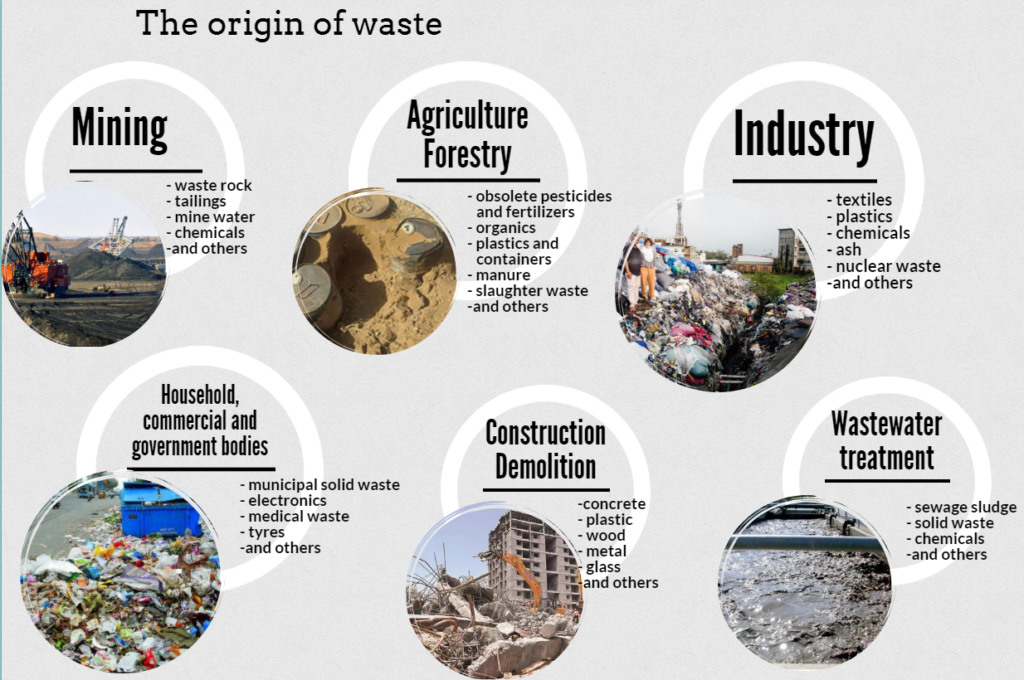
  1. Graphs
  2. Different colors
  3. Conventional symbols
  4. Scale

Answer: 3. Conventional symbols

Question 28. On topographical maps, height is represented with the help of—

  1. Contour lines
  2. Isobars
  3. Isohytes
  4. Isotherms

Answer: 1. Contour lines

Class 10 Geography Chapter 7 Question Answer WBBSE

Question 29. Satellite imagery is—

  1. Photograph of the satellite
  2. Photograph of the earth’s surface
  3. Photograph of the space
  4. Imagery developed with the help of information collected by the satellite

Answer: 4. Imagery developed with the help of information collected by the satellite

Question 30. The sensor used in developing satellite imagery is—

  1. MISS
  2. USS
  3. D1SS
  4. TISS

Answer: USS

Question 31. The electromagnetic energy used by sensors which are then processed and developed into a satellite image comes from the—

  1. Moon
  2. Earth
  3. Sun
  4. None of these

Answer: 3. Sun

Question 32. The topographical maps are prepared in India by the—

  1. Geological Survey of India (GSI)
  2. Survey of India (SOI)
  3. Anthropological Survey of India (ASI)
  4. General Sample Survey (GSS)

Answer: 2. Survey of India (SOI)

Question 33. The satellite sent by India is –

  1. IRS
  2. LANDSAT
  3. SPOT
  4. Station

Answer: 1. IRS

Chapter 7 Satellite Imageries And Topographical Maps If the statement is true, write True, and if false write false against the following


Question 1. Sensors are very important in remote sensing.
Answer: True

Question 2. Photographs taken by artificial satellites are called satellite images.
Answer: True

Question 3. The geostationary satellites move from the west to the east in the same direction as the earth’s rotation.
Answer: True

Question 4. The ultraviolet rays of the electromagnetic spectrum are used in remote sensing.
Answer: False

Question 5. Radio waves are the longest waves of the electromagnetic spectrum.
Answer: True

Question 6. Topographical maps are more accurate than satellite imagery.
Answer: False

Question 7. A map with R.F. 1:25,000 can be constructed to represent an area of 89 sq. km.
Answer: True

Class 10 Geography Chapter 7 Question Answer WBBSE

Question 8. The satellite images in India are developed by the National Remote Sensing Centre, Hyderabad.
Answer: True

Question 9. The LANDSAT satellite gives information on the density of the ozone layer.
Answer: False

Question 10. Radars are used to take photographs only at night.
Answer: False

Question 11. Near-infrared rays are used to sense areas of natural vegetation.
Answer: True

Question 12. Generally, satellites capture and transmit signals after every 10 days.
Answer: False

Question 13. 52 y is a topographical map of the plateau region of India.
Answer: False

Question 14. Contour lines in topographical maps are drawn in brown color.
Answer: True

Question 15. 1:25,000 is a small-scale map.
Answer: False

Question 16. The larger the scale, the smaller the area of the region represented on the map.
Answer: True

Question 17. The contours in topographical maps never intersect each other.
Answer: True

Question 18. Radar is a sensor.
Answer: True

Question 19. Satellite imagery is the best method of remote sensing.
Answer: True

Question 20. ‘Platform’ is the place in space where the satellites are installed.
Answer: True

Chapter 7 Satellite Imageries And Topographical Maps Fill In The Blanks With Suitable Words

Question 1. INSAT-l is an _______
Answer: Artificial satellite

Question 2. Advanced_______ cameras are used in clicking satellite images.
Answer: High resolution

Question 3. Information acquired about an object from _______ a great distance without actually coming in contact with the object is called _______
Answer: Remote sensing

Question 4. The geostationary satellites of India are of _______ the series.
Answer: INSAT

Question 5. The total number of topographical maps drawn in the international series for both the northern and southern hemispheres of the earth is _______
Answer: 2222

Question 6. The three types of scales used in the construction of maps are statement scale, R.F and _______
Answer: Linear scale

Question 7. A _______ helps to collect secretive information such as photographs of missiles, military movements of enemies, etc.
Answer: Spy camera

Question 8. The reflected electromagnetic waves are received by the ______ of satellites.
Answer: Sensors

Question 9. The smallest unit of an image is called a_______
Answer: Pixel

Class 10 Geography Chapter 7 Question Answer WBBSE

Question 10. The OCEANSAT satellite capture images after every _______ hour.
Answer: 48 hours

Question 11. The LANDSAT satellite captured images of the same region after every _______ day.
Answer: 18 days

Question 12. The father of remote sensing in India is _______
Answer: P. R. Pisharoty

Question 13. The unit used to measure the length of waves in a spectrum is_______
Answer: Micrometer

Question 14. The_______ and _______rays are not used in remote sensing.
Answer: Gamma, X

Question 15. The_______ rays are used in remote sensing.
Answer: Infrared

Question 16. The ultraviolet rays are absorbed by the _______layer of the atmosphere, hence, they are not used in remote sensing.
Answer: Ozone 17.1988

Question 17. The IRS satellites were first launched in India in _______
Answer: 1988

Question 18. The use of _______ is maximum in remote sensing.
Answer: Artificial satellites

Question 19. The Indian Space Research Organisation is situated in_______
Answer: Bengaluru

Question 20. The topographical maps are a type of _______ maps.
Answer: Large-scale one

Chapter 7 Satellite Imageries And Topographical Maps Answer in one or two words

Question 1. What are the basic steps of remote sensing?
Answer: Collection of data, image analysis, and interpretation.

Question 2. What are the two methods of remote sensing?
Answer: Aerial photography and satellite imagery.

Question 3. When was the term ‘remote sensing’ first used?
Answer: 1960.

Question 4. Name the source of energy used in capturing satellite images.
Answer: Sun.

Question 5. What is the R.F. of topographical maps of the international series?
Answer: 1:1,000,000.

Question 6. How many grids of topographical maps are there in India?
Answer: 135.

Question 7. What is the scale of million sheets of Indian topographical maps?
Answer: 1:1,000,000.

Question 8. What is the scale of the degree sheets of Indian topographical maps?
Answer:1:250,000.

Question 9. What are the topographic maps with a scale of 1:100,000 called?
Answer: Quadrant sheets.

Question 10. Where is the headquarters of the Survey of India located?
Answer: Dehradun.

Class 10 Geography Chapter 7 Question Answer WBBSE

Question 11. Where is the branch of Survey of India located in West Bengal?
Answer: Kolkata.

Question 12. What is the contour interval in topographical maps?
Answer: 20 thin m (although some maps may have a contour interval of 10m).

Question 13. What is the scale of inch sheets of Indian topographical maps?
Answer: 1:50,000.

Question 14. What are the latitudinal and longitudinal topographical maps?
Answer: the extent of million sheets of Indian

Question 15. What is the latitudinal and longitudinal extent of degree sheets of Indian topographical maps?
Answer: l°xl°.

Question 16. What is the metric scale of degree sheets of topographical maps?
Answer:1cm to 2.5 km.

Question 17.What kind of topographical map is map no. 73A?
Answer: Degree sheet.

Question 18. What is the escape velocity needed to launch a satellite in space?
Answer: About 11.2 km/second.

Question 19. What is the escape velocity on the surface of the moon?
Answer: About 2.31 km/second.

Question 20. What is the escape velocity on the surface of the sun?
Answer: 617.6 km/second.

Question 21. What are satellites that orbit the earth from west to east and are stationed directly over the equator called?
Answer: Geo-stationary satellites.

Question 22. What is a temporary orbit used during the launch of a satellite called?
Answer: Parking orbit.

Question 23. Which satellites are deployed for military applications?
Answer: Reconnaissance satellites.

Question 24. Name one of the largest domestic communication satellite systems in India?
Answer: INSAT system.

Question 25. What is the LANDS AT series presently known as?
Answer: NOAA.

Question 26. When was the SPOT-1 satellite launched?
Answer: 1986.

Class 10 Geography Chapter 7 Question Answer WBBSE

Question 27. From where was the SPOT-1 launched?
Answer: French Guiana.

Question 28. What makes the sky appear blue?
Answer: Rayleigh scattering.

Question 29. Mention an important use of a satellite image.
Answer: The weather forecast.

Question 30. Mention a disadvantage of satellite images.
Answer: Cannot be understood by a layman.

Question 31. What are topographical maps also known as?
Answer: Toposheets.

Question 32. What are 1° x 1° toposheets called?
Answer: Degree sheets.

Question 33. Where is the scale of the map mentioned in a toposheet?
Answer: South of the map.

Question 34. What does the red color in a toposheet indicate?
Answer: Settlements and roads.

Question 35. How is natural vegetation represented on a toposheet?
Answer: In green color.

Question 36. What does NH indicate on a toposheet?
Answer: National Highway.

Question 37. What do PS and DB indicate on a toposheet?
Answer: Police station, Dak Bungalow.

Question 38. In which type of map, relief is shown by contour lines?
Answer: Topographical maps.


Chapter 7 Satellite Imageries And Topographical Maps Match The Following With The Right Column

1.

Left Column Right Column
1.  Wavelength of gamma rays A. 10_8m to 10’11m
2. Wavelength of infrared rays B.  7x 10_7m to 4 x 10 7m
3. Wavelength of ultraviolet rays C.  10-3m to 7 x 10_7m
4. Wavelength of visible light D. 10_11m
5. Wavelength of infrared rays E. 4 x 10″7 to 6 x 10_8m

Answer: 1-D,2-A,3-E,4-B,5-C

2.

Left Column Right Column
1. Red double line on topographical maps A. Hyderabad
2. GOES B. Sensors
3. Remote Sensing Centre C. Non-perennial rivers
4.LISS, PAN, OCM, etc. D. Metalied road
5. Black lines on topographical maps E. Artificial satellite

Answer: 1-D,2-E,3-A,4-B,5-C

WBBSE Solutions for Class 10 Geography and Environment