WBBSE Solutions For Class 6 History Chapter 6 Imperial Expansion And Administration Topic A First Empire In India Subcontinent

WBBSE Chapter 6 Topic A First Empire In the Indian Subcontinent Long Answer Type Questions

Question 1. What is an empire? Who is an emperor? How was the first empire built in the subcontinent of India?
Answer:

Empire:

When many kingdoms merge together to form a vast territorial unit, it is known as an empire. It is the home to a large population and is controlled by a single ruler.

The absolute ruler of an empire is called the emperor. In other words, the emperor governs the large population residing in the empire and they are his subjects.

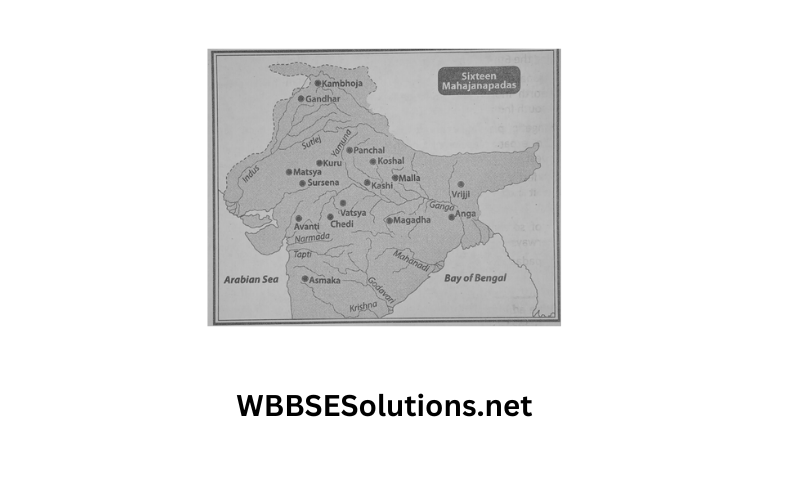
In the 6th century BC, the Mahajanapadas developed from janapadas. Among the Mahajanapadas Magadha was the most powerful. Three monarchical dynasties ruled in Magadha one after another.

Most of the Mahajanapadas were conquered by the kings of Magadha. The first empire in India grew up around Magadha under the Mauryan dynasty.

Read and Learn More WBBSE Solutions For Class 6 History

Question 2. What are the main sources for the study of Mauryan history?
Answer:

There are two important sources for the study of Mauryan history

  1. Literary And
  2. Archaeological Sources.

1. Literary sources:

Arthashastra by Kautilya:

Arthashastra, written by Kautilya or Chanakya, is an important source for the study of Mauryan history. It is a book concerning the administrative system of ancient India, particularly that of the Mauryas.

It was compiled in the 1st or 2nd century. It deals with the different aspects of administration as well as the duties and responsibilities of a king.

Short Questions on Chandragupta Maurya

Indica by Megasthenes:

Megasthenes came from Kandahar to Pataliputra as an ambassador of the Greek ruler Seleucus. He had written elaborately about the administration of Chandragupta Maurya in his book Indica.

However, there were many errors because Megasthenes could not comprehend the language and society of the Indian subcontinent properly.

WBBSE Solutions For Class 6 Geography WBBSE Solutions For Class 6 History WBBSE Solutions For Class 6 Maths
WBBSE Class 6 Geography Notes WBBSE Class 6 History Notes
WBBSE Class 6 Geography Multiple Choice Questions WBBSE Class 6 History MCQs WBBSE Notes For Class 6 School Science


2. Archaeological sources:

Ashokan Pillar at Sarnath:

The most famous of all the Ashokan Pillars is the Sarnath Pillar. It is the place of Buddha’s First Sermon where he shared the Four Noble Truths with his disciples.

Mahasthan Inscription:

The Mahasthan Inscription in the Bagura district of modern-day Bangladesh is an important source of the Mauryan period. It is written in Pali script. It was meant for the Mahamatras of ancient Pundranagar.

WBBSE Solutions For Class 6 History Chapter 6 Imperial Expansion And Administration Topic A First Empire In India Subcontinent

Question 3. Give an account of Alexander’s invasion of India.
Answer:

Alexander’s invasion of India:

Alexander was the ruler of Macedonia in Greece. He crossed the Hindukush mountain and entered in to India around 300 BC.

1. War with Elder Porus:

Alexander fought with many small and big rulers of India. The most famous among them was Elder Porus. Alexander defeated Elder Porus who ruled over the area between the Jhelum and Chenab rivers. Porus was defeated but the greeks paid respect to his valour.

2. Return journey and death:

Alexander advanced in the Indian subcontinent as far as Punjab but did not progress towards the Ganga deltaic region. He stayed in India for close to three years. Around 325 BC while returning to Greece via west Asia he died in Babylon.

Class 6 History Chapter 6 WBBSE

WBBSE Solutions For Class 6 History Chapter 6 Imperial Expansion And Administration Topic A First Empire In India Subcontinent Alexander

3. Consequences:

Alexander’s invasion decreased the power of the small kingdoms in north India. As a result, it became easier for Chandragupta Maurya to establish an empire.

Question 4. What were the achievements of Chandragupta Maurya?
Answer:

The first empire of the Indian subcontinent was the Mauryan empire. Chandragupta Maurya was its first emperor.

Achievements of Chandragupta Maurya

1. Overthrow of the Nanda dynasty:

After defeating and killing the Nanda king Dhanananda, Chandragupta founded the Mauryan dynasty in Magadha.

2. Conquest of Greek-occupied territories:

After the death of Alexander, Chandragupta led continuous campaigns against the greek administrators who assisted Alexander.

3. Conflict with Seleucus Nikator:

Common Questions About Ashoka the Great

Seleucus Nikator, the general of Alexander, was the ruler of Indus Valley. There was a conflict between Chandragupta Maurya and Seleucus Nikator over the control of the territory.

Finally, the conflict was resolved through a truce and they came to an understanding. Friendly relation was established and they felicitated each other. So it is said that the credit of establishing the Mauryan empire goes to Chandragupta Maurya.

Question 5. In the Arthashastra what were the duties Kautilya prescribed which all kings should follow during the daytime?
Answer:

In the Arthashastra Kautilya prescribed the following duties which all kings should follow during daytime.

  1. The king will look after the finance and check the accounts of stable expenses. He will also take information about the country’s security.
  2. He will attend the people of the villages and the cities to listen to their problems.
  3. He will take bath. Then he will take his meal and study.
  4. He will collect the revenue in cash. He will distribute work among different ministers.
  5. He will consult the Mantri Parishad and listen to the spies for secret information.
  6. He will either take a rest or do whatever he likes or he will consult his ministers.
  7. The condition of elephants, horses, chariots, and soldiers will be inspected by him in detail.
  8. At the end of the day, he will discuss with the senapati about war and the army.

Question 6. What was the impact of the Kalinga war on Ashoka?
Answer:

The impact of the Kalinga war on Ashoka:

The battle of Kalinga was a turning point in Ashoka’s life. By the conquest of Kalinga, the frontier of the Mauryan empire extended. But the bloody Kalinga war brought a change in Ashoka’s mind.

1. Renunciation of war:

The cruelty of war brought a change in Ashoka’s life. He refrained from war and violence and adopted the path of peace.

WBBSE Solutions For Class 6 History Chapter 6 Imperial Expansion And Administration Topic A First Empire In India Subcontinent Map of Ashokas Empire Inculiding inscriptions and pillars .

2. Adoption of Buddhism:

The horrors of war touched the heart of Ashoka and he adopted Buddhism. A Buddhist monk Upagupta initiated Ashoka into Buddhism.

Practice Questions on Mauryan Expansion

3. Welfare of living beings:

Ashoka undertook the task of the welfare of the people in his empire. His attitude was sympathetic, not only to man but also to birds and animals. He prohibited the slaughter of animals, hunting, and fishing.

Question 7. Discuss Ashoka’s principles of Dhamma.
Answer:

Ashoka’s principles of Dhamma:

Ashoka’s religious policy or principles of Dhamma is an important aspect of his rule.

1. Background:

The battle of Kalinga was a turning point in Ashoka’s life. The cruelty of the war brought a change in his life. He refrained from war and violence and adopted the path of peace.

He tried to unite all his subjects through his religious policy which was called Dhamma.

2. Features of Dhamma:

Though there are some similarities between Ashoka’s Dhamma and the main tenets of Buddhism but Ashoka’s Dhamma is not Buddhism. There are some differences between Ashoka’s Dhamma and Buddhist tenets.

3. Social norms:

In Ashoka’s Dhamma emphasis was given on certain social norms. The main principle was non-violence. He prohibited the slaughter of animals, hunting, and fishing.

His dhamma comprised of some moral principles like charity, piety, and truth. It laid importance on some principles such as respect to parents and elders.

Question 8. What were the main features of the Mauryan administration?
Answer:

The emperors of the Mauryan dynasty did not end their task with the expansion of the empire. Good governance was equally important to them.

Examples of Edicts of Ashoka

Main features of the Mauryan Administration

1. Emperor:

In administration, absolute power was in the hands of the emperor. At the head of the judicial system was the emperor. The people had to obey the commands of the emperor.

2. Assumption of titles:

The Mauryan emperors instead of performing sacrifices to claim their power used the title of ‘Devanampiya’ or Beloved of the Gods. They used to project themselves as god-like figures to the people of the empire.

3. Areas of governance:

Besides Magadha, there were other key power centers in north India. The Mauryas also administered the north-western frontier and the frontier regions of the south (practica rajya).

4. Royal officials:

The Mauryan emperors used to rule with the help of the Amatyas and the Mahamatras (during the rule of Ashoka)

5. Army:

The Mauryan emperors used to take the help of the army to run the administration.

6. Spy system:

Spies were employed to collect information about the empire.

7. Tax:

The Mauryan emperors collected taxes from craftsmen, merchants, traders, etc.

Question 9. What do we come to know about the administration of the Mauryan empire from the writings of Megasthenes?
Answer:

Megasthenes, the ambassador of the Greek ruler Seleucus, came to India during the rule of Chandragupta Maurya. From his work ‘Indica’ we come to know about the administration of the Mauryan empire.

1. City administrators:

From the writings of Megasthenes, we came to know about the administration of the city of Pataliputra during the Mauryan rule. The city administrators were divided into six groups. There were five members in each group.

2. Duties of the city administrators:

The six groups of administrators looked after the different important places of the city. The temples, ports, and markets were supervised by them. They also determined the prices of goods. They were helped by the army in the works of administration.

3. Importance:

As Megasthenes was a foreigner he could not properly understand the language and society of India. So possibly there are many errors in his account. But still, Indica is a significant foreign source for the study of the history of the Mauryan empire.

Question 10. Write a note on Alexander.
Answer:

Alexander:

Alexander was the ruler of Macedonia in Greece. He crossed the Hindukush Mountain and entered in to India. He defeated Elder Porus who ruled over the area between the Jhelum and Chenab rivers.

He stayed in India for about three years. While returning to his homeland in 325 BC he died in Babylon.

Question 11. Why was it easier for Chandragupta Maurya to build an empire around 320 BC?
Answer:

Alexander, the ruler of Macedonia, invaded India around 300 BC. His invasion decreased the power of the small kingdoms in north India.

As a result, it became easier for Chandragupta Maurya to establish an empire. The supremacy of the Mauryas was established in Punjab and the North-Western region.

WBBSE Solutions For Class 6 History Chapter 6 Imperial Expansion And Administration Topic A First Empire In India Subcontinent Chandragupta Maurya

Question 12. How did Chandragupta Maurya make Magadha powerful?
Answer:

Chandragupta Maurya increased the power of Magadha. He fought against the greek administrators who had helped Alexander. He also got involved in a conflict with the greeks over the control of the Indus Valley which was ruled by Seleucus Nikator, the general of Alexander.

The conflict was resolved through a truce and they felicitated each other. In this way through conflict and friendship, Chandragupta Maurya made Magadha powerful.

Question 13. In what way Ashoka’s Dhamma differ from Buddhism?
Answer:

There are similarities between Ashoka’s Dhamma and the main tenets of Buddhism. But Ashoka’s Dhamma is not Buddhism.

There are some differences between Ashoka’s Dhamma and Buddhist tenets which are as follows:

  1. Buddha’s basic teachings included the Eightfold Path or Ashtangik Marga. But there is no concept of Ashtangik Marga in Ashoka’s Dhamma.
  2. Buddhism emphasised on the notion of Nirvana but the concept of Nirvana is absent in Ashoka’s Dhamma.

Question 14. Why is Ashoka called ‘The Great’?
Answer:

Ashoka called ‘The Great’:

Ashoka is one of the greatest kings ever found in the history of India as well as that of the world.

1. As a religious conqueror:

Ashoka embraced Buddhism after witnessing the horrifying aftermath of the Kalinga war and succeeded in establishing it as a world religion.

2. As a benevolent ruler:

Ashoka was the first king in history to set up an administration based on the welfare of his subjects.

History Class 6 Chapter 6 Question Answer WBBSE

3. Patronage of art and culture:

Due to Ashoka’s efforts, innumerable stupas, monasteries, chaityas, and pillars were constructed.

4. As a philanthropist:

Genuine love for mankind has provided Ashoka a permanent and prestigious position in world history.

Question 15. Who were the Amatyas and Mahamatras?
Answer:

The Amatyas and Mahamatras:

The royal officials who helped the emperor to rule during the Mauryan period were called amateurs. The amatyas were divided into three categories.

During the reign of Ashoka, the highest posts were given to the Mahamatras. They were also divided into different categories and formed the pillar of administration.

Question 16. How did the Maurya rulers treat the forest dwellers?
Answer:

The Maurya rulers treat the forest dwellers:

The Mauryan rulers did not treat the forest dwellers well. Those people who lived in the forest were considered to be lowly, barbaric, and wild. It was believed that they create disturbances in the Mauryan empire.

Spies were appointed to watch the forest dwellers in the guise of sages. Emperor Ashoka was in favour of the punishment of those forest dwellers who killed birds and animals or felled trees.

Question 17. Who was the author of Indica? What is its importance?
Answer:

The author of Indica:

Megasthenes, the ambassador of Greek Seleucus Nikator, who was sent to the court of Chandragupta Maurya, was the author of Indica.

From Indica we come to know about the administration of the Mauryan Empire during the rule of Chandragupta Maurya. We also come to know about the administration of the city of Pataliputra from Megasthenes’ account.

WBBSE Chapter 6 Topic A First Empire In Indian Subcontinent Short Answer Type Questions

Question 1. How was the first empire formed in the Indian subcontinent?
Answer:

The first empire formed in the Indian subcontinent:

At first there were sixteen big kingdoms or Mahajanapadas in the Indian subcontinent. Among them, Magadha emerged as the most powerful one under the rule of three monarchical dynasties-Haryanka, Shishunaga, and Nanda.

The kings of these dynasties had conquered most of the other janapadas. Finally, the first consolidated empire was formed under the Mauryan dynasty.

Question 2. Who was the greatest opponent of Alexander in India?
Answer:

The greatest opponent of Alexander in India:

The greatest opponent of Alexander in India was king Elder Porus who ruled over the kingdom between Jhelum and Chenab rivers. He tried to resist the Greeks but was defeated. However, his valour and self-respect greatly impressed Alexander.

Question 3. Write a note on Arthashastra.
Answer:

Arthashastra:

Arthashastra, written by Kautilya or Chanakya, is an important source for the study of Mauryan history. It is a book concerning the administrative system of ancient India, particularly that of the Mauryas.

It was compiled in the 1st or 2nd century. It deals with the different aspects of administration as well as the duties and responsibilities of a king.

Question 4. Who was the author of Arthashastra?
Answer:

The author of Arthashastra:

Kautilya or Chanakya was the author of Arthashastra. The entire book was compiled around 1st or 2nd century. It is said that Kautilya did not write the book alone. But as the main theme of the book was authored by him, the book is known by his name.

Question 5. What was the extent of Ashoka’s empire?
Answer:

The extent of Ashoka’s empire:

Ashoka’s empire extended from Afghanistan in the north to Karnataka in the south. Kathiawad in the west and Kalinga in the east were also included in his empire.

Question 6. In his entire life Ashoka fought only one war-Why.
Answer:

In his entire life Ashoka fought only one war-the Kalinga war. The cruelty of war brought a change in Ashoka’s life. He refrained from war and violence and adopted the path of peace and non-violence.

Question 7. How did Buddhism influence Ashoka?
Answer:

Ashoka did not wage any war after the battle of Kalinga. He embraced Buddhism. He adopted the policy of peace under the influence of Buddhism.

He tried to prevent cruelty to all creatures and spread the message of Dhamma and to work for the well-being of his people.

Question 8. Write two social norms mentioned in Ashoka’s Dhamma.
Answer:

Two social norms mentioned in Ashoka’s Dhamma were

  1. To show respect to elders and parents,
  2. Prohibition of animal slaughter, hunting, and fishing.

Question 9. How did the Mauryan emperors project themselves as god-like figures to their subjects?
Answer:

The Mauryan emperors instead of performing sacrifices to claim their power used the title of ‘Devanampiya or Beloved of Gods. Ashoka assumed the title of ‘Piyadasi’ or ‘Priyadarshi’.

In this way assuming different titles the Mauryan emperors projected themselves as godlike figures to their subjects.

WBBSE Chapter 6 Topic A First Empire In The Indian Subcontinent Very Short Answer Type Questions

Question 1. Who is called an emperor?
Answer: An emperor is a person who rules over an empire.

Question 2. What do you mean by the word empress?
Answer: A woman ruler who rules over a huge territory and over many subjects is known as an empress.

Question 3. What does the word ‘Rajadhiraj’ mean?
Answer: The word ‘Rajadhiraj’ means king of kings.

Question 4. Who was Alexander?
Answer: Alexander was the ruler of Macedonia in Greece.

Question 5. When did Alexander enter the Indian subcontinent?
Answer: Alexander entered the Indian subcontinent around 300 BC.

Question 6. Who was Elder Porus?
Answer: Elder Porus was a very famous king who ruled over the region between the Jhelum and Chenab rivers.

Question 7. With whom did Porus fight?
Answer: Porus fought with Alexander, the ruler of Macedonia in Greece.

Question 8. Who was defeated in the war between Elder Porus and Alexander?
Answer: Elder Porus was defeated in the war between Elder Porus and Alexander.

Question 9. When did Alexander return with his army?
Answer: Approximately around 325 BC Alexander returned with his army.

Question 10. Where did Alexander die?
Answer: Alexander died in Babylon.

Question 11. How many Mahajanapadas were there?
Answer: There were sixteen Mahajanapadas.

Question 12. Which dynasty ruled over Magadha at the time of Alexander’s invasion?
Answer: The Nanda Kings ruled over Magadha at the time of Alexander’s invasion.

Question 13. Who was the last Nanda king?
Answer: The last Nanda king was Dhanananda.

Question 14. Who helped Chandragupta Maurya in his war against the Nanda kings?
Answer: Chanakya helped Chandragupta Maurya in his war against the Nanda Kings.

WBBSE Class 6 History Chapter 6 Question Answer

Question 15. Against whom did Chandragupta Maurya fight?
Answer: Chandragupta Maurya fought against the last ruler of the Nanda dynasty Dhanananda.

Question 16. When did Chandragupta Maurya build an empire?
Answer: Around 320 BC Chandragupta Maurya build an empire.

Question 17. Who was defeated in the war between Chandragupta Maurya and Dhanananda?
Answer: Dhanananda was defeated in the war between Chandragupta and Maurya Dhanananda.

Question 18. Who was Seleucus Nikator?
Answer: Seleucus Nikator was the army general of Alexander.

Question 19. Which was the first empire of the Indian subcontinent?
Answer: The first empire of the Indian subcontinent was the Mauryan empire.

Question 20. Who was the first emperor of the Mauryan empire?
Answer: The first emperor of the Mauryan empire was Chandragupta Maurya.

Question 21. Mention an important source of Mauryan history.
Answer: An important source of Mauryan history is Arthashstra by Chanakya.

Question 22. Who authored the main theme of Arthashastra?
Answer: The main theme of Arthashastra was authored by Kautilya or Chanakya.

Question 23. Name one book which was written about the administrative system of ancient India.
Answer: The book which was written about the administrative system of ancient India was Arthashastra by Kautilya.

Question 24. Where was the capital of the Mauyran empire?
Answer: The capital of the Mauryan empire was Pataliputra.

Question 25. Who was Megasthenes?
Answer: Megasthenes was the ambassador of the Greek ruler Seleucus Nikator, who came to Chandragupta Maurya’s royal court in Pataliputra.

Question 26. Who became the Mauryan emperor after Chandragupta Maurya?
Answer: After Chandragupta Maurya Bindusara became the Mauryan emperor.

Question 27. What was the name of Bindusara’s son?
Answer: The name of Bindusara’s son was Ashoka.

Question 28. For how many years did Ashoka rule?
Answer: Ashoka ruled for nearly forty years.

Question 29. Where was the capital of Ashoka?
Answer: Ashoka’s capital was at Pataliputra.

Question 30. Name the Mauryan emperor who renounced of Alexander.
Answer: The Mauryan emperor Ashoka renounced wars.

Question 31. What messages did Ashoka carry to people far and wide?
Answer: Ashoka carried the messages of peace to people far and wide.

Question 32. Who initiated Ashoka into Buddhism?
Answer: A Buddhist monk named Upagupta initiated Ashoka into Buddhism.

Question 33. After which battle Ashoka adopted the path of peace?
Answer: After the Kalinga war Ashoka adopted the path of peace.

Question 34. What were Ashoka’s religious principles known as?
Answer: Ashoka’s religious principles were known as Dhamma.

Question 35. What was the main principle of Ashoka’s Dhamma?
Answer: The main principle of Ashoka’s Dhamma is non-violence (ahimsa).

WBBSE Chapter 6 Topic A First Empire In the Indian Subcontinent Fill In The Blanks

Question 1. One who rules over an empire is called ________ (emperor/minister/official).
Answer: Emperor

Question 2. The first Indian empire was built around ________ (Kashi/Koshal/Magadha).
Answer: Magadha

Class 6 History Chapter 6 WBBSE

Question 3. The first empire built in the Indian subcontinent is ________ (Mauryan/Kushana/ Gupta).
Answer: Mauryan

Question 4. The author of Arthashastra is ________ (Kalhana/Kautilya/Tulsidas).
Answer: Kautilya

Question 5. An important source of knowing the history of ________ (Mauryan/Kushana/Gupta) Age is Arthashastra.
Answer: Mauryan

Question 6. Ashoka gave up violence due to the influence of ________ (Shaivisim/Jainism/Buddhism).
Answer: Buddhism

Question 7. Alexander, the ruler of Macedonia crossed the ________ (Vindhyan/Himalaya/ Hindukush) mountain and entered into India.
Answer: Hindukush

Question 8. In the Indian subcontinent, Alexander advanced as far as ________ (Bihar/Magadha/ Punjab).
Answer: Punjab

Question 9. The Nanda Kings ruled over ________ (Magadha/Kalinga/Pataliputra).
Answer: Magadha

Question 10. The Sanskrit word Atavi means ________ (forest/barbaric/wild).
Answer: Forest

Question 11. ‘Devanampiya’ means ________ (beloved of the people/beloved of the Gods/beloved of the King).
Answer: Beloved of the Gods

Question 12. At the time of the Mauryas, there was a group of ministers known as ________(Piyadasi/mantri parishad/Atavika).
Answer: Mantri parishad

WBBSE Chapter 6 Topic A First Empire In Indian Subcontinent True Or False

Question 1. A female emperor is called an empress.
Answer: True

Question 2. Alexander died in Babylon while he was returning to his native land Greece.
Answer: True

Question 3. Seleucus Nikator was the general of Alexander who was the ruler of Macedonia in Greece.
Answer: True

Question 4. Ashoka established the Mauryan empire in India-he was the first emperor.
Answer: False

Question 5. The last Nanda King Dhanananda was defeated by Chandragupta Maurya.
Answer: True

Question 6. During Ashoka’s reign, Pataliputra was the capital of Magadha.
Answer: True

History Class 6 Chapter 6 Question Answer WBBSE

Question 7. Bali and Bhaga were the two land revenues that were levied in the Mauryan Age.
Answer: False

Question 8. Chandragupta Maurya declared himself to be Magadharaj.
Answer: False

Question 9. During the Mauryan Age, the district administration was called ‘Aahar’.
Answer: True

Question 10. The conflict between Chandragupta Maurya and Seleucus Nikator was finally resolved through a truce.
Answer: True

Question 11. There is a detailed discussion about the king’s duties in the Arthashastra.
Answer: True

Question 12. The period of Ashoka’s rule was from 200 BC to 232 BC.
Answer: False

Question 13. The notion of Nirvana is absent in Ashoka’s Dhamma.
Answer: True

Question 14. Rajasthan is an archaeological site in the Bagura district of India.
Answer: False

WBBSE Solutions For Class 6 History Chapter 5 Indian Sub Continent In The 6th Century BC Topic C Miscellaneous

WBBSE Chapter 5 Indian Sub Continent In The 6th Century BC Topic C Miscellaneous Long Answer Type

Question 1. What are the similarities between Mahavira and Gautama Buddha?
Answer:

The similarities between Mahavira and Gautama Buddha:

Both Mahavira and Buddha had many similarities.

1. Caste:

Both Mahavira and Buddha belonged to princely families and were Kshatriyas by caste.

2. Renunciation of family life:

Mahavira at the age of 30 left his home and went for meditation. On the other hand, Siddhartha (Gautama Buddha) at the age of 29 left his home and went for meditation.

3. Attaining supreme knowledge:

Mahavira meditated for 12 long years and attained. enlightenment. Buddha, on the other hand, meditated for close to six years and attained Bodhi or wisdom.

Read and Learn More WBBSE Solutions For Class 6 History

4. Religious doctrines:

Mahavira added the vow of Brahmacharya to the four basic tenets of Jainism or Chaturyama which together came to be known as Pancha- mahavrata. On the other hand, Buddha preached the four ‘Noble Truths’ and the Ashtangika Marga.

WBBSE Solutions For Class 6 Geography WBBSE Solutions For Class 6 History WBBSE Solutions For Class 6 Maths
WBBSE Class 6 Geography Notes WBBSE Class 6 History Notes
WBBSE Class 6 Geography Multiple Choice Questions WBBSE Class 6 History MCQs WBBSE Notes For Class 6 School Science


Question 2. Why were the New Religious Movements mainly city-centric? Or, Why did Jainism and Buddhism spread more in the cities?
Answer:

The New Religious Movements mainly city-centric:

The New Religious Movements were mainly city-centric. Religions like Jainism and Buddhism spread more in the cities due to several reasons which are

  1. Mahavira and Buddha used to pay more visits to the cities than the villages for spreading their religion.
  2. Visiting cities or residing in cities was considered to be a sin in the Vedic religion.
  3. In the cities, there were various sorts of people but in the villages, people were mostly peasants.

Important Definitions Related to Ancient Indian Civilisations

Question 3. What do you mean by ‘Triratnas’ of Jainism and Buddhism?
Answer:

‘Triratnas’ of Jainism and Buddhism:

The concept of Triratna is there in both Jainism and Buddhism. In both religions three ideals are considered to be very important. Each of these ideals is known as ‘Ratna’ or gems.

Being three in number these ideals together are known as Triratna. The ‘Triratna’ of Jainism are Right Faith, Right Knowledge and Right Action. The ‘Triratna’ of Buddhism are Buddha, Dhamma and Shangha.

WBBSE Solutions For Class 6 History Chapter 5 Indian Sub Continent In The 6th Century BC Topic C Miscellaneous

Question 4. What are the basic principles of Jainism and Buddhism?
Answer:

The basic principles of Jainism and Buddhism:

Following are the basic principles of Jainism and Buddhism

  1. The basic principle of Jainism is Panchamahavrata. The basic principle of Buddhism is Chaturaryasatya and Ashtangika Marga.
  2. There is a concept of Triratna in both religions. The Triratnas of Jainism are Right Faith, Right Knowledge and Right Action. The Triratna in Buddhism are Buddha, Dhamma and Shangha.

Question 5. What do you think are the points of difference between the two maha- janapadas of Magadha and Vajji?
Answer:

The difference between the Mahajana- padas of Magadha and Vajji were

Magadha Vajji
1. Magadha was a monarchical kingdom. 1. Vajji was a non-monarchical kingdom.
2. Formerly, Rajagriha was the capital of Magadha but later on Pataliputra became the capital 2. The capital of Vajji was Vaishali.
3. Administrative power in Magadha was concentrated in the hands of the king and his council of ministers. 3. The administrative power in Vajji was concentrated in the hands of a few clans.
4. Out of sixteen Mahajanapadas, only four continued to maintain their existence. Among them, Magadha emerged as the supreme one. 4. Vajji’s power declined during the conflict between the monarchical and non-monarchical kingdoms.


Question 6. What were the reasons for Magadha becoming more powerful than the other Mahajanapadas? Which one, according to you, was the most important factor?
Answer:

The reasons for Magadha becoming more powerful than the other Mahajanapadas:

In the 6th century BC Magadha emerged as the most important centre of political activity in northern India. The reasons for Magadha becoming more powerful than Mahajanapadas are as follows-

Common Questions About Ancient Indian Society

1. Geographical Position:

The geographical position of Magadha was helpful for its development into an empire. It was surrounded by hills and rivers which protected Magadha from foreign invasions.

2. Fertile Land:

The silt of the river Ganga made the agricultural lands of Magadha fertile. As a result, there was the development of agriculture in Magadha.

3. Dense Forests:

There were dense forests in Magadha. Many elephants were found in those dense forests which were used by the Magadhan kings in warfare.

4. Iron and Copper Mines:

Magadha had rich deposits of iron and copper with which weapons of war could be made.

5. Trade:

In Magadha trade and commerce was carried on by both water and land routes.

Among all the reasons the most important reason for the rise of Magadha was its geographical position.

Question 7. Which social categories had supported the New Religious Movements and why?
Answer:

Social categories had supported the New Religious Movements:

The New Religious Movement started in the 6th century BC Different categories of society supported the New Religious Movement.

Practice Questions on Economic Practices in Ancient India

Supporters:

A large section of the society including traders, farmers, Kashatriyas and low-caste people supported the new religious movement.

Reasons for Support

1. Traders:

The traders were dissatisfied due to a lack of safe passage and communication during their trading activities. Moreover, the Brahmins used to look upon sea voyages a sin.

Charging interest was considered disgraceful in Brahmanical religion. This could not be accepted by the traders. So they opposed the Brahmanical religions and supported the New Religious Movement.

2. Farmers:

The farmers were against the rituals of yajna and animal sacrifice. This was because the animals were required in agricultural work.

So they looked for a religion where there will be no animal sacrifice and hence supported the New Religious Movement which preached non-violence.

3. The Kshatriyas:

The use of iron weapons started in the 6th century B.C. and this increased the power of the Kshatriyas. They demanded a status equal to that of the Brahmins and so supported the New Religious Movement which was against the domination of the Brahmins in the society.

4. Common People:

Due to strict caste division, the common people became averse to the Vedic religion and supported the New Religious Movement.

Question 8. What are the points of similarities and dissimilarities between Jainism and Buddhism?
Answer:

There are similarities and dissimilarities between Jainism and Buddhism.

Similarities

1. Origin:

Both Jainism and Buddhism started as a protest movement in the 6th century BC.

2. Preachers:

Examples of Cultural Practices in the 6th Century BC

Mahavira, the founder of Jainism and Gautama Buddha, the founder of Buddhism were both Kshatriyas.

3. Protestant policy:

Both religions refused to accept the domination of the priests or Brahmins, the rituals of Vedic sacrifices or yajnas as well as the divinity of the Vedas.

4. Caste distinction:

Caste distinction in the society was denied by both religions.

5. Simple and pure life:

Both Mahavira and Buddha insisted on people leading a pure and simple life.

6. Language:

The preachers of both the religions used the language of the common people in their teachings.

7. Doctrine of Ahimsa:

Both the religions laid stress on the doctrine of Ahimsa or non-injury to living beings.

Dissimilarities

1. Preachers:

There were 24 Tirthankaras for preaching Jainism. But Gautama Buddha was the sole founder and main preacher of Buddhism.

2. Language:

Prakrit was the language of preaching Jainism. But Pali was the language of preaching Buddhism.

History Class 6 Chapter 5 WBBSE

3. Salvation:

Mahavira laid emphasis on intense meditation for salvation. But Buddha considered attainment of ‘Nirvana’ or salvation was possible by following the Middle Path.

4. Triratnas:

The Triratnas of the Jains were Right faith, Right knowledge and Right Action. The Triratna in Buddhism were Buddha, Dhamma and Shangha.

Question 9. Of the sermons given by Gautama Buddha to the Vajjis, which ones need to be followed in the present? Discuss those among yourselves.
Answer:

Of the sermons given by Gautama Buddha to the Vajjis, some are relevant in the present-day society and need to be followed. These are discussed by two groups ‘A’ and ‘B’.

1. Group ‘A’:

Gautama Buddha rightly said the laws of the land should be followed. If we do not follow these laws then there will be chaos and confusion in the country.

2. Group ‘B’:

Not only this, Buddha has asked to obey the elderly persons and show respect to them and these are valuable sermons. If we obey and respect the elders then the next generation will also show us respect in the same way and obey us.

3. Group ‘A’:

Buddha has asked to show respect to the women of the Vajji society. At present women should be respected because women are the pillars of society.

4. Group ‘B’:

Besides these Buddha has suggested the Vajjis not to torture birds and animals and not to hack trees. We also, at present, should not torture birds and animals. Instead of hacking trees, we should plant more trees.

WBBSE Chapter 5 Indian Sub Continent In The 6th Century BC Topic C Miscellaneous Short Answer Type Questions

Question 1. What do you mean by Mahayana and Hinayana sects of the Buddhism?
Answer:

Mahayana and Hinayana sects of the Buddhism:

In the fourth Buddhist Sangeeti the Buddhists came to be divided into two sects- Mahayana and Hinayana. The Mahayanas supported the idol worship of Buddha. The other monks who supported the old Buddhist philosophy were known as the Hinayanas.

Question 2. Why was Mahavira called ‘Kebalin’?
Answer:

Mahavira called ‘Kebalin’:

Vardhhaman Mahavira was a Lichhavi prince who was absolutely detached from all worldly comforts. He renounced the world at the age of thirty and went away to meditate.

Question 3. What were the main teachings of Gautama Buddha?
Answer:

The main teachings of Gautama Buddha:

Gautama Buddha was the founder of Buddhism. His teachings were simple and dealt with practical life. His basic teachings include the understanding of the Four Noble Truths or Chaturaryasatya and the Eightfold Path or Ashtangika Marga.

Question 4. Illustrate through the diagram of a pyramid the evolution of a janapada into a mahajanapada and the emergence of the kingdom of Magadha.
Answer:WBBSE Solutions For Class 6 History Chapter 5 Indian Sub Continent In The 6th Century BC Topic C Miscellaneous Kingdom of Magadha

Question 5. Observe the picture given below. Do you notice any similarity between the concept of Aryasatya in Buddhism and this picture?
Answer:

The picture has a similarity with Aryasatya. From this, we can understand the gist of Aryasatya-feeling of misery, the cause of misery, riddance from misery and ways of riddance.

Conceptual Questions on Religion and Philosophy in Ancient India

In the first three pictures, we can see the human miseries. These are caused by desire or worldly attachments. But one can get rid of such miseries. The last picture shows such a way of getting rid of misery.

WBBSE Solutions For Class 6 History Chapter 5 Indian Sub Continent In The 6th Century BC Topic C Miscellaneous Aryasatya

Question 6. What causes a new religion to emerge?
Answer:

It there are flaws and vices in the existing religion, it leads to the emergence of a new religion.

Question 7. Mention some of the religions prevalent in our society.
Answer:

Some of the religions prevalent in our society are Hinduism, Islam, Buddhism, Christianity, etc.

If the questions mentioned above are asked to the learners, their knowledge about religion can be ascertained, In the same way they will also like to know something about religion. So they will be able to participate in discussions related to the topic.

Question 8. Have you ever visited any religious place?
Answer:

Yes, I have visited the Kali temple in Dakshineswar.

Question 9. What have you seen there?
Answer:

I have seen Natmandir, Shoshti Tala, Jor Bangla.

Asking these questions curiosity can be developed among the students and they will be able to go deep into the subject matter.

Question 10. What is the importance of the New Religious Movement?
Answer:

The importance of the New Religious Movement:

The New Religious Movement cleared the spiritual atmosphere of superstition, broke down the racial barriers and brought about unity in the society.

Question 11. What led to the popularity of the New Religions?
Answer:

Due to the prevalence of superstitions and complexities in the society people were averse to the existing religion. The simplicity of the New Religions attracted the attention of the people and the New Religious Movement became popular.

Through the above-mentioned questions, the learner will develop the potentiality of interpretation and application.

WBBSE Chapter 5 Indian Sub Continent In The 6th Century BC Topic C Miscellaneous Very Short Answer Type Questions

Question 1. Ganga, Yamuna, Sahara, Kaveri.
Answer: Sahara

Question 2. Avanti, Vatsya, Delhi, Koshala.
Answer: Delhi

Question 3. Ujjaini, Mathura, Vaishali, Magadha.
Answer: Magadha

Question 4. Parshvanath, Neminath, Mahavira, Buddha.
Answer: Buddha

Question 5. Right Faith, Right Knowledge, Right Conduct, Right Behaviour.
Answer: Right Behaviour

WBBSE Class 6 Miscellaneous Questions on 6th Century BC

Question 6. Vinayapitaka, Suttapitaka, Dharmapitaka, Abhidhammapitaka.
Answer: Dharmapitaka

Question 7. Mahakashyapa, Moggaliputta Tissa, Vasumitra, Aryabhatta.
Answer: Aryabhatta

Question 8. Ajatashatru, Ashoka, Kanishka, Buddha.
Answer: Buddha

Question 9. Haryanka Dynasty, Shishunaaga Dynasty, Nanda Dynasty, Gupta Dynasty.
Answer: Gupta Dynasty

Question 10. Aryasatya, Ashtangika Marga, Majjhim Patipada, Chaturyama.
Answer: Chaturyama

Question 11. What is ‘Tripitaka’?
Answer:

‘Tripitaka’: ‘Tripitaka’ is the principal text of the Buddhists.

Question 12. What is the capital of Vajjis?
Answer:

The capital of Vajjis: The capital of VajJIs wits Vaishali.

WBBSE Chapter 5 Indian Sub Continent In The 6th Century BC Topic C Miscellaneous Fill In The Blanks

Question 1. The Mahajanapadas emerged in (6thcentury AD/6th century BC/6th millennium).
Answer: 6th century BC

Question 2. Gautama Buddha was born into the (Lichhavi/Haryanka/Sakya) dynasty.
Answer: Sakya

Question 3. Parshvanath was (King of Magadha / head of the Vajjis/Jain Tirthankara).
Answer: Jain Tirthankara

Question 4. Aryasatya was a part of (the Buddhist/ Jain/Ajivika) religion.
Answer: Buddhist

Question 5. The preacher of Jainism was known as (Guru/Acharya/Tirthankara).
Answer: Tirthankara

Question 6. Living in cities or visiting cities was considered as a sin in (Buddhism/Brahmanism/Ajivika).
Answer: Brahmanism

WBBSE Chapter 5 Indian Sub Continent In The 6th Century BC Topic C Miscellaneous State whether Following Statements Are True Or False

Question 1. Three royal dynasties had ruled over Magadha.
Answer: True

Question 2. Siddhartha was meditating under a mango tree.
Answer: False

Question 3. Around 6th century BC society, economy, and politics of the Indian subcontinent began to change.
Answer: True

WBBSE Chapter 5 Indian Sub Continent In The 6th Century BC Topic C Miscellaneous Match The Columns

Question 1.

 Column A Column B
1. Mahajanapada of north India (A) Vaishali
2. Mahajanapada of south India (B) Asmaka
 3. Republic (C) Magadha
 4. Capital of Vajjis (D) Vrijji


Answer: 1. (C), 2. (B), 3. (D), 4. (A)

Question 2.

Column A Column B
 1.Ajivika (A) Bhadrabahu
2. Siddhartha (B)  Mahavira
3.  Digambara (C) Mankhliputta Gosal
4.  Jainism (D) Buddha


Answer: 1. (C), 2. (D), 3. (A), 4. (B)

Question 3.

Column A   Column B
1. Buddhism (A) Mahavira
2. Jainism (B) Twelve Angas
3. Siddharth (C) Eightfold Path
4. Kebalin (D)  Gautama Buddha


Answer: 1. (C), 2. (B), 3. (D), 4. (A)

Question 4.

Column A Column B
1. Buddhism (A) Mahavira
2. Jainism (B) Buddhism
3. Siddhartha (C) First Buddha Sangeeti
4. Kebain (D) Jainism


Answer: 1. (B), 2. (C), 3. (D), 4. (A)

WBBSE Solutions For Class 6 History Chapter 5 Indian Sub Continent In The 6th Century BC Topic B Buddhism

WBBSE Chapter 5 Indian Sub Continent In The 6th Century BC Topic B Buddhism Long Answer Type Questions

Question 1. What were the main teachings of Gautama Buddha?
Answer:

The main teachings of Gautama Buddha:

Gautama Buddha was the founder of Buddhism. His teachings were simple and dealt with practical life. His basic teachings include the understanding of the Four Noble Truths or Chaturaryasatya and the Eightfold Path or Ashtangika Marga.

1. Four Noble Truths or Chaturaryasatya:

Gautama Buddha explained to his disciples the causes of suffering in one’s life and how to get rid of such suffering. For this, he taught four principal tenets.

Each of these tenets is known as Aryasatya. These four tenets together are known as Chaturaryasatya or the Four Noble Truths.

Read and Learn More WBBSE Solutions For Class 6 History

2. Eightfold Path or Ashtangika Marga:

Ashtangika Marga means the Eightfold Path or ‘Marga’s which was advised by Buddha to get rid of misery. This set of eight paths was described as Middle Path or ‘majhhim patipada’ as it lies between extreme luxury and hard meditation.

Buddha preached that a person who follows the Eightfold Path would attain ‘Nirvana’ or salvation.

Important Definitions Related to Buddhism

WBBSE Solutions For Class 6 Geography WBBSE Solutions For Class 6 History WBBSE Solutions For Class 6 Maths
WBBSE Class 6 Geography Notes WBBSE Class 6 History Notes
WBBSE Class 6 Geography Multiple Choice Questions WBBSE Class 6 History MCQs WBBSE Notes For Class 6 School Science


Question 2. Write a note on Tripitaka.
Answer:

Tripitaka:

Tripitaka is the main religious text of Buddhism. In Pali language the word ‘Pitak’ means basket. Three ‘pitakas’ together are known as Tripitaka. The Tipitakas were probably compiled in the first Buddhist Sangeeti at Rajagriha.

The compilations of Suttapitaka, Vinaypitaka, and Abhidhammapitaka together constitute the Tripitaka.

  1. Suttapitaka: Suttapitaka is a collection of the sermons of Buddha to his disciples.
  2. Vinaypitaka: Vinaypitaka contains a code of conduct for Buddhist monks.
  3. Abhidhammapitaka: Abhidhammapitaka discusses the main doctrines of Buddhism. Tripitaka is written is Pali language.

WBBSE Solutions For Class 6 History Chapter 5 Indian Sub Continent In The 6th Century BC Topic B Buddhism Tripitaka

Question 3. What led to the split of the Buddhists into the Hinayana and Mahayana sects?
Answer:

The split of the Buddhists into the Hinayana and Mahayana sects:

In the fourth or last Buddha Sangeeti the Buddhists formally split into two sects

  1. Hinayana and
  2. Mahayana.

Causes of the split between Hinayana and Mahayana

1. Lifestyle:

After Buddha, some Buddhist monks began to take non-vegetarian food. They began to wear costly garments and received gold and silver donations. Many of them began to lead a family life.

Moreover, the rules and regulations of the monasteries were violated. So a new group of Buddhists was formed known as Mahayana.

2. Idol worship:

From the time of the Kushana age there started the idol worship of Buddha. The monks who believed in the old Buddhist philosophy protested against idol worship of Buddha.

WBBSE Class 6 Buddhism Notes

3. Formal split:

During the time of the emperor, Kanishka the fourth Buddhist Sangeeti was organized in Kashmir. Vasumitra was the president of the sangeeti. Here the Buddhists split into two sects-the Hinayana sect and the Mahayana sect.

WBBSE Solutions For Class 6 History Chapter 5 Indian Sub Continent In The 6th Century BC Topic B Buddhism

Question 4. Why Buddhist ‘Sangeetis’ were organized? Discuss about the four Buddhist ‘Sangeetis”.
Answer:

After the death of Buddha, Buddhist ‘Sangeetis’ were organized to discuss about the different aspects of Buddhism and to settle the disputes which arose among the followers of Buddha.

Account of Four Buddhist Sangeetis 

1. The First Buddhist Sangeeti:

The First Buddhist Sangeeti was held in Rajagriha during the reign of Ajatashatru, the king of Magadha. It was presided over by the Buddhist monk and scholar Mahakashyapa. The Sutta and Vinaya Pitaka were compiled in this sangeeti.

2. Second Buddhist Sangeeti:

The Second Buddhist Sangeeti was held at Vaishali during the reign of Kalashoka and the President was head monk Yash. In this council, the Buddhists got divided into Theravada and Mahasanghika.

3. Third Buddhist Sangeeti:

The Third Buddhist Sangeeti was held at Pataliputra under the initiative of Ashoka and was presided over by Moggaliputta Tissa. The Buddhist sangha rules were strictly enforced to resist further split.

4. Fourth Buddhist sangeeti:

Kanishka convened the Fourth Buddhist Sangeeti in Kashmir. The President was Vasumitra. In this council Buddhism finally split into Hinayana and Mahayana.

Question 5. Write a note on Jataka tales.
Answer:

Jataka tales:

The Jataka tales are an important part of Buddhist literature.

1. Origin:

The principal religious text of the Buddhists is Tripitaka. There are certain stories in the Tripitaka under the heading Jataka.

2. Theme:

It is said that Gautama Buddha took birth several times. Jataka stories tell about the previous lives of Buddha. There is a moral in each of these stories. The characters of the stories are birds, animals, and human beings.

3. Aim:

These stories were used for spreading Buddhism among the people.

4. Number of tales:

There are more than five hundred Jataka tales.

5. Language of the tales:

These stories were written and taught in Pali language.

6. Importance:

From the Jataka tales much can be known about the society during the 6th century BC.

Question 6. Write the story of Seriban and Seriba (Serbanij Jataka).
Answer:

The story of Seriban and Seriba (Serbanij Jataka):

In ancient times there was a kingdom called Serib. There lived two hawkers-Seriban and Seriba. They used to buy old things and sell new ones. Seriba cheated everyone but Seriban never cheated anyone.

One day a grandmother unknowingly wanted to sell a broken golden plate to buy a toy for her granddaughter. Seriba at first refused saying that it was a broken plate but decided to return after some time to buy the plate for a few paisa.

After some time Seriban came to the same house and bought the golden plate keeping only some money for him and the rest of the money he gave to the grandmother and some beautiful toys to her granddaughter.

Seriba came back to buy the plate but found that the plate was already sold to Seriban. Seriba could not get the golden plate. Seriban got a lot of money by selling the gold plate.

Question 7. Write a note on Siddhartha.
Answer:

Siddhartha:

Early Life:

In early life Gautama Buddha’s name was Siddhartha. He was born in 566 BC in the Sakya family of Kapilavastu situated in the terai region of Nepal.

Renunciation of family life:

Siddhartha renounced his home and family at the age of twenty-nine and became a hermit.

Attainment of Bodhi:

Siddhartha meditated in a place near Gaya for close to six years where he attained his Bodhi or wisdom and came to be known as Buddha.

Question 8. What does Buddha mean? How did Siddhartha become Buddha?
Answer:

Buddha mean:

The word ‘Buddha’ means ‘the enlightened one’. Siddhartha was a Sakya prince of Kapilavastu. He renounced his home and family at the age of twenty-nine and became a hermit.

He meditated under a Pipal tree near Gaya for about six years and attained ‘Bodhi’ or ‘Supreme Wisdom’. Therefore he came to be known as ‘Buddha’.

Question 9. Which event in the life of Gautama Buddha is known as Dharmachakra Pravartana?
Answer:

After attaining Bodhi or ‘Wisdom’ Buddha traveled to Sarnath near Varanasi. There he first preached his sermon to his five disciples. To these disciples, he explained the causes of misery in the life of human beings.

This was the beginning of Buddha’s religious preachings. This incident is known as Dharmachakra Pravartana.

Question 10. What is Ashtangika Marga? Or, What is Middle Path or Majhhim Patipada?
Answer:

Ashtangika Marga:

Ashtangika Marga means the Eightfold Paths or ‘Marga’ advised by Buddha to get rid of misery. This set of eight paths was described as the Middle path or ‘Majhhim Patipada’ as it lies between extreme luxury and hard meditation.

Buddha preached that a person who follows the Eightfold Path would attain Nirvana. He believed that salvation cannot be achieved through gross luxury. He, therefore, taught the Middle Path.

WBBSE Solutions For Class 6 History Chapter 5 Indian Sub Continent In The 6th Century BC Topic B Buddhism Ashtangika Marga

Practice Questions on Buddhist Philosophy

Question 11. What are the main features of Buddhism?
Answer:

The main features of Buddhism are:

1. Chaturaryasatya:

Chaturaryasatya means the four principal tenets which explain the causes of suffering in one’s life and how to get rid of such suffering.

2. Ashtangika Marga:

It means Eightfold Paths or Marga to get salvation from sorrow.

3. Triratna:

These are Buddha, Dhamma, and Shangha.

WBBSE Chapter 5 Indian Sub Continent In The 6th Century BC Topic B Buddhism Short Answer Type Questions

Question 1. When and where was Gautama Buddha born?
Answer:

Gautama Buddha was born in 566 BC in Kapilavastu in the Terai region of Nepal.

Question 2. What is Bodhivriksha?
Answer:

Bodhivriksha:

Siddhartha meditated under a Pipal tree in a place near Gaya. It was here that Siddhartha attained his Bodhi or Wisdom. Therefore this tree is known as Bodhivriksha.

Question 3. What are the Triratnas in Buddhism?
Answer:

Triratnas in Buddhism:

The Triratnas in Buddhism are Buddha, Dhamma, and Shangha.

Question 4. What is Tripitaka? What are the three divisions of Tripitaka?
Answer:

Tripitaka:

Tripitaka is the principal text of the Buddhists. The three divisions of Tripitaka are Suttapitaka, Vinaypitaka, and Abhidhamma-Pitaka.

Question 5. Name two kings who patronised Buddhism.
Answer:

Two kings who patronised Buddhism were Ashoka and Kanishka.

Examples of Buddhist Monasteries in Ancient India

Question 6. What do you mean by Mahayana and Hinayana sects of Buddhism?
Answer:

Mahayana and Hinayana sects of Buddhism:

In the fourth Buddhist Sangeeti the Buddhists came to be divided into two sects- Mahayana and Hinayana. The Mahayana supported the idol worship of Buddha. The other monks who supported the old Buddhist philosophy were known as the Hinayanas.

Question 7. What is Shanghai?
Answer:

Shanghai:

Shanghai is one of the Triratnas of Buddhism. Shanghai or monasteries were the centers from which Buddhism was preached to the people.

Question 8. What are Buddhist Sangeetis?
Answer:

Buddhist Sangeetis:

Buddhist Sangeetis were religious assemblies. In such assemblies, Buddhist saints used to assemble and there were discussions on different aspects of Buddhism.

Question 9. How were the Buddhists divided after the second Buddhist Sangeeti?
Answer:

After the second Buddhist Sangeeti held in Vaishali the Buddhists were divided into Theravadi and Mahasanghika.

Question 10. Where and during whose reign the fourth Buddhist Sangeeti was held?
Answer:

The fourth Buddhist Sangeeti was held in Kashmir during the reign of Kanishka.

Question 11. What is the importance of fourth Buddhist Sangeeti?
Answer:

Importance of fourth Buddhist Sangeeti:

The fourth Buddhist Sangeeti was held in Kashmir during the reign of Kanishka. In the fourth Buddhist, Sangeeti Buddhism was split into two sects-Mahayana and Hinayana.

Question 12. When and where did Gautama Buddha die?
Answer:

Deadth Of Gautama Buddha

Gautama Buddha died in 486 BC in Kushinagara.

Question 13. Who was the President of the third Buddhist Sangeeti? What is the most important incident of this sangeeti?
Answer:

The President of the third Buddhist Sangeeti:

The President of the third Buddhist Sangeeti was Moggaliputta Tissa. In this Sangeeti importance was given on following the rules and regulations of Buddhist sanghas strictly.

Moreover, an effort was given to resist split among the members of the sanghas.

Question 14. What is Chaturaryasatya in Buddhism? Or, What are the four Noble Truths?
Answer:

Chaturaryasatya in Buddhism:

Gautama Buddha explained to his disciples the causes of suffering in one’s life and how to get rid of such suffering. For this, he taught four principal tenets.

Each of these tenets is known as Aryasatya. These four tenets together are known as Chaturaryasatya or the four Noble Truths.

WBBSE Chapter 5 Indian Sub Continent In The 6th Century BC Topic B Buddhism Very Short Answer Type Questions

Question 1. When did Buddhism emerge?
Answer: Buddhism emerged in the 6th century BC.

Question 2. When was Gautama Buddha born?
Answer: Gautama Buddha was born in 566 BC.

Question 3. Where was Gautama Buddha born?
Answer: Gautama Buddha was born in Kapila- vastu situated in the Terai region of Nepal.

Question 4. What is the principal text of Buddhism?
Answer: The principal text of Buddhism is Tripitaka.

Question 5. What does the word ‘pitak’ mean?
Answer: The word ‘pitak’ means basket.

Question 6. In which language was Buddhism preached?
Answer: Buddhism was preached in Pali language.

Question 7. Where did Buddha attain his ‘Bodhi’?
Answer: Buddha attained his ‘Bodhi’ in a place near Gaya.

Question 8. What do you mean by ‘Chaturaryasatya’?
Answer: The four Noble Truths or the four tenets preached by Gautama Buddha is known as Chaturaryasatya.

Question 9. Who taught the four Noble Truths?
Answer: Gautama Buddha taught the four Noble Truths.

Question 10. Who taught the Eightfold Path?
Answer: Gautama Buddha taught the Eightfold Path.

Question 11. What did Gautama Buddha suggest to get salvation from sorrow?
Answer: To get salvation from sorrow Gautama Buddha suggested the Eightfold Path or Ashtangika Marga.

Question 12. Who was Ananda?
Answer: Ananda was the disciple of Gautama Buddha.

Real-Life Scenarios Involving Buddhist Practices

Question 13. What are the two sects of Buddhism?
Answer: Two sects of Buddhism are Hinayana and Mahayana.

Question 14. Where was the first Buddha Sangeeti held?
Answer: The first Buddha Sangeeti was held in Rajagriha.

Question 15. Where was the second Buddha Sangeeti held?
Answer: The second Buddha Sangeeti was held in Vaishali.

Question 16. During whose reign was the second Buddha Sangeeti held?
Answer: The second Buddha Sangeeti was held during the reign of Kalashoka or Kakvarna.

Question 17. Where was the third Buddha Sangeeti held?
Answer: The third Buddha Sangeeti was held in Pataliputra.

Question 18. Where was the fourth Buddha Sangeeti held?
Answer: The fourth Buddha Sangeeti was held in Kashmir.

WBBSE Chapter 5 Indian Sub Continent In The 6th Century BC Topic B Buddhism Fill In The Blanks

Question 1. Gautama Buddha was born in the Sakya family of ________ (Gaya / Mathura / Kapilavastu).
Answer: Kapilavastu

Question 2. The earlier name of Gautama Buddha was ________ (Siddhartha / Serbanji / Bhadrabahu).
Answer: Siddhartha

Question 3. At the age of ________ Siddhartha left his home and embraced hermitage (26/28/ 29).
Answer: 29

Question 4. The religion preached by Gautama Buddha is known as ________ (Ajivikas Jainism /Buddhism).
Answer: Buddhism

Question 5. ________ believed in the doctrine of Nirvana (Gautama Buddha /Mankhiliputta Gosal/Sthulabhadra).
Answer: Gautama Buddha

Question 6. The Dhamma preached by Gautama Buddha was ________ (Jainism/Buddhism/Hinduism).
Answer: Buddhism

Question 7. Triratna in Buddhism were Buddha, Sangha, and ________ (Dhamma/Right Conduct /Right knowledge).
Answer: Dhamma

Question 8. The first two Pitakas were compiled in the ________ (first/second/third) Buddhist council.
Answer: First

Question 9. ________ (Suttapitaka / Vinaypitaka / Abhidhammapitaka) contains the code of conduct meant for Buddhist monks.
Answer: Vinaypitaka

Question 10. In Pali language, the word ‘Pitak’ means ________ (basket/monks/tenets).
Answer: Basket

Question 11. Mahakashyap was a disciple of ________ (Buddha / Mahavira / Parshvanath).
Answer: Buddha

Question 12. Emperor ________ was a supporter of Mahayana Buddhism(Ashoka/Kanishkha/ Chandragupta Maurya).
Answer: Kanishkha

Question 13. From the Kushana age there began the idol worship of ________ (Buddha/Mahavira/Parshvanath).
Answer: Buddha

Question 14. The Jataka tales were composed in ________ language (Prakrit / Sanskrit / Pali).
Answer: Pali

Question 15. The Jataka tales were used for spreading ________ among the common people (Jainism / Buddhism / Brahmanism).
Answer: Buddhism

Question 16. Serib was the name of a ________ (peddler/kingdom/preacher).
Answer: kingdom

WBBSE Chapter 5 Indian Sub Continent In The 6th Century BC Topic B Buddhism True Or False

State whether the following statements are true or false

Question 1. Siddhartha was also a Kshatriya prince like Mahavira.
Answer: True

Question 2. The religion propounded by Buddha is called Jainism.
Answer: False

Question 3. The main text of Buddhism is Tripitakas.
Answer: True

Question 4. The Jatakas consists of 300 stories.
Answer: False

Question 5. Buddha meditated under a Pipal tree in a place near Gaya.
Answer: True

Question 6. The first Buddhist Council took place in Pataliputra.
Answer: False

Question 7. The Eightfold Path was preached by Gautama Buddha.
Answer: True

Question 8. The second Buddhist Sangeeti was held during the reign of Ashoka.
Answer: False

WBBSE Solutions For Class 6 History Chapter 5 Indian Sub Continent In The 6th Century BC Topic A Mahajanapadas And Jainism

WBBSE Chapter 5 Topic A Mahajanapadas And Jainism Long Answer Type Questions

Question 1. Which region was the principal site of political power in the Indian subcontinent during the 6th century BC and why?
Answer:

The principal site of political power in the Indian subcontinent during the 6th century BC:

The Ganga-Yamuna region was the principal site of political power in the Indian subcontinent during the 6th century BC.

  1. All the Mahajanapadas were situated in central and north India except Ashmaka which was in south India.
  2. The vast Gangetic plain offered ample opportunity to expand territory through military conquest.
  3. The region’s fertile soil and adequate rainfall made it rich in agricultural and forest wealth.
  4. The network of so many rivers provided was no punishment for innocent people. excellent waterways.
  5. The Mahajanapadas of this region became very powerful.

Question 2. Describe the administrative system of the Mahajanapadas.
Answer:

The administrative system of the Mahajanapadas:

There were both monarchical and non- monarchical systems of governance in the Mahajanapadas.

Read and Learn More WBBSE Solutions For Class 6 History

Monarchical Mahajanapada

1. Rule of the king:

The monarchical states were ruled by kings. The king was the head of the administration.

2. Hereditary Kingship:

In the monarchical mahajanapadas members of distinguished families used to rule for years as kings. If someone from another dynasty would defeat them, then the new dynasty would continue to rule.

3. Work of the Committee:

The king was helped by a committee. The work of the committee was to help the king in administration and to give advice to the king on different issues.

WBBSE Solutions For Class 6 Geography WBBSE Solutions For Class 6 History WBBSE Solutions For Class 6 Maths
WBBSE Class 6 Geography Notes WBBSE Class 6 History Notes
WBBSE Class 6 Geography Multiple Choice Questions WBBSE Class 6 History MCQs WBBSE Notes For Class 6 School Science


Non-monarchical Mahajanapada

The non-monarchical states were also known as ‘ganarajya’. There was no rule of the king in these states. Duties were decided by the people through debates and discussions.

However, women and slaves were not allowed to participate in such discussions. Vajji was one such non-monarchical state where most of the rules and regulations were written down. There was no punishment for innocent people.

WBBSE Solutions For Class 6 History Chapter 5 Indian Sub Continent In The 6th Century BC Topic A Mahajanapadas And Jainism

Question 3. Why did the Mahajanapadas of the Gangetic Valley become so powerful?
Answer:

The Mahajanapadas of the Gangetic Valley become so powerful:

In the 6th century BC, the Mahajanapadas of the Gangetic Valley became powerful due to the following reasons

  1. The Gangetic Valley was a vast region which had no geographical barrier. Therefore territories could easily be expanded through military conquest.
  2. Due to adequate rainfall, the soil was fertile. Thus agriculture fared well.
  3. From the dense forests, everything was available from timber to elephants.
  4. The rivers of the region provided convenient routes for traveling and trading.

Question 4. Write a note on the sixteen Mahajanapadas.
Answer:

The sixteen Mahajanapadas:

In the 6th century BC there were sixteen Mahajanapadas in the Indian subcontinent.

1. Meaning of Mahajanapadas:

Rulers of some janapadas or small kingdoms fought battles and expanded their territories and power. As a result, many janapadas were transformed into bigger kingdoms or ‘Mahajanapadas’. The ‘Mahajanapadas’ were larger in the area and more powerful than the janapadas.

Common Questions About Jain Philosophy

2. Nature:

Most of the Mahajanapadas were monarchical kingdoms. Some were non-monarchical or ‘ganarajya’.

3. Location:

Most of the mahajanapadas were centered around the Ganga-Yamuna Doab region. These were situated in present-day north and central India except Ashmaka which was situated in south India.

4. Administration:

The monarchical kingdoms were ruled by kings. In the non-monarchical kingdoms, there was no rule of kings. Duties were decided by the people through debates and discussions.

5. Powerful Mahajanapadas:

Four powerful mahajanapadas were Avanti, Vatsya, Koshala and Magadha.

WBBSE Solutions For Class 6 History Chapter 5 Indian Sub Continent In The 6th Century BC Topic A Mahajanapadas And Jainism Sixteen Mahajanapadas

Question 5. Write a note on Vajji (Vriji).
Answer:

Vajji (Vriji):

Vajji or Vriji was one of the most important non-monarchical mahajanapadas of the 6th century BC.

1. Location:

Vajji was located near Magadha.

2. Capital:

The capital of Vajji was Vaishali.

3. Rule of the confederacy:

A confederacy of clans used to rule Vajji. In Vajji most of the rules and regulations were written down. People who were innocent were never punished.

History Class 6 Chapter 5 WBBSE

4 Gautama Buddha and Vajji:

The Vajjis were independent and united in the age of Gautama Buddha. Gautama Buddha respected the Vajjis and gave some advice to them on governance so that the Vajjis could remain united. Buddha put forward the Seven Rules of Improvement of the Vajjis.

Question 6. What advice did Buddha give to the Vajjis when Ajatashatru decided to attack them?
Answer:

The Advice Buddha give to the Vajjis when Ajatashatru decided to attack them

Buddha advised the Vajjis to follow seven rules to maintain their unity when Ajatashatru decided to attack them.

These rules were

  1. To organize sabha: Buddha advised the Vajjis to organize sabhas or meetings frequently.
  2. To maintain unity: He told them to cooperate with each other in every action.
  3. To abide by rules: He advised them to obey To respect elders: Buddha wanted them to show due respect to the elders.
  4. To respect women: Women should be respected in ways.
  5. Preserve temples: The Vajjis should take care of the shrines, temples, and other holy places.
  6. To observe non-violence: Buddha told the Vajjis to be kind to trees, birds, and animals. That is why cruelty towards them were prohibited in the Vajji area.

Question 7. What were the causes of the rise of the New Religious Movement?
Answer:

The causes of the rise of the New Religious Movement:

The 6th century BC saw the rise of the New Religious Movement. There were many causes of the rise of the New Religious Movement.

1. Rituals and ceremonies of Vedic religion:

In the Vedic religion, much importance was given to ceremonies and rituals. Protest against these ceremonies and rituals prepared the background for the rise of the New Religious Movement.

2. Attitude of the Brahmins:

The Brahmins used to look upon sea voyages of the Vaishyas and traders as a sin. Moreover, for running a business, loans, and interest on loans were necessary.

Charging interest was considered disgraceful in Brahmanical religion. This could not be accepted by the Vaishyas and the traders who turned against the Vedic religion.

History Class 6 Chapter 5 WBBSE

3. Rising influence of the Kshatriyas:

Iron weapons increased the power of the Kshatriyas. They became conscious of their position and demanded status equal to that of the Brahmins. Their demand helped in the rise of the New Religious Movement which protested against Brahmanism.

4. In search of a simple religion:

The life of the people were very complicated. People were averse to the existing social system. The greatest evil was the caste system. People were in search for a religion which knows no caste distinction. It was in this situation that the New Religious Movement started.

Question 8. Write a note on Vardhhaman Maha- vira.
Answer:

Vardhhaman Maha- vira:

Vardhhaman Mahavira was the 24th Jain Tirthankara.

  1. Early Life: Varddhaman Mahavira (540 BC-468 BC) was a Lichhavi Prince.
  2. Kebalin: Mahavira renounced the world at the age of thirty and went away to meditate. He led an austere life and continued to meditate for twelve long years. He finally attained enlightenment and came to be known as ‘Kebalin’.
  3. Preacher of Jainism: Mahavira preached Jainism for 30 long years. He added Brahmacharya or celibacy to Chaturyama of Parshvanath which together came to be known as Panchamahavrata.
  4. Last Years of Life: At the age of seventy-two Mahavira undertook a fast in the city of Pawa. It was in this city that he breathed his last.

WBBSE Solutions For Class 6 History Chapter 5 Indian Sub Continent In The 6th Century BC Topic A Mahajanapadas And Jainism Mahavira

Question 9. What do you know about Jainism?
Answer:

Jainism:

In the 6th century BC Jainism emerged as one of the most important religions.

1. Tirthankar:

The preachers of Jainism were called Tirthankaras. There were 24 Jain Tirthankaras. The last two of them were Parshvanath and Mahavira.

2. Basic tenets:

The four basic tenets of Jainism taught by Parshvanath is known as Chaturyama. Mahavira added one more tenet to it Brahmacharya or celibacy. These five tenets together are known as Panchamahavrata.

3. Dwadash Anga:

The basic tenets of Jainism have been classified in twelve divisions and each division is called ‘Anga’. Twelve angas are collectively called ‘Dwadash Anga’.

Practice Questions on Jainism and Mahajanapadas

4. Digambara and Swetambara:

There were two sects of Jains. The followers of Jainism who used no clothes at all were called Digambaras and the followers of Jainism who preferred to wear white garments were called Swetambaras.

5. Contribution:

Jainism paved the way for very simple religious practices for the Indians.

Question 10. Write a note on Digambara and Shwe- tambara. Or, Who were called the Digambaras and Shwetambaras?
Answer:

Digambara and Shwe- tambara:

Towards the end of Chandragupta Maurya’s reign there was an outbreak of a dreadful famine.

During this time the Jains came to be divided into two sects

  1. The Digambaras and
  2. The Shwetambaras.

1. Digambaras:

During the famine, many Jain saints left north-east India and went to Deccan under the leadership of Bhadrabahu. Bhadrabahu was a strong believer of the teachings of Mahavira.

Like Mahavira Bhadrabahu and his followers did not use any clothes. That is why they were called Digambaras.

2. Shwetambaras:

Many Jain saints under the leadership of Sthulabhadra stayed back in north India. Like Parshvanath, Sthulabhadra and his followers used white clothes. That is why this community of Jains came to be known as Shwetambara.

But it is to be noted that there was not much difference in the principal tenets of Digambaras and Swetambaras.

WBBSE Chapter 5 Topic A Mahajanapadas And Jainism Short Answer Type Questions

Question 1. What do you mean by ‘ganarajya’?
Answer:

Ganarajya:

Some Mahajanapadas were non-monarchical, i.e., they had no kings. These kingdoms were known as gana or sangha (ganarajya). Two such kingdoms were Malla and Vajji or Vriji.

They were basically non-monarchical tribal kingdoms. Here everything was decided through debates and discussions but women and slaves could not participate in them.

Question 2. Why was it difficult for the ‘gaharajas’ of the 6th century BC to retain their independence?
Answer:

The ‘gaharajas’ of the 6th century BC to retain their independence:

It was difficult for the ‘Ganarajyas’ of 6th century BC to retain their independence due to several reasons-

  1. The ‘ganarajyas’ became weak due to constant warfare with the mahajanapadas.
  2.  For wars, soldiers were recruited but that was expensive. Taxes were imposed on the people to meet such expenses. But it was not easy to extract taxes from the people.
  3. There were conflicts among the different tribes which weakened them.

Question 3. What was the system of administration in the non-monarchical mahajanapadas?
Answer:

The system of administration in the non-monarchical mahajanapadas:

In the non-monarchical mahajanapadas there was no rule of the king. Duties were decided by the people through debates and discussions. However, slaves and women were not allowed to participate in such discussions.

Examples of Major Mahajanapadas

Question 4. Why was the New Religious Movement popular?
Answer:

The New Religious Movement popular:

Due to the prevalence of a rigid caste system, animal sacrifices, and complex rites and rituals, common people were averse to Brahmanical religion. As a result, Brahmanical religion became unpopular among the common people.

The simplicity of the new religions like Buddhism and Jainism attracted the attention of the people and thus the New Religious Movement became popular.

Question 5. What do you mean by New Religious Movement?
Answer:

New Religious Movement:

In the 6th century BC people of different sections of society protested against the yajnas, sacrifices, rites, and rituals of the Brahmanical religion. During this time as a substitute of Brahmanical religion.

During this time as a substitute of Brahmanical religion, some simple religions like Buddhism and Jainism arose. These religions are called New Religions.

The movement which was started by the New Religions protesting against Brahmanical religion is called New Religious Movement.

Question 6. Why was Mahavira called Kebalin?

Answer:

Mahavira called Kebalin:

Vardhhaman Mahavira was a Lichhavi prince who was absolutely detached from all worldly comforts. He renounced the world at the age of thirty and went away to meditate.

He led an austere life and continued to meditate for twelve long years. He finally attained enlightenment and came to be known as ‘Kebalin’.

Question 7. What was the ‘Chaturyama’ preached by Parshvanath?
Answer:

The ‘Chaturyama’ preached by Parshvanath:

The basic principles of Jainism called ‘Chaturyama’ or the four great vows were preached by Parshvanath.

These four basic principles or tenets were

  1. Not killing animals.
  2. Not telling lies.
  3. Not taking others’ goods forcibly.
  4. Not making any properties for own consumption.

Question 8. What is ‘Panchamahavrata’?
Answer:

Panchamahavrata:

The basic principles of Jainism preached by Parshvanath is known as ‘Chaturyama’.

These four basic principles or tenets were

  1. Not to kill animals,
  2. Not to tell lies,
  3. Not to steal,
  4. Non-attachment to property.

To these Mahavira added the vow of Brahmacharya or celibacy. These five tents together is known as Five Great Vows or Panchamahavrata.

Conceptual Questions on Politics in the 6th Century BC

Question 9. Write about the spread of Jainism.
Answer:

Jainism:

Jainism preached by Vardhhaman Mahavira was popular in different states like Anga, Koshal, Videha, and Magadha. During the rule of the Maurya dynasty, Jainism became a popular religion.

The Mauryan emperor Chandragupta Maurya adopted Jainism. Later on Jainism spread from Orissa to Mathura.

Question 10. Why did the traders oppose Brahmanical religion?
Answer:

The traders oppose Brahmanical religion:

The traders opposed Brahmanical religion because the Brahmins used to look down upon sea voyages and considered it a sin. Moreover, for running a business, loans, and interest on loans are necessary.

Charging interest was considered disgraceful in Brahmanical religion. This could not be accepted by the traders. Therefore they opposed Brahmanical religion.

Question 11. What do you mean by ‘Maha- janapadas’?
Answer:

In the 6th century BC ancient Indian rulers of the janapadas fought battles to extend their territories. Some janapadas were transformed into bigger kingdoms.

These were larger in terms of area and more powerful than the janapadas and therefore were known as Mahajanapadas.

Question 12. What were the four powerful maha- janpadas in the sixth century BC?
Answer:

The four powerful mahajanapadas in the sixth century BC were Avanti, Vatsya, Koshala, and Magadha.

Question 13. What were the three ‘ganarajyas’ which could retain their independence in the 6th century BC?
Answer:

The three ‘ganarajyas’ which could retain their independence were the principality of the Vajjis and two of the political centers of the Mallas i.e., Pawa and Kushinara.

Question 14. What were the three royal dynasties that ruled over Magadha maha- janapada?
Answer:

The three royal dynasties that ruled over Magadha mahajanpada were Haryanka, Shaishunaga, and Nanda dynasties.

Question 15. What were the districts of modern India that Magadha covered? What was the capital of Magadha?
Answer:

Magadha of ancient India covered the districts of Patna and Gaya of modern-day Bihar. The capital of Magadha was Pataliputra.

Question 16. Why did the Kshatriyas join the New Religious Movement?
Answer:

In the 6th century BC different types of iron weapons came into use which increased the power of the Kshatriyas. They demanded a status equal to that of the Brahmanas in the society.

They could not tolerate the supremacy of the Brahmanas and thus joined the New Religious Movement.

Real-Life Scenarios Involving Jain Practices

Question 17. Write a short note on Parshvanath.
Answer: Parshvanath was the prince of Kashi. He was born 250 years before Mahavira. He was a leading preacher of Jainism. He was the 23rd Tirthankara. The set of four tenets taught by him is known as Chaturyama.

Question 18. Write a brief note on the Angas.
Answer: The Angas are the religious texts of the Jains. They contain the main tenets of Jainism. The teachings of Mahavira and other Tirthankars have been classified in twelve sets or divisions which are called Anga.

These twelve Angas are collectively known as Dwadash Anga.

Question 19. Who were called the Digambaras and Shwetambaras?
Answer: The Jains were divided into two sects-the Digambaras and the Shwetambaras. The followers of Jainism who used no clothes at all were called Digambaras.

The followers of Jainism who preferred to wear white garments were called Shwetambaras.

Question 20. What was considered disgraceful in Brahmanical religion?
Answer: For running a business, loans, and interest on loans were necessary. Charging interest was considered disgraceful in Brahmanical religion.

Question 21. Mention two differences between Digambaras and Shwetambaras.
Answer: The Jains were divided into two sects-the Digambaras and the Shwetambaras.

Their differences were

  1. The Digambaras used no clothes at all. The Shwetambaras on the other hand preferred to wear white garments.
  2. The leader of the Digambaras was Bhadrabahu. The leader of the Shwetambaras was Sthulabhadra.

Question 22. What was the religious belief of the Charvakas?
Answer: The religious beliefs of the Charvaka community were as follows

  1. They did not consider the Vedas as absolute authority and did not believe in the supremacy of the Brahmins.
  2. They were against the ‘Varnashrama’ tradition or the four castes which existed in the society.
  3. They did not believe in animal sacrifice or in the concept of heaven.

Question 23. What was the religious belief of the Ajivikas?
Answer: The religious beliefs of the Ajivika community were as follows

  1. They did not believe in the authority of the Vedas or in any form of God.
  2. They did not believe that people get good returns by doing good work in life.

WBBSE Chapter 5 Topic A Mahajanapadas And Jainism Very Short Answer Type Questions

Question 1. How many Mahajanapadas were there in the Indian subcontinent in the 6th century BC?
Answer: There were sixteen Mahajanapadas in the Indian subcontinent in the 6th century BC.

Question 2. Name two non-monarchical mahajanapadas.
Answer: Two non-monarchical mahajanapadas were Malla and Vajji or Vriji.

Question 3. Which one of the sixteen mahajanapadas had later developed into an empire?
Answer: Magadha was one of the sixteen Mahajanapadas which later had developed into an empire.

Question 4. What was the capital of Vajjis?
Answer: The capital of Vajjis was Vaishali.

Question 5. What do you mean by janapada?
Answer: A region inhabited by common people is known as janapada.

Question 6. What do you mean by monarchical states?
Answer: The states where there was the rule of kings in known as monarchical states.

Question 7. Which was the only Mahajanapada of south India?
Answer: The only Mahajanapada of south India was Ashmaka.

Question 8. Who were known as the Lichhavis?
Answer: Lichhavis were the people who lived in Vaishali.

Question 9. Name two political centers of the Mallas.
Answer: Two political centers of the Mallas are Pawa and Kushinara.

Question 10. Who ruled Vajji?
Answer: A confederacy of clans ruled Vajji.

Question 11. Which was the principal site of political power in the Indian subcontinent during the 6th century BC.?
Answer: The Ganga-Yamuna Doab region was the principal site of political power in the Indian subcontinent during the 6th century BC.

Question 12. When did the rule of the Haryanka dynasty begin in Magadha?
Answer: The rule of the Haryanka dynasty began in 545 BC in Magadha.

Question 13. What is the importance of 324 BC in the history of ancient India?
Answer: In 324 BC the reign of Nanda dynasty came to an end.

Question 14. What was the capital of Magadha?
Answer: The capital of Magadha was Rajagriha.

Question 15. Where was the capital of Magadha transferred?
Answer: The capital of Magadha was transferred to Pataliputra.

Question 16. What do you mean by non-monarchical mahajanapadas?
Answer: Non-monarchical mahajanapadas were those mahajanapadas where there was no rule of king.

Question 17. Why did the non-monarchical maha- janapadas (gana or sangha or ganarajya) become weak?
Answer: The monarchical mahajanapadas became weak due to constant warfare with the monarchical mahajanapadas.

Question 18. Who was Ajatashatru?
Answer: Ajatashatru was the king of Magadha.

Question 19. Which two Mauryan emperors patronized the Ajivikas?
Answer: The two Mauryan emperors who patronized the Ajivikas were Bindusara and Ashoka.

Question 20. Name an important religion that emerged in the 6th century BC.
Answer: An important religion that emerged in the 6th century BC was Jainism.

Question 21. Who were called the Jains?
Answer: Followers of Jainism were called Jains.

Question 22. How many Tirthankaras were engaged in preaching Jainism?
Answer: Twenty-four Tirthankaras were engaged in preaching Jainism.

Question 23. Name the last two Jain Tirthankaras.
Answer: The last two Jain Tirthankaras were Parshvanath and Vardhhaman Mahavira.

Question 24. Who was the last Jain Tirthankara?
Answer: Vardhhaman Mahavira was the last Jain Tirthankara.

Question 25. Name the two groups into which Jainism came to be divided.
Answer: The two groups into which Jainism came to be divided were Digambara and Shwetambara.

Question 26. Name two religions which sought to substitute Brahmanism.
Answer: Two religions which sought to substitute Brahmanism were Jainism and Buddhism.

Question 27. Who was the twenty-third Jain Tirthankara?
Answer: Parshvanath was the twenty-third Jain Tirthankara.

Question 28. Why peasants did not agree to sacrifice animals?
Answer: The peasants did not agree to sacrifice animals because domesticated animals were required in works of agriculture.

Question 29. At what age Mahavira renounced the world and went to meditate?
Answer: Mahavira renounced the world and went to meditate at the age of thirty.

Question 30. In the ‘ganarajya’ who could not participate in discussions among the people about duties?
Answer: In the ‘ganarajya’ women and slaves could not participate in discussions among the people about duties.

Question 31. What is ‘Panchamahavrata’?
Answer: The five great vows of Jainism is called ‘Panchamahavrata’.

Question 32. What is ‘Chaturyama’?
Answer: The four great vows preached by Parshvanath is known as ‘Chaturyama’.

Question 33. What do you mean by ‘Anga’?
Answer: The basic principles of Jainism have been classified into twelve divisions and each of this division is called ‘Anga’.

Question 34. What is ‘Dwadash Anga’?
Answer: The basic principles of Jainism is classified into twelve sets or Angas which are collectively called ‘Dwadash Anga’.

Question 35. Which tenet was added to Chaturyama to constitute Panchamahavrata?
Answer: Mahavira added the tenet of Brahmacharya or celibacy to Chaturyama to constitute Panchamahavrata.

Question 36. Which Mauryan King embraced Jainism?
Answer: Chandragupta Maurya embraced Jainism.

Question 37. Name two states where Jainism was popular.
Answer: Jainism was popular in states like Magadha and Anga.

WBBSE Chapter 5 Topic A Mahajanapadas And Jainism Fill In The Blanks

Question 1. Small kingdoms grew up centering a _________ (village/Jana/district).
Answer: Jana

Question 2. The power of the Janapadas started growing in the _________ (4th/5th/6th) century BC.
Answer: 6th

Question 3. The only Mahajanapada of South India was _________ (Koshala/Ashmaka/Vajji).
Answer: Ashmaka

Question 4. Magadha was a _________ (monarchical/democratic/republican) kingdom.
Answer: Monarchical

Question 5. _________ (Chedi/Avanti/Magadha) emerged as the most powerful Mahajanapada.
Answer: Magadha

Question 6. The capital of Vajji was _________ (Vaishali/Champa/Rajagriha).
Answer: Vaishali

Question 7. The reign of the Nanda dynasty ended in _________ (620 BC/324 BC/24 BC).
Answer: 324 BC

Question 8. Ajatashatru was the king of the Mahajanapada of _________ (Magadha/Koshala/Kuru).
Answer: Magadha

Question 9. The main preacher of _________ (Jain/ Buddhist/Aajivika) religion was called Tirthankara.
Answer: Jain

Question 10. The main principle of Jainism is _________ (Chaturyama/Ashtangikamarga/Ashwamedha Yajna).
Answer: Chaturyama

Question 11. The leader of the Digambara sect was _________ (Bhadrabahu / Sthulabhadra / Mahakashyapa).
Answer: Bhadrabahu

Question 12. Parshvanath was the prince of _________ (Kosala / Kashi /Avanti).
Answer: Kashi

Question 13. Parsvanath was a _________ (Jain Tirthankara, / King of Magadha /Preacher of Buddhism).
Answer: Jain Tirthankara

Question 14. Vardhhaman Mahavira was a prince of the _________ (Lichhavi / Maurya /Kushana).
Answer: Lichhavi

Question 15. Mahavira breathed his last in the city of _________ (Rajgir/Pawa /Kushinagar).
Answer: Pawa

Question 16. Mahavir meditated for _________ (11/12/13) years.
Answer: 12

Question 17. The leader of the Jain saints who migrated to south India was _________ (Bhadrabahu /Sthulabhadra /Seriba).
Answer: Bhadrabahu

Question 18. The leader of the Shwetambaras was _________ (Sthulabhadra / Bhadrabahu /Siddhartha).
Answer: Sthulabhadra

Question 19. The Ajivika community was formed by _________ (Mankhliputta Gosal / Sthulabhadra/Siddhartha).
Answer: Mankhliputta Gosal

Question 20. The Charvakas protested against _________ (Brahmanism / Jainism /Buddhism).
Answer: Brahmanism

WBBSE Chapter 5 Topic A Mahajanapadas And Jainism True Or False

Question 1. In ancient India, a region greater than a village was called Jana.
Answer: True

Question 2. The word ‘Janapada’ originated from the word ‘Jana’.
Answer: True

Question 3. Around the 6th century BC, the large kingdoms came to be known as mahajanapadas.
Answer: True

Question 4. We come to know about the eighteen Mahajanapadas present in the Indian subcontinent in the 6th century BC.
Answer: False

Question 5. Most of the sixteen Mahajanapadas were part of modern northern and central India.
Answer: True

Question 6. Most of the Mahajanapadas grew up centering the Ganga-Yamuna Doad.
Answer: True

Question 7. In 6th century BC the Indus Valley region was the main political centre of the Indian subcontinent.
Answer: False

Question 8. The Mahajanapadas which were ruled by kings were called monarchical kingdoms.
Answer: True

Question 9. Magadha was a monarchical kingdom.
Answer: True

Question 10. Malla and Vrijji or Vajji were two important republics.
Answer: True

Question 11. The Vajjis who lived around Vaishali were called Lichhavis.
Answer: True

Question 12. The main preacher of Buddhism was called Tirthankara.
Answer: False

Question 13. Vardhhaman Mahavira was a Kshatriya prince belonging to the clan.
Answer: True

Question 14. Buddha became famous as ‘kebalin’.
Answer: False

Question 15. The main teachings of Jainism are contained in the 12 Angas.
Answer: True

WBBSE Solutions For Class 6 History Chapter 4 Ancient History Of The Indian Subcontinent Topic C Miscellaneous

WBBSE Chapter 4 Ancient History Of The Indian Subcontinent Topic C Miscellaneous Long Answer Type Questions

Question 1. What were the differences between Harappan and Vedic civilizations?
Answer:

The differences between Harappan and Vedic civilizations were as follows

  1. The people of the Harappan civilization led a highly developed urban life. They lived in big towns and cities. On the other hand, the Vedic civilization was rural. The Vedic Aryans lived in small houses in scattered villages.
  2. The Indus people were idol worshippers whereas the people of Vedic civilization were against idol worship. They worshipped nature in the form of Varun, Indra, etc.
  3. There is no evidence of a caste system among the people of the Harappan civilization but Rigvedic Aryans developed a caste system.
  4. The use of iron was unknown to the people of the Harappan civilization while the iron was used by the Vedic Aryans.
  5. The horse played an important role in the Vedic civilization but its trace was not found in the Indus valley.

Question 2. What are the basic differences between gurukul education and modern school education?
Answer:

Read and Learn More WBBSE Solutions For Class 6 History

The basic differences between gurukul education and modern school education:

History Class 6 Chapter 4 WBBSE

WBBSE Solutions For Class 6 Geography WBBSE Solutions For Class 6 History WBBSE Solutions For Class 6 Maths
WBBSE Class 6 Geography Notes WBBSE Class 6 History Notes
WBBSE Class 6 Geography Multiple Choice Questions WBBSE Class 6 History MCQs WBBSE Notes For Class 6 School Science


There are some basic differences between gurukul education and modern school education.

  1. In the Vedic period, education was imparted through the Gurukul system. In the gurukul system students were required to stay and study at the home of the teacher or guru. But in the modern world gurukul is changed to modern schools. Students are not required to reside at the teacher’s home. Education is imparted through schools and colleges.
  2.  In the gurukul system, the guru is used to impart to the students with all the necessary skills required for their life in the future. But modern education provides knowledge about different subjects.
  3. In the gurukul system education was under the tutelage of a single guru. But in present-day modern education, the student is guided by more than one teacher.
  4. The duty of the teacher in the gurukul system was to look after the food and accommodation of the student. But there is no such system in the modern system of education.

WBBSE Solutions For Class 6 History Chapter 4 Topic C Miscellaneous (1)

Question 3. After the highly developed urban civilization of Harappa, what might have led to the growth of the rural Vedic civilization?
Answer:

The Harappan civilization was basically a highly developed urban civilization. But after the Harappan civilization came to an end, there developed a rural Vedic civilization.

There was a substantial fall in the economy of urban Harappan civilization and the Vedic civilization which developed was a rural one. The Aryans put an end to their nomadic life and started to lead a settled life.

They knew to plough the land. They had a good knowledge of irrigation and knew the use of fertilizer. So they started to lead a rural life rather than an urban life.

Examples of Artifacts from Ancient India

Question 4. Do you learn anything hands-on along with your education? What all have you learned hands-on?
Answer:

Yes, along with our education we actively participate in different kinds of work which helps us in acquainting ourselves with productive activities. This also enhances our working competence.

Along with our education, we learn the raising of flowers, vegetables, plants, and their seedlings in nurseries, making masks, hand embroidery, stitching and tailoring, bookbinding, screen printing, etc.

Question 5. What according to you were the changes introduced in the Indian sub-continent with the introduction of iron and horses?
Answer: With the introduction of iron and horse there were important changes introduced in the Indian subcontinent.

Iron

  1. With the introduction of iron, iron tools came into use. Iron tools were used for clearing forests which helped in establishing settlements or starting civilization.
  2. Iron became an important item of export and brought a change in the economy.
  3. Iron was used to prepare arms and weapons like arrowheads and swords for warfare.

Horse

  1. With the domestication of horses, there was a change in the transport system. The horse became an important means of transport.The horse was used for carrying goods or pulling carts. Horses improved the transport system so much so that such where there were no roads they carried goods.
  2. The horse was used in battle to pull chariots.
  3. Sometimes horse was used to help farmers in ploughing agricultural fields.

Question 6. What do you know about the taxation system of the Vedic Age?
Answer:

The taxation system of the Vedic Age:

At first the king had no right on the land. However, he took some revenue from his subjects to fulfill their economic needs. However, during the Rigvedic period, taxes could not be taken forcefully.

The people willingly paid such taxes to ensure their own safety. This tax was called ‘Bali’. However, in the Later Vedic period, taxation became compulsory and taxes were forcibly collected from the defeated party in the war.

Real-Life Scenarios Involving Trade in Ancient India

Question 7. Describe the ‘Chaturashrama’ of the Later Vedic period.
Answer:

The ‘Chaturashrama’ of the Later Vedic period:

The Vedic Aryans had divided their life into four stages or ashramas. These are collectively known as Chaturashrama.

The four ashramas in order are

1. Brahmacharya:

It was the stage of residing and studying in the teacher’s house.

2. Garhasthya:

This refers to the stage when a person, after completing his education, entered married life.

3. Vanaprastha:

At this stage, the retired person withdrawing from regular life lives in a forest hut. He lead a solitary life and concentrated in God.

4. Sanyas:

This was the last stage when an old man renounced his family and became a pilgrim. The Sudras did not have the right to lead this kind of life.

Question 8. What is the importance of education in our society?
Answer:

The importance of education in our society:

Education is the backbone of a country. It is fundamental to the growth and development of the country. Education brings self-discipline, a sense of responsibility, and leadership qualities among students.

It helps in the character building of the people and makes them useful members of society and responsible citizens for the future. The learner has at least some experience with the present education system.

So the learner can be motivated to take part in discussions regarding the importance of education.

Question 9. Make a chart of the different occupations of the Vedic age.
Answer:

Chart

Occupations Explanation
Agriculture There is not much reference to agriculture in the Early Vedic period. Barley was the principal crop. In the Later Vedic period, barley, wheat, and paddy were also cultivated.
Crafts The main crafts and industries of this period were weaving, knitting, making boats and chariots, metallurgy, pottery, leather, and making gold ornaments.
Animal rearing Animals which were domesticated during this period were cows, horses, sheep, and ox.
Trade In the Early Vedic period trade and commerce was not developed. In the Later Vedic period trade and commerce improved.
Others There were other occupations like mason, doctor, fisherman, etc.

WBBSE Chapter 4 Ancient History Of The Indian Subcontinent Topic C Miscellaneous Short Answer Type Questions

Question 1. What lesson do we learn from Ekalavya’s story?
Answer:

Ekalavya’s story:

Ekalavya, a tribal hunter, was denied training in archery by Dronacharya because Ekalavya did not belong to a royal family but still Ekalavya became the best archer.

From Ekalavya’s story, we learn that courage and perseverance is very important in life. If we are determined and dedicated and work hard then nothing can stop us from reaching our goal.

Determination and perseverance made Ekalavya from a mere tribal hunter into an extraordinary archer.

Question 2. Write the story of Satyakam.
Answer:

Satyakam:

Satyakam was a boy who had a strong will to study. So he left his home and went to the ashram of sage Gautama. Gautama asked Satyakam his gotra. Styakam asked his mother Jabala about his gotra.

His mother said she does not know about her gotra. She asked Satyakam to tell the sage that his name is Satyakam Jabal. Since Satyakam kept his mother’s words and told the truth to Gautama, Gautama for his honesty, accepted Satyakam as a student.

The lesson we learn from the story is that honesty in the best policy. One should strive fro reaching the truth honestly and fearlessly.

Question 3. The Vedas had to be listened to and remembered. What according to you is the reason behind that?
Answer:

The Vedas had to be listened to and remembered:

The ancient sages regarded the Vedas as divine literature which was received on earth by listening directly to God’s voice. Initially, the Vedas were not written but were handed down from generation to generation through the recital.

The students heard them from their teachers. and memorized them. This tradition was followed because there were no scripts in the Vedic period and special emphasis was given on the exact pronunciation of the suttas of the Vedas.

Question 4. Why do you think the Vedic society was divided into four ranks?
Answer:

It is not possible for any individual to do all sorts of work. So society came to be divided into four groups on the basis of their work skills. Those four groups or classes were Brahmana, Kshatriya, Vaishya, and Sudra.

Those who were involved in education and sacrifices were called Brahmana. Those who undertook the task of defense and administration and looted treasures were called Kshatriyas.

Those who carried on agriculture, animal rearing and trade, and commerce were called Vaishyas. And those who served these three classes were called Sudras.

Question 5. What, according to you, was the relationship between the teacher (guru) and his student in the Vedic educational system?
Answer:

In the Vedic system of education, a cordial relationship existed between the teacher and the student. The teacher explained some portion of the lesson to the students and the students repeated and memorized it.

Special emphasis was placed on correct pronunciation. The teacher took full responsibility of food and accommodation of the students and the students had to do other jobs for the teacher apart from studying. They were also taught weaponry and self-defense.

Question 6. Was there any change in the condition of women in the Early Vedic Age and the Later Vedic Age? If there was a change, what was the reason behind it?
Answer:

There was, of course, a change in the position of women from the Rigvedic Age to the Later Vedic Age. When the Vedic society got divided into four classes on the basis of occupations, the women lost their earlier independence.

In the Vedic Age, the religious rituals were performed by women but in the Later Vedic Age, this right passed into the hands of the priests.

Again, vices like polygamy, the dowry system, and others made the lives of women so miserable that the birth of a girl child was not desired in a family.

Question 7. Why were Vedangas composed?
Answer:

Vedangas composed:

Vedangas were composed to explain the meaning of Vedic literature. In the Vedangas, there are discussions on pronunciation, the notion of geometry, the position of stars, and different types of laws. There are six Vedangas.

Question 8. Demonstrate through a chart the change in the concept of kingship in the Vedic society.
Answer:

Chart

Early Vedic society Later Vedic society Post Vedic society
In the Early Vedic society the King was called Bishpati i.e., head of the clan. He was also regarded as Gopati or ‘lord of animals. In the Later Vedic Age, the king was called Bhupati or lord of the land. He was also called Mahipati or ‘lord of the earth’. Later on the king was called Nripati or Narapati as the chief of the people. So he was now regarded as the protector of the people.


Question 9. Do you find any similarity between Vedic education and the present-day education system?
Answer:

Yes, I find some similarities between Vedic education and the present-day education system. For example recitation and rote memory. Still now, while learning sometimes we depend on rote memory.

Besides like the ancient system of education, we try to develop our knowledge by studying the things in the surrounding environment.

Question 10. Do you give importance to pronunciation?
Answer:

Pronunciation:

Yes, we give importance to the exact pronunciation of words. Language becomes incomprehensible if the pronunciation of words is incorrect. For example-if snacks is pronounced as snakes and tract is pronounced as track, then the message will be misunderstood by the recipient.

So correct pronunciation is very important so that others can clearly understand what we are trying to say.

Question 11. What are the aids used by the teacher to explain a lesson?
Answer:

Different aids such as charts, pictures, models, slides, videos, etc., are used by the teacher. These aids enhance the learning capability of the students.

Through the above questions and answers the learners will be able to understand their capability of interpretation and application.

Question 12. Prepare a comparative chart on the Vedic and modern systems of education, the condition of students’ and teacher’s activities.
Answer:

Vedic education system Present education system   
Gurukul system of education with an emphasis on recitation. In the present education system, much importance is given to educational institutions. Equal importance is given to guardians.
The guru was responsible for the food and accommodation of the student. At present, the government has taken the responsibility of providing mid-day meals to the students. And only in residential schools students can reside.
Importance was given on Vedas mathematics,    grammar, and language Many changes have been introduced in the curriculum and selection of subjects.


WBBSE Chapter 4 Ancient History Of The Indian Subcontinent Topic C Miscellaneous Very Short Answer Type Questions

Question 1. Ramayana, Mahabharata, Illiad, Akbarnama.
Answer: Akbarnama

Question 2. Rig, Sam, Yajur, Brahmana.
Answer: Brahmana

Question 3. Ganga, Yamuna, Godavari, Mathura.
Answer: Mathura

Question 4. Nail, Dagger, Hook, Necklace.
Answer: Necklace

Question 5. Brahmana, Kshatriya, Vaishya, Gotra.
Answer: Gotra

Question 6. Ayoddhoumya, Gautama, Dronacharya, Jabala.
Answer: Jabala

Question 7. Gurudakshina, Snatak, Bhekstuti, Samiti.
Answer: Samiti

Question 8. Mason, Fisherman, Carpenter, Matri.
Answer: Matri

Question 9. Mathematics, Astronomy, Geometry, Shruti.
Answer: Shruti

Question 10. Raja, Guru, Praja, Vajpeya.
Answer: Vajpeya

Question 11. Rakshasha, Asura, Vandas, Rama.
Answer: Rama

Question 12. Rigveda, Epics, Samveda, Atharvaveda.
Answer: Epics

Question 13. Brahmana, Kshatriya, Sudra, Nripati.
Answer: Nripati

Question 14. Inamgaon, Hastinapur, Kausambi, Shravasti.
Answer: Inamgaon

Question 15. Usha, Aditi, Prithivi, Durga.
Answer: Durga

Question 16. What are the two epics of India?
Answer: The two epics of India are ’Ramayana1 and ’Mahabharata’

Question 17. When did the Aryans first start the use of iron?
Answer: The Aryans first started the use of iron in the Later Vedic Age

WBBSE Chapter 4 Ancient History Of The Indian Subcontinent Topic C Miscellaneous Fill In The Blanks

Question 1. The main source for knowing the history of the Early Vedic Age is _________ (Zend-Avesta/ Epics/Rigveda).
Answer: Rigveda

Question 2. Megalith is a _________ (stone vehicle/stone tomb/stone toy).
Answer: Stone tomb

Question 3. In Rigveda, the king was _______ (head of the community/ head of the kingdom/head of the society).
Answer: Head of the community

Question 4. In Vedic society, the head of the family was _______ (king/Bishpati/father).
Answer: Father

Question 5. Aruni was named by his guru Ayoddhoumya as ________ (Eklavya/Uddalak/Upamanyu ).
Answer: Uddalak

Question 6. The word _______ (Brahmana/Aranyaka/ Samhita) means to compile.
Answer: Samhita

WBBSE Chapter 4 Ancient History Of The Indian Subcontinent Topic C Miscellaneous State Whether The Following Statements Are True Or False

Question 1. Mathematics was an integral part of the Vedic System.
Answer: True

Question 2. Generally, Vedic education used to be imparted for a stretch of fifteen years.
Answer: False

Question 3. Atharvaveda is a compilation of hymns and magic.
Answer: True

WBBSE Chapter 4 Ancient History Of The Indian Subcontinent Topic C Miscellaneous Match The Columns

Question 1.

Column A Column  B
1. King  (A) Ahur
2. Avesta  (B) Rigveda
3. Indo-Aryan language  (C) Bishpati
4. Vid  (D) Knowledge


Answer: 1. C, 2. A, 3. B, 4. D

Question 2.

Column A Column B
1. Himbat (A) Atharvaveda
2. Mujwant peak (B) Himalaya
3.  Collection of magical formula (C) Rigveda
4. Ten kings battle. (D) Kashmir


Answer: 1. B, 2. D, 3. A, 4. C

Question 3.

Column A Column B
1. The main crop of Aryans (A) Horse
2. Chief domestic animal of Aryans  (B) Barley
3. Coin of Vedic Age  (C) Gotra
4. A place for keeping cattle  (D) Nishka

Answer: 1. B, 2. A, 3. D, 4. C

Question 4.

Column A Column B
1. Disciple of Ayoddhoumya  (A) Aruni
2. Son of Hiranyadhanu  (B) Stone tomb
3.  Megalith  (C) Arjun
 4. Best disciple of Dronacharya (D) Eklavya


Answer: 1. A, 2. D, 3. B, 4. C

WBBSE Solutions For Class 6 History Chapter 4 Topic B Politics Economy Society And Education In Vedic Civilisation And Other Societies Contemporary To The Vedic Age

WBBSE Chapter 4 Topic B Politics Economy Society And Education In Vedic Civilisation And Other Societies Contemporary To The Vedic Age Long Answer Type Questions

Question 1. What were the various uses of the term ‘Raja’ (king) in Rigveda?
Answer:

There were various uses of the term ‘Raja’ (king) in Rigveda.

  1. Leader: The meaning of the term ‘Raja’ was the leader.
  2. Nripati or Narapati: The raja was called ‘Nripati’ or ‘Narapati’ as he was the master and protector of the subject’s people.
  3. Bishpati: The raja was called ‘Bishpati’ as the head of a ‘bish’ or community.
  4. Gopati: The raja was called ‘Gopati’ or the master of the cattle.
  5. Bhupati: The raja was called ‘Bhupati’ meaning the owner of the land.
  6. Mahipati: The raja was called ‘Mahipati’ meaning master of the earth.

Question 2. What do we come to know about a king in Rigveda? What was the function of the king?
Answer:

Read and Learn More WBBSE Solutions For Class 6 History

King in the Rigveda:

In Rigveda, there is a reference of the term ‘raja’ (king).

  1. In Rigveda, there are various uses of the term ‘raja’ or king. The raja was known as the Bishpati and Gopati.
  2. One could become a king after gaining control over a particular region. The successor of the existing king could also become the next king. Again one could become a king after winning a war. Sometimes all the community members used to elect one amongst themselves as the king.
  3. The king on the advice of the priest used to perform sacrifices (yajna) like Rajasuya yajna, Ashwamedha yajna, Vajpeya yajna, etc. before leaving for wars or returning after victory in a battle.

WBBSE Class 6 Vedic Civilisation Notes

WBBSE Solutions For Class 6 Geography WBBSE Solutions For Class 6 History WBBSE Solutions For Class 6 Maths
WBBSE Class 6 Geography Notes WBBSE Class 6 History Notes
WBBSE Class 6 Geography Multiple Choice Questions WBBSE Class 6 History MCQs WBBSE Notes For Class 6 School Science


Functions of the king

  1. The king was expected to solve the problems of his subjects.
  2. His function was to administer the kingdom assisted by some officials and an army.
  3. The king had the responsibility to supervise the distribution of the plunders of war.

Question 3. Describe the political condition in the Vedic period.
Answer:

From the Vedic Literature we come to know about the political condition in the Vedic period.

Political condition in the Vedic period

1. Raja (king):

In the Rigveda, there is a reference of ‘raja’ or king. The Raja was known as Bishpati, Gopati, Bhupati, Mahipati, and Nripati.

2. Rajya:

Rajya or kingdom was the region over which the king ruled. In the Later Vedic period, regions were named after the name of tribes or communities.

3. Praja:

The people of the region where the king ruled formed his ‘Praja’ or subjects. The king was expected to solve the problem of his subjects. In return, the subjects were supposed to follow the instructions of the king.

4. Who could become a king:

One could become a king after gaining control over a particular region. The successor of the existing king could also become the king. Again, one could become a king after winning a war. Sometimes the king was selected by the community members.

Class 6 History WBBSE

5. Administration:

It was believed that the people of the region where the king ruled would abide by the king. In administrative work, he was assisted by officials known as Ratnin. There was also an army.

6. Sabha and Samiti:

The sabha was the community of the elders. Samiti was the general assembly of all the members of the community. The samiti had the right to discuss different aspects of politics.

WBBSE Solutions For Class 6 History Chapter 4 Topic B Politics Economy Society And Education In Vedic Civilisation And Other Societies Contemporary To The Vedic Age

Question 4. Mention the important features of the Vedic Age.
Answer:

The important features of the Vedic Age are as follows

1. Iron Age:

The Vedic civilization belongs to the Iron Age. Iron weapons were used in the battles as mentioned in the Ramayana and Mahabharata.

2. Rural character:

The Vedic Aryans were primarily agriculturists and they used horse-drawn carts. The urban features of the Harappan civilization were absent.

Class 6 History WBBSE

3. Emergence of literature:

The Vedic period provides us with a vast treasury of literature which also acts as an important source of history.

4. Kingdoms and kingship:

Different kingdoms rose under powerful kings in this period. The presence of sabha and samiti indicates that an efficient administrative system existed.

5. Craftsmanship:

A number of articles, weapons, ornaments, utensils, and tools were made by using copper, bronze, and iron. Therefore, art and craft made considerable advancement.

6. Chaturvarna and Chaturashrama:

In this age, society came to be divided into four classes on the basis of profession, which is known as Chaturvarna. Again, an individual had to go through four stages in life and this was called Chaturashrama.

Question 5. Give a brief description of the economy of the Vedic period.
Answer:

A brief description of the economy of the Vedic period:

From the Vedas, we come to know about the economy of the Vedic period.

Class 6 History WBBSE

1. Agriculture:

There is not much reference of agriculture in the Rigvedic period. Barley was the principal crop. In the Later Vedic period, the importance of agriculture increased.

Besides barley, wheat, and paddy were also cultivated. In the Early Vedic period implements made of copper were used for cultivation. In the Later Vedic period, copper or wood plough was in use.

2. Crafts:

The main crafts and industries of this period were weaving, knitting, making boats and chariots, metallurgy, pottery, leather, and making gold ornaments. Division of labor among the workers increased in the Later Vedic period.

3. Occupation:

We also come to know about different occupations like mason, fisherman, and doctor.

WBBSE Class 6 History Question Answer

4. Animal rearing:

The animals which were domesticated during this period were cows, horses, sheep, and ox.

5. Trade and Commerce:

In the Early Vedic period trade and commerce was not developed. In the Later Vedic period trade and commerce improved.

6. Minting:

Apart from the barter system some metallic coins like Nishka, and Shataman began to be circulated.

Question 6. Describe the ‘Chaturashrama’ of the Later Vedic period.
Answer:

The ‘Chaturashrama’ of the Later Vedic period:

The Vedic Aryans had divided their life into four stages or ashramas. These are collectively known as Chaturashrama.

The four ashramas in order are

1. Brahmacharya:

It was the stage of residing and studying in the teacher’s house.

2. Garhasthya:

This refers to the stage when a person, after completing his education, entered married life.

Common Questions About Education in Vedic Times

3. Vanaprastha:

At this stage, the retired person withdrawing from regular life lives in a forest hut. He lead a solitary life and concentrated in God.

4. Sanyas:

This was the last stage when an old man renounced his family and became a pilgrim. The Sudras did not have the right to lead this kind of life.

Question 7. What was the position of women in Vedic society?
Answer:

The position of women in Vedic society:

Early Vedic Period:

During the Early Vedic period women were held in honor. Girls were given education. Sometimes women used to participate in the meetings of the Samiti. Women also took part in wars.

Child marriage was unknown. There is no mention of child marriage in Rigveda. The custom of ‘satidaha’ was unknown. Women were allowed to participate in sacrifice or yajnas.

Later Vedic Period:

However, during the Later Vedic period, the condition of women deteriorated. The birth of a daughter was not welcomed in the family. Child marriage started. Women rarely participated in war or samiti.

Question 8. Describe the social life of the people during the Rigvedic (Early Vedic) period.
Answer:

The social life of the people during the Rigvedic (Early Vedic) period:

From the Vedic literature we come to know about the social life of the people in the Rigvedic period.

Important Definitions Related to Vedic Culture

1. Family:

The family was the smallest unit of society. The eldest male member of the family was the head (pradhan) of the family. The Vedic society was patriarchal.

2. Social distinction:

Though there was social differentiation but that was not much based on caste distinction or vanaprastha.

3. Condition of women:

During the Early Vedic period women were held in honor. Girls were given education. There is no reference of child marriage in Rigveda. The custom of ‘satidaha’ was unknown. Sometimes women used to participate in the meetings of the Samiti.

4. Food habits:

The main food crop of the Early Vedic period was barley. The meat was a common food of the people.

5. Amusements:

Dice playing, horse racing, and watching chariot races were important amusements of the people.

Question 9. Describe the social life of the people during the Later Vedic period.
Answer:

The social life of the people during the Later Vedic period:

Vedic literature is an important source of information about the social life of the people during the Later Vedic period.

1. Chaturvarna:

The Aryan society was divided into four varnas or castes- Brahmanas, Kshatriyas, Vaishyas, and Sudras. They were divided on the basis of qualification and occupation.

WBBSE Class 6 History Question Answer

2. Chaturashrama:

The life of the people in the Later Vedic period was divided into four stages. These stages were Brahmacharya, Garhasthya, Vanaprastha and Sanyas.

3. Occupation:

The Brahmins performed worship, rituals, sacrifices, reading of Vedas, etc. The Kshatriyas fought battles, the Vaishyas carried on trade and commerce, agriculture, crafts, etc. The Sudras served the other three classes.

4. Condition of women:

During the Later Vedic period, the condition of women deteriorated. The birth of a girl child was not welcomed in a family. Child marriage started. Women rarely participated in war or samiti.

5. Food habits:

Rice was the staple food along with wheat and barley. The meat was a common food of the people.

Question 10. Describe the religious life of the people during the Vedic period.
Answer:

The religious life of the people during the Vedic period:

Vedic literature is an important source of information about the religious life of the people in the Vedic period.

1. Idol worship:

In the Vedic period, idol worship was not practiced. But in this period gods and goddesses were imagined in human form. There is no reference of any temple in the Vedic literature.

2. Deities worshipped:

Among the Rigvedic Gods worshipped by the people, Indra, Varun, Agni, Surya, Mitra, Soma, Ashwinidway, etc. are worthy of mention.

Goddesses like Usha, Saraswati, Aditi, Prithivi, etc. are worthy of mention. The god of war and rain Indra was the main god in the Rigvedic period. Gayatri mantra was composed which was dedicated to the Surya god Sabitri.

Practice Questions on Vedic Economy

3. Yajna:

Yajnas or sacrifices became much more prominent than prayers. Cow, horse, and other animals were sacrificed. Animals, gold, and land were donated in yajnas. Religion in the Later Vedic period became more complex than in the Rigvedic period.

Question 11. Describe the four varnas that existed in the Vedic society.
Answer:

The four varnas that existed in the Vedic society:

The Aryan society was divided into four varnas or castes Brahmanas, Kshatriyas, Vaishyas, and Sudras. They were divided on the basis of qualification and occupation.

1. Brahmanas:

The Brahmanas performed worship, rituals, and sacrifices and imparted education.

2. Kshatriyas:

Kshatriyas were responsible for conducting wars, looting treasures, etc.

3. Vaishyas:

The Vaishyas were engaged in agriculture, animal rearing, trade and commerce, crafts, etc.

4. Sudras:

The Sudras served the other three classes.

Question 12. Give an idea about the Vedic system of education.
Answer:

An idea about the Vedic system of education:

In the Vedic Age a lot of emphases was placed on education.

1. Guru:

The guru or the teacher played the most important role in education. He imparted education orally. The students used to listen attentively and recite after him and memorize things.

2. Upanayana :

Upanayana means the sacred thread ceremony by which a child was initiated into studentship after proving his ability.

3. Gurukul:

In this system, the students resided with the Guru and received an education. They had to do other duties for the Guru who looked after their food and accommodation.

4. Subjects taught:

The students were taught Vedas, mathematics, grammar, language, medicine, and the art of weaponry. Girls were also taught music and dance.

Examples of Political Systems in Ancient India

5. Convocation:

After a period of twelve years, the students were recognized as graduates or ‘sneak’. They took a special bath (scan) and made thanks offering or gurudakshina to the teacher according to their capacities.

Question 13. What do you know about the cultivation of science in the Vedic period?
Answer:

Science was cultivated in the Vedic period.

  1. Mathematics was treated as an integral part of Vedic education.
  2. Knowledge of geometry was necessary to build sacrificial altars which were made with burnt bricks. These altars were made by masons and architects.
  3. Different tools were required to build the altars. So carpentry developed.
  4. Proper knowledge of heavenly bodies, days, and seasons was required to perform sacrifices. This gave rise to the knowledge of astronomy.
  5. Medical science also developed greatly. The Atharvaveda contains many medical theories and formulae.

Question 14. Write a short note on the teacher (guru) in the Vedic period.
Answer:

Vedic period:

The Vedic literature gives us information about the Vedic system of education and the Vedic guru (teacher).

1. Pillar of the education system:

From the Vedic literature, it is known that the teacher (guru) was the main pillar of the education system.

2. Teacher-student relation:

A student had to apply to the teacher for the studentship. If the teacher found him suitable, then the teacher would agree to accept him as a student.

3. Education imparted orally:

Education was imparted orally by the teacher. The sections of Veda were recited by the teacher and the students listened to it attentively, memorized it, and recited it from memory.

4. Other duties of the teacher:

The duty of the teacher was also to look after the food and accommodation of the students.

Question 15. Write a note on Megalith.
Answer:

Megalith:

Megalith is a tomb or memorial of big stones. In ancient India, big stones were used by many local communities for tombs of their respected family members.

WBBSE Class 6 History Chapter 4 Questions And Answers

1. Variations:

Some variations can be seen which were marked by big stones. Somewhere the stones stood upright, sometimes they were arranged in a circle and sometimes one big stone covered the small ones.

In some places, megaliths were found in caves which were carved out of mountains.

2. Articles recovered:

Human skeletons and articles of daily use have been recovered from these tombs. Black or red earthenware utensils, stone and terracotta objects, iron goods, gold, silver, and copper have also been discovered along with the bones of animals.

The difference in the used goods shows the distinction between rich and poor classes.

3. Centres of megalith:

Some important centers of the megalith in India are Burzahom in Kashmir, Bharatpur in Rajasthan, and Inamgaon in Maharashtra. But megaliths are mostly seen in the Southern part of India.

WBBSE Solutions For Class 6 History Chapter 4 Topic B Politics Economy Society And Education In Vedic Civilisation And Other Societies Contemporary To The Vedic Age


WBBSE Chapter 4 Topic B Politics Economy Society And Education In Vedic Civilisation And Other Societies Contemporary To The Vedic Age Short Answer Type Questions

Question 1. Give a brief description of the War of Ten Kings.
Answer:

War of Ten Kings:

In Rigveda, there are references of many wars. The most familiar of these wars is the War of Ten Kings.

1. Contestants in the war:

In the War of Ten Kings on one side was Sudasa, the king of the Bharat clan. On the other side was the alliance of ten other king of different clans.

2. Causes of the war:

Sudasa had destroyed a river dam. It is said that he did it to keep control over the river water.

History Class 6 Chapter 4 WBBSE

3. Result of the war:

Sudasa defeated the alliance of ten kings and won the battle.

Question 2. What do you mean by sabha and samiti?
Answer:

Sabha and samiti:

Sabha and samiti were two organizations of the Aryans.

  1. Sabha: Sabha was the community of the elders.
  2. Samiti: Samiti was the general assembly of all the members of the community. The samiti had the right to discuss different aspects of politics. In the Early Vedic period women could participate in the proceedings of the samiti. But in the Later Vedic period, women were rarely found participating in samiti.

Conceptual Questions on Society and Economy in Vedic Age

Question 3. “There is a particular legend in the Later Vedic literature about how one became a king. In the war between the gods and the demons (Asura), each time the gods used to face defeat. Once feeling very concerned the gods sat down to discuss possible routes to victory. It was realized that due to the absence of a king, they were faring so badly. The gods began a search for their king. Everyone consented to appoint their greatest warrior Indra their king. Indra was good looking too. Therefore everyone accepted him as the king. Henceforth the gods began to win battles under the leadership of Indra.”-On reading the story above, comment why the gods had felt the need of a king.

Answer:

For proper administration of the empire or to fight in the battlefield against the enemy, leadership of a person is necessary. In the above story, the Gods were repeatedly defeated by the demons due to the absence of the king’s leadership.

Indra, the great warrior, was accepted as the king by all the gods. Under the leadership of Indra, the gods began to win battles against the demons.

Question 4. What do you know about the taxation system of the Vedic Age?
Answer:

The taxation system of the Vedic Age:

At first the king had no right on the land. However, he took some revenue from his subjects to fulfill their economic needs. However, during the Rigvedic period, taxes could not be taken forcefully.

The people willingly paid such taxes to ensure their own safety. This tax was called ‘bali’. However, in the Later Vedic period taxation became compulsory and taxes were forcibly collected from the defeated party in the war.

Question 5. Why are the Vedas called ‘Shruti’?
Answer:

Another name of Vedas is ‘Shruti’. Shruti means that which is heard from a guru or from god. As there were no scripts during the Vedic period, Vedic literature was essential to be memorized.

History Class 6 Chapter 4 WBBSE

The tenets of Rigveda were recited by the guru to one student, the others would listen to it, memorize it and then recite it from memory. In this way, the Vedas were handed down by verbal transmission.

Question 6. Write the story of Satyakam.
Answer:

Satyakam:

Satyakam was a boy who had a strong will to study. So he left his home and went to the ashram of sage Gautama. Gautama asked Satyakam his gotra. Styakam asked his mother Jabala about his gotra.

His mother said she does not know about her gotra. She asked Satyakam to tell the sage that his name is Satyakam Jabal. Since Satyakam kept his mother’s words and told the truth to Gautama, Gautama for his honesty, accepted Satyakam as a student.

Question 7. Give an account of other societies contemporary to the Vedic Age.
Answer:

An account of other societies contemporary to the Vedic Age:

Vedic civilization did not spread over the whole of the Indian subcontinent. It spread around the Indus and Ganga Doab regions.

In the east, northeast, and southern parts of the subcontinent, no traces of Vedic civilization have been found and archaeologists have found evidence of other forms of culture there. People there used stone and copper weapons, and black and red earthenwares.

Mud houses have been found. The society was a rural agricultural society. People used to bury their dead. In Mahishadal of West Bengal and Inamgaon of Maharashtra such cultures have been found.

Question 8. What are the archaeological findings at Inamgaon?
Answer:

The archaeological findings at Inamgaon:

Inamgaon was situated on the Bheema valley in the Pune district of Maharashtra. About 134 rectangular rooms and a 420 m long and 6 m wide irrigation canal have been discovered there. A burial site and burial remains of a two-year-old girl wearing a necklace have been also found there.

Again, a tomb of a community leader has been found. Vessels for storing grains, fire pits, black and red earthenware, painted pottery, two idols, and iron objects have also been discovered in Inamgaon.

Question 9. What were the different ways of becoming a king in ancient times?
Answer:

In ancient times one could become a king after gaining control over a particular region. The successor of the existing king could also become the king. Again, one could become a king after winning a war. Sometimes the king was selected by the community members.

Question 10. Who were known as Ratnin?
Answer:

The Ratnins were officials who assisted the king in his administrative work. From these officials, the concept of the minister has come in the later days.

Question 11. What is meant by ‘Gotra’?
Answer:

‘Gotra’:

‘Gotra’ initially implied a cattle shed. Afterward, it came to mean successors of a common forefather. The members of the same family shared the same gotra. It played an important part in strengthening caste divisions.

Question 12. What was the occupation of the people in the Vedic period?
Answer:

In the Vedic period the main occupation of the people was animal husbandry. In the Later Vedic period, people also started agriculture.

Real-Life Scenarios Involving Education in Ancient India

Question 13. What was the condition of the sudras in the Later Vedic society?
Answer:

In the Later Vedic society the condition of the Sudras deteriorated. The varna system affected them badly. They did not enjoy any advantage in society.

Question 14. Name some sacrifices (yajna) organized by the king of the Vedic period. Why were the sacrifices organized?
Answer:

The kings of the Vedic period organized sacrifices (Yajna) like Ashwamedha yajna, Rajasuya yajna, Vajpeya yajna, etc. The Yajnas were performed before leaving for war or after returning victorious from battle.

WBBSE Solutions For Class 6 History Chapter 4 Topic B Politics Economy Society And Education In Vedic Civilisation And Other Societies Contemporary To The Vedic Age Yajna

Question 15. What is Bali?
Answer:

Bali:

In the Rigveda, it is mentioned that Bali was a kind of revenue paid by the subjects to the ruler. The subjects voluntarily paid this tax to the ruler to ensure their safety.

Question 16. What currency was used in the Vedic Period?
Answer:

Nishka and Shataman were perhaps used as currency. Though there was the exchange of goods these were perhaps also used as currency.

Question 17. Who was the head of the education system in the Vedic age? How did he impart education?
Answer:

The head of the education system in the Vedic age was Guru (teacher).

The doctrines of the Rigeda were recited by the Guru. Students used to listen and memorize these doctrines and then recite these from memory.

Question 18. What was the relation between education and the sacred thread ceremony (upanayan) in the Later Vedic Age?
Answer:

Education and the sacred thread ceremony (Upanayan) of a student was closely related. A student used to apply to the teacher for the studentship.

If the teacher found him suitable, then the teacher would agree to accept him as a student. Then for the initiation into studentship sacred thread ceremony (upanayan) was observed.

History Class 6 Chapter 4 WBBSE

Question 19. What formed an integral part of Vedic education?
Answer:

The study of chhanda or rhyme and vyakaran or grammar formed an integral part of Vedic education to earn the ability to recite the Vedic hymns flawlessly.

Question 20. What do you mean by ‘bhikshuni’?
Answer:

Bhikshuni:

In the Rigveda, there is a section called ‘bhikshuni’ where it is said that when one frog croaks, the rest of the frogs begin to imitate it and croak.

Question 21. Who were called ‘sneak’?
Answer:

In the Vedic system of education, after the completion of studies for 12 years, students were recognized as graduates or ‘sneak’ in the convocation ceremony. At the end of the education period, there was the custom of taking a special bath (snan). From this the word ‘sneak’ has been derived.

Question 22. Whose disciple was Satyakam? Who was Satyakam’s mother?
Answer:

  1. Satyakam was the disciple of Gautama.
  2. Satyakam’s mother was Jabala.

Question 23. What weapons were used by the people in the settlements other than the Indus and Ganga Doab regions contemporary to the Vedic period?
Answer:

Vedic settlements were mainly based in the Indus and Ganga Doab regions. In the contemporary period in other regions of the Indian subcontinent stone and copper, weapons were used by the people.

Question 24. What were the articles found from the Megalith sites?
Answer:

From the Megalith sites human skeletons, articles of daily use, gold, silver, and copperware, black and red earthenware utensils, objects made of stone and terracotta, iron goods, etc., have been found.

Fish bones, bones of horses, and other animals have also been found by archaeologists.

WBBSE Chapter 4 Topic B Politics Economy Society And Education In Vedic Civilisation And Other Societies Contemporary To The Vedic Age Very Short Answer Type

Question 1. In the War of Ten Kings who was the king of the Bharat clan?
Answer: In the War of Ten Kings Sudasa was the king of the Bharat clan.

Question 2. In the Rigveda what do the terms Jan, gan, and 12? In which assembly do women in the Early Vedic Age bish, etc. imply?
Answer: In Rigveda, the terms Jan, gan, bish, etc. imply a community of people larger than a village.

Question 3. What is Bidath?
Answer: Bidath is the name of an organization mentioned in Rigveda.

Question 4. According to Rigveda if Bhupati is the owner of the land then who is called Narapati?
Answer: According to Rigveda, if Bhupati is the owner of the land, then Narapati is the one who protects the people.

Question 5. In the Vedic period who was the master of the earth?
Answer: In the Vedic period the master of the earth was known as Mahipati.

Question 6. What was the tax mentioned in the Rigveda which was paid voluntarily by the subjects to the king?
Answer: The tax mentioned in the Rigveda which was paid voluntarily by the subjects to the king was ‘Bali’.

Question 7. What were the major crops in the Later Vedic period?
Answer: The major crops in the Later Vedic period were barley, wheat, and paddy.

Question 8. When did the Aryans first start the use of iron?
Answer: The Aryans first started the use of iron in the Later Vedic period.

Question 9. What currency was used for the transaction of goods in the Vedic period?
Answer: In the Vedic period Mishka, shaman, etc. were used as currency for the transaction of goods.

Question 10. What were the four varnas in the Later Vedic society?
Answer: The four varnas in the Later Vedic society were Brahmanas, Kshatriyas, Vaishyas, and Sudras.

Question 11. Which varna was proclaimed to be the Bharat clan? greatest of the four varnas?
Answer: The Brahmanas were proclaimed to be the greatest of the four varnas.

Question 12. In Which assembly women in Early Vedic Age could participate?
Answer: In the Early Vedic Age women could participate in the assembly called ‘samiti’.

Question 13. In which period women were allowed to participate in sacrifice or yajnas?
Answer: In the Early Vedic period women were allowed to participate in sacrifice or yajnas.

Question 14. Which game was very popular in Vedic society?
Answer: The game of dice was very popular in Vedic Age.

Question 15. Which game was played in the sabha and samiti?
Answer: The game of dice was played in the sabha and samiti.

Question 16. What were the stages of life in the Later Vedic period called?
Answer: The four stages of life in the Later Vedic period was called ‘chaturashrama’.

Question 17. What do you mean by Brahmacharya?
Answer: In the first stage of life, i.e., Brahmacharya, Aryans was supposed to reside in the guru’s house and engage himself in studies imparted by the guru.

Question 18. What do you mean by Garhasthya?
Answer: Having completed his education at the Gurukul, an Aryan entered the next phase, i.e. the Garhasthya stage of life when he was required to lead a married life.

Question 19. What was the third stage of Chaturashrama?
Answer: The third stage of Chaturashrama was Vanaprastha.

Question 20. Among the Rigvedic gods who are worthy of mention?
Answer: Among the Rigvedic gods Varun, Indra, Mitra, Agni, Soma, Surya, Ashwinidway, etc., are worthy of mention.

Question 21. Who were the significant goddesses of the Rigvedic period? 
Answer: The significant goddesses of the Rigvedic period were Usha, Saraswati, Aditi, Prithivi, etc.

Question 22. In the Later Vedic age which two gods came Into prominence?
Answer: In the Later Vedic age two Gods, Rudra and Vishnu came into prominence.

Question 23. In the Rigvedic period who was the god of war and rain?
Answer: In the Rigvedic period Indra was the god of war and rain.

Question 24. Mention the names of three famous students of Ayoddhoumya.
Answer: Three famous students of Ayoddhoumya were Veda, Upamanyu, and Aruni.

Question 25. Generally, for how many years a student had to reside in the residence of the guru?
Answer: Generally for 12 years a student had to reside in the residence of the guru.

Question 26. What was the convocation ceremony after the completion of my studies?
Answer: After the completion of studies for 12 years there used to be a convocation ceremony where the students were recognized as graduates or ‘snatak’.

Question 27. Who was the king of the Bheels?
Answer: Hiranyadhanu was the king of the Bheels.

Question 28. Who was Ekalavya?
Answer: Ekalavya, the son of Hiranyadhanu, the king of Bheels, was an archer inspired by the ideals of Dronacharya.

Question 29. Where do we find Ekalavya’s tale?
Answer: Ekalavya’s tale is found in the Mahabharata.

Question 30. What is Gurudakshina?
Answer: In the Vedic system of education a student, after becoming a ‘sneak’, before leaving the house of the teacher or guru offered ‘gurudakshina’ according to their individual abilities. This offering to teachers also involved gifting of cows.

Question 31. In which part of the Indian subcontinent Rigvedic period? there was no Vedic civilization?
Answer: There was no Vedic civilization in the east, northeast or southern part of the Indian subcontinent.

Question 32. Mention one famous Megalith center of India.
Answer: One famous Megalith center of India is Bharatpur in Rajasthan.

Question 33. Why is Inamgaon famous?
Answer: Inamgaon in the Pune district of Maharashtra is famous as a Megalithic site.

Question 34. Where in India the custom of building Megaliths is still prevalent?
Answer: The custom of building megaliths is still prevalent among the Mundas of Chotanagpur and Khasis of Assam.

Question 35. Where are Megalith burial sites found in West Bengal?
Answer: Megalith burial sites are found in Bankura, Hooghly, and Purulia of West Bengal.

WBBSE Chapter 4 Topic B Politics Economy Society And Education In Vedic Civilisation And Other Societies Contemporary To The Vedic Age Fill In The Blanks

Question 1. The tale of the Battle of Ten Kings is present in the ________ (Rig/Sam/Yajur) Veda.
Answer: Rig

Question 2. Terms like Jan, gan, bish, etc., have been liberally used in the _______ (Atharva Veda/ Rigveda/Yajurveda).
Answer: Rigveda

Question 3. _______ was the head of a bish or community (Bishpati/Gopati/Narapati).
Answer: Bishpati

Question 4. People who assisted the ruler in the administration was known as ________ (Nripati/Ratnin/Raja).
Answer: Ratnin

Question 5. All members of the community possibly formed the _______ (samiti/sabha/gram).
Answer: Samiti

Question 6. The ______ (Brahmanas/Sudras/Kshatriyas) were responsible for conducting wars, looting treasures, etc.
Answer: Kshatriyas

Question 7. There is no mention of ______ (copper/iron/stone) in Rigveda.
Answer: Iron

Question 8. _______ varnas find mention in the Later Vedic age (Four/Five/Three).
Answer: Four

History Class 6 Chapter 4 WBBSE

Question 9. Another name of the Veda is ________ (shruti/bhekstuti/upanayan).
Answer: Shruti

Question 10. ________ (Archery/Mathematics/Astronomy) was an integral part of the Vedic education system.
Answer: Mathematics

Question 11. ________ (Guru/Mahipati/Praja) was the main pillar of the education system.
Answer: Guru

Question 12. Gayatri mantra was composed for dedication to the Surya god ________(Aditi/Sabitri/Usha).
Answer: Sabitri

Question 13. Vedic literature is mainly ________ literature (social/political/religious).
Answer: Religious

Question 14. ________ (Nishka/Dam/Pupaya) was used as currency in the Vedic period.
Answer: Nishka

Question 15. ________ (Nagda/Ahar/Burza hom) is a famous Megalithic site.
Answer: Burza hom

WBBSE Chapter 4 Topic B Politics Economy Society And Education In Vedic Civilisation And Other Societies Contemporary To The Vedic Age True Or False

Question 1. In the Ramayana, we find the tales of battles fought by ten kings.
Answer: False

Question 2. The words ‘Jan’, ‘Gan’, and ‘Bish’ are found in Rigveda frequently.
Answer: True

Question 3. The king was called ‘Bishpati’ or the chief of the ‘Bish’ or community.
Answer: True

Question 4. The savior of the people was called ‘Nripati’ or ‘Narapati’.
Answer: True

Question 5. Cattle was the main resource of Early Vedic society.
Answer: True

Question 6. Millets were the main crops grown in the early Vedic Age.
Answer: False

Question 7. Early Vedic society was patriarchal.
Answer: True

Question 8. ‘Gotra’ was the place for keeping cattle.
Answer: True

History Class 6 Chapter 4 WBBSE

Question 9. ‘Indra’ and ‘Shiva’ became the main deities in the Later Vedic period.
Answer: False

Question 10. We come to know about Dronacharya, Kripa, and Parashurama from the Mahabharata.
Answer: True

Question 11. Idol worship was prevalent in the Vedic Age.
Answer: False

Question 12. Indra was the god of war and rain.
Answer: True

Question 13. There is no reference of the custom of satidaha in Rigveda.
Answer: True

Question 14. Upanayan ceremony of girls was observed in the Later Vedic period.
Answer: True

WBBSE Solutions For Class 6 History Chapter 4 Ancient History Of The Indian Subcontinent Topic A Indo European Language Family Vedic Civilisation And Vedic Literature

WBBSE Solutions For Class 6 History Chapter 4 Ancient History Of The Indian Subcontinent Topic A Indo European Language Family Vedic Civilisation And Vedic Literature Long Answer Type Questions

Question 1. Write a note on Vedic Literature.
Answer:

Vedic Literature:

The word Veda is known to have originated from the Sanskrit word ‘Vid’ which means knowledge.

Read and Learn More WBBSE Solutions For Class 6 History

Vedic Literature – What Is Vedic Literature Class 6

1. Four parts of the Vedic Literature:

Vedic literature is divided into four parts

  1. Samhita
  2. Brahmana
  3. Aranyaka and
  4. Upanishad.

2. Samhita:

Samhitas are rhymed verses. Sanhitas are of four kinds-Rig, Sam, Yajur, and Atharva.

3. Rigveda:

The Rigveda is the oldest Veda.

4. Other three Vedas:

The other three Vedas- Sam, Yajur, and Atharva were composed after the Rigveda.

5. Two divisions of Vedic literature:

Vedic literature has two divisions

  1. Early Vedic literature and
  2. Later Vedic literature.

6. The Vedangas:

The Vedangas were created to explain the meaning of Vedic literature.

7. Period of composition:

The Vedic literature was composed approximately between 1500 BC and 600 BC.

WBBSE Solutions For Class 6 Geography WBBSE Solutions For Class 6 History WBBSE Solutions For Class 6 Maths
WBBSE Class 6 Geography Notes WBBSE Class 6 History Notes
WBBSE Class 6 Geography Multiple Choice Questions WBBSE Class 6 History MCQs WBBSE Notes For Class 6 School Science


Question 2. In the Vedic literature, there is much discussion about geography-explain.
Answer:

From the Vedic literature we come to know about the geography of the Vedic period.

1. Mountain:

The Rigveda mentions the Himalayas and Mujbanta Peak of Kashmir. But there is no reference of the Vindhya mountain here.

2. Rivers:

The Rigveda mentions about the river Indus. The name of river Saraswati is also mentioned there. But Rigvedic people were not well acquainted with Ganga and Yamuna valleys. In the later part of Rigveda, we find the names of the rivers Ganga and Yamuna.

3. Extension of Vedic civilization:

From the geography mentioned in Rigveda, the early expansion of Vedic civilization can be traced. Modern-day Afghanistan and North- West Frontier of Pakistan were known to the people of the Early Vedic Age.

From the Later Vedic literature, it is known that the Aryan settlements shifted from Punjab to Haryana in the east. So it seems that the eastern frontier of Vedic civilization was Mithila in Bihar.

Common Questions About Vedic Texts

4. Original home of the early Vedic people:

Studying the geography mentioned in the Rigveda, we come to know that the land surrounded by the river Indus and its tributaries is known as ‘Saptasindhu’. It was the land where Early Vedic people lived.

WBBSE Solutions For Class 6 History Chapter 4 Ancient History Of The Indian Subcontinent Topic A Indo European Language Family Vedic Civilisation And Vedic Literature

Question 3. What are the archaeological sources for the study of the Vedic period?
Answer:

The archaeological sources for the study of the Vedic period:

Archaeology is an important source for the study of the Vedic period.

Archaeological sources for the study of the Vedic period

1. Remains of villages:

After the decline of Vedic civilization, remains of ancient villages have been found which prove that the Vedic civilization was a rural civilization.

2. Painted Grey Ware pottery:

In the Later Vedic Age grey colored earthen pots, where pictures are drawn known as Painted Grey Ware pottery (PGW) have been found in Bhagavanpura of Haryana. These are important sources for the study of the Vedic period.

3. Iron:

There are evidence to prove that iron was in use in places like Atranjikhera, Hastinapur, Ahichhatra, Noh, etc.

4. Other sources:

Different kinds of earthen pots, hooks, blades, bows and arrows, copper and bronze jewelry, rings, nails, blades of spears, knives, figurines of man and animals made of clay, and horse-drawn chariots have been found which help the archaeologists to reconstruct the history of the Vedic period.

Question 4. Write a note on epics.
Answer:

Epic:

Epic is a part of Later Vedic literature.

  1. Meaning: Epic means grand and long verse or poem.
  2. Theme: Epics were composed on special events centering on a God or ruler belonging to a distinguished royal family. They provide detailed accounts of society, politics, war, festivals, geography, stars and planets, and the administration of cities and villages.
  3. Sarga: Epics were divided into seven or eight parts or saga.
  4. Title: The title was derived from the name of the composer of the epic or the principal character or the main incident which the epic describes.
  5. Popular epics: The two popular Indian epics are the Ramayana and the Mahabharata.

Practice Questions on Vedic Society and Culture

WBBSE Chapter 4 Topic A Indo-European Language Family Vedic Civilisation And Vedic Literature Short Answer Type Questions

Question 1. Give a brief idea of the Indo-European language family.
Answer:

The Indo-European language family

The Indo-European language family can be regarded as the root of many languages of Europe and the Indian subcontinent. This is because there are similarities in the meaning and pronunciation of words belonging to different European and Indian languages.

Indian languages owe their origin to Indo- Iranian which is a member of the Indo-European language family.

Question 2. Where did the Aryans first settle in India? How do you know?
Answer:

The Aryans first settle in India:

The area where the Aryans first settled in India was known as Saptasindhu. This region lay in the valley of the Indus and its tributaries.

The Rigveda mentions about the rivers Indus and Saraswati (no more traceable) as well as the Himalayas (Himbat) and Mujbanta Peak of Kashmir. We come to know from Later Vedic literature that the Aryans shifted to Ganga- Yamuna Doab later on.

Question 3. In the Later Vedic literature, geographical descriptions changed gradually. Explain the statement.
Answer: In the Later Vedic literature there is much more mention of the Ganga-Yamuna Doab. From this it is understood that the Aryans had shifted their settlement from Punjab to Haryana in the east.

The eastern frontier of this civilization in the Later Vedic period was Mithila in North Bihar. From this it seems that geographical descriptions changed gradually in the Later Vedic literature.

Question 4. What do you know about Painted Grey Ware pottery (PGW)?
Answer:

Painted Grey Ware pottery (PGW):

Painted Grey Ware pottery refers to the earthen pots made in the Later Vedic Age. They were grey in color and pictures were also drawn on them. Many such pots have been found in Bhagavanpura of Haryana.

It is believed that they belonged to a period between 1600 BC and 1000 BC when iron was not known. Some traces of earthen wares have also been found at Atranjikhera, Hastinapur, Ahichhatra, and Noh.

Question 5. ‘Roaming’ and ‘Rama’-What is the similarity between these two words?
Answer:

Roaming and Rama:

The English word ‘roaming’ means to wander. And in Sanskrit one of the meanings of ‘Rama’ is ‘one who wanders’. So there is some similarity in pronunciation and meaning between the English word ‘roaming’ and the Sanskrit term ‘Rama’.

Question 6. What do you mean by Indo-Aryan language group?
Answer:

Indo-Aryan language group:

Due to some reasons, there are differences between the Indo-Iranian language group. So a branch of the Indo-Iranian language group crossed the northwest frontiers and reached the Indian subcontinent. This language group is known as the Indo-Aryan language group.

WBBSE Chapter 4 Topic A Indo-European Language Family Vedic Civilisation And Vedic Literature Very Short Answer Type Questions

Question 1. What is the task of a history investigator?
Answer: The task of a history investigator is to investigate where history is embedded, to what degree it is embedded, and in which way it is embedded.

Question 2. Influence of which language is noticeable in Rigveda and Zend-Avesta?
Answer: The influence of the Indo-Iranian language is noticeable in the Rigveda and Zend- Avesta.

Question 3. Which is the oldest literature of the Indo-Aryan language?
Answer: Rigveda is the oldest literature of Indo- the Aryan language.

Question 4. Where did the people who spoke Indo- European languages live?
Answer: The people who spoke Indo-European languages lived in the grassland of Central Asia.

Class 6 WBBSE History Question Answer

Question 5. What are the two epics of India?
Answer: The two epics of India are the Ramayana and the Mahabharata.

Question 6. From which Sanskrit word has the word ‘Veda’ come?
Answer: The word ‘Veda’ has come from the Sanskrit word ‘Vid’.

Question 7. What are the two divisions of Vedic literature?
Answer: The two divisions of Vedic literature are

  1. Early Vedic literature and
  2. Later Vedic Literature.

Question 8. What is the only source for knowing the history of the Early Vedic Age?
Answer: The only source for knowing the history of the early Vedic Age is the Rigveda.

Question 9. What do we come to know from Aranyaka?
Answer: Aranyaka was composed by those who used to live in forests (Aranya). It explains the philosophy behind ritual sacrifice and other related issues.

Question 10. What is Upanishad?
Answer: Upanishad deals with spiritual matters. It explains different theories, thoughts, and concepts of the Vedas.

Question 11. How many Vedangas are there?
Answer: The Vedangas are six in number.

Question 12. What is Atharvaveda?
Answer: Atharvaveda is a compilation of prayer, hymns, and charms on magic.

Question 13. What are the two divisions of the Vedic Age?
Answer: The two divisions of the Vedic Age are

  1. Early Vedic Age and
  2. Later Vedic Age.

Question 14. What is the time period of the Early Vedic Age?
Answer: The time period of the Early Vedic Age is between 1500 BC and 1000 BC.

Question 15. What is the time period of the Later Vedic Age?
Answer: The time period of the Later Vedic Age is from 1000 BC and 600 BC.

Conceptual Questions on Indo-European Languages

Question 16. Which mountain peak is mentioned in Rigveda?
Answer: The mountain peak Mujbanta of Kashmir is mentioned in the Rigveda.

Question 17. Which mountain range is not mentioned in Rigveda?
Answer: The Vindhya mountain range is not mentioned in the Rigveda.

Question 18. Where did the Aryans first settle?
Answer: The Aryans first settled in the ‘Saptasindhu’ region.

Question 19. What was the nature of Vedic civilization?
Answer: The Vedic civilization was rural in nature.

Question 20. What was the period when Painted Grey Ware pottery was used?
Answer: Painted Grey Ware pottery was used during the period 1600 BC to 1000 BC.

Question 21. What is PGW? of Early Vedic Age is the Rigveda.
Answer: PGW means ‘Painted Grey Ware pottery’. These were earthen pots which were grey in colour with pictures drawn on them. These were found in the Later Vedic Age.

Question 3. In which two literary works do we find the influence of the Indo-Iranian language?
Answer:

The two literary works in which we find the influence of the Indo-Iranian language are Rigveda and Zend-Avesta.

Question 4. What are the dissimilarities in the language and descriptions of Rigveda and Zend-Avesta?
Answer: In spite of many similarities, there are dissimilarities in the language and descriptions of Rigveda and Zend-Avesta. For example, ‘Deva’ mentioned in Rigveda are respected and honored persons.

But in Zend-Avesta ‘Dweb’ (Deva) means persons of disgrace and hatred. Again ‘Ahur’ was the greatest God in Avesta. But in Rigveda, ‘Asur’ was known to be bad.

Question 5. Into how many parts of Vedic literature can be divided?
Answer:

Vedic literature can be divided into four parts-Samhita, Brahmana, Aranyaka, and Upanishad. Again, the Samhita is divided into four divisions-Rig, Sam, Yajur, and Atharva.

Question 6. What is Later Vedic literature?
Answer:

Later Vedic literature:

The Rigveda is the oldest of all the Vedic Samhitas. The three other Samhitas-Sam, Yajur, Atharva, and other Vedic literature were composed after the Rigveda. Therefore, they qualify as Later Vedic literature.

Examples of Key Texts in Vedic Literature

Question 7. Why were Vedangas composed?
Answer:

Vedangas composed:

Vedangas were composed to explain the meaning of Vedic literature. In the Vedangas, there are discussions on pronunciation, the notion of geometry, the position of stars, and different types of laws. There are six Vedangas.

Question 8. What is ‘Saptasindhu’?
Answer:

Saptasindhu:

From the study of geography mentioned in the Rigveda we come to know that the land surrounded by the river Indus and its tributaries is known as ‘Saptasindhu’. This was the land of seven rivers where Early Vedic people lived

WBBSE Chapter 4 Topic A Indo-European Language Family Vedic Civilisation And Vedic Literature Fill In The Blanks

Question 1. Historians estimate that the Indo-Aryans had entered India through the ________ (north-western/north-eastern/south-western) side.
Answer: North-western

Question 2. The word ‘Vid’ means _______ (knowledge /intelligence/merit).
Answer: Knowledge

Question 3. The ________ (Rig/ Sam/ Yajur) Veda is written partly in prose and partly in verse.
Answer: Yajur

Class 6 WBBSE History Question Answer

Question 4. The word __________ (Brahmana / Aranyaka/ Samhita) means ‘to compile’.
Answer: Samhita

Question 5. (Rig/Sam/Atharva) is a compilation _________ (Rig/Sam/Atharva) is a compilation of magical formulas or hymns.
Answer: Atharva

Question 6. _______ (Sam/Yajur/Atharva) Veda contains lyrical verses which could be sung.
Answer: Sam

WBBSE Chapter 4 Topic A Indo-European Language Family Vedic Civilisation And Vedic Literature True Or False

Question 1. The term ‘Roaming’ means horse.
Answer: False

Question 2. The family of Indo-European languages is a language family.
Answer: True

Question 3. The influence of the Indo-Iranian language is visible in the Rigveda and Zend-Avesta.
Answer: True

Class 6 WBBSE History Question Answer

Question 4. Indra is the supreme god of Zend-Avesta.
Answer: False

Question 5. The oldest literature of the Indo-Aryan language is Rigveda.
Answer: True

Question 6. The word Veda comes from the word ‘Vid’.
Answer: True

Question 7. The only source of knowing the history of the Early Vedic age is the Gita.
Answer: False

Question 8. ‘Samhita’ means to compile.
Answer: True

Question 9. Atharvaveda is an anthology of magical formulas.
Answer: True

Question 10. The Brahmanas, a prose treatise, was composed to explain the Samhitas.
Answer: True

Question 11. The Vedic literature was composed between 1500 BC and 600 BC.
Answer: True

Question 12. The Vedic literature tells us about the use of copper and bronze.
Answer: True

Question 13. The area covered by the Indus and its eastern tributaries is called the Saptasindhu region.
Answer: True

WBBSE Solutions For Class 6 History Chapter 3 Ancient History Of The Indian Subcontinent Topic C Miscellaneous

WBBSE Solutions For Class 6 History Chapter 3 Ancient History Of The Indian Subcontinent Topic C Miscellaneous Long Answer Type Questions

Question 1. How do archaeological sources help us to reconstruct the history of Mehrgarh and Indus Valley civilisation?
Answer:

There are no written records for writing the history of Mehrgarh and Indus Valley civilisation. To learn about Mehrgarh and Indus Valley civilisation one needs to rely only on archaeological evidence.

These include structures, works of art, seals, terracotta and metal sculpture, beads, statues and figurines of Gods and Goddesses, pottery, tools, weapons, stone images, etc.

Read and Learn More WBBSE Solutions For Class 6 History

  1.  From the remains of the buildings of Mehrgarh and Indus Valley civilisations, we have come to know a lot about the economic, social and religious condition of the country.
  2. Sculptures have helped us a lot in forming an idea about the religious and cultural history of the Indian subcontinent.
  3. The seals used in connection with trade help us to know about the commercial relationship of Mehrgarh and Indus Valley civilisation with other regions.
  4. Many other minor objects like beads and pots have provided a definite outline for reconstructing the history of these two civilisations.

WBBSE Class 6 Miscellaneous Questions on Ancient History

Question 2. What are the different aspects of civilisation?
Answer:

Civilisation refers to the developed and organised state of human society.

The different aspects of civilisation are as follows

1. Administrative structure:

A form of government is necessary to look into the needs of the people and protect them. It will also help to maintain discipline.

2. Script:

The use of script or alphabet is a hallmark of civilised society.

3. Art and architecture:

Art and architecture not only help to distinguish between societies but also serve as a yardstick of development.

4. Standard of life:

Civilisation is directly related to the improvement in the standard of human life, both urban and rural.

5. Community life and cooperation:

As the population grew the societies became more complex. Different groups of people began to perform different functions. However, each group has to depend on others to fulfil all its needs. Therefore, mutual dependence and cooperation characterise every civilisation.

WBBSE Solutions For Class 6 Geography WBBSE Solutions For Class 6 History WBBSE Solutions For Class 6 Maths
WBBSE Class 6 Geography Notes WBBSE Class 6 History Notes
WBBSE Class 6 Geography Multiple Choice Questions WBBSE Class 6 History MCQs WBBSE Notes For Class 6 School Science


Question 3. Give a brief idea about the burial system of Mehrgarh.
Answer:

Idea about the burial system of Mehrgarh:

Several graveyards have been found in the ruins of Mehrgarh. The dead bodies were wrapped in red shrouds and smeared with red colour and laid vertically or horizontally in the grave.

Things like shells, beads, gems, jewellery, axes and other articles of use were buried with the corpses. Many domesticated animals were also buried along with the people.

Question 4. What are the different aspects of civilisation?
Answer:

Civilisation refers to the developed and organised state of human society.

The different aspects of civilisation are as follows

1. Administrative structure:

A form of government is necessary to look into the needs of the people and protect them. It will also help to maintain discipline.

WBBSE Class 6 History Chapter 3 Questions And Answers

2. Script:

The use of script or alphabet is a hallmark of civilised society.

3. Art and architecture:

Art and architecture not only help to distinguish between societies but also serve as a yardstick of development.

4. Standard of life:

Civilisation is directly related to the improvement in the standard of human life, both urban and rural.

5. Community life and cooperation:

As the population grew the societies became more complex. Different groups of people began to perform different functions. However, each group has to depend on others to fulfil all its needs.

Therefore, mutual dependence and cooperation characterise every civilisation.

WBBSE Solutions For Class 6 History Chapter 3 Ancient History Of The Indian Subcontinent Topic C Miscellaneous

Question 5. How was the life of the people and the town in the Harappan civilisation? Make a chart with suitable in images.
Answer:

The lifestyle of Harappa:

The Harappans lived in cities like Lothal, Rangpur, Dholavira, Kotdiji, Sutkagen Dor, Chanhuduro, Kalibangan, Ropar and Banwali. Many of them lived in brick houses and their main occupation was agriculture.

The society consisted of aristocrats, rich merchants, priests, farmers, artisans and labourers. Both men and women wore ornaments. They worshipped the mother goddess and Pashupati.

Chart with pictures of the Harappan lifestyle:

  1. Harappan cities on a map
  2. Ruins of brick houses
  3. Ornaments of the Harappans
  4. Images of the mother goddess.
  5. Seal.

History Class 6 Chapter 3 WBBSE

WBBSE Solutions For Class 6 History Chapter 3 Ancient History Of The Indian Subcontinent Topic C Miscellaneous Harappan Civilization Different cities

WBBSE Solutions For Class 6 History Chapter 3 Ancient History Of The Indian Subcontinent Topic C Miscellaneous Mother Goddess

WBBSE Solutions For Class 6 History Chapter 3 Topic C Miscellaneous

Question 6. Use clay, cardboard or thermocouple to make different archaeological specimens of the Harappan civilisation. How do these archaeological remains help us to know about the history of this civilisation?
Answer:

Students can make different archaeological specimens (for example, seals, ornaments, statues, great baths, etc.) of the Harappan civilisation using clay, cardboard or thermocol.

Significance of the specimens:

The archaeo- logical specimens of Harappan civilisation give us information about the various aspects of this civilisation. The great bath of Mohenjodaro and the great granary of Harappa indicate a very advanced urban civilisation.

The Indus seals were used for trade and commerce. They used vessels made of copper, bronze and burnt clay. Weights were used for buying and selling commodities. The women wore ornaments made of metals and burnt clay. They probably worshipped Pashupati.

Question 7. How from using stone people gradually learnt the use of different kinds of metals?
Answer:

In the Old Stone Age, Middle Stone Age and New Stone Age men used to make different kinds of stone tools and implements to hunt and to save themselves from wild animals.

In the New Stone Age, men began to use metal along with the stone. At this stage, men started to use metals like copper and bronze. However, it was not easy to extract copper from the ores. So stone tools were also in use.

So it is said that after the Age of Stone, the Age of Metal came. Copper was the first phase of the Metal Age. There are evidence to prove that copper was used by the people of Mehrgarh.

Later on use of metals like brass, bronze, gold and silver were also started. There are evidence to prove that the people of the Indus Valley used these metals.

Question 8. Why was there a provision of storing foodgrains in the Harappan civilisation? Do you find places where food grains/crops are stored in the present day?
Answer:

In Harappan civilisation food grains were stored in granaries. There were two big granaries in Mohenjodaro and Harappa. Grains were preserved in the granaries in years of plenty against years of scarcity.

The surplus foodgrains were stored to meet any crisis like flood or drought. In the present day, food grains are stored with government agencies in cold storage rooms.

Question 9. The administrator alone does not carry out the work of administration. Many representatives, employees and others together carry out the work of administration. And in the administrative system if there is no proper representation of the people, then common people suffer. Do the people’s representatives in your locality play proper roles and carry out their responsibilities?  Yes, in my opinion, they play a proper role and carry out their responsibilities. What role do they play?
Answer:

In my locality, people’s representatives adopt a number of programmes for the upliftment of society. He takes different steps to teach handicrafts to unemployed youths and free coaching for the girl students.

Besides these, he keeps a close watch on the cleanliness of the roads. On the basis of the above-mentioned questions in relation to the Harappan administrator, the learner will come to know about the role played by the people’s representative.

In this way, empathy and a sense of cooperation will develop in the minds of the learners.

Question 10. We have come to know about the administrator and administrative system of the Harappan civilisation. Do you know why an administrator or administrative system is necessary in a society or civilisation?
Answer:

Man is a social animal and are dependent on each other. Each and every man has his own need, opinion and ideology. So in a society with diverse needs and ideologies of the people, many complications might crop up.

So in order to impose some control on society an administrative system is necessary. And in the centre of the administrative system is the administrator.

But in the present world, in most of countries, there is no such administrator; democracy has been established. In a democracy, people elect their own representatives who conduct the work of administration.

Based on the above questions of the administrative system and administration of the Harappan civilisation, the learner can take part in discussions about the importance of the administrator and administrative system in present-day society.

Question 11. Compare Harappan town with any city/town of your knowledge and find out their similarities and dissimilarities.
Answer:

Similarities

Subject My familiar city Harappantown
1. Style of construction My familiar city Howrah is a modern, well-planned city with broad streets, a well-developed sanitation system, street lighting, a well-built footpath and well-planned houses. Modern touches were visible in Harappan cities. The cities of Rupar, Lothal, Kalibangan and Banwali also possessed paved footpaths, lamp posts, planned houses and sanitation systems.
2. Form of administration Modern city life is mainly governed by the municipal authority. It is the municipal corporation which supervises the different activities of the city. There was some sort of municipal administration in the Harappan cities. They had their own municipal organisation to supervise the activities of the city.


Dissimilarities

Subject My familiar city Harappan town
1. Antiquity My familiar city Howrah is a city belonging to the historical period when judged from the point of view of antiquity. The Harappan cities belonged to the Copper-Bronze Age of the Proto-historic period.
2. Defence system Howrah can combat fire, flood, natural disaster and external attacks with the help of modern technology. The Harappan cities were not so well-equipped to face Invasion and natural disasters. So they were gradually destroyed.

WBBSE Chapter 3 Ancient History Of The Indian Subcontinent Topic C Miscellaneous Short Answer Type Questions

Question 1. What is the archaeological source of History?
Answer:

Archaeological source of History:

Archaeology means the study of the material remains of the past, many of which have been found buried under the earth.

These include tools, weapons, skeletons and fragments of bones, pottery, coins, inscriptions, buildings and works of art which have made us familiar with several hundred thousand years of human progress and advancement.

Question 2. Write the contribution of Jean Francois Jarrige, Dayaram Sahni and Rakhaldas Bandopadhyay.
Answer:

The contribution of Jean Francois Jarrige, Dayaram Sahni and Rakhaldas Bandopadhyay:

1. Jean Francois Jarrige:

Jean Francois Jarrige was a French archaeologist who discovered the Mehrgarh civilisation in 1974. Richard Meadow assisted him in his work.

2. Dayaram Sahni:

Archaeologist Dayaram Sahni began excavations in Harappa in 1920.

3. Rakhaldas Bandopadhyay:

Archaeologist Rakhaldas Bandopadhyay began excavation in Mohenjodaro in 1921.

Question 3. Why is the coexistence of city and village necessary for any civilisation?
Answer:

The coexistence of city and village necessary for any civilisation:

For any civilisation, the coexistence of village and city is necessary. People of villages are engaged in agriculture and the production of food grains. The people of cities depend on crops produced in villages for their sustenance.

Question 4. Mention one common characteristic of the burial system of Mehrgarh and Harappan civilisations.
Answer:

One of the significant characteristics of the Mehrgarh and Harappan civilisations is the presence of graveyards. One common characteristic of the burial system of these two civilisations was that inside the burial chamber ornaments and pottery were placed.

Question 5. Why do you think cities of the Harappan civilisation had grown on the banks of the river Indus?
Answer:

The Harappan cities mainly grow up along the banks of the Indus.

Reasons for the growth of Harappan cities on the bank of the Indus river

1. Agriculture:

The river banks were very fertile and there was an irrigation facility also. So it was convenient to carry on cultivation and the people began to settle along the river banks. It was also convenient to build houses on the level land.

2. Communication and trade:

The people of Harappa used the river as a waterway to carry on trade and to go from one place to another within and outside the country. So they settled down along the river banks and built up a civilisation there.

Question 6. What kind of buildings have been found in the Harappan civilisation? Who do you think lived there?
Answer:

Houses of different types and sizes have been found in Harappa.

1. Residential Buildings:

  1. Houses of the rich people and aristocrats: There are one, two or three-storeyed big buildings with rooms varying from 2 to 30. These houses were built in elevated areas and were protected by forts and ditches. The rich and aristocratic people lived there.”
  2. Houses of the lower class people: There were small tenements or slums in Harappa. The labourers and the common people lived in these small houses in the low-lying regions outside the fort.

2. Shops and public halls:

It is believed that some shops and public halls also existed in Harappa apart from these houses.

Question 7. Do you think the people of the Harappan civilisation were conscious of health and hygiene? To maintain health and hygiene in your locality what things would you learn from the people of Harappa?
Answer:

Of course, the Harappans were conscious of health, and cleanliness. The houses, roads and sewage system of Harappa were all indicators of a highly developed public health system. There was an elaborate arrangement of covered drains and manholes in the cities.

Real-Life Scenarios Involving Ancient Trade Routes

The house drains were connected to the main drains and the wastewater from the houses was discharged through the sewage network. There were also dustbins on the footpaths to dispose of the waste.

We will learn about the sewage system and keeping dustbins on the footpaths from the Harappans to maintain the health and hygiene of our locality.

Question 8. Why was Lothal famous?
Answer:

Lothal famous:

Lothal, the port city of the Harappan civilisation, was situated on the banks of river Bhogavo in Gujarat. The dockyard of Lothal was famous. Here ships were kept, manufactured and repaired. Lothal had a trade relationship with the Persian Gulf region.

WBBSE Chapter 3 Ancient History Of The Indian Subcontinent Very Short Answer Type Questions

Question 1. Inscriptions, Coins, Architecture-Sculpture, Civilisation.
Answer: Civilisation

Question 2. Millets, Wheat, Paddy, Cotton.
Answer: Cotton

Question 3. Krishna, Ravi, Beas, Jhelum.
Answer: Krishna

Question 4. Potter, Carpenter, Weaver, Merchant.
Answer: Merchant

Question 5. Jean Francois Jarrige. Richard Meadow, Dayaram Sahni, Vincent Smith.
Answer: Vincent Smith

Practice Questions on Ancient Indian History

Question 6. Coin, Jewellery, Pottery, Grain.
Answer: Grain

Question 7. Harappa, Mohenjodaro, Mesopotamia, Nalanda.
Answer: Nalanda

Question 8. Great Bath, Granary, Water Reservoir, Seal.
Answer: Seal

Question 9. Chanhudaro, Banawali, Dholavira, Mehrgarh.
Answer: Mehrgarh

Question 10. Sickles, Axes, Stones, Knives, and Earthenwares.
Answer: Earthenwares

Question 11. Gold, Copper, Lapis Lazuli, Terracotta.
Answer: Terracotta

Question 12. Oxen, Donkeys, Camels, Carts.
Answer: Carts

Question 13. Copper, Bronze, Stone, Iron.
Answer: Iron

Question 14. Horse, Elephant, Rhinoceros, Ox.
Answer: Ox

Question 15. Kalibangan, Mehrgarh, Banawali, Dholavira.
Answer: Mehrgarh

Question 16. What is the only source of information for the Harappan civilisation?
Answer: Archaeological source is the only source of information for the Harappan civilisation.

Question 17. How many basic symbols are there in the Harappan Script?
Answer: There are about 375 to 400 basic symbols in the Harappan Script

Question 18. Impressions of which animals can be seen on these two Harappan seals?
Answer: The impression of two animals can be seen on the two Harappan seals. These two animals are ox and rhinoceros.

WBBSE Chapter 3 Ancient History Of The Indian Subcontinent Fill In The Blanks

Question 1. A male figure has been excavated in ________ (Lothal/Sutkagan Dor/Mohenjodaro).
Answer: Mohenjodaro

Question 2. The Harappan civilisation is a _________ (pre-historic/proto-historic/historic) civilisation.
Answer: Proto-historic

Question 3. The houses in the Harappan civilisation were made of ________ (stone/burnt bricks/ wood).
Answer: Burnt bricks

Question 4. Harappan civilisation was a civilisation of the ________ (Stone Age/Iron Age/Copper and Bronze Age).
Answer: Copper and Bronze Age

Question 5. In the Indian subcontinent, it was in the Harappan civilisation that ________ (first city/ first village/second city) was seen.
Answer: First city

WBBSE Chapter 3 Ancient History Of The Indian Subcontinent True Or False

Question 1. The use of script is a characteristic of civilisation.
Answer: True

Question 2. Dayaram Sahni discovered the Mehrgarh civilisation.
Answer: False

Question 3. Harappan civilisation is a pre-historic civilisation.
Answer: False

Question 4. People of Harappa knew how to write.
Answer: True

Question 5. Civilisation is a little different from culture.
Answer: True

Question 6. In 1924 Rakhaldas Bandopadhyay began excavation work in Mohenjodaro.
Answer: False

Question 7. Seals of Harappan civilisation have been found in Iran.
Answer: True

WBBSE Chapter 3 Ancient History Of The Indian Subcontinent Match The Columns

Question 1.

Column A Column B
1. Manda (A) Maharashtra
2. Kalibangan (B) Jammu
3. Lothal (C) Rajasthan
4. Daimabad (D) Gujarat


Answer: 1. (B), 2. (C) 3. (D), 4. (A)

Question 2.

Column A Column B
Place of dead  Mohenjodaro
Great Bath  Baluchistan
Mehrgarh  Lothal
Proto-historic Harappa


Answer: 1. (C), 2. (A) 3. (B), 4. (D)

Question 3.

Column A Column B
1.DirectorGenerai of the Archaeological Servey of India (A) Harappa
2. Jean Francois Jarrige (B) Mohenjodaro
3. Rakhaldas Bandopadhyay (C) Alexander Cunningham
4. Dayaram Sahni (D) Mehrgarh


Answer: 1. (B), 2. (C) 3. (D), 4. (A)

WBBSE Solutions For Class 6 History Chapter 3 Ancient History Of The Indian Subcontinent Topic B Harappan Civilisation

WBBSE Solutions For Class 6 History Chapter 3 Ancient History Of The Indian Subcontinent Topic B Harappan Civilisation Long Answer Type Questions

Question 1. Describe the extent of the Harappan civilisation.
Answer:

The extent of the Harappan civilisation:

It is generally believed that Manda in Jammu formed the northern frontier of the Harappan civilisation. But archaeologists have found many traces of this civilisation further north in Afghanistan.

In the south traces of this civilisation have been found in Gujarat and Kutch. Further south in the Daimabad region of Maharashtra where some traces of this civilisation have been found.

Read and Learn More WBBSE Solutions For Class 6 History

In the west, the civilisation spread up to Baluchistan in present Pakistan. In the east traces of this civilisation have been found till Alamgirpur.

This place is located to the east of Delhi. The civilisation spreads over approximately 7,00,000 square km of land.

WBBSE Solutions For Class 6 History Chapter 3 Topic B Harappan Civilisation

WBBSE Class 6 Harappan Civilisation Notes

Question 2. What were the salient features of the Harappan civilisation?
Answer:

The salient features of the Harappan civilisation:

The Harappan civilisation is one of the earliest river valley civilisations. It has some distinct features.

WBBSE Solutions For Class 6 Geography WBBSE Solutions For Class 6 History WBBSE Solutions For Class 6 Maths
WBBSE Class 6 Geography Notes WBBSE Class 6 History Notes
WBBSE Class 6 Geography Multiple Choice Questions WBBSE Class 6 History MCQs WBBSE Notes For Class 6 School Science


Salient features of Harappan Civilisation

1. Proto-historic civilisation:

The Harappans knew how to write but their script has not yet been deciphered. So it belongs to the proto-historic period.

2. Chalcolithic civilisation:

Since the Harappans used both stone and metals like copper and bronze, their civilisation was chalcolithic.

3. First urbanisation:

The Harappan cities were the first cities of the Indian subcontinent. This civilisation is referred to as the first phase of urbanisation.

4. Developed town planning:

The Harappan towns were planned with a grid of roads and a highly developed sewage system. Most of the cities contained a citadel.

5. Matriarchal society:

The Harappan society was probably matriarchal because a number of female figurines have been unearthed which indicates that the worship of female power was quite popular.

Question 3. Describe the granary which has been found in Harappa.
Answer:

The granary which has been found in Harappa:

A big granary was discovered at Harappa.

1. Location:

The granary was located near the old ravine of the Ravi river.

2. Structure:

There were two rows of platforms inside the granary. There was a big platform in the southern part and it contained some pits.

3. Features:

  1. There were ventilators in the granary to keep the crops fresh with the help of smooth air circulation.
  2. There were also provisions for grinding and threshing the grains.
  3. The granary had twelve huge shelves. These shelves were arranged in two rows.
  4. Adjacent to the granary two rows of small houses are found. Most probably people who used to work at the granary stayed there.

WBBSE Solutions For Class 6 History Chapter 3 Ancient History Of The Indian Subcontinent Topic B Harappan Civilisation Ruins of the Granary Of Harappa

Important Definitions Related to Harappan Culture

Question 4. Give an account of the ‘Great Bath’ at Mohenjodaro.
Answer:

The ‘Great Bath’ at Mohenjodaro:

The remains of a big public bath called the ‘Great Bath’ has been found in the citadel area of Mohenjodaro. It was probably used for bathing purposes. Most probably this Great Bath was used by the city’s distinguished elites.

Features of the ‘Great Bath

  1. The Great Bath was 180 ft. long and 108 ft. wide. It was surrounded by 8ft. high brick wall.
  2. It was built of kiln-burnt bricks.
  3. Excess water could be discharged from the tank. There was also provision for cleaning this water tank.
  4. There were some steps leading to the water tank.
  5. Remains of some small rooms have been found near the water tank.

Question 5. Mention the characteristics of town planning of the Harappan civilisation.
Answer:

The characteristics of town planning of the Harappan civilisation:

The town planning of the Harappan civilisation was a remarkable one.

The important features of town planning were

1. Residential area:

The residential area was divided into two zones-the citadels and the lower town. The elevated place in the city was called the citadel. Important buildings like the Great Bath and the granary were built here. The residential area for the commoners was located in the lower part of the town.

2. Houses:

Houses were in the lower town which were of different sizes. There were a number of rooms in each house but such residential houses had only one kitchen.

3. Drainage system:

There was a perfect drainage system. The big drains were all covered. From each house, smaller drains were connected to the bigger drains.

There was a provision of the drainage of water through a permanent sewerage system. Such a water sewerage system gives evidence of a progressive city administration.

4. Toilets and wells:

There were bathing rooms and toilets in each house. Many wells have also been found.

5. Roads:

Roads were wide and properly constructed which generally ran from north to south. The narrower streets generally ran form east to west. The roads were crisscrossed. The city planning seems to have followed a grid pattern.

Common Questions About Life in Harappa

Question 6. Give an account of the Harappan trade and commerce.
Answer:

The Harappan trade and commerce:

The people of Harappa greatly depended on trade and commerce. They carried on both internal and external trade.

1. Internal trade:

The exchange of goods was done through different centres like Lothal, Ropar and Kotdiji.

2. External trade:

Harappa relations with Mesopotamia, Persia, Iran, and Turkmenistan.

3. Export-Import:

The Harappans imported gold, silver, copper, precious stones, combs made of ivory, etc. Most probably donkeys and camels were also imported from. outside the Indian subcontinent. They exported millet, flour, oil, woollen materials and clothes.

4. Trades routes:

The Harappans carried on trade and commerce through both water routes and land routes. Ships were used as water transport and wheeled carts were used as land transport. Import-export with Iran and Turkmenistan took place via land routes.

Class 6 History WBBSE

Question 7. Give an idea of the religious life of the Harappans.
Answer:

An idea of the religious life of the Harappans:

No temples have been found in the ruins of the Indus Valley civilisation but statues of gods and mostly goddesses have been found.

The religious life of the Harappans

1. Worship of goddesses:

Many female figurines found in Harappa indicate that female goddesses were mostly worshipped.

2. Pashupati Siva:

People of Harappan civilisation also worshipped a three-faced god resembling Siva or Pashupati. This God is surrounded by an elephant, a tiger, and a rhinoceros and has a buffalo below his throne.

3. Worship of animals and plants:

Different kinds of animals and plants were worshipped by the people. The worship of a mythical single-horned animal was popular. They worshipped animals like bulls. There were some trees which they treated as sacred such as the pipal tree.

4. Great Bath:

The Great Bath was used by the public during religious or ceremonial rituals.

5. Belief in the afterlife:

Graves found in different parts of Harappa indicate that they believed in an afterlife. Ornaments and pottery were placed inside the burial chamber.

Question 8. Discuss the historical importance of Harappan seals.
Answer:

The historical importance of Harappan seals:

The Harappan seals contained scripts and symbols inscribed on them. They were made of soft stone and most of them carried a reverse design, usually of some animal along with a short inscription.

They were coated with some chemical power and heated after being pressed on soft mud. Some seals contain the impression of a one-horned animal. There are also impressions of a one-horned man, ox, trees and geometric designs.

Some seals were discovered in Mesopotamia which indicates that the Harappans carried on external trade. A seal was discovered in Mohenjodaro which has the image of a man seated in a yogic posture surrounded by wild animals.

At one point it was considered to be an ancient form of Pashupati Shiva.

Practice Questions on Harappan Achievements

Question 9. What were the causes of the decline of the Harappan civilisation?
Answer:

The causes of the decline of the Harappan civilisation:

The Harappan civilisation began to decline after 1750 BC. Many factors were responsible for the decline of this civilisation.

1. Flood:

The Flood of the river Indus was one of the causes of the decline of the Indus Valley civilisation.

2. Felling of trees:

Another reason was the widespread felling of trees for fuel in kilns. As a result, there was a reduction in rainfall. From 2200 BC onwards there was lesser rainfall. The climate became dry which adversely affected agriculture.

3. Slump in trade and commerce:

After 1900 BC trade and commerce slowed down. This may have affected Harappan’s economy.

4. Weak political system:

Simultaneously the Harappan political system became weak. These problems could not be solved by the people of Harappan civilisation and the civilisation declined.

WBBSE Solutions For Class 6 History Chapter 3 Ancient History Of The Indian Subcontinent Topic B Harappan Civilisation

WBBSE Class 6 History Chapter 3 Ancient History Of The Indian Subcontinent Topic B Harappan Civilisation Short Answer Type Questions

Question 1. What did Cunningham find when he visited Harappa?
Answer:

In 1850 when Cunningham first visited Harappa he discovered some relics. In 1872 when Cunningham revisited Harappa he found that the bricks of the region were being used for making railway tracks in the region.

He also found some ancient potteries and a few seals on which an unknown script was engraved.

Question 2. Write a short note on the potteries found from the different sites in Harappa.
Answer:

The potteries found from the different sites in Harappa:

In different sites of Harappa ceramic potteries have been found. The ordinary potteries were meant for regular use. Some potteries were hardened by burning on fire.

Sometimes red polish was applied and designs were drawn on them. Such earthenwares were called red-black earthenwares. These were comparatively lighter as well as more fragile than the others.

Question 3. What is a citadel?
Answer:

Citadel:

In every Harappan city there was an elevated place, which archaeologists called a citadel. The elevated part used to be in the east or south-eastern part of the city. It stood on a rectangular podium.

Conceptual Questions on Decline of Harappan Civilisation

WBBSE Solutions For Class 6 History Chapter 3 Ancient History Of The Indian Subcontinent Topic B Harappan Civilisation Citadel

Important buildings were constructed on elevated regions. These buildings were not dwelling places of common people. The citadel area was surrounded by a high fence.

Question 4. Write a note on Lothal.
Answer:

Lothal:

‘Lothal’ means ‘place of the dead’. Lothal was a port city of the Harappa. It was situated in Gujarat and possessed a dockyard and a burial ground.

We can guess from one of the seals that Lothal had trade relations with the Persian Gulf region and that overseas trade was carried on through this port. Some statues, toys and ornaments have been found here.

Question 5. What do you know about the script used by the Harappans?
Answer:

The script used by the Harappans:

The Harappans used a script which contained several symbols. There were no alphabets and the script was written from right to left. The script has not yet been deciphered but it is conjectured that the small symbols implied numbers.

The script was found on utensils, seals and copper plates. A script written on a ‘signboard’ has been discovered at Dholavira.

Question 6. What do you know about the funeral rites of the Harappans?
Answer:

The funeral rites of the Harappans:

The excavations carried out at different sites show that the Harappans perform funeral rites of dead people. They used to bury dead bodies.

The bodies were placed in the graves with their heads facing north. Inside the burial chamber, all the belongings of the dead person such as ornaments and pottery were placed.

Question 7. What are the sources of information for the Harappan civilisation?
Answer:

The sources of information for the Harappan civilisation:

We have no written records about the Harappan civilisation. Archaeology is the only source of information. Archaeological finds like remains of houses, utensils, weapons, toys, ornaments and terracotta seals are our sources of information for the Harappan civilisation.

Question 8. What did the archaeologists mean by ‘red-black earthenwares’?
Answer:

The archaeologists mean by ‘red-black earthenwares’

Most of the pottery of the Harappan civilisation were ordinary. They were reddish in colour because they were burnt. On some pottery, the red polish was applied and bright designs were drawn on them with black colour. Archaeologists call these earthenwares as ‘red-black earthenwares’.

Question 9. Mention two important sites of the Harappan civilisation.
Answer:

Two important sites of the Harappan civilisation were Lothal and Kalibangan.

Question 10. What were the food crops produced in the Harappan civilisation?
Answer:

The food crops produced in the Harappan civilisation:

The food crops produced in the Harappan civilisation were wheat, barley and other cereals, various kinds of lentils, mustard and paddy.

Question 11. What do you know about the sculpture of the Harappan civilisation?
Answer:

The sculpture of the Harappan civilisation:

Archaeologists have specimens of stone, terracotta and metal sculptures in the Harappan civilisation. The bronze figure of a girl is a masterpiece of Harappan art.

WBBSE Solutions For Class 6 History Chapter 3 Ancient History Of The Indian Subcontinent Topic B Harappan Civilisation Picture of female statue wearing ornaments

Some animal figures made of bronze have also been found in the relics of the Harappan civilisation.

Real-Life Scenarios Involving Harappan Urban Planning

Question 12. How will you prove that the Harappans were skilled weavers?
Answer:

The Harappans were skilled weavers. Evidence of weaving old clothes have been found in Mahenjodaro. Archaeologists have found the art of making different weaving patterns on clothes.

The male figure found in the remains of Mohenjodaro bears evidence to this art.

Question 13. What kind of relationship existed between civilisation and Harappan Mesopotamia?
Answer:

23 seals of the Harappan civilisation have been found in Mesopotamia. It implies that a flourishing trade existed between the Harappan civilisation and Mesopotamia. Merchants from Harappa had probably set up colonies in Mesopotamia.

One of the seals from Mesopotamia carries some text on it. It has been evident that Mesopotamia and Harappan civilisations had maritime trade links.

Question 14. What were the two occupations of the people of Harappan civilisation?
Answer:

The two occupations of the people of Harappan civilisation:

The two main occupations of the people of the Harappan civilisation were agriculture and the domestication of animals. They cultivated wheat, rice, barley and cotton. Animals like bulls, cows, dogs, buffalo, sheep, goats, camels, etc. were domesticated.

Question 15. Describe the male figure excavated in Mohenjodaro.
Answer:

The male figure excavated in Mohenjodaro:

Archaeologists have excavated a male figure in Mohenjodaro. He is bearded with his hair combed. His eyes are almost closed. He has a stone band tied on his forehand. A similar band is found on his right arm. A robe is placed over his left shoulder.

WBBSE Solutions For Class 6 History Chapter 3 Ancient History Of The Indian Subcontinent Topic B Harappan Civilisation Some important centre of Harappan Civilisation (1)

Question 16. Why was Lothal famous?
Answer:

Lothal famous:

Lothal, the port city of the Harappan civilisation, was situated on the banks of river Bhogavo in Gujarat. The dockyard of Lothal was famous. Here ships were kept, manufactured and repaired. Lothal had a trade relationship with the Persian Gulf region.

Question 17. How many symbols are there in the Harappan script? How was the script written?
Answer:

There are 375 to 400 basic symbols in the Harappan script. The script is symbolic. The script was written from right to left.

WBBSE Class 6 History

Question 18. Which civilisation is the oldest of Chalcolithic civilisations? What is the overall time frame of the civilisation?
Answer:

  1. The oldest of Chalcolithic civilisations is the Harappan civilisation.
  2. The overall time frame of the Harappan civilisation is usually considered to be between 3000 and 1500 BC.

Question 19. Write a note on the dress of the Harappan people.
Answer:

The dress of the Harappan people:

Archaeologists have found many figurines from the Harappan civilisation which give an idea of the dress, jewellery and overall fashion of the Harappan people. Cotton and silk clothes were used. The jewellery were made of gold, silver, copper and ebony.

Question 20. Mention two reasons of the fall of the Harappan civilisation.
Answer:

Two reasons of the fall of the Harappan civilisation were:

  1. The civilisation seems to have been affected Copper-bronze Age. They knew the use of by the flood of the river Indus.
  2. Widespread cutting of trees for fuel resulted in a drier climate which badly affected the civilisation.

Question 21. What kind of land and water transport were used by the Harappans?
Answer:

The Harappans used various modes of transport on land as well as in water. Carts drawn by oxen and bullocks plied on the roads. Donkeys and camels were also used to carry loads.

Boats with sails were used as a means of water transport. Travelling by waterway was much cheaper than travelling on land.

Question 22. Mention some important sites of Harappan civilisation.
Answer:

The two main sites. of Harappan Civilisation were Harappa and Mohenjodaro. Some other sites were Kuntasi, Chanhudaro, Banwali, Lothal, Surakotada, Dholavira, Kalibangan, Rupar and Kotdiji.

WBBSE Solutions For Class 6 History Chapter 3 Ancient History Of The Indian Subcontinent Topic B Harappan Civilisation Some important centre of Harappan Civilisation

Traces of Harappan civilisation have also been found in Manda in Jammu, Afghanistan, Daimabad of Maharashtra, Sutkagen-dor and Alamgirpur.

Question 23. Did the Harappans know the use of iron? How do you know?
Answer:

The Harappan civilisation grew up in the Copper-bronze age. They knew the use of metals but did not know the use of iron. The craftsmen used clay, stone and metals like copper, brass and bronze.

Knives, axes and scrapers made of copper have been excavated. Utensils were also made of stone and metals.

Question 24. What do you mean by ‘first urbanisation’?
Answer:

‘First urbanisation’:

In the whole of the Indian subcontinent it was in the Harappan civilisation that cities had first developed. This phenomenon is known as the ‘first urbanisation’.

WBBSE Chapter 3 Ancient History Of The Indian Subcontinent Very Short Answer Type Questions

Question 1. Where did Charles Masson visit in 1826?
Answer: Charles. Masson visited the Sahiwal district of Punjab in 1826 AD.

Question 2. When were the ancient sites of Harappa and Mohenjodaro discovered?
Answer: The ancient sites of Harappa and Mohenjodaro were discovered in 1921 And 1922 respectively.

Question 3. Why is the Indus Valley civilisation also known as the Harappan civilisation?
Answer: The Indus Valley Civilisation is also known as the Harappan civilisation because Harappa was the first site where this civilisation was first discovered.

Question 4. Which is the largest of all the archaeological sites of the Indus Valley civilisation?
Answer: Harappa is the largest of all the archaeological sites of the Indus Valley civilisation.

Question 5. What is the importance of the Sahiwal district of the province of Punjab according to Charles Masson?
Answer: According to Charles Masson in the Sahiwal district of the province of Punjab the battle between Alexander and Porus took place in 4th century BC.

Question 6. Who was Alexander Cunningham?
Answer: Alexander Cunningham was the Director General of the Archaeological Survey of India.

Question 7. Name the archaeologist who excavated the Harappan civilisation and when?
Answer: Archaeologist Dayaram Sahni excavated the Harappan civilisation in 1920.

Question 8. Who excavated Mohenjodaro and when?
Answer: Archaeologist Rakhaldas Bandopadhyay excavated Mohenjodaro in 1921.

Question 9. Who brought out reports about Harappa and Mohenjodaro and when?
Answer: John Marshall brought out reports about Harappa and Mohenjodaro in 1924.

Question 10. Name the animal which was unknown to the Harappans.
Answer: The horse was unknown to the Harappans.

Question 11. Why is the Harappan civilisation called a proto-historic civilisation?
Answer: The Harappan civilisation is called a proto-historic civilisation because the people of Harappa knew how to write but their script has not yet been deciphered.

Question 12. What was the elevated place in the Harappan cities called?
Answer: The elevated place in the Harappan cities was called the ‘citadel’.

Question 13. Mention two aspects of Harappan civilisation which we come to know from the Harappan seals.
Answer: From the Harappan seals we come to know about the economy and religious beliefs of the people.

Question 14. What type of bricks were used for building important structures?
Answer: Oven-baked bricks were used for building important structures.

Question 15. What is the only source of information for the Harappan civilisation?
Answer: Archaeology is the only source of information for the Harappan civilisation.

Question 16. Mention one object which gives information about the art of the Harappan civilisation.
Answer: The bronze figure of a girl excavated in Mohenjodaro gives information about the art of the Harappan civilisation.

Question 17. To which age of civilisation belonged the Harappan civilisation?
Answer: The Harappan civilisation belonged to the Chalcolithic Age.

Question 18. Where have been the remains of the oldest port of the Harappan civilisation been found?
Answer: The oldest part of the Harappan civilisation has been found in Lothal.

WBBSE Chapter 3 Ancient History Of The Indian Subcontinent Topic B Harappan Civilisation Fill In The Blanks

Question 1. The Harappan civilisation extended over an area of about _______ (5/7/9) lakh sq. km.
Answer: 7

Question 2. The rise of cities in the Harappan civilisation is referred to as the _________ (first/second third) urbanisation.
Answer: First

Question 3. The elevated part of the Harappan cities was called __________ (Citadel/Ziggurat/Kuntashi).
Answer: Citadel

Question 4. A female statue made of __________ (gold/copper/bronze) was found in the ruins of the Harappan civilisation.
Answer: Bronze

Question 5. __________ (13/23/33) Harappan seals were found in Mesopotamia.
Answer: 23

Question 6. The Harappan civilisation began to decline after ________ (1250 BC/1500 BC/1750 BC).
Answer: 1750 BC

WBBSE Class 6 History  Chapter 3 Ancient History Of The Indian Subcontinent True Or False

Question 1. The other name of the Indus Valley civilisation is the Harappan civilisation.
Answer: True

Question 2. The Harappan civilisation belonged to the Copper-bronze Age.
Answer: True

Question 3. The Harappan civilisation flourished from 3000 BC to 1500 BC approximately.
Answer: True

Question 4. The Harappan civilisation extended over an area of 9 lakh square km.
Answer: False

Question 5. The urban civilisation of Harappa represents the first phase of urbanisation in India.
Answer: True

Question 6. The elevated areas of the Harappan cities were called citadels.
Answer: True

WBBSE Solutions For Class 6 History Chapter 3 Ancient History Of The Indian Subcontinent Topic A Mehrgarh Civilisation

WBBSE Solutions For Class 6 History Chapter 3 Ancient History Of The Indian Subcontinent Topic A Mehrgarh Civilisation Long Answer Type Questions

Question 1. Describe the oldest phase (or, first phase) of the Mehrgarh civilisation.
Answer:

The oldest phase (or, first phase) of the Mehrgarh civilisation:

The Mehrgarh civilisation was discovered in Baluchistan of present-day Pakistan. Mehrgarh is located at a small distance from the Bolan mountain pass.

Read and Learn More WBBSE Solutions For Class 6 History

Oldest Phase of the Mehrgarh Civilisation

1. Period:

The oldest or the first phase of Mehrgarh civilisation was approximately between 7000 and 5000 BC.

2. Agriculture:

The people of Mehrgarh grew barley and wheat.

3. Domestication of animals:

Goats, sheep and humped bulls were domesticated.

WBBSE Class 6 Mehrgarh Civilisation Notes

4. Archaeological specimen:

Stone vessels and stone grinders have been found in Mehrgarh. Knives made of stone and tools made of animal bones were found. However, metal tools have not been discovered in this phase of civilisation.

WBBSE Solutions For Class 6 Geography WBBSE Solutions For Class 6 History WBBSE Solutions For Class 6 Maths
WBBSE Class 6 Geography Notes WBBSE Class 6 History Notes
WBBSE Class 6 Geography Multiple Choice Questions WBBSE Class 6 History MCQs WBBSE Notes For Class 6 School Science


5. Houses:

Houses were made of burnt bricks. The houses had more than one room.

6. Granary:

The granary found in Mehrgarh is the oldest granary of the Indian subcontinent. Archaeologists believe that grains were stored in the granary.

WBBSE Solutions For Class 6 History Chapter 3 Ancient History Of The Indian Subcontinent Topic A Mehrgarh Civilisation

Question 2. Describe the second phase of the Mehrgarh civilisation.
Answer:

The Mehrgarh civilisation belonged to the Copper-Stone Age.

Second Phase of the Mehrgarh Civilisation

1. Period:

The second phase of Mehrgarh civilisation was approximately between 5000 and 4000 BC.

2. Agriculture:

Along with wheat and barley cotton was also cultivated.

3. Use of sickle:

In the second phase of this civilisation, sickles were used for the first time in the entire subcontinent to harvest grains.

4. Earthen pottery:

In the second phase earthenware pottery came to be used. In the beginning, those were handmade. The use of the potter’s wheel was unknown. Towards the end of the second phase, the use of the potter’s wheel started.

5. Jewellery:

Different kinds of jewellery, made of stone and shell, were used.

Question 3. Describe the third phase of the Mehragarh civilisation.
Answer:

The Mehrgarh civilisation is the oldest civilisation in the Indian subcontinent.

Third Phase of the Mehrgarh Civilisation

1. Period:

The third phase of Mehrgarh civilisation lies between 4300 and 3800 BC.

2. Agriculture:

During this phase, different kinds of wheat and barley crops were cultivated.

3. Earthenware pottery:

In this phase, earthenwares were made with the help of a potter’s wheel. Those were burnt in fire and decorative patterns were painted on them. Earthenwares of single, double and multiple colours have been found among the ruins of Mehrgarh.

4. Settlement of people expanded:

In the third phase of Mehrgarh civilisation, the settlement of people expanded.

5. Use of copper:

In this phase use of copper also started. As it was not easy to extract copper from copper ores, stone tools were also used.

6. Use of seal:

People in this phase also started to use seals.

Thus the rural agrarian society of Mehrgarh got a complex shape.

WBBSE Solutions For Class 6 History Chapter 3 Ancient History Of The Indian Subcontinent Topic A Mehrgarh Civilisation (2)

Question 4. Discuss the various occupations of the people of Mehrgarh.
Answer:

The various occupations of the people of Mehrgarh:

Some of the occupations of the people of Mehrgarh were animal rearing, agriculture, trade and commerce.

Class 6 History WBBSE

1. Animal rearing:

An important occupation of the people of Mehrgarh was the rearing of animals like goats, sheep and humped bulls.

2. Agriculture:

The people of Mehrgarh grew barley, wheat and cotton.

3. Trade and commerce:

The people of Mehrgarh carried on trade and commerce. Shell and stone were brought from outside of Mehrgarh.

Question 5. Discuss the important features of the Mehrgarh civilisation.
Answer:

The important features of the Mehrgarh civilisation:

The important features of the Mehrgarh were burnt and decorative patterns were civilisation were:

1. Copper-Stone Age Civilisation:

Copper and stone were in use in the MehrgarhSo this is known as the Copper- Stone Age civilisation.

2. Agrarian Civilisation:

Mehrgarh civilisation was an agrarian civilisation. People grew barley, wheat and cotton.

3. Presence of graveyards:

Several graveyards have been found in the ruins of Mehrgarh. Things like shells, beads, etc. were buried with the dead bodies.

WBBSE Chapter 3 Topic A Mehrgarh Civilisation Short Answer Type Questions

Question 1. Mention two new facts which were added to the lives of the people of the Indian subcontinent in the New Stone Age.
Answer:

Two new facts which were added to the lives of the people of the Indian subcontinent in the New Stone Age were

  1. The introduction of agriculture and
  2. The use of metal along with that of stone.

Question 2. Why did the barter system begin?
Answer:

The barter system begin:

Civilised people felt the necessity of different commodities. But it was not possible for one individual to produce everything. Therefore the system of exchanging one commodity for another began which is known as the barter system.

Question 3. How were divisions created within the urban society?
Answer:

Among the primitive communities there had been a sense of equality. But in urban society, there was no such equality. To govern the society a ruling community emerged.

Another group of people emerged who performed sacrifices and religious ceremonies. In this way, different divisions were created within the urban society.

Question 4. Mention the time span of the Mehrgarh civilisation.
Answer:

The time span of Mehrgarh civilisation is divided into three phases:

1. First phase:

Approximately between 7000 beads, shells, jewellery, axe, etc. were buried and 5000 BC.

2. Second phase:

Approximately between 5000 and 4000 BC.

3. Third phase:

Roughly between 4300 and 3800 BC.

Practice Questions on Mehrgarh Archaeological Findings

Question 5. When and by whom was Mehrgarh civilisation discovered?
Answer:

The Mehrgarh civilisation was discovered in 1974 by the French archaeologist Jean Francois Jarrige. He was assisted by Richard Meadow.

Question 6. Where is Mehrgarh located?
Answer:

Location Mehrgarh:

Mehrgarh is located in Baluchistan of present-day Pakistan at a small distance from the Bolan mountain pass.

Question 7. What were the goods buried along with the dead bodies in the Mehrgarh civilisation?
Answer:

In the Mehrgarh civilisation goods like beads, shells, jewellery, axe, etc. were buried along with the dead bodies. Many domesticated animals were also buried along with the dead bodies.

Question 8. Give a brief idea about the burial system of Mehrgarh.
Answer:

A brief idea about the burial system of Mehrgarh:

Several graveyards have been found in the ruins of Mehrgarh. The dead bodies were wrapped in red shrouds and smeared with red colour and laid vertically or horizontally in the grave.

Things like shells, beads, gems, jewellery, axes and other articles of use were buried with the corpses. Many domesticated animals were also buried along with the people.

Question 9. Write what you know about the pottery of Mehrgarh.
Answer:

The pottery of Mehrgarh:

Earthenwares appeared in the second phase of Mehrgarh civilisation (5000-4000 BC). At first earthen pots were made by hand since the wheel had not been invented.

The potter’s wheel came into existence by the end of this phase and in the next phase, the wheel was widely used to make earthen pots.

The pots Were burnt and decorative patterns were painted on them. Erthnwares of single, double and multiple colours have been found among the ruins of Mehrgarh.

Question 10. Why did the fight over land begin in the New Stone Age?
Answer:

The fight over land begin in the New Stone Age:

In the New Stone Age humans began cultivation and produced their own food. They began to feel the need of permanent houses and land for cultivation. Gradually cultivation increased and the demand for cultivable land also grew.

They began to clear forests and tried to bring wasteland under cultivation. More cultivable land produced more crops. Thus began the fight over land.

Question 11. How did primitive men become civilised?
Answer:

Primitive men become civilised:

At first, primitive men used to wander desperately in search of food. Gradually they learnt to lead a settled life. They learnt to produce their own food, and began cultivation as well as animal husbandry.

At the end of the Stone Age, their lives revolved around a settled household, cultivation and animal husbandry. The change was implemented due to their own needs. Their own effort and mental prowess helped the primitive men to become civilised.

WBBSE Chapter 3 Topic A Mehrgarh Civilisation Very Short Answer Type Questions

Question 1. When did urban civilisation develop in the Indian subcontinent?
Answer: Around 3000 BC urban civilisation developed in the Indian subcontinent.

Question 2. Why did people of ancient times begin to clear forests and reclaim land?
Answer: People of ancient times began to clear forests and reclaim land for agriculture.

Question 3. Why is the coexistence of city and village necessary for any civilisation?
Answer: The coexistence of city and village is necessary for any civilisation because urban people depend on crops from the rural areas for their maintenance.

Question 4. What were the houses like in the Mehrgarh civilisation?
Answer: The houses of Mehrgarh were made off mudbrick, which had more than one room.

Question 5. Where the oldest granary has been found?
Answer: The oldest granary of the Indian subcontinent has been found in Mehrgarh.

Real-Life Scenarios Involving Early Settlements in India

Question 6. Why is the Mehrgarh civilisation named so?
Answer: The Mehrgarh civilisation is named so because it has been discovered around the geographical region of Mehrgarh.

Question 7. Who was Jean Francois Jarrige?
Answer: Jean Francois Jarrige was a French archaeologist who discovered the Mehrgarh civilisation in 1974.

Question 8. Where, in the Indian subcontinent, sickles were used for the first time to harvest grain?
Answer: In Mehrgarh, for the first time in the Indian subcontinent, sickles were used to harvest grain.

Question 9. Which metal was used in the third phase of Mehrgarh civilisation?
Answer: Copper was used in the third phase of Mehrgarh civilisation.

Question 10. Where do we find the oldest evidence of cotton cultivation in the world?
Answer: The oldest evidence of cotton cultivation was found in Mehrgarh.

Question 11. When did the use of the potter’s wheel start in Mehrgarh?
Answer: At the end of the second phase of Mehrgarh civilisation the use of the potter’s wheel started.

Question 12. Where is Mehrgarh at present?
Answer: At present Mehrgarh is in Baluchistan of Pakistan.

WBBSE Chapter 3 Topic A Mehrgarh Civilisation Fill In The Blanks

By selecting the appropriate expression from the brackets

Question 1. After wandering desperately in search of food, humans learnt to lead a __________ (civilised/settled/nomadic) life.
Answer: Settled

Question 2. In the New Stone Age, being engaged in cultivation, the man began to feel the need of ___________ (permanent/mud-brick/small) houses.
Answer: Permanent

Question 3. The use of _________ (stone/iron/script) is the most determining factor for any civilisation.
Answer: Script

Question 4. Primitive man became _________ (civilised/ uncivilised/ignorant) with the passage of time.
Answer: Civilised

Question 5. The period in which both stone and copper were used was called ______ (Old Stone / Copper-Stone / Iron) age.
Answer: Copper-Stone

Question 6. The Mehrgarh civilisation was discovered in ________(1964/1974/1984).
Answer: 1974

Question 7. Jean Francois Jarrige was assisted by ________ (Alexander Cunningham / John Marshal / Richard Meadow) in discovering the Mehrgarh civilisation.
Answer: Richard Meadow

Question 8. One of the most significant characteristics of the Mehrgarh civilisation is the presence of _________ (graveyards/granary/mud-brick houses).
Answer: Graveyards

Question 9. One new facet added to the lives of the people of the Indian subcontinent in the New Stone Age was the introduction of ____ (iron/agriculture/pottery).
Answer: Agriculture

Question 10. People of Mehrgarh did not know the use of ________ (iron/copper/stone).
Answer: Iron

WBBSE Solutions For Class 6 History Chapter 3 Ancient History Of The Indian Subcontinent Topic A Mehrgarh Civilisation True Or False

Question 1. The tradition of exchanging one commodity for another is known as a barter system.
Answer: True

Question 2. Specimens of temple architecture form a significant aspect of any civilisation.
Answer: False

Question 3. Blood and kinship ties formed the basis of modern community life.
Answer: False

Question 4. Seals were not found in the Mehrgarh civilisation.
Answer: False

Question 5. Initial earthenwares found in Mehrgarh were handmade.
Answer: True

Question 6. The Mehrgarh civilisation was discovered by Dayaram Sahni.
Answer: False

Question 7. There was widespread use of iron in Mehrgarh civilisation.
Answer: False

Question 8. There were many industries found in the Mehrgarh civilisation.
Answer: False

Question 9. In the third phase of Mehrgarh civilisation, the technique of making earthenware pottery with the potter’s wheel became widespread.
Answer: True