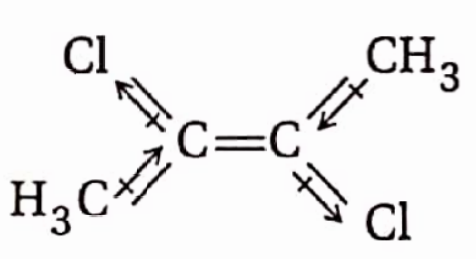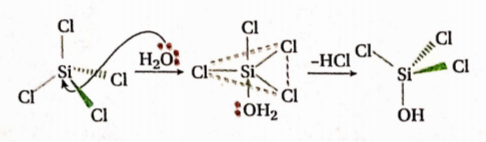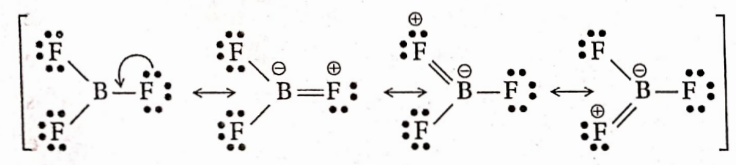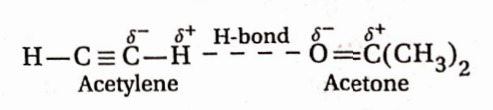
WBCHSE Organic Chemistry Basic Principles And Techniques Notes

Class 11 Chemistry Organic Chemistry Basic Principles And Techniques Organic Chemistry Classification And Nomenclature

It has been known from ancient times that minerals, plants, and animals are the three major sources of naturally occurring substances. However, very little information was known regarding their chemistry until the beginning of the eighteenth century. In 1675, Lemery classified the natural substances into three classes such as mineral substances, vegetable substances, and animal substances based on the sources from which they were obtained and it was readily accepted.

  • In 1784, it was Lavoisier who first showed that all compounds derived from vegetable and animal sources always contained carbon and hydrogen and sometimes oxygen, nitrogen, sulfur, and even phosphorus. So, there is a dose relationship between the vegetable and animal products.

This led to the classification of natural substances into two categories: 

  1. Organic compounds: All those substances which were obtained from plants and animals, i.e., the substances which were obtained from living organisms and
  2. Inorganic compounds: All those substances that were obtained from non-living sources such as rocks and minerals etc. This classification, however, found justification by the fact that in several cases, the same compound could be derived from both vegetable and animal sources.

A detailed investigation of the structure of the organic compounds revealed that almost all of them essentially contain both carbon and hydrogen atoms (hydrocarbon) and some of them also contain the atoms of a few other elements such as nitrogen, oxygen, phosphorus, halogens etc.

Since these are formed by replacing the hydrogen atoms in the hydrocarbons by these atoms, therefore, these are regarded as derivatives of hydrocarbons.  Organic compounds are, therefore, hydrocarbons and their derivatives and the branch of chemistry that deals with the study of these compounds is known as organic chemistry.

Inorganic chemistry, on the other hand, is defined as the chemistry of all elements other than carbon and their compounds

Tetrahedral Arrangement Of The Four Valencies (Bonds) Of Carbon

In 1859, Kekule proposed that carbon exhibits the normal valency of four units in simple as well as complicated organic molecules and an atom of carbon is joined to other atoms by four covalent bonds which remain in a plane. Also, the angle between any two adjacent bonds is 90°.

  • This proposal, however, could not explain some special characteristics of organic compounds, and a change in Kekule’s theory was urgently required.
  • In 1874, both can’t Hoff and Le Bel predicted that the four bonds of a carbon atom are directed towards the four corners of a regular tetrahedron, i.e., the angle between any two adjacent bonds is I09°28′ (tetrahedral angle).
  • This representation is regarded as a tetrahedral model or space model. It was supported by electron diffraction and spectroscopic studies.
  • The tetrahedral arrangement of four bonds of carbon laid the foundation for a fascinating field of ‘stereochemistry It is for this reason, that the first Nobel Prize in chemistry was awarded to van’t Hoffin 1901

Organic Chemistry Basic Principles And Techniques Tetrahedral Represention Of Carbon Valencies

Explanation for the existance of a large number of organic compounds:

An important and interesting property of carbon atom is its unique capacity to form bonds with other carbon atoms.This property of forming bonds with atoms of the same element is called catenation. Carbon shows maximum catenation in its group (group 14) in the periodic table.

This is because of the greater strength of the C —C bond as compared to other atoms. For example, the C— C bond is very strong (335 kj- mol-1 ) in comparison to the Si—Si bond (220 kj-mol-1 ) or Ge—Ge bond (167 kj – mol-1). As a result, carbon atoms can link with each other to form either linear chains of various lengths or branched chains and also rings of different sizes.

Organic Chemistry Basic Principles And Techniques Chains And Rings

Again, two or more organic compounds having the same molecular formula may be formed. Compounds having the same formula but different properties are called isomers and the phenomenon is called isomerism.

Catenation and isomerism are the two properties of carbon that are responsible for the existence of a large number of organic compounds. Carbon is also involved in forming multiple bonds with other carbon atoms (C=C, C≡C) and also with oxygen (C—O) and nitrogen atoms (C=N, C≡N). Themultiplebondingis also responsible for the existence of a variety of carbon compounds.

WBCHSE Organic Chemistry Basic Principles And Techniques Notes

Electronic explanation of the tetra covalency of carbon: Lewis’ theory:

In 1916, G.N. Lewis put forward the electronic concept regarding the formation of bonds. According to him, atoms with similar or almost similar electrochemical nature combine by forming one or more electron pair using odd electron(s) in their valence shells, and in this way, they attain stable electronic configurations (electron octets) of the nearest noble gases.

Carbon exists in group IVA of the second period of the periodic table. In the perspective of its position just between the electropositive and electronegative elements, it can be said that it is neither an electropositive nor an electronegative element. Its ionization enthalpy is sufficiently high and its electron affinity is of moderate magnitude.

Therefore, carbon (ground state electronic configuration: ls²2s²2px¹2py¹) can neither produce C4+ ion by losing 4 electrons from its valence shell nor form C-4- ion by gaining 4 electrons.

Both processes require large amounts of energy which are not ordinarily available during a chemical reaction. Thus, carbon does not usually form electrovalent compounds

Exception:

During the reaction between carbon and highly electropositive sodium, carbon forms the C4- ion thereby producing the electrovalent compound sodium carbide, Na4C ).

According to the electronic configuration, carbon should be bivalent, i.e., it should exhibit a valency of two because of the presence of two odd electrons in 2px and 2pyorbitals.

To account for tetracovalency, it is believed that during the process of bond formation (an energy-releasing process), the two electrons in the 2s -orbital get unpaired, and one of them is promoted to the empty 2pz -orbital. Therefore, the electronic configuration of carbon in the excited state is ls²2s²2px¹2py¹ 2pz¹) So, carbon can complete its octet by sharing the four odd electrons in its valence shell

With the 4 electrons of the valence shells of the other 4 atoms. Hence, carbon fulfills its octet by covalency and In the formation of covalent compounds, its valency is always 4

Example: One C -atom forms four electron pairs by combining with four H-atoms and produces one methane (CH4) molecule with consequent completion of its octet According to Lewis’s theory, 1 electron pair stands for 1 covalent single bond, represented by dash sign

Organic Chemistry Basic Principles And Techniques Molecule Methane

Now, two carbon atoms can form 1, 2, or 3 electron pairs by contributing 1, 2, or 3 electrons respectively from each carbon atom and use them equally to form a carbon-carbon single bond (C—C), carbon-carbon double bond (C= C) or carbon-carbon triple bond (C = C) respectively. For example, ethane (CH3 —CH3), ethylene (CH2=CH2), and acetylene (HC = CH) contain one carbon-carbon single, double, and triple bond respectively.

Organic Chemistry Basic Principles And Techniques Ethane Molecule And Ethylene Molecule And Acetylene Molecule

Although Lewis’s theory gives a satisfactory explanation to the tetracovalency of carbon, it fails to offer any idea about how these valencies are oriented in three-dimensional space. Moreover, this concept of covalent bond formation by sharing of electrons is purely a qualitative approach that tells nothing about the attractive forces involved in bond formation

Hybridization Of Carbon And Shapes Of Some Simple Organic Molecules

For sp³, sp² and sp -hybridisations of carbon and the shapes ofmethane, ethane, ethylene and acetylene see article no. 4.8 of the chapter “Chemical Bonding and Molecular Structure”. From the knowledge of the state of hybridisation of atoms in an organic molecule, an idea about shapes ofthe molecules can be obtained.

These maybe summarised as follows:

1. Atoms bonded to an sp³ -hybridised carbon atom are tetrahedrally oriented. So, any molecule containing an sp³ -hybridised carbon atom must have threedimensional shape (irrespective of the presence of any sp2 or sp -hybridised carbon atom in it).

Organic Chemistry Basic Principles And Techniques chemical Bonding Of Molecular Structure

2. The two sp² -hybridized C-atoms and the atoms directly attached to them remain in the same plane. So, if any organic molecule contains only sp² -hybridized C-atoms which are arranged in a chain or cyclic pattern, then the whole molecule becomes planar.

Class 11 Physics Class 12 Maths Class 11 Chemistry
NEET Foundation Class 12 Physics NEET Physics

For example: 1,3-butadiene (CH2=CH—CH=CH2) and benzene molecules are planar.

If a molecule contains both sp and sp² – hybridized C-atoms, then the molecule will also be planar. For example, the but-l-en-3-yne (CH2= CH—C= CH) molecule is planar. If sp² or sp -hybridized carbon atoms remain attached to a benzene ring, then the molecule will also be planar. For example, vinylbenzene and ethylbenzene molecules are found to be planar. When an atom is present as a substituent in benzene, even then the molecule becomes planar.

For example: Fluorobenzene, chlorobenzene, bromobenzene etc…  are planar molecules.

Organic Chemistry Basic Principles And Techniques Planar Molecule

3. The two sp -hybridized carbon atoms and the atoms directly attached to them remain on the same line. So, if a

Organic Chemistry Basic Principles And Techniques Lie In The Same Plane

A molecule contains only sp -hybridized carbon atoms which remain bonded one after another, and then the molecule will be linear in shape. But 1,3-diyne, for example, is a linear molecule.

Organic Chemistry Basic Principles And Techniques Lie In The Line

Structure of some familiar organic compounds:

Organic Chemistry Basic Principles And Techniques Structure Of Familiar Organic Chemistry.

Prediction of state of hybridization of a carbon atom from the nature of bonding:

If a carbon atom is bonded to four atoms by four single bonds (i.e., 4 cr -bonds), then that carbon atom is sp³ -hybridized;

  • If a carbon atom is bonded to three atoms by two single bonds [i.e., 2 σ – bonds) and one double bond [i.e., 1 σ and 1 π -bond), then that carbon atom is sp² -hybridized; and
  • If a carbon atom is bonded to two atoms by one single bond [i.e., one bond) and one triple bond [i.e., one σ -bond and two π bonds) or by two double bonds [i.e., two car and two n bonds), then that carbon atom is sp -sp-hybridized

Organic Chemistry Basic Principles And Techniques Hybridisation Of A Carbon

Effect Of Hybridisation On Bond Lengths And Bond Strengths

The bond length as well as bond strength of any bond depends upon the size of the hybrid orbitals involved in bond formation.

1. The s -characters of sp3, sp², and sp -hybrid orbitals are 25%, 33.33%, and 50% respectively. As s -the orbital is more closer to the nucleus as compared to p -orbital, more the percentage of s -the character of the hybrid orbital, more it will be attracted by the nucleus, and as a result, its size will

The s -characters of sp³, sp² and sp -hybrid orbitals are 25%, 33.33%, and 50% respectively. As s -orbital is closer to the nucleus as compared to p -orbital, the more the percentage of s -character of the hybrid orbital, the more it will be attracted by the nucleus, and as a result, its size will decrease more.

Therefore, the sizes of sp³, sp², and sp hybrid orbitals follow the order: sp < sp² < sp³. Consequently, the bond formed by an sp³ -hybrid orbital is longer than the bond formed by an sp² hybrid formed orbital by an which-hybrid orbital turn is longer than the bond

Example:

The Csp3   bond is longer than the Csp2  —H bond which in turn is longer than the Csp —H bond. Similarly, the Csp3 —Csp3  bond is longer than the Csp2 —Csp2  bond which turns longer than the Csp — Csp bond. For the same reason, the lengths of single, double, and triple bonds follow the order: C —C>C=C>≡ C. The presence and the increase in the number of n -bonds between two carbon atoms are also responsible for the decrease in bond length.

2. Shorter the bond, the greater is its strength i.e., stronger itis. Therefore, a <r -bond formed by sp -hybrid orbitals is stronger than a σ -bond formed by sp² -hybrid orbitals which in turn forms more stronger σ -bond than formed by sp³ -hybrid orbitals. Again, the bond strength increases with an increase in bond multiplicity and so, a triple bond is stronger than a double bond whichin turn is stronger than a single bond

Bond lengths and bond dissociation enthalpies of different bonds:

Organic Chemistry Basic Principles And Techniques ond Lengths And Bond Dissociation Enthalpies Of Different Bonds 1

Organic Chemistry Basic Principles And Techniques ond Lengths And Bond Dissociation Enthalpies Of Different Bonds 2

Organic Chemistry Basic Principles And Techniques ond Lengths And Bond Dissociation Enthalpies Of Different Bonds 3

Different Structural Representations Of Organic Compounds

Lewis Structure Or electron dot Structure

In Lewis structure or electron dot structure, only the electrons of the valence shell of each atom of a molecule is H shown. For example, the electron dot structure of propene is shown at the right side. Since this style of writing is time-consuming and inconvenient, it is not generally followed

Organic Chemistry Basic Principles And Techniques Propene

Dash formula

The Lewis structure, however, can be simplified by representing each pair ofelectrons involved in forming a covalent bond by a dash(—). In this representation, a single dash represents a single bond, a double dash (=) represents a double bond, and a triple dash (≡) represents a triple bond.

The lone pair of electrons on the heteroatoms e.g., oxygen, nitrogen, halogens, sulfur, etc. May or may not be shown. Thus, ethane, ethylene, acetylene and ethanol can be represented by their structural formulas as given above. Such structural representation is also called complete structural formula or graphic formula.

Organic Chemistry Basic Principles And Techniques Dash Formula

Condensed structural formula

The complete structural formulas can be further abbreviated by deleting some or all of the covalent bonds and by indicating the number of identical groups attached to an atom by a subscript. Such simplified structural representations of molecules are called condensed structural formulas. Thus, ethane, ethylene, acetylene and ethanol can be represented as: CH3CH3 (ethane); H2C — CH2 (ethylene); HC=CH (acetylene); CH3CH2OH (ethanol)

Similarly, a long chain of carbon atoms such as CH3CH2CH2CH2CH2COOH can be represented as CH3(CH2)4COOH.

Bond-line Structural formula

It is a very simple, short and convenient method of representing the structures of organic molecules. In this representation, only the carbon-carbon bonds are shown by lines drawn in a zig-zag fashion.

The line ends and the intersection of lines represent carbon atoms carrying an appropriate number of H -atoms so that its tetravalency is fulfilled (i’.e., the terminals denote CH3 -groups, and the unsubstituted intersections or line junctions denote CH2 -groups). The heteroatoms and the H-atoms attached to them are, however, specifically shown. A single bond is represented by a single line ( —), a double bond is represented by two parallel lines (= ) and a triple bond is represented by three parallel lines (≡).

Organic Chemistry Basic Principles And Techniques Bond Line

In bond-line notation, the cyclic compounds are represented by an appropriate ring or polygon without showing carbon and hydrogen atoms. Each comer of a polygon represents a carbon atom while each side of the polygon represents a carbon-carbon bond.

For example:

Organic Chemistry Basic Principles And Techniques Appropriate Ring Or Polygon

Three-dimensional representation of organic molecules

The three-dimensional structure of organic molecules is quite difficult to represent on paper (two-dimensional). So, certain graphic conventions have been proposed. For example, by using a solid wedge and dashed wedge the threedimensional structure of a molecule from a two-dimensional presentation can be perceived.

In these formulas, the solid wedge (i.e., the thick solid or heavy line) is used to indicate a bond lying above the plane ofthe paper and projecting towards the observer, and the dashed wedge is used to represent a bond lying below the plane ofthe paper and projecting away from the observer. The bonds lying in the plane of the paper are shown by normal or ordinary lines (—).

A three-dimensional representation of a methane molecule, for example, is shown below:

Organic Chemistry Basic Principles And Techniques Wedge And Dash Representation In Methane

Classification Of Organic Compounds Based On Carbon Skeleton

Due to the existence large number of organic compounds is rather inconvenient to study the chemical nature of these compounds individually. To simplify and systematize the study of organic chemistry, organic compounds have been broadly classified into two categories depending on the nature of their carbon skeleton or structures. The flow sheet given here is the general classification of organic compounds.

Organic Chemistry Basic Principles And Techniques Organic Compounds On The Basis Of Carbon Skeleton

Acyclic or open chain or aliphatic compounds:

The compounds containing open chains of carbon atoms with the appropriate number of H -atoms and functional groups are called acyclic or open-chain compounds. These compounds are also called aliphatic compounds because the earlier members of this class were obtained either from animal or vegetable fats (Greek, aliphatic = fat). Due to the variation in the structure of carbon chains, two types of open-chain compounds have been formed.

These are:

  • Unbranched or straight-chain compounds and
  • Branched chain compounds.

1. Straight chain compounds

The open chain or aliphatic compounds in which no carbon atom (except the two terminal C -atoms) is attached to more than two carbon atoms are called unbranched or straight chain compounds.

Examples:

Organic Chemistry Basic Principles And Techniques Straight Chain Compounds

2. Branched-chain compounds

The open-chain or aliphatic compounds in which at least one carbon atom is attached to three or more carbon atoms are called branched-chain compounds

Examples:

Organic Chemistry Basic Principles And Techniques Branched Chain Compounds

Cyclic or closed chain or ring compounds

Compounds containing one or more closed chains or rings of atoms in their molecules are called cyclic or closed chain or ring compounds. Depending upon the nature of the atoms present in the ring, the cyclic compounds may be divided into the following two classes

1. Carbocydic or homocyclic compounds:

The compounds containing rings that are made up ofonly carbon atoms are called carboxylic or homocyclic compounds.

These are further divided into two sub-classes as follows:

1. Alicyclic compounds:

The carboxylic compounds which show resemblance in properties with the aliphatic compounds are called alicyclic compounds

Examples:

Organic Chemistry Basic Principles And Techniques Alicylic Compounds

2. Aromatic compounds: For aromatic compounds, see the aromatic hydrocarbon portion

2. Heterocyclic compounds:

Cyclic compounds containing more heteroatoms (atoms other than C and H i.e., O, N, S, etc.) in their rings are called heterocyclic compounds. Depending upon their chemical behaviour, they are further divided into the following two categories

1. Alicyclic heterocyclic compounds:

Aliphatic cyclic compounds containing one or more heteroatoms in their rings are known as alicyclic heterocyclic compounds

Examples:

Organic Chemistry Basic Principles And Techniques Alicylic Heterocyclic Compounds

2. Aromatic heterocyclic compounds:

Aromatic compounds containing one or more heteroatoms in their molecules are called aromatic heterocyclic compounds.

Examples:

Organic Chemistry Basic Principles And Techniques Aromatic Heterocyclic Compounds

Saturated and unsaturated compounds

1. Saturated compounds:

The organic compounds in which the carbon atoms are linked with each other only by single covalent bonds are called saturated compounds.

Examples: Methane (CH4), ethane (CH3—CH3), ethyl alcohol (CH3 —CH2 —OH), methylamine (CH3 —NH2) etc.

2. Unsaturated compounds:

The organic compounds which contain at least one carbon-carbon double bond or triple bond are called unsaturated compounds

Examples:

Ethylene (H2C= CH2), l-butene(C2H5CH= CH2)

1,3-butadiene (H2C=CH—CH=CH2) etc.

Organic compounds containing unsaturated groups such as are considered saturated compounds. -CHO, -COOH, -COOR etc. But no C =C or C = C For example, propionic acid (CH3CH2COOH) is a saturated compound but acrylic acid (CH2=CH—COOH) is an unsaturated compound.

Functional Groups & Homologous Series

Functional group Definition

A functional group may be defined as an atom or group of atoms present in an organic compound, which is responsible for its characteristic chemical properties.

Generally, compounds having the same functional group have similar properties while compounds with different functional groups have different chemical properties. For this reason, organic compounds are classified into different classes or families based on the functional groups present In the reactions of organic compounds, the organic groups or radicals generally do not suffer any change but the functional groups actively participate:

Organic Chemistry Basic Principles And Techniques Functional Groups

Some common functional groups present in various organic compounds along with their classes:

Organic Chemistry Basic Principles And Techniques Various Organic Compounds Along With Their Classes

Organic Chemistry Basic Principles And Techniques Various Organic Compounds Along With Their Classes.

1. Though the functional groups govern the chemical properties, they are also found to influence the physical properties in some cases. For example, alcohols (ROH) due to the presence of —OH group remain associated through intermolecular H -bonding and as a result, the boiling points of alcohols are much higher than that of ethers having similar molecular masses.

2. Organic compounds with 2 or more different functional groups exhibit characteristic properties of all the functional groups present in it. For example, aldol [CH3CH(OH)CH2CHO] exhibits the properties of ; both alcohol and aldehyde.

3. Although different compounds having the same functional group show similarities in their chemical properties, their properties are not identical. For example, formaldehyde (HCHO) and acetaldehyde (CH3CHO) containing the same functional group ( —CHO), do not respond to the same type of reaction. The former participates in the Cannizzaro reaction but not in Aldol condensation reaction while the latter takes part in Aldol condensation reaction but the Cannizzaro reaction

Homologous series

Homologous series definition:

A homologous series is defined as a series or group of similarly constituted organic compounds which have the same functional group and thus similar chemical properties and any two successive members differ in their molecular formula by a CH2– group. Members of such a series are called homologues.

Some homologous series, their general formulas and structures of compounds upto C4

Organic Chemistry Basic Principles And Techniques Some Homologous Series And Their General Formulas

Characteristics of homologous series:

1. All the members of a homologous scries can be represented by the same general formula. For example, CnHn+1 + j OH is the general formula of alcohols.

2. Same functional group is present in ail members of any homologous series. So, the members of any homologous series have almost identical chemical properties (the phenomenon of such resemblance in properties among the compounds of the same homologous series is called homology). However, with increase in molecular mass, the chemical reactivity ofthe compounds usually decreases.

3. Any two successive members of aparticular series differ in molecular formulary CHHomologous series group or14 massunits.

The physical properties such as density, melting point, boiling point of the members of a homologous series increase gradually with the increase in molecular mass. However, solubility and volatility show a declining trend with rise in molecular mass.

4. The members of a homologous series can be prepared by almost identical methods, known as the general methods of preparation.

Significance of homologous series:

  • From the knowledge ofthe method of preparation and the properties of a particular member of a homologous series, the method of preparation and properties of the other members of the same series can easily be predicted.
  • Therefore, by dividing the vast number of organic compounds into homologous series followed by the study of the method of preparation, properties, and reactions of a representative member, an overall idea about the whole family can be obtained.
  • However, the first member of a series often differs from the other members in the method of preparation and properties.
  • For example, the method of preparation and properties of formic acid (HCOOH), the first member ofthe carboxylic acid family, are different from that ofthe other members of the family.

Classification Of Organic Compounds On The Basis of Functional Group

Hydrocarbon

Hydrocarbons are the binary compounds of C and H. Based on their structural formulae, they are given types

Organic Chemistry Basic Principles And Techniques Hydrocarbons

1. Saturated hydrocarbons or alkanes or paraffins:

The open chain hydrocarbons in which the carbon atoms (except methane, CH4, in which the single carbon is bonded to four H -atoms) of each molecule are linked mutually by single covalent σ -bonds, and rest of the valencies of C atoms are satisfied by single covalent σ -bonds with H atoms, are known as saturated hydrocarbons or alkanes.

Since these saturated hydrocarbons are quite less reactive due to absence of any functional group, they are also called paraffins (Latin: parum =little and affins = affinity or reactivity). The compounds ofthis class are representedby the general formula: Cn2n+ 2.

Classification of carbon and hydrogen atoms present in saturated hydrocarbons or alkanes:

The C-atoms present in an alkane molecule may be classified into four types primary (1°), secondary (2°), tertiary (3°), and quaternary (4°), C-atom as follows:

  • A C-atom attached to only one (or no other) C-atom is called primary C-atom It is designated as 1° carbon.
  • A C-atom attached to two other C-atoms is called a secondary C-atom.It is designated as 2°.
  • A C-atom attached to three other C-atoms is called a tertiary C-atom.It is designated as 3° carbon.
  • A C-atom attached to four other C-atoms is called a quaternary C-atom. It is designated as 4° carbon.

Organic Chemistry Basic Principles And Techniques Quaternary C Atom

The hydrogen atoms may similarly be classified.

The hydrogen atoms attached to 1°, 2°, and 3° carbon atoms are called primary (1°), secondary (2°) and tertiary (3°) hydrogen atoms respectively. It is to be noted that unlike quaternary carbon atoms quaternary H atom has no existence because a quaternary carbon does not carry any hydrogen atom. The former example clearly illustrates the various types of carbon and hydrogen atoms.

2. Unsaturated hydrocarbons:

The open chain hydrocarbons which contain at least one carbon-carbon double bond  Organic Chemistry Basic Principles And Techniques Unsaturated Hydrocarbonsor carbon-carbon triple (—C= C— ) bond in their molecules are called unsaturated hydrocarbons. These unsaturated hydrocarbons are further classified into two types: alkenes and alkynes.

The unsaturated hydrocarbons containing carbon-carbon double bonds are called alkenes, for example, ethylene (CH2=CH2), propylene (CH3CH=CH2) etc. A double bond is made up of one cr -bond and one n -bond. These hydrocarbons are also called olefins (Greek: olefiant = oil forming) because the lower members of this class react with chlorine to form products. The general formula of alkenes is CnH2n where n = 1, 2, 3— etc.

The unsaturated hydrocarbons containing carbon-carbon triple bonds are called alkynes, for example, acetylene (HC = CH), methyl acetylene (CH3C= CH) etc. A triple bond is made up of one σ-bond and two π-bonds. The general formula of alkynes is CnH2n-2 where n= 1, 2,3 – etc

Classification of hydrocarbon derivatives based on functional group:

Organic Chemistry Basic Principles And Techniques Classification Of Hydrocarbon Deivatives on The Basis Of Functional Group.

Organic Chemistry Basic Principles And Techniques Classification Of Hydrocarbon Deivatives on The Basis Of Functional ...

Organic Chemistry Basic Principles And Techniques Classification Of Hydrocarbon Deivatives on The Basis Of Functional Group

IUPAC Nomenclature Of Aliphatic Organic Compounds

According to the IUPAC system, the name of an organic compound consists of 3 parts:

  1. Word root
  2. Suffix and
  3. Prefix.

1. Word root:

Word root, the basic unit of the name, denotes the number of carbon atoms present in the parent chain (the longest possible continuous chain of carbon atoms including the functional group and multiple bonds) of the organic molecule.

For chains containing up to four carbon atoms, special word roots (based upon the common names of alkanes) such as ‘meth’ for C1, ‘eth’ for C2, ‘prop’ for C3, and ‘but’ for C4 are used where C1, C2, C3 and C4 represent the number of carbon atoms in the chain. For chains of five or more carbon atoms, Greek numerals or number roots are used to represent the word roots.

For example:

‘Pent’ is used for the C5 chain, ‘hex’ is used for C6 chain etc. The general word root for any carbon chain is ‘alk’

Organic Chemistry Basic Principles And Techniques Number Of C Atoms The Parent Chain

2. Suffix

These are of the following two types

1. Primary suffix:

A primary suffix is always added to the word root to indicate whether the carbon chain is saturated or unsaturated. There are three basic primary suffixes. If the carbon atoms are linked only by single covalent bonds (C —C) ‘-ane’ is used.

If there is at least one double bond (C= C) present in the chain, the primary suffix ‘- ene’ and if there is at least one triple bond (C = C) in the chain, the primary suffix ‘-yne’ is used. Hence, the name of

  1. CH3CH2CH13 is prop + ane = propane and
  2. CH3CH=CH2 is prop + ene = propene.

If the parent carbon chain contains 2, 3, or more double or triple bonds, numerical suffixes such as ‘di’ (for two), ‘tri’ (for three), ‘tetra’ (for four), etc.

Are added to the primary suffix. If the primary suffix begins with a consonant then an extra ‘a’ is to be added to the word root. For example, the primary suffix used for two double bonds is diene. Now if it is added to the word root ‘but’ for C4 chain, then the name of the compound will be butadiene.

Organic Chemistry Basic Principles And Techniques Primary Suffix

2. Secondary suffix:

A secondary suffix is used to indicate the functional group presents an organic molecule and is to be added to the primary suffix while writing the IUPAC name. Secondary suffixes of some important functional groups are listed:

Organic Chemistry Basic Principles And Techniques Secondary Suffix

It is to be noted that while adding the secondary suffix to the primary suffix, terminal ‘e’ of the primary suffix [i.e., ‘ane,’ ‘ene’ or ‘yne’) is dropped if the secondary suffix begins with a vowel but is retained if the secondary suffix begins with a consonant.

For example: The name of CH3CH2OH is: eth + ane + ol = ethanol and that of CH3CH2CN is: prop + ane + nitrile = propanenitrile.

Organic Chemistry Basic Principles And Techniques Homologous Series

3. Prefix

It is a part of the IUPAC name of a compound that appears before the word root. Prefixes are of two types

1. Primaryprefix: A primary prefix is used to differentiate a cyclic compound from an acyclic compound

For Example:

In case of carbocyclic compounds, the primary prefix ‘cyclo’ is used just before the word root. For example, the cyclic hydrocarbon, maybe named as

Organic Chemistry Basic Principles And Techniques Primary Prefix

2. Secondaryprefix:

In the IUPAC system of nomenclature, some groups are not considered functional groups or secondary suffixes. These are treated as substituents and are called secondary prefixes. These are added just before the word root (or the primary prefix in the case of alicyclic compounds) in alphabetical order.

The secondary prefixes of a few substituents are given in the following table:

Organic Chemistry Basic Principles And Techniques Secondary Prefix

Therefore, while writing the IUPAC name of an aliphatic organic compound the various parts are to be added in the following sequence: Secondary prefix + Primary prefix+ Wordroot+ Primary suffix + Secondary suffix. It is not necessary that all the parts may be present in a particular compound. However, the word root and primary suffix must be present.

Example:

In case ofthe compound, \(\stackrel{4}{\mathrm{C}} \mathrm{H}_3 \stackrel{3}{\mathrm{C}} \mathrm{HCl} \stackrel{2}{\mathrm{C}} \mathrm{H}_2 \stackrel{1}{\mathrm{C}} \mathrm{H}_2 \mathrm{OH}\), the word roots ‘but’, the primary suffix ‘ane’, the secondary suffix is ‘ol’ and the secondary prefix is ‘chloro’. As the compound is acyclic, the primary prefix is absent. Therefore, the IUPAC name of the compound is chloro (at position C-3 ) + but + an (e is omitted) + ol (at position C-l )- 3-chlorobutan-l-ol.

IUPAC Nomenclature of some organic compounds

Organic Chemistry Basic Principles And Techniques IUPAC Nomenclature Os Some Organic Compounds

Common & Iupac Nomenclature Of Some Important Classes Of Organic Compounds

Saturated hydrocarbons (Alkanes)

In the IUPAC system, saturated acyclic hydrocarbons are called alkanes. IUPAC names of alkanes are obtained by adding the suffix ‘ane’ to the word root indicating the number of C-atoms present in the chain. The first 4 alkanes (CH4 to C4H10) have their special names, i.e., methane, ethane, propane, and butane.

The names of alkanes containing 5 or more C-atoms are obtained by adding prefixes such as ‘pent’ (5), ‘hex’ (6), ‘hept’ (7), ‘Oct’ (8), etc., indicating the number of C-atoms in the molecule to the suffix ‘ane! Although common and IUPAC names of alkanes are the same, the prefix (normal)is added to the common name of alkanes containing 4 or more C-atoms.

IUPAC and common names of first ten members of the alkane family:

Organic Chemistry Basic Principles And Techniques First Ten Members Of Alkane Family

Alkyl groups

An organic group produced by the removal of one H -atom from an alkane molecule is called an alkyl group or alkyl radical.

For example: 

  1. Removal of one H-atom from methane (CH4) produces methyl group (-CH3),
  2. An ethyl group ( —C2H5) is formed by the removal of any one of six equivalent H -atoms from ethane (C2H6)

Organic Chemistry Basic Principles And Techniques Ethyl Group

All the H -atoms of alkanes containing more than two carbon atoms are not always equivalent. So, two or more alkyl groups can be derived from these alkanes.

For example:

In the case of propane (CH3CH2CH3), the removal of one hydrogen atom attached to the terminal carbon yields an unbranched propyl group. But when one H -atom linked to the middle carbon is removed, an isopropyl group is obtained.

Organic Chemistry Basic Principles And Techniques Propyl Group And Isopropyl Group

The alkyl groups are generally represented by the letter R. So, an alkane is represented as R —H. The monovalent alkyl groups have the general formula: CnH2n+1 [n = 1.2,3 etc.]

Nomenclature of alkyl groups

The names of the alkyl groups are derived by replacing the suffix ‘ane’ of the corresponding alkane by the suffix ‘yl’

Organic Chemistry Basic Principles And Techniques Nomenclature Of Alkyl Groups

Classification of alkyl groups

1. Primary (1°) alkyl groups:

The removal of one 1° H -atom from an alkane gives a primary or 1° alkyl group. Ethyl (CH3CH2-), isobutyl (Me2CHCH2—), neopentyl (Me3CCH2—), etc. Are some examples of primary alkyl groups. The primary alkyl groups obtained from simple straight-chain alkanes are called normal alkyl groups

In the common nomenclature system, those are designated as n -alkyl group Imt In the IUPAC system, n Is omitted

For example:

In the common or trivial system of nomenclature, CH,CH2CH2– IS written as n -propyl group hut In the IUPAC system, it Is designated as propyl group. The primary alkyl groups In which the second last carbon in the chain is branched to one

The group are named by using the prefix Mso’

For example:

The —CH2CH(CH3)3 group is called the isobutyl group. (As a group, up to isohexyl and as an alkane up to isohexane, the use ofthe ‘iso’ has been accepted by the IUPAC system).

The primary alkyl groups in which the second last carbon in the chain is branched to two —CH3 groups are named by using the prefix ‘nco’.

For example: The —CH2C(CH3 )3 group is called neopentyl group. (As a group, upto neo hexyl and as an alkane upto neohexane, the use of‘neo’ is accepted by die IUPAC system.)

Organic Chemistry Basic Principles And Techniques Isopentyl Group And Neopentyl Group

2. Secondary (2°) alkyl group:

Removal of one 2° H-atom from an alkane forms a secondary (2°) alkyl group. In both trivial & IUPAC system,itis written as sec-alkyl (pronounced as secondary alkyl group),

For example: CH3 CH2 CHCH3 is a 2° alkyl group named as a sec-butyl group.

3. Tertiary (3°) alkyl group:

The removal of one 3° H -atom from an alkane leads to the formation of a tertiary or 3° alkyl group. In both the trivial and IUPAC systems, it is written as ferf-alkyl group or f-alkyl group (pronounced as tertiary alkyl group),

For example:—C(CH3 )3 is a tertiary alkyl group whose name is a fert-butyl group or a t-butyl group

Structures and IUPAC names of some alkyl groups

Organic Chemistry Basic Principles And Techniques Structures And IUPAC Names Of Some Alkyl Group.

Organic Chemistry Basic Principles And Techniques Structures And IUPAC Names Of Some Alkyl Group

Monovalent radicals derived from unsaturated acyclic hydrocarbons end with ‘-enyl ‘-ynyl,’ ‘-dienyl,’ etc., depending on the nature of the radicals or groups. Positions of double and triple bonds are indicated by numerals where necessary.

The c-atom of any radical containing free valence is always numbered as ‘1’

For example:

CH ≡ C— (ethynyl), \(\stackrel{3}{\mathrm{C}} \mathrm{H} \equiv \stackrel{2}{\mathrm{C}} \stackrel{1}{\mathrm{C}} \mathrm{H}_2\) (prop-2-any)

⇒ \(\stackrel{3}{\mathrm{C}} \mathrm{H}_3 \stackrel{2}{\mathrm{C}} \mathrm{H}=\stackrel{1}{\mathrm{C}} \mathrm{H}-\) (prop-l-enyl) etc. The following trivial names are retained in the IUPAC system: CH2=CH— (vinyl),

CH2=CHCH2— (allyl), etc. The radical (CH2= ) is called ‘methylene’ and (=CH—)is called ‘methine.

The presence of one or more free valency in radicals derived from parent alkenes is indicated by suffixes like monovalent(-yl), divalent (-diyl), trivalent (-triyl) etc.

For example: CH3CH< is ethane-1, 1-diyl; (CH3)2C< is propane-2,2-diyl etc.

Aryl groups:

The organic groups derived from benzene and other benzene derivatives are termed as aryl groups. Aryl groups are generally represented by Ar. The simplest aryl group is phenyl group (—C6H5 ). It can be obtained by removing one hydrogen atom from a molecule of benzene (C6H6 )

Organic Chemistry Basic Principles And Techniques Aryl Group

Trivial or common system of nomenclature of other classes of compounds:

Organic Chemistry Basic Principles And Techniques Trivial Or Common System Of Nomenclature

Organic Chemistry Basic Principles And Techniques Trivial Or Common System Of Nomenclature.

Organic Chemistry Basic Principles And Techniques Trivial Or Common System Of Nomenclature..

Organic Chemistry Basic Principles And Techniques Trivial Or Common System Of Nomenclature...

IUPAC nomenclature of different classes of compounds at a glance:

Organic Chemistry Basic Principles And Techniques Different Classes Of Compounds At A Glance

Rules Branched For Iupac Nomenclature Of Chain Alkanes

Longest chain rule

The longest continuous chains of the alkane is to be identified first.It is known as the parent or root chain. The number of carbon atoms in the parent chain determines the word root

It is to be noted that the longest chain may or may not be straight but it must be continuous. All other carbon atoms that are not included in the parent chain are called branched chains side chains or substituents. The branched chain alkane is, therefore, named as a derivative ofthe parent chain

Example:

Organic Chemistry Basic Principles And Techniques Longest Chain Rule

The parent chain in the compound (I) contains 6 carbon atoms and the CH3 -group is a side chain or substituent. Therefore, it is to be named as a derivative of hexane. The parent chain in the compound (II) contains 8 C-atoms but is not straight so, it is named as a derivative of octane. CH3 -and C2H6 -groups are the two substituents here. If two chains of equal lengths are possible, then the one with a maximum number of side chains or substituents is to be considered as the parent chain.

Example:

In the compound (III), the parent chain is the horizontal six-carbon chain containing two alkyl substituents ( —CH3 and C2H5) but not the other six-carbon chain containing only one alkyl substituent [(CH3)2CH-]

Organic Chemistry Basic Principles And Techniques Incorrect Chain And Correct Chain

Lowest number rule

The carbon atoms of the parent chain is to be numbered as 1, 2, 3, 4, . etc. from one end in such a way that the carbon atom carrying the substituent gets the lowest possible number.

Example:

In the following compound, the numbering can be done in two different ways. The numbering of the carbon chain as given in the structure (IVA) is correct because the carbon carrying the substituent gets a lower number i.e., 3. However, the numbering of the carbon chain as given in the structure (IVB) is incorrect because the carbon carrying the substituent gets a higher number i.e., 5.

Organic Chemistry Basic Principles And Techniques Lowest Number Rule Of Correct And Incorrect Numbering

The number indicating the position of the substituent in the parent chain is called its positional number or locant. Thus, the correct locant for the methyl side chain in the above compoundis 3.

When two substituents are present in the chain, then the lowest set of locant rule is applied. It states that when two or more different sets of locants are possible, then that set of locants will be the lowest which (when compared term by term with other sets, each in order of increasing magnitude) has the lowest term at the first point of difference. This rule is used irrespective ofthe nature ofthe substituent.

Example:

When the carbon atoms of the parent chain of the following compound (V) are numbered from the sides, two sets of locants are obtained. Out of the two sets of locants (2,3) and (3,4), the first set is lower and hence preferred because the first term, i.e., 2 in the first set is lower than the first term, i.e., 3 in the second set

Organic Chemistry Basic Principles And Techniques First Set Is Lower Than First Term

Similarly , for the compound (VI):

Organic Chemistry Basic Principles And Techniques Second term In The First Set

Out ofthe two sets of officiants (2,2,4) and (2,4,4), the first set is lower and hence preferred as the second term in the first set i.e.,2 is lower than the second term 4in the second set.

According to the latest IUPAC recommendations of nomenclature (1993), the lowest set of locant rules Is preferred even If it violates the lowest sum rule.

For example:

In the case of the following compound, the numbering of the carbon chain from left and right gives two different set of locants with two different sum of locants.

Organic Chemistry Basic Principles And Techniques Different Sum Of Locants

The numbering from the left is correct because the first term CH3 i.e., 2 in the set (2, 7, 8) is lower than the first term i.e., 3 in the set (3, 4, 9), even though the sum of locants is lower when the numbering is done from the right. Thus, the correct name ofthe alkanes 2, 7, 8-trimethyIdecane.

Name of the branched chain alkanes

When there is one alkyl group in the parent chain, its name is to be prefixed to the name of the parent alkane, and its position on the chain is to be indicated by writing before it the number of the carbon atom carrying the substituent.

The name of the substituent is separated from its positional number or locant by a hyphen (-). The final name of the alkane is to be written as one word, i.e., there will be no gap between the name of the substituent and the parent alkane.

Example:

Organic Chemistry Basic Principles And Techniques Branched Chain Alkanes

Alphabetical order of the side chains or substituents

When two or more different alkyl groups (side chains or substituents) are present on the parent chain, such groups prefixed by their positional numbers or locants, are to be arranged in alphabetical order irrespective of their positional numbers and written before the name of the parent alkane.

Example:

In the given compound, between ethyl and methyl groups, ethyl comes first in the alphabetical order and therefore, its name is 3-ethyl-2-methylhexane. When a number appears between two substituent groups then hyphens are used on both sides ofthe number

Organic Chemistry Basic Principles And Techniques 3 Ethyl 2 Methylhexane

It is to be noted that while deciding the alphabetical order of various alkyl groups, prefixes such as ‘iso’ or‘neo’ are to be considered as a part of the fundamental name of the alkyl group while the prefixes, ‘second ‘tert’ are not

Examples:

Organic Chemistry Basic Principles And Techniques 5 Sec Butyl 4 Isopropyldecane

Numbering of different alkyl groups at equivalent positions

If two different alkyl groups or substituents are present at equivalent positions, i.e., at the same position from the two ends of the parent chain, then numbering of the chain is to be done in such a way that the alkyl group which comes first in the alphabetical order gets the lower number.

Example: 

Organic Chemistry Basic Principles And Techniques 3 Ethyl 2 Methylheptane

Naming of same alkyl groups at different positions

When the parent chain contains two or more same alkyl groups at different positions (or at the same position), the positional number of each alkyl group is separated by commas, and suitable prefixes such as ‘di’ (for two), ‘tri’ (for three), ‘tetra’(for four) etc., and then they are to be attached to the name of the alkyl group. When two alkyl groups are attached to the same carbon atom, the positional number or locant is to be written twice. It is to be noted that the prefixes like ‘di’, ‘tri’, ‘tetra’, etc. are not considered while deciding the alphabetical order ofthe alkyl groups

Organic Chemistry Basic Principles And Techniques NAming Of Same Alkyl Groups At Different Positions

Naming of complex substituents/substituted substituents

1. If the alkyl group on the parent chain is complex, i.e., if it has a branched chain, it is named as a substituted alkyl group by numbering the C-atom of this group attached to the parent chain as 1. The name of the complex substituent is generally enclosed in brackets to avoid any confusion with the numbering of the parent chain.

Organic Chemistry Basic Principles And Techniques Naming Of Complex Substituents

2. When the same complex substituent occurs more than once on the parent chain, it is indicated by multiplying the prefixes such as “bis’ (for two), ‘tris’ (for three), ‘tetrakis’ (for four), ‘pentakis'(for five), etc

Example:

Organic Chemistry Basic Principles And Techniques 1 And 1 DimethylpropyI 2 MethyIdecane

IUPAC nomenclature of bicyclic compounds

The name of a bicyclic compound in the IUPAC system is based on the name ofthe alkane having the same number of carbons as there in the ring system. The name follows the prefix bicyclo and a set of brackets enclosing numbers indicating the number of carbons in each of the three bridges connecting the bridgehead carbons in order of decreasing size.

For example:

The following bicyclic compounds containing nine and eight carbon atom are named bicyclo [4.3.0]nonane and bicyclo[3.2.1]octane respectively.

Organic Chemistry Basic Principles And Techniques Bicyclic Compounds

What is wrong with the following names? Draw the structures they represent and write their correct names. (i)1,1-dimethylhexane (iii)3-methyl-5-ethylheptane (iv) 4, A-dimethyl-3-ethylpentane (v) 3, 4,7-trimethyloctane (vi) 3,3-diethyl-2,A,Atrimethylpentane 36. Give the IUPAC name of the following alkane containing complex substituents:

Rules For Iupac Nomenclature Of Unsaturated Hydrocarbons

For naming the compounds containing multiple (double and triple) bonds, the following additional rules are to be applied:

1. The parent chain must contain multiple bonds (double or triple) regardless of the fact whether it denotes the longest continuous chain or not

For example:

In compound (I), the parent chain contains 5 carbon atoms and not 6 carbon atoms since the latter does not include the double bond

Example:

Organic Chemistry Basic Principles And Techniques Parent Chain Correct And Incorrect

2. While naming a particular member ofthe alkene or alkyne family, the primary suffix ‘ane’ of the corresponding alkanes to be replaced by ‘ene’ or ‘yne’ respectively.

3. The numbering of the parent chain is to be done in such a way that the first C-atom associated with the multiple bond gets the lowest possible number

Examples:

Organic Chemistry Basic Principles And Techniques Lowest Possible Number

4. If the parent chain contains a side chain, then also the multiple bond get spriority in numbering.

If the parent chain contains 2 or 3 double or triple bonds, then the primary suffix ‘diene’ (or ‘triene’) or ‘diyne’ (or ‘triyne’) are to be used to represent them. In these cases, terminal ‘a’ is also added to the wordroot Fornumbering, the lowest set oflocants rule is to be followed.

Examples:

Organic Chemistry Basic Principles And Techniques Parent Chain Contains 2 Or 3 Double Or Triple Bond

5. If the parent chain contains both double and triple bonds, the following points are to be remembered while writing their names:

The unsaturated hydrocarbon is always named as a derivative of alkyne, i.e., the primary suffix ‘ene’ is always to be written before ‘yne’.

In all these cases, the terminal ‘e’ of the one is dropped. The numbering of the parent chain is to be done from that end which is nearer to the double or triple bond, i.e., the lowest set officiants rule is to be followed

Examples:

Organic Chemistry Basic Principles And Techniques Parent Chain Near To The Double Or Triple Bond

If the positions of double and triple bonds are identical, i.e., if  the set officiants from both sides ofthe chain is the same, then the double bond is always given preference over the triple bond

Example:

Organic Chemistry Basic Principles And Techniques If The Positions Of Double And Triple Bond Are Identical

6. If the unsaturated hydrocarbon contains a side chain along with double and triple bonds, then the numbering of the parent chain is to be done in such a way that the multiple bonds get the lowest set of locants. However, if the numbering from both ends of the parent chain gives the same set of locants to the multiple bonds, then the locant for the side chain must be minimum.

Examples:

Organic Chemistry Basic Principles And Techniques Unsaturated Hydrocarbon Of Correct And Incorrect Numbering

When there are more than two double bonds in the hydrocarbon and it is impossible to include all of the min the parent chain, then the double bond which is not included in the parent chain is treated as a substituent

Organic Chemistry Basic Principles And Techniques More Than Two Double Bonds In The Hydrocarbon

IUPAC Nomenclature Of Compounds With Functional Groups, Multiple Bonds And Substituents

The following additional rules are to be followed while naming organic compounds containing one functional group, double and triple bonds and substituents:

1. In these compounds, the longest chain of carbon atoms containing the functional group and the maximum number ofdouble and triple bonds are to be considered as the parent chain.It may or maynot be the longest possible carbon chain.

For example:

In the following compound (I), the parent chain containing the functional group and the double bond has 6 carbon atoms while the longest possible carbon chain has 7 carbon atoms.

Example:

Organic Chemistry Basic Principles And Techniques Longest Possible Carbon Chain

2. The parent chain is to be numbered in such a way that the functional group gets the lowest locant, even if it violets the lowest set oflocants rule for substituents. For example, in the following compound, the lowest locant for the functional group >C= O is 3 and not 5

Example:

Organic Chemistry Basic Principles And Techniques Lowest Locant For The Functional Group

3. If the organic compound contains a terminal functional group such as —CHO, —COOH, —COCl, —CONH2, —COOR, —C =N, etc., The numbering of the parent chain must be started from the functional group, we., it is always given number but the number is usually omitted from the final name ofthe compound

Example:

Organic Chemistry Basic Principles And Techniques Terminal Functions

4. If a compound contains two or more similar functional groups, numerical prefixes [di, tri, tetra etc.) are used to indicate their numbers, and the terminal ‘e’ of the primary suffix (ane, ene or yne) is retained while writing the name.

Examples:

Organic Chemistry Basic Principles And Techniques Retained While Writing IUPAC Name

5. If an organic compound contains more than two similar terminal functional groups and all of them are directly attached to the parent chain, then none of them are considered as a part of the parent chain. Special suffixes such as carboxylic acid (for —COOH), carbaldehyde (for—CHO), carbonitrile (for —C=N), carboxamide (for —CONH2) etc. are used to name these

Examples:

Organic Chemistry Basic Principles And Techniques More Than Two Similar Terminal Functional Groups

IUPAC Nomenclature Of Compounds With Pentane-2,4-Dione Two Different Functional Groups

When an organic compound contains two or more different functional groups, then one of the functional groups is to be selected as the principal functional group while all other functional groups (also called secondary 7 functional groups) are to be treated as substituents. The choice of principal group is made on the basis ofthe following order of preference:

—COOH>—SO3H >— COOCO — >— COX (X=halogen) >—CONH2> —C≡ N>—CHO>C= O> —OH> —SH>—NH2

All the remaining groups such as halo (fluoro, chiro, bromo, and iodo), nitroso (—NO), nitro (—NO2), alkoxy (—OR), alkyl (—R), aryl {Example: C6H3), etc., are always treated as substituents or simply as prefixes.

Suffixes and prefixes of some Important functional groups [with decreasing priority

Organic Chemistry Basic Principles And Techniques Suffixes And Prefixes Of Some Important Functional Groups

Polyfunctional compounds are named as follows:

  • The chain containing the principal functional group, the maximum number of secondary functional groups, and multiple (double or triple) bonds, if any, is to be considered as the principal chain in the compound.
  • The principal chain is to be numbered in such a way that the principal functional group gets the lowest possible number followed by double bond, triple bond, and substituents.
  • The prefixes for the secondary functional groups and other substituents are to be placed in alphabetical order before the word root. If two or more identical secondary functional groups are present, these are to be indicated by using di, tri, tetra, etc. as prefixes
  • The principal functional group is to be written after the word root and the compound is to be named as a member of that particular class of compound.

Examples of some functional compounds:

Organic Chemistry Basic Principles And Techniques Some Examples Of Polyfunctional Compounds

IUPAC nomenclature of other classes of compounds (According to 1993 Recommendations)

Organic Chemistry Basic Principles And Techniques IUPAC Nomenclature Of Other Classes Of Compounds.....

Organic Chemistry Basic Principles And Techniques IUPAC Nomenclature Of Other Classes Of Compounds....

Organic Chemistry Basic Principles And Techniques IUPAC Nomenclature Of Other Classes Of Compounds.

Organic Chemistry Basic Principles And Techniques IUPAC Nomenclature Of Other Classes Of Compounds..

Organic Chemistry Basic Principles And Techniques IUPAC Nomenclature Of Other Classes Of Compounds...

Organic Chemistry Basic Principles And Techniques IUPAC Nomenclature Of Other Classes Of Compounds......

Structural Formulas Of Organic Compounds From Their Iupac Names

  • To write the structure of an organic compound if its IUPAC name is given, the given steps are to be followed:
  • The longest carbon chain (parent chain) is to be selected from the word root ofthe IUPAC name ofthe compound
  • The parent chain is to be numbered from either end.
  • If the name of the compound contains primary suffix ‘ene’ or ‘yne\itis placed at the indicatedposition along the chain. Iv] Name and position of the functional group (secondary suffix) is to be identified from the IUPAC name andit is to be placed atits rightpositionin the carbon chain.
  • The names and positions of other prefixes, if any, are to be identified from the IUPAC name and to be attached at proper positionin the carbon chain.
  • Finally, the required number ofH- atoms are added, wherever
    necessary, to satisfy tetra covalency ofeach C-atom

.
Examples 1: Letus write the structural formula of 5-hydroxy- 2-methylhex-3-enoic acid.

Step 1: The wordroot ‘hex! indicates that the parent chain contains 6 carbon atoms: C —C —C—C —C—C

Step 2: Numbering ofthe carbon chain 6 5 is done as indicated: \(\stackrel{6}{\mathrm{C}}-\stackrel{5}{\mathrm{C}}-\stackrel{4}{\mathrm{C}}-\stackrel{3}{\mathrm{C}}-\stackrel{2}{\mathrm{C}}-\stackrel{1}{\mathrm{C}}\)

Step 3: TheIUPACname of the compound has the primary C suffix ‘ene’ at position 3. Therefore, C-3 and C-4 ofthe parent chain are linked by a double bond. \(\stackrel{6}{\mathrm{C}}-\stackrel{5}{\mathrm{C}}-\stackrel{4}{\mathrm{C}}=\stackrel{3}{\mathrm{C}}-\stackrel{2}{\mathrm{C}}-\stackrel{1}{\mathrm{C}}\)

Step 4: The secondary suffixes ‘oic acid’. Therefore, the carbon atom of the —COOH group is indicated as 1. \(\stackrel{6}{\mathrm{C}}-\stackrel{5}{\mathrm{C}}-\stackrel{4}{\mathrm{C}}=\stackrel{3}{\mathrm{C}}-\stackrel{2}{\mathrm{C}}-\stackrel{1}{\mathrm{C}} \mathrm{OOH}\)

Step 5: The prefixes ‘hydroxy’ and ‘methyl’ are attached at the positons 5 and 2 respectively

Organic Chemistry Basic Principles And Techniques Prefixs Hydroxy And Methyl Attached At The Positions 5 And 2

Step 6: A required number of H- atoms are added to various carbon atoms to get the final structure ofthe compound.

Organic Chemistry Basic Principles And Techniques Various Carbon Atoms Final Structure Of The Compound

2. IUPAC name: But-2-en-l-o

Step 1: C —C —C—C —C—C

Step 2: \(\stackrel{4}{\mathrm{C}}-\stackrel{3}{\mathrm{C}}-\stackrel{2}{\mathrm{C}}-\stackrel{1}{\mathrm{C}}\)

Step 3: \(\stackrel{4}{\mathrm{C}}-\stackrel{3}{\mathrm{C}}=\stackrel{2}{\mathrm{C}}-\stackrel{1}{\mathrm{C}}\)

Step 4: \(\stackrel{4}{\mathrm{C}}-\stackrel{3}{\mathrm{C}}=\stackrel{2}{\mathrm{C}}-\stackrel{1}{\mathrm{C}}-\mathrm{OH}\)

Step 5: \(\mathrm{H}_3 \stackrel{4}{\mathrm{C}}-\stackrel{3}{\mathrm{C}} \mathrm{H}=\stackrel{2}{\mathrm{C}} \mathrm{H}-\stackrel{1}{\mathrm{C}} \mathrm{H}_2 \mathrm{OH}\)

3. UPAC name: 3-amino-4-methylpentanoic acid

Step 1: C —C —C—C —C—C

Step 2: \(\stackrel{5}{\mathrm{C}}-\stackrel{4}{\mathrm{C}}-\stackrel{3}{\mathrm{C}}-\stackrel{2}{\mathrm{C}}-\stackrel{1}{\mathrm{C}}\)

Step 3: \(\stackrel{5}{\mathrm{C}}-\stackrel{4}{\mathrm{C}}-\stackrel{3}{\mathrm{C}}-\stackrel{2}{\mathrm{C}}-\stackrel{1}{\mathrm{C}} \mathrm{OOH}\)

Step 4: 

Organic Chemistry Basic Principles And Techniques 3 Amino 4 Methylpentanoic Acid Step 4

Step 5:

Organic Chemistry Basic Principles And Techniques 3 Amino 4 Methylpentanoic Acid Step 5

4. IUPAC name: 3-ethyl-4, 5-dimethyl hex-l-yn-3-o

Step 1: C —C —C—C —C—C

Step 2: \(\stackrel{1}{\mathrm{C}}-\stackrel{2}{\mathrm{C}}-\stackrel{3}{\mathrm{C}}-\stackrel{4}{\mathrm{C}}-\stackrel{5}{\mathrm{C}}-\stackrel{6}{\mathrm{C}}\)

Step 3: \(\stackrel{1}{\mathrm{C}} \equiv \stackrel{2}{\mathrm{C}}-\stackrel{3}{\mathrm{C}}-\stackrel{4}{\mathrm{C}}-\stackrel{5}{\mathrm{C}}-\stackrel{6}{\mathrm{C}}\)

Step 4: 

Organic Chemistry Basic Principles And Techniques 3 Ethyl 4And 5 Dimethylhex 1yn 3ol Step 4

Step 5:

Organic Chemistry Basic Principles And Techniques 3 Ethyl 4And 5 Dimethylhex 1yn 3ol Step 5

Step 6:

Organic Chemistry Basic Principles And Techniques 3 Ethyl 4And 5 Dimethylhex 1yn 3ol Step 6

Isomerism And Organic Reaction Mechanism Introduction

Organic compounds tend to exist as isomers. There are two or more compounds which have the same molecular formula (or molecular mass) but different physical and chemical properties, i.e., these are isomers of each other. This phenomenon is known as isomerism.

Again, organic compounds being covalent normally participate in molecular reactions. The mechanism of a reaction is the path followed by the substrate and reagent (the reacting species) while forming the products and in fact, it explains how the bonds in the reacting molecules break and new bonds in the product molecules are formed. To understand the mechanisms of organic reactions, some fundamental concepts are to be conceived. In this chapter, the isomerism in organic compounds and some basic concepts of organic reaction mechanisms have been discussed.

Isomerism In Organic Compounds

The property of isomerism in organic compounds is due to different sequence of bonding of their atoms or due to different arrangements of their atoms or groups in space when the sequence of bonding is same

Isomerism in organic compounds Definition:

The phenomenon of the existence of two or more compounds possessing the same molecular formula but different physical and chemical properties is known as isomerism. Such compounds are called isomers

Organic Chemistry Basic Principles And Techniques Isomerism

Example:

Two compounds having the same molecular formula, C2H5O but with completely different physical and chemical properties are found to exist. One compound is a liquid which boils at 78°C and reacts with metallic sodium to liberate hydrogen gas and the other compound is a gas which boils at -24°C and does not react with sodium. Therefore, these two compounds are entirely different in nature.

The first compound is ethyl alcohol belonging to the class of compounds known as alcohols and the second compound is dimethyl ether belonging to the class of compounds known as ethers. Because of the difference in their structures, they are completely different in their properties.

These two compounds are, therefore, isomers and the phenomenon of the existence of these two compounds of identical molecular formulas but belonging to different families is known as isomerism

CH3— CH2— OH(  Ethyl alcohol)

CH3— O—CH3( Dimethyl Ether)

Structural Isomerism

The compounds having the same molecular formula but different structures or molecular constitutions, i.e., different atom-to-atom bonding sequences or atomic connectivity are called structural or constitutional isomers and the phenomenon Is known as structural isomerism. Structural isomerism can be further subdivided into five different categories. Besides, tautomerism is also considered structural Isomerism.

1. Chain Isomerism

Chain Isomerism Definition:

Two or more compounds (belonging to the same family) having the same molecular formula but different carbon skeletons are called chain or nuclear isomers and the phenomenon Is called chain or nuclear isomerism

Example:

1. n -butane and isobutane are two chain isomers because they have die same molecular formula (C4H10) but differ in their carbon skeletons.

Organic Chemistry Basic Principles And Techniques N Butane And Isobutane

2. n-pentane, isopentane and neopentane are the three yJJJj function, group isomerism Chain isomers because they (molecular formula C5H12) differ in their carbon skeleton

Organic Chemistry Basic Principles And Techniques Isopentane And Neopentane

2. Position isomerism

Position isomerism Definition:

When two or more compounds having the same structure of the carbon chain, i.e., the same carbon skeleton, differ in the position of substituent, multiple (double or triple) bond or functional group, these are called position isomers and this phenomenon is called position isomerism

Examples:

1. n -propyl alcohol and isopropyl alcohol are two position isomers. They have the same molecular formula (C3H8O) and have identical carbon skeletons. But in n propyl alcohol, hydroxy (-OH) group is at the terminal C-atom of the chain while in isopropyl alcohol the hydroxy (-OH) group is attached to the middle C -atom.

Organic Chemistry Basic Principles And Techniques N Position Isomerism

3. Functional group isomerism

Functional, group isomerism Definition:

Two or more compounds having the same molecular formula but different functional groups [i.e., belonging to different families) are called functional isomers and this phenomenon is called functional group isomerism or functional isomerism

1. Alcohols & ethers (CnH2n+ 2O) exhibit functional group isomerism. Ethyl alcohol and dimethyl ether having the same molecular formula, C3H6O represent two functional isomers. The functional group of ether is divalent oxygen (— O —) while the functional group of alcohol is the alcoholic hydroxy (— OH) group.

Organic Chemistry Basic Principles And Techniques Dimethyl Ether And Ethyl Alcohol

2. Aldehydes, ketones, unsaturated alcohols and unsaturated ethers exhibit functional group isomerism. The molecular formula, C3H6O for example, represents the following two functional isomers:

Organic Chemistry Basic Principles And Techniques Acetone And Propionaldehyde

3. Carboxylic acid and esters (CnH2nO2) exhibit functional group isomerism. For example, the molecular formula C2H4O2 represents the following two functional isomers

CH -COOH (Acetic acid) (Func. gr: —COOH)

H – COOCH(Methyl formate)( Func. gr:—COOCH3)

4. 1°, 2° and 3° amines (CnH3nN) exhibit functional group isomerism. The molecular formula C3H9N, for example, represents

The following three functional isomers:

CH3CH2CH2NH2 Propan-l-amine (1° amine)

CH3CH2NHCH3  N-methylhexanamine (2° amine)

(CH3)3N [N,N-dimethylethanolamine (3° amine)]

5. Aromatic alcohols, phenols and ethers exhibit functional group isomerism. For example, the molecular formula, C7H8O represents the following three functional isomers,

Organic Chemistry Basic Principles And Techniques Benzyl Alcohol And Anisole And O Methylphenol

Organic Chemistry Basic Principles And Techniques M Methylphenol And P Methylphenol

6. Dienes, alienes & alkynes (CnH2n-2) exhibit functional group isomerism. The molecular formula C5H8, for example, represents four functional group isomers

Organic Chemistry Basic Principles And Techniques Dienes And Allenes And Alkynes

7. Cyanides & isocyanides (CnH2n-1N) exhibit functional group isomerism. The molecular formula C3H5N, for example, represents two functional group isomers:

CH3CH2CN – Propanenitrile

CH3CH2NC – Ethyl isocyanide

5. Metamerism

Metamerism Definition:

When two ‘or more compounds having the same molecular formula but different numbers of carbon atoms (or alkyl groups) on either side of the functional groups such as —O —S—, — NH—, —CO — etc. are called metamers and the phenomenon is called metamerism. Metamerism occurs among the members of the same homologous series

Examples: The molecular formula, C4H10O represents the following metamers of ether family:

Organic Chemistry Basic Principles And Techniques Ethoxyethane And 1 Methoxypropane And 2 Methoxypropane

Examples of some metamers:

Organic Chemistry Basic Principles And Techniques Examples Of Some Metamers

6. Ring-chain isomerism

 Ring-chain isomerism Definition:

Compounds having the same molecular formula but possessing open-chain and closed-chain structures are called ringchain isomers and the phenomenon is called ring-chain isomerism.

Examples:

1. Propene and cyclopropane are ring-chain isomers with the molecular formula C3H6

Organic Chemistry Basic Principles And Techniques Propene Ring Chain Isomerism

2. Propyne and cyclopropene are ring-chain isomers with the molecular formula

Organic Chemistry Basic Principles And Techniques Propane And Cyclopropane

7. Tautomerism

This is a special kind of functional group isomerism involving dynamic equilibrium between the isomers.

Tautomerism Definition:

The functional group isomerism which arises due to the reversible transfer of a group or atom from one polyvalent atom to the other within the same molecule witth necessary rearrangement of linkages and the resulting isomers exist in dynamic equilibrium with each other is called tautomerism. The interconvertible isomers are called tautomers or tautomerides. Tautomerism is also called desmotropism

Conditions for tautomerism:

  1. There must be at least one or H -atom present concerning each functional group in the compound.
  2. The compound must contain an electronegative atom bonded by a double or triple bond e.g., C=O, N=O, C=NH etc.

Keto-enol tautomerism:

In this type of tautomerism, one form is the keto-form containing a keto group >C=O ) while the other form is the enol-form containing an enolic group >C=C—OH). The term ‘enol’ comes from ‘ene’ of the double bond and ‘ol’ of the hydroxy (—OH) group. Ketoenol tautomerism is possible only for those carbonyl compounds which contain at least one a -H -atom

Example:

Ethyl acetoacetate is an important example of this type. Tautomeric equilibrium generally (if no other factors ! operate) favours the structure in which the H-atom is bonded to the C -atom rather than the more electronegative O -atom, i.e., equilibrium favours the weaker acid. However, in this case, because of conjugation and intramolecular H-bonding the percentage of enol-form is much higher (8%) as compared ! to that of acetone where no such factors operate

Organic Chemistry Basic Principles And Techniques Ketol Form And Enol Form

Keto and enol-forms are, in reality, two dynamic structural isomers. These isomers are always interconvertible and . one H-atom is shifted from one C-atom to an O-atom and vice-versa to establish the equilibrium.

Factors affecting the percentage of enol content:

  1. Intramolecular H-bonding (chelation) stabilises the enol and thus increases the amount of enol-form.
  2. Conjugation resulting in resonance stability of the enol-form helps to increase the enol content.
  3. Polar protic solvents usually decrease the percentage of enol form because the more polar keto-form becomes relatively more stabilised in this medium

Organic Chemistry Basic Principles And Techniques H Bonding Stabilises And Resonance Stability

The percentage of the enol-form is greater because of its much higher stability caused by strong intramolecular H-bonding and effective resonance.

1. The following compounds do not exhibit keto-enol tautomerism due to lack of a -H-atom

Organic Chemistry Basic Principles And Techniques Ketoenol Tautomersim

2. Keto-enol actually involves interconversion of Organic Chemistry Basic Principles And Techniques Interconversion group and a tautomerism —C=C(OH) group.

Organic Chemistry Basic Principles And Techniques Group And A Group

The sum of bond energies of the is 347.9 kcal-mol-1 and that of the —C=C(OH) group is 336.0 kcal. mol-1 . So, the keto form is thermodynamically more stable than the enol form in the absence of other factors which can stabilise the enol form.

3. Pseudotropism: Tautomerism in which there is practically; no existence of one tautomer is called pseudotropism. For example

Organic Chemistry Basic Principles And Techniques Pseudetropism

Nitro-acinitro tautomerism:

Organic Chemistry Basic Principles And Techniques NItro Acinitro Tautomerism

Nitroso-oximino tautomerism:

CH3—CH2—N Nitrosoetane(nitroso form) ⇌  CH3 —CH—N — OH(Ethanal oxime (oximino form)

Stereoisomerism

Stereoisomerism Definition:

The isomers having the same structure formula, i.e., er same atom-to-atom bonding sequence or connectivity which differ in the relative arrangement of atoms or groups in space are called stereoisomers and the phenomenon is called stereoisomerism. It is the specific directional property of covalent bonds in threedimensional space which gives rise to stereoisomerism.

Stereoisomerism is broadly classified into two categories: 

  1. Configurational isomerism
  2. Conformational isomerism.

The isomerism that arises due to different spatial arrangements of groups or atoms (which are not interconvertible) in the same structural isomer is called configurational isomerism.

Configurational isomerism can be subdivided into two types: 

  1. Optical isomerism and
  2. Geometrical isomerism.

1. Optical isomerism

Optical isomerism Definition: 

If two molecules having the same atom-to-atom bonding sequence or connectivity (i.e., the same constitution) are mirror images of each other and are non-superimposable, then these are called enantiomers. Enantiomers rotate the plane polarised light to an equal degree but in opposite directions. Because of their effect on plane polarised light, separate enantiomers are said to be optically active and because of this property, they are called optical isomers and the phenomenon is called optical isomerism

Example:

As shown in the figure, lactic acid or 2-hydroxypropanoic acid (CH3CHOHCOOH) exists as a pair of enantiomers. In (-)-lactic acid, the sequence of occurrence of the groups: OH->COOH→CH3 appears in a clockwise direction but in (+)-lactic acid, it appears in an anticlockwise direction when viewed along the C — Ii bond axis from the side opposite to that of the H-atom. Both the enantiomers rotate the plane of plane polarised light to the same extent but in opposite directions. Enantiomer which rotates the plane of polarised light towards the right is called dextrorotatory or d- or (+)-lactic acid and which rotates the plane of polarised light towards the left is called laevorotatory or l- or (—)-lactic acid

Organic Chemistry Basic Principles And Techniques Enantiomers

Compounds which can rotate the plane of plane polarised light are called optically active compounds and those which cannot are called optically inactive compounds. Both the enantiomers of lactic acid are optically active.

Symmetric and asymmetric molecules:

If a molecule has at least one of the following elements of symmetry:

  1. Plane of symmetry,
  2. Centre of symmetry
  3. Alternating axis of symmetry

Then it is a symmetric or achiral molecule. Symmetric molecules are optically inactive. However, if a molecule has none of these symmetry elements, it is called an asymmetric or chiral molecule. Asymmetric molecules are optically active.

A symmetric molecule is superimposable on its mirror image while an asymmetric molecule is not. Therefore, whether a molecule is symmetric or asymmetric may also be verified by constructing models of the molecule & its mirror image and then placing one model on the other. If they are found to be superimposable, then the molecule must be symmetric; if not, then the molecule is asymmetric.

Example:

The two mirror-image forms of lead-acid are asymmetric and so, they are optically active. In our daily lives, we come across many things which are related to mirror images and do not get superimposed,

For example: Our left hand is the mirror image of our right hand but the left hand and the right hand are non-superimposable. So, the glove of the left hand do not fit in the right hand

Plane of symmetry or Sigma plane (σ ):

The plane of symmetry (σ) is defined as an imaginary plane that bisects a molecule in such a way that one half of the molecule is the mirror image of the other half (the plane acting as a mirror). The plane is also called a mirror plane.

Organic Chemistry Basic Principles And Techniques Plane Of Symmetry Or Sigma Plane

Example: Meso-tartaric acid has a plane of symmetry.

Centre of symmetry or Centre of inversion (i):

A centre of symmetry is a point from which lines, when drawn on one side and produced an equal distance on the other side, will meet identical points (i.e., atoms) in the molecule

Organic Chemistry Basic Principles And Techniques Centre Of Symmetry Or Centre Of Inversion

Asymmetric carbon atom and optical activity:

When a carbon atom of an organic molecule is attached to four different atoms or groups (Cabde), then that carbon atom is called an asymmetric carbon atom or chiral carbon. It is also called a stereogenic centre. Molecules containing only one asymmetric carbon atom are asymmetric and optically active. If a molecule contains more than one asymmetric carbon atom, it may be asymmetric or symmetric, i.e., it may be optically active or inactive.

Example:

(+) tartaric acid having two asymmetric C-atoms is optically active but meso-tartaric acid is optically inactive.

Organic Chemistry Basic Principles And Techniques A Symmetric Carbon Atom And Optical Activity

The presence of asymmetric carbon atoms is not essential for exhibiting optical activity:

Some of the substituted allenes (abC=C=Cab) are found to be optically active, even though they contain no asymmetric carbon atom. The reason for their optical activity is the overall asymmetry of their molecules.

Example: The two mirror images of 1,3-dichloro propadiene are overall asymmetric and so, they are optically active

Organic Chemistry Basic Principles And Techniques 1 And 3 Dichloropropadiene

Therefore, the presence of asymmetric C-atom in a molecule is not essential for exhibiting optical activity. If the structure is overall asymmetric, then the molecule will be optically active.

Conditions necessary for optical activity:

  1. The compound is non-superimposable on its mirror image, or
  2. It contains only one asymmetric C-atom or
  3. Plane, centre and alternating axis of symmetry are absent in the molecule.

E. Eliel in his book, has mentioned a molecule which does not contain any element of symmetry, yet it is not optically active. He further stated that principally possibility of the existence of such molecules cannot be discarded outright. Hence, the necessary and sufficient condition for the optical activity of any compound is the non-superimposability ofthe molecule on its mirror image

  • Meso-compounds: If a compound having more than one chiral centre is found to be optically inactive, then it is called a meso-compound. Forexample, meso-tartaric acid.
  • Enantiomers:  Stereoisomers that are not superimposable on each other but related to each other as mirror images are called enantiomers. Thus (+) & (-)-lactic acid form a pair of enantiomers. Similarly, stereoisomers I & II of 3- bromopentan-2- ol form a pair of enantiomers. Enantiomers are optically active molecules having equal but opposite specific rotations. All other physical and chemical properties of enantiomers are the same.
  • Diastereoisomers: Stereoisomers that are not mirror images of each other are called diastereoisomers. Stereoisomers I & III of 3-bromopentan-2-ol are diastereoisomers of each other

Calculation of no. of stereoisomers:

No. of stereoisomers, both optically active and inactive (meso-form) can be obtained from the number of chiral centres present in the molecule

Organic Chemistry Basic Principles And Techniques Calculation Of Stereoisomers

Examples:

1.  3-bromopentan-2-ol (CH3CHOHCHBrCH2CH3) has two dissimilar chiral centres. Therefore, it has 2² = 4 optically active stereoisomers and no optically inactive meso-isomer. Fischer projections of these four stereoisomers are shown below

Organic Chemistry Basic Principles And Techniques Stereoisomers

(I, II) and (III, IV) represent two pairs of enantiomers and they are optically active. Each of (I, III), (I, IV), (II, III) and (II, IV) represents a pair of diastereoisomers.

2.  2,3-dibromobutane (CH3CHBrCHBrCH3) has 2 similar chiral centres and can be divided into two mirror-image halves. Therefore, it can have 2(2-1)_ = 21 = 2 optically active isomers and 2(2-2)/2_ = 20 = 1 optically inactive meso-isomer. Fischer projections of these 3 stereoisomers are shown below

Organic Chemistry Basic Principles And Techniques 3 Stereoisomers

V and VI represent a pair of enantiomers and are optically active. VII represents an optically inactive meso-isomer having a plane of symmetry. Each of (V, VII) and (VI, VII) represents a pair of diastereoisomers.

3.  Organic Chemistry Basic Principles And Techniques Three Bromopentane 2 And 4 Diol  or 3-bromopentane- 2,4-diol has three chiral centres and can be divided into two mirror-image halves by passing a plane through the central carbon atom. Therefore, it can have 2(3-1)-2(3-1)//2 = 4-2 = 2 optically active isomers and 2(3-1)/2 = 21 = 2 optically inactive mesoisomers.

Fischer projections of these 4 stereoisomers are as follows:

Organic Chemistry Basic Principles And Techniques 4 Stereoisomers


IX and X represent a pair of enantiomers and are optically active. XI and XII represent two optically inactive meso-isomers and both of them have a plane ofsymmetry (cr -plane). Each of (DC, XI), (X, XI), (IX, XII), (X, XII) and (XI, XII) represents a pair of diastereoisomers.

Fischer projection formula:

Fischer developed a twodimensional plane projection formula for three-dimensional molecules. Fischer projection uses a cross to represent the stereocentre and the four bonds attached to it Stereocentre lies at the centre of the cross but is not explicitly shown. Horizontal bonds point towards the observer (i.e:, bonds inclined upwards), while the verticle bonds are directed away from the observer (i.e., bonds are inclined downwards). As per the IUPAC convention, the number-1 carbon atom is placed at the top of the vertical line. For example,

Organic Chemistry Basic Principles And Techniques Fischer Projection Formula

Racemic modification:

The racemic modification is an equimolecular mixture of a pair of enantiomers. The racemic modification is optically inactive due to external compensation, i.e., optical rotation caused by one enantiomer is compensated by the opposite rotation produced by the other. A racemic modification is indicated by writing (d, l ) or (±) before the name of the compound.

Example: (±)-or(d, l )-2-hydroxypropanoic acid or lactic acid. R/S nomenclature of optical isomers:

2.  Geometrical or cis-trans isomerism

Geometrical Definition:

Isomers which have the same structural formula, i.e., the same atom-to-atom bonding sequence or connectivity but have different spatial arrangements of atoms or groups around the double bond or a ring system are called geometrical isomers and the phenomenon is called geometrical isomerism.

A π-bond prevents free rotation of the carbon atoms of a double bond concerning each other. Due to this restricted rotation, the relative positions of the atoms or groups attached to the doubly bonded carbon atoms get fixed. As a result of this, many substituted alkenes can exist in two distinctly isomeric forms which differ from each other only in the relative positions of the atoms or groups in space around the double bond

The isomer in which the similar atoms or groups lie on the same side of the double bond or a ring system is called the cis-isomer while the isomer in which the similar atoms or groups lie on the opposite sides of the double bond or a ring system is called the trans-isomer. Because of this, geometrical isomerism is also called cis-trans isomerism

The two geometrical or cis-trans isomers are stereoisomers which are not mirror images of each other. Therefore, these are diastereoisomers of each other.

E/Z nomenclature of geometrical isomers:

In this system of nomenclature, each ofthe two atoms or groups attached to each doubly bonded carbon atom are assigned according to their priority based on Cahn-Ingold-Prelog rules or simply CIP rules. If the atoms or groups of higher priority are on the same side of the double bond, the isomer is designated as Z (Zusammen in German means together) and if the groups or atoms of higher priority are on the opposite sides ofthe double bond, the isomer is designated as E (Entgegen in German means opposite).

Example: In l-bromo-2-chloropropene, for C l, Br > H (in priority) and for C -2, Cl > CH3 (in priority).

Organic Chemistry Basic Principles And Techniques 1 Bromo 2 Chloropropene

Geometrical isomers of three types of olefins:

Organic Chemistry Basic Principles And Techniques Geometrical Isomers Of Three Types Of Olefins

Like the compounds containing a C-C double bond, compounds containing

1. Carbon-Nitrogen double bond (C= N)

Example: Oxime, Hydrazone etc.],

2. Nitrogen-Nitrogen double bond (N=N)

Example: azo, diazo compounds etc.] and some alicyclic compounds exhibit cis-trans or geometrical isomerism

Organic Chemistry Basic Principles And Techniques Alicyclic Compounds

3. Conformational isomerism

Distinction between cis and trans-isomers:

The cis and trans isomers can be distinguished with the help of certain physical characteristics as follows:

1. Melting point:

The molecules of the trans-isomer of a compound is relatively more symmetrical than those of the os-isomer and hence remain closely packed in the crystal lattice. As a consequence, the melting point of the trans-isomer is usually higher than that of the corresponding cis-isomer

Organic Chemistry Basic Principles And Techniques Melting Point Of Trans Isomer

2. Solubility:

In general, a cis-isomer is found to be relatively more soluble in a particular solvent because the molecules of the cis-isomer, being less symmetrical, are weakly held in the crystal lattice than the molecules of relatively more symmetrical trans-isomer

Organic Chemistry Basic Principles And Techniques Solubility

3. Dipole moment:

In general, the cis-isomer of  an alkene is found to be more polar than the irans-isomer (in which there is a possibility of cancellation of moments of two oppositely oriented groups or atoms)

Organic Chemistry Basic Principles And Techniques Dipole moment Of Trans Isomer

Equivalent And Non-Equivalent H-Atoms

If each of the two or more hydrogen atoms present in an organic compound on being replaced by any other atom or group in turn produces the same compound, then these hydrogen atoms are regarded as equivalent hydrogen atoms.

Example:

All 6 hydrogen atoms in the ethane (CH3—CH3) molecule are equivalent and this is because, if any one of these six H-atoms is replaced by an atom (or group) such as Br, the same compound ethyl bromide (CH3CH2Br) is obtained.

Again, in a propane (CH3CH2CH3) molecule, the 6 hydrogens of two methyl groups are equivalent because the replacement of any one of them by Clatom, produces the same compound, 1-chloropropane (CH3CH2CH2Cl) .

Also, the 2 hydrogens of the methylene ( —CH3—) group are equivalent because the replacement of either of them by Cl-atom produces the same compound, 2-chloropropane (CH3CHClCH3). However, one methyl hydrogen and one methylene hydrogen are non¬equivalent because each of them when displaced by Cl atom gives two different compounds.

Therefore, propane contains two types of non-equivalent H atoms. In the given compounds, equivalent H -atoms are marked by the same English letter while the non-equivalent H atoms are designated by different English letters

Organic Chemistry Basic Principles And Techniques Equivalent And Non Equivalent H Atoms

In following compounds, all H-atoms are equivalent:

Organic Chemistry Basic Principles And Techniques All H Atoms Are Equivalent

Determination Of No. Of Covalent Bonds In An Organic Compound From Its Molecular Formula

If the total number of electrons required for the completion of If the total number of electrons required for the completion of the molecule is x and the total number of valence electrons of all the atoms present is y, then the total number of covalent bonds \(\frac{(x-y)}{2}\) (for the formation of a covalent bond, 1 electron pair is required hence, the division by 2 has been effected).

If the molecular formula of a compound is CaHbOc, then the number of electrons required for the completion of octets of several C -atoms = 8a, the number ofelectrons required for the completion of duplets of b number of H-atoms = 2b and the number ofelectrons required for the completion of octets of c number of 0 -atoms = 8c.

Hence, the total number of electrons required for the completion of duplets of H-atoms and octets of C and O -atoms present in the molecule, x = (8a + 2b + 8c). The number of valence electrons for several C -atoms, b number of H-atoms and c number of 0 -atoms are 4a, lb and 6c respectively. Therefore, the total number of valence electrons of C, H and O -atoms present in the molecule, y = (4a + b + 6c). So, the total number of covalent bonds present in the molecule of compound

⇒ \(\mathrm{C}_a \mathrm{H}_b \mathrm{O}_c=\frac{(8 a+2 b+8 c)-(4 a+b+6 c)}{2}\)

Examples:

1. Determine the number of covalent bonds in a compound having the molecular formula, C2H4O2.
Answer:

The total number ofelectrons required for the completion of octets of two C and two O -atoms and duplets of four H atoms present in the molecule = (2×8 + 2×8 + 4×2 ) = 40 and the total number of valence electrons of all these atoms =(2 × 4 + 2 ×6 + 4 × 1) =24.

⇒ \(\mathrm{C}_2 \mathrm{H}_4 \mathrm{O}_2=\frac{40-24}{2}\)

= \(\frac{16}{2}\)

= 8

2. Determine the number of covalent bonds in a compound having the molecular formula, C2H2Cl4. Write the probable structure and name of the compound.
Answer:

The total number ofelectrons required for the completion of octets of two C and four Cl -atoms and duplets of two H atoms present in the molecule =(2× 8 + 4×8 + 2×2) = 52
and the total number of valence electrons of all these atoms

=(2×4 + 4×7 + 2 × 1) = 38.

Thus, the no. of covalent bonds present in the compound having molecular formula

⇒ \(\mathrm{C}_2 \mathrm{H}_2 \mathrm{Cl}_4=\frac{52-38}{2}\)

= \(\frac{14}{2}\)

= 7

The possible structures of the compound are ClCHCHCl2 (1,1,2,2-tetrachloroethane) or ClCH2CCl (1,1,1,2- tetrachloroethane)

Double Bond Equivalent (Dbe) Or Index Of Hydrogen Deficiency (Ihd)

For determining the structure of an organic compound, it is necessary to ascertain whether unsaturation is present in that compound or not and if present, the amount of unsaturation is also needs to be known. In an organic compound, the amount of unsaturation is expressed in terms of Double Bond Equivalent (DBE).

It is also called the Index of Hydrogen Deficiency (IHD). If a hydrocarbon contains 2 hydrogen atoms less than the alkane having the same number of carbon atoms, its double bond equivalent is I, i.e., the compound may contain 1 double bond or a ring.

For example:

The compound, C4H8 contains two H -atoms less than the alkane (butane, C4H10 ) having the same number of C -atoms. So, its double bond equivalent is 1.

Thus, the compound may contain 1 double bond or it may be a cyclic one. That is, the compound may be (CH3CH2CH=CH2) but-l-ene (CH3CH=CHCH3) or cyclobutane.

SimUarly, the double bond equivalent 2 indicates the presence of 2 double or but-2-ene + 1 2 bonds or I triple bond or 1 double bond and 1 ring or 2 rings in the compound.

So, the term SODAR (Sum of Double Bonds And Rings) is also frequently used. From the molecular formula of a compound, its Double Bond Equivalent (or Index of Hydrogen Deficiency or Sum of Double bonds And Rings) can easily be calculated

The double bond equivalent (DBE) of a compound \(=\frac{\Sigma n(v-2)}{2}+1\) + j where n js the number of different types of atoms present in the molecule and v is the valency of each type of atom.

It is to be remembered that if the value of the DBE of a compound is less than 4, the compound is not a benzenoid aromatic compound.

Examples: 1. The molecular formula of a compound is C6H8. Calculate its double bond equivalent (DBE). State whether the compound is an aromatic compound or not.
Answer:

Double Bond Equivalent =  \(\frac{6(4-2)+8(1-2)}{2}+1\)

= 3

Since the double bond equivalent ofthe compound is less than 4, it is not a benzenoitÿaromatic compound

2. Determine the double bond equivalent of each of the following compounds. On catalytic hydrogenation, each of the compounds consumes 2 moles of hydrogen. What is the number of rings (if present) in each of the compounds:

  1. C8H8Br2
  2. C8H10O2
  3. C5H6F2
  4. C8H9C10

Answer:

1. DBE of compound = \(\frac{8(4-2)+8(1-2)+2(1-2)}{2}\) + 1

= 4

The compound on catalytic hydrogenation consumes 2 moles of hydrogen per mole. So, there are 2 double bonds or I triple bond and (4- 2) or 2 rings present in the compound

2. DBE ofthe compound = \(\frac{8(4-2)+10(1-2)+2(2-2)}{2}\) + 1

= 4

The compound on catalytic hydrogenation consumes 2 moles of hydrogen per mole. So, there are 2 double bonds or 1 triple bond and (4- 2) or 2 rings present in the compound.

3. DBE of the compound = \(\frac{5(4-2)+6(1-2)+2(1-2)}{2}\)+ 1

= 2

Since the compound consumes 2 moles of hydrogen on catalytic hydrogenation, the compound contains 2 double bonds or 1 triple bond. There is no ring present in the compound.

4. DBE ofthe compound

= \(\frac{8(4-2)+9(1-2)+1(1-2)+1(2-2)}{2}\) + 1

= 4

Since the compound on catalytic hydrogenation consumes 2 moles of hydrogen per mole, it contains 2 double bonds or 1 triple bond and 2 rings.

3. Write the structures and the IUPAC names of all the isomeric compounds having molecular formula, C4Hg by determining its double bond equivalent.
Answer:

DBE ofthe compound = \(=\frac{4(4-2)+6(1-2)}{2}\) + 1

= 2

Therefore, the compound contains 2 double bonds or 1 triple bond or 1 double bond and 1 ring or two rings. The following 9 isomers ofthe compound are possible:

1. CH2=CH = CH=CH2 (Buta-1,3-diene)

2. CH3CH2C ≡ CH (But-l-one)

3. CH3C ≡ CCH3 (But-2-yne))

4. CH2 = C = CHCH3 (Buta-1,2-diene)

Organic Chemistry Basic Principles And Techniques Isomers Compound

Fundamental Concepts Of Organic Reaction Mechanism

In an organic reaction, the organic molecule (called the substrate) reacts with a suitable attacking species (called the reagent) to form products. The formation of produces) may take place either directly from the reactants (i.e., substrate and reagent) through a transition state or the formation of one or more intermediates. Some by-products may also be formed from the intermediate

Organic Chemistry Basic Principles And Techniques Intermediates

The reagents are mostly either positively or negatively charged. A positively charged reagent attacks the site which is rich in electrons while a negatively charged reagent attacks that site which is electron deficient. So, for the reaction to take place in the covalent bond of the substrate, the bond must have some degree of ionic character.

Although the bond of an organic compound is mainly covalent, that bond becomes partially ionic due to some permanent or temporary displacement of the bonding electrons.

The ionic nature of a bond may be attributed to the following reasons:

  1. Inductive effect
  2. Electromeric effect
  3. Resonance
  4. Hyperconjugation.

Besides these electronic effects, steric effect or steric hindrance plays a very important role in determining the reactivity of organic compounds

1. Inductive effect

Inductive effect Definition:

The permanent displacement of electrons along a carbon chain which occurs when some atom or group, either more or less electronegative than carbon is attached to the carbon chain is called the inductive effect

Inductive effect When a covalent bond is formed between two atoms having different electronegativities, the bonding electron pair is not shared equally by the two atoms. The electron pair being attracted by the more electronegative atom gets shifted more towards it. Consequently, the more electronegative atom acquires a partial negative charge (i.e., 6- ) and the less electronegative atom acquires a partial positive charge (Le., d+).

Example:

When an electronegative (electron-withdrawing) Clatom (or a group such as — NO2 ) is attached to the end of a carbon chain (whose carbon atoms are designated as 1, 2, 3,… etc.), the cr -electrons ofthe Cx —Cl bond are attracted by or displaced more towards the Cl-atom. As a result, the Cl-atom acquires a partial negative charge (δ-) and the carbon, C1, acquires a partial positive charge (δ+). As Cj is now somewhat positively charged, it in turn, attracts the cr -electrons of the C1-C2 bond towards it So, C2 acquires a partial positive charge (SS+) smaller in magnitude than that on C1. Similarly, C3 acquire a partial positive charge (δδδ+) even smaller than that on C2

Organic Chemistry Basic Principles And Techniques Acquire A Partial Positive Charge

Similarly, if an element less electronegative than carbon, such as lithium (Li) (or any other electron-releasing group or atom), is attached to the terminal C -atom bf a carbon chain, then a partial positive charge (<5+) is developed on the Li-atom and a partial negative charge (6-) is developed on the Cx -atom.

The small negative charge on C1, in turn, repels the cr -electrons of the C1—C2 bond towards C2. As a result, C2 acquires a partial negative charge (δδ-) smaller in magnitude than that of C1 Similarly, C3 acquires a partial negative charge (δδδ-) which is even smaller than that of C2

Organic Chemistry Basic Principles And Techniques Acquire A Partial Positive Charge

Inductive effect Characteristics:

  • This type of charge dispersal, which diminishes rapidly as the distance from the source increases, almost becomes negligible after the third carbon atom and is ignored.
  • It is to be noted that although the inductive effect causes some degree of polarity in covalent bonds, the bond is never cleaved due to the effect.
  • The inductive effect is represented by the symbol ( —<—). The arrow always points towards the more electronegative atom or group.

Measurement of inductive effect:

The inductive effect is always transmitted along a chain of carbon atoms. It cannot be expressed by any absolute value. The relative inductive effect of an atom or group is measured by taking H -atom of the R3C — H molecule as standard. When an atom or group- Z of the C — Z bond of the R3C —Z molecule attracts the bonding electrons more strongly than hydrogen of the C—H bond in the R3C— H molecule.

Then according to the definition introduced by Ingold, Z is said to have a negative inductive effect or electron-withdrawing inductive effect or -I effect. On the other hand, if the atom or group Z attracts the bonding electrons of the C — Z bond less strongly than the hydrogen atom of the C — H bond, then it is said to have a positive inductive effect or electron-releasing inductive effect or +1 effect

+I effect:  —NH > —O > — COO > (CH3)3C— > (CH3)2CH — > CH3CH2 — > CH3 — > D

– I effect:+NR3> — +SR2> — +NH3 > — NO2 > -SO2R > — CN > — COOH > — F > — Cl > — Br > — I > — OR > — OH

Impact of inductive effect and its explanation:

Some important properties of organic compounds such as acidic property, basic property, bond polarity, and chemical reactivity vary remarkably due to inductive effect. Some examples of the influence of + 1 and – I effects on the properties of organic compounds are discussed here

1. Strength of monocarboxylic acids

Rule 1:

The relative strengths of monocarboxylic acids can be explained by the inductive effect ofthe substituent present in the carbon chain. If an electron releasing group or atom is attached directly to the -COOH group or to the carbon chain close to the -COOH group, then the positive inductive effect (+1) of such group increases the electron density on the oxygen atom of the

O— H group and consequently, the shared pair of electrons of the O — H bond is less strongly attracted towards the oxygen atom. As a result, the dissociation of the O —H bond to give H+ ion is less favoured. Thus, a group having a + I effect, when present in a monocarboxylic acid molecule decreases the strength of that acid.

On the other hand, if an electron-withdrawing group or atom is attached to the carbon chain close to the —COOH group, the negative inductive effect (-1) of such group decreases the electron density on the oxygen atom of the O— H group and consequently, the shared pair of electrons of O —H bond are more strongly attracted towards the oxygen atom. As a result, the dissociation of the O—H bond to give H+ ion is facilitated. Thus, a group having – I effect, when present in a monocarboxylic acid molecule, increases the strength of that acid molecule.

Example: Chloroacetic acid is stronger than acetic acid

Organic Chemistry Basic Principles And Techniques Chloroacetic Acid

Rule 2:

The strength of carboxylic acid increases as the extent of the effect ofthe substituent increases.

Example:

-I effect of the halogens follows the order: fluorine > chlorine > bromine > iodine. So, among the halogen-substituted acetic acids, trifluoroacetic acid (FCH2COOH) is the strongest while iodoacetic acid (ICH2COOH) is the weakest

Organic Chemistry Basic Principles And Techniques Thw Strength Of Carboxylic Acid

Rule 3:

With the increase in the number of electron-attracting substituents, the strength of the acid increases.

Example:

Dichloroacetic acid is stronger than monochloroacetic acid while trichloroacetic acid is stronger than dichloroacetic acid.

Organic Chemistry Basic Principles And Techniques Strength Of The Acid Increases

Rule 4:

As the distance ofthe electron attracting substituent from the carboxyl group increases, the strength of the acid decreases.

Example:

2-chlorobutanoic acid is a stronger acid than 3- chlorobutanoic acid which in turn is stronger than 4- chlorobutanoic acid

Organic Chemistry Basic Principles And Techniques Chlorobutanoic Acid

Acid strength can also be explained in terms of the relative stabilities of the acid and its conjugate base. Electron withdrawing groups (EWG) disperse the negative charge on the anion [i.e., conjugate base), thus stabilising it and hence increasing acidity. On the contrary, electron-donating groups EDG intensify the negative charge on the anion, thus destabilise it and hence decrease acidity

Organic Chemistry Basic Principles And Techniques EWG Stabilise And EDG Destablise Anions

2. The Basic Strength Of Amines

The increase in the strength of nitrogenous bases, e.g., amines, is related to the readiness with which they are prepared to take up protons and therefore, to the availability of the unshared pair ofelectrons on nitrogen.

Example:

We might expect the order of basic strength:

NH3<CH3NH2<(CH3)2NH<(CH3)3N> due to the increasing inductive effect (+1) of successive —CH3 groups making the N -atom more negatively charged, i.e., making the unshared pair of electrons more readily available. However, this sequence of basic strength of amines agrees with the results if measurements of basicity are made in the gas phase or in a solvent in which H -H-bonding does not take place

Organic Chemistry Basic Principles And Techniques Basic Strength Of Amines

Basic strength increases (in the gas phase or in a solvent which does not form H-bond with amines). The introduction of electron-withdrawing groups close to the basic centre causes a decrease in F3Cthe basicity, due to their electron- Tri-trifluoromethylamine (virtually non-basic) withdrawing inductive effect.

An interesting example is the amine, (CF3)3N which is found to be virtually non-basic, due to the presence of three powerful electron-withdrawing — CF3 groups, each of which contains three highly electronegative F -atoms.

Organic Chemistry Basic Principles And Techniques Tri Trifluoromethylamine

The order of basic strength of amines in aqueous medium is:

⇒ \(\left(\mathrm{CH}_3\right)_2 \ddot{\mathrm{N}} \mathrm{H}\left(2^{\circ}\right)>\mathrm{CH}_3 \ddot{\mathrm{N}} \mathrm{H}_2\left(1^{\circ}\right)>\left(\mathrm{CH}_3\right)_3 \ddot{\mathrm{N}}\left(3^{\circ}\right)\)

Due to the combined effect of hydrogen bonding and +1 effect of— CH3, groups, the conjugate acid of (CH3)2 NH i.e.,   (CH3)2 +NH2 is the most stable while the conjugate acid of (CH3)3N, i.e., (CH3)3 NH is the least stable and for this reason, in the aqueous medium, the above order of basicity  observed

2.  Electromeric effect

The complete transfer of a pair of 7t -electrons of a multiple bond (double bonds such as C=C, C=0 and triple bonds such as C = C and G= N ) to one of the multiple bonded atoms (usually the more electronegative one) in the presence of an attacking reagent is called electromeric effect or E-effect.

The transfer of the electron pair is indicated by a curved arrow. As soon as the reagent is removed, this effect vanishes and the molecule reverts back to its original position. Since this effect occurs by the presence ofthe attacking reagent, it takes place in the direction which facilitates the reaction. The electromeric effect may be represented as follows

Organic Chemistry Basic Principles And Techniques Electromeric Effect

Types of electromeric effect:

+ E-effect: If the electron pair of the -bond is transferred to that doubly bonded atom to which the attacking species gets finally attached, then the effect is called +E-effect

Organic Chemistry Basic Principles And Techniques Positive E Effect

– E-effect:

If the electron pair of the π-bond is transferred to that doubly bonded atom to which the attacking species Mous Lewis structures, which differ in the do not get finally attached, the effect is called -E-effect

Organic Chemistry Basic Principles And Techniques Negetive E Effect

The distinction between inductive and electromeric effect:

Organic Chemistry Basic Principles And Techniques The Distinction Between Inductive And Electromeric Effect

3. Resonance

Resonance Definition:

Various Lewis structures, which differ in the positions of non-bonding or ;r -electrons but not in the relative positions of atoms, are called resonance structures, contributing structures or canonical forms. This concept is known as resonance

There are some molecules or ions which cannot be represented adequately by a single electronic (Lewis) structure as all the properties of such molecules or ions do not correspond to a single Lewis structure. In such cases, it becomes necessary to represent the molecule or ion by writing two or more Lewis structures which differ in the arrangements of valence electrons but the basic structure involving cr -bonds remains the same.

It should be remembered that resonance is not a phenomenon, because there is no real existence of different resonance structures. These structures are all imaginary and are taken into consideration to explain the different physical and chemical properties of molecules or ions. The actual structure of the molecule or the ion lies in between these structures. We say that the actual molecule or ion is a resonance hybrid (weighted average) of all these resonance structures.

Resonance is also known as mesomerism. The various resonance structures are connected by double-headed arrows. They contribute to the actual structure in proportion to their stability. The magnitude of internal energy of the resonance hybrid of a molecule or ion is less than that of any resonating structure. Thus the molecule or ion gets stabilised by resonance

Examples:

1. Benzene molecule can be represented as a resonance ~ hybrid (III) of two Kekule structures, I and II. Neither ofthe two structures can fully explain all the properties of benzene. For example, both structures I and II contain two types of carbon-carbon bonds such as C—C (1.54 Å) and C = C (1.34 Å). But actually, it has been found that all the 6 carbon-carbon bonds in benzene are of equal length (1.39 Å).

This suggests that the actual structure of benzene can neither be represented by I nor by II but by a resonance hybrid of these two structures in which all the six carbon-carbon bonds are of equal length and lie in between carbon-carbon single bond length of 1.54 Å and carbon-carbon double bond length of 1.34 Å. So, benzene is quite often represented by the non-Lewis structure III. The circle inside the ring indicates completely delocalised 6 n -electrons. Since I and II are exactly equivalent, They are of the same stability and make equal contributions to the hybrid

Organic Chemistry Basic Principles And Techniques Kekule Structures

2. Carbonate ion (CO32-) may be represented as a resonance hybrid ofthe following three structures: IV, V and VI. None of the three structures can individually explain all the properties of carbonate ions. For example, in all three structures, the carbon-oxygen single bond (1.43Å) and carbon-oxygen double bond (1.20 Å) are present.

But, it has been found experimentally that all the carbon-oxygen bonds in carbonate ion are equal in length (1.28 A) and this bond length is slightly greater than that of the double bond but less than that of the single bond. All the three carbon-oxygen bonds are equivalent. So, the structural formula of the carbonate ion denotes a state equidistant from the three structures IV, V and VI and it is frequently expressed by the non-Lewis structure VII

Rules for writing meaningful resonance structures:

The following rules are to be followed while writing realistic resonance structures:

  • The various resonance structures should differ only in the positions of electrons and not in the positions of atoms, Le., the basic structure involving cr -bonds should remain undisturbed.
  • The number of paired and unpaired electrons in each resonance structure must be the same.
  • All the atoms involved in the process of resonance must be coplanar (or nearly coplanar).
  • All the resonance structures should have nearly the same energy.
  • Each resonance structure must be a bona fide Lewis structure, i.e., all atoms in a resonance structure must exhibit proper valencies.
  • For example: There must not be any structure with pentavalent carbon, pentavalent nitrogen, bivalent hydrogen and so on.

Resonance energy:

The difference in internal energy between the actual molecule (observed value) and that of the resonance structure having the lowest internal energy or highest stability (obtained by calculation) is called resonance energy. The resonance energy is greater when

  • The contributing structures are all equivalent and
  • The number of contributing structures of roughly comparable energy is greater.

Calculation of resonance energy:

Resonance energy is not a measurable quantity. It can only be estimated from thermochemical data. If the theoretically calculated internal energy of a gram-mole of the most stable resonance structure is EC and the experimentally determined internal energy of the actual molecule (resonance hybrid) is EO, then the resonance energy ER = EC-EO. Resonance energy is expressed in kcal mol-1 or kj mol-1.

The greater the resonance energy, more the stability of the compound. The resonance energy becomes maximum when the contributing structures are equivalent, i.e., have equal energy content. Also, the more the number of resonance structures having a large contribution, the greater will be the resonance energy.

In determining the relative stabilities of similar molecules or ions, resonance energy is an important factor among various other factors like bond energy, internal strain etc.

Example:

The resonance energy of benzene can be calculated from the heat of hydrogenation values. The heat of hydrogenation is the quantity of heat evolved when the mol of an unsaturated compound is hydrogenated. Cyclohexene containing 1 double bond has a heat of hydrogenation of 28.6 kcal mol-1.

We might reasonably expect 1,3,5-cyclohexatriene to have a heat of hydrogenation of about three times as large as cyclohexene, i.e.,3 × 28.6 = 05.8 kcal .mol-1.

The value for benzene is 49.8 kcal .mol-1. It is 36 kcal .mol-1 less than the expected value. So, benzene evolves 36 kcal less energy per mole than predicted. This can only mean that benzene is more stable than hypothetical cyclohexadiene by 36 kcal .mol-1 energy. This 36 kcal. mol-1 energy is the resonance energy of benzene.

Organic Chemistry Basic Principles And Techniques Carbonate Ion Of Non Lewis Structure

Relative contributions of resonance structures towards resonance hybrid:

All resonance structures do not contribute equally towards resonance hybrid. Relative contributions of resonance structures towards resonance hybrid depend on their relative stabilities. The more stable the resonance structure, the more will be its contribution to resonance hybrid.

Factors that govern the stability of a resonance structure and its relative contribution towards hybrid are :

Rule 1:

Non-polar resonance structures, being more stable than the dipolar resonance structures, contribute more towards the resonance hybrid.

Example:

In the following alkadiene, the first resonance structure is more stable and thus contributes more than the second dipolar resonance structure

Organic Chemistry Basic Principles And Techniques Cyclohexane

Rule 1:

Resonance structures with a greater number of covalent bonds are more stable and contribute more towards the resonance hybrid.

Example:

In the following acyl cation, the second resonance structure having a greater number of covalent bonds is more stable and more contributing.

Organic Chemistry Basic Principles And Techniques Second Dipolar Reasonance Structure

Rule 2:

In case of anions, the most stable structure is the one in which the negative charge resides on the most electronegative the one in which the positive charge resides on the least electronegative atom. So, these structures are more contributing.

Example:

Resonance structures II and IV of the following anion and cation are relatively more stable hence more contributing towards their respective resonance hybrids.

Organic Chemistry Basic Principles And Techniques Covalent Bonds Is More Stable

Rule 3:

In the case of anions, the most stable structure is the one in which negative charge resides on the most electronegative atom. In the case of cations, the most stable structure is the one in which a positive charge resides on the least electronegative atom. So, these structures are contributing

Example:

Resonance structures II and IV of the following anion and cation are relatively more stable hence more contributing towards their respective resonance hybrids

Organic Chemistry Basic Principles And Techniques Respective Reasonance Hybrids

Rule 4:

Canonical structures in which octets of all the atoms are fulfilled are relatively more stable and therefore, make a larger contribution towards the resonance hybrid.

Example:

The second resonance structure of the following acylium ion is more stable and more contributing because all the atoms have octets of electrons in their valence shells (except H which has a duplet).

Organic Chemistry Basic Principles And Techniques Second Reasonace Of Structure

Rule 5:

Aromatic resonance structures are more stable and more contributing than the non-aromatic resonance structures having the same number of covalent bonds. Example: The aromatic resonance structure I of benzyl cation is more stable and more contributing than the non-aromatic resonance structure II.

Organic Chemistry Basic Principles And Techniques Non Aromatic Reasonace Structure 2

Rule 6:

A resonance structure having two units of charge on the same atom is not stable and hence it has a very poor contribution. Again, structures having like charges on adjacent atoms are highly unstable and hence it has a negligible contribution. On the other hand, a resonance structure having two dissimilar charges close to each other is relatively more stable and more contributing than the structure in which the charges are further apart.

Organic Chemistry Basic Principles And Techniques Contributing Than The Structure The Further Apart

Rule 7:

The resonance energy of a system involving monopolar resonance structures is greater than that involving dipolar resonance structures. So the former type of systems (i.e., molecules or ions) are more stable than the latter type.

Example:

Carboxylate ion is more stable (in fact more stabilised by resonance) than the corresponding carboxylic acid

Organic Chemistry Basic Principles And Techniques Non Equivalent And Equivalent Reasonance

Some facts about resonance structures:

  • Resonance structures are not real.
  • Resonance structures are not in equilibrium with each other.
  • Resonance structures are not isomers because the two isomers differ in the arrangement of both atoms and electrons, whereas resonance structures differ only in the arrangement ofelectrons

Effect of resonance on the properties of molecules:

The following properties of different molecules or ions can be explained by resonance

1. Bond length

Because of resonance, the single bond present in a molecule or ion may acquire a partial double bond character with a consequent decrease in bond length. Similarly, the double bond may acquire some single bond character with a consequent increase in bond length.

Example: Due to resonance, the C — Cl bond (1.69 Å) of vinyl chloride (CH2 = CHCl) becomes shorter than C — Cl bond (1.76 Å) of ethyl chloride and its C=C bond (1.38 Å) becomes longer than the C=C bond (1.34 Å) of ethene

Organic Chemistry Basic Principles And Techniques Vinyl Chloride

2. Dipole moment

As a result of resonance, both the magnitude ofthe charge separated (e) and the distance between two charged centres (d) in any molecule may increase. So, the value of dipole moment (p = e × d) increases.

Example:

Due to resonance, the amount of charge separated and the distance between the centres of charges in nitroethane (CH2=CHNO2) is greater as compared to nitroethane (CH3CH2NO2). Consequently, the dipole moment <p) nitroethane is greater than that of nitroethane.

Organic Chemistry Basic Principles And Techniques Dipole Moment

3. Acidity And Basicity Of Organic Compounds

Acidic character of phenol:

The greater the ease with which a compound releases proton (H+) in its aqueous solution, the stronger it will be as an acid. That phenol is acidic and is a stronger acid than alcohol can be well explained in terms of resonance. Phenol in its aqueous solution ionises to produce phenoxide ions as follows

Organic Chemistry Basic Principles And Techniques Phenoxide Ion

Phenol can be represented as a resonance hybrid of the following resonance structures (I -V):

Organic Chemistry Basic Principles And Techniques Reasonance Structures IV

Due to the contribution ofthe resonance structures n, in an IV the O -atom becomes positively charged. Because of this, the polarity of the O—H bond increases and hence the tendency of O—H bond fission (to release a proton) also increases. On the other hand, no such resonance is possible in a molecule of alcohol.

So, the alcoholic O — H bond is relatively less polar and the tendency of bond cleavage resulting in proton release is indeed very small. Hence, phenol is more acidic than alcohol.

Alternative explanation:

This relative acidity may also be explained by considering the phenol-phenoxide ion and Alcohol-alkoxide ion equilibria. Like phenol, phenoxide ion may also be represented as a resonance hybrid of the following (VI – X) resonance structures:

Organic Chemistry Basic Principles And Techniques Resonance Structures Of Phenoxide Ion

Three (II, III and IV) out of five resonance structures of phenol involve charge separation, but the resonance structures of phenoxide ion involve no charge separation. The negative charge is only delocalised. Because of this, phenoxide ion is more resonance stabilised than phenol.

As a consequence, the equilibrium of phenol-phenoxide ion tends to shift towards the right, i.e., phenol exhibits acidic properties by releasing proton (H+) easily. On the other hand, both alcohol and alkoxide ions can be satisfactorily represented by single (localised) structures. Due to the absence of differential stabilisation caused by resonance, alcohol is very reluctant to produce alkoxide ions. So, phenol is a stronger acid than alcohol.

The basic character of aniline:

Aniline is a weak base and its basicity is much weaker than aliphatic amines (RNH2). This can be explained by resonance. It can be represented as a resonance hybrid ofthe following resonance structures:

Organic Chemistry Basic Principles And Techniques Resonance Structures IV

1. An unshared pair of electrons on the N-atom of aniline becomes involved in resonance interaction with the ring. As a result, N-atom acquires a partial positive charge. Consequently, aniline exhibits little tendency to take up a proton. So aniline is a weak bases

2. However, in the case of aliphatic amines, similar delocalisation of electrons by resonance is not possible, Naturally the electron density on N-atom is not reduced. In fact, due to the +1 effect of the alkyl group (R-), the electron density on Natom is somewhat increased.

As a consequence, nitrogen can easily donate its electron pair to a proton (H+) to combine with it. Thus, aniline (C6H5NH2) is a weaker base than aliphatic amines (RNH2). Apart from this, relative basicity can also be explained by considering aniline-anilinium ion and amine ammonium ion equilibrium systems.

 Aniline is a resonance hybrid of five resonance structures (I-V).In the conjugate acid anilinium ion, the lone pair of electrons on the N atom is localised in the N —H bond and so, only two structures (VI and VII) can be drawn for its hybrid. Therefore, aniline is more resonance-stabilised concerning the anilinium ion. As a result of this, protonation of aniline is disfavoured.

None of the aliphatic amine and its conjugate acid can be stabilised by resonance. The conjugate acid is stabilised by the weak +1 effect ofthe -R group. Protonation ofthe aliphatic amine is, therefore, not disfavoured and is is somewhat favoured. Thus, aromatic amines are weaker bases than aliphatic amines.

Organic Chemistry Basic Principles And Techniques Aliphatic Amines

Finally, in aromatic amine, the amino group is attached to sp² -carbon (more electronegative), whereas in aliphatic amine, it is attached to sp³ -carbon (less electronegative). This factor is also partly responsible for decreased basicity of aromatic amines than aliphatic amines.

Resonance effect or mesomeric effect

Resonance effect or mesomeric effect Definition:

The displacement of non-bonding or electrons from one part of a conjugated system (having alternate single and double bonds) to the other part causing permanent polarity in the system (creating centres of high and low electron density) is called resonance effect (R-effect) or mesomeric effect (M-effect)

There are two types of resonance or mesomeric effect: 

1. +R or +M-effect:

An atom or a group is said to have a +R or +M effect if it involves the transfer of electrons away from the atom or the substituent group attached to a double bond or a conjugated system

+ R or +M groups: —OH, —OR, —SH , — NH2, —Cl, — Br, —I etc.

Example: +M effect of Cl -atom in vinyl chloride may be shown as follows

Organic Chemistry Basic Principles And Techniques Vinyl Chloride

2. — R or —M- effect:

An atom or a group is said to have a — R or — M effect if it involves the transfer of electrons towards the atom or the substituent group attached to a double bond or a conjugated system.

R or -M groups: >C= O, —CHO, —COOR, — CN, —NO2 etc.

Example: -M -effect of —CHO group in acetaldehyde may be shown as follows:

Organic Chemistry Basic Principles And Techniques Acraldehyde

4. Hyperconjugation 

Hyperconjugation Definition:

When a carbon containing at least one H -atom is attached to multiple bonds such as C=C, C ≡ C, C= O, C ≡ N etc., the cr -electrons of the C — H bond become involved in delocalisation with the π electrons of the unsaturated system, i.e., there occurs a σ-π conjugation.

Similarly, σ-p type of conjugation may also take place when a carbon-containing at least one H-atom is attached to a carbon-containing partially filled or vacant p -p-orbital. This special type of resonance or conjugation, giving stability to the species (molecule, free radical or carbocation) is called hyperconjugation.

Hyperconjugation causes a permanent polarity in the molecule and is known as the hyperconjugation effect

Examples:

1. Incaseofpropene (CH3CH=CH2)

Organic Chemistry Basic Principles And Techniques Hyperconjugation In Ethyl Radical

Although one C—H bond ofthe methyl group is shown to be broken in each hyperconjugative structure, H+ is never free from the rest of the molecule nor does it change its position in the molecule. However, from the point of view of apparent fission of the C —H bond, hyperconjugation is also called no-bond resonance.

2. In the case of ethyl cation, hyperconjugation may be shown as:

Organic Chemistry Basic Principles And Techniques Hyperconjugation In Ethyl Cation

3. In Case of ethyl radical:

Organic Chemistry Basic Principles And Techniques Hyperconjugation In Ethyl Radical

Conditions for effective hyperconjugation:

For effective hyperconjugation, the p-orbital concerned and the a-C —H bond, i.e., the sp³-s orbital must remain in the same plane. Orbital representations of hyperconjugation in propene and ethyl cation are shown as follows:

Organic Chemistry Basic Principles And Techniques Conditions For Effective Hyperconjugation

Although the stability of a molecule, ion or free radical increases due to hyperconjugation, this stability is less than that contributed by resonance. After the names of the scientists who proposed this theory, hyperconjugation is also called the BakerNathan effect.

Effects of hyperconjugation:

1. Relative stabilities of alkenes:

The stabilities of alkenes can easily be explained by hyperconjugation. The greater the number of a -hydrogen atoms (II-atom present on the carbon atom attached directly to a double bonded carbon), i.e., the greater the number of hyperconjugative structures, the higher the stability of the alkene due to hyperconjugation

Example:

2-Methylpropcne [(CH)2C=CH2 having 6 hyperconjugable or-H atoms gives 6 no-bond resonance structures while the isomeric compound, 1 -butene (CH3CH2CH = CH2) having only 2 hyperconjugable a-H atoms gives only 2 no-bond resonance structures.

It thus follows that 2-methyl propyne is thermodynamically more stable than its isomer

Directive influence of alkyl groups:

The ortho- and paradirective influence of alkyl groups can be explained by hyperconjugation.

Example:

Directive influence of the —CH3 group in toluene, can be explained based on hyperconjugation as follows:

Organic Chemistry Basic Principles And Techniques Directive Influence Of Alkyl Groups

As a result of hyperconjugation, the electron density at ortho- and para-positions increases and as a consequence, the electrophilic substitution reactions in toluene occur mainly at these two positions. It thus follows that the alkyl groups are o, p-directing.

Relative stabilities of carbocations:

Due to hyperconjugation, the C — H bonding electron pair is attracted towards the positively charged C -atom of the carbocation.

This helps in dispersing the positive charge in different parts of the alkyl group, i.c., charge delocalisation resulting in instability of the carbocation.

As the number of a-H atoms increases, the number of no-bond resonance structures of carbocation increases which enhances the extent of charge delocalisadon and consequent stabilisation.

Hence, the order of stability of ethyl, isopropyl and left-butyl cation, due to hyperconjugation is:

Organic Chemistry Basic Principles And Techniques Relative Stabilities Of Carbocations

Relative stabilities of free radicals:

Because of hyperconjugation, the odd electron of a free radical undergoes delocalisation for which it becomes stabilised.

With the increase in the number of a-H atoms, the number of no-bond resonance structures of a free radical increases and as a result, delocalisation of the odd electron takes place to a greater extent and the stability of free radicals also increases.

Therefore, the stability of ethyl, isopropyl and for-butyl radicals follow the order:

Organic Chemistry Basic Principles And Techniques Tert Butyl Radicals

Bond length:

Because of hyperconjugation, the carbon-carbon single bond in propene (CH3—CH=CH2) acquires some double bond character and the carbon-carbon double bond acquires some single bond character.

As a result, the C — C bond in propene is found to be a little shorter (1.488 Å) than the normal C —C bond (1.543 Å) in ethane and the C=C bond is found to be a little longer (1.353 Å) than the normal C=C bond (1.334 Å) in ethylene

Electron-releasing power of alkyl groups attached to unsaturated systems or electron-deficient carbon atoms:

This depends on the number of or-H atoms. The methyl ( —CH3) group having three α-H atoms has the highest hyperconjugative effect while this effect is non-existent with the t-butyl group (Me3C— ) having no a-H atom. So, electron releasing power of various alkyl groups when attached to a double bond (or an electron-deficient carbon) follows the order:

CH3 →CH3CH3→ (CH3)2CH→ (CH3)3C—

This order is exactly the reverse of the order of the +I-effect of these alkyl groups

5. Steric hindrance or steric strain

Steric hindrance  Definition:

Steric hindrance or steric strain refers to repulsive interactions between non-bonded atoms or groups which arise when the atoms or groups come very close to each other.

When two non-bonded atoms in a molecule Are closer to each other than the sum of their van der Waals radii, they repel each other due to spatial -crowding.

The repulsion arises primarily due to electron-electron repulsive forces involving the non-bonded atoms. Such repulsive interactions between non-bonded atoms is known as steric hindrance or steric strain. Steric strain is responsible for decreased stability or destabilisation of molecules.

When the sheer bulk of groups at or near a reacting site of a molecule hinders or retards a reaction, it is called steric hindrance. On the other hand, if the constituent atoms or groups of a molecule or ion owing to their bulky nature require more space than what is available for them, i.e., when they are forced too close to one another, then mechanical interference forced too close to one another, mechanical interference ion is then said to be under steric strain. Steric strain makes the species unstable, i.e., its energy increases

Example:

In cis. 2-butene, two -CH3 groups lying on the same side of the double bond are quite close to each other and so they get involved in steric interaction. In trans-2- butene, two —CH3 groups lying on the opposite sides of the double bond are far apart from each other so they are not involved in steric interaction. Thus, cis-2-butene is thermodynamically less stable than Frans-2-butene

Organic Chemistry Basic Principles And Techniques Steric Strain

The heat of hydrogenation of cis-isomer is 28.6 kcal mol-1 and for trans-isomer is 27.6 kcal .mol-1. This observation agrees with the relative stabilities ofthese isomeric alkenes. Because of steric hindrance, tertbutyl chloride does not hydrolysis by an SN2 mechanism

Organic Chemistry Basic Principles And Techniques Steric Hindrance

Effect on Stability or reactivity:

Steric hindrance is responsible for decreasing the stability and increasing the reactivity of many compounds. Due to steric strain, resonance or delocalisation of electrons may be inhibited (Steric inhibition of resonance or SIR). Again, steric hindrance created at the reaction centre decreases the rate of that reaction or does not even allow the reaction to occur. So, steric hindrance plays a vital role in determining the reactivity of a compound

The acidic character of substituted aromatic acids, phenols and basic character of substituted aromatic amines:

Organic Chemistry Basic Principles And Techniques Substituted Aromatic Acids And Phenols And Basic Character Of Aromatic Amines

Organic Chemistry Basic Principles And Techniques Substituted Aromatic Acids And Phenols And Basic Character Of Aromatic Amines.

Organic Chemistry Basic Principles And Techniques Substituted Aromatic Acids And Phenols And Basic Character Of Aromatic Amines..

Fission Of Covalent Bond: Generation Of Reaction Intermediates

Formation of product molecule(s) from the reactant molecules involves processes like bond fission, bond formation etc. A chemical equation rarely indicates how the reaction proceeds. The mechanism of an organic reaction is a sequential account of each step of the reaction, describing details of electron movement, energetics during bond breaking and bond formation and the CH rates of conversion of reactants into products (kinetics).

During the breaking and formation of bonds, the transfer of y\H electrons is shown by the use of arrow signs. Curved arrow signs containing two bar Organic Chemistry Basic Principles And Techniques Bar Symbol indicate the shifting of a pair of electrons while die transfer of one electron is indicated by curved arrow signs containing one barb Organic Chemistry Basic Principles And Techniques Bar Symbolor ‘fish hook notation’ [it is to be noted that the symbol Organic Chemistry Basic Principles And Techniques Bar Symbol is incorrect]

1. Types of the fission of covalent bonds

Cleavage of covalent bonds can take place in two ways depending upon the nature of the bond involved, the nature of the attacking agent and the conditions of the reaction.

Homolytic fission or homolysis:

If a covalent bond in a molecule undergoes fission in such a way that each bonded atom gets one electron of the shared pair, it is called homolytic fission.

This type of bond cleavage results in the formation of neutral species called free radicals. Homolytic cleavage or fission is usually favoured by conditions such as the non-polar nature of the bond, high temperature and the presence of high energy (UV) radiations.

Example:

Homolytic cleavage of a bond, A— B leads to the formation of free radicals, \(\dot{\mathrm{A}} \text { and } \dot{\mathrm{B}}\) (each containing odd electrons), may be shown as follows

Organic Chemistry Basic Principles And Techniques Homolytic Cleavage Of A Bond

This type of bond fission requires less energy than heterolytic bond fission.

Heterolytic fission or heterolysis:

If a covalent bond undergoes fission in such a way that both the bonding electrons are taken away by one of the bonded atoms, it is called heterolytic bond cleavage. This type of bond cleavage results in the formation of a cation having a sextet of electrons and an anion having an octet of electrons in the valence shells ofthe participating atoms

Organic Chemistry Basic Principles And Techniques Heterolytic Clavage

This type of bond cleavage resulting in the formation of charged species is favoured by the conditions such as the polar nature ofthe covalent bond and the presence of polar solvents Due to heterolytic fission of bond, ions involving charge on carbon are usually formed. According to the nature of the charge, these are of two types—carbocations and carbanions

3. Intermediates formed by the fission of bonds

Under the influence of attacking reagents, suitable bonds in most organic compounds undergo homolytic or heterolytic fission to form short-lived and highly reactive (hence cannot be isolated) chemical species called reaction intermediates.

Some common examples of reaction intermediates are :

Carbocations, carbanions, free radicals, carbenes, arynes etc.

1. Carbocations:

Chemical species having a positively charged carbon atom possessing a sextet of electrons are called carbocations.

Carbocations Formation:

Carbocations are formed by heterolytic fission in which the leaving group is removed along with its shared pair ofelectrons. These are represented by R

Organic Chemistry Basic Principles And Techniques Carbocation

Organic Chemistry Basic Principles And Techniques Carbocation.

Carbocations Nomenclature:

In naming a carbocation, the word ‘cation’ is fission added to the name of the alkyl or aryl group.

For example: +CH3, CH3 +CH2, C6H5+CH2 etc. are named methyl cation, ethyl cation, and benomyl cation respectively

Carbocations Classification:

Carbocations are classified as primary (1°), secondary (2°) and tertiary (3°) according to the positive charge is present on a primary, secondary and tertiary carbon atom respectively

Examples: Ethyl cation (CH3+CH2) is a primary, isopropyl cation [(CH3)2+CH] is a secondary and terf-butyl cation [(CH3)3+C] is a tertiary carbocation

Carbocations Structure:

The positively charged C-atom of a carbocation is sp² hybridised. Therefore the structure of a carbocation is trigonal planar and the bond angle is 120°. The vacant p-orbital is perpendicular to the plane

Organic Chemistry Basic Principles And Techniques Trigonal Planer

Carbocations Stability:

The stability of carbocations follows the order 3°>2°>1°> methyl. This stability order can be explained based on inductive effect, hyperconjugation and resonance.

Inductive effect: When an alkyl group having +1 effect (electron releasing inductive effect) is attached to a positively charged carbon atom, it reduces the positive charge on the central carbon and by doing this, the alkyl group itself becomes positively polarised, i.e., the positive charge on the central carbon atom is dispersed or delocalised.

As a result of this charge delocalisation, the carbocation is stabilised. Thus, the more the number of the alkyl groups attached to the central positively charged carbon atom greater the stability of the carbocation.

Therefore, the stability of the carbocations +CH3 ,CH3+CH2 , (CH3)2+CH and (CH3)3+C follows the order:

Organic Chemistry Basic Principles And Techniques Stability Of The Carbocations

Hyperconjugation:

The effect of hyperconjugation which depends on the number of a —H atoms also leads to the same order of stability

Resonance:

Carbocations in which a positively charged C-atom is attached to a double bond are stabilised by charge delocalisation involving resonance. Stability due to resonance is greater than that contributed by +1 effect. For example, allyl and benzyl cations are stabilised by resonance.

Organic Chemistry Basic Principles And Techniques Two Equivalent Resonance Structures Of Allyl Cation

Organic Chemistry Basic Principles And Techniques Benzyl Cation

It is to be rememberedResonance structure electron-releasingof benzyl cation groups, by J H their +1 or +R effect stabilise a carbocation (by dispersing the positive charge) while electron attracting groups by their -I or -R effect destabilise a carbocation (by intensifying the positive charge)

Reactivity:

Carbocations are chemically very reactive species because the positively charged carbons present in them have 6 electrons in their valence shell and hence they have strong tendency to complete their octets. The order of their reactivity is opposite to that of their stability and hence, the order of their reactivity is: methyl cation > primary (1°) > secondary (2°) > tertiary (3°). Carbocations behave as electrophiles.

2. Carbanions:

Chemical species carrying a negative charge on carbon atom possessing eight electrons in its valence shell are called carbanions.

Carbanions Formation:

Carbanions are produced by heterolytic cleavage of covalent bonds in which the bonding electron pair remains with the carbon atom. Carbanions are represented by the symbol, Re

Organic Chemistry Basic Principles And Techniques Formation Of Carbanions

Carbanions Classification:

Like carbocations, carbanions are also classified as primary (1°), secondary (2°) and tertiary

(3°) according as the negative charge is present on a primary, secondary and tertiary carbon atom respectively.

Examples:

Ethyl anion (CH3CH2) is a primary, isopropyl anion [(CH3)2CH] is a secondary and terf-butyl anion [(CH3)3C6] is a tertiary carbanion.

Carbanions Structure:

In alkyl carbanions, the negatively charged carbon atom is sp³ -sp³-hybridised.

Thus, the negative carbon contains 4 pairs of electrons one of which exists as a lone pair. The structure of simple carbanions is usually pyramidal just like that of ammonia. However, the central carbon in resonance stabilised carbanions are sp² – hybridised and therefore, their structures are planar. For example, the structure of allyl anion is planar

Organic Chemistry Basic Principles And Techniques Structure Of Allyl Anion Is Planar

Carbanions Stability:

The stability of the carbanions follows the order:  CH3 > primary (1° ) > secondary ( 2° ) > tertiary (3° ). This order of stability can be explained on the basis of the following factors.

1. Inductive effect:

When an alkyl group having a +1 effect (electron-releasing inductive effect) is attached to a negatively charged carbon atom, it tends to release electrons towards that carbon.

As a result, the intensity of the negative charge on that carbon is increased and so, the carbanion gets destabilised. Evidently, the greater the number of alkyl groups on the carbon carrying the negative charge, the greater the intensity of the negative charge on the carbon atom and hence the carbanion will be less stable.

Hence, the stability of the carbanions \(\stackrel{\ominus}{\mathrm{C}} \mathrm{H}_3, \mathrm{CH}_3 \stackrel{\ominus}{\mathrm{C}} \mathrm{H}_2,\left(\mathrm{CH}_3\right)_2 \stackrel{\ominus}{\mathrm{C}} \mathrm{H}\) and \(\left(\mathrm{CH}_3\right)_3 \stackrel{\ominus}{\mathrm{C}}\) follows the order as given below:

Organic Chemistry Basic Principles And Techniques Stability Carbanion Of Most Stable And Least Stable

Electron-attracting groups (Example:  —CN, — NO2, — Br, —Cl, — F etc.) by their -I effect stabilise a carbanion by dispersing the negative charge. Thus, the greater the number of electron-attracting groups, the more will be the stability of the carbanion.

For example:

Organic Chemistry Basic Principles And Techniques Electron Attracting Groups More Be The Stability Of The Carbanion

2. Resonance:

When the negatively charged carbon of a carbanion remains attached to an unsaturated system or to a benzene ring, tire carbanion gets stabilised by resonance. For example, tire negative charge in each of the acetone anion and benzyl anion is highly delocalised by resonance and consequently, they get stabilised.

Organic Chemistry Basic Principles And Techniques Acetonal Anion And Benzyl Anion

Reactivity:

Carbanions are very reactive species because the carbon-bearing negative charge is electron-rich and can easily donate its unshared electron pair to some other group or atom to form a covalent bond.

Hence, carbanions behave as nucleophiles. The order of reactivity of carbanions is reverse ofthe order of stability, i.e., tertiary (3°) > secondary (2°) > primary (1°) >CH3

3. Free radicals

An atom or a group of atoms possessing an odd (unpaired) electron is called a free radical. Homolytic cleavage of a covalent bond leads to the formation of free radicals

Examples:

Organic Chemistry Basic Principles And Techniques Free Radicals

Free radicals containing odd electrons on carbon are collectively called alkyl free radicals or simply alkyl radicals. For example, methyl radical (CH3), ferf-butyl radical (Me3C) etc.

Free radicals Classification:

Alkyl free radicals are classified as primary (1°), secondary’ (2°) and tertiary (3°) depending on the nature carbon atom bearing the unpaired electron.

Examples: CH3CH2 (ethyl radical) is a primary (1°), (CH3)3CH (isopropyl radical) is a secondary (2°) and (CH3)3C (for-butyl radical) is a tertiary (3°) alkyl radical.

Free radicals Structure:

The structure of alkyl free radicals may be planar or pyramidal. The carbon atom of the planar free radical is sp² -hybridised while the carbon atom of a pyramidal free radical is sp³ -hybridised

Organic Chemistry Basic Principles And Techniques Methyl Radical And Trifluoromethyl Radical

Free radicals Stability:

The stability of radicals can be explained on the basis ofthe following factors: 

Hyperconjugation:

Discussed earlier

Resonance:

Free radicals in which the carbon carrying the odd electron is attached to a double bond or a benzene ring is stabilised by resonance

Example:

Organic Chemistry Basic Principles And Techniques Allyl Radical Stabilised Resonance

Organic Chemistry Basic Principles And Techniques Benzyl Radical Stabilised By Resonance

Reactivity:

Free radicals are highly unstable and reactive species because they have a strong tendency to gain an additional electron, i.e., to share with some other atom or group to have a complete octet. The order of reactivity of alkyl radicals is reverse of the order of stability, Le., primary (1°) > secondary (2°) > tertiary (3°).

4. Carbenes

A neutral group of atoms which contains a carbon atom with only 6 electrons in its valence shell, out of which two electrons are unshared, are called carbenes.

For example: Methylene (: CH2), dichlorocarbene (: CCl2 etc. Because of the strong tendency to achieve an octet, carbenes are highly reactive and unstable. They behave as electrophiles.

There are two types of carbenes:

  1. Singlet carbene and
  2. Triplet carbene.

The central carbon atom of singlet carbene and most of the triplet carbene is sp² -sp²-hybridised.

In singlet carbene, the two unshared electrons occupy an sp² -hybrid orbital while in triplet carbene, these occupy one sp² -orbital and one p-orbital respectively.

The triplet carbene however may also assume a linear structure where the central carbon atom is sp -hybridised. The second one is more stable than the first

Organic Chemistry Basic Principles And Techniques Single Methylene And Triplet Methylene

5. Arynos:

Benzenoid aromatic compounds having a carbon-carbon triple bond are known as arynes. The most simple among the arynes is benzyne or 1,2-dehydrobenzene.

Arynes are neutral, unstable and highly reactive intermediates. In an aryne molecule, the two sp² -hybrid orbitals, because of their diverging orientation, overlap to a very small extent to form the additional bond and for this weak overlapping, arynes are highly reactive.

It is to be noted that the triple bond in benzyne is not like the triple bond in acetylene because in acetylene two sp -orbitals overlap to form a cr -bond and two pairs of p -orbitals overlap to form two n -bonds

Organic Chemistry Basic Principles And Techniques Arynes

Various reactive intermediates at a glance:

Organic Chemistry Basic Principles And Techniques VArious Reactive Intermediates At A Glance

Stability Order:

Organic Chemistry Basic Principles And Techniques Stability Of Some Carbocation And Carbanions And Free Radicals

Classification Organic Reactionsof The Mechanisms Of

Based on carbon-carbon bond cleavage, mechanisms of organic reactions are divided into two classes—

  1. The free radical mechanism,
  2. Polar or ionic mechanism.

1. Free radical mechanism:

When a chemical reaction occurs through the formation of free radicals, then the mechanism is called free radical mechanism. This type of mechanism, therefore, applies to heat or light-induced organic reactions in which homolytic bond fission takes place. Many substitution and addition reactions occur by this mechanism.

2. Polar or Ionic mechanism:

When a chemical reaction occurs through the formation of ions, then the mechanism is called a polar or ionic mechanism. This type of mechanism, therefore, applies to organic reactions in which heterolytic bond fission takes place. Many substitution and addition reactions occur also by this mechanism.

Reactions involving polar mechanisms, the reagents generally participate as ions. Depending on nature of the charge on reagents, they can be divided into two classes—

Electrophiles or electrophilic reagents:

An electrophile or electrophilic reagent {Greek: electron loving) is an electron-deficient species which can accept an electron pair from an electron rich species (molecule or anion) to form a covalent bond with it

Organic Chemistry Basic Principles And Techniques Electrophiles Or Electrophilic Reagents

Nucleophiles or nucleophilic reagents:

A nucleophile or nucleophilic reagent (Greek: nucleus loving) is an electron rich species which can donate an electron-pair to an electron deficient species (molecule or cation) to form covalent bond with it. Nucleophiles tend to attack electrophiles

Organic Chemistry Basic Principles And Techniques Nucleophiles Or Nucleophilic Reagent

Negatively charged nucleophiles:

Cl-,Br-, OH-, RO-, RS-, CN~, CH3C = C- etc.

O Neutral nucleophiles:

H20, ROH, NHg, RNH2, RgN etc.

Since the nucleophiles are electron-donors, they are considered as Lewis bases

Classification Of Organic Reactions

Since the number of organic compounds is quite large, the number of their chemical reactions is also expected to be numerous.

All the organic reactions in general can be classified into the following four types:

  1. Substitution reactions
  2. Addition reactions
  3. Elimination reactions and
  4. Rearrangement reactions.

1. Substitution reactions

Substitution reactions Definition:

Reactions involving replacement or substitution of an atom or group in organic molecules by some other atom or group without any change in the remaining part of the molecules are called substitution reactions

The products formed as a result ofsubstitutions are called substitution products.

Depending upon the nature of the attacking species (nucleophile, electrophile or free radical),

The substitution reactions may further be classified into the following 3 types:

1. Nucleophilic substitution reactions:

Substitution reactions involving nucleophiles as the attacking agents are called nucleophilic substitution reactions.

  • These reactions are usually designated as SN {Substitution Nucleophilic) reactions.
  • Again, depending upon the number of species (molecule, ion or free radical) participating in the rate-determining step (r.d.s.) of the reaction, the SN reactions are further classified as SN1 and SN2 reactions.
  • The number of particles taking part in the rate-determining step is called the molecularity of the reaction.
  • If the molecularity of a reaction is 1, i.e., if the reaction is unimolecular, then the mechanism of the reaction is said to be SN1 {Substitution Nucleophilic Unimolecular) and if the molecularity is 2 i.e., if the reaction is bimolecular, then the mechanism of the reaction is called SN2 {Substitution Nucleophilic Bimolecular).

SN1 Reaction

The reactions which proceed through SN1 mechanism are called SN1 reactions. These are two-step processes. In the first step of such a reaction, the atom or group which is to be replaced (the leaving group) is removed to form a stable carbocation. This is the rate-determining step (i.e., the slowest step) of the reaction in which only one particle (the substrate) participates. In the second step, the nucleophile gets covalently attached to the carbocation to form the substituted compound. The rate of an SN1 reaction depends only on the concentration of the substrate

Example: The hydrolysis of ferf-butyl bromide by aqueous KOH solution to form ferf-butyl alcohol proceeds via KOH solution to form ferf-butyl alcohol proceeds via

Organic Chemistry Basic Principles And Techniques Tert Butyl Bromide

Reaction mechanism:

In the first step of the reaction, the C—Br bond of ferf-butyl bromide undergoes fission to form ferfbutyl cation (a stable carbocation) and bromide ion (the leaving group). This is the slowest or rate-determining step. The rate of the reaction depends on the concentration of the substrate, (CH3)3CBr . In the second step [fast), the nucleophile (here OH-) attacks the carbocation to form ferf-butyl alcohol.

Organic Chemistry Basic Principles And Techniques Tert Butyl Alcohol

The reactions which proceed through SN2 mechanism are called SN2 reactions. In this type of reaction, the removal of the leaving group (bond breaking) and attachment of the nucleophile with the substrate (bond formation) take place simultaneously, i.e., the reaction occurs in one step. Therefore, it is the rate-determining step of the reaction.

The rate ofan SN2 reaction depends on the molar concentration of both the substrate and the nucleophile.

Example: Hydrolysis of CH3Cl by aqueous KOH solution to produce CH3OH proceeds via SN2 mechanism

Organic Chemistry Basic Principles And Techniques Methyl Alcohlol

Reaction mechanism: Because of much higher electronegativity of Cl compared to C, the C-atom of CH3CI becomes The rate of an SN1 reaction depends only on the electrophilic centre. The nucleophile, OH” attacks the C atom of CH3Cl from the opposite side of the Cl -atom i.e., at an angular distance of 180°).

Such an approach of the nucleophile requires the lowest energy as this avoids electrostatic repulsions between the negatively charged nucleophile and the leaving group. A backside attack is also more feasible sterically. In this one-step reaction, the formation of C— O and cleavage of the C —Cl bond take place simultaneously. The reaction, thus, proceeds

through a single transition state in which the carbon is partially bonded to both —OH group and Cl-atom and full-bonded to the three H-atoms. In the transition state, the —OH group possesses a diminished negative charge as it starts sharing its electrons with carbon while chlorine acquires a partial negative charge as it tends to depart with the bonding electron pair.

The C-atoms and the three Hatoms become coplanar (bond angle 120° ) and the plane is perpendicular to the line containing the grouping HOδ- ——C -—Clδ- . Once the transition state is formed, HO5– further approaches the C-atom to form a frill covalent bond while the Cl5– atom is eliminated as Clby taking full possession of the electron pair of C—Cl bond.

Organic Chemistry Basic Principles And Techniques Electron Pair Of Chlorine Bond

Comparison of SN1 And SN2mechanism 

Alkyl halides may undergo hydrolysis by both SN1 and SN2 mechanisms. SN1 and SN2 mechanisms of hydrolysis of RX may be compared concerning the following factors:

Organic Chemistry Basic Principles And Techniques RX May Be Compared With Respect To The Factors

The terms “transition state” and “intermediate” are not synonymous. Although intermediates are (For example:  Carbocations, carbanions, free radicals etc.), very unstable they have real existence, but the transition states represent hypothetical arrangements of atoms possessing a definite shape and charge distribution. These have no real existence. Each step of every reaction proceeds through a transition state but each reaction may or may not proceed through an intermediate.

For example: 

There is no intermediate involved in a one-step reaction such as SN2 but the two-step reaction SN1 proceeds through the formation of an intermediate

Electrophilic substitution reactions:

The substitution reaction in which the attacking reagent is an electrophile are called an electrophilic substitution reaction. These reactions are expressed by the symbol, SE (Substitution Electrophilic)

Example:

Nitration of benzene with mixed acid (concentrated HNO3 and concentrated H2SO4) yields nitrobenzene. It is an electrophilic substitution reaction. Nitronium ion (NO2) produced by the reaction between HNO3 and H2SO4, acts as an electrophile in this reaction.

⇒ \(\mathrm{HNO}_3+2 \mathrm{H}_2 \mathrm{SO}_4 \rightleftharpoons \stackrel{\oplus}{\mathrm{N}} \mathrm{O}_2+\stackrel{\oplus}{\mathrm{H}_3} \mathrm{O}+2 \mathrm{HSO}_4^{\ominus}\)

Organic Chemistry Basic Principles And Techniques Nitrobenzene

Reaction mechanism :

The reaction occurs in two steps. In the first step, NO2 ion is attacked by the n-electrons of a benzene ring and gets attached to any of the six carbon atoms to form a resonance-stabilised carbocation (complex). This is the rate-determining (slow) step of the reaction. In this step, benzene loses its aromaticity. In the second step, the HSO4 ion accepts a proton (H+) from the tr -complex and results in the formation ofthe stable aromatic compound i.e., nitrobenzene. In this step, the aromaticity of the ring is regained.

Organic Chemistry Basic Principles And Techniques Nitrobenzene In Teh Aromaticity

Free radical substitution reaction:

The substitution reactions in which the attacking reagent is a free radical are called free radical substitution reactions.

Example:

Chlorination of methane in the presence of heat or diffused sunlight to give methyl chloride and hydrogen chloride occurs by a free radical mechanism

Organic Chemistry Basic Principles And Techniques Free Radical Substitution Reaction.

Reaction Mechanism:

Organic Chemistry Basic Principles And Techniques Proceeds Throug The Reactions

Addition reactions

Reactions Definition: 

Reactions In which two reacting molecules combine to give a single product molecule arc called addition reactions.

This type of reaction is typical for compounds containing multiple (double or triple) bonds. Depending upon the nature of the attacking species (electrophiles, nucleophiles or free radicals), addition reactions may be classified into the following three types

1. Nucleophilic addition reactions:

Addition reactions In which the attacking reagent Is u nucleophile arc are called nucleophilic addition reactions. Example: Base-catalysed addition of HCN to acetaldehyde to form acetaldehyde cyanohydrin is an example of a nucleophilic addition reaction

Organic Chemistry Basic Principles And Techniques Nucleophilic Addition Reactions

Reaction mechanism:

In this reaction, NaOII acts as a catalyst. The reaction between HCN and NaOII gives rise to the nucleophile, CN” ion

Organic Chemistry Basic Principles And Techniques NaOH Acts As Catalyst

Step 1:

Because of resonance and electromeric effect, the carbonyl carbon atom of acetaldehyde acquires a partial positive charge. The positively polarised carbonyl carbon undergoes nucleophilic attack by CN ion to form an alkoxide ion. This Is the rate-determining (slowest) step.

Organic Chemistry Basic Principles And Techniques Resonance And Electromeric Effect

Step 2:

In this step, the strongly basic alkoxide ion almost Immediately takes up a proton from HCN or from the reaction medium (i.e, H2O ) and finally gets converted to the cyanohydrin compound

Organic Chemistry Basic Principles And Techniques Acetaldehyde Cyanohydrin

2. Electrophilic addition reactions:

Addition reactions in which the attacking reagent is an electrophile are called electrophilic addition reactions.

Example: The addition of HBr to propene to form 2-bromopropane as the major product is an example of this type of reaction.

Organic Chemistry Basic Principles And Techniques Electrophilic Addition Reaction

Reaction mechanism: The reaction proceeds through the following steps:

Step 1:

Hydrogen bromide provides an electrophile H+, which attacks the double bond and becomes attached to C-l of propene to form preferably the relatively stable secondary (2°) isopropyl cation. It is the rate-determining (slowest) step of the reaction

Organic Chemistry Basic Principles And Techniques Secondary Isopropyl Cation

Step 2: The carbocation is attacked by the nucleophile Br© ion to form 2-bromopropane predominantly

Organic Chemistry Basic Principles And Techniques 2 Bromopropane Predominantly

3. Free radical addition reactions:

Addition reactions in which the attacking reagent is a free radical are called free radical addition reactions.

Example:

The addition of HBr to propene in the presence of peroxides to form 1-bromopropane as the major product is an example of a free radical addition reaction

Organic Chemistry Basic Principles And Techniques Free Radical Addition Reaction

Reaction mechanism:

The reaction follows the given steps:

1. Initiation:

The organic peroxide undergoes homolytic fission of the O —  bond in the presence of heat or light to form alkoxy free radicals. These free radicals then take up H from HBr to Br

Organic Chemistry Basic Principles And Techniques Initiation Of Alkoxy Radical And Bromine Free Radical

2. Propagation:

Bromine free radical gets attached to C-l of propene to form a relatively more stable secondary (2°) free radical. This alkyl radical then takes up H from HBr to from 1-bromopropane predominantly.

Organic Chemistry Basic Principles And Techniques Propagation Of Free Radical And 1 Bromopropane

3. Termination:

Two bromine free radicals combine to form bromine molecule.

Organic Chemistry Basic Principles And Techniques Termination

Elimination reactions

Elimination reactions Definition:

The reactions in which two atoms or groups get eliminated from the substrate molecule leading to the formation of a carbene, a multiple bond (double or triple) or a cyclopropane derivative are called elimination reactions

Depending upon the relative positions of the groups or HBr atoms eliminated, these reactions are classified as α (alpha), β(beta) and γ (gamma) elimination reactions.

α  Elimination reactions:

The elimination reactions in which the loss of two atoms or groups occurs from the same atom of the substrate molecule are called α -elimination reactions. Base-catalysed dehydrochlorination of chloroform to form dichlorocarbene is an example of α – elimination reaction

Organic Chemistry Basic Principles And Techniques Dichlorocarbene

β -Elimination reactions:

The elimination reactions in which the loss of two atoms or groups occurs from the adjacent positions (α, β) of the substrate molecule to form multiple bonds are called β-elimination or, 1,2-elimination reactions. Based on the mechanism involved, β-elimination reactions are discussed through E2, E1 and E1cB mechanisms

E2 mechanism:

The E2 mechanism is a single-step process.

  • Base (BI:-) pulls a proton away from the β -carbon atom and simultaneously a leaving group (Y) is removed from the β -β-carbon atom resulting in the formation of a carbon-carbon double bond.
  • In the transition state, there are three partial bonds — one between the base and β -H atom, one between β -H atom and β-C atom and one between the a -carbon atom and the leaving group, Y.
  • The carbon-carbon single bond also acquires a partial double bond character.
  • Since the rate-determining step (in this case, it is the only step) involves a reaction between a substrate and a base, the mechanism is designated as E2 (Elimination bimolecular).
  • Rate of the reaction is proportional to the molar concentrations of both the reactant and the base.

Example: When 2-bromopropane is heated with alcoholic KOH, propene is obtained

Organic Chemistry Basic Principles And Techniques 2 Bromopropane Is Heated With KOH Propene

Reaction mechanism: The mechanism of the reaction is:

Organic Chemistry Basic Principles And Techniques E2 Mechanism Of The Beta Reaction

E1 Mechanism:

Elimination reactions by the El mechanism form to form dichlorocarbene is an example of takes place in two steps.

  • In the first step, the substrate undergoes heterolytic fission of the cr -bond between the a -carbon atom and the leaving group to form a carbocation.
  • This is the rate-determining (slowest) step of the action.
  • Since the rate-determining step (in this case, it is the first step) involves only the substrate, the mechanism is designated as El (Elimination Unimolecular).
  • In the second step, the β-C atom loses a proton to the base to produce an alkene.
  • The rate of the reaction is proportional to the molar concentration of the substrate only

Example: When an alcoholic solution of tert-butyl chloride is heated, 2-methylpropene is formed by El mechanism.

Reaction mechanism:

The reaction proceeds via the following steps:

Organic Chemistry Basic Principles And Techniques E1 Mechanism Of The Beta Reaction

ElcB mechanism:

  • The substrates having acidic β- hydrogen and a very poor leaving group undergo an elimination reaction by the ElcB mechanism.
  • This type of reaction takes place in two steps.
  • In the first step, one acidic hydrogen atom attached to β -the carbon atom of the substrate is abstracted by the base to form a stable carbanion.
  • This carbanion is the conjugate base of the substrate molecule. In the second step, the leaving group becomes detached from the a -carbon atom as an anion to form an alkene.
  • This step is generally the rate-determining (slow) step ofthe reaction. Since the rate of the reaction depends only on the concentration of the conjugate base, so this mechanism is known as ElcB (Elimination Unimolecular Conjugate Base).

Example:

The reaction of sodium ethoxide with 2,2-dichloro-l, 1,1-trifluoroethane gives rise to l,l-dichloro-2,2- difluoroethene. The reaction follows the ElcB mechanism because two electronegative Cl-atoms and electron-withdrawing —CF3 group causes the β —H atom to become sufficiently acidic and the F- ion behaves as a very poor leaving group

Organic Chemistry Basic Principles And Techniques E1cB Mechanism

Reaction mechanism:

The mechanism is as follows:

Organic Chemistry Basic Principles And Techniques E1cB Mechanism Of The Beta Reaction

γ -Elimination reactions:

The reactions in which the loss of two atoms or groups occurs from α and γ-positions of the molecule leading to the formation of three-membered rings are called γ-elimination reactions.

Organic Chemistry Basic Principles And Techniques GAma Elimination Of Reaction

Rearrangement reaction

Rearrangement reaction Definition:

The reaction  involving the shift or migration of an atom or group from a particular position in a molecule or ion to another position under suitable conditions to form a rearranged product is called rearrangement reactions

Atom or group generally shifts with bonding electron pair.

Example: When pinacol is treated with concentrated H2SO4, it undergoes dehydrative rearrangement to give pinacolone.

Organic Chemistry Basic Principles And Techniques Pinacolone

Reaction mechanism:

In the first step, pinacol takes a proton to form its conjugate acid. In the second step, the H2O molecule is eliminated to form a carbocation. In the third step, a methyl group migrates to the adjacent positive C with its bonding electron pair (1, 2-shift) to form a resonance-stabilized carbocation. In the fourth step, the carbocation (the conjugate acid of pinacolone) loses a proton to yield pinacolone.

Organic Chemistry Basic Principles And Techniques GAma Reaction Of Loses A Proton To Yield Pinacolone

Purification And Analysis Of Organic Compounds Introduction

The presence of impurities even in very small amounts may sometimes result in deviation of some properties of organic compounds to a marked degree. Therefore, to characterise an organic compound thoroughly, it is essential to obtain it in the purest form. Again, an organic compound must be in a certain state of purity before it can be analysed qualitatively and quantitatively to arrive at its correct molecular formula. The organic compounds whether isolated from a natural prepared in the laboratory are mostly impure. These are generally contaminated with some other substances. A large number of methods are available for the purification of organic compounds.

Different Methods For The Purification Of Organic Compounds

Some of the important methods which are commonly employed for the purification of organic compounds are as follows:

  1. Crystallisation
  2. Sublimation,
  3. Distillation,
  4. Extraction and
  5. Chromatography.

1. Crystallisation

Crystallisation Definition: 

Crystals are the purest form of a compound having definite geometrical shapes and the process by which an impure compound is converted into its crystals is known as crystallisation.

This is one of the most commonly used methods for the purification of solid organic compounds. It is based on the difference in solubilities ofthe compound and the impurities in a suitable solvent.

A solvent is said to be the most suitable one which fulfils the conditions such as: 

  • The organic solid must dissolve in the solvent on heating and must crystallise out on cooling
  • The solvent must not react chemically with the organic compound, and
  • The impurities should not be normally dissolved in the solvent or if they dissolve, they should be soluble to such an extent that they remain in the solution, i.e., in the mother liquor.

The various solvents which are commonly used for crystallisation are water, alcohol, ether, chloroform, carbon tetrachloride, benzene, acetone, petroleum ether etc.

Crystallisation Procedure:

  • A certain amount of an impure organic compound is added to a minimum amount of a suitable solvent and the mixture is then heated to get a hotsaturated solution ofthe compound. The hot solution is then filtered to remove the insoluble impurities, if present.
  • The clear solution is then allowed to cool down undisturbed when the solid organic compound separates in the form of fine crystals. The crystals do not separate even after a long time, the inner surface of the vessel is scratched with the round end of a glass rod to facilitate crystallisation.
  • The addition of a few crystals of the pure compound to the solution may also hasten the crystallisation process. The process of inducing crystallisation by adding a few crystals of the pure compound into its saturated solution is called seeding.
  • The crystallised compound is then filtered as usual. The crystals on the filter paper are washed with a small amount of solvent to remove the impurities.
  • The compound is then pressed in between the folds of filter paper to remove water as far as practicable. It is then dried in an esteem or air oven and finally in a vacuum desiccator.

Fractional crystallisation:

This method is used for the separation of a mixture of two (or more) compounds which have unequal solubilities in a particular solvent.

Fractional crystallisation Procedure:

  • A saturated solution of the mixture of compounds is prepared in a suitable solvent by applying heat and the hot solution is then allowed to cool when the less soluble component crystallises out earlier than the more soluble component.
  • The crystals are separated by filtration.
  • The mother liquor is then concentrated and the hot solution is allowed to cool when the crystals of the more soluble second component are obtained.
  • By repeating the process, all the components of the mixture are separated.
  • It thus follows that fractional crystallisation is the process of separation of different components of a mixture by repeated crystallisation.

2. Sublimation

Sublimation Definition:

The Process of conversion of a solid into the gaseous state on heating without passing through the intervening liquid state and vice versa on cooling is called sublimation.

  • Only those substances, whose vapour pressures become equal to the atmospheric pressure much before their respective melting points, undergo ready sublimation when heated
  • This process is very useful for the separation of volatile solids which sublime on heating from the non-volatile impurities.

Sublimation Procedure:

  • The impure sample is taken in a china dish covered with perforated filter paper (or porcelain plate).
  • An inverted funnel is placed over the dish and its stem is plugged with cotton.
  • The dish is then heated gently when vapours of the volatile substance pass through perforations of the filter paper and condense on the cooler walls of the funnel leaving behind non-volatile impurities in the dish

Sublimation Applications:

Benzoic acid, camphor, naphthalene, anthracene, iodine etc. are purified by this method. In the case of other compounds like indigo which are very susceptible to thermal decomposition, sublimation is done under reduced pressure

Organic Chemistry Basic Principles And Techniques Sublimation

3. Distillation

Distillation Definition:

The process of conversion of a liquid into its vapours by heating followed by condensation of vapours thus produced by cooling is called distillation

  • The process of simple distillation is commonly used for the purification of liquids which do not undergo decomposition, on boiling Le., which are sufficiently stable at their boiling points and which contain non-volatile impurities.
  • Organic liquids such as benzene, ethanol, acetone, chloroform, carbon tetrachloride, toluene etc. can be purified by the process of simple distillation

Distillation Procedure:

  • The impure organic liquid is taken in a distillation flask which is fitted with a water condenser and a thermometer.
  • A receiver is attached to the lower end of the condenser.
  • One or two pieces of unglazed porcelain or glass beads are added to prevent bumping of the liquid during distillation.
  • The flack is then heated in a water bath or a sand bath (in the case of volatile and inflammable liquid) or directly (in the case of liquids having high boiling points) when the temperature rises gradually.
  • The liquid starts boiling when its vapour pressure becomes equal to the atmospheric pressure.
  • The vapours then pass through the water condenser and condense to form the liquid which is collected in the receiver
  • The non-volatile impurities are left behind in the distillation flask

Distillation:

Organic Chemistry Basic Principles And Techniques Distillation

1. Fractional distillation:

Fractional distillation Definition:

The”distillation process in which a mixture of two or more miscible liquids having boiling points close to each other are separated is called fractional distillation

If the boiling points ofthe two liquids of a mixture are very close to each other, i.e., differ only by 10- 20K, their separation cannot be achieved by a simple distillation method. In such cases, the separation can be achieved by fractional distillation which involves repeated distillation and condensations by using a fractionating column

Fractional distillation Procedure:

  • The apparatus used is the same as in the simple distillation process except for a fractionating column.
  • When the mixture is heated, the temperature rises slowly and the mature starts boiling. The formed mainly consists of the more volatile liquid with a little of the less volatile liquid.
  • As these vapours travel up in the fractionating column, the vapours ofthe less volatile liquid condense more readily than those of the more volatile liquid.
  • Therefore, vapours rising become rich in the vapours of more volatile liquid and the liquid flowing down becomes rich in less volatile liquid.
  • This process is repeated throughout the length of the fractionating column.
  • As a consequence, the vapours which escape from the top of the column into the condenser consist of almost the more volatile liquid.
  • Thus, the distillate received contains the more volatile component almost in pure form whereas the liquid left behind in the flask is very rich in the less volatile component.
  • This process may sometimes be repeated to achieve complete separation of liquids.

Organic Chemistry Basic Principles And Techniques Fractionating Columns

Fractional distillation Applications:

One of the most important applications of fractional distillation is to separate crude petroleum into various fractions like gasoline, kerosene oil, diesel oil etc. 0 Fractional distillation is also used to separate methanol (b.p. 338 K) and acetone (b.p. 329 K) from pyroligeneous acid obtained by destructive distillation of wood.

2. Distillation under reduced pressure (Vacuum distillation):

The distillation process which involves the purification of high boiling liquids (which decompose at or below their boiling points) by reducing the pressure over the liquid surface is called vacuum distillation.

Some liquids which tend to decompose at or below their boiling points cannot be purified by ordinary distillation. Such liquids can be purified by distillation under reduced pressure. A liquid boils when its vapour pressure becomes equal to the external pressure.

Therefore if the pressure acting on It is reduced, the liquid boils at a lower temperature and so, its decomposition does not occur. Glycerol, for example, decomposes at its boiling point (563 K). However, if the external pressure is reduced to 12 mm, it boils at 453 K without decomposition. Some other compounds such as phenylhydrazine, diethyl malonate, ethyl acetoacetate etc. are also purified by this method.

Vacuum distillation Procedure:

  • The distillation is carried out in a two-necked flask called Claisen’s flask.”A capillary tube is fitted into one neck ofthe flask and is kept immersed in the liquid to be distilled.
  • The other neck of the flask is fitted with a thermometer. The side tube of this neck is connected to a condenser carrying a receiver at the other end.
  • The receiver is connected to a vacuum pump and a manometer.
  • The flask is usually heated in a sand or oil bath. To prevent bumping, a steady flow of air is maintained by the capillary tube with the help ofthe screw-type cock attached to it The desired pressure is maintained by using the vacuum pump

Organic Chemistry Basic Principles And Techniques Distillation Under Reduce Pressure

3. Steam distillation:

Steam distillation is applied for the separation and purification of those organic compounds which

  • Are insoluble in water
  • Are steam volatile,
  • Possess a vapour pressure of 10-15 mm Hg at 100°C and
  • Contain non-volatile organic or inorganic impurities.

Steam distillation Principle:

In steam distillation, the liquid boils when the sum of the vapour pressures of the organic liquid (pt) and that of water (p1) becomes equal to the atmospheric pressure (p), i.e.,

p = p1 + p2. Since pt is lower than p, the organic liquid boils at a temperature lower than its normal boiling point and hence its decomposition can be avoided. Thus, the principle of this method is similar to that of distillation under reduced pressure.

 Steam distillation Procedure:

  • The impure organic liquid is taken in a roundbottom flask. Steam from a steam generator is passed into the flask which is gently heated.
  • The mixture starts boiling when the combined vapour pressure becomes equal to the atmospheric pressure
  • At this temperature, the vapours of the liquid with the steam escape from the flask and after getting condensed it is collected in the receiver.
  • The distillate contains the desired organic liquid and water which can easily be separated by using a separating funnel

Organic Chemistry Basic Principles And Techniques Stem Distillation

4. Differential extraction

Differential extraction Method:

The method of separation of an organic compound from its aqueous solution by shaking with a suitable solvent is called differential extraction

A solid or liquid organic compound can be recovered from its aqueous solution by shaking the solution in a separating funnel with a suitable organic solvent which is insoluble in water but in which the organic compound is highly soluble. Some commonly employed solvents for extraction are ether, benzene, chloroform, carbon tetrachloride etc.

Differential extraction Procedure:

  • The aqueous solution ofthe organic compound is mixed with a small quantity of the organic solvent in a separating funnel
  • The funnel is stopped and its contents are shaken vigorously when the organic solvent dissolves out of the organic compound.
  • The separating funnel is then allowed to stand for some time when the solvent and water form two separate layers.
  • The lower aqueous layer (when the organic solvent used is ether or benzene) is run out by opening the tap of the funnel and the organic layer is collected.
  • The whole process is repeated to remove the organic compound completely from the aqueous solution.
  • The organic compound is finally recovered from the organic solvent by distilling off the latter.

Organic Chemistry Basic Principles And Techniques Differential Extraction

5. Chromatography

Chromatography Definition:

The technique used for the separation of the components of a mixture in which the separation is achieved by the differential movement of individual components through a stationary phase under the influence of a mobile phase is called chromatography.

Chromatography is the most useful and modern technique extensively used for the separation of mixtures into their components, to purify the compounds and also to test the purity of compounds.

This method was first invented by M. Tswett, a Russian botanist in 1906 for the separation of coloured substances into individual components. The word ‘Chromatography’ was originally derived from the Greek word chroma means colour and graphy means writing.

Types of chromatography:

Depending upon the nature of the stationary phase (either a solid or a tightly held liquid on a solid support) and the mobile phase (either a liquid or a gas),

The various types of chromatographic techniques commonly used are:

  1. Column or Adsorption chromatography,
  2. Thin Layer Chromatography (TLC),
  3. High-performance liquid Chromatography (HPLC),
  4. Gas Liquid Chromatography (GLC),

Paper or partition Chromatography. In the first three cases, the mobile phases are liquid and the stationary phases are solid.

In the fourth case, the mobile phase is gas while the stationary phase is liquid and in the fifth case, both the mobile and stationary phases are liquid.

The chromatographic separation is based on the principle that the components of the mixture present in the moving phase move at different rates through the stationary phase and thus get separated. Now, depending on the basic principle, chromatography can be divided into two categories:

Absorption chromatography and Partition chromatography.

Adsorption chromatography Principle:

This category of chromatography is based upon the differential adsorption of the various components of a mixture on a suitable adsorbent such as alumina, cellulose, silica gel, magnesium oxide etc. Since some compounds undergo adsorption better than others, they travel through the column at different rates and thus get separated.

Adsorption chromatography is of two types:

  1. Column chromatography and
  2. Thin Layer Chromatography (TLC).

1. Column chromatography

It is the simplest of all the chromatographic techniques and is extensively used.

Chromatography Procedure:

  • A plug of cotton or glass wool is placed at the bottom of a clean and dry glass column and it is then covered with a layer of acid-washed sand.
  • A suitable adsorbent such as alumina, silica gel, magnesium oxide, starch etc. is made into a slurry with a non-polar solvent such as hexane or petroleum ether and the slurry is then added to the column gradually and carefully so that no air bubble is entraped in the column.
  • The excess of the solvent above the adsorbent is removed by opening the stop-cock. This constitutes the stationary phase.
  • The mixture of compounds (say A, B and C) to be separated is dissolved in a minimum volume of a suitable highly polar solvent in which it is readily soluble. It is then added to the top of the column with the help of a dropper or a microsyringe and allowed to pass slowly through it (if the mixture is liquid, it is added as such).
  • As the solution travels down, the different components of the mixture get adsorbed to different extents depending upon their polarity (say, A>B>C) and form a narrowband which is quite close to the top of the column. This band or zone is called a chromatogram.
  • A suitable solvent called eluent is then made to run through the column. The polarity of the solvent is gradually increased to elute the adsorbed materials. The eluent acts as the mobile phase.
  • As the solvent moves down the column, the components A, B and C present in the chromatogram begin to separate. The eluent dissolves out the different components selectively.
  • The component which is strongly adsorbed on the stationary phase moves slowly down the column, whereas the component that is weakly adsorbed moves at a faster rate. Therefore, the three components [A, B and C) form three bands at different places in the column.
  • As the addition of eluent is continued, the adsorbed components present in the bands are dissolved by the solvent and are then collected in the form of different fractions in separate conical flasks.
  • The eluent from each flask is then removed by evaporation or distillation to get the various components in pure form.
  • The process of separation of different components of the mixture from the adsorbent and their recovery with the help of a suitable solvent is called elution.

Organic Chemistry Basic Principles And Techniques Column Chromatography

2. Thin Layer Chromatography (TLC):

It is another type of adsorption chromatography which involves the separation of the components of a mixture over a thin layer of adsorbent. This technique is particularly useful in rapid analysis ofthe purity of samples.

Chromatography Procedure:

  • A thin layer (0.2 mm thick) of adsorbent such as silica gel or alumina is spread over a plastic or glass plate of suitable size (5 cm  × 20 cm).
  • This thin layer of adsorbent acts as the stationary phase. This plate is called a thin-layer chromatography plate or TLC plate or chromatophore.
  • Two pencil lines are drawn across the width of the plate at distances about 1 cm from each end. The lower line is called the base line or starting line and the upper line is called the finish line or solvent front.
  • A drop of the solution of the mixture to be separated is placed on the starting line with the help of a capillary.
  • The plate is then dried and placed in a vertical position in a jar called a developing chamber containing a suitable solvent or a mixture of solvents. It acts as the mobile phase. The height of the solvent in the jar should be such that its upper surface does not touch the sample spot.
  • The chamber is then closed and kept undisturbed for half an hour
  • As the solvent slowly rises by the capillary action, the components of the mixture also move up along the plate to different distances depending upon their degree of adsorption and thus separation takes place.
  • When the solvent front reaches the finish line, the plate is removed from the jar and then dried. The spots of coloured components, due to their original colour, is visible on the TLC plate.

The spots of the colourless components which are invisible to the eye can be detected:

  • By placing the plate under a UV lamp because certain organic compounds produce a fluorescence effect in UV light
  • By placing the plate in a covered jar containing a few crystals of iodine because certain organic compounds which absorb iodine turn brown and
  • By spraying the plate with the solution of a suitable chemical reagent
  • For example – Ninhydrin in case of amino acids; 2,4-dinitrophenylhydrazine in case of carbonyl compounds
  • Different components developed on the TLC plate are identified through their retention factors (or retardation factor), i.e., R j values.

It may be defined as:

⇒ \(R_f=\frac{\text { Distance travelled by the compound from the baseline }}{\text { Distance travelled by the solvent from the baseline }}\)

  • If the two components of the mixture, for example, are A and B, then according to the given their  R2 values will be a/l and  b/l respectively.
  • The two compounds can be identified by comparing these Rf values with the Rf values of pure compounds. Since the solvent front on the TLC plate always moves faster than the compounds, Rf values are always less than 1.
  • Each spot is finally eluted separately with suitable solvents and collected

Organic Chemistry Basic Principles And Techniques Thin Layer Chromatography

Partition chromatography

Unlike adsorption chromatography (column chromatography or TLC) which represents solid-liquid chromatography, partition chromatography is a liquid-liquid chromatography, i.e., both the stationary phase and mobile phase are liquids.

Partition chromatography Principle:

Partition chromatography is based on continuous differential partitioning (distribution) of components of a mixture between the stationary and the mobile phases Paper chromatography is a common example of partition chromatography.

In paper chromatography, a special type of paper known as chromatographic paper is used. Although the paper is made up of cellulose, the stationary phase in paper chromatography is not the cellulose but water which is adsorbed or chemically bound to cellulose. The mobile phase is usually a mixture of two or three liquids with water as one ofthe components.

Partition chromatography Procedure:

  • A suitable strip of chromatographic paper (20cm × 5cm, Whatman filler paper) is taken and a starting line (baseline) is drawn across the width of the paper at about 1 to 2 cm from the bottom.
  • The mixture to be separated is dissolved in a minimum amount of a suitable solvent and applied as a spot on the starting line with the help of a fine capillary or micro syringe.
  • The spotted chromatographic paper is then suspended in a suitable solvent or a mixture of solvents. The position of the paper should be such that the spot on the starting line remains above the surface of the solvent. Thus, the solvent acts as the mobile phase.
  • The solvent rises up the paper strip by capillary action and flows over the sample spot. The different components of the mixture depending upon their solubility (or partitioning between) in the stationary and mobile phases, travel through different distances.
  • When the solvent reaches the finish line the paper strip is taken out and dried in air. The paper strip so developed is called a chromatogram.
  • The spots of the separated coloured compounds are visible at different distances from their initial position on the starting line.
  • The spots of the separated colourless compounds are observed either by placing the paper strip under UV light or by using an appropriate spray reagent as discussed in TLC.
  • The components of the mixture are then identified by determining their R j values as discussed in TLC.
  • The process can also be performed by folding the chromatographic paper into a cylinder

Organic Chemistry Basic Principles And Techniques Paper Chromatography

Criteria of purity of organic compounds

Several methods for the purification of organic compounds have already been discussed. The next important step is to test their purity, i.e., to know whether a particular compound has been purified or not. A pure organic solid has a definite and sharp melting point. An impure solid melts over a range of temperatures and even the presence of traces

Qualitative Analysis Of Organic Compounds

Since organic compounds are either hydrocarbons or their derivatives, the elements which occur in them are carbon (always present), hydrogen (nearly always present), oxygen (generally present), nitrogen, halogens, sulphur (less commonly present), phosphorus and metals (rarely present). All these elements can be detected by suitable methods.

1. Detection of carbon and hydrogen

Detection of carbon and hydrogen Principle:

A small amount of a pure and dry organic compound is strongly heated with dry cupric oxide in a hard glass test tube when carbon present in it is oxidised to carbon dioxide and hydrogen is oxidised to water.

Organic Chemistry Basic Principles And Techniques Carbon And Hydrogen

Liberated CO2 turns lime water milky and the liberated water vapours (H2O) which get condensed in the bulb of the delivery tube, turn white anhydrous CuSO4into blue hydrated copper sulphate (CuSO4-5H2O

Ca(OH)2 (Lime Water)+ CO2→CaCO3↓ (Milky)+ H2O

CuSO4 Anhydrous (white)+ 5H2O→CuSO4.5H2O(Blue)

Organic Chemistry Basic Principles And Techniques Detection Of Carbon And Hydrogen

If the organic compound is a volatile liquid or gas, then the vapours of the compound are passed through heated copper oxide and the presence of C02 and H2O in the liberated gas can be proved in the same way.

If the organic compound contains sulphur in addition to carbon and hydrogen, then sulphur is oxidised to SO2 which also turns lime water milky due to the formation of calcium sulphite. In that case, the resulting gases are first passed through an acidified solution of potassium dichromate which absorbs SO2 and then through lime water.

Organic Chemistry Basic Principles And Techniques Potassium Dichromate Which Absorbs Then Lime Water

2. Detection of nitrogen

1. Sodalime test

A very small amount of an organic compound is strongly heated with soda lime (NaOH + CaO) In a test tube. The evolution of ammonia having a typical smell Indicates the presence of nitrogen in the compound.

Example:

CH3CONH2 (Acetamide)+ [NaOH + CaO]→ CH3COONa (Sodium acetate)+ NH3

 Sodalime test Limitation:

Organic compounds containing nitrogen as nitro ( — NO2) or azo (— N =N— ) groups do not evolve NH3upon heating with soda lime, i.e., do not give this test.

2. Lassaigne’s test

Preparation of Lassaigne’s extract or sodium extract:

A pea-sized freshly cut dry sodium metal is heated gently in a fusion tube till it melts to a shining globule. A small amount ofthe organic compound is added and the tube is heated strongly for 2-3 minutes till it becomes red hot. The hot tube is then plunged into 10-15 mL of distilled water taken in a mortar. The mixture is then ground thoroughly by a pestle and filtered. The filtrate is known as sodium extract or Lassaigne’s extract.

Test for nitrogen:

The Lassaigne extract is usually alkaline in nature because the excess of metallic sodium reacts with water to form sodium hydroxide. A small amount of freshly prepared FeSO4 solution is added to a part of sodium extract and the contents are boiled when a light green precipitate of Fe(OH)2 is obtained.

The mixture is then cooled and acidified with dil.H2SO4. The immediate appearance of blue or green colouration or deep blue coloured precipitate of Prussian blue, Fe4[Fe(CN)6)3 indicates the presence of nitrogen.

Chemistry of Lassaigne’s test:

1. When organic compound is fused with metallic Na, carbon and nitrogen present in it combine with Na to form NaCN

Organic Chemistry Basic Principles And Techniques Sodium Cyanide

2. When the sodium extract is heated with FeSO4 solution, Fe(OH)2 is obtained which reacts with sodium cyanide to form sodium ferrocyanide. This is also obtained when FeSO4 reacts with NaCN.

FeSO4 + 2NaOH →Fe(OH)2 + Na2SO4

6NaCN + Fe(OH)2 →Na4 [Fe(CN)6 ] (Sodium ferrocyanide) + 2NaOH

FeSO4 + 6NaCN→Na2 SO4 + Na4 [Fe(CN)6 ]

Ferrous (Fe2+) ions present in hot alkaline solution undergo oxidation by O2 to give ferric (Fe3+) ions. These ferric ions then react with sodium ferrocyanide to produce ferric ferrocyanide (prussian blue)

4Fe(OH)2 + O2  + 2H2O→4 Fe(OH)3

2Fe(OH)3 + 3H2 SO4 →Fe2(SO4 )3 + 6H2O

3Na4 [Fe(CN)6] + 2Fe2(SO4)3→ Fe4[Fe(CN)6]3  (Prussian Blue)+ 6Na2SO4

1. In this test, it is desirable not to add FeCl3 solution because yellow FeCl3 causes Prussian blue to appear greenish. For the same reason, the alkaline extract should not be acidified with hydrochloric acid (which produces ferric chloride).

2. When the compound under investigation contains both nitrogen and sulphur, it may combine with sodium during fusion to form sodium thiocyanate (sulphocyanide). This gives blood red colouration with ferric chloride due to the formation of ferric thiocyanate. Thus, Prussian blue is not obtained.

Organic Chemistry Basic Principles And Techniques Sodium Thiocynate

⇒ \(\mathrm{Fe}^{3+}+3 \mathrm{NaSCN} \rightarrow \mathrm{Fe}(\mathrm{SCN})_3+3 \mathrm{Na}^{+}\)

3. If fusion is carried out with excess of sodium, the resulting thiocyanate decomposes to give sodium cyanide and sodium sulphide. So, in that case no blood red colouration is visualised.

NaSCN + 2Na→NaCN + Na2S

However, in that case, black precipitate of FeS is obtained when FeS04 solution is added to sodium extract. The black precipitate dissolves on the addition of dil. H2SO4 and the test of nitrogen is then performed with that clear solution.

FeSO4 + Na2S→FeS↓ (Black) + Na2SO4

FeS + H2SO4 →H2S↑+ FeSQ4

Lassaigne’s test Limitations:

  • Volatile organic compounds if present, escape before reacting when fused with metallic sodium.
  • Some nitro compounds may lead to explosion during the fusion process.

3. Detection of sulphur

1. Lassaigne’s test:

Lassaigne’s extract is prepared as described in the case of nitrogen Sulphur present in the compound (which does not contain nitrogen) reacts with sodium metal to form sodium sulphide:

Organic Chemistry Basic Principles And Techniques Sodium Sulphide

The following tests are then performed with the extract to detect the presence of sulphur

Lead acetate test:

One part ofthe extract is acidified with acetic acid and then a lead acetate solution is added to it. The formation of a black precipitate of lead sulphide (PbS) confirms the presence of sulphur in the compound

Na2S + Pb(CH3COO)2→PbS↓(Black) + 2CH3COONa

Sodium nitroprusside test:

A few drops of sodium nitroprusside solution are added to another part of the extract. The appearance of a violet or purple colouration confirms the presence of sulphur in the compound.

Na2S + Na2[Fe(CN)5NO](Sodium nitroprusside)→ Sodium sulphonitroprusside Na4[Fe(CN)5NOS](Violet)

2. Oxidation test:

The organic compound is fused with a mixture of potassium nitrate and sodium carbonate and as a result, sulphur, if present, gets oxidised to sodium sulphate.

Organic Chemistry Basic Principles And Techniques Oxidation Test

The fused mass is extracted with distilled water and filtered. The filtrate is acidified with dil. HCl and then barium chloride solution is added to it. The formation of a white precipitate insoluble in hydrochloric acid indicates the presence of sulphur in the compound

Na2SO4 + BaCl2→2NaCl + BaSO4↓ (White)

4. Detection of halogens

1. Beilstein’s test:

A clean and stout Cu-wire flattened at one end is heated in the oxidising flame of a Bunsen burner until it imparts any green or bluish-green colour to the flame. The hot end of the Cu-wire is then touched with the organic compound under investigation and is once again introduced into the flame. The reappearance of green or bluish-green flame due to the formation of volatile copperhalide indicates the presence of halogens in the compound.

Beilstein’s test Limitations:

Many halogen-free compounds,

For example: 

Certain derivatives of pyridine and quinoline, purines, acid amides, urea, thiourea, cyano compounds etc. give this test presumably owing to the formation of volatile copper cyanides.

Therefore, this test is not always trustworthy. It does not indicate which halogen (Cl, Br or I) is present in the organic compound.

The test is not given by fluoro compounds since copper fluoride is non-volatile.

2.  Lassaigne’s test:

Lassaigne’s extract is prepared as described in the case of nitrogen. During fusion, Na combines with the halogen present in the compound to form sodium halide

Organic Chemistry Basic Principles And Techniques Sodium Halide

The extract is then boiled with dilute HNO3, cooled and a few drops of AgN03 solution are added to it White or yellow precipitation confirms the presence of halogen.

NaX + AgNO3 → AgX↓ + NaNO3 [X = Cl,Br,I]

1. Formation of a curdy white precipitate soluble in ammonium hydroxide solution indicates the presence of chlorine in the organic compound

NaCl + AgNO3→AgCU(White) + NaNO3

AgCl + 2NH4OH→[Ag(NH3)2]Cl(Soluble) + 2H2O

The formation of a pale yellow precipitate partially soluble in ammonium hydroxide solution indicates the presence of bromine in the organic compound.

NaBr + AgNO3→ AgBr4-(Pale yellow) + NaNO3

AgBr + 2NH4OH → [Ag(NH3)2]Br(Soluble) + 2H2O

Formation of a yellow precipitate insoluble in NH4OH solution indicates the presence of iodine in the organic compound.

Nal + AgNO3→AgI ↓ (Yellow) + NaNO3

Function Ol nitric acid:

If the organic compound contains nitrogen and sulphur along with halogens, Lassaigne’s extract contains sodium sulphide (Na2S) and sodium cyanide (NaCN) along with sodium halide (NaX) . These will form a precipitate with silver nitrate solution and hence will interfere with the test.

Na2S + 2AgNO3→Ag2S↓  (Silver sulphide (Black) + 2NaNO3

NaCN + AgNO3→ AgCN↓   (Silver cyanide) (white)+ NaNO3

For this reason, before the addition of AgNO3 solution to the sodium extract for the detection of halogens, the extract is boiled with dilute HNO3 which decomposes sodium sulphide and sodium cyanide to vapours of H2S and HCN respectively

Alternatively, sulphide and cyanide ions can be removed by adding 5% nickel (II) nitrate solution which reÿct? with these ions forming precipitates of nickel (II) sulphide and nickel (II) cyanide

3. Chlorine water test for bromine and iodine:

  • A portion of Lassaigne’s extract is boiled with dilute nitric acid or dilute sulphuric acid to decompose NaCN and Na2S.
  • The solution is then cooled, and acidified with dil. H2SO4 and a few drops of carbon disulphide or carbon tetrachloride solution are added to it.
  • The resulting mixture is then shaken with a few drops of freshly prepared chlorine water and allowed to stand undisturbed for some time.

An orange or brown colouration in the carbon disulphide or carbon tetrachloride layer confirms the presence of bromine, whereas a violet colouration in the layer confirms the presence of iodine in the compound

2NaBr + Cl2→2NaCl + Br2 (turns CS2 or CCl4 layer orange)

2NaI + Cl2→2NaCl + I2 (turns CS2 or CCl4 layer violet)

5. Detection of phosphorus

1. The organic compound under investigation is fused with sodium peroxide (an oxidising agent) when phosphorus is oxidised to sodium phosphate

Organic Chemistry Basic Principles And Techniques Sodium Phosphate

2. The fused mass is then extracted with water, filtered and the filtrate is boiled with concentrated nitric acid. The mixture is then cooled and an excess of ammonium molybdate solution is added to it

3. The appearance of a yellow precipitate or colouration due to the formation of ammonium phosphomolybdate, (NH4 )3 PO4 -12MoO3, confirms the presence of phosphorus in the compound.

Organic Chemistry Basic Principles And Techniques Phosphours

Quantitative Analysis Of Organic Compounds

After detecting the presence of various elements in a particular organic compound, the next step is to determine their respective percentages. This is known as quantitative analysis.

1. Estimation of carbon and hydrogen

Both carbon and hydrogen present in an organic compound are estimated by Liebig’s method.

Liebig’s method

Liebig’s method Principle:

A pure and dry organic compound of known mass is heated strongly with pure and dry copper oxide (CuO) in an atmosphere of air or oxygen-free from carbon dioxide. Both carbon and hydrogen present in the organic compound undergo complete oxidation and get converted into carbon dioxide and water respectively

Organic Chemistry Basic Principles And Techniques Converted Into Carbon Dioxide And Water

COthus produced is absorbed in a previously weighed potash bulb containing a strong KOH solution while water produced is absorbed in a previously weighed U-tube containing anhydrous CaCl2. The U-tube and the bulb are weighed again and from the difference between the two weights, the amount of CO2 and HaO are determined.

Liebig’s method Procedure:

  • The apparatus for the estimation of C and H is The apparatus consists of the following units:
    • Combustion tube, 
    • U-tube containing anhydrous CaCl2 and
    • a bulb containing strong KOH solution.
  • The tube is heated l strongly for 2-3 hours till the whole of the organic compound is burnt up.
  • After combustion is over, the absorption units (the Utube and the potash bulb) are disconnected and are weighed separately

Organic Chemistry Basic Principles And Techniques Combustion Tube

Results and calculations:

Let the mass of organic compound taken = w g. The increase in the mass of the potash bulb, i.e., the mass of CO2 formed = x g.

The increase in the mass of the U-tube, i.e., the mass of water formed =y g.

Percentage ot carbon: 1 mol of CO2 (44g) contains 1 gram atom of carbon (12 g).

∴ x g of CO2 contains = \(\frac{12x}{44}\) g of C

Now, \(\frac{12x}{44}\) g carbon is present in w g organic compound.

∴ The percentage of carbon in the compound

= \(\frac{2 y \times 100}{18 w}=\frac{2}{18} \times \frac{\text { Mass of } \mathrm{H}_2 \mathrm{O} \text { formed }}{\text { Mass of the compound taken }} \times 100\)

Percentage ot hydrogen:  1 mol of water (18g) contains 2 gram-atom hydrogen (2 g).

∴  y g of H2 O contains = \(\frac{2y}{18}\) g of H

Now, \(\frac{2y}{18}\) hydrogen is present in w g organic compound.

∴ The percentage of hydrogen in the compound

Estimation of C and H by Liebig’s method is suitable for organic compounds containing C, H and O only, but it requires some modifications for compounds containing nitrogen, halogens and sulphur.

1. Compounds containing nitrogen:

During combustion, N present in the organic compound undergoes oxidation to give its oxides (NO, NOz etc.) which are

Also absorbed in an alkali solution along with CO2. Oxides of nitrogen are decomposed back to nitrogen by placing a copper gauze roll near the exit of the tube. The N2 so produced is not absorbed by the alkali solution.

Organic Chemistry Basic Principles And Techniques Alkali Solutions

2. Compounds containing halogens:

During combustion, halogens present in the organic compound get converted into volatile copper halides which partly decompose to give free halogens. These halogens and volatile copper halides get dissolved in an alkali solution. This can be prevented by placing a silver gauze roll near the exit of the combustion tube. Halogens combine with silver to give non-volatile silver halides.

2Ag + X2 →2AgX; 2Ag + CuX2 → 2AgX + Cu

3. Compounds containing only sulphur or sulphur and halogen:

During combustion, elemental sulphur present in the organic compound is oxidised to SO2 which is absorbed in the potash bulb.

This can be prevented by placing a layer of fused lead chromate near the exit of the tube. SO2 combines with lead chromate to produce non-volatile lead sulphate.

Organic Chemistry Basic Principles And Techniques Lead Sulphate

Lead chromate also reacts with copper halides and free halogens to form lead halides which remain in the combustion tube

Organic Chemistry Basic Principles And Techniques Lead Halides Combustion Tube

Liebig’s method Precautions:

  • All the joints ofthe combustion must be air-tight.
  • The combustion must be free from CO2 and water vapour.
  • The airflow is controlled in such a way that only 2-3 bubbles are generated per second. A faster flow of air may lead to the formation of carbon monoxide.
  • If carbon is deposited on the surface of the combustion mbe, then oxygen instead of air is to be passed at the final stage ofthe process

Example 1: 0.90g of an organic compound on complete combustion yields 2.20 g of carbon dioxide and 0.60 g of water. Calculate the percentages of carbon and hydrogen in the compound.
Answer:

Mass of the organic compound = 0.90 g

Mass of CO2 formed = 2.2 g & mass of H2O formed = 0.6 g

Percentage of carbon: 44 g CO2 contains = 12 g carbon

0.90 g organic compound contains = \(\frac{12 \times 2.20}{44}\) g of carbon

0.20 g organic compound contains = \(\frac{12 \times 2.20}{44}\) g carbon

Percentage of carbon = \(\frac{12 \times 2.20 \times 100}{44 \times 0.90}\)

= 66.67

Percentage of hydrogen:  18 g of H2O contains = 2g of hydrogen

0.60 g of H2O contains = \(\frac{2 \times 0.60}{18}\) of hydrogen

0.90 g compound contains = \(\frac{2 \times 0.60}{18}\) g hydrogen

Percentage of hydrogen = \(\frac{2 \times 0.60 \times 100}{18 \times 0.90}\)

= 7.41

2. Estimation ot nitrogen

The following two methods are commonly used for the estimation of nitrogen in an organic compound

  1. Duma’s method
  2. Kjeldahl’s method.

1. Dumas method

Dumas method Principle:

A weighed amount of the organic compound is heated with an excess of copper oxide in an atmosphere of CO2. Carbon and hydrogen present in the compound are oxidised to CO2 and H2O respectively while nitrogen is set free as nitrogen gas (N2). If any oxide of nitrogen is formed during this process, it is reduced back to nitrogen by passing over hot reduced copper gauze

Organic Chemistry Basic Principles And Techniques Dumas Method

When the gaseous mixture thus obtained is passed through a 40% KOH solution taken in a Schiff’s nitrometer, all gases except nitrogen are absorbed by KOH. The volume of nitrogen collected over the KOH solution is noted and from this, the percentage of nitrogen in the compound is calculated

Organic Chemistry Basic Principles And Techniques Copper Gauze

Dumas method Procedure:

  • The apparatus used for the estimation of nitrogen by the Dumas method ). It consists of:
    • CO2 generator combustion tube (a glass tube of diameter 15m/r and length 90 cm) and Schiff’s nitrometer. 
    • The combustion tube is packed with [a] coarse CuO which prevents backward diffusion of gases produced,
    • an accurately weighed amount of organic compound of approximately 0.2g mixed with excess of CuO.
    • Coarse CuO and
    • A reduced copper gauze can reduce any oxides of nitrogen back to N2.
  • The Schiff’s nitrometer (connected to the combustion tube) consists of a graduated tube with a reservoir and a tap at the upper end. It has a mercury seal at the bottom to check the backward flow ofthe KOH solution.
  • CO2 generated by heating NaHCO3 or MgCO3 is dried by passing through concentrated HS04 and then passed through the combustion tube to displace the air present in the tube.
  • The combustion tube is then heated in the furnace. When the combustion is complete, a rapid stream of CO2 is passed through the tube to sweep away the last traces of N2.
  • The volume of nitrogen collected over the KOH solution in the nitrometer tube is recorded after careful levelling (by making the level of KOH solution both in the tube and reservoir the same).
  • The room temperature is recorded and the vapour pressure of the KOH solution at the experimental temperature is noted in the table.

Results and calculations:

Let the mass of the organic compound taken = w g, the volume of N2 gas collected = V mL, the atmospheric pressure = P mm, the room temperature = t°C and the vapour pressure of KOH solution at t°C =f mm. Hence, the pressure of dry N2 gas = (P- f) mm.

By applying the gas equation = \(\frac{P_1 V_1}{T_1}=\frac{P_2 V_2}{T_2}\)

Volume of N2 at STP, = \(V_2=\frac{P_1 V_1 T_2}{P_2 T_1}=\frac{(P-f) \times V \times 273}{760(273+t)}\)

Percentage of nitrogen: 22400 mL of N2 gas at STP will weigh = 28 g.

2 mL of N2 gas at STP will weigh = \(\frac{28 \times V_2}{22400} \mathrm{~g}\)

Percentage of nitrogen:

= \(\frac{\text { Mass of nitrogen }}{\text { Mass of the compound }} \times 100\)

= \(\frac{28}{22400} \times \frac{V_2}{w} \times 100\)

The amount of nitrogen estimated by this method is 0.2% higher than the actual quantity. This is because a fraction of the small amount of air (nitrogen) entrapped in copper oxide gets deposited in the nitrometer

Example:

In Dumasg of an method organic for compound, the estimation gave 31.7 of nitrogen, mL of nitrogen at 14°C and 758 mm pressure. Calculate the percentage of nitrogen in the compound (vapour pressure of water at 14°C = 12 mm.
Answer:

If the volume ofnitrogen at STP is V mL, then

V = \(\frac{31.7(758-12)}{(273+14)} \times \frac{273}{760}\)

= 29. 6 mL

Now, at STP 22400 mL of nitrogen will weigh = 28 g

∴ 29.6 mL nitrogen at STP will weigh = \(\) = 0.037%

∴  Percentage of nitrogen = \(=\frac{0.037 \times 100}{0.1877}\)

= 19.71

2. Kjeldahl’s method

Kjeldahl’s method Principle:

A known mass of a nitrogenous organic compound is digested (heated strongly) with concentrated H2SO4 in the presence of a little potassium sulphate (to increase the boiling point of H2SO4) and a little CuSO4 (a catalyst) when the nitrogen present in the compound is quantitatively converted into ammonium sulphate. The resulting mixture is heated with excess of NaOH solution and the ammonia evolved is passed into a known but excess volume of a standard acid (HCl or H2SO4 ).

Organic Chemistry Basic Principles And Techniques Kjeldahls Flask Standard Acid

The excess acid left after the neutralisation of ammonia is estimated by titration with some standard alkali

2NaOH + H2SO4  →Na2SO4 + 2H2O

Kjeldahl’s Method Procedure

  •  The organic compound (0.5-5 g) is heated with a cone. H2SO4 in a Kjeldahl’s flask which is a long-necked round-bottomed flask with a loose stopper. A small amount of potassium sulphate and a few drops of mercury (or a little CuS ) are added.
  • The reaction mixture is heated for 2-3 hours when carbon and hydrogen present in the compound are oxidised to CO2 and H2O respectively while nitrogen is quantitatively converted to ammonium sulphate.
  • CO2 and water vapours escape through the loose stopper while ammonium sulphate remains in the flask.
  • The Kjeldahl’s flask is then cooled and the contents of the flask are transferred to a round-bottomed flask.
  • The mixture is diluted with water and excess caustic soda solution (40%) is added.
  • The flask is then connected to a Liebig condenser through Kjeldahl’s tap. The lower end of the condenser is dipped in a known volume of standard acid (N/10 HCl or H2SO4 ) taken in a conical flask.
  • The flask is then heated. The evolved ammonia gas is absorbed in the acid solution.

Organic Chemistry Basic Principles And Techniques Kjeldahls Method

Results and calculations:

Let the mass of the organic compound = w g, volume of acid taken = V1 mL, normality of acid solution x(N) and volume of x(N) alkali required to neutralise unused acid = V2 mL.

Now, V2 mL  × (N) alkali = V2 mL × (N) acid.

∴ The quantity of acid used for neutralising ammonia = VjmL x(N) acid solution- V2 mL x(N) acid solution = (V1– V2) mL x(N) acid solution = (V1– V2)mL x(N) ammonia solution.

Now, 1000 mL (N) ammonia solution contains 17 g of NH3 or 14 g of nitrogen.

Therefore, (V1–  V2)mL × (N)

Ammonia solution contains = \(\frac{14 \times\left(V_1-V_2\right) x}{1000}\) g of nitrogen

This amount of nitrogen is present in w g compound

%  of nitrogen = \(\mathrm{n}=\frac{14 \times\left(V_1-V_2\right) x \times 100}{1000 \times w}=\frac{1.4\left(V_1-V_2\right) x}{w}\)

= \(\frac{1.4 \times \text { Vol. of acid used } \times \text { Normality of the acid used }}{\text { Mass of the compound taken }}\)

Kjeldahl’s method  Limitations:

  • Nitrogen present in pyridine, quinoline, diazo compound, azo compound, and nitro compound, cannot be converted into ammonium salts by this method.
  • So this method does not apply to such compounds. Thus although Dumas’s method applies to all compounds, Kjeldahl’s method has limited applications.

The percentage of nitrogen estimated in this method is not correct.

Kjeldahl’s method Utility:

This experiment can be performed quite easily and quickly. So in those cases where correct estimation of nitrogen content is not necessary

For example: Fertiliser, soil, food¬ stuff etc.), this method has its application.

This method is not troublesome and hence the possibility of error can be minimised by repeating the experiment several times.

Example:  0.257 g of a nitrogenous organic compound was analysed by Kjeldahl’s method and ammonia evolved was absorbed in 50 mL of (N/10) H2SO4. The unused acid required 23.2 mL of (N/10) NaOH solution for complete neutralisation. Determine the percentage of nitrogen in the compound.
Answer:

Acid taken = 50 mL (N/10) H2SO4 solution

= 5 mL(N) H2SO4 solution

Alkali required to neutralise the excess acid

= 23.2 mL (N/10) NaOH = 2.32 mL (N) NaOH

Now, 2.32 mL(N) NaOH = 2.32 mL(N) H2SO4 solution

The acid required to neutralise the ammonia evolved

= 5 mL (N) H2SO4– 2.32 mL (N) H2SO4 solution

= 2.68 mL (N) H2SO4 s 2.68 mL (N) NH3

[v KmL(N) H2SO4S VmL(N) ammonia]

1000 mL (N) ammonia solution contains 14g nitrogen

So, 2.68mL (N) ammonia solution contains \(\frac{14 \times 2.68}{1000}\) g nitrogen

So, 0.257g compound contains = \(\frac{14 \times 2.68}{1000}\) g nitrogen

Percentage of nitrogen = \(=\frac{14 \times 2.68 \times 100}{1000 \times 0.257}\)

= 14.6

3. Estimation of halogens: Carius method

Halogens Carius method Principle:

An organic compound containing halogen of known mass is heated with fuming nitric acid and a few crystals of silver nitrate. The halogen present in the compound is converted into the corresponding silver halide (AgX). From the mass of the compound taken and that of the silver halide formed, the percentage of halogen in the compound can be calculated.

Carius method Procedure:

  • About 5 mL of fuming nitric acid and 2 g of silver nitrate crystals are placed in a hard glass tube (Carius tube) of about 50 cm in length and 2 cm in diameter.
  • A small amount of accurately weighed organic compound is taken in a small tube and the tube is placed carefully into the Carius tube in such a way that nitric acid does not enter the tube.
  • The Carius tube is then sealed. Now, it is placed in an outer iron jacket and heated in a furnace at 550-560 K for about six hours
  • As a result, C, H and S present in the compound are oxidised to CO2, H2O and H2SO4 respectively. The halogen present in the compound gets converted into silver halide which is precipitated.
  • The tube is cooled and when the sealed capillary end is heated in a burner’s flame, a small hole is formed through which the gases escape.
  • The capillary end is now cut off and the precipitate of silver halide is filtered, washed, dried and weighed

Organic Chemistry Basic Principles And Techniques Carius Tube

Results & calculations:

Let, the mass of organic compound taken = w g and the mass of silver halide (AgX) formed—x g. Now, 1 mol of AgX contains 1 gram-atom of X (X = Cl, Br or I ), i.e., (108 + atomic mass of X) g of AgX contain (atomic mass of X)g of X

∴ xg AgX contain = \(\frac{\text { atomic mass of } X}{(108+\text { atomic mass of } X)}\) X JCg of X

This amount of halogen (X) is present in w g compound.

Percentage of halogen in the compound

= \(\frac{\text { atomic mass of } \mathrm{X}}{(108+\text { atomic mass of } \mathrm{X})} \times \frac{x}{w} \times 100\)

1. Percentage of chlorine (atomic mass = 35.5 )

= \(\frac{35.5}{(108+35.5)} \times \frac{x}{w} \times 100\)

= \(\frac{35.5}{143.5} \times \frac{x}{w} \times 100\)

2. Percentage of bromine (atomic mass = 80 )

= \(\frac{80}{(108+80)} \times \frac{x}{w} \times 100\)

= \(\frac{80}{188} \times \frac{x}{w} \times 100\)

3. Percentage of iodine (atomic mass = 127 )

= \(\frac{127}{(108+127)} \times \frac{x}{w} \times 100\)

= \(\frac{127}{235} \times \frac{x}{w} \times 100\)

Example: In the Carius method, 0.256 g of an organic compound containing bromine gave 0.306 g of AgBr. Find out the percentage of bromine in the compound.
Answer:

The mass of the organic compound taken = 0.256 g and the mass of AgBr formed = 0.306 g.

Now, 1 mol of AgBr = 1 gram-atom of Br

or, (108 + 80) g or 188 g of AgBr = 80 gofBr

i.e., 188 g of AgBr contains = 80 g of bromine

0.306 g of Ag Br contain \(\frac{80}{188} \times 0.306\) g of bromine

This amount of bromine is present in 0.256g compound

Percentage6 of bromine = \(\frac{80}{188} \times \frac{0.306}{0.256} \times 100\)

= 50.9

4. Estimation of sulphur: Carius method

Sulphur Carius method Principle:

When an organic compound containing sulphur is heated with fuming nitric acid in a sealed tube (Carius tube), sulphur is quantitatively oxidised to sulphuric acid. It is then precipitated as barium sulphate by adding a barium chloride solution. The precipitate is then filtered, washed, dried and weighed. From the amount of BaSO4 formed, the percentage of sulphur is calculated.

Organic Chemistry Basic Principles And Techniques Sulphur Heated With Fuming Nitric Acid

Resultsandcalculations: Let the mass of organic compound

= w g and the mass of barium sulphate formed = xg

Now, 1 mol of BaSO4 contains 1 gram-atom of S, i.e.,

(137 + 32 + 64) g or, 233 g BaO4 contain 32 g sulphur.

∴ x g of BaSO4 contain \(\frac{32}{233}\) × x g of sulphur

So, this amount of sulphur is present in the w g compound.

∴ Percentage of sulphur = \(\frac{32}{233} \times \frac{x}{w} \times 100\)

Example: In sulphur estimation by the Carius method, 0.79 g of an organic compound gave 1.164 g of barium sulphate. Calculate the percentage of sulphur in the compound.
Answer:

The mass of the organic compound taken = 0.79 g and the mass of BaSO4 obtained = 1.164 g.

Now, 1 mol of BaSO4 = 1 gram-atom of S or,

233 g of BaSO4= 32 g of i.e.,

233 g of BaSO4 contain = 32 g ofsulphur.

1.164 g of BaSO4 contain \(\frac{32}{233} \times 1.164\) × 1.164 g of sulphur

So, 0.79 g compound contain \(\frac{32}{233} \times 1.164\) × 1.164 g of sulphur

Percentage of sulphur =  \(\frac{32}{233} \times \frac{1.164}{0.79} \times 100\)

= 20.24

5. Estimation of phosphorus: Carius method

Phosphorus Carius method principle:

An organic compound (containing P) of known mass is heated with fuming nitric acid in a sealed tube (Carius tube). Phosphorus present in the compound is oxidised to phosphoric acid which is precipitated as ammonium phosphomolybdate by heating it with concentrated nitric acid and then adding ammonium molybdate.

Organic Chemistry Basic Principles And Techniques Phosphomolybdate By Heating It With Concentrated Nitric Acid

Ammonium phosphomolybdate (Yellow)

The precipitate of ammonium phosphomolybdate thus obtained is filtered, washed, dried and weighed.

Alternative method:

The phosphoric acid is precipitated as magnesium ammonium phosphate (MgNH4PO4) by the addition of magnesia mixture (a solution containing MgCl2, NH4Cl and NH4OH ).

Organic Chemistry Basic Principles And Techniques Alternative Method Of Magnesia

The precipitate is filtered, washed, dried and then ignited to give magnesium pyrophosphate (Mg2P2O)

Organic Chemistry Basic Principles And Techniques Megnesium Pyrophosphate

From the mass of magnesium pyrophosphate, the percentage of phosphorus in the compound can be easily calculated.

Results and calculations:

Let the mass of the organic compound taken = wg and the mass of ammonium phosphomolybdate formed = xg.

1 mol (NH4)3PO4-12MoO3 contains 1 gram-atom of P.

or, 3(14 + 4) + 31 + 4 × 16 + 12(96 + 3 × 16) = 1877g of

(NH4)3PO4. 12MOO3 = 31 g of P, i.e., 1877 g of

(NH4)3PO4 . 12MoO3 contain 31 g of phosphorus

xg of (NH4)3PO4 -12MoO3 contain \(\)

xg of phosphorus. This amount of phosphorus is present in w g of the compound.

Percentage of phosphorus = \(\frac{31}{1877} \times \frac{x}{w} \times 100\)

= \(\frac{31}{1877} \times \frac{\text { Mass of ammonium phosphomolybdate }}{\text { Mass of the compound taken }} \times 100\)

Alternative calculation: Let the mass of Mg2P20? formed

= xg. Now, 1 mol of (Mg2P2O) contains 2 gram-atom of P

or, (24 × 2 + 31 × 2 + 16 × 7) = 222 g of (Mg2P2O)

i.e., 222g of (Mg2P2O) contains 62 g of phosphorus.

x g of (Mg2P2O)contain \(\frac{62}{222} \times x\) g of phosphorus

w g organic compound contain \(\frac{62}{222} \times x\) xg phosphorus

Percentage of phosphorus = \(\frac{62}{222} \times \frac{x}{w} \times 100\)

= \(\frac{62}{222} \times \frac{\text { Mass of } \mathrm{Mg}_2 \mathrm{P}_2 \mathrm{O}_7 \text { formed }}{\text { Mass of the compound taken }} \times 100\)

Example: 0.35 g of an organic compound containing phosphorus gave 0.65 g magnesium pyrophosphate, Mg2P2O in the Carius method. Calculate the percentage of phosphorus in the given compound.
Answer:

The mass of the organic compound taken = 0.35 g and the mass of Mg2P2O formed = 0.65 g.

Now, 1 mol of Mg2P2O contains 2 gram-atom of P.

Or, (2 ×  24 + 2 × 31 + 16 × 7) g of Mg2P2O= 2 × 31 g of P

i.e., 222 g of Mg2P2O contains 62 g of phosphorus

0.65 g Mg2P2Ocontain \(\frac{62}{222} \times 0.65\) x 0.65 g of phosphorus

This amount of P is present in a 0.35 g compound.

Percentage of phosphorus = \(\frac{62}{222} \times \frac{0.65}{0.35} \times 100\)

6. Estimation of oxygen

Percentage of oxygen = 100 – (sum of the percentages of all other elements). However, the oxygen content of a compound can be estimated directly as follows:

Oxygen Principle:

An organic compound of known mass is decomposed by heating in a stream of nitrogen gas. The mixture of the gaseous products including oxygen is passed over red-hot coke when all the oxygen combines with carbon to form carbon monoxide. The mixture is then passed through warm iodine pentoxide (I2O5 ) when CO undergoes oxidation to CO2 and iodine is liberated.

Organic Chemistry Basic Principles And Techniques Iodine Liberated

From the knowledge of the mass of iodine liberated or C02 produced, the percentage of oxygen in the compound can be calculated easily

Results and calculations: Let, the mass of the organic compound taken = wg and the mass of CO2 formed =xg. We find that each mole of oxygen liberated from the compound will produce 2 mol of CO2

x g. of CO2 is obtained from \(\frac{32}{88} \times x=\frac{16}{44} \times\) = x x g of O2

This amount of oxygen is present in w g ofthe compound.

Percentage of oxygen = \(\frac{16}{44} \times \frac{x}{w} \times 100\)

1. Percentage of carbon (Liebig’s method)

= \(\frac{12}{44} \times \frac{\text { Mass of } \mathrm{CO}_2 \text { formed }}{\text { Mass of the compound taken }} \times 100\)

2. Percentage of carbon (Liebig’s method)

= \(\frac{2}{18} \times \frac{\text { Mass of } \mathrm{H}_2 \mathrm{O} \text { formed }}{\text { Mass of the compound taken }} \times 100\)

3. Percentage of nitrogen (Dumas method)

= \(\frac{28}{22400} \times \frac{\text { Vol. of } \mathrm{N}_2 \text { gas at STP }}{\text { Mass of the compound taken }} \times 100\)

4. Percentage of nitrogen (KjeldahTs method)

= \(\frac{28}{22400} \times \frac{\text { Vol. of } \mathrm{N}_2 \text { gas at STP }}{\text { Mass of the compound taken }} \times 100\)

5. Percentage of halogen (Carius method)

= \(\frac{\text { At. mass of } X}{(108+\text { At. mass of } X)} \times \frac{\text { Mass of AgX }}{\text { Mass of the compound taken }} \times 100\)

X = Cl(35.5) , Br(80) or 1(127)

6. Percentage of sulphur (Carius method)

= \(\frac{32}{233} \times \frac{\text { Mass of } \mathrm{BaSO}_4 \text { formed }}{\text { Mass of the compound taken }} \times 100\)

7. Percentage of phosphorus (Carius method)

\(\frac{62}{222} \times \frac{\text { Mass of } \mathrm{Mg}_2 \mathrm{P}_2 \mathrm{O}_7 \text { formed }}{\text { Mass of the compound taken }} \times 100\)

8. Percentage of oxygen

= \(\frac{16}{44} \times \frac{\text { Mass of } \mathrm{CO}_2 \text { formed }}{\text { Mass of compound taken }} \times 100\).

WBCHSE Class 11 Chemistry Environmental Chemistry Notes

Class 11 Chemistry Environmental Chemistry Introduction

The word ‘environment’ derived from the French word ‘environment can be defined at an assembly of physical, chemical and biological factors, which act upon an organism or an ecological community to determine its form and mode of survival.

Environment mainly consists of three major components:

  1. Biotic or living: 
    • For example – All living creatures)
  2. Abiotic or non-living:
    • For example –  Lithosphere, hydrosphere and atmosphere) and
  3. Energy components: 
    • For example – Solar energy, thermochemical energy, nuclear energy etc.)

Environmental Chemistry

Environmental Chemistry Definition

The branch of science, which deals with the sources of the chemical components of the environment, the chemical reaction occurring among them, the products formed in the reaction and their impact on the living world is called environmental chemistry.

The study of environmental chemistry is important because

  • It makes us aware of the adverse effects of various chemical constituents on the environment.
  • It gives us an idea about the toxic effects of various chemical substances and their by-products which are extensively used to fulfill our requirements.
  • It gives us an idea about the sources of various toxic chemicals, their adverse effects and the antidotes to combat their toxicity.

1. Some terms used in environmental chemistry

1. Pollutant:

A pollutant is a solid, liquid or gaseous substance (produced either by natural sources or by human activity) which is present in the environment to such an extent that it causes harmful or detrimental effects on living organisms (plants, animals and human beings) or nonliving components.

Example:

Air contains trace amounts of CO (0.1 ppm). If, for any reason, the amount of CO increases to 40 ppm or more, then it is regarded as pollutant

Pollutants are of two kinds :

  1. Primary pollutant:  The pollutants which are emitted from any source, directly escape into the environment without sustaining any change are called primary pollutants.
  2. Example: S, NO, NO2, CO, CO2, hydrocarbons etc.
  3. Secondary pollutant: There are some pollutants which do not appear in the environment directly from their source. They are produced as harmful substances by Interaction with pollutants), already present in the environment. Tills type of pollutants are called secondary pollutants.
  4. Example: Peroxyacyl nitrate (PAN), dimethyl mercury [(CH3)2Hg]

2. Biodegradable pollutants

The pollutants which are decomposed by bacteria or germs are known as biodegradable pollutants.

Examples: Household garbage, cow dung and other biomass etc.

3. Non-biodegradable pollutants:

The pollutants which are not decomposed by bacteria or germs or decomposed very slowly are known as non-biode gradable pollutants.

Example:

Mercury, DDT, Gammaxene etc. The presence of these substances even in trace amounts is injurious to human beings and other animals.

4. Contaminant:

A contaminant is a substance which does not occur in nature under normal conditions but is introduced into the environment either accidentally or through indiscriminate human use.It may or may not be harmful to the living organisms or non-living components. The contaminant is considered as a pollutant when it has some harmful effect

Examples:

  • In Delhi pyrosulphuric acid (H2S2O7) leakage from a defective tank killed many persons and caused skin and breathing problems to many others. As pyrosulphuric acid does not occur in the atmosphere, therefore it is a contaminant. Again, because of its dangerous effect, it is also regarded as a pollutant.
  •  In Kerala, in 1953, 108 people died after consuming wheat flour contaminated with parathion (an agricultural pesticide).

5. Source:

The source ofany contaminantis a chemical substance or the place from whereitis produced.

Example:

A source of the pollutants like CO, NO etc., is the gas 2 emitted from petrol or diesel automobile engines

6. Sink:

If any medium continuously reacts with a pollutant for a long period and causes destruction to it, then it is said to be the sink of that particular pollutant.

Examples:

1.  Sea water acts as a sink of CO2 present in the atmosphere

⇒ H2O (sink) +CO2 (Pollutant ) H2CO3

2. An automobile wall or memorial acts as a sink of sulfuric acid, present as an atmospheric pollutant.

⇒ (Sink )CaCO3+ (polluntant)H2SO4→CaSO2↓ + H2O + C2O

7. Receptor or target:

If any plant or animal body or any biotic component is adversely affected by a pollutant, then that particular body or component is called a receptor or the target of that pollutant.

Examples:

  •  Smoke or smog causes a burning sensation in our respirator tract and eyes.In this case, man is the receptor or target of smoke or smog.
  • The aquatic animals are the receptors of the oil layer, floating on the surface of seawater.

8. Pathways Of pollutants:

The mechanism by which any pollutant is liberated from its source, spreads in the environment and ultimately gets destroyed, is called the pathway of that pollutant.

Example:

Nitric oxide, a pollutant, liberated from petrol or diesel engine reacts with oxygen present in the air to form nitrogen dioxide. Nitrogen dioxide reacts with rainwater and falls on the surface of the earth as nitric acid.

2NO + O2 → 2NO2; 2HNO2+O2→2HNO3

2NO2 + H2O→HNO3 + HNO2

9. Threshold Limit Value (TLV):

Anypollutantin in the environment is considered to be harmful to living organisms if its concentration exceeds a particular limit. This particular limit (of concentration) is called ‘threshold limit value’ (TLV) ofthat particular pollutant.  Atmosphere

Examples: Threshold limit values for CO and CO2 are. 40 ppm and 5000 ppm respectively. Ho However, the TLV for phosgene (COCl2) is only 0.1 ppm.

Threshold limit value for factory workers: It is the maximum limit of a pollutant present in the environment maximum limit of a pollutant present in the environment hours per day without suffering from health hazards Examples: Threshold limit values for SO2 and CO2 are 5 mg-3. m-3 and 5000 mg m-3 respectively

WBCHSE Class 11 Chemistry Environmental Chemistry Notes

Air Pollution

When one or more undesirable chemical substances produced by natural phenomena or uncontrolled human activity get mixed with the air to bring about health hazards to human or any other living being and affect their life processes, then air pollution is said to have occurred. The substances which cause air pollution are called air pollutants

Examples:

Sulphur dioxide (SO2), carbon monoxide (CO), carbon dioxide (CO2), nitric oxide (NO), nitrogen dioxide (NO2), hydrogen sulphide (H2S), hydrocarbons (CxHy), ammonia (NH3), fly ash, dust particles, smoke, fumes etc., are some air pollutants

Causes of air pollution

Natural causes of air pollution:

  • Emission of SO2, CO, H2S gases etc., due to volcanic eruption.
  • Gases liberated due to the decomposition of living bodies.
  • Dust storm, forest fires and the fall of a meteorite.
  • Spreading of virus, bacteria, fungus, pollen-grain of flowers in air etc

Causes of air pollution due to human activities:

  • Sulphur dioxide gas, carbon monoxide gas and fly ash produced from thermal power plant.
  • Gases such as sulphur dioxide, sulphur trioxide, oxides of nitrogen, hydrogen chloride, chlorine etc., from acid manufacturing factories.
  • Ammonia gas liberated from fertiliser factories and cold storages.
  • Sulphur dioxide, carbon monoxide and different metallic oxides obtained during extraction of metals.
  • Fine and bulky solid particles produced in cement and asbestos factories.
  • Carbon monoxide, nitrogen dioxide, sulphur dioxide and other such gaseous substances evolved from petroleum refineries.
  • Dust and sand in the region of coal mines.
  • CO, SO2 and oxides of nitrogen released from motor vehicles.
  • Extensive deforestation affects the balance of oxygen and carbon dioxide and increases the quantity of carbon dioxide.
  • Highly poisonous gas evolved from destructive weapons used in warfare.0 Emission of radioactive rays due to accidents in nuclear reactors, nuclear power plants etc.
  • The extensive use offossil fuel resultsin evolution of gaseous pollutants.
Class 11 Physics Class 12 Maths Class 11 Chemistry
NEET Foundation Class 12 Physics NEET Physics

Major Air Pollutants

Major air pollutants are divided into two classes:

  1. Inorganic and organic gaseous substances and
  2. Particulates.

Inorganic and organic gaseous substances

1. Carbon monoxide (CO):

Natural sources:

  • During volcanic eruptions,
  • Due to decomposition of dead plants and animals in marshy land,
  • During forest fires,
  • During the extraction of petroleum and natural gases,
  • During lightning, carbon monoxide is produced.

Man-made sources:

  • Incomplete combustion of fuel in automobile engines,
  • Incomplete combustion of carbonaceous matter in industrial furnaces,
  • Incomplete combustion of agriculture and slash materials,
  • Heating of carbon dioxide at a high temperature in the presence of coke in the blast furnace produces carbon monoxide. Sulphur dioxide (SO2)

Harmful effects:

This colourless, odourless gas is very harmful

Natural sources:

For human beings and animals. It has a greater affinity towards haemoglobin than of oxygen. So, it readily combines with haemoglobin to give a stable compound, carboxyhaemoglobin

(HbO2 + CO ⇌ HbCO + O2 ).

  • Consequently, oxygen carrying capacity of haemoglobin decreases which ultimately results in death.
  • The presence of CO even in small amounts may result in nausea, headache, dizziness etc.
  • Cigarette smoke contains a considerable amount of CO which ultimately increases CO content in the smoker’s blood.
  • Thus, chain smokers often suffer from mental imbalance, headaches, heart attacks etc. Acute oxygen starvation in the body due to poisoning by CO is called anoxia or asphyxiation.

Sink of carbon monoxide:

  • Some bacteria present in the soil absorb CO and convert it to CO2.
  • Inorganic radicals like HO and HOO, atomic oxygen and ozone oxidise CO to CO2

Control of CO pollution: 

  1. One of the main sources of CO pollution is the use of internal combustion engines in automobiles. These engines emit a mixture of CO, NOx, hydrocarbons and particulates.
    • In order to control the CO emission suitable modifications have to be done in internal combustion engines
    • The carburettor is to be adjusted so as to give a proper air fuel ratio
    • Catalytic converters can be fitted into the exhaust pipe which may bring about oxidation of CO to CO2 .
    • Internal combustion engines should be modified and improved. Some automobile makers have improved automobile engines by the use of an extra combustion chamber so that fuel undergoes complete combustion and the exhaust gas does not contain CO.
  2. CNG, LNG, LPG and LHG (liquefied hydrogen gas) should be used instead of gasoline.
  3. Alternative power sources such as fuel cells, solar energy etc., be used.

2. Oxides of sulphur (SOx):

Two oxides of sulphur, sulphur dioxide (SO2) and sulphur trioxide (SO3) are represented by the general formula SOx. Both of them are colourless gases having suffocating odour.

Sulphur Dioxide (SO2)

Sulphur Dioxide (SO2)

Natural sources of  SO2:

SO2 gas is liberated in the atmosphere due to volcanic eruptions. 67% of the total SO2 content of the atmosphere is contributed from this source.

Sources created by human activities:

  1. Combustion of coal in thermal plants produces SO2 gas in abundant quantities.
  2. SO2 gas is evolved during roasting of sulphide ores
  3. For example:  FeS, CuFeS2, Cu2S, ZnS, PbS etc.) in the extraction of metals.
  4. Smoke emitted from oil refineries and automobile engines contains a large quantity of SO2

Harmful effects of SO2 :

SO2 is a gas having extremely pungent and suffocating odour. It adversely affects the respiratory system and causes a burning sensation to eyes.

  • If inhaled, it may lead to breathing problems, asthma and bronchitis.
  • The presence of excess SO2 in the atmosphere may result in lung cancer.
  • SO2 also causes allergies.
  • In the presence of metallic oxide or other catalysts,  SO2 reacts with oxygen present in the air and water vapour to form H2SO4.
  • This sulphuric acid is much more harmful since it corrodes building materials such as marble or limestone, metals like iron, steel, aluminium etc.

Environmental Chemistry Metallic Oxide Or Other Catalysts

The presence of SO2 hampers the production of chlorophyll and the leaves turn colourless. This is known as chlorosis.

Control of SO2 pollution:

  • Removal of sulphur from fuel i.e., desulphurisation of fuel by using chemical scrubbers
  • Use of fuel containing less amount of sulphur
  • For example: Natural gas.
  • Removal of SO2 from gaseous fuels.
  • Production of electricity in nuclear power plants instead of thermal powerplants

Sulphur Trioxide (SO3)

1. Sources of SO3

A significant amount of SO2, emitted from natural sources or man-made processes is oxidised to sulphur trioxide (SO3)

1. SO3 molecules get activated by absorbing radiations having a wavelength of 300-400 run and react with aerial

Environmental Chemistry Formation Of Ozone Layer

SO2 is also oxidised to SO3 by ozone, hydrogen peroxide and oxides of nitrogen (NOx) present in the atmosphere

Environmental Chemistry During The Lightning Discharge Nitrogen And Oxygen Combine

 Harmful effects of SO3:

SO3 reacts with water vapour present in the atmosphere to yield sulphuric acid (H2SO4). Produced H2SO4 combines with water droplets present in air to form an aerosol and ultimately come down as acid rain.

Historical buildings For example:

Tajmahal, Victoria Memorial, monuments, sculptures etc., made up of limestone, marble etc., are adversely affected by

Acid rain*: CaCO3+ H2SO4→ CaSO4+H2O + CO2

Apart from these, metallic (aluminium and iron) structures, bridges, etc., are severely damaged by acid rain. Acid rain increases the acidity(i.e., decreases the pH level of ponds, lakes etc., and in consequence, aquatic plants and animals get dangerously affected.

Acid rain also decreases the stability and glossiness of paint and varnishes.

Sink of SOx:

Edifices, historical memorials, monuments, and sculptures made of marble, limestone and natural sources of ammonia act as a sink of SOx.

2. Oxides of nitrogen (NOx)

Nitrogen forms five oxides—N2O, NO,N2O3, NO2 and N2O5. Out of these, NO and NO2 act as chief air pollutants. NO and NO2 are designated

Natural sources of NOx:

1. During lightning discharge nitrogen and oxygen combine together to form nitric oxide (NO) and this nitric oxide on reaction with excess oxygen, produces nitrogen dioxide (NO2 ).

N2 + O2 → 2NO ; 2NO + O2 →2NO2

2. Decomposition of ammonium salts in the soil by some bacteria leads to the formation of oxides of nitrogen (NOx), mainly NO.

Sources of NOx created by human activities:

In thermal power plants and different industries, atmospheric N2 and O2 combine to produce large amounts of nitric oxide (NO). This NO reacts with aerial oxygen to give NO2.

  • The high temperature produced during the burning of fuels in petrol and diesel engines also favours the formation of NO by mutual interaction of atmospheric N2 and O2
  • NO thus formed is subsequently converted to NO2 by aerial O2
  • An abundant quantity of NOx gas escapes into the atmosphere from industries producing organic acid.
  • Atomic explosions also add to NOx in the air.

Harmful effects of NOx:

1. NO2 gas is relatively toxic but its adverse effect depends on its concentration in the air and the extent of the reaction.

  • Higher concentration of NO2 in the air produces diseases like inflammation of the lungs, bronchitis, pneumonia etc.
  • If NO2 of higher concentration is inhaled, pulmonary oedema and haemorrhage of the lungs may occur.

2. The most harmful effect of NOx in the atmosphere is the formation of photochemical smog.

  • In the presence of sunlight, hydrogen, nitrogen dioxide and oxygen in the atmosphere, on reaction, gives a mixture of ozone, peroxyacyl nitrate (PAN) and aldehyde.
  • All these substances unitedly form photochemical smog. Photochemical smog irritates the eyes and nose and induces sneezing, cough and difficulty in breathing (dyspnoea). If photochemical smog persists for a long period, it may cause death.

3. NOx drastically reduces the rate of the photosynthesis of plants. Leaves and fruits start shedding due to the presence of NOx in the air.

4. NO and NO2 present in the atmosphere react with ozone to form NO2 and NO3 respectively. From the latter (z’.e., NO2 and NO3), N2O5 is obtained. N2O5 thus produced, on reaction with rainwater, forms nitric acid

NO +O3→NO2+ O2 ; NO2+ O3→NO3 + O2

NO2 + NO3→N2O5; N2O5+ H2O→2HNO

Sink of NOx:

In the atmosphere, the maximum stability of NO and NO2 are of four days and three days respectively. After that, they are converted to nitric acid (HNO3). This transformation may occur in two ways following path 1 and path 2 . Ozone plays a major role in the transformation occurred by Path 2

Environmental Chemistry Ozone Plays The Major Role In The Transformation

Nitric acid thus produced comes down during the rain. A part of it falls on waterbodies

For example: Ponds, rivers, lakes etc

The remaining part, on reaction with different basic Compounds belonging to hydrocarbon series (organic substances {e.g., ammonia, lime etc.) present in the soil, Is pollutants): The main air-polluting hydrocarbons are converted into nitrate salts. Here, water and the different basic materials in the soil work as the sink of NOx.

Control of pollution caused by NOx:

When the gas released from automobile engines is passed through a catalytic converter in the presence of Pt-catalyst, oxides of nitrogen (NOx) are reduced to produce mainly N2 and a small amount of NO3.

Production of NOx may be reduced by conducting the combustion at a lower temperature in the presence of excess air.

Before releasing the gas mixture containing NOx, produced in the factories, it is passed over the metallic oxide catalyst

For example:  Cr2O3, ZnO, CuO etc.)

Heated to 500°C, thus nitric oxide (NO) is reduced to N2 and O2: 2NO ⇌ N2 + O2.

In the chemical absorption process, NOx can be removed from the waste gas mixture. In this case,

  1. Acidic For example H2SO4
  2. Basic substances For example: Ca(OH)2 or Mg(OH)2 are used

3. Hydrogen sulphide (H2S)

Natural sources:

  • H2S gas is liberated from volcanoes.
  • Due to the decomposition of proteinaceous compounds containing sulphur, H2S has evolved. Thus, rotten fish or eggs smell like H2S gas.

Sources created by human activities:

  • In oil refineries, during the production of paper and paints (containing sulphur) appreciable amount of H2S is produced. Harmful effects of H2S .’H2S is a poisonous gas.
  • It has severe harmful effects on man. It causes headache, nausea, irritation to the eyes, throat and nose, loss of appetite and diarrhoea.
  • When taken in higher doses, it may lead to respiratory problems like bronchial pneumonia or even death.
  • The reaction of H2S with essential proteins is the primary cause of its toxic effects on human bodies. H2S binds with iron in the mitochondrial cytochrome enzymes, thus preventing cellular respiration.

Sink of H2S : H2S undergoes slow oxidation to SO2 in the atmosphere

2H2 S + 3O2→  2SO2 + 2H2O

H2S + O3 → SO2 + H2O

It also combines with various metallic salts to form insoluble metallic sulphides

4. Compounds belonging to the hydrocarbon series (organic pollutants)

The main air-polluting hydrocarbons are methane, benzene etc. Beiides thiete,
acetylene, ethylene, propylene, 1,3 butadiene etc., act as air pollutants. Among the gaseous air pollutants, the one which Is present In maximum quantity In air Is methane

Natural sources:

  • In paddy fields and other muddy marshy lands, bacterial decomposition of plants, almost In the absence of air, produces plenty of methane.
  • Putrefaction of animal excreta produces an abundant quantity of methane.
  • The anaerobic decomposition of animal bodies produces methane.
  • Forest fires and the evaporation of hydrocarbons of the terpenoid class from plants In forests are also important sources of hydrocarbon.

 Sources created by human activities:

  • Hydrocarbons are produced due to the incomplete combustion or evaporation of the liquid fuels used in vehicles.
  • Hydrocarbons also escape into the atmosphere as a result of incomplete combustion of fuels used for different purposes

For example: Cooking, lighting etc

  • Liquid substances such as benzene, toluene etc., used as solvents in different chemical industrial units get easily evaporated and pollute the atmosphere
  • Gaseous hydrocarbon, 1,3-butadiene used in the preparation of rubber and other polymers causes air pollution.
  • During destructive distillation of coal, some air pollutants [e.g., benzopyrene) escape into the atmosphere.

Harmful effects of hydrocarbons: 

  • Methane is a greenhouse gas.
  • Due to photochemical reactions with oxygen and oxides of nitrogen, hydrocarbons form photochemical oxidants and photochemical smog, which are responsible for irritating eyes, nose and lungs and also cause breathing problems.
  • Polycyclic aromatic hydrocarbons (PAH)
    • For example: Benzopyrene are carcinogenic and its presence in the atmosphere in large amounts may cause cancer.

Sink of hydrocarbon:

Hydrocarbons are sufficiently stable. However, they undergo slow oxidation or photochemical reactions involving several steps and ultimately form products like CO2 or other water-soluble compounds which are then washed away by rain.

Control of pollution caused by hydrocarbons:

Since automobiles are the main sources of hydrocarbon pollution, so such pollution can be controlled by following those steps which are taken to control CO pollution.

Particulates

Generally, finely divided solid and liquid particles, suspended in air are referred to as particulates. The diameter of the particulates varies from 0.0002μ to 500μ (1 micron or 1 μ= 10-4cm).

The particles of this dimension, being dispersed in air, form aerosol. Depending on the diameter, density of the particles and the intensity of air current, these particles exist in the atmosphere for a period ranging from a few seconds to a few months.

Particulates can be of two types:

  • Viable (living microorganisms such as bacteria, viruses, fungi etc.) and
  • Non-viable (non-living matters such as mist, smoke, dust etc.)

1. Suspended particulate matter

Smoke, soot, dust particles, metallic oxides and chlorides, fly ash, asbestos dust, acid mist(H2SO4, HNO3)etc.

Natural sources of particulates:

Small particles on the surface of the earth are scattered into the atmosphere by air currents, cyclones, volcanic eruptions etc.

Sources created human activities:

  • Soot:  These are fine carbon particles formed by incomplete combustion of carbonaceous fossil fuels.
  • Metal particles: These are generated in the metal extraction involving processes like grinding, calcination, smelting of ores etc.
  • Particles of metal oxides: During the combustion of fuels containing metal oxides, fine particles of metal oxides are generated.
  • For example: Coke containing FeS2, on combustion, produces fine particles of Fe3O4.

3FeS2 + 8 O2 → Fe3O4+ 6SO2

  • PbCI2 and PbBr2Compounds like tetraethyl lead (TEL), dichloroethane, dibromoethane etc., are used in petrol as anti-knocking agents. The Pb-compound during combustion of petrol produces PbO which later turns into volatile PbCl2 and PbBr2. These further escape into the air and exist as small particles.
  • Inorganic silicates: Fine particles of silicates are scattered into the atmosphere from cement industries.
  • Asbestos particles: Asbestos is a fibre-like silicate mineral. During the formation of the asbestos sheet, fine particles of asbestos arÿÿatteredinto the atmosphere.
  • Sulphuric and nitric acid mist: The SOx and NOx  vapours present in the atmosphere react with water vapour and form their corresponding acid mists
  • Particles of metal oxides: During the combustion of fuels containing metal oxides, fine particles of metal oxides are generated.
    • For example: Coke containing FeS2, on combustion, produces fine particles of Fe3O4
  • Organic particulates: These are mainly the particles of alkane, alkene and aromatic hydrocarbons
    • For example: PAH.
  • The formation of such particles is associated with the combustion of petrol and petroleum refining. PAH particles get attached to the soots floating in the air easily and create severe health hazards.

2. Harmful effects Of particulates

The harmful effects of particulates depend on the particle size and the nature of the substances from which these particles originate. Generally, finer particles are more harmful. This is because, the particles with a diameter greater than 5μ get trapped in the nostril but particles having a diameter less than 5μ enter the lungs through the nostril.

The magnitude of the surface area of extremely fine particles being exceedingly high, carcinogenic particulates

For example:

Polycyclic aromatic hydrocarbons, asbestos etc.) can easily find their shelter on these particles and cause cancer, asthma, tuberculosis and different lung diseases. Apart from this, finely divided suspended particles in the air, enter the body through the eyes, ears, nose etc.,

Leads to different types of diseases:

  • Smoke released from automobiles contains lead particles which adversely affect the child’s brains and cause nerve diseases.
  • The normal production and development of red blood corpuscles (R.B.C.) are disturbed in the presence of lead particles. If an excess amount of lead particles are inhaled regularly, haemoglobin disintegrates and is eliminated through urine
  •  Accumulation of cadmium particles in the body during respiration even in trace amounts, may cause breathing trouble and heart disease.
  • Beryllium compounds
    • For example: BeCl2, BeSO, ) affect the lung and create berylliosis disease.
  • Workers of coal mines and cotton mills are prone to be attacked by diseases like black lung and white lung.
  •  Workers of cement factories are susceptible to five attacks of silicosis due to the intake of SiO2 particles during respiration.
  • Inhalation of asbestos particles results in asbestosis and it leads to cancer in the case of workers of asbestos factories.
  • The cause of arsenicosis is due to inhalation of arsenic compounds. In this disease, the skin becomes rough and wounds appear on the skin.

The harmful effects of particulates also extend to the plants present in the atmosphere react with the Water kingdom. Accumulation of dust and other particles on the vapours and their corresponding acid mists. leaves of plants close to the stomata. As a result, transpiration as well as photosynthesis of plants get severely affected. Naturally, the growth of plants and the production of crops also get depreciated

Ozone Layer

In the lower region of the stratosphere (the region at the height of 15 km to 35 km from the ground), there exists a layer of ozone gas. This layer is known as the ozone layer or ozonosphere.

Almost 90% of total ozone gas exists in this layer. In the absence of the ozonosphere, the existence of living beings would have been at stake. It is this ozone layer in the stratosphere which absorbs the harmful ultraviolet radiations coming from the sun. Thus it prevents most of the ultraviolet rays from reaching the Earth’s surface

1. Formation of the ozone layer

Oxygen molecules (O2) present in the stratosphere absorb ultraviolet radiations coming from the sun and decompose to form oxygen atoms (O). This atomic oxygen combines with oxygen molecules to form ozone molecule

Environmental Chemistry Formation Of Ozone Layer

O*3 + M → O3 + *M [* Asterisk sign indicates excited state]

M  denotes a neutral colliding species

For example:

O2 or N2 with which O on collision, releases its excess energy] On the other hand, the ozone molecule ( O ) also absorbs UVradiation and gets converted into oxygen molecule ( O2 )

Environmental Chemistry UV RAdiation And Gets Converted Into Oxygen Molecule

In the ozone layer of the stratosphere, these two opposite processes (i.e., the formation of ozone molecule and the decomposition of ozone molecules) occur in a cyclic order and finally attain a state of equilibrium. Due to the existence of such an equilibrium state, the quantity of ozone in the stratosphere remains fixed.

2. Role of ozone layer in the environment

The ozone sphere works as a protective layer for the fitting world. Acting as a protective umbrella, the ozone layer absorbs most of the harmful UV radiation emitted by the sun because these rays are utilised in the production and decomposition of ozone.

In the absence of the ozone layer, the earth’s surface and the adjacent air would be so heated by the UV-radiation that the existence of the plants and the animals including bacteria in land and water would have been impossible.’

Ultraviolet radiation:

  • Causes cancer in human skin
  • Damages the cornea of the eyes and develops premature cataracts
  • Decreases immunity against diseases and fertility in living beings. Genetic diseases are also the consequence of the harmful effects of ultraviolet radiation

3. Depletion of ozone layer: Ozone hole

In 1982, the British scientist Jo Foreman first observed that the ozone layer of the stratosphere above the Antarctic (the south polar regions) was gradually getting thinner. Extensive research in the subsequent years has revealed that the ozone layer is gradually becoming thinner not only in Antarctica but almost everywhere in the stratosphere. The phenomenon of thinning of the ozone layer of the stratosphere is known as depletion of the ozone layer or the ozone hole.

Depletion of the ozone layer signifies that the equilibrium between! the two contradictory’ Processes i.e., the formation and the decomposition of ozone has been disturbed somehow. Due to the influx of several foreign substances into the atmosphere, the rate of decomposition of ozone has far exceeded than the rate of its formation. This has resulted in the thinning of the ozone layer almost every where in the stratosphere

Ozone layer before formation of hole:

Environmental Chemistry Ozone Layer Before Formation Of Hole

Ozone layer after formation of hole:

Environmental Chemistry Ozone Layer After Formation Of Hole

Causes of depletion of ozone layer (formation of ozone hole):

1. Scientists believe that some chemical substances belonging to the class of chlorofluorocarbons (Freons or CFCs) are mainly responsible for the formation of ozone hole. Chlorofluorocarbons (CFCs) are the different chloro and fluoro derivatives of methane and ethane.

Some examples of CFCs are given below:

Environmental Chemistry Some Examples Of CFCs

The above-mentioned chemicals were extensively used as

  • Refrigerants
  • Propellants in aerosols,
  • Foaming agent in plastic production,
  • Ingredients of fire extinguisher,
  • Solvents for various purposes etc. In the troposphere, these gases are non-corrosive, non-toxic, non-inflammable and chemically inert.

As a result, these gases after being liberated from the field of their applications, gradually reach the upper stratosphere after a long period of time.

In the stratosphere, they absorb the UV radiation coming from the sun and decompose to produce highly active chlorine atoms which subsequently with O3 of the ozone layer to liberate oxygen and chlorine monoxide free radical (CIO) which, on further reaction with ozone, forms O2 molecules and active chlorine atoms. The chlorine atoms again combine with O3 molecules to form O2 molecules. In this way, a cyclic process continues, which eventually causes depletion of the ozone layer.

Environmental Chemistry Depletion Of The Ozone Layer

It has been experimentally found that a single Cl -atom is capable of decomposing millions of O3 molecules.

2. Experiments head revealed that halons widely damage the ozone layer. Halons are halocarbons. Most of them contain bromine as halogen. These are mainly used as fire extinguishers

For example: Halon—1211 (CF2BrCl, bromochlorodifluoromethane),

Halon: 1301 (CF3Br, bromotrifluoromethane) etc.

Halons are stable in the troposphere. But in the stratosphere, they absorb UV-radiations and decompose to produce active bromine atoms. These active bromine atoms combine with O3 of the ozone layer to liberate oxygen and bromine monoxide free radical (BrO).

The produced BrO again reacts with ozone to evolve O2 molecules and active bromine atoms. Bromine atoms thus obtained, in reaction with O3, give O2 molecule. In this way, the entire process proceeds continuously in a cyclic manner which leads to the decay of the ozone layer.

Environmental Chemistry Cyclic Manner Leads To The Decay Of The Ozone Layer

3. Extensive studies have unquestionably proved that increase in quantity of die oxides of nitrogen in the stratosphere adversely affect the ozone layer. The main source of these oxides are the supersonic aeroplanes which emit plenty of NO gas while flying through the stratosphere. Like Cl and Br-atoms, NO molecule brings about catalytic decomposition of O3 into O2

NO + O3→NO2 + O2 ; NO2 + O → NO + O2

The reaction of O3 with NO yields NO2 yields. This NO2 combines with the oxygen atom (which ”highways produced in the stratosphere due to the decomposition of O3 and O2 under the influence of UV-radiation) to regenerate NO. This explains why the O3 molecules undergo continuous decomposition although the quantity of NO is not diminished.

4. Effect of ozone hole on the environment

Effect on climate:

If the ozone layer in the stratosphere is destroyed, the UV radiation emitted by the sun, instead of being absorbed by this region, will be incident on the earth’s surface. Consequently, the temperature of the earth’s surface will increase. Owing to this rise in temperature the earth will be continuously heated and the ice in the polar regions will melt, resulting in a rise in
the water level of the sea.

Effect on mankind:

In the absence of ozone layer in the stratosphere, the UV radiation will directly reach the earth’s surface. This radiation is extremely harmful to human beings. It causes skin cancer and premature cataract in the eyes. Exposure to the UV-radiation damages the immune system which thereby increases susceptibility to viral infections. Moreover, this radiation motivates the photochemical reactions which increases the tendency of smog formation. This in turn creates severe respiratory problems such as bronchitis, tracheal irritation, lung diseases etc.

Effect on plants, animals and other living organisms:

The incidence of UV radiation on the earth’s surface will hinder the process of photosynthesis. As a result, the production of crops will decrease. UV radiation would naturally increase the earth’s average surface temperature. Water bodies will dry up and water from the soil will evaporate. Consequently, agriculture will be greatly affected and the production of crops will fall drastically.

Also, UV radiation precludes photosynthesis. Therefore plants and aquatic phytoplanktons will die. Thus, marine life which depends on phytoplankton will also perish. Therefore, UV radiation disrupts the entire ecological system and composition of the sea

Greenhouse And Greenhouse Effect

1. What is a greenhouse?

Greenhouse means a glass room or glass chamber. Plants of the tropical region cannot adapt themselves to the climatic conditions of the cold countries. So for sustaining plant life (particularly for plants of tropical regions in cold countries), this type of chamber made of glass is used. Sun rays enter the glass chamber through the transparent glass roof and walls and due to this the soil gets heated.

The heated soil inside the chamber radiates infrared rays of longer wavelengths which cannot pass through the glass. The glass absorbs a part of these rays and the rest are reflected to the soil inside the chamber. As a result, the temperature inside the chamber always remains higher than that of the outside temperature. Thus, proper growth of these plants becomes possible.

In fact, some gaseous substances present in the earth’s atmosphere such as CO2 water vapour etc., together act like a glass of the greenhouse and keep the atmosphere adjacent to the earth’s surface warmer and create a favourable environment for the living world.

2. Greenhouse effect and its importance

Greenhouse Effect Definition:

The natural process by which CO water vapour and some other gases are present in the atmosphere, prevents the return of the radiation emitted by the earth’s surface to outer space, thereby keeping the surface of the earth and the adjacent environment suitable for the effect.

‘ Some gases like CO2, water vapour etc., present in the atmosphere allow sun rays of smaller wavelengths to be incident on the earth’s surface but prevent the rays of longer wavelength (infrared rays) emitted from the hot earth’s surface, from returning to the outer space. Those gases absorb a significant portion of the reflected radiation of longer wavelength and arc heated.

The rest of the infrared rays fall on the earth’s surface and remain in the adjacent atmosphere to keep the surface of the earth and the adjacent atmosphere warm and make it favourable for the existence of the living world. due to indiscriminate deforestation, the quantity of CO2 absorbed by the plants is gradually decreasing.

Greenhouse gases like CO2, water vapour etc., help to keep the atmosphere warm to a certain level of temperature (average as 5°C) which is essential for the existence of life on earth. If those gases were not present in the atmosphere then the average temperature of the earth’s surface and that of the surrounding atmosphere would have dropped to about -30°C and eventually, survival of life on earth would have been impossible

3. Greenhouse gases, their sources and contribution towards the greenhouse effect

The gases that absorb a significant portion of radiation of longer wavelengths (infrared rays) emitted by the hot earth’s surface and reflect the rest to the earth’s surface, to keep the adjacent environment warm, are referred to as greenhouse gases. Some greenhouse gases are—carbon dioxide (CO2), methane (CH4), chlorofluorocarbon (CFCs), ozone (O3), nitrous oxide (N20), water vapour (H2O) etc.

1. Carbon dioxide:

Out of all the greenhouse gases, CO2 is present in the largest amount in the atmosphere. Naturally, CO2 plays the most vital role in absorbing the radiation emitted by the earth’s surface. The contribution of CO2 towards the greenhouse effect is approximately 50%.

During respiration, plants and animals take in O2 and give up CO while plants accept CO2 for the preparation of their food. In this way, the CO -level in the environment is maintained. But at present, due to the progressive increase in the quantity of CO in air, the equilibrium of CO gas in the atmosphere has been disturbed. The possible reasons for the continuous

Increase in the percentage of COz gas are as follows:

  1. 1.  Due to the indiscriminate use of fossil fuels in factories, motor vehicles etc., the quantity of CO2 released in the atmosphere is not being used up completely by different natural processes.
  2. Consequently, the concentration of CO in the atmosphere keeps on increasing.
  3. In industrial regions, particularly during the manufacture of cement, a large &ftU>unt of CO2 gas is released into the atmosphere.
  4. During the process of photosynthesis, plants absorb CO2 from the air. But due to indiscriminate deforestation, the quantity of CO2 absorbed by the plants is gradually decreasing.

Environmental Chemistry Quantity Of Carbon Dioxide Absorbed By The Plants Is Gradually Decreasing

2.  Methane:

The role of methane gas in preventing the outflow of the heat emitted from the earth’s surface is worth mentioning. Due to the bacterial decomposition plants in paddy fields and other marshy lands, putrefaction of dung and other excreta and anaerobic decomposition of dead animals, methane gas is produced. Besides these, different waste organic compounds, oil mines etc., are the other sources of methane gas.

The capacity of each methane molecule to prevent the outflow of heat is 25 times a much as that of a molecule of CO gas. But the quantity of methane gas in the atmosphere being less than that of CO2 gas, its contribution to the greenhouse effect is about 16-20%.

3. Chlorofluorocarbons (CFCs):

CFCs are widely used as refrigerants, propellants in aerosol sprays, fire extinguishing agents, solvents for cleaning electronic types of equipment and foaming agents. These compounds destroy the ozone layer in the stratosphere and act as greenhouse gases in the troposphere.

The capacity of the chlorofluorocarbon molecules to prevent the release of heat emitted from the earth’s surface is 15000-20000 times greater than that of CO2 molecules. These compounds are extremely stable. So, they can exist in the atmosphere for a long time. The contribution of these compounds towards the greenhouse effectis found to be 13-18%.

4. Tropospheric ozone:

Ozone gas present in the troposphere acts as a greenhouse gas. The combustion of fossil fuels in automobile engines, thermal power plants and different chemical industries gives rise to a profuse quantity of oxides of nitrogen (NOx). The combination of ; different hydrocarbons and oxygen present in the atmosphere with these oxides results in the formation of ozone gas. The contribution of ozone gas to the greenhouse effect is about 7-8%.

5. Nitrous oxide:

Extensive combustion of fossil fuels, motor vehicles, and bacterial decomposition of nitrogenous chemical fertilisers in agricultural lands generates nitrous oxide. Again, its heat retention capacity per molecule is 200 times greater than that of CO2 per molecule. The contribution of this gas towards the greenhouse effect is about 4-5%.

4. Global warming

For tire last few centuries, the average temperature of Tire Earth has been gradually increasing.

For example: During the period from 1800-1900 AD, the average temperature of the earth has increased by nearly 0.4°G. Again, in the following century i.e., 1900-2000 AD., this increase in temperature has been almost of 1°C. So it cannot be denied that the natural environment is gradually becoming warmer.

The phenomenon of this progressive rise in temperature all over the world is called global warming. The reason for this global warming can be attributed to the increased concentration of greenhouse gases in the atmosphere, caused by various human activities

Harmful effects of global warming: 

1. Because of global warming 2100 AD, the polar ice caps will melt, thereby releasing an enormous amount of water. Then the situation will be almost similar to what it was 1,30,000 years ago, when the surface water level of the sea was 6 years ago, when the surface water level of the sea was 6 coastal regions like Holland, America, New Orleans, Florida, Bangladesh etc., will be inundated and will go under water forever.

2. Global warming is a great threat to human health. Respiratory problems occur frequently due to human health.

Respiratory problems occur frequently due great concern. Global warning would initiate a favourable temperature for the breeding of microorganisms resulting in the epidemic spread of dreadful diseases such as dengue, malaria, encephalitis etc. If the CO2 content in the air becomes twice that of the present value, then many species will become extinct from the earth

5. Consequences of the greenhouse effect

Scientists have predicted about the effect of increased concentration of greenhouse gases such as

  • The temperature of the earth’s surface and the troposphere will go to increase day by day and by the middle of this century, the temperature of the earth will be increased by at least of 2°-4°C.
  • Due to the increase in earth’s temperature, the polar caps, accumulated in tyre polar regions (Greenland and Antarctica) will melt and this will cause an increase in the water level of the sea. As a consequence, vast coastal regions like India, Bangladesh, Myanmar, Maldives etc., will sink, causing colossal devastation. If the populated area be inundated in this way, the resettlement of the affected people will pose a great problem to many countries
  • Owing to the increased greenhouse effect, droughts will be more frequent during summer in the countries of the mid¬ latitudes in the northern hemisphere. As a result, crop production in the fertile lands of North America and the previous Soviet Russia will be reduced.
  • More devastating cyclones, supercyclones, tornados or hurricanes will occur with an increase in temperature.
  • Increase in temperature may lead to the destruction of forests due to forest fires.
  • Due to the inability to sustain at high temperatures, living beings will die. Consequently, the ecosystem will be severely affected. In the marshy lands, due to increased decomposition of plants, methane will be liberated.

In a word, it can be said that by the middle of this century, man will have to face severe natural calamities.

6. Measures to check global warming

Global warming cannot be eradicated or reduced overnight. A concerted effort is necessary to attain this goal. In overnight. A concerted effort is necessary to attain this goal.

In measures are mentioned below:

  • The addition of CO2 to the atmosphere should be minimised by reducing the use of fossil fuels such as wood, coal, petroleum etc.
  • Unlawful cutting of trees should be stopped and the forests should be saved from destruction.
  • Afforestation ought to be encouraged so that plants absorb more CO2 (for the preparation of their food). Koiget !r ’Boron
  • Use of unconventional forms of energy
  • For example: Solar energy, wind energy, tidal energy etc.) is to be increased.
  • Use of CFCs is to be prohibited

Smog Or Classical Smog

In December 1952, the city of London was covered with a dense layer of fog continuously for five days. The people, irrespective of age and sex, fell ill and 4000 people ultimately lost their lives.

Subsequently, it was found that the fog contained poisonous gases emitted from automobile engines and factories and the constituent which was present in the largest quantity, was found to be sulphur dioxide gas (SO2). A British physician named it smog (smog = smoke + fog). As the horrible effect of such smog was first observed in London, it was called London smog

Several accidents caused by such smog (of course of less alarming proportions), occurred in different cities. Smog is frequently observed in big cities

For example:

Delhi, Mumbai Kolkata) of India, during the winter season. Mixture of particulates with gaseous oxides of Mixture of particulates with gaseous oxides of the presence of SO2 and carbon (soot) particles, classical smog possesses a reducing character. Thus it is also called reducing smog

1. Formation of smog

During winter, particularly after evening or early in the During winter, particularly after evening or early in the earth’s surface becomes heavier If it is suddenly cooled down earth’s surface becomes heavier ifit is suddenly cooled down cannot go upwards and remains confined in that layer. Impure cannot go upwards and remains confined in that layer. Impure finely divided particles liberated from local factories motor vehicles, mix with that confined air to create finely divided particles liberated from local factories motor vehicles, mix with that confined air to create and and

Harmful effects of smog:

  • Smog irritates the nose, eyes and throat, resulting in sneezing and coughing.
  • It affects the respiratory system, causing bronchitis, asthma, heart disease etc.
  • It lowers visibility level, posing great problems while driving cars. So, accidents are likely to happen.
  • It also has adverse effects on electronic systems and plants

2. Photochemical smog or Los Angeles smog

This type of smog was first observed in the city of Los Angeles in America, in the year 1950. So, it is called Los Angeles smog. Highly poisonous substances like nitrogen dioxide(NO2) and ozone (O3). peroxyacyl nitrate (PAN), smog was formed due to chemical reactions in the presence of bright sunlight, it is commonly known as photochemical smog. Generally, during the mid-days of the summer when the sun shines brightly, (i.e., the intensity of solar radiation is very high) this kind of smog is observed

In big cities, where there is considerable vehicular traffic on the roads throughout the whole day and night, the atmosphere contains the oxides of nitrogen particularly, nitrogen dioxide (NO2) in the largest proportions.

Apart from these, hydrocarbons (produced by evaporation or incomplete combustion of liquid fuels) and other gaseous substances

For example: SO2> CO2  are present.

In the presence of bright substances like ozone (O3), peroxyacyl nitrate (RCO3NO2), aldehyde and ketone. These gaseous substances and the particulates mix together in the air to form photochemical smog.

It formation of smog is to be noted that, it is not real smog, because it contains particulates mix in air to form photochemical smog. The formation of smog is to be noted that, it is not a real smog, because it contains Hence it is also known as oxidising smog

Mechanism for the formation of photochemical smog:

In the presence of sunlight, nitrogen dioxide (NO2) molecule decomposes into nitric oxide (NO) molecules and atomic oxygen

Environmental Chemistry Molecule And Atomic Oxygen

In the reaction of hydrocarbons with this atomic oxygen, at first highly reactive free radical RCO is produced and this radical again combines with oxygen molecule to give peroxyacetyl radical

Environmental Chemistry Hydrocarbon

Peroxyacyl radical is highly reactive. It combines with hydrocarbon,O2 and XO2 to form a mixture of aldehyde, ketone, ozone and peroxyacyl nitrate respectively. This peroxyacylnitrate is extremely harmful for eyes.

Environmental Chemistry Peroxyacyl Nitrate Reaction

Harmful effects of photochemical smog:

  • Presence of large amounts of ozone (O3), peroxyacetyl nitrate (PAN), acetaldehyde, ketone etc., causes
    • Irritation of eyes, nose, and throat but it sill effect on the eyes is much more intense
    • Congestion of nostrils, sneezing and cough
    • Respiratory problems and chest pain.
  • By brown colour, it reduces visibility and hence the car drivers and pilots face extreme difficulties.
  • PAN and other oxidising materials damage plant cells and produce white spots on leaves.
  • PAN hinders the process of photosynthesis.
  • Rubber goods lose elastic properties and become brittle.

To control or suppress the formation of photochemical smog, the following methods can be adopted.

  • Certain chemical compounds, which are capable of generating free radicals, are sprayed into the atmosphere. The free radicals readily combine with the free radicals responsible for the formation of photochemical smog (such as O, R, RO, H etc.) and hence nullify their effects.
  • Efficient catalytic converters are being developed for installation in automobiles so that emission of nitrogen oxides and hydrocarbons can be prevented or minimized

Certain plants such as Pinus, Juniperus, Pyrus, Vritis etc., can directly assimilate oxides of nitrogen for their metabolic activity. So their plantation could be helpful.

Comparison between ordinary smog and photochemical smog:

Environmental Chemistry Comparision Between Ordinary Smog and Photochemical Smog

Acid Rain

Ordinary water is slightly acidic (pH = 5.6) because a portion of carbon dioxide gas present in the air gets dissolved in water and forms carbonic acid

CO2 + H2O→H2CO3 .

But if rainwater contains an excess amount of dissolved acid, then it is called acid rain. Acid rain is mainly a mixture of H2SO4, HNO3 and HCl. The pH of such rainwater generally lies within the range of 5.6 to 3.5. The proportion of the above acids in the rainwater of different localities depends upon the quantities of sulphur dioxide (SO2), nitrogen oxides (NOx) and hydrogen chloride (HCl) present in the air of that particular locality

1. Origin of Acid Rain

Huge quantities of the oxides of sulphur, nitrogen and carbon (SOx, NOx, COx etc.) are released In the air due to natural processes as well as tyre human activities. These oxides combine with oxygen, ozone and water vapour present in air to give different acids. These acids float in the air in the form of fine particles as an aerosol. Moreover, HCl gas is also liberated in sufficient quantity from the factories. These acids come down to the earth through dew, snow and rainfall

Environmental Chemistry Acids Rain Of Snow And Rainfall.

H2SO4 has the highest contribution (60-65%) to acid rain followed by HNO3 having 30-35% contribution.

2. Harmful effects of acid rain

Effect on soil and plants:

Acid rain increases the acidity of the soil, changes the solubility of different metals and metallic oxides present in the soil. Thus, living creatures and bacteria living inside the soil are severely affected or die. As a result, the fertility of the soil decreases and the production of crops Is drastically reduced. Due to increased acidity of the soil, leaf pigments get spoiled, the process of photosynthesis and as a consequence the growth of plants and their immunity drastically fall, i.e., agricultural productivity is reduced.

Effect on aquatic plants and animals:

Due to acid rain, the pH of different water bodies decreases significantly. As a result, the production of spawn of fish is reduced. The biological processes of fishes are affected. An increase in acidity results in the elimination of many species of algae and zooplankton, aquatic insects, fishes etc. That is, polluted water disrupts the aquatic food chains and consequently disturbs the ecosystem. In countries like America, Sweden etc., in a large number of lakes, virtually no fish exists due to acid rain.

Effect on mankind:

Acid rain dissolves different metallic substances. These dissolved substances enter human bodies through water and result in severe health hazards. Acid rain has profound ill effects on human skin, hair and cells. H2SO4 and HNO3 present in acid rain enter the human body and adversely affect the nervous, respiratory and digestive systems.

 Effect on architecture and edifice:

Because of acid rain buildings, monuments of historical importance

For example:

Tajmahal, Victoria Memorial, British Parliament House), states, sculptures etc., made of marble;, limestone, dolomite, mortar and slate suffer irreparable damages

Marble, limestone etc., react with H2SO4 to form an insoluble layer of CaSO4 and lose its glossiness

CaCO3+ H2SO4 → CaSO4 ↓+ CO2↑ + H2O

Few years ago, scars developed on the surface of Tajmahal Few years ago, scars developed on the surface ofTajmahal Few years ago, scars developed on the surface of Tajmahal

Slone cancer:

  • The scars that are developed on the surface of architectural edifices, memorials, sculptures etc., are termed stone leprosy or stone cance
  • Metallic surfaces,
    • For example: Aluminium, steel or iron structures, bridges etc., exposed to acid rain, suffer steady.
  • Textile materials, leather and paper products are also not spared from the ill effects of acid rain

3. Measures to check acid rain

Only the drastic reduction in the quantities of SOx and NOx in the environment can eliminate the apprehension rather than the threat of acid rain.

The following measures can be adopted to check acid rain:

Use of fossil fuels is to be decreased as far as practicable. Fuels of low sulphur content should be used so that the emission of SO2 can be controlled.

Suitable technological devices should be developed for the removal of those gases

For example: SOx, NOx etc.)

Released from the thermal plants, factories, furnaces for metal extraction and various other sources

Vehicles involving engines with improved technology must be launched so that the emission of NOx can be controlled

Water Pollution

In nature, water is an indispensable component. 97% of the In the nature, water is an indispensable component—97% of the water, which is practically of no use to human beings.

  • The remaining 3% is sweet water, of which 2% remains in condensed form in polar regions and in various permanent glaciers.
  • The remaining 1% of sweet water, which is accumulated in rivers, fountains, lakes, ponds, under the soil etc., is consumed for different useful purposes.
  • Due to the polar nature of water, a large number of inorganic salts get dissolved in it. As a result, these salts become easily available to living beings.
  • These salts are extremely important to aquatic life.
  • The various gaseous pollutants such as CO2, SOx, NOx etc., present in the atmosphere and organic and inorganic pollutants on the earth’s surface are swept by rainwater and mix with the rivers, lakes, seas etc.
  • Due to different chemical reactions in water, these pollutants decompose to give unpolluted water. As a result, the extent of environmental pollution decreases.

Water pollution:

When the water of different water bodies gets contaminated with one or more chemical substances, evolved either by natural phenomena or indiscriminate human activities and tend to cause health hazards to man and other living beings or adversely affect the processes of their livelihood, then the water is said to be polluted.

1. Domestic wastes

Solid waste of various materials of domestic use

For example: Discarded paper, plastics, torn cloth, vegetable refuse, remains of food etc.),

Excreta of man and domestic animals are mostly left in open places. With time, these discarded materials are carried by wind or rainwater to the nearby water bodies. This contaminates the water and makes it unfit for use.

Water pollution caused by domestic wastes:

1. Domestic wastes mostly contain organic compounds. These organic compounds are decomposed by bacteria in the presence of dissolved oxygen (DO). This process is called biodegradation.

In the process of biodegradation, carbon, hydrogen, nitrogen, phosphorus etc., present in the organic compounds are oxidised to CO2, H2O, nitrate, phosphate and other salts. During the process the quantity of dissolved oxygen gradually decreases. Naturally, aquatic plants, fi hes and other aquatic organisms do not get sufficient oxygen for respiration.

Consequently, aquatic living beings face serious problems. DO is considered to be an important parameter in predicting the quality of water. For aquatic plants and animals, the value of DO must not be less than of 4-6mg L-1 . With the increasing value of DO, the quality of the water gradually improves. Lowering the value of DO indicates that the water is getting polluted.

Biochemical Oxygen Demand or BOD:

Biochemical oxygen demand (BOD) may be defined as the number of milligrams of oxygen required for biodegradation (i.e., biochemical degradation) of organic matter present per litre of polluted water.

  • For the determination of the BOD of a sample of water, the sample of water, kept at 20°C, is saturated with oxygen & is subjected to biodegradation (i.e., oxidation) of organic compounds for 5 days by the bacteria present in that water.
  • The statement, the BOD of a sample of water is 60 or 60 mg.L-1   means for the biochemical decomposition of organic matter present per litre of water, 60mg of oxygen is required. BOD of the sample of water, if expressed in ppm (parts per million), also gives the same value.
  • Greater the value of BOD of water, the higher will be the extent of pollution of that water because if the water contains a large amount of organic matter, the quantity of oxygen required will be high.
  • If the value of BOD of a certain sample of water is greater than 5 ppm then, the water is considered to be impure.

Chemical Oxygen Demand or COD :

  • Water may sometimes contain organic or inorganic pollutants which are not decomposed by bacteria. These are called nonbiodegradable pollutants.
  • So, the value of the BOD of any sample of polluted water does not truly reflect the extent of pollution of that sample of water. Thus, for the determination of the total quantity of biodegradable and non-biodegradable pollutants in a sample of water, the sample of water is oxidised by a strong oxidising agent (K2Cr2O7+ H2SO4) in the laboratory.
  • In this case, the oxidising agents supply the necessary oxygen required for the complete oxidation of the pollutants.
  • The total amount of oxygen required for the complete oxidation of biodegradable and non-biodegradable pollutants is called Chemical Oxygen Demand (COD). Naturally, the value of COD of any sample of water is always greater than that of BOD.

2. If dissolved oxygen is deficient in water the oxidation of organic pollutants does not get completed. As a consequence of incomplete oxidation, methane (CH4), hydrogen sulphide (H2S), phosphine (PH3), different amino compounds etc., are formed which creates an extremely off ensive odour.

3. Waste materials, sewage from dispensaries, hospitals and domestic wastes carrying pathogenic microorganisms are drained into the water bodies which may result in various diseases such as cholera, typhoid, paratyphoid, dysentery, hepatitis, polio, gastroenteritis, jaundice etc.

4. Waste materials like plastics do not undergo bacterial decomposition in the presence of oxygen, i.e., they are nonbiodegradable. They remain unaffected even if they areleft in water for years. Thus, they decrease the depth of water as well as increase the extent of water pollution under the influence of their constituent chemical compounds

2. Industrial wastes

  • Industries release wastes, due to the production of organic and inorganic materials. Factories producing or using mineral acids like HCl, H2SO4, HNO3, H3PO4etc., and alkalis
    • For example: NaOH, KOH, and NH3 give up profuse quantities of waste materials or effluents which are thrown directly into the water of rivers, lakes, ponds etc.
  • These acids or alkalis get mixed with water and increase the acidity or alkalinity of water.
  • Again, the industrial wastes of different factories, containing metallic elements
    • For example: Pb, Hg, Cd, Zn, Cr, Mn, As, Be etc.)  mixes with different water bodies
  • These metals have profound ill effects on aquatic plants and animals in particular.
  • Direct use of this polluted water entails attack by several diseases.
  • Besides, these metals, accumulated in human bodies through food chains, cause a wide range of diseases

1. Cadmium (cd):

Refining of zinc, copper and lead, electro¬ plating industries, iron and steel factories, Ni-Cd battery factories etc., release cadmium as waste material into rivers and other water reservoirs.

Harmful effects:

Cadmium, introduced into the body through water pollution causes vomiting, irritation of the lungs, malfunctioning of the liver and kidney high blood pressure, anaemia, disorder of bone marrow etc.

Ital-llai disease:

  • In 1970, a disease caused by pollution due to cadmium occurred in Toyama Japan and came to be known as Itnl-Itai. The water containing cadmium discharged from a zinc extraction factory situated in that locality was used for irrigation.
  • As a result, cadmium was incorporated into rice because of the cultivation of paddy with this polluted water.
  • Cadmium was thus introduced into human bodies through this rice when consumed as food. Thus the disease Itai-Itai originated. Pain in bone and joints, weakening or brittleness Of the bone etc., are the symptoms of this disease.

2. Mercury (Hg):

The water discharged as industrial waste from the factories producing caustic soda, chlorine, pesticides etc., is die source of mercury pollution.

Harmful effects:

Mercury is highly toxic. It causes stomach pain, dropsy (oedema), headache etc. Moreover affects the nervous system and kidneys, decreases the reproductive power of males, and babies are found to be born with deformity.

Minamata disease:

In 1953-69, die disease caused by pollution due to mercury appeared in the Minamata area on the sea-coast of Japan and came to be known as Minamata disease. In that area, more than 100 people died of this disease and thousands of people became crippled. In this coastal region, waste materials contaminated with mercury from a polyvinyl factory were regularly discharged into sea¬ water.

Mercury present in the effluent was converted into highly poisonous methyl mercury by different reactions. This poisonous compound was introduced into human bodies through sea fishes and led to the outbreak of Minamata disease. The primary symptoms of this disease are the lack of sensation in muscles, lips, tongue etc., which culminate in blindness and loss of memory

3. Lead (Pb):

The waste materials discharged from factories For example:  extraction and refining of lead, paints, varnishes, alloys, batteries and ship-building etc.), containing lead, pollute the water of rivers, lakes and other sources. Apart from these, the anti-knocking compound [Pb(C2H5)4] used in gasoline and petrol is a potential source of lead

Harmful effects:

If water contaminated with lead enters the body, lead gets accumulates in the body. Most of the lead is ultimately deposited in the bone. Lead poisoning gives rise to symptoms such as loss of appetite, vomiting, constipation, anaemia, insomnia, headache etc., and also affects the digestive system.

4. Manganese (Mn):

Effluents containing Mn from ferromanganese producing industries, welding factories and MnO2 as waste materials released from dry batteries, mix with water as pollutants.

Harmful effects:

If Mn-containing water is consumed for a prolonged time, it causes nervous disorder.

5. Coball (Co):

Industrial discharge from ceramic, paint or dye industries results in the Co-pollution of water.

Harmful effects: If cobalt-contaminated water is consumed, symptoms such as lowering of blood pressure, diarrhoea, deformation of bones etc., are developed.

6. Arsenic (As):

The main sources of arsenic poisoning are pesticides, chemical wastes, pharmaceutical industries, mining by-products etc. In the tube well water in some places, arsenic compounds are present.

Harmful effects:

Water polluted by arsenic disturbs blood circulation in the skin and black or ash spots appear on the skin of the throat, neck and back. The skin of the hands and legs becomes rough and spots like moles appear on the skin. Continuous use of water containing arsenic for a longer time causes cirrhosis of the liver, cancer in the lungs and urinary track

7. Arsenic pollution:

According to the recommendations of the World Health Organisation (WHO), water containing 0.01 mg of arsenic per litre is quite safe for drinking. The limit of arsenic in water that human bodies can sustain is 0.05 mg L-1. But the average arsenic content in the tube well water of some places in the vast region of Bangladesh including some districts of Gangetic West Bengal

For example:

North and South 24-Parganas, Nadia, Murshidabad, Maldah etc.) is 0.25mg. L-1 . As a result of the indiscriminate use of this water, nearly ten lakhs of people have been victimised in West Bengal. Out of these, at least two lakhs of people have been suffering from acute skin diseases

8. Black-foot disease:

Consumption of arsenic contaminated for a long period also causes severe damage to. lower limbs and formation of black lumps on palm and foots. This is known as ‘black-foot disease.

3. Fertilisers used in agriculture

Chemical fertilisers or nutrients are extensively used for increasing the agricultural production. Mainly urea or organic fertilizers and ammonium sulphate, ammonium nitrate, monocalcium phosphate etc., are used as inorganic fertilisers. A certain portion of these fertilisers remains unutilised and being carried by the rainwater, falls into the nearby, lakes etc., and thus causes water pollution

Water containing nitrate ions cannot be used as potable water because nitrate ion cannot be removed by the usual process of purification of water. Consumption of such water affects the haemoglobin of babies, causing the disease called ‘blue baby syndrome’. Moreover, nitrate ions are converted to carcinogenic nitrosamines inside the body

Eutrophication: 

  • Inorganic fertilizers or nutrients
    • For example: Nitrates, phosphates, sulphates etc.)
  • Left unutilised in agricultural production, mix with water as waste materials and act as pollutants of the water.
  • But, these materials enrich that water with nutrients and help in the rapid growth population of the aquatic plants.
  • This higher rate of growth is found to be remarkably high in the case of algae.
  • This phenomenon of enrichment of water mixed with fertilizers, causing rapid growth of the population of aquatic plants is called eutrophication.

The ill effects of this over-nutrition i.e., eutrophication may be summarised as:

  • The aquatic plants, because of their rapid growth require abundant quantity of oxygen and cause depletion of dissolved oxygen (DO), thereby threatening the survival of aquatic life.
  • When the quantity of dissolved oxygen decreases, the anaerobic bacteria grow abnormally and these bacteria react with those waste materials to form different gaseous substances such as methane, ammonia, hydrogen sulphide etc. As aresult, foul smell is emitted.
  • With time when the plants die, the remains of the dead plants get deposited at the bottom of lakes, ponds etc., and become shallow.
  • In extreme instances of eutrophication, when the population of plants explodes, they exhaust almost the whole of the dissolved oxygen. Consequently, fishes, insects and other aquatic animals die due to the absence of oxygen.

4. Pesticides used in agriculture

A wide range of synthetic organic chemicals are used for the better production and preservation of crops. For example, insecticides, fungicides, herbicides etc., are applied to the field to kill insects, fungi, herbs etc. These chemicals are collectively known as pesticides. Pesticides, when used in agricultural fields, are carried by flowing water. Thus, they enter the hydrosphere and cause pollution of water. Again, when pesticides are sprayed in the field, a part of them get mixed with the atmosphere which come down along with rain water and mixes with the water of the rivers, lakes etc. Water pollution is also caused by the wastes discharged from the factories producing pesticides.

Different classes of pesticides and their harmful effects:

Environmental Chemistry Differnt Classes Of Pepsticides And Their Harmful Effects

Biomagnification:

There are some pollutants which do no There are some pollutants which do no aldrin, heptachlor etc. These compounds exist for years together, keeping their poisonous effect Intact. These are called permanent organic pollutants.

They are not soluble in water but soluble in fats and oils. So they dissolve in body fats and go on accumulating. These highly toxic substances accumulated in living bodies are transmitted to the bodies of other living beings through food chains. These persistent organic pollutants (POP) exist at highly toxic levels in the bodies of living beings owing to repeated consumption of polluted food

5. Detergent

Detergent is widely used as a cleaning agent in household work and in industry. The effluent released after its use mixes with the nearby ponds, rivers etc., and causes water pollution. Two chief constituents of detergent are—

  • Surface active agent: For example: Alkylbenzene sulphonate (ABS).
  • Builder of filler: For example sodium Yripolyphosphate [Na5P3O10],if>Both these constituents are responsible for water pollution

Water pollution caused by surface active agents:

1. Surface active agents decrease the surface tension of water and consequently help in the formation of foam emulsion and oily substances with water. These surface active agents are non-biodegradable and thereby entail water pollution.

2. Foam created by detergents forms a layer on the surface of water and thus prevents water from coming in contact with air and sun rays. Consequently, water cannot absorb oxygen from air and the dissolved oxygen level (DO) in water decreases.

3. Furthermore, sun rays being obstructed, the aquatic plants at the bottom cannot release oxygen by the process of photosynthesis. For this reason, also, the dissolved oxygen level gradually gets diminished. This results in the deficiency of oxygen required for the respiration of aquatic plants and animals.

4.. Surface active agents form a layer on some organic pollutants

For example Phenolic compounds

So, phenolic compounds present in water can no longer come in contact with bacteria and hence the biodegradation of organic pollutants becomes inhibited. Consequently, the extent of pollution in water increases.

Pollution caused by builders or fillers

Detergent contains phosphate salts known as builders or fillers. Phosphate ions produced from them form water-soluble complexes by combination with the basic radicals Ca+2, Mg+2 etc. Iff These complex phosphate salts serve as nutrients for algae and aquatic plants, consequently affecting their rapid population growth (Eutrophication). Plenty of oxygen is required for their respiration. This results in rapid decrease in the level of dissolved oxygen (DO) and the survival of aquatic animals becomes extremely difficult.

6. Radioactive substances

Radioactive substances, during mining and refining as well as from nuclear power plants, may be carried into water. Radioactive discharges from medical and scientific institutions using radioactive isotopes may also lead to water pollution.

Harmful effects:

The presence of radioactive substances in trace amounts may cause nervous debility, physical deformity, miscarriage, sterility, cancer, blindness etc. The harmful influence of this radioactivity continues from one generation to another.

7. Thermal pollution

In hydroelectric power plants, generally, the water from rivers or lakes is converted into superheated steam which is used to rotate the turbine. Only a negligible fraction of heat carried by steam is transformed into electrical energy and the rest returns to rivers or lakes with the help of water. This process continues, in cyclic order.

As a result, the temperature of water of the river or the lake rises considerably and the dissolved oxygen (DO) level decreases, causing great harm to the aquatic animals, particularly the fishes. In thermal nuclear power plants and many other industries, water is used as a coolant, which is discharged at a high temperature to rivers or lakes resulting in a rise in the temperature of the water. This increased temperature accelerates the faster assimilation of the waste materials, causing the depletion of dissolved oxygen (DO).

8. Oil-slicks on sea-water

Mineral oils and by-products of oil spread into seawater for several reasons. Consequently, a layer of floating oil (oil slicks) on sea-water is formed and the transfer of atmospheric biochemical level oxygen dissolved of into dissolved oxygen decomposes sea-water(DO)oxygen levels is prevented reduced

  • Again, from which further water oxygen in and Naturally required hence reduces this brings about a shortfall of oxygen required for respiration aquatic plants and animals and their survival becomes extremely difficult
  • Moreover, oil-slicks on seawater do not allow sun rays to Moreover, oil-slicks on seawater do not allow sun rays to photochemical reactions of aquatic plants are hindered and their growth is remarkably inhibited thereby.
  • At sea, the oil layer causes the death of birds. The oil floating on the sea penetrates through the feathers and wings of birds and thus their insulation and buoyancy are adversely affected. Consequently, their body temperature decreases and ultimately they die. This phenomenon is called hypothermia

9. Controls of water pollution

  • Septic tanks should be used in every house.
  • Bathing and washing of clothes in water bodies like ponds, lakes, rivers etc., should be controlled.
  • Application of chemical fertilisers and pesticides must be done within a safe limit.
  • Water from sewage systems has to be treated properly.
  • Effluents from the industries should not be released directly to the water bodies before proper treatment.
  • Oil leakages from oil-loaded ships must be stopped to avoid water pollution.

Soil

Soil is a constantly changing mixture of materials composed of organic and inorganic substances water air microorganisms etc., which allows plants to grow. Various kinds of organic and inorganic materials, mixed with ground are extremely difficult. rocks, give rise to the formation of soil.

 Chemical composition of soil:

Soil is a complex substance. Its various constituents are:

1. Minerals:

Soil contains different kinds of minerals. The chemical nature of the rock from which the soil originates determines the variety and quantity of minerals in it. The particles present in the soil are basically silicate minerals. The chief constituent elements of soil are silicon, calcium, sodium, potassium, magnesium, iron, aluminium, oxygen etc. These elements are present in the form of silica (SiO2), silicate (KAISi308, NaAlSi308), epidote [4CaO, 3(AlFe)2O3, 6SiO2, HO2] etc.

2. Air:

The particles of soil leave enough space in between, which is occupied by air. The air present in the soil contains carbon dioxide, oxygen, nitrogen and water vapour. But the quantity of O2 present in the soil is less than that of O2 present in air while the quantity of CO2 in the soil is comparatively greater than the corresponding amount in air.

3. Water:

Water content in the soil always varies from place to place. The constitution of soil determines its water tension capacity. If the amount of organic compounds present in the soil is increased then the water-retention capacity of soil will also increase. This water serves as a solvent for mineral and organic matter. Moreover, water retained in the soil plays a vital role in maintaining the structural arrangement of the soil.

4. Organic compounds:

Generally, organic substances are produced from the remnants of dead plant and animal bodies. Besides this, the waste material of living beings is also a potential source of organic substances. The organic matter liberated due to the bacterial decomposition of the remains of plant and animal bodies mix with soil to form humus. This humus is a very significant part of the soil.

Some of its qualitative features are:

  • It holds particles of soil in a state of aggregation.
  • It increases the water retention capacity of the soil.
  • The movement of water and air inside the soil is enhanced by it.
  • It serves as a source of food for the microorganisms present in the soil.

Effect of soil on the environment:

  • The role of soil in the existence of life is very significant.
  • Without soil, the evolution of plants and animals on land would not have been possible. If igneous rocks were heated by the scorching rays of the sun, then the environment would have been inimical to life.
  • It is the layer of wet soil that makes the existence of life possible.
  • Plants produce organic food by taking the required water and salt;

For example:

Sodium chloride from the soil. The animal kingdom survives by taking this organic food, otherwise, the existence of animal life would have been endangered. So, soil is a component of immense importance for the living world i.e., the flora and fauna

Soil Pollution

Soil pollution is caused when industrial wastes, radioactive pollutants, domestic and municipal wastes, and agricultural pollutants, are either thrown or dumped into the soil. These reduce the overall quality of soil and are harmful for living beings.

1. Various sources of soil pollution:

1. Pollution caused by industrial waste:

Plastic and paint industries, coal and mining industries, metallurgical units and the industries for the production of sugar, leather, cotton, pesticides, glass, cement etc., discharge a large amount of their discarded waste, which causes soil pollution.

  • Moreover, the waste released by thermal and nuclear power plants also pollutes the soil
  •  Industrial waste containing heavy metals is retained by the soil and these metals, on being absorbed by plants, enter into the human bodies through the food grains and display their toxic effect.
  • Industrial effluents such as mercury, lead, zinc, arsenic etc., even destroy many bacteria which are useful for soil.

2. Pollution caused by municipal waste disposal:

Waste material discharged by municipalities

  • For example:  Plastics, accumulated garbage in dustb, broken glasses, waste cloth pieces, paper, ash and other discarded materials) are dumped on the roadside or at some particular places.
  • These waste materials not only pollute the soil but also act as breeding centres for pathogenic germs.

3. Pollution caused by fertiliser:

  • Nowadays for agricultural production, chemical fertilisers are widely used. As a result of this indiscriminate use of fertilisers
  • The microorganisms which produce humus and nutrients are set to face odds threatening their very existence.
  • Use of excessive potassium-containing fertilisers decreases the vitamin-C content (ascorbic acid) in vegetables and fruits, indispensable for our health.
  • Due to the application of superphosphate. Assimilation of copper, zinc etc., by the plants becomes very difficult.

4. Pollutionbypesticides:

  • The chemical substances used to protect plants from the harmful effects of germs, insects, weeds, fungi etc., are called pesticides.
  • Pesticides of various types are used to increase the production of crops. Pesticides are of three types, viz., insecticides, fungicides and herbicides.

The harmful effects of these pesticides are as follows:

  • Use of excessive insecticides causes pollution of the soil. Insecticides belonging to the class of organophosphates weaken the muscles of animals. Chlorinated pesticides affect the nervous system and cause stomach cancer.
  • Fungicides which destroy fungi are mainly compounds of mercury and copper. Extensive application of these compounds brings about severe soil pollution and disturbs the natural ecosystem.
  • Herbicides destroy the unwanted weeds or herbs etc., grown in the soil. When these substances are used in excess amounts, they pollute the soil. In females, these interfere with reproduction and harm the foetus or result in the birth of crippled newborn babies.

5. Pollution caused by acid rain:

  • In industrial areas due to air pollution, air becomes enriched with oxides of sulphur and nitrogen (SO2 and NO2 Which ultimately result in acid rain.
  • Acid rain increases the acidity of the soil and adversely affects the cultivation of crops.

Pollution caused by radioactive substances:

Radio¬ active waste materials, emitted from atomic reactors, as a result of experimental studies on atom bombs and nuclear experiments, are added to the soil. The radioactive emissions from the waste pollute the whole environment including the land mass.

2. Controls of soil pollution

  • Use of sanitary landfills i.e., where untreated waste is buried in layers and covered with earth
  • Wastes of glass, plastics, and paper should be recycled for further uses.
  • Proper and scientific sanitation in every household is necessary to prevent soil pollution.
  • Organic pesticides should be used instead of chemical pesticides.
  • Proper afforestation can control soil erosion significantly.
  • Proper treatment of industrial effluents can lower the amount of pollutants causing soil pollution.
  • Radioactive waste material should be treated cautiously to avoid soil pollution.

Green Chemistry

Chemistry is undeniably an important part of our lives since it leads to the formulation and fabrication of medicines, materials, polymers, paints, coatings, electronics etc. Chemists also address fundamental problems like global warming, ozone layer depletion, soil and water pollution, efficient food production via photosynthesis etc.

However, processes on an industrial scale not only produce the desired material, but also large quantities of undesired and toxic chemicals in the form of solids, liquids and gases and have become the biggest challenge that chemists need to face. Hence, there has been a considerable effort to shift to synthetic methods which would minimise environmental pollution. This is where the concept of green chemistry steps in

The U.S. Environmental Protection Agency (USEPA) defines green chemistry as the design of chemical products and processes that reduce the generation of hazardous substances. The use and production of these chemicals and processes may involve reduced waste products, non-toxic components and improved efficiency. Green chemistry is a highly effective approach to pollution prevention because it applies innovative scientific solutions to real-world environmental situations. Green chemistry is also known as sustainable chemistry.

A key difference between environmental chemistry and green chemistry: Environmental chemistry deals with the study of chemical pollutants in the environment whereas green chemistry is concerned with the design of chemicals and processes that minimise toxicity to the environment. This is the key difference between environmental chemistry and green chemistry

1. Applications of green chemistry

The term green chemistry was coined by P. T. Anastas who elucidated the principles of green chemistry in his book ‘Green Chemistry:

  1. Prevention: Prevention of waste is better than treatment or cleanup of waste materials.
  2. Atom economy: Synthetic methods should be designed such as to maximise the incorporation of all materials into the product.
  3. Less hazardous chemical synthesis: Synthetic methods should be designed to minimise toxicity to humans and the environment.
  4. Designing safer chemicals: Chemical products must be designed in a manner that their toxicity is reduced, without affecting their desired functions.
  5. Safer solvents & Auxiliaries: Use of auxiliary substances (e.g. solvents or separating agents) should be minimised whenever practicable and innocuous when used.
  6. Design for energy efficiency: Energy requirements for chemical processes should be minimised and alternative routes for conducting synthesis at ambient temperature and pressure should be probed
  7. Use of renewable feedstocks: Green chemistry encourages the use of renewable resources (raw materials or feedstocks) whenever possible.
  8. Reduce derivatives: Derivatisation (such as the use of protecting/ de-protecting groups, modification of physical/ chemical processes etc.) leads to the use of additional reagents and the possibility of generating wastes. Such practices should be avoided unless imperative
  9. Catalysis: Catalytic reagents are superior to stoichiometric reagents.
  10. Design for degradation: Chemical products should be designed so that they decompose into benign products that do not accumulate in the environment.
  11. Real-time analysis for pollution prevention: Analytical methodologies should be devised and optimised for real-time, in-process monitoring of chemical processes before the formation of toxic substances.
  12. Inherently safer chemistry for accident prevention: Substances and the form of substances must be cautiously chosen to avoid the risk of accidents due to accidental release, explosions, fires etc.

2. Contribution of green chemistry

A few classic chemical processes where green chemistry has proved beneficial are outlined below.

1. Synthesis of Ibuprofen:

Ibuprofen is the active ingredient of several analgesic and anti-inflammatory drugs. The initial synthesis of ibuprofen consisted of a six-step process with a very poor atom economy. However, recent advances has made possible the synthesis of ibuprofen with an atom economy of more than 90%. This synthesis produces less waste and is a three-step process.

2. Use of dense-phase carbon dioxide:

Dense-phase carbon dioxide is used in both homogeneous and heterogeneous catalysis. Its use allows us to replace organic solvents with chemically inert and environmentally non-toxic carbon dioxide. It is used in the food industry as a reusable solvent to ensure minimal nutrient loss and better preservation of the food products. Dense-phase carbon dioxide may also be used to enhance the quality of cement and to reduce the industrial waste of coal plants.

3. Use of liquid carbon dioxide in dry cleaning:

Carbon dioxide is a new environment-friendly alternative for dry’ cleaning. Liquid carbon dioxide effectively removes stains. At the same time, it is less harmful than perchloroethylene, the solvent which is used by 80% dry cleaners.

4. Use of carbon dioxide as a refrigerant:

Chlorofluorocarbons (CFCs) have been extensively used as refrigerants. However, CFCs are now known to be the prince reason for the ‘ozone hole’ in the stratosphere. Carbon dioxide is now used as a refrigerant and has zero ODP (ozone depletion potential) and minimal CWP (global warming potential).

5. Catalytic hydrogenation of diethyl amine:

A greener approach to the catalytic hydrogenation of diethyl amine furnishes a herbicide with the least environmental toxicity.

6. Antifouling agent Sea-Nine:

Sea-Nine (The Dow Chemical Company) is a rapidly biodegradable settlement inhibitor. It is a highly effective antifoulant against bacterial slime, algae, hydrozoids, etc., and is free from heavy metals. Sea-Nine is a good alternative to organotin compounds which cause aquatic toxicity

7. Paper industry and laundry:

Chlorine has long been used for producing good quality paper from wood (by removing all lignin). However, the use of chlorine leads to the formation of chlorinated hydrocarbons which are known to be potential. H2O2 is now being used as an alternative in the presence of some activators. The use of H2O2 produces lesser environmental concerns.lt is also used in laundry leads lesser use of water.

8. Pyrocool foam:

Pyrocool is used in portable fire extinguishers. It uses a non-toxic foam that cools and extinguishes fire without causing risk to human life. It is also free from volatile organic compounds (VOCs), CFCs and carcinogenic chemicals.

9. Synthesis of antibiotics: Antibiotic drugs like ampicillin and amoxicillin can be synthesised by biochemical methods using environment-friendly enzymes.

10. Sonochemistry: Sonochemistry deals with the study of chemical reactions induced by sound waves.

11. Single-step synthesis of ethanal: A single-step synthesis of ethanal from ethyl alcohol has been studied. This method employs water-soluble ionic catalysts and is environmentally friendly.

12. Fuel cell: A new variety of fuel cells have been fabricated which can be used as batteries in cell phones. Such fuel cells are based on the combustibility of ethanol.

Class 11 Chemistry Environmental Chemistry Long Question And Answers

Question 1. What do you mean by reducing smog and oxidising smog?
Answer:

  • Ordinary smog contains sulphur dioxide (SO2), very fine carbon particles and some other reducing agents.
  • As a result of this ordinary smog exhibits reducing property.
  • So smog of this type is called reducing smog. Photochemical smog by the presence of oxidising substances such as ozone, NO2 peroxyacyl nitrate etc. shows oxidising properties.
  • As a result of this photochemical smog is sometimes called oxidising smog.

Question 2. What is the Montreal Protocol?
Answer:

  • Nowadays, the depletion of the ozone layer in the stratosphere by various greenhouse gases has been a matter of great concern to the scientists of the whole world.
  • As a result of this, the decision to prohibit the use of the chief greenhouse gas i.e., chlorofluorocarbon (CFC) was adopted in 1993 in a convention of scientists, arranged in Montreal Canada.
  • This is known as the Montreal Protocol. India also signed this agreement

Question 3. What is the Bhopal gas tragedy? Mention the after-effects of the Bhopal gas tragedy.
Answer:

  • Bhopal gas tragedy was a gas leak incident in India. This incident is considered as the world’s worst industrial disaster.
  • It occurred at the midnight of 2-3 December 1984 at the Union Carbide India Limited (UCIL) pesticide plant in Bhopal, Madhya Pradesh.
  • Over 5,00,000 people were exposed to the poisonous methyl isocyanate (MIC) gas.
  • Among those people around 3000 people died from the immediate effect of the gas leakage.
  • The initial effects of exposure were coughing, vomiting, severe eye irritation and suffocation.
  • The people of the affected area still suffering from the after-effects of the tragedy

Question 4. In the stratosphere, ozone is useful but in the troposphere, it is harmful to us— explain.
Answer:

The layer of ozone gas present in the stratosphere which extends from a height of 15 km to 75 km from the sea level of the earth’s surface is known as the ozone layer or ozonosphere.

  • The harmful ultraviolet rays (UV rays) coming from the sun is mostly absorbed in the ozone layer because these rays are utilised in the production and dissociation of ozone gas.
  • The absence of this ozone layer would allow the ultraviolet rays coming from the sun to reach the earth’s surface entirely.
  • This would have heated the earth’s surface and the adjacent air to such an extent that the existence of the living world in land and water would have been jeopardised.
  • But, ozone gas present in the troposphere acts as a greenhouse gas.
  • Ozone gas contributes nearly 7-8% to the creation of the greenhouse effect.
  • Due to greenhouse effects, the surface temperature of the earth will rise and this eventually will melt the polar caps accumulated in polar regions which will cause colossal devastation by tidal waves, cyclones, super cyclones.
  • Thus ozone, in the stratosphere is useful but in the troposphere is harmful

Question 5. The extensive depletion of the ozone layer occurs in the months of September to October. Explain this phenomenon.
Answer:

In Antarctica, during the months (March to August) just before the advent of spring season (September-October), the temperature drops below -90°C.

  • As a result, the water vapour in the atmosphere condenses to form polar stratospheric clouds.
  • Different oxides of nitrogen which are floating in the atmosphere produce nitric acid (HNO3) in contact with the crystals of ice in the cloud.
  • In this condition, chlorine derived from the chlorofluorocarbon (CFC) compounds does not find any opportunity to become inert by reaction with the oxides of nitrogen because chlorine is not capable of reacting with the nitric acid.
  • As a consequence of this phenomenon, during the few months from March to August (when the sky in Antarctica remains covered with darkness), chlorine keeps on accumulating in the stratosphere.
  • Then, with the arrival of spring, the chlorine present in the atmosphere becomes very reactive in the presence of sunlight and triggers the process of breaking of ozone (O3) molecules in the ozone layer.
  • Thus, extensive depletion of the ozone layer takes place in September to October

Question 6. Name the greenhouse gases and mention their sources due to human activities.
Answer:

Environmental Chemistry Gases And Human Activities

Question 7. What is an atomic power plant? What Is Chernobyl Disaster? What is the cause of this accident?
Answer:

The power plant produces electricity by the nuclear fission reaction of radioactive elements such as uranium. plutonium etc. is called atomic power plant

Chornobyl is a city in Ukraine in the former Soviet Union. On the 26th of April, 1986, the accident that occurred with horrifying consequences and destroyed the environment has remained alive in our memory as the Chornobyl disaster.

As a result of this tragic accident, the radioactive emission spread over an area of about 3000 sq km and nearly ten crores of people had to be rehabilitated. Uranium was used as fuel in the plant for the generation of electricity. On the day of the accident, due to the lack of proper safety measures, uranium fuel in the atomic reactor, being exceedingly heated, caused the explosion

Question 8. Carbon monoxide gas is more dangerous than carbon dioxide gas. Why?
Answer: 

The colourless, odourless carbon monoxide gas is severely harmful for human beings and animals. It has a greater affinity towards haemoglobin than that of oxygen. So, it readily displaces oxygen from oxyhaemoglobin (HbO2) to form the more stable compound carboxyhaemoglobin (HbCO) to give a stable compound, carboxyhaemoglobin

HbO2 + CO ⇌  HbCO + O2

In blood, when the concentration of carboxy haemoglobin reaches 3-4%, the oxygen-carrying capacity of the blood is greatly reduced. In other words, the body becomes oxygen-starved. results in headache, nervousness, cardiovascular disorder, weak eye-sight etc., On the other hand, CO2 does not combine with haemoglobin and hence is less harmful as a pollutant. CO2. is mainly responsible for the greenhouse effect and global warming

Question 9. What are the harmful effects of photochemical smog and how can they be controlled?
Answer:

Photochemical smog can be controlled in the given ways: 

By using efficient catalytic converters in the automobiles which will check the release of both NO and certain hydrocarbons known as primary precursors.

  • This will automatically check the formation of secondary precursors. Such as Ozone and PAN.
  • By spraying certain compounds into the atmosphere which will control hydrocarbons, NO2, and PAN.
  • Certain plants like pinus, Pyrus, Vitis Quercus etc., are capable of causing the metabolism of the oxides of nitrogen. Hence their plantation could be helpful.

Question 10. What are herbicides? Explain giving
Answer:

Herbicides:

  • These are the chemicals employed to control weeds. The common herbicides are sodium chlorate (NaClO3) and sodium arsenite (Na3AsO3).
  • These herbicides are no longer preferred because they are toxic towards mammals.
  • At present organic herbicides like triazines are used as weed controllers and have no adverse effect on human beings

Question 11. A large number of fish are suddenly found floating dead on a lake. There is no evidence of toxic dumping but you find an abundance of phytoplankton. Suggest a reason for the fish kill
Answer:

  • The presence of excess phosphate and nitrate compounds increases the growth of phytoplankton (organic pollutants such as leaves, grass, trash etc.).
  • A large population of bacteria decomposes this organic pollutant.
  • During this process, they consume the dissolved oxygen of water which is of course very much essential for the life of sea animals, particularly fish.
  • When the level of dissolved oxygen falls below 6 ppm, the fish cannot survive.
  • Hence a large number of fish are found floating dead on the lake

Question 12. How can domestic waste be used as manure?
Answer:

  • Domestic wastes consist of two types of materials, biodegradable such as leaves, rotten food, vegetable refuse etc., and non-biodegradable portion which consists of plastic, glass, metal scrap etc.
  • The biodegradable waste should be deposited in the landfills.
  • Then this waste gets converted into time

Question 13.  For your agricultural field or garden, you have developed a compost-producing pit.  Discuss the process in the light of bad odour, flies and recycling
Answer:

  • The compost-producing pit should be developed at a suitable place to protect ourselves from bad odour and flies.
  • It should be covered properly to prevent the entry of flies and the emission of foul odour.
  • The waste materials like plastics, glass, newspapers etc must be handed over to the vendors.
  • These are finally sent to the recycling industry without creating a pollution problem

Class 11 Chemistry Environmental Chemistry Short Question And Answers

Question 1. How are NO and NO2 produced in the atmosphere?!
Answer:

Due to lightning discharge in the upper atmosphere, nitrogen and oxygen combine to produce nitric oxide. This nitric oxide (NO) reacts with aerial oxygen to give nitrogen dioxide.  (NO2) Because of the bacterial decomposition of ammonium salts in the soil, NO is produced. Besides these, combustion of fossil fuels also serves as a potential source of NO and NO2

Question 2. In the presence of carbon monoxide, haemoglobin loses its oxygen-carrying capacity causing oxygen starvation of body cells—explain
Answer:

Carbon monoxide has a strong affinity for haemoglobin This gas combines with haemoglobin to form highly stable carboxyhaemoglobin

Consequently, the availability of oxygen in the body cells decreases, because haemoglobin fails to carry the oxygen necessary for the life process to continue. So carbon monoxide present in excess may sometimes cause death

Question 3. Many spray bottles from which a perfume is sprayed contain a very harmful substance. By what name is it commonly known? Why is it harmful?
Answer:

The harmful constituent is chlorofluorocarbons (CFCs) or Freons. When they diffuse into the upper atmosphere, they absorb ultraviolet radiation which ruptures carbon-chlorine bonds to give chlorine atoms. The chlorine atoms thus produced cause destruction of the ozone layer which shields the earth from the harmful effects of ultraviolet radiation of the sun. This is the reason for which CFCs are very harmful.

Question 4. What is hypothermia?
Answer:

Mineral oil and by-products of oil get dispersed in water for various reasons, thereby contaminating it. When a bird comes in contact with this polluted water, the oil floating on the surface of the water penetrates the feathers and wings of the bird. This in turn annihilates the possibility of the bird’s flight. In addition, the temperature of the bird’s body drops considerably resulting in its death. This phenomenon is called hypothermia

Question 5. What were the components of London Smog? What was its nature?
Answer:

Finely divided particles, water vapour, SOx and quantity of NO It was reducing in nature because the non-metallic oxide SO2 was mainly present in it as a reducing agent

Question 6. It was reducing in nature because the non-metallic oxide, SO2 was mainly present in it as a reducing agent
Answer:

O3, NO2 Peroxyacyl nitrate (PAN), aldehyde, ketone, hydrocarbons and CO. It was oxidising in character, because O3, NO2 peroxyacyl nitrate etc., were present in it as oxidising agents. peroxyacetyl nitrate etc., were present in it as oxidising agents

Question 7. What is the temperature range of the atmosphere? What do you mean by inversion temperature in different regions of the atmosphere?
Answer:

-56°C to 1200°C . When we traverse from one region of the atmosphere to the next adjoining region, the trend of temperature changes successively from higher to lower or vice versa. This is called inversion temperature

Question 8. What is marine pollution? What is siltation?
Answer:

The pollution of seawater due to the discharge of wastes from different sources into it thereby making it harmful for human health and aquatic life is called marine pollution. Mixing of soil and rock particles into water is called siltation. The soil particles produce turbidity in water thereby hindering free movement of aquatic organisms.

Question 9. What is the Polar Vortex? What is its effect?
Answer:

A tight whirlpool of wind formed in the stratosphere surrounding Antarctica is called the Polar Vortex. It is so rigid that it cuts off Antarctica from the surrounding ozone-rich air of the non-polar regions. Thus, as long as the polar vortex surrounds Antarctica, the ozone hole remains unfilled

Question 10. What is an ozone umbrella? Why is it called so?
Answer:

Ozone layer present in the stratosphere is called the ozone umbrella. Like an umbrella, the ozone layer prevents harmful. UV radiation from reaching the earth. Thus, the ozone layer is also called the ozone umbrella.

Question 11. In hospitals, patients with CO poisoning are kept in high-pressure chambers containing oxygen at 2 to 2.5 atm pressure—why?
Answer:

Under high pressure of oxygen, CO of carboxyhaemoglobin (HbCO) is replaced by O2 and thus transport of O2 to different parts of the body starts.

HbCO + O2 ⇌  HbO2+CO

Question 12. What is the role of CO2 in creating the greenhouse effect?
Answer:

A part of the infrared rays of longer wavelength, emitted by the earth’s surface on being heated by the sun rays is absorbed by CO2 gas molecules and the return to the earth’s surface along with the surrounding atmosphere gets heated

Question 13. What is Polar Stratospheric Clouds (PSCs)?
Answer:

In Antarctica, the climatic conditions are quite different. In winter, there is no sunlight and the temperature is very low. The low temperature causes the formation of special types of clouds over Antarctica which are called Polar Stratospheric Clouds (PSCs).

Question 14. In which regions atmosphere, temperature increases with altitude and in which regions it decreases?
Answer:

  • In the stratosphere and thermosphere temperature increases with altitude, while in the troposphere and mesosphere, temperature decreases with altitude
  • In which season the depletion of the ozone layer in Antarctica takes place and when is it replenished
  • During spring (in September and October) ozone layer depletion occurs in Antarctica, while after spring

The gaseous and particulate pollutants are:

  1. Gaseous air pollutants: These are mainly oxides of sulphur (SO2, SO3), oxides of nitrogen (NO, NO2) and oxides of carbon (CO, CO2), H2S, hydrocarbons, ozone and other oxidants.
  2. Particulate pollutants: Particles in the form of smog, dust, mist, smoke etc., belong to this category

Class 11 Chemistry Environmental Chemistry Multiple Choice Question

Question 1. The ozone layer forms naturally by—

  1. The interaction of CFC with oxygen
  2. The interaction of UV radiation with oxygen
  3. The interaction of IR radiation with oxygen
  4. The interaction of oxygen and water vapour

Answer: 2. The interaction of UV radiation with oxygen

The ozone layer forms naturally by the interaction of UV radiation with oxygen

Environmental Chemistry UV Radiation With Oxygen

Question 2. Among the following, the one which is not a “greenhouse gas” is

  1. N2O
  2. CO
  3. CH 4
  4. O

Answer: 4. O

O2 is not a gas responsible for the rise in temperature of the earth. So, O2 is not a ‘greenhouse gas

Question 3. Metal ion responsible for the Minamata disease is

  1. CO
  2. Hg2+
  3. Cu
  4. Zn2+

Answer: 2. Hg2+

Hg2+ ion is responsible for the Minamata disease.

Question 4. What is DDT among the following

  1. A fertilizer
  2. Biodegradable pollutant
  3. Non-biodegradable pollutant
  4. Greenhouse gas

Answer: 3.  Non-biodegradable pollutant

DDT is a non-biodegradable pollutant

Question 5. The gas leaked from a storage tank of the Union Carbide plant in Bhopal gas tragedy was O2

  1. Phosgene
  2. Methylisocyanate
  3. Methylamine
  4. Ammonia

Answer: 2. Methylisocyanate

Methylisocyanate gas was leaked from a storage tank of the Union Carbide plant in the Bhopal gas tragedy.

Question 6. The concentration of fluoride, lead, nitrate and iron in a water sample from an underground lake was found to be 1000 ppb, 40 ppb, 100 ppm and 0.2 ppm respectively. The water is unsuitable for drinking due to high concentration

  1. Fluoride
  2. Lead
  3. Nitrate
  4. Iron

Answer: 3. Nitrate

In the sample of water, the concentration of fluoride, lead and iron are in permissible limit but the concentration of nitrate ion is much higher than its permissible limit. Thus the water is not suitable for drinking.

Question 7. A water sample has ppm level concentration of the following anions, F = 10, SO42-= 10, NO3 = 50. The anion/ anions that make/makes the water sample unsuitable for drinking is/are—

  1. Only F
  2. Only SO42-
  3. Only NO3
  4. Both SO42- And NO3

Answer: 1. Only F

In drinking water, if the concentration of SO42- is more than 500 ppm, it shows a laxative effect and it is not suitable for drinking. If the concentration of SO42-  is less than 500 ppm, it is consumable.

In drinking water, if the concentration of NO ion is more than 50 ppm it causes methemoglobinemia disease. This is not suitable for drinking. If the concentration of F“ ion in drinking water is more than 1 ppm it damages teeth and bones. Thus it is not suitable for drinking

Question 8. The recommended concentration of fluoride ion in drinking water is upto 1 ppm as fluoride ion is required to make teeth enamel harder

  1. [3Ca3(PO4)2 Ca(OH)2]
  2. [3Ca3(PO4)2 .CaF2]
  3. [3{Ca(OH)2} . CaF2]
  4. [3(CaF2) . Ca(OH)2]

Answer: 1. [3Ca3(PO4)2 Ca(OH)2]

Generally, tooth enamel is hydroxyapatite [3Ca3(PO4)2 Ca(OH)2].  Fluoride ion (F) reacts with hydroxyapatite to form a more rigid solid compound fluorapatite.

Environmental Chemistry Rigid Solid Compound Fluorapatite

Question 9. Which one of the following statements is not true 

  1. Oxides of sulphur, nitrogen and carbon are the most widespread air pollutants
  2. PH of drinking water should be between 5.5-9.5
  3. A concentration of DO below 6 ppm is good for the growth of fish
  4. Clean water would have a BOD value of less than 5 ppm

Answer: 3.  A concentration of DO below 6 ppm is good for the growth of fish

Fish growth is facilitated if the DO value is less than 6 ppm. A decrease in the Do value means an increase in water pollution

Question 10. Which one of the following statements regarding photochemical smog is not correct

  1. Photochemical smog is formed through a photochemical reaction involving solar energy
  2. Photochemical smog does not irritate the eyes and throat
  3. Carbon monoxide does not play any role in photochemical smog formation
  4. Photochemical smog is an oxidising agent in character

Answer: 2. Photochemical smog does not irritate eyes and throat

Question 11. Which one of the following is not a common component of photochemical smog

  1. Ozone
  2. Acrolein
  3. Peroxyacetyl nitrate
  4. Chlorofluorocarbons

Answer: 4. Chlorofluorocarbons

Question 12. Which of the following is a sink for CO

  1. Microorganisms present in the soil
  2. Oceans
  3. Plants
  4. Haemoglobin

Answer: 1.  Microorganisms present in the soil

Question 13. Which oxide of nitrogen is not a common pollutant introduced into the atmosphere both due to natural and human activity

  1. NO
  2. N2O5
  3. N2O
  4. NO2

Answer: 2.  N2O5

Question 14. Living in the atmosphere of CO is dangerous because it

  1. Combines with O2 present inside to form CO2
  2. Reduces organic matter of tissues
  3. Combines with haemoglobin and makes it incapable of absorbing oxygen
  4. Dries up the blood

Answer: 3. Combines with haemoglobin and makes it incapable of absorbing oxygen

Question 15. Which of the following is not a greenhouse gas

  1. Hydrogen
  2. Carbon dioxide
  3. Methane
  4. Nitrous oxide or NO2

Answer: 1.  Hydrogen

Carbon dioxide, methane, water vapour, nitrous oxide, CFCs and ozone are greenhouse gases

Question 16. Which of the following has the highest concentration of PAN

  1. Smoke
  2. Ozone
  3. Photochemical smog
  4. Reducing smog

Answer: 3.  Photochemical smog

The main component of photochemical smog is peroxyacetyl nitrate, (PAN). The other components are ozone, nitric oxide, acrolein and formaldehyde

Question 17. Which of the following is not a greenhouse gas?

  1. Carbon dioxide
  2. Water vapours
  3. Methane
  4. Oxygen

Answer: 4.  Oxygen

Carbon dioxide, water vapours and methane are greenhouse gases

Question 18. Which air pollutants do not evolve from motor vehicles

  1. Formaldehyde
  2. Carbon dioxide
  3. Fly ash
  4. Sulphur dioxide

Answer: 3. fly ash

Question 19. The top layer of the atmosphere is

  1. Stratosphere
  2. Troposphere
  3. Exosphere
  4. Ionosphere

Answer: 3. Exosphere

Question 20. Which of the following is not an air pollutant

  1. NO
  2. CO
  3. O3
  4. CxHy

Answer: 2. CO

Question 21. Which of the following has the highest affinity towards haemoglobin 

  1. CO
  2. NO
  3. O2
  4. CO2

Answer: 1. CO

Question 22. Which gas is not present in the ozone layer

  1. O2
  2. O3
  3. N2
  4. CO

Answer: 4. CO

Question 23. Fluoride pollution mainly affects

  1. Teeth
  2. Brain
  3. Kidney
  4. Heart

Answer: 1.  Teeth

Question 24. Which metal is mainly responsible for the decline of the Roman Empire

  1. Copper
  2. Lead
  3. Arsenic
  4. Zinc

Answer: 2.  Lead

Question 25. Which of the given pollutants does not affect the lungs

  1. CO
  2. SO2
  3. CO
  4. NO

Answer: 3. CO

Question 26. Which of the following statements is not true

  1. Ozone gas has no role in the greenhouse effect
  2. Ozone gas oxidises sulphur dioxide of the atmosphere to sulphur trioxide
  3. Gradual thinning of the ozone layer leads to the formation of an ozone hole
  4. Oxygen molecule in the stratosphere forms ozone molecules in the presence of ultraviolet radiation

Answer: 1.  Ozone gas has no role in the greenhouse effect

Question 27. Although nitrogen and oxygen are the major constituents of air, they do not react with each other to produce oxides of nitrogen because

  1. As the reaction is exothermic, a high temperature is required
  2. A catalyst is required for the initiation of the reaction
  3. Oxides of nitrogen are unstable
  4. Nitrogen and oxygen do not take part in the reaction

Answer: 1. As the reaction is exothermic, a high temperature is required

Question 28. Which of the following is a secondary air pollutant

  1. CO
  2. CH
  3. PAN
  4. NO

Answer: 3. PAN

Question 29. Which of the given fuels used in motor vehicles is not environment friendly

  1. Dye
  2. Petrol
  3. LPG
  4. CNG

Answer: 4. LPG

Question 30. A major source of methane in India

  1. Fruit garden
  2. Sugarcane field
  3. Paddy fields
  4. Wheat fields

Answer: 3.  Paddy fields

Question 31. Cause of stenosis diseases

  1. Fly ash
  2. Cement particles
  3. Cotton fibre
  4. Lead particles

Answer: 3.  Cotton fibre

Question 32. The poisonous substance used in the paper is

  1. Cadmium
  2. Lead
  3. Manganese
  4. Mercury

Answer: 2.  Lead

Question 33. Which reaction is carried out in the catalytic converter of motor vehicles to eliminate NOx from smoke

  1. Oxidation
  2. Reduction
  3. Both oxidation-reduction
  4. None

Answer: 2. Reduction

Question 34. Which of the following causes depletion in the ozone layer directly

  1. SO2
  2. CFCs
  3. H2O
  4. NO

Answer: 1. SO2

Question 35. The incomplete combustion of gasoline produces

  1. CO2
  2. CO
  3. SO2
  4. NO2

Answer: 2. CO

Question 36. Value of pH in drinking water—

  1. Between 5.3 to 6.5
  2. <5.5
  3. Between 5.5 to 9.5
  4. 9.5

Answer: 3. Between 5.5 to 9.5

Question 37. The radiation has a specific biological effect but is unable to cause Ionisation Is

  1. UV-radiation
  2. β -ray
  3. X-ray
  4. y-ray

Answer: 1.UV-radiatlon

Question 38. Which of the following compounds increases the BOD value of the water supply

  1. CO2
  2. O
  3. H2O
  4. CHOH

Answer: 4.  CHOH

Question 39. Which is most harmful for a human being

  1. UV- A
  2. UV – BOD
  3. UV – CO2
  4. UV- DDT

Answer: 2. UV – BOD

Question 40. DDT and BHC are

  1. Antibiotic
  2. Chemical fertilizer
  3. Non-biodegradable pollutant
  4. Biodegradable compound

Answer: 3.  Non-biodegradable pollutant

Question 41. Which component of motor vehicle smoke causes nerve and mental diseases

  1. Hg
  2. SO2
  3. Pb
  4. NO

Answer: 3. Pb

Question 42. Which mercury compound is the most toxic in nature

  1. CH3Hg+
  2. HgCl2
  3. Hg2Cl2
  4. Hg metal

Answer: 1. CH3Hg+

Question 43. Example of herbicide

  1. DDT
  2. Triazines
  3. Methylmercury
  4. PCBS

Answer: 2.  Triazines

Question 44. Nitrogen oxide is not a major air pollutant

  1. NO2
  2. N2O
  3. NO
  4. N2O5

Answer: 4. N2O5

Question 45. pH of natural rainwater

  1. 6.5
  2. 3.5
  3. 4.6
  4. 5.6

Answer: 4. 4.6

Question 46. Which water pollutant metal causes sterility disease

  1. Cu
  2. Hg
  3. Cd
  4. Mn

Answer: 4.  Mn

Question 47. The minimum permissible level of sound pollution is

  1. 75 dB
  2. 65 dB
  3. 55 dB
  4. 50 dB

Answer: 1. 75 dB

Question 48. In acid rain which of the following are present

  1. H2CO3
  2. HNO3
  3. CH3COOH
  4. H2SO4

Answer: 1, 2, and 4

Question 49. If fertilizer containing phosphate is dissolved in water

  1. The amount of dissolved oxygen decreases
  2. Calcium phosphate precipitates
  3. Growth of fish increases
  4. The growth of aquatic plants increases

Answer: 1 and 4

Question 50. Result of global warming

  1. The temperature of the earth’s surface will increase
  2. Glaciers of the Himalayan region will melt
  3. Demand of biochemical oxygen will increase
  4. Eutrophication

Answer: 1 and 2

Question 51. Which are responsible for photochemical smog

  1. Oxides of nitrogen
  2. Hydrocarbons
  3. Carbon monoxide
  4. Nobel gases

Answer: 1, 2, and 3

Question 52. Which gases absorb IR radiation

  1. O2
  2. NO2
  3. CO
  4. CFC

Answer: 3 and 4

Question 53.  Depletion in the ozone layer is caused by

  1.  So2
  2. Halons
  3. NO
  4. CxHy

Answer: 2 and 3

Question 54. Which of the following states are responsible for environmental pollution

  1. pH value in rainwater is 5.6
  2. Eutrophication
  3. The BOD value in the water sample is 15 ppm
  4. The amount of CO2 in the atmosphere is 0.03%

Answer: 2, and 3

Question 55. Which processes occur in the troposphere

  1. Photosynthesis
  2. Combustion
  3. Greenhouse effect
  4. Acid rain

Answer: 1, 2, 3 and 4

Question 56. Which statements are true

  1. Mainly the effects of HNO3 are more in acid rain
  2. NO is more toxic than NO2
  3. Ozone gas is responsible for the greenhouse effect
  4. IR radiation cannot pass through CO2 gas but gets absorbed by it

Answer: 3 and 4

Question 57. Which radical causes depletion in the Ozone layer

  1. CH3
  2. F
  3. Cl
  4. Br

Answer: 3 and 4

Question 58. Which greenhouse gases are produced in the agriculture field

  1. CH4
  2. NH
  3. Nobel
  4. SO

Answer: 1 and 4

Question 59. Which are the following statements are incorrect

  1. SO2 does not affect the larynx
  2. SO2 is a more harmful pollutant than SO3
  3. In the case of living cell NO2 is more toxic than NO
  4. There is no role of NOx in photochemical smog

Answer: 1, 2 and 4

Question 60. Diseases caused by the harmful effects of SO2 

  1. Digestion problem
  2. Breathing problem
  3. Bronchitis
  4. Asthma

Answer: 2, 3 and 4

Question 61. Which of the following processes are responsible for the formation of CO2 in the atmosphere

  1. Respiration
  2. Combustion of fossil fuel
  3. Decay of animals
  4. Production of cement in factories

Answer: 2 and 4

Question 62. Which of the following react to produce PAN

  1. NO
  2. O2
  3. Hydrocarbon
  4. CO

Answer: 1, 2 and 3

Question 63. Which constituents of phytochemicals responsible for eye irritation

  1. Ozone
  2. PAN
  3. Hydrocarbon
  4. O2

Answer: 1 and 2

Question 64. The main constituents of London smog are

  1. Oxides of sulphur
  2. O2
  3. O3
  4. Oxides of nitrogen

Answer: 1 and 4

Question 65. Which of the following is responsible for the depletion of the ozone layer in the stratosphere

  1. So
  2. CFCl
  3. CF
  4. CF Br

Answer: 2 and 4

Question 66. Which of the following are primary pollutants

  1. PAN
  2. SO
  3. NOz
  4. Me2Hg

Answer: 2 and 3

Question 67. Contribution of CO2 and CH4 in greenhouse effects

  1. The contribution of CO2 is 50%
  2. The contribution of CH4 is 16%
  3. The contribution of CO2 is 19%
  4. The contribution of CH4 is 19%

Answer: 1 and 4

Question 68. In which region there is a greater possibility of formation of photochemical smog

  1. Region where a large number of automobiles are used
  2. Region where sulphur-containing coal is used
  3. Marshy land region
  4. Orest region

Answer:  1. Region where large number of automobiles are used

Question 69.  Acid rain is a dilute aqueous solution of which of the following pairs of acids

  1. H2SO4 and HCl
  2. H2CO3 and HCl
  3. H2SO4 and HNO3
  4. H2CO3 and HCl

Answer: 3 . H2SO4 and HNO

Question 70. Which of the following metallic air pollutants is present in the gas emitted by motor vehicles

  1. Iron
  2. Lead
  3. Copper
  4. Mercury

Answer: 2.  Lead

Question 71.  Which of the following is not a Greenhouse gas

  1. CFCs
  2. Ammonia
  3. Carbon dioxide
  4. Methane

Answer: 2. Ammonia

Question 72. Which compound is responsible for hole formation in the stratosphere of the ozone layer

  1. C6F6
  2. C6H4Cl2
  3. CCl2F2
  4. C6H6

Answer: 3. CCl2F2

Question 73. Which of the following gases emitted by motor vehicles is responsible for the formation of photochemical smog

  1. SO2
  2. CO
  3. NO
  4. CO2

Answer: 3. NO

Class 11 Chemistry Environmental Chemistry Very Short Question And Answers

Question 1. What are the chief air pollutants?
Answer: 

SO2, SO3, CO, CO2, NO2, NO, O3, hydrocarbons, fine particles of solid or liquid suspended in air.

Question 2. What are the main pollutants emitted from thermal power plants?
Answer:
CO, CO2, NO, NO2, fly ash etc.

Question 3. Name the sink of CO.
Answer: A special type of bacteria present in the soil, which converts CO into C0

Question 4.  Name two sinks of CO2
Answer: Sea water (which dissolves CO2) and plants (which use CO2 for photosynthesis).

Question 5. Which aromatic compound is present in the air as particulate?
Answer: Polycyclic aromatic hydrocarbons (PAH) like benzopyrene

Question 6. What is PCB?
Answer:  PCB is polychlorinated biphenyl. It is highly toxic

Question 7. What is the role of particulates in the formation of clouds?
Answer:  Particulates act as nuclei in the formation of clouds.

Question 8.  What 31-6 are the main compounds responsible for causing damage to the ozone layer?
Answer:  Freons and nitric Oxide (NO) are the main compounds fo cause damage to the ozone layer

Question 9. What is the role of the builder in synthetic detergents?
Answer: It removes hardness-producing ions {viz., Ca2+, Mg2+) from water

Question 10. Which of the atmospheric layers contains the maximum ozone gas?
Answer: Stratosphere

Question 11. Mention the range of temperature of the atmosphere.
Answer: From -92°C to +1200°C

Question 12. What is the main source of carbon monoxide in the atmosphere?
Answer: Coal, Petrol and incomplete combustion of other fossil fuels,

Question 13. Which one is more harmful to the human body— CO or C°2?
Answer: CO

Question 14. What are the main pollutants produced by forest fires?
Answer: CO , CO2 , NO , NO2

Question 15. What are the major pollutants emitted by thermal power plants?
Answer: CO, CO2, NO, NO2,flash

Question 16. What are the ads present in acid rain?
Answer:  H2SO4, HNO3 and HC

Question 17. What is the size of the particulates?
Answer: From 0.0002 μ to 500p

Question 18. What Is the main chemical responsible for the Bhopal gas tragedy?
Answer: Methyl isocyanate (MIC)

Question 19. By which disease do the workers of asbestos factories suffer?
Answer: Asbestosis

Question 20. Give one example of a fire extinguisher made by Pyrocool technology.
Answer: Pyrocoolfoam

Question 21. Which acid contributes most to the formation of acid rain?
Answer: Sulphuric acid (H2SO4)

Question 22. Mention the H limit of acid rain
Answer: From 5.6 to 3.5

Question 23. Give thefullform of’PAN’.
Answer: Peroxyacyl nitrate

Question 24. Which unit is used to measure the columnar density of O3 gas in Earth’s atmosphere?
Answer: Dobson (Du) unit.

Question 25. Which gas has the maximum contribution to the greenhouse effect?
Answer: Carbon dioxide (CO2)

Question 26. Among the air pollutants gas is responsible for the damage caused to the TajMahal
Answer: Sulphur dioxide (SO2)

Question 27. Mention two diseases originating from water pollution
Answer: Cholera, typhoid

Question 28. What is the cause? Bhopal gas tragedy
Answer: Methyl isocyanate gas

Question 29. Name a nitrogen-fixing bacteria
Answer: Rhizobium

Question 30. Name the main air pollutant that is present in automobile exhausts.
Answer: Carbon monoxide (CO)

Class 11 Chemistry Environmental Chemistry Fill In The Blanks

Question 1. The total mass of gaseous substances in the atmosphere is nearly ____________________
Answer: 5.5 × 10¹⁵ ton

Question 2. The amount of CO2 in the atmosphere is approximately is more harmful ___________________
Answer: 2. 0.031%

Question 3. CO2 when mixed with blood, forms ___________________
Answer: Carboxyhaemoglobin,

Question 4. The word, ‘CFC’ means___________________
Answer: Chlorofluorocarbon

Question 5. The word, ‘PAN’ stands for___________________
Answer: Peroxyacyl nitrate

Question 6. The formation of ozone hole increases the tendency of human beings to be attacked by ___________________
Answer: Cancer

Question 7. One remarkable phenomenon happened in the troposphere is___________________
Answer: Green House effect

Question 8. Between NO2 and NO__________________
Answer: NO2

Question 9. The word, ‘PAH’ denotes __________________
Answer: Polyaromatic hydrocarbon

Question 10. The lung disease caused by silica is __________________
Answer: Silicosis

Question 11. Among the following gases _____________ is a greenhouse gas (NO2, N2O, SO2 , NO)
Answer: NO

Question 12. The causes of Minamata is____________ containing effluent.
Answer: Mercury

Class 11 Chemistry Environmental Chemistry Warm-Up Question And Answers

Question 1. What Is fly ash?
Answer:

Fly ash is emitted from thermal power plants due to the combustion of coal. It consists of fine particles of SiO2

Al2O3, CaO, Fe2O3, NO2, SO2, P2O3

Question 2. What are the sinks for CO2 and CO gases?
Answer:

Sea water (CO2 is soluble here) and some special bacteria (which absorb CO and convert it into CO2

Question 3. Mention three hydrocarbons which function as air pollutants.
Answer:

1,3-butadiene, 1,2-benzopyrene, 1,2-benzanthracene

Question 4. Name three primary and three secondary air pollutants.
Answer:

  1. Primary air pollutants: CO, SO2, NO2;
  2. Secondary air pollutants: O3, PAN, formaldehyde

Question 5. Name some hydrocarbons that are present in the atmosphere as organic particulates.
Answer:

Methane, benzene, benzopyrene

Question 6. Name the compounds responsible for ozone hole formation.
Answer:

Chlorofluorocarbons, halons etc

Question 7. Why the temperature of the stratosphere increase with the increase in height?
Answer:

The ozone layer in the stratosphere absorbs the harmful ultraviolet radiation coming from the sun and converts it into heat. Thus the temperature of this layer increases.

Question 8. What are halons? State their uses
Answer:

Halons arc halocarbons. They used as fire extinguishers

Question 9. Why is the tropospheric ozone harmful?
Answer:

Ozone gas present In the troposphere acts as a greenhouse gas.

Question 10. Mention the season and time of the day when London smog is generally observed.
Answer:

During winter, particularly after evening or early in the morning London smog is generally observed

Question 11. Mention the season and time of the day when Los Angeles smog is generally observed
Answer:

During the mid-days of the summer season when the sun shines brightly this kind of smog is observed.

Question 12. Which region is most susceptible to the formation of photochemical smog?
Answer:

Photochemical smog is mostly observed in big cities, where there is considerable vehicular traffic on the roads throughout the whole day and night

Question 13. Why is photochemical smog called Los Angeles smog?
Answer:

This type of smog was first discovered in the city of Los Angeles in America in the year 1950. So it is called Los Angeles smog.

Question 14. ‘There is “a ‘ tendency of environmental degradation of Tajmahal Explain
Answer:

SO2 released from the industries situated around Tajmahal reacts photochemically with atmospheric O2 and water vapour to form H2SO4. The H2SO4 hence produced reacts with white marble and damages it

Question 15. Give two examples of chlorinated organic pesticides.
Answer:

p, p’ -dichlorodiphenyltrichloroethane (DDT) and benzene hexachloride (BHC)

Question 16. What is loam soil?
Answer:

The soil containing almost equal amounts of sand, slit and clay along with humus, 34% of air and 64% of water is called loam soil

Question 17. Give two examples of each insecticide and herbicide
Answer:

Insecticide: DDT, BHC

Herbicide: 2,4-dichloro phenoxy acetic acid, dioxin

Question 18.   Write one effect of the depletion of the ozone layer and one measure for the prevention of ozone layer depletion.
Answer:

We have to reduce the use of compounds made by CFCs and halons

Question 19. Explain tropospheric pollution in 100 words.
Answer:

Tropospheric pollution occurs due to the presence of undesirable poisonous gases and solid particles in the air.

Question 20. What is anoxia or asphyxiation?
Answer:

Acute oxygen starvation in the body due to poisoning by carbon monoxide is called anoxia or asphyxiation

Question 21. What is humification
Answer:

The process of decomposition of organic matter (roots, leaves etc.) in the soil by microorganisms to produce humus is called humification.

Question 22. Why does the population of fish get hindered by clouds? thermally polluted water
Answer:

Thermal pollution increases the temperature which in turn decreases the DO level of the water. Thus, it affects the fishes badly and their growth gets retarded

Question 23.  Name four natural sources of air pollution.
Answer:

Volcanic eruptions, forest fires, lightning, decomposition of dead plant and animal bodies in marshyland.

WBCHSE Class 11 Chemistry S Block Elements Notes

Class 11 Chemistry S Block Elements Group 1 Elements (Alkali Metals) Introduction

Class 11 S-Block Notes All the alkali metals have one valence electron ( ns¹ ) outside the noble gas core. The loosely held s -electronin the outermost valence shell makes them the most electropositive metals.

  • To get the stable electronic configurations of noble gases, they readily lose the valence electron to generate the monovalent (M+) ions. Hence, they are never found in a free state but in the combined state of nature.
  • Since the last electron enters ns -orbital, these are called s -block elements.
  • Since all these elements have similar valence shells or outer electronic configurations, all the alkali metals exhibit a striking resemblance in their physical and chemical properties and they are placed in a definite group (Gr-1).
  • Lithium shows some abnormal behavior as its electronic configuration is slightly different from the rest of the members of Gr-1 and also because of its extremely small atomic and ionic radii.

Again, lithium shows some similarities with magnesium present in the group- 2 of the third period

Class 11 S-Block Notes

Electronic configuration of alkali metals: 

Class 11 S-Block Notes S Block Elements Electronic Configuration Of Alkali Metals

Occurrence Of Alkali Metals

  • Since the alkali metals are highly reactive, they do not exist in a free state. In nature, they mostly occur as compounds like halides, oxides, silicates, borates, and nitrates.
  • According to abundance, lithium is placed at the 35th position. It mainly occurs in nature in the tire form of silicates,
  • For example: Spodumene: LiAl(SiO3)2 and Lepidolite: Li2Al2(SiO3)3(F, OH)2
  • Sodium and potassium are respectively placed at 7th and 8th position in order of their abundance. Sea water is a major source of NaCl and KCl.
  • Sodium is abundantly present in the form of rock salt (NaCl). Other important minerals are Chile salt petre: NaNO3, borax: Na2B4O7.10H2O, mirabilite: Na2SO4, and trona: Na2CO3-NaHCO3-2H2O.
  • Important ores of potassium are sylvite: KCl, carnallite: KCl-MgCl2-6H2O, and feldspar: (K2O-Al2O3-6SiO2).
  • Rubidium and cesium are much less abundant than lithium. Radioactive francium does not occur appreciably in nature. It is obtained from the radioactive decay of actinium
  • 227Ac 89223Fr87  +4HeIts longest-lived isotope 223Fr87  has a half¬life period of only 21 minutes.
  • Since most of the compounds of alkali metals are water soluble, they are found in adequate amounts in seawater.

General Trends In Atomic And Physical Flv Properties Of Alkali Metals

The alkali metals show regular trends in their physical and chemical properties with an increase in atomic number. Some important atomic and physical properties of alkali metals are given in the following table:

Atomic and physical properties of alkali metals:

Class 11 S-Block Notes S Block Elements Atomic And Physical Properties Of Alkali Metals

Class 11 S-Block Notes

General trends in different atomic and physical properties of alkali metals and their explanations:

1. Atomic and ionic radii 

The atomic and ionic radii of alkali metals are the largest in their respective periods and these values further increase on moving down the group from Li to Cs.

Atomic and ionic radii  Explanation:

On moving from left to right in a period, the number of electronic shells remains the same but the nuclear charge increases with each succeeding element Thus, the valence shell electrons experience a greater pull towards the nucleus and this results in successive decreases in atomic and ionic radii with an increase in atomic number

  • Thus, the atomic and ionic radii of alkali metals are the largest in their respective periods.
  • On moving down the group, a new electronic shell is ) added to each element and the nuclear charge increases with an increase in atomic number.
  • The addition of an electronic shell tends to increase the size of the atom but the increase in nuclear charge tends to decrease the atomic radii by attracting the electron cloud inward. Thus, the two factors oppose each other.
  • However, the increase in the number of shells increases the screening effect of the inner electrons on the outermost s -electron and as the screening effect is, quite large, it overcomes the contractive effect of the increased nuclear charge.
  • The net result is an increase in atomic and ionic radii down the group from Li to Cs.

2. Ionization enthalpy

The first ionization enthalpies of alkali metals are the lowest in their respective periods. Explanation: Since the alkali metal atoms are largest in their respective periods, their outermost electrons being far away from the nucleus experience less force of attraction and hence, can be removed easily.

1. Ionization enthalpy of group-1 alkali metals decreases down the group.

Explanation:

Since the alkali metal atoms are largest in their respective periods, their outermost electrons being far away from the nucleus experience less force of attraction and hence, can be removed easily.

2. Ionisation enthalpy7 of group-1 alkali metals decreases down the group

Explanation:

On moving down the group from Li to Cs, the distance of the valence s-electron from the nucleus progressively increases due to the addition of a new shell with each succeeding element With an increase in the number of inner shells, the screening effects progressively increase and as a result, the effective nuclear charge experienced by the valence electron progressively decreases and hence, the ionization enthalpies decrease down the group.

3. The second ionization enthalpies of alkali metals are very high.

Explanation:

The monovalent cation formed by the removal of an electron from the alkali metal atom has a very stable noble gas configuration,

For example – 

  1. Li+: 1s2 or [He], Na+: 1s22s22p
  2. [Ne], k+: 1s22s22p63s23p6 or [Ar] etc.

Removal of another electron from the monovalent ion having a stable noble gas configuration is very difficult and requires a huge amount of energy. For this reason, the second ionization enthalpies of alkali metals are very high.

WBCHSE Class 11 Chemistry S Block Elements Notes

3. Hydration of ions, hydrated radii, and hydration enthalpy

The salts of alkali metals are generally ionic and are soluble in water because the cations get hydrated in water to form hydrated cations: M+ + aq —> [M(aq)]+.

1. The degree of hydration of ions and the hydrated radii decrease as we move down the group

Explanation:

The smaller the cation, the greater its degree of hydration. Since ionic radii increase down the group, the degree of hydration decreases, and consequently, the radii of die-hydrated ions decrease from Li+ to Cs+.

Class 11 S-Block Notes S Block Elements Hydrated Ions

2. The order of mobilities of die alkali metal ions in aqueous solution is: Li+ < Na+ < K+ < Rb+ < Cs+

Explanation:

Smaller ions are more easily hydrated. As Li+ is the smallest ion among the given ions, it is most easily hydrated and has the least ionic mobility in an aqueous solution whereas Cs+ is the largest and is least hydrated. So its mobility is die highest.

3. Ionic conductance of the hydrated ions increases from [Li(m7)]+ to [Cs(aq)]+.

Explanation:

The ionic conductance of these hydrated ions increases from [Li(aq)]+ to [Cs(ag)]+ because die size decreases and mobility increases in this order. Hydration of ions is an exothermic process. The energy released when 1 gram-mol of an ion undergoes hydration is called hydration energy or hydration enthalpy,

4. Hydration enthalpy of alkali metal ions decreases from Li+ to Cs+.

Class 11 Physics Class 12 Maths Class 11 Chemistry
NEET Foundation Class 12 Physics NEET Physics


Class 11 S-Block Notes

Explanation:

The hydration enthalpy of an ion depends upon the ratio of charge to radius (q: r). Since the radii of alkali metal ions increase down the group, the hydration enthalpies decrease from Li+ to Cs+. Li+ ion has the maximum degree of hydration and for this reason, most of the lithium salts are found to be hydrated

For example: LiCl-2H2O, LiClO4-3H2O etc.

4. Oxidation State

Alkali metals exhibit a +1 oxidation state in their compounds and it remains restricted in a +1 state only.

Oxidation State Explanation: 

Alkali metals have low ionization enthalpies and by losing their valence s -electrons they acquire the stable electronic configurations of the nearest noble gases. Thus, they have a strong tendency to form M+ ions and exhibit a +1 oxidation state in their compounds.

The second ionization enthalpies required to pull out another electron from M+ ions having very unstable noble gas electronic configuration are very high indeed and are not available under the conditions of chemical bond formation. Hence,v the alkali metals do not form M2+ ions, i.e. their oxidation state remains restricted to +1 state.

5. Metallic character

The elements of this group are typical metals that are soft (can be easily cut with a knife) and light. When freshly cut, they are silvery white but on exposure to air, they turn tarnished. The metallic character, which refers to the level of reactivity of a metal, increases on moving down the group.

Metallic character Explanation:

As the ionization enthalpy decreases down the group,  the tendency to lose the valence electron increases, and consequently, the metallic character increases.

6. Photoelectric effect

Alkali metals (except Li) exhibit a photoelectric effect. The emission of electrons from the surface of a metal exposed to electromagnetic radiations of suitable wavelength is called the photoelectric effect.

Photoelectric effect Explanation:

Due to low ionization enthalpies, the alkali metals exhibit a photoelectric effect. It is to be noted that lithium having the highest ionisation enthalpy does not exhibit a photoelectric effect. Cesium having the lowest ionisation enthalpy possesses the highest tendency to exhibit a photoelectric effect.

Potassium anti-cesium, rather than lithium is used in photoelectric cells:

The ionization enthalpies of potassium and cesium are much lower than that of lithium. For this reason, these two metals on exposure to light easily emit electrons from their surface but lithium does not. Hence, potassium and cesium rather than lithium are used in photoelectric cells.

7. Electronegativity

The alkali metals have low electronegativity which further decreases down the group.

Electronegativity Explanation:

The alkali metals having ns¹ electronic configuration preferably show electron releasing tendency rather than electron accepting. Thus, they have low electronegativities. Since the atomic sizes increase down the group, the tendency of atoms to hold their valence electrons decreases down the group, and consequently, electronegativity decreases down the group.

Class 11 S-Block Notes

8. Conductivity

Alkali metals are good conductors of heat and electricity.

Conductivity Explanation:

Due to the presence of loosely bound valence electrons (ns¹) which are free to move throughout the metal structure, the alkali metals are good conductors of heat and electricity.

9. Melting and boiling points 

Melting and boiling points: Melting and boiling points of alkali metals are low and decrease down tire group.

Melting and boiling point Explanation:

The cohesive energy that binds the atoms in the crystal lattices of these metals is relatively low (weak metallic bonding) due to the presence of only one valence electron (ns¹) which can take part in bonding. Hence, their melting and boiling points are low. These further decrease down the group as the strength of the metallic bonds and cohesive energy decrease with increasing atomic size.

10. Nature of bonds formed

Alkali metals form ionic compounds and the ionic character of compounds increases down the group from Li to Cs.

Nature of bonds formed Explanation:

For low ionization enthalpies, alkali metals readily form monovalent cations by losing their valence electrons. As ionization enthalpies decrease down the group, the ionic character of the compounds increases down the group.

11. Density

The densities of alkali metals are quite low and increase down the group from Li to Cs.

Density Explanation:

Due to their large atomic size and weak metallic bond, alkali metals have low density. Both the atomic volume and the atomic mass increase down the group but the corresponding increase in atomic mass is not balanced by the increase in atomic volume. As a result, the densities of alkali metals increase down the group. However, the density of K is less than that of Na because the atomic size and atomic volume of potassium are quite higher than that of sodium. As a result, the ratio of mass/ volume decreases.

Li is the lightest metal having a density of 0.53 g. cm-3. It cannot be preserved in kerosene because it floats over it. Generally kept wrapped in paraffin wax.

12. Flame coloration

Alkali metals or their salts on heating in the flame of the bunsen burner, impart characteristic colors and they can be easily identified from the color of the flame

Class 11 S-Block Notes S Block Elements Flame Colouration

Class 11 S-Block Notes

Flame coloration Explanation:

Ionization enthalpies of alkali metals are not much higher. Thus, when an alkali metal or its salt (especially chloride due to its more volatile nature) is heated in a Bunsen burner flame, the electrons in the valence shell get excited and jump to higher energy levels by absorbing energy. When the excited electron drops back to its ground state, the emitted radiation falls in the visible region and as a result, alkali metals or their salts impart color to the flame.

Alkali metals can be detected by flame tests and can be estimated by flame photometry or atomic absorption spectroscopy.

13. Softness

Alkali metals are soft (can be cut easily with die help of a knife) and their softness increases down the group.

Softness Explanation:

The softness of alkali metals is due to their low cohesive energy and weak metallic bonding. Further, on moving down the group, the strength of metallic bonding decreases due to an increase in atomic size and as a result, the softness of the metals increases down the group.

Chemical Properties Of Alkali Metals

Alkali metals are highly reactive. Such reactivity may be attributed to their large atomic size, low ionization enthalpies, and low heats of atomization. –

Action of air and moisture

Alkali metals, being highly reactive, react readily with atmospheric oxygen to form oxides. These oxides further react with moisture to form hydroxides which in turn produce carbonates by reacting with atmospheric CO2

Metal oxides also react with CO2 to form carbonates.

S Block Elements Action Of Air And Moisture

These metals lose their glossiness and become tarnished due to the formation of carbonate layers on their surface. To protect from atmospheric oxygen and moisture, these metals are always stored in inert hydrocarbon solvents such as kerosene, petroleum ether, etc.

Reaction with oxygen

When the alkali metals are heated with oxygen or excess air, they form different types of oxides depending upon the nature of the metal involved. Lithium mainly forms monoxide (Li2O), sodium forms peroxide (Na2O2), and the other alkali metals (K, Rb, and Cs) mainly form superoxides having the general formula MO2. The temperature required for the reaction decreases down the group from Li to Cs.

4Li + O2 → 2Li2 O2 (Lithium monoxide)

2Na + O2 → Na2O2 (Sodium peroxide)

M +O2 → MO2 (Superoxide) [here, M = K, Rb, Cs]

 Oxygen Explanation

A smaller cation can stabilize a smaller anion while a larger cation can stabilize a larger anion. If both the ions are similar in size, the coordination number will be high and this results in higher lattice energy.

A cation having a weak positive electric field can stabilize an anion having a weak negative electric field. Li ion and oxide ion (O2-) have small ionic radii and high charge densities. Hence, these small ions combine to form a very’ stable lattice of Li2O.

Sodium forms peroxide (Na2O2) but potassium forms superoxide (KO2), even though the peroxide ion,  S Block Elements Peroxide is larger in size than the superoxide ion, S Block Elements SuperoxideThis can be explained in terms of charge densities. Due to the bigger size

Na+ ion has a weaker positive field around It and therefore it can stabilise peroxide Ion which also has a weaker negative field around it. Thus, Na+ forms peroxide. K+ ion is still bigger in size and the magnitude of the positive field around it is much weaker so it can’t stabilize superoxide ion which also has a much weaker negative field around it. Hence, K forms superoxide.

According to valence bond theory, two O-atoms in superoxide ion (O2) are attached by a 2- 2-electron bond (common covalent bond) and a 2-electron bond. As the unpaired electron is present in the 2-electron bond, the superoxide ion is paramagnetic and all tire superoxides are colored (LiO2 and NaO2 are yellow, KO2 & CsO2 are orange, RbO2 is brown).

According to MO theory, there is an unpaired electron in one of the n antibonding orbitals and because of this, the superoxide ion is paramagnetic. The electronic configuration of O2

S Block Elements Paramagnetic In Nature Of Electronic Configuration

Class 11 S-Block Notes

O2 ion present in common oxides [For example,  Li2O, NaO2etc.) and the 02~ ion in peroxides (For example,  Na2O2), contain no unpaired electron and for this reason, these are diamagnetic and colorless.

Reaction with water

The alkali metals having high negative reduction potentials (E°) can act as a better-reducing agent than hydrogen. Hence, they react with water to form water-soluble hydroxides and liberate hydrogen gas.

2M + 2H2O → 2MOH + H2T [M = alkali metal]

Reactivity with water increases down the group as the electropositive character of the metals increases clown the group. Lithium decomposes water slowly. Sodium reacts with water vigorously. K, Rb, and Cs react with water explosively and the evolved hydrogen gas catches fire.

Alkali metals also react with compounds containing acidic H-atoms

For example:  halogen halides (HX), alcohols (ROH), acetylene HC=CH, etc., to form their corresponding salts and H2

2Na + 2HX → 2NaX  (Sodium halide) + H2

Li + 2C2H5OH → 2 C2 H5 OLi (Lithium ethoxide) + H2

2Na + 2HC=CH →  2NaC = CH (Sodium acetylide)+ H2

The standard electrode potential of Li is most negative while that of sodium is least negative i.e., in the reaction with water, Li releases a greater amount of heat than sodium. Despite that, Li reacts less vigorously with water than Na. j This can be explained concerning chemical kinetics. Na has a low melting point and the heat of the reaction is sufficient j to melt it. Molten metal spreads out and exposes a relatively large surface to water and as a result, it reacts with water 1 readily and violently. On the other hand, the melting point of Li is much higher and the heat of the reaction is not sufficient to melt it. Hence, its surface area does not increase and it reacts slowly with water.

Reaction with dihydrogen

All alkali metals react with dihydrogen at about 673 K (Li at 1073 K) to form colorless, crystalline hydrides (MH). These hydrides have a high melting point.

S Block Elements Reaction With Dihydrogen

1. The reactivity of the alkali metals towards dihydrogen decreases down the group.

Explanation:

As the size of the metal cation increases down the group, the lattice energy of the hydrides decreases down the group. Consequently, the reactivity of the alkali metals towards hydrogen decreases down the group,

2. The ionic character of the alkali metal hydrides increases from Li to Cs.

Explanation:

Since the ionization enthalpy of alkali metals decreases down the group, the tendency to form cations as well as the ionic character of the hydrides increases.

Reaction with halogens

All alkali metals react vigorously with halogens to form crystalline halide compounds having the general formula MX. Lithium halides are covalent due to the very high polarising power of the Li+ ion. Halides of other alkali metals are ionic in nature’

⇒ \(2 \mathrm{M}+\mathrm{X}_2 \rightarrow 2 \mathrm{M}^{+} \mathrm{X}^{-}\) ( X = F, Cl, Br or I)

The reactivity of the alkali metals towards a particular halogen increases down the group.  Due to a decrease in ionization enthalpies or an increase in the electropositive character of the metals down the group, the reactivity increases down the group.

The reactivity of halogens towards a particular alkali metal decreases in the order:

F2> Cl2 > Br2 > I2

Reducing nature

The alkali metals act as strong reducing agents because of their low ionization enthalpies. Since the ionization enthalpies decrease on moving down the group, therefore, in the free state the reducing power also increases in the same order, i.e., Li  < Na < K < Rb < Cs.

Class 11 S-Block Notes

The tendency of a metal to lose an electron in solution is measured by its standard electrode potential (E°). The alkali metals have low values (higher negative values) of E° and so they have a strong tendency to lose electrons and can act as strong reducing agents. Lithium, although, has the highest ionization enthalpy, is the strongest reducing agent in solution (E° = -3.04 V). On the other hand, Na is the weakest reducing agent and the reducing character increases from Na to Cs, i.e., Na < K < Rb < Cs.

Explanation of anomalous behavior of lithium

The anomalous behavior of lithium can be explained because the ionization enthalpy is the property of an isolated atom in the gaseous state while the standard electrode potential is concerned when the metal atom goes into solution.

The ionization enthalpy involves the change:

M(g) → M++(g) + e, while the standard electrode potential involves the change: M(s) → M+(aq) + e.

The latter change occurs in three steps as follows:

  1. M(s)→ M(g) – sublimation enthalpy
  2. M(g)→ M+(g) + e – ionisation enthalpy
  3. M+ (g) + H9O → M+(aq) + hydration enthalpy

The overall tendency for the change depends on the net effect of these three steps. Among the alkali metal cations, Li+ ion has the maximum tendency to get hydrated due to its very small size. The high hydration enthalpy compensates the energy required in the first two steps to a large extent and the overall energy required to convert M(s) to M+ (aq) is minimum for lithium.

Thus, small size and high hydration enthalpy are responsible for the strong reducing character of lithium.

The solution in liquid ammonia

Alkali metals dissolve in liquid ammonia to give highly conducting deep blue solutions which are highly reducing and paramagnetic. As the concentration increases (> 3M), the color of the solution changes to copper-bronze. These concentrated solutions are diamagnetic.

Solution in liquid ammonia Explanation:

1. When an alkali metal is dissolved in liquid v ammonia, ammoniated cations, and ammoniated electrons are formed as shown below:

M + (x+ y)NH3 →  [M(NH3)x]+ (Ammoniated cation) + [e(NH3)y](Ammoniated electron)

2. The blue color of these solutions is due to the excitation of the free ammoniated electrons to higher energy levels by absorbing energy corresponding to the red region of visible light.  The transmitted light is blue which imparts a blue color to the solutions.

3. With the increase in the concentration of the alkali metal, the formation of clusters of metal ions starts and because of this, at a much higher concentration (> 3M) the solutions possess metallic luster and attain the color of copper-bronze.

4. These blue solutions are highly conducting because of the presence of ammoniated electrons and ammoniated cations but the conductivity decreases with increasing concentration as the ammoniated cations get attached to the free unpaired electrons.

5. These blue solutions are paramagnetic due to the presence of unpaired electrons. However, tire paramagnetism decreases with increasing concentration due to the association of ammoniated electrons to yield diamagnetic species.

6. The free ammoniated electrons make these solutions very powerful reducing agents.

7. These solutions when kept, form metal amides and release H2. However, these solutions can be stored in anhydrous conditions in the absence of impurities like Fe, Pt, Zn, etc.

M+(am) + e(am) + NH3(l)→ MNH2(am) + ½H2(g)

Where ‘am’ stands for ‘solution in ammonia

2M + 2NH3→ 2MNH2 (metal amide)+ H2

Class 11 S-Block Notes

Extraction of alkali metals

Alkali metals cannot be extracted by applying common processes used for the extraction of other metals.

Alkali metals Explanation:

  • The alkali metals are strong reducing agents. Hence, they cannot be extracted by reduction of their oxides or other compounds.
  • Since they are highly electropositive, the method of displacing them from their salts by any other element is not possible.
  • The aqueous solution of their salts cannot be used for extraction by electrolytic method because hydrogen, instead of the alkali metal is discharged at the cathode (discharge potentials of alkali metals are much higher).
  • However, by using Hg as a cathode, the alkali metals can be deposited but in that case, the alkali metals readily combine with mercury to form amalgams from which the recovery of metals becomes quite difficult.
  • The electrolysis of their fused salts (usually chlorides) is the only successful method for their extraction, Another metal . ‘ chloride is generally added to lower its fusion temperature

General Characteristics Of The Compounds Of Alkali Metals

The compounds of alkali metals are predominantly ionic. Some of the general characteristics of these compounds are described below.

1. Oxides and hydroxides

1. Typical oxides or monoxides of alkali metals

For example: Li2O and Na2O are white ionic solids and basic. These oxides react with water to form strong alkalis (MOH).

Example:  Na2O + HO → 2NaOH

2. All peroxides are strong oxidizing agents. They react with water or acid to give hydrogen peroxide (H2O2) and the corresponding metal hydroxide. Na2O2 is widely used as an oxidizing agent in inorganic chemistry.

M2O2 + 2H2O →  2MOH + H2O2

Example: Na2O2 + 2H2O2→ 2NaOH + H2O2

3. Superoxides are stronger oxidizing agents than peroxides and react with water or acid to give both H2O2 and O2 along with metal hydroxide.

2MO2 + 2H2O→  2MOIH + H2O2+ O2

Example: 2KO2 + 2H2O2 →2KOH + H2O2 + O2

The alkali metal hydroxides (MOH) are all white crystalline solids and corrosive. They are the strongest of all bases and readily dissolve in water. Due to excess hydration, a large amount of heat is released. These hydroxides are thermally stable except Li OH. The basic strength of alkali metal hydroxides increases on moving down the group from Li to Cs.

Explanation:

The ionization enthalpies of alkali metals decrease on moving down the group and this causes a weakening of the bond between the alkali metal and the hydroxyl group (M —OH). This results in an increase in the concentration of hydroxyl ions in the solution, i.e.,  the basic character of the solution increases on moving down the group.

Thus, the basic strength of the hydroxides follows the order:

CsOH > RbOH > KOH > NaOH > LiOH

2. Halides

The alkali metal halides can be prepared by combining metals directly with halogens or by reacting appropriate oxides, hydroxides or carbonates with aqueous halogen acids (HX).

2M + X→  2MX ; M2 O + 2HX↓ 2MX + H2 O

MOH + HX→ MX + H2 O

M2 CO3+ 2HX→ 2MX + HO2 + CO2

The enthalpy of formation (ΔH°f) of alkali metal halides is highly negative. For a given metal, AHj values decrease from fluoride to iodide. These halides are colorless crystalline solids having high melting and boiling points.

1. The melting point of halides of a particular alkali metal decreases as:

Fluoride > Chloride > Bromide > Iodide.

Explanation:

For a particular alkali metal ion, the lattice enthalpies decrease as the size of the halide ion increases.

Lattice enthalpies of NaP, NaCl, Nalir, and Nal are 893, 770,730, and 685 kJ. mol-1 respectively, A.s the lattice enthalpy decreases, the energy required to break the crystal lattice decreases, and consequently, the melting points decrease. Thus, the melting points of NaF, NaCl, NaBr, and Nal are found to be 1201K, 10IMK, 1028 K, and 944 K respectively.

2. For a particular halide ion, the melting point of IJX is less than that of

NaX and thereafter the melting points decrease on moving down the group from Na to Cs.

Class 11 S-Block Notes

Explanation:

The melting point of LiCl (887K) is less than that of NaCl (I084K), because LiCl is covalent (for smaller atomic size of Li compared to that of Na), but NaCl is ionic. Thereafter, the order of melting point is:

NaCl(1084K)>KCl(1039K)>RbCI(988K)>CsCl(925K) This is observed because the lattice enthalpies decrease as the size of the alkali metal atom increases.

3. Solubilities of the alkali metal halides (except fluorides) decrease on moving down the group since the decrease in hydration enthalpy is more than the corresponding decrease in the lattice enthalpy.

For example, the difference in lattice enthalpy between NaCl and KCl is 67kJ. mol-1 whereas the difference in hydration enthalpy between Na+ and K+ ion is 76 kj -mol-1 Thus, KCl is relatively less soluble in water compared to NaCl.

Explanation:

The solubility of a salt in water depends on its lattice enthalpy as well as its hydration enthalpy. In general, if hydration enthalpy > lattice enthalpy, the salt dissolves in water but if the hydration enthalpy < lattice enthalpy, the salt does not dissolve.

Further, the extent of hydration depends on the ionic size. The smaller the size of the ion, the more it will get hydrated and the greater will be its hydration enthalpy. LiF, for example, is almost insoluble in water because of its higher lattice enthalpy (-1005 kJ . mol-1 ).

On the other hand, the low solubility of Csl in water is due to smaller hydration enthalpies of the two large ions [-276(Cs+)-305(I) = -581 kJ.-mol-1]. o Due to the smaller size and relatively higher electronegativity of Li, lithium halides except LiF are predo¬minantly covalent and hence, are soluble in organic solvents such as acetone, alcohol, ethyl acetate etc.

In contrast, sodium chloride, being ionic, is insoluble in organic solvents.

3. Soils of oxoacids

Alkali metals react with c to acids such as carbonic acid (H2CO3), nitric acid (HNO3), sulphuric acid (H8SO4), etc., to form corresponding salts and release H2. Due to the high polarising power and lattice energy of small Li ions, lithium salts behave abnormally.

4. Nature of carbonates and bicarbonates

All alkali metals form carbonates of the type M2CO3. Since the alkali metals are highly electropositive, their carbonates are remarkably stable up to l000°C above which they first melt and then decompose to form oxides. These salts are readily soluble in water. As electropositive character increases down the group, the stability of carbonates increases in the same order:

Cs2CO3 > Rb2CO3 > K2CO3 > Na2CO3 > Li2CO3

Li2CO3 is insoluble in water and unstable towards heat. It decomposes readily to give Li2O and CO2.

Explanation:

1. The very small L ion exerts a strong polarising power on the large carbonate (CO32-) ion and distorts the electron cloud of its nearby oxygen atom.

This results in the weakening of the C—O bond and the strengthening of the Li — O bond. This eventually facilitates the decomposition of Li2CO3 leading to the formation of Li2O and CO2. %

2. The crystal lattice formed by a smaller Li+ ion with a smaller O2 ion is more stable than that 2  formed by a larger CO3 ion and a smaller Li+ ion. This also favors the decomposition of Li2CO3

Class 11 S-Block Notes

S Block Elements Li Exerts A Strong Polarising Power On The Large Carbonate

3. The aqueous solution of carbonates is alkaline. This is because carbonates being the salts of strong bases and weak acids (H2CO3) undergo hydrolysis.

M2CO3 + 2H2O  ⇌  2MOH (strong base) + H2CO3 (weak acid)

4. Bicarbonates or hydrogen carbonates (MHCO3) of the alkali metals except LiHCO3 are obtained in the solid state. These bicarbonates are soluble in water and stable towards heat. On strong heating, all the bicarbonates undergo decomposition to yield carbonates with the evolution of carbon dioxide.

2MHCO3 (heat)→ M2CO3 + CO2 + H2O

As the electropositive character of the metals increases down the group from Li to Cs, the stability of the bicarbonates increases in the same order.

5. Nature of nitrates

The alkali metal nitrates (MNO3) are prepared by the action of HNO3 on the corresponding carbonates or hydroxides. They are ionic crystalline solids having low melting points and are highly soluble in water. On strong heating, they (except LiNO3 ) decompose into nitrites and at higher temperatures oxides.

For example:

S Block Elements Nitrites And At High Temeratures

LiNO3 decomposes readily on heating to give

S Block Elements Decomposes Readily An Heating

6. Nature of sulphates

The alkali metals form sulfates of the type M2SO4. All the sulfates except Li2SO4 are soluble in water. The sulfates when fused with charcoal, form sulphides.

M2SO4.+ 4C→  M2 S + 4CO

Sulfates of alkali metals form double salts with the sulfates of trivalent metals like Fe, Al, Cr, etc. These double salts crystallize with a large number of water molecules to form alum. A typical example is potassium aluminum

[K2SO4→ Al2(SO4)3 -24H2O].

Lithium sulfate (Li2SO4) is not known to form alum.

Anomalous Behaviour Of Lithium (Li) And Similarity Between Li And Mg

Although lithium, the first element of group 1, exhibits most of the characteristic properties of this group, yet it differs from other members of this group in several respects.

Reasons for anomalous behavior of lithium

  1. Both Li- atom and Li+ ion have very small sizes.
  2. Much higher polarising power of very small Li+ ion results in increased Points of difference between lithium and other alkali metals covalent character of its compounds.
  3. Lithium has the lowest electropositive character, the highest ionization enthalpy, and the highest electronegativity compared to the rest of the members.
  4. Non-availability of d -d-orbital in its valence (outermost) shell.
  5. Strong intermetallic bonding (cohesive force) due to its small size. On the other hand, lithium shows a diagonal relationship with magnesium

Class 11 S-Block Notes

Points of difference between lithium and other alkali metals:

Class 11 S-Block Notes Class 11 S-Block Notes S Block Elements Atomic Difference Between Lithium And Other Alkali Metals

Class 11 S-Block Notes S Block Elements Atomic Difference Between Lithium And Other Alkali Metals.

Reasons for the similarities between lithium & magnesium:

Lithium exhibits a diagonal relationship with the 3rd-period group-2 element, magnesium. Reasons for the similarities between lithium and magnesium

  • The atomic as well as ionic radii of Li and Mg are almost the same (Li+ = 76 pm and Mg2+ = 72 pm).
  • Both lithium and magnesium have almost similar electronegativities (Li = 0.98 and Mg = 1.2).

Similarities between lithium and magnesium:

Class 11 S-Block Notes S Block Elements Atomic Similarities Between Lithium And Magnesium

Uses Of Alkali Metals

Class 11 S-Block Notes S Block Elements Uses Of Alkali Metals

Class 11 S-Block Notes

Class 11 S-Block Notes S Block Elements Uses Of Alkali Metals.

Preparation, Properties, And Uses Of Some Important Compounds Of Sodium

1. Sodium carbonate (washing soda), (Na2CO3-10H2O)

1. Manufacture: Ammonia-soda or Solvay process

Sodium carbonate is commonly known as washing soda. It is generally manufactured by the Solvay process or ammonia-soda process.

Principle: When carbon dioxide is passed through an aqueous solution of NaCl (brine, 28% NaCl solution) saturated with ammonia, sodium bicarbonate is formed.

NH3 + CO2 + H2O > NH4HCO3

NH4HCO3 + NaCl  ⇌ NaHCO3 + NH4Cl

Due to the common ion effect of Na+ ion, sodium bicarbonate so formed gets precipitated. Such removal of solid NaHCO3 shifts the reaction more and more towards the right. This results in a greater yield of NaHCO3.  In this way, a nearly two-thirds portion of NaCl is converted into NaHCO3. The precipitated NaHCO3 is then filtered off, dried, and heated at 150°C to get sodium carbonate.

S Block Elements Heated On Sodium Carbonate

Evolved CO2 is reused to saturate the ammoniated brine.

Class 11 S-Block Notes

Raw materials:

  1. Brine solution (28% aqueous solution of NaCl),
  2. Limestone or calcium carbonate (CaCO3) it is the source of CO2 and
  3. Ammonia.

2. Description of the process

Preparation of ammoniated brine: 

1. This process is carried out in the absorption tower made of iron

2.  From an overhead tank, brine is allowed to trickle down slowly along the tower and ammonia gas from the ammonia recovery tower which is mixed with a small amount of CO2 is allowed to pass through a tube situated near the bottom of the tower. As a result, the brine solution gets saturated with ammonia while calcium chloride and magnesium chloride are present as impurities in commercial.

3. Sodium chloride gets precipitated as their corresponding insoluble carbonates.

2NH3 + CO3 + H2O → (NH4)2CO3

CaCl2 + (NH4)CO3 → 2NH4Cl + CaCO3

MgCl2 + (NH4)2CO3 → 2NH4Cl + MgCO3

4. The ammoniated brine is then filtered to remove the precipitated calcium and magnesium carbonates and the filtrate thus obtained is passed into the carbonation tower.

Class 11 S-Block Notes S Block Elements Manufacture Of Sodium Carbonate

Class 11 S-Block Notes

Carbonation of ammoniated brine:

1. This operation is carried out in a long cast iron tower (carbonation or Solvay tower). The tower is fitted with several horizontal plates.

2. The ammoniated brine solution is trickled down from the top of the tower while CO2 gas from the lime kiln is introduced into the tower under high pressure through a pipe fitted at the base of the tower.

3. In this way, CO2 comes in contact with the descending stream of ammoniated brine and they react with each other to form ammonium bicarbonate which subsequently combines with NaCl to produce sodium bicarbonate and ammonium chloride.

NH3 + CO2 + H2O →  NH4HCO3

NaCl + NH4HCO3 →  NaHCO3↓ + NH4Cl

Separation of sodium bicarbonate:

1. The solution coming out of the carbonation tower contains crystals of NaHCO3. These are separated by passing the solution through vacuum filters.

2. The separated sodium bicar¬bonate is washed with water to remove any sodium or ammonium chloride that may adhere to it and then dried.

3. The filtrate containing NH4Cl and a small amount of NH4HCO3 is taken to the ammonia recovery tower where it comes in contact with Ca(OH)2.

Calcination:

When the dry NaHCO3 is heated strongly in a furnace at 180°C, it decomposes to form anhydrous Na2CO3. It is called soda ash. It is nearly 99.5 % pure.

S Block Elements Calcination

Evolved CO2 is reused in the carbonation tower or absorption tower

Recovery of ammonia:

The filtrate from the carbonation tower which contains ammonium chloride and a little ammonium bicarbonate is made to flow down the ammonia recovery tower. NH4HCO3 is decomposed by the heat of steam and NH4Cl reacts with calcium hydroxide to form ammonia, carbon dioxide, and CaCl2. The mixture of NH3 and CO2 is used for tire saturation of brine while calcium chloride is obtained as a by-product.

1.

S Block Elements Recovery Of Ammonia

2.

S Block Elements Recovery Of Ammonia.

Potassium carbonate (K2CO3) cannot be prepared by the Soh’ay process. This is because unlike sodium bicarbonate, potassium bicarbonate (KHCO3) which is fairly soluble in water does not get precipitated when CO2 is passed through the ammoniated solution of KCl.

 Properties of Sodium carbonate: 

1. State:

Sodium carbonate is available either as anhydrous salt or as hydrated salt. The hydrated salts are white crystalline substances and are mainly of two types

  1. Decahydrate (Na2CO3-10H2O) and
  2. Monohydrate (Na2CO2-H2O).

The decahydrate is also called washing soda. The anhydrous salt commonly known as soda ash, is a white powder. When sodium carbonate is crystallized from water, the decahydrate is obtained as white transparent crystals. These crystals are efflorescent. When exposed to air for a long time, crystals of decahydrate partially lose their water of crystallization and is converted to monohydrate, a powdery substance which is known as crystal carbonate.

Class 11 S-Block Notes

⇒ \(\mathrm{Na}_2 \mathrm{CO}_3 \cdot 10 \mathrm{H}_2 \mathrm{O} \longrightarrow \mathrm{Na}_2 \mathrm{CO}_3 \cdot \mathrm{H}_2 \mathrm{O}+9 \mathrm{H}_2 \mathrm{O}\)

2. Action of heat:

When the decahydrate is heated up to 100°C, it slowly loses nine molecules of water of crystallization and gets converted into monohydrate. When the monohydrate is heated above 100°C, the anhydrous salt (Na2CO3) is produced as a white powder which melts at high temperatures but never undergoes decomposition.

1.

S Block Elements Action Of Heat

2.

S Block Elements Action Of Heat.

Anhydrous Na2CO3 or soda ash melts at higher temperatures (melting point 852°C) but does not decompose. It turns to monohydrate when kept in the air.

3. Hydrolysis:

It dissolves in water with the evolution of a considerable amount of heat. Being a salt of a weak acid (HCO3) and a strong base (NaOH), it undergoes hydrolysis in water to give an alkaline solution.

⇒\(\mathrm{Na}_2 \mathrm{CO}_3+2 \mathrm{H}_2 \mathrm{O} \rightleftharpoons 2\left[\mathrm{Na}^{+}+\mathrm{OH}^{-}\right]+\mathrm{H}_2 \mathrm{CO}_3\)

4. Reaction with acid:

At ordinary temperature, Na2CO3 reacts with dilute mineral acids to form the corresponding sodium salts and water along with the evolution of CO2

Na2CO3 + 2HCl→2NaCl + CO2↑ + H2O

Na2CO3 + 2CH3COOH→2CH3COONa + CO2↑ + H2O

Reaction with slaked lime: When a solution of Na2CO3 is heated with slaked lime (milk of lime) at 80°C, sodium hydroxide with insoluble calcium carbonate is obtained.

Na2CO3  + Ca(OH)2 → CaCO3↓+ 2NaOH

Class 11 S-Block Notes

Uses of sodium carbonate:

  • Sodium carbonate is mainly used for softening hard water and for washing clothes.
  • It is used in fire extinguishers.
  • It is largely used in the manufacture of soap, glass, borax, and caustic soda.
  • It is used in the paper, paint, and textile industries.
  • A mixture of Na2CO3 and K2CO3 is used as a fusion mixture.
  • It is used as an important laboratory reagent both in qualitative and quantitative analysis.

2. Sodium bicarbonate or sodium hydrogen carbonate (baking soda), NaHCO3

Preparation of sodium bicarbonate:

Sodium hydrogen carbonate is obtained as the intermediate product in the Solvay process of manufacturing sodium carbonate.

It can also be prepared by passing CO2 through a saturated solution of sodium carbonate. Being less soluble, the white crystals of sodium hydrogen carbonate can be filtered out and dried at room temperature.

Na2CO3 + H2O+ CO2 ⇌ 2NaHCO3

Properties of sodium bicarbonate:

1. State: It is a white crystalline solid and is sparingly soluble in cold water. It is also stable in air.

2. Hydrolysis: Being a salt of weak acid (H2CO3) and strong base (NaOH), it hydrolyses to give a faintly alkaline solution.

NaHCO3 + H2O ⇌  [Na+ + OH] + H2CO3

3. Action of heat: On heating, it decomposes to form CO2, water, and sodium carbonate.

S Block Elements Sodium Bicarbonate Of Action Of Heat

4. Reaction with acids: At ordinary temperature, it reacts with mineral acids to form CO2, water, and the sodium salt of the acid:

NaHCO3 + HCl→ NaCl + CO2 ↑ + H2O

Uses of sodium bicarbonate:

  • It is used as an antacid (known as soda bi-carb). It is also used as a mild antiseptic for skin infections.
  • It is the chief ingredient of ‘baking powder’ which is used in preparing breads, biscuits, cakes etc.
  • It is used in the preparation of soft drinks like soda- water, lemonades, etc.
  • It is also used in fire extinguishers.

Class 11 S-Block Notes

3. Sodium hydroxide (caustic soda), NaOH

Manufacture of sodium hydroxide:

Sodium hydroxide is industrially prepared by the electrolysis of an aqueous solution of NaCl (brine) in a specially designed cell called the Castner-Kellner cell or mercury cathode cell.

Sodium hydroxide Principle:

When a brine solution is electrolyzed in a cell using a mercury cathode and graphite anode, metallic sodium discharged at the cathode combines with mercury to form sodium amalgam. Now, electrolysis of slightly alkaline water in the cell using sodium amalgam as anode and iron rod as cathode produces NaOH. The reaction between sodium amalgam and water also produces NaOH.

Sodium hydroxide  Procedure:

Class 11 S-Block Notes S Block Elements Castner Kellner Cell For The Manufacture Of NaoH

1.  The cell consists of a large rectangular iron tank divided into three compartments by two slate partitions which do not touch the bottom of the tank but remain suspended in mercury placed in the grooves

2. The graphite anodes are fixed in the two outer compartments and the cathode which consists of several iron rods is fitted in the central compartment.

3. The layer of mercury at the bottom serves as an intermediate electrode as a cathode in the outer compartment and as an anode in the central compartment by induction.

4. The brine solution is taken in the two outer compartments and a very dilute NaOH solution is taken in the central compartment.

5. The mercury layer is made to flow from one compartment to another by rocking the cell with the help of an eccentric wheel.  On passing electric current, the following reactions take place in the outer and central compartments.

6. In the outer compartment, NaCl undergoes electrolysis. Cl2 gas formed at the anode comes out from the outlet tube while sodium liberated at the cathode combines with mercury to form sodium amalgam.

NaCl → Na++ Cl ; H2 O → H+ + OH

  • At cathode: Na+ + e →Na; Na + Hg→ Na/Hg
  • At anode,: Cl→ Cl + e; Cl + Cl→ Cl2

7. In the central compartment, sodium amalgam (Na/Hg) acts as an anode by induction.

⇒ \(\mathrm{H}_2 \mathrm{O} \rightarrow \mathrm{H}^{+}+\mathrm{OH}^{-}, \mathrm{NaOH} \rightarrow \mathrm{Na}^{+}+\mathrm{OH}^{-}\)

  • At cathode: \(\mathrm{H}^{+}+e \longrightarrow \mathrm{H} ; \mathrm{H}+\mathrm{H} \longrightarrow \mathrm{H}_2 \uparrow\)
  • At anode: \(\mathrm{Na} / \mathrm{Hg} \longrightarrow \mathrm{Na}^{+}+e+\mathrm{Hg}\)

Net reaction: \(2 \mathrm{Na} / \mathrm{Hg}+2 \mathrm{H}_2 \mathrm{O} \rightarrow 2\left(\mathrm{Na}^{+}+\mathrm{OH}^{+}\right)+2 \mathrm{Hg}+\mathrm{H}_2 \uparrow\)

The concentration of NaOH in the central compartment gradually increases with the progress of electrolysis and when it becomes 20%, the solution is withdrawn, evaporated and converted into pellets or flakes of NaOH.

Class 11 S-Block Notes

Properties of sodium hydroxide:

1. State: It is a white, crystalline hygroscopic solid having a melting point of 318°C.

2. Solubility: It dissolves in water with the evolution of heat, giving a strong alkaline solution. It also dissolves in alcohol.

3. Hygroscopic and corrosive nature:

The crystals of NaOH are deliquescent (hygroscopic). When exposed to air they absorb moisture from air and dissolve in the absorbed water. Moist caustic soda generally absorbs CO2 from air to form sodium carbonate which forms a coating over the surface of the material. As Na2CO3 is non-hygroscopic, wet sodium hydroxide becomes dry again.

⇒ \(2 \mathrm{NaOH}+\mathrm{CO}_2 \rightarrow \mathrm{Na}_2 \mathrm{CO}_3+\mathrm{H}_2 \mathrm{O}\)

It is corrosive. When its concentrated solution comes in contact with the skin it produces a burning sensation. It breaks down the proteins of the skin and because of this property, it is commonly called caustic soda,

4. Reaction with acids, acidic oxides, and amphoteric oxides: Being a strong alkali, it reacts with acids, acidic oxides, and amphoteric oxides to form corresponding salts.

NaOH + HCl→ NaCl +H2O

2NaOH + SO2→ Na2SO3 +H2O

Al2O3 + 2NaOH →2NaAlO2 (Sodium aluminate) + H2O

ZnO + 2NaOH → Na2ZnO2 (Sodium zincate) + H2O

Uses of sodium hydroxide:

It is used

  • In the manufacture of soap, paper, artificial silk, dyes, and several chemicals
  • In the refining of [etroleum and vegetable oil,
  • In the purification of bauxite,
  • As a cleaning agent for greasy machines and metal NItoots,
  • As a laboratory reagent etc.

4. Sodium chloride (common salt), NaCI

Preparation of sodium chloride:

  • The main source of sodium chloride Is seawater which contains 2.7-2,9% of the salt by mass. In tropical countries like India, common salt is generally obtained by the evaporation of seawater.
  • Crude sodium chloride obtained by this process contains calcium sulfate (CaSO.), sodium sulfate (Na2SO4), calcium chloride (CaCl2), magnesium chloride (MgCl2), etc as impurities.
  • Since MgCI2 and CaCl2 are deliquescent (absorb moisture from the air), impure common salt gets wet in the rainy season.
  • For purification, a saturated solution of crude NaCI is prepared and the insoluble impurities are removed by filtration.
  • The filtrate is then saturated with hydrogen chloride gas and crystals of pure NaCI separate out due to the common ion effect.
  • Chlorides of Ca and Hg being more soluble remain dissolved in the solution. NaCI can also be prepared from rock salt.

Properties of sodium chloride:

  • NaCI is a white crystalline solid that melts at 1081K.
  • 36 g of NaCI is soluble in 100g of water at 373K. However, solubility does not increase much with an increase in temperature.

Uses of sodium chloride:

  • It is used as common salt or table salt for domestic purposes.
  • It is used in the manufacture of sodium, caustic soda (NaOH), chlorine, washing soda, sodium peroxide, sodium sulfate, etc.
  • It is used in soap industry, in softening hard water, in freezing mixtures, and for regenerating ion exchange resins.

Biological Importance Of Sodium And Potassium

Sodium and potassium ions are the most common cations present in biological fluids. A person weighing 70kg contains about 90g of Na and 170g of K along with 5g of Fe and 0.06 g of Cu.

The daily requirement of Na and K for the human body is about 2 g each.

  1. The Na+ ions are mainly found outside the cells, in blood plasma, and in the interstitial fluid that surrounds the cells. These ions take part in the transmission of nerve signals, in regulating the flow of water across the cell membranes, and in the transportation of various amino acids and sugars into the cells.
  2.  K+ ions are the most abundant cations in the cell fluids, where they activate a variety of enzymes, and promote the oxidation of glucose into ATP (adenosine triphosphate), and Na+ ions promote the transmission of nerve signals.
  3. The Na+ and K+ ions differ considerably in concentration on the opposite sides of the cell membrane. In blood plasma, for example, the concentrations of Na+ and K+ ions are 143 million-L-1 and 5 million-L-1 respectively.
  4. Within the blood cells, however, the concentrations of these ions are 10 millimol-L-1 and 105 millimol-L-1 respectively.
  5. The activities in a nerve cell depend upon the sodium-potassium ion gradient. These ionic gradients are maintained by an ion transport mechanism that operates the active inclusion of K+ ions and active exclusion of Na+ ions across the cell membrane.
  6. The transportation of ions requires energy which is obtained by hydrolysis of ATP. The hydrolysis of one ATP molecule to ADP provides enough energy to move three Na+ ions out of the cell two K+ ions and one H+ ion back into the cell.

Class 11 Chemistry S Block Elements Group-2 Elements (Alkaline Earth Metals) Introduction

The outermost shell of these elements contains two electrons and the penultimate shell contains eight electrons except forthe first member beryllium which contains two electrons.0 Since the last electron enters the ns orbital, these are also called s-block elements.

Their outermost electronic configuration may be represented as ns², where n- 2 to 7. Due to their similarity in electronic configuration, they are placed in the same group (Group- 2) of the periodic table and closely resemble each other in physical and chemical properties. Two valence electrons are always involved together giving rise to uniform bivalency of the elements.

Class 11 S-Block Notes

Beryllium shows some abnormal properties as its electronic configuration is slightly different from the rest of the members. The main reason is that both the beryllium atom and Be2+ ion are extremely small. Beryllium also shows some similarities with aluminum of group 13. Like alkali metals, the compounds of these metals are also predominantly ionic. The electronic configurations of alkaline earth metals are given in the following table

Electronic configuration!) of alkaline earth metals

Class 11 S-Block Notes S Block Elements Electronic Configuration Of Alkaline Earth Metals

Occurrence Of Alkaline Earth Metals

Due to low ionization enthalpies and high electropositive character, the alkaline earth metals are chemically very reactive and hence, do not occur in the free state but are widely distributed in nature as silicates, carbonates, sulfates, and phosphates.

  • Relative abundance of Be, Mg, Ca, Sr, Ba, and Ra in the earth’s crust is 2, 27640, 46600, 384, 390, and 1.3 x 10⁻⁶ ppm respectively. 0 Beryllium, the fifty-first most abundant element by mass in the earth’s crust, is found as silicate minerals like beryl (Be3Al2Si6O18) and phenacite (Be2SiO4).
  • Magnesium, the sixth most abundant element is found as carbonate, sulphate, and silicate. Its two important minerals are magnesite (MgCO3) and dolomite [MgCO3.CaCO3].
  • It is also found in seawater at 0.13% as MgCl2 and MgSO4.
  • Calcium, the fifth most abundant element by mass found in the earth’s crust, occurs mainly as CaCO3 in the form of limestone, marble and chalk. Its other important minerals are fluorspar (CaF2), fluorapatite, [3Ca3(PO4)2-CaF3], gypsum (CaSO4-2H2O) anhydride, (CaSO4).
  • Strontium and barium are respectively the fifteenth and sixteenth most abundant element. Strontium occurs principally as the mineral celestite (SrSO4) and strontianite (SrCO3) while barium occurs mainly as the mineral barytes (BaSO4).
  • Radium is radioactive and extremely scarce. It occurs in very small amounts (1 gin 7 ton) in pitchblende as the decay product of uranium.

General Trends In Atomic And Physical Properties Of Alkaline Earth Metals

The alkaline earth metals show regular trends in their physical and chemical properties with an increase in atomic number. Some important atomic and physical properties of alkaline earth metals are given in the

Atomic and physical properties of alkaline earth metals:

Class 11 S-Block Notes S Block Elements Atomic And Physical Properties Of Alkaline Earth Metals

General trends in different atomic and physical properties of alkali metals and their explanations

1. Atomic and ionic radii

The atomic and ionic radii of alkaline earth metals are fairly large but smaller than those of the corresponding alkali metals and these increase on moving down a group.

Atomic and ionic radii Explanation:

The electrons of alkaline earth metals having a higher nuclear charge are more strongly attracted towards the nucleus.  On moving down the group, the atomic as well as ionic radii increase. The addition of new shells and the increasing screening effect jointly overcome the effect of increasing nuclear charge down the group

2. Ionization enthalpy

1. The first and second ionization enthalpies of alkaline earth metals are quite low and decrease down the group from Be to Ra

Explanation:

The low ionization enthalpies of alkaline earth metals are due to their smaller nuclear charge and larger atomic size (compared to the other succeeding elements of the same period) which result in weaker forces of attraction between valence electrons (ns2) and nucleus. On moving down the group, atomic size increases and the screening effect of the inner shell electrons also increases

Class 11 S-Block Notes

Since the alkali metal atoms are largest in their respective periods, their outermost electrons being far away from the nucleus experience less force of attraction and hence, can be removed easily. These two effects jointly overcome the effect of increasing nuclear charge down the group. Thus, first and second ionization enthalpies decrease down the group.

2. The first ionization enthalpies of alkaline earth metals are higher than those of the corresponding alkali metals but their second ionization enthalpies are lower than those of the corresponding alkali metals.

Explanation:

The alkaline earth metals have higher values of first ionization enthalpy than those of the corresponding alkali metals because they have smaller size and higher nuclear charge which result in stronger forces of attraction between the valence electrons and the nucleus.

The second ionization enthalpy values of alkaline earth metals are much lower than those of the corresponding alkali metals because the loss of the second electron from an alkaline earth metal cation (M+) leads to the attainment of a stable noble gas configuration (ns2np6) while the loss of the second electron from an alkali metal cation (M+) causes loss ofits stable noble gas configuration

Example:

Class 11 S-Block Notes S Block Elements Nobel Gas Configuration

Class 11 S-Block Notes S Block Elements Nobel Gas Configuration.

3. Electropositive or metallic character

The alkaline earth metals are highly electropositive and possess high metallic character. However, they are less electropositive than the alkali metals. Their electropositive or metallic character increases on moving down the group.

Electropositive Explanation:

  • Due to their relatively low ionization enthalpies, alkaline earth metals have a strong tendency to lose both valence electrons to form dipositive ions. Thus, they exhibit high electropositive or metallic character.
  • As their atoms have smaller sizes and higher ionization enthalpies compared to those of the corresponding alkali metals, their tendency to lose valence electrons is less than that of alkali metals. Hence, alkaline earth metals have less electropositive or metallic character as compared to tine alkali metals.
  • On moving down the group from Be to Ra, ionization enthalpies decrease due to an increase in atomic radii. Therefore, the tendency to lose electrons increases and so does the electropositive character

Class 11 S-Block Notes

4. Hydration enthalpy

Hydration enthalpies of alkaline earth metal ions are much greater than that of the alkali metal ions & decrease down the group from Be2+ to Ba2+

Be2+ > Mg2+ > Ca2+ > Sr2+ > Ba2+

Hydration enthalpy Explanation:

Due to the smaller size of alkaline earth metal ions, their hydration enthalpies are much greater than those of the alkali metal ions. Therefore, the compounds of alkaline earth metals are found to be more extensively hydrated than those of alkali metals. Magnesium chloride and calcium chloride, for example, exist as hexahydrates (MgCl2-6H2O and CaCl2-6H2O) while sodium chloride and potassium chloride do not form such hydrates.

The ionic conductance of hydrated alkaline earth metal ions increases from [Be(H2O)x]2+ to [Ba(HO)2x]2+ due to a decrease in the extent of hydration. The hydration enthalpy of an ion is directly proportional to its charge/radius ratio {q/r). On moving down a group, the radii of the alkaline earth metals increase. As a result, the hydration enthalpies of these metals decrease.

5. Oxidation State

Alkaline earth metals exhibit an oxidation in their compounds. Although the second date of +2 in their compounds. Although the second ionization enthalpy of these elements is nearly double that of the first ionization enthalpy, yet they exist as divalent ions (M2+) in most of their compounds.

Oxidation State Explanation:

1. The divalent ions (M2+) of alkaline earth metals have stable noble gas configurations. Thus, M2+ ion is more stable than M+ ion.

M ([Noble gas] ns2) → M2+ [Noble gas] + 2e

2. Due to greater charge and smaller size, the divalent cations lead to the formation of very stable lattices, and hence, a huge amount of energy is released. The high lattice enthalpy easily compensates for the high second ionization enthalpy.

3. Divalent cations for their smaller size get hydrated in water to a greater extent and the energy thus released (hydration enthalpy) is large enough to compensate for the second ionization enthalpy

The ΔHi(3) values of alkaline earth metals are very high because the electron now has to be removed from the stable noble gas configuration. For this reason, the alkaline earth metals do not exhibit an oxidation state of more than +2.

6. Melting & boiling points

Alkaline earth metals have higher melting & boiling points than that of alkali metals. However, on moving down the group, no regular trend is observed.

Melting & boiling points Explanation: 

  • Due to their smaller size, the atoms of alkaline earth metals form a more close-packed crystal lattice. Moreover, alkaline earth metals have two electrons in their valence shell whereas alkali metals have only one.
  • The larger number of valence electrons leads to the formation of stronger metallic bonds.
  • No regular trend in melting and boiling point is observed down the group because the atoms adopt different crystal structures.

7. Nature of bonds formed:

Like alkali metals, alkaline earth metals predominantly form ionic compounds. However, these are less ionic than the corresponding alkali metal compounds. Beryllium, the first member of this group, is an exception as its compounds are covalent. Magnesium also tends to form covalent compounds to some extent. On moving down the group, the tendency to form ionic compounds increases.

Nature of bonds formed Explanation:

Alkaline earth metals form ionic compounds because they have low ionization enthalpies. Their compounds, however, are less ionic because their ionization enthalpies are higher than those of the corres¬ ponding alkali metals. Due to its much smaller size and much higher ionization enthalpy, beryllium forms compounds that are predominantly covalent. Down the group, the tendency to form ionic compounds increases because ionization enthalpy decreases.

Class 11 S-Block Notes

8. Density and hardness

The alkaline earth metals are denser and harder than the corresponding alkali metals. However, on moving down the group, no regular trend is observed. It initially decreases from Be to Ca and then increases from Ca to Ba.

Density and hardness Explanation:

The extent of cohesive energy determines the density and hardness of metals and this depends on the number of electrons involved in metallic bonding and the size of the atom. In alkali metals, one electron per atom (the valence electron) is involved in metallic bonding while in alkaline earth metals, two electrons per atom (the valence electrons) are involved. Moreover, the atoms of alkaline earth metals are heavier and smaller in size.

Therefore, the extent of cohesive energy is relatively higher in the case of alkaline earth metals & consequently, the atoms in alkaline earth metals are packed more closely in their lattices. Cohesive energy decreases from Be to Ca due to a gradual increase in size while it is found to increase from Ca to Ba due to the formation of different crystal lattices.

9. Conductivity

The Gr-2 metals are good conductors of heat and electricity.

Conductivity Explanation:

Due to the presence of two loosely bound valence electrons (per atom) which can move freely throughout the crystal lattice, the alkaline earth metals are good conductors of heat and electricity.

10. Flame coloration

When the alkaline earth metals and their salts, except beryllium and magnesium, are heated in the flame of a bunsen burner, they impart characteristic color to the flame.

These colors are as follows:

  • Ca: Brickred
  • Ba: Apple green
  • Sr & Ra: Crimson red

Flame coloration Explanation:

  • When the alkaline earth metals or their salts are put into a flame, the electrons of their valence shell absorb energy and get excited to higher energy levels.
  • When they drop back to the ground state, the absorbed energy is emitted in the form of visible light having characteristic wavelengths.
  • Depending upon the wavelength of light emitted, different colors are imparted to the burner flame.
  • Due to their smaller size, the valence electrons in Be and Mg are too strongly bound to get excited by the energy available from the flame. Therefore, they do not impart any color to the flame.

Alkaline earth metals (except Be and Mg) can easily be identified by flame test in qualitative analysis. Further, they can be estimated by flame photometry or atomic absorption spectroscopy.

11. Magnetic property

The alkaline earth metals and their salts are diamagnetic.

Magnetic property Explanation:

Since the divalent ions (M2+) of alkaline earth metals have noble gas configurations with no unpaired electrons, their salts are diamagnetic. The metals are also diamagnetic as all the orbitals are filled up with paired electrons.

Chemical Properties Of Alkaline Earth Metals (Group-2 Metals)

Due to their low ionization enthalpies and high electropositive character, alkaline earth metals have a strong tendency to lose their valence electrons. Therefore, they are highly reactive and do not exist in the free state in nature.

1. Reducing nature

The alkaline earth metals are strong reducing agents. However, they are weaker reducing agents than alkali metals. Again, like alkali metals, their reducing strength increases down the group.

Class 11 S-Block Notes

Reducing nature Explanation:

The alkaline earth metals except Be, have a fairly strong tendency to lose two valence electrons to form dipositive ions (M→ M2+  2e) i.e. they possess low ionization enthalpies and hence, they are strong reducing agents.

This is indicated by their high negative values of reduction potentials (E°). Their reducing strength, however, is less than the alkali metals as their atomization enthalpies and ionization enthalpies are relatively higher. Reducing strength increases on moving down the group as their ionization enthalpies decrease & electrode potentials become progressively more negative from Be to Ba.

2. Action of air

  • Being fairly reactive, the alkaline earth metals are oxidized by the oxygen of the air and get tarnished due to the formation of a fine layer of oxide on their surface. With increasing atomic numbers, the effect of air on the metals gradually increases.
  • Be and Mg being less reactive are not much affected by air. Ca and Sr get easily tarnished in air while Ba readily burns when exposed to air. Hence, Ca, Ba, and Sr are usually stored in paraffin.

3. Reaction with oxygen

Alkaline earth metals burn in oxygen to form oxides. Be, Mg, and Ca form monoxides while Sr and Ba form peroxides when they react with oxygen. This is because larger cation stabilizes a larger anion and hence the tendency to form peroxide increases as the size of the metal ion increases

S Block Elements Reaction With Oxygen (M = Be, Mg or Ca)

S Block Elements Reaction With Oxygen. (M = Ba, Sr)

4. Reaction with water

  • Alkaline earth metals except beryllium react with water to form the corresponding hydroxides along with the liberation of H2 gas.
  • Beryllium having the lowest negative standard electrodepotential (E° of Be2+/Be = -1.97V) among all

The group-2 metals is the least electropositive and hence, do not react with water or steam even at red hot conditions.

Ca, Sr, and Ba have relatively higher negative standard electrode potentials similar to those of the corresponding Gr-1 metals and hence, react even with cold water.

Mg has an intermediate value of E° and does not react with cold water but decomposes in boiling water.

M + 2H2O→M(OH)2 + H2↑ (M = Mg, Ca; Sr or Ba)

Thus, the reactivity of the alkaline earth metals towards water increases on moving down the group. However, they are less reactive towards water as compared to the corresponding alkali metals.

5. Reaction with nitrogen

1. All alkaline earth metals burn in nitrogen to form nitrides of the type M3N2. However, Li forms Li3N.

3M + N2 →M2N2 (M = Be, Mg, Ca, Sr and Ba)

2.  The ease of formation of nitrides decreases from Be to Ba. Since N2 molecule is very stable, it requires very high energy to form nitride ions (N3-). This large amount of energy is supplied from the lattice enthalpy evolved when crystalline solids containing ions with high charges (M2+ and N3-) are formed.

Be3N2 is volatile because it is covalent. Other nitrides of this group are not volatile as they are ionic crystalline solids.

Class 11 S-Block Notes

6. Reaction with halogens

The alkaline earth metals directly combine with halogens at higher temperatures to form halides having the general formula, MX2

S Block Elements Reaction With Halogens

Halides can also be obtained by the action of halogen acids on metals, their oxides, hydroxides, or carbonates

M + 2HX→ MX2 + H2; MO + 2HX→MX2 + H2O

M(OH)2 + 2HX→MX2 + 2H2O

MCO3 + 2HX→MX2 + CO2 + H2O

BeCl2 is, however, conveniently prepared by heating BeO with Cl2 in the presence of charcoal at 1073K

S Block Elements Conveniently Prepared By heating In The Presence Of Charcoal

7. Reaction with hydrogen:

All the elements of group-2 except Be, form metal hydrides of the general formula MH2 when heated with hydrogen

S Block Elements Reaction With Hydrogen

Beryllium hydride can be prepared indirectly by reducing beryllium chloride with lithium aluminum hydride.

2BeCl2 + LiAlH4→ 2BeH2 + LiCl + AlCl3

Both beryllium hydride (BeH2) and magnesium hydride (MgH2) are covalent compounds. In these molecules, both Be and Mg have four electrons in their valence shell. Therefore, these molecules are electron deficient. To make up for their electron deficiency, these two compounds exist as polymers, (BeH2)n and (MgH2)n in which each Be or Mg -atom forms four three-centre two-electron (3c-2e) bonds or hydrogen bridge bonds or banana bonds.

Class 11 S-Block Notes

The structure of polymeric beryllium hydride is shown below:

Class 11 S-Block Notes S Block Elements Structure Of Polymeric Berylium Hydride

CaH2, SrH2, and BaH2 are ionic compounds in which a hydride ion (H) exists as an anion. Calcium hydride (CaH2 ) which is also called hydrolith is used for the production of H2 by the action of HaO on it.

8. Reaction with carbon

When the alkaline earth metals except for Be, are heated with carbon in an electric furnace or when their oxides are heated with carbon, carbides of the type MC2 are obtained. These carbides are also called acetylides (containing discrete C2 ions) as on hydrolysis they form acetylene.

S Block Elements Reaction With Carbon

(M = Mg, Ca, Sr or Ba)

At much higher temperatures ( ~ 1700°C), beryllium reacts with carbon to form Be2C. This carbide is called methanide (containing discrete C4- ion) as on hydrolysis it produces methane. On heating, MgC2 forms Mg2C3, which is called allylide (containing discrete C34- ion) as hydrolysis yields allylene (methyl acetylene).

CaC2 + 2H2O → HC≡ CH + Ca(OH)2

Be2C + 4H2O →  2Be(OH)2 + CH4

Mg2C3+ 4H2O →  CH3C ≡ CH + 2Mg(OH)2

When calcium carbide (CaC2), an important chemical intermediate, is heated in an electric furnace with atmospheric nitrogen at 1375K, it produces calcium cyanamide (CaNCN).

S Block Elements Calcium Carbide

The mixture of CaNCN and carbon is called nitrolim. It is used as a slow-acting nitrogen fertilizer as it undergoes very slow hydrolysis and evolves NH3 gas for a long period.

CaC2 + 3H2O → CaCO3 + 2NH3

9. Reaction with acids

The alkaline earth metals react with dilute acids to form the corresponding salt with the liberation of H2 gas.

M + H2SO4 → MSO4 + H2↑ (M = Be, Mg, Ca, Sr or Ba)

Beryllium is the only group-2 metal which reacts with alkali to form H2 and beryllate salt.

Be + 2NaOH + 2H2O → Na2 [Be(OH)4] (Sodium beryllate)+ H2

This is observed due to the diagonal relationship between aluminum and beryllium.

10. Solutions in liquid ammonia

Like alkali metals, alkaline earth metals dissolve in ammonia to give deep blue-colored solutions containing ammoniated cations and ammoniated electrons.

M + (x+ 2y)NH3 → [M(NH3)x]2+ + 2[e(NH3)y ]

Class 11 S-Block Notes

Evaporation of ammonia from these solutions leads to the formation of hexammoniates M(NH3)6 which slowly decompose to yield the corresponding metal amides, M(NH2)2 and H2

Class 11 S-Block Notes S Block Elements Solutions In Liquid Ammonia

11. Tendency to form complexes

The group-2 elements tend to form stable complexes and it is found to be greater than that of alkali metals because their ions have smaller size and higher charge. The tendency to form complexes decreases down the group and this is due to the decrease in ion-dipole interaction with increasing size of the metal ion. Be and Mg have the maximum tendency to form complexes.

Examples of two stable complexes of Be and Mg are \(\left[\mathrm{BeF}_4\right]^{2-}\&\left[\mathrm{Mg}\left(\mathrm{NH}_3\right)_6\right]^{2+}\) respectively

  1. Complexation of Ca2+ by EDTA and polyphosphates plays an important role in the removal of the metal in water softening.
  2.  In chlorophyll, the complex formed by the combination of Mg and the tetrapyrrole system (porphyrin) is very crucial in photosynthesis.

12. Extraction of alkaline earth metals

Like alkali metals, alkaline earth metals are also very reactive and strong reducing agents. So they cannot be extracted by ordinary chemical reduction methods. These metals also cannot be prepared by electrolysis of aqueous solutions of their salts because in that case, hydrogen is discharged at the cathode instead of the metal which has a much higher discharge potential. However, electrolysis can be carried out using a Hg-cathode, but in that case, recovery of the metal from amalgam becomes difficult. These metals are best isolated by electrolysis of their fused salts, usually chlorides.

General Characteristics Of The Compounds Of Alkaline Earth Metals

Compounds of group-2 elements are predominantly ionic but are less ionic than the corresponding compounds of group 1 elements and this is due to their increased nuclear charge and smaller size. The general characteristics of some of the compounds of alkaline earth metals are discussed below.

1. Oxides of alkaline earth metals

1. Crystal structure:

Except for BeO (covalent solid), the oxides of the remaining alkaline earth metals are crystalline ionic solids and possess a rock-salt (NaCl) structure with coordination number 6. BeO though covalent, is an extremely hard solid because of its polymeric nature. BeO possesses a covalent lattice with coordination number 4. Both BeO and MgO have several properties that make them useful as refractory materials (for lining furnaces).

These properties are:

  • They have high melting points (BeO-2500°C and MgO – 2800°C),
  • They have very low vapor pressures,
  • They are good conductors of heat, O they are chemically inert and
  • They can act as electrical insulators.

2. Stability:

Due to much higher lattice enthalpies, the oxides are very stable towards heat. The lattice enthalpies decrease with an increase in the size of the metal ion.

Class 11 S-Block Notes S Block Elements Stability Of Higher Lattice Enthalpies

3. Basic character:

Beryllium oxide, BeO reacts with both acids and alkalis, i.e., it is amphoteric while the oxides of other group-2 metals are basic.

BeO + 2HCl→BeCl2 + H2O

BeO + 2NaOH → Na2 BeO2 (Sodium beryllate) + H2O

The basic strength of the oxides increases on moving down the group.

BeO (Amphoteric) < MgO (Weakly basic) < CaO (Basic ) < SrO, BaO( Strongly basic)

4. Reaction with water:

All these oxides except BeO and MgO, react with water to form sparingly soluble hydroxides. These reactions are exothermic.

MO + H2O→M(OH)2 + heat, M = Ca, Sr or Ba

2. Hydroxides

1. Basic character:

All the alkaline earth metal hydroxides are basic except Be(OH)2 which is amphotericin nature. Their basic strength increases on moving from Be(OH)2 to Ba(OH)2

S Block Elements Hydroxides

The alkaline earth metal hydroxides are, however, less basic than the alkali metal hydroxides.

Basic character Explanation:

Due to low ionization enthalpies of the alkaline earth metals, the M — O bond present in their hydroxides is weak and breaks up easily to give OHions. For this reason, their hydroxides exhibit basic character. On moving down the group, the tendency of the M — OH bond to break heterolytically increases because ionisation enthalpies decrease and consequently, the basic character of the hydroxides increases.

Class 11 S-Block Notes

Due to larger ionic sizes and lower ionization enthalpies of alkali metals, the M — OH bonds in their hydroxides are still weaker than those in alkaline earth metal hydroxides. Thus, the alkali metal hydroxides are more basic than the alkaline earth metal hydroxides.

2. Solubility in water:

Hydroxides of alkaline earth metals are less soluble in water than the hydroxides of alkali metals. Again, the solubility of these hydroxides increases markedly on moving down the group

Class 11 S-Block Notes S Block Elements Solubility In Water

Solubility in water Explanation:

On moving down the group, both the lattice enthalpy and the hydration enthalpy decrease with increasing ionic size. However, the lattice enthalpy decreases more rapidly than the hydration enthalpy, and consequently, their solubility increases down the group.

3. Thermal stability:

The alkaline earth metal hydroxides decompose on heating to give the metal oxide and water.

S Block Elements Thermal Stability

Thermal stability Explanation:

Thermal stability of these hydroxides increases down the group as the polarising power of the M2+ ion and the lattice enthalpy of the oxide formed decreases with increasing ionic size down the group.

3. Halides

  • Due to the high polarising power of the Be2+ ion, beryllium halides have a covalent nature having low melting points.
  • All other alkaline earth metal halides are ionic and their ionic character increases as the size of the metal ion (M2+) increases down the group. These ionic halides are non-volatile solids having high melting points.
  • Due to its covalent nature, beryllium halides are sparingly soluble in water but readily soluble in organic solvents. The halides of other group-2 alkaline earth metals are readily soluble in water.
  • Except for BeCl2, all other anhydrous halides of the alkaline earth metals are hygroscopic in nature and form hydrates.
  • For example: MgCl2-6H2O, CaCl2-6H2O, SrCl2-2H2O and BaCl2-2H2O
  • The tendency to form hydrate decreases down the group. Thus, anhydrous calcium chloride is used as a dehydrating agent in the laboratory.
  • The dehydration of the hydrated chlorides, bromides, and iodides of Ca, Sr, and Ba can be achieved by heating. However, the corresponding hydrated halides of Be and Mg on heating suffer hydrolysis.
  • BeF2 is highly soluble in water due to the much higher hydration enthalpy of the very small Be2+ ion.
  • All other fluorides (MgF2 > CaF2, SrF2, and BaF2 ) are almost insoluble in water because their lattice enthalpies are higher than their hydration enthalpies.
  • Except for BeCl2 and MgCl2, all other alkaline earth metal chlorides impart characteristic color to a flame.
  • For example: CaCl2: is brick red, SrCl2:  Is crimson red, BaCl2: Is grassy green, etc.

Structure of BeCl2 In the solid state, beryllium chloride has a polymeric chain structure with chlorine bridges as given below:

Class 11 S-Block Notes S Block Elements Beryllium Chloride

Which are bonded by two covalent bonds while the other two by coordinate bonds. The Be -atoms in (BeCl2)n sp³ -hybridized.

In the vapor phase, BeCl2 exists as a chlorine-bridged dimer which dissociates into linear triatomic monomer at about 1200K. In the dimer, Be is sp² -hybridized while in the monomeric is sp² -hybridized

S Block Elements Monomer And Dimer

  • CaF2 an industrially important compound, is the main source of both F2 and HF

CaF2 + H2SO44-→ 2HF + CaSO4

S Block Elements Electrolysis

  • CaF2 is also used for making prisms and cell windows for spectrophotometers, an important instrument used in the spectroscopic analysis of compounds.
  • In cold countries, CaCl2 is Used for treating ice on roads, because 30% eutectic mixture of CaCl2 +H2O freezes at  – 55%C.

4. Salts of Oxoacids

Trends in the properties of some salts of group-2 elements are discussed below

1. Carbonates:

Solubility in water:

The carbonates of the alkaline earth metals are practically insoluble in water. Their solubilities decrease on moving down the group. BeCO3 is sparingly soluble in water while BaCO3 is insoluble in water.

Solubility in water Explanation:

On moving down the group, lattice enthalpy of carbonates remains almost unchanged” (the size of the metal ion is much smaller compared to CO32-  ion) but hydration enthalpies of cations (M2+) decrease. Consequently, the solubilities of carbonates decrease down the group.

The extremely low solubility of alkaline earth metal carbonates in water is very important in the precipitation of Ba2+, Sr2+, and Ca2+ ions as their carbonates, in Gr-IV qualitative analysis of basic radicals.

Thermal stability: Carbonates of gr.-2 metals decompose on heating to give metal oxide and carbon dioxide

S Block Elements Salts Of Oxoacids Of Thermal Stability

Thermal stability of the carbonates increases down the group with increasing cationic size

Class 11 S-Block Notes S Block Elements Thermal Stability Of Carbonates

Thermal stability Explanation:

The trend can be explained in terms of the stability of the monomeric is sp –hybridized. of the resulting metal oxides. With increasing stability of  Cl the metal oxide, the carbonate becomes more unstable BeCl2 [monomer] towards heat. The stability of metal oxides decreases down the group due to a decrease in lattice enthalpy with increasing cationic (M2+) size. Hence, the stability of the carbonates towards heat increases down the group.

2. Bicarbonates:

The bicarbonates of alkaline earth metals do not exist in the solid state but are found in solutions. When such solutions are heated, bicarbonates decompose to form carbonates with the evolution of CO2

3. Sulfates

1. Solubilityin water:

The sulfates of alkaline earth metals are relatively less soluble in water than the corresponding sulfates of alkali metals. Further, their solubilities decrease down the group. For example, BeSO4 and MgSO4 are more soluble in water, CaSO4 is less soluble in water and SrSO4, BaSO4, and RaSO4 are practically insoluble in water.

Solubilityin water Explanation:

On moving down the group, the hydration enthalpies decrease with increasing cationic size but the lattice enthalpy remains almost unchanged because the anion, SO4 is much larger as compared to the metal ions (M2+). For this reason, the solubilities of sulfates decrease down the group.

2. Thermal stability: The alkaline earth metal sulfates white solids which dissociate on heating to give the metal oxides and sulfur trioxide.

S Block Elements Sulphates Of Thermal Stability

The thermal stability of the sulfates increases down the group due to an increase in ionic character. This is due to a decrease in the polarising power of the metal ions with increasing ionic size. It becomes evident from the dissociation temperatures of the sulfates given below

Class 11 S-Block Notes S Block Elements Thermal Stability Of Sulphates

4. Nitrates

Nitrates of alkaline earth metals are prepared by heating corresponding metal carbonate with dilute HNO3

MCO + 2HNO3→ M(NO3) + H2 O + CO2 (M = Be, Mg, Ca, Sr or Ba)

Magnesium nitrate crystallizes as Mg(NO3)2. 6H2O whereas barium nitrate crystallizes as an anhydrous salt. This again shows that the tendency to form hydrates decreases with increasing ionic size and decreasing hydration enthalpy as we move down the group. Upon heating, all nitrates decompose to give the corresponding oxides with the evolution of NO2 and O2.

S Block Elements Nitrates Decompose To Give Corresponding Oxides

The nitrates of all these metals are soluble in water. Beryllium is unusual for the fact that it forms a basic nitrate in addition to the normal salt.

S Block Elements Basic Beryllium Nitrate

S Block Elements Basic Beryllium Nitrate.

Anomalous Behaviour Of Be And Similarities Between Be And Al

Beryllium, the first member of group 2, shows some anomalous behavior, i.e.,it differs from the rest of the members of its family.

Reasons for anomalous behavior of beryllium:

  • The extremely small size of the Be atom and Be2+ ion,
  • Much higher polarising power of Be2+ ion,
  • Higher ionization enthalpy and electronegativity as compared to the other members, absence of vacant d -d-orbitals in its valence shell.
  • Again, beryllium resembles its diagonally placed element aluminum, the second typical element of group 13 and period 3, in several properties

Class 11 S-Block Notes

Difference between beryllium and other alkaline earth metals

Class 11 S-Block Notes S Block Elements Difference Between Beryllium And Other Alkaline Earth Metals

Class 11 S-Block Notes S Block Elements Difference Between Beryllium And Other Alkaline Earth Metals.

Reasons for the similarities between beryllium and aluminum:

  • They have approximately the same polarising power. The polarising power of Be2+ is 0.064, while that of Al3+is 0.060.0
  • The standard electrode potentials of Be and A1 are much closer i.e. Be2+/Be = -1.85V and Al3++/Al = -1.66V.0
  • The electronegativity of both the elements i.e., beryllium and aluminum are the same (1.5in the Pauling scale).

Similarities between beryllium and aluminium:

Class 11 S-Block Notes S Block Elements Atomic Difference Between Beryllium And Aluminium

Class 11 S-Block Notes S Block Elements Atomic Difference Between Beryllium And Aluminium.

Uses Of Alkaline Earth Metals

Class 11 S-Block Notes S Block Elements Uses Of Alkaline Earth Metals

Class 11 S-Block Notes S Block Elements Uses Of Alkaline Earth Metals.

Preparation, Properties, And Uses of Some Important Compounds Of Calcium

1. Calcium oxide (quicklime), CaO

Preparation of calcium oxide:

Calcium oxide or quicklime is prepared commercially by heating limestone at about 1250K temperature in lime kilns.

CaCO3 ⇌ CaO + CO2 ↑- 425 kcal

The reaction is endothermic and reversible. To get a good yield of quicklime, the forward reaction is facilitated by removing CO2 as soon as it is formed. Again, the temperature in the kiln is not allowed to rise above 1270K because above that temperature, silica (SiO2 ) present as

impurity in limestone combines with CaO to form calcium silicate (CaSiO3).

CaO + SiO2 >127°K>CaSiO3

Properties of calcium oxide:

1. State: It is a white amorphous solid having a melting point of of2870 K.

2. The action of heat:

Calcium oxide does not melt even when heated in an oxy-hydrogen flame (2270K). On strong heating, it becomes incandescent and emits bright white light (known as limelight). It melts only when heated in an electric furnace at 2850K.

3. The action of air:

When dry lumps of CaO are exposed to moist air, they absorb moisture and CO2 from the air to form calcium hydroxide and calcium carbonate respectively. As a result, heat is evolved and the lumps of CaO are converted into powder. Calcium hydroxide thus produced also reacts with CO2 of air to form calcium carbonate. Therefore, calcium carbonate is the final product we get. However, once the outer surfaces of the lumps of CaO become fully covered with CaCO3, the core material is not further acted upon by moist air.

CaO + H2O-+Ca(OH)2; CaO + CO2→CaCO3

Ca(OH)2 + CO2→ CaCO3 + H2O

4. Reaction with water:

Calcium oxide possesses a high affinity towards water. Many organic liquids and moist gases are dried with CaO. It reacts vigorously with water to form Calcium hydroxide:

CaO + H2O→ Ca(OH)2

When a limited amount of water is sprinkled on the lumps of calcium oxide, a vigorous reaction starts. For its highly exothermic nature, the water added gets immediately transformed into steam with a hissing sound. As a result, the lumps of CaO swell up, crack, and finally crumble to a fine, dry, white powder of calcium hydroxide. Such powdered calcium hydroxide is known as slaked lime and the above process is called the slaking of lime

Quicklime when slaked with caustic soda (NaOH), produces a solid called soda lime (CaO + NaOH).

5. Reaction with acids and acidic oxides:

Calcium oxide is a basic oxide and hence reacts with acids to form the corresponding calcium salts and water.

Examples:

CaO + 2HCl→CaCl2+ H2O

CaO + H2SO4→CaSO2 + H2O

CaO + 2HNO2→ Ca(NO3)2 + H2O

In the reaction with sulphuric acid, insoluble calcium sulfate is produced and it forms a protective coating on the lumps of CaO. Consequently, the reaction proceeds only to a small extent and then stops.

CaO reacts with acidic oxides to form calcium salts.

Class 11 S-Block Notes

Examples:

CaO + CO2 → CaCO3 ; CaO + SO2→ CaSO3

6CaO + P4O10 →\(\rightarrow{\Delta}\) 2Ca3(PO4)2

It reacts with silica at a much higher temperature to form calcium silicate: CaO + SiO2→ CaSiO3

6. Reaction with ammonium salts:

Being a strong base, CaO displaces ammonia forming ammonium salts. The reaction occurs rapidly on gentle heating. This reaction may be used for preparing NH3 in the laboratory.

2NH4Cl + CaO→ 2NH3↑ + CaCl2 + H2O

7. Reaction with chlorine gas:

When calcium oxide is heated in the presence of dry Cl2 gas above 573K, calcium chloride is obtained with the evolution of oxygen gas.

S Block Elements Reaction With Chlorine Gas

8. Reaction with carbon:

When calcium oxide is heated with coke in an electric furnace at about 2273K, it forms calcium carbide and carbon monoxide. This reaction is used in the industrial preparation of calcium carbide.

S Block Elements Reaction With Carbon Of Calcium Carbide

Uses of calcium oxide:

  • Quicldime is an important primary material for manufacturing cement and glass.
  • It is used to prepare caustic soda from sodium carbonate.
  • It is used in the purification of sugar.
  • It finds application in the manufacture of dyes.
  • It is largely used in the preparation of slaked lime which has many industrial uses.
  •  It is used as a flux in metallurgy to remove siliceous impurities.
  • It is used to dry several gases and alcohols.
  • It is used in the preparation of calcium carbide and soda lime.
  • It is used in softening of hard water and in tanning industries.

2. Calcium hydroxide or (slaked lime) Ca(OH2)

Preparation of calcium hydroxide:

Calcium hydroxide or slaked lime is prepared by sprinkling a limited amount of water on the lumps of calcium oxide. The process is known as slaking of lime. The reaction is highly exothermic.

CaO + H2O→Ca(OH)2

It can also be prepared by treating a concentrated aqueous calcium chloride solution with a solution of caustic soda.

CaCl2 + 2NaOH→Ca(OH)2↓+ 2NaCl

Calcium hydroxide Physical properties:

Calcium hydroxide or slaked lime is available as a white amorphous powder. It is soluble in water to a very small extent. The clear dilute aqueous solution of calcium hydroxide is known as lime water. When a large amount of calcium hydroxide is added to water, a white suspension (like milk) of the substance in water is obtained. This is known as milk of lime.

Calcium hydroxide Chemical properties:

1. The action of air: When calcium hydroxide is exposed to air, it slowly absorbs CO2 from the air and is converted into water-insoluble calcium carbonate.

Ca(OH)2 + CO2→ CaCO3 ↓+ H2O

It is to be noted that the formation of a white scum on the surface of clear lime water, exposed to air, is due to the formation of insoluble CaCO3.

2. The action of heat: When calcium hydroxide is heated above 723K, it undergoes complete dehydration to yield CaO.

S Block Elements Action Of Heat

3. Reaction with carbon dioxide:

When carbon dioxide is passed through clear lime water, calcium carbonate is formed. The resultant insoluble calcium carbonate remains suspended in water as fine particles. As a result, clear lime water becomes milky (turbid) in appearance.

Ca(OH)2 + CO2 →CaCO3↓ + H2O

When excess of CO2 gas is passed through this milky suspension, the water-insoluble particles of CaCO3 further react with CO in the presence of water to form water-soluble colorless calcium bicarbonate, Ca(HCO3)2. As a result, the turbidity of the solution disappears and it becomes transparent (clear) again.

CaCO3 + CO2 + H2O→ Ca(HCO3)2(soluble)

When tiie clear solution of calcium bicarbonate is heated, the solution again becomes turbid due to the decomposition of Ca(HCO3) into insoluble CnCO3.

4. Reaction with sulfur dioxide:

When SO2 gas is passed through clear lime water, water-insoluble, white calcium sulfite (CaSO3) is formed and the clear solution becomes turbid. When an excess of SO2 gas is passed through this turbid solution, SO2 reacts with CaSO3 in die presence of water to form water-soluble, colourless calcium bisulfite, Ca(HSO3)2. Thus, the turbid solution becomes clear again. When the resultant clear solution is heated, calcium bisulfite decomposes to give back insoluble calcium sulfite along with SO2 and water. So, the clear solution becomes turbid again.

Ca(OH)2 + SO2→ CaSO3↓ + H2O

CaSO3 + SO2 + H2O→Ca(HSO3)2 (soluble)

Class 11 S-Block Notes

S Block Elements Reaction With Sulphur Dioxide.

5. Reaction with acid:

Calcium hydroxide being a quite strong base reacts with acids and acidic oxides to form the corresponding salts and water.

Examples:

Ca(OH)2 + 2HCl→CaCl2 + 2H2O

Ca(OH)2 + H2SO4→ CaSO4 ↓+ 2H2O

Ca(OH)2 + CO2 →CaCO3↓- + H2O

Ca(OH)2 + SO2→ CaSO3 + H2O

3Ca(OH)2+ P2O5→ Ca3(PO4)2 + 3H2O

In its reaction with sulphuric acid, insoluble white calcium sulfate is formed and it forms a protective coating on solid Ca(OH)2 and stops the reaction.

Reaction with ammonium salts: Being a stronger base than ammonia, calcium hydroxide displaces ammonia from its salts when heated with an ammonium salt.

Examples: 2NH4Cl + Ca(OH)2→ 2NH3T↑ + CaCl2 + 2H2O

This reaction is generally used for the preparation of ammonia in the laboratory.

6. Reaction with chlorine:

At about 313K, chlorine gas reacts with slightly moist slaked lime to form a dry, white, and powdery substance with a pungent smell. This powder having bleaching and disinfecting properties is commonly called bleaching powder. Regarding the formation and . composition of bleaching powder, the following two views have been proposed.

1. According to Odling (1861), bleaching powder Is a mixture of calcium hypochlorite, Ca(OCl)2, and calcium chloride, CaCl2, and Is called calcium chlorohypochlorite, Ca(OCl). Its formation can be shown as follows

2Ca(OH)2+ 2Cl2 → Ca(OCl)2 + CaCl(Bleaching powder) +2 H2O

Or, 2Ca(OH)2 + 2CI2 → 2Ca(OCl)Cl + 2H2O

Or, Ca(OH)2 + Cl2 → Ca(OCl)Cl(Bleaching powder) + H2O

2. According to Bunn, Clork, and Ghifford (1935), bleaching powder is supposed to be a mixture of

Ca(OCl)2, CaCl2 & Ca(OH)2. Its formation can be represented as

2Cl2 + 3Ca(OH)2→ Ca(OCl)2-Ca(OH)2-CaCl2-2H2O (Bleaching powder)

Wlien Cl2 gas is passed through excess of cold lime water, calcium chloride, and calcium hypochlorite are formed.

2Ca(OH)2 + 2CI2→ CaCl2 + Ca(OCl)2 + 2H2O

When excess chlorine is passed through hot lime water calcium chloride and calcium chlorate are formed.

6Ca(OH)2 + 6Cl2→ 5CaCl2 + Ca(ClO3)2 + 6H2O

Uses of calcium hydroxide

  • Calcium hydroxide is used in the manufacture of caustic soda, bleaching powder, superphosphate of lime (a chemical fertilizer), etc.
  • It is used in the preparation of mortar, a building material.
  • Slaked lime is mixed with three to four times of the weight of sand.
  • The mixture is made into a thick paste with a gradual addition of water.
  • The paste is called mortar. As the paste becomes dry, it hardens due to the formation of

CaCO3:  Ca(OH)2 + CO2→ CaCO3 + H2O

  • It is used in the manufacture of glass and in the manufacture of calcium hydrogen sulfate, Ca(HSO4)2 which is used in the paper industry.
  • It is used in the recovery of ammonia from NH4Cl (a by-product of the Solvay process), in coal gas purification, in tanneries for removing hair from hides, and for softening hard water. 0 Milk of lime is used for white washing due to its disinfectant properties.
  • Lime water is a laboratory reagent for the detection of carbon dioxide.

3. Calcium carbonate (limestone), CaCO3

Natural occurrence: In nature, calcium carbonate occurs in large quantities as limestone, marble, calcite, chalk, etc. It occurs also in the mineral, dolomite which is the double carbonate of calcium and magnesium (CaCO3-MgCO3). Besides these minerals, CaCO3 occurs in abundance in corals, eggshells, outer covering of oysters, snail’s conch, and in teeth and bones of man and animals.

Preparation of calcium carbonate: Calcium carbonate may

Be prepared by passing CO2 through lime water or by adding a solution of Na2CO3 to a solution of CaCl.

1 Ca(0H)2 + CO2 → CaCO3↓+ H2O

CaCl2 + Na2 CO3→ CaCO3↓+ 2NaCl

The precipitate of CaCO3 is known as precipitated chalk.

Calcium carbonate Physical properties:

  1. It is a white solid.
  2. It is a stable compound which is almost insoluble in water.

Calcium carbonate Chemical properties:

1. The action of heat:

When heated at a higher temperature ( ~ 1270K), calcium carbonate decomposes to give calcium oxide (quicklime) & carbon dioxide. The reaction is reversible and endothermic. So, it proceeds towards completion when the reaction is carried out in an open vessel.

CaCO3  ⇌  CaO + CO2 ↑-heat

2. Reaction with dilute acids: It reacts with dilute acids to form the corresponding calcium salts.

CaCO3  + 2HCl → CaCl2 + CO2↑ + H2O

CaCO3 + H2SO4 → CaSO4 + CO2↑ + H2O

CaCO3 + 2HNO3 → Ca(NO3)2 + CO2↑+ H2O

3. Reaction with carbon dioxide:

When CO gas is passed through a fine suspension of calcium carbonate in water, the latter slowly dissolves to produce calcium bicarbonate and thus, a clear solution is obtained.

CaCO3 + CO2 + H2O→ Ca(HCO3)2

When the resultant clear solution is heated, calcium bicarbonate decomposes back to insoluble CaCO3. Thus, the clear solution becomes turbid again. ‘

Reaction with carbon dioxide

Uses of calcium carbonate:

  • Calcium carbonate is largely used in the manufacture of quicklime, cement, and glass.
  • Along with MgCO3, it is used as a flux in the extraction of metals such as iron.
  • It is used as a building material in the form of marble and the construction of statues.
  • Specially precipitated>calcium carbonate is used in the manufacture of high-quality paper.
  • Precipitated chalk is used in toothpowder and toothpaste, cosmetics, and also in some medicines (antacids).

Class 11 S-Block Notes

4. Plaster of Paris (hemihydrate of calcium sulfate), (CaSO3)2-H2O

Preparation of Plaster of Paris:

Plaster of Paris is prepared by heating gypsum, (CaSO4-2H2O) at about 383-393K in a rotating burner.

S Block Elements Preparation Of Plaster Of Paris

Properties of Plaster of Paris:

  • It is a white powder.
  • On mixing with an adequate amount of water, it forms a concentrated mixture which solidifies in 5 to 15 minutes due to rehydration. This is called the setting of Plaster of Paris.

S Block Elements Plaster Of Paris And Gypsum

  • When Plaster of Paris is heated at about 473K, it forms anhydrous CaSO4. It is called dead burnt plaster and it does not solidify with water. For this reason, during the preparation of Plaster of Paris from gypsum, the temperature should not be allowed to rise above 393K.

Uses of Plaster of Paris:

  • Plaster of Paris is largely used in the building industry.
  • It is used in surgical bandages for plastering fractured bones.
  • It is used for making casts of statues, molds in pottery work, ornamental castings, and blackboard chalks.
  • It is also used in dentistry.

5. Cement

Cement is a mixture of finely powdered calcium silicates and aluminates along with small quantities of gypsum.

The raw materials used for cement are:

  1. Limestone (CaCO3
  2. Clay containing silica (SiO2) and
  3. Alumina (Al2O3) and
  4. Gypsum (CaSO4 – 2H2O).

Cement Composition:

Different types of cement have different compositions.  The composition of Portland cement is given below:

Class 11 S-Block Notes S Block Elements The Composition Of Portland Cement

For cement to have good quality, the ratio of silica to alumina should be between 2.5 to 4 and the ratio of CaO to the total oxides of silicon, aluminum, and iron should be close to 2.

Cement Preparation:

For the manufacture of cement, limestone, and clay are fused by strong heating to form cement clinker. This is mixed with the gypsum and ground to a very thin powder.

Class 11 S-Block Notes S Block Elements Preparation Of Cement

Cement Settings:

When cement is mixed with water, it forms a plastic mass. After some time it becomes solid. This change is due to the three-dimensional linking between — Si—O — Si — and —Si—O—Al — chains. This transition from plastic to solid is called setting.

Fly ash is a waste product of the steel industry produced mainly due to the burning of coal and carbon compounds. It has similar properties to that of cement. Sometimes fly ash is used with the cement to reduce the cost without compromising on the quality.

Class 11 S-Block Notes

Cement Uses: 

  • Cement is the most important construction material.
  • It is used in the construction of tunnels, roads, bridges, etc.
  • It is used in concrete and reinforced concrete. These are made by mixing cement with sand, pebbles, and water.
  • Mixing with sand it is used for plastering.

Biological Importance Of Magnesium (Mg) And Calcium (Ca)

  • Magnesium and calcium ions found in biological fluids play an important role in biological processes. Mg2+ ions are concentrated in cells while C2+ ions are concentrated in body fluids, outside the cell.
  • It is known that the energy is stored in the form of ATP.  The formations of phosphate linkages are catalyzed by Mg2+ ions. Also, the hydrolysis of phosphate linkages, (Which is accompanied by the release of energy, is also catalyzed by Mg2+ ions.
  • Mg2+ ions are present in chlorophyll-a, the green pigment of plants, which absorbs light and is essential for photosynthesis.
  • Both these ions are also essential for the transmission of impulses along nerve fibers. About 99% of calcium in the body is present in bones and teeth as apatite, Ca3(PO4)2. In the enamel of teeth, it is present as fluorapatite [3Ca3(PO4)2.CaF2].
  • Ca2+ ions also play an important role in blood clotting and are necessary to trigger the contraction of muscles and to maintain regular heartbeats.
  • The concentration of Ca2+ ions in blood plasma (about 100mg L-1) is maintained by two hormones namely calcitonin and parathyroid.
  • The calcium ions in bones exchange readily with those in blood plasma. About 400 mg of Ca2+ enters and leaves our bones every day.
  • In normal adults, there is a balance between this exchange. However, in aged people, especially women, sometimes there occurs a net loss of calcium in the bone leading to a disease called osteoporosis.
  • An adult human body contains 1200 g of Ca and 25 g of Mg compared to only 59 g of Fe and 0.06 g of Cu. The daily requirement of calcium and magnesium in the human body has been estimated to be about 200-300 mg. The sources of Mg in our food are nuts, green vegetables, wheat, coffee, etc. while that of Ca are milk, paneer, and different milk products.

Class 11 Chemistry S Block Elements Long Questions And Answers

Question 1. How can anhydrous magnesium chloride be prepared from magnesium chloride hexahydrate?
Answer:

Anhydrous magnesium chloride cannot be prepared by simply heating MgCl2-6H2O because it gets hydrolyzed by its water of crystallization.

S Block Elements Anhydrous Magnesium

However, when hydrated MgCl2 is heated at 650K in the presence of HCl, its hydrolysis is prevented; and it loses its water of crystallisation to form anhydrous MgCl2

S Block Elements Hydrated Heated In Presence Of HCl

However, when hydrated MgCl2 is heated at 650K in the presence of HCI, its hydrolysis is prevented, and it loses its water of crystallization to form anhydrous MgCl2.

Question 2. Which out of BeCl2 and CaCl2 would give an acidic solution when dissolved in water?
Answer: 

Being a covalent compound and a good Lewis acid, BeCl2 forms a hydrated salt, Be(H2O2)4Cl2. The hydrated ion undergoes hydrolysis in solution producing H3O+. This occurs because the Be — O bond is very strong and so in the hydrated ion this weakens the O —H bond. Hence, there is a strong tendency to lose protons. For this reason, the aqueous solution of BeCl2 is acidicin nature.

[Be(H2O)4]2+ + H2O ⇌ [Be(H2O)3OH]+ + H3O+

On the other hand, CaCl2 is a strongly ionic compound and does not behave as a Lewis acid (the size of Ca is relatively large and its octet is filled up). Moreover, since it is a salt of strong acid and strong base, it does not undergo hydrolysis and therefore, its aqueous solution is neutral.

Question 3 Explain The below Observation

1. S Block Elements Observations

2. S Block Elements Observations.

Answer:

1. The smaller Li+ ion exerts strong polarising power and distorts the electron cloud of the nearby oxygen atom of the OH ion. This results in the formation of a strong Li —O bond and the weakening of the O —H bond. This ultimately facilitates the decomposition of LiOH into Li2O and H2O. The polarising power of the large Na+ ion is much lower and thus, NaOH remains unaffected by heating.

Class 11 S-Block Notes

2. The smaller Li+ ion exerts a strong polarising power on highly polarisable H ion and as a result, the two atoms remain strongly attached by a covalent bond. On the other hand, due to the low polarising power of Na+ ion, NaH is essentially ionic & so it dissociates on heating to yield metallic sodium and dihydrogen.

Question 4. Discuss the roles of Na2O2, KO2, and LiOH in the purification of air.
Answer:

Sodium peroxide (Na2O2) is used to purify the air in submarines and confined spaces as it removes carbon dioxide (CO2) and produces O2.

S Block Elements Sodium Peroxide Is Used Purify

Potassium superoxide (KO2) is used to purify air in space capsules, submarines, and breathing masks because it can absorb carbon dioxide (CO2) thereby removing it and producing O2 Both functions are important life support systems.

S Block Elements Potassium Superoxide

Lithium hydroxide (LiOH) is used for the absorption of carbon dioxide (CO2) in space capsules and submarines

S Block Elements Lithium Hydroxide

Question 5. Lithium forms monoxide while sodium forms) peroxide in the presence of excess oxygen why
Answer:

Larger cations can be stabilised by larger anions because if both the ions are comparable in size, the coordination number will be high and this gives rise to a high lattice enthalpy. Lithium-ion, Li+ as well as oxide ion, O2- , have small ionic radii and high charge densities.

Hence these small ions combine and form a very stable lattice of lithium monoxide (Li2O). Similarly, the formation of sodium peroxide (Na2O2) can be explained based on the stable lattice formed by the packing of relatively large Na+ ion and peroxide ion O2

Question 6. A freshly cut piece of sodium metal appears shiny but its metallic lustre soon gets tarnished when exposed to air. Give reason
Answer:

When a freshly cut piece of metallic sodium is exposed to moist air, it readily reacts with oxygen to form sodium monoxide (Na2O). The resultant sodium monoxide and also the metal itself readily react with the moisture of the air to form sodium hydroxide (NaOH).

In the subsequent step, both Na2O and NaOH combine with CO2 of air to form sodium carbonate (Na2CO3). Thus, a coating of sodium carbonate is formed on the surface of the metal and as a result of this, the metallic luster is tarnished.

4Na + O2→ 2Na2O; Na2O + H2O →2NaOH

2Na + 2H2O→2NaOH + H2↑; Na2O+ CO2→Na2CO3

2NaOH + CO2 →Na2CO3 + H2O

Question 7. What happens when each of the following compounds is heated? 

  1. Li2CO3 
  2. Na2CO3
  3. LiNO3
  4. KNO3

Answer:

1. Lithium carbonate (Li2CO3 ) decomposes readily on heating to give lithium monoxide (Li2O) and carbon dioxide (CO2).

S Block Elements Lithium Carbonate Decomposes Readily

2. Na2CO3 does not decompose on heating.

(3) Lithium nitrate (LiNO3) decomposes on heating to form lithium monoxide (Li2O), nitrogen dioxide (NO2), and dioxygen (O2).

S Block Elements Lithium Nitrate

4.  Potassium nitrate (KNO3) decomposes on heating to give potassium nitrite (KNO2) and dioxygen

S Block Elements Potassium Nitrate

Question 8. What happens when

  1. HCl gas is passed through a concentrated solution of common NaCl-containing impurities like Na2SO4, CaSO4, CaCl2, MgCl2, etc.
  2. caustic soda beads are exposed to air for a long time.
  3. How will you convert Na2CO3 into NaHCO3 and vice versa?

Answer:

1. When HCl gas is passed through a concentrated solution of common NaCl with impurities, crystals of pure NaCl separate out because of the common ion effect,  Caustic soda (NaOH) is a deliquescent substance and becomes wet on exposure to air.

On long exposure, the solid beads dissolve in the absorbed water Moist caustic soda then absorbs carbon dioxide (CO2) from air to form sodium carbonate (Na2CO3) which forms a coating over the surface of the material. As sodium carbonate (Na2CO3) is not a deliquescent substance the wet sodium hydroxide becomes dry again.

2NaOH + CO3→ Na2CO3+ H2O

2.  Sodium bicarbonate (NaHCO3) can be obtained by passing carbon dioxide (CO2) through a saturated solution of sodium carbonate. Sodium bicarbonate, being less soluble gets separated from the solution as a white crystalline substance.

Na2 CO3 + CO2+ H2O→2NaHCO3

When sodium bicarbonate (NaHCO3) is heated, it decomposes to give sodium carbonate (Na2CO3) and carbon dioxide (CO2)

S Block Elements Sodium Bicarbonate Is Heated

Question 9. Why are the group-2 metals harder and have higher melting and boiling points than group-1 metals?
Answer:

The magnitude of the cohesive energy determines the hardness as well as melting and boiling points of the metals and it depends on the number of electrons involved in metallic bonding. In the case of group 1 metals, one electron per atom (valence electron, ns² ) is involved in metallic bonding while in group 2 metals, two electrons per atom (valence electrons, ns²) are involved in metallic bonding. Moreover, atoms of group 2 metals are smaller in size than those of group 1 metals.

Consequently, stronger metallic bonding exists in group 2 metals which results in higher cohesive energy and close packing of the atoms. This accounts for the greater hardness and higher melting and boiling points of group 2 metals as compared to group 1 metals.

Class 11 S-Block Notes

Question 10.

1. Give some common tests used for the detection of calcium compounds. 

2. A white solid When heated liberates a colorless gas that does not support combustion. The residue is dissolved in water to form (B) which can be used for whitewashing. When excess CO2 gas is passed through the solution of (B), it gives a compound (C) which on heating forms (A). Identify (A), (B) and (C). Give the reactions
Answer:

The following tests may be performed for the detection of Ca -compounds:

  1. Calcium salts give a brick-red color in the flame test,
  2. When ammonium oxalate solution is added to a solution of a calcium salt, a white precipitate of crystalline calcium oxalate is obtained which is insoluble in acetic acid but soluble in mineral acids
  3. In addition of a solution of sodium carbonate to a neutral (or ammoniacal) solution of a Ca-salt, white calcium carbonate is precipitated, which is soluble in acids.
  4. The observations suggest that the compound (A) is limestone, i.e., CaCO3, the compound (B) is calcium hydroxide & the compound (C) is calcium bicarbonate.

The corresponding reactions are as:

S Block Elements Corresponding Reactions Calcium Bicarbonate

Question 11. Compare the alkali metals and alkaline earth metals concerning their

  1. Basicity of oxides
  2. Solubility of hydroxides and
  3. Solubility of nitrates.

Answer:

1. Basicity of oxides:

The ionization enthalpy of alkali metals is less than the corresponding alkaline earth metals. So the alkali metal oxides are more basic than the corresponding alkaline earth metal oxides.

2. Solubility of hydroxides:

Due to of small size and higher ionic charge, the lattice enthalpies of alkaline earth metal hydroxides are much higher than those of alkali metal hydroxides and hence, the solubility of alkali metal hydroxides is much higher than that of alkaline earth metal hydroxides.

3. Solubility of nitrates:

Nitrates of alkali and alkaline earth metals are soluble in water. However, the solubility of alkali metal nitrates increases down the group because their lattice enthalpies decrease more rapidly than their hydration enthalpies. Nitrates of alkaline earth metals follow the reverse trend i.e., their solubility decreases down the group and this is because their hydration enthalpies decrease more rapidly than their lattice enthalpies.

Question 12. What are the properties that make oxides of MgO and  BeO useful for lining furnaces?
Answer:

The given properties make MgO and BeO useful for lining furnaces

  • They have high melting points [melting point of Beo is 2500°C (approx) and MgO is 2800°C (approx)].
  • They are very good conductors of heat.
  • They have very low vapor pressure.
  • They are chemically inert.
  • They are insulators

Question 13. The halides of alkali metals are soluble in water except for LiF. Why?
Answer:

The solubility of a salt in water depends on its lattice enthalpy as well as its hydration enthalpy. A salt dissolves in water when its hydration enthalpy exceeds its lattice enthalpy value. The lattice enthalpy of LiF is very high and its hydration enthalpy value does not exceed this value. As a result, LiF is insoluble in water

However, the other halides of alkali metals possess higher hydration enthalpy values compared to their corresponding lattice enthalpies. Hence, they are soluble in water

Question 14. Why Is LiCO3 decomposed at a lower temperature whereas Na3 CO3 at a higher temperature
Answer: 

Li+ ion being smaller in size forms a more stable lattice with the smaller oxide ion (O2-) than the larger carbonate ion (CO3 ) and consequently, Li2CO decomposes into Li2 O at a much lower temperature. The high polarising power of very small Li+ ions also facilitates the decomposition of Li2CO3.

On the other hand, the larger Na+ ion forms a more stable lattice with the larger CO3 ion than with the smaller O2- ion. Therefore, Na2 CO3 is quite stable and decomposes only at very high temperatures.

Question 15. Compare the solubility and thermal stability of the given compounds of the alkali metals with those of the alkaline earth metals. 

  1. Nitrates
  2. Carbonates Sulphates.

Answer:

1. Nitrates:

The nitrates of alkali metals as well as alkaline earth metals are highly soluble in wOn heating, nitrates of both alkali and alkaline earth metals undergo decomposition.

Nitrates of alkali metals decompose to form metallic nitrite and oxygen. On the other hand, nitrates of alkaline earth metals decompose to form the corresponding oxides with the evolution of NO2 and O2

S Block Elements Nitrates

Due to the diagonal relationship, lithium nitrates behave similarly to magnesium nitrate

S Block Elements Lithium Nitrate Similarly As Magnesium Nitrate

2. Carbonates:

1. Except for Li2CO3, other carbonates of alkali metals readily dissolve in water. However, carbonates of alkaline earth metals are practically insoluble in water. Their solubilities decrease on moving down the group. So, BeCO3 is sparingly soluble in water while BaCO3 is insoluble in water.

2. Carbonates of alkali metals except Li2CO3 are stable and do not decompose on heating, but carbonates of alkaline earth metals decompose on heating to give metal oxide and carbon dioxide.

S Block Elements Alkaline Earth Metals Decompose On Heating To Give Oxide And Carbon Dioxide

The thermal stability of the carbonates increases down the group. Like MgCOg, Li2CO3 decomposes on heating.

S Block Elements CArbonates Increases Down The Group Like On Decomposes Heating

3. Sulphates:

1. Except Li2SO4, the remaining sulfates of alkali metals are water-soluble. The sulfates of alkaline earth metals are relatively less soluble in water than the corresponding sulfates of alkali metals. Further, their solubilities decrease down the group,

2. The sulfates of alkali metals are stable compounds and do not decompose on heating. On the other hand, alkaline earth metals dissociate on heating to give metal oxides and sulfur trioxide.

S Block Elements Metal Oxides And Sulphur Trioxide

The thermal stability of the sulfates increases down the group. Li2SO4 dissociates on heating just like MgSO4

S Block Elements Sulphate Increases Down The Group Dissociated On Heating Just Like

Class 11 S-Block Notes

Question 16. Starting with sodium chloride how would you proceed to prepare

  1. Sodium metal
  2. Sodium peroxide

Answer:.

1. Metallic sodium can be obtained by the electrolysis of a mixture of sodium chloride (40%) and calcium chloride (60 %) in a fused state. The function of calcium chloride is to lower the reaction temperature from 807°C (m.p. of NaCl) to about 577°C. The molten sodium metal thus obtained is liberated at the cathode

Overall reaction: Nacl → Na+ + Cl

At cathode: Na+ + e→ Na;

At anode: Cl → Cl + e; Cl + Cl → Cl2

2.  Sodium chloride is first converted to sodium by electrolytic reduction. The metal is then heated more than air. The initially formed sodium oxide reacts with excess O2 to form Na2O2.

S Block Elements Sodium Chloride Is First Converted To sodium By Electrolytic Reduction

Question 17. What happens when  

  1. Magnesium is burnt in the air 
  2. Calcium nitrate is heated?

Answer:

1. When magnesium bums in the air, magnesium oxide (MgO) and magnesium nitride (Mg3N2) are obtained as products

S Block Elements Magnesium Burns In Air Magenesium Oxide And Magnesium Nitride Are Obtained

2. On heating calcium nitrate, it decomposes to form CaO, NO2, and O2 reaction

Question 18. The hydroxides and carbonates of sodium and potassium are easily soluble in water while the corresponding salts of magnesium and calcium are sparingly soluble in water. Explain.
Answer:

Alkali metals form monovalent cations (such as Na+, and K+) while alkaline earth metals form divalent cations (such as Mg2+, and Ca2+). Due to the increase in charge of the cations, the lattice energy of the corresponding salt increases. For this reason, hydroxides and carbonates of sodium and potassium have lower lattice enthalpy values than the hydroxides and carbonates of magnesium and calcium.

As hydration enthalpies of the hydroxides and carbonates of sodium and potassium are greater than their lattice enthalpies, these salts readily dissolve in water. However, in the case of the hydroxides and carbonates of calcium and magnesium, the lattice enthalpy values is greater than that of hydration enthalpy and consequently, these salts are less soluble in water.

Question 19. Why are lithium salts commonly hydrated and those of the other alkali ions usually anhydrous?
Answer:

As Li+ is the smallest ion among all the alkali metal ions, it can polarise water molecules more easily than the other alkali metal ions. So, numerous water molecules get attached to lithium salts as water of crystallization. However, this is not observed in the case of other alkali metal ions. Thus, lithium salts are commonly hydrated

Example: LiCl-2H2O  and those of the other alkali ions are usually anhydrous.

Class 11 S-Block Notes

Question 20. Why is LiF almost insoluble in water whereas LiCl is soluble not only in water but also in acetone?
Answer:

The lattice enthalpy of ionic LiF (formed by small Li+ion and F ion) is higher than its hydration enthalpy. On the other hand, the lattice enthalpy of LiCl containing small Li+ ion and large Cl ion is considerably lower than its hydration enthalpy.

Thus, LiF is almost insoluble in water while LiCl is soluble. Furthermore, Li+ ions can polarise bigger Cl ions more easily than smaller F ions. As a result, LiCl has more covalent character than LiF and so, it is also soluble in the organic solvent acetone.

Question 21. What happens when

  1. Sodium metal is dropped in water?
  2. Sodium metal is heated in a free supply of air
  3. Sodium peroxide dissolves in water?

Answer:

Sodium hydroxide is formed. H2 gas is evolved which catches fire due to the exothermicity of the reaction.

2Na(s) + 2H2O(l)→ 2NaOH(aq) + H2(g)

2. Sodium peroxide is formed by heating sodium metal in a free supply of air.

2Na(s) + O2 (g)→ 2Na2O2(s)

3. H2O2 is formed when sodium peroxide dissolves in water

Na2O2(s) + 2H2O(l)→2NaOH(aq) + H2O2(Z)

Question 22. Comment on each of the given observations:

  1. Lithium is the only alkali metal to form a nitride directly.
  2.  M2++(aq) + 2e → M(s) (where M = Ca, Sr, or Ba) is nearly constant.

Answer:

1. The lattice energy of lithium nitride (Li3N) which consists of a small cation (Li+) and a small anion (N3-) is much higher and this energy compensates for the high bond dissociation energy of the N=N bond and the energy to form N3– ion. Larger alkali metal ions cannot compensate for these energy requirements. Hence, Li+ is the only alkali metal that forms nitride directly.

2. M2+ (aq) + 2e → M(s) Where M = Ca, Sr, Ba

Standard electrode potential, \(E_{\mathrm{M}^{2+} / \mathrm{M}}^0\) depends on 3

  1. Enthalpy of vaporisation
  2. Ionization enthalpy and
  3. Enthalpy of hydration.

As the combined effect of these factors is almost the same for Ca, Sr and Ba, their E° values are nearly constant.

Class 11 S-Block Notes

Question 23. State as to why

  1.  A solution of Na2CO3 is alkaline?
  2. Alkali metals are prepared by electrolysis of their fused chlorides.
  3. Sodium is found to be more useful than potassium.?

Answer:

1. Na2CO3 is a salt of weak acid H2CO3 and strong base NaOH. In an aqueous solution, it ionises to form Na+ and CO2-3 – ions.

Na2CO3 ⇌  2Na+  (aq) + CO2-3 (aq)

The formed CO2-3 ions hydrolyse in an aqueous solution to produce acetic acid and OH ion.

CO2-3 (aq) + 2H2O(Z) ⇌ H2CO3 ⇌+ 2OH( aq)

As H2CO3 is a weak acid, it remains mostly unionized. Consequently, the concentration of OH ions increases in the solution thereby making the solution alkaline.

2.

  • As alkali metals are strong reducing agents, they cannot be extracted by chemical reduction from their oxides or other compounds,
  • As alkali metals are highly electropositive, these metals cannot be displaced from their salts with the help of other elements,
  • Alkali metals cannotbe obtained even by the electrolysis of aqueous solutions of their salts.

In this case, H2, instead of the alkali metal is liberated at the cathode because the discharge potential of alkali metals is higher than that of hydrogen.

Thus, to prepare alkali metals, electrolysis of their fused chlorides is carried out. For example,

NaCl →Na+ + Cl

During electrolysis, at the cathode,

2Na+ + 2e →2Na; and at the anode, 2Cl→ Cl2 + 2e

3. Sodium is found to be more useful because Na is not as reactive as K. For this reason, reactions of sodium with different substances can be controlled and usage of sodium is far more safe than potassium. Thus, sodium is more useful than potassium

Question 24. Write balanced equations for reactions between 

  1. Na2O2 & Water,
  2. KO2 & water,
  3. Na2 O& CO2

Answer: The balanced equations of the given reactions are.

1.

S Block Elements Balance Equations

2. 2K O2 (S) + 2H2 O(l) → 2KOH(aq) + H2 O2 (aq) + O2 (g)

3. Na2 O + CO2→ Na2 CO2

Question 25. How would you explain the given observations? 

  1. BeO is almost insoluble but BeSO4 is soluble in water.
  2. BaO is soluble but BaSO4 is insoluble in water.
  3. Lil is more soluble than KI in ethanol.

Answer:

1. O2- is smaller in size than SO42-. Consequently, a small Be2+ ion is tightly packed with a small O2- ion, and thus, the lattice enthalpy of BeO is greater than its hydration enthalpy. So BeO is insoluble in water. On the other hand, a small Be2+ ion is loosely packed with a large SO2-. ion and thus, the lattice enthalpy of BeSO4 is less than its hydration enthalpy. So, BeSO4 is soluble in water

2. Large Be2+ ion is tightly packed with large SO42-.ion and thus, the lattice enthalpy of BaSO4 is greater than its hydration enthalpy. So, BaSO4 is insoluble in water On the contrary, a large Ba2+ ion is loosely packed with a small Oion, and thus lattice enthalpy of BaO is less than its hydration enthalpy. So, BaO is water soluble.

KI is predominantly ionic. On the other hand, due to the high polarising power of very small Li+ ions, Lil is predominantly covalent. For this reason, Lil is more soluble than KI in the organic solvent ethanol.

Question 27. How will you distinguish between:

  1. Mg and Ca
  2. Na2SO4 and BaSO4
  3. Na2CO3 and NaHCO3,
  4. LiNO3 and KNO3

Answer:

1. Calcium, when heated, imparts brick red color to the flame but magnesium does not.

2. Sodium sulfate (Na2SO4) is soluble in water but barium sulfate (BaSO4) is insoluble.

3. Na2CO3 is stable to heat but NaHCO3 decomposes on heating to produce CO2 gas which turns limewater milky

S Block Elements Lime Water Milky

4. When LiNO3 is heated, it decomposes to yield reddish-brown vapors of NO2. However, when KNO3 is heated, it decomposes to yield colorless O2 gas

S Block Elements Heated It Composes Reddish Brown Vapours

Class 11 Chemistry S Block Elements Short Question And Answers

Question 1. Li+ ion is the smallest one among the ions of group- 1 elements. It would, therefore, be expected to have much higher ionic mobility and hence the solutions of lithium salts would be expected to have higher conductivity than the solutions of cesium salts. However, in reality, the reverse is observed. Explain
Answer: 

Due to high charge density, very small Li+ ion gets much more hydrated compared to the large Cs+ ion. Thus, the size of the hydrated lithium-ion is much larger than that of the hydrated cesium ion. For this reason, the mobility of Li+ ion is much lower than that of Cs+ ion and consequently, the solutions of lithium salts have much lower conductivity than the solutions of cesium salts.

Question 2. The E° value for Cl2/Cl is +1.36, for I2/I is + 0.53V, for Ag+/Ag is + 0.79 V, for Na+/Na is -2.71V and for Li+/Li is -3.04V. Arrange the following atoms and ions in decreasing order of their reducing strength: I, Ag, Cl, Li, Na
Answer:

The lower the value of standard reduction potential, the greater the tendency of the reduced form to be oxidized, i.e., the reduced form will serve as a stronger reductant. Therefore, the decreasing order of reducing strength of the given atoms and ions is

Li > Na > I> Ag > Cl

Class 11 S-Block Notes

Question 3. The alkali metals are obtained not by the electrolysis of the aqueous solutions of their salts but by the electrolysis of their molten salts. Explain.
Answer:

The solutions of alkali metal salts contain metal cations, anions, H+ ions, and OH ions. The discharge potential of H+ ions is lower than that of metal cations. So, on electrolysis of tire solutions of alkali metal salts, hydrogen is discharged at the cathode rather than the metal. However, when the molten salts of alkali metals are electrolysed, the metal cation being the only cation present, gets discharged at the cathode

Question 4. The alkali metals are paramagnetic but their salts are diamagnetic—why?
Answer:

Due to the presence of anupaired valence electron the alkali metals are paramagnetic. During salt formation, this unpaired electron of the outermost shell leaves the metal atom and becomes attached to a non-metal atom. As a result, the cation and the anion thus obtained contain no unpaired electron. Hence, the alkali metal salts are diamagnetic.

Question 5. Beryllium & magnesium do not give color to flame whereas other alkaline earth metals do so. Why?
Answer: 

Due to their smaller size, valence electrons of Be and Mg are more tightly held by the nucleus. Therefore, they need a large amount of energy for the excitation of their valence electrons to higher energy levels. Since such a large amount of energy is not available from Hansen flame, these two metals do not impart any color to the flame.

Question 6. E° for M2+(aq) + e →M(s) (where, M = Ca, Sr or Ba) Is nearly constant. Comment.
Answer:

The value of standard electrode potential (E°) of any M2+/M electrode depends upon three factors

  1. Enthalpy of vaporisation
  2. Ionization enthalpy, and
  3. Enthalpy of hydration.

Since the combined effect of these factors is approximately the same for Ca, Sr, and Ba, their standard electrode potential (E°) values are nearly constant.

Question 7. Both alkaline earth metals and their salts are diamagnetic. Explain.
Answer:

The alkaline earth metals are diamagnetic as all the orbitals are filled with paired electrons. The ions of alkaline earth metals, M2+ have stable noble gas configurations in which all the orbitals are doubly occupied. Also, there are no unpaired electrons in the anions. Hence, the salts of alkaline earth metals are also diamagnetic.

Question 8. Beryllium salts can never have more than 4 molecules of water of crystallization, i.e., it can never achieve a coordination number > 4 while other metal ions tend to have a coordination number of 6, for example: [Ca(H2O6)2+. Explain.
Answer: 

Beryllium does not exhibit coordination numbers more than 4 because, in its valence shell of Be2+ ion, there are only four available orbitals (one s and three p) present. The remaining members of the group can have a coordination number of six by using their d -d-orbitals along with s -and p -orbitals.

Question 9. Anhydrous is used as a drying agent — why?
Answer:

Anhydrone or magnesium perchlorate, Mg(ClO4)2 is  used as a drying agent because, due to its smaller size and higher charge, Mg has a greater tendency to complexation with water molecules by forming Mg(ClO4)2 -6H2O

Question 10. Li salts are commonly hydrated while other alkali metal salts are usually anhydrous. Explain.
Answer:

Due to the smallest size among all alkali metal ions, the Li+ ion can interact with water molecules more easily than the other alkali metal ions. Hence the salts of lithium are commonly hydrated. On the other hand, other alkali metal ions being larger have little tendency to get hydrated. Therefore, their salts are generally anhydrous. For example, lithium chloride crystallises as LiCl. 2H2O2 but sodium chloride crystallizes as NaCl.

Question 11. Although the abundance of Na and K in the earth’s crust are comparable, sodium is nearly 30 times more abundant than potassium in seawater—why?
Answer:

These metals were leached from the aluminosilicate rocks by weathering. The potassium salts having large anions are less soluble than the sodium salts because of higher lattice energy. Moreover, potassium is preferentially absorbed by the plants. For this reason, sodium is more abundant than potassium in seawater.

Question 12. When caustic soda solution is kept in a glass bottle, the inner surface of the bottle becomes opaque. Explain
Answer:

Caustic soda (NaOH) being strongly basic reacts with acidic silica (SiO2) present in glass to form sodium silicate (Na2SiO3)

SiO2 + 2NaOH → Na2SiO3 + H2O

As a result, the inner surface of the bottle becomes opaque.

Question 13. Why are alkali metals stored in kerosene?
Answer:

When the highly reactive alkali metals are exposed to air,  they readily react with oxygen, moisture, and carbon dioxide of air to form oxides, hydroxides and carbonates respectively. To prevent these reactions, alkali metals are normally stored in kerosene, an inert liquid.

Question 14. The second ionization enthalpies of alkaline earth metals are much lower than those of the corresponding alkali metals. Explain.
Answer:

The loss of a second electron from an alkali metal cation (M+) causes a loss of stable noble gas configuration while the loss of a second electron from an alkaline earth metal cation leads to the attainment of a very stable noble gas configuration. This explains why the second ionization enthalpies of alkaline earth metals are much lower than those of the corresponding alkali metals.

Class 11 S-Block Notes

Question 15. MgO is used as a refractory material— Explain why
Answer:

Due to greater charge on both the cation (Mg2+) and die anion (O2-), MgO possesses higher lattice energy and for tills, it has very high melting point and does not decompose on heating. For this reason, it is used as a refractory material

Question 16. BaSO4 is insoluble in water whereas BeSO4 is soluble in water—1-explain with reason._
Answer: 

The lattice enthalpy of BaSO4 is much higher than its hydration enthalpy and hence it is insoluble in water. On the other hand, the hydration enthalpy of BeSO4 is much higher than its lattice enthalpy because of the loose packing of the small Be2+ ion with the relatively large sulfate ion. Hence, it becomes soluble in water.

Question 17. BeCl2 fumes in moist air but BaCl2 does not. Explain
Answer:

BeCl2 being a salt of a weak base, Be(OH)2, and a strong acid, HCl undergoes hydrolysis in moist air to form HCl; which fumes in air. BaCl2 on the other hand, being a salt of a strong base, Ba(OH)2 and a strong acid, HCl does not undergo hydrolysis to form HCl and hence does not fume in moist air

BeCl2 + 2H2O→Be(OH)2 + 2HCl↑

BaCl2 +H2O→ Ba(0H)2 + 2HCl

Question 18. Mg3N2 when reacts with water, gives off NH2 but HCl is not evolved when MgCl2 reacts with water at room temperature. Give reasons.
Answer:

Mg3N2 is a salt of the strong base, Mg(OH)2 and the weak acid, NH3

Hence it gets hydrolyzed to give NH3.

Mg3N2 + 6H2O→ 3Mg(OH)2 + 2NH3T↑

MgCl2,  On the other hand, is a salt of the strong base, Mg(OH)2, and the strong acid, HCl. Hence, it does not undergo hydrolysis

Question 19. A piece of burning magnesium ribbon continues to bum in sulphur dioxide.
Answer:

A piece of magnesium ribbon continues to bum in SO2 since it reacts to form MgO and S. This reaction is such exothermic that heat evolved keeps the magnesium ribbon burning.

S Block Elements Burning Magnesium

This reaction is such exothermic that heat evolved keeps the magnesium ribbon burning

Question 20. Ba2+ ions are poisonous, still, they are provided to patients before taking stomach X-rays. Explain
Answer:

A barium meal (suspension of BaSO4 in water) is generally given to patients when X-ray photographs of the alimentary canal are required. The salt provides a coating of the alimentary canal and hence X-ray photograph can be taken since it is quite transparent to the X-ray otherwise. BaSO4 is almost insoluble in water and hence it does not pass from the digestive system to the circulatory system and can therefore be safely used for the purpose.

Question 21. Can sodium hydride be dissolved in water? Justify.
Answer:

Sodium hydride cannot be dissolved in water because it gets hydrolyzed with brisk effervescence of hydrogen gas.

NaH + H2 O→  H2 + NaOH

Question 22. Why does sodium impart a yellow color in the flame?
Answer:

The ionization enthalpy of Na is relatively low. Therefore when this metal or its salt is heated in Bunsen flame, its valence shell electron is excited to higher energies by absorption of energy. When the excited electron returns to its initial position in the ground state, it liberates energy in the form of light in the yellow region of the electromagnetic spectrum. That’s why sodium imparts yellow color to the flame.

Class 11 S-Block Notes

Question 23. Wind makes lithium exhibit uncommon properties compared to the rest of the alkali metals.
Answer:

The unusual properties of lithium as compared to other alkali metals is since

  • Li – atom and L ion are exceptionally small in size and
  • Li+ ion has the highest polarising power (i.e„ charge/size ratio).

Question 24. What is the common oxidation state exhibited by the alkali metals and why?
Answer:

The alkali metals easily lose their valence electrons (ns¹) to acquire a stable octet, (i.e., the stable electronic configuration of the nearest noble gas) and because of this, the common oxidation state exhibited by the alkali metals is +1.

Question 25. What is the difference between baking soda and baking powder?
Answer:

Both baking soda and baking powder are leavening agents. Baking soda is pure sodium bicarbonate. When baking soda is combined with moisture and an acidic ingredient (for example,  Yoghurt, buttermilk) the resulting chemical reaction produces CO2 gas bubbles that cause baked goods to rise. Baking powder contains NaHCO3, but it includes an acidifying agent (cream of tartar) already, and also a drying agent (usually starch).

Baking powder is available as single-acting baking powder and as double-acting baking powder. Single-acting baking powders are activated by moisture, so we must bake recipes that include this product immediately after mixing. Double-acting powder reacts in two phases and can stand for a while before baking.

Question 26. Though table salt is not deliquescent it gets wet ! in the rainy season— Explain.
Answer:

Pure NaCl is not deliquescent but table salt contains impurities like MgCl2 and CaCl2 These impurities being deliquescent absorb moisture from air in the rainy season. As a result, table salt gets wet

Question 27. What precautions should be taken while handling beryllium compounds and why?
Answer:

Contact of Be compounds with the skin dermatitis, and inhaling dust or smoke of Be-compounds causes a disease called berylliosis which is rather similar to success- Therefore, beryllium compounds should be handled with care

Question 28. Explain why the elements of group 2 form M2+ Ions, but not M3+ ions.
Answer:

Loss of third electron from group-2 metal atoms causes loss of stable noble gas configuration and for this reason group- 2 elements form M2+ ions but not M3+ ions. fifl Arrange Be(OH)2, Ba(OH)2 & Ca(OH)2in order of increasing solubility in water and explain the order. Answer: Among the alkaline earth metal hydroxides having a common anion, the cationic radius influences the lattice enthalpy. Since the lattice enthalpy decreases much more than the hydration enthalpy with increasing cationic size, the solubility increases on moving down the group.

Question 29. The reaction between marble and dilute H2SO4 is not used to prepare CO2 gas—why?
Answer:

Marble (CaCO3) reacts with dilute H2SO4 to form insoluble CaSO4 which deposits on the surface of marble and prevents further reaction. So, the evolution of CO2 ceases after some time. Thus the reaction between marble and dilute H2SO4 prepares CO2 gas

Question 30. Name the important compound of Li used in organic synthesis. How the compound is prepared?
Answer:

The compound is lithium aluminum hydride (LiAlH4). It is a useful reducing agent and is used in organic synthesis. It is prepared by the reaction of lithium hydride and aluminum chloride in a dry ether solution.

4LiH + AlCl3 → LiAlH4 + 3LiCl

Question 31. What is the oxidation state of K in KO2 and why is this compound paramagnetic?
Answer:

The superoxide ion is represented as O2 . It has one unit of negative charge. Since the compound is neutral, therefore, the oxidation state of K is +1. The structure of Or is 6J0 O2    is  S Block Elements The Structure Of Oxygen O Since it has one unpaired electron in π∗2p MO, therefore, the compound is paramagnetic.

Question 32. The crystalline salts of alkaline earth metals contain more water of crystallization than the corresponding alkali metals. Explain.
Answer:

In the salts of alkaline earth metals, the metal ions have a smaller size and higher charge compared to the corresponding metal ions of the alkali metals of the same period. Thus, alkaline earth metals have a greater tendency to get hydrated & form crystalline salts compared to alkali metals. Thus, NaCl is completely anhydrous whereas MgCl2 exists as MgCl2-6H2O

Question 33. Lithium salts are more stable if the anion present in the salt is small. Explain.
Answer:

Small anions have more ionic character and hence the salts of lithium containing those ions have more lattice enthalpy. Large anions, on the other hand, are highly polarisable and hence they impart covalent character to the salt. Thus, lithium salts are more stable with small anions than that with large anions

Question 34. Alkali metals become opaque when they are kept open in the air Why?
Answer:

As the alkali metals are highly reactive, they readily react 20; with oxygen to form oxides. These oxides undergo a reaction with the water vapor present in the air to produce hydroxides. The formed hydroxides immediately react with CO2 of air to produce carbonate compounds. These carbonate compounds form layers on the surface of alkali metals. Consequently, they become opaque

Class 11 S-Block Notes

Question 35. BaSO4 is insoluble in water, but BcSO4 is soluble in water-Explain.
Answer:

The lattice enthalpy of BaSO4 is much higher than its hydration enthalpy and hence, it is insoluble in water. On the other hand, the hydration enthalpy of BeSO4 is much higher than its lattice enthalpy because of the loose packing of the small Be2+ ion with the relatively large sulfate ion. Hence, it becomes soluble in water.

Question 36. An aqueous solution of Be(NO3)2 is strongly acidic. Explain.
Answer:

In the hydrated ion, [Be(H2O)4]2+, water molecules are extensively polarised, ultimately leading to the weakening of the O —H bond.

Hydrolysis takes place and the solution becomes distinctly acidic:

(H2O)3Be2 +—OH2 + H2O→(H2O)3 3 Be+ —OH + H3O+

Question 37. The hydroxides and carbonates of Na and K are readily soluble in water while the corresponding salts of Mg and Ca are sparingly soluble. Explain.
Answer:

Due to smaller size and higher ionic charge, the lattice enthalpies of alkaline earth metals are much higher than those of alkali metals and hence the solubility of alkali metal hydroxides and carbonates is much higher than those of alkaline earth metal hydroxides and carbonates;

Question 38. BeO is insoluble but BeSO4 is soluble in water. Explain.
Answer:

The higher lattice enthalpy of BeO formed by the combination of a small cation and small anion is more than its hydration enthalpy but the lattice enthalpy of BeSO4 formed by the combination of a small cation and large anion is less than its hydration enthalpy;

Question 39. BaO is soluble but BaSO4 is insoluble in water — why?
Answer:

The lattice enthalpy of BaO formed by the combination of a large cation and a small anion is less than its hydration enthalpy but the lattice enthalpy of BaSO4 formed by the combination of a large cation and a large anion is more than its hydration enthalpy;

Question 40. Lil is more soluble than KIin ethanol. Explain.
Answer:

Due to the much higher polarising power of very small Li+ ion, Lil is predominantly covalent but due to the low polarising power of relatively large K+ ion, KI is predominantly ionic and for this reason, Lil is more soluble in the organic solvent ethanol;

Question 41. How can fused calcium chloride be prepared? Give two important uses of it.
Answer:

When CaCl2 2H2O is heated above 533K, anhydrous CaCl2 forms. This melts at 1046K. When the molten salt is cooled, it solidifies as white lumps of crystalline mass which is known as fused calcium chloride;

Question 42. Hydrated magnesium chloride is heated in the presence of ammonium chloride (NH4Cl).
Answer:

Magnesium chloride when heated with NH4Cl forms an additional compound (MgCl2-NH4Cl6H2O) which on heating forms anhydrous MgCl2

S Block Elements Heating Forms Anahydrous

Question 43. Why are alkali metals not found in nature?
Answer:

Alkali metals are highly electropositive and extremely reactive elements. Thus, they easily react with atmospheric oxygen and carbon dioxide. These metals have a high tendency to lose electrons to form cations because of their low ionization potential. For this reason, they readily react with highly electronegative elements or radicals to form compounds. So, alkali metals are not found in a free state in nature

Question 44. Explain why is sodium less reactive than potassium.
Answer:

Due to its small size, the ionization enthalpy of sodium (496kL-mol-1) is greater than potassium (419kJ. mol-1) and the standard electrode potential value of potassium (-2.925V) is more negative than that of sodium (-2.714V). Thus, sodium is less reactive than potassium.

Question 45. Basicity of oxides
Answer:.

Basicity of oxides: The ionization enthalpy of alkali metals is less than that of the corresponding alkaline earth metals, i.e., the electropositive character of alkali metals is greater than that of alkaline earth metals. Thus, the basicity of oxides of alkali metals is more than the oxides of alkaline earth

Class 11 Chemistry S Block Elements Multiple Choice Questions

Question 1. NO2 is not obtained on heating—

  1. AgNO3
  2. KNO3
  3. Cu(NO3)2
  4. Pb(NO3)2

Answer: 2. KNO3

KNO3 on heating decomposes to form potassium nitrite (KNO2) and oxygen gas

Class 11 S-Block Notes

Question 2. Which one of the following has the lowest ionization

  1. ls22s22p6
  2. ls2s22p63s1
  3. ls22s22p5
  4. ls22s22p3

Answer: 2. ls2s22p63s1

Since the electronic configuration ls2s22p63s1 is that of an alkali metal, its ionization potential value is the lowest.

Question 3. Which of the following represents the composition of carnallite mineral—

  1. K3O-Al2O3.6SiO2
  2. KNO3
  3. K2SO4.MgSO4-MgCl2-6H2O
  4. KCl-MgCl2-6H2O

Answer: 4. KCl-MgCl2-6H2O

Carnallite:  KCl-MgCl2-6H2O

Question 4. Chlorine gas reacts with red-hot calcium oxide to give—

  1. Bleaching powder and dichlorine monoxide
  2. Bleaching powder and water
  3. Calcium chloride and chlorine dioxide
  4. Calcium chloride and oxygen

Answer: 4. Calcium chloride and oxygen

2CaO + 2Cl2  2CaCl2 + O2

Question 5. The decreasing order of the basic characters of K2O, BaO, CaO, and MgO is

  1. K2O > BaO > CaO > MgO
  2. K2O > CaO > BaO > MgO
  3. MgO > BaO > CaO > K2O
  4. MgO>CaO>BaO>K2O

Answer:   4. MgO>CaO>BaO>K2O

The oxides of alkali metals are highly basic. The basic character of the oxides of alkaline earth metals increases on moving down the group.

Question 6. Match the flame colors of the alkaline earth metal salts in the Bunsen burner.

Class 11 S-Block Notes S Block Elements Alkaline Earth Metal Salts

Answer: 4. 1 -A, 2-B,3-C

  1. 1 -A, 2-C,3-B
  2. 1 -C, 2-A,3-B
  3. 1 -B, 2-C,3-A
  4. 1 -A, 2-B,3-C

Question 7. The correct order of solubility in water is

  1. CaSO4>BaSO4>BeSO4>MgSO4>SrSO4
  2. BeSO4 > MgSO4> CaSO4> SrSO4 > BaSO4
  3. BaSO4>SrSO4>CaSO4>MgSO4>BeSO4
  4. BeSO4> CaSO4 > MgSO4 > SrSO4> BaSO4

Answer: 2. BeSO4 > MgSO4> CaSO4> SrSO4 > BaSO4

Question 8. When BaCl2 is added to an aqueous solution, a white precipitate is obtained. The anion among CO2-3 SO2-3 and SO2-4 that was present in the solution can be

  1. CO2-3 But any of the other two
  2. SO2-3 But not any of the other two
  3. SO2-4 But not any of the other two
  4. Any of them

Answer: 4. Any of them

BaSO3, BaCO3 and BaSO4 are insoluble in water, thus they are precipitated out in an aqueous solution.

Question 9. Which of the following is least thermally stable

  1. MgCO3
  2. CaCO3
  3. SrCO3
  4. BeCO3

Answer: 4. BeCO3

Question 10. Which one of the following orders presents the correct sequence of the increasing basic nature of the given oxides

  1. MgO < K2O < Al2O3 < Na2O
  2. Na2O<K2O<MgO<Al2O3
  3. K2O<Na2O<Al2O3<MgO
  4. Al2O3 < MgO < Na2O < K2 O

Answer: 4.Al2O3 < MgO < Na2O < K2 O

The basicity of the metallic oxides increases with the increase in electronegativity values of the metals

Class 11 S-Block Notes

Question 11. Which of the following on thermal decomposition yields a basic as well as an acidic oxide

  1. KClO
  2. CaCO3
  3. NH4NO3
  4. NaNO3

Answer: 2.CaCO3

CaCO3 at high temperature decomposes to form CaO and CO2

Question 12. Which one of the following alkaline earth metal sulfates has its hydration enthalpy greater than its lattice

  1. BaSO4
  2. SrSO4
  3. CaSO4
  4. BeSO4

Answer: 4. BeSO4

The hydration enthalpy of BeSO4 is greater than Its lattice energy because of the very small size of Be 2+

Question 13. The main oxides formed on combustion of, Na and Kin excess of air respectively are

  1. LiO2, Na2O and KOH
  2. LiO2, Na2O2 and K2O
  3. Li2O2, Na2O2 and KO
  4. Li2O2, Na2O2 and KO2

Answer: 4. Li2O2, Na2O2 and KO2

4Li + O2 →2Li2O

2Na + O→Na2O2

K + O→KO

Question 14. Although lithium and magnesium resemble each other in properties due to a diagonal relationship, the following statement is not correct

  1. Both of them form a nitride compound
  2. When nitrates of both Li and Mg are heated, NO2 and O2 are obtained
  3. Both of them form basic carbonate salt
  4. Both of them form soluble bicarbonate salt

Answer: 3. Both of them form basic carbonate salt

Magnesium forms basic bicarbonate salt [3MgCO3.Mg(OH)2 .3H2O] whereas lithium forms carbonate salt [Li2CO3]. I cannot form any basic bicarbonates

Question 15. Match Column – 1 Column – 2 for the compositions of substances and select the correct answer using the code given below

Class 11 S-Block Notes S Block Elements The Compositions Of Substances

  1. 1 -C, 2-D, 3-  A, 4- B
  2. 1 -B, 2-C, 3-  D, 4- A
  3. 1 -A, 2-B, 3-  C, 4- E
  4. 1 -D, 2-C, 3-  A, 4- B

Answer: 2. 1 -B, 2-C, 3-  D, 4- A

Plaster of Paris: CaSO4– ½H2O

Epsomite: MgSO4-7H2O

Kieserite: MgSO4-H2O

Gypsum: CaSO4-2H2O

Question 16. Which one of the following is present as an active ingredient in bleaching powder for bleaching action

  1. CaOCl2
  2. Ca(OCl)2
  3. CaO2Cl
  4. CaCl2

Answer: 2.Ca(OCl)2

Bleaching powder is – a mixture of calcium chlorohypochlorite [Ca(OCl)2] and basic calcium chloride [CaCl2-Ca(OH)2-2H2O]. The compound present as an active ingredient in bleaching powder for bleaching action is Ca(OCl)2

Question 17. Which of the following has the lowest melting point

  1. CaCl2
  2. CaBr2
  3. Cal2
  4. CaF2

Answer: 3.Cal2

With the increase in the size of the halogens (from toI), the covalent character of the corresponding compounds (from CaF2 to Cal2) increases. Therefore, the melting points of the compounds decrease

Class 11 S-Block Notes

Question 18. In the case of replacement reaction, the reaction will be most favorable if M happens to be

  1. K
  2. Rb
  3. Li
  4. Na

Answer: 2. Rb

For a particular alkyl halide, the reactivity of the alkali metal fluorides increases gradually from Li to Cs because their ionization enthalpies decrease and their electronegativities increase. Therefore, for the given reaction, if M = Rb, then the reaction becomes most favorable.

Question 19. Which one of the alkali metals forms only the normal oxide M2O on heating in air

  1. Li
  2. Na
  3. Rb
  4. K

Answer: 1. Li

Question 20. The ease of adsorption of the hydrated alkali metal ions on the ion-exchange resins follows the order

  1. K+ < Na+ + Rb+ < Li+
  2. Na+ < Li+ < K+ < Rb+
  3. Li+ < K+ < Na+ < Rb+
  4. Rb+ < K+< Na+< Li+

Answer: 4. Li+ < K+ < Na+ < Rb

The ease of adsorption of the hydrated alkali metal ions on the ion-exchange resins decreases with the increase in the size of the alkali metal. The correct order of the sizes of the alkali metals is: Li+ < Na+ < K+ < Rb+ .4.

The ease of adsorption of the hydrated alkali metal ions on the ion-exchange resins decreases with the increase in the size of the alkali metal. The correct order of the sizes of the alkali metals is: Li+ < Na+ < K+ < Rb+

Question 21. Be2+is isoelectronic with which of the following ions

  1. Na+
  2. Mg2+
  3. H+
  4. Li+

Answer: 4. Li+

No. ofelectrons in Be = 4

.-. No. of electrons in Be2+ = 2

Again, no. of electrons in Li = 3

No. ofelectrons in Li+ = 2

Therefore, Be2+ is isoelectronic with Li+

Question 22. On heating which of the following releases CO2 most easily

  1. K2CO3
  2. Na2CO3
  3. MgCO3
  4. CaCO3

Answer: 3.

The thermal stability of the given compounds follows the order: of K2CO3 > Na2CO2 > CaCO2 > MgCO2.

Thus, MgCO3 Can release CO2 most easily on heating

S Block Elements Megnesium Carbonate Able To Release Carbondioxide

Question 23. In contrast with beryllium, which one of the following statements is incorrect

  1. It forms Be2C
  2. Its salts rarely hydrolyzed
  3. Its hydride is electron deficient and polymeric
  4. It is rendered passive by nitric acid

Answer: 2. Its salts rarely hydrolyzed

Beryllium forms covalent compounds, thus hydrolysis of beryllium compounds occurs readily.

Question 24. The suspension of slaked lime in water is

  1. Quicklime
  2. Milk of lime
  3. Aqueous solution of slaked lime
  4. Lime water

Answer: 2. Milk of lime

Suspension of slaked lime Is known as ‘milk ofIimei

Class 11 S-Block Notes

Question 25. Which of the following statements is false

  1. Mg 2+ ions form a complex with ATP
  2. Ca2+ ions are important in blood clotting
  3. Ca2+ ions are not important in maintaining the regular beating of the heart
  4. Mg2+ ions are important in the green parts of plants

Answer: 3. Ca2+ ions are not important in maintaining the regular beating of the heart

Ca2+ plays an important role in the regular beating of the heart

Question 26. The product obtained as a result of a reaction of nitrogen

  1. Ca(CN)2
  2. CaCN3
  3. Ca2CN
  4. CaCN

Answer: The given options are not correct

S Block Elements Calcium Cyanamide

Question 27. Which one of the following takes up CO2 and releases

  1. K2O
  2. CaO
  3. KO2
  4. KOH

Answer: 3.KO2

2KO2 + CO2 → K2 CO3 + \(\frac{3}{2}\) O2

Question 28. Ionic mobility of which of the following alkali metal ions is lowest when the aqueous solution of these salts is put under an electric field

  1. K
  2. Rb
  3. Li
  4. Na

Answer: 3. Li

Question 29. Magnesium reacts with an element (X) to form an ionic compound. If the ground state electronic configuration of (X) is ls22s22p3 the simplest formula for this compound is

  1. Mg3X2
  2. Mg2X3
  3. Mg2X
  4. Mg X2

Answer: 1. Mg3X2

Electronic configuration of X: ls22s22p3

Valency of X = 3

Here, the valency of Mg = 2

Thus the compound will be Mg3X2

Question 30. Which of the following oxides is most acidic nature

  1. CaO
  2. MgO
  3. BaO
  4. BeO

Answer: 4. BeO

On moving down the group basic character of the gr-2 On moving down the group basic character of the gr-2

BeO < MgO < CaO < SrO < BaO

Thus, BeO is acidic among all the given oxides.

Class 11 S-Block Notes

Question 31. Among CaH2, BeH2, BaH2 the order of ionic character

  1. BaH2< BeH2 < CaH2
  2. BeH2 < CaH2 < BaH2
  3. BeH2<BaH2<CaH2
  4.  CaH2 < BeH2, < BaH2

Answer: 2.BeH2 < CaH2 < BaH2

Question 32. Which of the following is not hygroscopic

  1. CsCl
  2. MgCl2
  3. CaCl2
  4. LiCI

Answer: 1. CsCl is not hygroscopic in nature while MgCl,  CaCI4, and LiCl are hygroscopic in nature

Question 33. Which is the correct order of solubility in water—

  1. Ba(OH)2 <Mg(OH)2
  2. BaCO3 >CaCO3
  3. CaSO4 <MgSO4
  4. Ca(OH)2^Mg(OH)2

Answer: 3. CaSO4 <MgSO4

Question 34. Bleaching powder does not contain—

  1. CaCl2
  2. Ca(OH)2
  3. Ca(OCl)2
  4. Ca(ClO3 )2

Answer: 4.Ca(ClO3)2

Bleaching powder is a mixture of calcium hypochlorite, Ca(OCI)2, and the basic chloride CaCl2, H2O with some slaked lime, Ca(OH)2.

Question 35. Which of the following statements is incorrect—

  1. Li+ has a minimum degree of hydration
  2. The oxidation state of K in KO2 is +1
  3. Na is used to make a Na/Pb alloy
  4. MgSO4 is readily soluble in water

Answer: 1.  Li+ has a minimum degree of hydration

The hydration enthalpies of alkali metal ions decrease with an increase in ionic sizes. Hence, the orderis Li+ > Na+ > K+ > Rb+ > Cs+. Therefore Li+ has a maximum degree of hydration

Question 36. Which of the following has the highest hydration energy

  1. MgCl2
  2. CaCl2
  3. BaCl2
  4. SrCl2

Answer: 1. MgCl2

Smaller-sized and highly charged metal ions have higher hydration energy. Therefore, the order of hydration energy will be

Be2+ > Mg2+ > Ca2+ > Sr2+ > Ba2+

Question 37. Which is the correct order of solubility in water

  1. Ba(OH)2< Mg(OH)2
  2. BaCO3 >CaCO3
  3. CaSO4 < MgSO4
  4. Ca(OH)2 ≅ Mg(OH)2

Answer: 3.CaSO4 < MgSO4

Class 11 S-Block Notes

Question 38. What is the product of the reaction between the dilute solution of Ba(OH)2 and H2O2 + ClO2 

  1. HOCl
  2. Ba(OCl)2
  3. Ba(ClO3)2
  4. Ba(ClO2)2

Answer: 4.Ba(ClO2)

Ba(OH) +H2 O + 2ClO → Ba(ClO) + 2H2 O + O

Question 39. Which of the following compounds transforms baking soda into baking powder

  1. KHCO3
  2. NaHCO3
  3. KHC4H4O6
  4. KCl

Answer: 3.KHC4H4O3

Question 40. Which of the following pair of compounds does not undergo any chemical change on heating

  1. MgCO3,KHCO3
  2. CS2CO3,KNO2
  3. Na2CO3,NaNO3
  4. Li2CO3, KNO2

Answer: 2.  CS2CO3, KNO2

Question 41. Ca(OH)2 (anhydrous)  S Block Elements AnhydrousCaCl2 +B In this reaction, B is

  1. CaOCl2
  2. Ca(ClO3)2
  3. Ca(OH)2
  4. Ca(ClO2)2

Answer: 2. Ca(ClO3)2

Question 42. The blue color of potassium solution in liquid ammonia is due to the presence of

  1. Solvated electron
  2. Potassium amide
  3. Impurities present in potassium
  4. Potassium oxide

Answer: 1. Solvated electron

Question 43. The alkali metal that does not participate in the reaction MI + I2 → MI3 is

  1. Na
  2. K
  3. Rb
  4. Cs

Answer: 1. Na

Question 44. The lithium compound which is soluble in water is

  1. Li2CO3
  2. LiNO3
  3. LiF
  4. Li3PO4

Answer: 2. LiNO3

Question 45. An alkaline earth metal when heated along with nitrogen forms X. On hydrolysis, X forms an insoluble basic compound and a gas which turns CuSO4 solution deep blue. The metal is

  1. Be
  2. Ca
  3. Mg
  4. Ba

Answer: 3. Mg

Class 11 S-Block Notes

Question 46. Which of the following compounds exists in only an aqueous solution

  1. Li3PO4
  2. NaHCO3
  3. [Li(NH3)4]I
  4. LiHCO3

Answer: 4.LiHCO3

Question 47. Which of the following acids does not liberate CO2 on reacting with sodium carbonate

  1. Dilute HCl
  2. Dilute H3BO3
  3. Dilute H3PO4
  4. Dilute H2PO4

Answer: 2. Dilute H3BO3

Question 48. Hydrated BeCl2 acts as a/an

  1. Lewis base
  2. Arrhenius base
  3. Arrhenius acid
  4. Lewis acid

Answer: 4. Lewis acid

Question 49. Which of the following compounds or pair of compounds is responsible for turning yellow sodium peroxide white in the presence of air

  1. Na
  2. NaOH and Na2CO
  3. H2O2
  4. NaOH and H2O2

Answer: 2.NaOH and Na2CO

Question 50. The chemical formula ofmicrocosmic saltis

  1. NaHPO4.2H2O
  2. NH43HPO4.2H2O
  3. Na(NH4)HPO4.4H2O
  4. (NH4)3HPO4.4H2O

Answer: 3.Na(NH4)HPO4.4H2O

Question 51. The hydride which does not form as a result of a direct reaction between the metal and hydrogen is

  1. CaH2
  2. MgH2
  3. BeH2
  4. NaH

Answer: 3.BeH2

Question 52. An amphoteric oxide dissolves in HCl to form a salt. The salt does not impart any characteristic color to the flame but fumes in moist air. The oxide is

  1. BaO2
  2. MgO
  3. BeO
  4. CaO

Answer: 3. BeO

Question 53. The difference in the number of water molecules in gypsum and Plaster of Paris is—

  1. 5/2
  2. 2
  3. 1/2
  4. 3/2

Answer: 4. 3/2

Class 11 S-Block Notes

Question 54. Compound A imparts a brick-red color to the flame and decomposes on heating to produce oxygen and a brown gas. A is

  1. Mg(NO3)2
  2. Ba(NO3)2
  3. Ca(NO3)2
  4. Sr(NO3)2

Answer: 2. Ba(NO3)2

Question 55. The sodium salt of an unknown anion when heated with MgCl2 forms a white precipitate. The anion is

  1. SO2-4
  2. CO2-3
  3. HCO3
  4. NO3

Answer: 3.HCO3

Question 56. The salt which is added to table salt to keep it dry and free-flowing

  1. KCl
  2. Ca(PO4)2
  3. KI
  4. Na3PO4

Answer: 2.Ca(PO4)2

Question 57. The compound which acts as an oxidizing as well as a reducing agent

  1. NaNO3
  2. Na2O
  3. Na2O2
  4. KNO3

Answer: 3.

Question 58. The compound which is used to extinguish fire caused by combustion of alkali metals is—

  1. CC14
  2. Sand
  3. Water
  4. Kerosene

Answer: 1.  CC14

Question 59. An aqueous solution of sodium sulphate is electrolyzed using inert electrodes. The products formed at the cathode and anode respectively are

  1. O2,H2
  2. H2,O2
  3. O2, Na
  4. O2,SO2

Answer: 1.O2, H2

Question 60. Sodium when heated at 300°C in air forms X which absorbs CO2 to form Na2CO3 and a compound Y. The compound Y is 

  1. H2
  2. O2
  3. H2O2
  4. O3

Answer: 2.O2

Question 61. Excess Na+ ions in the human body cause

  1. Diabetes
  2. Anaemia
  3. Low blood pressure
  4. High blood pressure

Answer: 4. High blood pressure

Class 11 S-Block Notes

Question 62. The metal carbide which on hydrolysis produces allylene or propyne is

  1. Be
  2. Ca
  3. Al
  4. Mg

Answer: 4. Mg

Question 63. A metal M readily forms water-soluble sulfate MSO4, water-insoluble hydroxide M(OH)2, and oxide MO. The oxide remains inert on heating. The hydroxide is soluble in NaOH. M is

  1. Be
  2. Mg
  3. Ca
  4. Sr

Answer: 1. Be

Question 64. When compound A is heated, it produces a colourless gas, and the residue obtained is dissolved in water to form compound B. The compound C is formed when excess CO2 is passed through the aqueous solution of B. The compound C can be separated in a solid state from its solution. C in its solid state when heated forms the compound A. Ais

  1. CaCO3
  2. Na2CO3
  3. K2CO3
  4. CaSO4.2H2O

Answer: 1.CaCO3

Question 65. When metals A and B are heated in air, A only forms oxide but B forms both oxide and nitride. A and B are

  1. Cs, K
  2. Mg, Ca
  3. Li, Na
  4. K, Mg

Answer: 4. K, Mg

Question 66. The alkali metal which emits a light of the longest wavelength in the flame testis

  1. Na
  2. K
  3. Cs
  4. Li

Answer: 2. K

Question 67. The compound which does not form a double salt is

  1. Li2SO4
  2. Na2SO4
  3. K2SO4
  4. Rb2SO4

Answer: 1. Li2SO4

Question 68. The decreasing order of stability of the chloride salts of alkali metals is

  1. LiCl > KCl > NaCl > CsCl
  2. CsCl > KCl > NaCl > LiCl
  3. NaCl > KCl > LiCl > CsCl
  4. KCl > CsCl > NaCl > LiCl

Answer: 4. KCl > CsCl > NaCl > LiCl

Question 69. The affinity of sodium for water is used for drying

  1. Alcohol
  2. Ammonia
  3. Benzene
  4. Phenol

Answer: 3. Benzene

Class 11 S-Block Notes

Question 70. The ions present in an anhydrous mixture of potassium fluoride and hydrofluoric acid are

  1. K+,H+ F
  2. (KF)++ (HF)
  3. KH+, F
  4. K+,HF2

Answer: 4. K+,HF2

Question 71. The correct order of covalent character in the following compounds is

  1. LiCl < NaCl < BeCl2
  2. BeCl2 > LiCl > NaCl
  3. NaCl < LiCl < BeCl2
  4. BeCl2 < NaCl < LiCl

Answer: 3. NaCl < LiCl < BeCl2

Question 72. A chemical compound A is used for the recovery of ammonia during the preparation of washing soda. When CO2 is passed through the aqueous solution of A, the solution turns turbid. A is used for whitewashing because of its disinfecting properties. The chemical formula of A is

  1. Ca(HCO3)2
  2. CaO
  3. Ca(OH)2
  4. CaCO3

Answer: 3. Ca(OH)2

Question 73. The compound used for drying neutral or basic gases is—

  1. Calcium carbonate
  2. Sodium carbonate
  3. Sodium bicarbonate
  4. Calcium oxide

Answer: 4. Calcium oxide

Question 74. Which of the following compounds does not contain calcium carbonate

  1. Dolomite
  2. Marble statue
  3. Burnt gypsum
  4. Snail shell

Answer: 3. Burnt gypsum

Question 75. The compound which on thermal decomposition produces a basic and an acidic oxide is

  1. KClO3
  2. Na2CO3
  3. NaNO3
  4. CaCO3

Answer: 4.CaCO3

Question 76. Which of the following oxides does not react with water

  1. BeO
  2. CaO
  3. MgO
  4. SrO

Answer: 1. BeO

Question 77. Which of the following carbonates is soluble in water

  1. SrCO3
  2. BaCO3
  3. Al2(CO3)3
  4. Rb3CO3

Answer: 3.Al2(CO3)3

Class 11 S-Block Notes

Question 78. The compound whose aqueous solution is called ‘baryta water’ is

  1. BaSO4
  2. BaO
  3. BaCO3
  4. Ba(OH)2

Answer: 4. Ba(OH)2

Question 79. The alkali metal that emits a light of the shortest wavelength in the flame test is

  1. Na
  2. K
  3. Cs
  4. Li

Answer: 3. Cs

Question 80. The correct order of ionic mobility of the following ions in their aqueous solution is

  1. Na+> K+> Rb+> Cs+
  2. K+> Na+ > Rb+> Cs+
  3. Cs+ > Rb+ > K+ > Na+
  4. Rb+ > K+ > Cs+ > Na+

Answer: 3. Cs+ > Rb+ > K+ > Na+

Question 81. Which of the following compounds is not used for storing or immersing metallic sodium

  1. Benzene
  2. Kerosene
  3. Ethanol
  4. Toluene

Answer: 3. Ethanol

Question 82. Which of the following compounds is paramagnetic

  1. KO2
  2. SiO2
  3. TiO2
  4. BaO2

Answer: 1.KO2

Question 83. KO2 is used in oxygen cylinders that are used for submarines and spacecraft because—

  1. It increases the amount of oxygen by absorbing CO2
  2. It eliminates water vapour
  3. It absorbs CO2
  4. It forms O3

Answer: 1.It increases the amount of oxygen by absorbing CO2

Question 84. Which of the following compounds is the most stable

  1. LiF
  2. LiCl
  3. LiBr
  4. Lil

Answer: 1. LiF

Question 85. The alkali metal for which the photoelectric effect is maximum is

  1. Cs
  2. Na
  3. K
  4. Li

Answer: 1. Cs

Question 86. The melting points of alkali metals are low. Which of the alkali metals melts when room temperature becomes more than 30 °C 

  1. K
  2. Na
  3. Cs
  4. Rb

Answer: 3. Cs

Class 11 S-Block Notes

Question 87. Which of the following alkali metal hydroxides is the most basic in nature

  1. CsOH
  2. KOH
  3. Li OH
  4. RbOH

Answer: 1.CsOH

Question 88. The metal whose carbonate salt is the most stable is

  1. Na
  2. Mg
  3. A1
  4. Si

Answer: 1. Na

Question 89. Which of the following compounds is used for manufacturing soft soaps

  1. KOH
  2. NaOH
  3. LiOH
  4. Mg(OH)2

Answer: 1.

Question 90. The atomic number of a radioactive alkali metal is

  1. 55
  2. 87
  3. 19
  4. 37

Answer: 2. 87

Question 91. Which of the following is used for the manufacture of high? temperature thermometers

  1. An alloy of Li and Na
  2. An alloy of Na and Cs
  3. An alloy of Na and K
  4. An alloy of K and Rb

Answer: 3. An alloy of Na and K

Question 92. The mixture of MgCl2 and MgO is known as

  1. Sorel’s cement
  2. Portland cement
  3. Alum
  4. Magnesium oxychloride

Answer: 1. Sorel’s cement

Question 93. Which of the following alkaline earth metals does not form its corresponding hydride by directly reacting with hydrogen

  1. Mg
  2. Sr
  3. Be
  4. Ba

Answer: 3. Be

Question 94. Which of the following alkaline earth metal hydroxides is soluble in NaOH solution

  1. Ba(OH)2
  2. Ca(OH)2
  3. Mg(OH)2
  4. Be(OH)2

Answer: 4. Be(OH)2

Question 95. The chloride salt which is soluble in ethanol is

  1. BeCl2
  2. CaCl2
  3. SrCl2
  4. MgCl2

Answer: 1.BeCl2

Class 11 S-Block Notes

Question 96. Which of the following is produced when one mole of magnesium nitride reacts with an excess of water

  1. One mole of ammonia
  2. One mole of nitric acid
  3. Two moles of ammonia
  4. Two moles of nitric acid

Answer: 3. Two moles of ammonia

Question 97. Which of the following methods is used for the preparation of calcium

  1. Reduction of CaO by carbon
  2. Reduction of CaO by hydrogen
  3. Electrolysis of a mixture of anhydrous CaCl2 and KCl
  4. Electrolysis of molten Ca(OH)2

Answer: 3. Electrolysis of a mixture of anhydrous CaCl2 and KCl

Question 98. Which alkaline earth metal ion plays a vital role in the contraction of muscles

  1. Ba2+
  2. Sr2+
  3. Mg2+
  4. Ca2+

Answer: 4. Ca2+

Question 99. Which of the following correctly indicates the formula of halides of alkaline earth metals

  1. BeCl2.2H2O
  2. BeCl2.4H2O
  3. CaCl2.6H2O
  4. SrCl2.4H2O

Answer: 1.BeCl2.2H2O

Question 100. The compounds of sodium which are used in the textile Industry are

  1. Na2CO3
  2. NaHCO3
  3. NaOH
  4. NaCl

Answer: 1. Na2CO3

Question 101. Which of die following pairs of elements have similar properties

  1. Be, Cs
  2. K, Cs
  3. Sr, Rb
  4. Be, Al

Answer: 2. K, Cs

Question 102. The chlorides which are soluble in pyridine are

  1. LiCl
  2. CsCl
  3. NaCl
  4. BeCl2

Answer: 1 and 4

Question 103. The gases in which magnesium burns are

  1. CO2
  2. N2O
  3. N2
  4. SO2

Answer: 1,2,3 and 4

Question 104. Which of the following oxides have rock salt structure with coordination number 6:6 

  1. MgO
  2. CaO
  3. SrO
  4. B2O3

Answer: 1,2 and 3

Question 105. Which of the following pairs of compounds cannot exist in aqueous solution

  1. NaH2PO4 and Na2HCO3
  2. Na2CO3 and NaHCO3
  3. NaOH and NaH2 PO4
  4. NaHCO3 and NaOH

Answer: 3 and 4

Question 106. The compounds which on heating do not form oxides are

  1. NaNO3
  2. CsOH
  3. LiOH
  4. SrCO3

Answer: 1 and 2

Question 107. Which of the following pairs of elements will give superoxides and peroxides respectively when heated with excess air

  1. K, Br
  2. Nay Rb
  3. K, Rb d
  4. Na, Ba

Answer: 3 and 4

Class 11 S-Block Notes

Question 108. Which of the following do not respond to flame test

  1. Be
  2. Mg
  3. KO2
  4. Sr

Answer: 1 and 2

Question 109. Which of the following compounds are not paramagnetic nature

  1. K2O2
  2. NO2
  3. KO2
  4. K2O

Answer: 1 and 4

Question 110. Which of the following is incorrect

  1. Soda ash: Na2CO3
  2. Pearl ash: Cu2CO3
  3. Bone ash: K2CO3
  4. Baking soda: NaHCO3

Answer: 2 and 3

Question 111. Which ions of water are replaced by sodium ions when hard water is passed through zeolite (hydrated sodium aluminum silicate)

  1. H+
  2. Mg+
  3. Ca2+
  4. SOl42-

Answer: 2 and 3

Question 112. The compounds which are soluble in organic solvents are

  1. CaCl2
  2. BaCl2
  3. BeCl2
  4. AlCl3

Answer: 3 and 4

Question 113. The compounds formed when potassium superoxide reacts with water are

  1. KOH
  2. H2O2
  3. K2O2
  4. O2

Answer: 1, 2 and 4

Question 114. Which of the following hydrated salts undergo hydrolysis on heating

  1. BaCl2.2H2O
  2. MgCl2.6H2O
  3. SrCl2.2H2O
  4. CaCl2.6H2O

Answer: 2 and 4

Class 11 S-Block Notes

Question 115. Which of the following compounds are extensively used as drying agents

  1. Anhydrous CaCl2
  2. Mg(ClO4)2
  3. BeC
  4. Ca(OH)2

Answer: 1 and 2

Question 116. Each of the following compounds reacts with water but which of these liberates the same gas

  1. Na
  2. Na2O2
  3. KO2
  4. NaH

Answer: 1 and 4

Question 117. The polarisability of LiCl is higher than that of NaCl. Concerning this, which of the following statements are true

  1. The melting point of LiCl is less than that of NaCl
  2. LiCl is sparingly soluble in organic solvents
  3. LiCl dissociates to a greater extent in water than NaCl
  4. The conductivity of molten LiCl is less than that of NaCl

Answer: 1 and 4

Question 118. Which of the following statements are correct

  1. Electronegativity of alkali metals decreases with an increase in atomic number
  2. Lithium is the lightest metal
  3. Alkali metals are strong reducing agents –
  4. The electronegativity of alkali metals ranges from 1.0 to 0.7

Answer: 1, 3, 4

Question 119. Which of the following statements are incorrect about the hydrates of alkali metals

  1. Conduct electricity in their molten states
  2. These compounds act as oxidizing agents
  3. These compounds dissolve in water to liberate
  4. These compounds are covalent

Answer: 2 and 4

Question 120. Which of the following statements are correct about the ionic solids KI and CaO lattice enthalpy of CaO is greater than that of K3

  1. I am soluble in benzene
  2. The melting point of CaO is high
  3. The melting point of KI is high

Answer: 1, 2, 3

Question 121. The compounds which do not form NO2 on undergoing thermal decomposition are

  1. LiNO3
  2. NaNO3
  3. KNO3
  4. RbNO3

Answer: 2, 3, and 4

Question 122. Metals are identified by their standard reduction potential, enthalpy of fusion, and atomic size. The alkali metals are identified by their

  1. High boiling point
  2. High negative standard reduction potential
  3. High density
  4. Greater atomic size

Answer: 2 and 4

Class 11 S-Block Notes

Question 123. Which of the following sulfates easily dissolve in water

  1. BeSO4
  2. MgSO4
  3. BaSO4
  4. SrSO4

Answer: 1 and 2

Question 124. The properties of beryllium nitride which are different from the nitrides of other alkaline earth metals are

  1. Its volatility
  2. Its covalent nature
  3. Unable to undergo hydrolysis
  4. Its ionic nature

Answer: 1 and 2

Question 125. Which of the following options is correct for RbO2

  1. It is a peroxide
  2. It is diamagnetic
  3. It is a superoxide
  4. It is paramagnetic

Answer: 3 and 4

Question 126. Which of the following statements is correct for the alkaline earth metals

  1. Hydration enthalpy of Sr2+is less than that of Ba2+
  2. CaCO4 undergoes decomposition at a higher temperature than BaCO3
  3. Ba(OH)2 is a stronger base than Mg(OH)2
  4. SrSO is more soluble in water than CaSO4

Answer: 2 and 3

Question 127.  Which of the following statements are correct about the alloy formed by sodium and potassium

  1. It is used in Lassaigne’s test
  2. It is liquid at ordinary temperature
  3. It is used in specially designed thermometers
  4. It is used as a coolant in nuclear reactors

Answer: 2 and 3

Question 128. Which of the following statements is incorrect

  1. BeCl2 molecule is linear in the gaseous state
  2. Calcium hydride is known as hydrolith
  3. Carbides of both beryllium and calcium react with water to form acetylene
  4. Oxides of both Be and Ca are amphoteric

Answer: 3 and 4

Question 129. Which of the following is less stable thermally

  1. LiF
  2. KCl
  3. RbF
  4. CsF

Answer: 2. KCl

The thermal stability of a compound increases with the increasing value of enthalpy of formation. Among the given compounds the value of enthalpy of formation is minimum (-428kJ.mol-1) for KCl. Hence, it has the lowest thermal stability among the given compounds

Question 130. Which of the following pairs is responsible for developing an electric potential across the membrane of living cells

  1. Ca2+and Na+
  2. Na+ and K+
  3. K+ and Ba2+
  4. Mg2+ and Ca2+

Answer: 3. K+ and Ba2+

Class 11 S-Block Notes

Question 131. Which one of the following chlorides is a soluble organic solvent

  1. CaCl2
  2. NaCl
  3. MgCl
  4. BeCl2

Answer: 4.MgCl

Question 132. Which of the following alkaline earth metal carbonates is thermally least stable

  1. BaCO3
  2. CaCO3
  3. SrCO3
  4. BeCO3

Answer: 4.SrCO3

Question 133. The cause of the different colors of the flame in the flame test is

  1. Lowionisation potential
  2. Low melting point
  3. Malleability
  4. The presence of one electron in the outermost orbit

Answer: 1. Lowionisation potential

Question 134. Which of the following alkaline earth metal sulfate is most soluble in water

  1. CaSO4
  2. SrSO4
  3. BaSO4
  4. MgSO4

Answer: 4. BaSO4

Question 135. What will be the order of reducing powder of the following elements Li,Na,  K, Rb, Cs

  1. Cs > Rb > K > Na > Li
  2. Rb > Cs > K > Na > Li
  3. K > Rb > Cs > Na > Li
  4. Na > Li> K >Cs > Rb

Answer: 1. Cs > Rb > K > Na > Li

The order of reducing free states is:

Cs > Rb > K > Na > Li

Question 136. Which one of the following elements shows a diagonal relationship with magnesium

  1. Na
  2. Li
  3. Be
  4. Ca

Answer: 2. Li

Question 137. Sodium is preserved in which of the following liquids

  1. Water
  2. Ethanol
  3. Kerosene oil
  4. Methanol

Answer: 3. Kerosene oil

Question 138. Which of the alkali metals has having least melting point?

  1. Na
  2. K
  3. Rb
  4. Cs

Answer:  4. Cs

As the atomic size of the metal increases, the strength of metallic bonding decreases and consequently, the melting point decreases. Since the size of the cesium atom is the largest, it has the least melting point

Question 139. Which one of the following alkali metals gives hydrated salts? 

  1. Li
  2. Na
  3. K
  4. Cs

Answer: 1.  Li

 Li; Explanation:

Among all the alkali metal ions, Li+ is the smallest and thus it has the highest charge density. As a result, Li+ attracts water molecules more strongly than any other alkali metal cation and forms hydrated salts.

Class 11 S-Block Notes

Question 140. Which one of the alkaline earth metal carbonates is thermally the most stable? 

  1. MgCO3
  2. CaCO3
  3. SrCO3
  4. BaCO3

Answer:  4. BaCO3

BaCO3; Explanation:

Among all the alkaline earth metals, the Ba2+ ion is the largest. Again, CO32- ion is also quite large. Thus, among the given carbonates, Ba2+ and CO32-  ions are most tightly packed in the crystal lattice of BaCO3. Consequently, the lattice enthalpy of BaCO3 is the highest and so, is most thermally stable.

Class 11 Chemistry S Block Elements Very Short Answer Type

Question 1. Name the lightest and the heaviest metal.
Answer:   Lithium is the lightest (density: 0.53g-cm-3) and osmium is the heaviest (density: 22.6g-cm-3 ) metal.

Question 2. Which one between water and pyrene (CCl4), can be used to extinguish fire caused by metallic sodium?
Answer:  Pyrene (CCl4) can be used.

Question 3. Which among the alkali metal ions has the lowest mobility In aqueous solution?
Answer: Li+ ions have the lowest mobility because they remain highly hydrated in aqueous solution.

Question 4. Which of the alkali metal cations has the highest polarising power?
Answer: Due to its very small size, Li+ ion has the highest polarising power among the alkali metal ions

Question 5. The density of alkali metals is very low Why?
Answer: Due to large atomic size and weak metallic bonding, the densities of alkali metals are very low.

Question 6. Which out of LIF of Lil is more covalent?
Answer:  Lil is more covalent.

Question 7. Which alkali metal carbonate easily liberates CO2 on heating?
Answer: Li2CO3 easily liberates CO2 on heating.

Question 8. Which alkali metal chloride imparts violet color to the bunsen burner flame?
Answer: Potassium chloride (KCl)

Question 9. Which alkali metal hydride is used as a source of hydrogen for filling up meteorological balloons?
Answer: Lithium hydride (LiH).

Question 10. Name the products formed in the following reaction. Explain Lil + KF→? + ?
Answer: LiF and KI. The larger K+ ion stabilizes the larger I ion while the smaller Li+ ion stabilizes the smaller F- ion.

Question 11.  What is water glass?
Answer: Sodium silicate (NaOSiO3).

Question 12. Which alkali metal combines with nitrogen to form the corresponding nitride?
Answer: Lithium (Li).

Question 13. What are the raw materials used for the manufacture of sodium carbonate by the Solvay process?
Answer: The raw materials are NaCl, CaCO and NH3.

Question 14. Which out of the Na2CO3 solution & NaHCO3 solution, changes the color of phenolphthalein into pink?
Answer: Na2CO3 solution.

Question 15. What is the main ingredient of baking powder?
Answer: Sodium bicarbonate (NaHCO3).

Question 16. Which compound is used to treat the flue gases from coal and oil-fired power stations and to remove SO2 and H2SO4 responsible for acid rain?
Answer: Na2CO3.

Question 17. What are the ingredients of the fusion mixture that is used in dry tests in inorganic analysis?
Answer: K2CO3 and Na2CO3

Question 18. Which alkaline earth metal is the most abundant in the earth’s crust?
Answer: Calcium (Ca).

Question 19. Which alkaline earth metal is radioactive?
Answer: Radium (Ra).

Question 20. Name the metal of group-2 which is used to prepare Grignard reagent.
Answer: Magnesium (Mg).

Question 21. Name the element of group 2 that resembles lithium in characteristics.
Answer: Magnesium (Mg).

Question 22. Which alkaline earth metals do not impart any color to the flame of a Bunsen burner?
Answer: Be anil Mg.

Question 23. Name an alkaline earth metal compound that can be used as a portable source of hydrogen.
Answer: Calcium hydride (CaH2).

Question 24. Which Gr-2 metal forms covalent compounds?
Answer: Beryllium (Be).

Question 25. Which Gr-2 metal burns readily when exposed to air?
Answer: Barium (B a).

Question 26. Which alkaline earth metal reacts with alkali to form hydrogen gas?
Answer: Beryllium (Be).

Question 27. What is the composition of the alloy, electron?
Answer: 95% of Mg+ 5% of Zn.

Question 28. Which reagent is used to analyze Ca2+ and Mg2+ ions quantitatively?
Answer: EDTA (Ethylenediaminetetraacetic acid).

Question 29. What is the medicinal name of the aqueous solution of Mg(OH)2?
Answer: Milk of magnesia.

Class 11 S-Block Notes

Question 30. What is anhydrous?
Answer: Magnesium perchlorate, Mg(ClO4)2 is known as anhydrous.

Question 31. How will you distinguish between BeSO4 & BaSO4?
Answer: BeSO4 is water soluble but BaSO4 is insoluble in water.

Question 32. Which out of MgCO3, SrCO3, and BaCO4, possesses the highest thermal stability?
Answer: BaCO4 has the highest thermal stability.

Question 33. Distinguish between Be(OH)2 and Ba(OH)2
Answer: Be(OH)2 is soluble in caustic soda solution while Ba(OH)2 is insoluble in it.

Question 34. Why is BeCl2 soluble in organic solvents?
Answer: BeCl2 is covalent.

Question 35. Which Gr-2 metal carbonate is unstable in the air?
Answer: BeCO3.

Question 36. Which alkaline earth metal sulfate is useful in diagnosing stomach ulcers by X-ray?
Answer: BaSO4 (in ‘barium meal’ X-ray).

Question 37. BeO is covalent but still, it has a much higher melting point— mention the reason.
Answer: This is due to its polymeric structure.

Question 38. What is the difference between lime water and milk of lime?
Answer: Mg²+

Question 39. Write a reaction by which BeCl2 can be prepared.
Answer:

S Block Elements Reaction With BeCl

Question 40. Explain why the compounds of beryllium are much more covalent than the other Gr-2 metal compounds.
Answer:

Due to the very small size and high charge of Be2+ ion, it has much higher polarising power and because of this, the compounds of Be are much more covalent than the other group-2 metal compounds.

Question 41. Beryllium compounds are extremely toxic why?
Answer:

Beryllium compounds are extremely toxic because of their very high solubility and their ability to form complexes with enzymes in the body.  Also, beryllium displaces magnesium from some enzymes

Question 42. What is the composition of soda lime used for the preparation of hydrocarbons in the laboratory?
Answer: NaOH and CEO
.
Question 43. ED Name two acidic oxides which react similarly with calcium hydroxide [Ca(OH)2].
Answer: CO2 and SO2.

Question 44. Which alkaline earth metal oxide is used as a flux in metallurgy to remove siliceous impurities?
Answer: Calcium oxide (CaO)

Question 45. What is the commercial name of the disinfectant powder obtained when Cl2 reacts with slightly moist slaked lime at 40°C?
Answer: Bleaching powder.

Question 46. What is Plaster of Paris?
Answer: Hemihydrate of calcium sulphate, (CaSO4)2-H2O is called Plaster of Paris

Question 47. What type of impurities in gypsum should be avoided in preparing Plaster of Paris from it?
Answer: Carbonaceous impurities are to be avoided.

Question 45. Why KNO3 is used instead of NaNO3 in gunpowder?
Answer: NaNO3 is deliquescent. Hence, KNO3 is preferred over NaNO3 for the preparation of gunpowder.

Question 46. What do you mean by ‘black ash
Answer: A mixture of sodium carbonate (Na2CO3) and calcium sulfide (CaS) is called black

Question 47. What happens when magnesium is heated with | acetylene at 875K?
Answer: Magnesium on heating with acetylene at 875K forms magnesium carbide (Mg3C2)

Question 48. Which calcium salt causes the formation of the kidney? stones?
Answer:

Calcium oxalate, \(\mathrm{Ca}^2+\stackrel{\ominus}{\mathrm{O}}_2 \mathrm{C}-\mathrm{C} \stackrel{\ominus}{\mathrm{O}}_2\) causes formation of kidney stones

Question 49. Alkali metals are good reducing agents—Why?
Answer: 

The smaller the ionization enthalpy, the greater the reducing strength. Since alkali metals have lower ionization enthalpies, they are good reducing agents.

Question 50. Explain why the alkali metals cannot be obtained by the reduction method.
Answer: Alkali metals are strong reducing agents and it is difficult to reduce their oxide by any other reducing agent

Question 51. Which alkali metal ion has the maximum polarising j power and why?
Answer:  Li+ ion has the highest polarising power among all the alkali metal ions as the value of charge to size ratio of the smallest Li+ ion is the highest.

Question 52. The fire caused by sodium in the laboratory cannot be extinguished by spraying water Why?
Answer:

Sodium reacts vigorously with water producing H2 gas which catches fire by the heat evolved in the reaction. So water cannot be used for extinguishing sodium-fire

Class 11 S-Block Notes

Question 53. Why does Li not exist with Na or K in their minerals?
Answer:

Lithium forms independent minerals and does not exist with Na or K because the Li+ ion is too small to replace the more abundant Na+ or K+ ions in their minerals

Question 54. How can you prepare propyne from magnesium carbide?
Answer:

When magnesium carbide (MgC2) is heated, Mg2C3 (magnesium allylide) is obtained. This on hydrolysis, produces propyne (CH3C=CH)

Question 55. Why do halides of Be dissolve in organic solvents while those of Ba do not?
Answer:

Halides of Be are covalent. Hence, they dissolve in organic solvents while of Ba are ionic. Hence, they do not dissolve in organic solvents.

Question 56. Write the composition of gunpowder.
Answer: Gunpowder is an explosive mixture containing KNO3 along with charcoal and sulfur

Question 57. Why is Na2S2O3 used in photography?
Answer: In photography, Na2S2O3 is used to dissolve the unexposed AgBr.

Question 58. The affinity of sodium towards water is used in drying benzene. Explain.
Answer: Sodium does not react with benzene. Hence it can be used effectively for drying benzene.

Question 59. Write with a balanced equation the reaction for the manufacture of sodium bicarbonate from sodium carbonate.
Answer:

Sodium bicarbonate (NaHCO3) Is manufactured by passing CO2 through a saturated solution of sodium carbonate (Na2CO3).

Na2CO3 + CO2 + H2O ⇌ 2NaHCO3

Question 60.  Name a pair of elements that exhibits a diagonal relationship.
Answer:  Lithium (Li) and magnesium (Mg) CO2

Question 62. Name an alkaline earth metal.
Answer: Calcium (ca)

Question 63. Write the balanced equation for the reaction when water is added to calcium carbide.
Answer: CaC2 + 2M2O →MC=CH + Ca(OH)2

Question 64. Write the balanced equation(s) for the reaction when excess carbon dioxide is passed through brine saturated with ammonia
Answer:

When carbon dioxide is passed through an aqueous solution of NaCI (brine, 28% NaCl solution) saturated with ammonia, sodium bicarbonate is formed.

Question 65. Which alkali metal ion has the highest polarising power?
Answer: Li+

Question 66. What are the common oxidation states exhibited by group-1 and group-2- 2 metals respectively?
Answer: +2 And +1 respectively

Question 67. Name the alkali metals which form superoxides when heated with excess oxygen.
Answer: K, Rb and cs

Question 68. Which one is the lightest and which one is the heaviest of all the metals?
Answer: Lithium (Li) and Osmium(os) respectively

Question 69. What is the composition of the white powder obtained when metallic magnesium is burnt in the air?
Answer: A mixture of MgO and Mg3N2

Question 70. Name two metals of group 2 which do not impart any color to the flame.
Answer: Mg and Be

Question 71. Which alkali metal cannot be stored in kerosene?
Answer: Li

Question 72. Which alkali metal is used as a scavenger in metallurgy to remove O2 and N2 gases?
Answer: Li

Question 73. Which Gr-2 metal carbide reacts with water to produce methane?
Answer: Be2 C

Question 74. In an aqueous solution, which alkali metal ion has the lowest mobility?
Answer: Li+

Question 76. Which is the most abundant alkaline earth metal in the earth’s crust?
Answer: Calcium

Question 77. Name one group-2 metal.
Answer: Chlorophyll

Question 78. Which alkali metal ion forms a stable complex with 18- crown-6
Answer: Potassium(K)

Question 79. Which alkaline earth metal is largely used as a lightweight construction metal?
Answer: Mg

Question 80. Which alkaline earth metal forms an organometallic compound known as Grignard reagent?
Answer: Mg

Class 11 S-Block Notes

Question 81. Which alkali and alkaline earth metals are radioactive?
Answer: Fr and Ra

Question 82.  The salts of which alkali metals are commonly hydrated?
Answer: Li

Question 83. Which alkali metal acts as the strongest reducing agent in aqueous solution?
Answer: Li

Question 84. Which is the least stable alkali metal carbonate?
Answer: Li2CO3

Question 85. What is baryta water?
Answer: Ba(OH 2 solution

Question 86. Which alkaline earth metal hydroxide is most soluble in water?
Answer: Ba(OH)2

Question 87. Which alkaline earth metal imparts crimson color to flame?
Answer: Srcl2

Question 88. BeO is covalent and still has high melting points — why?
Answer: It is polymeric

Question 89. What is anhydrous?
Answer: Magnesium perchlorate Mg(ClO4)2

Question 90. Which alkaline earth metal carbonate can be kept only in an atmosphere of CO2?
Answer: BeCO3

Question 91. Which alkaline earth metal chloride is used as a desiccant in the laboratory?
Answer: CaCl2

Question 92. The basic strength of which alkali metal hydroxide is the highest?
Answer: CsOH

Question 93. Which alkaline earth metal hydroxide is amphoteric?
Answer: Be(OH)2

Question 94. How will you distinguish between Ba(OH)2 and Be(OH)2?
Answer: Be(OH)2 dissolves in alkali but Ba(OH)2 does not

Question 95. What are the raw materials used for the manufacture of washing soda by the Solvay process?
Answer: NaCl, CaCO3 and NH3

Question 96. What is soda ash?
Answer: . Anhydrous Na2CO3

Question 97. Which alkaline earth metal hydroxide and alkali metal carbonate are used for softening of hard water?
Answer: Ca(OH)2 and Na2CO3;

Question 98. What is the formula of Plaster of Paris?
Answer: 2CaSO4 .H2O

Question 99. What is dead burnt plaster?
Answer: Anhydrous CaSO4;

Class 11 S-Block Notes

Question 100. Which alkaline earth metal carbonate is used as an ingredient of chewing gum?
Answer: CaCO3

Question 101. What is a fusion mixture?
Answer: A mixture of Na2CO3 and K2CO3

Question 102. What is the most abundant source of sodium chloride?
Answer: Seawater

Question 103. For which of its chief properties is Plaster of Pariswide used?
Answer: On mixing with water, it forms a plastic mass which sets into a hard mass within 5 to 15 minutes;

Question 104. What is used for making blackboard chalks?
Answer: CaCO3

Question 105. Which compound is generally used for the detection of CO2 in the laboratory?
Answer: Lime water [Ca(OH)2]

Question 106. What is the diagonal relationship? Give one example
Answer:

See ‘General Discussion on s -block elements

Question 107. Why is LiCl soluble in organic solvents?
Answer:

As the polarising power of Li+ is very high, LiCl is covalent. Hence, it is soluble in an organic solvent

Question 108. Why are fumes seen when barium halides are kepi In open air?
Answer:

In the open air, barium halide undergoes hydrolysis by water vapor (moisture), and fumes of halogen acid (except HF) evolve

Question 109. Which of the alkaline earth metal hydroxides are amphotericin in nature?
Answer:

Beryllium hydroxide [Be(OH)2] is amphoteric in nature

Question 110. What is hydrolysis?
Answer:

Calcium hydride [CaH2] is known as hydrolytic

Question 111. Find out the oxidation state of sodium in Na2O2.
Answer:

Let the oxidation state of Na be x. The oxidation state of oxygen in the peroxides is -1

2x + 2(-1) = 0; 2x = 2,x= +1.

Question 112. Explain why can alkali and alkaline earth metals not be obtained by chemical reduction methods.
Answer:

Alkali and alkaline earth metals are strong, reducing agents and it is difficult to reduce their oxides or chlorides by any other reducing agent.

Question 113. Which two alkaline earth metals cannot be identified by flame test?
Answer:

Beryllium (Be) and magnesium (Mg) cannot be identified by flame test

Question 114. Beryllium chloride hydrate loses no water over P4O10 — why?
Answer:

Due to very small size and stronger hydrating tendency of Be2+ ion, it is not possible for P4O10 to abstract water molecules from beryllium chloride hydrate, [Be(H2O)4]Cl2;

Question 115. Magnesium occurs in nature largely as MgCO3but beryllium never occurs as BeCO3. Explain.
Answer:

The strong polarising power of Be2+ ion makes BeCO3 unstable;

Class 11 S-Block Notes

Question 116. The crystalline salts of alkaline earth metals contain more water of crystallization than the corresponding alkali metal salts—why?
Answer:

Due to their smaller size and higher charge, the alkaline earth metal ions have a greater tendency to coordinate with water molecules as compared to alkali metal ions

Question 117. Out of Na and Mg which one has a higher second ionization enthalpy? Why?
Answer:

The second ionization enthalpy of Na is higher than that of Mg;

Question 118. The chloride of a metal is soluble in an organic solvent. The chloride can be CaCl2, NaCl, MgCl2, BeCl2
Answer: BeCl2

Question 119. Why does common salt become wet in the rainy season?
Answer:

Due to the absorption of aerial moisture by deliquescent impurities like MgCl2, CaCl2, etc;

Question 120. With the help of a drop of an indicator solution, how would you know whether a solution consists of Na2CO3 or NaHCO3?
Answer:

A drop of phenolphthalein will change the colorless solution of Na2CO3 to purple but the colorless solution of NaHCO3 will remain unchanged;

Class 11 Chemistry S Block Elements Fill In The Blanks

Question 1. _____________ has no d-orbital in its valence shell.
Answer: Lithium

Question 2. _____________ reacts with nitrogen to give nitrides.
Answer: Lithium

Question 3. _____________ imparts golden-yellow color to the flame.
Answer: Sodium

Question 4. Potassium, in reaction with dioxygen, produces _____________
Answer: KO2

Question 5. The outermost electronic configuration of the radioactive alkali metal is _____________
Answer: 7s¹

Question 6. The bicarbonate salt_____________ of does not exist in solid state.
Answer: Lithium

Question 7. Ionic conductance of Li+ ion in aqueous solution is lowest _____________ is highest
Answer: Hydration

Question 8. _____________ion has maximum polarising power
Answer: Li+

Question 9. _____________ is the most abundant alkali metal in Earth’s
Answer: Sodium

Question 10. The basicity of the alkali metal hydroxides _____________ down the group.
Answer: Increases

Question 11._____________ is used as a source of oxygen in submarines, space shuttles, and oxygen masks.
Answer: KO2

Class 11 S-Block Notes

Question 12. The alkali metals combine with mercury to give_____________
Answer: Amalgams

Question 13. The alkali metals exist as_____________ lattices having cordination number 8.
Answer: Body Center cubic

Question 14. Lil _____________ is more soluble than KI in ethanol.
Answer: More

Question 15. K2CO3 cannot be produced by the Solvay process because _____________ does not get precipitated in the aqueous solution.
Answer: KHCO3

Question 16. _____________ and _____________ do not respond to flame test.
Answer: Be,  Mg

Question 17. _____________ ion exhibits maximum does not respond tendency to complexes.
Answer: Be2+

Question 18. Only _____________ can displace hydrogen from dilute HNO3
Answer: Mg

Question 19. Common salt gets wet due to the presence of _____________ as impurity.
Answer: MgCl2

Question 20. Hydration enthalpy of Mg2+ is _____________ Ca2+. as than that of
Answer: Greater

Question 21. Hydrolysis of calcium carbide produces _____________
Answer: Acetylene

Question 22. The commercial name of _____________is hydrolith
Answer: CaH2,

Class 11 S-Block Notes

Question 23. BeCO3 is stable only in an atmosphere of _____________
Answer: CO2

Question 24. Lime water is a transparent aqueous solution of _____________
Answer: Ca(OH)2

Question 25. The second ionisation enthalpy of the alkaline earth metals is _____________ than their first ionization enthalpy.
Answer: Greater

Question 26. _____________ is used to prepare Grignard reagents
Answer: Greater

Question 27. The melting point of the alkaline earth metals is _____________ than that of alkali metals
Answer: Mg

Question 28. Between Ca and Na, _____________ is used to dehydrat alcohols
Answer: Ca

Question 29. Among the alkaline earth metals, _____________ is abundant in the earth’s crust.
Answer: Ca

Question 30. Temperature of the mixture of _____________  -54°C. is most and ice is about
Answer: CaCl2+

Class 11 S-Block Notes

Class 11 Chemistry S Block Elements Warm-Up Exercise Question And Answers

Question 1. Name a radioactive alkali metal and write its atomic number.
Answer:  Francium, atomic number =87

Question 2. Mention the similarity shown in the electronic configurations of the alkali metals.
Answer: All alkali metals have similar valence shell electronic configuration of ns¹

Question 3. Why alkali metals are called s -s-block elements?
Answer: Alkali metals are called s -s-block elements because the last electron enters the ns-orbital

Class 11 S-Block Notes

Question 4. Which of the alkali metals exhibits abnormal behavior?
Answer: Lithium

Question 5. Which alkali metal is most abundant in the earth’s crust?
Answer: Sodium (Na)

Question 6. What is trona?
Answer:

Trona ( Na2 CO3 , NaHCO3  .  2H2O) is an important mineral of sodium

Question 7. Arrange lithium, sodium, and potassium according to their abundance in the earth’s crust.
Answer:

According to their abundance in nature, the elements are arranged as lithium < potassium < sodium.

Question 8. Give an example of a double salt formed by an alkali metal and alkaline earth metal.
Answer:

The double salt formed by an alkali metal and an alkaline earth metal is carnallite (KCl-MgCl2-6H2O)

Question 9. What type of crystal lattice is formed by the alkali metals?
Answer:

Alkali metals form a body-centered cubic lattice

Question 10. Arrange LiF, NaF, KF, RbF, and CsF in increasing order of their lattice energies.
Answer:

The increasing order of lattice energies of the given compounds is: CsF < RbF < KF < NaF < LiF

Question 11. Why are alkali metals paramagnetic?
Answer:

Due to the presence of unpaired electrons in the valence shell of alkali metals, they are paramagnetic.

Question 12. Which alkali metal is generally used in photoelectric cells?
Answer:

Cesium is generally used in photoelectric cells

Question 13. Which alkali metals form superoxides when heated in excess air?
Answer:

The alkali metals that form superoxides when they are heated in excess air are potassium (K), rubidium (Rb), and cesium (Cs).

Class 11 S-Block Notes

Question 14. Differentiate between Na2CO3 and NaHCO3
Answer:

When NaHCO3 is heated, it liberates CO2 which turns lime-water milky. On the other hand, when Na2CO3 is heated, it does not undergo decomposition

Question 15. Arrange MCI, MBr, MF, and MI (where M= alkali metal) according to increasing covalent character.
Answer:

The covalent character of metallic chlorides increases with an increase in the size of the anion. Therefore, the order of the metallic chlorides according to increasing covalent character is MF < MCI < MBr < MI

Question 16. Explain why the peroxides and superoxides of the alkali metals act as strong oxidizing agents.
Answer:

In reaction with water, peroxides produce MOH along with H2O2 and superoxides produce MOH and O, along with H2O2. H2O2 is a strong oxidizing agent. Thus, peroxides and superoxides of the alkali metals act as strong oxidizing agents

M2O2 + 2H2O → 2MOH + H2O2

2MO2 + 2H2O→ 2MOH + H2O2 + O

Question 17. Give a simple test to distinguish between KNO3 & LiNO3.
Answer:

Colourless O2 gas evolves on heating KNO3. But heating, LiNO3 dissociates into colorless gas and brown NO2 gas

Question 18. Explain why a solution of Na2CO3 is alkaline in nature whereas a solution of Na2SO4 is neutral.
Answer:

For Na2CO3, Na2SO4 is a salt of strong base (NaOH) and strong acid (H2SO4). So, the nature of the solution of Na2SO4 is neutral.

Question 19. Among the sulfate salts of lithium, sodium, potassium, and rubidium, which salt does not form double salt?
Answer:

Lithium sulfate (Li2, SO4) does not form any double salt

Question 20. What happens when sodium sulfate is fused with charcoal? Give equation.
Answer:

When sodium sulfate is fused with charcoal, it reduces to sodium sulfide, and carbonÿis oxidized to carbon monoxide:

Na2SO4 + 4→ Na2S + 4CO↑

Class 11 S-Block Notes

Question 21. Which alkali metal bicarbonate has no existence in the solid state?
Answer:

The alkali metal bicarbonate which has no existence in a solid state is lithium bicarbonate (LiHCO3)

Question 22. Mention the property for which lithium is used to separate N2 gas from a gas mixture.
Answer:

The alkali metal bicarbonate which has no existence in a solid state is lithium bicarbonate (LiHCO3)

Question 23. Give a simple test to distinguish between Li2CO3 & Na2CO3
Answer:

On heating, Li2CO3 decomposes to CO2 which turns lime water milky. On the other hand, Na2 CO3 does not decompose on heating

Class 11 S-Block Notes

Question 24. Write down the name of the alkali metal compound which i

  1. Effective in the treatment of manic depressive psychosis
  2. Used in baking powder

Answer:

  1. Li2CO3
  2. NaHCO3

Question 25. Name an alkali metal that is used in Lassaigne s test for detection of nitrogen, sulphur and halogen in the organic compounds.
Answer: Sodium

Question 26. Explain why sodium carbonate is used in fire extinguishers.
Answer:

In fire extinguishers, Na2CO3 is used as it reacts with dil. H2SO4 to produce CO2

Question 27. Why docs sodium hydrogen carbonate called baking soda?
Answer:

NaHCO3 is an important ingredient in baking powder. Thus, it is also called baking soda.

Question 28. Why a standard solution of sodium hydroxide (NaOH) cannot be prepared?
Answer:

Sodium hydroxide, being a hygroscopic substance absorbs moisture from the atmosphere. It also absorbs CO2 from the air and forms Na2CO3. Thus, sodium hydroxide cannot be accurately weighed and so a standard solution of NaOH cannotbe prepared.

Question 29. How the group-2 elements are commonly known? Why are they so called?
Answer:

Group-2 elements are commonly known as ‘alkaline earth metals’. These are so-called because their oxides are basic and are found in the earth’s crust.

Class 11 S-Block Notes

Question 30. Write the general electronic configuration of group-2 elements.
Answer:

Electronic configuration: [Inert gas] ns²

Question 31. Why group-2 elements are called s -s-block elements?
Answer:

Group-2 elements are called s -s-block elements because the last electron enters the s -s-orbital

Question 32. Which element of group 2 shows abnormal behavior?
Answer:

Beryllium (Be) shows abnormal behavior

Question 33. Which group-2 element has a slightly different electronic configuration than the rest of the elements?
Answer:

Beryllium has 2 electrons in its penultimate shell while the rest have 8 electrons in their penultimate shells.

Question 34. Explain why the atomic and ionic radii of Mg is less than those of Na and Ca.
Answer:

The electrons of Mg having a higher nuclear charge are more strongly attracted towards the nucleus. Thus, the atomic and ionic radii of Mg are less than Na. Again on moving down the group (from Mg to Ca), the atomic and ionic radii increase due to the addition of new shells and the increasing screening effect joindy overcomes the effect of increasing nuclear charge. Thus, the atomic and ionic radii of Mg is less than Ca

Question 35. Arrange Mg²+, Ba²+, Sr²+, Be²+, and Cav according to decreasing order of their hydration enthalpies. Explain your answer.
Answer:

The correct order is  → Be²+ > Mg²+ > Ca²+ > Sr²+ > Ba²+

Class 11 S-Block Notes

Question 36. Alkaline earth metals predominantly form ionic compounds. However, the first member of the group forms covalent compounds—Explain why.
Answer:

Due to relatively high electronegativity, the first member of each of these groups tends to form covalent compounds

Question 37. A white residue is obtained when metallic Mg is burnt in air. This residue when heated with water emits an ammoniacal smell. Explain these observations.
Answer:

On burning metallic magnesium in the air, magnesium oxide (MgO) and magnesium nitride (Mg3N2) are formed. So, the white residue obtained is a mixture of MgO & Mg3N2.

S Block Elements On Burning Metalic Magnesium

This residue when heated with water, results in the hydrolysis of Mg3N2 which emits an ammoniacal smell.

S Block Elements This Reduce When Heated With Water

Question 38. Why calcium is better than sodium in eliminating a small amount of water from alcohol?
Answer:

Both Na and Ca react with water to form the corresponding hydroxide. However, sodium rapidly reacts with alcohol to form sodium ethoxide (NaOC2H5) but calcium reacts quite slowly with alcohol

2C2H5OH + 2Na → 2C2H5ONa + H2

Thus, for eliminating a small amount of water from alcohol, calcium is better than sodium

Question 39. Why Mg-ribbon continues to burn in the presence of SO2 gas
Answer:

During the combustion of Mg-ribbon, the amount of heat generated leads to the decomposition of sulfur dioxide into sulfur and oxygen. This oxygen is responsible for the continued burning of Mg-ribbon.

2Mg + SO2→ 2MgO + S

Question 40. Except Be(OH)2, all other alkaline earth metal hydroxides are basic and their basic strength increases down the group.
Answer:

Be has high ionization enthalpy, for which Be(OH)2 is amphoteric.

Question 41. Why is Mg(OH)2 less basic than NaOH?
Answer:

Due to the larger ionic size and lower ionization enthalpy of Na, the Na — OH bond in NaOH is weaker than the Mg — OH bondin Mg(OH)2. Thus, NaOH is more basic than Mg(OH)2

Question 42. Sparingly soluble carbonate salts of alkaline earth metals become easily soluble in water in the presence of CO2. Why?
Answer:

Sparingly soluble carbonate salts of alkaline earth metals are converted into soluble bicarbonate salts in the presence of CO2 So, these salts become easily soluble in water.

CaCO3(s) + CO2(g) + H2O(l)→ Ca(HCO3)2 (aq)

Question 43. The anhydrous chloride salt of which alkaline earth metal is used as a drying agent in the laboratory?
Answer:

Anhydrous chloride salt of calcium metal, i.e., calcium chloride (CaCl2) is used as a drying agent in laboratory

Class 11 S-Block Notes

Question 44. Why BeCO3 is kept in an atmosphere of CO2?
Answer:

BeCO3 being highly unstable easily decomposes to give off CO2 when kept in an open atmosphere.

Question 45. Name a bivalent element whose oxide is soluble in excess NaOH solution.
Answer:

Beryllium; BeO + 2NaOH→ Na2BeO2 + H2O

Question 46. Why CaF2 is considered the most important fluoride salt among all the fluoride salts of alkaline earth metals?
Answer:

CaF2 is the most important source for the preparation of fluorine

Question 47. Write down some important points of difference between beryllium and magnesium.
Answer:

  • Beryllium is harder than magnesium,
  • Compounds of Be are largely covalent, whereas most of the compounds of Mg are ionic,
  • Be does not exhibit a coordination number of more than 4, while Mg exhibits a coordination number of 6

Question 48. Be usually forms covalent compounds but other elements of group ionic compounds. Why?
Answer:

Be usually forms covalent compounds due to its high ionisation enthalpy and small size. However, due to comparatively low ionization enthalpy and large size, other elements of group-2 form ionic compounds

Question 49. Which compounds of the alkaline earth metals are used as refractory substances?
Answer:

The oxides of alkaline earth metals (MO) have high melting points and so are used as refractory substances

Question 50. Carbonaceous impurities in gypsum and any fuel are avoided during the preparation of Plaster of Paris. Explain.
Answer:

Carbonaceous impurities in gypsum and any fuel are avoided during the preparation of Plaster of Paris because carbon will reduce CaSO4 to CaS.

CaSO4 + 4C →  CaS + 4CO ↑

WBCHSE Class 11 Chemistry Some P Block Elements Notes

Class 11 Chemistry Some P Block Elements Group-13 Elements (Boron Family) Introduction

The valence shell electronic configuration of the elements of group-13 is ns²np¹ where n = 2-6.  It becomes clear from the electronic configurations that boron (B) and aluminium (Al) have noble gas cores, gallium (Ga) and indium (In) have noble gas cores plus 10 d-electrons and thallium (Tl) have noble gas cores plus 14 F -electrons and 10 d-electrons. Thus electronic configuration of the elements of group 13 is more complex compared to those of groups and 2.

This difference in electronic configuration affects the chemistry of the elements of this group.

Electronic configuration of group 13 – elements:

P Block Elements Electronic Configurations Of Group 13 Elements

Occurrence Of Group-13 Elements

1. The elements present in group 13 of the periodic table are boron (B), aluminium (Al), gallium (Ga), indium (In) and thallium (Tl). Except for horon, which is a non-metal, all other elements of this group are metals. The non-metallic character of boron is due to its small atomic size, high ionization enthalpy and comparatively high electronegativity.

2. Boron is a fairly rare element which occurs to a very small extent (0.0001% by mass) in the earth’s crust Natural boron consists of two isotopes: 10B (19%) and 11B (81%). Boron does not occur in free state as it is highly reactive.It occurs mainly as orthoboric acid & as minerals like

Borax –  Na2(B4O5(OH4).8H2O -8H2O

Kernite – Na2(B4O5(OH4).2H2O

Colemanite – Na2(B3O4(OH3)2.2H2O

3. Aluminium is the most abundant metal, and the third most abundant element (8.3%by mass) in the earth’s crust after oxygen (45.5%) and silicon (27.7%). The important minerals of aluminium are:

Bauxite – (Al2O3 – 2H2O)

Cryolite -(Na3AlF6)

Orthoclase (feldspar) – KAlSi3O8

Mica (Muscovite)-  KAl 2(AlSi3O10)(F, OH)2 etc.

4. Gallium, indium and thallium are quite less abundant and occur in traces in sulphide minerals.

5. The highest concentration of Ga (0.1-1%) is found in a rare mineral known as germanite (a sulphide complex of Zn, Cu, Ge and As).

6. Traces of and Tl are available in sulphide ores of zinc and lead respectively

WBCHSE Class 11 Chemistry Some P Block Elements Notes

General Trends In Atomic And Physical Properties Of Group-13 Elements

Some important atomic and physical properties of group-13 most elements are given in the following table

Some atomic and physical properties of group-13 elements:

P Block Elements Some Atomic And Physical Properties Of Group 13 Elements

Trends in different atomic and physical properties of group-13 elements with explanations:

Atomic and ionic radii

1. Atomic and ionic radii of group-13 elements are smaller as compared to the corresponding elements of group-2.

Explanation:

On moving from left to right in the periodic table, i.e., on moving from group-2 to group-13in a given period, the magnitude of nuclear charge increases but the new electron is added to the same shell. Since the electrons in the same shell do not screen each other and the effective nuclear charge increases, the outermost electrons experience greater nuclear charge and are pulled more strongly towards the nucleus. As a result, atomic size decreases. The same is true in the case of ionic radius.

2. On moving down the group, both atomic and ionic radii are expected to increase due to the addition of new electronic shells. However, the observed atomic radius of Ga = 135pm is slightly lesser than that of Al = 143pm.

Explanation:

On moving from Al (Z = 13) to Ga (Z = 31), the d-orbitals are filled by electrons. Since the d-orbitals are larger, these intervening electrons in d-orbitals do not screen the nucleus effectively. As a result, the effective nuclear charge experienced by the electrons in Ga is greater than that experienced by the electrons in Al. Hence, the atomic radius of Ga is slightly less than that of Al. The Ionic radii, however, increase regularly on moving down the group

Ionisation enthalpy

1. First ionisation enthalpies (ΔiH1) of group-13 elements are lower than the corresponding elements ofgroup-2.

Explanation:

  • The first electron, in the case of group-13 elements (ns²np¹), is to be removed from a p-orbital, while in the case of group-2 elements, it is to be removed from an s-orbital.
  • Due to greater penetration of the s-orbital, the s-electron is nearer to the nucleus and is more tightly held by the nucleus than a p-electron of the same principal shell.
  • The removal of the s-electron requires a greater amount of energy compared to p- the electron and because of this, the values of first ionisation enthalpies (ΔiHi) of the elements of group-13 are low as compared to the corresponding elements of group-2.
  • The second and third ionisation enthalpies of these elements are, however, quite high because the second and third electrons are to be removed from ns-orbital.

2. On moving down the group from B to Al, the first ionisation enthalpy, (Aÿ) decreases sharply. However, the value of (ΔiH1) of Ga is slightly higher than that ofAl, while that ofTl is much higher than that of.

Explanation:

1. The sharp decrease in (ΔiH1) value from B to Al is expected because an increase in atomic size and screening effect (caused by to addition of a new shell) outweighs the effect of ‘increased nuclear charge.

2. The element Ga has ten 3d-electrons which do not screen as  N, much as s- and p-electrons. Therefore, due to poor shielding of 3d-electrons, the effective nuclear charge acting on Ga is slightly higher than that on Al.  Due to this, the (ΔiH1) value of Ga is slightly higher than that of Al, even though a new shell has been added on going from Al to Ga.

3. The same explanation can be offered on going from Into Tl. Tl has fourteen 4 f-electrons having a very poor screening effect and because of this, there occurs an unexpected increase in tyre effective nuclear charge, for which (ΔiH1) of Tl becomes much higher than that of In.

4. The order of (ΔiH1) values of group-13 elements is B > Al < Ga > In < Tl. However, this trend is not observed in the (ΔiH2) and (ΔiH3) values of these elements and this is because once the outermost p-electron is removed, it is not easy to remove the second and third electrons due to a large increase in effective nuclear charge. As expected, the first three ionisation enthalpies of these elements follow the order: ΔiH1< ΔiH2 < ΔiH3

Class 11 Physics Class 12 Maths Class 11 Chemistry
NEET Foundation Class 12 Physics NEET Physics

Oxidation states:

The atoms of group-13 elements have three valence electrons, two in the s -s-subshell and one in the p -subshell. Therefore, it becomes clear from their electronic configurations that +3 is expected to be the most common oxidation state of these elements. Therefore, the group oxidation state of group-13 element is +3.

Due to the small size of the boron, the sum of its first three ionisation enthalpies is very high. Therefore, it cannot lose its valence electrons to form B3+ ion rather it forms covalent bonds with other atoms, for example, BH3 or B2H6.

The sum of the first three ionisation enthalpies of Al is much lower than that of B so, it can form an Al3+ ion, for example, AlCl3. Al is a highly electropositive metal.

B and Al exhibit only a +3 oxidation state but Ga, In and Tl show a +3 as well as a +1 oxidation state and on moving down the group the stability of the +3 oxidation state decreases while that of +1 oxidation state progressively increases.

The stability of +1 oxidation state follows the order:

Al < Ga <In < Tl. In the case of Tl, the +1 oxidation state is very much more stable than the +3 oxidation state.

Explanation:

The stability of the +1 oxidation state that increases down the group can be explained in terms of the inert pair effect. On moving down the group, the tendency of electrons of the valence shell to participate in bond formation decreases due to poor shielding of these electrons from the attraction of the nucleus by the intervening d- and f- electrons.

This reluctance or inertness ofthe s-electrons to participate in bond formation is called the inert pair effect. Since the magnitude of this effect increases down the group, the +1 oxidation state becomes more and more stable down the group as compared to the +3 oxidation state. The inert pair effect is maximum in the case of Tl and therefore, it shows mainly +1 oxidation state. Due to lesser stability, Tl3+salts act as strong oxidising agents. This is evident from its electrode potential data:

Tl3+(aq) + 2e → Tl+(aq);E° = +1.25V

The inert pair effect may also be explained by the fact that as the size of the atom increases from Al to Tl, the energy required to unpair the ns² -electrons is not compensated by the energy released due to the formation of two additional bonds.

Electropositive and metallic character

The elements of group- 13 are less electropositive or metallic as compared to the elements of group 2. On moving down the group, the electropositive character of the elements first increases from B to Al and then decreases from Al to Tl.

Electropositive and metallic Explanation:

1. Elements of group-13 are smallerin size and the sum of the three ionisation enthalpies ΔiH1+ ΔiH2 + ΔiH3 needed to form M3+ ions is much higher than the sum of two ionisation enthalpies, ΔiH1+ ΔiH2 < ΔiH3 for the corresponding bigger-sized elements belonging to alkaline earth metals needed to form M2+ ions. For this reason, the elements of group 13 are less electropositive than the elements of group 2.

2. Boron has the highest sum of the first three ionisation enthalpies among the elements of group 13. Because of this, it has very little tendency to lose electrons and hence it is the least electropositive among group-13 elements. It is a non-metal and a poor conductor of electricity.

3. On moving from B to Al, the sum of the first three ionisation enthalpies decreases considerably (6887 to 5137kJ-mol-1 ) due to an increase in atomic size and hence, Al has a much higher tendency to lose electrons, i.e., Al is sufficiently electropositive. All is a metal and a good conductor of electricity.

4. Because of the increasingly poor shielding effect of 3d -electrons in Ga, 4d -electrons in and 4 f-electrons in Tl, the effective nuclear charge gradually increases and as a consequence, they exhibit lesser electropositive and metallic character.

Density

Because of smaller atomic and ionic radii, the elements of group 13 have a higher density as compared to the elements of group 2. On moving down the group, density increases.

Density Explanation:

On moving down the group, the density of these elements increases because the extent of the increase in atomic mass is greater than the extent of the increase in atomic size.0 On moving from B to Tl, both atomic mass and no. of electrons in the inner d- and f- subshell increases. Due to the lower shielding effect of d-and f- electrons, the effective nuclear charge increases from B to Tl. As a result, from B to Tl, the atomic size does not increases much.

Melting and boiling points

Elements of group 13 do not show a regular trend in their melting points. The melting points decrease from B to Ga and then increase from Ga to Tl.

Melting and boiling points Explanation:

This irregular trend is probably due to unusual crystal structures of B and Ga. The much higher melting point of B is due to its giant covalent polymeric crystal structure consisting of icosahedral units with B-atoms at all 12 corners and each B-atom is bonded to five equidistant neighbours resulting in much stronger attractive forces. In contrast, Ga consists of discrete Ga2 molecules so its melting point is exceptionally low (303K). However, the boiling points of these elements decrease regularly on moving down the group.

Gallium remains liquid over a vast range of temperatures and no other low-melting metal can compare with it. Molten Ga begins to boil only when heated to a temperature of 2276K. Due to this unusual property, gallium is used in thermometers required for measuring very high temperatures (>1000°C).

Electronegativity

Elements of group-13 are more electronegative than the elements of group-1 (alkali metals) and group-2 (alkaline earth metals). On moving down the group, the electronegativity first decreases from B to Al and then increases marginally.

Electronegativity Explanation:

  •  Because of smaller atomic size and higher nuclear charge, the electronegativities of group-13 elements are higher than the corresponding elements of group-1 and 2.0 On moving down the group from B to Al, the atomic size increases considerably and as a result, the attraction of the nucleus for the electrons decreases and hence the electronegativity decreases.
  • On moving from Al to Tl, the atomic size increases but at the same time effective nuclear charge increases due to poor shielding of the inner d and f-electrons. As a result, the attractive force of the nucleus for the electrons increases and hence the electronegativity increases

Boron

  • Boron is the first member of group 13 of the periodic table. There are three electrons in its valence shell (ls²2s²2p¹).
  • It exhibits anomalous behaviour and differs from the other members of its family. The reasons behind its exceptional behaviour can be attributed to the
  • Exceptionally small atomic size as compared to other elements of its group,
  • Much higher ionisation enthalpy and absence of d orbitals in its outermost or valence shell. Boron forms electron-deficient compounds which act as Lewis acids

Anomalous behaviour of boron:

Some important points of distinction between boron and the other members of its family (especially the next member Al) are discussed in the given table

Anomalous properties of boron:

P Block Elements Anomalous Properties Of Boron

P Block Elements Anomalous Properties Of Boron.

1. Occurrence

Boron does not exist in a free state in nature. It is always found in the combined state as boric acid and borates. Boron occurs in two isotopic forms, 10B (19%) and 11B (81%). Its abundance in the earth’s crust is very low (about 0.001%)

Important minerals of boron:

P Block Elements Important Minerals Of Boron

Boron may be obtained from the jets of steam which erupt from the volcano as boric acid and also from the water of the hot spring of Tuscany in small amounts as boric acid.

2. Properties of boron

Boron Physical properties:

1. Boron is an extremely hard solid (next to diamond) having a much higher melting point (2450K) and this is because of its three-dimensional network structure. Its boiling point is 3923 K.

2. Boron exists in two allotropic forms namely:

  1. Amorphous,
  2. Crystalline.

Crystalline boron is of three types:

  1. α – Rhombohedral
  2. β – Rhombohedral and
  3. ϒ – Tetragonal.

The building units of all these forms are B12 icosahedral units with 20 faces and boron atoms at all the 12 comers or vertices.

The melting and boiling point of boron is 2450K and 3923K respectively. The reason behind such high melting and boiling points is attributed to very strong attractive forces among the B12 units as well as its closely packed stable crystal structure.

Chemical properties of crystalline boron

  • Crystalline boron is chemically very inert. It is not oxidised even when heated with oxygen Crystalline boron is not attacked by HCl or HF. It is not affected by various oxidising acids such as shot and cone. HNO3, H2SO4 etc.
  • When it is fused with Na2O2 or Na2CO3 and KNO3 at high temperatures, sodium borate (Na3BO3) is obtained.

P Block Elements Crystalline Boron

Chemical properties of amorphous boron

1. Reaction with air:

When amorphous boron is heated in air at 700°C, it bums with a red flame and undergoes oxidation to form boron trioxide. Boron nitride is also formed by its reaction with N2 gas of air

4B + 3O2 → 2B2O3; 2B + N2 → 2BN

2. Reaction with strong alkali:

When amorphous boron is fused with NaOH or KOH at a temperature greater than 773K,it forms borate salts and liberates H2 gas

P Block Elements Strong Alkali

3. Reaction with oxidising adds:

Boron is not affected by non-oxidising acids such as hydrochloric add. However, it reacts with oxidising adds like cone. H2SO4 and HNO3 form boric add.

3H2SO4 + 2B → 2H2BO2 + 3SO2

6HNO3 + 2B→2H3BO3 + 6NO2

4. Reaction with halogens:

Boron bums in fluorine gas to form boron trifluoride. Boron reacts with chlorine at high temperatures to form boron trichloride

2B + 3F2→ 2BF3 ;2B + 3Cl2→2BCl3

An aqueous solution of BC13 is addicting because it undergoes hydrolysis to form a mixture of HCl and boric acid.

BCl3+ 3H2O →  3HCl + H3BO3

5. Reaction with metals (oxidising property):

The binary compounds of boron with elements having electronegativity lower than boron itself (e.g., metal) are called borides. When boron is heated with a metal at high temperature in an electric arc furnace, borides are obtained (B acts as an oxidant). Borides are hard, inert and have special properties

3Mg + 2B→ Mg3B2; 3Ca + 2B→ Ca3 B2

6. Reaction with carbon:

When boron is heated with carbon having comparable size and electronegativity at high temperatures in an electric arc furnace, very hard covalent boron carbide (B4C) is obtained. It is even harder than diamonds.It is used as an abrasive. 4B + C→ B4C It can also be prepared by reducing B2O3with coke at high temperature (2500°C) in an electric furnace

2B3O3 → B4C + 6CO↑

Reducing property: When boron is heated strongly with SiO2 and CO2, it reduces these oxides to give Si and C respectively.

2B2O3 + 7C →  B4C + 6CO↑

7. Reducing property:

When boron is heated strongly with SiO2 and CO2, it reduces these oxides to give Si and C respectively.

8. Reaction with water: Red hot boron reduces steam to yield B2O3 and dihydrogen

P Block Elements Reaction With Water

Uses of boron

  • Boron, an extremely hard refractory solid with a high melting point, low density and very low electrical conductivity, finds many applications which are as follows:
  • Boron fibres having enormous tensile strength are used in making bullet-proof vests and as reinforcement materials in space shuttles and aircraft.
  • Because of the high tendency of isotopes to absorb neutrons, metal borides are used in nuclear reactors as protective shields and control rods.
  • It is used in the steel industry (instead of using expensive metals like Mo, Cr and W) for manufacturing special types of hard steel
  • Its compounds such as borax and boric add are used for making heat-resistant glass (i.e., p a mild antiseptic.
  • Boron compounds are used as rocket fuels because of their high energy/mass ratio.
  • Boron carbide (B4C) is used as an abrasive for polishing or grinding.
  • Boron is used as a semiconductor for making electronic devices glass), glass-wool and gÿre glass
  • An aqueous solution of orthoboric acid is used as

Some Important Compounds Of Boron

1. Borax, Na2B4O7.10H2O or Na2[B4O5(OH)4] 8H2O

Borax or sodium tetraborate decahydrate which occurs naturally as tincal (suhaga) in certain dried-up lakes is the most important compound of boron. Borax contains the tetranuclear units

P Block Elements Structure Of Borax

Therefore, its correct formula is Na2[B4O5(OH)4]-8H2O.

Borax Preparation

1. From tincal:

Naturally occurring borax or tincal, which contains about 50% borax is boiled with water, concentrated and then filtered to remove insoluble impurities. The filtrate is then concentrated and cooled when crystals of borax separate out.

2. From colemanite:

Finely powdered mineral, colemanite (Ca2 B6O11) is boiled with sodium carbonate solution and CaCO3, Na2B4O7 and NaBO2 are obtained

P Block Elements Colemanite

Precipitate of CaCO3 is filtered off and the filtrate is then concentrated and cooled to get the crystals of borax. A current of CO2 is passed through the mother liquor when sodium metaborate presentient gets converted into borax

4NaBO2 + CO2→ Na2B4O7(Borax) + Na2CO3

3. From boric acid:

Borax may also be obtained by neutralising boric acid with sodium carbonate. Crystals of Na2B4O7.10H2O separate on cooling.

4H3BO3 + Na2CO3 →  Na2B4O7 + 6H2O + CO2

Borax Physical properties:

  1. It is a white crystalline solid.
  2. It is less soluble in cold water but more soluble in hot water.
  3. When ordinary borax is recrystallised from water at a higher temperature (≈60°C), crystals of sodium tetraborate pentahydrate (Na2B4O7.5H2O) separate. This is called ‘goldsmith’s sugar.

Borax Chemical properties

1. Nature of aqueous solution:

The aqueous solution of borax is alkaline in nature and this is because borax undergoes hydrolysis to form the strong alkali, NaOH and the weak acid, boric acid. It act as a buffer.

P Block Elements Nature Of Aqueous Solution

As the aqueous solution of borax is alkaline, it can be titrated against an acid using an orange indicator

Na2B4O7 + 2HCl + 5H2O→ 4H3BO3 + 2NaCl

When phenolphthalein is added to an aqueous solution of borax, the solution becomes pink in colour. However, when glycerol (a polyhydroxy compound) is added to the solution, it becomes colourless again.

Aqueous solution Explanation:

Since the aqueous solution of borax is alkaline in nature, it becomes pink when phenolphthalein is added to it. When glycerol is added to that solution, it combines with B(OH)4 and removes it from the equilibrium by forming a stable chelate complex. As a consequence, the equilibrium shifts to the right making boric acid a strong acid. Because of the increased concentration of H+ ions, complete neutralisation of OH ions occurs and the solution becomes colourless again.

H3BO3 + H2O  ⇌  H+ B(OH)4; Ka = 6 × 10⁻¹⁰

P Block Elements Glycerol And Stable Chelate Complex

2. Reaction with caustic soda:

When a calculated amount of NaOH is added to borax, sodium metaborate is obtained.

Na2B4O7 + 2NaOH→4NaBO2 + H2O

Reaction with sulphuric acid: When a calculated quantity of concentrated sulphuric acid is added to a hot concentrated solution of borax, boric acid is produced

P Block Elements Reaction With Sulphuric Acid

3.Reaction with ethanol and sulphuric acid:

When borax is heated with ethanol and concentrated H2SO4, vapours of triethyl borate are formed which on ignition bum with a green-edged flame.

Na2B4O7+ H2SO4 + 5H2O →  Na2SO4 + 4H3BO3

H3BO3 + 3C2H5OH→B(OC2H5)3 (Triethyl borate)+  3H2O

This reaction is used as a test for the detection of borate ion (BO3-3) in qualitative analysis.

4. Action of heat:

When borax is heated strongly in the flame of a Bunsen burner, it loses its water of crystallisation and swells up to form a puffy mass. On further heating, the

P Block Elements Borax Heat Strongly

mass turns into a transparent liquid which Nolldllics to form a bead that consists of sodium metaborate (NaBO2) and boric anhydride (B2O3)

P Block Elements Sodium Metaborate And Boric Anhydride

Preparation til boron from borax

A hot and concentrated solution of borax reacts with concentrated H2SO4 to form I boric acid (H3BO3). Boric added when heated tit high temperature, successively dissociates to form boron d ioxide, (B2O3). Boron trioxide when heated with Mg-powdor produces boron.

Na2B4O7 + H2SO4+ 5H2O→Na2SO4 + 4HaBO3

P Block Elements Preparation Of Boron From Borax

Borax bead test

The borax bead test is very Important In a qualitative analysis for the detection of coloured metal ions like Cu2+, Ni2+, Co2+, Cr2+ etc.

  • At first, a hot platinum loop is touched with borax and then heated in a Bunsen burner’s flame.
  • Borax at first swells up and finally melts to form a colourless bead in the loop.
  • The hot loop is touched with the salt under investigation and heated at first in the oxidising flame and then in the reducing flame.
  • The metal ion is identified from the colour of the bead. This test is called the borax bead test.

Borax Bead Test:

P Block Elements Borax Bead Test

Reactions:

1. Metallic compounds undergo decomposition on heating to form metallic oxides.

2M(NO3)2 → 2MO + 4NO2 + O2

2MSO4 → 2MO + 2SO2 + O2

(M = Cu, Fe, Co, Ni, Mn, Cr)

2. The basic metallic oxides dissolve in the acidic diborane trioxide(BO) of the borax bead and form coloured metal metaborate salts

MO + BoO3 → M(BO2)2

3. Copper Iron and other metallic salts form -ic metaborate in oxidising flame and -metaborates in reducing flame

Examples:

1. Reactions with copper salt:

P Block Elements Reaction With Copper Salt

In oxidising flame, cupric metaborate (blue) is formed

P Block Elements Copper Salt In Oxidising Flame

In reducing flame cuprous metaborate is formed

P Block Elements Copper Salt In Reducing Flame

P Block Elements Copper Salt In Reducing Flame.

2. Reactions with iron salt:

In oxidising flame, ferric metaborate (yellow) is formed

P Block Elements Reaction With Iron Salt In Oxidising Flame

In reducing flame ferrous metaborate (green) is formed

P Block Elements Reaction With Iron Salt In Reducing Flame

3. Reactions with cobalt salt: Both in oxidising and reducing flame, cobalt metaborate (blue) is formed

P Block Elements Reaction With Cobalt Salt

As the oxidation states of Co (+2) and Cr (+3) remain unchanged, the colour of the bead obtained from them is the same for both reducing and oxidising flame.

Uses of borax

Borax is used:

  • In the manufacture of heat-resistant borosilicate (pyrex) glass,
  • For preparing medicinal soaps,
  • As a flux in soldering metals.
  • In the candle industry as a stiffening agent,
  • In softening water
  • For the borax bead test,
  • In the manufacture of perborate
  • Na2(OH)2B(O — O)2B(OH)2 6H2O, is an important cleansing and bleaching agent used in washing powders.

Orthoboric acid or boric acid, H2BO3o r B(OH)3

The trivial name of orthoboric acid is boric acid

Orthoboric acid Preparation:

1. From colemanite:

Sulphur dioxide is passed through a hot concentrated solution of the mineral cole, Win’ll the resulting solution is concentrated and cooled, and crystals of boric add separate out. Calcium bisulphite being highly soluble In water remains dissolved In the mother liquor.

Ca2 B6O11  (Colemanite)+ 4SO2 + 11H2 O →  2Ca(HSO3)2 (Calcium bisulphite)+ 6H3BO3 ( Boric acid)

2. From borax:

When a hot concentrated solution of borax is treated with hydrochloric acid or sulphuric acid, boric acid Is obtained. The resulting solution is concentrated and then cooled when crystals of boric acid separate out

Na2B4O7 + 2HCl + 5H2O →4H3BO3 + 2NaCI

Na2B4O7 + H2SO4 + 5H2O → 4H3BO3 + Na2SO4

3. From boron compounds by hydrolysis:

Certain boron compounds such as halides, hydrides and nitrides on boiling with water (hydrolysis) produce boric add.

BCI2 + 3H2O → H3BO3+ 3HCl

B2H6(dlborane) + 6H2O→2H3BO3 + 6H2

BN(boron nitride) + 3H2O→ H3BO3 + NH3

Orthoboric acid’s Physical properties

  • It Is a white needle-like crystalline solid with a soft soapy touch.
  • It Is sparingly soluble in cold water but highly soluble in hot water.
  • It Is steam volatile.

Orthoboric acid Chemical properties

1. Addle nature:

It Is a very weak monobasic acid (Ka = 6 × 10⁻¹⁰). It does not donate protons like most protonic acids. In fact, due to the small size of B and the presence of only six electrons Its valence shell B(OH)3 behaves as a Lewis acid and accepts a pair of electrons from OH” Ion water thereby releasing a proton.

H(OH)3 + 2H2O ⇌  [B(OH)4]+ H3O+

B(OH)3 behaves as a very weak acid (pKa  = 9.2) because it only partially reacts with water to form [B(OH)4]and H3O+ Ions. So, B(OH)3 or H3BO3 cannot be titrated satisfactorily with NaOH solution because no sharp end point Is obtained.

If some polyhydroxy compound such as glycerol, mannitol or catechol is added to the titration mixture, then boric acid behaves as a strong monobasic add.  This occurs due to the Removal of [B(OH)4] Ion from the equilibrium mixture by the formation of a stable complex with the polyhydroxy compound.

It can then be titrated with NaOH solution and the endpoint can be detected using phenolphthalein as an indicator. ‘

2. Action of heats:

When orthoboric acid is heated, it loses molecules of water in three stages at different temperatures thus forming different products

P Block Elements Action Of Heat

3. Reaction with ethyl alcohol:

Boric acid reacts with ethyl alcohol In the presence of concentrated sulphuric acid to form triethyl borate

P Block Elements Reaction With Ethyl Alcohol

Vapours of triethyl borate burn with a green-edged flame. This test is used for detecting boric acid in qualitative analysis.

It is to be noted that this test can also be performed without using H2SO4 However, for detecting borate ions, the presence of H2SO4 is required. Therefore, boric acid and borate ions can be distinguished by this test.

4. Reaction with fluoride salt:

Boric acid reacts with fluoride salt in the presence of concentrated H2SO4 to form volatile boron trifluoride (BF3). This compound burns with a green-edged flame.

2H3BO3 + 3CaF2 + 3 H2SO4 → 3CaSO4 + 2BF3 + 6H2O

5. Reaction with ammonium bi fluoride:

When boric acid is heated with ammonium bi fluoride, no residue is obtained because all the resulting compounds are gaseous

P Block Elements Reaction With Ammonium Bifluoride

B2O33(s) + 6NH4BF4(S)→  8BF3(G) + 6NH3(g) + 3H2O(g)

6. Reaction with potassium bi fluoride:

When the aqueous solutions of two acidic compounds, boric acid and potassium bifluoride (KHF2) are mixed, an alkaline solution is obtained due to the formation of potassium tetrafluoroborate (KBF4) and potassium hydroxide (KOH).

B(OH)3+ 2KHF2→  KBF4 + KOH + 2H2O

Being a Lewis acid, B(OH)3 has a strong tendency to combine with relatively smaller (F) ions to form fluoroborate ion (BF) and for this reason, this unbelievable reaction takes place.

Uses of boric acid

Boric acid is used

  • As a mild antiseptic for washing eyes under the name Boric lotion
  • In the manufacture of heat-resistant borosilicate glass,
  • As a preservative for milk and foodstuffs,
  • In the manufacture of enamels and glazes for pottery.

Structure Of boric acid:

The shining white crystals ofboric acid contain B(OH)3 units linked by H -bonds in infinite layers of nearly hexagonal symmetry. Since the adjacent layers in the boric acid crystal are held together with weak attractive forces, one layer can easily slide over the other and hence, boric acid is soft and slippery touch.

P Block Elements Structure Of Boron Nitride

Diborane, B2H6

Boron hydrides are binary compounds of B and H. Although boron does not combine directly with hydrogen, several boron hydrides collectively called boranes, (in analogy with alkanes) are known. Depending upon their general formulae, these hydrides

Can be divided into several categories of which the following two are the most important:

1. Nido-boranes:

General formula: \(\mathrm{B}_n \mathrm{H}_{n+4} \text {, example} \mathrm{B}_2 \mathrm{H}_6\) (diborane), B5H9 (pentaborane-9), B6H10 (hexaborane- 10), B8H12(octaborane-12),B10H14 (decaborane-14) etc. 

2. Arachno-boranes:

General formula: \(\mathrm{B}_n \mathrm{H}_{n+6} \text {, example }\) B5H14 (pentaborane-11), BgH12 (hexa-borane-12), BgH14(octaborane-14) etc. The mostimportant hydride ofboron is diborane (B2Hg).

Preparation of diborane

1. Laboratory preparation:

Diborane is prepared by the oxidation of sodium borohydride (NaBH4) with I2 in a diglyme solution.

Diglyme is a polyether whose formula is CH3OCH2CH2OCH2CH2OCH3

P Block Elements Diglyme

2. From boron trifluoride etherate:

It may be prepared by the reduction of boron trifluoride etherate with lithium aluminium hydride (LiAlH4) in diethyl ether or sodium borohydride (NaBH4) in diglyme

P Block Elements Boron Trifluoride Etherate

3. Industrial preparation:

On an industrial scale, diborane is prepared by reducing BF3 with LiH or NaH. 450K

P Block Elements Industrial Preparation

Diborane Physical properties

Diborane is a colourless, foul-smelling, highly toxic gas having a boiling point of 180K.

Diborane Chemical properties

1.  Thermal stability:

It is stable only at low temperatures. When it is heated at 373-523K in a sealed tube, several higher boranes are obtained

P Block Elements Thermal Stability
However, by controlling the temperature, pressure and reaction time, various individual boranes can be prepared.

P Block Elements Various Individual Boranes

2. Combustibility:

When it is exposed to air, it spontaneously catches fire because of the strong affinity of boron towards oxygen. This reaction forming boric anhydride and water is highly exothermic.

B2H6 + 3O2 →B2O3 + 3H2O; ΔH = – 1976 kJ -mol-1

The higher boranes also spontaneously in the air.

3. Hydrolysis:

It undergoes ready hydrolysis to produce boric acid.

B2H6(g) + 6H2O(aq)→2H3BO3(aq) + 6H2(g)↑

It reacts with methanol to form trimethyl borate.

B2H6 + 6CH3OH → 2B(OCH3)3 + 6H2

4. Reaction with Lewis bases:

When diborane is treated with Lewis base, it undergoes cleavage to form monoborane which then reacts with Lewis base to form an adduct.

B2H6 + 2NMe3→ 2BH3-NMe3; B2H6 + 2CO → 2BH3-CO

5. Reaction with ammonia:

When diborane is treated with ammonia, an additional compound is formed. The compound on further heating at about 473 K decomposes to give a volatile compound called borazine (or borazole).

P Block Elements Reaction With Ammonia

Borazine is isosteric (i.e., the same number of atoms) and isoelectronic (i.e., the same number of electrons) with benzene and its structure is similar to that of benzene. Like benzene, all the atoms in borazine are sp² -hybridised. The n -n-bonding of borazine is dative and it arises due to sideways overlapping of filled p-orbitals of N and empty p-orbitals of B. Because of its similarity with benzene, borazine is also called inorganic benzene.

P Block Elements Borazine And Inorganic Benzene

6. Formation of complex borohydrides:

Diborane reacts with several metal hydrides to form borohydrides containing tetrahedral [BH4]_ ion.

P Block Elements Complex Borohydrides

Both sodium and lithium borohydrides are used as very good reducing agents in the synthesis of organic compounds in the laboratory. These two compounds may also be used as starting material for the preparation of other borohydride compounds.

7. Reaction with alkalis:

Diborane dissolves in strong alkalies such as NaOH or KOH solution to form metaborates and H2 gas.

B2H6 + 2KOH + 2H2O→ 2KBO2 + 6H2(Potassium Metaborate)↑

8. Reaction with halogen acids:

Diborane reacts with halogen acids to form halodiborancs and hydrogen gas. The order of reactivity of halogen acids is: HI > HBr > HCl

P Block Elements Reaction With Halogen Acids

9. Reaction with halogens:

Diborane reacts with halogens to form corresponding halodiboranes. The order of reactivity of halogens is Cl2 > Br2 > I2. Thus, chlorine reacts with diborane explosively at room temperature, bromine reacts rapidly at 373 K but iodine reacts slowly at higher temperatures

P Block Elements Reaction With Halogens Of Chlorodiborane

Uses of diborane:

  1. Diborane is used in the preparation of several borohydrides such as LiBH4 NaBH4, etc.
  2. It is used as a reducing agent in organic synthesis.
  3. It is also used as a fuel for supersonic rockets.

Structure Of diborane, B2H6:

The structure and bonding of diborane seem to be very interesting. In the excited state, the B atom has the electronic configuration 2s¹2px¹ 2py¹ and therefore, it has only three electrons available for sharing. Now, 14 electrons (for six B—H and one B—B bond) are required if boron forms all conventional covalent bonds in ethane (C2H6)

But there are only 12 electrons (six from two B atoms and six from six H-atoms). Thus, the molecule is short of two electrons and its structure cannotbe similar to that of ethane (C2H6)

Based on electron diffraction study:

  • Diborane has a bridged structure as given in There are two types of hydrogen atoms in this bridged structure. The two boron atoms and four terminal hydrogen atoms (shown by thick lines) lie in the same plane, while the remaining two hydrogen atoms (shown by dotted lines) lying above and below the plane form bridges and these are called bridge hydrogen atoms.
  • The two B-H-B bridges lie in a plane which is nearly perpendicular to the plane containing the terminal B—H bonds.
  • There are two bonds in the diborane molecule:
    1. The four terminal B—H bonds are normal covalent bonds, each Being formed by sharing a pair ofelectrons between boron and hydrogen atoms. These are quite strong bonds and called two-centre electron pair bonds or two-centre two-electron bonds (2c-2e bonds),
    2. The two bridge bonds B …. H……B are quite different from the normal electron pair bonds. Each bridge H-atom is bonded to two boron atoms by sharing only one pair of electrons.
  • Such bridge bonds are called three centre electron pair bonds or three centres two-electron bonds (3c-2e bonds). Three-centre electron pair bonds or three-centre two-electron bonds are very weak bonds and are often called banana bonds as they resemble bananas in shape.
  • Molecules like diborane (B2H6) which do not have a sufficient number of electrons to form normal covalent bonds are called electron-deficient molecules.

P Block Elements Structure Of Diborane

Based on hybridisation:

Boron atoms (excited state electronic configuration: 2s¹2px¹ 2py¹ in diborane undergo sp3 -hybridisation.

P Block Elements Hybridisation

1. The two half-filled sp³ -hybrid orbitals of each boron atom overlap with the half-filled orbitals of hydrogen atoms to form normal covalent bonds.

2. The third half-filled hybrid orbital of one of the two boron atoms and the vacant orbital of the remaining boron atom overlap simultaneously with the half-filled Is -orbital of a hydrogen atom to form a B……H….B bridge bond

3. This bond involves three atoms (two boron atoms and one hydrogen atom) and contains only two electrons because one overlapping orbital of boron is empty. Hence, this B–‘H-‘-B bond is called three centre electron pair (3c-2e) bonds. Because of its typical shape resembling a banana, it is also called a banana bond

P Block Elements structure Of Diborane showing Overlapping Of Orbitals

Aluminium

Aluminium, the second member of the boron family (group-13), is the most abundant metallic element in the earth’s crust. It is found in a variety of aluminosilicate compounds such as clay, mica and feldspar. The only ore of aluminium from which the metallic aluminium can be extracted profitably (in industry) is bauxite. Bauxite is hydrated aluminium oxide whose molecular formula is Al2O3-2H2O

Aluminium Physical properties:

  • Aluminium is a bluish-white metal with a brilliant lustre. But aluminium easily gets tarnished by the formation of a thin layer of oxide on the surface.
  • It is a light metal whose density is 2.73g-cm-1. Aluminium possesses high tensile strength, yet it is malleable and ductile.

Aluminium is a very good conductor of heat and electricity.

Aluminium Chemical properties:

It is not as reactive as its high negative electrode potential (E° = -1.66V) would imply and this is because there is a very thin layer of oxide on its surface.

1. Action of air:

Al remains unaffected in dry air but in the presence of moist air, a thin film of oxide is formed over its surface. Hence, the metallic of disappears. When burnt in oxygen it produces brilliant light.

4Al + 3O2 → 2Al2 O3+ 772 kcal

The reaction is highly exothermic and the heat evolved is used for the reduction of oxides of Cr, Fe, Mn etc. (known as the thermite process).

2. Action of water: Aluminium decomposes boiling water thereby evolving hydrogen gas.

2Al + 6H2O→2Al(OH)3 + 3H2

3. The action of non-metals:

Besides oxygen, aluminium reacts with other non-metals such as nitrogen, sulphur and halogens to form nitride, sulphide and halides respectively

P Block Elements Actions Of Non Metals

4. Action of acids:

It dissolves both in dilute and concentrated hydrochloric acid and dilute sulphuric acid along with the evolution of hydrogen gas.

2Al + 6HCl→ 2AlCl3 + 3H2

2Al + 3H2SO4→Al2(SO4)3 + 3H3

The reaction with dilute sulphuric acid is very slow probably due to the insolubility of tyre oxide film over the metal in the acid. Hot and concentrated sulphuric acid dissolves aluminium with the evolution of sulphur dioxide (SO2) gas.

2Al + 6H2SO4→Al2(SO4)3 + 3SO2 + 6H2O

Dilute and concentrated nitric acid have no action on aluminium and this is due to the formation of an impenetrable oxide layer on its surface. Nitric acid may, therefore, be kept in the aluminium vessel.

5. Action of alkalis:

Aluminium dissolves in hot and cone. NaOH or KOH solutions form sodium aluminate with the evolution of hydrogen gas.

2Al + 2NaOH +2H2O → 2NaAlO(Sodium aluminate) (Soluble) +  3H2

Aluminium reacts with hot and concentrated sodium carbonate (Na2C03) solution to form sodium aluminate, carbon dioxide and hydrogen.

2Al + Na2CO2 + 3H2O  → 2NaAlO2 (Sodium aluminate) (Soluble) + CO2 + 3H2

Uses of aluminium:

  • Aluminium alloys (duralumin: Al, Mg, Cu and magnalium: Al, Mg) are light and strong and thus, are used in the construction of aircraft, ships and cars.
  • It is a better conductor than copper and is used for making electric power cables.
  • It is used for making doors, windows, building panels, mobile homes and household utensils.
  • Finely divided Al powder is used in preparing aluminium paint and as an ingredient in solid fuels in rockets.
  • Aluminium foils are used In wrapping soaps, cigarettes and confectioneries.
  • Al is used to extract metals such as Cr, Mn etc., from their ores (thermite process).
  • A mixture of ammonium nitrate and Al dust (commonly called ammonal) is used to make bombs and crackers.

Compounds Of Silicon

1. Silicon tetrachloride (SiCI4 )

Silicon tetrachloride Preparation:

Silicon tetrachloride is prepared by heating either silicon or silicon carbide with chlorine

P Block Elements Silicon Tetrachloride

Silicon tetrachloride Properties and uses:

1. Physical state:  It is a volatile liquid (boiling point: 330.5 K).

2. Hydrolysis:

SiCl4 undergoes ready hydrolysis to produce silicic acid, Si(OH)4 which on further heating undergoes partial dehydration to yield silica gel (SiO2  xH2O).

P Block Elements Silica Gel

Silica gel is an amorphous and very porous solid which contains about 4% of water. It is used as an adsorbent in column chromatography and as a catalyst in the petroleum industry. When the hydrolysis of SiCl4 is carried out at a much higher temperature, finely powdered silica Is obtained instead of silicic acid

P Block Elements Higher Temperature Of Finely Powdered Silica Of Intsead Of Silicic Acid

The finely powdered silica thus obtained is used as a thixotropic agent (which reduces viscosity temporarily) in polyester, epoxy paints and resins and as an inert filler in silicon rubber.

3.  Reduction: Reduction of SiCl4 with H2 gas gives silicon

P Block Elements Reduction Of Silicon

Ultrapure silicon used for making transistors, computer chips and solar cells is prepared by this method.

4. Reaction with silicon:

When a mixture of SiCl4 and Si is pyrolysed, a series of perhalosilanes of the general formula, Sin Cl2n+ 2 where n = 2-6, are obtained.

P Block Elements Reaction With Silicon

Chains of perhaloslianes are longer than those of silanes and this is due to the formation of pπ-dπ bonding between a lone pair of electrons present on Cl and the empty d-orbitals of Si

2. Silicones

Silicones e Definition:

The synthetic organosilicon polymers containing repeating R2SiO units held by Si — O — Si linkages are known as silicones The general formula of these compounds is (R2SiO)n where R = methyl or aryl group. Commercial silicones are generally methyl derivatives and in some cases phenyl derivatives.

Silicones Preparation

Hydrolysis of dichlorodimethylsilane (obtained by the reaction between methyl chloride and silicon in the presence of Cu as catalyst) followed by polymerisation involving intramolecular dehydration yields straight chain polymers, i.e., silicones.

P Block Elements Silicone

The length of the polymer can be controlled by the reaction of dimethylsiianol with chlorotrimethylsilane. This blocks the terminal end ofthe polymer as follows—

P Block Elements Terminal End Of The Polymer

Silicones Properties:

  • Silicones containing short chains are oily liquids; those with medium chains are viscous oils, greases and jellies and those with long chains are rubber-like solids.
  • They are stable to heat and are also resistant to oxidation, i.e., they are very inert in nature.
  • They are water repellents (hydrophobic) & good electrical insulators.

Silicones Uses:

  • Silicones are used for making water-proof cloth and paper.
  • These are used as electrical insulators.
  • Silicon oils are used in high-temperature baths and vacuum pumps.
  • Silicon rubbers are very useful as they can retain their elasticity over a wide range of temperatures.
  • These are mixed with paints and enamels to make them resistant to the effects of sunlight, high temperatures and chemicals.
  • These are used for preparing vaseline-like greases which are used as lubricants in aeroplanes

3. Silicates

Silicates Definition:

Silicates are compounds in which the anions present are either discrete SiO44- tetrahedral units or several such units joined together by corners, i.e., by sharing one oxygen atom but never by sharing edges The negative charge on the silicate structure is neutralised by positively charged metal ions.

Classification Of silicates:

Depending upon the number of comers (0, 1, 2, 3 or 4) of SiO44- tetrahedral unit shared with another tetrahedral unit through oxygen atoms, silicates are following six types:

1. Orthosllicates:

These are simple silicates which contain discrete SiO44- tetrahedrons. Some examples are—zircon: Zr2[SiO4] , forsterite: Mg2[SiO4] , willemite: Zn2[SiO4] and phenacite: Be2[SiO4]

P Block Elements Ortho Silicate

2. Pyroslllcates:

When two SiO44- – tetrahedra share one corner (i.e., one oxygen atom), Si2O76-anion is formed. Silicates containing discrete Si2O units are called pyrosilicates.

The common examples of phyllosilicates are:

  1. Thortveitite: Sc2[Si2O7] and
  2. Hemimorphite: Zn4(OH)2[Si2O7]-H2O

P Block Elements Pyrosllicute Anion

3. Ring or cyclic silicates:

When two O-atoms per tetrahedron are shared to form closed rings, structures with the general formula, (SiO3)n2n-– are obtained. The silicates containing these anions are called cyclic silicates.

Some common examples are :

  1. Wollastonite: Ca3[Si3O9] (containing the cyclic ion,  Si3O96-  and
  2. Beryl: Be3Al2[Si6O18] (containing the cycle ion, [Si6O18]-12

P Block Elements Ring Cyclic Silicates

4. Chain silicates:

If two oxygen atoms of each tetrahedral unit are so shared that a linear single-strand chain of the general formula, (SiO3)2 is formed, then the silicates containing these anions are called chain silicates.

Minerals of this type are called pyroxene and these include:

  1. Enstatite: Mg2[(SiO3)2],
  2. Diopside: CaMg[(SiO3)2] and s
  3. Spodumene: LiAl[(SiO3)2].

P Block Elements Chain Silicates

On the other hand, those chain silicates, containing double chain are called amphiboles. Here, two chains are attached through the O-atom. These silicates contain (Si4O11)n 6- ions. Minerals of asbestos are most commonly known as amphiboles.

For example: Crocidolite or blue asbestos [Na2Fe5(OH)2(Si4O11)2], amosite or brown asbestos [(Mg, Fe)(OH)2(Si4O11)2

Asbestos is heat and fire-resistant and thus is used as a shed for houses. Fine asbestos fibres, on entering the lungs cause asbestosis which can even result in lung cancer.

5. Sheet silicates:

Sharing of three comers i.e., three O-atoms of each tetrahedron results in the formation of an infinite two-dimensional sheet structure of the formula (Si4O5)n 2n- . Silicates containing these anions are called sheet silicates.

Some of the common examples are:

  1. Kaolinite: [Al2(OH)4Si2O5] and
  2. Alc: [Mg3(OH)2Si4O10] .

Clay also belongs to this class containing (Si2O6) 2-– anions

P Block Elements Sheet Silicates

Three-dimensional silicates:

If all the four comers i.e., all the four O-atoms of each tetrahedron are shared with other tetrahedra, a three-dimensional network structure is obtained. These have a general formula, (SiO2)n. Some common examples are quartz, tridymite and cristobalite

When a few silicon atoms in a three-dimensional network of SiO2 are replaced by Al3+ions, the overall structure thus obtained carries a negative charge and is called aluminosilicate. Cations such as Na+, K+ or Ca2+ balance the negative charge. Such three-dimensional aluminosilicates are called zeolites.

A common example is natrolite:

Na2[Al2Si3O18]-2H2O. Feldspars and ultramarines are two other types of three-dimensional aluminosilicates.

Many open channels of molecular levels are present in the structure of the zeolites. Depending on the shape and size of these open channels, ions or molecules of different shapes and sizes are adsorbed by the zeolites. Thus, zeolites are used as molecular sieves for separating molecules of different sizes.

Other two types of three-dimensional aluminosilicates are:

  1. Feldspar example: Orthoclase, KAlSi3O8) and
  2. Ultramarine example: Ultramarine blue, Na8(AlSiO4)6S2 )

Class 11 Chemistry Some P Block Elements Short Question And Answers

Question 1. Boron shows anomalous behaviour and differs from j the rest of the members of its family —why?
Answer:

Boron shows anomalous behaviour because of

  1. Exceptionally small atomic size,
  2. High ionisation enthalpy and
  3. Absence of d -d-orbitals in its valence shell

Question 2. Give reasons for which carbon differs from the rest of the members of its family
Answer:

  • Exceptionally small atomic size,
  • Higher electro¬ negativity,
  • Higher ionisation enthalpy and
  • Absence of f-orbitals in the valence shell.

Question 3. Diamond is a non-conductor of electricity but a good conductor of heat—why?
Answer:

Due to the absence of free electrons, it is a non-conductor of electricity. It has the highest known thermal conductivity because thermal motion is distributed in its 3D -structure very effectively

Question 4. Explain why the melting and boiling points of boron are much higher.
Answer:

  1. Boron exists as a giant covalent polymer having a three-dimensional network structure both in the solid and the liquid states.
  2. For this reason, its melting and boiling points are very high;

Question 5. pπ-pπ back bonding occurs in the case of boron halides but not in the case of aluminium halides —why?
Answer:

  • The tendency of pπ-pπ back bonding decreases with an increase in the size of the central atom.
  • Since Al is larger than B, pn-pn back bonding does not take place in the case of Al

Question 6. (SiH3)3N is weaker base than (CH3)3N —why?
Answer:

  • pπ-dπ Back bonding occurs in (SiH3)3N but not in (CH3)3N.
  • Therefore, the unshared pair ofelectrons is more available in (CH3)3N and for this reason, it is more basic

Question 7. N(CH3)3 is pyramidal but N(SiH3)3 is planar—explain.
Answer:

  • Because of d -orbital resonance, the N-atom in N(SiH3)3 molecule is sp² – hybridised and therefore, the molecule is planar
  • No such d -d-orbital resonance occurs in N(CH3)3 and the central N-atom is sp³ -hybridised. For this reason, this molecule is pyramidal.

Question 8. CO gets readily absorbed in ammoniacal silver nitrate solution but CO2 does not—explain.
Answer:

Due to the presence of an unshared electron pair on carbon, CO acting as a Lewis base, combines with ammoniacal cuprous chloride to form a stable and soluble complex. No such reaction takes place in the case of CO2 because in it carbon has no unshared electron pair,

Question 9. Which out of anhydrous and hydrous AlCl3 is more soluble in ether and why
Answer:

Anhydrous AlCl3 is electron deficient but hydrous AlCl3 is not Because of this, anhydrous AlCl3 combines with ether through the formation of a coordinate bond and gets dissolved in

Question 10. Explain why the B—X bond distance in BX3 is shorter than the theoretically expected value.
Answer:

This is due to the pπ-pπ backbonding of the filled p orbital of halogen (X) into the empty p -orbital of boron.

As a result, the B— X bond possesses some double-bond character and hence B —X bond is shorter than expected

P Block Elements p Orbital Of Boron

Question 11. Although aluminium lies above hydrogen in the electrochemical series, it is quite stable in water and air. Why?
Answer:

Aluminium is a highly reactive electropositive metal. In the presence of water and air, a thin layer of aluminium oxide (Al2O3) forms over the metal surface. Consequently, this protective layer prevents further reaction of aluminium with water or air.

So, aluminium is quite stable in water and air, despite being situated above hydrogen in the electrochemical series.

Question 12. Using chemical reactions show that amphoteric. aluminium is
Answer:

Aluminium reacts with acids as well as with bases. So, it is amphoteric.

For example:

P Block Elements Aluminium Reacts With Acids

Question 13. Graphite acts as a better lubricant on the moon compared to that on earth” Justify the validity ofthe statement.
Answer:

The statement is not correct. Different substances like air, water vapour and other gaseous materials enter into the layers of graphite when it is on earth, thus enhancing its lubricating property. However, the moon is devoid of atmosphere. Thus, due to the absence of water vapour and gaseous substances, the lubricating property of graphite is quite less on the moon

Question 14. Explain why PbCl4 is a good oxidising agent.
Answer:

Due to the inert pair effect, the Pb2+ ion is relatively more stable than the Pb4+ ion and so the Pb4+ ion readily gets reduced to Pb2+ ion by accepting two electrons. That is why PbCl4 is a good oxidising agent.

Question 15. Why do nitrogen and carbon monoxide show similarities in their physical properties?
Answer:

Nitrogen (N2) and carbon monoxide (CO) exhibit structural similarities because both molecules contain the same number of valence electrons (10). Because of structural similarities (similar distribution of electrons in the bonding orbital), they show striking resemblance in their physical properties like vapour density, solubility in water, boiling point, melting point, etc

P Block Elements Nityrogen And Carbon Monaxide

Question 16. Explain why graphite is used as a solid lubricant for heavy machinery.
Answer:

  • Since any two successive layers in graphite are held together by weak forces of attraction, one layer can slip over the other.
  • This makes graphite soft and a good lubricating agent for heavy machinery

Question 17. Diamond is a bad conductor of electricity but a very good conductor of heat—explain.
Answer:

  • There is no free electron left in the structure of the diamond made up of sp³ hybridised C-atoms and so, the diamond is unable to conduct electricity.
  • On the other hand, it is a very good conductor of heat because its structure distributes thermal motion in three dimensions very effectively.

Question 18. Despite being a covalent substance, the melting point of diamond is very high—why?
Answer:

  • In diamonds, there is a three-dimensional network of strong covalent bonds.
  • Since a large amount of thermal energy is required for the cleavage of these bonds, the melting point of the diamond is very high.

Question 19. CO is an inflammable gas while CO2 is not—why?
Answer:

The oxidation states of carbon in CO, and CO are +4 and +2 respectively. In any compound, the maximum oxidation state of carbon is +4. Consequently, the carbon atom in CO tends to increase its oxidation number, i.e., CO has the inherent urge to be oxidised. For this reason, it reacts readily with oxygen, i.e.,

It is a combustible gas. 2CO +O2 →2CO2 On the other hand, the oxidation state of carbon in CO2 is maximum (+4) so it does not tend to be oxidised and unlike CO, it is not combustible.

Question 20. [SiF6]2- is known to exist whereas [CF6]2- does not exist. Explain.
Answer:

  • Silicon can extend its coordination number beyond four because it possesses vacant d-orbitals. Hence, [SiF6]2-– exists.
  • On the other hand, C has no vacant d-orbitals in its valence shell and thus it cannot extend its coordination number beyond four.
  • Hence, [CF6]2-does not exist

Question 21. An aqueous solution of sodium hydroxide is added dropwise to the solution of gallium chloride in water. A precipitate is initially formed. The precipitate dissolves on further addition of NaOH solution. Explain the observation using suitable chemical reactions
Answer:

On the addition of NaOH solution to a solution of GaCl3, a gelatinous white precipitate of Ga(OH)3 is formed which dissolves on adding excess NaOH by forming a soluble complex.

P Block Elements Gelantinous White Precipitate And Soluble Complex

Question 22. Define buckyball. How is it made?
Answer:

C60 -fullerene is called buckyball. It contains 20 six-membered rings and 12 five-membered rings.  It is prepared by heating graphite in an electric arc in the presence of an inert gas like argon or helium.  The C60 and C70 fullerenes hence formed can be separated readily by extraction with benzene or toluene followed by chromatography in the presence of alumina.

Question 23. CO is readily absorbed by ammoniacal cuprous chloride solution but CO2 is not. Explain.
Answer:

CO has a lone pair ofelectrons on C-atom. Thus, it acts as a Lewis base and forms a soluble complex with an ammoniacal CuCl solution.

CuCl + NH3 + CO → [Cu(CO)NH3]+Cl (Soluble)

CO2, on the other hand, does not possess a lone pair of electrons on the C-atom. Hence, it does not act as a Lewis base. Thus, it does not dissolve in ammoniacal CuCl solution

Question 24. What is the chemical composition of the borax bead?
Answer:

Borax forms a glassy mass on heating called a borax bead

P Block Elements Borax Bead

Thus, the borax bead is a mixture of sodium metaborate (NaBO2) and boric anhydride (B2O3)

Question 25. Silicon in elemental form does not form a graphite-like structure. Explain.
Answer:

Silicon is larger than carbon. Thus, pn-pn bonding is not as effective in the case of Si as in the case of C-atom.  In graphite, pn-pn bonding is effective due to the smaller size of carbon.  Thus, Si does not resemble graphite. Rather, it resembles a diamond and is a poor conductor of electricity

Question 26. Anhydrous aluminium chloride cannot be prepared by heating hydrated aluminium chloride. Why?
Answer:

When hydrated aluminium chloride (AlCl3– 6H2O) is heated, it gets hydrolysed by the water of crystallisation and aluminium oxide is formed. Therefore, anhydrous aluminium chloride cannot be prepared by heating hydrated aluminium chloride

Question 27. Why are the dihalides of carbon unstable but the dihalides of tin and lead stable?
Answer:

All the elements of group 14 (except C and Si) form stable dihalides. Due to the inert pair effect, these elements are highly stable in the +2 oxidation state. Hence, tin and lead form stable dihalides. On the other hand, carbon is stable in the +4 state. Therefore, dihalides of carbon are unstable

Question 28.

  1. Why PbO2 is oxidising?
  2. Which of the following is the thermodynamically most stable form of carbon? Coke, diamond, graphite, fullerenes.

Answer:

1. Among the group-13 elements B and Al exhibit +3 oxidation state only. On the other hand, Tl shows +3 as well as +1 oxidation states but due to the inert pair effect, it is more stable in +1 oxidation state. So, TlCl exists but AlCl does not

2. Graphite.

Question 29. PbCl2 is less stable than SnCl4 while PbCl2 is more stable than SnCl2. Justify or contradict
Answer:

In the case of group-14 elements the number of d- or f- electrons increases down the group from Ge to Pb. Hence, the inert pair effect becomes gradually more prominent. As a result, the stability of the +4 oxidation state decreases and the +2 oxidation state increases down the group. Consequently, Pb is more stable in the +2 state whereas Sn is more stable in the +4 state. Therefore, PbCl4 is Jess stable than SnCl4 while PbCl2 is more stable than “SnCl2

Question 30. What happens when at first lesser amount and then an excess amount of NaOH solution is added to the Al2(SO4) solution?
Answer:

When a lesser amount of NaOH is added to the solution of Al2(SO)3, a white precipitate of Al(OH)3 forms. In the presence of excess NaOH, the solution becomes clear due to the formation of soluble sodium aluminate (NaAlO2)

P Block Elements Lesser Amount With NaoH Soluble Sodium Aluminate

Question 31. Explain with reason: SnCl2 is a solid ionic compound whereas SnCl4 is a covalent liquid.
Answer:

SnCl2, Sn(II): [Xe]4d105s10

SnCl4, Sn(IV): [Xe]4d10

Here with an increase in oxidation state from Sn(II) to Sn(IV) the ionisation potential of the central atom (here Sn) increases which makes the Sn—Cl bonds more covalent in SnCl4 compared to SnCl2 — Fajan’s rules.

Hence the SnCl2 molecules are closely packed due to greater ionic character whereas in SnCl4 the molecules show weaker London forces of interaction due to their covalent nature. This explains the given observation

Question 32. How can you explain the higher stability of BCl3 as compared to TlCl3?
Answer:

Because of the poor shielding effect on s-electrons of the valence shell by the inner d -and f-electrons (i.e., 3d, 4d, 5d, 4f-electrons), the inert pair effect is maximum in Tl. As a result, for Tl only the 6p¹ -electron becomes involved in bond formation. Hence the most stable oxidation state of TI is +1 and not +3. Therefore, TlCl is stable but TlCl3 is unstable.

On the other hand, due to the absence of d -and f-electrons, B does not exhibit an inert pair effect and all three valence electrons become involved in bond formation. Hence, B exhibits an oxidation state of +3 and thus forms BCl3. So, BCl3 is more stable than TlCl3

Question 33. Why does boron trifluoride behave as a Lewis acid?
Answer:

The B-atom in the BF3 molecule has only she electrons in its valence shell and thus two more electrons are required to complete its octet. Therefore, BF3 can easily accept a pair of electrons from basic substances such as NH3, (C2H5)2O etc. and thus behaves as a Lewis acid.

Question 34. BF3 is reacted with ammonia?
Answer:

Being a Lewis acid, BF3 accepts a pair of electrons from NH3(a Lewis base) to form a complex

P Block Elements Lewis Acid And Lewis Base

Question 35. Aluminium chloride exists as a dimer, but boron trichloride does not. Explain
Answer:

The boron atom is so small that it cannot accommodate four large-sized Cl-atoms around it so it cannot complete its octet by forming a dimer. However, the Al-atom being larger can accommodate four Cl-atoms around it. For this reason, AlCl3 exists as a dimer in which each Al-atom accepts an unshared pair of electrons from the Cl-atom of another molecule to complete its octet.

Question 36. Sn(II) is a reducing agent but Pb(II) is not—why?
Answer:

Because of inert pair effect, both tin and lead show two oxidation states of +2 and +4. But this effect is more prominent in the case of Pb than in Sn and consequently, +2 oxidation state of Sn is less stable than its +4 oxidation state. Therefore, Sn(II) acts as a reducing agent and gets converted to the more stable Sn(IV) by losing two electrons.

In contrast, the +2 oxidation state of Pb is more stable than its +4 oxidation state due to the prominent inert pair effect. Therefore, Pb(II) does not lose electrons easily and does not act as a reducing agent

Question 37. CO is stable but SiO is not—why?
Answer:

Since electronegativity, has a strong tendency to form pn-pn multiple bonds, it combines with oxygen to form CO which is stabilised by resonance as follows:

⇒ \(: \mathrm{C}=\ddot{\mathrm{O}}: \leftrightarrow: \overline{\mathrm{C}} \equiv \stackrel{+}{\mathrm{O}}:\)

Silicon, on the other hand, due to its bigger size and lower electronegativity, does not tend to form pn-pn multiple bonds. Thus, it does not combine with oxygen to form stable SiO

Question 38. [SiF6]2-  is known but [SiF6]2- is not. Why?
Answer:

Possible reasons for the non-existence of [SiF6]2- are:

  1. Six fluorine atoms can be easily accommodated around silicon atoms due to smaller size while six larger chlorine atoms cannot be accommodated around silicon atoms.
  2. The unshared pair of electrons present in a relatively small 2p -orbital of F interacts with the d -orbitals of Si better than the unshared pair ofelectrons present in a relatively large 3p -orbital of Cl.

Question 39. Explain why CCI4 is resistant to hydrolysis but SiCl4 undergo ready hydrolysis.
Answer:

Carbon does not undergo hydrolysis because carbon cannot extend its coordination number beyond four due to the absence of vacant d-orbital in its valence shell. On the other hand, SiCl4 can undergo ready hydrolysis because Si has a vacant d-orbital in its valence shell and can extend its coordination number beyond four

Question 40. No visible reaction is observed when Al metal is left in contact with concentrated HNQ3. Explain.
Answer:

Al is a reactive metal and hence it initially reacts with a cone. HNO3 to form Al2O3 . The oxide forms a protective layer No the surface of the metal and it becomes positive Thus no visible reaction is observed

Question 41. Thermite reaction cannot be stopped by pouring water. Explain.
Answer:

In a thermite reaction, the oxygen needed for the reaction is supplied by the metal oxide. Thus, stopping the oxygen supply (by pouring water) has no effect.

Further at high temperatures (1270-1300K), Al reacts with H2O to form H2 gas which spreads the fire rather than extinguishing it

P Block Elements Stopped By Pouring Water

Question 42. Why were lead sheets used on the floors in the Hanging Gardens of Babylon
Answer:

To prevent water from escaping, the lead sheet was extensively used on the floors in the Hanging Gardens of Babylon (one of the wonders ofthe ancient world that was built during the Egyptian civilisation).

Question 43. Explain why HF is not stored in glass containers the visible reaction is observed
Answer:

SiO2 present in glass reacts readily with hydrofluoric acid (HF) to form H2SiF6 which is soluble.

Hence, HF is not stored in glass containers.

Question 44. What is the state of hybridisation of carbon in

  1. CO32-
  2. Diamond
  3. Graphite?

Answer:

The hybridisation state of C

  1. In CO32- is sp²
  2. In diamond is sp³
  3. In graphite is sp²

Class 11 Chemistry Some P Block Elements Very Short Question And Answers

Question 1. Name one ore of boron and give its formula.
Answer: Colemanite (Ca2B6O11-5H2O).

Question 2. What are the two isotopes present in natural boron?
Answer: (19.6%) and 1gB‘(80.4%).

Question 3. Which element of group 13 has the most stable +1 oxidation state?
Answer: Thallium (Tl) has the most stable +1 oxidation state because of its prominent inert pair effect.

Question 4. Which elements of Gr-13 form amphoteric hydroxide?
Answer: Al and Ga form amphoteric hydroxide

Question 5. Which element of group-13 forms only covalent compounds and why?
Answer:

Because of its small atomic size and high value of the sum of the first three ionisation enthalpies (ΔiH1 + ΔiH2 + ΔiH3), boron forms only covalent compounds.

Question 6. Give the general valence shell electronic configuration of group-13 elements. What is their common oxidation state
Answer: ns²np¹; + 3 (where n = 2 to 6).

Question 7. Which one among group-13 elements has the highest value of ionisation enthalpy?
Answer: Boron.

Question 8. Which element of Gr-13 is the most abundant one?
Answer: Aluminium.

Question 9. Write one physical characteristic of boron in which it differs from the other members of group 13.
Answer: Boron is a non-metal, while other elements of group 13 are metals.

Question 10. Why boron compounds such as BF3 are called electron-deficient compounds?
Answer: Because the valence shell of B in BF3 has only six elections. Two more electrons are required to complete the octet.

Question 11. Which of the Gr-13 elements forms acidic oxide?
Answer: Boron forms acidic oxide.

Question 12. Arrange the following compounds in order of decreasing strength as Lewis acid: BCl3, BBr3, BF3
Answer:

BBr3 > BCl3 > BF3 .

Question 13. Which compound is responsible for the green-edged Oame in a test for borate ion?
Answer: Triethyl borate [B(OC2H5)3] .

Question 14. Name the compound which on warming produces pure BF3
Answer: Benzenediazonium fluoroborate \(\left(\mathrm{C}_6 \mathrm{H}_5 \stackrel{+}{\mathrm{N}}_2 \mathrm{BF}_4^{-}\right)\)

Question 15. Explain why BF| has no existence.
Answer: This is because boron cannot extend its valency to six due to the absence of vacant d -d-orbitals

Question 16. What type of cations are identified by the borax bead test
Answer: Cations that show colour are identified by the borax bead test

Example: CO-2+, Ni2+, etc

Question 17. What happens when borax solution is acidified? sp³ -hybridised.
Answer: Boric acid is obtained when the borax solution is acidified (Na2B4O7 + 2HCl + 5H2O→2NaCl + 4H3BO3).

Question 18. How are the BO3-3 units in boric acid linked to give 12 icosahedral units, it is an extremely hard solid. layered structure?
Answer:

BO3-3 units are linked through hydrogen bonding

Question 19. What is the shape of BO3-3ion?
Answer: Trigonal planar because the central B -atom is sp² – hybridised

Question 20. Which compounds are formed on heating boric acid?
Answer:  HBO2, H2B4O7 and B2O3 Using a balanced chemical equation show how B(OH)3 behaves as a monobasic acid in water.

Question 21. Using a balanced chemical equation show how B(OH)3 behaves as a monobasic acid in water.
Answer: B(OH)3 + H2O->[B(OH)4] +H+. As it produces one free H+ ion in solution, it behaves as a monobasic acid

Question 22. What are the forces involved between the layers of two-dimensional sheets of H3BO3?
Answer: Weak van der Waals forces

Question 23. What is the composition of the transparent glassy bead obtained on heating borax
Answer: (NaBO2+ B2O3)

Question 24. What is the structural unit present in all allotropic forms of boron?
Answer: B12 icosahedral units

Question 25. What type of bonds are
Answer: Purely covalent B — H bonds and three-centred two-electron (3c-2e) B…H…..B bridge bonds. present in B2Hg molecule?

Question 26. Explain why boron cannot form B3+ ions
Answer:

This is because of its very small atomic size and large sum ofthe first three ionisation enthalpies.

Question 27. Mention the states of hybridisation of boron in B2H6 and BF3
Answer:

In B2H6 , boron is sp³ -hybridised while in BF3 , boron is sp² -hybridised

Question 28. Crystalline boron is an extremely hard solid why?
Answer:

Because the dimensional network structure involves B12 icosahedral units, it is an extremely hard solid

Question 29. What are boranes?
Answer:

Stable covalent boron hydrides such as B2H6, B4H10, B5H9 etc. in analogy with alkanes are called boranes

Question 30. Which two out of five members of the carbon family are distinctly metals
Answer: Sn and Pb are distinctly metals.

Question 31. Wlilch one out of catechol, resorcinol and quinol can be used to titrate boric acid against sodium hydroxide using methyl orange as the indicator?
Answer: Two  OH groups are present at adjacent ring carbons due to which it can form a stable complex with B(OH)4.

Question 32. Carbon forms covalent compounds but lead forms ionic compounds—Why?
Answer:

The ionisation enthalpy of carbon is much higher (1086 kj-mol-1 )whereas that of lead it is much lower (715 kJ-mol-1). Because of this, carbon forms covalent compounds but lead forms ionic compounds.

Question 33. Which element of the carbon family has no d-orbital in Its valence shell?
Answer:

Carbon has no d -d-orbital in its valence shell.

Question 34. Among the group-14 elements which is the most electronegative one?
Answer: Carbon is the most electronegative one.

Question 35. Which member of the carbon family has the lowest melting point?
Answer: Tin has the lowest melting point.

Question 36. Out of diamond & graphite which is a good conductor of electricity and which is a good conductor of heat
Answer:

Graphite is a good conductor of electricity, while diamond is a good conductor of heat.

Question 37. Which member of the carbon family has the highest value of first ionisation enthalpy?
Answer: The first ionisation enthalpy value of carbon is the highest.

Question 38. Which member of the carbon family has the maximum tendency to exhibit catenation property?
Answer: Carbon has a maximum tendency to exhibit catenation.

Question 39. What are the structural units of ice and dry ice?
Answer: H2O and CO2 respectively

Question 40. Among the group-14 elements which one exhibits pπ-pπ multiple bond
Answer:  Carbon exhibits pπ-pπ multiple bonds.

Question 41. What is the basic building unit of all silicates?
Answer:  SiO44- is the basic building unit of all silicates.

Question 42. What happens when cone. H2SO4 is dropped on sugar?
Answer: Sugar charcoal is formed.’

Question 43. What is buckminsterfullerene?
Answer: The C6O fullerene is known as buckminsterfullerene.

Question 44. What is the state of hybridisation of carbon in
Answer:

  1. sp²
  2. sp²
  3. sp.

Question 45. Which allotrope of C is used as a moderator in atomic reactors and as a solid lubricant for heavy machinery?
Answer: Graphite

Question 46. Mention the oxides of C which are the anhydrides of carbonic acid and formic acid respectively.’
Answer: CO2 is the anhydride of carbonic acid, while CO is the anhydride of formic acid.

Question 47. Name the gases which are present in producer gas
Answer: Carbon monoxide and nitrogen

Question 48. Out of CO and CO2 which acts as a ligand and can form a coordinate bond with certain metals why?
Answer:

Due to the presence of a lone pair of electrons on carbon, CO acts as a ligand and forms a coordinate bond with certain metals

Question 49. What is the state of hybridisation of carbon in each of the following:

  1. Diamond
  2. Graphite
  3. Fullerene

Answer:

  1. sp³
  2. sp²
  3. sp

Question 50. What is carborundum?
Answer: Silicon carbide (SiC) is called carborundum.

Question 51. Give an example of a reaction where CO2  acts as an oxidising agent
Answer:

P Block Elements Reaction Acts On Oxidising Agent

Question 52. What are zeolites?
Answer: Zeolites are microporous 3D aluminosilicates

Question 53. Write the name of the compound used as a fire extinguisher under the name pyrene.
Answer: Carbon tetrachloride (CCl4)

Question 54. Name the hardest compound of boron
Answer: Boron carbide or morbid.

Question 55. What is alane?
Answer: Alane is a polymeric hydride form of aluminium with the formula (AlH3)n

Question 56. Which two elements of group 13 form amphoteric hydroxides?
Answer: Al and Ga

Question 57.  What are the two stable natural isotopes of boron?
Answer: 11B and 10B

Question 58. Which of the group-13 elements has the most stable +1 oxidation state?
Answer: TI

Question  59. Which of the Gr-13 elements forms only covalent compounds?
Answer:  Boron

Question 60.  The melting point of boron is very high, even though it is a non-metal—why
Answer: Because B exists as a giant covalent molecule,

Question 61. Which acid is obtained when an aqueous solution of borax is acidified?
Answer: Boric acid (H3BO3)

Question 62. Which are called boranes?
Answer:  Covalent boron hydrides,

Question 63. What is the correct structural formula of borax?
Answer: Na2[B4O5(OH)4].8H2O

Question 64. What happens when orthoboric acid is heated till red hot?
Answer: At first HBO2 then , H2B4O7 and finally B2O3 forms,

Question 65. What is inorganic benzene? Why is it called so?
Answer: Borazine (B3N3H6), because of structural similarity with benzene

Question 66. What is the common oxidation state of group-13 elements?
Answer: +3

Question 67. Write down the chemical composition of the coloured compound obtained finally in the borax bead test.
Answer: Metal metaborate, MBO2 or M'(BO2)2 or M”(BO2)3 [M = monovalent, M’ = divalent, M”= trivalent ),

Question 68. Arrange boron halides in decreasing strength as Lewis acid.
Answer: BI3 > BBr3 > BCl3 > BF3 ,

Question 69. How can boric acid form polymer?
Answer: By formation of hydrogen bonding

Question 70. Explain why BF-63 does not exist.
Answer: Because boron has no vacant d -d-orbital,

Question 71. What is duralumin? Mention its uses.
Answer: It is an alloy of aluminium; it is used for making aeroplanes, automobile parts, pressure cookers etc.

Question 72. Borazine is more reactive than benzene—why?
Answer:  The C =C bonds in benzene are non-polar but the B — N bonds in borazine are polar

Question 73. Some metals are extracted from their oxides by reducing with aluminium instead of carbon—why?
Answer: Because they form metal carbides,

Question 74. Which out of CCl4 and SiCl4 reacts with water and why?
Answer: SiCl4, because there are vacant d orbitals in the valence shell of silicon

Question 75. What is water gas?
Answer: Equimolar mixture of CO and H

Question 76. Carbon compounds are relatively less reactive—why?
Answer: Because of the much higher bond dissociation enthalpy of the C— C bond

Question 77. What is the value of the dipole moment of carbon suboxide and why?
Answer:

P Block Elements Dipole Element Of Carbon Dioxide

Question 78. Mention the hybridisation state of carbon in CO-23 and CO2.
Answer: sp² and sp respectively

Question 79. Write the name of a neutral oxide of carbon.
Answer: Carbon Monoxide (CO)

Question 80. What is dry ice?
Answer: Solid carbon dioxide,

Question 81. What is the basic structural unit of silicates?
Answer: SiO

Question 82. Write the general formula of silicones.
Answer:

P Block Elements General Formula Of Silicone

Question 83. Explain why the compounds of boron are called electron-deficient compounds.
Answer: Boron contains six valence electrons, i.e., its octet is incomplete

Question 84. Explain why BF3 forms addition compound with NH3 .
Answer:

For completing its octet the boron atom in BF3 accepts a pair of electrons from the nitrogen atom of ammonia and as a result, an addition compound is obtained

Question 85. Out of InCl3 and In Cl, which one is more stable and why?
Answer:

Due to the weak inert pair effect, the +3 oxidation state of In is relatively more stable

Question 86. Explain why boron does not form BF63- ion
Answer:

The boron atom does not have a vacant d -d-orbital. Hence, it cannot expand its coordination up to six

Question 87. Metallic aluminium is frequently used as a reducing agent in the extraction of Cr, Mn, Fe etc —why?
Answer:

Because of the much higher affinity of Al for oxygen, Al eliminates oxygen from the oxides of moderately electropositive metals,

P Block Elements General Formula Of Silicone

Question 88. What is called the mixture containing 95% O2 and 5% CO2
Answer: Carbogen,

Question 89. What is the purest allotropic form of amorphous carbon?
Answer: Lamp black,

Question 90. What is the molecular mass of the most available natural fullerene?
Answer: 2HO, (C60fullerene) ,

Question 91. Write the names of two greenhouse gases.
Answer: Carbon dioxide and methane,

Question 92. What is ivory black?
Answer: The black substance obtained on dissolution of Ca-salts present in bone charcoal with HCl,

Question 93. Which out of carbon and silicon forms multiple bonds and why?
Answer: Carbon having a small atomic size and high electronegativity can form multiple bonds by pπ-pπ overlapping,

Question 94. What is the anion present in phyllosilicates
Answer: Si2O6-7

Question 95. Why is orthoboric acid used in talcum powders?
Answer:  Orthoboric acid is a fine white powder that easily mixes with talcum powders and imparts antiseptic properties.

Question 96. Why molten AlBr3 is a poor conductor of electricity?
Answer:  AlBr3 is a covalent molecule. As it ionises to a very small extent even in a molten state, it is a poor conductor of electricity.

Question 97. Which glass has the highest percentage of lead? Mention its use.
Answer: Flint glass contains the highest percentage of lead as lead silicate. It is used for optical purposes

Question 98. Carbon exhibits catenation property but lead does not— why?
Answer: The C— C bond dissociation enthalpy is much higher than Pb —Pb bond dissociation enthalpy

Question 99. Which are called methanides?
Answer: The carbides containing C4– ions are called methanides;

Question 100. (CH3)3SiOH is more acidic than (CH3)3COH, even though carbon is more electronegative than silicon— explain
Answer: Because of d-orbital resonance, the conjugate base of (CH3)3SiOH is relatively more stable

Question 101. Silicon is unable to form structures like graphite—why?
Answer: Due to the larger size and lower electronegativity of Si as compared to C, silicon can’t form double bonds through sp² -hybridisation

Question 102. Mention one property of fullerene which differs from that of diamond and graphite.
Answer: Fullerenes dissolve in organic solvents while diamond or graphite does not

Question 103. Write the formula of the following ore: bauxite
Answer: Al2O3-2H2O

Question 104. A white precipitate is formed when a small amount of a gas is passed through lime water. The precipitate dissolves when excess ofthe gas is passed. What can be the possible gases? How would you identify the gases?
Answer:  The possible gases may be either carbon dioxide or sulphur dioxide

Question 105. Which one is the hardest allotrope of carbon? Answer with reason
Answer: Diamond

Question 106. Write balanced equations for Al + NaOH →
Answer:

2Al + 2NaOH + 6H2O → 2Na+[Al(OH)4]+ 3H2

Question 107. What are aquadag and oildag? Mention their uses.
Answer:

A colloidal solution of graphite in water is known as aquadag and a colloidal solution of graphite in oil is known as oildag. These are used as lubricants

Class 11 Chemistry Some P Block Elements Fill In The Blanks

Question 1. Boric acid is a ________________ acid and not an acid
Answer: Lewis, protonic

Question 2. Due to _____________ Tl+ ion is more stable than Tl3+ ion.
Answer: Inert pair effect,

Question 3. Two types of bonds in diborane are covalent and ___________ bond
Answer: 3c-2e bridge bond,

Question 4. Tl3+ ion acts as __________________ agent.
Answer: Oxidising,

Question 5. AlCl3 is a __________________ Lweis acid than BCl
Answer: Stronger

Question 6. BCl3 is a__________________ Lweis acid than BF
Answer: Stronger

Question 7. AlF3 is an __________________compound, but AlCl is a __________________compound
Answer: Ionic, covalent

Question 8. The hydrides of boron are called__________________
Answer: Boranes,

Question 9. Inorganic benzene is chemically known as __________________
Answer: Borazine

Question 10. Anhydrous aluminium chloride exists as a __________________
Answer: Dimer

Question 11. The B—F bond present in BF3 is __________________ compared to the B — F bond present in BF4.
Answer: Shorter

Question 12. When H3B03 is strongly heated __________________ obtained
Answer: BO (Boron Trioxide)

Question 13. BN is a crystalline solid having a structure similar to __________________
Answer: Graphite

Question 14. On moving down the group, the stability of the +1 oxidation state of the members of the boron family +3 oxidation state
Answer: Increases And Decreases

Question 15. Except boron all members of boron family are_______________
Answer: Metals

Question 16. Except ______________ all members of the carbon family exhibit allotropy.
Answer: Lead

Question 17. Potassium ferrocyanide reacts with concentrated does not. is used as a fuel. sulphuric acid to form _____________ gas
Answer: CO

Question 18. SnCl2 acts as a __________________
Answer: Reducing

Question 19. Out of CO and CO2 __________________ combines with haemoglobin
Answer: CO

Question 20. Due to agent ________________ the +2 oxidation state of group 1 elements gradually becomes stable down the group.
Answer: Inert pair effect

Question 21. Only ________________ of the carbon family does not react with water.
Answer: Lead

Question 22. Carbides which on hydrolysis product CH4 are called ________________
Answer: Methanides

Question 23. The hydrides of silicon are called ______________ is called ‘sugar of lead
Answer: Silanes(SinH2n+2+ 2

Question 24. ________________ is called ‘sugar of lead
Answer: Pb(CH3COO)2

Question 25. Formic acid in dehydration produces
Answer: CO

Question 26. Due to the absence of a complex.
Answer: D orbital

Question 27. Mica is an example of
Answer: Sheet Silicate

Question 28. PbCl4 exists bu ____________
Answer: PbI4

Question 29. Out of CO and CO2 ____________ is used as a fuel
Answer: CO

Question 30. Zircon (ZrSiO4) is an example of _____________
Answer: Orthosilicate

Question 31. In silicones _________________ units are held by Si —O —Si
Answer: R2SiO

Question 32. Asbestos ______________ is a silicate mineral existing in
Answer: Mg3(Si2O5)(OH)4

Class 11 Chemistry Some P Block Elements Warm Up Exercise Question And Answers

Question 1. Give reactions to justify the amphoteric nature of Ga.
Answer:

P Block Elements Amphoteric Nature Of Ga

Question 2. Why does BF3 form an adduct with ammonia?
Answer:

In the NH molecule NH3 -atom has a lone pair ofelectrons and in BF3 molecule 2 electrons are required to complete the octet of the B-atom. Thus, NH3 (a Lewis base) reacts with BF3 (a Lewis acid) to form an adduct

H3 N: + BF3→ [H3 N→ BF3 ]

Question 3. Boron is distinctly non-metallic—why?
Answer:

Boron is distinctly non-metallic because of its small atonfWsize, high ionisation enthalpy high electronegativity.

Question 4. Using chemical reactions shows that boron acts as an oxidising agent as well as a reducing agent.
Answer:

B Is heated with Mg in an electric arc furnace magnesium boride Is formed. I lore, B acts as an oxidising agent.

P Block Elements Oxidising Agent

Question 5. Metal borides having 10B are used in nuclear reactors why?
Answer: 10B has a greater tendency to absorb a high-energy neutron

Question 6. BO33- has a trigonal planar structure—why?
Answer:

The three half-filled orbitals (2s, 2px and 2py) of boron in its excited state undergo sp² -hybridisation. The resulting three sp² -hybridised orbitals overlap with 2p – orbitals of three Oforming three B – O bonds. Thus, BO33- ion has a trigonal planar structure

Question 7. Although boric acid [B(OH)3] contains three -OH groups, it is sparingly soluble in water—why?
Answer:

Boric acid molecules form cyclic two-dimensional associated giant molecules through intermolecular hydrogen bonds. So it finds little or no opportunity to form hydrogen bonds with water and is hence, sparingly soluble in water

Question 8. Among group-14 elements which one exhibits pπ-pπ multiple bonding?
Answer:

Among all the group-14 elements carbon exhibits pn-pn multiple bonding.

Question 9. Account for the anomalous behaviour of carbon from other group-14 elements.
Answer:

Due to small size, high ionisation enthalpy, high electro- * negativity and unavailability of d-orbitals, the behaviour of carbon is different from other elements of group-14

Question 10. The shape of (SiH3)3P is pyramidal. Comment.
Answer:

A larger 3p -orbital of P is unable to participate in efficient pπ-dπ bonding. Thus, the central P-atom undergoes sp³-hybridisation and forms pyramidal (SiH)3P

Question 11. Which element among the group-14 elements is a metalloid?
Answer: Germanium (Ge)

Question 12. Which compound of lead is used as “Sindoor”
Answer: Red lead (Pb3O4)

Question 13. Among the dioxides of group-14 elements. PbO2 is the strongest oxidising agent— explain.
Answer:

Due to the inert pair effect, the +2 oxidation state of Pb is more stable. Hence, PbO2 is the strongest oxidising agent among the dioxides of group-14 elements.

Question 14. Give the Lewis acidity order: SiI4, SiCl4, SiBr4 > SiF4
Answer:

Lewis acidity order: Sil4 > SiBr4 > SiCl4 > SiF4

Question 15. What is the state of hybridisation of carbon in fullerene?
Answer: In fullerene, carbon is sp² -hybridised.

Question 16. How can you decolourise a sample of slightly brown-coloured impure sugar?
Answer:

When an aqueous solution of brown-coloured impure sugar is heated with activated charcoal, a mixture is obtained, which on filtration gives a colourless solution. The solution is concentrated by heating and then cooled. As a result, colourless crystals of pure sugar are obtained.

Question 17. Give two differences between diamond and graphite.
Answer:

Two characteristic differences between diamond and graphite are:

  1. Diamond is hard but graphite is soft
  2. Diamond is an insulator while graphite is a good conductor of electricity.

Question 18. CO forms an additional compound but CO2 does not—why?
Answer:

In the CO molecule, the C-atom has a lone pair of electrons. By donating this lone pair of electrons CO forms an addition compound with metals or non-metals. Also in the CO molecule, the C-atom exhibits an oxidation no. of +2.

So, it can increase its oxidation no. from +2 to +4 by forming additional compounds. On the other and C-atom in the CO2 molecule does not have any lone pair of electrons. Besides, the C-atom exhibits +4 oxidation state in CO2. So, it has no opportunity to increase its oxidation number. Thus, CO forms an additional compound but CO2 does not

Question 19. Explain why blue flame is seen in a coal oven.
Answer:

At the bottom section of the coal oven, carbon burns in the presence of excess oxygen producing CO2 This CO2 while moving upwards, is reduced by red hot carbon (coke or coal) to CO in the middle section ofthe oven.

The CO bums in the open air at the top of the oven with a blue flame to form CO2.

  1. At the bottom : C + O2 →C02
  2. At the middle: CO2 + C→2CO
  3. At the top: 2CO +O2 →2CO2

Question 20. How will you separate CO and CO2 from a mixture?
Answer:

When a mixture of CO2 and CO is passed through Cu2Cl2 solution acidified with HCl, CO is absorbed in the die solution but CO2 escapes without participating in a chemical reaction. The solution thus obtained liberates CO on heating

2CO + Cu2Cl2 + 4H2O→2[CuCl-CO. 2H2O]

P Block Elements CO On Heating

Question 21. How will you confirm that a gas is CO2 but not SO2?
Answer:

Both the gases are passed through the K2Cr2O7 solution, SO2 turns the orange colour of the K2Cr2O7 solution green but CO2 does not.

P Block Elements Gases Are Passed Through The Solution Orange To Green

Question 22. Write the formula of white asbestos. What type of silicate is it?
Answer:

Formula of white asbestos is Mg3(OH)4[Si2O5] . It is a type of sheet silicate

Question 23. How can ultrapure silicon be prepared from impure silicon?
Answer:

At first, impure Si is treated with chlorine gas to produce impure SiCl4, which on distillation forms pure SiCl4. Pure SiCl4 thus produced is reduced by H4 gas to ultrapure silicon

P Block Elements Gas To Ultrapure Silicon

Question 24. Explain why silicones are water-repelling in nature.
Answer:

Silicon chains are surrounded by non-polar organic groups. Thus, they are water-repelling in nature (water is a polar solvent)

Question 25. What are zeolites? Give two important uses of zeolites
Answer:

Zeolites are used

  1. For softening of hard water
  2. As a molecular sieve to separate molecules of different size

WBCHSE Class 11 Chemistry Organic Chemistry Basic Principles And Techniques Questions And Answers And Multiple Choice Questions

Class 11 Chemistry Organic Chemistry Basic Principles And Techniques Long Question And Answers

Question 1. Depict the bonding in the following compounds In terms of atomic orbitals involved and predict all the bond angles:

  1. CD3CH=CH2
  2. CH3OCH3

Answer:

1. The 3 carbon atoms are sp³ , sp² and sp² -hybridised respectively. Therefore the bond angles about these carbons are 109.5°, 120° and 120° respectively corresponding to tetrahedral and trigonal planar geometries.

2. The carbon and oxygen atoms are all sp³ -hybridized. So, the bond angles are nearly 109.5° corresponding to tetrahedral geometry.

Organic Chemistry Basic Principles And Techniques Tetrahedral Geometry

Class 11 Organic Chemistry

Question 2. Mention the number of primary (1°), secondary (2°) and tertiary (3°) hydrogen atoms in the following

Organic Chemistry Basic Principles And Techniques Hydrogen Atoms

Answer:

Hydrogen Atoms Given in the table:

Organic Chemistry Basic Principles And Techniques Hydrogen Atoms Answer

Question 3. How many alkyl groups can be derived from the alkane, (CH3)2 CHCH2 CH(CH3)2 and why? Write their IUPAC names
Answer:

Since this hydrocarbon molecule contains 3 types of nonequivalent hydrogen atoms, the removal of these hydrogen atoms gives 3 different alkyl groups.

These are as follows:

Organic Chemistry Basic Principles And Techniques Obtained The Removal Of A 3H And 2H

WBCHSE Class 11 Chemistry Organic Chemistry Basic Principles And Techniques Questions And Answers And Multiple Choice Questions

Question 4. Write the IUPAC names of the following compounds

Organic Chemistry Basic Principles And Techniques Write The IUPAC Names Of The Compounds

Class 11 Organic Chemistry

Answer:

  1. 3-ethyl-4-methylhept-5-en-2-one
  2. 3,3,5-trlmethylhex-1 -en-2-ol.
  3. l-bromo-4-metlvylheptan-3-on«.
  4. l-etliyl-4-methylcyclohexane.
  5. Cyclohexylcyclohexnne.
  6. 1,3-dlcyclopropylpropanc.
  7. 2-metliyl-2-cyclopropylpropnne.
  8. N -ethyl- N -methylpropan-2-nmine.
  9. 4-hydroxy-4-methylpontan-2-one.
  10. 3-methylpent-l-ene.

Question 5. Arrange the given carbocations In order to increase stability and explain two-order

Organic Chemistry Basic Principles And Techniques Arrange The Carbocations In Order

Answer:

The order of increasing stability of these carbocation Is :

Organic Chemistry Basic Principles And Techniques Arrange The Carbocations In Order Answers

Being an aromatic one [(4 n + 2)n -electron system, where n = 1], the carbocation (I) is the most stable. The carbocation (II) is effectively resonance stabilized. So, its stability is greater than that of (ill) and (IV) (which are not resonance-stabilized) but less than that of (I).

The carbocation (III) is stabilized by +1 and the hyperconjugation effect of the methyl group and its stability is less than (II). The carbocation (IV) is destabilized by the stronger -I effect of the — CF3 group, so it is the least stable one.

Organic Chemistry Basic Principles And Techniques Least Stable

Class 11 Organic Chemistry

Question 6. Terf-Butyl chloride (Me3CCl) does not participate in D+ SN2 reaction—explain with reasons
Answer:.

Due to severe steric hindrance caused by three methyl groups, the backside attack on the central carbon by the nucleophile becomes completely inhibited and it is for this reason, that terf-butyl chloride does not participate in the SN2 reaction

Organic Chemistry Basic Principles And Techniques SN2 Reaction

Question 7. Write the resonance structures of CH2=CH —CHO and compare their stabilities.
Answer:

The compound is a resonance hybrid of three structures:

Organic Chemistry Basic Principles And Techniques Resonance Hybrid Of Three Structures

The stability order of these structures is: I > II > III.

The uncharged structure (I) is the most stable one. The charged structure (II) is moderately stable because the more electronegative oxygen atom bears the negative charge and the less electronegative carbon atom bears the positive charge.

Also, the octet of carbon is not filled up. The charged structure (III) is the least stable because the more electronegative O-atom bears the positive charge and the less electronegative C-atom bears the negative charge. Also, the octet of the O-atom is not filled up

Class 11 Physics Class 12 Maths Class 11 Chemistry
NEET Foundation Class 12 Physics NEET Physics


Question 8. Which is more stable and why: (CH3)3C, (CD3)3C
Answer:

Since D is more electron-releasing than H, — CD3 is more electron-releasing than — CH3. So, (CD3)3C+ is expected to be more stable than (CH3)3C+. But actually, the is true and this can be explained in terms of hyperconjugation. Since the C—H bond is weaker than the C— D bond the hyper conjugative stability of (CH3)3C+ is greater than thatof (CD3)3C+

Organic Chemistry Basic Principles And Techniques Hyperconjugation Less Or More Effective

Class 11 Organic Chemistry

Question 9.

  1. How many stereoisomers of formula, CH3 would be possible if methane was a pyramid with a rectangular base? Draw them.
  2. How many stereoisomers of formula, CH2YZ would be possible if methane was a pyramid with a square base? Draw them.
  3. What is the relationship (diastereoisomers, enantiomers, conformational isomers, homomers i.e., identical structures or constitutional isomers) between the members of given pairs of structures?

Organic Chemistry Basic Principles And Techniques Pair Of Structures

Answer:

1. Two stereoisomers Mirror (enantiomers) are Q possible if methane H / was a pyramid with a rectangular base.

Organic Chemistry Basic Principles And Techniques Stereoisomers Of Mirror And Enantiomers

2. Three stereoisomers (I, II, and III) are possible if methane was a pyramid with a square base. (I and II) are enantiomers. (I and III) and (II and III) are two pairs of diastereoisomers.

Organic Chemistry Basic Principles And Techniques Diastereoisomers Mirror And Enantiomers

Class 11 Organic Chemistry

3.

  1. . Diastereoisomers
  2. Homomers
  3. Geo¬ metrical isomers
  4. Constitutional isomers
  5. Conformational isomers
  6. Enantiomers.

Question 10. Although Quorine is more electronegative than iQfi chlorine, fluorobenzene has a lower dipole moment (p = 1.63D ) than chlorobenzene (μ = 1.75D ).
Ans.

Both fluorine in fluorobenzene and chlorine in structure) chlorobenzene withdraws electrons from the ring by -I effect and donate electrons to the ring by the + R effect. Because of the smaller size of fluorine, the +R effect involving orbitals of similar sizes (2p of both F and C) is much stronger. So, the moment due to the stronger -I effect of fluorine is considerably neutralized by the moment due to +R effect.

Hence, fluorobenzene possesses a net dipole moment which is relatively low (1.63D). On the other hand, because of the larger size of chlorine, the + R effect involving orbitals of dissimilar sizes (3p of Cl and 2p of C) is much weaker than the -I effect which is somewhat lower due to lower electronegativity of chlorine. So, the moment due to +R effect is much smaller than the moment due to -I effect. Hence, chlorobenzene possesses a relatively high net dipole moment (1.75D

Organic Chemistry Basic Principles And Techniques Chlorobenzene And Fluorobenzene

Class 11 Organic Chemistry

Question 11. The negatively charged carbon atom in the structure

  1. Is sp² -hybridized while the negatively charged carbon atom in
  2. Is sp³ -hybridised —Explain.

Answer:

The negatively charged carbon atom of a resonance-stabilized carbanion is sp² -hybridized. The carbanion (I) is resonance stabilized. So the negative carbon atom Is sp².
hybridized

Organic Chemistry Basic Principles And Techniques Sp2 And Sp3 Hybridised

On the other hand, the carbanion (II) Is not resonance stabilized because a double bond cannot be formed at the bridgehead position of small bicycle systems (Hrodt’s rule). Hence, the negatively charged carbon of the carbanion (II) is sp³ -hybridized

Organic Chemistry Basic Principles And Techniques Carbon Of The Carbanion Is Sp3 Hybridised

Question 12. Mention the state of hybridisation of the starred (*) carbon atoms in each of the following compounds.

Organic Chemistry Basic Principles And Techniques Hybridisation Of The Starred

Answer:

  1. sp²
  2. sp
  3. sp²
  4. sp
  5. sp
  6. sp³

Question 13. How many σ and π -bonds are present in each of the following molecules?

1. CH3-C≡-CH= CH2

2. CH2=CH-CH=C=CHCH3 

3. 

Organic Chemistry Basic Principles And Techniques Sigma And Pie Bonds Presents

Answer:

  1. σ -bonds =10, π -bonds =3
  2. σ -bonds = 13 , π -bonds = 3
  3. σ -bonds =10, π -bonds = 3

Class 11 Organic Chemistry

Question 14.  Which atoms in each of the following molecules remain in the same plane and why?

  1.  CH3CH= CH3
  2.  C6H5C≡ CCH3
  3. CH3CH=C=C=CHCH3
  4. CH3COCH2CH3

Answer:

sp²-carbon atoms and the atoms attached to them lie in one plane.

Organic Chemistry Basic Principles And Techniques Carbon Atom Attached To Them Lie

sp² -carbon atoms and the atoms attached to them lie in one plane. Also, sp carbon atoms & the atoms attached to them lie not only in one plane but also in one line.

Organic Chemistry Basic Principles And Techniques Carbon Atom Attached To Them .

Lie in one plane

Organic Chemistry Basic Principles And Techniques Formic And Acetic Acid

Lie in one plane

Organic Chemistry Basic Principles And Techniques Formic And Acetic Acid.

Question 15. Mention the number of primary (1°), secondary (2°), tertiary (3°), and quaternary (4°) C -atoms present in the given molecules: °
Answer:

Organic Chemistry Basic Principles And Techniques Mention The Number Molecues

Answer:

Organic Chemistry Basic Principles And Techniques Number Of Molecule Atoms

Question 16. Write down the IUPAC name of a hydrocarbon having a 4° C-atom with molecular formula, C6H14 . How many monochrome derivatives of this hydrocarbon is possible? Write their structures
Answer:

The hydrocarbon corresponding to the molecularformula C6H14 and containing one tertiary carbon atom is CH3C(CH3)2CH2CH3 (C-2 is a quaternary carbon atom). Its IUPAC name is 2,2-dimethylbutane.

Since the alkane contains three types of non-equivalent hydrogen atoms, three monobromo derivatives of the alkane are possible. These are: (CH3)3CCHBrCH3 and (CH3)3CCH2CH2Br

Question 17. Racemic tartaric acid and meso-tartaric add are both optically inactive—why?
Answer:

Racemic tartaric add is an equimolar mixture of (+) and (-)-tartaric adds. In racemic tartaric add, therefore, the rotatory power of (+) enantiomer is neutralised by the rotatory power of the (-) enantiomer (external compensation) and for this reason, the racemic tartaric add is optically inactive.

On the other hand, the meso-tartaric add is optically inactive because it has a plane of symmetry and it is superimposable on its mirror image. In fact, in this case, the optical rotation of one half of the molecule is exactly canceled by the optical rotation of the other half (internal compensation).

Class 11 Organic Chemistry

Question 18. How many isomers of butene are possible? What type 1 of isomerism do they exhibit?
Ans.

Three structural isomers of butene are possible: CH3CH2CH=CH2 (But-l-ene), CH3CH=CHCH3 (But-2- ene), and (CH3)2C=CH2 (2-methylpropene). Again, but-2- ene exists as two geometrical isomers (diastereoisomers):

Organic Chemistry Basic Principles And Techniques Two Geometrical Isomers

Hence, there are in total 4 isomers of butene: but-1-ene,  cis but-2-ene, irans-but-2-ene, 2-methylpropene

Question 19. Give examples of

  1. An optically inactive compound containing an asymmetric carbon atom
  2. An optically active compound containing no asymmetric carbon.

Answer:

1. Meso-tartaric acid containing two asymmetric carbon atoms is optically inactive because it has a plane of symmetry, l.e., tire molecule is superimposable on its mirror Image

Organic Chemistry Basic Principles And Techniques Meso Tartaric Acid

2. Penta-2,3-diene (an abC=C=Cab type of allene) is optically active because it is not superimposable on its mirror image.

Organic Chemistry Basic Principles And Techniques Penta 2 And 3 Diene

Question 20. Name a compound having two similar asymmetric carbon atoms and give its structure. What type of isomerism docs it exhibit? Draw Fischer projection formulas of these isomers and comment on their optical activity. How are they related to each other?
Answer:

Tartaric acid has two similar asymmetric carbon atoms (HOOC — *CHOH —*CHOH —COOH). The compound exhibits optical isomerism.

Fisher projection formulas of its isomers are as follows:

Organic Chemistry Basic Principles And Techniques Fisher Projection Formula

Class 11 Organic Chemistry

The relations among the isomers are as follows: I and II are enantiomers; I and III are diastereoisomers and II and III are diastereoisomers

Question 21.

  1. Give the structure and IUPAC name of an optically active alkane having the lowest molecular mass. Is there another alkane of the same molecular mass that is also optically active?
  2. Give an example of a compound that exhibits both optical & geometrical isomerism

Answer:

Such a compound must contain an asymmetric carbon atom which will remain attached to a H-atom and three different alkyl groups (smaller size).

So, the optically active alkane having the lowest molecular mass’ is, 3-methylhexane [CH3CH*CH(CH3)CH2CH2CH3 ]. Another optically active alkane with the same molecular mass is 2,3-dimethyl pentane [CH3*CH2CH(CH3)CH(CH3)2] which is a chain isomer of the first one.

Pent-3-en-2-oI [CH3*CH(OH)CH=CHCH3] exhibits both geometrical and optical isomerism because the compound contains an asymmetric carbon atom and each of the doubly bonded carbon atoms is attached to two different groups.

Question 22. The following two isomers may be called diastereoisomers but not enantiomers —why? Explain why these are optically inactive

Answer:

The given pair of isomers have the same structure but different configurations. They are neither superimposable nor bear mirror image relationships with each other. So they are related to each other as a pair of diastereoisomers and not as enantiomers. Each of these two isomers has a plane of symmetry, i.e., each of them is superimposable on its mirror image and so, these are optically inactive.

Question 23. p nitrophenol is more acidic than phenol.
Answer:

In p-nitrophenol, the electron-attracting — NO2 group by its stronger -R effect and relatively weaker -I effect makes the oxygen atom relatively more positively polarised compared to the oxygen atom of phenol. As a result, the O — H bond in nitrophenol dissociates more easily to give H+ ions. For this reason, p-nitrophenol is more acidic than phenol

Organic Chemistry Basic Principles And Techniques Low And High Charge Density

Class 11 Organic Chemistry
Answer:

In p-nitroaniiine, the electron-attracting — NO2 group by its stronger -R effect and relatively weaker -I effect makes the nitrogen atom of the — NH2 group relatively more positive compared to the nitrogen atom of aniline. As a result, the availability of the unshared pair of electrons on nitrogen atom in p-nitroaniline is highly reduced as compared to the unshared electron pair on nitrogen in aniline. For this reason, p-nitroaniline behaves as a weaker base compared to aniline.

Organic Chemistry Basic Principles And Techniques Aniline And P Nitroaniline

Question 24. Dipole moment of vinyl chloride CH2=CHCI) is less than the dipole moment of ethyl chloride (CH3CH2Cl) —explain.
Answer:

In vinyl chloride, the moment caused by the -I effect of Cl-atom (μσ) is partially neutralized by the moment caused by its +R effect (pn). As a result, the value of net moment of vinyl chloride decreases and it is lower than that of ethyl chloride in which only the stronger -I effect of chlorine operates.

Organic Chemistry Basic Principles And Techniques chlorine Operates

Question 25. Arrange the following ions in order of increasing basicity and explain the order

  1. CH3 CH(I)
  2. CH ≡C(II)
  3. CH2 =CH(III)

Answer:

The order  of increasing basicity of the given ions is:

⇒ \(\mathrm{CH} \equiv \stackrel{\ominus}{\mathrm{C}}(\mathrm{II})<\mathrm{CH}_2=\stackrel{\ominus}{\mathrm{C}} \mathrm{H}(\mathrm{III})<\mathrm{CH}_3 \stackrel{\ominus}{\mathrm{C}} \mathrm{H}_2(\mathrm{I})\)

C -atoms bearing the negative charge in carbanions (I), (II) & (III) are sp³, sp and sp² -hybridized respectively. Percentages of s -character of these three hybrid orbitals are 25%, 50% and 33% respectively.

As the s -character of hybrid orbital increases, C -atoms bearing the negative charge in carbanions (I), (II) & (III) are sp³, sp and sp² -hybridized respectively. Percentages of s -character of these three hybrid orbitals are 25%, 50% and 33% respectively. As the s -character of hybrid orbital increases,

Question 26. Give example:

  1. A non-nucleophiiic anion
  2. A planar carbocation
  3. An aromatic carbocation
  4. An aromatic carbanion
  5. A reagent which acts as a source of carbanion
  6. A reaction that does not proceed through intermediate
  7. An aprotic polar solvent
  8. An ambident nucleophile
  9. A neutral electrophile
  10. A group which stabilizes a carbocation
  11. A group which stabilizes a carbanion
  12. An alkyl group which does not supply electrons to a double bond by hyperconjugation
  13. A carbocation that can be stored for years.

Answer:

1. BF4

2. Benzyl cation

Organic Chemistry Basic Principles And Techniques Benzyl Cation

3. Cyclopropenvl cation

Organic Chemistry Basic Principles And Techniques Cyclopropenyl

4. Cyclopentadienyl anion

Organic Chemistry Basic Principles And Techniques Cyclopentadienyl Anion

5. Grignard reagents \(\left(\mathrm{R}^{\delta-}-\mathrm{M}^{\delta+} \mathrm{gX}\right)\)

6. SN2 reaction

7. Dimethyl formamide [DMP, Me2NCHO]

8. CN \((: \stackrel{\ominus}{\mathrm{C}} \equiv \mathrm{N}: \longleftrightarrow: C=\stackrel{\ominus}{\mathrm{N}}:)\)

[Nucleophiles having two or more available sites for nucleophilic attack are called ambident nucleophiles)

9. Dichlorocarbene (:CCl2)

10. \(-\ddot{O}:\mathrm{CH}_3\)

11. —NO2

12. —C(CH3)3

13. Triphenylmethylfluoroborate Ph3+CBF4

Question 27. Explain the given basicity order in aqueous medium: )2NH(2°) > CH3NH2(1°) > (CH3)3N(3°)
Answer:

The basic strength of amines in the aqueous medium depends on two factors:

Increased electron density on the N-atom makes an amine more basic.

So considering the +1 effect of different numbers of alkyl groups on the N -atom, the basic strength of amines should follow the order:

Organic Chemistry Basic Principles And Techniques Basicity Order In Aqueous Media

Again, basicity of an amine increases as stabilization of the conjugate acid, through solvation, increases. The conjugate acid of primary amine attains maximum stability through intermolecular H -bond formation with three molecules of water, while the conjugate base of tertiary amine attains minimum stabilisation through such H-bond formation with only one molecule of water.

Organic Chemistry Basic Principles And Techniques Minimum And Maximumm H Bond Formation

Class 11 Organic Chemistry

Thus on the basis of stability of the conjugate acids, the basic strength of amines should follow the order: CH3—NH2 > (CH3)2NH > (CH3)3N As a consequence of these two opposite orders of basicity practically we find the given sequence of basicity in aqueous medium: (CH2)2NH(2°) > CH3NH2(1°) > (CH3)3N(3°)

Question 28. Which of the two: 2NCH2CH2O or CH3CH2O is expected to be more stable and why?
Answer:

O3 NCH2CH3O is expected to be more stable than CH3CH2O. —NO2 group by strong-I effect disperses the negative charge on O-atom in  Organic Chemistry Basic Principles And Techniques Negative Charge ion and stabilises it. On the other hand, the CH3CH2— group by its +1 effect tends to intensify the negative charge on oxygen atom in Organic Chemistry Basic Principles And Techniques Oxygen Atom and hence destabilizes it.

Question 29. CH3Cl undergoes hydrolysis more easily than C6H5Cl. Explain.
Answer:

Unshared electron-pair on chlorine atom in chloro-benzene becomes involved in resonance interaction with the n -electrons of a benzene ring. As a result, the C — Cl bond assumes some double bond character. Thus, the C — Cl bond becomes much stronger and so the displacement of chlorine atom from the ring becomes difficult, i.e., the compound does not undergo hydrolysis easily.

Organic Chemistry Basic Principles And Techniques Unshared Electron Pair On Chlorine

On the other hand, the C —Cl bend in CH3— Cl gets no opportunity to assume a double bond character. So r undergoes hydrolysis readily under ordinary conditions.

Organic Chemistry Basic Principles And Techniques Ordinary Conditions

Question 30. Benzyl chloride participates in SN1 eaction even though it is a primary (1°) substrate. Explain.
Answer:

Carbocation produced from benzyl chloride in first step (rate-determining step) of SN1 reaction is stabilized by resonance. Thus, benzyl chloride participates in SN1 reaction even though it is a primary (1 °) alkyl halide.

Organic Chemistry Basic Principles And Techniques Benzyl Chloride Participates

Class 11 Organic Chemistry

Question 31. Bond Dissociation enthalpy of C6H5CH2 – H bond is much less than CH2-H bond Explain
Answer:

Benzyl radical (C6H55CH2) produced by homolytic cleavage of Csp3 —H bond of toluene is considerably stabilised by resonance. But, the stability of methyl radical (CH3, obtained by homoiytic fission of the C—H bond of methane Is not stabilized by any factor and in fact, it is very much unstable. Thus, the C—H bond dissociation enthalpy of toluene is much less than the C —H bond dissociation enthalpy of methane. ,

Organic Chemistry Basic Principles And Techniques Carbon And Hydrogen Bond Dissociation Enthalphy

Question 32. N,N, 2,6-Tetramethylaniline is more basic than N- dimethylaniline. Explain.
Answer:

Because of steric interaction involving two ortho-methyl groups and two methyl groups attached to nitrogen, the unshared electron-pair on N is not involved in resonance interaction with n -electrons (steric inhibition of resonance) o: ring. To avoid steric strain, the — NMe2 group rotates about C — N bond axis and thereby loses coplanarity with the ring. As a result, nitrogen can easily donate its unshared electron pair to a proton.

On the other bund, no such steric inhibition occurs in N- dimethylaniline  because the two ortho H-atoms are relatively much smaller in size. The unshared electron-pair on N-atom become involved in resonance interaction with the ring and therefore, is not fully available for taking up a proton. This explains why N, N ,2, O-tetramethylaniline is more basic than N, N -dimethylaniline.

Organic Chemistry Basic Principles And Techniques N And N Dimethylaniline

Class 11 Organic Chemistry

Question 33. Chloroform is more acidic than fluoroform. Explain.
Answer:

CF the conjugate base of fluoroform (CHF), is stabilized by -I effect of 3 F-atoms. But CCl3, the conjugate base of chloroform (CHCl), is relatively more stabilized by somewhat weaker -I effect of 3 Cl-atoms along with rf-orbital resonance (Cl has vacant rf-orbital). So chloroform is more acidic than fluoroform.

Organic Chemistry Basic Principles And Techniques Fluoroform

Question 34. How can you separate benzoic acid and nitrobenzene from their mixture by the technique of extraction using an appropriate chemical reagent?
Answer:

The mixture is shaken with a dilute sodium bicarbonate solution when benzoic acid gets converted to sodium benzoate and dissolves in water leaving nitrobenzene behind. The mixture is extracted with ether or chloroform when nitrobenzene goes into the organic layer. After separating the organic layer, it is distilled to get nitrobenzene. The aqueous layer is acidified with dilute HC1 when benzoic acid gets precipitated. It is obtained by filtration.

C6H5COOH + NaHCO3→C6H5COONa(Sodium benzoate (Soluble)) + CO2 + H2O

Question 35.

  1. Which atoms in a toluene molecule always remain in the same plane and why?
  2. Which atoms in a propyne molecule remain in a straight line and why?

Answer:

1. An sp² -a hybridized carbon atom and the atoms directly attached to it always remain in the same plane. Therefore, in toluene ), all the atoms except 3 H-atoms of methyl group {i.e, seven C – and five H -atoms) remain in the same plane.

2. An sp -hybridized carbon atom and the atoms directly attached to it remain in a straight line. Therefore, in the propyne molecule (CH3—C = CH), all the atoms except the 3 hydrogen atoms of the methyl group remain in the same straight line.

Question 36. Write the state of hybridization of C -atoms in the following compounds and predict the shape of each of the molecules :

  1. H2C=O
  2. CH2Cl
  3. HC = N
  4. CH2=C=CH2
  5. CH2=C=C=CH2

Answer:

  1. sp² -hybridised C-atom, trigonal planar;
  2. sp² hybridised C-atom, tetrahedral;
  3. sp -hybridised C-atom, linear;
  4. sp² , sp and sp² -hybridised C -atoms respectively, elongated tetrahedron;
  5. sp², sp , sp and sp² -hybridised C atom respectively, planar

Question 37.

1. Expand each of the following condensed formulas into their complete structural formulas:

  1. HOCH2CH2NH2
  2. CH3CH=CHCOCH3
  3. CH3C ≡ CCH2COOH

2. Write bond-line formulas of the following two compounds

  1. CH3CH2CH2CH2CHBrCH2CHO
  2. (C2H5)2CHCH2OH

Answer:

1. Condensed Formulas:

Organic Chemistry Basic Principles And Techniques Bond Line Formulas Of The Two Compounds

2. Bond Line Formulas:

Organic Chemistry Basic Principles And Techniques Bond Line Formulas Of The Two Compounds.

Question 38.

1. Expand each of the following bond-line formulas to show all the atoms including C and H.

Organic Chemistry Basic Principles And Techniques Follwoing Bond Line Formulas C And H

2. How many  σ and π -bonds are present in

  1. CH2=CH—CN and
  2. CH2=C=CHCH3

Answer:

1. Bond-line formulas:

Organic Chemistry Basic Principles And Techniques Follwoing Bond Line Formulas C And H.

Class 11 Organic Chemistry

2. σ and π -bonds:

1. σ C -H = 3: σ C -C = 2: π C= C = 1: σ C – N = 1

π C= N= 2 i.e., total σ -bond = 6 and total  π -bond = 3

2.  1. σ C -H = 6: σ C -C = 3: π C= C = 2:

i.e total σ – bond = 9 and total π – bond = 2

Question 39. Which of the given compounds may exist as two or more isomeric forms? Give the structures and names of the possible isomers.

  1. CHBr3
  2. C2H2Cl4
  3. C3H8
  4. C2H5F
  5. C2H4Br2
  6. C6H4Cl2

Answer:

1. No isomer is possible

2. Two isomers are possible : ClCH2CCl3 (1,1,1,2-tetrachloroethane), Cl2CHCHCl2 (1, 2,2-tetrachloroethane)

3. No isomer is possible

4. No isomer is possible;

5. Two isomers are possible : BrCH2CH2Br (1, 2- dibromoethane), CH3CHBr2 (1,1-dibromoethane)

6. Three isomers are possible:

Organic Chemistry Basic Principles And Techniques Ortho And Meta And Para Dichloro Benzene

Question 40. Write the structures and IUPAC names of the H—C—C=C-C—C-OH compounds with the molecular formula, C4H8O2. H (in) H
Answer:

The molecular formula, C4H8O2conforms to the general formula of monocarboxylic acids and esters. Therefore the following structures of monocarboxylic acids and esters can be written with the given formula

Organic Chemistry Basic Principles And Techniques Monocarboxylic Acids And Esters

Question 41. Write the structures and IUPAC names of the compounds with molecular formula, C4H10.
Answer:

The molecular formula, C4H10 conforms to the general formula of monohydric alcohols and ethers. Therefore, the structures of the following monohydric alcohols and ethers can be written with the given molecular formula

Organic Chemistry Basic Principles And Techniques Alcohols And Ethers

Class 11 Organic Chemistry

Question 42. Which of the following compounds will exhibit tautomerism and which do not? Give reasons.

  1. CH3COCH3
  2. C6H5COC6H5
  3.  C6H5COCH3
  4. C6H5CHO
  5. Me3CCOCMe3

Answer:

Tautomerism is possible for those carbonyl compounds which contain at least one α-H atom (the H-atom attached to a carbon atom adjacent to the C= O group) Therefore, compounds 1  and 3 containing a-H atom exhibit tautomerism while compounds 2, 4 and 5 containing no α -H atom do not exhibit tautomerism

Question 43. Designate the following pairs as metamers, chain isomers, position isomers, functional isomers, and stereoisomers. Also, indicate which are not isomers at all
Answer:

1. (CH3)2CHC(CH3)3, (CH3)4C

2.  CH3CH2CH2OH, CH3OCH2CH3 CH3

3.
Organic Chemistry Basic Principles And Techniques Isomers 3

4. (CH3)CHCOCH3, (CH3)2CHCH2CHO COOH

5. CH3OCH2CH2CH3, CH3CH2OCH2CH3

6.

Organic Chemistry Basic Principles And Techniques Isomer 6

Answer:

  1. The molecular formulas of these two compounds are not identical. Thus, these two are not isomers
  2. Functional isomers
  3. Position isomers
  4. Functional isomers
  5. Metamers
  6. Stereoisomers (geometrical isomers)

Question 44. Which of the following compounds will exhibit geometrical isomerism and why?

Organic Chemistry Basic Principles And Techniques Exhibit Geometrical Isomerism

Answer:

  1. One of the doubly bonded carbon atoms is attached to two identical atoms (Cl). Therefore, the compound will not exhibit geometrical isomerism.
  2. Each doubly bonded C-atom is attached to two different groups (C-2 is attached to CH3 and H, while C-3 is attached with Cl and C2H5 ). So, it will exhibit geometrical isomerism.
  3. The compound will not exhibit geometrical isomerism because each of the two terminal doubly bonded carbon is attached to two identical atoms (H).
  4. The compound will exhibit geometrical isomerism because each of the two ring carbons is attached to two different groups (H and CH3).
  5. The compound will exhibit geometrical isomerism because each of the two ring carbons is attached to two different groups (H and CH3 ).
  6. The compound will not exhibit geometrical isomerism because one of the two doubly bonded carbon atoms is attached to two identical groups (ring moiety

Question 45. Which of the following compounds are optically active and why?

Organic Chemistry Basic Principles And Techniques Compounds Are Optically Active

Class 11 Organic Chemistry

Answer:

  1. The compound contains one asymmetric C-atom (CH3CHBrCH2CH3) . So, it is not superimposable on its mirror image and hence, it is optically active.
  2. The molecule has a plane of symmetry and it is superimposable on its mirror image. Therefore, it is optically inactive.
  3. The molecule is not superimposable on its mirror image. So, it is optically active
  4. The molecule is not superimposable on its mirror image. So, it is optically active.
  5. This planar compound is superimposable on Its mirror image. So, it is optically inactive.

Question 46. Which type of stereoisomerism is exhibited by the compound, CH3CH=CH —CH=CHC2H5? How many stereoisomers are possible? Draw the structures and designate them as E/Z
Answer:

The compound exhibits geometrical isomerism because the groups attached to each of the terminal doubly bonded carbon atoms are different. The number of geometrical isomers = 2n (n = number of double bonds) =2² = 4. These are as follows:

Organic Chemistry Basic Principles And Techniques Terminal Doubly Bonded Carbon

Question 47. Name a compound having; two dissimilar asymmetric carbon atoms and write Its structure. What type of isomerism does It exhibit? Draw Fischer projection formulas of the Isomers and comment on their optical activity. How are (lie Isomers related to each other? m Explain the orders of acidity of carboxylic acids:
Answer:

Compound containing two dissimilar asymmetric carbon atoms  \(\left(\mathrm{CH}_3 \stackrel{*}{\mathrm{C}} \mathrm{HOH} \stackrel{*}{\mathrm{C}} \mathrm{HBr} \mathrm{CH}_3\right)\).

The compound may have 2n(n = no. of dissimilar asymmetric carbon atom)22 = 4 possible stereoisomers. projection formulas of these Isomers are as follows

Organic Chemistry Basic Principles And Techniques All The Isomers Are Optically Active

Class 11 Organic Chemistry

The relations among the isomers are as follows: (I, II) and (III, IV) are two pair of enantiomers whereas (I, III), (I, IV), (II, III), and (II, IV) are four pairs of diastereomer.

Question 48. Arrange cis-but-2-ene, trans-but-2-ene, and but-I-ene H3C in increasing order of their stability and give reason.
Answer:

Organic Chemistry Basic Principles And Techniques Alkanes

But-2 -ene (CH3CH=CHCH3) contains sixa-H atoms while but-l-ene (CH3CH2CH=CH2) contains only two o-H -atoms capable of participating in hyperconjugation. Therefore, because of more effective hyperconjugation, but-2- ene is thermodynamically more stable than but-l-ene.

Again, due to steric interaction between two methyl groups on the same side of the double bond in cis-but-2-ene, it is relatively less stable than the trans-isomer in which no such steric interaction operates between the methyl groups situated on the opposite sides of the double bond.

Question 49. CH3Cl is unreactive towards SN1 reaction—why?
Answer:

Stability of the carbocation obtained in the first step (rate¬determining step) of an SN1 reaction determines whether the reaction will lake place or not. Since methyl cation [+ CH3 ] is a very unstable one, methyl chloride is unreactive toward SN1 reaction

Organic Chemistry Basic Principles And Techniques Methyl Chloride

Question 50. Explain the orders of acidity of carboxylic acids

  1. Cl3CCOOH > Cl2CHCOOH > ClCH2COOH
  2. CH3CI2COOH>(CH3)2CHCOOH >(CH3)3CCOOH

Answer:

1. -I effect explains this order of acid strength. As the number of halogen atoms on the a -carbon decreases, the overall -I effect decreases and as a consequence, the acid strength decreases

Organic Chemistry Basic Principles And Techniques Chlorine Atoms Decreases Most And Least Acidic

2. + 1 effect explains the given order of acid strength. As the number of methyl groups attached to the a -carbon atom increases, the overall +1 effect increases and consequently, the acid strength decreases

Organic Chemistry Basic Principles And Techniques Alkyl Group Of Most And Least Acidic

Question 51. Explain why an organic liquid vaporizes below its boiling point when it undergoes steam distillation.
Answer:

In steam distillation, sum of the vapour pressures of water and organic liquid become equal to the atmospheric pressure. This means that both of them distill at a pressure much lower than the atmospheric pressure, i.e., both of them will vapourise at a temperature that is less than their normal boiling points.

Question 52. 

1. Write the state of hybridization of C -atoms mentioned In each of the following compounds:

  1. C-4 of Pcnt-l-cn-4-yne
  2. C-l of I’ropanoic acid
  3. C-3 of Penta-2,3-dienc,
  4. C-3 of Pcntan-3-one and
  5. C. -3 of 3,3-dietliylpcntane

2. Which atoms of each of the following molecules/ions always remain in the same plane?

1. CH3CH = CHCH3

2. C6H5C ≡ C—CN

3. C6H5CH3

4. CH2=C=C=CH2

5. CH3COCH3

6. CH3CONH2

7. Cl3 C —CH=CH—CH2

8. (CD3)3C+

Organic Chemistry Basic Principles And Techniques Always Remain In The Same Plane 9

Organic Chemistry Basic Principles And Techniques Always Remain In The Same Plane 10

11. –CH2COCH2CH3

Organic Chemistry Basic Principles And Techniques Always Remain In The Same Plane 12

13. (CH3)2+CH — NH2

Answer:

1. If four valencies ofcarbon atom are satisfied by four single bonds, then it is sp³ -hybridised. Iffour valencies are satisfied . by one double bond and two single bonds, then it is sp² -hybridised. Iffour valencies are satisfied by one triple bond and one single bond or by two double bonds, then it is sp -hybridised.

Organic Chemistry Basic Principles And Techniques Valencies Of Carbon

Class 11 Organic Chemistry

2. An sp² -hybridized C -atom and the atoms directly attached to it remain in the same plane. Again, an sp -sp-hybridized C atom along with die atoms with which it is directly attached remain in a straight line. Therefore, in a molecule containing bond sp² -and sp -hybridized carbons, all the atoms remain in the same plane (except 1, 2-dienes).

A negatively charged C -atom (or a heteroatom containing lone pairs of electrons such as N, O, etc.) adjacent to a double bond is sp² – hybridized and tire atoms attached to that carbon or heteroatom remain in the plane of the system containing the double bond.

Therefore, the atoms in the given molecules/ions that remain in the same plane are as follows:

Organic Chemistry Basic Principles And Techniques MOlecules And Ions

The boiling point of it pure organic liquid is 70°C. There arc two samples of tills liquid having boiling ranges:

  1. 76-78°C and
  2. 69-78°C respectively.

Question 53. 

  1. The electronic configuration of C-atom is: ls²2s²2p², yet its valency is four —why?
  2. The four C —H bonds of methane molecule are equivalent — explain with reasons.

Answer:

During a chemical reaction, the carbon atoms gain energy and promote one of the two electrons of 2s -orbital to the higher 2pz -orbital. Thus in the excited state, the electronic configuration of carbon becomes  ls²2s¹2p¹x2p¹y2p¹z.

At this condition, the valence shell of the C-atom contains four unpaired electrons. Thus, the C -atom can form four covalent bonds using four unpaired electrons. This explains why carbon having electronic configuration, ls²2s²2p² is tetravalent.

Organic Chemistry Basic Principles And Techniques Configuration Of Tetravalent

The equivalency of four C—H bonds in methane (CH4) be explained by the concept of hybridization of orbitals. In the excited state, the four valence orbitals of carbon, i.e., one 2s and three 2p orbitals possessing slightly different energies mix up and result in the formation of four equivalent sp3 -hybrid orbitals. These hybrid orbitals overlap with the four Is -orbitals of four H -atoms to form four C—H bonds which are also equivalent (same bond length and bond strength)

Organic Chemistry Basic Principles And Techniques Same Bond Length And Bond Strength

Class 11 Organic Chemistry

Question 54. 

1. Arrange sp, sp² & sp³ -orbitals in increasing order of:

  1. Bond length
  2. Bond angle
  3. Bond energy
  4. Size of orbitals and
  5. S -character.

2. Organic compounds are usually water-insoluble. Why?

3. Write the structure of the smallest hydrocarbon having the empirical formula C2H. What is the shape of the molecule?

4. Draw the p -p-orbitals involved in forming n -n-bonds in the molecule, CH2=C =CH2, and predict whether the molecule is planar or not.
Answer:

1.

  1. sp—sp<sp²—sp²<sp³—sp³
  2. sp³ < sp² < sp
  3. sp³—sp³ < sp²—sp² < sp—sp
  4. sp < sp² < sp³
  5. sp³ < sp² < sp

2. Organic compounds are covalent. Thus they do not get ionised. Moreover, they are usually less polar or non-polar compounds and hence do not dissolve in highly polar solvent, water.

3. The compound is (C2H)2 or C4H2 and its structure is HC = C —C = CH. The shape of the molecule is linear because all the C -atoms are sp -hybridized.

Organic Chemistry Basic Principles And Techniques The Molecule Is Non Planar

The molecule is non-planar because the two planes containing one C-atom and two H-atoms are perpendicular to each other

Class 11 Organic Chemistry

Question 55. Give the IUPAC names of the following compounds:

1. CH3CHClCHBrCH3

2. CH3CHFCOCH2CH3

3.  (CH3)2CHCH2OH

4. CH3COOCH(CH3)2

5. CH3CHBrCH(CH3)COOII

6. CH3CHOHCH2CHO

7.

Organic Chemistry Basic Principles And Techniques Given IUPAC Compounds 7 Option

8.

Organic Chemistry Basic Principles And Techniques Given IUPAC Compounds 8 Option

9. HC ≡ CCH(CH3)CH=CH2

10. CH3OCH(CH3)CH2CH3

11. CH3CHClCH2CONH2

12. BrCH2CBr2(CH2)3CHCl2

13.

Organic Chemistry Basic Principles And Techniques Given IUPAC Compounds 13 Option

14. CH3COCH2COCH3

Answer:

  1. 2-bromo-3-chlorobutane
  2. 2-fluoropentan-3-one
  3. 2-methylpropan-l-ol
  4. Isopropyl ethanoate
  5. 3-bromo-2-methyl butanoic acid
  6. 3-hydroxy butanal
  7. 2,3,5-trimethyl-4-propylheptane (the chain containing a maximum number of substituents is considered as the principal chain).
  8. 3-ethyl-2, 4, 5-trimethyl heptane
  9. 3-methylpent-l-en-4-yne
  10. 2-methoxybutane
  11. 3-chloro-butanamide
  12. 5,5,6-tribromo-l,l-dichlorohexane
  13. 5-sec-butyl-4-isopropyl decane or 4-(l-methyl ethyl)-5-  (1-methyl propyl) decane
  14. Pentane-2,4-dione

Class 11 Organic Chemistry

Question 56. Write structures of the following: 

  1. Hept-5-en-l-yne
  2. 1-bromo-2-ethoxyethane
  3. 3-chloropropanoyl bromide
  4. 1-chloroprocaine-2-amine
  5. 4-iodo-3- nitro butanal
  6. 3-phenyl prop-2-enoic acid
  7. Ethanoic methanoic anhydride
  8. 2-carbomoylpropanoic acid
  9. Pentane-2,4-dione
  10. 5-formyl-3-oxo pentanoic acid
  11. Ferf-butyl alcohol
  12. But-2-ene-1,4-dioic acid
  13. Trimethylacetic acid
  14. Diethylbutane-1,4-dioate
  15. 3-(carboxymethyl) pentanoic acid
  16. 1,3-dimethyl cyclo hex-l-ene

Answer:

Organic Chemistry Basic Principles And Techniques Structures Following

 Question 57. Draw resonance structures of the following compounds.

  1. C6H5NO2
  2. CH3CH=CHCHO
  3. C6H5CHO
  4. C6H5CH2
  5. CH3CH=CHCH2

Organic Chemistry Basic Principles And Techniques Resonance Structures

Class 11 Organic Chemistry

Question 58. 

  1.  A mixture of ether and water can be separated by simple distillation.
  2. Water present in rectified spirit can be removed by azeotropic distillation.
  3. Benzoic add can be extracted from its aqueous solution using benzene.
  4. Sugar containing NaCl as an impurity can be purified by crystallization using ethanol but not water

Answer:

  1. There is a considerable difference between the boiling points of ether and water Hence, at the boiling point of more volatile ether, the vapors almost exclusively consist of ether and at the boiling point of less volatile water, the vapors almost entirely consist of water Thus, these can be separated by simple distillation.
  2. A mixture of water and rectified spirit form an azeotropic mixture, i.e., the constituents of this mixture cannot be separated into their components by fractional distillation. So, azeotropic distillation is required to remove the water-rectified spirit
  3. Benzene is immiscible ’with water but benzoic add is highly soluble in benzene,. Hence, benzoic add can be extracted from its aqueous solution using benzene.
  4. Sugar is soluble in hot ethanol whereas common salt remains insoluble. Thus, impure sugar can be purified by crystallization. However, purification is not possible using water as a solvent because both components become readily soluble in water

Question 59. In the Lassa goe’s test, NH2OH.HCl responds to the test for the element chlorine but not for the element nitrogen, explain
Answer:

As there is no carbon (C) atom in NH2OH.HCl, NaCN is not produced in the first step by the reaction between sodium (Na) and C

Hence, the formation of sodium ferrocyanide and ferric ferrocyanide (prussian blue) in the subsequent step does not take place. Therefore NH2OH HCl does not respond to the Lassaigne’s test for nitrogen.

But chlorine (Cl) present in NH2OH-HCl combines with Na metal to form soluble NaCl which reacts with AgNO3 in the subsequent step to produce a white precipitate of AgCl which is soluble in ammonium hydroxide

Na + Cl → NaCl ; NaCl + AgNO3→AgCl ↓(white) + NaNO3

AgCl + 2NH4OH → [Ag(NH3)2]Cl (water soluble) + 2H2O

Question 60. What are hybridization states of each C- atom in the compounds:

  1. CH2=C= O
  2. CH3CH=CH2
  3. (CH3)2CO
  4. CH2=CHCN
  5. C6H6

Answer:

Organic Chemistry Basic Principles And Techniques Hybridisation States Of Each C Atoms

Class 11 Organic Chemistry

Question 61. Indicate the σ and π bonds in the following Heptan-4-one molecules:

  1. C6H6
  2. C6H12
  3. CH2CI2,
  4. CH2=C=CH2
  5. CH3NO2
  6. HCONHCH3

Answer:

Organic Chemistry Basic Principles And Techniques Sigma And Pie Bonds Following Molecules

Question 62. Write bond-line formulas for:

  1. Isopropyl alcohol,
  2. 2,3-dimethyl butanal
  3. Heptan-4-one

Answer:

Organic Chemistry Basic Principles And Techniques Bond Line Formulas

Question 63.  Give the IUPAC names of the following compounds:

Organic Chemistry Basic Principles And Techniques Giiven The IUPAC Compounds

Class 11 Organic Chemistry

Answer:

  1. Propylbenzene
  2. 3-methylpentanenitrile,
  3. 2,5-dimethyl heptane
  4. 3-bromo:3-chloroheptane,
  5. 3-chloro-propanal
  6. 2,2-dichloroethanol.

Question 64. Which of the following represents the correct IUPAC CHO name for the compounds concerned?

  1. 2,2-dimetliyIpentane or 2-dimethyl pentane
  2. 2,4,7-trimethylolethane or 2,5,7-trimethylolethane
  3. 2-chloro-4-methyl pentane or 4-chloro-2-methyl pentane
  4. But-3-yne-l-ol or But-4-ol-l-yne.

Answer:

  1. 2,2-dimethyl pentane (two alkyl groups are on the same carbon and hence the locant is repeated twice).
  2. 2,4,7-trimethyloctane (since 2,4,7 locant set is lower than the set 2,5,7).
  3. 2-chloro-4-methylpentane (alphabetical order of substituents is maintained).
  4. But-3-yne-l-ol (using lower locant for the principal functional group)

Question 65. Draw formulas for the first 5 members of each homologous series beginning with the given compounds:

  1. HCOOH
  2. CH3COCH3
  3. H-CH=CH2

Answer:

1. HCOOH , CH3COOH, CH3CH2COOH,CH3CH2CH2COOH,CH3CH2CH2CH2COOH

2. CH3COCH3 , CH3COCH2CH3, CH3COCH2CH2CH3 ,CH3CH2COCH2CH3, CH3COCH2CH2CH2CH3

3. CH=CH2 , CH3CH=CH2 , CH3CH2CH=CH2 , CH3CH2CH2CH=CH2, CH3CH2CH2CH2CH=CH2

Question 66. Give condensed and bond line structural formulas i and identify the functional group(s) present, if any, I for:

  1. 2,2,4-trimethylpentane
  2. 2-hydroxyl, 2,3-propane tricarboxylic acid
  3. Hexanediol

Answer:

Organic Chemistry Basic Principles And Techniques Condensed Formula

Question 67. Identify the functional groups in given compounds:

Organic Chemistry Basic Principles And Techniques Identify The Functional Groups

Answer:

1.  —OH (phenolic hydroxyl), —CHO (aldehyde), — OMe (methoxy).

2. — NH2 [1° amino (aromatic)], —CO2—CH2— (ester), -N(C2H5)2 (3° amino)

3.  —CH=CH— (ethylenic double bond), — NO2 (nitro)

Question 68. 0.4 g of an organic compound containing N was Kjeldahlised and NH3 obtained was passed into 50 mL (N/2) H2SO4 solution. The volume of the acid solution was increased to 150 mL by adding distilled water. 20 mL of this acid solution required 31 mL (N2O) NaOH for complete neutralization. Calculate the percentage of N.
Answer:

20 mL of (partially neutralized) diluted acid solution

= 31mL \(\frac{1}{20}\) NaOH solution.

= 15.5

Strength of(partially neutralised) diluted acid solution

= \(31 \times \frac{1}{20} \times \frac{1}{20}(\mathrm{~N})=\frac{31}{400}(\mathrm{~N})\)

Amount of H2SO4 present in 150 mL (partially Amount of H2S04 present in 150 mL (partially

= \(\frac{31 \times 150}{400 \times 1000}\)

Now, 50mLof \(\frac{1}{2}(\mathrm{~N}) \mathrm{H}_2 \mathrm{SO}_4\) solution contains = \(\frac{1 \times 50}{2 \times 1000}\) g-equiv. H2SO4

NH3 produced by decomposition 0.4 g of the organic compound = \(\left(\frac{50}{2000}-\frac{31 \times 150}{400000}\right)\)

= 0.013375 g-equivalent

= 0.013375 X×17 g

Now, 0.013375 x 17 g NH3 = \(\frac{14}{17} \times 0.013375\)

% of nitrogen in the organic compound

= \(\frac{14 \times 0.013375}{0.4} \times 100\)

= 46.81

Class 11 Organic Chemistry

Question 69. Expand each of the following condensed formulas into their complete structural formul as:

  1. CH3CH2COCH2CH2CI
  2. CH3CH= CH(CH2)4CH3
  3.  BrCH2CH2C=CCH2CH3

Answer:

Organic Chemistry Basic Principles And Techniques Complete Their Structural Formulas

Question 70. Write down the condensed structural formula and bond¬ line structural formula for each of the following molecules:

1. ICH2CH2CH2CH2CH(CH3)CH2

2.

Organic Chemistry Basic Principles And Techniques Line Structural Formula

Answer:

Organic Chemistry Basic Principles And Techniques Bond Line Structural Formulas

Question 71. Expand each of the following bond-line formulas to show all the atoms including carbon and hydrogen:

Organic Chemistry Basic Principles And Techniques Including Carbon And Hydrogen

Answer:

Organic Chemistry Basic Principles And Techniques Atoms Including Carbon And Hydrogen.

Question 72. Explain why alkyl groups act as electron donors when attached to a n system.
Answer:

Due to hyperconjugation (cr, n conjugation), alkyl groups act as electron donors when attached to a n -system. This is shown in the case of propane—

Organic Chemistry Basic Principles And Techniques Propene

Question 73. Draw the resonance structures for the following compounds. Show the electron shift using curvedarrow notation:

  1. C6H5OH
  2. C6H5NO2
  3. CH3CH=CHCHO
  4. C6H5— CHO
  5. C6H5—CH2
  6. CH3CH=CHCH2

Answer:

Organic Chemistry Basic Principles And Techniques Electron Shift Using Curved Arrow Notation

Question 74. Identify the reagents underlined in the following ey=o + H2O equations as nucleophiles or electrophiles

Organic Chemistry Basic Principles And Techniques Reagents Underlined As Nucleophiles Or Electrophiles

Answer:

  1. Nucleophile OH
  2. Nucleophile (CN)
  3. Electrophile (CH3+CO)

Question 75. Classify the following reactions in one of the reaction type studied in this unit.

Organic Chemistry Basic Principles And Techniques One Of The Reaction Type Of Studied

Answer:

  1. Nucleophilic substitution
  2. Electrophilic addition
  3. P -Elimination
  4. Nucleophilic substitution & rearrangement

Question 76. What is the relationship between the members of following pairs of structures? Are they structural or geometrical isomers or resonance contributors?

Organic Chemistry Basic Principles And Techniques Resonance Contributors

Class 11 Organic Chemistry

Answer:

  1. Structural isomers (position isomers as well as metamers)
  2. Geometrical isomers
  3. Resonance contributors

Question 77. For the given bond cleavages, use curved arrows to show the electron flow and classify each as homolysis or heterolysis. Identify reactive intermediate produced as free radical, carbocadon and carbanion.

Organic Chemistry Basic Principles And Techniques Identify Reactive Intermediate Produced

Answer:

Organic Chemistry Basic Principles And Techniques Identify Reactive Intermediate Answer

Question 78. Write down the IUPAC names of the alkyl groups having the molecular formula, C4H6.
Answer:

Four alkyl groups are possible. These are

Organic Chemistry Basic Principles And Techniques Alkyl Groups Having Molecular Formula

Question 79. Give the structural difference O aldehyde C & ketonic groups.
Answer:

An aldehyde group (—CHO) is a carbonyl group in which one valency of the carbonyl carbon is satisfied by a H-atom, and the other valency is satisfied by another atom or an alkyl group. On the other hand, the keto group is also a carbonyl group in which two valencies of the carbonyl carbon are satisfied by two alkyl groups

Organic Chemistry Basic Principles And Techniques Aldehyde Ketone Group

Question 80. Both formic acid (HCOOH) and acetic acid (CH3COOH) contain the same functional group, yet there are some differences in their chemical properties—explain.
Answer:

The structural formula of formic acid is such that it can be said to contain  said to contain a  Organic Chemistry Basic Principles And Techniques Formic Acid as well as Organic Chemistry Basic Principles And Techniques Formic

So it exhibits the properties of both —CHO and

—COOH groups. But acetic acid contains only

—COOH group and hence it exhibits the properties of compounds containing only carboxyl group

Organic Chemistry Basic Principles And Techniques Formic And Acetc Acid

Class 11 Organic Chemistry

Question 81. Label the primary (1°), secondary (2°), tertiary (3°), and quaternary (4°) carbon atoms in the following compound:

Organic Chemistry Basic Principles And Techniques 1 And 2 And 3 And 4 Carbon Atoms

Answer:

Organic Chemistry Basic Principles And Techniques 1 And 2 And 3 And 4 Carbon Atoms

Question 82. Write down the IUPAC and common names of each of the given compounds:

  1. CH3CH= CH2
  2. CH3C=CCH3
  3. CH3CHOHCH3
  4. CH3OCH2CH2CH3
  5. CH3CH2CHO
  6. CH3COC2H5
  7. C2H5COOH
  8. C2H2COCl
  9. CH3CONH2
  10. CH3CO2C2H5
  11. CH3CH2NH2
  12. CH3NHCH2CH3
  13. (CH3)2NCH2CH3
  14. CH3CH2CN

Answer:

  1. Propene; Propylene
  2. But-2-yen; Dimethylacetylene
  3. Propan-2-ol; Isopropyl alcohol
  4. 1-methoxypropane; Methyl /t-propyl ether
  5. Propanal; Propionaldehyde
  6. Butan-2-one; Ethyl methyl ketone
  7. Propanoic acid; Propionic acid
  8. Propanoyl chloride; Propionyl chloride
  9. Propanamide; Propionamide
  10. Ethyl ethanoate; Ethyl acetate
  11. Ethanamine; Ethylamine
  12. Methylethanamine; Ethylmethylamine
  13. N, N-dimethylethanolamine; Ethyldimethylamine
  14. Propanenitrile; Ethyl cyanide

Question 83. Write down the structures of the following compounds:

  1. 2-Iodopropane
  2. Hex-3-yne
  3. Pent-l-ene
  4. 2,2-Dichloropropane
  5. 1, l, 1, 2-Tetrachloroethane
  6. Propan-2-ol
  7. Propane-1,3-diol
  8. Butane-1,2,3-triol.
  9. 2-Methoxypropane
  10. 2-Methylpentanoic acid
  11. 2,2-Dimethylbutanal
  12. Pentan-3-one 
  13. Butanoyl chloride
  14. Aceticformic anhydride
  15. Ethylmethanoate
  16. N-Methylmethanamine
  17. N-Ethyl-N-methylhexanamine
  18. Butanenitrile.

Answer:

  1. CH3CHICH3
  2. CH3CH2C=CCH2CH3
  3. CH3CH2CH2CH=CH2
  4. CH3CCl2CH3
  5. CH2Cl CCl3,
  6. CH3CH(OH)CH3
  7. HOCH2CH2CH2OH
  8. CH3CH(OH)CH(OH)CH2OH
  9. CH3CH(OCH3)CH3
  10. CH3CH2CH2CH(CH3)COOH
  11. CH3CH2C(CH3)2CHO,
  12. CH3CH2COCH2CH3
  13. CH3CH3CH2COCl
  14. CH3COOCHO
  15. HCOOCH2CH3
  16. CH3NHCH3
  17.  CH3CH2N(CH3)CH2CH3
  18. CH3CH2CH2CN

Class 11 Organic Chemistry

Question 84. Write down the IUPAC names of the following compounds:

Organic Chemistry Basic Principles And Techniques IUPAC Following Compounds

Answer:

  1. 3-ethyl-5-methyl heptane,
  2. 2,2-dimethylbutane
  3. 2,2,4-trimethylpentane,
  4. 3-ethyl-2,2,4-trimethylpentane
  5. 4-(1,1-dimethyl ethyl)heptane
  6. 3,4-diethylhexane
  7. 6-ethyl-2-methyl-5-(1,1-dimethyl ethyl)octane

Question 85. What is wrong with the following names? Draw the structures they represent and write their correct names.

  1. 1,1-dimethyl hexane
  2. 3-methyl-5-methyl heptane
  3. 4, A-dimethyl-3-ethyl pentane
  4. 3, 4,7-trimethylolethane
  5. 3,3-diethyl-2,A, Atrimethylpentane

Answer:

  1. (CH3)2CHCH2CH2CH2CH2CH3 – 2-methylheptane
  2. CH3CH2CH2C(CH3)2CH2CH2CH2CH3 – 4,4-dimethyl octane
  3. CH3CH2CH(CH3)CH2CH(CH2CH3)2–  3-ethyl-5-methyl heptane
  4. CH3C(CH3)2CH(CH2CH3)2 –  3-ethyl-2, 2-dimethyl pentane
  5. CH3CH2CH(CH3)CH(CH3)CH2CH2CH(CH3)2 –  2,5,6-trimethylolethane
  6. (CH3)2CHC(CH2CH3)2C(CH3)3 –  3,3-diethyl-2,2,4-trimethylpentane

Question 86. Give the IUPAC name of the following alkane containing complex substituents:

Organic Chemistry Basic Principles And Techniques Alkane Containing Complex

Answer:  3-ethyl-7,7-fels(2,4-dimethylhexyl)-5,9,11-trimethyltridecane

Question 87. Write the IUPAC names of the following compounds:

Organic Chemistry Basic Principles And Techniques Question IUPAC Following Compounds

Answer:

  1. 3-ethyl pent-1-ene,
  2. 3-ethyl hex-1-en-5-yne
  3. 2-ethyl-3,3-dimethyl but-1-ene
  4. Pent-3-en-1-yne
  5. 3-methyihexa-1,5-diene
  6.  3-isobutylhept-1-en-4-yne
  7. 3-propylhept-l-ene,
  8. 3-methyl-4-methylidenehept-1-en-6-yne
  9. Hexa- 1,3-dien-5-yne,
  10. 5-methylhepta-1,2,6-triene

Question 88. Write down the structures of the following compounds

  1. Pent-3-en-l-yne
  2. 3-methylpenta-l, 4-diyne
  3. 3-(2-methylpropyl)hept- 1-en-4-yne
  4. 3-ethylpenta-l,3-diene
  5. 5-ethynylhepta-l,3,6-triene
  6. 4-ethyl-4-methylhex-l-yne

Answer:

Organic Chemistry Basic Principles And Techniques Yne And Hepta And Ene Structures

Class 11 Organic Chemistry

Question 89. Write down the IUPAC names of the following compounds:

Organic Chemistry Basic Principles And Techniques Question Names Of The Following

Answer:

Organic Chemistry Basic Principles And Techniques IUPAC Names Of The Following Compounds

Organic Chemistry Basic Principles And Techniques IUPAC Names Of The Following Compounds.

Question 90. Write down the structures of the following:

  1. 2-methyl butanol chloride
  2. 5-chloro-3-ethylpentan-2-one
  3. Diethyl butane-1, A-dioate
  4. Methyl-2-methyl prop- 2-en-l-oate 
  5. 3-phenyl prop-2-enoic acid
  6. Propane- 1,2,3-tricarboxamide.

Answer:

Organic Chemistry Basic Principles And Techniques Write Down The Structures Following

Question 91. Give the IUPAC names of the following compounds:

  1. CH3COCH2COOC2H5
  2. H2NCH2CH2CH2COOH
  3. CH3CH(CN)CH2COCH3

Answer:

Organic Chemistry Basic Principles And Techniques The Following Compounds Of Ethyl Oxobutanoate

Question 92. Write down the structures of the following compounds:

  1. 3-formylpentanoic acid
  2. 3-hydroxyl-oxopentanal
  3. 2, 3-dihydroxy butane dioic acid
  4. 3-hydroxy cyclohexanone
  5. 3-hydroxy-3-methyl butane-2-one

Answer: 

Organic Chemistry Basic Principles And Techniques The Following Compounds

Question 93. Write the structures of the following compounds:

  1. 2-chloro-2-methylbutan-l-ol
  2. 4-amino-2-ethylpent-2-enal
  3. Hex-A-yn-2-one
  4. 1-bromo-3-chloracyclohex-1-ene
  5. But-2-ene-l, 4-dioic acid
  6. 4-nitropent-l-yne Ethyl 3-methoxy – 4-nitrobutanoate

Answer:

Organic Chemistry Basic Principles And Techniques Write The Structures 2 Chloro

Question 94. What type of structural isomerism is exhibited by the following pairs of isomers?

1. CH3CHCOOH and CH3COOCH3

2. CH3 —C≡C — CH3 and CH3CH2C≡CH

3. CH2= CHOH and CH3CHO

4. CH2 = CH(CH2)3CH3 and C6H6

Organic Chemistry Basic Principles And Techniques Isomers

6. CH3CH2CH2OH and (CH3)2CHOH

Answer:

  1. Functional group isomerism
  2. Position isomerism
  3. Tautomerism (special case of functional group isomerism)
  4. Ring-chain isomerism
  5. Position isomerism
  6. Position isomerism

Question 95. Which two of the following compounds are

  1. Position isomers
  2. Tautomers
  3. Ring-chain isomers
  4. Metamers
  5. Chain isomers and
  6. Functional isomers

Answer:

  1. Position isomers: (h) and (k),
  2. Tautomers: (a) and (f)
  3. Ring-chain isomers: (e) and (j)
  4. Metamers : (c) and (g)
  5. Chain isomers: (b) and (i)
  6. Functional isomers: (d) and (l)

Question 96. Identify the optically active and optically inactive compounds:

1. CH3CHOHC2H5

2. CH3CH2OH

3. C2HgCHBrCH(CH3)2

4.

Organic Chemistry Basic Principles And Techniques Optically Inactive

5. CH3CH=CHC2H5

Answer:

(1), (3), and (4) will be optically active as each of these molecules contain one asymmetric center.

But (2) & (5) are optically inactive as they do not have a symmetric center

Question 97. Which of the following will exhibit geometrical or cis-trans isomerism and which of them will not? Give reasons.

1. CH3CH=CBr2

2. BrCH=CHCH2CH3

3. CH2=CH —CH=CH2

Organic Chemistry Basic Principles And Techniques Isomerism 4 Option

5. CH2=CHCH=CHCH=CH2

Organic Chemistry Basic Principles And Techniques Isomerism 5 And 6 And 7 Options

Answer:

(2), (5), (6), (7), and (8) exhibit geometrical isomerism.

But (1), (3), and (4) do not exhibit geometrical isomerism.

Question 98. Draw the Fischer projectionformulas ofall stereoisomers CH3CHBrCHClCOOH. Mention how they are related to each other
Answer:

Organic Chemistry Basic Principles And Techniques Enantiomers And Diastereomers

Enantiomers: 1 and 2, 3 and 4

Diastereomers: 1 and 3; 1 and 4; 2 and 3; 2 and 4

Question 99. Write down the structure and IUPAC names of two isomeric optically active alkanes having lowest molecular mass.
Answer:

Organic Chemistry Basic Principles And Techniques 3 Methylhexane And 2 And 3 Dimethylpentane

Question 100. Which of the following compounds are meso-compounds and which are not? Give reasons

Organic Chemistry Basic Principles And Techniques Meso Compounds
Answer:

(2) and (3) are meso compounds (they are optically inactive due to the presence of center of symmetry). (1) is optically active. It contains two asymmetric centers and it is not superimposable on its mirror image.

Question 101. Arrange in order of decreasing basic strength and show(XI) Pari-n reasons: CH3—CH=NH,  CH3—C=N, CH3 — NH2

Ongoing from  Organic Chemistry Basic Principles And Techniques Amino Nitrogen Increases

in CH3NH2, CH3CH=NH and CH3C=N, the unshared electron pairs are in sp³ , sp² and sp -orbitals respectively. As the s -character of the hybrid orbital (containing lone pair) of N -atom increases, the electrons are drawn closer to the nitrogen nucleus and hence electron donating ability of the amino nitrogen decreases causing a decrease in basicity.

Thus basic strength decreases in the sequence:

Organic Chemistry Basic Principles And Techniques Basic Strength Of Decreases

Question 102. Arrange in order of increasing acidity and give reasons: CH3CH2OH, (CH3)3 COH, CH3OH, (CH3)2CHOH
Answer:

Since alkyl groups have +1 effect, there will be an increased electron displacement towards the oxygen atom on going from primary to secondary to tertiary alcohol. This may be represented (qualitatively) as follows:

Organic Chemistry Basic Principles And Techniques Primary Secondary Teritary Alcohols

Question 103. Arrange the following anions in order of increasing stability and give reasons: CH2=CH, CH3CH2, CH = C
Answer:

The greater the -ve charge on the oxygen atom, the closer is the displacement of the covalent pair in the O —H bond to the hydrogen atom, hence separation of a proton becomes increasingly difficult. Thus the acid strengths of alcohols will be in the order:

(CH3)3COH < (CH3)2CHOH < CH3CH2OH < CH3OH

Ongoing from \(\mathrm{CH}_3 \stackrel{\ominus}{\mathrm{C}} \mathrm{H}_2→\mathrm{CH}_2=\stackrel{\ominus}{\mathrm{C}} \mathrm{H}→\mathrm{HC} \equiv \stackrel{\ominus}{\mathrm{C}}\) it is seen that the unshared electron pairs of the carbanion carbons are in sp³, sp² and sp -hybrid orbitals respectively. As the s -s-character of the hybrid orbitals increases, the electrons are drawn closer to the nucleus of the carbanion carbon and hence ability to hold the electron pair increases, causing successive increase in stability. Stability order

⇒ \(\mathrm{CH}_3 \stackrel{\ominus}{\mathrm{C}} \mathrm{H}_2<\mathrm{CH}_2=\stackrel{\ominus}{\mathrm{C}} \mathrm{H}<\mathrm{CH} \equiv \stackrel{\ominus}{\mathrm{C}}\)

Question 104. Which of the following pairs do not represent two resonance structures and why?

Organic Chemistry Basic Principles And Techniques Resonance Structures
Answer:

The two structures which differ in the positions of atoms are not resonance structures. Thus the pair of structures given in (1), (2), and (5) do not represent resonance structures

Question 105. In between CH3COOH and CH3COO, which one is more resonance stabilized and why?
Answer:

Both CH3COOH and CH3COO are resonance hybrids of two canonical forms. But one of the resonance structures of CH3COOH involves separation of charge, while none of the resonance structures of CH3COO involves any separation of charge (also these structures are equivalent). Hence CH3COO is more resonance stabilized compared to CH3COOH

Organic Chemistry Basic Principles And Techniques Equivalent And Non Equivalent Resonance

Question 106. Which N -atom of guanidine Organic Chemistry Basic Principles And Techniques N Atom Guanidineis more basic and why
Answer:

Protonation on tire doubly bonded N -atoms produce a cation (conjugate acid) which is stabilized by resonance involving three equivalent canonical forms. On the other hand protonation on either of the singly bonded N-atoms produces a cation (conjugate acid) which is not stabilised by resonance. Thus the doubly bonded N-atom of guanidine is more basic.

Organic Chemistry Basic Principles And Techniques Stabilised By Resonance

Question 107. Which of the two N atoms of the following compound undergoes protonation and why?
Answer:

N-atom ofthe ring ‘A’ undergoes protonation because the resultant cation (conjugate acid) is stabilized by resonance. The n-atom of the ring ‘B’ does not undergo protonation because in that case the resulting cation will not be stabilized by resonance.

Organic Chemistry Basic Principles And Techniques Ring A And Ring B Stabilised By Resonance

Question 108. Which resonance structure in each of the following compounds contributes more towards the hybrid and why?
Answer:

  • The 1st structure contributes more because both C and N have octet of electrons in their valence shells.
  • The 1st structure contributes more because it involves no separation of charge
  • The 2nd structure contributes more as the -ve charge is on the more electronegative O-atom.
  •  The 1st structure contributes more because there is separation of charge. The 2nd structure involves the separation of charge; also the +ve charges, on the adjacent atoms, repel each other.
  • The 1st structure contributes more compared to the 2nd structure. The 2nd structure is highly unstable as it contains a negative N-atom.

Question 109. Which of the following compounds can be represented as a resonance hybrid and which of them can the? Give reasons.

1.  CH3CH2OH,

2.CH3CONH2

3. CH3CH=CHCH2NH2

4. H2N—CH=CH— NO2

5. 

Organic Chemistry Basic Principles And Techniques Hybrid

Answer:

Structures and (3) can not be represented as resonance hybrids because lone pairs on the O-atom or N-atom can not undergo delocalization. However, structures (2), (4) and (5) can be represented as resonance hybrids.

Organic Chemistry Basic Principles And Techniques Resonance Hybrids

Question 110.  Why are the three carbon-oxygen bonds In carbonate (CO3-2) ion equal in length?

This is so because CO3-2 ion is a resonance hybrid of three equivalent canonical forms.

Organic Chemistry Basic Principles And Techniques Canonical Forms

Question 111. Which one between phenol and cyclohexanol is more acidic and why?
Answer:

Phenol is a stronger acid than cyclohexanol.

It can be explained as follows:

1. Due to resonance, the O-atom of OH group acquires a +ve charge and so the release of the proton is facilitated

Organic Chemistry Basic Principles And Techniques Proton Facilitated

2. When phenol ionises, the formed phenoxide ion is also a resonance hybrid, but it is more stabilized by resonance than a unionized phenol molecule because of the spreading of a negative charge only. In the unionised molecule, resonance involves the separation of charge

Organic Chemistry Basic Principles And Techniques Phenol Ionises

Such effects are not possible in case of cyclohexanol and hence proton release is not facilitated.

Question 112. Arrange the following ions in order of increasing stability and give your reasons
Answer:

Organic Chemistry Basic Principles And Techniques Order Of Increasing Stability

Question 113. Which one between 2-methylbut-2-ene and 2-methylbut-1- ene has higher heat of hydrogenation and why?
Answer:

In structure III, +ve charge on the carbon is involved in I delocalization with the benzene ring

Organic Chemistry Basic Principles And Techniques Delocalisation With The Benzene Ring

In structure (I), +ve charge on the carbon is involved in delocalization not only with the benzene ring but also with N-atom of the \(\ddot{\mathrm{N}}\)Me2 group, thereby making this structure more stable than (III).

Organic Chemistry Basic Principles And Techniques Structure More Stable

Structure (II) is least stable because +ve charge on the carbon can not be involved in delocalization with the aromatic ring (steric inhibition of resonance)

Organic Chemistry Basic Principles And Techniques Steric Inhibition Of Resonance Rings

Question 114. Arrange the following ions in order of increasing stability and give your reasons
Answer:

2-Methylbut-2-ene contains nine hyperconjugable α-H -atoms, so this molecule is involved in effective hyperconjugation. As a result this molecule gains extra stability and it has relatively lower heat of hydrogenation. On the other hand, 2-methylbut-1-ene contains only five hypercoagulable α-H -atoms and so the effect of hyperconjugation stabilizing this molecule is relatively less. Thus it has a relatively higher heat of hydrogenation.

Organic Chemistry Basic Principles And Techniques Nine And Five Alpha Atoms

Question 115. The C—C bond in acetaldehyde (CH3CHO) is shorter than that in ethane while the C— C bond in trifluoro acetaldehyde (CF3CHO) is essentially the same as that in ethane. Explain
Answer:

Acetaldehyde molecule contains three α-H -atoms. These H-atoms are involved in hyperconjugation with the double bond of the carbonyl group. So C—C bonds in acetaldehyde have partial double bond character. In ethane the C—C bond has pure single bond character.

Thus C — C bond in acetaldehyde is shorter than that in ethane. Trifluoroacetaldehyde does not have a-H -atoms. So hyper-conjugation is not possible in CF3CHO

Thus, the C — C bond in CF3CHO is essentially the same as that in ethane.

Organic Chemistry Basic Principles And Techniques Same Ethane

Question 116. Arrange the following isomeric alkenes in order of increasing stability and give your reasons:

  1. (CH3)2C=C(CH3)2 [I]
  2. CH2=CHCH2CH2CH3 [II]
  3. CH3CH=CHCH(CH3)2[ III]
  4. CH3CH =C(CH3)CH2CH3[IV)

Answer:

The stability of an alkene is determined by the number of hyperconjugative structures, which in turn is dictated by the number of α-H -atoms (concerning the olefinic carbons) present in the molecule. The greater the number of hyper conjugative structures, the higher is the stability of the alkene Now the number of ar-H -atoms in the alkene I, II, III, and IV are 12, 2, 4 and 8 respectively. Thus stability of the alkanes follows the sequence: II < III < IV < I .

Question 117. Which one of the following two conformations of butane is more stable and why?

Organic Chemistry Basic Principles And Techniques Butane Stable

Answer:

Eclipsed conformation I, in which methyl groups on two adjacent carbons are just opposite to each other. In this conformation steric strain and bond opposition strain are maximum, hence this conformation is most unstable.

Anti-conformation II, in which methyl groups are as far apart as possible, is most stable due to minimum repulsion between methyl groups. Note that, there is no bond opposition strain in this conformation.

Question 118. Which of the 2 geometric isomers I of Me3CCH=CHCMe3 has a higher heat of combustion and why?
Answer:

cis-isomer is less stable because of a very large steric hindrance between two bulky t-butyl groups lying on the same side of the double bond. On the other hand, transisomer is more stable because the bulky f-butyl groups are on the opposite sides of the double bond. Thus cis isomer has a higher heat of hydrogenation

Organic Chemistry Basic Principles And Techniques Cis Isomer And Trans Isomer

Question 119. Which one between C6H5CH3 and CH4 has lower Csp³—H bond dissociation enthalpy and why?
Answer:

Bond dissociation enthalpy of C6H5CH2—H is less than (II) that of H3C — H as  C6H5CH2 is more stable (stabilized by resonance) than that of CH3 (which has no resonance stabilization).

Organic Chemistry Basic Principles And Techniques Resonance Stabilisation

Question 120. Arrange the following carbocations in order of increasing stability and explain the order:

Organic Chemistry Basic Principles And Techniques Carbocations Increasing Stability

Answer:

In cation in,(III) +ve charge is not delocalized due to steric inhibition of resonance. However, +ve charge is delocalized in both the cations I and But the extent of delocalization of +ve charge is higher in H due to the additional effect involving the methoxy group

Organic Chemistry Basic Principles And Techniques Methoxy Group Of Resonance
Question 121. Arrange the following carbanions in order of increasing stability and explain the order

Organic Chemistry Basic Principles And Techniques Carbanions Increasing Stability
Answer:

The stability of carbanions increases as the extent of delocalization of the -ve charge increases. Carbanion I is most stable as the -ve charge is delocalised not only by the benzene ring but also by the -NO2 group. Carbanion HI is moderately stable as the -ve charge is delocalised only by the benzene ring. Carbanion U is least stable because of the +R effect of the -OMe group (although the -ve charge is delocalized by the benzene ring). Thus the sequence of stabilityis II < III < I

Organic Chemistry Basic Principles And Techniques Sequence Of Stability

Question 122. Classify the following species as electrophile or nucleophile and explain your choice:

Organic Chemistry Basic Principles And Techniques Electrophile And Nucleophile

Answer:

Nucleophile : CH3C , CHgCOO , CH2=CH2

Electrophile : Cl+ , BF3 , (CH3)3C+ , R— X

CH3O– and CH3COO are negatively charged species having available unshared electron pairs on O-atom. So these are nucleophiles. CH2=CH2 can also act as a nucleophile as it contains loosely bound ir -electrons.

In the species Cl+ , BF3 and Me3C+ , there are electron deficiency (having sex tet of electrons) on the valence shells of Cl, B, and C-atom respectively. So these are electrophiles. In the alkyl halides (R—X) there is electron deficiency on the a -carbon due to strong -I effect of halogen atom. So RX can act as electrophile.

Question 123. Formulate the following as a two-step reaction and designate the nucleophile and electrophile in each step:  CH2= CH2 + Br2 → BrCH2CH2Br
Answer:

Organic Chemistry Basic Principles And Techniques Nucleophile And Electrophile

Question 124. CN and NO2 are called ambient nucleophiles. Explain
Answer:

Nucleophiles that have more than one (generally two) suitable atoms through which they can attack the substrate called ambident nucleophiles. Each of the CN ions and NO2 contain two atoms through which they can be involved in nucleophilic attack (these atoms are indicated by arrows). So these are ambident nucleophiles.

Organic Chemistry Basic Principles And Techniques Ambident Nucleophiles

Question 125. Mention the type of each of the following reactions
Answer:

Organic Chemistry Basic Principles And Techniques Mention The Type Of Reactions
Answer:

  1. Nucleophilic substitution (SN2)
  2. Electrophilic addition
  3. Free-radical substitution
  4. Elimination reaction (E2)
  5. Rearrangement reaction

Question 126. Calculate the double bond equivalent (DBE) of each of the given compounds:

  1. C13H9BrS
  2. C12H16N2O4

Answer:

Double bond equivalent (DBE) of C13H9BrS

= \(\frac{13(4-2)+9(1-2)+1(1-2)+1(2-2)}{2}+1\)

= 9

DBE of  C12H16N2O4

= \(\frac{12(4-2)+16(1-2)+2(3-2)+4(2-2)}{2}+1\)

= 6

Question 127. Calculate the double bond equivalent (DBE) of a compound having molecular formula, C5H8. On catalytic hydrogenation, the compound consumes 1 mol of hydrogen. Write the structures of all the possible isomers of the compound
Answer:

DBE of C5H8 \(=\frac{5(4-2)+8(1-2)}{2}+1\) = 2

On hydrogenation, it consumes 1 mol of H2. So it contains one double bond and one ring.

Thus possible structures of the compounds are:

Organic Chemistry Basic Principles And Techniques The Possible Structure Of Compounds

Question 128. Arrange the following carbocations in order of increasing stability and explain the order:
Answer:

Organic Chemistry Basic Principles And Techniques Increasing Stability Orders

Sequence of stability: (4) > (2) > (3) > (1) Carbocation (4) is a primary carbocation, but it is most stable due to resonance.

Organic Chemistry Basic Principles And Techniques Stable Due To Resonance

Question 129. Which of the carbocations is the most stable?

  1. CH3CH2+CH2,
  2. CH2=CH+CH2,
  3. C6H5 +CH2
  4. All are equally stable.

Answer:

(1), (2), and (3) are all primary carbocations. Cations (1), (2), and (3) have 0, 2, and 4 resonance structures respectively. So carbocation (3) is most stable

Organic Chemistry Basic Principles And Techniques Most Stable Is Carbocations

Question 130.  Which one between the two CH3CO and CH3 CH3COCHCOCH3 is more stable and why?

Negative charge CH3COCH2 is involved in delocalization with the n electrons of only one carbonyl group. On the other hand, the carbonation-carbon of on the carbanion-carbon of charge e -ve on n CH3COCHCOCH3 is involved in delocalization with the π -electrons of two carbonyl groups. Thus the second carbanion is more stable

Organic Chemistry Basic Principles And Techniques Second Carbanion Is More Stable

Class 11 Chemistry Organic Chemistry Basic Principles And Techniques Short Question And Answers

Question 1. Why is impure glycerol purified by distillation under reduced pressure?
Answer:

The boiling point of glycerol is 563K under normal pressure and it undergoes decomposition below this temperature. Thus, simple distillation cannot be used for its purification. Under a reduced pressure of 12 mm Hg, the boiling point of glycerol is reduced and then at 453 K it can be distilled without getting decomposed.

Question 2. Why is it necessary to use acetic acid and not sulphuric acid for the acidification of sodium extract for testing sulfur by lead acetate test?
Answer:

To detect the presence of sulfur, sodium extract is acidified with acetic acid because lead acetate being soluble does not interfere with the test. If sulphuric acid is used, lead acetate will react with sulphuric acid to form a white precipitate of lead sulfate which will interfere with the test.

Pb(CH3COO)2  ( Lead acetate )+ H2SO4 →PbSO(Lead sulphate)↓(White) + 2CH3COOH

Question 3. The presence of N in hydroxylamine hydrochloride cannot be detected by Lassaigne’s test—why?
Answer:

When hydroxylamine hydrochloride (NH2OH.HCl) is fused with metallic sodium, NaCN is not obtained as the compound contains no carbon. Thus, the presence of nitrogen in this compound cannot be detected by Lassaigne’s test.

Class 11 Organic Chemistry

Question 4. How can it be possible to detect the presence of nitrogen in hydrazine hydrochloride?
Answer:

During fusion of the compound with metallic sodium if some starch or charcoal is added, carbon of starch or charcoal combines with nitrogen of the compound to form NaCN which will further indicate the presence of nitrogen in the compound a proton. On the other hand, no such sterlc inhibition occurs in N, N-dimethylaniline because the two orlp H-atoms are relatively much smaller in size. The unshared electron-pair on N-atom becomes involved In resonance interaction with the ring and therefore, is not fully available for taking up a proton. This explains why N,N ,2,6-tetramethylsilane is more basic than N,N -dimethylaniline

Question 5. Chloroform is more acidic than fluoroform. Explain.
Answer:

CF3, tire conjugate base of fluoroform (CHF3), is stabilised by -I effect of 3 F-atoms. But CCl3 the conjugate base of chloroform (CHCl3), is relatively more stabilized by the somewhat weaker -I effect of 3 Cl-atoms along with d-orbital resonance (Cl has vacant d-orbital). So chloroform is more acidic than fluoroform

Question 6. How can you separate benzoic acid and nitrobenzene from their mixture by the technique of extraction using an appropriate chemical reagent?
Answer:

The mixture is shaken with a dilute sodium bicarbonate solution when benzoic acid gets converted to sodium benzoate and dissolves in water leaving nitrobenzene behind. The mixture is extracted with ether or chloroform when nitrobenzene goes into the organic layer. After separating the organic layer, it is distilled to get nitrobenzene. The aqueous layer is acidified with dilute HCl when benzoic acid gets precipitated.It is obtained by filtration

Question 7. Why is impure glycerol purified by distillation under reduced pressure?
Answer:

The boiling point of glycerol is 563K under normal pressure and it undergoes decomposition below this temperature. Thus, simple distillation cannot be used for its purification. Under a reduced pressure of 12 mm Hg, the boiling point of glycerol is reduced and then at 453 Kit can be distilled without getting decomposed

Question 8. Why is it necessary to use acetic acid and not sulphuric acid for the acidification of sodium extract for testing sulphur by lead acetate test?
Answer:

To detect the presence of sulfur, sodium extract is acidified with acetic acid because lead acetate being soluble does not interfere with the test. If sulphuric acid is used, lead acetate will react with sulphuric acid to form a white precipitate of lead sulphate which will interfere with the test.

Class 11 Organic Chemistry

Question 9. The presence of N in hydroxylamine hydrochloride cannot be detected by Lassaigne’s test—why? p
Answer:

When hydroxylamine hydrochloride (NH2OH HCl) is fused with metallic sodium, NaCN is not obtained as the compound contains no carbon. Thus, the presence of nitrogen in this compound cannot be detected by Lassaigne’s tes

Question 10. How can it be possible to detect the presence of nitrogen in hydrazine hydrochloride?
Answer:

During fusion of the compound with metafile sodium if some starch or charcoal is added, carbon of starch or charcoal combines with nitrogen of the compound to form NaCN which will further indicate the presence of nitrogen in the compound.

Question 11. Can you separate two liquids A (b.p. 413 K) and B (b.p. 403 K) present in a mixture by simple distillation?
Answer:

The two components cannot be separated by simple distillation. This is because the vapors of both liquids will be formed simultaneously and will condense together in the receiver. The separation of these two liquids can be done by fractional distillation.

Question 12. Will CCl4 give a white precipitate of AgCl on heating it with silver nitrate solution? Give a reason for your
Answer.

When CCl4 is heated with AgNO3 solution, a white precipitate of AgCl will not be formed. This is because CCl4 being a covalent compound with a strong C— Cl bond does not ionize to give Cl” ions required for the formation of the precipitate of AgCl

Question 13. Is it possible to distinguish between phenylhydrazine hydrochloride and hydrazine hydrochloride by Lassaigne’s test? Give reason.
Answer:

Lassaigne’s test can be used to distinguish between phenylhydrazine hydrochloride (C6H5NHNH2 HCl) and hydrazine hydrochloride (NH2NH2 HCI). This is because the former containing carbon and nitrogen produces NaCN when fused with metallic sodium while the latter containing no carbon does not produce NaCN when fused with sodium

Question 14. Define Rf value. What is called descending paper chromatography
Answer:

If the solvent is placed at the top and the upper end of the chromatography paper is dipped in it, then the solvent moves downwards. This is called descending paper chromatography.

Class 11 Organic Chemistry

Question 15. Tendency of carbon to exhibit catenation is much higher than that of Si and S—why
Ans.

The C— C bond dissociation enthalpy (348.6 kj. mol-1) is much higher than that of Si—Si (228.4 kj -mol-1) and S—S (224.2 kj- mol-1) bond dissociation enthalpies and since the formation of C—C bond is thermodynamically much favorable, the tendency of carbon to exhibit catenation is much higher than that of silicon and sulfur

Question 16. Melting and boiling points of organic compounds are usually very low— Why?
Answer:

Covalent organic compounds usually exist as single molecules. The attractive forces operating among these less polar or non-polar molecules are very low. As a result of this, the melting and boiling points of these compounds are usually very low

Question 17. Write the IUPAC name of the compound,   Organic Chemistry Basic Principles And Techniques Name Of The Compound mentioning the secondary prefix, primary prefix, a word root, primary suffix & secondary suffix respectively
Answer:

In the compound    Organic Chemistry Basic Principles And Techniques Name Of The Compound, the secondary prefix: is bromo (at C-3); the primary prefix: is cyclo; the word root: is pent; the primary suffix: is ane (e is to be omitted), and the secondary suffix: is ol (at C-l). Therefore, the IUPAC name of the compound is

Class 11 Organic Chemistry

Question 18. Which one of them is more pure and why?
Answer:

The first sample (boiling range: 76-78°C) Is more pure because its boiling range is shorter

Question 19. The wind is on an azeotropic mixture? Give example.
Answer:

An azeotropic mixture is a mixture of two or more liquids having a constant boiling point. The most familiar example of an azeotropic mixture is a mixture of ethanol and water in the ratio of 95.6: 4.4. It boils at a temperature of 78.5°C.

Question 20. A mixture contains two organic solids, A and B. The solubilities of A and B in water are 12 g per 100 mL and 3 g per 100 mL respectively. How will you separate A and B from this mixture?
Answer:

The two components can be separated by fractional crystallization. When the saturated hot solution of this mixture is allowed to cool, the less soluble compound, B crystallizes out first leaving the more soluble compound, A in the mother liquor. The mother liquor is then concentrated and allowed to cool when the compound A crystallizes out.

Question 21. What is seeding?
Answer:

Seeding is a process of inducing crystallization by adding a crystal of the pure substance into its saturated solution.

Class 11 Organic Chemistry

Question 22. Suggest methods for the separation of the components in each of the following mixtures:

  1. A mixture of liquid A (b.p. 366 K) and liquid B (b.p. 355.5 K).
  2. A mixture of liquid C (b.p. 360 K) and liquid D (b.p. 420 K).

Answer:

  1. The two liquids, A and B can be separated by fractional distillation because the boiling points of them differ by just 10.5 K.
  2. The two liquids, C and D can be separated by simple distillation because the boiling points of them differ widely by 60 K.

Question 23. A mixture contains three amino acids. How can they be Identified?
Answer:

When the mixture is subjected to separation by paper chromatography, three spots on the paper become visible at different heights from the starting line by placing the paper under UV light. Then they can be identified by determining their Rf values and comparing these values with the Rf val of the pure compounds.

Question 24. The Rf values of X and Fin a mixture determined by TLC method in a solvent mixture are 0.75 and 0.52 respectively. If the mixture is separated by column chromatography using the same solvent mixture as the mobile phase, which of the two components, will elute first and why?
Answer:

The higher Rf value of X (0.75) indicates that it is less strongly adsorbed as compared to compound Y having a lower Rf value (0.52). Therefore, if the mixture is separated by column chromatography using the same solvent mixture as the mobile phase, X will be eluted first.

Question 25. Why is an organic compound fused with sodium for
Answer:

When an organic compound is fused with metallic sodium, these elements present in the compound are converted into water-soluble sodium salts (NaCN, NaX, and Na2S). The presence of cyanide ion (CN), halide ion (X), and sulfide ion (S2-) in the solution can then be 40 What is seeding? confirmed by using suitable reagents

Question 26.  What type of fission of a covalent bond produces free radicals? Give an example with proper sign.
Answer;

Homolytic fission of covalent bonds produces free radicals.

Organic Chemistry Basic Principles And Techniques Free Radicals

Question 27.

1. Write down the IUPAC name of the following compound

Organic Chemistry Basic Principles And Techniques 2 Bromo 2 Chloroethanol

Question 28. Draw the structure of the following compound: 3,4-dimethyl pentanoic acid
Answer:

1. 2-bromo-2-chloroethanol.

2.

Organic Chemistry Basic Principles And Techniques 3 And 4 Dimethylpentanoic Acid

Question 29. Draw the canonicals of CH3COOH and CH3COO. In which case resonance is more important?
Answer:

Organic Chemistry Basic Principles And Techniques Less And Most Stable Structures

Class 11 Organic Chemistry

Equivalent structures (more stable) Resonance is more important for CH3COO as it involves two equivalent resonating structures and the negative charge is always on the electronegative O-atom.

Question 30. Write the principle of estimation of carbon and hydrogen in an organic compound.
Answer:

A known amount of dry and pure organic compound is heated with cupric oxide(CuO) in a hard glass test tube. As a result, the carbon (C) and hydrogen (H) present in the compound are oxidized to carbon dioxide (CO2) and water (H2O ) respectively

Organic Chemistry Basic Principles And Techniques Heated On Cupric Oxide

Knowing the amounts of CO2 and H2O formed in the reaction it is possible to calculate the percentages of C and H present in the compound

Question 31.

  1. Write down the IUPAC name of the following compound: CH3COCH2CH – Cl – COCH3 sodium nit
  2. Write down the structural formula of the following compound: Hex-1 -en-4-yne

Answer:

Organic Chemistry Basic Principles And Techniques 3 Chlorohexane 2And 5 dione And Hex 1 en 4 yne

Question 32.

  1. Arrange the following radicals in increasing order of-I effect: I, Br, Cl, F’
  2. Write the structural formula of the following compound: 5-amino pent-3-enoic acid

Answer:

1. I <Br<Cl<P

2.   \(\mathrm{HOO} \stackrel{1}{\mathrm{C}}-\stackrel{2}{\mathrm{C}} \mathrm{H}_2-\stackrel{3}{\mathrm{C}} \mathrm{H}=\stackrel{4}{\mathrm{C}} \mathrm{H}-\stackrel{5}{\mathrm{C}} \mathrm{H}_2-\mathrm{NH}_2\)

Question 33.

  1. Whyis(CH3)3C+ more stable than CH3CH+2?
  2. Indicate the electrophilic centre of the following compounds: CH3CHO, CH3CN

Answer:

1. Due to the +1 effect of three electron-donating CH3 groups, (CH3)3C+ is more stable than CH3+CH2 (which contains only one CH3 group attached to C+).  Furthermore (CH3)3 C+ is stabilized by 9 hyper conjugative structures, while CH3CH2 is stabilized by only three hyper conjugative structures

2.

Organic Chemistry Basic Principles And Techniques Electrophilic Centre

Question 34. Name IUPAC name of the following:

Organic Chemistry Basic Principles And Techniques Name Of The IUPAC

Answer:

  1. Propan-1,2,3-trio
  2. 3,3-dichlorobutanoic acid

Class 11 Organic Chemistry

Question 35. Explain the order of basicity of the following compounds:

  1. CH3—CH2— NH2
  2.  CH3 —CH=N H
  3. CH3—CH2—CN

Answer: CH3— CH2—CN < CH3—CH=N-H < CH3—CH2— NH2

Question 36. A compound having molecular formula CgH18 can form only one monobromo derivative. Draw the structure of the compound.
Answer:

Since, the compound forms only one monobromo derivative, all hydrogen atoms are equivalent. Electrophilic center CH3—C— H.

Thus the compound will be

Question 37. Is 2-hydroxypropanoic acid optically active? Explain.
Answer:

2-hydroxy propanoic acid \(\stackrel{3}{\mathrm{C}} \mathrm{H}_3-\stackrel{2 *}{\mathrm{C}} \mathrm{H}(\mathrm{OH})-\stackrel{1}{\mathrm{C}} \mathrm{OOH}\)1 is optically active as there is one chiral center situated at C-2

Question 38. Write the IUPAC names of the compound CH2=CHCH2CH2C=CH & CH3CH=CHCH2C=CH

Organic Chemistry Basic Principles And Techniques Hex 1 ene 5 yene And Hex 4 ene 1 yne

Question 39. Which of the two : O2NCH2CH2O or CH3CH2O is expected to be more stable and why?_
Answer:

Organic Chemistry Basic Principles And Techniques More Stable  ion is more stable than the effect of the — NOz group causes the dispersal of ~ve charge on the O-atom. On the other hand, —CH2CH3 group has +1 effect which tends to intensify the -ve charge on the O -atom leading to the destabilization of the ion.

Question 40. Explain the reason for the fusion of an organic compound with metallic sodium for testing nitrogen, sulfur, and halogens.
Answer:.

Nitrogen, sulfur, and halogen atoms, present in organic Explain the reason for the fusion of an organic compound with metallic sodium for testing nitrogen, sulfur, and halogens. Ans. Nitrogen, sulfur, and halogen atoms, are present in organic

Question 41. Name a suitable technique to separate the components from a mixture of calcium sulfate & camphor.
Answer:

Camphor is sublimable but CaSO4 is not Therefore sublimation of the mixture gives camphor on the inner surface of the funnel while CaSO4 is left in the china dish

Question 42. Will CCl4 give a white precipitate of AgCl on heating it with silver nitrate? Give a reason for your answer.
Answer:

CCl4 is an covalent compound. Thus, it does not ionize to give Cl- ions. Hence AgNO3 does not react with CCl4 even under hot conditions to form a white precipitate of AgCl

Question 43. Why is a solution of potassium hydroxide used to absorb carbon dioxide evolved during the estimation of carbon present in an organic compound?
Answer:

CO2 is an acidic oxide. Thus, it reacts with the strong base KOH to form K2CO3 (salt). 2KOH + CO2 →K2 CO3 + H2 O

So, during the estimation of carbon, an increase in the mass of the U-tube containing KOH solution is produced from the organic compound. Thus % of carbon in the organic compound can be estimated by using the equation:

⇒ \(\% \text { of carbon }=\frac{12}{44} \times \frac{\text { Mass of } \mathrm{CO}_2 \text { formed }}{\text { Mass of organic compound }} \times 100\)

Question 44. Why is it necessary to use acetic acid and not sulphuric acid for the acidification of sodium extract for testing sulfur by lead acetate test?
Answer:

For testing sulfur, the sodium extract is acidified with acetic acid because lead acetate remains soluble in an acetic acid medium and hence does not interfere with the test. If H2SO4 is used, lead acetate itself will react with H2SO4 to form a white precipitate of lead sulfate.

Pb(OCOCH3) + H2SO4→PbSO4 ↓ (white ppt)+ 2CH3COOH

Question 45. Explain why chlorine but not nitrogen in hydroxylamine hydrochloride (NH2OH-HCl) can be detected by Lassaigne’s test
Answer:

Hydroxylamine hydrochloride (NH2OH-HCl) contains nitrogen but does not contain carbon as an element. So, on fusion with metallic sodium, it cannot form sodium cyanide. Cyanide ion is essential to produce Prussian blue. Thus nitrogen cannot be detected by Lassaigne’s test. However hydroxylamine hydrochloride contains chlorine as an element and so on fusion with Na, it forms NaCl. Thus, chlorine can be detected by Lassaigne’s test.

Question 46. Differentiate between the principles of Dumas method & Kjeldahl’s method.
Answer:

In Dumas’s method, the nitrogenous organic compound is decomposed to produce gaseous nitrogen. The measured volume of N2 is used to calculate the % of nitrogen in the given compound. In Kjeldahl’s method, the nitrogenous organic compound is decomposed to produce

(NH4)2 SO4 which is further decomposed to give NH3. The amount of NH3 so formed is used to calculate the % of nitrogen in the compound.

Class 11 Organic Chemistry

Question 47. 0.495 g of organic compound on combustion gave 0.99 g of CO2 and 0.405 g of water. Calculate the percentages of carbon and hydrogen in the compound
Answer:

Amount of C in die compound = \(\frac{12}{44} \times 0.99\) 0.99 = 0.27

Amount of H in die compound = \(\frac{2}{18} \times 0.405\) x 0.405 = 0.045

v % of C in the compound = \(\frac{12}{44} \times 0.99 \times \frac{100}{0.495}\) = 54.54

% of H in the compound = \(\frac{2}{18} \times 0.405 \times \frac{100}{0.495}\) = 9.09

Question 48. 0.50 g of an organic compound when analysed by Dumas method produced 62.0 mL of nitrogen at STP. Determine the percentage of nitrogen in the compound.
Answer:

Mass of 62.0 mL (STP) of N2 = \(\frac{28 \times 62.0}{22400}\)

-. % of N in the compound = \(=\frac{28 \times 62.0}{22400} \times \frac{100}{0.50}\)

= 15.5

Question 49. Is it possible to distinguish between hydrazine and phenylhydrazine by Lassaigne’s test? Give your reason.
Answer:

For the detection of nitrogen in an organic compound by Lassaigne’s test, the compound must contain both C and N, to permit the formation of NaCN.

Phenylhydrazine contains both C and N. So it gives a positive test for nitrogen in Lassaigne’s test. On the other hand, hydrazine contains nitrogen but does not contain carbon so it gives a negative test for nitrogen. Thus the two compounds can be distinguished by Lassaigne’s test

Question 50. Give an example of a ketone that does not exhibit tautomerism.
Answer:

2,2,4,4-tetramethylpentan-3-one

Organic Chemistry Basic Principles And Techniques H Atom

Question 51. Arrange in the order of increasing enol content and give
CH3COCH3 , Organic Chemistry Basic Principles And Techniques Increasing Enol Content  , CH3 COCH2COCH3
Answer:

Organic Chemistry Basic Principles And Techniques Increasing Enol Content

Question 52. Write the structure and the IUPAC name of the alkane having the lowest molecular mass and which on bromination produces three monobromo derivatives.
Answer:

Pentane (CH3CH2CH2CH2CH3) is the desired hydrocarbon with the lowest molecular mass which contains three types of non-equivalent H-atoms.

Question 53. How many types of non-equivalent H -atoms are there in each of the following compounds

Organic Chemistry Basic Principles And Techniques Non Equivalent H Atoms

Answer:

(1) 2 types (2) 3 types (3) 4 types (4) 6 types (5) 5 types (6) 7 types (7) 2 types.

Class 11 Organic Chemistry

Question 54.  Write the structure and the IUPAC name of an alkane (C18H36) which on bromination produces only 1 monobromo derivative.
Answer:

Organic Chemistry Basic Principles And Techniques Bromination Produce Only 1 Monobromo

Question 55. Mention the type of substitution reactions in which the attacking reagents are NO2+, OH-, or Cl
Answer:

Attacking reagent NO2+ : Electrophilic substitution

Attacking reagent OH : Nucleophilic substitution.

Attacking reagent Cl : Free-radical substitution

Question 56. Suggest a method to purify:

  1. Iodine containing traces of common salt,
  2. Kerosene containing a little of water and
  3. Camphor contains little benzoic acid.

Answer:

  1. On sublimation, I2 sublimes leaving behind NaCl. Alternatively, I2 can be extracted with CCl4 and the extract on evaporation gives I2.
  2. Kerosene and water are immiscible liquids having different densities. So they can be separated by using a separating funnel.
  3. On boiling with water, benzoic acid dissolves but camphor remains insoluble, which can be separated by filtration (under hot conditions).

Question 57.  Suggested method for the separation of each of the following mixtures:

  1. A mixture of liquidA (b.p. 365 K) and liquid B (b.p. 356K)
  2. A mixture of liquid C (b.p. 395 K) and liquid D (b.p. 360 K)

Answer:

  1. By fractional distillation
  2. By ordinary distillation.

Question 58. The Rj values of two compounds, X and Y in a mixture determined by TLC are 0.66 and 0.41 respectively. If the mixture is separated by column chromatography using the same solvent mixture as the mobile phase, which one of the two compounds will be eluted first and why?
Answer:

Compound X (Rj- = 0.66) will be eluted first. The component having a higher Rf value is adsorbed less strongly by the stationary phase (adsorbent) and hence it is eluted first.

Question 59. Give an example of each of

  1. Adsorption chromatography and
  2. Partition chromatography

Answer:

  1. Thin layer chromatography
  2. Paper chromatography

Question 60. Is it possible to get pure benzoic acid from a sample containing impurities of naphthalene through the process of crystallization using benzene asa solvent? Give reason.
Answer:

It is not possible to purify impure benzoic acid by recrystallization using benzene as a solvent because both naphthalene and benzoic acid are quite soluble in benzene. Purification is however possible if hot water be used as the solvent because benzoic acid is soluble in hot water but naphthalene is not

Class 11 Organic Chemistry

Question 61. Write down the bond-line structural formulas

  1. 2-methylbutane
  2. 3,3 -dimethyl hexane
  3. 2 -bromooctane and
  4. Chlorocyclopentane.

Answer:

Organic Chemistry Basic Principles And Techniques And Line Structural Formulas

Question 62. Arrange in increasing order of strength and give reasons: CH2=CHCOOH, HC=CCOOH, CH3CH2COOH
Answer:

Electronegativity of the hybridized carbon atoms increases in the sequence Csp²<Csp²<Csp

The strength of carboxylic acid increases as the electronegativity of a carbon increases. This sequence of acid strength

⇒ \(\stackrel{\beta}{\mathrm{C}} \mathrm{H}_3 \stackrel{\alpha}{\mathrm{C}} \mathrm{H}_2 \mathrm{COOH}<\stackrel{\beta}{\mathrm{C}} \mathrm{H}_2=\stackrel{\alpha}{\mathrm{C}} \mathrm{HCOOH}<\stackrel{\beta}{\mathrm{C}} \equiv \stackrel{\alpha}{\mathrm{C}} \mathrm{COOH}\)

Question 63.  Arrange the following free radicals in order of increasing stability and explain the order

Organic Chemistry Basic Principles And Techniques Free Radicals Stability

The stability of alkyl free radicals increases as the number of a -hydrogens increases. This is so because the extent of delocalization of the unpaired electron of any free radical increases with an increase in the number of or-H atoms. Since the number of or-H atoms in (1), (2), and (3) are 1, 5 and 0 respectively, the sequence of stability is given by: (3)< (1)< (2).

Question 64. Designate the species as electrophile or nucleophile obtained on heterolytic cleavage of C— C bond in ethane.
Answer: 

Ethane undergoes heterolytic bond fisssion to give a carbocation (methyl cation, +CH3) and a carbanion (methyl anion, CH3 ). Methyl cation is an electrophile, while methyl anion is a nucleophile

Organic Chemistry Basic Principles And Techniques Electrophile And Nucleophile

Class 11 Organic Chemistry

Question 65. Although BF4 is an anion, it is not a nucleophile—why?
Answer:

In BF4 ion the central boron atom is negatively charged but it does not have any unshared electron-pair to act as a nucleophile

Organic Chemistry Basic Principles And Techniques Not Nucleophile

Class 11 Chemistry Organic Chemistry Basic Principles And Techniques Multiple Choice Questions

Question 1. The ease of dehydrohalogenation of an alkyl halide with alcoholic KOH is—

  1. 3° <2° < 1°
  2. 3° < 2° > 1°
  3. 3° > 2° > 1°
  4. 3° > 2° < 1°

Answer: 2. 3° < 2° > 1°

Question 2. Which will exhibit optical isomerism

Organic Chemistry Basic Principles And Techniques Optical Isomerism Option

Answer: 2

Question 3. Which of the following is sec-butyl phenyl vinyl methane—

Organic Chemistry Basic Principles And Techniques Structure Of The Butyl Phenyl Vinyl Methane.

Answer: 3

Question 4. The correct states of hybridisation of C2 and C3 in compound H3C —CH=C=CH —CH3

  1. sp², sp³
  2. sp², sp
  3. sp², sp³
  4. sp, sp

Answer: 2. sp², sp

Question 5. Under identical conditions, the SN1 reaction will most efficiently with—

  1. Tert-butyl chloride
  2. 2-methyl-l-chloropropane
  3. 2-chloroquine
  4. Vinyl Chloride

Answer: 1. Tert-butyl chloride

Question 6. Which one of the following characteristics belongs to an electrophile—

  1. It is any species having electron deficiency which reacts at an electronrich C-centre
  2. It is any species having electron enrichment, that reacts at an electron deficientC-centre
  3. It is cationic in nature
  4. It is anionic in nature

Answer:  1. It is any species having electron deficiency which reacts at an electronrich C-centre

Class 11 Organic Chemistry

Question 7. The most stable enol tautomer of MeCOCH2CO2Et 

  1. CH2=C(OH)CH2CO2Et
  2. MeC(OH)—CHCO2Et
  3. MeCOCH=C(OH)OEt
  4. CH2=C(OH)CH=C(OH)OEt

Answer: 2. MeC(OH)—CHCO2Et

Question 8. Order of stability of the carbocations

1. Ph2C+CH2Me

2. PhCH2CH2C+HPh

3. PhCH+CHMe

4. Ph2C(Me)CH2  is

  1. 4 > 3 > 1 > 3
  2. 1 > 2 > 3 > 4
  3. 2 > 1 > 4 > 3
  4. 1>4>3>2

Answer: 2. 1 > 2 > 3 > 4

Question 9. MeCH2CH=CH2 is stable than Me2C=CH2 because—

  1. Inductive effect of group.
  2. Resonance effect of Me-group.
  3. Hyperconjugative effect of Me-group.
  4. Resonance and inductive effects of Me-group.

Answer: 3. Hyperconjugative effect of Me-group.

Question 10. (+) and (-)-Lactic acid has the same molecular formula, C3H6O3. They are related as

  1. Structure isomers
  2. Geometric isomers
  3. Optical isomers
  4. Homomers

Answer: 3. Optical isomers

Question 11. Which of the following statements is correct for 2-butene—

  1. The C1 —C2 bond is an sp³ —sp³ σ -bond
  2. The C2— C3 bond is an sp³—sp² σ -bond
  3. The C1—C2 bond is an sp³—sp³ σ-bond
  4. The C1— C2 bond is an sp²—sp² σ -bond

Answer: 3. The C1—C2 bond is an sp³—sp³ σ-bond

Class 11 Organic Chemistry

Question 12. Basicity of aniline is less than methyl amine, because—

  1. Hyperconjugation effect of Me-group in MeNH2
  2. Resonance effect of the phenyl group in aniline
  3. Molar mass of methylamine is less than that of aniline
  4. Resonance effect of Me-group in MeNH2

Answer: 2. Resonance effect of the phenyl group in aniline

Question 13. Tautomerism is exhibited by—

Organic Chemistry Basic Principles And Techniques Tautomerism

Answer: 1, 2 and 3

Question 14. Amongst the following, the one which can exist in free state as a stable compound is—

  1. C7H9O
  2. C8H12O
  3. C6H11O
  4. C10H17O2

Answer:  2. C8H12O

Question 15. The correct pair of compounds which gives blue colouration/ precipitate and white precipitate, respectively, when their Lassaigne’s test is separately done is—

1. NH2NH2 HCl and C1CH2COOH

2. NH2CSNH2 and PhCH2Cl

3. NH2CH2COOH and NH2CONH2

Organic Chemistry Basic Principles And Techniques Correct Pair Of Compounds

Answer: 4.

Question 16. The IUPAC name of the compound X is—

Organic Chemistry Basic Principles And Techniques IUPAC Name Of The Compound X Is

  1. 4-cyano-4-methyl-2-oxopentane
  2. 2-cyano-2-methyl-4-oxopentane
  3. 2,2,-dimethyl-4-oxopentanenitrile
  4. 4-cyano-4-methyl-2-pentanone

Answer: 3. 2,2,-dimethyl-4-oxopentanenitrile

Class 11 Organic Chemistry

Question 17. The optically active molecule is

Organic Chemistry Basic Principles And Techniques Optically Active Molecule

Answer: 3

Question 18. (+) -2-chloro-2-phenylethane in toluene racemises slowly in the presence of small amount of SbCl5, due to the formation of—

  1. Carbanion
  2. Free-radical
  3. Carbene
  4. Carbocation

Answer: 4. Carbocation

Question 19. The order of decreasing ease abstraction of hydrogen atoms in the following Hb molecule is—

Organic Chemistry Basic Principles And Techniques Abstraction Of Hydrogen Atoms

  1. Ha>Hb>Hc
  2. Ha>Hc>Hb
  3. Hb>Ha>Hc
  4. Hc > Hb>Ha

Answer: 2. Ha>Hc>Hb

Question 20.The most likely protonation site in the given molecule is

Organic Chemistry Basic Principles And Techniques Protonation Site

  1. C-1
  2. C-2
  3. C-3
  4. C-6

Answer: 1. C-1

Question 21. The 4-th higher homologue of ethane is—

  1. Butane
  2. Pentane
  3. Hexane
  4. Heptane

Answer: 3. Hexane

Question 22. Among the following structures the one which is not a resonating structure of others is—

Organic Chemistry Basic Principles And Techniques Resonating Structure

Answer: 4.

Question 23. The correct order of decreasing length of the bond as indicated by the arrowin the following structures is—

Organic Chemistry Basic Principles And Techniques Bond Indicated By Arrow

Answer: 3

Question Question 24. IUPAC name ofthe molecule, is

Organic Chemistry Basic Principles And Techniques IUPAC Name Of The Molecule

  1. 5,6-dimethylhept-2-ene
  2. 2,3-dimethylhept-5-ene
  3. 5,6-dimethylhept-3-ene
  4. 5-isopropylhex-2-ene

Answer:  1. 5,6-dimethylhept-2-ene

Class 11 Organic Chemistry

Question 25. The correct statementregarding the given compound is—

  1. All three compounds are chiral
  2. Only 1 and 2 are chiral
  3. 1 and 3 are diastereomers
  4. Only 1 and 3 are chiral

Answer: 4. Only 1 and 3 are chiral

Question 26. In Lassaigne’s test for the detection of nitrogen in an organic compound, the appearance of blue coloured

  1. Ferric ferricyanide
  2. Ferrous ferricyanide
  3. Ferric ferrocyanide
  4. Ferrous ferrocyanide

Answer: 3. Ferric ferrocyanide

Question 27. The reaction of methyl trichloroacetate (Cl3CCO2Me) with sodium methoxide (NaOMe) generates

  1. Carbocation
  2. Carbene
  3. Carbanion
  4. Carbon radical

Answer: 2. Carbene

Question 28. In a mixture, two ommtlomors are found to bo present in tho amount of 0f*% mu) 15% respectively. The enantiomeric excess (e,o) Is—

  1. 85%
  2. 15%
  3. 70%
  4. 60%

Answer: 3. 70%

Question 29. In the following compound, the number it ‘sp’ hybridised carbon is CH2=C=CH-CH-C≡CH –

  1. 2
  2. 3
  3. 4
  4. 5

Answer: 3. 4

Question 30. Which of the following statements Is/are correct

Organic Chemistry Basic Principles And Techniques Which Statement Is Correct Enatiomers

Answer: 2 and 4

Question 31. The correct order of add strengths of benzoic acid (X), hydroxybenzoic acid (Y) and p-nitrobenzoic acid (Z) is—

  1. Y> Z > X
  2. Z > Y > X
  3. Z > X > Y
  4. Y > X > Z

Answer:  3. Z > X > Y

Question 32. in the IUPAC system, PhCH2CH2CO2H is named as—

  1. 3-phenylpropanoid acid
  2. Benzoyl acetic acid
  3. Carboxyethyl benzene
  4. 2-phenylpropanoid acid

Answer: 1. 3-phenylpropanoid acid

Class 11 Organic Chemistry

Question 33. The major product(s) obtained in the reaction Is/are

Organic Chemistry Basic Principles And Techniques The Major Product Obtained In the Reaction

Answer: 1 and 4

Question 34. The possible product (s) to be obtained from the reaction of cyclobutyl amine with HNOz is/are—

Organic Chemistry Basic Principles And Techniques Cyclobutyl

Answer:  1 and 3

Question 35.  Identify the compound that exhibits tautomerism—

  1. 2-pentanone
  2. 2-butene
  3. Lactic acid
  4. Phenol

Answer:  2. 2-butene

Question 36. How many chiral compounds are possible on monochlorination of 2-methylbutane—

  1. 2
  2. 4
  3. 6
  4. 8

Answer: 1. 2

Question 37. Identify the compound that exhibits tautomerism—

  1. 2-pentanone
  2. 2-butene
  3. Lactic acid
  4. Phenol

Answer: 1. 2-pentanone

Question 38. The order of stability of the following carbocations is—

Organic Chemistry Basic Principles And Techniques Stability Of The Following Carbocations

  1. 3>1>2
  2. 3>2>1
  3. 2>3>1
  4. 1>2>3

Answer: 1. 3>1>2

Class 11 Organic Chemistry

Question 39. Arrange the compounds in order of decreasing acidity—

Organic Chemistry Basic Principles And Techniques Arrange The Compounds In Order Decreasing Acidity

Answer: 4.

Question 40. A solution of (-)-l-chloro-l-phenylethane in toluene racemises slowly in the presence of a small amount of SbCl5, due to the formation of—

  1. Free radical
  2. Carbanion
  3. Carbene
  4. Carbocation

Answer:  4. Carbocation

Question 41. In SN2 reactions, the correct order of reactivity for the compounds: CH3Cl, CH3CH2Cl, (CH3)2CHCl and (CH3)3CCl is _____

  1. (CH3)2CHCl > CH3CH2Cl > CH3Cl > (CH3)3CC;
  2. CHgCl > (CH3)2CHCl > CH3CH2CI > (CH3)3CCI
  3. CH3Cl > CH3CH2Cl > (CH3)2CHCl > (CH3)3CCl
  4. CH3CH2Cl > CH3CI > (CH3)2CHCl > (CH3)3CCl

Answer: 3. CH3Cl > CH3CH2Cl > (CH3)2CHCl > (CH3)3CCl

Question 42. For the estimation of nitrogen, 1.4 g of an organic compounejÿwas digested by Kjeldahl method and the evolved ammonia was absorbed in 60 mL of M/10

  1. 5%
  2. 6%
  3. 10%
  4. 3%

Answer: 3. 10%

Question 43. In Carius method of estimation of halogens, 250 g of an organic compound gave 141 g AgBr. Percentage of Br in the compound(Ag = 108, Br = 80)

  1. 48
  2. 60
  3. 24
  4. 36

Answer: 3. 24

Question 44. Which of the following compounds will exhibit

  1. 2-phenyl-l-butene
  2. 1,1 – diphenyl 1 – propane
  3. 1-phenyl-2-buten
  4. 3 – phenyl – 1 – butene

Answer: 3. 1-phenyl-2-buten

Question 45. The increasing order of SN1 reactivity of the following compounds is—

Organic Chemistry Basic Principles And Techniques Increasing Order Of SN1 Reaction

  1. 1<3<2
  2. 2<3<1
  3. 3<2<1
  4. 2<1<3

Answer:  4. 2<1<3

Question 46. The resonance stability is minimum for the compound—

Organic Chemistry Basic Principles And Techniques Stability Is Minium For The Compound

Answer: 2.

Question 47. Which of the following compounds will be suitable for Kjeldahl’s method of nitrogen estimation—

Organic Chemistry Basic Principles And Techniques Kjeldahals Method Of Nitrogen Estimation

Answer: 4

Question 48. The increasing order of basicity of the following compounds is—

Organic Chemistry Basic Principles And Techniques Increasing Order Of Basicty

Answer: 1

Question 49 . Consider the reactions:

Organic Chemistry Basic Principles And Techniques Consider The Reactions

Answer: 3

Question 50. Which undergoes nucleophilic substitution most easily—

Organic Chemistry Basic Principles And Techniques Undergoes Nucleophilic

Answer: 1

Question 51. IUPAC name ofthe compound,

  1. Trans-2-chloro-3-iodo-2-pentene
  2. Cis-3-iodo-4-chloro-3-pentane
  3. Trans-3-iodo-4-chloro-3-pentene
  4. Cis-2-chloro-3-iodo-2-pentene

Answer: 1. Trans-2-chloro-3-iodo-2-pentene

Question 52. Considering the state of hybridisation of C-atoms, which one among the following is linear

  1. CH3—C2—CH2—CH3
  2. CH3—CH=CH—CH3
  3. CH3-C = C-CH3
  4. CH2=CHCH2C= C

Answer: 3. CH3-C = C-CH3

Question 53. Which is a nucleophilic substitution reaction—

Organic Chemistry Basic Principles And Techniques Nucleophilic Substitution Reaction

Answer: 4

Question 54. Which is most reactive towards an electrophilic reagent—

Organic Chemistry Basic Principles And Techniques Electrophilic Reagent

Answer: 3.

Question 55. The correct order of increasing bond length of C—H , C — O, C—C and C=C is _

  1. C—H < C—O < C—C < C=C
  2. C—H<C=C<C—O<C—C
  3. C—C < C=C < C—O < C—H
  4. C—O<C—H<C—C<C=C

Answer: 2. C—H<C=C<C—O<C—C

Question 56. RCHO + NH2NH2→RCH=N—NH2 What sort of reactions it—

  1. Electrophilic addition-eliminationreaction
  2. Free radical addition-eliminationreaction
  3. Electrophilic substitution-elimination reaction
  4. Nucleophilic addition-eliminationreaction

Answer: 4. Nucleophilic addition-eliminationreaction

Question 57. Which of the following acids do not exhibit optical

  1. Maleic acid
  2. Ammino acids
  3. Lactic acid
  4. Tartaric acid

Answer: 1. Maleic acid

Question 58. The correct order of decreasing acid strength of trichloroacetic acid (I), trifluoroacetic acid (n), acetic acid (in) and formic acid (IV) is—

  1. 2>1> 4>3
  2. 2>4>3 >1
  3. 1> 2>3>4
  4. 1>3>2>4

Answer: 1. 2>1> 4>3

Question 59. Which nomenclatureisnot according to IUPAC system

Organic Chemistry Basic Principles And Techniques Nomenclature Is Not Accoroding TO IUPAC System

Answer: 3

Question 60. Structure of the compoimd whose IlIPAC name is 3-ethyl- 2-hydroxy-4-methylhex-3-en-5-ynoic acid is

Organic Chemistry Basic Principles And Techniques IUPAC Name Is 3 Ethyl 2 Hydroxy 4 Methylhex 3 en 5 ynoic Acid

Answer: 4

Question 61. Structure of isobutyl group an organic compound is —

Organic Chemistry Basic Principles And Techniques Isobutyl Group In Organic Compound

Answer: 2

Question 62. The order of stability of the following tautomeric forms is—

Organic Chemistry Basic Principles And Techniques Tautomeric Forms

  1. 2>3>1
  2. 1>2>3
  3. 3>2>1
  4. 2>1>3

Answer: 3. 3>2>1

Question 63. Which of the following compounds will undergo racemisation when solution of KOH hydrolyses—

Organic Chemistry Basic Principles And Techniques KOH Hydrolyses

  1. 1 and 2
  2. 2 and 4
  3. 3 and 4
  4. 1 and 4

Answer: Nonn of  these

Question 64. Most reactive towards nucleophilic addition reaction is—

Organic Chemistry Basic Principles And Techniques Nucleophilic Addition Reaction

Answer:  4

Question 65. In the Kjeldahl’s metliod for estimation ofnitrogenpresent in a soil sample, ammonia evolved from 0.75 g of sample neutralised 10 mL of 1M H2SO4 The percentage of nitrogenin the soilis—

  1. 37.33
  2. 45.33
  3. 35.33
  4. 43.33

Answer: 1. 37.33

Question 66. The number of structural isomers possible from the molecular formula C3H9N is

  1. 4
  2. 5
  3. 2
  4. 3

Answer:  1. 4

Question 67.  In an SN1 reaction on chiral centres there is__________

  1. 100% racemisation
  2. Inversion more tlian retention leading to partial racemisation
  3. 100% retention
  4. 100%Inversion

Answer:  2. Inversion more tlian retention leading to partial racemisation

Question 68. Which of the following statements is not correct for a nucleophile—

  1. Nucleophile is a Lewis acid
  2. Ammonia is a nucleophile
  3. Nucleophiles attack low electrons density sites
  4. Nucleophiles are not electron seeking

Answer: 1, 2,3 and 4

Question 69. Two possible stereo-structures of CH3CHOH-COOH, which are optically active, are called—

  1. Diastereomers
  2. Atropisomers
  3. Enantiomers
  4. Mesotners

Answer: 3. Enantiomers

Question 70. In which of tire following molecules, all the atoms are copluuar—

Organic Chemistry Basic Principles And Techniques Atoms Are Coplanar

Answer: 4.

Question 71. The correct order of add strengtlis of the given carboxylic acid is—

Organic Chemistry Basic Principles And Techniques Carboxylic Acid

Answer: 3

Question 72. Which among the given molecules can exhibit tautomersim

Organic Chemistry Basic Principles And Techniques Molecule Can Exhibit Tatuomerism

Answer: 4

Question 73. The correct order of add strengtlis of the given carboxylic acid is—

Organic Chemistry Basic Principles And Techniques Byphenyls Is Optically Active

Answer: 2

Question 74. The pair of electrons in the given carbanion is presentin which ofthe following orbitals  Organic Chemistry Basic Principles And Techniques Orbital

  1. sp
  2. 2p
  3. sp
  4. sp

Answer: 1. sp

Question 75. The correct statement about the basicity of aryl amines is—

  1. Aryi amines are in general more basic than alkyl amines because the N-atom in aryl amines is sp hybridised
  2. Aryi amines are in general less basic than alkyl amines because the unshared pair of electrons on nitrogen in aryi amines undergoes effective delocalisation with the ring π-electrons
  3. Aryi amines are in general more basic than alkyl amines because the unshared pair of electrons on nitrogen in aryi amines does not undergo delocalisation with the ring – -electrons
  4. Aryi amines are more basic than alkyi amines due to

Answer: 2. Aryi amines are in general less basic than alkyl amines because the unshared pair of electrons on nitrogen in aryi amines undergoes effective delocalisation with the ring π-electrons

Question 76.  Which one of the following statements for the given
reactions is correct—

Organic Chemistry Basic Principles And Techniques Which Statement Is Correct

  1. Is a substitution reaction but (2) and (3) are addition reactions.
  2. (1) and (2) are elimination reactions, but (3) is an addition reaction.
  3. (1) is an elimination reaction, (2) is a substitutionreaction and (3) is an addition reaction.
  4. (1) is an elimination reaction, but (2) and (3) are substimtion reactions.

Answer:  3. (1) is an elimination reaction, (2) is a substitutionreaction and (3) is an addition reaction.

Question 77. The IUPAC name ofthe compound 

Organic Chemistry Basic Principles And Techniques Name Of The Compound

  1. 5-formylhex-2-en-3-one
  2. 5-methyM-oxohex-2-en-5-al
  3. 3-keto-2-methylhex-5-enal
  4. 3-keto-2-methylhex-4-enal

Answer:  4. 3-keto-2-methylhex-4-enal

Question 78. Which one is the most acidic compound—

Class 11 Organic Chemistry Basic Principles And Techniques Most Acidic Compound

Answer: 3

Question 79. The most suitable method of separation of 1 : 1 mixture of ortho andpara- nitrophenols is—

  1. Chromatography
  2. Crystallisation
  3. Steam distillation
  4. Sublimation

Answer:  3. Steam distillation

Question 80. The correct statement regarding electrophile is—

  1. Electrophile is a negatively charged species and can form a bond by accepting a pair of electrons from another electrophile
  2. Electrophiles are generally neutral species and can form a bond by accepting a pair of electrons from a nucleophile
  3. Electrophiles can be either neutral or positively charged species and can form a bond by accepting a pair ofelectrons from a nucleophile
  4. Electrophile is a negatively charged species and can form a bond accepting a pair of electrons from a nucleophile

Answer: 3.  Electrophiles can be either neutral or positively charged species and can form a bond by accepting a pair ofelectrons from a nucleophile

Question 81. Which of the following is correct with respect to -I effect of the substituents (R = alkyl) —

  1. —NR2 > —OR > —F
  2. —NH2 < —OR < —F
  3. —NH2 > —OR > —F
  4. —NR2 < —OR < —F

Answer: 2. —NH2 < —OR < —F

Question 82. Which ofthe following carbocations is expected to be most stable—

Class 11 Organic Chemistry Basic Principles And Techniques Carbocations Is Expected To Be Most Stable

Answer: 3.

Question 83. 3. Which of the following molecules represents the order of hybridisation sp², sp², sp, sp fromleft to right atoms—

  1. CH3 —CH=CH —CH3
  2. HC=C —C=CH
  3. CH3=CH—CH=CH2
  4. CH2=CH-C=CH

Answer: 4. CH2=CH-C=CH

Question 84. SN2 reaction readily occurs in—

Class 11 Organic Chemistry Basic Principles And Techniques SN2 Reaction Readily

Answer: 1.

Question 85. The correct decreasing order of pKa is

Class 11 Organic Chemistry Basic Principles And Techniques Decreasing Order Of PKa

  1. 2>4>1>3
  2. 4>2>3>1
  3. 3>2>4>1
  4. 4>1>2>3

Answer:  1. 2>4>1>3

Question 86.  The correct decreasing order of pKb is—

Class 11 Organic Chemistry Basic Principles And Techniques The Correct Decreasing Order

  1. 1>2>3>4
  2. 3>4>2>1
  3. 2>3>4>1
  4. 4>2>1>3

Answer: 4. 4>2>1>3

Question 87. Find the dihydroxycyclopentane—

  1. 1
  2. 2
  3. 3
  4. 4

Answer: 3. 3

Question 88. Decreasing order ofnucleophilicity is—

  1. OH>NH>CH3O>RNH2
  2. NH>OH>CH3O>RNH2
  3. NH>CH3O>OH>RNH2
  4. CH3O>NH>OH>RNH2

Answer:  3. NH>CH3O>OH>RNH2

Question 89. pKa increases in benzoic acid when substituent “x” is bonded at para-position, then “x” is—

  1. —COOH
  2. —NO2
  3. —CN
  4. —OCH3

Answer: 4. —OCH3

Question 90. The IUPAC name of the given compound is (CH3)3CCH2C(CH3)3

  1. 2,3,4,4-tetramethylpentane
  2. 1,2,2,4-tetramethylpentene
  3. 2,2,4,4-tetramethylpentane
  4. 3,3-dimethylpentane

Answer: 3. 2,2,4,4-tetramethylpentane

Question 91. The purity ofan organic compound is determined by—

  1. Chromatography
  2. Crystallisation
  3. Melting orboilingpoint
  4.  Both (1) and (3)

Answer: 4.  Both (1) and (3)

Question 92. Lassaigne’s test for the detection ofnitrogen fails in—

  1. H2N—CO—NHNH2 .HCI
  2. NH2—NH2HCI
  3. C6H5—NH —NH2 . HCl
  4.  C6H5CONH2

Answer: 2. NH2—NH2HCI

Question 93. Among the following, the achiral amino acid is—

  1. 2-ethylalanine
  2. 2-methylglycine
  3. 2-hydroxymethylserine
  4. Tryptophan

Answer: 3. 2-hydroxymethylserine

Question 94. Arrange the following nucleophiles in the decreasing order of nucleophilicity—

Class 11 Organic Chemistry Basic Principles And Techniques Nucleophiles In The Decreasing Order Of Nucleophilicity

Answer:  4

Question 95. Which ofthe following is an electrophile—

  1. CCl2
  2. CH3
  3. H2O
  4. NH3

Answer: 1. CCl2

Question 96. Give IUPAC name ofthe following compound—

Organic Chemistry Basic Principles And Techniques Give IUPAC Name Of The Following Compound

  1. 5-hydroxy cyclo hex-3-en-1-one
  2. 3-hydroxy cyclo hex-5-en-1-one
  3. 8-hydroxy cyclo hex-3-en-1-one
  4. 7-hydroxy cyclo hex-5-en-1-one

Answer:  1. 5-hydroxy cyclo hex-3-en-1-one

Question 97. Which of the following is the correct order of acidic strength of the following compounds

Class 11 Organic Chemistry Basic Principles And Techniques Order Of Strength

  1. 1 > 2> 3
  2. 2 > 3> 1
  3. 1 > 3> 2
  4. 3 > 2> 1

Answer:  2. 2 > 3> 1

Question 98. IUPAC name ofthe given compound is

Organic Chemistry Basic Principles And Techniques IUPAC Name Of The Given Compound Is

  1. 2-methoxy-4-bromonitrobenzene
  2. 3-bromo-6-nitro-l-methoxybenzene
  3. 3 -methoxy-4-nitrobromobenzene
  4. 5-bromo-2-nitro-l-methoxybenzene

Answer: 4. 5-bromo-2-nitro-l-methoxybenzene

Question 99. The number of <r- and n -bonds in pent-l-en-4-yne molecule is respectively—

  1. 8 and 2
  2. 10 and 3
  3. 6 and 4
  4. 7 and 2

Answer: 2. 10 and 3

Question 100. The hybrid orbitals involved in the formation of the C2— C3 bond in the following compound, CH2=CH — CH2—CH2—C≡CH are—

  1. sp-sp²
  2. sp-sp³
  3. sp²-sp³
  4. sp³-sp³

Answer: 3.  sp²-sp³

Question 101. The increasing order of electronegativity of the carbon atoms C-2, C-3 and C-4 in the compound CH3 — C=C — CH2 — CH=CH2 is—

  1. C-3 < C-2 < C-4
  2. C-4 < C-3 < C-2
  3. C-2 < C-4 < C-3
  4. C-3 < C-4 < C-2

Answer: 1.  C-3 < C-2 < C-4

Question 102. CH3CONH2→CH3CN; In this conversion, the change in hybridisation state of the carbon atom of the functional group is—

  1. sp³-sp
  2. sp³-sp
  3. sp-sp³
  4. sp³-sp³

Answer: 2. sp³-sp

Question 103. The correct shapes of CCl4 and CCl2=C=C=CCl2 molecules are respectively

  1. Linear and tetrahedral
  2. Planar and pyramidal
  3. Tetrahedral and planar
  4. Tetrahedral and linear

Answer: 3. Tetrahedral and planar

Question 104. The number of C and H-atoms that lie in the same plane in a toluene (C6H5CH3) molecule is respectively—

  1. 7 and 5
  2. 6 and 5
  3. 7 and 3
  4. 6 and 3

Answer: 1.  7 and 5

Question 105. The number of primary, secondary, tertiary and quaternary carbon atoms in 2,2,4-trimethylpentane is respectively—

  1. 5,1,1 and 1
  2. 1,1,1 and 5
  3. 4,1,1 and 2
  4. 1,5,1 and 1

Answer: 1. 5,1,1 and 1

Question 106. The number of primary, secondary and tertiary H-atoms in molecule is respectively—

  1. 14,9 and 2
  2. 15,9 and 1
  3. 15,8 and 2
  4. 15,8 and 1

Answer: 4.  15,8 and 1

Question 107. In which of the following molecules does all the atoms lie on the same straight line—

  1. HC = C—C = CH
  2. HC = C—CH3
  3. HC≡CN
  4. C3O2

Answer: 2. HC = C—CH3

Question 108. Hybridisation states of C-2, C-3, C-5 and C-6 in the com¬pound, (CH3)3CCH =CHCHC=CH are respectively—

  1. sp, sp³, sp² and sp³
  2. sp³, sp², sp² and sp
  3. sp, sp², sp² and sp³
  4. sp, sp², sp³ and sp²

Answer: 1.sp, sp³, sp² and sp³

Question 109. IUPAC name of the compound,

  1. 1,1-diethyl-2,2-dimethyl pentane
  2. 4,4-dimethyl-5,5-diethyl pentane
  3. 5,5-diethyl-4,4-dimethyl heptane
  4. 3-ethyl-4,4-dimethylheptane

Answer: 4.  3-ethyl-4,4-dimethylheptane

Question 110. IUPAC name of the compound,

Class 11 Organic Chemistry Basic Principles And Techniques 3 Methyl 4 Propylhex 5 ne 2 one

  1. 4-propyl-3-methylhex-5-en-2-one
  2. 3-propyl-5-methylhex-l-en-5-one
  3. 3-methyl-4-propylhex-5-en-2-one
  4. 3-methyl-4-vinylheptan-2-one

Answer:  3.  3-methyl-4-propyl hex-5-en-2-one

Question 111. Bond lengths of C—H, C—O, C—C and C=C follow the sequence—

  1. C—H < C — O < C—C < C=C
  2. C—H < C=C < C—O< C — C
  3. C—C<C=C<C—O<C—H
  4. C—O<C—H<C—C<C=C

Answer: 2. C—H < C=C < C—O < C — C

Question 1112. IUPAC name of the compound

 Organic Chemistry Basic Principles And Techniques 1 Chloro 4 Methyl 2 Nitrobenzene

  1. 1-chloro-2-nitro-4-methylbenzene
  2. 1-chloro-4-methyl-2-nitrobenzene
  3. 2-chloro-1-nitro-5-methylbenzene
  4. m-nitro-p-chlorotoluene

Answer:  2. 1-chloro-4-methyl-2-nitrobenzene

Question 113. The correct IUPAC name of the alkyl group is—

Organic Chemistry Basic Principles And Techniques Alkyl Group

  1. 2-ethyl-3-sec-butyl propyl
  2.  2,4-diethyl pentyl
  3. 2-etliyl-4-methylhexyl
  4. 2-methyl-4-ethylhexyl

Answer: 3.  2-etliyl-4-methylhexyl

Question 114. The hybridization states of the carbon atom of the amido and cyano group are respectively—

  1. sp³ and sp²
  2. sp² and sp
  3. sp and sp²
  4. sp³ and sp

Answer: 2.  sp² and sp

Question 115. Which of the following pair of compounds are isomers—

1. CH3CH2OH, CH3OCH3

2. CH3OC3H7, C2H5OC2H5 .

3. CH3CH2CHO, CH3COCH3

4.

Organic Chemistry Basic Principles And Techniques Pair Of Compound Isomers

Answer: 4.

Question 116. Two aliphatic compounds will not be considered isomers if they are—

  1. Aldehyde and ketone
  2. Ether and alcohol
  3. Ether and aldehyde
  4. Carboxylic acid and ester

Answer: 3.  Ether and aldehyde

Question 117. The number of organic compounds with molecular formula C4H10 are—

  1. 7
  2. 5
  3. 6
  4. 8

Answer: 1. 7

Question 118. Only a monosubstituted compound is obtained when an alkane reacts with chlorine in presence of UV light. The alkane is—

  1. Propane
  2. Pentane
  3. Butane
  4. Cyclohexane

Answer: 4.  Cyclohexane

Question 119. Two enantiomers rotate the plane of polarisation of plane polarised light

  1. In different directions but keeping the angle same
  2. In the same direction but with different angles
  3. In the same direction and in the same angle
  4. In different directions with different angles

Answer: 1.  In different directions but keeping the angle same

Question 120. Which of the following is an optically active compound—

  1. CH3CHClCH=:CH2
  2. CH3CHCl2
  3. Meso-tartaric acid
  4. CH3CH=C=CH2

Answer: 1.  CH3CHClCH=:CH2

Question 121. Which of the following compounds exhibit both geometrical and optical isomerism—

  1. CH3CHClCH=C(CH3)2
  2. CH3CH=CH — CHBrCH2CH3
  3. CH2=C=CH—CH=CHCH3
  4. CH3CH2CH=CH2

Answer: 2.  CH3CH=CH — CHBrCH2CH3

Question 122. Which of the following compounds does not exhibit tautomerism—

  1. CH3CH2N=O
  2. CH3NO2
  3. CH3COCH3
  4. (CH3)3CCOC6H5

Answer: 4.  (CH3)3CCOC6H5

Question 123. The enol content in which of the following compounds is maximum—

1. CH3COCH2COCH3

Organic Chemistry Basic Principles And Techniques Enol Content

3. CH3COCH3

4. CH3CHO

Answer: 1. CH3COCH2COCH3

Question 124. The optically active alkane of the lowest molecular mass which is also chiral is—

  1. 3-methyl hexane
  2. 2, 3-dimethyl pentane
  3. 2-methyl hexane
  4. 2,5-dimethyl hexane

Answer: 1.  3-methylhexanec

Question 125. Which of the following compounds possesses a center of symmetry—

  1. Trans-1,3-dimethylcyclobutane
  2. Cis-1,3-dimethylcyclobutane
  3. Trans-1-ethyl-3-methyl cyclobutane
  4. Cis-l-ethyl-3-methyl cyclobutane

Answer: 1.  Trans-1,3-dimethylcyclobutane

Question 126. The compounds ds-2-butene and frans-2-butene can be differentiated by

  1. The number of products obtained due to their chlorination
  2. The number of products obtained due to their bromination
  3. Their reaction with H2 in presence of nickel catalyst
  4. Their respective boiling points

Answer:  4. Their respective boiling points

Question 127. Which of the following is optically active—

Class 11 Organic Chemistry Basic Principles And Techniques Optically Active

Answer: 4.

Question 128. Which of the following is non-superimposable on its mirror image—

Class 11 Organic Chemistry Basic Principles And Techniques Non Superimposable On Its Mirror Image

Answer: 3

Question 129. The number of structural isomers that are formed when one H-atom of diphenylmethane  Organic Chemistry Basic Principles And Techniques H Atom Of Diphenymethane is substituted by chlorine is—

  1. 4
  2. 6
  3. 8
  4. 7

Answer: 1. 4

Question 103. The number of isomers formed by a compound whose molecular formula is C2BrClFI is—

  1. 3
  2. 4
  3. 5

Answer: 4. 6

Question 131. Organic Chemistry Basic Principles And Techniques Hydroxyacid  In this reaction, the hydroxy acid obtained is—

  1. (+)-enantiomer
  2. (-)-enantiomer
  3. 50% (+) and 50% (-)- enantiomer
  4. 20% (+) and 80% (-)-enantiomer

Answer: 3.  50% (+) and 50% (-)- enantiomer

Question 132. Which of the following compounds will produce the most stable carbocation in the presence of an acid—

  1. (CH3)2CHCH2OH
  2. CH2=CH—CH2OH
  3. (CH3)2CHOH
  4. (CH3)3COH

Answer: 2. CH2=CH—CH2OH

Question 133. The correct order of stability of the given carbanions:

Class 11 Organic Chemistry Basic Principles And Techniques Carbanions

  1. 1>2>3
  2. 2>1>3
  3. 3>2>1
  4. 2>3>1

Answer: 1. 1>2>3

Question 134. The most stable carbocation is—

Class 11 Organic Chemistry Basic Principles And Techniques Most Stable Carbocation

Answer: 4.

Question 135. The most stable carbanion is—

Class 11 Organic Chemistry Basic Principles And Techniques The Stable Of Carbanion

Answer:  2

Question 136. Carbocation which does not undergo rearrangement is-

  1. (CH3)2CH+CH2
  2. (CH3)2CH+CHCH3
  3.  (CH3)3+C
  4. (CH3)3C+CH2

Answer: 3.  (CH3)3+C

Question 137. Which of the following carbocations is quite stable and can even be stored in the laboratory as a salt— in which hyperconjugation does not occur—

  1. (CH3)2 +CH
  2. (C6H5)3+C
  3.  CH2=CH-+CH2
  4. +CH2CH2C6H5

Answer: 2. (C6H5)3+C

Question 138. Which of the given alicyclic compounds is most active—

  1. C6H5C(CH3)3
  2. C6H5CH3
  3. (CH3)2C=CH2
  4. CD3CH=CH2

Answer: 1. C6H5C(CH3)3

Question 139.  Which of the given resonance structures is most stable—

Class 11 Organic Chemistry Basic Principles And Techniques The Resonance Structures Is Most Stable

Answer: 4

Question 140. Which ofthe given alicyclic compounds is most active—

Organic Chemistry Basic Principles And Techniques Alicyclic Is Most Active

Answer: 2.

Question 141.

  1. CH3
  2. CH3CH2
  3. CH2=CHCH2
  4. C6H5CH2

The correct order of stability of these free radicals is—

  1. 1>2>3>4
  2. 3>2>1>4
  3. 4>3>2>1
  4. 4>7>2>3

Answer: 3. 4>3>2>1

Question 142. The structures of carbocation and carbanion are respectively—

  1. Linear and planar
  2. Trigonal planar and trigonal pyramidal
  3. Tetrahedral and trigonal planar
  4. Trigonal pyramidal and tetrahedral

Answer: 2.  Trigonal planar and trigonal pyramidal

Question 143. Correct order of stability of the given three carbanions is—

Class 11 Organic Chemistry Basic Principles And Techniques Stability Of The Given Three Carbanions

Answer: 3

Question 144. Which of the following alkenes is most stable—

  1. (CH3)2C=C(CH3)2
  2. (CH3)2C=CHCH2CH3
  3. CH3CH2CH=CHCH2CH3
  4. CH3CH2CH2CH2CH=CH2

Answer: 1.  (CH3)2C=C(CH3)2

Question 145. In which of the following compounds, the extent of resonance between the benzene ring and halogen atom is maximum—

Class 11 Organic Chemistry Basic Principles And Techniques Benzene Ring And Halogen Atom

Answer: 1

Question 146. The compound whose basicity is maximum in gaseous and aqueous medium is—

  1. NH3
  2. CH3NH2
  3. (CH3)2NH
  4. (CH3)3N

Answer: 3. (CH3)2NH

Question 147. (+)-1-Chloro-1-phenylethane undergoes racemisation in presence of the small amount of SbCl5.The intermediate formed in this process is—

  1. A carbene
  2. A carbocation
  3. A carbanion
  4. A free radical

Answer: 2.  A carbocation

Question 148. In which of the following compounds, presence of nitrogen cannot be detected by Lassaigne’s test—

  1. NH2NH2.HCI
  2. C6H5NHNH2.HCI
  3. PhN≡NPh
  4. NH2CONH2

Answer: 1.  NH2NH2.HCI

Question 149. Which of the following compounds is responsible for the formation of Prussian blue during the detection of nitrogen by Lassaigne’s test—

  1. Na4[Fe(CN)6]
  2. Fe4[Fe(CN)6]
  3. Fe2[Fe(CN)6]
  4. Fe3[Fe(CN)6]2

Answer: 2.  Fe4[Fe(CN)6]

Question 150. The process by which essential oils can be extracted from flowers is—

  1. Distillation
  2. Crystallization
  3. Vacuum distillation
  4. Steam distillation

Answer: 4.  Steam distillation

Question 151. The process that is suitable for detecting two different types of ink in any handwritten ancient document is—

  1. Column chromatography
  2. Solvent extraction
  3. Distillation
  4. Thin layer chromatography

Answer: 4.  Thin layer chromatography

Question1 52. Detection of which of the following functional groups is required to confirm the presence of nitrogen in the corresponding compound—

  1. Amido
  2. Carboxyl
  3. Carbonyl
  4. Alkoxycarbonyl

Answer: 1.  Amido

Question 153. Which of the following compounds does not exhibit geometrical isomerism—

Class 11 Organic Chemistry Basic Principles And Techniques Not Exhibit Geometrtical Isomerism

Answer: 3.

Question 154. The number of geometrical isomers of the compound, CH3CH=CH — CHCH3 is_____

  1. 3
  2. 2
  3. 4
  4. 5

Answer: 1.  3

Question 155. Types of non-equivalent H-atoms in CH3CH(OH)CH(OH)CH3

  1. 2
  2. 4
  3. 3
  4. 6

Answer: 3. 3

Question 156. The number of compounds formed on monobromination

Organic Chemistry Basic Principles And Techniques Monobromination  is_________ 

  1. 3
  2. 2
  3. 5
  4. 4

Answer: 4.  4

Question 157.  Types of non-equivalent H-atoms in 

Organic Chemistry Basic Principles And Techniques Type Of Non Equivalent H Atoms

  1. 2
  2. 4
  3. 3
  4. 6

Answer: 2. 4

Question 158. The double bond equivalent of C8H9CIO is—

  1. 4
  2. 6
  3. 3
  4. 2

Answer: 1.  4

Question 159. The correct order of basicity of

  1. CH3NH2
  2. (CH3)2NH and
  3. (CH3)3N

in chlorobenzene is—

  1. 1<3< 2
  2. 2 <3< 1
  3. 1< 2< 3
  4. 2< 1< 3

Answer: 3. 1< 2< 3

Question 160. The correct order of stability of 

1. (CH3)2+CH

2. CH3+CHOCH3

3. ClCH2+CHCH3 is—

  1. 1> 2 > 3
  2. 2 > 3 > 1
  3. 2 > 1> 3
  4. 3 > 2 > 1

Answer: 3.  2 > 1> 3

Question 161. The correct order of stability of these carbanions is—

1. CH3CH —CO —CH3

2. CH3CH2-CO- CH2 and

3.  CH2CH2— CO — CH

  1. 3<1<2
  2. 1<3<2
  3. 2<3<1
  4. 3<2<1

Answer: 1. 3<1<2

Question 162. In Kjeldahl’s method, CuSO4 is used to—

  1. Catalyze the reaction
  2. Oxidise the reaction
  3. Reduce the reaction
  4. Increase boiling point

Answer: 1. Catalyse the reaction

Question 163. The number of optically active isomers among five probable alcohols of molecular formula C4H10O is—

  1. 1
  2. 2
  3. 3
  4. 4

Answer: 2. 2

Question 164. Which compound gives most unstable enol—

Class 11 Organic Chemistry Basic Principles And Techniques Most Unstable Atom

Answer: 1.

Question 165. If 3.4% sulfur is present in insulin, then the minimum molecular mass of insulin will be—

  1. 350
  2. 470
  3. 560
  4. 940

Answer: 4. 940

Question 166. The number of enantiomer pairs formed on monochlorination of 2,3-dimethylbutane is—

  1. 1
  2. 2
  3. 3
  4. 4

Answer: 1. 1

Question 167. There are three different asymmetric carbon atoms in a compound. The number of possible stereoisomers of this compound is—

  1. 8
  2. 3
  3. 9
  4. 6

Answer: 1. 8

Question 168. In which of the following compounds, the nucleophilic character of N-atom is maximum—

Class 11 Organic Chemistry Basic Principles And Techniques Nucleophilic Character Of N Atom

Answer: 1

Question 169. Which of the following resonance structures is incorrect 

Organic Chemistry Basic Principles And Techniques Correct Order Of Acidity

  1. x>z>y
  2. z>x>y
  3. x>y>z
  4. z>x>y

Answer: 3. x>y>z

Question 170. Number of electrons in the p-orbital of methyl cation is—

  1. 2
  2. 3
  3. 4
  4. None of these

Answer: 4. None of these

Question 171. Which compound can exhibit geometrical isomerism—

  1. Acetone-oxime
  2. Isobutene
  3. Acetophenone-oxime
  4. Benzophenone-oxime

Answer: 3. Acetophenone-oxime

Question 172. In the given compound, hydrogen atom linked to which carbon atom is most acidic in nature—

  1. Cα
  2. Cβ
  3. Cγ
  4. Cδ

Answer:   4. Cγ

Question 173. In which oi the following molecules, all the constituent carbon atoms have the same state of hybridisation—

  1. HC≡C —C≡N
  2. CH3—C≡C —CH2CH3
  3. CH2=C=C=CH2
  4. CH2=CH —CHO

Answer: 4.  CH2=CH —CHO

Question 174. In which of the following molecules, all the atoms lie in the same plane—

  1. CH2=C=CH2
  2. CCI2=C=C=CH2
  3. C6H5C=CH
  4. CH2=CH—C=CH

Answer: 2 and 3

Question 175. Which of the following express a homologous series—

  1. Methanol, ethanol, 1-propanol
  2. 1-hexene, 2-hexene, 3-hexene
  3. Formic acid, acetic acid, propionic acid
  4. Methane, methanol, methanal

Answer: 1 and 3

Question 176. Which of the following statements are incorrect—

  1. Heat of hydrogenation of CH3CH2CH=CH2 is less than that of (CH3)2C =CH
  2. CCl3 is more stable than CF3
  3. Bond lengths of three carbon-oxygen bonds in carbonate (CO2-3) ion are not equal
  4. Free radicals are paramagnetic

Answer: 1 and 3

Question 177.  Which of the following orders of stability are correct—

  1. CH3+CHOCH3 > CH3+CHCH2OCH3
  2. F+CH2>FCH2+CH2
  3. PhCH2+CH2>Ph+CH2
  4. FCH2COO< CH3COO

Answer:   a and 2

Class 11 Organic Chemistry

Question 178. Which process is not represented correctly—

Class 11 Organic Chemistry Basic Principles And Techniques Which Process Is Not Represented

Answer: 1 and 3

Question 179. Which ofthe following sets represent only electrophiles ______

  1. BF3, NH3, H2O
  2. AICI3, SO3, +NO2
  3. +NO2, +CH3, CH3+CO
  4. C2H5, C2H5, C2H+5

Answer:  2 and 3

Question 180. Delocalisation in hyperconjugation occurs—

  1. In case of rr -bond electrons of C — H bond of any alkyl group directly linked to a double bond (f)
  2. In case of cr -bond electrons of C — H bond of any alkyl group directly linked to a positive carbon atom
  3. In case of a-electrons of C=C
  4. In case of lone pair of electrons

Answer:  1 and 2

Class 11 Organic Chemistry

Question 181. Which of the following statements are incorrect—

  1. Sodium extract is first boiled with dilute HC1 during detection of halogens by Lassaigne’s test
  2. If in an organic compound, both nitrogen and sulphur are present, then blood-red colouration is observed during detection of nitrogen by Lassaigne’s test
  3. Organic compounds which dissociate at their melting points are purified by vacuum distillation
  4. In paper chromatography, the stationary phase is solid while the mobile phase is liquid

Answer: 1 and 4

Question 182. Which of the following compounds give a red colouration in Lassaigne’s test during detection of nitrogen

Class 11 Organic Chemistry Basic Principles And Techniques Detection Of Nitrogen Atom

Answer:  3 and 4

Question 183. Which of the following mixtures is responsible for blue colouration in Lassaigne’s test during detection of N—

  1. NH2NH2 + charcoal
  2. NH4Cl + NaNO3
  3. C6H5COOH + NaNO3
  4. NH2NH2 + NH4Cl

Answer: 1 and 3

Question 184. In which of the following structures, the arrangement of the four groups/atoms is different from that of  _________ 

Class 11 Organic Chemistry Basic Principles And Techniques 4 Group Atoms Different From That I

Answer:   1 and 3

Class 11 Organic Chemistry

Question 185. Which ofthe following are optically active compounds ___________

Organic Chemistry Basic Principles And Techniques Optically Active Compounds

Answer:  2 and 3

Question 186. In which of the following compounds, the number of hyperconjugable hydrogen atoms are same—

Organic Chemistry Basic Principles And Techniques Hypercongugable Hydrogen Atoms

Answer:  2 and 4

Question 187. For which of the following compounds, the number of compounds formed on monobromination are same—

Organic Chemistry Basic Principles And Techniques MonoBromination Are Same

Answer:   1 and 2.

Class 11 Organic Chemistry

Question 188. The carbocations which attain stabilityby resonance are___

Organic Chemistry Basic Principles And Techniques Carbocations Which Attain Stability By Resonance

Answer: 1,3,and 4

Question 189. Mixtures that can be separated by simple distillation are

  1. A mixture of ether and toluene
  2. A mixture of hexane and toluene
  3. A mixture of benzene and chloroform
  4. A mixture of 95% ethanol and 5% water

Answer:  1 and 3

Question 190. Compounds that can be purified by steam distillation are—

  1. Acetic acid
  2. o-nitrophenol
  3. Ethanol
  4. Nitrobenzene

Answer:  2 and 4

Question 191. Which of the following statements are incorrect—

  1. Quantitative estimation of nitrogen in any compound can be done by kjeldahl’s method
  2. Quantitative estimation of sulphur in organic compounds can be done by Dumas method
  3. Quantitative estimation of halogens in organic compounds can be done by Carius method
  4. In Liebig’s method of detecting carbon and hydrogen in organic compounds carbon is converted into carbon dioxide while hydrogen is converted into water

Answer: 1 and 3

Question 192. In which of the following processes, any organic liquid vapourises below its boiling point—

  1. Vacuum distillation
  2. Distillation
  3. Steam distillation
  4. Sublimation

Answer: 1 and 3

Class 11 Organic Chemistry

Question 193. Which exhibit optical and geometrical isomerism—

  1. CH3CHCICH=CH2
  2. CH3-CHCI —CH=CH2
  3. CH3CH=CH— CH(CH3)2
  4. CH3CH=CH—CH=C=CHCH3

Answer: 2 and 4

Question 194. Which of the following are correct statements—

  1. (CF3)3C+ is more stable than (CH3)3C+ ,
  2. Na+does not act as an electrophile
  3. Ph3C+ can be stored in the form of Ph3C+BF4 salt
  4. CH3CH2O is less stable than O2NCH3CH2O

Answer:  2 and 3

Question 195.  The nucleophilic reagents are—

  1. OH
  2. :NH3
  3. CCl2
  4. CN

Answer: 1,2 and 4

Question 196. The electrophilic reagents are—

  1. +NO2
  2. Cl+
  3. H2O
  4. SO3

Answer: 1, 2, 4

Class 11 Organic Chemistry

Question 197. Which of the following statements regarding Lassaigne’s test are correct—

  1. N, S and halogens are detected by converting them into their corresponding inorganic salts
  2. This test is done to detect N, S and hydrogen
  3. Organic compounds are fused with sodium metal
  4. Different halogens can be distinguished

Answer:  1,3 and 4

Question 198. Which of the following exhibit keto-enol tautomerism—

  1. C6H5COC6H5
  2. C6H5COCH=CH2
  3. C6H5COCH2COCH3
  4. CH3COCH2COCH3

Answer:  2. C6H5COCH=CH2

Question 199. Which of the following do not exhibit optical activity—

  1. 3-methyl-l-pentene
  2. 2-methyl-2-pentene
  3. 4-methyI-l-pentene
  4. 3-methyl-2-pentene

Answer: 2,3, and 4

Question 200. The correct statements are—

  1. Racemic mixture is an equimolecular mixture of a pair of enantiomers
  2. Configuration of a molecule means stable three¬dimensional arrangement of the groups attached to a specific atom of the molecule
  3. Melting & boiling points of 2 enantiomers are different
  4. A molecule may be optically active or inactive if more than one asymmetric carbon is present in the molecule

Answer: 1,2 and 4

Question 201. Which of the following are planar—

  1. Ferf-butyl radical
  2. Ferf-butyl carbocation
  3. Ferf-butyl carbanion
  4. Allyl carbanion

Answer: 1,2 and 4

Class 11 Organic Chemistry

Question 202. Which can act as both electrophile and nucleophile—

  1. CH3OH
  2. CH3Cl
  3. CH3CN
  4. HCHO

Answer: 3 and 4

Question 203. Which of the following can act neither as an electrophile nor as a nucleophile

  1. H3O+
  2. R4N+
  3. CN
  4. SO3

Answer: 1 and 2

Question 204. Which of the following conditions favour E2 reaction—

  1. A strong base of high concentration
  2. A solvent of low polarity
  3. 3° alkyl halide as the substrate
  4. Alkyl iodide

Answer: 1,2,3,4

Question 205. Compounds that will not exhibit geometrical isomerism—

Organic Chemistry Basic Principles And Techniques Not Exhibit Geometrtical Isomerism

Answer:  1,2,3,

Class 11 Organic Chemistry

Question 206. In which ofthe following, a plane ofsymmetryis present—

Organic Chemistry Basic Principles And Techniques Plane Of Symmetry

Answer: 1,2,4

Question 207. Three stereoisomers of CH2YZ are possible if tire structure of methane be—

  1. Reactangular planar
  2. Square planar
  3. square pyramidal
  4. Octahedral

Answer: 1 and 2

Class 11 Chemistry Organic Chemistry Basic Principles And Techniques Very Short Question And Answers

Question 1. Which property of carbon is responsible for forming straight chains, branched chains, or rings?
Answer: Catenation property of carbon.

Question 2. Wind are the reason fort the existence of a large number of organic compounds.
Answer:

Reasons are: 

  1. Catenation property of carbon
  2. Its tendency to combine with other non-metals and
  3. Phenomenon of isomerism exhibited by carbon compounds.

Class 11 Organic Chemistry

Question 3. Find the number of <r -and ;r -boud(s) in the molecule: CH3CH2CH==CH—C = 
Answer: Number of σ -bonds = 13 and number of π-bonds = 3

Question 4. Predict the state of hybridization of the starred carbon atoms: 

1. H*C ≡ CCH3

2. 

Organic Chemistry Basic Principles And Techniques Hybridisation Of The Starred Carbon Atoms

Answer:

  1. sp
  2. sp².

Question 5. What is the shape of the molecule: C6H6CN?
Answer: Planar.

Question 6. Give the shape of the molecule: HC ≡ C — C ≡CCl
Answer: Linear

Question 7. What is the state of hybridization of a carbon atom linked to two other atoms by two double bonds?
Answer: Sp -hybridization.

Question 8.  Arrange the following in order of increasing carbon-carbon bond length: ethane, ethylene, and acetylene.
Answer:

Acetylene (HC ≡ CH) < Ethylene (CH2=CH2) < Ethane (CH3—CH3).

Class 11 Organic Chemistry

Question 9. What will be the shape of a hydrocarbon molecule containing two sp² – & one sp³ -hybridized C-atom?
Answer: Three-dimensional.

Question 10.  Arrange in order of increasing bond dissociation enthalpy:  Csp— Csp  —Csp³ – Csp³ —, Csp² —Csp² 
Answer:

Csp³ — Csp³ < Csp² — Csp²  < Csp— Csp

Question  11. Arrange the starred C-atoms in the following compound in order of increasing s -character of their hybridization states:
1C*H32CH=3C*H—4CH=5*C=6CH—7CH28CH3
Answer:

C-1 <C-3<C-5.

Question  12. Which is the correct bond-line structural formula of CH2=CH—C = CCH2CH3 ?

Organic Chemistry Basic Principles And Techniques Bond Line Structureal Formula

Answer:

No. 2 s the correct bond-line structural formula.

Question 13. Write the names of an alicyclic compound and a heterocyclic compound.
Answer:

Cyclohexane and pyridine, respectively.

Class 11 Organic Chemistry

Question 14. Give one example of each benzenoid and non-benzenoid aromatic compound.
Answer: Toluene  Organic Chemistry Basic Principles And Techniques Tolueneand azulene Organic Chemistry Basic Principles And Techniques Azulene

Question 15. Write down the IUPAC name of the compound represented by the swastika sign.
Answer: 3,3-diethyl pentane

.Organic Chemistry Basic Principles And Techniques Swastika Or 3 And 3 Diethylpentane

Question 16. Which one is the correct name of an alkyne containing five carbon atoms? Pent-2-yne or Pent-3-yne
Answer: Pent-2-yne.

Question 17. Mention the name of the alkyl group that may be obtained by removal of one 2° H-atom from propane.
Answer: 
Isopropyl.

Class 11 Organic Chemistry

Question 18. How many alkyl groups are expected to be obtained from CH3CH2CH2CH(CH3)CH2CH3 by the removal of different non-equivalent H -atoms?
Answer: Seven alkyl groups because there are seven types of non-equivalent H -atoms.

Question 19. Which of the following has no existence? 

  1. 1° H – atom
  2. 3° C -atom
  3. 2° H -atom
  4. 4°H -atom

Answer: 4°H-atom has no existence

Class 11 Organic Chemistry

Question 20. How many 4°C-atoms are there in 2,2.3,3- tetramethylbutane?
Answer:. The number of 4°C- atoms is 2.

Question 21. How many 3°H-atoms are there in 4-ethyl-2- methylhexan e?
Answer: The number of 3° H-atoms is 2.

Question 22. Write the bond-line structural formula of an alkane with five carbon atoms which has only primary hydrogen atoms.
Answer: Bond-line structure of the alkane:

Question 23. Give examples of two terminal functional groups.
Answer: . —COOH, — CHO

Class 11 Organic Chemistry

Question 24. How many univalent groups are expected to be obtained from toluene?
Answer: 4 univalent groups can be expected

Question 25. What are the primary suffixes used to write IUPAC names of CH3CH3, CH2=CH2, and HC ≡CH?
Answer: ‘anej ‘ene’ and ‘yne’ respectively.

Question 26. Give an example of a saturated hydrocarbon that can be represented by the general formula, CnH2n.
Answer: Cyclopentane

Organic Chemistry Basic Principles And Techniques Cyclopentane

Question 27. How many 7r -bonds are there in 3-methylidene-l, 4- pentadiene?
Answer: The number of n -bonds is 3.

Question 28. Write the names of the alkyl group(s) that may be obtained from (CH3)4C.
Answer: Neopentyl or 2,2-dimethylpropyl.

Class 11 Organic Chemistry

Question 29. Write the IUPAC name of a hydrocarbon containing one sp, two sp² & two sp³ -hybridized C-atoms
Answer: Penta-2,3-diene or 3-methyIbuta-l,2-diene.

Question 30. How many alkyl groups are possible having the molecular formula, C4H9?
Answer: 4 different alkyl groups are possible.

Question 31. Which type of isomerism is exhibited by n-pentane and neopentane?
Answer: Chain isomerism.

Question 32. Write down the structure and the IUPAC name of the tautomer of butanal
Answer: CH3CH2CH=CH— OH (But-l-en-l-ol).

Question 33. How many structural isomers will be obtained by the displacement of two H-atoms of propane by two Cl- atoms? Write their structures.
Answer: Question 65. A compFour (ClCH2CH2CH,Cl, ClCH2CHClCH3 , Cl2CHCH2CH3 and CH3CCl2CH3).

Question 34. Write structures and names of two compounds which are position isomers as well as metamers
Answer:

Class 11 Organic Chemistry Basic Principles And Techniques Position Isomers As Metamers

Question  35. How are the two compounds, CH2=CHCH2CH3 and related to each other?
Answer: These two compounds are ring-chain isomers.

Question 36. Which two of the following are geometrical isomers?

Organic Chemistry Basic Principles And Techniques Which Two Of The Geometrical Isomerisms
Answer: 2 and 4 are geometrical isomers.

Question 37. Which of the following compounds do not exhibit geometrical isomerism

1. 
Organic Chemistry Basic Principles And Techniques Not Geometrical Isomerism

2. PhCH=CHPh

3. Me2C=NOH

4. CH2=CH—CH=CH —CH=CH2

Answer:  1 and 3 do not exhibit geometrical isomerism

Class 11 Organic Chemistry

Question 38. Which of the given compounds are optically active?

Class 11 Organic Chemistry Basic Principles And Techniques Witch Two Of The Optically Active

Answer: 3 and 4 are optically active compounds

Question 39. Mention the type of the following reaction: Me3CCH2OH + HBr Me2CBrCH2CH3 + H2O
Answer: It is a substitution and rearrangement reaction.

Question 40. How many types of non-equivalent H-atoms are present in the given compound?

Organic Chemistry Basic Principles And Techniques Non Equivalent H Atoms
Answer: Two types of non-equivalent H-atoms are present

Question 41. In which of the given compounds, all the H-atoms are; equivalent?

Class 11 Organic Chemistry Basic Principles And Techniques Which Two Equivalent H Atoms

Answer: 1 and 3

Question 42. Calculate the double bond equivalent (DBE) of the compound having the molecular formula, C6H8 Is the compound aromatic?
Answer: DBE = 3 ; The compound is not aromatic

Question 43. How many monobrow derivatives are possible for each of Ortho, meta, and para-xylene?
Answer: Three, four, and two respectively

Question 44. Arrange the following groups in order of decreasing strength of -I effect groups in order of decreasing — +NR3, —NO2, —F, —CN.
Answer:  — +NR3 >NO2>—CN >—F

Question 45. Arrange the following free radicals in the decreasing order of their stability:

Organic Chemistry Basic Principles And Techniques Free Radical In The Decreasing Order

Answer: 5 >4>1>2>3

Question 46. In which C—C bond of CH3CH2CH2Br, the inductive effect is expected to be the least?
Answer: C-2 —C-3 bond.

Question 47. Arrange the following carbocations in increasing order of stability

Organic Chemistry Basic Principles And Techniques Carbocations In Increasing Order Of Stability

Answer: 4<2<1<3

Question 48. Arrange the following compounds in increasing order of number of hypercoagulable hydrogen atoms:

Organic Chemistry Basic Principles And Techniques Hyperconjugable Hydrogen Atoms

Answer: 6<2<3<5 <4<1

Question 49. Arrange the following compounds in order of increasing bond dissociation enthalpy:

  1. CH3 — H
  2. (CH3)2CH-H
  3. (CH3)3C—H
  4. CH3CH2 —H

Answer: 3<2<4<1

Question 50. Arrange the following in increasing order of stability:

Class 11 Organic Chemistry Basic Principles And Techniques Following Increasing Order Stability

Answer: 4<2<3<1< 5

Question 51. How can aniline be purified?
Answer: By steam distillation as well as vacuum distillation.

Question 52. How can glycerol be purified?
Answer: By distillation under reduced pressure.

Class 11 Organic Chemistry

Question 53. Suggest a method to separate a mixture of o-hydroxybenzaldehyde and p-hydroxybenzaldehyde.
Answer: Steam distillation.

Question 54. How will you separate a mixture of two solid pounds of different solubilities in the same solvent?
Answer: By fractional crystallization.

Question  55. An organic liquid decomposes below its boiling point. How can it be purified?
Answer: By distillation under reduced pressure.

Question 56. Which technique can be used to purify iodine-containing traces of common salt?
Answer: Sublimation.

Question 57. Suggest a method for the purification of a liquid containing non-volatile Impurities.
Answer: Simple distillation

Question 58. How can aniline (b.p. 184°C) be separated from petroleum ether (b.p. 40-60°C)?
Answer: By simple distillation

Question 59. Out of water and benzene, which can be used to purify benzoic acid containing naphthalene by fractional crystallization?
Answer: Water (because both are soluble in benzene).

Question 60. Give an example of a chromatographic technique in which both the mobile and stationary phases are liquids
Answer: Paper chromatography.

Question 61. Mention two distillation processes in which organic liquids boil at temperatures below their respective boiling points. 
Answer: Distillation under reduced pressure & steam distillation.

Question 62. Explain why the Lassaigne’s extract should not be prepared by using tap water.
Answer: Because tap water contains chloride ion (Cl )

Question 63. Give an example of a compound that does not contain halogen but gives Beilstein’s test
Answer:  Pyridine (C6H5N)

Question 64. In Carius’s method for estimation of phosphorus, the precipitate of which compound is finally obtained?
Answer: Ammonium phosphomolybdate [(NH4)3PO4-12MoO3] or magnesium pyrophosphate (Mg2P2O7).

Question 65. Give an example of a nitrogenous organic compound to which Kjeldahl’s method for the estimation of nitrogen is not applicable.
Answer: Azobenzene (C6H5— N=N—C6H5)

Question 66. What is the C — C=C bond angle value in a benzene (C6H6) molecule?
Answer: 120°

Question 67.  What is the H — C = C bond angle value in an acetylene (C2H2) molecule?
Answer: 180°

Question 68.  Mention the state of hybridization of C and N-atoms in
Answer: sp, sp²

Question 69. Mention the state of hybridization of the carbon atoms present in the molecule, CH3CH =C =CHCH2CH3.
Answer: sp, sp, sp, sp, sp, sp

Question 70.  Give the name of a simple organic molecule that has a cylindrical n -electron cloud.
Answer: Acetylene

Question 71.  Give an example of a molecule in which all atoms lie in the same plane.
Answer: CH2=CH2

Question 72.  Give an example of a molecule in which all the atoms lie in a straight line.
Answer: HC = CH

Question 73. Calculate the number of cr and n -bonds in the molecule, CH3CH=CH—C = C —CHO.
Answer: σ -bond:12, π -bonds

Question 74. What are the possible values of n if CH2=(C)n—CH2 is a planar molecule?
Answer: n = 0,2,4, — etc

Question 75. What are the possible values of n if CH2— (C)nn=CH2 is a non-planar molecule?
Answer: n = 1, 3, 5, etc.

Question 76. Write the structure of a hydrocarbon molecule that contains one 4° carbon atom.
Answer:  (CH3)4C;

Question 77. Give an example of a compound that contains primary (1°), secondary (2°), and tertiary (3°) H -atoms.
Answer: CH3CH2CH(CH3)2

Question 78. How many alkyl groups can be derived from the alkane, CH3(CH2)3CH3?
Answer: Three

Question 79.  Write the group prefix used for the — COOH group.
Answer: ‘oic acid’;

Question 80.  Write the IUPAC name:
Answer: (3-ethyl-l-methyl)-pentyl -CH(CH3)CH2C(C2H5)CH2CH3

Question 81.  Write the IUPAC name: CH2=CH—CH=CH — C = CH
Answer: 
Hexa-l,3-dien-5-yne

Question 82.  Write the structure and name of an alkane having five C- atoms which on bromination gives only one monobromo derivative.
Answer: 
Neopentane [(CH3)4C];

Question 83. Write structures of two compounds which are metamers as well as position isomers.
Answer: CH3CO(CH2)2CH3, C2H5COC2H5

Question 84. Give an example of a carbonyl compound in which tautomerism does not take place.
Answer: Benzaldehyde (C6H5CHO)

Question 85.  Give an example of a 3° free radical containing six hyperconjugable hydrogens.
Answer: (CH3CH2)3C

Question 86.Which is the most stable carbocation having the formula,
Answer: Terf-butyl cation, Me3C

Question 87. Which has greater resonance stabilization—PhNH2 or PhNH3?
Answer: PhNH2

Question 88. Write the name of a cyclic compound that is isomeric with but-l-ene.
Answer: Cyclobutane

Question 89.  Write the names of two non-polar solvents that are commonly employed for crystallization.
Answer: Benzene and carbon tetrachloride

Question 90.  What type of furnace is used in the Carius method for the estimation of halogens?
Answer: Bomb furnace

Question 91. Mention the type of chromatography in which both the mobile and stationary phases are liquid.
Answer: Paper chromatography

Question 92. With the help of which type of distillation process glycerol can be purified?
Answer: Distillation under reduced pressure

Class 11 Chemistry Organic Chemistry Basic Principles And Techniques Fill In The Blanks

Question 1. When four alkyl groups are attached to a carbon atom, that particular C-atom is called _______________
Answer:

Question 2. The shape of the molecule containing only sp² -hybridized carbon atoms is _______________
Answer: Planar

Question 3. The C-2 atom ofpropa-1,2-dieneis ________hybridised.
Answer: sp

Question 4. The shape of the molecule containing only sp-hybridized carbon atoms is_______________
Answer: Linear

Question 5. The successive members of a homologous series differ by _______________ mass units.
Answer: 14

Question 6. The molecule, HC = C—CH —CH — CH3 contains _______________ a -bonds.
Answer: 10

Question 7. The molecule contains_______________ 2°H -atoms.
Answer: 4

Question 8. The general formula of dihydric alcohol is _______________
Answer: CnH2n(OH)2

Question 9. The compound, 5-(l,2-dimethylpropyl)-6-ethyldecane contains _______________ 3° carbon atoms.
Answer: 4

Question 10. Stereoisomers have _______________ atom-to-atom bonding sequence or connectivity.
Answer: Same

Question 11. The number of isomers of a benzenoid aromatic compound having molecular formula, C7H8O is _______________
Answer: 5

Question 12. Ethoxyethane and 2-methoxy propane are related as _______________
Answer: 12 metamers

Question 13. The amount of negative charge present on each O-atom of carbonate ion is _______________
Answer: =-2/3

Question 14. The homolytic fission of a covalent bond requires _______________ energy than that required by its heterolytic c fission.
Answer: Less

Question 15. _______________ involves delocalization of σ -electrons of C — H bond of an alkyl group directly attached to an unsaturated system or to an atom with a vacant or singly p-orbital.
Answer: Hyperconjugation

Question 16. In paper chromatography, both the stationary and mobile phases are _______________
Answer: Liquid

Question 17. An impure sample of benzoic acid containing a little sodium chloride can be purified by _______________
Answer: Sublimation

Question 18. In steam distillation, the organic liquid boils at a _______________ temperature than its normal boiling point.
Answer: Lower

Question 19. In Cariu’s method of estimation, chlorine present in an organic compound is converted into _______________.
Answer: AgCl

Question 20. _______________ distillation is used to remove water from rectified spirit.
Answer: Azeotropic

Class 11 Chemistry Organic Chemistry Basic Principles And Techniques Warm-Up Question And Answers

Question 1. Why are the four C —Cl bonds in CCI, equivalent?
Answer:

In the formation of a CCI4 molecule, a carbon atom with sp³ -hybridization (containing four equivalent sp³ – hybrid orbitals) uses its hybrid orbitals to form four C — Cl bonds with four Cl -atoms. So these C— Cl bonds are all equivalent.

Question 2. Which atoms in each of the following molecules lie in the same line and why?
Answer:

1. SP -carbon atoms and the atoms attached to them lie in the same line  Organic Chemistry Basic Principles And Techniques Lie In Same Line

2. Organic Chemistry Basic Principles And Techniques Lie In Same Line.

Question 3. A π-bond is weaker and more reactive than a σ-bond. sp -carbon atoms and the atoms attached to them lie in
Answer: 

End-on overlap gives rise to σ -bonds, and lateral overlap gives rise to n -bonds. Die lateral overlap in a π-bond cannot be as effective as the overlap in a σ bond. Hence, a σ -bond is always stronger than a π -bond.

Question 4. What is the shape of each of the given compounds?

  1. H2C=O
  2. CH3CI
  3. HCN

Answer:

  1. Planar trigonal
  2. Tetrahedral
  3. Linear

Question 5. Arrange Csp—Csp, Csp² —Csp², and Csp³ —Csp³ σ -bonds in order of increasing bond length and explain the order.
Answer:
Csp—H < Csp²— H < Csp³ —H. For an explanation, see bond lengths

Question 6. Arrange Csp—Csp, Csp² —Csp², and Csp³ —Csp³ σtrbonds in order of increasing bond dissociation enthalpy and explain the order
Answer:

Csp³—Csp³, Csp² —Csp², and Csp —Csp  – For explanation see bond strength

Question 7. Which is the correct bond-line structural formula of CH3CH2C ≡ CCH2CH3Organic Chemistry Basic Principles And Techniques Correct Bond Line Structural
Answer:

Organic Chemistry Basic Principles And Techniques Correct Bond Line Structural

Question 8. Identify the saturated compounds:

  1. CH3CH2CH=O
  2. C2H5OH

Answer:

  1. CH3CH2CHO and
  2. CH3CH2OH

Question 9. Write down the structure of an alkane that contains only primary (1°) carbon atoms and primary (1°) hydrogen atoms.

⇒ \(\mathrm{H}_3 \stackrel{\mathrm{l}^{\circ}}{\mathrm{C}}-\stackrel{1^{\circ}}{\mathrm{C}} \mathrm{H}_3\) – Ethane

Question 10. Give examples of the following:

  1. A mixed ether
  2. A tertiary alcohol,
  3. An aromatic aldehyde
  4. A mixed anhydride and (v)a secondary amine

Answer:

  1. Ethyl methyl ether (CH3CH2OCH3)
  2. Tert-butyl alcohol [(CH3)3COH]
  3. Benzaldehyde (C6H5CHO)
  4. Dimethylamine [(CH3)2NH]

Question 11. Arrange the following functional groups in order of preference as the principal functional groups:
Answer:  —CONH2,—NH2,—CHO, —CN, —COOH, —O

Question 12. Write the structures and IUPAC names of two metamers having molecular formula, C5H10O.
Answer: CH3COCH2CH2CH3 (but-2-one) and CH3CH2COCH2CH3 (pentan-3-one)

Question 13. Arrange the following atoms or groups in increasing order of -l effect: — L, —Br, —Cl, —F
Answer:
—I < —Br < —Cl < — F.

Question 14. Arrange in decreasing order of their strength and give Newtons; CH3CH2COOH > Me2CHCOOH > Me3CCOOH
Answer:

The strength of carboxylic acid decreases as the electron-releasing effect of the alkyl group attached to the —COOH group increases. Thus, acid strength decreases in the order: CH3CH2COOH > Me2CHCOOH > Me3CCOOH

Question 15. Why is BU3N more basic than BuNH2, in the C6H5Cl medium?
Answer:

Chlorobenzene is an aphotic solvent. In such solvents, the basic strength of the amine increases as the number of electron-donating alkyl groups on the amino nitrogen increases.

Question 16. Explain the following observation
Answer:

Resonance is inhibited due to steric hindrance. So, electrophilic substitution at p -position does not occur.

Question 17. Label the following carbonations as 1°, 2° or 3°:

 Organic Chemistry Basic Principles And Techniques Carbocations
Answer:

(1)2° (2) 3° (3) 2° (4) 1°

Question 18. Which one of the two carb anions is less stable and why?
Answer:
The second one is less stable as it is antiaromatic in nature 4π -electron system).

Question 19.  What are the shapes of the free radicals CH3, CF3 and why?
Answer:

CF3: Pyramidal (sp³ -hybridised C-atom),

CH3 : Planar (sp² -hybridised C-atom)

Question 20. Why does: CCl2 act as an electrophile?
Answer: Dichlorocarbene is an electron-deficient molecule. There is only a sextet of elections in the valence shell of the carbon atom of this molecule (: CCl2). So this molecule acts as an electrophile (to fulfill the octet of carbon)

Question 21. Which one out of the SN1 and SN2 reactions is more susceptible to steric effect and why?
Answer:
The SN2 reaction is susceptible to steric effect because, in the transition state, the carbon atom undergoing nucleophilic attack is attached to five atoms or groups.

Question 22. Which of the following reactions do not involve an intermediate and why?— SN1, SN2, E1, E2
Answer: SN2 and E2 reactions are one-step processes and hence intermediate is not involved in such reactions

Question 23. Explain the reason for the fusion of an organic compound with metallic sodium in Lasagne’s test
Answer: The purpose of the fusion of an organic compound with metallic sodium is to convert nitrogen, sulfur, and halogen present in the organic compound to water-soluble sodium cyanide, sodium sulphide, and sodium halide respectively

Question 24. How will you purify a sample of benzoic acid that contains traces of common salt? 
Answer: By sublimation. Benzoic acid sublimes by, leaving behind NaCl.

Question 25. Explain why glycerol cannot be purified by simple distillation. Mention a method that can be useful.
Answer: Glycerol cannot be purified by simple distillation because it decomposes at its boiling point. It can however be purified by distillation under reduced pressure.

Question 26. How do you separate a mixture of o-nitro phenol and p-nitro phenol?
Answer: o -and p -nitro phenol can be separated from a mixture by steam distillation.

Note: o-nitro phenol is steam volatile

Question 27. In the fusion test of organic compounds, the nitrogen of an organic compound is converted to—sodium nitrate, sodium nitrify,  sodium amide, and sodium cyanide.
Answer: Sodium cyanide

Question 28. Why is Lasagne’s extract not prepared with tap water?
Answer: Tap water often contains chloride ions, which will interfere in the test for halogen.

Question 29. Write down the formula of Prussian blue.
Answer: Fe4[Fe(CN)6]3

Class 11 Organic Chemistry

Question 30. Why do diazonium salts not respond to Lasagne’s test?
Answer: Under hot conditions, diazonium salts decompose to liberate N2 gas, and hence they do not respond to Lasagne’s test for nitrogen.

Question 31. Beilstein test cannot be considered as a confirmatory test for the presence of halogen in a compound—why?
Answer: Many halogen-free compounds,

For example – Certain derivatives of  Pyridine and quinoline, purines, acid amides, urea, thiourea, cyano compounds, etc. Give this test, presumably owing to the formation of volatile copper cyanides

Question 32. What is the role of CuSO4 and K2 SO4 used in Kjeldahl’s method for the estimation of nitrogen?
Answer: Potassium sulfate increases the boiling point of H2 SO4 and thus ensures a complete reaction, while copper sulfate catalyzes the reaction.

Question 33. Which method is used to estimate N in foodstuffs
Answer: Kjeldahl’s method is largely used for the estimation of nitrogen in foodstuffs, drugs, and fertilizers

Question 34. For which compounds, Kjeldahl’s method is not applicable for the estimation of nitrogen?
Answer: Kjeldahl’sand Techniques method does not apply to compounds] containing nitrogen in the ring

For example –  Pyridine, quinoline, etc.) and compounds containing nitrogen directly linked to an oxygen atom, NO2, or another nitrogen atom i.e., azo (— N=N— ) compounds.

Question 35. The weight of which compound is finally taken in the Carius method for the estimation of phosphorus
Answer: In this method, the amount of ammonium phosphomolybdic formed is weighed in the final step

WBCHSE Class 11 Chemistry Hydrocarbons Question And Answers And Multiple Choice Questions

Class 11 Chemistry Hydrocarbons Long Questions And Answers

Class 11 Hydrocarbons Q&A

Question 1. How can an eclipsed conformation of ethane be converted into a staggered conformation?
Answer:

In an ethane molecule, if one carbon atom is kept fixed around the C—C bond axis and the other carbon atom is rotated at a minimum angle of 60°, then the eclipsed conformation is converted to the staggered conformation.

Class 11 Hydrocarbons Q&A Hydrocarbons Staggered Conformation

Question 2. Give examples of a chiral conformation and an achiral conformation of n-butane.
Answer:

Gauche-staggered conformation of n-butane is chiral because it cannot be superimposed on its mirror image.

However, the fully eclipsed conformation of n-butane is achiral as it can be superimposed on its mirror image.

Class 11 Hydrocarbons Q&A Hydrocarbons Superimposed On Its Mirror Image

WBCHSE Class 11 Chemistry Hydrocarbons Question And Answers And Multiple Choice Questions

Question 3. Arrange the following conformations of n-butane according to their increasing stability:

  1. Gauche-staggered
  2. Fully eclipsed
  3. Eclipsed and
  4. Ante-Mggered

Answer:

When 2-iodopropane is used as the alkyl halide in the Wurtz reaction, the alkane obtained is 2,3-dimethylbutane.

Class 11 Hydrocarbons Q&A Hydrocarbons 2 And 3 Dimethylbutane

Question 4. Which of the following alkanes cannot be prepared by the Wurtz reaction in good yield?

  1. (CH3)2CHCH2CH(CH3)2
  2. (CH3)2CHCH2CH2CH(CH3)2
  3. (CH3)3CCH2CH2CH2CH3
  4. CH3CH2C(CH3)2CH2CH3
  5. (CH3)3C-C(CH3)3

Class 11 Hydrocarbons Q&A

Answer:

(1), (3) and (4) are three unsymmetrical alkanes. So, these cannot be prepared by Wurtz reaction in good yield. Again, for preparing alkane (5), a 3° alkyl halide is required. So, in spite of being a symmetrical alkane, (5) cannot be prepared by the Wurtz reaction.

Question 5. How will you prepare methane and ethane starting from ethanoic acid?
Answer:

Class 11 Hydrocarbons Q&A Hydrocarbons Wurtz Reaction

Class 11 Physics Class 12 Maths Class 11 Chemistry
NEET Foundation Class 12 Physics NEET Physics

Question 6. How many monochloro derivatives are obtained on chlorination of n-pentane, isopentane and neopentane? Write down their structures.
Answer:

There are three and four types of non-equivalent hydrogen atoms in n-pentane (CH3CH2CH2CH2CH3) and isopentane [CH3CH(CH3)CH2CH3] respectively. Whereas, in neopentane [(CH3)4C], all H -atoms are equivalent.

Therefore, chlorination of n-pentane, isopentane and neopentane form three, four and one monochloride derivatives respectively.

Class 11 Hydrocarbons Q&A Hydrocarbons Monochloro Derivatives

Question 7. Chlorination of cyclohexane to prepare chlorocyclohexane is more practicable than the chlorination of methylcyclohexane to prepare l-chloro-l-methylcyclohexane— explain.
Answer:

There are five types of non-equivalent H -atoms in methylcyclohexane

Hydrocarbons Methylcyclohexane

When it undergoes chlorination, four other monochloride derivatives are formed along with 1-chloro-1-methylcyclohexane

Hydrocarbons 1 Chloro 1 Methylcyclohexane

As a result, the yield of the desired product is low’—’ and Low it is difficult to separate the product from the mixture. On the other hand, all H -atoms in cyclohexane are equivalent and thus, only chlorocyclohexane

Hydrocarbons Chlorocyclohexane

Is formed as the product for this reason, Achlorination of cyclohexane to prepare chlorocyclohexane is more feasible than the chlorination of methylcyclohexane to prepare 1-chloro-l-methylcyclohexane.

Class 11 Hydrocarbons Q&A

Question 8. Write the IUPAC names of the following compounds:

Class 11 Hydrocarbons Q&A Hydrocarbons Write The IUPAC Name Of The Compounds

Answer:

Class 11 Hydrocarbons Q&A Hydrocarbons 3 Isopropyl 4 ANd 4 Dimethylpent 2 ene And 2 Ethyl 3 Methybut1 ene

Question 9. Write the structural formula:

  1. 3-(1- methyl ethyl) hex-2-ene; 
  2. 4-ethyl- 2, 4- dimethyl hept-1- ene

Answer:

Class 11 Hydrocarbons Q&A Hydrocarbons Structural Formulas Answers

Question 10. Write the IUPAC names and structures of the alkenes having the molecular formula C5H10.
Answer:

IUPAC names and structures of the alkenes having the molecular formula C5H10 are as follows

Class 11 Hydrocarbons Q&A Hydrocarbons Alkenes Molecular Formulas

Question 11. Write the mechanism of acid-catalysed dehydration of butyl alcohol.
Answer:

Dehydration of isopropyl alcohol in the presence of concentrated H2SO4 is an El reaction. The reaction occurs in three steps. The second step of the reaction is the slowest, i.e., it is the die rate-determining step of the reaction.

Step 1: Protonation of the alcohol.

Class 11 Hydrocarbons Q&A Hydrocarbons Protonation Of The Alcohol

Step 2: Elimination of water molecules and formation of carbocation

Class 11 Hydrocarbons Q&A Hydrocarbons Elimination Of Water Molecule

Step 3: Elimination of proton from carbocation

Hydrocarbons Elimination Of Proton From Carbocation

Question 12. Write the structures of A and B obtained in from given reactions
Answer:

Hydrocarbons Write Structure Of A And B Obtained In Given Reactions

Answer:

A is R —CHBr —CH3 and B is RCHBrCH2Br. The alkene, HBr and the formed alkyl bromide (A) are all colourless. So, the left reaction cannot be used to detect ethylenic unsaturation.

On the other hand, the alkene and the formed dibromoalkane (B) are colourless but bromine has a reddish-brown colour.

So, the right reaction can be used to detect ethylenic unsaturation because decolourisation of bromine takes place in this reaction.

Class 11 Hydrocarbons Q&A Hydrocarbons Decolourisation Of Bromine Place

Question 13. How can a double bond be created in a molecule of a compound which has a carbon-carbon single bond?
Answer:

A double bond is created in a molecule of a compound containing a carbon-carbon single bond by the can given method.

Class 11 Hydrocarbons Q&A Hydrocarbons Compound Containing Carbon Carbon

Question 14. Which reaction is used to detect ethylenic unsaturation and why? Write the structures and IUPAC names of the compounds expected to be obtainedin thegiven reactions:

⇒ \(\mathrm{CH}_3-\mathrm{CH}=\mathrm{CH}_2+\mathrm{HCl}→{\text { Peroxide }}\)

⇒ \(\mathrm{CH}_3-\mathrm{CH}=\mathrm{CH}_2+\mathrm{HBr}→{\text { Peroxide }}\)

Answer:

Class 11 Hydrocarbons Q&A

Class 11 Hydrocarbons Q&A Hydrocarbons Given Reactions Answers

Question 15. Write the product of the given reaction. Explain its formation:

Hydrocarbons Write The Product of Reaction

Answer:

Class 11 Hydrocarbons Q&A

Class 11 Hydrocarbons Q&A Hydrocarbons Product Of Given Reactions

Due to -R and -I -effect of — NO2 group, carbocation [I] is less stable than carbocation [II]. So the reaction proceeds through carbocation [II] and the major product formed is

Hydrocarbons Major Products Of Carbocations

Question 16. State Markownikoffs rule. Explain with an example. How would you convert ethylene to acetylene? Identify the compound in the reaction—

Hydrocarbons A In The Reaction

Answer:

Markownikoffs rule and example: Conversion of ethylene to acetylene

Class 11 Hydrocarbons Q&A Hydrocarbons Ethylene To Acetylene

Question 17. Ethane can be dried by passing through concentrated H2S04 but not ethylene—why?
Answer:

Ethane being a saturated hydrocarbon does not react with concentrated H2SO4

CH3 —CH3  (Ethane) + cone. H2SO4 . So, ethane can be dried by passing through concentrated H2SO4.

On the other hand, ethylene being an unsaturated hydrocarbon, when passed through concentrated H2SO4 gets absorbed by the acid and forms ethyl hydrogen sulphate. So, ethylene cannot be dried by passing through concentrated H2SO4.

Class 11 Hydrocarbons Q&A

Hydrocarbons Acetylene Prepared By Passing A Stem Of Pure Hydrogen

Question 18. Identify the compounds A, B and C in the following reaction and write their names:

Hydrocarbons Reaction And Write Their Names

Answer:

Carbonyl compounds B and C contain three and two carbon atoms respectively. There are also three carbon atoms on one side of the double bond and two carbon atoms on the other side of the double bond in the alkene.

Therefore, two alkenes with molecular formula C5H10 are: 2-methylbut-2-ene [CH3 —C(CH3)=CHCH3] and pent-2-ene (CH3CH2CH=CHCH3) . If A (C5H10) is 2-methylbut-2-ene, thenB (C3H6O) &C(C2H4O) areacetone (CH3COCH3) and acetaldehyde (CH3CHO) respectively.

Class 11 Hydrocarbons Q&A Hydrocarbons 2 Methylbut 2 Form Of Acetone And Acetaldehyde

If A is pent-2-ene, then B and C are propanal (CH3CH2CHO) and acetaldehyde (CH3CHO) respectively.

Class 11 Hydrocarbons Q&A Hydrocarbons Propanal And Acetaldehyde

Class 11 Hydrocarbons Q&A

Question 19. An alkene on ozonolysis produces propanone and propanal. The alkene is—

  1. 2-methyl pent-2-ene
  2. 3-methyl pent-2- ene
  3. A-methyl pent-2-ene
  4. Hex-3-ene.

Answer:

The products formed on ozonolysis are propanone and propanal. Therefore, the alkene can be determined as—

Hydrocarbons 2 Methylpent 2 ene

The alkene is (1) 2-methylpent-2-ene.

Question 20. How can cis- and trans-hydroxylation of cis-2-butene be carried out? Comment on the optical activity of theformed products.
Answer:

Osmium tetroxide adds to the double bond of cis-2- butene to form osmic ester which is hydrolysed by an aqueous ethanolic solution of sodium bisulphite. In this case, the two —OH groups get attached to the doubly bonded carbon atoms from the same side of the double bond and form 1,2-diol.

So, cis-hydroxylation takes place in case of this reaction. On the other hand, cis-2-butene reacts with peracids to form the corresponding epoxide. The resulting epoxide on hydrolysis with dilute acid or alkali yields 1,2-diol.

Epoxidation followed by hydrolysis causes the addition of two —OH groups from the opposite sides of the double bond. So, trans-hydroxylation takes place in case of this reaction.

Class 11 Hydrocarbons Q&A Hydrocarbons Racemic Mixture Optically Inactive

Question 21. What product would you expect from the following reaction?

Hydrocarbons Product Of Bromide

Class 11 Hydrocarbons Q&A

Answer:

An alkyne should be formed when a vicinal dihalide is refluxed with ethanolic KOH. However, in the given case, an alkyne docs not form because a six-membered ring system cannot accommodate a linear portion like C—C=C —C. So, the compound formed is 1,3-cyclohexadiene.

Hydrocarbons Cyclohexadiene

Question 22. Identifyhand B in the following reactions

Hydrocarbons Identify A And B Reactions

Answer:

Class 11 Hydrocarbons Q&A Hydrocarbons Identify A And b Following Reactions

Question 23. Give IUPAC names of the following compounds:

1. CH3CH2-CH=C=CH2

2.

Hydrocarbons IUPAC Names Of The Following Compounds Option 2

3.  CH2=CH-CH(CH3)-(CH3)C=CH2

Answer:

IUPACname: 1,2-pentadiene.

IUPAC name: 1-methyl-1,4-cyclohexadiene.

IUPAC name: 2,3-dimethyl-1,4-pentadiene

Class 11 Hydrocarbons Q&A

Question 24. What are the two planar conformations of 1,3-butadiene? Which conformation is less stable and why?
Answer:

The two planar conformations of1,3-butadiene are—

Hydrocarbons Two Planar Conformations

Due to steric hindrance or strain, s-ds-conformation is less stable.

Question 25. Between 1,3- and 1,4-cyclohexadiene, which compound has a lower value of heat of hydrogenation and why?
Answer:

1,3-cyclohexadiene being a conjugated diene is more stable than 1,4-cyclohexadiene which is a nonconjugated diene. So, heat of hydrogenation of 1,3- cyclohexadiene has a lesser value than that of 1,4- cyclohexadiene.

Hydrocarbons Cyclohexadiene

Question 26. Calculate the double bond equivalent of benzene from its molecular formula.
Answer:

Double bond equivalent (DBE) of compound,

⇒ \(\mathrm{DBE}=\frac{\sum n(v-2)}{2}+1\)

Where, n is the number of different atoms present in the molecule and v is the valency of each atom. The molecular formula of benzene is C6H6.

So, DBE of benzene = \(\frac{6(4-2)+6(1-2)}{2}+1=4\)

Question 27. What knowledge about the carbon-carbon bond length in benzene may be obtained from valence bond theory?
Answer:

Hydrocarbons Hybrid Structure

The benzene molecule is a resonance hybrid of Kekule structures (1) and (2) and the contribution of each hybrid structure is 50% i.e., equal.

The single bonds (C—C) and the double bonds (C—C) in structure (1) become double and single bonds respectively in structure (2). As the two equally stable resonance structures (1) and (2) contribute equally to the hybrid.

it may be said that, any two adjacent carbon atoms of a benzene molecule are linked by a bond intermediate between a single and a double bond. So, all the carbon-carbon bonds of benzene are equivalent and their lengths are equal (1.39A).

Again, the bond order of each bond is the same (1.5). So, it can be said that all carbon-carbon bonds are equal in length.

⇒ \(\text { Bond order }=\frac{\text { Double bond }+ \text { Single bond }}{2}=\frac{2+1}{2}=1.5\)

Class 11 Hydrocarbons Q&A

Question 28. Which of the following representations is correct and why?

Hydrocarbons Representation Is Correct Answer

Answer:

According to representation

(1), it seems that structures (1) and (2) have a separate existence. There is no separate existence of structures (1) and (2).

So, (1) and (2) cannot be related by ’. Thus, the representation (i) is incorrect. Since (1) and (2) are two resonance structures which have no separate existence. So, (1) and (2) can be related by’ •*-»ÿ ‘. Thus, the representation

(2) is correct.

Question 29. What is the basic difference between aromatic and anti¬ aromatic compounds?
Answer:

Monocyclic planar conjugated polyene systems containing (4n + 2) delocalised; π-electrons (n = 0, 1,2,3, are called aromatic compounds.

Hydrocarbons 6 Pi Electron System

Monocyclic planar conjugated polyene systems containing 4n delocalised π- electrons (n = 1,2,3,…) are called antiaromatic compounds.

Hydrocarbons 4 Pie Electron System

Question 30. Will cyclooctatetraene exhibit aromatic character? Explain.
Answer:

Since cyclooctatetraene does not contain (4n + 2)n electrons, it does not exhibit an aromatic character.

As cyclooctatetraene has 4n – electrons (n=2), it should be an antiaromatic compound. However, the ring of this compound is very large in size and so it does not exist in the unstable planar shape, rather it forms a tub shaped structure. As a result, conjugation is lost and so cyclooctatetraene is a non-aromatic compound.

Hydrocarbons Cyclooctatetraene Is A Non Aromatic Compound

Class 11 Hydrocarbons Q&A

Question 31. Using the theory of aromaticity, explain the finding that A and B are different compounds, but Cand D are identical.
Answer:

As A is an antiaromatic compound (4nπ -electron system, n = 1 ), it becomes unstable due to the delocalisation of π electrons. As delocalisation of π -electrons does not take place for A, B is not the resonance structure of A.

B is the structural isomer of A. So, A and B are two different compounds. Again, C is an aromatic compound [(4n + 2)π electron-system, n = 1 ] which attains stability due to the delocalisation of electrons. So, delocalisation of electrons takes place for C. D is the resonance structure of C, i.e., Cand D are same compound.

Hydrocarbons Same And Separete Compounds

Question 32. Classify each of the given species aromatic, antiaromatic and nonaromatic

Hydrocarbons Aromatic And Antiaromatic And Nonaromatic

Class 11 Hydrocarbons Q&A

Answer:

  1. Is an antiaromatic compound because the B atom contains a vacant p -orbital,
  2. Is a non-aromatic compound because one carbon atom of the ring does not have a p -orbital.
  3. Behaves as an aromatic compound with (4n + 2)π-electrons (n = 1) because of the vacant d -orbital and lone pair of electrons of the sulphur atom

Hydrocarbons Lone Pair Of Electron Of the Sulphur

Is an aromatic ion with (4n+2)π- electrons, n = 0

Question 33. Which is the smallest aromatics species?
Answer:

The smallest aromatic species is cyclopropenyl cation.

Hydrocarbons Structural Formulae Of Isomeric Nitrotoluenes

Question 34. Writestructuralformulae of isomeric nitrotoluenes.
Answer:

Structural formulae ofisomeric nitrotoluenes are

Hydrocarbons Structural Formulae Of Isomeric Nitrotoluenes

Question 35. Write structural formulae of isomeric dibromophenols.
Answer:

Structural formulae of isomeric dibromo phenols are

Hydrocarbons Structural Formulae Of Isomeric Dibromophenols

Class 11 Hydrocarbons Q&A

Question 36. More than three dibromobenzenes are not possible—explain.
Answer:

Considering the resonance structures of benzene, it is easy to understand that positions 1,2- and 1,6- are indistinguishable. Similarly, positions 1,3- and 1,5- are indistinguishable. Thus, in case of bromobenzene, only three isomers are possible which are as follows

Hydrocarbons Dibromobenzene

Question 37. Write the IUPAC names of the given compounds

Hydrocarbons IUPAC Names Of The Given Compounds

Class 11 Hydrocarbons Q&A

Answer:

  1. 1,2-dihydroxybenzene
  2. 1-phenylpropanoid-l-one
  3. 2-hydroxybenzoic acid
  4. Al-phenylethylamine
  5. l-bromo-3-chlorobenzene
  6. 3-phenylpropanoid acid
  7. 2,4,6-trinitrotoluene
  8. 4-hydroxy-3-methoxy benzaldehyde

Question 38. Write structures and IUPAC names:

  1. Mesitylene
  2. Styrene
  3. Pyrogallol
  4. Picric acid
  5. Salicylaldehyde
  6. Benzophenone
  7. TNT
  8. Phthalic acid
  9. Anthranilic acid.

Answer:

Hydrocarbons Write Structures And IUPAC Names

Class 11 Hydrocarbons Q&A

Question 39. Classify the following groups as o-/p-or m- directing group and activating or deactivating group:

  1. -NO2
  2. -Cl
  3. -C2H5
  4. -CP3
  5. OH
  6. — NHCOCH3
  7. —NH3
  8. — O
  9. —COCH3

Answer:

  1. — NO2 (deactivating and m -directing),
  2. —Cl (deactivating and o/p -directing),
  3. —C2H5 (activating and o-lp- directing),
  4. — CF3 (deactivating and m -directing),
  5. —OH (activating and o-lp- directing),
  6. — NHCOCH3 (activating and o-lp- directing),
  7. — NH3 (deactivating and m directing),
  8. — Oe (activating and o-lp-directing
  9. — COCH3 (deactivating and m -directing).

Question 40. Explain each of the following observations:

  1. Although —Cl is a deactivating group, it is o-lp-directly.
  2. The —CH3 group is an o-/p- directing group, even though the carbon atom contains no unshared pair of electrons.
  3. The —OCH3 group is an activating and o-/p directing group.
  4. The — CCl3 group is a m -directing group, even though the carbon atom is not bonded to a more electronegative atom bya double or triple bond.

Answer:

3. —OCH3  group is an o-/p-directing group because an unshared pair of electrons on O-atom participate in resonance (+R -effect) and increase the electron density of the ring at ortho- and para-positions.

So, electrophiles (E) preferably enter the ortho- and para-positions. Due to an increase in electron density, the ring becomes more activated than the unsubstituted benzene towards an electrophilic substitution reaction. Thus, — OCH3 is an activating group.

4. —CCl3 is an electron-withdrawing group because of its -I effect which is attributed to the presence of three highly electronegative Cl -atoms. Consequently, it decreases the electron density of the benzene ring, especially at the ortho- and para-positions.

So, —CCl3 is a deactivating group which makes the ring less reactive towards electrophilic substitution and substitution occurs preferably at meta-position.

Class 11 Hydrocarbons Q&A

Question 41. How will you prepare benzene from the given compounds?

  1. C6H5COOH
  2. C6H5CMe3 
  3. C6H5CH2Cl
  4. C3H5Br

Answer:

Hydrocarbons Prepare benzene From The Given Compounds

Class 11 Hydrocarbons Q&A

Question 42. Write two processes to convert C6H6 into C6H5D.
Answer:

Hydrocarbons Write Two Process To Convert

Question 43. Write the Hydrocarbons Write The Formula And Name Of The Productsformed.


Answer:

Hydrocarbons Formula Name Of The Products Formed

Class 11 Hydrocarbons Q&A

Question 44. Why groups like — CHO, — NO2, — B(OR) — PBr3 and — SR2 act as meta-directing groups?
Answer:

Since the carbon atom of the:

  1. — CHO group is bonded to the oxygen atom by a double bond, the nitrogen atom of the
  2. — NO2 group is linked with the oxygen atom by a double bond, the boron atom of the
  3. —B (OR)3 group contains a vacant p -orbital and the phosphorus and sulphur atoms of the groups

+ PBr3 and — +SR2-, have vacant d-orbitals, all of these groups reduce the electron densities of ortho- and para- positions by their -R effect. Consequently, the electron density at the metaposition becomes relatively higher and the electrophile preferably enters the meta-position. Thus, these groups behave as meta-directing groups

Question 45. Arrange the compounds in increasing order of their rate of nitration and give reason: Benzene, Toluene, Nitrobenzene, Hexadeuterobenzene (C6D6).
Anwer:

Increasing order of rate of nitration of given compounds is: nitrobenzene < benzene = hexadeuterobenzene < toluene. The electron-attracting nitro (— NO2) group decreases the electron density of the nitrobenzene ring and as a result, its nitration occurs at a rate slower than that of benzene.

On the other hand, the electron-repelling methyl (— CH3) group increases the electron density of the toluene ring and as a result, its nitration proceeds at a rate faster than that of benzene. Benzene and hexadeuterobenzene (C6D6) undergo nitration at the same rate because in aromatic electrophilic substitution reaction, cleavage of C — H or C — D bond does not occur at the rate-determining step.

Class 11 Hydrocarbons Q&A

Question 46. A mixture of benzene and bromine solution remains unchanged for indefinite period oftime, but ifan iron nail is added to the solution, bromination of benzene occurs rapidly—explain.
Answer:

Benzene is an aromatic compound having no ethylenic unsaturation. So benzene does not participate in addition reaction with bromine. Again, substitution reaction of benzene does not take place with the poor electrophile bromine alone.

So a solution of bromine in benzene remains stable (f.e., unchanged) for indefinite period of time. However, when an iron nail is added to the solution, bromination of benzene occurs to yield bromobenzene because iron then acts as a halogen carrier. The red solution of bromine becomes colourless

2Fe + 3Br2→2FeBr3; Br2 + FeBr3 → Br+ FeBr

C6H6 + Br+ FeBr4 →C6H5Br + HBr + FeBr3

Question 47. Write the monosubstituted compounds formed in each of the following reactions and state whether each reaction is faster or slower than that of benzene.

  1. Nitration of C6H5NHCOCH3,
  2. Bromination of C6H5CBr3
  3. Chlorination of C6H5CMe3
  4. Nitration of C6H5—C6H5
  5. Nitration of C6H5—COOCH3
  6. Sulphonation of C6H5CHMe2
  7. Nitration of C6H5CN,
  8. Bromination of C6H5I,
  9. Nitration of C6H5-C6H4C6H5

Answer:

1. p-O2NC6H4NHCOCH3 (for this compound nitration occurs faster than benzene).

2. m-BrC6H4CBr3 (for this compound bromination occurs slower than benzene)

3. p-ClC6H4CMe3 (for this compound chlorination occurs faster than benzene)

4. p-O2NC6H4C6Hg (for this compound nitration occurs faster than benzene)

5. m-O2NC6H4COOMe (for this compound nitration occurs slower than benzene)

6. p-HSO3C6H4CHMe2 (for this compound sulphonation occurs faster than benzene)

7. m-O2NC6H4CN (for this compound nitration occurs slower than benzene)

8. p- BrC6H4I (reaction occurs slower than benzene)

9.

Hydrocarbons Faster Than Benzene In The Middle Ring

(reaction occurs faster than benzene in the middle ring because it is attached to two activating — CgH5 groups on both sides.)

Class 11 Hydrocarbons Q&A

Question 48. Write three methods by which alkyl side chains can be introduced into the benzene ring
Answer:

The: methods by which alkyl side chains, can’ be introduced into the benzene ring are—

1. By using (a) CH3CH3X, AlCl3CH2=CH2 HF and CH3CH2OH, BF3 or concentrated H2SO4 in Friedel-Crafts alkylation reaction.

2. By acylation of benzene using CH3COCI or (CH3CO)2O, AlCl3 followed by . Clemmensen reduction Hydrocarbons Clemmensen Reduction the formed ketone.

4. By reacting CH3CH2Br with Ph2CuLi according to Corey-House synthesis.

Question 49. Classify the following groups based on their orientation and reactivity:

Hydrocarbons Orientation And Reactivity

Answer:

1,4 and 5 are activating and ortho-/para- directing groups. 3 and 6 are deactivating and meta-directing groups. 2 is a deactivating group (due to — NO2 ) and is ortho-/para directing >C=C<

Question 50. 1-butyne and 2-butyne are allowed to react separately with the reagents given below:

  1. Na, liquid NH3
  2. H2 (1 mole), Pd-BaSO4, quinoline,
  3. H2SO4,H2O, H2SO4
  4. H2/Pt.

Which reagent(s) will produce the same product in both cases? Write the structures, of products formed in these cases
Answer:

Both 1-butyne & 2-butyne react separately with reagents 1 and 2 to produce 1-butene and 2-butene respectively

However, reagents(3 & 4 react with 1-butyne & 2-butyne separately to yield same products (2-butanone & butane)

Class 11 Hydrocarbons Q&A

Hydrocarbons 2 Butanone And Butane


Question 51. Ethyne reacts with dil. H2S04 in presence of Hg2+ salts to give acetaldehyde, but with HC1, under similar conditions, it gives vinyl chloride. Account for such observation.
Answer:

In the first step, ethyne reacts with Hg2+ in to form cyclic complex (I) . This is then attacked by more nuleophilic H2O , 2— rather than, weakly nucleophilic SO4, to form unstable vinyl alcohol which then tautomerism to give acetaldehyde

Hydrocarbons Tautomerises To Give Acetaldehyde

It HCl is used instead of H2SO4 then the complex (I) is attacked by more nucleophilic Cl-, rather than weakly nucleophilic H2O, to give vinyl chloride

Hydrocarbons Vinyl Chloride

An alkane has a molecular mass of 72. Give structure of all the possible isomers along with their IUPAC OH names

Let the alkane be CnH2n+2. Its molecular

=12n + (2n + 2) = 14n + 2

.*. 14n + 2 = 72 , thus n – 5 and hence the alkane is C5H12

The isomers of the alkane C5H12 are—

Hydrocarbons Isomers Of The Alkenes

Question 52. Find the number of structural and configurational isomers of a bromo compound C5H9Br formed by the addition of HBR to 2-pentyne.
Answer:

Addition of one molar proportion of HBr to CH3—CH2—C=C—CH3 produces two structural isomers 1 and 2

Hydrocarbons Structural Isomers Of A And B

Each of these structural isomers can exist as a pair of geometrical isomers (cis and trans) and hence there are four possible configurational isomers

Hydrocarbons Four Possible Configurational Isomers

Question 53. Identify the products P and Q in the following reaction:

Hydrocarbons Identify The Products P And Q

Answer: In absence of light, the reaction occurs via polar mechanism

Hydrocarbons In Absence And Presence Of Light Reactions

Question 54. Identify the product ‘T’ in the following reaction and the major product. account for its formation.
Hydrocarbons Identify The Product Of T
Answer:

The product‘T is iodobenzene.

Explanation: Since I is less electronegative than Cl, so I+ is the effective electrophile that takes part in the reaction

Hydrocarbons Sigma Complex And Iodobenzene

Question 55. Identify the major product obtained on; monobromination (Br2/FeBr3) of meta methyl anisole and account for its formation
Answer:

Hydrocarbons Monobromination Of Meta Methylanisole

Both —CH3 and —OCH3 are o-/p-directing groups. Therefore, the possible positions of attack which are facilitated by these groups are indicated by arrows as shown below

Hydrocarbons Indicated By Arrows Of Possible Positions

Attack by the’electrophile (Br+) is disfavoured at C2 because this position is most crowded. Again -I effect of — OCH3 group does not favour attack at C6 . So most favourable attack occurs at C4 , thereby producing 4-bromo-3-methylanhole as

Question 56. The enthalpy of hydrogenation of cyclohexene is -119.5 kj. mol-1 ,. If the resonance energy of benzene is 150.4 kj. mol-1 , estimate its enthalpy of Br2/FeBr3 hydrogenation.
Answer:

Enthalpy of hydrogenation of cyclohexene

=-119.5 kj- mol-1

So enthalpy of hydrogenation of hypothetical cyclohexatriene

= 3 × -119.5 kj- mol-1,

In otherwards, the calculated (or theoretical) enthalpy of hydrogenation of benzene =-3 × -119.5 kj- mol-1,

Let the actual (i.e., experimental) enthalpy of hydrogenation of benzene = × kj- mol-1

Now, R. E. of benzene = calculated enthalpy of hydrogenation of benzene- actual enthalpy of hydrogenation of benzene

o,-150.4 = -3 X 119.5 —x

x = -3 ×119.5 + 150.4 = -208.1 kj. mol-1

Question 57. How low will you prove:

  1. Acidic character of acetylene.
  2. Presence of terminal =CH2 group in 1-pentene.
  3. Presence of acetylenic hydrogen in 1-butyne.
  4. 2-butene is a symmetrical alkene. 1-butyne

Answer:

When acetylene is added to water and shaken, the resulting solution does turn blue litmus red. The following reactions in which the H-atoms of acetylene are replaced by metal atom prove the acidic character ofacetylene.

  1. HBr (a) Acetylene (HC=CH) reacts with sodium in two steps to form monosodium acetylide (HC = CNa) and disodium acetylide (NaC = CNa) respectively and in each case, H is evolved.

Hydrocarbons Disodium Acetylide

2. When acetylene gas is passed through ammoniacal Cu2Cl2 or AgNO3 solution, metallic acetylide is precipitated in each case

Hydrocarbons Metallic Acetylide Is Precipitated

3. Ozonolysis of 1-pentene leads to the formation of formaldehyde (HCHO) as one of the products. This proves that there is a terminal =CH2 group present in 1-pentene

Hydrocarbons Ozonolysis Of 1 Pentene

When 1-butyne is treated with ammoniacal cuprous chloride, a red precipitate of cuprous 1-butynide is obtained. Again, when an aqueous solution of silver nitrate is added to the alcoholic solution of1-butyne, a white precipitate of silver 1-butynide is obtained

Hydrocarbons 1 Butyne Is Treated With Ammoniacal Cuprous Chloride

Ozonolysis of any symmetrical alkene results in the formation of only one carbonyl compound (2 moles). Since 2-butene, on ozonolysis, produces two moles of acetaldehyde (CH3 CHO), it must be a symmetrical alkene. Its structure is: CH3 CH=CH CH3

Question 58. Identify the major product obtained in each of the following reactions and explain its formation

Hydrocarbons Following Reactions And Explain Its Formation

Answer:

1. 

Hydrocarbons 1 Bromo 1 Phenylpropane Of Major

Although the alkene is an unsymmetrical one, Markownikoff’s rule is not directly applicable here because there are same number of H-atoms attached to double-bonded carbons. Out of the 2 carbocations ( C6H5CHCH2CH3 & C6H5CH2CHCH3 ) obtained in the first step of the reaction, the first one (a benzylic carbocation) is more stable because it is stabilised by resonance involving the benzene ring. So, this carbocation is formed more easily and readily and in the second step, it combines with Br ion to give 1-bromo-l-phenylpropane as the major product

2. 

Hydrocarbons 2 Chloro 1 Iodo 2 Methylpropane

This reaction occurs according to Markownikoff’s rule. Chlorine is more electronegative than iodine. So, in Iδ+– Clδ- molecule, the I-atom with a partial positive charge combines first with the alkene as an electrophile. Between the two carbocations, (CH3)2+CCH2I and  (CH3)2+CICH2 formed in the first one being a 3° carbocation is relatively more stable. So, it is formed more easily and readily and in the  second step, it combines with Cl to give 2-chloro-liodo-2-methylpropane as the major product

3. 

Hydrocarbons 2 Methylpropane

Double bond is more reactive than triple bond towards electrophilic addition reactions. For this reason, bromine (1 mole) is added mainly to the double bond of the compound to produce 4, 5 -dibromopent-1-yne as the major product.

Question 59. Write the names and structures of the two alkenes (molecular formula: C4H6) which give the compound when added to HBr in the absence of organic peroxide but different compounds when added to HBr in the presence of peroxide
Answer:

When but-1-ene (CH3CH2CH=CH2) and but-2-ene (CH3CH=CHCH3) react with HBr in absence of an organic peroxide, the same product is obtained.

Hydrocarbons React With HBr In Absence Of An Organic Peroxide

However, in the presence of an organic peroxide, the addition of HBr to but-1-ene occurs contrary to Markownikoff’s rule and hence differences are obtained from these two cases

1.

Hydrocarbons Different Producers Are Obtained In These Two Cases But 1 ene

2.

Hydrocarbons Different Producers Are Obtained In These Two Cases But 2 ene

Question 60. Mention two reactions in which ethylene and benzene behave differently and two reactions in which they behave similarly.
Answer:

Benzene, unlike ethylene, fails to discharge the red colour of bromine in CCl4 or the reddish-violet (purple) colour of potassium permanganate solution because, unlike ethylene the π -electron system of benzene possesses extraordinary
O2 stabilisation.

So, in these two reactions ethylene and benzene behave differently.

Hydrocarbons Ethylene And Benzene

In the following two reactions, ethylene and benzene behave similarly.

1. Both ethylene and benzene bums with sooty flame to produce CO2 and H2O

⇒ \(\mathrm{C}_2 \mathrm{H}_4+3 \mathrm{O}_2 \longrightarrow 2 \mathrm{CO}_2+2 \mathrm{H}_2 \mathrm{O}\)

⇒  \(2 \mathrm{C}_6 \mathrm{H}_6+15 \mathrm{O}_2 \longrightarrow 12 \mathrm{CO}_2+6 \mathrm{H}_2 \mathrm{O}\)

2. Both ethylene and benzene react with ozone to form ozonide (an additional

⇒ \(\mathrm{C}_2 \mathrm{H}_4+\mathrm{O}_3 \longrightarrow \mathrm{C}_2 \mathrm{H}_4 \mathrm{O}_3\) (Ethylene (ozonides)

⇒  \(\mathrm{C}_6 \mathrm{H}_6+3 \mathrm{O}_3 \longrightarrow \mathrm{C}_6 \mathrm{H}_6 \mathrm{O}_9\) (Benzene tri ozonide)

Question 61. Distinguish between:

Hydrocarbons Toluene
Answer:

1. Toluene (C6H5CH3), on oxidation by alkaline KMnO4 solution followed by acidification gives a white crystalline precipitate of benzoic acid (C6H5COOH). On the other hand, terf-butylbenzene does not undergo such an oxidation reaction by an alkaline KMnO4 solution.

Hydrocarbons Toluene.

2. O -xylene and m -xylene, on oxidation by alkaline KMnO4 solution, produce phthalic acid and isophthalic acid respectively. Phthalic acid, when heated, forms phthalic anhydride which responds to phthalein test On the other hand, isophthalic acid on heating does not produce any anhydride.

Hydrocarbons O-xylene And M-Xylene On Oxidation By Alkaline

Question 62. Write the name & structure of the following compounds:

  1. An unsaturated aliphatic hydrocarbon which forms monosodium salt.
  2. An organic compound which causes depletion of the ozone layer.
  3. An alkane which is used as a fuel for household cooking.
  4. An alkyl bromide which reacts with alcoholic KOH to form only 1-butene.
  5. An alkene which reacts with HBr in the presence or absence of peroxide to give the same product.
  6. A compound containing iodine which, when heated with silver powder, produces acetylene.
  7. An alkyl bromide (C4H9Br) does not participate in Wurtz reaction.
  8. An alkene which on ozonolysis forms glyoxal and formaldehyde.

Answer:

  1. Propyne (CH3C= CH).
  2. Dichlorodifluoromethane (CF2Cl2).
  3. Butane(CH3CH2CH2CH3).
  4. 1-bromobutane (CH3CH2CH2CH2Br).
  5. 2-butene (CH3CH=CHCH3).
  6. Iodoform (CHI3).
  7. Tert-butylbromide (Me3CBr).
  8. 1,3-butadiene (CH2=CH—CH=CH2)

Question 63. Identify A … G in the following reaction sequence

Hydrocarbons Identify A ..G In The Following Reaction Sequence

Answer:

Hydrocarbons Identify A ... G In The following Reaction Sequence Answer

Question 64. Write structures and names of the compounds A to Q in the following reaction sequences:

Hydrocarbons The Structures And Names Of The Compounds A To Q

Answer:

Hydrocarbons The Structures And Names Of The Compounds A To Q .

Hydrocarbons The Structures And Names Of The Compounds A To Q..

Question 65. How will you distinguish between each of the given pairs of compounds by a single chemical test? 

  1. Ethylene and acetylene
  2. Ethane and acetylene
  3. 1-butyne and 2-butyne
  4. Ethane and ethylene.
  5. Propene and propyne
  6. 1-butene and 2-butene
  7. 2-pentene and benzene
  8. Benzene and cyclohexene.

Answer:

The distinction between two compounds should be written in a tabular form. A reagent which either causes a colour change, or evolution of a gas or the appearance of a precipitate should be selected for this purpose.

Hydrocarbons The distinction Between Two Copounds Sholub be Witten In A Tabualr Form

Hydrocarbons The distinction Between Two Copounds Sholub be Witten In A Tabualr Form 3

Hydrocarbons The distinction Between Two Copounds Sholub be Witten In A Tabualr Form 4

Question 66. How will you carry out the following transformations:

  1. Acetylene → Acetone
  2. Acetylene →Dldeuteroacetylene(C2D2)
  3. Acetylene → Acetylenedicarboxyllc acid
  4. 1-butyne → 2-butyne
  5. Propene → 1-propanol  Propyne →  Propanal

Answer:

Hydrocarbons Acetylenes Acetone

Hydrocarbons Acetylenes Acetone2

Question 67. Boiling points of three isomeric pentanes are 36.2°C, 28°C and 9.5°C respectively. Identify the compounds and give reason.
Answer:

Strength of van der Waals forces depends on the area of products, A and B obtained in the following reactions: contact between molecules. Area of contact between straight-chain n -pentane (CH3CHCH2CH2CH3) molecules is maximum. So, the extent of van der Waals’ attraction among its molecules is maximum. For’this reason, its boiling point is highest (36.2°C) . On the other hand, area of contact between spherical neopentane [(CH3)4C] molecules is minimum.

So, _ the extent of van der Waals’ attraction among its molecules is the minimum. For this reason, its boiling point is the lowest (9.5°C) . Again, the area of contact between isopentane [(CH3)2CHCH2CH3] molecules is intermediate between n-pentane and neopentane and so, its boiling point (28°C) is intermediate between the other two isomers.

Question 68. Write the structure and the name of the monobromoderivative which is obtained as the major product when n-butane reacts with bromine in the presence of light. Why is it produced in larger amount?
Answer:

n -butane reacts with bromine in the presence of light to give 2-bromobutane as the major product.

Hydrocarbons 1 Bromobutane And 2 Bromobutane

The reaction occurs through free radical mechanism. As 2° free radical (CH3CH2CHCH3) is relatively more stable than 1° free radical (CH3CH2CH2CH2) , displacement of 2° H-atom occurs rapidly to give 2-bromobutane as major product

Question 68. Possible methods for preparation of 4-methyl-2- pentyne arc given. Which method in desirable & why?

Hydrocarbons Desirable Reactions

Answer:

In both the methods given, the reaction in the second step (reddish-brown) proceeds through SN2 pathway and it is known that an SN2 reaction is very susceptible to steric effect So, the product will be obtained in good yield if in the second step, methyl or primary alkyl bromide is used. In the second step of the second method, methyl bromide (CH3Br) has been used. Hence, the second method is desirable.

Question 70.  Three separate cylinders contain methane, ethylene acetylene respectively. How will you identify them?
Ana.

The three gases are first separately passed through the ammoniacal solution of cuprous chloride. The gas, which gives a red precipitate, is acetylene. The gases in the remaining two cylinders are separately passed through a solution of bromine in CCl4. The gas, which decolourises the reddish-brown solution of bromine, is ethylene. Hence, the remaining gas in the other cylinder is methane.

Hydrocarbons Cylinder Methane

Question 71. Give example alkene which on oxidation by acidic solution of KMn04 or on ozonolysis gives the same compound. Give reason.
Answer:

A terminal =CR2 group of an alkene gets converted into a ketone when the alkene is heated with an acidic solution of KMnO4 or subjected to ozonolysis. Hence, an example of such an alkene is 2,3-dimethyl but-2-ene

Hydrocarbons 2 And 3 Dimethylbut 2 ene

Question 72. Write the formulas and names of the alkenes which on hydrogenation form 2-methylpentane.
Answer:

The carbon skeleton of the probable alkenes is

Hydrocarbons Probable Alkenes

As there are four different positions of the double bond in the given carbon skeleton, four alkenes are possible which form 2-methylpentane on hydrogenation. The probable alkenes are:

Hydrocarbons 2 Methylpentane On Hydrogenation

Question 73. Write two possible methods of preparing 2-methylpropane by Corey-House synthesis. Out of these two methods, which one is better and why?
Answer:

Two possible methods of preparing 2-methylpropane by Corey-House synthesis are as follows-

Hydrocarbons 2 Methylpropane By Corey House Synthesis

In Corey-House synthesis, the third step is an SN2 reaction (sensitive to steric effect). So, this step is highly favourable for methyl or primary halides, less’ favourable for secondary alkyl halides arid1does not occur in case of tertiary alkyl halides. In methods (1) and (2), a secondary halide and methyl halide have been used respectively In ease of the third step. So, method

(1) Is better than the method

(2) for preparing 2-methyl propane by Corey-House synthesis.

Question 74. A or B Hydrocarbons A And B Geometrical Isomers A and B are the two geometrical isomers. Identify them.
Answer:

The alkene which gives only acetaldehyde on ozonolysis is 2-butene (CH3– CH —CH CH3).

CH3CH=O+O=CHCI ⇒ CH3CH=CHCH3

So, A and B are the two geometrical isomers of 2-butene:

Hydrocarbons Two Geometrical Isomers

Question 75. Dlazomethane (CH2N2), on decomposition forms singlet methylene (: CH2) which gets attached to different non-equivalent C—H bonds of alkanes to form various alkanes. Name the alkanes formed when pentane (CH3CH2CH2CH2CH3) reacts with singlet methylene. Assuming methylene to be highly reactive and less selective, calculate the probable amounts of the formed alkanes.
Answer:

Three alkanes are formed when pentane reacts with singlet methylene because there are three non-equivalent C—H bonds in pentane molecules. So, the alkanes formed are:

Hydrocarbons Singlet Methylene Form Of The Alkanes

As methylene is highly reactive and less selective, its insertion occurs a random fashion. So, the amounts of the formed compounds are calculated the basis of probitblllity factor and number ofequivalent C— H bonds. For example, Percentage of hexane,

(CH3CH2CH2CH2CH2CH3) = \(\frac{6}{12}\) × 100 = 50

Percentage of 2-methyl pentane

CH3—CH – CH3—CH2CH2CH3  =\(\frac{6}{12}\) × 100 = 50

percentage of 3-methyl pentane = \(\frac{2}{12}\) × 100 = 16.7

Question 76. How will you prepare (CH3)2CD14 CH3 from propane (CH3CH2CH3) ?
Answer:

Hydrocarbons How Will You Prepare Form Of Propane

Question 77. How will you prepare \({ }^{14} \mathrm{CH}_3{ }^{14} \mathrm{CH}_2{ }^{14} \mathrm{CH}_3\) taking \({ }^{14} \mathrm{CH}_3 \mathrm{I}\) as the only source of carbon?
Answer:

Hydrocarbons Source Of Carbon

Question 78. In the reaction of 2-pentene with HI, the two isomeric iodopentanes are produced in almost equal amounts —why?
Answer:

The two doubly bonded carbon atoms in 2-pentene are bonded to the same number (one) of H-atoms. So, the two isomeric iodopentanes are produced in nearly equal amounts.

Hydrocarbons 2 Idopentane And 3 Iodopentane

The two 2° carbocations (CH3CH2CH2CHCH3 and CH3CH2CHCH2CH3 ) obtained on the addition of proton at C-2 or C-3 are almost equally stable. So, the reaction proceeds through the two routes nearly at the same rate and consequently, the two isomeric iodopentanes are formed in nearly equal amounts.

Question 79. From the following two reactions, arrange HC = CH, NH3 and H2O in the increasing order of their acidic character.

  1. HC = CH + NaNH2→ HC = CNa + NH3
  2. HC = CNa + H2O → HC = CH + NaOH

Answer:

In reaction no. , HC ≡ CH exhibits its acidic character and produces NH3 from NaNH2. So HC = CH is more acidic than NH3.

On the other hand, in reaction (2), water exhibits its acidic character and produces HC = CH from HC = CNa. So, H2O is more acidic than HC = CH. Thus, the increasing order of acidic character: NH3 < HC=CH < H2O

Class 11 Hydrocarbons Q&A

Question 80. Unlike acetylene, ethylene dissolves in concentrated sulphuric acid—why?
Answer:

In the first step of the reaction with concentrated H2SO4, ethylene forms an ethyl cation (CH3C+H2) and acetylene forms a vinyl cation (CH2 =+CH) by accepting a H® ion.

Since vinyl cation is less stable than ethyl cation, in the case of acetylene, the first step (rate-determining step) of the reaction does not occur easily. Thus, unlike ethylene, acetylene fails to dissolve in concentrated H2SO4

Question 81. Write the structure of the product expected to be formed when CH2=CH—CH3(C = 14C) is subjected to free radical chlorination.
Answer:

Hydrocarbons Chlorination

Question 82. Identify the products obtained when ethylene gas is passed through bromine water in the presence of sodium chloride.
Answer:

Hydrocarbons Bromine Water Presence Of Sodium Chloride

Class 11 Hydrocarbons Q&A

Question 83. Which alkenes are formed on dehydrating the following alcohols in the presence of acid? Give the reaction mechanism.

Hydrocarbons Dehydrating The Following Alcohols

Answer:

Hydrocarbons Alkenes Are Formed On Dehydrating

Class 11 Hydrocarbons Q&A

Question 84. The conjugated dienes are more reactive than alkenes which in turn are more reactive than alkynes towards electrophilic addition reactions —explain.
Answer:

The reactivity of alkenes, alkynes or conjugated dienes towards electrophilic addition reaction depends on the stability of the intermediate carbocation obtained in the rate-determining step by addition of the electrophile (E+).

Hydrocarbons Electrophilic Addition Reactions

Out of the three carbocations (la, Ila and IUa), (IlIa) is the most stable because it is stabilised by resonance. Again, out of (la) and (Ila), (IIla) is less stable because the positive charge in it is placed on a more electronegative sp2 -hybfiflis6d carbon atom.

Thus, the stabilities of these carbocations follow the order IIIa> la > Ila. Therefore, the order of activity of these compounds is: conjugated diene > alkene > alkyne.

Question 85. Calculate the resonance energy of 1,3-butadiene from the following data

Hydrocarbons 1 And 3 Butadiene

Class 11 Hydrocarbons Q&A

Answer:

The heat liberated due to hydrogenation of one double bond = 30 kcal – mol-1

The heat liberated due to hydrogenation of two double bonds = 30 × 2 = 60 kcal – mol-1 .

Heat liberated due to hydrogenation of 1,3-butadiene (CH=CH—CH=CH2) = 57 kcal -mol-1 .

Therefore, resonance energy of 1,3-butadiene = 60- 57 = 3 kcal – mol-1

Question 86. Dehydration of alcohols to alkene is carried out by treating with cone. H2SO4 but not with cone. HCl or HNO3. Give reasons.
Answer:

Dehydration of alcohol proceeds via the formation of a carbocation intermediate. If HCl is used as the dehydrating agent then chloride ion (Cl), being a good nucleophile, attacks at carbonium ion carbon (Cl+) thereby producing alkyl chloride as the substitution product together with the alkene as the elimination product.

Hydrocarbons Dehydration Of Alcohols

Class 11 Hydrocarbons Q&A

If cone. H2SO4 Is used as the reagent then H2SO4 ion derived from H2SO4 does not act as a nucleophile. Instead the carbocation loses a proton from the β -carbon atom to give alkene (R—CH=CH2) as the elimination product.

Hydrocarbons Elimination Of Products

If cone. HNO3 is used as the reagent then it being a strong oxidising agent, brings about oxidation of the alcohol first to an aldehyde or a ketone and then to a carboxylic acid.

Hydrocarbons Ketone And Then Carboxylic Acid

Class 11 Hydrocarbons Q&A

Question 87. How will you prepare ethylbenzene by using ethyne as the only organic substance and any other inorganic substance of your choice?
Answer:

Ethylbenzene (C6H5C2H5) may be prepared from ethyne (acetylene) through the following steps:

Hydrocarbons Prepare Ethylbenzene By Using Ethyne

Class 11 Hydrocarbons Q&A

Question 88. Explain why bromination of benzene requires FeBr3 as a catalyst, while bromination of anisole (C6H5OCH3) does not require any catalyst.
Answer:

Since the benzene molecule is not so reactive,© for bromination it requires more reactive bromine cation (Br) or the complex Br— Br—FeBr3 as the electrophile. Due to the presence of electron-donating (+R) methoxy (— OCH3) group.

The anisole ring becomes much more reactive towards an electrophilic substitution reaction. When the non-polar bromine molecule comes in contact with the anisole ring, it 6+ 6 — becomes partially polarised (Br— Br)and its positive end (weak electrophile) undergoes easy attack by anisole. Therefore, due to the greater reactivity of anisole, its bromination requires no catalyst.

Question 89. Neither vinyl chloride (CH2=CH—Cl) nor chlorobenzene (C6H5 —Cl) can be used as an alkylating agent in the Friedel-Crafts reaction—why?
Answer:

In vinyl chloride or chlorobenzene, the unshared pair of electrons on the Cl atom is involved in resonance interaction with the σ -electron system and as a result, the C—Cl bond in both cases acquires some double bond character.

The Lewis acid AlCl3 is incapable of breaking such a strong C—Cl bond. Moreover, even if the C— Cl bond breaks, the carbocations produced would be unstable (due to a positive charge on an sp² – hybridised carbon atom).

Hence such a bond is very much reluctant to undergo cleavage. For this reason, vinyl chloride or chlorobenzene cannot be used as an alkylating agent in the Friedel-Crafts reaction.

Question 90. Two methods for the preparation of propylbenzene are given below-

Hydrocarbons Propylbenzene Methods Given In Below

Question 91. Which one of the two methods is more effective for the preparation of propylbenzene? Give reason.
Answer:

Method 2 is more effective for the preparation of propylbenzene. This is because in method 1, the alkylating agent containing a chain of three carbon atoms isomerises to give isopropyl benzene as the principal product.

Hydrocarbons Isopropylbenzene

Class 11 Hydrocarbons Q&A

Moreover, the alkyl group activates the benzene ring towards further substitution. So, there is a possibility of polyalkylation of benzene. However, although method 2 involves two steps, the desired propylbenzene is obtained as the only product in a higher yield. In the first step of the reaction.

The CH3CH2CO — group is introduced into the ring. Since the acyl group has no possibility of isomerisation, no other isomeric group can enter the ring.

Furthermore, the acyl group being an electron-attracting one deactivates the ring and consequently, polyacylation cannot take place. Hence in the first step, only propiophenone (C6H5COCH2CH3) is produced and in the second step, it is reduced by Clemmensen method to give only propylbenzene.

Question 92. Which ring (A or B) is in each of the following! compounds will undergo nitration readily and why?

Hydrocarbons Propylbenzene

Class 11 Hydrocarbons Q&A

Answer:

  • Ring A is attached to the electron-donating or activating group — :O:COPh, whereas ring B is attached to the electron-attracting or deactivating — COOPh group. So, ring A is more reactive than ring B towards electrophilic substitution reaction. Hence, ring A will undergo nitration readily.
  • Since a deactivating — N02 group is attached to ring A, it is relatively less reactive than ring B towards electrophilic substitution. Consequently, ring B undergoes nitration readily.
  • Ring A is attached to an electron-donating or activating — CH3 group while ring B is linked to an electron-attracting or deactivating — CF3 group. So, ring A is relatively more reactive than ring B towards electrophilic substitution. Hence, ring A undergoes nitration at a faster rate.
  • Ring B undergoes nitration readily. The reason is similar to that given in the case of compound (1).

Question 93. Write the names and structures of the compounds formed during the Friedel-Crafts reaction of benzene with

  1. CH2Cl2
  2. CHCl3 and
  3. CCl4

Answer:

Hydrocarbons Friedel Crafts Recation Of Benzene

Class 11 Hydrocarbons Q&A

Question 94. Show the formation of the electrophile in each case:

  1. Cl3/AlCl3
  2. Br2/Fe
  3. Conc.HNO3 + conc.H2SO4

Answer:

Hydrocarbons Electrophile In Each Case

Class 11 Hydrocarbons Q&A

Question 95. How will you prepare the following compounds from benzene?

  1. PhCH2CH2Ph,
  2. PhCH2CH2CH2Ph and
  3. PhCH2CH2CH2CH2Ph

Answer:

Hydrocarbons Compounds From Benzene

Class 11 Hydrocarbons Q&A

Question 96. An optically active compound A (C10H4) gets oxidised to benzoic acid (C6H5COOH) by alkaline KMnO4 However, compound B, which is an optically inactive isomer of A does not get oxidised by alkaline KMn04. Identify A and B.

Answer:

As A is oxidised to C6H5COOH, A is a substituted benzene which has only one side chain consisting of four carbon atoms. Again, as A is optically active, there must be an unsymmetric carbon atom present in the side chain.

So, the side chain is —CH(CH3)CH2CH3 and A is sec-butylbenzene, C6H5CH(CH3)CH2CH3. B, an isomer of A does not get oxidised by alkaline KMnO4.

Thus, there is no benzylic hydrogen in the compound. So, the side chain is — C(CH3)3. The compound B is tert-butylbenzene, C6H5C(CH3)3

Question 97. Considering the stability of <r -complex, explain why — OCH3 is o-lp- orienting while —NO2 is mefa-orientlng.
Answer:

Electrophilic substitution reaction in anisole proceeds via the following reaction mechanism:

Hydrocarbons Electrophilic Substitution Reacyion In Anisole

Class 11 Hydrocarbons Q&A

There is an extraordinarily stable (every atom has its octet fulfilled) resonance structure in both ortho- and para-a -complex, but there is no such resonance structure in the meta-σ- complex. So, ortho- and para-cr -complex are more stable than meta-cr complex. Consequently, electrophilic substitution proceeds easily and rapidly via ortho- and para-a -complex resulting in ortho and para- substituted compounds as major products. Thus, — OCH3 is ortho-/para-orienting group.

Electrophilic substitution reaction in nitrobenzene proceeds via the following reaction mechanism:

Hydrocarbons Nitrobenzene Proceeds

Both ortho- and para- complexes are extraordinarily unstable resonance structures (due to the presence of a positive charge on two adjacent atoms). However, in meta-σ -complex there is no such resonance structure and so it is more stable than ortho- and para- σ -complex.

Thus, the reaction proceeds rapidly via the meta- σ -complex and the meta- substituted compound is obtained as the major product Thus, — NO is /nefa-orienting group.

Question 98.

Identify (A)-(F) in the following reaction

Hydrocarbons Draw The Eclipsed And Staggered Conformations

Class 11 Hydrocarbons Q&A

Answer:

Hydrocarbons Identify The Following Reaction

Question 99.

1. What will be the major product when propyne is treated with aqueous H2SO4? Explain the equation.

2. An organic compound (A), C7H8O is insoluble in aqueous NaHCO3 but soluble in NaOH. (A), on treatment with bromine water rapidly forms compound (B), C7H5OBr2. Give structures of (A) & (B). What will be (A) if it does not dissolve in NaOH solution but shows the reaction given above?

Answer:

Propyne does not react with aqueous H2SO4 in the absence of Hg2+ ion. In the presence of an Hg2+ ion, propyne reacts with aqueous H2SO4 to give the unstable compound prop-2-enol (according to Markownikoff’s rule) which tautomerism to give acetone.

Hydrocarbons Among benzene and toluene,

The problem is solved by assuming that the compound ‘B’ has the molecular formula C7H6OBr2

Hydrocarbons Compound B Molecular Formula

Class 11 Hydrocarbons Q&A

Question 100.  Write the structural formula of the compounds A to F:

Hydrocarbons Write The Structural Formula OfThe Compound A To F
Answer:

Hydrocarbons Compounds A To F

Question 101. Both Br2(g) and NO2(g) are reddish-brown gaseous substances. How will you chemically distinguish between them?
Answer:

Hydrocarbons Reddish Brown Gaseous

Class 11 Hydrocarbons Q&A

Question 102. Draw the structural formula of the compound from A toF.
Answer:

Hydrocarbons Draw Structural Formula Of The Compound From A to F

Question 103. Convert:

  1. 2-propanol → 1-propanol
  2. 2-butene→Ethane

Answer: 

Hydrocarbons Convert Reactions

Question 104. Write the IUPAC names of the following compounds:

Hydrocarbons IUPAC Names Of The Following Compounds

Answer:

Hydrocarbons Write IUPAC Names Of The Following Compounds Answer

Class 11 Hydrocarbons Q&A

Question 105. For the Riven compounds write structural formulas and IUFPAC names for all possible isomers having the number of double or triple bonds as indicated:

  1. C4H8 (one double bond)
  2. C5H8 (one triple bond)

Answer:

Hydrocarbons Double Bond And Triple Bond

Question 106. Write IUPAC names of the products obtained by the ozonolysis of the following compounds:

  1. Pent-2-ene
  2. 3,4-dimethyIhept-3-ene
  3. 2-ethyl but-1-ene
  4. I-phenyl but-1-ene

Answer:

Hydrocarbons OZonolysis Of The Following Compounds

Class 11 Hydrocarbons Q&A

Question 107. Explain why the following systems are not aromatic.

Hydrocarbons Systems Are Not Aromatic

Answer:

1.

Hydrocarbons Systems Are Not Aromatic 1

There are no p-orbitals on one of the H H CH3H CH3 carbon atoms forming the ring structure of this system and It is not a cyclic conjugated polyene containing (4n + 2)n -electrons. So, the system is not aromatic.

2.

Hydrocarbons Ring Structure

There are no p-orbitals on one of the carbon atoms forming the ring structure of this system and it is not a cyclic conjugated polyene containing (4n + 2)n -electrons. So, the system is not aromatic.

3.

Hydrocarbons CyclooctatetraeneCyclooctatetraene has a non-planar structure and there are 8π -electrons in it. So, cyclooctatetraene is a non-aromatic compound.

Question 108.  How will you convert benzene into

  1. p-nitrobromobenzene
  2. m-nltrochlorobenzene
  3. p-nitrotoluene
  4. Acetophenone

Answer:

Hydrocarbons Convert To Benzene

Class 11 Hydrocarbons Q&A

Question 109. In H3C—CH2—C(CH3)2—CH2CH(CH3)2, identify 1°, 2°, and 3° carbon atoms and give the number of H atoms bonded to each one of these.
Answer:

Hydrocarbons In H Atoms Bonded

Number of H-atoms attached to 1° carbon atom = 15

Number of H-atoms attached to 2° carbon atom = 4

Number of H-atoms attached to 3° carbon atom = 1

Question 110. Write down the products of ozonolysis of 1,2-dimethylbenzene (o-xylene). How does the result support Kekule structure for benzene?
Answer:

Hydrocarbons Kekule Structure

Class 11 Hydrocarbons Q&A

As the products A, B and C cannot be obtained from any one of the two Kekule structures, this confirms that o-xylene is a resonance hybrid of the two Kekule structures 1 and 2.

Hydrocarbons Kekule Structure Resonance Hybrid

Question 111. Arrange benzene, n-hexane and ethynein decreasing order of acidic behaviour. Also give reason for this behaviour.
Answer:

The hybridisation state of carbon in the compounds benzene, n-hexane and ethyne are as follows—

Hydrocarbons n Hexane And Ethyne

The nucleus. Thus, the correct order of decreasing acidic behaviour is: ethyne > benzene > n-hexane.

Question 112. How would you convert the given compounds into benzene?

  1. Ethyne
  2. Ethene
  3. Hexane

Answer:

Hydrocarbons Compounds Into Benzene

Class 11 Hydrocarbons Q&A

Question 113. Write structures of all the alkenes which on hydrogenation give 2-methylbutane.
Answer:

The structural formula of 2-methyl butane is—

Hydrocarbons 2 Methylbutane

The structures of different alkenes by putting double bonds at different positions along with satisfying the tetravalency of each carbon atom which gives 2-methyl butane on hydrogenation are as follows-

Hydrocarbons 2 Methylbutane On Hydrogenation

Question 114. Arrange the following set of compounds in order of their decreasing relative reactivity with an electrophile, E+.

  1. Chlorobenzene, 2,4-dinitrochlorobenzene, p-nitrochlorobenzene
  2. Toluene, p-H3C —C6H4—NO2, P-O2N—C6H4—NO2

Answer:

The electron density of the benzene nucleus increases in the presence of an electron-donating group (activating group). Consequently, electrophiles can easily attack the benzene nucleus. On the other hand, the electron density of the benzene nucleus decreases in the presence of the electron-withdrawing group (deactivating group). This makes electrophilic substitution difficult for the benzene nucleus.

Therefore, the order of the different compounds according to their decreasing relative reactivity with an electrophile E+ is—

Chlorobenzene > p-nitrochlorobenzene > 2,4-dinitrochlorobenzene

Toluene > p-CH3C6H5NO2 > p-O2NC6H4NO2

Class 11 Chemistry Hydrocarbons Short Question And Answers

Question 1. Propane may be obtained by the hydrolysis of n-propyl magnesium bromide and another alkyl magnesium bromide. Write the name and structure of that alkylmagnesium bromide.
Answer:

Propane can be obtained by hydrolysis of isopropyl magnesium bromide (Me2CHMgBr)

Hydrocarbons Isopropyl Magnesium Bromide

Question 2. When a concentrated aqueous solution of sodium formate is used in Kolbe’s electrolysis method, no alkane is obtained—why?
Answer:

In Koibe’s electrolysis method, two— R groups of two RCOONa molecules combine to form the alkane, and R— R and two CO2 molecules are obtained from two COONa groups. As, there is no alkyl group in the salt, sodium formate (HCOONa), no alkane is formed on electrolysis of its concentrated aqueous solution.

Hydrocarbons Concentrated Aqueous Solution

Class 11 Hydrocarbons Q&A

Question 3. Prepare 2,2-dimethylpropane by Corey-House synthesis.
Answer:

Hydrocarbons 2 And 2 Dimethylpropane

Question 4. How will you convert: \(\left(\mathrm{CH}_3\right)_2 \mathrm{CHBr} \longrightarrow \mathrm{CH}_3 \mathrm{CHDCH}_3\)
Answer:

Hydrocarbons Mg And Dry Ether Heated

Question 5. Identify RI and R’l in the following reaction \(\mathrm{RI}+\mathrm{R}^{\prime} \mathrm{I} →{\mathrm{Na} / \text { ether }} \text { Butane + Propane + Ethane }\). What is the role of ether in this case?
Answer:

When the Wurtz reaction is carried out with a mixture of HI and R’l, two hydrocarbons with an even number of carbon atoms (R— R and R’—R’) and one hydrocarbon with an odd number of carbon atoms (R—R’) are formed. Among the formed alkanes, butane (CH3CH2CH2CH3) and ethane (CH3CH3) are respectively R— R and R’—R’ whereas, propane (CH3CH2CH2) is R — R’.

So, it is evident that R is an alkyl group containing two carbon atoms, i.e., ethyl group (CH3CH2 — ) and Rr is a one carbon atom-containing alkyl group, i.e., methyl group (—CH3). Therefore, RI is ethyl iodide (CH3CH2I) and R’l is methyl iodide (CH3I). The role ofether in this case is that it acts as a solvent.

Question 6. How will you convert methyl bromide to (1) methane and (2) ethane in one step.
Answer:

1.

Hydrocarbons Methyl Bromide

2.

Hydrocarbons Methyl Bromide And Ethane

Question 7. Arrange the following compounds in order of their increasing stability and explain the reason: 2-butene, propene, 2-methyl but-2-ene
Answer:

The order of increasing stability of the given alkenes is— propene < 2-butene < 2-methyl but-2-ene

The number of hypercoagulable hydrogen in propene, 2-butene and 2-methylbut-2-ene molecules are 3, 6 and 12 respectively. With an increase in several hypercoagulable hydrogens, stability due to the hyperconjugation effect of the molecules increases.

Class 11 Hydrocarbons Q&A

Question 8. Between the position isomer and chain isomer of but-1ene, which one exhibits geometrical isomerism and why?
Answer:

Position isomer of but-1-ene is but-2-ene (CH3CH=CHCH3) and chain isomer of but-1-ene is 2-methylpropene [(CH3)2C=CH2] . In a molecule of but-2-ene, different groups are attached to the C-atom which is linked to the double bond.

So, but-2-ene exhibits geometrical isomerism. On the other hand, in a molecule of 2-methylpropene, two similar atoms (H-atom) are attached to the C-atom linked to the double bond. So, 2-methylpropene does not exhibit geometrical isomerism.

Question 9. Write the structures of the two alkenes obtained when 2-butanol is heated with excess ofconcentrated H2SO4. Which is obtained predominantly?
Answer:

Hydrocarbons Stability Due To Hyperconjugation

Stability due to hyperconjugation is higher in the case of but-2-ene compared to that of but-1-ene. so, but-2-ene is obtained predominantly.

Question 10.

Hydrocarbons Identify A Reaction
Answer:

Hydrocarbons Identify A Answer

Question 11. Identify the compounds obtained on heating (CH3)4NOHO
Answer:

Hydrocarbons Trimethyl Amine

Compounds formed: trimethyl amine and methyl alcohol.

Question 12. What is the major product formed in the reaction between CH2=CH—NMe3Ie and HI ? Write its structure.
Answer:

Hydrocarbons Anti Markowinkoff Product

Question 13. What happens when a mixture of ethylene and O2 gas is passed through a solution of PdCI2 in the presence of CuCl2  at high pressure and 50°C?
Answer:

When a mixture of ethylene and O2  gas is passed through a PdCl2  solution in the presence of CuCl2  at high pressure and 50°C, acetaldehyde is formed as the product.

Hydrocarbons Acetaldehyde Is Formed

Class 11 Hydrocarbons Q&A

Question 14. Write the IUPAC names of the following compounds:

  1. HC=C-CH(CH3)2
  2. CH3-C=C-C(CH3)3

Answer:

Hydrocarbons IUPAC NAme Of 3 Methylbut 1 yne

IUPAC name: 3 – Methylpent-1-yen

Hydrocarbons 4 And 4 Dimethylpent 2 yne

IUPAC name: 4,4-dimethylpent-2-yen

Question 15. C = C bond length is shorter than C and C —C —why?
Answer:

The σ -bond In C≡C is formed due to the overlapping of two small sp -hybridised orbitals. In C—C, the σ -bond is formed due to the overlapping of two bigger sp² -hybridised orbitals whereas in C — C.

the σ –bond is formed due to the overlapping of two even bigger sp³ -hybridised orbitals. Again, the multiplicity of the bond between two atoms increases, and the atoms come closer to each other leading to a decrease in bond length. So, bond length follows the order: C=C < C=C < C— C.

Question 16. Write structures and IUPAC names of the alkynes having molecular formula C5H8.

Class 11 Hydrocarbons Q&A
Answer:

Structures and IUPAC names of the alkynes having molecular formula C5Hn are-

⇒ \(\stackrel{5}{\mathrm{C}} \mathrm{H}_3 \stackrel{4}{\mathrm{C}} \mathrm{H}_2 \stackrel{3}{\mathrm{C}} \mathrm{H}_2 \stackrel{2}{\mathrm{C}} \equiv \stackrel{1}{\mathrm{C}} \mathrm{H} \quad \text { (Pent-1-yne) }\)

⇒ \(\stackrel{5}{\mathrm{C}} \mathrm{H}_3 \stackrel{4}{\mathrm{C}} \mathrm{H}_2 \stackrel{3}{\mathrm{C}} \equiv \stackrel{2}{\mathrm{C}} \stackrel{1}{\mathrm{C}} \mathrm{H}_3 \quad \text { (Pent-2-yne) }\)

Question 17. What happens when the ethanolic solution of 1,1,2,2-tetrabromoethane is heated with zinc dust?
Answer:

When the ethanolic solution of 1,1,2,2-tetrabromoethane is heated with Zn dust, acetylene is formed as the product.

Hydrocarbons 1 And 1 And 2 And 2 Tetrabromoethane

Question 18. What happens when the gas obtained by the action of water on calcium carbide is passed through an ammoniacal AgNO3 Solution? Identify the solution through which acetylene gas is passed to form a red precipitate.
Answer:

Acetylene is formed by die action of water on calcium carbide. When acetylene gas is passed through ammoniacal silver nitrate solution, a white precipitate of silver acetylide (Ag2C2) is obtained.

Hydrocarbons Pewsipitate Of Silver Acetylide

Question 19. Which gas is used in carbide lamps or Hawker’s lamps? How does the gas produce a bright illuminating flame in the lamp?
Answer:

Acetylene gas is used in carbide lamps or Hawker’s lamps for producing bright illuminating flame. The percentage of carbon in acetylene is greater than in saturated hydrocarbons having the same number of carbon atoms.

As a result, incomplete combustion of acetylene gas takes place and the heated carbon particles thus formed produce Hluminating flame and bright light.

Question 20. What is Lindlar’s catalyst? Mention its use.
Answer:

Use of Lindlar’s catalyst:

This catalyst is used to add 1 molecule H2 i.e., for partial hydrogenation of an alkyne. As cis-hydrogenation takes place in this case, a cis-alkene can be prepared from a non-terminal alkyne by using this catalyst.

Hydrocarbons Use Of Lindlars Catalyst

Question 21. Which out of ethylene & acetylene is more acidic and why?
Answer:

The greater the s -the character of a hybridised carbon atom, the greater will be its electronegativity. The s -character of sp hybridised carbon atom of acetylene is greater than that of the sp² -hybridised carbon atom of ethylene.

so the electronegativity of the carbon atom of acetylene (CH=CH) is greater than the carbon atom of ethylene (CH2=CH2).

The tendency of H -atom attached to the more electro¬ negative carbon atom to be removed as a proton (H+) is relatively higher. So, the acidity of ethylene is less than that of acetylene, i.e., acetylene is more acidic than ethylene.

Question 22. How will you convert ethyne into ethanol?
Answer:

Hydrocarbons Ethanol

Question 23. Which out of ethyne and propyne is more acidic and why?
Answer:

In ethyne (HC=CH), there are two terminal hydrogen atoms whereas, in propyne (CH3C=CH) there is only one. Apart from this, one electron-donating —CH3 group is attached to the carbon atom present on the other side of the triple bond in the propyne molecule.

This decreases the acidity of the alkynyl hydrogen atom. So, ethyne is more acidic than propyne

Question 24. How will you distinguish between but-1-yne and but-2-yne?
Answer:

But-1-yne (CH3CH2C=CH) being a terminal alkyne reacts with a solution of ammoniacal stiver nitrate (AgNO3) to form a white precipitate of silver 1-butynide.

However, but-2-yne (CH3C=CCH3) being a non-terminal alkyne does not undergo this type of reaction. So, but-1-yne and but-2-yne can be distinguished by observing the result of the above-mentioned test using ammoniacal stiver nitrate solution.

Class 11 Hydrocarbons Q&A

Hydrocarbons Ammonical Silver Nitrate Solution

Question 25. How will you convert propylene into propylene?
Answer:

Hydrocarbons Propyne

Question 26. What is the expected shape ofa benzene molecule in the absence of resonance?
Answer:

In the absence of resonance, benzene will be considered as the compound, 1,3,5-cyclohexatriene. The structure of this hypothetical compound is—

Hydrocarbons 1 And 3 And 5 Cyclohexatriene

The structure will be such because each carbon-carbon bond length will be unequal. As, C=C is shorter than C—C, the structure of the molecule will appear as an irregular hexagon instead ofa regular one.

Question 27. Write structures of two aromatic ions in which there is a p-orbital containing 2 electrons and the other in which there is a vacant-orbital.
Answer:

Cyclopentadienyl anion Hydrocarbons Cyclopentadienyl Anion has two electrons in one of its p -orbital whereas, cyclopropenyl cation  Hydrocarbons Cyclopropenyl Cationhas a vacant p -orbital.

Question 28. Write the name and structural formula of the dibromobenzene which forms three mononitro compounds.
Answer:

Hydrocarbons 1 And 3 Dibromobenzene

Question 29. What happens when each of the following compounds is heated with acidified K2Cr2O7 solution—
Answer:

Ethylbenzene:

Ethylbenzene gets oxidised to benzoic acid.

Hydrocarbons Ethylbenzene

Question 30. Benzene exhibits a greater tendency towards substitution reactions but a lesser tendency towards addition reactions — Explain.
Answer:

Benzene attains stability by resonance. If benzene undergoes addition reactions, then it no longer participates in resonance. The aromaticity of benzene is no longer retained due to loss of conjugation.

Consequently, the extra stability of benzene is lost. So, benzene has a lower tendency to undergo an addition reaction. However, during the formation of the substitution product, the aromaticity and stability of benzene remain intact. So, benzene has a higher tendency towards substitution reactions.

Question 31. Benzene burns with a luminous sooty flame but methane bums with a non-luminous flame with no black smoke. Why?
Answer:

Due to the high percentage of carbon, elementary carbon is produced during the burning of benzene. As a result, black smoke is formed. The presence of hot carbon particles in the flame makes the flame luminous. In methane, the percentage of carbon is low so no elementary carbon is produced during the burning of methane. Thus, methane burns with a non-luminous flame with no black smoke.

Class 11 Hydrocarbons Q&A

Question 32. Name the electrophiles which participate in the following reactions: nitration, chlorination, Frieclel-Crafts alkylation, Friedel-Crafts acylation and sulphonation.
Answer:

Electrophiles which participate in nitration, chlorination, Friedel-Crafts alkylation, Friedel-Crafts acylation and sulphonation reactions are nitronium ion (+NO2), positively charged chlorine ion (Cl+) or chlorine-iron (III) Chloride complex (Cl — Cl+FeCl3), carbocation (R), B: acylium ion (R+CO) and sulphur trioxide (SO3) respectively.

Question 33. Why iodobenzene cannot be prepared directly by combining benzene and iodine in the presence of iron filings? Why is this reaction possible in the presence of nitric acid?
Answer:

Iodobenzene cannot be directly prepared by combining benzene and iodine because the reaction is reversible. However, in the presence of nitric acid, this reaction becomes possible because nitric acid oxidises the hydrogen iodide as it is formed and so drives the reaction to the right.

Question 34. Write the structure of the compound 4-(1-isopropyl butyl)-3-propyl undecane.
Answer:

Hydrocarbons 4 And 1 Isopropylbutyl 3 Propylundecane

Question 35. Write the structure of 2,2,3-trimethylpentane and label the 1°, 2°, 3° and 4° carbon atoms.
Answer:

Hydrocarbons 2 And 2 and 3 Trimethylpentane

Question 36. Write the IUPAC names of two different optically active alkanes with lowest molecular mass.
Answer:

2 optically active alkanes with the lowest molecular masses-

Hydrocarbons Lowest Molecular Masses

Question 37. What is the state of hybridisation of the quaternary carbon atom present in the neopentane molecule? Write the IUPAC name and structure of the alkane formed by the combination of neopentyl and tert-butyl groups.
Answer:

The state of hybridisation of the quaternary carbon atom In a nooporitanu molecule is sp³

The alkane formed by the combination of neopentyl and terf-butyl groups Is—

Hydrocarbons IUPAC Names 2 And 2 And 4 And 4 Tetramethylpentane

IUPAC name: 2,2,4,4-tetramethylpentane

Question 38. How many chain isomers will be obtained on replacement of different H-atoms of n-pentane? Write their structures and IUPAC names.
Answer:

Three non-equivalent H-atoms are present in a pentane (CH3CH2CH2CH2CH3) molecule. Thus, the replacement of these H-atoms by —CH3 groups results in three isomeric alkanes. These are as follows —

CH3CH2CH2CH2CH2CH3 (hexane)

CH3CH2CH2CH(CH3)2(2-methylpentane)

CH3CH2CH(CH3)CH2CH3(3-methylpentane)

Class 11 Hydrocarbons Q&A

Question 39. Write the trivial and IUPAC names of the branched chain alkane with the lowest molecular mass.
Answer:

The trivial name of the branched chain alkane with the lowest molecular mass is isobutane and its IUPAC name is 2-methylpropane.

Hydrocarbons Isobutane

Question 40. Write the IUPAC name and structure of the alkane having formula C8H18 and containing a maximum number of methyl groups.
Answer:

The alkane of formula C8H18 containing the maximum number of methyl groups is

Hydrocarbons IUPAC Name Of 2 And 2 And 3 And 3 Tetramethylbutane

IUPAC name: 2,2,3,3-tetramethylbutane

Question 41. Benzene cannot be used as a solvent in ozonolysis of unsaturated hydrocarbons—why?
Answer:

Benzene itself reacts with ozone to form a triozonide. So, benzene cannot be used as a solvent in ozonolysis of unsaturated hydrocarbons

Question 42. Which one of the following three alkyl halides does not undergo Wurtz reaction and why?

  1. CH3CH2Br
  2. CH3I
  3. (CH3)3CB

Answer:

  1. The second step of the Wurtz reaction is an SN2 reaction.
  2. An SN2 reaction is very susceptible to steric effect so, a 3° alkyl halide does not take part in SN2 reaction.
  3. So, (CH3)3CBr being a 3° alkyl halide does not undergo Wurtz reaction

Question 43. Which compound is the strongest acid and why?

  1. HC ≡CH
  2. C6H6
  3. C2H6
  4. CH3OH

Answer:

CH3OH is the strongest acid because here the H-atom is bonded to oxygen which is more electronegative titan carbon irrespective of its state of hybridisation

Class 11 Hydrocarbons Q&A

Question 44. Give two equations for the preparation of propane from Grignard reagent.
Answer:

Hydrocarbons Grignard Reagent

Question 45. How can CH3D be prepared from CH4 ?
Answer:
Hydrocarbons Prepared From Methane

Question 46. The preparation of which of the following alkanes by Wurtz reaction is not practicable?

  1. (CH3)3C-C(CH3)3
  2. CH3—CH(CH3)—CH2CH3
  3. (CH3)2CHCH2CH2CH(CH3)2

Answer:

  1. Not practicable. Although it is a symmetrical alkane, prepared from a carboxylic acid? its preparation requires a f-alkyl halide, (CH3)3CX, which does not participate in Wurtz reaction.
  2. Not practicable. It is an unsymmetrical alkane.
  3. Practicable, because it is a symmetrical alkane

Question 47. When a concentrated aqueous solution of a mixture of sodium salts of two monocarboxylic acids is subjected to electrolysis, ethane, propane and butane are liberated at the anode. Write the structures and names of the two starting sodium salts
Answer:

Ethane may be produced from two CH3COONa molecules, propane from 1 CH3COONa molecule and one CH3CH2COONa molecule and butane (CH2CH2CH2CH3) from 2CH3CH2COONa molecules. Evidentlyethane, propane & butane may be obtained from the mixture of sodium ethanoate (CH3COONa) & sodium propionate (CH3CH2COONa)

Question 48. How can an alkane having one carbon atom less be prepared from a carboxylic acid?
Answer:

Hydrocarbons Carboxylic Acid

Question 49. Arrange the following compounds in the increasing order of their acidic character.

  1. H2O, CH2=CH2, NH3
  2. HC≡CH, CH3OH, CH3CH3

Answer:

1. Increasing order of acidic character: CH2=CH2 < NH3 < H2O [Because, the increasing order of electronegativity: C2 < N < O ]

2. Increasing order of acidic character: CH3CH3 < HC = CH < CH3OH [increasing order of electronegativity: c ,<C. <ol

Question 50. An alkane (molecular mass 72) produces only one monochloro derivative. Give IIJPAC name of the compound. Give reasons.
Ana.

As the alkane (CnH2n+2) on monochlorination produces only one monochloride derivative, so all of its hydrogens are equivalent. The molecular mass of the alkane is 72, i.e.,12 × n +{2n + 2) = 72, or n = 5. Hence, the alkane contains a carbon atoms, l.e., it is one of the isomeric pentanes. Ihe pentane in which all the H-atoms are equivalent is neopentane, (CH3)4 C. The IUPAC name of the compound is 2,2-dimethylpropane.

Question 51.  Hydrocarbons Identify ABC And D
Answer:

A = CH3CHO (Acetaldehyde);

B= CHCHOH

(Ethyl alcohol); C = CHCl3

D = HCOONa (Sodium formate)

Class 11 Hydrocarbons Q&A

Question 52. Acetylene does not react with NaOH or KOH, even though it possesses acidic character —why?
Answer:

Acetylene (HC = CH) is a weaker acid than water (H2O) and OH- is a weak base than HC=C. As a result, weak acid HC=CH does not react with weak base OH to form strong acid H2O and strong base HC≡C. So acetylene fails to react with NaOH or KOH

Hydrocarbons Weaker Acid And Stronger Acid

Question 53.  Write the products obtained when propyne ion (CH3C = C:) is allowed to react with

  1. H2O,
  2. CH3OH
  3. H3 (liquid)
  4. 1-hexene and
  5. Hexane.

Also mention, where no reaction occurs
Answer:

  1. CH3C = CH + OH
  2. CH3C = CH + CH3O
  3. No reaction
  4. No reaction
  5. No reaction.

(Propyne is a weaker acid than H2O and CH3OH but it is a stronger acid than, NH3 1-hexene and hexane.]

Question 54. Write the names of the products obtained in the following cases
Answer:

Hydrocarbons Products Obtained In The Following Cases

Answer:

  1. Br CH2CH2 COOH (3-bromopropanoic acid).
  2. C6H5 COCH3 (Acetophenone).

Question 55. How can allyl chloride be prepared from1-propanol?
Answer:

Hydrocarbons Ally Chloride

Question 56. trans-pent-2-ene is polar but frans-but-2-ene is non-polar —why
Answer:

In a trans-but-2-ene molecule, the two C-—CH3 bond moments, oriented in opposite directions cancel each other and so the net dipole moment in a trans-but-2-ene molecule is zero. On the other hand, in trans-pent-2-ene molecule, although the C-*-CH3 and C—C2H5 bond moments act in opposite directions, they are not equal in magnitude and so they cannot cancel each other. Hence, the molecule possesses a net dipole moment

Hydrocarbons Non Polar And Polar

Class 11 Hydrocarbons Q&A

Question 57. Convert acetylene into but-2-one.
Answer:

Hydrocarbons Acetylene Into But 2 ene

Question 58. Ozonolysis of an alkene leads to the formation of an aldehyde and an isomeric ketone having molecular formula, C3H6O. Identify the alkene.
Answer:

The aldehyde and the ketone having molecular formula, C3H6O are CH3CH2CHO and CH3COCH3 respectively.

Therefore, the starting alkene is 2-methylpent-2-ene. (CH3)2C= O + O=CHCH2CH3-(CH3)2C =CHCH2CH

Question 59. An alkene having molecular formula, C4H8 reacts with HBr to form a tertiary alkyl bromide. Identify the alkene and the alkyl bromide.
Answer:

Hydrocarbons Alkene And Alkyl Bromide

Question 60. Carry out the following transformation (in two steps): Methyl acetylene →1-bromopropan
Answer:

Hydrocarbons Methyl Acetylene Of 1 Bromopropane

Question 61. H How can butan-2-one be prepared from acetylene?
Answer:

Hydrocarbons Butan 2 One

Question 62. Write the IUPAC names of the products obtained when buta-1,3-diene reacts with bromine in1:1 molar ratio
Answer:

Hydrocarbons Buta 1 And 3 Diene Reacts With Bromine

Class 11 Hydrocarbons Q&A

Question 63. Distinguish between buta-1,3-diene and but-1-yne?
Answer:

But-1-yne (CH3CH2C = CH) reacts with ammoniacal cuprous chloride solution to give a red precipitate. Buta-1,3- diene, however, does not respond to this test

Hydrocarbons Buta 1And 3 Diene And But 1 Yne

Question 64. Prove that benzene is insoluble in water and is lighter than water.
Answer:

Benzene is taken in a separating flask and water is added to it. The mixture is shaken and then allowed to stand until two layers are separated. The upper layer contains benzene while water settles at the bottom. This observation proves that benzene is insoluble in water and is lighter than water.

Question 65. Why does benzene burn with a sooty flame?
Answer:

As the carbon content in benzene molecule (C6H6, C: H = 1 : 1 ) is relatively higher as compared to the saturated hydrocarbon, hexane (C6H14 C: H = 1:2.3), elementary carbon is formed during burning of benzene. So, benzene bums with a sooty flame

Question 66. Nitration of aniline with 98% H2SO4 and cone. [Anilinium sulphate (water soluble)] HNO3 occurs very slowly and mainly metasubstitution occurs —why?
Answer:

In the presence of 98% H2SO4, the — NH2 group of aniline takes up a proton (H) and is converted to an electronattracting (-1) and meta-directing — NH3 group. Electron lectrophilic attack of —NO2 group occurs very slowly. This accounts for the extremely slow rate of nitration of aniline and formation of mainly mefa-substituted product under strongl acidic conditions

Question 67. Activating groups are ortho-/para- directing, while; the deactivating groups are meta- directing—why?
An8.

The activating groups by exerting their electron-donating +1 and/or +R effects increase electron densities at the orthoand para- positions to a larger extent than the meta- position. So, the electrophiles (E+) enter preferably the ortho- and parapositions. On the other hand, the deactivating groups by exerting their electron withdrawing -I and I or -R effects decrease electron densities of meta-positions to a lesser extent than the ortho- and para- positions. So the electrophile enters preferably the relatively more electron-rich meta- position.

Question 68. How will you remove traces of aniline present in benzene?
Answer:

If benzene containing traces of aniline (basic in nature) is shaken with cone. H2SO4 then aniline dissolves in the acid forming a salt.- The acid layer is thus removed. In this way traces of aniline present in benzene can be removed

Hydrocarbons Anilinium Sulphate

Question 69. How can traces of phenol present in a sample of benzene be removed?
Answer:

If the sample of benzene containing traces of phenol (acidic in nature) is shaken with 10% NaOH solution then phenol reacts with NaOH to form sodium phenoxide which dissolves in the aqueous layer. The aqueous layer is then removed. In this way traces of phenol present in a sample of benzene can be removed.

Hydrocarbons Sodium Phenoxide

Question 70. How will you distinguish between benzene and hexane by a simple test in the laboratory?
Answer:

Percentage of carbon in benzene is much higher than corresponding alkane, hexane. So benzene bums with the formation ofelementary carbon and as a result, a sooty flame is produced. During burning of hexane no such sooty flame is produced. Thus, by observing the nature of the flame produced, the two compounds can be easily distinguished

Class 11 Hydrocarbons Q&A

Question 71. Aniline does not undergo Friedel-Crafts reaction, though it contains an electron-donating group—why?
Answer:

Aniline (Lewis base) combines with AlCl3 (Lewis acid) by donating the unshared electron pair on nitrogen, to form a complex. As a result, the N-atom of — NH2 group acquires a positive charge and this, being converted into an electronattracting group, decreases the electron density of the ring to such an extent that the Friedel-Crafts reaction does not occur

Hydrocarbons Lewis Acid Lewis Base Complex

Question 72.  How much trisubstituted benzene may be obtained from o-, m- and p-chlorotoluene and why?
Answer:

Each of o – and m -chlorotoluene will give 4 trisubstituted benzenes, while p -chlorotoluene will give two trisubstituted benzenes. This is because there are 4 types of non-equivalent hydrogens (or positions) in each of the ortho- and meta¬ isomers and two types of non-equivalent hydrogens (or positions) in the para-isomer

Question 73. C5H12 and C8H18 are two alkanes which form one monochloride each on reacting with chlorine. Write the names of the alkanes and structural formulas of the chlorides.
Answer:

As both the alkanes form one monochloride, it can be said that all H-atoms in these two alkanes are equivalent. Therefore, the alkane with molecular formula C6H12 is (CH3)4C and the alkane with molecular formula C8H18 is (CH3)3C-C(CH3)3

Hydrocarbons Structural Formulas Of The Chloride

Question 74. How can you convert methyl acetylene to acetone?
Answer:

At 60-80°C temperature, when methyl acetylene or propyne is passed through a dilute (20%) solution of sulphuric acid containing 1% H2SO4 , it combines with one molecule of water to form the unstable compound, 2-propanol. Addition of water molecule to unsymmetrical alkyne (propyne in this case) through the Markownikoff’s rule. 2-propenol! rapidly tautomerises to acetone

Hydrocarbons Convert Methyl Acetylene To Acetone

Question 75. Mention two reactions of benzene to show its behaviour is different from that of the open chain unsaturated hydrocarbons.
Answer:

  1. Benzene does not decolourise bromine-water.
  2. Benzene does not react with halogen acids such as HCl, HBr etc

Question 76. Is it possible to isolate pure staggered ethane or pure eclipsed ethane at room temperature? Explain.
Answer:

The energy difference between eclipsed and staggered conformations of ethane is only 2.8kcal .mol-1, which is easily achieved by collisions among the molecules at room temperature. So it is not possible to isolate either pure staggered or pure eclipsed form of ethane at room temperature

Question 77. Explain why rotation about carbon-carbon double bond is hindered?.
Answer:

Carbon-carbon double bond consists of a σ -and a π bond. The π-bond is formed by lateral overlap of unhybridised p -orbitals of two carbon atoms above and below the plane of the carbon atoms. Ifan attempt be made to rotate one of the Catoms of the double bond with respect to the other, the p orbitals will no longer overlap, thereby causing fission of the n bond. Since breaking of a π -bond requires considerable amount of energy, which is not available at room temperature, so rotation about the carbon-carbon double bond is hindered.

Question 78. Arrange the following carbanions in order of their Hg+ decreasing stability

Hydrocarbons Arrange The Following Carbanions
Answer:

Due to greater s -character sp -hybridised carbon is more electronegative than sp³ -hybridised carbon and hence can accomodate the -ve charge more effectively. So 1 and 2 are more stable than 3. Again —CH group has electrondonating +1 effect, therefore it interacts with the -ve charge on carbanion carbon and hence destabilises 1 relative to 2. Thus, stability of the given carbanions decreases in the sequence: B> 1> 3

Question 79. Explain why ferf-butylbenzene cannot be oxidised to benzoic acid by treatment with alkaline KMnO4
Answer:

Alkylbenzenes can be oxidised to benzoic acid provided that the side chain contains one benzylic {hydrogen atom. Since terf-butylbenzene does not contain any benzylic hydrogen, so the alkyl chain cannot be oxidised to — COOH group.

Hydrocarbons Benzylic Carbon

Question 80. Explain why HF forms hydrogen bonding with acetylene even though it is non-polar in nature
Answer:

Due to sp -hybridisation of carbon, the electrons of the C —H bond of acetylene are attracted considerably towards carbon. Consequendy, each carbon carries a partial negative charge and each hydrogen carris a partial positive charge. Owing to the presence of partial positive charge on hydrogen, acetylene forms H -bond with the F -atom of the HF molecule

⇒ \(\begin{array}{r}
\delta+\delta-\delta-\delta+\delta-\delta+ \\
\cdots \mathrm{H}-\mathrm{C} \equiv \stackrel{\delta}{\mathrm{C}}-\mathrm{H} \cdots \mathrm{F}-\mathrm{H}
\end{array}\)

Question 81. One mole ofa symmetrical alkene on ozonolysis gives two moles of an aldehyde having a molecular mass of 44u. Identify the alkene
Answer:

Let, the aldehyde be CnH2n+1CHO

Molecular mass of this aldehyde

=[12n + (2n +1) + (12 +1 + 16)]u

= (14n + 30)u

Thus, 14n + 30 = 44

n = 1

So the aldehyde is CH3CHO.

Obviously, the alkene is CH3CH=CH— CH

Question 82. The addition of HBr to 1 -butene gives a mixture of mechanisms: A and B as the main products together with a small amount of another compound C. Identify A, B and C
Answer:

Hydrocarbons HBr To 1 Butene Gives Mixture

Question 83. An alkene, C6H12, reacts with HBr in the absence as well as in the presence of peroxide to give the same product. Find its structure.
Answer:

Symmetrical alkenes react with HBr in the presence or absence of peroxide to give the same product. Hence the given alkene may have the structure (1) or (2)

Hydrocarbons Symmetrical Alkenes React

Question 84. How will you prepare a sample of propane free from other alkanes using ethyl bromide, methyl bromide and diethyl ether as the organic compounds, together . The product‘T is iodobenzene. with other inorganic materials
Answer:

It can be prepared by Corey-House synthesis:

Hydrocarbons Corey House Synthesis

Question 85. The catalytic hydrogenation of which of the following is most exothermic?

Hydrocarbons Exotherimic

Answer:

Least substituted alkene, having the lowest number of hyperconjugative structures, has the least thermodynamic stability (i.e., highest energy content) and so it has the highest heat of hydrogenation. Now, out of the given compounds, (C) is the least substituted alkene and so it has the highest heat of hydrogenation

Question 86. Identify A, B, C & D in the following reaction—

Hydrocarbons Identify ABCD Following Reactions

Answer:

  1. H —C≡C —H
  2.  H —C ≡ CNa
  3. H—C ≡ C—CH3
  4. H2C=CH—CH3

Question 87. Identify A, B, C Si D in the following reaction

Hydrocarbons Identify ABCD Following Reactions.

Answer:

  1.  CH2=CH2
  2. CH= CH
  3. CH3CHO
  4. CH3—CH3

Question 88. What organic compound is obtained when

  1. Ethyl iodide is subjected to react with Zn -Cu couple/aqueous ethanol and 
  2. Iodoform is heated with Ag powder?

Answer:

  1. CH3CH3
  2. C2H2

Question 89. Write structures of A and B in the following reactions.

Hydrocarbons Following Structure

Question 90.  Which one of these two reactions can be used for the identification of ethylenic unsaturation? Why? ½ + ½+½ + 1
Answer:

R-CH(Br)—CH3

R—CH(Br) —CH2Br

Question 91.  A hydrocarbon (A) is obtained when 1,2-dibromoethane reacts with alcoholic KOH. (A) decolourises alkaline KMnO4 solution. (A) contains acidic hydrogen. Identify (A) with reasons.
Answer:

Hydrocarbons 1And 2 Dibromoethane Reacts With KOH


Question 92. Writes structures of A, B and C 

Hydrocarbons Write Structure A And B

Answer:

Hydrocarbons Writes structures of A, B and C. answer

Question 93. How will you convert?

1. HC = CH→H3C-CH2-CH3

Hydrocarbons Convert Example

Answer:

Question 94. An organic compound (A) composed of C and H contains 85.71 %C. It shows M+ at mlz = 42 in the mass spectrum. The compound reacts with HBr in the absence of peroxide to yield an organic compound (B) which is isomeric with the compound (C) obtained when the compound reacts with HBr in the presence of peroxide. Identify A, B and C.
Answer:

⇒ \(C: H=\frac{85.71}{12}: \frac{14.29}{1}=7.14: 14.29=1: 2\)

Emperical formula = CH2, Molar formula = (CH2)n

According to the problem, n × (12 + 2) = 42.

n = 3. So, the actual molecular formula is C3H6. DBE = 1. So, probable structures of CH6 are—

Hydrocarbons Probable Structure

Structure A is accepted asit can undergo given reactions:

Hydrocarbons Structure A is Accepted As It Can Under Go Given Reactions

Question 95.

1. Write equations of all the steps of the reaction of methane with chlorine in the presence of diffused sunlight

2. Identify A and B Hydrocarbons Identify A And B Compounds

Answer:

⇒ \(\mathrm{A} \Rightarrow \mathrm{CH}_3 \mathrm{CH}_2 \mathrm{OSO}_3 \mathrm{H}, \mathrm{B} \Rightarrow \mathrm{CH}_3 \mathrm{CH}_2 \mathrm{OH}\)

Question 18. Convert benzene into aniline by using the following reagents in the correct order: alkaline KMnO4 and then HCl NH3, heat; Br2/KOH; CH3Cl /anhydrous AlCl3.
Answer:

Hydrocarbons Convert To Benzene Into Aniline

Question 96. Write structures of the organic products obtained in the following reactions :

Hydrocarbons Organic Products

Answer:

Hydrocarbons The Structures Of The Organic Products.

Question 97. Identify (X) and (Y) in the following reactions:

Hydrocarbons Identify X And Y

Answer:

Hydrocarbons Identify X and Y In the Following Reactions.

Question 98. Identify(M) and (N)in the following reactions

Hydrocarbons Identify M And N

Answer:

Hydrocarbons Identity M And N In The Following Reactions.

Question 99. Write the product of the following reaction:

Hydrocarbons Write The Product Of The following Reaction
Answer:

Hydrocarbons Write The Product Of The Following Reaction Answer

Question 100. Benzene on reaction with NOCl in presence of acid produces an organic compound (A). (A) on treatment with NaNH2/liq.NH3 furnishes another organic compound (15). (B) on treatment with NaNO2/HBF4 affords an organic compound (C) which on heating gives an organic compound (D). Identify(A), (B), (C) and (D).
Answer:

Hydrocarbons Benzene On Reaction With NOCl

Question 101. Two different compounds produce only acetaldehyde on ozonolysis. Draw the structures of the two compounds
Answer:

Hydrocarbons Draw the eclipsed and staggered conformations

Question 102. Write the name and the structural formula of the product obtained when hydrogen bromide reacts with propene in the presence of benzoyl peroxide.
Answer:

Hydrocarbons Benzyl Peroxide

Question 103. Identify the compound in the following reaction

Hydrocarbons Identify Compound A

Answer:

Identify the compound Ain the following reaction:

Hydrocarbons The Compound A

Question 104.

1. Among benzene and toluene, which one will undergo nitration reaction easily and why?

2. Identify A, B, C and D

Hydrocarbons Identify ABCD Reaction

Answer:

If the electron density of the benzene ring increases, then the reactivity of the ring towards electrophilic substitution also increases. In toluene, the —CH3 group increases the electron density of the ring and as a result, the reactivity of the ring also increases due to +1 and the hyperconjugation effect of the —CH3 group. So, nitration occurs more easily for toluene than unsubstituted benzene.

Question 105. Write the name and structural formula of A in the following reaction.

Hydrocarbons Structural Formula Of Benzene

Answer:

Hydrocarbons Ethylene Oxide

Question 106. What happens when Hydrocarbons Reacts With Na And Dry EtherWhat happens ether?
Answer:

Hydrocarbons Happens Ether

Question 107. Two isomeric compounds A and B have the molecular formula C3H.Br forms the same compound C on dehydrobromination. C on ozonolysis produces acetaldehyde and formaldehyde. Identify A, B and C
Answer:

⇒ \(A \Rightarrow \mathrm{CH}_3 \mathrm{CH}_2 \mathrm{CH}_2 \mathrm{Br}\)

⇒ \(B \Rightarrow \mathrm{CH}_3 \mathrm{CH}(\mathrm{Br}) \mathrm{CH}_3\)

⇒ \(C \Rightarrow \mathrm{CH}_3 \mathrm{CH}=\mathrm{CH}_2\)

Question 108. An alkene A on ozonolysis gives a mixture of ethanal & pentan-3-one. Write the structure & IUPAC name of A.
Answer:

Hydrocarbons An Alkene A On Ozonolysis Gives A Mixture Of Ethanal

Question 109. An alkene ‘A’ contains three C —C, eight C —H crbonds and one C — C π -bond. ‘A’ on ozonolysis gives two moles of an aldehyde of molar mass 44 u. Write the IUPAC name of ‘A’.
Answer:

An aldehyde with molar mass 44u is ethanal (CH3CH=:O). The formula of the alkene ‘A’ which on ozonolysis gives two moles of ethanol can be determined as follows—

⇒ \(\underset{\text { Ethanal }}{\mathrm{CH}_3 \mathrm{CH}}=\underset{\text { Ethanal }}{\mathrm{O}}+\underset{\text { But-2-ene (A) }}{\mathrm{O}}=\underset{\mathrm{CHCH}_3}{\mathrm{CH}_3-\mathrm{CH}}=\underset{\mathrm{CH}}{\mathrm{CH}}-\mathrm{CH}_3\)

There are three C — C cr -bonds, eight C —H tr -bonds and one C —C 7t -bond in but-2-ene.

Question 110. Propanal and pentan-3-one are the ozonolysis products of an alkene. What Is the structural formula of the alkene?
Answer:

Hydrocarbons Structural Formula Of The Alkene

Question 111. Write chemical equations of the combustion reaction of the following hydrocarbons: Butane Pantene Hexyne Toluene
Answer:

Hydrocarbons Chemical Equations Of Combustion Reaction

Question 112. Draw The Cis- and trans-structure of hex- 2 ene which isomer will have higher B>P and Why?
Answer:

The general formula of hex-2-ene is CH3—CH2—CH2—CH=CH—CH3. Structural formulas of ds-and trans-isomers of this compound are-

Hydrocarbons Isomer Will Have Higher BP

The ds-isomer being more polar than the trans-isomer has a higher value of dipole moment than that of the trans-isomer. Intermolecular dipole-dipole interaction in the case of cis-isomers is more than that in trans-isomers. So, the boiling point of the customer is higher.

Question 113. Why is benzene extraordinarily stable though it contains three double bonds?
Answer:

There are (4n + 2) delocalised 7r -electrons (n = 1) in the planar benzene molecule.

Consequently, it attains stability due to aromaticity. So, benzene is extraordinarily stable despite having three double bonds.

Question 114. Out of benzene, m-dinitrobenzene and toluene which will undergo nitration most easily and why
Answer:

Nitration of the benzene ring is an electrophilic substitution reaction. In this reaction, the presence of an activating group ( —CH3) increases the reactivity of the benzene ring, whereas the presence of a deactivating group (—NO2) decreases the reactivity of the benzene ring. Therefore, order of nitration is toluene > benzene > m-dinitrobenzene.

Question 115. Suggest the name of a Lewis acid other than anhydrous aluminium chloride which can be used during ethylation of benzene.
Answer:

Ethylation of benzene means the introduction of an ethyl group in the benzene ring. This reaction is carried out by Friedel-Crafts reaction of benzene with ethyl halide (chloride or bromide), ethene or ethanol. Lewis acids, other than anhydrous AlCl3, that can be used in this reaction are anhydrous FeCl3, SnCl4, BF3, HF etc.

Question 116. Why does an iline not participate in Friedel-Crafts reaction?
Answer:

Aniline reacts with AlCl3 complexing \(\mathrm{C}_6 \mathrm{H}_5-\stackrel{\oplus}{\mathrm{N}} \mathrm{H}_2-\stackrel{\ominus}{\mathrm{AlCl}} \mathrm{Cl}_3\) which makes —NH2 group electron-withdrawing nature. Consequently, the benzene ring becomes highly deactivated so aniline does not participate in the Friedel-Crafts reaction;

Question 117. The reaction of CH2=CH—N(CH3)3I takes place contrary to Markownikoff’s rule—why?
Answer: 

The carbocation formed due to the addition of H+ to the carbon atom containing a higher number of hydrogen atoms becomes unstable because of the electron-attracting —NMe3 group.

So, the reaction takes place contrary’ to Markownikoff’s rule;

Question 118. Mention the limitations of the Wurtzreaction.
Answer:

Limitations:

Tertiary alkyl halides do not respond to this reaction,

Methane cannot be prepared by this reaction and

Preparation of unsymmetrical alkanes cannot be done by this method;

Question 119. What product is formed when the given compound reacts with HBr and why?
Answer: The product obtained in

Hydrocarbons Product Obtained First Step is because the carbocation formed in the first step

Is, resonance stabilised due to —OCH3 group

Hydrocarbons Resonance Stabilised

Question 200. Two different compounds produce only acetaldehyde on ozonolysis. Draw the structures of the two compounds
Answer:

Hydrocarbons Draw the eclipsed and staggered conformations

Question 201. Write the name and the structural formula of the product obtained when hydrogen bromide reacts with propene in the presence of benzoyl peroxide.
Answer:

Hydrocarbons Benzyl Peroxide

Question 202. Identify the compound in the following reaction

Hydrocarbons Identify Compound A

Answer:

Identify the compound Ain the following reaction:

Hydrocarbons The Compound A

Question 203.

1. Among benzene and toluene, which one will undergo nitration reaction easily and why?

2. Identify A, B, C and D

Hydrocarbons Identify ABCD Reaction

Answer:

If the electron density of the benzene ring increases, then the reactivity of the ring towards electrophilic substitution also increases. In toluene, the —CH3 group increases the electron density of the ring and as a result, the reactivity of the ring also increases due to +1 and the hyperconjugation effect of the —CH3 group. So, nitration occurs more easily for toluene than unsubstituted benzene.

Hydrocarbons Multiple Choice Questions

Question 1. Which one of the following alkenes produces a tertiary alcohol on acid-catalysed hydration

  1. CH3—CH—CH=CH2
  2. CH3—CH=CH—CH3
  3. (CH3)2C=CH2
  4. CH3-CH=CH

Answer: 3. (CH3)2C=CH2

Hydrocarbons Tert Butyl Alcohol

Question 2. Only which one of the following compounds is obtained when excess of Cl2 is passed through boiling toluene

Hydrocarbons Boiling Tolene Options

Answer: 4

Hydrocarbons Boiling And Excess

Question 3. The Friedel-Crafts reaction using MeCl and anhydrous AlCl3 maybe carried out best with—

  1. Benzene
  2. Nitrobenzene
  3. Toluene
  4. Acetophenone

Answer: 3. Toluene

Due to its +1 and hyperconjugative effect, the —CH3 group increases the electron density of the benzene ring. Thus, toluene becomes more susceptible towards electrophilic substitution reaction. So, Friedel-Crafts reaction using MeCl and anhydrous AlCl3 is carried out best with toluene.

Question 4. Baeyer’s reagent is—

  1. Alkaline potassium permanganate
  2. Acidified potassium permanganate
  3. Neutral potassium permanganate
  4. Alkaline potassium manganate

Answer: 1. Alkaline potassium permanganate

Dilute aqueous solution of alkaline potassium permanganate (1-2%) is called Baeyer’s reagent

Question 5. 2-methylpropane monochloririation under photochemical condition gives—1

  1. 2-chloro-2-methylpropane as major product
  2. (1 : 1) mixture of l-chloro-2-methylpropane and 2-chloro-2-methylpropane
  3. 1-chloro-2-methylpropane as major product
  4. (1:9) mixture of l-chloro-2-methylpropane and 2- chloro-2-methylpropane

Answer: 3. 1-chloro-2-methylpropane as major product

Hydrocarbons 2 Methylpropane And 2 Chloro 2 Methylpropane

The ratio of A and B in the mixture is 5: 9, though 3° H is more active than 1° H, but in this case number of 1°H is 9 times than that of 3°H.

Question 6. Treatment of with  Hydrocarbons Treatment Of DFDNaNH2/liq.NH3 gives—

Hydrocarbons Treatment Of DFD Options

Answer: 4.

The given reaction proceeds through the formation of the intermediate, Hydrocarbons Via Benzene Mechanism via the benzyne mechanism

Question 7. The best method for the preparation of 2,2-dimethylbutane is via the reaction of—

  1. Me3CBr and MeCH2Br in Na/ ether
  2. (Me3C)2CuLi and MeCH2Br
  3. (MeCH2)2CuLi and Me3CBr
  4. Me3CMgI and MeCH2I

Answer: 2. (Me3C)2CuLi and MeCH2Br

Corey-House synthesis is the best method for preparing 2,2-dimethylbutane. The corresponding chemical reaction is given as

Hydrocarbons The Corresponding Of Chemical Reaction

Question 8. Reaction of benzene with Me3CCOCl in the presence of anhydrous AlCl3gives

Hydrocarbons Reaction Of Benzene

Answer: 2

In this electrophilic substitution, removal of CO from the electrophile, acylium ion (Me3CC+=O) results in a more stable tertiary butyl carbocation Me3C+). Thus, C6H5CMe3 is formed as the product.

Question 9. An optically active compound having molecular formula C8H16 on ozonolysis gives acetone (CH3COCH3) as one of the products. Structure of the compound is—

Hydrocarbons Reagents To Carry Out Of The Following

Answer: 2

Hydrocarbons Tautomerisation

Question 10. The reagents to carry out the following conversion are—

Hydrocarbons Reagents To Carry Out Of The Following

Answer: 4

Identify The Correct Method For Synthesis

Question 11.   Hydrocarbons Identify The Correct Method Identify the correct method for the synthesis of the compound shown above from the following alternatives—

Hydrocarbons Synthesis Of The Compound

Answer: 2

Identify The Correct Method For Synthesis

Question 12. 1,4-dimethylbenzene on heating with anhydrous AlCl3 and HCl produces—

  1. 1,2-dimethylbenzene
  2. 1,3-dimethylbenzene
  3. 1,2,3-trimethylbenzene
  4. Ethylbenzene

Answer: 21,3-dimethylbenzene

When 1,4-dimethylbenzene is heated with anhydrous AlCl3 in the presence of HCl it undergoes isomerisation to

Question 13. Hydrocarbons Major Product Of The Above Reaction The major product of the above reaction is—

Class 11 Hydrocarbons Q&A Hydrocarbons Major Product Of The Above Reaction Options

Answer: 3

The major product in the given reaction can be determined by the following reaction mechanism

Class 11 Hydrocarbons Q&A Hydrocarbons Detremoned By The Following Reaction

Question 14. Hydrocarbons X Sequence Of The Reaction Identify’X’ in the following sequence of reactions—

Class 11 Hydrocarbons Q&A Hydrocarbons X Sequence Of The Reaction Options

Answer: 2

Class 11 Hydrocarbons Q&A Hydrocarbons Identify The X In The Sequence

Question 15. The major products obtained on ozonolysis of 2,3-dimethyl-1-butene followed by reduction with Zn and HO are—

  1. Methanoic acid and 2-methyl-2-butanone
  2. Methanal and 3-methyl-2-butanone
  3. Methanal and 2,2-dimethyl-3-butanone
  4. Methanoic acid and 2-methyl-3-butanone

Answer: 2. Methanal and 3-methyl-2-butanone

Class 11 Hydrocarbons Q&A Hydrocarbons Methanal 3 Methyl 2 Butanone

Question 16. Which one of the following compounds is not aromatic—

Class 11 Hydrocarbons Q&A Hydrocarbons Not Aromatic Compounds

Answer: 2

Cyclooctatetraene is a tub-shaped compound and thus it is non-aromatic.

Question 17. An alkene on ozonolysis produces only one dicarbonyl compound. The alkene is—

Class 11 Hydrocarbons Q&A Hydrocarbons Alkene On Ozonolysis Only One Dicarbonyl Compounds

Answer: 2

Class 11 Hydrocarbons Q&A Hydrocarbons Ozonolysis Produces Is

Question 18. The major product(s) obtained from the following reaction of1 mol of hexadeuteriobenzene is/are—

Class 11 Hydrocarbons Q&A Hydrocarbons Hexadeuteribenzene

Answer: 1

Class 11 Hydrocarbons Q&A Hydrocarbons Hexadeuteriobenzene Answer

Question 19. The isomerisation of 1-butyne to 2-butyne can be achieved by treatment with—

  1. Hydrochloric acid
  2. Ammoniacal silver nitrate
  3. Ammoniacal cuprous chloride
  4. Ethanolic potassium hydroxide

Answer: 4. Ethanolic potassium hydroxide

Class 11 Hydrocarbons Q&A Hydrocarbons The Isomerisation Of 1 Butyne

Question 20. The major product(s) obtained in the following reaction is (are)—

Class 11 Hydrocarbons Q&A Hydrocarbons Obtained In The Following Reaction

Answer: 1 and 4

Class 11 Hydrocarbons Q&A Hydrocarbons The Major Product Obtained Of Enantiomer

Question 21. The number of possible organobromine compounds which can be obtained in the allylic bromination of 1- butene with N-bromo succinamide is—

  1. 1
  2. 2
  3. 3
  4. 4

Answer: 4. 4

Class 11 Hydrocarbons Q&A Hydrocarbons The Number Of Organobromine Compounds

Question 22.

Class 11 Hydrocarbons Q&A Hydrocarbons The Species Of PQR And S

The species P, Q, R and S respectively are—

  1. Ethene, ethyne, ethanal, ethane
  2. Ethane, ethyne, ethanal, ethene
  3. Ethene, ethyne, ethanal, ethanol
  4. Ehyne, ethane, ethene, ethanal

Answer: 1. Ethene, ethyne, ethanal, ethane

Class 11 Hydrocarbons Q&A Hydrocarbons The Species Of PQR Answer

Question 23. The number of alkenes which can produce 2-butanol by the successive treatment of

1. B2H6 in tetrahydrofuran solvent and

2. Alkaline H2O2solution is

  1. 1
  2. 2
  3. 3
  4. 4

Answer: 1. 1

Class 11 Hydrocarbons Q&A Hydrocarbons Number Of Alkenes Can Be Produce 2 Butanol

Question 24. CH3C=CMgBr can be prepared by the reaction of—

  1. CH3 —C≡C—Br withMgBr2
  2. CH3C≡CH with MgBr2
  3. CH3C≡CH with KBr and Mg metal
  4. HCH3C≡CH with CHgMgBr

Answer: 4. HCH3C≡CH with CHgMgBr

Class 11 Hydrocarbons Q&A Hydrocarbons Acidic Hydrogen

Question 25. Formaldehyde is one of the products obtained on ozonolysis of a compound. The presence of which of the following groups is proved by this observation—

  1. Vinyl group
  2. Isopropyl group CH3
  3. Acetylenic triple bond
  4. Two ethylenic double bonds

Answer: 1. In ozonolysis, the vinyl group is converted into HCHO

Class 11 Hydrocarbons Q&A Hydrocarbons Ozonolysis Vinyl Group Is Converted Into HCHO

Question 26. Which one of the following converts 2-hexyne into 2-hexene—

  1. Li/NH3
  2. Pd/BaSO4
  3. LiAlH4
  4. Pt/H2

Answer: 1. Li/NH3

Class 11 Hydrocarbons Q&A Hydrocarbons 2 hexyne Form Of 2 Hexane

Question 27. The major organic compound formed by the reaction of 1,1,1-trichloroethane with silver powder is—

  1. 2-butene
  2. Ethene
  3. Acetylene
  4. 2-butyne

Answer: 4. 2-butyne

Class 11 Hydrocarbons Q&A Hydrocarbons I n The Reaction Of The Product Form Of Ethylene

Question 28. In the reaction  Hydrocarbons In The Reaction Of Product C the product C is—

  1. Acetyl chloride
  2. Acetylene
  3. Acetaldehyde
  4. Ethylene

Answer: 4.  Ethylene

Class 11 Hydrocarbons Q&A Hydrocarbons Which Compound Give 5 Keto 2 Methyl Hexanal Answer

Question 29.  Which compound would give 5-keto-2-methyl hexanal OH upon ozonolysis?

Class 11 Hydrocarbons Q&A Hydrocarbons Which Compound Would Gives 5 Keto 2 Methyl Hexanal

Answer: 4

Class 11 Hydrocarbons Q&A Hydrocarbons Which Compound Give 5 Keto 2 Methyl Hexanal Answer

Question 30. The product (A) of the reaction given below CH3 is—

Class 11 Hydrocarbons Q&A Hydrocarbons The Product X Of The Reaction

Answer: 1

Class 11 Hydrocarbons Q&A Hydrocarbons The product X Of The Reaction Answer

Question 31. The reaction of propene with HOCI(Cl3 + H2O) proceeds through the intermediate—

Class 11 Hydrocarbons Q&A Hydrocarbons The Reaction Of Propene

Answer: 1

Class 11 Hydrocarbons Q&A Hydrocarbons The Reaction Of Propane With Proceeds Throug The Intermediate

Question 32. 2-chloro-2-methyl pentane in methanol yields on— reaction with sodium

Class 11 Hydrocarbons Q&A Hydrocarbons Sodium Methoxide In Methanol Yields

  1. Both 1 and 3
  2. Only 2
  3. Both 1 and 2
  4. All of these

Answer: 4. All of these

Class 11 Hydrocarbons Q&A Hydrocarbons Low Yield And High Yield

Question 33. 3-methylpent-2-ene reacts with HBr in the presence of peroxide to yield an additional compound. How many three-dimensional isomers are possible for this addition compound— 

  1. 2
  2. 4
  3. 6
  4. 0

Answer: 2. 4

Hydrocarbons 3 Methylpent 2 ene

The resulting compound consists of two different asymmetric centres (shown by asterisks). Thus the number of three-dimensional isomers = 22 = 4

Question 34. Which one of the following compounds undergoes mononitration to yield a considerable amount of m product—

Class 11 Hydrocarbons Q&A Hydrocarbons Mono Nitration To Yield Considerable

Answer: 1

Class 11 Hydrocarbons Q&A Hydrocarbons During The Nitarion Of Aniline

During tire nitration of aniline, —NH2 group gets protonated and form an anilinium ion ( —NH3). The + —NH3 group is deactivating and meta-orienting. Thus during the mono nitration of aniline, a significant amount of meta-product is obtained

Question 35. The major product of the following reaction is

Class 11 Hydrocarbons Q&A Hydrocarbons Major Product Of The Following Reaction

Answer: 4

Class 11 Hydrocarbons Q&A Hydrocarbons Due To Neopentyl Type Of Structure

Due to the neopentyl type of structure, it cannot undergo SN2 reaction

Question 36.  The trans-alkenes are formed by the reduction of alkynes with—

  1. Na/liq. NH3
  2. H2/Pd-C,BaSO4
  3. Sn/HCl
  4. NaBH4

Answer: 1. Na/liq. NH3

Class 11 Hydrocarbons Q&A Hydrocarbons Alkyne

Question 37.   Class 11 Hydrocarbons Q&A Hydrocarbons Major Products Of 1 And 3 RespectivelyThe major products 1 and 3 are respectively

Class 11 Hydrocarbons Q&A Hydrocarbons Major Products Of 1 And 3 Respectively.

Answer: 3

Class 11 Hydrocarbons Q&A Hydrocarbons Major Product Of 1 And 3 Respectively

Question 38. In the following reaction

Class 11 Hydrocarbons Q&A Hydrocarbons Major Products Of Minor Product

Answer: 3.

Class 11 Hydrocarbons Q&A Hydrocarbons In The Following Reactions Answer

Question 39. Which of the following reagents is used to distinguish between 1-butyne and 2-butyne—

  1. HCl
  2. OH
  3. Br
  4. NaNH2

Answer: 4. NaNH2

Class 11 Hydrocarbons Q&A Hydrocarbons Between 1 Butyne And 2 Butyne

Question 40. Which one of the following compounds is most reactive towards electrophilic-nitration reaction—

  1. Toluene
  2. Benzene
  3. Benzoic acid
  4. nitrobenzene

Answer: 1. Toluene

Due to +1 and the hyperconjugation effect of —CH3 group, toluene is the most reactive towards electrophilic nitration reaction

Question 41. Which of the following compounds will not undergo Friedel-Crafts reaction easily

  1. Toluene
  2. Cumene
  3. xylene
  4. Nitrobenzene

Answer: 4. Nitrobenzene

Groups like nitro ( —NO2) withdraw electrons from the benzene ring and deactivate the ring to such an extent that it cannot be attacked by the relatively weak electrophile. So, nitrobenzene does not undergo FriedelCraft reaction

Question 42. The radical Hydrocarbons Aromaticis aromatic because it has—

  1. 6p-orbitals and 7 unpaired electrons
  2. 6p-orbitals and 6 unpaired electrons
  3. 7p- orbitals and 6 unpaired electrons
  4. 7p-orbitals and 7 impaired electrons

Answer: 3. 7p- orbitals and 6 unpaired electrons

The given free radical is aromatic because it contains a benzene ring having 6n -electrons which remain delocalised. The seventh odd electron does not play any role in determining the aromaticity of the
free radical.

Question 43. Some meta-directing substituents in aromatic substitution are given. Which is most deactivating— 

  1. COOH
  2. —NO2
  3. —C=N
  4. —SO3H

Answer: 2. —NO2

Due to -I and -R effect, —NOa is a highly deactivating and —CN, —SO3H and moderately deactivating meta-orienting group

Question 44. Nitrobenzene, on reaction with cone. HNO3/H2SO4 at 80-100°C forms one of the following products—

  1. 1,4-dinitrobenzene
  2. 1,2,4-trinitrobenzene
  3. 1,2-dinitrobenzene
  4. 1,3-dinitrobenzene

Answer: 4. 1,3-dinitrobenzene

Class 11 Hydrocarbons Q&A Hydrocarbons Nitrobenzene And 1 And 3 Dinitrobenzene

Question 45. Identify the sequence of reactions Class 11 Hydrocarbons Q&A Hydrocarbons identify Z In The Sequence Of Reactions

  1. CH3(CH2)3-O-CH2CH3
  2. (CH3)2CH—O—CH2CH3
  3. CH3(CH2)4—O-CH3
  4. CH3CH2-CH(CH3)-O-CH2CH3

Answer: 1. CH3(CH2)3-O-CH2CH3

Class 11 Hydrocarbons Q&A Hydrocarbons Identify Z Reaction Equation Answers

Question 46. Which of the following organic compounds has the same hybridisation as its combustion product (CO2) —

  1. Ethane
  2. Ethyne
  3. Ethene
  4. Ethanolic

Answer: 2. Ethyne

Hydrocarbons C Atom In Both Ethyne And Carbondioxide

C-atom in both ethyne and C02 is sp -hybridised

Question 47. The oxidation of benzene by V2O5in the presence of air produces—

  1. Benzoic anhydride
  2. Maleic anhydride
  3. Benzoic acid
  4. Benzaldehyde

Answer: 2. Maleic anhydride

Class 11 Hydrocarbons Q&A Hydrocarbons Maleic Anhydride

Question 48. Which of the following is not the product of dehydration of

Hydrocarbons Dehydration

Answer: 2

Hydrocarbons Between Does Not Form Because The Intermediate Carbocation  does not form because the intermediate carbonation Hydrocarbons Highly Stable i.e is highly stable, so it does not undergo rearrangement

Class 11 Hydrocarbons Q&A Hydrocarbons Not Undergo Rearrangement

Question 49. In the reaction with HCI, an alkane reacts by Markownikoff’s rule, to give a product 1-chloro-1 methylcyclohexane. The possible alkane is—

Class 11 Hydrocarbons Q&A Hydrocarbons Possible Alkene

Answer: 3

Class 11 Hydrocarbons Q&A Hydrocarbons Methylcyclohexane Reactions

Question 50. Because of the absence of torsional strain, staggered conformation is more stable than eclipsed conformation.

  1. The correct statement regarding the comparison of staggered and eclipsed conformations of ethane is— the staggered conformation of etha HPgi*less stable than eclipsed conformation because staggered hasÿirsional strain
  2. The eclipsed conformation of ethane is more stable than staggered conformation because eclipsed conformation has no torsional strain
  3. The eclipsed conformation of ethane is more stable than staggered conformation even though the eclipsed conformation has torsional strain
  4. The staggered conformation of ethane is more stable than eclipsed conformation because staggered conformation has no torsional strain

Answer:  4. The staggered conformation of ethane is more stable than eclipsed conformation because staggered conformation has no torsional strain

Class 11 Hydrocarbons Q&A Hydrocarbons Less Stable And More Stabe

Question 51. Consider the nitration of benzene using a mixed cone. H2SO4 and HNO3.If a large amount of KH2SO4 is added to the mixture, the rate of nitration will be—

  1. Faster
  2. Slower
  3. Unchanged
  4. Doubled

Answer: 2. Slower

⇒ \(\mathrm{HNO}_3+2 \mathrm{H}_2 \mathrm{SO}_4 \rightleftharpoons \mathrm{H}_3 \stackrel{\oplus}{\mathrm{O}}+\stackrel{\oplus}{\mathrm{N}} \mathrm{O}_2+2 \mathrm{HSO}_4^{\ominus}\)

Addition of KHSO4 increases the concentration of

H2SO4 and due to the common ion effect, the production of

NO+2 decreases which slow down the nitration process

Question 52. In the reaction

Class 11 Hydrocarbons Q&A Hydrocarbons In The Reaction X And Y X and 7 are—

  1. X = 1 -butyne; Y- 3 -hexyne
  2. X = 2 -butyne; Y = 3 -hexyne
  3. X = 2 -butyne; 7=2 -hexyne
  4. X = 1 -butyne; 7=2 -hexyne

Answer: 1.  X = 1 -butyne; Y- 3 -hexyne

Class 11 Hydrocarbons Q&A Hydrocarbons In The Reactions Answers

Question 53. Which of the following compounds shall not produce propene by reaction with HBr followed by elimination or direct only elimination reaction—

1. CH3 CH2CH2OH

2. CH3 CH2CH2Br

3. CH2=C=O

Hydrocarbons Elimination Reaction Option 4

Answer: 2. CH3 CH2CH2Br

Class 11 Hydrocarbons Q&A Hydrocarbons HBR Elimination

Question 54. In the given reactionHydrocarbons In The Reaction P the product P is

Class 11 Hydrocarbons Q&A Hydrocarbons In The Reaction P.

Answer: 2

Class 11 Hydrocarbons Q&A Hydrocarbons In Given The Reaction Product P Is

Question 55. The compound that will react most readily with gaseous bromine has the formula—

  1. C2H2
  2. C4H10
  3. C2H4
  4. C3H6

Answer: 4. C3H6

The reaction undergoes via a radical pathway. Among the given alkenes, propene can form the most stable radical intermediate and thus it undergoes the reaction faster than other alkenes.

Class 11 Hydrocarbons Q&A Hydrocarbons More Stable Radical

Question 56. Which one is the correct order of acidity—

Class 11 Hydrocarbons Q&A Hydrocarbons Correct Order Of Acidity

Answer: 1.

For a C-atom in the hybridised state, acidic character increases with increase of the s-character. Again the presence alkyl group reduces the acidic property due to its +1 effect. Hence the order of acidity of the given compounds:

Question 57. Nitration of aniline in a strong acidic medium also gives  -m-nitroaniline because

  1. In acidic (strong) medium aniline is present as an anilinium ion
  2. Inspite of substituents nitro group always goes to only m -position
  3. In absence of substituents nitro group always goes to m -m-position
  4. In electrophilic substitution reactions amino group is meta-directive

Answer: 1. In acidic (strong) medium aniline is present as an anilinium ion

Question 58. The compound C7H8 undergoes the following reactions 

Hydrocarbons The Compound Undergoes The Following Reactions The Product ‘C

 is___________

  1. p -bromotoluene
  2. m – bromotoluene
  3. 3-bromo-2,4,6-trichlorotoluene
  4. o -bromotoluene

Answer: 2. m – bromotoluene

Class 11 Hydrocarbons Q&A Hydrocarbons The Compound Undergoes The Following Reaction

Question 59. Hydrocarbon (d) reacts with bromine by substitution to form an alkyl bromide which by Wurtz reaction is converted to a gaseous hydrocarbon containing less than four carbon atoms. A is—

  1. CH4
  2. HC≡CH
  3. CH3 – CH3
  4. CH2 = CH2

Answer: 1.CH4

Class 11 Hydrocarbons Q&A Hydrocarbons Hydrocarbon Reacts With Bromine

Question 60. Identify the major products P, Q and R in the following sequence of reactions Class 11 Hydrocarbons Q&A Hydrocarbons Sequence Reaction PQR


Class 11 Hydrocarbons Q&A Hydrocarbons Sequence Reaction PQR.

Answer: 1

Class 11 Hydrocarbons Q&A Hydrocarbons Identify The Major Products Of PQ And R

Question 61. When trans-butene is reacted with Br2 the product formed is

Class 11 Hydrocarbons Q&A Hydrocarbons Trans Butene Is Reacted With Bromide

3. Meso-compounds

4. Both 2 And 3

Answer: 4. Both 2 And 3

With trans-but-2-ene, the product of Br2 addition is Br optically inactive due to the formation of symmetric me-so-compounds

Class 11 Hydrocarbons Q&A Hydrocarbons Symmetric Meso Compounds

Question 62. What is ‘A’in the following—

Class 11 Hydrocarbons Q&A Hydrocarbons What Is Following Reaction

Answer: 3

Hydrocarbons What Is A Following Reaction

Question 63.  Which of the following aromatic—

Class 11 Hydrocarbons Q&A Hydrocarbons Aromatic Following

Answer: 4

Hydrocarbons Planar 6 Pi Electrons

Any planar cyclic system containing (4n + 2)n electrons and having a single cyclic n -electron cloud encompassing all the carbon atoms in the ring is aromatic

Question 64. Which of the following alkenes will give the same product by any method out of hydration, hydroboration-oxidation and oxymercuration-demarcation—

Class 11 Hydrocarbons Q&A Hydrocarbons Oxymercuration Demercuration

Answer: 2. CH3CH=CHCH3

CH3CH=CHCH3 is symmetrical and gives the same product by any of the given methods adopted

Question 65. Which of the following species is not aromatic

  1. Benzene
  2. Cyclooctatetraenyl dianion
  3. Tropyliumion
  4. Cyclopentadienyl cation

Answer: 4.  Cyclopentadienyl cation

On applying the Huckel’s rule, [(4n + 2)n -electron] system

Class 11 Hydrocarbons Q&A Hydrocarbons Huckels Rule

Question 66. What will be compound A in the following reaction—

Class 11 Hydrocarbons Q&A Hydrocarbons What Will Be Compound A In the Following Reaction

Answer: 1.

Class 11 Hydrocarbons Q&A Hydrocarbons Compound Of The Following Reaction Answer

Question 67.

Hydrocarbons Identify Major And Minor

Answer: 3

Hydrocarbons Strong Electron Releasing

Strong electron releasing group ( — OCH3) generally predominates over the deactivating group ( —NO2). Thus, o – and p – products will be formed. Due to steric hindrance ortho-product will be formed in lesser amount than para-product

Question 68. Which Brof the following compounds is aromatic in nature—

Hydrocarbons Aromatic In Nature

Answer: 1,3 and 4

1: Due to the presence of (4n + 2)πe in; it follows Huckel’s rule and therefore,it is aromatic. Due to the presence of an extra lone pair of electrons in , total electron comes out to be 4πe . Thus, it is antiaromatic.

3: In although it is cyclic and has conjugated Huckel’s (4n + 2)πe rule is not followed here and also ring is notplanar. Hence,it is non-aromatic.

4: It has 6πe in conjugation but not in the ring, hence it is non-aromatic

Question 69. In the given reaction

Hydrocarbons In The Reaction A

Answer: 2

Hydrocarbons In The Given Reaction Electrophilic Addition ReactionAnswer

Question 70. What is the decreasing order of boiling points for the following compounds

Hydrocarbons Boiling Points

  1. 1> 2 > 3
  2. 2 >3> 1
  3. 1 > 3 > 2
  4. 3 > 2 > 1

Answer: 1.1> 2 > 3

Question 71. The correct order of decreasing boiling points of the following hydrocarbons is—

1. n-butane

2. 2-methylbutane

3. n-pentane

4. 2,2- dimethylpropane

  1. (1) > (2) > (3) > (4)
  2. (2) > (3) > (4) > (1)
  3. (4) > (3) > (2) > (1)
  4. (3) > (2) > (4) > (1)

Answer: 4. (3) > (2) > (4) > (1)

Question 72. Addition of HBr with 1-butane (CH3CH2CH=CH2) forms a mixture consisting of 1,2 and 3

Hydrocarbons Addition Of HBr

In the mixture—  

  1. 1 and 2 exist as major products while 3 as minor product
  2. 2 exists as major product and 3 as minor products
  3. 2 exists as a minor product whileI and 3 as major products
  4. 1 and II exist as minor products while 3 as majorproduct

Answer:  1and 2 exist as major products while 3 as minor product

Question 73. Which of the following alkenes does not exhibit geometrical isomerism—

Hydrocarbons Alkenes Does Not Exhibit Geometrical

  1. 1 and 2 exist as major products while 3 as minor product
  2. Exists as major product while and 3 as minor products
  3. 2 exists as minor products while 3 as major products
  4. 1 and 2 exist as minor products while 3 a major product

Answer:  4. 1 and 2 exist as minor products while 3 as major product

Question 74. When a mixture of concentrated aqueous solutions of sodium salts of two monocarboxylic acids is electrolysed, a mixture of ethane, propane and butane is obtained at the anode. The two acids are

CH2COOH, CH3CH2COOH

  1. CH3COOH, HCOOH
  2. CH3CH2COOH,CH3CH2CH2COOH
  3. (CH3)2CHCOOH, CHCOOH

Answer:  1. CH2COOH, CH3CH2COOH

Question 75.  The products formed when CH3I, CH3CHO and CH3CH2COOH are respectively reduced by HI in presence of red phosphorus are—

  1. CH3CH3, CH3CH3, CH3CH2CH3
  2. CH4, CH3CH3, CH3CH2CH3
  3. CH3CH2CH3, CH4, CH3CH3
  4. CH4, CH3CH2CH3, CH3CH2CH2CH3

Answer: 2. CH4, CH3CH3, CH3CH2CH3

Question 76. The decreasing order of boiling points of isomeric pentanes is—

  1. n-pentane > isopentane > neopentane
  2. Isopentane > n-pentane > neopentane
  3. Neopentane > isopentane > n-pentane
  4. n-pentane > neopentane > isopentane

Answer: 1. n-pentane > isopentane > neopentane

Question 77. The reactivity of different types of hydrogen during halogenation of alkanes follows the order—

  1. 2°H > 1°H > 3°H
  2. 1°H >2°H > 3°H
  3. 2°H > 3°H > 1°H
  4. 3°H > 2°H > 1°H

Answer: 4. 3°H > 2°H > 1°H

Question 78. The correct IUPAC name of the monochord derivative that forms as the major product during chlorination of 3-ethyl pentane is—

  1. 1-chloro-3-ethyl pentane
  2. 2-chloro-3-ethyl pentane
  3. 3-chloro-3-ethyl pentane
  4. 3-ethyl-3-chloroethane

Answer:  3. 3-chloro-3-ethyl pentane

Question 79. Which of the following symmetrical alkanes is not prepared by Wurtz reaction—

  1. Ethane
  2. Butane
  3. 2,2,3,3-tetramethyl butane
  4. 2,3-dimethylbutane

Answer: 3. 2,2,3,3-tetramethyl butane

Question 80. The octane numbers of 2,2,4-trimethylpentane isooctane) and n-pentane are respectively—

  1. 50,50
  2. 100,0
  3. 0,100
  4. 50,0

Answer: 2. 2. 100,0

Question 81. The increasing order of octane numberis

  1. n-alkane < branched alkane < cycloalkane < aromatic hydrocarbon
  2. Aromatic hydrocarbon < cycloalkane < branched alkane < n-alkane
  3. Cycloalkane < branched alkane < aromatic hydrocarbon < n-alkane
  4. Aromatic hydrocarbon < cycloalkane < n-alkane < branched alkane

Answer: 1. n-alkane < branched alkane < cycloalkane < aromatic hydrocarbon

Question 82. The amount of oxygen (in mole) required for the combustion of1 mol hydrocarbon (CÿHÿ,) is—

  1. \(\left(x+\frac{y}{4}\right)\)
  2. \(\left(y+\frac{x}{4}\right)\)
  3. (x+y)
  4. \(\left(x+\frac{y}{2}\right)\)

Answer: 1. \(\left(x+\frac{y}{4}\right)\)

Question 83. Which of the following compounds on reacting with Grignard reagent (RMgX) does not form an alkane—

  1. CH3C=CH
  2. CH3CH2OCH2CH
  3. C2H5OH
  4. H2O

Answer:  2. CH3CH2OCH2CH

Question 84. The change in the hybridisation state of carbon in ethane duringits combustion is—

  1. sp³→sp
  2. sp²→sp³
  3. sp→sp³
  4. sp→sp²

Answer: 1. sp³→sp

Question 85. The intermediate formed during chlorination of methane in diffused sunlight is

  1. \(\stackrel{\oplus}{\mathrm{C}} \mathrm{H}_3\)
  2. :CH2
  3. CH3
  4. :CH3

Answer:   3. CH3

Question 86. The product formed when 2 equivalent ofmetallic sodium reacts with l-bromo-3-chlorocyclobutane in ether medium is

Hydrocarbons 2 Equivalent Metallic Sodium

Answer: 4

Question 87. Which of the following compounds are not formed when a mixture of ethyl iodide and n-propyl iodide is subjected to Wurtz reaction—

  1. Butane
  2. Propane
  3. Pentane
  4. Hexane

Answer: 2. Propane

Question 88. In Kolbe’s electrolytic process which of the following compounds does not lead to the formation of an alkane—

  1. CH3COONa
  2. CH3CH2COONa
  3. HCOONa
  4. CH3CH2CH2COOK

Answer: 3. HCOONa

Question 89. —I + Zn +I —R—>R —R + Znl2; The reaction is—

  1. Frankland reaction
  2. Grignard reaction
  3. Wurtzreaction
  4. Corey-House synthesis

Answer: 1. Frankland reaction

Question 90. Which of the following statements is not true—

  1. Alkanes are non-polar compounds
  2. Alkanes are insoluble in polar solvents like water
  3. Among isomeric alkanes, n-alkane has the lowest boiling point
  4. Higher alkanes (> C17) are hard like wax

Answer: 3. Among isomeric alkanes, n-alkane has the lowest boiling point

Question 91. The reagent which is not used in the preparation of propene from 1-bromopropane is

  1. Water/KOH
  2. Ethanol/ C2H5ONa+
  3. Ethanol/KOH
  4. Tert-butylalcohol/(CH3)3COK+

Answer: 1. Water/KOH

Question 92. The reducing agent which is not used to prepare RCH=CHR from RC=CR is—

  1. Na/liq.NH3
  2. H2/Lindlar’s catalyst
  3. B2H6 /tetrahydrofuran
  4. H2/PtorPd

Answer: 4. H2/PtorPd

Question 93. Decreasing order of stability of the given carbanions is—

1. CH3—C≡C:

2. H —C=C:

3. CH3—:CH2

  1. 1 > 2 > 3
  2. 2 > 1> 3
  3. 3 > 2 > 1
  4. 3 > 1 > 2

Answer: 2. 2 > 1> 3

Question 94. Baeyer’s reagent which is used in the Baeyer’s test for detecting ethylenic unsaturation is—

  1. An acidic solution of potassium permanganate
  2. A dilute alkaline solution of potassium permanganate
  3. An aqueous solution of bromine
  4. A solution ofbrominein acetic acid

Answer: 2. A dilute alkaline solution of potassium permanganate

Question 95. Which of the following compounds on ozonolysis forms C02 along with other products—

  1. CH2=C=CHCH3
  2. CH3CH=CH—CH=CH2
  3. CH3CH=CH—CH=CH2
  4. CH3CH=CH—CH=CH2

Answer: 1. CH2=C=CHCH3

Question 96. Which of the following compounds on ozonolysis forms a carbonyl compound

  1. CH3CH=CH2
  2. (CH3)2C=CHCH3
  3. (CH3)2C=C(CH3)2
  4. CH2=CH —CH=CH2

Answer:  3. (CH3)2C=C(CH3)2

Question 97. Alkene which forms CH3COCH2CH2CH2CH2COCH3 on ozonolysis is

Hydrocarbons Alkene Which Form Ozonolysis

Answer:  4.

Question 98. An alkene, on ozonolysis forms HCHO, CH3COCHO and CH3CHO. The alkene is—

  1. CH2=C(CH3)—CH=CHCH3
  2. CH2=C(CH3) —CH2 —CH=CH2
  3.  CH3—CH=CH—CH=CHCH3
  4. CH3—CH=CH—CH2—CH=CH2

Answer: 1. CH2=C(CH3)—CH=CHCH3

Question 99. CH3COCOCH3, CH3COCHO and OHC—CHO are formed due to the ozonolysis of o-xylene. The ratio in which the compounds are formed—

  1. 3:2:1
  2. 2:3:1
  3. 1:2:3
  4. 3:1:2

Answer: 3. 1:2:3

Question 100. Which of the following reactions occurs following Markownikoff’s rule

Hydrocarbons Accordance With Markowinkoffs Rule

Answer:  4

Question 101. For which of the following reaction, Markownikoff’s rule is applicable—

Hydrocarbons Following Reaction Markownikoffs Rule Applicable

Answer:  3

Question 102. The intermediate which is formed in the first step of the reaction between CH3CH=CH2 and HBr is a

  1. Carbanion
  2. Carbocation
  3. Free radical
  4. Carbene

Answer: 2.

Question 103. Among all the HX compounds, only HBr reacts with CH3CH=CH2 in the presence ofperoxide according to antiMarkownikoff’s rule. This is because, in case of HBr, the third and fourth steps

1. CH3—CH=CH2 + Br→CH3CHCH2Br and

2. CH3CHCH2Br + H —Br→CH3CH2CH2Br + Br )

  1. The third step is exothermic while the fourth step is endothermic
  2. Both the steps are exothermic
  3. The third step is endothermic while the fourth step is exothermic and the fourth steps
  4. Both the steps are endothermic

Answer: 2. Both the steps are exothermic

Question 104. Which of the given compounds on reacting with HBr forms the same product in the presence and absence of peroxide—

Hydrocarbons Absence Of Peroxide

Answer: 3

Question 105. The order of acidity of ethyne (1), ethane (2) and ethene (3) is

  1.  2 >1 >3
  2. 1 >3 >2
  3. 1 >2 >3
  4. 2 >3 >1

Answer: 3. 1 >2 >3

Question 106. The compound which does not form a red precipitate on reacting with ammoniacal cuprous chloride solution is—

Hydrocarbons Ammonical Cuprous Chloride

Answer: 2

Question 107. The reagent that cannot be used to distinguish between ethylene and acetylene is—

  1. Ammoniacal cuprous chloride
  2. Br2/H2O
  3. Dil. H2SO4/Hg2+
  4. Ammoniacal silvernitrate solution

Answer:  2. Br2/H2O

Question 108. Two compounds, when subjected to ozonolysis separately,  CH3COCH2CH3(2mol) Hydrocarbons 1 Mole The compounds are— each form and

  1. Enantiomers
  2. Diastereomers
  3. Metamers
  4. Tautomers

Answer:  1. Enantiomers

Question 109. The compound Y in the given reaction is –

Class 11 Hydrocarbons Q&A Hydrocarbons The Compound Y In The Given Reaction

Answer: 1

Question 110. An alkene (molecular formula : C5H10) on ozonolysis forms acetone as one of the products. The alkene is—

  1. 2-methyl-1-butene
  2. 3-methyl-1-butene
  3. 2-methyl-2-butene
  4. Cyclopentane

Answer: 2.  3-methyl-1-butene

Question 111. Which of the following compounds can be used to prepare both ethylene and acetylene—

  1. CH3CH2OH
  2. BrCH2CH2Br
  3. CH 3CH2Br
  4. BrCH2CH2OH

Answer: 2. BrCH2CH2Br

Question 112. Alkyl chloride on dehydrochlorination produces 2 alkenes (C6H12) which on ozonolysis form four compounds—

  1. CH3CHO
  2. CH3CH2CHO,
  3. CH3COCH3 and
  4. (CH3)2CHCHO.

The alkenes are—

  1. 4-methylpent-2-ene and 2-methylpent-2-ene
  2. 2-methyl pent-2-ene and 2,3-dimethyl but-2-ene
  3. 4-methylpent-2-en§ and hex-3-ene
  4. 2-methylpent-2-ene and hex-3-ene

Answer: 1. 4-methyl pent-2-ene and 2-methyl pent-2-ene

Question 113. The compound that exhibits geometrical isomerism is—

  1. C2H5Br
  2. (CH)2(COOH)2
  3. CH3CHO
  4. (CH2)2(COOH)2

Answer: 2. (CH)2(COOH)2

Question 114. Hydrocarbons Lindlars Catalyst

  1. X: cis-2-butene and Y: frans-2-butene
  2. X: trans-2-butene and Y :cis-2-butene
  3. X, Y both are cis-2-butene
  4. X, Y both are trans-2-butene

Answer: 1. X: cis-2-butene and Y: frans-2-butene

Question 115. An alkene may be formed from a carbocation if—

  1. One H- ion gets eliminated
  2. One H+ ion gets added
  3. One H+ ion gets eliminated
  4. One H- ion gets added

Answer: 3. One H+ ion gets eliminated

Question 116. The number of moles of water produced when one mole acetylene undergoes complete combustion is—

  1. 1 mol
  2. 2 mol
  3. 3 mol
  4. 4 mol

Answer: 1.  1 mol

Question 117.  Hydrocarbons ABC In The Above Reaction , A, B, C in the above reaction are respectively—

  1. CH3COCH3, CH3CHO, CO2
  2. CH3COCOOH, CH3COOH, CO2
  3. CH3CH2COOH, CH3CHO, CO2
  4. CH3COCH3, CHgCOOH, CO2

Answer: 4. CH3COCH3, CHgCOOH, CO2

Question 118. The position of the double bond in an alkene can be determined by—

  1. Hydrogenation
  2. Ozonolysis
  3. Hydroxylation
  4. Hydroboration

Answer: 2. Ozonolysis

Question 119. Heavy water reacts with calcium carbide to form—

  1. CaD2
  2. C2D2
  3. Ca2D2O
  4. CD2

Answer: 2. C2D2

Question 120. The addition of HBr occurs most readily for—

Class 11 Hydrocarbons Q&A Hydrocarbons Addition Of HBr Occcurs

Answer: 4.

Question 121.   Hydrocarbons In The Reaction A In this reaction a is

Class 11 Hydrocarbons Q&A Hydrocarbons In The Reaction A Options

Answer: 1.

Question 122. Which of the following compounds undergoes hydrolysis to form propyne-

  1. Al4C3
  2. Mg2C3
  3. B4C
  4. La4C3

Answer: 2.Mg2C3

Question 123. Hydration of alkenes (except ethylene) in presence of acid produce—

  1. 1° alcohols
  2. 2° or 3° alcohols
  3. Mixture of1° and 2° alcohols
  4. Mixture of 2° and 3° alcohols

Answer: 2. 2° or 3° alcohols

Question 124. Cyclohexanone Hydrocarbons Cyclohexanone  react with witting reagents (Ph3P—CHR) to form—

Class 11 Hydrocarbons Q&A Hydrocarbons Cyclohexanone Reacts With Wittig Reagent

Answer: 3

Question 125. When ethylene gas is passed through an aqueous solution of NaCl and Br2 the compound whose formation is not possible is—

Class 11 Hydrocarbons Q&A Hydrocarbons Ethylene Gas Is Options

Answer: 3

Question 126. Hydrocarbons Here X Is Here , X is

  1. Cyclobutane
  2. Cyclopropane
  3. Cyclopentane
  4. Cyclohexane

Answer: 2. Cyclopropane

Question 127. Which of the following alkynes cannot be converted into a terminal alkyne when heated with NaNH2/ paraffin—

  1. CHC3=CCH3
  2. CH3CH2C=CCH2CH3
  3. CH3CH2CH2C=CCH2CH3
  4. (CH3)2CHC=CCH(CH3)2

Answer: 4. (CH3)2CHC=CCH(CH3)2

Question 128. Correct order of decreasing reactivity of the given com¬ pounds towards electrophilic substitution reaction is –

Class 11 Hydrocarbons Q&A Hydrocarbons Towards Elecytrophilic Substitution Reaction

  1. 3 > 1 > 2 > 4
  2. 4 > 1 > 2 > 3
  3. 1 > 2 > 3 > 4
  4. 2 > 1 > 3 > 4

Answer: 1. 3 > 1 > 2 > 4

Question 129. Number of monochloride derivatives possible for diphenylmethane Hydrocarbons Diphenylmethane

  1. 4
  2. 8
  3. 7
  4. 18

Answer: 1. 4

Question 130. The compound which is formed in excess when Cl2 reacts with toluene in presence of FeCl3 is—

  1. Benzyl chloride
  2. o – and p -chlorotoluene
  3. m -chlorotoluene
  4. Benzoyl chloride

Answer: 2. o – and p -chlorotoluene

Question 131. The major product obtained when Hydrocarbons Major Product Obtained

Class 11 Hydrocarbons Q&A Hydrocarbons Undergoes Monobromination

Answer: 2

Question 132. Polysubstitution occurs for which of the following reactions—

Class 11 Hydrocarbons Q&A Hydrocarbons Ploysubstitution Following Reactions

Answer: 2

Question 133.  Hydrocarbons X Compound Is compound X is________________

Class 11 Hydrocarbons Q&A Hydrocarbons X Compound Options

Answer: 2.

Question 134. The compound which is most reactive in case of electrophilic attack is-

Class 11 Hydrocarbons Q&A Hydrocarbons Electrophilic Attack

Answer: 1

Question 135. Benzene does not form additional compound because—

  1. It has ring structure
  2. Its double bond is verystrong
  3. It has 6 equivalent h-atoms
  4. Its aromatic stability is lost

Answer: 4. Its aromatic stability is lost

Question 136. In strong acidic and alkaline medium, p-aminophenol exists in (X) and (Y) forms respectively

Class 11 Hydrocarbons Q&A Hydrocarbons Strong Acidic And Alkaline Medium

Thus, in acidic and alkaline medium, electrophilic substitution occurs at-

  1. a,c
  2. a,d
  3. b,c
  4. b,d

Answer: 1. a,c

Question 137. In electrophilic substitution reaction of benzene—

  1. The first step is exothermic but the second step is endothermic
  2. The first step is endothermic but the second step is exothermic
  3. Both the steps are exothermic
  4. Both the steps are endothermic

Answer: 2.  The first step is endothermic but the second step is exothermic

Question 138. The method suitable for converting benzene into propylbenzene is 

Class 11 Hydrocarbons Q&A Hydrocarbons Converting Benzene Into Propyl Benzene

Answer: 3

Question 139. An aromatic compound of molecular formula C8H10 reacts with a mixture of concentrated HN03 and concentrated H2SO4 to form a mononitro compound. The structural formula of C8H10 is

Class 11 Hydrocarbons Q&A Hydrocarbons Mononitro Compound

Answer: 4

Question 140. Nitrobenzene is prepared from benzene by using conc. HNO3 and cone. H2SO4 . In the nitrating mixture, nitric acid acts as a/an—

  1. Base
  2. Acid
  3. Reducing agent
  4. Catalyst

Answer: 1.  Base

Question 141. On passing excess Cl2(g) through boiling toluene, the only compound that forms is—

Class 11 Hydrocarbons Q&A Hydrocarbons Boilinhg Toluene

Answer: 4

Question 142. Which of the given participates in Friedel-Crafts reaction—

Class 11 Hydrocarbons Q&A Hydrocarbons Participates In Friedel Crafts Reaction

Answer: 4

Question 143. In which of the following compounds the ring on the left side undergoes electrophilic substitution reaction—

Class 11 Hydrocarbons Q&A Hydrocarbons Left Side Undergoes Electrophilic Substitution

Answer: 4

Question 144. The increasing order of the rate of nitration reaction of the following compounds is- 

Class 11 Hydrocarbons Q&A Hydrocarbons Nitration Reaction

  1. 2 < 3 < 1 < 4 < 5
  2. 4 < 5 < 1 = 3 < 2
  3. 4 < 1 = 3 < 5 < 2
  4. 1 < 3 < 2 < 5 < 4

Answer: 2.  4 < 5 < 1 = 3 < 2

Question 145. The major product formed in the following reaction is-

Class 11 Hydrocarbons Q&A Hydrocarbons The Major Product Formed In The Following REaction

Class 11 Hydrocarbons Q&A Hydrocarbons The Major Product Formed In The Following Reaction Options

Answer: 4.

Question 146. Class 11 Hydrocarbons Q&A Hydrocarbons The Compound X is

Class 11 Hydrocarbons Q&A Hydrocarbons X Compound Is Options

Answer: 2

Question 147. The acidity of which of the following compounds is quite high compared to the rest of the given compounds—

Class 11 Hydrocarbons Q&A Hydrocarbons Quite High Compared To The Rest Options

Class 11 Hydrocarbons Q&A

Answer: 3

Question 148. Bromination takes place most rapidly in—

Class 11 Hydrocarbons Q&A Hydrocarbons Bromination Takes Place Most Rapidly

Answer: 2

Question 149. 

Class 11 Hydrocarbons Q&A Hydrocarbons X And Y Compound Options

Answer: 1

Question 150. In case of trisubstituted benzene, if the substituents are different, then the number of isomers will be

  1. 5
  2. 8
  3. 6
  4. 10

Answer: 4. 10

Class 11 Hydrocarbons Q&A

Question 151. The chemical formula ofCetane is—

  1. C6H12
  2. (CH3)3C(CH2)11CH3
  3. CH3(CH2)14CH3
  4. (C2H5)4C

Answer: 3. CH3(CH2)14CH3

Question 152. Which of the following gets converted into an explosive when it is turned into liquid by applying high pressure—

  1. Propane
  2. n-butane
  3. Isobutane
  4. Acetylene

Answer: 4. Acetylene

Question 153. The product which is not obtained when ethylene reacts with K3 mixed with Br2/H2O is—

  1. BrCHCH2Br
  2. BrCH2CH2OH
  3. HOCH2CH2OH
  4. BrCH2CH2I

Answer: 3. HOCH2CH2OH

Question 154. Which of the following does not form a sooty flame—

  1. Toluene
  2. Benzene
  3. Mesitylene
  4. Butane

Answer: 4. Butane

Question 155. Which of the following statements is incorrect—

  1. Delocalisation of electrons occur between two n bonds in a propadiene molecule
  2. Delocalisation of electrons occur between two n bonds in a molecule of 1, 3-butadiene
  3. Cumulated polyenes with odd number of double bonds exhibit geometrical isomerism if their terminal groups are different
  4. Cumulated polyenes with even number of double bonds exhibit optical isomerism if their terminal groups are different

Answer: 1.  Delocalisation of electrons occur between two n bonds in a propadiene molecule

Question 156. Which of the given is a benzenoid aromatic compound—

  1. Anthracene
  2. Pyrrole
  3. Pyridine
  4. Cyclopentadienyl anion

Answer: 1. Anthracene

Question 157. Gas used in Hawker’s lamp for emitting bright light is—

  1. Acetylene
  2. Ethylene
  3. Methane
  4. Propane

Answer: 1. Acetylene

Question 158. Benezene when subjected to ozonolysis (03 followed by Zn/H2O ) forms—

Class 11 Hydrocarbons Q&A Hydrocarbons Benzene When Ozonolysis

Answer: 1

Question 159. BHC is a/an—

  1. Fertiliser
  2. Insecticide
  3. Explosive
  4. Solvent

Answer: 2.  Insecticide

Question 160. (CH3)3CMgCl reacts with D2O to form—

  1. (CH3)3CD
  2. (CH3)3OD
  3. (CD3)3CD
  4. (CD3)3OD

Answer: 1.  (CH3)3CD

Question 161. Which two compounds undergo ozonolysis to produce CH3CHO, CH3COCHO and HCHO —

Class 11 Hydrocarbons Q&A Hydrocarbons Two Compounds Undergo Ozonolysis To Produce

Class 11 Hydrocarbons Q&A

Answer: 2, 3

Question 162. Among the following oxidation reactions of methane, which two are controlled oxidation reactions —

Class 11 Hydrocarbons Q&A Hydrocarbons Oxidation Reactions

Class 11 Hydrocarbons Q&A

Answer: 3,4

Question 163. Which of the following alkenes undergo ozonolysis to form a mixture of two ketones—

Class 11 Hydrocarbons Q&A Hydrocarbons A Mixture Of Two Ketones

Answer: 3,4

Question 164. Which of the following compounds form the same product with HBr in presence and absence of peroxide—

  1. Cyclohexene
  2. But-2-ene
  3. Hex-3-ene
  4. 1-methylcyclohexene

Answer: 1,2,3

Class 11 Hydrocarbons Q&A

Question 165. The compounds which react with dilute H2SO4 in the presence of HgS04 to form methyl ketone are—

Class 11 Hydrocarbons Q&A Hydrocarbons Methyl Ketone

Answer: 2,3,4

Question 166. The compounds which only form glyoxal when subjected to ozonolysis are—

  1. Ethene
  2. Benzene
  3. Toluene
  4. Ethyne

Answer: 2,4

Question 167. In which of the following compounds, nitration take place at the para-position—

Class 11 Hydrocarbons Q&A Hydrocarbons Nitration Take Place Para Position

Class 11 Hydrocarbons Q&A

Answer: 2,4

Question 168. Which of the following groups are deactivating but ortho-J para-orienting—

  1. —Cl
  2. —CH=CH—COOH
  3. —N=O
  4. -CF3

Answer: 1,2,3

Question 169. Which two of the following groups are used to block a definite position in the benzene ring-

  1. -SO3H
  2. — CH3
  3. — CF3
  4. —CMe3

Answer: 1,4

Question 170. Which of the following reactions do not occur—

Class 11 Hydrocarbons Q&A Hydrocarbons Which Of The Following Reactions Do Not Occur

Answer: 1,2

question 171. Which of the following reactions do not take place easily in the benzene ring—

  1. Polyadenylation
  2. Polynitration
  3. Poly sulphonation
  4. Polyalkylation

Answer: 1,2,3

Question 172. Polybrominated takes place in which of the given cases—

Class 11 Hydrocarbons Q&A Hydrocarbons Polybromination Takes Place

Class 11 Hydrocarbons Q&A

Answer: 2,3

Question 173. In which of the following reactions, toluene is obtained— When methanol reacts with PhMgBr

  1. Na-salt of o -toluic acid is heated with sodalime
  2. p-cresol is distilled in presence of Zn dust
  3. Benzyl alcohol is heated in the presence of red
  4. Phosphorous and concentrated HI

Answer: 2,3,4

Question 174. In which of the reactions, ferf-butylbenzene is formed—

Class 11 Hydrocarbons Q&A Hydrocarbons Tert Butylbenzene

Class 11 Hydrocarbons Q&A

Answer: 1,3,4

Question 175. Which on ozonolysis forms a mixture of two ketones—

Class 11 Hydrocarbons Q&A Hydrocarbons Ozonolysis Form A Mixture Of Two Ketones

Answer: 1,3,4

Question 176. Which of the following compounds undergo chlorination to produce a type of monochloroalkane—

Class 11 Hydrocarbons Q&A Hydrocarbons Sigma Complex Of Benzene

Answer: 1,2,4

Question 177. Which undergoes nitration reaction faster than benzene-

  1. C6H5CH3
  2. C6H5NHCOCH3
  3. C6H5COOH
  4. C6H5CHO

Answer: 1,2

Question 178. Which undergoes nitration reaction slower than benzene—

  1. C6H5CH=CHCOOH
  2. C6H5CH=CH-NO2
  3. C6H5CMe3
  4. C6H5OCH3

Answer: 1,2

Class 11 Hydrocarbons Q&A

Question 179. Which of the following cr -complexes are more stable than the cr -complex of benzene—

Class 11 Hydrocarbons Q&A Hydrocarbons Sigma Complex Of Benzene

Answer: 1,4

Question 180. Which of the following compounds has 10 isomers—

  1. CI2C6H3NH2
  2. CH3C6H4NO2
  3. BrClC6H3CHO
  4. O2NC6H3BrCH3

Answer: 3,4

Question 181. The compounds which get oxidised by alkaline KMn04 to form benzoic acid are —

  1. Toluene
  2. Ethylbenzene
  3. Tert-butyl benzene
  4. Benzyl chloride

Answer: 1,2,4

Question 182. Which of the following can be used to distinguish between ethylene and acetylene—

  1. Bromine water
  2. Ammoniacal Cu2Cl2
  3. Ammoniacal AgNO solution
  4. Dilute alkaline kmnO4 solution

Answer: 2,3

Question 183. In which two compounds, homolytic cleavage of the C—Ha bond takes place most readily—

Class 11 Hydrocarbons Q&A Hydrocarbons Homolytic Cleavage

Answer: 1,2

Question 184. The compounds which do not participate in Friedel Crafts reaction are —

Class 11 Hydrocarbons Q&A Hydrocarbons Do Not Participate In Friedel Crafts Reactions

Class 11 Hydrocarbons Q&A

Answer: 1,2,4

Question 185. Which of the following cannot be used as an alkylating reagent in Friedel-Crafts reaction—

Class 11 Hydrocarbons Q&A Hydrocarbons Alkylating Reagent In Friedel Crafts Reaction

Answer: 2,4

Question 186. Which of the following facts are correct

Class 11 Hydrocarbons Q&A Hydrocarbons Which OF The Following Facts Are Correct

Answer: 1,3

Question 187. The compounds which exist as liquids are—

  1. C5H12
  2. C3H8
  3. C2H6
  4. C7H16

Answer: 1,4

Question 188. Which of the given can be prepared by Wurtz reaction

  1. 2-methylpropane
  2. 2,3-dimethyl butane
  3. Hexane
  4. All of them

Answer: 2,3

Question 189. Which of the following compounds do not produce acetylene on hydrolysis—

  1. CaC2
  2. Al4C3
  3. Be2C
  4. Zn(CH4)2

Answer: 2,3,4

Question 190. Markownikoff’s rule is applicable for which of the following reactions—

Class 11 Hydrocarbons Q&A Hydrocarbons Markownikoffs Rule Is Applicable Following Reactions

Answer: 1,2

Question 191. Which of the following options are correct with respect to Friedel-Crafts reaction —

  1. Alkylation Reagent: CH2=C6H5Cl
  2. Solvent: C6H5NO2, CS2
  3. Catalyst: AlCl3 , H2SO4
  4. All Of the Above

Answer: 2,3

Class 11 Hydrocarbons Q&A

Question 192. Lewisite and its antidote are—

  1. Lewisite ClCH=CHAsC12
  2. Antidote 1,1-dimercapto-l-propanol
  3. Lewisite CH2=CHAsCl2
  4. Antidote 2,3-dimercapto-l-propanol

Answer: 1,4

Question 193. Halogenation ofan alkene is a or an—

  1. Substitution reaction
  2. Elimination reaction
  3. Addition reaction
  4. Oxidation reaction

Answer: 1,4

Question 194. During detection of unsaturation in an unknown organic compound disappearance of the violet colour of dilute and cold KMn04 solution indicate—

  1. Presence of ethylenic unsaturation in the compound
  2. The presence of a group in the compound which gets easily oxidised by kmn04
  3. Presence of only single covalent bond in the compound
  4. All of the above are true

Answer: 1,2

Question 195. Which of the following options are correct—

  1. Ortho- or para-orienting: — NR2, —NHCOCH3
  2. Mete-orienting: —NO3, —Cl
  3. Ortho- or para-orienting: — CF3, —SO3H
  4. Mete-orienting: —CHO, —COR

Answer: 1,4

Question 196. Which of the following statements are true for Kolbe’s electrolytic method—

  1. It is an effective method for preparing symmetrical alkanes
  2. Reduction of carboxylate ion occurs at the anode
  3. Platinum electrodes are used in this method
  4. Methane cannot be prepared by this method

Answer: 1,3,4

Question 197. Class 11 Hydrocarbons Q&A Hydrocarbons In This Reaction X And Y  In this reaction, X and Y are-

  1. X = CH3COOH
  2. X = HCOOH
  3. F = CH3COONa
  4. Y = C2H5COONa

Answer: 1,3

Hydrocarbons Very Short Questions And Answers

Question 1. Which hydrocarbon is obtained on hydrolysis of Al4C3?
Answer: CH4

Question 2. Name an alkane which cannot be prepared by the Wurtzreaction.
Answer: CH4

Question 3. Which alkane is expected to be formed when ethyl magnesium bromide is allowed to react with water?
Answer: Ethane

Question 4. How many acyclic isomers of C5H12 are possible?
Answer: Isomer

Question 5. What is the main constituent of CNG ?
Answer: CH4

Question 6. Which type of aliphatic hydrocarbon undergoes substitution reaction?
Answer: Saturated

Question 7. What is the name of the alkene obtained when an aqueous solution of potassium succinate is electrolysed?
Answer: Ethylene

Question 8. CH3CH=CH2HCl/peroxlde?
Answer: CH3CHClCH

Question 9. Which alkene on ozonolysis yields only acetaldehyde?
Answer:  2-butene

Class 11 Hydrocarbons Q&A

Question 10. What is Baeyer’s reagent? What is its use?
Answer:  Alkaline KMnO4 ,it is used to identify C=C and C=C;

Question 11. What is Lindlar’s catalyst?
Answer: Pd-CaCO3/ (CH3COO)2Pb

Question 12. What is teflon?
Answer: Polytetrafluoroethylene

Question 13. 2-butanone and ethanal are obtained when an alkene containing five carbon atoms is subjected to ozonolysis. State the position of the double bond in the alkene.
Answer: Doublebondis at C-2 of the alkene containing five carbon atoms

Question 14. What is mustard gas?
Answer:  2,2′- dichloro-diethyl sulphide;

Question 15. Name a reagent which can be used to distinguish between 2-butyne and 1-butyne.
Answer: Ammoniacal Cu2Cl2

Question 16. Which alkyne is used in Hawker’s lamp?
Answer: HC=CH

Question 17. Mention the name of the compound obtained when acetylene reacts with arsenic chloride.
Answer: Lewisite

Question 18. What is the chemical name of Westron?
Answer: 1, 1,2,2- tetrachloroethane

Question 19. Mention one use ofWestrosol.
Answer: As an organic solvent

Question 20. What is obtained when acetylene is passed through a hot iron tube?
Answer: C6H6

Question 21. Give an example of an anti-knock compound.
Answer: Tetraethyl lead

Class 11 Hydrocarbons Q&A

Question 22. Which of the following cannot produce white precipitate by the action of ammoniacal AgNO3—Acetylene, dimethyl acetylene, methyl acetylene, ethyl acetylene. one acts as the base
Answer: Dimethyl acetylene

Question 23.  Name the reagent which is used to carry out dihydroxylation of a double bond.
Answer: OsO4 followed by hydrolysis;

Question 24. Which polymer is used to make carry bags? Name its monomer.
Answer: 5. Polyethylene or Polythene, ethylene;

Question 25. Which compound is formed as the major product when propyne reacts with 20% H2SO4 in the presence of 1% HgSO4 at 80°C?
Answer: . Acetone (CH3COCH3)

Question 26. What is the state of hybridisation of each carbon atom in an aromatic ring?
Answer: sp²

Question 27. Name the compound obtained by ozonolysis of benzene.
Answer: Glyoxal

Question 28. Give an example of a group which increases the rate of aromatic electrophilic substitution reaction.
Answer: —NH2

Question 29. Give an example of a group which decreases the rate of aromatic electrophilic substitution reaction.
Answer: —NO2

Question 30. Name an ortho-/para-orienting group.
Answer: Methyl (-CH3)

Question 31. Name a meta-orienting group.
Answer: Nitro ( —NO2)

Question 32. Give an example of a reversible electrophilic substitution reaction.
Answer: Sulphonationreaction

Question 33. Which is the smallest aromatic molecule/ion?
Answer: cyclopropenyl cation

Question 34. What is the orientation of the deactivating halogen atoms?
Answer: Ortho-/para

Class 11 Hydrocarbons Q&A

Question 35. Which heterocyclic compound remains as an impurity in benzene obtained from fractional distillation of coal tar?
Answer: Thiophene

Question 36. Which reagent is used in Birch reduction?
Answer: Na / liquid NH3, ethanol

Question 37. Which type of flame is observed during the combustion of benzene?
Answer: Sooty flame

Question 38. Nitration occurs at which position of the compound
Answer: Predominantly para position

Question 39. Which electrophile is involved in the desulphonation reaction
Answer:  Proton (H+);

Question 40. Give an example of a carcinogen
Answer: 1, 2-benzpyrene

Question 41. Between HNO3 and H2SO4 which one acts as the base during formation ofN02 ion?
Answer: HNO3

Question 42. Which is the rate-determining step in an aromatic electrophilic substitution reaction?
Answer: First step, i.e., formation of σ -complex;

Question 43. Which step in aromatic electrophilic substitution reaction is exothermic in nature?
Answer: Second step i.e., formation of substituted compound;

Question 44. Give an example of a neutral electrophile which participates in an electrophilic substitution reaction.
Answer: Sulphur trioxide;

Question 45. Give an example of a polynuclear hydrocarbon.
Answer: Anthracene

Hydrocarbons Anthracene

Question 46. Which compound other than anhydrous AlCl3 can be used for the ethylation of benzene?
Answer: FeCl3

Class 11 Hydrocarbons Q&A

Question 47. What is gamm exane? Mention its use.
Answer: BHC (Benzene hexachloride); as an insecticide

Question 48. What is the electrophile involved in nitration reaction?
Answer: NO2

Question 49. Name the products obtained on pyrolysis of propane.
Answer: Propene, ethene, methane and H2

Question 50. Which compound out of 1-butene, 1-butyne and 2-butyne is most acidic?
Answer: 1-butyne is the most acidic.

Question 51. Write the name of the compound obtained when n-heptane is subjected to aromatisation
Answer: Toluene (C6H5—CH3).

Question 52. Which alkane cannot be prepared by Kolbe’s method?
Answer: Methane (CH4).

Question 54. Write the names of the compounds obtained on ozonolysis of o-xylene.
Answer: Glyoxal, methyl glyoxal and dimethyl glyoxal

Question 55. What is lindane?
Answer: Benzene hexachloride (BHC), C6H6Cl6.

Question 56. What is picric acid?
Answer:  2,4,6-trinitrophenol is known as picric acid

Question 57.  What is the name of the compound obtained when benzene is oxidised by air (02) in the presence of V205 catalyst heated at 500°C ?
Answer: Maleic anhydride

Question 58. Which group out of -NO, and -CgHg is an o-/p directing group and which one is a o-/p-directing group?
Answer: NO2→m -directing; —C6H5→o-/p -directing

Question 59.  Which will undergo nitration at a faster rate: C6H6 or C6H5Cl?
Answer: C6H6 undergoes nitration at a comparatively faster rate

Question 60. Name a group which is o -/p -directing but is also a deactivating group.
Answer: Chloro(-Cl)

Question 61. A hydrocarbon on ozonolysis produces ethanal and methanal. 
Answer:  CH3CH =CH2

Question 62. Mention the product: Class 11 Hydrocarbons Q&A Hydrocarbons Mention The Product
Answer: CH3CHO

Class 11 Hydrocarbons Q&A

Question 63. Write the structure of an organic compound which reacts with water to yield methanal and hydrogen peroxide
Answer:

Hydrocarbons Hydrogen Peroxide

Question 64.  Benzene reacts with CH3COCl in the presence of anhydrous AlCl3 to form (an organic compound).
Answer: Acetophenone.

Question 65. Which reagent can be used for the following conversion?  HC≡CH→HC=CH2
Answer: H2,Pd-CaCO3/Pb(OAc)2 (Lindler’s catalyst)

Fill In The Blanks

Question 1. The formula of marsh gas is _______________
Answer: CH4

Question 2.  _______________ are called paraffins.
Answer: Alkanes

Question 3. Beryllium carbide yields _______________
Answer: CH4

Question 4. Dutch oil is _______________
Answer: 1,2-dichloroethane;

Question 5. Wurtz reaction is suitable for the preparation of _______________alkanes.
Answer: Symmetrical

Question 6. CHgCOCHg undergoes Clemmensen reduction to yield _______________
Answer: Propane

Question 7.___________ can be identified by Schryver’s colour test
Answer: CH

Question 8. Peroxide effect is applicable only for _______________
Answer: HBr

Question 9. _______________ is obtained when.a solution of sodium butanoate is electrolysed
Answer: n-hexane

Question 10. Isobutylmagnesium bromide reacts with water to form _______________
Answer: Isobutane

Class 11 Hydrocarbons Q&A

Question 11. _______________ on ozonolysis produces formaldehyde and acetaldehyde.
Answer: Propene

Question 12. _______________ is obtained as the major product when 2- butanol is dehydrated.
Answer: But 2 ene

Question Benzene is a polymer of _______________
Answer: Acetylene

Question 14. The simplest hydrocarbon which reacts with ammoniacal silver nitrate to produce a white precipitate is _________
Answer: Acetylene

Question 15. _______________ is obtained when 2-butyne is passed through a mixture of 20% H2SO4 and 1% H2SO4
Answer: 2 – butanone

Question 16. Hexamethylbenzene is the trimer of _______________
Answer: 2 butyne

Question 17. When a mixture of _________ and Ag – powder is heated ________________ is obtained as the product
Answer: Chloroform, acetylene

Question 18. The values of boiling and melting points of alkadienes are _ than the corresponding alkanes and alkenes containing same number of carbon atoms.
Answer: Higher

Question 19. Ozonolysis of acetylene forms _______________
Answer: Glyoxal

Question 20. Two molecules of HBr react with acetylene to form _______________
Answer: 1,1 dibromomoethane

Question 21. If an alkene forms only one type of carbonyl compound on ozonolysis, then it can be concluded that the alkene is _______________
Answer: Symmetrical

Question 22. CxHy _______________ xCO2 + + y/2 H2O Heat
Answer: \(\left(x+\frac{y}{4}\right) \mathrm{O}_2\)

Question 23. Number of isomeric tribromobenze is _______________
Answer: Three

Question 24. 1,3,5-trinitrobenzene is an_ compound. _______________
Answer: Explosive

Question 25. The resonance-stabilised carbocation formed in the first step of the electrophilic substitution reaction is called _______________
Answer: Sigma complex

Class 11 Hydrocarbons Q&A

Question 26. _______________ of benzene is carried out by using N+O4 BF4 salt.
Answer: Nitration

Question 27. When benzene is oxidised by atmospheric oxygen in the presence of V2O5 at high temperature, _______________ is obtained.
Answer: Maleic anhydride

Question 28. The product obtained due to Birch reduction of benzene when subjected to ozonolysis forms only _______________
Answer: Propanediol

Question 29. —COOH is a/an ______________ Group but COO is an __________ group
Answer: Deactivating, activating;

Question 30. NH2 group _______________ electron density at ortho-/para positions of the rin
Answer: Increases;

Question 31.  —NO2 group ______________ electron density at meta position of the ring
Answer: Decreases

Question 32. C —C bond lengths of benzene are _________________
Answer: Equivalent

Question 15. Fill in the blank __________(organic compound) is obtained when an aqueous solution of potassium succinate is electrolysed.
Answer: Ethylene

Class 11 Chemistry Warm Up Questions And Answers

Question 1. What are the chief constituents of LPG?
Answer: The chief constituents of LPG are n-butane and isobutane.

Question 2. Why do C—C bonds instead of C—H bonds of alkanes dissociate due to the effect of heat?
Answer:
The bond energy of the C— C bond (ΔH = 83 kcal. mol-1) is less than that of the C—H bond (ΔH= 99 kcal. mol-1). So, the C—C bond dissociates more easily than the C—H bond.

Question 3. Write the IUPAC name of the straight-chain hydrocarbon consisting of 20 carbon atoms.
Answer:
IUPAC’s name of the straight-chain hydrocarbon consisting of 20 carbon atoms is eicosane.

Question 4. Give the structures of the isomers of molecular formula C5H12
Answer: CH3CH2CH2CH2CH3 (n -pentane) CH3CH(CH3)CH,CH3 (isopentane) and (CH3)4C (neopentane)

Question 5. Explain why dry ether is used in the Wurtzreaction.
Answer:

Dry ether is used because it is present in ether, then it may react with metallic sodium thereby rendering it ineffective

2Na + 2H2O→2NaOH + H2

Class 11 Hydrocarbons Q&A

Question 6. Predict whether Me3CBr will take part in Wurtz reaction or not
Answer:  Wurtz reaction proceeds through the SN2 pathway. As tertiary alkyl halides do not participate in SN2 reaction (due to steric effect), Me3CBr does not participate in Wurtz reaction

Question 7. Explain why methane does not react with chlorine in the dark.
Answer:  The reaction does not take place because in the dark Cl —Cl bond does not dissociate to form Cl free radical;

Question 8. One molecule of a hydrocarbon produces one molecule each of acetone, methyl glyoxal and formaldehyde on ozonolysis.Identify the hydrocarbon.
Answer:

The hydrocarbon is 3, 4-dimethylpenta-l, 3-diene [CH3—C(CH3)=C(CH3)—CH=CH2] or, 2,4-dimethylpenta-1,3-diene [CH2=C(CH3)—CH=C(CH3) —CH3];

Question 9. Explain why 1-butyne reacts with ammoniacal silver nitrate to produce a white precipitate, but 2-butyne does not
Answer:

1-butyne (CH3CH2C=CH) being a terminal alkyne reacts with ammoniacal AgNOsolution to produce a, white precipitate but 2-butyne (CH3C=CCH3) being a non-terminal alkyne does not react with ammoniacal AgNO3 solution;

Question 10. How will you detect the presence of acetylene in a gas mixture?
Answer:

If the gas mixture when passed through ammoniacal AgNO3 solution or ammoniacal Cu2Cl2 solution forms a white or red precipitate, then the gas mixture contains acetylene

Question 11. Explain why the carbon-carbon bond in acetylene is shorter than the carbon-carbon bond in ethylene.
Answer:

cr -bond in acetylene (HC=CH) is formed due to the overlapping of two small sp-hybridised orbitals whereas in ethylene (H2C=CH2) itis formed by overlapping oftwo bigger sp² hybridised orbitals. So, the bond length of HC=CH <H2C=CH2;

Question 12. How will you distinguish between ethylene and acetylene?
Answer:

Acetylene reacts with ammoniacal AgNO2 solution to form a white precipitate of silver acetylide (AgC=CAg) but ethylene does not give a similar reaction with ammoniacal AgNO3 solution

Question 13. The population of which conformation increases with the rise in temperature?
Answer:
The population of the less stable conformation Increases with the increase in temperature.

Class 11 Hydrocarbons Q&A

Question 14. What are the carbides which react with water to form methane commonly known as?
Answer: The carbides which react with water to form methane are commonly known as methanldes.

Question 15.

Hydrocarbons Identify X And Y

Question 16. Why are hydrocarbons insoluble in water but highly soluble in solvents like petroleum ether, benzene, carbon tetrachloride etc?
Answer:

An important principle regarding dissolution is ‘like dissolves like’. It means that polar molecules dissolve in polar solvents while non-polar molecules dissolve in nonpolar solvents. This dissolution process is thermodynamically favourable. Water is a highly polar solvent whereas, petroleum, ether, benzene, and carbon tetrachloride are non-polar solvents. As hydrocarbons are non-polar compounds, they are insoluble in water but soluble in petroleum ether, benzene and carbon tetrachloride.

Question 17. Why are the alkanes called paraffins?
Answer: Alkanes are called paraffin as their chemical reactivity is quite low (Latin: parum = little, affinis = affinity).

Question 18. What are the typical reactions of alkanes?
Answer: Typical reactions of alkanes are substitution reactions.

Question 19. Mention the type of mechanism through which halogenation of alkanes occurs.
Answer: Free-radical mechanism.

Question 20. What happens when methane is heated at 1000°C in the absence of air?
Answer:

Methane when heated at 1000°C in the absence of air, decomposes to form a fine powder of carbon which is known as carbon black:

⇒ \(\mathrm{CH}_4 →{1000^{\circ} \mathrm{C}} \mathrm{C}+2 \mathrm{H}_2 \uparrow\)

Question 21. What is the main constituent of natural gas which is used as a fuel?
Answer: The main constituent of natural gas which is used as a fuel is methane (90%).

Question 22. Why is light or heat essential for the chlorination of alkanes?
Answer:

Cl free radical is required for the initiation of the reaction between an alkane and chlorine, i.e., homolysis of the Cl—Cl bond is necessary. The energy required for this hemolysis is derived from light or heat. So, light or heat is essential for the chlorination of alkanes.

Class 11 Hydrocarbons Q&A

Question 23. Which gas is responsible for explosions in coal mines?
Answer: Methane is responsible for explosions in coal mines.

Question 24. Write the IUPAC name of freon – 113.
Answer: IUPAC name off neon-113, i.e., Cl2FC— CClF2 is 1,1,2-trichloro-1,2,2-trifluoroethane

Question 25. Which reaction helps locate the position of double bond in alkenes?
Answer:

The reaction which helps locate the position of double bond in alkenes is ozonolysis.

Question 26. An alkene (C4Hg) reacts with HBr in the presence or in absence of peroxide to give the same compound. Identify the alkene.
Answer:

As tire given alkene (molecular formula: C4HO) reacts with HBr to give the same product in the presence and absence of peroxide, the alkene is symmetrical. So, a symmetrical alkene with molecular formula C4H8 is but-2-ene (CH3CH=CHCH3).

Question 27. Calculate the number of sigma (or) and pi (n) bonds in methyl acetylene.
Answer:

In methyl acetylene (CH3-C CH), there are 6 a-bonds and 2 bonds.

Question 28. Which of the following compounds will react with metallic sodium to produce H2 gas?

  1. C2H4
  2. C6H6
  3. C2H2
  4. CH3CH2CH3

Answer: 3. Acetylene (C2H2) reacts with metallic sodium to produce H2 gas:

⇒ \(\mathrm{HC} \equiv \mathrm{CH}+2 \mathrm{Na} \rightarrow \mathrm{NaC} \equiv \mathrm{CNa}+\mathrm{H}_2 \uparrow\)

Class 11 Hydrocarbons Q&A

Question 29. The C2 — C3 bond 1,3-butadiene possesses some double bond characteristics.
Answer:

The C2—C3 bond in 1,3-butadiene possesses some double bond character because of the delocalisation of n -electrons.

Question 30. An arena when oxidised forms 1,3-dicarboxylic acid. Write the numbers of side chains and their position in the arena.
A
nswer:

As the arena gets oxidised to a dicarboxylic acid, it has two side chains. It can be said that the two side chains are at 1,3- or meta-position of each other because a 1,3-dicarboxylic acid forms in the oxidation.

Question 32. Distinguish between benzene and toluene with the help of a chemical reaction.
Answer:

Toluene on oxidation by alkaline KMn04 and subsequent acidification produces shining white crystals of benzoic acid. Benzene, on the other hand, does not undergo oxidation with alkaline KMnO4 to form any white precipitate.

Question 33. Between — NH2 and —NO2, which group facilitates nucleophilic substitution reaction in the benzene ring?
Answer:

The group which facilitates nucleophilic substitution reaction in the benzene ring is — NO2 because it decreases the electron density of the benzene ring.

Question 34. Arrange in order of increasing reactivity towards electrophilic substitution: benzene, nitrobenzene, toluene, chlorobenzene.
Answer:

The order of increasing reactivity towards electrophilic substitution of the compounds is :

Nitrobenzene< Chloro¬ benzene < Benzene < Toluene.

Question 35. Name the halogen carrier in the chlorination of benzene.
Answer: The compound which acts as the halogen carrier in chlorination of benzene is either AlCl3 or FeCl3.

Question 36. Benzene undergoes de-sulphonation but not denitration. Why?
Answer:

Since sulphonation is a reversible reaction, benzene can undergo a desulphonation reaction. However, nitration is an irreversible reaction. So, benzene cannot undergo a nitration reaction.

Question 37. If the calculated and the experimental heats of combustion of benzene are 824.1 and 789.1 kcal mol-1 respectively, then calculate the value of resonance energy of benzene.
Answer:

Resonance energy = calculated heat of combustion experimental heat of combustion = (824.1 – 789.1)kcal. mol-1= 35 kcal .mol-1

WBCHSE Class 11 Chemistry Classification Of Elements And Periodicity In Properties Notes

Classification Of Elements And Periodicity In Properties Introduction

Element Classification Principles: At present, 118 elements are known to us. It is Almost an impossible task to remember the individual properties of these elements And A larger number of compounds derived from them.

Several attempts were made by former scientists to arrange the elements in a coherent and orderly manner.

After Dalton’s Atomic theory, attempts were made to establish a correlation between the atomic masses of various elements and their properties.

But until a method for the estimation of correct atomic masses of elements was innovated, the work on the proper classification of elements could not make any significant progress.

However, after the atomic masses of elements were correctly determined, the attempts for the classification of elements received particular attention.

The way of arranging similar elements together and separating them from dissimilar elements is called the classification of elements.

Historical Background Of The Classification Of Elements Based On Atomic Weight

Dobereiner’s Law Of Triads

In 11117, German scientist Doberelnor stated that in a group of three chemically similar elements, called a triad, the atomic weight of (the middle element of each triad Is very close to the arithmetic mean of those of the other two elements.

Element Classification Principles

This was called Oohereiner’s law of triads. Some familiar triads, based on lids law, are shown below:

Class 11 Chemistry Classification Of Elements And Periodicity in Properties Dobereiners law of traids

From the table, it is observed that the atomic weight of sodium (Na) is the average of the atomic weights of lithium (Li) and potassium (K) \(\left[\frac{7+39}{2}=23\right]\)

This relationship is only applicable to a limited number of elements and hence fails to classify all the known elements.

However, it cannot be denied that it indicated the existence of an inter-relationship between the properties and atomic weights of elements.

Law of Telluric Screw

In 1862, Chancourtois attempted to classify the elements based on atomic mass. He took a vertical cylinder with 16 equidistant lines drawn on its surface (lines are parallel to the axis of the cylinder).

He drew a spiral line or helix on the surface making an angle of 45° to the axis of the cylinder.

The atomic weights were plotted vertically along the spiral line. He arranged the elements on the helix in order of their increasing atomic weights.

It was observed that in the telluric screw, the elements that differed from each other in atomic weight by 16 or multiples of 16 fell on the same vertical line.

The elements lying on the same vertical line showed nearly the same chemical properties. However, this concept did not attract much attention.

Element Classification Principles

Newlands’ Law Of Octaves

Arranging the known elements in the ascending order of their atomic weights, Newlands, observed (1865) that properties of the eighth element, starting from a given one, is a kind of repetition of the first, like the eighth note in an octave of music. He called this regularity the law of octaves.

Element classification principles Class 11 Chemistry Classification Of Elements And Periodicity in Properties Newlands law of octaves

Starting from Li, the eighth element is Na and the eighth element following Na is K.

There exists a striking resemblance in properties among these elements. Similarly, F shows similarity with the eighth element Cl following it in properties.

The law of octaves was found to be satisfactory in the case of lighter elements from hydrogen (H) to calcium (Ca). However in the case of heavier elements beyond calcium, it lost its validity and hence, the law was discarded.

Lothar Meyer Arragngement

In 1869, Lothar Meyer, a German scientist, studied the different physical properties of the known elements and plotted a graph of atomic volume (atomic weight divided by density) against the atomic weight of various elements.

He noticed that the elements with similar properties occupied similar positions on the curve.

Based on this observation, Lothar Meyer concluded that the physical properties of the elements are a periodic function of their atomic weights.

Periodic Law

In 1869, Russian chemist, Dmitri Mendeleev, examined the relationship between the atomic weights of the elements and their physical and chemical properties.

From his studies, Mendeleev pointed out that the physical and chemical properties of elements are periodic functions of their atomic weights. This generalisation is called Mendeleev-Lothar Meyer Periodic Law or simply Mendeleev’s Periodic Law.

WBCHSE Class 11 Chemistry Classification Of Elements And Periodicity In Properties Notes

Element Classification Principles

Mendeleev’s Periodic law: Physical and chemical properties of elements are a periodic function of their atomic weights. This law implied that if the elements are arranged in the order of increasing atomic weights, the physical & chemical properties of the elements change regularly from one member to another and get repeated after a definite interval. This recurrence of properties ofthe elements at definite intervals is called the periodicity of elements.

Periodic classification and periodic properties: Based on the periodic law, the classification of elements according to the increasing atomic weight is called periodic classification. The properties of the elements which are directly or indirectly related to their electronic configurations and show a regular gradation when we descend in a group or move across a period in the periodic table are called periodic properties.

For example—The size of atoms or atomic radii, ionic radii, atomic volume, metallic character, ionisation enthalpy, electron affinity, electronegativity, melting point, boiling point, valency etc.

Radioactivity is not a periodic property of elements: Radioactivity is neither directly nor indirectly related to the electronic configuration of atoms. It depends on the ratio between the number of neutrons and protons present in the atom.

Class 11 Physics Class 12 Maths Class 11 Chemistry
NEET Foundation Class 12 Physics NEET Physics

Mendeleev’s Periodic Table

Based on his periodic law, Mendeleev arranged the then-known elements in the form of a table (consisting of several rows and columns) which is known as Mendeleev’s periodic table.

Mendeleev’s original periodic table (1871) contained only 63 elements known at that time. There were no places for inert gases because these were not discovered at the time of publication of the table.

Mendeleev, however, left several blank places in the table and predicted that there must be some unknown elements which would be discovered in due course of time.

He even predicted their properties based on the properties of the adjacent elements.

Element Classification Principles

Mendeleev’s predictions were proved to be astonishingly correct when these elements were discovered later. Mendeleev’s table, now in use, is a modified version ofthe table originally designed by him. Important features of the modified form of Mendeleev’s periodic table are discussed below.

Periods and Groups: In Mendeleev’s periodic table, the elements were arranged in the increasing order of their atomic weights (but in the modified form these were arranged in increasing order of their atomic numbers) into several horizontal rows.

These horizontal rows were placed one below the other in such a way that chemically similar elements fell in the same vertical column. The horizontal rows are called periods and the vertical columns are called groups or families.

There is a gradual change in the properties of the elements with an increase in atomic mass across a period. However, elements belonging to the same group exhibit close chemical similarities.

In the modern version of Mendeleev’s table, there are seven periods (1 to 7) and nine groups (I to VIII and 0). Gr-0 consists of the inert gases (Mendeleev’s original table did not contain this group)

Main features of Mencleleov’s Periodic Table

The first period contains only 2 elements (II and He). This is called the shortest period.

The second period contains only 8 dements (Li-Bc-B-C-NO-F-Nc), beginning with alkali metal Li and ending with Inert gas No. This Is called the first short period.

The period also contains elements (Na-Mg-Al-Si-P-SCl-Ar), beginning with the alkali metal Na and ending with the Inert gas Ar. This is called the second period.

The elements of these two short periods occur in nature in very large amounts and they typify the properties of all the other members of the group to which they belong. So they are called typical elements.

Element Classification Principles

The fourth period contains 18 elements. It begins with the alkali metal K and ends with the inert gas Kr. This period is called the first long period.

The fourth period contains 10 additional elements than the second and third periods. These 10 elements (Sc to Zn) are called the transition elements. This period consists of two series (the even and the odd series).

The fifth period also contains 18 elements. It begins with the alkali metal Rb and ends with the inert gas Xe. This period is called the second long period. 10 elements from Y to Cd are called transition elements. The fifth period also consists of two series (the even and the odd series).

Element classification principles Class 11 Chemistry Classification Of Elements And Periodicity in Properties Periodicity Of elements

The sixth period contains 32 elements, and so it is called the longest period. It begins with the alkali metal Cs and ends with the inert gas Rn.

This period contains 10 transition elements (La and Hf to Hg) and 14 lanthanide elements (Ce to Lu ).

These 14 elements are also called rare earth elements because these elements were believed to be present in nature in negligible amounts.

The sixth period also consists of two series (the even and the odd series).

Element Classification Principles

The seventh period may contain a maximum of 32 elements (beginning with Fr), but all the elements have not yet been discovered. Till now 28 elements have been discovered. So it is an incomplete period.

All elements of this period are radioactive. The elements from Francium (Fr) to Uranium (U) are naturally occurring, while the elements beyond uranium are man-made.

In this period, the 14 elements beyond actinium, Ac [i.e., the elements from thorium (Th) to lawrencium (Lr) ] are called actinides, while the elements beyond uranium (U) are called transuranic elements.

WBCHSE Class 11 Chemistry Element Classification Principles

Even and odd series: Elements belonging to each of the 4th, 5th and 6th periods are divided into two series: the even and the odd series. The three even series begin with the alkali metals K, Rb and Cs, while the three odd series begin with the coinage metals Cu, Ag and Au respectively.

Subgroups: Except for the Gr-VHI and Gr-0, each of the other groups (Gr-I to VII) is divided into two subgroups designated as ‘A’ and ‘B! In long periods (4th, 5th and 6th), the elements of the even series areplacedinsubgroup-Aand those ofthe odd series are placed in subgroup-B.

In short periods (2nd and 3rd), elements of Gr-I and Gr-II are placed in subgroup-A, while those of the other groups are placed in subgroup-B. Within the same group, the properties of the elements of subgroups and B are altogether different, except for their valencies.

Element Classification Principles

However, elements of the same subgroup exhibit more or less similar properties.

For example, alkali metals of Gr-IA are closely alike. However, Gr-IA metals differ remarkably from the coinage metals of Gr-IB (Cu, Ag and Au), although they have a common valency of ‘1’.

Element classification principles Class 11 Chemistry Classification Of Elements And Periodicity in Properties Comparision Of Properties Of The Elemens Of Subgroup 1A and 1b

Additional pieces of information about groups and sub-groups:

Elements of subgroup A are more electropositive than those of subgroup B. For example, Gr-VIIA elements (Mn, Tc, Re) are electropositive, while Gr-VIIB elements (F, Cl, Br and I) are electronegative characters.

Gr-VIII has no subgroups. It contains a total of 9 elements, belonging to periods 4, 5 and 6. These nine elements—Fe, Co, Ni (period-4); Ru, Rh, Pd (period-5) and Os, Ir, Pt (period-6) are arranged in this manner due to similarity in their properties and their, atomic weights are also close to v each other.

Each grip, of three elements, is called Mendeleev’s triad elements. Mendeleev coined the term ‘transitional element’ for these elements.

Element Classification Principles

Gr-0 has no subgroups. It contains inert gases: He, Ne, Ar, Kr, Xe and Rn. These elements are chemically inert and do not exhibit any tendency to combine with other elements. So they are zero-valent elements and placed in Gr-‘0′. This group acts as a bridge between highly electronegative halogens (VIIB) and highly electropositive alkali metals (IA).

Due to their similarity in chemical properties, La and 14 elements from Ce -Lu are placed together in Gr-IIIA of the 6th period. The 14 elements from Ce to Lu are called lanthanoids. For similar reasons, Ac and 14 elements from Th-Lr are placed together inGr-IIIA ofthe 7th period. The 14 elements from Th to Lr are ( called actinoids.

Importance & usefulness of Mendeleev’s periodic table Systematic Study of the elements: Mendeleev, for the first time, arranged a vast number of elements in such a way that the elements with similar chemical properties are placed in the same group.

This made the study of elements quite systematic because if the properties of one element (and its compounds) in a particular group are known, then the properties of the rest of the elements (and their compounds) can be predicted

WBCHSE Class 11 Chemistry Element Classification Principles

Prediction of new elements: Mendeleev left some gaps in the periodic table to accommodate new elements to be discovered in future. he even predicted the properties of those unknown elements based on their positions in the table.

when these elements were discovered, their properties were found to be similar as predicted By Mendeleev. For example, Mendeleev left two vacant places below b and al in gr-3 and one vacant place below.

Element Classification Principles

He named those elements eka-boron, ca-aluminium and ca-silicon respectively as he predicted that the properties of these elements would be similar to that of boron, aluminium & silicon.

In 1075, de Baisbaudron discovered eka-aluminium and named it gallium. in 1079, n. l. Nilson discovered eka-boron and named it scandium. In 1006, Winkler discovered eka-silicon and named it as germanium.

Class 11 Chemistry Classification Of Elements And Periodicity in Properties Importance and usefulness of mandeleev's periodic table

It was observed that these newly discovered elements had properties similar to those already predicted by Mendeleev before their discovery.

Element classification principles Class 11 Chemistry Classification Of Elements And Periodicity in Properties Importance and usefulness of mandeleev's periodic table.2

Correction of doubtful atomic weights: with the help of Mendeleev’s periodic table, doubtful atomic weights of some elements are rectified.

For example, Be was assigned an atomic weight of 13.5 based on its equivalent weight (4.5) and valency (wrongly taken as ‘3’ because Be had certain similarities with trivalent metal Al).

With an atomic weight of 13.5, Be should be placed between carbon (At. weight 12) and nitrogen (At. weight 14).

Element Classification Principles

But no vacant place was available In between C and N. Mendeleev asserted that Be must be bivalent because of its similarity with Mg, Ca etc. Thus he corrected its atomic weight as 4.5 X 2 = 9.0.

Defects Of Mendeleev’s Periodic Table

Discrepancy or anomaly in periodicity: Mendeleev arranged the elements in increasing order of their atomic weights. But he violated this principle in certain cases to give appropriate positions to some elements based on their properties i.e., he laid more emphasis on the properties of those elements rather than their atomic weights.

In the following four pairs of elements, elements with higher atomic weight have been placed before elements with lower atomic weight.

Element classification principles Class 11 Chemistry Classification Of Elements And Periodicity in Properties Defects of mendeleev's periodic table

Position of hydrogen: Controversial position of hydrogen in the periodic table also hints at discrepancies within the table. Like the alkali metals ofGr-IA, it exhibits univalency, high reactivity, electropositive character, strong affinity for non-metals and reducing character.

On the other hand, like the halogens of Gr- VIIB, it has atomicity, high ionisation energy, non-metallic character, existence in the gaseous state at normal temperature and pressure ability to combine with milk-forming hydrides (e.g., Nall).

Element Classification Principles

Since hydrogen exhibits similarities as well as dissimilarities with both the alkali metals and the halogens, the placement of hydrogen in any one of these two groups will naturally create difficulties. So it is desirable to fix a separate position for hydrogen in Mendeleev’s periodic table.

Placement of similar elements in different groups and dissimilar elements in the same group: in some cases, elements with almost similar properties have been placed in different groups.

Example: Cu and Hg resemble in properties but Cu is Gr-IB while Hg has been placed in Gr-IIB. Likewise, elements like Ba (Gr-IIA) and Pb (Gr-IVB) have been placed in different groups.

Again, some elements with dissimilar properties have been placed in the same group.

WBCHSE Class 11 Chemistry Element Classification Principles

Example: Highly reactive alkali metals such as Li, Na, K etc., have been placed together with almost inactive coinage metals such as Cu, Ag and Au in Gr-I. Likewise, Mn, Te
and Re having no similarity with F, Cl, Br etc. have been placed together

Lack of separate positions for Gr-VIII elements: No proper place has been allotted to nine elements belonging to Gr-VIII although they have many similarities in properties.

These are arranged in three triads, one in each of the 4th (Fe, Co, Ni ), 5th(Ru, Rh, Pb) and (Os, Ir, Pt)periods

Lack of suitable positions for Lanthanoids and Actinoids: The 14 elements following La from Ce to Lu (lanthanoids) and the 14 elements following Ac from Th to Lr (actinoids) have not been allotted separate positions in the main skeleton of the periodic table.

They have been placed in two separate rows at the bottom of the table. Besides, the number of elements in the lanthanoid and actinoid series cannot be determined from Mandeleev’s periodic table.

Position of isotopes: Isotopes of an element have different atomic weights. So they should be placed at different positions in the periodic table. However, all the isotopes of any specific element are placed in a single position (i.e., same period and same group)in Mendeleev’s periodic table.

Moseley’s experiment: Atomic number determines the fundamental property of an element.

In 1913, Moseley measured the frequencies of X-rays emitted by different metals when bombarded with high-speed electrons.

He observed that the frequencies ofthe prominent X-rays emitted by different metals were different but for each metal, there was a fixed value.

Element Classification Principles

He observed further that the square root of the frequency (v) of the X-rays emitted by a metal was proportional to the atomic number but not to the atomic mass of the metal, Le., Jv = a(Z- b) where ‘a’ is the proportionality constant and is a constant for all the lines in a given series of X-rays.

Thus a plot of Tv vs Z gave a straight line but a plot of Jv vs atomic mass does not bear such alinear relationship. This led Moseley to conclude that atomic number was a better fundamental property of an element than atomic mass.

Class 11 Chemistry Classification Of Elements And Periodicity in Properties Relation betwen frequency and atomic number

Modification Of Mendeleev’s Periodic Law

Mendeleev regarded atomic weight as the fundamental property of an element and so he considered atomic weight as the basis of periodic classification of elements.

But Moseley, from his experimental results, showed clearly that atomic number is a better fundamental property of an element than its atomic weight.

This led Moseley to suggest that atomic number (Z) should be the basis of the classification of elements. This gave birth to a new periodic law known as the modem periodic law.

Element Classification Principles

Modern Periodic Law: The physical and chemical properties ofthe elements are aperiodic functions of their atomic numbers.

This implies that, if elements are arranged in order of increasing atomic numbers, the elements with similar chemical properties are repeated after certain regular intervals.

Rectification of the discrepancy in periodicity with the help of modern periodic law:

The original periodic law, based on atomic weight, was violated in the case of four pairs of elements [(Ar, K), (Co, Ni), (Te, I), (Th, Pa)].

In each pair, an element with a higher atomic weight is placed before the element having a lower atomic weight.

Element Classification Principles

In the modern periodic table (based on the atomic number), this discrepancy disappears because the atomic numbers of K, Ni, I and Pa are greater than those of Ar, Co, Te and Th respectively.

Placement of all the isotopes of any specific element in the same position of the periodic table is quite justified as the isotopes of elements have the same atomicnumber although they have differentatomic weights.

Theoretical justification of modern periodic law: Only nuclear electrons (or more specifically valence shell electrons) take part in chemical reactions, while the atomic nucleus remains unaffected.

So it is understandable that the properties of the elements will depend upon their atomic numbers (equal to the number of electrons) rather than their atomic weight or mass numbers (equal to the total number of protons and neutrons).

Periodicity of elements

The periodic repetition of elements having similar properties after certain regular intervals when the elements are arranged in the increasing order of their atomic numbers is called periodicity.

Cause of periodicity: According to modern periodicals, there is a repetition of properties of the elements after certain regular intervals when they are arranged in order of their increasing atomic numbers.

Element Classification Principles

Again from a close study of electronic configurations of various elements, it is observed that with successive increases in atomic number, there occurs a repetition of similar outermost shell electronic configuration (valence shell electronic configuration) after certain regular intervals.

By correlating these two observations, it can be concluded that periodicity in properties is due to the recurrence of similar valence shell electronic configuration after certain regular intervals when the elements are arranged in order of increasing atomic numbers.

This can be illustrated by the following examples—

Elements of Gr-IA have outermost electronic configuration ns1 (where n = outermost principal quantum number).

These elements exhibit similar chemical properties due to their similarity in the valence shell electronic configuration.

Elements of Gr-VIIB have outermost electronic configuration ns2np5.

All the halogens exhibit similar chemical properties due to their similarity in valence shell electronic configuration.

WBCHSE Class 11 Chemistry Element Classification Principles

Inert gases belonging to group possess similar chemical properties because they have similar valence shell electronic configurations (ns2np6).

It should be noted that properties of elements get repeated only after intervals of 2, 8,18 or 32 in the atomic numbers of the elements because similar electronic configurations recur only after such intervals.

Element Classification Principles

The numbers 2, 8, 18 and 32 are called magic numbers. These numbers are very useful in locating elements with similar properties

Moderntableor Long Form Of Periodic Table Bohr’s Table:

This is an improved form of the periodic table based on modern periodic law. It is also called Bohr’s table since it follows Bohr’s scheme for the classification of the element based on the outermost electronic configuration governed by the Aufbau principle. It consists of periods and 18 groups.

Structural Features Of Long Form Of Periodic Table

Description of periods: Like Mendeleev’s modified table, it also consists ofsevenperiodswhich are numbered from as1 to 7 from top to bottom.

The period number is equal to the value of i.e., the principal quantum number corresponding to the outermost shell of the atoms of the elements belonging to that period.

Each period begins with the filling of electrons in a new energy level. Several elements in each period are twice the total number of atomic orbitals available in the energy level that are being filled.

First period: This period begins with the filling of the first energy level (n = 1). Since the first shell has only one orbital [i.e., Is), which can accommodate a maximum of two electrons, there can be only two elements in the first period. These are hydrogen (Is1) and helium (Is2).

Second period: It starts with the filling of the second energy level (n = 2). Since the second shell contains four orbitals (one 2s and three 2p), it can accommodate a maximum of (2×4) = 8 electrons. So, there are eight elements in the second period.

Element Classification Principles

It begins with lithium (Li) in which 1 electron enters the 2s -orbital (3Li: 2s1) and ends up with neon (Ne) in which the second shell gets filled (10Ne: 2sz2p6).

Third period: The third period begins with the filling of the third energy level (n = 3). This energy level contains nine orbitals (one 3s, three 3p and five 3d).

According to the Aufbau principle, 3d -orbitals will be filled up only after filling the 4s -orbital.

Consequently, the third period involves filling only four orbitals (one 3s and 3p ) which can accommodate a maximum of (2 x 4) = 8 electrons. So, there are 8 elements in the third period from (Nas1) to 18Ar(3s23p6).

Fourth period: This period corresponds to the filling of the fourth energy level (n = 4). Out of 4s,4p,4d and 4f-orbitals belonging to this shell, filling of 4d -and 4f-orbitals does not occur in this period since their energies are higher than that of even 5s -orbital.

It must however be remembered that, after filling 4s -orbital, filling of five 3d -orbitals begins since energy yf -orbital is greater than that of 4s orbital but less than it of 4p -orbital.

So the fourth period involves filling of or 9 Orbitals (one 4s, five 3d and three 4p), which can accommodate (2×9) = 18 electrons.

Therefore, the fourth period contains 18 elements from potassium (19K: 4s1) to krypton (36Kr: 4sz3d104p6).

Element Classification Principles

This period contains 10 elements more than the third period corresponding to filling off 3d -orbitals. These 10 elements [2iSc(3d14s2) to 30Zn(3d104s2)] are called the first series of transition elements.

Fifth period: The fifth period corresponds to the filling of electrons in the fifth energy level (n = 5). Like the fourth period, it also accommodates 18 elements since only nine orbitals (one 5s, five 4d and three 5p) are available for filling with electrons.

It starts with rubidium in which one electron enters 5s -orbital (37Rb: 5s1) and ends up with xenon in which the filling of 5p -orbital is complete (54Xe: 5s24d105p6). 10 elements from 39Y(5s24d1) to 48Cd(5s24d10) corresponding to filling of five 4dorbitals are called second series oftransition elements.

Sixth period: The sixth period corresponds to the filling of electrons in the sixth energy level (n = 6).

This period involves the filling of sixteen orbitals (one 6s, seven4f, five 5d and three 6p) which can accommodate a maximum of (2 X 16) = 32 electrons. So there are 32 elements in the sixth period.

It begins with caesium (Cs) in which one electron enters 6s -orbital (55Cs: 6s1) and ends up with radon in which filling of 6p -orbital is complete (86Rn: 4f145d106s26p6).

Filling up of 4f-orbitals begins with cerium(58Ce) and ends with lutetium (71Lu). These 14 elements constitute the first inner-transition series, also called lanthanoids or rare earth elements.

Element Classification Principles

These are separated from the main frame periodic table and are placed in a horizontal row at the bottom of the table Again, 10 elements lanthanum (57La), hafnium (72Hf) to mercury (80Hg), corresponding to successive filling of10 5d -orbitals, constitute the third transition series.

Seventh period: This period corresponds to the filling of electrons in the seventh energy level (n = 7). Like the sixth period, it is expected to accommodate 32 elements corresponding to the filling of 16 orbitals (one 7s, seven5f, five 6d and three 7p ).

However, at present this period is incomplete consisting of 28 elements. The last element of this period will have an atomic number of of118 and will position theinert gas family

In this period, after filling of 7s -orbital [87Fr: 7s1 and 8S1Ra: 7s2 ], the next two electrons enter the 6rf-orbital (this is against the Aufbau principle) corresponding to the elements 8gAc and goTh.

Thereafter, the filling up of 57- orbital begins with giPa and ends from Th to Lr are commonly called actinoids, which constitute the second Inner-transition series, Although Th does not contain any electron.

‘if orbital, it is considered to be a member of the actinoid series. Like lanthanoids, 14 members of the actinoid series are placed separately in a horizontal row at the hotter of the periodic table.

Class 11 Chemistry Classification Of Elements And Periodicity in Properties Number of elements in different Periods And type of Orbitals being Filled up

Description of groups: Each of the 18 groups in the long form of the periodic table consists of many elements whose atoms have similar electronic configurations ofthe outermost shell (valence shell).

The members of each group exhibit similar properties. Successive members in a group are separated by magic numbers of either 8 18 or 32.

Element Classification Principles

According to the recommendation of IUPAC (1988), the groups are numbered from 1 to 18. Designations of these groups in different systems are presented in the following table-

Element classification principles Class 11 Chemistry Classification Of Elements And Periodicity in Properties Designations Of DIfferent Group

Element classification principles Class 11 Chemistry Classification Of Elements And Periodicity in Properties Specfic Names Of The Elements Of Certain Groups

WBCHSE Class 11 Chemistry Element Classification Principles

Element classification principles Class 11 Chemistry Classification Of Elements And Periodicity in Properties long form of periodic table

Element Classification Principles

The superiority of the long form of the periodic table over Mendeleev’s periodic table

  1. In the long form of the periodic table, it is easy to remember and reproduce all the elements more easily in a sequence of atomic numbers.
  2. it relates the positions of the elements in the table to their electronic configurations more dearly.
  3. Gradual change In properties along the periods or similarity in properties along the groups can be interpreted by considering electronic configurations of the elements.
  4. For example, elements of the same group exhibit marked similarities due to similar outer electronic configurations.
  5. Splitting the periodic table into s-,p-, cl- and f-blocks has made the study of the elements easier.
  6. The maximum capacity of each period to accommodate a specific number of elements is related to the capacity of different electronic shells to accommodate the maximum number of electrons.
  7. Due to the elimination of sub-groups, dissimilar elements do not fall In the same group. Each vertical column (group) accommodates only those elements which have similar outer electronic configurations, thereby, showing similar properties.
  8. Group-VIIl elements (involving triads) of Mendeleev’s table, have been provided separate positions in groups-8, 9 and 10.
  9. Elements belonging to 1, 2, and 13-17 groups are classified as representative elements, while those belonging to 3-12 groups are classified as transition elements.
  10. Elements are further classified as active metals (belonging to groups 1 and 2), heavy metals (belonging to groups 3-12) and non-metals (belonging to groups 13-18).
  11. Transition elements of the 4th, 5th, 6th and 7th periods are assigned appropriate positions in this periodic table.
  12. The completion of each period with an inert gas element is more logical. In a period as the atomic number increases, the quantum shells are gradually filled up until an inert gas configuration is achieved at group 18.
  13. It thus eliminates the even and odd series belonging to the periods 4, 5 and 6 of Defects of the long form of the periodic table

If the Position of hydrogen: The position ofhydrogen is not settled. It can be placed along with alkali metals in group 1 or with halogens in group 17, as it resembles the alkali metals as well as the halogens.

Position of helium: Based on electronic configuration, He (Is2) should be placed in group 2. But, it is placed in group 18 along with the p -block elements. No other p -block element has the electronic configuration ofthe type ns2.

Element Classification Principles

Position of lanthanoids and actinoids: Lanthanoids and actinoids have not been accommodated in the main frame of the periodic table.

Position of isotopes: Isotopeshavenotgot separate places.

Properties of isotopes of heavier elements are more or less the same, but isotopes of lighter elements differ drastically in their physical, kinetic and thermodynamic properties.

So it is not desirable to place the isotopes in the same position. Despite these limitations, the long form of the periodic table, based on electronic configurations, is much more scientific and thus finds extensive use.

Classification Of Elements Into Different Blocks

Amount In tin long form of the periodic table it has been divided Into four blocks viz, s -block, p -block, d -block and f- block.

It Is done based on the nature of atomic orbitals into which the Inst electron (the differentiating electron) gets accommodated.

Elements of s and p -blocks except Inert gases, are called representative elements, and d -block elements, on the other hand, are called transition elements.

Element classification principles Class 11 Chemistry Classification Of Elements And Periodicity in Properties Classification of elements into different blocks

S -block elements

Elements In which the last electron enters the -subshell of their outermost energy level (n) are called s -block elements.

Since s -subshell can accommodate a maximum of 2 electrons, only two groups are included in this block.

Element classification principles Class 11 Chemistry Classification Of Elements And Periodicity in Properties S-Block elements

Elements of group-1 (alkali metals) and group-2 (alkaline earth metals) which have outermost electronic configurations rui1 and ns2 respectively constitute the s -block. This block is situated at the extreme left portion of the periodic table.

Outermost electronic configuration of t-block elements: ns1.2 Inert gas element, helium (He, Is2) Is also considered as an s -block element.

Characteristics of s-block elements:

In the case of these elements, all shells except the outermost one, are filled with electrons.

Except for H and, all other elements of this block are metals. Because of their low ionisation potential, these metals are very reactive and do not occur freely in nature.

Element Classification Principles

All the metals of this block are good reducing agents because of the value of ionisation potential.

They are good conductors of heat and electricity.

WBCHSE Class 11 Chemistry Element Classification Principles

They are soft metals. They have low melting points, boiling points and low densities as compared to the adjacent transition elements.

Cations of group-IA and group-DA elements are diamagnetic and colourless since their orbitals do not contain odd electrons.

Except for Be and Mg, -block elements impart specific colour to the flame (flame test).

Salts of these elements except dichromate, permanganate arid chromate, are colourless.

Compounds of these elements are mainly ionic (only Li and Be can form covalent compounds in many cases).

They form stable oxides with oxygen (Na1, CaO), produce chlorides with chlorine (NaCl, CaCl2) and also form salt-like hydrides (NaH, KH, CaH2) with hydrogen.

Hydroxides of these elements [except Ca(OH)2, Mg(OH)2 and Be(OH)2] are soluble in water at ordinary temperature.

Element Classification Principles

The non-luminous flame of the Bunsen burner is rich in electrons. During the flame test, metal ions are converted into short-lived neutral atoms by accepting electrons from the flame.

Valence electrons ofthese neutral atoms absorb energy from the flame and get promoted to higher energy levels.

When the electrons return to lower energy levels, the absorbed energy is emitted in the form of radiation of different wavelengths in the visible range and as a consequence, different colours, depending.

The wavelengths of emitted light radiations are Imparted to the flame. For instance, the generation of golden-yellow flame during the flame test with sodium salt is due to the transition of one electron of Na -atom from 3s -orbital to 3p -orbital and its return to 3sorbltal after a very short interval.

The ionisation potentials of Be and Mg are sufficiently high because of their smaller size. So, their electrons cannot be excited to higher energy levels by absorbing energy from the flame. As a result, they fail to respond to the flame test.

P -block elements

Elements in which the last electron enters p -subshell of their outermost energy level (n) are called p-block elements.

Since p -subshell can accommodate a maximum of six electrons, 6 groups are included in this block.

Element Classification Principles

Elements of group-13, 14, 15, 16, 17 and 18 (excluding helium) having the outermost electronic configurations: ns2np1, ns2np2, ns2np3, ns2np4, ns2np5 and ns2np6 respectively, constitute the p -block. This block is situated at the extreme right portion ofthe periodic table

Element classification principles Class 11 Chemistry Classification Of Elements And Periodicity in Properties p-Block elements

The elements of group 18 are balled noble gases or inert gases. They have the shell electronic configuration ns2np6 in the outermost shell. Group-17 elements are called halogens (salt producers)’ and group-16 elements are called chalcogens (ore-forming).

These two groups of elements have high electron-gain enthalpies (high negative values of A’H) and hence readily accept one or two electrons respectively to attain the stable noble gas configuration thereby forming negative and negative anions respectively.


WBCHSE Class 11 Chemistry Element Classification Principles

The elements of s- and p -blocks taken together are called representative normal or main group elements. Outermost electronic config. of-flock elements: ns2np1’6

Based on electronic configuration, helium (Is2) should not be considered as a p -block element, but from the standpoint of its chemical inertness (owing to the presence of a filled valence shell) it is justified to place group-18 along with other noble gas elements.

Characteristics of block elements:

Ionisation enthalpies of p -block elements are higher as compared to those of -block elements.

Most of the p -block elements are non-metals, some are metals and a few others are metalloids and inert gases.

Element Classification Principles

The metallic character increases from top to bottom within a group non-metallic character increases from left to right along a period. Hence, metals exist at the bottom ofthe left side ofthe p -block whereas non-metals lie at the top of the right ofthe p -block. Metalloids (B, Si, Ge, As, Sb ) stand midway between them.

The oxidising character of p -block elements increases from left to right in a period and reducing character increases from top to bottom in a group.

Most of them form covalent compounds, although ionic character increases continually down the group.

Elements of this block are non-conductors of heat and electricity, except metals and graphite.

Elements of this block are mostly electronegative.

Some of them exhibit variable oxidation states or valence states. Oxidation states may be both positive and negative.

Non-metallic elements of this block form acidic oxides.

They can form both coloured and colourless compounds.

Element Classification Principles

4th, 5th and 6th-period elements can form complex compounds by coordinate covalency due to the presence of vacant d-orbitals. oa aii.

Some of the p -block elements Fe.g.-Q Si, P, S, B, Ge, Sn, As etc.) show the phenomenon of allotropy.

Carnation property is shown by some- block elements (e.g., C, Si, Ge, N, S etc.)

d-block elements (Transition elements) Elements in which the last electron enters d -the subshell of their penultimate shell (i.e., the second from the outermost) are called d -block elements, d -subshell can accommodate a maximum of 10 electrons.

Therefore, ten groups are included in d -the block. Elements of group-3 [(n-1)d1ns2], 4, 5, 6, 7, 8, 9, 10, 11 and 12 [(n- l)d10ns2] constitute the d -block.

Atoms of the elements belonging to these groups usually contain or 2 (sometimes zero) electrons in the s -s-orbital of their outermost shell (i.e., n -th shell), while the differentiating electrons are being progressively filled in, one at a time, in the d -subshell of their penultimate shell [i.e., (n- 1) -th shell].

Electronic configuration of outer shell: (n-1) d1-10ns1-2

Element Classification Principles

This block is situated in between s -and p -blocks. In fact, d -block elements form a bridge between the chemically active metals of groups 2 on one side and the less reactive elements of groups 13 and 14 on the other side.

Hence, d -block elements are called transition elements These elements have been divided into four series called the first, second, third and fourth transition series.

Element classification principles Class 11 Chemistry Classification Of Elements And Periodicity in Properties d-block elements

First transition series or 3d-series: First transition series consists of 10 elements, belonging to the 4th period, from scandium (21Sc) to zinc (3QZn) in which 3d -orbitals are being progressively filled in. Zn is not a transition element.

Second transition series or 4d-series: Second transition series also consists of 10 elements, belonging to the 5th period, from yttrium (3gY) to cadmium (48Cd) in which 4d -orbitals are being progressively filled in. Cd is not a transition element.

Third transition series or 5d-series: Third transition series also consists of 10 elements, belonging to the 6th period. These are lanthanum (57La) and elements from hafnium (72Hf) to mercury (80Hg). In all these elements, 5d orbitals are being successively filled in. Hg is not a transition element.

Element Classification Principles

Fourth transition series (6d-series: The fourth transition series is formed from a part of the seventh period and it contains 10 elements. These, are actinium (89Ac) and elements from rutherfordium (104Rf) to ununbium (112Uub), in which 6d -orbitals are being progressively filled in.

All d -block elements are not transition elements. Only those d -block elements in which atoms in their ground state or any stable oxidation state contain incompletely filled subshells are considered transition elements.

WBCHSE Class 11 Chemistry Element Classification Principles

Characteristics of d-block elements:

  1. All d -block elements are metal. Their ionisation potential lies mid-way between those of s and p -block elements.
  2. Elements of the 5d series (especially Pt. Au and Hg) are inert under ordinary conditions. Thus, they are known as noble metals.
  3. Elements of this block exhibit variable oxidation states and valencies because ofthe presence of partially filled d orbitals in their atoms, ns -electrons and different numbers of(n-l)d electrons participate in bonding at the time of reaction with atoms of other elements.
  4. They are solids (except Hg), hard and have high melting and boiling points.
  5. They can form both ionic and covalent compounds.
  6. They exhibit paramagnetic character due to the presence of one or more unpaired electrons in their atoms or ions (exception-Sc3+, Ti4+, Zn2+, and Cu+ which do not contain odd electrons and are diamagnetic). Fe and Co can be converted into magnets and hence, they are ferromagnetic.
  7. They frequently form coloured ions in solids or solutions. With the change in their oxidation numbers, there also occurs a change in the colour ofthe formed ions.
  8. d -block elements exhibit a very distinctive property of forming coloured coordination complexes.
  9. This tendency may be ascribed to the small size of the atom or ion, a high nuclear charge of the ion and the presence of an incomplete d -d-orbital, capable of accepting electrons from the ligands.
  10. They are less electropositive than s -block elements but more electropositive than p -block elements.
  11. Several transition metals such as Cr, Mn, Fe, Co, Ni, Cu etc., and their compounds are used as catalysts.
  12. Many transition metals form alloys.

F-block elements (Inner-transition elements)

Elements in which the differentiating electron (i.e., the last electron) enters the f-subshell of their antepenultimate shell (i.e., the 3rd from the outermost) are called f-block elements.

All the F-block elements belong to group 3 (3B) of the periodic table. In these elements, s -orbital last shell (n) is filled, d -subshell of the penultimate shell [i.e., (n- 1) th shell] contains 0 or 1 electron, while f-subshell of the antepenultimate shell [i.e., (n-2)th shell] gets progressively filled in.

General electronic config.: (n-2)f1-14(n-l)d0-1ns2

Lanthanide series or 4f-Series: The first series follows lanthanum (La) in the 6th period and consists of 14 elements from cerium (58Ce) to lutetium (71Lu).

These 14 elements are collectively called lanthanoids because they closely resemble lanthanum in their properties.

Element Classification Principles

These are also called rare-earth elements since most of these elements occur in very small amounts in the earth’s crust.

Actinoid series or 5f-series: The second series follows actinium (sgAc) in the 7th period and consists of 14 elements from thorium (goTh) to lawrencium (103Lr).

These 14 elements are collectively called actinoids because they closely resemble actinium in their properties.

All the actinoids are radioactive elements. 4fand 5f-series of elements are also called inner-transition elements because they form transition series within the transition elements of d -block.

Class 11 Chemistry Classification Of Elements And Periodicity in Properties F-Block Elements

Characteristics of f-block elements:

  1. They are all heavy metals.
  2. They exhibit variable valency. +3 oxidation state is most common. Few elements are found to occur in +2 and +4 oxidation states.
  3. Some members exhibit paramagnetism due to the presence of odd electrons.
  4. They form complex compounds, most of which are coloured.
  5. They have high densities.
  6. They generally have high melting and boiling points.
  7. Within each series, the properties of the elements are quite similar. It is very difficult to separate them from a mixture.
  8. Actinoids are radioactive. The first three members (Th, Pa, U ) occur in nature, while the others are man-made. The elements after uranium are called transuranic elements.

Stair-step diagonal

The right side of the long form of the periodic table is composed of p -block elements belonging to groups 13 (3A), 14(4A), 15(5A), 16(6A), 17(7A) and 18 (WlA or 0).

This segment includes four types of elements viz., metals, nonmetals, metalloids and inert gases.

Element Classification Principles

There is no sharp line of demarcation to classify the metals and non-metals, but the zig¬ zag diagonal line (looking like stair-steps) running across the periodic table from boron (B) to astatine (At) is considered as a separation between the metals and non-metals.

WBCHSE Class 11 Chemistry Element Classification Principles

This line is called the stair-step diagonal. The elements B, Si, Ge, As, Sb and Te bordering this line’ -aii d- running diagonally across the periodic table are 8 known as metalloids (which exhibit properties that are characteristics of both metals and non-metals).

The elements (except A1 ) lying between the stair-step diagonal line and the d -block elements are referred to as post-transition elements.

Element classification principles Class 11 Chemistry Classification Of Elements And Periodicity in Properties Positions of mentals, metalloids and non-mentals in periodic table

Classification Of Elements based on Outer Electronic Configurations

Based on electronic configurations of the ultimate and penultimate shell of the atoms, Bohr divided the elements into four classes viz., gas elements,

  1. Representative elements,
  2. Transition elements and
  3. Inner-transition elements.

Inert gas elements

S and p -subshells of the outermost shell of the elements of this class are filled.

Except He (electronic configuration: Is2), all other inert gas elements have the valence shell electronic configuration: ns2np6.

All these elements are stable and chemically inert as their outermost shells contain octets of electrons.

Element Classification Principles

They do not normally participate in chemical reactions because the gain or loss of electrons by their atoms would disturb their stability. So, they are called inert gas elements.

Their valency being zero, they find a place in group ‘0’ or ’18 These elements act as a bridge between highly electropositive alkali metals and strongly electronegative halogens.

Representative Elements

Elements present in s – and p -blocks (except group-1) of the periodic table are known as representative elements. The electronic configuration of the outermost shell of these elements varies from ns1 to ns2np5. These consist of some metals, all non-metals and metalloids.

The name ‘representative’ has been assigned to the elements because of their frequent occurrence nature and because they typify the properties of all other members of the group to which they belong.

All the elements of groups, IIA and from 3A to VILA are included in this class.

These elements are very reactive Chemical reactivity of these elements can be ascribed to the ability of their atoms to attain inert gas electronic configuration (ns2np6 or Is2) either by gaining or losing electron(s) or by sharing one or more electron pairs with other atoms. These elements are also known as typical elements.

Transition Elements

Elements of this class are characterised by the presence of atoms in which the inner d -subshell is not filled. According to the modified definition, the elements in which atoms in their ground state or any stable oxidation state contain incompletely filled d -subshell are known as transition elements. Atoms of the elements in this class have the general electronic configuration: (n-I)dl-10 ns1-2.

Element Classification Principles

Cu, Ag and Au, despite having filled d orbitals, are regarded as transition elements. This is because at least in one stable oxidation state of these elements, d subshell remains incompletely filled.

There are four transition series corresponding to the filling of 3d,4d,5d and 6d orbitals These four series belong to the 4th. 5th. 6th and the period of the periodic table.

Each series begins with a member ofthe group-3 and ends with a member of the group-12.

Characteristics:

  1. All transition elements are metallic.
  2. They have more than one oxidation state or valency.
  3. Their ions are coloured.
  4. They form complex compounds.
  5. Elements of group-12 (11B) (Zn, Cd, Hg) are not considered astransition elementsbecausetheyhaveno partially filled d -orbitals in any of their oxidation states.
  6. Moreover, they do not form stable complexes and do not show characteristic colour and paramagnetism.
  7. However, their tendency to form complex is much greater than that of the representative elements.
  8. They exhibit properties of both transition representative elements.

Differences between typical and transition elements:

  1. During the building up of an atom of a typical element by the filling of electrons in its various orbitals, the last electron goes to s -or p -orbital of the outermost shell (n).
  2. However, in the case of transition elements, the last electron enters the inner d -d-orbital of(n- 1) th shell.
  3. For the representative elements, atomic volume or radius decreases but ionisation enthalpy and electro negativity go on increasing with the increase in atomic number across a period.
  4. In the case of the transition elements, as the last electron enters the inner (n- l)d -orbital, the extent of change is relatively small.
  5. Most of the representative elements exhibit only one valency. Some elements, of course, show more than one valency.
  6. But transition elements show 2 or more valencies through the participation of inner d -d-orbital electrons
  7. In the case of representative elements, the tendency to form complex compounds is almost negligible while transition elements are found to show a strong tendency to produce complex compounds due to the presence of incompletely filled d -d-orbital.
  8. Compounds formed by representative elements are, in general, colourless but the compounds of transition elements are mostly coloured.
  9. Due to the absence of odd electron(s), compounds formed by representative elements are diamagnetic while transition metal compounds, because of the presence of odd electrons, are paramagnetic.
  10. Many of the transition metals and their compounds act as catalysts in chemical reactions. Such a tendency is seldom observed in the case of representative elements.

Inner-transition elements

Elements of this class are also transition elements, although they may be distinguished from the regular transition series by their electronic configurations.

Atoms of these elements not only contain incompletely filled d -subshell [(n-l)d] but also contain incompletely filled /-subshell [(n- 2)/].

These elements comprise a transition series within a transition series and hence, they are called Inner-transition elements.

Element Classification Principles

The two series of inner-transition elements are O lanthanoids (rare earth elements) and actinoids.

In the case of 14 elements i.e., cerium (Cel to lutetium (71Lu) following lanthanum (57La), 4/- and 5d subshells remain incompletely filled. These are called lanthanoids. Their general electronic configuration is:

4f1- 14 5(io- 1 6sz Wlth increase in atomic number (58-71). the differentiating electrons of these elements enter the 4f- subshell, despite the presence of a partially filled 5d -subshell. The total electron-accommodating capacity of /-subshell Is 14.

So the number of lanthanoids is also 14. Likewise, 14 elements after actinium (89Ac), from thorium (90Th) to lawrenclum (103Lr) are called actinoids. Their general electronic configuration is 5f1’14 6d01 7s2. With the increase in atomic number (90-103), the differentiating electrons enter the 5f-subshell, despite the presence of an incompletely filled 6d -subshell. Hence, like the lanthanoids, the number of actinoids Is also 14.

Lanthanoid contraction

In the case of lanthanoids (58Ce – 71Lu), it is observed that with an increase in atomic numbers, atomic and ionic size (M3+) go on decreasing, although the decrease in Ionic radii is much more regular than that of atomic radii.

This decrease in atomic and ionic radii with an increase in atomic number in the case of lanthanoids, is known as lanthanoid contraction.

Class 11 Chemistry Classification Of Elements And Periodicity in Properties Change in inoinic radius of ianthnoids elements

Cause Of lanthanoid contraction: The general electronic configuration of lanthanoids is: 4/’“ 5rf01 (is2. The differentiating electrons of these elements enter the 4f-subshell.

Now due to their diffused shape, f-orbitals have a very poor shielding effect. Thus with the gradual addition of the f- electrons, the atomic number increases by one unit while the shielding effect does not increase appreciably; i.c., there is a gradual increase in the effective nuclear charge acting on the outermost electrons.

Consequently, the attraction of the nucleus for the electrons in the outermost shell increases, causing the electron cloud to shrink although it’s magnitude is small. Thus, there is a gradual shrinkage in the atomic and ionic radii with an increase in atomic number.

Element Classification Principles

Precisely speaking, f-orbitals are too diffused to screen the outermost electrons effectively against the attractive force of the nucleus. Thus, there is a slow contraction in atomic and ionic radii (lanthanoid contraction).

In the same way, the d -contraction due to the accommodation of die electrons in (n- 1) d -subshell in the transition series can be interpreted. But d -orbitals are more effective in screening compared to tire f-orbitals. So this effect is less pronounced in the case of transition elements.

Element Classification Principles

Classification of elements as metals, non-metals and metalloids

All the known elements can be divided into three classes— metals, non-metals and metalloids based on their properties.

Metals: About 78% of the known elements are metals. They appear mainly on the left side and central portion of the long form ofthe periodic table.

Examples are—

  1. Alkali metals,
  2. Alkaline earth metals,
  3. D -block elements,
  4. F-block elements,
  5. Higher members of p -block elements.

Metals have the following characteristics—

  1. They are solids at room temperature. Mercury is an exception, which is a liquid at ordinary temperature.
  2. Gallium (melting point 30°C) and caesium (melting point 29°C) are also liquids above 30°C.
  3. They usually have high melting and boiling points.
  4. They are good conductors of heat and electricity.
  5. They are malleable (can be flattened into thin sheets) and ductile (can be drawn out into wires).

Non-metals: There are only about 20 non-metals discovered so far. They are located towards the top right-hand side of the periodic table. Hydrogen and some p-block elements are non-metals.

  • Six of the non-metals (C, B, P, S, Se and I) are solid.
  • Bromine is the only liquid non-metal.
  • The remaining non-metals (N, O, F, Cl, H and inert gases) are gases.
  • Non-metalshavelowmelting and boiling points (boron and carbon are exceptions).
  • They are poor conductors of heat and electricity (graphite is a good conductor of electricity).
  • Nonmetallic solids are usually brittle and are neither malleable nor ductile.

Element Classification Principles

Metalloids: There are some elements which have certain characteristics common to both metals and non-metals.

These are called semimetals or metalloids. Examples are—silicon (Si), germanium (Ge), arsenic (As), antimony (Sb) and tellurium (Te).

In most of their properties (both physical and chemical), metalloids behave as non-metals. However, they somewhat resemble the metals in their electrical conductivity. They tend to behave as semiconductors.

This property is found particularly in the case of silicon and germanium. These two metals are mainly responsible for the remarkable progress in the past five decades in the field of solid-state electronics.

Determination Of The Position Of An Element In Long Form Of Periodic Table

Since there is a close relationship between the long form of the periodic table and the electronic configuration of elements, the serial numbers of periods and groups and the type of block to which an element belongs can be predicted by following the guidelines given below:

Period: Serial number of the period = principal quantum number (n) ofthe valence shell.

Example: Mg (ls22s22pfi3s2) belongs to the third period because the principal quantum number of its valence shell is 3.

Block: The publicly into which the differentiating electron [i.e., the last electron) enters, represents the block to which the given element belongs (except He ).

Example: Sc (ls22s22p63s23pa4s23dl) belongs to d -block because the last electron [i.e., the 21st electron) enters the 3d -subshell.

Group: The group to which an element belongs can be predicted based on the number of electrons present in the outermost [i.e., fth) and the penultimate [i.e., [n —1) th] shell.

Element Classification Principles

For .s -block elements: Group-number = Number of valence electrons i.e., no. of electrons in the ns -orbital.

For p -block elements: Group-number = 10 + no. of valence electrons = 10 + no. of ns -electrons + no. of np electrons.

For d -block elements: Group-number = no. of ns- electrons + no. of (n- l)d -electrons.

For f- block elements: Group number= 3 (fixed).

Examples: Determination of the position of the elements with the following electronic configurations in the long form of the periodic table—

  1. ls22s22p63s1
  2. ls22s22p4
  3. ls22s22p63s23p63d24s2
  4. ls22s22p63s23p64s2
  5. ls22s22p63s23p63d104s1

The given element belongs to s -the block because the differentiating electron (i.e., the the 11th electron) entering 3s orbital,

For this -block element, group-number = no. of electrons in the 3s -orbital =1.

Serial no. of the period = principal quantum number ofthe valence shell =

The differentiating electron [i.e., the 8th election) enters the p-subshell. So, tile given element belongs to p block, [b] Serial no. of the period = principal quantum number of the valence shell =

For this p -block element, group number= 10+ no. ofvalence electrons = 10 + number of ns electrons + no. of np -electrons =10 + 2 + 4 =16.

The differentiating electron [i.e., the 22nd electron) enters the 3d -subshell. So, the given element belongs to d -the block,

Element Classification Principles

Serial no. of the period = principal quantum number of the valence shell = 4.

For die d block element, group-number = no. of ns -electrons + no. of (n- 1)d -electrons = 2 + 2 = 4.

The differentiating electron {l.e., the 20th electron) enters the 4s -subshell. So, the given element belongs to s -block,

Serial no. of the period = principal quantum number of the valence shell =4.

For this -block element, group-number = no. of electrons in outermost shell = 2.

The differentiating electron [i.e., the 29th electron) enters the 3d -subshell. So, the given element belongs to d -block, [b] Serial no. of the period = principal quantum number of the valence shell = 4.

For this d -block element, group no. = no. of ns electrons + no. of[n- 1)d -electrons = 1 + 10 = 11.

Element classification principles Class 11 Chemistry Classification Of Elements And Periodicity in Properties Correlation of type, block and outer electronic confirgution of elments

IUPAC Nomenclature Of Transuranic Elements (Atomic Number More Than 100)

The elements beyond fermium (100) are called transfermium elements. They have atomic numbers above 101.

Fermium (100), mendelevium (101), nobelium (102), and lawrencium (103) are named after eminent scientists. Some of the elements with atomic numbers higher than 103 were synthesized and reported simultaneously by scientists from the USA and the Soviet Union.

Each group proposed different names for die same element, e.g., an element with atomic number 104 was named Rutherfordium by USA scientists while Soviet scientists named it Kurchatovium. To overcome such controversies, the

IUPAC (1977) has recommended a new method of naming these elements. This is discussed here.

Element Classification Principles

The digits expressing the atomic number of an element are represented serially (from left to right) by using the numerical roots given below.

Class 11 Chemistry Classification Of Elements And Periodicity in Properties iupac nomenclauture of transuranic element

The successive roots are written together and the name is ended by ‘ium! To avoid repetition of some letters, the following procedure is adopted.

If ‘enn’ occurs before ‘nil; the second ‘n’ of ‘enn’ is dropped.

Similarly the letter ‘i’ of ‘bi’ and ‘tri’ are dropped when they occur before ium bi+ium= bium, tri+ium= trium, enn+nil= ennil etc.

The symbol of an element is derived by writing successively the initial letters (z.e., abbreviations) of the numerical roots which constitute the name.

Element classification principles Class 11 Chemistry Classification Of Elements And Periodicity in Properties Systematic and Iupac Approved Names Of Elements Having Z100

Element Classification Principles


Valency

The valency of an element is defined as the combining capacity of that element. The valency of an element is usually expressed in terms of the number of H-atoms that combine with an atom of the element.

The chemical properties of an element depend upon the number of electrons present in the outermost shell ofthe atom.

Electrons present in the outermost shell are called valence electrons and these electrons determine the valency ofthe atom.

In the case of the representative elements the valency of an atom is generally equal to either the number of valence electrons or equal to eight minus the number of valence electrons,.

However, transition and inner-transition elements exhibit variable valency involving electrons of the outermost shell as well as d- or f-electrons present in penultimate or antepenultimate shells.

Variation of valency in a period: In the case of the representative elements, the number of valence electrons increases from 1 to 7 from left to right in a period.

Oxygen-based valency increases from 1 to 7 and it becomes a zero noble gas series (because of its inertness). The maximum valency of ‘8’ is shown only by Os and Ru in 0s04 and Ru04 respectively. These two elements (transition elements) belong to group- 8 (VmB)in the periodic table.

Element Classification Principles

However, hydrogen-based and chlorine-based valency of representative elements along a period first increases from group-1 to 4 (valency= group no.) and then decreases from group-4 to 0 (valency= 8- group no).

Class 11 Chemistry Classification Of Elements And Periodicity in Properties Valency Of Elements OF second Period With Respect To Chlorine

Class 11 Chemistry Classification Of Elements And Periodicity in Properties Valency Of Elements OF second Period With Respect To Chlorine

Variation of valency in a group: On moving down a group, the number of valence electrons remains the same. Therefore, all the element groups exhibit the same valency.

Example: All the elements of group-IA (Li, Na, K, Rb etc.) have alencyT’ and that of group-2A (Mg, Ca, Sr etc.) exhibit avalencyof’21Noble gases present in group-VIIIA are zerovalent since these elements are chemically inert.

Ionisation Enthalpy or inonisation potential.

If energy is supplied to an atom, electrons may be promoted to higher energy states. If sufficient energy is supplied, one or more electrons may be removed completely from the atom leading to the formation of a cation. This energy is referred to as ionisation energy orionisation enthalpy (A/T).

Element Classification Principles

Ionisation Enthalpy or ionization potential Dentition: Ionisation enthalpy or more accurately first ionisation enthalpy of an element is defined as the amount of energy required to remove the most loosely bound electron from the valence shell of an isolated gaseous atom existing in its ground state to form a cation in the gaseous state.

Explanation: If AH1 (or I1) is the minimum amount of energy required to convert any gaseous atom in its ground state into gaseous ion M+, then the ionisation enthalpy or more accuratelyfirstionisation enthalpyofM is AH1 (orI1).

\(\begin{aligned}
& \mathrm{M}(\mathrm{g})+\Delta H\left(I_1\right) \longrightarrow \mathrm{M}^{+}(\mathrm{g})+e \\
& \text { (Isolated gaseous (Energy) (Gaseous (Electron at } \\
& \text { atom) cation) infinite distance) } \\
&
\end{aligned}\)

Element Classification Principles

Importance: The ionisation enthalpy of an element gives an idea about the tendency of its atoms to form gaseous cations.

Energy is always required to remove electrons from an atom and hence, ionisation enthalpies are always positive.

Units: It is expressed in kj per mole of atoms (kj. mol-1).

Formerly, it was expressed in electron-volt per atom (eV- atom-1) or kcal per mole of atoms (kcal. mol-1)

1ev per atom =23.06 kcalmol-1 =96.5 kl-mol¯¹.

‘Ionisation enthalpy is also called ‘ionisation potential’ because it is the minimum potential difference required in a discharge tube to remove the most loosely bound electron from an isolated gaseous atom to form a gaseous cation.

Successive ionisation enthalpies: Like the removal of the first electron from an isolated gaseous atom, it is possible to second, third etc., electrons successively from cations one after another.

The minimum amount of energy required to remove the second, third etc., electrons from unipositive, dipositive etc., ions to form M2+, M3+ etc., ions of the element are called second AH2 (or /2), tlirid AH3 (or I3 ) etc., ionisation enthalpies respectively.

Element Classification Principles

\(\begin{aligned}
& \mathrm{M}^{+}(g)+\Delta H_2\left(\text { or } I_2\right) \rightarrow \mathrm{M}^{2+}(g)+e \\
& \mathrm{M}^{2+}(g)+\Delta H_3\left(\text { or } I_3\right) \rightarrow \mathrm{M}^{3+}(g)+e
\end{aligned}\)

The second ionisation enthalpy is higher than the first ionisation enthalpy as it is more difficult to remove an electron from a cation than from a neutral atom. ] Similarly, the third ionisation enthalpy is higher than the second and so on i.e.,

AHj(or l1) < AH2(or l2) < AH3(or l3) <

If not mentioned, the term ‘ionisation enthalpy is always used to mean the first ionisation enthalpy of an element.

Formerly, first, second, third etc, ionisation enthalpies were denoted by the symbolsI, IZ, I3 etc. Such symbols will be used in many places in this book.

Factors governing ionisation enthalpy:

Atomicsize: Ionisation enthalpy decreases as the atomic size increases and vice-versa.

The attractive force between the electron (to be removed) and the nucleus is inversely proportional to the distance between them.

Thus, as the size of the atom increases, the hold of the nucleus over valence electrons decreases and consequently ionisation enthalpy decreases. For example, l1(Li)>l1(Na)>L1(K).

Element Classification Principles

The magnitude of nuclear charge: Ionisation enthalpy increases with an increase in nuclear charge and vice-versa.

This is due to the fact the force of attraction between the valence electron (to be removed) and the nucleus increases with an increase in the nuclear charge provided that the outermost electronic shell remains the same.

Screening effect of inner-shell electrons: As the screening effect or shielding effect of the inner electrons increases, the ionisation enthalpy decreases

In multi-electron atoms, the inner electronic shells act like a screen between the nucleus and the outermost electronic shell.

As a result, the nuclear attractive force acting on the electrons in the outermost shell is somewhat reduced i.e., the effective nuclear charge gets reduced to some extent.

Thus, the inner-electronic shells shield the electron (to be removed) from the nuclear attractive force, resulting in a reduction of ionisation enthalpy.

If other factors do not change, the ionisation enthalpy decreases with an increase in the number of inner electrons.

In multi-electron atoms, the ability of the electrons present in the inner shells to shield or screen the outer electrons from the attractive force of the nucleus is called the shielding effect or screening effect.

Naturally, the magnitude of the screening effect depends on the number of electrons present in the inner shells. In a particular energy level, the screening effect of the electrons presenting different subshells follows the sequencers >p> d> f.

Due to the screening effect, the valence shell electrons do not feel the full charge ofthe nucleus. The actual nuclear charge experienced by the valence shell electrons is called the effective nuclear charge.

This is given by the relation, Effective nuclear charge (Z)= total nuclear charge (Z) – screening constant (cr) where the screening constant (cr) takes into account the screening effect ofthe electrons present in the inner shells.

Element Classification Principles

Penetration effect of electronic subshells: Ionisation enthalpy increases as the penetration effect ofthe electron (to be removed) increases. It is known that in the case of multielectron atoms, the electrons in the s -s-orbital have the maximum probability of being found near the nucleus. In a given quantum shell this probability goes on decreasing in the sequence s->p-> d-> f.

This means that in a given shell, the penetration power of different subshells decreases in the order: of s->p-> d-> f-.

Now, if the penetration power of an electronic is greater, it is closer to the nucleus and held more firmly by it.

So it is more difficult to remove such an electron from the atom and consequently, ionisation enthalpy will be high.

Thus for the same shell, the energy needed to knockout an s -s-electron is greater than that required for a p-electron, which in turn will be more than that required to remove a d-electron and so on. In other words, ionisation enthalpy follows the sequence, s>p> d> f.

Effect of half-filled and filled subshells: It is known that half-filled and filled subshells have extra stability associated with them. Therefore, the removal of electrons from such subshells (having extra stability) requires more energy than expected.

Consequently, atoms having half-filled or filled subshells in their valence-shell have higher values of ionisation enthalpies.

Example: Be(ls22s2) has higher ionisation enthalpy than B(ls22s22p1) because ionisation of Be requires the removal of one electron from its filled 2s -orbital in the valence shell.

For similar reasons Mg(ls22s22p63s2) has higher ionisation enthalpy than Al(ls22s22p63s23p1)

N(ls22s22p3) has higher ionisation enthalpy than 0(ls22s22p4) because ionisation of nitrogen requires the removal of one electron from its half-filled 2p -the valence shell. Similarly, the ionisation enthalpy of P(3s23p3) is greater than that of S(3s23p4).

Effect of electronic configuration of the outermost shell:

Atoms, having the outermost electronic configuration ns2npG, are exceptionally stable because of their filled octet.

Removal of an electron from an atom having such a stable electronic configuration requires a large amount of energy.

Consequently, the noble gases He, Ne, Ar, Kr, Xe etc. (with outermost electronic configuration ns2np6) have very high ionisation enthalpy.

Variation of ionisation enthalpy in the periodic table: The periodic trends of the first ionisation energy of the elements are quite striking as seen from the graph.

The graph consists of several maxima and minima. In each period maxima occur at the noble gases which have filled the octet with the electronic configurations (ns2np6).

Class 11 Chemistry Classification Of Elements And Periodicity in Properties Periodic Variation Of First Ionisation Enthalpy of the elements with their atomic numbers

Element Classification Principles

Due to very high ionisation enthalpies, these elements are almost inert and show extremely low chemical reactivity.

In each period minima occur at the alkali metals which have only one electron in the outermost s -orbital. Due to very low ionisation enthalpies, these elements are highly reactive.

Variation of ionisation enthalpy across a period: For representative elements (s and p -block elements), ionisation enthalpy usually increases with increasing atomic number across a period. This is because as we move from left to right across a period—

The nuclear charge increases regularly, several shells remain the same and the addition of different electrons occurs in the same shell, and atomic size decreases.

As a result of a gradual increase in nuclear charge and a simultaneous decrease in atomic size, the valence electrons are more and more tightly held by the nucleus.

Therefore, more and more energy is needed to remove one valence electron and hence, ionisation enthalpy increases with an increase in atomic number across a period.

In any period, alkali metal has the lowest ionisation enthalpy and inert gas has the highest ionisation enthalpy.

Class 11 Chemistry Classification Of Elements And Periodicity in Properties Variation of ionisation enthalpy across a period

Element Classification Principles

Class 11 Chemistry Classification Of Elements And Periodicity in Properties Ionisation Enthlpies of the elements of second period

On careful examination of ionisation enthalpy values, some irregularities in the general trend are noticed. Can each period be explained based on different factors governing ionisation enthalpy?

Examples:

1. l1 of Be>I 1of B: Forionisation of boron (ls22s22p1), one electron is to be removed from the singly filled 2p orbital and this requires lesser energy, while for the ionisation of beryllium (ls22s2) one electron is to be removed from the more penetrating filled 2s orbital.

Furthermore, the Removal of an electron from Batom gives B+ a stable electronic configuration with a filled 2s -subshell (ls22s2) and so it requires a smaller amount of energy.

On the other hand removal of an electron from the filled 2s -orbital of Be -atom to give Be+ (1S22S1) requires a greater amount of energy.

Consequently, the first ionisation enthalpy of B is less than that of Be. of N > l1 of O: Electronic configuration of nitrogen (ls22s22p3) in which the outermost 2p -subshell is exactly half-filled is more stable than the electronic configuration of oxygen (ls22s22p4)in which the 2psubshell is neither half-filled nor filled.

Removal of 1 electron from the O -atom gives 0+ with a stable electronic configuration having a half-filled 2p -subshell (ls22s22p3), but this is not so in the case of the N -atom because N+ has the electronic configuration ls22s22p2.

In other words, the removal of an electron from the O -atom gives a cation with a more stable electronic configuration than that obtained by the removal of one electron from the N -atom. Thus, the first ionisation enthalpy of oxygen is less than that of nitrogen.

\(\mathrm{N}\left(1 s^2 2 s^2 2 p^3\right) \stackrel{-e}{\longrightarrow} \mathrm{N}^{+}\left(1 s^2 2 s^2 2 p^2\right)\) \(\mathrm{O}\left(1 s^2 2 s^2 2 p^4\right) \stackrel{-e}{\longrightarrow} \mathrm{O}^{+}\left(1 s^2 2 s^2 2 p^3\right)\)

The very high l1x value of the Exceptionally high value of the first ionisation enthalpy of neon (noble gas) amongst the elements of the 2nd period is due to its stable electronic configuration(ns2np6) ofthe outermost shell.

Variation of ionisation enthalpy down a group: For representative elements, ionisation enthalpy decreases regularly with an increase in atomic number on moving down a group from one element to the other.

Element Classification Principles

Explanation: The regular decrease in ionisation enthalpy (1.£.) may be attributed to the following factors:

On moving down a group, the atomic size increases successively due to the addition of one new electronic shell at each succeeding element.

Thus, the distance of valence shell electrons from the nucleus increases. Consequently, the nuclear attractive force on the valence electrons decreases and this, in turn, decreases the ionisation potential.

There is an increase in the shielding effect on the outermost electrons due to an increase in the number of inner electronic shells. This increased shielding effect tends to decrease the ionisation potential on moving down a group.

On moving down a group, the nuclear charge increases regularly and this increases the force of attraction of the nucleus on the valence electrons; this tends to increase the ionisation potential.

The combined effect ofthe increase in size and the shielding effect outweighs the effect of the increased nuclear charge.

Consequently, the ionisation enthalpies of the elements decrease regularly on going down a group. This is evident from the values of the first ionisation enthalpies of the elements of group-1 (alkali metals) as given in the adjacent table.

Class 11 Chemistry Classification Of Elements And Periodicity in Properties Electronic Configuration And Ionsisation Enthalp[ies of group

Class 11 Chemistry Classification Of Elements And Periodicity in Properties Variation of ionisation enthalpy down a group

Element Classification Principles

Periodic variation of first ionisation enthalpies (eV) of the elements is evident from the following table.

Element classification principles Class 11 Chemistry Classification Of Elements And Periodicity in Properties long form of periodic table

Element Classification Principles

Some important facts about ionisation enthalpy:

  1. The ionisation enthalpy of representative elements (s and block elements) increases from left to right across the period.
  2. Exceptions are observed for some pairs of elements,
  3. \(\text { e.g. } I_1(\mathrm{Be})>I_1(\mathrm{~B}) ; I_1(\mathrm{Mg})>I_1(\mathrm{Al}) ; I_1(\mathrm{~N})>I_1(\mathrm{O})\)
  4. In any period, alkali metal has the least ionisation enthalpy.
    Cesium (Cs) has the lowest value of I. All the elements.
  5. In each period, inert gas elements show the highest value of first ionisation enthalpy. Helium (He) has the maximum value ofI.E. of all the elements.
  6. Among the representative elements, metals have low I.E., while non-metals have high values of I.E.
  7. Generally, first ionisation enthalpies of transition elements (d -block elements) increase slowly from left to right in a period. This is partly due to the poor screening effect of d orbitals and partly due to electron-electron repulsive forces.
  8. f-block elements also show a small change in their ionisation enthalpies on increasing atomic number.
  9. From Pd to Ag, from Cd to In and also from Hg to Tl, there is a sudden decrease in ionisation enthalpy even though the atomic number increases.

Electron-gain enthalpy or electron affinity: energy is released when an electron is added to an isolated gaseous atom to convert it into a negative ion.

This energy is called electron-gain enthalpy. Electron-gain enthalpy of an atom is thus a measure of its tendency to form an anion. It is denoted by AHgg or EA.

Electron-gain enthalpy or electron affinity Definition: Electron-gain enthalpy is defined as the enthalpy change involved when an electron is added to an isolated gaseous atom in its lowest energy state (ground state) to form a gaseous ion carrying a unit negative charge.

\(\begin{aligned}
& \mathrm{X}(\mathrm{g})+e \longrightarrow \mathrm{X}^{-}(g)+\operatorname{Energy}(q) \\
& \text { Gaseous atom Electron Gaseous anion } \\
& \text { or, } \mathrm{X}(g)+e \longrightarrow \mathrm{X}^{-}(g), \quad \Delta H=-q \\
& \text { Gaseous atom Electron Gaseous anion } \\
&
\end{aligned}\)

Explanation: If q is the amount of energy released when an electron is added to the isolated gaseous atom ‘X’ in its ground state to convert to the gaseous ion X-, then the electron-gain enthalpy (electron affinity) of X is given by,AHeg = -q

Element Classification Principles

\(\begin{aligned}
\mathrm{F}(g)+e & \longrightarrow \mathrm{F}^{-}(g)+328 \mathrm{~kJ} \cdot \mathrm{mol}^{-1} \\
\text { or, } \mathrm{F}(g)+e & \longrightarrow \mathrm{F}^{-}(g), \Delta H=-328 \mathrm{~kJ} \cdot \mathrm{mol}^{-1} \\
\mathrm{Be}(g)+e & \longrightarrow \mathrm{Be}^{-}(g)-66 \mathrm{~kJ} \cdot \mathrm{mol}^{-1} \\
\text { or, } \mathrm{Be}(g)+e & \longrightarrow \mathrm{Be}^{-}(\mathrm{g}), \Delta H=66 \mathrm{~kJ} \cdot \mathrm{mol}^{-1}
\end{aligned}\)

When an F -atom combines with an electron to form an F- ion, energy is released. So enthalpy change has a negative value. Thus electron-gain enthalpy of fluorine is given by AHeg = be supplied to convert a Be -atom to a Be ion.

So enthalpy change has a positive value. Thus electron-gain enthalpy of beryllium is givenby, by AHeg = +66 kj. mol-1.

Points to remember: QElectron-gain enthalpy of an atom is a measure of its tendency to form an anion.

Electron-gain enthalpy has usually a negative value, but it may also have a positive value, especially for noble gases.

The numerical value of the ionisation enthalpy of an I negative ion (X-) is equal to the electron-gain enthalpy of the neutral atom (X).

However, energy is usually evolved during the process of electron acceptance but energy is usually absorbed during the expulsion of electrons from an atom. So electrongain enthalpy of X and ionisation enthalpy of X- have opposite signs.

Electron-gain enthalpy with a -ve sign indicates that energy is released when the neutral atom accepts an electron (only numerical values are taken for comparison when periodicity or otherproperties are considered).

The high value of electron-gain enthalpy indicates that an added electron is strongly bound, while a low value indicates that a new electron is weakly bound to the atom.

Units: Electron-gain enthalpies are expressed in kilojoule per mole (kj. mol-1) or in electronvolt (eV) per atom.

Successive electron-gain enthalpies: Like the second and higher ionisation enthalpies, second and higher electrongain enthalpies are also possible. However, the addition of a second electron to a negative ion (X-) is opposed by the electrostatic force of repulsion.

Element Classification Principles

So energy is to be supplied for the addition ofthe second electron. Thus, the second electron-gain enthalpy of an element is positive, and so is the third, and so on.

For example, when an electron is added to an oxygen atom to form an O-ion, energy is released. However, when another electron is added to the O- ion to form the O2- ion, energy is absorbed.

First electron-gain enthalpy:

\(\begin{array}{r}
\mathrm{O}(g)+e \longrightarrow \mathrm{O}^{-}(g), \quad \Delta H_{e g}=-141 \mathrm{~kJ} \cdot \mathrm{mol}^{-1} \\
\text { Energy released }
\end{array}\)

Second electron-gain enthalpy:

\(\begin{array}{r}
\mathrm{O}^{-}(\mathrm{g})+e \longrightarrow \mathrm{O}^{2-}(\mathrm{g}), \quad \Delta H_{e g}=\underset{ }{780 \mathrm{~kJ} \cdot \mathrm{mol}^{-1}} \\
\text { Energy absorbed }
\end{array}\)

Similarly, the first and second electron-gain enthalpies of sulphur are -200 kj mol-1 and +590 kj mol-1 respectively.

Factors governing electron-gain enthalpy: in general, the factors favouring the ionisation process disfavour the electron-gain process.

Effective nuclear charge: As effective nuclear charge (Z+) increases, the force of attraction between the nucleus and the incoming electron increases and hence, the numerical value of electron gain enthalpy increases.

Thus, the numerical magnitude ofelectrongain enthalpyof carbon (Z = 6, IE = -122 kj.mol-1 ) is greater than that ofboron(Z = 5, IE = -27 kj-mol-1).

Atomic size: As the size of the atom increases, the distance between the nucleus and the outermost shell (which receives the incoming electron) increases.

If the effective nuclear charge (Z+) per electron at the periphery is more or less the same for different species (e.g., in a group of representative elements), the force of attraction towards the nucleus of the electrons at the periphery is less for the larger species.

Consequently, the numerical magnitude of electron-gain enthalpy decreases as the atomic size increases. Thus for representative elements, the numerical value of electron-gain enthalpy decreases as the atomic number increases on moving down a group.

Nature of the orbital into which new electron gets accommodation: Orbitals which can penetrate more towards the nucleus are more suitable to accommodate the incoming electron.

Thus the ease of accommodation of Incoming eLectron follows the order ns> np> nd > nf, as the penetration effect of different orbitals follows this sequence. So the numerical magnitude of electron-gain enthalpy decreases in the sequence ns > np> nd> nf.

Nature of the outer electronic configuration: If the atoms of an element bear extra stability due to either the half-filled or full-filled subshell in their outermost level, then such atoms are very much reluctant to accept the incoming electron.

Element Classification Principles

On the other hand, if the newly added electron creates a half-filled or full-filled subshell, then the process is favoured.

Thus some ofthe elements of GrIIA(ns2), Gr-IIB[(n- l)d10ns2], Group-VA (ns2np3) and all the noble gas elements (ns2np6) have positive electron-gain enthalpies (AHeg).

On the other hand, elements of Gr-VIIA have very high electron-gain enthalpies with negative signs, because they can attain inert gas configuration accepting one electron.

Variation of electron-gain enthalpy across a period: On moving from left to right in a period, effective nuclear charge, Z nuclear charge (Z)- shielding effect of the inner shells) increases and size decreases with the increase in atomic number.

Both these factors tend to increase the nuclear attraction experienced by the incoming electron and hence, the numerical value of electron-gain enthalpy, in general, increasesin a period from left to right. It reaches a maximum value at Gr-VIIA (halogens).

Class 11 Chemistry Classification Of Elements And Periodicity in Properties Electron- gain enthalpies of the elements of second period

Due to some characteristic electronic configuration, the general trend is violated in some cases {e.g., Be and N in the 2nd period; Mg and P in the third period).

Variation of electron-gain enthalpy down a group: For the representative elements, on moving down a group, the effective nuclear charge Z per electron at the periphery (outermost shell) remains more or less constant because the effect of increased nuclear charge is counterbalanced by the shielding effect of the inner electronic shells.

However, the atomic size gradually increases due to the addition of new quantum levels. Thus the nuclear attractive force experienced by any added electron (incoming electron) decreases as the atomic number increases, and consequently, the numerical value of electron-gain enthalpy decreases down a group.

Element classification principles Class 11 Chemistry Classification Of Elements And Periodicity in Properties Electron- gain enthqlpies of the elements in kj. mol-1

Element Classification Principles

Some typical trends in electron-gain enthalpy & their explatition:

Class 11 Chemistry Classification Of Elements And Periodicity in Properties Variation Of Electron-gain Enthalpy down a group

Experiences significant electron-electron repulsion from the other electrons present in the small-sized 2p -subshell.

On the other hand, in a chlorine atom, the added electron goes to the large-sized 3p -subshell. Hence, it experiences less electron-electron repulsion.

Another factor that favours the uptake of electrons by the Cl -atom, is that there is the possibility of the delocalisation of the increased electron density in the vacant 3d -orbital of Cl-atom.

This mechanism is not operative in F-atom because of the absence of d -orbital in the second shell. Consequently, the numerical value of electron-gain enthalpy of Cl is greater than that of F.

Electron-gain enthalpy is greater than that of O: The reason for this anomaly is similar to that of Cl versus F.

The added electron experiences considerable electron-electron repulsion from the other electrons present in the small-sized 2p -subshell of O.

This repulsion outweighs the increased attractive force of the nucleus acting on the added electron. In the S-atom, the added electron goes to the large-sized 3p -subshell.

Hence, it experiences less electron-electron repulsion. Another factor that favours the uptake of electrons by S -S-atoms is that there is a possibility ofthe delocalisation of the increased electron density in the vacant-3d -orbital of S-atom.

This mechanism is not operative in the O -atom because of the absence of any d orbital in the 2nd shell.

Element Classification Principles

Consequently, the numerical value of electron-gain enthalpy S is greater than that of O.

Gr-llA metals (e.g., Be, Mg etc.) have lower electron-gain enthalpies than Gr-IA metals (e.g., Li, Na, K efc: Gr- A metals have outer electronic configuration ns2. Hence, the addition of an extra electron brings the configuration ns2np1.

This process is disfavoured in two ways: The addition of a new electron destroys the full-filled subshell structure and 0 accommodation of the new electron occurs in the p -orbital which is less penetrating.

For alkali metals (ns1), however, accommodation of the new electron occurs in the ns -subshell giving rise to a filled ns2 configuration.

Thus, the electron-gaining process is more favourable for Gr-IA elements compared to Gr-IIA elements. Be and Mg ofGr-IIA have positive electron-gain enthalpy.

Halogens have the highest electron-gain enthalpies: This is because of the valence-shell electronic configuration of the halogensis ns2np5 and so theyrequire only one more electron to acquire the stable inert gas-like electronic configuration (ns2np&).

As a result, halogen atoms have a strong tendency to accept an additional electron. Consequently, the numerical values of their electron-gain enthalpies are very high.

Phosphorous (3s23pi3) has relatively low electron-gain enthalpy: This is because the P -atom has a relatively stable outer electronic configuration with exactly half-filled p -orbital.

Hence, it is reluctant to accept an extra electron. Consequently, it has low electron-gain enthalpy.

The electron-gain enthalpy of noble gas is high and positive:

The atoms of noble gases have a very stable outermost electronic configuration with filled subshells (ns2np6).

Any additional electron would have to be placed in an orbital ofthe next higher energy level.

The shielding effect of the inner electrons and the large distance from the nucleus makes the addition of an electron highly unfavourable. So, noble. high and adjaisitive values ofelectron-gain enthalpy.

Electronegativity

This topic will be discussed elaborately in the chapter ‘Chemical Bonding’ Here we will briefly discuss only the definition of electronegativity and its periodicity.

Electronegativity Definition: Electronegativity is defined as the tendency of an atom to attract the shared pair of electrons towards its nucleus when the atom is covalently bonded in a molecule.

Consequently, the more electronegative atom withdraws the bonding electron cloud more towards its nucleus giving rise to an accumulation of negative charge on it.

The electronegativity of an element is not its inherent property. It depends on its surrounding environment in the molecule in which the electronegativity of the element is being considered.

Element Classification Principles

Thus the electronegativity of S is different in different compounds such as H2S, S02, SFg etc.

Further, it is to be noted that unlike ionisation enthalpy and electron-gain enthalpy, electronegativity is not a measurable quantity.

Factors controlling electronegativity: Electronegativity of the elements depend on—

The atomic number of an element, i.e., the total quantity of positive charge in the nucleus of an atom,

Size of atom Or Atomicradius, number of electronicshes in an atom, oxidation state ofthe atom, state of hybridisation of the atom in the molecule under consideration. Note the electronegativity of elements.

Variation of electronegativity across a period: As Cs 0.7 At 2.2 Ford -block element, on moving down from 3d- to from left to right along a period, nuclear charge Increases while the atomic radius or size decreases.

Hence the attraction between the outer (or valence) electrons and the nucleus increases with increasing atomic number.

Consequently, the electronegativity of the atom increases from left to right across a period. Thus alkali metals of group-1 on the extreme left have the lowest electronegativity whereas, the halogensin group-17 on the right have the highest values of electronegativity in their respective periods.

This is evident from the electronegativity values ofthe elements of the second and third periods.

Class 11 Chemistry Classification Of Elements And Periodicity in Properties Electronergativity of the elements of 2nd and 3rd periods

Variation of electronegativity down a group: As we move down a group, atomic size (radius) as well as the magnitude of nuclear charge increases but the effect of increased nuclear charge on the outer electrons is mostly counterbalanced by the screening effect of a larger number of inner electronic shells.

Hence the nuclear pull on the outer (valence) electrons decreases due to the increase of atomic size on moving down a group.

Consequently, the electronegativity of an atom decreases from top to bottom in a group. This is evident from the electronegativity values of the alkali metals of group-1 (IA) and halogen elements of group-17(VIIA)

Class 11 Chemistry Classification Of Elements And Periodicity in Properties Electronegativity values down a group

Element Classification Principles

Ford -block element, on moving down from 3d- to 4d -series, electronegativity falls slightly but on reaching 5d series, electronegativity increases due to lanthanide contraction.

Relationship between electronegativity and non-metallic (or metallic) character of elements: Non-metallic elements have a strong tendency to gain electrons. So, electronegativity is directly related to the metallic character elements.

It can be further extended to say that electronegativity is inversely related to the metallic character of elements.

Thus the increase in electronegativity along a period is accompanied by an increase in non-metallic character (or decrease in metallic character) of elements.

Likewise, the decrease in electronegativity down a group is accompanied by a decrease in the non-metallic character (or increase in metallic character) of elements.

All these periodic trends are summarised in the given figure: (Direction arrows indicate increasing trend of the respective properties)

Element classification principles Class 11 Chemistry Classification Of Elements And Periodicity in Properties Relationship between electronegativity and non-metallic (or metallic) character of elements

Class 11 Chemistry Classification Of Elements And Periodicity in Properties Difference between electron-gain enthalpy and electronegativity

Element Classification Principles

Periodicity in density, melting point and boiling point

Different elements exhibit periodicity in various physical properties such as density, melting point, boiling point etc.

Periodic variation of density: On moving along a period from left to right, the density of representative elements first increases, reaches the maximum value at group-IIIA orIVA and then decreases with an increase in atomic number.

This trend is observed particularly in the case of representative elements. In a group, density generally increases from top to bottom with a rise in atomic number.

Element classification principles Class 11 Chemistry Classification Of Elements And Periodicity in Properties Density of elements belonging to 2nd and 3rd periods

Periodic variation of melting and boiling points: On moving along a period from left to right, the melting and boiling points of representative elements first increase, reach maximum values at group IVA and thereafter go on decreasing. Minimum melting and boiling points are shown by the noble gas in the respective period.

Class 11 Chemistry Classification Of Elements And Periodicity in Properties Melting And Boiling points of elements in 2nd period

Periodicity In Properties Of Oxides And Hydrides

Nature of oxides of the elements: On moving from left to right across a period, the basic properties and electrovalent character of oxides of elements decrease while their acidic property and covalent character gradually increase.

On the other hand, in a group, the basic property of oxides increases from top to bottom.

The nature of the oxides of transition metals depends on the oxidation state of the metals. With the increase in the oxidation state of transition metals, the acidic properties of their oxides increase.

Element Classification Principles

Example: CrO is a basic oxide, Cr203 is amphoteric and Cr03 I -a is an acidic oxide. In the case of oxides of the elements of the second period, it is observed that lithium oxide (Li20) is strongly basic. It reacts with water to produce a strong base namely lithium hydroxide (LiOH)

\(\mathrm{Li}_2 \mathrm{O}+\mathrm{H}_2 \mathrm{O} \rightleftharpoons 2 \mathrm{Li}^{+}+2 \mathrm{OH}^{-} \rightleftharpoons 2 \mathrm{LiOH}\)

BeO is an amphoteric oxide. It reacts with both acids and bases to form salt and water.

\(\text { Basic property: } \mathrm{BeO}+2 \mathrm{HCl} \rightarrow \mathrm{BeCl}_2+\mathrm{H}_2 \mathrm{O}\) \(\text { Acidic property: } \mathrm{BeO}+2 \mathrm{NaOH} \rightarrow \mathrm{Na}_2 \mathrm{BeO}_2+\mathrm{H}_2 \mathrm{O}\)

B203 is an acidic oxide though it possesses a slight basic property. It reacts with water to form orthoboric acid and with alkali to yield borate salt.

CO2 is an acidic oxide and it reacts with alkali to produce carbonate salt. N2O is an acidic oxide. It reacts with alkali to produce salt and water.

⇒ \(\begin{gathered}
\mathrm{B}_2 \mathrm{O}_3+3 \mathrm{H}_2 \mathrm{O} \rightarrow 2 \mathrm{H}_3 \mathrm{BO}_3 ; \mathrm{CO}_2+2 \mathrm{NaOH} \rightarrow \mathrm{Na}_2 \mathrm{CO}_3+\mathrm{H}_2 \mathrm{O} \\
\mathrm{N}_2 \mathrm{O}_5+2 \mathrm{NaOH} \rightarrow 2 \mathrm{NaNO}_3+\mathrm{H}_2 \mathrm{O}
\end{gathered}\)

Nature of hydrides of elements: As we move from left to right across a particular period, the tendency of the elements to form hydrides and the thermal stability, covalent character, acidic property, and volatility of the hydrides increases while the reducing property progressively decreases.

The hydrides of the strongly electropositive metals towards the left of a period are ionic having high melting points. On ionisation, they produce hydride ions (H-). Again, hydrides of non-metals towards the right of the period are covalent and have low melting and boiling points.

On moving down a group, the tendency of the elements to form hydrides decreases. The stability of the hydrides also decreases in the same sequence. Variation of other properties along any group depends on the group to which the hydride-forming element belongs.

Hydrides of alkali metals in group IA and alkaline earth metals in group 2 are salt-like polar or ionic.

These compounds are composed of positive metallic ions and negative hydride ions (H¯). On electrolysis of these ions and negative hydride ions (H-).

On electrolysis of these discharged at the cathode and anions (H- ions) at the anode; e.g., electrolysis of molten sodium hydride leads to the formation of metallic sodium at the cathode and H2 gas at the anode.

Element Classification Principles

Element classification principles Class 11 Chemistry Classification Of Elements And Periodicity in Properties Variation Of Physical Properities Of Some Elements Belonging To Second And Thrid Periods

Hydrides of the elements of groups IVA to VIIA are covalent and nonpolar; e.g., CH4, SiH4, PH3 etc., are gaseous and insoluble in water. NH3 and H2S are gaseous but soluble in water. An aqueous solution of NH3 is feebly basic and the aqueous solution of H2S is weakly acidic.

On the other hand, HC1, HBr and HI, despite being covalent compounds more soluble in water and dilute aqueous solutions, dissociate almost completely.

\(\mathrm{HX}+\mathrm{H}_2 \mathrm{O} \rightleftharpoons \mathrm{H}_3 \mathrm{O}^{+}+\mathrm{X}^{-} \quad[\text { where } \mathrm{X}=\mathrm{Cl}, \mathrm{Br}, \mathrm{I}]\)

Aqueous solution of HX is strongly acidic. In electrolysis of their aqueous solutions hydrogen ions (H+) are liberated at the cathode and halide ions (X-) at the anode e.g., when an aqueous solution of hydrochloric acid is electrolysed, H2 gas is evolved at the cathode and Cl2 gas at the anode.

Class 11 Chemistry Classification Of Elements And Periodicity in Properties Ionic hydries

Class 11 Chemistry Classification Of Elements And Periodicity in Properties Aqueous solution of HX is strongly acididc

The trend of variation in properties of different elements in the periodic table from left to right across a period and from top to bottom in a group is shown in the given table-

Element classification principles Class 11 Chemistry Classification Of Elements And Periodicity in Properties Variation Of Different Properties Of Elements Across A Period And Down A group

Element Classification Principles

Diagonal Relationship Definition: Some elements of certain groups in the second period show similarity in properties with the diagonally opposite elements of the third period, and such similarity in properties is referred to as a diagonal relationship.

Class 11 Chemistry Classification Of Elements And Periodicity in Properties Digonally related elements of second and third periods

Reason for diagonal relationship: The Reason for diagonal relationship is due to opposing trends in periodic properties along a period from left to right and down the group.

For example, the atomic and ionic radius of elements decrease a periodic but increase down a group Ionisation enthalpy, electron gain enthalpy and electron negativity increase along a period but decrease down a group.

On moving diagonally, two opposite trends mutually cancel, so the elements of the period- 2 and 3 listed above are related to each other diagonally and they show similar chemical properties. Thus Li resembles Mg; Be resembles A1; and B resembles Si.

The diagonal relationship is also explained based on polarising power ofcation. On moving along the period from left to right, the charge on the cation increases, while ionic size decreases and hence polarising power increases.

Again on moving down a group, the charge on the cation remains the same, while ionic size increases. Hence polarising power decreases. So on moving diagonally, polarising power remains more or less the same and the elements exhibit similar properties.

Absence of diagonal relationship in case of long periods: Because of the intervening d – and /-series, the diagonal relationship does not hold well for long-period elements (4th, 5th… period elements).

Because the group trend of many properties in the transition series is opposite compared to that in the representative elements. However, the trend along the periods remains the same for both the representative and d -d-block elements.

Position Of Hydrogen And Inert Gases In The Periodic Table

The position of hydrogen in the periodic table is controversial. Given its chemical analogy with both the elements of group and that of group- VIIA, it can either be placed in group 2A or group VIIA. Resemblances ofhydrogen with the element.

Arguments in favour of placing hydrogen in group IA

Valency: The electronic configuration ofhydrogen is Is1 and the general electronic configuration of the elements of group-IA is ns1, i.e., like the elements of group-IA, hydrogen has only one valence electron and its valency is 1.

Element Classification Principles

Electropositive character: Like all group-IA elements, hydrogen tends to form cations by losing one electron.

\(\mathrm{Na}-e \longrightarrow \mathrm{Na}^{+} ; \mathrm{K}-e \longrightarrow \mathrm{K}^{+} ; \mathrm{H}-e \longrightarrow \mathrm{H}^{+}\)

Like elements of group-IA, hydrogen reacts with electronegative elements such as chlorine, oxygen and sulphur to produce similar type of compounds, e.g

HC1 , H20 , H2S ; NaCI , Na20 , Na2

Electrolysis of chloride compounds: Electrolysis of molten NaCl results in the deposition of metallic sodium at the cathode. Likewise, when an aqueous solution of HCl is electrolysed, H2 gas is liberated at the cathode.

\(\mathrm{NaCl} \rightleftharpoons \mathrm{Na}^{+}+\mathrm{Cl}^{-}\)
  1. Cathode : Na+ + e→Na
  2. Anode : Cl-e →Cl ; CI + C1→C12T
  3. HCl H+ + Cl Cathode : H+ + e →H ; H + H→H2?
  4. Anode : Cl–e →C1 ; C1 + C1→C12T

Reducing property: Like the elements of Gr-IA, hydrogen loses electrons easily and exhibits a reducing property.

Formation of alloy: Hydrogen dissolves in metals like Pd, Pt etc., by adsorption. This occlusion of hydrogen is comparable to the formation of alloys by elements of group IA.

Mutual displacement: Hydrogen atom(s) of hydrochloric, sulphuric or nitric acids can be displaced by the same number of atoms of group-IA elements. Again, atoms of the group-IA elements can be replaced by hydrogen atoms from the salts produced.

Formation of stable oxide: Oxides of group-IA elements are highly stable (e.g., Na20, K20 etc.). Similarly, oxide of hydrogen (H20) is also highly stable.

Formation of peroxide: Like the elements of group-IA, hydrogen also forms peroxide (H202). The analogous peroxides of group-IA elements are Na202, K202 etc.

Electron affinity: Hydrogen and the group-IA elements have comparable values of electron affinity.

In light of the above similarities between the elements of group IA and hydrogen, hydrogen can be placed along with the elements of group IA. However, the placement of hydrogen in group IA leaves six vacant places in between H and He in the first period.

Arguments in favour of placing hydrogen in group-VIIA

Electronic configuration: The electronic configuration of hydrogen is Is1 and the electronic configuration of the outermost orbit of the elements of group-VIIA is ns2np5, i.e., the outermost orbit of both hydrogen and elements of group-VILA has 1 electron less than the electronic configurations of the nearest inert gas. So, their valency 1.

Non-metallic character and atomicity: hike the dements of group-VIIA, hydrogen is also it non-metal and forms a diatomic molecule.

Formation of anion: Like the elements of group VIIA, the hydrogen atom also tends to attain the electronic configuration of Its nearest Inert gas (Me) by accepting I electron and forming anion (H” ); e.g.,

\(\mathrm{H}\left(1 s^1\right) \stackrel{+e}{\longrightarrow} \mathrm{H}^{-}\left(1 s^2\right) ; \mathrm{X}\left(n s^2 n p^5\right) \stackrel{+e}{\longrightarrow} \mathrm{X}-\left(n s^2 n p^6\right)\)

Both VIIA elements and hydrogen form electrovalent halide and hydride respectively. During the electrolysis of metallic hydrides, like halogens, hydrogen is also liberated at the anode.

Formation of covalent compounds: Just like elements of group VIIA, hydrogen reacts with different non-metals to produce covalent compounds with analogous formulas.

Compoundsinvolving11: CH4, NH3, H20, HF, SiH4. CompoundsinvolvingCl: CC14, NC13, C120, CIF, SiCl4

Substitution by halogens: H-atoms of the hydrocarbons can be substituted by Gr-VIIA elements, partially or completely.

Ionisation potential: Just like the elements of group VIIA, the ionisation, potential of hydrogen is very high but the ionisation potential of alkali metals is quite low. The following table of ionisation potentials shows the comparative picture of ionisation potential quite explicitly.

Maintenance of continuity in the periodic table: If H is placed in group YIIA, no vacant space remains between H and H. So, continuity in the periodic table is not disturbed.

From the above discussion, it is apparent that hydrogen is a unique element characterised by peculiar and distinctive unique element characterised by peculiar and distinctive position to it in the periodic table. It is reasonable to set aside a separate position for hydrogen in the periodic table. In the modern periodic table, hydrogen has been J given a completely separate place, at the top ofthe table.

Position of Inert Gases In The Periodic Table

Inert gas elements have very stable electronic configurations of their outermost or valence shell (ns2 for He and ns2np6 for others).

For this reason, these elements show little or no tendency to lose or gain electrons to form ions to give electrovalent bonds or do not share electrons with other elements to form covalent bonds. So the combining capacity or valency of these elements is zero.

Thus they are placed in group ‘zero’ ofthe periodic table. This group forms a bridge between the most electropositive alkali metal elements of group-IA and the most electronegative halogen elements of group-52A.

Element classification principles Class 11 Chemistry Classification Of Elements And Periodicity in Properties Electronic Configuration Of Group

WBCHSE Class 11 Chemistry Structure Of Atom Notes

WBCHSE Class 11 Atomic Structure Fundamentals Discovery Of Particles

Foundations of Atomic Science Cathode rays: Discovery of electron 

William Crookes, in 1878, studied the conduction of electricity through gases. A discharge tube was filled with a gas at very low pressure (0.01 mm Hg) and the electrodes were connected to a source of high voltage \(\approx 10^4 \mathrm{~V}\). Foundations of Atomic Science

It was observed that the glass wall behind the anode began to glow with a faint greenish light called fluorescence.

Further investigations revealed that this fluorescence was due to the bombardment of the glass wall by certain invisible rays which were emitted from the cathode surface and moved towards the anode with tremendous speed.

As the rays originated from the cathode, those were called the cathode ray.

Atomic Structure Fundamentals Class 11 Chemistry Sturcture Of Atoms Production Of Cathode Rays In The Discharge Tube

Nature of cathode rays: J.J Thomson (in 1897) and others characterized these rays based on different experimental findings.

  1. Cathode rays are emitted perpendicularly from the cathode surface and travel towards the anode.
  2. They cast a sharp shadow on any opaque object placed in their path. So, like ordinary light, cathode rays also travel in straight lines.
  3. When a light paddle wheel (made of mica) is placed in their path, the wheel begins to rotate. This indicates that cathode rays are composed of material particles and possess momentum.
  4. As cathode rays possess momentum, they can penetrate thin foil metals like aluminum.

Atomic Structure Fundamentals Class 11 Chemistry Sturcture Of Atoms Deflection Of Carthode Rays In Electric Feild

  1. Cathode rays are deflected by an electric field (towards the positive plate) as well as by a magnetic field, suggesting that cathode rays consist of negatively charged particles.
  2. When these rays strike a metal foil, the foil gets heated indicating that cathode rays produce a heating effect.
  3. Cathode rays ionize the gas through which they pass.
  4. Like ordinary light, cathode rays affect photographic plates. This is called fogging.
  5. Cathode rays produce fluorescence on the glass walls of a tube or a screen coated with zinc sulfide 1 ‘(ZnS) or barium platinocyanide Ba[Pt(CN)6].
  6. Cathode rays produce X-rays when they strike against the surface of hard metals like tungsten, molybdenum, etc.
  7. The characteristics of cathode rays are independent of the material of the cathode nature of the gas used in the discharge tube.
  8. Considering the various properties of cathode rays, J. J. Thomson concluded that cathode rays are made of material particles, cathode rays carry a negative charge.
  9. He named these negatively charged particles as negatron. Later, these particles were named electrons by G. J. Stoney (in 1874).

J. J. Thomson (1897) used discharge tubes fitted with electrodes made of different metals and filled different gases in the tube. Every time he found that the ratio of charge to mass of electrons (e/m) was the same.

⇒ \(\begin{aligned}
e / m \text { of electron } & =\frac{\text { charge of cathode ray particle }}{\text { mass of cathode ray particle }} \\
& =1.76 \times 10^8 \mathrm{C} \cdot \mathrm{g}^{-1}=1.76 \times 10^{11} \mathrm{C} \cdot \mathrm{kg}^{-1}
\end{aligned}\)

R. A. Millikan (1917) with the help of his oil drop experiment, determined the charge of an electron. Charge ofan electron (e) = -1.602 x 10¹⁹ C (or, -4.8 x 101°esu)

No other fundamental particle is known to contain a charge lower than this. This is the minimum measurable quantity of negative charge.

The quantity of electrical charge carried by all negatively charged panicles is an integral multiple of this charge.

Hence, electronic charge is considered to be die fundamental unit of electricity and is called one unit. The mass of an electron can be calculated from the values of e and e/m.

⇒ \(\begin{array}{r}
\text { Mass of an electron }(m)=\frac{e}{e / m}=\frac{1.602 \times 10^{-19} \mathrm{C}}{1.76 \times 10^8 \mathrm{C} \cdot \mathrm{g}^{-1}} \\
=9.11 \times 10^{-28} \mathrm{~g}=9.11 \times 10^{-31} \mathrm{~kg}=0.000548 \mathrm{amu} \\
{\left[1 \mathrm{u}=1.66 \times 10^{-24} \mathrm{~g}\right]}
\end{array}\)

Mass of an electron = \(\frac{1}{1837}\) x mass of a hydrogen atom Thus, a hydrogen atom is 1837 times heavier than an electron. The mass of an electron being very small may be considered as negligible for all practical involving chemical calculations.

Therefore, an electron may be defined as a subatomic particle having a unit negative charge (1.602 x 10⁻⁹C) & negligible mass (9.11 x 10⁻²⁸g).

The radius of an electron =2.8xl0-13cm

Electrons are universal constituents of matter: The elm ratio of negatively charged particles constituting the cathode rays was found to be the same irrespective of the nature of the cathode and the nature of the gas used in the discharge tube, thereby showing that the electrons are basic constituents of all atoms.

Atomic Structure Fundamentals

Other experiments showing the existence of electrons:

The following experiments show that the same charge-to-mass ratio exists for the electrons emitted—

  1. Spontaneously from radioactive substances in the form of p-rays.
  2. when ultraviolet rays are incident on the surface of active metals (e.g., Na, K, etc.).
  3. When certain metal filaments are heated to a very high temperature.
  4. When any form of matter is exposed to X-rays.

Origin of cathode rays in discharge tube:

  1. On applying high voltage, electrons are first emitted from the surface of the cathode which travel in straight lines with high speed.
  2. During their passage through the gas inside the tube, more electrons are ejected due to the bombardment of the gas molecules by the high-speed electrons.
  3. On increasing the voltage in the discharge tube, the speed of the electrons increases, and the electron density in the cathode ray increases.

WBCHSE Class 11 Atomic Structure Fundamentals

Applications of cathode ray tube:

In picture tube of televisions: The picture tube of a television is a cathode ray tube. Due to fluorescence, a picture is formed on the television screen when an electron beam strikes the screen coated with a fluorescent or phosphorescent material.

In fluorescent tubes: These types of tubes are filled with gases like argon, nitrogen, etc. along with a small amount of mercury vapor under very low pressure. They are cathode ray tubes with their inner walls coated with a suitable fluorescent material.

On passing electric current, electric discharge occurs inside the tube. As a result, electrons from the cathode are transferred to the higher energy state due to collision with the atoms and molecules of the gases or the mercury vapor.

On their return to the ground state photons are emitted in the form of UV rays. These rays hit the inner walls of the tube and produce visible light.

WBCHSE Class 11 Chemistry Structure Of Atom Notes

Anode rays: Discovery of proton

  1. Since negatively charged electrons are the essential constituents of all atoms and the atom as a whole is electrically neutral, it was thought that some positively charged particles must also be present in the atom.
  2. Goldstein, in 1886, performed the discharge tube experiment using a perforated cathode. On passing electric discharge at low pressure, he observed that some luminous rays were emitted from the side of the anode which passed through the holes in the cathode and produced fluorescence on the glass wall coated with zinc sulfide.
  3. These rays were originally called canal rays as they passed through the holes in the cathode.
  4. As they travel from the side of the anode towards the cathode, these rays are also called anode rays.
  5. These were named positive rays (since they were found to carry a positive charge) by J. J. Thomson (1907).

Atomic Structure Fundamentals Class 11 Chemistry Sturcture Of Atoms Production Of Positive Rays

Atomic Structure Fundamentals

Characteristics of anode rays:

  1. Anode rays travel in straight lines but their speed is much less than that ofthe cathode rays.
  2. They consist of material particles.
  3. They are positively charged as indicated by the direction of their deflection in the electric and magnetic fields.
  4. From the extent of deflection in the electric field, it was proved that the particles constituting the anode rays arc are much heavier than electrons.
  5. The E/M value of the particles in the anode rays is much smaller than that of the cathode ray particles.
  6. Furthermore, the e/m value of the particles depends on the nature ofthe gas taken in the discharge tube.
  7. The E/M value of anode ray particles is maximum when hydrogen gas (the lightest element) is used in the discharge tube.
  8. The mass of the particle with this maximum e/m value is almost the same as that of an H-atom and its charge is equal to that of an electron but opposite in sign.
  9. It may therefore be concluded that such anode ray particles with maximum e/m value are none other than H-atoms devoid of electrons. These were called protons by Rutherford (1911).

Anode rays produced using H2 gas in the discharge tube consist of positively charged particles: H+ [highest e/m ], D+, H+, HD+, and D+ [lowest e/m].

WBCHSE Class 11 Atomic Structure Fundamentals

Origin of anode rays:

  1. On applying high voltage between the electrodes in the discharge tube, cathode ray particles (i.e., electrons) move at a high speed toward the anode.
  2. In the course of their motion, they collide with the gas molecules or atoms and knock out one or more electrons to produce positively charged ions, thereby constituting anode rays.

⇒ \(\text { A (neutral gaseous atom) } \stackrel{\text { ionised }}{\longrightarrow} \mathrm{A}^{+}+e\)

  1. Thus, the anode rays are not emitted from the anode but produced from the gaseous substance present in the discharge tube.
  2. So it is clear that the e/m ratio of the ray particles depends on the gaseous substance in the discharge tube. For example, the use of hydrogen to the formation of H+ ions which constitute the orhunode rays.

⇒ \(\mathbf{H} \text { (atom) }-\boldsymbol{e} \stackrel{+}{\longrightarrow} \mathbf{H}^{+} \text {(proton) }\)

E/m of proton = +9.58 x 10⁴C.g1

Charge of proton = + 1.602 X 10⁻¹⁹ C (Or, +4.8 X 10¹⁰esu)

Mass of proton (m)

⇒ \(=\frac{\text { charge of a proton }}{c / m \text { of a proton }}=\frac{1.602 \times 10^{-19}}{9.58 \times 10^4}=1.6725 \times 10^{-24} \mathrm{~g}\)

This mass is nearly the same as that of an H-atom. A proton Is 1836 times heavier than an electron. So, a proton carries 1 unit of +ve charge and it is 1 836 times heavier than an electron.

Radius of a proton \(\approx 1.2 \times 10^{-13} \mathrm{~cm}\)

Atomic Structure Fundamentals

Proton is a fundamental constituent of all atoms: Taking different gases in the discharge tube experiment, it was shown that the mass of anode ray particles is minimal when hydrogen is used as the gaseous substance.

Masses of other anode ray particles produced in different experiments using different gases are always integral multiples of the mass of a proton. Thus a proton, like an electron, is also a fundamental constituent of all atoms.

Apart from the electrical discharge in gases under low pressure, protons are also emitted in certain nuclear reactions e.g., the bombardment of aluminum metal with a particle \(\left({ }_2^4 \mathrm{He}\right)\) or bombardment of nitrogen gas with neutron \(\left({ }_0^1 n\right)\)

⇒ \({ }_{13}^{27} \mathrm{Al}+{ }_2^4 \mathrm{He} \rightarrow{ }_{14}^{30} \mathrm{Si}+{ }_1^1 \mathrm{H} ; \quad{ }_7^{14} \mathrm{~N}+{ }_0^1 n \rightarrow{ }_6^{14} \mathrm{C}+{ }_1^1 \mathrm{H}\)

Differences Between Cathode And Anode Rays

Atomic Structure Fundamentals Class 11 Chemistry Sturcture Of Atoms Difference Between Cathode And Anode Cycle

Radioactivity: After the discovery of electrons and protons it is well established that the atoms are divisible into sub-atomic particles.

This was further supported by the phenomenon of radioactivity, discovered by Becquerel in 1896.

The phenomenon of spontaneous emission of active radiations by certain elements like uranium, radium, etc.

Class 11 Physics Class 12 Maths Class 11 Chemistry
NEET Foundation Class 12 Physics NEET Physics

WBCHSE Class 11 Atomic Structure Fundamentals

Is called radioactivity, and the elements emitting such radiation are called radioactive elements.

On placing a sample of uranium mineral in a cavity made in a block of lead and allowing the emitted rays to pass through strong electric or magnetic fields, the radiation is resolved in three directions.

Foundations of Atomic Science Class 11 Chemistry Sturcture Of Atoms Spiltting Of Radioactive Rays In An Electric Field

  1. The rays which are deflected slightly towards the negative plate and hence carry + ve charge are called rays.
  2. The particles present in a -rays are called particles, each particle carries 2 units +ve charge and has a mass of 4u.
  3. So these are helium atoms with two units +ve charge and are represented as 2He. The rays that are deflected towards the positive plate to a larger extent must carry a -ve charge.
  4. These are called p-rays. The particles present in p -rays are called P -particles. These particles have the same charge and mass as that of the electrons and are represented as Je.
  5. The rays which remain undeflected are called y-rays. These are purely electromagnetic radiations.

Discovery Of Neutron

  1. According to the atomic mass scale, a proton has a mass of one unit while an electron has a negligible mass.
  2. If an atom comprises only electrons and protons then the mass of an atom will be almost equal to the sum of the masses of the protons present in it.
  3. In practice, it is found that except for ordinary hydrogen, all other atoms have masses much greater than the sum of the masses of the protons contained by diem.
  4. This led the scientists to search for a neutral particle having considerable mass. Rutherford, in 1920, predicted the presence of a fundamental particle within an atom, having no charge but one unit mass. This particle was termed a neutron.
  5. James Chadwick (a student of Rutherford), in 1932, performed some scattering experiments in which he bombarded beryllium metal with fast-moving a -particles emitted from radioactive polonium.
  6. He observed that new types of particle were emitted which was not deflected by the electric or magnetic field. i.e., those were neutral.
  7. The mass ofsuch a particle was found to be nearly equal to that of a proton or a hydrogen atom.
  8. These neutral particles having a unit mass must be the same particle i.e., neutron as predicted by Rutherford. Being neutral, neutrons are more penetrating than electrons or protons.

⇒ \({ }_4^9 \mathrm{Be}+{ }_2^4 \mathrm{He} \longrightarrow{ }_6^{12} \mathrm{C}+{ }_0^1 n\)
⇒ \(\text { Beryllium atom } \quad \alpha \text {-particle } \quad \text { Carbon atom Neutron }\)

WBCHSE Class 11 Atomic Structure Fundamentals

Mass of neutron = 1.675 x 10⁻²⁴ g

⇒ \(\approx\)mass of a proton

= 1837 x mass ofan electron

e/m of neutron = [because neutron has no charge]

Atoms of all elements except hydrogen constitute three fundamental particles—electron, proton, and neutron.

In each atom, the number of protons is equal to the number of electrons because an atom as a whole is electrically neutral. Ordinary hydrogen contains no neutron, it only contains one proton and one electron.

Subatomic particles other than an electron, proton, and neutron, are also known e.g., positron \(\left({ }_{+1}^0 e\right),\); 71 -meson, neutrino (v), photon, etc.

Foundations of Atomic Science Class 11 Chemistry Sturcture Of Atoms Characteristics Of Electron, Proton And Other Subatomic Particles


Structure Of Atom Numerical Examples

Question 1. An atom of an element contains 2 electrons In the first shell (n — 1 ), 8 electrons in the second shell (n = 2) and 5 electrons in the third shell (n = 3).

There are 16 neutrons in the nucleus of the atom. From these data, find—

  1. The atomic no. of the element,
  2. the no. of s and -electrons in the atom, mass no. of the element.

Answer: Atomic number = number of protons = number of electrons =2+8 + 5 = 15

\(\begin{array}{|c|c|c|c|}
\hline \text { Shell No. } & \begin{array}{c}
\text { Total no. of } \\
\text { electrons }
\end{array} & \begin{array}{c}
\text { No. of } \\
s \text {-electrons }
\end{array} & \begin{array}{c}
\text { No. of } \\
p \text {-electrons }
\end{array} \\
\hline 1 & 2 & 2 & 0 \\
\hline 2 & 8 & 2 & (8-2)=6 \\
\hline 3 & 5 & 2 & (5-2)=3 \\
\hline
\end{array}\) Total number of s- electron – 2 + 2+2 =6

Total number of p -electron 6 + 3 =9

The mass number of protons + number of neutrons = 15+16=31.

Question 2. Determine the number of protons present In 5.6 I16. of n sample of oxygen gas at STP, containing \({ }^{16} 0\) isotope only.
Answer: Number of oxygen molecules present in 22.4 L of the gas = 6.022×10²³.

∴ 5.6 L of oxygen at STP contains = \(=\frac{5.6 \times 6.022 \times 10^{23}}{22.4}\)

= 1.50055 x 10 23 Molecules

Number of O-atoms in the given volume of the gas

⇒ \(=2 \times 1.50055 \times 10^{23}=3.011 \times 10^{23}\)

{since oxygen is diatomic]

Now, each 16O atom contains 8 protons.

Number of protons in 3.01 1 x 10²³ atoms of oxygen

= 8 x 3.01 1 x 1023 = 2.4088 X 1024

WBCHSE Class 11 Atomic Structure Fundamentals

Question 3. Find the number of protons required to fill u sphere of 10cm3 volume. What Is the muss of those number of protons?
Answer: The radius of a proton = 1.2 x 10 13 cm (approx.)

∴ The approximate volume of a proton \(=\frac{4}{3} \pi r^3\)

⇒ \(=\frac{4}{3} \times 3.14 \times\left(1.2 \times 10^{-13}\right)^3 \mathrm{~cm}^3=7.235 \times 10^{-39} \mathrm{~cm}^3\)

∴ The number of protons which can be accommodated in the sphere of capacity 10 cm3

⇒ \(=\frac{10}{7.235 \times 10^{-39}}=1.382 \times 10^{39}\)

∴ The mass of that number of protons

1.382 x 1039 x 1.672 x H-24 g

= 2.311 x 10¹⁵g = 2.311 x 10¹² kg

Atomic Structure Fundamentals

Question 4. Determine the number of neutrons and their mass, present in 7 mg of \({ }^{14}{ }_6^{14} \mathrm{C}\) Assume that the mass of I neutron = muss of 1 H-atom.
Answer: No. of neutrons present In a \({ }_6^{14} \mathrm{C} \text {-atom }\) atom = (14-6)= 8

Number of atoms in 1 gram morn or 14 g of carbon-containing only \({ }_6^{14} \mathrm{C}\) isotope 6.022 x 10²³

∴ In 7 mg or 0.007 g of carbon, the number of atoms \(=\frac{6.022 \times 10^{23} \times 0.007}{14}\)

∴ In 7 mg of carbon, the number of neutrons

∴ \(=\frac{6.022 \times 10^{23} \times 0.007 \times 8}{14}=24.088 \times 10^{20}\)

Again, mass of 6.022 x 10²³ atoms of hydrogen = 1.008 g

∴ Mass of 1 atom of hydrogen \(=\frac{1.008}{6.022 \times 10^{23}} \mathrm{~g}\)

= mass of 1 neutron [according to the given condition]

∴ Mass of 24.088 x 10²⁰ neutrons

⇒ \(=\frac{1.008 \times 24.088 \times 10^{20}}{6.022 \times 10^{23}}=4.032 \times 10^{-3} \mathrm{~g}\)

Question 5. How many different types of HC1 molecule can be produced from two natural isotopes of hydrogen C 1 H = 99% and 2I1 = 1%) and two natural isotopes of chlorine (35CI = 76% and 37CI = 24%). Arrange the molecules obtained in the decreasing order of their availability.
Answer: Four different types of HC1 molecules can be produced.

Theyare- \({ }^1 \mathrm{H}^{35} \mathrm{Cl},{ }^1 \mathrm{H}^{37} \mathrm{Cl},{ }^2 \mathrm{H}^{35} \mathrm{Cl},{ }^2 \mathrm{H}^{37} \mathrm{Cl} \text {. }\)

Since the availability of XH and 35C1 are comparatively 2H and 37C1, the decreasing order of their availability \({ }^1 \mathrm{H}^{35} \mathrm{Cl}>{ }^1 \mathrm{H}^{37} \mathrm{Cl}>{ }^2 \mathrm{H}^{35} \mathrm{Cl}>{ }^2 \mathrm{H}^{37} \mathrm{Cl}\)

Question 6. A sample of oxygen contains the isotope, 180. How many neutrons are present in 11.2L of the gas at STP?
Answer: Atomic Number of oxygen

= 8 Number of neutrons in a 180 isotope

= 18-8 = 10

∴ Number of atoms in 22.4 L of 18O isotope at STP

= 2 x 6.022 x 1023

∴ Number of neutrons in 22.4L of 180 isotopes at STP

= 10 x 2 x 6.022 x 1023 [since oxygen molecule is diatomic]

∴ Number of neutrons in 11.2Lof 180 isotopes at STP

⇒ \(\begin{aligned}
& =\frac{10 \times 2 \times 6.022 \times 10^{23} \times 11.2}{22.4} \\
& =6.022 \times 10^{24}
\end{aligned}\)

WBCHSE Class 11 Atomic Structure Fundamentals

Question 7. A sample contains two isotopes, 160 and 180. How many protons are present in 11.2L of the sample at STP? What would be the difference in the no. of protons, if the sample contains only one isotope?
Answer: Each of the atoms of 160 and 180 contains 8 protons (atomic number of oxygen = 8 ) Total number of atoms is 22.41. oxygen ( 160 and 180 ) at SIT = 6.022 X 1023×2

[since oxygen molecule is diatomic]

Number of protons in 22.4L oxygen sample at STP

= 8 X 6.022 X 1023X 2

∴ Number of protons in 11.2 L oxygen sample at STP

⇒ \(\begin{aligned}
& =\frac{8 \times 2 \times 6.022 \times 10^{23} \times 11.2}{22.4} \\
& =4.8176 \times 10^{24}
\end{aligned}\)

If the sample contains only one isotope, then there will be no difference in the number of protons because both 16O and 180 isotopes contain 8 protons in their atoms.

Electromagnetic Radiation: Origin Of Atomic Spectra

We have already seen that Rutherford’s atomic model failed to explain the atomic spectra and stability of an atom.

In order to investigate the reasons behind the failure of the Rutherford model, scientists felt the need to explain the nature and origin of atomic spectra.

Atomic spectra result from the electromagnetic radiations emitted by the excited atoms.

These electromagnetic radiations can pass through a vacuum also. According to Newton and other physicists, light is nothing but a stream of very small particles. The phenomena of reflection, refraction, etc.

Can be successfully explained using Newton’s theory but those like dispersion, interference, etc. cannot. Thus, the particle nature of light was replaced by the wave nature of light.

Atomic Structure Fundamentals

Wave nature of electromagnetic radiation: Maxwell’s theory

James Maxwell (1865) studied the nature of light and concluded that light is transmitted in the form of electromagnetic waves, which are associated with oscillating electric and magnetic fields.

The oscillating electric and magnetic fields are perpendicular to each other and are both perpendicular to the direction of propagation ofthe wave.

The absorption or emission of radiation by a body occurs continuously.

The radiations possessing wave character, travel with the velocity of light (3 x 10⁸m-s_1 in vacuum).

The color of the radiation depends on its wavelength.

Electromagnetic waves, unlike sound waves or water waves, do not need a material medium for propagation, Electromagnetic waves can travel through a vacuum.

Foundations of Atomic Science Class 11 Chemistry Sturcture Of Atoms Electric And Magnetic Fields Are Perpendicular To Each Other And To The Direction Of Propagation

Some quantities related to electromagnetic radiation

Foundations of Atomic Science Class 11 Chemistry Sturcture Of Atoms Some Quantities Related Related To Electrmagnentic Radition 2 Atomic Structure Fundamentals Foundations of Atomic Science

Foundations of Atomic Science Class 11 Chemistry Sturcture Of Atoms The Spectrum Of Electromagnetic Radiation and The Visible Spectrum

Electromagnetic spectrum: Different types of electromagnetic radiation differ only in their frequencies and hence in their wavelengths.

The order of increasing wavelengths is: cosmic rays <7 -rays < X-rays < UV rays (150-3800A) < visible light (3800-7600A) < IR-rays (7600-6 x 10⁶A) < Microwaves < Radio waves. The complete spectrum obtained by arranging these electromagnetic radiations in order of their increasing wavelengths or decreasing frequencies is called electromagnetic spectrum.

Various types of electromagnetic radiation have different energies and are being used for different applications. Some applications of electromagnetic waves are listed below.

Foundations of Atomic Science Class 11 Chemistry Sturcture Of Atoms Limitations Of Electromagnetic Wave Theory

Limitations of electromagnetic wave theory: This theory successfully explains the properties of light such as interference and diffraction.

However, it failed to explain the phenomena such as

  1. Black body radiation
  2. Photoelectric effect line spectra of atoms
  3. Variation of heat capacity of solids as a function of temperature.

Black body radiation: An ideal body, which emits and absorbs radiations of all frequencies is called a black body and the radiation emitted by such a body is called black body radiation.

When a substance having a high melting point is heated, viz an iron bar, it first turns red, then yellow and then glows with a white light and finally with a blue light.

According to electromagnetic wave theory, since the emission and absorption of energy occur continuously, the energy of an electromagnetic wave is supposed to be proportional to its intensity and independent of its frequency or wavelength.

So according to wave theory, a body should emit radiation ofthe same colour although its intensity may vary as the heating is continued.

We have already seen that, on applying heat, the colour of a solid changes with the rise in temperature.

The colour change indicates that the frequency of radiation emitted increases with the rise in temperature (since red light indicates low frequency and blue light indicates high). Hence, electromagnetic wave theory can’t explain black body radiation.

Atomic Structure Fundamentals

The variation of intensity with wavelength of radiation emitted by a black body at two different temperatures ( Tx and T2 ).

Foundations of Atomic Science Class 11 Chemistry Sturcture Of Atoms Grsph Of Intensity Vs wavelenght For Black Radiation

WBCHSE Class 11 Atomic Structure Fundamentals

It is clear that the intensity of the radiation emitted depends only on temperature.

At a given temperature, the intensity of radiation emitted increases with a decrease in wavelength reaches a maximum value at a certain wavelength and then starts decreasing with a further decrease in wavelength. (Observe the variation in the plot from right to left).

Photoelectric effect: The phenomenon of ejection of electrons from the surface of a metal when the light of a suitable wavelength falls on it, is called the photoelectric effect and the ejected electrons are called photoelectrons.

The apparatus used for studying the photoelectric effect. In the figure, Tis an evacuated glass tube fitted with two quartz windows.

Two metal plates, A and B, are fitted at two ends of the tube. The plate A is photosensitive and acts as the cathode. The plate B is the electron detector and acts as the anode. The plate electrodes are connected to a battery via a milliammeter.

When the light of a suitable wavelength strikes plate A, photoelectrons are ejected from it The electrons are attracted by detector B and so they move towards it These electrons are responsible for the flow of current through the external circuit which can be measured using the milliamm.

By measuring the strength of the current flowing through the circuit, it is possible to determine the kinetic energy ofthe electrons.

Atomic Structure Fundamentals Class 11 Chemistry Sturcture Of Atoms Photoelectric Effect

The following are a few important observations about the Velocity 3 x 10⁸ photoelectric effect: 

  1. For any given metal, there exists a minimum frequency called threshold frequency (VG).
  2. At frequencies below the threshold frequency, no electrons are emitted, no matter how large the intensity of the incident light or how long the irradiation occurs.
  3. The number of photoelectrons emitted per second is proportional to the intensity ofthe incident light.
  4. The kinetic energy of the photoelectrons is direct radiation of a frequency of 97.8 MHz. proportional to the frequency of the incident radiation.
  5. With an increase in the frequency of light, the kinetic energy of the electrons increases.
  6. The kinetic energy ofthe photoelectrons are independent of the intensity ofthe incident radiation.

The observations cannot be explained based on electromagnetic wave theory. For instance:

  1. According to this theory, the absorption or emission of radiation occurs continuously. Hence, the energy of light is expected to depend on the intensity of the incident light.
  2. Thus, light of any frequency can be made to have sufficient energy to cause the emission of electrons, merely by increasing its intensity. However, this is not true in practice.
  3. According to this theory, the energy of the ejected electrons should be proportional to the intensity of the incident light, which is not the case in reality.

Numerical examples

Question 1. Yellow light emitted from a sodium lamp has a wavelength of 580 nm. Calculate the frequency and wave number of yellow light.

Answer: \(\lambda=580 \mathrm{~nm}=580 \times 10^{-7} \mathrm{~cm}\)

[since 1nm = 10-7 cm]

⇒ \(v=\frac{c}{\lambda}=\frac{3 \times 10^{10}}{580 \times 10^{-7}}=5.17 \times 10^{14} \mathrm{~s}^{-1}\)

⇒ \(\vec{v}=\frac{1}{\lambda}=\frac{1}{580 \times 10^{-7}}=17241.37 \mathrm{~cm}^{-1}\)

Question 2. A radio station broadcasts at a frequency of 100 MHz. How long would it take to reach a receiving system at a distance of 300 km? Calculate the wavelength and wave number of these radiations.
Answer: Required time \(=\frac{\text { Distance }}{\text { Velocity }}=\frac{300 \times 100}{3 \times 10^8}=3 \times 10^{-3} \mathrm{~s}\)

[since Velocity of any electromagnetic radiation = 3x10⁸m.s-1]

Wavelength of that radiation \(\lambda=\frac{c}{v}=\frac{3 \times 10^{\circ}}{100 \times 10^6}=3 \mathrm{~m}\)

[since 100MHz =1006 Hz]

Wave number (v) = 1/λ = 1/3 = 0.33m-1

Question 3. Calculate the wavelength of an electromagnetic radiation of frequency of 97.8 MHz.
Answer: Wavelength of radiation \(\lambda=\frac{c}{v}=\frac{3 \times 10^8 \mathrm{~m} \cdot \mathrm{s}^{-1}}{97.8 \times 10^6 \mathrm{~s}^{-1}}=3.06 \mathrm{~m}\)

Question 4. How long would it take a radio wave of frequency, 6.2xl08s-1 to travel from Mars to Earth, the observation distance being 8.1 x 10⁷km?
Answer: Velocity of any electromagnetic radiation (c) 3x10⁸m

Required time \(\begin{aligned}
=\frac{\text { Distance }}{\text { Velocity }} & =\frac{8.1 \times 10^7 \times 10^3}{3 \times 10^8} \\
& =270 \mathrm{~s}=4 \mathrm{~min} 30 \mathrm{~s}
\end{aligned}\)

Atomic Structure Fundamentals

Particle nature of electromagnetic radiation: Planck’s quantum theory

The electromagnetic wave theory could successfully explain the various phenomena of light such as interference, diffraction, polarisation, etc.

However, it failed to explain the various phenomena involving energy transfer, namely black body radiation, photoelectric effect, etc.

The failure of the classical electromagnetic theory of radiation led Max Planck (1900) to propose a new theory known as ‘Planck’s quantum theory’.

Later this theory was extended by Einstein (1905). The main points of this theory are— M Radiant energy is emitted or absorbed in the form of small, discrete packets of energy called ‘quanta’ (singular quantum). In the case of light, the quantum of energy is often called ‘photon’.

The energy of each quantum of radiation does not have a fixed value. It depends on the frequency of the emitted or absorbed radiation.

The energy possessed by each quantum of radiation is directly proportional to its frequency, i.e., Eocv or E = hv [where E = energy of each quantum or photon, v = frequency of the radiation, h = Planck’s constant (6.626 X 10_27erg-s or 6.626 x 10″34J-s )].

The total amount of energy emitted or absorbed by a body must be an integral multiple of a quantum, i.e., E = nhv [where n = number of photons, absorbed or emitted by a body]. This means the amount of energy emitted or absorbed by a body can be—hv, 2hv, 3hv, etc. but never 0.5 hv or 1.4 hv.

The energy possessed by one photon is called one quantum.

The energy possessed by one-mole photons is called one Einstein.

1 einstein = NO (or 6.022 x 10²³ ) quanta.

∴ 1 einstein energy (J5) = N0hv

Explanation of black body radiation on the basis of quantum theory: When a solid is heated, the atoms are set into oscillations emitting radiations of frequency v.

As heating is continued the atoms absorb more energy and emit radiations of higher frequency. Since the frequency of red light is minimal, an iron rod on heating first turns red and then yellow (higher frequency than red) and further turns into white and finally blue.

Explanation of the photoelectric effect on the basis of quantum theory: Einstein (1905) explained different aspects of the photoelectric effect using Planck’s quantum theory, as follows

When a light of certain frequency strikes a metal surface, photons ofthe light collide with the electrons ofthe metal. Each photon thus transfers its entire energy (hv) to each of the colliding electrons.

Photoelectrons are emitted only if the energy of the photon is sufficient to overcome the force of attraction between the electron and the nucleus. In other words, electrons are emitted from the surface of metals, when irradiated with photons of a certain minimum frequency known as threshold frequency (hv0).

The minimum energy of a photon that causes photoelectric emission is known as the photoelectric work function (hv0).

If the frequency of the incident radiation (v) is greater than the threshold frequency (v0), the excess energy of the protons Is transferred to the ejected electrons ns kinetic energy; \(\frac{1}{2} mv-W_0\). Fence, the kinetic energy of the ejected electrons Increases with an Increase In the frequency of the Incident light.

Keeping the frequency constant, If the Intensity of the incident light Is Increased, the number of photons striking the metal surface increases, This In turn Increases the number of electrons of the metal colliding with the photons, which In turn increases the strength of the photoelectric current.

The above observations are In accordance with experimental results, A plot of the kinetic energy of emitted photoelectrons against the frequency of the absorbed photons gives a straight line with slope, h.

Foundations of Atomic Science Class 11 Chemistry Sturcture Of Atoms Plot Of Kinetic Energy Of PhotoElectrons Against Frequency Of Photon Intensity Of Incident Radiation

Keeping the frequency constant, a plot of the kinetic energy of the entitled photoelectrons against the intensity of incident radiation gives n straight line parallel to the x-axis.

Dual nature of electromagnetic radiation: Prom the above discussion It Is clear that the properties of radiation like Interference or diffraction can be explained if the light is considered to have a wave nature whereas, other properties of light such as black body radiation, photoelectric effect, etc.

Can be explained, if the light is considered to have a particle nature. Thus, it is concluded that light behaves both as a wave and also as a stream of particles. Therefore light is said to have a dual nature.

Numerical Examples

Question 1. A Ray of habit or frequency SOA is incident on a metal surface and thus, absorbs 10-7J of Calculate the number of photons Incident on the mental surface
Answer: let the number of photons incident on the metal surface = n

∴ \(n h v=10^{-7} \text { or, } \frac{n h c}{\lambda}=10^{-7}\)

Or, \(\frac{n \times 6.626 \times 10^{-34} \times 3 \times 10^8}{5000 \times 10^{-10}}=10^{-7}\)

Or, \(n=\frac{10^{-7} \times 5000 \times 10^{-10}}{6.626 \times 10^{-34} \times 3 \times 10^8}=2.51 \times 10^{11}\)

Question 2. The threshold frequency, v0 for a metal is 7.0 X 10⁴s-1. Calculate the kinetic energy of an electron emitted, when radiation of frequency, v – 1.2 X 10¹⁵s-1, strikes this metal.
Answer: Kinetic energy of the photoelectrorts \(\left(\frac{1}{2} m v^2\right)=h\left(v-v_0\right)\)

\(\begin{aligned}
& =\left(6.626 \times 10^{-34} \mathrm{~J} \cdot \mathrm{s}\right)\left(1.2 \times 10^{15} \mathrm{~s}^{-1}-7.0 \times 10^{14} \mathrm{~s}^{-1}\right) \\
& =3.31 \times 10^{-19} \mathrm{~J}
\end{aligned}\)

Question 3. If a light with frequency 2.0 X 10¹⁶Hz emitted photo o electrons with double the kinetic energy as emitted by the light of frequency 1.25 x 10¹⁶Hz from the same metal surface, calculate the threshold frequency of the metal
Answer: Kinetic energy of photoelectrons \(\left(\frac{1}{2} m v^2\right)=h\left(v-v_0\right)\)

Given, h(2.0x 10¹⁶-vo) = h(1.25x 10¹⁶-vQ)x2

or, v0 = (2.5- 2.0) X 1016 =0.5 Xl016 =5xl015Hz

Atomic Structure Fundamentals

Question 4. When a radiation of frequency 7.5 X 10¹⁴Hz strikes a metal surface, the maximum kinetic attained by the emitted electrons is 1.6xlO-19J. Calculate the threshold frequency of the metal.
Answer: Kinetic energy ofemitted electrons \(\left(\frac{1}{2} m v^2\right)=h\left(v-v_0\right)\)

Given, 1.6 xlO-19 = h(v-v0)

Or, \(\frac{1.6 \times 10^{-19}}{6.626 \times 10^{-34}}=7.5 \times 10^{14}-v_0\)

or, v() = 7.5 x 10¹⁴-2.41 x 1014 =5.09×10¹⁴ Hz

Question 5. Calculate the energy of each quantum of electromagnetic radiation having a wavelength of 6000A. [h = 6.624 x 10⁻²⁷erg.s]
Answer: Energy of each quantum, \(E=h v=\frac{h c}{\lambda}\)

∴ \(E=6.624 \times 10^{-27} \times \frac{3 \times 10^{10}}{6000 \times 10^{-8}}=3.312 \times 10^{-12} \mathrm{erg}\)

[c = 3 x lO10cm.s-1 ; λ. = 6000A =6000 x 10-8cm ]

Question 6. Calculate the energy of Imnl of photons of sin electromagnetic riuUntlou of frequency 2.6 X 10²³. [h = 6.026 X IO-34j.s
Answer: Energy of l mol photons = N0hv

= 0.022 X 1023 X 6.626 X 1034 X 2.5 X 10H

= 99.75 kj.mol-1

Question 7. How many photons of light with wavelength 400 CBM provide 1j energy? = 6.626 X 10⁻³⁴J.s
Answer: Energy of 1 photon \(=h v=\frac{h c}{\lambda}\)

⇒ \(=\frac{6.626 \times 10^{-34} \times 3 \times 10^8}{400 \times 10^{-9}} \mathrm{~J}\)

[since 1nm= 10-9m]

∴ No. of photons required to produce 1.0J energy

⇒ \(\begin{aligned}
& =\frac{1.0}{\left(6.626 \times 10^{-34} \times 3 \times 10^8\right) /\left(400 \times 10^{-9}\right)} \\
& =\frac{400 \times 10^{-9}}{6.626 \times 10^{-34} \times 3 \times 10^8}=2.012 \times 10^{18}
\end{aligned}\)

Question 8. Find the wave number and energy of each photon present in yellow light having wavelength 580nm. (c = 3 X 10⁸ m.s-1 and h = 6.627 X 10⁻³⁴J.s]
Answer: Wave number \((\bar{v})=\frac{1}{\lambda}=\frac{1}{580 \times 10^{-9}} \mathrm{~m}^{-1}\)

= 1.724 X 10⁶ m-1 [lnm = 10-9m

Energy of each photon {E) = \(h v=h \times \frac{c}{\lambda}\)

⇒ \(=\left(6.627 \times 10^{-34}\right) \times \frac{3 \times 10^8}{580 \times 10^{-9}}=3.428 \times 10^{-19} \mathrm{~J}\)

Question 9. Calculate the frequency of light emitted when an electron drops from a higher to lower energy level of an atom and the difference between the two energy levels is 35.64 x 10⁻¹³erg.[h = 6.624 x 10⁻²⁷erg-s]
Answer: U E1 and E2 be the two energy levels, then the difference between their energies is given by, E2-Ex = hv or, AE = hv l/i= Planck’s constant and v = frequency of light emitted].

∴ \(v=\frac{\Delta E}{h}=\frac{35.64 \times 10^{-13} \mathrm{erg}}{6.624 \times 10^{-13} \mathrm{erg} \cdot \mathrm{s}}=5.3804 \times 10^{14} \mathrm{~s}^{-1}\)

Question 10. A BOW bulb emits a monochromatic light of wavelength 480nm. Calculate the number of photons emitted per second by the bulb.
Answer: Power of the bulb =80 W = 80].s-1

Energy of a photon \(=h v=\frac{h c}{\lambda}\)

⇒ \(=\frac{\left(6.626 \times 10^{-34} \mathrm{~J} \cdot \mathrm{s}\right)\left(3 \times 10^8 \mathrm{~m} \cdot \mathrm{s}^{-1}\right)}{480 \times 10^{-9} \mathrm{~m}}=4.14 \times 10^{-19} \mathrm{~J}\)

Question 11. Calculate the wavelength of a photon (in nm) having energy of 1 eV.
Answer: Energy of1 photon, E =leV =1.609 x 10⁻¹⁹j

⇒ \(\begin{aligned}
E=h v & =h \frac{c}{\lambda} \\
\text { or, } \lambda=\frac{h c}{E} & =\frac{\left(6.626 \times 10^{-34} \mathrm{~J} \cdot \mathrm{s}\right) \times\left(3 \times 10^8 \mathrm{~m} \cdot \mathrm{s}^{-1}\right)}{1.609 \times 10^{-19}} \\
& =12.35 \times 10^{-7} \mathrm{~m}=\frac{12.35 \times 10^{-7}}{10^{-9}} \mathrm{~nm}=1235 \mathrm{~nm}
\end{aligned}\)

Question 12. The iodine molecule absorbs radiation of wavelength 450nm to dissociate into iodine atoms. If each molecule of iodine absorbs 1 quantum of radiation, determine the kinetic energy of the iodine atom. (Bond energy of I2 = 240kJ.mol-1 )
Answer: Energy required for the dissociation of 1 mol of iodine molecules = Bond energy of I2 molecule = 240kJ

∴ The energy required for the dissociation of a single iodine molecule \(=\frac{240 \times 10^3}{6.022 \times 10^{23}} \mathrm{~J}=3.985 \times 10^{-19} \mathrm{~J}\)

Energy absorbed by each iodine molecule \(=h v=\frac{h c}{\lambda}\)

⇒ \(=\frac{6.626 \times 10^{-34} \times 3 \times 10^8}{450 \times 10^{-9}} \mathrm{~J}=4.417 \times 10^{-19} \mathrm{~J}\)

∴ The surplus energy after the dissociation of each molecule of iodine =(4.417-3.985) x 10-19J =4.32 x 10⁻²⁰J

This surplus energy imparts kinetic energy to each iodine molecule.

The surplus energy that imparts kinetic energy to each iodine atom \(=\frac{4.32 \times 10^{-20}}{2} \mathrm{~J}=2.16 \times 10^{-20} \mathrm{~J}\)

∴ The kinetic energy of each iodine atom = 2.16 x 10⁻²⁰J.

Question 13. Calculate the energy associated with 1 mol of photon corresponding to electromagnetic radiation having a frequency of 5 X 10¹⁴Hz.
Answer: Energy associated with 1 mol of a photon is given by, E=Nhv [AT = Avogadro number, h = Planck’s constant, v = frequency of radiation]

⇒ \(\begin{aligned}
& =6.022 \times 10^{23} \times\left(6.626 \times 10^{-34}\right) \times\left(5 \times 10^{14}\right) \mathrm{J} \\
& =199.51 \times 10^3 \mathrm{~J}=199.51 \mathrm{~kJ}
\end{aligned}\)

Atomic Structure Fundamentals

Emission and absorption spectra

When light or any other electromagnetic radiation is made to pass through a spectroscope, the light separates into various components of different wavelengths, producing various coloured bands.

The set of colored bands formed is called a spectrum. Spectra can be of two types —

  1. Emission spectrum and
  2. Absorption spectrum

Emission spectrum: When the radiation emitted from any source such as any incandescent solid, liquid, or gaseous substance (i.e., by passing an electric discharge through a gas at low pressure or by heating some substance to high temperature) is directly analyzed through a spectroscope, the spectrum obtained is called an emission spectrum.

Depending on the source of radiation, the emission spectrum can be divided into two types—

Continuous spectrum: The spectrum produced when white light emitted from any source such as the sun, a bulb, a molten metal or any incandescent source is passed through a spectroscope is a continuous spectrum.

In this spectrum, the colours from red to violet are arranged sequentially continuously, without any break.

In this spectrum, red lies at one end and violet at the other, and the rest of the colours lie between these two colours.

The colours are so continuous that each of them appears to merge into the other. Hence, it is known as a continuous spectrum. It contains all the wavelengths of the visible range. For example— Solar spectrum.

Atomic Structure Fundamentals Class 11 Chemistry Sturcture Of Atoms Absorption Spectrum

The spectrum emitted from an incandescent source that contains all the wavelengths of light of the visible range is known as continuous spectrum. There are no. black lines in this spectrum.

Line spectrum or atomic spectrum: If a gaseous element is heated or an electric discharge is passed through the gas at low pressure and the light emitted is resolved in a spectroscope, the spectrum obtained is not a continuous spectrum.

In this case, the different coloured lines obtained are separated from each other by dark bands. The spectrum obtained is called the line spectrum.

The excited gaseous atoms are responsible for the piotirllou of such spectrum, lunco, line spectrum Is also known as the atomic spectrum.

Atomic Structure Fundamentals Class 11 Chemistry Sturcture Of Atoms Line Spectrum

In a lino spectrum, each line corresponds to a particular wavelength. The line spectrum of each element consists of a group of lines with certain fixed wavelengths, Every element has Its own characteristic spectrum, which is different from those of other elements.

For example, (the spectrum of sodium vapour gives two yellow lines. Hence, the line spectrum of each element characterises the atom of that element.

Therefore, the atomic spectrum of an element can be used to identify the element and Is sometimes called the fingerprint of its atoms.

Absorption spectrum: When white light emitted from a heated incandescent substance is passed through a liquid or a gaseous substance, radiations of certain wavelengths are absorbed. If the emergent radiations are resolved in a spectroscope, a few dark lines are observed, in the atoms. Otherwise continuous spectrum.

These dark lines constitute the absorption spectrum of that absorbing substance (liquid or gas).

The dark lines in the absorption spectrum are at the same place where coloured lines are obtained in the emission spectrum for the same substance. This indicates that the wavelengths of radiation absorbed in the absorption spectrum are the same as those emitted in the case of the emission spectrum.

Atomic Structure Fundamentals Class 11 Chemistry Sturcture Of Atoms Continuous Spectrum

Differences between emission and absorption spectra

Atomic Structure Fundamentals Class 11 Chemistry Sturcture Of Atoms Differences Between Emission And Absorption Spectra

Emission spectrum: Line spectrum of a hydrogen atom

  1. To study the emission spectrum of hydrogen, the gas is taken in a discharge tube at low pressure, and an electric discharge is passed through it. ill H2 molecules dissociate into energetically excited Hatoms and emit electromagnetic radiation.
  2. The emitted radiation is allowed to pass through the prism in a spectroscope.
  3. The resulting spectrum consists of a large number of isolated sharp lines grouped into different series, named after their discoverers. These lines constitute the line spectrum (discontinuous spectrum).
  4. The visible region ofthe hydrogen spectrum can be viewed even with the naked eye. It was discovered by Balmer in 1885 and hence the series of isolated spectral lines involving the visible region is called the Balmer series.
  5. Balmer observed four prominent lines (red, bluish-green, blue and violet) in the visible region and these were designated as Ha, Hy and respectively.

Atomic Structure Fundamentals Class 11 Chemistry Sturcture Of Atoms Line Spectrum Of H-Atom In Visible Region (Balmer Series)

Balmer (1885) showed that the wave numbers (inverse of wavelengths) of the spectral lines in the visible region (Balmer series) can be expressed by the empirical formula,

⇒ \(\bar{v}=R\left[\frac{1}{2^2}-\frac{1}{n^2}\right]\) ……[1]

where R is the universal constant, known as Rydberg’s constant Its value is 1.09678 x 105 cm-1. n is an integer equal to or greater than 3 (i’.e., n = 3, 4, 5, 6 v (wave number) =i, where X – wavelength.

Replacing n by 3, 4, 5 and 6 respectively the wave numbers of the spectral lines, Hy and can be calculated.

Further investigation on the line spectrum of hydrogen (using an improved spectroscope) led to the discovery of five other series lines in the ultraviolet and infrared regions. These are indicated in the adjacent table.

Rydberg (1890), showed that all series of lines in the hydrogen spectrum could be described by the following expression (similar to Balmer’s empirical formula)—

⇒ \(\bar{v}=R\left[\frac{1}{n_1^2}-\frac{1}{n_2^2}\right]\) …..[2]

where nx =1, 2, 3, 4,……, n2 = n1 + 1 , n1 + 2,…….

Atomic Structure Fundamentals

Atomic Structure Fundamentals Class 11 Chemistry Sturcture Of Atoms Atomic Spectrum Of Hydrogen Atom

Series Of Lines In The Line Spectrum Of Hydrogen Atom 

Atomic Structure Fundamentals Class 11 Chemistry Sturcture Of Atoms Series Of lines in the line Spectrum Of Hydrogen Atom

Putting n1 = 1,2, 3, 4, 5, 6 and n2 = + 1, n1 + 2, n+3, … etc., die wave numbers of the spectral lines corresponding to Lyman, Balmer, Paschen, Brackett Pfund and Humphreys series can be calculated.

The cause of the formation of the line spectrum of hydrogen was not exactly known at that time.

However, it was believed that the line spectrum was obtained as a result of absorption and subsequent emission of energy discontinuously by the electron present in the H-atom. Hence, the line spectrum is also called an atomic spectrum.

Numerical Examples

Question 1. Calculate the wavelengths of Hff and in the emission spectrum of hydrogen. [R = 109678 cm-1 ].
Answer: Balmers equation is given by \(\bar{v}=R\left[\frac{1}{2^2}-\frac{1}{n^2}\right]\)

n=3 for H and n = 6 for H

∴ \(\bar{v}_{\mathrm{H}_a}=109678\left(\frac{1}{2^2}-\frac{1}{3^2}\right)=109678 \times \frac{5}{36} \mathrm{~cm}^{-1}\)

∴ \(\lambda_{\mathrm{H}_\alpha}=\frac{1}{\bar{v}_{\mathrm{H}_\alpha}}=\frac{36}{109678 \times 5}=6.565 \times 10^{-5} \mathrm{~cm}\)

Similarly \(\bar{v}_{\mathrm{H}_\delta}=109678\left(\frac{1}{2^2}-\frac{1}{6^2}\right)=109687 \times \frac{8}{36} \mathrm{~cm}^{-1}\)

∴ \(\lambda_{\mathrm{H}_8}=\frac{1}{\bar{v}_{\mathrm{H}_8}}=\frac{36}{109678 \times 8}=4.10 \times 10^{-5} \mathrm{~cm}\)

Question 2. Identify the spectral line having wavelength of 4.863 x 10_5cm in the emission spectra of hydrogen.
Answer: Wave no \(\bar{v}=R\left[\frac{1}{2^2}-\frac{1}{n^2}\right]\)

[Given, lamba = 4.863 x 10⁻⁵Cm]

∴ \(\bar{v}=\frac{1}{\lambda}=\frac{1}{4.863 \times 10^{-5}}=109678\left[\frac{1}{4}-\frac{1}{n^2}\right]\)

∴ \(\frac{1}{n^2}=\frac{1}{4}-\frac{1}{4.863 \times 10^{-5} \times 109678}=0.0625 \quad \text { or, } n=4\)

The spectral line with wavelength 4.863 x 10⁻⁵cm is Hbeta.

Atomic Structure Fundamentals

Question 3. Determine the wavelength and frequency of the radiation having the longest wavelength in the Lyman series of hydrogen atoms.
Answer: Rydberg’s equation \(\frac{1}{\lambda}=R\left[\frac{1}{n_1^2}-\frac{1}{n_2^2}\right]\): in case of lyman series. For the wavelength to be the longest, the difference in energies between the two energy levels should be minimal.

Hence, n2= 2

∴ \(\frac{1}{\lambda}=109678\left(\frac{1}{1^2}-\frac{1}{2^2}\right) \quad \text { or, } \frac{1}{\lambda}=109678\left(1-\frac{1}{4}\right)\)

∴ \(\lambda=\frac{4}{3 \times 109678}=1215.67 \times 10^{-8} \mathrm{~cm}=1215.67\)

So, the X radiation109678 has the longest wavelength in the Lyman series = 1215.67×10-8 cm.

∴ Frequency of the radiation

⇒ \(v=\frac{c}{\lambda}=\frac{3 \times 10^{10}}{1215.67 \times 10^{-8}} \mathrm{~s}^{-1}=2.467 \times 10^{15} \mathrm{~s}^{-1}\)

Question 4. The wave number of a spectral line in the Lyman series of H-atom is 82260 cm-1. Show that this line has appeared in this series due to the return of the electron from the second to the first orbit.
Answer: Wave number \(\bar{v}=R\left[\frac{1}{n_1^2}-\frac{1}{n_2^2}\right]\)

∴ \(\nabla=R\left[1-\frac{1}{n_2^2}\right] \text { or, } \frac{\bar{v}}{R}=1-\frac{1}{n_2^2}\)

Or, \(\frac{1}{n_2^2}=1-\frac{\bar{v}}{R}=1-\frac{82260}{109680}=\frac{27420}{109680}=\frac{1}{4}=\frac{1}{2^2}\)

∴ n2=2

This means that the electron has returned from the second to the first orbit.

Atomic Structure Fundamentals

Question 5. Calculate the shortest and longest wavelengths in the Lyman series of the hydrogen spectrum.
Answer: For the Lyman series, n1 = 1 and n2 = 2,3,4, …..

Rydberg equation \(\vec{v}=R\left[\frac{1}{n_1^2}-\frac{1}{n_2^2}\right],\)

The difference between nx and n2 is maximum for the shortest wavelength in the Lyman series. Hence n2 = .

∴ \(\frac{1}{\lambda_{\min }}=\bar{v}_{\max }=R\left[\frac{1}{1^2}-\frac{1}{\infty^2}\right]=R=109678 \mathrm{~cm}^{-1}\)

∴ \(\lambda_{\min }=\frac{1}{109678}=9.117 \times 10^{-6} \mathrm{~cm}=911.7\)

Similarly, the difference between n1 and n2 is minimal for the longest wavelength in the Lyman series. Hence, n2 = 2

∴ \(\frac{1}{\lambda_{\max }}=\bar{v}_{\min }=R\left[\frac{1}{1^2}-\frac{1}{2^2}\right]=\frac{3}{4} R\)

∴ \(\begin{aligned}
\lambda_{\max } & =\frac{4}{3 R}=\frac{4}{3 \times 109678} \\
& =1215.7 \times 10^{-8} \mathrm{~cm}=1215.7 Similarly, the difference between n1 and n2 is minimal for the longest wavelength in the Lyman series. Hence, n2 = 2
\end{aligned}\)

Question 6. Show that the Balmer series appears between 3647A and 6563A in the hydrogen spectrum
Answer: For Balmer series \(\frac{1}{\lambda}=\bar{v}=R\left[\frac{1}{2^2}-\frac{1}{n^2}\right], n=3,4,5, \cdots \infty\)

The Limits Of the Balmer Series Can Be obtained when n = 3 and n = 00 respectively

\(\frac{1}{\lambda_{\min }}=\bar{v}_{\max }=R\left[\frac{1}{2^2}-\frac{1}{\infty^2}\right]=\frac{R}{4}=\frac{109678}{4} \mathrm{~cm}^{-1}\)

∴ \(\lambda_{\min }=\frac{4}{109678} \mathrm{~cm}=3647 \times 10^{-8} \mathrm{~cm}=3647 \)

Also, \(\frac{1}{\lambda_{\max }}=\bar{v}_{\min }=R\left[\frac{1}{2^2}-\frac{1}{3^2}\right]=\frac{5 R}{36}=\frac{5 \times 109678}{36} \mathrm{~cm}^{-1}\)

∴ \(\lambda_{\max }=\frac{36}{5 \times 109678}=6564 \times 10^{-8} \mathrm{~cm}=6564 \)

Atomic Structure Fundamentals

Question 7. Calculate the wavelength of the spectral line with n2 = 3 in the Lyman series of hydrogen atoms.
Answer: In Lyman series, = 1

∴ \(\bar{v}=R\left[\frac{1}{1^2}-\frac{1}{3^2}\right]=109678 \times \frac{8}{9} \mathrm{~cm}^{-1}\)

Since n2=3

⇒ \(\lambda=\frac{1}{\bar{v}}=\frac{9}{109678 \times 8}=1.026 \times 10^{-5} \mathrm{~cm}\)

Bohr’s Atomic Model

In 1913, Neils Bohr, an eminent scientist successfully explained the stability of an atom and the cause of the appearance of line spectra with the help of Planck’s quantum theory.

He rectified the defects of Rutherford’s nuclear model and put forward a new atomic model for the hydrogen atom which is known as Bohr’s atomic model or Rutherford-Bohr’s atomic model.

Postulates Of Bohr’s Model Of Atom

The theory, put forward by Bohr regarding the structure of the H-atom, is based on three revolutionary postulates—

Postulate 1: The electron in the hydrogen atom revolves around the nucleus only in certain selected circular paths (called orbits) which are associated with definite energies. The electrons revolve only in those orbits in which the angular momentum ofthe electron is a whole number multiple of \(\frac{h}{2 \pi},\) i.e., the angular momentum of the electron, \(m v r=n \times \frac{h}{2 \pi}\), Where n= 1,2,3,4 ……….etc, m = mass of the electron, v = velocity of the electron, r = radius of the orbit, h = Planck’s constant. Thus, the angular.

Postulate 2: When an electron revolves in any selected orbit, it neither emits nor absorbs energy. The energy of an electron in a particular orbit remains constant. These orbits are, therefore, called stationary orbits although the electrons are not stationary. Electrons revolving in a stationary orbit are said to be in the stationary state.

Explanation: Each stationary orbit is considered as the energy level. The energy of an electron revolving in a stationary orbit is supposed to be the energy of that particular orbit although the orbit has no energy of its own. The energy of the orbit increases with an increase in its distance from the nucleus.

Depending on their distance from the nucleus, these orbits are divided into seven energy levels such as K, L, M, N… etc. and these are designated respectively by the numbers 1, 2, 3, 4 . . . etc.

The numbers signifying the energy levels are known as principal quantum numbers (re). These orbits can be arranged in the increasing order of their energy as follows:

K(n = 1) < L(n = 2) < M(n = 3) < N(n = 4)… etc.

Postulate 3: When an electron jumps from a higher stationary energy, level to a lower stationary energy level, it emits a fixed amount of energy in the form of radiation. On the other hand, when an electron absorbs a certain amount of energy, it moves to a higher energy level.

Electrons can never occupy a position in between two successive stationary energy levels.

Atomic Structure Fundamentals Class 11 Chemistry Sturcture Of Atoms Emission Absorption Of Energy Due To Electron Transition

Atomic Structure Fundamentals

Mathematical expression: If the frequency of radiation emitted or absorbed is assumed to be v and the energies of the higher and lower stationary orbits as E2 and E1 respectively, then the difference in energy, AE = E2-E1 =hv, [where h = Planck’s constant

[Since E2 and Ey have fixed values, the magnitude of v is also fixed. This accounts for the existence of some definite lines in the emission spectra of hydrogen. Energy is involved in the transition of electrons.

Concept of quantization of energy:

Atomic Structure Fundamentals Class 11 Chemistry Sturcture Of Atoms Continuous Change of Energy Discontinous Or Quantised Energy

The concept of quantization of energy can be best understood by taking the following example: When a person moves down a staircase, his energy changes discontinuously.

He can have only certain definite values of energies corresponding to those of the various steps.

Alternatively, the energy of the person is quantized. However, if he goes down a ramp, his energy changes continuously, having any value corresponding to any point on the ramp. In short, energy is not quantized.

Atomic Structure Fundamentals

Calculation Of Various Quantities For Hydrogen-Like Atoms Using Bohr’s Theory

The radius of ‘faith orbit: Suppose the total quantity of positive charge in the nucleus of a hydrogen-like atom is Ze (where Z = atomic number and e = charge of a proton or an electron).

The only electron present in that atom is revolving around the nucleus in a circular orbit of radius, r with velocity, v.

According to Coulomb’s law, the attractive force of the nucleus on the electron i.e… the centripetal force = [where Ze is the total positive charge on the nucleus and e =charge of an electron].

Atomic Structure Fundamentals Class 11 Chemistry Sturcture Of Atoms Centrifugal Force

In case of an electron revolving with velocity v, centrifugal force \(=\frac{m v^2}{r}\) [where m = mass of electron and r = radius ofthe orbit], For the stability of an atom, the centripetal force must be equal to the centrifugal force, i.e \(\frac{Z e^2}{r^2}=\frac{m v^2}{r} \quad \text { or, } v^2=\frac{Z e^2}{m r}\)

According to Bohr’s theory, the angular momentum of the revolving electron in a stationary orbit is an integral multiple \(\frac{h}{2 \pi} \text { i.e., } m v r=\frac{n h}{2 \pi}\)

[where, n = 1,2,3… etc., are whole numbers]

or, \(v=\frac{n h}{2 \pi m r} \quad \cdots[2] \quad \text { or, } v^2=\frac{n^2 h^2}{4 \pi^2 m^2 r^2} \quad \cdots[3]\)

Atomic Structure Fundamentals

hence, from equations [1] and [3] we have,

\(\begin{aligned}
& \frac{Z e^2}{m r}=\frac{n^2 h^2}{4 \pi^2 m^2 r^2} \quad \text { or, } \frac{Z e^2}{m}=\frac{n^2 h^2}{4 \pi^2 m^2 r} \\
& \text { or, } r=\frac{n^2 h^2}{4 \pi^2 m^2} \times \frac{m}{Z e^2} \text { or, } r=\frac{n^2 h^2}{4 \pi^2 m Z e^2}
\end{aligned}\)

i.e., radius of ‘n’ th orbit \(r_n=\frac{n^2 h^2}{4 \pi^2 m Z e^2}\)

Equation [4] indicates the radius of with orbit of the revolving electron.

The velocity of a revolving electron in ‘n’th orbit: According to Bohr’s theory, the angular momentum of a revolving electron is given by, mvr \(=\frac{n h}{2 \pi} \quad \text { or, } r=\frac{n h}{2 \pi m v}\)

Again, the radius of ‘n’ th orbit, r \(=\frac{n^2 h^2}{4 \pi^2 m Z e^2}\)

Comparing the above two relations we may write,

\(\frac{n h}{2 \pi m v}=\frac{n^2 h^2}{4 \pi^2 m Z e^2} \quad \text { or, } \frac{1}{v}=\frac{n h}{2 \pi Z e^2} \quad \text { or, } v=\frac{2 \pi Z e^2}{n h}\)

∴ The velocity of an electron revolving in the ‘n’th Bohr orbit is given by

Substituting the values of n = 1, 2, 3, etc., in this equation, the velocity of revolving electrons in different Bohr orbits can be determined.

The velocity of resolving electron in the ‘ n ‘th orbit of the H atom.

\(=\frac{2 \times \frac{22}{7} \times 1 \times\left(4.8 \times 10^{-10}\right)^2}{n \times\left(6.626 \times 10^{-27}\right)}=\frac{2.186 \times 10^8}{n} \mathrm{~cm} \cdot \mathrm{s}^{-1}\)

Relation between the velocities of an electron in ‘n’th and first orbit: Velocity of an electron revolving in the’ n ‘th orbit.

\(\left(v_n\right)=\frac{2 \pi \mathrm{Z} e^2}{n h}\) and that in the first orbit, (v1) \(=\frac{2 \pi Z e^2}{1 \times h}\)

∴ \(\frac{v_n}{v_1}=\frac{2 \pi Z e^2}{n h} \times \frac{1 \times h}{2 \pi Z e^2}=\frac{1}{n}\)

∴ \(\frac{v_n}{v_1}=\frac{2 \pi Z e^2}{n h} \times \frac{1 \times h}{2 \pi Z e^2}=\frac{1}{n}\)

or, \(v_n=v_1 \times \frac{1}{n}\)

Relation between the radius of ‘n’th orbit and the first orbit.

Radius of ‘n th orbit \(\left(r_n\right)=\frac{n^2 h^2}{4 \pi^2 m Z e^2}\) and the radius of the first orbit \(\left(r_1\right)=\frac{1^2 \cdot h^2}{4 \pi^2 m Z e^2}=\frac{h^2}{4 \pi^2 m Z e^2}\)

∴ \(\frac{r_n}{r_1}=\frac{n^2 h^2}{4 \pi^2 m Z e^2} \times \frac{4 \pi^2 m Z e^2}{h^2}=n^2\)

or, rn = r1 x n2

Atomic Structure Fundamentals

Total energy of an electron revolving in ‘n’th orbit: Total energy of electron revolving in ‘ n ‘th orbit, En = Kinetic energy + Potential energy

En = Kinetic energy + Potential energy

\(\begin{aligned}
& =\frac{1}{2} m v^2+\left(-\frac{Z e^2}{r}\right)=\frac{1}{2} m \times \frac{Z e^2}{m r}-\frac{Z e^2}{r} \\
& =\frac{1}{2} \frac{Z e^2}{r}-\frac{Z e^2}{r}=-\frac{Z e^2}{2 r}=-\frac{Z e^2}{2} \times \frac{1}{r}
\end{aligned}\)

Since \(v^2=\frac{Z e^2}{m r}\)

\(=-\frac{Z e^2}{2} \times \frac{4 \pi^2 m Z e^2}{n^2 h^2}\) \(r=\frac{n^2 h^2}{4 \pi^2 m Z e^2}\)

Equation [6] Indicates the energy of the electron revolving in n the orbit of a Hydrogen- like Hydrogen- like Atom.

∴ For hydrogen atom, \(E_n=-\frac{2 \pi^2 m e^4}{n^2 h^2}\)

Substituting the values of m, e, n, and R in equation number[7] we have

\(E_n=-\frac{2 \times(22 / 7)^2 \times\left(9.108 \times 10^{-28} \mathrm{~g}\right) \times\left(4.8 \times 10^{-10} \mathrm{esu}\right)^4}{n^2 \times\left(6.626 \times 10^{-27} \mathrm{erg} \cdot \mathrm{s}\right)^2}\) \(=-\frac{2.176 \times 10^{-11}}{n^2} \mathrm{erg} \cdot \text { atom }^{-1}\) \(=-\frac{2.176 \times 10^{-18}}{n^2} \mathrm{~J} \cdot \mathrm{atom}^{-1}=-\frac{1312}{n^2} \mathrm{~kJ} \cdot \mathrm{mol}^{-1} \quad \cdots[7 \mathrm{a}]\)

Energies Ev E2, E3, etc., are calculated by putting n – 1, 2, 3, etc. in equation [7a] and are represented schematically in.

It is observed from these values that successive energy levels are not equidistant. The energy gap between two successive levels decreases with an increase in distance from the nucleus.

When an electron is at an infinite distance from the nucleus, its potential energy is zero.

Work done to bring the electron from an infinite distance to a distance V concerning the nucleus gives the measure of its potential energy.

The force of attraction between the nucleus and the electron is I given by, F = (applying Coulomb’s law).

∴ The potential energy of the electron at a distance ‘r’ from the nucleus \(=\int_{r=\infty}^{r=\infty} \frac{Z e^2}{r^2} d r=-\frac{Z e^2}{r}\)

Atomic Structure Fundamentals

Electronic energy as negative energy: when an electron is at an infinite distance (n = oo) from the nucleus, it experiences no force of attraction from the nucleus. Hence, the energy of the electron at an infinite distance from / the nucleus is taken as zero (E∞ = 0).

When the electron moves towards the nucleus, it experiences a force of attraction from the nucleus.

As a result, some energy is released and the energy of the electron becomes negative. Due to the release of energy, the stability of the electron occupying a fixed orbit in the atom is increased.

As the electron comes closer to the nucleus, it experiences a greater force of attraction and hence more energy is released, thereby making the electronic energy more negative. All these facts are per the expression of electronic energy,

\(E_n=-\frac{2 \pi^2 m Z^2 e^4}{n^2 h^2}\) As n decreases, the energy of the electron decreases (because it is associated with a -ve sign) and hence the stability of the electron in the atom increases.

Thus, the negative value ofthe electronic energy in an atom signifies that the stability of the electron increases as it occupies orbits closer to the nucleus.

The energy is minimal when it revolves around the nucleus occupying the first orbit (i.e., n = 1).

The ratio of the energies of an electron revolving in the V th orbit and the first orbit of the hydrogen-like atom.

⇒ \(\frac{E_n}{E_1}=\left(-\frac{2 \pi^2 m Z^2 e^4}{n^2 h^2}\right) \times \frac{1}{\left(-\frac{2 \pi^2 m Z^2 e^4}{1^2 \times h^2}\right)}=\frac{1}{n^2}\)

∴ \(E_n=E_1 \times \frac{1}{n^2}\)

The radius of the first orbit of hydrogen atom: From equation number [4], it is seen that the radius of the ‘ n ’ th orbit of a hydrogen-like atom, \(r_n=\frac{n^2 h^2}{4 \pi^2 m Z e^2}\)

[where, h = Planck’s constant = 6.626 x 10 -27erg-s , m = mass of electron = 9.1 x 10⁻²⁸g, e =charge of electron = 4.8 x 10⁻¹⁰esu]

Derivation of Rydberg’s equation

When an electron of a hydrogen atom jumps from ‘ n2 ‘th orbit to‘ ‘th orbit, let the frequency of emitted radiation be v. According to Bohr’s theory,

⇒ \(\begin{aligned}
h v=E_{n_2}-E_{n_1} & =\left(-\frac{2 \pi^2 m e^4}{n_2^2 h^2}\right)-\left(-\frac{2 \pi^2 m e^4}{n_1^2 h^2}\right)[\text { for } \mathrm{H}, Z=1] \\
& =\frac{2 \pi^2 m e^4}{h^2}\left(\frac{1}{n_1^2}-\frac{1}{n_2^2}\right)
\end{aligned}\)

⇒ \(=\frac{2 \pi^2 m e^4}{h^2}\left(\frac{1}{n_1^2}-\frac{1}{n_2^2}\right)\)

∴ \(v=\frac{2 \pi^2 m e^4}{h^3}\left(\frac{1}{n_1^2}-\frac{1}{n_2^2}\right)\)

or, \(\frac{c}{\lambda}=\frac{2 \pi^2 m e^4}{h^3}\left(\frac{1}{n_1^2}-\frac{1}{n_2^2}\right)\)

since \(h v=E_{n_2}-E_{n_1}=\left(-\frac{2 \pi^2 m e^4}{n_2^2 h^2}\right)-\left(-\frac{2 \pi^2 m e^4}{n_1^2 h^2}\right)\)

⇒ \(=\frac{2 \pi^2 m e^4}{h^2}\left(\frac{1}{n_1^2}-\frac{1}{n_2^2}\right)\)

∴ \(v=\frac{2 \pi^2 m e^4}{h^3}\left(\frac{1}{n_1^2}-\frac{1}{n_2^2}\right)\)

Or, \(\frac{c}{\lambda}=\frac{2 \pi^2 m e^4}{h^3}\left(\frac{1}{n_1^2}-\frac{1}{n_2^2}\right)\)

Since \(v=\frac{c}{\lambda}\)

Or, \(\frac{1}{\lambda}=\frac{2 \pi^2 m e^4}{c h^3}\left(\frac{1}{n_1^2}-\frac{1}{n_2^2}\right)\)

Since \(\frac{1}{\lambda}=\bar{v}\) = wave Number ]

or, \(\bar{v}=R\left(\frac{1}{n_1^2}-\frac{1}{n_2^2}\right)\)

R is a constant known as Rydberg’s constant.

Atomic Structure Fundamentals

∴ Rydberg’s constant,R \(=\frac{2 \pi^2 m e^4}{c h^3}\)

Note that earlier equation in article[11]no is2.4.4.comparable with equation [2]

Expression for wave number of spectral lines involving one-electron ions is given by

\(\bar{v}=Z^2 \times R\left(\frac{1}{n^2}-\frac{1}{n_2^2}\right) \text {, where } Z=\text { atomic number. }\) \(\bar{v}=Z^2 \times R\left(\frac{1}{n^2}-\frac{1}{n_2^2}\right) \text {, where } Z=\text { atomic number. } \)

Calculation of the value of Rydberg’s constant: Substituting the values of n, m, e, c and h in equation [12] we get,

Rydberg’s constant, \(R=\frac{2 \pi^2 m e^4}{c h^3}\)

\(\begin{aligned}
& =\frac{2 \times(3.14)^2 \times\left(9.108 \times 10^{-28} \mathrm{~g}\right) \times\left(4.8 \times 10^{-10} \mathrm{esu}\right)^4}{\left(2.9979 \times 10^{10} \mathrm{~cm} \cdot \mathrm{s}^{-1}\right) \times\left(6.626 \times 10^{-27} \mathrm{erg} \cdot \mathrm{s}\right)_4^3} \\
& =109737 \mathrm{~cm}^{-1}
\end{aligned}\)

The experimentally measured value of Rydberg’s constant is 109677 cm-1. This value of R agrees fairly well with that ofthe calculated value.

Wavelength of radiation emitted due to electronic transition from third to second Bohr orbit: Rydberg’s equation related to the frequency ofthe spectral lines of H -atom-

\(\bar{v}=R\left(\frac{1}{n_1^2}-\frac{1}{n_2^2}\right)\)

R= 109677 Cm-1

The wavelength of radiation (A) emitted due to the transition of an electron of a hydrogen atom from the third orbit (n = 3) to the second orbit (n = 2) can be calculated with the help of this equation.

\(\frac{1}{\lambda}=R\left(\frac{1}{2^2}-\frac{1}{3^2}\right)\)

Since \(\bar{v}=\frac{1}{\lambda} \text { and } n_1=2, n_2=3\)

Or, \(\frac{1}{\lambda}=109677 \times\left(\frac{9-4}{36}\right)=\frac{109677 \times 5}{36} .\)

∴ \(\lambda=\frac{36}{109677 \times 5}=6564.7 \times 10^{-8} \mathrm{~cm}=6564.7 \)

As the wavelength of visible light lies between 4000-8000 A, the line spectrum appears in the visible region. It represents the Balmer series.

The ionization potential of the H-atom from Rydberg’s equation: The ionisation potential of hydrogen is defined as the energy required to transfer the electron from the first orbit (n = 1) of a hydrogen atom to an infinite distance so as to form an H+ ion.

Or, \(\frac{1}{\lambda}=\frac{2 \pi^2 m e^4}{c h^3}\left(\frac{1}{n_1^2}-\frac{1}{n_2^2}\right)\left[ \bar{v}=\frac{1}{\lambda} \text { and } R=\frac{2 \pi^2 m e^4}{c h^3}\right]\)

Or, \(\frac{c}{\lambda}=\frac{2 \pi^2 m e^4}{h^3}\left(\frac{1}{n_1^2}-\frac{1}{n_2^2}\right)\)

Or, \(v=\frac{2 \pi^2 m e^4}{h^3}\left(\frac{1}{n_1^2}-\frac{1}{n_2^2}\right)\)

Since \(v=\frac{c}{\lambda}\)

Atomic Structure Fundamentals

or, \(h v=\frac{2 \pi^2 m e^4}{h^2}\left(\frac{1}{n_1^2}-\frac{1}{n_2^2}\right)\)

Or, \(\Delta E=\frac{2 \pi^2 m e^4}{h^2}\left(\frac{1}{n_1^2}-\frac{1}{n_2^2}\right)\)

[since E =Hv]

Substituting n1 = 1 and n2 = infinite in the equation, the value of the ionization potential of a hydrogen atom can be obtained.

∴ The ionization potential of H-atom (in CGS unit)

Atomic Structure Fundamentals

\(=\frac{2 \times(3.14)^2 \times\left(9.108 \times 10^{-28}\right) \times\left(4.8 \times 10^{-10}\right)^4}{\left(6.626 \times 10^{-27}\right)^2} \times\left(\frac{1}{1^2}-\frac{1}{\infty^2}\right)\)

= 2170 x 10-14 x (1 -0) =2170 x 10-14erg-atom-1

= 2170 x 10~14 X 6.24 X 1011 eV-atom-1

= 13.6 eV-atomr1 =13.6 x 1.6022 x lO-19-atom-1

= 13.6 x 1.6022 x 10-19 x 6.022 x lO-19-mol-1

= 1312kJ-mol-1

[since 1 erg = 6.24 x 10¹¹eV]

The ionization energy of other one-electron species is given by, \(I E=(I E)_{\mathrm{H}} \times \frac{Z^2}{n^2}, \text { where }(I E)_{\mathrm{H}}\) = Inonisation Energy Of H-atom, Z = Atmotic number,n = principal Quantum number from which the electron is removed.

Number of revolutions of an electron ptt second: Velocity of an electron revolving in the ‘n’ th orbit \(v_n=\frac{2 \pi Z e^2}{n h}\)

Perimeter of the orbit = 2nrn \(=\frac{2 \pi n^2 h^2}{4 \pi^2 m Z e^2}=\frac{n^2 h^2}{2 \pi m Z e^2}\)

∴ Number of revolutions of electron in the ‘ n ’th orbit per second= \(\begin{aligned}
& =\frac{\text { Velocity }}{\text { Perimeter }}=\frac{2 \pi Z e^2}{n h}+\frac{n^2 h^2}{2 \pi m Z e^2} \\
& =\frac{2 \pi Z e^2}{n h} \times \frac{2 \pi m Z e^2}{n^2 h^2}=\frac{4 \pi^2 m Z^2 e^4}{n^3 h^3}
\end{aligned}\)

Explanation of hydrogen spectrum by Bohr’s theory

Bohr’s theory furnishes a logical explanation of the origin ground state) of six series of spectral lines in the atomic spectrum of hydrogen.

Under ordinary conditions, the revolving electron ESS Merits Of Bohr’s atomic model in the hydrogen atom exists in the lowest energy state (n = 1 ), known as the ground state.

If energy (e.g., heat, light) is available for absorption, then the electron present in the kT-shell (n=l) absorbs the energy and moves to a higher energy level [L(n = 2), Af(n = 3), N(n = 4)…..etc.]. This state is known as the excited state.

Since in a sample of hydrogen, there are a large number of atoms, the electrons in different H-atoms absorb different amounts of energies (quanta) and are promoted to different higher energy levels viz., n = 2, 3, 4,

When the source of energy is removed, electrons jump back to any lower energy level by emitting energy (quanta) as radiations of different frequencies which give rise to different lines in the spectrum. When electrons from orbits n = 2,3,4, ••• jump back to orbit n = 1, a series of lines, known as the Lyman series is obtained.

Similarly, if electrons from higher energy levels n = 3, 4, 5, 6, . . . jump back to energy level n = 2, the Balmer series will appear in the spectrum.

In the same way, when the electrons return to the third energy level (n = 3), Paschen series, to the fourth energy level (n = 4), Brackett series, to the fifth energy level (n = 5), Pfimd series and to the sixth energy level (n = 6), Humphreys series is obtained in the spectrum. The formation of six spectral series is illustrated below.

Atomic Structure Fundamentals

Atomic Structure Fundamentals Class 11 Chemistry Sturcture Of Atoms Six Series Of Spectral Lines in Hydrogen Spectra

Thus, it is clear that a hydrogen atom containing only one electron is capable of forming several series of lines in its atomic spectrum.

Merits Of Bohr’s atomic model

Stability of an atom: One of the main postulates of Bohr’s theory regarding the structure of an atom is that an electron while revolving in its stationary orbit does not emit any energy.

So, the electron moving continuously around the nucleus in a fixed orbit will never fall on the nucleus i.e., this postulate offers a reasonable explanation regarding the stability of an atom by eliminating the main defect of Rutherford’s nuclear model.

Line spectrum of H-atom: Bohr’s atomic model is capable of explaining the discontinuous spectra formed in different one-electron systems such as H – atoms, He+ ion, Li2+ ion, etc.

Atomic Structure Fundamentals

The radius of the first orbit of H-atom: From Bohr’s theory, it has been possible to estimate the value of the radius of the first orbit (n = 1) of a hydrogen atom.

Its value is 0.529 x 10⁻⁸ cm or 0.529 A. This value has been calculated later by other methods and found to be very close to that obtained on the basis of Bohr’s theory.

Principal quantum number: The idea of principal quantum number was first established through Bohr’s model.

Energy of an electron: Based on Bohr’s theory, the energy of an electron revolving in any quantum level can be calculated and from this, it has also been possible to estimate the energy emitted or absorbed due to the transition of an electron from one energy level to another.

Thus, the relative positions of different lines in atomic spectra can be explained.

Rydberg’s constant and its value: With the help of Bohr’s theory, mathematical expression as well as the value of Rydberg’s constant can be determined.

Limitations of Bohr’s atomic model

Spectra of atoms or ions having two or more electrons (i.e., multi-electron system) cannot be explained with the help of Bohr’s theory.

  1. When spectroscopes with high resolving powers were used, it was found that each line in the spectrum was split into a number of closely spaced lines (called fine structure) which could not be explained by Bohr’s theory.
  2. Bohr’s theory could not explain the splitting of spectral lines under the influence of magnetic field (Zeeman effect) or electric field (Stark effect) i.e., the formation of fine structure of atomic spectra.
  3. Bohr’s atomic model is two-dimensional and hence, fails to give an idea about the actual three-dimensional electronic model of the atom.
  4. According to de Broglie (1923), a tiny particle like an electron has dual character i.e., an electron has a particle as well as wave nature. Bohr treated the electron only as a particle, i.e., Bohr’s model ignored the dual character of the electron.
  5. According to Bohr’s atomic model, an electron moves around the nucleus along a fixed circular path with a definite velocity.
  6. However, according to Heisenberg’s uncertainty principle, it is impossible to simultaneously measure both the position and velocity (or momen- turn) of a subatomic particle-like electron with absolute accuracy at a particular instant.
  7. Thus, Bohr’s theory directly contradicts Heisenberg’s uncertainty principle.

Atomic Structure Fundamentals Class 11 Chemistry Sturcture Of Atoms Comparision Between Rutherford's and Bohr's atomic Model

Sommerfeld’s modification Of Bohr’s Theory Idea Of Elliptical Orbits

To explain the fine structure of spectral lines in the hydrogen spectrum.

Atomic Structure Fundamentals

Sommerfeld (in 1915) extended Bohr’s theory and proposed that—

  1. An electron moves around a positively charged nucleus in different elliptical orbits in addition to circular orbits.
  2. When the electron moves in an elliptical orbit, the nucleus remains at one of the foci.
  3. When the electron moves in a circular path, the angle of revolution changes while the distance from the nucleus remains the same.
  4. However, in an elliptical motion, both the angle of revolution (or radial angle) and the distance (‘ r’ or radial distance) ofthe electron from the nucleus change.
  5. In order to describe an elliptical path, Sommerfeld introduced the concept of a second quantum number, called the azimuthal quantum number, denoted by the letter ‘k’ in addition to the principal quantum number n. These two quantum numbers are related to each other by the equation,

Atomic Structure Fundamentals Class 11 Chemistry Sturcture Of Atoms Motion Of An Electron In Elliptical Orbit

\(\frac{n}{k}=\frac{\text { length of major axis }(a)}{\text { length of minor axis }(b)}\) \(\frac{k}{n}=\frac{b}{a}=\sqrt{1-\epsilon^2}[\epsilon=\text { eccentricity }]\)

When n = k, i.e., length ofmajor axis = length of major axis, the ellipse reduces to a circle. Thus, a circular orbit is a special case of the elliptical orbit.

For each value of n, k may have n different values. These are 1, 2, 3…, n. Thus for the Bohr orbit with n – 4, there are four Sommerfeld orbits (three elliptical orbits + one circular orbit) with k = 1, 2, 3, and 4. When k = 4, the elliptical orbit reduces to a circular orbit.

Atomic Structure Fundamentals

Sommerfeld thus introduced the concept of subshells in a principal quantum shell. The difference in energy between any two subshells is quite small.

The fine structure of the hydrogen spectrum can be explained by assuming several transitions between several subshells, each characterized by different values of k but the same value of n.

To explain the splitting of spectral lines under the influence of the electric or magnetic fields, Sommerfeld suggested that the electronic orbits may lie in different planes.

Atomic Structure Fundamentals Class 11 Chemistry Sturcture Of Atoms Sommerfelds's Model

Discussion:

  • Bohr’s idea of ‘electrons moving in circular ‘ orbits’ was extended by Sommerfeld by introducing the concept of elliptical orbits.
  • According to Einstein’s theory of relativity, the equation expressing the relation between rest mass and mass of a moving particle is given by \(=m_0 /\left(1-\frac{v^2}{c^2}\right)^{1 / 2}\) between rest mass and mass of a moving particle is given by m- mass of the moving particle, v=velocity of the moving particle, c = velocity of light).
  • According to Kepler’s law, the velocity of a body moving in an elliptical orbit is maximum at the perihelion (closest to the focus) and minimum at the aphelion (farthest from the focus).

Atomic Structure Fundamentals

  • Therefore, the mass of an electron moving in an elliptical orbit is maximum at the perihelion and minimum at the aphelion.
  • Consequently, the electron is compelled to deviate from its original orbit to a new and identical elliptical path that lies in the same plane. Thus, the elliptical path continues its precession slowly surrounding the nucleus.
  • Due to this continuous precessional motion of the elliptical orbit, the energy of the electron undergoes a slight change depending on the position of the elliptical orbit.
  • The fine structure of spectral lines observed in the atomic spectra actually originates from the slight difference in energy ofthe electron.

Foundations of Atomic Science Class 11 Chemistry Sturcture Of Atoms Precessional Motion Of Electron Is An Elliptical Orbit

Merits of Sommerfeld’s modification

  1. Due to the introduction of azimuthal quantum numbers, the concept of multiple elliptical orbits corresponding to the same principal quantum number came into being.
  2. Due to multiple values of azimuthal quantum number for the same value of the principal quantum number, the transition of an electron can occur from one quantum level to anothor which may result in multiple lines in the spectrum. Thus the fine structure of the spectrum can be explained by Sommerfeld’s theory.
  3. The subshells belonging to the same principal energy levels have different eccentricities. The more is the eccentricity of a subshell, the more is the opportunity for the electrons residing in that subshell to be closer to the nucleus. Thus, the subshell wifi possesses more penetration power and the corresponding electrons belonging to the subshell will have more power to shield the nuclear charge.

Demerits of Sommerfeld’s Modification.

  1. Like Bohr’s atomic model, the atomic structure proposed by Sommerfeld is also two-dimensional in nature. this model also fails to explain the three-dimensional model of atomic structure.
  2. Sommerfeld’s modification also fails to explain the spectra of multi-electron atoms.
  3. The relative intensities of the fines in the spectra cannot be explained by using this theory.
  4. Sommerfeld’s atomic model contradicts Heisenberg’s uncertainty principle because according to the latter, it is impossible to simultaneously determine the exact position and exact momentum of an electron.

Numerical Examples

Question 1. Calculate the energy associated with the fifth orbit of H-atom, if the energy associated with the first orbit is 2.17 x 10¹⁸J.atom-1
Answer: \(E \propto \frac{1}{n^2} \text { or } E=\frac{K}{n^2}\)

∴ \(E_1=\frac{K}{1^2}(\text { for } n=1) \text { and } E_5=\frac{K}{5^2}(\text { for } n=5)\)

∴ \(\frac{E_5}{E_1}=\frac{1}{25} \quad \text { or, } E_5=\frac{E_1}{25}=\frac{-2.17 \times 10^{-18}}{25}\)

=-8.68 x 10⁻²° Jatom-1

Question 2. The radius of the first orbit of the H-atom is 0.53A. Find the radius of the fifth orbit.
Answer: \(r_n=r_1 \times n^2\)

∴ \(r_5=r_1 \times 5^2=0.53 \times 25=13.25\)

Atomic Structure Fundamentals

Question 3. Will there be regular variations in the energy associated with successive principal quantum numbers of hydrogen-like atoms?
Answer: No the variation will not be regular because, energy Associated with an element with an electron in n-th Orbit, En = \(=\frac{-2 \pi^2 m Z^2 e^4}{n^2 h^2}\)

For a hydrogen-like atom, \(\frac{-2 \pi^2 m Z^2 e^4}{n^2 h^2}\) = constant

∴ \(E_n=\frac{K}{n^2}\)

∴ \(E_1=\frac{K}{1^2}, E_2=\frac{K}{2^2}, E_3=\frac{K}{3^2}, E_4=\frac{K}{4^2}, \cdots \text { etc. }\)

From the values of the energy associated with the electrons, it is clear that the variation of energy in successive principal quantum numbers of hydrogen-like atoms is not regular. in fact, the spacing between the energy levels decreases, as we move outwards from the nucleus.

Question 4. Energy associated with the n-th orldt of 11 -atom Is I ‘l (i given by the expression, \(E_n=-\frac{13.6}{n^2}\). Show that \(E_{(n+1)}-E_n=\frac{13.6 \times 2}{n^3} \mathrm{eV} \text {, when ‘ } n \text { ‘ is very large. }\)
Answer: \(E_{(n+1)}-E_n=\left[-\frac{13.6}{(n+1)^2}-\left(-\frac{13.6}{n^2}\right)\right]\)

\(=\left[\frac{13.6}{n^2}-\frac{13.6}{(n+1)^2}\right] \mathrm{eV}=\frac{13.6(2 n+1)}{n^2(n+1)^2} \mathrm{eV}\)

If the value of n is very large, then (2n + l)=2n and(n+l)=n

∴ \(E_{(n+1)}-E_n=\frac{13.6 \times 2 n}{n^2 \times n^2}=\frac{13.6 \times 2}{n^3} \mathrm{eV}\)

Question 5. If an electron Is promoted from the first orbit to the third orbit of a hydrogen atom, then by how many times will the radius of the orbit be increased?
Answer: The radius ofthe n -th orbit of H -atom \(r_n=\frac{n^2 h^2}{4 \pi^2 m e^2}\)

Radius ofthe first orbit \(\left(r_1\right)=\frac{1^2 \times h^2}{4 \pi^2 m e^2}\)

Radius of the third orbit (r3) \(=\frac{3^2 \times h^2}{4 \pi^2 m e^2}\)

∴ \(\frac{r_3}{r_1}=\frac{3^2 \times h^2}{4 \pi^2 m e^2} \times \frac{4 \pi^2 m e^2}{h^2}=9 \text { i.e., } r_3=9 \times r_1 \text {. }\)

∴ The radius ofthe orbit will be increased by 9 times

Question 6. If an electron drops from the third orbit (n = 3) to the first orbit (n = 1) of the H-atom, what will be the frequency and wavelength of the radiation emitted? What would have happened if the electron jumped from the first orbit to the third orbit?
Answer: Let the frequency of the emitted radiation be v.

Then \(v=R \times c \times\left[\frac{1}{n_1^2}-\frac{1}{n_2^2}\right] \mathrm{cps}\)

\(\begin{aligned}
& =109677 \times 3 \times 10^{10} \times\left(\frac{1}{1^2}-\frac{1}{3^2}\right) \\
& =329031 \times 10^{10} \times\left(1-\frac{1}{9}\right)
\end{aligned}\)

Atomic Structure Fundamentals

Since R = 109677 cm-1 and c = 3 x 10¹⁰ em s-1]

= 3.29 X 1015 X 0.889 = 2.925 X 10¹⁵ cps.

The wavelength of the emitted radiation,

\(\lambda=\frac{c}{v}=\frac{3 \times 10^{10}}{2.925 \times 10^{15}}=1.025 \times 10^{-5} \mathrm{~cm}=1025 \mathrm{~A}\)

When an electron jumps from the 1st orbit to the 3rd orbit then energy is absorbed.

The frequency and wavelength of absorbed radiation are the same i.e., the frequency and wavelength of absorbed radiation will be 2.925 x 10¹⁵ cps and 1025A respectively.

Quantities 7. Find the wavelength (in angstrom) of the photon| emitted when an electron jumps from the second Bohr orbit to the first Bohr orbit of the hydrogen atom. The ionization potential of the hydrogen atom in its ground energy state =2.17 x 10⁻¹¹ erg-atom-1
Answer: Energy of the electron in the electron in first orbit (n = 1 ) of hydrogen atom \(E_1=-\frac{2 \pi^2 m e^4}{h^2}\)

The ionization potential of hydrogen atom le., the energy required to move the electron from n = 1 energy level to an infinite distance =2.17 X 10-u erg.

∴ Energy of electron in1st (n = 1) orbit =- 2.17 x 10⁻¹¹ erg

\(\text { i.e., }-\frac{2 \pi^2 m e^4}{h^2}=-2.17 \times 10^{-11}\)

=1221X10-8 cm =122lA

Since 1A = 10-8 cm]

Question 8. Determine Balmer the series wavelengths of H and H Lines in the Balmer Series [ R= 109670 Cm -1]
Answer:

For Balmer series: \(\bar{v}=\frac{1}{\lambda}=R\left[\frac{1}{n_1^2}-\frac{1}{n_2^2}\right]\)

For Balmer Series N1 =2 And For The Line Hα, n2 = 3

∴ \(\frac{1}{\lambda}=109670\left[\frac{1}{2^2}-\frac{1}{3^2}\right]=109670\left(\frac{1}{4}-\frac{1}{9}\right)\)

∴ \(\lambda=\frac{36}{109670 \times 5}=6.565 \times 10^{-5} \mathrm{~cm}\)

For the line Hβ, n2 = 4

\(\frac{1}{\lambda}=109670\left[\frac{1}{2^2}-\frac{1}{4^2}\right]=109670\left(\frac{1}{4}-\frac{1}{16}\right)\)

∴ \(\lambda=\frac{16}{109670 \times 3}=4.863 \times 10^{-5} \mathrm{~cm}\)

Atomic Structure Fundamentals

Question 9. Find the velocity of the electron revolving in the third orbit of the hydrogen atom. Also, determine the number of revolutions of the electron per second around the nucleus.
Answer: The velocity of the electron revolving in the 3rd orbit around the nucleus of the hydrogen atom,

\(v_3=\frac{2 \pi e^2}{3 \times h}=\frac{2 \times 3.14 \times\left(4.8 \times 10^{-10}\right)^2}{3 \times\left(6.627 \times 10^{-27}\right)}=7.278 \times 10^7 \mathrm{~cm} \cdot \mathrm{s}^{-1}\)

The radius of the n ’ th orbit of H-atom, rn \(=\frac{n^2 h^2}{4 \pi^2 m e^2}\)

∴ Radius ofthe third orbit (r3) \(=\frac{3^2 h^2}{4 \pi^2 m e^2}\)

\(=\frac{9 \times\left(6.627 \times 10^{-27}\right)^2}{4 \times(3.14)^2 \times\left(9.108 \times 10^{-28}\right) \times\left(4.8 \times 10^{-10}\right)^2}\)

= 4.77 x 10⁻⁸ cm [m = 9.108 X 10⁻²⁸ g]

Circumference ofthe third orbit

= 27πr3 = 2 x 3.14 X 4.77 X 10-8 =2.99 X 10⁻⁷cm

Atomic Structure Fundamentals

∴ Number of revolutions of electron per second around the nucleus \(=\frac{\text { Velocity }}{\text { Circumference of the orbit }}\)

\(=\frac{7.278 \times 10^7}{2.99 \times 10^{-7}}=2.43 \times 10^{14}\)

Question 10. Prove that the velocity of an electron revolving in the 1st orbit of H-atom is nearly 10-2 times that of light.
Answer: According to Bohr’s theory, mvr \(=\frac{n h}{2 \pi}\)

The radius of‘ n ‘th orbit, r \(=\frac{n^2 h^2}{4 \pi^2 m Z e^2}\)

From equations [1] and [2], we have \(\frac{n h}{2 \pi m \nu}=\frac{n^2 h^2}{4 \pi^2 m Z e^2}\)

\(\text { or, } \frac{1}{v}=\frac{n h}{2 \pi \mathrm{Z} e^2} \text { or, } v=\frac{2 \pi \mathrm{Z} e^2}{n h}\)

For hydrogen atom, Z = 1 ; Hence, \(\nu=\frac{2 \pi e^2}{n h}\)

For the first orbit, n = 1 , e = 4.8 x 10⁻¹° esu,

h = 6.627 x 10⁻²⁷ erg-s

∴ The velocity of moving electron in the first orbit

\(v=\frac{2 \times 3.14 \times\left(4.8 \times 10^{-10}\right)^2}{1 \times 6.627 \times 10^{-27}}\)

= 2.183 X 108 =(2.183 X 1010) X 10-2 cm-s-1

Again, the velocity of light =3 x 1010 cm-s-1

Hence, the velocity of an electron revolving in the first orbit of the H-atom is almost 10-2 times ofthe velocity of light.

Question 11. If the energy of the first Bohr orbit is – 13.58 eV, then what will be the energy of the third Bohr orbit?
Answer: Energy of n -th Bohr-orbit of H-atom, En \(=-\frac{2 \pi^2 m e^4}{n^2 h^2}\)

∴ Energy first Bohr orbit, E1 \(=-\frac{2 \pi^2 m e^4}{1^2 \times h^2}\)

∴ Energy of third Bohr orbit, E3 \(=-\frac{2 \pi^2 m e^4}{3^2 \times h^2}\)

Hence \(\frac{E_3}{E_1}=\frac{2 \pi^2 m e^4}{9 \times h^2} \times \frac{h^2}{2 \pi^2 m e^4}=\frac{1}{9}\)

∴ \(E_3=\frac{1}{9} \times E_1=\frac{1}{9} \times(-13.58) \mathrm{eV}=-1.509 \mathrm{eV}\)

Atomic Structure Fundamentals

Question 12. The velocity of an electron revolving in a certain orbit of the H-atom is \(\frac{1}{275}\) times the velocity of light. Find the orbit in which the electron is revolving.
Answer: Let the electron is revolving in the n-th orbit.

The velocity ofthe electron in the n -th orbit, \(V_n=\frac{2 \pi Z e^2}{n h}\)

[since Z=1

e= 4.8 x 10⁻¹⁰ esu

h = 6.626 x 10⁻²⁷ erg.s]

\(=\frac{2 \times 3.14 \times\left(4.8 \times 10^{-10}\right)^2}{n \times 6.626 \times 10^{-27}}\)

Since Z=1

e = 4.8 x 10⁻¹⁰ esu

Atomic Structure Fundamentals

h= 6.626 x 10⁻²⁷ erg.s]

\(=\frac{2.18 \times 10^8}{n} \mathrm{~cm} \cdot \mathrm{s}^{-1}\)

Given, the velocity of revolution of the electron

\(=\frac{1}{275} \times\left(3 \times 10^{10}\right) \mathrm{cm} \cdot \mathrm{s}^{-1}=1.09 \times 10^8 \mathrm{~cm} \cdot \mathrm{s}^{-1}\)

∴ \(\frac{2.18 \times 10^8}{n}=1.09 \times 10^8\)

or, \(n=\frac{2.18 \times 10^8}{1.09 \times 10^8}=2\)

∴ The electron is revolving in the 2nd orbit of H-atom.

Question 13. According to Bohr’s theory, the energy of an electron in n-th, \(E_n=-\frac{21.76 \times 10^{-19}}{n^2} \mathrm{~J}\) J. Find the longest Wavelength of radiation required to remove one electron from the 3rd orbit of He+ ion.
Answer: Energy of the electron in n -th orbit of H-atom,

\(E_n=-\frac{2 \pi^2 m e^4}{n^2 h^2}\)

[Since Z=1]

∴ \(-\frac{2 \pi^2 m e^4}{n^2 h^2}=-\frac{21.76 \times 10^{-19}}{n^2}=21.76 \times 10^{-19}\)

Now the energy ofthe electron in’ n ‘th orbit of He+ ion.

\(E_n^{\prime}=-\frac{2 \pi^2 Z^2 m e^4}{n^2 h^2}=-\frac{2 \pi^2 \times 2^2 \times m e^4}{n^2 h^2}\)

since Z=2.

WBCHSE Class 11 Atomic Structure Fundamentals

Therefore, E’n \(=-\frac{2 \pi^2 m e^4}{n^2 h^2} \times 4\)

∴ \(E_3=-\frac{2 \pi^2 m e^4}{3^2 \times h^2} \times 4\)

Atomic Structure Fundamentals

Removal of an electron from the 3rd orbit means a transfer of electron from the 3rd orbit to n = infinite.

∴ Energy ofthe electron at an infinite distance

\(E_{\infty}=-\frac{2 \pi^2 m e^4}{\infty^2 \times h^2} \times 4=0\)

Therefore the energy required to remove the electron,

\(\Delta E=E_{\infty}-E_3=0-\left(-\frac{2 \pi^2 m e^4}{3^2 \times h^2} \times 4\right)=\frac{2 \pi^2 m e^4}{h^2} \times \frac{4}{9}\)

∴ \(\Delta E=21.76 \times 10^{-19} \times \frac{4}{9} \mathrm{~J}\)

Since \(\frac{2 \pi^2 m e^4}{h^2}=21.76 \times 10^{-19}\)

We know, AE = \(h \times \frac{c}{\lambda}\)

\(\text { or, } \quad \frac{\left(6.627 \times 10^{-34}\right) \times\left(3 \times 10^8\right)}{\lambda}=21.76 \times 10^{-19} \times \frac{4}{9}\)

[Since h = 6.627 X 10⁻³⁴ j-s and c = 3 x 10⁸m-s-1 ]

Hence \(\lambda=\frac{9 \times\left(6.627 \times 10^{-34}\right) \times\left(3 \times 10^8\right)}{21.76 \times 10^{-19} \times 4}\)

= 2056 X IO-19 m = 2056 A

1A = 10-10 m = 20556 A

[Since 1 A = 10-10m]

Atomic Structure Fundamentals

Question 14. Calculate the energy emitted when electrons of l.Og atom of hydrogen undergo transition emitting the spectra) line of lowest energy in the visible region of Its atomic spectrum [ Itf/ = l.l x 107m-1].
Answer: The given spectral line in the visible region, corresponds to the Balmer series. For Balmer series,

\(\vec{v}=R_M\left[\frac{1}{n_1^2}-\frac{1}{n_2^2}\right]\)

For Lowest Energy, n1 =2 and n2=3.

∴ \(\frac{1}{\lambda}=R_H\left[\frac{1}{2^2}-\frac{1}{3^2}\right]=1.1 \times 10^7 \times \frac{5}{36}\)

The amount of energy emitted during the transition of an electron, E = hv \(=h \times \frac{c}{\lambda}=h \times c \times \frac{1}{\lambda}\)

\(=6.626 \times 10^{-34} \times 3 \times 10^8 \times\left(1.1 \times 10^7 \times \frac{5}{36}\right)=3.037 \times 10^{-19} \mathrm{~J}\)

∴ The energy emitted when electrons of gram-atom of hydrogen undergo transition =N0 x hv

= 6.022 X 1023 X (3.037 x 10-19) J = 18.28 x 10⁴ J = 182.8 kj

Question 15. The atomic spectrum of hydrogen contains a series of four lines having wavelengths 656.5, 486.3, 434.2, and 410.3 nm. Determine the wavelength of the next line in the same series [Rg = 109678 cm-1].
Answer: As the given wavelengths lie in the visible region, they should belong to the Balmer series. For Balmer series, nx = 2. The value of n1=2 the shortest wavelength (410.3nm) can be determined using the equation,

\(\bar{v}=\frac{1}{\lambda}=R_H\left(\frac{1}{2^2}-\frac{1}{n_2^2}\right)\)

Or, \(\frac{1}{410.3 \times 10^{-7} \mathrm{~cm}}=109678 \mathrm{~cm}^{-1}\left(\frac{1}{4}-\frac{1}{n_2^2}\right)\)

Or, \(\frac{1}{n_2^2}=\frac{1}{4}-\frac{1}{410.3 \times 10^{-7} \times 109678} \quad \text { or, } \frac{1}{n_2^2}=0.25-0.22\)

Or, \(n_2^2=\frac{1}{0.03}=33.33\)

∴ N2 =6

Atomic Structure Fundamentals

Thus, the next line is obtained as a result of the transition of an electron from n2 = 7 to = 2.

∴ \(\frac{1}{\lambda}=109678\left(\frac{1}{2^2}-\frac{1}{7^2}\right) \mathrm{cm}^{-1}=25181 \mathrm{~cm}^{-1}\)

Or, \(\lambda=\frac{1}{25181}=3.971 \times 10^{-5} \mathrm{~cm}=397.1 \mathrm{~nm}\)

Question 16. The angular momentum of an electron in a Bohr’s orbit of a hydrogen atom is 3.1655 X 10⁻³⁴kgm2s-1. Calculate the wavelength of the spectral line emitted when an electron falls from this level to the next lower level.
Answer: Angular momentum of an electron in ‘n-th’ Bohr orbit of H-atom, mvr \(=\frac{n h}{2 \pi}\)

Or, \(3.1655 \times 10^{-34}=\frac{n \times 6.626 \times 10^{-34}}{2 \times 3.14}\)

\(\bar{v}=\frac{1}{\lambda}=109678\left(\frac{1}{n_1^2}-\frac{1}{n_2^2}\right) \mathrm{cm}^{-1}\) \(\begin{aligned}
& =109678\left(\frac{1}{2^2}-\frac{1}{3^2}\right) \\
& \lambda=6.564 \times 10^{-5} \mathrm{~cm}
\end{aligned}\)

Since n1 = 2, n=2=3

Atomic Structure Fundamentals

Question 17. Calculate the distance of separation between the second and third orbits of the hydrogen atom.
Answer: The radius of the n-th orbit of the H-atom is given by \(r_n=0.529 \times n^2\)

∴ r3- r2 =0.529(32-22)A =0.529 X5 =2.645 A

Question 18. After absorbing an energy of 2.044 X 10⁻¹⁹J, the electron of the H-atom will jump to which orbit?
Answer: The energy ofthe electron in tire n-th orbit ofH-atom is,

\(E_n=\frac{-2.18 \times 10^{-19}}{n^2} \mathrm{~J}\)

The energy of an electron in the ground state (n = 1) is Ex = -21.8 X 10⁻¹⁹J

If tire electron absorbs an energy of 2.044 x 10—19 J, the total energy = (-21.8 x 10~19 + 20.44 x 10~19)J =-1.36 x 10⁻¹⁹J

∴ \(\frac{-21.8 \times 10^{-19}}{n^2}=-1.36 \times 10^{-19} \mathrm{~J}\)

∴ \(n=\sqrt{\frac{-21.8 \times 10^{-19}}{-1.36 \times 10^{-19}}}=4\)

Thus, the electron will jump to the fourth orbit.

Atomic Structure Fundamentals

Towards The Development Of Quantum Mechanical Model Of Atom

The limitations of Bohr’s model of the atom led to the development of a new improved model for atoms. Two significant concepts that led to the formulation of such a model were:

Dual nature of matter particles, Heisenberg’s uncertainty principle.

WBCHSE Class 11 Atomic Structure Fundamentals

Dual Nature Of Matter Particles: De Broglie Theory

Both the scientists, Niels Bohr and Sommerfeld regarded electrons as negatively charged particles. However, the particle nature of the electron failed to explain some of its characteristics.

In 1905, Einstein suggested that light has a dual nature i.e., both wave nature as well as particle nature.

In 1924, French physicist, Louis de Broglie concluded that just like radiations, moving electrons or other such microscopic particles are associated with wave nature i.e., they exhibit wave nature as well as particle nature.

The wave associated with a particle is called a matter wave or de Broglie wave.

The wavelength associated with a moving particle is given by the de Broglie equation \(\lambda=\frac{h}{m v}=\frac{h}{p}\) [A = wavelength of the moving particle, m = mass of the particle, v = velocity of the particle, p = momentum of tire particle, h = Planck’s constant.] All the properties of electrons and other matter particles can be explained by its wave-particle duality.

From de Broglie equation, \(\lambda \propto \frac{1}{m v}\)

Since h=Constant i.e., wavelength \(\propto \frac{1}{\text { momentum }}\)

Thus, the wavelength of the wave associated with a fast-moving particle is inversely proportional to its momentum.

Derivation of de Broglie Equation: The de Broglie equation was derived by using Planck’s quantum theory and Einstein’s equation of grass-energy equivalency. According to Planck’s quantum theory,

\(E=h v=h \times \frac{c}{\lambda}\)

where, c = velocity of light, E = energy of a photon, v = frequency and A = wavelength.

According to Einstein’s equation, E = mC2

Atomic Structure Fundamentals

where, m = mass ofa photon, c = velocity of a photon.

From [1] and [2] we have \(\frac{h c}{\lambda}=m c^2 \text { or, } \lambda=\frac{h}{m c} \cdots[3]\) de Broglie pointed out that equation (3) can be applied to fast-moving matter particles such as electrons.

∴ \(\lambda=\frac{h}{m v}\) [m = mass & v = velocity ofthe particle]

This is de Broglie equation.

The wave associated with fast-moving matter particles is called matter wave or de Broglie wave.

This type of wave is distinctively different from electromagnetic waves.

de Broglie equation has no significance for moving particles having large mass because in such cases the wavelength of the associated wave is too small for ordinary observation.

WBCHSE Class 11 Atomic Structure Fundamentals

For example, the wavelength associated with a cricket ball of mass 200 g (0.2 kg) moving with a velocity of 1 m-s-1 is—

\(\lambda=\frac{h}{m v}=\frac{6.62 \times 10^{-34}}{0.2 \times 1} \mathrm{~m}=3.31 \times 10^{-23} \mathrm{pm}\)

Such a small value of A cannot be measured.

Application of wave nature of electrons: The concept of wave nature of electrons is used in electron microscopes to get images of particles as tiny as 10A and for studying the surface structure of solid substances.

Foundations of Atomic Science Class 11 Chemistry Sturcture Of Atoms Differences Between Electromagnetic Waves And Matter Waves

Atomic Structure Fundamentals

Angular momentum of Bohr electron from do Broglie equation: According to de Broglie, a tiny particle like electron, revolving in a circular orbit must have wave character associated with it. Thus, for the wave (associated with the moving electron) to be completely in phase, the circumference of the orbit should be an integral multiple of the wavelength, λ.

Atomic Structure Fundamentals Class 11 Chemistry Sturcture Of Atoms Angular momentum of bohr electron de brogile

∴ 2πλ = nλ or, λ \(=\frac{2 \pi r}{n}\)

[where, r = radius of the orbit and n = an integer] From de Broglie equation \(\lambda=\frac{h}{m v}\)

[where, m = mass of electron, v = velocity of electron.]

∴ \(\frac{2 \pi r}{n}=\frac{h}{m v} \text { or, } m v r \text { (angular momentum) }=\frac{n h}{2 \pi}\)

[where, r = radius of the orbit and n = an integer] From de Broglie Equation

\(\lambda=\frac{h}{m v}\)

This is the same relation as predicted by Bohr.

Atomic Structure Fundamentals

Circumference of the electronic orbit and the wavelength associated with the electronic motion: From Bohr’s theory, angular momentum of an electron revolving in a circular orbit is an integral multiple of \(\frac{h}{2 \pi} \text { i.e., } m v r=\frac{n h}{2 \pi}\) orbit is an integral multiple of \(\frac{h}{2 \pi} \text { i.e., } m v r=\frac{n h}{2 \pi}\)

or, \(m v=\frac{n h}{2 \pi r}\)

r = radius ofthe orbit, v = velocity ofelectron. From de Broglie equation, \(\lambda=\frac{h}{m v} \quad \text { or, } m v=\frac{h}{\lambda}\)

[where λ = wavelength associated with moving electron.]
From [1] and [2] we have, \(\frac{n h}{2 \pi r}=\frac{h}{\lambda} \quad \text { or, } 2 \pi r=n \lambda\) or, 2πr = nλ

So, the circumference of the electronic orbit is an integral multiple of the wavelengths associated with the motion of electrons.

WBCHSE Class 11 Atomic Structure Fundamentals

The kinetic energy of a moving particle and the de Broglie wavelength associated with it: Kinetic energy(E) of a particle (mass = m) moving with velocity v is given by, \(E=\frac{1}{2} m v^2 \quad \text { or, } m E=\frac{1}{2} m^2 v^2 \quad \text { or, } m v=\sqrt{2 m E} \quad \cdots[1]\)

From de Broglie equation \(\lambda=\frac{h}{m \nu} \quad \text { or, } m v=\frac{h}{\lambda} \quad \cdots[2]\)

[A = wavelength associated with the moving particle] From 1 and 2 we have

\(\frac{h}{\lambda}=\sqrt{2 m E} \text { or, } \lambda=\frac{h}{\sqrt{2 m E}} \cdots[3]\)

Calculation of de Broglie wavelength of the electron from the potential applied: Ifan accelerating potential V is applied to an electron beam, the energy acquired by each electron

= e (charge in coulomb) x V(potential in volt)

Atomic Structure Fundamentals

= eV electron-volt

This energy becomes the kinetic energy of the electron.

∴ \(\frac{1}{2} m v^2=e V \quad \text { or, } \quad v=\sqrt{\frac{2 e V}{m}}\)

Substituting the values of h, m, and e in equation [1], we get \(\lambda=\frac{1.226 \times 10^{-9}}{\sqrt{V}} \mathrm{~m}\)

In place of the electron, if any other charged particle carrying Q coulomb is accelerated under a potential difference of V volt, then kinetic energy = QV. Hence \(\lambda=\frac{h}{\sqrt{2 m Q V}}\)

Numerical Examples

Question 1. Calculate the wavelength of the de Broglie wave associated with an electron moving with a velocity of 2.05 x 10⁷m-s-1
Answer: From de Broglie equation: \(\lambda=\frac{h}{m v}\) [where A = wavelength , m = mass ofthe electron, v = velocity of the electron, \(\lambda=\frac{6.626 \times 10^{-34}}{\left(9.11 \times 10^{-31}\right) \times\left(2.05 \times 10^7\right)}=3.548 \times 10^{-11} \mathrm{~m}\)

Question 2. Calculate the velocity of an electron having de Broglie wavelength of 200A \(\left[m=9.11 \times 10^{-31} \mathrm{~kg}, h=6.626 \times 10^{-34} \mathrm{~J} \cdot \mathrm{s}\right]\)
Answer: According to de Broglie equation, \(\lambda=\frac{h}{m v}\)

∴ \(v=\frac{h}{m \lambda}=\frac{6.626 \times 10^{-34} \mathrm{~kg} \cdot \mathrm{m}^2 \cdot \mathrm{s}^{-1}}{\left(9.11 \times 10^{-31} \mathrm{~kg}\right) \times\left(200 \times 10^{-10} \mathrm{~m}\right)}\)

= 3.64 x 10⁴m.s-1

[Since 1A =10-10m]

Question 3. Calculate the ratio of velocities of a moving electron to that of a proton associated with the same de Broglie wavelength. [mg = 9.11 x 10⁻³¹ kg, mp = 1.67 X 10⁻²⁷kg, h = 6.626 X 10⁻³⁴J.S]
Answer: As given in the question, Ae = Ap

∴ \(\frac{h}{m_e \nu_e}=\frac{h}{m_p \nu_p}\)

∴ \(\frac{v_e}{v_p}=\frac{m_p}{m_e}=\frac{1.67 \times 10^{-27}}{9.11 \times 10^{-31}}=1833\)

Question 4. Calculate the momentum of the particle which has a de Broglie wavelength of O.lA
Answer: \(\lambda=\frac{h}{m v}\)

∴ \(m v=\frac{h}{\lambda}=\frac{6.626 \times 10^{-34} \mathrm{~kg} \cdot \mathrm{m}^2 \cdot \mathrm{s}^{-1}}{0.1 \times 10^{-10} \mathrm{~m}}\)

= 6.626 x 10⁻²³ kg-m-s-1.

Since 1A= 10-10m]

Question 5. Calculate the de Broglie wavelength of a proton that is moving with a kinetic energy of 5 x 10-23J.
Answer: Mass of a proton = 1.67 x 10⁻²⁷kg

Kinetic energy of a proton =5 x 10 23J

∴ \(\frac{1}{2} m v^2=5 \times 10^{-23}\)

Or, \(\frac{1}{2} \times 1.67 \times 10^{-27} \times v^2=5 \times 10^{-23}\)

∴ \(v=\left(\frac{10 \times 10^{-23}}{1.67 \times 10^{-27}}\right)^{1 / 2}=244.7 \mathrm{~m} \cdot \mathrm{s}^{-1}\)

Atomic Structure Fundamentals

∴ \(\lambda=\frac{h}{m \nu}=\frac{6.626 \times 10^{-34}}{1.67 \times 10^{-27} \times 244.7}=1.62 \times 10^{-9} \mathrm{~m}\)

∴ \(\lambda=\frac{h}{m \nu}=\frac{6.626 \times 10^{-34}}{1.67 \times 10^{-27} \times 244.7}=1.62 \times 10^{-9} \mathrm{~m}\)

WBCHSE Class 11 Atomic Structure Fundamentals

Question 6. Calculate the de Broglie wavelength of an electron moving With A speed that is 1% of the speed of light.
Answer: \(\lambda=\frac{h}{m v}=\frac{6.626 \times 10^{-34}}{\left(9.11 \times 10^{-31}\right) \times\left(3 \times 10^8 \times \frac{1}{100}\right)}\)

Question 7. Calculate the kinetic energy of an a- -particle that has a de Broglie wavelength of 8 pm.
Answer: Mass of an a -particle \(=\frac{4 \times 10^{-3}}{6.022 \times 10^{23}} \mathrm{~kg}=6.64 \times 10^{-27} \mathrm{~kg}\)

\(\lambda=\frac{h}{m v} \text { or, } v=\frac{h}{m \lambda}=\frac{6.626 \times 10^{-34}}{\left(6.64 \times 10^{-27}\right) \times\left(8 \times 10^{-12}\right)}\)

= 1.247x10⁴m.s-1

[since 1 pm = 10-12m]

The kinetic energy of the a -particle = 1/2 mv2

\(=\frac{1}{2} \times\left(6.64 \times 10^{-27}\right) \times\left(1.247 \times 10^4\right)^2 \mathrm{~J}=5.16 \times 10^{-19} \mathrm{~J}\)

Question 8. Calculate the de Broglie wavelength of an electron accelerating in a particle accelerator through a potential difference of 110 million volt
Answer: The kinetic energy of an electron under the potential difference of of110 million volts = llOMeV =110x 106eV

∴ \(\frac{1}{2} m v^2=110 \times 10^6 \mathrm{eV}=110 \times 10^6 \times 1.602 \times 10^{-19} \mathrm{~J}\)

or, \(\frac{1}{2} \times 9.11 \times 10^{-31} \times v^2=110 \times 10^6 \times 1.602 \times 10^{-19}\)

∴ \(v=\left(\frac{2 \times 110 \times 10^6 \times 1.602 \times 10^{-19}}{9.11 \times 10^{-31}}\right)^{1 / 2}\)

= 6.22 x 10⁹m.s-1

∴ \(\begin{aligned}
\lambda & =\frac{h}{m v}=\frac{6.626 \times 10^{-34}}{\left(9.11 \times 10^{-31}\right) \times\left(6.22 \times 10^9\right)} \\
& =1.17 \times 10^{-13} \mathrm{~m}
\end{aligned}\)

Question 9. Find de Broglie wavelength associated with a tennis ball of mass 60 g moving with a velocity of 10 m-s-1
Answer: de Broglie wavelength, \(\lambda=\frac{h}{m v}\)

Here, h = 6.626 x 10⁻³⁴ J-s

m = 60g = 60 x 10-3 kg = 6 X 10⁻² kg, v = 10 m-s.1

∴ \(\lambda=\frac{6.626 \times 10^{-34}}{6 \times 10^{-2} \times 10}=1.105 \times 10^{-33} \mathrm{~m}\)

Atomic Structure Fundamentals

Question 10. Calculate the wavelength (in nm) associated with a beam of protons moving with a velocity of 103m-s-1. [Mass of proton 1.67 x 10⁻²⁷kg, h = 6.63 X 10~34 J-s]
Answer: de Broglie wavelength \(\lambda=\frac{h}{m v}\)

\(=\frac{6.63 \times 10^{-34}}{1.67 \times 10^{-27} \times 10^3} \mathrm{~m}=0.40 \times 10^{-9} \mathrm{~m}=0.40 \mathrm{~nm}\)

Question 11. Calculate the wavelength of an a -particle having an energy of 6.8×10⁻¹⁸J.
Answer: \(\lambda=\frac{h}{\sqrt{2 m E}}=\frac{6.626 \times 10^{-34}}{\sqrt{2 \times 6.8 \times 10^{-18} \times\left(4 \times 1.67 \times 10^{-27}\right)}}\)

= 2.198 x 10⁻¹²m

Question 12. Calculate the wavelength of the wave associated with an electron beam, if the beam is accelerated by a potential difference of 5000 volts.
Answer: Kinetic energy ofthe electron = 5000 eV

= 5000x 1.602 x 10-19J

The velocity of an electron due to the applied potential difference is vms-1. Hence, kinetic energy \(=\frac{1}{2} m v^2\)

∴ \(\frac{1}{2} m v^2=5000 \times 1.602 \times 10^{-19} \mathrm{~J}\)

= 5000 x 1.602 x 10-19Kg.m2.S-1

∴ \(v=\sqrt{\frac{2 \times 5000 \times 1.602 \times 10^{-19}}{9.11 \times 10^{-31}}}=4.193 \times 10^7 \mathrm{~m} \cdot \mathrm{s}^{-1}\)

[since mass of electron = 9.11×10⁻³¹kg]

From de Brogile Equation , we get, \(\lambda=\frac{h}{m v}\)

⇒ \(\begin{aligned}
& =\frac{6.626 \times 10^{-34}}{9.11 \times 10^{-31} \times 4.193 \times 10^7} \\
& =0.1736 \times 10^{-10} \mathrm{~m}=0.1736
\end{aligned}\)

Atomic Structure Fundamentals

Question 13. The electron of 2 -atom in the ground state absorbs energy equal to 1.5 times the minimum energy, required to remove the electron from the hydrogen atom. Calculate the wavelength of the electron emitted, [mass of electron =9.11 X 10⁻³¹kg]
Answer: Energy required to remove an electron from the ground state of H-atom = 13.6eV. Therefore, energy absorbed by the electron of H-atom = 1.5 X 13.6eV = 20.4eV

∴ Residual energy after removal ofthe electron

= (20.4- 13.6)eV = 6.8eV = 6.8 X 1.602 x 10-19

This residual energy is converted into kinetic energy.

∴ \(\frac{1}{2} m v^2=6.8 \times 1.602 \times 10^{-19}\)

∴ \(v=\sqrt{\frac{6.8 \times 1.602 \times 10^{-19}}{9.11 \times 10^{-31}}}=1.546 \times 10^6 \mathrm{~m} \cdot \mathrm{s}^{-1}\)

\(\begin{aligned}
\lambda=\frac{h}{m \nu} & =\frac{6.626 \times 10^{-34} \mathrm{~kg} \cdot \mathrm{m}^2 \cdot \mathrm{s}^{-1}}{\left(9.11 \times 10^{-31} \mathrm{~kg}\right) \times\left(1.546 \times 10^6 \mathrm{~m} \cdot \mathrm{s}^{-1}\right)} \\
& =4.70 \times 10^{-10} \mathrm{~m}
\end{aligned}\)

WBCHSE Class 11 Atomic Structure Fundamentals

Question 14. Find the velocity of an electron so that its momentum is equal to that of a photon Of Wavelength 650nm.
Answer: \(\lambda=\frac{h}{p}\) [from de Broglie Equation]

∴ If the momentum of electron = momentum of a photon, then A of electron =A of photon = 650nm

Applying de Broglie equation to electron, \(\lambda=\frac{h}{p}=\frac{h}{m v}\)

Atomic Structure Fundamentals

∴ \(\begin{aligned}
v=\frac{h}{m \lambda} & =\frac{6.63 \times 10^{-34}}{\left(9.11 \times 10^{-31}\right)\left(650 \times 10^{-9}\right)} \\
& =1118.97 \mathrm{~m} \cdot \mathrm{s}^{-1}
\end{aligned}\)

Question 15. The kinetic energy of a subatomic particle is 3.60 x 10_24J. Calculate the frequency of the corresponding particle wave.
Answer: Kinetic energy \(=\frac{1}{2} m v^2=3.60 \times 10^{-24} \mathrm{~J}\)

∴ mv2 = 2 x 3.60 x 10_24J =7.2 x 10⁻²⁴J For any given wav

∴ \(=\frac{v}{v}\)

∴ \(\frac{h}{m v}=\frac{v}{v} \text { or, } v=\frac{m v^2}{h}\) \(=\frac{7.2 \times 10^{-24}}{6.626 \times 10^{-34}}=1.086 \times 10^{10} \mathrm{~s}^{-1}\)

Question 16. Calculate the mass of a photon with wavelength 3.6A.
Answer: A = 3.2A =3.2 x 10⁻¹⁰m Velocity ofphotons (v) = velocity of light = 3 x 10⁸m-s

From de Broglie equation, \(\lambda=\frac{h}{m v}\)

Or, \(m=\frac{h}{\lambda v}=\frac{6.626 \times 10^{-34}}{\left(3.2 \times 10^{-10}\right) \times\left(3 \times 10^8\right)}=6.9 \times 10^{-33} \mathrm{~kg}\)

Heisenberg’s Uncertainty Principle Numerical Examples

Question 1. Calculate the uncertainty in velocity (m.s-1 ) of a moving object of mass 25 g, if the uncertainty in its position is 10-5m. [h = 6.6 x 10⁻³⁴ J-s]
Answer: we, know \(\Delta x \cdot \Delta p=\frac{h}{4 \pi} \text { or, } \Delta x \cdot m \Delta v=\frac{h}{4 \pi}\)

∴ \(\Delta v=\frac{6.6 \times 10^{-34}}{4 \times 3.14 \times 10^{-5} \times 0.025}=2.099 \times 10^{-28} \mathrm{~m} \cdot \mathrm{s}^{-1}\)

Question 2. An electron has a velocity of 600m-s_1 [accuracy: 0.005%]. With what accuracy can we locate the position of this electron?[mass of an electron = 9.1 x 10⁻³¹ kg, h = 6.6 x 10⁻³⁴ J-s ]
Answer: According to uncertainty principle, \(\Delta x \cdot m \Delta v=\frac{h}{4 \pi}\)

Or, \(\begin{array}{r}
\Delta x=\frac{h}{4 \pi m \Delta \nu}=\frac{6.6 \times 10^{-34}}{4 \times 3.14 \times\left(9.1 \times 10^{-31}\right) \times\left(600 \times \frac{0.005}{100}\right)} \\
\quad=\frac{6.6 \times 10^{-34}}{4 \times 3.14 \times 9.1 \times 10^{-31} \times 0.03}=1.92 \times 10^{-3} \mathrm{~m}
\end{array}\)

Atomic Structure Fundamentals

Question 3. The uncertainties in position and velocity of a particle arc 10-1° in and 5.27 x 10⁻²⁴ m-s-1 respectively. Calculate the mass of the particle.
Answer: According to uncertainty principle \(\Delta x \cdot \Delta p=\frac{h}{4 \pi}\)

or, \((\Delta p)^2=\frac{h}{4 \pi}\)

[since \(\Delta x=\Delta p\)

Therefore \(\Delta p=\sqrt{\frac{h}{4 \pi}} \quad \text { or, } m \Delta v=\sqrt{\frac{h}{4 \pi}} \text { or, } \Delta v=\frac{1}{2 m} \sqrt{\frac{h}{\pi}}\)

Question 4. Calculate the uncertainty in the velocity of an electron if the uncertainty in its position is of the order ±12pm.
Answer: According to uncertainly principle, Ax -mAv -h/4n.

∴ \(\Delta v=\frac{6.626 \times 10^{-34}}{4 \times 3.14 \times\left(9.11 \times 10^{-31}\right) \times\left(12 \times 10^{-12}\right)}\)

Since \(\Delta v=\frac{6.626 \times 10^{-34}}{4 \times 3.14 \times\left(9.11 \times 10^{-31}\right) \times\left(12 \times 10^{-12}\right)}\)

= 4.82 x 10⁶m.s-1

WBCHSE Class 11 Atomic Structure Fundamentals

Question 5. Calculate the minimum uncertainty in the position of a bullet of mass 2.5g having a probable velocity between 60,000,000 and 60,000,001 m.s-1
Answer: The maximum uncertainty in velocity,

Av =60,000,001-60,000,000 =lm-s-1

According to the uncertainty principle, Ax – mAv = h/mv

∴ \(\begin{aligned}
\Delta x=\frac{h}{4 \pi m \times \Delta v} & =\frac{6.626 \times 10^{-34}}{4 \times 3.14 \times\left(2.5 \times 10^{-3}\right) \times 1} \\
& =2.12 \times 10^{-32} \mathrm{~m}
\end{aligned}\)

Atomic Structure Fundamentals

Question 6. The uncertainty in the determination of the velocity of a dust particle (of mass O.lmg) is 4.5 X 10⁻²⁰ m-s Calculate the least uncertainty in its position.
Answer: \(\Delta x \times \Delta p \frac{h}{4 \pi} \text { or, } \Delta x \times m \Delta v \frac{h}{4 \pi} \text { or, } \Delta x \frac{h}{4 \pi m \times \Delta v}\)

Least uncertainty in determining its position,

\(\begin{aligned}
\Delta x & =\frac{h}{4 \pi m \times \Delta v}=\frac{6.626 \times 10^{-5}}{4 \times 3.14 \times\left(0.1 \times 10^{-6}\right) \times\left(4.5 \times 10^{-20}\right)} \\
& =1.172 \times 10^{-8} \mathrm{~m}
\end{aligned}\)

Question 7. If uncertainties in the measurement of the position and momentum of an electron are found to be equal in magnitude, then what is the uncertainty in the measurement of velocity? Comment on the result.
Answer: According to uncertainty principle, \(\Delta x \times \Delta p=\frac{h}{2 \pi}\)

Given, Ax = Ap

∴ \((\Delta p)^2=\frac{h}{4 \pi} \text { or, } \Delta p=\sqrt{\frac{h}{4 \pi}}\)

or, \(m \Delta v=\sqrt{\frac{h}{4 \pi}}, \text { or } \Delta v=\frac{1}{m} \sqrt{\frac{h}{4 \pi}}\)

\(=\frac{1}{9.11 \times 10^{-31}} \sqrt{\frac{6.626 \times 10^{-34}}{4 \times 3.14}}=7.97 \times 10^{12} \mathrm{~m} \cdot \mathrm{s}^{-1}\)

Question 8. Calculate the product of uncertainties in the position and velocity of an electron of mass 9.1 X 10⁻³¹kg, according to Heisenberg’s uncertainty principle.
Answer: According to uncertainty principle, \(\Delta x \cdot \Delta p=\frac{h}{4 \pi}\)

Or, \(\Delta x \cdot m \Delta v=\frac{h}{4 \pi} \quad \text { or, } \Delta x \cdot \Delta v=\frac{h}{4 \pi m}\)

⇒ \(=\frac{6.626 \times 10^{-34} \mathrm{~kg} \cdot \mathrm{m}^2 \cdot \mathrm{s}^{-1}}{4 \times 3.14 \times 9.11 \times 10^{-31} \mathrm{~kg}}=5.79 \times 10^{-5} \mathrm{~m}^2 \cdot \mathrm{s}^{-1}\)


Shapes Of Orbitals From Wave Function

It has been stated earlier that the three-dimensional space around the nucleus in which the probability of finding an electron is maximum is called an orbital.

In order to obtain a clear idea about the shapes of orbitals, we will first discuss the variation of—

  1. The radial part of the wave function,
  2. Square of the radial wave function, and
  3. Radial distribution function with an increase in distance from the nucleus.

Variation Of Radial Part Of Wave Function With Distance From The Nucleus

Schrodinger wave equation for the electron in a one-electron atom (H-atom) can be solved to get different expressions for wave function \((\psi)\) for different orbitals.

The orbital wave function for an electron in an atom has no physical meaning. It is simply a mathematical function of the coordinates of the electron.

However, for different orbitals the plots of the radial part of the corresponding wave functions as a function of r (distance from the nucleus) are different. depicts such plots for Is, 2s, 2p and 3s orbitals.

Atomic Structure Fundamentals

For is -orbital, the radial part of the wave function [ψ(r) or R] decreases sharply with increasing distance, r, from the dying nucleus.

For 2s -orbital ψ (r) or R, decreases sharply in the beginning, becomes zero at a particular distance, and then becomes negative as r increases.

Foundations of Atomic Science Class 11 Chemistry Sturcture Of Atoms Plot Of DIfference From The Nucleus (r) Verus

FM 3s-orbilal \(\psi\). decreases sharply in the Beginning with an Increase In r, becomes zero At A Particcular Distance, And Then Becomes negative. On Further Increases In \(r, \psi(r)\) again becomes zero and finally becomes positive.

For 2p -orbital if \(\psi(r)\) rises from zero to a maximum, then decreases with increasing distance (r) from the nucleus. On further increase in distance, ifr(r) approaches almost zero.

For 3p -orbital,\(\psi(r)\) rises from zero and attains a maximum value. On further increase in ψ(r) begins to decrease and becomes zero at a particular distance. Then it becomes negative with a further increase in r.

Characteristic features observed in the plots of r vs Ψ(r):

  1. The radial part of the wave functions for 2s, 3s, 3p, etc. orbitals can be positive or negative depending upon the distance (r) from the nucleus. These are not related to the positive and negative charges.
  2. For each orbital, the radial part of the wave function Ψ(r) approaches zero as r→∞.
  3. For 2s, 3s, and 3p -orbitals, one common feature for the variation of wave function Ψ(r)) with distance is that Ψ(r) becomes zero at a finite distance from the nucleus. However, for different orbitals if Ψ(r) becomes zero at different distances Ψ(r).
  4. The distance Ψ(r) at which becomes zero is called a nodal point radial node or simply node. At the nodal point, the radial wave function if Ψ(r) changes its sign from positive to negative or vice versa.
  5. For different orbitals, the number of radial nodes =(n-1-1).
  6. This indicates that the number of radial nodes is determined by the values of the principal quantum number ( n) and azimuthal quantum number (Z) of the orbital under consideration.

Atomic Structure Fundamentals

Foundations of Atomic Science Class 11 Chemistry Sturcture Of Atoms Number of radial nodes

There is no relation between the positive and negative values of the wave function with the positive and negative charges.

Radial probability density [Ψ²(r) Or R²] graphs variation Of the square Of Radical Wave Function With Distance From The nucleus (r)

The square of the radial wave function, Ψ²(r) or R2 for an orbital gives the radial density.

According to the German physicist, Max Bom, the radial density, Ψ²(r) at a point gives the probability density of the electron at that point along a particular radial line.

The variation of Ψ²(r) as a function of r for different orbitals is given in the figure. The nature of these curves is different for different orbitals.

Foundations of Atomic Science Class 11 Chemistry Sturcture Of Atoms Graph Of Electron Probability

For Is -orbital, probability density is maximum near the nucleus (r≈0) and decreases sharply as we move from it.

For 2s -orbital the probability density is maximum near the nucleus (r≈0).

With increasing distance, Ψ2(r) first decreases sharply to zero and starts increasing again. After reaching a small maxima it decreases again and approaches zero as the value of r increases further.

The intermediate region (a spherical shell) where this probability density reduces to zero is called the nodal surface or simply node.

In general ns -orbital has (n- 1) nodes. Thus, the number of nodes for 2s -orbital is one, two for 3s and so on, i.e., the number of nodes increases with an increase of principal quantum number n.

Atomic Structure Fundamentals

The probability density variation for Is and 2s orbitals can be visualized in terms of charge cloud diagrams. In these diagrams, the density of the dots in a region represents the electron probability density in that region.

For 2p- Orbital Probability Density Is zero at r = 0. However, with increasing distance, it begins to increase and reaches a maximum and then decreases gradually as the distance (r) from the nucleus increases and ultimately approaches zero.

From similar plots of various orbitals, it has been found that all orbitals except s, have zero electron density at r = 0.

Radial probability distribution curve: Variation of radial distribution function (RDF) with distance from the nucleus (r)

The plot of Ψ²(r) versus r gives the probability density for the electron around the nucleus. However, in order to determine the total probability in an infinitesimally small region, we have to multiply probability density if Ψ2(r) by the volume of the region i.e., probability = Ψ²(r) x dv [where dv = volume of the region].

Since the atoms have spherical symmetry, it is more useful to discuss the probability of finding the electron in a spherical shell between the spheres of radii r and (r + dr).

The volume of such a shell of extremely small thickness, dr, is 4nr2dr. So we have, Probability = R2 x 4rrr2dr = 47tr2Ψ²(r)(r)dr [since R = Ψ²(r))].

This gives the probability of finding the electron at a particular distance (r) from the nucleus. This is called radial distribution function (RDF).

Radial distribution function (RDF) = 4πr2ψ2(r)dr

WBCHSE Class 11 Atomic Structure Fundamentals

Foundations of Atomic Science Class 11 Chemistry Sturcture Of Atoms 2p- orbital

Important information obtained from the plots of RDF vs r:

  1. For all orbitals, the probability is zero at the nucleus.
  2. If the point r = 0 is neglected, then it can be seen that,
  3. The number of radial nodes for any orbital -n-l- 1,
  4. The number of maxima (peak) for any orbital =(n-l- 1) +1 = (n-/). The peak in any curve gives the distance from the nucleus to that point where the probability of finding the electron is maximum. This is called the radius of maximum probability.
  5. All the s -orbitals, except the first one (Is), have a shell-like structure, rather like an onion, or a hailstone, consisting of concentric layers of electron density. Similarly, all but the first p -p-orbital (2p) and the first dorbital (3d) have shell-like structures.
  6. The first s -s-orbital (Is), first p -p-p-orbital (2p) and first orbital (3d) have two important characteristics—
  7. they do not contain radial nodes and contain only one maxima.
  8. Examination of the plots for Is, 2s, and 3s -orbitals shows that the most probable distance of maximum probability density increases markedly as the principal quantum number increases.
  9. Furthermore, by comparing the plots for 2s and 2p, or 3s, 3p, and 3d -orbitals it is seen that the most probable radius decreases slightly as the azimuthal quantum number increases.

Shapes Of Orbitals

The angular part of the wave function, A; m(6, 0), depends on the azimuthal (/) and magnetic (m) quantum numbers but is independent ofthe principal quantum number (n).

On the other hand, the radial part of the wave function, Rn t(r), depends on the principal quantum number (n).

Thus the principal quantum number ( n) determines the size, while the azimuthal (/)and magnetic (m) quantum numbers determine the shape of an orbital.

Shape of s-orbital: From the solutions of the Schrodinger equation for s -s-orbital of H-atom, it has been known that the value of wave function ψ, or the probability of finding the electron ψ2 in space around the nucleus depends only on the distance from the nucleus but not on the direction.

Atomic Structure Fundamentals

In other words, there is an equal probability of finding the electron at a given distance in all directions Around the nucleus, i.e. ψ=f(r)

Thus all s -orbitals are spherical. For Is -orbital, RDF (the probability of finding the electron) increases as the distance from the nucleus increases and reaches a maximum value at a particular distance.

(This distance is 0.529A for the electron in the ground state of H-atom). Then this probability begins to decrease and becomes negligible at large distances.

Thus for Is -orbital, the probability of finding the electron is zero at r = 0 and also at r = oo.

Like Is -orbital, 2s -orbital is also spherical in shape.

However, 2s -orbital differs from Is -orbital in the fact that the probability of finding the electron is zero not only at r = 0 and r = ∞ but also at a particular distance between r = 0 and r – ∞.

In fact, for 2s -orbital, RDF (the probability of finding the electron) increases as the distance from the nucleus increases and reaches a maximum value. Then it begins to decrease and becomes zero at a particular distance.

The spherical shell of zero electron density is called a nodal surface or simply a node.

After crossing the nodal surface the probability of finding the electron begins to increase again and reaches a second maxima.

This second maximum represents the region of the highest electron density in a 2s orbital. This is known as an antinode.

After crossing this region of highest electron density, die probability of finding the electron again begins to decrease and approaches zero as the value of r increases further.

Thus 2s -orbital has a shell-like structure consisting of concentric layers of electron density.

3s -orbital is also spherical in shape. Its structure is similar to that of the 2s -orbital, but it differs from the 2s orbital as it has two nodal surfaces and three regions of maximum electron density.

The probability of finding the electron at the 3rd maxima is the highest and is called the antinode in a 3s -orbital.

Thus there are two nodes before the arrival of the highest probability region. These are pictorially represented in

Atomic Structure Fundamentals

Angular wave function \(\left[\mathrm{A}_{L, m}(\theta, \phi)\right]\) for s -orbital does not depend on θ and Φ.

It has non-zero values (with equal magnitude) in all possible directions. So s -orbital has no nodal plane.

Points to remember: Is, 2s, and 3s -orbitals are all spherical, but they differ from each other in the following respects—

Size and energy of ns -orbital increases as the magnitude of n increases. Thus, we have Is < 2s < 3s—.

Depending on the value of n, there are different numbers of nodes in ns -orbital. Thus, there are 0, 1, and 2 nodes for Is, 2s, and 3s -orbitals respectively.

Foundations of Atomic Science Class 11 Chemistry Sturcture Of Atoms Shape Of S-Orbital (boundary surface diagram)

WBCHSE Class 11 Atomic Structure Fundamentals

Shapes of ρ-orbitals: On solving the Schrodinger equation for 2p orbital of H-atom, it has been known that wave function depends on—

The distance (r) from the nucleus and also the orientation of the orbital in three-dimensional space (x, y, z).

Probability density calculation shows that each p -p-orbital consists of two sections, which are the regions of maximum electron density.

These two sections are called lobes, which are on either side ofthe plane passing through the nucleus.

The probability density of the electron is zero on this plane. It is called the nodal plane.

Atomic Structure Fundamentals

Again, the probability density of the electron is equal in both lobes, but the wave function has opposite signs in the two lobes.

Foundations of Atomic Science Class 11 Chemistry Sturcture Of Atoms shape of 1s, 2s and 3s- obitals

Now, for p-orbitals, / = 1 and hence m = -1,0, +1. Thus there are three p-orbitals in any quantum level (except n = 1 ). The size, shape, and energy of the three p -orbitals are identical.

They differ, however, in the way the lobes are oriented. Since the lobes may be considered to lie along the three axes x, y, and z, they are assigned the designations px, py, and pz respectively.

It should be noted, however, that there is no simple relation between the values of m(-l; 0, +1) and the x, y, and z directions. The wave functions for the three p -p-orbitals are—

\(\psi_x=f(r) \cdot f(x) ; \psi_y=f(r) \cdot f(y) ; \psi_z=f(r) \cdot f(z)\)

The three p-orbitals corresponding to a particular quantum level are said to be degenerate because they have the same energy.

Thus there are three degenerate p-orbitals in each of the second n = 2, third n = 3, fourth n = 4, etc. quantum levels.

Like s -s-orbitals, p -p-orbitals increase in size and energy with an increase in the principal quantum number (n). Hence the order of increasing size and energy of various p -p-orbitals is 2p< 3p < 4p < …..

Now the number of radial nodes for 2p -orbital -n-l-l = 2-1-1 = 0. Thus 2p -orbitals [i.e., 2px, 2py, 2pz) have no radial nodes.

The number of radial nodes for p -p-orbitals of some of the higher quantum levels is given in the following table.

Foundations of Atomic Science Class 11 Chemistry Sturcture Of Atoms Camprison Among 1s,2s,3s orbitals

Foundations of Atomic Science Class 11 Chemistry Sturcture Of Atoms Different Orientations Of 2p- Orbitals Angular Part Of the wave function Squared

Atomic Structure Fundamentals

For px -orbital probability density is zero in the yz -plane. So yz -plane is the nodal plane of px -orbital. Similarly zx and xy -planes are the nodal planes for py and pz orbitals respectively.

It should be remembered that the number of nodal planes for any orbital is equal to the value of azimuthal quantum number l corresponding to that orbital.

The number of nodal planes is, however independent of the principal quantum number ‘ n ‘. The no. of nodal planes for s, p, d, and /-orbitals (belonging to any principal quantum level) are 0, 1, 2, and 3 respectively.

Foundations of Atomic Science Class 11 Chemistry Sturcture Of Atoms Difference Between 2p- orbitals and nmber of radial nodes

Foundations of Atomic Science Class 11 Chemistry Sturcture Of Atoms Radial Nodes For Different P-orbitals

Shapes of d-orbitals: From solutions of the Schrodinger wave equation for 3d -orbitals of H-atom it has been known that the wave function depends on the distance from the nucleus (r) and also on two different directions in space, for example— \f/ = /(r)-/(x)-/(y) Now, for 3d -orbital, 1 = 2. Hence m = -2, -1, 0, +1, +2.

Thus there are five d -d-orbitals in the 3rd quantum level.

Atomic Structure Fundamentals

Foundations of Atomic Science Class 11 Chemistry Atomic Structure Fundamentals Priniciple Quantrum orbital

These d -d-orbitals have the same energy and hence they are degenerate. These orbitals are designated as dxydyzdzx>dx2-y2 and dz2- Probability density calculation shows that the orientations of these orbitals in space are different.

The shapes of the first four d -d-orbitals are similar to each other (which has four lobes) whereas that ofthe fifth dz2 is different (which has only two lobes).

The d -orbitals for which n is greater than three {viz., 4d, 5d, etc.) also have shapes similar to 3d -orbitals, but they differ in energy and size.

dxy -orbital has four lobes, lying in the xy -plane. The hatch lobe makes an angle of 45° with x and y-axes.

WBCHSE Class 11 Atomic Structure Fundamentals

The wave function for d -orbital has the same sign (either + or – ) in each pair of opposite lobes, but opposite signs (+ and – ) I in adjacent lobes, relating to the symmetry of the angular wave function.

The wave function if =0 along the x, y, and z axes indicates that the xz – and yz – planes represent the nodal planes of the d -orbital.

These planes are at right angles with each other. Similarly, dyz -the orbital has four lobes lying in the yz -plane, each lobe makes an angle of 45° with the y and z axes.

Atomic Structure Fundamentals

The wave function dxy =0 along the three axes (x, y, and z) indicates that the xy and xz planes constitute the nodal planes of dyz -orbital. The planes are at right angles with each other.

Similarly, dxz -the orbital has four lobes lying in the xz-plane, each lobe makes an angle of 45° with x and z-axes. The wave function ifrd =0 along the three axes (x, y and z), indicates that xy and yz -planes constitute the nodal planes of dxz -orbital. These planes are at right angles with each other.

Foundations of Atomic Science Class 11 Chemistry Sturcture Of Atoms Shapes Of 3d- Orbitals on the basis of the wave function Atomic Structure Fundamentals

dx2-y2 -orbital has four lobes which lie along the x and y axes in the xy -plane. The wave function xy = ψ ax2-y2 along the z-axis indicates that this orbital has two nodal planes that pass through the origin and make angles of 45° with xz and yz -planes. These two planes are at right angles with each other.

dz² -orbital has two lobes (having the same sign which lie along the z-axis and contain an annular portion surrounding the nucleus in the xy-plane. This annular portion of the orbital is called the doughnut or belly band.

A conical surface passing through the origin constitutes the nodal plane of the dz2 -orbital.

Atomic Structure Fundamentals

F-Orbitals Schrodinger wave equation gives a set of solutions when the azimuthal quantum number f has the value 3. These are called f-orbitals. For l = 3, m has the values -3, -2, -1, 0, +1, +2, +3. Thus there are seven /-orbitals.

For the existence of f-orbitals, the minimum value of the principal quantum number, n, has to be 4, as the value of l cannot be greater than (n-l).

These seven orbitals have the same energy (degenerate) but they differ in their orientations in space. The seven f-orbitals are designated.

\(\text { as }-f_{x\left(x^2-y^2\right)}, f_{y\left(x^2-y^2\right)}, f_{z\left(x^2-y^2\right)}, f_{x y z}, f_{z^3}, f_{y z^2}, f_{x z^2} \text {. }\)

Class 11 Chemistry Sturcture Of Atoms f-orbitals Foundations of Atomic Science

  1. No. spherical/radial nodes in any orbital = n-l- 1
  2. No. of planar or angular nodes in any orbital = Z
  3. Total no. of nodes in any orbital = n-1

Rules For Filling Up Of Electrons In Different Orbitals

The correct ground state electronic configuration of an atom is obtained on the basis of the following principles—Pauli’s exclusion principle, Hund’s rule, and the Aufbau principle.

Pauli’s exclusion principle

Principle: The knowledge of four quantum numbers is important in assigning the exact location of the electron within an atom.

After meticulous study of the line spectra of atoms, Wolfgang Pauli in 1925 proposed his exclusion principle which is widely known as Pauli’s exclusion principle.

According to this principle, no two electrons in an atom will have the same values for all four quantum numbers (n, l, m, and s).

If three of the quantum numbers of any two electrons are the same then they must differ in their fourth quantum number.

Atomic Structure Fundamentals

If the quantum numbers n, l, and m of two electrons have identical values, then the value of s should be different (+i for one and for the other).

Therefore, the corollary of this principle may be stated as—each orbital can accommodate a maximum of two electrons having an opposite spin.

With the help of Pauli’s exclusion principle, the maximum number of electrons a subshell can accommodate can be calculated. For example—

s -subshell: In the case of s -subshell, 1 = 0. Therefore m = 0. Number of orbitals in s -subshell = 1.

According to Pauli’s exclusion principle, each orbital can hold a maximum number of two electrons. So, s -subshell can accommodate a maximum of 2 electrons.

p -subshell: For p -subshell, 1=1 and m = —1,0, +1. The number of orbitals in the -subshell is three (px, py, and pz ).

According to Pauli’s exclusion principle, since each orbital can hold a maximum of 2 electrons, the maximum accommodating capacity of p -subshell {i.e., three p orbitals) =3×2 = 6 electrons.

d -subshell: In the case of d -subshell, 1 = 2, m = -2, -1, 0 +1, +2. Thus, m has 5 values indicating the presence of 5 orbitals. As the maximum number of electrons that each orbital can hold is 2, the maximum number of electrons that a d -d-subshell can accommodate is 5 X 2 = 10.

f-subshell: For /-subshell, l = 3, m = -3, -2, -1, 0, +1, +2, +3. Seven values of m indicate the presence of seven orbitals. Hence the maximum number of electrons that may be present in /-subshell is 7 x 2 = 14 .

WBCHSE Class 11 Atomic Structure Fundamentals

Pauli’s exclusion principle also permits the determination of the maximum number of electrons that can be present in a certain orbit or shell.

Example: For L -shell (n = 2), l has two values, i.e., 1 = 0 [ssubshell] and l = 1 [p -subshell].

The s -subshell can hold 2 electrons and p -subshell can accommodate 6 electrons. Therefore, the maximum accommodating capacity for L shell =(2 + 6) = 8 electrons.

Similarly, it can be shown that, the maximum number of electrons that can be accommodated in M-shell (n = 3) = 18 and the maximum number of electrons that may be present in IVshell (n = 4) =32.

Atomic Structure Fundamentals

Electron accommodating capacity of K, L, M, and JV-shell

Thus, it is seen that the maximum number of electrons accommodated in any electronic orbit with the principal quantum number’ n’ is 2n2.

Number of orbitals and electron accommodating capacity of different shells.

Hund’s multiplicity rule

This rule is helpful for deciding the mode of filling of the orbitals ofthe same energy level with electrons.

Rule: The pairing of electrons in the orbitals within the same subshell does not take place until the orbitals are singly filled up with electrons having parallel spin.

Discussion: The rule implies that orbitals with the same energy are filled up first with one electron and then the additional electron occupies the singly filled orbital orbital to form paired electrons (with opposite spin).

The energy order of the orbitals, the Aufbau principle, and the electronic configuration of atoms

Atomic Structure Fundamentals

The German word ‘Aufbau’ means ‘to build one by one! The Aufbau principle gives the sequence of gradual filling up of the different subshells of multi-electron atoms.

Aufbau principle:

Aufbau principle states that electrons are added progressively to the various orbitals in the order of increasing energy, starting with the orbital with the lowest energy.

Electrons never occupy the die orbital of higher energy leaving the orbital of lower energy vacant.

A study of the results of spectral analysis has led to the arrangement of the shells and subshell in the increasing order of their energies in the following sequence:

Is < 2s < 2p < 3s < 3p < 4s < 3d < 4p < 5s < 4d < 5p < 6s < 4f< Sd < 6p < 7s < 5f< 6d ..

Electronic configuration always conforms to Pauli’s Exclusion Principle.

According to Hund’s rule, pairing of electrons in the orbitals within the same subshell (degenerate orbitals hating the same n ) cannot occur until the orbitals are singly filled up.

The energy of the subshell increases with an increase in the value of {n + l). In a multi-electron atom, the energy of a subshell, cannot be determined only by principal quantum number (n ), in exclusion of azimuthal quantum number (Z).

The correct order of energies of various subshells is determined by the (n + 1) rule or Bohr-Bury rule.

Atomic Structure Fundamentals

The implication of the rule can be better understood with the help ofthe following example.

In case of 3d -subshell, (n + Z) = (3 + 2) = 5, but for 4s -subshell, (n + Z) = (4 + 0) = 4 .

Class 11 ChemistryFoundations of Atomic Science Order Of Increasing Energies Of Various Subshells

From this, it is clear that the energy of the 4s -subshell is less than that of the 3d -subshell. Hence, the electron goes to the 4s subshell first, in preference to the 3d -subshell.

If Two subshells have the same value for{n + l), then the electron enters that subshell which has a lower value of n.

For example, for 3d -subshell, {n + l) = (3 + 2) = 5 and for 4p -subshell, {n + l) = (4 + 1) = 5 In this case, the electron first enters the 3d -subshell which has a.lower value of n.

The sequence in which the subshells are filled with electrons.

Atomic Structure Fundamentals

The figure depicts the sequence of filling up of the subshells with electrons. The electronic configuration of any atom can be easily predicted from this diagram.

Exceptions to (n+1) rule: Exceptions to the {n + Z) rule are found to occur in the case of filling up of electrons in Lanthanum (La) and Actinium (Ac).

The values of {n + l) in the case of both the subshells 4/ and 5d (4 + 3 = 7 = 5 + 2) are found to be the same.

Similarly the values of (n +1) in the case of both the subshells 5/ and 6d (5 + 3 = 8 = 6 + 2) are equal. So, the order of energies of these subshells is 4/< 5d and 5/< 6d.

According to the (n + Z) rule, the expected electronic configuration of La (57) and Ac (89) should be [Xe]4/15d06s2 and [Rn]5/16d°7s2 respectively.

However, the electronic configuration of La and Ac are actually [Xe]4/ and [Rn]5/°6d17s2 respectively. In other words, lanthanum and actinium are exceptions to the (n + l) rule.

Method of writing electronic configuration of an atom 1) In order to express the electronic configuration of an atom, the principal quantum number (n = 1, 2, 3… etc.) is written first.

The symbol ofthe subsheU(s, p, d, f, etc.) is written to the right ofthe principal quantum number. For example, s -subshell of the first shell is expressed as Is; sand subshells of the second shell are expressed as 2s and 2p respectively.

Atomic Structure Fundamentals

The total number of electrons present in any subshell is then written as the right superscript of the subshell symbol.

For example, the electronic configuration, ls22s22p5 suggests that the s -subshell of the first shell contains 2 electrons, and the s, and p -subshells of the second shell contain 2 electrons and 5 electrons respectively. Thus, the total number of electrons present is equal to 9.

Examples: Electronic configuration of 17 CL atom: The atomic number of chlorine is 17. Number of electrons present in chlorine atom is 17.

Out of these 17 electrons, 2 electrons are present in the s -subshell of first shell (K-shell), 2 electrons and 6 electrons in the s – and p -subshell of the second shell (L -shell) respectively, and 2 and 5 electrons are present in the s – and p -subshell of the third shell (Mshell) respectively.

Thus, the electronic configuration of the chlorine atom is ls²2s²2p63s²3p5.

Electronic configuration of 26Fe atom: The atomic number of iron is 26. Number of electrons present in an atom of iron is 26. These 26 electrons are distributed in K, L, M, and N-shells in such a way that their electronic configuration becomes ls22s22p63s23pe3de4s2.

Class 11 Chemistry Foundations of Atomic Science Electronic configuration of 26Fe atom

Here the symbol signifies an orbital and the arrow sign (↑) means an odd electron and the paired arrow sign (↓↑) stands for a pair of electrons with opposite spins.

Stability of half-filled or completely filled subshells The electronic configurations of some atoms have certain characteristic features.

It is seen that half-filled and completely filled subshells are more stable compared to nearly half-filled or nearly completely filled subshells.

Atomic Structure Fundamentals

Hence, if the (n-1)d -subshell of any atom contains 4 or 9 electrons and the ns -subshell contains 2 electrons, then one electron from the ns -subshell gets shifted to the (n-1) d subshell, thereby making a total number of either 5 or 10 electrons in it. As a result, ns -subshell is left with 1 electron instead of 2.

The extra stability of half-filled and completely filled subshells can be explained in terms of the symmetrical distribution of electrons and exchange energy.

Symmetrical distribution of electrons: The subshells with half-filled or completely filled electrons are found to have a more symmetrical distribution of electrons.

Consequently, they have lower energy which ultimately results in greater stability of the electronic configuration.

Atomic Structure Fundamentals

Electrons present in the same subshell have equal energy but their spatial distribution is different. As a result, the magnitude of the shielding effect of another is quite small and so, the electrons are more strongly attracted by the nucleus.

Interelectronic repulsion: Two types of interactions are possible between electrons of the same subshell due to interelectronic repulsive force.

Interaction due to electronic charge: The magnitude of the repulsive force acting between two electrons situated at n distance r from each other is inversely proportional to the square of the distance between them.

Atomic Structure Fundamentals

Consequently, the stability of two-electron or multi-electron ions or atoms increases with an increase in distance r. Thus, die two electrons present in the d -d-subshell prefer to be in two separate d -orbitals instead of one leading to the increased stability ofthe atom or ion.

Interaction due to rotation of electrons: Two electrons tend to remain close to each other if they have opposite spins. On the other hand, if both the electrons have parallel spin, then they prefer to remain far from each other.

The electrons occupying degenerate orbitals (orbitals of the same energy) can exchange their positions with other electrons with the same spin. In this process, exchange energy is released.

The greater the probability of exchange, the more stable the configuration. The probability of exchange is greater in the case of a half-filled or completely filled subshell.

Thus, the magnitude of exchange energy is greatest for half-filled or completely filled subshells leading to their exceptionally high stability.

This exchange energy forms the basis of Hund’s multiplicity rule. The relative magnitude of exchange energy can be calculated by the formula,

No. of exchanges \(=\frac{n !}{2 \times(n-2) !}\)

(n = number of degenerate electrons with parallel spin.)

Number of interactions in case of d4 electronic configuration

Atomic Structure Fundamentals

Class 11 Chemistry Foundations of Atomic Science Number Of Interactions In Case Of D4 Electronic Configuration

Total number of exchanges for d4 electronic configuration

=3+2+1=6

Number of interactions in case of d5 electronic configuration

Class 11 Chemistry Foundations of Atomic Science Number Of Interactions In Case Of D5 Electronic Configuration

Atomic Structure Fundamentals

Electronic configuration of ions

When an additional electron is added to an orbital of an atom, a negatively charged ion called an anion is formed while the removal of an electron from the orbital of an atom produces a positively charged ion called cation.

Electronic configuration of anions: The total number of electrons present in an anionic species is = (Z + n) where Z = atomic number and n = number of electrons gained. The electronic configuration ofthe anion is written on the basis of the total number of electrons present in it.

Examples: Fluoride ion (F-): Total number of electrons present in F- ion = (9 + 1) = 10

∴ Electronic configuration of F- ion: ls²2s²2p6

Nitride ion (N³¯ ): Total number of electrons present
in N3- ion = (7 + 3) = 10

Electronic configuration of N3- ion: ls22s22p6

Oxide ion (O²¯): Total number of electrons present in  O²¯ ion =(8 + 2) = 10.

Atomic Structure Fundamentals

∴ Electronic configuration of O2- ion: ls22s22p6

Sulphide Ion (S²¯) : Total number ofelectrons present in S2- ion =(1.6 + 2) = 18

Electronic Configuration of cations:

A total number of electrons present in a cationic species = (Z-n) where Z = atomic number and n = number of electrons lost.

For writing the electronic configuration of the cation, the electronic configuration of the neutral atom is written first.

Then requisite no. of electrons is removed from the outermost shell. Electrons from the ns -subshell should be removed before removing any electron from the (n- l)d -subshell.

The total number of electrons present in a cationic species = (Z-n) where Z = atomic number and n = number of electrons lost.

For writing the electronic configuration of the cation, the electronic configuration of the neutral atom is written first.

Then requisite no. of electrons is removed from the outermost shell. Electrons from the ns -subshell should be removed before removing any electron from the (n- l)d -subshell.

Atomic Structure Fundamentals

Examples:

Sodium ion (Na+) : Electronic configuration of \({ }_{11} \mathrm{Na}: 1 s^2 2 s^2 2 p^6 3 s^1 \text {. So, } \mathrm{Na}^{+} \text {lon: } 1 s^2 2 s^2 2 p^6\)

2. Chromium Ion (Cr3+): Electronic Configuration of

\({ }_{24} \mathrm{Cr}: 1 s^2 2 s^2 2 p^6 3 s^2 3 p^6 3 d^5 4 s^1\)

⇒ \(\mathbf{C r}^{3+} \text { ion: } 1 s^2 2 s^2 2 p^6 3 s^2 3 p^6 3 d^3\)

Manganese ion (Mn2+): Electronic configuration of:

Mn2+ ion: 1s22s22p63s2363d5

Ferrous (Fez+) and Ferric (Fe3+) ion: Electronic

Configuration of 26Pe: ls22s2263sz3763d64s2

Ferrous ion (Fe2+): ls22s22p63s23p63d6

Similarly, ferric ion (Fe3+): ls22s22/763s23/?63d5

Cuprous (Cu+) and Cupric (Cu2+) ion: Electronic configuration of 2gCu: ls²2s²2p63s23p63dl04s1

Cu+ ion: ls22s22/763s23/763d10

Atomic Structure Fundamentals

similarly, cupric ion (Cu2+): 1s²2s22p63s23p63d9

Orbital angular momentum of electron = Jl(l + 1) x ( l = azimuthal quantum number).

Molecules, atoms, or ions containing one or more unpaired electrons exhibit paramagnetic properties. Paramagnetic substances are attracted by the magnetic field.

The magnetic moment of paramagnetic substances depends on the number of unpaired electrons.

Magnetic moment = Jx(x + 2) BM BM = Bohr Magneton (unit of magnetic moment) x = Number of impaired electrons.

Molecules, atoms, or ions containing an even number of electrons exhibit diamagnetic properties. Diamagnetic substances are repelled by the magnetic field.

Question 1. How will you prove that electrons are negatively charged particles with a definite mass?
Answer: Under the influence of an electric field the cathode rays as well as the electron beam, are deflected towards the positive plate of the electric field. Cathode rays also neutralise the gold leaf ‘ electroscope, charged with positive electricity.

Thus it can be proved that electrons are negatively charged. A light paddle wheel placed in the path of cathode rays, begins to rotate, showing that cathode rays are made of matter particles.

Question 2. Calculate the number of particles present in 0.1 g electron.
Answer: Number of elctrons

\(\begin{aligned}
& =\frac{\text { Total mass of electrons }}{\text { Mass of Celestron }} \\
& =\frac{0.1 \mathrm{~g}}{9.11 \times 10^{-28} \mathrm{~g}} \text {-2w1.0977 } \times 10^{26}
\end{aligned}\)

Atomic Structure Fundamentals

Question 3. Calculate the mass of 1 mol electron.
Answer: Mass = Avogrado number x Mass of one electron

= (6.022 X 1023) x (9.11 X lO-28) = 0.5486 mg

Question 4. Explain why cathode rays are produced only at very low pressure of gas inside the discharge tube-
Answer: Gases being had conductor do not allow electricity to pass through them In discharge tube at high pressure.

Question 5. Mention two uses of cathode ray tubes in our daily life.
Answer: Television picture tube and fluorescent tube.

Question 5. Calculate the charge of 1 mol electron.
Answer: Charge Avogrado no, x Charge of 1 electron

a (6.022 X 1023) X (1,602 X 10-19) =9.047 X 10⁴C

Question 6. What happens when high-velocity cathode rays strike a tungsten foil?
Answer: X-rays are emitted.

Question 7. The charge-to-mass ratio of an electron is 1836 times greater than that ofa proton. Establish a mathematical relation to compare their masses.
Answer: Given \(\frac{e}{m_e}=1836 \times \frac{e}{m_p}\) However the charge on 1 electron Is the same as that of 1 proton

\(\frac{1}{m_e}=\frac{1836}{m_p}\)

or, m2 = 1036 x me.

Question 8. Two discharge tubes containing H2 and 02 gas respectively are subjected to electrical discharge at low pressure. Will there be any difference in the nature of cathode rays and anode formed inside the tube?
Answer: In both cases, cathode rays with identical properties
are produced, because these rays are independent of the nature of the material of the cathode and the gas used in the discharge tube.

However, in these two cases, anode rays with different properties are produced since these rays depend on the nature of the gas used in the discharge tube.

Question 9. A discharge tube containing H2 gas at low pressure is subjected to high voltage. Will there be er Ission of protons from the anode?
Answer: In a discharge tube, anode rays are not emitted from the anode. Therefore protons are not emitted from the anode. However, they are produced from H2gas, by the knockout of the electrons by high-speed cathode rays.

Question 10. Explain the generation ofthe positively charged particles in
the discharge tube when hydrogen gas is used.
Answer: Due to the high voltage in the discharge tube, H2 and D2 are dissociated into H and D atoms.

Atomic Structure Fundamentals

Due to the knockout of electrons from atoms or molecules present in the discharge tube by cathode rays, H£, DJ, H+ and D+ ions are produced.

Similarly, HD+ ions are also produced by the knockout of electrons from a few HD molecules (produced by a combination of H and D atoms)

Question 11. How many protons will be needed to fill a spherical vessel of volume 10cm3? Also, calculate the mass ofthese protons.
Answer: Volume of proton \(=\frac{4}{3} \pi r^3=\frac{4}{3} \times 3.14 \times\left(1.2 \times 10^{-13}\right)^3 \mathrm{~cm}^3\)

\(\begin{aligned}
& \text { Number of protons }=\frac{\text { Volume of a sphere }}{\text { Volume of a proton }} \\
& =\frac{10}{\frac{4}{3} \times 3.14 \times\left(1.2 \times 10^{-13}\right)^3}=1.382 \times 10^{39}
\end{aligned}\)

Mass of protons = No. of protons x Mass of a proton

= (1.382 x to39) X (1.6725 X 10-24)g =2.311 x lO15g.

Atomic Structure Fundamentals

Question 12. Why was it necessary to consider the existence of neutrons in the nucleus of an atom?
Answer: The actual mass of an atom of an element, except hydrogen, Is greater than the sum of the masses of protons and electrons present in that atom. Hence, Rutherford in 1920, proposed the existence of an uncharged particle in an atom having unit mass. This particle was called the neutron.

Question 13. Who discovered the neutron?
Answer: J. Chadwick (1932).

Question 14. Between proton or neutron which one is heavier?
Answer: Neutron (1.675 x 10_24g) is slightly heavier than proton (1.6725 X 10⁻²⁴g).

Question 15. Write the nuclear reaction for the emission of neutrons. Indicate the e/m value of the neutron.
Answer: When beryllium foil is bombarded with or -particles, it undergoes a nuclear reaction which primarily leads to the emission of chargeless particles called the neutron.

\({ }_4^9 \mathrm{Be}+{ }_2^4 \mathrm{He} \longrightarrow{ }_6^{12} \mathrm{C}+{ }_0^1 n\)

Question 16. Mention the symbol, charge and names of the discoverers
of positron, -meson and neutrino.
Answer: When beryllium foil is bombarded with or -particles, it undergoes a nuclear reaction which primarily leads to the emission of chargeless particles called neutrons.

Question 17. Name the experiment that helps us to determine the number of protons in the nucleus of an atom.
Answer: Moseley’s experiment on X-rays

Question 18. What is the nuclear model of the atom?
Answer: The atomic model which describes the rotation of electrons in different orbitals around the positively charged nucleus is called the nuclear model of the atom.

Question 19. Indicate the conclusions drawn by Rutherford from his particle scattering experiment.
Answer:

Question 20. Explain why Rutherford did not mention the presence of neutrons in the proposed nuclear model of the atom.
Answer: In the year 1911, when Rutherford proposed the nuclear model of the atom, the existence of neutrons was still not known (In fact, neutrons were discovered in 1932). Hence, Rutherford did not mention the presence of neutrons.

Question 21. From this experiment, it was concluded that the entire mass and positive ‘charge is present at the centre of an atom.
Answer: From Rutherford’s -particle scattering experiment, it was concluded that the entire mass and positive charge are present at the centre of an atom.

Question 22. What is the relation between Cl and S2?
Answer: Both have 18 electrons and hence, are isoelectronic

Atomic Structure Fundamentals

Question 23. Identify the isotopes and isobars from the following list of atoms with a given number of protons and neutrons.
Answer: A and B have the same number of protons but different numbers of neutrons. Hence, A and B are isotopes. C and D have different numbers of protons, but the sum of the protons and neutrons, in both cases, are the same. Hence, C and D are isobars.

Question 24. An element has an isotope with a mass number of 14. It contains 8 neutrons. Identify the element.
Answer: Mass number = No. of protons+ No. of neutrons.

Number of protons =14-8 =6

The atomic number ofthe element = 6, which means,

the element is ‘Carbon’.

Question 25. Identify the relation between the nuclides, 38Si & 3gP.
Answer: The number of neutrons in the nuclides is the same. Thus, they are isotones.

Question 26. A cation M3+ has 23 electrons. Find the atomic no. ofM.
Answer: Number of electrons present in the neutral M-atom.

Question 27. Find the total number of electrons present in l mol methane.
Answer: 1 methane (CH4) molecules 1 C-atom + 4 H- atoms Number of electrons in 1 CH4 molecule =1 X 6 + 4 X 1 = 10. Therefore, the total number of electrons in lmol of CH4 = 6.022 X 1023 X 10 = 6.022 X 1024.

Question 28. The mass number of an ion with a unit negative charge is 37. The number of neutrons present in the ion is 10.6% more than that of electrons. Identify the ion.
Answer: Let the number of protons in the ion = x. Therefore, the number of electrons =x + 1 (y the ion contains a unit negative charge). Thus, the number of neutrons =37-x.

Number of neutrons Number of electrons

=37-x-(x + 1) =36-2x

Percent of excess neutrons as compared to electrons
_ (36- 2x) x 100 x+1

Given, l3i–2.*)x 10Q = io.6
x + 1
or
36 -2x _ 106
‘ x+1 1000
or, x = 17.04=17 [v the number of protons present in
an atom or an ion cannot be a fraction]
Hence it is a chloride ion (Cl-)

Atomic Structure Fundamentals

Question 29. What are electromagnetic radiations? What is their velocity in a vacuum?
Answer: Electromagnetic waves with wavelength ranging between 0.003-0.3m are known as microwaves. As these waves collectively travel in the same direction over a long distance, they are used in radars.

Question 30. State the principle of the formation of electromagnetic radiation.
Answer: Electromagnetic waves with wavelength ranging between 0.003-0.3m are known as microwaves. As these waves collectively travel in the same direction over a long distance, they are used in radars.

Question 31. What are microwaves? Why are they used in radars?
Answer: Electromagnetic waves with wavelength ranging between 0.003-0.3m is known as microwaves.

As these waves collectively travel in the same direction over a long distance, they are used in radars.

Question 32. Arrange the various types of radiations constituting the electromagnetic spectrum, in the decreasing order of their frequencies.
Answer: The various radiations in the electromagnetic spectrum in decreasing order of their frequencies are as follows:

Cosmic rays > y-rays> X-rays> UV-rays > visible rays > microwaves > radio waves.

Question 33. Arrange the following radiations in the order of their increasing frequencies—
Answer:

The amber light of traffic signals, -2

FM radio waves,-1

X-rays-3

Cosmic rays-4

Question 34. How would you increase the strength of photoelectric current?
Answer: The strength of the photoelectric current can be increased by increasing the intensity ofthe incident radiations.

Question 35. How are the following affected by the increase in intensity ofthe incident light?

  1. Threshold frequency,
  2. The kinetic energy of the emitted electrons,
  3. Strength photoelectric current.

Atomic Structure Fundamentals

Answer: No effect

  1. Remains the same
  2. Increases.

Question 36. Mention any three phenomena that can be explained with the help of the wave theory of light.
Answer: Interference, diffraction, polarisation.

Question 37. What is black body radiation Out of red and blue light, which one is associated with photons possessing higher energy?
Answer: Blue light has a higher frequency (v) than red light. The energy of each photon = hv. Consequently, the photons associated with blue light have higher energy.

Question 38. Differentiate between a quantum and a photon.
Answer: The smallest packet of energy of any electromagnetic radiation is quantum and that of light is called a photon.

Question 39. Energy associated with X-rays is higher than that of visible light— explain.
Answer: The energy of electromagnetic radiation refers to the
energy of its photons (hv).

Since, vx-ray > vvisible light -hence, hvx-ray > hv visible light Thus, the energy of X-rays is higher than that of visible light.

Question 40. Which property of electromagnetic radiation is useful in explaining the phenomena involving energy transfer?
Answer: Particle nature of electromagnetic radiation

Question 41. Give examples of the production of— Photons from electrons Electronsfrom photons.
Answer: When high-velocity electrons (cathode rays) strike the surface of hard metals like tungsten, platinum, etc., Xrays are produced.

When a light of suitable frequency or any other electromagnetic radiation strikes a metal surface, electrons are ejected from it.

Question 42. Mention die factors affecting the kinetic energy of the photoelectrons. Does the maximum kinetic energy depend on the intensity of light?
Answer: Frequency of the incident radiation and

Work function ofthe metal.

Maximum kinetic energy does not depend on the intensity ofthe incident light.

Question 43. Why does the photoelectric work function differently for different metals?
Answer: Electrons in a metal are delocalised and move freely throughout the crystal lattice of the metal.

Hence each electron has to do some work to overcome the force of attraction of the metal ions.

The amount of energy required to eject the electrons (known as work function) depends on the metal. Hence, different metals have different work functions.

Question 44. Explain— ‘The role of threshold frequency in photoelectric effect is in agreement with the particle nature of light and in disagreement with the wave nature of light’
Answer: According to the wave theory of light, the photoelectric effect can occur by increasing the intensity of the incident light. However, according to particle theory, there is a minimum frequency (threshold frequency), for each metal below which, the photoelectric effect is not possible (no matter how high the intensity of light).

Atomic Structure Fundamentals

It has been experimentally proved that the photoelectric effect depends on the frequency of the incident light but not on its intensity. The threshold frequency of each metal is unique.

Hence photoelectric effect can be successfully explained with the help of the particle nature of light.

Question 45. An electron beam hitting a ZnS screen produces scintillations on it What do you conclude?
Answer: From this phenomenon, we can conclude that electrons have a particle nature.

Question 46. An electron beam after hitting a nickel crystal produces a diffraction pattern. What do you conclude?
Answer: From this phenomenon, we can conclude that electrons have a particle nature.

Question 47. Mention the property of electromagnetic radiation (wave nature or particle nature or both) that can best explain the following phenomena—

  1. Photoelectric effect
  2. Interference
  3. Black body radiation
  4. Diffraction
  5. Einstein’sequation (e = hv)
  6. Planck’s equation{e – me2).

Answer:

  1. Particle nature
  2. Wave nature
  3. Particle nature
  4. Wave nature
  5. Both wave and particle nature
  6. Particle nature

Question 48. Give two examples of the particle nature of electromagnetic radiation.
Answer: When light of a suitable frequency strikes a metal, photoelectrons are ejected from its surface. This phenomenon (of photoelectric effect) supports the particle nature of electromagnetic radiation.

The phenomenon of black body radiation also supports the particle nature of electromagnetic radiation.

Question 49. What type of spectrum will be obtained if the electron o/Hatom approaches its nucleus inspiral pathway?
Answer: A continuous spectrum will be obtained due to the constant
emission of energy.

Question 50. Name the series of spectral lines observed in the visible region ofhydrogen spectrum.
Answer: Balmer series

Question 51. Indicate spectral regions corresponding to Lyman, Balmer, Paschen & Brackettseries in the line spectrum of hydrogen.
Answer: Lyman series →ultraviolet
Balmer series → visible
Paschen series → infrared
Brackett series → far infrared

Question 52. Which electronic transition corresponds to the third line in
the Balmer series ofthe hydrogen spectrum?
Answer: Electronic transition from the 5th orbit to the 2nd orbit.

Atomic Structure Fundamentals

Question 53. Name the five series in the atomic spectrum ofhydrogen.
Answer: Lyman, Balmer, Paschen, Brackett and Pfund.

Question 54. Why is the line spectrum of an element known as the fingerprint of its atoms?
Answer: The line spectrum of any element consists of several lines having different wavelengths. It is observed that each element has its own characteristic spectrum, different
from those of all other elements.

The spectra of any two elements can never be identical. Hence, the line spectrum of an element is known as the fingerprint of its atoms

Question 55. How would you obtain the line spectrum of hydrogen?
Answer: When hydrogen gas at low pressure is taken in the discharge tube and the light emitted on passing electric discharge is resolved in a spectroscope, the spectrum obtained is the line spectrum of hydrogen.

Question 56. Give the Rydberg formula for the calculation of the wave number of various spectral lines ofthe spectrum. What is the value Rydberg constant?
Answer: Rydberg’s formula: \(\bar{v}=R\left[\frac{1}{n_1^2}-\frac{1}{n_2^2}\right]\)

Where = 1, 2, 3, 4,…. etc;

n2 =ni +l. = n1 + 2, =n1 + 3, …. etc.

R = Rydberg’s constant = 109678cm-1 ; v =wave number

Question 57. Name the series of spectral lines obtained, when electrons from various energy levels jump to the first orbit in hydrogen
Answer: Lyman series

Question 58. Indicate all the possible pathways (involving one or more steps)for the transition of an excited electron from the 4th orbit to the ground state.
Answer:

  • n4→ n1
  • n4→ n1→ n1
  • n4→ n3→ n1 and
  • n4→ n3 → n2→ n1

Question 59. What are the ground state and excited state of an electron?
Answer: When the electrons in an atom are in their lowest (normal) energy state, they revolve in their respective orbits without losing energy. This state of the atom is called its ground state.

When energy is supplied to an atom by subjecting it to electric dischdt&eior high temperature, an electron in the atom may jump from its normal energy level (ground state) to some higher energy level, by absorbing a definite amount of energy. This state of the atom is called the excited state

Question 60. What is meant by the quantisation energy of an electron?
Answer: This means that the electrons in an atom have only definite values of energy

Question 61. What do you understand by stationary states?
Answer: According to Bohr’s theory of the hydrogen atom, electrons revolve around the nucleus in some fixed orbits and during its motion, the electron does not lose energy. For this reason, these orbits are known as electronic orbits at stationary states.

When an electron stays in such an orbit, it does not remain stationary at all. Had it been so, the electron, being attracted by the nucleus would have fallen onto the nucleus. The electron always remains in motion so as to overcome the influence of nuclear attractive force

Question 62. Mint is the value of Planck’s constant in the SI unit.
Answer: h = 6.626 X 10⁻³⁴J-s

Question 63. Differentiate Itetween Rydbergformula & Balmerformula.
Answer: The Rydberg formula is used to calculate the wave number of
different series of lines of the spectrum of hydrogen or Hlike atoms. It is given by

\(\bar{v}=R\left[\frac{1}{n_1^2}-\frac{1}{n_2^2}\right] Z^2(Z=1 \text { for hydrogen })\)

Where R = Rynx = 1, 2, 3, etc, n2 = n, + 1 , n1 + 2, n1 + 3 , etc.
When nl = 2 in the Rydberg formula, it is called the Balmer
formula. Balmer formula is given by \(\bar{v}=R\left[\frac{1}{2^2}-\frac{1}{n^2}\right], \text { where } n=3,4,5 \cdots \text { etc. }\)

Question 64. Why do we consider each stationary state as an energy level with a definite value?
Answer: Electrons in a particular orbit do not lose or gain energy. In other words, the energy of an electron in a particular orbit remains constant. Hence, these orbits or stationary states are known as energy levels having definite values.

Atomic Structure Fundamentals

Question 65. How many photons are emitted in the transition of the electron from the first to the first energy level of the H-atom?
Answer: There is only one electron in the H-atom. Hence, during the transition of electrons from the fourth to the first energy level, only one photon is emitted.

Question 66. How is the radius of an electronic orbit related to the principal
quantum number?
Answer: The relation between the radius (r) ofthe electronic orbit and the principal quantum number (n) is given by, Therefore, the radius of the orbit is directly proportional to the square ofthe principal quantum number.

Question 67. Prove that, the velocity of an electron revolving in the first orbit
is twice that revolving in the second orbit of the H-atom.
Answer: The velocity of the electron in the nth orbit

\(v=\frac{2 \pi e^2}{n h}\)

therefore \(m v r=\frac{n h}{2 \pi} \text { and } r=\frac{n^2 h^2}{4 \pi^2 m e^2}\)

The velocity of electron in second orbit \(v_2=\frac{2 \pi e^2}{2 \times h}\)

Therefore \(\frac{v_1}{v_2}=\frac{2 \pi e^2}{h} \times \frac{2 h}{2 \pi e^2}=2\)

therefore \(\frac{v_1}{v_2}=\frac{2 \pi e^2}{h} \times \frac{2 h}{2 \pi e^2}=2 \quad \text { or, } v_1=2 v_2\)

Question 68. Which theory forms the basis of Bohr’s atomic model?
Answer: Planck’s quantum theory.

Question 68. Bohr’s theory Is not applicable to which of the following species? (i) H, (It) He2+, (Hi) Be3+, (lv) B4+
Answer: Bohr’s theory is not applicable to He2+ because it does
not contain any electrons.

Question 69. Who proposed the concept ofdual nature of electrons?
Answer: The concept was proposed by de Broglie.

Atomic Structure Fundamentals

Question 70. Whatare de Broglie waves?
Answer: The waves associated with matter particles in motion are called matter waves or de Broglie waves.

Question 71. Write de Broglie equation for microscopic particles.
Answer: \(\lambda=\frac{h}{p}\) wavelength p = momentum of particle (mv).

Question 72. What is the relation between wave nature and particle
nature of moving particles?
Answer: Wave nature \(\propto \frac{1}{\text { particle nature }}\)

Question 73. Derive a relation between kinetic energy and de Broglie wavelength associated with a moving electron.
Answer: We know, the kinetic energy (E) of the particle moving with
velocity v, is given by, \(E=\frac{1}{2} m v^2\) or, 2E = mv2

or, 2mE = m2v2

\(m v=\sqrt{2 m E}\)

Question 74. What happens to the de Broglie wavelength associated with a moving particle if its velocity is doubled?
Answer: The de Broglie wavelength reduces to half its initial value

\(\text { [as } \left.\lambda=\frac{h}{m v} \text {, or } \lambda \propto \frac{1}{v}\right]\)

Question 75. A hard-struck cricket ball does not produce waves. Why?
Answer: Due to the large size of the cricket ball, its mass is large and hence its wavelength is negligible.

Therefore \(\lambda \propto \frac{1}{m}\)

Question 76. Two particles P and Q are moving with the same velocity, but the de Broglie wavelength of P is thrice that of Q. What do you conclude?
Answer: \(\text { Since } \lambda^{\circ} \frac{1}{m}, \lambda_P \propto \frac{1}{m_P} \text { and } \lambda_Q \propto \frac{1}{m_Q}\)

\(\frac{\lambda_P}{\lambda_Q}=\frac{m_Q}{m_P}, \text { or } \frac{m_Q}{m_P}=\frac{\lambda_P}{\lambda_Q}=\frac{3}{1} \text { or, } m_Q=3 \times m_P\)

Therefore Mass of Q is Thrice that of P.

Question 77. Compare the wavelengths of a molecule of each 02 and C02, travelling with the same velocity.
Answer: \(\text { Since } \lambda \propto \frac{1}{m} ; \quad \lambda_{\mathrm{O}_2} \propto \frac{1}{32 \mathrm{u}} \text { and } \lambda_{\mathrm{CO}_2} \propto \frac{1}{44 \mathrm{u}}\)

[ V Molar mass of 02 & CO2 are 32u & 44u respectively]

Thus, the wavelengths of a molecule of each O2 and CO2 traveling with the same velocity is in the ratio 11:8

Question 78. Why is the de Broglie wave termed a matter wave?
Answer: Since de Broglie wave is associated with fast-moving tiny material particles, it is also known as matter wave. The wavelength of such waves depends on the mass and velocity of the particles.

Atomic Structure Fundamentals

Question 79. Write the mathematical expression for Heisenberg’s uncertainty principle-
Answer: \(\Delta x \cdot \Delta p \frac{h}{4 \pi},\) where Ax and Ap are uncertainties in the determination of exact position and momentum respectively.

Question 80. For which particles is the uncertainty principle applicable?
Answer: Heisenberg’s uncertainty principle applies to tiny subatomic particles like electrons, protons, neutrons, etc.

Question 81. Is there any significance of Heisenberg’s uncertainty principle in our daily life?
Answer: In our daily life, we deal with objects of ordinary size. So the uncertainties in their position and momentum are very small as compared to the size and momentum of the n- n-object respectively. So, such uncertainties may be neglected. Thus, the uncertainty principle has no significance in our daily life.

Question 82. Why does Bohr’s model contradict Heisenberg’s uncertainty principle?
Answer: According to Bohr’s theory, negatively charged particles (electrons) inside an atom revolve around the nucleus in well-defined orbits having a fixed radius.

In order to balance the nuclear attractive force, electrons must move with a definite velocity. However, according to the uncertainty principle, it is impossible to determine simultaneously the exact position and the momentum (or velocity) of a microscopic particle like an electron. Thus, Bohr’s model contradicts Heisenberg’s uncertainty principle.

Question 83. Explain why the uncertainty principle is significant only for
subatomic particles, but not for macroscopic objects.
Answer: The position of a subatomic particle can be located accurately by illuminating it with some electromagnetic radiation.

The energy of the photon associated with such radiation is sufficient to disturb a subatomic particle so that there is uncertainty in the measurement of the position and momentum of the subatomic particles. However, this energy is insufficient to disturb a macroscopic object.

Question 84. Why is it not possible to overcome the uncertainty of Heisenberg’s principle using devices having high precision?
Answer: Heisenberg’s uncertainty principle has no relation with the precisions of measuring devices.

AVe know that the subatomic particles are very tiny and thus cannot be seen measured even under a powerful microscope; To velocity or to locate the position of the subatomic particles, they are illuminated (struck, hyprotons) with suitable electromagnetic radiation.

Hence, the precision of measuring devices is not possible in overcoming Heisenberg’s uncertainty principle.

Question 85. Is Heisenberg’s uncertainty principle applicable to a stationary electron? Explain
Answer: It is not applicable. Since the velocity of a stationary electron
is ‘zero’, (v = 0), its position can be located accurately.

Question 86. Write Schrodinger’s wave equation, indicating the significance ofthe notations used.
Answer: Schrodinger’s wave equation is based on the dual nature (wave and particle) of electrons.

Question 87. What is the basis of Schrodinger’s wave equation?
Answer: Schrodinger’s wave equation is based on the dual nature (wave and particle) of electrons.

Atomic Structure Fundamentals

Question 88. Schrodinger’s wave equation does not give us any idea about which quantum number.
Answer: Spin quantum number (s).

Question 89. What is the physical significance of & and ifr2?
Answer: The wave function has no physical significance, while 4r2 gives the probability density i.e., the probability of finding the electron at any point around the nucleus.

Question 90. Write Schrodinger’s wave equation in the briefest possible form.
Answer: The briefest form of Schrodinger’s wave equation is, Hi// = Eip, where H is known as the Hamiltonian operator.

Question 91. How many radial nodes are present in (i) 3s -orbital and (11) 2p -orbital?
Answer: Radial nodes of 3s -orbital =n-l-1 = 3-0-1 = 2

Radial nodes of 2p -orbital = n- Z-1 = 2-1-1 = 0

Question 92. How many radial nodes and planar nodes are present in 3p -orbital?
Answer: No. of radial nodes =n-Z-1 = 3-1-1 = 1
No. of planar nodes =1=1
Total no. of nodes = n- l = 3- l = 2

Question 93. How many nodal planes are present in 5d –orbital.
Answer: Number of nodal planes in 5d -orbital = 2

Question 94. Write the expression for radial distribution Junction.
Answer: RDF = 4nr2i/f2(r)dr

Question 95. Calculate the number of radial nodes and planar nodes in 2 orbital. x2-y
Answer: No. ofradial nodes =n-l-1 = 4-2-1 = 1

No. of planar nodes = 1 = 2

Question 96. What do you mean by the Acceptable values of e and Corresponding wave functions that are obtained by solving the Schrodinger wave equation for h-atom?
Answer: No, atomic orbitals do not possess a sharp boundary. This is because the electron clouds are scattered to a large distance from the nucleus. The density of electron clouds decreases with increasing distance from the nucleus but theoretically, it never becomes zero.

Question 97. Does atomic orbitals possess a sharp boundary? Explain.
Answer: No, atomic orbitals do not possess a sharp boundary. This is because the electron clouds are scattered to a large distance from the nucleus.

The density of electron clouds decreases with increasing distance from the nucleus but theoretically, it never becomes zero.

Atomic Structure Fundamentals

Question 98. What will be the sign of 2p along an axis on the two opposite sides ofthe nucleus?
Answer: The sign of 2p along an axis will be opposite on the two
opposite sides ofthe nucleus

Question 99. What will be the values of ip2 , ip2 value of – 0 ? ,>x py
Answer: When r = 0 , the value of i//2 , i/r„ and i/r, is zero (0).

Question 100. In which direction the value of(l), (ii) (III) ifr2 is the highest? Px
Answer:

  • At the negative and positive direction of the x -x-axis.
  • At the negative and positive direction of y -y-axis.
  • At the negative and positive direction of the z-axis.

Question 101. Why do p -p-orbitals possess directional properties?
Answer: The angular part of the wave function of p -p-orbital depends on the value of 6 and <p. Thus, p -p-orbitals possess directional properties.

Question 102. Why s -orbital does not possess directional properties?
Answer: The angular part of the wave function of s -orbital does not depend on 6 and <p.

As a result, a symmetrical distribution of electron density occurs with increasing distance from the nucleus. Thus, s -the orbital is spherically symmetrical and does not possess directional properties.

Question 103. In which direction the value of/zÿ is zero?
Answer: Along the x,y and z-axis

Question 104. In which direction the value of y2 is the highest?
Answer: Along the x and y-axis.

Question 105. What do you mean by ‘doughnut’?
Answer: The two lobes of d -the orbital are distributed along the z-axis and a sphere is situated with the nucleus at its centre. This sphere is called a ‘doughnut’

Atomic Structure Fundamentals

Question 106. How many angular nodes are present in dÿ -orbital?
Identify them.
Answer: Two angular nodes are present (xz -plane and yz -plane).

Question 107. In which direction is the value ofdÿ, is zero?
Answer: Along z -the z-axis.

Question 108. How many angular nodes are present in dÿ Identify them.
Answer: Two angular nodes are present (they pass through the
origin and lie at an angle of 45° with the xz and zipline and themselves lie perpendicular to each other)

Question 109. How many angular nodes are possible for an orbital?
Answer: ‘V number of angular nodes are possible (where Z =
azimuthal quantum number).

Question 110. Does the number of angular nodes of an orbital depend on the principal quantum number?
Answer: No, it depends only on the azimuthal quantum number.

Question 111. How many angular nodes are present in s -s-orbital? Indicate the subshells present in the M -M-shell. How many orbitals are present in this shell?
Answer: s -orbital does not possess any angular nodes because the value of the angular wave function cannot be zero in any direction.

Question 112. Indicate the subshells present in the M -M-shell. How many
orbitals are present in this shell?
Answer: In the case of M-shell, the principal quantum number, n = 3. The values of azimuthal quantum no. Z are’ 0 ‘, ‘ I’ and ‘2’.

This means that the M-shell contains three subshells, namely, ‘p’ and ‘ d’. For each value of‘ Z ’, the magnetic quantum number ‘ m ’ can have 2Z + 1 values. Therefore M-shell contains 2Z+ 1 orbital.

Question 113. Write the values of the azimuthal quantum number ‘l’ in the third energy level and(it) 3d -subshell of an atom.
Answer: In the third energy level, the principal quantum number n = 3

Values of azimuthal quantum no., ‘ Z ’ are 0, 1 and 2.

For any d -subshell, 1 = 2.

Question 114. What is the maximum number of electrons that can be accommodated in the subshell with 1 = 3?
Answer: For every value of’ Z ‘, ‘ m ’ can have 2Z + 1 values.

Since For Z = 3, m can have 2Z+ 1 values, i.e., 2×3 + 1 = 7 values. Therefore, the number of orbitals in the given shell = 7.

The maximum number of electrons that can be accommodated in these orbitals =2×7 = 14 [v each orbital can accommodate a maximum of 2 electrons].

Atomic Structure Fundamentals

Question 115. What is the maximum number of electrons that can be accommodated in an orbital with m = +3?
Answer: Each value of the magnetic quantum number ‘m’ indicates only one orbital and each orbital can accommodate a maximum of 2 electrons.

This means that the orbital Indicated by m = +3 can accommodate a maximum of 2 electrons.

Question 116. Which of the following subshells have no real existence?

  1. 2d)
  2. 3f,
  3. 4g and
  4. 5d

Answer: In the case of d -subshell, 1 = 2. In the second shell ( n = 2), the values of l are 0 and 1. So there cannot be any d -d-subshell In the third shell. Therefore, we can say that there Is no real existence of a 2d subshell.

In case of/-subshell, l = 3 . In the third shell (n = 3), the values of l are 0, 1 and 2. Since there cannot be any /-subshell In this shell, there is no real existence of 3/- subshell.

ln case of g -subshell, / = 4. In the fourth shell (n = 4), the values of l are 0, 1, 2 and 3. Since there cannot be any g subshell in this shell, there is no real existence of a 4g subshell.

In the case of d -subshell, 1 = 2. In the fifth shell (n = 5), the values of l are 0, 1, 2, 3 and 4. Therefore 5d sub-shell has real existence.

Question 117. How many quantum numbers are needed to designate an orbital? Name them.
Answer: Three quantum numbers are needed to designate an orbital, namely, ‘ n ‘ l’ and ‘ m

Question 118. Identify the subshells denoted by the following:
(l)n = 4,l = 2 (ii) n = 5, l = 3
(tit) n = 6, l = 4
Answer:

  1. 4d
  2. 5f
  3. 6g
  4. 4s

Question 119. An electron is described by magnetic quantum no.m = +3. Indicate the lowest possible value of ‘n ’for this electron. (tv) n = 4,1=0
Answer: For an electron having magnetic quantum number m = +3, the lowest possible value of azimuthal quantum number ‘ l’ would be 3 and for an electron having 1 = 3, the lowest possible value for ‘ n’ would be 4.

Atomic Structure Fundamentals

In other words, the lowest possible energy level (‘n’) that the electron would occupy is the 4th shell (n = 4).

For an electron having magnetic quantum number m = +3, the lowest possible value of azimuthal quantum number ‘ l’ would be 3 and for an electron having 1 = 3, the lowest possible value for ‘ n’ would be 4.

In other words, the lowest possible energy level (‘n’) that the electron would occupy is the 4th shell (n = 4).

Question 120. Which quantum number is to be mentioned to distinguish
between theefitfrpns__present in the K -shell? £
Answer: For k-shell (n = 1), l = 0 and m = 0. This indicates that K-shell has only one orbital and this orbital can accommodate a maximum of 2 electrons having spin quantum no., ‘s’ with values +1/2 and -1/2.

So, to distinguish between the two electrons in the K-shell, it is important to indicate their spin quantum numbers.

Question 121. Write the vdltt&Wfthe magnetic quantum number for the ‘3d ’-orbitals.
Answer: For 3d orbitals, 1 = 2. Hence the values of the magnetic quantum no., ‘ m’ are +2, +1, 0, -1, -2.

Question 122. Write the values of n, l and m for 3p -subshell.
Answer: For 3p -orbitals, n = 3 , l = 1 and m = +1 , 0, -1 . Hence, 3p -subshell has 3 orbitals.

The values of and ‘ m ‘ for these orbitals are as follows:

  1. n = 3, l= 1 , m = +1
  2. n = 3,l=l,m = 0
  3. n = 3, l = 1 , m =-1

Question 123. Which of the following two orbitals is associated with a higher energy?

  1. n = 3, l = 2, m = +1
  2. n = 4, l = 0, m = 0

Answer: The algebraic sum of n and / determines the energy of a given subshell. The higher the value of (n + l), of an orbital, the higher its energy. Thus, the orbital with n = 3, l= 2 is associated with a higher energy.

Question 124. Is there any difference between the angular momentum of 3p and 4p -electrons?
Answer: For any p -subshell, 1=1. The angular momentum of an electron depends on the values of all and is independent of the values of Angular momentum, \(L=\sqrt{l(l+1)} \frac{h}{2 \pi}.\).

Atomic Structure Fundamentals

Since 1=1 for both the p -subshells (3p and 4p), there is no difference in the angular momentum ofthe electrons occupying those subshells

Question 126. 4f-subshell of an atom contains 10 electrons. How many of Write the expression for the orbital angular momentum of a revolving electron.
Answer: The orbital angular momentum of the electron, ‘U is given by: L \(\sqrt{l(l+1)} \times \frac{h}{2 \pi}\)

Question 127. Write the expression for the orbital angular momentum of a
revolving electron
Answer: The orbital angular momentum of an electron, ‘U is given by: I = \(=\sqrt{l(l+1)} \times \frac{h}{2 \pi}.\)

Question 128. Mention the sequence in which the following orbitals are filled up by electrons: 3d and 4p.
Answer: The energy of a given subshell is determined by the algebraic sum of’ and ‘Vue., n + 1.

11 the ‘n +l’ values of any two subshells are equal, then the electron enters the one with lower’ n ’. In the 3d -subshell, n = 3 , l = 2 n + l = 3 + 2 = 5 In the 4p -subshell, n = 4, 1=1:.

B +1 =4 +1 = 5 Since for the 3d -subshell, n = 3 which is lower than that of 4p where n = 4, the electron first enters the 3d -subshell.

Question 129. What is the maximum number of Ad -electrons with spin quantum number s =?
Answer: For a 4d -subshell, n = 4, 1 = 2 and m = +2, +1,0, -1,-2. This implies that there are 5 orbitals in this sub-shell that can accommodate a maximum of 10 electrons.

5 of these electrons have s = +| and the remaining 5 have -i . Hence maximum number of 4d -electrons with 2 i spin quantum no., s = -1/2 is 5.

Question 130. Is it possible for atoms with even atomic numbers to contain unpaired electrons?
Answer: Atoms with even atomic numbers can have unpaired electrons. This is in accordance with Hund’s rule which states that the orbitals within the same subshell are at first filled up singly with electrons having parallel spin before pairing takes place.

For instance, in the case of a carbon atom (atomic number 6 and electronic configuration: ls22s22p1x2p1y2p0z ), there are two unpaired electrons

Question 131. Write the electronic configurations of Cu and Cr -atoms.
Answer: Electronic configuration of 2gCu

ls22s22p63s23p63d104s1

Electronic configuration of 24Cr :

ls22s22pG3s23p63d54s1

Atomic Structure Fundamentals

Question 132. Write the electronic configurations of Fe2+ and Cu+ ions.
Answer: Electronic configuration of Fe2+ (atomic number =26):

ls22s22p63s23p63d6

Electronic configuration of Cu+ (atomic number = 29 ):

1s22s22p63s23p63rf10

Question 133. Which of the following has a maximum number of unpaired electrons? (1) Mn2+Fe2+Cu2+ Cr
Answer: The following are the electronic configurations of the given ions and atoms:

  1. Mn2+: ls22s22p63s23p63d5
  2. Fe2+: ls22s22p63s23p63d9
  3. Cu2-: ls22s22p63s23p63d9
  4. Cr: ls22s22p63s23p63d54s1

Question 134. Calculate the number of unpaired electrons in the N -atom.
Answer: Electronic configuration of (atomic no. =7): ls22s22p3

According to Hund’s rule, the 3 electrons in the 2psubshell occupy the three p -p-orbitals (px, py, pz) singly.

Hence, the no. of unpaired electrons present in N = 3.

Question 135. How many electrons of the Ne -atom have clockwise spin?
Answer: Electronic configuration of Ne (atomic number = 10)

Each of the pair of electrons present in each ofthe Is, 2s, 2px, 2py, and 2pz orbitals have a clockwise spin and the other, an anti-clockwise spin. Therefore no. of electrons of Ne-atom having clockwise spin = 5.

Atomic Structure Fundamentals

Question 136. Why does an electron pair in an orbital have an opposite spin?
Answer: If a pair of electrons with parallel spin are present in the same orbital then they will repel each other.

Question 137. Write the names and symbols of an atom, a cation and an anion with the electronic configuration Is2.
Answer: Atom: Helium (He);

Cation: Lithium-ion (Li+),

Anion: Hydride ion (H- ).

Question 138. Which quantum numbers specify the size and the shape of electronic orbital?
Answer: The size of an electronic orbital is determined by the principal quantum number (n) and the azimuthal quantum number (/) determines the shape of an electronic orbital.

Question 139. Write down the values of the quantum numbers of the electron in the outermost shell of sodium.
Answer: The electron present in the outermost shell of sodium is identified as 3s1. Its principal quantum number n = 3, azimuthal quantum number 1 = 0, magnetic quantum number, m = 0 and spin quantum number, s = +1/2.

Question 140. How many nodes are there in 3s -orbital?
Answer: The spherical shell (or region) inside the s -s-orbital where electron density is zero is called the node. In the case of 3s orbital, there are two such spherical shells where the electron density is zero.

So 3s -orbital has two radial nodes but no angular node (1 = 0). So the total no. of nodes is 2. [No. of nodal surfaces =n- 1, where n is the principal quantum number]

Question 141. How many nodal points are there in 3p -orbital?
Answer: In a p -orbital the electron density, at the point where the two lobes meet is zero.

This point is called the nodal point of the p-orbital. So each of the three 3p -orbitals (viz., px, py and pz ) has only one nodal point.

Atomic Structure Fundamentals

Question 142. Indicate principal and azimuthal quantum numbers for the subshells:

  1. 4s
  2. 5d
  3. 2p
  4. 6

Answer:

  1. n=4, l=0
  2. n=5,l=2
  3. n=2,=1
  4. n=6, l=3

Question 143. Which is the lowest principal energy level that permits the existence of off-subshell?
Answer: For f-subshell the value of azimuthal quantum number Z is 3. So the lowest principal energy level that permits the existence of an f -subshell is the fourth shell (i.e, N -N-shell)

Question 144. An element (symbol M) has 26 protons in the nucleus. Write the electronic configuration of M2+ and M3+.
Answer:

26M: ls22s22p63s23p63d64s2

26m2+: ls22s22p63s23p63dG

and 26m3+ : ls22s22p6 3s2 3p63d

Atomic Structure Fundamentals

Question 145. There are 8 electrons in the 3d -subshell of an atom. Among these, what will be the maximum number of electrons with similar spin? What is the number of odd electrons?
Answer: Electronic configuration of 3d -subshell

Maximum number of electrons with the same spin = 5.

Number of odd electrons in that atom = 2.

Very Short Answer Type Question

Question 1. What are the fundamental constituents____of atom?
Answer: Electrons, protons, and neutrons are the fundamental constituents of an atom.

Question 2. Name the clement containing no neutron.
Answer: Ordinary hydrogen atom or protium:

Question 3. Name the anode ray particle with the highest value.
Answer: e/m value of proton (H+ ion) has the highest value.

Question 4. What is the consequence when cathode rays strike a hard metal surface like tungsten?
Answer: X-rays are produced.

Question 5. Why is an electron called a universal particle?
Answer: Its mass and charge are independent of its source

Question 6. What is the value of a fundamental unit of electricity?
Answer: The charge carried by one electron is said to be the fundamental unit of electricity. Its magnitude is 4.8 x 10⁻¹⁰ esu or 1.602 x 10~19 C.

Question 7. Besides electron, proton and neutron, name two other subatomic particles.
Answer: Positron (+°e) and Neutrino (00v).

Question 8. A cation M3+ has 23 electrons. What is the atomic number of M?
Answer: Number of electrons present in the neutral M atom = 23 + 3 = 26. So, die number of protons in the nucleus = 26. Hence, atomic number ofM is 26.

Atomic Structure Fundamentals

Question 9. Bohr’s theory is not applicable to which of the following species?

  1. H ,
  2. H+ ,
  3. He+ ,
  4. Li2+

Answer: Bohr’s theory is not applicable to proton (H+) because it does not contain any electron.

Question 10. Balmer series of hydrogen spectrum lies in which region?
Answer: It lies in the visible region ofthe spectrum.

Question 11. Mention the most important application of the de Broglie concept.
Answer: The de-Broglie concept is utilized in the construction of an electron microscope used for the measurement of the size of very small objects.

Question 12. How are the frequency and wave number of electromagnetic radiation related to each other?
Answer: \(v=\frac{c}{\lambda}=c \times \frac{1}{\lambda}=c \times \bar{v}\)

wave number \(\bar{v}=\frac{1}{\lambda}\)

Question 13. An electron beam after passing through a thin foil of gold produces a diffraction pattern (consisting of several concentric rings). What do you conclude?
Answer: Electron in motion has wage character.

Question 14. What is a quantum?
Answer: The smallest packet of energy of any radiation is called a quantum.

Question 15. What happens when an electron hits a zinc sulfide screen and what does it prove?
Answer: A scintillation is produced, which in turn proves that the electron has a particle nature.

Question 16. A scintillation is produced, which in turn proves that the electron has a particle nature.
Answer: [‘ m ‘ and ‘ e ‘ represent the mass and charge of the electron]

Question 17. Out of X-rays, y-rays, and microwaves which one has die highest and which one has die lowest frequency?
Answer: Highest frequency: y-rays; Lowest frequency: Microwave

Question 18. What is the unit of Planck’s constant in S.I.? What other physical quantity has the same unit?
Answer: The SI unit of Planck’s constant ‘h’ =kg-m2-s-1.

The SI unit of angular momentum (mv) is also kg-m2-s_1.

Atomic Structure Fundamentals

Question 19. Arrange the given subshells in the increasing order of their energies: 3d, 4p, 4s, 5p, 4d, 6s, 4f.
Answer: The sequence of energy of the given subshells is: 4s < 3d < 4p < 4d < 5p < 6s < 4/.

Question 20. What is the main difference between a wave emitted by an electric bulb and that associated with a tiny particle moving at a very high speed?
Answer: The bulb emits electromagnetic waves, while that associated with the moving particle is matter.

Question 21. Do atomic orbitals have sharp boundaries?
Answer: No, atomic orbitals do not have sharp boundaries because the probability of finding an electron even at a large distance is never zero, although it may be very small.

Question 22. At what distance from the nucleus is the radial probability maximum for the Is -orbital of the hydrogen atom? What is this distance called?
Answer: At a distance of 0.529A, the radial probability is maximum. This distance is called the Bohr radius.

Question 23. In which shell(s), there is no existence of d -subshell?
Answer: There is no existence of ‘d’ subshell in K and L -shells

Question 24. Write the values of the four quantum numbers of the electron(s) in the outermost shell of the Cr-atom.
Answer: According to the electronic configuration of b 24Cr(ls22s22p63s23p63d54s1), the outermost shell configuration of Cr-atom is: 4s1. therefore Quantum numbers for 4s1: n = 4, l = 0, m = 0 , s= \(+\frac{1}{2}\)

Question 25. Out of the four quantum numbers which one does not result from the solution of the Schrodinger wave equation?
Answer: Spin quantum number.

Question 26. Which is most paramagnetic among Cu2+, and Fe2+, and why?
Answer: From the electronic configurations it is observed that the number of unpaired electrons in Cu2+, Fe2+, and Cr3+ ions are 1, 4, and 3 respectively. So Fe2+ ion, containing the highest number of unpaired electrons, will be most paramagnetic.

Question 27. Why splitting of spectral lines is observed when the source producing the atomic spectrum is placed in a magnetic field?
Answer: In the presence of a magnetic field, the orbitals present in a sub-shell (which were originally degenerate) take up different orientations and hence their degeneracy is lost.

Quantum 28. The 4f-subshell of an atom contains 12 electrons. What is the maximum number of electrons having spins in the same direction?
Answer: Seven electrons have spin in the same direction.

Atomic Structure Fundamentals


Solved Questions

Question 1. What is the orbital angular momentum of a p -electron in \(\frac{h}{2 \pi}\) unit? The atomic numbers of two elements X and Y are 15 and 27 respectively. Write down the electronic configuration of X3- and Y3+ ions. State two limitations of Bohr’s theory of H-atom.
Answer: The orbital angular momentum in \(\frac{h}{2 \pi}\) unit is given by \(\sqrt{l(l+1)}\) where / = azimuthal quantum number.

For p -orbital,l= 1.

The orbital angular momentum of p -orbital in \(\frac{h}{2 \pi}\)unit

= \(=\sqrt{l(l+1)}=\sqrt{1(1+1)}=\sqrt{2} .\)

Question 2. Write two differences between orbit and orbital. Two sets of four quantum numbers of an electron are (n = 4, 1 = 3, m = 3, s = -) and n = 3, 1 = 2, 2 m = -2, s = 0). Which one of these sets is not correct and why?
Answer: The second set is incorrect because the value of s can be either \(\frac{1}{2} \text { or }-\frac{1}{2}\) but can never be zero.

Question 3. Write the electronic configuration of Cu+ and Cr2+ ions (Atomic numbers of Cu and Cr are 29 and 24 respectively).
Answer: Cu+: ls22s22/;e3A-23p63rf10

Cr2+: 1s22s22pG3s23pG3d4

Atomic Structure Fundamentals

Question 4. Write the possible values of’ m ‘ for a 4/-electron. Mention one demerit of Rutherford’s atomic model
Answer: For a 4/-elcctron, n = 4, / = 3. Thus, the possible value of m will he : +3, +2, +1, 0, -1, -2, -3

Question 5. Write the symbols of two anions isoelectronic with K+ .1
Answer: K+ion: ls22s22pG3s23pG. Two anions that are isoelectronic with K+ -ion are S2- and Cl-.

Question 6. The electronic configuration of an atom is [Z](n-2)/14(rc- l)d1ns2. What is the minimum position of the atom in the periodic table and correspondingly what is the atomic number of Z? 1+1
Find the number of impaired electrons in the atom of the element having atomic number 16. Which of the following ions does not obey Bohr’s atomic theory? He2+,Li2+,B3+,Be3
Answer: Electronic configuration of the given atom: (n-2)f1-14(n-1)d0-1ns2. So, it can be stated that the given atom belongs f-block.

lienee, the element is of group-IIIB and its electronic configuration is identical with 71Lu of the lanthanoids and 103I.r of the actinoids.

1 The lowest position available to the atom ofthe element is the 6th period and group-II2(3). Thus, it belongs to the lanthanoids and has atomic number 71.

The electronic configuration of an atom ofthe element with atomic number 16 is 1s22s22pl63s23p23p2x3plz. Thus, number of unpaired electrons is two.

Question 7. There are nine electrons in the 5f-orbital of an atom of an element Mention the maximum number of electrons that have the same spin and number of impaired electrons.
Answer: Element Mention the maximum number of electrons that have the same spin and number of impaired electrons-

imgae-

Thus, the maximum number of electrons with the same spin will be 7, and a number of unpaired electrons will be 5.

Question 8. Which rule is followed in determining the arrangement of unpaired electrons in P-atom? State the rule. Explain whether3f-orbital is present in P-atom.

Answer: First Part: Hund’s rule is followed.

Electronic configuration: I s22s22pG3s23p1x3p1x3p1x Pliosphorous atom does not contain 3/-subshell.

For 3/-subshell, n = 3 . Hence, the maximum value of / = (n- l) = 2 i.e., d -subshell.

Atomic Structure Fundamentals

Question 9. What is the stationary energy level of an electron? State one difference between Rutherford’s and Bohr’s model of atomic structure. Write the electronic configurations of Co2+ and As3+ ions. (Atomic number of Co is 27 and As is 33).
Answer: According to Bohr’s theory, the energy level in which no energy Is emitted by an electron is known as the stationary energy level of that electron. 27Co2+ : ls22s22pG3s23p63d7
33AS3+ : ls22s22p63s23p63dl04s

Question 9. In Bohr’s models of atoms the lowest angular momentum,
that an electron may have is

  1. h
  2. 0
  3. \(\frac{h}{2 \pi}\)
  4. \(\frac{h}{\pi}\)

Answer: 3. \(\frac{h}{2 \pi}\)

Question 10. State the Heisenberg’s uncertainty principle. Calculate the de Broglie wavelength associated with an electron moving with a velocity of 1.0 x 10⁷ m/s. (Mass of an electron: 9.1 x 10⁻³¹kg
Answer: wavelength \(\lambda=\frac{h}{m v}\) [h = Planck’s constant, m = mass of an electron, v = velocity of an electron]

\(\lambda=\frac{6.626 \times 10^{-34}}{9.1 \times 10^{-31} \times 1.0 \times 10^7}=7.281 \times 10^{-11} \mathrm{~m}\)

Atomic Structure Fundamentals

Question 11. Write down the electronic configuration of 14Si and 25Mn stating the underlying principle. Which of the following orbitals is not possible? 1 p, 2d, 3s, 3f
Answer: First Part: The underlying principle is ‘The Aufbau principle! For electronic configuration see article no. 2.10.3.

Second Part: Ip, 2d, and 3f orbitals are not possible.

Question 12. Which one of the following is correct among the following sets of quantum number

  1. \(n=1, l=2, m=1, s=\frac{1}{2}\)
  2. \(n=3, l=1, m=0, s=\frac{1}{2}\)
  3. \(n=5, l=1, m=2, s=\frac{1}{2}\)
  4. \(n=4, l=1, m=-2, s=\frac{1}{2}\)

Answer: 2. \(n=3, l=1, m=0, s=\frac{1}{2}\)

Question 13. State the Pauli exclusion principle. Write the electronic configurations of 24Cr3+ and 27Co3+
Answer: Second Part: 24Cr3+: ls22s22pG3s23p63d3

27CO3+ : ls22s22p63s23p63d6

Question 14. The number of total electrons in the n-th orbit of an atom is—

  1. n
  2. n2
  3. 2n2
  4. n-1

Answer: 3. 2n2

Question 15. Mention Heisenberg’s uncertainty principle. Calculate the uncertainty of velocity of an electron which has an uncertainty in the position of lA
Answer: Second Part: According to the Heisenberg uncertainty principle,

\(\Delta x \times \Delta p\frac{h}{4 \pi} \quad \text { or } \Delta x \times m \Delta v \frac{h}{4 \pi}\)

The uncertainty in position, Ax = lA = 10 10m

\(\text { Thus, } \begin{aligned}
\Delta y=\frac{h}{\Delta x \times m \times 4 \pi} & =\frac{6.626 \times 10^{-34}}{10^{-10} \times 9.1 \times 10^{-31} \times 4 \pi} \\
& =5.794 \times 10^5 \mathrm{~m} \cdot \mathrm{s}^{-1}
\end{aligned}\)

Atomic Structure Fundamentals

Question 16. If the energy of the first Bohr’s orbit is -13.58 eV of a hydrogen atom, calculate the energy of the third Bohr’s orbit of that atom.

Answer: According to Bohr’s theory

\(E_n=-13.58 \times \frac{Z^2}{n^2} \mathrm{eV}=-13.58 \times \frac{1^2}{3^2} \mathrm{eV}=-1.5089 \mathrm{eV}\)

Question 17. The maximum how many number of electrons of the Cl atom follows the relation n + l = 3 —

  1. 10
  2. 8
  3. 10
  4. 16

Answer: 2. n + Z = 3 represents 3s and 2p orbital. Electronic configuration of Cl: ls22s22p63s23p5

Question 18. When an electron jumps down from the 5th Bohr orbit to the 3rd Bohr orbit in the H atom, how many numbers of spectral lines will be formed?
Answer: When an electron jumps down from the 5th Bohr orbit to the 3rd Bohr orbit in an H atom it can jump directly or it can jump to the 4th Bohr orbit first and from it, jump to the 3rd Bohr orbit. Thus, we get 3 spectral lines for these 3 transitions.

Question 19. How many numbers of electrons are present in one HC104 molecule?
Answer: In one molecule of HC104 molecule, total number of electrons present in it = (1 + 17 + 4 x 8) = 50

Atomic Structure Fundamentals

Question 20. Which of the following is the ground state electronic configuration of Cr (The atomic number of Cr is 24)—

  1. lsz2sz2p63s23p63d44s2
  2. ls22s22p63sz3p63d54i1
  3. ls22s22p63s23p63d6
  4. ls22s22p63s23p63d34s241

Answer: ls22s22p63s23p63rf54s1. Due to the half-filled electronic configuration of rf-subshell, Cr gets stabilized to a greater extent.

Question 21. what are the quantum numbers by which an electron In an atom can be designated? What Is the maximum number of quantum numbers that may be the same lor two electrons of an atom?
Answer: Principal quantum number (n), azimuthal quantum number (Z), magnetic quantum number (m), and spin quantum number (s) are required to designate an electron in an atom. (ii) The maximum number of quantum numbers that may be the same for two electrons of an atom is 3.

Solved Questions

Question 1. Calculate the number of electrons which will together weigh one gram. Calculate the mass and charge of one mole of electrons.
Answer: Mass of one electron = 9.11 x 10⁻³¹kg.

∴ lg or 10 3 kg = \(=\frac{1}{9.11 \times 10^{-31}} \times 10^{-3}\) electrons 9.11 x 10-31 = 1.098 x 1027 elctrons.

Mass of one electron =9.11 x 10⁻³¹kg

So, mass of one mole of elctrons = (9.11 x 10⁻³¹kg) x (6.022 x 10²³) =5.485 x 10⁻⁷ kg Charge on one electron = 1.602 x 10⁻¹⁹C.

Thus, charge on one mole of elctrons = (1.602 x 10~19C) X (6.022 x 10²³) = 9.65 x 10⁴C.

Atomic Structure Fundamentals

Question 2. Calculate the total number of electrons present in one mole of methane. Find 1 the total number and 2 the total mass of neutrons in 7 mg of 14C. (Assume that the mass of a neutron = 1.675 x 10⁻²⁷kg). Find 1 the total number and 3 the total mass of protons in 34 mg of NH3 at STP. Will the answer change if the temperature and pressure are changed?
Answer: 1 molecule of CH4 contains =6 + 4 = 10 electrons. Thus, one mole or 6.022 x 10²³ molecules will contain =6.022 x 1023 x 10 = 6.022 x 1024 electrons.

1. 1 mol 14C -atom = 6.022 x 10²³ 14C atoms = 14g

14C .One 14C -atom contains =14-6 = 8 neutrons.

14g or 14000 mg 14C = 8 x 6.022 x 1023 neutrons

Mass of one neutron = 1.675 x 10⁻²⁷kg.

So, mass of 2.4088 x 10²¹ neutrons

= (2.4088 X 1021) X (1.675 X 10~27) =4.0347 X 10⁻⁶kg

1 mol NH3sl7g NH3=6.022 x 10²³ molecules of NH3. Therefore, the number of protons present in 17g

NH3 = (6.022 X 1023) X (7 + 3) = 6.022 x 1024

Number of protons in 34mg or 0.034 g

mass 6.022 x 1024

NH’ – ITg X 0.034g = 1.2044 X 10²²

Mass ofa proton = 1.6725 x 10⁻²⁷kg

Mass of 1.2044 x 10²² protons

=(1.6725 x 10-27) x (1.2044 x 1022) =2.014 X 10⁻⁵kg There is no effect of temperature and pressure.

Atomic Structure Fundamentals

Question 4. Write the complete symbol for the atom with the h = 6.626 x 10⁻³⁴J-s, c = 3.0 X 10⁸m-s-1 ] given atomic number (Z) and atomic mass (A)

  1. Z = 17, A = 35
  2. Z= 92, A=233
  3. Z = 4, A = 9

Answer: \({ }_{17}^{35} \mathrm{Cl}\)

\({ }_{92}^{233} \mathrm{U}\) \({ }_4^9 \mathrm{Be}\)

Question 5. Yellow light emitted from a sodium lamp has a wavelength (A) of 580 nm. Calculate the frequency (v) and wave number (v) of the yellow light.
Answer: Wavelength, A =580nm =580 X 10-9m =5.80 X 10⁻⁷m.

Frequency of yellow light.

\(v=\frac{c}{\lambda}=\frac{3 \times 10^8 \mathrm{~m} \cdot \mathrm{s}^{-1}}{5.80 \times 10^{-7} \mathrm{~m}}=5.17 \times 10^{14} \mathrm{~s}^{-1}\)

Speed of light, c = 3 X 10⁸m-s-1

and wave number, \(\bar{v}=\frac{1}{\lambda}=\frac{1}{5.80 \times 10^{-7} \mathrm{~m}}\)

= 1.72 x 10⁶m-1.

Question 6. Find the energy of each of the photons which corresponds to light of frequency 3 X 10¹⁵Hz. Have a wavelength of 0.50A
Answer: \(\begin{aligned}
E & =h v=\left(6.626 \times 10^{-34} \mathrm{~J} \cdot \mathrm{s}\right) \times\left(3 \times 10^{15} \mathrm{~s}^{-1}\right) \\
& =1.988 \times 10^{-18} \mathrm{~J}
\end{aligned}\)

\(\begin{aligned}
E & =h v=\frac{h c}{\lambda}=\frac{6.626 \times 10^{-34} \mathrm{~J} \cdot \mathrm{s} \times 3 \times 10^8 \mathrm{~m} \cdot \mathrm{s}^{-1}}{0.50 \times 10^{-10} \mathrm{~m}} \\
& =3.976 \times 10^{-15} \mathrm{~J}
\end{aligned}\)

Atomic Structure Fundamentals

Question 7. Calculate the wavelength, frequency, and wavenumber of a light wave whose period is 2.0 x 10⁻¹⁰s.
Answer: \(\text { Frequency }(v)=\frac{1}{\text { period }}=\frac{1}{2.0 \times 10^{-10} \mathrm{~s}}=5 \times 10^9 \mathrm{~s}^{-1}\)

\(\text { Wavelength }(\lambda)=\frac{c}{\lambda}=\frac{3 \times 10^8 \mathrm{~m} \cdot \mathrm{s}^{-1}}{5 \times 10^9 \mathrm{~s}^{-1}}=6 \times 10^{-2} \mathrm{~m}\)

and wave lenght \((\bar{v})=\frac{1}{\lambda}=\frac{1}{6 \times 10^{-2} \mathrm{~m}}=16.66 \mathrm{~m}^{-1}\)

Question 8. What is the number of photons of light with a wavelength of 4000 pm that provide 1J of energy?
Answer: Wavelength of light (A) = 4000pm

= 4000 X 10-12m = 4 x 10⁻⁹m

According to Planck’s quantum theory, the energy of a photon \(E=N h v=N h \frac{c}{\lambda}\)

[N= no. of photons h= 6.626 x 10⁻³⁴J-s , c = 3.0 X 10⁸m-s-1]

\(\begin{aligned}
N=\frac{E \times \lambda}{h \times c} & =\frac{1 \mathrm{~J} \times\left(4 \times 10^{-9} \mathrm{~m}\right)}{\left(6.626 \times 10^{-34} \mathrm{~J} \cdot \mathrm{s}\right)\left(3.0 \times 10^8 \mathrm{~m} \cdot \mathrm{s}^{-1}\right)} \\
& =2.012 \times 10^{16}
\end{aligned}\)

Atomic Structure Fundamentals

Question 9. A photon of wavelength 4 x 10⁻⁷m strikes on the metal surface, the work function of the metal is 2.13 eV. Calculate the energy of the photon (eV) the kinetic energy of the emission, and the velocity of the photoelectron (leV = 1.6020 x 10⁻¹⁹J)
Answer: Energy of a photon (E) = ,\(h v=\frac{h c}{\lambda}\)

\(\begin{aligned}
& =\frac{\left(6.626 \times 10^{-34} \mathrm{~J} \cdot \mathrm{s}\right) \times\left(3 \times 10^8 \mathrm{~m} \cdot \mathrm{s}^{-1}\right)}{4 \times 10^{-7} \mathrm{~m}} \\
& =4.97 \times 10^{-19} \mathrm{~J}
\end{aligned}\)

Or, energy of a photon \(=\frac{4.97 \times 10^{-19}}{1.602 \times 10^{-19}} \mathrm{eV}=3.10 \mathrm{eV}\)

The kinetic energy of emitted electron = energy of a photon- work function of a metal.

= (4.97 X 10⁻¹⁹- 2.13 X 1.602 X 10-19)J

= 1.56 X 10⁻¹⁹J =0.97eV

Kinetic energy of photoelctron, \(\frac{1}{2} m v^2=1.56 \times 10^{-19} \mathrm{~J}\)

\(\text { or, } v^2=\frac{2 \times 1.56 \times 10^{-19}}{m}=\frac{2 \times 1.56 \times 10^{-19}}{9.108 \times 10^{-31}}=0.34 \times 10^{12}\)

Velocity of photoelectron, v = 5.83 x 10⁵m.s-1

Question 10. Electromagnetic radiation of wavelength 242 is just sufficient to ionize the sodium atom. Calculate the ionization energy of sodium in kJ.mol-1.
Answer: Ionisation energy ofsodium (E) = Nhv \(=N h \frac{c}{\lambda}\)

\(E=\frac{\left(6.022 \times 10^{23}\right) \times\left(6.626 \times 10^{-34}\right) \times\left(3 \times 10^8\right)}{242 \times 10^{-9}}\)

= 4346 x 105I-mol-1 = 494.6 kj-mol-1.

Atomic Structure Fundamentals

Question 11. A 25-watt bulb emits monochromatic yellow light of wavelength of 0.57 pm. Calculate the rate of emission of quanta per second.
Answer: Energy emitted bythe bulb = 25 watts = 25J-s-1.

Energy ofa photon (E) = hv \(h \frac{c}{\lambda}\)

\(\begin{aligned}
\lambda=0.57 \mu \mathrm{m}=0.57 \times 10^{-6} \mathrm{~m}, c= & 3 \times 10^8 \mathrm{~m} \cdot \mathrm{s}^{-1}, \\
& h=6.626 \times 10^{-34} \mathrm{~J} \cdot \mathrm{s}
\end{aligned}\)

Substituting the values we get,

\(E=\frac{\left(6.626 \times 10^{-34} \mathrm{~J} \cdot \mathrm{s}\right)\left(3 \times 10^8 \mathrm{~m} \cdot \mathrm{s}^{-1}\right)}{0.57 \times 10^{-6} \mathrm{~m}}=3.49 \times 10^{-19} \mathrm{~J}\)

No. of quanta emitted \(=\frac{25 \mathrm{~J} \cdot \mathrm{s}^{-1}}{3.49 \times 10^{-19} \mathrm{~J}}=7.16 \times 10^{19} \mathrm{~s}^{-1}\)

Question 12. Electrons are emitted with zero velocity from a metal surface when it is exposed to radiation of wavelength 6800 A. Calculate threshold frequency (vQ) and work function (W0) of the meta
Answer: Threshold frequency \(v_0=\frac{c}{\lambda_0}=\frac{3 \times 10^8 \mathrm{~m} \cdot \mathrm{s}^{-1}}{6800 \times 10^{-10} \mathrm{~m}}\)

= 4.41 X 10¹⁴s-1

and work function ofthe metal ( wQ) = hv0

= (6.626 X 10~34J.s) X (4.41 X lO14.s-1) =2.92 X 10⁻¹⁹J

Question 13. What is the wavelength of light emitted when the electron in a hydrogen atom undergoes a transition from an energy level with n = 4 to an energy level with n = 2?
Answer: According to the Rydberg equation, wave number,

\(\bar{v}=R\left(\frac{1}{n_1^2}-\frac{1}{n_2^2}\right)\) \(\bar{v}=109677\left[\frac{1}{(2)^2}-\frac{1}{(4)^2}\right] \mathrm{cm}^{-1}\)

[R = 109677 cm-1 and n2 = 4, n1 = 2]

Or, v = 109677 x\(\frac{3}{16}\) = 20564.43cm1

\(\lambda=\frac{1}{\bar{\nu}}=\frac{1}{20564.43} \mathrm{~cm}\) = 4.86 x 10⁻⁵cm =486 x 10-7crn = 486 x 10-9m = 486nm.

Atomic Structure Fundamentals

Question 14. How much energy is needed to ionize an H-atom if the electron occupies n = 5 orbit? Compare your answer with the ionization enthalpy of the H-atom (energy required to remove the electron from n = 1 orbit).
Answer: \(\begin{aligned}
& E_n=-\frac{21.76 \times 10^{-19}}{n^2} \mathrm{~J} ; E_1=-21.76 \times 10^{-19} \mathrm{~J} \\
& E_5=-\frac{21.76 \times 10^{-19}}{(5)^2}=-8.704 \times 10^{-20} \mathrm{~J} \text { and } E_{\infty}=0
\end{aligned}\)

\(\frac{\Delta E}{\Delta E^{\prime}}=\frac{8.704 \times 10^{-20} \mathrm{~J}}{21.76 \times 10^{-19} \mathrm{~J}}=4 \times 10^{-2}\)

Question 15. What is the maximum number of emission lines when the excited electron of H atom in n = 6 drops to the ground state?
Answer: The number of lines produced in a spectrum when an electron returns from the nth energy state to the ground state = Z(n2-n1) =E(6- 1) = 1(5) = 5 + 4 + 3 + 2+l = 15.

Question 16. The energy associated with the first orbit in the hydrogen atom is -2.18 x 10⁻¹⁸J.atom-1. What is the energy associated with the fifth orbit? Calculate the radius of Bohr’s fifth orbit for the hydrogen atom.
Answer: Energy of the first orbit (E1) = -2.18 x 10⁻¹⁸J-atom-1

We know that the energy of n-th orbit (En) \(=E_1 \times \frac{Z^2}{n^2}\)

\(=-2.18 \times 10^{-18} \times \frac{1^2}{n^2}\)

For H-atom, Z= 1

Thus energy of 5th Orbit (e5) \(=-2.18 \times 10^{-18} \times \frac{1^2}{5^2}\)

= -8.72×10⁻²⁰ J atom-1

Bohr radius for n-th-orbit of H-atom (rn) = 0.529 x n2A

[For H-atom, Z = 1]

Bohr radius of 5th orbit, rg = 0.529 X 52A = 13.225A

Question 17. Find the wave number for the longest wavelength transition In the Balmer series of atomic hydrogen.
Answer: The equation used for explaining the line spectrum of hydrogen for \(\bar{v}=R\left(\frac{1}{n_1^2}-\frac{1}{n_2^2}\right)\) Balmer series, n1 = 2

As \(\bar{v}=\frac{1}{\lambda}, \lambda\) will be longest if n2 is minimum.

Thus, here n2 = n1 + 1 =2+1 =3 (Jt = 109677 cm-1 )

So. \(\vec{v}=R\left(\frac{1}{2^2}-\frac{1}{3^2}\right)\)

\(\text { or, } \bar{v}=109677\left(\frac{1}{2^2}-\frac{1}{3^2}\right) \mathrm{cm}^{-1}\) \(=109677 \times \frac{5}{36} \mathrm{~cm}^{-1}=1.5233 \times 10^4 \mathrm{~cm}^{-1}\)

Atomic Structure Fundamentals

Question 18. What is the energy in joules, required to shift the electron of the hydrogen atom from the first Bohr orbit to the fifth Bohr orbit and what is the wavelength of the light emitted when the electron returns to the ground state? The ground state electron energy is -2.18 X 10⁻¹¹ erg.
Answer: Given: energy of ground state (Ex) = -2.18 x 10⁻¹¹ erg

Energy of n-th orbit, \(E_n=\frac{E_1}{n^2} \operatorname{erg}=\frac{-2.18 \times 10^{-11}}{n^2} \mathrm{erg}\)

The amount of energy required when an electron jumps from the last-orbit to 5th orbit.

\(\begin{aligned}
\Delta E=E_5-E_1 & =\frac{-2.18 \times 10^{-11}}{5^2}-\left(-2.18 \times 10^{-11}\right) \\
& =2.18 \times 10^{-11}\left(1-\frac{1}{25}\right)
\end{aligned}\)

= 2.093 X 10-u erg =2.093 X 10⁻¹⁸J

[v 1 erg= = 10-7 J ]

The amount of energy released when the electron returns from 5th orbit to lst-orbit =2.093 X 10⁻¹¹ erg

We know that, AE = hv \(=h \frac{c}{\lambda}\)

\(\frac{h c}{\Delta E}=\frac{\left(6.626 \times 10^{-27} \mathrm{erg} \cdot \mathrm{s}\right) \times\left(3 \times 10^{10} \mathrm{~cm} \cdot \mathrm{s}^{-1}\right)}{2.093 \times 10^{-11} \mathrm{erg}}\)

= 9.497 x 10⁻⁶cm =950 x 10-8cm = 950A

Question 19. The electron energy in the hydrogen atom is given by En = (-2.18 x 10⁻¹⁸)/n2 J. Calculate the energy required to remove an electron completely from the n = 2 orbit. What is the longest wavelength of light in cm that can be used to cause this transition?
Answer: \(B_2=-\frac{2.18 \times 10^{-18}}{(2)^2} \mathrm{~J}=-5.45 \times 10^{-19} \mathrm{~J}\)

Energy required to remove an electron completely from the orbit with n \(n=2, \Delta E=E_{\infty 0}-E_2=0-\left(-5.45 \times 10^{-19} \mathrm{~J}\right)\)

= 5.45x 10⁻¹⁹J

\(\text { Again, } \begin{aligned}
\lambda=\frac{h c}{\Delta E} & =\frac{\left(6.626 \times 10^{-34} \mathrm{~J} \cdot \mathrm{s}\right) \times\left(3 \times 10^8 \mathrm{~m} \cdot \mathrm{s}^{-1}\right)}{5.45 \times 10^{-19} \mathrm{~J}} \\
& =3.647 \times 10^{-7} \mathrm{~m}=3.647 \times 10^{-5} \mathrm{~cm}
\end{aligned}\)

Question 20. Calculate the wavelength of an electron moving with a velocity of 2.05 X 10⁷m.s-1
Answer: Velocity ofan electron ( v) = 2.05 x ]07m‘S_1 According to de Broglie equation, wavelength \((\lambda)=\frac{h}{m v}\)

\(=\frac{6.626 \times 10^{-34} \mathrm{~J} \cdot \mathrm{s}}{\left(9.108 \times 10^{-31} \mathrm{~kg}\right) \times\left(2.05 \times 10^7 \mathrm{~m} \cdot \mathrm{s}^{-1}\right)}\)

Thus, the wavelength of the electron will be 3.549 x 10⁻¹¹ m

Atomic Structure Fundamentals

Question 21. The mass of an electron is 9.1 x 10⁻³¹kg. If its K.E is 3.0 X 10⁻²⁵J, calculate its wavelength.
Answer: Mass ofan electron (m) = 9.1 x 10⁻¹kg

\(\mathrm{KE}=\frac{1}{2} m v^2=3.0 \times 10^{-25} \mathrm{~J}\)

Velocity of an electron \((v)=\sqrt{\frac{2 \times \mathrm{KE}}{m}}=\sqrt{\frac{2 \times 3.0 \times 10^{-25}}{9.1 \times 10^{-31} \mathrm{~kg}}}\)

= 812m.s-1

Wavelength of the moving electron \((\lambda)=\frac{h}{m v}\)

\(=\frac{6.626 \times 10^{-34} \mathrm{~J} \cdot \mathrm{s}}{\left(9.1 \times 10^{-31} \mathrm{~kg}\right) \times\left(812 \mathrm{~m} \cdot \mathrm{s}^{-1}\right)}=8.967 \times 10^{-7} \mathrm{In}\)

Question 22. Which of the following are isoelectronic species i.e., those having the same number of electrons? Na+ K+ Mg2+, Ca2+, S2-,Ar
Answer: Number of electrons present in Na+=(ll-l)=10; K+=(19-1)=18; Mg2+ =(12 —2)=10; Ca2+ =(20-2)=18; S2″ =(16+2) =18; Ar = 18.

Elance, Na+, and Mg2+ are isoelectronic because they contain 10 electrons each. K+, Ca2+, S2-, and Ar are isoelectronic because they contain 18 electrons each.

Question 23. Write the electronic configurations of the following ions: (a) H- (b) Xa- (c) O2- (d) F- What are the atomic numbers of elements whose outermost electrons are represented by (a) 3s1 (b) 2p3 and (c) 3p5? Which atoms are indicated by the following configurations?
Answer: 

  1. [He]2s1
  2. [Ne]3s23p3
  3. [Ar]4s23d1
  4. H-: Is2
  5. Xa-: ls22s22p5
  6. O2-: ls2s2p6
  7. F-: ls22s22p6

The configuration ofthe elementwill be ls22s22ps3s1; its atomic numberwill be 11.

The configuration of the element will be 1s22s22p3; its atomic number will be 7.

The configuration of the element will be ls22s22p63s23p5; its atomic number will be 17.

lithium (Li), (Z = 3)

Phosphorous (P), (Z =15)

Scandium (Sc), (Z= 21).

Atomic Structure Fundamentals

Question 24. What is the lowest value of n that allows g-orbitals to exist?
Answer: For the existence of g-subshell, 1 should be 4. For a given orbital, the maximum value of 1 = (n-1). Thus, for 1 = 4, the minimum value of n should be 5.

Question 25. An electron is in one of the 3d orbitals. Give the possible values on n, l, and mI for this electron.
Answer: For 3d-subshell, n = 3,1 = 2 8iml = -2, -1, 0, +1, +2.

Question 26. An atom of an element contains 29 electors and 35 n = 2, 1 = 1, neutrons. Deduce the number of protons and the electronic configuration of the element.
Answer: For an electrically neutral atom, the number of protons = the number of electrons = 29.

Electronic configuration: ls22s22p63s23p63d104s1.

Question 27. Give the number of electrons in the species H+2, H2, and.
Answer: The number of electrons present in H2, H2, and 0£ is 1, 2, and 15 respectively.

Question 28. An atomic orbital has n = 3. What are the possible values of 1 and m1? List the quantum numbers (m{ and 1) of electrons for 3d orbital. Which of the following orbitals are possible? 1 p, 2s. 2p and 3f
Answer: If n = 3 , then 1 = 0, 1, 2

When I = 0, ml = 0; when l = 1 , ml = -1, 0, +1 ;

When 1 = 2, ml = -2, -1, 0, +1, +2

For 3d-subshell, n = 3 and 1 = 2; for l = 2, m1= -2,-1,+1,+2

lp is not possible because for p-subshe D,1=1. When n = 1, l cannot be 1. 2s is possible because for subshell, 1 = 0, when n = 2, 1 can be 0. 2p is possible because for p-subshell,1=1, when n = 2,1 can be 1. 3/ is not possible because for f-subshell, 1 = 3. When n = 3, cannot be 3.

Question 29. Using s, p, and d notations, describe the orbital with the following quantum numbers.

  • n- 1,
  • 1=0;
  • n = 3;
  • 1 = 1
  • n = 4;
  • 1 = 2;
  • n = 4;
  • l = 3

Answer:

  • 1s
  • 2s
  • 4d
  • 4f

Atomic Structure Fundamentals

Question 30. Explain, giving reasons, which of the following sets of quantum numbers are not possible

  • n = 0, l=0, m1 = 0, ms = \(+\frac{1}{2}\)
  • n = 1, l=0, m1 = 0, ms = \(-\frac{1}{2}\)
  • n = 1, l=1, m1 = 0, ms = \(+\frac{1}{2}\)
  • n = 2, l=1, m1 = 0, ms = \(-\frac{1}{2}\)
  • n = 3, l=3, m1 = -3, ms = \(+\frac{1}{2}\)
  • n = 3, l=1, m1 = 0, ms = \(+\frac{1}{2}\)

Answer: This is not possible because n cannot be zero. and are not possible because the value of n cannot be equal to 1.

Question 31. How many electrons in an atom may have the following quantum numbers?

  1. n = 4,
  2. ms = \(+\frac{1}{2}\)
  3. n = 3, l = 0

Answer: For n = 4, the total number of electron

= 2 H2 = 2 x 42 = 32 . Among these 32 electrons, half Le., 16 electrons will have s or ms = \(+\frac{1}{2}\) and the other 16 electrons will have ms = \(-\frac{1}{2}\)

n = 3 , l = 0 means 3s -subshell. The maximum number of electrons in this subshell is two.

Question 32. Show that the circumference of the Bohr orbit for the hydrogen atom is an integral multiple of the de Broglie wavelength associated with the electron revolving around the orbit.
Answer: According to Bohr’s postulate, angular momentum \(m v r=\frac{n h}{2 \pi}\) [n = principle quantum number = 1, 2, 3, 4 …]

Again, according to the de Broglie equation, for a revolving electron, wavelength \((\lambda)=\frac{h}{m v}\)

Substituting the value of A from (2) in (1) we have, 2pi r = n lambda (n = 1,2, 3, 4….)

Thus, the circumference of the Bohr orbit is an integral multiple ofthe de Broglie wavelength ofthe revolving electron.

Question 33. What transition in the hydrogen spectrum would have the same wavelength as the Balmer transition n = 4 to n = 2 of the He+ spectrum?
Answer: For Balmer transition, n = 4 to n = 2, for He+ spectrum, the Rydberg equation is,

\(\bar{v}=\frac{1}{\lambda}=R Z^2\left(\frac{1}{2^2}-\frac{1}{4^2}\right)=R \times 2^2 \times \frac{3}{16}=\frac{3 R}{4}\)

[therefore for he, Z=2]

For Hydrogen spectrum

\(\bar{v}=\frac{1}{\lambda}=R Z^2\left(\frac{1}{n^2}-\frac{1}{n_2^2}\right)=R\left(\frac{1}{n_1^2}-\frac{1}{n_2^2}\right)\)

According To The Question,

\(R\left(\frac{1}{n_1^2}-\frac{1}{n_2^2}\right)=\frac{3 R}{4}\)

or, \(\left(\frac{1}{n_1^2}-\frac{1}{n_2^2}\right)=\frac{3}{4}\)

The equation (1) will be true if n = 1 and n -2.

For hydrogen, the spectrum transition is from n = 2 to n = 1.

Atomic Structure Fundamentals

Question 34. Calculate the energy required for the process \(\mathrm{He}^{+}(g) \rightarrow \mathrm{He}^{2+}(g)+e\) The ionization energy of the H-atom in the ground state is 2.18 X 10⁻¹⁸J.atom-1
Answer: The energy of an electron residing in the nth-orbit of a hydrogen-like atom/ion is En \(=-\frac{2 \pi^2 m Z^2 e^4}{n^2 h^2}\)

Ionization enthalpy for h- atom = Einfinite – E1

\(=0-\left[-\frac{2 \pi^2 m e^4 \times 1^2}{1^2 \times h^2}\right]\)

Or, \(\frac{2 \pi^2 m e^4}{h^2}=2.18 \times 10^{-18} \mathrm{~J}\)

IE = 2. 18 x 10-18(given)]

Again, ionisation enthalpy of He+ ion =E∞-El

\(=0-\left[-\frac{2 \pi^2 m e^4 \times 2^2}{1^2 \times h^2}\right]\)

Since Z=2

\(=4 \times \frac{2 \pi^2 m e^4}{h^2}=4 \times 2.18 \times 10^{-18} \mathrm{~J}=8.72 \times 10^{-18} \mathrm{~J}\)

∴ Energy required for the process = 8.72 x 10⁻¹⁸ J

Question 35. If the diameter of a carbon atom is 0.15 nm, calculate the number of carbon atoms that can be placed side by side in a straight line across a length of scale of length 20 cm.
Answer: Diameter (d) ofcarbon atom = 0.15nm = 0.15 x 10⁻⁹m
Length ofthe scale (Z) = 20cm = 20 x 10-2m
The number of carbon atoms that can be placed along the length ofthe scale \(=\frac{l}{d}=\frac{20 \times 10^{-2} \mathrm{~m}}{0.15 \times 10^{-9} \mathrm{~m}}=1.33 \times 10^9\)

Atomic Structure Fundamentals

Question 36. 2 X 10⁸ atoms of carbon are arranged side by side. Calculate the radius of the carbon atom if the length of this arrangement is 2.4 cm.
Answer: Number of C-atoms (n) = 2 x 10⁸ and length of the arrangement (Z) = 2.4cm = 2.4 x 10⁷nm

∴ Diameter of carbon atom =l/n. Therefore, radius of
carbon atom \(=\frac{l}{2 n}=\frac{2.4 \times 10^7 \mathrm{~nm}}{2 \times 2 \times 10^8}=0.06 \mathrm{~nm}\)

Question 37. The diameter of the zinc atom is 2.6A. Calculate the radius of the zinc atom in pm and the number of atoms present in a length of 1.6 cm if the zinc atoms are arranged side by side lengthwise
Answer: Radius \(=\frac{2.6 }{2}=1.3=1.3 \times 10^{-10} \mathrm{~m}\)

= 1.3 x 10-10 x 1012pm = 130pm

Given, length = 1.6cm = 1.6 x 10⁻²m and diameter of an atom = 2.6A = 2×10⁻¹⁰m.

Atomic Structure Fundamentals

∴ Number of zinc atoms present along the length of1.6 cm

\(=\frac{1.6 \times 10^{-2} \mathrm{~m}}{2.6 \times 10^{-10} \mathrm{~m}}=6.154 \times 10^7\)

Question 38. A certain particle carries 2.5 X 10 16C of static electric charge. Find the no. electrons present in It.
Answer: Charge of electron = 1.602 x 10⁻¹⁹C (excluding -ye sign

∴ No. electrons contained in \(=\frac{2.5 \times 10^{-16} \mathrm{C}}{1.602 \times 10^{-19} \mathrm{C}}=1560\)

Question 39. In Millkan’s experiment, a static electric charge on the oil drops was obtained by shining X-rays. If the static electric charge on the oil drop is -1.282 x 10⁻¹⁸C, calculate the number of electrons present on it.
Answer: Charge of an electron =-1.602 x 10⁻¹⁹C

Thus, number of electrons contained in -1.282 x 10⁻¹⁸C Charge

\(=\frac{-1.282 \times 10^{-18} \mathrm{C}}{-1.602 \times 10^{-19} \mathrm{C}}=8\)

Question 40. In Rutherford’s experiment, generally, the thin foil of heavy atoms, like gold, platinum, etc. have been used to be bombarded by the a -particles. If the thin foil of light atoms like aluminium etc. is used, what difference would be observed from the above results?
Answer: The nucleus of heavy atoms contains a large amount of chlorine. positive charge. Thus, the a -particles that move towards the nucleus are deflected back due to strong repulsion by the nucleus. Those particles which pass through the region closer to the nucleus are deflected in different directions. On the other hand, the nucleus of light atoms contains a small amount of positive charge. Hence, a negligible number of particles are deflected back or are deflected by small angles.

Question 41. Symbol \({ }_{35}^{79} \mathrm{Br}\) and \({ }^{79} \mathrm{Br}\) symbol \({ }_{35}^{79} \mathrm{Br}\) and \({ }^{35} \mathrm{Br}\) are not acceptable. Answer briefly.
Answer: \({ }_{35}^{79} \mathrm{Br}\) is not acceptable because mass number should be written as superscript and atomic number as subscript. 35Br is not acceptable because the atomic number of an element is fixed but the mass number is not fixed. It depends on the isotopes. Thus, an indication of mass number is essential.

Atomic Structure Fundamentals

Question 42. An element with mass number 81 contains 31.7% more neutrons as compared to protons. Assign the atomic symbol.
Answer: No. of protons + no. of neutrons = mass number = 81

Let, the number of protons present in an atom = x

Number of neutrons present \(=x+\frac{31.7}{100} \times x=1.317 x\)

As given in the question, x + 1.317x = 81

or, 2.317x = 81 or, x = 34.96 = 35

Thus, number of protons = 35 l.e., atomic number = 35

The element with atomic number 35 is Br

∴ The Symbol is \({ }_{35}^{81} \mathrm{Br} \text {. }\)

Question 43. An ion with mass number 37 possesses one unit of negative charge. If the ion contains 11.1% more neutrons than electrons, find the symbol of the ion
Answer: As the ion contains one unit of negative charge, the ion has one electron more than that of the number of protons. Total number of electrons and neutrons =37 + 1 = 38. Let the number of electrons in the ion = x.

Hence, number of neutron \(=x+\frac{11.1}{100} \times x=1.111 x\)

Again, x+ l.lllx = 38 or, x = 18
Thus, the number of electrons present in the ion = 18.

Thus, the number of protons present in the ion =18-1 = 17

So, the atomic number of the element is 17 i.e., the atom is chlorine. its symbol ,\({ }_{17}^{37} \mathrm{Cl}^{-}\)

Question 44. An ion with mass number 56 contains 3 units of positive charge and 30.4% more neutrons than electrons. Assign the symbol to this ion.
Answer: The ion contains three units of positive charge. Thus, the number of electrons in the ion is three less than that of the
number of protons. Number of protons + number of neutrons mass number =56. let, the number of electrons in the ion be x.

Number of neutrons present in the ion \(=x+\frac{30.4}{100} \times x=1.304 x\)

Again, the total number of electrons and neutrons = 53. X + 1.304x = 53 or, 2.304X = 53 Thus, number of electrons present in the ion = 23 and the number of protons =23 + 3 = 26 . The element with atomic number 26 is Fe and thei£ymbol will be \({ }_{26}^{56} \mathrm{Fe}^{3+}\).

Atomic Structure Fundamentals

Question 45. Arrange falling radiations in increasing order of frequency; radiation from microwave own amber light from traffic signal radiation from FM radio cosmic ray from outer space X-rays.
Answer: Radiation from FM radio < microwave < amber light < Xrays < cosmic rays.

Question 46. Nitrogen laser produces radiation at a ‘wavelength of 337.1 nm. If the die number of photons emitted is 5.6 x 1024, calculate the power of this laser.
Answer: \(E=N h v=N h \frac{c}{\lambda}\)

\(=\frac{\left(5.6 \times 10^{24}\right) \times\left(6.626 \times 10^{-34}\right) \times\left(3.0 \times 10^8\right)}{\left(337.1 \times 10^{-9}\right)}\)

=33X106J

Question 47. Neon gas is generally used in the sign boards. If it emits strongly at 616 nm, calculate the dying frequency of emission, distance traveled by this radiation in the 30s energy of quantum, and the number of quanta present if it produces 21 of energy.
Answer: A = 616nm = 616 x 10_9m, c = 3 x 10⁸m-s-1

Radition Frequency \(v=\frac{c}{\lambda}=\frac{3 \times 10^8}{616 \times 10^{-9}}=4.87 \times 10^{14} \mathrm{~s}^{-1}\)

Distance (s) traveled by the radiation in 30 s = ext =3 x 10⁸m-s-1 x 30 s = 9 x 10⁹m.

Energy of quantum

E=hv = 6.626 x IQ-34 x 4.87 x 1014 = 3.23 x 10⁻¹⁹J.

Number of quanta= \(\begin{aligned}
& =\frac{\text { total energy }}{\text { energy of each quantum }} \\
& =\frac{2 \mathrm{~J}}{3.23 \times 10^{-19} \mathrm{~J}}=6.19 \times 10^{18}
\end{aligned}\)

Atomic Structure Fundamentals

Question 48. In astronomical observations, signals observed from the distant stars are generally weak. If the photon detector receives a total of 3.15 x 10_18J from the radiations of 600 nm, calculate the number of photons received by the detector.
Answer: wavelength λ= 600nm = 600 x 10-9m.

Energy of phyton \(=\frac{h c}{\lambda}=\frac{\left(6.626 \times 10^{-34}\right) \times\left(3 \times 10^8\right)}{600 \times 10^{-9}}\)

= 3.313 x 10⁻¹⁹ J.

Number of photons detected by the detector

\(=\frac{\text { total energy recieved by the detector }}{\text { energy of each photon }}\) \(=\frac{3.15 \times 10^{-18} \mathrm{~J}}{3.313 \times 10^{-19} \mathrm{~J}}=9.15 \approx 10 \text { photons. }\)

Question 49. Lifetimes of the molecules in the excited states are often measured by using a pulsed radiantly source of duration nearly in the nano-second range. If the radiation source has a duration of 2 ns and the number of photons emitted during the pulse source is 2.5 X 10¹⁵, calculate the energy of the source.
Answer: Frequency emission (v) \(\begin{aligned}
& =\frac{1}{\text { time period }}=\frac{1}{2 \times 10^{-9} \mathrm{~s}} \\
& =0.5 \times 10^9 \mathrm{~s}^{-1}
\end{aligned}\)

The energy of emission =Nhv

= 2.5 X 1015 X 6.626 X 10-34 X 0.5 X 109

= 8.2825 X10⁻¹⁰J.

Question 50. The longest wavelength doublet absorption transition is observed at 589 and 589.6 nm. Calculate the frequency of each radiation and energy difference between two excited states.
Answer: A1 = 589nm = 589 x 10-9m

∴ Frequency, v1 \(=\frac{c}{\lambda_1}=\frac{3.0 \times 10^8 \mathrm{~m} \cdot \mathrm{s}^{-1}}{589 \times 10^{-9} \mathrm{~m}}\)

λ2 = 589.6nm = 589.6 X 10⁻⁹m

∴ Frequency (v2) \(=\frac{c}{\lambda_2}=\frac{3.0 \times 10^8}{589.6 \times 10^{-9}}=5.088 \times 10^{14} \mathrm{~s}^{-1}\)

The difference in energy (AE) = E1-E2 = h(v1-v2)

= 6.626 X 10-34X (5.093- 5.088) x 1014 = 3.313 X 10⁻²²J

Atomic Structure Fundamentals

Question 51. The work function for the cesium atom is 1.9 eV. Calculate the threshold wavelength and 0 the threshold frequency of the radiation. If the cesium element is irradiated with a wavelength of 500 nm, calculate the kinetic energy and the velocity of the ejected photoelectron.
Answer: Work function of cesium ( w0) = have = 1.9eV

∴ Threshold frequency, v0 \(=\frac{1.9 \mathrm{eV}}{h}=\frac{1.9 \times 1.602 \times 10^{-19}}{6.626 \times 10^{-34} \mathrm{~J} \cdot \mathrm{s}}\)

or, v0= 4.59 x 10¹⁴s-1

[since leV = 1.602 x 10⁻¹⁹J]

Again, threshold wavelength (A0) = c/v0

\(=\frac{3 \times 10^8 \mathrm{~m} \cdot \mathrm{s}^{-1}}{4.59 \times 10^{14} \mathrm{~s}^{-1}}=6.536 \times 10^{-7} \mathrm{~m}\)

Thus threshold wavelength ofcesium = 6.536 x 10⁻⁷m

= 654 x 10-9m = 654nm

Atomic Structure Fundamentals

Threshold frequency = 4.59 x 10¹⁴s-1 Kinetic energy (KE) of the emitted electron

\(\frac{1}{2} m v^2=h v-w_0=\left(h v-h v_0\right)=h c\left(\frac{1}{\lambda}-\frac{1}{\lambda_0}\right)\)

or, Kinetic energy (KE)

\(=\left(6.626 \times 10^{-34}\right)\left(3 \times 10^8\right)\left(\frac{1}{500 \times 10^{-9} \mathrm{~m}}-\frac{1}{654 \times 10^{-9} \mathrm{~m}}\right)\)

or, KE = 9.36 x 10⁻²⁰J; So, Kinetic energy of emitted electron 9.36 X 10⁻²⁰J.

Or, \(\frac{1}{2} m v^2=9.36 \times 10^{-20}\)

Or, \(v^2=\frac{9.36 \times 10^{-20} \times 2}{9.108 \times 10^{-31}} \text { or, } v=4.53 \times 10^5\)

Hence, the velocity of the emitted electron is 4.53 x 10⁵m.s-I

Question 52. The following results are observed when sodium metal is irradiated with different wavelengths. Calculate threshold wavelength and Planck’s constant.
Answer: let threshold wavelength = λ0nm = λ0 X 10-9m Again, Kinetic energy of emitted electron.

\(\left(\frac{1}{2} m v^2\right)=h\left(v-v_0\right)=h c\left(\frac{1}{\lambda}-\frac{1}{\lambda_0}\right)\)

Putting the given values in (1) we get

\(\frac{1}{2} m\left(2.55 \times 10^5\right)^2=\frac{h c}{10^{-9}}\left(\frac{1}{500}-\frac{1}{\lambda_0}\right)\) \(\frac{1}{2} m\left(4.35 \times 10^5\right)^2=\frac{h c}{10^{-9}}\left(\frac{1}{450}-\frac{1}{\lambda_0}\right)\) \(\frac{1}{2} m\left(5.35 \times 10^5\right)^2=\frac{h c}{10^{-9}}\left(\frac{1}{400}-\frac{1}{\lambda_0}\right)\)

Dividing (3) by (2) we get \(\frac{\lambda_0-450}{450 \lambda_0} \times \frac{500 \lambda_0}{\lambda_0-500}=\left(\frac{4.35}{2.55}\right)^2\)

or, λ0 = 530.88=531 nm

Substituting the value of λ0 in (4) we have \(\frac{1}{2} \times\left(9.108 \times 10^{-31}\right) \times\left(5.35 \times 10^5\right)^2\)

\(=\frac{h \times 3 \times 10^8}{10^{-9}}\left(\frac{1}{400}-\frac{1}{531}\right) \quad \text { or, } h=7.045 \times 10^{-34}\)

Value of Planck’s constant obtained = 7.045 x 10⁻³⁴J.s

Question 53. The ejection of the photoelectron from the silver metal In the photoelectric effect experiment can be stopped by applying the voltage of 0.35 V when the radiation 256.7 nm is used. Calculate the work function for silver metal.
Answer: Energy of incident radiation, E = hv = work function of a metal + Kinetic energy of photoelectrons.

or, \(B=h v=h \frac{c}{\lambda}=\frac{\left(6.626 \times 10^{-34} \mathrm{~J} \cdot \mathrm{s}\right) \times\left(3 \times 10^8 \mathrm{~m} \cdot \mathrm{s}^{-1}\right)}{\left(256.7 \times 10^{-9} \mathrm{~m}\right)}\)

Or, E = 7.74 X 10⁻¹⁹J = 4.03eV

Since leV = 1.602 x10⁻¹⁹J)

The potential applied provides the Kinetic energy to the electron. Thus, the kinetic energy of the electron =0.35eV. So, the work function of silver metal = (4.83- 0.35)eV = 4.48eV.

Atomic Structure Fundamentals

Question 54. If the photon of the wavelength 150 pm strikes an atom and one of its inner bound electrons is ejected out with a velocity of 1.5 X 10⁷ m>s-1, calculate the energy with which it is bound to the nucleus.
Answer: Energy of incident photon

\(=\frac{h c}{\lambda}=\frac{\left(6.626 \times 10^{-34} \mathrm{~J} \cdot \mathrm{s}\right) \times\left(3 \times 10^8 \mathrm{~m} \cdot \mathrm{s}^{-1}\right)}{\left(150 \times 10^{-12} \mathrm{~m}\right)}\)

= 1.3252 X 10⁻¹⁵J = 13.252 X 10⁻¹⁶J

Kinetic energy of emitted  electron \(\left(\frac{1}{2} m v^2\right)\)

\(=\frac{1}{2} \times\left(9.108 \times 10^{-31} \mathrm{~kg}\right) \times\left(1.5 \times 10^7 \mathrm{~m} \cdot \mathrm{s}^{-1}\right)^2\)

= 1.025 X 10⁻¹⁶J

So, the energy with which the electron was bound to the

nucleus =(13.252 X 10⁻¹⁶- 1.025 X 10⁻¹⁶)J

= 12.227 X 10~16J = 7.632 x 10³eV

Atomic Structure Fundamentals

Question 55. Emission transitions in the Paschcn series end at orbit n = 3 and start from orbit n and can be represented as v = 3.29 x 10I5(IIz) [1/32-1/n2]. Calculate the value of n if the transition is observed at 1285 nm. Find the region of the spectrum.
Answer: \(v=\frac{c}{\lambda}=\frac{3.0 \times 10^8 \mathrm{~m} \cdot \mathrm{s}^{-1}}{1285 \times 10^{-9} \mathrm{~m}}=3.29 \times 10^{15}\left(\frac{1}{3^2}-\frac{1}{n^2}\right)\)

\(2.33 \times 10^{14}=3.29 \times 10^{15}\left(\frac{1}{9}-\frac{1}{n^2}\right)\) \(\text { or, } \quad \frac{2.33 \times 10^{14}}{3.29 \times 10^{15}}=\frac{1}{9}-\frac{1}{n^2} \text { or, } 0.071=\frac{1}{9}-\frac{1}{n^2}\) \(\text { or, } \frac{1}{n^2}=\frac{1}{9}-0.071 \text { or, } \frac{1}{n^2}=0.040 \text { or, } n^2=25\)

or, n – 5. Therefore, radiation corresponding to 1285 nm belongs to the infrared region.

Question 56. Calculate the wavelength for the emission transition if it starts from the orbit having a radius of 1.3225 nm and ends at 211.6 pm. Name the series to which this transition belongs and the region of the spectrum.
Answer: For a 1 electron system, the radius of the n-th orbit \(=\frac{52.9 n^2}{Z}\) pm

The radius of the orbit from which the transition of the electron occurs = 1.3225nm = 1322.5pm \(=\frac{52.9 n_1^2}{Z}\)

The radius ofthe orbit to which the electron is added.

\(r_2=211.6 \mathrm{pm}=\frac{52.9 n_2^2}{Z}\) \(\text { So, } \frac{r_1}{r_2}=\frac{1322.5}{211.6}=\frac{n_1^2}{n_2^2} \text { or, } \frac{n_1}{n_2}=2.5\)

When n1 = 5 and n2 = 2, the equation obtained for n1 and n2 is satisfied. Thus, the transition occurs from n = 5 to n = 2 and belongs to the Balmer series.

∴ Wave number (v) = 109677 \(\times\left(\frac{1}{2^2}-\frac{1}{5^2}\right)\) =2.3 x 104cm-1.

and wavelength \((\lambda)=\frac{1}{\bar{v}}=\frac{1}{2.3 \times 10^4} \mathrm{~cm}\)

= 4.35 x 10⁻⁵cm = 435nm

Thus, it lies in the visible region.

Question 57. The dual behavior of matter proposed by de Broglie led to = 1.52 x 10-38m the discovery of an electron microscope often used for the highly magnified images of biological molecules and another type of material. If the velocity of the electron in this microscope is 1.6 X10⁶ m-s-1, calculate the de Broglie wavelength associated with this electron.
Answer: Velocity ofan electron (y) = 1.6 x 10⁶ms_1 and mass of an electron (m) = 9.108 x 10⁻³¹kg

∴ de broglie wavelength \((\lambda)=\frac{h}{m v}\)

\(\begin{aligned}
& =\frac{6.626 \times 10^{-34}}{9.108 \times 10^{-31} \times 1.6 \times 10^6} \\
& =4.55 \times 10^{-10} \mathrm{~m}=455 \mathrm{pm}
\end{aligned}\)

Question 58. Similar to electron diffraction, a neutron diffraction microscope is also used for the determination of the structure of molecules. If the wavelength used here is 800 pm, calculate the characteristic velocity associated with the neutron.
Answer: Mass of neutron (m) = 1.675 x 10 27kg
According to de Broglie equation, wavelength \((\lambda)=\frac{h}{m v}\)

∴ Velocity ofa neutron \(v=\frac{h}{m \lambda}\)

Or, \(v=\frac{6.626 \times 10^{-34}}{1.675 \times 10^{-27} \times 800 \times 10^{-12}}\)

or, v = 494m.s-1.

Atomic Structure Fundamentals

Question 59. If the velocity of the electron in Bohr’s first orbit is j 2.19 x 10⁶m.s-1, calculate the de Broglie wavelength associated with it.
Answer:

\(\begin{aligned}
v & =2.19 \times 10^6 \mathrm{~m} \cdot \mathrm{s}^{-1} ; m=9.108 \times 10^{-31} \mathrm{~kg} \\
\lambda & =\frac{h}{m v}=\frac{6.626 \times 10^{-34} \mathrm{~kg} \cdot \mathrm{m}^2 \cdot \mathrm{s}^{-1}}{\left(9.108 \times 10^{-31} \mathrm{~kg}\right) \times\left(2.19 \times 10^6 \mathrm{~m} \cdot \mathrm{s}^{-1}\right)} \\
& =3.32 \times 10^{-10} \mathrm{~m}=332 \times 10^{-12} \mathrm{~m}=332 \mathrm{pm}
\end{aligned}\)

Atomic Structure Fundamentals

Question 60. The velocity associated with a proton moving in a j potential difference of 1000 V is 4.37 x 10³m.s-1. If the hockey ball of mass 0.1 kg is moving with this velocity, calculate the wavelength associated with this velocity.
Answer: Velocity of hockey ball =4.37x 10⁵m-s-1 , mass = 0.1kg

∴ wave length \(\begin{aligned}
(\lambda) & =\frac{h}{m v}=\frac{6.626 \times 10^{-34} \mathrm{~kg} \cdot \mathrm{m}^2 \cdot \mathrm{s}^{-1}}{0.1 \mathrm{~kg} \times 4.37 \times 10^5 \mathrm{~m} \cdot \mathrm{s}^{-1}} \\
& =1.52 \times 10^{-38} \mathrm{~m}
\end{aligned}\)

Question 61. If the position of the electron is measured within an accuracy of ± 0.002nm, calculate the uncertainty In the momentum of the electron. Suppose the momentum of the electron Is h/(4xm x 0.05)nm, is there any problem in defining this value?
Answer: Given, Ax = 0.002nm = 2 x 10⁻³nm = 2 x 10-12m According to Heisenberg’s uncertainty principle.

\(\Delta x \times \Delta p=\frac{h}{4 \pi} \quad \text { or, } \Delta p=\frac{h}{4 \pi \Delta x}\) \(=\frac{6.626 \times 10^{-34}}{4 \times 3.14 \times 2 \times 10^{-12}}=2.638 \times 10^{-23} \mathrm{~kg} \cdot \mathrm{m}^2 \cdot \mathrm{s}^{-1}\)

Again Momentum of the electron

\(\begin{aligned}
& =\frac{h}{4 \pi \times 0.06 \mathrm{~nm}}=\frac{h}{4 \pi \times 5 \times 10^{-11} \mathrm{~m}} \\
& =\frac{6.606 \times 10^{-34} \mathrm{~kg} \cdot \mathrm{m}^2 \cdot \mathrm{s}^{-1}}{4 \times 3.14 \times 5 \times 10^{-11} \mathrm{~m}}=1.055 \times 10^{-24} \mathrm{~kg} \cdot \mathrm{m}^2 \cdot \mathrm{s}^{-1}
\end{aligned}\)

The quantum numbers of six electrons are given below. Arrange them in order of increasing energy. list if any of this combinationÿ) has/ have the same energy.

  • n=4, l=2, m1=-2 ms=-1/2
  • n=4, l=2, m1=1 ms=+1/2
  • n=4, l=2, m1=0 ms=+1/2
  • n=4, l=2, m1=-2 ms=-1/2
  • n=4, l=2, m1=-2 ms=+1/2
  • n=4, l=2, m1=-2 ms=+1/2

Answer: The orbital occupied by the electrons that are designated by the given sets of quantum numbers are,

  1. 4d
  2. 3d
  3. 4p
  4. 3d
  5. 3p
  6. 4p

So, increasing the order of their energies will be—

5<2<4<6=3<1

Atomic Structure Fundamentals

Question 63. The bromine atom possesses 35 electrons. It contains 6 electrons in a 2p orbital. 6 electrons in 3p orbital and 5 electron in 4p orbital. Which of these electrons experiences the lowest effective nuclear charge?
Answer: The value of n for the 4p electrons is highest and hence they are the furthest from the nucleus and thus experience the lowest effective nuclear charge.

In a given orbit, for the same type of subshells, the higher the value of n, the lower the value of effective nuclear charge.

Question 64. Among the following pairs of orbitals which orbital will experience the larger effective nuclear charge?

  1. 2s and
  2. 3s,
  3. 4d and
  4. 4f,
  5. 3d and
  6. 3p

Answer:

  1. 2s
  2. 4d
  3. 3p

Question 65. The unpaired electrons in A1 and Si are present in the 3p orbital. Which electrons will experience a more effective nuclear charge from the nucleus?
Answer: The nuclear charge of silicon (+14) is greater than that of aluminum (+13). Hence the impaired 3p -electron of silicon will experience a more effective nuclear charge.

Question 66. Indicate the number of impaired electrons in:

  1. P
  2. Si
  3. Cr
  4. Fe and
  5. kr

Answer:

  1. 15P = ls22s22p63s23pÿ3pÿ3pÿ ; number of unpaired electrons = 3.
  2. 14Si = ls22s22p63s23pÿ3pÿ; number of unpaired electrons = 2.
  3. 24Cr = ls22s22p63s23p63d54s1; number of paired electrons = 6 (5 in d-subshell &1 in s-subshell).
  4. 2gFe = ls22s22p63s23p63d64s2; number of unpaired electrons in d-subshell = 4.
  5. 36Kr = ls22s22p63s23p63d104s24p6; number of unpaired electrons = 0.

Question 67. How many subshells are associated with n =4? How many electrons will be present in the subshells having ms value of \(-\frac{1}{2}\) for n = 4?
Answer: For n = 4, l = 0, 1, 2, 3. Thus, the energy level with n = 4 contains four subshell (4s, 4p, 4d and 4f).

For n = 4, the number of orbitals (n)2 = (4)2 = 16.

Each orbital will have only one electron with ms = Hence, for n = 4, 16 electrons will be present in the subshells with the value of ms \(=-\frac{1}{2}.\)

WBCHSE Class 11 Chemistry

WBCHSE Class 11 Chemistry

WBCHSE Class 11 Chemistry

Chemical Bonding Class 11 Questions with Answers

Class 11 Chemistry Chemical Bonding And Molecular Structure Long Question And Answers

WBBSE Class 11 Chemical Bonding Questions and Answers

Question 1. How is crystalline NaCl formed from constituent elements?
Answer:

Formation Of Crystalline NaCl from constituent elements

When a Na-atom combines with a Cl-atom, the electron lost by die electropositive Na-atom is gained by the electronegative Cl-atom, resulting in the formation of Na+ and Cl ions respectively, each having inert gas configuration. The oppositely charged ions are bound by a strong electrostatic force of attraction to form an ionic, crystalline solid, NaCl.

Chemical Bonding And Molecular Structure Question 5

In the crystal of NaCl, each Nation is surrounded by 6 Cl ions, and each Cl ion is surrounded by 6 Na+ ions. This results in the formation of a three-dimensional crystal, where the lattice sites are alternately occupied by Na+ and Cl ions.

Question 2. In which of the given molecules, the central atom does not obey the octet rule? ClF3, SF2, OsFg, BCl3, NH3, NO2
Answer:

 Chemical Bonding And Molecular Structure Question 26

Read and Learn More WBCHSE Class 11 Chemistry

Question 3. The melting point of MgBr2 is 700°C while that of AlBr3 is only 97°C. Give reason.
Answer:

Given

The melting point of MgBr2 is 700°C while that of AlBr3 is only 97°C.

According to Fajan’s rule, only the potential (phi) of the cations increases with an increase in cationic charge and a decrease in cationic radii. Consequently, the covalent character increases and the melting point of the corresponding salts decreases.

  1. In case of MgBr2 and AlBr3,
  2. The charge of Mg2+ is less than the charge of Al3+.
  3. Radius of Mg2+ is greater than the radius of Al3+.
  4. Thus, the melting point of AlBr3 is less than that of MgBr2

Question 4. What CuCl is more covalent than NaCl?
Answer:

CuCl is more covalent than NaCl because

If the charge and size of the cations remain constant, the cation with pseudo noble gas (18 electrons) configuration, as in the case of Cu+ (3s² 3p6 3d10) causes larger polarisation on the electron cloud of the anion than a cation with noble gas (8 electrons) configuration, as in case of Na+(2s22p6) because, (n-1) p electrons are more effective in shielding the outer electrons compared to the (n-1)d electrons.

As a result, an appreciable increase in electron charge cloud density between the two nuclei takes place, leading to an increase in the covalent character of the bond. Hence, CuCl is more covalent than NaCl.

Question 5. Arrange in increasing order according to the given properties and explain the order: MgCl2, AlCl3, NaCl, SiCl4 (melting point); LiBr, NaBr, KBr (melting point); (HI) MgCO3, CaCO3, BeCO3 (thermal stability); Hgl2, HgCl2 (intensity of color).
Answer:

SiCl4 < AlCl3 < MgCl2 < NaCl; [Ionic potential increases with either increase in charge on cation or cationic radius. As a result, the covalent character and melting point of the compounds formed increases.]

The order of melting point of the given bromides should be: LiBr < NaBr < KBr. Due to the increase in the size of the cation from Li+ to K+, the value of p increases.

So, the covalent character of the compounds increases. However, due to a decrease in lattice enthalpy from NaBr to KBr, the melting point decreases. Therefore, the correct order of melting point is LiBr < NaBr > KBr.

Question 6. Explain why AgCl is white whereas Agl is yellow If the degree of polarization of the anion is higher, then the electrovalent compound becomes colored (Example Pbl2 yellow) but if it is lower, then the compound is either white or colorless (Example PbCl2 is white)—why?
Answer:

The larger the anionic radius, the greater its tendency to get polarized. The higher polarisability of 1- ion, owing to its larger radius, facilitates the transition of electron (from anion to metal-ion) in the visible range, imparting a yellow color to Agl. On the other hand, the lower polarisability of the Cl ion, facilitates the transition of electrons in the UV range. Hence, AgCl appears white

Question 7. LiCl is soluble in organic solvents while the chlorides of other alkali metals are not. Explain.
Answer:

As we move down a group, the cationic radius increases, which decreases the polarising power of the cation, which ultimately decreases the covalent character of the compound. Since LiCl is the most covalent compound among all the alkali metal chlorides, it is soluble in organic (non-polar) solvents while the rest are not.

Question 8. Give reasons: SnCl2 is solid at room temperature while SnCl4 is liquid. Fel3 cannot be prepared. What is a coordinate covalent bond or coordinate bond?
Answer:

Sn4+ has a higher positive charge than Sn4+ liana greater polarising power than Sn2, Hence the covalency of the corresponding chlorides increases from SnCI2 to SnCI4, which results In a decrease In the melting point from SnCl2 to SnC2. Therefore SnCl2 Is a liquid while SnCl2 Is a solid at room temperature

Question 9. Aluminium chloride exists as a dimer—Explain.
Answer:

Aluminium chloride exists as a dimer

Chemical Bonding And Molecular Structure Question 40

In AlCl3, the Al-atom has only 6 electrons in its valence shell. It requires two more electrons to complete Its octet. So it accepts a lone pair of electrons from the Cl-atom of another AlCl3 molecule as shown above. Thus, AlCl3 exists as a dimer.

Question 10. AlCIg forms a dimer but BC13 cannot—Explain What do you understand by 1 bond length, 2 bond dissociation enthalpy, and 3 bond angle?
Answer:

The size of Al is much larger than that of B. Hence Al can easily accommodate 4 Cl-atoms around it. In AlCl3, as there are 6 electrons around the Al-atom, it completes its octet by accepting a lone pair of electrons from the Cl-atom of an adjacent molecule. As a result, AlCl3 exists as a chlorine-bridged dimer forming Al2Cl6.

On the other hand, B is comparatively smaller in size. Though it has an incomplete octet in BCl3, it cannot accommodate the fourth chlorine atom around it, owing to the large size of the Cl-atom. Thus, BCl3 does not exist as a dimer.

Question 11. Arrange the following compounds in increasing order of carbon-carbon bond strength and explain the order. CH2=CH2, CH3-CH3, HC=CH
Answer:

The increasing order of C—C bond strength is given by: C—C < C=C < C=C i.e., CH3—CH3 < CH2=CH2 < CH=CH Greater the bond multiplicity, the greater the bond dissociation enthal. In CH3—CH3, there is only an or -bond between the C-atoms whereas, CH2=CH2 and, CH=CH contain one and two n -bonds respectively, in addition to the cr -bond. So the energy required to break the carbon-carbon bonds increases in the order C—C < C—C < C=C.

Question 12. Bond angles in Pbr3(101.5°), PCl3 (100°), and PF3(97°) decrease with an increase in the electronegativities of the surrounding atoms. However, bond angles in BF2, BCl2,  and BBr3 do not change with a change in electronegativities of the surrounding atoms. Explain with reason.
Answer:

PX2 has a trigonal pyramidal geometry. With the increase in electronegativity of the surrounding halogen (X) atoms, bond pairs are oriented more towards halogen atoms, resulting in a decrease in bond pair-bond pair repulsions. Hence X—P—X bond angles decrease in the order: Pbr3(101.5°) > PCl(100°) > PF3(97°)

BX3 has a trigonal planar geometry, where 3 halogen atoms are located at 3 corners of an equilateral triangle. With the increase in the electronegativity of the halogen atom, bond pairs tend to concentrate more towards the halogen atoms resulting in a decrease in bond pair- bond pair repulsion. Since all 3 halogen atoms lie on the same plane, forming 3 equivalent B—X bonds, there is no change in the X—B —X bond angle (120°).

Chemical Bonding Class 11 Questions with Answers

Short Answer Questions on Chemical Bonding for Class 11

Question 13. The bond angle of H2O is greater than that of H2S —explain.
Answer:

Chemical Bonding And Molecular Structure Question 51

Both H2O and H2S have a tetrahedral geometry. Since Ip-bp repulsions are greater than bp-bp repulsions, these molecules attain a distorted tetrahedral geometry, where H —X—H (X = O or S) bond angles are less than the normal tetrahedral angle of 109°28.

Due to the higher electronegativity of the central O-atom than the S-atom, bp-bp repulsion is greater in the case of the O—H bond. Hence, the bond angle of H2O is greater than H2S.

Class 11 Physics Class 12 Maths Class 11 Chemistry
NEET Foundation Class 12 Physics NEET Physics


Question 14. Arrange the following molecules/ions in order of decreasing —N —H bond angle and explain the order: NH3, NH+, NH2-
Answer: Chemical Bonding And Molecular Structure Question 54

NH3 has one lone pair and 3 bond pairs, NH2 has four bond pairs and NH2 has two lone pairs and two bond pairs.

According to VSEPR theory since the repulsions follow the order: Ip -Ip > Ip- bp > bp – bp, the bond angles (H—N—H) decrease in the order: NH+> NH3 > NH2-.

Question 15. Predict the state of hybridization of the central atom and the shape of each of the following species:
Answer:

Chemical Bonding And Molecular Structure Question 67

Question 16. Name the type of hybridization of the central atom that leads to each of the following geometries:
Answer:

  1. Square planar -dsp2
  2. Planar triangular -sp2
  3. Tetrahedral -sp3
  4. Linear-sp2
  5. Octahedral -sp3d2
  6. Trigonal bipyramidal-sp3d2

Question 17. Identify the state of hybridization of each carbon in:

  1. CH2=CH—CH=CH2
  2. CH2=C=CH2
  3. CH2=CH—CHO
  4. CH3—C= CH
  5. HCEEC—CHO

Answer: \(\stackrel{1}{\mathrm{C}} \mathrm{H}_2=\stackrel{2}{\mathrm{C}} \mathrm{H}-\stackrel{3}{\mathrm{C}} \mathrm{H}=\stackrel{4}{\mathrm{C}} \mathrm{H}_2 ; \mathrm{C}_1, \mathrm{C}_2, \mathrm{C}_3, \mathrm{C}_4-\text { all } s p^2hybridised.\)

Question 18. What are the possible geometrical shapes of covalent molecules of the general formula, AX2 and AX3 (X = a monovalent atom) when the central atom A has No lone pair of electrons, one lone pair of electrons, and two lone pairs of electrons?
Answer: AX2 (l) shape — linear, Example BeCl2

  1. shape — angular, Example CCl2
  2. shape — V-shaped, for Example H2O
  3. AX3 shape — trigonal planar, Example BF3
  4. shape —pyramidal, Example NH3
  5. shape — T-shaped, Example ClF3

Question 19. Why are the P —Cl bonds in PCl5 not the same length?
Answer:

In PCl5, two axial P—Cl bonds and three equatorial P—Cl bonds are present. An axial bond pair is repelled by three equatorial bond pairs at 90° and one axial bond pair at 180°.

Similarly, an equatorial bond pair is repelled by two axial bond pairs at 90° and two equatorial bond pairs at 120°. Thus, an axial bond pair is repelled by three electron pairs while an equatorial bond pair is repelled by two electron pairs. Thus, the axial bond pair suffers greater repulsion & hence slightly longer than equatorial bonds

Question 20. Which of the molecules Orions are iso-structural and why? BF3, NH+, CO2-, BF4, NO2, CH3+, CCl4 All the C-0 bond lengths – are not equal— explain.
Answer:

BF3, CH+3 — trigonal planar geometry. The central atom undergoes sp2-hybridisation forming 3cr bonds with the neighbouring atoms. H4, CCl4, BF4 — tetrahedral geometry. The central atom undergoes sp3-hybridisation forming 4σ bonds with tire neighbouring atoms. NO3-, CO3+2 — trigonal planar geometry. The central atom is sp2 -hybridized forming σ bonds and pi bonds.

Question 21. Which one among the following pairs is more electronegative and why?

  1. Csp or
  2. Carbon in CHl3 orcarbon in CHCl3,
  3. Na or Cl
  4. Carbon in C2H4 or C2H2

Answer: CS is more electronegative than Csp³ because, for hybrid orbitals, electronegativity increases with an increase in the s -the character of the hybrid orbital. 1

C in CHCl3 is more electronegative than C in CH3 because the electronegativity of an atom increases with an increase in the electronegativity of the atom bonded to it.

Chlorine (Cl) is more electronegative than sodium (Na) because, as we move from left to right in a given period, atomic size decreases, and effective nuclear charge increases. Hence electronegativity increases.

In C2H4, C is sp² hybridised while in C2H2 C is sp hybridised. Since electronegativity increases with an increase in the s -s-character of the hybrid orbitals, C in C2H2 is more electronegative than C in C2H4.

Important Questions on Ionic and Covalent Bonds

Question 22. How will you distinguish between the two geometrical isomers of l, 2-dichloroethane from their boiling points?
Answer:

The 2 geometrical isomers of 1,2 dichloroethene are cis- 1,2 dichloroethene and trans-1,2 dichloroethene. cis-1,2 dichloroethene has a definite dipole moment (μ≠ 0) whereas the dipole moment of trans-1,2 dichloroethene is found to be zero (μ= 0).

The ct’s-isomer is highly polar indicating strong dipole-dipole attractive forces among the molecules. Hence a large amount of energy is required to separate the molecules from each other. Therefore boiling point of cis-1,2 dichloroethene is higher than the trans-isomer.

Chemical Bonding And Molecular Structure Question 87

Question 23. Explain why the following molecules are non-polar:
Answer:

1,3,5-trinitrobenzene, the three NO2 groups are bonded to 3 alternate sp2 hybridized C-atom of the benzene ring. The three C-NO2 bond moments act at an angle of 120° to each other. Therefore, the net dipole moment of the molecule is zero (p = 0) and the molecule is non-polar trans-2,3-dichlorobut-2-ene.

Chemical Bonding And Molecular Structure Question 88

In trans-2,3-dichlorobut-2-ene, the two C—Cl and the two C —CH3 bond moments act in H3C opposite directions to balance each other. Because of this, the molecule possesses no net dipole moment. Hence, tram-2,3 dichloro but-2- ene is non-polar

Chemical Bonding And Molecular Structure Question 88.

Question 24. Predict the dipole moment of a molecule of the type, AB4 having square-planar geometry, a molecule of the type, AB2 having trigonal bipyramidal geometry, a molecule of the type, ABg having octahedral geometry, a molecule of the type, AB7 having pentagonal bipyramidal geometry.
Answer:

All the four A—B bond moments act at an angle of 90° with each other. Therefore the net dipole moment of AB4 is zero (p = 0).

Due to the symmetrical structure of the molecule, the equatorial bond moments cancel each other. Similarly, the axial bond moments cancel each other. Therefore the resultant dipole moment is zero (p = 0).

Question 25. Which one of each pair has a higher dipole moment and why?

  • CS2 and CO2;
  • NH3 and NF3;
  • CH3CH2Cl and CH2=CHCl;
  • 1,3,5- tribromobenzeneand 1,3-dibromobenzene.

Answer:

⇒ \(\text { (1) } \begin{array}{ll}\mathrm{S} \equiv \mathrm{C} \equiv \mathrm{S} & \mathrm{O}=\mathrm{C} \\\mathrm{CS}_2(\mu=0) & \mathrm{CoS}(\mu \neq 0)\end{array}\)

Question 26. NH3 molecules remain associated through intermolecular hydrogen bonding but there is no such association among HCl molecules even though electronegativities of N and Cl are the same. Explain.
Answer:

  1. Although the electronegativities of nitrogen and chlorine are the same, nitrogen can form hydrogen bonds but Cl cannot.
  2. This is because the N-atom is much smaller than the CIatom.
  3. Due to the large size of the Cl-atom, the electrostatic attraction between the Cl-atom of one molecule and the Hatom of another molecule becomes weak. Hence, Cl does not form hydrogen bonds while NH3 molecules undergo association by intermolecular hydrogen bonds.

Question 27. At normal temperature, o-hydroxybenzaldehyde is a liquid but p-hydroxybenzaldehyde is a solid. Give reason.
Answer:

At normal temperature, o-hydroxybenzaldehyde is a liquid but p-hydroxybenzaldehyde is a solid.

In o-hydroxybenzaldehyde, the —OH and — CHO groups are situated at two adjacent C-atoms of the benzene ring and are involved in intramolecular hydrogen bonding. These molecules exist as discrete molecules and have a lower melting point. On the other hand, in p -hydroxybenzaldehyde, the —OH and — CHO groups are situated away from each other. Hence, intramolecular hydrogen bonding does not exist.

These molecules remain associated through intermolecular hydrogen bonding and hence have a high melting point. Thus the ortho-isomer exists as a liquid while the para-isomer exists as a solid.

Question 28. Arrange the following species in order of increasing stability and give reasons: Li2, Li+2, Li-2 are as follows [li (z=3)]:
Answer:

⇒ \(\mathrm{Li}_2-\mathrm{KK}\left(\sigma_{2 \mathrm{~s}}\right)^2 ;  \text { B.O. }=\frac{2-0}{2}=1 \)

⇒  \(\mathrm{Li}_2^{+}-\mathrm{KK}\left(\sigma_{2 \mathrm{~s}}\right)^1 ; \text { B.O. }=\frac{1-0}{2}=0.5 \)

⇒  \(\mathrm{Li}_2^{-}-\mathrm{KK}\left(\sigma_{2 \mathrm{~s}}\right)^2\left(\sigma_{2 \mathrm{~s}}^{+}\right)^1 ; \text { B.O. }=\frac{2-1}{2}\)

= 0.5

The greater the bond order, the greater the bond dissociation enthalpy and hence greater the stability. Again stability decreases when excess electrons are present in a nonconjugate shell. Therefore the order of increasing stability of the given species is as follows:

⇒ \(\mathrm{Li}_2^{-}<\mathrm{Li}_2^{+}<\mathrm{Li}_2\)

Chemical Bonding Practice Questions with Solutions

Question 29. Inert gases are monoatomic. Explain in terms of MO theory.
Answer:

The molecular orbital energy level diagram for inert gases shows that the number of electrons in bonding molecular orbitals is equal to those in the antibonding molecular orbitals i.e., bond order (of inert gases) \(=\left(\frac{N_b-N_a}{2}\right)=0\) Therefore, all inert gases are monoatomic. For Example He (2); Electronic configuration of He2 is:

⇒ \(\mathrm{He}_2-\left(\sigma_{1 \mathrm{~s}}\right)^2\left(\sigma_{1 \mathrm{~s}}^*\right)^2\)

Bond Order \(=\frac{2-2}{2}=0\)

Question 30. The ionic frond between sodium and chloride ions is stronger than that between potassium and chloride ions. Explain.
Answer:

The ionic frond between sodium and chloride ions is stronger than that between potassium and chloride ions.

Since the atomic number of K (Z = 19)) Is higher Ilian that of (Z = 11), K+ ion Is larger than Na+ Ion. According to Fajan’s rule, KCl should be more Ionic than NaCl. However, due to the smaller size of, Na+ ion, the charge density in Na ion is higher than that of K+ ton.

As a consequence, the coulomblc forces of attraction between Na+ and Cl ions (the lattice energy) are more titan than between K+ and Clions. Therefore the ionic bond between Na+ and Cl ions is stronger than that between K+ and Cl ions.

Question 31. Silicon tetrachloride readily undergoes hydrolysis but carbon tetrachloride does not undergo hydrolysis under normal conditions. Explain.
Answer:

Silicon tetrachloride readily undergoes hydrolysis but carbon tetrachloride does not undergo hydrolysis under normal conditions.

Since carbon (of the second period) has no vacant d -d-orbital, its maximum covalency is 4. On the other hand, silicon (of the third period) has vacant d -d-orbitals, and its maximum covalency is 6. As the Si -atom can extend its covalency to 6, SiCl4 undergoes ready hydrolysis to yield SiO2.

A lone pair of electrons from the O- atom of H2O is donated to the empty d -orbitals of Si, forming a coordinate intermediate that has a trigonal bipyramidal structure. The intermediate [SiCl4(H2O)] loses a molecule of HCl to form SiCl3(OH). In the same way, the other 3Cl -atoms are replaced by 3-OH groups to form orthosilicic acid [Si(OH)4] which finally loses 2 molecules of water to give SiO2.

Chemical Bonding And Molecular Structure Silicon Tetrachloride Readily Undergoes Hydrolysis

C-atom having no d -d-orbitals in its valence shell cannot extend its covalency beyond 4 so it does not undergo hydrolysis under normal conditions

Question 32. The second ionization enthalpy of Mg Is sufficiently high while the second electron affinity or electron gain enthalpy of oxygen is low (actually this value is positive), yet Mg2+  and O2-  ions form the Ionic compound, MgO. Explain with reasons.
Answer:

The sufficiently high second ionization enthalpy of Mg indicates that a large amount of energy is required to remove the second electron from the Mg -atom, Le., to convert Mg to Mg2+  ion. The second electron gain enthalpy of oxygen is positive indicating that the energy should be supplied to convert the O -atom into an O2-  ion.

Since both processes are endothermic, MgO is not expected to be produced through the formation of anionic bonds. But actually, it is produced and this is because of its high lattice energy (mainly due to comparable sizes of Mg2+  and O2- ions.

Question 33. Both sodium and hydrogen are electropositive elements. Sodium reacts with chlorine to form an electrovalent compound but hydrogen reacts with chlorine to form a covalent compound —explain.
Answer:

The ionization enthalpy of smaller H -atoms is sufficiently higher than that of larger Na -atoms.

Because of lower ionization enthalpy, sodium reacts with chlorine through the formation of Na+ ion to form the electrovalent compound, NaCl.

On the other hand, because of the much higher ionization enthalpy, hydrogen does not react with chlorine through the formation of H+. Instead both H+ and Cl atoms donate one electron each to form an electron pair and produce the covalent compound, HCl by sharing the electron pair equally.

Common Questions on Lewis Structures and Bonding

Question 34. The Melting Point Of Cal2 Is Much Lower (575°C) That Of caf2 (1392°C) explained with reasons.
Answer:

According to Fajan’s rule, the tendency of a large-sized anion to be polarised is greater than that of a small-sized anion. So a compound containing a large-sized anion exhibits more covalent character than that with a small-sized anion.

Hence, Cal2 containing larger I- ion possesses a higher covalent character and melts at a relatively low temperature. On the other hand, CaF2 containing smaller F- ions possesses a much lower covalent character and melts at very high temperatures.

Question 35. The B — F bondin BF3 is shorter in length than the B — F bond in BFÿ — explain with reasons.
Answer:

The outermost shell of the central B-atom of the BF3 molecule contains the electrons. Since the B-atom has an incomplete octet, it participates in resonance with the F-atoms to complete its octet.

As a result, the B — F bonds acquire partial double bond character. On the other hand, the B -atom in the BF2 ion has a filled octet, and so it does not participate in resonance. Therefore, B — F bonds do not assume a double bond character. Hence, the B — F bonds in the BF3 molecule are shorter in length than those in the BF4 ion.

Chemical Bonding And Molecular Structure The B-f Bond

Question 64. The electronegativity of Br is less than that of F, yet BF3 is a weaker Lewis acid than BBr3
Answer:

B and F atoms are elements of the same period (second period), having comparable sizes. In BF3, the octet of B-atom is not filled up. To fulfill the octet, the B-atom participates in the resonance (n -n-backbonding) with the F- F-atoms. This resonance involving orbitals of comparable sizes (2p- 2p overlap) is very effective.

As a result, electron density on B-atom increases, and the tendency of BF3 to behave as a Lewis acid decreases. On the other hand, Bris is an element of the fourth period. In BBr3, effective n-back bonding involving orbitals of dissimilar sizes (2p- 4p overlap) does not take place. Hence, the electron density on B does not increase and therefore, BBr3 behaves as a stronger Lewis acid than BF3.

Question 36. Acetylene dissolves in acetone but not in water. explain the observation.
Answer:

Because of the considerable electronegativity of the sp -sp-hybridized C-atom of acetylene, the acetylenic hydrogen gets involved in intermolecular H-bonding with the O-atom of acetone. As a consequence, acetylene dissolves in acetone.

Since the energy of the H-bond formed is greater than the weak van der Waal’s attractive forces acting among the acetylene molecules and dipole-dipole attractive forces operating among the acetone molecules, the process of dissolution occurs easily.

Chemical Bonding And Molecular Structure The Proces Of Dissolution Occurs Easily

On the other hand, the intermolecular H-bonding between water molecules is stronger than the intermolecular H -H-H-bonding between water and acetylene molecules, if formed. So, acetylene shows no tendency to form H -bonds with water. Hence, acetylene does not dissolve in water.

Question 37. Arrange nitrogen dioxide molecule (NO2), nitronium ion (NO+2 ), and nitrite ion (NO-2) in increasing order of bond angle and explain the order.
Answer: NO2- ion:

Total number of electrons in the valence shell of the N -atom of the ion= [5 valence electrons of N -atom + 2 electrons of O -atom linked by a double bond + 1 electron of O -atom linked by a single bond] = [8 electrons or 4 electron pairs] = [2 cr -bond-pairs + 1 lone pair+ 1 n -bondpair].

Since the n-bond pair plays no role in determining the shape of the molecule, according to VSEPR theory, the three electron pairs will be oriented towards the comers of an equilateral triangle, and the shape of the ion having one lone pair is angular.

In this case, the lone pair-bond pair repulsion is greater than the die repulsion between two bond pairs of the two bonds having partial double bond character due to resonance. As a result, the O —N —O bond angle (115°) is less than the expected regular trigonal shape with a greater O—N—O bond angle (120°).

Chemical Bonding And Molecular Structure NO2 molecule

NO2 molecule:

Total number of electrons in the valence shell of the N -atom of the molecule = [5 valence electron of N-atom + 2 electrons of O-atom linked by a double bond + zero electrons of the O-atom linked by an o-ordinate covalent bond] = 7 electrons =[3 electron pairs + 1 odd electron] = [l(r-bond pair + 1 coordinate cr-bond pair + In’ -bond pair + 1 odd electron].

According to VSEPR theory, two bond pairs and the odd electron are arranged trigonally in a plane.

So, the shape of the NO2 molecule having an odd electron is angular. In this case, the repulsive force between the bond pairs of two bonds having partial double bond character is greater than the repulsive force acting between the bond pairs and the odd electron. As a result, the value of the O—N—0 bond angle (135°) is greater than that of the regular planar trigonal shape (120°).

Chemical Bonding And Molecular Structure NO+2 ions

NO2 ion:

Total number of electrons in the valence shell of the N -atom of the ion = 5 electrons of N -atom +4 electrons of two O -atoms linked by two double bonds -1 electron for the positive charge = 8 electrons = 4 electron pairs = 2 cr -bond pairs + 2a- -bond pairs.

The two n-bond pairs have no contribution toward the shape of the ion. According to VSEPER theory, the two bond pairs are oriented in opposite directions. Hence, the shape of the NO2 ion is linear and the value of the O —N —O bond angle is 180°. Therefore, the increasing order of the O —N —0 bond angle of the given species is: NO-2 < NO2 < NO+2.

Word Problems Related to Chemical Bonds and Their Strength

Question 38. H2O is liquid while H2S is gas, though oxygen and sulfur, both belong to the same group of the periodic table
Answer:

  1. The oxygen atom is smaller and more electronegative than sulfur. Hence, in the H2O molecule, the O atom forms strong intermolecular H-bonds. However, in H2S molecules, S-atom, owing to its larger size and lesser electronegativity than Oatom, cannot form H-bonds.
  2. Strong intermolecular H-bonds bind H2O molecules in an associated state, while molecules of H2S are held by weak van der Waals forces. Therefore H2O is a liquid while H2S is a gas at room temperature.

Question 39. Hydrogen bonding between an F atom is stronger than that between H and O atoms. However, H2O is more viscous and its bp is greater than that of HF. Explain.
Answer:

Hydrogen bonding between H F is much stronger than that between H→O because F is more electronegative than O. However boiling point of H2O is much higher than that of HF because a single molecule of water can form four Hbonds with four other HaO molecules, while one H —F molecule can form only two H-bonds with HF molecule.

Because of this, H2O is more viscous than HF and its boiling point is higher.

Chemical Bonding And Molecular Structure Beacause Of This H2O is More Viscus Than HF And Its Boliing Point Is higher

Question 40. Why viscosity and boiling point of concentrated H2SO4 very high?
Answer:

The structure of sulphuric acid is as follows:

Chemical Bonding And Molecular Structure The structure of sulphuric acid

Each molecule of H2SO4 contains two OH groups and two doubly bonded oxygen atoms. Thus, each molecule of H2SO4 forms four H-bonds with other molecules. This causes extensive association among the H2SO4 molecules, increasing to boiling point.

Chemical Bonding And Molecular Structure The H2SO4 Molecules, Resulting in increase

The extensive intermolecular H-bonding enhances the intermolecular attraction among the different layers of the liquid, leading to an increase in viscosity.

Question 41. In the SF4 molecule, the lone pair of electrons occupies an equatorial position rather than an axial position, in the overall trigonal bipyramidal arrangement. Why?
Answer:

Depending on the position occupied by the lone pair, two structures of SF4 are possible

Chemical Bonding And Molecular Structure In SF4 Molecule The Lone Pair Of Electrons

In (1), there are three lone-pair-bond pair repulsions at 90°, whereas in (2) there are only two lone-pair-bond pair repulsions at 90°. lienee (2) Is more stable than (1), lienee the lone pair occupies the equatorial position in the SF4 molecule.

Question 42. Explains the shape of the Ion.
Answer:

Shape of the Ion

The outer shell electronic configuration (In the ground state) of the central atom Is \(5 s^2 5 p_x^2 5 p_y^2 5 p_z^1 5 d^0\). It undergoes sp³d -hybridization. Out of the five sp³d hybrid orbitals, one is half-filled, one is empty and the remaining three arcs are filled.

The half-filled orbital forms a covalent bond with the iodine atom. The vacant orbital accepts an electron pair for the I- ion to form a coordinate bond. The remaining three fully-filled orbitals occupy equatorial positions. Thus, the geometry of three lone pairs and two bond pairs is trigonal bipyramidal and the shape of the I3 ion is linear.

Question 43. Indicate the type of bonds present in NH4NO3 and state the mode of hybridization of two N-atoms.
Answer:

NH4NO3 is an ionic compound in which the NH4+ ion is the cationic and NO3 is the anionic species. NH+ ion is formed by the combination of NH3 molecule and H+ ions through the dative bond.

N in NH3 ion is sp³ hybridized and has a tetrahedral geometry, while in NO3 ion, N is sp² hybridized and has a planar geometry. Thus three types of bonds, viz., ionic, covalent, and coordinate bonds are present in NH4NO3.

Chemical Bonding And Molecular Structure Indicate The Type Of Bonds Present In NH4NO3

Question 44. ClF3 exists, but FCI2 does not.
Answer:

The cl atom has empty d-orbitals. During horn) formation, the electrons from 3p -orbitals are promoted to 3d -orbitals

Chemical Bonding And Molecular Structure CIF3 Exists But FCL3 Does Not

In the first excited state, Cl-atom can exhibit a covalency of three. Hence CH3 is possible. F-atom cannot expand Its octet due to the absence of empty cl -orbitals in the 2nd energy level. Hence cannot exhibit covalency more than. Therefore FCl3 is not possible.

Question 45. The dipole moment of CH3Cl (p = 1.87D) is greater than that of CH3F (μ = 1.81D) even though the C — F bond is more polar than the C — Cl bond. Explain with reasons
Answer:

The dipole moment of a molecule, n = ex cl, where e = partial positive or negative charge developed on the bonded atoms and d = distance between the two charge centers. Because of the greater electronegativity of F compared to that of Cl, the charge developed in CH3F is higher than that in CH3Cl.

However, because of the larger size of the Cl -atom, the C—Cl bond length is greater than the C —F bond length, and consequently, the value of d in the case of CH3Cl is higher than that in the case of CH3F.In practice is found that the value of (ex d) for CH3F is lower than that for the CH3Cl molecule. Hence, CH3Cl has a greater dipole moment (p) than that of CH3F.

Question 46. Show by calculation that (lie dipole moment of methane of zero.
Answer:

Methane molecule is tetrahedral.

⇒ \(\begin{aligned}
& \mu_{\mathrm{CH}_3}=3 \mu_{\mathrm{C}-\mathrm{H}} \cos \left(180^{\circ}-109^{\circ} 28^{\prime}\right) \\
& =3 \mu_{C-H^{\prime}} \cos \left(70^{\circ} 32^{\prime}\right) \\
&
\end{aligned}\)

⇒ \(\begin{aligned}
& =\frac{3 \mu_{\mathrm{C}-\mathrm{H}}}{3}=\mu_{\mathrm{C}-\mathrm{H}} \\
\mu_{\mathrm{CH}_3} & =\mu_{\mathrm{C}-\mathrm{H}}=\mu_1 \text { (say) and } \theta=180^{\circ}
\end{aligned}\)

The resultant dipole moment

⇒ \(=\sqrt{\mu^2 \mathrm{C}-\mathrm{H}+\mu^2 \mathrm{CH}_3+2 \mu_{\mathrm{C}-\mathrm{H}} \cdot \mu_{\mathrm{CH}_3} \cos 180^{\circ}}\)

⇒ \(=\sqrt{\mu^2 \mathrm{C}-\mathrm{H}+\mu^2 \mathrm{CH}_3+2 \mu_{\mathrm{C}-\mathrm{H}} \cdot \mu_{\mathrm{CH}_3} \cos 180^{\circ}}\)

Alternative method:

For convenience, the four H-atoms of methane are designated as H1, H2, H3, And H4. The resultant moments of H1—C and H2—C bonds will be along the bisector of the H1—C—H2 angle, towards the carbon atom.

Similarly, the resultant of H3 —C and H4—C bond moments are along the bisector of the H3—C—H4 angle, towards the C-atom. These two resultants are equal in magnitude and opposite in direction. Hence, the molecule of methane has no resultant dipole moment.

Question 47. The boiling point of hydrogen fluoride is maximum among aU the halogen acids—explain.
Answer:

The boiling point of hydrogen fluoride is maximum among aU the halogen acids

Fluorine is the smallest and the most electronegative element Hence F atom in the HF molecule forms strong intermolecular hydrogen bonds. On the other hand, since Cl, Br, and atoms are larger and less electronegative than F, their molecules are held by weak van der Waals forces.

As the hydrogen bond is stronger than the van der Waals forces, more energy is required to break the intermolecular hydrogen bonds of the associated HF molecules. Therefore the boiling point of HF is much higher than those of the other halogen acids. The boiling point of halogen acids follows the order: HF >HI > HBr > HCl

Question 48. Both CO2 and N2O are linear. However, N2O is polar while CO2 is non-polar—explain.
Answer:

The structures of CO2 and N2O are:

Chemical Bonding And Molecular Structure Both CO2 And N2O

The CO2 molecule is linear with a C atom at the center. The CO2 molecule contains 2 polar C—O bonds, as oxygen is more electronegative than carbon. in CO2 molecule, the two bond dipoles (Cδ+—Oδ-) =pl, actin opposite directions and cancel each other. As a result, the resultant dipole moment becomes zero. Thus CO2 molecule is non-polar.

On the other hand, the N2O molecule, though linear, contains a polar coordinate bond (N→O) at one end and a lone pair of electrons on the N-atom at the other end. Moment due to N— o bond and that due to lone pair acting in opposition but they do not cancel each other as they are not equal in magnitude. Hence N2O has a resultant dipole moment although it has a low value. Therefore N2O is a polar molecule.

Question 49. Although H2, Li2, and B2 molecules have the same bond order 1), they are not equally stable. Explain this observation and arrange them in order of decreasing stability.
Answer:

This observation can be explained as follows. The Li atom is much larger than the H atom. Hence, the Li—Li bond is much longer than the H —H bond (Li —Li bond length = 265 pm, H—H bond length = 74 pm).

Moreover, the Li2 molecule has two electrons in the antibonding σ*1s orbital while H2 has no electron in the antibonding orbitaL For these reasons, Li2 is less stable than H2 (bond energy of Li2 = H2O kJ. mol-1 while that of H2 = 438kJ. mol-1).

B atom is smaller in size than the Li-atom but larger than the H-atom. Hence the bond length of B2 is in-between (159 pm). Moreover, the B2 molecule has two electrons more in the bonding molecular orbitals [n(2px) and (2py)]. Therefore, B2 is more stable than Li2 but less stable than H2 (bond energy of B2 = 290kJ · mol-1). Hence, the order of decreasing stability of these three molecules is H2 > B2 > Li2.

Class 11 Chemistry Chemical Bonding And Molecular Structure Short Question And Answers

Question 1. Draw Lewis dot structures of H3PO4 and CO2-3.
Answer:

Lewis dot structures of H3PO4 and CO2-3

Chemical Bonding And Molecular Structure Question 24

Question 2. Calculate the formal charge on N-atom in the HNO3 molecule
Answer: Formal charge on N-atom in HNO3

Chemical Bonding And Molecular Structure Question 25

No. of valence electrons of Natom] – [No. of unshared electrons \(-\frac{1}{2} x\) [No. of shared electrons] \(=5-0-\frac{1}{2} \times 8=5-4=+1\)

Question 3. In water, the first and second 0 —H bond dissociation enthalpies are SO2 and 427kJ mol-1 respectively. Determine the value of bond enthalpy of the O—H bond.
Answer:

Given

In water, the first and second 0 —H bond dissociation enthalpies are SO2 and 427kJ mol-1, respectively.

The bond enthalpy of water is given by the average of the bond dissociation enthalpies of the two Q—H bonds.

Bond enthalpy \(=\frac{502+427}{2}=464.5 \mathrm{~kJ} \cdot \mathrm{mol}^{-1}\)

Question 4. Arrange the given compounds in order of their Increasing bond length: HCl, HI, HBr, HF. Explain the order.
Answer:

For halogen acids, the bond length increases with an increase in the size of the halogen atom. Since the size of the halogen atoms increases in the order F < Cl < Br <I, the bond length increases in the order HF < HCl < HBr < HI.

Question 5. Why does the value of the bond angle increase with the increased electronegativity of the central atom in the ABV type of molecule?
Answer:

As the electronegativity of the central atom of a molecule of ABx type increases, the electron pair responsible for covalent bond formation will be attracted towards the central atom. Consequently, bp-bp repulsion increases, leading to an increase in bond angle.

Question 6. Explain why the formation of an n-bond is not possible between a π and a pz-orbital.
Answer:

px and py orbitals are mutually perpendicular, n -bonds are formed by the lateral overlap of two parallel p -p-p-p-orbitals. Since lateral overlap is not possible between two mutually perpendicular orbitals, an -n-bond is not possible between a π and a pz orbital.

Chemical Bonding And Molecular Structure Question 62

Question 7. A homonuclear diatomic molecule contains 8 electrons. Predict whether the molecule will exist or not.

⇒ \(\left(\sigma_{1 s}\right)^2\left(\sigma_{1 s}^*\right)^2\left(\sigma_{2 s}\right)^2\left(\sigma_{2 s}^*\right)^2\)

Nb = 4, Na = 4

Bond order \(=\frac{N_b-N_a}{2}=\frac{4-4}{2}=0\)

Hence, the molecule does not exist.

Question 8. If the electronic configuration of A atoms 1 s², comment on the stability of the A2 molecule and A2+ ion.
Answer:

⇒ \(\mathrm{A}_2:\left(\sigma_{1 s}\right)^2\left(\sigma_{1 s}^*\right)^2 \quad \mathrm{~A}_2^{+}:\left(\sigma_{1 s}\right)^2\left(\sigma_{1 s}^*\right)^1\)

The higher the bond order, the higher the bond dissociation enthalpy and the greater the stability. Hence stability of A2+ > A2. Thus, A2 will have no existence.

Question 9. Arrange methanol, water, and dimethyl ether in order of increasing boiling points and explain the order.
Answer:

The more molecules of the compound remain associated, the greater will be the boiling point of the compound. Water molecules having two —OH groups remain more associated by intermolecular H-bonding than methanol (CH3OH) molecules having only one —OH group.

Dimethyl ether (CH3OCH3), having no —OH group, does not remain associated through H-bonding. Therefore, the boiling points of these liquids follow the order: dimethyl ether < methanol < water.

Question 10. Explain why diamond melts at a very high temperature, even though it is composed of covalently linked carbon atoms.
Answer:

In the crystal diamond, each sp3 -sp3-hybridized C-atom is bonded to four others by single covalent bonds (bond length 1.54), and a large number of tetrahedral units are linked together to form a three-dimensional giant molecule. Strong covalent bonds extend in all directions. Due to this compact structure involving strong bonds, diamond is very hard and has a very high melting point.

Question 11. Which out of 1-butyne and 1-butene has a larger dipole moment and why?
Answer:

The structures of 1-butyne and 1-butene are as follows:

⇒ \(\begin{array}{cc}
\mathrm{H}_3 \mathrm{C}-\mathrm{CH}_2-\mathrm{C} \equiv \mathrm{CH} & \mathrm{H}_3 \mathrm{C}-\mathrm{CH}_2-\mathrm{CH}=\mathrm{CH}_2 \\
\text { 1-butyne } & \text { 1-butene }
\end{array}\)

As the sp-hybridized terminal C-atom in 1-butyne is more electronegative than the sp² hybridized C-atom in 1-butene, the latter has a larger dipole moment than the former.

Question 12. BaSG4 is insoluble in water, even though it is an ionic compound. Why?
Answer:

BaSG4 is insoluble in water, even though it is an ionic compound.

The lattice energy (i.e., the energy required to break its crystal lattice, by separating Ba2+  and SO2- ions) of BaSO4 is greater than its solvation energy (i.e., the energy released due to solvation of Ba2+ and SO2- ions by water molecules). Hence, BaSO4 is insoluble in water.

Question 13. Explain why all three nitrogen-oxygen bonds in the NO3 ion are equal in length.
Answer:

The nitrate ion (NO-3) can be represented as a resonance hybrid of the following three equivalent resonance structures or canonical forms: Since the hybrid structure is an average structure, so all N—O bond lengths are equal as shown above.

Chemical Bonding And Molecular Structure The three Nitrogen Oxygen Bond In NO-3 ion are equal in length

Question 76. Give the structure of (CH3)3 N and [(CH3)3 Si]3N. Are they isostructural?
Answer:

The structure of (CH3)3 N and [(CH3)3 Si]3N

(CH3)3N is trimethylamine. It has a pyramidal structure, while [(CH3)3Si]3N is planar.

Chemical Bonding And Molecular Structure The Stucture Of CH3

Visual Aids for Understanding Chemical Bonding Concepts

Thus, the two species are not isostructural. In (CH3)3N, N-atom is sp³ hybridised while in [(CH3)3Si]3N, the N-atom is sp² hybridised.

Question 14. Covalent bonds have definite orientations, but electrovalent bonds have no definite orientations — explain
Answer:

Covalent bonds have definite orientations, but electrovalent bonds have no definite orientations

Covalent bonds are formed by the overlap of atomic orbitals having definite orientations. Consequently, covalent bonds have specific orientations. On the other hand, electrovalent bonds have no definite orientations because oppositely charged Ions attract each other from all possible directions by electrostatic forces.

Question 15. Explain why the dipole moment of CD3F (1.858D) is higher than thatofCH3F (1.847D)
Answer:

D is more electron-releasing than H. The Difference in electronegativity between C and F in CD3F is much higher than that between C and F in CH3F. Hence, CD3F is more polar than CH3F. Therefore, the dipole moment of CD3F is higher than that of CH3F.

Question 16. Arrange ethane, ethylene, and acetylene in order of their decreasing C—H bond length. Explain the order.
Answer: The 1 s -orbital of hydrogen overlaps with the sp3, sp2, and sp -hybrid orbitals of carbon in ethane, ethylene, and acetylene respectively to form C —H cr -bonds.

Since the size of these hybrid orbitals decreases in the order: sp3 > sp2 > sp the C—H bond length decreases in the order: C—H(C2H6) > C—H(C2H4) > C—H(C, H2)

Question 17. Which symmetry element presents an -bond? What is meant by the hybridization of atomic orbitals?
Answer: A pi-bond possesses a plane of symmetry, which is also known as a nodal plane.

Chemical Bonding And Molecular Structure Question 63

Question 18. What will be the spatial distribution of sp³, sp², and sp hybrid orbitals?
Answer: 

  1. sp3 — In this case, each of the hybrid orbitals is directed toward the four corners of the tetrahedron.
  2. sp2— In this case, each of the hybrid orbitals is. directed towards the three corners of a triangle.
  3. sp—In this case, the two hybrid orbitals are linearly arranged.

Class 11 Chemistry Chemical Bonding And Molecular Structure Very Short Question And Answers

Question 1. What will be the nature of the compound formed between the metallic elements of groups 1 and 2 and non-metals of groups 6 or 7 of the periodic table?
Answer: Ionic compound;

Question 2. In terms of ionization and electron gain enthalpy, which type of atoms combine to form an ionic compound?
Answer: A metal atom with low ionization enthalpy and a non-metal atom with high electron-gain enthalpy;

Question 3. Write the Lewis symbols of magnesium and aluminium.
Answer: Mg, Al2;

Question 4. Write the structure of an anion which is isostructural with BF3 and a cation which is isostructural with CH4
Answer: NO3 (triangular planar), NH+ (tetrahedral)

Question 5. Give an example of a compound in which electrovalent, covalent, and coordinate covalent bonds are present.
Answer: NH4Cl

Question 6. Which one of CHCI3 and CCl4 is regular tetrahedral?
Answer: CCl4

Question 7. How many cr and n -bonds are present in CH2=CH—CH=CH2?
Answer: No. of bonds = 9 and no. of n -bonds = 2

Question 8. What is the hybrid state of the central atom in each of the following? BF-, NO2, PF5, CO-2
Answer: sp3, sp2 sp3d and sp respectively;

Question 9. Predict the shapes using VSEPR theory: IF?, C1F3, SF6, BeCl2.
Answer: IF2 Pentagonal bipyramidal; ClF3 –  T-shaped; SF6 – Octahedral; BeCl2 – linear

Question 10. How many resonance structures can be written for SO4-?
Answer: 6

Question 11. Arrange the halogen hydrides in order of their decreasing boiling points.
Answer: HF > HCl > HBr > HI;

Question 12. Find out the non-polar molecules among CH3Cl, SF6, SO2, C2H64 and HO—<g>—OH.
Answer: SF6

Question 13. Which one is less viscous, between HF and H2O?
Answer: HF; (Each HF molecule is involved in forming two H-bonds, whereas each H2O molecule is involved in forming four H-bonds.)

Question 14. Which one out of O2 and O2 exhibits the highest paramagnetism?
Answer: O2 (it has two unpaired electrons);

Question 15. How will you distinguish B2 from the following species having the same bond order: Li2, O2-, and F2?
Answer: B2 is paramagnetic, but Li2 O2- and F2 are diamagnetic;

Question 16. Is there any change in bond order if an electron is added to the bonding molecular orbital?
Answer: The Bond order will increase.

Question 17. The bond order of He+ ion is—\(-\frac{1}{2}, 1, \frac{3}{2}, \mathrm{O}\)
Answer: \(-\frac{1}{2}, 1, \frac{3}{2}, \mathrm{O}\)

Question 18. Give examples of two compounds in which there exists electrovalency, covalency, and coordinate covalency.
Answer: Ammonium chloride (NH4Cl) Sodium fluoborate (NaBF4)

Question 19.  Is hybridization possible in an isolated atom?
Answer: Hybridization is not possible for isolated atoms. It occurs only when the atom takes part in bond formation.

Question 20. Which is the most electronegative element according to Pauling’s scale of electronegativity?
Answer:

According to Pauling’s scale of electronegativity, fluorine is the most electronegative element with an electronegativity = 4

Class 11 Chemistry Chemical Bonding And Molecular Structure Fill In The Blanks

Question 1. A _____________covalent bond is formed between two atoms having different electronegativities.
Answer: Polar

Question 2. Pi bonds are_____________than sigma bonds.
Answer: Weaker

Question 3. In different resonating structures, the arrangement remains the same.
Answer: Atomic

Question 4. When______________atomic_ whereas orbitals when overlapping head-on, overlap laterally, bond formed bond is formed is.
Answer: sigma bond; pi bond

Question 5. AlCl3 is_____________compound, while PCl5 is compound in terms of the octet rule.
Answer: electron-deficient, hypervalent

Question 6. The C.G.S unit of dipole moment is_____________whereas its SI unit is
Answer: Deb ye, Coulomb-metre (G-m)

Question 7. In general, the larger is the bond length, _____________ bond energy.
Answer: Smaller

Question 8. The energy of the bond is
Answer: 12.5 to 41.5 kJ mol-1

Question 9. The hybrid state of S in the SO3 molecule is
Answer: sp2

Question 10. The shape of the molecule contains 3 bond pairs and one lone pair around the central atom is
Answer: trigonal pyramids

Question 11. The bond order of CO molecule is ________whereas that of CO+ ion is
Answer: 3,3.5

Question 12. In ice, each O atom is surrounded by out of which _____________H-atoms are bonded by covalent bonds, while bonds the rest.
Answer: four, two, H-bonds

Question 13. The shape of sulphur hexafluoride molecule is whereas that of sulphur tetrafluoride is _________.
Answer: Regular octahedral, distorted tetrahedral

Question 14. There are_____________π bonds in a nitrogen molecule.
Answer: Two

Question 15. The strongest hydrogen bond is formed between ____________and a hydrogen atom.
Answer: Fluorine

Question 16. A hydrogen bond is then a covalent bond.
Answer: Weaker

Question 17. The dipole moment of methyl alcohol is._____________ that of CH3SH.
Answer: Higher

Question 18. d2sp3 hybridisation represents
Answer: Octahedral

Question 19. Among the three isomers of nitrophenol, the one that is the least soluble in water Is
Answer: Ortho-isomer

Question 20. Among N2O, SO2, 1+ and l2 , the linear species are and
Answer: N2O and I3-.

Class 11 Chemistry Chemical Bonding And Molecular Structure Warm-Up Exercise Question And Answers

Question 1. The elements belonging to which group(s) of the periodic table combine to form electrovalent compounds, and why?
Answer: Elements of groups 1 and 2 form electrovalent compounds because they are highly electropositive.

Question 2. Which elements exhibit variable valence and why?
Answer: Transition elements. This is because the outermost electron of the ns -ns-ns-ns-ns-subshell and the penultimate (n-1)d subshell are involved in bonding.

Question 3. Why do the ionic compounds not exhibit isomerism?
Answer: Electrostatic force in an ionic compound is distributed uniformly in all directions. Thus, each compound holds a definite number of oppositely charged ions. Hence, there are no discrete molecules in ionic compounds. Since ionic bonds are non-directional, ionic compounds do not exhibit isomerism.

Question 4. Why are the n -bonds weaker and more reactive than the cr -bonds?
Answer: The extent of axial overlapping is greater than compared of sideways overlapping. Hence n, bonds are weaker and more reactive than cr -bonds.

Question 5. Which type of ionic compounds exhibit isomorphism?
Answer: Isoelectronic ionic compounds

Question 6. What is the solvation energy solvation enthalpy?
Answer:

Solvation energy solvation enthalpy

The process of orientation of polar solvent molecules around the ions of the polar solute molecules is called solvation and the energy released in this process is called solvation energy.

Question 7. What is the condition for dissolution of an ionic compound in a particular solvent?
Answer: An ionic compound is soluble (dissolves) in a particular solvent only if the solvation energy exceeds the lattice energy of the crystal (ionic compound).

Question 8. The ionic compounds are soluble in polar solvents but insoluble in non-polar solvents—why?
Answer: In the case of polar solvents, the solvation energy of ionic compounds is greater than lattice enthalpy. So, ionic compounds are soluble in polar solvents, but they are insoluble in non-polar solvents because solvation by nonpolar solvents is not possible for ionic compounds.

Question 9. Why do ionic compounds conduct electricity only in a solution or molten state and not in a solid state?
Answer: Ionic compounds are good conductors of electricity in solution or in the molten state as in these states, their ions are free to move. As the ions are charged, they are attracted towards electrodes and thus act as carriers of electric current.

Question 10. What are valence electrons? 
Answer:

Valence electrons

The electrons in the ultimate (or outermost) and in some cases, the penultimate shell of an atom that is responsible for chemical bonding are known as valence electrons

Question 11. Give the Lewis symbols of—(1) Br (2) N (3) O2- (4) S2- (5) N3-
Answer:

 Chemical Bonding And Molecular Structure Question 2

Question 12. Hydrogen bonds are usually longer than covalent bonds. Give an example where covalent and hydrogen bonds are equal in length. Explain.
Answer: In fluoride ion (HF2), the covalent bond and the hydrogen bond are equal in length and this is because the structure of this ion is a resonance hybrid of structures 1 and 2.

Question 13. Compare the stabilities of O2 and N2+ ions and comment on their magnetic nature.
Answer: Bond orders of N2 and O2 are 2.5 and 1.5 respectively. Hence, the N2+ ion is more stable. Both the ions contain unpaired electrons and hence are paramagnetic.

Question 14. Why does PClg form PCl3 and Cl2, on strong heating?
Answer:

PCl5 has 2 axial and 3 equatorial bonds. When PCl5 is heated, the weaker axial bonds break, forming PCl3

⇒ \(\mathrm{PCl}_5 \xrightarrow{\text { Heat }} \mathrm{PCl}_3+\mathrm{Cl}_2\)