NEET Foundation Chemistry Chapter 2 Is Matter Around Us Multiple Choice Question And Answers

Chapter 2 Is Matter Around Us Multiple Choice Question And Answers

Direction: Choose the correct answer for the following questions.

Question 1. Which of these cannot be placed under the category of elements?

  1. Gold
  2. Diamond
  3. Chalk
  4. Cadmium

Answer. 3. Chalk

Question 2. Identify the heterogeneous mixture:

  1. Soda water
  2. Hair spray
  3. Sea water
  4. Lemonade

Answer. 2. Hair spray

Question 3. Which of these elements are liquid in the state?

  1. Bromine
  2. Chlorine
  3. Iodine
  4. Helium

Answer. 1. Bromine

Question 4. The simplest form of matter, which cannot be sub, divided further by chemical/physical method is_______.

  1. Elements
  2. Compounds
  3. Mixtures
  4. None of these

Answer. 1. Elements

Read and Learn More NEET Foundation Multiple Choice Questions

Question 5. Under which category would you place ‘smoke’?

  1. Solution of solid in liquid
  2. Solution of solid in gas
  3. Solution of gas in solid
  4. Solution of liquid in gas

Answer. 2. Solution of solid in gas

Question 6. A dilute solution is one in which:

  1. The amount of solvent is much more than solute.
  2. The amount of solvent is not much more than solute.
  3. Solute and solvent are in equal proportion.
  4. Proportion does not matter at all.

Answer. 1. Amount of solvent is much more than solute.

NEET Foundation Chemistry Chapter 2 Is Matter Around Us Multiple Choice Question And Answers

Question 7. From the given table, choose the correct option

Colloidal solution     Dispersion medium        Dispersion phase

  1. Emulsion               liquid                                 solid
  2. Foam                    liquid-liquid
  3. Gel                       solid                                   liquid
  4. Solid                    solid                                   gas
    aerosol

Answer. 3. Gel solid liquid

Question 8. Which combination of elements is present in ammonium chloride?

  1. Nitrogen, oxygen, chlorine
  2. Hydrogen and chlorine
  3. Nitrogen and hydrogen
  4. Nitrogen, hydrogen, chlorine

Answer. 4. Nitrogen, hydrogen, chlorine

Question 9. Face cream is an example of___________?

  1. Foam
  2. Emulsion
  3. Aerosol
  4. Solid foam

Answer. 2. Emulsion

Question 10. In the tincture of iodine, the solute is____

  1. Water
  2. Alcohol
  3. Solid iodine
  4. Liquid iodine

Answer. 3. Solid iodine

Question 11. Which of these is a perfect example of liquid in solid solution?

  1. German silver
  2. Lemonade
  3. Blue vitriol
  4. Clouds

Answer. 3. Blue vitriol

Question 12. Which is the correct arrangement concerning the decreasing order of the size of the particles?

  1. Suspension > true solution > colloid
  2. Suspension > colloid > true solution
  3. True solution > suspension > colloid
  4. Colloid > true solution > suspension

Answer. 2. Suspension > colloid > true solution

Question 13. Sumit wants to separate coloured dye from blue ink. Which separating technique should he opt for?

  1. Separating funnel method
  2. Evaporation method
  3. Sublimation method
  4. Centrifugation method

Answer. 2. Evaporation method

Question 14. What kind of change is involved in the burning of magnesium wire in the air?

  1. Only physical
  2. Only chemical
  3. Both physical and chemical
  4. None of these

Answer. 2. only chemical

Question 15. The process of speeding up of sedimentation by adding chemicals like alum is called __________?

  1. Sedimentation
  2. Decantation
  3. Centrifugation
  4. Coagulation

Answer. 4. Coagulation

Class 11 Physics Class 12 Maths Class 11 Chemistry
NEET Foundation Class 12 Physics NEET Physics

Question 16. Which of these is not a physical change?

  1. Dissolution
  2. Fermentation
  3. Sublimation
  4. Condensation

Answer. 2. Fermentation

Question 17. Identify which of these is not an example of a homogeneous mixture:

  1. Air
  2. Beach sand
  3. Blood
  4. Gun powder

Answer. 2. Beach sand

Question 18. Crystallization is used to separate which of the following combinations?

  1. Solid – solid (heterogeneous)
  2. Solid-liquid (heterogeneous)
  3. Solid-liquid (homogeneous)
  4. Liquid-liquid (homogeneous)

Answer. 3. Solid – liquid (heterogeneous)

Question 19. Which of these does not exhibit the Tyndall effect?

  1. The cloud-free sky appears blue.
  2. A small beam of light from projectors in a cinema hall.
  3. A beam of light enters a room through a hole.
  4. All of these exhibit the Tyndall effect.

Answer. 1. Cloud-free sky appears blue.

Question 20. Which non-metal has a lustrous appearance?

  1. Bromine
  2. Iodine
  3. Phosphorous
  4. Sulphur

Answer. 2. Iodine

Question 21. The colloidal particles always move in _________ motion

  1. Straight
  2. Circular
  3. Zig zag
  4. Parallel

Answer. 3. Zig zag

Question 22. As a part of a homework assignment, a student was asked to prepare a molecular solution. Which of the following solutions he must not prepare?

  1. Magnesium hydroxide in water
  2. Alcohol in water
  3. CuSO4 in water
  4. Ethanoic acid in water

Answer. 1. Magnesium hydroxide in water

Question 23. In which of the following will the technique of chromatography be used?

  1. To separate sand from water.
  2. Water treatment plants.
  3. Distilling pure water from a salt solution.
  4. Separate different colour pigments from leaf extracts.

Answer. 4. Separate different colour pigments from leaf extracts.

Question 24. In a colloidal system, which combination of dispersed phase and dispersed medium is not possible?

  1. Solid–solid
  2. Solid–gas
  3. Liquid-liquid
  4. Gas–gas

Answer. 4. Gas-gas

Question 25. In which group will Germanium occupy its place?

  1. Metals
  2. Non-metals
  3. Gases
  4. Metalloids

Answer. 4. Metalloids

Question 26. Taking fog into consideration, which is the correct option?

  1. Solute–liquid; solvent–gas
  2. Solute–gas; solvent–solid
  3. Solute–gas; solvent–gas
  4. Solute–solid; solvent–gas

Answer. 1. Solute-liquid; solvent-gas

Question 27. Which of the given statements is incorrect about suspensions?

  1. The sediments of particles settle down in a suspension.
  2. It is a type of heterogeneous mixture.
  3. The size of the particles is less than 100 nm.
  4. The suspension is translucent or opaque.

Answer. 3. The size of the particles is less than 100 nm.

Question 28. An alloy is a mixture of two or more elements. Bronze is an alloy of___________?

  1. Copper and tin
  2. Copper and zinc
  3. Copper and silver
  4. Copper and nickel

Answer. 1. Copper and tin

Question 29. Which is the incorrect pair?

  1. Growth of a plant: chemical change
  2. Boiling of an egg: chemical change
  3. Cloud formation :chemical change
  4. Burning of paper: chemical change

Answer. 3. Cloud formation: chemical change

Question 30. Oil and water are separated bya  sea separating funnel. What could be the justification?

  1. Difference in temperature
  2. Difference in pressure
  3. Difference in density
  4. All of the above

Answer. 3. Difference in density

Question 31. Given below is the characteristic of mixtures. Which of these is/are not true?

1. A mixture has no definite melting point

2. A mixture is always homogeneous

3. Water is an example of mixture

4. A mixture has a definite boiling point

  1. All are correct
  2. 1 and 4 are correct
  3. Only 1 is incorrect
  4. Only 1 is correct

Answer. 4. Only 1 is correct

Question 32. Which of these can be classified as elements?

Salt, water, hydrogen, sodium, oxygen

  1. Salt , water
  2. Hydrogen, sodium, oxygen
  3. All of these
  4. None of these. All are mixtures

Answer. 2. Salt , water

Question 33. Identify what will happen if wheat flour is added to a glass of water and stirred properly?

  1. A suspension is formed
  2. The suspension particles settle down after some time
  3. Both of (a) and (b)
  4. None of the above because it is not a suspension but a true solution

Answer. 3. Both of (a) and (b)

Question 34. Solid – solid homogeneous mixture can be separated by:

  1. Distillation
  2. Crystallization
  3. Evaporation
  4. All of the above

Answer. 4. All of the above

Question 35. Air is a mixture, why, choose proper reasons:

1. It has no fixed chemical formula

2. It varies in its composition

3. It involves energy change

  1. All are correct
  2. Only 1 and 2 are correct
  3. Only 3 is correct
  4. Only 2 and 3 are correct

Answer. 2. Only 1 and 2 are correct

Question 36. Which of the following are not physical changes?

(1) Juice freezes in refrigerator

(2) Gasoline is ignited

(3) Rusting of iron rod

(4) Water evaporates from the river

  1. (1) and (3)
  2. (1) and (4)
  3. (2) and (3)
  4. All of the above

Answer. 3. (2) and (3)

Question 37. Which of the given alloys does not have only metals as its constituents?

(1) Amalgam

(2) Invar

(3) Type metal

(4) Steel

  1. (1), (2), (3)
  2. (3) and (4)
  3. (1) and (2)
  4. (2), (3), (4)

Answer. 2. (3) and (4)

Question 38. Which statement is/are correct for mixtures?

1. Mixture may contain only solids

2. Mixture may contain only liquids

3. Mixture cannot contain only gases

4. Substances in different states cannot make a mixture

  1. 1 and 2
  2. 1 and 3
  3. 2 and 3
  4. 1, 2, 4

Answer. 1. 1 and 2

Question 39. The colloidal solution of water in air is/are____?

  1. Clouds
  2. Fog
  3. Mist
  4. All of the above

Answer. 4. All of the above

Question 40. Why water is supposed to be a compound and not a mixture? Choose the correct statements:

1. It has a definite formula

2. The properties of water are same as its constituents Hydrogen and oxygen

3. It has a fixed boiling point

  1. Only 1
  2. Only 2
  3. Only 3
  4. 1 and 3

Answer. 4. 1 and 3

Question 41. A mixture of sodium chloride and sulphur can be separated by the following set of processes. Identify the correct one.

  1. Addition of water, filtration, evaporation of water
  2. Addition of carbon disulphide, filtration, evaporation of carbon disulphide
  3. Sublimation
  4. Both (a) and (b)

Answer. 4. Both (a) and (b)

Question 42. Which of the following gives a true solution in water?

  1. Starch
  2. Sugar
  3. Chalk powder
  4. Egg albumin

Answer. 2. Sugar

Question 43. Oxygen is separated from nitrogen by fractional distillation. Which of the following statements gives the reason for choosing the above method of separation?

  1. Oxygen is more dense than nitrogen
  2. Oxygen is more reactive than nitrogen
  3. The boiling points of the liquefied gases are different
  4. Oxygen is more soluble in water than nitrogen

Answer. 3. The boiling points of the liquefied gases are different

Question 44. Which of the following gives a colloidal solution in water?

  1. Common salt
  2. Alum
  3. Sand
  4. Starch.

Answer. 4. Starch.

Question 45. Which of the following is not a compound?

  1. Common salt
  2. Water
  3. Iron filings
  4. Copper sulphate

Answer. 3. Iron filings

Question 46. Potassium nitrate crystals can be separated from sand using one of the following set of processes. Identify which one?

  1. Filter, dissolve, evaporate, crystallise
  2. Dissolve, evaporate, crystallise, filter
  3. Dissolve, evaporate, filter, crystallise
  4. Dissolve, filter, evaporate, crystallise

Answer. 4. Dissolve, filter, evaporate, crystallise

Question 47. Which of the following is not a mixture?

  1. Soil
  2. Air
  3. Steam
  4. Milk

Answer. 3. Steam

Question 48. From which of the following mixtures can the underlined substance be obtained by adding water, stirring and filtering?

  1. Calcium carbonate and sodium chloride
  2. Iron and magnesium
  3. Copper sulphate and potassium chloride
  4. Ethanol and ethanoic acid

Answer. 1. Calcium carbonate and sodium chloride

Question 49. Which of the following is not a physical change?

  1. Freezing of water
  2. Mixing or iron filings and sulphur
  3. Cooking of food
  4. Evaporation of alcohol

Answer. 4. Evaporation of alcohol

Question 50. Odd one among the following, which does not belong to the set is

  1. Graphite
  2. Gold
  3. Germanium
  4. Ice

Answer. 4. Ice

Question 51. The process used to remove solids from water during water treatment is

  1. centrifugation
  2. filtration
  3. sublimation
  4. all the above

Answer. 2. filtration

Question 52. Which of the following is not a chemical change?

  1. Electrolysis of water
  2. Boiling of water
  3. Digestion of food
  4. Burning of magnesium ribbon in oxygen to form magnesium oxide

Answer. 2. Boiling of water

Question 53. Which of the following is a liquid metal?

  1. Copper
  2. Mercury
  3. Bromine
  4. Silver

Answer. 2. Mercury

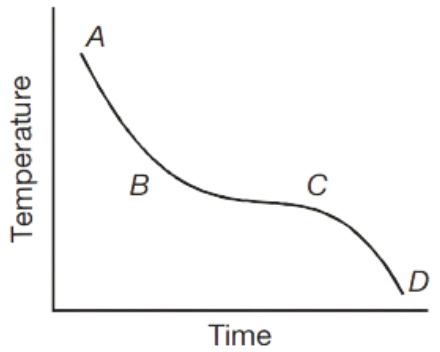
Question 54. A sample of a pure solid compound is heated until it melts completely. The compound is then allowed to cool until it solidifies again. The graph shows how the temperature of the compound changes with time.
NEET Foundation Chemistry Is Matter Around Us Pure Question 54

In which region of the graph both the liquid and the solid are present?

  1. A to B
  2. C to D
  3. B to C
  4. A to B and C to D

Answer. 3. B to C

Question 55. Which of the following pairs does not contain both elements?

  1. Carbon, silicon
  2. Helium, nitrogen
  3. Bronze, zinc
  4. Copper, silver.

Answer. 3. Bronze, zinc

Question 56. Brass contains

  1. Gold and copper
  2. Copper and zinc
  3. Zinc and silver
  4. Copper and silver

Answer. 2. Copper and zinc

Question 57. Fog and smoke are colloids of the type aerosol. Which of the following is different in both?

  1. Dispersed phase
  2. Dispersion medium
  3. Both (a) and (b)
  4. None of the above

Answer. 1. Dispersed phase

Question 58. Which of the following is not a pure substance?

  1. Mercury
  2. Sugar
  3. Blood
  4. Salt

Answer. 3. Blood

Question 59. Which pairs of substance are both mixtures?

  1. Air, sea water
  2. Sea water, ethanol
  3. Iron, water
  4. Lime water, marble

Answer. 1. Air, sea water

Question 60. Gases can be obtained from air by the process of

  1. Fractional distillation
  2. Condensation
  3. Crystallisation
  4. Evaporation

Answer. 1. Fractional distillation

Question 61. Which method cannot be used for separating solution of solid in liquid?

  1. Distillation
  2. Separating funnel
  3. Crystallisation
  4. Evaporation

Answer. 2. Separating funnel

Question 62. Sodium chloride is a considered as a pure substance because

  1. it is a solid at room temperature
  2. it contains only one type of particles
  3. its composition remains the same throughout
  4. Both (b) and (c)

Answer. 4. Both (b) and (c)

Question 63. Which of the following is a mixture?

  1. Calcium oxide
  2. Carbon dioxide
  3. Soil
  4. Coal

Answer. 3. Soil

Question 64. A mixture consists of a soluble solid in a liquid. Which method is most suitable for obtaining both the compounds?

  1. Fractional distillation
  2. Sublimation
  3. Distillation
  4. Evaporation

Answer. 3. Distillation

Question 65. In coloured gemstones, the dispersing medium and dispersed phase are

  1. solid, gas
  2. solid, liquid
  3. gas, solid
  4. solid, solid

Answer. 4. solid, solid

Question 66. Which of the following procedures will helpto determine whether a colourless liquid is a solution of a salt or pure water?

  1. Filtration
  2. Sedimentation and decantation
  3. Evaporation
  4. Chromatography

Answer. 3. Evaporation

Question 67. Odd one among the following which does not belong to the set is?

  1. Gun powder
  2. Air
  3. Graphite
  4. Brass

Answer. 3. Graphite

Question 68. Which of the following is a liquid non-metal?

  1. Copper
  2. Mercury
  3. Bromine
  4. Silver

Answer. 3. Bromine

Question 69. Tyndall effect is observed when

  1. sunlight passes through a small hole in a closed room
  2. a beam of light from a torch is directed on a starch solution
  3. sunlight enters a dense forest through spaces between the branches of trees

Answer. 3. sunlight enters a dense forest through spaces between the branches of trees

Question 70. Match the methods of separation with the physical properties of the substances on which they are based.

(1) Distillation (P) Difference in density

(2) Separation using a separating funnel (Q) Difference in solubility

(3) Filtration (R) Difference in boiling point

  1. (1) – P, (2) – R, (3) – Q
  2. (1) – Q, (2) – P, (3) – R
  3. (1) – Q, (2) – R, (3) – P
  4. (1) – R, (2) – P, (3) – Q

Answer. 4. (1) – R, (2) – P, (3) – Q

Question 71. Which of the following is not an emulsion?

  1. Mayonnaise
  2. Egg Yolk
  3. Shaving foam
  4. Cold Cream

Answer. 2.Egg Yolk

Question 72. Stirring Sulphur in carbon disulphide produces:

  1. Colloidal Solution
  2. Suspension
  3. True Solution
  4. Carbon trisulphide

Answer. 3. True Solution

Question 73. A solution with water as the solvent is called a/an ___________ solution.
Answer. Aqueous

Question 74. A solution in which the solute particles have a diameter below 1 nm is called a/an _________ solution.
Answer. True

Question 75. Which of the following statements are true for pure substances?

(1) Pure substances contain only one kind of particles

(2) Pure substances may be compounds or mixtures

(3) Pure substances have the same composition throughout

(4) Pure substances can be exemplified by all elements other than nickel

  1. (1) and (2)
  2. (1) and (3)
  3. (3) and (4)
  4. (2) and (3)

Answer. 2. (1) and (3)

Question 76. Rusting of an article made up of iron is called

  1. corrosion and it is a physical as well as chemical change
  2. dissolution and it is a physical change
  3. corrosion and it is a chemical change
  4. dissolution and it is a chemical change

Answer. 3. corrosion and it is a chemical change

Question 77. A mixture of sulphur and carbon disulphide is

  1. heterogeneous and shows Tyndall effect
  2. homogeneous and shows Tyndall effect
  3. heterogeneous and does not show Tyndall effect
  4. homogeneous and does not show Tyndall effect

Answer. 4. homogeneous and does not show Tyndall effect

Question 78. Tincture of iodine has antiseptic properties. This solution is made by dissolving

  1. iodine in potassium iodide
  2. iodine in vaseline
  3. iodine in water
  4. iodine in alcohol

Answer. 4. iodine in alcohol

Question 79. Which of the following are homogeneous in nature?

(1) ice

(2) wood

(3) soil

(4) air

  1. (1) and (3)
  2. (2) and (4)
  3. (1) and (4)
  4. (3) and (4)

Answer. 3. (1) and (4)

Question 80. Which of the following are physical changes?

(1) Melting of iron metal

(2) Rusting of iron

(3) Bending of an iron rod

(4) Drawing a wire of iron metal

  1. (1), (2) and (3)
  2. (1), (2) and (4)
  3. (1), (3) and (4)
  4. (2), (3) and (4)

Answer. 3. (1), (3) and (4)

Question 81. Which of the following are chemical changes?

(1) Decaying of wood

(2) Burning of wood

(3) Sawing of wood

(4) Hammering of a nail into a piece of wood

  1. (1) and (2)
  2. (2) and (3)
  3. (3) and (4)
  4. (1) and (4)

Answer. 1. (1) and (2)

Question 82. Two substances, A and B were made to react to form a third substance, A2B according to the following reaction: 2 A + B → A2 B Which of the following statements concerning this reaction are incorrect?

(1) The product A2B shows the properties of substances A and B

(2) The product will always have a fixed composition

(3) The product so formed cannot be classified as a compound

(4) The product so formed is an element

  1. (1), (2) and (3)
  2. (2), (3) and (4)
  3. (1), (3) and (4)
  4. (2), (3) and (4)

Answer. 3. (1), (3) and (4)

Question 83. Two chemical species X and Y combine together to form a product P which contains both X and YX + Y → PX and Y cannot be broken down into simpler substances by simple chemical reactions. Which of the following concerning the species X, Y and P are correct?

(1) P is a compound

(2) X and Y are compounds

(3) X and Y are elements

(4) P has a fixed composition

  1. (1), (2) and (3)
  2. (1), (2) and (4)
  3. (2), (3) and (4)
  4. (1), (3) and (4)

Answer. 4. (1), (3) and (4)
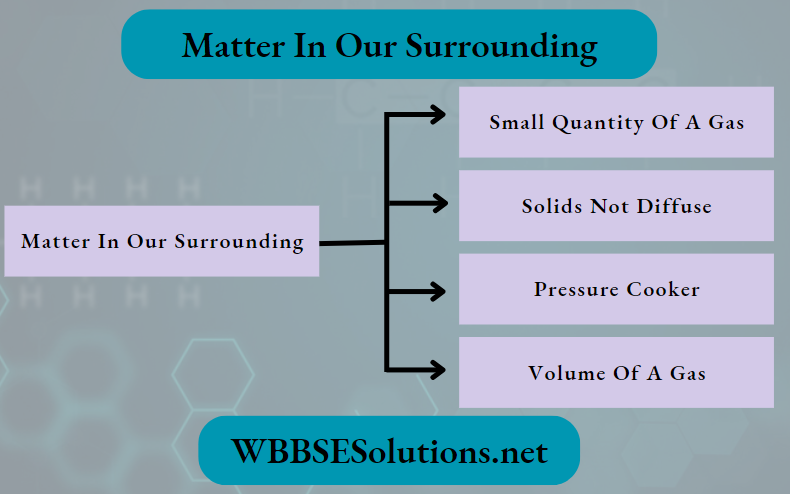
NEET Foundation Chemistry Chapter 1 Matter In Our Surrounding Short Answer Questions

Chapter 1 Matter In Our Surrounding Short Answer Type Question And Answers

Question 1. A small quantity of a gas is let into a large evacuated chamber, then how much of the chamber gets filled with the gas?
Answer.

A small quantity of a gas is let into a large evacuated chamber

The entire chamber gets filled with the gas, because the gas molecules have very weak intermolecular forces of attraction. This permits the gas molecules to diffuse and fill up the entire chamber.

Matter In Our Surrounding

Question 2. Why do solids not diffuse into one another?
Answer.

Solids not diffuse into one another:

Solids have very little intermolecular spaces and intermolecular force of attraction between molecules of solid is very high which prevents diffusion of molecules of one solid into another solid.

NEET Foundation Chemistry Chapter 1 Matter In Our Surrounding Short Answer Questions

Question 3. What happens when a liquid is heated?
Answer.

When a liquid is heated:

When liquid is heated, heat which is absorbed by the liquid, increases the average kinetic energy of the particles in the liquid, thus increasing its temperature.

NEET Foundation Chemistry Chapter 1

Question 4. Why does water boil at a lower temperature at higher altitudes?
Answer.

Water boil at a lower temperature at higher altitudes:

Boiling occurs at a point where vapour pressure becomes equal to the external atmospheric pressure. At higher altitudes as atmospheric pressure is less, so less thermal energy is required to make vapour pressure equal to the atmospheric pressure.

Read And Learn More NEET Foundation Short Answer Questions

Question 5. What is the principle used in a pressure cooker?
Answer.

principle used in a pressure cooker:

In the pressure cooker, when the pressure in the enclosed volume above the liquid reaches greater values than the atmospheric pressure, then the temperature of boiling water within the cooker gets greater than the normal boiling temperature. Hence, cooking become faster in pressure cooker.

Question 6. Why the volume of a gas increases when heated?
Answer.

Volume of a gas increases when heated:

In gases, the intermolecular forces of attraction among the molecules are weak but the kinetic energy of the molecules is high. When energy is supplied in the form of heat, the kinetic energy of the gas molecules gets further increase but as the attractive forces are weak, the gas molecules move and spread apart to occupy a greater volume.

Question 7. When a glass beaker containing water and a large crystal of potassium permanganate is kept aside for a few hours, what change do you observe after sometime?
Answer.

When a glass beaker containing water and a large crystal of potassium permanganate is kept aside for a few hours

The solution is colourless in the beginning. After a few minutes the water at the bottom of the beaker gets dark pink, while water towards the top, is light pink. After a few more minutes, the entire liquid becomes uniformly dark pink in colour.

Question 8. What is the significance of knowing the boiling point of a substance?
Answer.

Significance of knowing the boiling point of a substance:

The significance of knowing the boiling point of a substance is:

The boiling point of a liquid indicates the strength of the force of attraction between the particles of the liquid. The higher the boiling point of a liquid, the stronger is the force of attraction between the particles of that liquid.

The boiling point of the compound helps in its identification. The measurement of the boiling point of a liquid is the criterion for purity of the substance. Apure sample of water will always boil at 100°C.

NEET Foundation Chemistry Chapter 1

Question 9. Why does ice have a lower density than water? Explain.
Answer.

Ice have a lower density than water:

Although ice is a solid, it floats on water because it has low density or less mass per unit volume when compared to water. Most of the substances are denser in their solid state, but water is different. This peculiarity of water reflects on the structure of ice.

Question 10. Give 5 examples of diffusion from our daily lives.
Answer.

5 examples of diffusion from our daily lives:

The 5 examples of diffusion from our daily lives are:

A tea bag placed in the hot water will diffuse into water.

Adding edible colors in a liquid will diffuse the color.

Stirring sugar in hot tea will help it diffuse quicker.

When cooking pasta, the water diffuses into noodles, making them bigger and moister.

If you water wilted plants, the water will diffuse into the plants, making them firmer

Class 11 Physics Class 12 Maths Class 11 Chemistry
NEET Foundation Class 12 Physics NEET Physics

Question 11. Liquid nitrogen is used as a commercial refrigerant to flash freeze foods. Nitrogen boils at -196°C. What is this temperature on the Kelvin temperature scale?
Answer.

Given:

Liquid nitrogen is used as a commercial refrigerant to flash freeze foods. Nitrogen boils at -196°C.

Nitrogen boils at -196°C.

We know,

K = °C + 273

⇒ K = –196 + 273

= 77 K

On Kelvin temperature scale, Nitrogen boils at 77 K.

Question 12. What is the essential criteria for anything to be considered as matter? Which of the following cannot be considered as matter?

Coconuts, thoughts, chair, warmth, computer, almonds

Answer. It is essential to occupy space and have mass for anything to be considered as matter. Out of all, thoughts and warmth are not matter as they neither have mass nor they occupy space.

Question 13. Which characteristic of particles is responsible for the following?

  1. Diffusion of gases
  2. Rigidity of solids
  3. Tendency of a gas to fill up the container in which it is kept

Answer.

  • Diffusion of gases takes place due to movement of particles.
  • Rigidity of solids is due to negligible intermolecular spaces between the particles.
  • Tendency of a gas to fill up the container in which it is kept is due to negligible intermolecular force of attraction.

NEET Foundation Chemistry Chapter 1

Question 14. If you could magnify a coin down to the particle level, what two observations could you make about the particles?
Answer.

The two observations we could make about the particles will be:

  • There is negligible intermolecular space.
  • The particles are tightly packed together.

Question 15. Give an example of a substance in which ions are present.
Answer.

Example of a substance in which ions are present

Salt is a substance in which ions are present.

Question 16. What is photon?
Answer.

Photon:

A photon is defined as a bundle (or quantum) of electromagnetic (or light) energy. Photons are always in motion and, in a vacuum, have a constant speed of light to all observers.

NEET Foundation Chemistry Chapter 1 Matter In Our Surrounding Multiple Choice Questions

WBBSE Chapter 1 Matter In Our Surrounding Multiple Choice Question And Answers

Direction: Choose the correct option for each question. There is only one correct response for each question.

Question 1. Which of the following characteristics is not true for matter?

  1. It occupies space
  2. It has mass
  3. It has inertia
  4. It is least affected by gravity

Answer. 4. It is least affected by gravity

Question 2. In which of the given combinations would the rate of diffusion be slowest?

  1. Between two different gases
  2. Between two different liquids
  3. Between a liquid and a solid
  4. Between two solids

Answer. 4. Between two solids

Question 3. The intermolecular force will be very weak in which of the following:

  1. A piece of wood
  2. Steam
  3. Milk
  4. Sugar crystals

Answer. 2. Steam

Question 4. The temperature at which the vapour pressure of any liquid becomes equal to atmospheric pressure is known as__________.

  1. Boiling point
  2. Melting point
  3. Freezing point
  4. Triple point

Answer. 1. Boiling point

Read and Learn More NEET Foundation Multiple Choice Questions

Question 5. What do you understand by fusion?

  1. Inter-conversion of solid into liquid
  2. Converting liquid to solid
  3. Converting liquid to gas
  4. Inter-conversion of gas into solid

Answer. 1. Inter-conversion of solid into liquid

Question 6. How can the evaporation of liquids be increased?

  1. By increasing the humidity
  2. By contracting the surface area
  3. By increasing the temperature
  4. All of the above

Answer. 3. By increasing the temperature

Question 7. What is the correct order of evaporation?

  1. Petrol > alcohol > water > kerosene
  2. Petrol > kerosene > water > alcohol
  3. Alcohol > Petrol > kerosene > water
  4. Petrol > alcohol > kerosene > water

Answer. 4. Petrol > alcohol > kerosene > water

Question 8. The major constituent of cooking gas is _______?

  1. Ethane
  2. Propane
  3. Butane
  4. Methane

Answer. 3. Butane

NEET Foundation Chemistry Chapter 1 Matter In Our Surrounding Multiple Choice Questions

Question 9. We have often seen the naphthalene balls that we put in our clothes disappear after some time. What could be the phenomenon?

  1. Evaporation
  2. Sublimation
  3. Diffusion
  4. Contraction

Answer. 2. Sublimation

Question 10. What happens to the temperature when a solid melts?

  1. It increases
  2. It decreases
  3. It remains same
  4. First increases then decreases

Answer. 3. It remains the same

Question 11. What is the correct unit of weight?

  1. Kelvin
  2. Newton
  3. Pascal
  4. None of these

Answer. 2. Newton

Question 12. In condensation, there is ________.

  1. Loss of energy
  2. Gain of energy
  3. Neither gain nor loss of energy
  4. Loss of energy in the beginning followed by gain

Answer. 2. Gain of energy

Question 13. For a state of matter to be a liquid, which of the given conditions is true?

  1. The is above the room temperature at the atmospheric pressure.
  2. The substance’s boiling point is above the room temperature under the atmospheric pressure.
  3. The boiling point of the substance is below the room temperature at the atmospheric pressure.
  4. None of these

Answer. 2. The boiling point of the substance is above the room temperature under the atmospheric pressure.

Question 14. We can often see large volumes of gases in small cylinders. How is this possible?

  1. Gases can sublime
  2. Gases can solidify
  3. Gases can evaporate
  4. Gases can compress

Answer. 4. Gases can compress

Question 15. We can often see people adding salt to water while boiling stuff like kidney beans or potatoes. Why?

  1. The boiling point of water increases
  2. The boiling point of water decreases
  3. It enhances taste
  4. None of the above

Answer. 1. The boiling point of water increases

Question 16. Reena was in a hurry, so she sipped her hot tea in a saucer instead of cup. Why?

  1. Tastes better
  2. Cools quickly in saucer than cup
  3. Easy to hold
  4. All of the above

Answer. 2. Cools quickly in saucer than cup

Question 17. What will happen if an inverted cylinder of hydrogen gas is placed upon a cylinder of nitrogen oxide?

  1. Both gases will move upwards
  2. Both will move down
  3. Hydrogen will move down but nitrogen oxide will remain as it is
  4. Hydrogen will move downwards and nitrogen oxide will move upwards

Answer. 4. Hydrogen will move downwards and nitrogen oxide will move upwards

Question 18. What can you say about particles of matter?

  1. These are very small
  2. These attract each other
  3. These have spaces between them
  4. All of the above

Answer. 4. All of the above

Question 19. Identify the odd one out taking state of matter into consideration:

  1. Sponge
  2. Lemonade
  3. A stretched rubber band
  4. A metal block

Answer. 2. Lemonade

Question 20. Which of these is correct for diffusion?

  1. Diffusion takes place only in gases.
  2. Diffusion takes place only in liquids.
  3. Diffusion does not take place in solids.
  4. Diffusion takes place in all the three states of matter, viz. solids, liquids, gases.

Answer. 4. Diffusion takes place in all the three states of matter, viz. solids, liquids, gases.

Question 21. From the given options, which metal has the highest melting point?

  1. Fe
  2. W
  3. B
  4. Cr

Answer. 2. W

Question 22. How can gases be liquefied?

  1. Increase the pressure, increase the temperature
  2. Increase the pressure, lower the temperature
  3. Lower the pressure, increase the temperature
  4. Lower the pressure, lower the temperature

Answer. 2. Increase the pressure, lower the temperature

Question 23. What is plasma?

  1. A state of matter
  2. A type of gas
  3. Combination of three states of matter
  4. None of the above

Answer. 1. A state of matter

Question 24. Which of these is not an example of diffusion?

  1. When we bake, the smell of cake spreads.
  2. We put salt in pickles.
  3. When we sneeze, the virus spread.
  4. Smell of the burning incense stick spreads in the house.

Answer. 2. We put salt in pickles.

Question 25. Which state of matter will have maximum fluidity?

  1. Liquids
  2. Gases
  3. Both have equal fluidity
  4. None of the two possess fluidity

Answer. 2. Gases

Question 26. In which of the following conditions, the rate of evaporation will be low?

  1. Humidity of air is low
  2. Surface area is increased
  3. Increasing the temperature of the liquid
  4. Decreased wind speed

Answer. 4. Decreased wind speed

Question 27. Which of the following will have highest intermolecular force of attraction?

  1. Dry ice
  2. CO2
  3. H2O
  4. Liquid ethyl alcohol

Answer. 1. Dry ice

Question 28. The change of state from vapour to liquid is known as __________.

  1. Condensation
  2. Evaporation
  3. Diffusion
  4. Sublimation

Answer. 1. Condensation

Question 29. What is the conversion of solid state to liquid state known as?

  1. Fusion
  2. Diffusion
  3. Vaporization
  4. Sublimation

Answer. 1. Fusion

Question 30. Why does ice have cooling effects and steam has burning effects?

  1. Water molecules have low energy in ice and high energy in steam.
  2. Water molecules have high energy in ice and low energy in steam.
  3. Both have same molecular energy but ice take energy from body so has a cooling effect.
  4. None of these

Answer. 1. Water molecules have low energy in ice and high energy in steam.

Question 31. Who discovered the random movement of particles?

  1. John Dalton
  2. Robert Brown
  3. Kanada
  4. None of these

Answer. 2. Robert Brown

Question 32. When potassium permanganate is put in water, the colourless water attains purple colour. What could be the possible reasons?

1. The particles of water and potassium permanganate are in motion.

2. The process of diffusion is taking place.

3. The process of sublimation is taking place.

4. Only the particles of potassium permanganate are moving.

  1. Option (1) only
  2. Options (1) and (2)
  3. Options (1) and (3)
  4. Only option (4)

Answer. 2. Options (1) and (2)

Question 33. Which two gases dissolve in water by diffusion?

  1. Nitrogen and helium
  2. Nitrogen and oxygen
  3. Oxygen and carbon dioxide
  4. Carbon dioxide and helium

Answer. 3. Oxygen and carbon dioxide

Question 34. According to Robert Brown observation, which of the given statements is/are correct?

1. The speed of particles decrease with increase in temperature.

2. The speed of particles increase with increase in temperature.

3. The particles move in a linear motion.

4. The particles move in a zigzag motion.

  1. 1 and 4
  2. 1 and 3
  3. 2 and 3
  4. 2 and 4

Answer. 4. 2 and 4

Question 35. Which of the following will have a fixed volume

  1. Only solids
  2. Only liquids
  3. Only gases
  4. Both solids and Liquids

Answer. 4. Both solids and Liquids

Question 36. Latent heat of vaporization causes state change at which temperature?

  1. 100 degree C
  2. 373 K
  3. Below boiling point of liquid
  4. Both (a) and (b)

Answer. 4. Both (a) and (b)

Question 37. Out of the given statements, which two statements are not true:

1. Evaporation takes place at the surface of the liquid but boiling takes place throughout the mass of liquid.

2. Evaporation is a rapid process, boiling is a slow process.

3. Evaporation takes place at constant temperature.

4. Boiling takes place at constant temperature.

  1. 1 and 2
  2. 2 and 3
  3. 1 and 3
  4. 3 and 4

Answer. 2. 2 and 3

Class 11 Physics Class 12 Maths Class 11 Chemistry
NEET Foundation Class 12 Physics NEET Physics

Question 38. Identify which of the following show evaporation:

  1. Obtaining common salt from sea water
  2. Sweating
  3. Drying of clothes
  4. All of the above

Answer. 4. All of the above

Question 39. What can you say about plasma?

1. It is a mixture of free electrons and ions

2. It contains only electrons

3. It can also be artificial

  1. 1 is correct, but 2 and 3 are incorrect
  2. Only 1 is incorrect
  3. 1 and 3 are correct
  4. Only 2 is correct

Answer. 3. 1 and 3 are correct

Question 40. Choose the correct statement/s

1. Gases have high densities

2. Liquids have high compressibility

3. Solids have minimum kinetic energy of particles

  1. Only 1
  2. Only 2
  3. Only 3
  4. 1 and 3

Answer. 3. Only 3

Question 41. Why does alcohol exist in liquid state at room temperature?

  1. It is highly compressible
  2. Its melting point is below room temperature
  3. It possess strong intermolecular force
  4. Both (a) and (b)

Answer. 4. Both (a) and (b)

Question 42. Which of the following has the strongest interparticle forces at room temperature?

  1. Oxygen
  2. Water
  3. Bromine
  4. Iron

Answer. 4. Iron

Question 43. The characteristic features of solids are

  1. Definite shape
  2. Definite size
  3. Definite shape and size
  4. Definite shape, size and rigidity

Answer. 4. Definite shape, size and rigidity

Question 44. Which is not a property of solids

  1. Solids are always crystalline in nature
  2. Solids have high density and low compressibility
  3. The diffusion of solids is very slow
  4. Solids have definite volume

Answer. 1. Solids are always crystalline in nature

Question 45. Which of the following is matter?

  1. Love
  2. Thought
  3. Cold
  4. Cold drink

Answer. 4. Cold drink

Question 46. Which one of the following statements is not correct about the three states of matter?

  1. Molecules of a solids posses least energy whereas those of a gas possess highest energy
  2. The density of solid is highest whereas that of gases is lowest
  3. Gases like liquids possess definite volumes
  4. Molecules of a solids possess vibratory motion

Answer. Gases like liquids possess definite volumes

Question 47. The change of state from gas to liquid is called

  1. Fusion
  2. Condensation
  3. Sublimation
  4. Vaporization

Answer. 2. Condensation

Question 48. Which of the following has highest intermolecular forces of attraction?

  1. Liquid water
  2. Liquid ethyl alcohol
  3. Gaseous CO2
  4. Solid CO2

Answer. 4. Solid CO2

Question 49. Arrange the following substances in the increasing order of intermolecular forces of attraction

1. Salt

2. Water

3. Carbondioxide

  1. (3) < (2) < (1)
  2. (3) > (2) > (1)
  3. (2) < (1) > (3)
  4. (1) < (2) > (3)

Answer. 1. (3) < (2) < (1)

Question 50. The change of state from solid to gas is called

  1. Fusion
  2. Condensation
  3. Sublimation
  4. Vaporization

Answer. 3. Sublimation

Question 51. The change of state from liquid to vapour is called

  1. Fusion
  2. Condensation
  3. Sublimation
  4. Vaporization

Answer. 4. Vaporization

Question 52. Kinetic energy of molecules is highest in

  1. Gases
  2. Solids
  3. Liquids
  4. Solutions

Answer. 1. Gases

Question 53. Dry ice is

  1. Water in solid state
  2. Water in gaseous state
  3. CO2 in liquid state
  4. CO2 in solid state

Answer. 4. CO2 in solid state

Question 54. The physical state of water at 10ºC is

  1. Solid
  2. Liquid
  3. Gas
  4. May be solid or liquid

Answer. 3. Gas

Question 55. The substance which can readily sublime is

  1. Ammonium chloride
  2. Sodium chloride
  3. Hydrochloric acid
  4. Chlorine gas.

Answer. 1. Ammonium chloride

Question 56. The large volumes of gases can be put into small volumes of cylinders because of their property known as

  1. Sublimation
  2. Compressibility
  3. Evaporation
  4. Solidification.

Answer. 2. Compressibility

Question 57. 0ºC temperature may be written in Kelvin scale as

  1. 300 K
  2. 273 K
  3. 27 K
  4. All of the above

Answer. 2. 273 K

Question 58. Which of the following is not a matter?

  1. Chair
  2. Air
  3. Smell
  4. Cold drink

Answer. 3. Smell

Question 59. 400 K temperature may be written in celsius scale as

  1. 300ºC
  2. 127ºC
  3. 27ºC
  4. 573ºC

Answer. 2. 127ºC

Question 60. The physical state of water at 0ºC is

  1. Ice
  2. Vapour
  3. Dry ice
  4. None of these

Answer. 1. Ice

Question 61. 500 K temperature may be written in celsius scale as

  1. 227ºC
  2. 500ºC
  3. Both (a) and (b)
  4. None of these

Answer. 1. 227ºC

Question 62. The temperature at which a liquid changes into gas is known as

  1. Melting point
  2. Transition point
  3. Boiling point
  4. Kelvin point.

Answer. 3. Boiling point

Question 63. Which of the following factor does not increase the rate of evaporation?

  1. Increase of temperature
  2. Increase in wind speed
  3. Increase in surface area
  4. Increase in humidity

Answer. 2. Increase in wind speed

Question 64. Which of the following statement is correct?

  1. Liquids have fixed shape
  2. Gases have a fixed volume and a fixed shape
  3. Liquids can be compressed easily
  4. Gases can be compressed easily

Answer. 4. Gases can be compressed easily

Question 65. Which of the following is correct regarding evaporation

  1. It causes cooling
  2. It is a surface phenomenon
  3. The rate of evaporation increases with increases in temperature
  4. All of these

Answer. 4. All of these

Question 69. The quantity of matter present in an object is called its:

  1. Weight
  2. Gram
  3. Mass
  4. Density

Answer. 3. Mass

Question 70. Which of the following is not matter

  1. Blood
  2. Moon rock
  3. Electron
  4. Humidity

Answer. 4. Humidity

Question 71. Which of the following is an incorrect statement:

  1. Matter is continuous in nature.
  2. Of the three state of matter, the one that is most compact is solid state.
  3. In solid state interparticles space (i.e., empty space) is minimum.
  4. The density of solid is generally more than that of a liquid

Answer. 1. Matter is continuous in nature.

Question 72. Put of the following which is the densest state of matter?

  1. Solids
  2. Liquids
  3. Gases
  4. Plasmas

Answer. 4. Plasmas

Question 73. As of the 1990s, scientists have proved the existence of how many states of matter?

  1. Two
  2. Three
  3. Four
  4. Five

Answer. 1. Two

Question 74. _________is any substance which has mass and occupies space.
Answer. Matter

Question 75. Who of the following gave the modern definition of matter consisting of atom and molecule?

  1. John Dalton
  2. J C Bose
  3. Albert Einstein
  4. N. Tesla

Answer. 1. John Dalton

Question 76. Which of the following is called fifth state of matter?

  1. Plasma
  2. Iodide
  3. Super-heated gases
  4. Bose–Einstein condensate

Answer. 4. Bose-Einstein condensate

Question 77. ________ is random movement of particles suspended in a fluid (liquid or gas) resulting from their collision with the fast-moving atoms or molecules in the gas or liquid.
Answer. Brownian motion

Question 78. 99% of the universe consists of which state of the matter?

  1. Solid
  2. Liquid
  3. Gas
  4. PlasmaAnswer. 4. Plasma

Question 6. The process by which the particles move from high density to low density to spread evenly in whole region is called ___________.
Answer. Diffusion

Question 79. The boiling point of alcohol is 78°C. What is this temperature in Kelvin scale:

  1. 373 K
  2. 351 K
  3. 375 K
  4. 78 K

Answer. 2. 351 K

Question 80. In which phenomena water changes into water vapour below its B.P.?

  1. Evaporation
  2. Condensation
  3. Boiling
  4. No such phenomena exist

Answer. 1. Evaporation

Question 81. The liquid which has the highest rate of evaporation is:

  1. Petrol
  2. Nail- polish remover
  3. Water
  4. Alcohol

Answer. 1. Petrol

Question 82. The state of matter which consists of super energetic particles in the form of ionized gases is called:

  1. Gaseous state
  2. Liquid state
  3. Bose- Einstein condensate
  4. Plasma state

Answer. 4. Plasma state

Question 83. The force that binds the particles of matter together is known as:

  1. Intermolecular space
  2. Bond
  3. Intermolecular force
  4. Nuclear force

Answer. 3. Intermolecular force

Question 84. The change of a liquid into vapour is called:

  1. Vapourization
  2. Solidification
  3. Sublimation
  4. None of these

Answer. 1. Vapourization

Question 85. Which is the process by which the solid converts directly into gas?

  1. Deposition
  2. Sublimation
  3. Freezing
  4. Condensation

Answer. 2. Sublimation

Question 86. Higher the humidity _______ is the evaporation.

Answer. Inversely, lower

Question 87. What happens to the temperature of the surface when evaporation takes place?

  1. Increase
  2. Decreases
  3. Remains unchanged
  4. First increases then decreases

Answer. 2. Decreases

Question 88. Which of the following does not increase the rate of evaporation?

  1. Surface area
  2. Humidity of air
  3. Atmospheric pressure
  4. Wind direction

Answer. 4. Wind direction

Question 89. Which of the following is the point at which gas converts into liquid?

  1. Freezing point
  2. Boiling point
  3. Dew point
  4. Melting point

Answer. 3. Dew point

Question 90. In which year the Nobel Prize on Bose’s formula was given?

  1. 2001
  2. 2002
  3. 1920
  4. 1925

Answer. 1. 2001

Question 91. Which one of the following sets of phenomena would increase on raising the temperature?

  1. Diffusion, evaporation, compression of gases
  2. Evaporation, compression of gases, solubility
  3. Evaporation, diffusion, expansion of gases
  4. Evaporation, solubility, diffusion, compression of gases

Answer. 3. Evaporation, diffusion, expansion of gases

Question 92. Seema visited a Natural Gas Compressing Unit and found that the gas can be liquefied under specific conditions of temperature and pressure. While sharing her experience with friends she got confused. Help her to identify the correct set of conditions

  1. Low temperature, low pressure
  2. High temperature, low pressure
  3. Low temperature, high pressure
  4. High temperature, high pressure

Answer. 3. Low temperature, high pressure

Question 93. The property to flow is unique to fluids. Which one of the following statements is correct?

  1. Only gases behave like fluids
  2. Gases and solids behave like fluids
  3. Gases and liquids behave like fluids
  4. Only liquids are fluids

Answer. 3. Gases and liquids behave like fluids

Question 94. During summer, water kept in an earthen pot becomes cool because of the phenomenon of

  1. diffusion
  2. transpiration
  3. osmosis
  4. evaporation

Answer. 4. evaporation

Question 95. A few substances are arranged in the increasing order of ‘forces of attraction’ between their particles. Which one of the following represents a correct arrangement?

  1. Water, air, wind
  2. Air, sugar, oil
  3. Oxygen, water, sugar
  4. Salt, juice, air

Answer. 3. Oxygen, water, sugar

Question 96. On converting 25°C, 38°C and 66°C to Kelvin scale, the correct sequence of temperature will be

  1. 298 K, 311 K and 339 K
  2. 298 K, 300 K and 338 K
  3. 273 K, 278 K and 543 K
  4. 298 K, 310 K and 338 K

Answer. 1. 298 K, 311 K and 339 K

Question 97. Choose the correct statement of the following

  1. conversion of solid into vapours without passing through the liquid state is called vapourisation.
  2. conversion of vapours into solid without passing through the liquid state is called sublimation.
  3. conversion of vapours into solid without passing through the liquid state is called freezing.
  4. conversion of solid into liquid is called sublimation.

Answer. 2. conversion of vapours into solid without passing through the liquid state is called sublimation.

Question 98. The boiling points of diethyl ether, acetone and n-butyl alcohol are 35°C,56°C and 118°C respectively. Which one of the following correctly represents their boiling points in Kelvin scale?

  1. 306 K, 329 K, 391 K
  2. 308 K, 329 K, 392 K
  3. 308 K, 329 K, 391 K
  4. 329 K, 392 K, 308 K

Answer. 3. 308 K, 329 K, 391 K

Question 99. Which condition out of the following will increase the evaporation of water?

  1. Increase in temperature of water
  2. Decrease in temperature of water
  3. Less exposed surface area of water
  4. Adding common salt to water

Answer. 1. Increase in temperature of water

Question 100. In which of the following conditions, the distance between the molecules of hydrogen gas would increase?

1. Increasing pressure on hydrogen contained in a closed container

2. Some hydrogen gas leaking out of the container

3. Increasing the volume of the container of hydrogen gas

4. Adding more hydrogen gas to the container without increasing the volume of the container

  1. (1) and (3)
  2. (1) and (4)
  3. (2) and (3)
  4. (2) and (4)

Answer. 3. (2) and (3)

Question 101. What is the unit of latent heat?

Answer. J/kg

Question 102. The value of latent heat of vaporization of water in cal/g is _______

  1. 220
  2. 330
  3. 540
  4. None of these

Answer. 3. 540

Question 103. Identify which conversion will require larger amount of energy?

1. 1 kg of ice at 0°C _______ 1 kg of water at 0°C.

Answer. Doesn’t require more energy.

2. 1 kg of water at 100°C _______ 1 kg of steam at 100°C.

Answer. Will require more energy.

NEET Foundation Physics Chapter 1 Motion Multiple Choice Questions

Chapter 1 Motion Multiple Choice Question And Answers

Direction: Choose the correct option for each question. There is only one correct response for each question.

Question 1. Which statement is correct regarding displacement:

  1. It is a vector quantity
  2. It is a scalar quantity
  3. It depends upon the path followed by the object
  4. It is always a positive

Answer. 1. It is a vector quantity

Question 2. Raindrops touching the earth’s surface is an example of of the following:

  1. Non – Uniform velocity
  2. Uniform velocity
  3. Average velocity
  4. Instantaneous velocity

Answer. 2. Uniform velocity

Question 3. Choose the correct equation of motion

  1. v = u + at
  2. v = a + ut
  3. v = t + au
  4. v = u at

Answer. 1. v = u + at

Read and Learn More NEET Foundation Multiple Choice Questions

Question 4. What does the following graph show?

NEET Foundation Physics Question 4

  1. Velocity-time graph for non-uniform velocity
  2. Velocity-time graph for uniform velocity
  3. Velocity-time graph for non-uniform acceleration
  4. Velocity-time graph for uniform acceleration

Answer. 2. Velocity-time graph for uniform velocity

NEET Foundation Physics Chapter 1 Motion Multiple Choice Questions

Question 5. Which of the following statements is ­correct?

  1. Displacement can be zero.
  2. Displacement cannot be zero.
  3. Magnitude of displacement is greater than the distance travelled by the object.
  4. Its magnitude is greater than the displacement travelled by the object.

Answer. 1. Displacement can be zero.

Question 6. The magnitude of the average velocity of car is equal to its average speed when it is moving in a

  1. circle
  2. crowded street
  3. straight line
  4. race

Answer. 3. straight line

Question 7. Which among the following distance-time graphs shows uniform motion

  1. NEET Foundation Physics Question 7 Diagram 1
  2. NEET Foundation Physics Question 7 Diagram 2
  3. NEET Foundation Physics Question 7 Diagram 3
  4. NEET Foundation Physics Question 7 Diagram 4

Answer.

  1. NEET Foundation Physics Question 7 Diagram 1

Question 8. What does an equation v = u + at describe?

  1. Position is a function of time
  2. Position is a function of velocity
  3. Velocity is a function of time
  4. Velocity is a function of position

Answer. 3. Velocity is a function of time

Question 9. A bus has an acceleration of 10 m/s2 in a straight line. How much velocity is increased in 10 s?

  1. 50
  2. 100
  3. 200
  4. 300

Answer. 2. 100

Class 11 Physics Class 12 Maths Class 11 Chemistry
NEET Foundation Class 12 Physics NEET Physics

Question 10. A ball is moving in a circular path of radius r. After completing a semi-circle, its displacement is

  1. r
  2. 2r
  3. r/2
  4. 4r

Answer. 2. 2r

Question 11. The ratio of displacement to distance of a moving object is

  1. 8 1
  2. < 1
  3. > 1
  4. = 1

Answer. 1. 8 1

Question 12. Tom is riding in a giant wheel which is revolving with a constant speed of 50 m/s. Here Tom is ________.

  1. Moving without acceleration
  2. Moving with uniform velocity
  3. Moving with non-uniform velocity
  4. Moving with acceleration

Answer. 4. Moving with acceleration

Question 13. Which of the following statements are ­correct regarding speed?

  1. Speed is a scalar quantity
  2. It is represented by letter u or v
  3. Speed of a body is a distance travelled by it per unit time
  4. All the above

Answer. 4.  All the above

Question 14. Free fall of a ball is the example of which of the following:

  1. Variable acceleration
  2. Acceleration due to gravity
  3. Uniform acceleration
  4. None of the above

Answer. 3. Uniform acceleration

Question 15. If the velocity of an object is directly proportional to the time elapsed, then the object is moving with ________.

  1. Uniform speed
  2. Variable acceleration
  3. Variable speed
  4. Uniform acceleration

Answer. 4. Uniform acceleration

Question 16. What does slope of speed Vs time graph give us?

  1. Speed
  2. Velocity
  3. Acceleration
  4. Displacement

Answer. 3. Acceleration

Question 17. When the distance of moving object is directly proportional to length of time, object moves with ________.

  1. Constant speed
  2. Zero displacement
  3. Zero speed
  4. Constant acceleration

Answer. 1. Constant speed

Question 18. The rate of change of displacement with time is called ________.

  1. Speed
  2. Velocity
  3. Displacement
  4. Acceleration

Answer. 2. Velocity

Question 19. When a graph of one quantity versus another results in a straight line, the quantities are ________.

  1. Both constant
  2. Equal
  3. Directly proportional
  4. Inversely proportional

Answer. 3. Directly proportional

Question 20. A boy travels a distance πr along the circumference of a circle of radius r. Displacement of the boy is ________.

  1. 0
  2. r
  3. 2r
  4. 2πr

Answer. 3. 2r

Question 21. The motion of an object in a circular path with a constant speed is known as ________.

  1. Uniform circular motion
  2. Displacement
  3. Acceleration
  4. Velocity

Answer. 1. Uniform circular motion

Question 22. If an object is moving around the sun with a constant speed in a circular path, the motion is called ________.

  1. Uniform motion
  2. Variable motion
  3. Non-accelerated motion
  4. Accelerated motion

Answer. 4. Accelerated motion

Question 23. Which quantity changes in uniform circular motion?

  1. Speed
  2. Velocity
  3. Acceleration
  4. Retardation

Answer. 2. Velocity

Question 24. Which of the following statement is correct

  1. The average speed of a moving body can be zero.
  2. The average speed of a moving body cannot be zero.
  3. The displacement of a moving body cannot be zero.
  4. The displacement of a moving body is always greater than zero.

Answer. 2. The average speed of a moving body cannot be zero.

Question 25. When an object covers unequal distance in equal interval of time, then the motion is called ________.

  1. Uniform motion
  2. Non-Uniform motion
  3. Accelerated motion
  4. Zero motion

Answer. 2. Non-Uniform motion

Question 26. Which equation is correct for distance S where u = initial velocity, a = ­acceleration, t = time of journey.

  1. \(u t+\frac{1}{2} a t^2\)
  2. ut
  3. a + ut
  4. a × ut

Answer. 1. \(u t+\frac{1}{2} a t^2\)

Question 27. A boy while travelling in a moving car sees the road side trees moving ________.

  1. Forward
  2. Backward
  3. Still
  4. Upwards

Answer. 2. Backward

Question 28. An object will continue to accelerate until ________.

  1. The resultant force on it begins to decrease.
  2. The resultant force on its zero.
  3. The resultant force is at angle to its motion.
  4. The resultant force on it is increased continuously.

Answer. 2. The resultant force on its zero.

Question 29. A satellite is revolving around the Earth with a radius of 42250 km. What will be its speed if it takes 24 hours to revolve around the earth.

  1. 2020 m/s
  2. 3334.83 m/s
  3. 5639.99 m/s
  4. 3073.74 m/s

Answer. 4. 3073.74 m/s

Question 30. The odometer of an automobile measures ________ .

  1. Distance
  2. Time
  3. Speed
  4. Velocity

Answer. 1. Distance

Question 31. The distance travelled per second by a moving object in a particular direction is called its________.

  1. Speed
  2. Velocity
  3. Acceleration
  4. Detardation

Answer. 2. Velocity

Question 32. What all information can be obtained from the velocity–time graph other than velocity and time.

  1. Acceleration
  2. Displacement
  3. Retardation
  4. None of the above

Answer. 

2. Acceleration

3. Displacement

Question 33. Which of the following statements are correct

  1. Zero distance covered and zero displacement.
  2. Zero speed at an instant but non zero acceleration at the same time.
  3. Zero speed and zero velocity.
  4. Acceleration opposite to the direction of motion.

Answer. 

2. Zero speed at an instant but non zero acceleration at the same time.

4. Acceleration opposite to the direction of motion.

Question 34. Which of the following equations are correct where u = initial velocity, a = acceleration, t = time of journey and S = distance travelled v = final velocity.

  1. v = u + at
  2. S = \(u t+\frac{1}{2} a t^2\)
  3. v2 = u2+ 2aS
  4. v = u – at

Answer. 

  1. v = u + at
  2. S = \(u t+\frac{1}{2} a t^2\)
  3. v2 = u2+ 2aS

Question 35. Choose the correct statements

  1. If change in velocity is not same in the same intervals of time, it is called non-variable acceleration.
  2. If change in velocity is not same in the same intervals of time, it is called variable acceleration.
  3. The uniform acceleration is one when equal changes in velocity take place in equal intervals of time.
  4. The non-uniform acceleration is one when equal changes in velocity take place in equal intervals of time.

Answer. 

2. If change in velocity is not same in the same intervals of time, it is called variable acceleration.

4. The uniform acceleration is one when equal changes in velocity take place in equal intervals of time.

Question 36. Choose the incorrect statement

  1. Acceleration is the rate of change of velocity with time
  2. Acceleration is the rate of change of distance with time.
  3. Acceleration is the rate of change of displacement with time.
  4. Acceleration is the rate of change of time with velocity.

Answer. 

2. Acceleration is the rate of change of distance with time.

3. Acceleration is the rate of change of displacement with time.

4. Acceleration is the rate of change of time with velocity.

Question 37. Velocity–time graph is used to determine

  1. Displacement of the object in a certain time interval
  2. Acceleration of the body
  3. Velocity
  4. Time

Answer. 

  1. Displacement of the object in a certain time interval
  2. Acceleration of the body
  3. Velocity
  4. Time

Question 38. A quantity has a value of −8.0 m/s. it can be said as

  1. velocity of body
  2. acceleration of body
  3. speed of body
  4. position of body

Answer. 1. velocity of body

Question 39. A car travels 1/3rd distance on a straight road with a velocity of 10 km/hr, next 1/3rd with velocity 20 km/hr and the last 1/3rd with velocity 60 km/hr. What is the average velocity of the car in the whole journey?

  1. 4 km/hr
  2. 6 km/hr
  3. 12 km/hr
  4. 18 km/hr

Answer. 4. 18 km/hr

Question 40. The area under a graph between two quantities is given in the unit m/s. The quantities are

  1. speed and time
  2. distance and time
  3. acceleration and time
  4. velocity and time

Answer. 2. distance and time

Question 41. A motor ship covers the distance of 300 km between two localities on a river in 10 hrs downstream and in 12 hrs upstream. Find the flow velocity of the river assuming that these velocities are constant.

  1. 2.0 km/hr
  2. 2.5 km/hr
  3. 3 km/hr
  4. 3.5 km/hr

Answer. 2. 2.5 km/hr

Question 42. In the motion of tip of minute hand of a clock, after one hour

  1. the displacement is zero
  2. distance covered is zero
  3. average speed is zero
  4. instanteneous velocity is zero

Answer. 1. the displacement is zero

Question 43. Driver of a train travelling at 115 km/hr sees on a same track, 100 m infront of him, a slow train travelling in the same direction at 25 km/hr. The least retardation that must be applied to faster train to avoid a collision is

  1. 3.125 m/s2
  2. 3.5 m/s2
  3. 2.75 m/s2
  4. 3.0 m/s2

Answer. 1. 3.125 m/s2

Question 44. The ampere is the SI unit of

  1. temperature
  2. amount of substance
  3. electric current
  4. luminous intensity

Answer. 3. electric current

Question 45. Distance of the moon from the earth is 4  × 108 m. The time taken by a radar signal transmitted from the earth to reach the moon is

  1. 5.2 s
  2. 1.3 s
  3. 2.6 s
  4. 0.70 s

Answer. 2. 1.3 s

Question 46. The prefix to denote 10–9 is

  1. hecta
  2. nano
  3. tera
  4. deca

Answer. 2. nano

Question 47. A stone is dropped into a well in which the level of water is h, below the top of the well. If v is velocity of sound, then time T after which the splash is heard is equal to

  1. \(\frac{2 h}{v}\)
  2. \(\sqrt{\frac{2 h}{v}}+\frac{h}{g}\)
  3. \(\sqrt{\frac{2 h}{g}}+\frac{h}{v}\)
  4. \(\sqrt{\frac{h}{2 g}}+\frac{2 h}{v}\)

Answer. 3. \(\sqrt{\frac{2 h}{g}}+\frac{h}{v}\)

Question 48. Magnitude of a vector is never

  1. zero
  2. fraction
  3. negative
  4. positive

Answer. 3. negative

Question 49. A stone weighing 3 kg falls from the top of a tower 100 m high and buries itself 2 m deep in the sand. The time of penetration is:

  1. 0.09 sec
  2. 0.9 sec
  3. 2.1 sec
  4. 1.3 sec

Answer. 1. 0.09 sec

Question 50. S.I. unit of velocity is

  1. m
  2. m/s
  3. m/s
  4. m2/s

Answer. 3.  m/s

Question 51. The velocity of a body at any instant is 10 m/s. After 5 sec, velocity of the particle is 20 m/s. The velocity at 3 seconds before is

  1. 8 m/sec
  2. 4 m/sec
  3. 6 m/sec
  4. 7 m/sec

Answer. 2. 4 m/sec

Question 52. A body is moving along a straight line at 20 m/s undergoes an acceleration of −4 m/s2. After 2 seconds, its speed will be

  1. 8 m/s
  2. 12 m/s
  3. 26 m/s
  4. 38 m/s

Answer. 2. 12 m/s

Question 53. A body covers 200 cm in the first 2 sec.and 220 cm in next 4 sec. What is the velocity of the body at the’ end of 7th second?

  1. 40 cm/sec
  2. 20 cm/sec
  3. 10 cm/sec
  4. 5 cm/sec

Answer. 3. 10 cm/sec

Question 54. Consider the graph shown in figure which of following is correct?

NEET Foundation Physics Question 54 Diagram

  1. Region OA (uniform acceleration) and Region OB (uniform retardation)
  2. Region OA (constant acceleration) and Region AB (variable acceleration)
  3. Region OA (uniform velocity) and Region AB (constant acceleration)
  4. Region of OA (uniform acceleration) and Region AB (zero acceleration)

Answer. 4. Region of OA (uniform acceleration) and Region AB (zero acceleration)

Question 55. A boat takes 2 hrs. to travel 8 km and back in still water lake with water velocity of 4 km/hr, then the time taken for going upstream of 8 km and coming back is:

  1. 120 min
  2. 160 min
  3. 200 min
  4. none of these

Answer. 2. 160 min

Question 56. Consider the graph shown which of following is correct

NEET Foundation Physics Question 56 Diagram

  1. Region OA (variable acceleration) and Region AB (zero acceleration)
  2. Region OA (constant acceleration) and Region AB (variable acceleration)
  3. Region OA (constant velocity) and Region AB (variable velocity)
  4. Region OA (non-uniform velocity) and Region AB (non-uniform velocity)

Answer. 1. Region OA (variable acceleration) and Region AB (zero acceleration)

Question 57. If two bodies of different masses m1 and m2 are dropped from differnet heights h1 and h2, then ratio of the times taken by the two to drop through these distances is

  1. h1 : h2
  2. h2/h1
  3. \(\sqrt{h_1}: \sqrt{h_2}\)
  4. h12 : h22

Answer. 3. \(\sqrt{h_1}: \sqrt{h_2}\)

Question 58. A ball is dropped on the floor from a height of 10 m. It rebounds to a height of 2.5 m. If the ball is in contact with the floor for 0.01 sec, then average acceleration during contact is

  1. 2100 m/s2
  2. 1400 m/s2
  3. 700 m/s2
  4. 400 m/s2

Answer. 1. 2100 m/s2

Question 59. The acceleration of a point on the rim of flywheel 1 m in diameter, if it makes 1200 revolutions per minute is

  1. 8π m/s2
  2. 80π2 m/s2
  3. 800π2 m/s2
  4. none of these

Answer. 3. 800π2 m/s2

Question 60. A stone is thrown vertically upward with an initial velocity u from the top of a tower, reaches the ground with a velocity 3u. The height of the tower is:

  1. \(\frac{3 u^2}{8}\)
  2. \(\frac{4 u^2}{g}\)
  3. \(\frac{6 u^2}{g}\)
  4. \(\frac{9 u^2}{g}\)

Answer. 2. \(\frac{4 u^2}{g}\)

Question 61. The relationship between average speed, time and distance is

  1. Average speed = distance × time
  2. Average speed = \(\frac{\text { total distance }}{\text { total time }}\)
  3. Time = average speed/distance
  4. Distance = average speed × time

Answer. 2. Average speed = \(\frac{\text { total distance }}{\text { total time }}\)

Question 62. If a ball is thrown up with a certain velocity. It attains a height of 40 m and comes back to the thrower, then

  1. total distance covered by it is 40 m
  2. total displacement covered by it is 80 m
  3. total displacement is zero
  4. total distance covered by it is zero

Answer. 3. total displacement is zero

Question 63. A phonograph record on turn table rotates at 30  rpm. The linear speed of a point on the record at the needle at the beginning of the recording when it is at a distance of 14 cm from the centre is

  1. 22 cm/sec
  2. 44 cm/sec
  3. 48 cm/sec
  4. 52 cm/sec

Answer. 2. 44 cm/sec

Question 64. Acceleration of a body projected upwards with a certain velocity is

  1. 9.8 m/s2
  2. –9.8 m/s2
  3. zero
  4. insufficient data

Answer. 2. –9.8 m/s2

Question 65. A body moving along a circular path has

  1. both constant speed
  2. constant velocity
  3. no radial acceleration
  4. no tangential velocity

Answer. 1. both constant speed

Question 66. If a body of mass 0.10 kg is moving on circular path of diameter 1.0 m at the rate of 10 revolutions per 31.4 sec, then centripetal force acting on the body (n = 3.14) is

  1. 0.2 Newton
  2. 2.0 Newton
  3. 0.02 Newton
  4. 20.0 Newton

Answer. 1. 0.2 Newton

Question 67. The earth’s radius is 6400 km. It makes one revolution about its own axis in 24 hrs. The centripetal acceleration of a point on its equator is nearly

  1. 340 cm/s2
  2. 34 cm/s2
  3. 3.4 cm/s2
  4. 0.34 cm/s2

Answer. 3. 3.4 cm/s2

Question 68. A particle is moving in a circular path of radius r. The displacement after half a circle would be:

  1. Zero
  2. p r
  3. 2r
  4. 2p r

Answer. 3. 2r

Question 69. A body is thrown vertically upward with velocity u, the greatest height h to which it will rise is,

  1. u/g
  2. u2/2g
  3. u2/g
  4. u/2g

Answer. 2. u2/2g

Question 70. The numerical ratio of displacement to ­distance for a moving object is

  1. always less than 1
  2. always equal to 1
  3. always more than 1
  4. equal or less than 1

Answer. 4. equal or less than 1

Question 71. If the displacement of an object is proportional to square of time, then the object moves with

  1. uniform velocity
  2. uniform acceleration
  3. increasing acceleration
  4. decreasing acceleration

Answer. 2. uniform acceleration

Question 72. From the given below v – t graph, it can be inferred that the object is

NEET Foundation Physics Question 5

  1. in uniform motion
  2. at rest
  3. in non-uniform motion
  4. moving with uniform acceleration

Answer. 1. in uniform motion

Question 73. Suppose a boy is enjoying a ride on a merry-go-round which is moving with a constant speed of 10 m s–1. It implies that the boy is

  1. at rest
  2. moving with no acceleration
  3. in accelerated motion
  4. moving with uniform velocity

Answer. 3. in accelerated motion

Question 74. Area under av – t graph represents a physical quantity which has the unit

  1. m2
  2. m
  3. m3
  4. m s-1

Answer. 2. m

Question 75. Four cars A, B, C and D are moving on a levelled road. Their distance versus time graphs are shown in figure below. Choose the correct statement

NEET Foundation Physics Question 8

  1. Car A is faster than car D.
  2. Car B is the slowest.
  3. Car D is faster than car C.
  4. Car C is the slowest.

Answer. 2. Car B is the slowest.

Question 76. Which of the following figures represents uniform motion of a moving object correctly?

  1. NEET Foundation Physics Question 9 Diagram 1
  2. NEET Foundation Physics Question 9 Diagram 2
  3. NEET Foundation Physics Question 9 Diagram 3
  4. NEET Foundation Physics Question 9 Diagram 4

Answer.

  1. NEET Foundation Physics Question 9 Diagram 1

Question 77. Slope of a velocity – time graph gives

  1. the distance
  2. the displacement
  3. the acceleration
  4. the speed

Answer. 3. the acceleration

Question 78. In which of the following cases of motions, the distance moved and the magnitude of displacement are equal?

  1. If the car is moving on straight road
  2. If the car is moving in circular path
  3. The pendulum is moving to and fro
  4. The earth is revolving around the Sun

Answer. 1. If the car is moving on straight road

Question 79. ______ is the rate of change of velocity with time.

  1. Displacement
  2. Acceleration
  3. Speed
  4. Velocity

Answer. 2. Acceleration

Question 80. If change in velocity is not same in the same intervals of time, it is called ______ acceleration.

  1. Variable
  2. Uniform
  3. Zero
  4. Non-zero

Answer. 1. Variable

Question 81. ______ is the decrease in velocity per ­second.

  1. Retardation
  2. Acceleration
  3. Speed
  4. Velocity

Answer. 1. Retardation

Question 82. The equation of acceleration (a) is

  1. Distance/time
  2. Time/distance
  3. Time × Distance
  4. Change in Velocity/time Interval

Answer. 4. Change in Velocity/time Interval

Question 83. The S.I. unit of velocity is ______.

  1. cm/s
  2. m/s
  3. kg/s
  4. g/s

Answer. 2. m/s

Question 84. C.G.S. unit of velocity is ______.

  1. cm/s
  2. m/s
  3. kg/s
  4. g/s

Answer. 1. cm/s

Question 85. If an object travels equal distances in equal intervals of time along a particular direction, the object is said to be moving with a ______.

  1. Uniform speed
  2. Non-uniform speed
  3. Uniform velocity
  4. Non-uniform velocity

Answer. 1. Uniform speed

Question 86. Equation of speed is ______.

  1. Distance/time
  2. Time/distance
  3. Velocity/time
  4. Acceleration/time

Answer. 1. Distance/time

Question 87. The ______ of an object is the distance traveled per second by the object in a specified direction.

  1. Speed
  2. Velocity
  3. Acceleration
  4. Time

Answer. 2. Velocity

Question 88. When an object covers equal distances in equal intervals of time, it is known as _____ motion.

  1. Uniform
  2. Non-uniform
  3. Distance
  4. Displacement

Answer. 1. Uniform

Question 89. Distance is always _____.

  1. Negative
  2. Positive
  3. Zero
  4. Neutral

Answer. 2. Positive

Question 90. The S.I. unit of distance is ____.

  1. cm
  2. m
  3. kg
  4. g

Answer. 2. m

Question 91. The shortest distance from the initial to the final position of a body is called the magnitude of _______.

  1. Distance
  2. Mass
  3. Displacement
  4. Velocity

Answer. 3. Displacement

Question 92. The C.G.S. unit of distance is ______.

  1. Centimetre
  2. Metre
  3. Kilogram
  4. Gram

Answer. 2. Metre

NEET Foundation Physics Chapter 1 Motion Short Answer Questions

Chapter 1 Motion Short Answer Type Question And Answers

Question 1. A car starts from rest and accelerates uniformly over a time of 5.21 seconds for a distance of 110 m. Determine the acceleration of the car.
Answer. 

Given:

A car starts from rest and accelerates uniformly over a time of 5.21 seconds for a distance of 110 m.

Distance S = 110 m

Time t = 5.21 s

Initial Velocity u = 0

S = u × t + 0.5 × a × t2 = 110

= 0 × 5.21 + 0.5 a × 5.21 × 5.21

a = \(\frac{110}{13.57}\)

= 8.10 m/s2

The acceleration of the car = 8.10 m/s2

Read And Learn More NEET Foundation Short Answer Questions

Question 2. A bullet leaves a rifle with a muzzle velocity of 521 m/s. While accelerating through the barrel of the rifle, the bullet moves a distance of 0.840 m. Determine the acceleration of the bullet (assume a uniform acceleration).
Answer.

Given:

A bullet leaves a rifle with a muzzle velocity of 521 m/s. While accelerating through the barrel of the rifle, the bullet moves a distance of 0.840 m.

Initial velocity u = 0 m/s

Final velocity v = 521 m/s

Distance S = 0.840 m

v2 = u2 + 2 x a x S

(521 m/s)2 = (0 m/s)2 + 2 x (a) x (0.840 m)

271441 m2/s2 = (0 m/s)2 + (1.68 m) x a

(271441 m2/s2)/(1.68 m) = a

a = 1.62 × 10⁵ m/s2

The acceleration of the bullet = 1.62 × 10⁵ m/s2

NEET Foundation Physics Chapter 1 Motion Short Answer Questions

Question 3. A bus decreases its speed from 80 km h−1 to 60 kmh-1 in 5 s. Find the acceleration of the bus.
Answer. 

Given:

A bus decreases its speed from 80 km h−1 to 60 kmh−1 in 5 s.

The initial speed of bus u = 80 km/hr

= 80 × 5/18 = 22.22 m/s.

Final speed of bus v = 60 km/hr

= 60 × 5/18 = 16.66 m/s.

Time taken to decrease the speed t = 5 s

Acceleration a = (v – u )/t

= 16.66 – 22.22/5

= −1.112 m/s2

The acceleration of the bus = −1.112 m/s2

Question 4. A particle traveling along a straight line with a constant speed covers distance AB = 600 m in 20  s and returns to the starting point A in another 30 s. Calculate its

  1. Average speed and
  2. Average velocity

Answer.

Given:

A particle traveling along a straight line with a constant speed covers distance AB = 600 m in 20  s and returns to the starting point A in another 30 s.

Average speed = \(\frac{\text { Total distance travelled }}{\text { Time taken }}\)

= \(\frac{(600 m+600 m)}{(20 s+30 s)}\)

= \(\frac{1200 \mathrm{~m}}{50 \mathrm{~s}}\)

= 24ms-1

Class 11 Physics Class 12 Maths Class 11 Chemistry
NEET Foundation Class 12 Physics NEET Physics

Question 5. An electron describes a semicircular path of radius 14 cm is 4.4 µs. Calculate its

  1. Speed
  2. Velocity

Answer. 

Given:

An electron describes a semicircular path of radius 14 cm is 4.4 µs.

(1) \(\text { Speed }=\frac{\text { Distance travelled }}{\text { Time taken }}\)

i.e., \(v=\frac{\text { Length of semicircle }}{\text { Time }}\)

i.e., v = \(\frac{\pi r}{t}\)

v = \(\frac{22}{7} \times \frac{14 \times 10^{-2} \mathrm{~m}}{4.4 \times 10^{-6} \mathrm{~s}}\)

= \(\frac{44}{4.4} \times 10^4 \mathrm{~ms}^{-1}\)

= 1 × 10⁵ ms-1

(2) \(\text { Velocity }=\frac{\text { Displacement }}{\text { Time }}\)

\(=\frac{\text { Diameter of the circle }}{\text { Time }}\)

= \(\frac{2 r}{t}\)

= \(\frac{2 \times 14 \times 10^{-2} \mathrm{~m}}{4.4 \times 10^{-6} \mathrm{~s}}\)

= \(\frac{280}{44} \times 10^4 \mathrm{~ms}^{-1}\)

= 6.38 × 10⁴ ms-1

Question 6. An airplane needs a velocity of 360 km/hr for takeoff. If it starts from rest and accelerates at the rate of 4 ms−2, what must be the minimum length of the runway?
Answer. 

Given:

An airplane needs a velocity of 360 km/hr for takeoff. If it starts from rest and accelerates at the rate of 4 ms−2,

Given u = 0

v = 360 km/hr

= \(360 \times \frac{1000}{3600}=100 \mathrm{~ms}^{-1}\)

a = 4 ms-2

S =?

∴ v2 = u2 + 2aS

1002 = 02 + 2 × 4 × S

100 × 100 = 8 S

∴ \(S=\frac{100 \times 100}{8}=1250 \mathrm{~m}\)

So, the minimum length of the runway = 1250 m

Question 7. A metro train starts from station X and accelerates uniformly at the rate of 2 ms-2 for 10 s. Then, it maintains its speed for the next 60 s. The driver then applies the brakes and brings the train to rest at station Y in the next 5  seconds. Plot a velocity-time graph of the Metro train and find the distance between the two stations X and Y.
Answer. 

Given:

A metro train starts from station X and accelerates uniformly at the rate of 2 ms-2 for 10 s. Then, it maintains its speed for next 60 s.

The driver then applies the brakes and brings the train to rest at station Y in the next 5  s.

NEET Foundation Physics Total distance travelled

Total distance traveled by the metro train = Area of trapezium ABCD

= \(\frac{1}{2} B M \times(A D+B C)\)

= \(\frac{1}{2} \times 20(75+60)\)

= 10 × 135

= 1350 m

The distance between the two stations X and Y = 1350 m

Question 8. What do you mean by an object at rest?
Answer:

Object at rest:

If an object does not change its position with respect to its surroundings then it is said to be at rest.

Question 9. How do distance and displacement vary from each other?
Answer:

Distance and displacement vary from each other:

The shortest distance traveled by an object in a definite direction is termed as displacement. On the other hand, distance is the total length of the path covered by an object, irrespective of the direction it takes.

Question 10. Differentiate between scalar and vector quantity.
Answer:

Difference between scalar and vector quantity:

The physical quantity that has magnitude but no direction is called sa calar quantity. Vector quantity, on the other hand, is a physical quantity which has both magnitude and direction.

Question 11. An athlete completes a round of a circular track of diameter 200 m in 20 seconds. Calculate (1) the distance traveled by the athlete (2) the magnitude of the displacement of the athlete at the end of 1 minute and 10 seconds. 
Answer: 

Given:

An athlete completes a round of a circular track of diameter 200 m in 20 s.

Here, the diameter of the track, D = 200 m

Therefore, the length of the circular track = circumference of the circular track

= 2πr = π (2r) = πD

= \(\frac{22}{7} \times 200=628.57 \mathrm{~m}\)

(1) Distance travelled in 20 s = length of circular track = 628.57 m

Distance travelled in 1 s = \(\frac{628.57}{20} \mathrm{~m}=31.43 \mathrm{~m}\)

Distance traveled in 1 minute and 10 s (or 70 s)

= \(\frac{628.57}{20} \mathrm{~m} \times 70\)

= 2199.99 = 2200 m

(2) Number of rounds completed in 20 s = 1

Number of rounds completed in 70 s

= \(\frac{1}{20} \times 70\)

= \(3 \frac{1}{2}\)

When an athlete completes 3 rounds his displacement is zero

The position of the athlete in the next 1/2 round is just opposite to his starting point

So displacement of the athlete at the end of 1 minute and 10 s = diameter of the circular track = 200 m

Question 12. Define speed. Write its SI unit.
Answer:

Speed:

Speed is defined as the rate of change of distance with respect to time. The distance traveled by a body in unit time interval is called speed. Its SI unit is metre/second (m/s).

Question 13. Differentiate between uniform and non-uniform speed.
Answer:

Difference between uniform and non-uniform speed:

An object is said to be at uniform speed if it travels an equal distance in equal intervals of time through its motion. An object is said to be moving with non-uniform speed if it covers unequal distances in equal intervals of time.

Question 14. Define uniform and non-uniform velocity.
Answer:

Uniform And Non-Uniform Velocity:

If an object travels an equal distance in an equal interval of time in a specified direction, then the object is said to be moving with uniform velocity. While if an object travels an unequal distance in an equal interval of time in a specified direction, then the object is said to be moving with non-uniform velocity.

Question 15. A car travels a distance of 3 km in 5 minutes. Calculate the speed in cm/s.
Answer:

Given:

A car travels a distance of 3 km in 5 minutes.

Distance = 3 km

As we know 1 km = 1000 m, 1 m = 100 cm

Therefore, 3 km = 3 × 1000 × 100 = 300000 cm

Time = 5 minutes

1 min = 60 sec

Therefore, 5 min = 5 × 60 = 300 s

\(\text { Speed }=\frac{\text { distance }}{\text { time }}\)

Speed = 300000/300 = 1000 cm/s

∴ The speed of the car is 1000 cm/s

Question 16. A ball travels 15 m in 5 seconds then another 15 m distance in 2 seconds. What is the average speed of the ball?
Answer:

Given:

A ball travels 15 m in 5 seconds then another 15 m distance in 2 seconds.

Total distance travelled by the ball = 15 m + 15 m = 30 m

Total time taken = 5 + 2 = 7 s

Average speed = total distance traveled/total time taken

= 30/7

= 4.28 m/s

∴ The average speed of the ball = 4.28 m/s

NEET Foundation Physics Chapter 1 Motion Long Answer Questions

Chapter 1 Motion Long Answer Type Question And Answers

Question 1. The given figure shows the velocity-time graph of a bus travelling along a straight road for 24 minutes. Describe its motion. Find

  1. its retardation
  2. total distance travelled by the bus

NEET Foundation Physics Long Answer Question 1

Answer.

Given:

The given figure shows the velocity-time graph of a bus travelling along a straight road for 24 minutes.

(1) Acceleration a = \(\frac{v-u}{t}\)

= \(\frac{(0-25) \mathrm{kmhr}^{-1}}{4 \text { minutes }}\)

= \(-\frac{\left(25 \times \frac{5}{18}\right)}{4 \times 60 \mathrm{~s}} \mathrm{~ms}^{-1}\)

= \(-\frac{125}{18 \times 4 \times 60} \mathrm{~ms}^{-2}\)

= −0.0289 ms-2

∴ Retardation of the bus = 0.0289 ms-2

(2) Total distance travelled = Area of OSQP + Area of ∆QSR

Read and Learn More NEET Foundation Long Answer Questions

= \((N P \times N S)+\frac{1}{2} \times S R \times Q S\)

= \(25 \mathrm{kmhr}^{-1} \times 18 \mathrm{~min}+\frac{1}{2} \times 25 \times 6\)

= \(\begin{aligned}
& \left(25 \times \frac{5}{18}\right) \mathrm{ms}^{-1} \times(18 \times 60) \mathrm{s} \\
& +\frac{1}{2} \times\left(25 \times \frac{5}{18}\right) \mathrm{ms}^{-1} \times 6 \times 60 \mathrm{~s}
\end{aligned}\)

= 25 × 5 × 60 + 25 × 5 × 10

= 7500 + 1250

= 8750 m

Total distance travelled by the bus = 8750 m

Question 2. Barrel of a rifle is 60 cm long. A bullet initially at test, when fired from the rifle, leaves the barrel with a velocity of 300 ms−1. Find

  1. Acceleration of the bullet
  2. Time taken by the bullet to emerge from the rifle

Answer. 

Given:

Barrel of a rifle is 60 cm long. A bullet initially at test, when fired from the rifle, leaves the barrel with a velocity of 300 ms−1.

Given u = 0

v = 300 ms-1

S = 60 cm = 0.60 m

a = ?

t = ?

(1) ∵ v2 = u2 +2aS

3002 = 0 + 2 × a × 0.6

∴ 1.2 a = 300 × 300

a = \(\frac{300 \times 300}{1.2}\)

= 300 × 250

∴ a = 7.5 × 10⁴ ms-2

Acceleration of the bullet = 7.5 × 10⁴ ms-2

(2) ∵ v = u + at

300 = 0 + 7.5 × 10⁴t

∴ 7.5 × 10⁴ t = 300

∴ t = \(\frac{300}{7.5 \times 10^4}\)

∴ t = 4 × 10⁻³ s

Time taken by the bullet to emerge from the rifle = 4 × 10⁻³ s

Class 11 Physics Class 12 Maths Class 11 Chemistry
NEET Foundation Class 12 Physics NEET Physics

Question 3. When a truck was travelling on a horizontal road with 72 km/hr, its brakes failed. It is found that the truck comes to a complete halt after travelling 100 m on the road. How much retardation is produced in the truck by the road friction?
Answer. 

Given:

When a truck was travelling on a horizontal road with 72 km/hr, its brakes failed. It is found that the truck comes to a complete halt after travelling 100 m on the road.

Given u = 72 km/hr-1

= 72 × \(\frac{5}{18} \mathrm{~ms}^{-1}\)

= 20 ms-1

v = 0

S = 100 m

a = ?

∵ v2 = u2 +2aS

0 = (20)2 + 2 × a × 100

∴ 200 a = −400

∴ a = −2 ms-2

∴ Retardation of the truck = 2 ms-2

Question 4. In a cathode ray tube, an electron travels from rest from cathode to anode, a distance of 50 cm. When it reaches the anode, it has a velocity of 3 × 10⁷ ms-1. Find

  1. Acceleration of the electron
  2. Time it takes to reach the anode.

Answer. 

Given:

In a cathode ray tube, an electron travels from rest from cathode to anode, a distance of 50 cm.

Given u = 0

v = 3 × 10⁷ ms-1

S = 50 cm = 0.50 m

a = ?

t = ?

(1) ∵ v2 = u2 + 2aS

(3 × 10⁷)2 = 0 + 2 × a × 0.5

9 × 1014 = a

∴ a = 0.9 × 10¹⁵ ms-2

Acceleration of the electron = 0.9 × 10¹⁵ ms-2

(2) ∵ v = u + at

v = at (∵ u = 0)

∴ t = \(\frac{v}{a}=\frac{3 \times 10^7}{9 \times 10^{14}}=0.33 \times 10^{-7} \mathrm{~s}\)

Time it takes to reach the anode = 0.33×10⁻⁷ s

Question 5. A train 150 m long is running with a constant speed of 54 km/hr. How long will it take to cross

  1. a signal?
  2. a platform 300 m long?

Answer. 

Given:

A train 150 m long is running with a constant speed of 54 km/hr.

Speed of the train = 54 km/hr-1

= 54 × \(\frac{5}{18}\)

= 15 ms-1

(1) To cross a signal means to travel a distance equal to its length.

NEET Foundation Physics Speed of the train

∵ Time = \(\frac{\text { Distance }}{\text { Speed }}=\frac{l}{v}=\frac{150 \mathrm{~m}}{15 \mathrm{~ms}^{-1}}=10 \mathrm{~s}\)

10 s it will take to cross the signal

(2) To cross a platform the train has to cover a

distance = L + l = 300 m + 150 m

= 450 m

∵ Time = \(\frac{S}{v}=\frac{450 \mathrm{~m}}{15 \mathrm{~ms}^{-1}}=30 \mathrm{~s}\)

Question 6. An express train (E) and a goods train (G) are travelling with constant speeds of 45 ms-1 and 15  ms-1 respectively. By mistake, they were on same track and approaching each other. When they were 500 m apart, drivers of both the trains realise the mistake and immediately applied brakes to produce retardation of 3 ms-2 and 2  ms-2 respectively. Will they be able to avert ­accident?
Answer.

Given:

An express train (E) and a goods train (G) are travelling with constant speeds of 45 ms-1 and 15  ms-1 respectively. By mistake, they were on same track and approaching each other. When they were 500 m apart, drivers of both the trains realise the mistake and immediately applied brakes to produce retardation of 3 ms-2 and 2  ms-2 respectively.

Distance S1 travelled by express train before coming to rest can be found out using:

v2 = u2 +2as

0 = (45)2 + 2(−3)S1

6 S1 = 2025

∴ \(S_1=\frac{2025}{6}=337.5 \mathrm{~m} .\)

Similarly distance travelled by goods train before coming to rest is given by

v2 = u2 +2as

⇒ 0 = 152 + 2(−2)S2

⇒ 4 S2 = 225

∴ S2 = 56.25 m

Total distance travelled by them before coming to rest S = S1 + S2 = 337.5 m + 56.25 m

= 393.75 m

Since they were initially 500 m apart, there are still (500 − 393.25) m = 106.25 m apart.

So, there is no accident.

Question 7. Elaborate distance–time graph with a diagram.
Answer. 

Distance–time graph with a diagram:

NEET Foundation Physics Calculation of velocity with distance-time graph

In order to calculate the velocity, consider points A and B on the diagonal line. S1 and S2 are the points on y-axis where A and B points touch horizontally. T1 and T2 are the points on x-axis where A and B touch vertically.

Distance = BC

= S2 – S1

Time = AC

= T2 – T1

\(\text { Slope }=\frac{\text { Change in } y \text { axis }}{\text { Change in } x \text { axis }}\)

AB = \(\frac{B C}{A C}\)

v = \(\frac{\left(S_2-S_1\right)}{\left(T_2-T_1\right)}\)

Where v = velocity

(S2 – S1) = Interval of distance

(T2 – T1) = Interval of time

Therefore, Velocity = \(\frac{\text { Distance }}{\text { Time }}\)

Question 8. Deduce the equation for

  1. Velocity – Time relation
  2. Position – Time relation
  3. Position – Velocity relation

Answer. 

For the object moving with a uniform acceleration, the following three equations give the relationship between initial velocity (v), acceleration (a), time of journey (t) and distance travelled (S).

NEET Foundation Physics Object Moving

(1) Equation for Velocity-Time relation:

Consider the above figure: The initial velocity of an object is u which gradually increases to v in time t. The graph shows uniform velocity.

Initial velocity (at t = 0) = OA = u

Final velocity (at t = t) = OC = v

Acceleration a = Slope of the line AB

a = EB/AE

= AC/OD

= (OC – OA)/OD

= (v – u)/t

at = v – u

v = u + at

(2) Equation for Position–Time Relation:

Consider the above figure:

Distance S travelled in time t = Area of trapezium OABD

= Area of rectangle OAED + Area of triangle ABE

= \(O A \times O D+\frac{1}{2} \times B E \times A E\)

= \(u \times t+\frac{1}{2} \times(v-u) \times t\)

As we know

v – u = at

Therefore,

S = \(u t+\frac{1}{2} a t^2\)

(3) Equation for Position-Velocity Relation:

Consider the above figure:

Distance S travelled in time t = Area of trapezium OABD

= \(\frac{1}{2}(O A+D B) \times O D\)

= \(\frac{1}{2}(u+v) \times t\)

As we know

t = (v – u)/a

Therefore,

S = \(\frac{1}{2}(u+v)\left(\frac{v-u}{a}\right)\)

= \(\frac{1}{2}\left(\frac{v^2-u^2}{a}\right)\)

2aS = v2 – u2

v2 = u2+ 2aS

Question 9. The distance between the house and the school of a girl is 3.6 km. If she takes 6 minutes to reach then her school by car, calculate her speed in m/s. Also express her speed in km/h.
Answer. 

Given:

The distance between the house and the school of a girl is 3.6 km.

Distance, S = 3.6 km = 3.6 × 10³m

Time, t = 6 min = 6 × 60 = 360 s = 6/60 h

Speed, v = ?

Using formula

v = S/t

v = 3.6/6/60

v = 3.6 × 60/6

v = 36 km/h

Also,

v = 3.6 × 10³/360

v = 10 m/s

NEET Foundation Physics Chapter 4 Why Do We Fall Ill Multiple Choice Questions

Chapter 4 Why Do We Fall Ill Multiple Choice Question And Answers

Direction: Choose the correct option for each question. There is only one correct response for each question.

Question 1. Cells are the basic units of

  1. human beings
  2. living beings’
  3. proteins
  4. well-being

Answer. 2. living beings

Question 2. Cells are made of a variety of which of the following chemical substances?

  1. Proteins
  2. Carbohydrates
  3. Fats or lipids
  4. All the above

Answer. 4. All the above

Question 3. The heart is beating, the lungs are ­breathing, the kidney is filtering urine, the brain is

  1. responding
  2. reacting
  3. thinking
  4. elaborating

Answer. 3. thinking

Question 4. If the kidneys are not filtering urine, poisonous substances will

  1. accumulate
  2. disperse
  3. dissipate
  4. scatter

Answer. 1. accumulate

Question 5. Which of the following is a necessity for cell and tissue functions?

  1. Proteins
  2. Carbohydrates
  3. Fats or lipids
  4. Food

Answer. 4. Food

Read and Learn More NEET Foundation Multiple Choice Questions

Question 6. Good economic conditions and jobs are needed for an individual to maintain

  1. health
  2. wealth
  3. standard of living
  4. reputation

Answer. 1. health

NEET Foundation Physics Chapter 4 Why Do We Fall Ill Multiple Choice Questions

Question 7. A state of physical, mental and social well-being is called

  1. wealth
  2. standard of living
  3. reputation
  4. health

Answer. 4. health

Question 8. Which of the following helps to digest the food taken in?

  1. Digestive system
  2. Intestine
  3. Stomach
  4. Kidney

Answer. 1. Digestive system

Question 9. Which of the following is made up of bones and muscles?

  1. Musculoskeletal system
  2. Digestive system
  3. Intestine
  4. Stomach

Answer. 1. Musculoskeletal system

Question 10. Which of the following holds the body parts together and helps the body move?

  1. Digestive system
  2. Intestine
  3. Musculoskeletal system
  4. Stomach

Answer. 3. Musculoskeletal system

Question 11. Signs of disease are what physicians will look for on the basis of

  1. symptoms
  2. causes
  3. digestive system
  4. outside the body

Answer. 1. symptoms

Question 12. Some diseases last for only very short period of time and these are called

  1. chronic diseases
  2. acute diseases
  3. elephantiasis
  4. infectious diseases

Answer. 2. acute diseases

Question 13. Other ailments can last for a long time, even as much as a lifetime and they are called

  1. chronic diseases
  2. acute diseases
  3. elephantiasis
  4. infectious diseases

Answer. 1. chronic diseases

Question 14. An example is the infection causing elephantiasis, which is very common in some parts of

  1. West Indies
  2. Sri Lanka
  3. India
  4. Africa

Answer. 3. India

Question 15. Diseases where microbes are the immediate causes are called

  1. chronic diseases
  2. acute diseases
  3. elephantiasis
  4. infectious diseases

Answer. 4. infectious diseases

Question 16. Some cancers are caused by which of the following?

  1. Liver abnormalities
  2. Lungs abnormalities
  3. Heart abnormalities
  4. Genetic abnormalities

Answer. 1. Liver abnormalities

Question 17. High blood pressure can be caused by excessive weight and

  1. lack of exercise
  2. genetic abnormalities
  3. excessive salt
  4. excessive sodium

Answer. 1. lack of exercise

Question 18. Chronic diseases therefore, have very drastic long-term effects on people’s health as compared to

  1. chronic diseases
  2. acute diseases
  3. elephantiasis
  4. infectious diseases

Answer. 2. acute diseases

Question 19. Marshall and Warren received the Nobel prize for physiology and medicine in

  1. 2001
  2. 2005
  3. 2004
  4. 2003

Answer. 2. 2005

Question 20. Some common examples of diseases caused by viruses are common cold, influenza, dengue fever and

  1. AIDS
  2. typhoid
  3. tuberculosis
  4. anthrax

Answer. 1. AIDS

Question 21. Diseases like typhoid fever, cholera, tuberculosis and anthrax are caused by

  1. Worm
  2. fungi
  3. bacteria
  4. virus

Answer. 3. bacteria

Question 22. Many common skin infections are caused by different kinds of

  1. bacteria
  2. virus
  3. worms
  4. fungi

Answer. 4. fungi

Question 23. Protozoan microbes cause many familiar diseases, such as malaria and

  1. kala-azar
  2. penicillin
  3. typhoid
  4. malaria

Answer. 1. kala-azar

Question 24. Each and everyone of us have also come across intestinal worm infections, as well as diseases like elephantiasis caused by different species of

  1. bacteria
  2. virus
  3. worms
  4. fungi

Answer. 3. worms

Question 25. The antibiotic penicillin blocks the bacterial processes that build

  1. cell wall
  2. vectors
  3. lymph nodes
  4. cowpox

Answer. 1. cell wall

Question 26. Many microbial agents that can commonly move from an affected person to someone else in a variety of ways are also called

  1. commuting diseases
  2. incommunicable diseases
  3. communicable diseases
  4. communic diseases

Answer. 3. communicable diseases

Question 27. It includes handshakes or hugs or sports, like wrestling, or by any of the other ways in which we touch each other socially, it is called

  1. casual physical contact
  2. formal physical contact
  3. forced physical contact
  4. potential physical contact

Answer. 1. casual physical contact

Question 28. Other than sexual contact, the AIDS virus can also spread through blood-to-blood contact with infected people orfrom an infected mother to her baby during pregnancy or through

  1. hugs
  2. saliva
  3. touches
  4. breast feeding

Answer. 4. breast feeding

Class 11 Physics Class 12 Maths Class 11 Chemistry
NEET Foundation Class 12 Physics NEET Physics

Question 29. These animals carry the infecting agents from a sick person to another potential host. These animals are thus the intermediaries and they are called

  1. vectors
  2. nectors
  3. cell wall
  4. lymph

Answer. 1. vectors

Question 30. Which of the following infection comes into the body through sexual organs and spreads to lymph nodes all over the body?

  1. AIDS
  2. Typhoid
  3. Tuberculosis
  4. Anthrax

Answer. 1. AIDS

Question 31. Health is a state of

(1) physical

(2) mental

(3) social well-being

(4) economic

  1. (1), (2) and (3)
  2. (1), (2), (3) and (4)
  3. (1), (3) and (4)
  4. (1), (2) and (4)

Answer. 1. (1), (2) and (3)

Question 32. Diseases are classified depending on their duration.

(1) Acute

(2) Chronic

(3) Mental

(4) Physical

  1. (1), (2) and (3)
  2. (1), (2), (3) and (4)
  3. (1), (3) and (4)
  4. (1) and (2)

Answer. 4. (1), (2), (3) and (4)

Question 33. Disease may be due to causes like

(1) microscopic

(2) non-infectious

(3) multicellular

(4) infectious

  1. (1), (2) and (3)
  2. (1), (2), (3) and (4)
  3. (2) and (4)
  4. (1), (3) and (4)
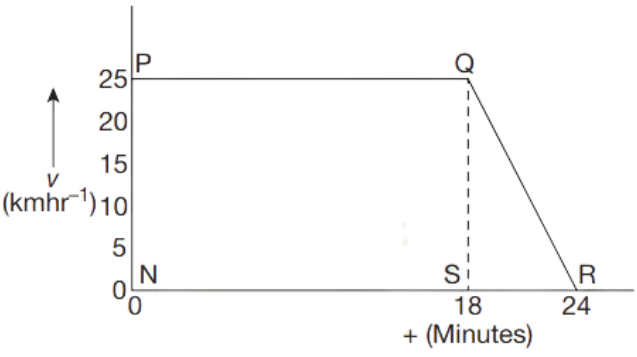
Answer. 3. (2) and (4)

Question 34. Infectious agents belong to different ­categories of organisms and may be

(1) unicellular

(2) single cellular

(3) microscopic

(4) multicellular

  1. (1), (2) and (3)
  2. (1), (2), (3) and (4)
  3. (1), (3) and (4)
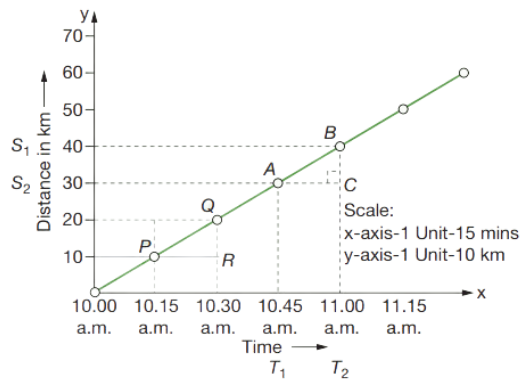
  4. (1) and (2)

Answer. 3. (1), (3) and (4)
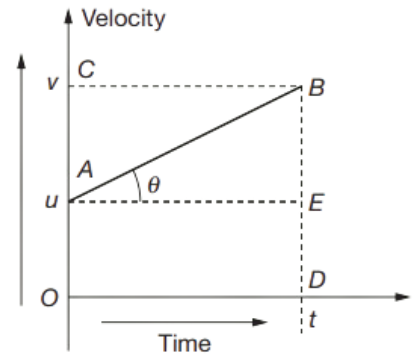
Question 35. Infectious agents are spread through

(1) air

(2) water

(3) physical contact

(4) vectors

  1. (1), (2) and (3)
  2. (1), (2), (3) and (4)
  3. (1), (3) and (4)
  4. (1) and (2)

Answer. 2. (1), (2), (3) and (4)

Question 36. Effective prevention of infectious diseases in the community requires that everyone should have access to

(1) air

(2) water

(3) public hygiene

(4) immunization

  1. (1), (2) and (3)
  2. (1), (2), (3) and (4)
  3. (1), (3) and (4)
  4. (3) and (4)

Answer. 4. (3) and (4)

Question 37. Cells are made of a variety of chemical substances, such as

(1) proteins

(2) carbohydrates

(3) fats

(4) lipids

  1. (1), (2) and (3)
  2. (1), (2), (3) and (4)
  3. (1), (3) and (4)
  4. (3) and (4)

Answer. 2. (1), (2), (3) and (4)

Question 38. In our organs or tissues, various specialized activities are carried out, such as

(1) heart is beating.

(2) lungs are breathing.

(3) kidney is filtering urine.

(4) brain is thinking.

  1. (1), (2) and (3)
  2. (1), (2), (3) and (4)
  3. (1), (3) and (4)
  4. (3) and (4)
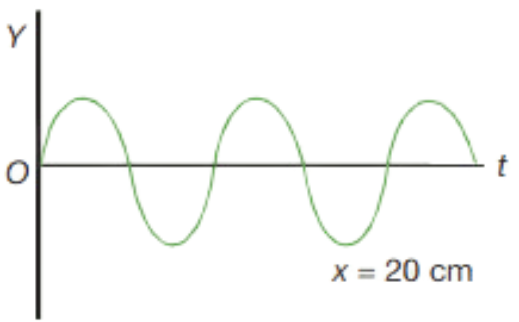
Answer. 2. (1), (2), (3) and (4)

Question 39. Health means a state of

(1) physical

(2) mental

(3) social well-being

(4) living standard

  1. (1), (2) and (3)
  2. (1), (2), (3) and (4)
  3. (1), (3) and (4)
  4. (3) and (4)

Answer. 1. (1), (2) and (3)

Question 40. The digestive system helps to digest food taken in from outside the body.

(1) Stomach

(2) Intestines

(3) Kidney

(4) Liver

  1. (1), (2) and (3)
  2. (1), (2), (3) and (4)
  3. (1), (3) and (4)
  4. (1) and (2)

Answer. 4. (1) and (2)

Question 41. The musculoskeletal system holds the body parts together and it helps the body move, it is made up of

(1) liver

(2) bones

(3) muscles

(4) immune system

  1. (1), (2) and (3)
  2. (1), (2), (3) and (4)
  3. (1), (3) and (4)
  4. (2) and (3)

Answer. 4. (2) and (3)

Question 42. High blood pressure can be caused by

(1) excessive weight

(2) lack of exercise

(3) musculoskeletal

(4) inflammation

  1. (1), (2) and (3)
  2. (1), (2), (3) and (4)
  3. (1), (3) and (4)
  4. (1) and (2)

Answer. 4. (1) and (2)

Question 43. Diseases are found in a wide range of such categories of classification, such as

(1) viruses

(2) bacteria

(3) fungi

(4) worms

  1. (1), (2) and (3)
  2. (1), (2), (3) and (4)
  3. (1), (3) and (4)
  4. (1) and (2)

Answer. 2. (1), (2), (3) and (4)

Question 44. The common examples of diseases caused by viruses are

(1) common cold

(2) influenza

(3) dengue fever

(4) AIDS

  1. (1), (2) and (3)
  2. (1), (2), (3) and (4)
  3. (1), (3) and (4)
  4. (1) and (2)

Answer. 2. (1), (2), (3) and (4)

Question 45. The diseases caused by bacteria are

(1) typhoid fever

(2) cholera

(3) tuberculosis

(4) anthrax

  1. (1), (2) and (3)
  2. (1), (2), (3) and (4)
  3. (1), (3) and (4)
  4. (1) and (2)

Answer. 2. (1), (2), (3) and (4)

Question 46. Which is a chronic disease?

  1. Tuberculosis
  2. Night blindness
  3. Cholera
  4. Rickets

Answer. 3. Cholera

Question 47. Which one is not a sexually transmitted disease?

  1. AIDS
  2. Gonorrhoea
  3. Syphilis
  4. Diabetes

Answer. 4. Diabetes

Question 48. Which one is not a bacterial disease?

  1. TB
  2. Typhoid
  3. Pneumonia
  4. Poliomyelitis

Answer. 4. Poliomyelitis

Question 49. AIDS can be transmitted through

  1. Blood transfusion
  2. Pregnant mother to foetus
  3. Sexual contact
  4. All the above

Answer. 4. All the above

Question 50. Which one of the following is a deficiency disease?

  1. Diabetes
  2. Malaria
  3. Goitre
  4. Tetanus

Answer. 3. Goitre

Question 51. Which is not an infectious disease?

  1. Diabetes
  2. TB
  3. Leprosy
  4. Typhoid

Answer. 1. Diabetes

Question 52. Which disease is caused due to deficiency of a hormone?

  1. Chickenpox
  2. Diabetes
  3. AIDS
  4. Malaria

Answer. 2. Diabetes

Question 53. Common cold is a/an

  1. genetic disorder
  2. acute disease
  3. chronic disease
  4. deficiency disease

Answer. 2. acute disease

Question 54. Choose the wrong statement.

  1. High blood pressure is caused by excessive weight and lack of exercise
  2. Cancers can be caused by genetic abnormalities
  3. Peptic ulcers are caused by eating acidic food
  4. Acne is not caused by staphylococcl

Answer. 4. Acne is not caused by staphylococcl

Question 55. We should not allow mosquitoes to breed in our surroundings because they

  1. multiply very fast and cause pollution
  2. are vectors for many disease
  3. bite and cause skin disease
  4. are not important insects

Answer. 2. are vectors for many disease

Question 56. Which one of the following causes kala-azar?

  1. Ascaris
  2. Trypanosoma
  3. Leishmania
  4. Bacteria

Answer. 3. Leishmania

Question 57. Which disease is not transmitted by mosquitoes?

  1. Dengue
  2. Malaria
  3. Brain fever or encephalitis
  4. Pneumonia

Answer. 4. Pneumonia

Question 58. Which one of the following is not important for individual health?

  1. Living in clean space
  2. Good economic condition
  3. Social equality and harmony
  4. Living in a large and well furnished house

Answer. 4. Living in a large and well furnished house

Question 59. Which one of the following is not a viral disease?

  1. Dengue
  2. AIDS
  3. Typhoid
  4. Influenza

Answer. 3. Typhoid

Question 60. Which one of the following is not a ­bacterial disease?

  1. Cholera
  2. Tuberculosis
  3. Anthrax
  4. Influenza

Answer. 4. Influenza

Question 61. The technique of providing immunity by vaccination was first developed by

  1. Robert koch
  2. Alexender fleming
  3. William harvey
  4. Edward Jenner

Answer. 4. Edward Jenner

Question 62. ‘Penicillin’ a life saving antibiotic, was discovered by

  1. Alexander Fleming
  2. Edward Jenner
  3. H.G. Khorana
  4. William Harvey

Answer. 1. Alexander Fleming

Question 63. For which disease ‘oral’ vaccine is given?

  1. TB
  2. Typhoid
  3. Pertusis
  4. Poliomyelitis

Answer. 2. Typhoid

Question 64. ‘BCG’ vaccine is given to infants for ­protection against

  1. Diarrhoea
  2. Cholera
  3. Pneumonia
  4. Tuberculosis

Answer. 4. Tuberculosis

Question 65. You are aware of Polio Eradication Programme in your city. Children are ­vaccinated because

  1. vaccination kills the polio causing microorganisms
  2. prevents the entry of polio causing organism
  3. It creats immunity in the body
  4. All the above

Answer. 3. It creats immunity in the body

Question 66. The chemicals that kill or stop the growth of certain kinds of microbes are called

  1. vaccines
  2. microbes
  3. antibiotics
  4. fungi

Answer. 3. antibiotics

Question 67. Penicillium is a/an

  1. antibiotic
  2. vaccine
  3. alga
  4. fungus

Answer. 4. fungus

Question 68. The diseases that can be transmitted through body fluids are

  1. AIDS and hepatitis B
  2. TB and typhoid
  3. influenza and cholera
  4. cholera and rabies

Answer. 1. AIDS and hepatitis B

Question 69. ‘Congential diseases’ are those which:

  1. are these since birth
  2. are inherited
  3. are transmitted easily
  4. are fatal

Answer. 2. are inherited

Question 70. Widal test helps to diagnose

  1. Tetanus
  2. Tuberculosis
  3. Typhoid
  4. Whooping cough

Answer. 3. Typhoid

Question 71. DPT Vaccine is for

  1. Diptheria, Polio, Tetanus
  2. Diptheria, Pertussis, Tetanus
  3. Diptheria, Pertussis, Typhoid
  4. Diptheria, Pertussis, Tuberculosis

Answer. 2. Diptheria, Pertussis, Tetanus

Question 72. World TB day is celebrated on

  1. March 21
  2. March 24
  3. March 30
  4. March 18

Answer. 2. March 24

Question 73. Polio is caused due to

  1. bacteria
  2. virus
  3. fungi
  4. helminthes worm

Answer. 2. virus

Question 74. The Pulse Polio Programme is organized in our country for

  1. eradicating polio
  2. spreading polio
  3. curing polio
  4. none of these

Answer. 1. eradicating polio

Question 75. AIDS day is celebrated on

  1. 5th June
  2. 1st October
  3. 11th July
  4. 1st December

Answer. 4. 1st December

Question 76. ______ depicts the notion of being well.

  1. Health
  2. Disease-free
  3. Infectious body
  4. Healthy agent

Answer. 1. Health

Question 77. ______ refers to the state of absence of comfort to perform daily activities. It depends on the individual only.

  1. Disease-free person
  2. Health-free body
  3. Non-healthy body
  4. Healthy body

Answer. 1. Disease-free person

Question 78. ______ is defined as an abnormal condition that disturbs or modifies the performance of vital functions of the body.

  1. Disease
  2. Health
  3. Infection
  4. Infectious agent

Answer. 1. Disease

Question 79. The vital intrinsic factors responsible for ill health of humans are ______.

  1. genetic disorders
  2. environmental hazards
  3. pathogenic agents
  4. protein malfunctioning

Answer. 1. genetic disorders

Question 80. ______ are the disease causing external agents, which enter our body from outside environment.

  1. Extrinsic factors
  2. Internal factors
  3. External factors
  4. Genetic factors

Answer. 1. Extrinsic factors

Question 81. Which disease is caused by virus?

  1. AIDS
  2. TB
  3. Scabies
  4. Dengue fever

Answer. 1. AIDS

Question 82. Whooping cough is caused due to which of the following disease?

  1. Bacillus anthracis
  2. Bordetella pertussis
  3. Salmonella typhi
  4. Clostridium tetani

Answer. 2. Bordetella pertussis

Question 83. Plasmodium causes which of the following disease?

  1. Kala-azar
  2. Dengue fever
  3. Sleeping sickness
  4. Pyorrhea

Answer. 2. Dengue fever

Question 84. Which of the following is an airborne disease?

  1. Influenza
  2. Typhoid
  3. AIDS
  4. Gonorrhoea

Answer. 1. Influenza

Question 85. Which of the following disease is transmitted due to louse?

  1. Malaria
  2. Filariasis
  3. Epidemic typhus
  4. Typhoid

Answer. 3. Epidemic typhus

Question 86. ______ are the examples of sexually-transmitted diseases.

  1. AIDS
  2. Cholera
  3. Typhoid
  4. Malaria

Answer. 1. AIDS

Question 87. ______ are the prominent examples of airborne diseases.

  1. Tuberculosis
  2. Malaria
  3. Gonorrhoea
  4. Syphilis

Answer. 1. Tuberculosis

Question 88. Elephantiasis is a ______.

  1. worm infection
  2. protozoan disease
  3. airborne disease
  4. waterborne disease

Answer. 1. worm infection

Question 89. Anthrax is caused by ______.

  1. bacteria
  2. virus
  3. fungi
  4. protozoan

Answer. 1. bacteria

Question 90. Which of the following is the causative agent of typhoid?

  1. Treponema pallidum
  2. Salmonella typhi
  3. Vibrio cholerae
  4. Bacillus anthracis

Answer. 2. Salmonella typhi

Question 91. Which of the following is the first cell to reach the site of infection?

  1. Microphages
  2. Neutrophil
  3. RBC
  4. Neuron

Answer. 2. Neutrophil

Question 92. If a person encounters ______ once in life, he develops immunity against it for life time.
Answer. Small pox

Question 93. In which disease the virus enters the respiratory tract and affects epithelial lining of mucus membrane?

  1. Influenza
  2. Rabies
  3. Jaundice
  4. Hepatitis

Answer. 1. Influenza

Question 94. Headache, nausea followed by hydrophobia develops in ______.
Answer. Rabies

Question 95. In ______ disease, the virus enters the CNS and destroys motor nerve leading to paralysis mainly in legs.
Answer. Polio

Question 96. Which of the following disease affects our lungs?

  1. AIDS
  2. Rabies
  3. Polio
  4. Tuberculosis

Answer. 4. Tuberculosis

Question 97. The BCG vaccine is given for the immunity against which disease?

  1. Hepatitis
  2. Jaundice
  3. Tuberculosis
  4. Malaria

Answer. 3. Tuberculosis

Question 98. Malaria is caused due to which of the following?

  1. Protozoa
  2. Anopheles mosquito
  3. Both a and b
  4. None of these

Answer. 4. None of these

Question 99. Plasmodium is an example of which of the following?

  1. Virus
  2. Bacteria
  3. Protozoa
  4. Worm

Answer. 3. Protozoa

Question 100. Diarrhea, cholera, typhoid are the diseases that have one thing in common that is

  1. all of them are caused by bacteria.
  2. all of them is transmitted by contaminated food and water.
  3. all of them are cured by antibiotics.
  4. all the above

Answer. 4. all the above

Question 101. HIV virus attacks which one of the following cells in our body?

  1. Red blood cells
  2. White blood cells
  3. Liver cell
  4. Long cell

Answer. 4. Long cell

Question 102. Penicillin is a drug that involves which of the following?

  1. Interfere in the biological pathway of bacteria.
  2. An antibiotic that can kill bacteria.
  3. Both (a) and (b)
  4. None of the above

Answer. 4. None of the above

Question 103. Which of the following disease is caused due to worm?

  1. Tetanus
  2. Rabies
  3. Sleeping sickness
  4. Filariasis

Answer. 4. Filariasis

Question 104. Which of the following is a bacteria?

  1. Plasmodium
  2. Trypanosome
  3. Rabies virus
  4. Salmonella typhi

Answer. 2. Trypanosome

Question 105. Which one of the following is not a viral disease?

  1. Dengue
  2. AIDS
  3. Typhoid
  4. Influenza

Answer. 3. Typhoid

Question 106. Which one of the following is not a bacterial disease?

  1. Cholera
  2. Tuberculosis
  3. Anthrax
  4. Influenza

Answer. 4. Influenza

Question 107. Which one of the following disease is not transmitted by mosquito?

  1. Brain fever
  2. Malaria
  3. Typhoid
  4. Dengue

Answer. 3. Typhoid

Question 108. Which one of the following disease is caused by bacteria?

  1. Typhoid
  2. Anthrax
  3. Tuberculosis
  4. Malaria

Answer. 4. Malaria

Question 109. Which one of the following diseases is caused by protozoans?

  1. Malaria
  2. Influenza
  3. AIDS
  4. Cholera

Answer. 1. Malaria

Question 110. Which one of the following has a long term effect on the health of an individual?

  1. Common cold
  2. Chicken pox
  3. Chewing tobacco
  4. Stress

Answer. 3. Chewing tobacco

Question 111. Which of the following can make you ill if you come in contact with an infected person?

  1. High blood pressure
  2. Genetic abnormalities
  3. Sneezing
  4. Blood cancer

Answer. 3. Sneezing

Question 112. AIDS cannot be transmitted by

  1. sexual contact
  2. hugs
  3. breast feeding
  4. blood transfusion

Answer. 2. hugs

Question 113. Making anti-viral drugs is more difficult than making anti-bacterial medicines because

  1. viruses make use of host machinery.
  2. viruses are on the border line of living and non-living.
  3. viruses have very few biochemical mechanisms of their own.
  4. viruses have a protein coat.

Answer. 3. viruses have very few biochemical mechanisms of their own.

Question 114. Which one of the following causes kala-azar?

  1. Ascaris
  2. Trypanosoma
  3. Leishmania
  4. Bacteria

Answer. 3. Leishmania

Question 115. If you live in a overcrowded and poorly ventilated house, it is possible that you may suffer from which of the following diseases?

  1. Cancer
  2. AIDS
  3. Airborne diseases
  4. Cholera

Answer. 3. Airborne diseases

Question 116. Which of the following disease is not transmitted by mosquitoes?

  1. Dengue
  2. Malaria
  3. Brain fever or encephalitis
  4. Pneumonia

Answer. 4. Pneumonia

Question 117. Which one of the following is not important for an individual’s health?

  1. Living in clean space.
  2. Good economic condition.
  3. Social equality and harmony.
  4. Living in a large and well-furnished house.

Answer. 4. Living in a large and well-furnished house.

Question 118. Choose the incorrect statement from the following.

  1. High blood pressure is caused by excessive weight and lack of exercise.
  2. Cancers can be caused by genetic abnormalities.
  3. Peptic ulcers are caused by eating acidic food.
  4. Acne in not caused by staphylococci.

Answer. 3. Peptic ulcers are caused by eating acidic food.

Question 119. We should not allow mosquitoes to breed in our surroundings because they

  1. multiply very fast and cause pollution.
  2. are vectors for many diseases.
  3. bite and cause skin diseases.
  4. are not important insects.

Answer. 2. are vectors for many diseases.

Question 119. You are aware of the ‘Polio Eradication Programme’ in your city. Children are vaccinated because

  1. vaccination kills the polio causing microorganisms.
  2. prevents the entry of polio causing organism.
  3. it creates immunity in the body.
  4. all the above

Answer. 3. it creates immunity in the body.

Question 120. Viruses, which cause hepatitis, are transmitted through

  1. air
  2. water
  3. food
  4. personal contact

Answer. 2. water

Question 121. Vectors can be defined as

  1. animals carry the infecting agents from sick person to another healthy person.
  2. microorganisms which cause many diseases.
  3. infected person.
  4. diseased plants.

Answer. 1. animals carry the infecting agents from sick person to another healthy person.

Question 122. State any two conditions essential for health.
Answer: The two conditions essential for good health are as follows.

  • State of physical, mental and social well-being.
  • Better surroundings or environment.

Question 123. State any two conditions essential for being free of disease.
Answer: The two conditions essential for being free of disease are as follows.

  • Personal and domestic hygiene.
  • Clean environment and surroundings.

Question 124. Define the term ’health’. Discuss the conditions essential to maintain good health.
Answer: Health can be defined as the state of complete physical, social and mental well-being.

  • Availability of clean drinking water.
  • Availability of sufficient and nutritious food.
  • Social equality.
  • Proper sanitation.

Question 125. What are intrinsic and extrinsic factors?
Answer: The disease-causing factors that are the components of our body are termed as intrinsic factors. The disease causing external agents, which enter our body from outside are called extrinsic factors.

Question 126. What do you understand by the term disease?
Answer: Disease is defined as an abnormal condition that disturbs or modifies the performance of vital functions of the body.

Question 127. Disease is defined as a ______ that disturbs or modifies the performance of vital functions of the body.
Answer. Abnormal condition

Question 128. What are the diseases caused by internal ­factors of the body?

  1. Organic
  2. Inorganic
  3. Chronic
  4. Acute

Answer. 1. Organic

Question 129. Which disease takes place in children with hyposecretion of thyroid?

  1. Myxoedema
  2. Cretinism
  3. Exophthalmia goitre
  4. Tetany

Answer. 2. Cretinism

Question 130. Find the odd one out from the following.

  1. Scurvy
  2. Beriberi
  3. Anaemia
  4. Haemophilia

Answer. 4. Haemophilia

Question 131. Which disease occurs due to the ­deficiency of protein?

  1. Goitre
  2. Bleeding disease
  3. Marasmus
  4. Beriberi

Answer. 3. Marasmus

NEET Foundation Physics Chapter 4 Why Do We Fall Ill Long Answer Questions

Chapter 4 Why Do We Fall Ill Long Answer Type Question And Answers

Question 1. What are the diseases? Discuss the various factors which trigger disease.
Answer.

Diseases:

Disease is defined as an abnormal condition that disturbs or modifies the performance of vital functions of the body. Disease may result as a response to either of the following factors.

  • Environmental factors: Industrial hazards, natural calamities and malnutrition.
  • Infective agents: Worms, protozoan, bacteria, fungi and virus.
  • Inherent defect of the organism: Genetic anomalies.

Why Do We Fall Ill

NEET Foundation Physics Chapter 4

Question 2. There are various modes of spreading the infection from an infected person to a healthy person. Discuss the direct and indirect methods of transmission. How sexually transmitted diseases are spread?
Answer.

There are various modes of spreading the infection from an infected person to a healthy person.

  • Indirect transmission: It occurs when there is no direct human to human contact. The spreading of diseases is through air, water, vectors and contaminated surfaces and objects.
  • Direct transmission: It occurs when there is a physical contact between the infected and susceptible person. It includes sexual contact, animal bites and contact with soil.

Syphilis, gonorrhoea and AIDS are some examples of sexually transmitted diseases. The pathogens for these diseases are transmitted through sexual intercourse between the two partners.

However, such sexually transmitted diseases are not spread by casual physical contact such as handshakes or hugs or sports, like wrestling or by any of the other ways in which we touch each other socially.

Read and Learn More NEET Foundation Long Answer Questions

Question 3. Discuss the principle of prevention of diseases and discuss how we can prevent the occurrence of diseases.
Answer.

The principle of prevention of diseases:

  • Firstly, when someone is suffering from a disease, their body becomes weak and it takes time to recover completely.
  • Secondly, the treatment takes time which means that someone suffering from a disease will have confined to bed till its convalescence.
  • Thirdly, the individual suffering from an infectious disease may acts as a potent source to spread infection to other people or to the community.

There are various ways by which we can prevent the occurrence of disease and it is as follows.

  • For airborne infection, we can prevent exposure by providing living conditions that are not overcrowded.
  • For waterborne infection, we can prevent exposure by procuring clean drinking water.
  • For prevention from vector-borne infections, clean environment is necessary. For example: Mosquito breeding can be stopped by ensuring cleanliness of water.

Question 4. Describe the symptoms and prevention of Hepatitis A and B.
Answer.

Symptoms and prevention of Hepatitis A and B:

Hepatitis A is an acute infectious disease of liver that affects both children and adult. Symptoms are high body temperature, headache, fatigue, joint paints, vomiting, nausea, loss of appetite, dark yellow skin and urine due to the presence of pigment named bilirubin and light coloured stool within 3–10 days of infection.

Prevention:

  • Use of chlorinated, boiled or mineral water.
  • Hands should be washed after cleaning the bed and vessels of the patients.
  • Proper vaccination.

Hepatitis B: Hepatitis B is commonly known as ‘serum or transfusion’ hepatitis. This is the most fatal and common type of viral hepatitis among communities. The infection spreads through infected blood from mothers to their babies or by sexual routes. Symptoms are acute liver disease which turned to chronic one, hepatic carcinoma, liver cirrhosis, etc.

Prevention:

  • Alcoholics or liquor should be avoided.
  • Intercourse with more than one partner (promiscuous) should be avoided.

Question 5. What are the causative agent of tuberculosis and its symptoms?
Answer.

Causative agent of tuberculosis and its symptoms:

Tuberculosis is caused by Mycobacterium tuberculosis. Mycobacterium enters through respiratory tract and reaches various parts of the body, such as lungs, intestine and lymph glands. After entering the body, the bacteria release s a toxin called tuberculin. The chances of infection are increased when a person inhales the infected droplets through coughing, sneezing, spitting of the infected person.

Symptoms: The patient of tuberculosis feels sick and weak with a gradual loss of appetite and weight. The symptoms of tuberculosis depends upon the region where the pathogen is entering and the type of organ it is infecting.

Class 11 Physics Class 12 Maths Class 11 Chemistry
NEET Foundation Class 12 Physics NEET Physics

NEET Foundation Physics Chapter 4

Question 6. Explain the reasons for the following factors.

  1. Balanced diet is necessary for maintaining healthy body.
  2. Health of an organism depends upon the surrounding environmental conditions.
  3. Our surrounding area should be free of stagnant water.
  4. Social harmony and good economic conditions are necessary for good health.

Answer.

  • Food is necessary for the growth and development of the body. Balanced diet provides raw materials and energy in appropriate amount needed for the substances, likes protein, carbohydrates, fats, minerals, etc., which in turn are essential for proper growth and functioning of the healthy body.
  • Health is a state of being well enough to function well physically, mentally and socially and these conditions depend upon the surrounding environmental conditions. For instance, if unhygienic conditions prevail in the surrounding area, it is likely we might get infected or diseased.
  • This is so because many waterborne diseases and insect vectors flourish in stagnant water which causes various diseases in human beings.
  • Human beings live in societies and different localities like villages or cities, which determines the social and physical environment and hence, both are to be kept in harmony.
  • Public cleanliness is important for individual health. For better living conditions, lot of money is required. We need good food for healthy body and for this we have to earn more money. And also for the treatment of diseases, one has to be in good economic condition.

Question 7. Explain why becoming exposed to pathogens or infected with an infectious microbe does not necessarily mean developing noticeable disease.
Answer.

Due to strong immune system, our body is normally fighting off microbes. We have cells which are specialized to kill the pathogenic microbes. These cells are active when the infecting microbes enter our body and if they are successful in removing the pathogen, we remain disease-free. So even if we are exposed to infectious microbes, it is not necessary that we suffer from diseases.

Question 8. Why are antibiotics not effective for viral disease?
Answer.

Antibiotics not effective for viral disease:

Antibiotics generally block the biosynthetic pathways and they block these pathways of the microbes/bacteria. However, viruses have very few biochemical mechanisms of their own and hence, they are unaffected by antibiotics.

NEET Foundation Physics Chapter 4 Why Do We Fall Ill Short Answer Questions

Chapter 4 Why Do We Fall Ill Short Answer Type Question And Answers

Question 1. What are the different means by which infectious diseases are spread?
Answer.

The different means by which infectious diseases spread are as follows.

  • Through air: They are also called airborne diseases. The air carries bacteria, virus and the diseases that can be caused are common cold, influenza, tuberculosis, etc.
  • Through food and water: When one eats drinks contaminated food/water, that contains bacteria, virus, worm, etc., then it can cause diseases like cholera, typhoid, hepatitis, etc.
  • Through contact: Many diseases spread through contact of infected person with the healthy person.
    Example: fungal infections, skin diseases, scabies, etc.
  • By sexual contact: Many diseases can be transmitted, for example, syphilis, AIDS.
  • By body fluids: Fluids like blood, semen, mother’s milk when infected can also cause diseases. Example: AIDS.
  • Vectors: The organism that spreads a disease by carrying pathogens from one place to another is called vector. Example, mosquitoes are vectors that carry pathogens like protozoa.

Why Do We Fall Ill

Question 2. What is extrinsic factor in disease and also discuss the various factors?
Answer.

Extrinsic factor in disease:

These are the disease causing external agents, which enter in our body from outside. The various external factors involved are as follows.

  • Insufficient diet or unbalanced diet: It makes a person unhealthy and prone to nutritional deficiency diseases.
  • Various pathogenic agents like bacteria, fungi, virus and worms, etc.
  • Environmental pollutants like oxides of carbon, sulphur and nitrogen, heavy metals like mercury, lead and arsenic, pesticides may also affect our health.
  • Tobacco, alcohol and narcotic drugs may also contribute to ailments.

NEET Foundation Physics Chapter 4 Why Do We Fall Ill Short Answer Questions

Question 3. What precautions can you take in your school to reduce the incidence of infectious diseases?
Answer.

The precautions that one takes in school to reduce the incidence of infectious diseases are as follows.

  • By using handkerchief while coughing sneezing.
  • Washing hands before eating breakfast or lunch.
  • Staying at home if anyone suffers from infectious diseases.
  • Getting vaccinated before the infection affects.
  • Keeping the school surroundings clean, checking for stagnant water.

Read And Learn More NEET Foundation Short Answer Questions

Question 4. How are the congenital and acquired diseases are different from each other?
Answer.

Difference between congenital and acquired diseases

NEET Foundation Biology Why Do We Fall Ill Short Answer Question 4

Question 5. What are waterborne diseases?
Answer.

Waterborne diseases:

Diseases can also spread through contaminated water. Cholera and typhoid are the prominent instances of waterborne diseases. This occurs when the excreta from someone suffering from an infectious disease, gets mixed with the drinking water used by people living nearby. The cholera causing microbes enter new hosts through water medium.

Class 11 Physics Class 12 Maths Class 11 Chemistry
NEET Foundation Class 12 Physics NEET Physics

Question 6. Discuss how vectors transmit diseases.
Answer.

Vectors transmit diseases:

Most of the diseases are transmitted by other animals. These agents carry the infecting agents from a sick person to another potential healthy host. These agents act as mediators in spreading infection and hence, they are called vectors. Vectors are also known as carrier of a disease.

The most common vectors we all know are mosquitoes. In many species of mosquitoes, the female anopheles needs highly nutritious food in the form of blood to lay mature eggs. Mosquitoes feed on many warm-blooded animals including humans transmitting diseases from person to person.

Question 7. Discuss the aims of ‘Pulse Polio Immunization Programme’.
Answer.

The aims of ‘Pulse Polio Immunization Programme’

  • To immunize all the children below 5 years of age.
  • To immunize those children who are not immunized earlier or partially immunized.
  • To replace the disease causing wild virus by harmless vaccine virus in the environment.

Question 8. What are the symptoms and prevention of typhoid?
Answer.

Symptoms and prevention of typhoid:

Symptoms of the typhoid fever include continuous fever, headache with delirium (disorder of the mind), slow pulse, distended abdomen, watery stool and appearance of rashes on the body. Headache and fever reaches to its peak in the afternoon. The temperature rises each day in the first week and declines during the third or fourth day.

Prevention:

  • Proper hygiene and sanitation.
  • Disposal of faecal matter should not be avoided.
  • TAB vaccination should be given as it provides immunity up to 3 years.

Question 9. What are the symptoms of malaria?
Answer.

Symptoms of malaria:

Symptoms include extreme cold, shivering, nausea, vomiting, headache, high fever, tachycardia, high respiration, muscular pain, and at the end extreme sweating occurs and body temperature comes to normal. In few cases, enlargement of spleen and liver is reported.

Question 10. What are the causative agent, control and prevention of AIDS?
Answer.

The causative agent, control and prevention of AIDS:

The causative agent is human immunodeficiency virus (HIV). No cure yet; a combination of drugs slows down the progress of the disease. Screening of blood donors, use of disposal needles and syringes, not sharing shaving blades and razors, safe sex practices.

Question 11. List any three reasons why you would think that you are sick and ought to see a doctor. If only one of these symptoms were present, would you still go to the doctor. Why or why not?
Answer:

The three reasons why one would think that he is sick are (1) headache, (2) cold and cough, (3) dysentery. This indicates that there may be a disease but it does not indicate what the disease is. So, one would still visit the doctor for treatment to know the cause of above symptom. Even in case of single symptom one needs to visit the doctor to get proper treatment.

Question 12. Discuss how acute disease are different from chronic disease.
Answer:

Acute disease are different from chronic disease

Diseases such as common cold whose symptoms are rapidly visible is termed as acute disease. Chronic disease such as tuberculosis that are long-term and whose symptoms last for months or years are termed as chronic disease.

Question 13. Discuss the differences between infectious and non-infectious diseases.
Answer:

Differences between infectious and non-infectious diseases:

NEET Foundation Biology Why Do We Fall Ill Difference between infectious and non-infectious diseases

Question 14. Discuss the comparison of symptoms and signs of a disease.
Answer:

The comparison of symptoms and signs of a disease:

NEET Foundation Biology Why Do We Fall Ill Comparision of symptoms and signs

Question 15. What are congenital or inborn disease?
Answer:

Congenital or inborn disease:

Inborn diseases are present since birth. Acquired diseases are developed after birth. The main cause is due to genetic disorders. Hence, it is easily passed from one generation to the other.

Question 16. What is immunization?
Answer:

Immunization:

When the body attains immunity against any disease, due to vaccination. This process is called immunization.

Question 17. What are the various preventative measures adopted by your family when you fall sick? 
Answer:

various preventative measures adopted by our family when i fall sick

Basically, there are two ways to treat an infectious disease. One would be to reduce the effect of the disease and the other to kill the causative agent.

Question 18. What is vaccination?
Answer:

Vaccination:

Vaccination is the administration of antigenic material to stimulate an individual’s immune system to generate adaptive immune response against the pathogen.

Question 19. What are the immunization programs available at the nearest health centre in your locality? Which of these diseases are the major health problem in your area?
Answer:

The immunization programmes available at the nearest health care centres axe:

  • Child immunization programme starts from 0 to 12 years.
  • Polio eradication programme
  • H1 N1 screening programme

Question 20. A doctor/nurse/health worker is exposed to more people than others in the community. Find out how she/he avoids getting sick herself/himself.
Answer:

A doctor/nurse/health worker when exposed to sick people they keep their nose and mouth covered, take care of hygiene, wash hands with soap before drinking water or eating food. They use mask, gloves, etc to avoid the direct contact with the person suffering from infectious diseases.

Question 21. Why are normally advised to take bland and nourishing when we are sick?
Answer:

We are advised to take bland and nourishing food when we are sick because our body needs energy to release cells to overcome the infection, the wear and tear of body organ. The nourishing food provides nutrients to our body that will further provide energy and make new cells. No spices in the food makes its digestion process faster, does not release acids in the body that can interfere in the treatment and cure.

Question 22. Which precaution can you take in your school to reduce the incidence of infectious diseases?
Answer:

The precautions that one can take care in school to reduce the incidence of infectious diseases are as follows.

  • By using handkerchief while coughing and sneezing.
  • Washing hands before eating lunch or breakfast.
  • Staying at home if anyone suffers from infectious diseases.
  • Getting vaccinated before the infection affects.
  • Keeping the school surroundings clean, checking for stagnant water.

Question 23. What are infectious diseases?
Answer:

Infectious Diseases:

Infectious diseases are the diseases caused by pathogenic microorganisms, such as bacteria, viruses, parasites or fungi.

Question 24. Why is it important to consider different kinds of infectious agents? 
Answer:

The answer lies within the mode of treatment to be chosen for the disease.

Question 25. How do infectious diseases spread?
Answer:

Infectious diseases spread as follows

Most of the microbes are transmitted from an affected person to an immunized person in a variety of ways. They can be ‘communicated’ from one person to other and so are called communicable diseases.

Question 26. Name the sexually transmitted diseases.
Answer:

Sexually transmitted diseases:

Syphilis, gonorrhoea and AIDS are some examples of sexually-transmitted diseases.

Question 27. Name the waterborne disease.
Answer:

Waterborne disease:

Cholera and typhoid are prominent instances of waterborne diseases.

Question 28. What are vectors?
Answer:

Vectors:

Vectors are also known as carrier of a disease. These agents act as mediators in spreading infection and hence, they are called vectors.

NEET Foundation Physics Chapter 5 Sound Multiple Choice Questions

Chapter 5 Sound Multiple Choice Question And Answers

Direction: Choose the correct option for each question. There is only one correct response for each question.

Question 1. In SONAR, ______ waves are used.

  1. Ultrasonic
  2. Infrasonic
  3. Radio
  4. Audible sound

Answer. 1. Ultrasonic

Question 2. When we change feeble sound to loud sound we increase its ______.

  1. Velocity
  2. Wavelength
  3. Frequency
  4. Amplitude

Answer. 4. Amplitude

Question 3. Infrasound can be heard by which animal?

  1. Human beings
  2. Rhinoceros
  3. Bat
  4. Dog

Answer. 2. Rhinoceros

Question 4. Sound waves in the air are ______.

  1. Radio waves
  2. Electromagnetic waves
  3. Longitudinal waves
  4. Transverse waves

Answer. 3. Longitudinal waves

Read and Learn More NEET Foundation Multiple Choice Questions

Question 5. The unit of quantity on which the loudness of sound depends is ______.

  1. Metre
  2. Second
  3. Hertz
  4. m/s

Answer. 1. Metre

Question 6. Sound travels faster in ______.

  1. Solid
  2. Liquid
  3. Gas
  4. None of the above

Answer. 1. Solid

NEET Foundation Physics Chapter 5 Sound Multiple Choice Questions

Question 7. S.I. unit of frequency is ______.

  1. Metre
  2. Second
  3. Hertz
  4. m/s

Answer. 3. Hertz

Question 8. The distance between two consecutive crests or two consecutive troughs is called ______.

  1. Velocity
  2. Wavelength
  3. Frequency
  4. Amplitude

Answer. 2. Wavelength

Question 9. ______ is produced with the vibration of objects.

  1. Sound
  2. Wavelength
  3. Frequency
  4. Amplitude

Answer. 1. Sound

Question 10. Sound is the form of ______.

  1. Force
  2. Energy
  3. Heat
  4. Speed

Answer. 2. Energy

Question 11. Which among the following equation is correct?

  1. Wave Velocity = Frequency × Wavelength
  2. Frequency = Wavelength × Wave Velocity
  3. Wave velocity = frequency/wavelength
  4. Wavelength = frequency/wave velocity

Answer. 1. Wave Velocity = Frequency × Wavelength

Question 12. The speed of sound in air is ______ at 0 °C.

  1. 330 m/s
  2. 331 m/s
  3. 332 m/s
  4. 334 m/s

Answer. 2. 331 m/s

Question 13. A sound wave travels from east to west then particles of air will move in ______ direction.

  1. East–West
  2. West–East
  3. North–South
  4. South North

Answer. 1. East–West

Question 14. The frequency ranges for hearing and speaking of dog is ______.

  1. 20 Hz – 20 kHz
  2. 50 Hz – 50 kHz
  3. 60 Hz – 50 kHz
  4. 20 Hz – 50 kHz

Answer. 4. 20 Hz – 50 kHz

Question 15. The frequency of sound above 20 kHz is called ______.

  1. Ultrasound
  2. Infrasound
  3. Ultrasand
  4. Infrasonic

Answer. 1. Ultrasound

Question 16. The minimum distance between the source and the reflector so that the echo is heard is approximately equal to ______ m.

  1. 10
  2. 13
  3. 17
  4. 20

Answer. 3. 17

Question 17. Choose the correct relationship between wave velocity (v), frequency ( f) and wavelength (λ). 

  1. V = fλ
  2. V = f/λ
  3. V = λ/f
  4. V = 1/f λ

Answer. 1. V = fλ

Question 18. Which of the following is not the characteristic of a musical sound?

  1. Quality
  2. Wavelength
  3. Pitch
  4. Loudness

Answer. 2. Wavelength

Question 19. We cannot hear sound on the moon because sound does not travel in ______.

  1. Solid
  2. Liquid
  3. Gas
  4. Vacuum

Answer. 4. Vacuum

Class 11 Physics Class 12 Maths Class 11 Chemistry
NEET Foundation Class 12 Physics NEET Physics

Question 20. The physical quantity that oscillates in most waves is ______.

  1. Energy
  2. Mass
  3. Amplitude
  4. Wavelength

Answer. 3. Amplitude

Question 21. ______ remains unchanged when a sound wave travels in air or in water.

  1. Frequency
  2. Amplitude
  3. Wavelength
  4. Speed

Answer. 1. Frequency

Question 22. The frequency which is not audible to the human ear is ______.

  1. 50 Hz
  2. 500 Hz
  3. 5000 Hz
  4. 50000 Hz

Answer. 4. 50000 Hz

Question 23. Sound and light waves both ______.

  1. Have similar wavelength
  2. Follow the law of reflection
  3. Travel through vacuum
  4. Travel as longitudinal waves

Answer. 2. Follow the law of reflection

Question 24. The technique used by bats to find their way or to locate food is ______.

  1. Flapping
  2. SONAR
  3. RADAR
  4. Echolocation

Answer. 4. Echolocation

Question 25. Which among the following is an example of mechanical wave?

  1. Sound wave
  2. Radio wave
  3. Light wave
  4. Infrared wave

Answer. 1. Sound wave

Question 26. Which of the following quantities is transferred during wave propagation?

  1. Speed
  2. Velocity
  3. Acceleration
  4. Energy

Answer. 4. Energy

Question 27. ______ is the unit of wavelength.

  1. Newton
  2. Dyne
  3. Erg
  4. Angstrom

Answer. 4. Angstrom

Question 28. The S.I. unit of time is ______.

  1. Nanosecond
  2. Second
  3. Minute
  4. Hour

Answer. 2. Second

Question 29. The persistence of audible sound due to the successive reflections from the surrounding objects even after the source has stopped to produce that sound is called ______.

  1. Echo
  2. Reflection
  3. Reverberation
  4. Rarefaction

Answer. 3. Reverberation

Question 30. Vibrations inside the ear are amplified by three bones namely the ______ in the middle ear.

  1. auditory bone, anvil and stirrup
  2. hammer, cochlea and stirrup
  3. hammer, anvil and stirrup
  4. hammer, anvil and pinna

Answer. 2. hammer, cochlea and stirrup

Question 31. The ceilings of concert halls and conference halls are made curved because ______.

  1. This way sound waves reaches all the part after reflection from the curved surface
  2. This way sound does not become distorted and confusing
  3. This way reverberation is avoided
  4. All of the Above

Answer. 1. This way sound waves reaches all the part after reflection from the curved surface

Question 32. Note is a sound ______.

  1. of mixture of several frequencies
  2. of mixture of 2 frequencies only
  3. of a single frequency
  4. always unpleasant to listen

Answer. 1. of mixture of several frequencies

Question 33. The vibrations or the pressure variations inside the inner ear are converted into electrical signals by the_____.

  1. Anvil
  2. tympanic membrane
  3. pinna
  4. cochlea

Answer. 4. cochlea

Question 34. The distance between a compression and the next rarefaction of a longitudinal wave is ______.

  1. λ
  2. λ/2
  3. λ/4
  4. λ/8

Answer. 2. λ/2

Question 35. When feeble sound is changed to loud sound, we increase its ______.

  1. Frequency
  2. Speed
  3. Amplitude
  4. Velocity

Answer. 3. Amplitude

Question 36. The speed of sound in a gas is not affected by the change in

  1. Wavelength of wave
  2. Amplitude of wave
  3. Pressure
  4. Speed

Answer.

  1. Wavelength of wave
  2. Amplitude of wave
  3. Pressure

Question 37. The speed of sound in a medium depends on ______.

  1. Time
  2. Volume
  3. Elasticity
  4. Density

Answer.

3. Elasticity

4. Density

Question 38. Sound can travel through ______.

  1. Solid
  2. Liquid
  3. Gas
  4. Vacuum

Answer. 

  1. Solid
  2. Liquid
  3. Gas

Question 39. Choose the correct statement

  1. The time taken for one complete oscillation in the density of the medium is called the time period of the sound wave.
  2. The amplitude of sound wave is the height of the crest or tough.
  3. With high frequency, sound has high pitch
  4. When frequency is low, sound has low pitch

Answer.

  1. The time taken for one complete oscillation in the density of the medium is called the time period of the sound wave.
  2. The amplitude of sound wave is the height of the crest or tough.
  3. With high frequency, sound has high pitch
  4. When frequency is low, sound has low pitch

Question 40. Choose the correct statement

  1. If amplitude is bigger, sound is soft.
  2. If amplitude is smaller, sound is loud.
  3. If amplitude is bigger, sound is loud.
  4. If amplitude is smaller, sound is soft.

Answer. 

3. If amplitude is bigger, sound is loud.
4. If amplitude is smaller, sound is soft.

Question 41. Light can travel through ______.

  1. Solid
  2. Liquid
  3. Gas
  4. Vacuum

Answer. 

  1. Solid
  2. Liquid
  3. Gas
  4. Vacuum

Question 42. Choose the correct unit.

  1. The S.I. unit of frequency is Hertz.
  2. The S.I. unit of wavelength is metre.
  3. The S.I. unit of time is hour.
  4. The S.I. unit of time is second.

Answer. 

1. The S.I. unit of frequency is Hertz.
2.The S.I. unit of wavelength is metre
4. The S.I. unit of time is second.

Question 43. Choose the incorrect statement

  1. The pitch of sound depends on the frequency of vibration.
  2. The pitch of sound depends on the amplitude of vibration.
  3. The loudness of sound depends upon the amplitude of vibration.
  4. The loudness of sound depends upon the frequency of vibration.

Answer. 

2. The pitch of sound depends on the amplitude of vibration.
4. The loudness of sound depends upon the frequency of vibration.

Question 44. Choose the correct statement

  1. Speed of sound in Glass at 25 °C is 3980 m/s.
  2. Speed of sound in Oxygen at 25 °C is 390 m/s.
  3. Speed of sound in Steel at 25 °C is 5960 m/s.
  4. Speed of sound in Hydrogen at 25 °C is 1284 m/s.

Answer. 

1. Speed of sound in Glass at 25 °C is 3980 m/s.
3. Speed of sound in Steel at 25 °C is 5960 m/s.
4. Speed of sound in Hydrogen at 25 °C is 1284 m/s.

Question 45. Choose the incorrect speed of sound in air.

  1. 344 m/s
  2. 355 m/s
  3. 366 m/s
  4. 377 m/s

Answer. 

2. 355 m/s
3. 366 m/s
4. 377 m/s

Question 46. For hearing an echo, the minimum distance should be:

  1. less than 10 m
  2. between 10 m and 15 m
  3. 17 m or more
  4. none of the above

Answer. 3. 17 m or more

Question 47. The quantities that a travelling wave carry with it are

  1. mass
  2. velocity
  3. wavelength
  4. energy

Answer. 4. energy

Question 48. Sonar works on the principle of

  1. reflection of sound waves
  2. momentum of sound waves
  3. energy of sound waves
  4. refraction of sound waves

Answer. 1. reflection of sound waves

Question 49. When a wave goes from one medium to another medium, which quantity does not changes?

  1. frequency
  2. wavelength
  3. velocity
  4. time period

Answer. 1. frequency

Question 50. Hearing of repetition of sound after reflection from a distant object is called:

  1. reverberation
  2. resonance
  3. echo
  4. none of these

Answer. 3. echo

Question 51. Which of the following sound waves can not be heard by human?

  1. 20 Hz
  2. 500 Hz
  3. 15 Hz
  4. 1500 Hz

Answer. 3. 15 Hz

Question 52. A boy sitting in a boat fires a gun. An observer P is at a distance of 50 m from the boat. Another observer Q is a diver, who is 50 m under water. Both hear the sound of gun:

  1. P hears the sound first
  2. Q hears the sound first
  3. both P and Q hear the sound
  4. none of the above

Answer. 2. Q hears the sound first

Question 53. Mechanical waves on the surface of a ­liquid are:

  1. transverse
  2. longitudinal
  3. torsional
  4. both transverse and longitudinal (or ripples)

Answer. 4. both transverse and longitudinal (or ripples)

Question 54. Ultrasonic waves are those waves:

  1. which a man can hear
  2. which a man cannot hear
  3. which are of high velocity
  4. which have high amplitude

Answer. 2. which a man cannot hear

Question 55. If the amplitude of waves at a distance r from a point source is A, the amplitude at a distance 2r will be:

  1. 2A
  2. A
  3. A/2
  4. A/4

Answer. 3. A/2

Question 56. Sound travels in air as:

  1. longitudinal waves
  2. transverse waves
  3. torsional waves
  4. electromagnetic waves

Answer. 1. longitudinal waves

Question 57. For the wave shown in figure, the frequency and wavelength, if its speed is 320 m/sec, are

NEET Foundation Physics Sound Question 57

  1. 8 cm, 400 Hz
  2. 80 cm, 40 Hz
  3. 8 cm, 4000 Hz
  4. 40 cm, 8000 Hz

Answer. 3. 8 cm, 4000 Hz

Question 58. With the propagation of a longitudinal wave through a material medium, the quantities transmitted in the direction of propagation are

  1. energy, momentum and mass
  2. energy
  3. energy and mass
  4. energy and linear momentum

Answer. 4. energy and linear momentum

Question 59. Light can travel in vacuum but no sound, because:

  1. speed of sound is very much slower than light
  2. light waves are electromagnetic in nature
  3. sound waves are electromagnetic in nature
  4. light waves are not electromagnetic in nature

Answer. 2. light waves are electromagnetic in nature

Question 60. Sound energy is basically:

  1. mechanical energy
  2. electromagnetic energy
  3. potential energy
  4. electrical energy

Answer. 1. mechanical energy

Question 61. The transfer of energy in a material medium due to the periodic motion of its particle is called:

  1. wave front
  2. wave motion
  3. pulse
  4. none of these

Answer. 2. wave motion

Question 62. The sound waves in a medium are characterised by the:

  1. linear motion of particles in the medium
  2. rotatory motion of particles in the medium
  3. oscillatory motion of particles in the medium
  4. none of the above

Answer. 3. oscillatory motion of particles in the medium

Question 63. The sound waves which travel in the air are called:

  1. transverse waves
  2. longitudinal waves
  3. polarised waves
  4. none of the above

Answer. 2. longitudinal waves

Question 64. In case of transverse waves the particles of a medium vibrate:

  1. in the direction of wave propagation
  2. opposite to the direction of wave propagation
  3. at right angles to the direction of wave propagation
  4. none of the above

Answer. 3. at right angles to the direction of wave propagation

Question 65. A sonic boom is produced in the air when an aircraft flies at a speed:

  1. equal to the speed of sound
  2. more than the speed of sound
  3. less than the speed of sound
  4. climbs vertically

Answer. 2. more than the speed of sound

Question 66. The animal which cannot hear ultrasonic waves is:

  1. bat
  2. cow
  3. dog
  4. dolphin

Answer. 2. cow

Question 67. A longitudinal wave consists of:

  1. crest and troughs in the medium
  2. compressions and rarefactions in the medium
  3. both (a) and (b)
  4. neither (a), nor (b)

Answer. 2. compressions and rarefactions in the medium

Question 68. The transverse waves can propagate only in:

  1. liquids
  2. gases
  3. solids
  4. vacuum

Answer. 3. solids

Question 69. In the compression region of the medium in case of longitudinal wave:

  1. the volume momentarily decreases
  2. the density momentarily increases
  3. the pressure momentarily increases
  4. all of the above

Answer. 4. all of the above

Question 70. A part of longitudinal wave in which particles of medium are farther away than the normal particles is called:

  1. rarefaction
  2. trough
  3. compression
  4. crest

Answer. 1. rarefaction

Question 71. A slinky can produce in laboratory:

  1. transverse waves only
  2. longitudinal waves only
  3. both (a) and (b)
  4. none of the above

Answer. 3. both (a) and (b)

Question 72. In case of transverse wave:

  1. the hump on the –y axis is called trough
  2. the lowest point the hump on the –y axis is called trough
  3. the hump on +y axis is called trough
  4. the highest point on the hump on the +y axis is called trough

Answer. 2. the lowest point the hump on the -y axis is called trough

Question 73. The wavelength is the linear distance between the:

  1. two consecutive compressions
  2. two consecutive rarefactions
  3. one compression and one rarefaction
  4. both (a) and (b)

Answer. 4. both (a) and (b)

Question 74. The change in density/pressure of a medium from maximum value to minimum value and again to maximum value, due to the propagation of a longitudinal wave is called complete:

  1. oscillation
  2. frequency
  3. amplitude
  4. none of these

Answer. 1. oscillation

Question 75. The number of oscillations passing through a point in unit time is called:

  1. vibration
  2. frequency
  3. wavelength
  4. none of these

Answer. 2. frequency

Question 76. The bat hunts it prey by emitting and receiving reflected:

  1. super sonic waves
  2. ultrasonic waves
  3. sonic waves
  4. infrasonic waves

Answer. 2. ultrasonic waves

Question 77. The SI unit of frequency is

  1. hertz
  2. gauss
  3. decibel
  4. none of these

Answer. 1. hertz

Question 78. If the frequency of a wave is 25 Hz, the total number of compression and rarefactions passing through a point in 1 second is

  1. 25
  2. 50
  3. 100
  4. none of these

Answer. 2. 50

Question 79. Amplitude of a longitudinal wave in the medium

  1. is the extent to which a medium gets compressed
  2. is the extent to which a medium gets rarefied
  3. is the extent to which a medium gets rarefied
  4. none of the above

Answer. 3. is the extent to which a medium gets rarefied

Question 80. The linear distance between a compression and a rarefaction or a crest and a trough is:

  1. \(\frac{\lambda}{2}\)
  2. \(\frac{\lambda}{4}\)
  3. 1
  4. \(\frac{3 \lambda}{2}\)

Answer. 1. \(\frac{\lambda}{2}\)

Question 81. A stretched string is plucked gently to produce a note. The string is producing:

  1. longitudinal waves
  2. stationary waves
  3. transverse waves
  4. both (a) and (c)

Answer. 3. transverse waves

Question 82. A stretched slinky is given a sharp push along its length. A wave travels from one end to another. The wave so produced is:

  1. transverse wave
  2. longitudinal wave
  3. stationary wave
  4. none of these

Answer. 2. longitudinal wave

Question 83. A longitudinal sound wave in air consists:

  1. a number of rarefaction pulses one after the other
  2. a number of compression pulses one after the other
  3. compression and rarefaction pulses alternating with each other
  4. a rarefaction pulse followed by compression pulse, separated by some distance

Answer. 3. compression and rarefaction pulses alternating with each other

Question 84. Infrasonic vibrations have frequency:

  1. less than 10 Hz
  2. less than 20 Hz
  3. between 20 and 20,000 Hz
  4. more than 20,000 Hz

Answer. 2. less than 20 Hz

Question 85. The range of sonic waves is between:

  1. 20 Hz to 2000 Hz
  2. 20 Hz to 10,000 Hz
  3. 20 Hz to 15,000 Hz
  4. 20 Hz to 20,000 Hz

Answer. 4. 20 Hz to 20,000 Hz

Question 86. When a vibrating object moves backwards, it creates a region of low pressure called ______.

  1. Reflection
  2. Rarefaction
  3. Wavelength
  4. Frequency

Answer. 2. Rarefaction

Question 87. The distance travelled by a wave in one second is called its ______.

  1. Wave velocity
  2. amplitude
  3. Wavelength
  4. Frequency

Answer. 1. Wave velocity

Question 88. The unit of wave velocity is ______.

  1. m
  2. s
  3. m/s
  4. km

Answer. 3. m/s

Question 89. Choose the correct equation

  1. Wavelength = wave velocity/time period
  2. Wavelength = wave velocity × time period
  3. Wave velocity = wavelength × time period
  4. Wavelength = wave velocity

Answer. 2. Wavelength = wave velocity/time period

Question 90. Sound cannot travel in ______.

  1. Solid
  2. Liquid
  3. Gas
  4. Vacuum

Answer. 4. Vacuum

Question 91. ______ is an instrument used by doctors for listening breaths.

  1.  Radar
  2. Stethoscope
  3. Soundboard
  4. Loudspeaker

Answer. 2. Stethoscope

Question 92. Soundboard works on the basis of law of ______ of sound waves.

  1. Reflection
  2. Rarefaction
  3. Newton
  4. None of the above

Answer. 1. Reflection

Question 93. The sound that comes to our ear after reflection is called ______.

  1. Reflection
  2. Infrared
  3. Ultrasound
  4. Echo

Answer. 4. Echo

Question 94. The speed of sound in a gas is not affected by the change in ______.

  1. Distance
  2. Time
  3. Pressure
  4. Speed

Answer. 3. Pressure

Question 95. The speed of sound in a gas increases with the increase in the ______ of gas.

  1. Speed
  2. Density
  3. Temperature
  4. None of the above

Answer. 3. Temperature

Question 96. ______ is used to detect and find the distance of objects under water.

  1. Ultrasonography
  2. Sonar
  3. Radiology
  4. Chronology

Answer. 2. Sonar

Question 97. The energy carried by ultrasound is very ______.

  1. High
  2. Low
  3. Medium
  4. None of the above

Answer. 1. High

Question 98. The frequency range of hearing for human is ______.

  1. 20 Hz – 20 kHz
  2. 30 Hz – 30 kHz
  3. 40 Hz – 40 kHz
  4. 50 Hz – 50 kHz

Answer. 1. 20 Hz – 20 kHz

Question 99. The sound of frequency less than 20 Hz is known as ______.

  1. Ultrasound
  2. Infrasonic
  3. Rarefaction
  4. Reflection

Answer. 2. Infrasonic

Question 100. The sound of frequency greater than 20 kHz is known as ______.

  1. Ultrasound
  2. Infrasonic
  3. Rarefaction
  4. Reflection

Answer. 1. Ultrasound