WBBSE Class 8 History Multiple Choice Questions

WBBSE Class 8 History Multiple Choice Questions

WBBSE Class 8 History Chapter 3 Establishing The Colonial Authoring MCQs

WBBSE Class 8 History Chapter 3 Establishing The Colonial Authoring Multiple Choice Questions

Question 1. Calcutta gradually became an important centre of the Company’s activity in India.

  1.  The Company could accelerate its activities in east India from Calcutta.
  2. Calcutta was more prosperous than other Indian cities.
  3. The price of manufactured goods was quite low in Calcutta.

Answer: 1. The Company could accelerate its activities in east Inia from Calcutta.

Question 2. The Company began to establish its authority over Bengal in 1765.

  1.  The British East India Company got the win over Bengal, Bihar and Orissa in 1765.
  2.  The Company got administrative power in Bengal after defeating Siraj in 1765.1
  3. The Company became a sovereign power after defeating Mir Qasim in 1765.

Answer: 1. The British East India Company got the win over Bengal, Bihar and Orissa in 1765.

Read and Learn More WBBSE Class 8 History MCQs

Question 3. It was nice that the British Parliament would supervise the Company’s activities in India.

  1. The British Parliament has passed the Inia Investigation Act.
  2. The Government of India Act, as formulated by Prime Minister William Pitt was implemented in the British Parliament.
  3. The British authority gave the orders to implement the Rowlatt Act in India.

Answer: 2. The Government of India Act, as formulated by Prime Minister William Pitt was implemented in the British Parliament.

Question 4. The Chief Justices of the Civil Courts were mainly Europeans.

  1.  The European candidates who came to India were appointed to the Indian Courts.
  2.  The Europeans were appointed to the civil courts under the instructions of the British authority. Explanation
  3. The Indian judicial system was fully Europeanised through several reforms.

Answer: 3. The Indian judicial system was fully Europeanised through several reforms.

Question 5. Warren Hastings made a compilation of all Hindu laws.

  1.  Parity in the explication of the laws was necessary.
  2.  Most Hindu laws have become obscure.
  3. It became necessary to preach the Hinu laws before the public in a new light.

Answer: 1. A parity in the explication of the laws was necessary.

Question 6. The colonial judicial system became centralised and methodical.

  1.  An amalgamation of Indian and European law was made.
  2.  The Hindu and Islamic laws were compiled separately.
  3. The European judges were provided with Indian assistants to explain the native laws.

Answer: 2. The Hindu and Islamic laws were compiled separately.

WBBSE Solutions For Class 8 School Science Long Answer Type Questions WBBSE Solutions For Class 8 School Science Short Answer Type Questions
WBBSE Solutions For Class 8 School Science Very Short Answer Type Questions WBBSE Solutions For Class 8 School Science Review Questions
WBBSE Solutions For Class 8 School Science Solved Numerical Problems WBBSE Solutions For Class 8 School Science Experiments Questions
WBBSE Solutions For Class 8 Maths WBBSE Class 8 History Notes
WBBSE Class 8 History Multiple Choice Questions WBBSE Solutions For Class 8 History
WBBSE Solutions For Class 8 Geography


WBBSE Class 8 History Chapter 3 MCQs

Question 7. It was necessary to restructure the colonial administration.

  1.  The colonial administration was gradually becoming disorderly.
  2. The very foundation of colonial administration has become unstable.
  3. The jurisdiction of the colonial authority has expanded.

Answer: 3. The jurisdiction of the colonial authority has expanded.

Question 8. The police system has to be reorganised under the supervision of the Europeans.

  1. The increasing deterioration of law and order was not favourable for the colonial administration.
  2. The police system has become defunct.
  3.  The Indians had begun to revolt even in the areas where the British were the majority.

Answer: 1. The increasing deterioration of law and order was not favourable for the colonial administration.

Question 9. Several reforms were introduced in the police system by the British.

  1. A strong police system was necessary to suppress the anti-British campaigns.
  2. The British Company tried to establish the rule of the law through the police system.
  3. Corruption has entered the native police system.

Answer: 2. The British Company tried to establish the rule of the law through the police system.

WBBSE Class 8 History Chapter 3 Establishing The Colonial Authoring MCQs

Question 10. Toward the beginning of colonial rule, the upper caste Brahmins and the Rajput youths were enlisting in the army.

  1. There was much enthusiasm among the Indians about joining the army.
  2. The army service was highly respectable.
  3. Initially, Company I do not oppose the ideas of casteism prevalent in the army.

Answer: 3. Initially Company I do not oppose the ideas of casteism prevalent in the army.

Question 11. The Civil Service system was introduced by Cornwallis.

  1. during the Company’s rule, it was necessary to organise the bureaucracy
  2.  The English bureaucracy has become corrupt.
  3. The officials have become lazy and apathetic to work.

Answer: 1. during the Company’s rule it was necessary to organise the bureaucracy

Chapter 3 Ruling the Countryside MCQs

Question 12. Madras, Bombay and Calcutta these three places combine to form places combine to form

  1. French Presidency system
  2. British Presidency system
  3. dutch Presidency system
  4. Portuguese Presidency system

Answer: 2. British Presidency system

Question 13. What I the Company build in its training posts?

  1. Fort
  2. College
  3. School
  4. Church

Answer: 1. Fort

Question 14. Which trading post I the Company Established in southern India in 1611?

  1. Srirangapattanam
  2. Madras
  3. Surat
  4. Masulipattanam

Answer: 2. Madras

Question 15. The regions of central and northern Inia came under

  1. Bombay Presidency
  2. Madras Presidency
  3. Calcutta Presidency
  4. Fort William Presidency

Answer: 1. Bombay Presidency

Question 16. The Law which ensured supervision of the British Parliament over the Company was

  1. Regulating Act
  2. Ilbert Bill
  3. Pitt’s Inia Act
  4. Irwin Pact

Answer: 3. Pitt’s Inia Act

WBBSE History MCQs on Colonial Rule

Question 17. The tenure of the Governor General was

  1. Five years
  2. Three years
  3. Four years
  4. Two years

Answer: 3. Four years

Question 18. The First Governor General of Bengal was

  1. Lord Wellesley
  2. Lor Warren Hastings
  3. Lord Bentinck
  4. Lord Clive

Answer: 2. Lor Warren Hastings

Colonial Authority Key Concepts MCQs Class 8

Question 19. How many Supreme Courts I Inia have in 1797?

  1. 1
  2. 2
  3. 3
  4. 4

Answer: 3. 3

Question 20. Which of the following was not a military race?

  1. Pathans
  2. Bengalis
  3. Rajputs
  4. Gorkhas

Answer: 2. Bengalis

Question 21. Which system was permanently abolished in 1812?

  1. Military system
  2. Daroga system
  3. Faujari system
  4. Civil Service

Answer: 2. Daroga system

Question 22. During colonial rule, in many cases, the determined rate of revenue was much more than the revenue collected.

  1. The revenue officers make mistakes in calculation.
  2. Many Ijaraars were not natives of the villages and therefore, could not calculate the revenue properly.
  3. Many villagers used to be Ans. absent during the fixing of revenue

Answer: 2. Many Ijaraars were not natives of the villages and, therefore, could not calculate the revenue properly.

Question 23. The Ijaraari system ran into many problems.

  1. In this system, the revenue rate was different for different regions.
  2. Many Ijaraars being from outside village society, could not fix the proper revenue rate.
  3.  different types of land revenue systems were accustomed in different provinces of India.

Answer: 2. Many Ijaraars being from outside village society, could not fix the proper revenue rate.

Question 24. Sanskrit College at Benaras was founded by

  1. Charles Wilkins
  2. Nathaniel Halhed
  3. Duncans
  4. William Carey

Answer: 3. Duncans

Class 8 History Practice Questions on Colonial Authority

Question 25. Who wrote a letter to Lor Amherst opposing the foundation of Sanskrit College and the spread of Sanskrit education?

  1. Vidyasagar
  2. Rahakanta deb
  3. Rammohan Roy
  4. David Hare

Answer: 3. Rammohan Roy

Question 26. Who translated the Indian epics into English?

  1. Michael Saler
  2. Thomas Macaulay
  3. William Carey
  4. William Hunter

Answer: 3. William Carey

Question 27. Alexaner uff foundede

  1. Hindu College
  2. Bethune School
  3. General Assembly’s Institution
  4. Calcutta University

Answer: 3. General Assembly’s Institution

Question 28. Permanent Settlement, ljaraari System, and dassala System are all

  1. Education policy
  2. division of Bureaucracy
  3. Lan revenue system
  4. Land revenue system

Answer: 4. Land revenue system

MCQ Test for Class 8 History Chapter 3

Question 29. How many maps of waterways did Rennell make?

  1. 10
  2. 13
  3. 16
  4. 18

Answer: 3. 16

Question 30. In 1789 the Committee of Revenue was reorganized as

  1. the Revenue Commission
  2. the Board of Revenue
  3. the Bengal Committee of Revenue
  4. the Indian Revenue Committee

Answer: 2. the Board of Revenue

WBBSE Class 8 History Chapter 5 Reaction To Colonial Rule Cooperation And Revolt MCQs

WBBSE Class 8 History Chapter 5 Reaction To Colonial Rule: Cooperation And Revolt Multiple Choice Questions

Question 1. The Santhals rose in rebellion in 1855.

  1. The moneylenders, landlords, and merchants had started torturing the Santhals.
  2. The British army destroyed the habitation of the Santhals.
  3. The Santhals were compelled to grow indigo.

Answer: 1. The moneylenders, landlords, and merchants had started torturing the Santhals.

Question 2. The sepoys rose in rebellion in 1857.

  1. Discriminatory treatment was meted out to the Indian sepoys.
  2. The Indian sepoys were not paid any salary.
  3. The British authorities ordered the sepoys to resign

Answer: 1. Discriminatory treatment was meted out to the Indian sepoys.

Read and Learn More WBBSE Class 8 History MCQs

Question 3. The indigo cultivators rebelled against the British.

  1. The British government seized the land of the indigo cultivators.
  2. The British planters compelled the farmers to plant indigo.
  3. The British planters engaged the indigo cultivators in their fields for free labor.

Answer: 2. The British planters compelled the farmers to plant indigo.

Chapter 5 Reaction To Colonial Rule: Cooperation And Revolt Multiple Choice Questions

Question 4. Who among the following was related to the Faraji movement?

  1. Syed Ahmad
  2. Titu Mir
  3. Malabar
  4. Birsa Munda

Answer: 3. Malabar

Question 5. ‘Ulgulan’ means

  1. War
  2. Uprising
  3. Great Tumult
  4. Revolt

Answer: 3. Great Tumult

WBBSE Class 8 Reaction to Colonial Rule MCQs

Question 6. The editor of the newspaper Hindu Patriot was

  1. Harish Chandra Mukhopadhyay
  2. Surendranath Mukhopadhyay
  3. Hemendra Prasad Ghosh
  4. Keshab Chandra Sen

Answer: 1. Harish Chandra Mukhopadhyay

WBBSE Class 8 History Chapter 5 Reaction To Colonial Rule Cooperation And Revolt MCQs

Question 7. Which newspaper took sides with the indigo cultivators of Bengal?

  1. Jugantar
  2. Somprakash
  3. Bengal Gazette
  4. Samachar Darpan

Answer: 2. Somprakash

Question 8. One of the leaders of the Indigo uprising was

  1. Digambar Biswas
  2. Sidhu
  3. Birsa Munda
  4. Bhairab

Answer: 1. Digambar Biswas

Question 9. The word ‘Hul’ means

  1. Mahajan
  2. Jamindar
  3. Uprising
  4. Outsider

Answer: 3. Uprising

Short MCQs on 1857 Revolt Causes

Question 10. Moplahs were from

  1. Bombay
  2. Calcutta
  3. Malabar
  4. Goa

Answer: 3. Malabar

WBBSE Solutions For Class 8 School Science Long Answer Type Questions WBBSE Solutions For Class 8 School Science Short Answer Type Questions
WBBSE Solutions For Class 8 School Science Very Short Answer Type Questions WBBSE Solutions For Class 8 School Science Review Questions
WBBSE Solutions For Class 8 School Science Solved Numerical Problems WBBSE Solutions For Class 8 School Science Experiments Questions
WBBSE Solutions For Class 8 Maths WBBSE Class 8 History Notes
WBBSE Class 8 History Multiple Choice Questions WBBSE Solutions For Class 8 History
WBBSE Solutions For Class 8 Geography


Question 11. The rule of the English East India Company in India came to an end in

  1. 1885
  2. 1858
  3. 1947
  4. 1875

Answer: 2. 1858

Question 12. India was called ‘Dar ul Harab’ or country of enemies by

  1. Majnu Shah
  2. Musa Shah
  3. Haji Shariyatullah
  4. Titu Mir.

Answer: 2. Musa Shah

Question 13. One of the leaders of the Faraji movement was

  1. Majnu Shah
  2. Chirag Ali
  3. Haji Shariyatullah
  4. Titu Mir

Answer: 3. Haji Shariyatullah

Common MCQs on Key Figures in Indian Rebellion

Question 14. Who was the Mughal emperor during the Great Revolt of 1857?

  1. Bahadur Shah 2
  2. Shah Alam 2
  3. Bahadur Shah 1
  4. Akbar Shah 2

Answer: 1. Bahadur Shah 2

Question 15. The Great Revolt first broke out in

  1. Barrackpore
  2. Meerut
  3. Delhi
  4. Poona

Answer: 1. Barrackpore

WBBSE Class 8 History Chapter 6 The Beginnings Of Nationalism MCQs

WBBSE Class 8 History Chapter 6 The Beginnings Of Nationalism Multiple Choice Questions

Question 1. The political leaders of various provinces had contact with Allan Octavian Human a retired English official.

  1. Hume had toured the entire subcontinent to carry out duties related to his job.
  2. He was the appointed authority in different provinces.
  3. He was the chief spokesman of the government.

Answer: 1. Hume had toured the entire subcontinent to carry out duties related to his job.

Question 2. The Ilbert Bill Agitation was led by the Indian Association.

  1. According to this Bill, the police were allowed to keep Indians in custody without trial.
  2. Ilbert Bill was withdrawn due to the movement of the Europeans.
  3. The appointment of Indians. Judges in the judiciary were prohibited by the provisions of this Bill.

Answer: 2. Ilbert Bill was withdrawn due to the movement of the Europeans.

Read and Learn More WBBSE Class 8 History MCQs

Question 3. Allan Octavian Hume, a retired British official, wanted to form a political association to protect the interests of the Indians.

  1. The Indians continuously launched ant British movements.
  2. Armed uprisings against the British were being organized in different regions of India.
  3. Dissatisfaction against the British could be felt among the Indians through various incidents.

Answer: 3. Dissatisfaction against the British could be felt among the Indians through various incidents.

WBBSE Class 8 Nationalism MCQs

Question 4. There were variations within the organizational weaknesses Congress had from the very beginning.

  1. People belonging to all sections of society were not included in Congress.
  2. The Congress leaders were quite weak.
  3. The Congress was not financially strong.

Answer: 1. People belonging to all sections of society were not included in Congress.

WBBSE Class 8 History Chapter 6 The Beginnings Of Nationalism MCQs

Question 5. Bombay was the most significant province for the Congress from a geographical point of view.

  1. Most of the industrialists of Bombay became members of Congress.
  2. Thirty-eight out of the seventy-two participants of the first session were from the Bombay Presidency.
  3. The head office of the Congress was in Bombay.

Answer: 2. Thirty-eight out of the seventy-two participants of the first session were from the Bombay Presidency.

Question 6. The activities of the National Congress had lost their national character from social and communal points of view.

  1. The activities of the Congress were communal.
  2. The lower class people and their grievances did not find any place in the agenda of the Congress.
  3. The leaders felt proud to declare themselves as ‘representatives of the nation’.

Answer: 3. The leaders felt proud to declare themselves as ‘representatives of the nation’.

Short MCQs on Key Events in Indian Nationalism

Question 7. In the first phase, Congress did not want to end British colonial rule in India.

  1. In the first phase, the political agenda of the National Congress was not anti-British.
  2. In the first phase, the National Congress recognized the necessity of British rule for the Indians.
  3. In the first phase, Congress wanted to consolidate India’s economic base through the machinery of colonial rule.

Answer: 1. In the first phase the political agenda of the National Congress was not anti-British.

Question 8. The Congress could not organize a national movement with their agenda.

  1.  They lacked the financial capacity to conduct the movements.
  2.  Most of the leaders were concerned with their professions throughout the year.
  3.  There was no able and skillful leader to conduct the movement on a national level.

Answer: 2. Most of the leaders were concerned with their professions throughout the year.

WBBSE Solutions For Class 8 School Science Long Answer Type Questions WBBSE Solutions For Class 8 School Science Short Answer Type Questions
WBBSE Solutions For Class 8 School Science Very Short Answer Type Questions WBBSE Solutions For Class 8 School Science Review Questions
WBBSE Solutions For Class 8 School Science Solved Numerical Problems WBBSE Solutions For Class 8 School Science Experiments Questions
WBBSE Solutions For Class 8 Maths WBBSE Class 8 History Notes
WBBSE Class 8 History Multiple Choice Questions WBBSE Solutions For Class 8 History
WBBSE Solutions For Class 8 Geography


Question 9. The British Government did not accept any demands of the Moderates.

Their demands were unreasonable.

  1. The demands seemed immoral to the British.
  2. The demands were quite significant for the colonial administration.

Answer: 3. The demands were quite significant for the colonial administration.

Question 10. The British did not accept the demand to hold the civil services examination in India and London simultaneously.

  1. The British did not want the Indianization of the administration.
  2. They did not want many Indians to participate in the administration.
  3. They had anticipated that the Indians, who would qualify for the examination and participate in the administration, would oppose the British.

Answer: 1. The British did not want the Indianization of the administration.

WBBSE Class 8 History The Beginnings Of Nationalism MCQs With Answers

Question 11. The founder of the Indian League was

  1. Allan Octavian Hume
  2. Anandamohan Bose
  3. Colonel Olcott
  4. Sishir Kumar Ghose

Answer: 4. Sishir Kumar Ghose

Question 12. The Vernacular Press Act was repealed by

  1. ALord Bentinck
  2. Lord Ripon
  3. Lord Canning
  4. Lord Cornwallis

Answer: 2. Lord Ripon

Question 13. Which organization was called ‘representatives of the minority’ by Lord Dufferin?

  1. Indian League
  2. Hindu Mela
  3. Indian Association
  4. Congress

Answer: 4. Congress

Common MCQs on Leaders of the National Movement

Question 14. There was a clash of opinions between Aurobindo Ghosh, Bipin Chandra Pal, and Brahmabandhab Upadhyay around the editorial policy of the newspaper

  1. Amrit Bazar Patrika
  2. Kranti
  3. Bande Mataram
  4. DJugantar

Answer: 3. Bande Mataram

Question 15. The one who was not an extremes

  1. Aurobindo Ghosh
  2. Bipin Chandra Pal
  3. Gopal Krishna Gokhale
  4. Brahmabandhab Upadhyay

Answer: 3. Gopal Krishna Gokhale

Question 16. Ramesh Chandra Dutta was a

  1. A Businessman
  2. Judge
  3. Civil servant
  4. Writer

Answer: 3. Civil servant

Question 17. Who was the Governor General of India during the Ilbert Bill Controversy?

  1. Madame Blavatsky
  2. Lord Ripon
  3. Lord Dalhousie
  4. Lord Cornwallis

Answer: 2. Lord Ripon

Question 18. “Congress was no anti-British conspiratorial platform” Who said this?

  1. Anandamohan Bose
  2. Surendranath Banerjee
  3. Womesh Chunder Banerjee
  4. Nabagopal Mitra

Answer: 3. Womesh Chunder Banerjee

Question 19. Lala Lajpat Rai was a member of

  1. Prarthana Samaj
  2. Arya Samaj
  3. Arya Bandhab Samaj
  4. Satyashodhak Samaj

Answer: 2. Arya Samaj

Question 20. The first session of the National Congress was held in Bombay in 1885 with a membership of

  1. 72
  2. 82
  3. 92
  4. 102

Answer: 72

Class 8 WBBSE History Chapter 6 Multiple-Choice Questions And Answers PDF

Question 21. The anti-partition movement began in 1905.

  1. The Bengalees lost their right to freedom of speech
  2. Curzon declared his decision to partition Bengal.
  3. It was decided to divide Bengal’s presidency into five parts.

Answer: 2. Curzon declared his decision to partition Bengal.

Question 22. Statement The anti-partition movement could not take the shape of a mass movement.

  1. There was a lack of efficient leadership and organization.
  2. The movement did not get the support of people from different sections of society.
  3. Most of the leaders belonged to the educated section of the cities and towns.

Answer: 3. Most of the leaders belonged to the educated section of the cities and towns.

Indian Nationalism Class 8 History WBBSE Chapter 6 MCQs

Question 23. Morley-Minto Reforms Act was passed in

  1. 1901
  2. 1902
  3. 1906
  4. 1909

Answer: 4. 1909

Question 24. The initiative to divide Bengal was taken by

  1. Lord Curzon
  2. Lord Ripon
  3. Lord Lytton
  4. CP Ilbert

Answer: 1. Lord Curzon

Question 25. The Banga Lakshmi Cotton Mills started in

  1. 1899
  2. 1903
  3. 1906
  4. 1909

Answer: 3. 1906

Practice MCQs on Nationalist Movements in India

Question 26. Which of the following was related to revolutionary terrorism?

  1. Poona Sarvajanik Sabha
  2. Landholder’s Society
  3. Anushilan Samiti
  4. Indian Association

Answer: 3. Anushilan Samiti

Question 27. The anti-partition movement was withdrawn in

  1. 1910
  2. 1911
  3. 1912
  4. 1913

Answer: 2. 1911

Question 28. The Gadar party was established in America by

  1. Sardar Ajit Singh
  2. Sufi Amba Prasad
  3. Lala Hardayal
  4. Lala Lajpat Rai

Answer: 3. Lala Hardayal

WBBSE Class 8 History Chapter 7 Nationalist Ideals And Their Evolution MCQs

WBBSE Class 8 History Chapter 7 Nationalist Ideals Multiple Choice Questions

Question 1. The movements organised by Gandhiji were halted midway.

  1. Violence had entered the movements.
  2. There was no adequate finance to conduct the movements.
  3. There was a lack of efficient leadership.

Answer: 1. Violence had entered the movements.

Question 2. The Gandhian ideals had lost popularity partially.

  1. The movements did not contain universal public welfare principles.
  2. The ideals of non-violence were not universally accepted.
  3. The symbols of Hinduism were used.

Answer: 3. The symbols of Hinduism were used.

Read and Learn More WBBSE Class 8 History MCQs

Question 3. For a few years after the Non-cooperation Movement, the circumstances were not favourable for launching a new mass movement.

  1. The people had lost interest in non-violent mass movements.
  2.  Gandhiji was interned in prison for some years.
  3. The National Congress had moved away from the path of struggle.

Answer: 2. Gandhiji was interned in prison for some years.

Question 4. All the political organisations of India opposed the Simon Commission.

  1. The commission formed under John Simon (regarding the granting of constitutional rights to the Indians) had no Indian representative.
  2. This commission had decided against granting the right of self-rule to the Indians.
  3. The commission had adopted oppressive measures against the Indians.

Answer: 1. The commission formed under John Simon (regarding the granting of constitutional rights to the Indians) had no Indian representative.

WBBSE Class 8 Nationalist Ideals MCQs

Question 5. The British government confiscated the lands of the farmers during the Civil Disobedience Movement. Explanation

  1. The agitators opposed the government in granting ownership rights of lands.
  2. The farmers participating in the movement refused to pay taxes to the British.
  3. The farmers had wide. participated in the anti-British Movement.

Answer: 2. The farmers participating in the movement refused to pay taxes to the British.

Question 6. There was a split among the Congress in the 1930s.

  1. A difference of opinion between the senior and junior leaders of Congress arose over the method of agitation and socio-economic programmes.
  2. A section of Congress asserted their faith in revolutionist ideals.
  3. The senior leaders of Congress tried to support and consolidate British Rule.

Answer: 1. A difference of opinion between the senior and junior leaders of Congress arose over the method of agitation and socio-economic programmes.

WBBSE History Chapter 7 MCQs On Nationalist Ideals And Movements

Question 7. Mohandas Karamchand Gandhi became the main leader of anti-British movements from

  1. 1917
  2. 1915
  3. 1919
  4. 1921

Answer: 3. 1919

Question 8. ‘Satyagraha’ was the brainchild of

  1. Gopal Krishna Gokhale
  2. Mahatma Gandhi
  3. Dadabhai Naoroji
  4. Rabindranath Tagore

Answer: 2. Mahatma Gandhi

Question 9. Which of the following is the correct chronological sequence of Gandhi-led movements?

  1. Champaran, Khera, Quit India, Non- violent Non-Cooperation
  2. Khera, Champaran, Quit India, Non-Violent Non-Cooperation
  3. Champaran, Khera, Non-Violent Non- Non-Cooperation, Quit India
  4. Khera, Quit India, Non-Violent Non- Non-Cooperation, Champaran

Answer: 3. Champaran, Khera, Non-Violent Non- Non-Cooperation, Quit India

WBBSE Class 8 History Chapter 7 Nationalist Ideals And Their Evolution MCQs

Short MCQs on Key Nationalist Leaders

Question 10. In which movement indigo cultivators were involved?

  1. Khera
  2. Ahmedabad
  3. Lahore
  4. Champaran

Answer: 4. Champaran

WBBSE Solutions For Class 8 School Science Long Answer Type Questions WBBSE Solutions For Class 8 School Science Short Answer Type Questions
WBBSE Solutions For Class 8 School Science Very Short Answer Type Questions WBBSE Solutions For Class 8 School Science Review Questions
WBBSE Solutions For Class 8 School Science Solved Numerical Problems WBBSE Solutions For Class 8 School Science Experiments Questions
WBBSE Solutions For Class 8 Maths WBBSE Class 8 History Notes
WBBSE Class 8 History Multiple Choice Questions WBBSE Solutions For Class 8 History
WBBSE Solutions For Class 8 Geography


Question 11. Gandhi Irwin Pact was signed on

  1. 5th March 1928
  2. 5th March 1931
  3. 5th March 1935
  4. 5th March 1939

Answer: 2. 5th March 1931

Question 12. Who among the following was related to the Kakori Conspiracy Case?

  1. Badal Gupta
  2. Ganesh Ghosh
  3. Bhagat Singh
  4. Surya Sen

Answer: 3. Bhagat Singh

Question 13. ‘Do or Die was the cry of

  1. Gandhiji
  2. Netaji
  3. Nehru
  4. Jinnah

Answer: 1. Gandhiji

Question 14. Gandhiji broke the salt law in

  1. 1919
  2. 1930
  3. 1942
  4. 1950

Answer: 2. 1930

Question 15. Dandi March was undertaken during the

  1. Non-cooperation Movement
  2. Civil Disobedience Movement
  3. Quit India Movement
  4. Khilafat Movement

Answer: 2. Civil Disobedience Movement

Common MCQs on Evolution of Nationalism in India

Question 16. The President of the temporary independent government established by the revolutionist of Chittagong was

  1. Surya Sen
  2. Lokenath Bal
  3. Ganesh Ghosh
  4. Pritilata Waddedar

Answer: 1. Surya Sen

Question 17. Gandhiji violated the Salt Act by conducting the Dandi March in the state of

  1. Gujarat
  2. Andhra Pradesh
  3. Tamil Nadu
  4. Kerala

Answer: 1. Gujarat

Question 18. The Khilafat Movement started in India in protest against the overthrow of the Sultan of

  1. Turkey
  2. Iraq
  3. Iran
  4. Jordan

Answer: 1. Turkey

Question 19. Who first initiated the Indians into the concept of non-cooperation or passive resistance?

  1. Lala Lajpat Rai
  2. Bipin Chandra Pal
  3. Mahatma Gandhi
  4. Motilal Nehru

Answer: 2. Bipin Chandra Pal

Question 20. The Quit India Movement is known as

  1. August Movement
  2. Khilafat Movement
  3. May 4th Movement
  4. Chartist Movement

Answer: 1. August Movement

Nationalist movements In India MCQs WBBSE Class 8 Chapter 7

Question 21. The Gandhi Subhas conflict began in the Kolkata session of the National Congress in 1928.

  1. Subhas Chandra supported the colonial self-rule proposal of the British government.
  2.  Gandhiji rejected the proposal of the British government for federal or dual administration.
  3. Subhas Chandra rejected the proposal of the British Government for federal or dual administration.

Answer: 3. Subhas Chandra rejected the proposal of the British Government for federal or dual administration.

Question 22. After Japan’s defeat in the Second World War in 1945, Subhash Chandra Bose expected help from

  1. Soviet Russia
  2. China
  3. Malaysia
  4. Germany

Answer: 1. Soviet Russia

Question 23. Captain Mohan Singh and Rashbehari Basu formed the Azad Hind Fauj in

  1. 1940
  2. 1941
  3. 1942
  4. 1944

Answer: 3. 1942

Practice MCQs on Ideologies of Early Nationalists

Question 24. Who influenced Subhas Chandra Bose’s thoughts and work?

  1. Mahatma Gandhi
  2. Gopal Krishna Gokhale
  3. Chittaranjan Das
  4. Swami Vivekananda

Answer: 3. Chittaranjan Das

Question 25. Who became the President of the Congress party at the Haripura session?

  1. Pattavi Sitaramaia
  2. Subhas Chandra Bose
  3. Jawaharlal Nehru
  4. Gandhiji

Answer: 2. Subhas Chandra Bose

WBBSE Class 8 History The Evolution Of Nationalist Ideals MCQs

Question 26. The mayor of Calcutta Corporation in 1924 was

  1. Subhas Chandra Bose
  2. Abul Kalam Azad
  3. Chittaranjan Das
  4. Rashbehari Basu

Answer: 3. Chittaranjan Das

Question 27. Gandhi was opposed to Western ideals.

  1. Gandhi was a conservative person.
  2. Gandhi thought Western ideals were a hindrance to attaining Swaraj.
  3. Gandhi wanted the people of India to lead a simple life.

Answer: 3. Gandhi wanted the people of India to lead a simple life.

Question 28. Rowlatt Act came up in 1919.

  1. To decrease Gandhi’s influence in Indian politics.
  2. To suppress anti-British discontent and revolutionary activities.
  3. To give constitutional benefits to the Indians.

Answer: 2. To suppress anti-British discontent and revolutionary activities.

Question 29. Gandhi supported the Khilafat Movement.

  1. To ensure Muslim cooperation and participation in nationalist movements.
  2. To show sympathy to the Sultan of Turkey.
  3. To make strong demands for the improvement of Muslim society.

Answer: 1. To ensure Muslim cooperation and participation in nationalist movements.

Question 30. Indians.opposed Simon Commission.

  1. Indians did not like Sir John Simon.
  2. Sir John Simon was opposed to Indians.
  3. Simon Commission had no Indian representatives.

Answer: 3. Simon Commission had no Indian representatives.

Question 31. Subhas Chandra Bose took charge of Azad Hind Fauj.

  1. To fulfil Rash Bihari Bose’s request.
  2. To attack the British-occupied Indian region with the help of Azad Hind Fauj.
  3. To help the Japanese government.

Answer: 2. To attack the British-occupied Indian region with the help of Azad Hind Fauj.

WBBSE Class 8 History Chapter 8 From Communalism To The Partition MCQs

WBBSE Class 8 History Chapter 8 From Communalism To The Partition Multiple Choice Questions

Question 1. In colonial India, the identity of the Muslims began to be determined by their religion.

  1. The colonial government demarcated the Indian Muslims as a separate religious sect.
  2. The Muslims in India emerged as a different community.
  3. The Indian Muslims showed much interest in displaying their religious identity.

Answer: 1. The colonial government demarcated the Indian Muslims as a separate religious sect.

Question 2. Statement The colonial government took different administrative measures for different social groups.

  1. It was not possible to take the same measures for all sections of society.
  2. The colonial authorities discriminated against the different classes.
  3. Adopting the same measure was harmful to the interest of the British Empire.

Answer: 2. The colonial authorities discriminated among the different classes.

Read and Learn More WBBSE Class 8 History MCQs

Question 3. The Muslims gradually suffered a setback in securing government jobs and in the case of other facilities.

  1. The average level of academic ability of Muslims was quite low.
  2. The Muslims were indifferent towards government jobs and other privileges.
  3.  The rate of spread of English education among Muslims was less.

Answer: 3. The rate of spread of English education among Muslims was less.

Question 4. Towards the end of the 19th century, the Muslims began to feel more deprived in comparison to the Hindus.

  1. Majority of the Hindus. received a Western education and secured government jobs.
  2. The Hindus became the owners of large properties in colonial. India.
  3. The Hindus, who were the majority, captured all the privileges.

Answer: 1. Majority of the Hindus. received a Western education and secured government jobs.

WBBSE Class 8 Communalism and Partition MCQs

Question 5. Syed Ahmed Khan was directly opposed to the National Congress.

  1. The activities of the Congress were against the interests of the Muslims.
  2. The Congress party gave more preference to the Hindus.
  3.  He felt that the Congress was a representative body of the Hindus who were in the majority.

Answer: 3. He felt that Congress was a representative body of the Hindus who were in the majority.

Question 6. At the beginning of the 20th century, the action of Mohammedanisation was quite strong.

  1. The Muslims became more emotional about their religion.
  2. Young leaders like Muhammad Ali and Shaukat Ali were deeply influenced by the Ulemas.
  3. The Indian Muslims were inspired by the ideals of the Caliph.

Answer: 2. Young leaders like Muhammad Ali and Shaukat Ali were deeply influenced by the Ulemas.

WBBSE Class 8 History Chapter 8 From Communalism To Partition MCQs With Answers

Question 1. To weaken the nationalist movement the colonial government changed its policy. From

  1. 1850 Onwards
  2. 1860 Onwards
  3. 1870 Onwards
  4. 1880 Onwards

Answer: 3. 1870 Onwards

WBBSE Solutions For Class 8 School Science Long Answer Type Questions WBBSE Solutions For Class 8 School Science Short Answer Type Questions
WBBSE Solutions For Class 8 School Science Very Short Answer Type Questions WBBSE Solutions For Class 8 School Science Review Questions
WBBSE Solutions For Class 8 School Science Solved Numerical Problems WBBSE Solutions For Class 8 School Science Experiments Questions
WBBSE Solutions For Class 8 Maths WBBSE Class 8 History Notes
WBBSE Class 8 History Multiple Choice Questions WBBSE Solutions For Class 8 History
WBBSE Solutions For Class 8 Geography


Question 2. The Mohammedan educational conference was held in

  1. 1906
  2. 1910
  3. 1911
  4. 1919

Answer: 1. 1906

Question 3. Aligarh anglo oriental college was founded by

  1. Muhammed Ali
  2. Shaukat Ali
  3. Sirsyed Ahmad khan
  4. Badruddin table

Answer: 3. Sirsyed Ahmad Khan

Question 4. The Ganapati festival was started by

  1. Mohammed Ali Jinnah
  2. Mahatma Gandhi
  3. Bal gangadhar tilak
  4. Syed Mahmud

Answer: 3. Bal gangadhar tilak

Short MCQs on Key Events of Partition

Question 5. The aim of the Muslim League was

  1. To spread Islamic teaching all over India
  2. To restore khilafat
  3. To keep a watch over Muslim interests and political rights
  4. To achieve independence of India

Answer: 3. To keep a watch over Muslim interests and political rights

WBBSE Class 8 History Chapter 8 From Communalism To The Partition MCQs

Question 6. Sir Syed Ahmad’s idea of Westernization was disliked by

  1. The Congress
  2. The Muslim League
  3. The ulema
  4. The Hindu extremist

Answer: 3. The ulema

WBBSE Chapter 8 History Class 8 WBBSE Communalism And Partition

Question 1. Competition and conflict began among the various religious communities over the question of privileges.

  1. In colonial India, communities gave priority to their respective religions.
  2. In colonial India religious identity was the chief concern for the communities.
  3. The various religious communities bore grudges against each other.

Answer: 2. In colonial India religious identity was the chief concern for the communities.

Question 2. A large section of the Indian Muslims began to move away from the national movement.

  1. Many Muslims became victims of politics while trying to preserve their communal existence.
  2. The issue of the development of Muslims did not find a place in the national movement.
  3. The Hindus held the reins of the national movement.

Answer: 1. Many Muslims became victims of politics while trying to preserve their communal existence.

Question 3. The Khilafat Movement lost momentum in 1924.

  1. The British government let loose cruel repressive measures upon the Khilafatists.
  2. The post of the Caliph was abolished in Turkey.
  3. The Khilafatists joined the Non-Cooperation Movement.

Answer: 2. The post of the Caliph was abolished in Turkey.

Common MCQs on Communal Tensions in India

Question 4. Muhammad Ali Jinnah rejected the C. R. Formula.

  1.  It was against the interest of the Muslims.
  2.  It did not mention anything about United India.
  3. It did not recognize Pakistan. separately.

Answer: 3. It did not recognize Pakistan. separately.

WBBSE Class 8 History Chapter 8 Communalism To Partition Questions

Question 1. The president of the Muslim League’s Lahore session was

  1. Fazlul Huq
  2. Khwaja Abdul Rahman
  3. Muhammad Ali Jinnah
  4. Chowdhury Rahmat Ali

Answer: 3. Muhammad Ali Jinnah

Question 2. The leader of the Unionist Party was

  1. Sir Sikandar Hayat Khan
  2. C. Rajagopalachari
  3. Motilal Nehru
  4. Muhammad Iqbal

Answer: 1. Sir Sikandar Hayat Khan

Question 3. Simla session was held in

  1. 1940
  2. 1942
  3. 1945
  4. 1947

Answer: 2. 1942

Practice MCQs on Effects of Partition on Society

Question 4. ‘August Offer’ in 1940 was declared by

  1. Lord Ripon
  2. Lord Lytton
  3. Lord Linlithgow
  4. Lord Wavell

Answer: 3. Lord Linlithgow

Question 5. ‘Pakistan Proposal’ was accepted at

  1. Calcutta session
  2. Lahore session
  3. Dhaka session
  4. Delhi session

Answer: 2. Lahore session

Question 6. Indian Independence Act was passed i

  1. 1947
  2. 1946
  3. 1945
  4. 1942

Answer: 1. 1947

WBBSE Class 8 History Chapter 9 Constitution Of India Democratic Structure And Citizen’s Rights MCQs

WBBSE Class 8 History Chapter 9 Constitution Of India Multiple Choice Questions

Question 1. A constitution is needed to conduct the affairs of a state

  1. The State abides by the constitution.
  2. The dictates of the Constitution are final.
  3. All the policies of the state are made according to the constitution.

Answer: 1. The State abides by the constitution.

Question 2. Every year Republic Day is celebrated on January 26.

  1. On this day the Indians. liberated themselves from British rule.
  2. India was declared a republic on January 26, 1950.
  3. The Indian citizens got their different rights on January 26, 1950.

Answer: 2. India was declared a republic on January 26, 1950.

Read and Learn More WBBSE Class 8 History MCQs

Question 3. The Preamble of the Indian Constitution is called the conscience or spirit of the Constitution.

  1. The Preamble contains the rights and duties of the citizens.
  2. The Preamble contains the description of the sovereign power of the Constitution.
  3. The ideals and objectives of the Constitution are contained in the Preamble.

Answer: 3. The ideals and objectives of the Constitution are contained in the Preamble.

WBBSE Class 8 History Chapter 9 Constitution Of India Democratic Structure And Citizen's Rights MCQs

WBBSE Class 8 Constitution of India MCQs

Question 4. India is not bound to obey the orders, instructions, or requests of any foreign country.

  1. India is a democratic republic.
  2. India possesses sovereign power.
  3. India is bound by its Constitution.

Answer: 2. India possesses sovereign power.

Question 5. The democratic administration is successful in the local self-governmental institutions.

  1. The people get an opportunity to participate directly.
  2. President’s rule prevails in self-governmental institutions.
  3. The local self-government system is conducted by the state government.

Answer: 1. The people get an opportunity to participate directly.

MCQs On Fundamental Rights In Indian Constitution For Class 8 WBBSE

Question 6. The downtrodden society (Dalits) launched a movement to establish their rights and prestige.

  1. The government did not try to protect the interest of the poor.
  2. Many Congress leaders did not want to give much importance to racial discrimination issues.
  3. The prestige and rights of the Dalits were reduced due to the transfer of power.

Answer: 2. Many Congress leaders did not want to give much importance to racial discrimination issues.

WBBSE Solutions For Class 8 School Science Long Answer Type Questions WBBSE Solutions For Class 8 School Science Short Answer Type Questions
WBBSE Solutions For Class 8 School Science Very Short Answer Type Questions WBBSE Solutions For Class 8 School Science Review Questions
WBBSE Solutions For Class 8 School Science Solved Numerical Problems WBBSE Solutions For Class 8 School Science Experiments Questions
WBBSE Solutions For Class 8 Maths WBBSE Class 8 History Notes
WBBSE Class 8 History Multiple Choice Questions WBBSE Solutions For Class 8 History
WBBSE Solutions For Class 8 Geography


Question 7. There was not much improvement in the condition of the Harijans.

  1. The Harijans did not get religious rights.
  2. The Harijans got only. economic rights and not political rights.
  3. The Harijans were deprived of economic and religious rights.

Answer: 3. The Harijans were deprived of economic and religious rights.

Question 8. The Constitution’s use of the word and concept of ‘minority’ does not bear a communal sense.

  1. The word minority has been. used as a contrast to the majority.
  2. Minority refers to the backward classes in society.
  3. The minority is determined by the number of persons in society.

Answer: 3. Minority is determined by the number of persons in society.

Short MCQs on Fundamental Rights in India

Question 9. The Alchiki script of the Santhals was given much respect in the Indian Constitution.

  1. The Indian constitution upholds the linguistic rights of minorities.
  2. The constitution has recognized all Indian languages.
  3. Most of the people among the minorities use this script.

Answer: 1. The Indian constitution upholds the linguistic rights of minorities.

Question 10. The Indian Constitution is determined to provide all citizens with the security of food, clothing, and housing.

  1. The main task of the Constitution is to provide overall security to the citizens.
  2. The objective of the Constitution is to provide social prestige to all citizens in an independent state.
  3. An important directive principle is to provide security to the Indians.

Answer: 2. The objective of the Constitution is to provide social prestige to all citizens in an independent state.

Important MCQs On Indian Constitution For WBBSE Class 8 History Chapter 9

Question 11. The constitution was adopted in the Constituent Assembly on

  1. 26th November 1946
  2. 26th November 1947
  3. 26th November 1949
  4. 26th November 1950

Answer: 3. 26th November 1949

Question 12. The British Government took up the proposal to form a Constituent Assembly in

  1. 1944
  2. 1946
  3. 1947
  4. 1948

Answer: 2. 1946

Question 13. The number of members in the Drafting

  1. 7
  2. 8
  3. 9
  4. 10

Answer: 1. 7

Question 14. Legally and theoretically, the head of the Committee was the government is

  1. Chief Minister
  2. Vice President
  3. Governor
  4. President

Answer: 4. President

WBBSE Class 8 History Chapter 9 Constitution And Rights MCQ Questions

Question 15. The dignity of the post of Vice President is next only to

  1. Prime Minister
  2. Speaker
  3. President
  4. Home Minister

Answer: 3. President

Question 16. The ‘soul’ or the ‘conscience’ of the Constitution is

  1. Fundamental Rights
  2. Directive Principles
  3. Preamble
  4. Fundamental Duties

Answer: 3. Directive Principles

Question 17. The constitutional head of the state government is

  1. Chief Minister
  2. Finance Minister
  3. Finance Secretary
  4. Governor

Answer: 4. Governor

Common MCQs on Features of Indian Democracy

Question 18. The Vice president is the ex officio chairman of

  1. Lok Sabha
  2. Rajya Sabha
  3. Vidhan Sabha
  4. Vidhan Parishad

Answer: 2. Rajya Sabha

WBBSE Class 8 History Chapter 9 WBBSE MCQs On Fundamental Rights And Duties

Question 19. The issue of the right to land, water bodies, and forestry triggered a conflict between the colonial state and its people.

  1. The colonial government wanted to take steps for the preservation of wildlife.
  2. People felt that the colonial government would destroy the flora and fauna of those areas.
  3. The colonial government framed some laws that compelled the people to give up their rights over natural resources.

Answer: 3. The colonial government framed some laws that compelled the people to give up their rights over natural resources.

Question 20. In the decade of 1940s, a large section of the rural population turned into burglars.

  1. Recommendation of the Floud Commission was implemented.
  2. Telangana peasant movement flared up.
  3. There was an economic downturn and famine in the 1940s.

Answer: 3. There was an economic downturn and famine in the 1940s.

Question 21. When Srimati Mamata Bandyopadhyay became the chief minister of West Bengal, she decided to return the lands to the peasants of Singur.

  1. Srimati Mamata Bandyopadhyay herself organized the Singur movement and led it from the front.
  2.  Thousands of land owners, pattadars, burglars, landless peasants, and sharecroppers requested Mamata Bandyopadhyay to do that.
  3.  Indian MNC, Tata, dropped their Singur car project.

Answer: 1. Srimati Mamata Bandyopadhyay herself organized the Singur movement and led it from the front.

Practice MCQs on Constitutional Provisions

Question 22. A legion of men and women became involved in the Save Narmada movement at the beginning of the decade of 1970s.

  1. People demanded the prohibition of felling trees for commercial purposes.
  2. Because of the project of building a dam, about 21 people were on the verge of losing life and livelihood, and the tribal populations were deprived of their rights in forests.
  3. The forestry of the region came under serious threat.

Answer: 2. Because of the project of building a dam, about 21 people were on the verge of losing their lives and livelihoods, and the tribal populations were deprived of their rights in forests.

Question 23. The biggest autocratic and feudalistic rule of India, the rule of Nizam, was toppled.

  1.  It was due to the Chipko movement.
  2. The Telangana movement. turned out to be a peasant cum mass movement.
  3. The Tebhaga movement went very close to becoming an armed rebellion.

Answer: 2. The Telengana movement. turned out to be a peasant cum mass movement.

WBBSE Class 8 History Chapter 9 Indian Constitution MCQs

Question 24. ‘Betti’s system was abolished due to

  1. Tebhaga movement
  2. Telangana movement
  3. Chipko movement
  4. Silent Valley movement

Answer: 2. Telangana movement

Question 25. Chipko movement was organized in

  1. North India
  2. South India
  3. West India
  4. East India

Answer: 1. North India

Examples of Real-Life Applications of Democratic Rights

Question 26. The district headquarters of Hooghly is

  1. Arambagh
  2. Chunchurah
  3. Chandennagar
  4. Serampore

Answer: 2. Chunchurah

Question 27. Rajkumar Bhul was the agricultural labour of

  1. Champadanga
  2. Jangipara
  3. Maheswarpur
  4. Gopalnagar

Answer: 4. Gopalnagar

Question 28. Who among the following was the protestor of the Singur movement?

  1. Sumit Sarkar
  2. Irfan Habib
  3. Upinder Singh
  4. Gyanendra Pandey

Answer: 1. Sumit Sarkar

WBBSE Class 8 History Chapter 4 Nature Of Colonial Economy MCQs

WBBSE Class 8 History Chapter 4 Nature Of Colonial Economy Multiple Choice Questions

Question 1. The peasants were in a critical situation in colonial India.

  1. The peasants were burdened with excessive taxes.
  2. Everything was seized from the peasants.
  3. The peasants were evicted from the land.

Answer: 1. The peasants were burdened with excessive taxes.

Question 2. There was a steady decrease in the export of silk and cotton during colonial rule.

  1. The English company began to import silk and cotton from England.
  2. There was a crisis in the agricultural system.
  3. The popularity of silk and cotton products decreased.

Answer: 2. There was a crisis in the agricultural system.

Read and Learn More WBBSE Class 8 History MCQs

Question 3. The officials of the English company could not extract rent according to their wishes.

  1. The economic council of the Company began to keep an account of the revenue collected.
  2. An accountant was recruited along with the revenue officials.
  3. The Company’s allotted revenue was fixed through the Permanent Settlement.

Answer: 3. The Company’s allotted revenue was fixed through the Permanent Settlement.

Question 4. On many occasions, the ownership of land was transferred through auction.

  1. The Zamindars could not deposit the allotted rent at the allowed time.
  2. The price of the land could be raised through the auction.
  3. The transfer of ownership rights reduced corruption.

Answer: 1. The Zamindars could not deposit the allotted rent at the allowed time.

WBBSE Class 8 History Chapter 4 Nature Of Colonial Economy MCQs

WBBSE Class 8 Colonial Economy MCQs

Question 5. As a result of the Permanent Settlement the farmers became dependent on the grace of the landlords.

  1.  It was decided by the Permanent Settlement that the farmers would be given a fixed wage.
  2. The farmers survived on the loans taken from the landlords.
  3. Though the conditions of the Zamindars improved, nothing was done to improve a lot of the peasants.

Answer: 3. Though the conditions of the Zamindars improved, nothing was done to improve a lot of the peasants.

WBBSE Class 8 History Chapter 8 Question Answer

Question 6. The Zamindars were given the right to confiscate the lands of the farmers.

  1. The farmers became owners of vast lands.
  2. The farmers failed to pay revenue at the rate allowed by the Zamindars at the allotted time.
  3. The Zamindars got this right from the Company by paying them money.

Answer: 2. The farmers failed to pay revenue at the rate allowed by the Zamindars at the allowed time.

Question 7. The colonial rulers had emphasized the cultivation of crops.

  1. The Indian crops were in high demand in the international markets.
  2. England’s economy was dependent on these crops.
  3. There was the commercialization of crops during colonial rule.

Answer: 3. There was the commercialization of crops during colonial rule.

Question 8. Mutual discrimination was created in the peasant society.

  1. The colonial government had commercialized agriculture.
  2. The government encouraged caste distinction.
  3. The peasant society Ans. encouraged casteism.

Answer: 2. The government encouraged caste distinction.

Question 9. There were famines in India during colonial rule.

  1. The economic policy of the company was discriminatory.
  2. The production of crops did not increase in proportion to the increase in population.
  3. The produced crops were continually sent to England.

Answer: 2. The production of crops did not increase in proportion to the increase in population.

Common MCQs on Impact of British Rule on Indian Economy

Question 10. The indigo cultivators rose in rebellion.

  1. The families of the indigo cultivators were oppressed.
  2. The British had started. killing the cultivators.
  3. The cultivators were forced to plant indigo in receipt of dadan or advance payment.

Answer: 3. The cultivators were forced to plant indigo in receipt of dadan or advance payment.

Question 11. Which industry was affected by to agricultural crisis?

  1. Jute industry
  2. Tea industry
  3. Agricultural industry
  4. Indigenous handicrafts industry

Answer: 4. Indigenous handicrafts industry

Question 12. The Permanent Settlement was implemented in Bengal in the year of

  1. 1784
  2. 1770
  3. 1793
  4. 1772

Answer: 2. 1770

Question 13. Through which system land became the private property of Zamindars?

  1. Mahalwari System
  2. Ryotwari System
  3. Dassala System
  4. Permanent Settlement

Answer: 4. Permanent Settlement

WBBSE Solutions For Class 8 School Science Long Answer Type Questions WBBSE Solutions For Class 8 School Science Short Answer Type Questions
WBBSE Solutions For Class 8 School Science Very Short Answer Type Questions WBBSE Solutions For Class 8 School Science Review Questions
WBBSE Solutions For Class 8 School Science Solved Numerical Problems WBBSE Solutions For Class 8 School Science Experiments Questions
WBBSE Solutions For Class 8 Maths WBBSE Class 8 History Notes
WBBSE Class 8 History Multiple Choice Questions WBBSE Solutions For Class 8 History
WBBSE Solutions For Class 8 Geography


Practice MCQs on Agricultural Changes in Colonial India

Question 14. Which land revenue system was implemented in Madras and Bombay?

  1. Permanent Settlement
  2. Zardari System
  3. Ryotwari System
  4. Mahalwari System

Answer: 3. Ryotwari System

Question 15. The region which developed as an indigo cultivation center

  1. West India
  2. East India
  3. North India
  4. South India

Answer: 2. East India

Question 16. In which region landless peasants became hired laborers or burglars?

  1. Bengal
  2. Madras
  3. Madhya Pradesh
  4. Bombay

Answer: 3. Madhya Pradesh

Question 17. ‘Dadan’ means

  1. Advance payment
  2. Abwab
  3. hired labor
  4. money lenders

Answer: 1. Advance payment

Question 18. Sunset Law is related to

  1. Mahalwari system
  2. Ryotwari System
  3. Permanent Settlement
  4. Panchsala System

Answer: 3. Permanent Settlement

Question 19. The farmers were most adversely affected by the revenue policy of the British.

  1. The farmers were forced to pay excess revenue.
  2. The farmers opposed the revenue policy.
  3. The farmers refused to pay the revenue.

Answer: 1. The farmers were forced to pay excess revenue.

Question 20. The use of cotton textiles was banned in India by passing an act.

  1. There was a need to raise the sale of textiles produced as a result of the Industrial Revolution.
  2. The Company wanted to destroy the cotton textile industry of India.
  3. The cotton textiles were not durable.

Answer: 2. The Company wanted to destroy the cotton textile industry of India.

Question 21. In colonial India, the first jute factory was set up at

  1. Rishra
  2. Calcutta
  3. Chennai
  4. Bombay

Answer: 1. Rishra

Question 22. One of the chief items of export was

  1. Sugar
  2. Raw thread
  3. Tea
  4. Indigo

Answer: 2. Raw thread

History Class 8 WBBSE

Question 23. The railway construction began during

  1. William Pitt’s tenure
  2. William Bentinck’s tenure
  3. Dalhousie’s tenure
  4. Cornwallis’s tenure

Answer: 3. Dalhousie’s tenure

Question 24. The Second Anglo-Burmese War happened in

  1. 1851
  2. 1852
  3. 1853
  4. 1854

Answer: 2.1852

Question 25. The outgoing of resources is referred to as

  1. Drain of wealth
  2. Deindustrialization
  3. Bargadari system
  4. Malnutrition

Answer: 1. Drain of wealth

WBBSE Class 8 History Chapter 1 The Idea Of History MCQs

Chapter 1 The Idea Of History Multiple Choice Questions

Question 1. “The history of our country has prevented us from learning about our homeland”- Who said this?

  1. Bankim Chandra Chattopadhyay
  2. Rabindranath Tagore
  3. Swami Vivekananda
  4. James Mill

Answer: 2. Rabindranath Tagore

WBBSE Class 8 History Chapter 1 The Idea Of History MCQs

Class 8 History Practice Questions WBBSE

Question 2. Mrityunjay Vidyalankar wrote ‘Rajabali’ in

  1. 1757
  2. 1799
  3. 1808
  4. 1857

Answer: 3. 1808

Read and Learn More WBBSE Class 8 History MCQs

Question 3. Aurangzeb died in

  1. 1707
  2. 1777
  3. 1800
  4. 1857

Answer: 3. 1800

WBBSE Class 8 History MCQs

Question 4. Who wrote that the Muslim period was the dark age of Indian history?

  1. Jeremy Bentham
  2. Jadunath Bose
  3. James Mill
  4. Dinabandu Mitra

Answer: 1. Jeremy Bentham

Question 5. Razia became sultan of Delhi after

  1. lltutmish
  2. Ghiyasuddin Balban
  3. Alauddin Khilji
  4. Mohammad bin Tughlaq

Answer: 1. lltutmish

Question 6. Bankim Chandra said, “We want the history of the Bengalees.”

  1. The Bengalees should know their past.
  2. The history of Bengal is a national asset.
  3. The progress of the Bengalees is associated with it.

Answer: 1. The Bengalees should know their past.

WBBSE Solutions For Class 8 School Science Long Answer Type Questions WBBSE Solutions For Class 8 School Science Short Answer Type Questions
WBBSE Solutions For Class 8 School Science Very Short Answer Type Questions WBBSE Solutions For Class 8 School Science Review Questions
WBBSE Solutions For Class 8 School Science Solved Numerical Problems WBBSE Solutions For Class 8 School Science Experiments Questions
WBBSE Solutions For Class 8 Maths WBBSE Class 8 History Notes
WBBSE Class 8 History Multiple Choice Questions WBBSE Solutions For Class 8 History
WBBSE Solutions For Class 8 Geography


The Idea of History MCQs for Class 8

Question 7. Reading history is an amusing thing.

  1. History contains many amusing topics.
  2. There are debates in history regarding events and their consequences.
  3. There are many funny stories in history.

Answer: 2. There are debates in history regarding events and their consequences.

Question 8. In the context of time, the Battle of Plassey is quite modern in comparison to the Battle of Panipat.

  1. The Battle of Panipat took place in the ancient period and the Battle of Plassey took place in the modern period.
  2. The Battle of Panipat took place much later than the Battle of Plassey.
  3. The Battle of Plassey took place much later than the Battle of Panipat.

Answer: 2. The Battle of Panipat took place much later than the Battle of Plassey.

WBBSE History Multiple Choice Questions

Question 9. The photographs are an important source of the history of modern India.

  1. The photographs present the claims of the past.
  2. We come to know about the social, economic, and political history from the photographs.
  3. They contain pictures of political leaders.

Answer: 2. We come to know about social, economic, and political history from the photographs.

Question 10. Titu Mir, Birsa Munda, and Sidhu-Kanhu were not anarchists.

  1. As anti-colonists, they were freedom fighters.
  2. They were the leaders of tribal revolts.
  3. They were the symbols of the hopes and aspirations of the tribal people.

Answer: 1. As anti-colonists they were freedom fighters.

WBBSE Class 8 History Chapter 2 Hyderbad Ayodhya And Bengal And The Battle Of Plassey Long Answer Questions

Chapter 2 Rise Of Regional Powers Topic A Rise Of Regional Powers Hyderbad Ayodhya And Bengal And The Battle Of Plassey Long Answer Questions

Question 1. Discuss in detail the causes of the decline of the Mughal Empire.
Answer:

Mughal Empire Introduction:

The decline of the Mughal empire began with Aurangzeb’s death in 1707. After going through continuous wear and tear in the next fifty years the empire now became confined to Delhi, Agra, and their neighboring areas.

Then for a long time, it continued to exist in name only and the emperors were merely nominal heads.

Causes for the downfall of the Mughal Empire-

1. Jagirdari crisis:

Towards the end of the Mughal rule, the number of Mansabdars increased but the amount of land did not. Since the Jagirdars were unable to obtain

a product that was equivalent to their remuneration, they did not maintain the required number of soldiers and horses. So an administrative crisis arose which hastened the fall of the empire.

WBBSE Class 8 History Chapter 2 Long Answer Questions

2. Conflict among courtiers:

The Mughal aristocrats were divided into three groupsIrani, Turani, and Hindustani. The conflict among them became so acute during the rule of the weak later Mughals that it shook the foundation of the government.

3. Erroneous policy of Aurangzeb:

Aurangzeb kept himself engaged in wars during a major period of his reign and thus drained the wealth, power, and energy of the kingdom.

His erroneous Rajput policy, Deccan policy, and orthodox religious policy brought about the downfall of the Mughal empire.

4. Peasant unrest:

The immense pressure created on the peasants as a result of the economic crisis made them desperate and they rose in rebellion. The Jat rebellion (1669),

the Satnami revolt (1672), and other Sikh revolts were the results of the financial crisis and Aurangzeb’s religious policies. Continuous peasant rebellions led to the decline of the Mughal empire.

5 Rise ofregional powers:

Many independent kingdoms arose taking advantage of the internal weakness of the Mughal empire.

Some of these kingdoms were Hyderabad under Nizam ulmulk, Ayodhya under Sadat Khan, and Bengal under Murshid Quli Khan.

Though they verbally owed loyalty to the emperor, their attitude and behavior helped in the rise of separatist tendencies.

6. Foreign invasions:

The invasion of Nadir Shah gave a death blow to the Mughal empire which was already weakened by an internal crisis. Nadir Shah invaded India in 1739 created a massacre and plundered enormous wealth.

Question 2. Discuss briefly the tribal revolts that took place in the frontier during Aurangzeb’s reign.
Answer:

Aurangzeb’s Reign Introduction:

During the reign of Aurangzeb, the tribals living on the Northwest frontier became rebellious and created chaos. Aurangzeb tried to subjugate them by using money and power.

Hyderabad Ayodhya Bengal History Class 8 Notes

Tribal Revolts In The Frontier During Aurganzeb’s Reign-

1. Bhagu revolt:

The people of the Yusufjai tribe attacked the Mughal officers under the leadership of Bhagu in 1667. They were cruelly suppressed by the Mughal general Amin Khan.

2. Revolt of Akmal Khan:

The Afridi tribe created much disturbance under the leadership of Akmal Khan in 1672. It is said that they killed 10,000 Mughal soldiers, imprisoned 20,000, and plundered wealth of about rupees 2 crore.

3. Revolt of Kushhal Khan:

The Khatak tribes joined the revolt of the Afridis under the leadership of Kushhal Khan. Many people who were attracted by the brilliant and charismatic personality of Kushhal Khan, joined the revolt.

However, the Mughal general Aghar Khan bribed the poor people and created dissension among them. This weakened the revolt.

Aurangzeb’s reign Results:

  1. Aurangzeb failed to get the supply of forces from the Afghan tribes during his war with the Rajputs.
  2. Besides, much of the wealth of the Mughal treasury was drained due to these frontier wars.
  3. Since Aurangzeb was busy with these frontier revolts the separatists in different areas increased their power.

Aurangzeb’s reign Significance: Aurangzeb had to send his army to suppress the frontier revolts and this brought much relief to Shivaji while carrying out his campaigns against the Mughals.

Question 3. Discuss the rise of Bengal as a provincial power.
Answer:

The Rise Of Bengal As A Provincial Power:-

Introduction:

After the death of rapidly Aurangzeb the Mughal Empire proceeded toward its downfall. The weak and inefficient rulers failed to keep the empire integrated and conduct the administration smoothly.

So chaos reigned everywhere and a number of regional powers arose.

Rise Of Independent KinG doms-

1. Subah of Bengal:

The Mughals had established their power in Bengal after defeating Daud Khan (the last Karrani Sultan) during the reign of Akbar. Since then Bengal was ruled by the Subedars appointed by the Mughal emperor.

2. Murshid Quli Khan as the Diwan of Bengal:

Aurangzeb sent Murshid Quli Khan, who had already attained much reputation as the Diwan of Berar in the Deccan, as the Diwan of Hyderabad, and then the Diwan of Bengal.

He was given the title of Murshid Quli for his achievements as the Diwan of Bengal.

During this time Azim-us-Shaan, Aurangzeb’s grandson, was the subedar of Bengal. However, the weakness of the Subedar helped Murshid Quli Khan to show his genius.

3 Murshid Quli Khan as the Subedar of Bengal:

After Aurangzeb’s death, the Mughal emperor Bahadur Shah first transferred Murshid Quli Khan to Deccan but after two years he appointed him again as the Diwan of Bengal.

Afterward, emperor Faruksiyar appointed him as the Subedar of Bengal.

Murshid Quli Khan showed ceremonious loyalty to the Mughal emperor and sent him regular taxes. However, in practice, he ruled over Bengal independently.

He founded an independent kingdom of Bengal taking advantage of the chaos prevailing in the Mughal empire.

Battle of Plassey Long Answer Questions Class 8

Question 4. Discuss the emergence of Hyderabad as a regional power.
Answer:

The Emergence Of Hyderabad As A Regional Power:-

Introduction:

The decay of the Mughal empire began with the death of Aurangzeb. As a result, a number of regional or provincial powers arose in different parts of India.

Though they owed allegiance to the Mughal emperor they were practically independent. One such independent kingdom was Hyderabad.

Emergence Of Independent Hyderabad-

1. Rise of the Nizam:

The Turanis were an important elite group in the Mughal court. Mir Qamaruddin Khan Siddiqui was a member of this group during Aurangzeb’s time and was conferred the title of Chin Qilich Khan by the emperor.

He was also given the titles of Nizam-ul-Mulk and Asaf Jha by Emperor Faruksiyar and Emperor Muhammad Shah respectively.

He maintained a cordial relationship with all these emperors and started ruling over Hyderabad independently.
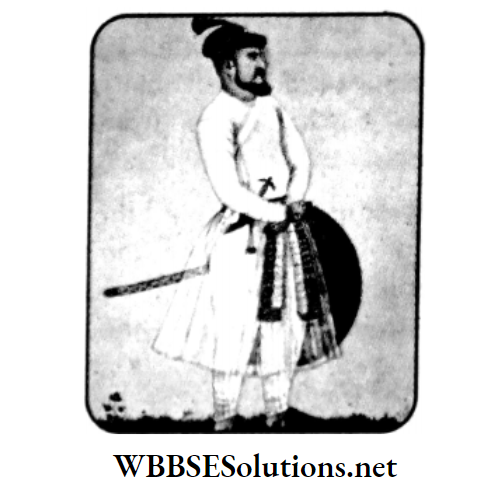
 

Wbbse Solutions For Class 8 History Chapter 2 Rise Of Regional Powers Chin Qilich Khan


2. Defeat of Mubariz Khan:

The provincial Mughal ruler Mubariz Khan was appointed in Hyderabad almost as an independent ruler. He proceeded against the Nizam in 1724 by the order of emperor Muhammad Shah.

Mubariz Khan was killed and the Mughal army was routed out in the battle of Shakar-kheda. So Muhammad Shah accepted the Nizam as the ruler of the Deccan by a treaty.

3. Foundation of the Kingdom of Hyderabad:

Though the foundation of the independent kingdom of Hyderabad was laid under Nizam he never declared his independence officially.

The coins were circulated in the name of the Mughal emperor and the Khutba was also read in his name. So the Mughal emperor was never disturbed by the existence of Hyderabad.

In the meantime, the Nizam got an opportunity to lay the foundation of an independent kingdom.

WBBSE Class 8 History Important Long Answer Questions

4. Emergence of independent Hyderabad:

The administration of Hyderabad was formally based on the Mughal structure but the substantial modification was done internally.

These changes included making the Jagirs hereditary, appointing new officials, decentralization of administrative power, and so on.

In this way, Hyderabad began to emerge as an independent kingdom under Nizam.

Question 5. Discuss the emergence of Ayodhya as a regional power.
Answer:

The Emergence Of Ayodhya As A Regional Power:-

Introduction:

After Aurangzeb’s death, the Mughal empire began to disintegrate. As a result, the central administration became slack. A number of independent kingdoms arose in different parts of the country taking advantage of the situation.

Ayodhya was one such kingdom to assert its independence.
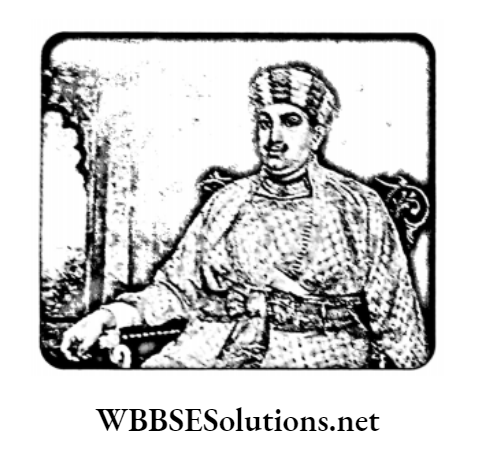
 

D:\wbbse solutions net\chhaya publishions\class 8 history\chapter 2\ch 2 images\Wbbse Solutions For Class 8 History Chapter 2 Rise Of Regional Powers Sadat Khan.png


Rise Of Independent Ayodhya

1. Role of Sadat Khan:

Sadat Khan was appointed the Subedar of Ayodhya by the Mughal emperor.

Sadat Khan first suppressed the revolts of the local rulers and clan chiefs of Ayodhya ruthlessly and introduced a benevolent system of administration.

He treated the Hindus, who formed the majority, genially and appointed them to high posts. He also made the post of the Nawab hereditary. Moreover, he expanded his kingdom by adding Varanasi and Allahabad to it.

So he turned Ayodhya into almost an independent kingdom before his death.

2. Role of SafdarJung:

Sadat Khan maintained a cordial relationship with the Mughal emperor by virtue of which he placed his son-in-law Safdar Jung as the administrator of Ayodhya. Safdar Jung became the ruler after the death of Sadat Khan.

He suppressed the rebellious Ruphela Zamindar and the Pathans and established peace in his kingdom. He also introduced a secular type of administration in Ayodhya.

Though he owed allegiance to the Mughal ruler, he ruled over Ayodhya independently. Like Sadat Khan he also remained involved in court politics but, at the same time, established Ayodhya as an independent kingdom.

Question 6. Give an account of the background and outcome of granting data to the British East India Company.
Answer:

Background And Outcome Of Granting Data To The British East India Company:-

Introduction:

The Mughal emperor Faruksiyar gave the British East India Company the right to free trade in Bengal, Bihar, and Orissa in lieu of an annual payment of rupees three thousand. This was called dastak.Background of receiving data

Background Of Receiving Dastak

The British East India Company also made its chief trading center in Bengal in 1651 like other
 

D:\wbbse solutions net\chhaya publishions\class 8 history\chapter 2\ch 2 images\Wbbse Solutions For Class 8 History Chapter 2 Rise Of Regional Powers Sadat Khan.png


European trading companies. They received zamindari rights over the three villages of Kolkata, Sutanuti, and Gobindapur after prospering in their trade.

In order to gain more facilities they sent a delegation to emperor Faruksiyar in 1715 under the leadership of John Surman. Consequently, Faruksiyar issued his Firman (a royal decree) by which

the company received data on the right to free trade in Bengal in lieu of an annual payment of rupees three thousand in 1717.

Results Of Receiving Dastak-

1. Government recognition:

The facilities which the Company had so long been enjoying in the trade now came to be recognized by the government.

2. Enjoying additional facilities: The Company now began to enjoy some additional facilities. One such facility was that the chairman of

the English trading center could grant permission or data for free trade to his nominated business representative. On presenting this document no English ship would be checked by the officers of the Nawab.

3. Advancement of commercial competition:

In comparison to other European trading companies, the English Company progressed greatly in trade by virtue of the data.

Again, the native traders were unable to compete with the English Company since they could not carry on tax-free trade.

So they were adversely affected while the English Company made much headway.

WBBSE Chapter 2 Historical Events Discussion Questions

Question 7. What do you know, about Clive’s conspiracy over the throne of Bengal?
Answer:

CIives’s Conspiracy

The first party to conspiracy-The British: The relationship between the British Company and Nawab Siraj Abdullah was never very cordial. The Company realized that Siraj aimed at uprooting the British power in India.

So, under the leadership of Clive, they targeted Siraj as their chief enemy and regarded it as their foremost duty to overthrow him.
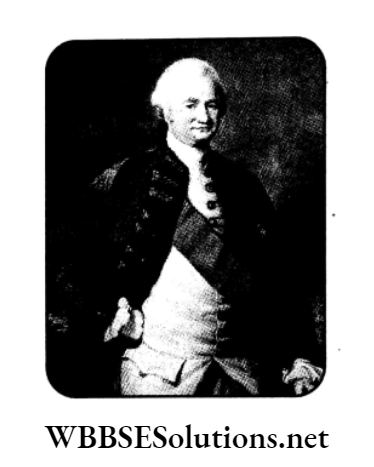
 

Wbbse Solutions For Class 8 History Chapter 2 Rise Of Regional Powers Robert Clive


The second party to the conspiracy-Relatives and officers of the Nawab:

The conspiracy of Plassey was mainly a creation of the nobles of Murshidabad.

When Siraj asked Jagat Seth to help him to suppress Shaukat Jung, the ruler of Purnia he refused and threatened Jagat Seth that he would convert him.

Again, Rai Durlabh and Mir Jafar were removed from the posts of Diwan and Bakshi respectively and they were offended by Siraj. Moreover, Siraj was young and not farsighted.

His rudeness offended his relatives who joined hands with the royal officials and the Seths to depose him and place Mir Jafar on the throne.

Clive took the opportunity and tried to remove the mortal enemy of the Company through a plot.

Secret agreement:

Clive made a secret agreement with Mir Jafar, Manikchand, Jagat Seth, Yar Latif, Rai Durlabh, Umichand, and other influential persons. The agreement contained that

After deposing Siraj Mir Jafar would become the Nawab

In lieu of the favor, the English Company would get sole power and maximum commercial facilities in Bengal and adjoining areas.

Question 8. Discuss the causes of the Battle of Plassey.
Answer:

Introduction:

The relationship Reasons for conflict between Siraj and the company deteriorated considerably and this culminated in the battle of Plassey.

Reasons For Conflict Between Siraj And The Company-

1. Defiance of the Nawab:

When Siraj became the Nawab, the Dutch, the French, and the Zamindars of Bengal showed their respect by sending him gifts but the British Company did not show any such respect and this offended Siraj.

2. Misuse of data:

The British East India Company got data on the right to free trade by virtue of Faruksiyar’s Firman. The company officials used data for personal business defying Nawab’s orders and depriving him of his due taxes.

3. Assisting the conspiracy:

Many royal officers and relatives could not accept Siraj as the Nawab and entered into a competition to usurp power. Clive utilized this internal conflict to build up a conspiracy against Siraj.
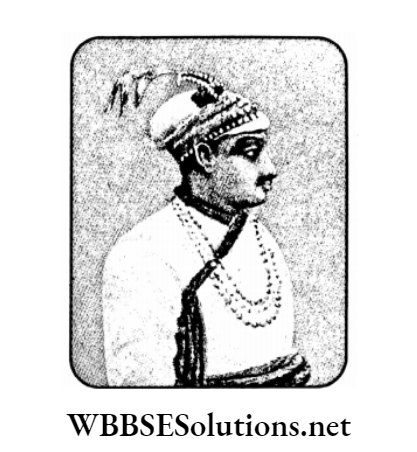
 

Wbbse Solutions For Class 8 History Chapter 2 Rise Of Regional Powers Siraj ud-daullah


4. Insulting Siraj’s messenger:

Krishnadas amassed 53 lakh rupees of the dead Nawab of Dhaka and sought shelter at the English headquarters in Kolkata. When Siraj learned about it he sent his messenger Narayan Das asking

the British Company to hand over Krishna Das to him but Governor Drek insulted Narayan Das and drove him away.

5. Fortification of Kolkata:

During Siraj’s reign, the French and the English began to build forts in Chandannagar and Calcutta respectively. Siraj ordered them to stop the fortification. The French obeyed but the English did not.

WBBSE Social Science Long Answer Practice Class 8

Question 9. Discuss the Black Hole Tragedy briefly.
Answer:

Black Hole Tragedy

Background:

Siraj was highly enraged when the English neither handed over Krishna Das, the son of Rajballav, the Diwan of Dhaka nor stopped the construction of Fort William. Therefore, Siraj occupied Fort William on 20th June 1756.

Governor Drek, the English general, and other English lords managed to escape but many of them were captured by Siraj.

Account of Holwell:

According to Holwell, a British official, Siraj occupied Fort William and imprisoned 146 English people in a room, 18 ft long and 14ft and 10 inches wide, for an entire night. About 123 of them died of suffocation.
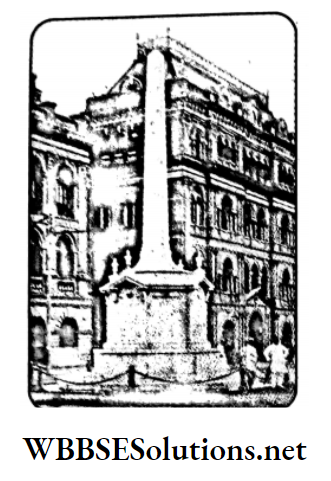
 

Wbbse Solutions For Class 8 History Chapter 2 Rise Of Regional Powers Holwell Monument


Imaginary tale:

Subsequently, it proved that the event was a piece of Holwell’s imagination. There was no possibility of 146 British people staying at the fort then, and it was also not possible to accommodate

So many people in such a small room. Maybe a few people were imprisoned there.

Dispute:

There is much controversy among historians and scholars regarding this incident. Jadunath Sarkar thinks that there were about 60-70 English people rather than 146. Again, the Nawab had nothing to do with the incident.

If happened due to the negligence of the officials. According to Akshay Kumar Maitra, the list of names of dead Englishmen given by Holwell was not true because most of them had either died earlier or lived on after the incident.

Anne Besant made an interesting comment on this incident “Geometry has proved that the arithmetical sum was wrong”.

Class 8 History Extra Questions on Plassey and Bengal

Question 10. What was the significance of the Battle of Plassey?
Answer:

Introduction:

The Battle of Plassey which took place between Siraj ud-daullah, the last independent Nawab of Bengal, and the British forces under Robert Clive had far-reaching effects.

According to historian Maleson, “No other battle had a such widespread, conspicuous, and permanent effect as the Battle of Plassey”.

Significance Of The Battle Of Plassey-

1. Establishment of Company’s authority over Bengal:

After gaining victory in the Battle of Plassey the British East India Company established its political authority over Bengal. Now they aimed at establishing their superiority all over India.

2. Establishment of authority over India:

Through the consolidation of power over Bengal the British government tried to establish its superiority over the whole of India. They utilized the resources of Bengal to bring other regions of India under colonial rule.

3. Authority over trade:

After winning the Battle of Plassey the Company started using data, i.e., the right to free trade. In this way, they established a monopoly over the trade and commerce of Bengal.

4. Drain of resources:

After the Battle of Massey the Company and its officials sent huge amounts of wealth and resources to England both legally and illegally. The historian Brooke Adams referred to this as the ‘Plassey plunder’.

5. Kingmakers:

The British now virtually became the kingmakers and appointed Mir Jafar, Mir Qasim, and Najm ud-daulah as Nawabs in exchange for a huge amount of money. The Nawabs now became mere puppets in the hands of the British.

6. Initiation of a new era:

The Indian society and civilization under British rule experienced a renaissance under the influence of Western education and a trend of thought. So the medieval period ended and the modern period set in.
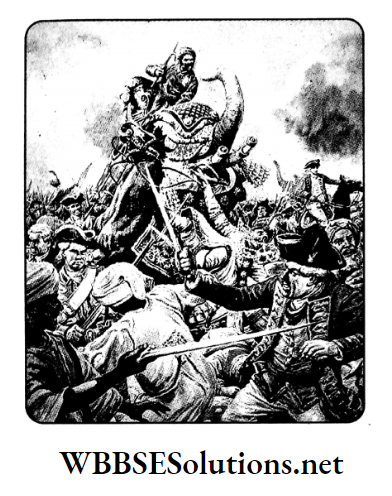
 

Wbbse Solutions For Class 8 History Chapter 2 Rise Of Regional Powers Battle of Plassey


Conclusion:

The Company crossed the first step towards colonial rule through the Battle of Plassey. According to Tarachand, ‘The defeat of Plassey has made the weakness of India conspicuous.

Long Answer Format for Class 8 History Questions

Question 11. Focus on the dispute over Plassey’s plunder.
Answer:

Introduction:

The British East India Company sent huge wealth and resources from India to England after winning the Battle of Plassey.

They did not send these things in lieu of old, silver, or other commodities and so it was termed as ‘plunder’ by several scholars.

The historian Brooke Adams called this incident the ‘Plassey plunder’ or ‘Plassey loot’.

Dispute Over Plassey Plunder

Methods of Plassey Plunder: The Plassey Plunder took place in two ways. The first one was through Company officials and the second one was through the commercial, economic, and revenue policies of the Company.

Description of the plunder:

At this time the Company authority and the officials had dispatched rupees 50 crores to England. As a prior agreement, they got rupees one and a half crore by placing Mir Jafar on the throne of Bengal.

The chief hands behind the plunder, i.e., Robert Clive, Johnston Senior, and Sykes returned to England laden with wealth.

Difference of opinion:

There is a difference of opinion among historians regarding the exact amount of wealth and resources dispatched to England.

According to Holden Ferber, it was pounds 18 lacks between 1757-90, according to professor P. J. Marshal it was 5 lakh pounds annually and according to Dr. Amalesh Tripathi, it was 25-30 lakh rupees annually.

Result:

The Company met its administrative expenses from the wealth plundered from India.

They also built up a vast empire with the help of this wealth. Again, this wealth was used in fostering the Industrial Revolution and for the construction of modern England.

WBBSE History Chapter 2 Summary and Long Answers

Question 12. Suppose you are a resident of Bengal during the reign of Siraj ud-daullah. Write a diary entry on your reaction to the defeat of Siraj in the Battle of Plassey.
Answer:

July 3, 1757, The English East India Company came to India for trade purposes but their activities are no more confined to trade and commerce. They are eager to interfere in the politics of Bengal.

Siraj ud-daullah has succeeded Alivardi Khan as the Nawab. Now the members of the royal family are conspiring against Siraj.

Jagat Seth, Raj Ballabh, Rai Durlabh, Umichand, Mir Jafar, and Miran have joined hands with Robert Clive, the chief official of the Company.

I have heard that they want to place Mir Jafar on the throne of the Nawab. Most probably Siraj is aware of the plot but I do not understand why he is not taking any action to crush his opponents.

This passivity on his part has now led to the Battle of Plassey. Now Nawab’s 70,000 soldiers faced the 3,000 soldiers of the Company on 23rd June 1757.

Astonishingly Nawab’s chiefs like Mir Jafar, Rai Durlabh, and Yar Latif remained absolutely inactive in the war and gave no instructions to The army.

Only two of the chiefs Mir Madan and Mohanlal fought bravely and died in the battle.

The entire army disintegrated due to betrayal on the part of Mir Jafar. Siraj was defeated in the battle. Now the rule of the British has started in Bengal.

I have heard that Miran, the son of Mir Jafar, has killed Siraj. Mir Jafar’s greed for Nawab’s throne brought about the sunset of Bengal’s independence.

I think it will no more be possible to stop the advancement of British power in India in the forthcoming days.