NEET Foundation Biology Notes For Chapter 2 Tissues

Chapter 2 Tissues

Tissue

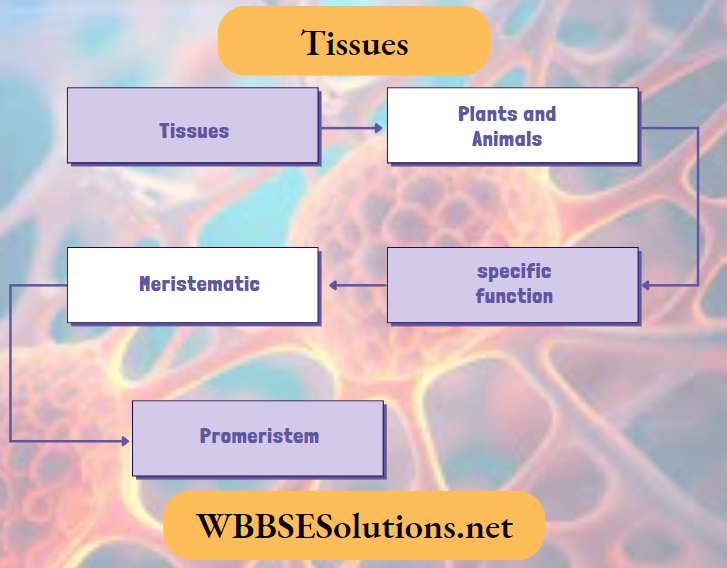
It is evidently known that multicellular organisms are made up of trillions of cells, but each and every cell performs specific functions.  A group of cells that are similar in structure and which performs a  specific function are described as tissues. Owing to this, a specific  function is performed by a group of cells at a particular site in the  organism’s body.

Hence, different functions are performed by different  groups of cells in an organism, and this is called division of labour in  organisms.

Division of labour in organisms enables a smooth and efficient functioning in the body for better survival and also different functions  can be performed at the same time. For example, in human body,  several processes occur such as digestion. A  tissue is a group of  cells having similar structure to perform a specific function.

In  a  particular tissue, all the cells have a common origin. For example,  in human beings, nervous tissue that is present in brain, spinal cord  and nerves has nerve cells or neurons having the same basic structure  and function. Both plants and animals possess tissues, but these are  different from each other. The study of tissues is known as Histology.
NEET Foundation Biology Tissues

Tissues

Chapter 2 Tissues Are Plants and Animals Made of the Same Types of Tissues

The world we live is diverse and complex. Each form is different from other to a lesser or greater extent. When we compare the structure and functions of plant and animal tissues there are noticeable differences between them. Plants are fixed and they do not move. Plant tissues provide structural strength.

Read and Learn More: NEET Foundation Notes

Animals move around and consume more energy as compared to plants. The growth in plants is limited to certain regions also some plant tissues divide throughout their life. Based on dividing capacity of the tissues, plant tissues are classified into growing or permanent tissue.

Types Of Tissue

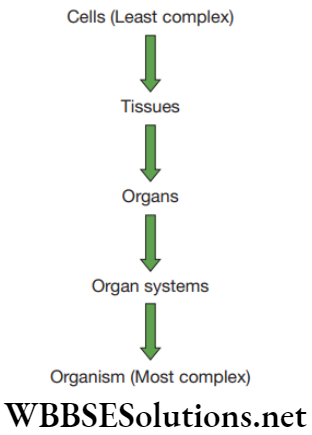
The cell differentiation and growth in animal tissue is more uniform and there is no clear distinction of dividing and non-dividing cells. Tissues get organized to form organs and organs into organ systems. The science of cells is called cytology, and science of organs is called organology. The embryonic derivation of tissues is called histogenesis.

Tissue Structure
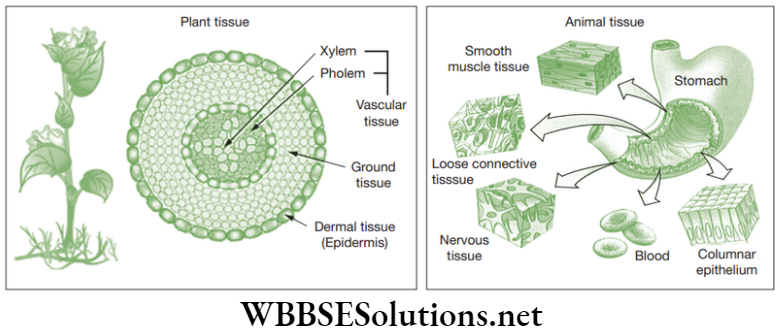
NEET Foundation Biology Tissues Characteristics between plant and animal tissues

NEET Foundation Biology Tissues Cellular hierarchy

Chapter 2 Tissues Plant Tissues

Plants are multicellular organisms made up of trillions of cells which cluster together to perform a specific function. Plant tissues provide mechanical strength to internal as well as external organs. They provide elasticity and flexibility to the plant organs; for example, the leaves, stems and branches of trees can bend without causing any damage to the plant body.

They also help in transportation of materials across the plant body and prevents loss of water. They undergo division to help the plants to grow both in length and girth. The plant tissues are involved in many metabolic processes, such as photosynthesis, respiration, etc.

Plant tissues can be categorized into two types – (1) Meristematic, (2) Permanent

Meristematic Tissues (Meristems)

Meristematic tissue or simple meristems is a group of dividing cells that has the capacity to divide and re-divide and help in the growth of plants. Nageli (1858) gave the term ‘meristem’. Meristems are found in the apices of stem and root, leaf primordia, vascular cambium, cork cambium, etc.

Characteristics of Meristematic Tissue

  • The cells are oval, rounded or polygonal in shape.
  • The cells are living with thin cellulose walls and without any intercellular spaces.
  • The cells are rich in cytoplasm due to cell division which constantly produce a lot of biomolecules.
  • The cells are diploid and undergo mitosis.
  • The cells do not contain reserve food materials, endoplasmic reticulum and plastids. Hence, the cells lack vacuoles.

Types of Meristems

Meristems or meristematic tissues are categorized into many types based on the following criteria.

  • Classification based on origin and development
  • Classification based on position
  • Classification based on function
  • Classification based on plane of division
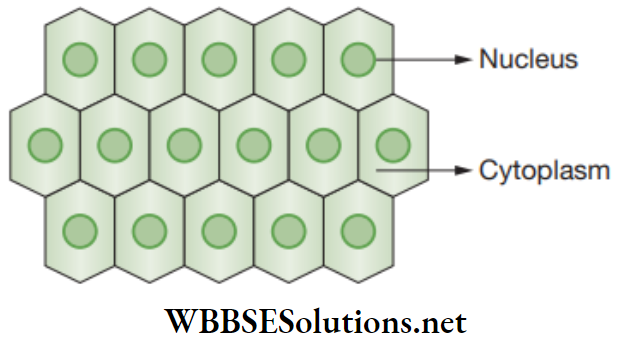
NEET Foundation Biology Tissues A typical meristematic tissue

  • Classification based on origin and development: Meristems can be categorized into three types.
    • Promeristem or primordial meristem: It is a group of young meristematic cells present in the growing organ, such as the tips of stem and root. It is the early embryonic meristem that gives rise to other advanced meristems. It further divides to ­produce primary meristem.
    • Primary meristem: It is derived from promeristem and is found below the promeristem at shoot and root apices. These cells divide to produce permanent tissues, such as apical meristem, intercalary meristem and intrafascicular cambium.
    • Secondary meristem: It is derived from primary permanent tissues that have the capacity to divide. For example, cork cambium, root cambium and interfascicular ­cambium of stem.

NEET Foundation Biology Tissues Location of meristematic tissues in plant body

  • Classification based on position: Meristems can be ­categorized to three types:
    • Apical meristem: It is found at the apices or tips (i.e., growing points) of root and stem (shoot) and brings about an increase in length. It includes promeristem and as well as primary meristem. Many theories have been proposed to explain the activity of apical meristem.
    • Apical cell theory proposes that a single apical cell is the structural and functional unit of apical meristem that controls the whole process of apical growth. This type of organization is found only in cryptogams.
    • Intercalary meristem: This meristematic tissue is found between the regions of permanent tissues. It is considered as a part of primary meristem that has detached owing to the formation of intermediate permanent tissues. It is located either at the base of leaf, for example, Pinus or at the base of internodes, for example, grasses.
    • Lateral meristem: This meristem is arranged parallel to the sides of origin and normally divides periclinally or radially and produces secondary permanent ­tissues. This meristem helps in increasing the thickness of the plant and its parts.

NEET Foundation Biology Tissues Illustration of apical cell

  • Classification based on function: Meristems are classified into three types.
    • Protoderm meristem: This is the outermost layer of the young growing region that develops to give rise to epidermal tissue system.
    • Procambium meristem: This consists of narrow, elongated, prosenchymatous, meristematic cells producing the vascular tissues system.
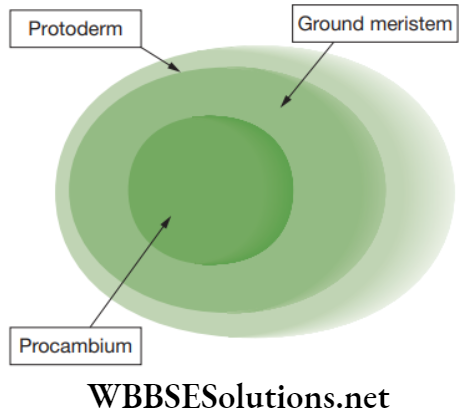
NEET Foundation Biology Tissues Classification of meristems on the basis of function

    • Ground meristem: This consists of large, thick-walled cells that gives rise to ground tissue system, which includes hypodermis, cortex and pith.
  • Classification based on plane of divisions: Meristems are categorized into three types.
    • Mass meristem: The cell divisions occur in all planes resulting in the increase of volume. It can be found in meristems of cortex and pith.
    • Rib or file meristem: The cells divide only on one plane, for example, formation of ­filaments in algae.
    • Plate meristem: These cells divide in two planes resulting to an increase in the area of an organ, for example, leaf formation.

Chapter 2 Tissues Permanent Tissues

Permanent tissues are those tissues whose cells have lost the power of division or ability to multiply. The process by which the cells derived from meristematic tissue attain a permanent shape, size and function is known as differentiation. Hence, the cells of meristematic tissue differentiate to form cells of permanent tissues.

They are of various sizes, shape and other characteristic to make them suitable for different functions. Permanent tissues are classified into two main types, such as simple and complex permanent tissues.

Simple Permanent Tissues

A simple tissue is composed of one type of cells forming a uniform mass. Based on their functions, they are classified into three types—(i) Parenchyma; (2) Collenchyma and (3) Sclerenchyma

  • Parenchyma: Parenchyma forms the bulk of the plant body and is found in the cortex of root, ground tissue in stems and mesophyll of leaves. The cells are isodiametric, i.e., equally expanded on all sides. The shape of the cells may be oval, round, polygonal or elongated.
    The cells consist of nucleus, and so are living in nature. The thin cell walls are made up of cellulose. The cell has dense cytoplasm with a single large vacuole. Intercellular air spaces are present.
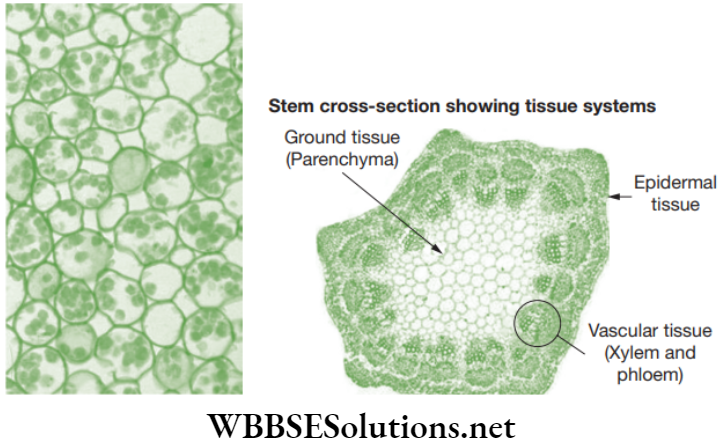
NEET Foundation Biology Tissues Cross-section showing parenchyma

    • Location of parenchymatous tissue: Parenchyma tissue is found in soft parts of stems and roots of the plant and forms the bulk tissue of the plant body.
    • Functions of parenchymatous tissue
      • The main function of parenchyma is to store and assimilate food.
      • Provides mechanical strength by maintaining turgidity.
      • Manufactures food if chlorophyll is present.
      • Stores waste material such as tannins, gum, crystals and resins.
    • Types of parenchymatous tissue: These are mainly of four types.

Functions and locations of parenchyma cells
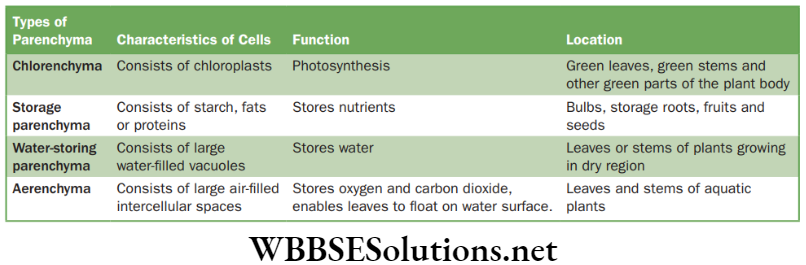
NEET Foundation Biology Tissues Functions and locations of parenchyma cells

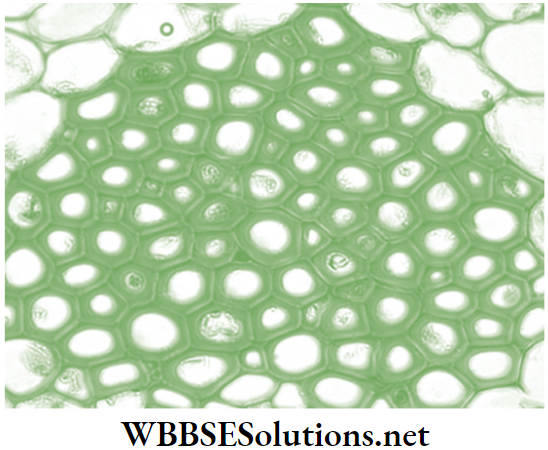
  • Collenchyma: Collenchyma is composed of elongated cells with irregularly thickened walls, having deposition of extra cellulose at the corners of the cells. The intercellular spaces are usually absent . The cells are usually living and have only a thick primary cell made up of cellulose and pectin. The thickness of cell wall is strongly influenced by mechanical stress upon the plant. For example, the cell walls of collenchyma in wind-exposed plants are 40–100% thicker as compared to those plants inhabiting in the less windy area.

NEET Foundation Biology Tissues Cross section of collenchyma cells

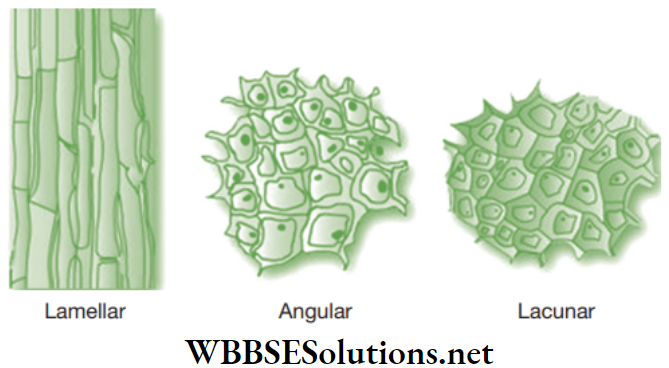
NEET Foundation Biology Tissues Types of collenchyma

    • Location of collenchyma: Found in leaf and below the outer protective layer of stems and leaves.
    • Functions of collenchyma
      • Provides structural support, specifically in growing stems and leaves.
      • Sometimes collenchyma consists of chloroplasts, which then manufactures sugar and starch.
      • Provides flexibility and tensile strength to the branches and facilitates easy bending of the plant.
    • Types of collenchyma: There are three main types of collenchyma.

Structure and location of collenchyma cells
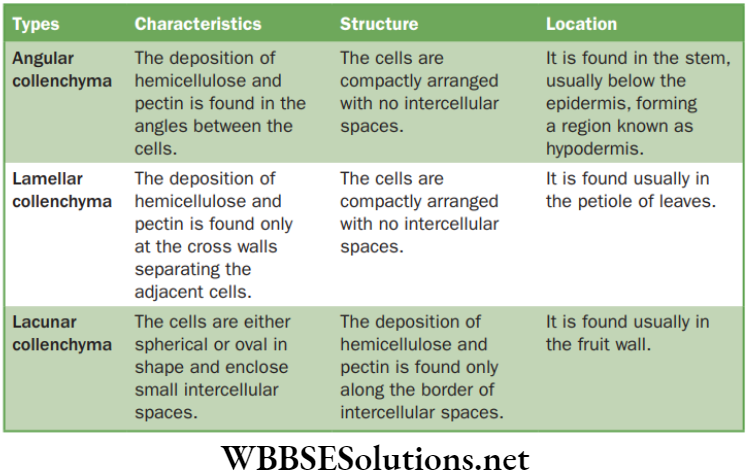
NEET Foundation Biology Tissues Structure and location of collenchyma cells

Human Tissue

  • Sclerenchyma: Sclerenchyma cells are dead cells that are devoid of cytoplasm. The cell walls are very thick made up of lignin. Due to the presence of excessing thickening of a sclerenchyma cell wall, its cell cavity becomes almost absent. A visible middle lamella is present between two sclerenchymatous cells.
    • Location: Sclerenchyma is found in stems (around the vascular bundles), roots, veins of leaves, hard coverings of seeds and nuts.
    • Function: Sclerenchyma tissue provides strength and mechanical support to various parts of the plant.
    • Types of sclerenchyma: The sclerenchyma is of two types and they are fibres and sclereids.
      • Fibres: They are pointed, needle-like structures. The cell walls are mainly composed of cellulose. Fibres generally originate from meristems. These are produced mainly in cambium and procambium. The fibres are generally associated with the xylem and phloem of the vascular bundles. The fibres of the xylem are lignified, whereas those of the phloem are cellulosic. Fibres that do not belong to the xylem are called bast (outside the ring of cambium). For example such as jute and coir (husk of coconut).
      • Sclereids: Sclereids are a reduced form of sclerenchyma cells with highly thickened and lignified walls. They are small bundles of sclerenchyma tissue in plants forming durable layers. The cells may be isodiametric, prosenchymatous, forked or elaborately branched. These can be grouped into bundles and it can form complete tubes located at the periphery or can occur as single cells or small groups of cells within parenchyma, for example such as hard grit of pear fruit. These structures are used to protect other cells.
NEET Foundation Biology Tissues Cross section of sclerenchyma fibres

Complex Permanent Tissues

The complex permanent tissues are composed of more than one type of cells that have a common origin and coordinate to perform a similar function. Complex tissue is responsible for the conduction of substances through the plants. Therefore, this tissue is called vascular tissue or conducting tissue.

These tissues are involved in the transport of water, mineral salts (nutrients) and food material. The complex permanent tissues are of two types, namely xylem or wood and phloem or bast. Usually, in higher plants, xylem and phloem occurs together in the roots, stems and leaves and they are called vascular bundles.

For the growth of tree, it is essential that new vessels within the stem should be formed, which is done by the vascular cambium. The vascular cambium is highly active during summer and spring seasons, generating a lighter band made of large diameter vessels.

During winter season, small diameter vessels and a darker band appears around the previous lighter band. Therefore, two rings are made per year, one of which is lighter and the other of which is darker. By counting these pairs directly, the age of the tree can be estimated.

Xylem

Xylem cells are thick-walled. They consists of cells (or ‘elements’) of four different kinds.
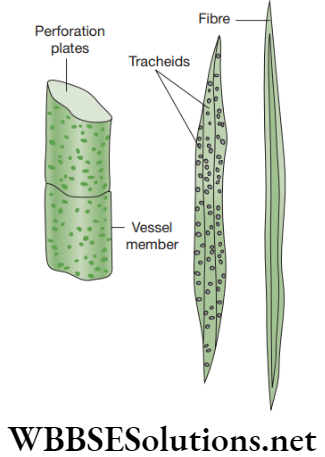
NEET Foundation Biology Tissues Xylem

  • Tracheids: These are non-living elongated cells with tapering ends. In these, the water passes from cell to cell through the pits.
  • Vessels: These are shorter and wider than tracheids. They are non-living cylindrical tube-like cells. Vessels are made up of lignin. These are very long tubular structures formed by a row of cells placed end to end. The transverse walls between the vessel elements are partially or wholly dissolved to form continuous channels or water-pipes.
  • Xylem parenchyma: Contains living cells. It stores food and helps in lateral conduction of water.
  • Xylem sclerenchyma: They are non-living, thick-walled cells. It provides mechanical strength to the plant body.

Functions of Xylem

  • Its main function is to carry water and mineral salts upward from the root to different parts of stem.
  • It also provides mechanical strength to the plant body.

Phloem

Phloem consists of tubes but do not provide mechanical ­support. Phloem consists of four types of cells or elements as discussed below.
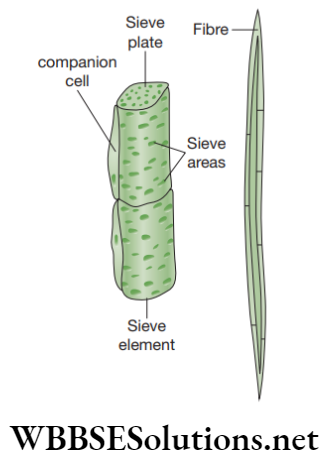
NEET Foundation Biology Tissues Phloem

  • Sieve tubes: These are slender, tube-like structures that consist of elongated thin-walled cells, placed end to end. The end walls of these cells are perforated by several pores and are known as sieve plates. The nucleus of the sieve cell degenerates at maturity, but cytoplasm still remains in the mature cell.
  • Companion cells: These are smallthin-walled cells consisting of dense and very ­active cytoplasm with large elongated nucleus. These are ­connected to the sieve tube with several plasmodesmata. Companion cells consists of additional mitochondria and chloroplasts.
  • Phloem parenchyma: These are thin-walled, living cells of ­parenchyma of phloem. They help in storage and slow lateral conduction of food.
  • Phloem fibres or bast fibres: These are thickwalled, elongated spindle-shaped dead cells that possess narrow lumen. They provide mechanical strength to the tissue.

Functions of Phloem

Phloem helps in transporting photosynthetically prepared food materials from the leaves to the storage organs, from where these are supplied to the growing regions of the plant body.

Characteristics of Plant Tissue Systems

The structural and functional tissue systems of plants. The tissues of a plant are organized into three systems: the dermal tissue system, the ground tissue system, and the vascular tissue system and discussed below in Table 2.3.

  • Dermal tissue covers the outer surface of the stem. It provides protection to the plant and it also helps in gaseous exchange.
  • Ground tissue usually consists mainly of parenchyma cells and it surrounds the vascular tissue. It gets involved in photosynthesis sometimes.
  • Vascular tissue provides long distance transport and mechanical support.
Class 11 Physics Class 12 Maths Class 11 Chemistry
NEET Foundation Class 12 Physics NEET Physics

Characteristics of plant tissue system
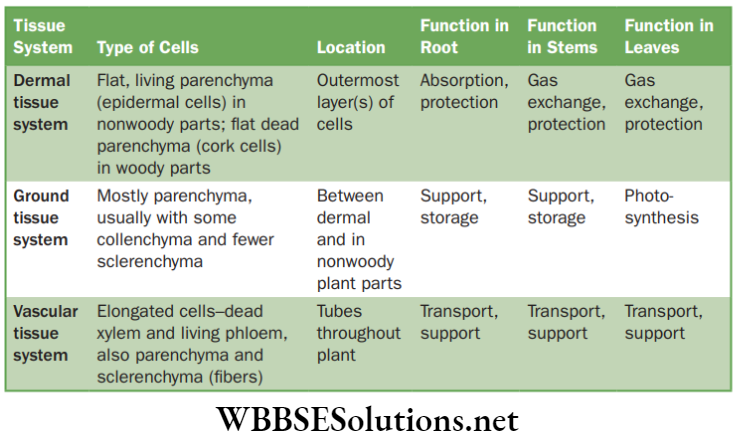
NEET Foundation Biology Tissues Characteristics of plant tissue system
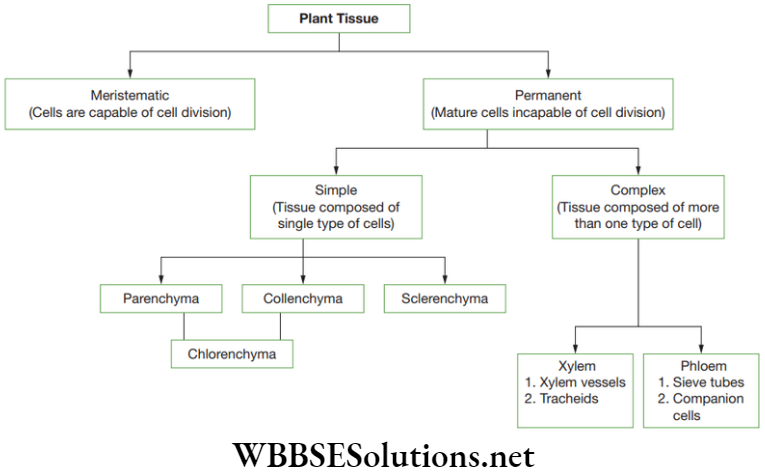
NEET Foundation Biology Tissues Classification and characteristic of plant tissues

Chapter 2 Tissues Animal Tissues

Depending on the location and functions of the tissues in the human body, animal tissues are classified into four main types and they are listed below.

  • Epithelial tissue
  • Muscle or muscular tissue
  • Connective tissue
  • Nervous tissue

Epithelial Tissue (Epithelium)

Epithelial tissue is one of the simplest tissues, whose main function is to protect the animal body. In this tissue, the cells are tightly packed and form a continuous sheet. Cells of epithelium consist of no intercellular matrix. The epithelial tissue covers most of the organs and cavities within the animal body.

It also acts a barrier by keeping different organ systems separated. For instance, the skin and lining of buccal cavity, blood vessels, alveoli of lungs, kidney tubules and many others are made up of epithelial tissue. Beneath the epithelial cells is a non-cellular basement membrane that contains a special form of matrix protein known as collagen.

Functions of Epithelial Tissue

  • The epithelial cells form the outer layer of the skin and protect the underlying cells from drying, injury and other chemical and physical effects.
  • The epithelial cells form the lining of mouth and alimentary canal to protect these organs.
  • The epithelial tissues help in the absorption of water and nutrients.
  • The epithelial tissues help in the elimination of waste material.
  • Some epithelial tissues secrete numerous substances like sweat, saliva, enzymes, etc.

Types of Epithelial Tissue

Epithelial tissue is a protective, excretory and sensory in function. Based on the shape and function of the cells, the epithelial tissues are categorized into five types as listed below.

  • Squamous epithelium
  • Cuboidal epithelium
  • Columnar epithelium
  • Glandular epithelium
  • Ciliated epithelium


  • Squamous epithelium: It is composed of thin, flat, irregular-shaped cells that fit together to form a compact tissue. Squamous epithelium is also called tessellated and pavement epithelium as it appears like floor tiles.
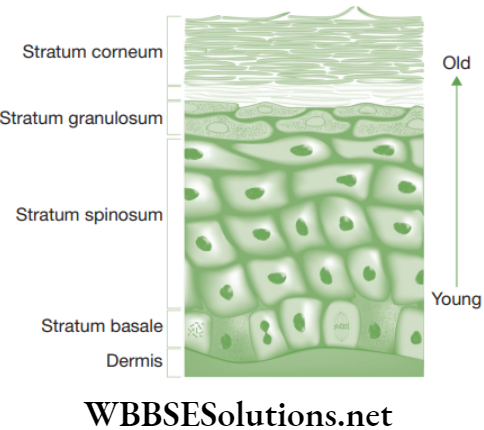
    • Stratified keratinized squamous epithelium: This tissue is found in skin and covers the external dry surface of the skin. Deeper layers of the tissue are composed of cuboidal cells that become polygonal and finally flattened (‘squamous’) towards the free surface. The flattened cells of superficial layer consist of a fibrous protein, the keratin, and become dead cells. Horny, scaly remnants of dead squamous cells, finally flakes away. This tissue is water-proof and highly resistant to mechanical injury.
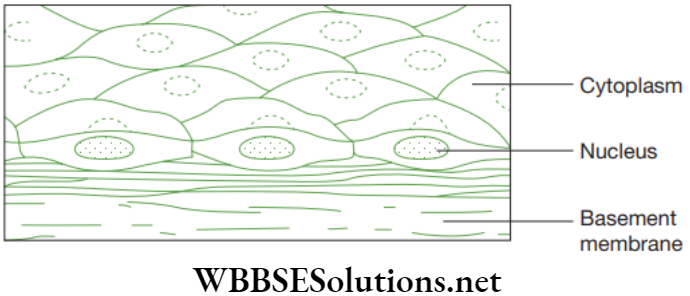
NEET Foundation Biology Tissues Cross-sectional view of squamous epithelium

    • Location: Squamous epithelium forms the delicate lining of cavities (mouth, oesophagus, nose, pericardium, alveoli, etc.) and of blood vessels and covering of the tongue and skin.
    • Functions
      • This tissue protects the underlying parts of body from mechanical injury, invasion of germs and chemicals and drying.
      • It also forms a selectively permeable lining through which filtration takes place.
  • Cuboidal epithelium: This epithelium consists of cube-like (‘cuboidal’) cells that appear as square shaped in cross section but the free surface looks hexagonal.
    • Location: The cuboidal epithelium is found in kidney tubules, thyroid vesicles and in glands, such as salivary glands, sweat glands and exocrine glands. This epithelium forms germinal ­epithelium of gonads (testes and ovaries).
    • Functions: Cuboidal epithelium helps in absorption, ­excretion and secretion, and also provides mechanical support.
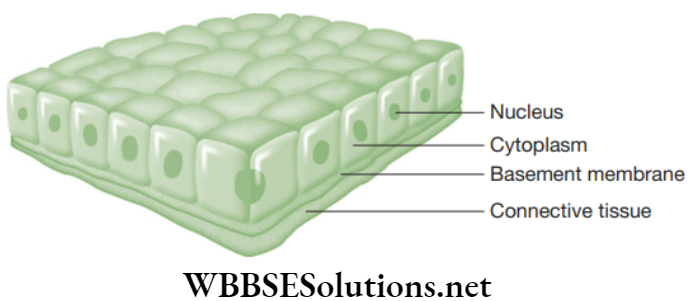
NEET Foundation Biology Tissues Diagrammatic representation of cuboidal epithelium 1

  • Columnar epithelium: This epithelium is composed of the cells that are taller than broader and looks like pillars. The nuclei are present at the base and sometimes the free ends of cells have a brush border consisting of microvilli.
    • Location: The columnar epithelium forms the lining of stomach, small intestine and colon forming mucous membrane. It also lines the gall bladder, oviducts and facilitates movement across the cells.
    • Functions: It helps in the absorption (for example, stomach, intestine) and secretion (for example, mucous by goblet cells).
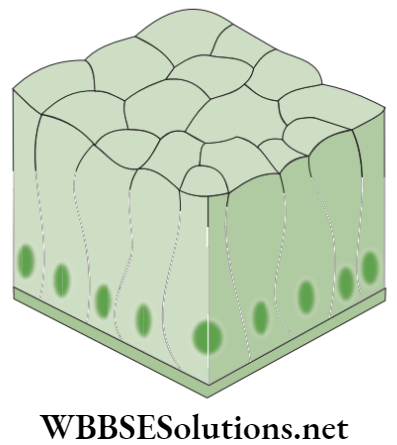
NEET Foundation Biology Tissues Diagrammatic representation of cuboidal epithelium

  • Glandular epithelium: This epithelium consists of specialized cells that ­secrete bodily products and are called glands. Glands are of two types, such as endocrine and exocrine.
    Exocrine glands are generally the glands associated with the term ‘glandular ­epithelium’. These glands are of two types based on the morphology and they are unicellular glands and multicellular glands.
  • Ciliated epithelium: This epithelium is composed of cuboidal or columnar cells having a free border that bear thread-like cytoplasmic outgrowths known as cilia.
    • Location: It occurs in the sperm ducts and lines the trachea (wind pipe), bronchi (lungs), kidney tubules and oviducts (Fallopian tubes).
    • Functions: The rhythmic, concerted beating of the cilia helps in the movement of solid particles in one direction through the ducts.
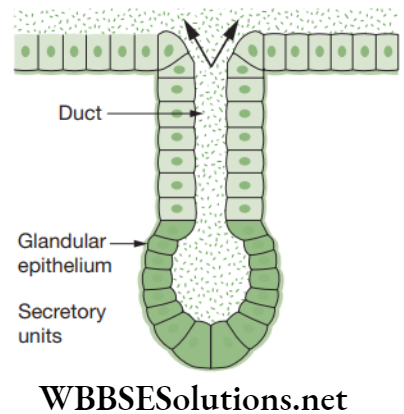
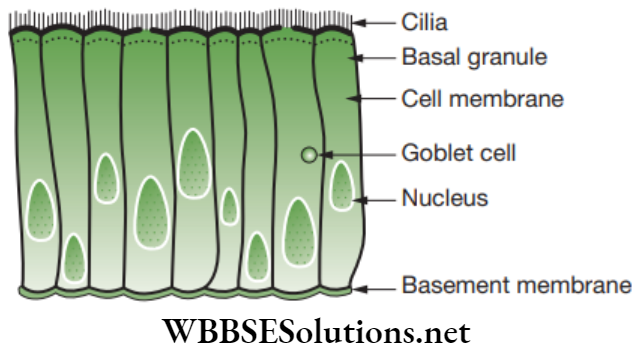
NEET Foundation Biology Tissues Diagrammatic representation of glandular epithelium

NEET Foundation Biology Tissues Diagrammatic representation of ciliated epithelium

Chapter 2 Tissues Muscle or Muscular Tissue

The muscle tissues of the body form the contractile tissue and consist of muscle cells. Muscle cells are elongated and large-sized, and hence, they are also called muscle fibres. In muscle cells, the contractile proteins are present that help in the movements of the body or limbs through contraction and relaxation.

Typically, the muscle cells are arranged in parallel arrangement permitting them to work together effectively. Muscles help in body movements (local and gross). Major movements of the body rely on the action of skeletal muscles which are connected to bones. Based on their location, structure and function, muscles are of three types, such as striated muscles, smooth muscles and cardiac muscles.
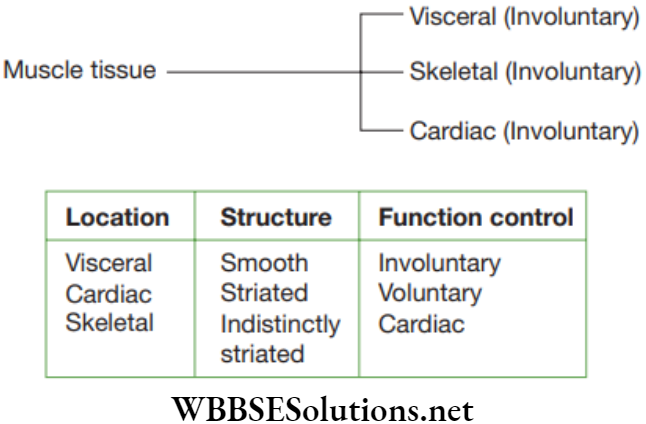
NEET Foundation Biology Tissues Characteristics of muscle tissues

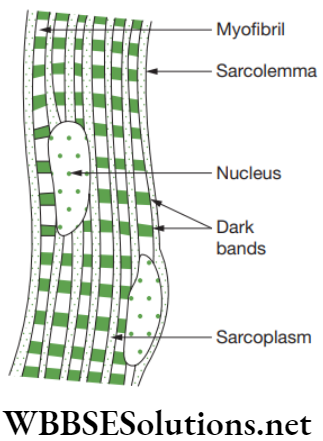
NEET Foundation Biology Tissues Diagrammatic representation of Striated muscles

Striated muscles: The entire muscle fibres show ­alternate dark and light stripes or bands or striations, they are also known as striped muscles. As they are attached to the bones and are responsible for body movements, they are also called skeletal muscles. Since these muscles work ­according to our will, they are also called voluntary muscles.

The striated muscle cells are elongated, non-tapering, cylindrical, unbranched and multinucleate cells. Each muscle cell is enclosed in a thin and distinct plasma membrane known as sarcolemma. In the sarcoplasm (cytoplasm) of the muscle cell are embedded numerous contractile elements known as sarcostyles or myofibrils.

Striated muscles are found in the muscles of limbs, body wall, face, neck, etc. Striated muscles found in tongue, pharynx, diaphragm and upper part of oesophagus are known as visceral striated muscles.

Functions of Striated Muscles

  • These muscles undergo rapid contraction and can get tired and may need rest.
  • These muscles provide the force for locomotion and all other voluntary movements of the body.

Smooth muscles: Smooth muscles are present as bundles or sheets of elongated fusiform or spindle-shaped cells or fibres. These are held together by loose connective tissue. Each muscle cell is covered by a plasma membrane. A single centrally ­located nucleus is present in the cytoplasm or sarcoplasm. Myofibrils run longitudinally throughout the cell. As these myofibrils are devoid of any bands or stripes or striations, these are known as smooth or unstriated ­muscles.

Smooth muscles are located in the walls of the hollow visceral organs except that of the heart, and hence, they are called visceral muscles. These muscles are found in the wall of alimentary canal and internal organs, ducts of glands, urogenital ducts and blood vessels. Smooth muscles are present in stomach, intestine, ureter, bronchi, iris of eye, etc.
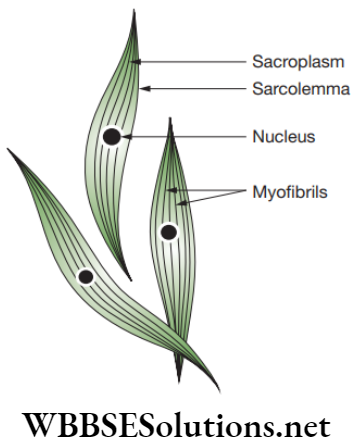
NEET Foundation Biology Tissues Diagrammatic representation of smooth muscles

Functions of Smooth Muscles

  • Smooth muscles are also called involuntary muscles, as they do not work according to our will. For example, movement of food in the alimentary canal, opening and closing of tubes are involuntary movements.
  • Smooth muscle contracts slowly but can remain contracted for long duration. Due to this characteristic, smooth muscles cause peristaltic movements in the tubes. Peristaltic movements are the rhythmic progressive waves of muscular contraction and relaxation. These movements happen in the gastrointestinal tract and male genital tract.
  • In few organs, the smooth muscles contract throughout the organ to produce extrusive movements as in the urinary bladder, the gall bladder and the uterus.

Cardiac muscles: Cardiac muscles consist of branched fibres and these branches join to form a network. Each fibre or cell is enclosed in sarcolemma, sarcoplasm with longitudinal myofibrils and a centrally located nucleus. The intercellular spaces of ­cardiac muscles are filled with plenty of loose connective tissue provided by blood capillaries.

Cardiac muscles show stripes of light and dark bands. Also, these muscle fibres show densely stained crossbands known as intercalated impulse. These are zones of interdigitations of plasma membranes consisting of adjacent muscle cells or fibres. Cardiac muscles are found in the walls of the heart.

Cardiac muscles have excellent blood supply and are specialized to avoid becoming fatigued. Since asphyxiation can result in death within few minutes, cardiac muscles must be able to fulfil their duty transporting oxygen in blood haemoglobin. Cardiac muscles possess mitochondria that help with energy production in rhythmic capacity, even at high force when required.
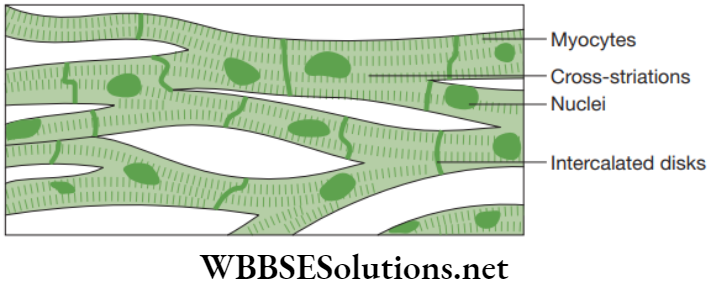
NEET Foundation Biology Tissues Diagrammatic representation of cardiac muscles

Functions of Cardiac muscles

  • Cardiac muscles contract and relax speedily, rhythmically and without getting tired throughout the life of a human.
  • The contraction and relaxation of the heart muscles facilitate the pumping and distribution of blood to all parts of the body.

Chapter 2 Tissues Connective Tissue

The connective tissue is the most abundant tissue found in human body and it helps to connect and anchor various body organs. These tissues can connect bones to each other, muscles to bones, bind tissues and can also provide support to various other body parts by building a packing around the organs.

The packing would prevent the organs from getting displaced by body movements. Hence, the main functions of connective tissue are binding, supporting and packing together various organs of the body.

The tissue consists of three components, such as (a)  non-living intercellular substance called ground substance, (b) fibres made up of proteins and (c) living cells. Ground substance and fibres together form the extracellular matrix. Fibres are of three types such as and they are listed below.

  • White fibres are inelastic, unbranched, made up of collagen fibres and most abundant in nature.
  • Yellow fibres are elastic, branched and made up of protein elastin.
  • Reticular fibres are inelastic, straight and made up of protein reticulin.

The cells of connective tissue are living, loosely spaced and few in number. Homogeneous, gel-like intercellular substance known as matrix forms the main bulk of the connective tissue. Therefore, the space between the cells is filled with a ­non-living matrix that may be solid as in bone and cartilage and may be fluid as in the blood.

Connective tissues are classified into four types and they are as follows.

  • Loose connective tissue
  • Dense connective tissue
  • Specialized connective tissue
  • Fluid connective tissue

Loose Connective Tissue

Loose and cellular connective tissue, whose matrix consists of two types of fibres are – (1) Areolar connective tissue, (2) Adipose connective tissue.

Areolar connective tissue: Areolar tissue is the simplest and most widely distributed connective tissue. It joins skin to muscles, fills spaces inside organs and is found around muscles, blood vessels and nerves.

Functions of Areolar Tissue

  • Behaves as a supporting and packing tissue between organs lying in the body cavity. In this tissue, the matrix is important in diffusion of oxygen and nutrients from small blood vessels.
  • Helps in the repairment of injured tissues after an injury.
  • Helps in combating foreign toxins.
  • It cements skin to underlying muscles.
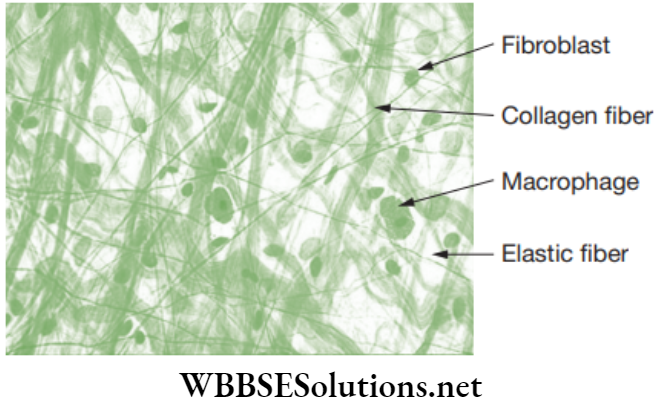
NEET Foundation Biology Tissues Areolar tissue

NEET Foundation Biology Tissues Adipose tissue

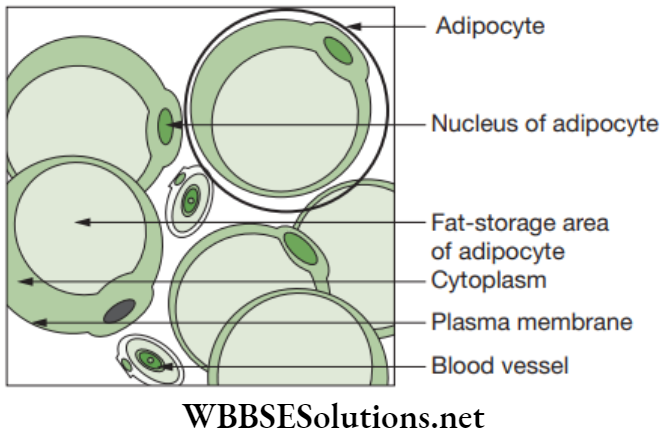
Adipose connective tissue: Adipose tissue is an aggregation of fat cells called adipocytes.

Each fat cell is rounded or oval in shape and consists of a large droplet of fat that fills it.

The fat cells are arranged into lobules separated by partitions of collagen and elastin fibres, which carry blood vessels of lobules. Adipose tissue is found below the skin between the internal organs and in yellow bone marrow.

Functions of Adipose Tissue

  • Adipose tissue is a reservoir for fats.
  • Provides shape to the limbs and the body.
  • Keeps visceral organs in position, and forms shock-absorbing cushions around kidneys and eye balls.

Dense Regular Connective Tissue

It consists of ordered and densely packed ­collection of fibres and cells. This tissue is mainly present in the tendons and ligaments and aponeurosis.

  • Tendons: A tendon is a white fibrous tissue that has great strength but restricted flexibility. It is composed of parallel bundles of collagen fibres and between these fibres, the rows of fibroblasts called tendinocytes are present. Collagen fibres are bounded by areolar connective tissue. This tissue helps in the movement of bones.
  • Ligaments: These are elastic structures that connect bones to bones. In ligament, some elastic and many collagen fibres are bound together by areolar connective tissue. ­Fibroblasts are compressed in between regular rows of fibres. Ligament strengthens the joint and allows normal movement but prevents over-flexing. By excessive pulling of ligaments, sprain is caused.
  • Apneuroses: These are broad sheets of dense, fibrous, collagenous connective tissues that cover, invest and form the terminations and attachments of several muscles.

Special Connective Tissues

This tissue forms the endoskeleton of the organisms. They form the rigid framework which supports the body and provides protection of all vital organisms. Depending on the composition and characteristic, this tissue is classified into two types—cartilage and bone.

Cartilage: The cartilage is a connective tissue that is compact and less vascular. Its extensive matrix consists of proteins and is somewhat hardened by calcium salts. Its matrix is produced and maintained by the chondrocytes. The matrix is solid and firm but slightly elastic, which gives it a flexible nature.

The matrix of cartilage has a delicate network of collagen fibres and living cells called ­chondrocytes. There are three cartilages in human body, such as hyaline, fibrous and elastic. Cartilage is found in ear pinna, nose tip, epiglottis, intervertebral discs, end of long bones, lower ends of ribs and rings of trachea (wind pipe). The comparative study of three types of cartilage are discussed below in.
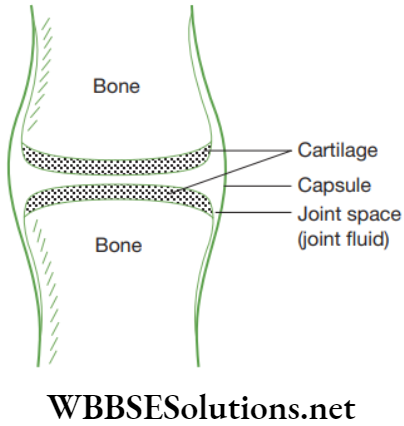
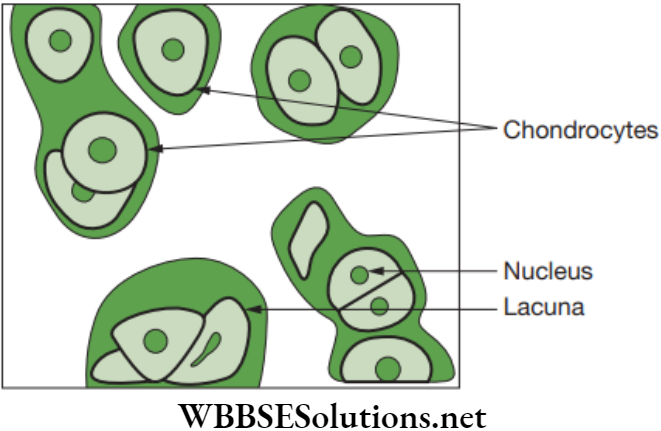
NEET Foundation Biology Tissues Diagram showing cartilage and bone

NEET Foundation Biology Tissues Diagrammatic representation of cartilage

Characteristics of three types of cartilage
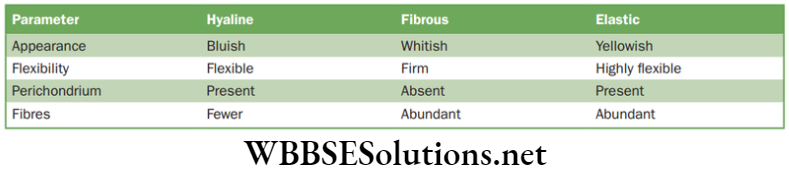
NEET Foundation Biology Tissues Characteristics of three types of cartilage

Functions of Cartilage

  • It gives support and flexibility to the body organs.
  • It makes the surface at joints smooth.

Bone: Bone is a very strong and non-flexible connective tissue. It is porous, highly vascular, mineralized, hard and rigid. Its matrix consists of proteins (for example, osteonectin, osteocalcin, proteoglycan and collagen). The matrix of bone consists of salts of calcium and magnesium like phosphates and carbonates of calcium and magnesium (for example, hydroxyapatite).

These minerals impart hardness to the bones. The matrix of the bone is in the form of thin concentric rings known as lamellae. Bone cells or osteoblasts or osteocytes are present between the lamellae in fluid-filled spaces called lacunae.

All lacunae of the bone communicate with each other by a network of fine canals called canaliculi. Each canaliculus is filled with delicate cytoplasmic processes of the bone cell. The canaliculi helps bone cell to receive food and oxygen and eliminate wastes.
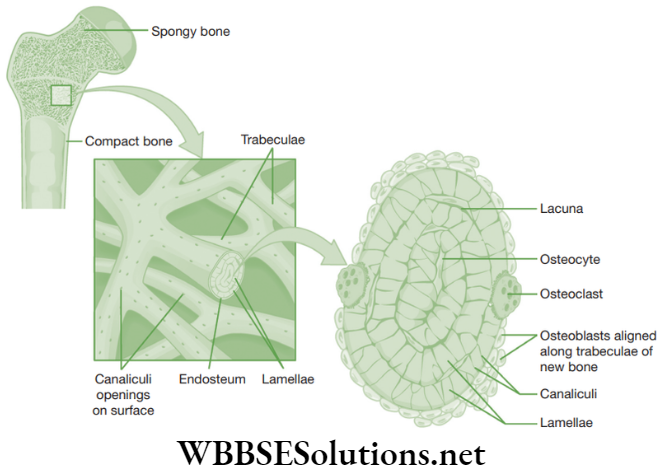
NEET Foundation Biology Tissues Details of bone structure

Functions of Bone

  • Gives shape to the body.
  • Provides skeletal support to the body.
  • Protects important body organs, like brain, lungs, etc.
  • Acts as a storage site of calcium and phosphate.
  • Anchor the muscles.

Fluid Connective Tissue

This tissue links the various parts of the body and ­maintains continuity in the body. Blood and lymph are two kinds of fluid connective tissue.

Blood: Blood is a fluid connective tissue and is the main circulating medium that helps in the transport of various substances. In this tissue, the cells or corpuscles move in a fluid or liquid matrix or a medium known as blood plasma. This plasma forms 55 per cent of the total volume of blood (Fig. 2.29). It is a complex fluid and it consists of inorganic salts and organic compounds.

Other organic compounds present include glucose, amino acids, lipids, vitamins, enzymes, hormones and waste substances, such as urea, uric acid, etc.
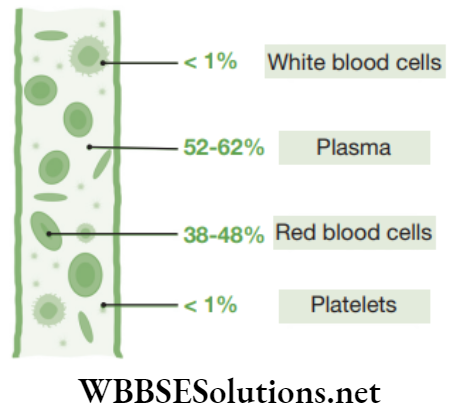
NEET Foundation Biology Tissues Blood composition in 1%

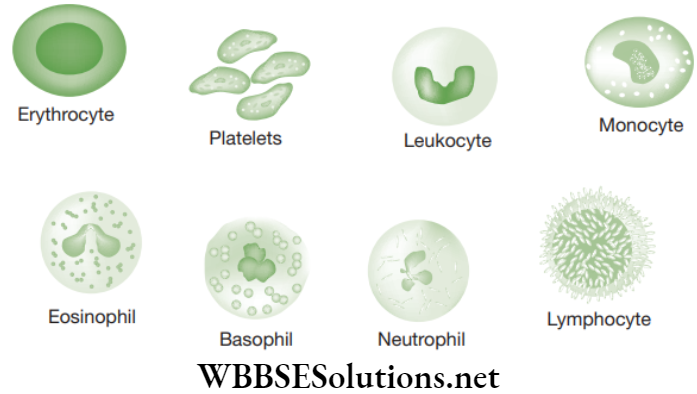
NEET Foundation Biology Tissues Blood Cells

The blood plasma does not consist of protein fibres but possess cells known as blood corpuscles or blood cells. These blood corpuscles include (a) Red blood corpuscles (RBCs) or erythrocytes (b) White blood cells (WBCs) or leucocytes (c) Platelets.

    • Red blood corpuscles (RBCs): They are present in large number and possess iron-containing red respiratory pigment, the haemoglobin. In mammals, erythrocytes are circular, biconcave, disc-like and devoid of nuclei. Hence, mammalian erythrocytes have an increased surface area for gaseous exchange and they bear much more haemoglobin in them as compared to RBCs of other animals. RBCs play a very crucial role in the transport of oxygen.
    • White blood cells (WBCs): The WBCs are present in much smaller number and nucleated. They play an important role in the body’s defense mechanism.
  • Phagocytes: These are capable of phagocytosis and helps in the defence of body by engulfing bacteria and other foreign substances. Phagocytes are of two types, namely granulocytes and agranular leukocytes.
    • Granulocytes have irregular-shaped nuclei and cytoplasmic granules with specific staining properties. They include neutrophils, basophils and eosinophils.
    • Agranular leukocytes have no cytoplasmic granules and include the monocytes. Monocytes consist of a large nucleus on one side and large amount of cytoplasm. They ultimately migrate to body tissues and transform into macrophages and histiocytes.
  • Immunocytes: These produce antibodies and are involved in immune response. They include lymphocytes that have approximately spherical nucleus and meagre cytoplasm devoid of granules. Few of the lymphocytes later on transform into plasma cells.

Blood platelets: They are very small, anucleated, fragile fragments of giant bone marrow cells termed as megakaryocytes. Blood is found in blood vessels known as arteries, veins and capillaries that are connected together to form the circulatory system. The elaborate branching network of vessels enables blood to reach every part of the body.
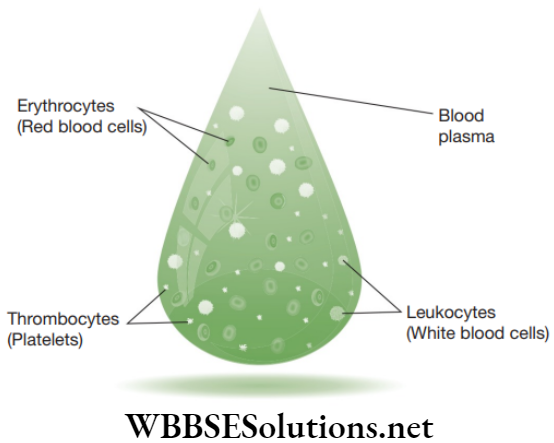
NEET Foundation Biology Tissues Formed elements of blood

Lymph: Lymph is a colourless fluid that is filtered out of the blood capillaries. In lymph, WBCs are found abundantly. Lymph is devoid of RBCs and some blood proteins.

Functions of Lymph

  • Lymph transports nutrients filtered by the blood capillaries and it comes back into the heart to be recirculated in the body.
  • Lymph brings carbon dioxide and nitrogenous wastes from tissue fluid to blood.
  • Lymph protects the body against infection as it contains WBCs in abundance. It makes up the immune system of the body.

Functions of Fluid Connective Tissue

  • Blood transports nutrients, hormones and vitamins to the tissues.
  • Blood transports excretory substances from the tissues to the liver and kidney.
  • RBCs carry oxygen to the tissues.
  • WBCs helps in producing antibodies to destroy pathogens and it also produces antitoxins that neutralize the toxins released by pathogens.
  • Blood platelets disintegrate at the site of injury and helps in the clotting of blood, which prevents unnecessary loss of blood from the body.
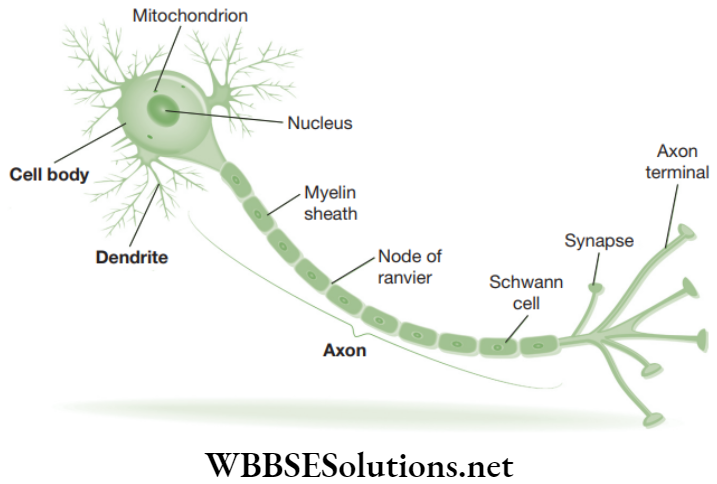
NEET Foundation Biology Tissues Neuron

Chapter 2 Tissues Nervous Tissue

Nervous tissue is a specialized tissue to transmit messages within the body. Brain, spinal cord and nerves are all made up of nervous tissue. Nervous tissue consists of highly specialized unit cells known as nerve cells or neurons.

Neurons are capable of receiving stimuli from within or outside the body and of conducting impulses or signals to various parts of the body. The impulse travels from one neuron to another neuron.

A neuron consists of the following three parts.

  • Cyton or cell body: It consists of a central nucleus and cytoplasm with deeply stained particles called Nissl’s granules (i.e., clumps of ribosomes).
  • Dendrons: These are short processes originating from the cyton and further branching into dendrites.
  • Axon: It is a single, long, cylindrical process of uniform diameter. It forms fine branches at its end. Each such twig-like branch of axon ends in a swollen structure termed as synaptic knob or bouton. Bouton consists of acetylcholine-filled vesicles. Acetylcholine (Ach) is a vital neurotransmitter (i.e., a substance playing a crucial role in the transmission of nerve impulses inside the nervous system). Axon is also known as nerve fibre.

Functions: The dendrites receive impulses and the axon takes away impulses from the cell body.

Chapter 2 Tissues Fill In The Blanks

Question 1. ______ group of young meristematic cells of a growing organ, such as the tips of stem and root.
Answer. primordial meristem

Question 2. Parenchyma serves as ______ storage tissues.
Answer. Food

Question 3. Collenchyma is ______ in monocot stems, roots and leaves.
Answer. Absent

Question 4. Collenchyma is a ______.
Answer. Mechanical Tissue

Question 5. ______ provides mechanical support and elasticity.
Answer. Collenchyma

Question 6. ______ gives strength, rigidity, flexibility and elasticity to the plant body.
Answer. Sclerenchyma

Question 7. ______ enables plant body to withstand various strains.
Answer. Sclerenchyma

Question 8. Xylem and ______ is a vascular and mechanical tissues.
Answer. Phloem

Question 9. ______ of xylem are elongated cells with tapering ends.
Answer. Tracheids

Question 10. ______ forms the delicate lining of cavities (mouth, oesophagus, nose, pericardium, alveoli, etc.) and of blood vessels and covering of the tongue and skin.
Answer. Squamous epithelium

Question 11. ______ are found in the muscles of limbs, body wall, face, neck, etc.
Answer. Striated epithelium

Question 12. Smooth muscles are located in the walls of the hollow visceral organs except that of the heart, and hence, they are called ______.
Answer. visceral muscles

Question 13. Cardiac muscles show stripes of light and dark bands. Also, these muscle fibres show densely stained cross bands known as ______.
Answer. intercalated impulse

Question 14. ______ protects the body against infection, as it contains WBCs in abundance. It makes up the immune system of the body.
Answer. Lymph

Question 15. A group of cells that are similar in structure and which perform a specific function are called ______.
Answer. Tissues

Question 16. Founder of Histology ______.
Answer. Marcello Malphigi

Question 17. Arrange the order: Cells ______ Organ ______ Organism.
Answer. 1. Tissue    2. Organ System

Question 18. Cell growth is distributed uniformly in ______.
Answer. Animal tissues

Question 19. Full form of ATP ______.
Answer. Adenosine triphosphate

Question 20. ______ divides in two planes resulting to an increase in an organ, for example, leaf formation.
Answer. Plate meristem

Question 21. Cell divisions occur in all planes resulting in the increase of volume is ______.
Answer. Mass meristem

Question 22. ______ outermost layer of the young growing region that develops to give rise to epidermal tissue system.
Answer. Protoderm meristem

Question 23. ______ is found between the regions of permanent tissues.
Answer. Intercalary meristem

Question 24. ______ was first proposed by Hanstein (1868).
Answer. Histogen Cell Theory

Chapter 2 Tissues True or False

Question 1. Epithelial tissue is a protective tissue in animal body.
Answer. True

Question 2. The lining of blood vessels, lung alveoli and kidney tubules are all made up of epithelial tissue.
Answer. True

Question 3. Epithelial cells have a lot of intercellular spaces.
Answer. False

Question 4. Epithelial layer is a permeable layer.
Answer. True

Question 5. Epithelial layer does not allow the regulation of materials between body and external environment.
Answer. False

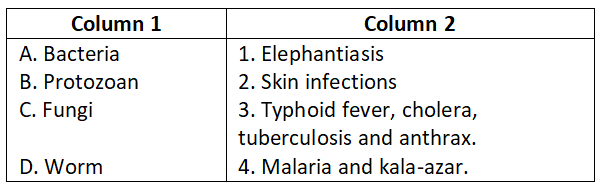
Chapter 2 Tissues Match The Columns

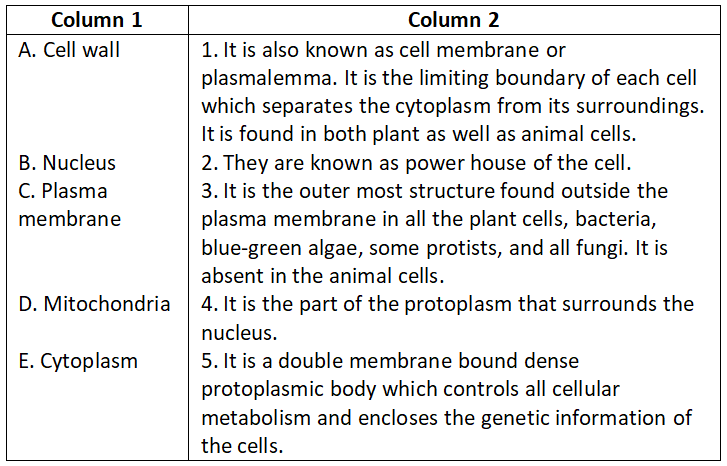
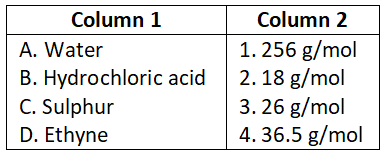
Question 1.
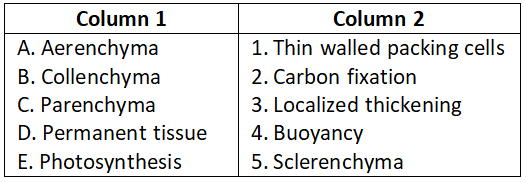
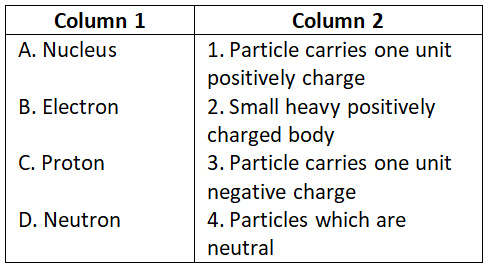
NEET Foundation Biology Tissues Correct Option 1

Select the correct option.

  1. A-4, B-3, C-1, D-5, E-2
  2. A-2, B-4, C-5, D-1, E-3
  3. A-5, B-3, C-2, D-4, E-1
  4. A-4, B-2, C-5, D-3, E-1

Answer. 1. A-4, B-3, C-1, D-5, E-2

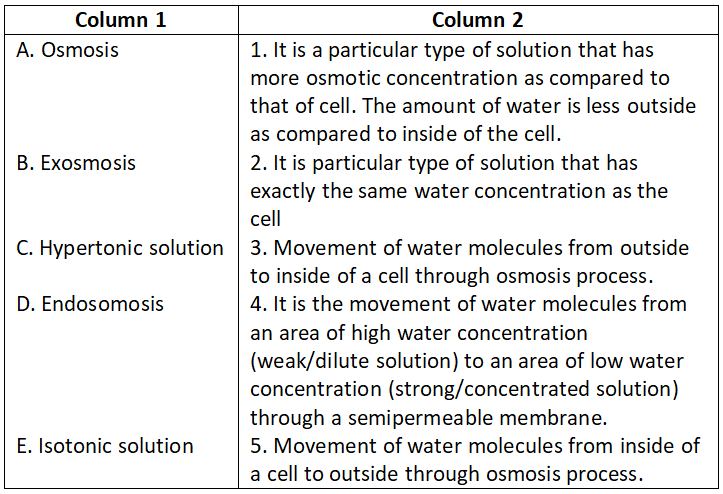
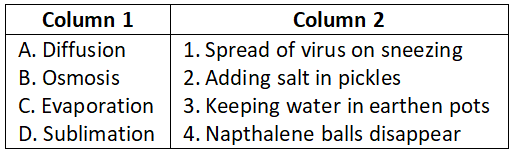
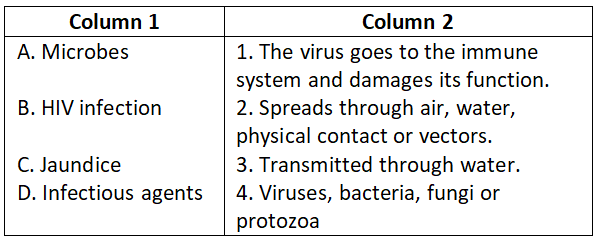
Question 2.
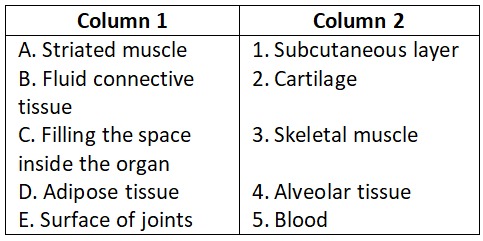
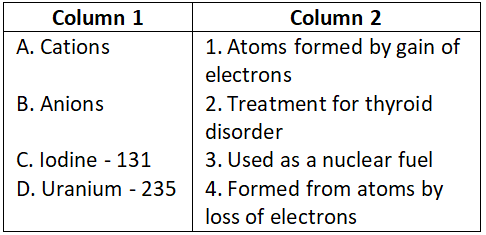
NEET Foundation Biology Tissues Correct Option 2

Select the correct option.

  1. A-4, B-3, C-1, D-5, E-2
  2. A-3, B-5, C-4, D-1, E-2
  3. A-5, B-1, C-3, D-2, E-4
  4. A-2, B-3, C-4, D-1, E-5

Answer. 2. A-3, B-5, C-4, D-1, E-2

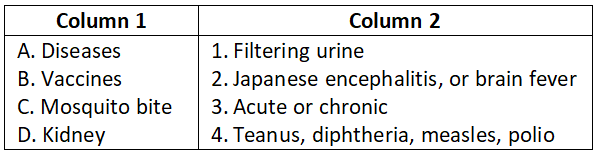
Question 3.
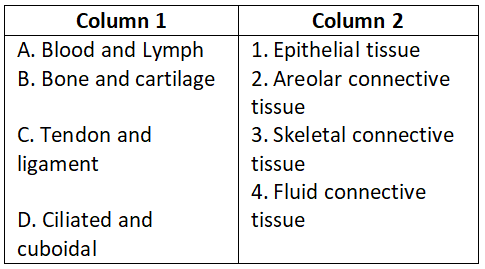
NEET Foundation Biology Tissues Correct Option 3

Select the correct option.

  1. A-1, B-2, C-3, D-4
  2. A-2, B-3, C-4, D-1
  3. A-4, B-3, C-2, D-1
  4. A-1, B-3, C-4, D-2

Answer. 3. A-4, B-3, C-2, D-1

Question 4.
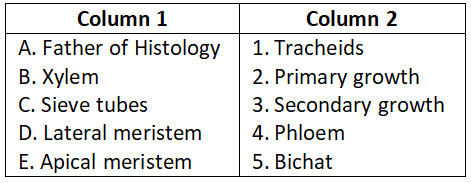
NEET Foundation Biology Tissues Correct Option 4

Select the correct option.

  1. A-3, B-4, C-1, D-2, E-5
  2. A-5, B-1, C-4, D-3, E-2
  3. A-3, B-2, C-4, D-1, E-5
  4. A-4, B-5, C-3, D-2, E-1

Answer. 2. A-5, B-1, C-4, D-3, E-2

Question 5.
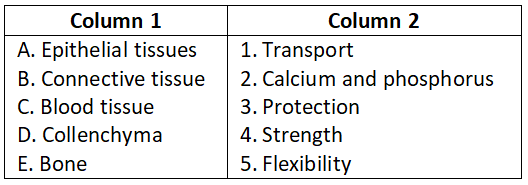
NEET Foundation Biology Tissues Correct Option 5

Select the correct option.

  1. A-2, B-1, C-5, D-3, E-4
  2. A-1, B-2, C-3, D-4, E-5
  3. A-5, B-4, C-3, D-2, E-1
  4. A-3, B-4, C-1, D-5, E-2

Answer. 4. A-3, B-4, C-1, D-5, E-2

NEET Foundation Biology Notes For Chapter 1 The Fundamental Unit Of Life

Biology Chapter 1 The Fundamental Unit Of Life

The Fundamental Unit Of Life

If you ever come across a brick wall being constructed, then you can see that bricks are the basic building blocks of a wall. Similarly, cells are the fundamental units of your body. In simple definition, cells are sacs of fluid enveloped by membranes with chemicals and organelles embedded inside the fluid.

Though an organism possesses few other structures that are smaller than a cell and yet, however, cell is considered to be the smallest part of an organism. Robert Hooke (1665) discovered the cell, while studying a thin slice of cork through a crude microscope. He observed that cork resembled the structure of a honeycomb having many small compartments.

He called these little compartments as ‘cells’ (in Latin, ‘cellula’, which means ‘a little room’). His discovery was published in a book ‘Micrographia’. The ability to produce energy, synthesize hormones, transmit hereditary factors are examples of a few events that take place within the tiny building blocks of life called ‘Cells’.

Read and Learn More: NEET Foundation Notes

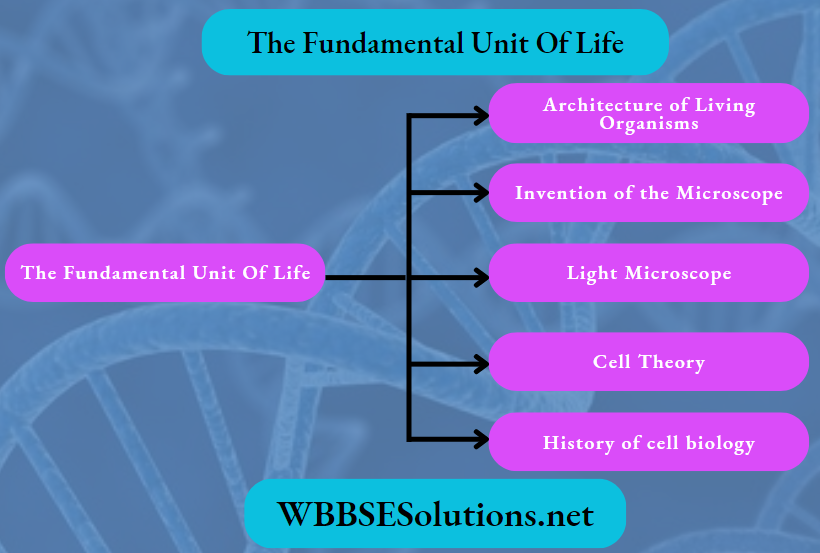
NEET Foundation Biology The Fundamental Unit Of Life

Fundamental Unit Of Life

Chapter 1 The Fundamental Unit Of Life Architecture of Living Organisms

When you observe the inner layer of an onion by dropping iodine solution followed by a cover slip under high powers of a compound microscope. The structures of inner layer look similar to each other. Together they form a big structure like an onion bulb. Hence, we concluded that any organism despite different sizes have similar small structures visible under microscope.

The small structure that we observe are the basic structural and functional unit of onion bulbs. There are also single cells that live on their own, such as Amoeba, Chlamydomonas, Paramecium, and Bacteria. These organisms are called unicellular organisms. Many cells group together in a single body to form multicellular organisms like fungi.

Invention of the Microscope

Invention of the microscope was a milestone with regard to learning the delicate details of internal arrangement of the cell. Cells are microscopic structures not visible to human eyes. Anton van Leeuwenhoek is the father of microbiology who in the late 17th century became the first man to make and use a real microscope.

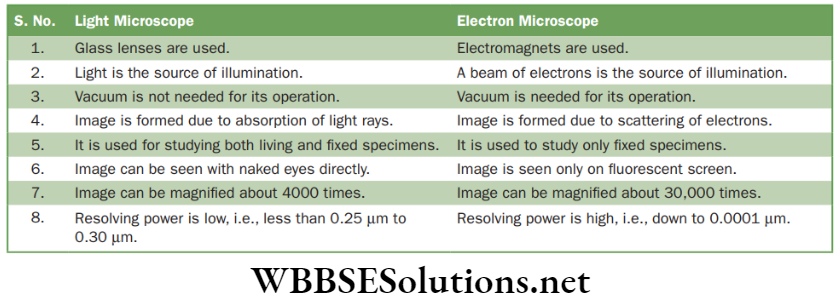
Ordinary compound microscope is an optical instrument that consists of two convex lenses of short focal lengths. This microscope can magnify the image of a tiny object up to 1000 times. Electron microscope uses electron beams to illuminate a specimen object and create a magnified image.

It magnifies to over 2,00,000 times the magnification of an ordinary compound microscope. The variations between the working of a light microscope and electron microscope is discussed.

Differences between light microscope and electron microscope

NEET Foundation Biology The Fundamental Unit Of Life Differences between light microscope and electron microscope

Cell Theory

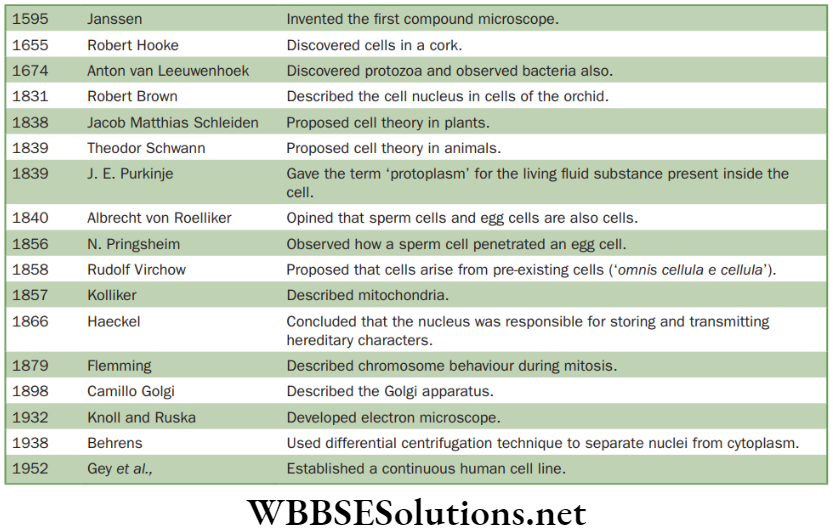
Jacob Matthias Schleiden (1838), a German botanist and Theodor Schwann (1839), a German zoologist stated that cells are the fundamental and building blocks of all plants and animals. Their discoveries led to the formulation of the cell theory. They postulated that all animals and plants are made up of cell.

History of cell biology

NEET Foundation Biology The Fundamental Unit Of Life History of cell biology

Cell The Fundamental Unit Of Life

Rudolf Virchow (1855) further refined the cell theory and gave the idea that all cells arise from pre-existing cells.

The main postulates of the modern cell theory are as follows.

  • All organisms are made up of one or more cells and cell products.
  • All metabolic reactions occur in cells. Hence, cells are the structural and functional units of life.
  • All cells arise from pre-existing cells, as an animal gives birth only to an animal and a plant gives rise only to a plant.
  • An organism begins its life as a single cell.
  • Virus is an exception of this theory.

Chapter 1 The Fundamental Unit Of Life Cell Shape

Living cell has the capacity to perform certain basic functions that are characteristics of all living forms. Depending upon the functions perfomed by cells are of different shapes and sizes. Most plant and animal cells are basically the same when formed.

By the processes of maturation and differentiation, they acquire different forms. Different parts in human body performs different functions. The human body has heart to pump blood and stomach to digest food.

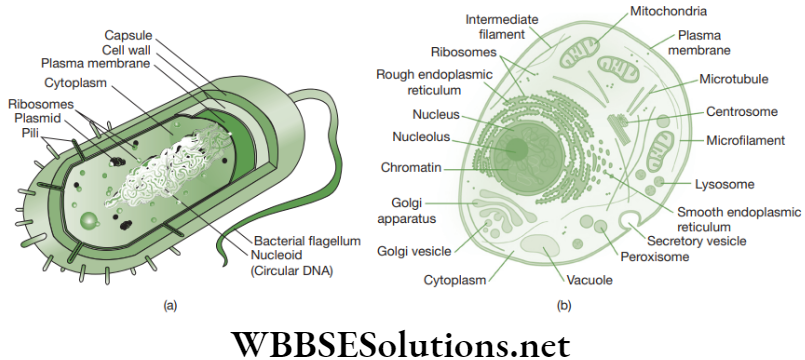
NEET Foundation Biology The Fundamental Unit Of Life Characteristics of prokaryotic and eukaryotic cells

Eukaryotes are organisms with a well-defined membrane bound nucleus and other organelles. Eukaryotic cell is spherical in shape, but ultimately the shape of a cell is governed by the specific function of the cell. The shape of the cell may be variable or fixed.

For example, amoeba changes its shape and white blood cells or leucocytes are spherical in circulating blood, but in other situations they become irregular in shape by producing pseudopodia. Cells have fixed shape in most of the plants and animals.

In unicellular organisms, the cell shape is determined by the hard plasma membrane (for example, Paramecium) and exoskeleton (for example, Elphidium). In multicellular organisms, the cell shape is mainly determined by its functional adaptations, and also by the surface tension, viscosity of the protoplasm, the mechanical pressure exerted by adjacent cells and the presence of a rigid cell wall such as in plant cells.

NEET Foundation Biology The Fundamental Unit Of Life Different types of cell shape

Cell Volume

Cell volume is almost consistent for a specific cell type and it is not dependent on the size of an organism. For example, in a bull, horse and mouse, the kidney and liver cells are almost of the same size. The variation in the total mass of the organ as well as organism is determined by the number and not the volume of the cells.

Cell Number

The number of cells in organisms is related to the size of the organism. Hence, the small-sized organisms have less number of cells as compared to the largesized organism. In most multicellular organisms, the number of cells is not fixed, except a few such as rotifers and nematodes. In human beings, the number of cells present in the body is approximately 100 trillion (1014).

Chapter 1 The Fundamental Unit Of Life Structural Organization of a Cell

Microscopic studies reveal that most cells have the same basic structural architecture. The cells have a jellylike substance called protoplasm bound by a cell membrane. The term protoplasm was coined by Purkinje in 1839. The protoplasm consists of the cytoplasm and a spherical body called nucleus. All the cells possess the following three major functional zones.

  • The cell membrane or plasma membrane and the cell wall
  • The nucleus
  • The cytoplasm

Plasma Membrane

The plasma membrane is the outer boundary of the cell, enveloping the cytoplasm. In the cytoplasm, all the cell organelles and inclusions are embedded. All the cell organelles like mitochondria, chloroplasts, lysosomes, peroxisomes, Golgi apparatus, nucleus and endoplasmic reticulum are enclosed by the unit membrane. In animal cells, the plasma membrane is present in the outermost layer of the cell, whereas in plant cell it is present just beneath the cell wall.

Structure

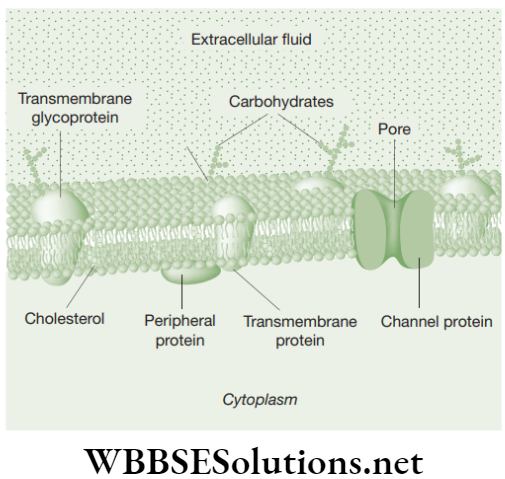
Plasma membrane is a thin (about 7 nm), delicate, elastic, and selectively permeable membrane. The membrane is almost made up of 75% phospholipids. Also, it consists of proteins, cholesterol and polysaccharides.

Fluid Mosaic Model: S. J. Singer and G. L. Nicolson (1972) proposed a model called the fluid mosaic model to explain the structure of functional cell membranes or plasma membranes. According to this model, the plasma membrane is made up of a double layer of phospholipids.

The plasma membrane allows the movement of only certain substances across it and prevents the rest. Hence, it is selectively permeable. Two kinds of protein molecules float in the fluid phospholipid bilayerand they are explained as follows.

  • Intrinsic or integral proteins completely cover the lipid bilayer.
  • Extrinsic or peripheral proteins occur either on the outer surface or on the inner surface of the lipid membrane.

NEET Foundation Biology The Fundamental Unit Of Life Structure of plasma membrane with three-dimensional view of fluid mosaic model

Functions

  • Plasma membrane is a selectively permeable membrane, which regulates the entry and exit of the cell contents.
  • It performs some physical activities, like diffusion and osmosis for the intake of some substances.
  • In addition, some other biological activities like active transport and endocytosis are performed by the plasma membrane.
  • The fluid nature of the plasma membrane makes it flexible and enables it to engulf substances or remove wastes by vesicle formation.
  • Certain factors present in the plasma membranes play an important role in cell recognition in immune receptors.

Transport of Substances Across the Plasma Membrane

The passage of substances across the cell membrane takes place by three models listed as follows.

  • Passive transport
  • Active transport
  • Bulk transport

Passive Transport

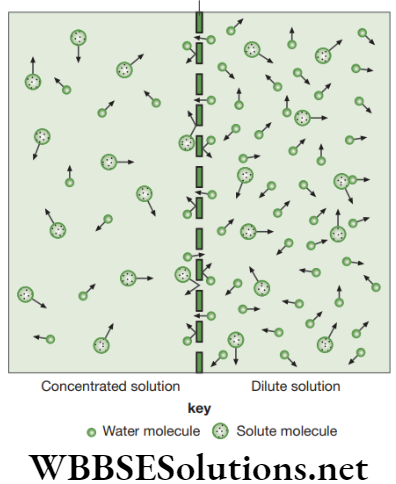
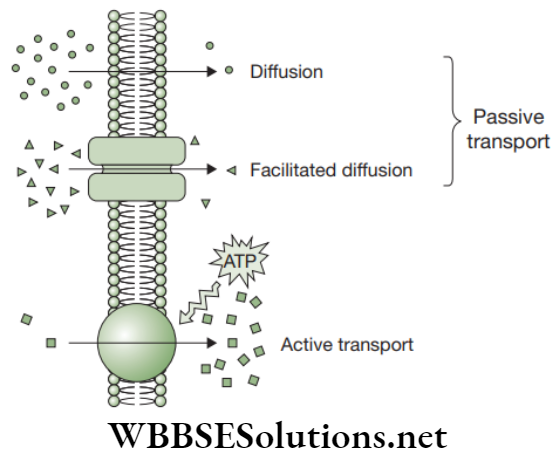
1. Diffusion: Certain substances can easily pass through the plasma membrane by a simple process of diffusion. Diffusion can take place in all states of matter and however, it takes place faster in the gaseous state.

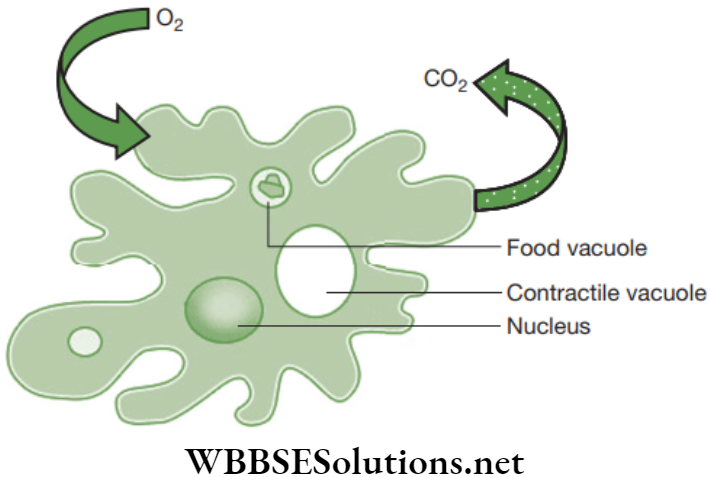
Diffusion is the net movement of solute particles from a region of high concentration to the region of low concentration. When there is a difference of CO2 concentration, inside and outside of a cell, gas moves out of the cell to the external environment, i.e., from the region of its higher concentration to the region of its lower concentration with the help of diffusion process.

Similarly, oxygen (O2) enters the cell by the process of diffusion when the concentration of O2 inside the cell becomes lower such as in Amoeba.

Diffusion is significant to biological systems due to the following reasons.

  • Helps in the uniform distribution of substances in the cytoplasm.
  • Assists in exchange of gases which is critical to processes, such as respiration and photosynthesis.
  • Helps in attracting insects for pollination by spreading the scented chemicals from flowers.
  • Helps in diffusion and the nutrient chemicals get absorbed into cells in the intestine of digestive system.

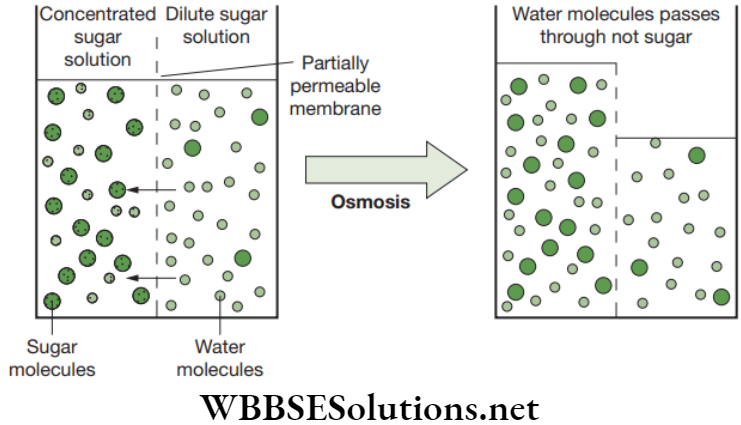
2. Osmosis: Osmosis is the passage of water or solvent from a region of high solvent concentration through a semi-permeable membrane to a region of low solvent concentration. Osmotic pressure is the external pressure needed to be applied so that there is no net movement of solvent across the membrane. Osmosis was first observed by Jean-Antoine Nollet (1748).

Osmosis is a mechanical diffusion process through which cells absorb water without spending any amount of energy. Osmosis is significant to biological systems due to the following reasons:

  • Helps in the absorption of water by the roots from the soil.
  • Helps in closing and opening of stomata on the leaves.
  • Assists in cell-to-cell movement of water.

NEET Foundation Biology The Fundamental Unit Of Life Diffusion

NEET Foundation Biology The Fundamental Unit Of Life Process of diffusion of gases in Amoeba

NEET Foundation Biology The Fundamental Unit Of Life Mechanism of osmosis

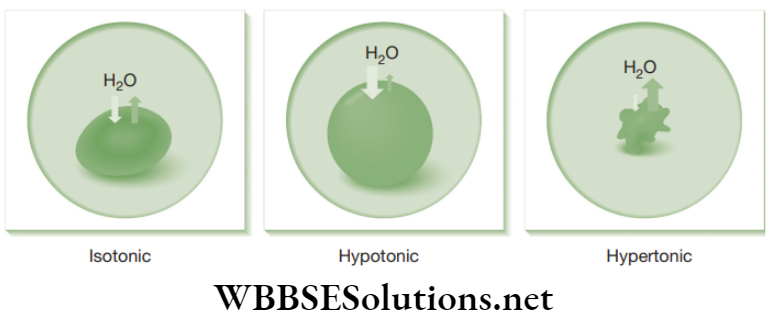
While studying the effects of different solutions on plant and animal cells, three conditions may arise depending upon the tonicity of the solution.

Hypotonic solution: When the medium surrounding the cell has a higher concentration of water (a very dilute solution) as compared to the inside of the cell, the cell will gain water by osmosis. This dilute solution is called hypotonic solution. In this situation, the cell swells up, as more water will enter the cell than leave the cell. These swollen RBC’s may finally burst, i.e., haemolysed.

1. Isotonic solution: When the medium surrounding the cell is of precisely the same water concentration as the cell, there will be no net movement of water across the membrane. This solution is called isotonic solution. For example, Ringer’s solution is an isotonic solution for the animal cells. In this condition, water moves across the plasma membrane in both directions and the amount of water going in is equal to the amount going out. Hence, the cell will retain the same size.

2. Hypertonic solution: When the medium has a lower concentration of water (a very concentrated solution) than the inside of the cell, the cell will lose water by osmosis. This concentrated solution is called hypertonic solution (Fig. 1.7). Here, water moves across the plasma membrane in both directions, but more water leaves the cell than enters the cell. Hence, the cell will shrink. In this condition, the plant cell gets plasmolysed and the animal cell gets crenated.

NEET Foundation Biology The Fundamental Unit Of Life Isotonic, hypotonic and hypertonic solution

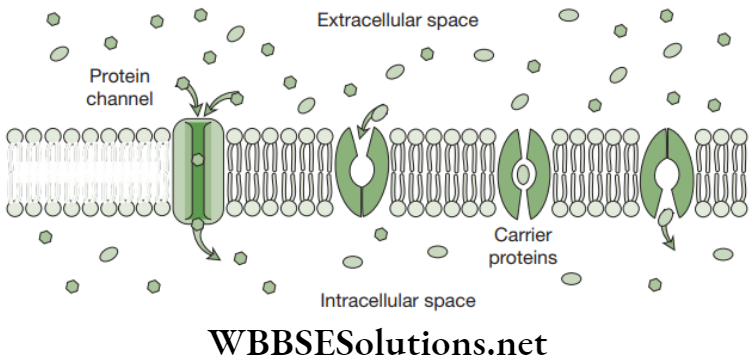
3. Facilitated transport/diffusion: The permease helps a molecule to diffuse through the membrane that it cannot penetrate alone. It promotes movement in a downhill direction only, i.e., in the direction of the concentration gradient and needs no metabolic energy to carry out the transport system. For example, in many animals, the facilitated diffusion helps in the transport of glucose (blood sugar) into the body cells that oxidizes it to get ATP’s.

As the amount of glucose is more in the blood than in the cells that consume it, an inward diffusion takes place. Because glucose is a water-soluble molecule that on its own cannot penetrate the membrane rapidly enough to support the metabolism of various cells, the mediated transport accelerates the inward flow of glucose.

NEET Foundation Biology The Fundamental Unit Of Life Transport of substances through facilitated diffusion

Active Transport

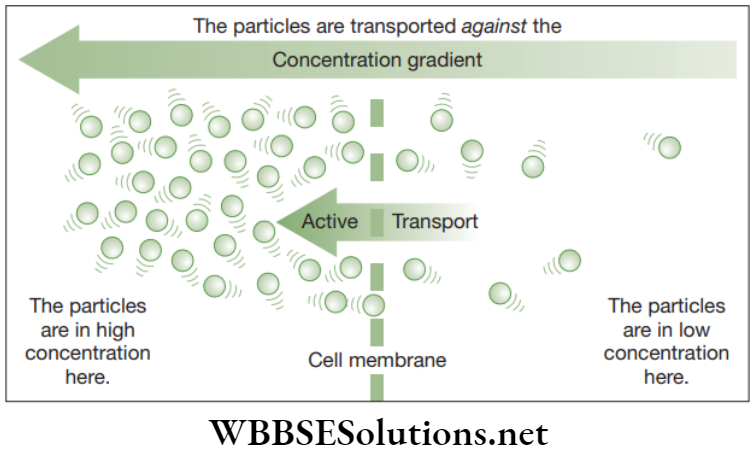
The energy is provided to the system (‘pump’) to transport molecules in a direction opposite to a concentration gradient. It promotes movement in uphill direction, i.e., against the forces of passive diffusion. This involves expenditure of energy from ATP as substances are pumped against the concentration gradient.

The best example of active transport system in all animals is the maintenance of sodium and potassium gradients between cells and the surrounding extracellular fluid. Most of the animal cells need a high internal concentration of potassium ions for protein synthesis by the ribosomes and for some enzymatic activities.

The concentration of potassium ions is about 20–50 times more inside the cell as compared to the outside of the cell. On the other hand, sodium ion concentration is about 10 times more outside the cell as compared to the inside of the cell. Active transport maintains both these ionic gradients by transporting potassium ions into and the cell sodium ions out of the cell.

NEET Foundation Biology The Fundamental Unit Of Life Active transport

Bulk Transport

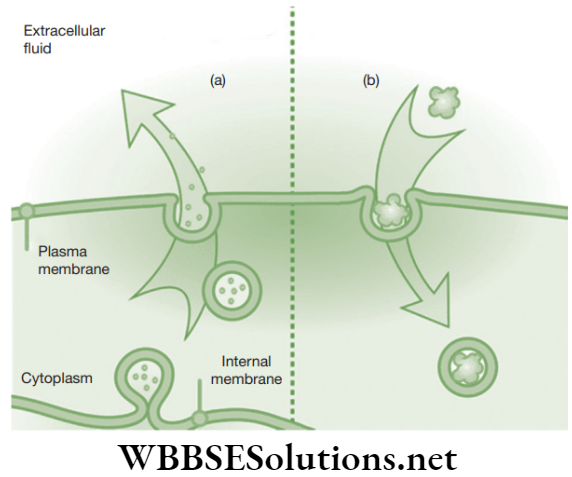
Bulk transport involves the movement of macro-nutrients, such as proteins, polysaccharides which can pass only through ruptured plasma membrane. Large molecules generally cross the membrane in bulk by endocytosis and exocytosis.

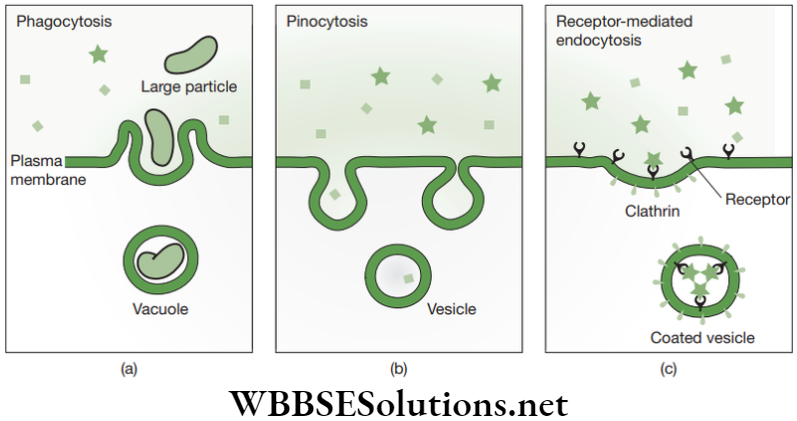
1. Endocytosis: The process by which material moves into the cell. It is of three types, namely phagocytosis(cell eating), potocytosis (cell drinking) and receptor-mediated endocytosis. All the three processes require energy.

  • Phagocytosis: It is the process by which a cell called phagocyte takes in or engulfs or eats other cells or particles. The newly-formed phagosome then fuses with a lysosome whose hydrolytic enzymes digest the ’food’ inside. For example, white blood cells (leucocytes) that engulfs cellular debris and unwanted microbes in the blood. Other phagocytes are also present such as the macrophages found in connective tissue and liver sinusoids.

NEET Foundation Biology The Fundamental Unit Of Life Phagocytosis Pinocytosis and Receptor mediated endocytosis

  • Pinocytosis: The cell engulfs drops of fluid by pinching in and forming vesicles. Similarly to phagocytosis, pinocytosis is an unspecific process where the cell takes in any of the solutes that are dissolved in the liquid it encloses.
  • Receptor-mediated endocytosis: It is a very selective process of importing substances into the cell. In this process, the receptor proteins present on depressed areas of the cell membrane (‘coated pits’) determines this specificity. Coat proteins cover the cytosolic surface of coated pits. The cell will only pick up an extracellular molecule when it binds to its specific receptor protein on the surface of the cell. When binding is done, the coated pit on which the bound receptor protein is situated then pinches in, to produce a coated vesicle. This coated vesicle now fuses with a lysosome to digest the engulfed substance and release it into the cytosol.

2. Exocytosis (Cell vomiting): Exocytosis is the process by which the intracellular vesicles in the cytoplasm fuse with the plasma membrane and release their contents into the surrounding medium.

Exocytosis takes place in many cells for the following purposes.

  • Removes undigested material brought inside the cell by phagocytosis.
  • Secrete substances like hormones, enzymes, etc.
  • Transport a material wholly across a cellular barrier, for example, an immunoglobulin (IgA) or antibody is picked up on one side of the blood vessel wall by phagocytosis, transported across the cell and released by exocytosis.

NEET Foundation Biology The Fundamental Unit Of Life Transportation of large molecules through

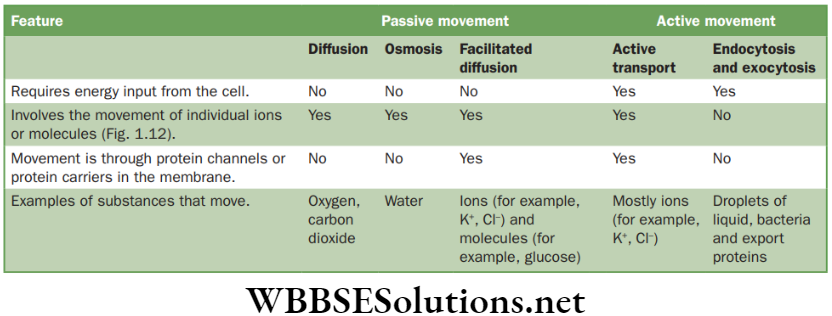
Summary of movement methods across membranes

NEET Foundation Biology The Fundamental Unit Of Life Summary of movement methods across membranes

NEET Foundation Biology The Fundamental Unit Of Life Movement across membranes

Class 11 Physics Class 12 Maths Class 11 Chemistry
NEET Foundation Class 12 Physics NEET Physics

Chapter 1 The Fundamental Unit Of Life Cell Wall

Cell wall is a rigid, non-living and freely permeable layer that lies outside the plasma membrane in plant cells. It protects the cell and its contents and determines the shape of the cell, and prevents desiccation of cells. It consists of a fibrous polysaccharide (carbohydrate) called cellulose.

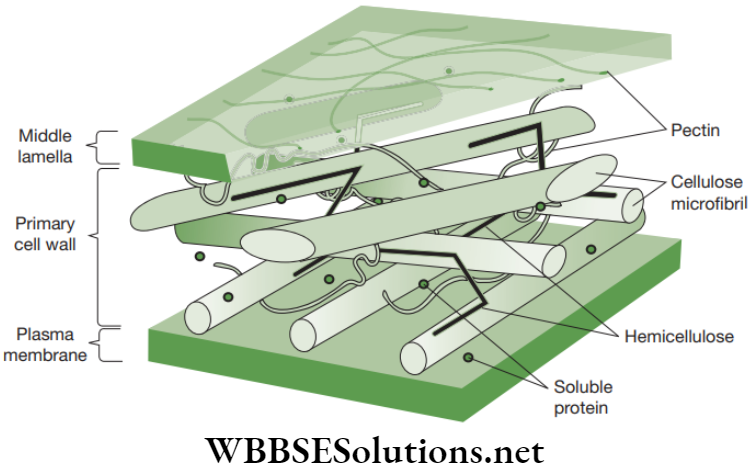
Thus, the cell wall consists of minute cellulose fibres called microfibrils, which are cemented together by a mixture of polysaccharides. Each microfibril consists of numerous cellulose molecules bound together by pectins and hemicellulose.

Structure of Plant Cell Wall

Basically, the plant cell well consists of three layers and it is briefly explained as follows.

  • Primary cell wall: A thin, flexible and extensible layer formed when the cell is growing. It provides the strength and flexibility required to allow the growth of cells.

NEET Foundation Biology The Fundamental Unit Of Life Structure of plant cell wall

  • Secondary cell wall: A thick layer is formed inside the primary cell wall when the cell is fully grown. This layer is not found in all types of cells. Only some cells, such as the conducting cells in xylem have secondary wall consisting lignin that strengthens and protects the wall from water.
  • Middle lamella: An outermost layer rich in pectins forms the interface between adjacent plant cells and cements them together.

Functions of a Cell Wall

  • Cell wall makes the plant cell turgid. When water enters the vacuole through osmosis, the plant cell expands. The cell wall provides strength to the cell by providing turgidity to resist this expansion.
  • Cell wall provides mechanical strength to the cell with the help of cellulose microfibrils. In xylem, lignin is present to provide additional strength. In collenchyma cells, extra amount of cellulose is present in the cell wall which increases the mechanical support.
  • Cell wall is freely permeable to solvent and materials in solution.
  • Cell wall consists of narrow pores known as pits through which very fine strands of cytoplasm known as plasmodesmata are able to pass. These intercellular connections permit the exchange of substances between the living cell contents.
  • Middle lamella is a pectin layer that cements the cell walls of two adjoining cells together, which gives stability to the plants and also permits the plants to form plasmodesmata between cells. This layer is made up of calcium and magnesium pectates. This is the first layer that is formed and deposited during cytokinesis.

Plasmolysis

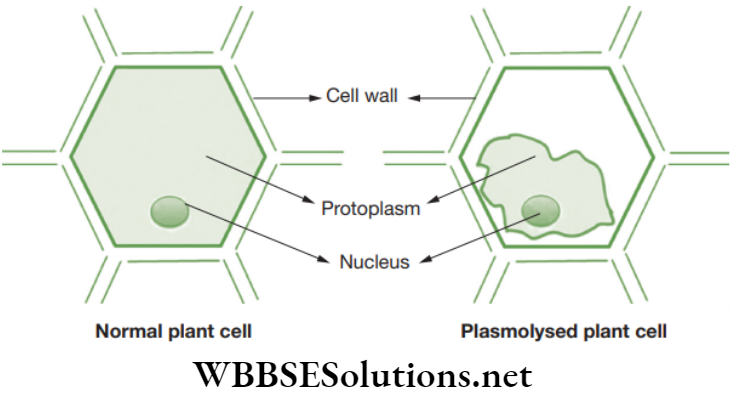
The phenomenon in which a living plant cell loses water through osmosis leading to shrinkage or contraction of the protoplasm away from the cell wall is called plasmolysis.

NEET Foundation Biology The Fundamental Unit Of Life Diagram of a normal plant cell and plasmolysed plant cell

Chapter 1 The Fundamental Unit Of Life Nucleus (‘Brain of the Cell’)

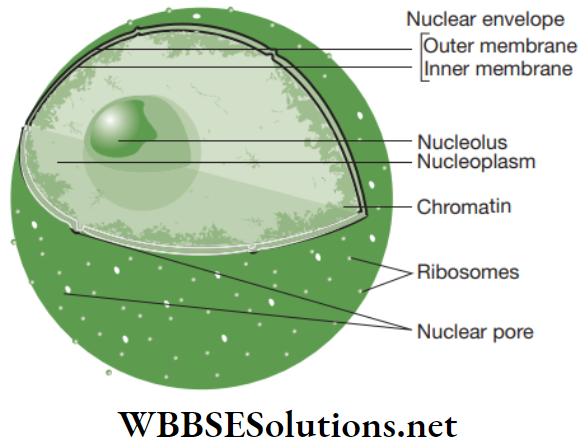
The nucleus is membrane-bounded, centrally-located, spherical structure present in the eukaryotic cell. There are two nuclear membranes forming a nuclear envelope. There is a space between two nuclear membranes, which is connected to a system of membranes known as endoplasmic reticulum (ER).

The nuclear envelope makes the nucleus distinct from the cytoplasm. It also contains many pores called nuclear poresand it consists of the liquid ground substance called nucleoplasm. Nuclear pores permit the transfer of substances between the nucleoplasm and the cytoplasm.

The nucleoplasm consists of the nucleolus and chromatin material. The nucleolus is not bounded by any membrane and it is rich in protein and RNA (ribonucleic acid), and thus, it acts as a site for ribosome production. Ribosomes help in protein synthesis in the cytoplasm.

The chromatin is a thin, thread-like entangled mass of chromosome material and it consists of the genetic material DNA and proteins (i.e., histones). The chromatin is formed of repeating subunits called nucleosomes. Each nucleosome has a DNA molecule coiled around a disc of histones.

DNA is considered to be the blueprint of life as it contains all the required information for the cell to function, to grow and to reproduce. Genes are the discrete segments of DNA. During cell division, the chromatin material gets condensed into two or more thick ribbon-like chromosomes.

NEET Foundation Biology The Fundamental Unit Of Life Three-dimensional view of a nucleus

Functions of Nucleus

  • Nucleus controls all metabolic activity of the cell.
  • Nucleus regulates the cell cycle.
  • Nucleus controls the transmission of hereditary characteristics from the parent to offspring.

Chapter 1 The Fundamental Unit Of Life Cytoplasm

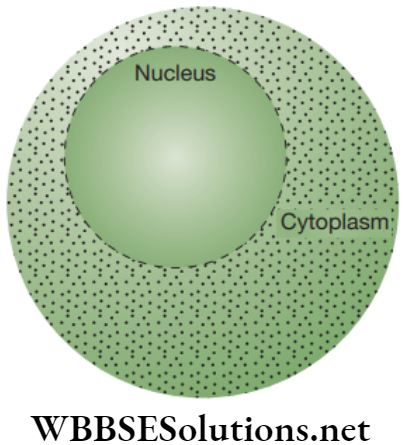
Cytoplasm is the region of the cell located between the plasma membrane and nuclear envelope. Cytoplasm is a living, colourless, semi-liquid and homogenous substance. It occupies a major part of the cell and it is constantly moving.

Cytoplasm consists of a watery ground substance, called the cytosol, which contains the various cell organelles as well as other inclusions like insoluble wastes and storage products (glycogen, starch, etc.). Cell organelles are found embedded in the cytosol, and each of these has specific and important roles to play.

Cytosol forms the ground substance of the cytoplasm, in which all the cell organelles are embedded. It contains a system of protein fibres known as cytoskeleton. Cytosol is almost 90 per cent of water, which contains all the molecules and ions needed to support life. Cytosol serves as a store of vital chemicals, like amino acids, glucose, vitamins, ions, etc.

NEET Foundation Biology The Fundamental Unit Of Life Distinction of cytoplasm in a cell

Endoplasmic Reticulum (ER)

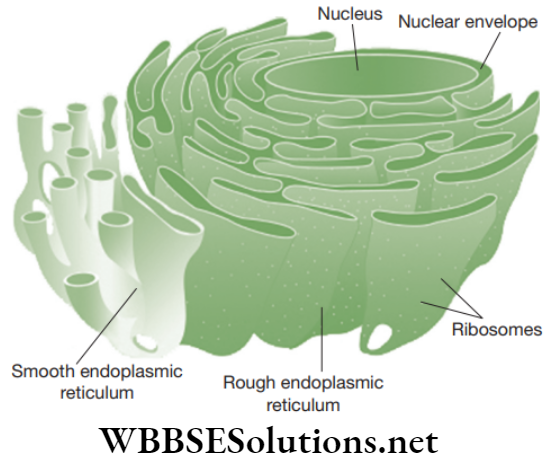
ER is a membranous network enclosing a fluid-filled lumen that almost fills up the intracellular cavity. ER is connected to the outer membrane of the nucleus at one end, whereas the other end is connected to the plasma membrane. ER occurs in the form of three parts, namely cisternae (closed, fluid-filled sacs), vesicles and tubules.

There are two types of ER and they are explained as follows.

Rough endoplasmic reticulum (RER): Ribosomes are attached on its surface for protein synthesis.

Smooth endoplasmic reticulum (SER): No ribosomes are attached and it helps in secreting lipids.

NEET Foundation Biology The Fundamental Unit Of Life Three-dimensional diagrammatic representation of SER and RER

Functions of ER

  • ER acts as a supporting skeletal framework for the cell.
  • ER helps in the passage of nuclear material between the adjoining cells.
  • RER helps in the synthesis of proteins by ribosomes on their surface.
  • In vertebrates, SER of liver helps in detoxification of various toxic or poisonous substances that enter the animal’s body through food, air or water.
  • SER is involved in the biosynthesis of glycolipids, phospholipids and cholesterol.
  • SER is involved in the synthesis of steroid hormones, like estrogen, testosterone and cortisol.
  • RER produces hydrolytic enzymes of lysosomes. From RER, the hydrolytic enzymes are transported to Golgi apparatus where it gets included into lysosome.
  • ER helps in the formation of plasma membrane and other cellular membranes. SER produces lipid molecules for cell membrane and gets inserted into SER membrane. RER is involved in the synthesis of protein molecules of cell membrane. In the process of glycosylation, small chains of sugars known as oligosaccharides are added to molecules of proteins and lipids at the level of Golgi apparatus.

Ribosomes

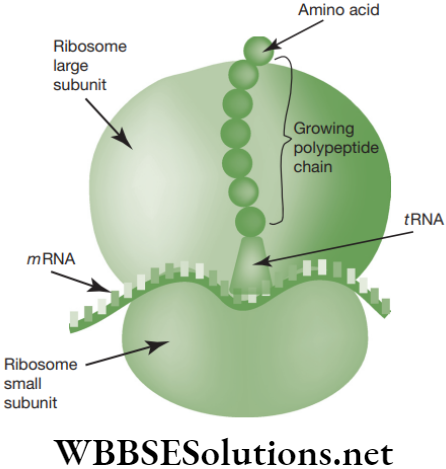
Ribosomes are dense, spherical and granular particles that are present freely in the cytosol or it remains studded to the RER. Ribosomes mainly consist of the ribonucleic acid (RNA) and proteins. Ribosomes are not bounded by membranes.

NEET Foundation Biology The Fundamental Unit Of Life Structure of ribosomes

Function of Ribosomes

  • Ribosomes play a crucial role in the synthesis of proteins.
  • These are considered to be the factories of protein in a cell. Actually, one ribosome cannot perform protein synthesis.
  • In 1963, Gric and Hall published the detailed role of polyribosome in protein synthesis and showed that active units are no individual ribosome, instead a group of these units are known as polyribosomes.

Types of Ribosomes

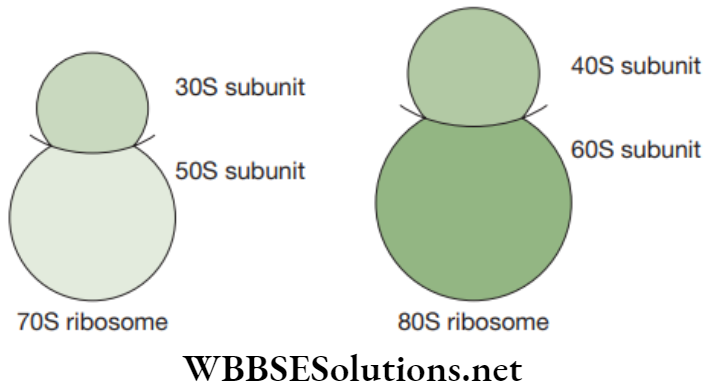
Basically, there are two types of ribosomes, such as 70S and 80S ribosomes. Here, S denotes Svedberg unit, which is the sedimentation coefficient that depicts how fast cell organelle sediments in an ultracentrifuge. Sedimentation coefficients cannot be additive.

80S ribosomes occur in eukaryotes, such as algae, fungi, higher plants and animals. In animals, the 80S ribosome is made up of a large 60S subunit and a small 40S subunit.

NEET Foundation Biology The Fundamental Unit Of Life Types of ribosomes

70S ribosomes are comparatively smaller and occur in prokaryotes such as bacteria. The 70S ribosomes are made up of a large 50S subunit and a small 30S subunit.

Interestingly, ribosomes found in mitochondria and chloroplasts of eukaryotes resemble to the ribosomes of prokaryotes and not to the 80S eukaryotic ribosomes.

Golgi Apparatus

Golgi apparatus is an arrangement of membrane-bounded, fluid-filled vesicles, vacuoles and flattened cisternae (closed sacs). Golgi apparatus originates from the membrane of the SER that in turn has originated from RER.

The proximal Golgi saccules (cisterna at cis face) are produced by fusion of ER-derived vesicles, whereas distal saccules (cisternae at trans face) are fully used for vesicle formation and vanish. Hence, Golgi saccules are renewed constantly and speedily.

Generally, the cisternae are stacked together in parallel. There are two faces of Golgi apparatus, such as Cis face of Golgi, where cisternae are formed and trans face of Golgi, where vesicles are budded off.

NEET Foundation Biology The Fundamental Unit Of Life Three-dimensional view of golgi apparatus

Functions

  • Golgi apparatus acts as an assembly area for the storage, processing and packaging of various cellular secretions.
  • It is involved in the synthesis of cell wall, plasma membrane and lysosomes.

Lysosomes

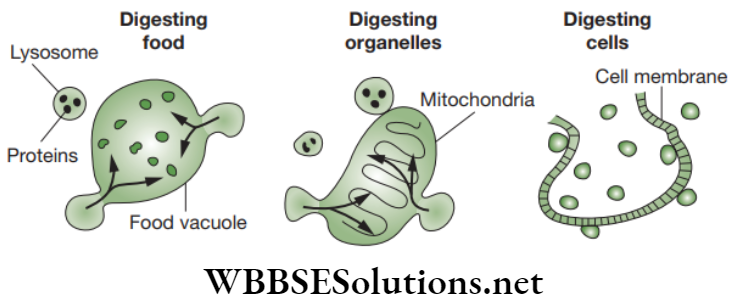
Lysosomes are small, spherical, single membrane-bound, sac-like structures uniformly distributed in the cytoplasm and it consists of digestive enzymes. These lysosomal enzymes are produced by RER.

Functions

  • Lysosomes act as intracellular digestive system by destroying any foreign material that enters the cell and hence, these are called digestive bags. By doing this, they protect the cells from any harmful effect of foreign material such as from bacterial infection.
  • Lysosomes remove the worn out cellular organelles by digesting them so that new replacements are done. By doing this, they remove the cell debris. Thus, lysosomes act as a type of garbage disposal system of the cell. These are also known as demolition squads, scavengers and cellular housekeepers.

NEET Foundation Biology The Fundamental Unit Of Life Lysosomes showing their functions

  • At the time of breakdown of cell structure, lysosomes may burst and the enzymes released eat up their own cells. Thus, lysosomes are also known as suicidal bags of a cell.

Mitochondria

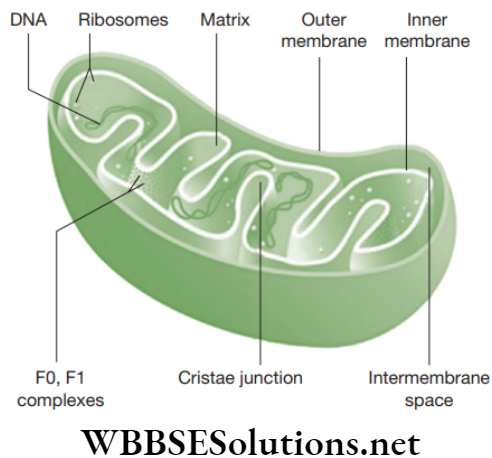
The mitochondria are small bodies of varying shapes and size distributed in the cytoplasm. Each mitochondrion is enclosed in a double-membrane envelope. Outer membrane is having pores, whereas the inner membrane is thrown into folds called cristae, which are studded with tiny rounded bodies called F1 particles or oxysomes.

The internal cavity of the mitochondria is filled with a proteinaceous gel-like matrix that contains some smallsized ribosomes, a circular DNA molecule and phosphate granules.

NEET Foundation Biology The Fundamental Unit Of Life Three-dimensional view of mitochondrion

Functions

  • Mitochondria serve as the sites for cellular respiration. They utilize molecular oxygen from air to oxidize the carbohydrates and fats present in the cell to carbon dioxide and water vapour. Energy is released during oxidation and some part of this energy is used to form ATP (adenosine triphosphate). As mitochondria synthesizes energy-rich compounds hence they are called ’power house’ of the cell.
  • Mitochondria can synthesize some of their own proteins, and DNA, due to which they are also considered as semi-autonomous organelles.

Plastids

Plastids are present in most of the plant cells, but absent in animal cells. The plastids have their own DNA and ribosomes and so they are self-replicating organelles similar to mitochondria. Plastids are mainly of three types and they are listed below.

  • Chromoplasts: Coloured plastids (excluding green colour)
  • Chloroplasts: Green-coloured plastids
  • Leucoplasts: Colourless plastids

Functions

  • Chloroplasts help in photosynthesis in which they manufacture food for the plant by trapping solar energy. These are called ‘kitchens of the cells’.
  • Chromoplasts impart various colours to flowers and some leaves that helps in attracting the insects for pollination.
  • Leucoplasts stores food in the form of starch, fats and protein.

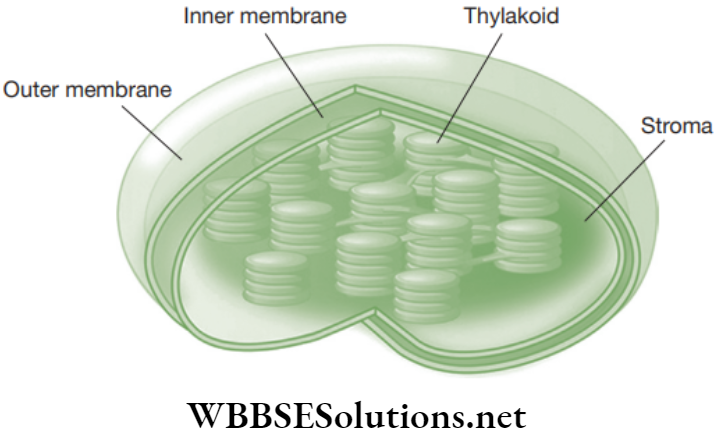
Chloroplasts

Chloroplasts consist of a green pigment called chlorophyll, which helps in photosynthesis. Each chloroplast is enveloped by two unit membranes (Fig. 1.23). The two separate regions shown in the chloroplast are as follows.

  • Grana are stacks of membrane-bounded, flattened discoid sacs (known as thylakoids) consisting of the chlorophyll molecules. These are the main functional units of chloroplasts. This is the site of light reaction during photosynthesis.
  • Stroma is the homogeneous matrix in which grana are embedded. Stroma consists of various photosynthetic enzymes, starch grains, DNA and ribosomes. This is the site of dark reaction during photosynthesis.

NEET Foundation Biology The Fundamental Unit Of Life Three-dimensional view of chloroplast

Vacuoles

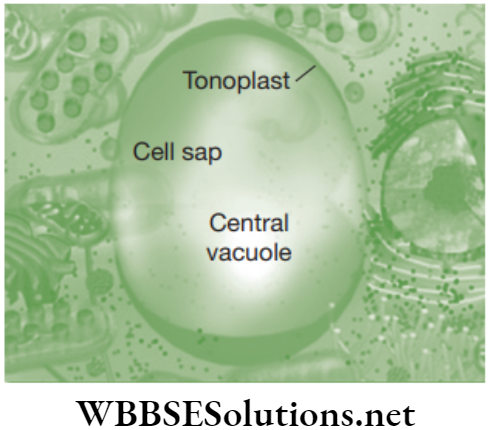
Vacuoles are fluid-filled or solid-filled; usually single membrane-bounded spaces. In animal cells, the vacuoles are rare, small and temporary. They store water, glycogen and proteins. Vacuoles serve as osmoregulatory organelles in protozoans and ingestion of nutrient material in amoeba and paramecium.

In plant cells, the vacuoles are large, distinct and permanent. In mature plant cells, the vacuole occupies almost 90 per cent volume of the cell and takes a central position. Due to this, the nucleus and other cell organelles are pushed near the cell wall. The vacuole is bounded by a membrane known as tonoplast and filled with a water solution called the cell sap.

NEET Foundation Biology The Fundamental Unit Of Life Vacuole in plant cell

Functions

  • Vacuoles maintain the osmotic pressure in a cell.
  • Vacuoles store toxic metabolic by-products or end products of plant cells.
  • Vacuoles give turgidity and rigidity to the plant cells.

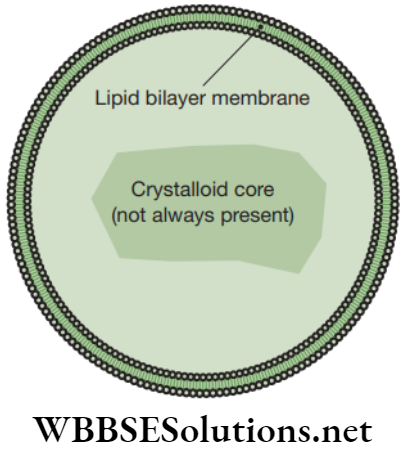
Peroxisomes

Peroxisomes are minute, single membrane-bounded, spherical organelles consisting of powerful oxidative enzymes. In peroxisomes, the inner contents are finely granular, but at times a crystalline core is visible by transmission electron microscope in the centre of peroxisomes.

This crystalline core is a crystallized protein known as catalase enzyme. Peroxisomes are usually found in kidney and liver cells.

Peroxisomes consists of catalase enzyme that catalyses the decomposition of hydrogen peroxide to water and oxygen. This gives the name ‘peroxisome’. As hydrogen peroxide is a by-product of some cell oxidations and is also highly toxic, so it must be eliminated from the cell.

NEET Foundation Biology The Fundamental Unit Of Life Peroxisome

Functions

Peroxisomes carry out some oxidative reactions like detoxification or removal of toxic substances from the cell.

Centrosome

Centrosome consists of two granule-like centrioles and it is not covered by any membrane. Centrioles are hollow and cylindrical structures that are made up of microtubules. Centrosomes are present only in animal cells. In plant cells, the polar caps perform functions similar to that of the centrioles.

Functions

Centrosome is involved in cell division in animal cells. At the time of cell division, centrioles move to the poles of cells and helps in the formation of spindle.

NEET Foundation Biology The Fundamental Unit Of Life Centrosome

Chapter 1 The Fundamental Unit Of Life Classroom Corner Fill In The Blanks

Question 1. Scientist credited with the discovery of cell __________.
Answer. Robert Hooke

Question 2. World’s largest single-celled organism __________.
Answer. Caulerpa taxifolia

Question 3. Largest cell in the human body __________.
Answer. Ovum

Question 4. Smallest cell in the human body __________.
Answer. Sperms

Question 5. Proposed cell theory in animals __________.
Answer. Theodor Schwann in 1839

Question 6. Father of microbiology __________.
Answer. Anton van Leeuwenhoek

Question 7. Energy stored in mitochondria is in the form of __________.
Answer. ATP (Adenosine triphosphate)

Question 8. Groups of ribosomes in the cell __________.
Answer. Polysomes

Question 9. Plastids present in flowers and fruits _______.
Answer. Leucoplasts

Question 10. Considered as kitchen of cell __________.
Answer. Chloroplasts

Chapter 1 The Fundamental Unit Of Life Match The Columns

Question 1.

NEET Foundation Biology The Fundamental Unit Of Life Correct Option 1

  1. A-3, B-5, C-1, D-2, E-4
  2. A-1, B-2, C-3, D-4, E-5
  3. A-5, B-4, C-3, D-2, E-1
  4. A-4, B-1, C-2, D-5, E-3

Answer. 1. A-3, B-5, C-1, D-2, E-4

Question 2.

NEET Foundation The Fundamental Unit Of Life Correct Option 2

Select the correct option.

  1. A-1, B-2, C-3, D-4, E-5
  2. A-5, B-4, C-3, D-2, E-1
  3. A-4, B-5, C-1, D-3, E-2
  4. A-5, B-3, C-1, D-4, E-2

Answer. 3. A-4, B-5, C-1, D-3, E-2

Question 3.

NEET Foundation Biology The Fundamental Unit Of Life Correct Option 3

Select the correct option.

  1. A-3, B-2, C-3, D-1, E-5
  2. A-5, B-4, C-1, D-2, E-3
  3. A-4, B-5, C-1, D-3, E-2
  4. A-4, B-3, C-1, D-5, E-2
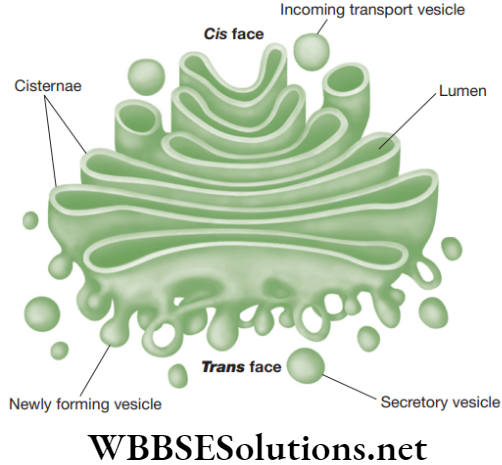
Answer. 3. A-4, B-5, C-1, D-3, E-2
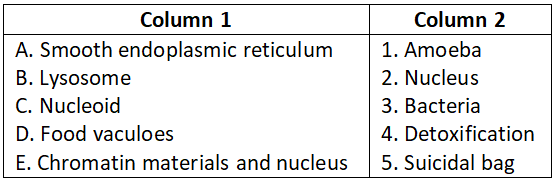
Question 4.

NEET Foundation Biology The Fundamental Unit Of Life Correct Option 4

Select the correct option.

  1. A-1, B-2, C-3, D-4, E-5
  2. A-5, B-4, C-1, D-2, E-3
  3. A-4, B-5, C-1, D-3, E-2
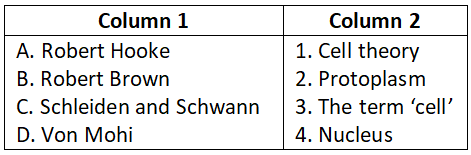
  4. A-4, B-5, C-3, D-1, E-2
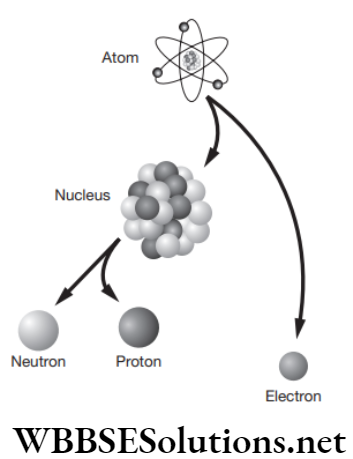
Answer. 3. A-4, B-5, C-1, D-3, E-2
Question 5.

NEET Foundation Biology The Fundamental Unit Of Life Correct Option 5

Select the correct option.

  1. A-1, B-2, C-3, D-4
  2. A-1, B-4, C-3, D-2
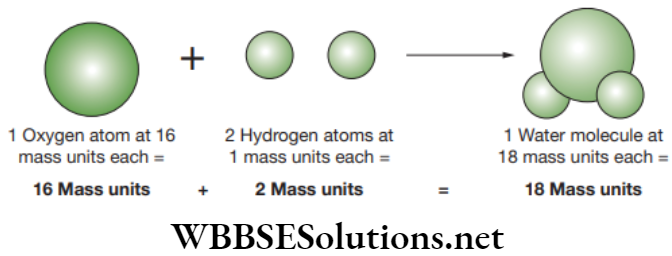
  3. A-3, B-4, C-1, D-2
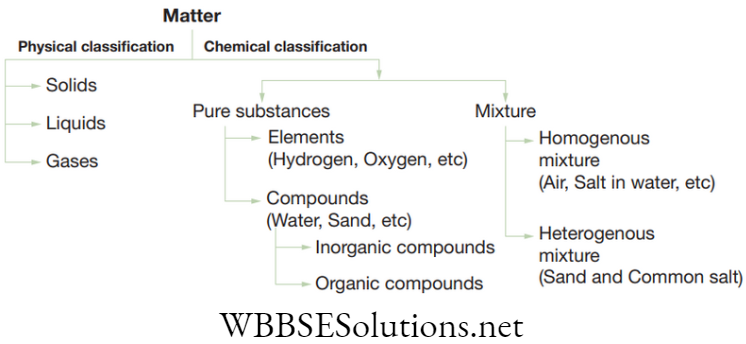
  4. A-2, B-4, C-3, D-1

Answer. 3. A-3, B-4, C-1, D-2

NEET Foundation Chemistry Notes For Chapter 3 Atoms And Molecules

NEET Foundation Chemistry Notes For Chapter 3 Atoms And Molecules

For ages, ancient Indian and Greek philosophers wondered about the unseen and unknown form of matter. Around 500 bc, India, the idea of divisibility of matter took shape.

Maharishi Kanad, An Indian philosopher, suggested that if we kept on diving matter (padarth), we will get smaller and smaller particles and ultimately, a time will come when the further division will not be possible and we will obtain the smallest particle of the matter.

He called these particles as parmanu. Pakudha Katyayama, another Indian philosopher, postulated that these exists in the combined form which is the reason for the varied forms of matter.

Read and Learn More: NEET Foundation Notes

All matters are made up of atoms. Atoms do not exist independently. Atoms are further divided into ions and molecules. Molecules and ions collectively in large number forms matter.

NEET Foundation Chemistry Atoms and molecules

Atoms And Molecules

NEET Foundation Chemistry Notes For Chapter 3 Atoms And Molecules Laws of Chemical Combination

A molecule is a group of atoms that are chemically bonded together and held by intermolecular force. The tiniest particle of an element which exists independently by inheriting all the characteristics of that substance is called a molecule.

Matter transforms from one state to the other under certain circumstances. This phenomenon takes place due to combination of two types of matter. This process of combination of different elements to form compounds takes place under certain rule.

Chemistry is the study of the transformation of matter from one form to the other. These transformations often occur as a result of the combination of two different types of matter. The combination of different elements to form compounds is governed by certain basic rules. These rules are referred to as laws of chemical combination.

The rules are known as laws of chemical combination. The rules that aid the chemical combinations of elements are discussed below.

Law of Conservation of Mass

Law of conservation of mass was given by Antoine Lavoisier and verified by Landolt. According to this law, during a chemical reaction matter is neither created nor destroyed, it may change from one form to other. After a chemical reaction the total mass of materials is same as the total mass before reaction.

Greek Philosopher Democritus (460–370 bc) and Leucippus also worked on the idea of division of matter. According to them sub-division of matter is limited. Democritus named the individual particles as ’atoms’ meaning indivisible.

Law of Constant or Definite Proportion

Law of definite proportion was given by Joseph Proust who was a French chemist. According to the law, in a given compound the proportion of elements by weight will always remain same irrespective of the methods of preparation.

Law of Multiple Proportions

Law of multiple proportions was given by Dalton in 1803 and verified by Berzelius. According to this law, when more than one compound is formed by combining two elements the masses of these elements in the reaction are in the ratio of small whole numbers.

Law of Equivalent Proportion or Law of Reciprocal Proportion

Law of equivalent proportion was given by Ritcher. According to this law, the weights of two or more elements which separately react with same weight of a third element are also the weights of these elements which react with each other or in simple multiple of them.

Gay-Lussac’s Law of Gaseous Volumes

Gay-Lussac’s law of Gaseous volumes was given by Gay–Lussac in 1808 and is applicable only for gases. This law was based on experimental observation done by Gay-Lussac. According to the law, the production of gases takes place in a simple ratio by volume, temperature and pressure being constant.

It can be treated as another form of law of definite proportions. The only difference between these two is that Gay Lussac’s Law is stated with respect to volume while law of definite proportions is stated with respect to mass.

Avogadro’s Law

Avogadro in 1811 gave Avogadro’s law which states that equal volume of gas contains equal number of molecules, temperature and pressure being constant.

NEET Foundation Chemistry Atoms And Molecules Avogadro's law

Atoms And Molecules Notes

Example: 2 litres of hydrogen contains same number of molecules as 2 litres of oxygen, temperature and pressure being constant of both gases.

Class 11 Physics Class 12 Maths Class 11 Chemistry
NEET Foundation Class 12 Physics NEET Physics

NEET Foundation Chemistry Notes For Modern Periodic Table

In recent times, IUPAC (International Union of Pure and Applied Chemistry) approves names of elements. Many of the symbols are the first one or two letters of the element’s name in English.

The first letterof a symbol is always written as a capital letter (uppercase) and the second letter as a small letter (lowercase).

NEET Foundation Chemistry Atoms And Molecules Symbols of elements

NEET Foundation Chemistry Notes For Chapter 3 Atoms And Molecules About Molecule

Molecules of elements: A molecule is made up of atoms. Molecules of elements are made up of same types of atoms. Some molecules may be made up of a single atom.

Example: Helium, But in most of the cases the molecules are made up of two or more atoms. The number of atoms needed to make a molecule is called as atomicity of that element.

Molecules of compounds: A compound is a molecule made up of 2 or more different types of atoms.

Example: 1 molecule of water contains 2 molecules of hydrogen and 1 molecule of oxygen. Similarly, 1 molecule hydrochloric acid contains 1 molecule of hydrogen and 1 molecule of chlorine.

NEET Foundation Chemistry Atoms And Molecules Water Molecule

Molecules of some compounds

NEET Foundation Chemistry Atoms And Molecules Molecules of some compounds

Atomicity

It refers to the number of atoms present in one molecule of an element or substance.

For example one molecule of HCl has one atom of hydrogen and one atom of chlorine. So, the atomicity of HCl is 2. The molecules are called Monatomic, Diatomic or triatomic depending on the number of atoms present in it.

Atomicity of some elements

NEET Foundation Chemistry Atoms And Molecules Atomicity of some elements

Ion

An ion is defined as an electrically charged atom or group of atoms formed by the loss or gain of one or more electrons. A positive ion is created by electron loss and a negative ion is created by an electron gain.

Example: Air conditioners, fluorescent lamps and printers, etc., are generators of positive ion or cation, which is very harmful for health.

On the other hand negative ions are in abundance in forests. The natural negative ions neutralize the harmful positive ions in the atmosphere as they attract dust particles and other pollutants.

Positively charged ion is called cation and a negative ion called anion.

Some common, simple and polyatomic ions

NEET Foundation Chemistry Atoms And Molecules Some common simple and polyatomic ions

NEET Foundation Chemistry Notes For Chapter 3 Atoms And Molecules Writing Chemical Formulae

The chemical formula of a compound represents its chemical composition. A chemical formula essentially indicates 2 things:

  • The elements which constitutes that compound and the number of each element in it.
  • The number of each constituent.

The atoms of the elements are indicated by the symbols and the number is indicated as a subscript with the symbol.

Example: In CO2, C and O are the symbols of carbon and oxygen respectively while 2 indicates that 2 atoms of oxygen have been used in the compound.

There are three fundamental rules of writing chemical formula:

  • The valencies of the elements must balance.
  • When a compound contains both metal and non-metal elements the name of metal comes first.Example: Sodium Chloride (NaCl)
  • In polyatomic ion compounds, the ion is enclosed in bracket before writing the formula to indicate the ratio. In case the ion is mono-atomic then bracket is not required.

Formula of Simple Compound

For writing a formula for the simple compound the symbol and the valencies of the atoms are written and then the valencies are crossed with the atom to balance the formula.

NEET Foundation Chemistry Atoms And Molecules Formula of simple compound

Illustration 1: Figure explains that the valency of carbon atom is 4 while that of chlorine is 1. To balance the formula the valency is crossed with the symbol to write the correct formula.

Formulation of Ionic Compounds

When writing a formula with ionized atoms it should be kept in mind that the cation and anion should be balanced.

NEET Foundation Chemistry Atoms And Molecules Formation of ionic compounds

Illustration 2: The figure explains that the Aluminum atom has 3 positive charges while Oxygen atom has 2 negative charges. To balance this, 2 atoms of Al and 3 atoms of O are used to form neutralized Al2O3.

NEET Foundation Chemistry Notes For Chapter 3 Atoms And Molecules Molecular Mass and Mole Concept

The molecular mass is the sum of atomic masses of all the atoms present in the molecule. The relative mass of molecule is expressed in atomic mass unit (u). The formula unit mass is the sum of the atomic masses of all atoms in a formula unit of a compound. It is calculated in the way we calculate the molecular mass. We use formula unit for those substances which are made up of ions.

Atomic Mass Unit (u) is defined as a unit of mass used to express atomic and molecular weights, equal to one twelfth of the mass of an atom of carbon-12.

Example: Atomic mass of carbon is 12.0 u while atomic mass of oxygen atom is 16.0 u, so the molecular mass of 1 molecule of CO2 will be 44.0 u (12.0 u + 16.0 u + 16.0 u).

Mole Concept

It is not necessary that all the substances are formed by joining of atoms. In practice 2 or more molecules can also be mixed to get new substances.

Example: 2 molecules of hydrogen combine with 1 molecule of oxygen to make 2 molecules of water. It is evident from this example that 2 hydrogen and 1 oxygen is the minimum required unit to create molecule of water.

In other words mole is the number of atoms in 12 grams of C-12. This is the basic counting unit for scientists.

1. The number of atoms in 12 gram of C-12 is 6.022 × 10²³. This is called Avogadro’s number.

2. When Avogadro number is divided by mole it becomes a constant known as Avogadro’s constant denoted by NA ⋅ NA = 6.02 × 10²³ mol-1.

Example: Atomic mass of carbon (C) is 12 u.

This means 12 u C has only 1 atom of carbon.

12 g carbon has 1 mole atoms of carbon

Therefore, 12 gram carbon has 6.02 × 10²³ atoms of carbon.

Similarly, atomic mass of He (Helium) is 4 u

4 u He will have only 1 atom of He.

4 gram of He will have 1 mole atoms of He.

Therefore, 4 grams He has 6.02 × 10²³ atoms of He.

Molar Mass

Mass of 1 mole of substance is called molar mass.

Example: Atomic mass of He is 4 u

So 4 u of He = 1 atom of He

So 4 gram of He = 1 mole atom of He

Therefore, molar mass of He is 4 gram.

NEET Foundation Chemistry Notes For Chapter 3 Atoms And Molecules Fill In the Blanks

Question 1. Ozone is an example of __________ molecule.
Answer. Triatomic

Question 2. In water, the ratio of hydrogen and oxygen is __________.
Answer. 2:1

Question 3. The valency of nitrogen in NH3 is __________.
Answer. 3

Question 4. All noble gas molecules are __________ in nature.
Answer. Monoatomic

Question 5. The __________ is the sum of atomic masses of all the atoms present in the molecule.
Answer. Molecular Mass

Question 6. A __________ is a molecule made up of 2 or more different types of atoms.
Answer. Compound

Question 7. The number of atoms needed to make a molecule is called as __________ of that element.
Answer. Atomicity

Question 8. During a chemical reaction matter is neither created nor destroyed, it may change from one form to other, is explained by___________ law.
Answer. Conservation of Mass

Question 9. When there is more number of electrons than protons, the atom is called ________.
Answer. Anion

Question 10. __________ is a tendency in an atom to achieve the state of stability.
Answer. Valency

Question 11. While writing a chemical formula, brackets are required in case of ____________ ions.
Answer. Polyatomic

Question 12. Atoms of the elements are indicated by the ____________ in a chemical formula.
Answer. Symbols

Question 13. 6.022 × 10²³ is the number of atoms in 12 g of ____________.
Answer. Carbon – 12

Question 14. ___________ is the study of the transformation of matter from one form to the other.
Answer. Chemistry

Question 15. Mass of 1 mole of substance is called ____________.
Answer. Molar mass

Question 16. 6.022 × 10²³ is called the ____________.
Answer. Avogadro’s number

Question 17. Law of definite proportion was given by______________.
Answer. Joseph Proust

Question 18. __________ are basic building blocks of matter.
Answer. Atoms

Question 19. The total number of protons present in the nucleus of an atom is called_________.
Answer. Atomic number

Question 20. Electrons present in the outermost orbit are known as_________.
Answer. Valence electrons

Question 21. A positively charged ion is called ________.
Answer. Cation

Question 22. Air conditioners, fluorescent lamps and printers, etc., are generators of __________.
Answer. Ions

Question 23. ___________ refers to the number of atoms present in one molecule of an element or substance.
Answer. Atomicity

Question 24. When a compound contains both metal and non-metal elements the name of ___________ comes first.
Answer. Metal

NEET Foundation Chemistry Notes For Chapter 3 Atoms And Molecules True Or False

Question 1. Law of conservation of mass was given by Antoine Lavoisier and verified by Landolt. (True/False)
Answer. True

Question 2. Protons revolve around the nucleus of an atom (True/ False).
Answer. False

Question 3. The relative mass of molecule is expressed in atomic mass unit (u). (True/False)
Answer. True

NEET Foundation Chemistry Notes For Chapter 3 Atoms And Molecules Match the Column

Question 1. Match the following and choose the correct code:

NEET Foundation Chemistry Atoms And Molecules Correct Option 1

Select the correct option:

  1. A-4, B-3, C-1, D-2
  2. A-2, B-3, C-4, D-1
  3. A-3, B-1, C-2, D-4
  4. A-1, B-4, C-2, D-3

Answer. 3. A-3, B-1, C-2, D-4

Question 2. Match the following and choose the correct code:

NEET Foundation Chemistry Atoms And Molecules Correct Option 2

Select the correct option:

  1. A-4, B-1, C-2, D-3
  2. A-3, B-4, C-1, D-2
  3. A-2, B-3, C-4, D-1
  4. A-4, B-2, C-1, D-3

Answer. 2. A-3, B-4, C-1, D-2

Question 3. Match the following and choose the correct code:

NEET Foundation Chemistry Atoms And Molecules Correct Option 3

Select the correct option:

  1. A-4, B-3, C-1, D-2
  2. A-2, B-4, C-1, D-3
  3. A-1, B-3, C-2, D-4
  4. A-3, B-2, C-4, D-1

Answer. 1. A-4, B-3, C-1, D-2

Question 4. Match the following and choose the correct code:

NEET Foundation Chemistry AToms And Molecules Correct Option 4

Select the correct option:

  1. A-4, B-3, C-2, D-1
  2. A-2, B-1, C-4, D-3
  3. A-3, B-2, C-1, D-4
  4. A-3, B-4, C-2, D-1

Answer. 4. A-3, B-4, C-2, D-1

Question 5. Match the following and choose the correct code:

NEET Foundation Chemisty Atoms And Molecules Correct Option 5

Select the correct option:

  1. A-3, B-4, C-2, D-1
  2. A-2, B-4, C-1, D-3
  3. A-1, B-2, C-4, D-3
  4. A-4, B-3, C-2, D-1

Answer. 2. A-2, B-4, C-1, D-3

NEET Foundation Chemistry Notes For Chapter 3 Atoms And Molecules Assertion Reasoning

For the following questions the options will remain the following:

  1. Both A and R are correct and R is correct explanation of A.
  2. Both A and R are correct but R is not a logical explanation of A.
  3. A is correct but R is incorrect.
  4. R is correct but A is incorrect.

Question 1. Assertion: The molecular mass expressed in grams is called gram molecular mass.
Reason: The molecular mass is equal to the sum of the masses of all the atoms of a molecule.

Answer. 2. Both A and R are correct but R is not a logical explanation of A.

Question 2. Assertion: Ion is a charged chemical particle.
Reason: An ion that carries a positive charge is called a cation and an ion that carries a negative charge is called an anion.

Answer. 1. Both A and R are correct and R is correct explanation of A.

Question 3. Assertion: Molar volume is the volume occupied by various moles of a gas under any conditions of temperature and pressure.
Reason: It is equal to 22.4 liters.

Answer. Both A and R are correct and R is correct explanation of A.

NEET Foundation Chemistry Notes For Chapter 3 Atoms And Molecules Comprehension Passage

An atom is defined as the smallest particle of an element which may or may not be capable of free existence. Atom of hydrogen, oxygen, nitrogen, etc., are highly reactive and do not exist in the Free State. They exist in the combined state with atoms of the same element one atoms of the other elements. Dalton was the first scientist to suggest specific symbols for different elements.

Symbols used by him also represented the quantity of the element, i.e., one atom of the element. The actual masses of the atoms are so small that it is difficult to determine the actual masses of individual atoms. For example, actual mass of an atom of hydrogen is found to be 1.673 × 10⁻²⁴ g which is extremely small.

However, it was found convenient to compare the masses of atoms of different element with some reference atom. The masses thus obtained are called relative atomic masses and the scale on which these masses are expressed is called atomic mass scale.

A molecule is the smallest particle of a compound which can exist freely under ordinary conditions and shows all the properties of that substance. Molecules of some elements are very big in size containing a large number of atoms linked together. For example, graphite and diamond contain an infinite number of carbon atoms linked together.

These elements are simply represented by their atomic symbols. A third crystalline form of carbon discovered recently contains 60 C-atoms linked together. It is represented by C60 and is known as Buckminsterfullerene. Molecules of a compound are two or more atoms of different elements combined together in a definite proportion by mass to form a species that can exist freely.

As molecules are made up of two or more atoms of the same or different elements and each atom has a definite atom mass, therefore, molecular mass of a molecule of a substance can be calculated by adding atomic masses of all the atoms present in one molecule of the substance.

Questions:

Question 1. Molecule of a compound means ________.

  1. Atoms are held together by a chemical bond.
  2. To attract the shared pair of electrons.
  3. Different elements combined together in a definite proportion by mass.
  4. Compounds are formed by the combination of two or more non-metal atoms.

Answer. 3. Different elements combined together in a definite proportion by mass.

Question 2. Which of the following is true about Dalton’s symbols of elements?

  1. Suggested the specific symbols for different elements.
  2. Element is the relative mass of its atoms.
  3. Substances made up of the same kind of atoms.
  4. Atoms of the same element may have different masses.

Answer. 1. Suggested the specific symbols for different elements.

Question 3. Graphite and diamond contains ________.

  1. Fixed number of carbon atoms.
  2. Infinite number of carbon atoms.
  3. Very small number of carbon atoms.
  4. No carbon atoms.

Answer. 2. Infinite number of carbon atoms.

Question 4. How the carbon represents through the structure of Buckminsterfullerene?

  1. C-12
  2. Ca
  3. CI
  4. C60

Answer. 4. C60

Question 5. What is relative atomic mass?

  1. Masses of atoms of different element with some reference atom.
  2. Scale of the masses expressed.
  3. Average atomic mass of an element.
  4. Short method of representing an element.

Answer. 1. Scale of the masses expressed.

Question 6. Law of equivalent proportion was given by:

  1. Ritcher
  2. Joseph Proust
  3. Gay–Lussac
  4. Maharshi Kanad

Answer. 1. Ritcher

Question 7. If one walks to a forest, which type of ion he will find more naturally?

  1. Negative
  2. Positive
  3. Both
  4. None

Answer. 1. Negative

Question 8. What does the chemical formula of a compound represent?

  1. Physical composition
  2. Chemical composition
  3. Ions
  4. Atomic number

Answer. 2. Chemical composition

NEET Foundation Chemistry Multiple Choice Question And Answers

Chemistry Multiple Choice Question And Answers

Question 1. Air is a/an

  1. element
  2. compound
  3. mixture
  4. colloid

Answer. 3. mixture

Question 2. All the following are examples of chemical change, except

  1. magnetising of iron nail
  2. rusting of iron rod
  3. digestion of food
  4. souring of milk

Answer. 1. magnetising of iron nail

Question 3. Atomic number of an element gives

  1. the number of electrons in its atom
  2. the number of nucleons in its atom
  3. the weight of the atom of the element
  4. the total number of elementary particles in its atom

Answer. 1. the number of electrons in its atom

Question 4. Conversion of a substance directly from solid to vapour state is known as

  1. vapourization
  2. sublimation
  3. decomposition
  4. ionization

Answer. 3. decomposition

Question 5. Cooking oil can be converted into vegetable ghee by the process of

  1. hydrogenation
  2. distillation
  3. crystallization
  4. oxidation

Answer. 4. oxidation

Question 6. Colloids

  1. are true solutions
  2. are suspensions of one phase in another
  3. are two-phase systems
  4. contain only water soluble substances

Answer. 2. are suspensions of one phase in another

Question 7. Colloids are purified by

  1. peptization
  2. coagulation
  3. condensation
  4. dialysis

Answer. 1. peptization

Question 8. Distillation at reduced pressure is used for liquids which have

  1. high boiling points
  2. low boiling points
  3. high volatility
  4. decomposed before their boiling points

Answer. 4. decomposed before their boiling points

Question 9. Gases have

  1. a definite shape but not volume
  2. a definite volume and shape
  3. a definite volume but not shape
  4. neither definite volume nor shape

Answer. 4. neither definite volume nor shape

Question 10. Isotopes of an element

  1. are physically identical with each other
  2. are chemically identical with each other
  3. are not identical with each other
  4. have the same mass numbers

Answer. 2. are chemically identical with each other

Question 11. Milk is an example of

  1. sol
  2. gel
  3. emulsion
  4. suspension

Answer. 3. emulsion

Question 12. Of all the gases present in the air, which one of the following is the highest in percentage?

  1. Carbon dioxide
  2. Hydrogen
  3. Nitrogen
  4. Oxygen

Answer. 3. Nitrogen

Question 13. Of the following particles, the particle having the least mass is

  1. meson
  2. neutron
  3. electron
  4. proton

Answer. 3. electron

Question 14. The atomic weight of uranium is

  1. 237
  2. 238
  3. 226
  4. 242

Answer. 2. 238

Question 15. The charge on the electron is

  1. 1.6 × 10⁻¹⁶ C
  2. 1.5 × 10⁻¹⁶ C
  3. –1.6 × 10⁻¹⁹ C
  4. 1.6 × 10¹⁹ C

Answer. 3. –1.6 × 10⁻¹⁹ C

Question 16. The chemical name of table salt is

  1. potassium chloride
  2. sodium chloride
  3. calcium chloride
  4. sodium hyposulphate

Answer. 2. sodium chloride

Question 17. The difference between isotopes of an element is due to the presence of a different number of

  1. protons
  2. neutrons
  3. electrons
  4. photons

Answer. 2. neutrons

Question 18. The ejection of electrons when a metal surface is irradiated is called

  1. black body radiation
  2. photoelectric effect
  3. zeeman effect
  4. atomic spectrum

Answer. 2. photoelectric effect

Question 19. The major constituent of air is

  1. nitrogen
  2. carbon dioxide
  3. oxygen
  4. hydrogen

Answer. 1. nitrogen

Question 20. The mass number of a nucleus is

  1. always less than its atomic number
  2. the sum of the number of protons and neutrons present in the nucleus
  3. always more than the atomic weight
  4. a fraction

Answer. 2. the sum of the number of protons and neutrons present in the nucleus

Question 21. The mass of one Avogadro number of helium atom is

  1. 1.00 g
  2. 4.00 g
  3. 8.00 g
  4. 4 × 6.02 × 1023 g

Answer. 3. 8.00 g

Question 22. The maximum capacity of any orbital is

  1. 2
  2. 6
  3. 14
  4. Cannot be determined unless the principal quantum number is known

Answer. 2. 6

Question 23. The melting point of copper is

  1. 1,083°C
  2. 732°C
  3. 327°C
  4. 1,835°C

Answer. 1. 1,083°C

Question 24. The most abundant rare gas in the atmosphere is

  1. He
  2. Ne
  3. Ar
  4. Xe

Answer. 3. Ar

Question 25. The nuclear particles that are assumed to hold nucleons together are

  1. electrons
  2. positrons
  3. neutrons
  4. mesons

Answer. 4. mesons

Question 26. The nucleus of a hydrogen atom consists of

  1. one proton + one neutron
  2. one proton + two neutrons
  3. one neutron only
  4. one electron only

Answer. 3. one neutron only

Question 27. Tritium has an atomic number of

  1. 3
  2. 2
  3. 1
  4. 4

Answer. 1. 3

Class 11 Physics Class 12 Maths Class 11 Chemistry
NEET Foundation Class 12 Physics NEET Physics

Question 28. Which of the following has the same atomic number and atomic weight?

  1. Hydrogen
  2. Helium
  3. Oxygen
  4. Nitrogen

Answer. 2. Helium

Question 29. Which of the following is a chemical change?

  1. evaporation of water
  2. burning of candle
  3. glowing of an electric bulb
  4. liquefaction of air

Answer. 1. evaporation of water

Question 30. Which of the following is a mixture?

  1. gunpowder
  2. iron sulphate
  3. brass
  4. dry ice

Answer. 4. dry ice

Question 31. Which of the following is incorrect?

  1. Mercury: Hg
  2. Silver: Ag
  3. Sodium: Na
  4. Potassium: Ka

Answer. 2. Silver: Ag

Question 32. Which of the following is not a chemical action?

  1. Burning of coal
  2. Conversion of water into steam
  3. Digestion of food
  4. Burning of paper

Answer. 2. Conversion of water into steam

Question 33. A small quantity of a mixture of two days can be separated by

  1. fractional distillation
  2. paper chromatography
  3. sublimation
  4. steam distillation

Answer. 4. steam distillation

Question 34. Bohr model of an atom could not account for

  1. emission spectrum
  2. absorption spectrum
  3. line spectrum of hydrogen
  4. fine spectrum

Answer. 1. emission spectrum

Question 35. Camphor can easily be purified by the process of

  1. sublimation
  2. distillation
  3. crystallization
  4. sedimentation

Answer. 2. distillation

Question 36. Gunpowder is a mixture of

  1. sulphur, carbon and phosphorus
  2. sulphur, charcoal and nitre
  3. sulphur, charcoal and carbon
  4. carbon, nitrogen and chlorine

Answer. 3. sulphur, charcoal and carbon

Question 37. Match the following columns

List I                     List II

A. Mercury          1. Element

B. Oxygen           2. Compound

C. Water             3. Mixture

D. Air Codes       4. Metal

A      B     C     D

1      2      3     4

4      3      2     1

4      1      2     3

4      2      3     1

Answer. 3. 4 1 2 3

Question 38. Blue colour of the sky is due to

  1. absorption of light by dust particles
  2. reflection of light by dust particles
  3. scattering of light by dust particles
  4. the presence of clouds which are a colloidal dispersion of water particles in air

Answer. 1. absorption of light by dust particles

Question 39. If NA is Avogadro‘s number, then number of electrons in 4.2 g of azide ions (N3) is

  1. 2 NA
  2. 4.2 NA
  3. 1.6 NA
  4. 3.6 NA

Answer. 2. 4.2 NA

Question 40. The number of atoms present in 21.6 g of silver (atomic weight = 108) are same as the molecules in

  1. 1.8 g of H2O
  2. 12 moles of KMnO4
  3. 0.6 N H2SO4
  4. 4.6 g of C2H5OH

Answer. 1. 1.8 g of H2O

Question 41. 19.7 kg of gold was recovered from a smuggler. how many atoms of gold were recovered?

(Au = 197)

  1. 6.02 × 1025
  2. 6.02 × 1024
  3. 6.02 × 10²³
  4. 6.02 × 10²²

Answer. 1. 6.02 × 1025

Question 42. Butter is an example of

  1. gel
  2. emulsion
  3. sol
  4. foam

Answer. 3. sol

Question 43. An element M has an atomic number 9 and atomic mass 19. Its ion will be presented by

  1. M
  2. M2+
  3. M
  4. M2-

Answer. 2. M2+

Question 44. Milk is

  1. fat dispersed in milk
  2. fat dispersed in water
  3. water dispersed in fat
  4. water dispersed in oil

Answer. 2. fat dispersed in water

Question 45. the formula of the compound is A2B5. The number of electrons in the outermost orbits of A and B respectively are

  1. 6 and 3
  2. 5 and 6
  3. 5 and 2
  4. 2 and 3

Answer. 4. 2 and 3

Question 46. Milk is a mixture of

  1. fats and water
  2. carbohydrates and water
  3. carbohydrates, fats and water
  4. carbohydrates, fats, proteins and water

Answer. 2. carbohydrates and water

Question 47. Swelling of a sprained foot is reduced by soaking in hot water containing a large amount of common salt. This is because of a phenomenon called

  1. osmosis
  2. plasmolysis
  3. electrolysis
  4. dialysis

Answer. 4. dialysis

Question 48. The percentage, by weight, of water in the human body is

  1. 20
  2. 40–45
  3. 5–10
  4. 70–75

Answer. 4. 70–75

Question 49. The so-called fourth state of matter refers to

  1. mercury
  2. LPG
  3. dry ice
  4. plasma

Answer. 3. dry ice

Question 50. Which of the following cannot be purified by sublimation?

  1. iodine
  2. camphor
  3. citric acid
  4. naphthalene

Answer. 2. camphor

Question 51. Which of the following gases in air unites with many metals?

  1. hydrogen
  2. oxygen
  3. helium
  4. carbon dioxide

Answer. 1. hydrogen

Question 52. Why does milk curdle?

  1. fermentation of lactose
  2. reaction of microbes
  3. overheating
  4. fungus growth

Answer. 3. overheating

Question 53. A fractionating column is a glass apparatus used to

  1. separate magnetic solids from nonmagnetic solids
  2. separate a mixture in water
  3. separate two or more liquids
  4. extract oils from vegetable matter

Answer. 1. separate magnetic solids from nonmagnetic solids

Question 54. In case of a chemical change, which of the following is generally affected?

  1. electron
  2. proton
  3. neutron
  4. nucleus

Answer. 1. electron

Question 55. In the natural ‘water cycle’, water gets purified by

  1. evaporation and condenzation
  2. sedimentation
  3. filtration
  4. distillation

Answer. 3. filtration

Question 56. Neutrons are obtained by

  1. bombardment of radium with a-particles
  2. bombardment of beryllium with a particles
  3. radioactive disintegration of uranium
  4. None of these

Answer. 2. bombardment of beryllium with a particles

Question 57. Radioactive isotope of hydrogen is

  1. Hydride ion
  2. Tritium
  3. Protium
  4. Deuterium

Answer. 3. Protium

Question 58. The British physicist who received the 1923 Nobel Prize in Physics for discovering the electron is

  1. John Dalton
  2. James Chadwick
  3. J J Thomson
  4. E Rutherford

Answer. 2. James Chadwick

Question 59. The number of electrons present in H+ is

  1. zero
  2. one
  3. two
  4. three

Answer. 3. two

Question 60. The smallest particle of a pure substance showing all the properties is

  1. always an atom
  2. always a molecule
  3. may be an atom or a molecule
  4. a proton

Answer. 2. always a molecule

Question 61. The total energy of an electron revolving round the nucleus is

  1. less than zero
  2. zero
  3. more than zero
  4. more than zero in some atoms and less than zero in other atoms

Answer. 1. less than zero

Question 62. When hydrogen nuclei trap neutrons, they become

  1. hydrogen atoms
  2. deuterons
  3. tritium atom
  4. beta rays

Answer. 2. deuterons

Question 63. Which of the following statements concerning an electron is false?

  1. It is a particle
  2. It has wave properties
  3. Its path is bent by a magnet
  4. It gives out energy while moving in orbit

Answer. 4. It gives out energy while moving in orbit

Question 64. Which of the following statements is true?

  1. The ‘free’ electron outside the atom can have only discrete energy, in accordance with the quantum theory
  2. The electron inside the atom can have a continuous range of energies
  3. The kinetic energy of a free electron outside the atom can have any value in a continuous range
  4. None of these

Answer. 3. The kinetic energy of a free electron outside the atom can have any value in a continuous range

Question 65. _________is the simplest form of matter.

  1. Liquid
  2. Solid
  3. Gas
  4. Plasma

Answer. 3. Gas

Question 66. A solution can be

  1. Dilute and concentrated
  2. Saturated and dilute
  3. Saturated and unsaturated
  4. Supersaturated and saturated

Answer. 2. Saturated and dilute

Question 67. Alpha rays are actually

  1. 1 protons 2 neutrons
  2. 2 protons 2 electrons
  3. 2 protons 2 neutrons
  4. 2 protons 1 neutrons

Answer. 3. 2 protons 2 neutrons

Question 68. Atomic weight of Ca is

  1. 20
  2. 40
  3. 45
  4. 80

Answer. 2. 40

NEET Foundation Physics Multiple Choice Questions

Physics Check Your Understanding

Question 1. Which of the following is different from others?

  1. Wavelength
  2. Velocity
  3. Frequency
  4. Amplitude

Answer. 4. Amplitude

Question 2. If a force of 250 N acts on a body, the momentum acquired is 125 kgms-1, what is the period for which force acts on the body?

  1. 0.5s
  2. 0.2s
  3. 0.4s
  4. 0.25 s
  5. 125 × 250 s

Answer. 1. 0.5s

Question 3. The escape velocity on the surface of the earth is 11.2 kms-1. If mass and radius of a planet is 4 and 2 times respectively than that of earth, what is escape velocity from the planet?

  1. 11.2kms-1
  2. 1.112kms-1
  3. 15.8kms-1
  4. 22.4kms-1
  5. None of these

Answer. 5. None of these

Question 4. Which is constant for a satellite in an orbit?

  1. Velocity
  2. Kinetic energy
  3. Angular momentum
  4. Potential energy
  5. Acceleration

Answer. 4. Acceleration

Question 5. A boy walks to his school at a distance of 6 km with a speed of 2.5kmh-1 and walks back with a constant speed of 4 kmh-1. His average speed for round trip expressed in kmh-1 is

  1. 24/13
  2. 40/13
  3. 3
  4. 4.8

Answer. 1. 24/13

Question 6. A particle of mass 0.1kg is subjected to a force which varies with distance as shown below. If it starts its journey from rest at x = 0, its velocity at x = 12m is

NEET Foundation Physics Multiple Choice Questions A particle of mass

  1. 0ms-1.
  2. 20 √2 ms-1 .
  3. 20 √3 ms-1 .
  4. 40ms-1.

Answer. 3. 20√3ms-1 .

Question 7. A particle reaches its highest point when it has covered exactly one half of its horizontal range. The corresponding point on the displacement time graph is characterized by

  1. negative slope and zero curvature
  2. zero slope and negative curvature
  3. zero slope and positive curvature
  4. positive slope and zero curvature

Answer. 2. zero slope and negative curvature

Question 8. A ball thrown upward with a velocity of 100 ms-1. It will reach the ground after

  1. 10s
  2. 20s
  3. 5s
  4. 40s

Answer. 1. 10s

Question 9. Which of the following quantity is expressed as force per unit area?

  1. Work
  2. Pressure
  3. Volume
  4. Area

Answer. 1. Work

Question 10. A bullet of mass 0.1kg is fired with a speed of 100ms-1, the mass of gun is 50kg. The velocity of recoil is

  1. 0.2ms-1.
  2. 0.1ms-1.
  3. 0.5ms-1.
  4. 0.05ms-1.

Answer. 3. 0.5ms-1.

Question 11. A body of mass 2kg moving with a velocity of 3ms-1collides head on with a body of mass 1 kg moving with a velocity of 4 ms-1 in the opposite direction. After collision the two bodies stick together and move with common velocity which in the units ms-1 is equal to

  1. 1/4
  2. 1/3
  3. 2/3
  4. 3/4

Answer. 2. 1/3

Question 12. In a satellite if the time of revolution is T, then KE is proportional to

  1. \(\frac{1}{T}\)
  2. \(\frac{1}{T^2}\)
  3. \(\frac{1}{T^3}\)
  4. \(T^{-\frac{2}{3}}\)

Answer. 3. \(\frac{1}{T^3}\)

Question 13. The initial velocity of a particle is u(at2 = 0) and the acceleration f is given by a.t. Which of the following relations is valid?

  1. v = u + at2
  2. v = u + 1/2 at2
  3. v = u + at
  4. v = u

Answer. 3. v = u + at

Question 14. Which of the following four statements is false?

  1. A body can have zero velocity and still be accelerated.
  2. A body can have a constant velocity and still have a varying speed.
  3. A body can have a constant speed and still have a varying velocity.
  4. The direction of the velocity of a body can change when its acceleration is constant.

Answer. 2. A body can have a constant velocity and still have a varying speed.

Question 15. When a bicycle is in motion but not pedalled, the force of friction exerted by the ground on the two wheels is such that it acts

  1. in the backward direction on the front wheel and in the forward direction on the rear wheel
  2. in the forward direction on the front wheel and in the backward direction on the rear wheel
  3. in the forward direction on both the wheels
  4. in the backward direction on both the wheels

Answer. 3. in the forward direction on both the wheels

Class 11 Physics Class 12 Maths Class 11 Chemistry
NEET Foundation Class 12 Physics NEET Physics

Question 16. A body dropped from a height h with an initial speed zero, strikes the ground with a velocity 3 kmh1. Another body of same mass is dropped from the same height ‘h’ with an initial speed u’ = 4 kmh-1. Find the final velocity of second body, with which it strikes the ground.

  1. 3kmh-1
  2. 4kmh-1
  3. 5kmh-1
  4. 12kmh-1

Answer. 3. 5kmh-1

Question 17. If the increase in the kinetic energy of a body is 22%, then the increase in the momentum is nearly

  1. 22%
  2. 44%
  3. 10%
  4. 300%

Answer. 3. 10%

Question 18. A car moves for half of its time at 80 kmh-1 and for rest half of time at 40 kmh-1. The total distance covered is 60 km. What is the average speed of the car?

  1. 60 kmh-1
  2. 80 kmh-1
  3. 120 kmh-1
  4. 180 kmh-1

Answer. 1. 60 kmh-1

Question 19. The engine of a car produces acceleration 4 ms-2 in the car. If this car pulls another car of same mass, what will of the acceleration produced?

  1. 8ms-2
  2. 2ms-2
  3. 4ms-2
  4. 1/2 ms-2

Answer. 4. 1/2 ms-2

Question 20. Two bodies of 4g and 16g have same kinetic energy. What is the ratio of their momenta?

  1. 1:4
  2. 1:2
  3. 2:1
  4. 4:1

Answer. 1. 1:4

Question 21. A motor car is moving with speed 30ms-1 on a circular path of radius 500m. Its speed is increasing at the rate of 2ms-2, what will be its resultant acceleration?

  1. 2.5ms-2
  2. 2.7ms-2
  3. 2ms-2
  4. 4.5ms-2

Answer. 3. 2ms-2

Question 22. The distance of the centres of moon and earth is D. The mass of earth is 81 times the mass of the moon. At what distance from the centre of the earth, the gravitational force will be zero?

  1. \(\frac{D}{2}\)
  2. \(\frac{2 D}{3}\)
  3. \(\frac{4 D}{3}\)
  4. \(\frac{9 D}{10}\)

Answer. 4. \(\frac{9 D}{10}\)

Question 23. A ball of mass m moving with a constant velocity strikes against a ball of same mass at rest. If e = coefficient of restitution, then what will be the ratio of the velocity of two balls after the collision?

  1. \(\frac{1-e}{1+e}\)
  2. \(\frac{e-1}{e+1}\)
  3. \(\frac{1+e}{1-e}\)
  4. \(\frac{2+1}{e-1}\)

Answer. 1. \(\frac{1-e}{1+e}\)

Question 24. An inelastic ball is dropped from a height of 100m. Due to earth, 20% of its energy is lost. To what height the ball will rise?

  1. 80 m
  2. 40 m
  3. 60 m
  4. 20 m

Answer. 1. 80 m

Question 25. What remains constant when the earth revolves around the sun?

  1. Angular momentum
  2. Linear momentum
  3. Angular kinetic energy
  4. Linear kinetic energy

Answer. 3. Angular kinetic energy

Question 26. Where will it be profitable to purchase 1 kilogram sugar?

  1. At poles
  2. At equator
  3. At 45° latitude
  4. At 40° latitude

Answer. 1. At poles

Question 27. What remains constant in the field of central force?

  1. Potential energy
  2. Kinetic energy
  3. Angular momentum
  4. Linear momentum

Answer. 3. Angular momentum

Question 28. A body is rolling without slipping on a horizontal surface and its rotational kinetic energy is equal to the translational kinetic energy. The body is a

  1. disc
  2. sphere
  3. cylinder
  4. ring.

Answer. 3. cylinder

Question 29. If a body of mass 200 g falls from a height 200m and its total potential energy is converted into kinetic energy at the point of contact of the body with earth surface, then what is the decrease in potential energy of the body at the contact? (Take g = 10ms-2)

  1. 200J
  2. 400J
  3. 600J
  4. 900J

Answer. 4. 900J

Question 30. If momentum is increased by 20%, then kinetic energy increases by

  1. 44%
  2. 55%
  3. 66%
  4. 77%

Answer. 1. 44%

Question 31. Who among the following gave first the experimental value of G?

  1. Cavendish
  2. Copernicus
  3. Brook Teylor
  4. None of these

Answer. 1. Cavendish

Question 32. If a body starts from rest and travels 120cm in the 6th second then what is the acceleration?

  1. 0.20ms-2
  2. 0.027ms-2
  3. 0.218ms-2
  4. 0.03ms-2

Answer. 2. 0.027ms-2

Question 33. There are two bodies of masses 100 kg and 10,000 kg separated by a distance 1 m. At what distance from the smaller body, the intensity of gravitational field will be zero?

  1. 1/9m
  2. 1/10m
  3. 1/11m
  4. 10/11m

Answer. 3. 1/11m

Question 34. If the radius of the earth shrinks by 1.5% (mass remaining same), then the value of acceleration due to gravity changes by

  1. 1%
  2. 2%
  3. 3%
  4. 4%

Answer. 2. 2%

Question 35. Adjacent figure belows shows the force displacement the graph of a moving body. The work done in displacing body from x = 0 m to x = 35m is equal to

NEET Foundation Physics Multiple Choice Questions The Force Displacement the graph of a moving body

  1. 50J
  2. 25J
  3. 250J
  4. 200J

Answer. 1. 50J

Question 36. A solid of relative density D is floating in a liquid of density d. If v be the volume of solid submerged in the liquid and V be the total volume of the solid, then

  1. uV = dD
  2. \(\frac{V}{v}=\frac{D}{d}\)
  3. \(\frac{v}{V}=\frac{D}{d}\)
  4. DV = (1+d)v

Answer. 3. \(\frac{v}{V}=\frac{D}{d}\)

Question 37. A ball of mass m1 and an another ball of mass m2 are dropped from equal height. If time taken by the ball are t1 and t2, respectively then

  1. \(t_1=\frac{t_2}{2}\)
  2. t1 = t2
  3. t1 = 4t2
  4. \(t_1=\frac{t_2}{4}\)

Answer. 1. \(t_1=\frac{t_2}{2}\)

Question 38. A person is observing two trains; one is approaching him with a velocity of 4 ms-1, while the other is receding from him with the same velocity. If both the trains blow their respective whistles of frequency 240 hertz, the beat frequency heard by the observer will be (speed of sound in air = 320ms-1)

  1. 6
  2. 3
  3. zero
  4. 12

Answer. 1. 6

Question 39. One siren which is giving a sound of frequency 1000Hz, is going away from a stationary observer towards a wall with the speed of 10 ms-1. What is the frequency of sound heard directly from the siren? Speed of sound in air is 330ms-1?

  1. 970Hz
  2. 971Hz
  3. 972Hz
  4. 975Hz

Answer. 2. 971Hz

Question 40. In which medium sound travels faster?

  1. Steel
  2. Water
  3. Air
  4. Vacuum

Answer. 1. Steel

Question 41. Two sound waves of slightly different frequencies propagating in the same direction produce beats due to

  1. interference
  2. diffraction
  3. polarization
  4. refraction

Answer. 1. interference

Question 42. The frequency of a sound wave is f and its velocity is v. If the frequency is increased to 4f, the velocity of the wave will be

  1. v
  2. 2v
  3. 4v
  4. v/4

Answer. 1. v

Question 43. A source of sound of frequency 500Hz is moving towards an observer with velocity 30ms-1. The speed of sound is 330ms-1. The frequency heard by the observer will be

  1. 550Hz
  2. 458.3Hz
  3. 530Hz
  4. 454.5Hz

Answer. 1. 550Hz

Question 44. Two sound sources emit sound of wavelength l. They are fixed apart at a given distance. A listener moves with a velocity u along the line joining the two sources. The number of beats heard by him per second is

  1. \(\frac{u}{2 \lambda}\)
  2. \(\frac{2 u}{\lambda}\)
  3. \(\frac{u}{\lambda}\)
  4. \(\frac{u}{3 \lambda}\)

Answer. 2. \(\frac{2 u}{\lambda}\)

Question 45. A man is standing between two parallel cliffs and fires a gun. If he hears first and second echos after 1.5 s and 3.5 s respectively, the distance between the cliffs is (velocity of sound in air = 340ms-1)

  1. 1190m
  2. 850m
  3. 595m
  4. 510m

Answer. 2. 850m

Question 46. Ultrasonic signals sent from SONAR returns to it after reflection from a rock after a lapse of 1 s. If the velocity of ultrasound in water is 1,600ms-1, the depth of the rock in water is

  1. 300m
  2. 400m
  3. 500m
  4. 800m

Answer. 4. 800m

Question 47. Sound waves in air is always

  1. longitudinal
  2. transverse
  3. stationary
  4. electromagnetic

Answer. 1. longitudinal

Question 48. Rutherford’s ∝ scattering particle concludes that

  1. there is a heavy mass at centre
  2. electrons are revolving around the nucleus
  3. Both (a) and (b)
  4. None of these

Answer. 1. there is a heavy mass at centre

Question 49. A heavenly body that emits radio signals at regular intervals of time is called a

  1. quasar
  2. white dwarf
  3. red giant
  4. pulsar

Answer. 4. pulsar

Question 50. A large ship can float but a steel needle sinks because of

  1. viscosity
  2. surface tension
  3. density
  4. None of these

Answer. 4. None of these

Question 51. A moving body on earth ordinarily comes to rest by itself because of the

  1. law of inertia
  2. forces of friction
  3. conservation of momentum
  4. gravity

Answer. 2. forces of friction

Question 52. A person climbing a hill bends forward in order to

  1. avoid slipping
  2. increase speed
  3. reduce fatigue
  4. increase stability

Answer. 4. increase stability

Question 53. A piece of rock was brought from the moon to earth. Then

  1. its mass alone changed
  2. its weight alone changed
  3. both mass and weight changed
  4. neither its mass nor its weight changed

Answer. 2. its weight alone changed

Question 54. A red light is used in a traffic signal because

  1. it has the longest wavelength and can be easily noticed from a long distance
  2. it is beautiful
  3. it is visible even to people with bad eyesight
  4. None of these

Answer. 1. it has the longest wavelength and can be easily noticed from a long distance

Question 55. A shell, initially at rest suddenly explodes into two equal fragments A and B. Which one of the following is observed?

  1. A and B move in the same direction with the same speed.
  2. A and B move in the same direction with different speeds.
  3. A and B move in opposite directions with the same speed.
  4. A and B move in opposite directions with different speeds.

Answer. 3. A and B move in opposite directions with the same speed.

Question 56. A shooting star is

  1. a small star moving away from the earth at a very high speed
  2. a fast moving satellite that shines by sunlight
  3. a heavenly object that shines because it is heated by the friction of the earth’s atmosphere as it falls at a great speed
  4. a star of an extremely high density

Answer. 2. a fast moving satellite that shines by sunlight

Question 57. A shooting star is basically a

  1. meteor
  2. supernova
  3. comet trail
  4. disturbance in atmosphere

Answer. 1. meteor

Question 58. A sprayer works on the principle expounded by

  1. Newton
  2. Archimedes
  3. Boyle
  4. Pascal

Answer. 4. Pascal

Question 59. A tennis ball will bounce

  1. higher on the hills than on plains
  2. higher on the plains than on hills
  3. equally on the hills and plains
  4. higher either on the hills or on plains depending upon the ground friction

Answer. 1. higher on the hills than on plains

Question 60. A unit of energy is the same as that of

  1. work
  2. power
  3. force
  4. acceleration

Answer. 1. work

Question 61. An electric bulb produces a loud sound when broken because

  1. the air rushes into the partial vacuum in the bulb
  2. the gas inside it explodes
  3. the glass is brittle
  4. the gas inside it suddenly expands

Answer. 1. the air rushes into the partial vacuum in the bulb

Question 62. An iron hammer lying in the sun appears much hotter than its wooden handle because

  1. iron is at a higher temperature
  2. iron is darker than wood
  3. iron absorbs more heat
  4. iron is a good conductor of heat

Answer. 4. iron is a good conductor of heat

Question 63. An object moving around in a circle is moving with a

  1. uniform velocity
  2. uniform speed
  3. variable velocity
  4. variable speed

Answer. 3. variable velocity

Question 64. As the train starts moving, a man sitting inside leans backwards because of

  1. inertia of rest
  2. inertia of motion
  3. moment of inertia
  4. conservation of mass

Answer. 1. inertia of rest

Question 65. By what process heat transmitted from the filament of an evacuated electric bulb to the glass?

  1. Conduction
  2. Convection
  3. Radiation
  4. Heat cannot be transmitted through a vacuum

Answer. 3. Radiation

Question 66. Cathode rays were discovered by

  1. Rutherford
  2. J J Thomson
  3. Lord Kelvin
  4. Dirac

Answer. 2. J J Thomson

Question 67. Choose the only scalar quantity from the following:

  1. Energy
  2. Torque
  3. Momentum
  4. Force

Answer. 1. Energy

Question 68. Choose the only vector quantity from the following:

  1. Energy
  2. Length
  3. Density
  4. Torque

Answer. 4. Torque

Question 69. Clouds float in the atmosphere because of their low

  1. temperature
  2. speed
  3. pressure
  4. density

Answer. 4. density

Question 70. Cloudy nights are warmer because

  1. clouds prevent radiation of heat from the ground into the air
  2. of low atmospheric pressure
  3. of the compact density of air
  4. more dust particles gather in the air

Answer. 1. clouds prevent radiation of heat from the ground into the air

Question 71. Energy is not carried by

  1. transverse progressive waves
  2. longitudinal progressive waves
  3. stationary waves
  4. electromagnetic waves

Answer. 3. stationary waves

Question 72. Gravitational constant (G) is an example of

  1. non-dimensional constant
  2. dimensional constant
  3. numeric constant
  4. quantity without dimensions

Answer. 2. dimensional constant

Question 73. If a shell from a canon bursts in the air, the total kinetic energy

  1. increases
  2. decreases
  3. remains constant
  4. may increase or decrease

Answer. 1. increases

Question 74. If a train were to move with the velocity of light, its length would be

  1. infinite
  2. zero
  3. finite
  4. unchanged

Answer. 2. zero

Question 75. If the distance between two charges is halved, then the force between them becomes

  1. half
  2. double
  3. four times
  4. one-fourth

Answer. 3. four times

Question 76. Intensity of sound has

  1. an objective existence
  2. a subjective existence
  3. no existence
  4. both subjective and objective existence

Answer. 1. an objective existence

Question 77. Sound of frequency below 20 Hz are called

  1. audio sounds
  2. infrasonics
  3. ultrasonics
  4. supersonics

Answer. 2. infrasonics

Question 78. Sound travels fastest in

  1. air
  2. water
  3. vacuum
  4. steel

Answer. 2. water

Question 79. Sound travels fastest through

  1. vacuum
  2. steel
  3. water
  4. air

Answer. 2. steel

Question 80. Sound waves in air are

  1. transverse
  2. longitudinal
  3. electromagnetic
  4. polarized

Answer. 2. longitudinal

NEET Foundation Chemistry Notes For Chapter 4 Structure Of Atom

NEET Foundation Chemistry Notes For  Chapter 4 Structure Of Atom

Notes Of Structure Of Atom

As we have learnt in previous chapters, Matter is anything that occupies space and has mass and is made up of tiny particles called as atom. Different types of matter exists because of the different atoms that consists them. Now the question that comes to the mind is that: (i) how these atoms are different from each other? (2) Is it true that the atoms are indivisible, or they can be further divided?

These answers will be provided it the following chapter, where we will learn about the sub-atomic particles and how they were discovered. This chapter will also entail the reason behind the different properties of atoms due to which the matter is varied.

At the end of the 19th century, scientists were facing difficulties to reveal the actual structure of atom and were not able to explain the properties associated with them. There were series of experiments that elucidated the structure of atom.

Atoms are not divisible was first indicated by the study of static electricity and the conditions under which they are conducted.

NEET Foundation Chemistry Structure of Atom

Structure Of Atom

NEET Foundation Chemistry Notes For  Chapter 4 Structure Of Atom Charged Particles in Matter

There are almost 120 known elements in the periodic table. The atoms of different elements have different numbers of electrons, protons, and neutrons. Every element is unique and has an atomic number. That number tells you the number of protons in every atom of the element. The atomic number is also called the proton number.

Read and Learn More: NEET Foundation Notes

Atom is labeled with a “+”, “−”, or a “0.” Those symbols refer to the charge of the particle. Charges are also found in tiny particles of matter.

The electron always has a “−”, or negative charge. The proton always has a “+”, or positive charge. If the charge of an entire atom is “0”, or neutral, there are equal numbers of electrons and protons. The third particle is the neutron. It has a neutral charge, also known as a charge of zero.

Electrons

Electrons are negatively charged particles, which were discovered by J. J. Thomson in cathode ray experiment. The term electron was coined by GJ Stoney.

How the Electrons were Discovered?

Discovery of electrons

J. J. Thomson constructed a glass tube from which the air was pumped out and a high electrical voltage among the two electrodes which was placed at either end of the tube was is applied.

He detected that a stream of particle coming out from the negatively charged electrode called cathode to positively charged electrode called anode. This ray is called cathode ray, whole construction is called cathode ray tube and the particles were called electrons.

NEET Foundation Chemistry Structure Of Atom Cathode ray tube

Atomic Structure Notes

Protons

E Goldstein, in 1886 found that anode emits positively charged particles called protons in an anode ray experiment. These positively charged radiations are produced in discharge tube from the anode called canal rays. In 1909, Rutherford discovered proton in his famous gold foil experiment.

Class 11 Physics Class 12 Maths Class 11 Chemistry
NEET Foundation Class 12 Physics NEET Physics

Neutrons

Neutrons were discovered by James Chadwick in 1932 and are neutrally charged particles. It stays inside the nucleus of an atom except hydrogen.

Comparison of three sub-atomic particles

NEET Foundation Chemistry Structure Of Atom Comparison of three sub-atomic particles

How to Determine the Number of Proton, Electron and Neutron?

Gather Information

Find some information about your element, such as its atomic number (located in the upper left corner) and atomic weight (located on the bottom).

Consider an example for Krypton:

NEET Foundation Chemistry Structure Of Atom Representation of atomic number and atomic weight

Find the Number of Protons

The atomic number is the number of protons in an atom of an element. In our example, Krypton’s atomic number is 36, so it has 36 protons in its nucleus.

Find the Number of Electrons

Atoms must have equal numbers of protons and electrons. So, atom of Krypton must contain 36 electrons since it contains 36 protons.

Find the Number of Neutrons

The atomic weight measures the total number of particles present in an atom’s nucleus. As the nucleus is made up of protons and neutrons. So,

Mass Number = (Number of Protons) + (Number of Neutrons)

For Krypton, this equation becomes:

84 = (Number of Protons) + (Number of Neutrons)

84 = 36 + (Number of Neutrons) {Number of proton is calculated above}

Number of neutrons = 84 − 36

Number of neutrons = 48

NEET Foundation Chemistry Notes For Chapter 4 Structure of an Atom

Atomic models mainly explain the structure of an atom and also gave us an idea about how subatomic particles behave.

Thomson Model or Water Melon or Plum Pudding Model

In 1897, Thompson proposed that the structure of an atom is similar to that of a Christmas pudding. In this, atom is a positively charged sphere in which the electrons are embedded and the magnitude of positive and negative charge is same inside an atom so the net charge inside an atom is zero.

NEET Foundation Chemistry Structure Of Atom Thomson Model

Thomson Model Limitations

  • It could not explain the result of scattering experiment performed by Rutherford.
  • It did not give any experimental evidence in its support.

Rutherford’s Model or Planetary Model

In gold foil experiment, Rutherford bombarded a beam of alpha particles on an ultrathin gold foil of thickness about 1000 atoms. He uses alpha particles, as these are doubly charged helium ions which moves fast and has a considerable amount of energy.

Rutherford’s Model  Method

Fast moving alpha particles were bombarded on thin gold foil and after passing to the foil they hit the screen.

NEET Foundation Chemistry Structure Of Atom Rutherford's Model

Rutherford’s Model  Observations

  • Most of the alpha particles pass through the foil without getting deflected, which means that most of the space inside the atom is empty.
  • Some of the alpha particles were deflected by small angle, which means that the positive charge of the atom occupies very little space.
  • Some of the alpha particles rebound back, which means the entire positive charge and mass of the atom is concentrated in a very small volume inside an atom.

NEET Foundation Chemistry Structure Of Atom Rutherford's observation

Rutherford’s Model  Conclusions

  • All the positively charged particles are present in small space inside the atom called nucleus.
  • Electrons revolve around the nucleus.
  • Most of the space inside an atom is empty.
  • Total positive charge in nucleus is same as total negative charge on all electrons of atom, so the net charge of an atom is zero.

Rutherford’s Model  Limitations

  • Rutherford proposed that the electrons revolve around the nucleus in fixed paths called orbits. But according to Maxwell, an accelerated charged particle such as electron always emits an electromagnetic radiation and this radiation would carry energy from the motion of the electron which would come at the cost of shrinking of orbits. So, the electrons would collapse in the nucleus.
  • Rutherford did not say anything about the arrangement of electrons in an atom.

Bohr’s Atomic Model

In 1913, Neil Bohr proposed a model of atomic structure.

He proposed:

  • Electrons revolve around a positively charged nucleus in a certain orbit.
  • The whole mass of the atom is concentrated in the nucleus.
  • Electrons while revolving in an orbit do not radiate energy.
  • Orbits or shell are called energy levels, and are represented by the letter K, L, M, N … or by numbers n = 1, 2, 3 …
  • Energy level is associated with the definite amount of energy.
  • Energy changes when an electron jumps from one energy level to another.

NEET Foundation Chemistry Structure Of Atom Bohr's model of atom

With his model, Bohr explained how electrons jump from one orbit to another either by emitting or absorbing the energy in fixed quanta. Like, if an electron jumps from one orbit which is closer to the nucleus, it must emit energy which is equal to the difference of the energies of the two orbits.

Similarly, when an electron jumps to a larger orbit, it absorbs a light equal in energy to the difference in orbits.

Bohr’s orbits are called stationary states because the energies of orbits in which the electrons revolve are fixed.

Bohr’s Atomic Model Photoelectric Effect

There is immediate ejection of electrons from the surface of metal when light beam of certain frequency strikes on it. This is known as the photoelectric effect.

Heisenberg’s Uncertainty Principle

This principle states that it is impossible to decide both simultaneously and accurately position and momentum of a microscopic moving particle.

Quantum Numbers

They are used to specify the orbitals and the electrons. We will also discuss the principal quantum number, azimuthal quantum number, spin and magnetic quantum number.

Pauli’s Exclusion Principle

It is not possible for an atom to have all 4 quantum numbers same for two electrons.

Hunds’ Rule of Maximum Multiplicity

The pairing of orbitals of the atom is started only when each orbital has occupied one electron.

Schrödinger Wave Equation

The Schrödinger wave equation is used to find the probability of presence of electron. This place where probability of finding electron is highest is known as orbital.

NEET Foundation Chemistry Notes For  Chapter 4 Structure Of Atom Track Your learning Question And Answers

Question 1. The is immediate ejection of electrons from the surface of metal when light beam of certain frequency strikes on it is known as the ____________.
Answer. Photoelectric effect

Question 2. The Schrödinger wave equation is used to find the probability of presence of electron. (True/False)
Answer. True

Question 3. The place where probability of finding electron is highest is known as ____________.
Answer. Orbital

Question 4. ____________ are used to specify the orbitals and the electrons.
Answer. Quantum numbers

Question 5. Electrons while revolving in an orbit radiate energy. (True/False)
Answer. False

Chapter 4 Structure Of Atom Distribution of Electrons in Different Orbits

Electronic configuration is an arrangement of electrons in various shells of an atom of the element.

Electronic configurations describe electrons as each moves independently in an orbital. Mathematically, configurations is described by Slater determinants or configuration state functions.

According to the laws of quantum mechanics, if systems have only one electron, then its energy is associated with each electronic configuration and, on certain conditions, electrons are able to move from one configuration to another either by emitting or absorbing the quantum of energy, in form of photon.

Maximum number of electron which can be accommodated in any energy level is 2n2, where n = 1, 2, 3 … The maximum number of electrons which can be placed in an orbit is 8. Stepwise filling of shells is followed, like unless and until earlier shell is filled then only it can accommodate another shell.

Filling of orbits takes place from inside to outside. Maximum number of electrons in a given shell are:

  • K-shell, n = 1: Maximum electrons = 2n2, 2(1)2 = 2
  • L-shell, n = 2: Maximum electrons = 2n2, 2(2)2 = 8
  • M-shell, n = 3: Maximum electrons = 2n2, 2(3)2 = 18
  • N-shell, n = 4: Maximum electrons = 2n2, 2(4)2 = 32

Examples:

Electronic Configuration of Hydrogen (H)

Atomic number of hydrogen = 1

So, number of electrons = 1

Maximum number of electrons in 1st orbit = 2

Since, hydrogen has only one electron, so, it will reside in 1st orbit i.e in K-shell

Thus, electronic configuration of hydrogen:

Hydrogen and number of orbit present in hydrogen = 1

Electronic Configuration of Lithium (Li)

Atomic number of Lithium = 3

So, number of electrons = 3

Since the maximum number of electrons in 1st orbit, i.e., in K-shell= 2, so, after accommodating 2 electrons in 1st orbit, the third electron will go in 2nd orbit, i.e., in L-shell

Thus, electronic configuration of lithium is: Lithium and number of orbit in Lithium atom = 3.

Electronic Configuration of Calcium (Ca)

Atomic number of calcium = 20

So, number of electrons = 20

Electronic configuration of calcium is: Calcium and number of orbit in calcium = 4

NEET Foundation Chemistry Notes For  Chapter 4 Structure Of Atom Valency

It is the number of electrons which an atom must either give away or take in order to attain a stable electronic configuration. Valence electrons are the electrons present in the outermost orbit of an atom, thus determining the valency of an atom. Atom can obtain a stable configuration, either by:

  • Losing an electron
  • Gaining an electron
  • Sharing an electron

Valency = 8-valence electrons

Example:

Sulphur: It has 16 electrons.

Electronic configuration: n = 1, or K=1: 2 electrons

n = 2, or L = 2: 8 electrons

n = 3, or M = 3: 6 electrons

Its electronic configuration is 2,8,6. It has six electrons in its outermost orbit, so it requires two more electrons to complete its outermost orbit (M-shell). So it either takes two electrons to other atom or share electrons from another atom just to complete its octet.

Magnesium: It has 12 electrons.

Electronic configuration: n = 1, or K=1: 2 electrons

n = 2, or L = 2: 8 electrons

n = 3, or M = 3: 2 electrons

Magnesium molecule has an electronic configuration 2,8,2. It has two electrons in its outermost orbit, so it requires six more electrons to complete its outermost orbit (M-shell). So it will either donate its two electrons to other atom or share electrons from another atom just to complete its octet.

Valency of some elements

NEET Foundation Chemistry Structure Of Atom Valency of some elements

NEET Foundation Chemistry Notes For  Chapter 4 Structure Of Atom Atomic Number and Mass Number

Atomic Number

It is represented by Z. It is the number of protons which are present in the nucleus of an atom. The conventional symbol Z comes from the German word Atom zahl which means atomic number.

It uniquely identifies a chemical element, it’s an uncharged atom, and an atomic number is also equal to the number of electrons.

Atomic number = number of proton

As number of proton is equal to number of electron in an atom, so:

Atomic number = number of proton = number of electron

Example, carbon’s atomic number (Z) is 6 as it has 6 protons. The number of neutrons may vary to produce isotopes, which are atoms of the same element that have different numbers of neutrons. The number of electrons can also be different in atoms of the same element, thus producing ions. For example, iron, Fe, can exist in its neutral state, or in the +2 and +3 ionic states.

Atomic number of some elements

NEET Foundation Chemistry Structure Of Atom Atomic number of some elements

How to calculate atomic number?

To calculate the atomic number for krypton: 3684Kr

Number of Protons = Atomic Number = 36

Number of Electrons = Number of Protons = Atomic Number = 36

Mass Number or Nucleon Number

It is the total number of neutrons and proton present in an atom. It is represented by A.

Mass number = Number of protons + number of neutron

To calculate the number of neutrons in an atom

  • Number of Neutrons = Mass Number (A) − Atomic Number (Z)or,
  • Number of Neutrons (in an atom) = Nucleon Number (A) − Proton Number (Z)

The atomic number, Z, must not be confused with the mass number, A, as mass number is the number of nucleons i.e., the total number of protons and neutrons present in the nucleus of an atom. The number of neutrons, N, is known as the neutron number of the atom.

Thus, A = Z + N.

Where: A = Mass number

Z = Atomic number

N = Number of neutrons.

Protons and neutrons have approximately the same mass and the mass defect of nucleon binding is small as compared to the nucleon mass, the atomic mass of any atom. This approximation of mass is used to calculate the number of neutrons in an element by simply subtracting the number of protons from the mass number.

Example

Carbon:

Mass number is 12

Number of proton = 6 and number of neutron = 6.

Carbon has an atomic number of six and two stable isotopes with mass numbers of twelve and thirteen, respectively. So, its average atomic mass is 12.01.

NEET Foundation Chemistry Structure Of Atom Carbon

NEET Foundation Chemistry Notes For  Chapter 4 Structure Of Atom Fill in the Blanks

Question 1. The atomic number of an atom having 11 electrons is ____________.
Answer. 11

Question 2. Electrons are ____________ charged particles.
Answer. Negatively

Question 3. ____________ are the smallest of the three particles that make up atoms.
Answer. Electrons

Question 4. There are almost ____________ known elements in the periodic table.
Answer. 120

Question 5. Neutrons were discovered by ____________.
Answer. James Chadwick

Question 6. Mass of an electron is ____________ gram.
Answer. 9 x 10-28

Question 7. ____________ mainly explain the structure of an atom.
Answer. Atomic models

Question 8. Alpha particles are doubly charged ____________.
Answer. Helium ions

Question 9. Electrons revolve around a positively charged nucleus in a certain ____________.
Answer. Orbit

Question 10. The chemical properties of isotopes of a single element are nearly ____________.
Answer. Identical

Question 11. ____________ is the number of protons which are present in the nucleus of an atom.
Answer. Atomic number

Question 12. Mass number is the number of ________.
Answer. Nucleons

Question 13. Electronic configurations describe ________ as each move independently in an orbital.
Answer. Electrons

Question 14. Mathematically, configurations is described by _________.
Answer. Slater determinants

Question 15. Filling of orbits takes place from __________.
Answer. Inside to Outside

Question 16. ____________ = 8 valence electrons.
Answer. Valency

Question 17. ____________ is the number of electrons which an atom must either give away or take to attain a stable electronic configuration.
Answer. Valency

Question 18. ____________ has an electronic configuration of 2,8,6.
Answer. Sulphur

Question 19. Valency of carbon is 4. (True/False)
Answer. True

Question 20. __________ are the atoms having same mass number but different atomic number.
Answer. Isobars

Question 21. Isotones are the atoms that have the same neutron number but different number of proton. (True/False)
Answer. True

Question 22. _________ are different forms of a single element.
Answer. Isotopes

NEET Foundation Chemistry Notes For  Chapter 4 Structure Of Atom True Or False

Question 1. Atomic number = number of proton = number of electron. (True/False)
Answer. True

Question 2. The number of electrons may vary in an atom to produce isotopes. (True/False)
Answer. False

Question 3. Protons and neutrons have approximately the same mass. (True/False)
Answer. True

NEET Foundation Chemistry Notes For  Chapter 4 Structure Of Atom Match the Column

Question 1. Match the following and choose the correct code:

NEET Foundation Chemistry Structure Of Atom Correct option 1

Select the correct option:

  1. A-4, B-1, C-3, D-2
  2. A-2, B-4, C-3, D-1
  3. A-3, B-4, C-1, D-2
  4. A-2, B-1, C-3, D-4

Answer. 3. A-3, B-4, C-1, D-2

Question 2. Match the following and choose the correct code:

NEET Foundation Chemistry Structure Of Atom Correct option 2

Select the correct option:

  1. A-2, B-1, C-3, D-4
  2. A-2, B-3, C-1, D-4
  3. A-1, B-3, C-4, D-2
  4. A-3, B-1, C-4, D-2

Answer. 2. A-2, B-3, C-1, D-4

Question 3. Match the following and choose the correct code:

NEET Foundation Chemistry Structure Of Atom Correct option 3

Select the correct option:

  1. A-3, B-1, C-4, D-2
  2. A-2, B-3, C-1, D-4
  3. A-2, B-3, C-4, D-1
  4. A-4, B-1, C-2, D-3

Answer. 4. A-4, B-1, C-2, D-3

NEET Foundation Chemistry Notes For  Chapter 4 Structure Of Atom Assertion Reasoning

For the following questions the options will remain the following:

  1. Both A and R are correct and R is correct explanation of A.
  2. Both A and R are correct but R is not a logical explanation of A.
  3. A is correct but R is incorrect.
  4. R is correct but A is incorrect.

Question 1. Assertion: Cathode rays glow in the entire tube at 1 mm pressure
Reason: The colour emitted depends upon the nature of the gas taken in the tube. If neon gas is taken, the light emitted is reddish orange.

Answer. 2. Both A and R are correct but R is not a logical explanation of A.

Question 2. Assertion: One unit positive charge corresponds to one proton.
Reason: The number of units of positive charge on the nucleus of an atom is equal to the number of protons present in nucleus.

Answer. 1. Both A and R are correct and R is correct explanation of A.

Question 3. Assertion: An atom is positively charged sphere in which electrons are embedded.
Reason: The protons are electrically neutral.

Answer. 3. A is correct but R is incorrect.

NEET Foundation Chemistry Notes For  Chapter 4 Structure Of Atom Comprehension Passage

As per Thomson’s model of the atom, an atom has both negative and positive charges which are equal in number and magnitude. So, they balance each other as a result of which atom as a whole is eletrically neutral. On the basis of Rutherford’s model of an atom, protons are present in the nucleus of an atom.

If α-particle scattering experiment is carried out using a foil of any metal as thin as gold foil used by Rutherford, there would be no change in observations. But since other metals are not so malleable so, such a thin foil is difficult to obtain. If we use a thick foil, then more α-particles would bounce back and no idea about the location of positive mass in the atom would be available with such a certainty.

The three sub-atomic particles of an atom are protons, electrons and neutrons. An electron is a negatively charged particle, whereas a proton is a positively charged particle. The magnitude of their charges is equal. Therefore, an atom containing one electron and one proton will not carry any charge. Thus, it will be a neutral atom.

If the number of electrons in the outermost shell of the atom of an element is less than or equal to 4, then the valency of the element is equal to the number of electrons in the outermost shell. On the other hand, if the number of electrons in the outermost shell of the atom of an element is greater than 4, then the valency of that element is determined by subtracting the number of electrons in the outermost shell from 8.

The distribution of electrons in chlorine, sulphur, and magnesium atoms are 2, 8, 7; 2, 8, 6 and 2, 8, 2 respectively. The valency of an element is the combining capacity of that element. The valency of an element is determined by the number of valence electrons present in the atom of that element.

Question 1. What will be the valency of the element in the outermost shell of the atom of an element is less than or equal to 4?

  1. More than the number of electrons.
  2. Equal to the number of electron.
  3. Less than the number of electrons.
  4. No one of above

Answer. 2. Equal to the number of electron.

Question 2. On the basis of Rutherford’s model of an atom where does protons presents?

  1. In the nucleus of an atom.
  2. In the neutron of an atom.
  3. All the protons and neutrons of the atom are contained in the nucleus.
  4. No one of above

Answer. 1. In the nucleus of an atom.

Question 3. What will happen if α-particle scattering experiment is carried out using a thick foil?

  1. Particles will cross the foil.
  2. Particles won’t cross the foil.
  3. Particles will bounce back.
  4. Nothing will happen.

Answer. 3. Particles will bounce back.

Question 4. As per Thomson’s model of the atom, what kind of charge an atom consists?

  1. Positive
  2. Negative
  3. Both negative and positive
  4. No charge

Answer. 3. Both negative and positive

Question 5. How the valency of an element is determined?

  1. Number of electrons present in the atom of that element.
  2. Atom containing one electron and one proton.
  3. The total number of electrons in a carbon atom.
  4. Atomic number is equal to the number of protons.

Answer. 1. Number of electrons present in the atom of that element.

Question 5. The maximum number of electrons which can be placed in an orbit is:

  1. 8
  2. 7
  3. 5
  4. 4

Answer. 1. 8

Question 6. Which of the following exhibit similar chemical behavior?

  1. Isotopes
  2. Isotones
  3. Isobars
  4. All the above

Answer. 1. Isotopes

NEET Foundation Notes For Chemistry Chapter 2 Is Matter Around Us

NEET Foundation Notes For Chemistry  Chapter 2 Is Matter Around Us Pure

Matter Around Us

How to be sure whether the products brought from the market are pure? Is the word ‘pure’ written on the packs enough to tell us that the substance is pure? What does this ‘pure’ means? For a layman, pure means that the product is without any adulteration.

But according to scientists, these are actually mixtures which aren’t pure. For example, when we buy milk, we often find ‘pure’ written on it but for a scientist, it is a mixture of fat, protein, water etc. For a scientist, A pure substance consists of a single type of particles. It is a pure single form of matter.

Anything that has mass and takes up space is considered as matter. So, matter is everything including your desk, clothes, food, and buildings, etc. All matters are not of same kind. Matter can be classified into two categories—mixtures or substances.

NEET Foundation Chemistry Is Matter Around Us Pure Mixtures or substances

NEET Foundation Notes For Chemistry  Chapter 2 Is Matter Around Us Pure Substances

Substance is simply a pure form of matter, i.e., it contains only one type of atom or molecule. While mixture contains a combination of different atoms or molecules and is therefore an impure ‘substance’. Substances refer to either an element or a compound—but not a mixture, as ‘substance’ always has a definite composition.

Read and Learn More: NEET Foundation Notes

Examples of substance:

  • Iron is an element; therefore, it is also a substance.
  • Methane is a compound; therefore, it is also a substance.

Examples of non-substances:

  • Salt water is not a substance, because it is a mixture of two substances, i.e., sodium chloride and water. Its composition and properties are not fixed.
  • Gasoline is not a substance; as it is mixture of hydrocarbons and depending on the composition of the gasoline in a mixture, the properties of gasoline vary.

A pure substance has definite and constant composition with distinct chemical properties. Pure substance is any single type of material that was not contaminated by any another substance.

Examples of pure substances include elements and compounds, such as:

  • Water
  • Diamond
  • Gold
  • Sodium chloride
  • Ethanol
  • Brass
  • Bronze

Examples of substance, which are not pure are:

  • Rocks
  • An orange
  • Wheat
  • Light bulb
  • A shoe
  • A sandwich


NEET Foundation Chemistry Is Matter Around Us Pure Classification of matter

As described in the above, Matter is anything, which occupies space and has mass. Matter is broadly classified as pure substance and mixture.

  • A pure substance is made of only one type of particle or matter. Example: Sugar, distilled water.
  • Mixture is made up of two or more than two different types of particle or mater. Example: Apple juice, as it is made of water, sugar and fruit juice.

Difference between pure substance and mixtures

NEET Foundation Chemistry Is Matter Around Us Pure Difference between pure substance and mixtures 1

NEET Foundation Notes For Chemistry  Chapter 2 Is Matter Around Us Pure Mixture

Is Matter Around Us Pure

Mixture is made up of two or more than two different substances that are mixed and are not combined chemically. Substances in a mixture combine physically; their identities are retained and are mixed in the form of solutions, suspensions, and colloids.

Is Matter Around Us Pure Example: Air, is a mixture of different gases.

Types of Mixture: There exist different types of mixture depending on the nature of its components, and the appearance of the mixture. Based on their appearance, mixtures are classified.

Difference between pure substance and mixtures

NEET Foundation Chemistry Is Matter Around Us Pure Difference between pure substance and mixtures

Based on the physical state of components, mixtures are classified as (Table 2.3).

Main properties of the three families of mixture

NEET Foundation Chemistry Is Matter Around Us Pure Main properties of the three families of mixture

NEET Foundation Notes For Chemistry  Chapter 2 Is Matter Around Us Pure Solution

Solution is a mixture of two or more components in which the minor component (the solute) is uniformly distributed within the major component (the solvent). Scientists say that solutions are homogenous systems as all its constituents are evenly spread out and are thoroughly mixed.

Class 11 Physics Class 12 Maths Class 11 Chemistry
NEET Foundation Class 12 Physics NEET Physics

Components of a Solution

Component which is dissolved is solute, and is present in small amount. Solution may or may not be in the same state of matter as the solute. Medium in which solute is dissolved is solvent and is present in large amount; it is in the same state of matter as the solvent.

Can Anything Become a Solution

Solutions can be solids dissolved in liquids. When you work with chemistry or even cook in your kitchen, you will usually be dissolving solids into liquids. Solutions can also be gases dissolved in liquids, such as carbonated water. There can also be gases in other gases and liquids in liquids.

NEET Foundation Notes For Chemistry Chapter 2 Is Matter Around Us

If you mix things up and they stay at an even distribution, it is a solution. Solution can be solid–solid, as they usually start as solid/gas/liquid–liquid solutions and then harden at room temperature. Example of Solid–Solid is alloys with all types of metals at room temperature.

Solutions can be:

  • Solids dissolved in liquids: Sugar in water
  • Gases dissolved in liquids: Carbon dioxide in soda gas in other gas: Air
  • Liquids in liquids: Gasoline
  • Gas dissolved in solid: Hydrogen in palladium metal
  • Liquid dissolved in solid: Dental filling
  • Solid dissolved in Solid: Metal alloys such as brass.

Depending on the nature of the solvent, Solutions can be classified as:

  • Solid solutions: Solvent is solid
  • Liquid Solutions: Solvent is liquid
  • Gaseous Solution: Solvent is gas.

How to make a Solution?

Solution is made by dissolving the solute in the solvent. Simple solution consists of two substances, which are evenly mixed together, also called binary solution. One of them is called solute and the other is the solvent.

Binary Solution

Mixture of two liquids are completely miscible with one another. The boiling point of binary solution depends upon the composition of the solution so formed and the range of boiling point is:

  • Binary Solution may lie between the boiling points of clean liquids.
  • Binary Solution may lie above the boiling points of clean liquids.
  • Binary Solution may lie below the boiling points of clean liquids.

NEET Foundation Chemistry Is Matter Around Us Pure Components of solution

Binary Solution Example: Alcohol and water

Types of binary solution:

  • Solids dissolved in solid: Alloys
  • Liquid dissolved in solid: Dental filling
  • Gas dissolved in solid: Hydrogen in palladium metal
  • Solids dissolved in liquids: Sugar in water
  • Liquids dissolved in liquids: Gasoline
  • Gases dissolved in liquids: Carbon dioxide in soda
  • Solid dissolved in Gas: Camphor in air
  • Gas in other gas: Air
  • Solid dissolved in Solid: Metal alloys such as brass.
  • Liquid dissolved in gas: Air

Properties of a Solution

  • The particles of solute are the size of individual small molecules, 1 nanometre is the maximum diameter for a solute particle.
  • In a gravity environment, the solution will not be separated due to any difference in the density of the materials in the solution.
  • It does not separate by common fibre filter; in fact an entire solution will pass through the filter.
  • Once it is completely mixed, it became homogeneous.
  • The mixture appears clear rather than cloudy.
  • The solute is completely dissolved into the solvent up to a point characteristic of the solvent, solute, and temperature. At a saturation point, the solvent can no longer dissolve any more of the solute. If there is a saturation point, the point is distinct and characteristic of the type of materials and temperature of the solution.
  • The solution shows an increase in boiling point as the amount of solute is increased.
  • The solution shows a decrease in melting point as the amount of solute is increased.

Difference between Solutions and Mixtures: Mixture is a combination of two or more than two substances which are not chemically united and do not exist in fixed proportions to each other. Most natural substances are mixtures.

Different Types of Solution

  • Aqueous and Non-Aqueous Solution: Solution in which water acts as a solvent is aqueous solution (Solution of common salt or sugar in water) and the solution in which any other liquid acts as a solvent is non-aqueous solution (Solution of sulphur in carbon disulphide).
  • Saturated, Unsaturated and Supersaturated Solution:
    • Solution in which no more solute can be dissolved at a particular temperature as it contains maximum amount of solute that can be dissolved into it and if more solutes are added then they will get settle at the bottom.
    • Solution in which more solute can be dissolved at a given temperature is Unsaturated solution.
    • Solution may temporary contain more solute than a saturation level at a particular temperature, then a solution is called as supersaturated solution.
  • Concentrated and dilute solution: Solution having larger proportion of solute is concentrated and the one having lesser proportion of solute is dilute solution.
  • True solution: In this, particles of the solute are thoroughly mixed with the solvent so that they cannot be separated from each other.

Solubility: Maximum amount of solute in grams which can be dissolved in 100 grams of the solvent at a given temperature to form a saturated solution.

⇒ \(\text { Solubility }=\frac{\text { weight of the solute in saturated solution }}{\text { weight of solvent in saturated solution }}\)

Alloy: Alloys are homogeneous mixtures of two or more than two metals or it may be a mixture of metal and a non-metal, which cannot be separated into their components by any physical methods.

Substance In Common Use

Alloy can be described as a ‘mixture of metals’. The best way to think of an alloy is that it is a material, which is made up of at least two different kinds of chemical elements, one of which is a metal.

The most important metallic component of an alloy is called main metal, the parent metal, or the base metal and the other components of an alloy can be either metals or non-metals and it is present in much smaller quantity. Alloy can sometimes be a compound. Atoms from inside are arranged in a regular structure known as crystalline lattice.

Different types of alloys and their composition

NEET Foundation Chemistry Is Matter Around Us Pure Different types of alloys and their composition

Concentration of Solution: It is the amount of solute, which is present in a given amount either by mass or by volume of solution, or it is the amount of solute that dissolved in a given mass or volume of solvent.

⇒ \(\text { Concentration of solution }=\frac{\text { Amount of solute }}{\text { Amount of solution }}\)

Ways of expressing the concentration of a solution are:

  • Mass by mass percentage of a solution = \(\frac{\text { mass of solute }}{\text { mass of solution }} \times 100\)
  • Mass by volume percentage of a solution = \(\frac{\text { mass of solute }}{\text { volume of solution }} \times 100\)
  • Parts per Million Or Parts per Billion (ppm or ppb)

Parts per Million is used for expressing concentration of trace amount of substance present in the total amount of solution.

It can be calculated as:

ppm = \(\left(\frac{\text { mass of solute }}{\text { mass of solution }}\right) \times 10^6\)

ppb = \(\left(\frac{\text { mass of solute }}{\text { mass of solution }}\right) \times 10^9\)

There are many ways to represent the relative amounts of solute and solvent in a solution and those ways are:

  • Molarity
  • Molality
  • Mole Fraction

Molarity

Molarity tells the number of moles of solute present in exactly one litre of a solution.

To calculate the molarity of a solute in a solution, one should know:

  • The moles of solute present in the solution.
  • The volume of solution containing the solute.

To calculate molarity, use the equation:

\(\text { Molarity }=\frac{\text { Moles of solute }}{\text { Volume of solution in liters }}\)

Molality

Molality tells us the number of moles of solute, which are dissolved in exactly one kilogram of solvent.

To calculate the molality of a solute in a solution, one should know:

  • The moles of solute present in the solution.
  • The mass of solvent (in kilograms) in the solution.

To calculate molality, use the equation:

⇒ \(\text { Molarity }=\frac{\text { Moles of solute }}{\text { Mass of solvent in kilograms }}\)

Mole Fraction

The mole fraction, X, of a component in a solution is the ratio of the number of moles of that component to the total number of moles of all components in the solution.

  • To calculate mole fraction, one should know:
  • The number of moles of each component present in the solution.

The mole fraction of A, XA, in a solution consisting of A, B, C … is calculated using the equation:

⇒ \(\mathrm{X}_{\mathrm{A}}=\frac{\text { Moles of } \mathrm{A}}{\text { mass of } \mathrm{A}+\text { moles of } \mathrm{B}+\text { moles of } \mathrm{C}+\cdots}\)

To calculate the mole fraction of B, XB, use:

⇒ \(X_B=\frac{\text { Moles of } B}{\text { mass of } A+\text { moles of } B+\text { moles of } C+\cdots}\)

Question 4. Which among the following is a heterogeneous mixture?

  1. Rainwater
  2. BrassMuddy
  3. Water
  4. Vinegar

Answer. 3. Muddy Water

Fill In The Blanks

Question 1. A ____________ is a material made up of two or more substances.
Answer. Mixture

Question 3. A _____________ has sharp melting and boiling point.
Answer.Pure Substance

Question 1. Alloys are mixtures of two or more than two __________________. 
Answer. Metals

Question 2. Molarity tells the number of moles of solute present in exactly one litre of a solution. (True/False)
Answer. True

Question 3. To calculate mole fraction, one should know _________ of each component in the solution. 
Answer. No. of moles

Question 4. Concentration of solution = Amount of solute/_________. 
Answer. Amount of Solution

NEET Foundation Notes For Chemistry  Chapter 2 Is Matter Around Us Pure Suspension

Non-homogeneous systems like mixture of sodium chloride and iron fillings in which solids are dispersed in liquids are called suspensions. The solute particles do not dissolve but remain suspended throughout the bulk of the medium in a heterogeneous mixture. The particles of a suspension are visible to the naked eye.

It contains solid particles, which are sufficiently large for sedimentation; size of a particle must be larger than one micrometre. The internal phase, which is solid, is dispersed throughout the external phase, which is fluid through mechanical mixing.

Example: Sand in water, in this the suspended particles are visible under a microscope and are settled over time if left undisturbed.

Properties of Suspension

  • It is a heterogeneous mixture.
  • The particles of a suspension can be seen through naked eye.
  • The particles scatter a beam of light passing through it which make its path visible.
  • The solute particles settle down when a suspension is left undisturbed which shows that it is unstable. They can be separated from the mixture by filtration.

Suspensions are classified based on the dispersed phase and the dispersion medium, where the former is essentially solid while the latter may be a solid, a liquid, or a gas.

NEET Foundation Notes For Chemistry  Chapter 2 Is Matter Around Us Pure Colloidal Solution

In colloid, particles are uniformly spread throughout the solution, because of the relatively smaller size of particles. However, in reality, a colloidal solution is a heterogeneous mixture, example, milk and water.

Because of the small size of colloidal particles, we cannot see them with naked eyes, but these particles can scatter a beam of visible light. This scattering of a beam of light is called Tyndall effect.

Properties of Colloid

  • It is heterogeneous in nature. The particles can be seen only through powerful microscope.
  • The size of particles in a colloid lies between 10-9 m to 10-7 m.
  • Colloidal particles can easily pass through the pores of a filter paper. Therefore, colloidal particles cannot be separated by filtration.
  • Colloids are unstable; particles tend to come together and settle down.
  • When viewed under a microscope, the colloidal particles are seen to be moving in a random (zigzag) fashion called Brownian motion.
  • Particles scatter the beam of light and make its path visible.

Tyndall Effect

Tyndall effect can be observed when a fine beam of light enters a room through a small hole and then the light get scattered in the room. The particles of dust and smoke present in the room get visible due to this scattering of light.

So, Tyndall effect is the scattering of light, as a light beam passes through a colloid, all suspension particles present in the colloid get scatter and reflects under the light, thus makes the beam of light visible.

Where one can observe the Tyndall effect?

When sunlight passes through the canopy of a dense forest, the mist contains tiny droplets of water that acts as particles of colloid and is dispersed in air.

NEET Foundation Chemistry Is Matter Around Us Pure Sodium of copper sulphate does not show Tyndall effect

The Tyndall effect is caused by the reflection of light through small particles in suspension in a transparent medium. Tyndall Effect can be seen when headlight beams are visible on foggy nights.

Tyndall effect can be easily seen by using a laser pointer, which is aimed at the mist from the ultrasonic humidifier’s mist. In liquids, the Tyndall effect can be easily seen by using a laser pointer. If you dilute milk and then pass the beam of the laser, it will be easily seen as it travels through the liquid.

NEET Foundation Chemistry Is Matter Around Us Pure Tyndall effect on various objects

Tyndall effect, which is shown above, uses a laser pointer. The glass on the left contains 5 ppm of HVAC colloidal silver and the one, which is present on the right side, is from the tap after the bubbles have settled out.

For any particular particle size, Tyndall effect will increase linearly with the concentration (ppm). Since Tyndall will increase to the third power of particle size for any given concentration, it is very difficult to use Tyndall effect to determine the concentration of a sol. Tyndall can be used as a go/no go test to determine if a colloid is present, not its concentration. common examples of colloid.

Common examples of colloid

NEET Foundation Chemistry Is Matter Around Us Pure Common examples of colloid

The solute-like component or the dispersed particles in a colloid, form the dispersed phase.

Component in which the dispersed phase is suspended is known as the dispersing medium. Colloids are classified according to the state, which are solid, liquid, or gas of the dispersing medium and the dispersed phase. A few common examples are given.

Emulsion

It is a colloidal solution in which dispersing medium and dispersed phase both are liquid. An emulsion is a mixture of two immiscible substances. One substance (the dispersed phase) is dispersed in the other (the continuous phase). Example – milk, butter, face cream, etc.

An emulsion is termed an oil/water (o/w) emulsion if the dispersed phase is an organic material and the continuous phase is water or an aqueous solution and is termed water/oil (w/o) if the dispersed phase is water or an aqueous solution and the continuous phase is an organic liquid (an “oil”).

A w/o emulsion is sometimes called an inverse emulsion. Its properties that are the opposite of those of an emulsion. Its use is, therefore, not recommended.

Electrophoresis and Coagulation

Electrophoresis It is the motion of dispersed particles relative to a fluid under the influence of a spatially uniform electric field. It is caused by the presence of a charged interface between the particle surface and the surrounding fluid.

Coagulation Process by which the colloidal particles are separated by addition of small amount of electrolyte is coagulation. It is carried by addition of electrolyte like Sodium chloride, barium chloride.

Difference between true solution, suspension and colloidal solution

NEET Foundation Chemistry Is Matter Around Us Pure Difference between true solution, suspension and colloidal solution

NEET Foundation Notes For Chemistry  Chapter 2 Is Matter Around Us Pure Separating the Components of a Mixture

Most of the natural substances are not pure. There are different methods of separation used to get an individual component from a mixture. Heterogeneous mixtures can be separated into its constituents by simple physical methods like handpicking, sieving.

To get coloured component (dye) from blue/black ink, heat the beaker containing water and place a watch glass containing ink over it, water from ink get separated by the process of evaporation and only dye is left behind in the watch glass.

  • Sometimes the solid particles in a liquid are very small and pass through a filter paper. For such particles, the filtration technique is used. Such mixtures are separated by centrifugation. The principle is that the denser particles are forced to the bottom and the lighter particles stay at the top when spun rapidly.
  • To separate a mixture of two immiscible liquids a separating funnel is used, which works on the principle that immiscible liquids separate out in layers depending on their densities.
  • To separate mixtures, which contain a sublimable volatile component from a non-sublimable impurity, the sublimation process is used.
  • To separate a mixture of two miscible liquids the method is used called distillation and is used for the separation of components of a mixture, which contains two miscible liquids which boil without decomposition and have sufficient difference in their boiling points.

Evaporation To get coloured component (dye) from blue/ black ink

Blue or black dye, can be separated from ink by the process of evaporation. As we know that ink is a colloidal solution, as it is a heterogeneous mixture of dye and water, heating it leads to the evaporation of water and leaves behind the dye in the watch glass.

Procedure to separate coloured component from blue/black ink:

  • Heat the beaker containing water.
  • Place a watch glass over it ink
  • After some time, water from ink get separated by the process of evaporation and only ink is left behind in the watch glass.

NEET Foundation Chemistry Is Matter Around Us Pure Separation of coloured component from ink

Centrifugation

Sometimes the solid particles in a liquid are very small that they get pass through a filter paper. For such particles the filtration technique cannot be employed, such mixtures are separated by centrifugation. The principle is that the denser particles are forced to the bottom and the lighter particles stay at the top when spun rapidly.

In the method of centrifugation, the centripetal and centrifugal forces are used to separate lighter and heavier components of mixture of two immiscible liquids. This process is used to separate very small solids particles from a liquid mixture.

Consider an example of milk, which is a mixture of fat, water, and other constituents. By using centrifugation, most of the fat can be separated from milk as fat is suspended throughout the milk which is separated out using the method of centrifugation.

Centrifugation Procedure:

When milk is churned rapidly, water which is heavier than fat, moves away from the centre of centrifuge while fat is forced towards the bottom, which is drained out.

Centrifugation Applications:

  • Used in dairies and home to separate butter from cream.
  • Used in washing machines to squeeze out water from wet clothes.
  • Used in diagnostic laboratories for blood and urine tests.

Separating Funnel

To separate a mixture of two immiscible liquids. Separating funnel is used to separate two immiscible liquids.

Decantation is used to separate the components from a mixture of two immiscible liquids (mixture of oil and water). In a mixture of two immiscible liquids, lighter one and heavier one form separate layer. The lighter one can be separated after settling of mixture, carefully in another container.

In the process of decantation some of the heavier liquid also poured out with lighter one. Therefore, components from a mixture of two immiscible liquids; can be separated more easily and accurately using a separating funnel.

Separating Funnel Applications

  • In the extraction of iron from its ore, the lighter slag is removed from the top by this method to leave the molten iron at the bottom in the furnace.
  • To separate mixture of oil and water.

Sublimation

To separate mixtures of sublimable volatile component from a non-sublimable impurity, the sublimation process is used.

There are many substances which get converted into gas from solid when heated, and converted from gas to solid when cooled without converting into liquid. Such substances are known as sublime. Example of such substance are: ammonium chloride, naphthalene balls, camphor, etc.

Sublimation Procedure

  • Take the mixture of ammonium chloride and common salt.
  • Heat the mixture in a China dish (note: cover the china dish with an inverted funnel).
  • Plug the cotton in the opening of the funnel.
  • After heating, ammonium chloride is converted into vapour and gets deposited over the inner surface of funnel; due to cooling.
  • This leaves the common salt in China dish.
  • Ammonium chloride can be taken out by scratching from the inner wall of funnel.

Distillation

Distillation is used to separate a mixture of two miscible liquids, and is used for the separation of components of a mixture which contains two miscible liquids which boil without decomposition and have sufficient difference in their boiling points.

If you want to separate a mixture of two or more miscible liquids whose difference in boiling points is less than 25 K, then fractional distillation process is used.

Fractional distillation is used to separate different gases from air, different fractions from petroleum products etc. Apparatus of fractional distillation is similar to that of simple distillation and in fractional distillation; fractionating column is fitted in between the distillation flask and the condenser.

A simple fractionating column is a tube, which is packed with glass beads, which provide surface for the vapours to cool and condense repeatedly. Most of the natural substances are not pure. There are different methods of separation used to get an individual component from a mixture.

Heterogeneous mixtures can be separated into its constituents by simple physical methods like handpicking, sieving.

To Obtain Different Gases from Air

Air is a homogeneous mixture, which can be separated into its components by fractional distillation.

If you want oxygen gas from air, separate out all the other gases present in the air. The air is compressed by increasing the pressure and is then cooled by decreasing the temperature to get liquid air. This

liquid air is then allowed to warm-up slowly in a fractional distillation column, where gases are separated at different heights depending upon their boiling points.

Fractional distillation of liquid air is a process, which converts air into a liquid form and then allows it to be portioned out into layers and separated from one another. Because pure oxygen and nitrogen have a number of applications, this is a useful technique.

NEET Foundation Chemistry Is Matter Around Us Pure To obtain different gases from air

To perform this separation on air, it must be first cooled down to a very low temperature so that it liquefies. Once this is done, air is then passed into the bottom of a fractionating column, in which the temperature until the oxygen and nitrogen in the air separates from one another. From there, two tubes separately pipe off the gases.

This process can be repeated on the oxygen, as there are still trace amounts of argon found in the oxygen. Pure nitrogen, oxygen and argon can be removed from the air by the end of the final fractional distillation. The nitrogen is used in a number of different settings, especially the food and grocery industries.

NEET Foundation Chemistry Is Matter Around Us Pure Separation of the components of air

Steps involved in separation of the components of air:

  • First the air is filtered and the dust particles are removed.
  • The air is then compressed under high pressure in a chamber.
  • It is then passed through a water condenser to lower its temperature.
  • The compressed air then moves into a separator where carbon dioxide separates out as dry ice.
  • The air now becomes cold and turns into a liquid because of repeated compression.
  • The liquid air then moves into the distillation column through expansion jet where it is warmed slowly.
  • The boiling point of liquid nitrogen is –196°C so it boils out first to form liquid nitrogen gas.
  • Argon is collected next having a boiling point of –186°C and finally oxygen having a boiling point of –183°C is collected last.
  • The process is called fractional distillation

Chromatography

Chromatography is a technique used for separating the components, or solutes, of a mixture based on the relative amounts of each solute, which is distributed between a moving fluid stream called mobile phase and a contiguous stationary phase. The mobile phase may be either a liquid or a gas, while the stationary phase is either a solid or a liquid.

Chromatography is a differential migration from a narrow initial zone. Electrophoresis is another member of this group, but it is used mostly in biological labs and forensic labs. In electrophoresis, driving force is an electric field, which exerts different forces on solutes of different ionic charge.

The resistive force is the viscosity of the non-flowing solvent. The combination of these forces yields ion mobilities peculiar to each solute.

It is used to separate

  • Colours in a dye;
  • Pigments from natural colours; and
  • Drugs from blood.

Crystallization

Crystallization is one of the very important purification techniques. Crystalline compounds are generally purified via crystallization process.

In crystallization, the impure substance is dissolved in a suitable solvent till it become a supersaturated solution by heating the solute in its solution form. Filtration of the hot solution is carried out so that if the hot solution contains any impurities, they can be filtered out.

Filtrate is then cooled and crystals of pure substance is obtained. The liquid left behind is called mother liquor. The crystals formed are separated by either decanting the mother liquor or by the process of filtration.

Crystallization is a process that separates a pure solid in the form of crystals from its solution. It is better than evaporation due to following reasons:

  • Some solids get charred or they decompose on heating to dryness.
  • Some impurities may remain dissolved in the solution which on evaporation contaminates the solid.

Crystallization Applications

  • Purification of salt that we get from sea-water.
  • In the pharmaceutical industry, crystallization is used as a separation and purification process.
  • Separation of crystals of alum from impure samples.

NEET Foundation Notes For Chemistry  Chapter 2 Is Matter Around Us Pure Water Purification System in Cities

In cities, drinking water is supplied from water works. A flow diagram of typical water system.

Water purification plays an important role in ensuring access to safe drinking water. Systems are in place to ensure the on-going quality of water, including water quality testing. The testing helps ensure that the water treatment process results in a product that meets federal water quality guidelines.

Water analysis involves looking for several kinds of contaminants, including unsafe levels of organic, inorganic, microbial and/or radioactive contaminants.

NEET Foundation Chemistry Is Matter Around Us Pure Typical water system

Screening

Water from lakes, rivers or the ground passes through a screen as it enters the water treatment plant. When the water source is a lake or river, the screen serves an important function, keeping out large natural contaminants such as plants and wood, or fish. If ground water is used, screening may not be necessary since the water has passed through layers of the earth in what is essentially a natural screening function.

Coagulation

Treatment plant workers add alum and other chemicals to the water, which cause tiny sticky particles, or floc to form. This floc attracts dirt particles, making them eventually heavy enough to sink to the bottom of the water storage tank.

Sedimentation

The water and floc flow into a sedimentation basin. As the water sits there, the heavy floc settle to the bottom, where they remain until removal.

Filtration

Water passes through layers of gravel, sand and perhaps charcoal, which serve to filter out any remaining particles. The gravel layer is often about one foot deep and the sand layer is about 2½ feet deep.

Disinfection

Water goes into a closed tank or reservoir. Chlorine or other disinfecting chemicals kill any remaining microorganisms or bacteria in the water and help keep the water clean until distribution. If a water treatment facility uses ground water as its only water source, disinfection may be the only step required to sufficiently treat the water. After it is disinfected, the purified water sits in the closed tank or reservoir until it flows through pipes to homes and businesses.

Let us summarize the separation of mixtures

NEET Foundation Chemistry Is Matter Around Us Pure Let us summarize the separation of mixtures

NEET Foundation Notes For Chemistry  Chapter 2 Is Matter Around Us Pure Physical and Chemical Changes

Properties which can be observed and can be specified like colour, hardness, rigidity, fluidity, density, melting point, boiling point, etc., are the physical properties. The inter conversion of states is a physical change as it occurs without a change in composition of the substance.

Ice, water and water vapour all of these look different and also display different physical properties, but are chemically same.

Water and cooking oil are liquid but their chemical characteristics are different. They differ in odour and in flammability as oil burns in air whereas water extinguishes fire. So, it is chemical property of oil which makes it different from water.

Burning is also a chemical change, as in this one substance reacts with another and undergo a change in chemical composition. Chemical change always brings change in the chemical properties of matter and as a result new substances. A chemical change is also called chemical reaction.

Difference between physical and chemical change

NEET Foundation Chemistry Is Matter Around Us Pure Difference between physical and chemical change

Features of Physical and Chemical Changes

  • When physical change occurs in a substance, no new substance is created. The substance will remain in its original state.
  • When chemical change occurs in the substance, you will be able to produce a different kind of substance. This means you will lose the original substance and a new one will form.
  • A physical change is superficial and can possibly be reversed; a chemical change is complete and permanent.
  • Physical change occurs faster and sometimes instantaneously. Most chemical changes, on the other hand, take longer time to become discernible.
  • With physical change, you are not transforming the original molecular composition of the substance. But with chemical change, the molecular structure is being transformed thus you will get a new substance.
  • A chemical change may also cause a physical change; a physical change alone cannot lead to a chemical change.
  • Physical reactions can or cannot be initiated but chemical reactions start only after they are initiated.
  • Energy changes are small in a physical reaction when compared to a chemical reaction.
  • Chemical changes take place on the molecular level but physical changes are concerned with energy and states of matter.

NEET Foundation Notes For Chemistry  Chapter 2 Is Matter Around Us Pure Types of Pure Substances

Substances can be classified as elements or compounds on the basis of their chemical composition.

Elements

In 1661, Boyle was the first scientist who used the term element. Antoine Laurent Lavoisier (1743–94), a French chemist, was the first to establish an useful definition for element and defines an element as a basic form of matter which cannot be broken down into simpler substances by chemical reactions.

Elements can be normally divided into:

  • Metal
  • Non-metals
  • Metalloids.

Metals

Most elements are metals. It includes alkali metals, alkaline earth metals, transition metals, lanthanides and actinides. On the periodic table, metals are separated from non-metals by a zig-zag line stepping through carbon, phosphorus, selenium, iodine and radon. These elements and those to the right of them are non-metals.

Elements just to the left of the line may be termed metalloids or semi-metals and have properties intermediate between those of the metals and non-metals. The physical and chemical properties of the metals and nonmetals may be used to tell them apart.

Properties of metal:

  • They have a lustre.
  • They conduct heat and electricity.
  • High melting point.
  • High density.
  • They are ductile.
  • They are malleable.
  • They are sonorous.

Examples: gold, silver, copper, iron, sodium, potassium, etc.

Non-metals

Non-metals, with the exception of hydrogen, are located on the right side of the periodic table. Some elements that are non-metals are hydrogen, carbon, nitrogen, phosphorus, oxygen, sulphur, selenium etc.

Properties of non-metal:

  • They do not have lustre.
  • They are poor conductors of heat and electricity.
  • They are not ductile.
  • They are not malleable.
  • They are not sonorous.

Examples: hydrogen, oxygen, iodine, carbon (coal, coke),

Metalloids

Elements having an intermediate property of both metals and non-metals.

Example: boron, silicon, germanium etc.

Compounds

Substance that is composed of two or more than two elements and is chemically combined with one another in a fixed proportion is called compounds.

Properties of compound are entirely different from its constituents which can be separated by physical means. Each compound has a fixed and sharp melting point. It is homogenous in nature. Energy in form of heat and light is either evolved or absorbed during the formation of a compound.

Example: Water, alcohol.

Compounds can also be classified as:

  1. 1. Inorganic and organic compounds of the basis of their structures.
  2. 2. Acids, bases and salts on the basis of their properties.

Difference between elements and compound

NEET Foundation Chemistry Is Matter Around Us Pure Difference between elements and compound

Important Terms to remember

NEET Foundation Chemistry Is Matter Around Us Pure Important Terms To Remember

NEET Foundation Notes For Chemistry  Chapter 2 Is Matter Around Us Pure Classroom Corner Fill In the Blanks

Question 1. The phenomenon of crystallization is based on _________ of solution. 
Answer. Heating

Question 2. The major components of air can be separated by ____________.
Answer. Fractional distillation

Question 3. ____________ is the solvent for Sulphur.
Answer. Carbon disulphide

Question 4. Blood is a type of a __________.
Answer. Mixture

Question 5. Brass is a/an _______.
Answer. Alloy

Question 6. Carbon is an example of _________.
Answer. Non-metal

Question 7. Ammonium chloride is an example of ____________.
Answer. Sublime

Question 8. ___________ do not scatter the light.
Answer. True solutions

Question 9. Particles of __________ are unstable.
Answer. Suspension

Question 10. A solution in which the solvent is not water is called ________ solution.
Answer. Non-aqueous

Question 11. In ___________ elements are chemically joined. 
Answer. Compounds

Question 12. ____________ are not ductile. 
Answer. Non-Metals

Question 13. The constituents of a __________ can be separated by physical methods.
Answer. Mixture

Question 14. Cooking is an example of __________ change.
Answer. Chemical

Question 15. A chemical change is usually irreversible. (True/False)
Answer. True

Question 16. No new product is formed in chemical change. (True/ False)
Answer. False

Question 17. __________ change is a process in which the substance experiences a change in its physical properties.
Answer. Physical

Question 18. Melting of wax is a __________ process.
Answer. Physical

NEET Foundation Notes For Chemistry  Chapter 2 Is Matter Around Us Pure Match the Column

Question 1. Match the following separation techniques with the respective mixtures

NEET Foundation Chemistry Is Matter Around Us Pure Correct Option 1

Select the correct option:

  1. A-1, B-3, C-2, D-4
  2. A-3, B-2, C-4, D-1
  3. A-3, B-1, C-2, D-4
  4. A-4, B-2, C-1, D-3

Answer. 2. A-3, B-2, C-4, D-1

Question 2. Match the following separation techniques with the respective mixtures

NEET Foundation Chemistry Is Matter Around Us Pure Correct Option 2

Select the correct option:

  1. A-2, B-3, C-1, D-4
  2. A-1, B-2, C-4, D-3
  3. A-2, B-4, C-1, D-3
  4. A-3, B-1, C-4, D-2

Answer. 3. A-2, B-4, C-1, D-3

Question 3. Match the following separation techniques with the respective mixtures

NEET Foundation Chemistry Is Matter Around Us Pure Correct Option 3

Select the correct option:

  1. A-3, B-4, C-1, D-2
  2. A-3, B-2, C-4, D-1
  3. A-1, B-4, C-2, D-3
  4. A-4, B-2, C-1, D-3

Answer. 1. A-3, B-4, C-1, D-2

NEET Foundation Notes For Chemistry  Chapter 2 Is Matter Around Us Pure Assertion Reason Type

For the following questions, the options will remain as follows:

  1. Both A and R are correct and R is the explanation of A
  2. Both A and R are correct, but R is not the logical explanation of A
  3. A is correct but R is incorrect
  4. A is incorrect but R is correct

Question 1. Assertion: The mixture of ammonium chloride and sand is separated by sublimation
Reason: Sand does not sublime, ammonium chloride sublimes
Answer. 1. Both A and R are correct and R is the explanation of A

Question 2. Assertion: Cream is separated from milk by centrifugation
Reason: Milk is a heterogeneous mixture
Answer. 2. Both A and R are correct, but R is not the logical explanation of A

Question 3. Assertion: Alum is used in the purification of water
Reason: Alum decreases the rate of sedimentation
Answer. 3. A is correct but R is incorrect

NEET Foundation Notes For Chemistry  Chapter 2 Is Matter Around Us Pure Comprehension Passage

Read the passage and answer the questions:

Element is the simplest form of a pure substance which cannot be divided further into another simple substance. Thus, we can say that it is made up of only one kind of atoms. Out of 114 elements known today, 92 are natural and rest are made by man. Elements can be classified as:

Metals, non-metals, metalloids, inert gases.

To identify the elements, usually a symbol is assigned, e.g., C is the symbol for carbon. Elements are different from compounds, as they cannot be broken down further, whereas a compound can be broken down .both elements and compounds are pure substances.

Question 1. Which of the following elements is not solid at room temperature?

  1. Bi
  2. As
  3. Rn
  4. Br

Answer. 4. Br

Question 2. What can you say about sugar?

  1. It is an element
  2. It is a compound
  3. It is a mixture
  4. It is an alloy

Answer. 2. It is a compound

Question 3. Rn, Ar, Xe are all symbols of _________?

  1. Metals
  2. Non metals
  3. Metalloids
  4. Noble gases

Answer. 4. Noble gases

Question 4. Which of the following is a compound?

  1. Chlorine
  2. Gold
  3. Calcium Chloride
  4. Iron

Answer. 2. Gold

Question 5. The best method to separate the components of ink:

  1. Evaporation
  2. Vaporization
  3. Distillation
  4. Sublimation

Answer. 1. Evaporation

NEET Foundation Notes For Chemistry Chapter 1 Matter In Our Surrounding

NEET Foundation Notes For Chemistry  Chapter 1 Matter In Our Surrounding

Matter

Matter is anything that has mass and takes up space. Matter consists of various types of particles like atoms, molecules and ions, which are further divided into electrons, protons and neutrons. Atoms are considered to be the basic unit of matter which may or may not exist independently.

They have their own chemical properties. Combination of atoms creates molecules. Combination of molecules and/or atoms forms compounds.

Read and Learn More: NEET Foundation Notes

The earth and all that it was meant to constitute arose from five core elements, which Indian philosophy recognizes as ‘panchatatva’. The word ‘panchatatva’ originates from Sanskrit, where ‘panch’ stands for five and ‘tatva’ indicates elements. Everything on this planet is composed of five basic elements, namely, Akash (space), Vayu (air), Jal (water), Agni (fire) and Prithvi (Earth).

It is thus true that all natural life including plants, animals and humanity at large are combination of these five elements.

NEET Foundation Chemistry Matter In Our Surrounding Combination of molecules

Matter In Our Surrounding

NEET Foundation Notes For Chemistry  Chapter 1 Matter In Our Surrounding

Matter exists in several states. The commonly known states are solid, liquid and gas. Besides these, some other states of matter also exist viz. Plasma and Bose-Einstein condensate.

On a fundamental level these are the elements that make matter as they have mass and volume. But photons on the other hand are not considered matter as it lacks mass and volume. A photon is defined as a bundle (or quantum) of electromagnetic (or light) energy. Photons are always in motion and, in a vacuum, have a constant speed of light to all observers.

Matter can be defined as any substance which has mass and occupies space. All solids, liquids and gases in the surroundings of earth are made up of matter. According to several researches, matter is made up of tiny particles which are bonded together. These particles cannot be seen but as a whole matter can be seen, touched or felt.

NEET Foundation Chemistry Matter In Our Surrounding Classification of matter

NEET Foundation Chemistry Matter In Our Surrounding Different states of matter

Example: a book, a car, a letter, a hand set, a piece of wood, a tree, a bag, etc.

Mass is the amount of matter a substance is made up of. It is the scientific measure of the amount of the constituents of an object. It’s SI unit is kilograms (kg) and often expressed in grams (g) as well.

The mass of a substance remains constant irrespective of its location in the universe. It means that the mass is not affected by gravitation or any other types of forces.

Class 11 Physics Class 12 Maths Class 11 Chemistry
NEET Foundation Class 12 Physics NEET Physics

Matter In Our Surroundings

Volume is the three-dimensional space occupied by matter. It’s SI unit is cubic metres (m3), but can also be expressed in litres (L), millilitres (mL) etc. Volume of the solids can be measured by measuring their height, length and width.

Similarly, the volume of the liquids and gas can be measured by the space that they occupy in a marked vessel.

Physical Nature of Matter

As per old school theories, nature of matter has two views:

  • One believed that matter can be broken into unlimited pieces as it is continuous. Greek philosophers Plato and Aristotle belong to this school of thought.
  • The other set believed that the process of subdivision is limited. Matter comes to a stage where the tiny particles cannot be subdivided. They believed matter has particulate nature i.e., it is made up of tiny particles. The smallest indivisible particle of matter was called ‘atom’ from the Greek word ‘atomos’ for ‘indivisible’.

The modern view of atom was given by John Dalton in 1803. He believed in two types of constituent particles atoms and compound atoms (presently known as molecules).

Matter is made up of atoms and all chemical properties of matter can be explained on its basis. Molecules are important in explaining physical properties of matter.

Characteristics of Matter

The basic characteristics of matter are discussed below:

  • Continuous movement of particles.
  • Intermolecular attraction between particles.
  • Space between particles.

On the basis of above mentioned characteristics, matter is classified into three states namely: solid, liquid and gas.

NEET Foundation Chemistry Matter In Our Surrounding Characterstics of intermolecular particle in different states

Solid

  • Intermolecular forces of attraction are strong between particles.
  • Their pattern is predetermined (lattice).
  • Due to strong forces of attraction even on vibration, atoms cannot change position therefore, have fixed volume and shape.
  • Due to strong intermolecular forces, the kinetic energy is very low.
  • The process of diffusion is either absent or extremely low, if present.
  • Due to close arrangement of particles, the matter is very dense.
  • Due to very limited intermolecular space, the compressibility is almost absent.

Liquid

  • Intermolecular forces of attraction are moderate.
  • Pattern is not pre-determined; they take up the shape of the container in which they are stored.
  • Due to weak forces of attraction, liquid particles slide past each other.
  • The kinetic energy is more than the solid.
  • The density is relatively less.
  • Diffusion takes place at higher rates than solids.
  • Due to more intermolecular space, compressibility is higher than solids.

Gas

  • Intermolecular forces of attraction in gases is negligible.
  • Particles are far apart from each other and their movement is quick and rapid.
  • Due to large intermolecular space they collide with each other and bounce in all directions.
  • Weak intermolecular force of attraction results in very high kinetic energy.
  • Process of diffusion is very fast.
  • Density is very low due to large intermolecular space.
  • Presence of large intermolecular space makes the gas highly compressible.
  • Difference between solid, liquid and gas

NEET Foundation Chemistry Matter In Our Surrounding Difference between solid, liquid and gas

NEET Foundation Notes For Chemistry  Chapter 1 Matter In Our Surrounding States of Matter

Matter can be classified mainly in two ways as discussed below.

By its physical state – solid, liquid, or gas,

By its chemical composition – element, compound or mixture.

NEET Foundation Chemistry Matter In Our Surrounding Physical and chemical classification of matter

Physical State of Matter

Matter can exist in three states – solid, liquid and gas. These three states of matter have different properties. Water is the best example of a substance that naturally exists in all the three states – solid (ice), liquid (water), gas (vapour).

Intermolecular forces hold the molecules together while the thermal energy functions in the opposite direction, i.e., to move them away from each other. It is the sum of the opposite forces, i.e., intermolecular and thermal which determines whether the matter is solid, liquid or gas.

If intermolecular force is greater than thermal force then the matter will be in solid state. By increasing thermal energy, state of matter may change, i.e., it may convert solid into liquid or liquid into gas.

Solid State of Matter

A solid has a definite size and shape which does not change its state without any external condition. Example: A piece of wood, a stone, etc. But on application of external forces, the solid changes shape. Example: With continuous hammering, gold is shaped into thin sheets.

In solids, particles are very close to each other due to strong intermolecular force which keeps these particles in a fixed position. Due to this factor, solids are hard and rigid and cannot be compressed. When the atoms are forced to come closer, the intermolecular force becomes repulsive.

With an increase in thermal energy, the kinetic energy of the molecules increases resulting in conversion of solid into liquid. The temperature at which the conversion of solid state to liquid state takes place is called melting point.

NEET Foundation Chemistry Matter In Our Surrounding Solid

Liquid State of Matter

Water is the best example of liquid. Liquid has a definite volume but does not have a definite shape. Example: Mustard oil and kerosene oil, etc. A liquid has a definite volume.

The particles in liquid are not as densely packed as in solids due to weak intermolecular forces between them. The particles do not stay at a fixed positions like solids and move around due to the space available. The particles move away due to weak intermolecular forces and get attracted to other molecules that approach them in movement.

The particles can slide off each other as they can break away from each other and get attracted while approaching the other molecules. Similarly as in solid, liquid molecules also repulse on the attempt of getting the molecules closer by applying pressure. Due to this, pressure does not have much effect on volume of liquids.

NEET Foundation Chemistry Matter In Our Surrounding Liquid state

Gaseous State of Matter

Gas is not physically seen but is present in the surroundings. The gas takes up the whole volume of the container, irrespective of its size. Intermolecular force in gases is the least of all states due to which the particles move freely, moving far apart giving it no shape. Due to the space in molecules, on application of pressure they can be brought closer.

This is why gases are highly compressible. It can be compressed much more than liquids and solids, but to an extent. Volume of gas is also affected by temperature. If the temperature increases, the volume of the gas also increases. Example: Wind, CNG, oxygen cylinder.

NEET Foundation Chemistry Matter In Our Surrounding Gas state

With advanced technology scientists are accepting five states of matter: solid, liquid, gas, plasma and Bose–Einstein condensate.

1. Plasma: The particles in plasma are super energetic and super excited. They are in form of ionised gases. Example: The fluorescent tube and neon sign bulbs.

2. Bose–Einstein condensate: If a very light density gas (1/100000) is cooled at super low temperatures a new matter is found. This matter is considered to be 5th state of matter. This matter was found by Cornell, Ketterle and Wieman in 2001 (received Nobel Prize for the same).

The whole discovery is based on some calculations which were performed by the Indian physicist Satyendra Nath Bose in 1920. Albert Einstein predicted a new state of matter by building upon Bose’s calculation. So, the newly discovered 5th matter is called Bose–Einstein condensate (BEC).

Brownian Motion

Brownian motion or the Brownian movement was given by Scottish botanist Robert

Brown (1827). Brownian motion is the random movement of particles suspended in a fluid (liquid or gas) resulting from their collision with the fast-moving atoms or molecules in the gas or liquid.

In a given medium, a number of particles are subjected to Brownian motion with no choice of direction for the random movement, then in a particular span of time the particles will spread uniformly throughout the medium.

NEET Foundation Chemistry Matter In Our Surrounding Brownian movement

NEET Foundation Chemistry Matter In Our Surrounding Particles moving from indefinite direction

If X and Y are two adjacent regions and X has twice as particles than Y, then the probability of particles moving from X to Y is double than the probability of particles moving from Y to X.

The process by which the particles move from high density to low density to spread evenly in whole region is called diffusion. Examples: Pollutants through the atmosphere, diffusion of calcium through bone tissue in living organisms.

Example:

  • When the crystal of potassium permanganate is placed in a beaker of water, the water slowly turns purple on its own, without stirring.
  • This mixing of water and the crystals of potassium permanganate takes on its own as both potassium permanganate crystal and water are made up of tiny particles.
  • When the crystals of potassium permanganate are put in water, then its particles start separating from one another.
  • These purple colour particles of potassium permanganate get evenly spread throughout the water, thus making the whole water look purple.
  • The whole water looks purple, as on dissolving, the particles of potassium permanganate get into the spaces among the particles of water.

NEET Foundation Notes For Chemistry  Chapter 1 Matter In Our Surrounding Matter Changes Its State

Substances convert from one state to another with temperature and surrounding pressure working as catalysts. If the pressure is constant then temperature remains as the only determining factor. For example, the atmospheric pressure. The temperature is increased to a point where the change takes place and then it stays constant till the conversion is complete.

On heat application, the state changes from solid to liquid to gas except few which directly converts from solid to gas. On cooling, the conversion of state is from gas to liquid to solid except few which directly converts from gas to solid.

Processes of change of state

NEET Foundation Chemistry Matter In Our Surrounding Processes of change of state

Processes of Change of State

  • Melting: When the solid is heated, the particles receive thermal energy which results in faster vibration in them. With increase in temperature, the vibrations keep on increasing. At a particular temperature the vibrations increase so much that they break their ordered structure. At this point the solid converts into liquid. The process is called melting and the temperature is called melting point.
  • Freezing: It is the opposite process of melting. When the temperature of a liquid is decreased, the vibrations in the particles become restricted. At a particular temperature the vibrations become so restricted that the matter gets confined in a fixed order. At this point the liquid converts into solid. The process is called freezing and the temperature is called freezing point.
  • Boiling: When the liquid is heated the particles start moving faster. At one point the movement becomes so fast that they break away from each other. The liquid converts into gas. The process is called boiling and the temperature is called as boiling point. However, the conversion of liquid into gas may start long before reaching the boiling point. This process is called as evaporation.
  • Condensation: It is the opposite of evaporation. In this process the temperature of gas is decreased which results in decrease in the movement of particles. At one point the movement becomes so restricted that the particles join together converting gas into liquid. The process is called condensation and the temperature is called dew point.
  • Sublimation: There is a point of temperature and pressure at which a substance can exist in solid liquid and gas stages. It is known as ‘Triple Point’. Below this point the solid directly converts into gas skipping the liquid phase with increase in temperature.
  • Deposition: It is the process in which the gas directly converts into solid skipping the liquid phase. It opposite of sublimation. When the condensation takes place at below freezing point the gas directly converts into solid. Frosting is a common example of this.

Effect of Change of Temperature

On exposure to heat a solid expands. The expansion is small. On receiving thermal energy the particles vibrate more rapidly in their position and take up more space. On providing more thermal energy the particles become more energetic and leave their determined positions leading to change of state, i.e., solids melts into liquid.

On giving thermal energy to liquid it converts to a gas. This takes place because kinetic energy of the particles becomes so high that they can overcome the intermolecular force within the liquid. Therefore, liquid is converted into gas (vapour).

NEET Foundation Chemistry Matter In Our Surrounding Interconversion of matter

There are three most prevalent scales to measure temperature in our surroundings. These are Fahrenheit, Celsius and Kelvin. Fahrenheit scale is based on 32 degree for freezing point and 212 degree for boiling point of water. Celsius is based on 0 degree for freezing point and 100 degree for boiling point.

Kelvin scale is based on 0 degree for absolute zero. Kelvin is related with Celsius scale as it also has a difference of 100 degrees between freezing point and boiling point of water. These scales can be converted between each other as follows:

K = 273.15 + ˚C ˚C = (5/9) × (˚F – 32) ˚F = (9/5) × (˚C + 32)

Measures of scaling temperature

NEET Foundation Chemistry Matter In Our Surrounding Measures of scaling temperature

Latent Heat

When the water is vaporised from the surface, it needs energy to convert from liquid state to gaseous state. The water absorbs this heat energy from the environment. This energy does not heat up the water but is used in converting from liquid to gas.

This heat which is required to change the state of matter, is called Latent heat. Due to absorption of this heat energy, the surface becomes cool.

Example: When a person who is sweating due to high temperature stands near a fan, the air circulated through fan evaporates the moisture from the skin and feels a cooling effect in this process.

It does not cause temperature change as it is used for changing the state of substance. At molecular level it can be understood as the energy which is required to overcome the intermolecular attraction and is very essential in order to change the state.

For example, when water boils, the temperature of water remains constant at 100°C. The additional heat is absorbed in converting the liquid into vapour and is carried by the vapour. This energy is released during condensation.

Types of Latent Heat

  1. Latent heat of fusion
  2. Latent heat of vaporization

1. Latent heat of fusion: The amount of heat energy that is required to change 1 kg of solid into liquid at atmospheric pressure at its melting point is called latent heat of vaporisation. The latent heat of fusion of ice is 3.34 × 10⁵ Joules per kilogram.

2. Latent heat of vaporization: The amount of heat which is required for converting 1 kilogram of the liquid (at its boiling point) to vapour or gas, without any change in temperature. When the temperature of the solid substance is measured on heating, the following graph is obtained:

The temperature change with energy input. In this, phase changes are indicated by flat regions where heat energy used to overcome attractive forces between molecules.

NEET Foundation Chemistry Matter In Our Surrounding Graphical representation of latent heat of vaporization

Explanation

  • At point A, the substance is in its solid phase, heating it, brings the temperature up to its melting point but the material still remains a solid at point B.
  • As it is heated further, the energy from the heat source breaks the bond which holds the atoms in place. This takes place from B to C.
  • At point C the entire solid has been transformed into the liquid phase.
  • From now onwards energy which is added goes into the kinetic energy of the particles in raising the temperature (C to D).
  • At point D the temperature has reached its boiling point but it is still in the liquid phase.
  • In D to E, thermal energy is overcoming the bonds and the particles have enough kinetic energy to escape from the liquid.
  • The substance now is entering the gas phase.
  • Beyond E, if you further heat the substance under pressure it can raise the temperature still further. This is how a pressure cooker works.

Specific Latent Heat

The heat energy required to boil or melt a particular substance is known as specific latent heat of that substance. It is measured in terms of amount of energy required to change the state of one kilogram of substance.

Example: Specific latent heat of water is 334 kilojoule/kg for melting and 2260 kJ/kg for boiling.

Effect of Change of Pressure

Gas can be compressed by applying pressure because of large intermolecular space and weak intermolecular force.

When thermal energy is provided to a gas, kinetic energy of the particles increases. They start moving more freely and at much higher speed. On the pressure being constant the intermolecular distance also increases and the volume of the gas increases.

At a fixed temperature pure solid turns to liquid. This particular temperature is called melting point of that particular solid substance. Liquid on cooling converts into solid at a particular temperature.

This temperature is called freezing point of that particular liquid substance. The temperature at which a liquid boils and is converted into a gas is boiling point of the liquid.

NEET Foundation Chemistry Matter In Our Surrounding Effect of change of pressure

NEET Foundation Notes For Chemistry  Chapter 1 Matter In Our Surrounding Evaporation

It is a phenomenon of changing liquid into vapour at any temperature below its boiling point, i.e., water changes from a liquid to a gas or vapour form. Water boils at 100°C, but it begins to evaporate at 32°C. As the temperature increases, the rate of evaporation also increases.

NEET Foundation Chemistry Matter In Our Surrounding Water Cycle

The rate of evaporation depends on the temperature and it also depends on the amount of water present to evaporate.

Factor Effecting Evaporation

  • Temperature: Evaporation is affected by temperature, higher the temperature of the liquid then higher is the rate of the molecules to escape from the surface
  • Humidity of surrounding air: Humidity is inversely proportional to evaporation. Higher the humidity, lower is the evaporation.
  • Boiling point: If the boiling point of the liquid is lower the evaporation starts at relatively lower temperatures due to weak inter-particle interaction.
  • Surface area of liquid: Large surface area enables more number of molecules to be exposed for evaporation. This results in faster evaporation.
  • Movement of air: Higher air movement results in faster evaporation as the moisturised air mass is quickly replaced by another dry air mass.
  • Pressure: Atmospheric pressure and rate of evaporation are inversely proportional to each other. So, if the atmospheric pressure decreases the rate of evaporation increases.

NEET Foundation Notes For Chemistry  Chapter 1 Matter In Our Surrounding Fill In The Blanks

Question 1. __________ is the densest state of matter.
Answer. Solid

Question 2. Solids have tendency to maintain shape because they are _________.
Answer. Rigid

Question 3. Gases have neither definite shape nor definite ____________.
Answer. Volume

Question 4. Conversion of gas to liquids is called __________.
Answer. Condensation

Question 5. The freezing point of pure water is _________.
Answer. 0°C

Question 6. The boiling point of alcohol is 1000C. In Kelvin scale it is equal to ___________.
Answer. 373K

Question 7. The temperature at which vapour changes into liquids is called ___________.
Answer. Liquefication point

Question 8. ___________ is an example of subliming solid.
Answer. Ammonium chloride

Question 9. ___________ exert pressure on the walls of the container.
Answer. Gases

Question 10. Matter is made up of ______________.
Answer. Particles

NEET Foundation Notes For Chemistry  Chapter 1 Matter In Our Surrounding Match the Column

Question 1. Match the physical quantities with the SI units:

NEET Foundation Chemistry Matter In Our Surrounding Correct Option 1

Select the correct option:

  1. A-1, B-3, C-2, D-4
  2. A-3, B-2, C-4, D-1
  3. A-3, B-1, C-2, D-4
  4. A-4, B-1, C-2, D-3

Answer. 4. A-4, B-1, C-2, D-3

Question 2. Match the following

NEET Foundation Chemistry Matter In Our Surrounding Correct Option 2

Select the correct option:

  1. A-3, B-4, C-2, D-1
  2. A-3, B-2, C-4, D-1
  3. A-3, B-1, C-2, D-4
  4. A-4, B-2, C-1, D-3

Answer. 1. A-3, B-4, C-2, D-1

Question 3. Match the following

NEET Foundation Chemistry Matter In Our Surrounding Correct Option 3

Select the correct option:

  1. A-1, B-3, C-2, D-4
  2. A-4, B-1, C-2, D-3
  3. A-1, B-2, C-3, D-4
  4. A-3, B-1, C-2, D-4

Answer. 3. A-1, B-2, C-3, D-4

NEET Foundation Notes For Chemistry  Chapter 1 Matter In Our Surrounding Assertion Reason

For the following questions, the options will remain as follows:

  1. Both A and R are correct and R is the explanation of A
  2. Both A and R are correct, but R is not the logical explanation of A
  3. A is correct but R is incorrect
  4. A is incorrect but R is correct

Question 1. Assertion: People usually prefer desert coolers on a hot, dry day.
Reason: Low humidity increases the rate of evaporation of water.
Answer. 1. Both A and R are correct and R is the explanation of A

Question 2. Assertion: Solid does not fill its container completely.
Reason: The particles of solid are very closely packed.
Answer. 2. Both A and R are correct, but R is not the logical explanation of A

Question 3. Assertion: We should wear cotton clothes in summers.
Reason: Cotton is less expensive.
Answer. 3. A is correct but R is incorrect

NEET Foundation Notes For Chemistry  Chapter 1 Matter In Our Surrounding Comprehension Passage

Read the passage and answer the questions:

Latent Heat

The term latent means hidden. The latent heat of a substance is the amount of heat absorbed by a unit mass of the substance to change its state without change of temperature. Its SI unit is Joules per kilogram. Latent heat is of two types:

  1. Latent heat of fusion
  2. Latent heat of vaporization

The Latent heat of fusion of a solid is the quantity of heat in Joules required to convert 1 kg of solid (at its melting point) to liquid, with no change in temperature.

The Latent heat of vaporization of a liquid is the quantity of heat in Joules required to convert 1 kg of the liquid (at its boiling point) to gas with no change in temperature.

Specific Heat

It is the amount of heat which is required to raise the temperature of a unit mass of the substance by 1°C.

The symbol is C or S. The specific heat varies slightly with temperature. This is due to the change which occurs in the structure of molecules in a substance with change in temperature. The unit of specific heat is Joules per kilogram per degree Celsius


NEET Foundation Notes For Physics Chapter 1 Motion

NEET Foundation Notes For Physics  Chapter 1 Motion

Motion Definition Physics

In our day to day life, we find some objects are either moving or at rest. For instance, flying birds, crawling insects, moving cars and buses, walking people, running dogs etc., all are moving from one place to another. There are times when things seem to be static for some while moving for others. To understand it better, imagine you are travelling in a bus.

The bus is moving, in one direction and trees on the roadside are left behind. The passenger will feel as if the trees  are moving back but literally the trees are at their own place.

Motion can be of different types. Sometimes you see an object  moving straight, circular, rotating or vibrating or a combination of two or more types.

Read and Learn More: NEET Foundation Notes

This chapter will help you to learn the motion in various types. We will also learn motion with the help of graphs and equations.

NEET Foundation Physics Rotating top

Motion

NEET Foundation Notes For Physics  Chapter 1 Motion

Movement of any object from one position to another position with respect to observer is called motion. As we have discussed, each object in the universe is always rotating. The location of an object is specified by the reference point which is normally called origin.

Position and Reference Point

Motion of any object is defined by its position with respect to the observer. Basically, position is the location of the object. Reference point is the point from which the location of object is measured. It is often called object. Any object can be located with the help of reference point and its direction. To understand this better, let us analyze the following example.

Example: Rahul’s school is 4 km south from his home. Here, the position of the school is specified with respect to Rahul’s home. Therefore, Rahul’s home is the origin.

To describe the position of an object, it is important to specify the origin.

NEET Foundation Physics Example of rahul

We can choose this reference point according to our convenience. The origin is needed to specify the position of an object.

Motion can be of different types depending upon the type of path by which the object is going through.

  1. Circulatory motion/circular motion: In a circular path.
  2. Linear path: In a straight line path.
  3. Oscillatory and Vibratory motion: To and fro path with respect to origin.

Motion along a Straight Line

Motion is described as a change in position of an object with respect to time. The simplest type of motion is the motion along the straight line. For example, motion of lift.

When a body is moving in a straight path, it is known as motion in a straight line. It is also known as one dimensional motion or rectilinear motion. For example, stone falling down vertically, car moving in a straight path. The common thing among these examples is that, there is no movement of the object in lateral direction.

Representation of One Dimensional Motion

The path of one dimensional motion can be represented by a straight line parallel to X-axis, if X-axis is taken in the direction of motion. Each point on the straight line represents the position of a particle at different instants. The position of a particle at any instant t is expressed by specifying the x coordinate at that instant. Then as the particle moves, its x coordinate will change with time t.

NEET Foundation Physics Representation of one dimensional motion 1

Example: The position of a pebble falling freely and vertically downwards at different instants is given in the below table:

NEET Foundation Physics Example of pebble falling

The motion of the pebble can be represented by choosing a proper scale for x on a straight line along X-axis. Here X-axis represents the vertically downward direction.

NEET Foundation Physics Representation of one dimensional motion

Types Of Motion Physics

Position in Straight Line Motion

  • Positive sign shows position in right (position) direction
  • Negative sign shows position in left (negative) direction
  • Zero is usually considered as reference point or origin

Scalars and Vectors

Physical quantities that can be defined using magnitude only are known as scalar quantities. For example distance, speed, mass, density, temperature. Physical quantities that can be defined only if both its magnitude and direction are specified are called vector quantities. For example velocity, acceleration, force, torque.

Uniform Motion and Non-Uniform Motion

Uniform Motion

When an object covers equal distances in equal intervals of time, it is said to be in ­uniform motion. If a distance vs time graph is plot for uniform motion, it will be a straight line inclined to the time axis.

Class 11 Physics Class 12 Maths Class 11 Chemistry
NEET Foundation Class 12 Physics NEET Physics

Non-uniform Motion

When an object covers unequal distances in equal intervals of time, it is said to be in non-uniform motion. Example: Car moving in a crowded street. If the distance vs time graph is plotted of non-uniform motion, it would be a curve inclined to time axis.

Difference between uniform and non-uniform motion

NEET Foundation Physics Difference between uniform and non-uniform motion

NEET Foundation Physics Uniform motion

NEET Foundation Physics Non-uniform motion

State of a Body

The state of the body is defined in context to the origin which can be chosen according to our convenience. It can be described in two ways:

  • State of motion: When an object changes its position with respect to the origin in a time interval, it is said to be in a state of motion.
  • State of rest: When an object does not changes its position with respect to the origin in a time interval, it is said to be in state of rest. Example 1 below depicts the state of rest of a stone.

State of rest and motion are relative to each other. Example 2 below shows how they are relative in nature.

Example 1: A stone lying on the ground is said to be at rest because it does not change its position with respect to the surrounding.

Example 2: A person sitting in a moving train is at state of rest with respect to its fellow passenger, whereas the same person is in state of motion with respect to the trees and buildings outside the train.

Distance and Displacement

The length of the path traversed by a body irrespective of its direction is called distance travelled by the object. The path is not necessarily straight. The shortest distance from the initial to the final position of the body is called ­displacement. It is in direction from the initial position to the final position. The SI unit of distance and displacement is same i.e., metre (m).

Example: In an object is moving from point A to point B. The total length from A to B is determined as the distance moved by the body while the length of straight line AB with respect to the direction from A to B (Shown by dotted line) is called ­displacement of the body.

The quantities like distance and displacement are known as physical quantities. The magnitude of a physical quantity depicts the size, length or amount of the physical quantity.

NEET Foundation Physics Motion of a body from A to B

  1. Scalar quantity: The physical quantity that has only magnitude, i.e., the size is called scalar quantity. Scalar quantity has no direction.
  2. Vector quantity: The physical quantity that has magnitude as well as direction is called vector quantity.

Distinction Between Distance and Displacement

Distinguish features between distance and displacement

NEET Foundation Physics Distinguish features between distance and displacement

NEET Foundation Notes For Physics  Chapter 1 Motion Measuring the Rate of Motion

Speed

The speed of an object is the rate of change of distance with time. Numerically, speed is the distance travelled by the body in 1 second. Each object takes different time to cover the same distance. The rate at which objects move may vary. The rate of motion of an object can be measured by finding out the distance travelled by the object in unit time which is called speed.

Speed with Distance

Speed is a scalar quantity because it is one dimensional measurement of a quantity. It is represented by the letter u or v, where u stands for initial speed and v stands for final speed. Speed of a body is calculated by dividing the distance travelled by the object by the time taken for it to complete that distance. Numerically, it is expressed as:

\(\text { Speed }=\frac{\text { Distance }}{\text { Time }}\)

If an object travels a distance s in time t, then speed v is equal to: v = s/t where, v = speed;

s = Distance travelled;

t = time taken.

Instantaneous speed is the speed of a particle at a given instant. It is defined as the ratio of the distance traveled in a extremely small interval of time tending to zero.

Unit of Speed

\(\text { Unit of speed }=\frac{\text { Unit of distance }}{\text { Unit of time }}=\frac{\mathrm{m}}{\mathrm{s}}=\mathrm{m} / \mathrm{s} \text { or } \mathrm{ms}^{-1}\)

Uniform Speed

An object is said to be moving with uniform speed if it covers equal distances in equal intervals of time through out its motion.

Example: The motion of a ball on a frictionless plane surface is with uniform speed.

Non-uniform Speed

An object is said to be moving with a non-uniform or variable speed if it covers ­unequal distances in equal intervals of time.

Example: The motion of a ball on a rough surface and motion of a car in a crowded street.

The speed of objects with non-uniform speed is calculated by their instantaneous speed and average speed.

Instantaneous Speed

When the speed of the object keeps on changing constantly with time, its speed at any point of time is called instantaneous speed.

\(\text { Instantaneous speed }=\frac{\text { Distance travelled in a short time interval }}{\text { Time interval }}\)

The unit of measurement of the instantaneous speed is meter per second [m/s]. The value of the instantaneous speed coincides with the magnitude of the instantaneous velocity at that point. Instantaneous speed is measured by speedometer.

Average Speed

The ratio of total distance travelled by the object to the total time of journey is called its average speed. Numerically, it is expressed as:

\(\text { Average Speed }=\frac{\text { Total distance travelled }}{\text { Total time taken }}\)

In case of an object moving with uniform speed, the instantaneous speed and the ­average speed are equal. average speed of some objects in m/s and in km/h.

NEET Foundation Physics The average speeds of the moving objects

Velocity

The velocity of an object is the distance travelled per second by the object in a specified direction.

Formula

\(\text { Velocity }=\frac{\text { distance travelled in a given direction }}{\text { time taken }}\)
  1. It is a vector quality.
  2. Symbol of velocity is u or v.
  3. Magnitude and direction should be known for velocity.

Unit

The S.I. unit of velocity is m/s and C.G.S. unit is cm/s.

Uniform Velocity

If an object travels equal distances in equal intervals of time along a particular direction, then the object is said to be moving with a uniform velocity. Since displacement is a vector, equal displacement implies the body is moving along a straight line path. Thus, a body moving with uniform velocity is in motion along a straight line path with a constant speed.

Example: Rain droplets touch the earth surface with uniform velocity.

If an object moves with a uniform velocity v , the displacement S of the object in a time interval t is given as

\(\vec{S}=\vec{v} t\vec{S}=\vec{v} t\)

Non-uniform Velocity

If an object travels unequal distances in a particular direction in equal intervals of time or it moves equal distances in equal intervals of time, but its direction of motion does not remain the same, then the velocity of the object is said to be non-uniform.

Example: Drop a ball from some height. Ball has non-uniform velocity as its speed keeps increasing.

Instantaneous Velocity

For an object with variable velocity, the velocity of the object at a certain instant is called its instantaneous velocity. The direction of instantaneous velocity is along the tangent drawn to the curve describing the path at that instant if the body undergoes curvilinear motion.

Formula

\(\text { Instantaneous velocity }=\frac{\text { distance travelled in small time interval }}{\text { time interval }}\)

Average Velocity

If the velocity of an object moving in a particular direction changes with time, the ratio of displacement to the time taken in completing a journey is called average velocity.

Formula

\(\text { Average velocity }=\frac{\text { displacement }}{\text { total time taken }}\)

Speed and Velocity are not Equal in Magnitude

When an object moves in a straight line the speed and velocity and their magnitudes are same.

But the magnitude changes when:

  1. Object does not move in a straight line; or
  2. Object changes its direction.

It has been illustrated below.

NEET Foundation Physics Boy travelling from home to school

A boy goes to school from home by running in the east direction. The distance between home and school is 100 m. He reaches the school in 50 seconds.

\(\text { Speed }=\frac{\text { Distance }}{\text { Time }}\)

Therefore, \(\frac{100 \mathrm{~m}}{50 \mathrm{~s}}=2 \mathrm{~m} / \mathrm{s}\)

\(\text { Velocity }=\frac{\text { Displacement }}{\text { Time }}\)

= \(\frac{100 \mathrm{~m}}{50 \mathrm{~s}}=2 \mathrm{~m} / \mathrm{s}\)

In this example the magnitude of speed and velocity of the boy are same.

Let us take another example to illustrate when the magnitude of speed and velocity is different.

A boy goes to school from home in the morning and comes back in the evening. The distance between home and school is 100 m. He reaches the school in 50 seconds and comes back also in 50 seconds.

NEET Foundation Physics Boy travelling from home to school and back to home

Distance travelled by the boy = 100 m + 100 m.

Time taken = 50 s + 50 s

\(\text { Speed }=\frac{\text { Distance }}{\text { Time }}\)

Speed = \(\frac{(100+100) \mathrm{m}}{(50+50) \mathrm{s}}\)

= \(\frac{200 \mathrm{~m}}{100 \mathrm{~s}}\)

= 2 m/s i.e. 2 ms-1

\(\text { Velocity }=\frac{\text { Displacement }}{\text { Time }}\)

The boy runs 100 m to east then 100 m to west,

Therefore, Displacement = 100 m – 100 m

Displacement = 0

Velocity = \(\frac{0}{100}=0 \mathrm{~m} / \mathrm{s}\)

Distinction between speed and velocity

NEET Foundation Physics Distinction between speed and velocity

NEET Foundation Notes For Physics  Chapter 1 Motion Graphical Representation of Motion

Motion can be understood easily with the help of the graphs. In this section, we will try to understand different type of motion with the help of graphs. It gives a clear and easy way to understand the motion of an object. If an object moves in a straight line it is called linear motion.

Linear motion can be understood with the help of graphs in the following three ways: (1) Distance-Time graph (2) Velocity-Time graph (3) Acceleration-Time graph.

Distance–Time Graphs

The change in the position of the object with time can be represented on the distance – time graph. The distance-time graph convey us the following information:

  1. It describes the nature of the body i.e., whether its in rest, uniform motion or non-uniform motion.
  2. We can pin-point the position of the body at any instant of time.
  3. We can calculate the speed of the body through the slope of the curve.

When an object is moving with a uniform velocity, the distance-time graph is always a straight line.

NEET Foundation Physics Distance - time graph

The above graph represents that the distance travelled by the object is directly ­proportional to the time taken. The diagonal line in the graph shows that the distance is increasing at a uniform rate. Distance–time graph is used to calculate the speed of an object.

Distance–Time Graph for Uniform Speed

The distance- time graph or a straight line graph for a body moving at uniform speed is always a straight line as body in uniform motion, body moves equal distance in equal time interval.

NEET Foundation Physics Calculation of velocity with distance - time graph

In order to calculate the velocity, consider points A and B on the diagonal line. S1 and S2 are the points on Y axis where A and B points touch horizontally. T1 and T2 are the points on X axis where A and B touch vertically.

Distance = BC

= S2 − S1

Time = AC

= T2 – T1

\(\text { Slope }=\frac{\text { change in } y}{\text { change in } x}=\frac{B C}{A C}\)

v = \(\frac{\left(S_2-S_1\right)}{\left(T_2-T_1\right)}\)

Where v = velocity

(S2 – S1) = interval of distance

(T2 – T1) = interval of time

Therefore,

\(\text { Velocity }=\frac{\text { distance }}{\text { time }}\)

Distance–Time Graph for Non-uniform Speed

This is also known as curved graph. The distance – time graph is plotted for an object moving with non-uniform speed, the slope of graph will not be a straight line. The rising trend of slope shows the increasing trend of velocity.

NEET Foundation Physics Distance - time graph with non-uniform speed

NEET Foundation Physics Distance - time graph parallel to time axis when body is at rest

The above graph is not a straight line because object is moving with an accelerated ­motion. The graph has a rising trend of slope which means the increasing trend of velocity.

The distance time graph is parallel to time axis when the body is at rest.

To calculate speed of body at any point say P, first draw two perpendiculars on time axis and distance axis say PA and PB respectively.

Speed of object = \(\frac{\mathrm{PA}}{\mathrm{PB}}\)

Here, PA represents distance travelled by body and PB represents time taken by body.

Velocity – Time Graph

NEET Foundation Physics Velocity - time graph

In the above graph, time is represented along x-axis while velocity is represented along y-axis.

Velocity is a vector quantity.

  1. Positive velocity means object is moving in a direction away from the source.
  2. Negative velocity means object is moving towards the source.

Determination of Displacement from Velocity–time Graph

As we know, displacement is equal to the product of velocity and time, therefore, the area covered between velocity-time sketch and x-axis determines the displacement of the object.

NEET Foundation Physics Velocity - time graph for a moving object

In the above, the enclosed area that is above the x-axis is the positive displacement while the enclosed area below the x-axis is the negative displacement.

Total displacement is the sum of both positive and negative displacement.

Example: Consider  x-axis shows time in seconds and y-axis shows ­velocity in m/s.

Area of trapezium above x axis = \(\frac{1}{2}\) × (sum of parallel sides) × height

= \(\frac{1}{2}\) × (30 + 5) × 60

= \(\frac{1}{2}\) × 35 × 60

= 1050 m

Area of triangle = \(\frac{1}{2}\) × base × height

= \(\frac{1}{2}\) × 25 × 40 = 500 m

Displacement of object = area of trapezium – area of triangle

= 1050 m – 500 m

= 550 m

Distance travelled by object = area of trapezium + Area of triangle

= 1050 m + 500 m

= 1550 m

Determination of Acceleration from Velocity–time Graph

\(\text { Acceleration }=\frac{\text { change in velocity }}{\text { time taken }}\)

= Slope of velocity – time

NEET Foundation Physics Velocity - time graph for uniform velocity

  1. Case 1: If the object is moving with uniform velocity, the velocity-time graph is a straight line parallel to the time axis.
  2. Case 2: If the object is moving with uniform acceleration, the velocity-time graph is a straight line inclined to the time axis. The slope of the line gives the acceleration.

NEET Foundation Notes For Physics  Chapter 1 Motion Acceleration–Time Graph

NEET Foundation Physics Acceleration - time graph

In the above graph, time is on x axis and acceleration is on y axis (Fig. 1.14). Through this graph, we can calculate the change in speed in a certain time interval.

The area enclosed between the acceleration-time sketch and the time axis determines the change in speed of the object. There are various cases discussed below:

NEET Foundation Physics Acceleration - time graph for motion with uniform velocity

Case 1:

  1. If the object is stationary or if it is moving with uniform velocity, the acceleration is zero.
  2. The acceleration-time graph in this case is a straight line coinciding with the time axis.

Case 2:

  • If the velocity of body in motion increases uniformly with time, the acceleration is constant.
  • The acceleration-time graph in this case is a straight line parallel to time axis.

Case 3:

NEET Foundation Physics Acceleration - time graph for uniform retardation

  • If the velocity of the object decreases at a constant rate, the retardation is constant.
  • The acceleration-time graph is a straight line parallel to the time axis on the negative acceleration axis.

Case 4:

  • If the velocity of the object changes in an irregular manner, the acceleration is variable.
  • The acceleration-time graph will be a curve of any shape in this case.

NEET Foundation Notes For Physics  Chapter 1 Motion Equations of Motion by Graphical Method

For an object moving with a uniform acceleration, the following three equations give the relationship between initial velocity (u), final velocity (v), acceleration (a), time of journey (t) and distance travelled (S).

1. v = u + at

2. S = \(\frac{1}{2}(u+v) t\)

= ut + \(\frac{1}{2} a t^2\)

3. v2 = u2 + 2aS

Equation for Velocity–Time Relation

NEET Foundation Physics Graph showing the linear motion with uniform acceleration

The initial velocity of an object is u which gradually increases to v in time t. The graph shows change in velocity.

Initial velocity (at t = 0) = OA = u

Final velocity ( at t = t) = OC = v

Acceleration a = Slope of the line AB

a = EB/AE

= AC/OD

= (OC – OA)/OD

= (v – u)/t

at = v – u

v = u + at

Equation for Position–Time Relation

Distance S travelled in time t = area of trapezium OABD

S = area of rectangle OAED + area of triangle ABE

S = OA × OD + ½ x BE x AE

S = u × t + ½ × (v – u) × t

As we know v – u = at

Therefore, S = ut + \(\frac{1}{2} a t^2\)

Equation for Position–Velocity Relation

Distance S travelled in time t = area of trapezium OABD

= \(\frac{1}{2}(O A+D B) \times O D\)

= \(\frac{1}{2}(u+v) \times t\)

As we know t = (v-u)/a

Therefore, S = \(\frac{1}{2}(u+v)\left(\frac{v-u}{a}\right)\)

= \(\frac{1}{2}\left(\frac{v^2-u^2}{a}\right)\)

2 a S = v2 – u2

v2 = u2 + 2aS

NEET Foundation Notes For Physics  Chapter 1 Motion Uniform Circular Motion

An object is said to be in uniform circular motion when it moves in a circular path at a constant speed. The moving object is ­accelerating in a circle. Accelerating objects are the one who keeps changing their velocity, either the speed or direction. The object moving in a circular motion has a constant speed.

There can be different closed tracks where an object moves. It can be rectangular, hexagonal, octagonal or circular.

Velocity changes either due to the change in magnitude or direction of the motion or due to both. If an object runs with a uniform speed in a rectangular track, he has to run fast at the corners in order to keep himself in track. Same goes for hexagonal and octagonal tracks.

If the object is moving with a velocity of constant magnitude in a circular path, his velocity will change only if he changes his direction.

NEET Foundation Physics Uniform circular motion

NEET Foundation Notes For Physics  Chapter 1 Motion Fill in the Blanks

Question 1. Negative acceleration is called ______.
Answer. Retardation

Question 2. The shortest distance between the initial and final position is ______.
Answer. Displacement

Question 3. The speed of 10 m/s in km/h would be ______.
Answer. 36 Km/h

Question 4. Velocity -time graph of a body at rest would be a ______.
Answer. Coincides with time axis

Question 5. Speedometer of bikes show ______ speed.
Answer. Instantaneous

Question 6. Uniform motion suggests that the ______ of the body is constant.
Answer. Speed

Question 7. The equation of motion v = u + at can be applied for a body having ______ acceleration.
Answer. Constant

Question 8. In uniform circular motion, ______ is uniform.
Answer. Speed

Question 9. The SI unit of the rate of change of velocity is ______.
Answer. Acceleration

Question 10. In a rectilinear motion, the path of the moving object is ______.
Answer. Straight line

Question 11. An object is said to be in uniform circular motion when it moves in a circular path at a ______.
Answer. Constant Speed

Question 12. Accelerating objects are the one who keeps changing their __________.
Answer. Velocity

Question 13. Velocity changes due to the change in ____________ of the motion.
Answer. magnitude or direction

Question 14. _______________ is the rate of change of velocity with time.
Answer. Acceleration

Question 15. Acceleration can only be positive. (True/False)
Answer. False

Question 16. The acceleration produced by the earth is called ________________.
Answer. Acceleration due to gravity

NEET Foundation Notes For Physics  Chapter 1 Motion Match the Columns

Question 1. Match the following units and choose the correct code.

NEET Foundation Physics Motion Correct Option 1

Select the correct option:

  1. A-1, B-2, C-3, D-4
  2. A-4, B-3, C-2, D-1
  3. A-2, B-1, C-4, D-3
  4. A-3, B-4, C-1, D-2

Answer. 3. A-2, B-1, C-4, D-3

Question 2. Match the following equations where u = initial velocity v = final velocity, a = acceleration, t = time of journey and S = distance travelled.

NEET Foundation Physics Motion Correct Option 2

Select the correct option:

  1. A-1, B-2, C-3, D-4
  2. A-4, B-3, C-2, D-1
  3. A-2, B-3, C-1, D-4
  4. A-1, B-3, C-2, D-4

Answer. 3. A-2, B-3, C-1, D-4

Question 3. Match the following.

NEET Foundation Physics Motion Correct Option 3

Select the correct option:

  1. A-1, B-2, C-3, D-4
  2. A-4, B-3, C-2, D-1
  3. A-1, B-2, C-4, D-3
  4. A-3, B-4, C-1, D-2

Answer. 3. A-1, B-2, C-4, D-3

Question 4. Choose the correct code.

NEET Foundation Physics Motion Correct Option 4

Select the correct option:

  1. A-1, B-2, C-3, D-4
  2. A-4, B-3, C-2, D-1
  3. A-1, B-2, C-4, D-3
  4. A-3, B-4, C-1, D-2

Answer. 2. A-4, B-3, C-2, D-1

Question 5. Choose the correct option.

NEET Foundation Physics Motion Correct Option 5

Select the correct option:

  1. A-2, B-1, C-4, D-3
  2. A-4, B-3, C-2, D-1
  3. A-1, B-2, C-4, D-3
  4. A-3, B-4, C-1, D-2

Answer. 1.  A-2, B-1, C-4, D-3

NEET Foundation Notes For Physics  Chapter 1 Motion Assertion Reasoning

Direction: For the following questions the options will remain the following:

  • Both A and R are correct and R is correct explanation of A.
  • Both A and R are correct but R is not a logical explanation of A.
  • A is correct but R is incorrect.
  • R is correct but A is incorrect.
  1. Assertion: When object moves with uniform velocity, displacement – time graph is a straight line inclined to the time axis.
    Reason: Displacement increases by the same amount in each second.
  2. Assertion: When an object is moving with linear velocity, the slope of the graph is always a straight line.
    Reason: The diagonal line shows that the distance is increasing at a non-uniform rate.
  3. Assertion: If object is moving with a uniform retardation, v = u – at where u = initial velocity, v = final velocity, a = acceleration, t = time of journey.
    Reason: a will be negative.

NEET Foundation Notes For Biology Chapter 4 Why Do We Fall Ill

Chapter 4 Why Do We Fall Ill

We all are aware of the fact that the cell is the basic structural and functional unit of life. Every cell is made up of various biomolecules like proteins, carbohydrates, lipids and nucleic acids. The cells are found in the dynamic state even in the condition when the cell is immobile, other functions like cell repair and the formation of new  cells may take place continuously.

Any kind of improper functioning of these biomolecules will lead to health disorders and subsequently, multiple diseases. You must have heard about people talking about good and bad health.

Read and Learn More: NEET Foundation Notes

How can we define ‘health’ and ‘disease’? In the recent  past, one of the most important things that man has realized is that numerous diseases can be prevented by taking simple preventive  measures that include proper sewage system, safe drinking water,  clean air and surrounding, and personal hygiene. The result of this  activity reveals that health and diseases are interconnected, where ill  health may lead to acquire several diseases.

NEET Foundation Biology Why Do We Fall Ill

Why Do We Fall Ill

Chapter 4 Why Do We Fall Ill Health And Its Failure

The Significance of Health

Health depicts the notion of well-being. The meaning of good health may vary from person to person such as for a person working in coal mine, it refers to being fit to perform hard labour while at the same time a person working in office, it may refer to the mental fitness to take wise decisions.

Therefore, the term ’health’ can be defined as the state of complete physical, social and mental well-being. Being healthy does not merely stand for being free from disease. The World Health Organization defines health as a state of complete physical, mental and social wellbeing and not merely the absence of disease or infirmity.

However, maintaining good hygiene reduces the probability of accumulating disease. It reflects the ability of a person to feel good, have a positive outlook and to cope up with day-to-day activities without much difficulty.

The health of a person and community are interrelated. However, there are ­certain basic factors necessary to maintain the health of an individual such as personal hygiene, balanced diet, clean surroundings, proper exercise, good economic conditions, etc.

NEET Foundation Notes For Biology Chapter 4

The three fundamental elements of health are discussed below.

  • Physical element: It deals with the body’s ability to partake in exercise, proper nutrition, enough sleep, weight management, abstinence from alcohol and drugs.
  • Social health: It deals with the way we react with people in our environment and it includes public, peer and family relationship.
  • Mental health: It deals with how we feel, think and manage with life.

Personal and Community Issues Both Matter for Health

The health of all organisms depends on its surroundings and the environment where they live. Besides that we live in villages, towns and cities, our socio-economic environment also plays a crucial role in determining our health.

Consider a situation where there is no agency to ensure proper collection and disposal of waste. What would happen if the drains are not cleaned regularly? Imagine yourself living in a place surrounded by a great deal of garbage thrown on streets with open drain and water being stagnant.

The possibility of developing poor health in such cases increases. Therefore, public cleanliness along with proper hygiene and sanitation is also an important factor to maintain an individual’s health.

Conditions Essential to Maintain Good Health

  • Proper sanitation
  • Availability of clean drinking water
  • Availability of sufficient and nutritious food
  • Social equality

Distinction between Healthy and Diseases-Free 

Health is a dynamic state of well-being involving physical, mental and social domains which satisfies the demands of a life that is associated to age, culture, personal responsibilities. The term ‘disease-free’ describes a condition of well-being where one is not suffering from any disease, but cannot be considered as healthy.

Sometimes the body may function efficiently, but it is not compulsory that they are mentally and socially stable and active. Thus, ‘Not being diseased’ is not the same as being ‘healthy’ and we can be in poor health without a simple cause in the form of identifiable disease.

Difference between healthy and disease-free person

NEET Foundation Biology Why Do We Fall Ill Difference between healthy and disease-free person

Chapter 4 Why Do We Fall Ill Disease And Its Causes

Each organ system in our body has a specific role to perform. The malfunctioning of any of these organs and organ system is characterized by various signs and symptoms, where it indicates the presence of a disease.

Disease

Disease is defined as an abnormal condition that disturbs or modifies the performance of the vital bodily functions. The disease may result as a response to either of the ­following factors as discussed in Table 4.2.

  • Environmental factors: Industrial hazards, natural calamities and malnutrition.
  • Infective agents: Worms, protozoan, bacteria, fungi and virus.
  • Inherent defect of the organism: Genetic anomalies.
  • Combination of the factors mentioned above.

Classification of some common diseases in humans

NEET Foundation Biology Why Do We Fall Ill Classification of some common diseases in humans

These changes leads to various symptoms and signs of disease. Symptoms are the indication of the existence of something especially of an undesirable situation where we feel that something is going wrong in our body. Headache, cough, dysentery, vomiting are all symptoms of ill health.

These symptoms indicate the persistence of a disease, but they do not indicate what kind of disease it is. For example, a headache may occur due to examination stress or meningitis, or migraine, etc., or any one of the several different reasons.

Class 11 Physics Class 12 Maths Class 11 Chemistry
NEET Foundation Class 12 Physics NEET Physics

The signs and symptoms of a disease are used interchangeably in common practice. However, there is a fine difference between the two terms. When we develop cough or headache or diarrhoea or a wound with pus at some point of time in life. These are all symptoms indicating discomfort but it does not indicate a specific disease.

For example, the symptoms of Chikungunya include high fever, headache, pain behind the eyes, severe joint and muscle pain, nausea, vomiting and skin rashes which can be mistaken for flu or any other viral infections. On the basis of these symptoms, a physician may diagnose Chikungunya infection with a blood test to check for the virus causing the presence of a particular disease.

Sources of Disease

There are various factors which directly or indirectly impair human health. There are two different types of sources, such as intrinsic or internal factors and extrinsic or external factors.

Intrinsic or Internal Factors

The disease causing factors which are found inside our body are termed as intrinsic factors. The vital intrinsic factors responsible for humans to feel ill are as follows.

  • Genetic disorders
  • Impairment of immune system.
  • Improper functioning of body organs, such as heart, liver, kidney, etc.
  • Hormonal imbalances are discussed in Table 4.3 (hypo or hypersecretion causes various diseases, like dwarfism, gigantism and diabetes).

Common diseases due to hypersecretion or hyposecretion of hormones

NEET Foundation Biology Why Do We Fall Ill Common diseases due to hypersecretion or hyposecretion of hormones

Extrinsic or External Factors

These are the diseases causing external agents which enter our body from outside. The various external factors involved are as follows.

  • Insufficient diet or unbalanced diet makes a person unhealthy and prone to nutritional deficiency and acquire other diseases.
  • Various pathogenic agents, like bacteria, fungi, virus and worms, etc., are external agents.
  • Environmental pollutants like oxides of carbon, sulphur and nitrogen, heavy metals like mercury, lead and arsenic, pesticides may also affect our health.
  • Tobacco, alcohol and narcotic drugs may also contribute to body ailments.

Some common deficiency diseases in human beings

NEET Foundation Biology Why Do We Fall Ill Some common deficiency diseases in human beings

NEET Foundation Biology Why Do We Fall Ill Various nutritional deficiency diseases


Chapter 4 Why Do We Fall Ill Types Of Diseases

Acute and Chronic Disease

Based on the duration for which a disease persists, it can classify human diseases into either acute or chronic. Any disease that causes malfunctioning of some parts of the body will impact our general health. Common cold and cough is commonly observed by us from time to time.

Most of us recover and get better very soon and there are no bad effects on general health. In case of acute diseases, we do not lose weight or become short of breath or tired. On the other hand, when we get infected with a chronic disease, such as tuberculosis of lungs and AIDS, it results in the loss of weight and tiredness of the individual.

  • Acute disease: Disease such as common cold whose symptoms are rapidly ­visible is termed as acute disease.
  • Chronic disease: Disease such as tuberculosis that are long-term and whose symptoms last for months or years are termed as chronic disease.

Difference between acute and chronic diseases

NEET Foundation Biology Why Do We Fall Ill Difference between acute and chronic diseases

Congenital and Acquired Disease

Based on the occurrence of disease in the body since birth or after birth, the type of disease may be broadly classified as follows.

  • Congenital disease: The disease which is present since birth as a result of genetic abnormalities or metabolic disorders is known as congenital disease.
  • Acquired disease: The disease that develops after birth is known as acquired disease. They are further divided into two categories, such as (a) infectious or communicable disease; (b) non-infectious or noncommunicable disease.

Infectious diseases are caused by pathogens, such as viruses, bacteria, fungi and protozoans. Non-infectious diseases are caused due to inadequate diet, such as scurvy, kwashiorkor, etc.

NEET Foundation Biology Why Do We Fall Ill Broad classification of human diseases

Characteristics difference between congenital and acquired diseases

NEET Foundation Biology Why Do We Fall Ill Characteristics difference between congenital and acquired diseases


Chapter 4 Why Do We Fall Ill Infectious Diseases

Infectious Agents 

Infectious diseases are caused by pathogenic microorganisms, such as ­bacteria, viruses, parasites or fungi. The diseases can be spread, directly or indirectly from one person to another in a community.

The living world has enormous biodiversity classified into different groups and this classification is based on common characteristics among different organisms. Organisms that can cause diseases are found in a wide range of categories and it can be classified. Some of them are viruses, bacteria, fungi, protozoan’s (unicellular organisms) and worms (multicellular organisms).

Some of the common examples of diseases caused by viruses are common cold, influenza andAIDS. Diseases like typhoid, fever, cholera, tuberculosis and anthrax are caused by bacteria. Various common skin infections are caused by different kinds of fungi. Protozoan microbes cause diseases, such as malaria and kalaazar, sleeping sickness while elephantiasis is a worm infection.

  • Viruses: Common cold, influenza, dengue fever, AIDS, chicken pox, measles and mumps.
  • Fungi: Many common skin infections such as ringworm and athlete’s foot.
  • Protozoans: Malaria, kala-azar, sleeping sickness.
  • Bacteria: Typhoid fever, cholera and tuberculosis.
  • Worms: Intestinal infections such as ascariasis, a parasitic infection by roundworm and elephantiasis, a parasitic infection caused by roundworm.

Why it is important to consider different kinds of infectious agents? 

It is important to consider different kinds of infectious agents because

The answerlies within the mode of treatment to be chosen forthe disease.All these infectious agents have many biological characteristics in common. All viruses live inside the host cells where they multiply and increase their progeny, whereas bacteria very rarely follow the same procedure. Viruses, bacteria and fungi have high multiplication capacity whereas worms as compared to the pathogens multiply very slowly.

Here, the term common traits refer to the similarity observed in the biochemical processes in the cell. As a result, the drugs that block one of these biochemical pathways in one member of the group is likely to be effective against many other members of the same group. But the same drug will remain ineffective against a pathogen belonging to a different group.

For instance, let us talk about the antibiotic penicillin, it blocks the synthesis of the cell wall in bacteria. Many bacteria makes a cell wall to protect themselves against the immunological response of the host. As a result, the growing bacteria lose its capacity to synthesize cell walls, and die easily. Human cells cannot synthesize cell wall at any point of time in their life.

Therefore, penicillin remains passive on us. On the other hand, viruses do not use these biochemical pathways and therefore, remains passive on humans. If we have viral infection (cold), then taking antibiotics does not mitigate the severity or the tenure of the disease. Instead, our body produces an antiviral protein called interferon to combat with viral infection, whereas if we get a bacterial infection along with viral cold, then taking antibiotics will complement its efficacy.

NEET Foundation Biology Why Do We Fall Ill Various pathogenic agents

Common infectious diseases caused by various pathogens in humans

NEET Foundation Biology Why Do We Fall Ill Common infectious diseases caused by various pathogens in humans

Means of Spread

How do infectious diseases spread? Most of the microbes are transmitted from an affected person to an immunized person in a variety of ways. They can be ‘communicated’ from one person to the other and so are also called communicable diseases. There are various modes of spreading the infection from an infected person to a healthy ­person through various modes which are broadly classified into two types and they are as follows.

  • Indirect transmission: It occurs when there is no direct human to human contact. The spreading of diseases is through air, water, vectors and contaminated surfaces and objects.
  • Direct transmission: It occurs when there is a physical contact between the infected and susceptible person. It includes sexual contact, animal bites and contact with soil. Let us discuss each of them in detail.

NEET Foundation Biology Why Do We Fall Ill Common routes of transmission

Indirect Transmission

  • Airborne disease: Influenza, pneumonia and tuberculosis are the prominent examples of airborne ­diseases. The transmission occurs through little droplets thrown out by an infected person who sneezes or coughs towards someone standing in the vicinity of the infected person who inhales the droplets providing microbes a chance to infect the new host.
  • Waterborne disease: Diseases can also spread through contaminated water. Cholera, typhoid are ­prominent instances of waterborne diseases. It occurs when the excreta of someone suffering from an infectious disease gets mixed with the drinking water used by people living nearby. The cholera causing microbes enter new hosts through the water they drink.

NEET Foundation Biology Why Do We Fall Ill Air-borne infection

Direct Transmission 

  • Sexually transmitted diseases (STD): Syphilis, gonorrhoea and AIDS are some examples of sexually transmitted diseases. The pathogens for these diseases are transmitted through sexual intercourse between the two partners. However, such sexually transmitted diseases are not spread by casual physical contact such as handshakes or hugs or sports, like wrestling, or by any of the other ways in which we touch each other socially.
  • Animal bites: Certain diseases spread through the bite of infected animals. For example, rabies virus is transmitted to a healthy person through the bite of animals that has infected its saliva.
  • Contact with soil: Many pathogens can enter the human body from soil through injuries. For example, the bacteria responsible for causing tetanus are usually found in soil and it enters the body through cuts or wounds caused by contaminated objects.
  • Vector transmitted diseases: We live in an atmosphere endowed with a wide variety of animal species ahead of us. Most of the diseases are transmitted by other animals. These agents carry the infecting agents from a sick person to another potential healthy host (Table 4.8). These agents act as mediators in spreading infection and hence, they are called vectors. Vectors are also known as carrier of a disease. The most common vectors we all know are mosquitoes. In many species of mosquitoes, the female anopheles needs highly nutritious food in the form of blood to lay mature eggs. Mosquitoes feed on many warm blooded animals, including humans transmitting diseases from person to person.

Human diseases transmitted by various vectors

NEET Foundation Biology Why Do We Fall Ill Human diseases transmitted by various vectors

Chapter 4 Why Do We Fall Ill Symptoms of Disease: Organ Specific And Tissue Specific Manifestations

The microbes can enter into the body through various routes. The large size of human body offers all the possible places, organs or tissues, where they can reside and ­multiply. Different species of microbes can reside in different parts of the body. The most important thing that determines the destination of microbe is the point of entry.

  • If they enter from air through the nose, they are likely to go to the lungs as in the case of mycobacterium tuberculosis, which causes tuberculosis.
  • If they enter through the mouth, they can stay in the gut lining as in the case of typhoid causing bacteria, Salmonella typhi.
  • HIV virus enters into the body through sexual contact and spreads to lymph nodes all over the body. Plasmodium enters through mosquito bite, it reaches to the liver and finally to the red blood cells.

Thus, symptoms of a disease completely depends on the targeted tissue or organ. If the lungs are the target, then symptoms will be cough and breathlessness. If the liver is targeted, then there would be jaundice. If the brain is the target, then headache, vomiting and unconsciousness are the signs.

In addition to these tissue-specific effects of infectious diseases, there may be other common effects which depend on the activation of the immune system. As the pathogen enters into the body of the host our immune system becomes activated and various immune cells like neutrophils, macrophages reach to the site of infection. The aggregation of these immune cells at the site of injury is called inflammation. In response to the invasion, our immune cells lead to the production of antibodies to eliminate that pathogen.

In some cases, the tissue-specificity of the infection leads to very general seeming effects. For example, in case of HIV, the virus on entering the body reaches the immune system to damage its functioning. Therefore, the body can no longer fight with even minor infections. As a result, even a small cold may lead to pneumonia.

Similarly, a minor gut infection can lead to diarrhoea with resulting in the loss of body fluids. Ultimately, other opportunistic infections kill people suffering from HIV-AIDS. It is also important to note that the severity of disease manifestations depend on the number of microbes entering into the body.

If the number of microbes is very small, the disease manifestations may be minor, whereas if the number of microbes is huge then the disease can be severe enough to be life-threatening. The immune system is a prominent factor that determines the number of microbes surviving in the body.

Principle of Treatment

What are the various preventative measures adopted by your family when you fall sick? When does the treatment involve medicines? Basically, there are two ways to treat an infectious disease. One would be to reduce the effect of the disease and the other to kill the causative agent. For the first, we can provide the treatment which will reduce the symptoms. For example, we can take medicines that bring down fever, reduce pain and assist in the recovery.

The treatment may reduce the severity of infection; but it is not enough to kill the pathogen. Hence, the disease may not cure and persist in our body depending upon the nature of pathogen. So, we need to remove the microbes from our body by neutralizing them. How do we kill microbes? One way is to use medicines that interfere with the synthesis of cell wall or various biochemical metabolic pathways to neutralize the pathogen as we discussed earlier.

For example, our cells make new substances by a mechanism which differs from that used by bacteria. We have to find a drug that blocks the synthesis of bacterial biochemical pathway without affecting our own. This can be achieved by the application of antibiotics. Similarly, there are drugs that kill protozoa such as the malarial parasite.

The reason why making anti-viral drugs are more difficult to is that viruses have few biochemical pathways of their own. They enter our cells and replicate its genome with the host’s genome and use our machinery for their life processes and survival.

Principle of Prevention of Disease

There are some limitations to treat an infectious disease and they are discussed below:

  • Firstly, when someone is suffering from a disease his body becomes weak and takes time to recover completely.
  • Secondly, the treatment takes time which means that someone suffering from a disease will definitely be confined to bed till convalescence.
  • Thirdly, the individual suffering from an infectious disease may acts as a potent source to spread ­infection to other people or to the community.

Due to these limitations, it is popularly suggested that ‘Prevention of diseases is better than cure’.

There are various ways by which we can prevent the occurrence of disease and the following are as follows.

  • For airborne infection, we can prevent exposure by providing living conditions that are not overcrowded.
  • For waterborne infection, we can prevent exposure by procuring clean drinking water.
  • For prevention from vector borne infections, clean environment is necessary.
  • For example: Mosquito breeding can be stopped by ensuring cleanliness of water.
  • Public hygiene and proper sanitation is the panacea to prevent infection

Chapter 4 Why Do We Fall Ill Vaccination

Vaccination is the administration of antigenic material to stimulate an individual’s immune system to generate adaptive immune response against the pathogen.

Nowadays, there is no reported case of smallpox anywhere across the globe, but consider a situation (hundred years ago) when smallpox epidemics was there. In such an epidemic, people feared of coming in contact with the sufferers to avoid the ­invasion of infection.

If a person encounters small pox once in his lifetime, the individual develops immunity against the disease for lifetime. This happens because when the immune system first recognizes an infectious particle, it responds against it and then remembers its specificity and develops the immunological memory for subsequent infections against the same pathogen.

So, when the same pathogen enters into the body of the host, now, this time the immune response is potent and intense to neutralize the antigen from the body. It is the basic principle of vaccination or immunization.

Chapter 4 Why Do We Fall Ill Various Diseases Caused By Pathogenic Agents

Diseases Caused by Viruses

Influenza

It is also known as Flu which is spread by influenza virus. In general, there are three strains of viruses A, B and C. Strains A and B are referred to as the common strains as they infect individuals throughout the world. Virus enters through our respiratory tract and affects the epithelial lining of mucous membrane of nose and throat. It spreads from person to person and also through airborne infection by coughing and sneezing as discussed earlier.

  • Symptoms: The symptoms include sudden discharge from the nose, fever, headache, throat pain and later on as the ­infection progresses, body ache, muscular pain and inflammation takes place.
  • Prevention: We should stay away from infected people. Use mask or ­handkerchief.
  • Control: There is no effective measure against influenza. However, vaccines or antiviral drugs like Amantadine and Rimantadine are used.

Rabies (Hydrophobia)

Rabies spreads through the bite of mammals, like dogs, monkeys, cats, rabbits, etc. Rabies is a deadly disease and it is caused by the virus present in the saliva of infected animals. It enters into the blood and reaches to the brain and from brain, it is transmitted to different parts of the body.

  • Symptoms: Severe headache, muscular pain, high fever, difficulty in swallowing, nausea followed by excessive salivation, difficulty in taking liquid foods and finally, fears of water develop. Hence, it is called hydrophobia.
  • Prevention
    • Wash the wound immediately with water or with any antiseptic.
    • Mandatory immunization of stray dogs or other animals and also of pet dogs.
  • Control: Rabies can be treated with Pasteur’s treatment discovered by Louis Pasteurin which 14 vaccines were given. Nowadays, only 5 anti-rabies vaccines are given at an interval of 0–3–7–14–30 days of dog bite.

Hepatitis or Jaundice

It is a liver disease and any kind of inflammation in liver due to jaundice leads to the impairment of digestion. The types of hepatitis are Hepatitis A, Hepatitis B, Hepatitis C, Hepatitis D and Hepatitis E. It usually spreads through contaminated food or water contaminated with hepatitis virus.

Hepatitis A: Hepatitis is an acute infectious disease of liver that affects both children and adult.

  • Symptoms: High body temperature, headache, fatigue, joint paints, vomiting, nausea, loss of appetite, dark yellow skin and urine due to the presence of pigment named bilirubin and light coloured stool within 3–10 days of infection.
  • Prevention
    • Use of chlorinated, boiled or mineral water.
    • Hands should be washed after cleaning the bed and vessels of the patients.
    • Proper vaccination.
  • Control
    • Application of interferon injection as administered by the doctor.
    • Patient should be fed with high calorie liquid diet like juices, radish, etc.
    • Protein and fat rich diet should be avoided.

NEET Foundation Biology Why Do we Fall Ill Stages of liver hepatitis

Hepatitis B: Hepatitis B is commonly known as ‘serum or transfusion’ hepatitis. This is the most fatal and common type of viral hepatitis among communities. The infection spreads through the infected blood from mothers to their babies or by sexual routes.

  • Symptoms: Acute liver disease turned to chronic one, hepatic carcinoma, liver cirrhosis, etc.
  • Prevention
    • Alcoholics or liquor should be avoided.
    • Intercourse with more than one partner (promiscuous) should be avoided.

Poliomyelitis

Polio is caused by Polio virus. The virus enters into our body through food and water and reaches the intestine. From bloodstream, it reaches to the CNS (Brain and spinal cord) where it destroys the motor nerves leading to paralysis of body parts, mainly legs.

Children between the age group of 6 months to 5 years are more prone to infection. It is transmitted among children by fecal-oral route through food or water contaminated with stools of patients.

NEET Foundation Biology Why Do We Fall Ill Structure of HIV virus

  • Symptoms: The symptoms include sore throat and headache. As the infection ­progresses, fever, muscular pain, vomiting, stiffness of the neck and legs enhances and ultimately, paralysis of legs occurs.
  • Prevention
    • Physiotherapy helps in the early phase of viral attack to reduce the paralytic effect.
    • Proper disposal of wastes.
    • Proper hygiene and sanitation should be maintained.

AIDS

The term AIDS implies acquired immune deficiency syndrome. It is a fatal disease caused by human immunodeficiency virus (HIV), a retrovirus or RNA virus. When HIV virus enters the body, it attacks the major immune cells of our body like T-helper cells and macrophages. Later, the person becomes immune-deficient, who is prone to other opportunistic infections (secondary infections). The person dies of secondary infections.

NEET Foundation Biology Why Do We Fall Ill Structure of HIV virus

  • Transmission: Transmission of HIV virus takes place through the following ways.
    • HIV virus spreads through unprotected intercourse.
    • AIDS spreads through contaminated blood having HIV virus during blood transfusion.
    • During vertical transmission, the mother infected with AIDS may transmit the virus to her offspring during pregnancy.
    • It can also be spread through the use of contaminated injections, needles, syringes, etc.
  • Symptoms: Symptoms include regular fever, weight loss, shivering, swelling of lymph nodes, sweating at night, and in the later stage of the disease, amnesia and aphasia are observed.
  • Prevention and control
    • There is no effective medicine or vaccine that has been developed for its prevention.
    • People should be made aware of AIDS by starting a general awareness programme.
    • Syringes or needles once used should not be used again.
    • Sexual contact with the HIV infected person should be avoided or condoms should be used.
    • Contaminated blood should never be transfused and before transfusion , blood screening for HIV infection should be mandatory.
    • Common razors and blades should not be used.

Some communicable diseases

NEET Foundation Biology Why Do We Fall Ill Some communicable diseases

Chapter 4 Why Do We Fall Ill Diseases Caused By Bacteria

Tuberculosis

Tuberculosis, a communicable disease was first discovered by the German scientist, Robert Koch in the year 1882. He was awarded Nobel Prize for the discovery in 1905. It is caused by Mycobacterium tuberculosis. Mycobacterium enters through respiratory tract and reaches through various parts of the body, such as lungs, intestine and lymph glands.

After entering the body, the bacteria releases a toxin called tuberculin. The chances of infection are increased when a person inhales the infected droplets through coughing, sneezing, spitting of the infected person.

NEET Foundation Biology Why Do We Fall Ill Lungs infected with mycobacterium

  • Symptoms: The incubation period of tuberculosis includes from few weeks to a few years. The patient infected with tuberculosis feels sick and weak with a gradual loss of appetite and weight. The symptoms of tuberculosis depends upon the pathogen entering into the body and the organ it is infecting.
  • Prevention
    • Proper hygiene and sanitation.
    • Infected person should be isolated and proper rehabilitation is necessary.
    • Immunization with Bacillus-Calmette-Guerin (BCG) prevents tuberculosis.
  • Control: Tuberculosis can be cured by various drugs but the major ones are ­Rifampicin, Streptomycin, Thioacetozone, etc.

Cholera

It is an acute infectious disease caused by Vibrio cholerae and it is transmitted through flies, contaminated water and food. The bacterium enters through the digestive tract and it reaches the intestinal epithelial cells and multiplies there.

It releases AB toxin which causes irritation in the epithelial lining of the cells leading to the secretion of large amount of water and salts out of the body. The incubation time of bacteria is few hours to days.

  • Symptoms: Major diagnostic symptoms include watery stool, vomiting, dehydration with heavy loss of water and body fluids with electrolytes, loss of body weight, weakness, shrinking of eyes, etc.
  • Prevention
    • Person should be immunized with cholera vaccine.
    • Boiled water and cooked food should be taken by patient.
    • Proper hygiene and sanitation.
  • Control
    • To prevent dehydration, oral rehydration solution (ORS) should be taken immediately and intermittently.
    • ORS includes electrolytes like sodium, potassium, chloride, etc. A drug named tetracycline is proved to be effective against the bacterium.

NEET Foundation Biology Why Do We Fall Ill Individual infected with cholera

Typhoid

It is caused by Salmonella typhi found in the intestine of humans. It is the widest and most common communicable disease among communities. Salmonella is a rod-shaped motile bacterium, it enters through the oral route by contaminated food or water with faecal matter of typhoid patients. The onset of the infection begins through faecal matter. The symptoms appear within 10–14 days after infection.

  • Symptoms
    • Symptoms of the typhoid fever include continuous fever, headache with ­delirium (disorder of the mind), slow pulse, distended abdomen, watery stool and appearance of rashes on the body.
    • Headache and fever reaches to its peak in the afternoon. The temperature rises each day in the first week and declines during the third or fourth day.
  • Prevention
    • Proper hygiene and sanitation.
    • Disposal of faecal matter should not be avoided.
    • TAB vaccination should be given as it provides immunity up to 3 years.
  • Control: Chloromycetin, an important drug, is used to treat typhoid fever.

Diarrhoea

The main cause of diarrhoea is food poisoning. In case of food poisoning, the bacteria grows in food and releases toxin. When the food is ingested, toxins are released into the blood and absorbed by the gastrointestinal tract. In this case, the person frequently discharges semi-solid or watery stool.

The infection occurs through contaminated food, water, clothes and bed sheets, etc. There are various causative agents of diarrhoea like the bacteria E. coli, Salmonella, protozoan’s like Entamoeba histolytica, Giardia intestinalis and Balantidium, viruses like Rotavirus, Enterovirus, Adenoviruses and nematode or roundworm Ascaris.

NEET Foundation Biology Why Do We Fall Ill Diarrhoea

  • Symptoms
    • The major symptoms include dehydration, loss of appetite, nausea, vomiting, abdominal cramps, fever, hypotension, mucus and blood in the stool. It is one of the major causes of infant mortality in India.
    • Due to dehydration, major loss of water, electrolytes and body fluids take place leading to the death of the person.
  • Prevention
    • Proper hygiene and sanitation.
    • Before taking eatables, hands should be washed properly.
    • Before taking any consumable, they should be washed properly.
  • Control
    • To prevent dehydration, oral rehydration solution (ORS) should be taken immediately and intermittently.
    • Liquid stuff such as pulse soup, rice water, porridge (Khichdi), isabgol with water or curd should be given.
    • Microbial drugs.
    • Complete bed rest until patient recovers completely.

Anthrax

The causative agent of anthrax is a rod shaped non-motile bacteria, Bacillus anthracis. This disease is more common in wild and domestic animals, like sheep, horse, pig, ­cattle and including humans. The disease is transmitted by eating uncooked meat of infected animals.

  • Symptoms: Symptoms include vomiting, nausea, and loss of appetite, pain and as the disease advances it leads to the death of person.
  • Prevention: Vaccination is the only way to cure this disease.
  • Control: Antibiotics should be taken to control it.

Peptic Ulcers

These are the inflammatory painful bleeding regions in the stomach and ­duodenum due to frequent consumption of fast or junk food. However, occurrence of peptic ulcer is also possible in certain lifestyle. Stressful life also increases the gastric acidic secretion and leads to the development of peptic ulcers.

Two Australians made a breakthrough that a bacterium called Helicobacter pylori was the causative agent for peptic ulcers. Robin Warren (born 1937), a pathologist from Perth, Australia, saw these small curved bacteria in the lower part of the stomach in many patients. He noticed the symptoms of inflammation around these bacteria.

Barry Marshall (born 1951), a young clinical fellow became interested in Warren’s findings and succeeded in isolating the bacteria from these sources. Marshall and Warren found that an antibiotic Amoxicillin is the cure for this disease and later on due to his findings both were awarded Nobel prize for 2005 in Physiology and Medicine.

  • Prevention
    • Fast or junk food should be avoided.
    • Spicy and oiled food stuff should be avoided.
  • Control
    • If acidity persists for a long time, then immediately consult the doctor.
    • Amoxicillin drug is advised.

NEET Foundation Biology Why Do We Fall Ill Peptic ulcers in the intestine

Chapter 4 Why Do We Fall Ill Diseases Caused By Protozoa

Malaria

According to reports, more than two millions of people die every year due to malaria. It is caused by Plasmodium and it spreads through the bite of vector, female Anopheles mosquito.

NEET Foundation Biology Why Do We Fall Ill Transmission through malarial parasite

  • Symptoms: Symptoms include extreme cold, shivering, nausea, vomiting, headache, high fever, tachycardia, high respiration, muscular pain, and at the end extreme sweating occurs and body temperature comes to normal. In few cases, enlargement of spleen and liver is reported.
  • Prevention
    • Mosquito nets should be used while sleeping.
    • Wire gauze should be used on windows and doors to prevent the entry of mosquitoes.
    • Insect repellents should be used.
  • Control
    • Quinine, a drug extracted from the bark of the cinchona tree is used to deal with malarial parasite.
    • Mosquito larvae should be destroyed by adding fumigants or kerosene oil.
    • Biological control is an effective measure to control the population of larvae. The introduction of Gambusia fish in the water body naturally kills the larvae.
    • By undergoing chemical control with the application of insecticides like DDT, Malathion and Parathione, malaria can be effectively prevented.
    • The breeding grounds, pits, ditches around human dwellings should be drained and the collection of water in cooler, water tanks, tyres, etc., should be avoided.

Chapter 4 Why Do We Fall Ill Classroom Corner Fill In The Blanks

Question 1. The pathogens of disease are ______.
Answer. Protozoa

Question 2. ______ are the organisms which carry specific germs.
Answer. Vectors

Question 3. Plague is transmitted by ______.
Answer. Rat Fleas

Question 4. ______ is the diseases for which the first vaccine was developed from living organisms.
Answer. Small Pox

Question 5. ______ are the inactive toxic substances extracted from bacteria.
Answer. Toxoids

Question 6. Small pox vaccine contains ______ virus.
Answer. Cowpox

Question 7. ______ is the pathogen which is responsible for ascariasis.
Answer. Ascaris Lumbricoides

Question 8. Anopheles spreads by ______.
Answer. Malaria

Question 9. ______ is the vaccine used to cure the disease caused by Salmonella typhi.
Answer. Typhoid

Question 10. Trachoma is an infection in the ______.
Answer. Eye

Question 11. ______ is a fatal disease that reduces the immunity of the body.
Answer. Aids

Question 12. Disease which is transmitted through placenta is ______.
Answer. German Measles

Question 13. The immunity developed in our body due to the vaccination of polio and measles is an example of ______.
Answer. Artificial Active Immunity

Question 14. ______ diseases occur occasionally or irregularly.
Answer. Acute

Question 15. Pathogens contain unique type of protein called ______ which causes diseases in our body.
Answer. Antigen

Chapter 4 Why Do We Fall Ill Match The Columns

Question 1.

NEET Foundation Biology Why Do We Fall Ill Correct Option 1

Select the correct option.

  1. A-1, B-2, C-3, D-4
  2. A-4, B-2, C-1, D-3
  3. A-4, B-1, C-2, D-3
  4. A-1, B-3, C-2, D-4

Answer. 3. A-4, B-1, C-2, D-3

Question 2.

NEET Foundation Biology Why Do We Fall Ill Correct Option 2

Select the correct option.

  1. A-1, B-2, C-3, D-4
  2. A-4, B-3, C-1, D-2
  3. A-4, B-1, C-2, D-3
  4. A-1, B-3, C-2, D-4

Answer. 2. A-4, B-3, C-1, D-2

Question 3.

NEET Foundation Biology Why Do We Fall Ill Correct Option 3

Select the correct option.

  1. A-1, B-2, C-3, D-4
  2. A-4, B-3, C-1, D-2
  3. A-4, B-1, C-2, D-3
  4. A-3, B-4, C-2, D-1

Answer. 4. A-3, B-4, C-2, D-1

Question 4.

NEET Foundation Biology Why Do We Fall Ill Correct Option 4

Select the correct option:

  1. A-4, B-1, C-3, D-2
  2. A-4, B-3, C-1, D-2
  3. A-4, B-1, C-2, D-3
  4. A-3, B-4, C-2, D-1

Answer. 1. A-4, B-1, C-3, D-2

Question 5.

NEET Foundation Biology Why Do We Fall Ill Correct Option 5

Select the correct option:

  1. A-4, B-1, C-3, D-2
  2. A-4, B-3, C-1, D-2
  3. A-4, B-1, C-2, D-3
  4. A-3, B-4, C-2, D-1

Answer. 4. A-3, B-4, C-2, D-1