
Chapter 5 Environment And Human Population Summary
WBBSE Class 10 Human Population Overview
- The human population, at present, is growing at a rate of 2% a year and to meet the demands of a rapidly growing population tremendous progress has been made by means of technological innovations in the fields of agriculture and industry.
- This has resulted in the unlimited exploitation of natural resources, degradation of the environment, global warming, etc. Also increased uses of fossil fuels resulted in irregular rainfall, acid rains, and ozone depletion.
- The disorders of the respiratory system are mainly caused due to degradation of the air quality or the presence of air pollutants. One such disease is asthma. Particles of dried excreta, pollen, animal dander, dust particles, and fungus cause allergic asthma.
Read and Learn More WBBSE Solutions for Class 10 Life Science And Environment
- Breathing trouble is the main symptom of this disease. Asthma can also occur due to bacterial infection of the bronchi, bronchioles and lungs.
- Bronchitis is mainly an infectious disease caused by viruses and bacteria but small chemical particles, acid fumes, and smoke increase its intensity. It causes inflammation of the bronchus and bronchioles. This disease is seen more in the workers involved in the fire brigade, metal-moulding, coal mining, grain handling, etc.
- Uncontrolled cell division causes cancer. Smoking, herbicides, radioactive agents, intake of tobacco, and insecticides act as carcinogens and induce cancer. Oncogenes play vital roles in cancer formation.

Chapter 5 Environment And Human Population Long Answer Type Questions
Question 1. Describe the effects of population explosion on the environment. What environmental problems may arise in a locality due to the ever-increasing human population?
Answer:
Effects of population explosion on the environment:
Life Science Class 10 Wbbse
The effects of the population explosion on the environment are described below.
1. Squeezing of forest area:
To provide food for a large population, portions of forestlands are encroached upon and converted into agricultural lands or residential areas. This practice is directly affecting the environmental balance.
2. Occurrence of natural calamity:
Deforestation increases the concentration of CO2 , in the atmosphere resulting in the greenhouse effect. The increased heat may cause excess cloud formation and heavy rainfall in one area and drought in another place.
Surface soil is blown away in dry climates and during rain, the runoff water carries huge amounts of soil from the deforested land. The rivers hold this extra soil and lose their depth. During rain, such rivers swell up and the surrounding areas become flooded.
3. Loss of soil fertility:
To meet the need of extra food grains, land is ploughed several times in a year for the cultivation of crops. This practice reduces the fertility of the soil. To get better yields, these fields are applied with different chemical fertilisers, which results in to the acidification of soil.

4. Effect on the aquatic ecosystem:
To provide animal protein to an extra large population, indiscriminate fishing is done. As a result, the fish population decreases abruptly and the ecological balance of water bodies is hampered.
5. Effect on mineral resources:
To fulfil the need for energy, overpopulated countries extract more coal, petroleum, and natural gases from underground reserves. Due to the indiscriminate extraction of these fossil fuels, it has been predicted that the reserve will be finished within a few decades.
6. Increase in the pollution level:
Overpopulated countries produce proportionately higher quantities of garbage and sewage. These matters increase environmental pollution. Extraction of water by deep tube-wells pulls up the harmful salts from the underground layers of rocks.
These salts contain deadly elements like arsenic, fluoride, etc. which cause water pollution.
Life Science Class 10 Wbbse
7. Effect on society:
In densely populated countries, all children do not get the chance to get educated. As a result, many individuals remain illiterate. Illiteracy is the main cause of poverty, joblessness, and criminal activities within a society.
Question 2. What is a population explosion? How does population explosion affect human health?
Answer:
Population explosion:
Due to uncontrolled natality and less mortality rate, the size of a population may increase beyond the carrying capacity of an area. This leads to a situation which is known as population explosion.
Effects of population explosion on human health:
The effects of increased population on human health are mentioned below.
1. Scarcity of food and malnutrition:
The rapid increase in human population results into the conversion of agricultural lands into residential areas. As a result, the production of crops decreases significantly.
That is why, people of any densely populated developing country do not get an adequate quantity of food and suffer from malnutrition.

Effects of Population Growth on the Environment
2. Industrial pollution and community health:
To satisfy the various needs of living, populous countries give importance to establishing industries. Industrial smoke and sewages released from these factories contain various toxic pollutants.
These chemical pollutants pollute the air, water and soil. As a result, an adverse effect is noticed in community health.
3. Sewage and garbage-related diseases:
In populous countries, more garbage are dumped and more sewages are released. These materials increase the number of various disease-causing germs, which are then carried by vectors like flies, rats, and cockroaches. etc. and cause many diseases like cholera, plague, malaria, etc.
Sewages disposed of in water pollute it. By this process, sewage and garbage pollute the environment and show a harmful impact on human health.
Life Science Class 10 Wbbse
4. Decrease in medical facilities:
A developing country with a high population does not have proportionate medical facilities. The patients have to wait long to get beds in hospitals.
Similarly, they face a shortage of medicines also. This deprives thousands of people of populous countries from medical treatment.
Question 3. What is asthma? Explain the environmental causes of asthma.
Answer:
Asthma:
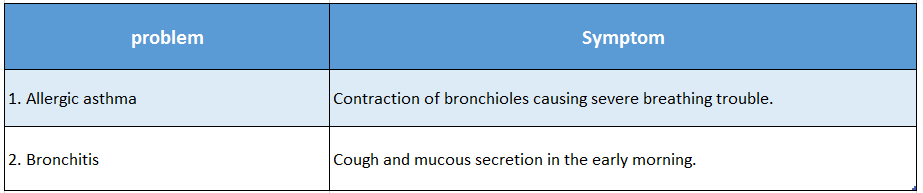
Due to inflammation of the inner mucosal layer of the trachea and bronchioles, the lumen becomes narrow to restrict the passage of respiratory air into the lungs. The distressed breathing caused due to this abnormality is known as asthma. It is a chronic respiratory disease.
Environmental causes of asthma:
Asthma can be either allergic or non-allergic. The environmental causes for both types are described below.
1. Allergic asthma:
Air pollution is the main cause of allergic asthma. Different allergens like dust particles, pollen grains and several other suspended particles enter in to the respiratory tract.
These matters stimulate the immune system and increase the count of eosinophils in the blood. Eosinophils and mast cells release chemical substances like histamine and leukotrienes in the blood.
In response to these chemicals, the inner mucosa of respiratory tubes becomes inflamed to make the lumens narrow. As a result, the person suffers from acute breathing distress.
2. Non-allergic asthma:
Viral infection mainly causes this type of asthma. In this case, the inner mucosa of bronchioles becomes inflamed to narrow the lumen of the air tubes. The formation of polyps in the nasal passages may be caused due to environmental factors and causes asthma.

Question 4. “Change of climate and global warming is a problem resulting from the increasing human population.”-Summarise what impacts it might exert on the environment. “Children and adults both suffer with different respiratory problems during winter.”-Write two names of such problems and state one symptom of each of them.
Answer:
Effect of change of climate and global warming on the environment:
Change of climate and global warming is a problem resulting from the increasing human population.
Their effects on the environment are as follows-
- Due to the increased level of greenhouse gases in the environment, the number of atmospheric components are being changed. These gases increase global temperature, as a result, polar ice is melting. Polar bears, polar foxes, etc. are becoming endangered as they are losing their habitats.
- Due to global warming, sea water level is increasing, as a result, land areas near the sea are getting submerged.
- The ecosystem is being destroyed due to global warming, biodiversity is also being decreased. The example-Great barrier reef of Australia is depleting gradually.
- Climate change is causing harm to agriculture which in turn causing scarcity of food.
- In altered temperatures, harmful germs are getting more active and causing diseases.
Life Science Class 10 Wbbse
Two respiratory problems during winter were found in children and adults
Human Activities Impacting Biodiversity
Question 5. The ever-increasing population in the different cities of India is creating a crisis of groundwater’-Support the statement with reasons on the basis of your experiences. Write four effects of deforestation.
Answer:
Reasons for the crisis of groundwater:
- The underground water level is decreasing due to the excessive use of fresh water. Daily use of water by humans is the reason behind the excess need of water.
- A water crisis has been developed because of wastage of water example continuous running of taps at households and municipal or rural water connections of a locality.
- In urban areas construction works are taking place, filling ponds, due to which water can not be stored underground. This is also a reason of freshwater scarcity.
Thus based on above mentioned points it can be clearly understood that the ever-increasing population in the different cities of India is creating the crisis of groundwater.
Effects of deforestation:
Four effects of deforestation are-
- Soil erosion and desertification,
- Global warming,
- Loss of biodiversity,
- Changes in climatic conditions and changes in the pattern of rainfall.
Question 6. Explain the role of environmental factors or toxins in causing cancer. Part question, What environmental factors may cause cancer in humans?
Answer:
Role of environmental factors in causing cancer:
Cancer is caused due to a combination of genetic and environmental factors. The role of environmental factors in causing cancer is mentioned below.
1. Pesticides and herbicides:
Different pesticides, herbicides and radioactive substances enter in to the human body by different means and may cause cancer.
2. Environmental toxins:
Scientists have revealed that different toxins have a direct relation with cancer. These materials are known as carcinogens, which include nicotine, tar, carbon monoxide, hydrogen cyanide, etc.
Certain carcinogens can cause stable changes to the DNA structure. By this process, inactive proto-oncogenes are transformed into active oncogenes. Finally, these oncogenes change the cell character and trigger cancer.
Life Science Class 10 Wbbse
3. Tobacco:
Chewing tobacco is harmful for the body as it causes cancer. Tobacco contains nicotine, which acts as a carcinogen and initiates cancer in the mouth, throat and tongue.
Cigarette smoke contains a potent carcinogen, called benzopyrene. This chemical, along with tobacco tar settles in alveoli and causes lung cancer.
4. Radioactive materials:
The scientists working with radioactive matters remain exposed to a, B, and y particles. They are often attacked by cancer. Radon is a radioactive gas emitted from some mines. If any miner inhales it for a prolonged period, this gas may cause lung cancer.
5. Chemical pollutants:
Dust of chromium and asbestos may cause lung cancer. Building construction workers are frequently exposed to asbestos dust. On the other hand, welders inhale fumes of chromium. Both of these materials promote lung cancer.
6. Effect of plastic:
The workers of plastic factories inhale the fume of burnt plastic materials, which may cause cancer of the liver and urinary bladder.
Chapter 5 Environment And Human Population Short Answer Type Questions
Question 1. What is a census?
Answer:
Census:
Counting of population and collecting a number data about the lifestyle, health, the educational, professional and financial status of all individuals of the national population is called a census.
In India, a census is done after every ten years. The last census was done in 2011.
Question 2. Mention two causes of population explosion in India.
Answer:
Two causes of the population explosion in India are as follows-
- Illiteracy, poverty, superstition, early marriage, etc. cause a population explosion in Indian society.
- The development of communication systems and the advancement of medical science have reduced mortality.
Question 3. Which are the environmental barriers against population increase?
Answer:
The environmental barriers against population increase are-
- Scarcity of food,
- Deficiency of water and habitat,
- Occurrence of different diseases,
- Epidemic and famine.
Sustainable Practices for Population Management
Question 4. In ecology, what does carrying capacity mean?
Answer:
Carrying capacity:
The maximum number of living organisms, which a specific area can accommodate without any degradation of the ecosystem, is called carrying capacity. A population, growing beyond carrying capacity, disturbs the ecological balance of an ecosystem.
Question 5. Mention two disadvantages of population explosion.
Answer:
Two disadvantages of population explosion are as follows-
- Excessive utilisation of natural resources-Due to the population explosion, the demand for water, food, shelter and clothing have increased to a great extent leading to scarcity of these resources.
- The environmental pollution-Excessive population is the main cause of environmental pollution. By different human actions air, water, and soil are being polluted.

Question 6. What is migration?
Answer:
Migration:
The movement of the members of a population from one place to another in search of favourable living conditions is known as migration. Migration directly affects the population density of a region.
Question 7. What would be the environmental consequences as a result of recurrent destruction of wetlands and depletion of the quantity of agricultural lands?
Answer:
Wetlands are full of biodiversity. These help in removing pollutants from water and also control the local Due environment. overpopulation, civilisation and industrialisation these wetlands are getting destroyed.
As a result, water pollution is increasing and local bio-diversity is decreasing. Due to urbanisation, the quantity of urban land is being depleted. As a result, worldwide food Due to urbanisation, the quantity of urban land is production is decreasing compared to the increasing human population.
Urbanization and Environmental Challenges
Question 8. Why does asthma occur?
Answer:
Asthma:
Certain allergens like pollen grains, and viruses bacteria, when enter into the respiratory tract or blood cause allergic stimulation. As a result, the inflamed and the lumen of the respiratory tract’s inner lining of tracheal, bronchial tubes become narrower.
This obstructs the flow of air into the lungs. Therefore, an individual suffers from breathlessness and the condition is known as asthma.
Wbbse Class 10 Life Science Solutions
Question 9. Mention the environmental factors which cause asthma.
Or,
What are the causes of asthma?
Answer:
The causes of asthma:
Certain environmental factors cause asthma. These are air-borne asbestos fibres, smoke from burnt coal and oil, pollen grains, excreta of mattress mites, spores of fungi, dust, etc.
Question 10. Mention the symptoms of asthma.
Answer:
The symptoms of asthma are-
- Coughing especially during night,
- Chest congestion and wheezing,
- Breathing trouble.
Question 11. Mention the causes of chronic bronchitis.
Answer:
The causes of chronic bronchitis:
Smoke is the main cause of chronic bronchitis. The welders, and firemen, who are regularly exposed to smoke, often suffer from this disease. The smoke evolved from industrial factories, automobiles, motor or diesel and petrol engines are also responsible for this.
Question 12. Write down the symptoms of bronchitis.
Answer:
The symptoms of bronchitis are-
- Fatigue,
- Mild fever,
- Chest congestion and pain.
Question 13. Why wetlands are called kidneys of nature?
Answer:
Wetlands are called kidneys of nature:
Wetlands have been called the ‘Kidney of nature’ because of their ability to store, assimilate and transform harmful materials or contaminants lost from the land before they reach rivers or lakes.
Like a giant kidney, wetlands help to dilute and filter materials that could otherwise harm our lakes, river or other water bodies.
Wbbse Class 10 Life Science Solutions
Question 14. What are carcinogens?
Answer:
Carcinogens:
Carcinogens are those chemicals or radiations, which have the ability to cause cancer. Carcinogen exposure by inhalation, ingestion or absorption can result in the synthesis of abnormal DNA.
As carcinogens change DNA structure permanently, these are treated as special mutagens.
Question 15. What is the difference between malignant and benign tumours?
Answer:
The difference between malignant and benign tumours:
Both benign and malignant tumours are formed by uncontrolled cell division. A benign tumour does not cause harm to the body and can be cured by operation.
But a malignant tumour is harmful to the body, as the cells can undergo metastasis by spreading to other organs or tissues to develop more tumours there.
Question 16. Mention the characteristic features of a malignant tumour.
Answer:
The characteristic features of a malignant tumour:
The malignant tumour which causes cancer is characterised by cells that may spread through blood or lymph to different organs and tissues of the body and may develop other malignant tumours there.
This event is known as metastasis. By this process, malignant tumours spread cancer to different organs of the body.
Question 17. Mention two characteristic features of cancer cells.
Answer:
Two characteristic features of cancer cells are as follows-
- A cancer cell has a nucleus comparatively larger than normal.
- The cancer cells lose the ability of intercellular contact. This is called contact inhibition.
Resource Depletion Due to Population Increase
Question 18. Mention the cancer-causing agents produced by human activity.
Answer:
The cancer-causing agents produced by human activity.
Different human activities may produce several cancer-causing agents. These materials include asbestos fibres, silica powder, formaldehyde, acetaldehyde, benzopyrene, monosodium glutamate, etc.
Question 19. Name three carcinogens present in the smoke of cigarettes and bidis.
Answer:
Three carcinogens present in the smoke of cigarettes and bidis
The smoke of cigarettes and bidis contain many potent carcinogens. Three of these are acetaldehyde, vinyl chloride and formaldehyde.
Question 20. What are the causes of lung cancer?
Answer:
The causes of lung cancer:
Generally, lung cancer occurs due to environmental or genetic factors. In this case, uncontrolled cell division takes place in the epithelial cells of the pleural membrane or in the alveolar epithelium.
Besides tobacco smoking, some environmental pollutants like asbestos fibres, chromium and smoke produced during the burning of plastics and fumes from various factories may also cause lung cancer.
Question 21. How does radon gas affect human health?
Answer:
Radon gas affect human health:
Radon is a harmful radioactive gas. It is emitted from mines. If miners inhale this gas for a prolonged period, they would develop lung cancer.
Question 22. What is asbestosis?
Answer:
Asbestosis:
Asbestosis is a long-term inflammation and scarring of the lungs due to asbestos fibre. Shortness of breath, persistent dry cough and chest tightness are some of the symptoms of asbestosis. It may lead to cancer.
Chapter 5 Environment And Human Population MCQs
Question 1. The annual rate of population is about—
- 1.2%
- 2.2%
- 3.2%
- 4.2%
Answer: 1. 1.2%
Question 2. The number of neonates born (UNFPA) globally in a year is approximately—
- 100 million
- 130 million
- 150 million
- 180 million
Answer: 2. 130 million
Question 3. According to a survey of the United Nations, in 2025 the global population will reach—
- 5.8 billion
- 6.8 billion
- 8.2 billion
- 9.8 billion
Answer: 3. 8.2 billion
Question 4. Excessive rate of increase in population is called—
- Population expansion
- Population development
- Population explosion
- Population contraction
Answer: 3. Population explosion
Question 5. The main cause of the environmental problem in India is—
- Shortage of resources
- Scarcity of food
- Lack of education
- Population explosion
Answer: 4. Population explosion
Question 6. The present full form of UNFPA is—
- United Nations Fund for Population Activities
- United Nations Fund Population Authority
- United Nations Financial Property Activities
- United Nations Fund for Personal Activities
Answer: 1. United Nations Fund for Population Activities
Question 7. By dividing the total number of individuals of a population of a country or any particular region by its total area, we get—
- population volume
- Rate of population increase
- Carrying capacity
- Population density
Answer: 4. Population density
Wbbse Class 10 Life Science Solutions
Question 8. The rate of conversion of agricultural land to a residential area in India between 2001 to 2010 is about—
- 4%
- 3%
- 2%
- 1%
Answer: 4. 1%
Question 9. Uncontrolled growth of population is seen during—
- Absence of biological power
- A steady carrying capacity
- Absence of environmental barriers
- Presence barriers
Answer: 3. Absence of environmental barriers
Question 10. The factor that acts against population growth is—
- Saturation point
- Carrying capacity
- Population pressure
- Environmental pressure
Answer: 4. Environmental pressure
Question 11. 11th July is celebrated as—
- World Environment Day
- World AIDS Day
- World Population Day
- World Wetland Day
Answer: 3. World Population Day
Question 12. The population of an area declines due to—
- Increase in natality
- Increase in mortality
- Immigration
- All of these
Answer: 2. Increase in mortality
Question 13. The primary phase of a sigmoid growth curve is—
- Log phase
- Plateau phase
- Lag phase
- Exponential phase
Answer: 3. Lag phase
Question 14. The exponential growth of a population is represented by—
- T shaped graph
- ‘S’ shaped graph
- Hyperbolic graph
- T shaped graph
Answer: 1. T shaped graph
Question 15. The percentage ratio of natality toj mortality is known as—
- Population density
- Vital index
- Total count
- Population rate
Answer: 2. Vital index
Question 16. Carcinogens can cause cancer because—
- They can destroy the immune system
- They can transform DNA
- They stop cell division
- They enhance the microbial infection
Answer: 2. They can transform DNA
Wbbse Class 10 Life Science Solutions
Question 17. The gas responsible for lung cancer is—
- Radon
- Carbon dioxide
- Hydrogen
- Nitrogen
Answer: 1. Radon
Question 18. Main cause of lung cancer is-
- Weedicide
- Asbestos
- Smoking
- Pesticide
Answer: 3. Smoking
Question 19. The breathing distress caused by squeezing of the trachea and bronchus is known as—
- Emphysema
- Asthma
- Pneumonia
- Atelectasis
Answer: 2. Asthma
Question 20. If the amount of pollen grains, fungal spores and dust particles increase suddenly in the air, decide which of the following problems may increase-—
- Tuberculosis
- Asthma
- Malaria
- Dengue
Answer: 2. Asthma
Question 21. The bacterium responsible for pulmonary tuberculosis is—
- Mycobacterium
- Streptococcus
- E. coli
- Staphylococcus
Answer: 1. Mycobacterium
Question 22. Uncontrolled cell division of the cells in the lung causing abnormality in lung function indicates—
- Pulmonary tuberculosis
- Lung cancer
- Emphysema
- Cystic fibrosis
Answer: 2. Lung cancer
Question 23. Chronic lung disease is—
- Pneumonia
- Asthma
- Cancer
- Flu
Answer: 2. Asthma
Question 24. The lung disease, in which lung tissue cells are damaged weakening its expandability, is known as—
- Cyanosis
- Cystic fibrosis
- Asthma
- Emphysema
Answer: 4. Emphysema
Question 25. Cancer-causing gene is called
- Transgene
- Oncogene
- Split gene
- Jumping gene
Answer: 2. Oncogene
Question 26. The spreading of tumour cells to different parts of the body is known as—
- Apoptosis
- Metastasis
- Hypostasis
- Homeostasis
Answer: 2. Metastasis
Question 27. Which of the following is a cancer-causing material?
- Formaldehyde
- Pollen grain
- Arsenic
- All of these
Answer: 1. Formaldehyde
Question 28. Active and passive smoking may cause—
- Liver cancer
- Lung cancer
- Kidney cancer
- Both 1 and 2
Answer: 2. Lung cancer
Question 29. Which of the following is not a cancer-causing material or carcinogen?
- Acetaldehyde
- Radon gas
- Formaldehyde
- Pollen grain
Answer: 4. Pollen grain
Question 30. Which of the following is known as nature’s kidney?
- Wetland
- Water spring
- Sea
- Hill
Answer: 1. Wetland
Question 31. Biopsy of a tumour is done—
- To treat cancer
- To diagnose cancer
- To develop cancer
- To prevent cancer
Answer: 2. To diagnose cancer
Question 32. Inflammation of the mucous membrane of bronchi and bronchioles is known as—
- Bronchitis
- Tuberculosis
- Asbestosis
- Hypoxia
Answer: 1. Bronchitis
Chapter 5 Environment And Human Population Answer In A Single Word Or Sentence
Question 1. What does population mean?
Answer:
Population
Population means the total number of all individuals inhabiting a particular geographical area at a particular time.
Question 2. How much increase in population has taken place in India in between 2001-2011?
Answer: In between 2001-2011, the Indian population has increased by about 18.15 crores
Question 3. What is the population of India as per cent of 2011?
Answer:
Population of India as per cent of 2011
121.02 crores (apps)
Common Misconceptions About Population Growth
Question 4. What is the current (2015) population of the Earth?
Answer:
Current (2015) population of the Earth
7.4 billion (approx)
Question 5. In which year dit parietal population reach 1 billion?
Answer: In the year 1800, the global population reached 1 billion.
Question 6. What is the annual rate of increase in the Indian population?
Answer:
The annual rate of increase in the Indian population
1.26% (approx)
Question 7. What is meant by population density?
Answer:
Population density
The measurement of population per unit area is called population density.
Question 8. What is meant by the normal growth of a population?
Answer:
Normal growth of a population
The difference between natural natality and natural mortality of the individuals of a population of a specific area means natural growth of a population
Wbbse Class 10 Life Science Solutions
Question 9. What would be the global population in the year 2050?
Answer: According to the prediction by United Nations, the global population may reach 8.9 billion in 2050.
Question 10. What is the scientific study of the human population known as?
Answer: Demography
Question 11. How do you denote the highest rate of reproduction within a population, in the presence of all limiting factors?
Answer: Biological potential
Question 12. Nama a factor which prevents a population to reach the highest possible growth.
Answer: Environmental barriers (diseases, natural calamities) prevent a population to reach the highest possible growth.
Question 13. Which is the second most populous country in the world?
Answer: India
Question 14. which tissue of the lungs is affected by cancer?
Answer: Epithelial tissue of bronchioles in the lungs is affected by lung cancer
Question 15. Name the disease in which pleural membrane is inflamed.
Answer: Pleurisy
Question 16. What are the allergy-causing matters known as?
Answer: Allergens
Population Density and Environmental Stress
Question 17. Which type of white blood cell count is elevated in an asthma patient?
Answer: Eosinophil
Question 18. What is a tumour?
Answer:
Tumour
The cluster of cells that form a lump due to uncontrolled cell division, is called a tumour.
Question 19. How many types of bronchitis are there?
Answer:
There are two types of bronchitis-
- Acute bronchitis and
- Chronic bronchitis.
Question 20. Mention the two types of tumours.
Answer:
Two types of tumours
Benign tumour and malignant tumour
Question 21. Name two cancer-causing agents.
Answer:
Two cancer-causing agents
Benzopyrine and ethyl methane sulphate
Question 22. Give one example of a benign tumour.
Answer:
One example of a benign tumour
A wart on the body surface is an example of a benign tumour.
Question 23. Which type of tumour is harmful?
Answer: Malignant tumour
Question 24. Mention two environmental causes of allergy.
Answer:
Two environmental causes of allergy
Dust and pollen grains
Question 25. Which type of cancer is instigated by asbestos and chromium?
Answer: Lung cancer
Chapter 5 Environment And Human Population Fill In The Blanks
Question 1. An effect of the ever-increasing population is _______ erosion.
Answer: Soil
Question 2. Only _______ % of earth’s water reserve is fresh water.
Answer: 3
Question 3. The drinkable water on earth is just _______ % of the total water reserve.
Answer: 1
Question 4. The rate of shrinkage of agricultural land is the highest in economically _______ areas.
Answer: Developing
Question 5. _______ is a chronic breathing-related disease.
Answer: Asthma
Question 6. The fine droplets of smoke, ashes, dust, pollen grains, etc. suspended in air collectively called _______, which cause various lung diseases.
Answer: SPM or Suspended Particulate Matter
Question 7. The main cause of lung cancer is _______.
Answer: Smoking
Question 8. _______ of certain plants are responsible for breathing distress.
Answer: Pollens
Question 9. One of the main causes of oral cancer is _______ chewing.
Answer: Tobacco
Question 10. The major cause of chronic bronchitis is _______.
Answer: Smoke
Question 11. Uncontrolled cell division leads to the fatal disease called _______.
Answer: Cancer
Question 12. The spreading of cancer cells in different organs and tissues of the body is known as _______.
Answer: Metastasis
Question 13. The cancer-causing agents are called _______.
Answer: Carcinogens
Question 14. _______ is a carcinogenic radioactive gas.
Answer: Radon
Question 15. World Cancer Day is _______.
Answer: 4th February
Question 16. Inflammation of the bronchus is called _______.
Answer: Bronchitis
Question 17. _______ gases cause global warming.
Answer: Greenhouse
Chapter 5 Environment And Human Population State True Or False
Question 1. Environmental pollution has no role in causing cancer.
Answer: False
Question 2. Presently, the global population is less than 7.4 billion.
Answer: False
Question 3. Every year, about 3-6 billion trees are chopped down.
Answer: True
Question 4. Only 1% of the total water reserve of the earth is drinkable.
Answer: True
Question 5. PAN causes damage to respiratory organs.
Answer: True
Question 6. PAN is a type of allergen.
Answer: True
Question 7. Leukaemia is a lung disease.
Answer: False
Question 8. Bronchitis is caused due to damage of ciliary cells of tracheal lining.
Answer: False
Question 9. In the case of asthma, the bronchioles become narrow.
Answer: True
Question 10. The uncontrolled cell division in the body is called metastasis.
Answer: False
Question 11. Vinyl chloride is a carcinogen present in the smoke of cigarettes.
Answer: True
Question 12. Carcinogens can transform normal human genes into oncogenes.
Answer: True
Wbbse Class 10 Life Science Solutions
Question 13. The smoke produced during the burning of coal and oil is one of the causes of asthma.
Answer: True
Question 14. Formaldehyde is a primary pollutant.
Answer: False
Question 15. The fine dust of asbestos is a chemical pollutant that causes bronchitis and asbestosis.
Answer: True
Chapter 5 Environment And Human Population Match The Columns
Question 1.

Answer: 1-E; 2-C; 3-D; 4-B; 5-A; 6-G
Question 2.

Answer: 1-E; 2-C; 3-D; 4-A; 5-B; 6-F
Chapter 5 Environment And Human Population Find The Odd One Out
Question 1. Asthma, Bronchitis, Lung cancer, Colon cancer
Answer: Colon cancer
Question 2. Cancer, Oncogene, Carcinogen, Cholera
Answer: Cholera
Case Studies on Human Population Impact in India
Question 3. Climate change, Wetland destruction, Decreasing agricultural land, Plantation
Answer: Plantation
Question 4. Asthma, Bronchitis, Cancer, Diarrhoea
Answer: Diarrhoea
Chapter 5 Environment And Human Population Fill In The Blanks By Looking At The First Pair
Question 1. Chewing tobacco: Oral cancer:: Smoking:
Answer: Lung cancer
Question 2. Black lung disease: Coal dust:: Chronic bronchitis :
Answer: Smoke
Question 3. Pollen grains: Asthma:: Carcinogens:
Answer: Cancer
Question 4. Deforestation: Dissertation: Greenhouse gas
Answer: Global warming
Question 5. UV ray: Skin Cancer:: Nicotine :
Answer: Lung cancer
Chapter 5 Environment And Human Population Among The Four Concepts Given Three Of Them Belong To One Find That
Question 1. Malignant tumour, Cancer, Irregular cell division, Metastasis
Answer: Cancer
Question 2. Asthma, Bronchitis, Lung disease, Lung cancer
Answer: Lung disease
Question 3. PAN, Smoke of industry, Pollen, Reasons of asthma
Answer: Reason of asthma
Question 4. Weather control, Importance of wetlands, Conservation of the ecosystem, Decrease of water pollution
Answer: Importance of wetland
Question 5. SPM, Air pollution, Greenhouse gas, Lung disease
Answer: Air pollution
Question 6. Decrease of agricultural land, Exhaustion of natural resources, Climate change, Problem of overpopulation
Answer: The problem of overpopulation